
Modern bridal design has settled into a few clear ideas: clean lines, strong shapes, fabric with real texture and pieces that come off so one gown becomes two looks. That covers everything from a bare satin column to a sculptural ball gown with folds you could stand a teacup on. In my fittings, the gown that wins is rarely the one a bride pinned first; it’s the one that suits her body, her venue and ten hours of wear. So I treat fabric, neckline, train, undergarments and shoes as one decision. The twenty gowns below are grouped loosely from minimal to more expressive.
A Realistic Calendar From First Appointment to Last Fitting
Most stress I see around gowns isn’t about style. It’s about time running out. Made-to-order bridal gowns take months to produce, and alterations can’t start until the gown arrives, so I work backward from the wedding date.
- Around 9 to 12 months out: start appointments. Two or three shops is usually enough; more tends to blur everything together.
- Order by about 8 to 9 months out. Production times vary a lot between designers, so ask for the quoted delivery date in writing.
- Book alterations as soon as the gown arrives, then plan the first fitting roughly two to three months before the wedding.
- Expect two or three fittings. Bring your actual shoes and undergarments to every one of them.
- Collect the gown in the last two weeks and have it steamed close to the day.
Shorter timelines are possible with sample or ready-to-wear gowns, but you trade choice for speed. If your date is under six months away, tell every store that at the start of the appointment.
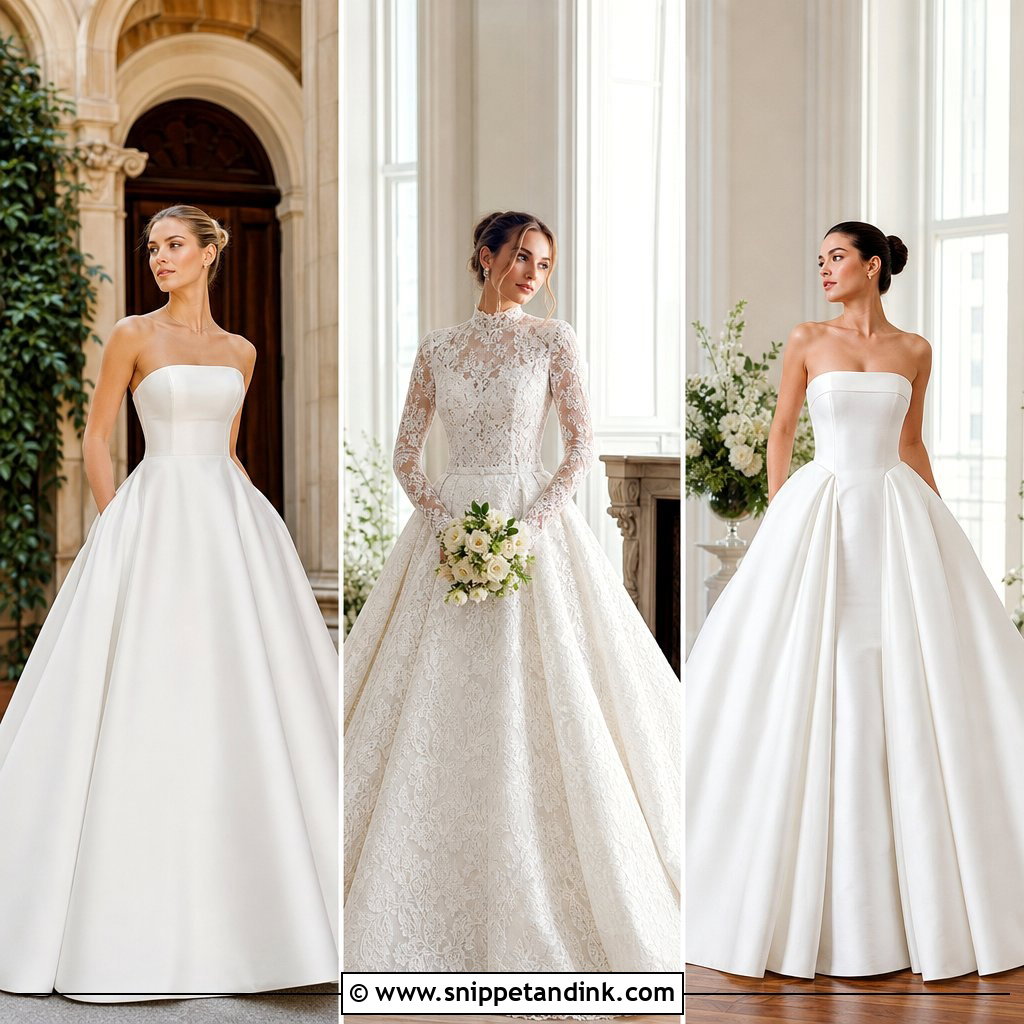
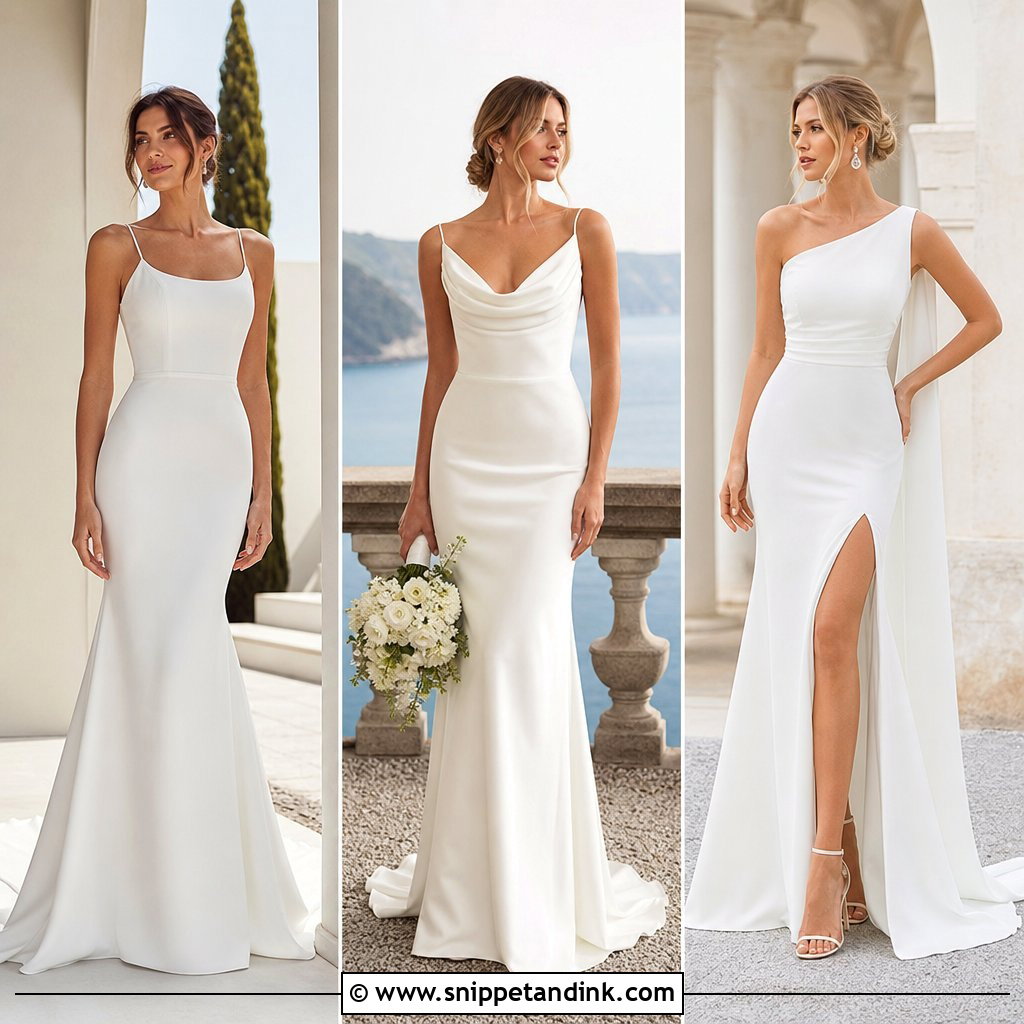
1. Minimalist Satin Bridal Gown
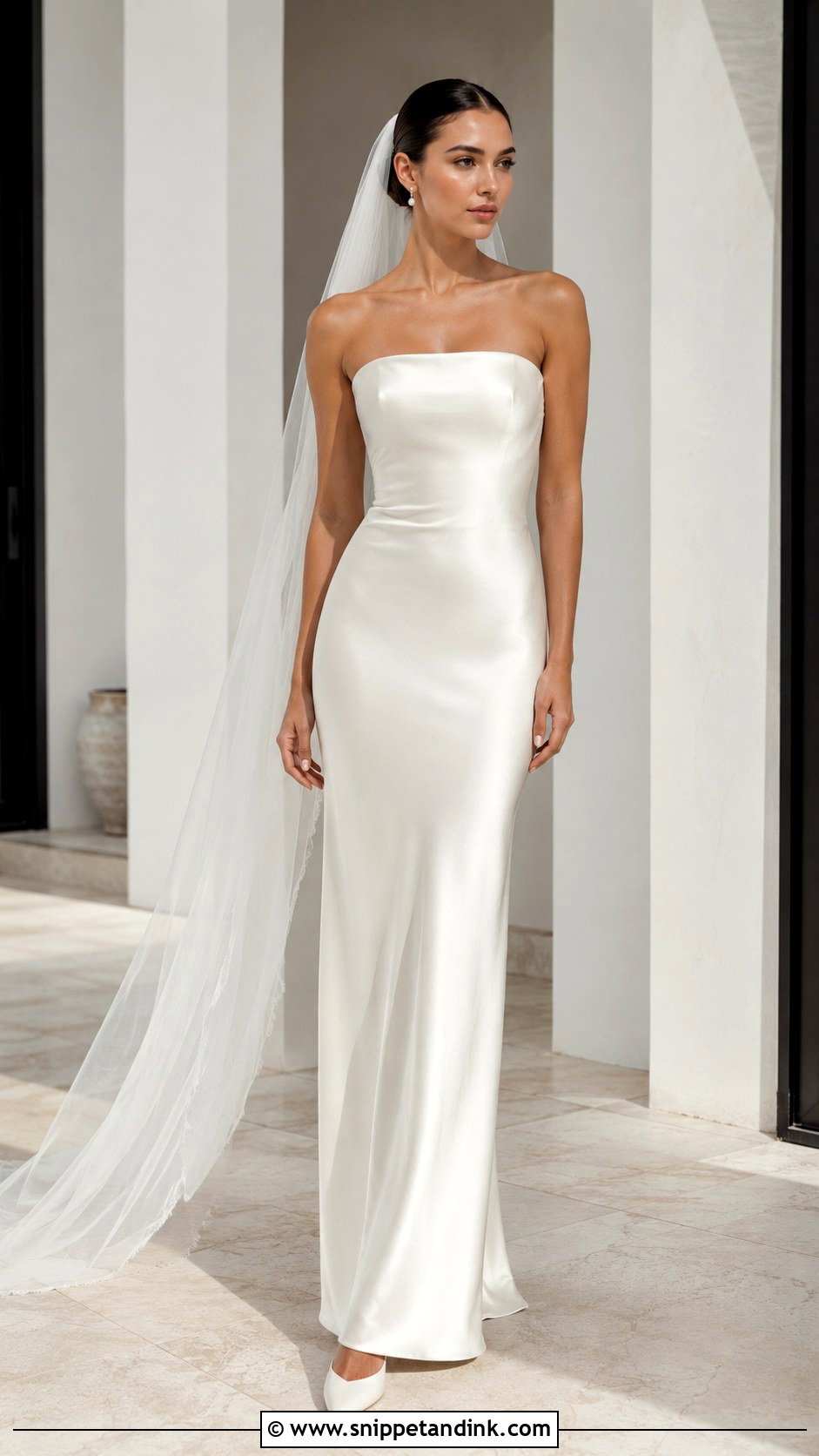
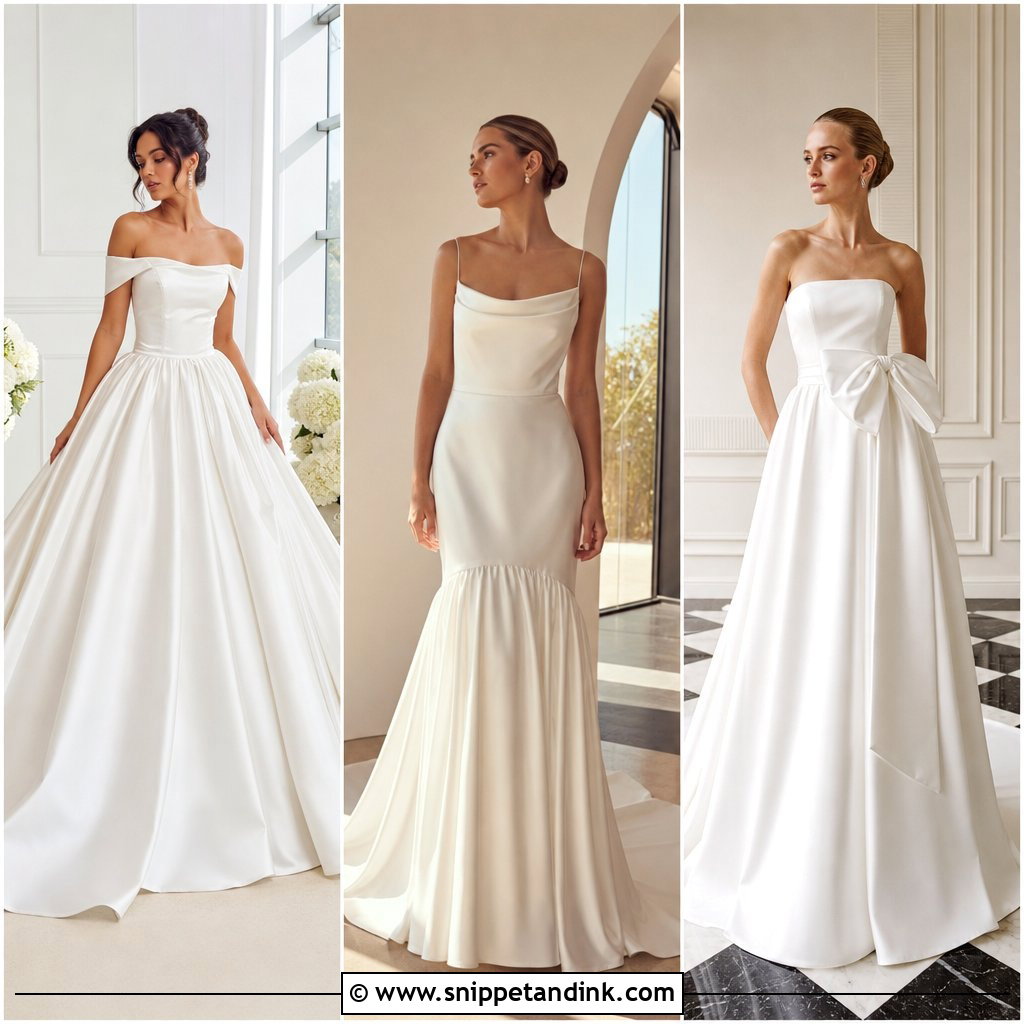
Clean satin hides nothing. Every seam, every pucker and the outline of whatever you wear underneath shows, so tailoring here has to be precise. Silk satin drapes and creases more easily; duchess satin is heavier and holds a column shape with less help. I’d choose a structured strapless neckline for definition or a soft drape if you want it to feel relaxed. Pointed ivory pumps, pearl drops and a long raw-edge veil keep the mood quiet, which suits galleries and architectural venues well.
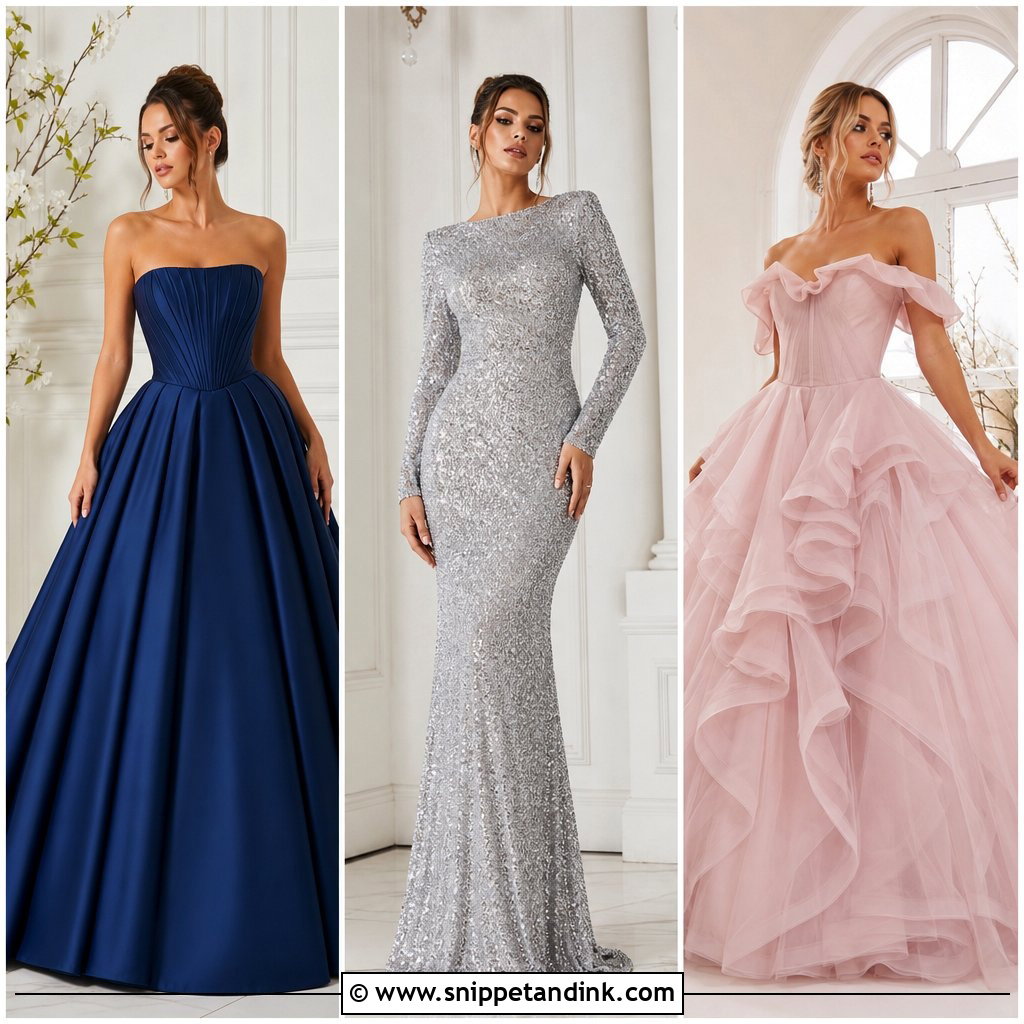
2. Sculptural Ball Gown Bridal Gown
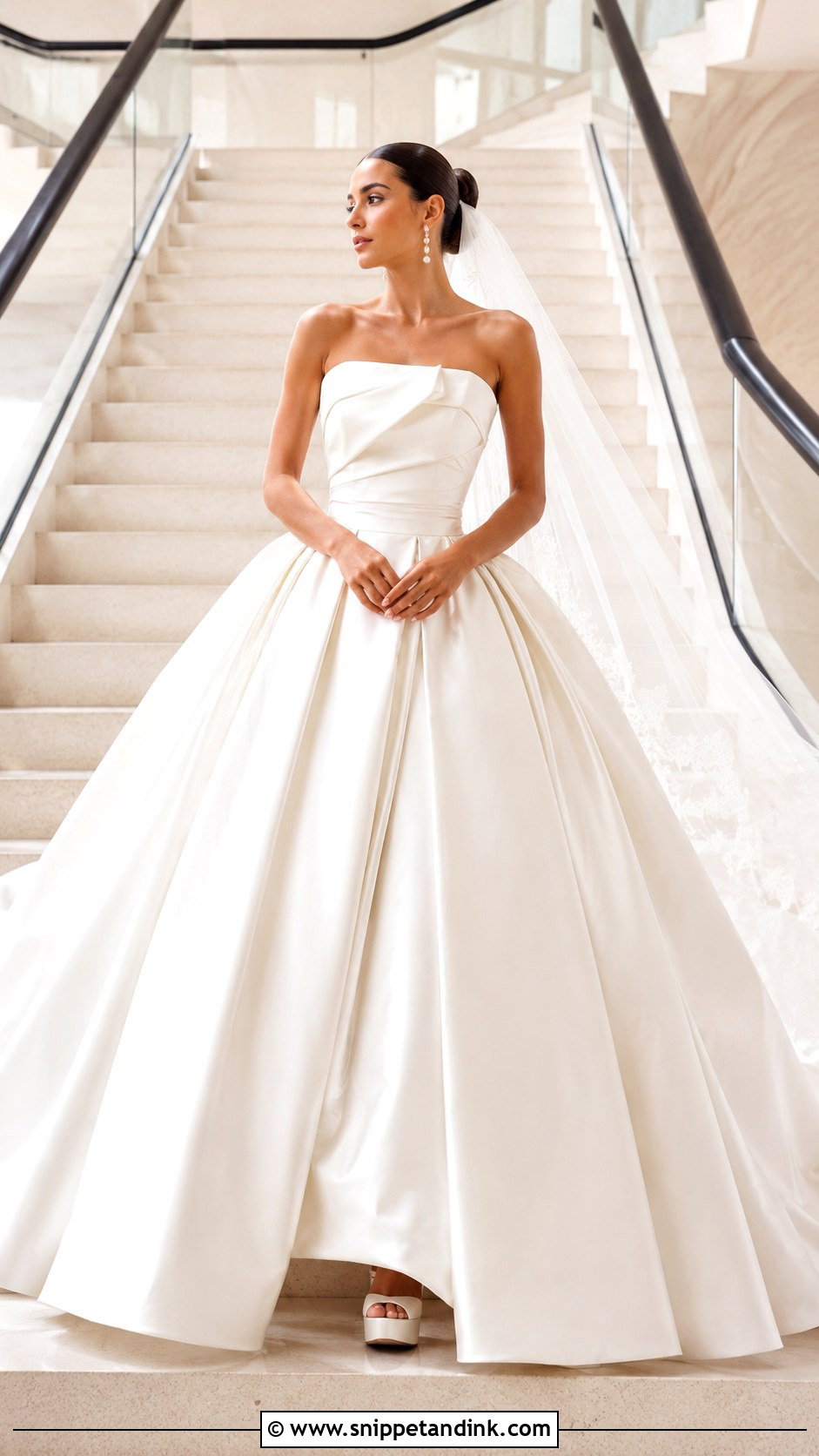
The folds do all the talking on a sculptural gown. Mikado, faille and structured organza hold pleats and volume without sparkle, and a curved strapless neckline or an angular folded bodice keeps it current. These gowns are wide, so I always ask about doorways, the aisle width and the car. Platform heels give height without the wobble of a stiletto under that much skirt. Skip the necklace, wear sculptural pearl earrings, and pick a fingertip veil for balance or a cathedral one for theater.
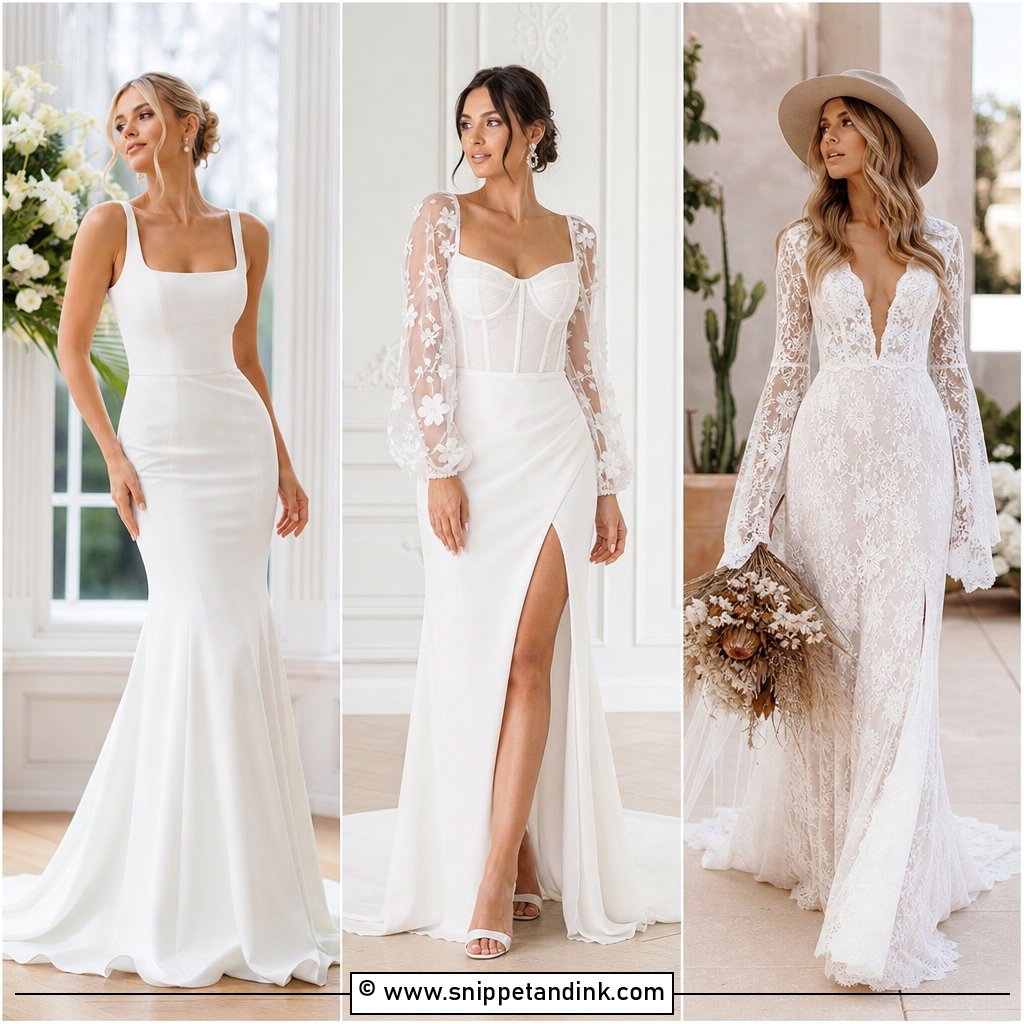
3. Corset A-Line Bridal Gown
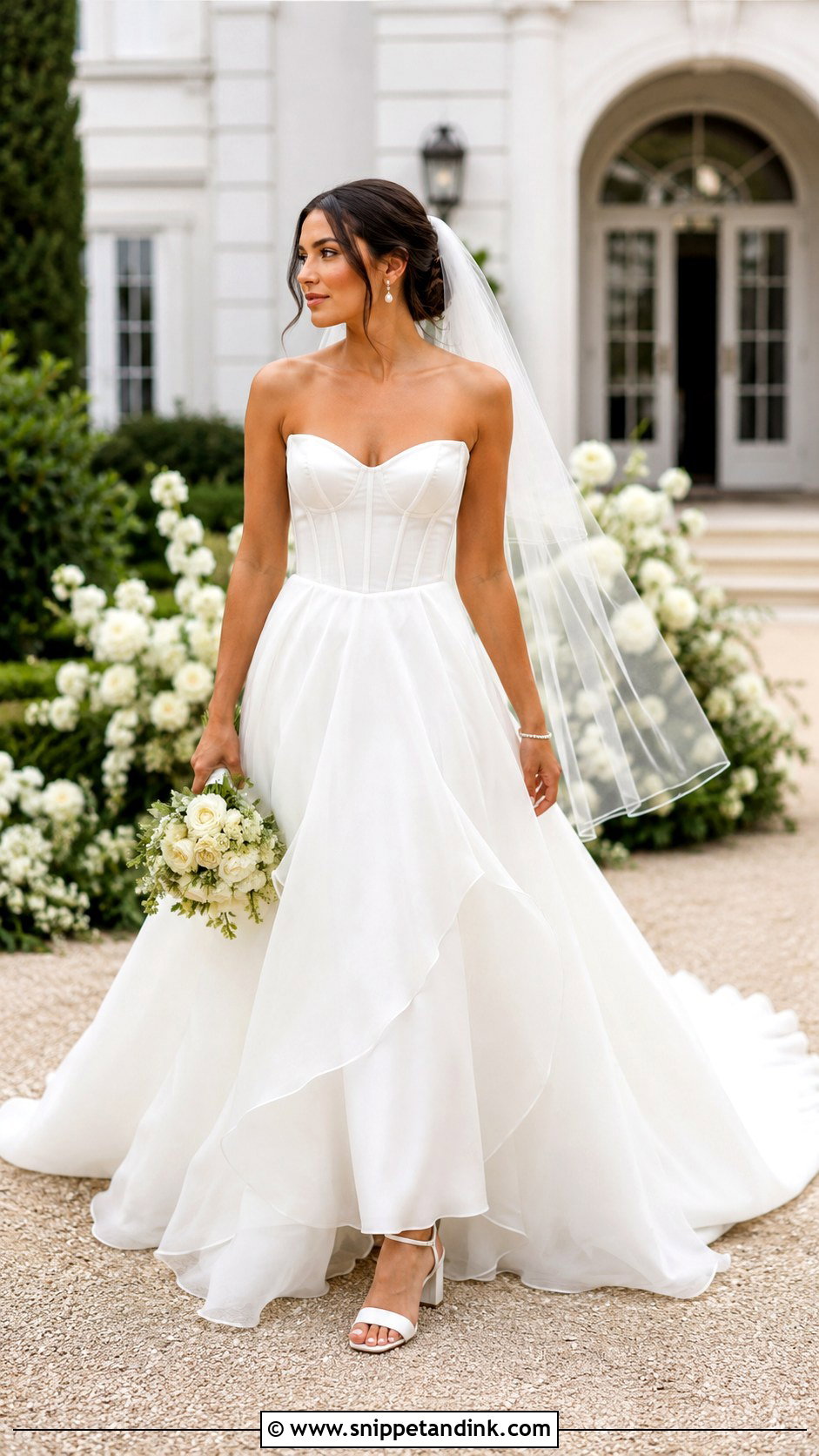
Brides who want support without a heavy skirt usually end up here. Visible boning or curved seams on the bodice give shape, and the A-line can be satin, tulle, organza or chiffon depending on how much volume you want. My first check on any corset is breathing: sit, take a deep breath and laugh. If the busk or boning presses into your ribs, it needs letting out. Detachable sleeves or a sheer bolero add coverage for the ceremony, and block heels make garden lawns manageable.
4. Square Neck Crepe Bridal Gown
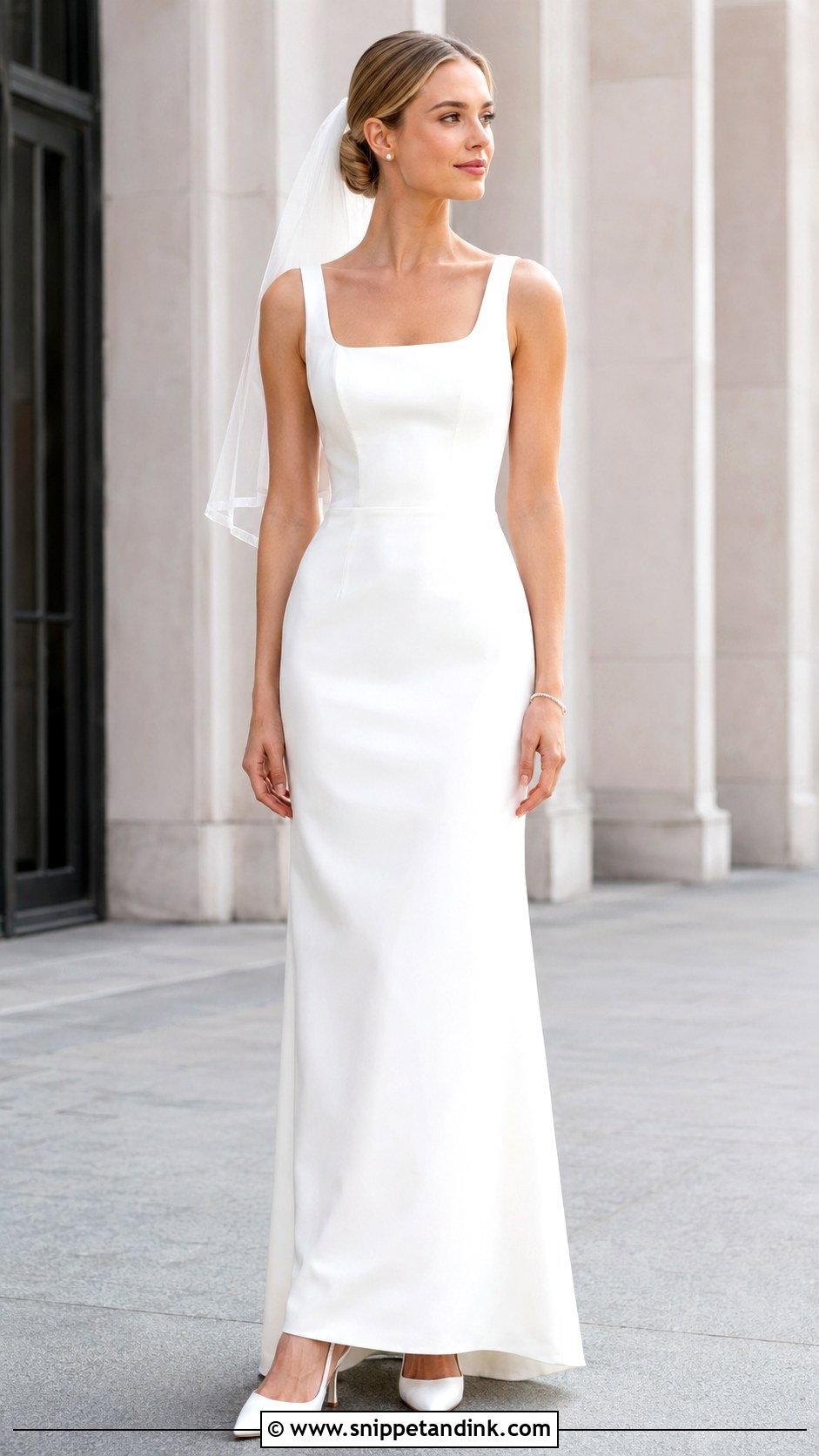
Square necklines frame the collarbones and lengthen the neck, and in crepe they look sharp in a sheath, trumpet or easy A-line. The practical win is the wide straps, which often let you wear a supportive bra or a fitted longline instead of relying on cups sewn into the gown. Crepe is matte and forgiving of creases, though it shows lumps from shapewear. Slingbacks, small studs, a neat chignon and a short tulle veil keep the line crisp for a city or courthouse wedding.
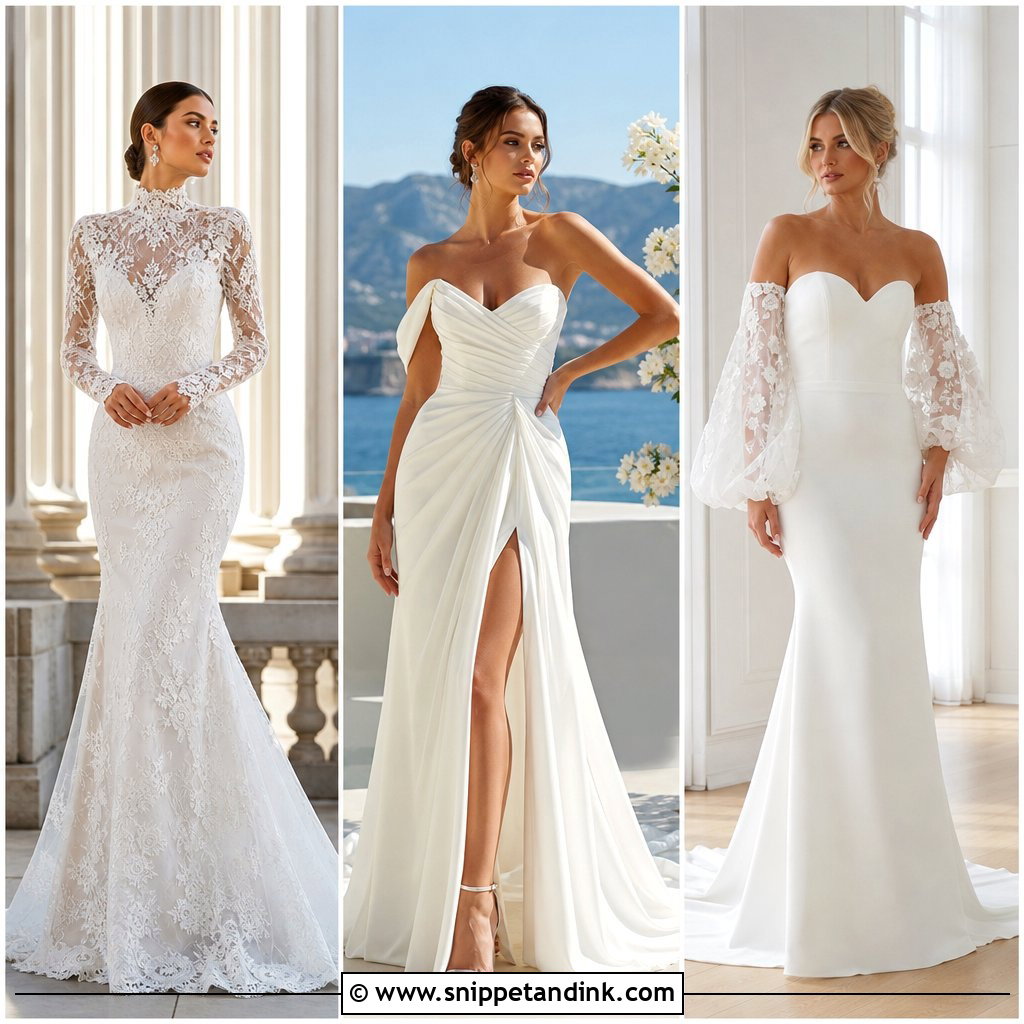
5. Off-Shoulder Mikado Bridal Gown
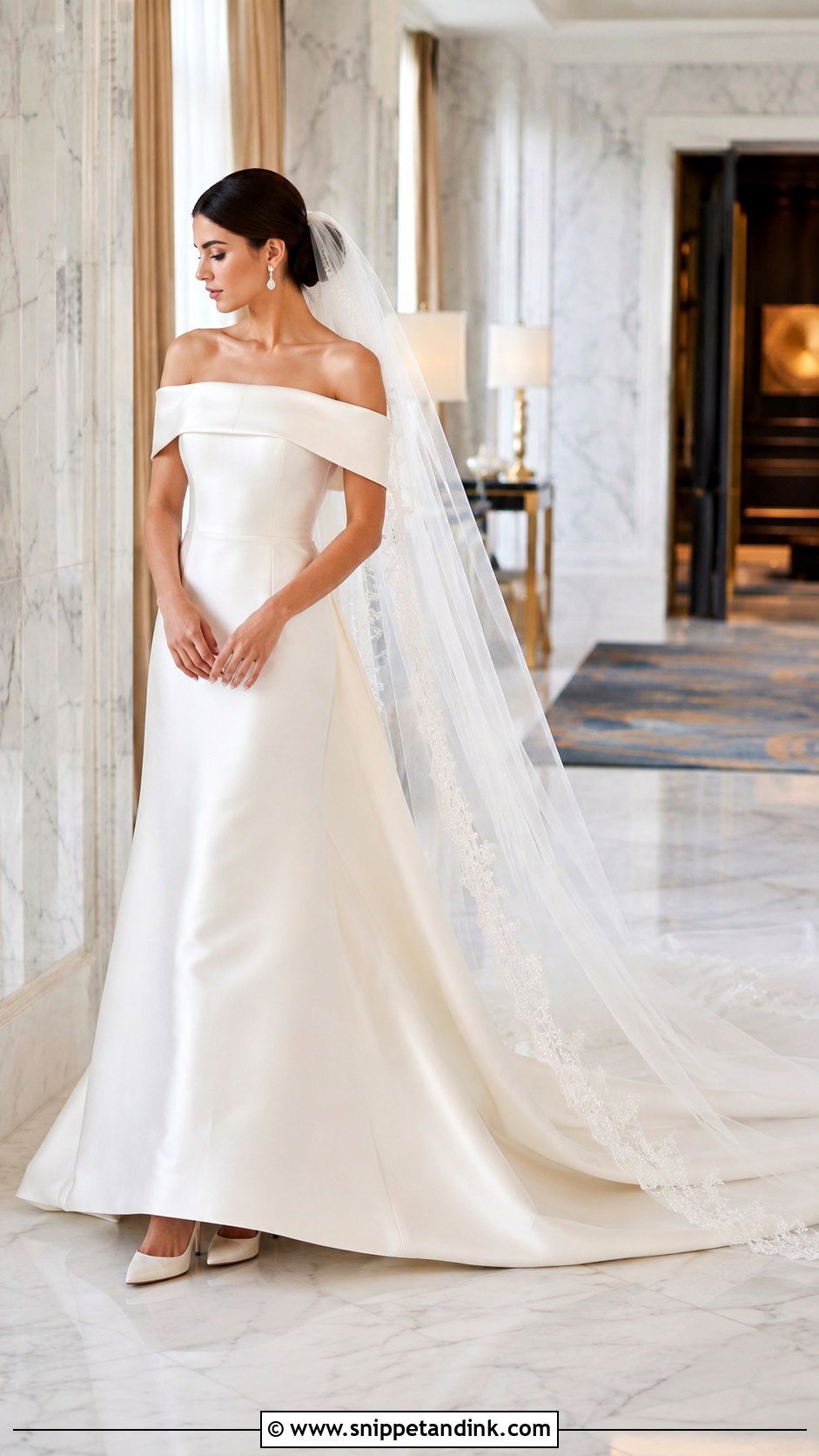
Off-shoulder necklines fail in one way: they creep. I look for a bodice with firm internal structure and, ideally, a silicone grip along the edge so you’re not tugging at it all evening. Mikado helps because it’s stiff enough to hold folded cuffs around the arms. The neckline can hug the arm or sit as a wider cuff for drama. Closed-toe satin pumps and crystal drops suit it, and taking off a cathedral veil after the ceremony reveals the shoulders for portraits.
6. 3D Floral Bridal Gown
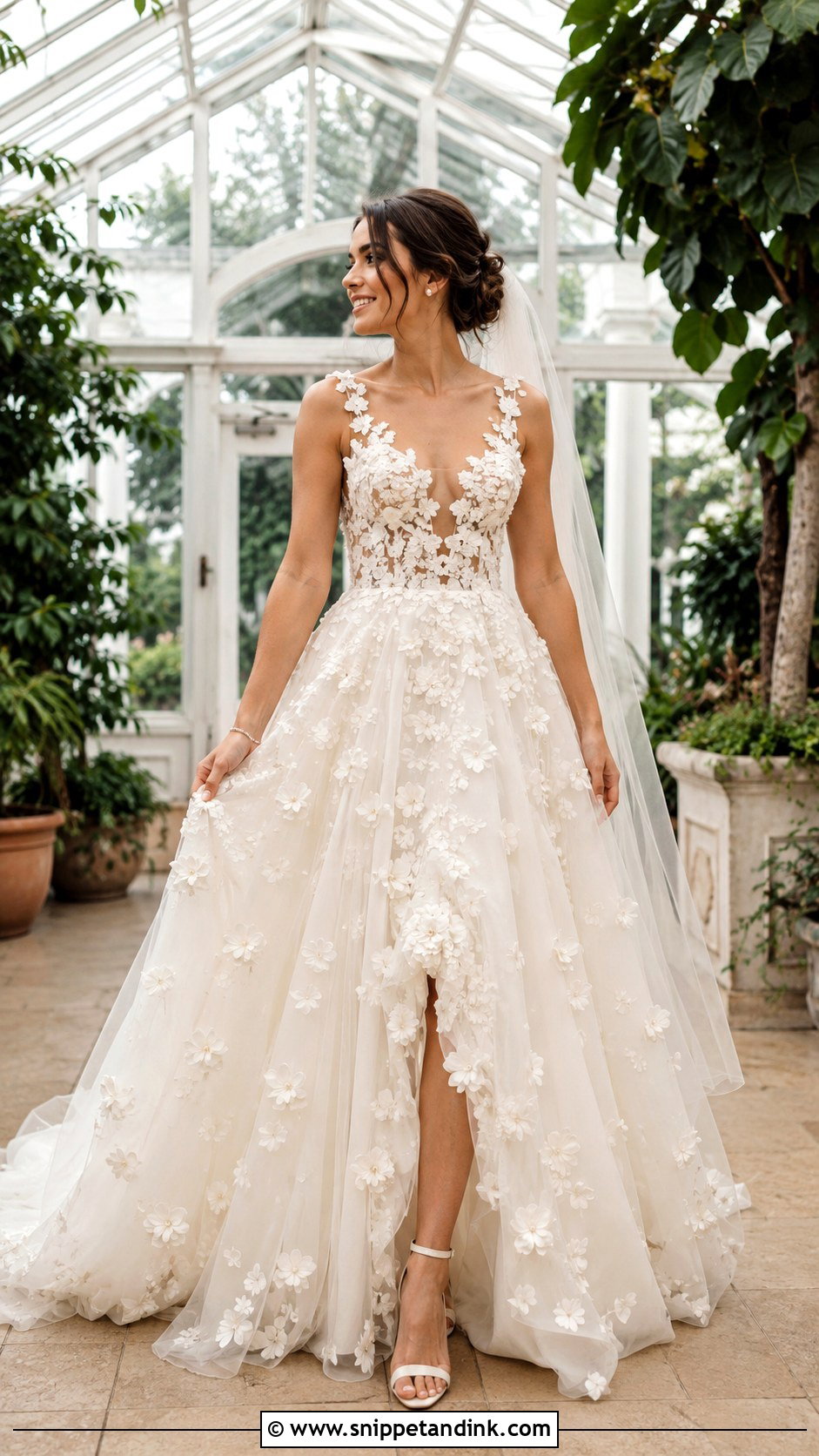
Three-dimensional petals are the most delicate thing on this list to wear. They crush when you sit against a chair back, and they catch on bracelets and bouquet wire. I ask whether the flowers are stitched through or glued, and I’d keep scattered appliqués on the skirt if you plan to sit a lot. An illusion neckline makes the blooms appear to float. Keep everything else plain: ankle-strap heels, pearl studs, a simple tulle veil and at most one fabric flower in the hair.
7. Basque Waist Bridal Gown
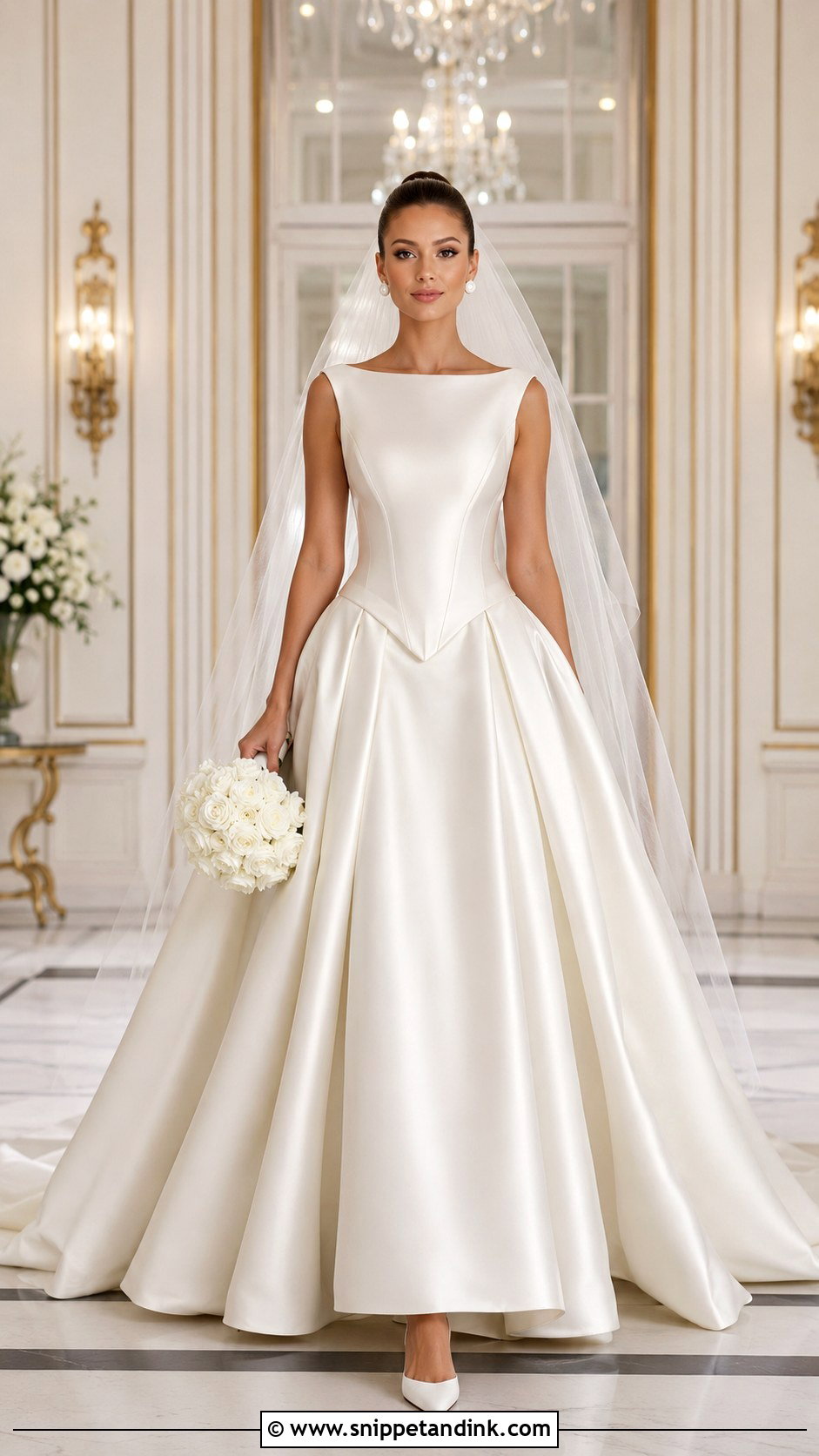
A basque waist bridal gown dips into a soft point below the natural waist, which draws the eye to the center and lengthens the torso. It suits most figures, but the point has to sit exactly in the middle and lie flat when you sit, or it buckles. That’s an alterations job worth paying for. Satin looks regal, lace or jacquard adds depth. Keep the bouquet small so it doesn’t hide the waist in photos, and wear a polished bun with a cathedral veil.
8. Drop Waist Bridal Gown
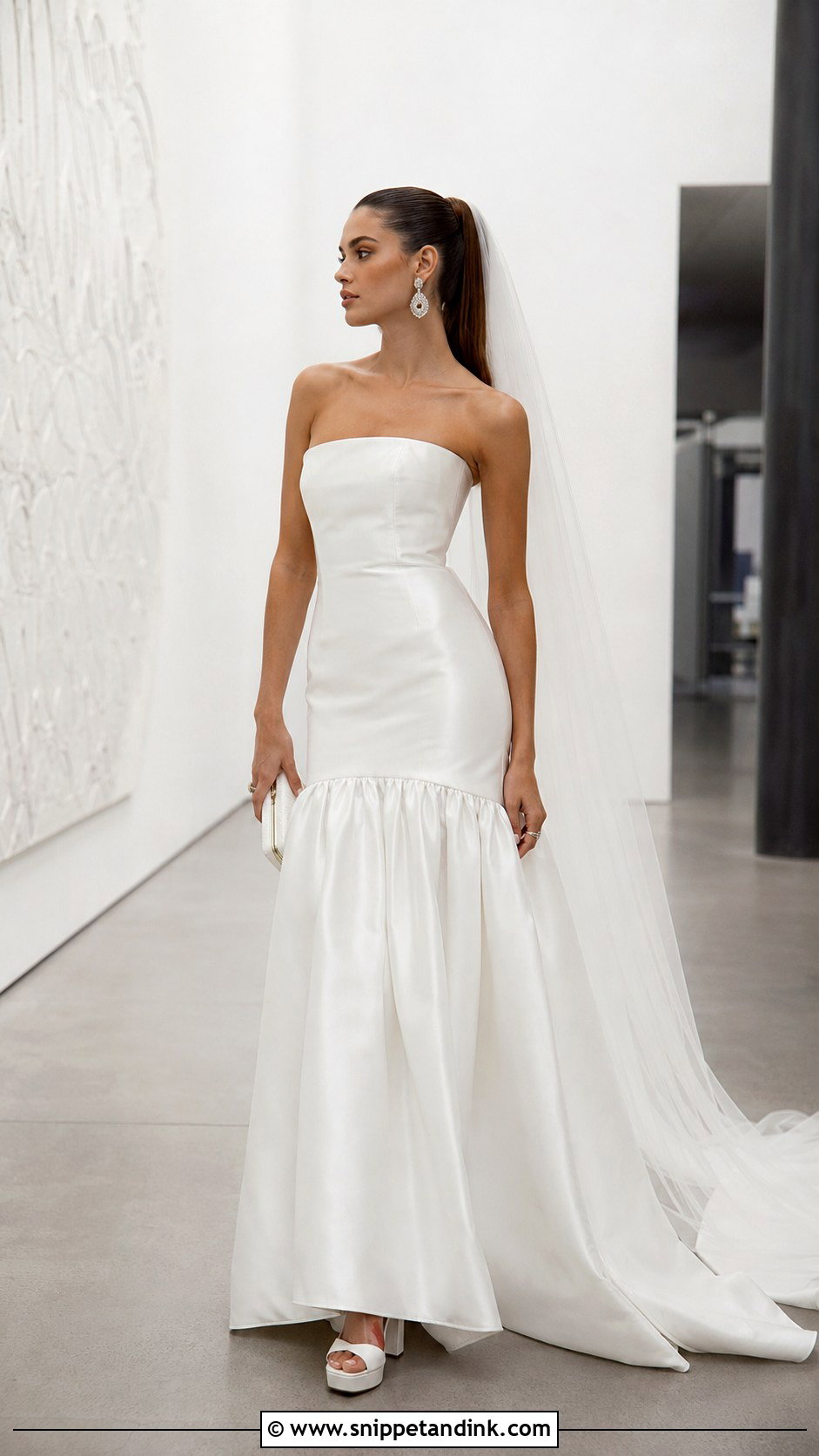
Drop waists are a fashion choice first and a flattering one second. Extending the bodice below the waist elongates a straight or tall figure, but on a shorter torso it can make the legs look shorter. The seam placement is everything, so I’d mark it with the client standing and seated. Satin or mikado gives clear structure; tulle softens the transition. Platform sandals, a high bun and a plain chapel veil keep the long line intact in a loft or museum setting.
9. Asymmetrical Neckline Bridal Gown
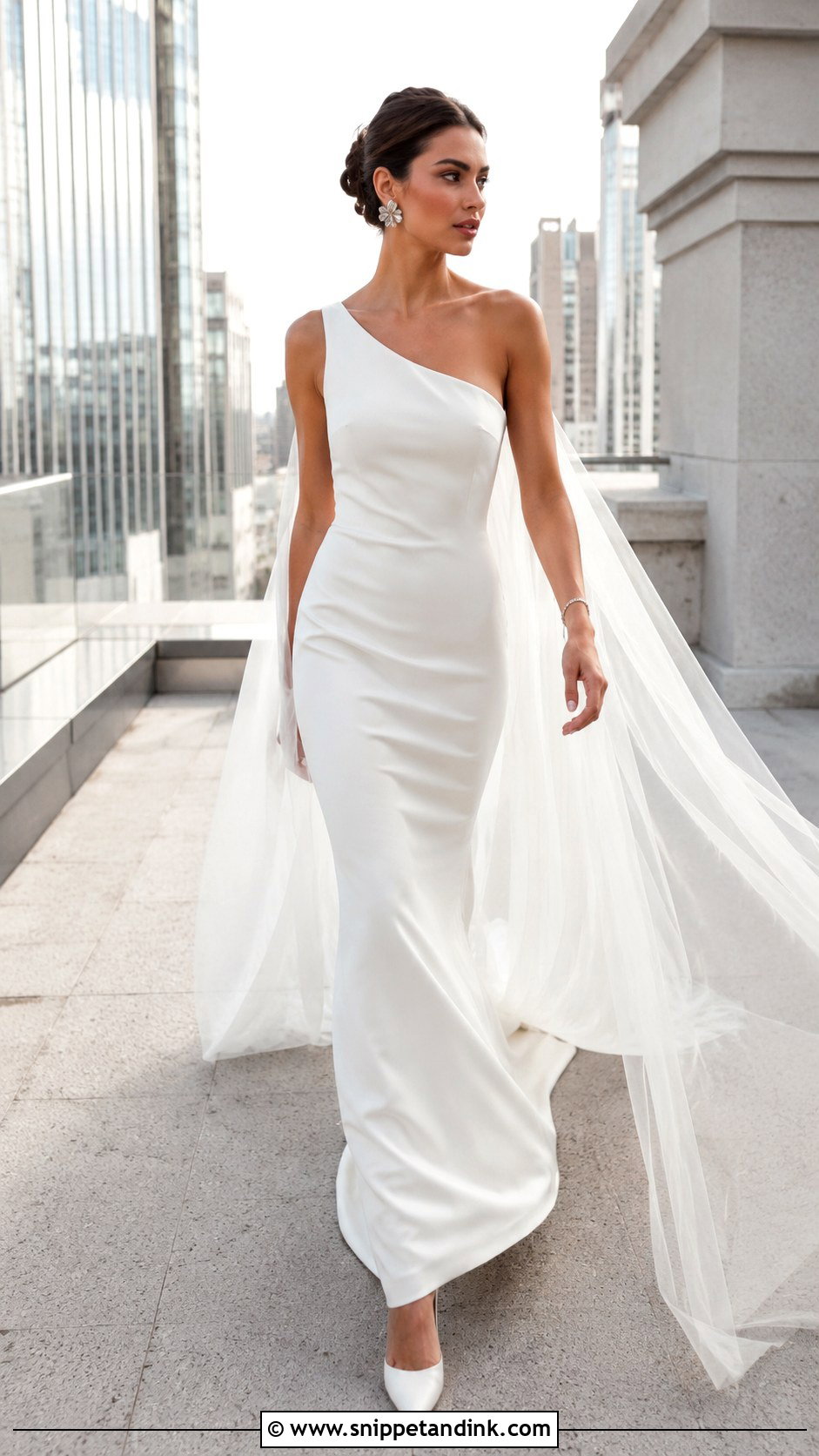
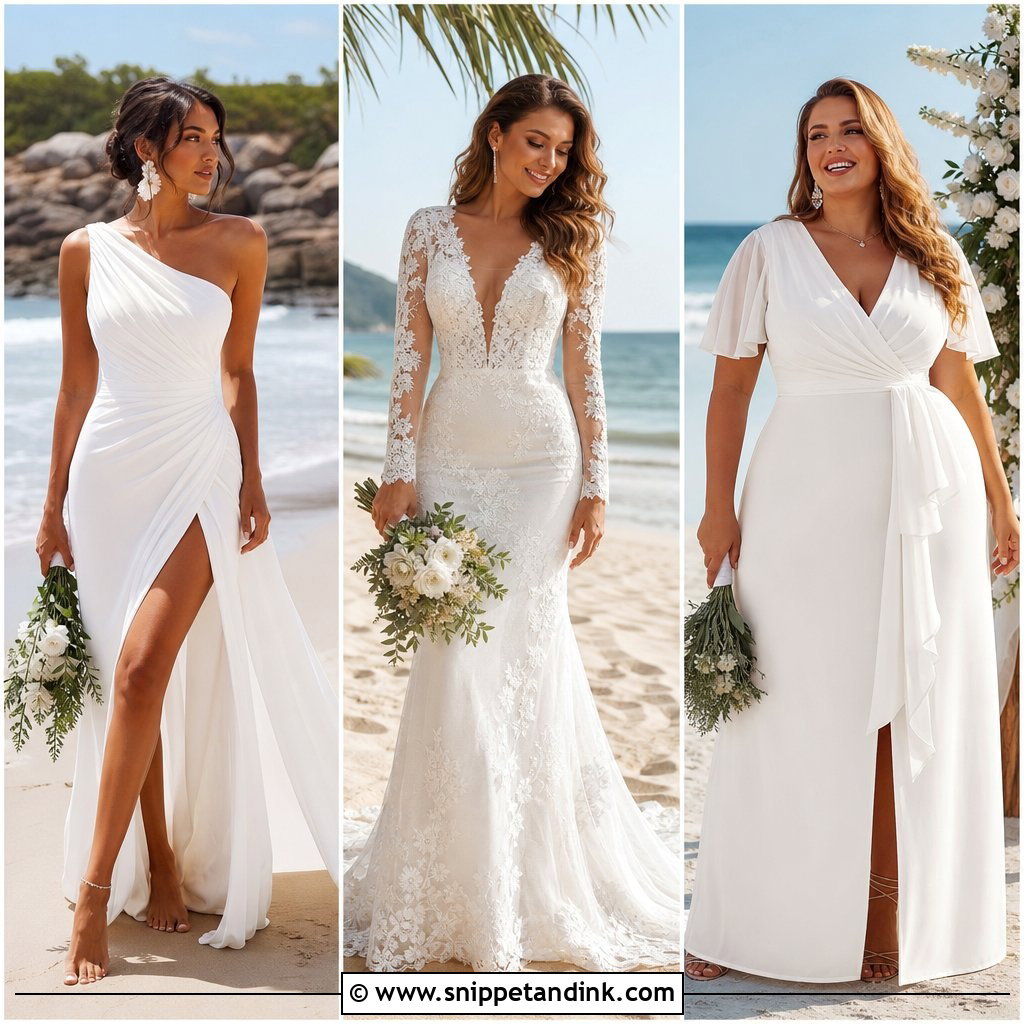
Asymmetry gives a gown direction. One-shoulder cuts, twisted straps and diagonal folds create movement, and the fabric decides the attitude: crepe is fluid, satin catches light, mikado looks sharp. Pair a column skirt to emphasize the neckline or an A-line to soften it. I place earrings on the bare side only, and hair goes behind the covered shoulder. A traditional veil can muddle the line, so I often suggest a clean tulle cape or a short blusher instead.
10. High Neck Lace Bridal Gown
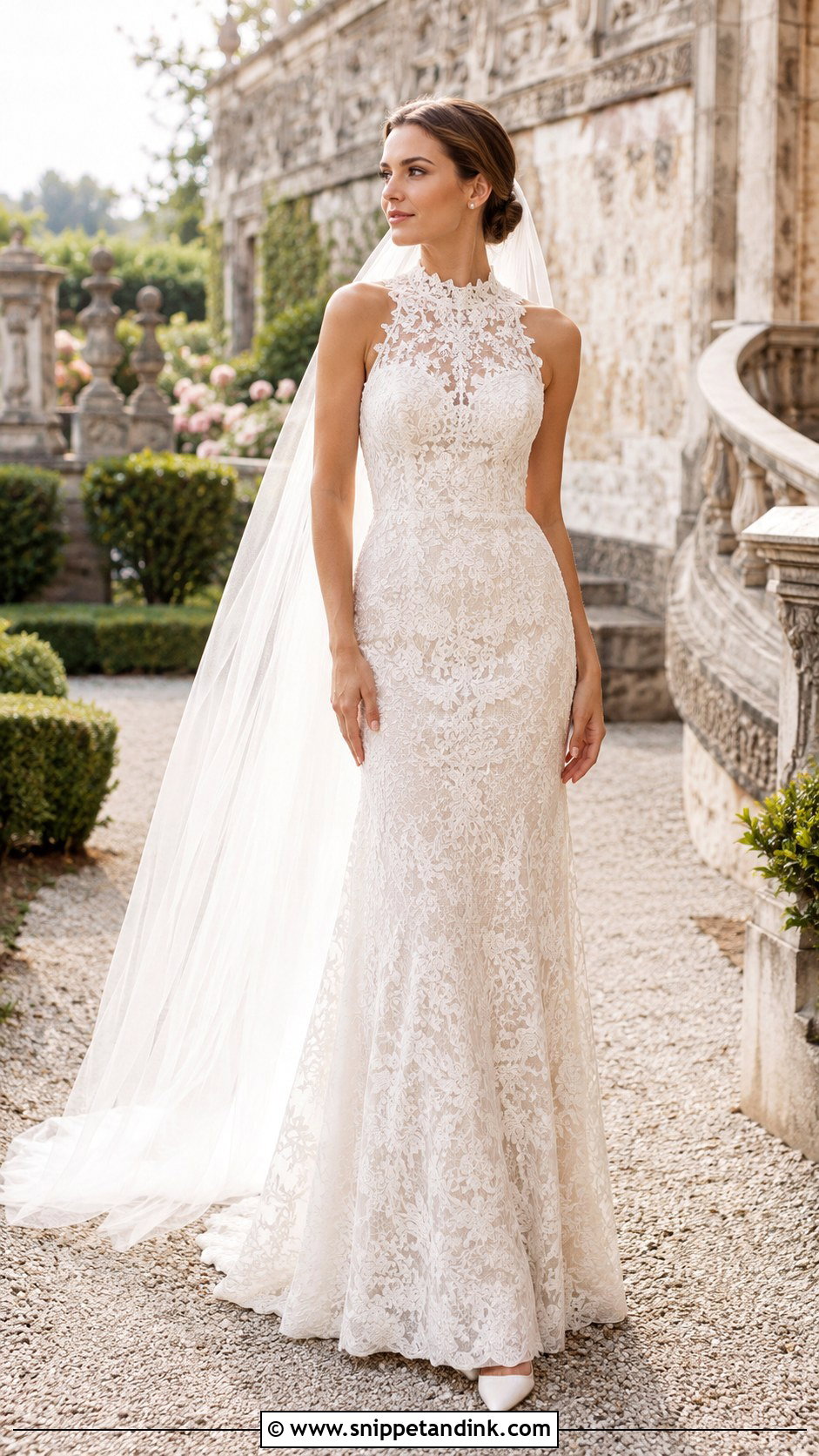
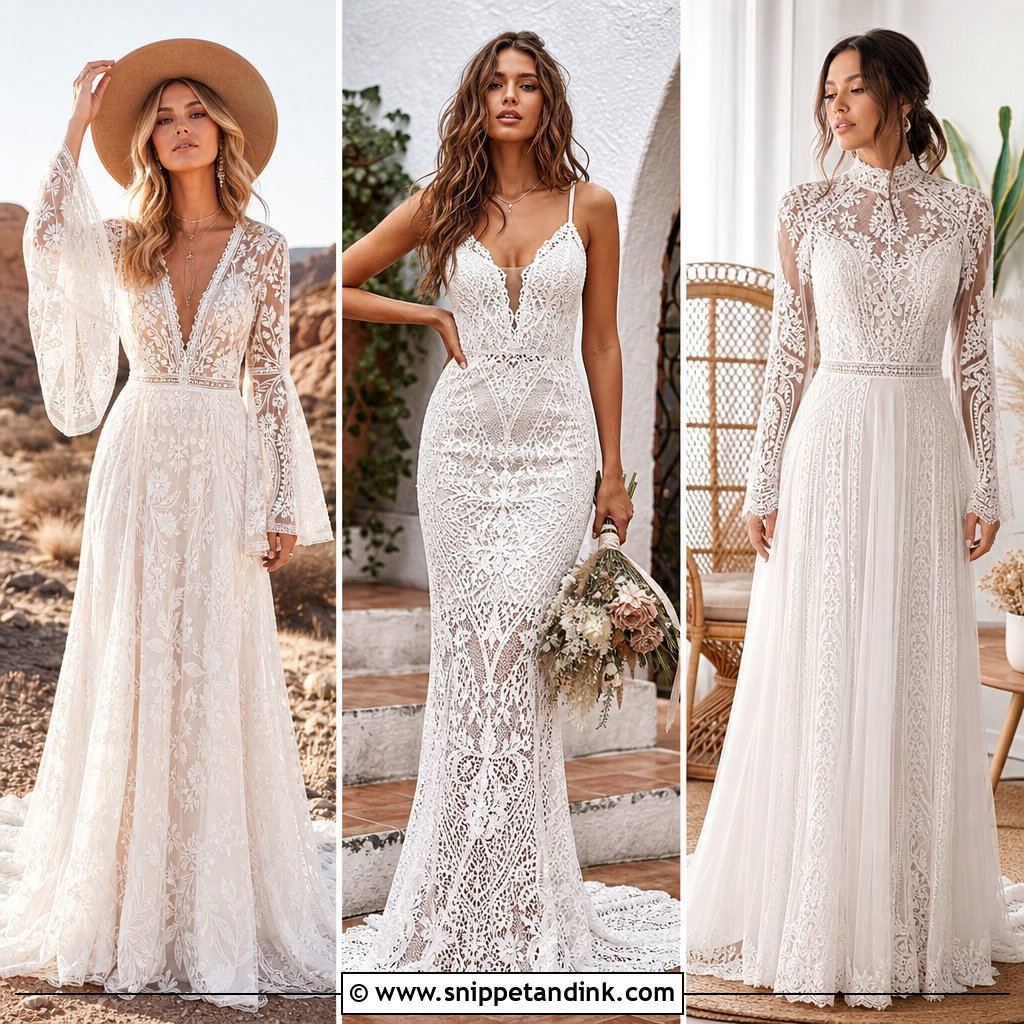
High-neck lace looks fresh when the lace has a graphic pattern and the cut stays streamlined. Graphic florals, crochet-style lace or fine Chantilly over a clean lining all work. A sleeveless bodice stops it feeling heavy, and a keyhole back adds contrast. I’d skip a belt if the lace already runs in strong horizontal bands, since two horizontals cut the body in half. Wear a low bun set below the collar so they don’t fight, and choose a plain veil.
11. Long Sleeve Sheer Lace Bridal Gown
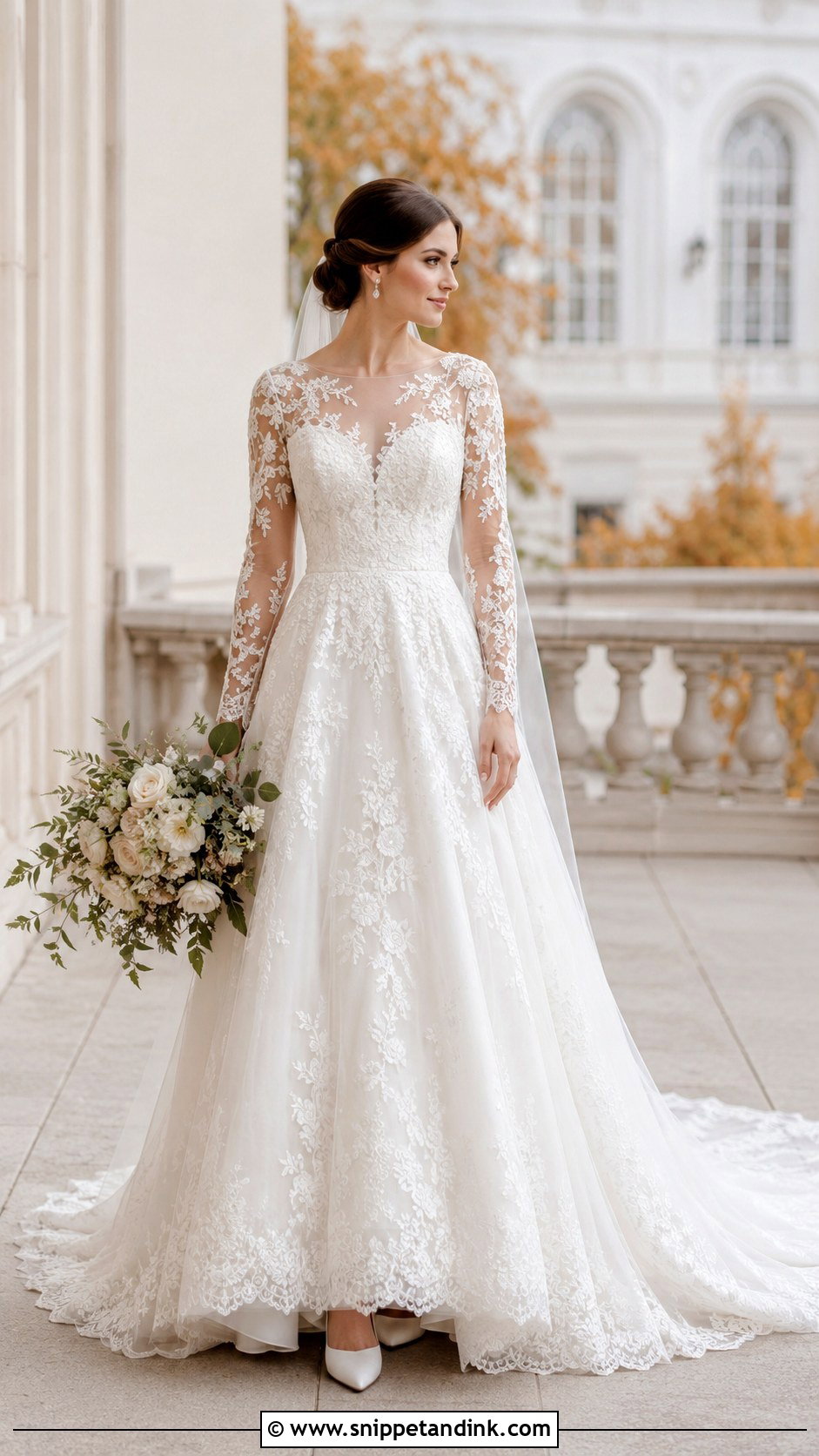
Sheer lace sleeves are the ones I watch most closely at fittings, because illusion tulle has no stretch and pulls at the underarm the first time you hug someone. A fitted cuff keeps the sleeves clear of the bouquet. The lined bodice keeps it ceremony-appropriate, and embroidery shows best against skin. Choose an A-line for easy movement or a fit-and-flare for more shape. A chapel veil with a simple edge, closed-toe pumps and a low chignon suit cooler months.
12. Bridal Gown With Cape
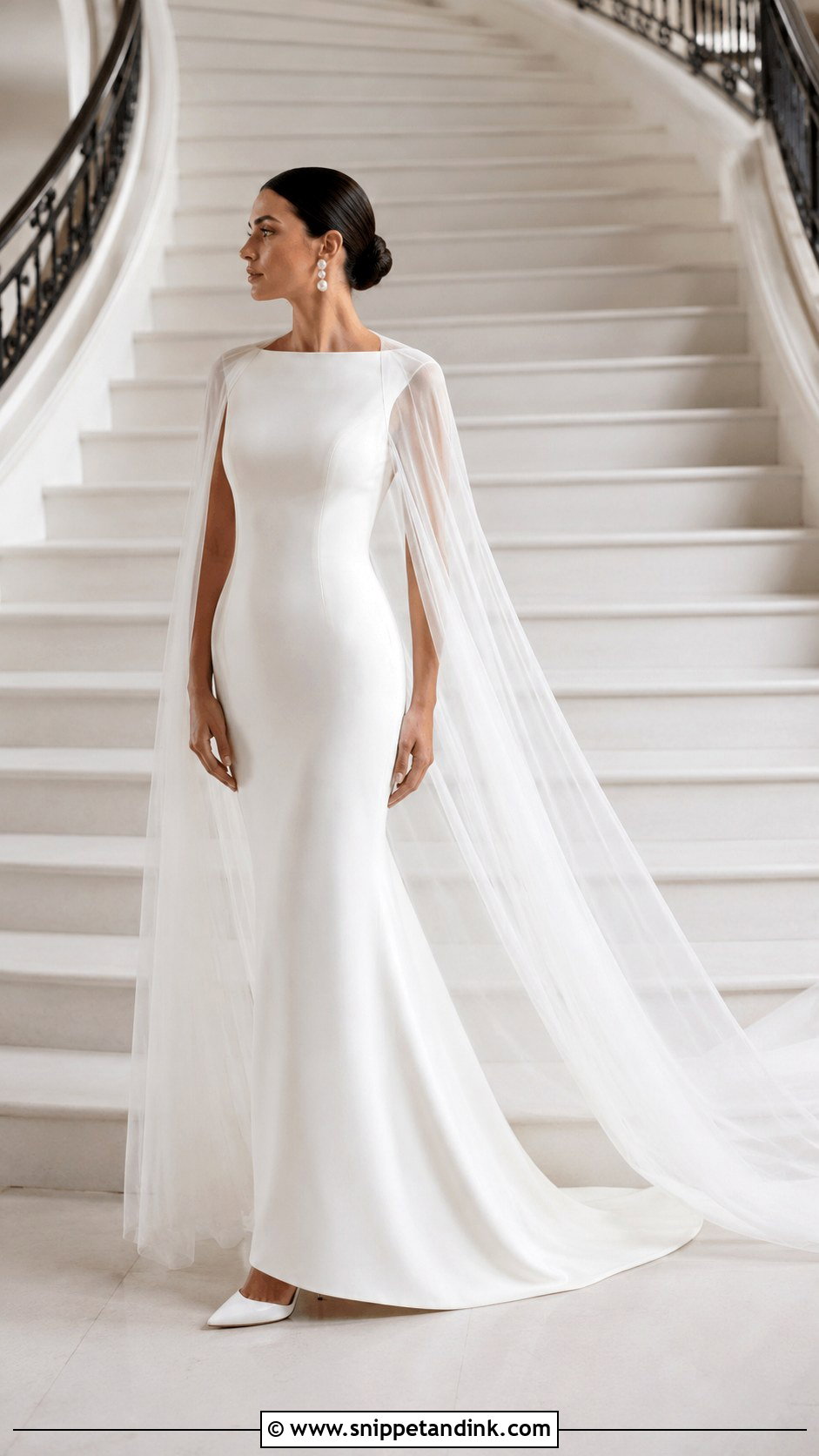
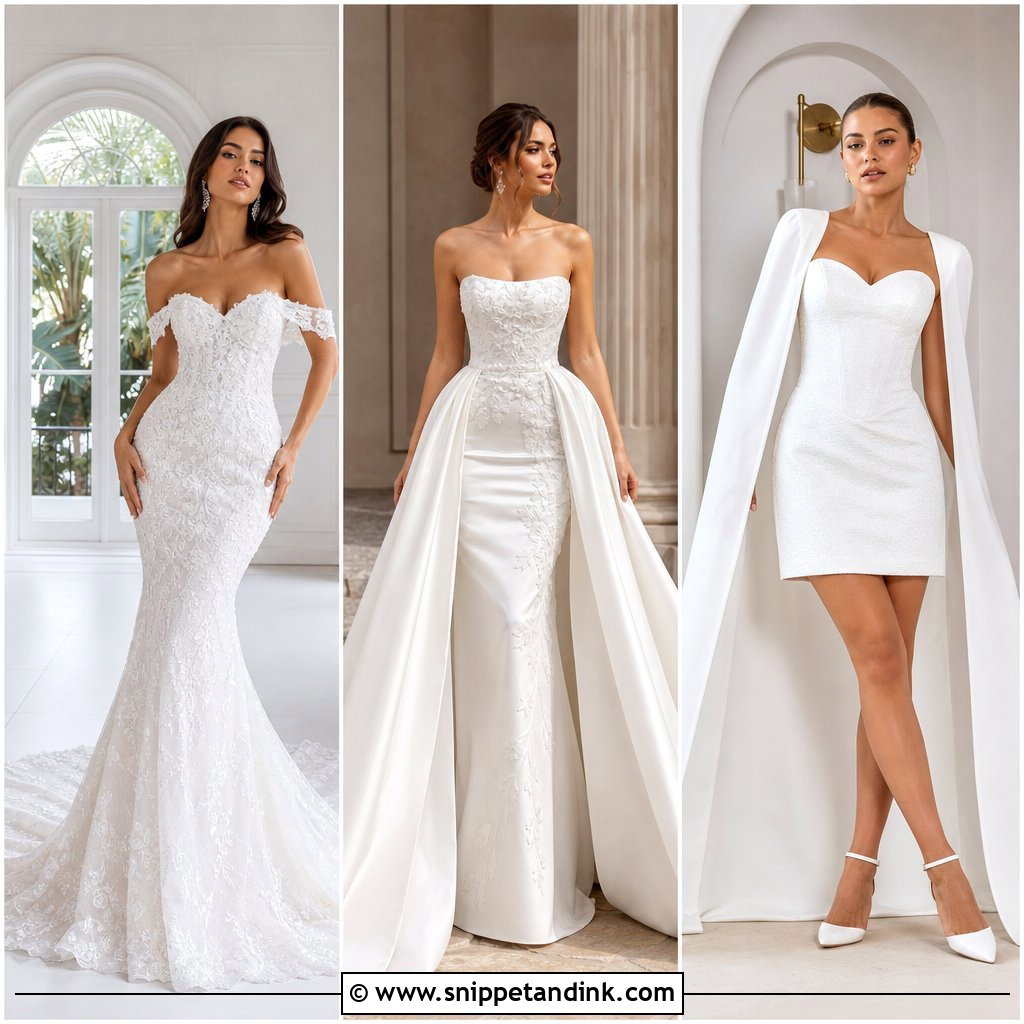
Capes let the gown underneath stay simple. Start with a crepe column, a satin A-line or a plain strapless dress and add a sheer tulle cape, a pearl-trimmed one or a structured shoulder cape that trails like a train. The attachment points are where I focus: hooks or snaps sewn to a reinforced seam, so removing the cape can’t tear the neckline. Skip the veil, since the cape already provides the movement. Take it off after the ceremony for an easier reception.
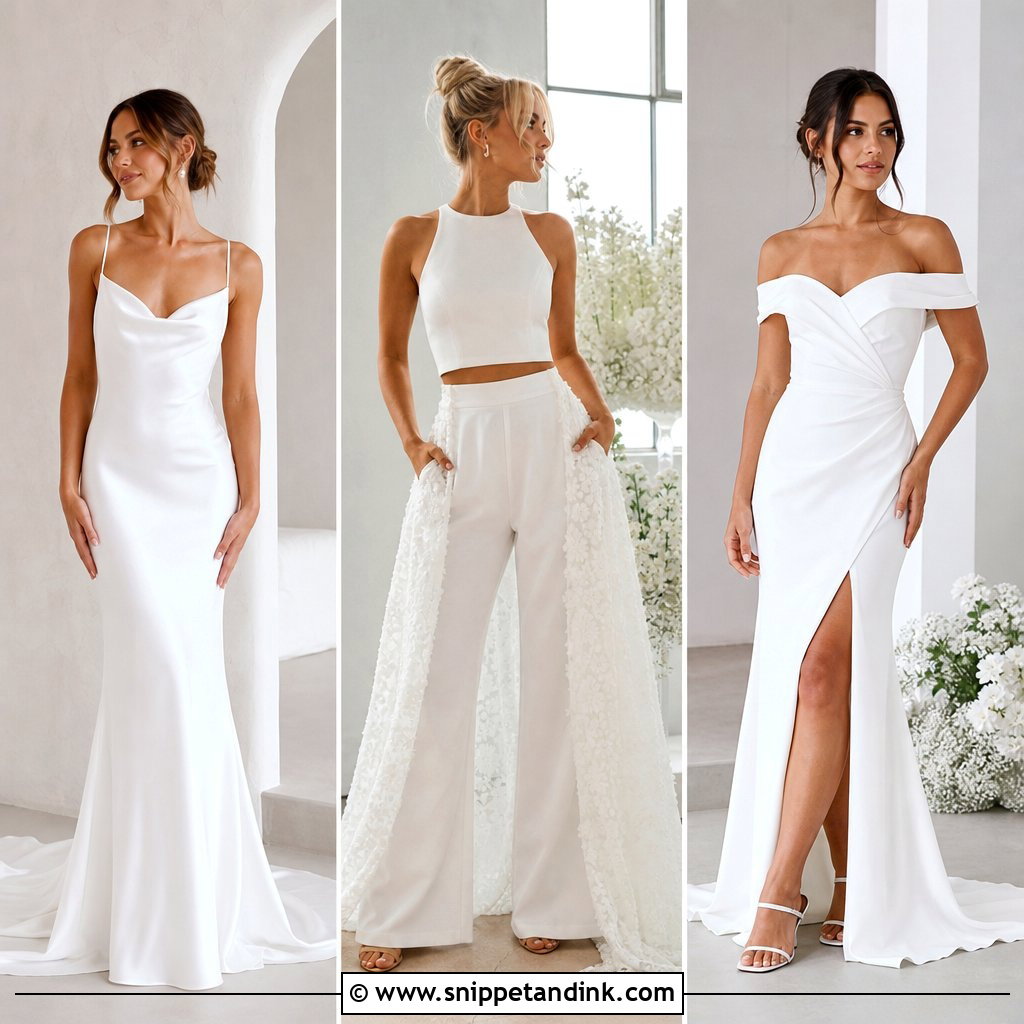
13. Bridal Gown With Detachable Overskirt
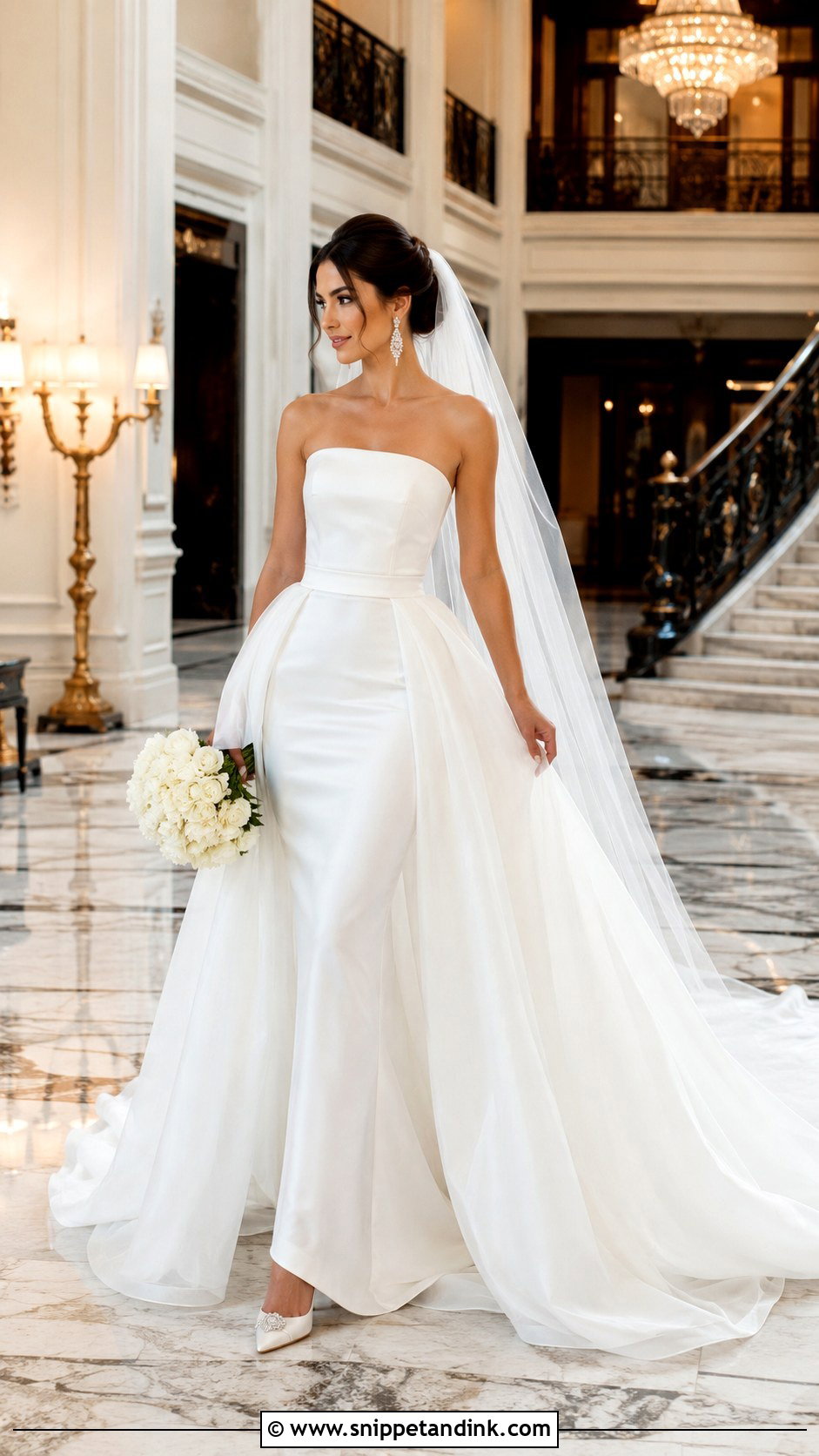
One gown, two silhouettes. A fitted column, trumpet or slim A-line base should be comfortable enough to party in, then a full satin, tulle or organza overskirt adds ceremony volume and perhaps a chapel or cathedral train. I check the waistband from the back in a mirror, since that’s where a visible closure ruins the look. Practice the change once with whoever will help. Swapping earrings afterward makes the reception look feel new without buying a second dress.
14. Bridal Gown With Statement Bow
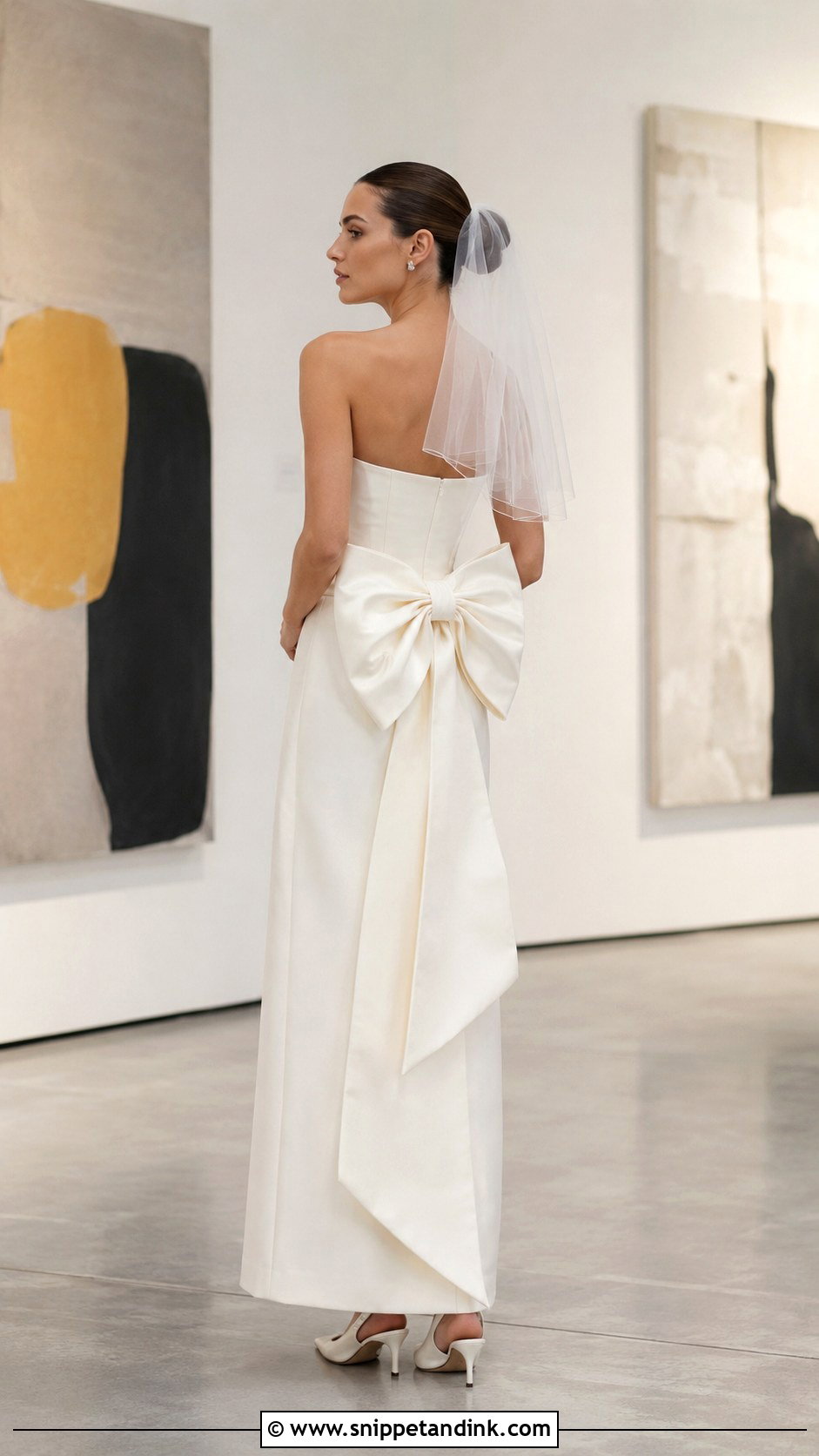
A bow is only as good as its stiffening. In crisp satin, mikado or organza, a large back bow holds its loops and looks great from the aisle; in soft fabric it collapses by the first dance. I also check where it sits when you lean back in a chair, because a big back bow gets crushed. Keep the gown itself streamlined, with satin slingbacks, small crystal earrings and a sleek bun, and choose a short veil or a clear long one so the bow stays visible.
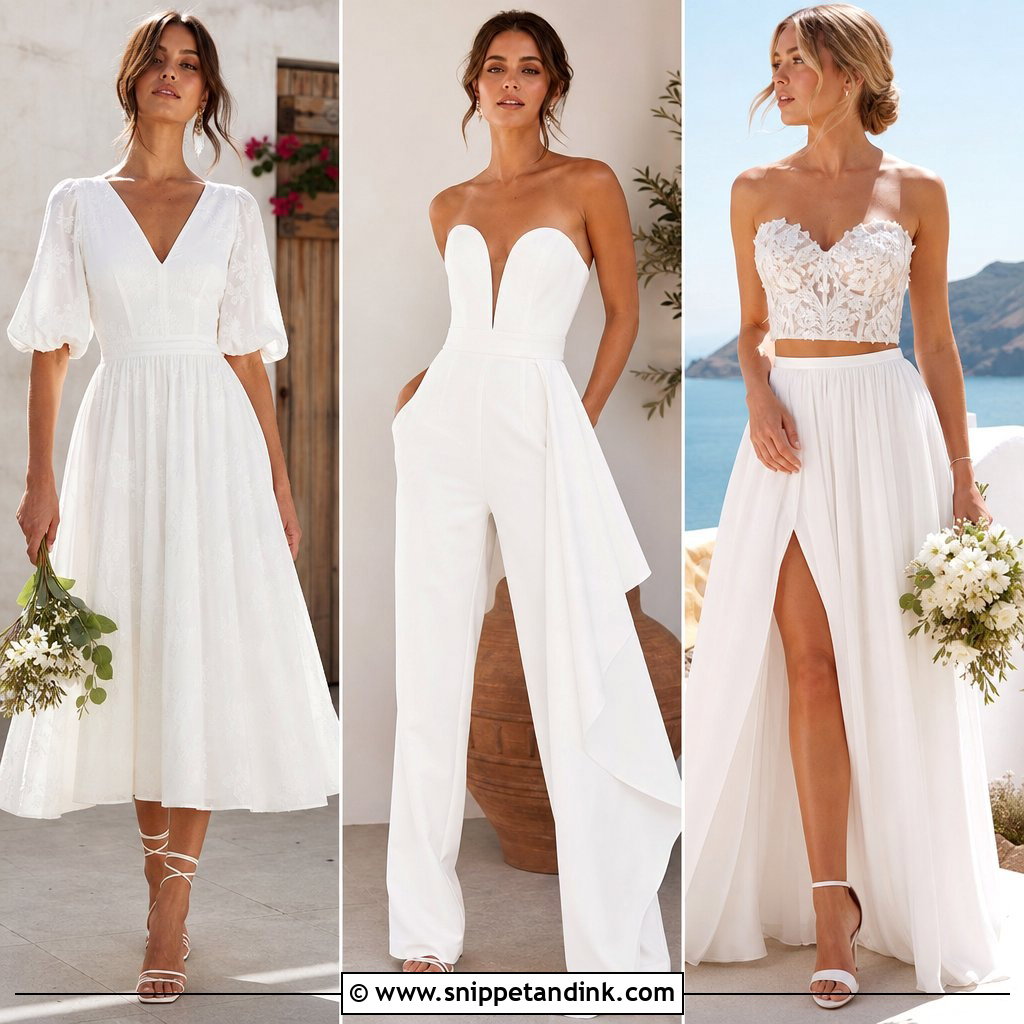
15. Tea Length Bridal Gown
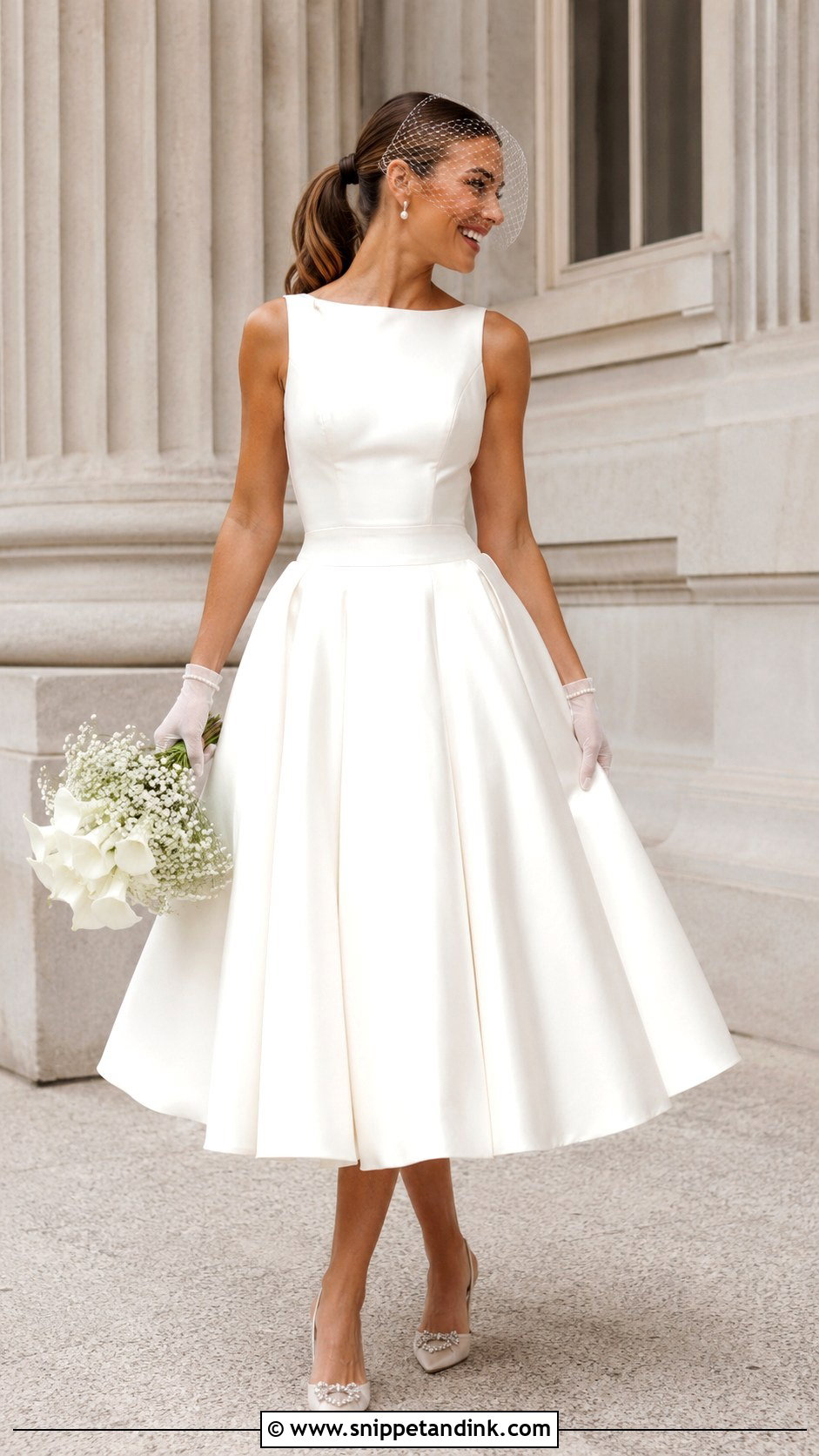
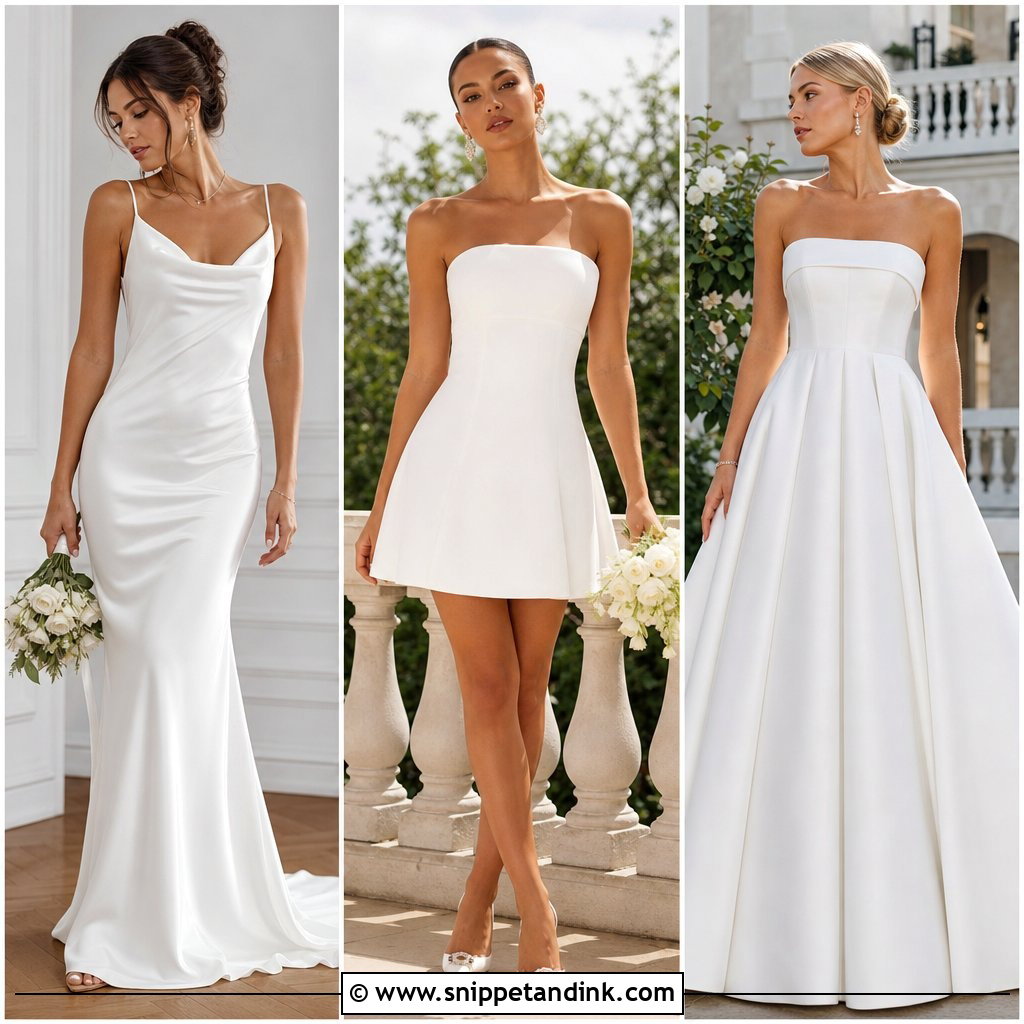
A tea length bridal gown lands between the knee and ankle, which means your shoes are part of the outfit and you can actually walk through a small restaurant without gathering your skirt. Full skirts look mid-century; a narrow column feels cleaner. Get the hem right with the exact shoes, because even a half-inch heel difference changes the proportion. Pointed slingbacks, pearl earrings and a birdcage veil suit it, with short gloves if you like them.
16. High-Low Bridal Gown
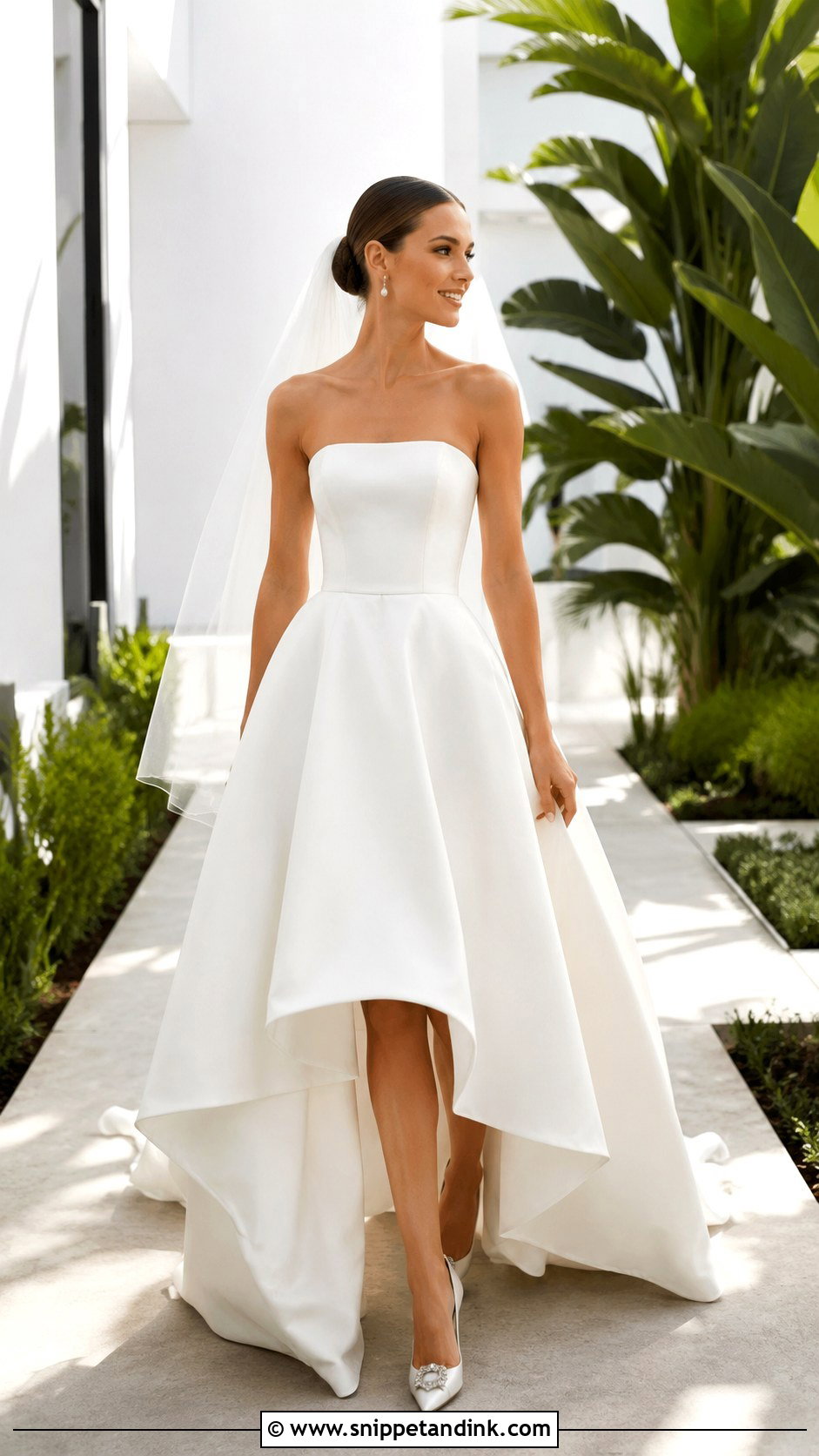
The back of a high-low hem trails while the front shows the ankle or lower calf, so you walk differently in it. I have brides practice on the actual surface, grass or tile, before the wedding. Structured satin makes a bold shape, while layered organza or tulle feels lighter. Because the shoes are visible all day, choose pointed pumps or platform sandals you trust for hours. Keep earrings simple and the neckline clean, and soften it with a fingertip veil.
17. Bubble Hem Bridal Gown
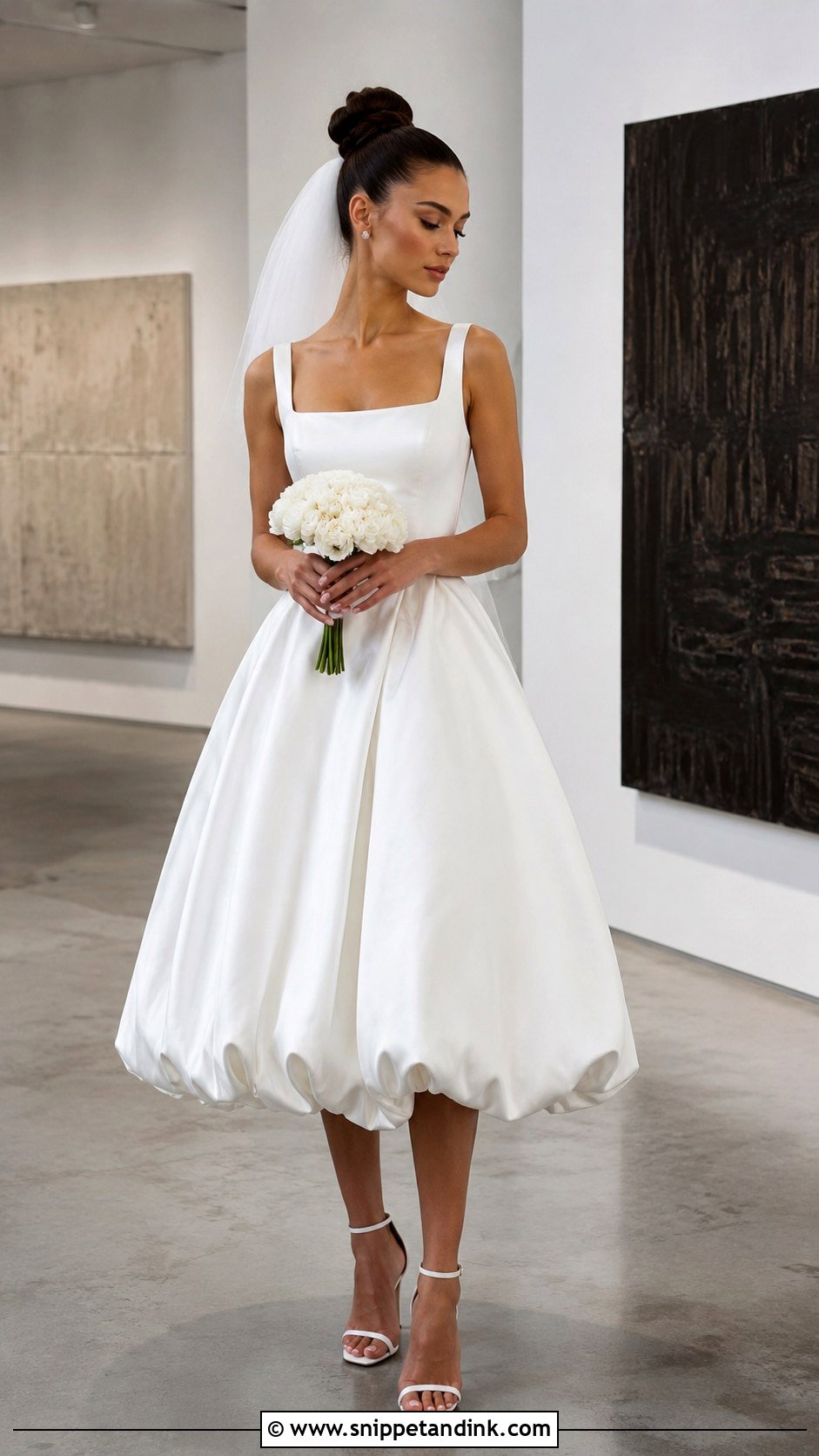
A bubble hem bridal gown is a couture shape that only works in stiff cloth. Taffeta, satin or light organza hold the rounded hem; soft fabrics just look deflated. The bubble can sit on a tea-length dress, a full skirt or an overskirt over a slim base. I keep the bodice strapless or square, the bouquet compact and the hair in a high bun so the outline stays readable. A short veil or a single hair accessory is enough.
18. Pearl Embellished Bridal Gown
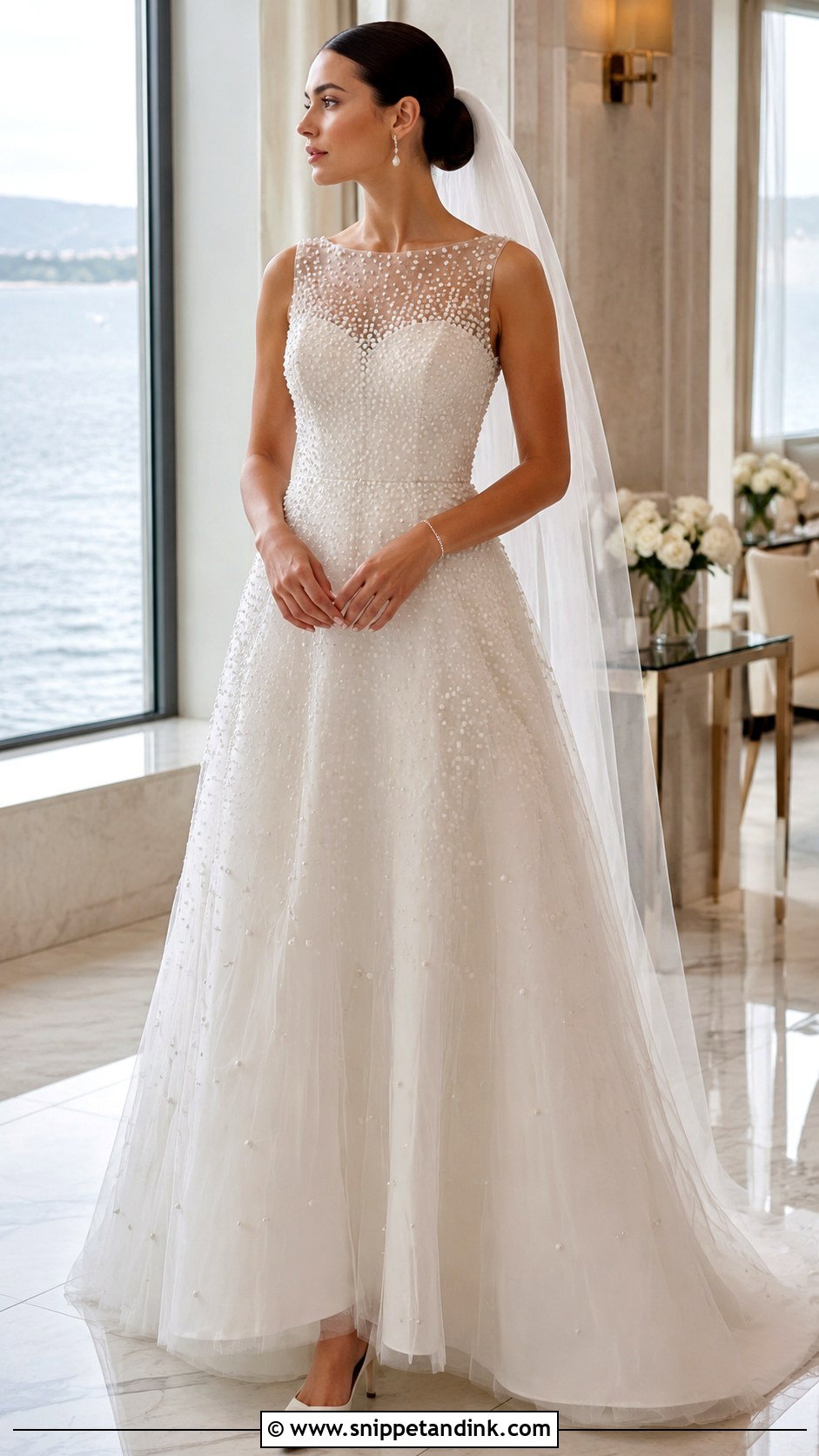
Pearls give a soft glow rather than glitter, which suits daylight and candlelight equally. They can be scattered on tulle, edged along a neckline or packed onto the bodice. I check the inside of the bodice by hand, because pearls sewn through to a scratchy backing will irritate skin by evening; a smooth lining fixes that. Wear pearl earrings but not pearls in every accessory, and keep the veil plain so the gown doesn’t look like a costume.
19. Silk Slip Bridal Gown
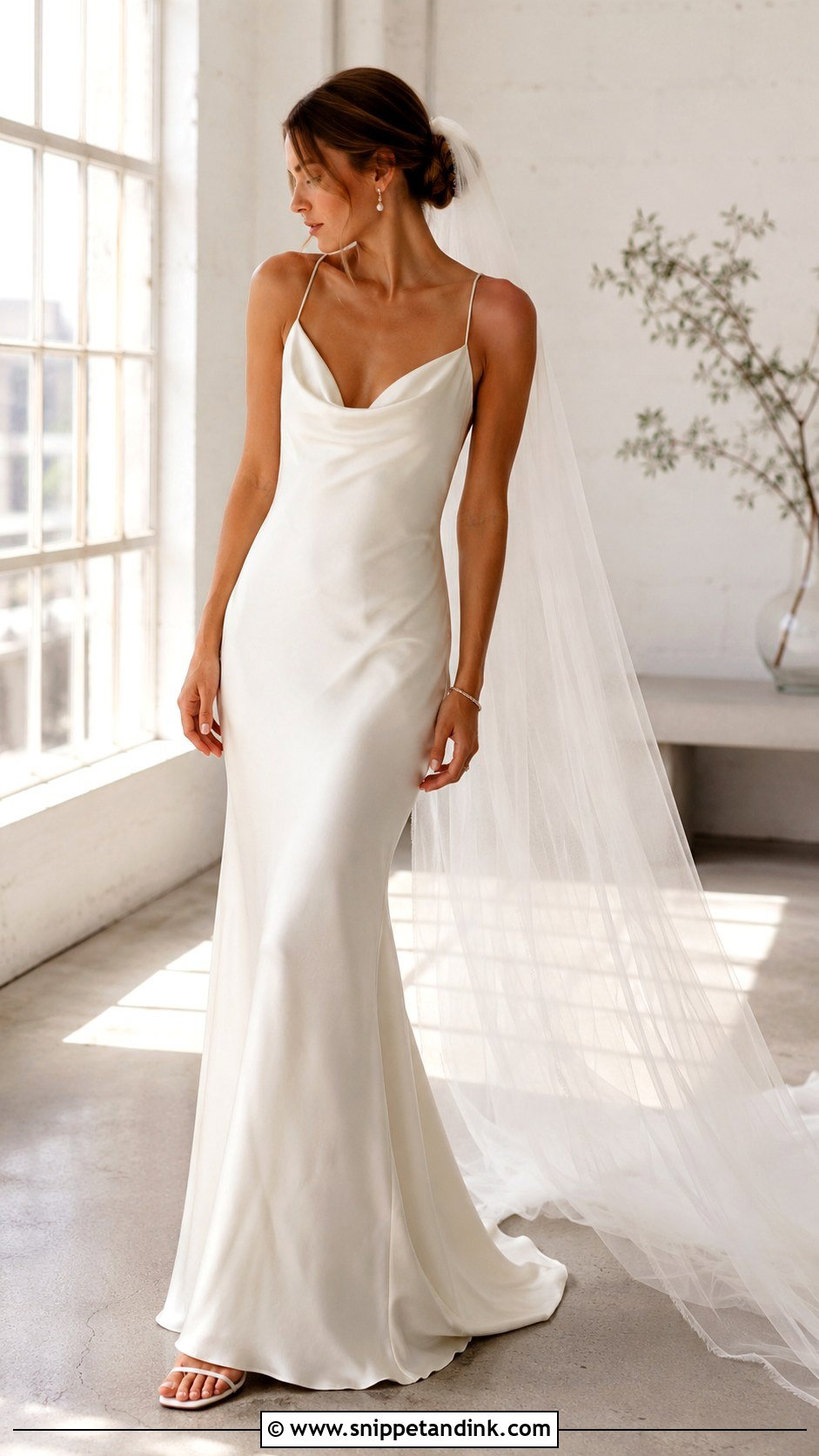
Bias-cut silk is the most honest fabric in bridal. It skims when it fits and clings when it doesn’t, and it shows every line underneath, so invisible underwear and careful alterations aren’t optional. Adjustable straps help position the bodice. I’d steer someone away from a slip if they hate the idea of the fabric moving against their body all day. Strappy heels, fine drop earrings and smooth waves keep it understated; add a tailored ivory blazer or sheer cape for cooler evenings.
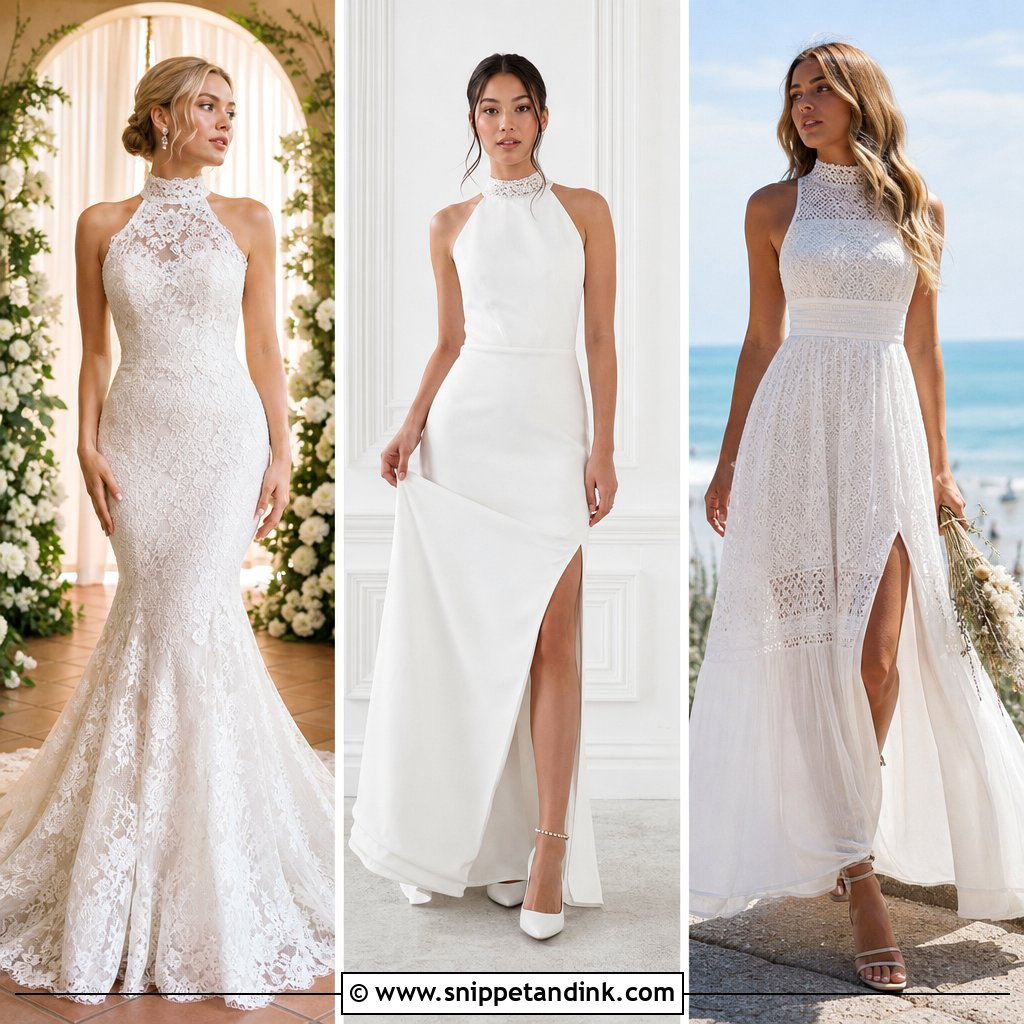

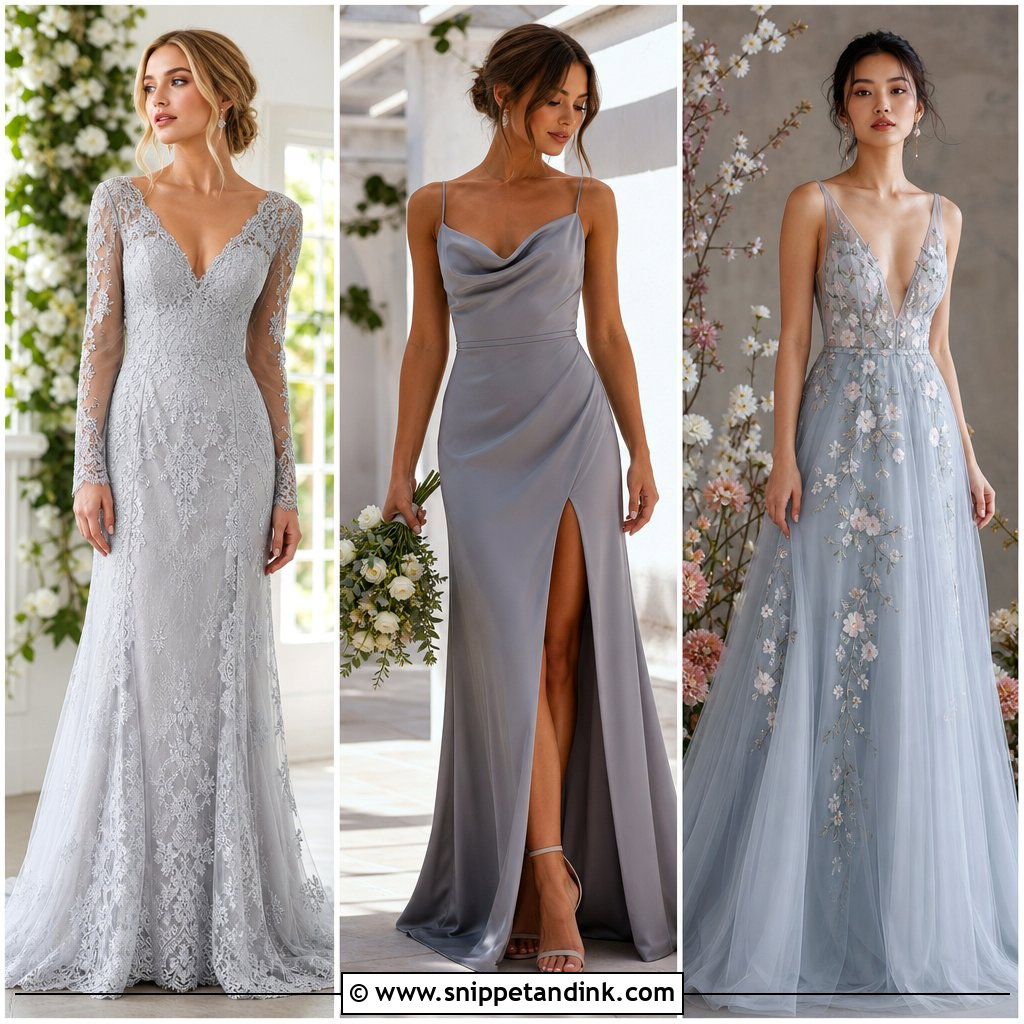
20. Colored Floral Bridal Gown
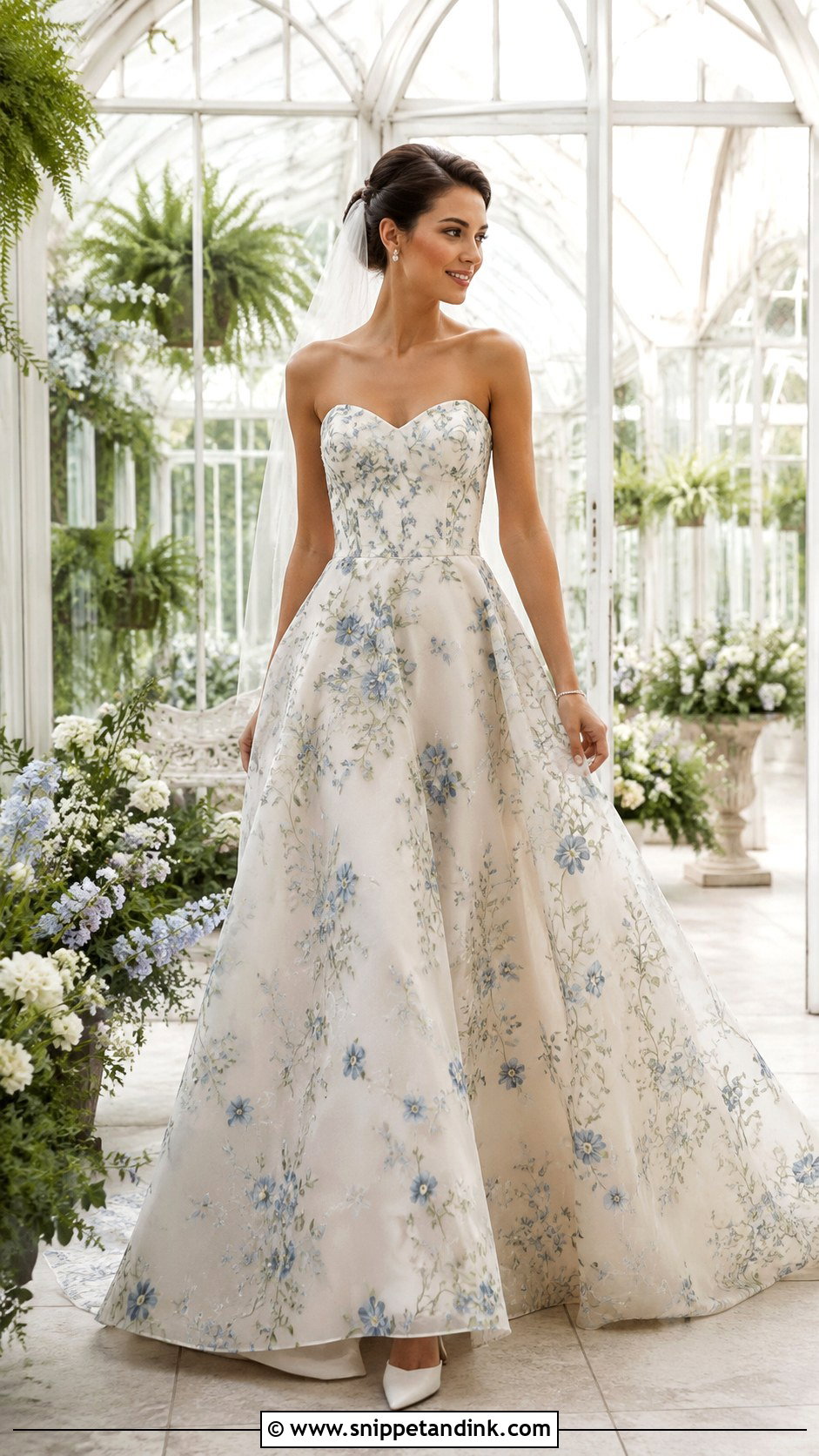
Color in a bridal gown works best when it’s placed over a light neutral base: pale blue embroidery, blush tulle, soft green vines or watercolor florals. A structured bodice and full A-line keep it formal, while flowing chiffon feels like a garden party. I’d pull just one shade from the gown into the bouquet instead of matching every color. Keep accessories ivory and small, and choose a plain veil or a refined comb so the floral work stays visible.
Underwear Is Part of the Silhouette
I’ve watched the same gown look completely different on one bride across two fittings, only because she changed what she wore underneath. Modern gowns with clean surfaces make this even more obvious.
- Satin and silk slips: laser-cut, edge-free briefs in a shade close to your skin, never white, which shows through ivory.
- Corset and boned bodices: often nothing on top, because the support is built in. Ask your seamstress before buying a bustier you may not need.
- Square necks and wide straps: a well-fitted bra or longline usually works, which is a big comfort advantage.
- Backless and low-back gowns: adhesive cups or cups sewn directly into the gown by your seamstress.
Buy undergarments before the first fitting, not after. Shapewear changes measurements, and a gown altered without it won’t sit the same way with it.
One more thing I check at the final fitting: sit down in good light and look at your hips and back in a phone photo. Lines from a waistband or a bra band that you can’t see in the mirror often show up clearly in pictures, especially in satin, crepe and silk. If you spot one, there’s still time to swap the piece or have cups added to the gown.
Ask How It Feels at Midnight, Not Just in the Mirror
Every one of these gowns looks right in a store mirror. The real test is how it feels walking down an aisle, sitting through dinner, dancing and lifting your arms for a hug. Match the fabric and volume to your season and venue, then build around it with shoes you can stand in, undergarments that disappear and jewelry that supports rather than competes. Satin, sculpture, flowers, defined waists, removable layers and soft color are all modern. The right gown is the one that still fits and feels like you after alterations, from the first photo to the last dance.
You'll Like These Ideas:


Leave a Reply