
Reading a Gown’s Quality at the First Appointment
Sophisticated dresses tend to be simple, and simple dresses show their construction. Before I let a bride fall in love with a gown, I look past the silhouette at a few quiet details that decide whether it will still look crisp at the end of the night.
- Turn it inside out. Neat seam finishes, a full lining and internal boning that lies flat usually mean the outside will hold its shape.
- Pinch the fabric and let go. Good satin and crepe spring back; thin fabric keeps the crease.
- Sit down in it for a full minute, then stand. Watch where it wrinkles across the lap and whether the bodice drops.
- Look at the hem and train under the shop lights. Uneven hems and puckered seams show far more on plain fabric than on lace.
- Lift your arms and turn. Straps, sleeves and necklines should stay put without you holding them.
A sample dress will rarely fit perfectly, and that’s fine; a seamstress can fix size. What she can’t fix is a fabric that creases badly or a bodice built without enough support.
1. Satin A Line Wedding Dress
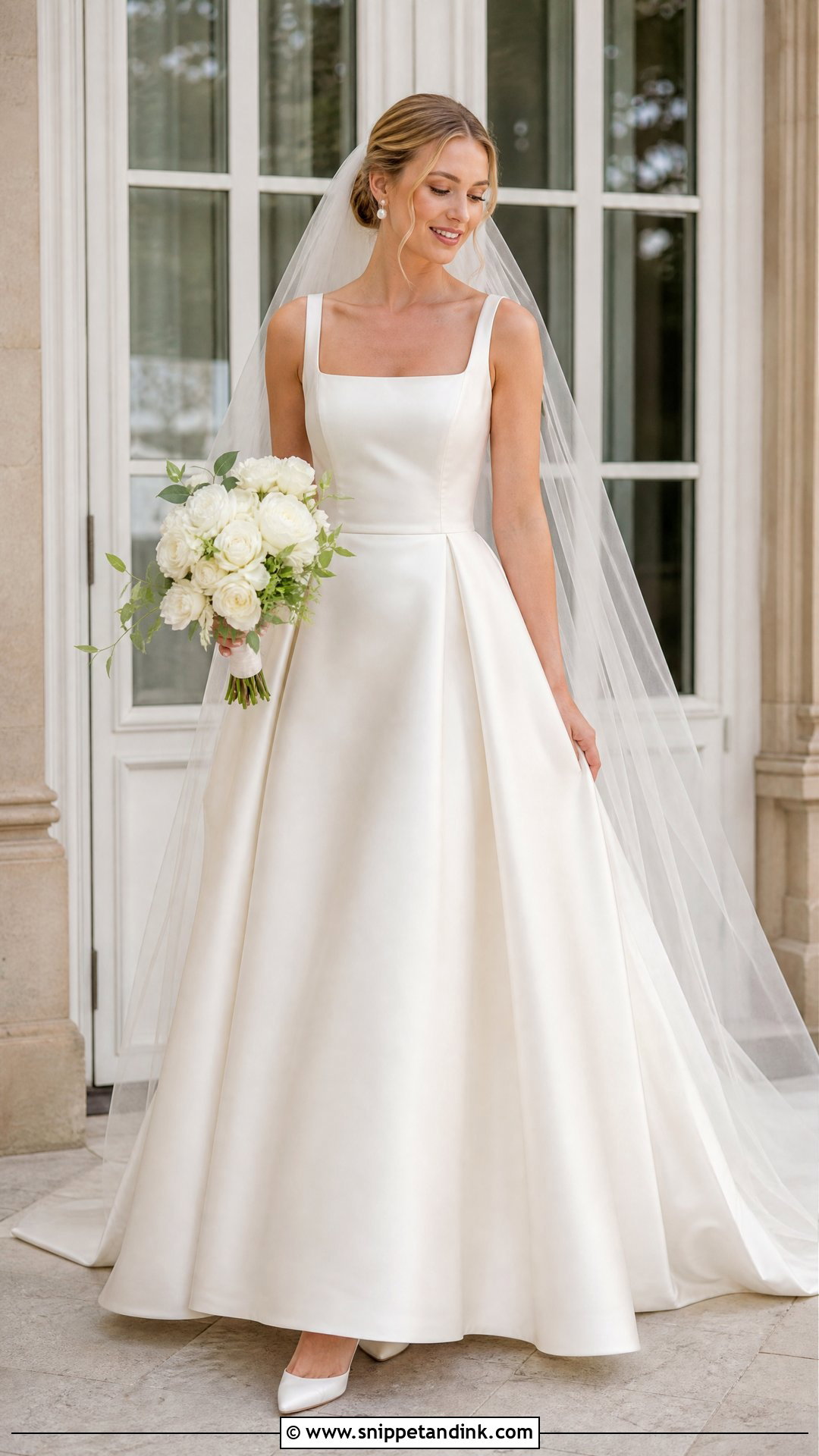
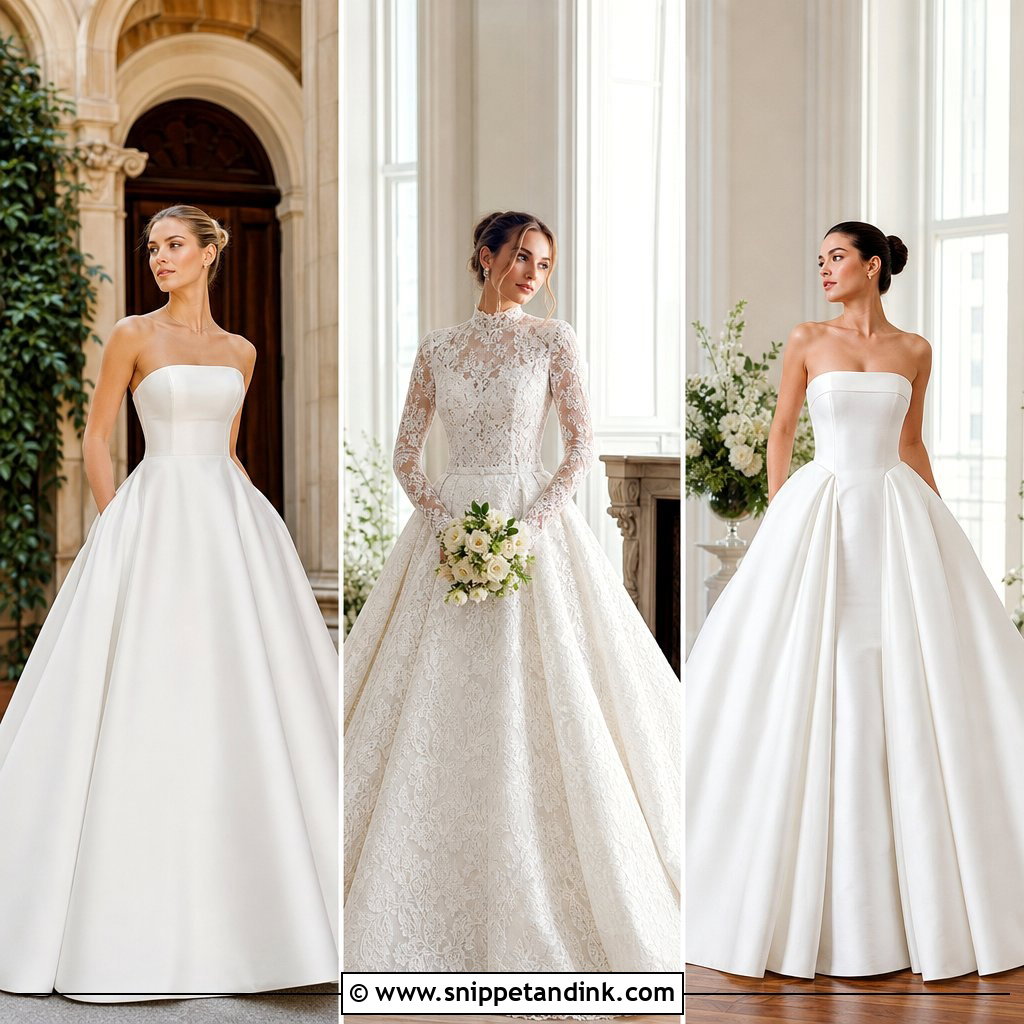
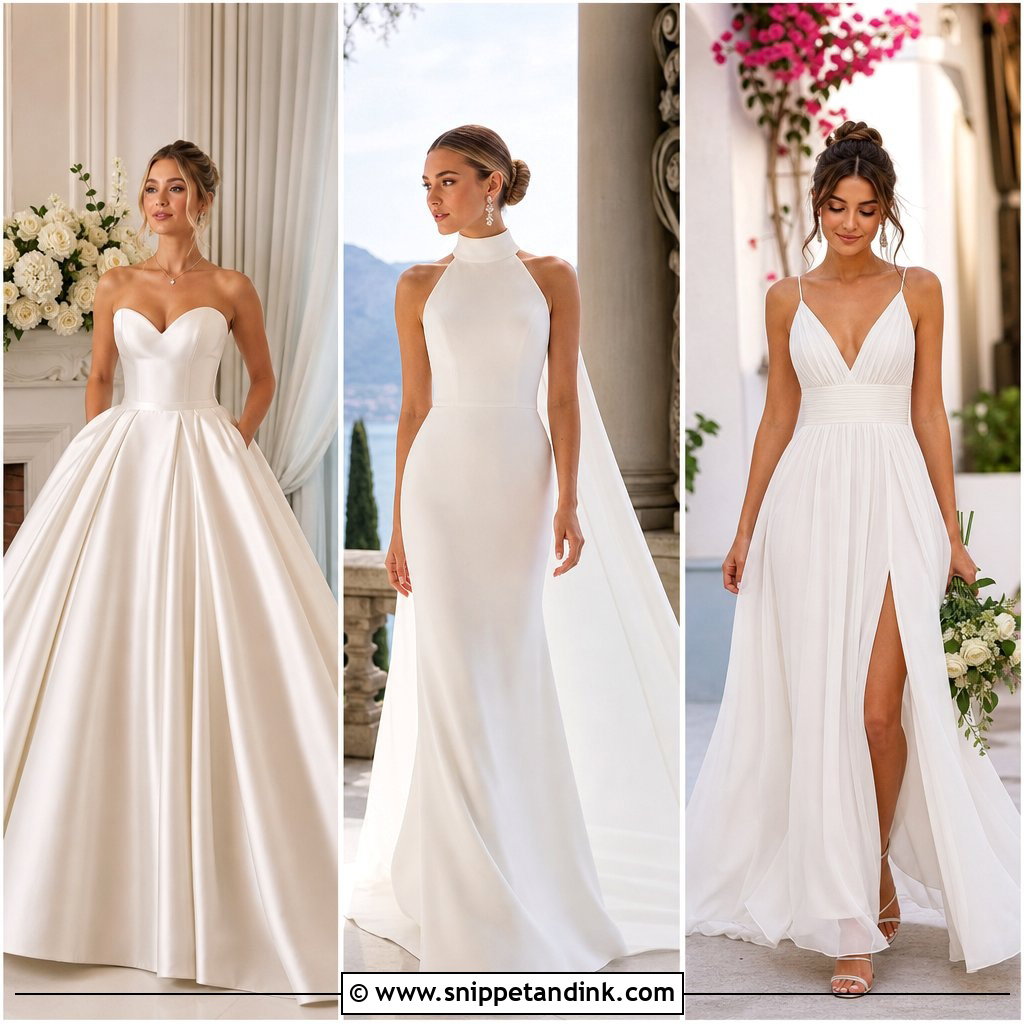
If a bride walks into a fitting room unsure of everything, a satin A-line is usually the first dress I pull. Satin gives the polished surface, and the A-line defines the waist then falls away from the hips, so it suits a wide range of figures without feeling stiff. Look at the weight of the satin, though. Thin satin shows every seam allowance and wrinkles across the lap when you sit; a heavier duchess or crepe-backed satin holds its line. A square, sweetheart or bateau neckline keeps it clean. Pearl studs, a low bun and pointed satin heels finish it. Formal venue, cathedral veil; garden or estate, a shorter veil and soft waves.
2. Long Sleeve Lace Wedding Dress
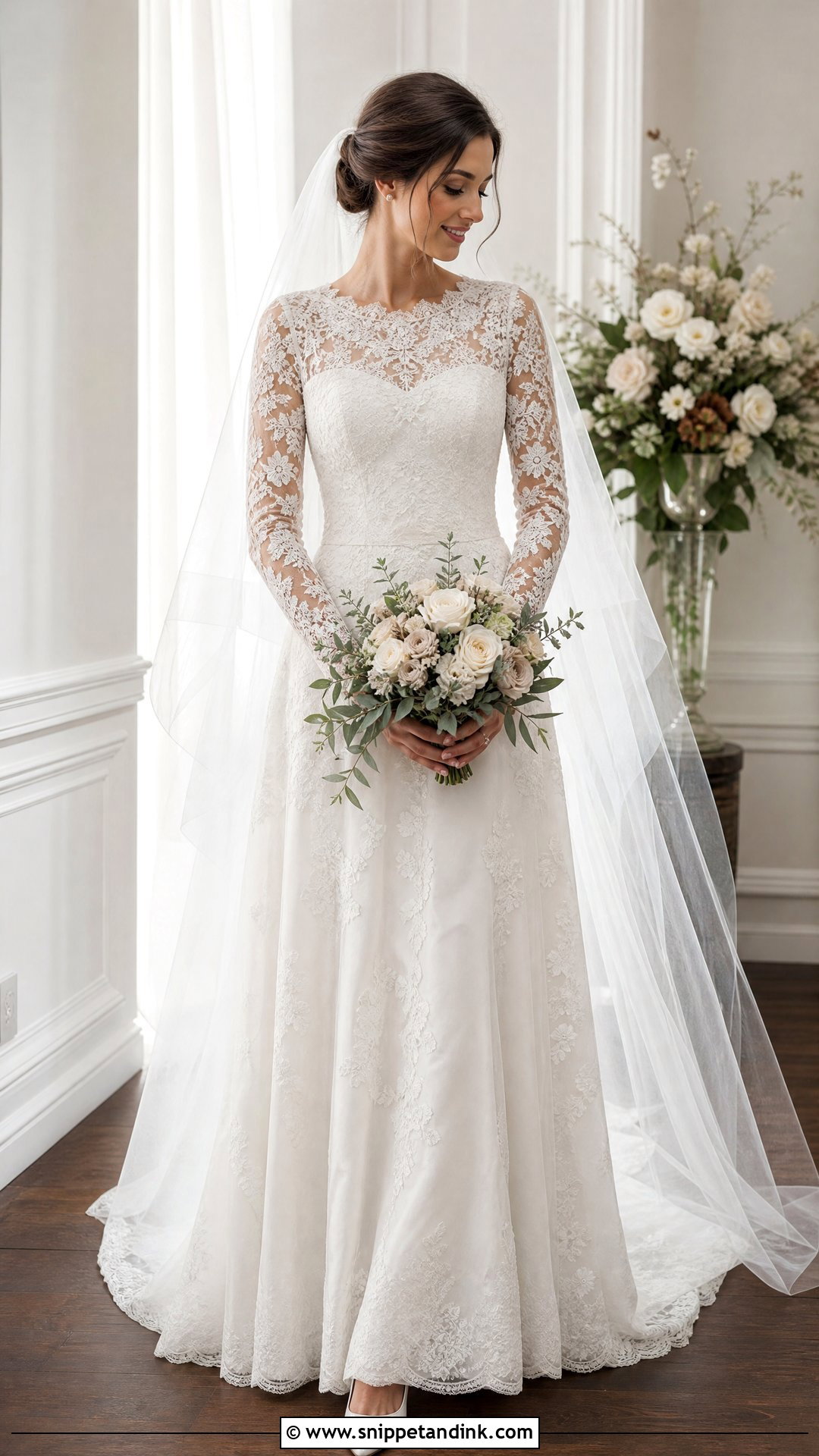
Lace sleeves give coverage and still read as romantic. Fine lace suits autumn, winter and early spring, and the lightest lace can work in warmer months too. What I check first is the cuff and the armhole. Lace sleeves cut tight at the upper arm restrict hugging and dancing, so raise both arms and hold them there for a few seconds before you fall for the dress. A fitted bodice with a soft skirt and subtle lining keeps the lace delicate. High necks feel classic, a V feels softer. Simple earrings, a sleek veil and closed-toe heels are all it needs, and an understated bouquet keeps the attention on the lace.
3. Minimalist Column Wedding Dress
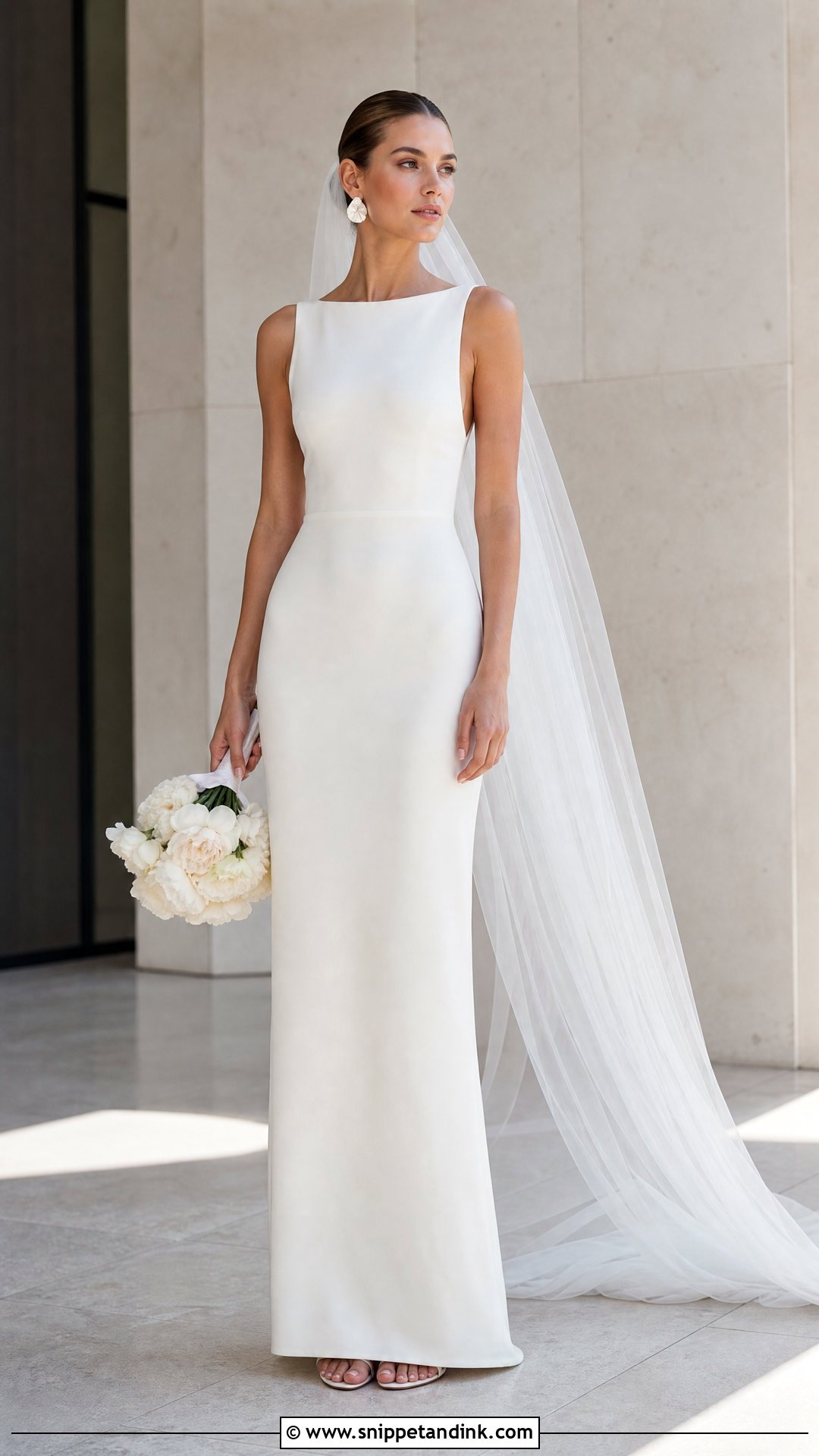
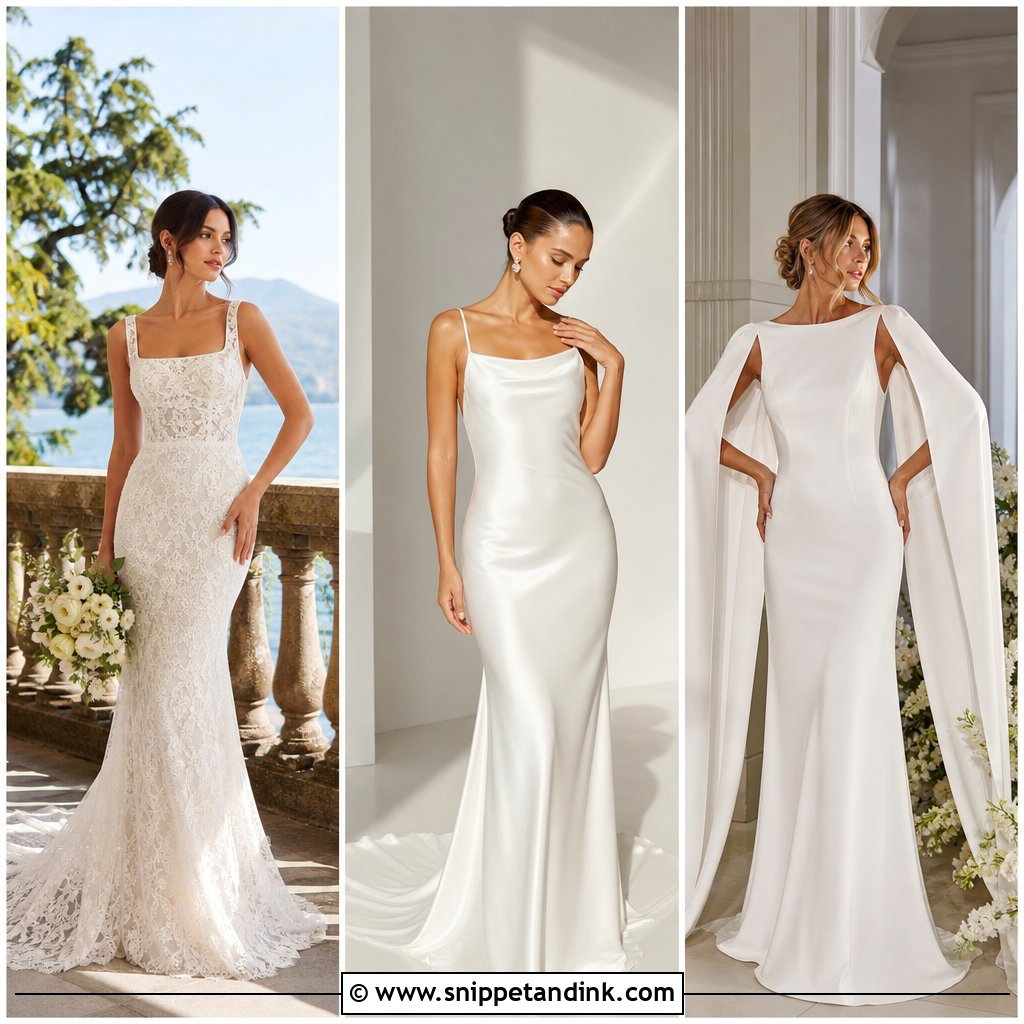
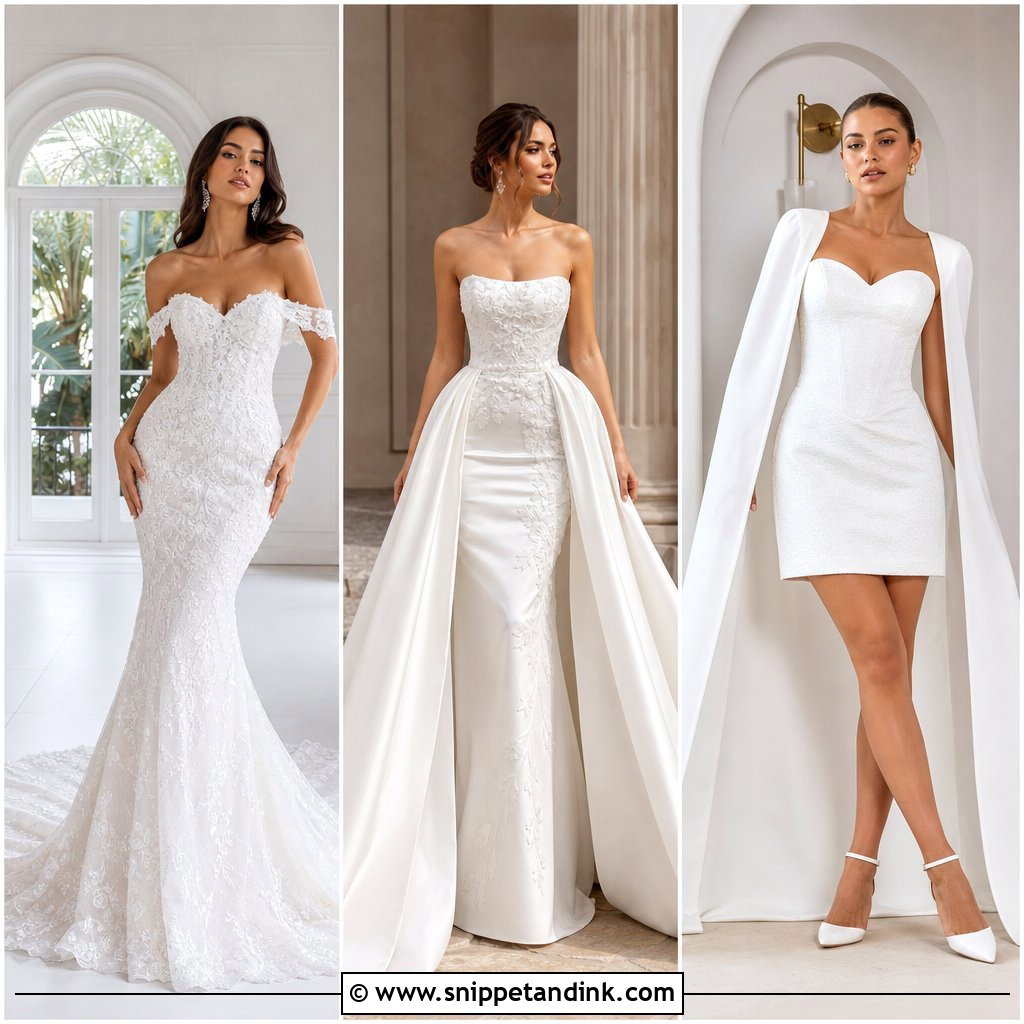
Column gowns follow the body with very little volume, and that is exactly why they are unforgiving. With no decoration to look at, the eye goes straight to the fit. A perfect hem, smooth seams and supportive inner structure are what make a simple crepe, satin or silk-blend column look expensive. I spend more alteration time on these than on ball gowns. Sculptural earrings, a smooth low bun and barely-there heels suit the clean line. A long veil adds ceremony drama without taking away from the simplicity.
4. Off Shoulder Wedding Dress
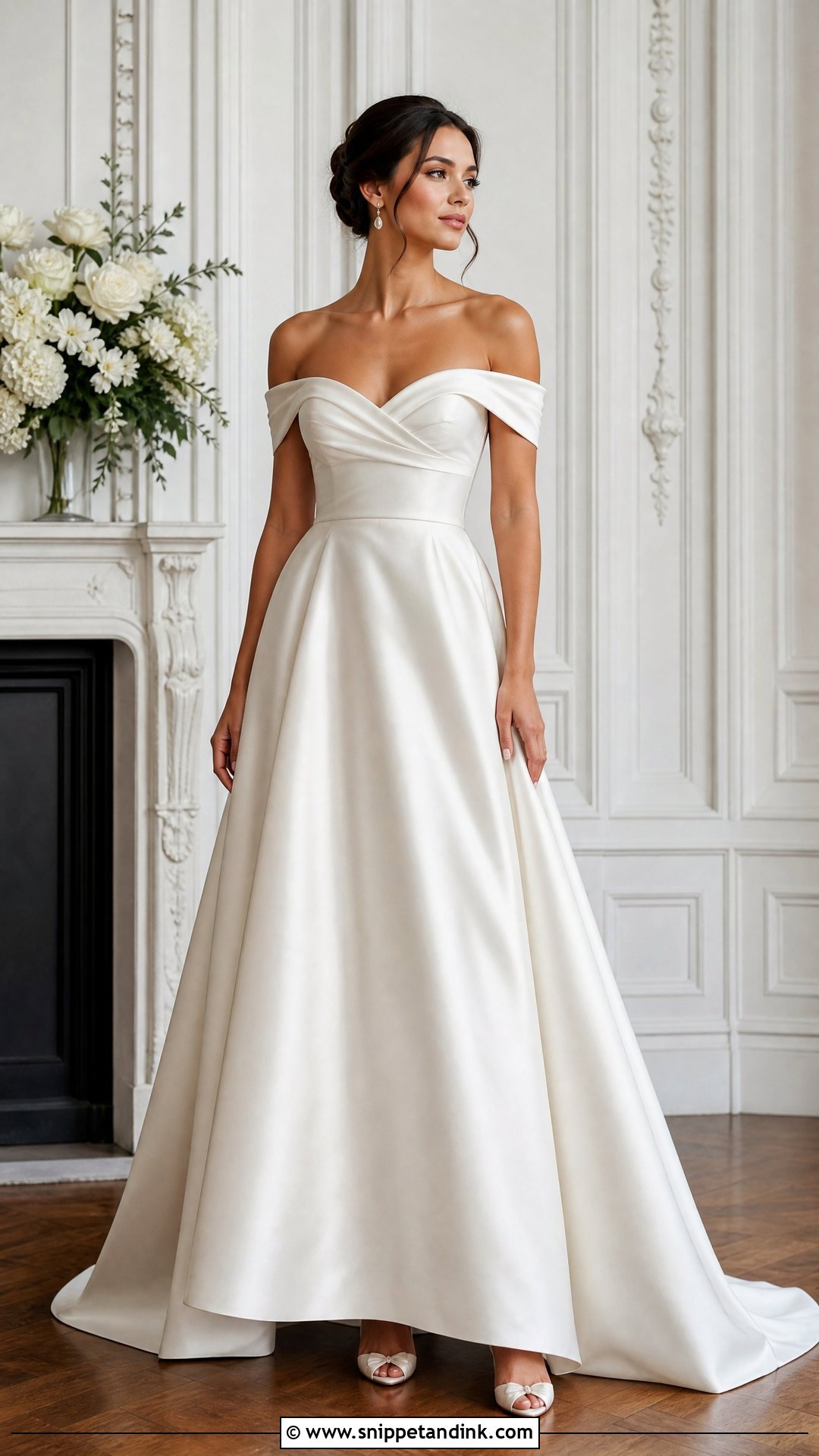
Off-the-shoulder necklines frame the collarbones and still give a graceful amount of coverage. Satin, crepe, lace and mikado all hold the shape. The issue I watch for is arm movement. A true off-shoulder band sits on the upper arm, so lifting a bouquet or hugging pulls the bodice up, and a band with a little elastic or a well-placed internal strap stops that. Balance it with an A-line or fit-and-flare skirt. Keep jewellery to small drops or pearl studs, and wear a soft updo so the neckline stays open. Elegant heels and a structured bouquet complete it.
5. High Neck Wedding Dress
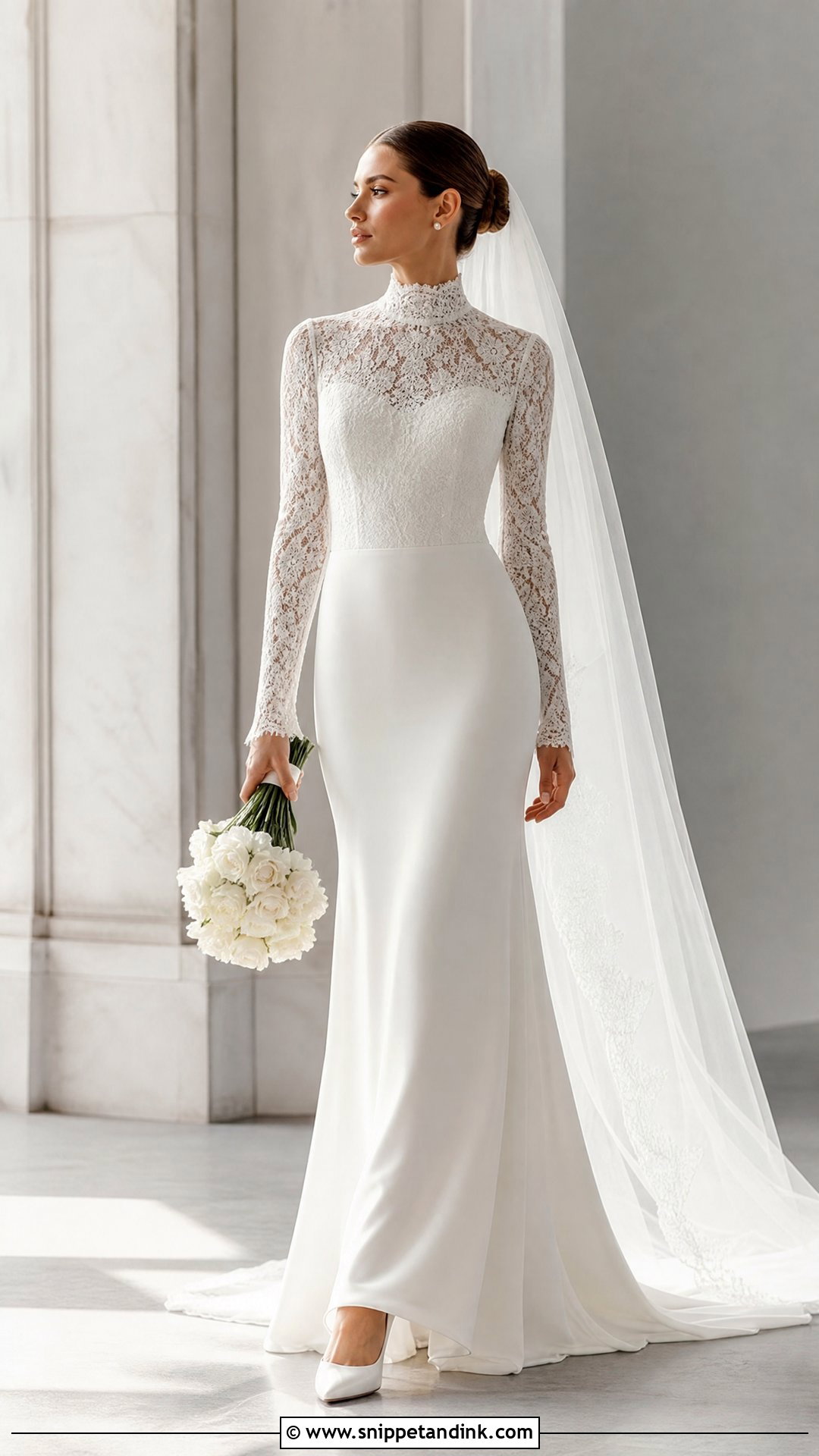
A high neck reads refined and slightly regal, and it suits brides who want modest coverage with a modern shape. A fitted column with a high neck feels architectural; high-neck lace feels romantic. The fabric must be light enough not to look heavy, especially on a shorter neck, where an illusion yoke helps a lot. Skip necklaces entirely. Focus on earrings, a clean hairstyle and a smooth veil, with pointed pumps or delicate slingbacks. City weddings, museum venues and elegant indoor celebrations suit it best.
6. Strapless Ball Gown Wedding Dress
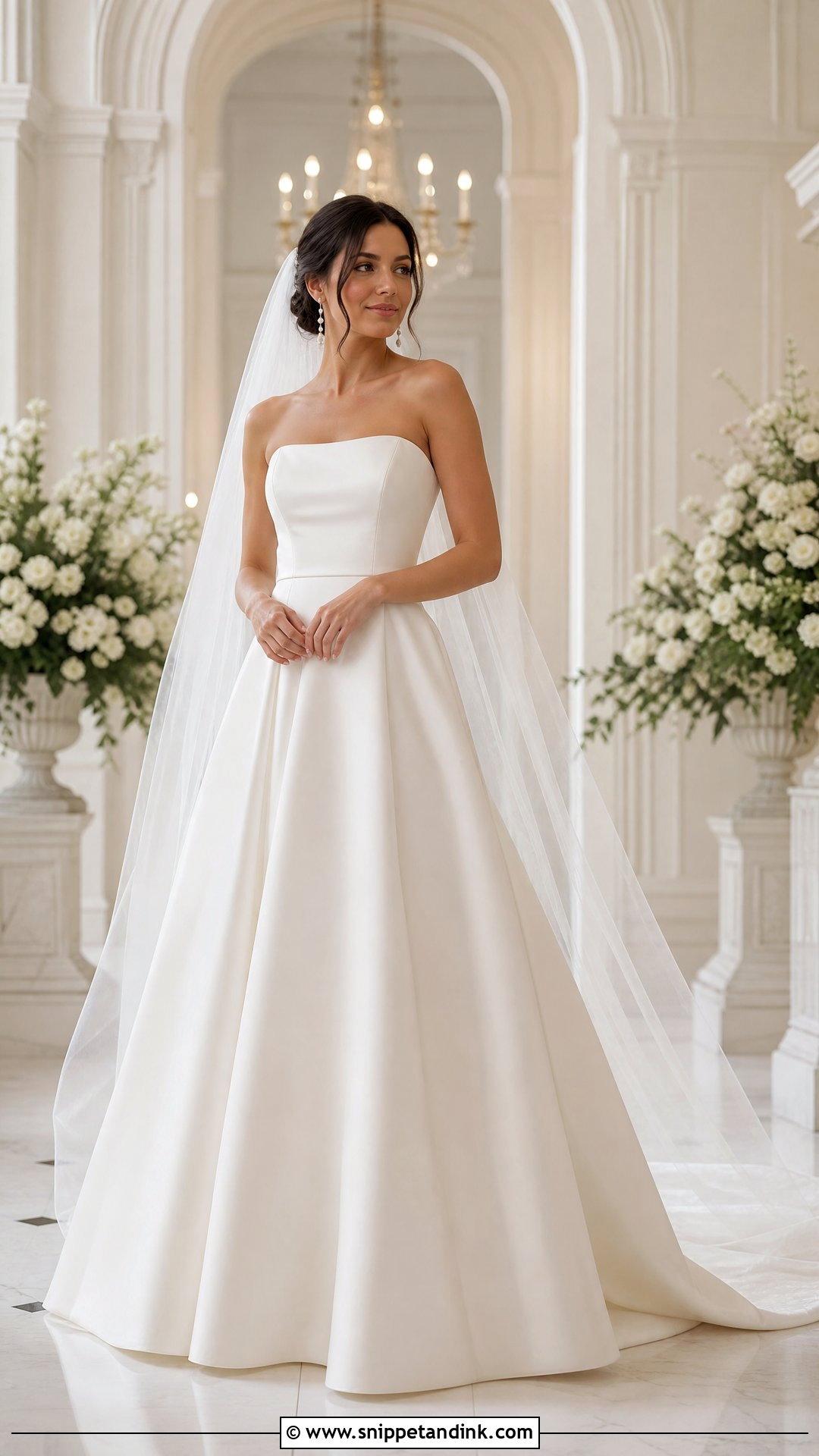
A strapless ball gown is the classic princess shape, and it stays sophisticated when the design is restrained. A structured bodice gives support while the full skirt makes the entrance. Satin, mikado and organza keep the finish polished. The bodice is the whole story here. If it relies on your body to hold it up, you’ll be hitching it all night, so I look for internal boning and a waist stay and have the bride bend and sit in it before she buys. One statement accessory is enough. Add a long veil, pearl earrings and refined heels for a grand ballroom or formal wedding.
7. Crepe Fit And Flare Wedding Dress
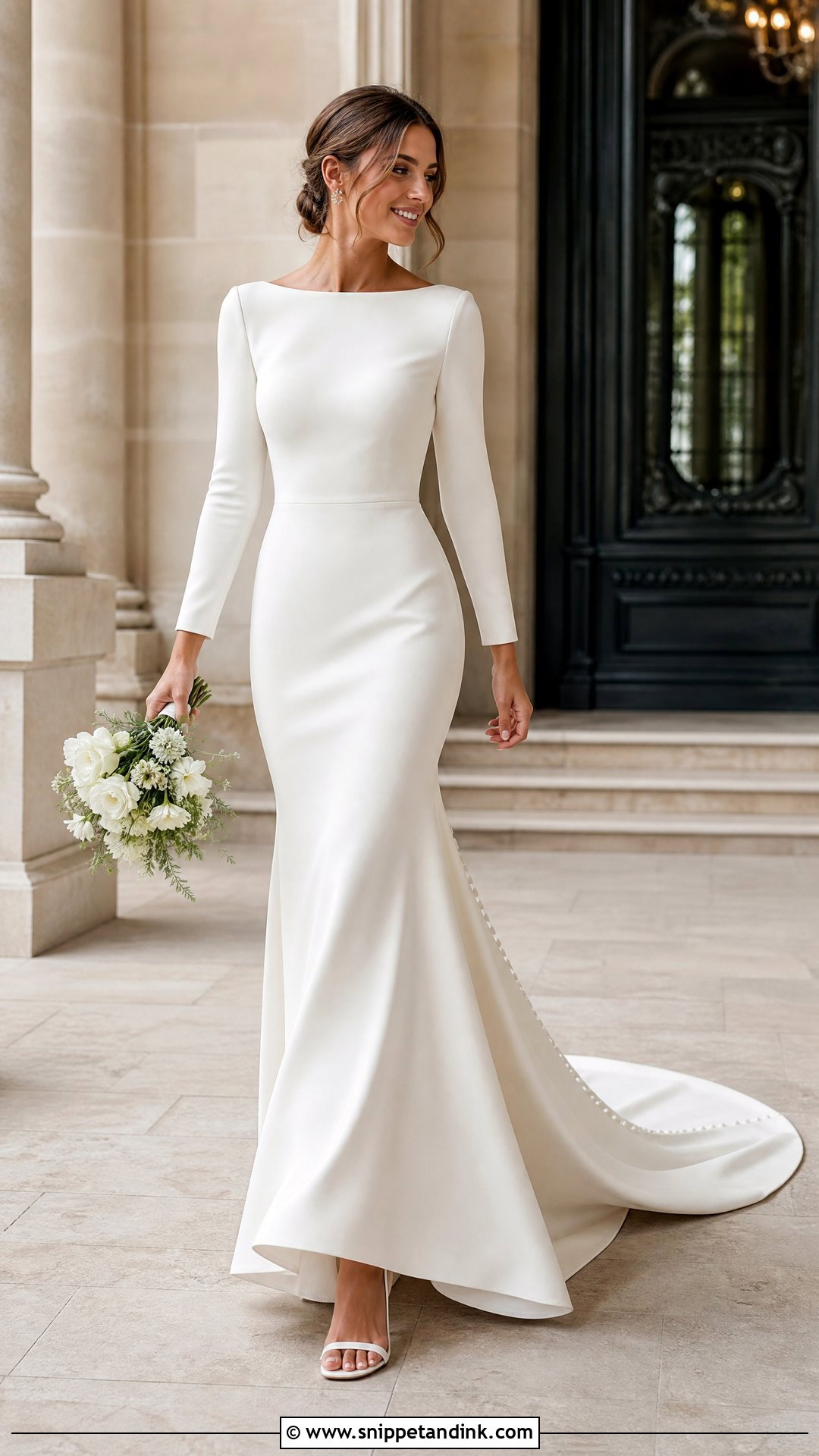
Crepe has enough weight to smooth the body, and in a fit-and-flare it follows the waist and hips before flaring near the knee. The result is shape without excess volume. Flare height changes everything, though. A flare that starts high on the thigh lets you walk and climb steps; a true mermaid flare at the knee looks dramatic but shortens your stride, so walk a few lengths of the shop in it. Look for covered buttons, a subtle train or a clean square neckline. A long veil, crystal studs and simple heels suit it, with a sleek ponytail or polished waves.
8. Square Neck Wedding Dress
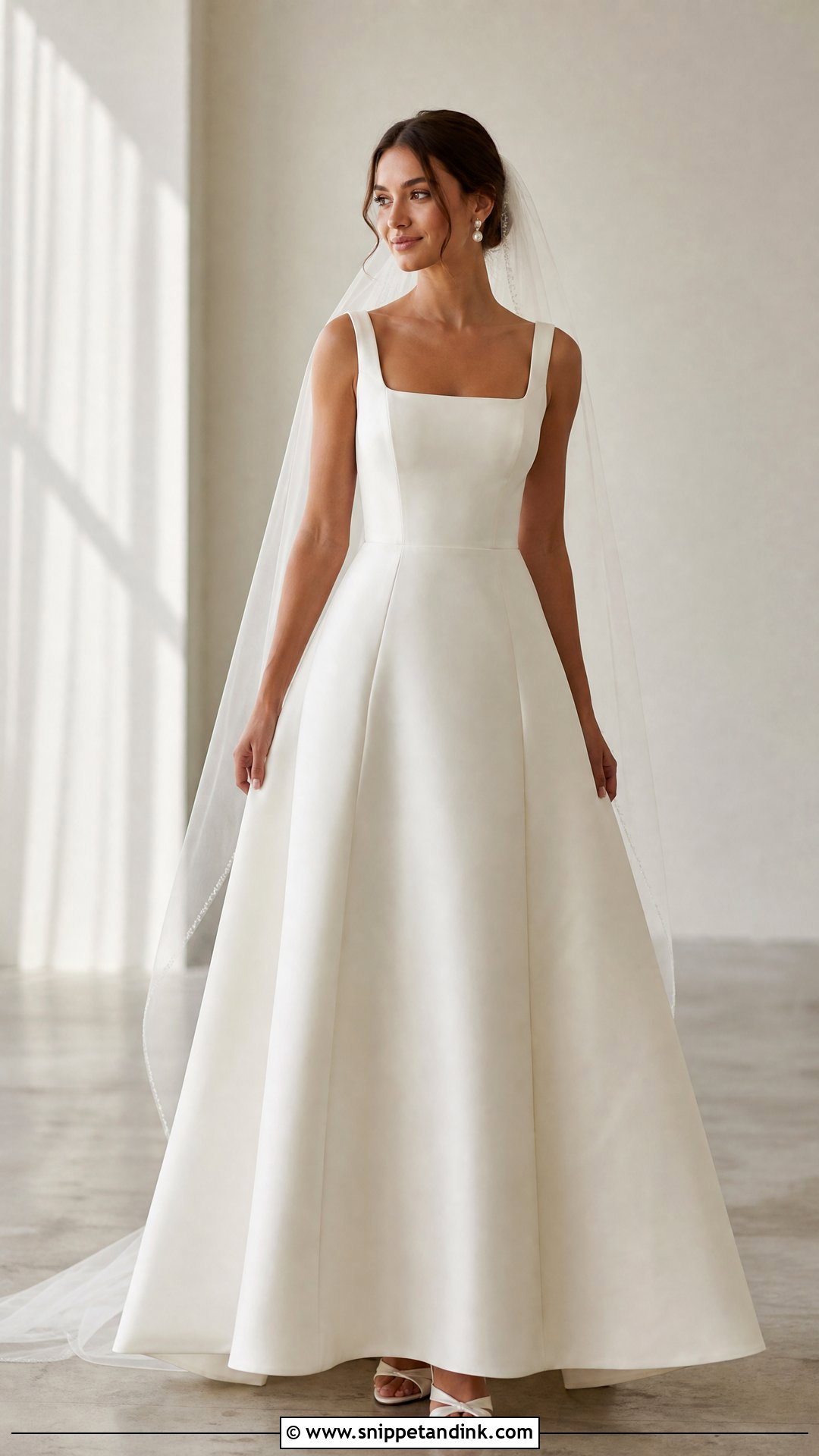
Square necklines bring structure and softness together, and they frame the face well. They pair with straps, sleeves or a fitted bodice, and they feel both classic and current. Satin, crepe or matte mikado with minimal embellishment keeps it refined; an A-line skirt adds romance, a column feels modern. The corners of the square should sit flat against the chest; if they gape when you lean forward, the bodice needs taking in at the side seams. Pearl earrings, a smooth veil and a soft manicure finish it, and no heavy beading or lace is needed.
9. Pearl Detail Wedding Dress
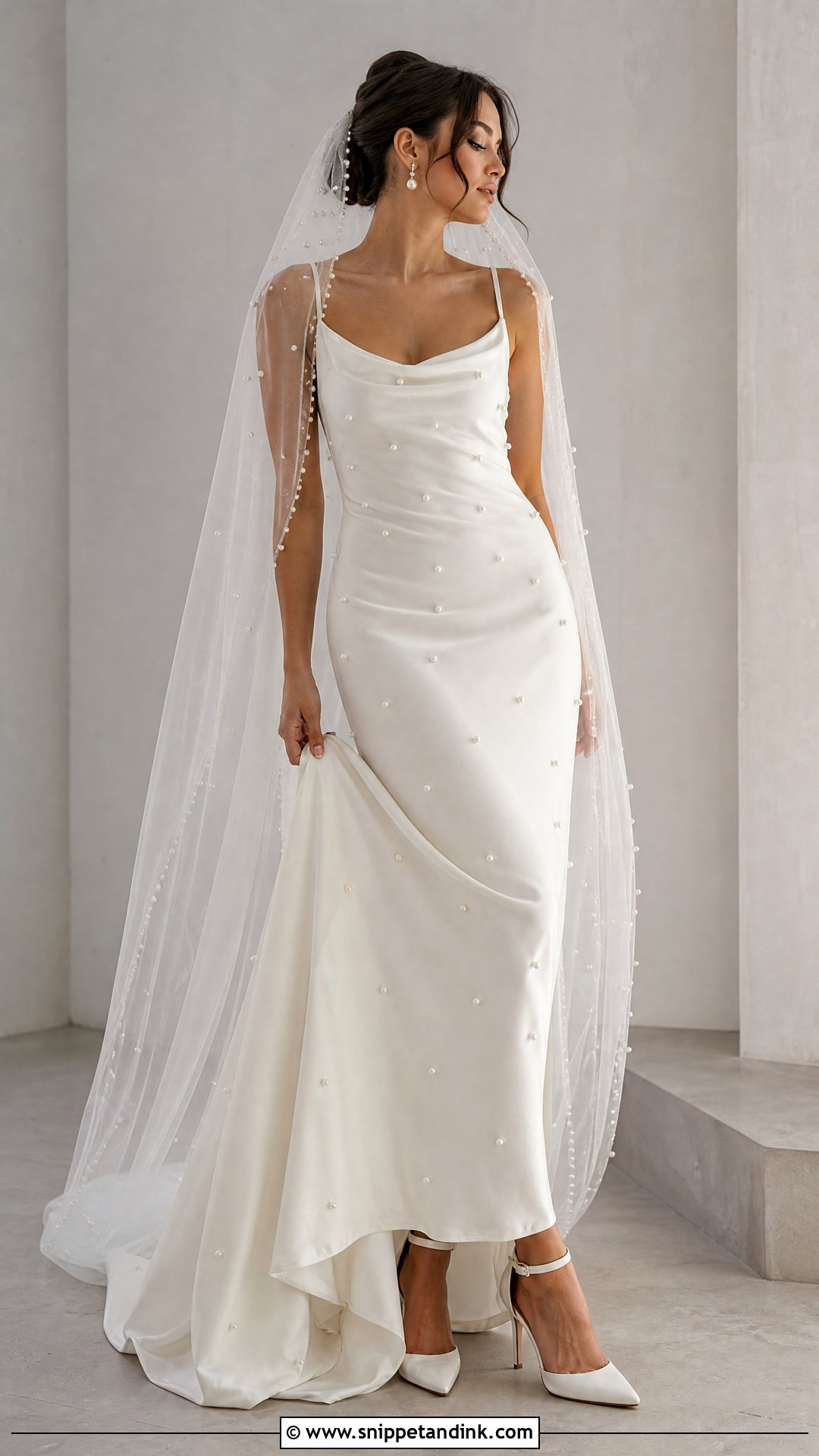
Pearls add texture without much flash. They might trace a neckline, scatter down sleeves, cover a bodice or edge a veil, and they give a soft glow on camera. Scattered pearls look more refined than heavy allover work, especially on a simple crepe or tulle gown. Ask how they’re attached: hand-sewn pearls survive a day of hugs, glued ones can pop off on a sleeve. Pearl earrings, satin heels and a clean hairstyle keep it from tipping into too much. A pearl veil can lift a very plain gown, which is a smart way to add interest to a classic dress.
10. Corset Bodice Wedding Dress
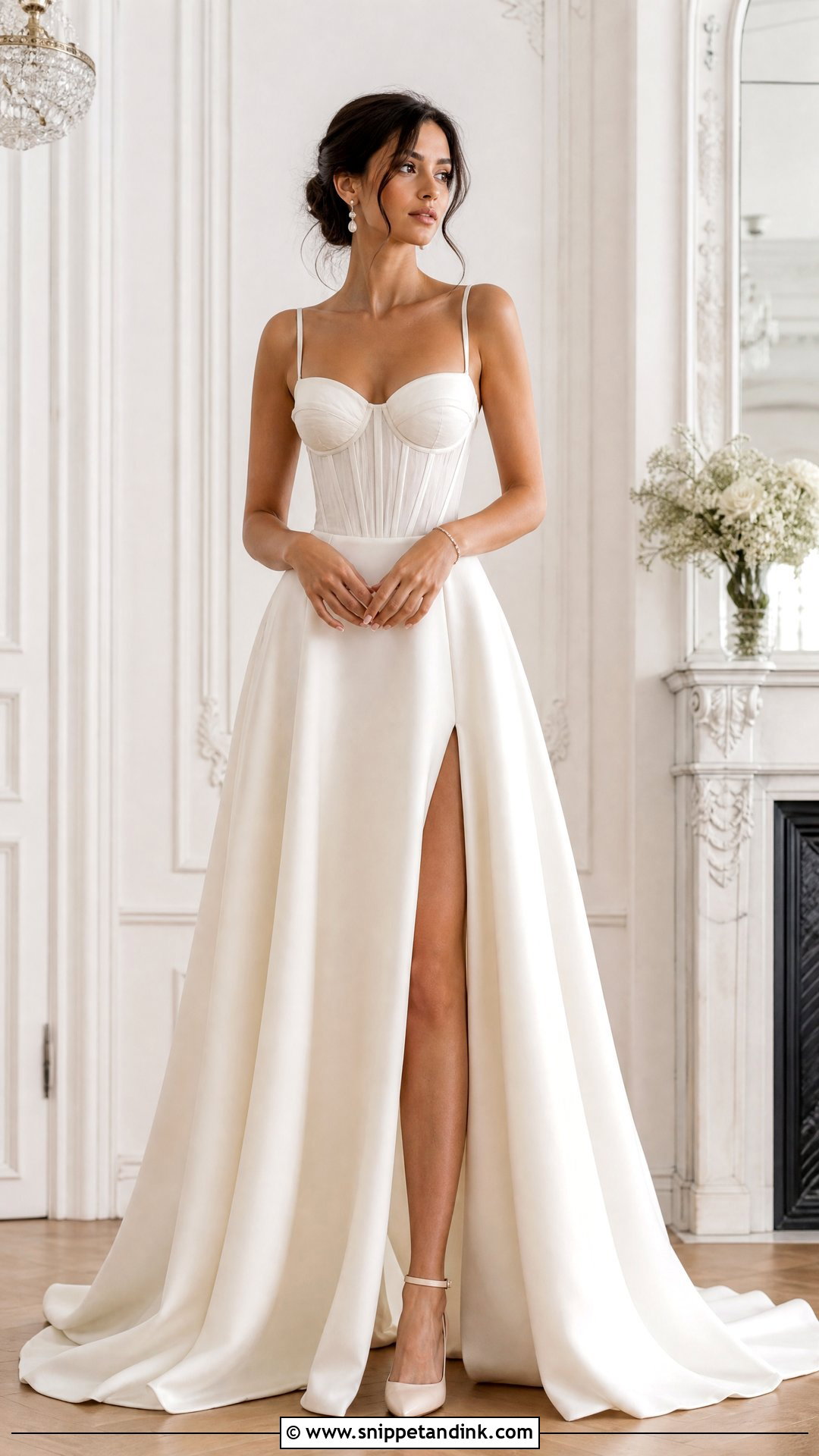
A corset bodice looks sophisticated when the construction is good and the styling stays restrained. Visible boning, a shaped waist and a supportive bodice create a strong silhouette, but cheap versions read as costume. I check that the boning lies flat without poking through at the top edge, and that the lacing has a modesty panel behind it. Pair the corset with a soft A-line, a satin ball skirt or a fit-and-flare, and soften it with delicate straps or off-shoulder sleeves. Drop earrings, a fine bracelet and classic heels finish a look with structure and a confident edge.
11. Drop Waist Wedding Dress
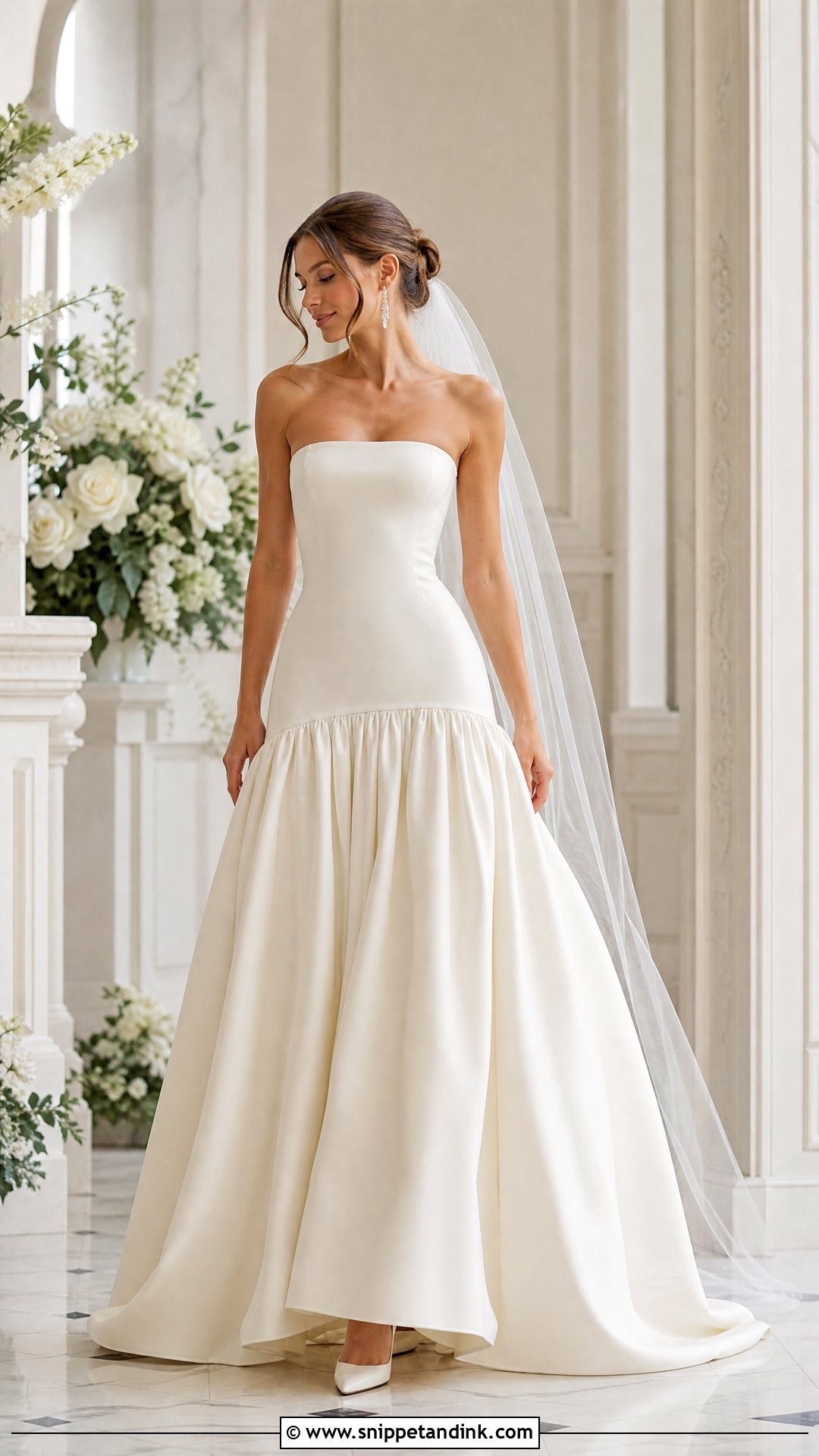
Drop waists sit lower than the natural waist, which lengthens the torso and gives a slightly vintage line. The shape has come back because it feels refined without being expected. It needs some height in the torso to look right; on a very short torso a drop waist can cut the legs short, and a basque waist that dips into a V at the front is often a better compromise. Style it with a full skirt for drama or a softer one for romance, in clean fabric or lace. Delicate earrings, a smooth veil and pointed heels suit formal venues and editorial-style portraits.
12. Pleated Skirt Wedding Dress
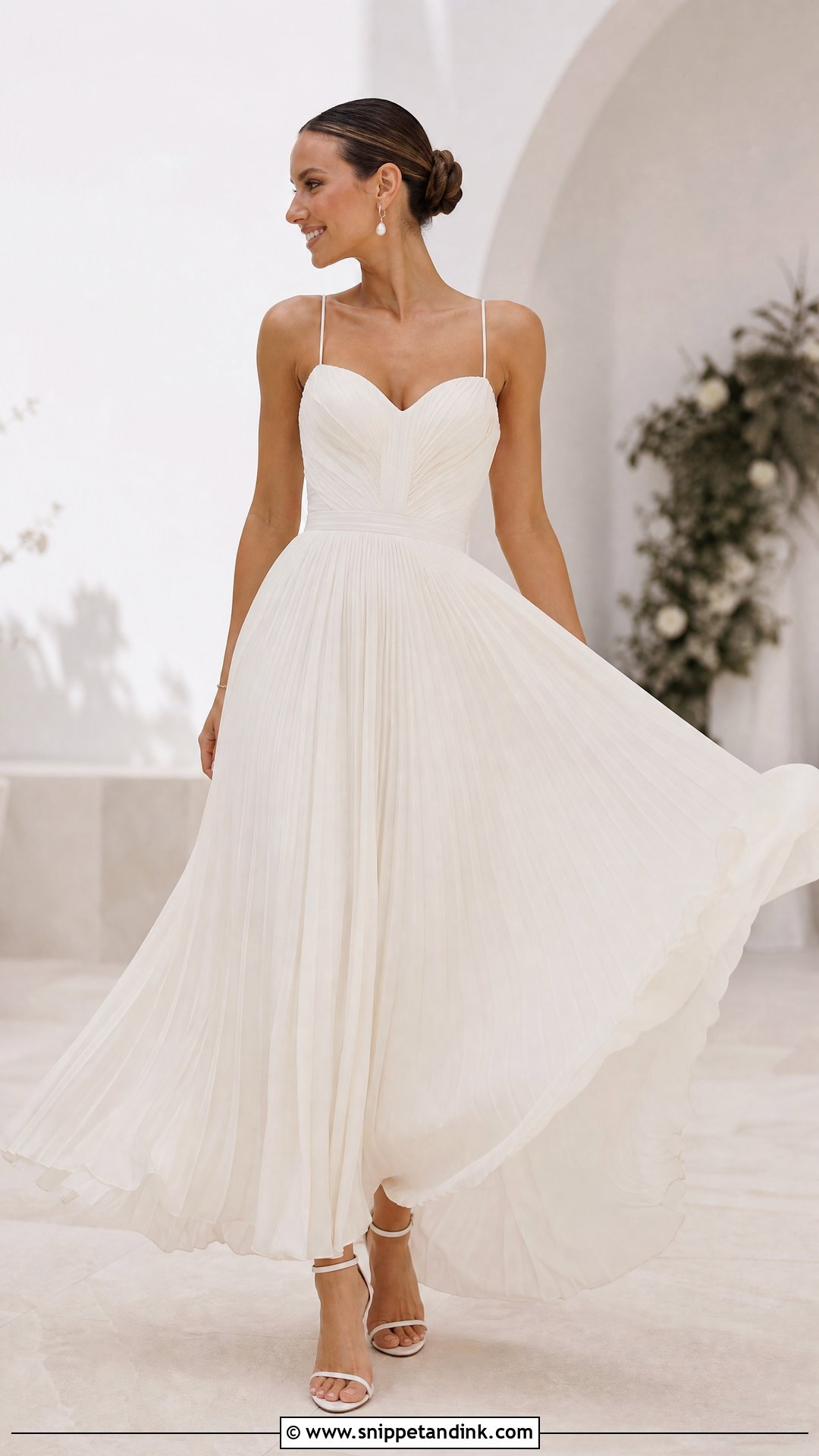
Fine pleats bring movement and depth to a skirt without sparkle. They look best with a fitted bodice, clean neckline and simple accessories. Chiffon pleats feel airy for spring and summer, while satin or organza pleats feel more formal. Pleats catch light as you walk, which makes walking shots come alive. They also crush in transit, so the dress must travel hanging in a long garment bag and be steamed gently, never pressed flat. Strappy heels, pearl earrings and a low bun complete a pleated gown that is quietly detailed.
13. Wedding Dress With Cape
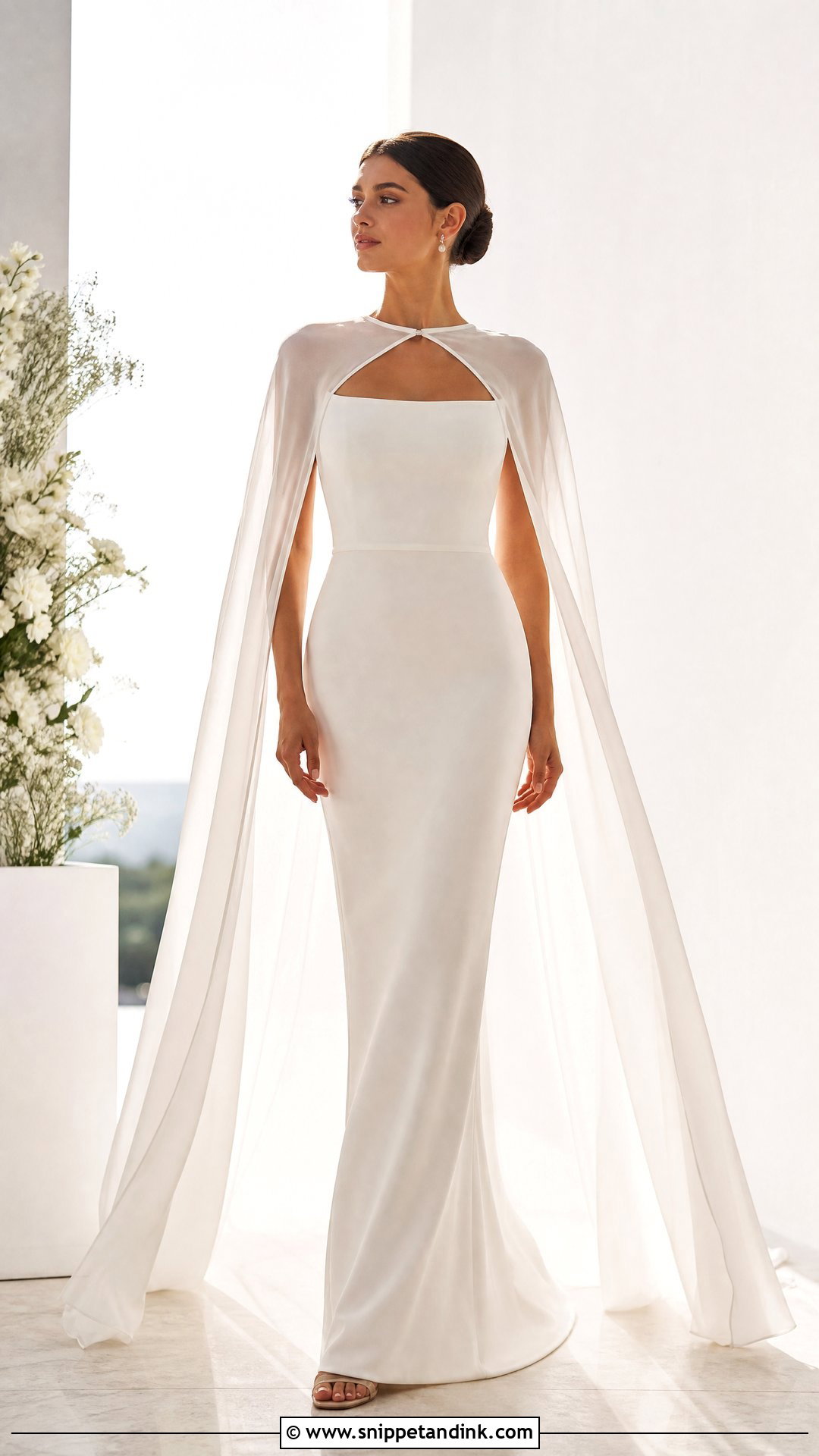
A cape is a modern alternative to a veil. It adds movement, drama and coverage, and it turns a plain gown into a complete look. Sheer capes feel soft and romantic; a structured crepe cape feels sleek and architectural. Proportion is what I watch: the cape should be either clearly shorter than the gown or run the full length into a train, never stop a few inches above the hem. A column, fit-and-flare or minimal A-line base keeps things balanced. Small earrings and simple heels let the cape lead, and it makes a memorable entrance.
14. Bridal Suit With Wide Leg Pants
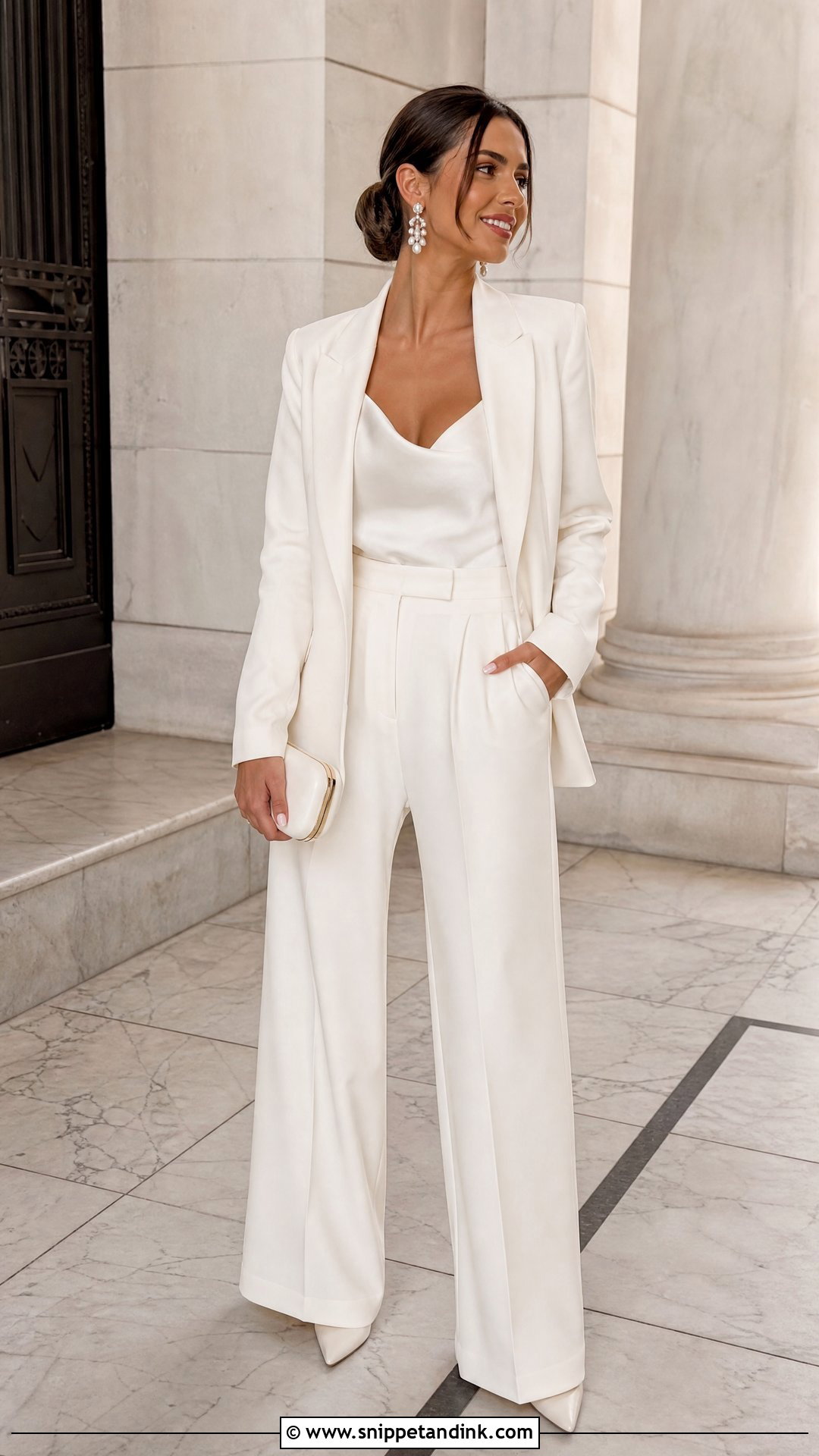
A bridal suit with wide leg pants suits civil ceremonies, modern venues and anyone who prefers tailoring to a gown. A sharp blazer over a clean camisole or structured top, with fluid wide-leg trousers, gives a polished line. Ivory, cream and soft white keep it bridal, while satin lapels or pearl buttons add finish. Tailoring lives or dies on the trouser hem. Have it set with your exact shoes so it just kisses the floor. Pointed pumps, a sleek clutch and statement earrings suit it, and a short veil or hair bow makes it ceremonial. It’s comfortable without losing the sense of occasion.
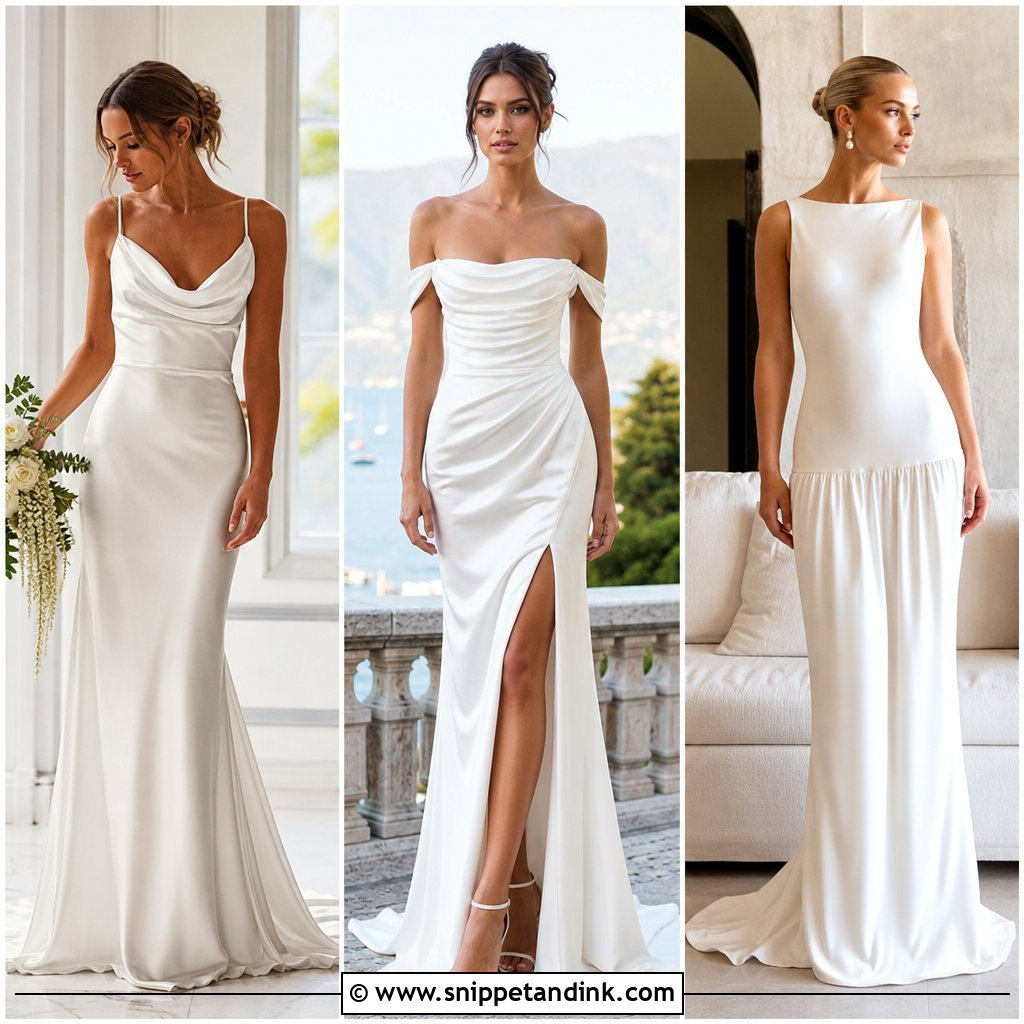

15. Wedding Dress With Overskirt
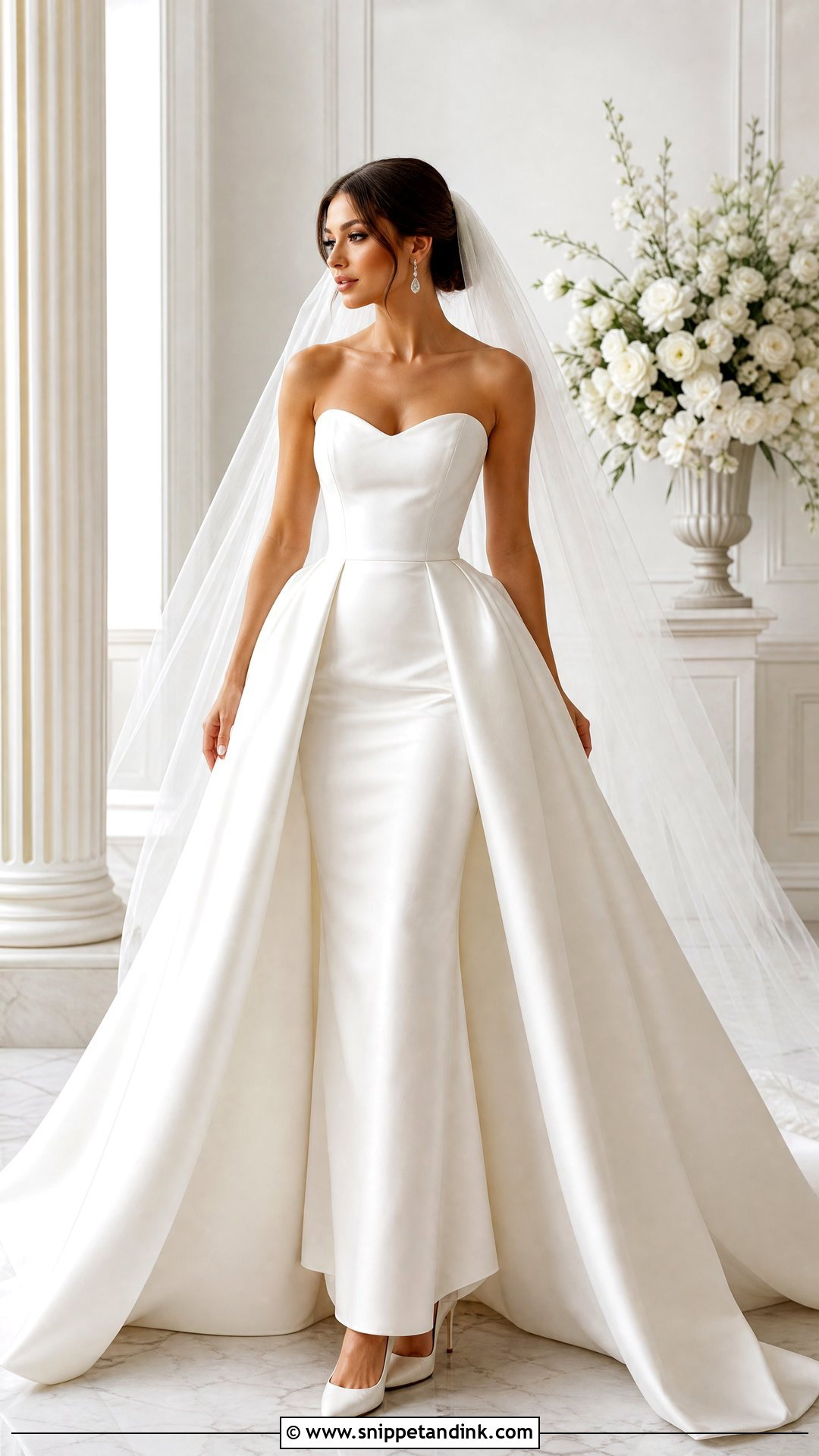
An overskirt gives you two looks from one dress: volume for the aisle, a slimmer line for dancing. A fitted crepe or lace base with a detachable satin, tulle or organza overskirt is the usual pairing. Ask how it fastens. Hooks and hidden buttons at the waistband are quicker to remove than a skirt that needs unpicking, and someone other than you needs to practise doing it. Match the fabric tones closely so the base doesn’t look like an underslip. A long veil suits the ceremony, and statement earrings carry the reception once the overskirt comes off.
16. Tea Length Wedding Dress
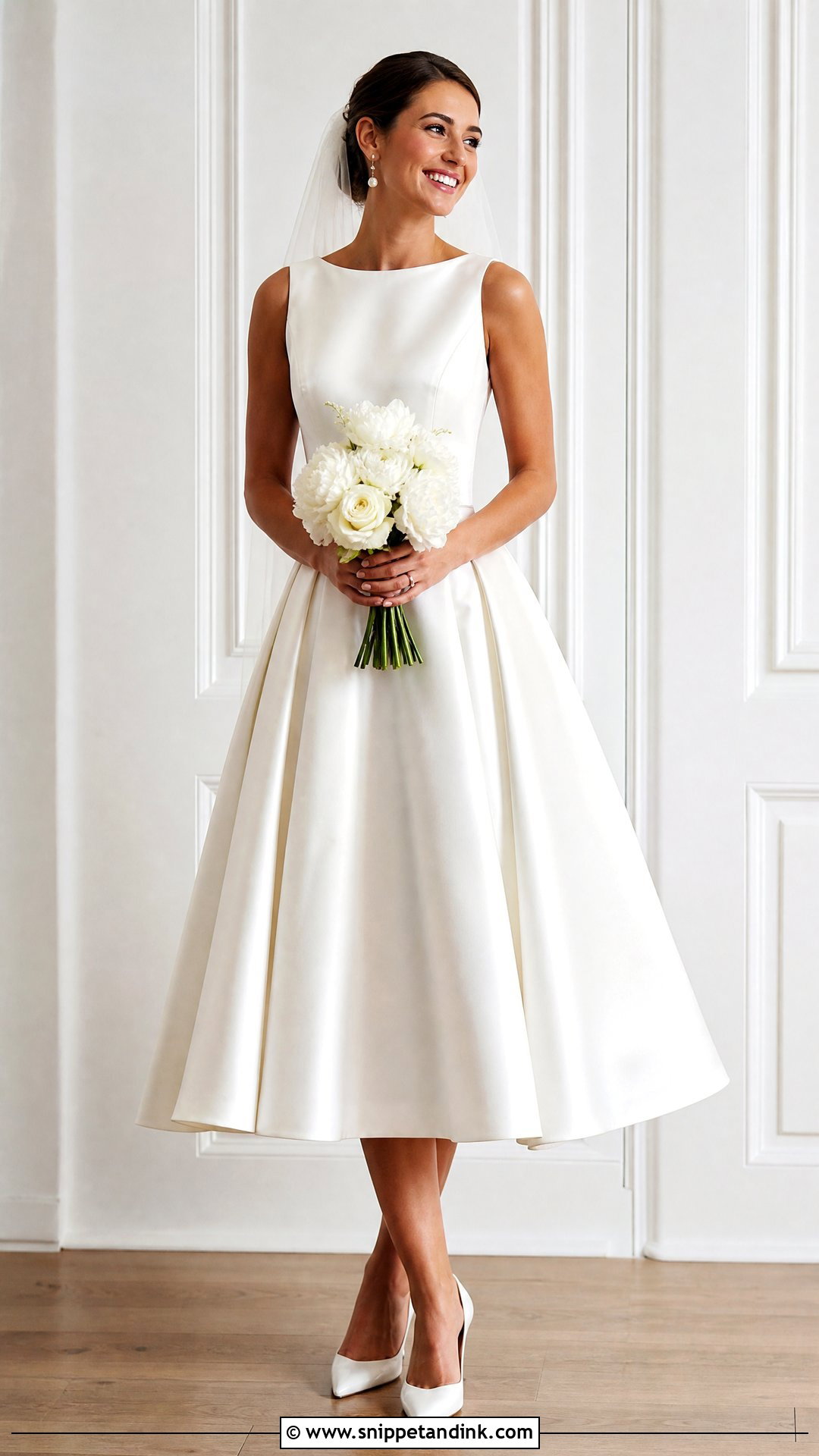
Tea length usually falls between the knee and the ankle, and it suits courthouse ceremonies, garden weddings and intimate receptions. Shoes become part of the outfit at this length, so I treat them as seriously as the dress. Pointed pumps, slingbacks or satin block heels all work. Structured fabric and a clean bodice keep it refined rather than costume-like. Add a short veil, pearl earrings and a polished hairstyle. It’s comfortable and easy to move in, and it has a slightly playful charm a full gown doesn’t.
17. Wedding Dress With Bow Back
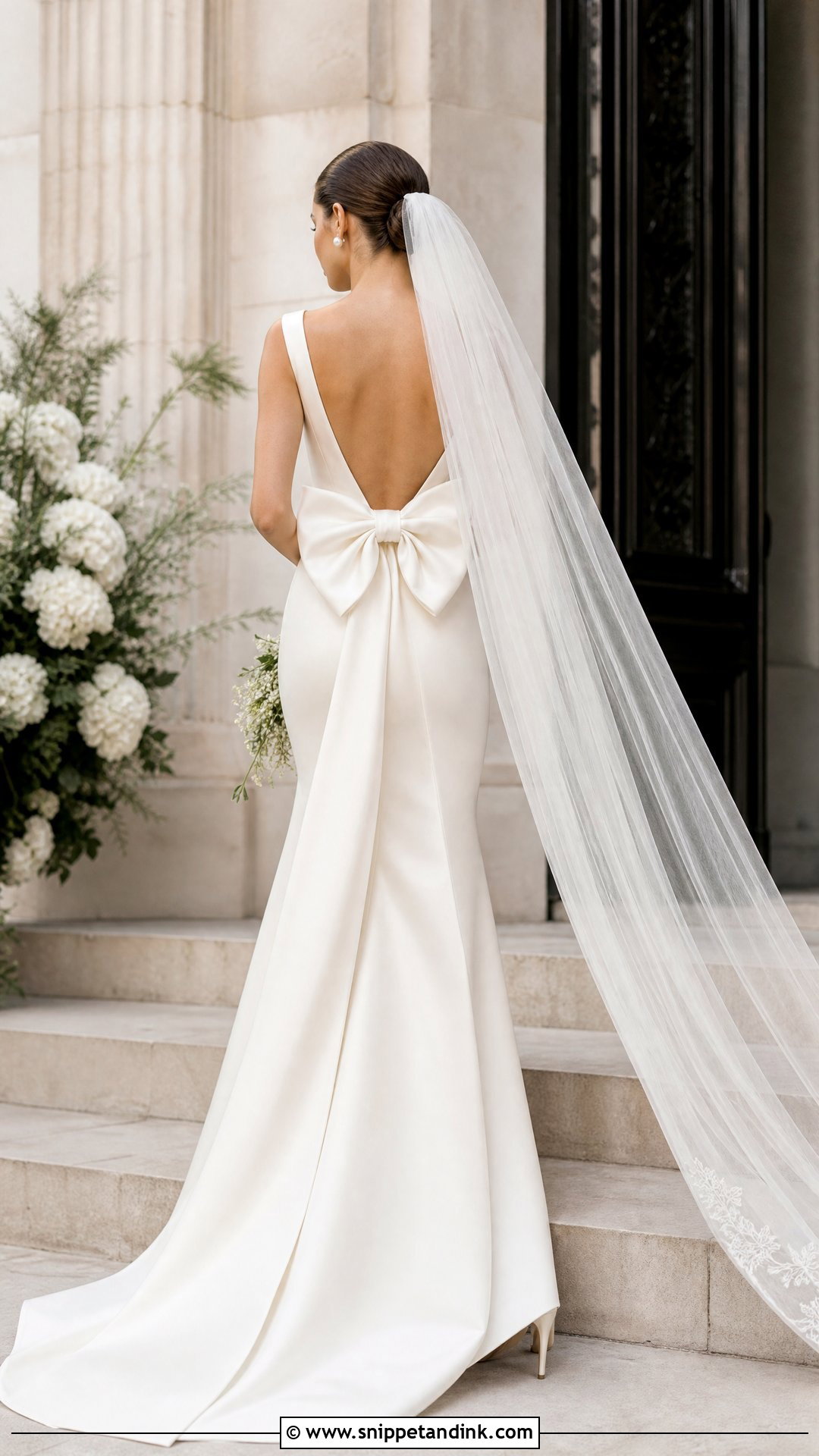
A bow at the back gives a feminine detail and leaves the front clean. It can be large and sculptural or small and delicate. Pair it with a simple gown shape, a satin column, mikado A-line or plain strapless, so the bow looks intentional rather than sweet. Large bows crush when you sit back in a chair, which is why I steam them right before the ceremony and ask brides to perch forward at dinner. Keep the front minimal, add pearl studs and classic heels, and place the veil comb below the bow so the two don’t fight.
18. Beaded Sheath Wedding Dress
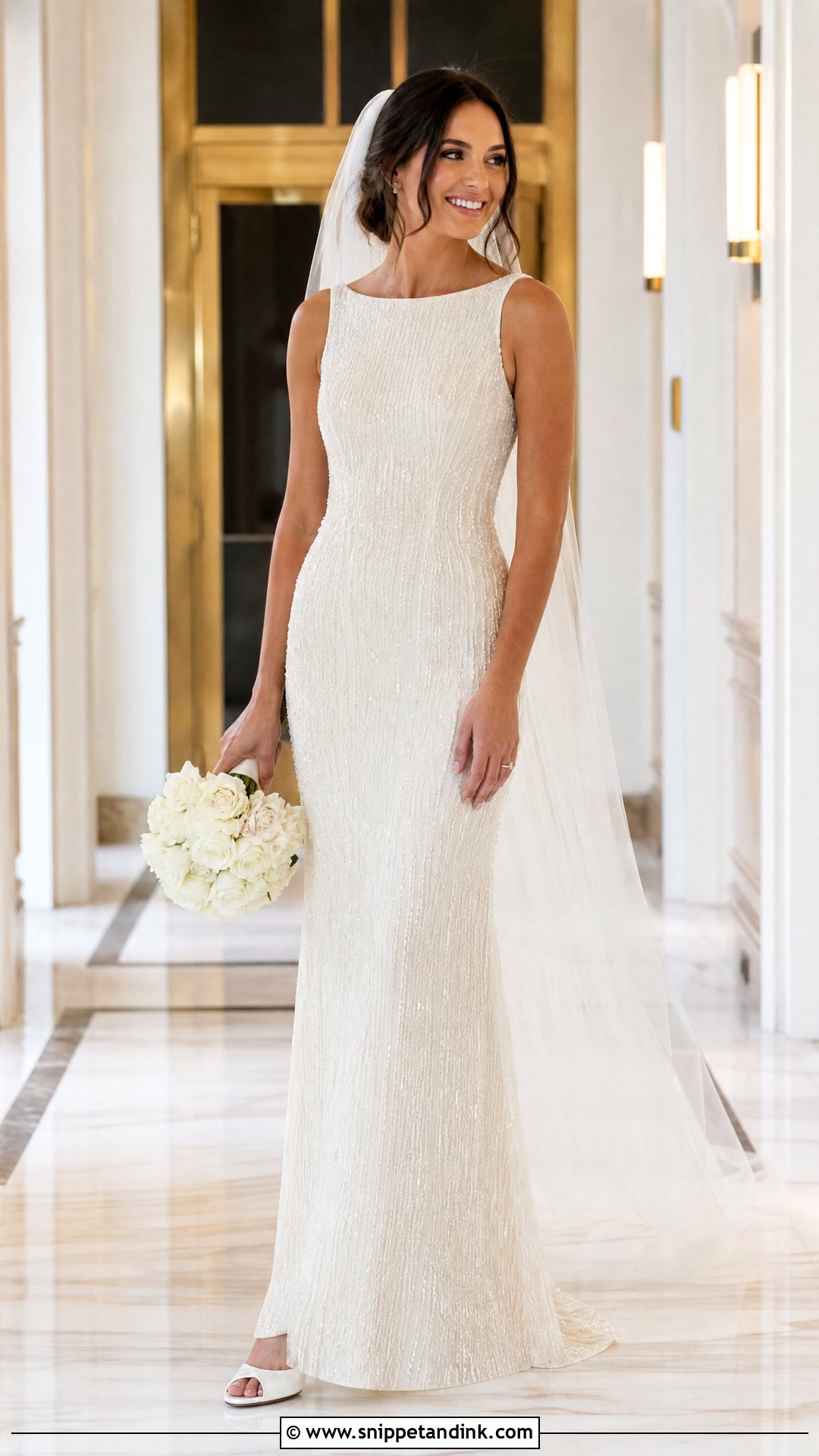
A beaded sheath wedding dress brings sparkle in a controlled way. The sheath keeps the line slim while fine beading, soft patterns or tonal embroidery catch light without shouting. Weight is the hidden cost. A fully beaded sheath can be heavy at the shoulders and hard to alter, because a seamstress has to remove and resew beads to take in a seam, so build in extra alteration time. Keep accessories minimal: small earrings, smooth heels, a simple veil, with a soft updo or side-parted waves. Evening weddings and hotel venues suit the glamour.
19. Floral Applique Wedding Dress
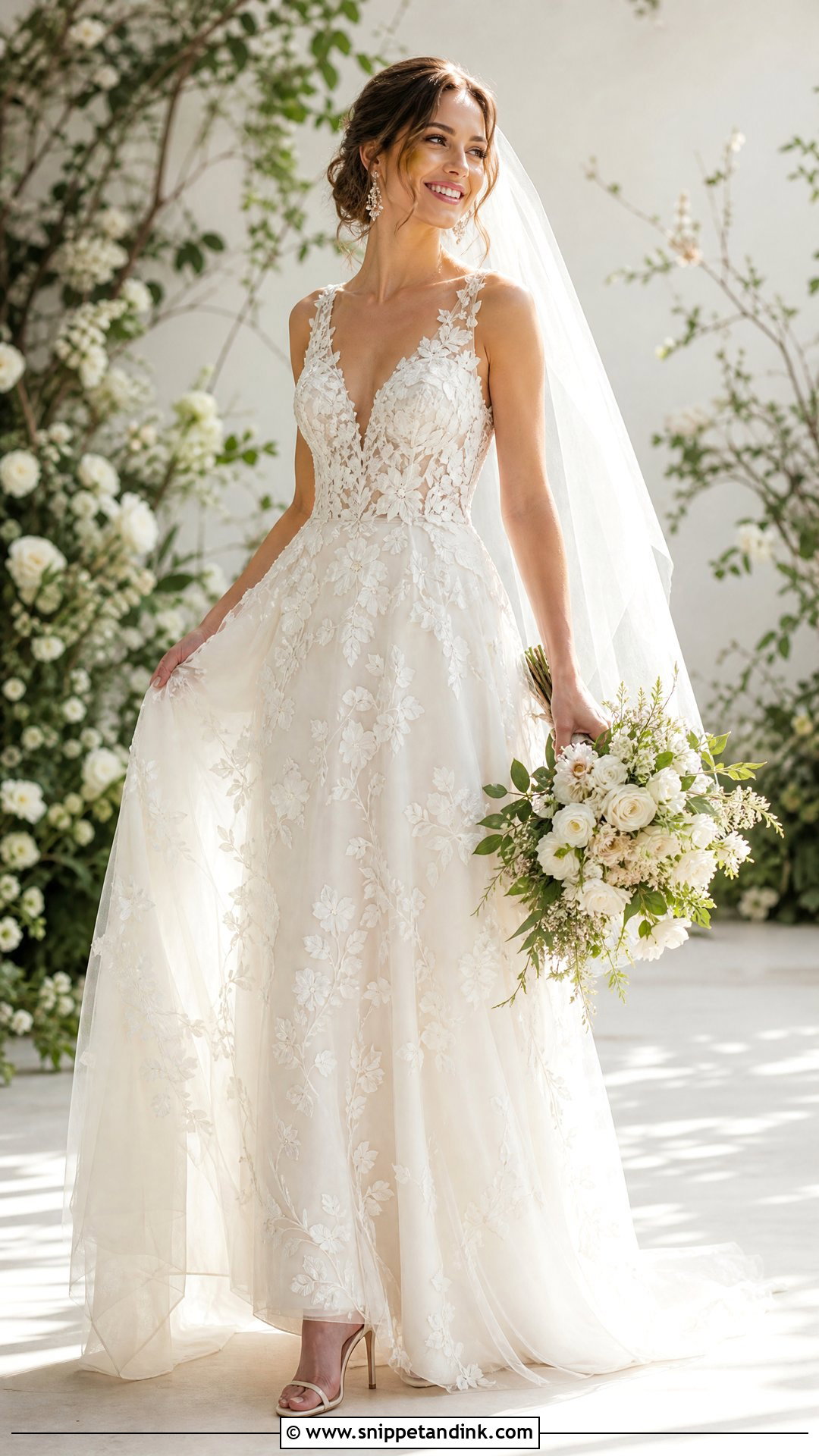
Applique can look sophisticated when the placement is careful. Three-dimensional flowers, embroidered vines or tonal lace petals add texture, and a clean structure underneath (A-line, sheath, or a fitted bodice with a flowing skirt) stops it looking busy. I like the flowers concentrated at the bodice and fading down the skirt, which draws the eye to the face. A floral applique wedding dress in ivory, cream or blush undertones keeps the palette soft. Delicate earrings, sheer heels and a light veil suit garden venues, estates and spring or summer celebrations.



20. One Shoulder Wedding Dress
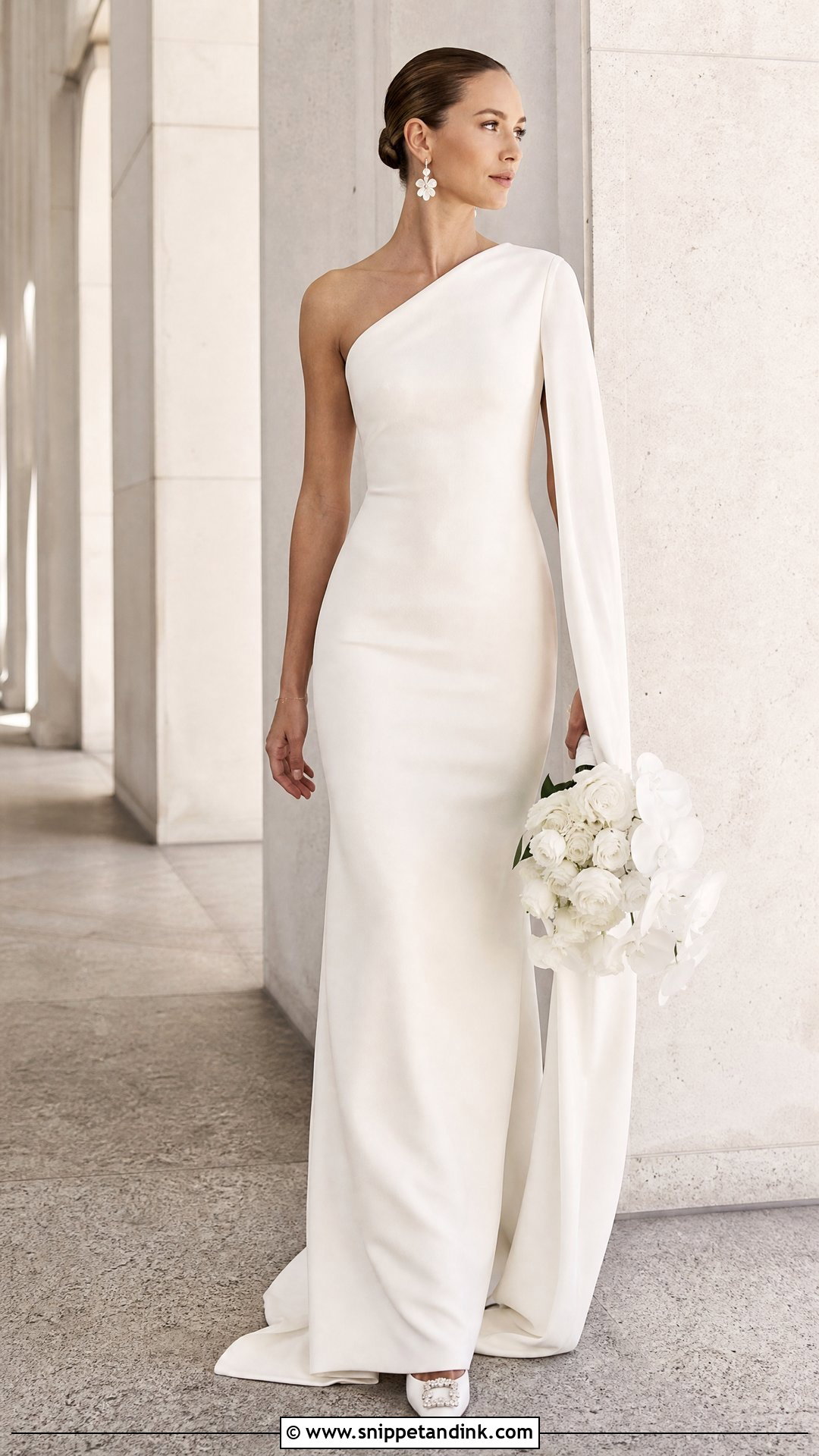
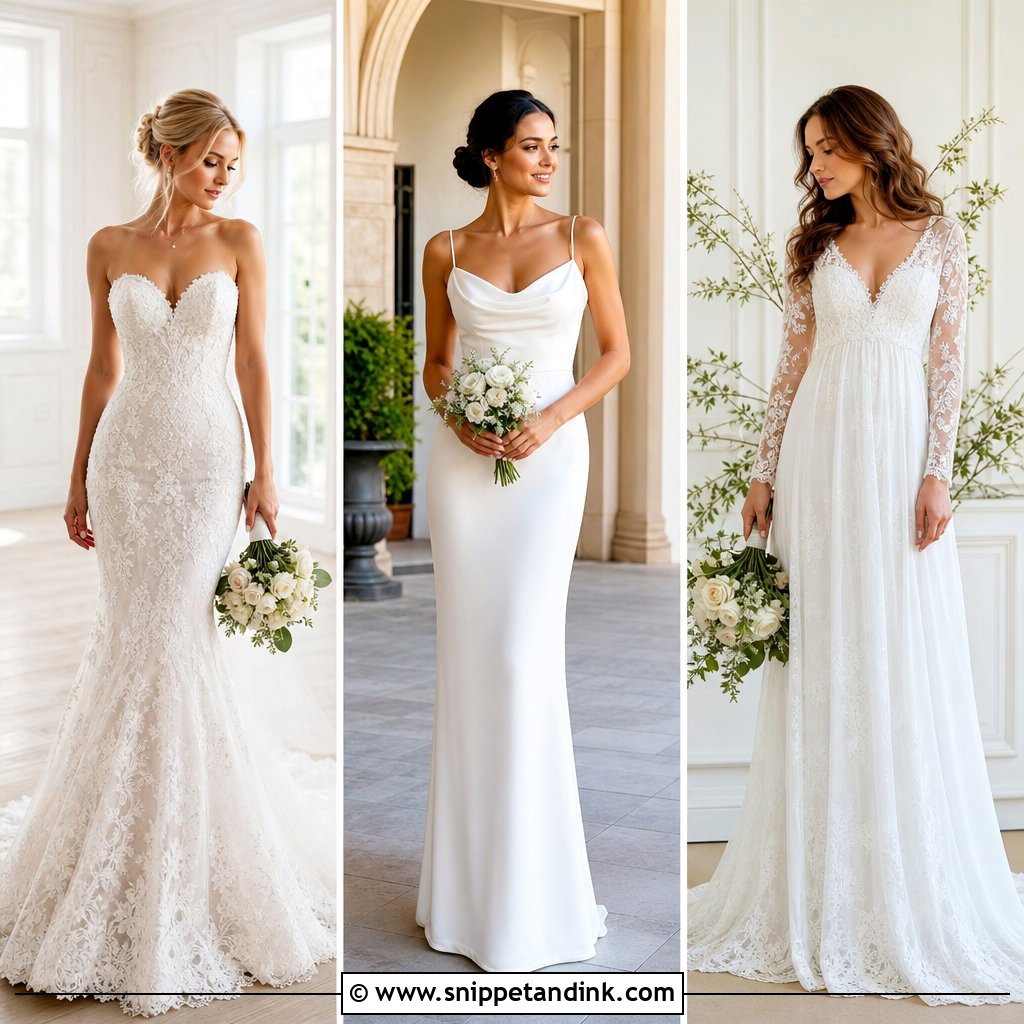
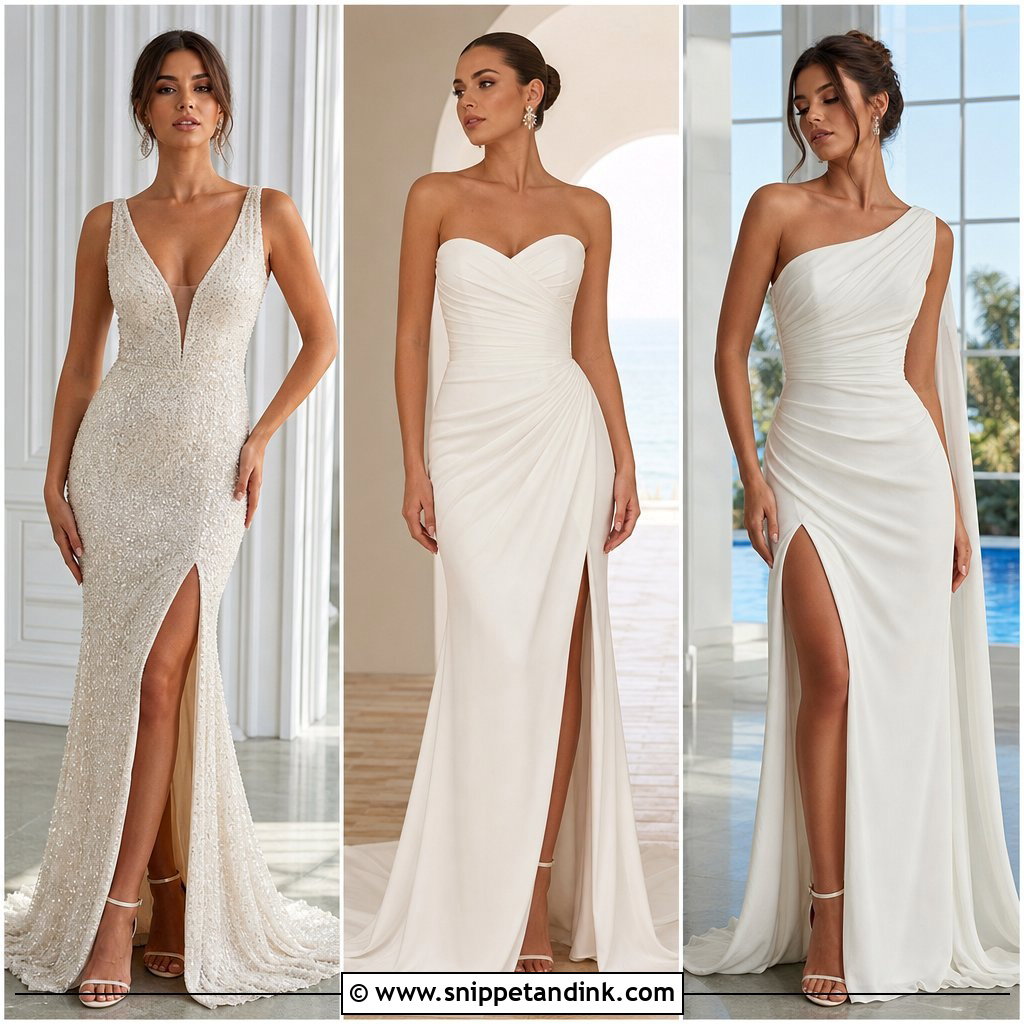
One shoulder gives a modern, sculptural line that pulls attention to the face. Smooth fabrics like crepe, satin and mikado hold the asymmetric neckline best, and a column or fit-and-flare keeps the shape refined. A subtle slit adds movement if the venue suits it. The single strap has to carry the bodice, so it needs grip tape or a hidden internal strap to stop it creeping. Skip necklaces and choose bold earrings or a sleek bracelet, and sweep hair back or to the opposite side to balance the line.
21. V Neck Wedding Dress
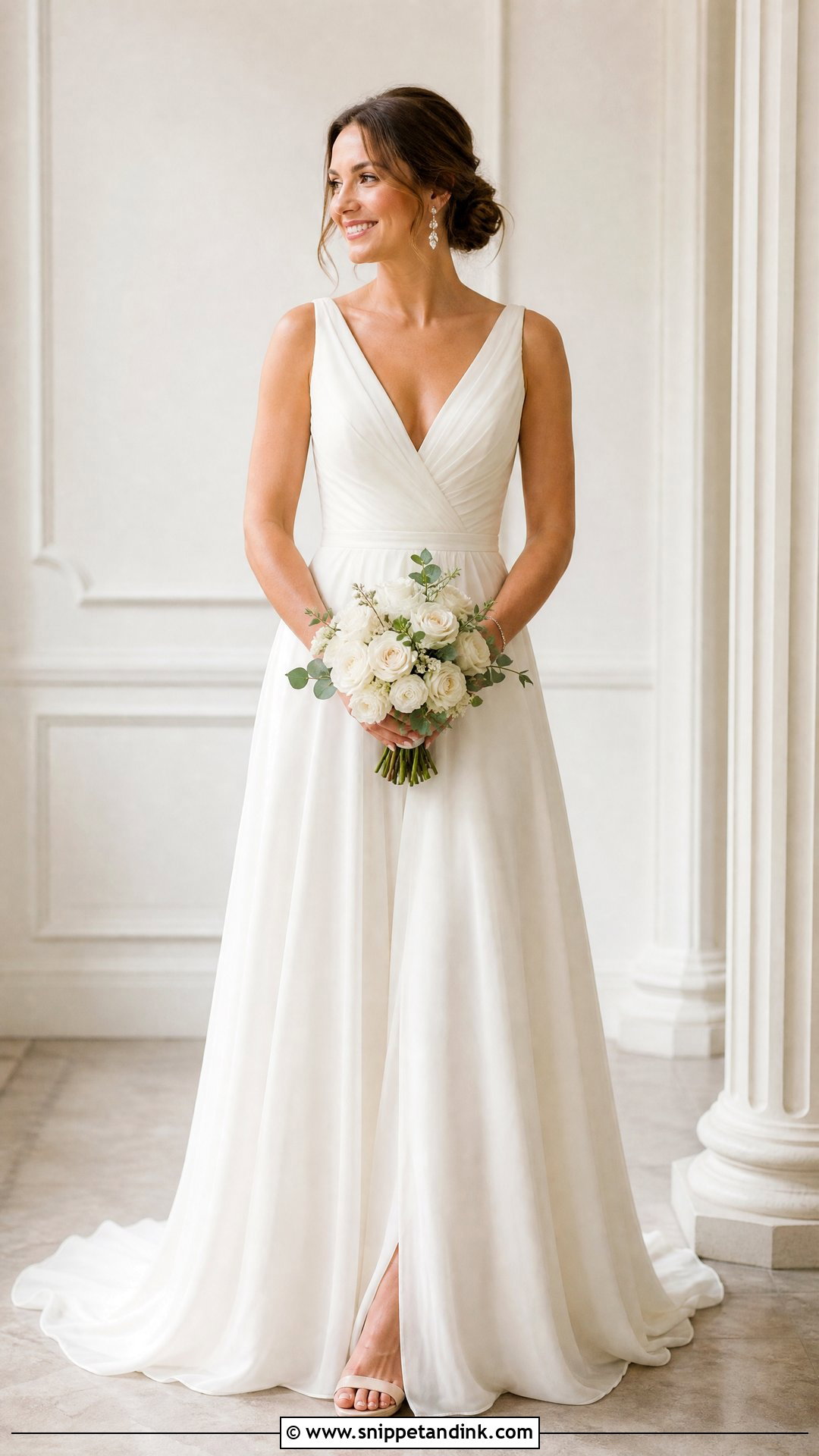
V necks lengthen the body and adapt to fitted or flowing silhouettes. A deep V feels modern; a softer V feels classic. The deeper the V, the more the finish matters, so I look for a stabilised edge or mesh panel so it doesn’t gape when you bend. Lace sleeves, satin straps or a simple crepe bodice all suit it. Add drop earrings, a delicate bracelet and heels you can stand in for hours. A soft veil and natural makeup keep the neckline the focus.
22. Tulle Ball Gown Wedding Dress
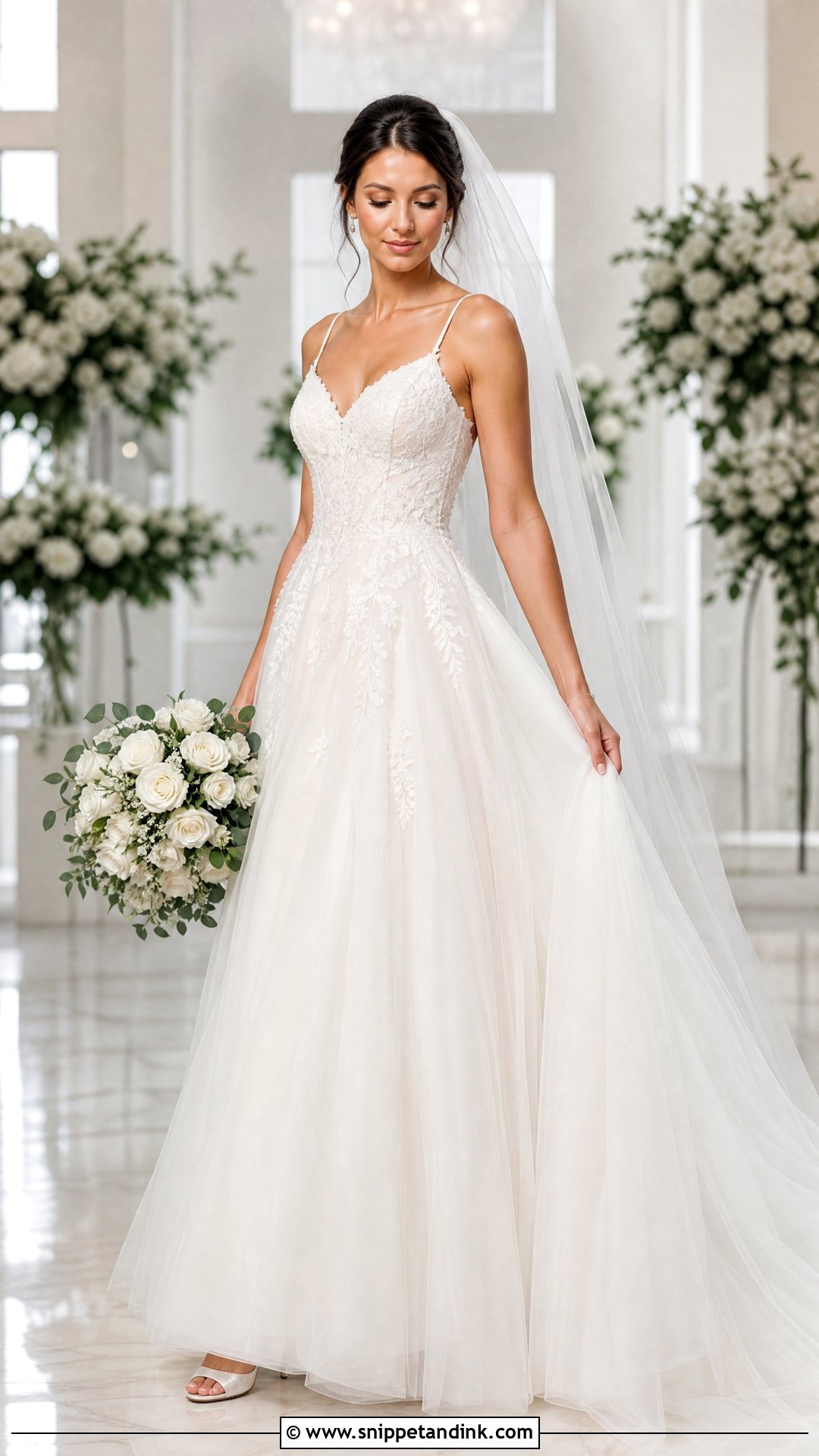
Tulle creates volume while staying airy, and it looks refined when the layers are soft rather than bulky. A fitted bodice and a skirt with controlled fullness keep it from swamping you. Plain tulle feels modern; lace or bead details add romance. Count the layers. A skirt with many stiff layers is warm and hard to sit in, while fewer layers of soft tulle over a structured petticoat move better. Small earrings, a long veil and classic heels suit it, and keep everything else minimal because the skirt already makes the impact for a romantic entrance.
23. Slip Wedding Dress With Veil
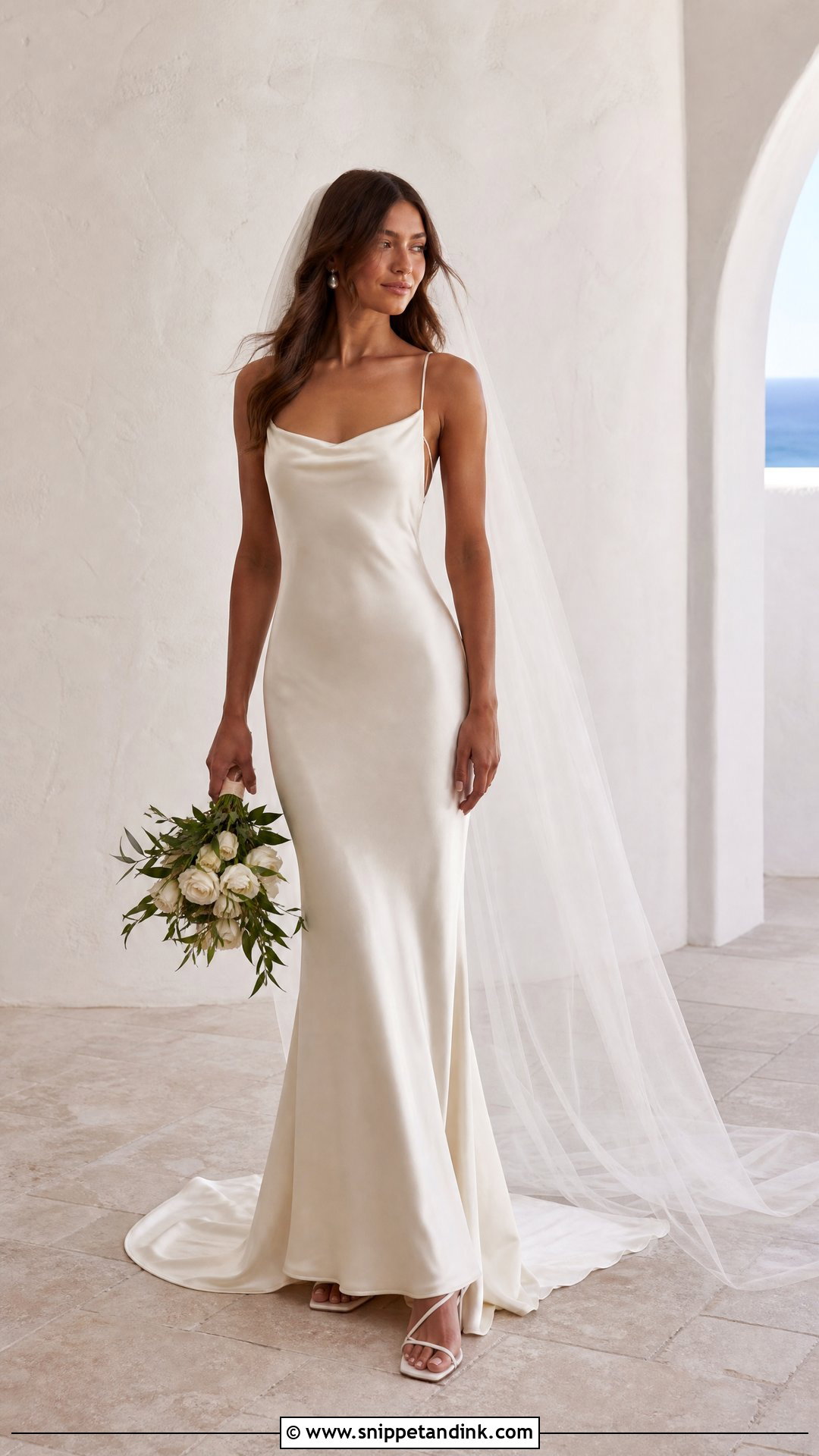
Slip dresses are minimal: fluid shape, delicate straps, a soft drape. Silk and satin give the gentle sheen and the movement. Bias-cut slips cling to every line, so the right underwear matters more here than in any other dress, and I’d plan smooth, no-line shapewear or a built-in slip at the first fitting. The veil carries more weight with a dress this simple. A long sheer veil adds presence; a shorter one feels casual and modern. Strappy heels, small earrings and smooth waves or a low bun suit destination weddings and intimate venues.
24. Brocade Wedding Dress
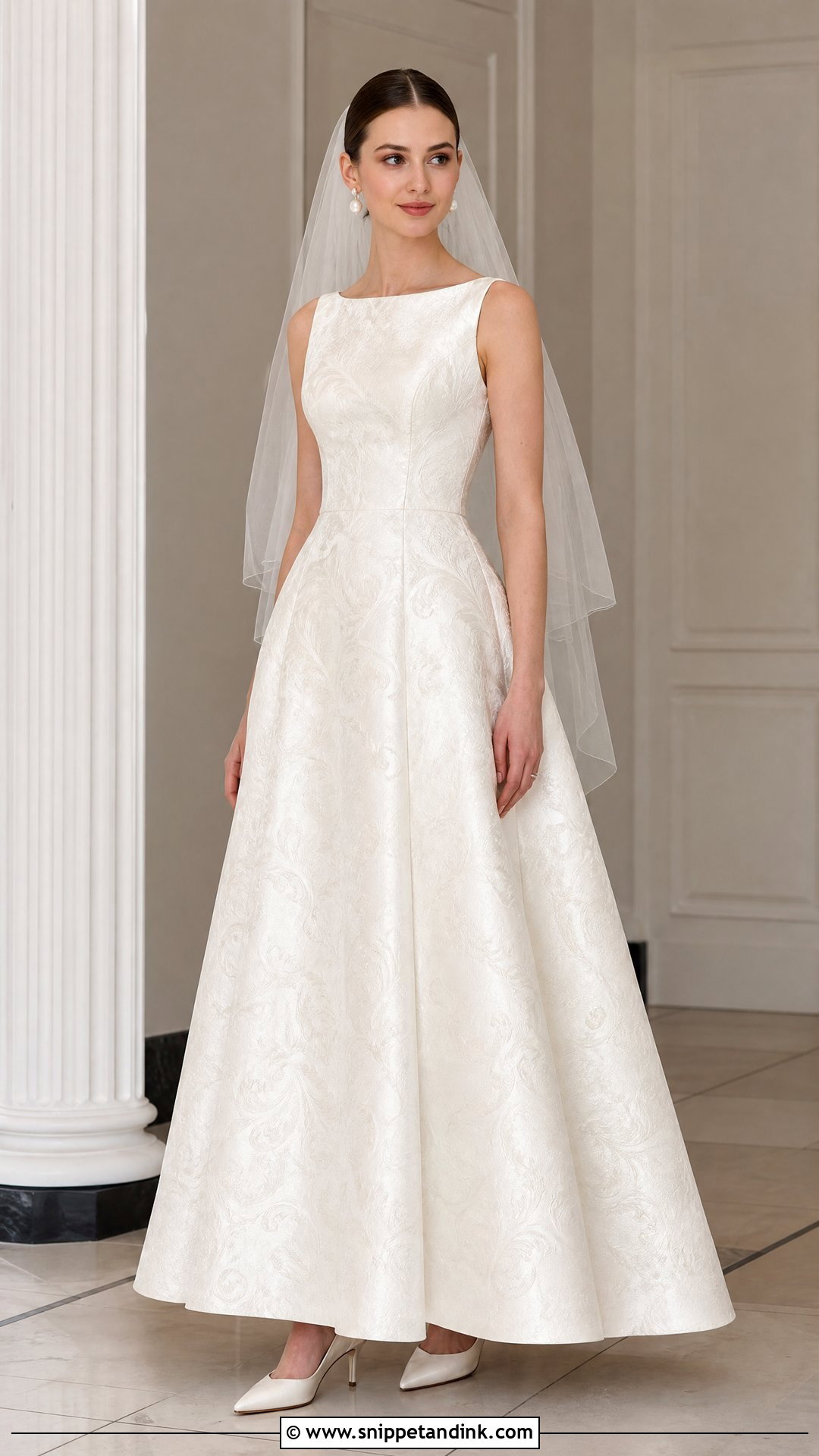
Brocade brings rich woven texture without beading. It suits structured silhouettes like A-line gowns, ball gowns and tailored midi dresses. The fabric has visual weight, so the shape should be clean and the accessories minimal: pearl earrings, satin pumps and a simple veil. Brocade is warm and fairly stiff, which I’d steer you away from for a midsummer outdoor ceremony. Soft ivory, champagne or warm cream make the pattern feel bridal, especially for autumn and winter weddings at formal indoor venues.



25. Wedding Dress With Detachable Sleeves
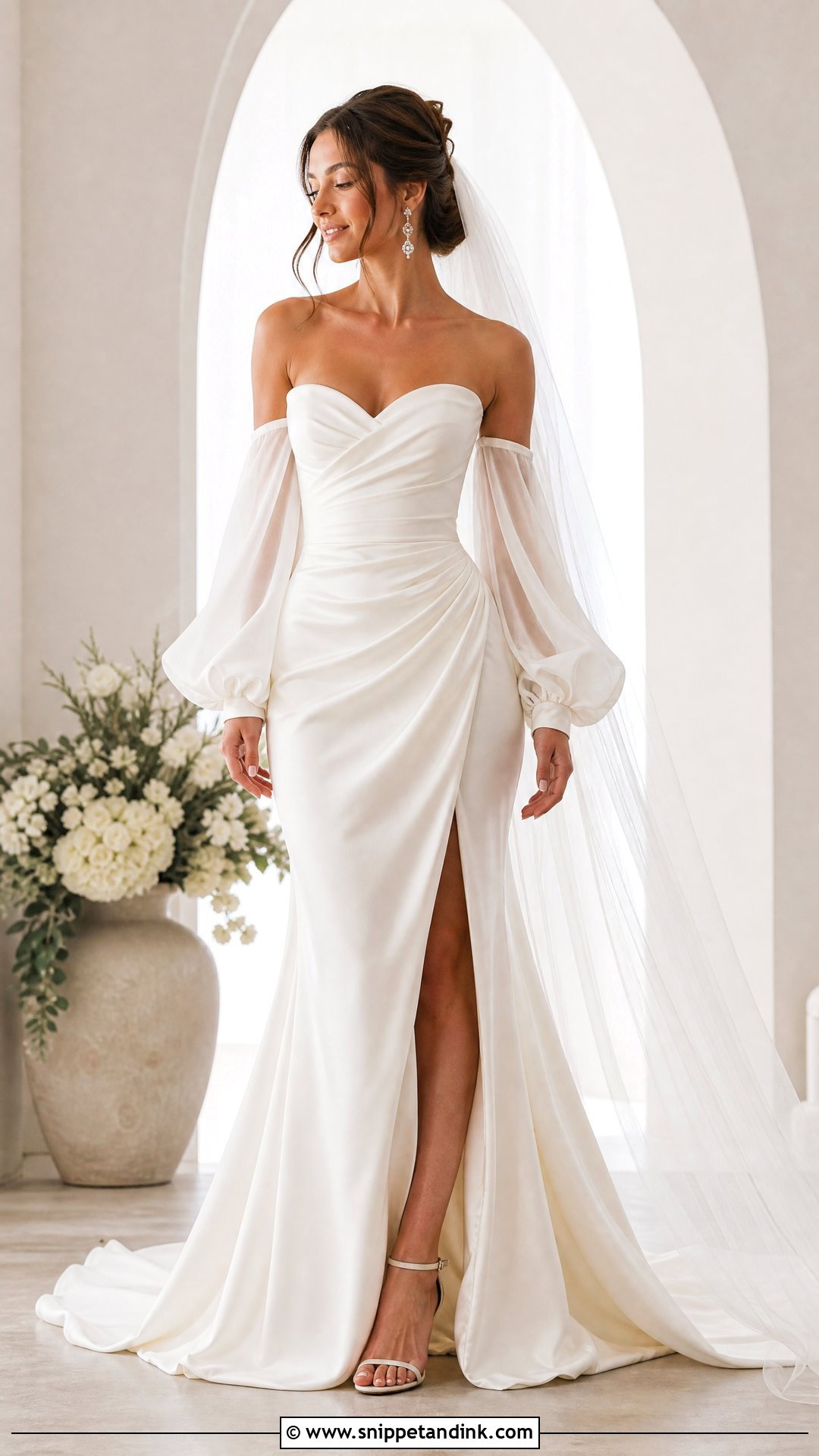
Detachable sleeves give you flexibility without a second dress. Sleeves make the ceremony look more formal, modest or romantic, and removing them lightens the reception look. Puff, lace, fitted and off-shoulder sleeves each set a different mood. A strapless or square-neck base works best. The sleeves should match the gown fabric or clearly complement it; a near-match looks like a mistake. Ask how they attach, because snaps and hidden loops are easier to remove than a sleeve sewn to the bodice. Refined heels, earrings and a veil that doesn’t compete with the sleeves finish it.
The Alteration Calendar Behind a Clean Fit
Clean lines need tailoring, and tailoring needs time. Order timelines vary a lot between designers, so ask at the appointment, but many made-to-order gowns take several months to arrive. I’d aim to order roughly eight to ten months out and treat anything shorter as a rush.
- First fitting, about two to three months before the wedding: the big changes, such as hem, side seams, straps and bustle placement. Bring your exact shoes and underwear.
- Second fitting, a few weeks later: checking the first round, refining the neckline and sleeves.
- Final fitting, around two weeks out: a full walk, sit and dance test, and a lesson in the bustle for whoever will do it on the day.
Beaded, pleated and brocade gowns usually need more time than plain ones, because altering them means removing and resewing detail by hand.
Bustles, Hems and the Rest of the Evening
The aisle takes a couple of minutes. Everything after it takes hours, and that’s when a sophisticated dress either keeps its line or starts to look tired. Any gown with a train needs a bustle, and the style changes how the back looks: an over-bustle lifts the train up with hooks and suits satin and crepe, while an under-bustle tucks it beneath and suits fuller tulle and organza skirts.
Ask your seamstress to colour-code the bustle ties, and have a bridesmaid practise at the final fitting. I’d also pack a small kit for the day: clear thread and a needle, fashion tape, safety pins, a white chalk stick for small marks and a lint roller for dark venue carpets.
Sophistication Lives in the Fit, Not the Price Tag
A refined bridal look does not have to mean plain, expensive or traditional. It might be a clean satin gown, long lace sleeves, a tailored suit, a soft tulle ball gown or a cape over a column. What all of these dresses share is attention to fabric, fit and proportion, and those are the details I’d put your money and fitting time into first. Accessories should support the dress rather than compete with it. If you feel comfortable and like yourself in the gown, the sophistication follows on its own.
You'll Like These Ideas:


Leave a Reply