
Most brides arrive at their first appointment with a screenshot of a detail: a sleeve, a neckline, a bow. The trouble is that a detail tells you very little about how a whole dress will feel by the end of a long day. So I prefer to look at complete outfits, gown, shoes, jewelry and veil together, and that is how the twenty looks below are written. They cover ballroom, garden, beach, courthouse and city weddings, in satin, lace, organza and crepe, long and short. Use them to find the shapes you are drawn to, then try those shapes on. Fabric and fit decide more than any photograph can.
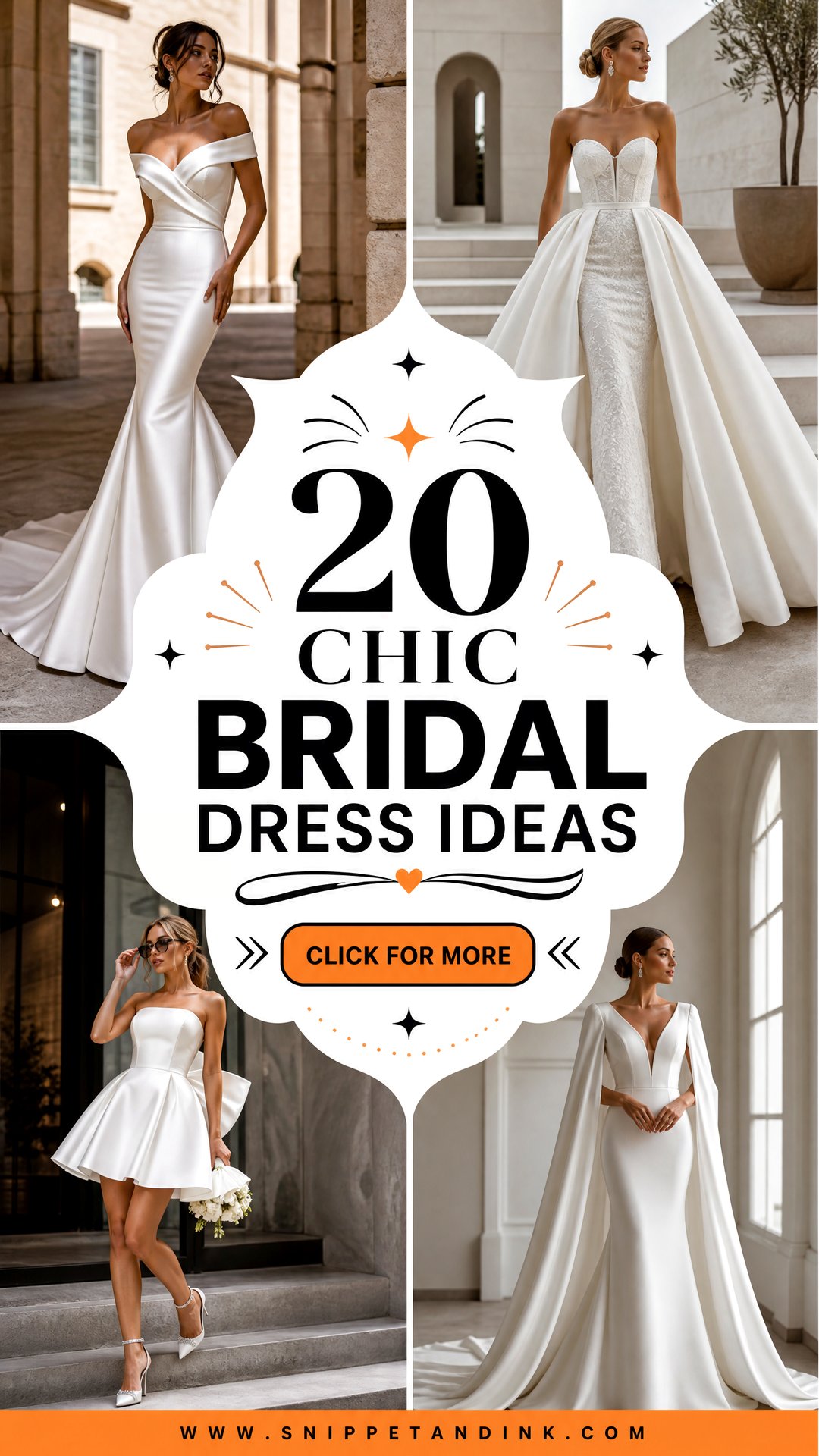
Getting Real Answers From a Bridal Appointment
An appointment usually lasts around an hour to ninety minutes, and it goes fast. A little preparation means you leave knowing which shapes work, not just which dress you liked last.
- Bring one or two people whose taste you trust, not a crowd. Too many opinions blur what you actually feel in the dress.
- Wear smooth, skin-toned underwear and bring a strapless bra, plus shoes close to the heel height you plan to wear.
- Try at least one silhouette you think you will dislike. It is the most common way brides find the dress they buy.
- Expect bridal sizes to run smaller than your everyday clothes, often by a size or two. The number on the tag does not matter; the measurements do.
- Sit, raise your arms and walk across the room in every dress you seriously consider, and take a photo from the back.
Ask about delivery time on the spot. Many made-to-order gowns take several months to arrive, often four to eight, before alterations even begin, so a dress found too late can rule itself out.
1. Satin A-Line Bridal Dress
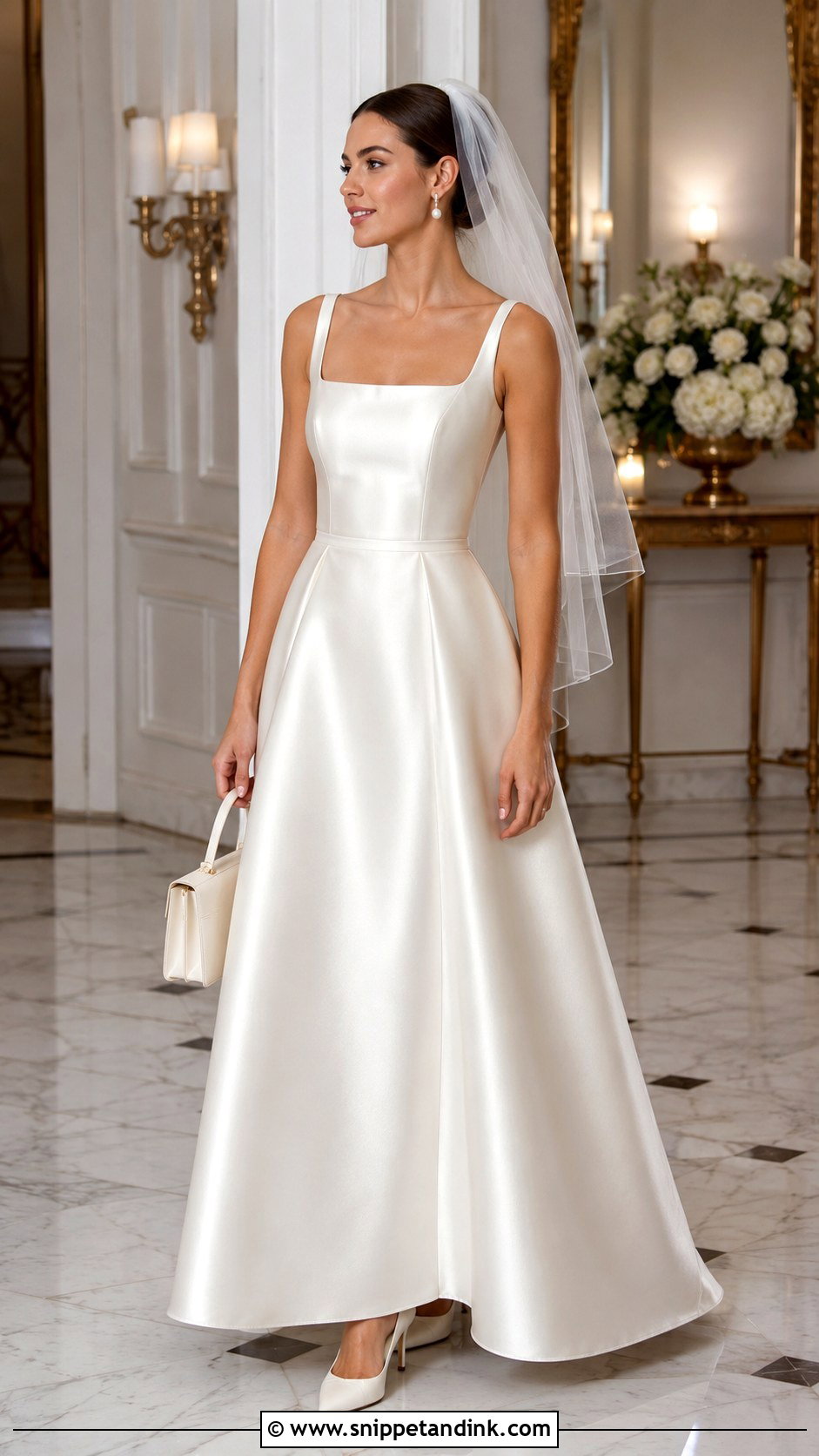
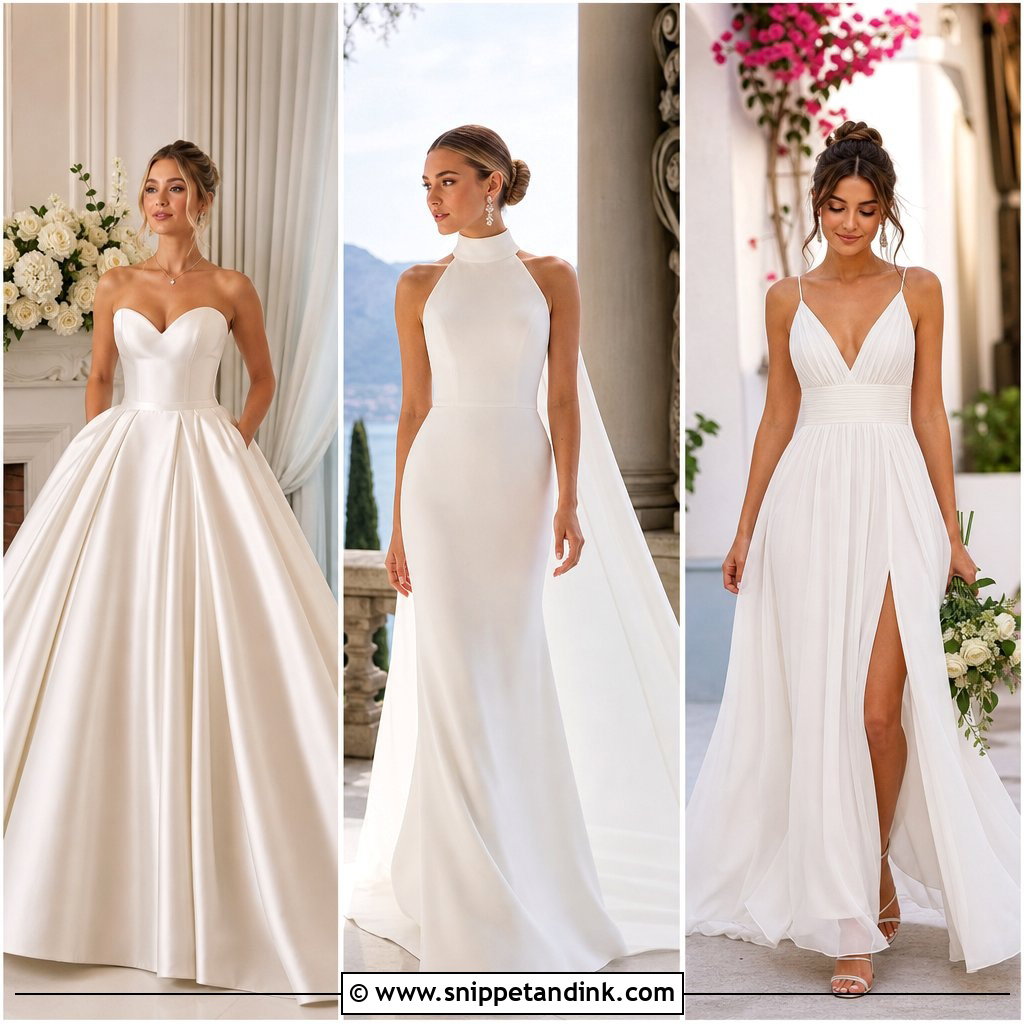
Satin A-lines are the dress I would hand to almost anyone who is unsure, because the shape narrows at the waist and skims the hips without clinging. A fitted bodice with a square, scoop or soft curved neckline, and a skirt that widens gradually, needs very little decoration on satin. The one thing to know is that satin creases at the lap when you sit, and it shows every pull at the seams, so a good final fitting matters more than embellishment. Pointed ivory pumps, pearl drops, a structured mini bag and a fingertip veil finish it; a narrow belt or visible seaming adds waist definition.
2. Basque Waist Ball Gown Bridal Dress
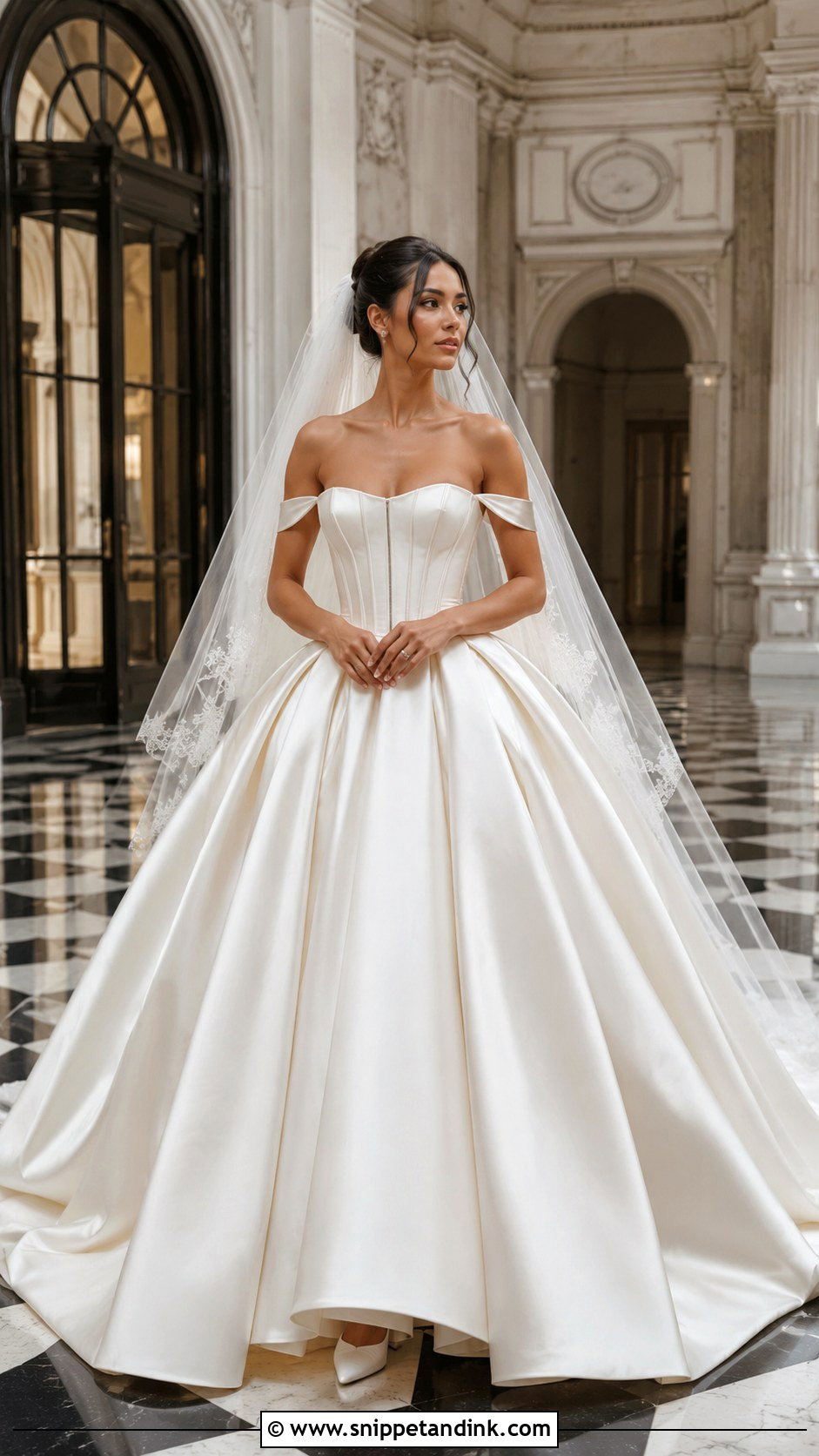
A Basque waist ball gown bridal dress dips into a point below the natural waist, which lengthens the torso before the full skirt begins. That point is unforgiving if it lands in the wrong place, so I mark it at the fitting with the bride seated, not standing; a Basque that is too long digs into the thighs at dinner. A corset interior gives support but should still let you breathe deeply. Crystal studs and a simple cathedral veil keep the volume in charge. Closed-toe platforms add stability under a wide skirt, and detachable off-shoulder straps soften the ceremony look.
3. Strapless Column Bridal Dress
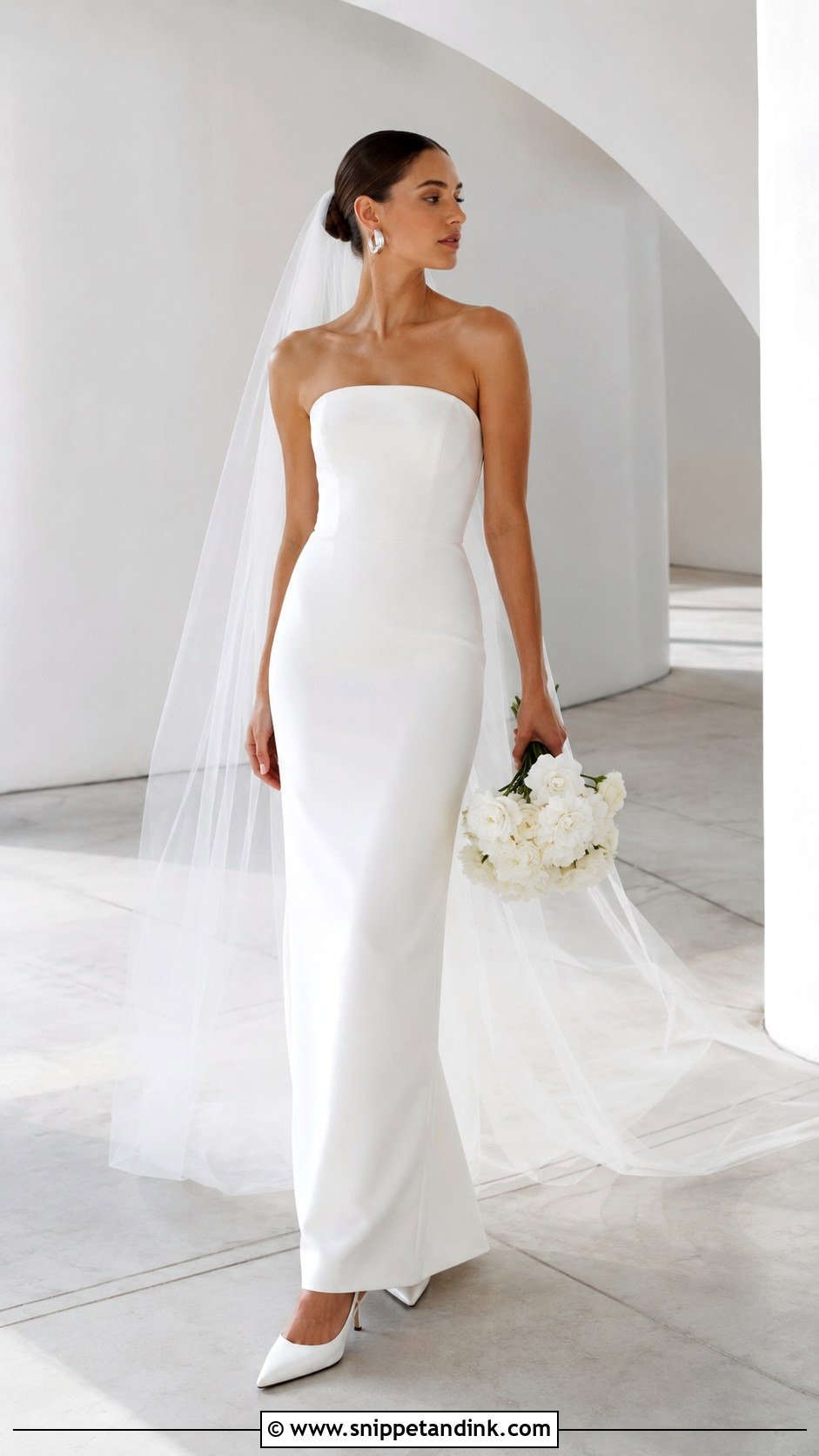
A strapless column is the definition of pared back, and every bit of its success sits in the bodice. It needs real internal boning and a neckline fitted so precisely that it does not move when you hug someone, because nothing else holds it up. Substantial crepe, satin or mikado skims rather than clings. Sculptural earrings, a sleek low bun, pointed slingbacks and a long sheer veil complete it, and a cropped ivory blazer or a simple cape covers the shoulders in cool weather. Galleries, rooftops and architectural venues suit its clean lines.
4. Lace Long Sleeve Bridal Dress
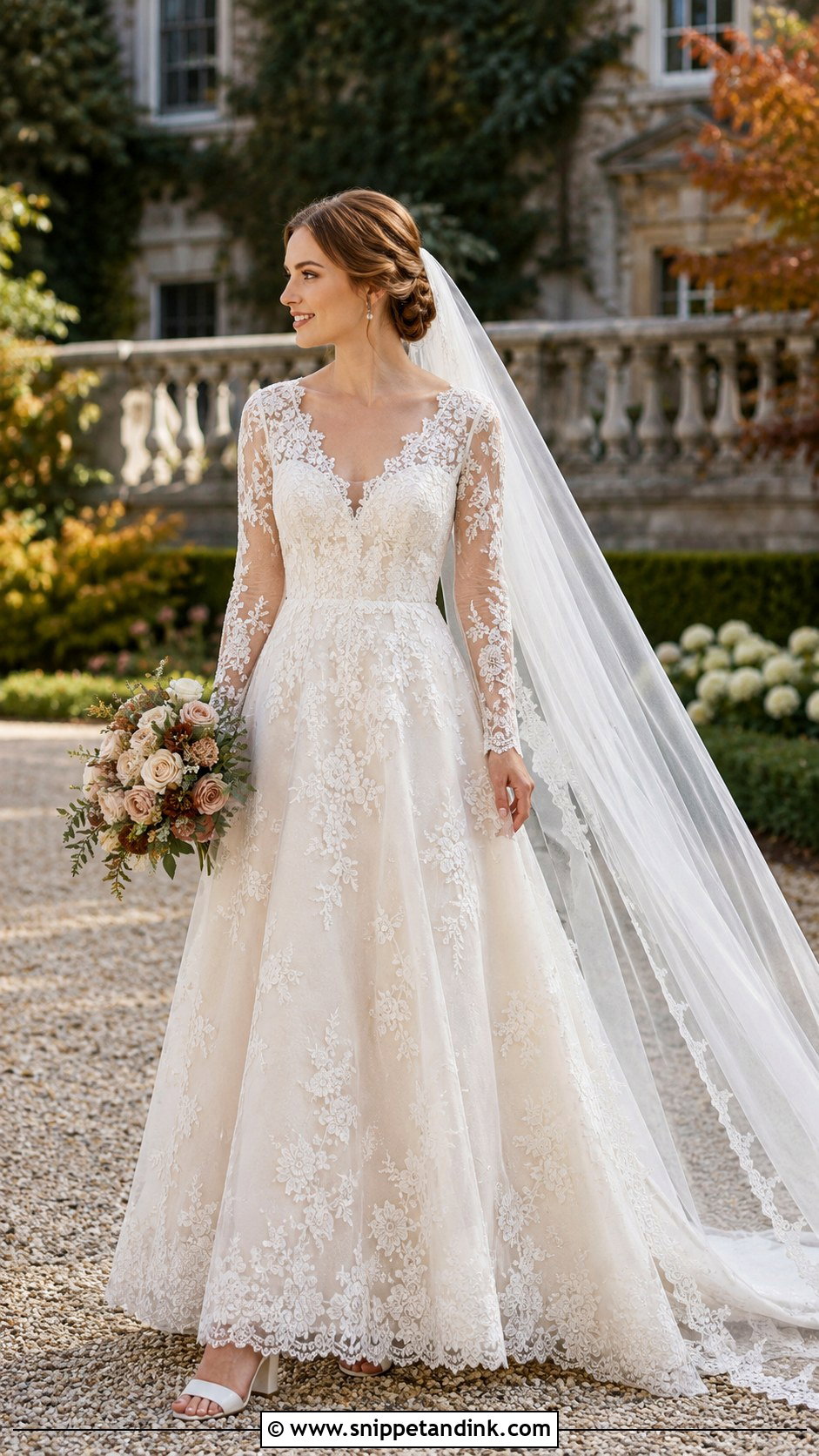
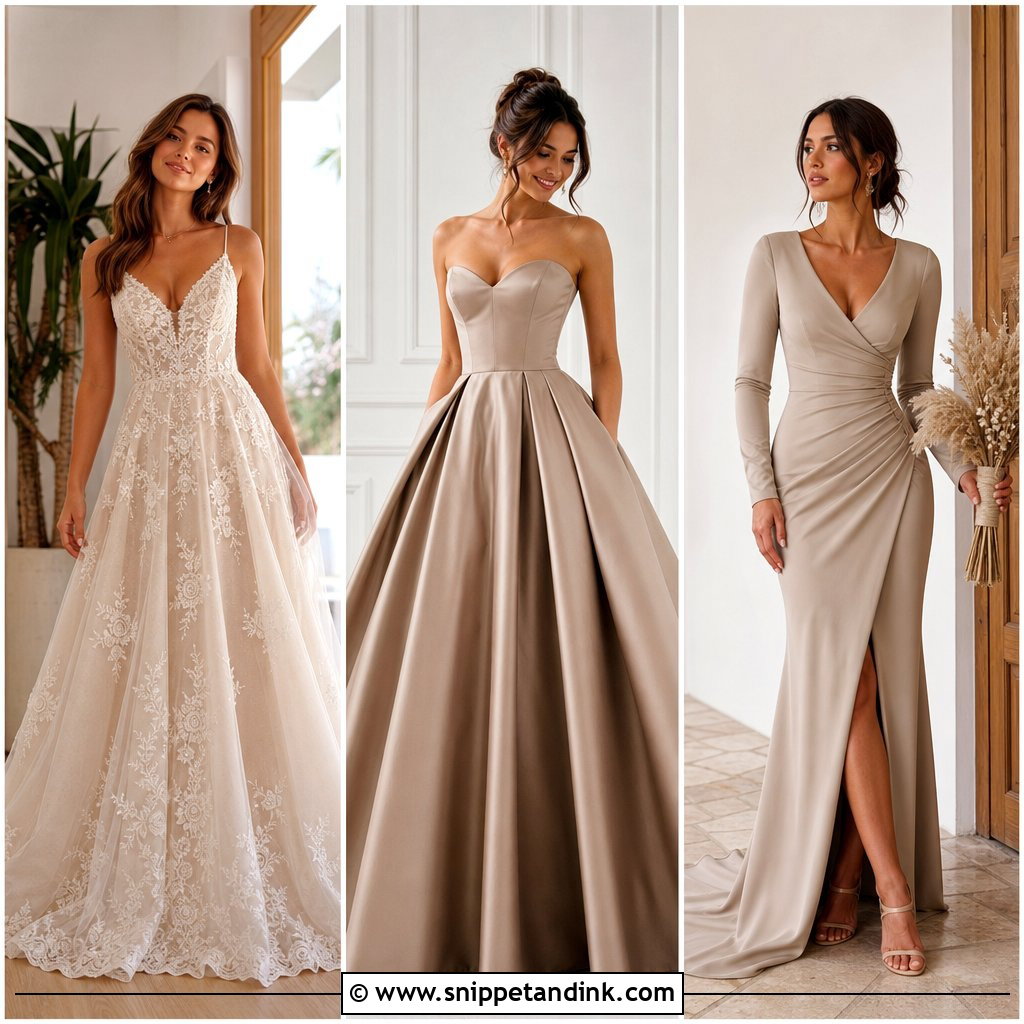
Long lace sleeves give coverage while still looking light. Illusion sleeves with placed appliques feel airier; fully lined lace feels more modest. Either way, I have the bride reach forward and cross her arms at the fitting, because lace sleeves cut close to the arm often bind at the elbow and pull the bodice up. An A-line or soft flare keeps the detailed top from feeling heavy. Pearl earrings, a low chignon, ivory block heels and a plain tulle veil with a narrow lace edge echo the gown. Floral lace suits gardens; geometric lace looks more current.
5. Off-the-Shoulder Mermaid Bridal Dress
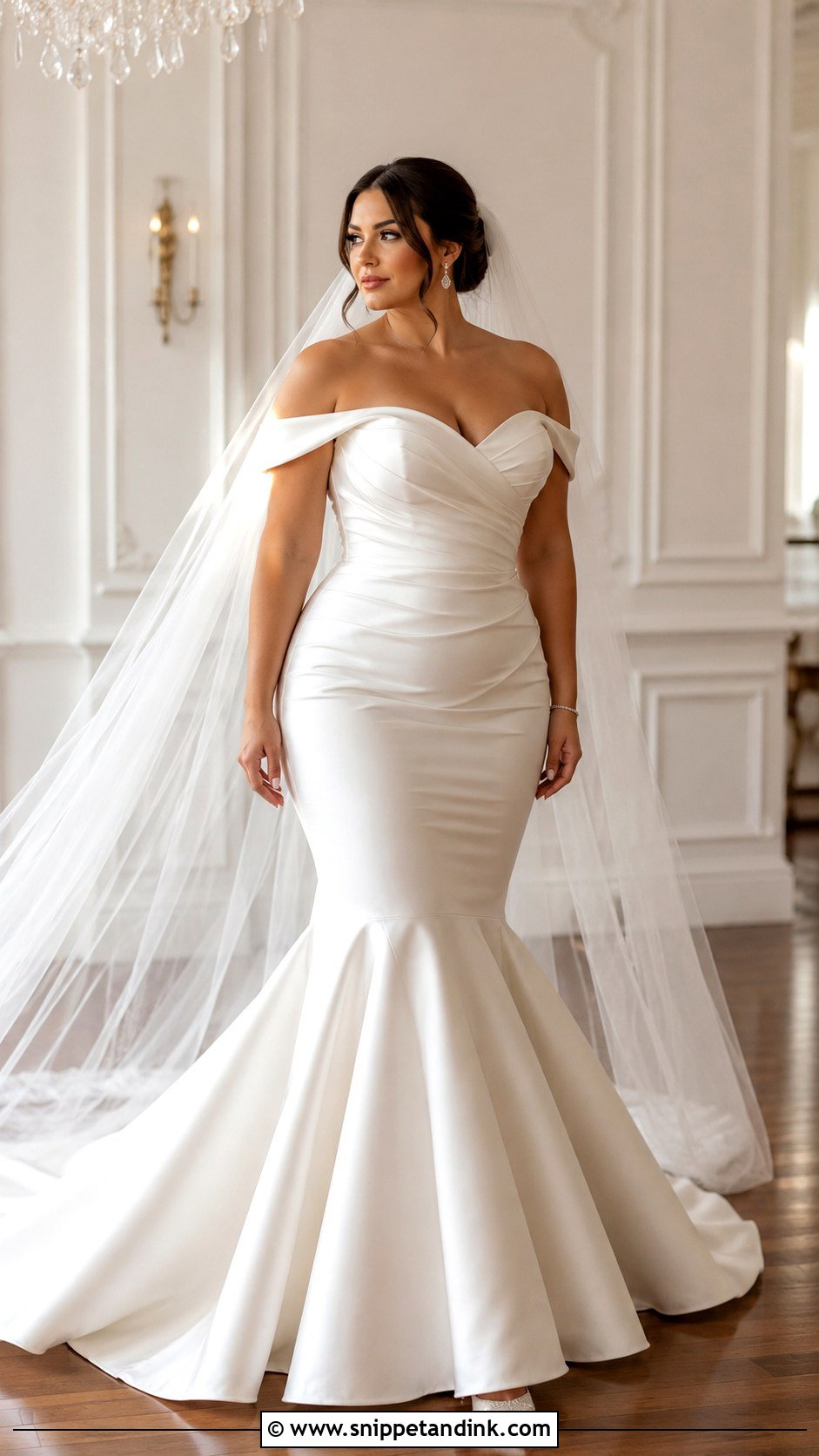
Off-the-shoulder and mermaid together make the most curve-focused gown on this list. The structured bodice does the support, and the skirt follows the body before flaring near the knee. Satin reads glamorous, lace reads softer. Two fit points matter: the sleeves must not slip down when you lift your arms, and the flare must start low enough for you to walk stairs and sit without hitching the skirt. Small drop earrings, a bracelet, pointed heels and a chapel veil suit an evening or black-tie wedding.
6. Square Neck Bridal Dress
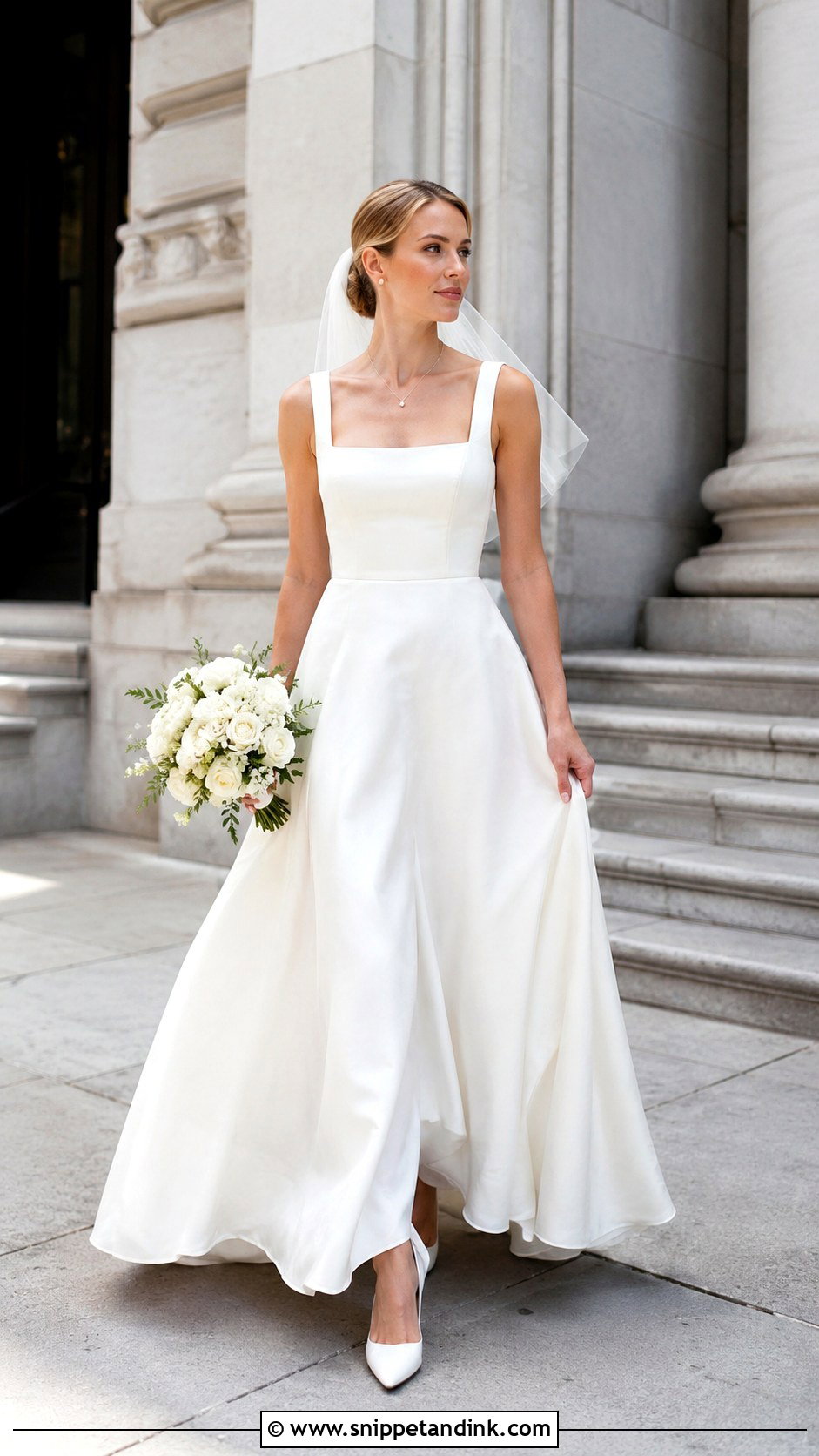
A square neck frames the collarbone and face with clean geometry, and it works with wide straps, short sleeves or long fitted sleeves, so it adapts to any season. Over an A-line it looks classic; over a straight crepe skirt, sharper. The corners of a square neckline gape if the fit is off by even a little, so check them while you lean forward. Pair it with a fine pendant or nothing, pearl studs, a low bun, pointed ivory heels and a medium veil. For definition without decoration, look for princess seams or a structured waistband.
7. 3D Floral Bridal Dress
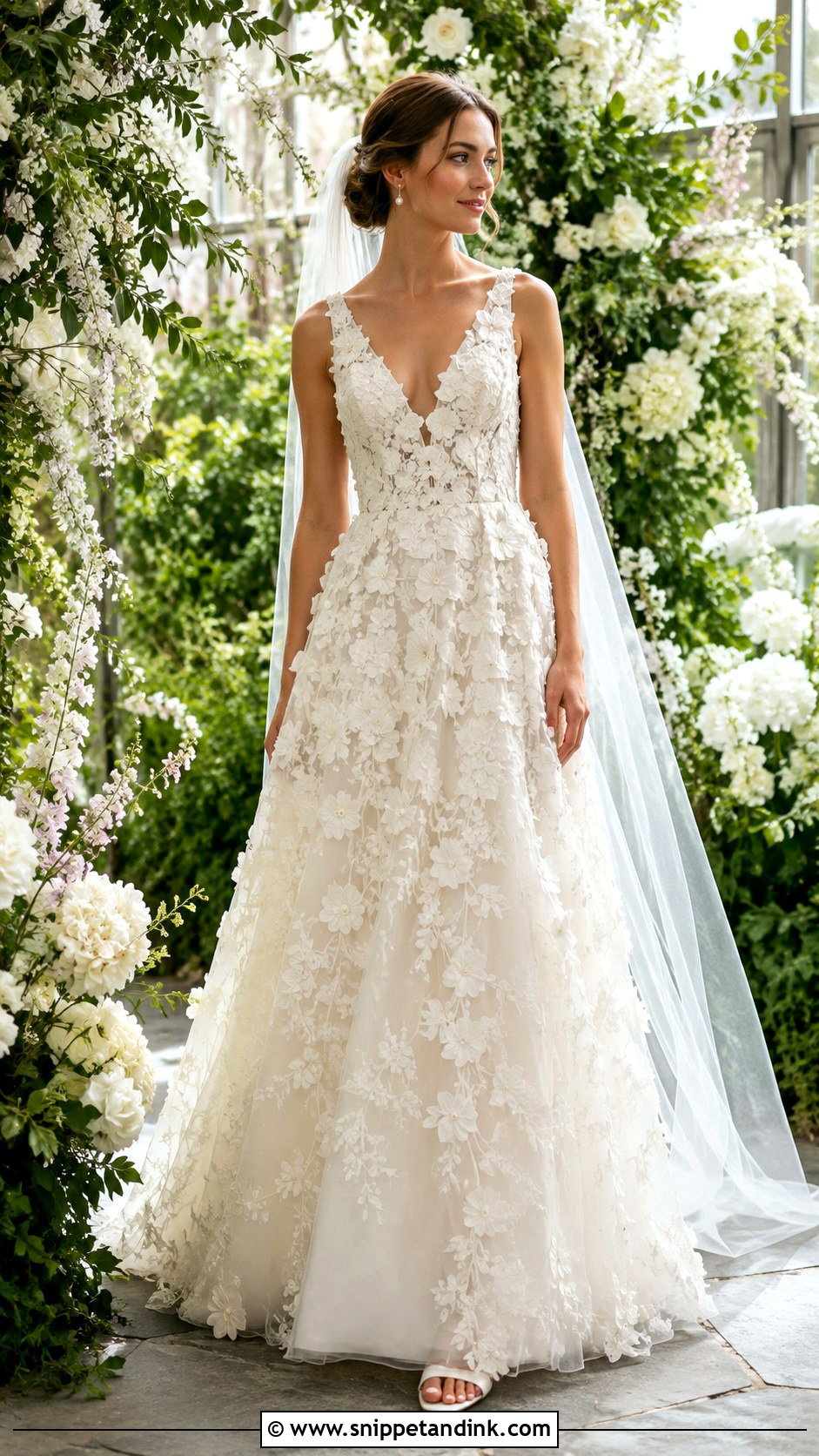
Three-dimensional flowers turn texture into the whole story of the dress. They can cover the gown or sit only at the bodice, waist and hem. I keep the colors to ivory, soft white or the palest blush; mixed colors on dimensional petals start to look like a costume. Fabric flowers flatten in storage and transit, so plan time on the morning to steam and lift them. Simple satin sandals, small pearl earrings, a plain sheer veil and loose waves or a soft bun leave the petals alone. A floral A-line is gentler; a floral column is more fashion-led.
8. Minimalist Slip Bridal Dress
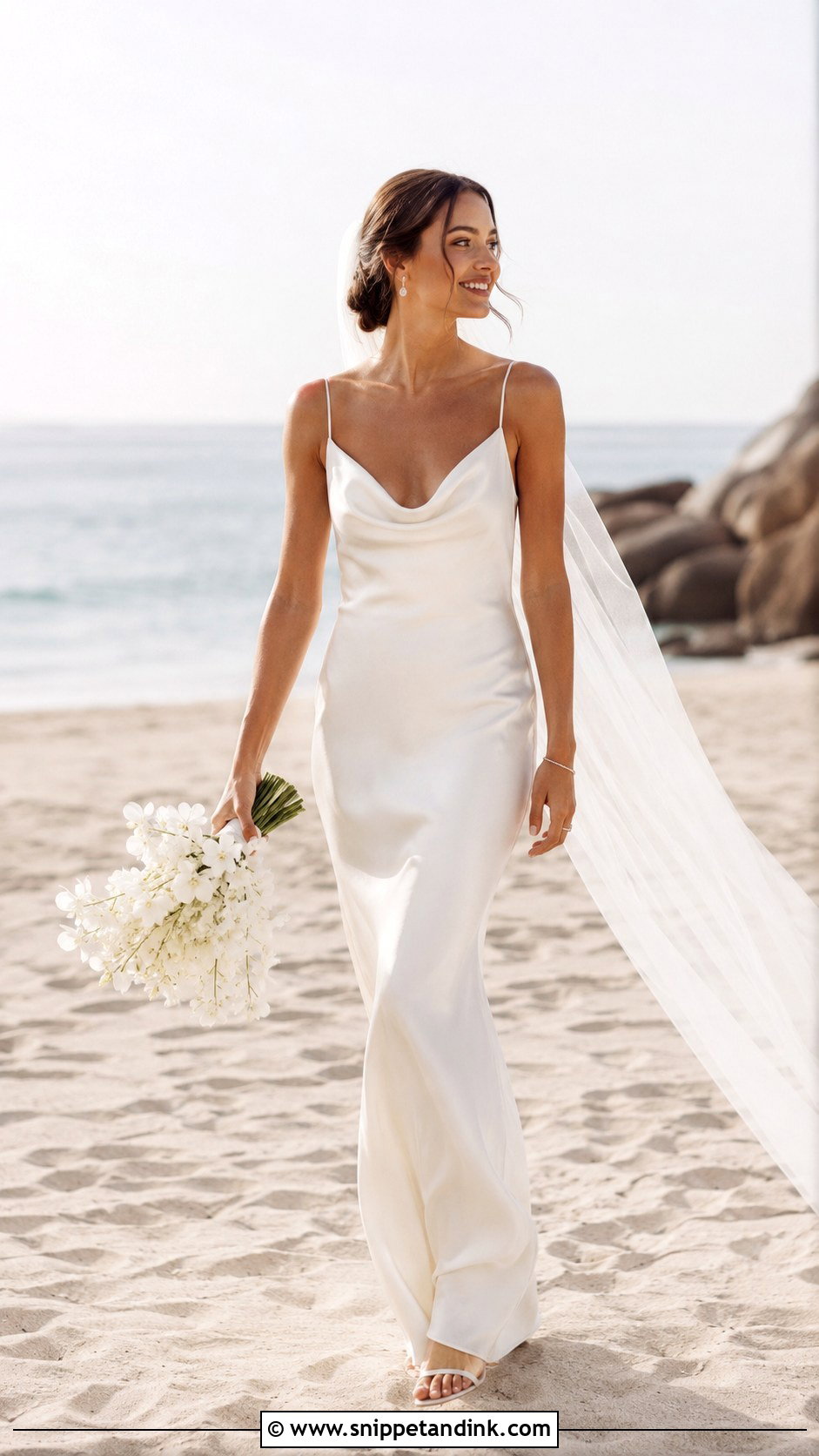
A slip dress looks simple and is one of the hardest gowns to fit well. Silk satin or satin-backed crepe drapes beautifully but has almost no internal structure, so the bust and hips must be altered precisely or the fabric pulls and ripples. It also shows every line beneath, so plan your underwear before the first fitting. Barely-there ivory sandals, a delicate tennis bracelet, small drops and a long sheer veil keep it bridal, and a satin bow or jeweled comb can replace the veil later. Beach, destination and small weddings suit it best.
9. High Neck Lace Bridal Dress
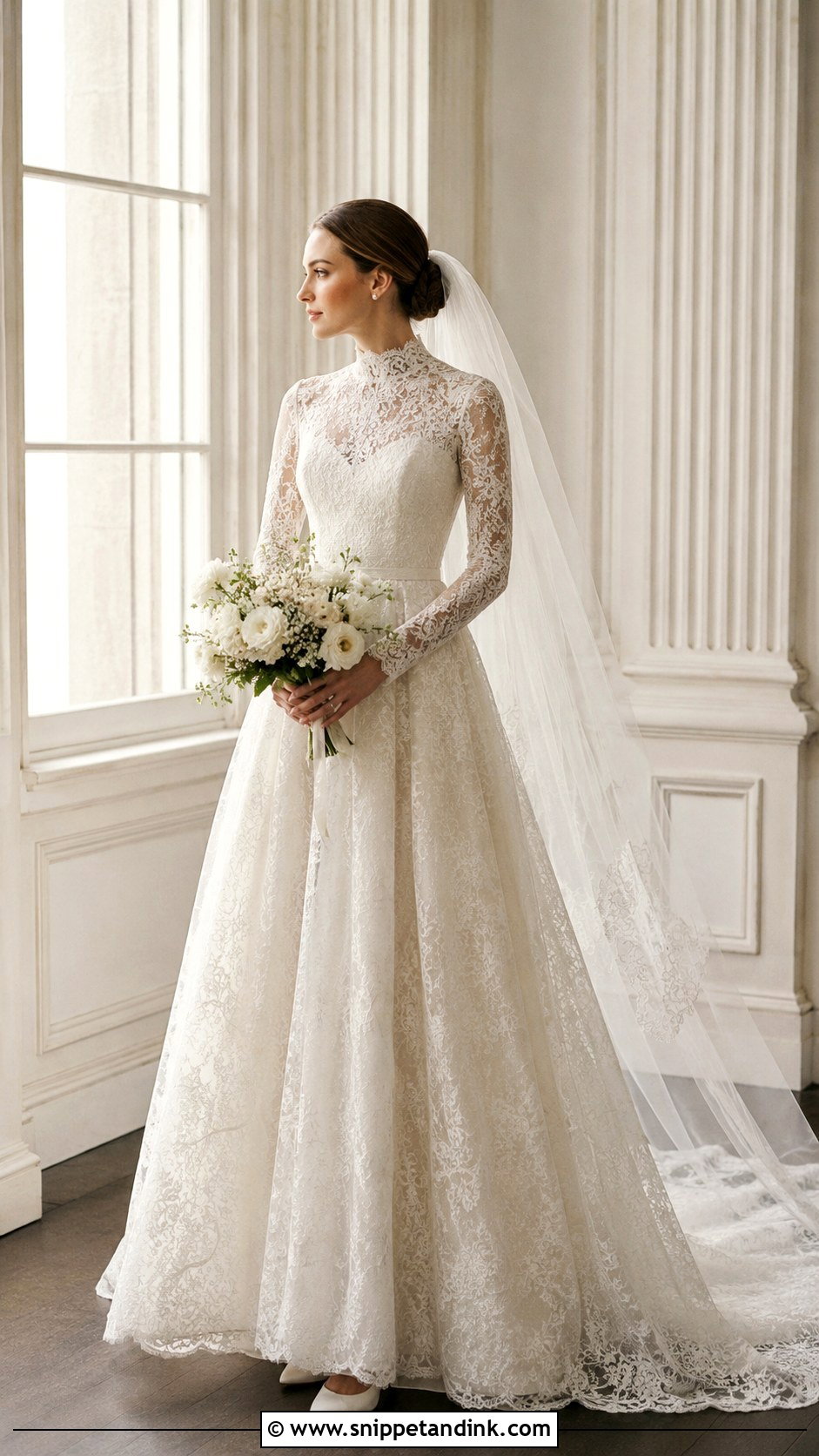
A high lace neck feels traditional without looking old-fashioned when it is balanced by sheer sleeves, an open back or a soft skirt. The collar is the jewelry, so skip the necklace and wear pearl or small diamond studs. A collar that feels fine when you face forward can scratch when you turn your head, so I check the inside edge of the lace for stiff threads and ask for a soft binding if it rubs. Ivory pumps, a low bun and a chapel veil attached below the bun keep the collar visible. It suits historic venues and winter weddings.
10. One-Shoulder Bridal Dress
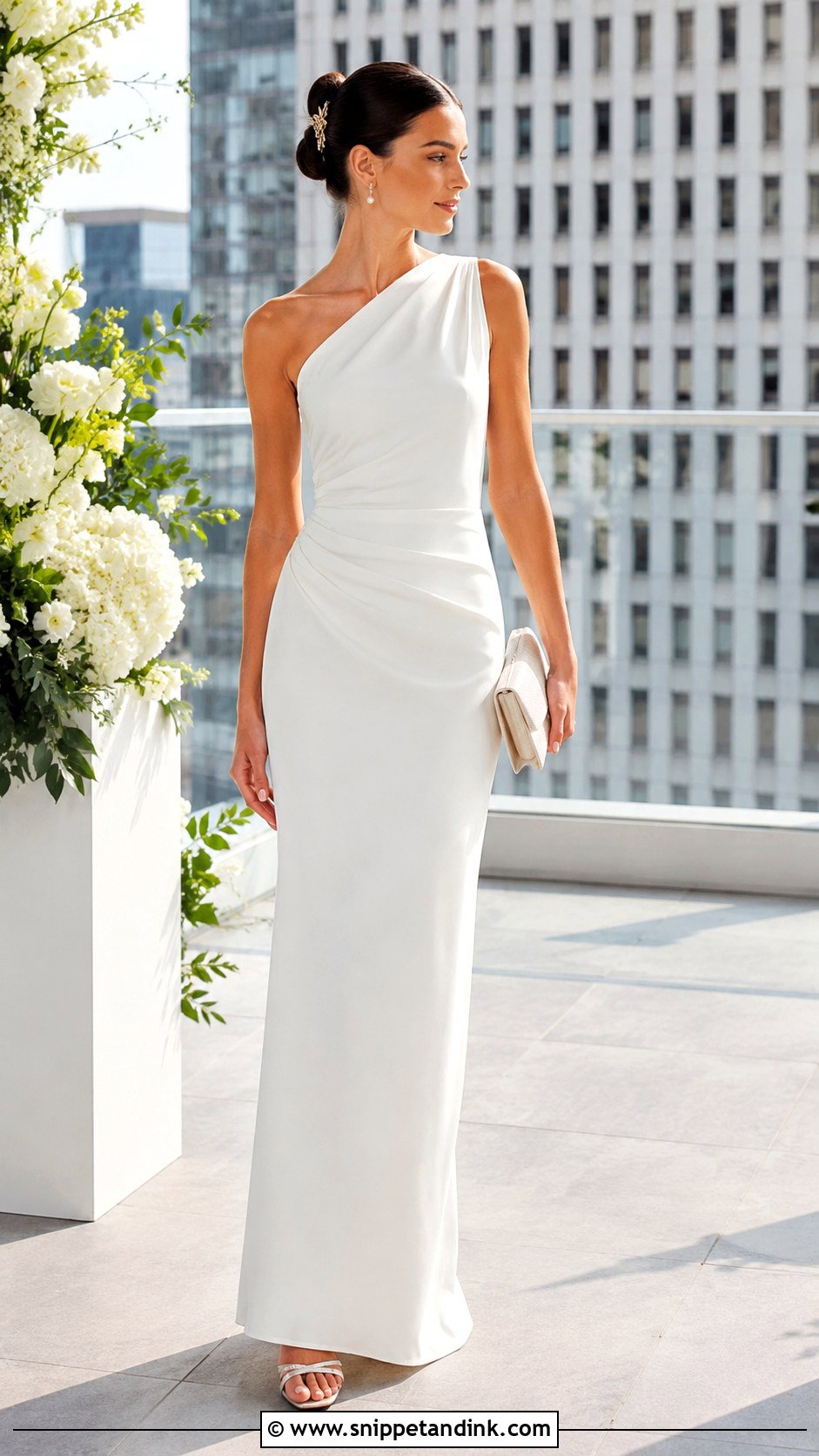
One shoulder breaks the symmetry and makes a formal gown look current. Soft drapery across the bodice and a fitted waist keep it balanced, over a sleek column or a more fluid A-line. The strap carries more weight than two would, so it needs a firm anchor inside the back and a quick check that it stays put when you raise the opposite arm. One statement earring on the bare side, or two small ones, metallic ivory sandals and a smooth clutch suit it. A sculptural hairpin can replace a veil, or a plain veil sits beneath the hair.
11. Detachable Overskirt Bridal Dress
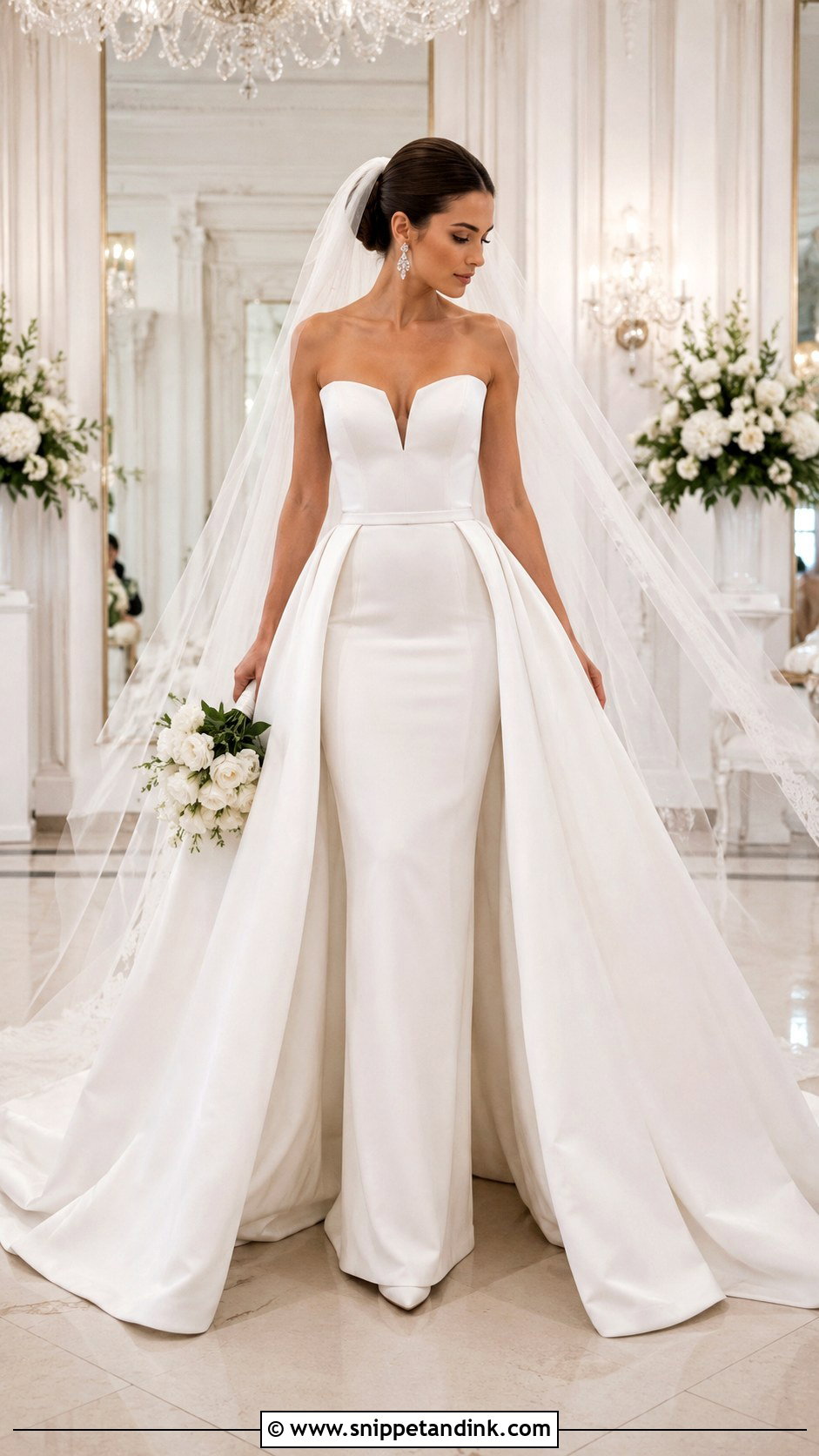
A detachable overskirt bridal dress is two looks without a full change. A dramatic tulle or mikado overskirt sits over a fitted crepe, lace or satin gown for the ceremony and portraits, and comes off to reveal a slimmer dress for dinner and dancing. I always ask to see the waistband from the side and the back with the overskirt removed, since fasteners sometimes leave visible bumps. A cathedral veil, crystal earrings and block heels suit the ceremony version; a sparkling comb or polished ponytail suits the party.
12. Tea Length Bridal Dress
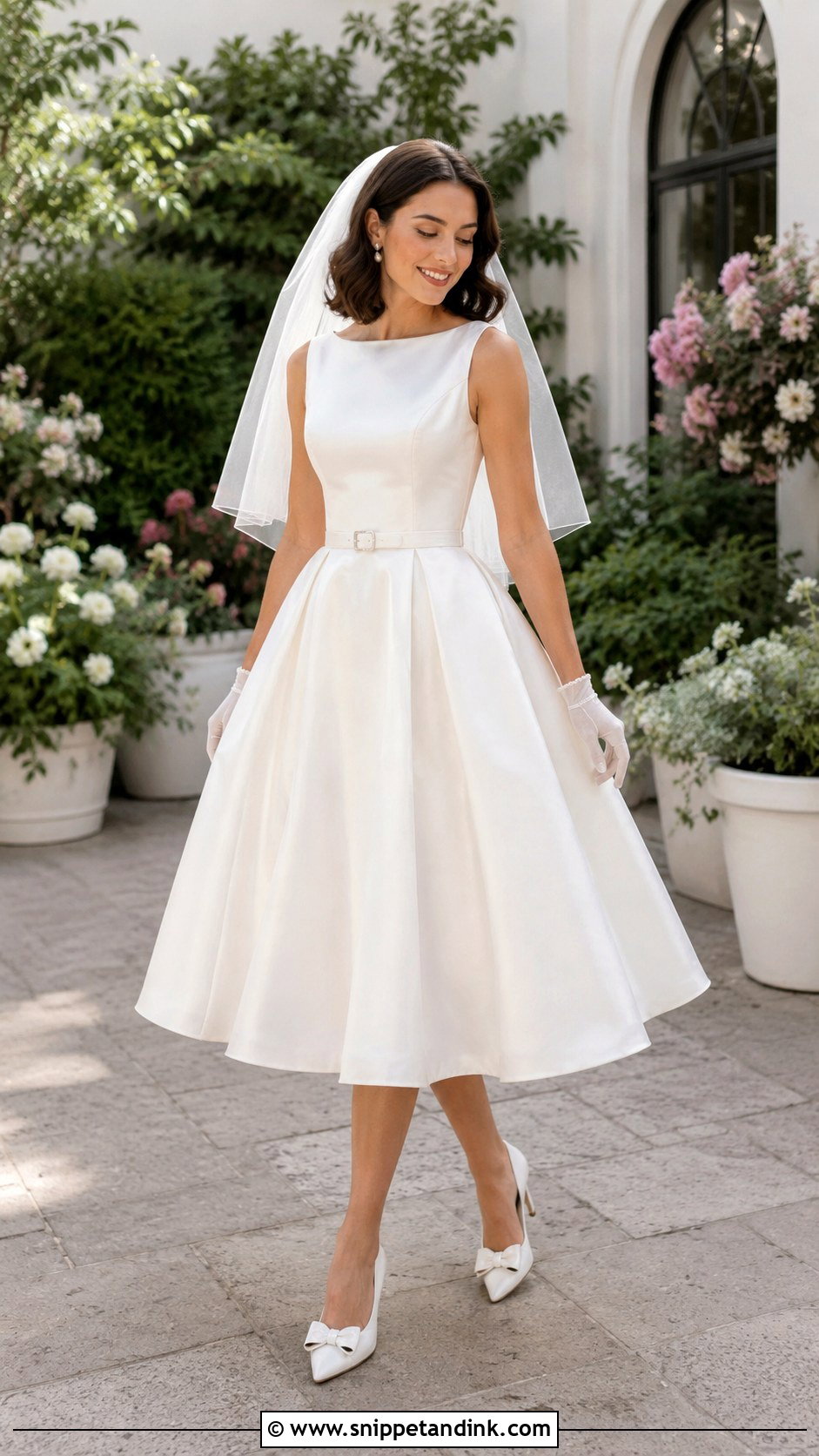
Tea length ends between knee and ankle, which makes the shoes part of the outfit. A fitted bodice over a full skirt is the classic shape; a clean column is the modern one. Set the hem with the exact shoes on, and sit down at the fitting to make sure the petticoat does not show. Pointed pumps, bow-trimmed heels or ankle straps all work, with pearl earrings, short gloves and a birdcage or shoulder-length veil. A slim belt marks the waist. It is easy to walk and dance in, and suits a courthouse, brunch or garden wedding.
13. Bridal Mini Dress
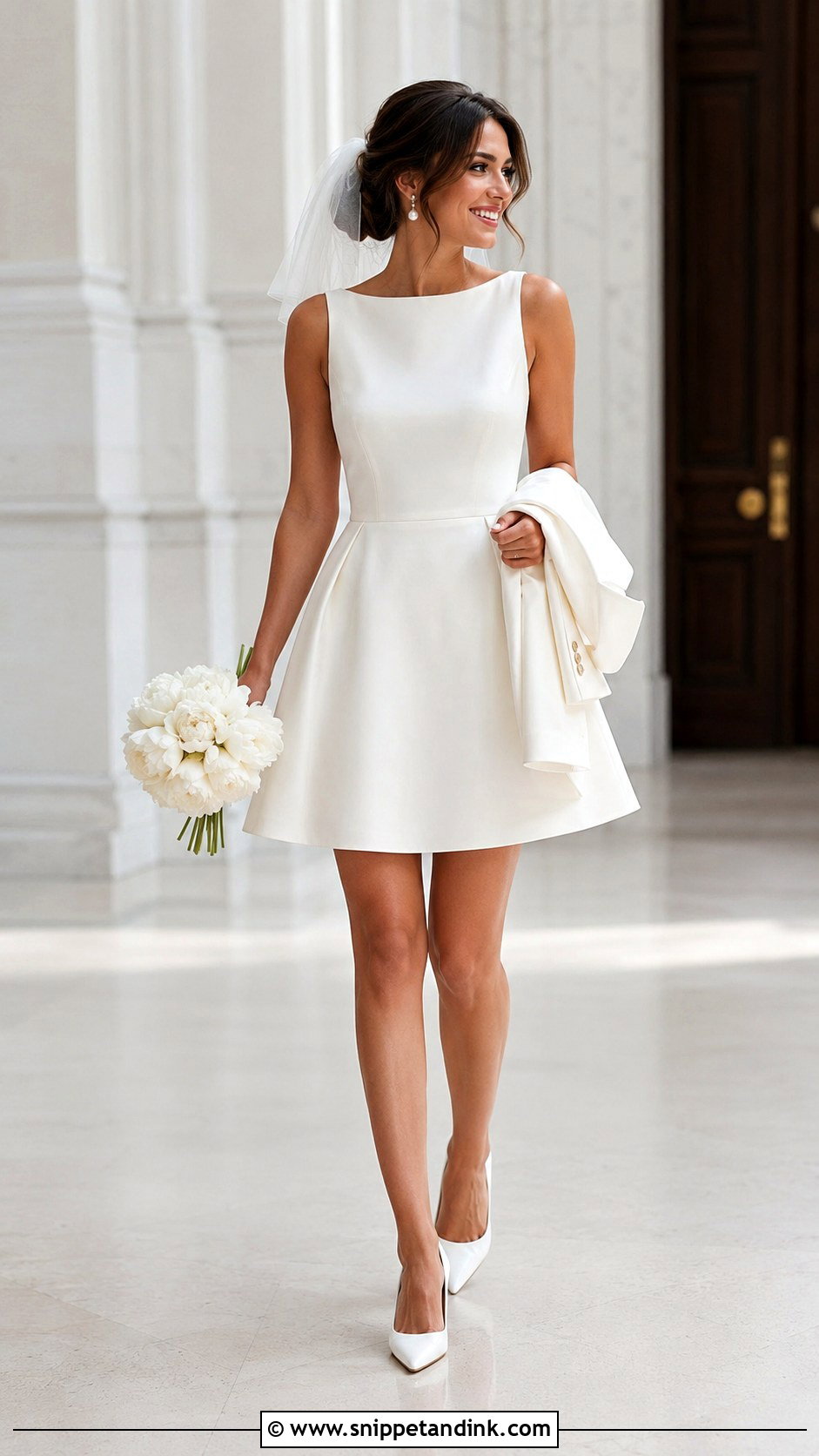
A bridal mini works for a civil ceremony, an elopement or a change for the party. A structured A-line mini, fitted crepe or a playful dress with a bubble hem all read as bridal when the neckline is secure and the accessories are polished. A short skirt rides up more than you expect when you sit and climb into cars, so I check the hem length seated. Pointed pumps lengthen the leg; block heels are steadier. Pearl earrings, a compact bouquet, a short veil or big hair bow, and a tailored blazer for travel finish it.
14. Bridal Dress With Bow Detail
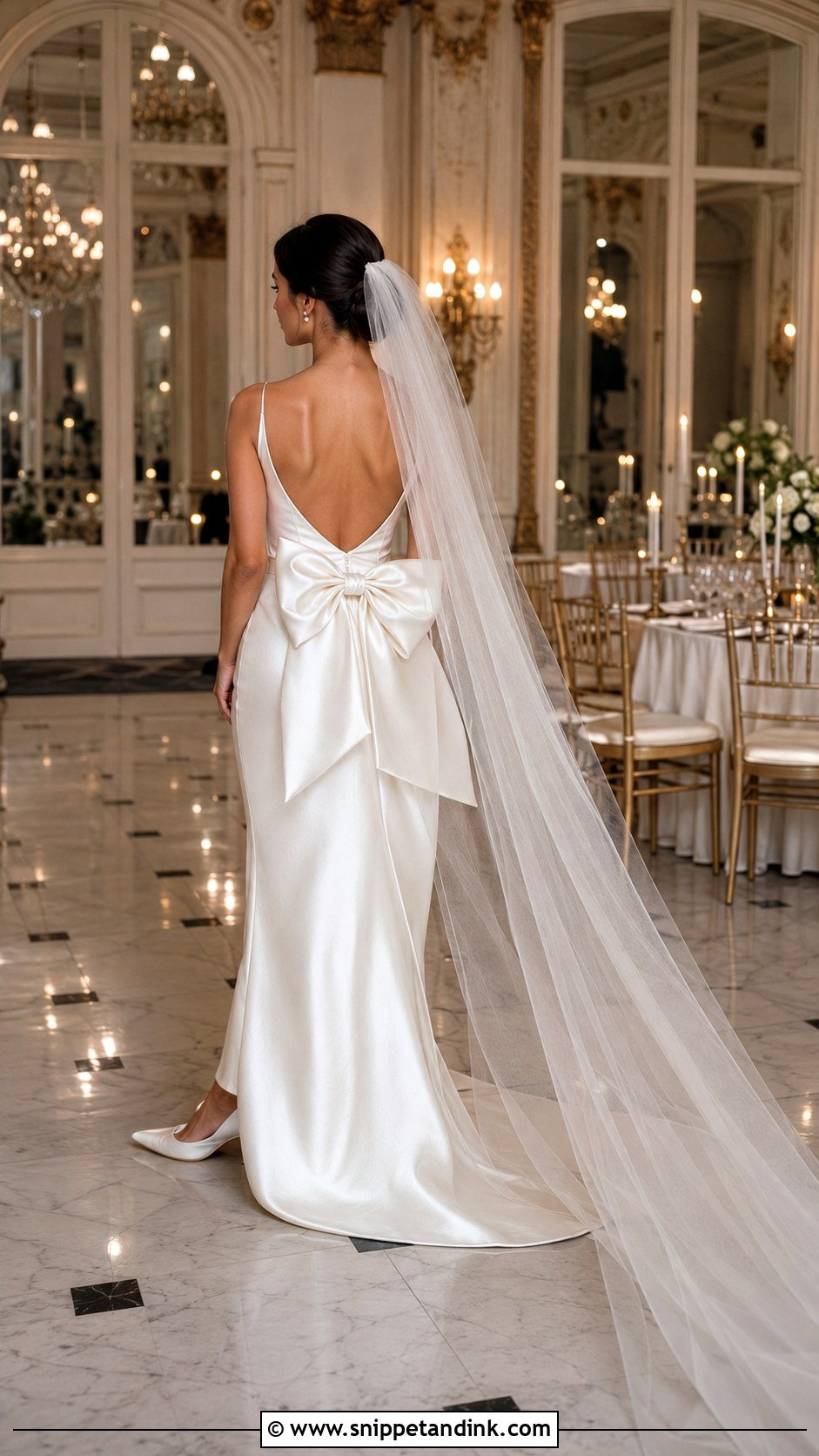
A bow makes one strong point without beading. A large bow across the back gives the aisle moment; a small one at the shoulder or waist is quieter. Big bows lose their shape if the fabric is too soft, so look for one backed with interfacing or tulle. If the bow sits at the back, set the veil above or below it so both show, and consider a detachable bow for dancing. Satin pumps, pearl studs and a plain tulle veil keep the rest clean.
15. Corset Bodice Bridal Dress
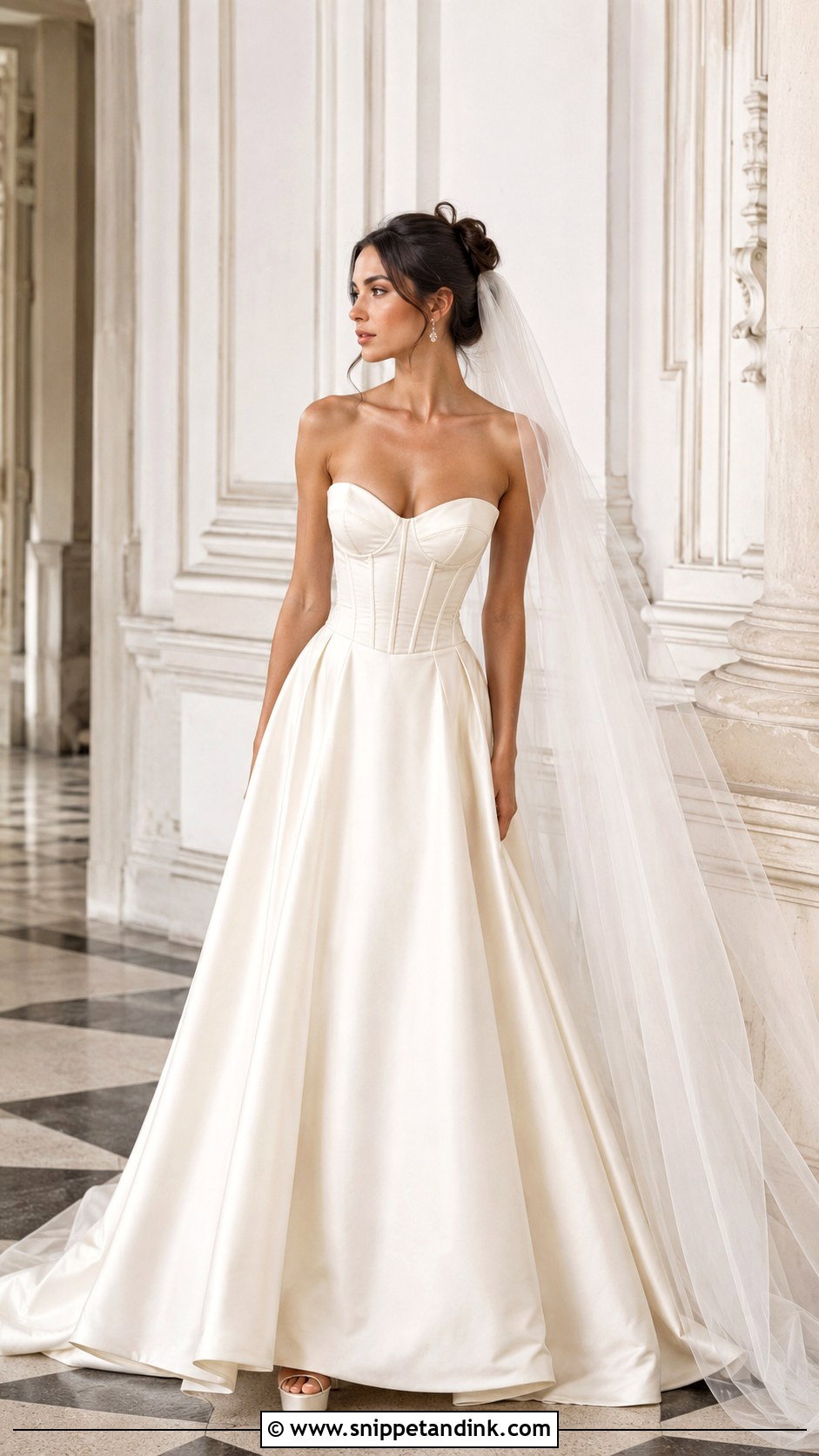
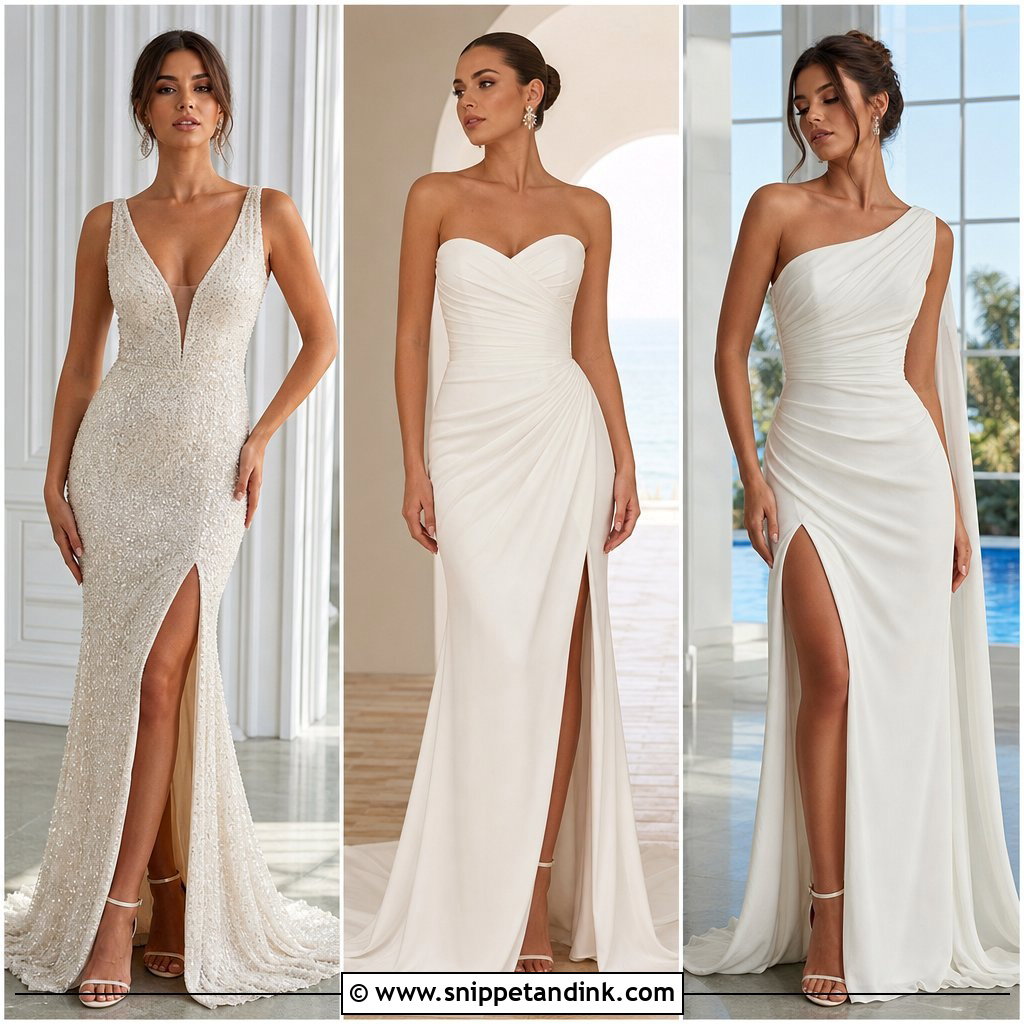
A visible corset gives shape and support, and the amount of structure on show is up to you. The details that matter are supportive boning, built-in cups and enough lining for the coverage you want. A flowing A-line softens it; a full ball skirt makes it dramatic. I test every corset bodice with the bride seated and raising her arms, because a corset that is comfortable standing can press into the ribs at dinner. Delicate earrings, satin platforms and a long plain veil complete it, and a bodice with lace or draping needs no necklace.
16. Cape Sleeve Bridal Dress
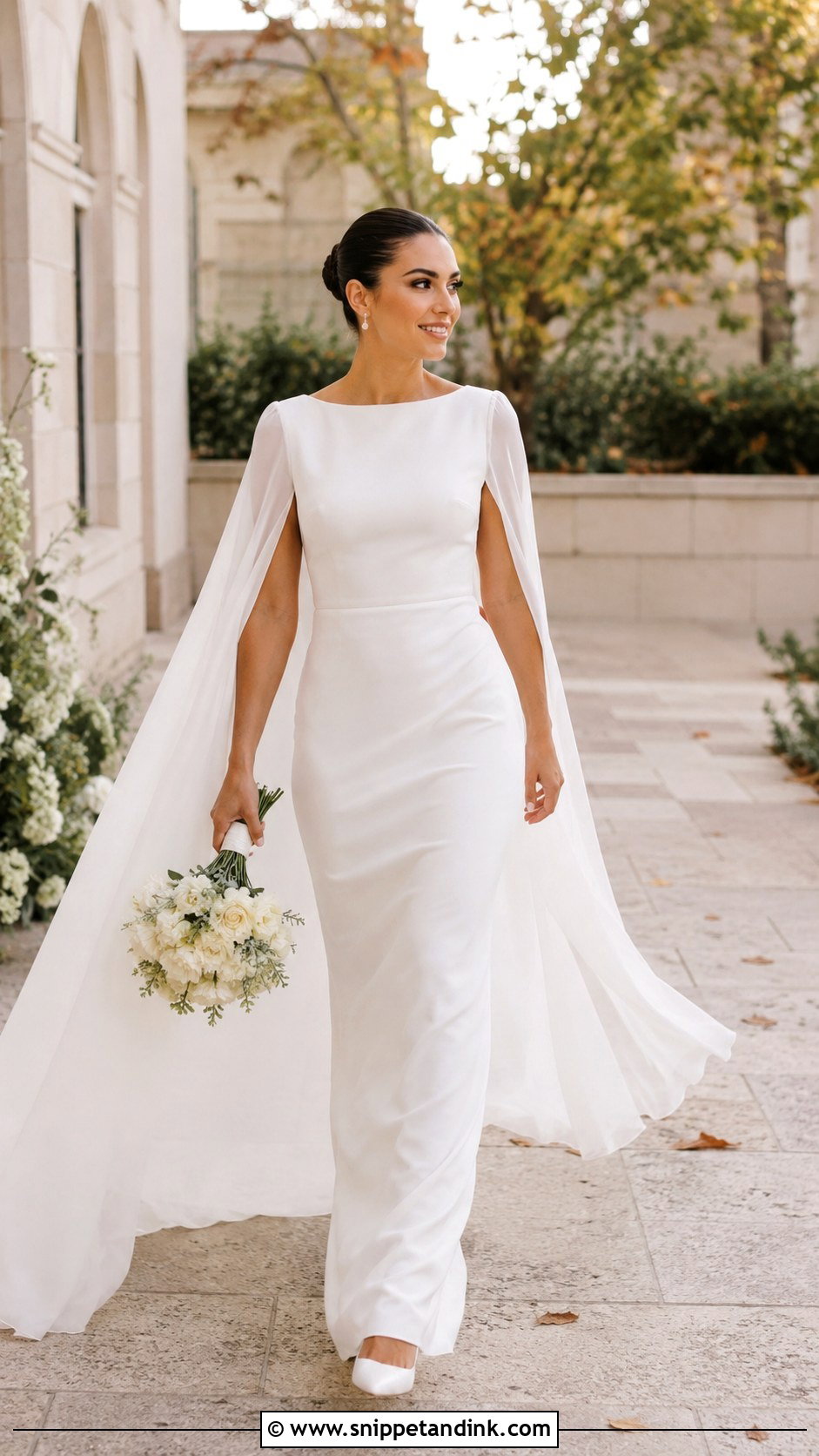
Cape sleeves give arm coverage without the tight feel of fitted sleeves. The cape falls from the shoulders, attaches at the neckline or extends to a floor-length train. Chiffon moves softly; structured crepe gives a sharper line. A long cape pulls the neckline backward, so make sure it is anchored at the shoulder seam and the front stays put when you walk. A column or gentle A-line underneath, pointed pumps, small crystal earrings and a sleek bun suit it, and you can usually skip the veil.
17. Pleated Organza Bridal Dress
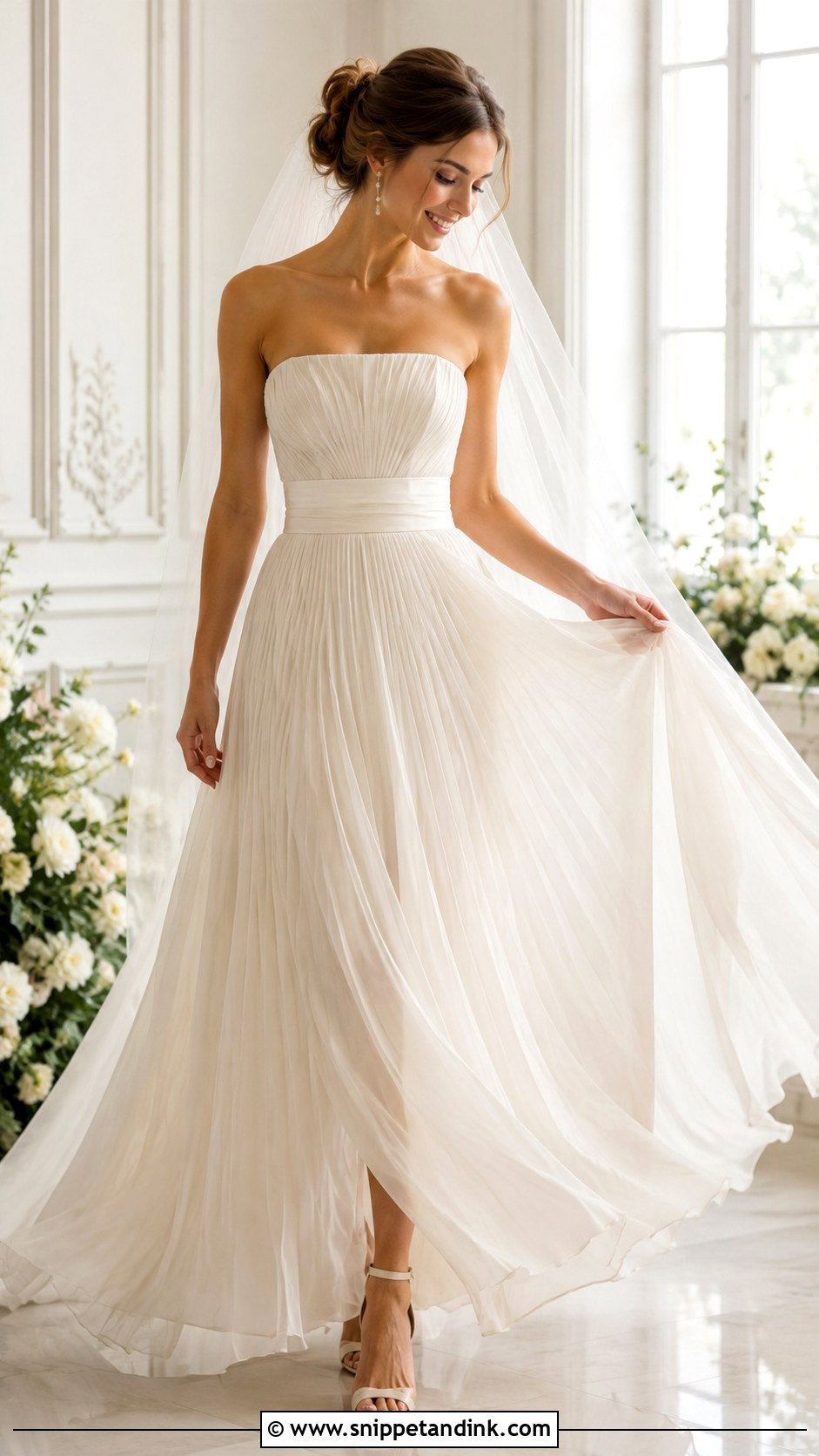
Organza pleats catch light on every fold of a pleated organza bridal dress, giving volume without the weight of heavy satin. Fine pleats on the bodice, skirt or both need a defined waistband to keep the texture in check, and a strapless or square neck keeps the top clean. Organza holds its width, so measure the aisle and the car before you commit. Pleats also flatten when crushed, so the dress should travel hanging, not boxed. Satin ankle straps, slim drops, a fingertip veil and a soft updo finish it.
18. Bridal Dress With Pearl Details
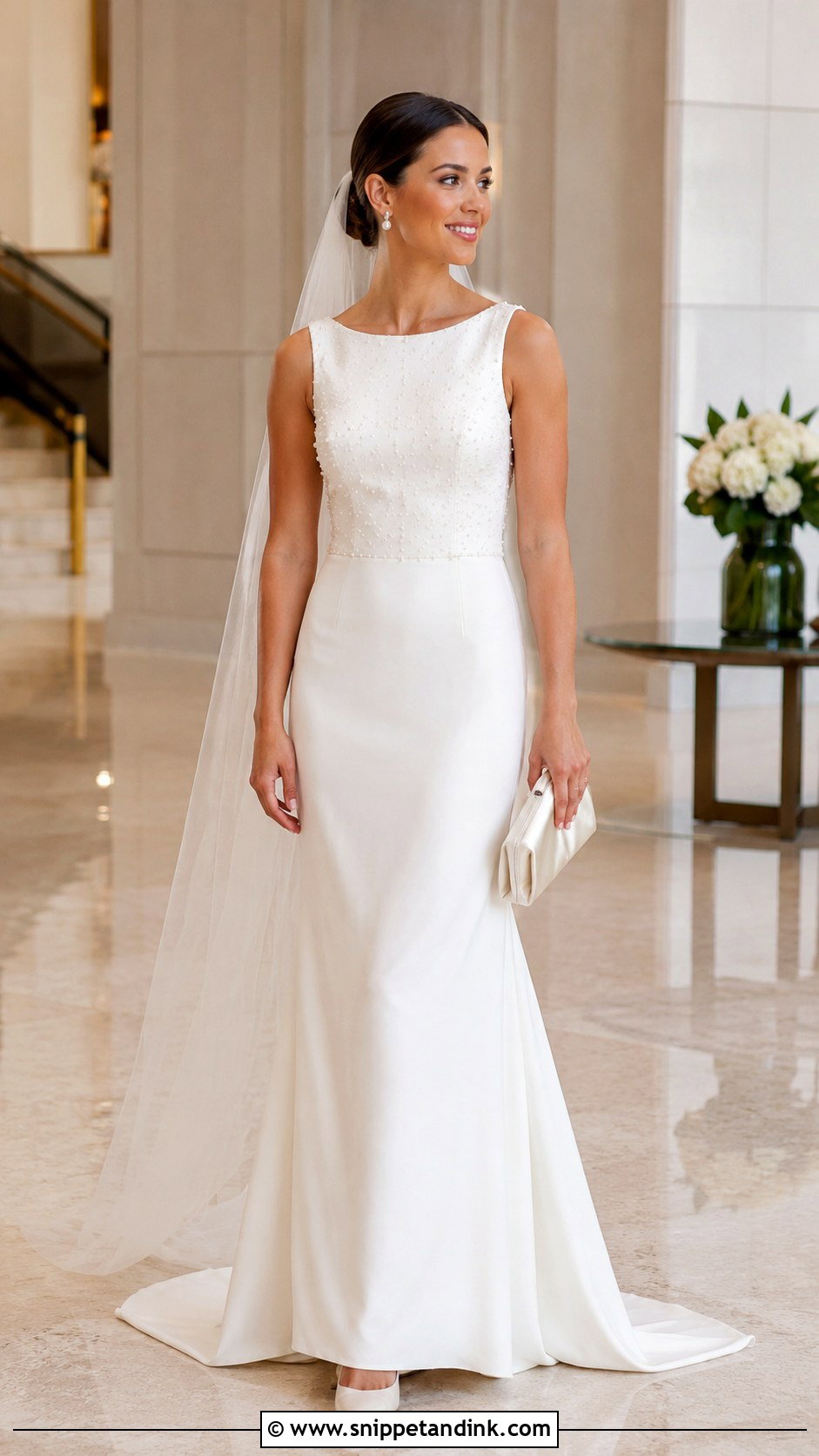
Pearls work best in one place: the neckline, the sleeves, or a bodice that fades into a plain skirt. Mixing pearls with crystals and heavy lace looks busy. Run your hand over the inside of any beaded area before buying; pearls sewn with knots or rough thread ends scratch the skin over a long day. Simple ivory pumps, small pearl earrings, a plain veil and a satin clutch keep the outfit coordinated. Pearls photograph well in both window light and indoor light.
19. Open Back Bridal Dress
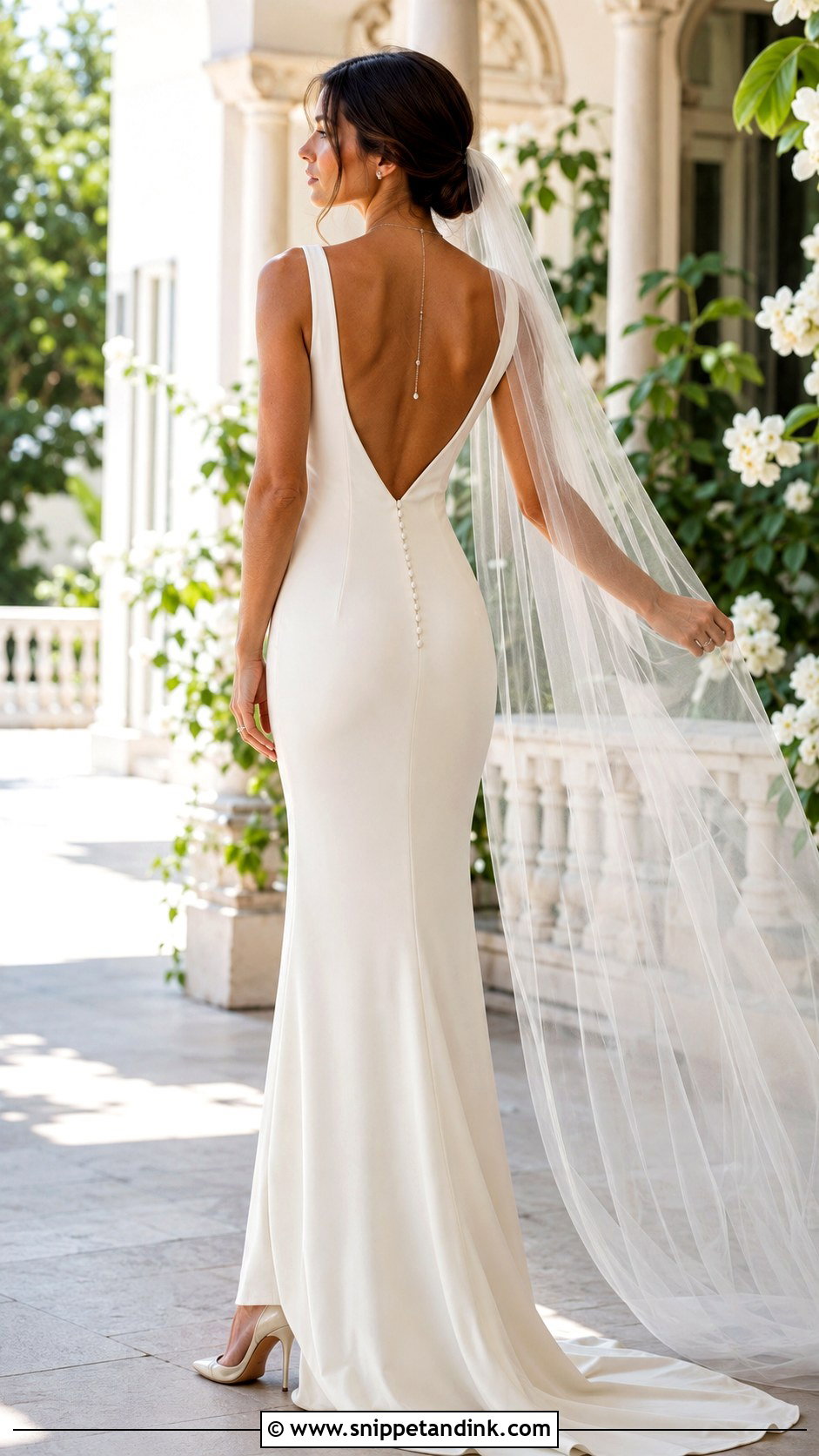
An open back keeps the front clean and saves the drama for the aisle. A low curve, a sharp V or an illusion panel each offer different support and coverage. The lower the back, the more the bust support has to come from built-in cups and the side seams, so ask the shop to show you the construction inside, not just the outside. A fitted crepe column looks sleek; a lace A-line looks softer. A low bun, a back-drop necklace, small studs, pointed ivory heels and a sheer veil that comes off for portraits complete it.
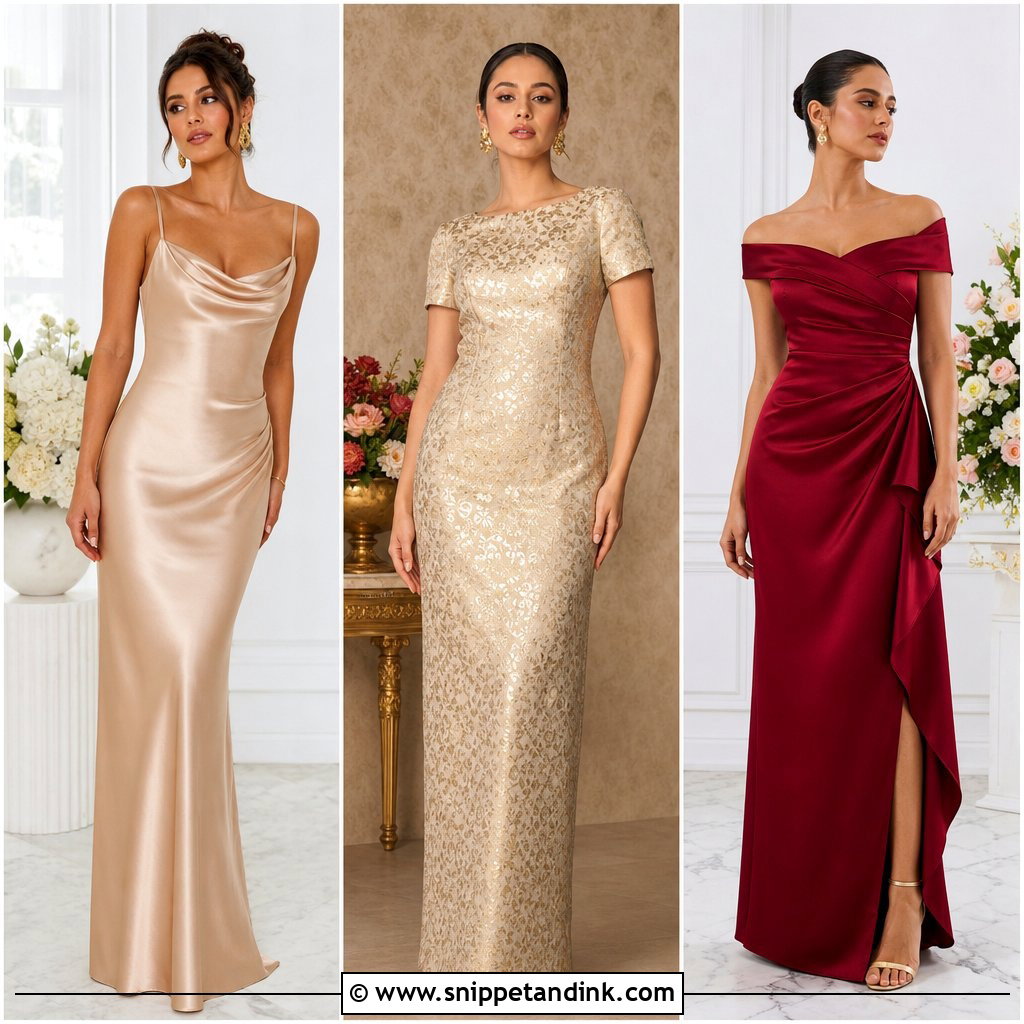



20. Bridal Dress With Bridal Jacket
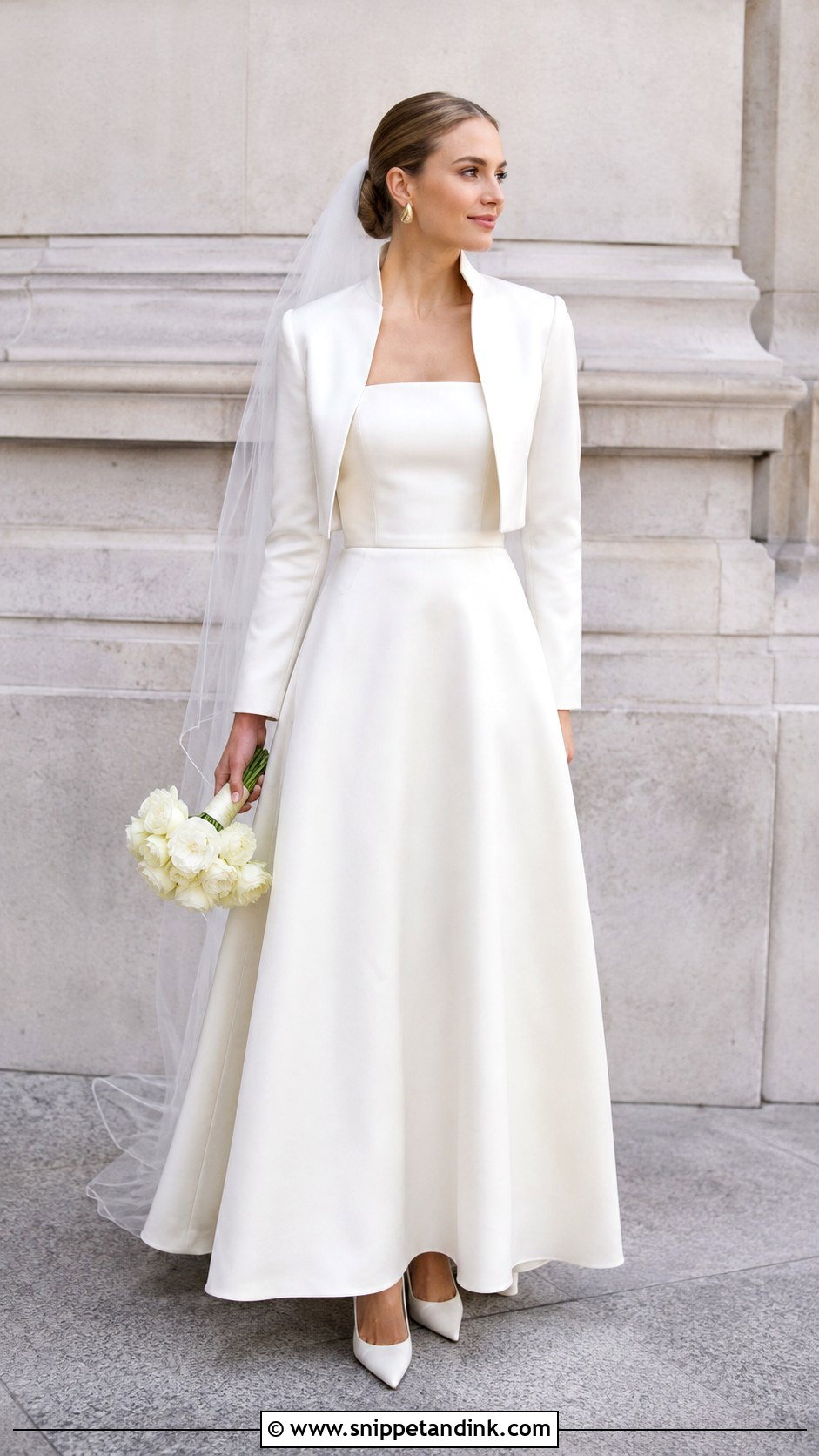
A bridal dress with a bridal jacket gives warmth and a second look in one. A simple slip, column or strapless A-line takes a cropped satin jacket, a lace bolero or a long clean coat, which covers the shoulders for the ceremony and comes off for the reception. Match the ivories carefully, since jackets and gowns from different makers rarely match exactly. Pointed closed-toe heels, sculptural earrings, a low bun and a veil attached below the hair so it falls over the jacket finish it for a winter or courthouse wedding.
What Alterations Can Fix, and What They Usually Can’t
Buying a gown that is close to right and having it altered is normal. Knowing where the limits are saves money and disappointment.
Usually straightforward
- Taking in the side seams and the bodice.
- Hemming a plain skirt, and adding a bustle for the train.
- Adding straps, simple sleeves or a modesty panel, if matching fabric is available.
- Shortening straps and adjusting cups for bust support.
Harder, slower or more expensive
- Letting a dress out. Most gowns have very little seam allowance.
- Hemming lace or beaded edges, where the trim has to be lifted, moved and sewn back by hand.
- Lengthening anything, which generally cannot be done.
- Changing the shape of a fitted silhouette, such as turning a mermaid into an A-line.
Plan on two or three fittings, starting roughly two to three months before the wedding, with the last one a couple of weeks out. Costs vary widely with the fabric and the work involved, so ask for a quote at the first fitting rather than assuming.
The Dress You Forget You Are Wearing
A gown should suit both your taste and everything you plan to do in it. Start with the venue, the season, how much comfort you need and how formal the day will be, then try several shapes, including some that look nothing like your inspiration photos. Fabric, construction and alterations change how a dress feels more than any picture shows. Before the final fitting, put on the full outfit together: the right shoes, underwear, veil and jewelry. Clean satin, lace, corsetry or a short dress, the right one is the one you forget you are wearing by the third hour.
You'll Like These Ideas:



Leave a Reply