
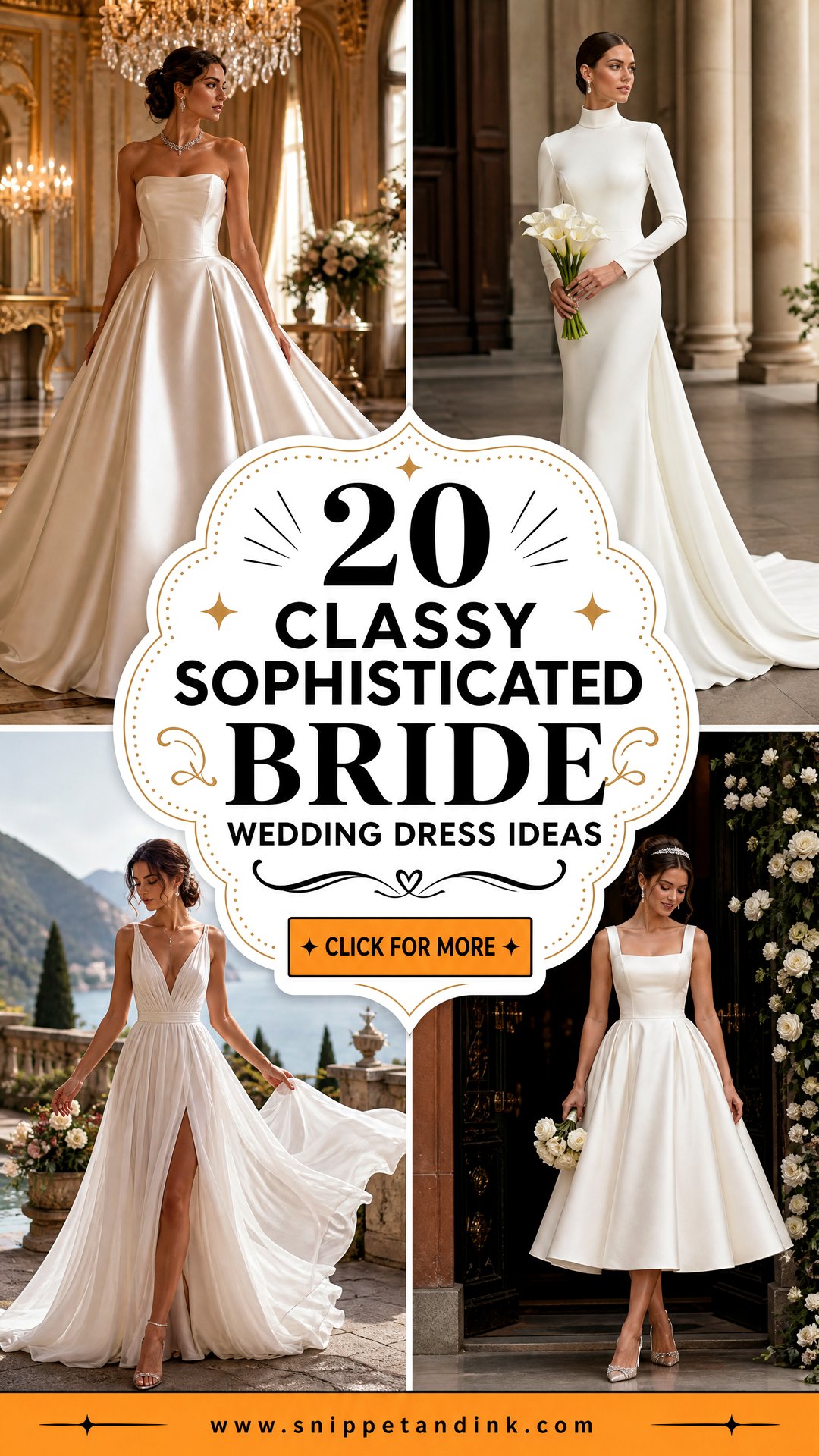
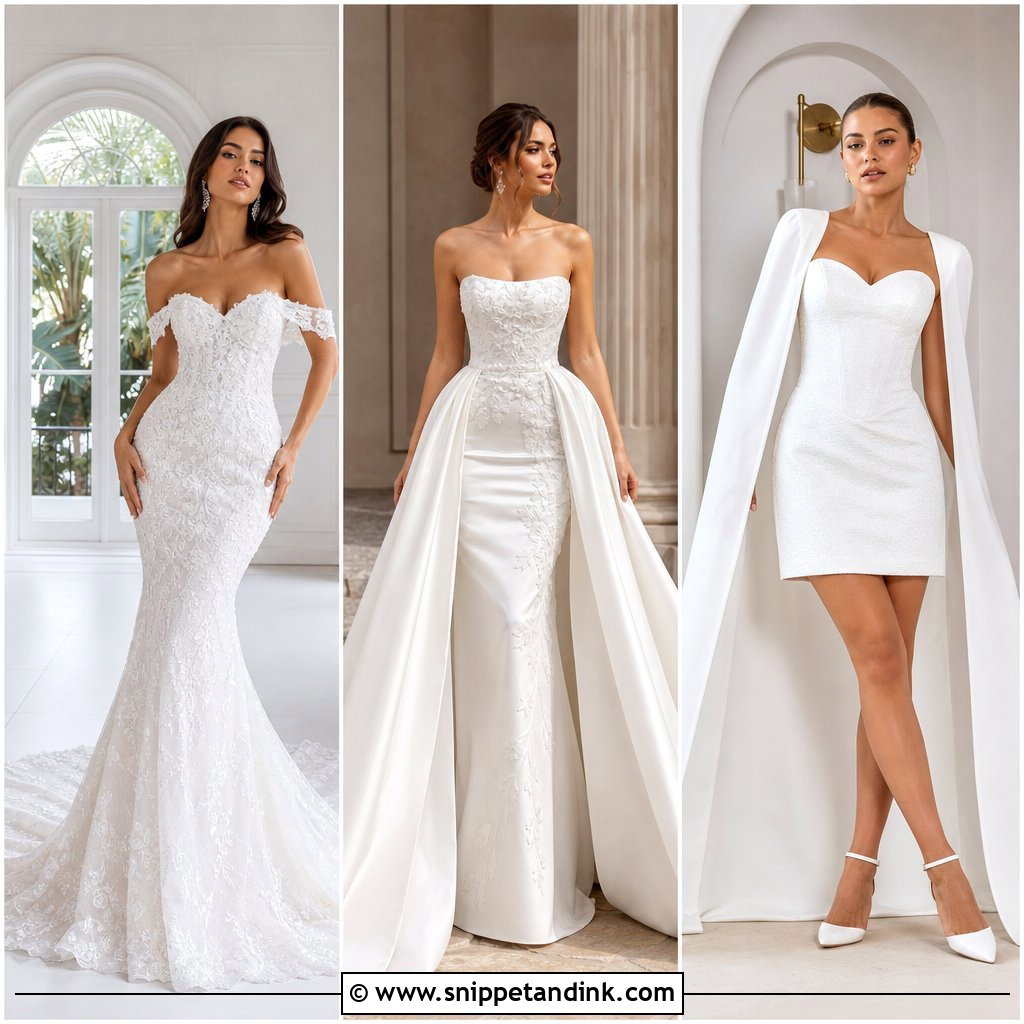
Sophistication in a wedding dress mostly comes from three unglamorous things: shape, fabric and finishing. Get those right and you can add a bow, pearls or a long train without the gown tipping into fussy. The polished bridal looks below cover traditional ceremonies, modern venues, destination weddings and small gatherings, and many of this year’s gowns pair sleek structure with one romantic detail, such as a sculpted neckline, dimensional flowers, a defined waist or soft draping. For each, I’ve added how I’d style it and what I’d watch for at fittings, because the dress that suits your proportions and still feels comfortable at midnight is the one that looks classy in photos.
What a Well-Made Gown Shows You Inside Out
Sophisticated gowns tend to be the well-made ones, and you can judge quality in a salon if you know where to look. I turn every sample inside out before I let a bride fall for it.
- Seams should lie flat and straight with no puckering, and the inside edges should be finished, never left raw.
- A full lining stops crepe and silk clinging and hides the construction. A lined bodice over an unlined skirt will let sunlight show through.
- Run your fingers along the boning. The channels should be smooth, and the bones should flex with you rather than poke out at the top edge.
- Hand-sewn beads and appliqués show tiny stitches; glued trims usually have a stiff, shiny edge and can lift in heat.
- Crush a corner of the skirt in your fist for a few seconds. Fabric that stays deeply wrinkled will look rumpled after the car ride.
Silk or polyester?
Both appear in good bridal salons. Modern polyester satin and crepe resist creasing well and hold their colour, while pure silk breathes better and has a softer glow. Neither is automatically the classier option. The cut and the finishing inside matter more than the fibre on the label.
1. Satin Ball Gown Wedding Dress
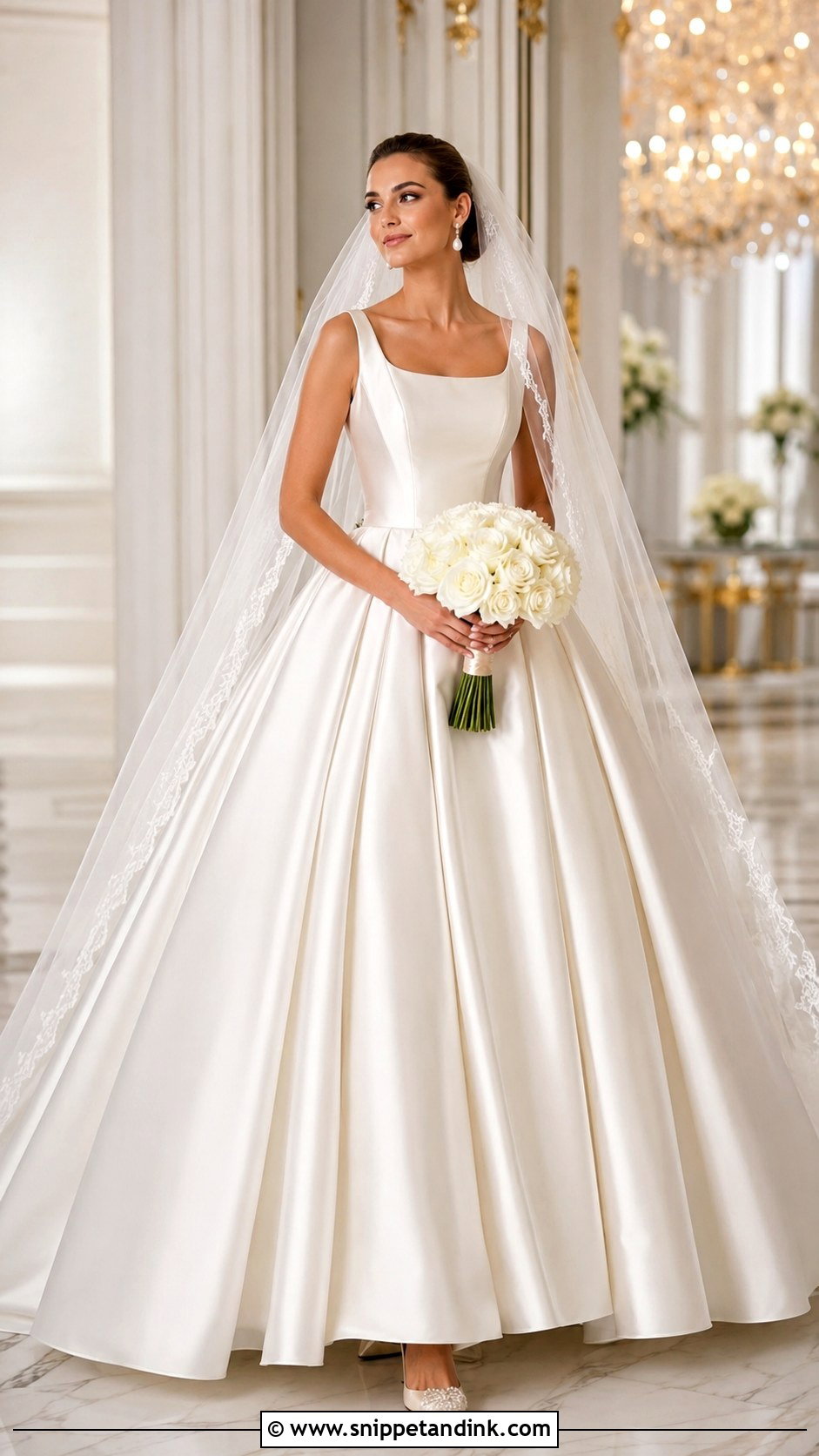
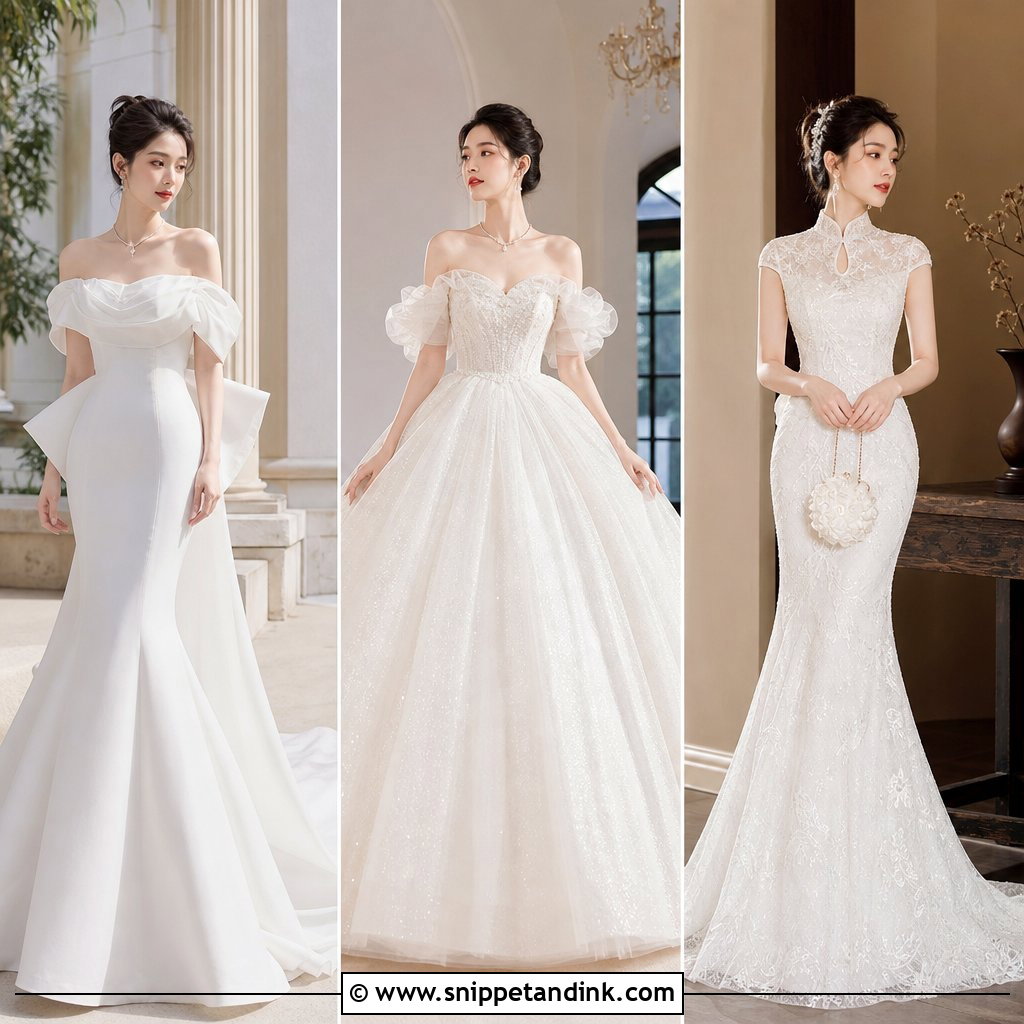
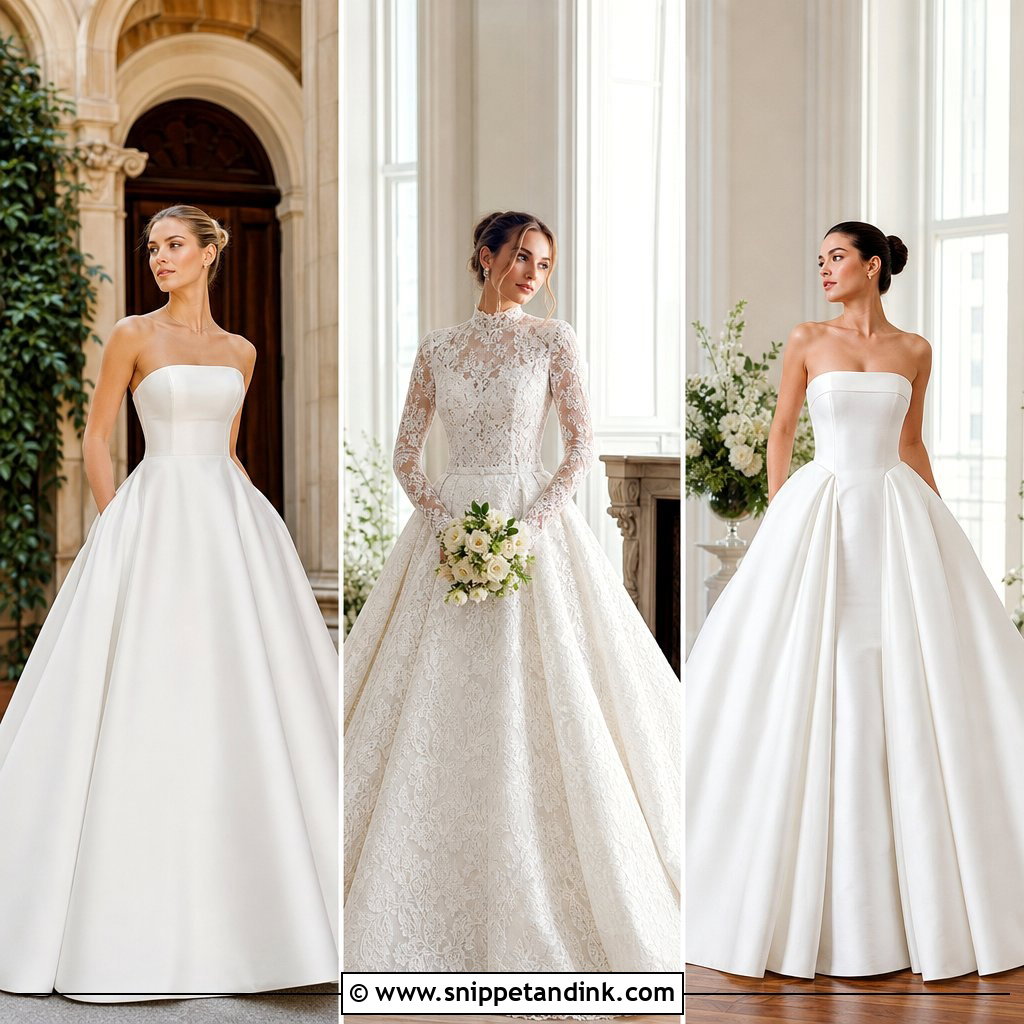
Satin ball gowns read formal without any decoration, and the reason is weight: a heavy duchess satin holds pleats in deep, clean folds that lighter satins can’t manage. I’d pick a structured bodice with a scoop, square or strapless neckline and soft pleats from a fitted waist, then a cathedral veil, pearl drops, pointed ivory pumps and a compact bouquet of white roses or calla lilies. For ceremony coverage, detachable satin sleeves or a matching bolero come off easily before dancing. Wear your actual shoes to the hem fitting. The skirt should just clear the floor so you aren’t kicking it forward with every step. Ballrooms, hotels and historic estates suit it.
2. Long Sleeve Lace Wedding Dress
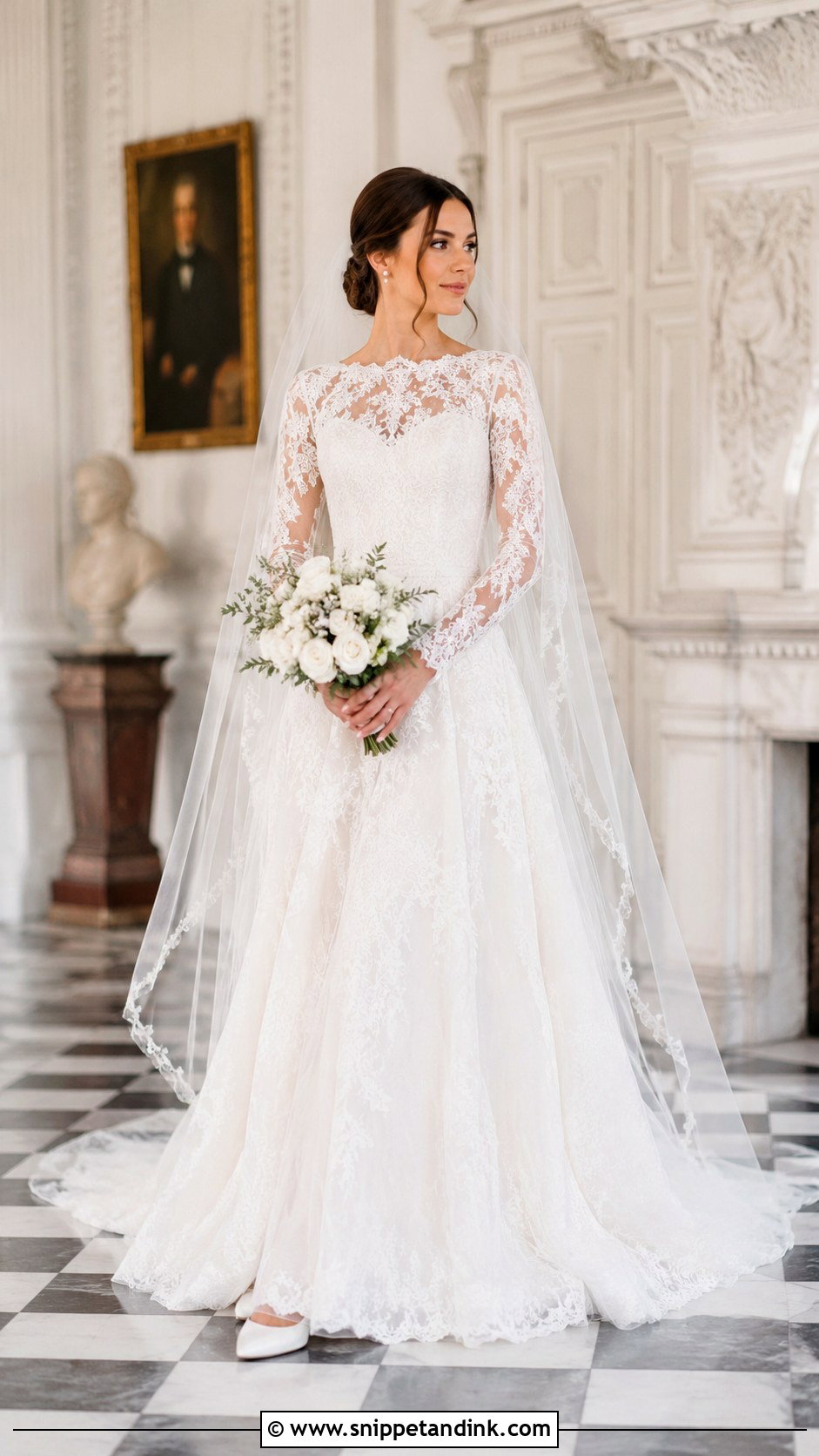
Lace sleeves only look refined when the lace has been cut around its motifs rather than through them. A good bridal workroom trims along each flower so the cuff and neckline edges look finished, and the pattern flows from bodice to shoulder without a hard seam line. That’s the first thing I check. An A-line or gently flared skirt suits most figures. Style it with a fingertip veil, pearl studs, closed-toe satin heels and a low bun that keeps the shoulders clear, plus white flowers with little greenery. Lace has almost no stretch, so loose wrists and tight shoulders are common alteration jobs; allow time for the sleeves alone. Autumn and winter ceremonies, formal gardens and traditional churches all suit it.
3. Square Neck A-Line Wedding Dress
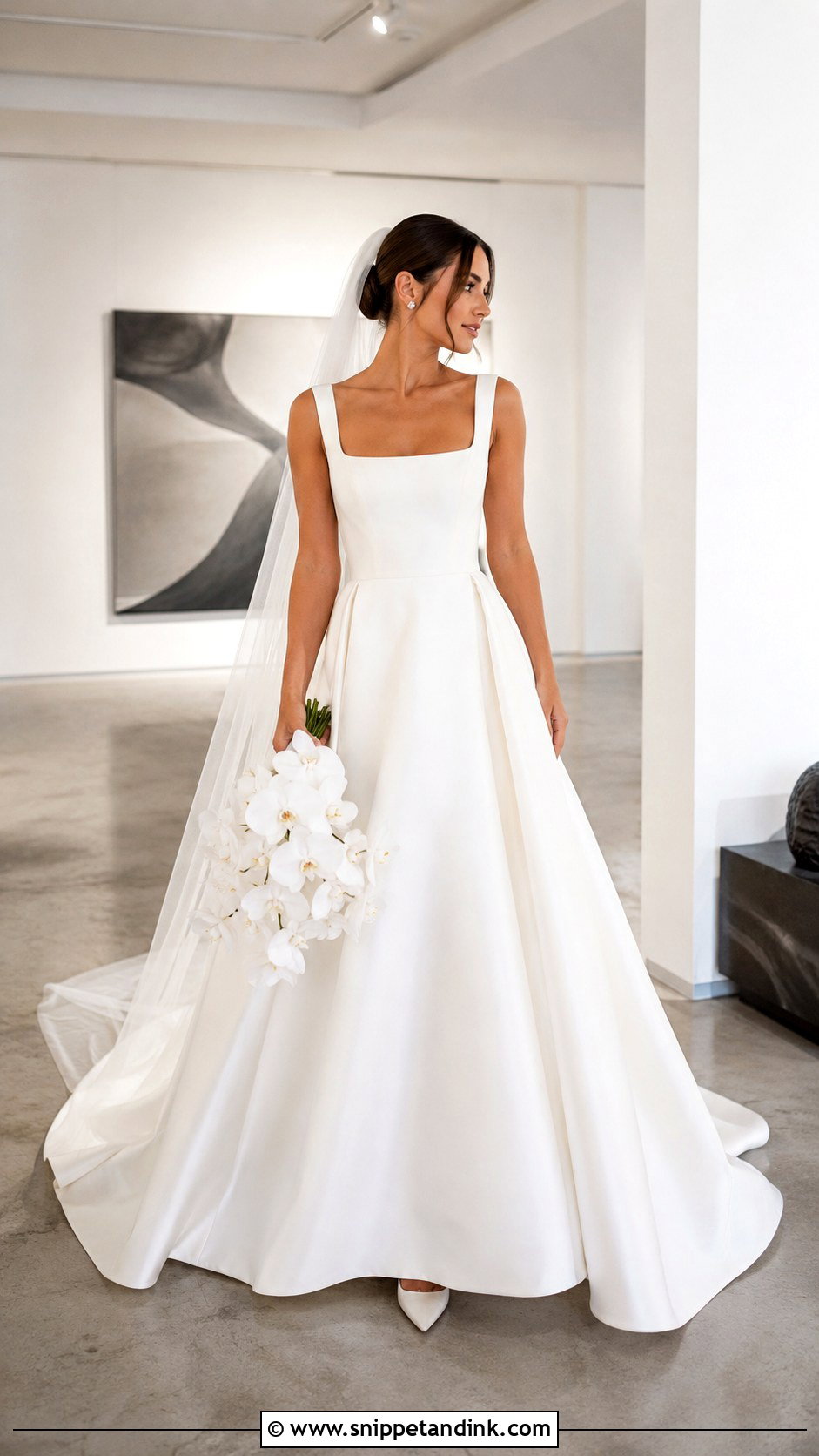
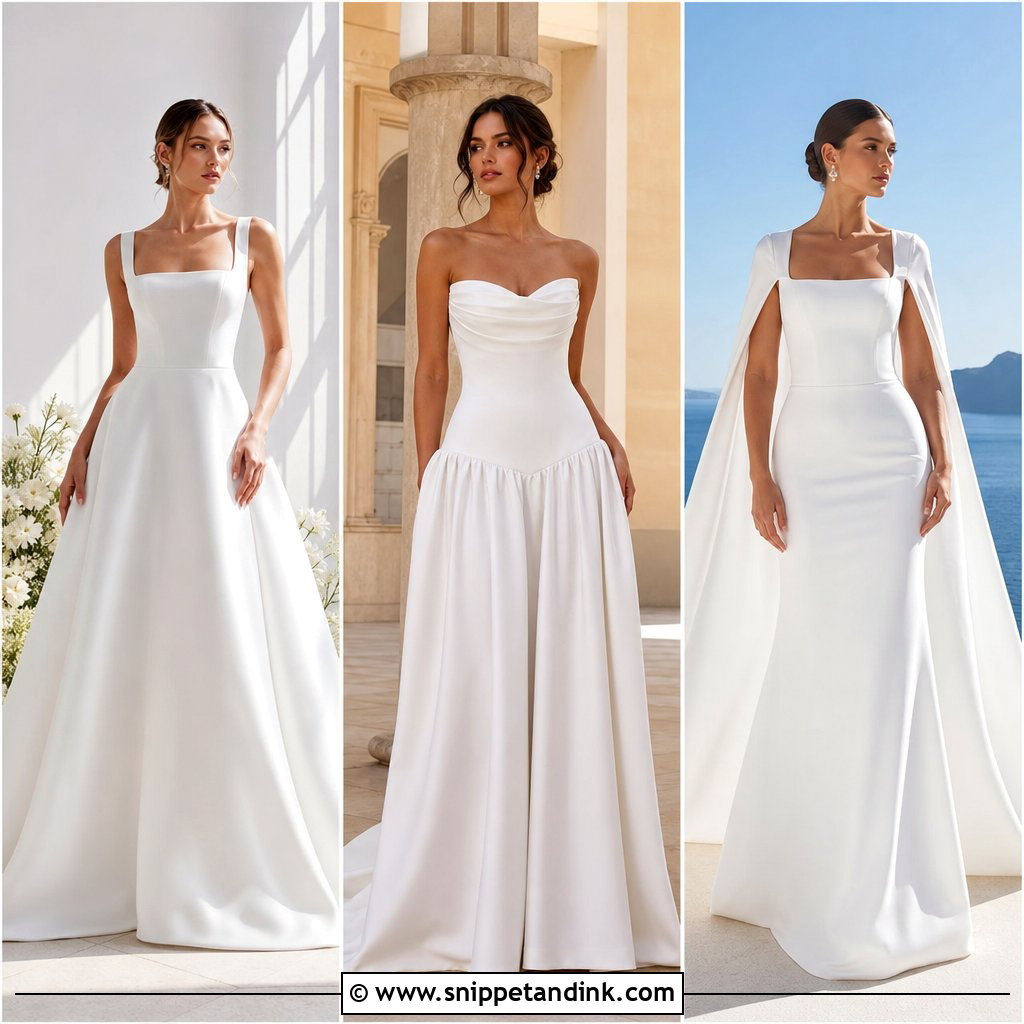
Square necklines rely on straight edges, and straight edges show every fitting flaw. Wide straps support the bodice while the angular line frames the collarbone, which is why I like this shape in matte satin, mikado or crepe, fabrics stiff enough to hold a corner. If you’re fuller in the bust, ask for internal boning and wider straps; without them, the neckline drifts outward by mid-afternoon. A chapel veil, small diamond studs and low pointed heels finish it, with orchids or white tulips arranged in a structured shape. A low chignon or smooth waves tucked behind the ears keep the neckline clear. It sits comfortably in almost any venue, from a gallery to a country estate.
4. Off Shoulder Mikado Wedding Dress
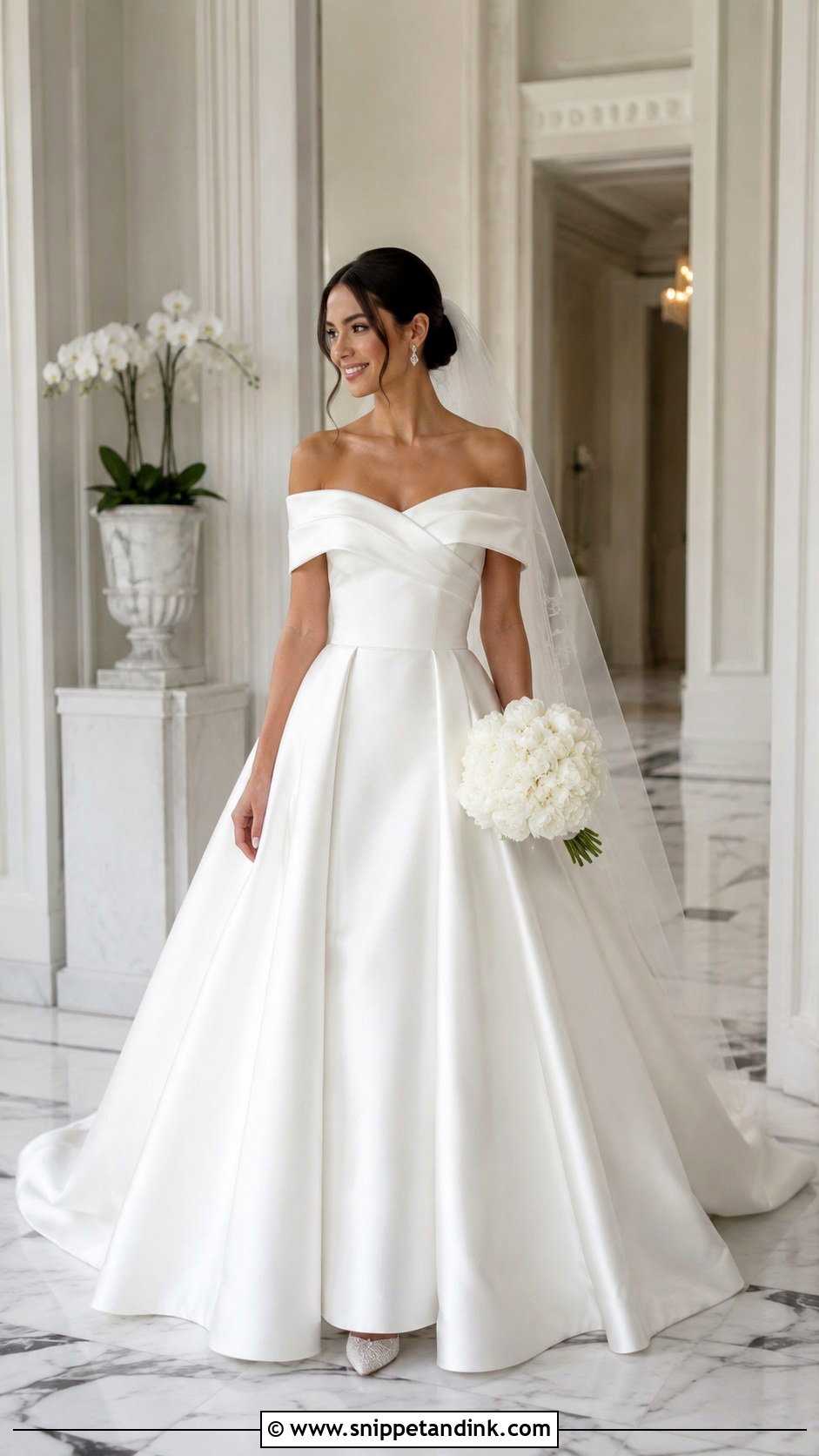
Mikado is a heavy, tightly woven fabric with a soft sheen, and that stiffness is what lets an off-the-shoulder mikado gown hold a crisp folded neckline all day. Go with an A-line skirt for a daytime ceremony or a ball gown skirt for evening. Because the neckline rests on the upper arms, I check it with the bride’s arms raised to shoulder height: it should stay put without pinning her elbows to her sides. Leave the neck bare and wear crystal earrings, sleek ivory heels and a plain tulle veil. A round bouquet of white peonies or roses softens all that structure. Hotels, manor houses and evening receptions are a natural match.
5. High Neck Crepe Wedding Dress
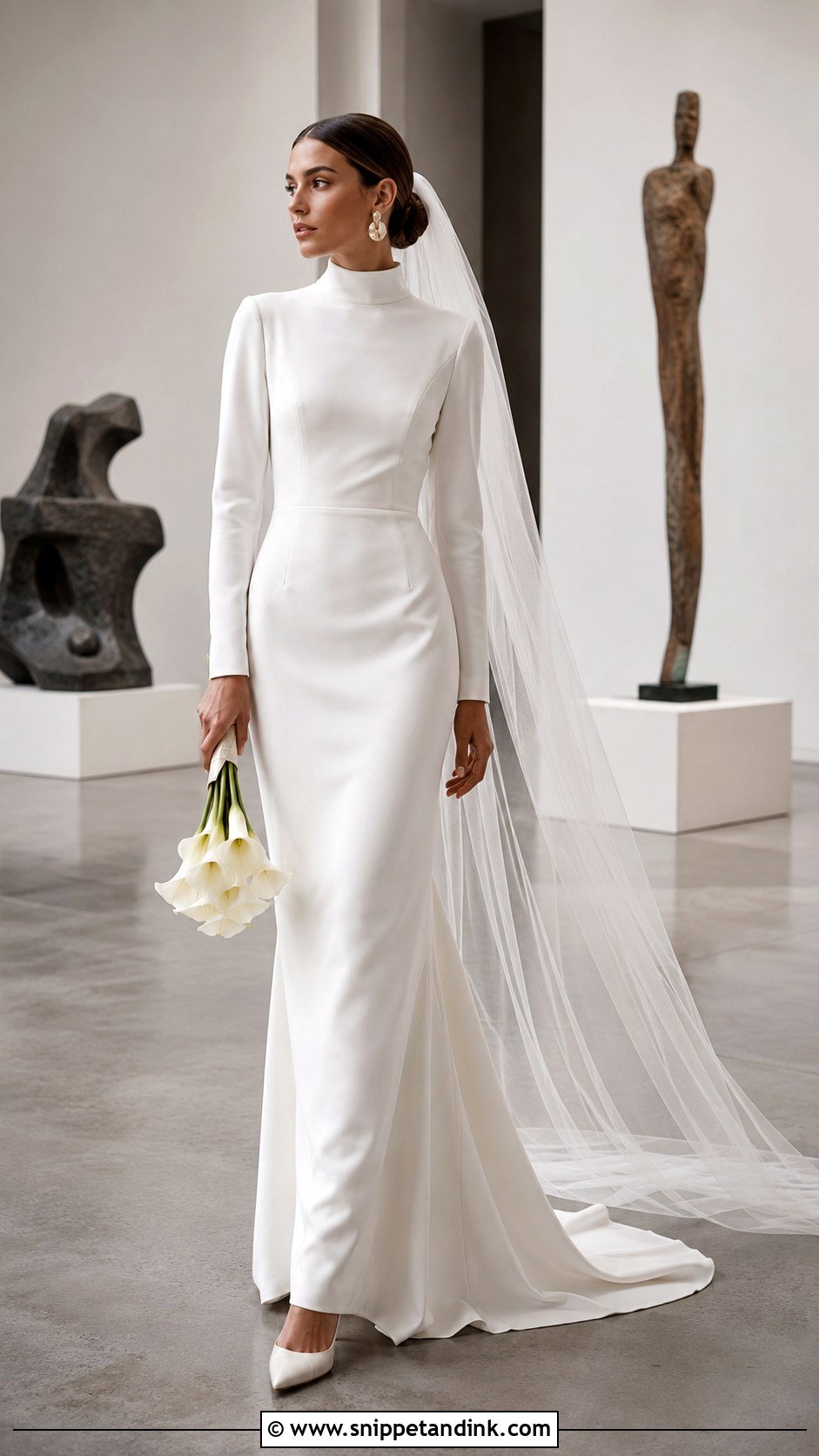
Is a high neck too modest for an evening wedding? Not in crepe. The matte surface keeps it modern, and it suits a column, sheath or gently flared skirt, sleeveless in summer or long-sleeved for cooler months. Sculptural earrings, pointed pumps and a sleek bun suit the clean neckline, and a sheer cathedral veil attached under the bun keeps the neck visible. Long-stemmed calla lilies repeat the vertical line. Crepe clings, so I fit it over the final shapewear; even a slight pull at the waist or hips becomes a visible ripple in a straight skirt. City venues, museums and modern buildings are where it looks most at home.
6. Strapless Column Wedding Dress
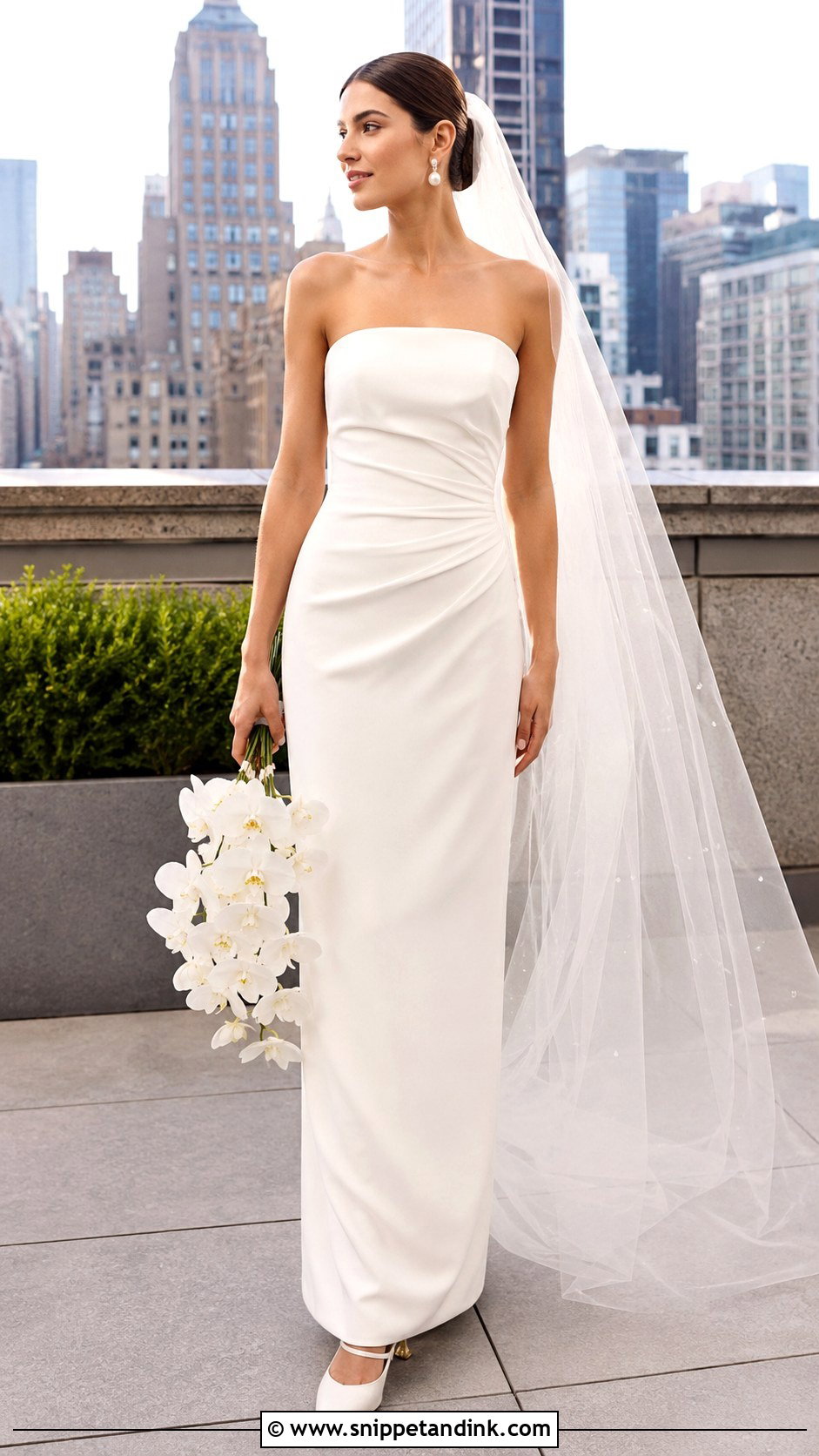
Strapless gowns stay up because of what’s inside them, not because of your shoulders. Internal corsetry and a waist stay, a grosgrain band fastened inside at the natural waist, carry the weight so the neckline doesn’t slip when you hug. I look for both before anything else. In substantial crepe or silk, a straight or gently curved neckline with subtle draping at the waist gives clean definition. Add a long sheer veil, pearl earrings, pointed slingbacks and a narrow orchid bouquet, since a wide arrangement fights the column. A detachable wrap covers you for a religious ceremony. Columns allow a shorter stride, so walk, sit and climb steps at every fitting. Rooftops, galleries and courthouses suit it.
7. V Neck Chiffon Wedding Dress
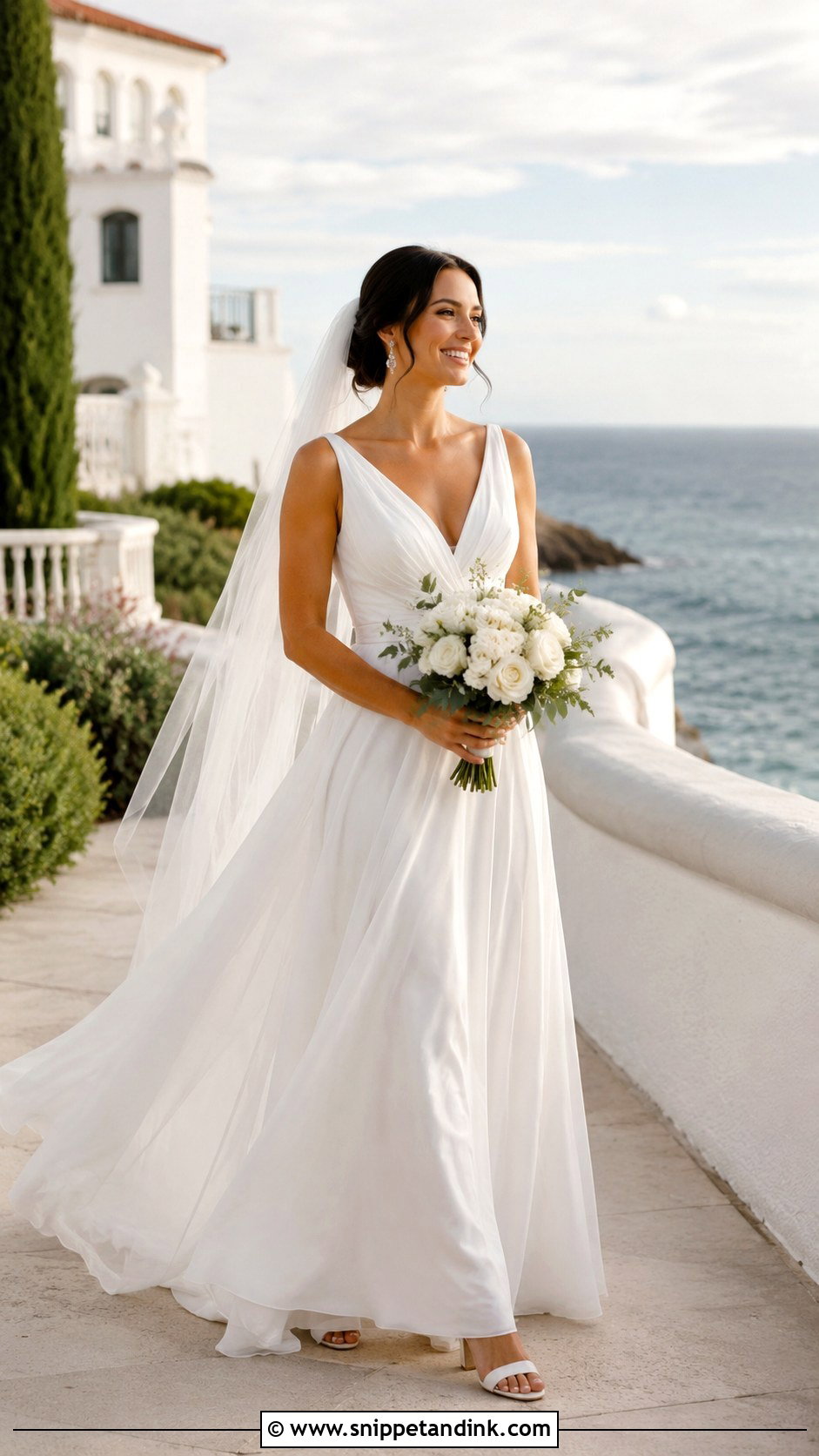
Chiffon is so light that a V neckline needs real structure underneath, so I look for a lined bodice with sewn-in support and a modest depth that won’t shift when you bend. The A-line skirt should move as you walk rather than cling. A moderate V leaves room for a fine pendant or delicate drops, and a lightweight veil, low block heels and a loose chignon keep everything airy. Sweet peas, roses and a little greenery suit the fabric. For an outdoor ceremony, ask for a simple bustle a bridesmaid can secure in a minute after photos, because chiffon trains collect grass and sand quickly. Coastal venues, gardens and destination weddings are where it feels easiest.
8. Pearl Embellished Wedding Dress
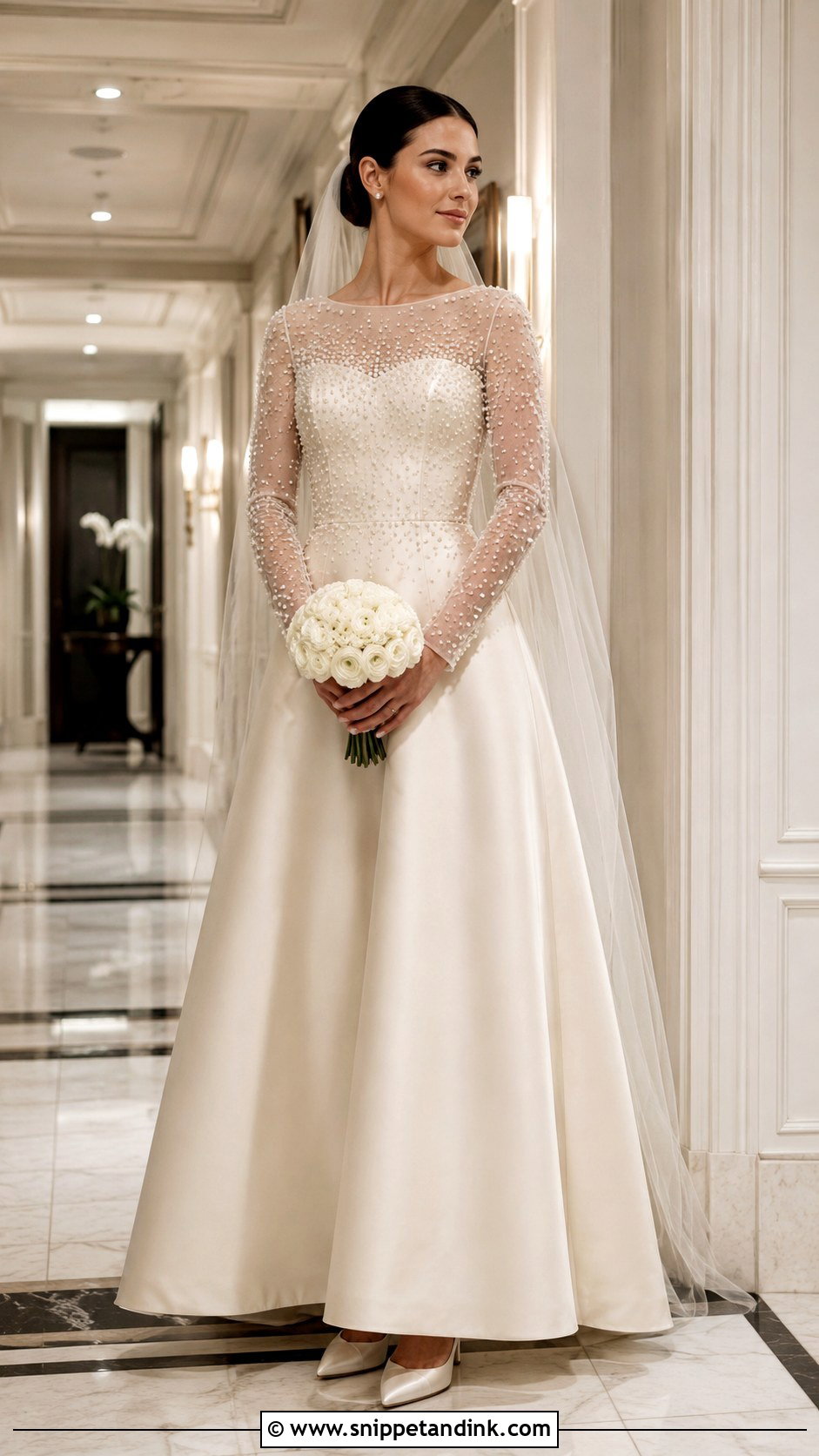
Where the pearls sit matters more than how many there are. Concentrated on the neckline, bodice, sleeves or upper back, they look deliberate; scattered over everything, they look busy and add real weight. A simple A-line or column skirt gives them room. Keep your own jewelry to plain pearl studs, then add satin pumps, an unembellished veil, a smooth low bun and a small bouquet of white roses or ranunculus. I run my hand over the beadwork at the last fitting. Once one pearl comes loose, the thread can unravel the rest of the row, and raised beading can snag a fine tulle veil, so try the two together before the day. Evening weddings and grand hotels suit this level of polish.
9. Draped Silk Wedding Dress
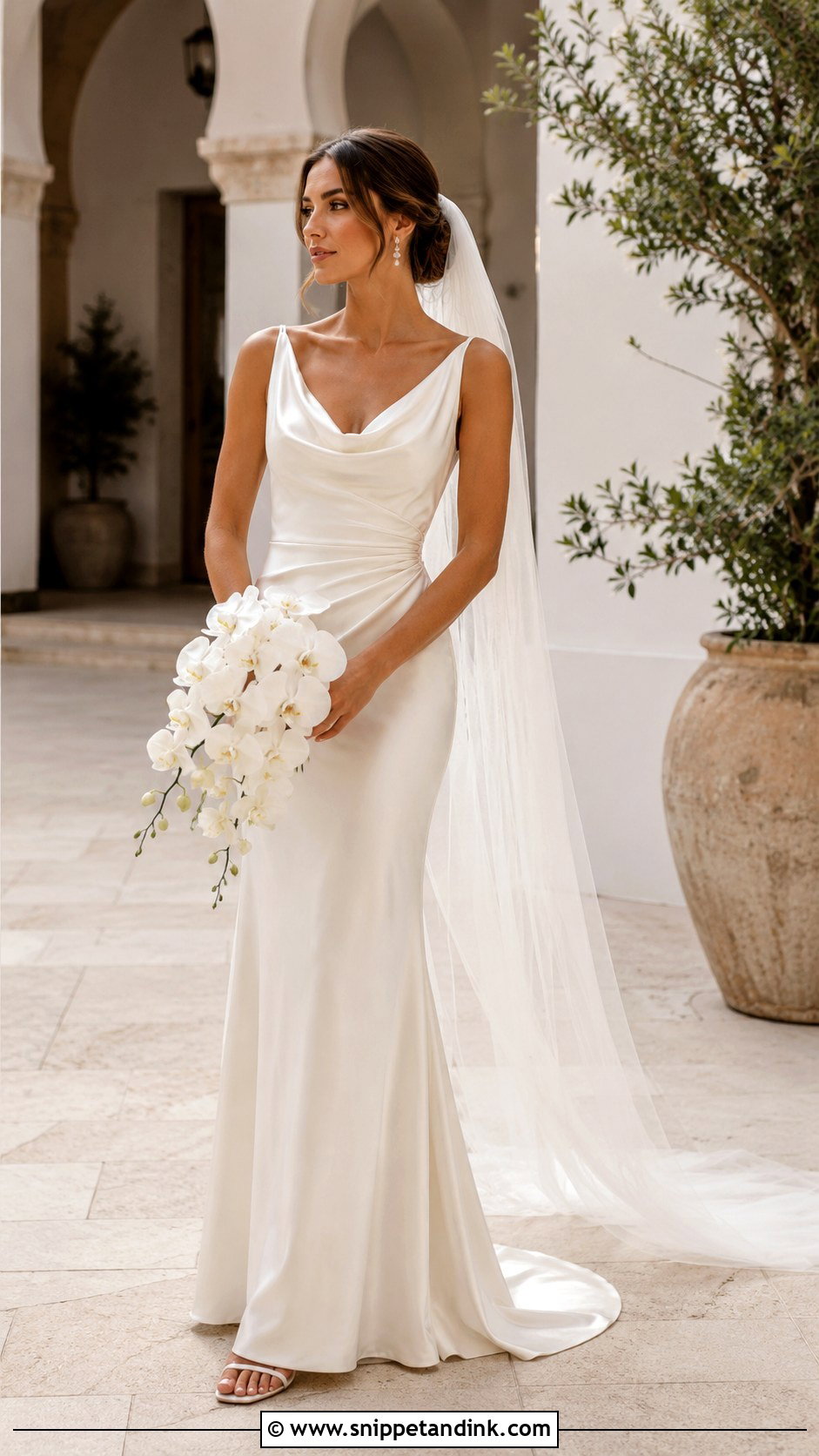
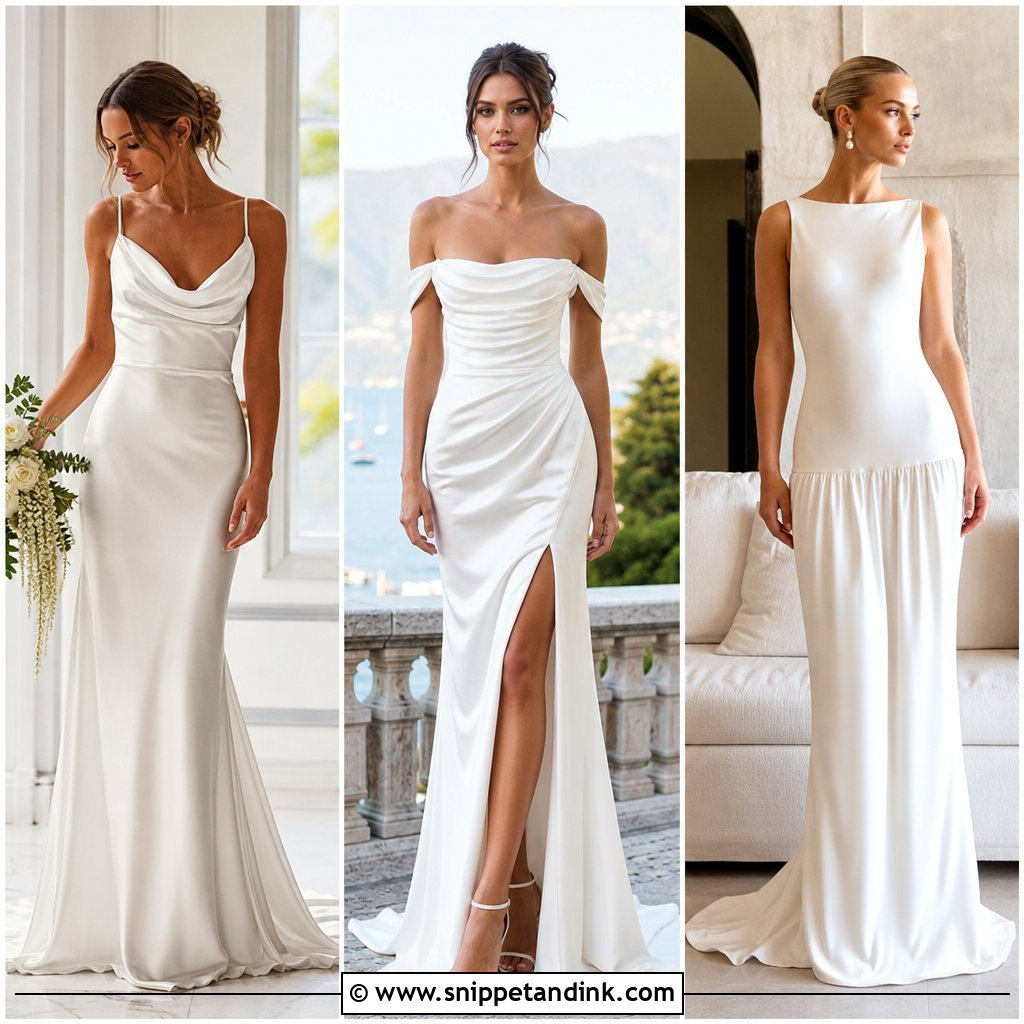
Bias cutting is what lets silk pour over the body. The fabric is cut diagonally across the grain, so it gives and drapes without any boning. A bias-cut column shape with gathered fabric at the waist gives soft definition, and a cowl, bateau or asymmetric neckline sets the coverage you want. Fine drop earrings, minimal sandals, a sheer floor-length veil and smooth waves or a low knot keep it understated; an orchid bouquet follows the fluid lines. The drawback is honesty. Silk shows seams and underwear lines, so I only fit it over smooth, invisible foundations. Villas, small hotels and civil ceremonies suit it.
10. Bateau Neck Wedding Dress
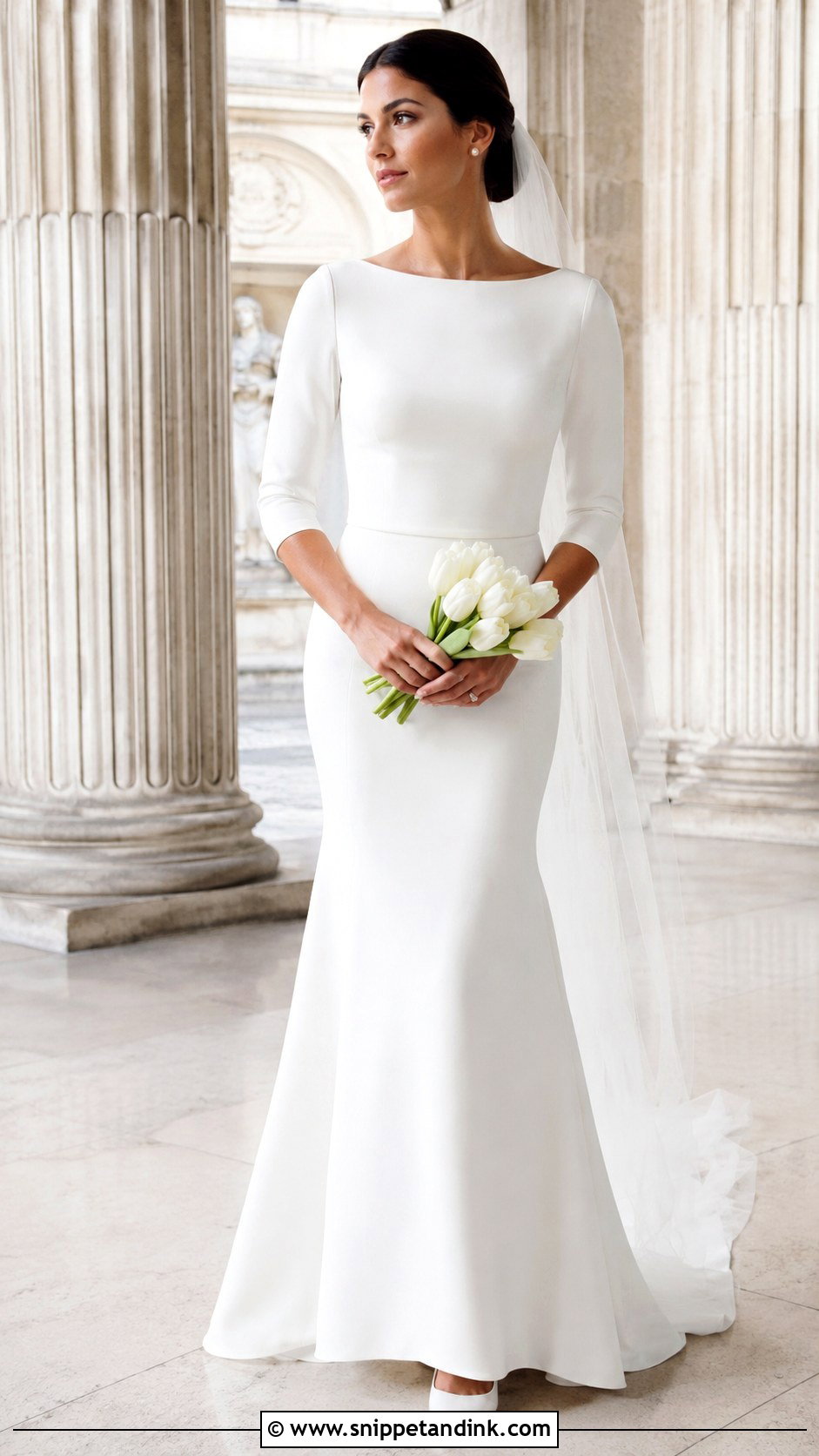
Broad shoulders change how I approach this one. A bateau neckline runs straight from shoulder to shoulder, and on a wide frame a perfectly horizontal line can make the shoulders look wider still, so I’d soften it into a slight curve. On narrow shoulders, the straight line adds welcome width. It suits fitted crepe, structured A-lines and clean mikado, with cap, three-quarter or no sleeves depending on the season. Pearl or diamond studs, a low chignon, pointed closed-toe heels and a narrow veil set below the bun so nothing interrupts the neckline. Tulips or roses in a simple oval. Daytime ceremonies, historic buildings and traditional halls match its formality.
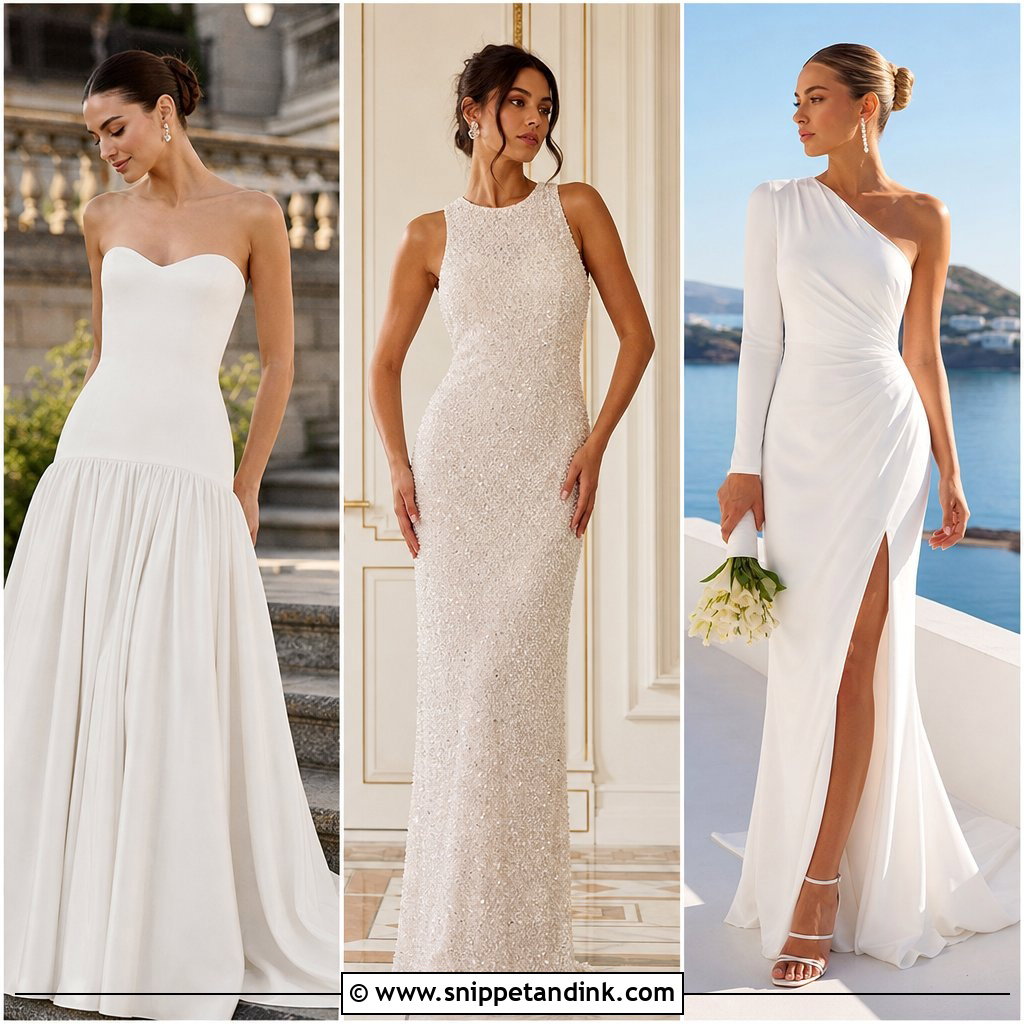
11. Drop Waist Wedding Dress
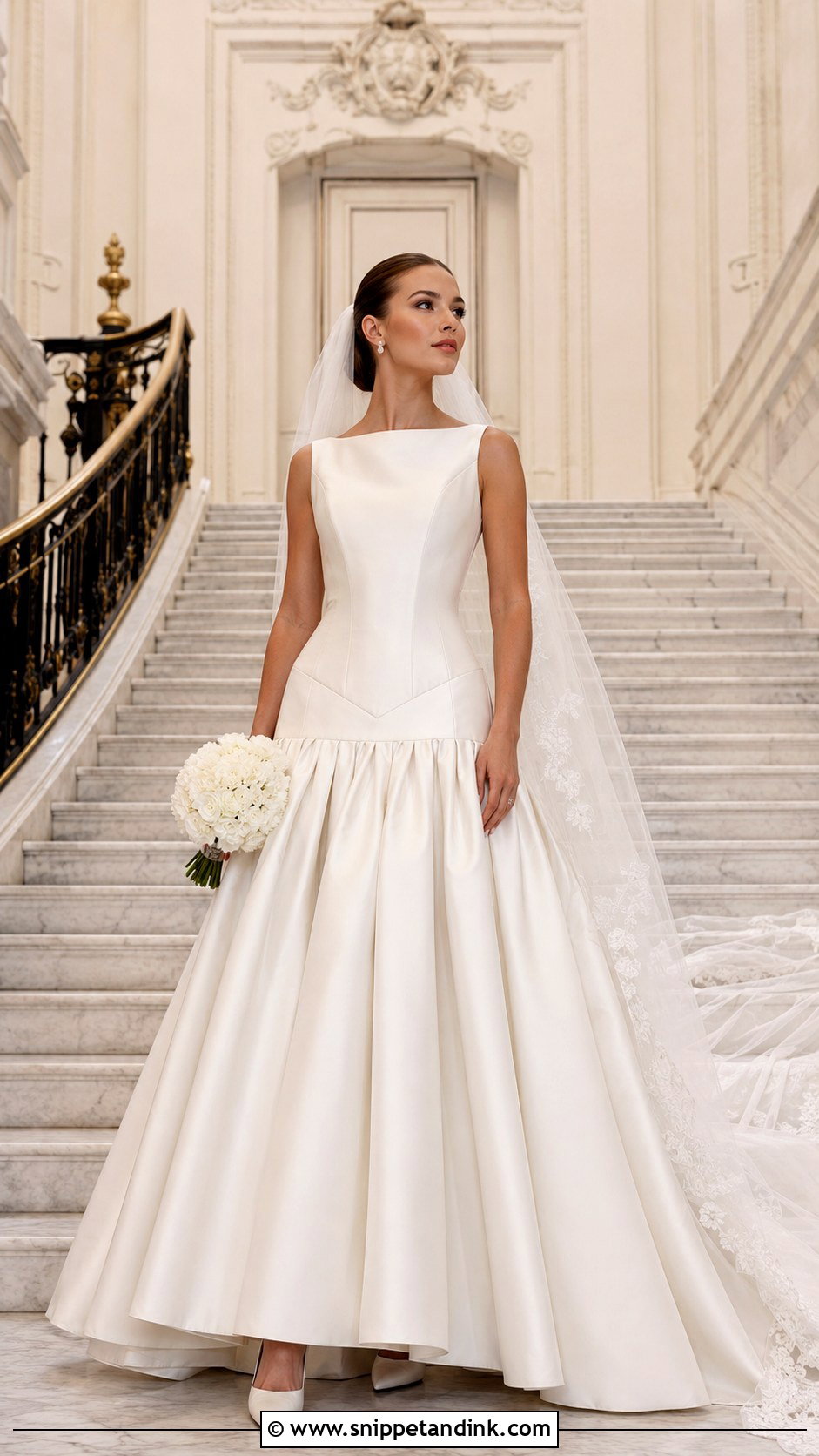
Expect extra fittings with a drop waist. The seam sits low on the hip, and if it lands even slightly off, the torso looks either stretched or stumpy, so getting the basque point right usually takes more than one session. When it’s right, a long sculpted bodice opening into a fuller skirt looks regal. Satin and mikado hold that skirt best, with subtle pleating below the hips. A cathedral veil, small drop earrings and pointed pumps go with it. Keep the bouquet compact and hold it low or to one side so the waist construction stays visible. A smooth bun or polished half-up style continues the structure. Grand staircases, ballrooms and estates give it room.
12. Floral Applique A-Line Wedding Dress
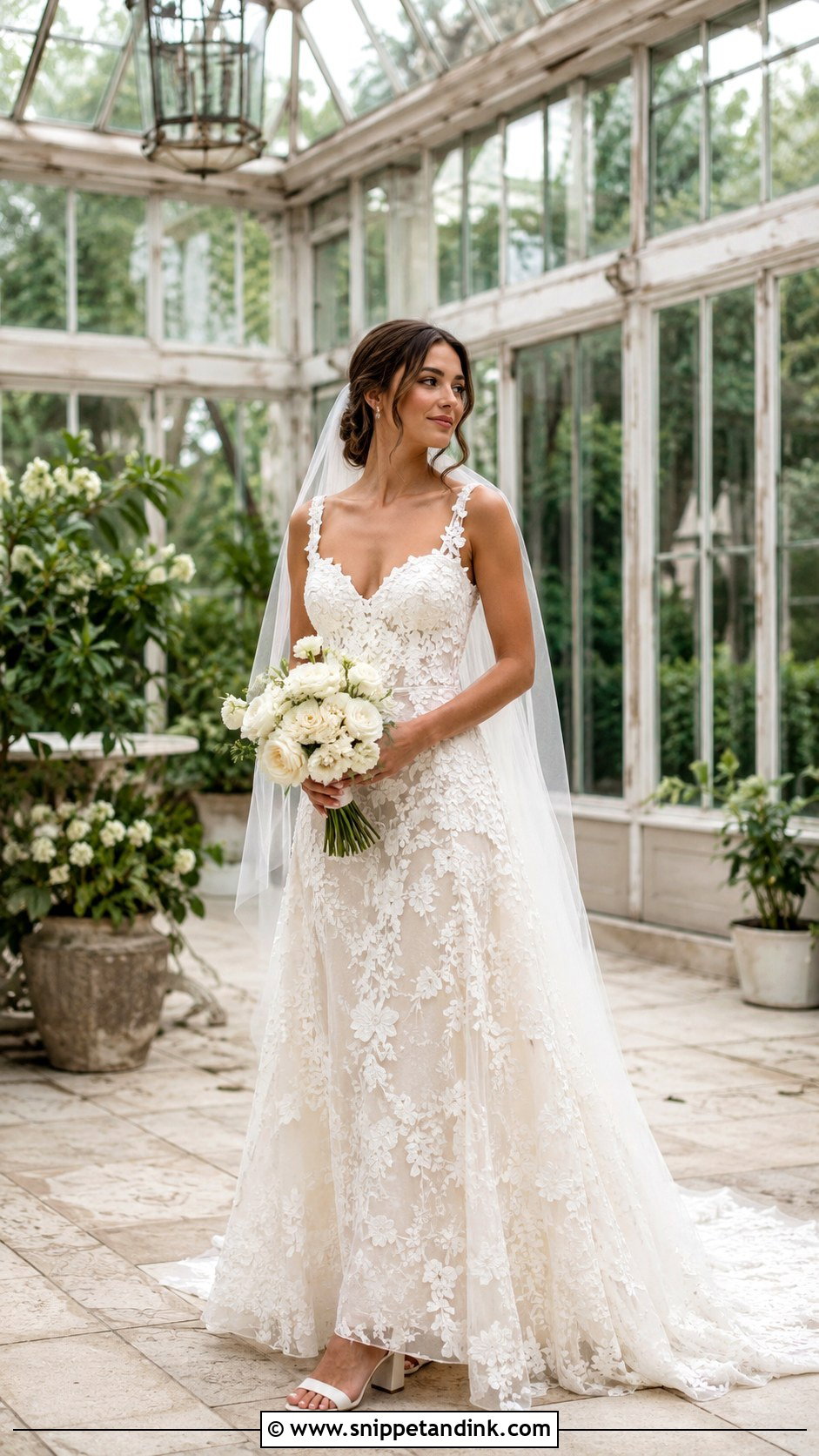
Placement is everything with dimensional flowers. I prefer tonal ivory appliqués clustered on the bodice and thinning out as they fall toward the skirt, which gives texture without crowding. Check underneath them as well: on straps and armholes, stiff appliqué edges can scratch, and a bridal seamstress can back or soften them. A plain tulle veil, simple studs and satin block heels keep the rest quiet. A loose low bun adds softness, and garden roses echo the flowers without copying them. For a hint of colour, a pale champagne lining under ivory reads warm without looking off-white. Conservatories, gardens and spring weddings suit it.
13. Corset Bodice Wedding Dress
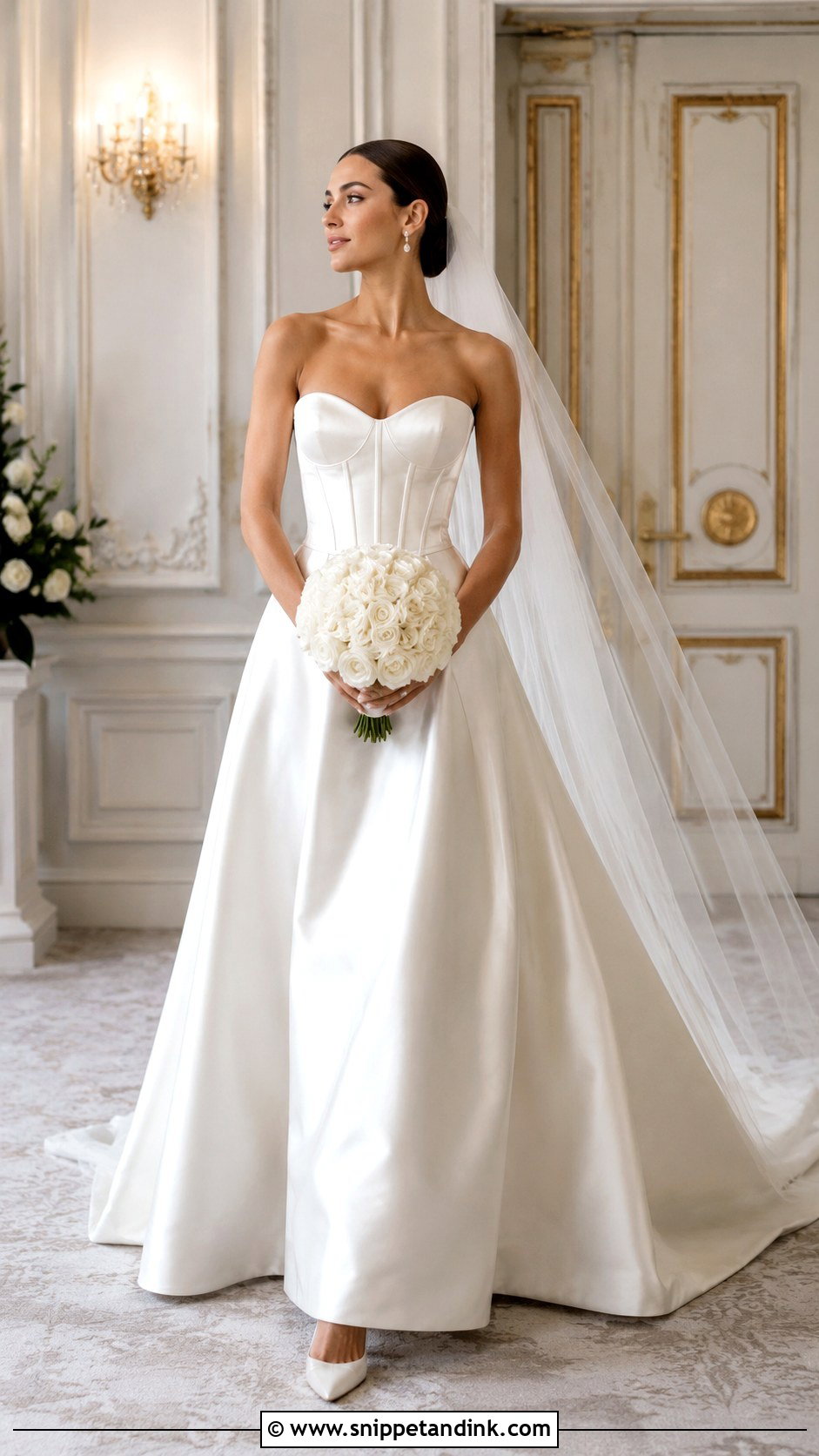
Tonal boning, cased in matching fabric, is the difference between a corset bodice that looks refined and one that looks like lingerie. I’d pair it with a softly curved neckline and a structured satin or mikado A-line skirt, which balances the fitted top and lets you move. A long plain veil, understated earrings, pointed ivory heels and a tight bouquet of white roses are enough; skip the necklace unless the neckline is very plain. At fittings, sit, raise your arms and take a full breath. A corset that fits standing can dig in once you sit down for dinner. It should support you without pinching or gapping at the top edge. Evening ceremonies and formal hotels suit it.
14. Cape Sleeve Wedding Dress
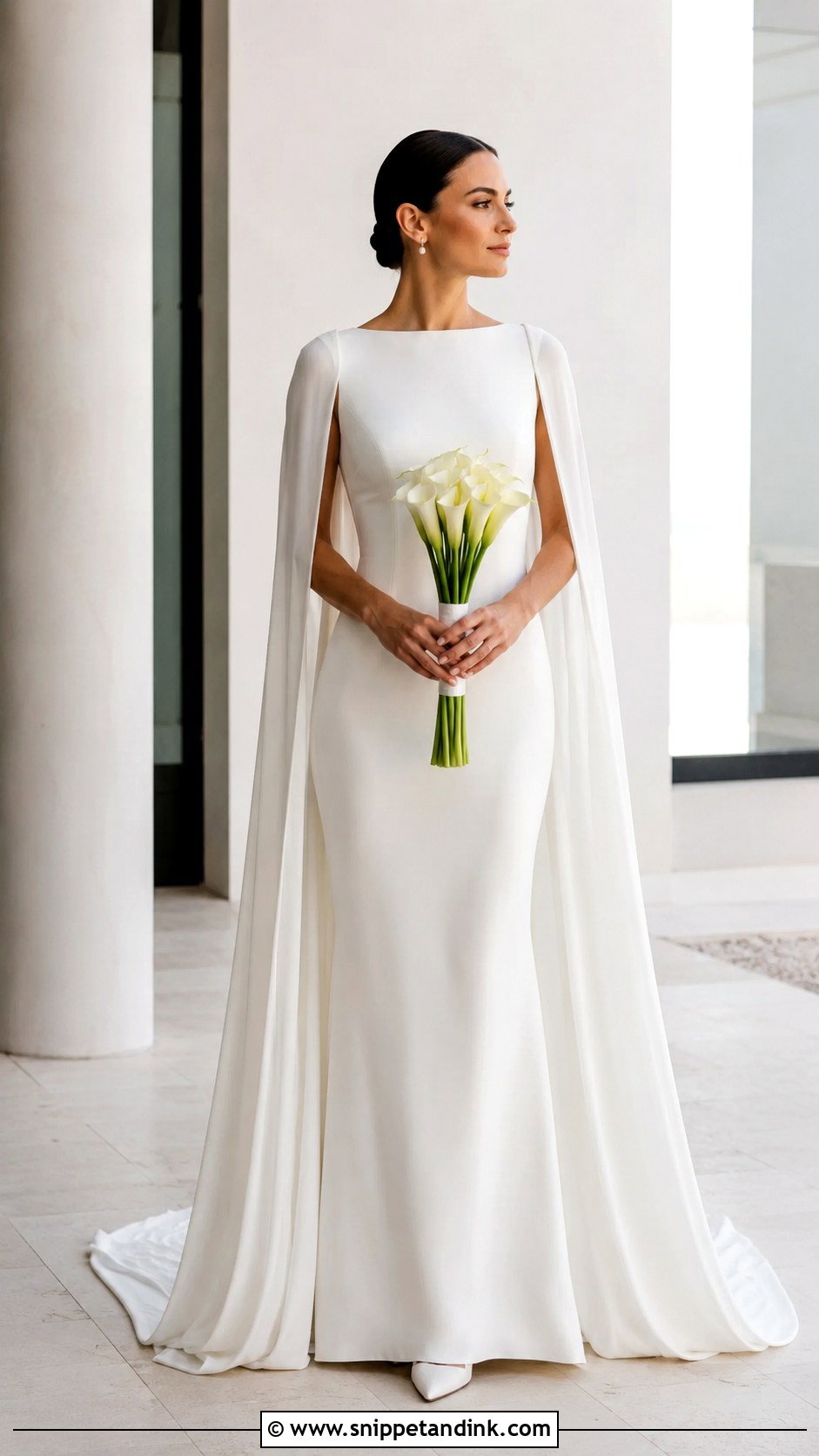
A cape gives you a veil’s movement without the veil. Attached at the shoulders of a fitted crepe column or satin A-line, a floor-length chiffon cape floats, while a structured satin one looks more dramatic. I usually tell brides to choose a cape or a long veil, not both, because together they pile too many layers behind you. Small earrings, pointed heels and a smooth low bun, with a narrow bouquet of calla lilies or orchids for the long silhouette. Ask how the cape comes off. Snaps or hooks at the shoulder let you remove it for dancing, which you’ll probably want once the room warms up. Cooler ceremonies and grand entrances are its strength.
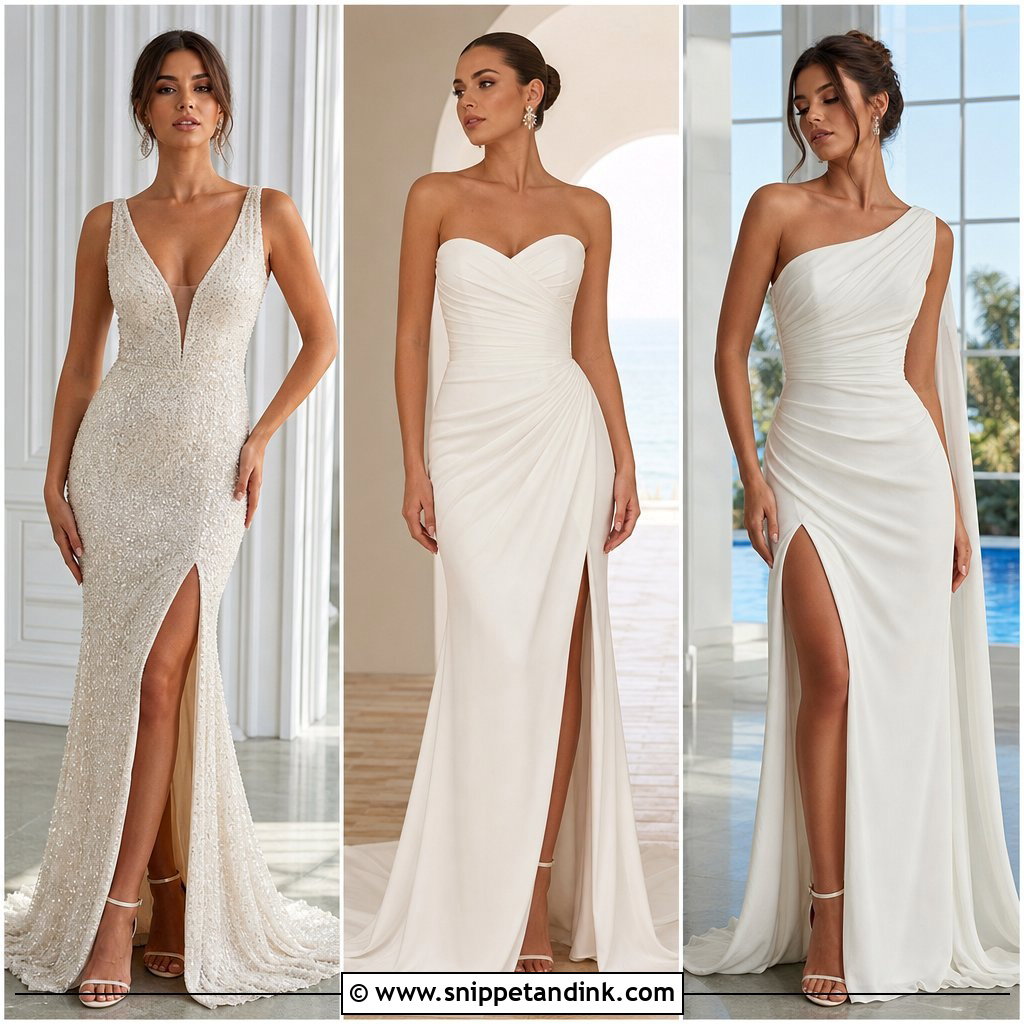
15. Pleated Organza Wedding Dress
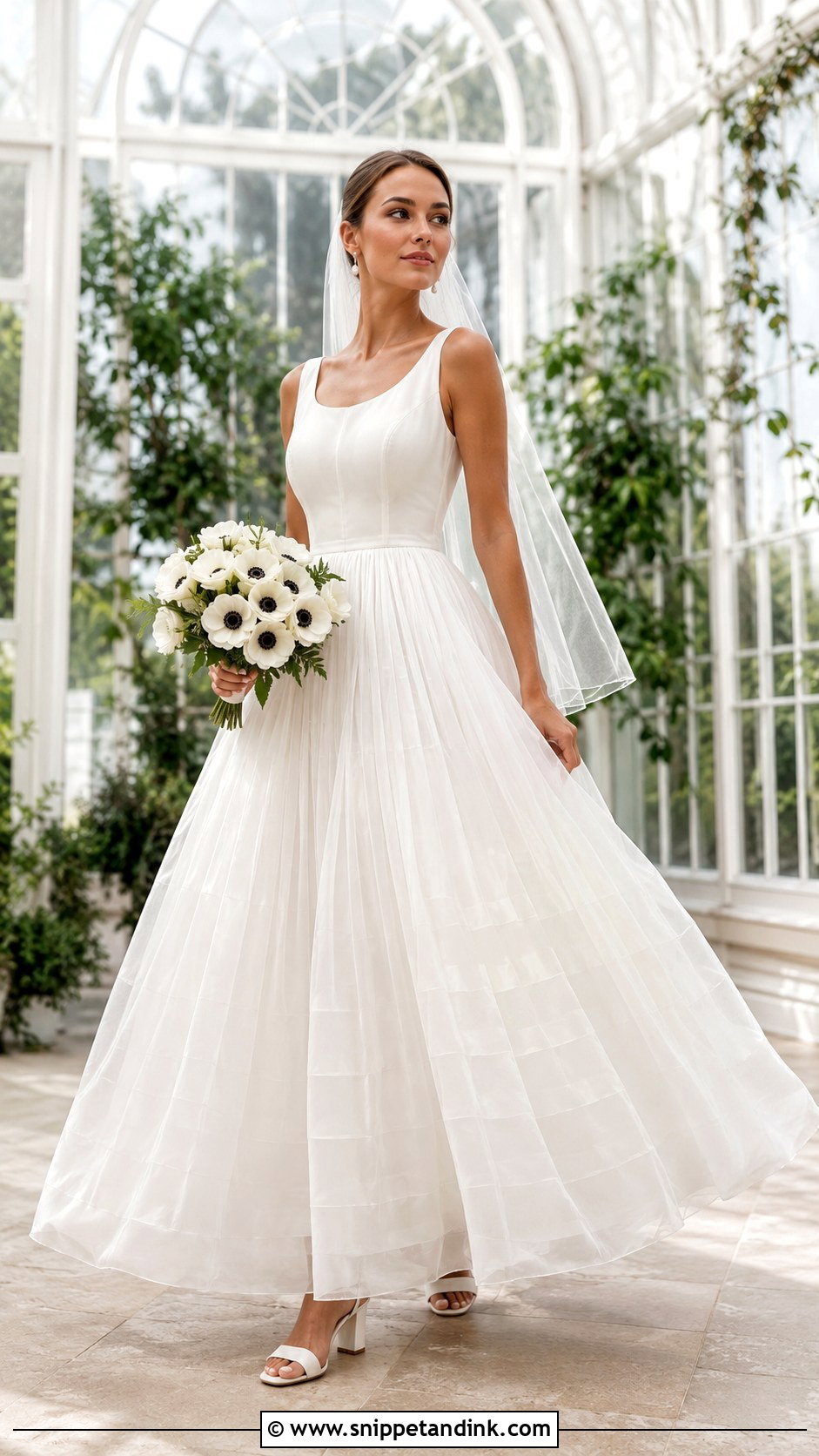
Organza gives volume without weight, but it creases more easily than almost any bridal fabric. I’d book steaming at the venue as close to the ceremony as possible and travel with the skirt laid across the back seat. A neatly structured bodice with a scoop, square or strapless neckline keeps attention on the skirt’s wide, controlled pleats. A fingertip veil, pearl earrings and comfortable block heels hidden under the hem are plenty. White anemones, with their dark centres, give the pale fabric some definition. A secure bustle protects the skirt later in the evening. Rough ground snags organza, so it’s happiest in spring gardens with smooth paths, conservatories and bright ballrooms.
16. One Shoulder Wedding Dress
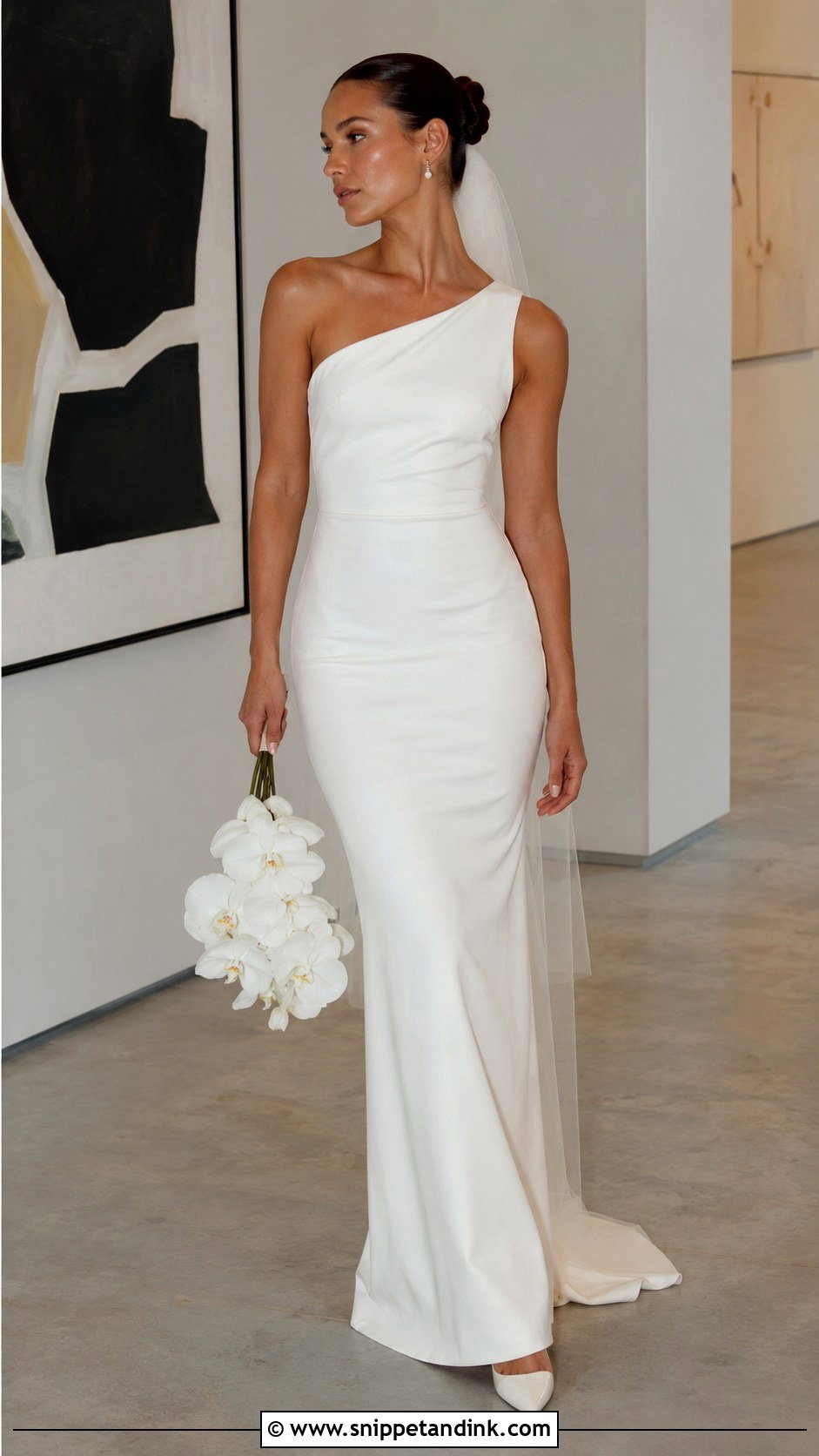
An asymmetric neckline reads modern without any decoration, and a one-shoulder gown in crepe, satin or mikado with a column or gentle A-line skirt keeps it formal. Support is my first question. One strap carries more load than two, so look for internal boning and well-placed cups, and check that the strap lies flat when you reach across your body. Leave the bare shoulder free of jewelry; small drop earrings are enough. A sculpted bun, simple veil and pointed pumps complete it. Hold the bouquet slightly lower than usual so the neckline isn’t hidden in photos. Galleries, city hotels and evening ceremonies suit it.
17. Back Bow Wedding Dress
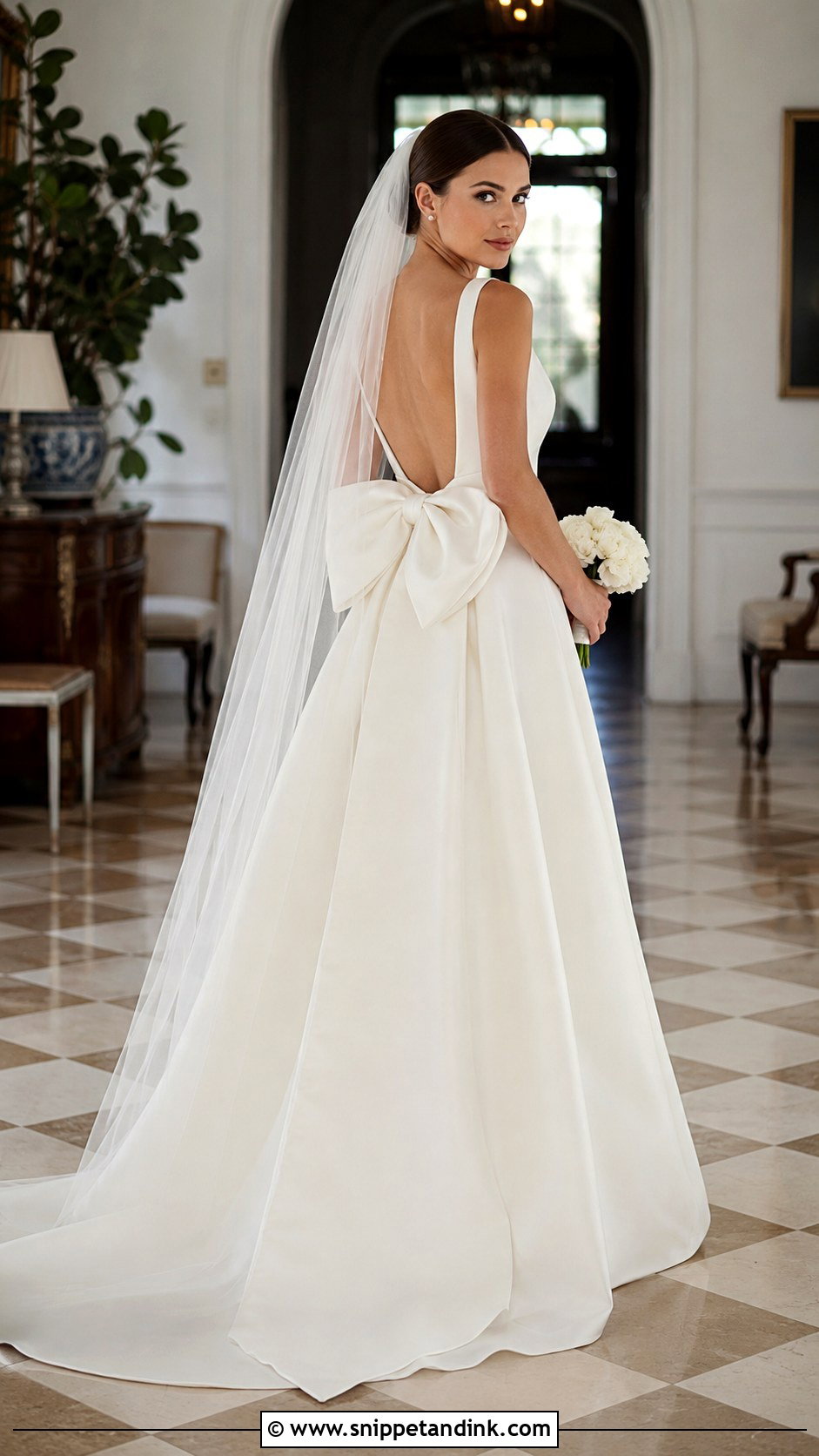
Guests stare at a back bow through the whole ceremony, so its size has to suit your height. On a petite bride, a huge bow at the base of the train can swamp her; I’d place it higher, at the waist or upper back. A detachable satin or mikado bow is the sensible choice because you can take it off for dancing or swap in a smaller one. Pair it with a clean column, A-line or ball gown and a sheer veil so the bow still shows on the aisle. Pearl studs, a neat bun, pointed satin heels and a small white bouquet keep the front simple. Formal hotels and grand estates suit it.
18. Tea Length Wedding Dress
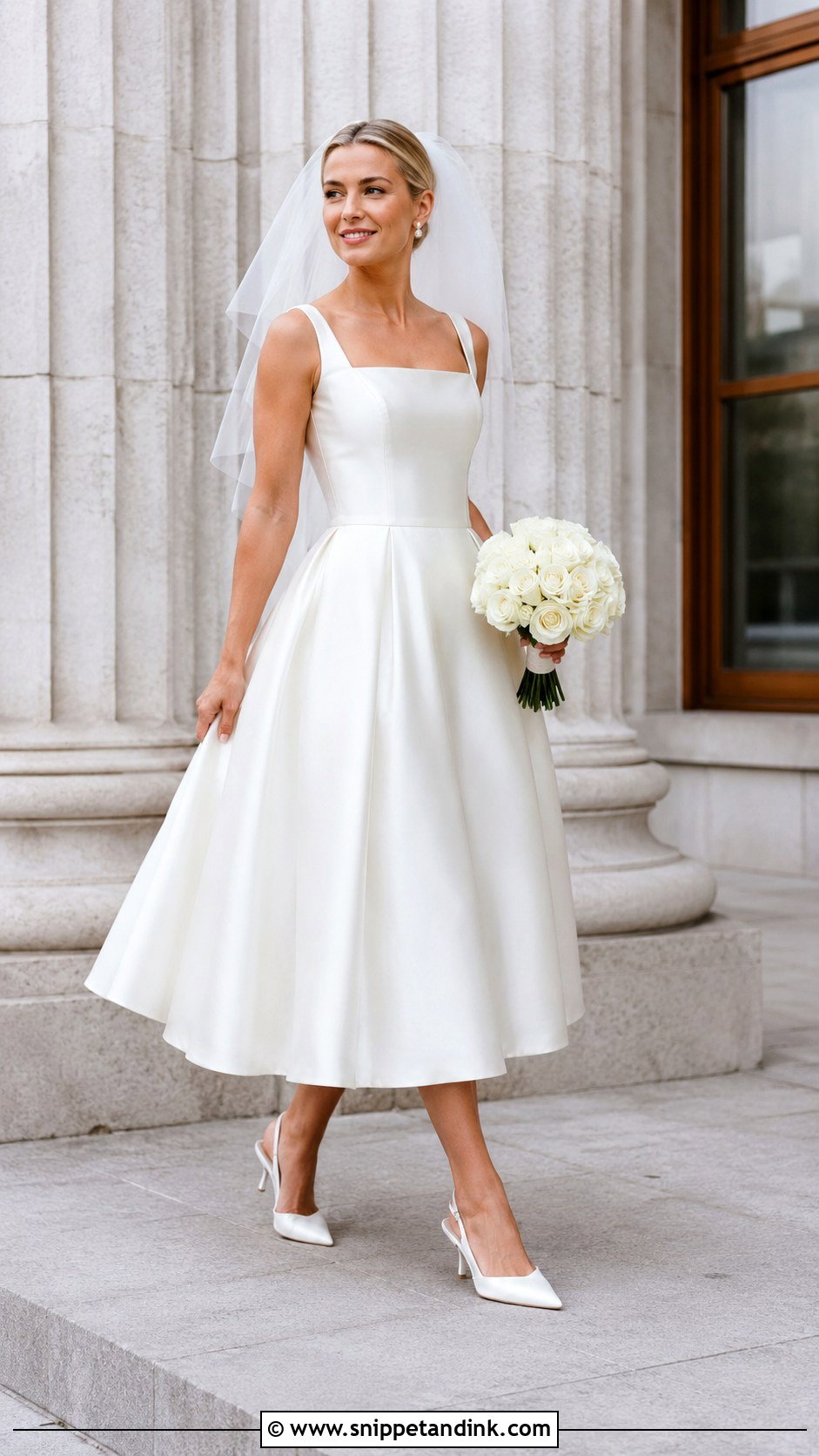
Where the hem lands is the whole decision here. I mark tea-length skirts at the narrowest point of the lower leg, because a hem cutting across the widest part of the calf shortens the leg. Look for a fitted bodice and a structured skirt in satin, mikado or lace; plainer fabrics give the most refined result. The shoes are on show, so pointed pumps, slingbacks or ankle-strap heels deserve real thought. Add a short veil, pearl studs and a compact bouquet, with a smooth bun or a softly waved bob. Courthouse ceremonies, daytime receptions and restaurant weddings suit it.
19. Long Train Wedding Dress
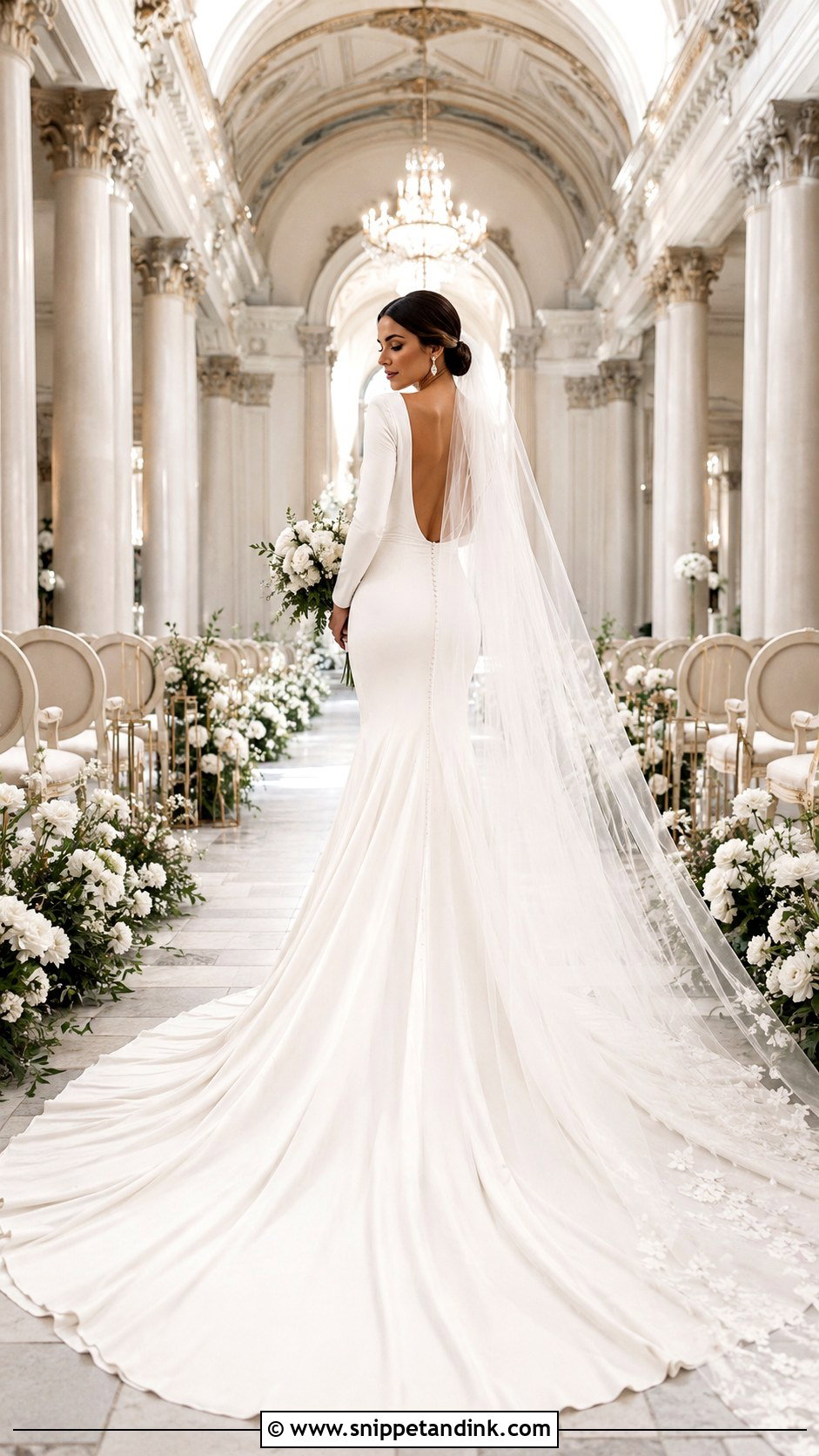
A long train makes the entrance, and then it has to be managed for the rest of the day. Ask the seamstress for a strong bustle and practise it with the person who’ll do it on the day; heavier trains need more attachment points, or they drag the waist down by evening. Choose a cathedral or chapel length on a fitted crepe, satin A-line or ball gown, and skip heavy embellishment since the length already provides the drama. A veil slightly longer than the train, subtle earrings, stable heels and a low bun keep the back view clean, with a small bouquet for balance. Long aisles and historic venues show it off.


20. Minimalist Wedding Dress With Gloves
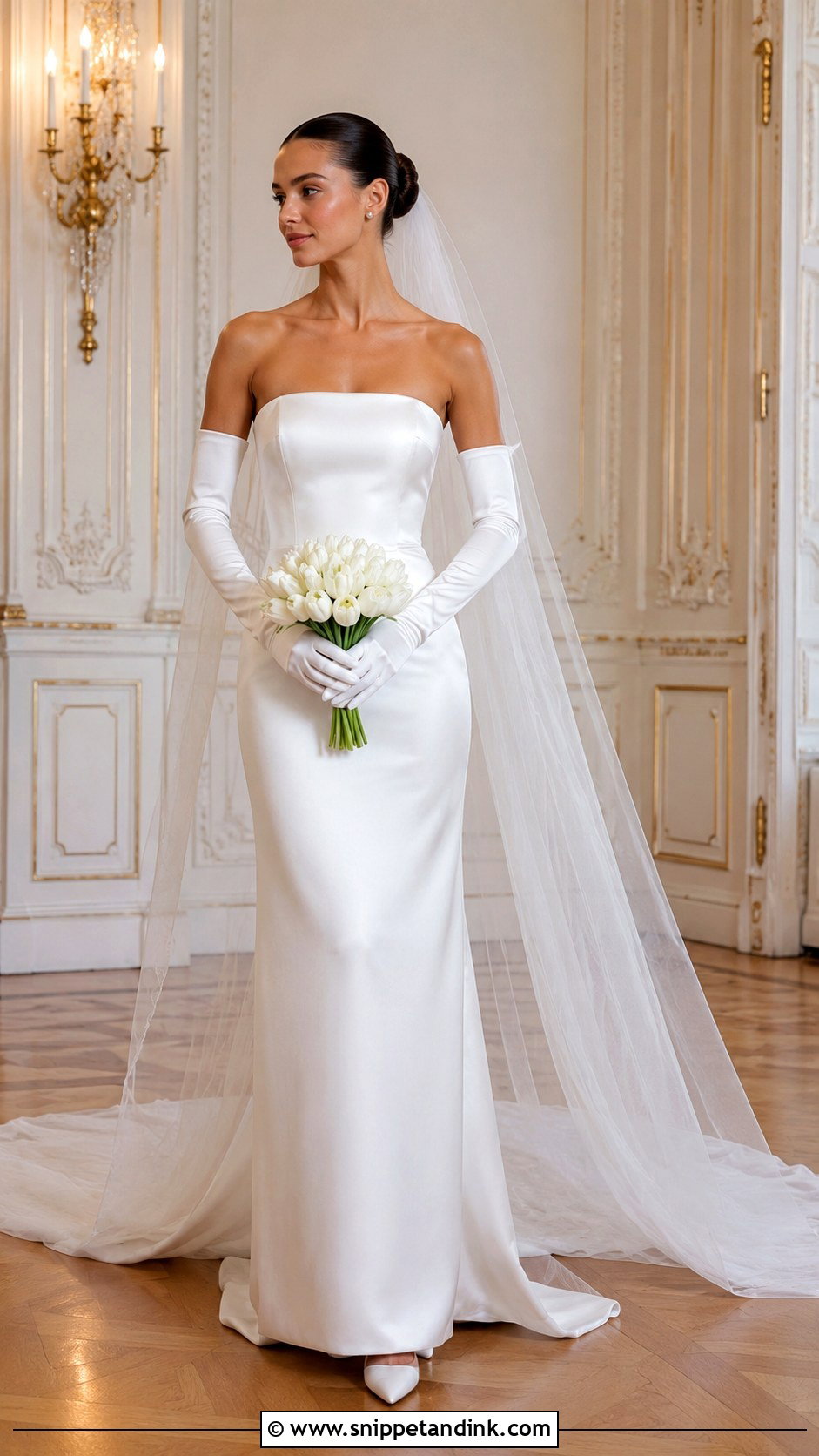
Opera gloves turn a minimal gown into a formal outfit almost on their own. Start with a strapless satin column, a structured A-line or a clean ball gown with little embellishment, then add gloves in matching satin, or sheer tulle for a lighter feel. The ring exchange is the practical snag. Practise it at home: I’d suggest gloves with a discreet opening at the ring finger, or simply slipping off the left glove and handing it to your maid of honour. Small earrings, pointed pumps, a plain cathedral veil, a sleek bun or polished waves, and white roses, tulips or calla lilies finish it. Black-tie receptions and evening ceremonies are where gloves make most sense.
How Many Months Does a Gown Really Need?
More than most brides expect. Made-to-order gowns can take several months to arrive once ordered, and alterations come on top of that. This is the rough rhythm I suggest, knowing every salon and designer works a little differently:
- Nine to twelve months out: start trying on, so you can compare shapes without rushing.
- About eight months out: place the order, leaving a buffer for production or shipping delays.
- Two to three months out: first alteration fitting, wearing your wedding shoes and foundation garments.
- Two to four weeks out: final fitting, bustle practice, and steaming or pressing booked for the morning.
Rush orders exist, but they usually cost extra and narrow your choice. If your date is close, look at sample or off-the-rack gowns you can take home and start altering straight away.
Who should come to the final fitting
Bring whoever will help you dress and bustle on the day. I walk them through the closures, the bustle points and how to fluff the skirt after you’ve been sitting, because you can’t see any of it yourself, and in the moment nobody else will know how it works.
Fit, Shoes and Foundations Do the Heavy Lifting
A refined bridal look should feel like the woman wearing it, not a costume. The gowns above run from structured satin ball gowns to fluid silk columns, lace sleeves and minimal shapes with one strong detail. Weigh up your venue, season, coverage and how much you want to move. Bring your ceremony shoes and foundation garments to every fitting so the alterations are accurate, and let accessories repeat a fabric or shape from the gown rather than introduce a new one. If you can stand naturally, sit through dinner and dance without tugging at anything, the dress is right. Classy dressing comes from fit and ease far more than from any rule.
You'll Like These Ideas:


Leave a Reply