
Silk is soft, moves when you move and looks expensive without trying, and it adapts to almost any wedding, from a barefoot destination ceremony to a ballroom. The catch is that two silk dresses can feel like different planets. A fluid satin slip and a structured mikado ball gown share a fibre and nothing else, so I treat the silhouette and fabric weight as seriously as the colour. Designers keep returning to clean draping, defined waists, statement bows and versatile second looks, which gives you plenty of room to make silk personal. Shoes you can stand in, considered jewellery and a veil or hair piece that suits the neckline finish the picture. Twenty ideas follow.
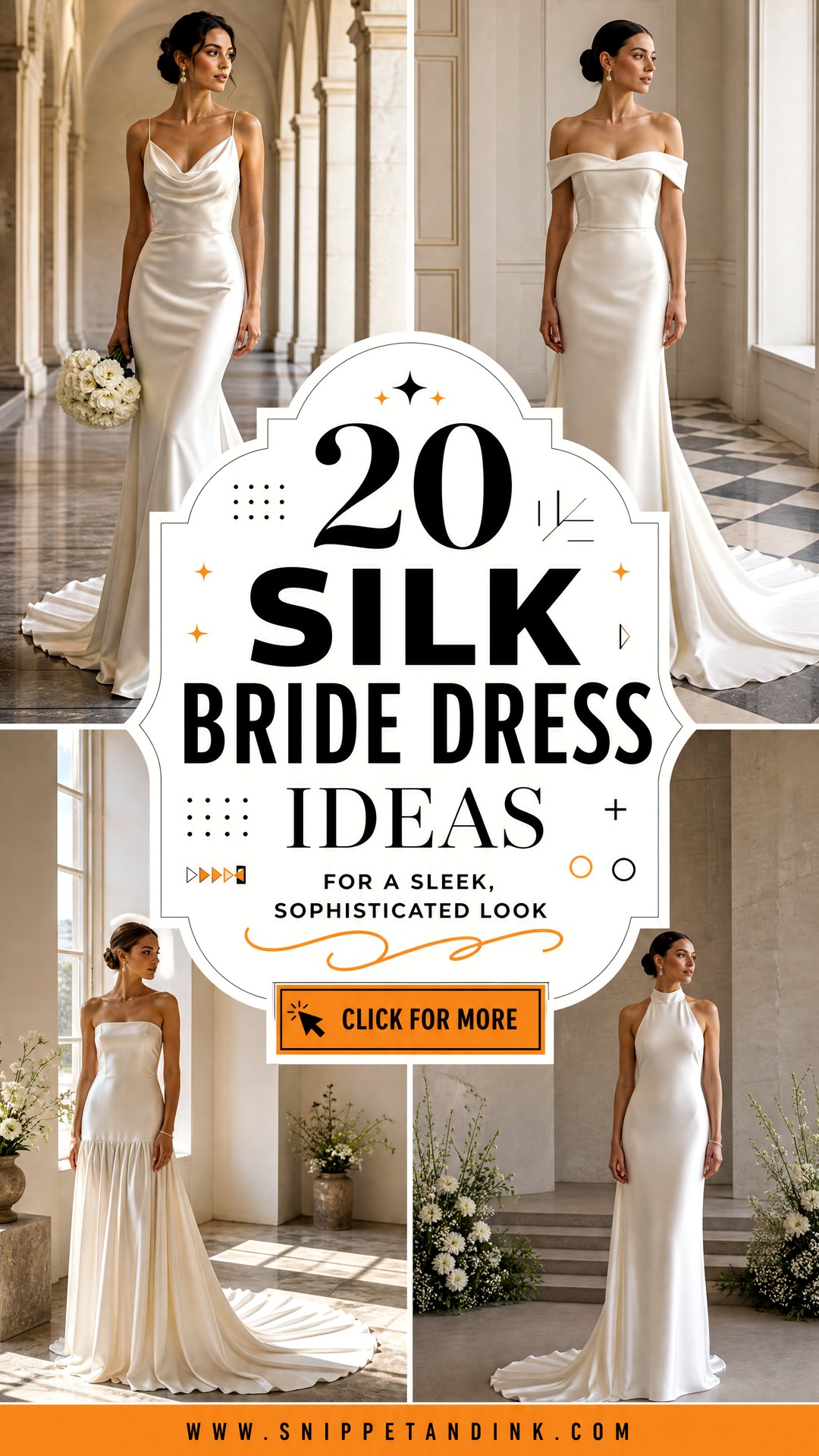
Ivory, Diamond White or Champagne? Testing Silk Against Your Skin
Silk reflects colour back onto the face more than matte fabrics do, so the shade of the gown changes your complexion in a way you may not notice until you see the photographs. I never let a bride decide on colour from a swatch book under shop lighting.
- Bright or diamond white suits deeper skin tones and cool undertones well, but on very fair skin it can make you look washed out.
- Ivory is the most forgiving shade for most people and reads as “white” in photographs.
- Champagne and blush-tinted silks warm up pale or olive skin, though in heavy satin they can turn slightly yellow under warm indoor lighting.
- Silk satin shows its true shade most clearly in daylight; crepe looks a touch darker because it reflects less light.
Take the sample to a window, hold it under your chin without makeup, and look at your skin rather than the fabric. Then match your veil to the gown, not the other way round, because tulle and silk of the “same” ivory rarely agree.
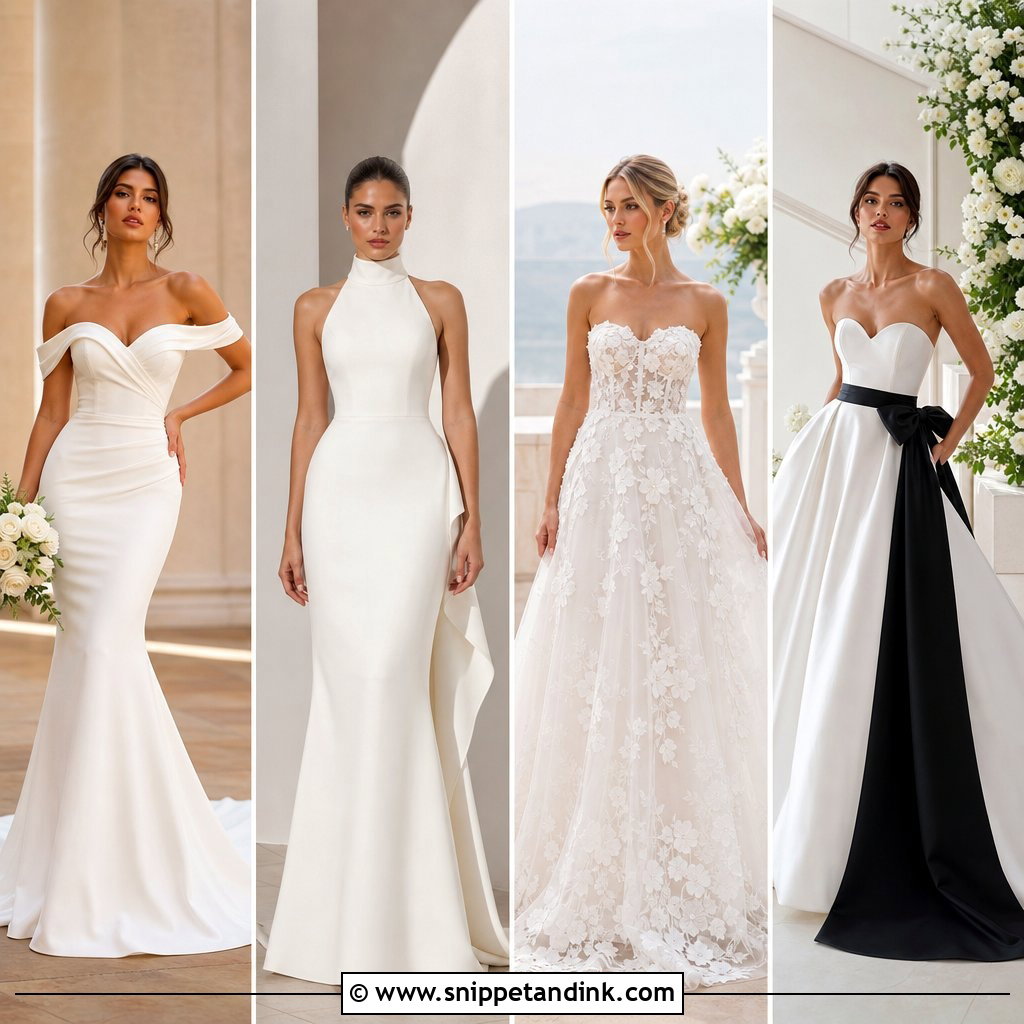
1. Silk Slip Bridal Dress
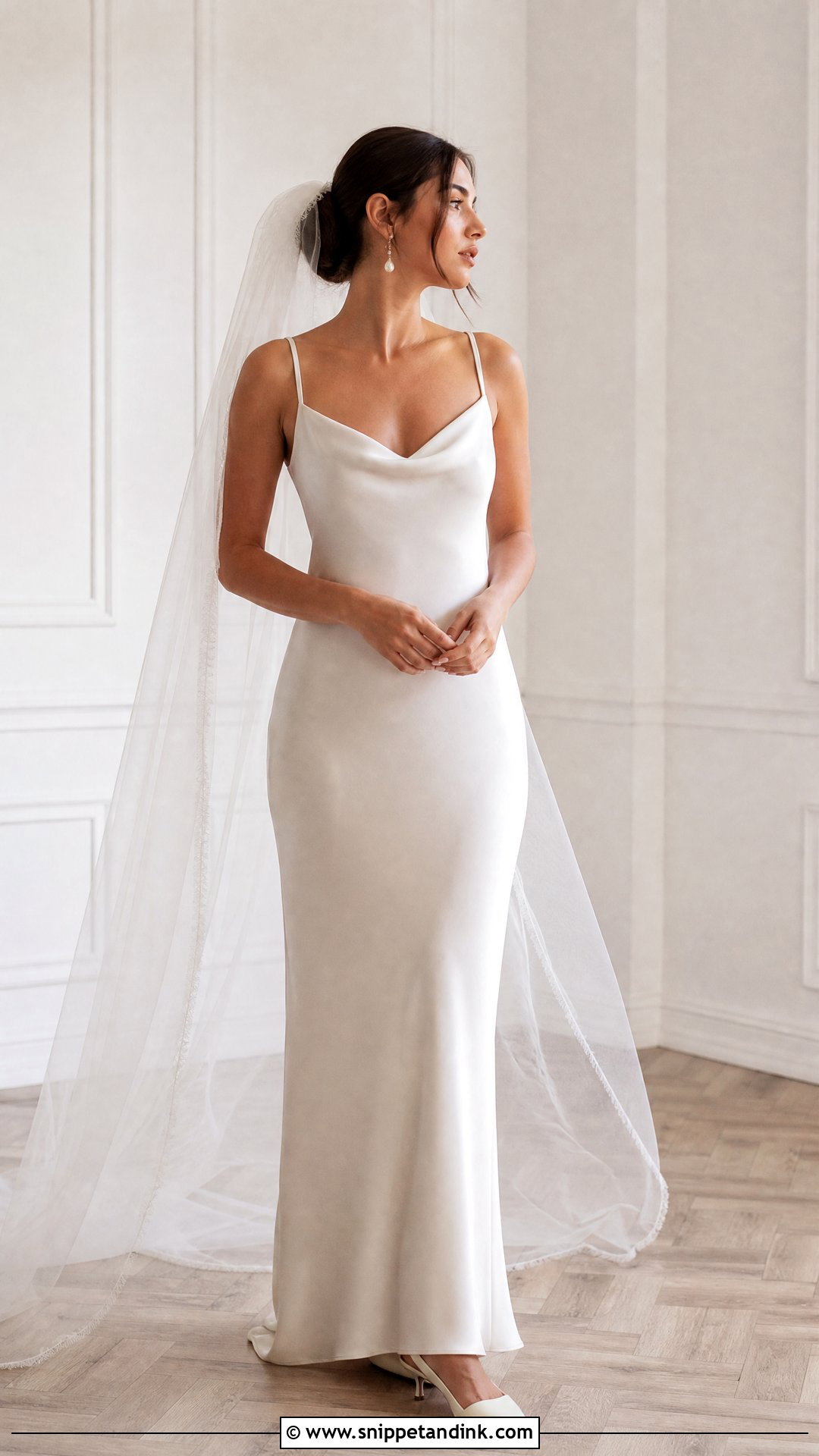
Slips look easy and are the hardest dresses to fit. A bias-cut shape with slim straps and a softly shaped neckline follows the body closely, so it shows any pulling, bunching or uneven hem that a structured fabric would hide. Ivory satin glows; crepe is quieter and matte. I’d pair it with pointed kitten heels, pearl drops and a fingertip veil with a raw edge, plus a low bun or waved bob that keeps the neck clear. A removable silk scarf adds something for the ceremony, and a tailored ivory blazer handles a cool evening. Budget for good underwear and a skilled seamstress before anything else.
2. Silk A-Line Bridal Dress
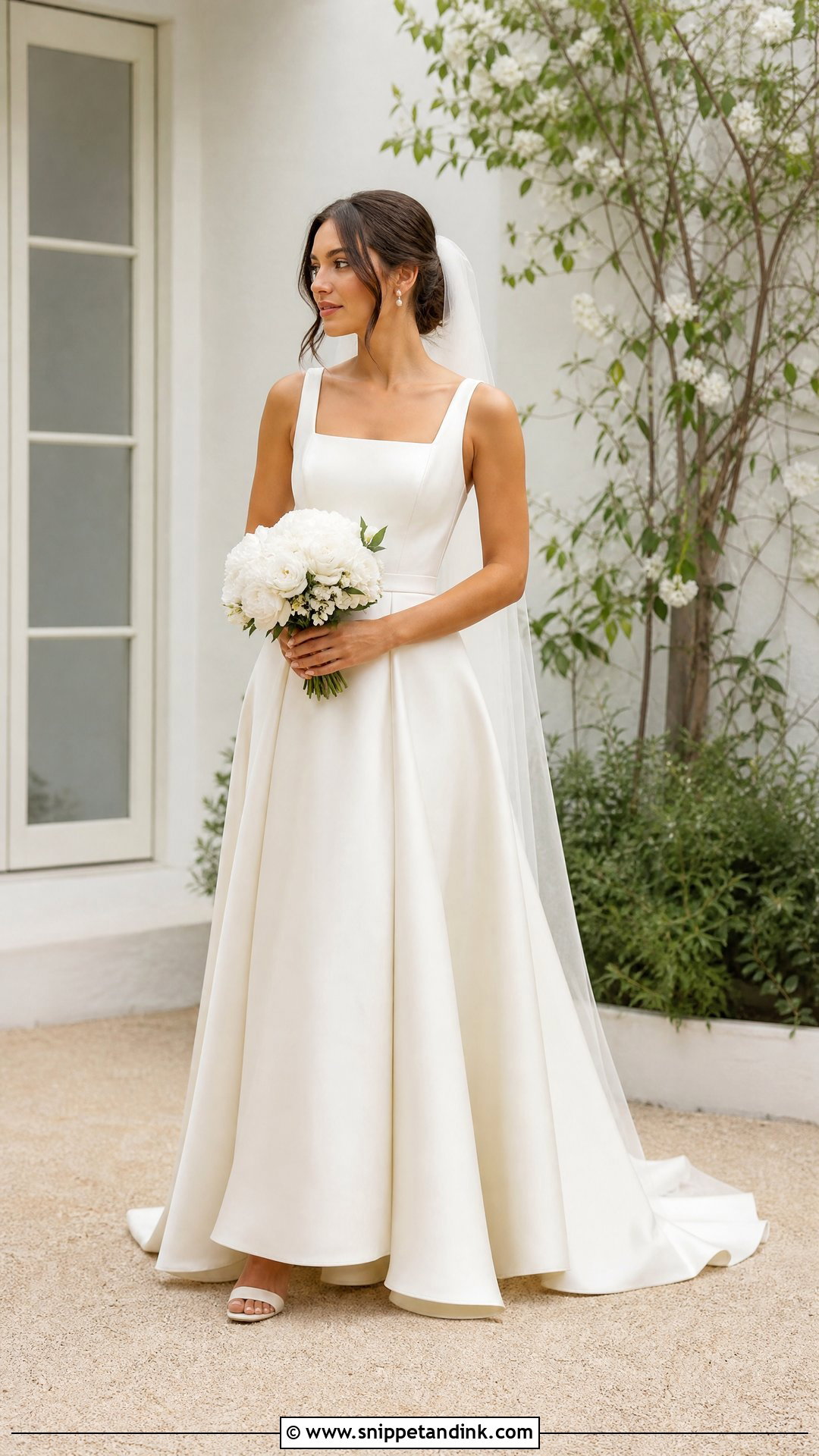
Waist definition with a skirt you can walk in: that’s the A-line promise, and silk faille, duchess satin or lightweight mikado keep the shape smooth and steady. A scoop or square neckline stays classic, and wide straps give support without tape. Pearl studs, a medium-length veil, low block heels, a compact bouquet and a sleek chignon keep the focus on the clean lines. A detachable organza wrap adds coverage if you want it. My standing rule for A-lines: the hem is set while you wear the actual wedding shoes. Even a half-inch heel difference changes how the skirt swings and whether you catch it on the stairs.
3. Silk Ball Gown Bridal Dress
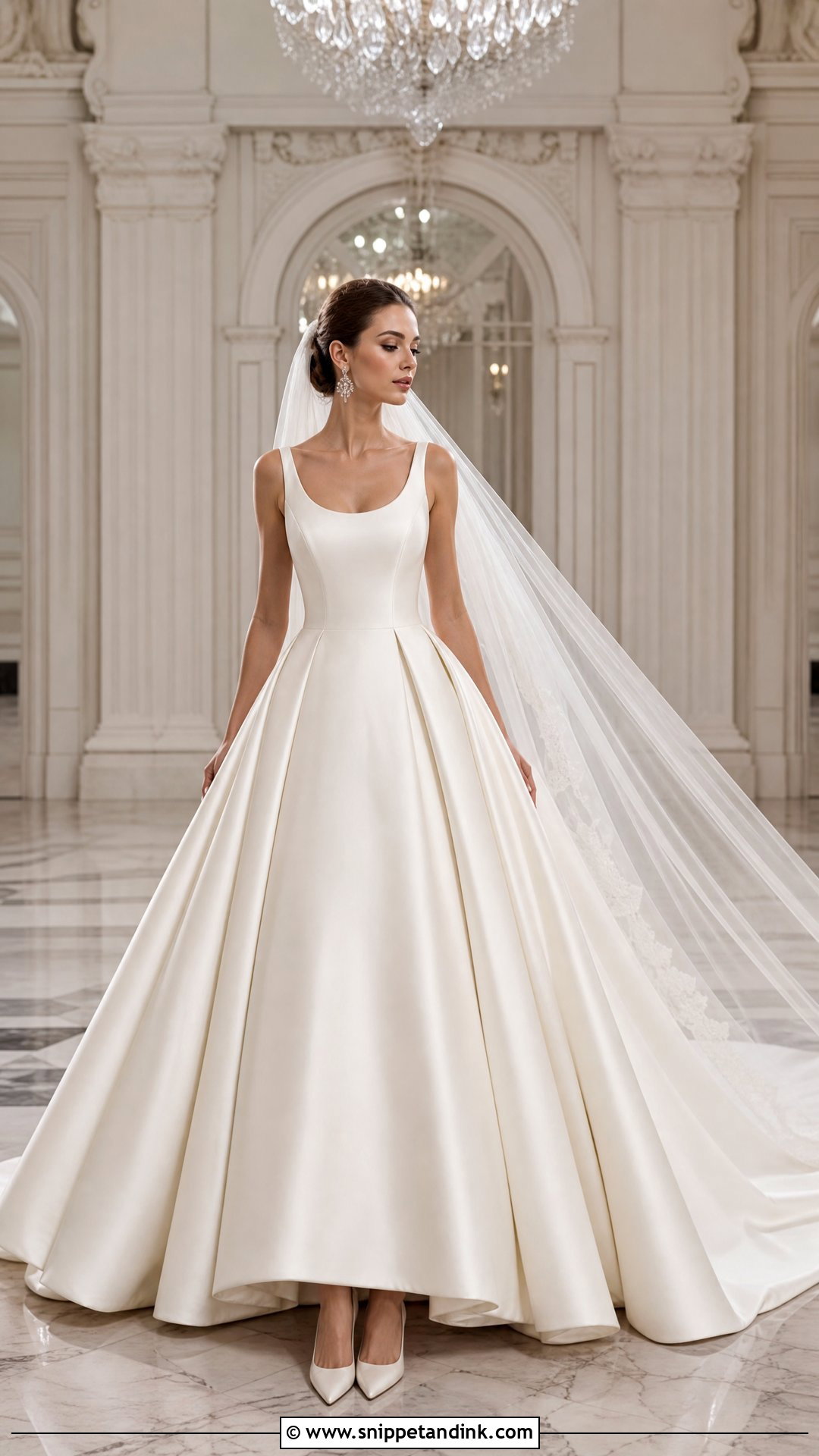
For a grand entrance, a fitted bodice over a full mikado or taffeta skirt builds volume from the fabric itself, no heavy embellishment needed. Choose strapless, scoop or a softly curved neckline depending on how much support you want. A cathedral veil, crystal or pearl earrings, satin pumps under the skirt and a polished bun balance the scale. Silk ball gowns get heavy and warm by evening, so I always ask about a breathable lining, secure internal support and a bustle you can trust. Structured silk folds catch light and give the photographer natural shadow to work with. Still, practise sitting, walking and dancing before the final fitting.
4. Bias-Cut Silk Bridal Dress
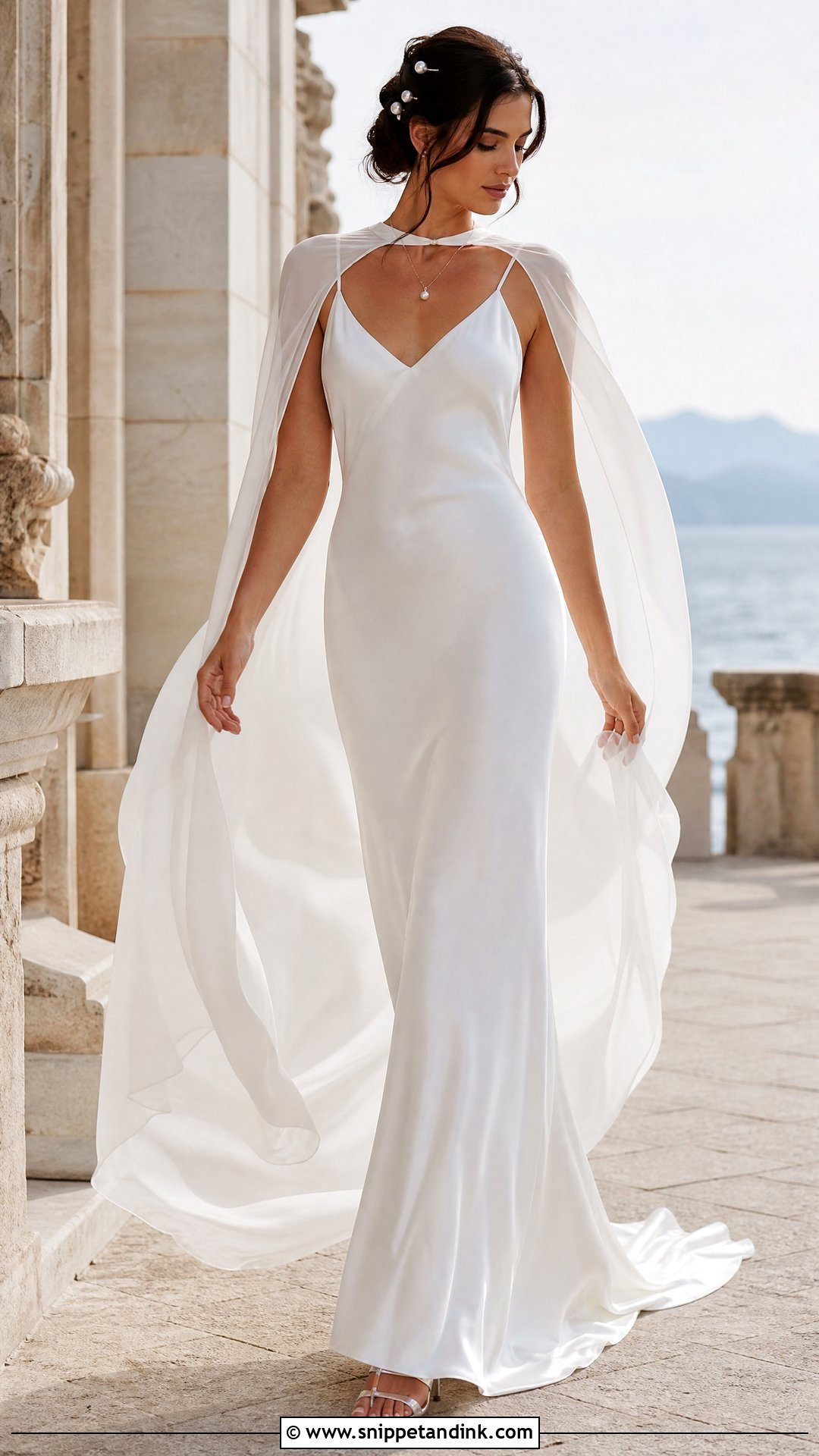
Cutting on the diagonal grain is what gives bias silk its close, fluid drape, and it also explains its one quirk: the fabric relaxes and lengthens as it hangs. I schedule the final hem fitting as close to the wedding as the seamstress allows for exactly that reason. A gentle V, narrow straps and a small sweep train suit the cut. Metallic sandals, a fine pendant and pearl hairpins add small detail without breaking the line, and a light veil or silk chiffon cape can come off later. Choose smooth, breathable underwear that disappears under the silk. Intimate ceremonies and destination weddings suit it.
5. Cowl Neck Silk Bridal Dress
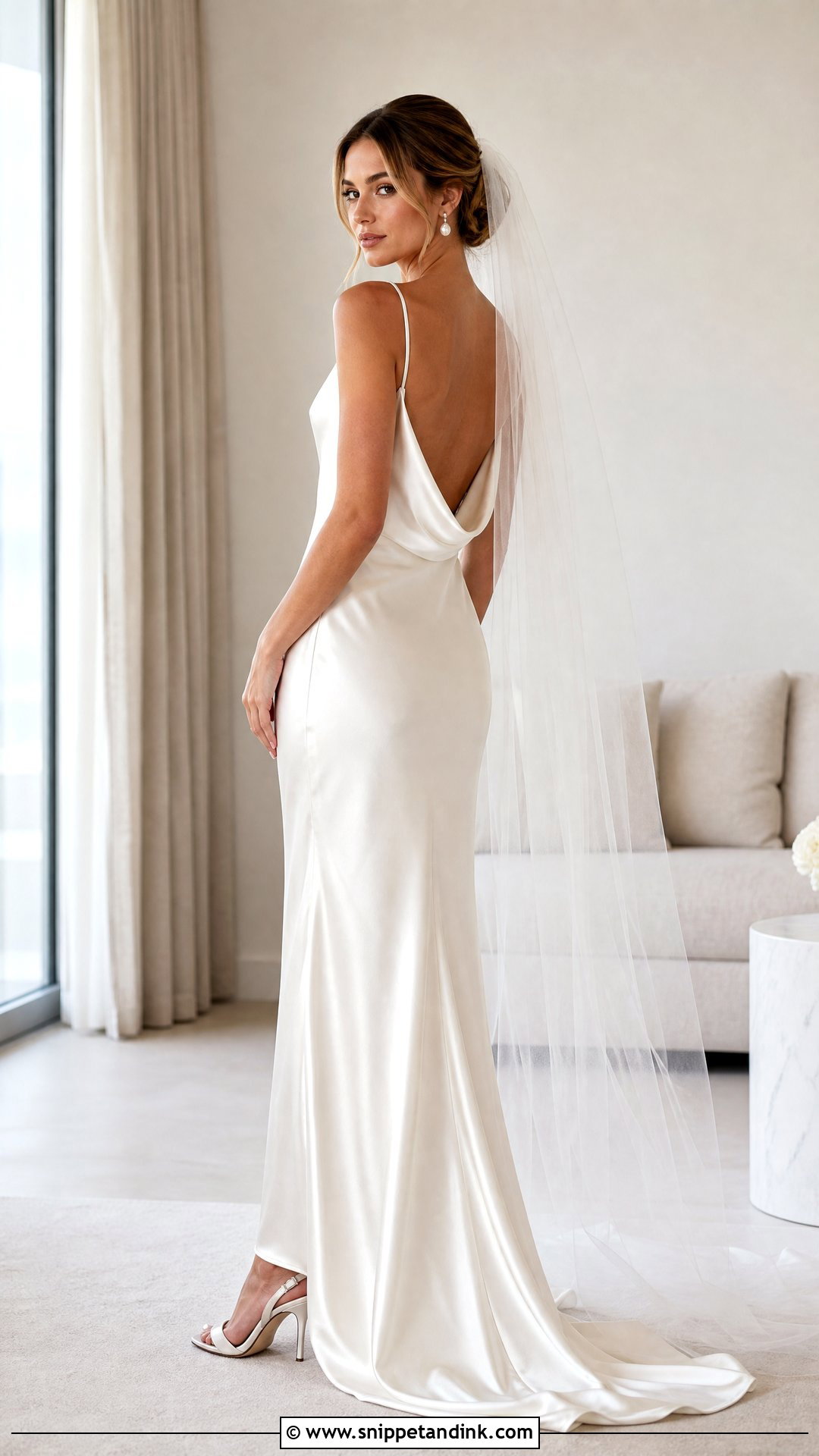
The folds of a cowl neck silk bridal dress look romantic and slightly vintage, and they only fall properly in fluid satin; stiffer fabrics make a cowl look like a towel draped on a hanger. Slim straps and a low cowl back balance it, or choose a higher back if you need more underwear options. Pearl button earrings, ivory slingbacks and a sheer chapel veil under a loose chignon finish it, and a softly gathered silk clutch can echo the texture. Skip the necklace. I ask the tailor to check the cowl’s depth while you lean forward to greet someone, since that’s when it gapes.
6. Square Neck Silk Bridal Dress
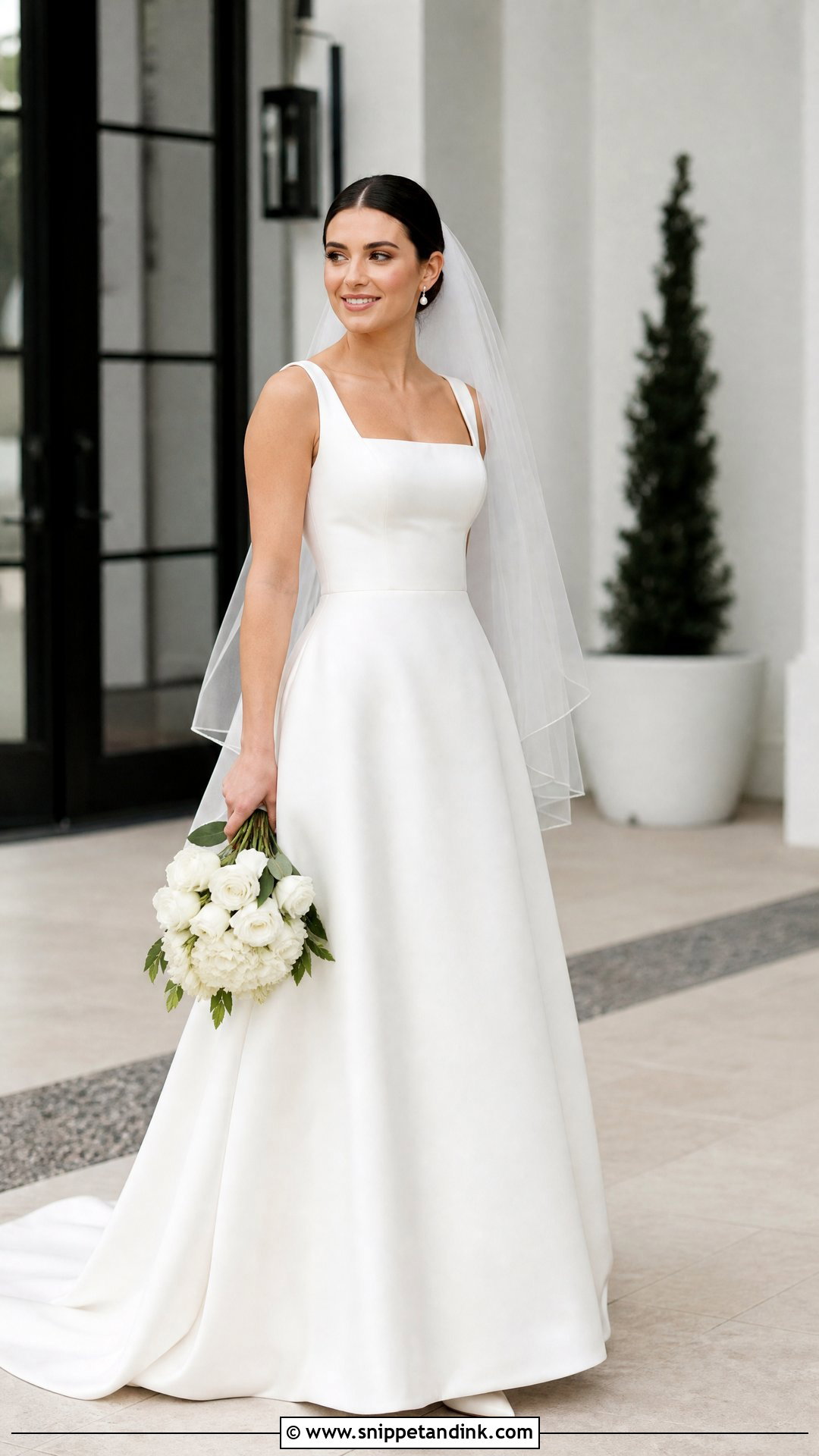
Square necklines vary far more than people expect in width and depth, so I always pull several to try. The shape frames the collarbone and adds quiet structure to a plain gown, with wide straps, a fitted bodice and either an A-line or column skirt. Mikado gives a crisp, architectural edge; crepe softens it. Short pearl drops, pointed pumps and a simple waist-length veil suit it, and hair should be up, in a smooth ponytail or tucked back so the corners show. If you want more detail, put covered buttons down the back rather than embellishment across the front.
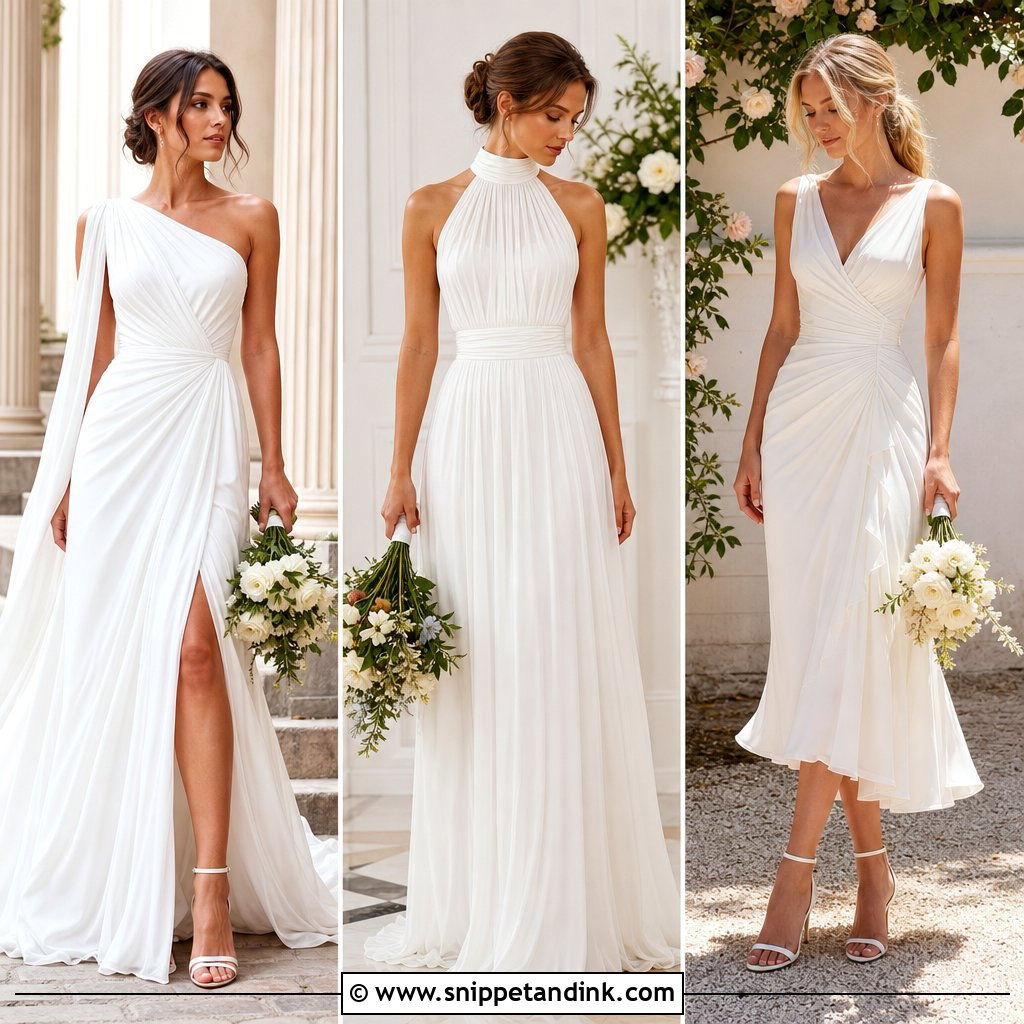
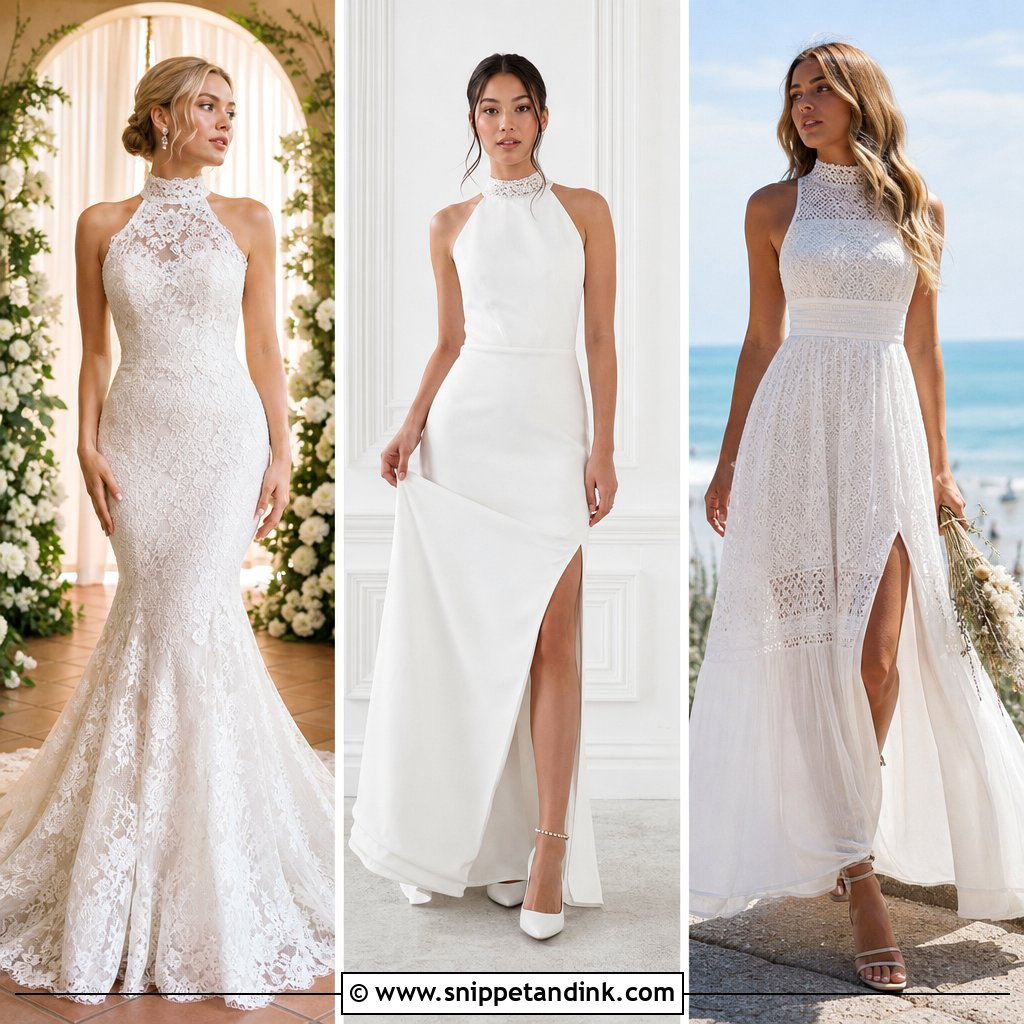
7. Halter Neck Silk Bridal Dress
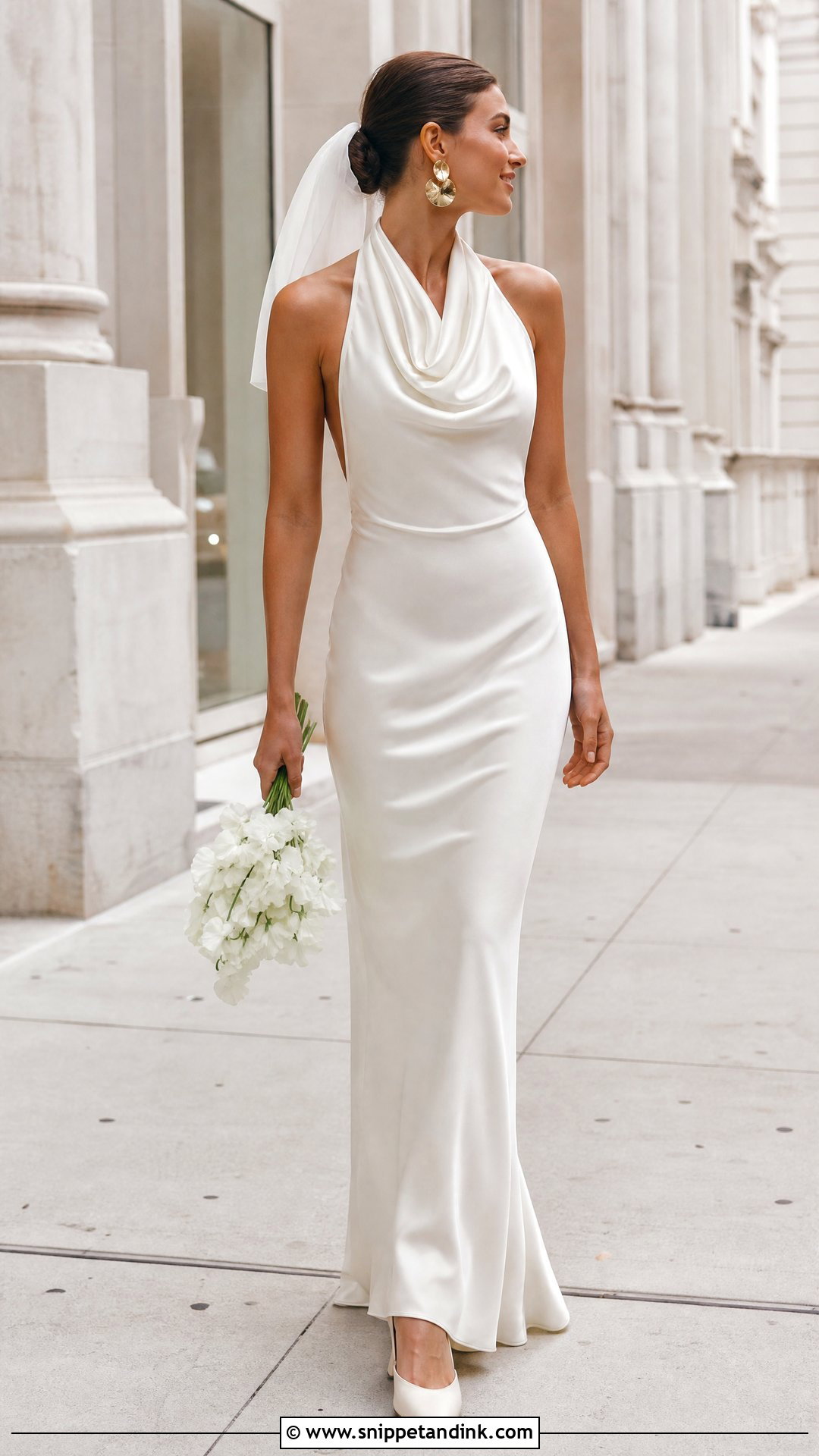
Halters pull the eye upward and give a sleek gown a contemporary edge. Fluid satin drapes softly at the neck, while crepe skims the body for a smoother finish. An open back over a narrow column skirt looks polished with no beading at all. Sculptural earrings, a simple bracelet and pointed ivory heels are enough, with hair up or tucked back so the halter shows from every side. Instead of a veil, try a long silk chiffon scarf fixed beneath the hairstyle. Check the neck closure and the armholes at fittings: raise your arms, sit, turn. A halter that’s fine standing still can cut in under the arm once you dance.
8. Off-Shoulder Silk Bridal Dress
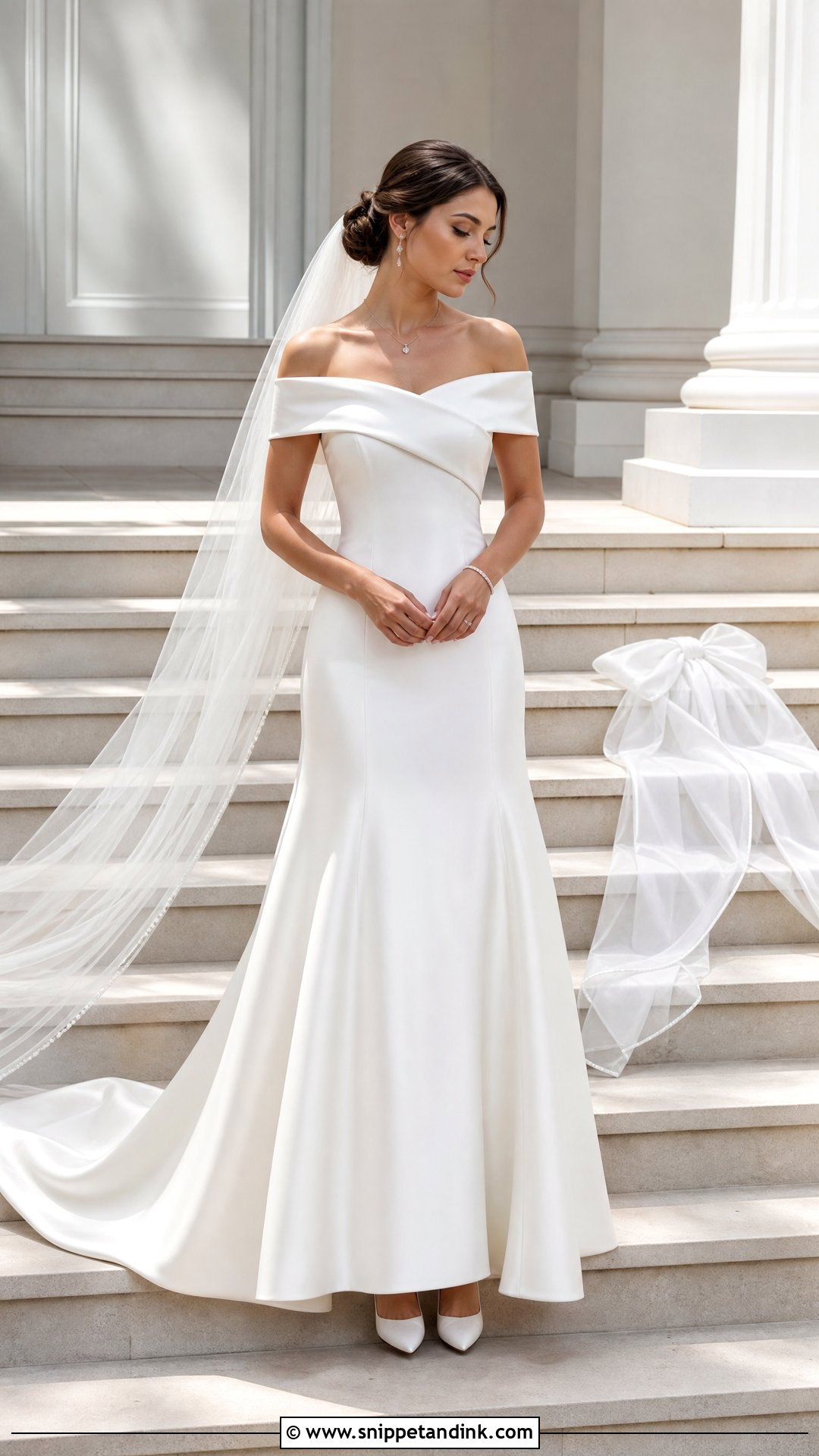
A folded satin band across the shoulders gives the off-shoulder gown its romance, and a fitted bodice with a gently flared skirt keeps proportions even. I insist on internal structure here; without it, you spend the day hitching the neckline up. A delicate necklace, small drops and closed-toe satin heels suit it, with a low chignon and chapel veil that leave the shoulders on view. For cooler weather, add a removable organza cape or cropped jacket between photographs. During alterations, hug someone, reach for a glass and sit. The band should stay put without pinning your arms, and the bodice shouldn’t press on your ribs.
9. Long Sleeve Silk Bridal Dress
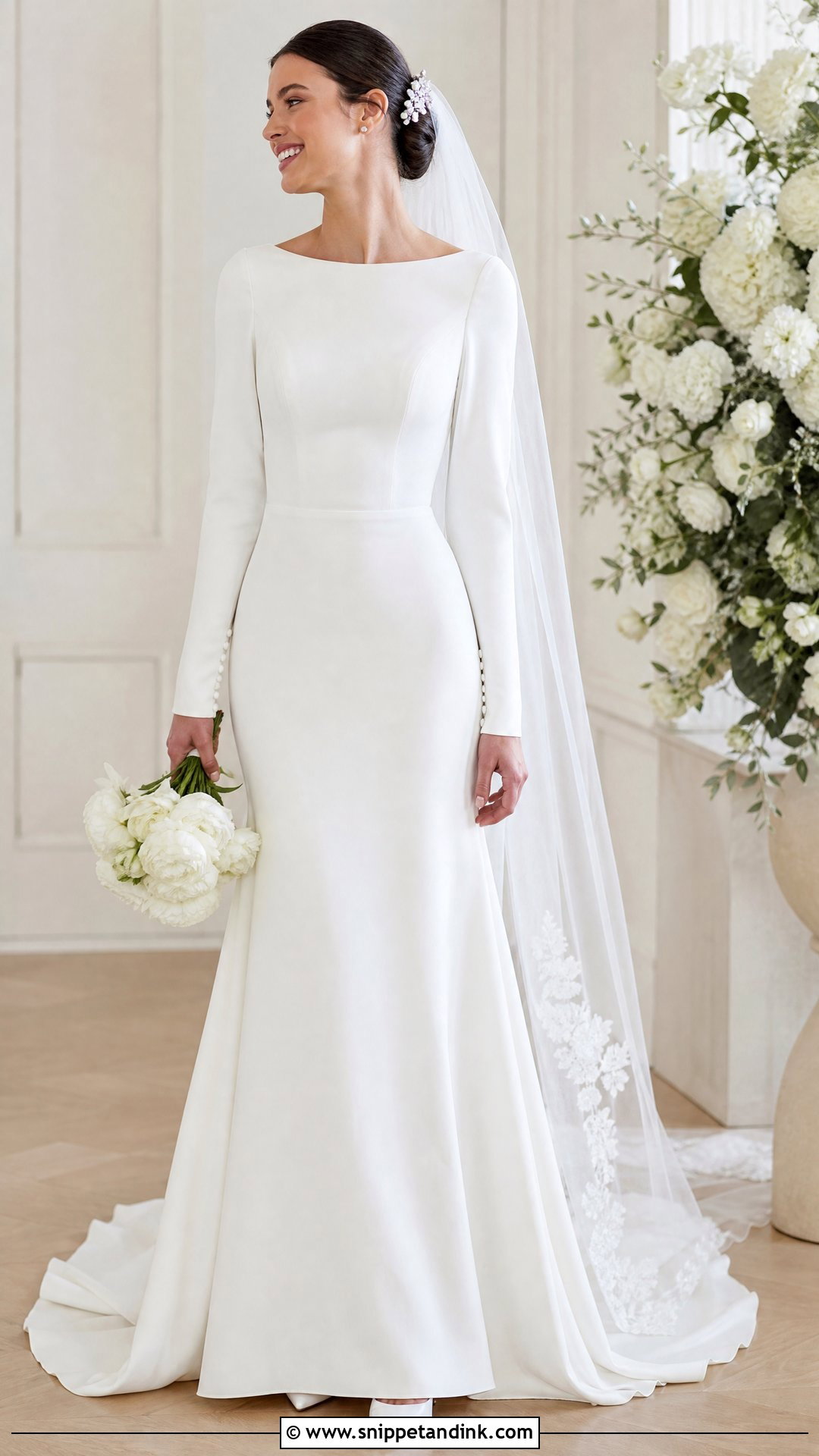
Coverage and a streamlined line can coexist, and silk crepe is the reason: it moves easily and has a smooth matte finish that keeps long sleeves from looking heavy. Look for fitted sleeves with covered wrist buttons, a bateau or V-neck and a column or softly flared skirt. Pearl studs, pointed heels and a long veil under a low bun suit it, with a jewelled comb if the gown is completely plain. Even in cold weather, indoor rooms get warm, so a breathable lining still matters. I have the seamstress check elbows, shoulders and cuffs while you move, because tight sleeve heads pull across the back the moment you lift your arms.
10. Corset Silk Bridal Dress
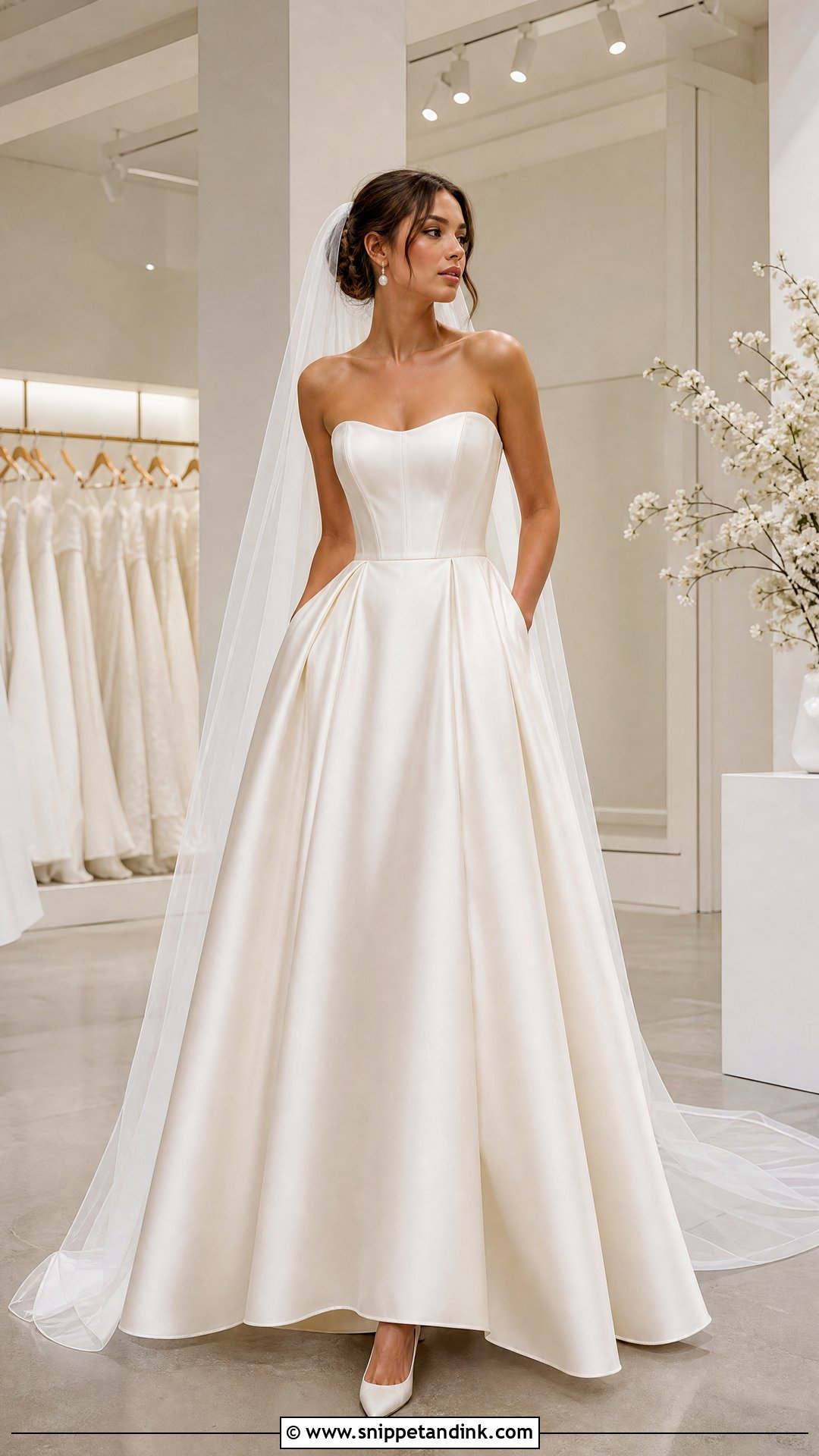
Corsetry gives smooth silk a visible, constructed waist. I look for a bodice with supportive boning and a softly curved neckline, balanced by an A-line or full skirt in satin or mikado. Structured bodices are having a moment, usually paired with clean skirts and restrained accessories, and that restraint is right. Pearl earrings, almond-toe pumps and a sheer veil without heavy edging keep it calm, with a polished updo. The corset should support you, not squeeze: sit down and take a deep breath at every fitting. Decide early whether visible seams, cups and boning give you the coverage you want.
11. Basque Waist Silk Bridal Dress
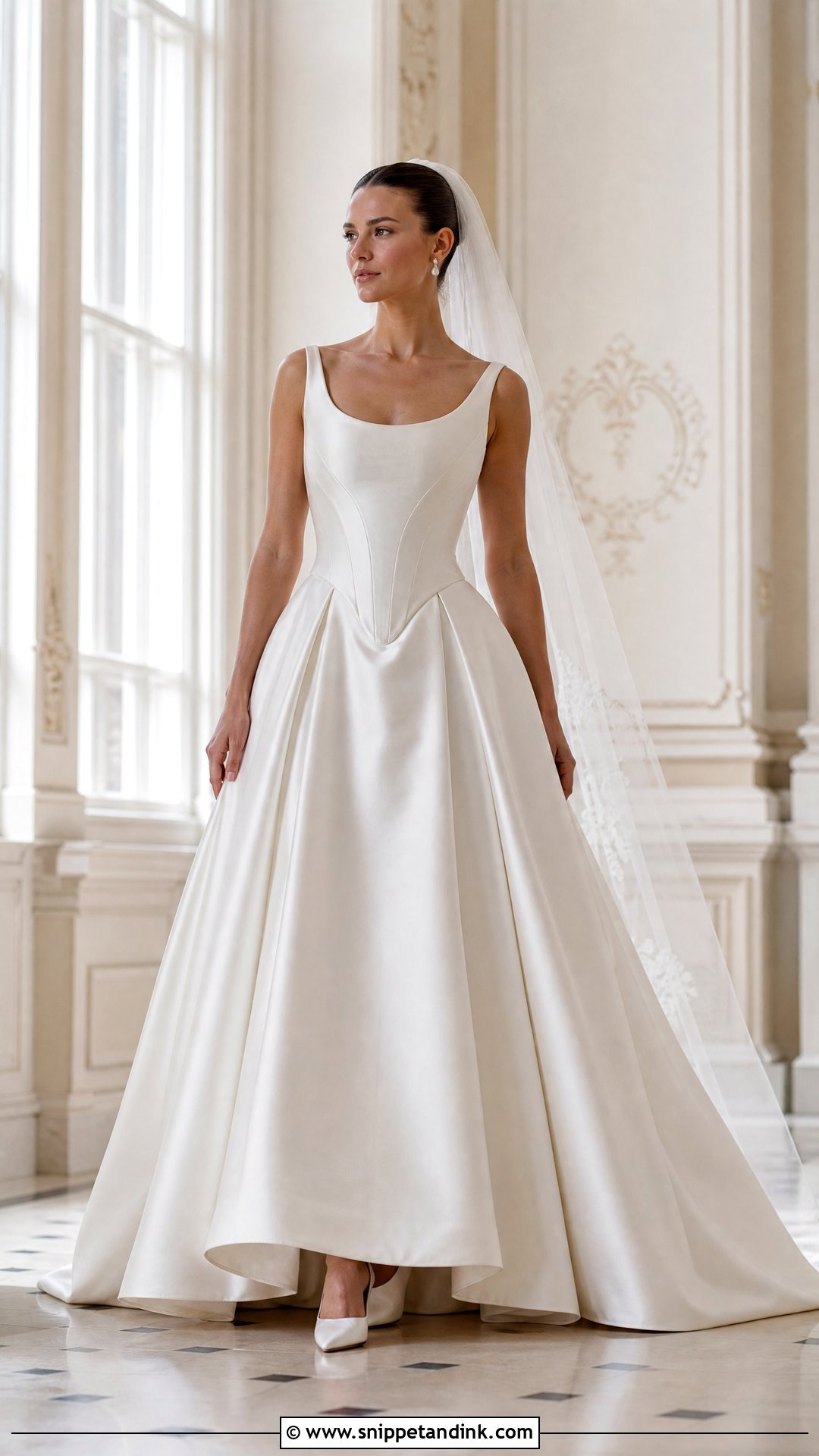
In a basque waist silk bridal dress, the bodice extends to a point or curve below the natural waist, lengthening the torso and sitting beautifully on a full mikado skirt. The shape borrows historic structure but reads modern in clean silk. Choose a scoop or strapless neckline and keep embellishment off so the waist seam stays the focus. Pearl drops, satin pumps and a cathedral veil give a formal finish, with a smooth bun or softly parted updo. Ask your consultant to show you several waist-point depths. On many brides, a gentle curve looks more balanced than a sharp, deep V.
12. Drop Waist Silk Bridal Dress
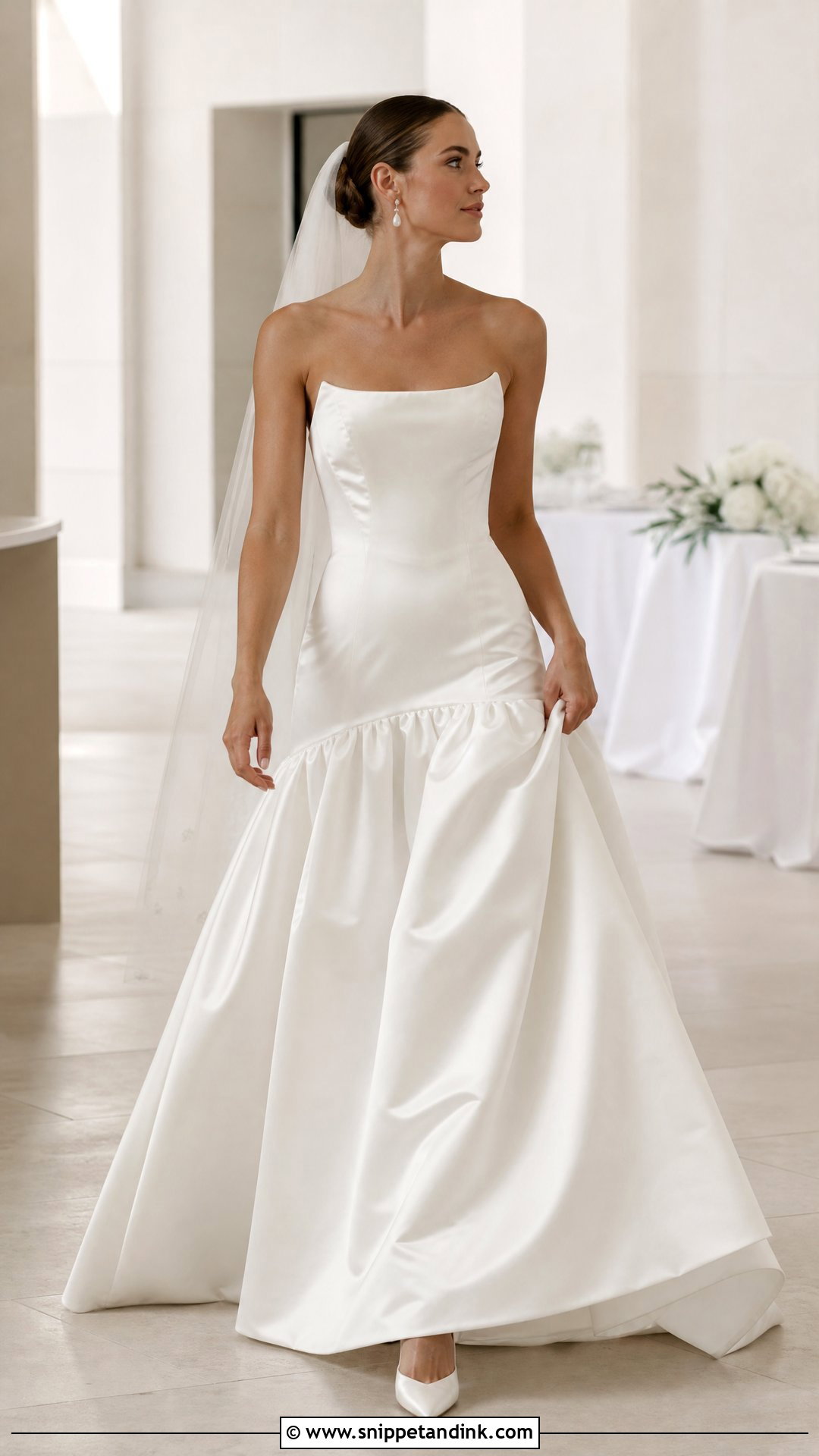
Moving the seam below the natural waist gives a drop waist its longer bodice and distinctive transition into the skirt. A fitted satin bodice looks sleek; a structured mikado skirt makes it dramatic. Designers show it both minimal and corseted. Understated earrings, pointed heels and a chapel veil that follows the vertical line suit it, with smooth, controlled hair. The seam placement decides everything here, so I check where the skirt starts when you stand and again when you sit. A skilled tailor can adjust the bodice length so the dropped seam looks deliberate rather than like a dress that’s too big at the waist.
13. Silk Column Bridal Dress
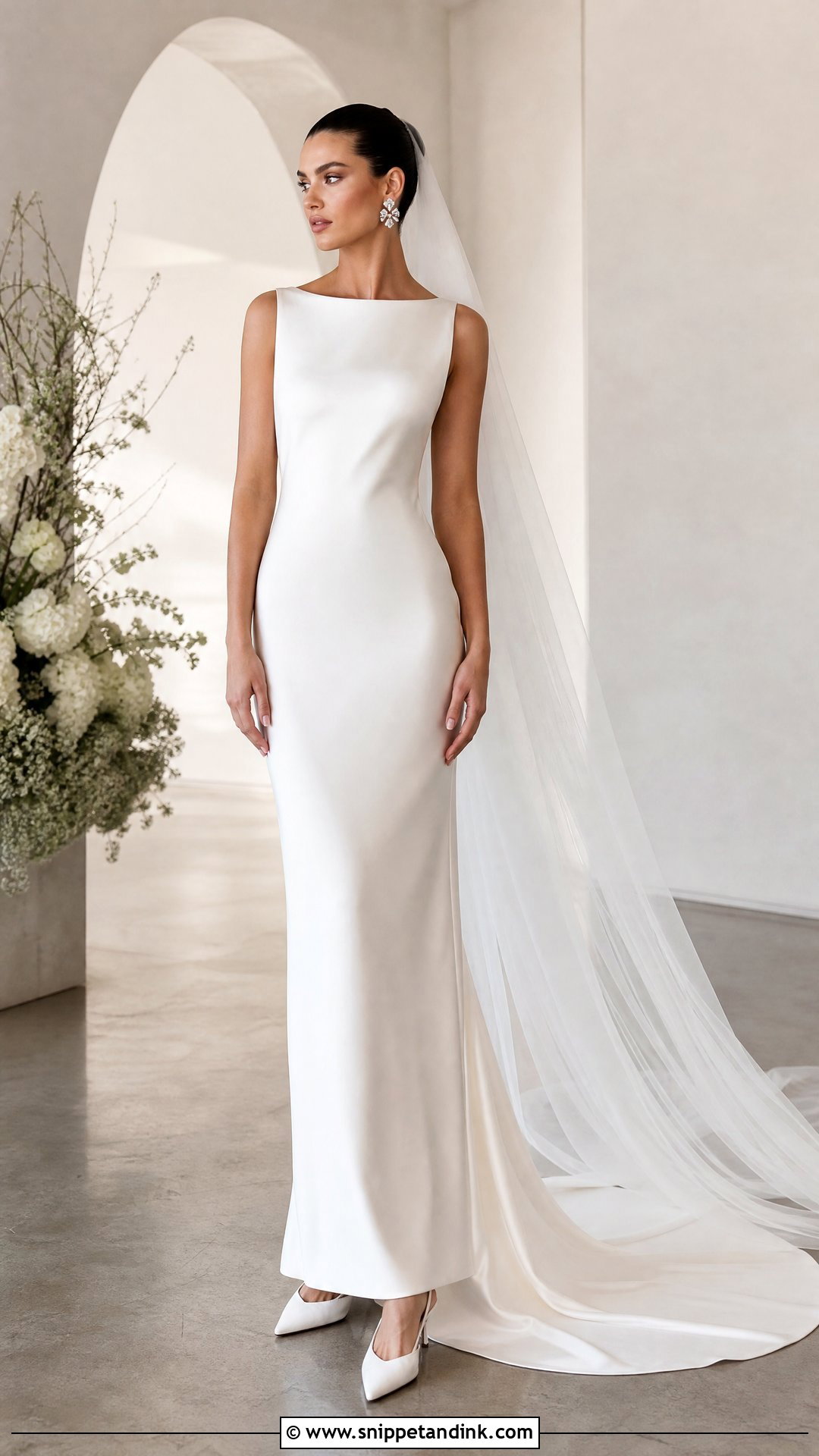
A column is straight and long, sophisticated without feeling stiff. Crepe gives a smooth matte look; satin shines more and shows every movement. A bateau, asymmetric or gently scooped neckline works, and a back slit or small train makes walking easier. Statement earrings, pointed slingbacks and a narrow cathedral veil suit it, with a sleek bun or chin-length bob. If you want a waist, ask for subtle internal shaping rather than a contrasting belt. Columns need precise fitting through hip and thigh. I watch for horizontal pull lines when you walk normally, and for seams that twist when you sit.
14. Fit And Flare Silk Bridal Dress
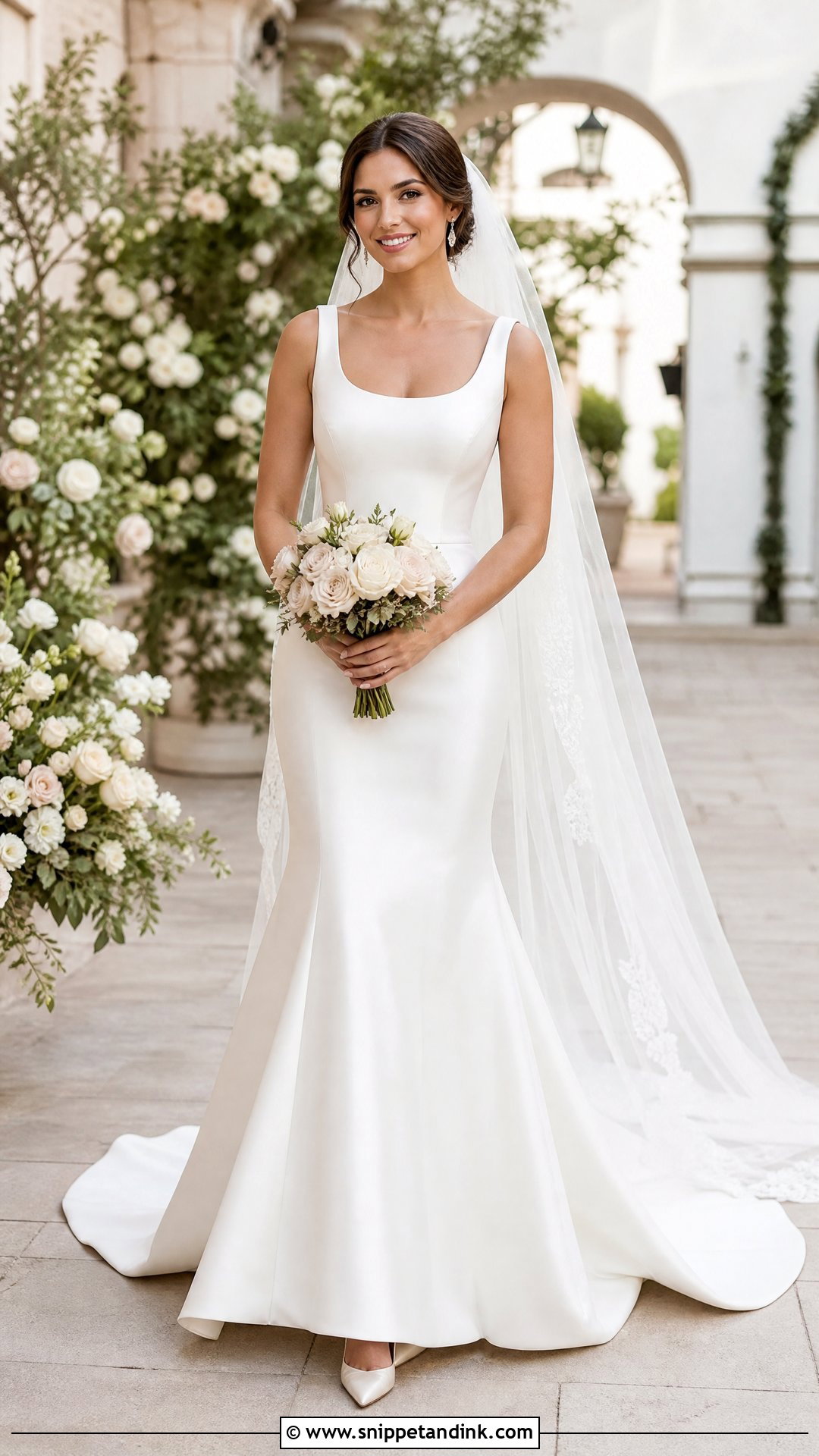
Fit and flare follows the bodice and hips, then opens into a wider skirt. It flares higher than a mermaid, which makes it easier to walk in. Crepe gives flexible movement; satin is more glamorous and luminous. A scoop neck with straps gives support, while off-shoulder looks softer. Drop earrings, pointed pumps, a chapel veil ending near the train and a low textured bun finish it. The fitted part decides comfort, so during alterations sit, climb a few steps and dance. Ask for a bustle that lifts the train without distorting the skirt, and lining that shapes you without the silk looking strained.
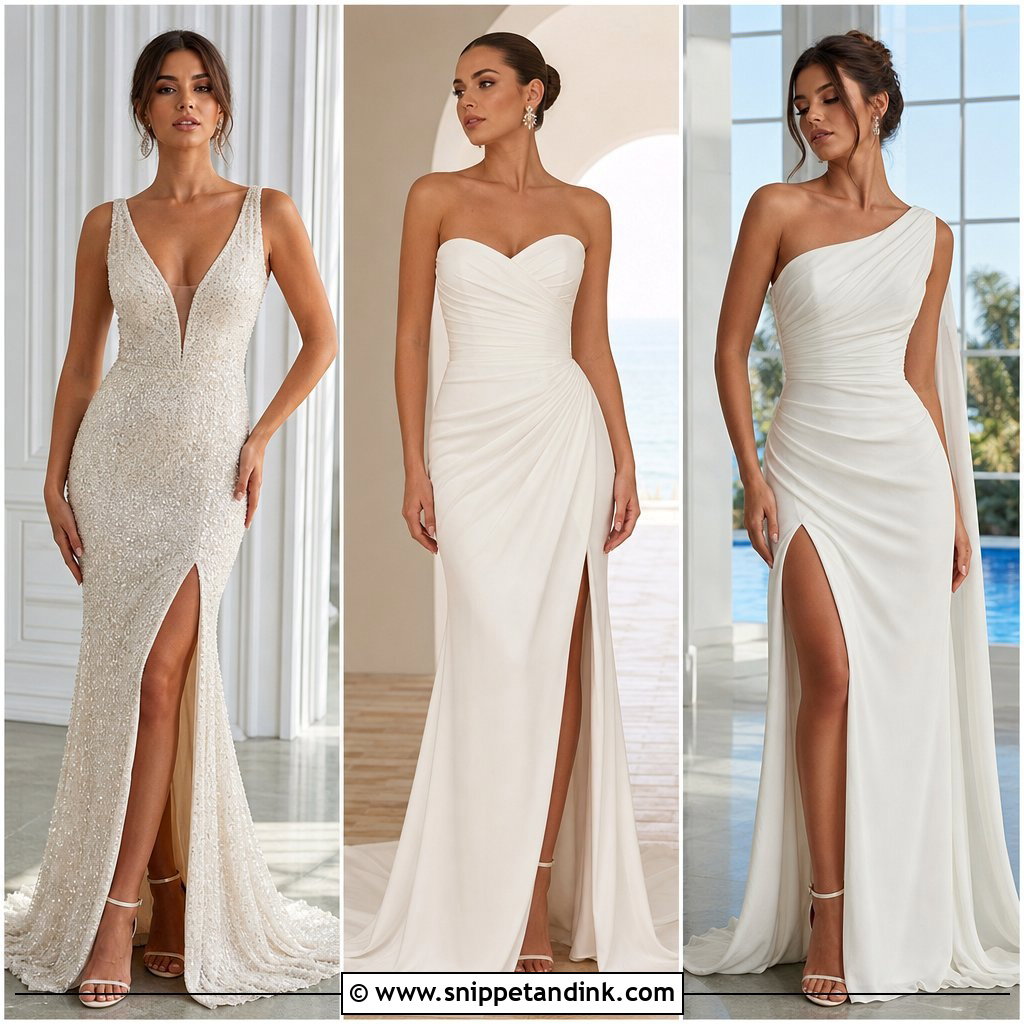
15. High Neck Silk Bridal Dress
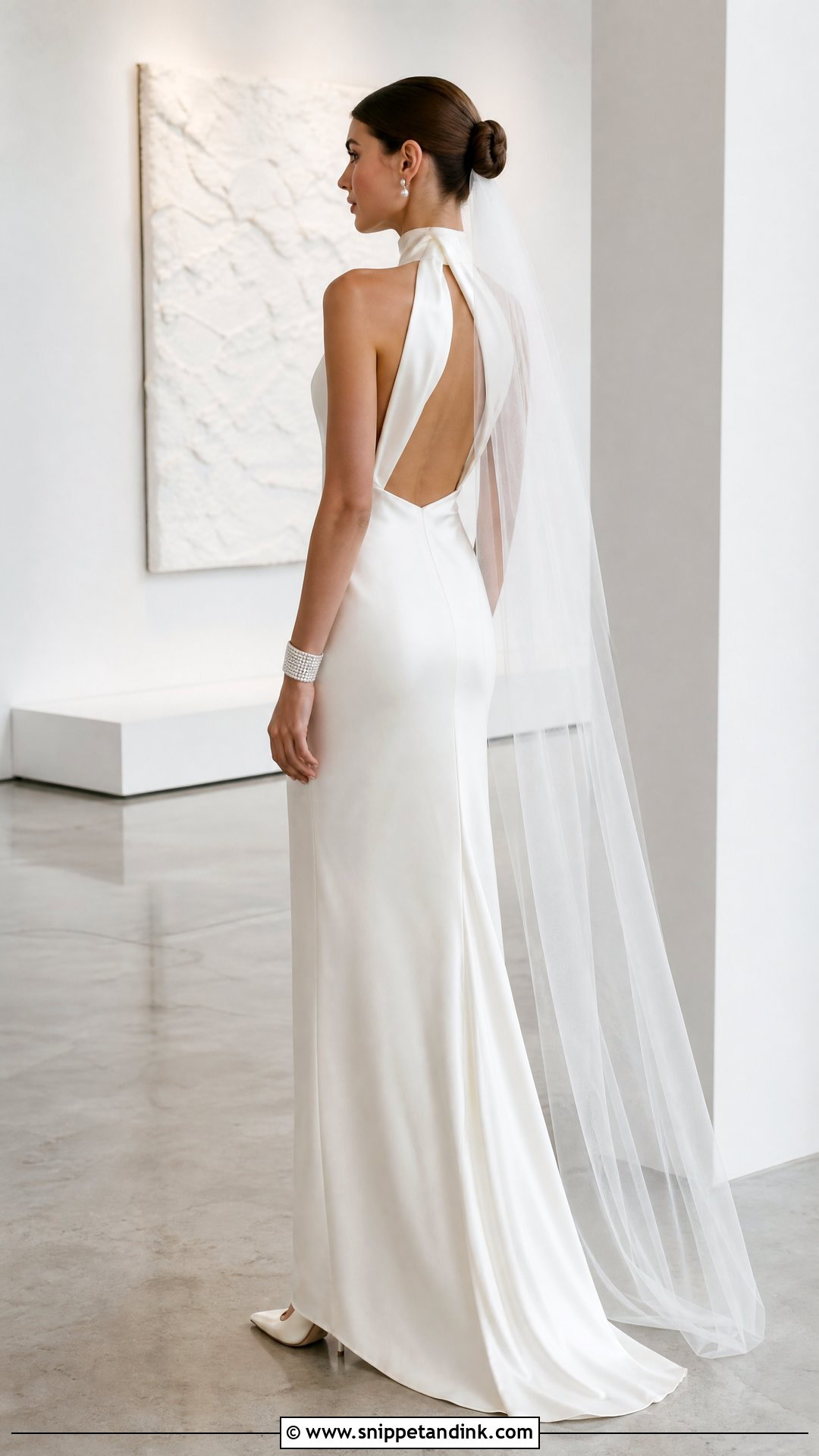
High necks are the refined alternative to plunging or open necklines. A softly draped satin halter feels contemporary; a fitted crepe neckline looks more tailored. Balance it with an open back or a sleeveless cut. Small pearl earrings, a cuff bracelet and pointed ivory shoes suit it. Skip the necklace and wear your hair up, with a veil attached beneath the bun to frame the open back without hiding the front. At fittings, turn your head side to side and sit down. A good high neck stays smooth against the throat; a poorly fitted one folds, rubs or presses at the collarbone by mid-afternoon.
16. Cape Sleeve Silk Bridal Dress
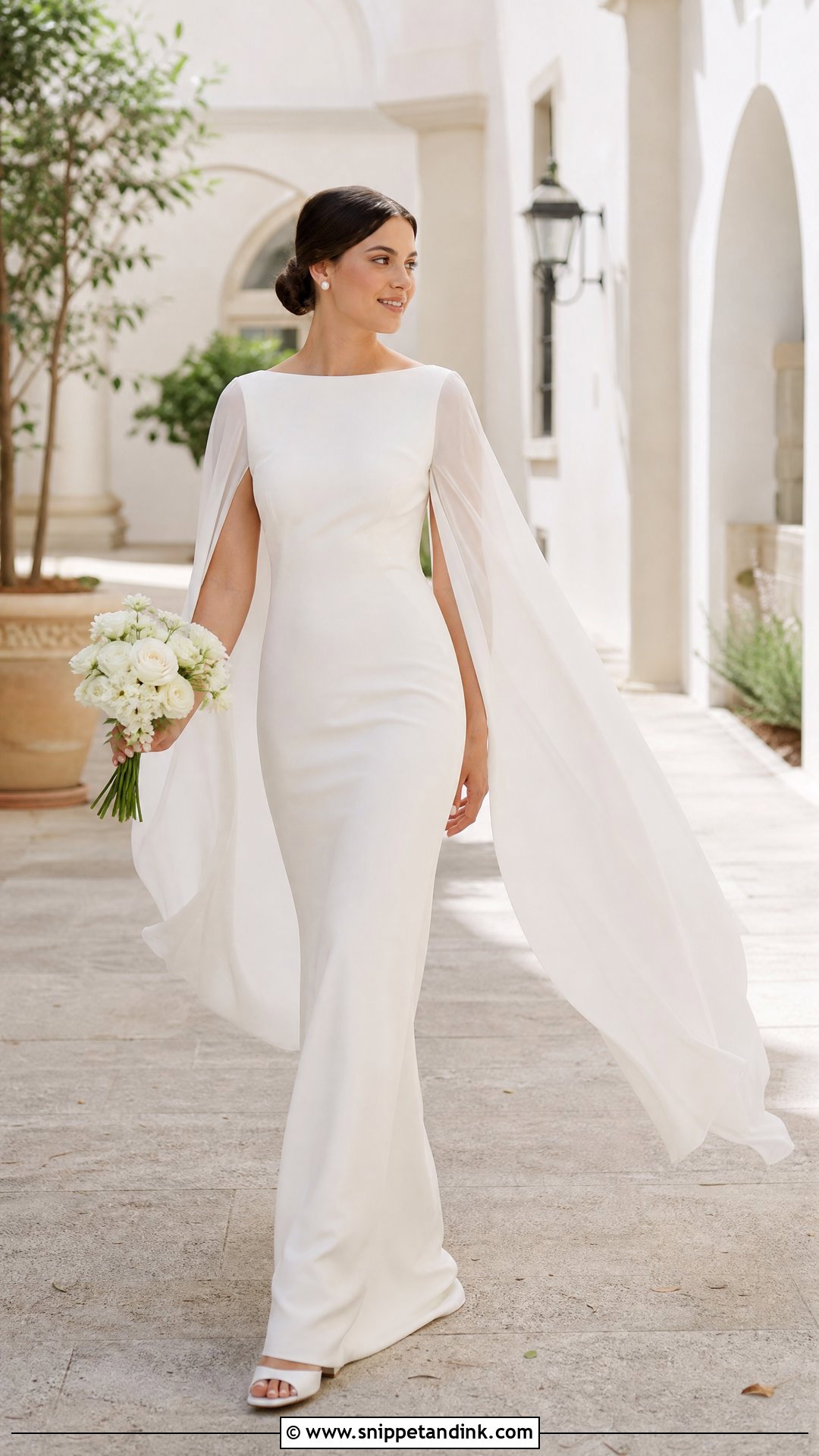
Cape sleeves add movement at the shoulders while the gown underneath stays clean. Start with a simple crepe column or satin A-line and attach cape sleeves in silk chiffon or organza. The sheer layer floats as you walk and gives light coverage without the restriction of fitted sleeves. Pearl studs, comfortable block heels and a polished low bun are plenty, and a veil may be unnecessary since the cape already adds length behind you. Keep the bouquet compact. I test capes outdoors and through doorways, because wind and door handles are what catch them, and the shoulder attachment has to feel secure.
17. Bow Back Silk Bridal Dress
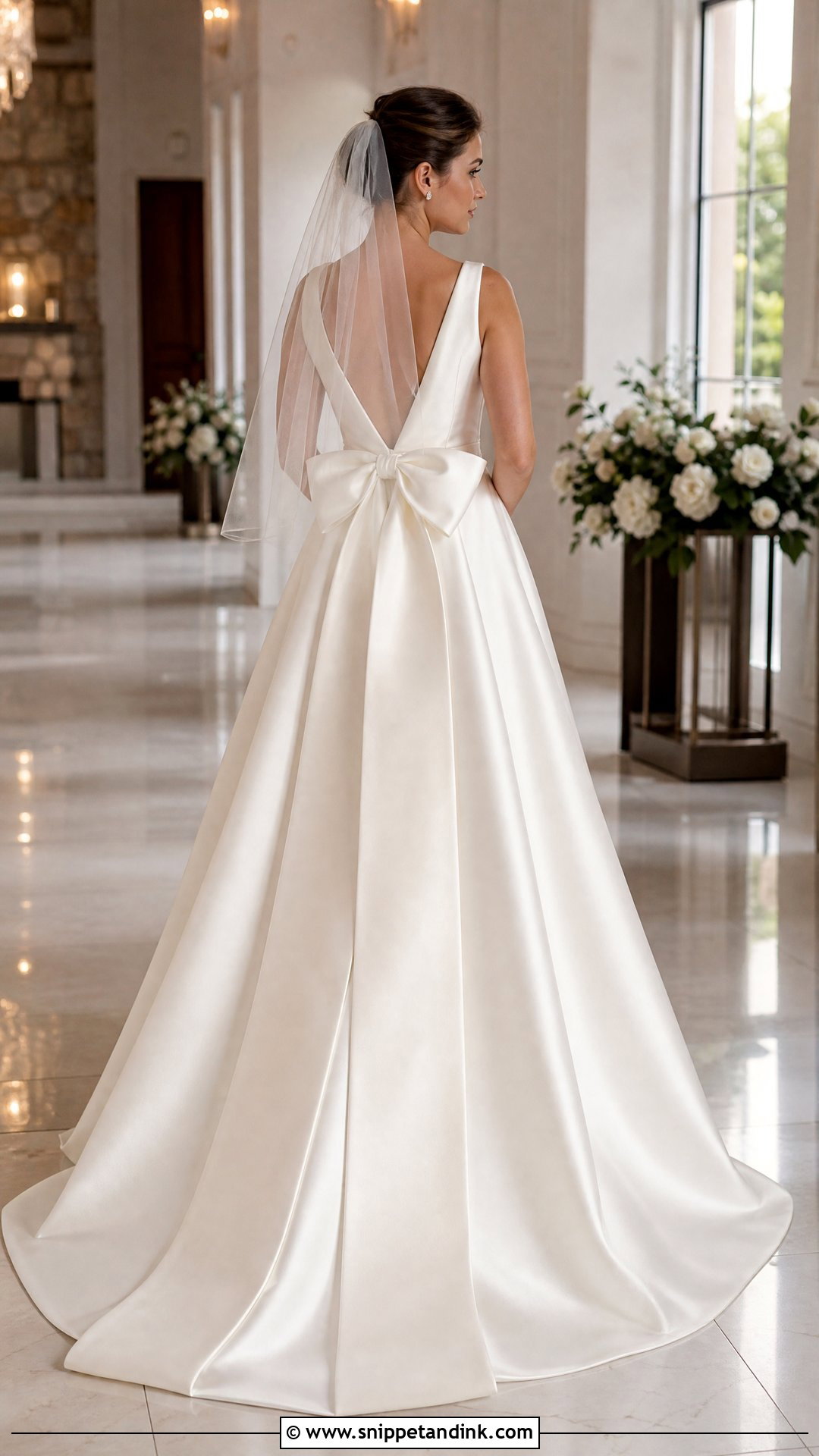
A bow back silk bridal dress turns a plain gown into something people remember from behind. Choose a structured mikado A-line with a detachable waist bow, or a satin column with long bow tails trailing over the train. Bows range from small accents to large removable statements. Everything else stays quiet: studs, classic pumps and a sheer veil set above or below the bow depending on its size, plus a neat updo so hair doesn’t cover it. I check where the bow sits when you’re seated; too low and you’ll be leaning back on a lump through dinner. Make it light, secure and detachable.
18. Pearl Detail Silk Bridal Dress
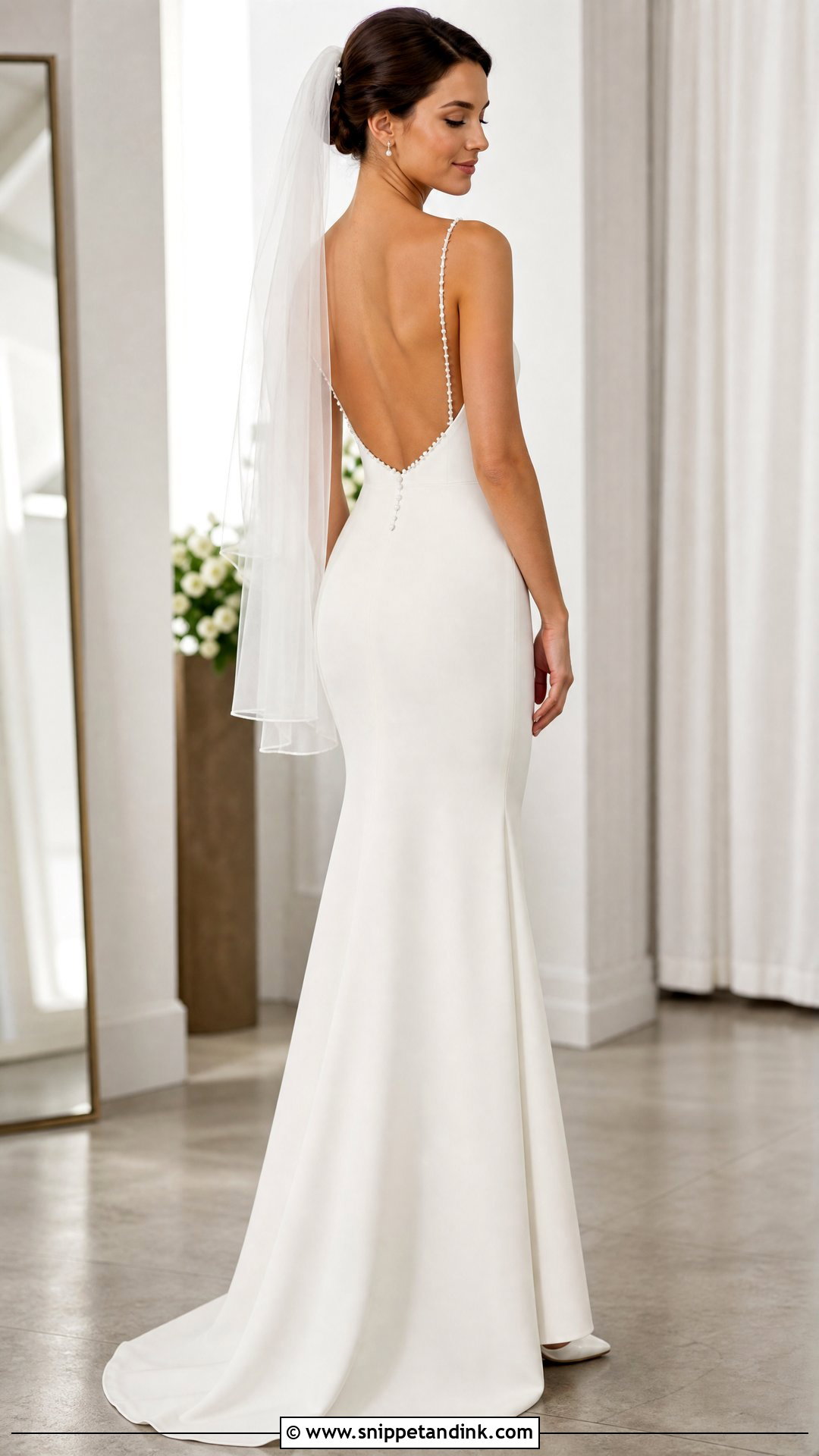
Pearls add gentle texture and keep silk’s simplicity intact, as long as they’re concentrated: neckline, straps, cuffs or an open back, not scattered over the whole dress. A fitted bodice and softly flared skirt give the detailing enough structure to sit flat. Plain satin pumps, tiny pearl studs, a clean-edged veil and a smooth bun with one pearl hairpin keep everything in proportion. Don’t pile bold accessories onto a pearl-covered gown. I run my hand over the beadwork at fittings, checking that pearls are firmly attached and won’t catch the veil, snag the silk or dig into your skin.
19. Tea Length Silk Bridal Dress
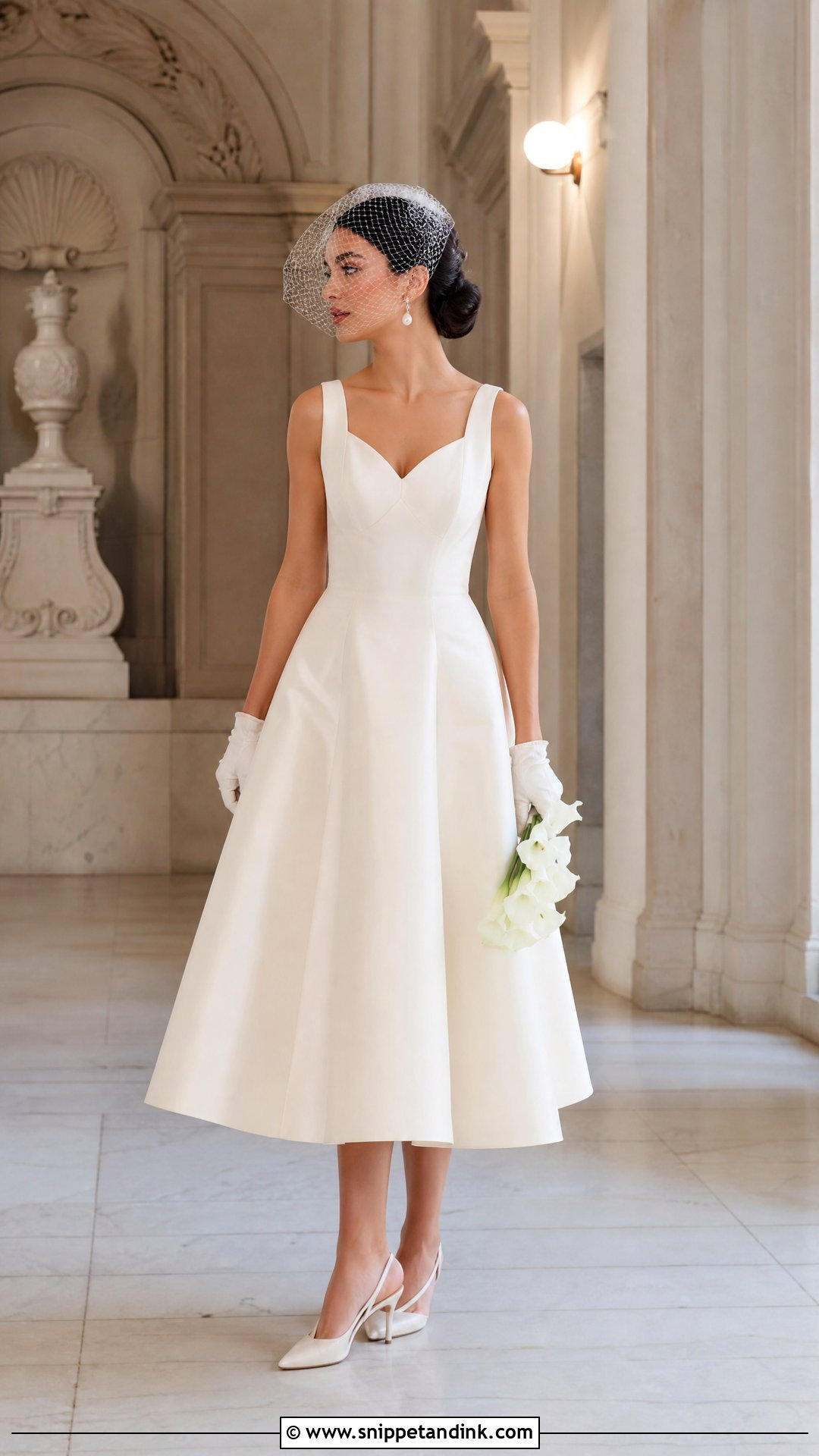
Tea length is cheerful and practical, and it suits a courthouse ceremony, daytime party or second look. Structured faille or mikado with a fitted bodice and a skirt ending between knee and ankle keeps its shape. Your shoes are on display, so choose slingbacks, elegant block heels or pointed flats with some thought. Short gloves, pearl earrings and a birdcage veil or small hair bow give a light vintage nod. A defined waist balances the shorter skirt, and discreet pockets are handy. Where the hem lands on your leg matters; I mark it with your actual shoes on, since even a small heel change moves it.


20. Silk Mini Bridal Dress
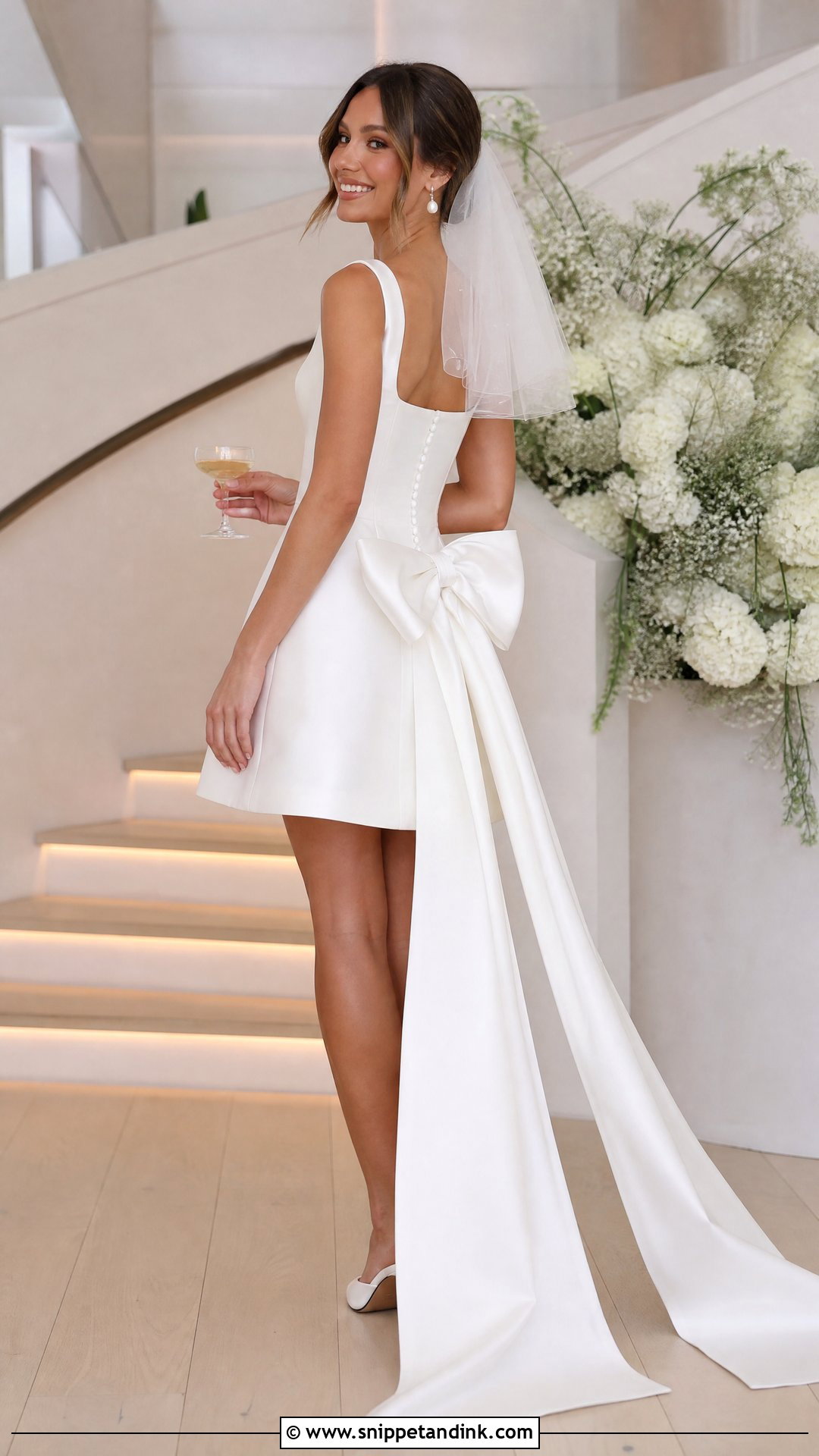
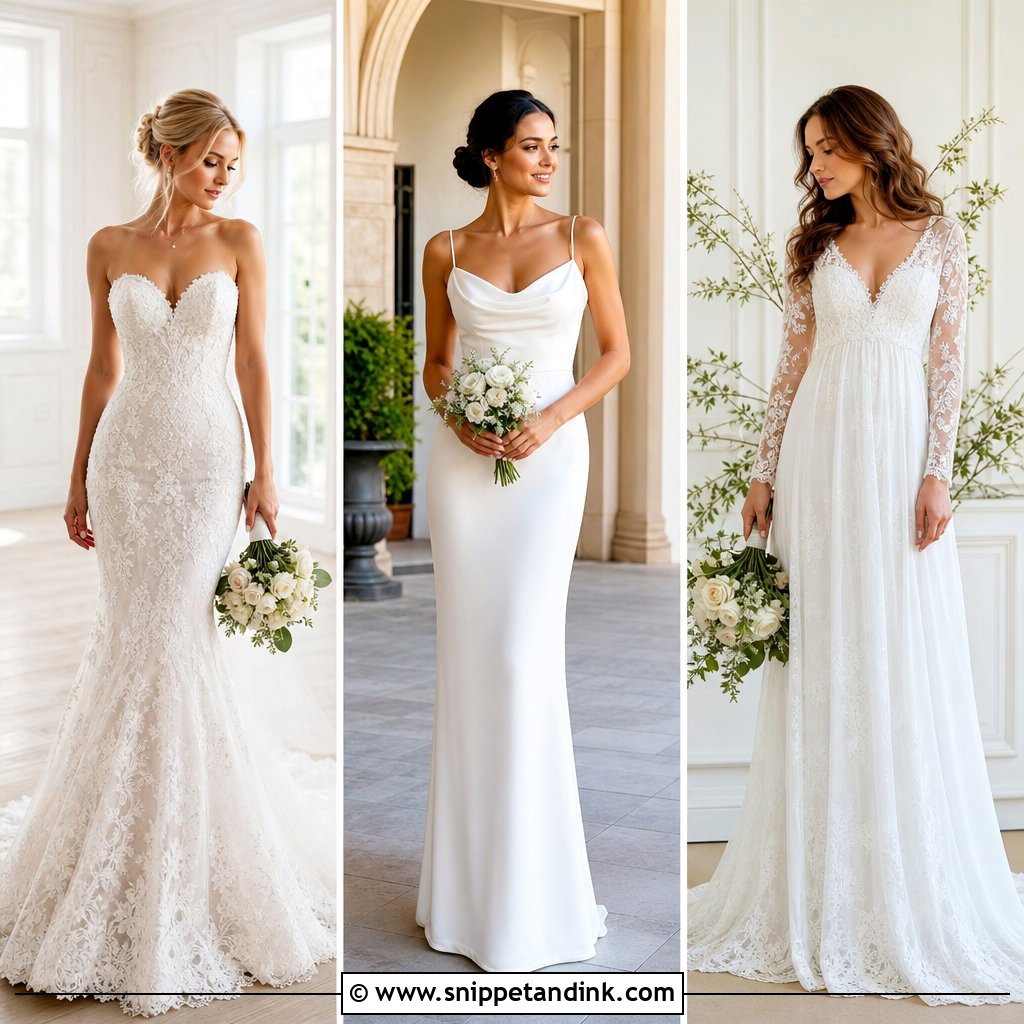
A silk mini is a confident pick for an elopement, a civil ceremony, a reception change or an after-party. A tailored shift, structured A-line or softly draped satin keeps it bridal rather than casual, and a square neckline, covered buttons, an oversized bow or a detachable train adds ceremony detail. Pearl earrings, pointed pumps or block-heel sandals and a short veil complete it, with sheer tights and a cropped silk jacket for cold weather. Plenty of brides now plan a second, shorter look to change the mood after the vows. Fitted minis ride up when you sit and dance, so test the hem both ways.
Bustling a Silk Train So It Survives the Dance Floor
Many of these gowns carry a train, and silk trains need a plan for the reception. Satin in particular shows every pull point, so the bustle is part of the design rather than an afterthought.
Over or under
An over-bustle lifts the train up onto hooks or buttons at the back of the skirt. It’s quick and suits structured mikado and taffeta. An under-bustle, often called a French bustle, tucks the train underneath with ribbon ties and keeps the outer surface smooth, which I prefer on fluid satin and crepe where hooks would leave little puckers.
Practise it before the day
Bring the person who will do it to your final fitting, ideally someone calm and not the bride’s busiest relative, and have the seamstress show them twice. Colour-coded or numbered ribbons help a lot. Ask for a spare set of hooks or a few safety pins in the emergency kit, since a heavy silk train can pop a single attachment during an energetic dance.
Finally, sit in the bustled gown. A bustle that’s comfortable standing can put a hard knot of fabric right where you sit down.
Start With How the Silk Moves
Everything starts with how the silk behaves. Satin moves and shines, crepe is soft and understated, and mikado holds a sculpted shape. Once fabric and silhouette are settled, build the outfit around the gown’s strongest feature: plain dresses can carry considered earrings, good shoes and a clean veil, while bows, corsetry or pearls need fewer extras. Test the whole look at fittings, from underwear and shoes to outer layers and accessories. Above all, pick the dress you can walk, sit and celebrate in while still feeling like yourself, because that’s the one that suits the setting and the day.
You'll Like These Ideas:


Leave a Reply