
White wedding dresses now cover far more ground than one classic gown. In a single appointment I’ll see a bride move from a bias-cut satin slip to a lace A-line, a boned corset, a short reception dress and a caped crepe column, and the one she buys is rarely the one she walked in planning to try. What usually decides it is practical: the venue floor, the season, how long you’ll be on your feet, and whether you can sit through dinner without the bodice digging in. Below are 25 white dresses, each with the fitting notes I’d give you in the room, from how the fabric behaves to the alterations that make or break it.

Pure White, Diamond White and Ivory Look Nothing Alike in Daylight
Most bridal fabrics come in at least three whites, and they behave very differently next to skin. Optic or pure white is crisp and slightly blue; diamond white (sometimes called silk white) has a faint warmth; ivory leans cream. Under boutique spotlights they can look almost identical, which is why I always walk a bride to the nearest window before she decides.
Hold the bodice fabric up under your chin with no makeup on. If pure white makes your skin look grey or sallow, a step warmer usually fixes it. Very fair skin with pink undertones can go either way, while olive and deeper skin tones often glow in pure white because of the contrast.
Matching everything else to the dress
- Ask the shop for a small fabric swatch and carry it when you buy the veil, shoes and any shawl.
- Never put a bright white veil over an ivory gown; next to it, the dress looks dingy rather than warm.
- Satin and tulle in the same named shade can still read differently, because satin reflects light and tulle lets skin show through.
- Check your shade in a phone photo with flash, since very bright whites can lose detail in flash pictures.
1. White Lace A Line Bride Dress
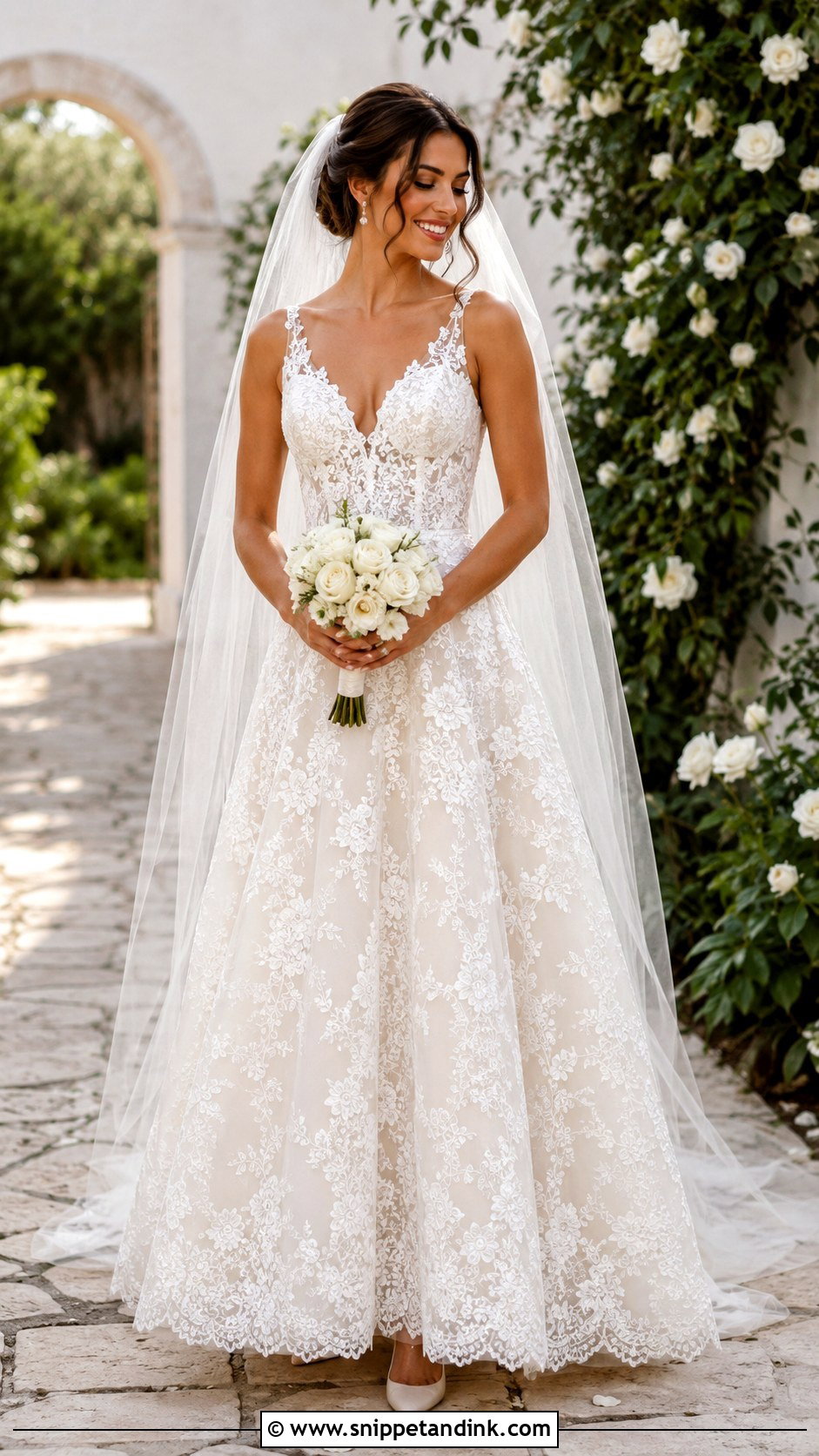
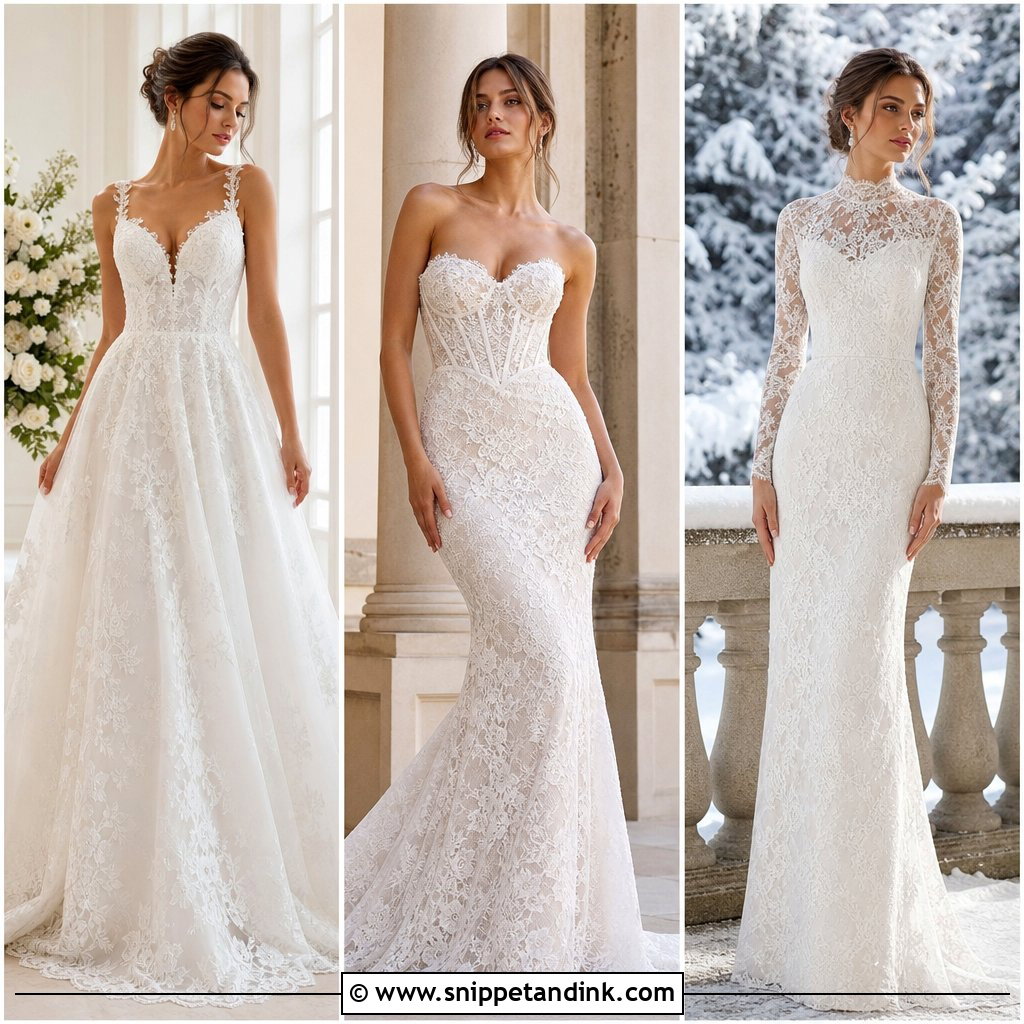
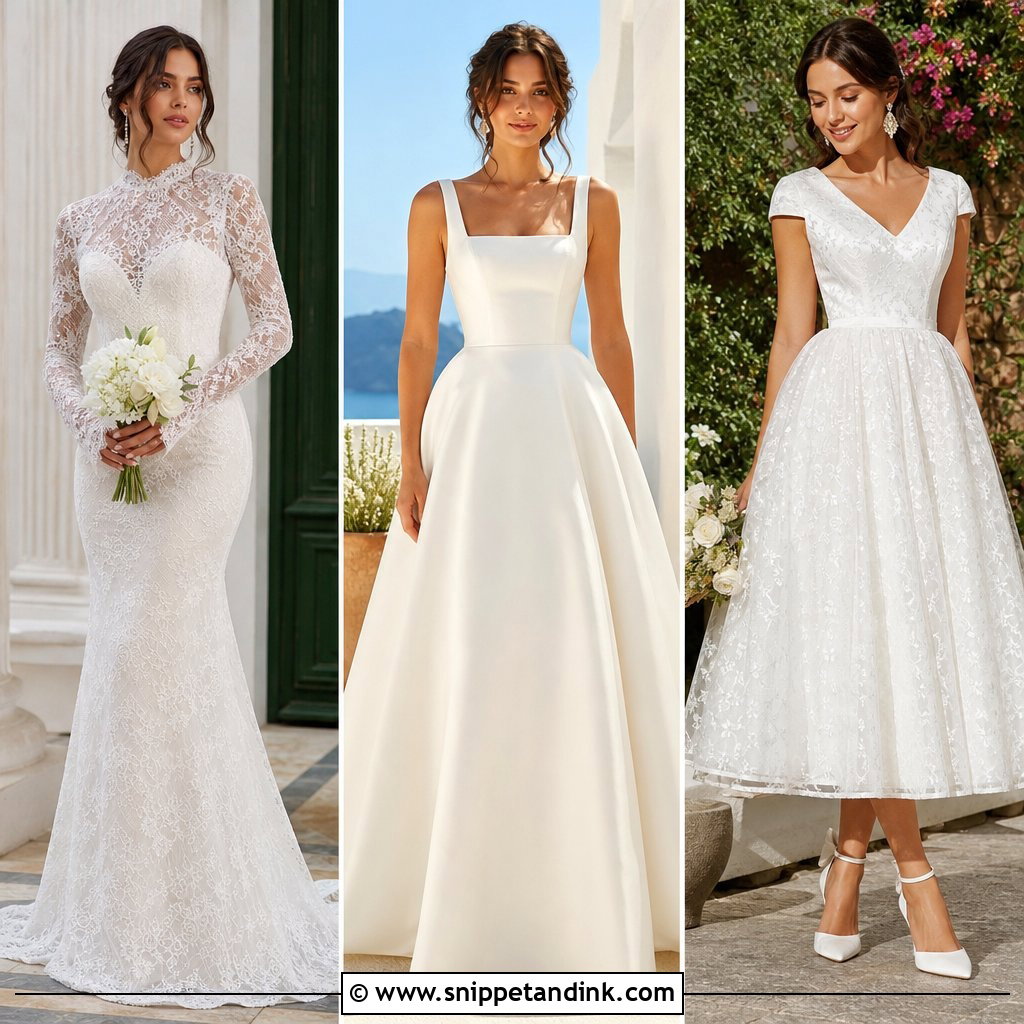
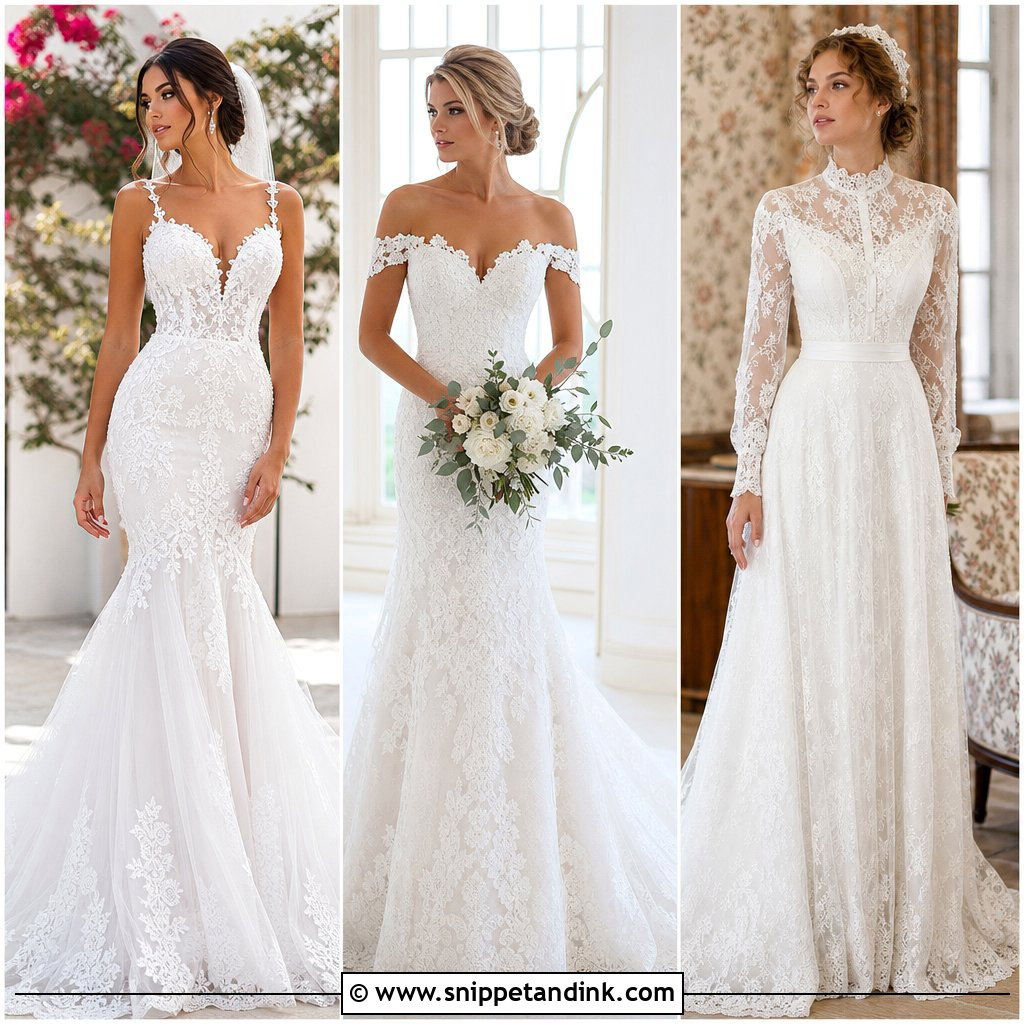
Lace A-lines suit more bodies than almost any other cut, because the skirt releases from the natural waist and never asks the hips to fill anything out. The lace itself sets the mood: fine Chantilly reads soft and suits a garden, heavier corded or re-embroidered lace holds its own in a ballroom, and sheer lace sleeves give coverage without bulk. When the bodice is taken in, I check where the motifs land, since a good seamstress cuts around the flowers rather than through them. Pearl drops, a tulle veil and pointed ivory heels are plenty, and a simple bouquet of white roses, ranunculus or baby’s breath keeps attention on the lace.
2. White Satin Slip Bride Dress
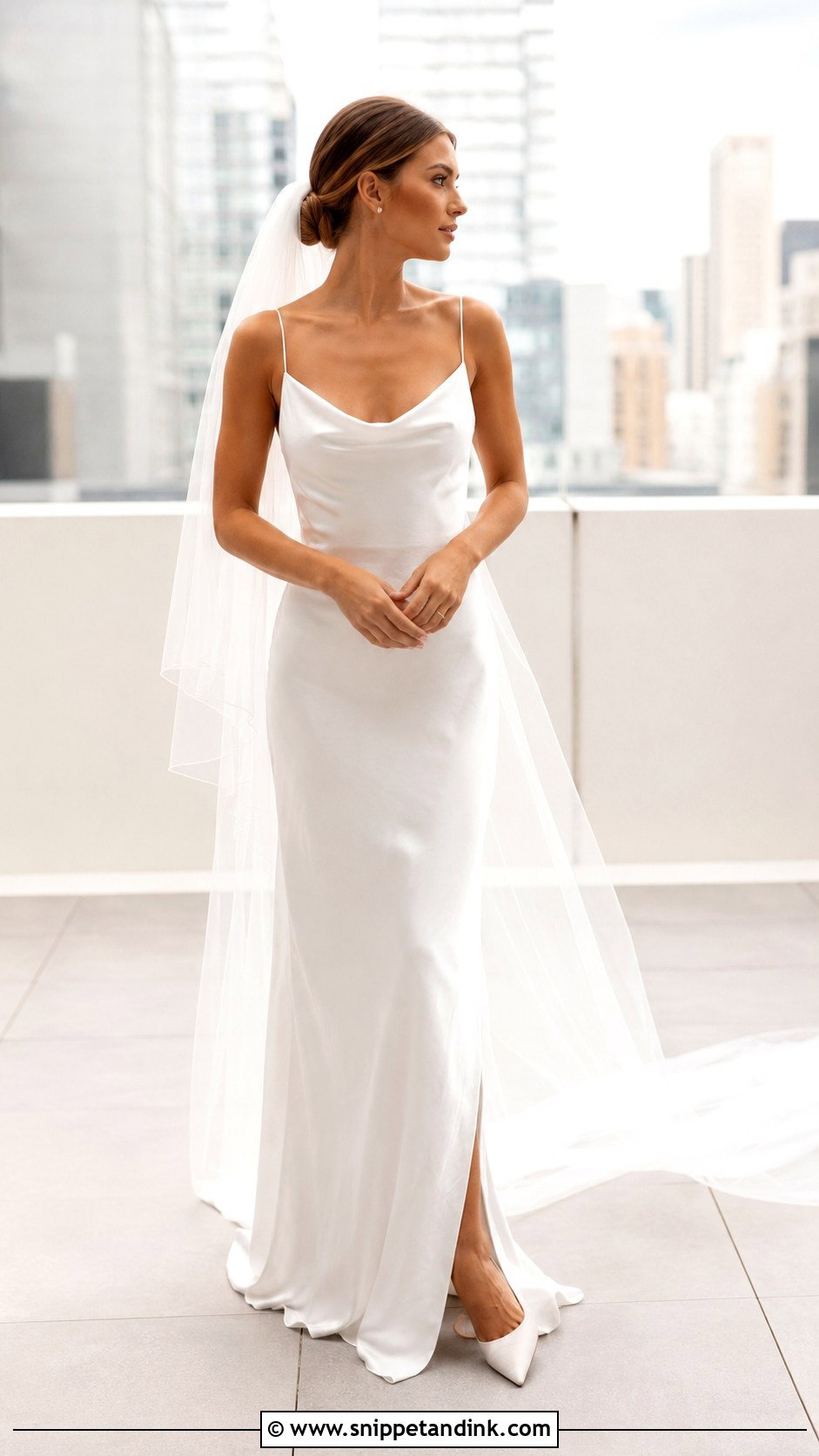
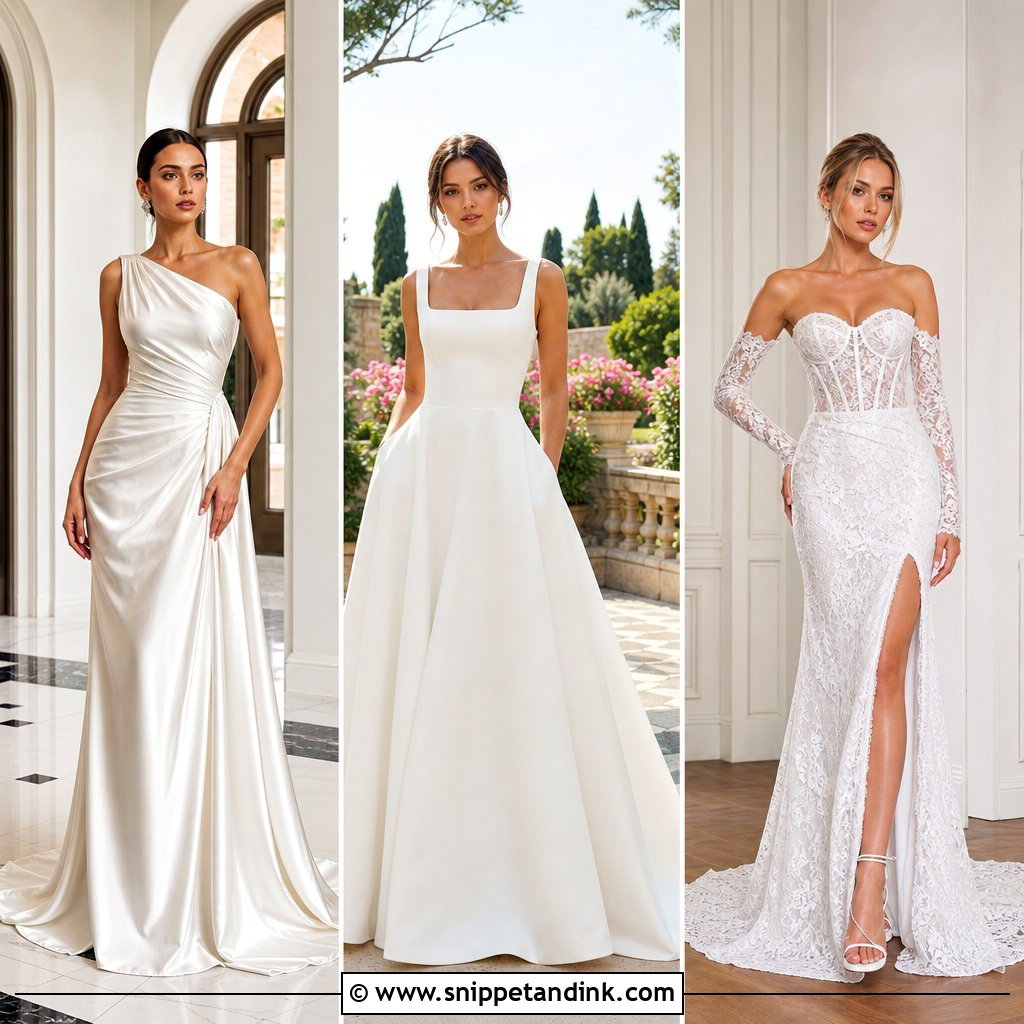
A satin slip is the least forgiving dress on this list, and I say that as someone who loves them. Bias-cut satin skims every line underneath, so the fit should glide rather than grip, and invisible, no-line underwear or a built-in cup matters more here than with any other gown. A cowl neck softens the front; a square or scoop neck looks sharper. Sleek white heels, a low bun, small diamond studs and a long sheer veil are all it needs for a city venue, a rooftop or a destination ceremony. Bring a satin shawl or a tailored coat for portraits once the sun drops.
3. White Corset Bride Dress
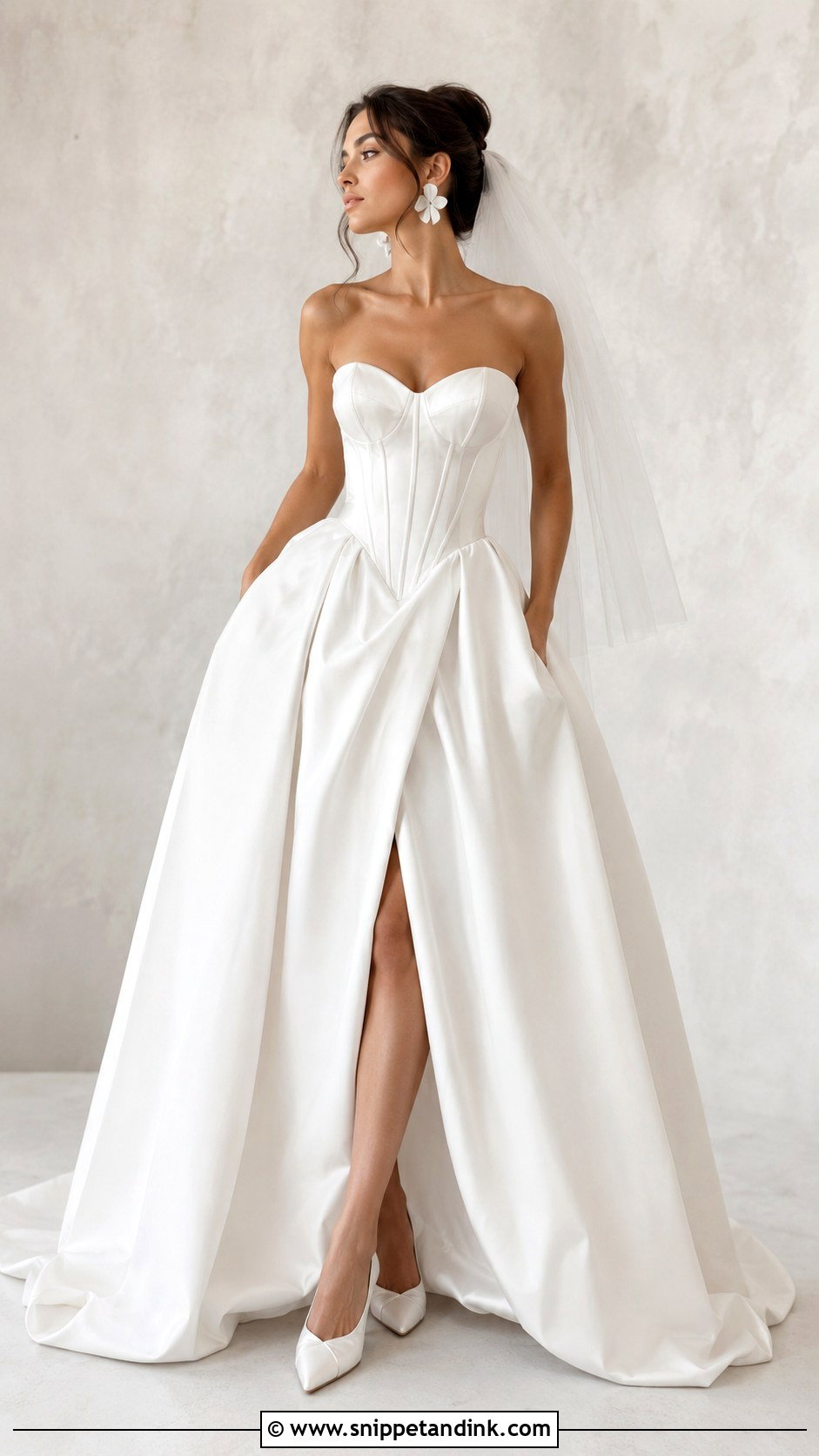
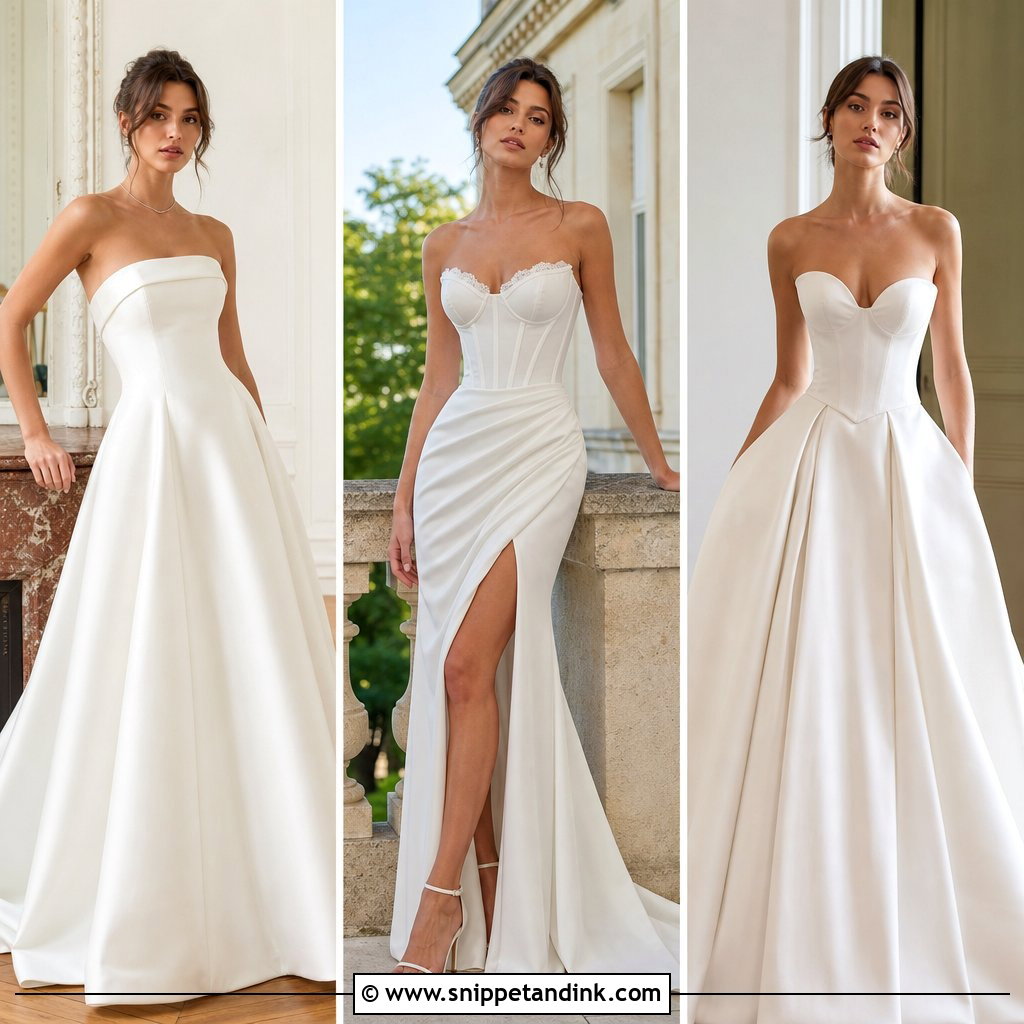
Boning does the work in a corset gown, defining the waist and supporting the bust so you can often skip a separate bra. The skirt below can be full, slim or softly draped; tulle or organza keeps it romantic, while smooth mikado or satin keeps it modern. My first test at a fitting is simple. Sit down, then reach forward as if picking up a glass. If the top edge gapes or the lower edge digs into your hips, the boning needs adjusting now, not on the morning. Keep the veil clean and the heels simple, add sculptural earrings, and let the bodice be the one thing people notice.
4. White Ball Gown Bride Dress
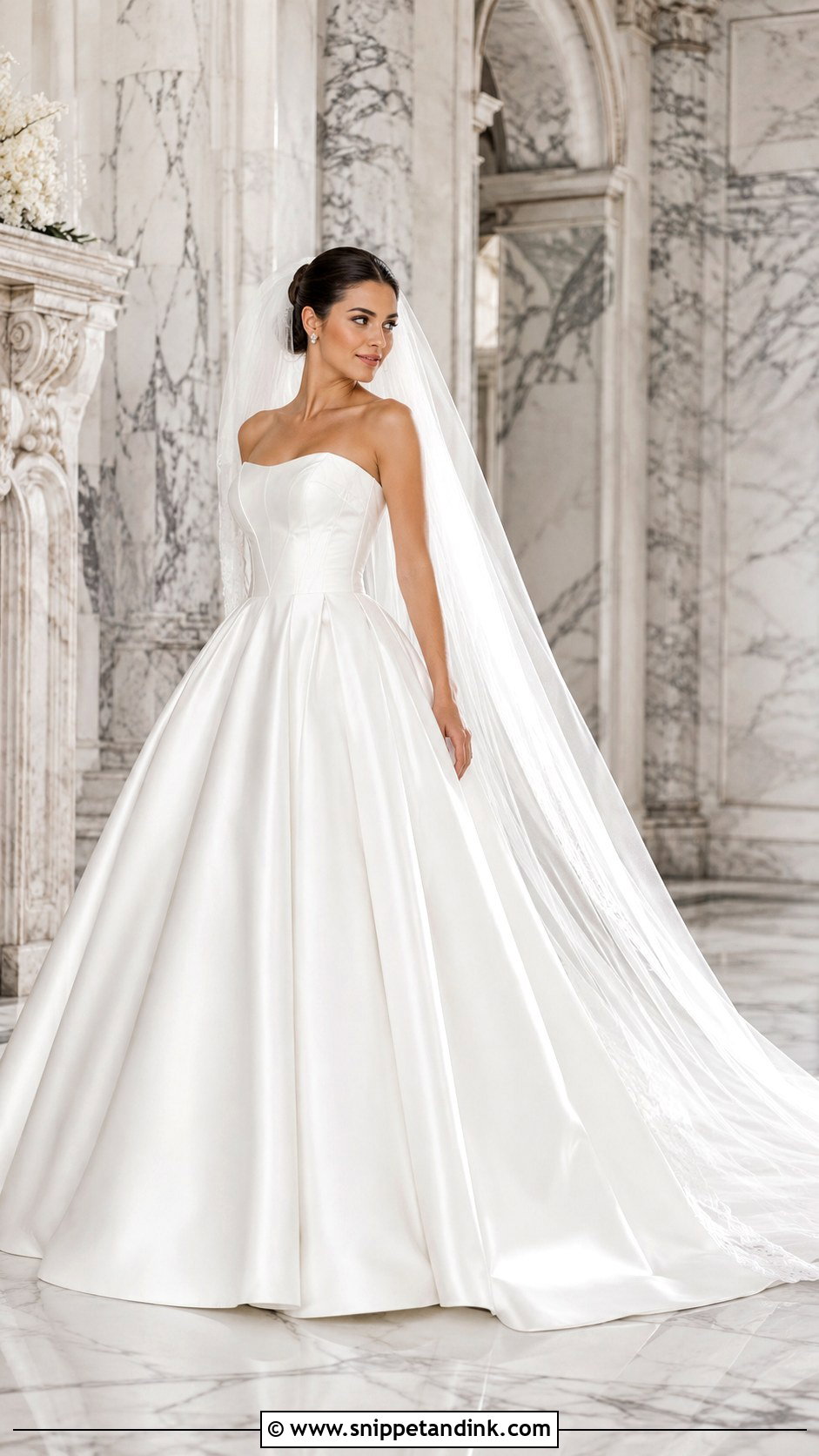
Ball gowns are built for the entrance, and the full skirt makes the waist look smaller by contrast. Smooth satin gives a regal finish; layered tulle is lighter and softer. Strapless is the traditional neckline, though long sleeves suit a winter ceremony or a church that expects coverage. The part brides forget is logistics: a skirt this wide needs room in the aisle, in the car and through old doorways, so measure if the venue is historic. Hide comfortable platform heels underneath, add a cathedral veil and sparkling studs, and save this one for grand halls and formal receptions where the volume has space.
5. White Mermaid Bride Dress
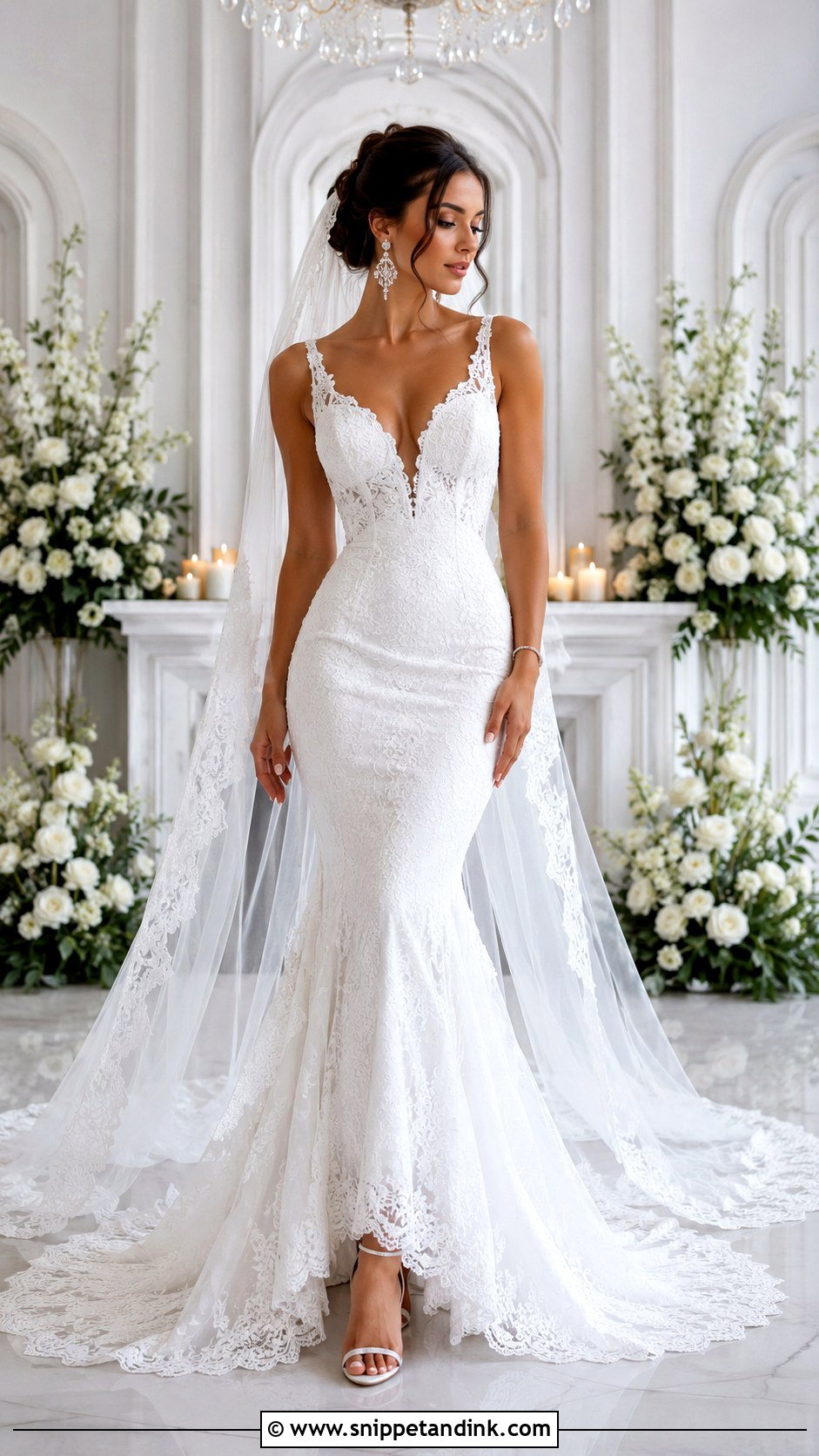
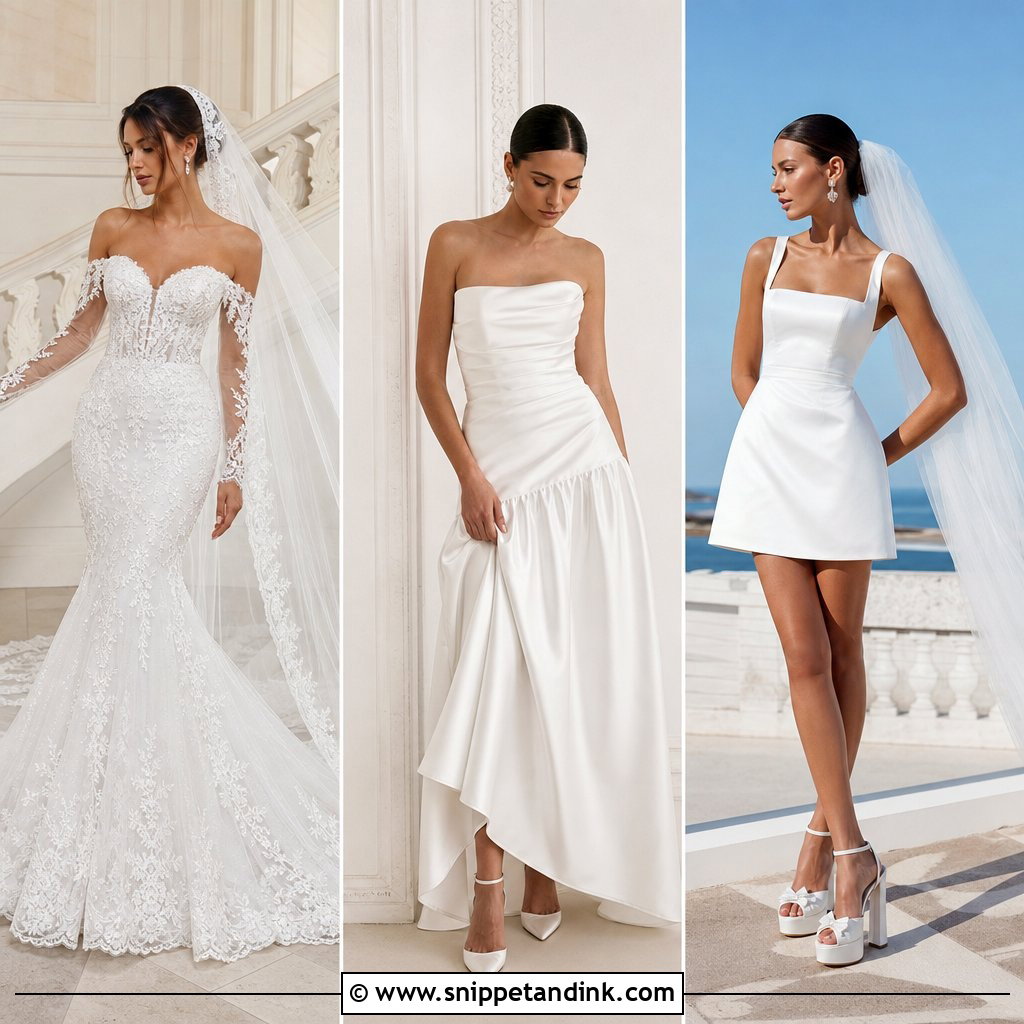
Mermaid gowns hug the bodice, waist and hips before flaring at or below the knee, which gives the strongest hourglass of any cut. Lace softens it, crepe sharpens it, and beading suits an evening reception. The flare point decides how wearable it is. Set it too low and you’ll shuffle all night, so I have brides walk the length of the boutique and climb a step before we pin anything. A long veil, statement earrings and strappy white heels finish it for a formal hotel or a polished indoor ceremony.
6. White Off Shoulder Bride Dress
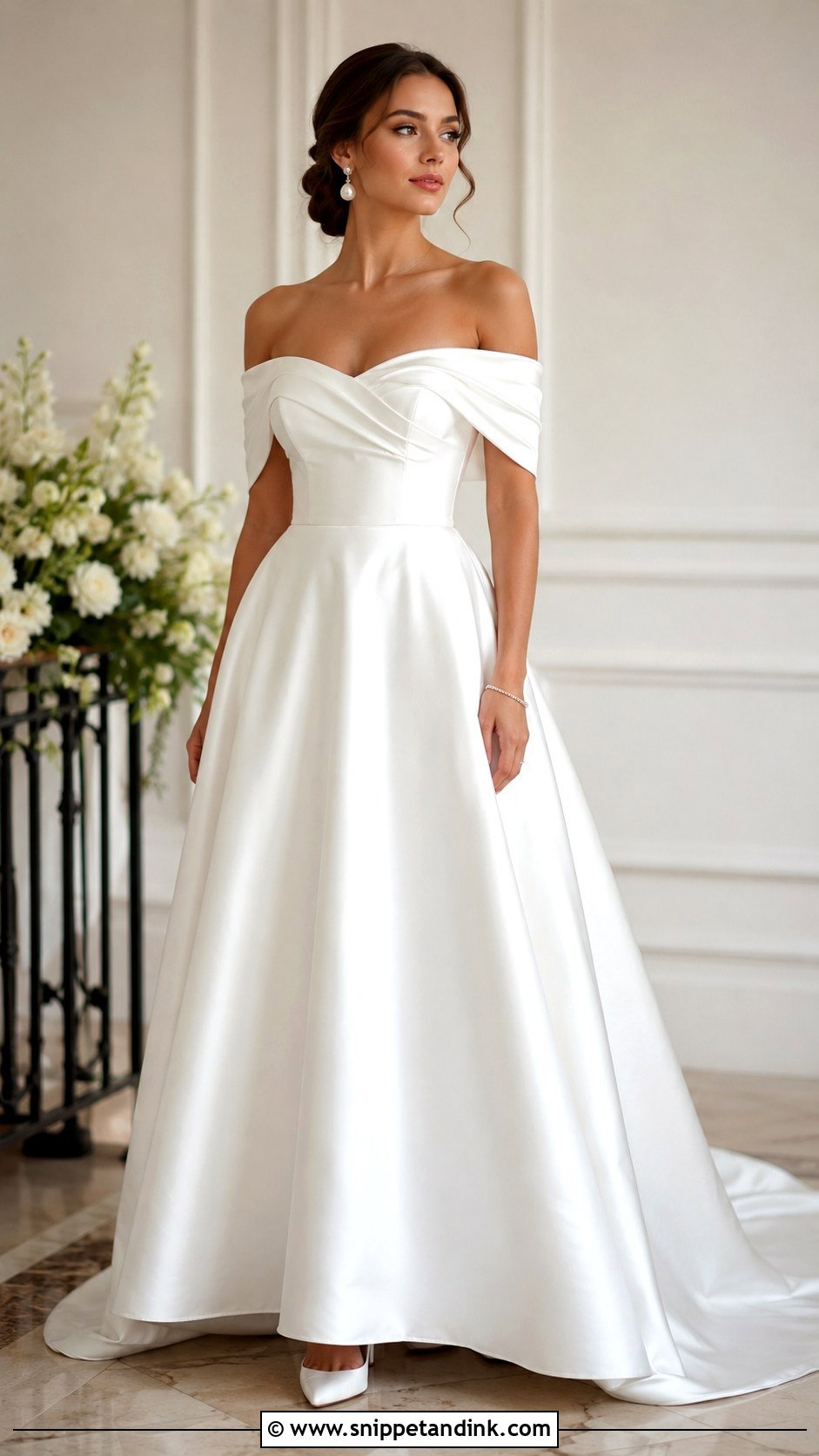
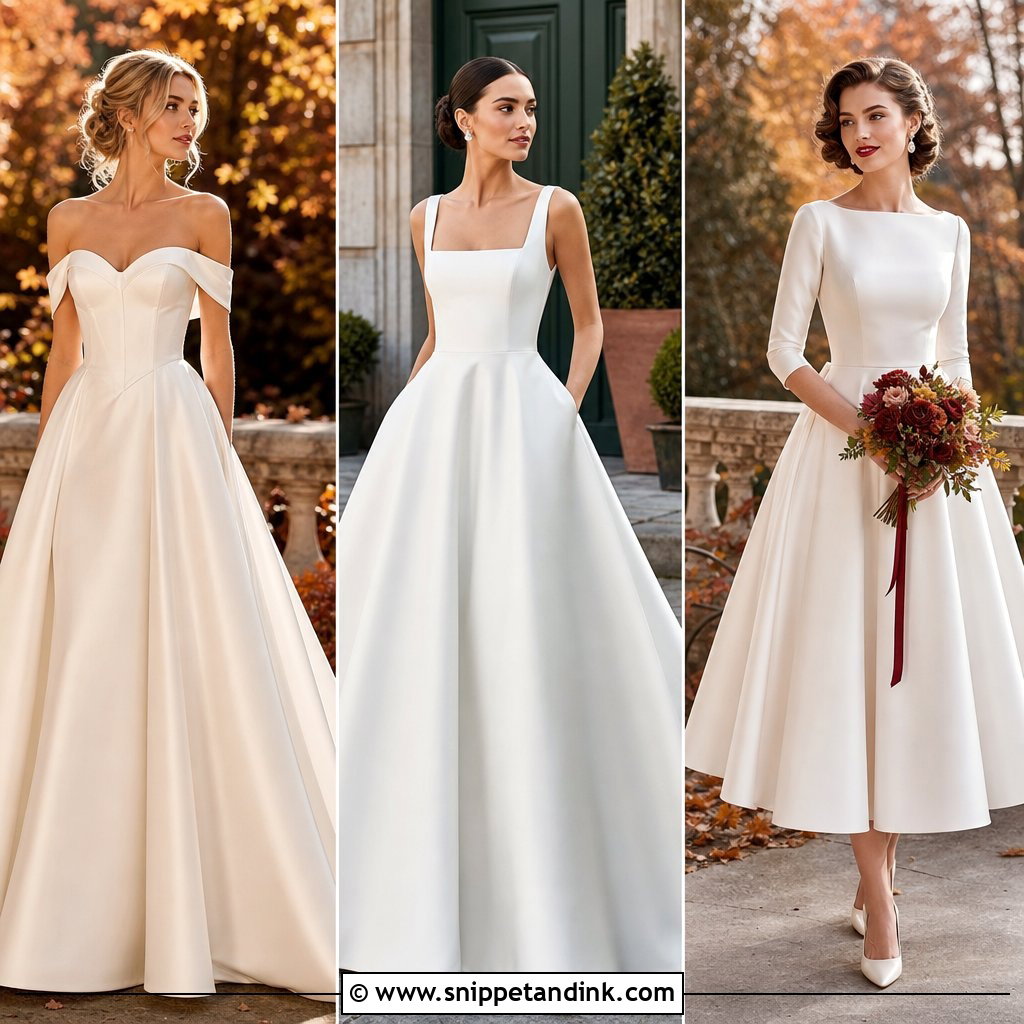
An off-shoulder neckline frames the collarbones and shoulders, which is why portrait photographers tend to like it. A folded band across a fitted bodice looks clean; lace sleeves sitting off the shoulder feel softer. The catch is lift. Every hug and every raised arm on the dance floor pulls the band upward, so ask your seamstress about discreet silicone grip tape or hidden elastic inside it. Wear a chignon, pearl earrings and a fine necklace if the neckline leaves room, with pointed pumps or low block heels. You keep the upper arms covered while the neckline stays open.
7. White Long Sleeve Bride Dress
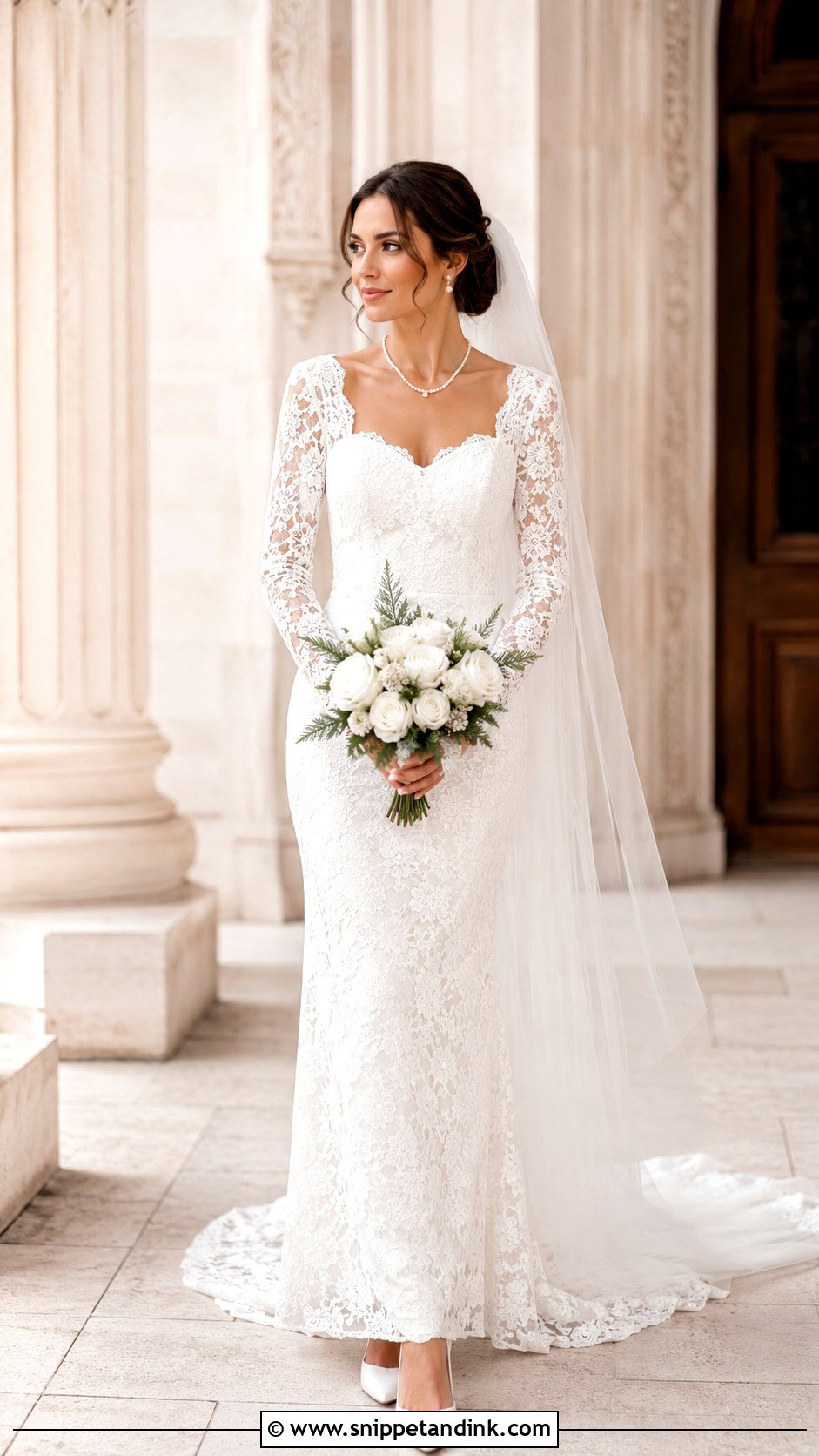
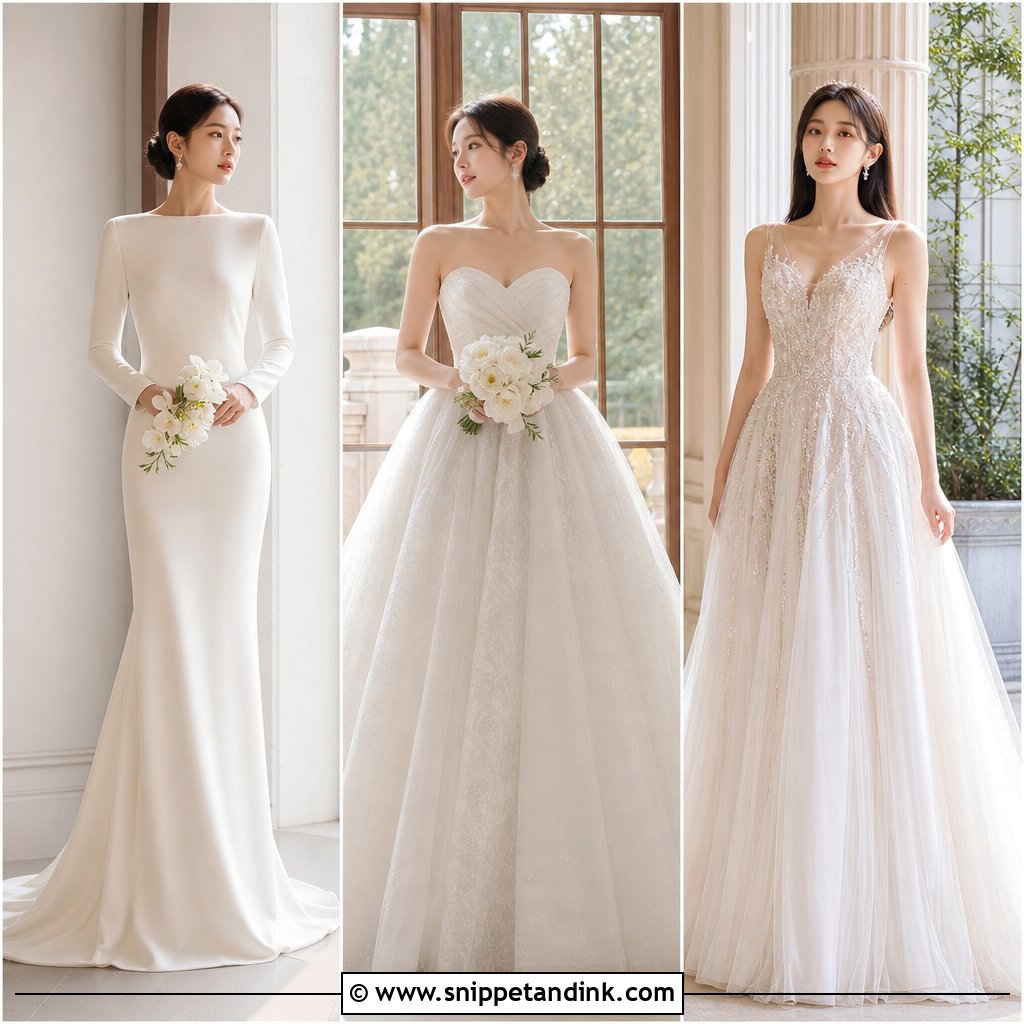
Long sleeves earn their place at fall, winter and early spring weddings, though sheer lace versions breathe well enough for warmer months. Fitted crepe sleeves look sleek; puff sleeves add volume at the shoulder. Sleeve fit is where I spend the most time with these dresses, because a sleeve that sits perfectly with your arms down can pull tight across the back the moment you hug someone. Lift your arms at every fitting. Keep the veil simple, the heels classic and the jewelry understated so the sleeves aren’t fighting other details; the fabric and neckline then decide whether the dress reads modest, regal or modern.
8. White Drop Waist Bride Dress
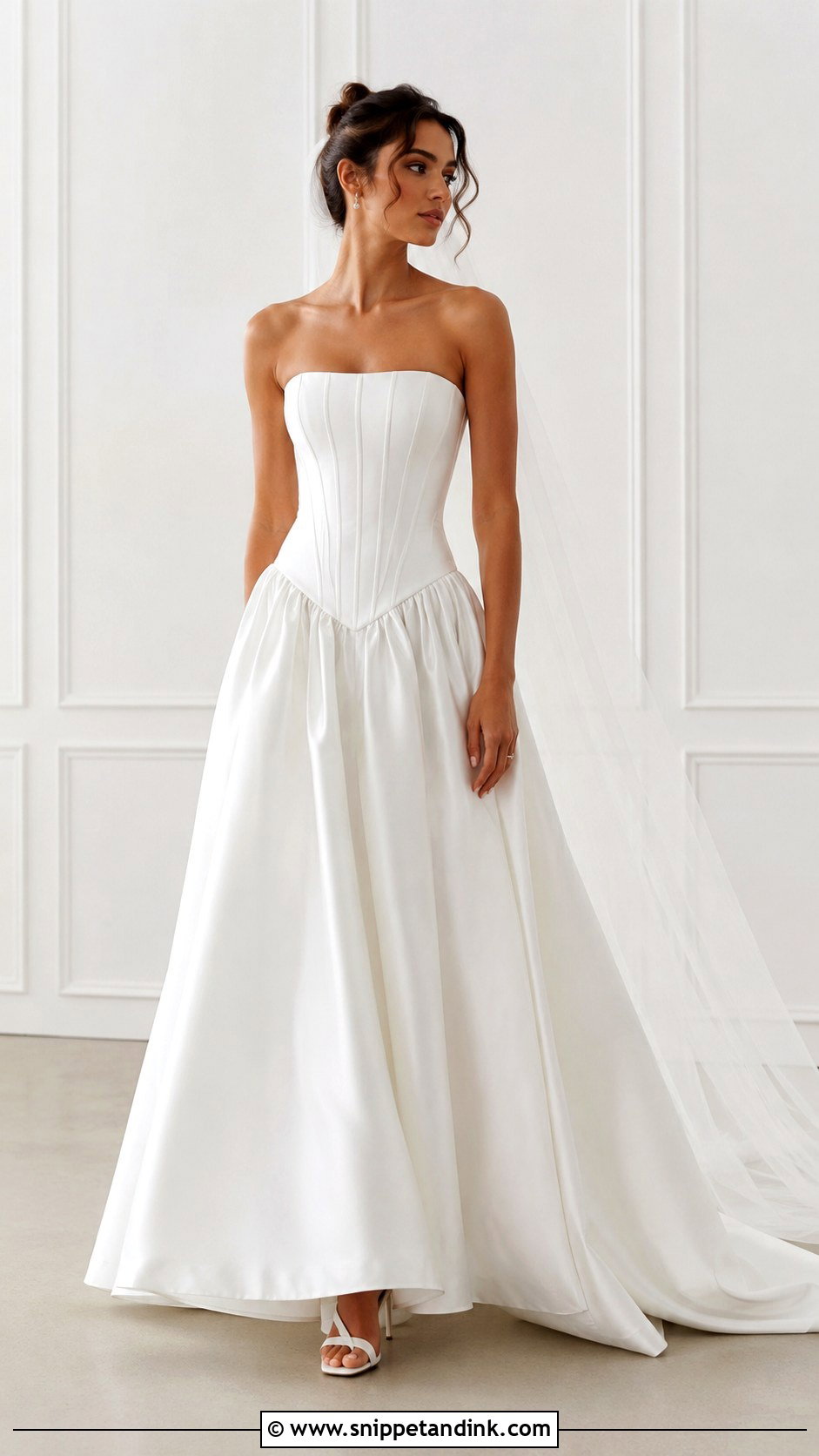
This is the shape for a bride who wants something more fashion-led. The waistline sits lower than on a traditional gown, lengthening the torso and letting the skirt start from the hip. It pairs naturally with corset bodices, basque waists, soft draping and full skirts, and holds its line best in satin, mikado or structured taffeta. If you’re short-waisted, try it before ruling it in or out. A dropped seam can rebalance a short torso or make the legs look shorter, depending entirely on where it lands on you. Clean hair and minimal jewelry keep the silhouette sharp, and it nods to vintage without looking like a costume.
9. White Square Neck Bride Dress
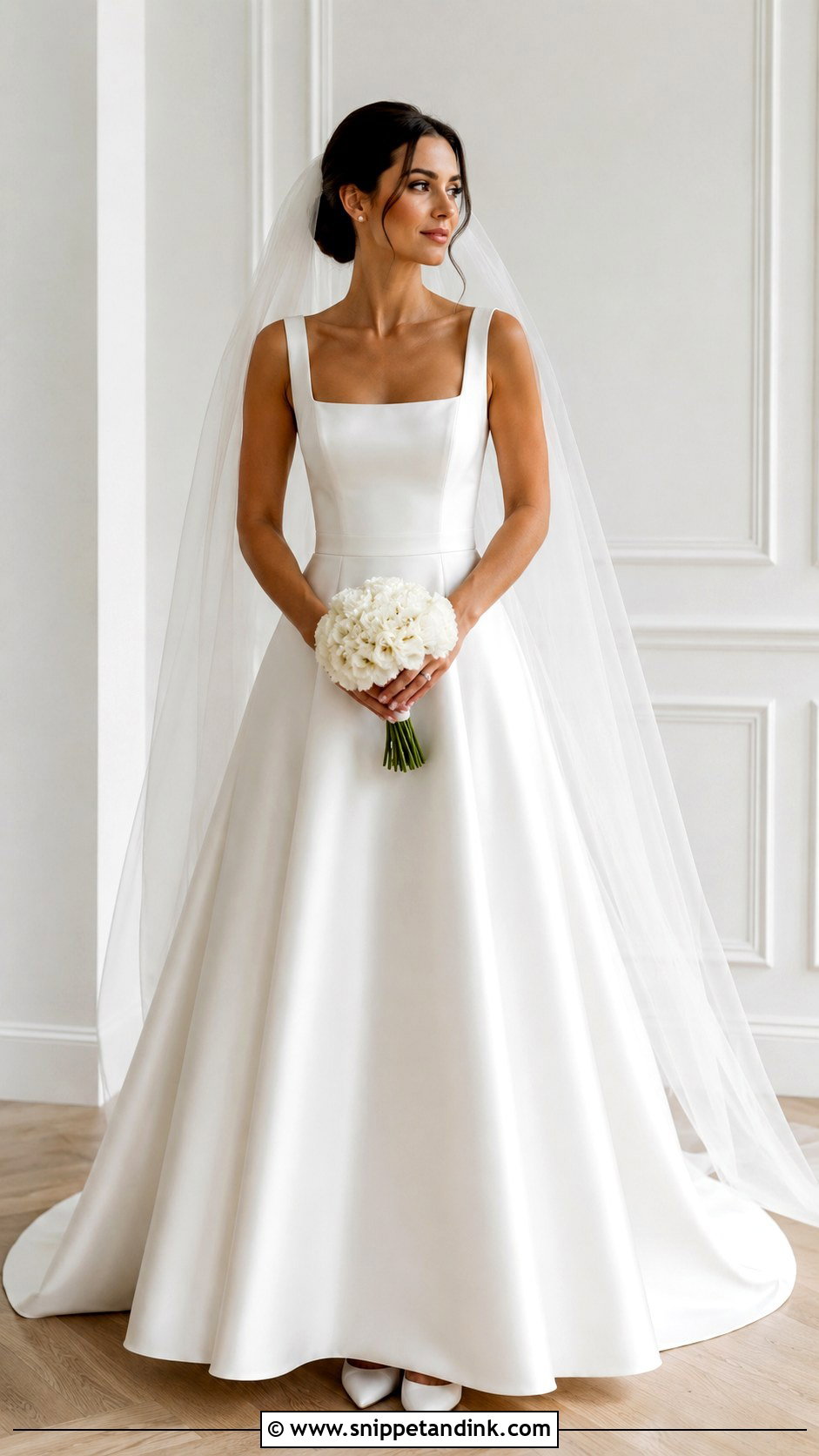
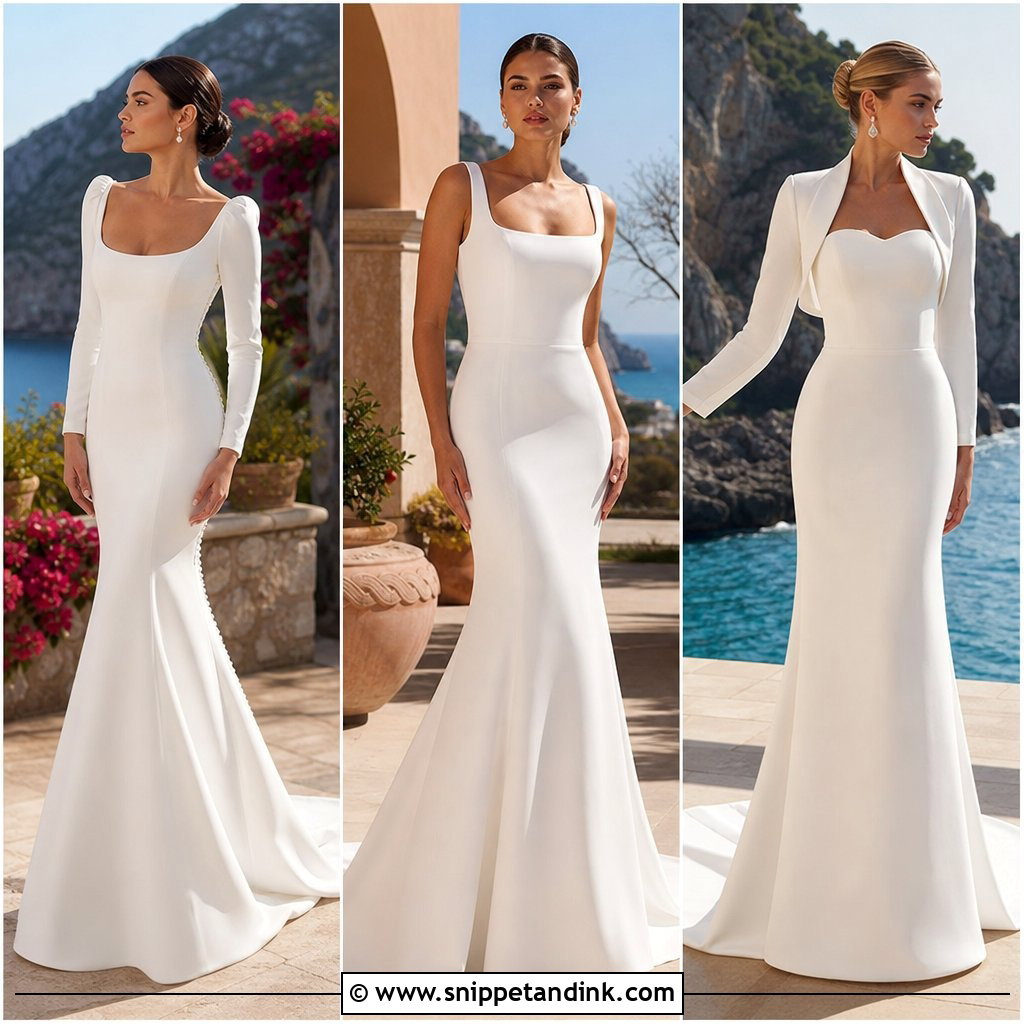
Square necklines give the upper body a little architecture and work with both slim and full skirts. In satin they look modern, in lace softer. They’re also my usual suggestion for brides who don’t trust a strapless bodice, since the wider straps carry some of the support and you won’t spend the reception tugging the top up. Pearl studs, a smooth veil and closed-toe heels finish it. At the final fitting, check the corners of the neckline: they should sit flat against the chest, not lift away when you breathe in.
10. White Halter Bride Dress
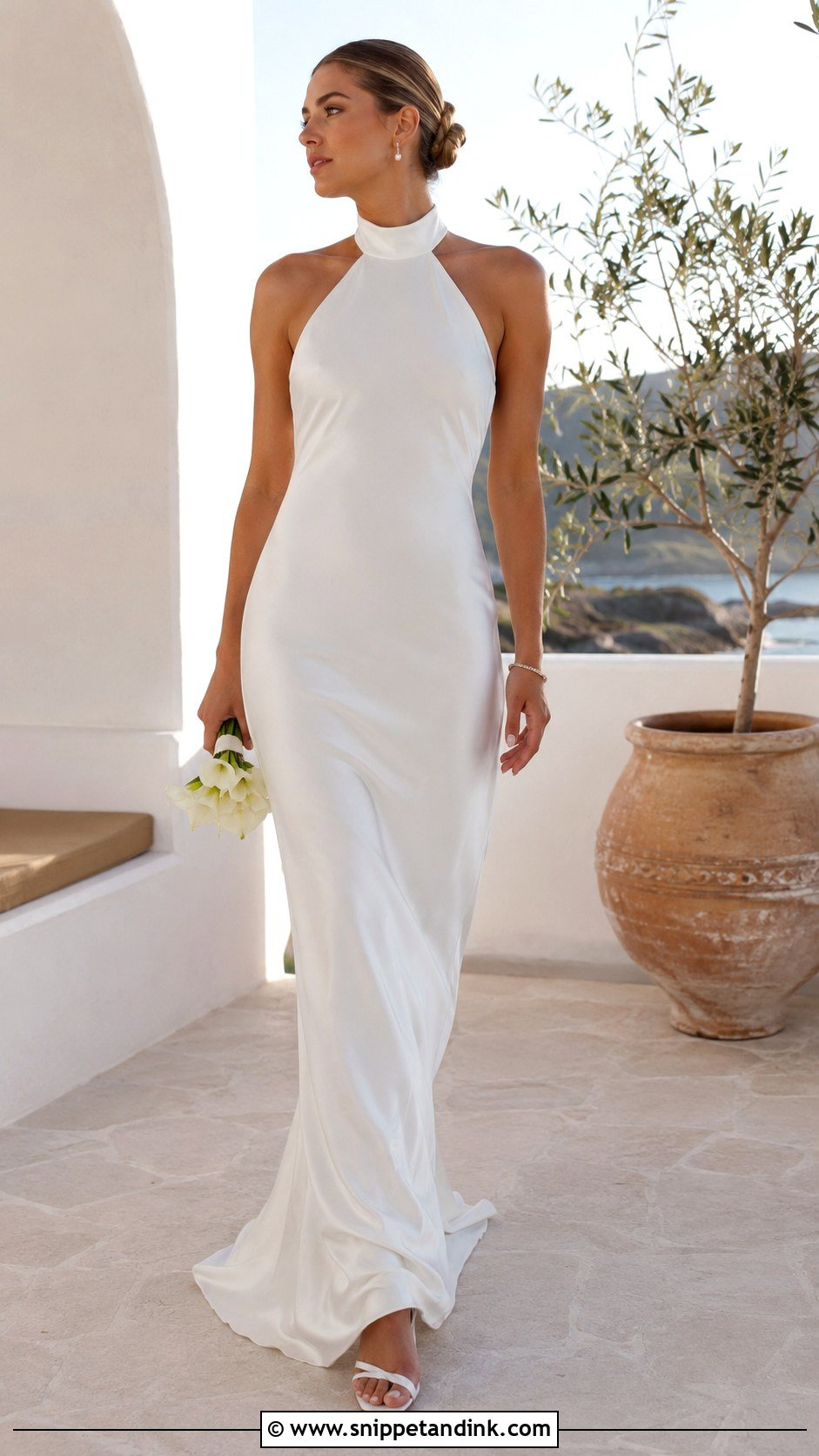
Halters draw the eye up to the shoulders and make the whole outfit read taller. A satin halter gown looks minimal, while lace adds bridal texture. Because the neckline is already doing the decorating, skip the necklace and wear an updo, small earrings and a clean bracelet with white heeled sandals or pointed pumps. One honest warning: all the weight hangs from the back of the neck, so a heavily beaded halter can ache by the speeches. I keep this cut for lighter fabrics, destination weddings, receptions and modern ceremonies.
11. White Tea Length Bride Dress
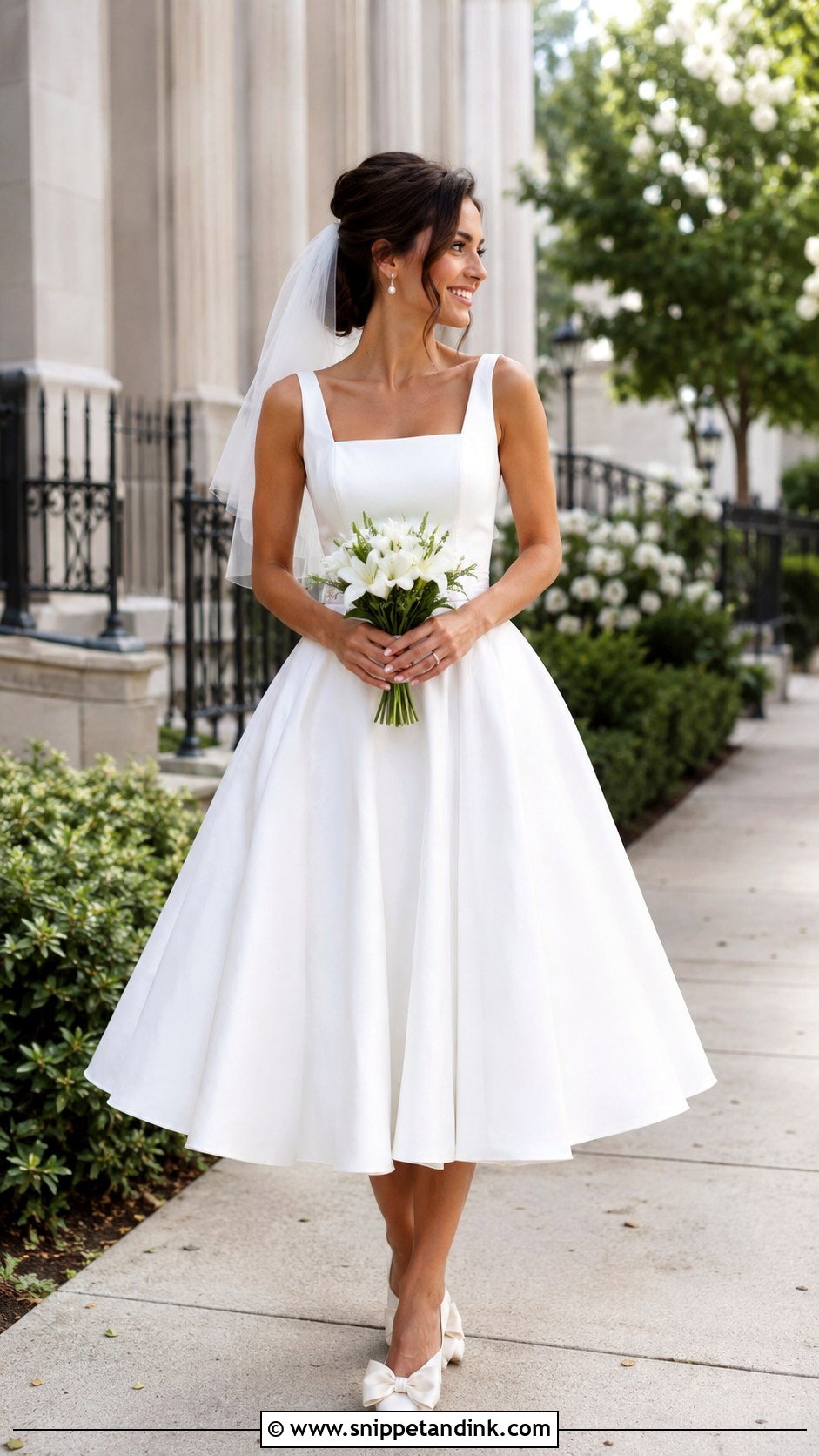
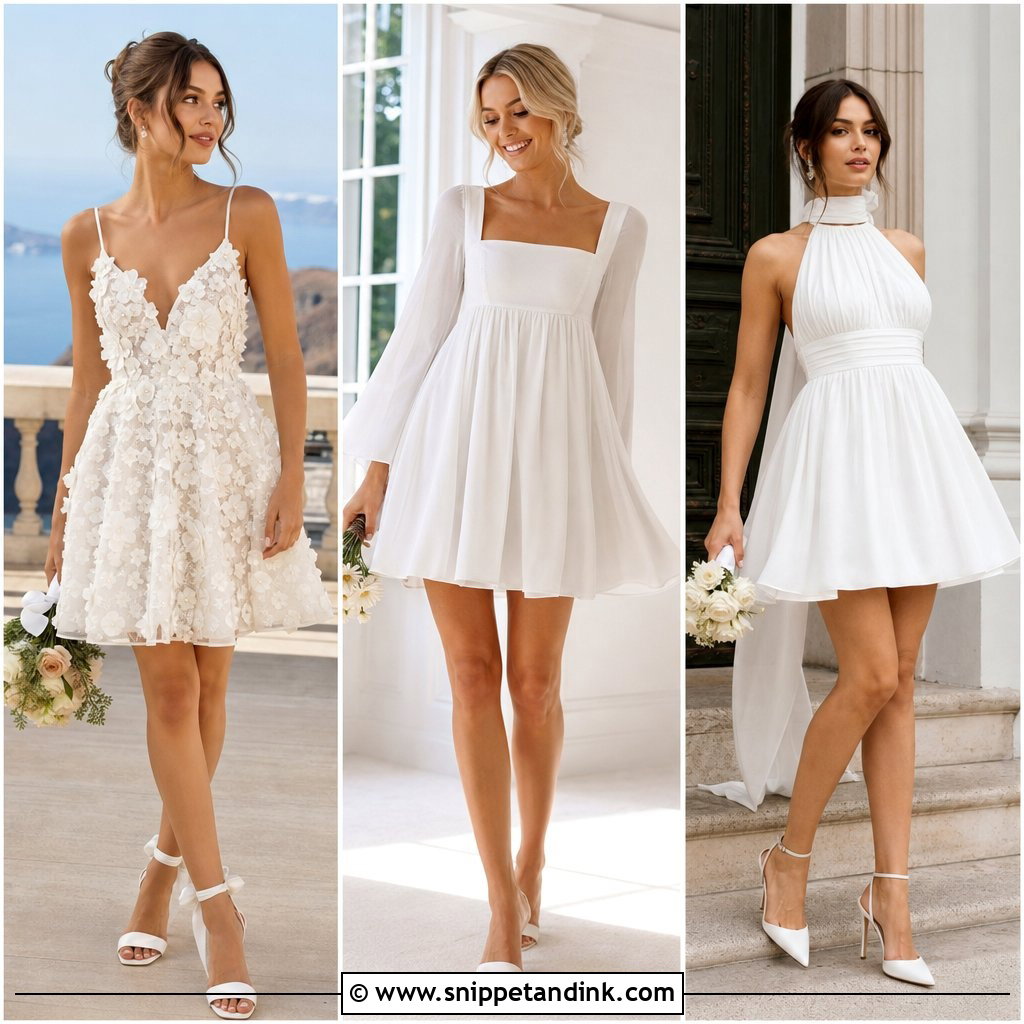
Tea length falls between the knee and ankle, so your shoes are on show and moving is easy. A full skirt nods to the fifties; clean satin feels current. Bow heels, pearl earrings and a short veil suit it, and it works for courthouse weddings, garden ceremonies, brunch receptions and second looks. With the hem this visible, bring your actual wedding shoes to the hem fitting. Even a small change in heel height moves the hemline noticeably against the calf, and that’s the line everyone sees.
12. White Mini Bride Dress
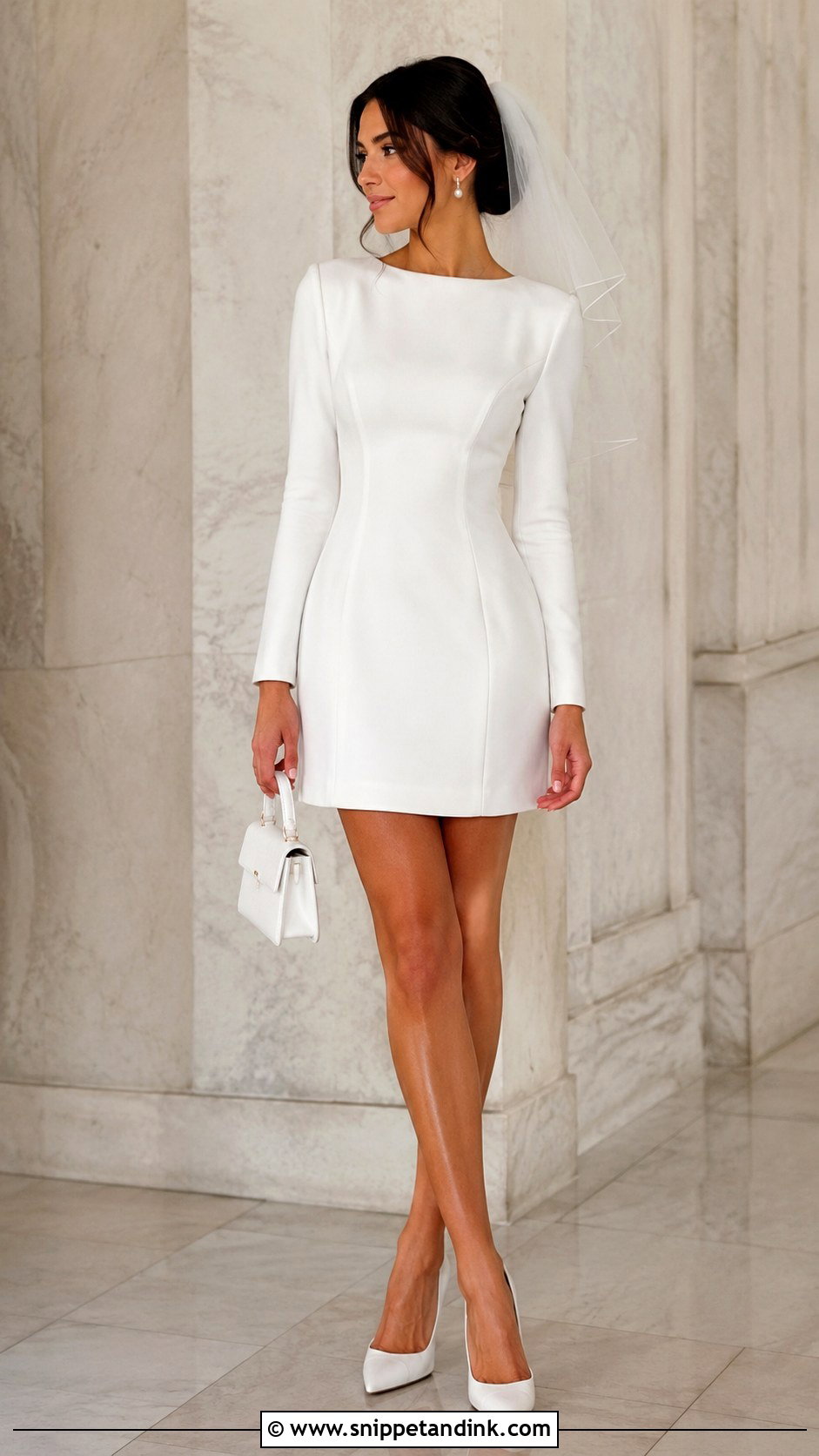
A short white dress works for a courthouse ceremony, a bridal shower, a reception change or the after-party. Crepe gives structure, satin gives shine and lace adds romance, while long sleeves balance a short hem and strapless feels bolder. With this much leg on show, the quality of the fabric shows more, not less, so I look closely at how the hem is finished and whether the lining peeks out when you sit. White pumps, sheer tights if the weather calls for them, pearl earrings and a small structured bag complete it. Add a short veil or a hair bow if you want it to read unmistakably bridal.
13. White Bride Dress With Bow
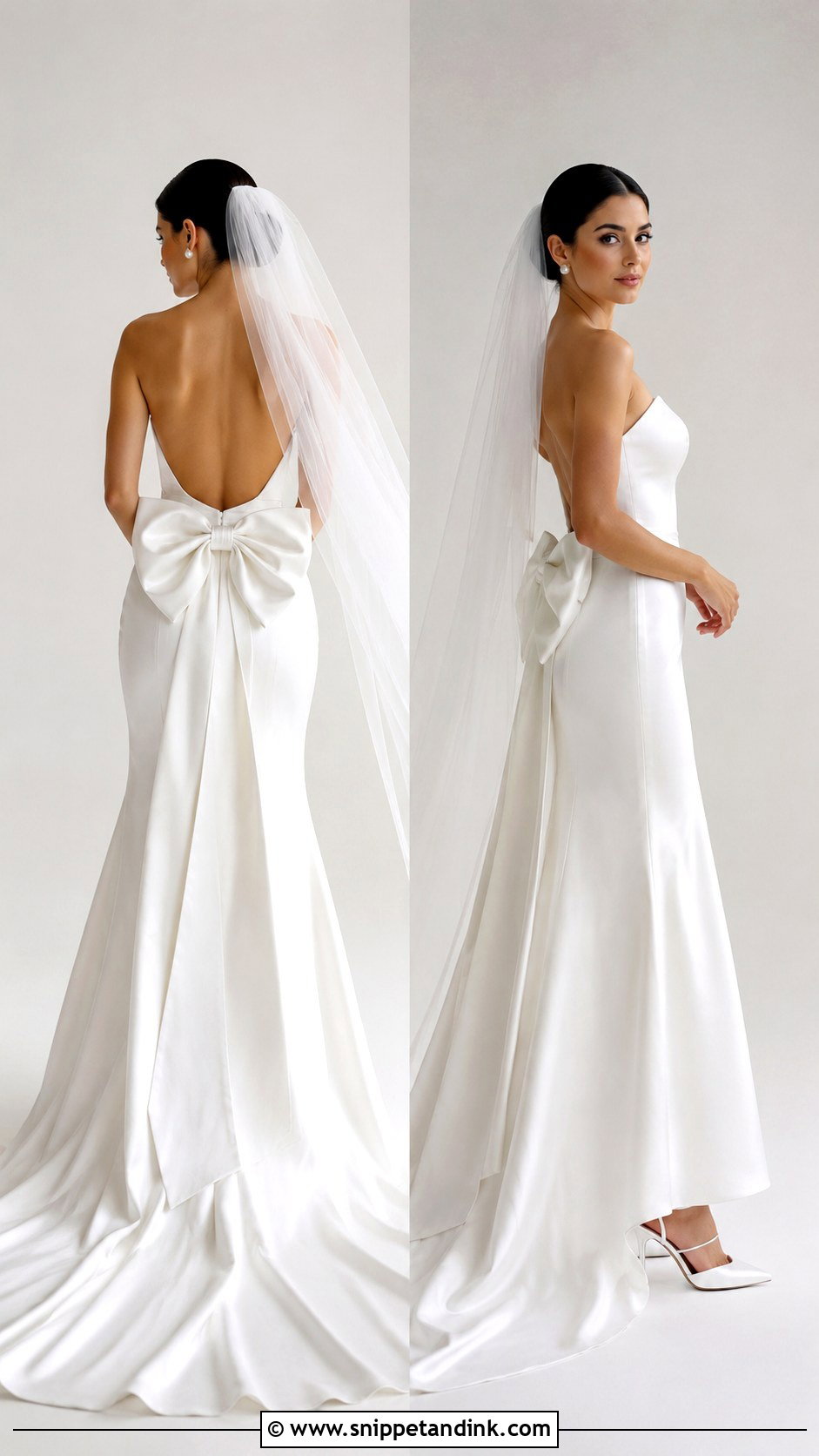
A bow gives a plain gown a focal point without heavy embellishment. A large back bow is for the aisle walk and every shot taken from behind; a small shoulder bow is quieter; a bow at the waist defines your shape. The fabric has to hold it. Mikado, satin, organza and taffeta keep a crisp loop, whereas soft crepe or chiffon bows tend to wilt by evening. If the bow sits at the back, sit in a chair at your fitting, because a big one can crush against the seat right through dinner. Pearl studs, satin heels and a smooth veil are enough.
14. White Pearl Bride Dress
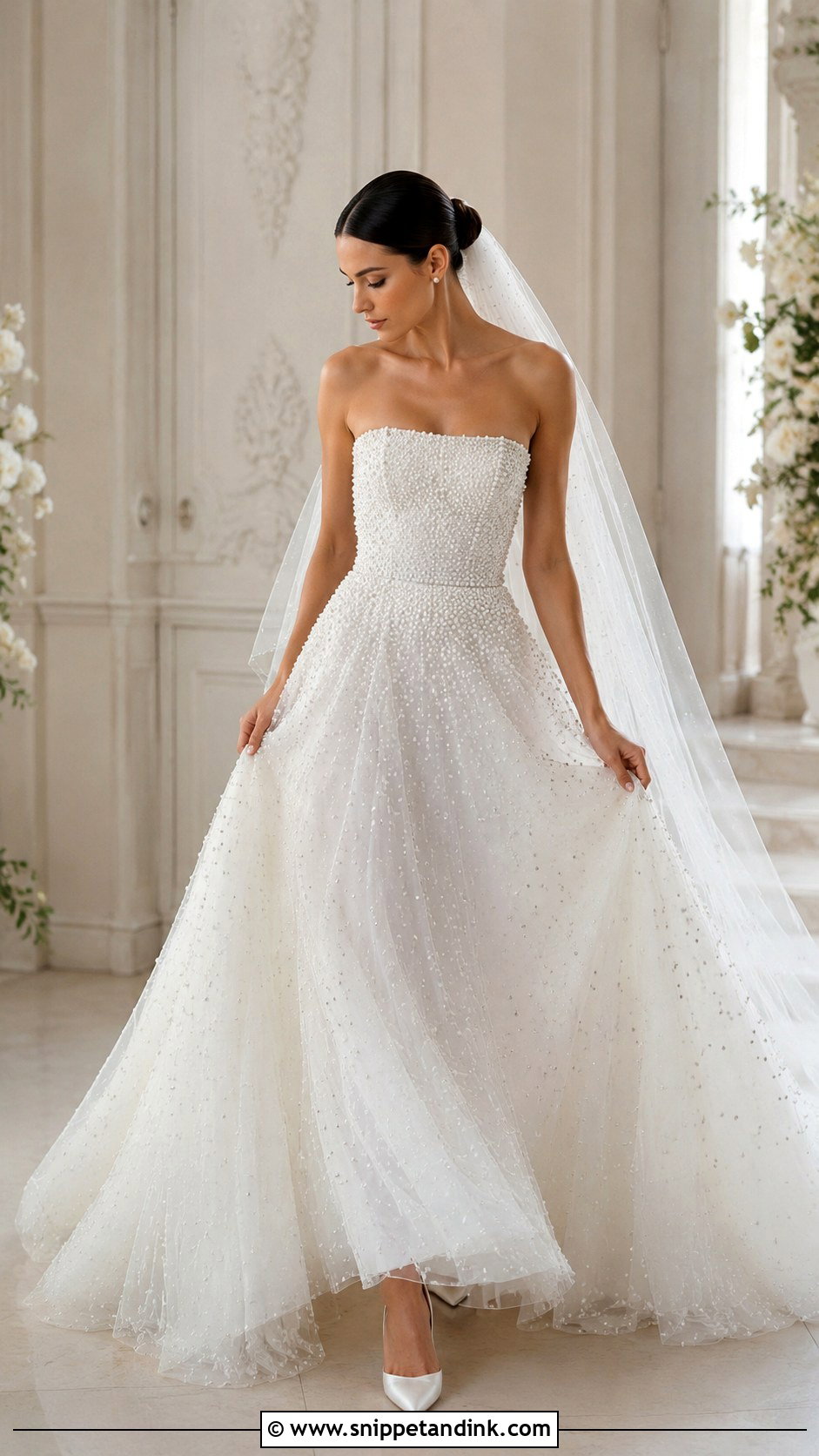
Pearls can be scattered lightly across tulle, run along the sleeves or packed across the bodice. The more pearls on the dress, the fewer on you, so with a heavily worked bodice I’d wear tiny pearl studs and skip the necklace. Satin heels, a sheer veil and smooth hair stop it tipping into busy. Hand-sewn pearls do occasionally come loose, so ask the shop for a few spares and keep a needle threaded in white in your day-of kit. Under evening light they give a softer glow than crystals ever do.
15. White Floral Applique Bride Dress
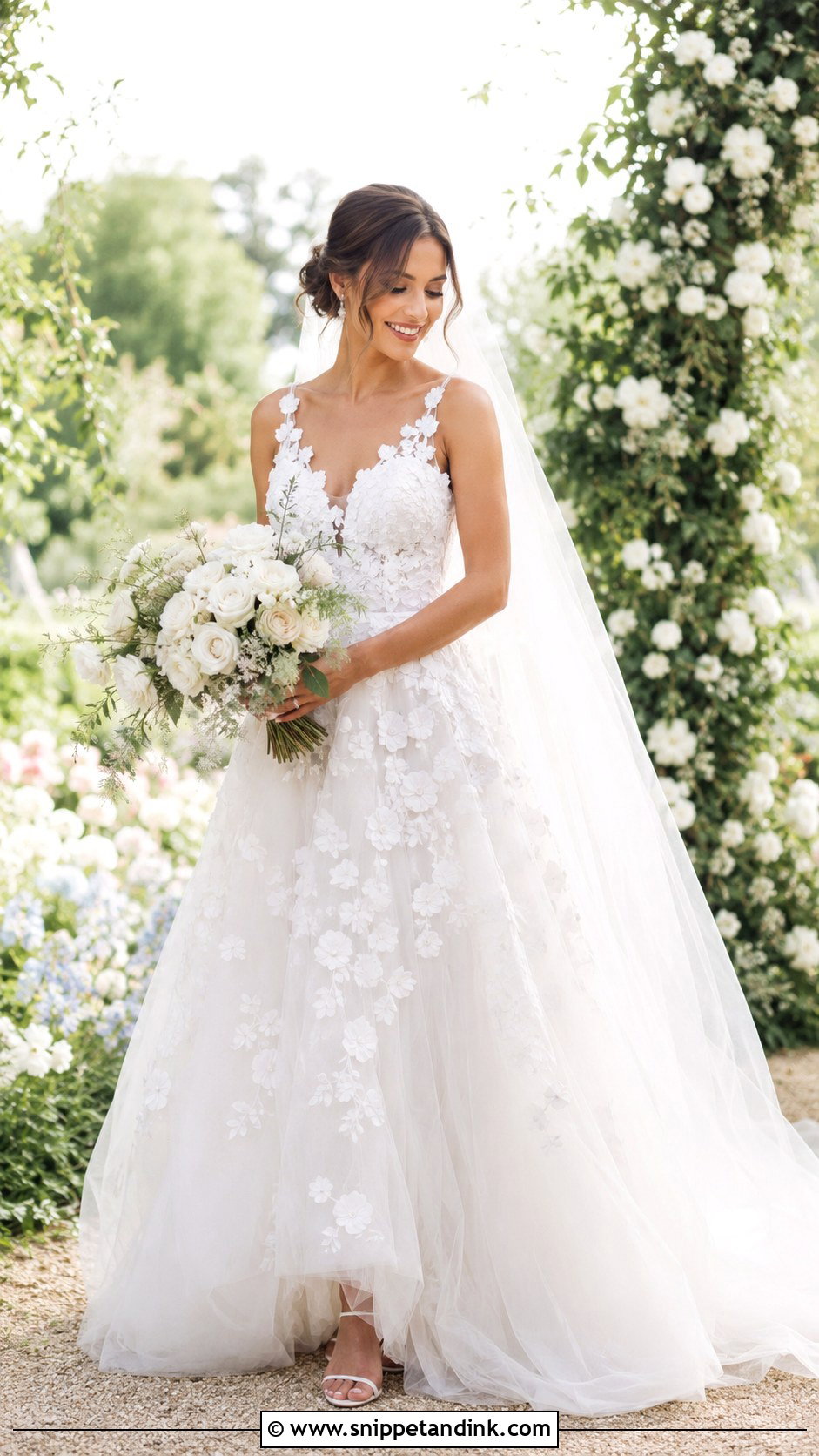
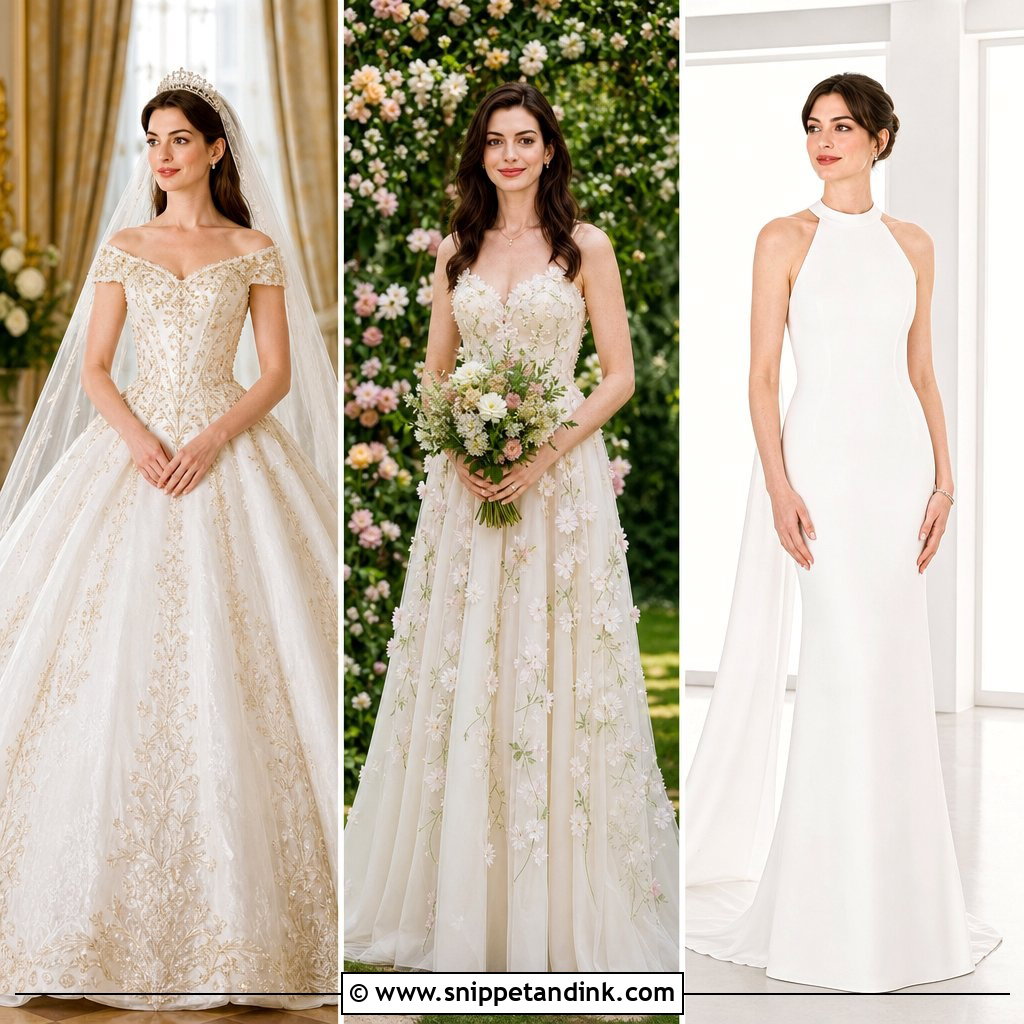
Appliques change character with the base fabric: airy on tulle, sculptural on organza, subtle on lace. They suit garden venues, outdoor and spring ceremonies, and softer ballroom looks, and I like a bouquet that repeats one of the flower shapes from the dress. Placement is what makes or breaks this style. Good appliques follow the waist, neckline and skirt movement, so if your side seams are being taken in, make sure the seamstress lifts and re-stitches the motifs rather than cutting through them. Keep jewelry quiet; the texture is already holding attention.
16. White Beaded Bride Dress
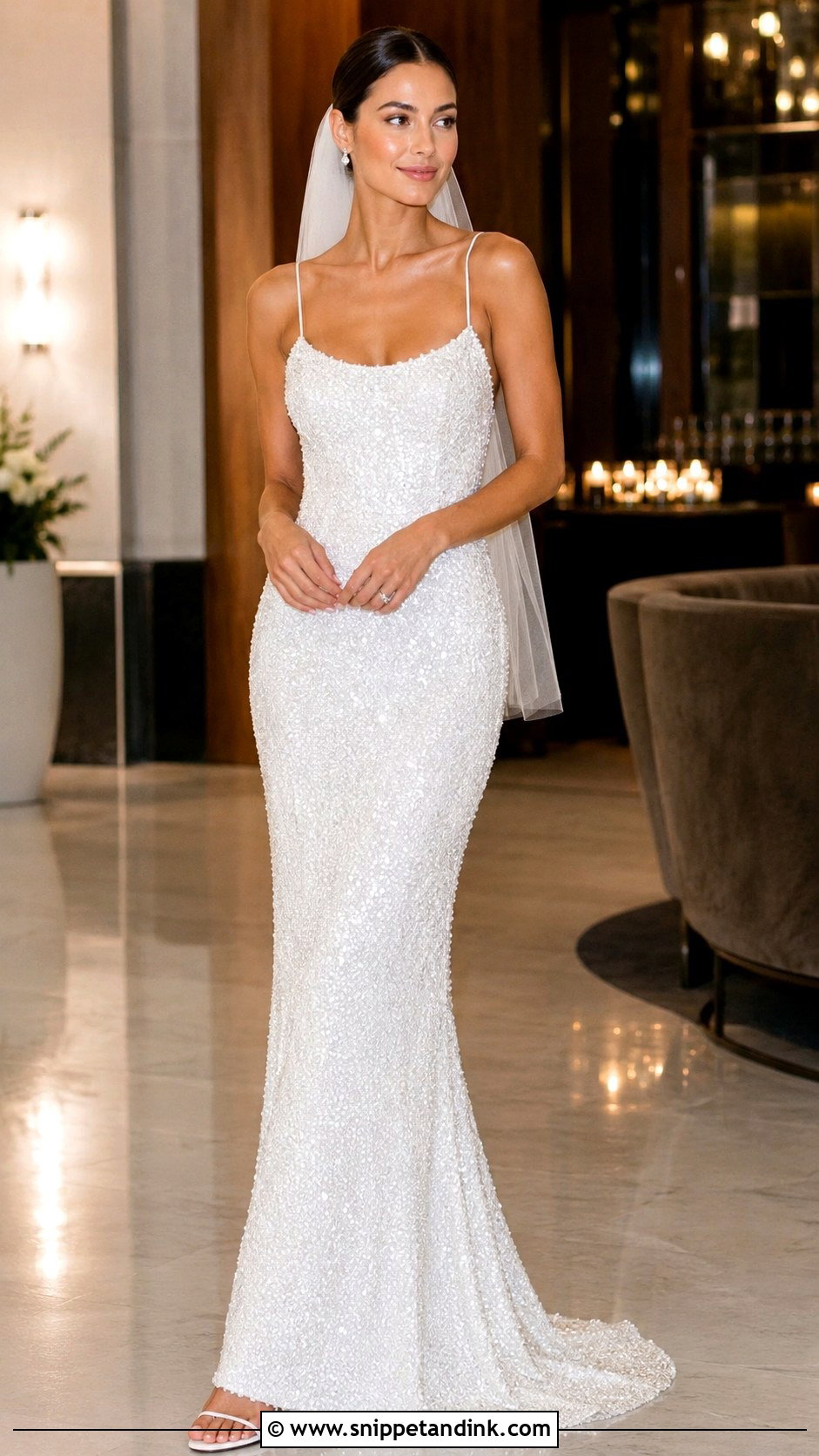
Beading ranges from vintage patterning to soft shimmer to full evening glamour. A slim beaded gown reads formal, while a beaded bodice over a plain skirt is more balanced. The weight is real, though. A heavily beaded dress can pull at the shoulders and drag at the hem, so walk, sit and dance in it before you commit. It suits indoor venues and evening ceremonies, with simple white heels, small earrings and a clean veil so the light can find the beads.
17. White Tulle Bride Dress
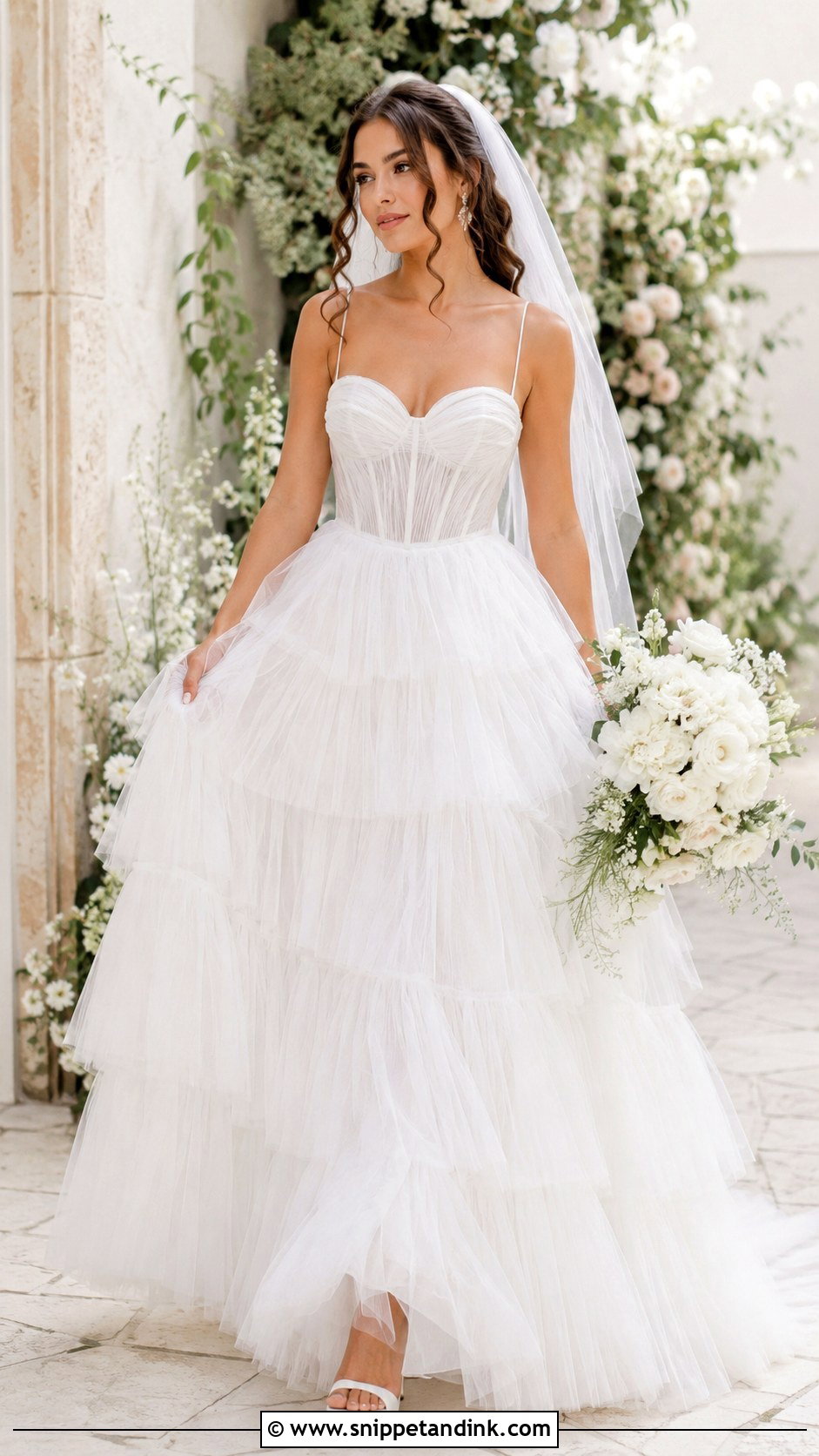
Tulle gives volume without the weight of satin, which makes a big skirt far easier to wear for ten hours. Layered tulle reads princess; a slim overlay is lighter and more modern. Balance the airy skirt with a fitted bodice, then add delicate earrings, soft curls, white heels and a veil in a similar tulle so the whites match. The downside is snagging. Tulle catches on rough stone, bark and the beading on a guest’s sleeve, so outdoor brides should lift the skirt when crossing gravel. It looks its best in natural light and open spaces.
18. White Crepe Bride Dress
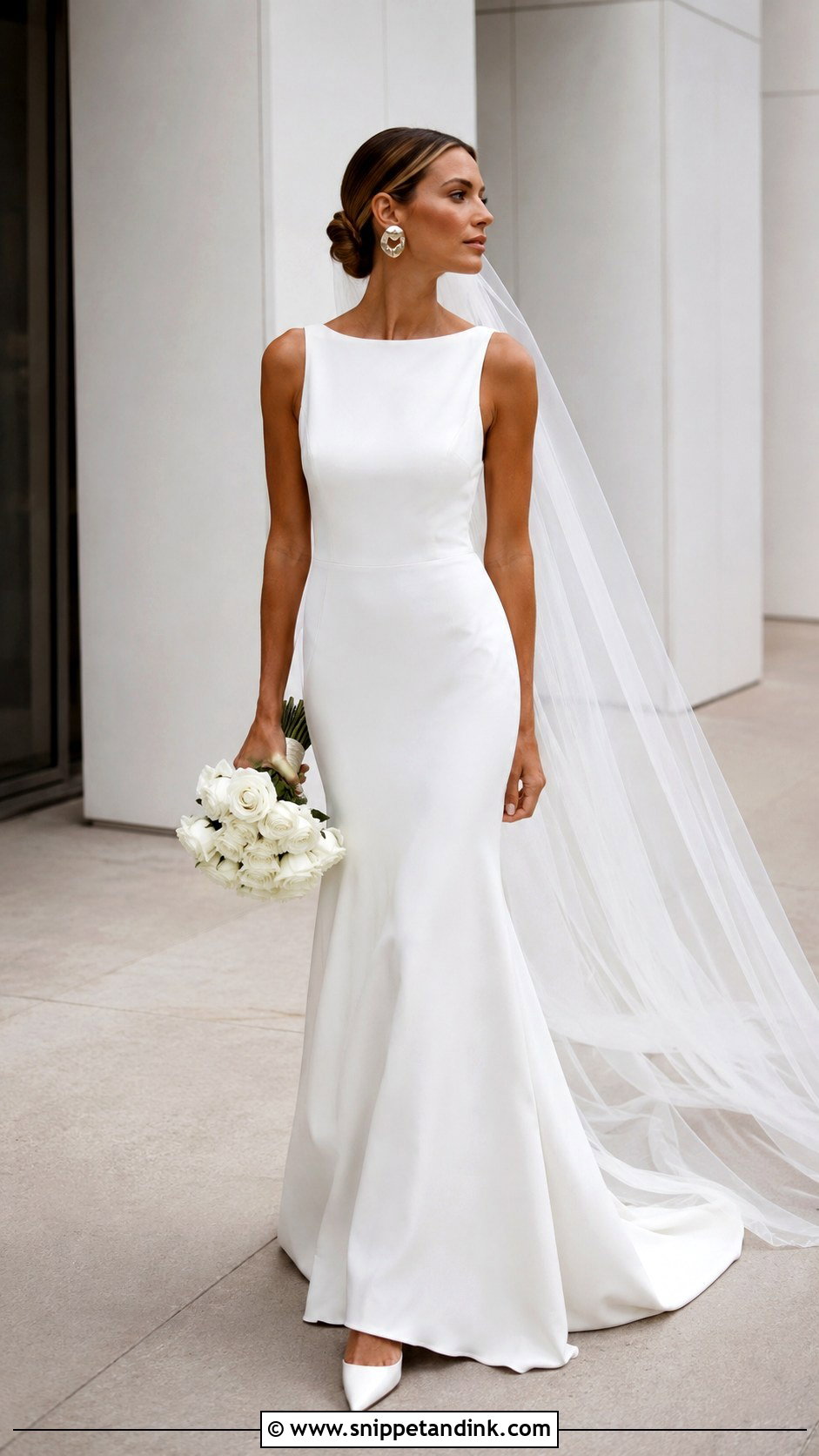
Crepe has enough weight to skim the body and nothing to hide behind, which is exactly why minimalists love it. A fit-and-flare shape adds curve; a straight column looks refined. Pointed white heels, sculptural earrings and a long veil suit a city venue, a modern space or a courthouse. With no lace or beading to distract, every seam is visible, so I’d plan on at least two fittings and ask for the seams to be pressed flat between them. When the cut is right, crepe looks expensive.
19. White Cape Bride Dress
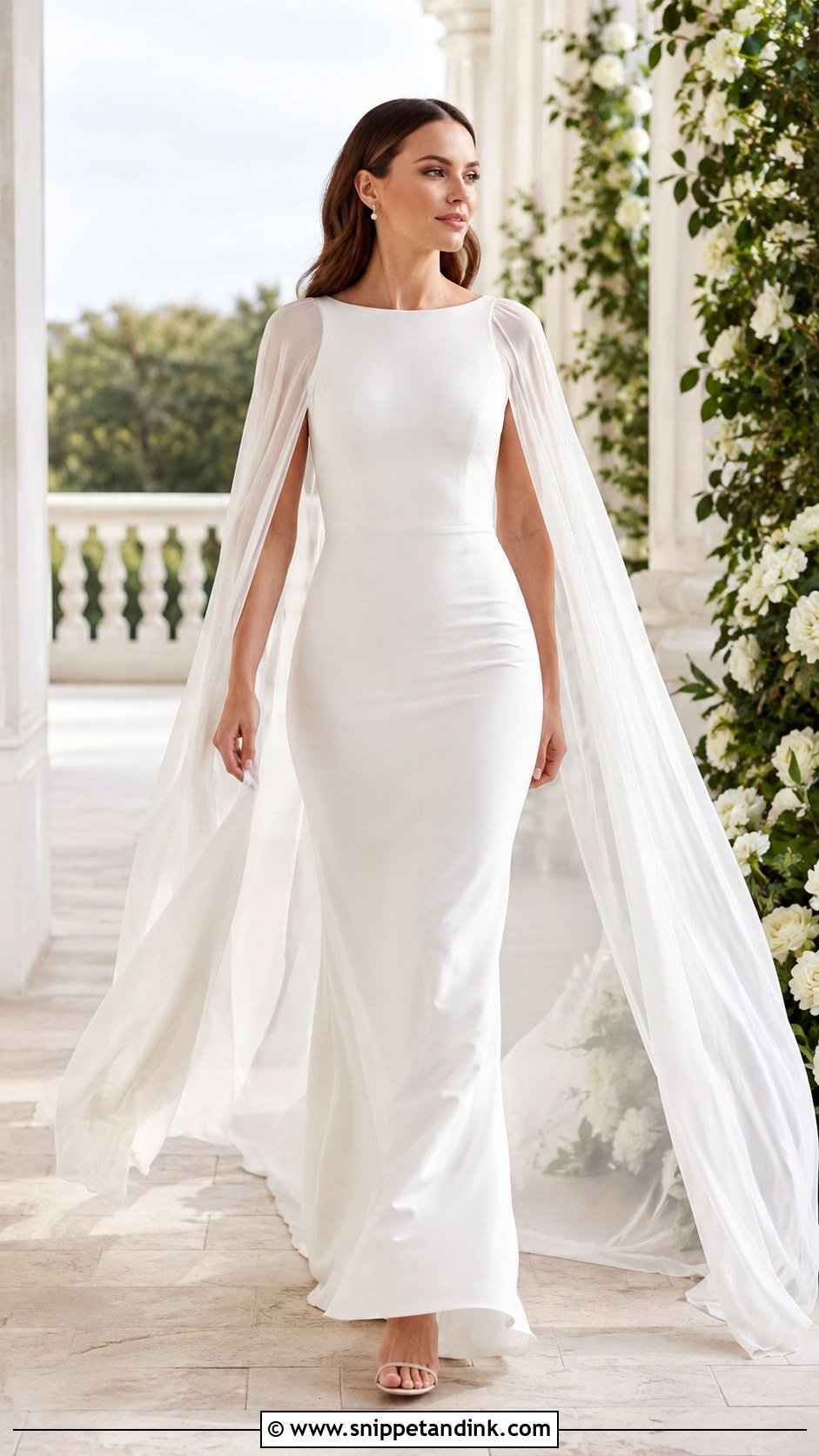
A cape gives you movement in place of a veil. It can attach at the shoulders, neckline or back, framing you as you walk, and it adds coverage without hiding the dress. A plain crepe gown with a sheer cape looks modern; lace or pearl-trimmed capes look romantic. Keep everything else pared back with clean heels, small earrings and smooth hair. Capes catch the wind in outdoor portraits, which is half the appeal, but ask whether yours detaches. Eating and dancing with fabric over your arms gets awkward fast.
20. White Courthouse Bride Dress
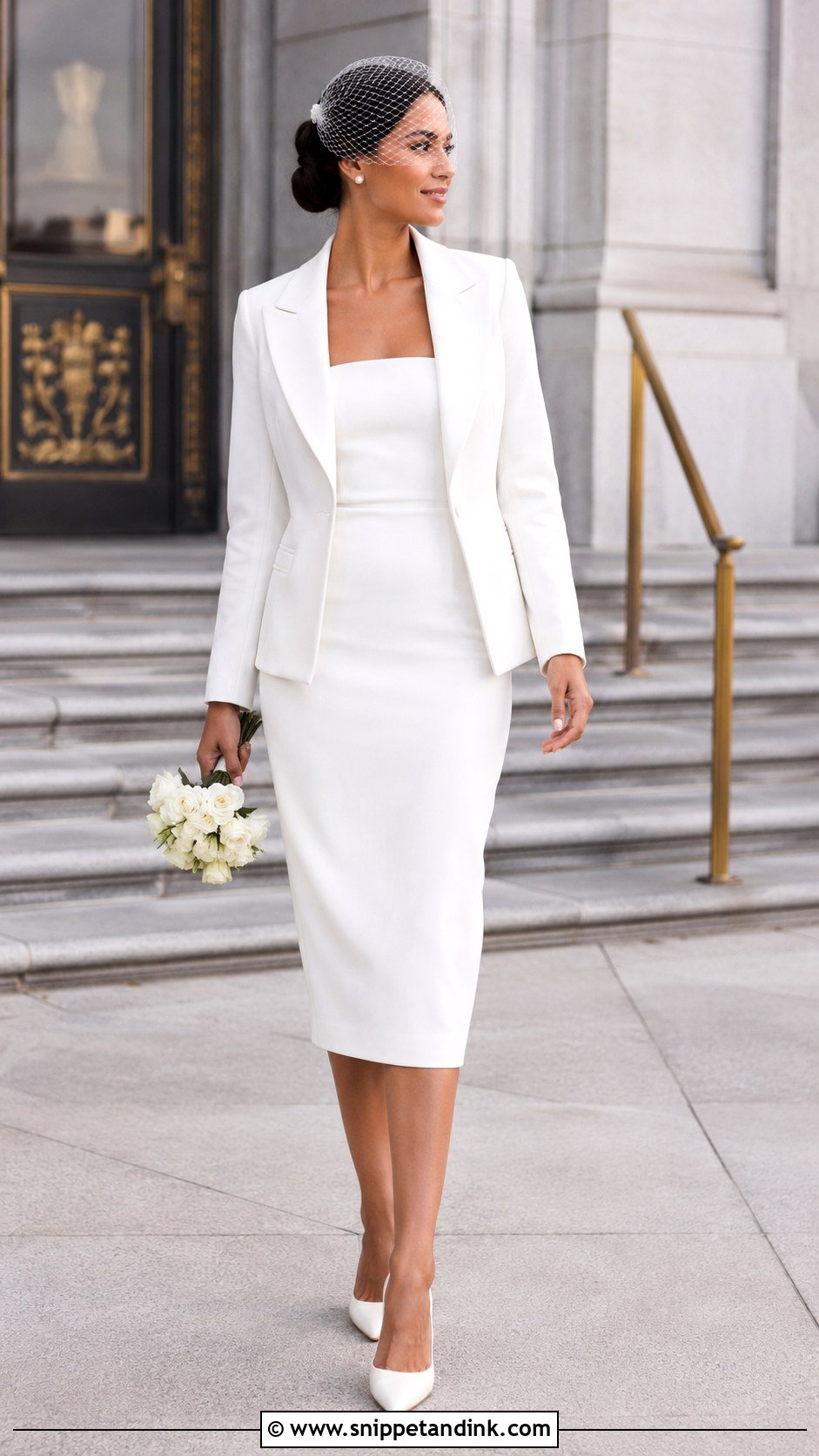
A courthouse dress has to look polished in a small room and stay comfortable through a short ceremony followed, usually, by a long lunch. A tailored midi dress, satin sheath, long sleeve mini or simple crepe gown all suit it. People stand close in an intimate setting, so fit and finish matter more than volume, and the accessories carry the bridal signal: white pumps, a small bouquet, pearl studs, and a structured blazer or coat if the weather turns. A birdcage veil or hair bow makes it read bridal without a full gown. Simple doesn’t mean plain when every detail is chosen with care.
21. White Beach Bride Dress
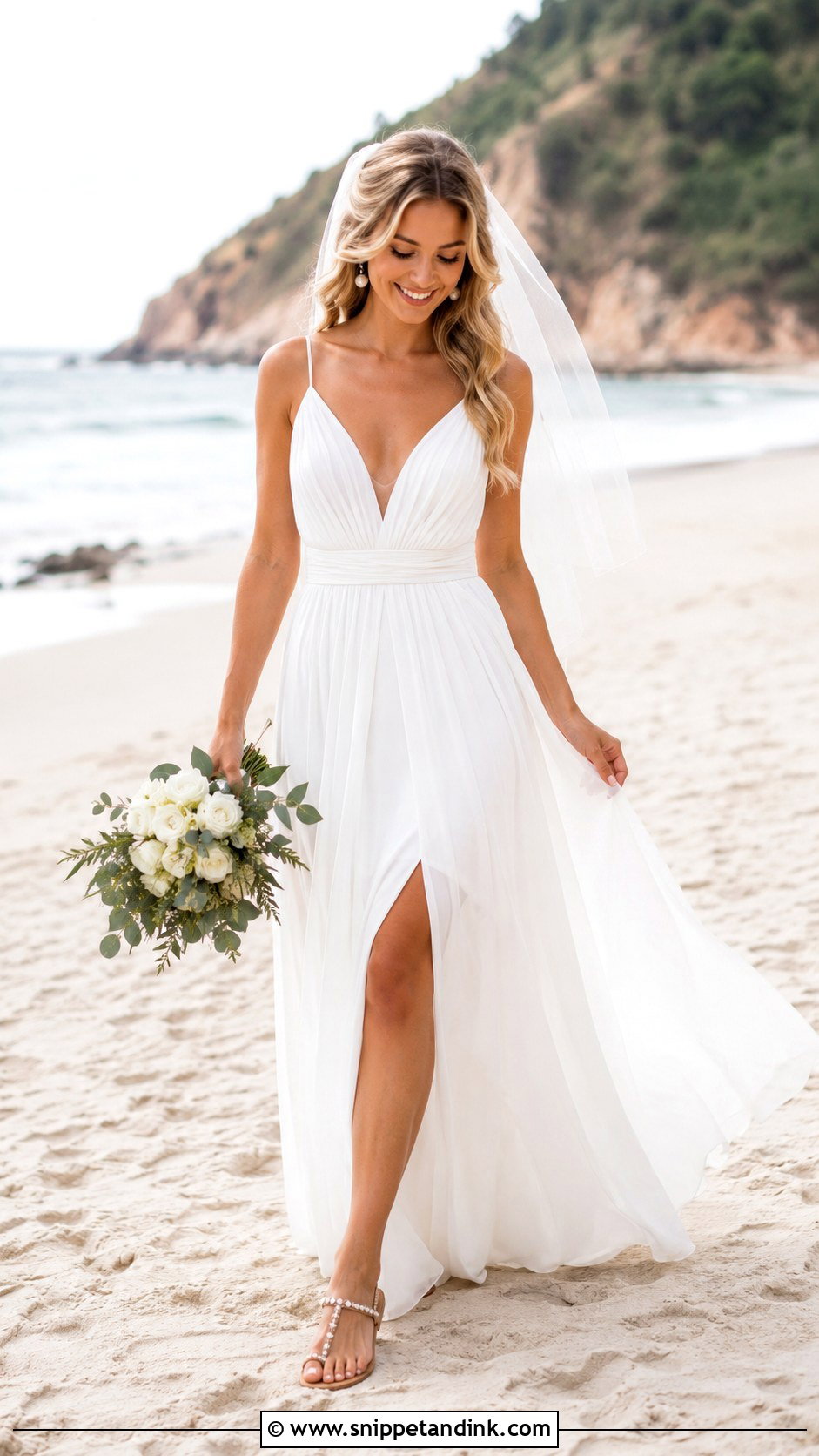
Sand decides most of what works here. A heavy train drags and fills with it, so go for chiffon, lightweight lace, crochet or a relaxed satin, and keep the hem at or just above the ground. A flowing skirt, open back or halter neckline suits the setting. Wind is the other factor: a long cathedral veil on a breezy beach turns into a sail, so I’d choose a shorter or weighted one. Flat sandals, pearl earrings and loose waves finish it, with a white bouquet and greenery that doesn’t look too formal beside the water.
22. White Boho Bride Dress
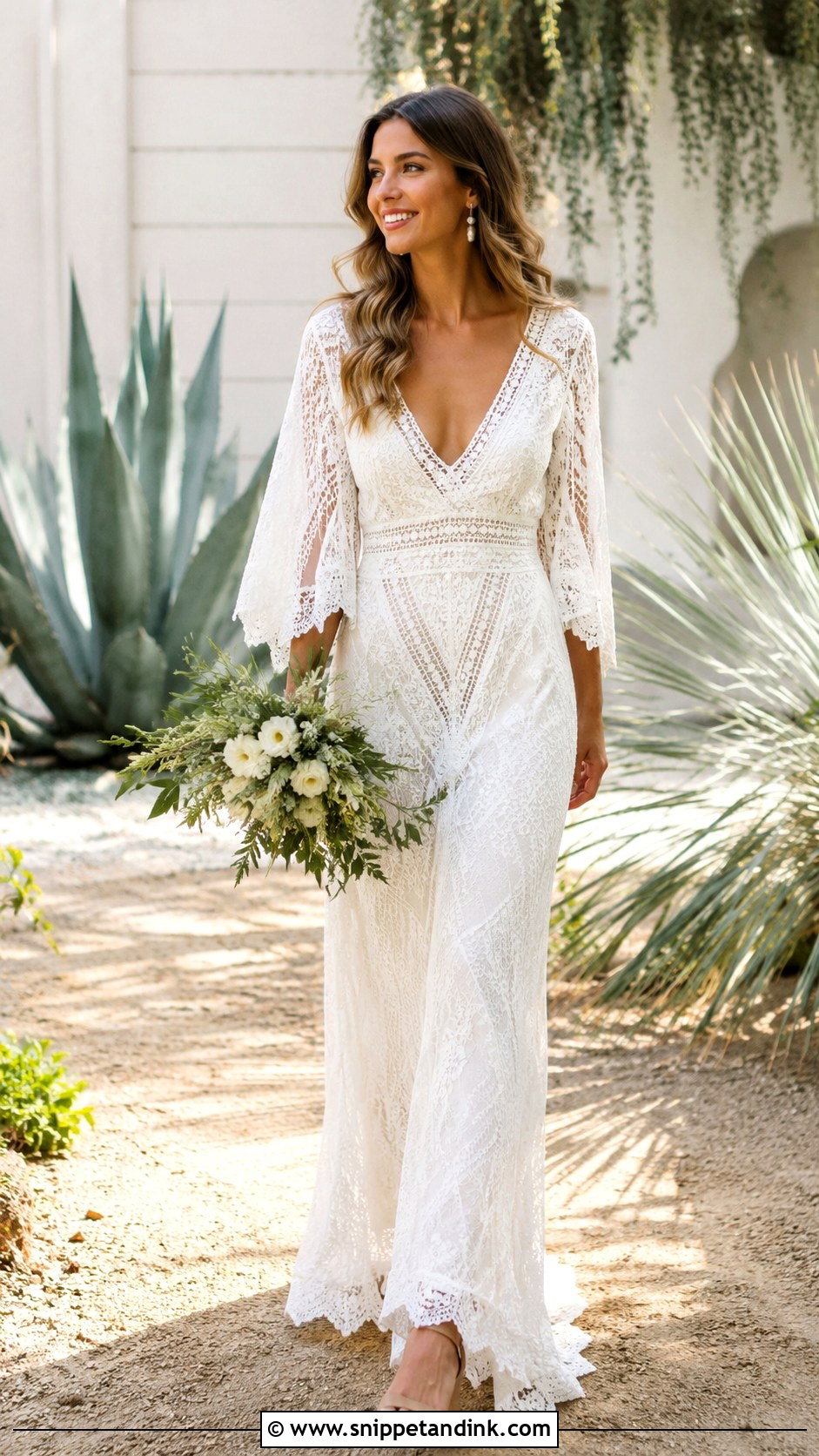
Boho dresses live on texture: crochet lace, bell sleeves, soft embroidery, tiered skirts and relaxed silhouettes. They suit outdoor venues, desert settings, gardens and intimate celebrations. The line between personal and costume is thin, and the brides who get it right pick one or two signature details, such as lace sleeves or a low back, then keep everything else easy. Low block heels sink less into a lawn than stilettos. Add loose waves, delicate earrings, a flower hair accessory and a bouquet of soft whites and greenery.
23. White Vintage Bride Dress
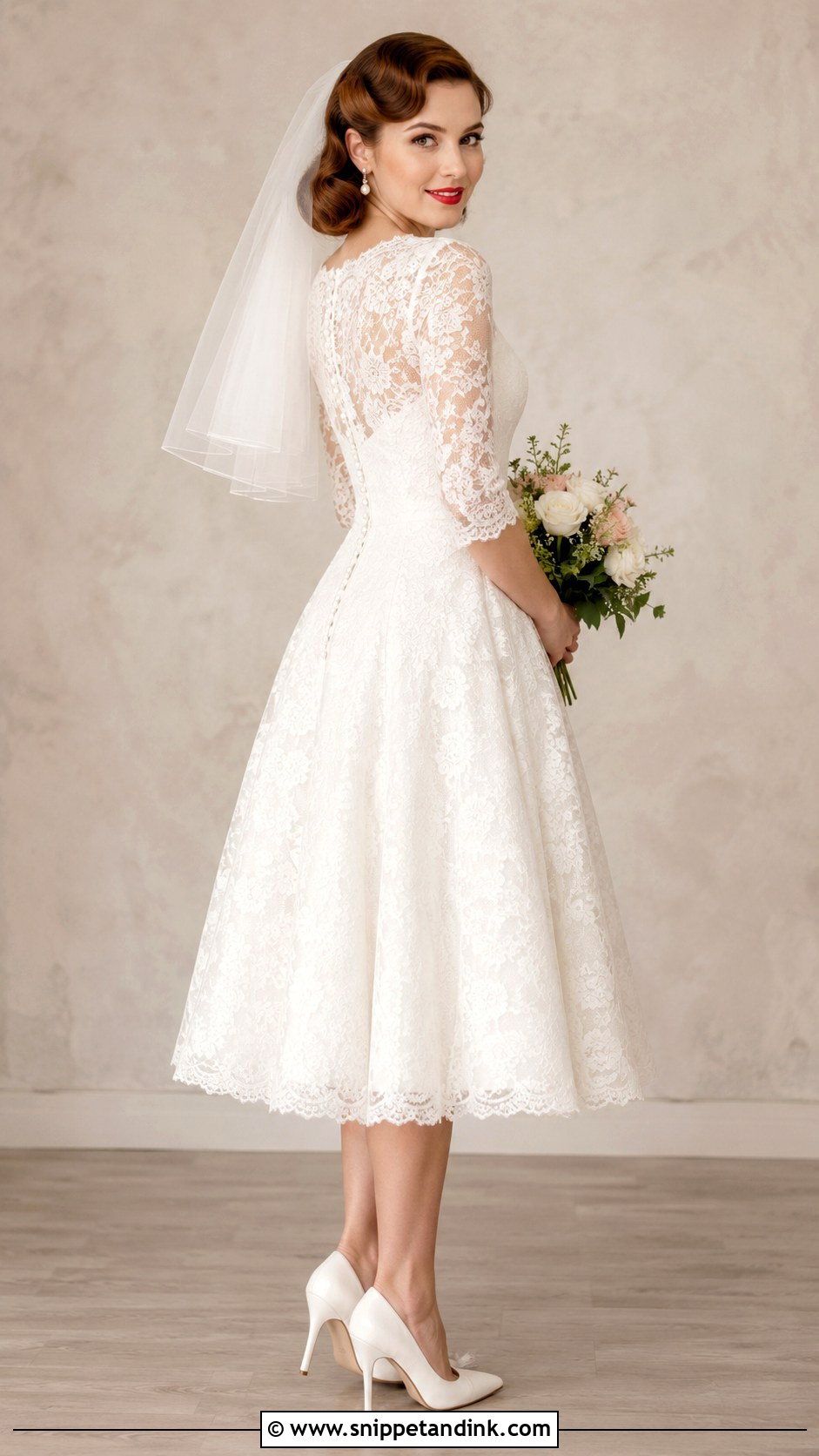
Vintage can mean a true period gown or a modern dress drawing on past decades: tea-length skirts, lace sleeves, high necklines, bias-cut satin, covered buttons, soft puff sleeves. If you buy genuine vintage, get a specialist cleaner and seamstress to look at it early. Old silk can be brittle along the seams, and yellowing doesn’t always lift. Vintage-inspired heels, pearl earrings and a short veil or hair comb suit it, with fresh makeup so the look stays personal rather than period costume. Tailored well, it’s the most individual dress on this list.
24. White Reception Bride Dress
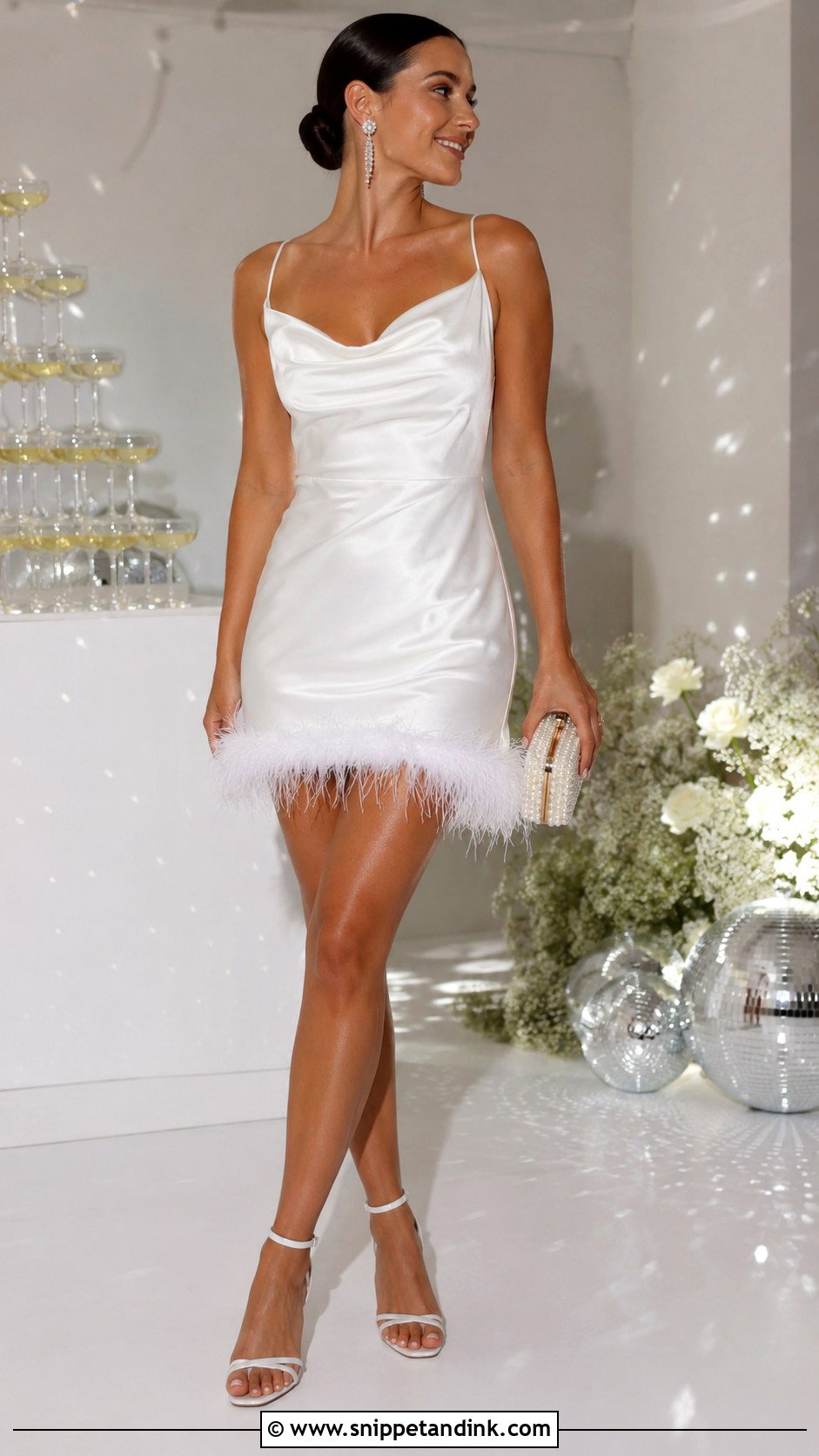
The second dress is all about movement. Many brides choose something shorter, a sleek slip, a feather-trim mini or a fitted midi, and it can be more playful than the ceremony gown while still clearly bridal. My rule is contrast: a detailed ceremony gown calls for a cleaner reception dress, and a simple ceremony dress leaves room for sparkle, pearls or a bow. Plan the change itself, too. Someone needs to help with buttons and bustles, and twenty minutes is a realistic window. Comfortable heels, statement earrings and a small clutch finish it.
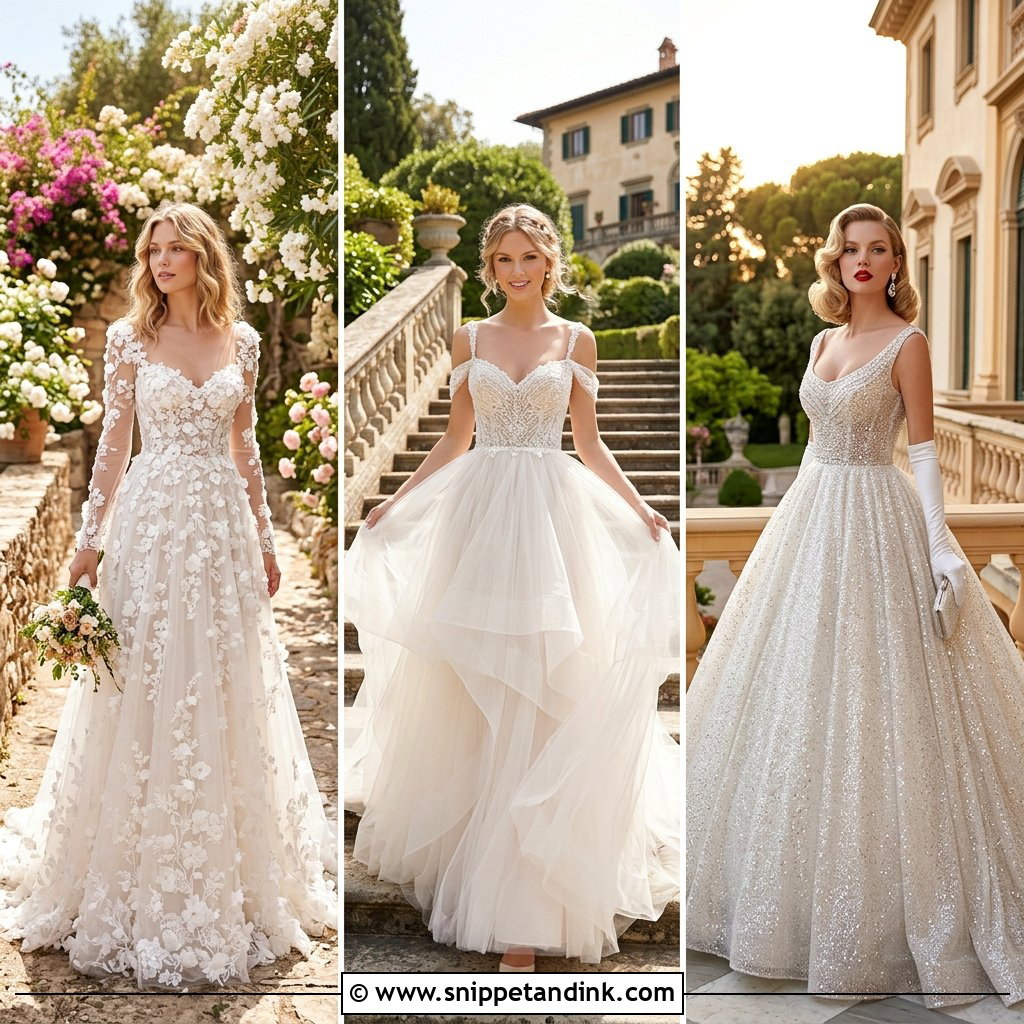
25. White Plus Size Bride Dress
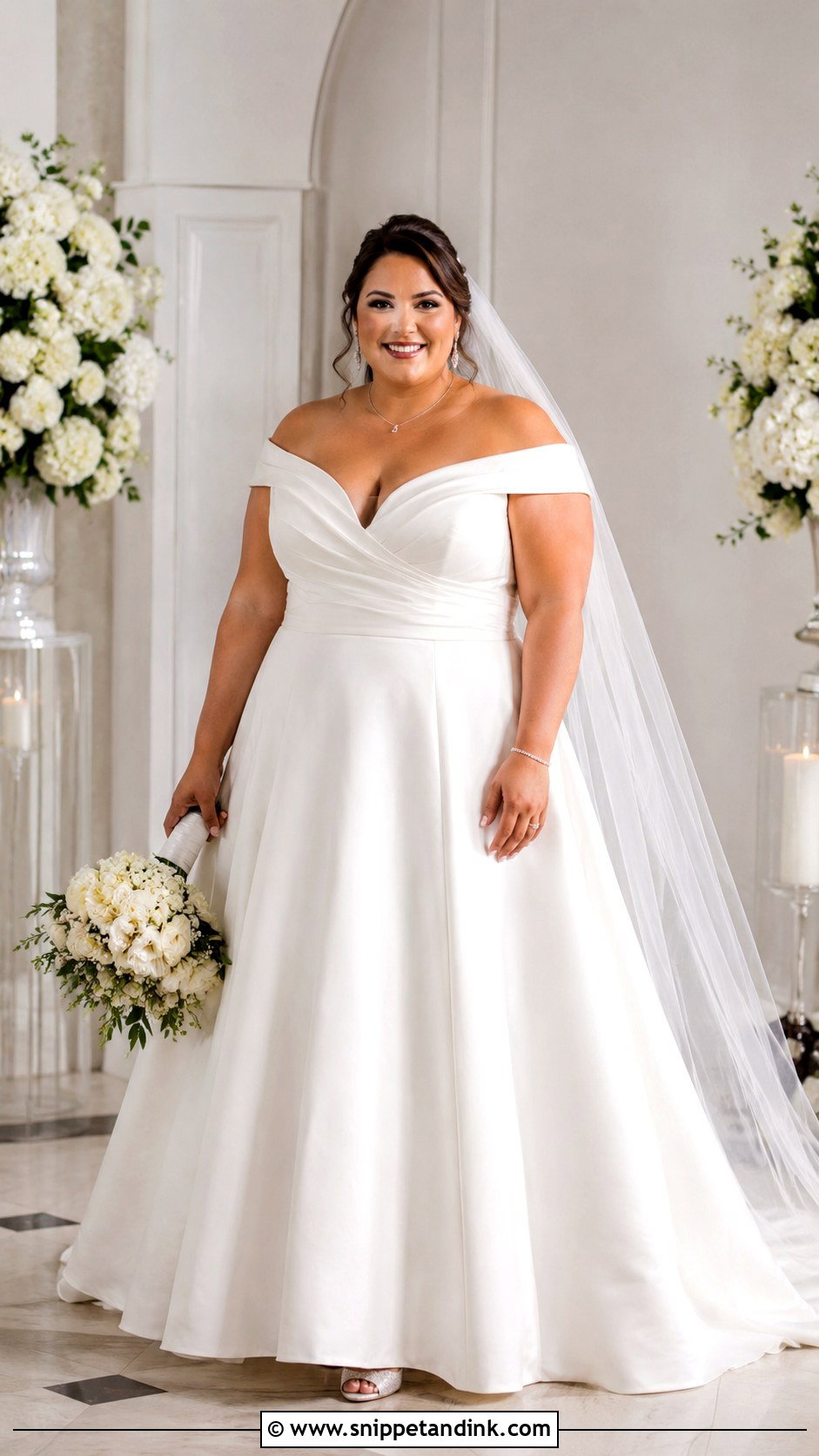
Support and proportion come first, and good bridalwear shows a plus-size bride’s shape rather than hiding it. A-line gowns, structured corset bodices, wrap details, off-shoulder necklines and crepe fit-and-flare dresses can all look wonderful. Tailoring at the bust, waist and hem matters more than the label, and I’d ask early whether the shop can add built-in cups or extra boning, since that’s easier before the main alterations than after. Choose supportive shoes, a veil matched to the dress weight and jewelry that suits the neckline. Try a few shapes you’d normally rule out; the cut that feels secure from every angle is often a surprise.
Hem Grime, Lipstick and Red Wine on a White Gown
A white dress will pick up marks. By the first dance most hems are grey from the floor, and that’s normal. What you can control is the stuff that spreads, so I pack a small emergency bag for every bride and hand it to whoever is staying closest to her.
What goes in the day-of bag
- A stick of white chalk to dust over small marks on matte fabric until the photos are done.
- Plain white cloths and a little cold water for blotting, never rubbing.
- Safety pins, a threaded needle in white and clear tape for a fallen hem.
- Tissues to tuck around the neckline while you eat or touch up lipstick.
Skip household stain wipes on silk and satin. Many of them leave a ring that is harder to remove than the original spill, and it’s better to blot and leave the rest to a cleaner.
The weeks after the wedding
Get the dress to a specialist cleaner within a few weeks. Champagne and sugary drinks dry invisibly, then oxidise into brown marks months later, so tell the cleaner where you spilled even if nothing shows. For storage, wrap it in acid-free tissue inside a breathable cotton bag or archival box, keep it somewhere cool and dark, and never leave it in plastic. Heavy beaded gowns are better folded in a box than hung, because the weight slowly stretches the shoulders.
Shade, Fabric and Fit Come Before the Veil
The right white dress comes down to your body, your venue, your personality and how comfortable you need to be. Some brides feel most like themselves in lace, tulle and ball gowns; others in satin slips, courthouse minis, crepe columns or a short reception dress. Treat the dress as one part of an outfit, because shoes, veil, jewelry, hair, bouquet and tailoring all change how it reads. Use these 25 as a starting list, try on more shapes than you think you need, and leave the alterations enough time to get the fit exactly right.
You'll Like These Ideas:



Leave a Reply