
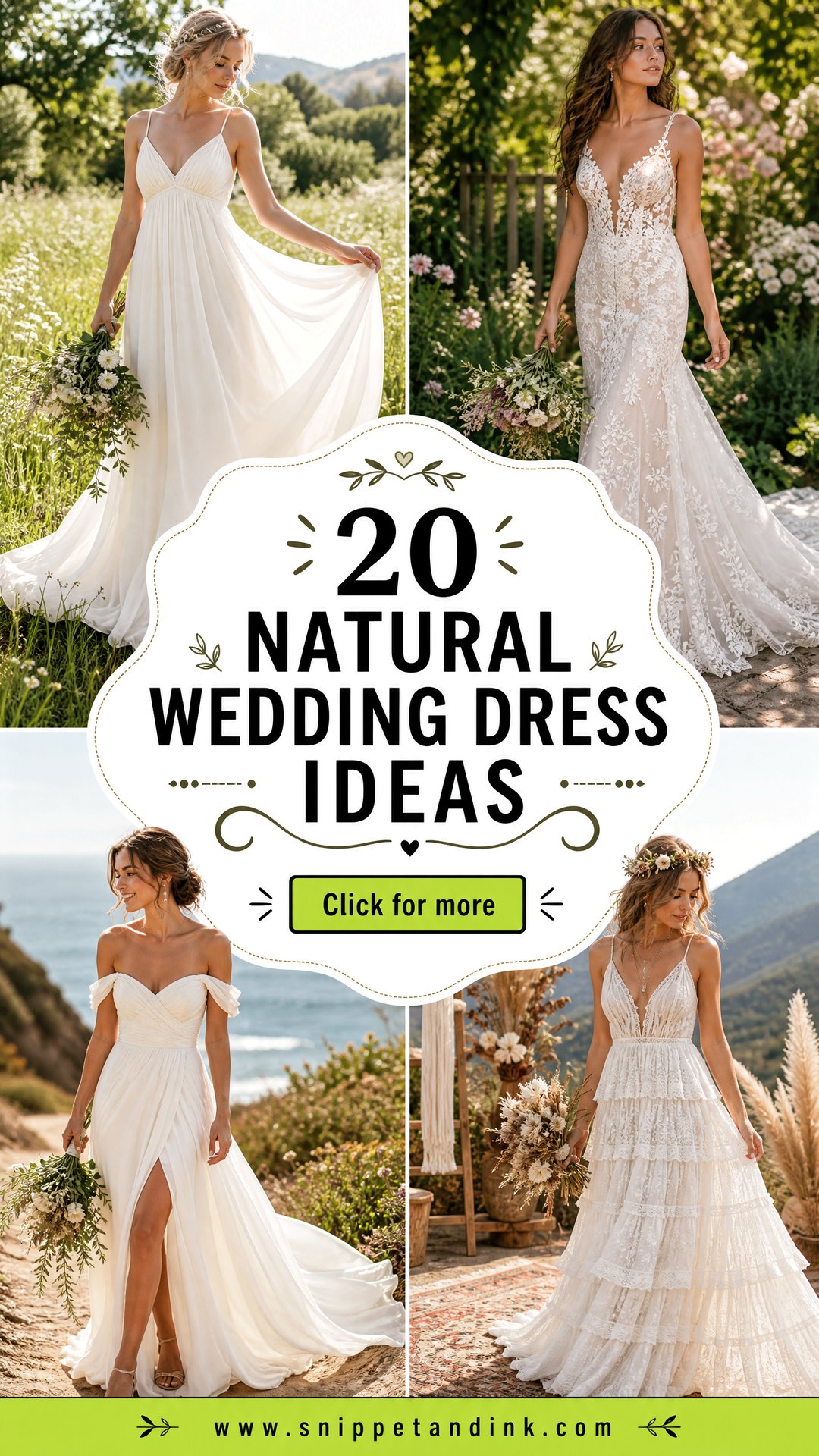
A natural bridal look is relaxed and tied to its setting, yet it still has to look like a wedding. In my fittings that usually means flowing shapes, breathable fabric, soft ivory instead of bright white, texture instead of sparkle, and shoes chosen for the ground they’ll stand on. It suits gardens, beaches, woodland elopements, barns and back gardens, and it covers a wide spread of taste, from a bare silk slip to vintage cotton lace. Before you fall for a dress, I’d think about the season, the terrain, the fabric’s weight and how much support you need. The twenty outfits below are styled from hem to hairpin with those questions in mind.
How Natural Fabrics Act Outdoors
Most brides choose a natural dress by look and feel in the shop. I’d add a third test: how will this fabric act after six hours outside? Each one has a habit you should know before the day.
Linen
Cool and breathable, and it creases from the first car journey. I tell brides to treat the creases as part of the look. A linen-viscose or linen-cotton blend creases less if that bothers you.
Silk
Silk breathes well, but water can leave marks on charmeuse and satin finishes, and perspiration shows on lighter weights. Keep a bridesmaid on drink duty and avoid spritzing perfume near the dress.
Cotton
Easy to wear and forgiving in heat. Voile and eyelet need a lining to stay opaque; sateen holds a shape better and creases less than plain weaves.
Chiffon and crepe
Usually polyester or silk. Chiffon floats nicely but catches on rough bark and rose thorns. Crepe drapes heavily and resists creasing, though it can feel warm in midsummer sun.
1. Linen A-Line Wedding Dress
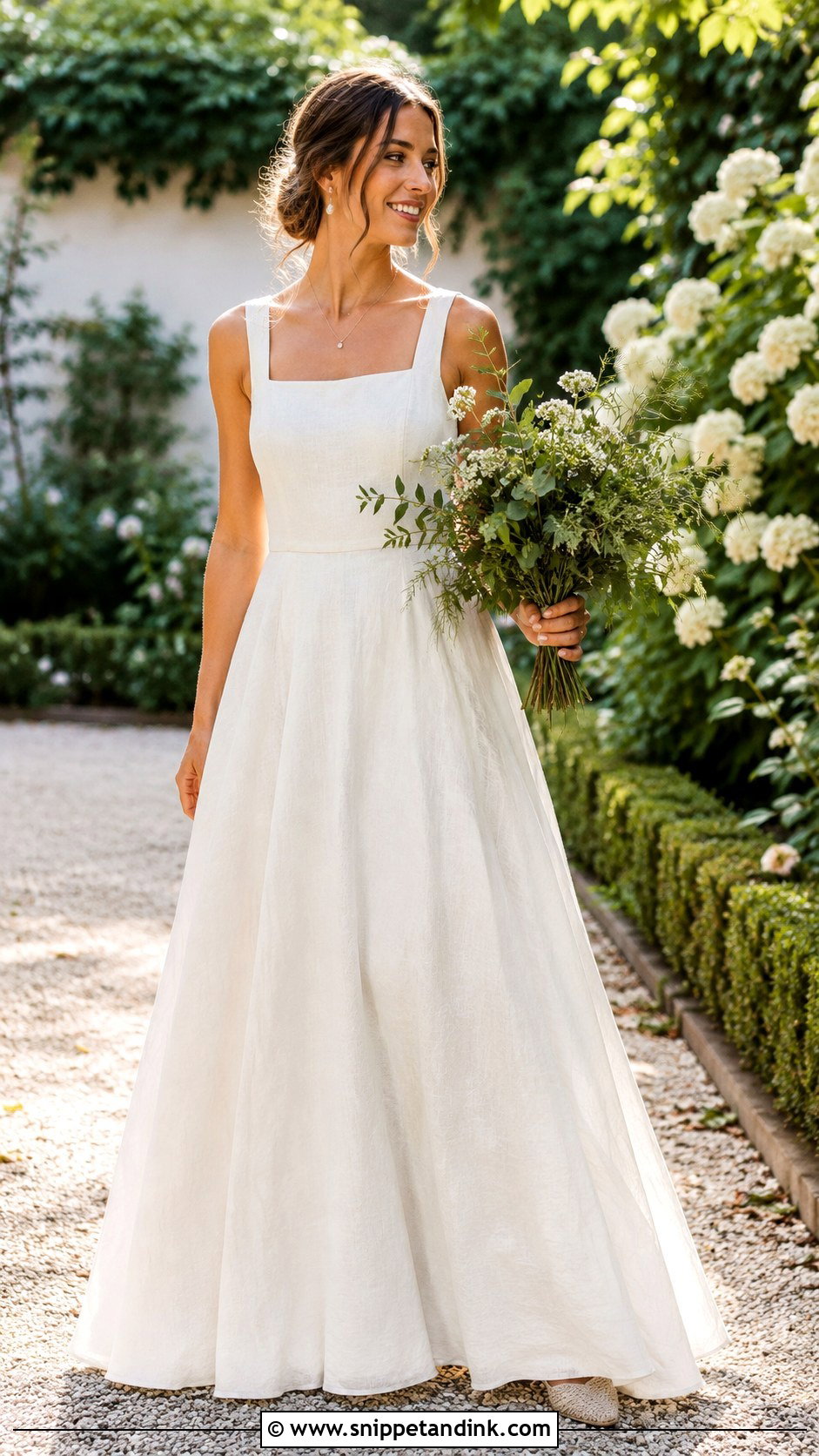
Linen is the most honest of the natural fabrics: it breathes, it softens with wear, and it creases the moment you sit. For an outdoor ceremony I’d pair a softly tailored bodice with wide straps and a defined waist over a gently sweeping A-line skirt, in ivory or natural flax. Low leather sandals or woven flats handle grass and gravel. Small pearls, a fine pendant and a structured linen clutch keep it polished, with a loose low bun and a bouquet of white cosmos, greenery and herbs. If you’d rather not look rumpled by the speeches, a linen blend holds fewer creases and still reads as linen in photos.
2. Silk Slip Wedding Dress
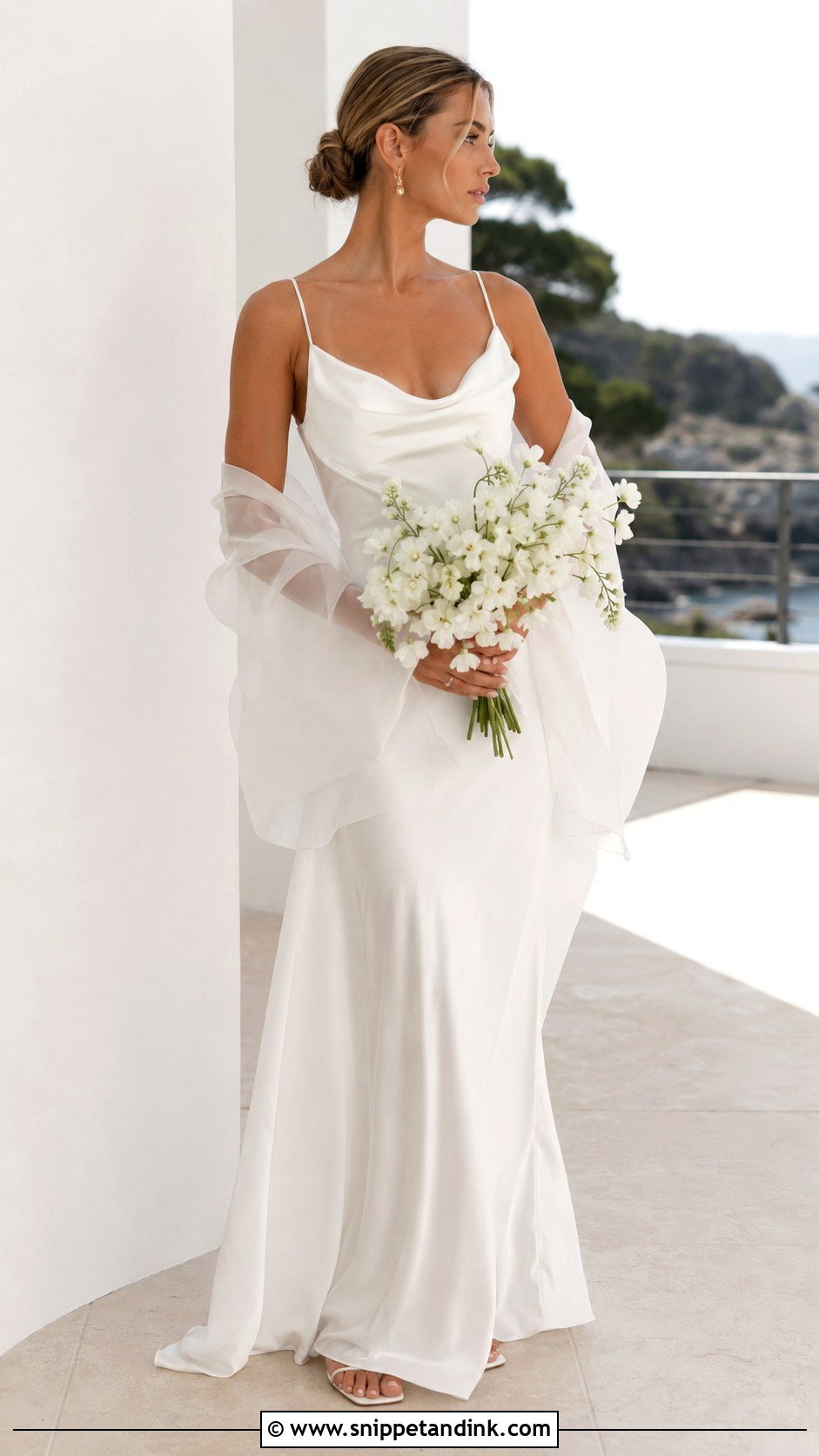
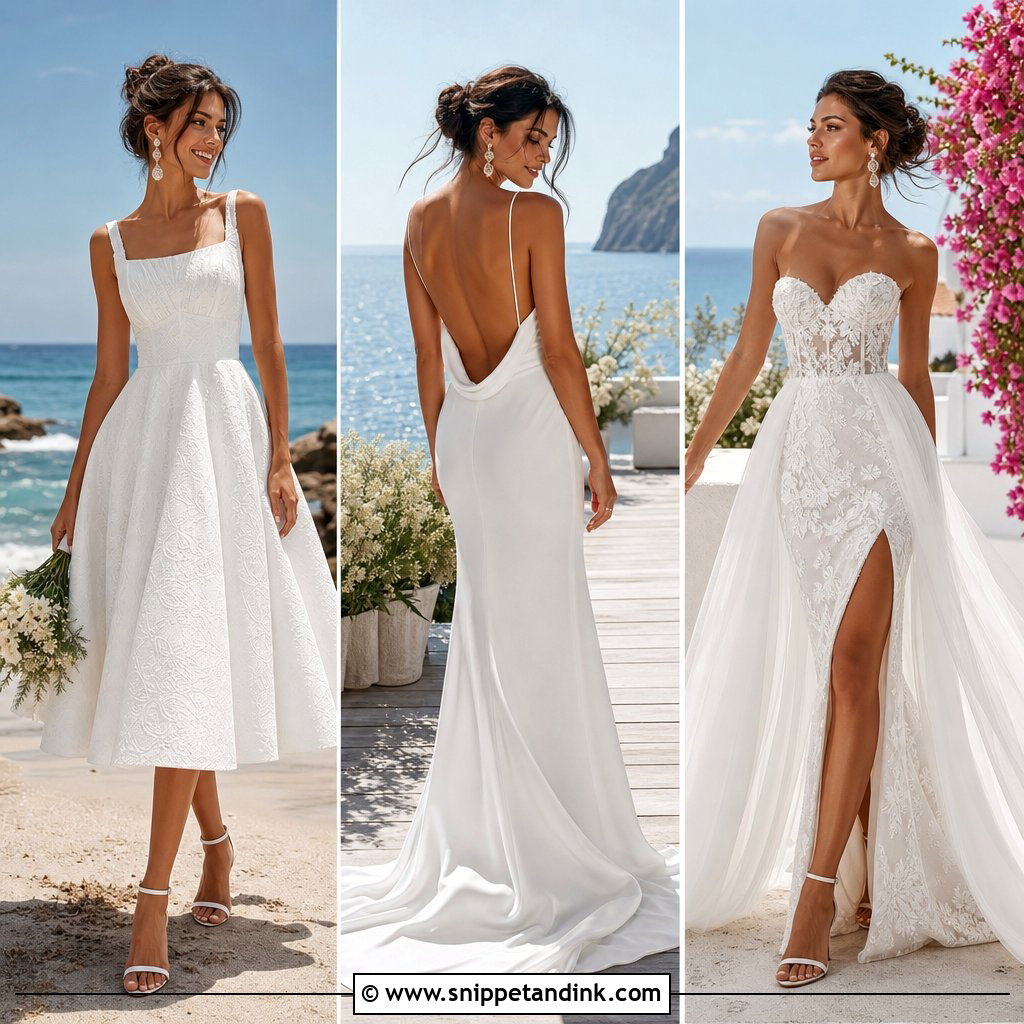
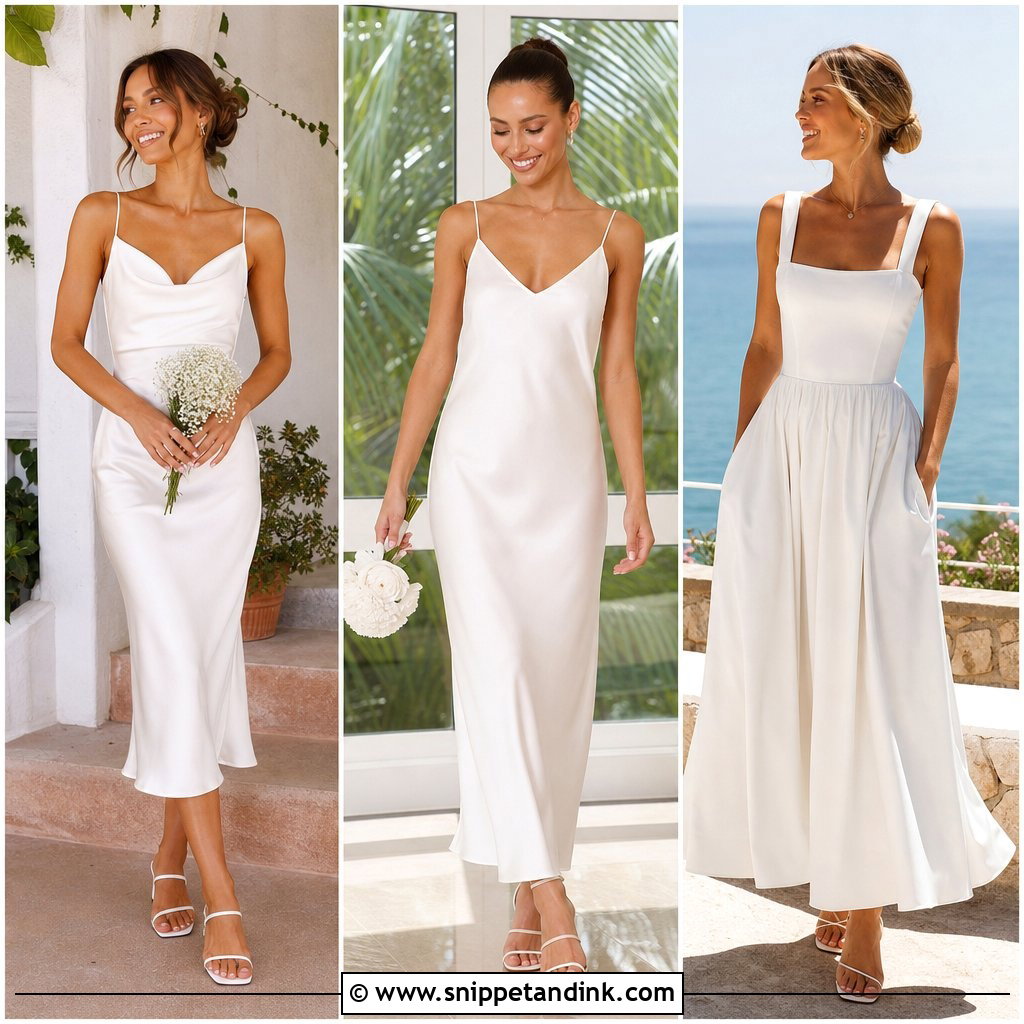
A bias-cut silk slip hides nothing, which is both its appeal and its challenge. I look for a soft cowl, narrow straps and a fluid floor-length hem in light ivory, which sits more gently against greenery than stark white. Barely-there block-heel sandals, a gold bracelet and small drops are enough, with a sheer organza wrap or light cape if you want coverage. Soft waves or a clean low knot match the shape, with sweet peas, ranunculus and trailing greenery in hand. Test your underwear in daylight; I choose smooth, edge-free pieces matched to skin tone, not to the dress, because ivory underwear glows through silk.
3. Cotton Lace Wedding Dress
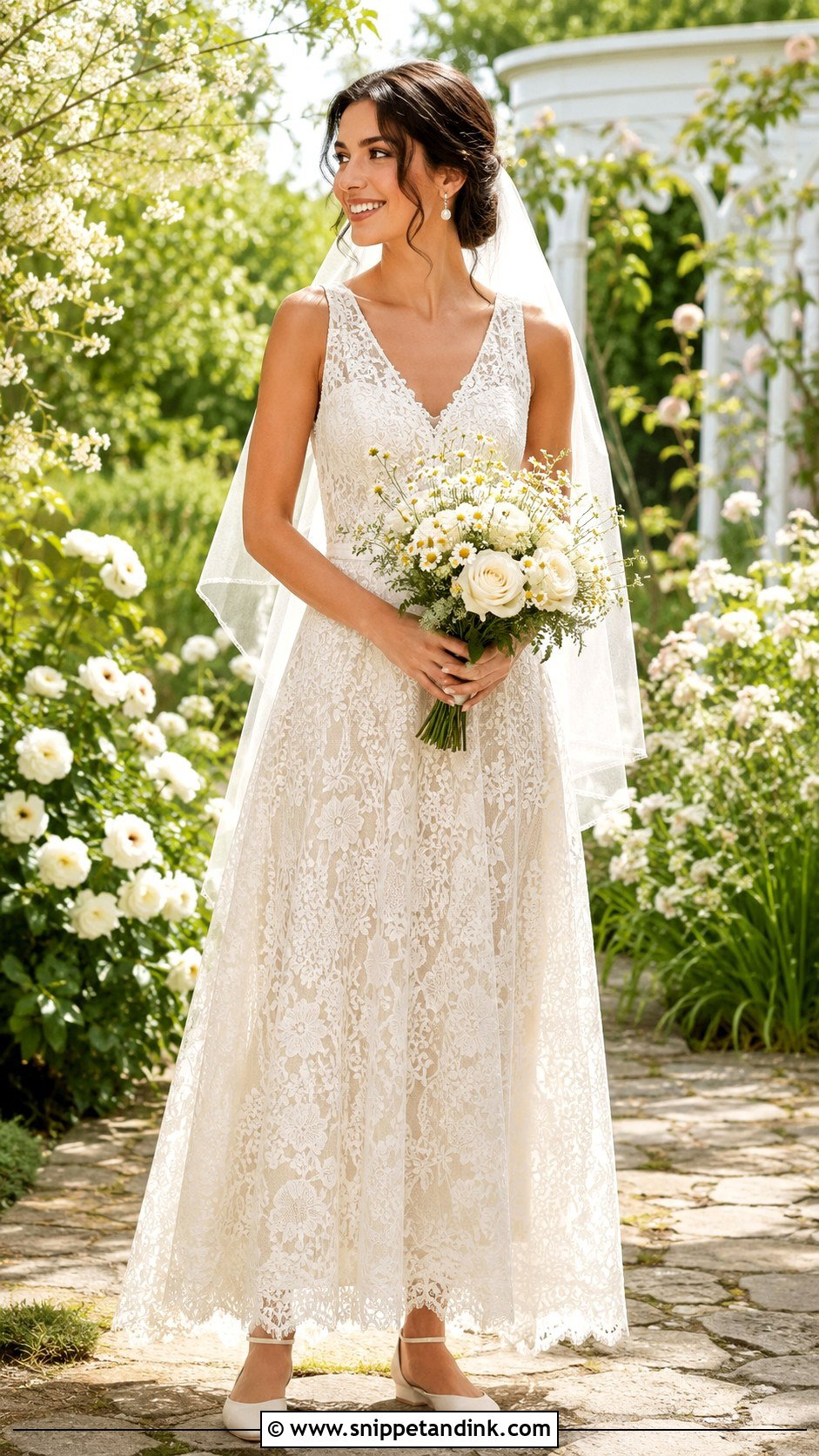
Cotton lace has texture that looks warm rather than formal. A fitted or lightly structured bodice with a modest V and an easy A-line skirt suits it, and botanical motifs sit naturally at a garden, farm, or backyard celebration. Ivory ankle-strap flats, freshwater pearls and a small woven bag finish it, with a plain tulle fingertip veil so the lace doesn’t multiply. Half-up hair and a bouquet of chamomile, white roses and leafy stems complete it. A lot of lace sold as natural is rayon, polyester or a blend, so if fibre matters to you, I’d ask to see the composition label before trying it on.
4. Chiffon Empire Waist Wedding Dress
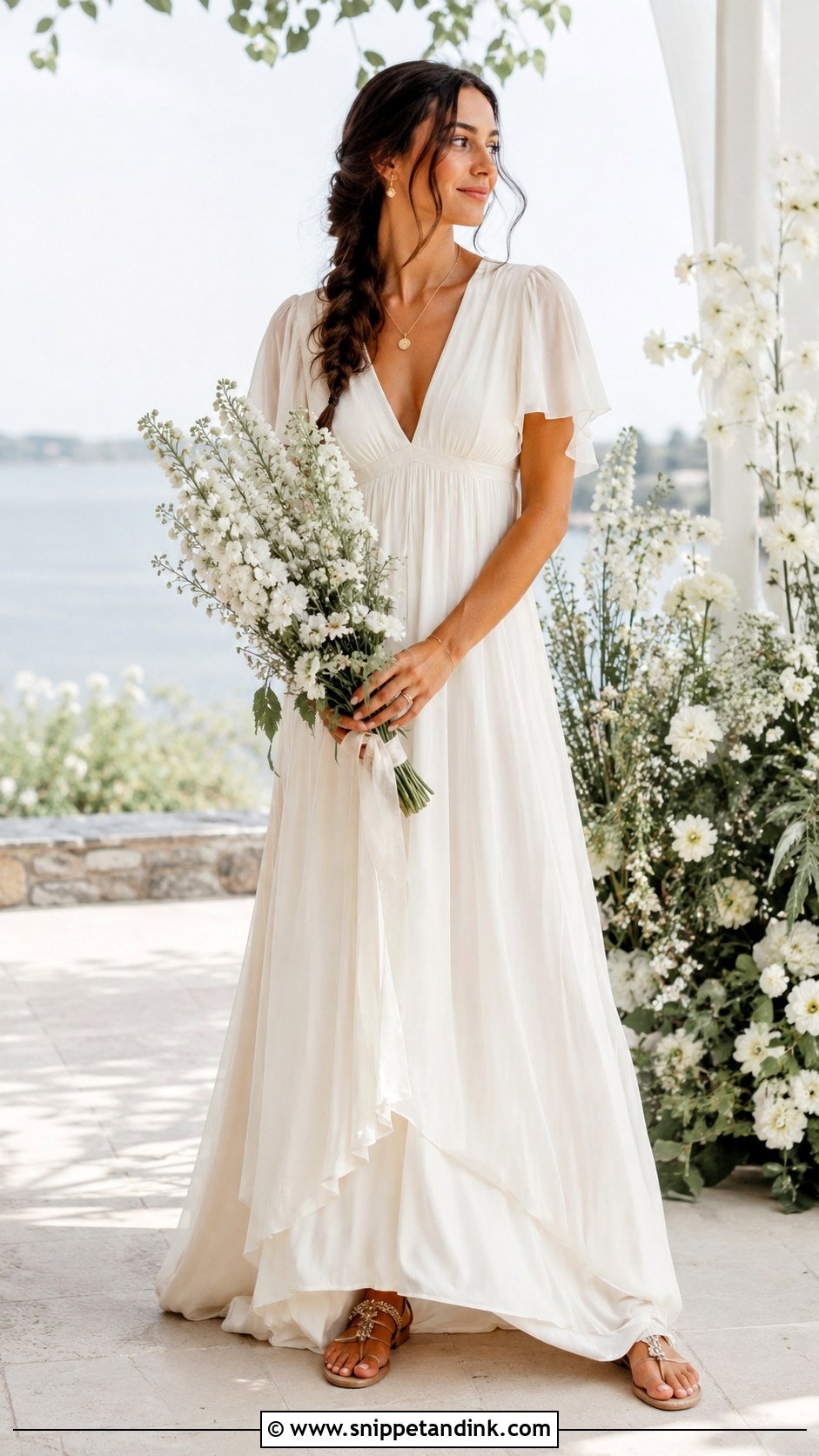
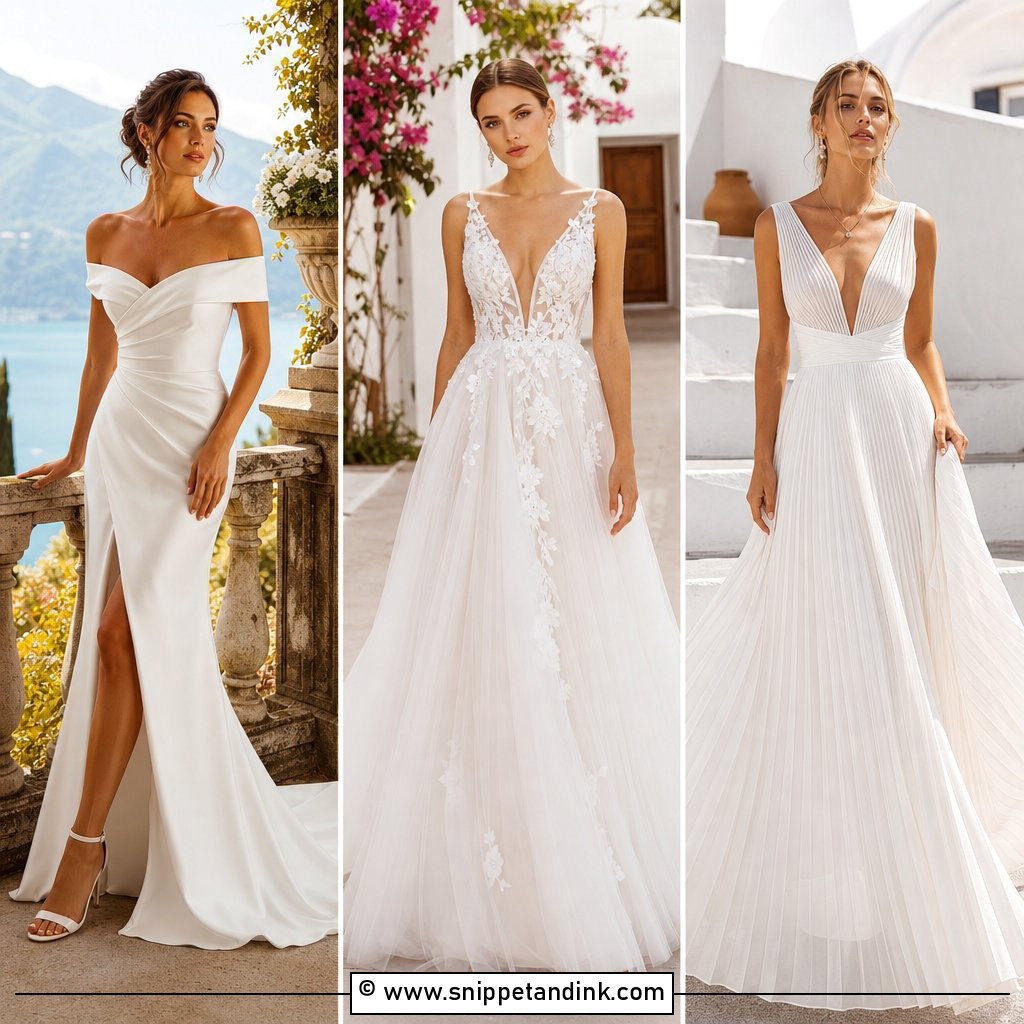
Warm-weather chiffon moves with every breeze, and an empire waist leaves the waist and hips free. I’d choose a softly gathered bodice, flutter sleeves and a layered skirt over an ivory, cream or pale champagne lining, which gives the chiffon depth. On lawn, low wedges are steadier than heels; on paving, flat embellished sandals are fine. Fine gold earrings and a slim bracelet suit it better than statement pieces. A loose braid or softly pinned curls keep the mood, with delphinium and eucalyptus in the bouquet. Single-layer chiffon goes sheer in sun, so I check the lining outdoors from front, side and back.
5. Botanical Lace Wedding Dress
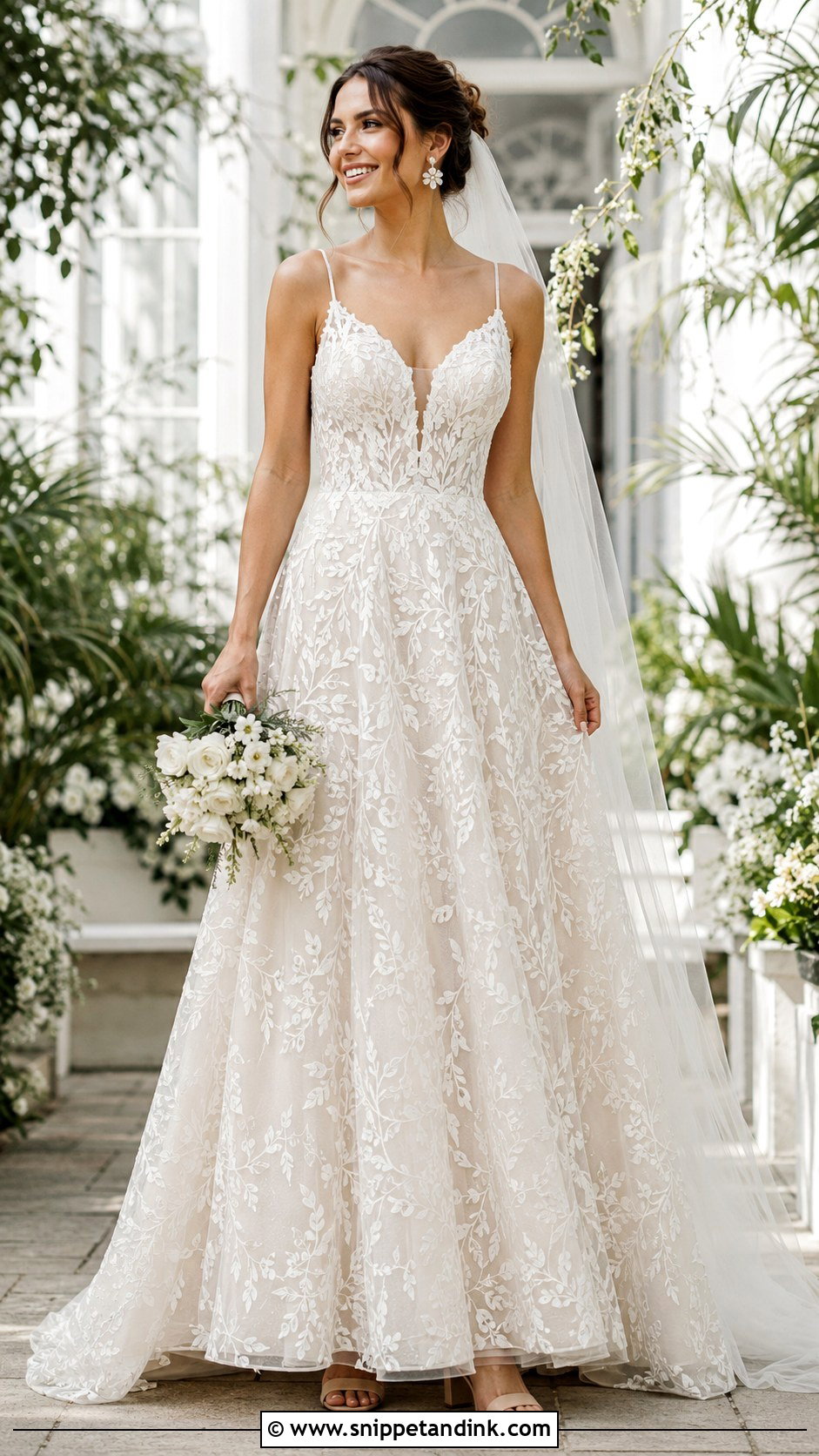
Leaf and vine embroidery brings the setting right onto the gown, so everything else should calm down. I’d look for an A-line or fitted shape in embroidered tulle with a soft neckline and a train sized for the venue. Nude or ivory block heels, tiny floral earrings and a clean-edged veil coordinate without competing. A relaxed chignon with a few leaf pins at the back is plenty. Carry blooms that echo the embroidery, loosely arranged. Too many floral elements and the bride starts to look themed, so with detailed lace I keep the bouquet restrained, the makeup natural and the jewellery minimal.
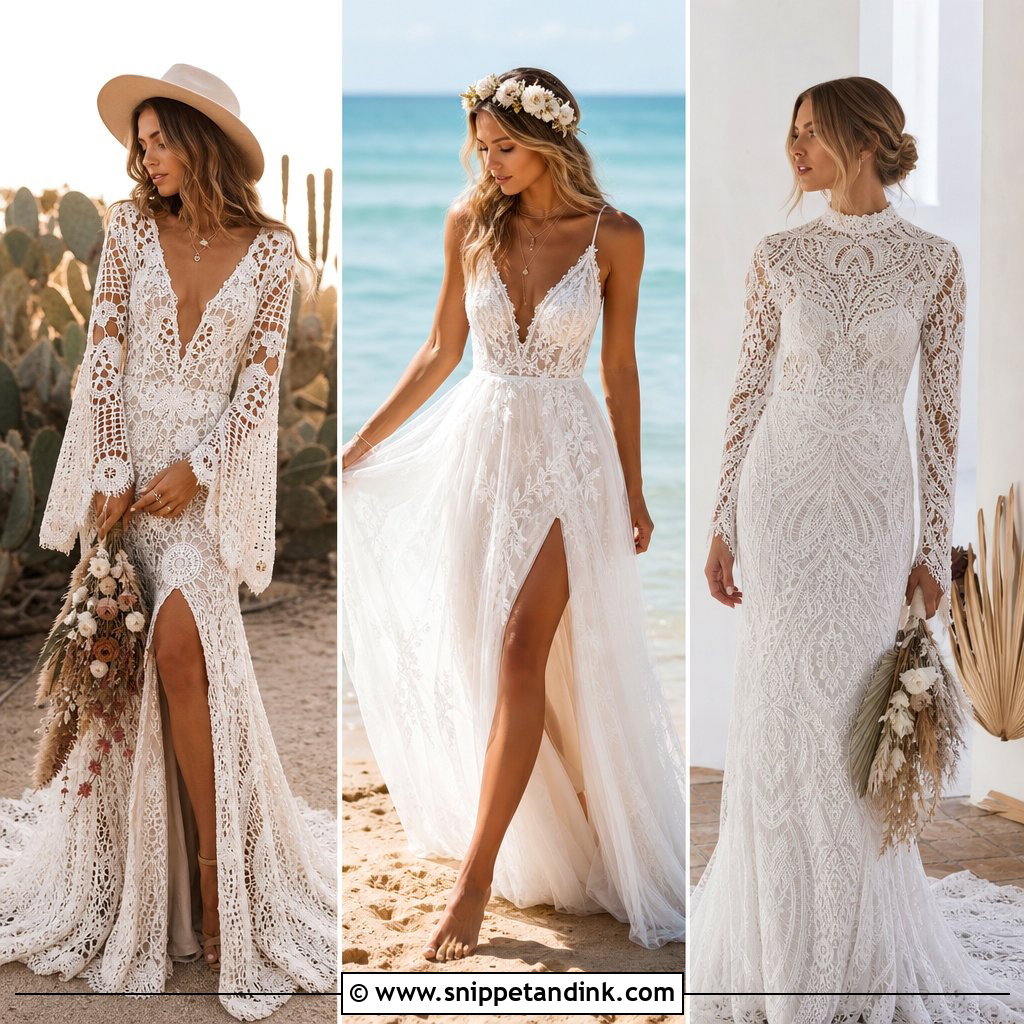
6. Long Sleeve Boho Wedding Dress
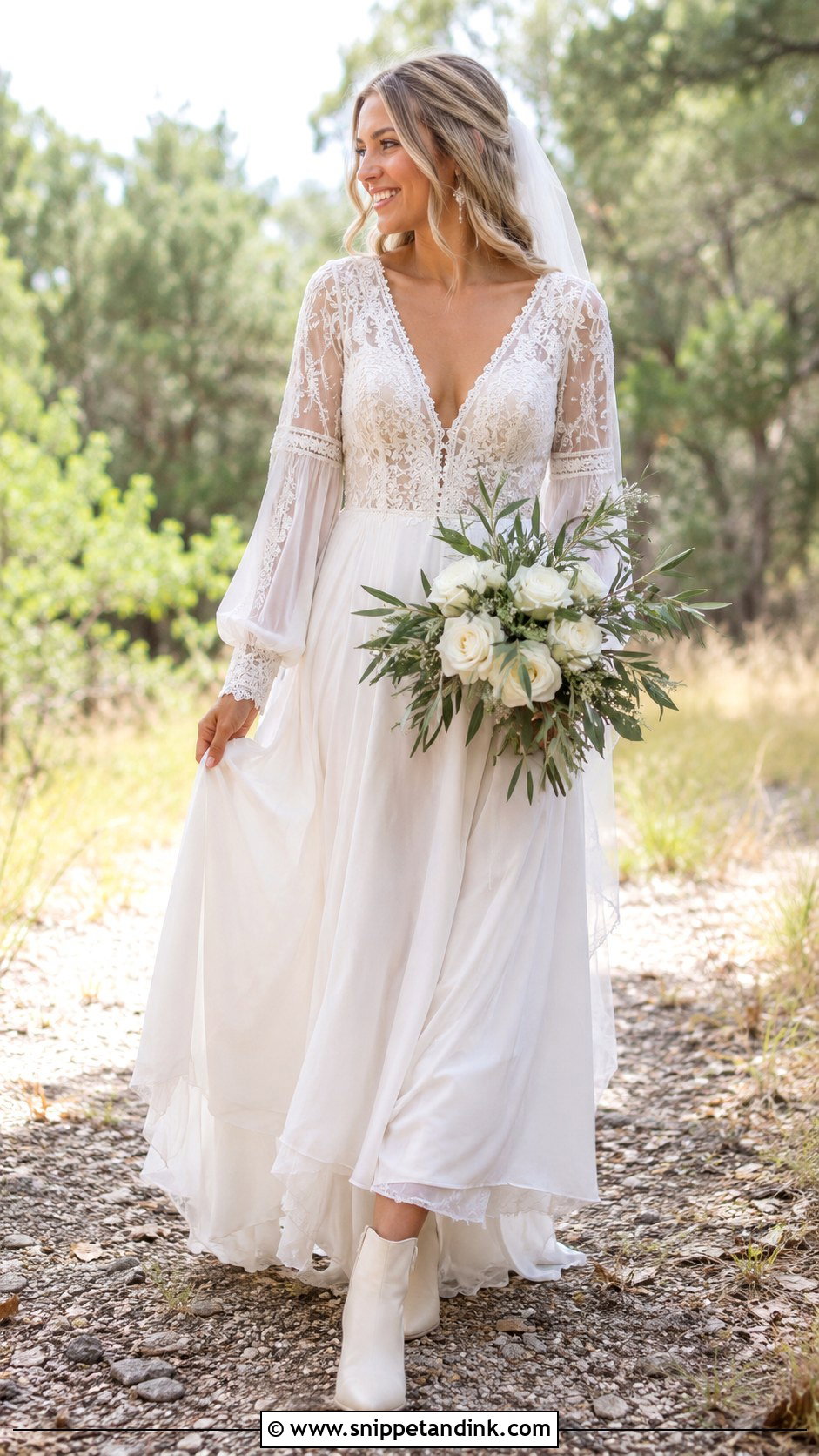
Cool outdoor ceremonies need sleeves that do real work. I’d go for a V-neck bodice, fitted waist and flowing skirt with lace sleeves finished in a secure cuff, or lightly gathered bishop sleeves if you want movement. Ivory leather ankle boots or closed-toe block heels handle cold ground. Subtle drops and a simple veil set under a loose braided updo suit it, with garden roses, olive leaves and textured greenery in the bouquet. At the fitting I ask brides to lift both arms over their head; lace sleeves set too tight at the armhole will pull the bodice up. Cheap lace cuffs can also scratch, so check the wrists.
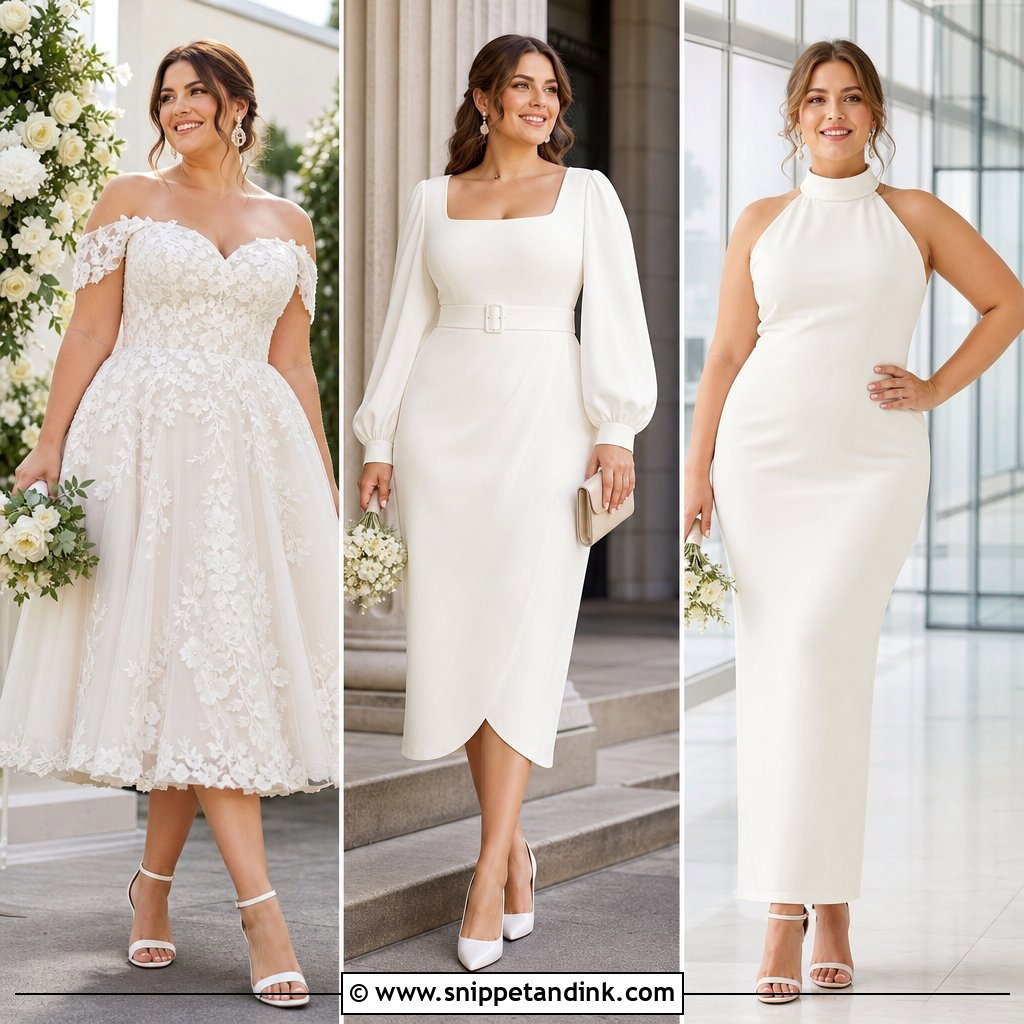
7. Off Shoulder Wedding Dress
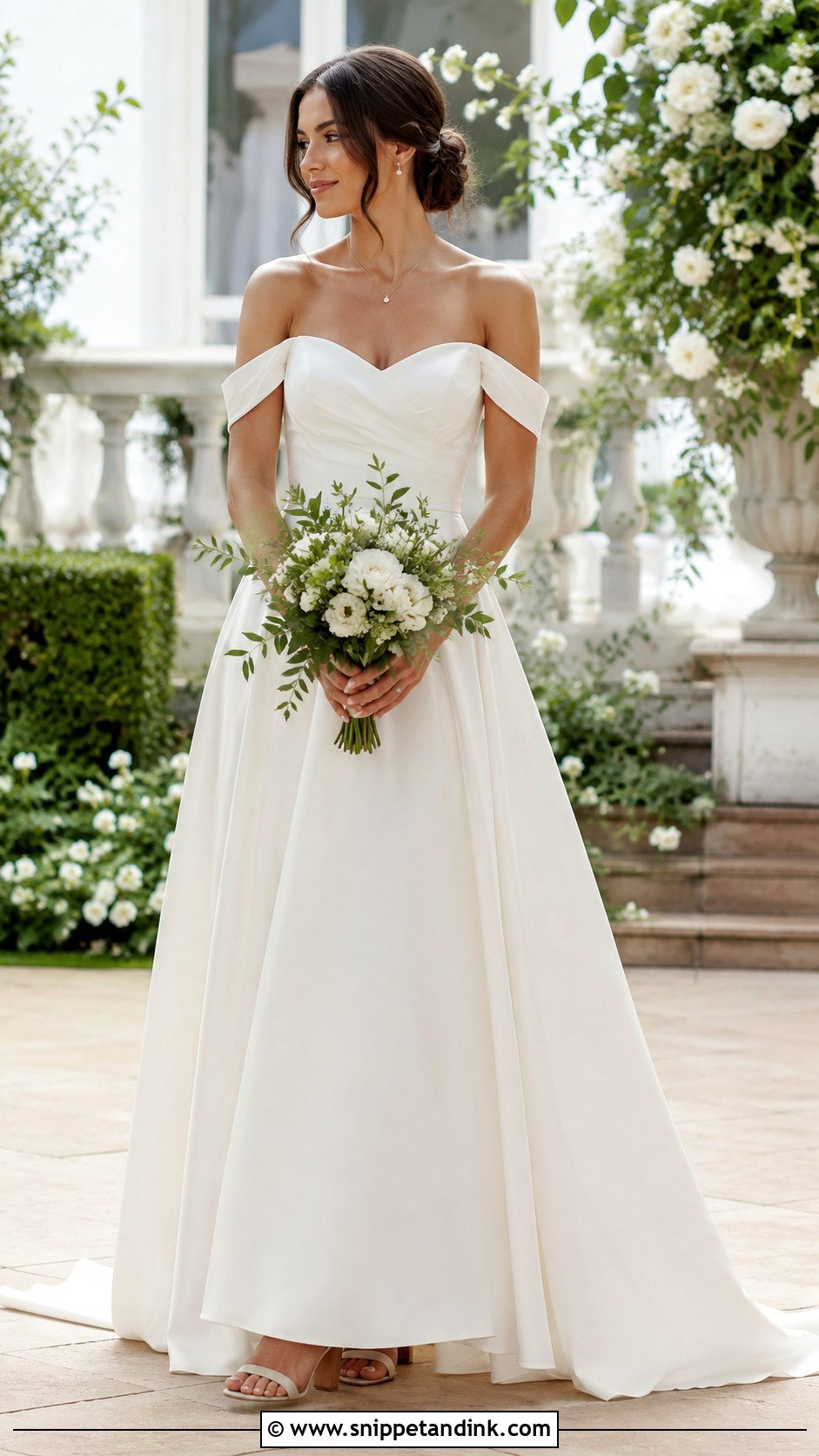
Off-shoulder necklines need structure to stay where they belong. I look for a lightly boned bodice with draped sleeves and an A-line skirt in matte crepe, soft tulle or light silk. The real test at a fitting is a hug: if the sleeves ride up or the bodice drops, the band needs adjusting or a grip strip inside. Style it with a short pendant, small earrings and ivory block-heel sandals. A low textured bun shows the shoulders and anchors a sheer fingertip veil. White peonies, leafy branches and soft filler make the bouquet, and fresh makeup with a natural lip keeps the focus on the neckline.
8. Open Back Lace Wedding Dress
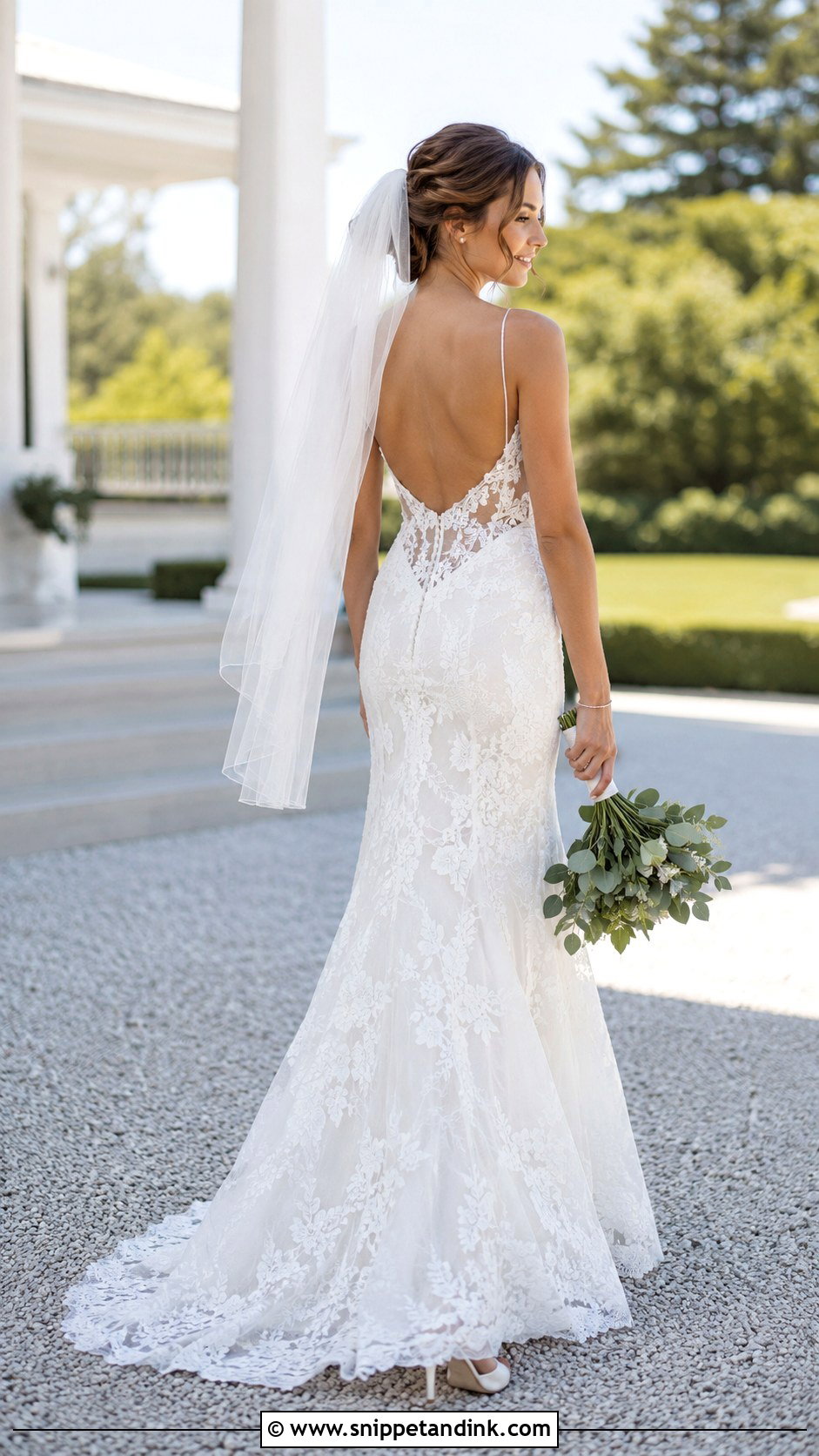
An open back makes the ceremony view from the guests’ seats count. I look for supportive side panels, a fitted lace bodice and a softly flared skirt, with fine straps, covered buttons or a sheer lace panel keeping it secure. Low ivory heels, pearl studs and a slender bracelet are enough. A loose bun or side braid keeps the back visible, and a chapel veil can add drama for the ceremony before coming off. Raise support early with your seamstress, since a standard bra won’t work here and sewn-in cups need time to fit. A simple bouquet of white flowers and trailing greenery finishes it.
9. Simple Crepe Wedding Dress
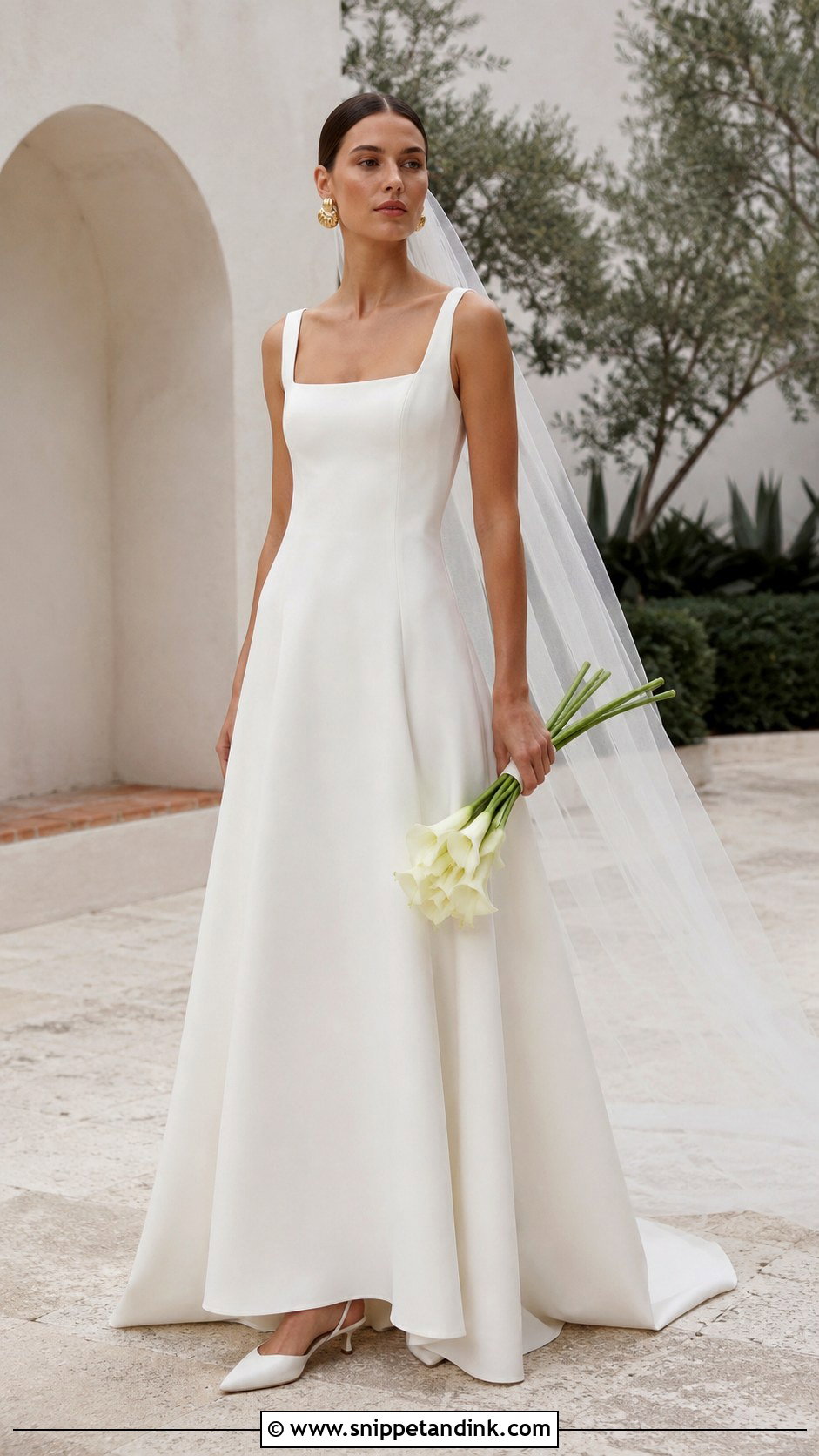
Matte crepe suits a bride who likes clean lines. A square or bateau neckline, wide straps and a column or subtle A-line skirt let the seams do the shaping, without lace, sequins or beading. Pointed ivory flats or low slingbacks, sculptural gold earrings and a small structured clutch finish it, with a sleek low bun and a plain cathedral veil. One flower variety, such as calla lilies or white tulips, keeps the bouquet modern. Crepe is unforgiving over undergarment edges, so I’d bring laser-cut, edge-free options to every fitting and look at the full outfit under both indoor light and daylight.
10. Puff Sleeve Wedding Dress
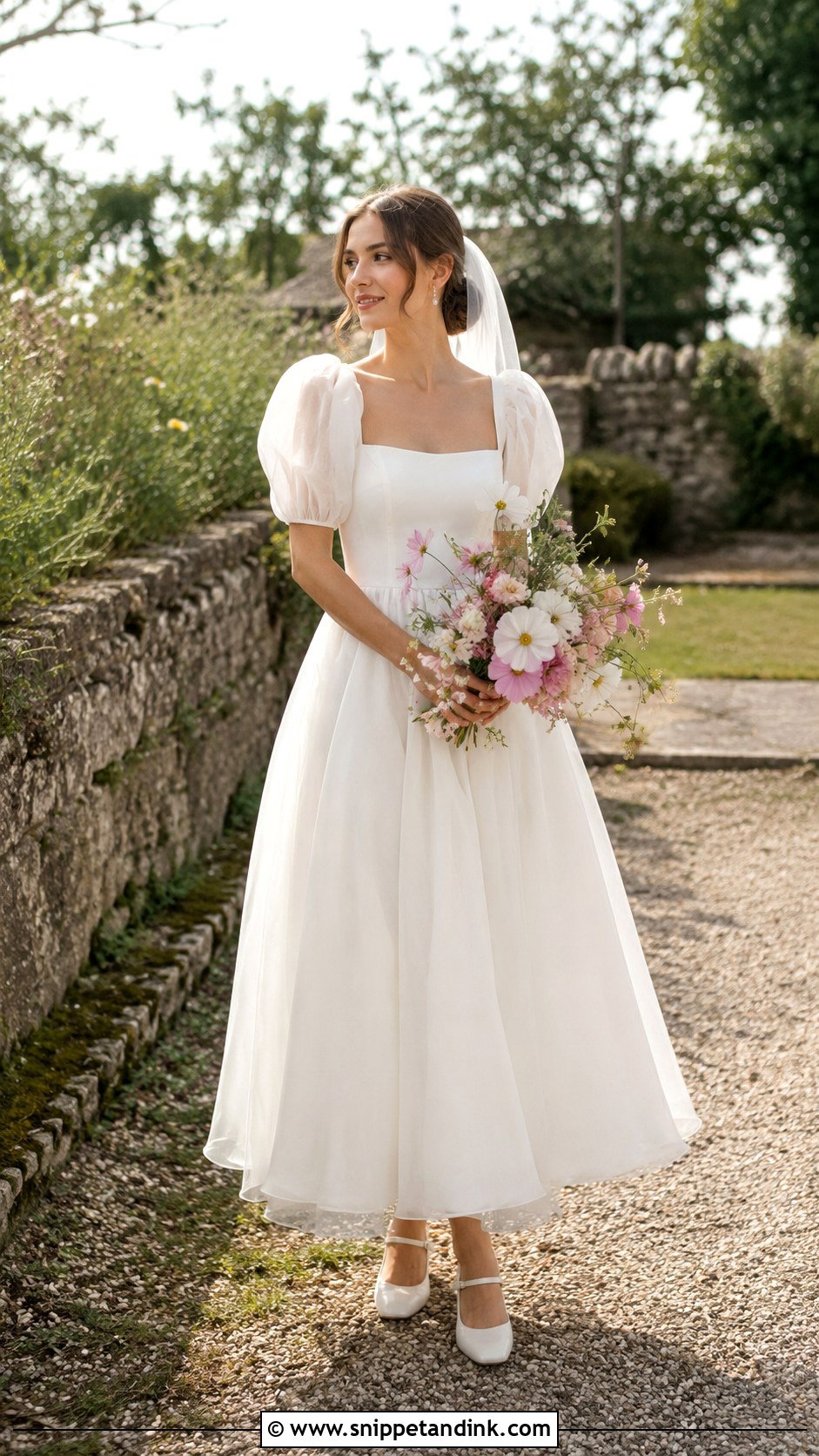
Soft puff sleeves lend a gown a countryside character, and the fabric decides whether they look airy or stiff. I prefer organza, cotton voile or sheer embroidered fabric, set on a fitted bodice with a square neck and a flowing A-line skirt to balance the volume. Ballet flats or low Mary Janes, small pearls and a narrow ribbon in a relaxed ponytail or half-up style suit it. A short veil won’t hide the sleeves. Carry cosmos, sweet peas and loose greenery. Check the cuff or elastic for pinching; a tight band leaves a red mark that shows in close-ups.
11. Tiered Boho Wedding Dress
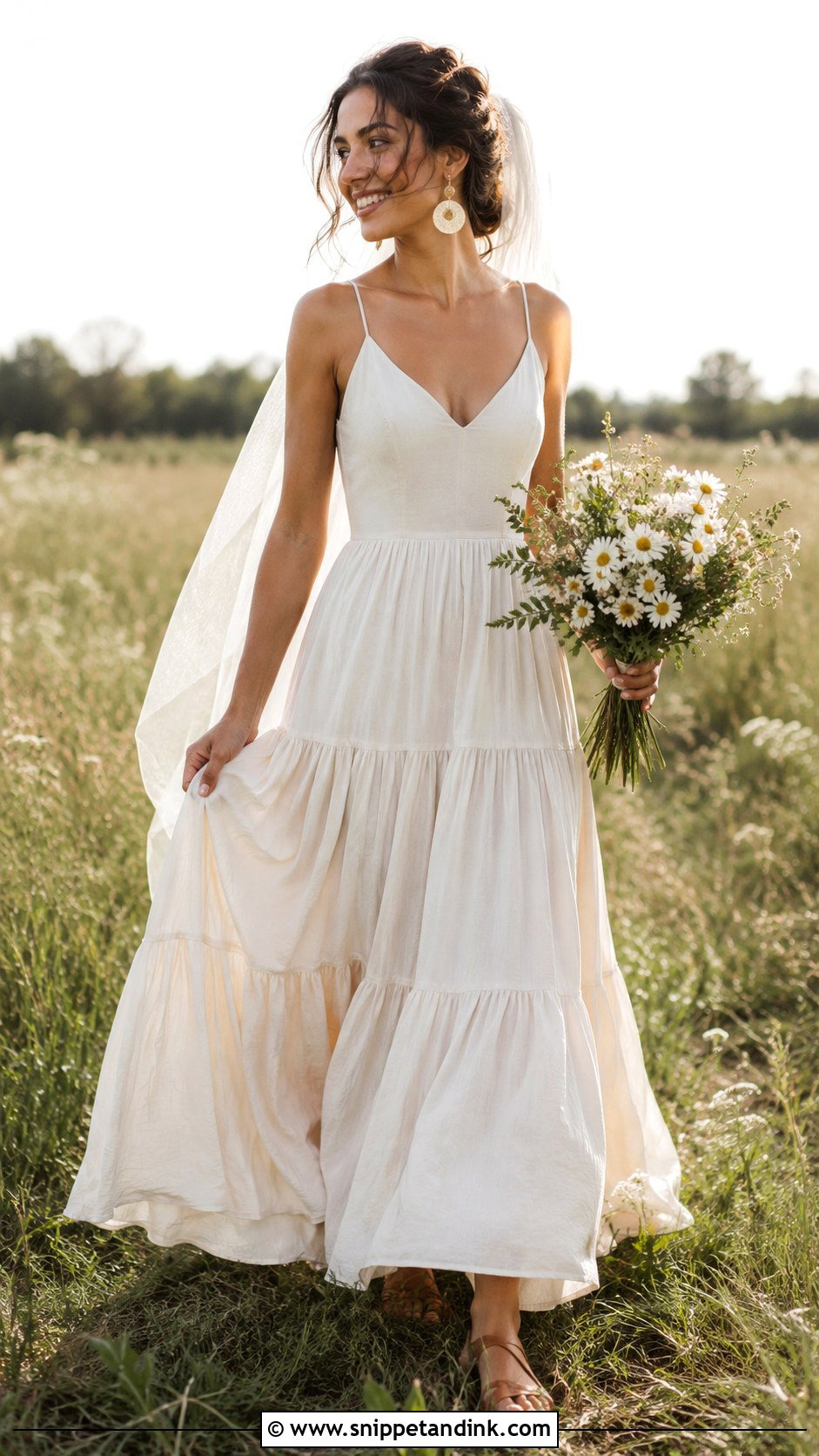
Tiers give movement, but too many and the gown looks like a sundress. I keep it to two or three softly gathered tiers under a streamlined bodice with thin or wide straps. Flat leather sandals, small hammered-metal earrings and a light veil or a hair ribbon finish it, with loose waves and barely-there makeup. White daisies, greenery and a few larger blooms give the bouquet some structure. If the dress has lace or embroidered panels, keep accessories plain. On a shorter bride, I pick narrower tiers and a defined waist so she isn’t swallowed; taller brides can carry a fuller skirt.
12. Floral Embroidered Wedding Dress
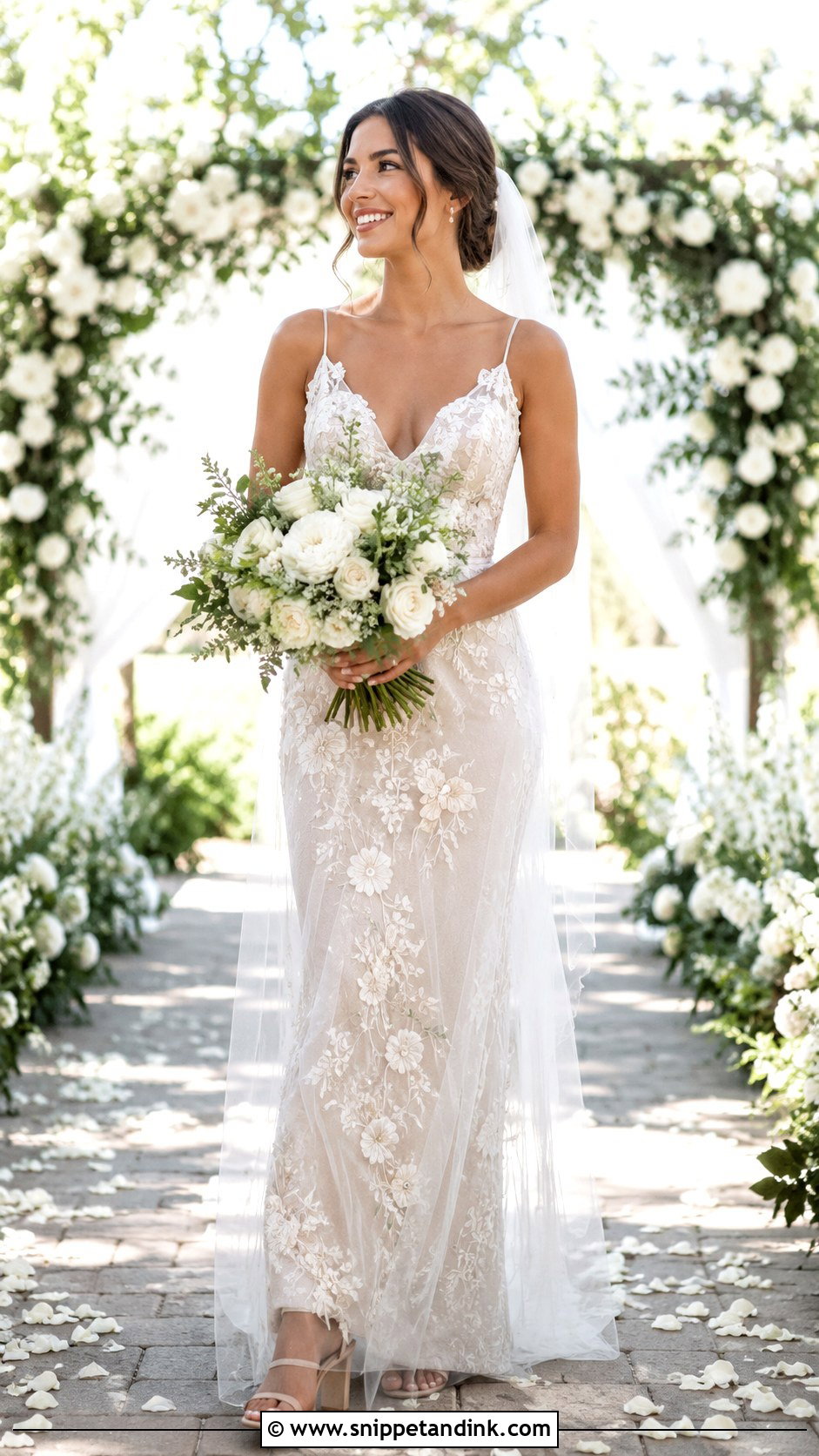
Tonal ivory flowers or pale green stitching can carry a simple shape on their own. I’d look for embroidery across the bodice and skirt on a sheer overlay over a solid lining, so the pattern shows and you stay covered. Neutral block heels, tiny gemstone earrings and a plain veil keep the pattern in front. A softly pinned half-up style and luminous, natural makeup suit it. Limit the bouquet to two or three flowers in colours from the dress. If you need alterations, find someone used to embroidery; a careless seam can slice a motif in half right at the waist.
13. Tea Length Cotton Wedding Dress
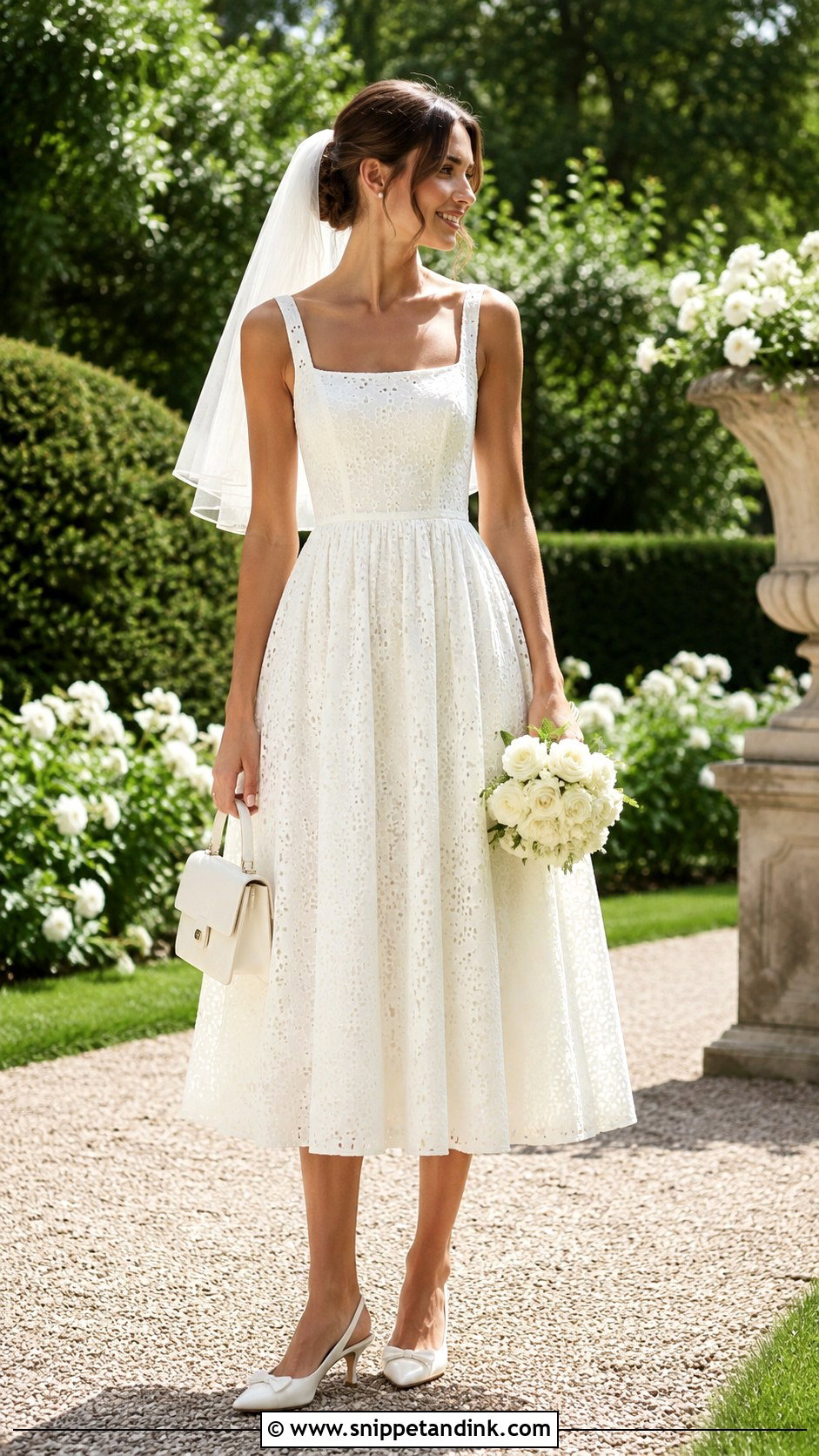
A tea length cotton wedding dress is my pick for a daytime party where you’ll be on your feet. A fitted bodice and defined waist over a skirt between knee and ankle suits most figures. Eyelet, embroidered voile and cotton sateen give different amounts of structure, sateen being the crispest. Shoes are on display at this length, so choose polished ivory flats, low slingbacks or simple block heels. Pearl studs, a small top-handle bag and a short veil or headband finish it, with soft curls or a neat low bun. Pockets are handy, though I make sure they lie flat over the hips.
14. Beach Wedding Dress With Sandals
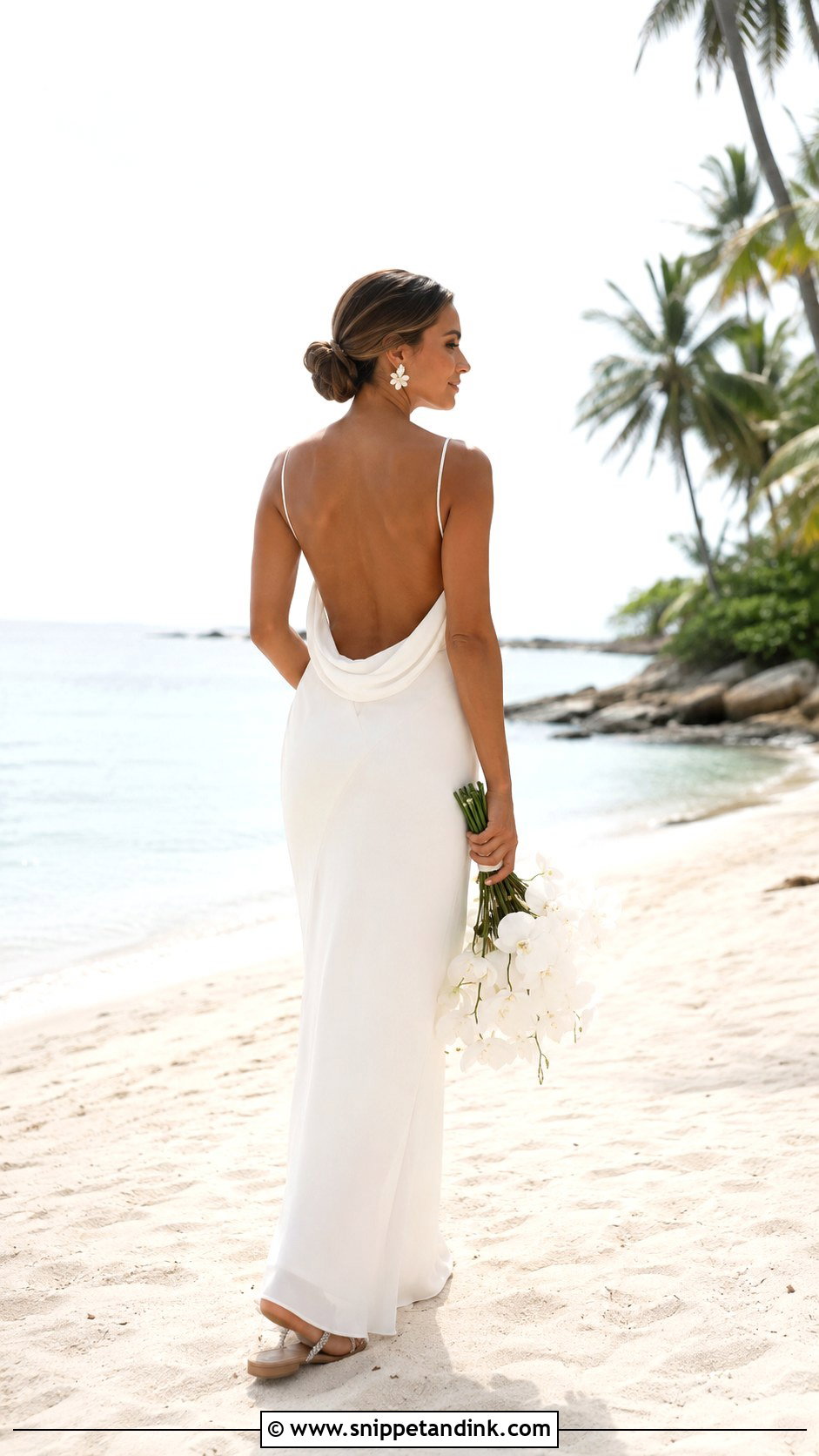
On a beach, the dress has to survive wind, sand and bright sun. I’d choose a lightweight sheath or relaxed A-line with slim straps, a V-neck and an open back, and skip a long train, which drags sand and gets heavy when the hem gets wet. Flat embellished sandals work, or go barefoot with anklets once you reach the ceremony spot. Keep shell earrings small so it doesn’t look literal. Wind lifts loose hair straight across the face, so I’d choose a secure low braid, textured bun or well-pinned half-up style. White orchids and tropical greenery finish it. Check the lining in direct sun.
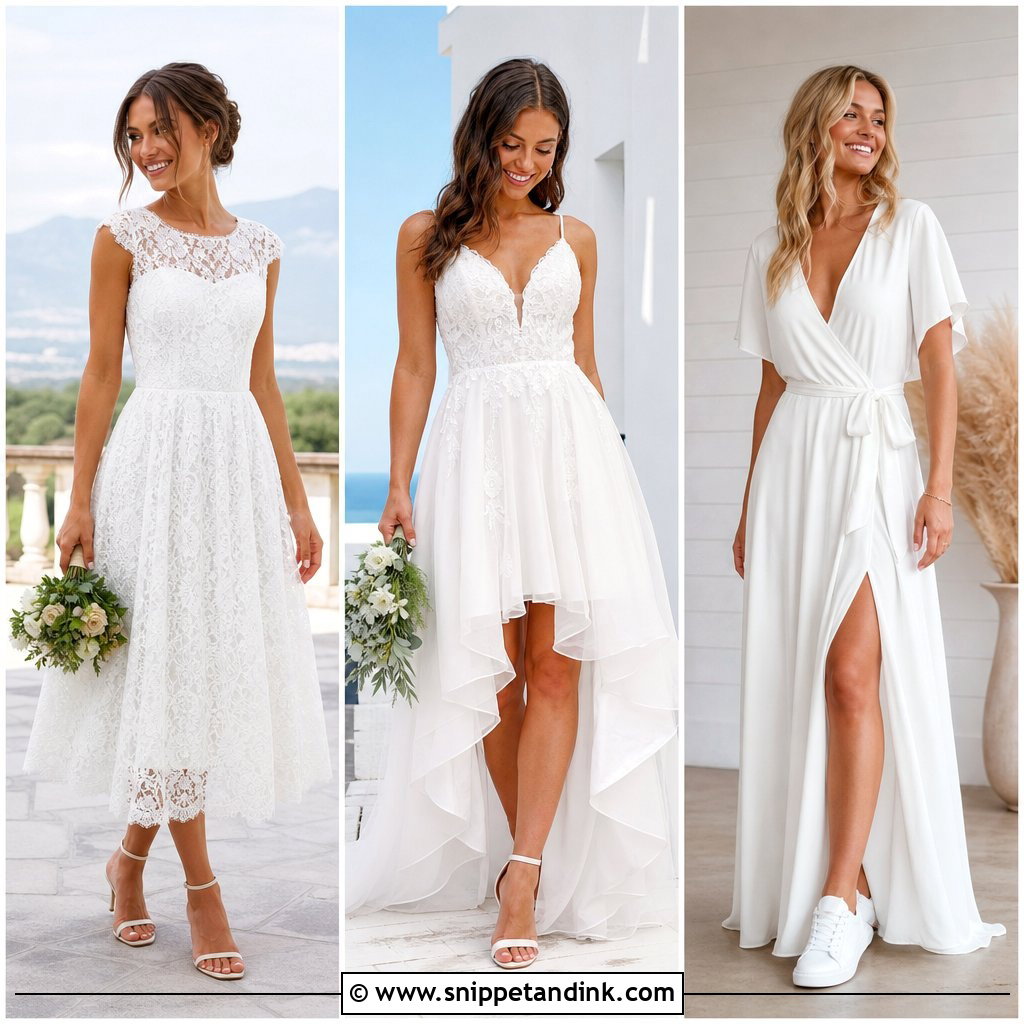
15. Woodland Wedding Dress With Boots
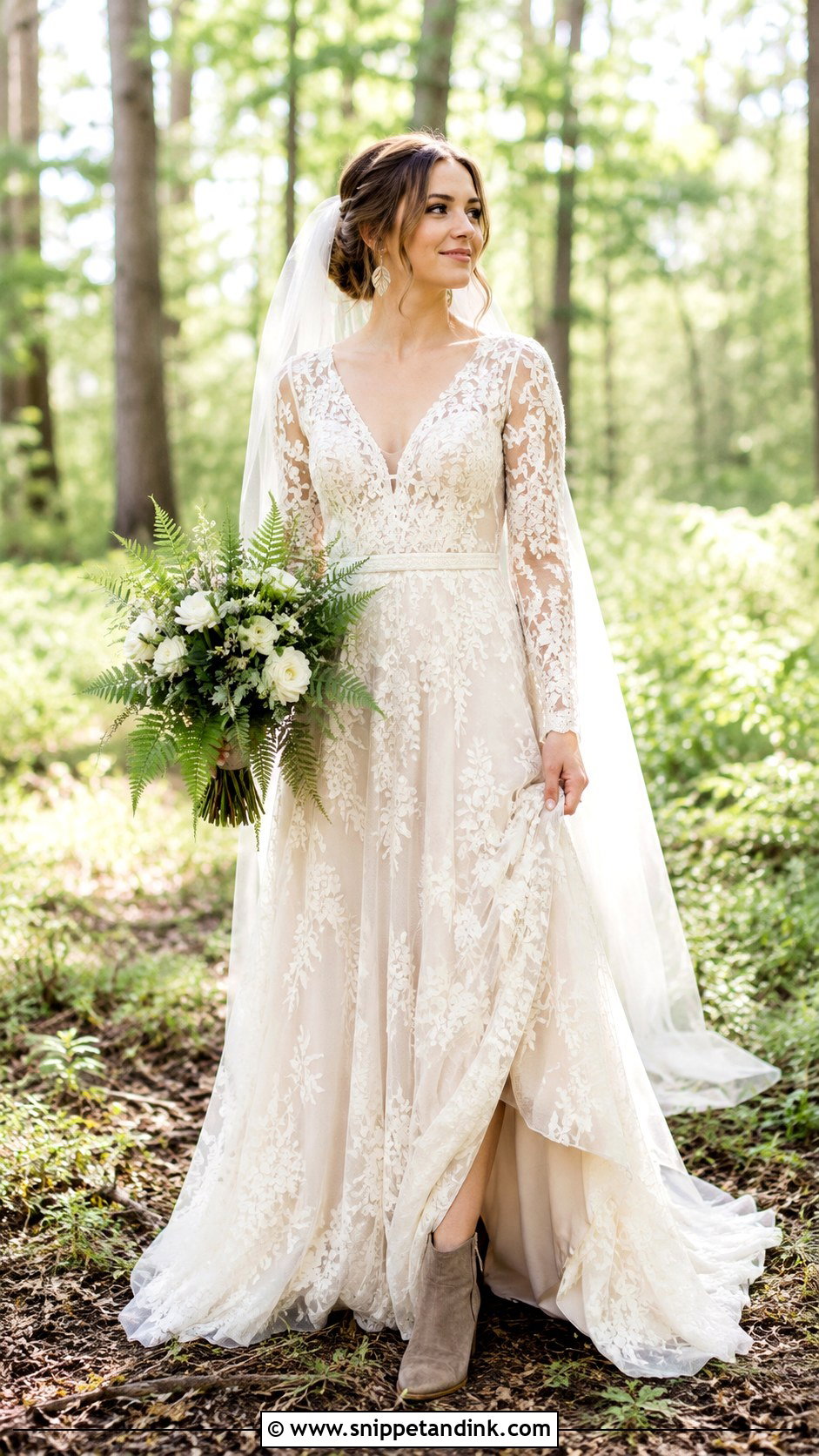
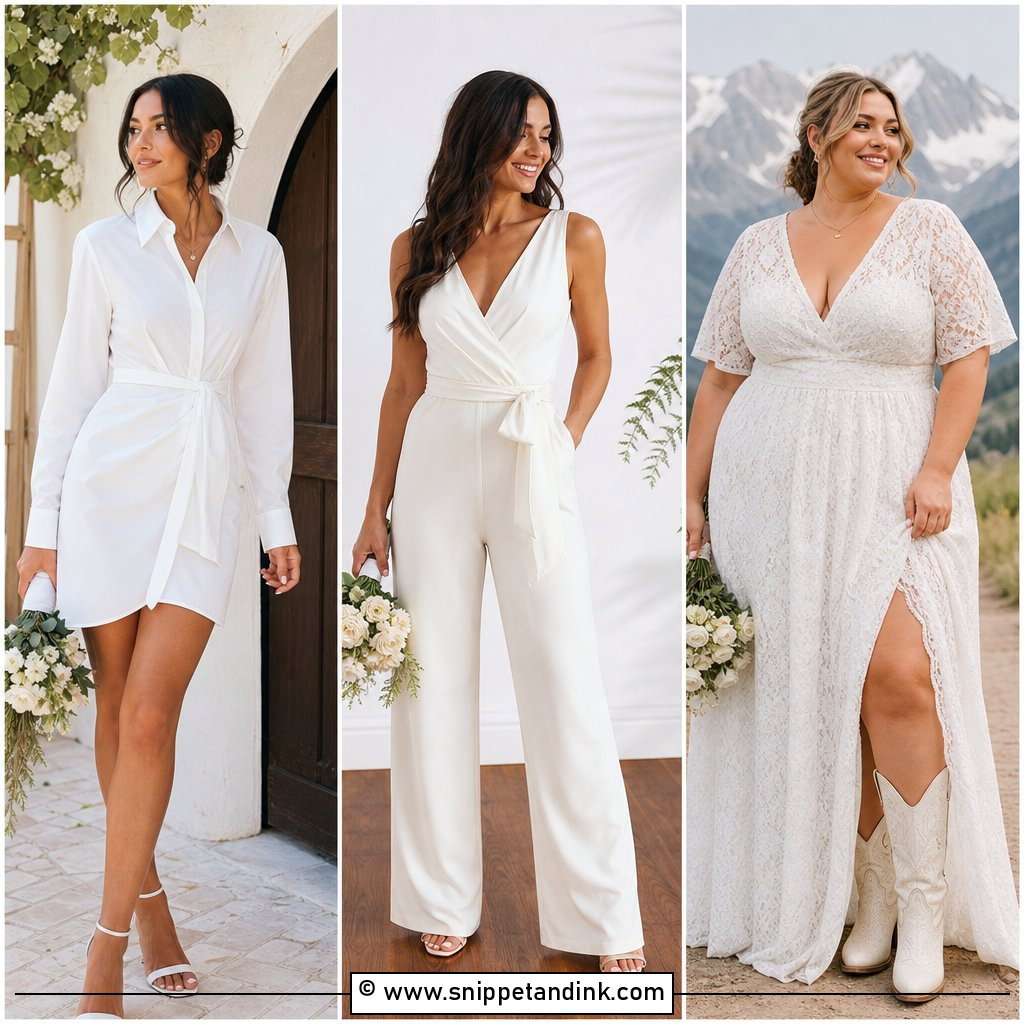
Woodland ground is uneven and often damp, so practicality comes first here. A flowing lace or chiffon dress with long sleeves, a defined waist and a skirt without much volume moves easily between trees. Ivory, taupe or light brown ankle boots with a stable low heel are what I’d put on her feet. Small leaf earrings, a soft tulle veil and a textured low bun with greenery pins suit the setting, with ferns, white flowers and trailing vines in the bouquet. I often have the front hem raised a little so it clears roots. A removable wrap or cropped knit keeps her warm before and after the vows.
16. Garden Wedding Dress With Floral Veil
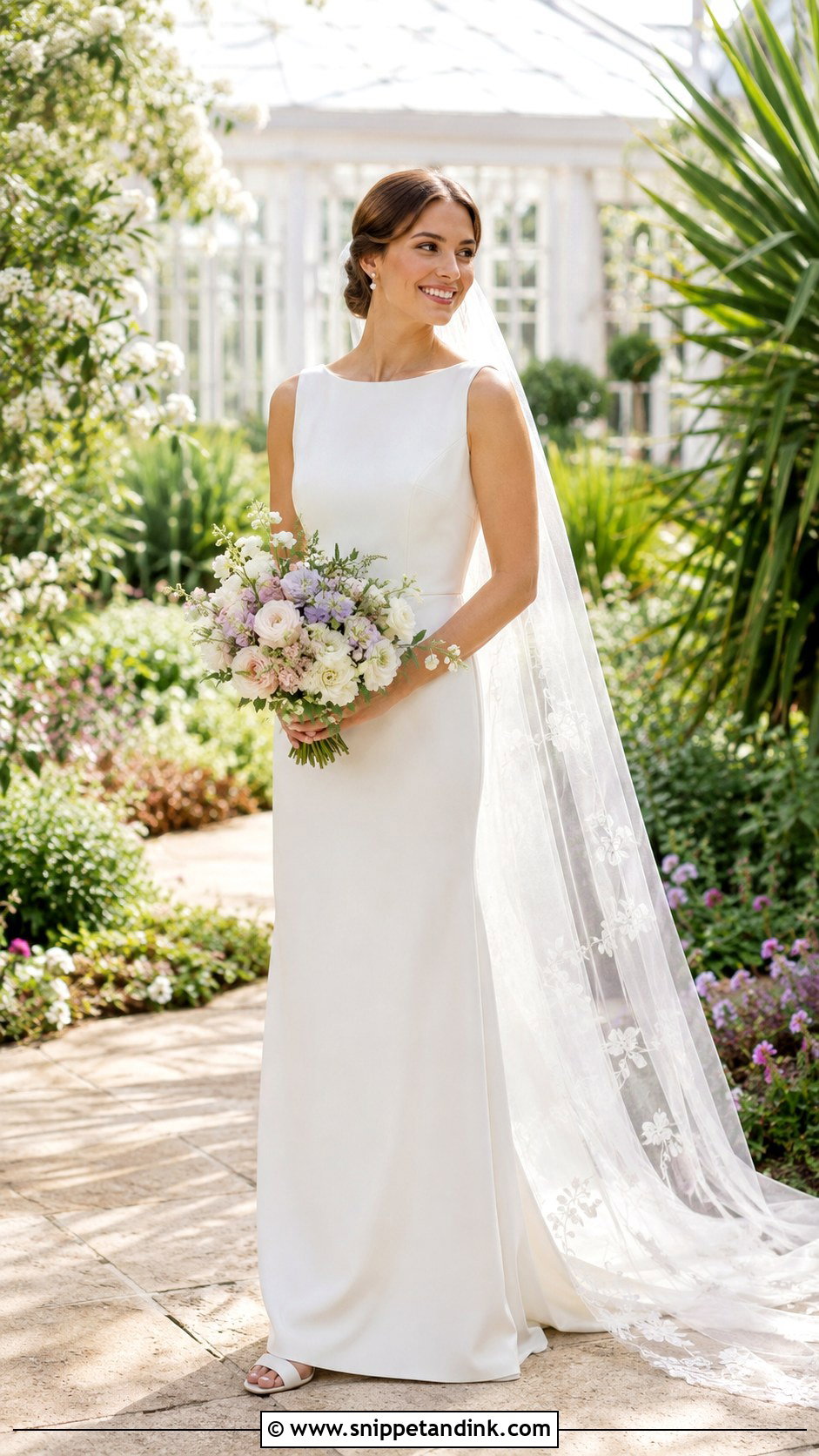
A floral veil can do all the decorating on a plain garden gown. Start with understated ivory crepe, silk or chiffon with a clean neckline and softly fitted waist, then add a sheer veil scattered with embroidered flowers that gather toward the hem. Low ivory heels and tiny pearls are enough; I’d skip the necklace. A polished low bun holds the comb securely. Keep the bouquet to a few flowers that coordinate with the embroidery without matching every colour. Ivories vary more than people expect, so I always hold the veil against the actual dress before buying it.
17. Prairie Wedding Dress With Lace Up Boots
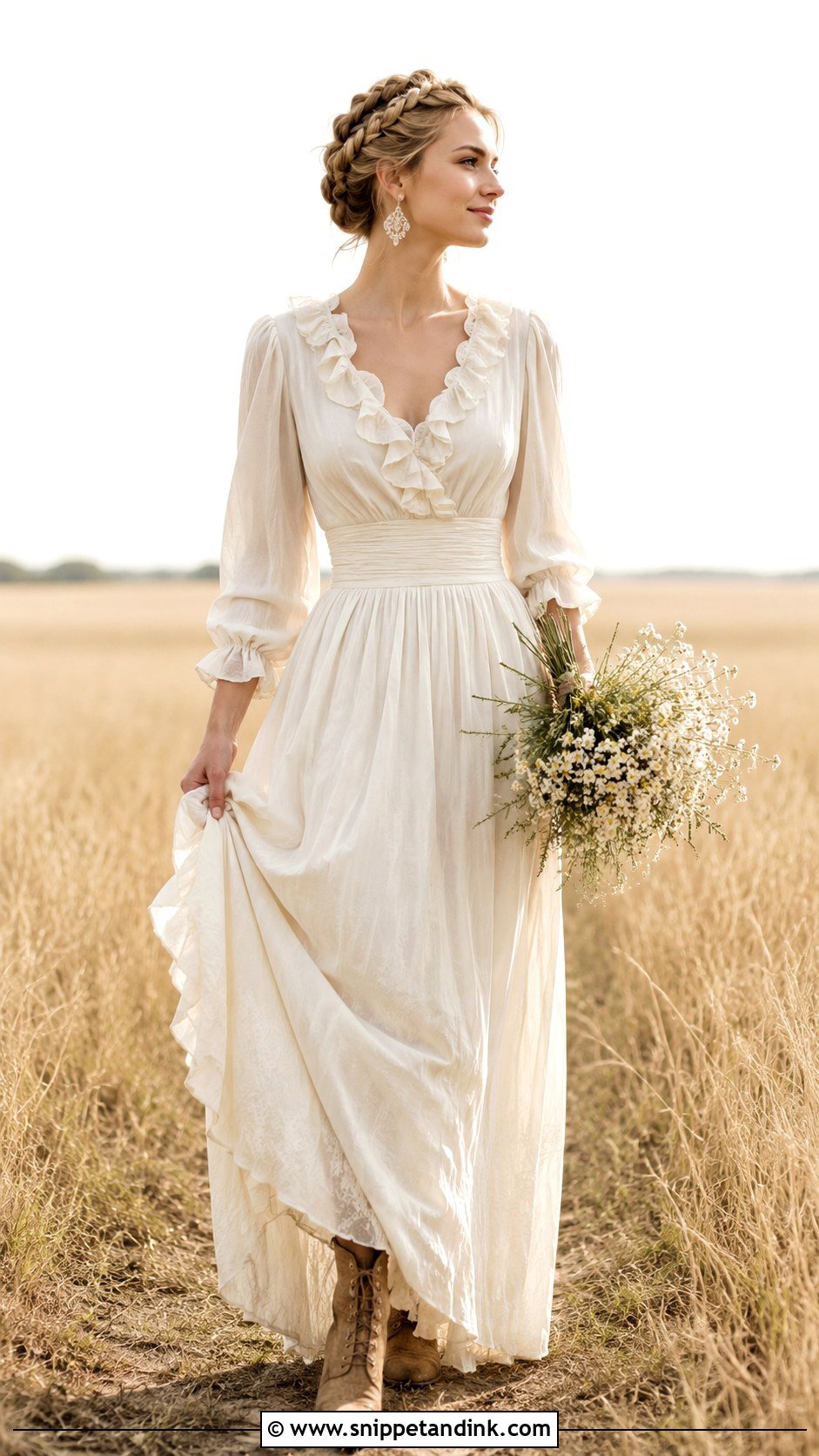
A prairie dress has vintage romance, and it tips into costume easily. I keep the shape modern with a high or softly ruffled neck, fitted waist, long gathered sleeves and a flowing skirt with only light lace or pin-tucks, and fewer layers. Ivory or light tan lace-up ankle boots, small antique-style earrings and a narrow fabric ribbon in the hair suit it, with a loose braided updo. White wildflowers and grasses in a controlled shape make the bouquet. A simple veil or a floral comb both work. Hem the skirt to clear the boot tops, since boot hooks snag fine fabric.
18. Minimalist Wedding Dress With Bridal Cape
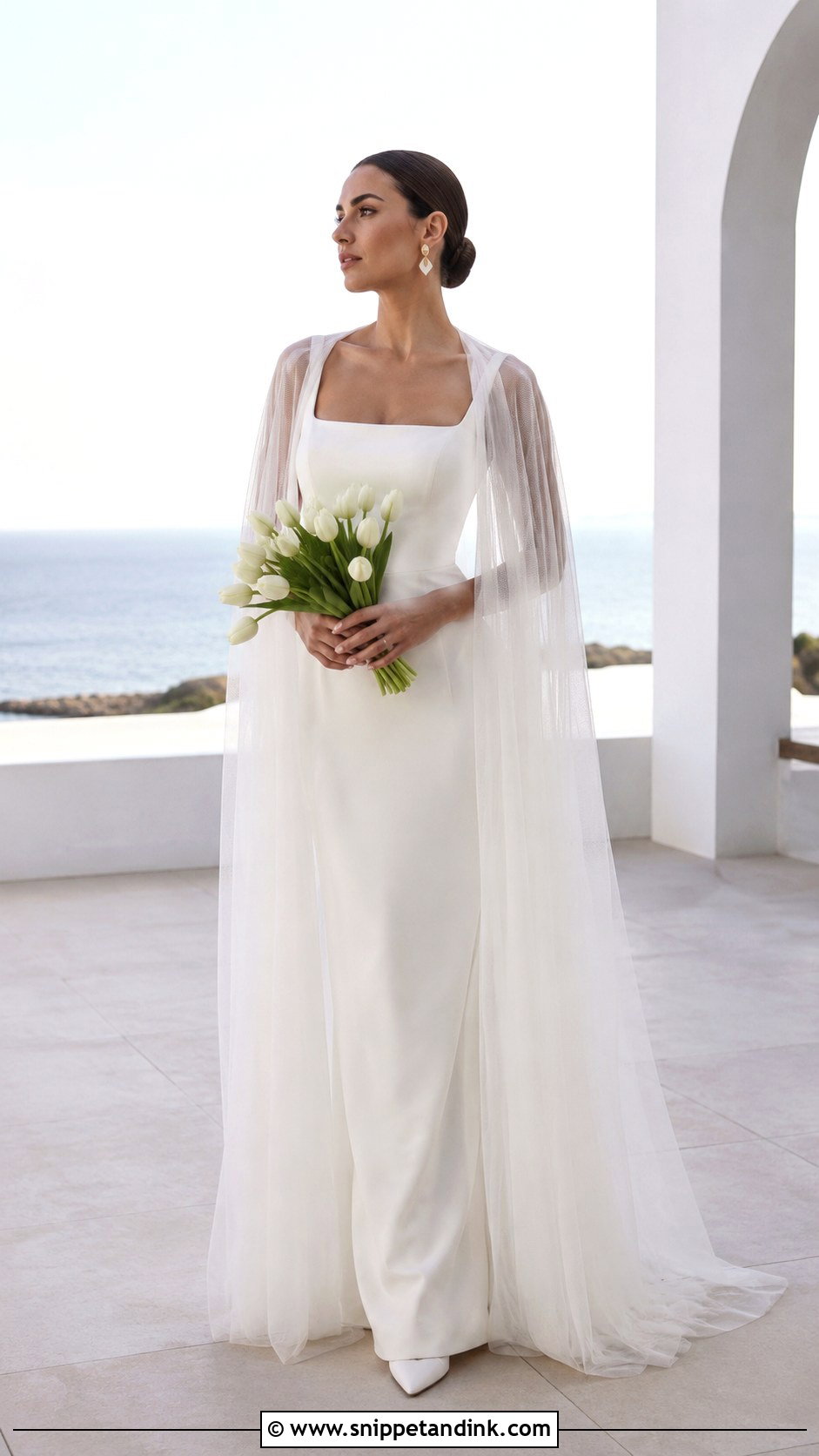
A sheer cape brings ceremony drama to a minimalist gown and comes off for dinner. The gown should be a clean column or A-line in matte silk or crepe, with a square neck, slim straps or plain long sleeves. Attach a floor-length cape at the shoulders or neckline. Pointed flats or low heels, geometric earrings and a compact bouquet of callas or tulips finish it, with a smooth low bun so the cape falls cleanly. I measure the cape against the dress train and the venue floor, because a cape longer than the train collects grit on stone paths.
19. Plus Size A-Line Lace Wedding Dress
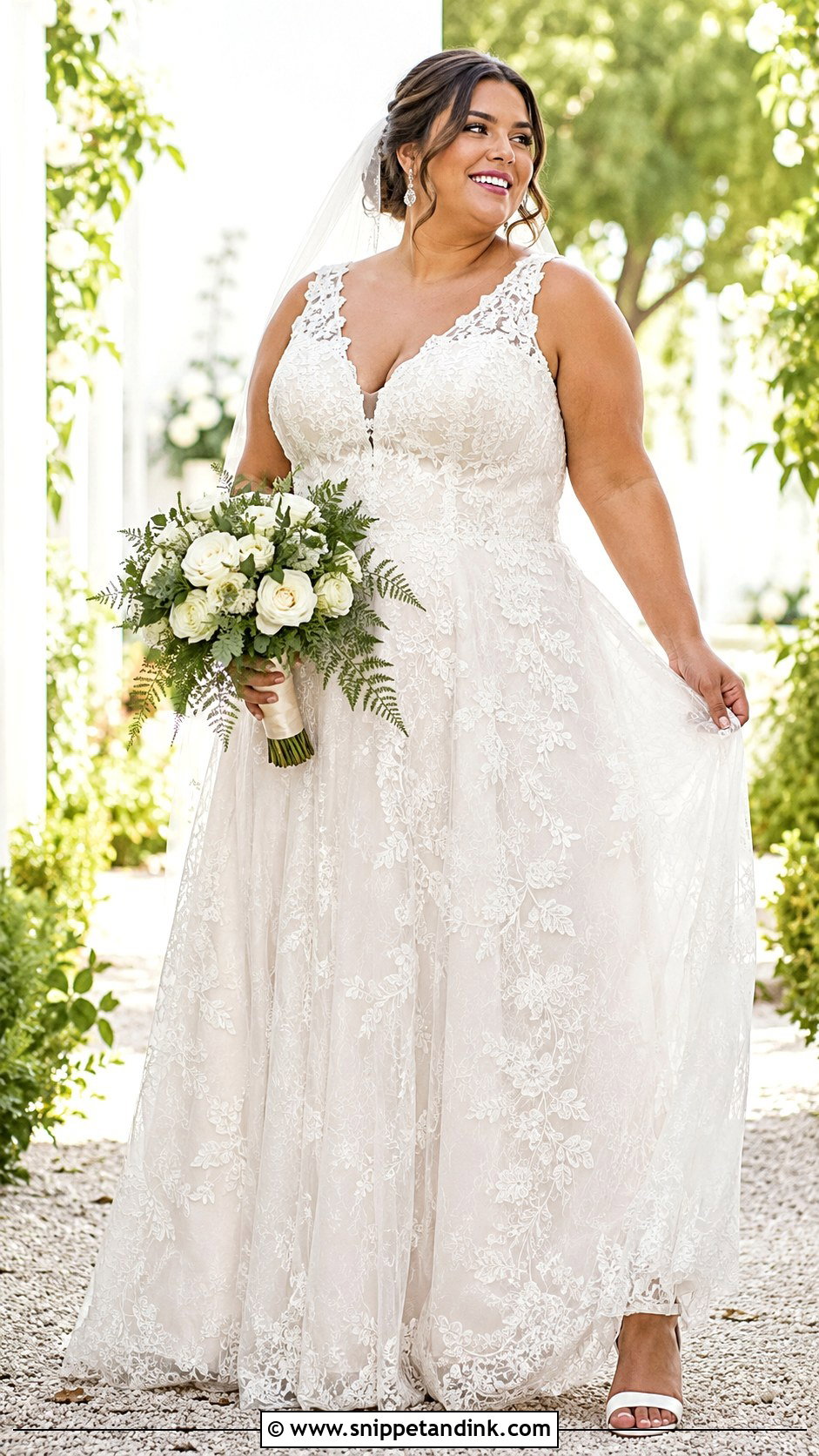
A well-fitted A-line lace gown works across a very wide size range, as long as the support is built in. I look for secure straps, a comfortable neckline and internal structure that holds without digging in, with a skirt that skims waist and hips before flowing out. Botanical lace over a smooth lining gives texture without scratching. Supportive block heels or cushioned flats, medium drop earrings and a light veil finish it, with a relaxed updo or defined waves. Carry a bouquet sized to your frame. I’d always tailor to the body rather than chase a label size, and move around a lot at each fitting.
20. Maternity Empire Waist Wedding Dress
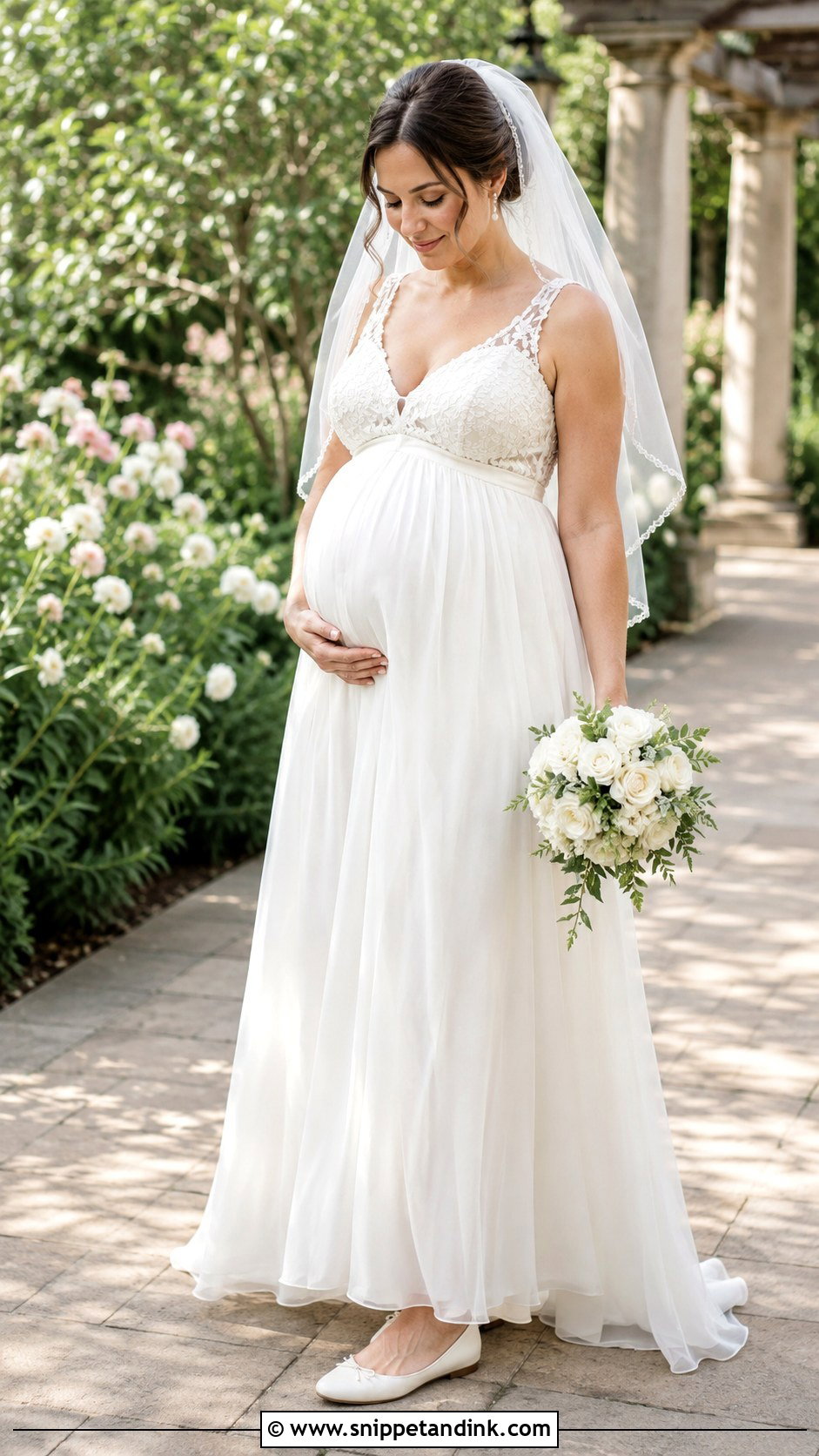
Pregnancy changes the body week to week, and the dress has to allow for that. An empire waist with a supportive bodice sitting under the bust and a chiffon, lace or silk skirt that doesn’t cling to the stomach is the shape I reach for. Wide straps or gentle sleeves let you wear normal supportive underwear. Cushioned flats or low block heels, delicate earrings and a light fingertip veil finish it, with a soft half-up style and a bouquet you can hold comfortably. I book the final alteration as close to the date as the seamstress allows. Skip tight waistbands, scratchy seams and heavy skirts.
Getting the Dress to a Field, Beach or Barn in One Piece
Outdoor venues rarely have a proper getting-ready room, so I plan the dress’s journey as carefully as the bride’s. Ask the shop to steam and bag it with tissue in the folds no more than a few days before the wedding, and lay it flat across a back seat rather than folding it into a boot.
- Bring a handheld steamer and test it on an inside seam first. Linen and cotton take steam happily; silk can water-spot if the steamer spits, so hold it further away.
- Hang the dress from a door frame or tree branch only on its own hanger loops, not by the straps, which can stretch light fabric.
- Pack a small kit: safety pins, clear nail polish for snags, white chalk for marks on ivory, fashion tape and plain wipes.
- Have someone carry a clean sheet to stand on during portraits on mud or sand.
After the wedding, get the gown cleaned within a few weeks. Sugar from champagne or cake can turn into yellow marks on natural fibres over time, even when nothing is visible yet.
Linen or Silk? Let the Venue Decide
The natural outfit that works is the one matched to your body, your venue and how you like to feel in clothes. Flowing shapes, botanical lace, soft ivory and simple accessories can get you there in many ways. Try each gown with the shoes, underwear, veil and jewellery you plan to wear, then move in it as if it’s the reception. Fabric labels and fiber blends are worth reading too, if the material matters to you. From linen to silk, cotton lace to crepe, pick the fabric that suits the ground you’ll walk on and the hours you’ll spend in it.
You'll Like These Ideas:






Leave a Reply