
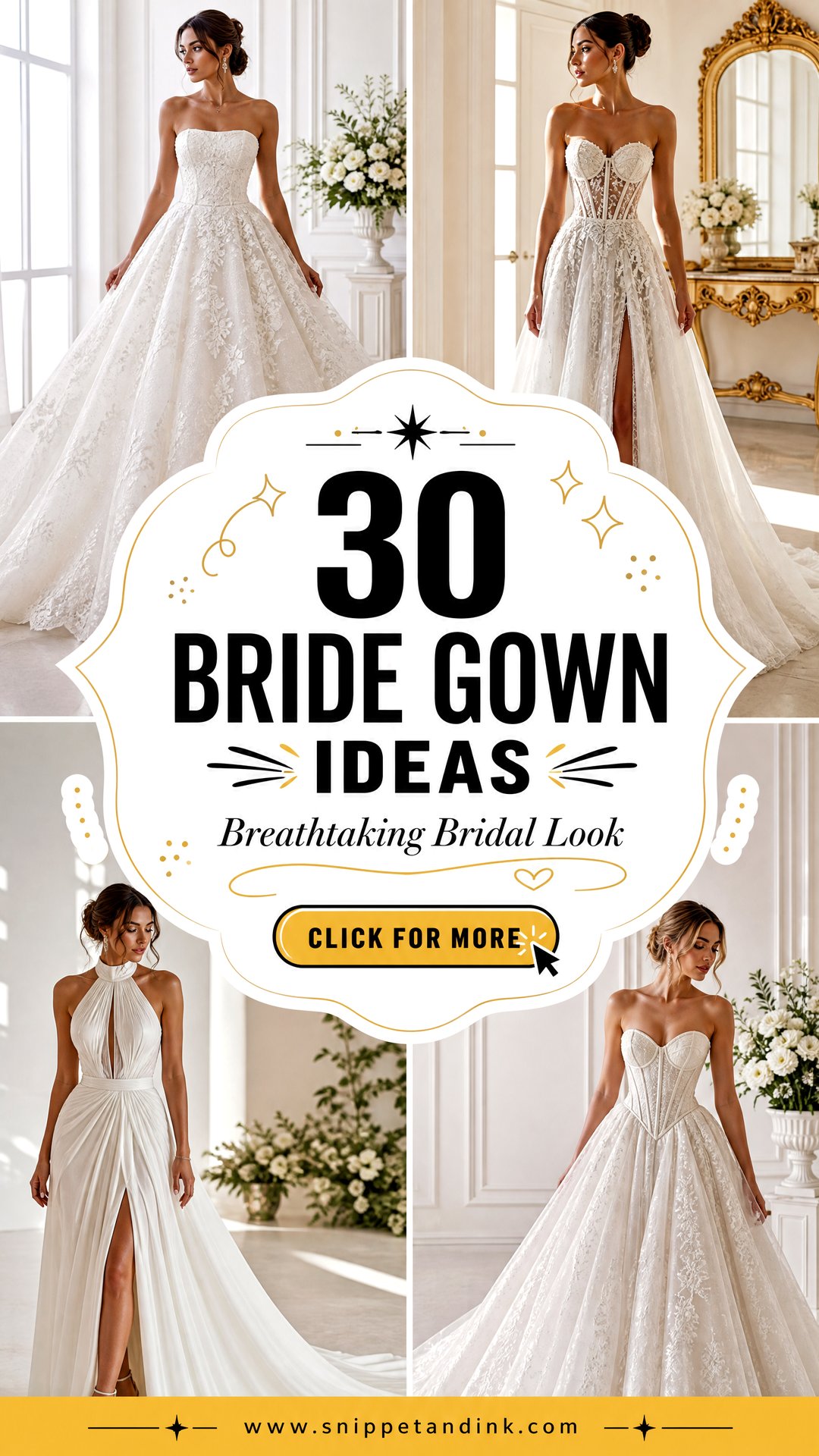
Wedding dress shopping gets easier once you stop judging gowns on their own and start looking at the whole outfit. In the fitting room I watch brides fall for a skirt, then realize the neckline fights the veil they already bought, or the shoes they love disappear under the hem. That’s why each gown below is shown as a full look: the dress plus the veil, shoes, jewelry and hair that suit it. There are ball gowns, bias-cut slips, lace sleeves, minis, detachable trains and a few colored dresses. Use them to work out which shapes fit your venue and your body before you book appointments.
Fabric, Structure and Lead Time Matter Before Silhouette
Most brides arrive with a silhouette in mind. I’d rather start with three questions about how the dress is made, because they decide how it wears for twelve hours.
- What is the fabric doing? Mikado, duchess satin and heavy crepe hold a shape by themselves. Chiffon, charmeuse and soft tulle move, but they need a lining or a corset underneath to keep a line.
- Where is the support built in? Boning, a waist stay and built-in cups mean you can often skip a bra. A gown with no internal structure relies entirely on your shapewear.
- How long will it take to arrive? Made-to-order gowns commonly take four to six months to produce, and alterations need another two to three months. Ordering eight to ten months ahead avoids rush fees.
Remember that boutique samples are often a standard size and clipped to fit you. Look at the shape and the movement, not the exact fit. A good seamstress can change a hem, a strap or a bodice; she can’t change what the fabric fundamentally wants to do.
1. Satin A Line Bride Gown
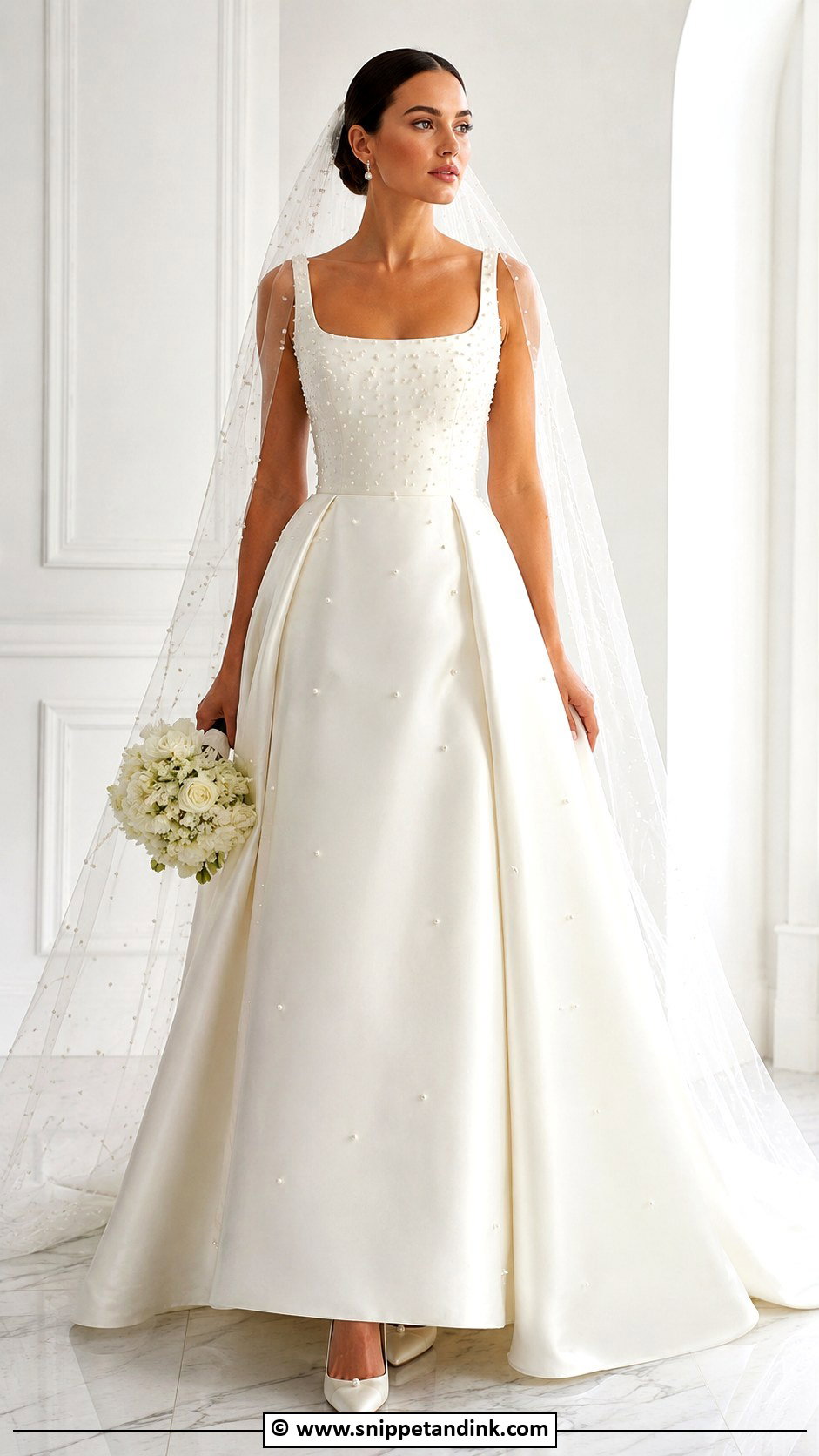
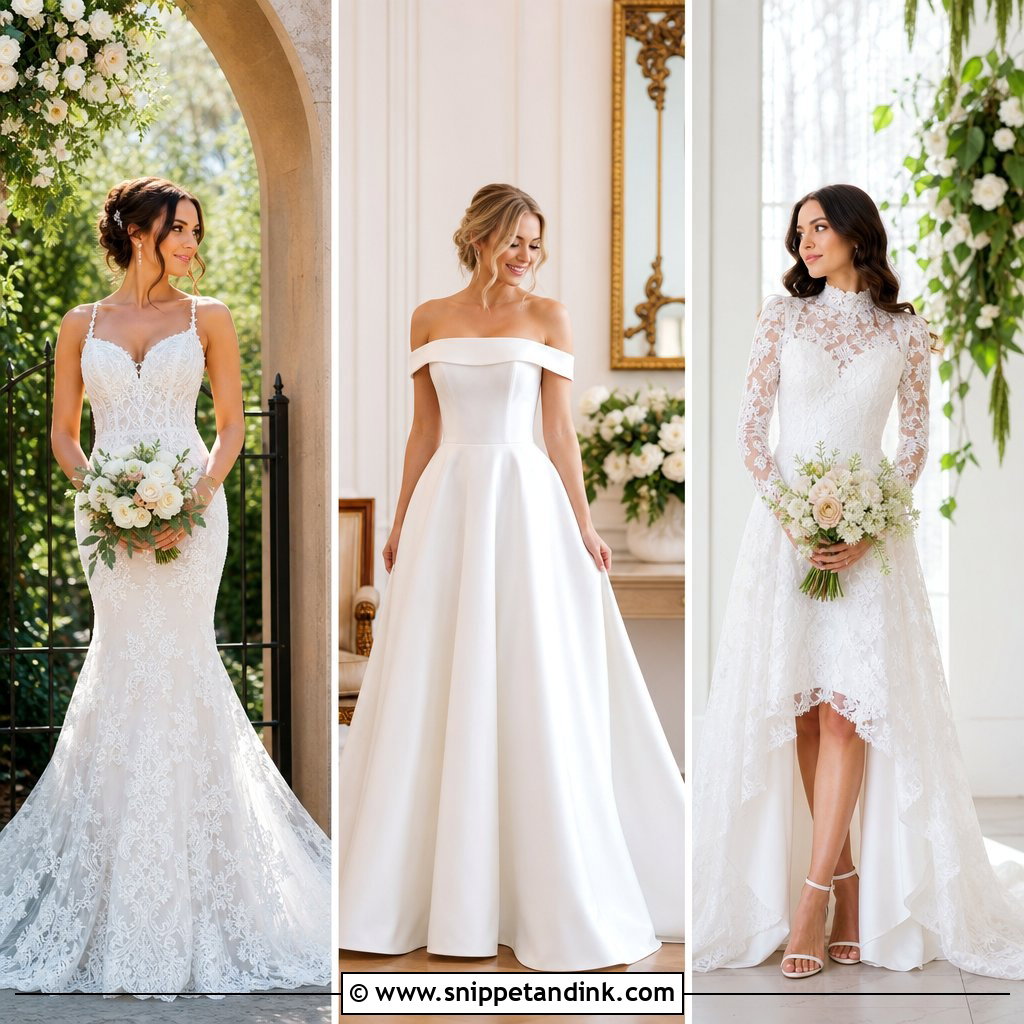
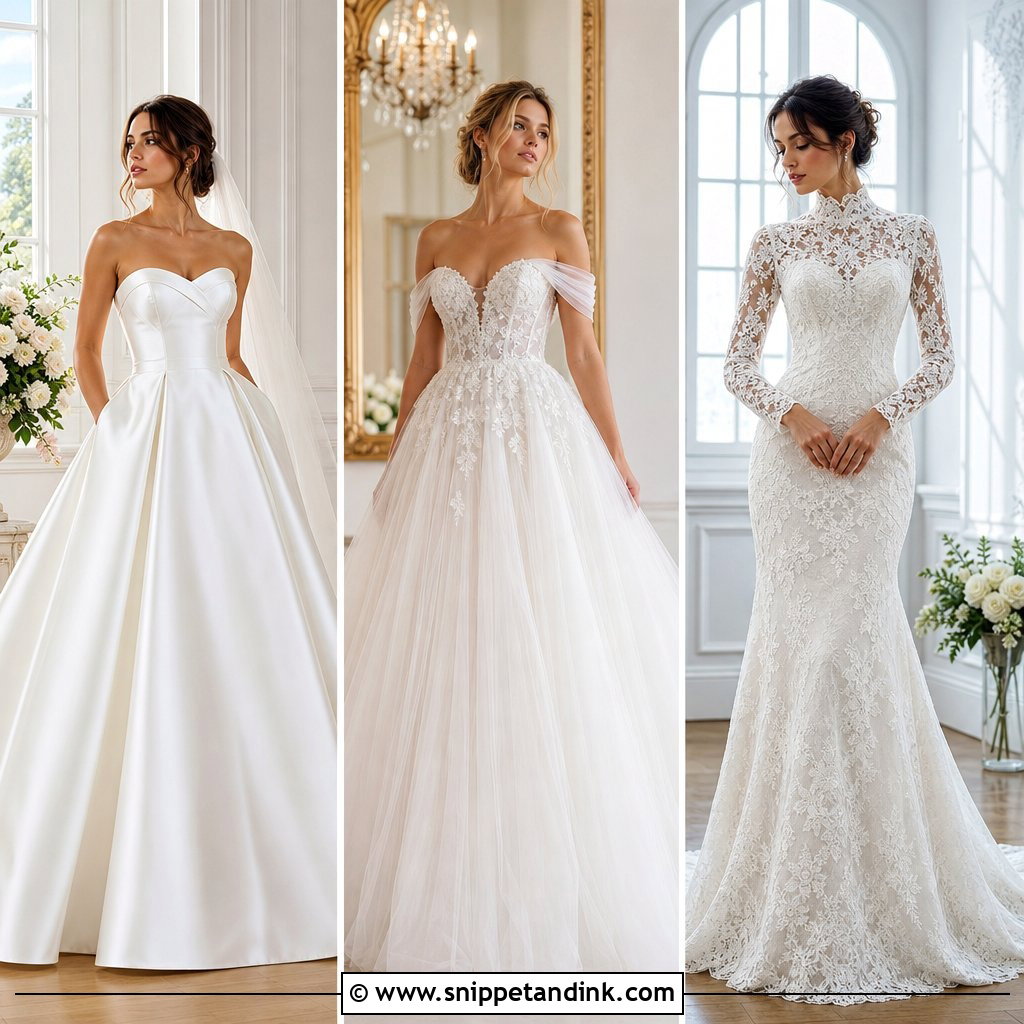
Satin A-line is the shape I pull first for a bride who has no idea where to start, because it shows almost anyone what a defined waist does. The bodice fits close and the skirt falls away from the hips without much weight. Ask whether the satin is a heavy duchess or a lighter charmeuse. Duchess holds the A on its own; thinner satin needs a good lining and will still show every seated crease by the reception. Ivory usually sits warmer against skin than bright white in daylight. A low bun, pointed satin heels, pearl drops and a fingertip veil keep the line clean from front to back.
2. Lace Long Sleeve Bride Gown
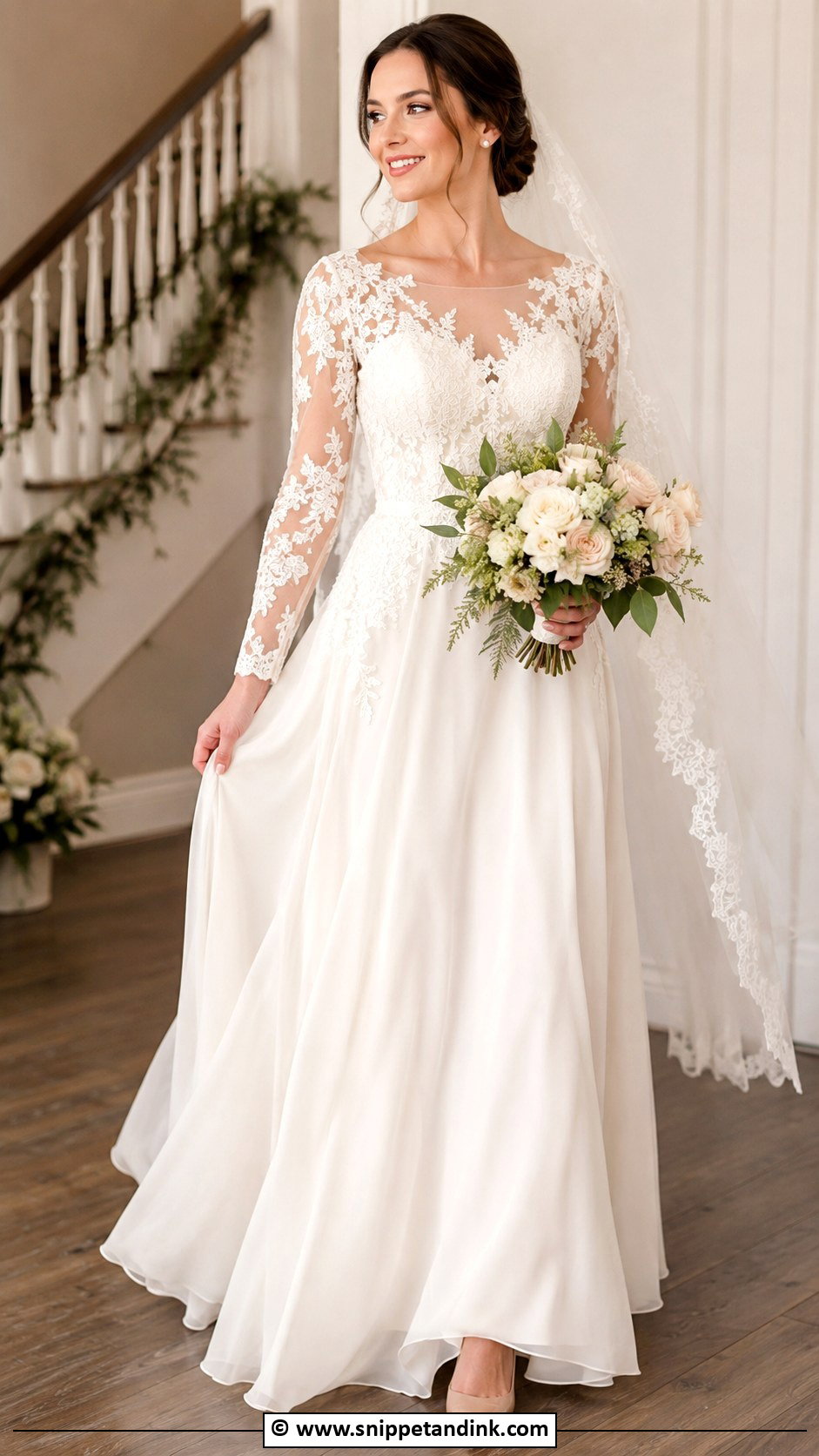
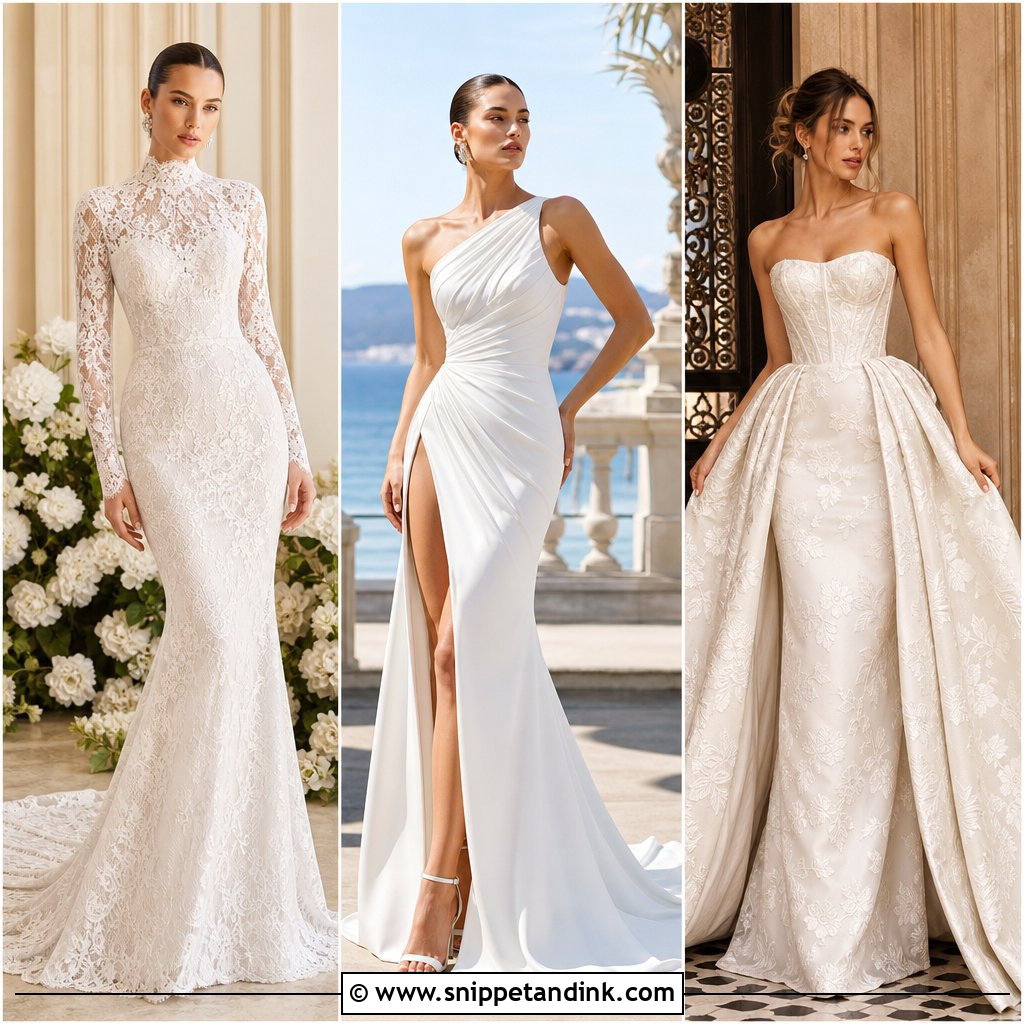
Lace sleeves give you coverage and texture, so the jewelry can stay small. The first thing I check is the sleeve at the bicep. Lace has almost no stretch, and a sleeve cut too narrow makes it hard to hug anyone or lift a bouquet. Soft floral lace over a nude lining, with an illusion or gentle sweetheart neckline, keeps it from looking stiff. Pearl studs, loose waves and a sheer veil with a lace edge suit it. Heavier corded lace belongs to autumn and winter; for a spring wedding, ask for a finer Chantilly.
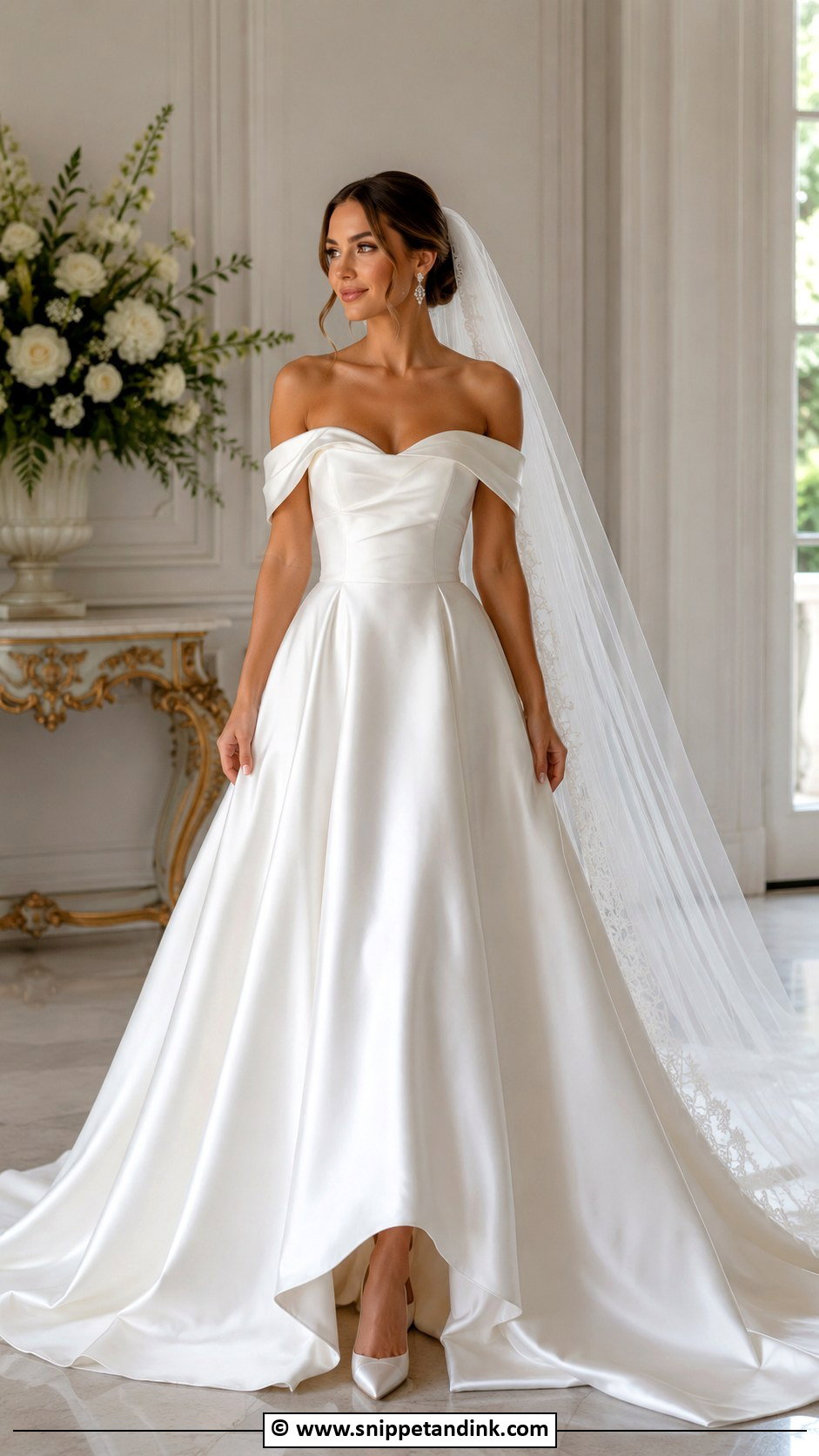
3. Off Shoulder Bride Gown
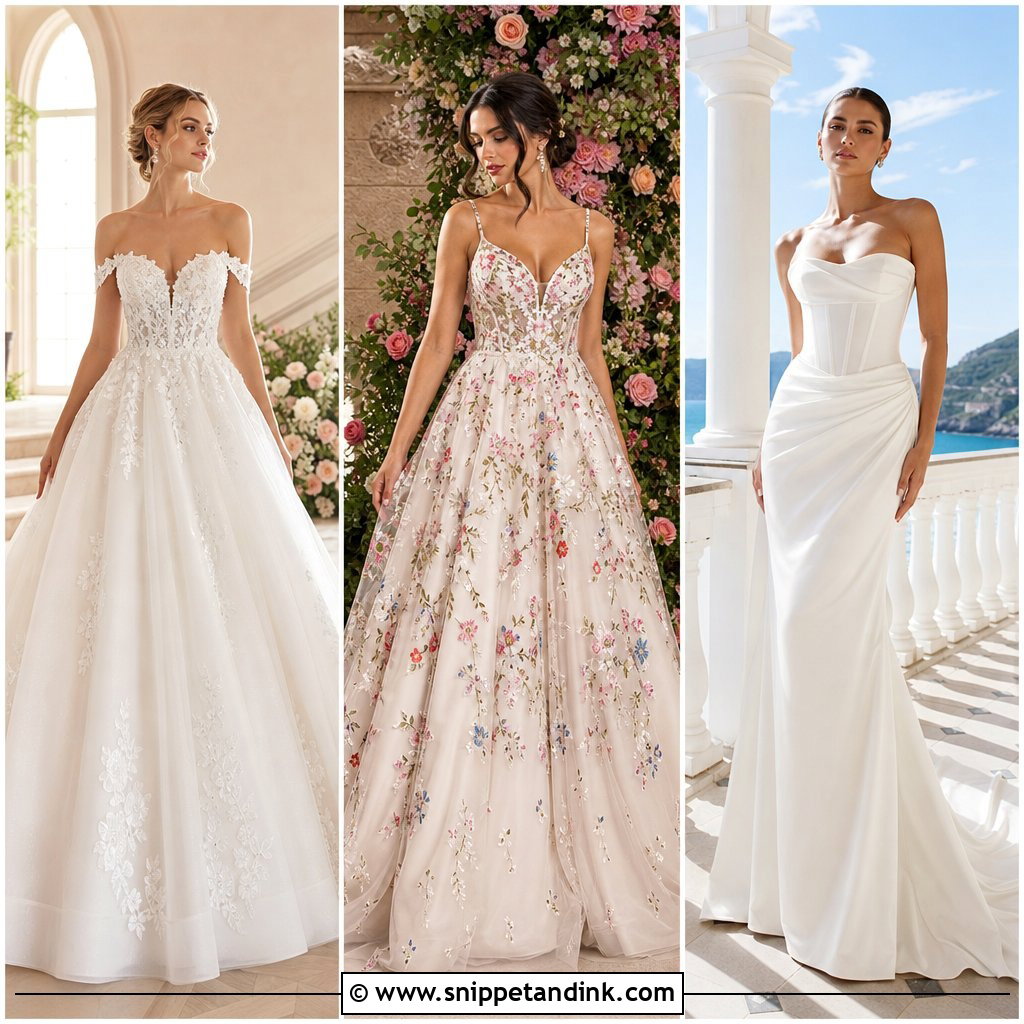
An off-the-shoulder neckline frames the collarbones, but only if the bodice is doing the holding. When a gown relies on the sleeve bands to stay up, you spend the day hitching it. I ask brides to raise both arms at the fitting. If the bands ride up, the bodice needs more boning or a closer fit at the ribs. A smooth updo shows the neckline best, and I’d pick either a simple necklace or statement earrings, not both. Mikado gives the crispest shoulder line; satin, crepe and tulle soften it. Ivory block heels and a chapel veil finish the look.
4. Minimalist Crepe Bride Gown
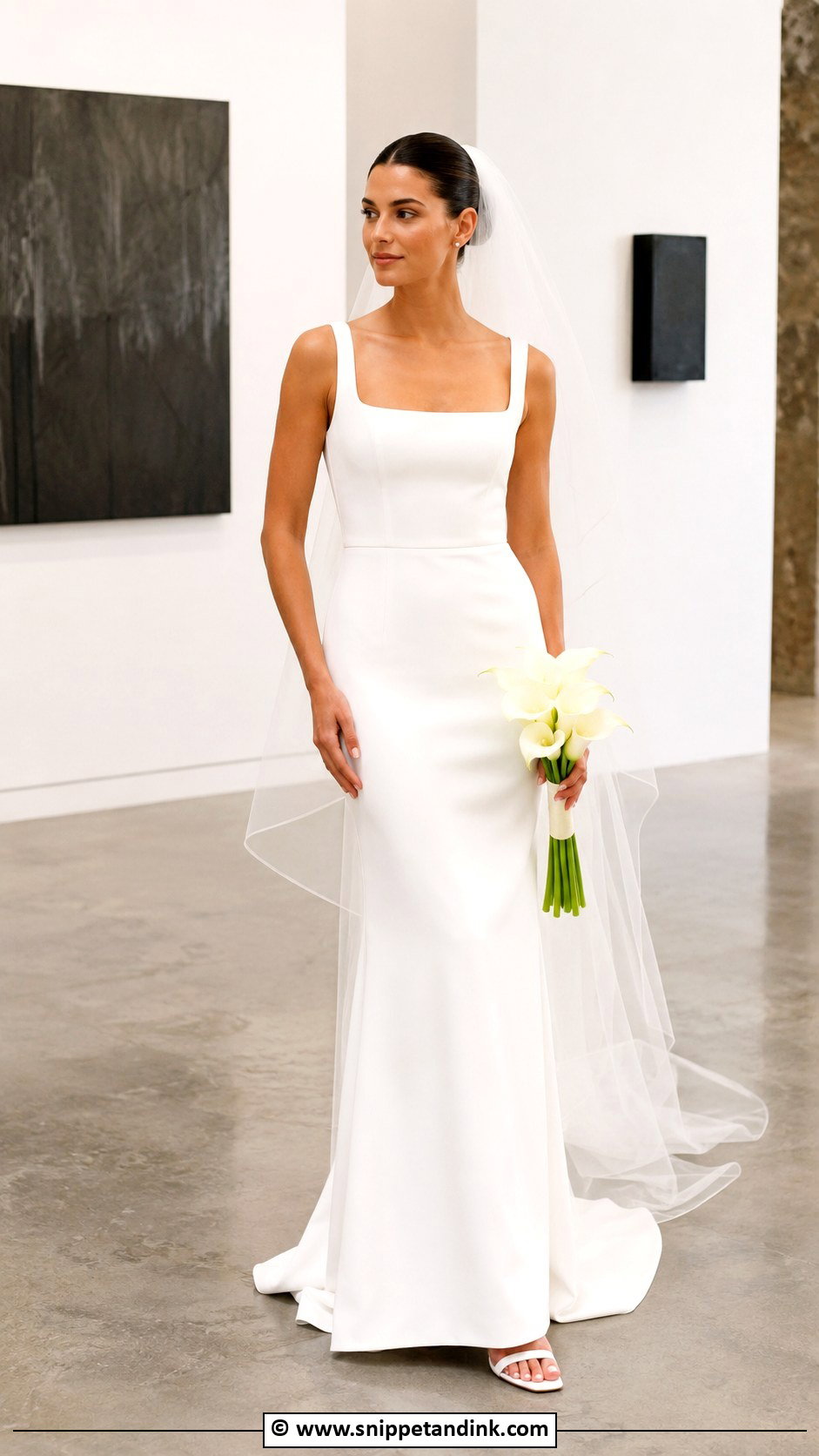
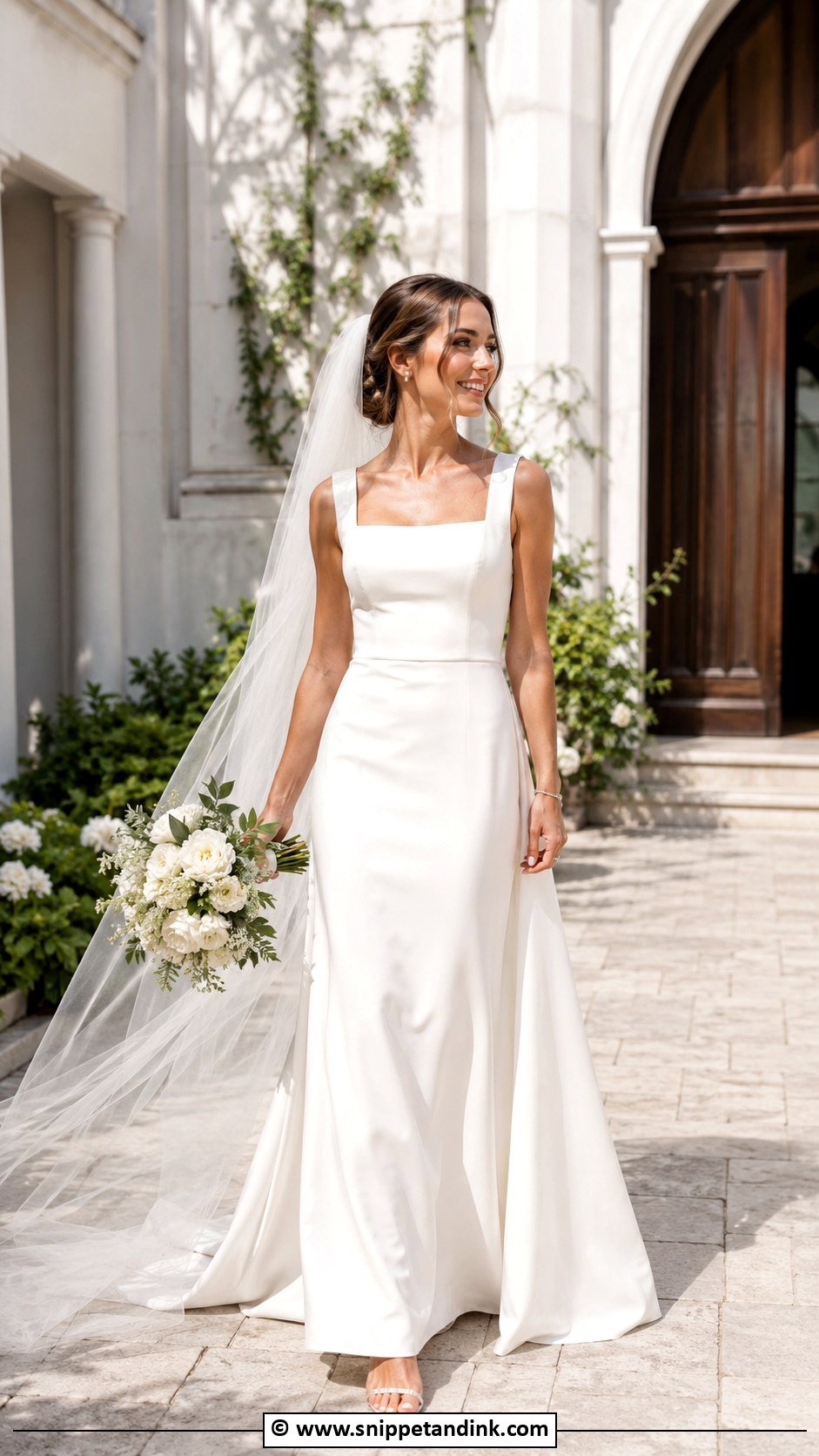
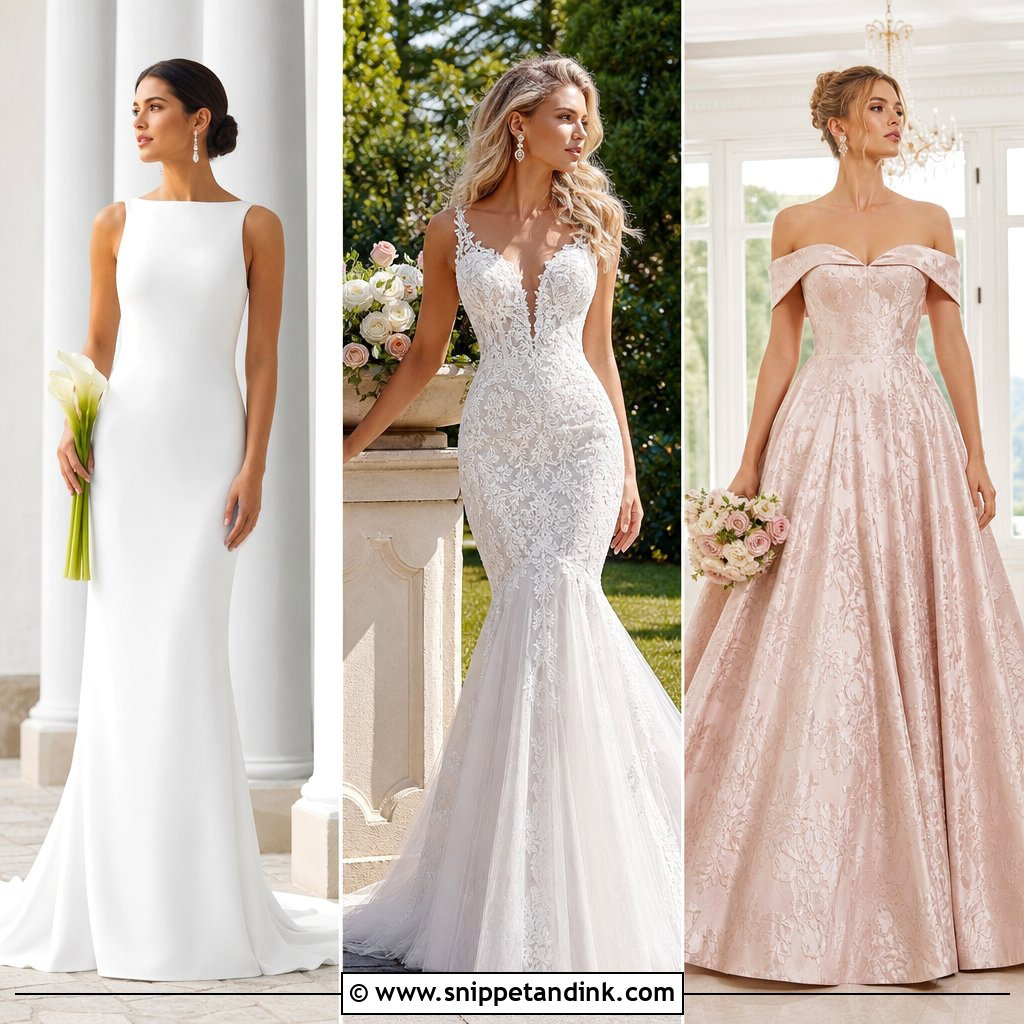
Crepe hides nothing, which is its appeal and its risk. It drapes close to the body with no volume, so seams, bra lines and an uneven hem all show. Wear the exact undergarments you’ll marry in to every fitting, or the alterations get made to the wrong shape. A square, bateau or scoop neck keeps the front clean, and sleek white heels, small studs, a structured veil and a low chignon match its quiet mood. City halls and gallery venues suit it best. With crepe, the tailoring is the dress, so set aside budget for it.
5. Pearl Embellished Bride Gown
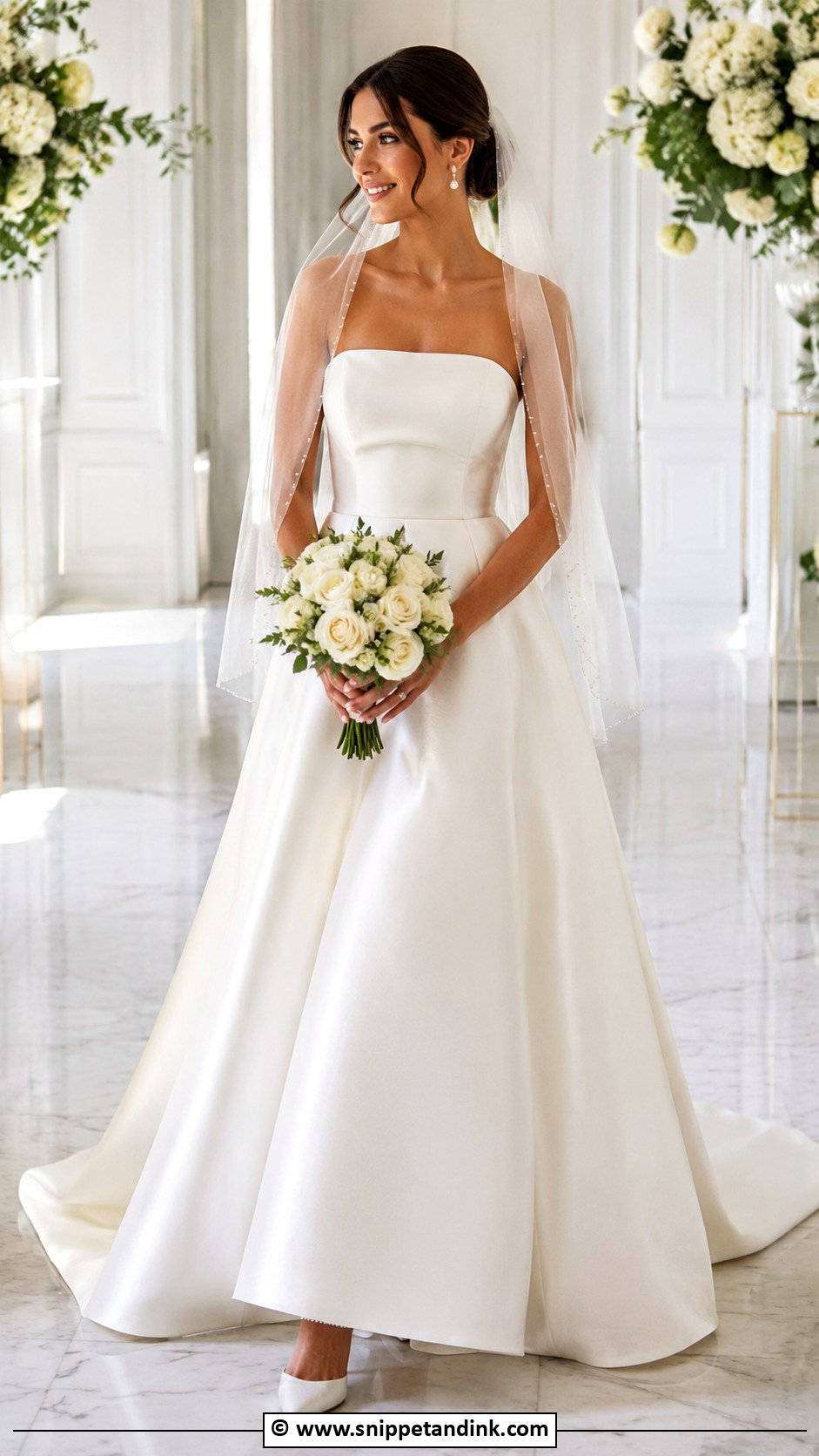
Pearls glow rather than sparkle, so they sit comfortably on a sheath, an A-line or a soft ball gown. Ask how they’re attached before you buy. Hand-sewn pearls stay put, while glued ones on cheaper gowns can pop off when the skirt gets bustled or crushed in a car. Echo them with pearl earrings and a sheer veil scattered with small pearls, then add satin heels. Keep the bouquet plain so the bodice stays the focus.
6. Floral Embroidered Bride Gown
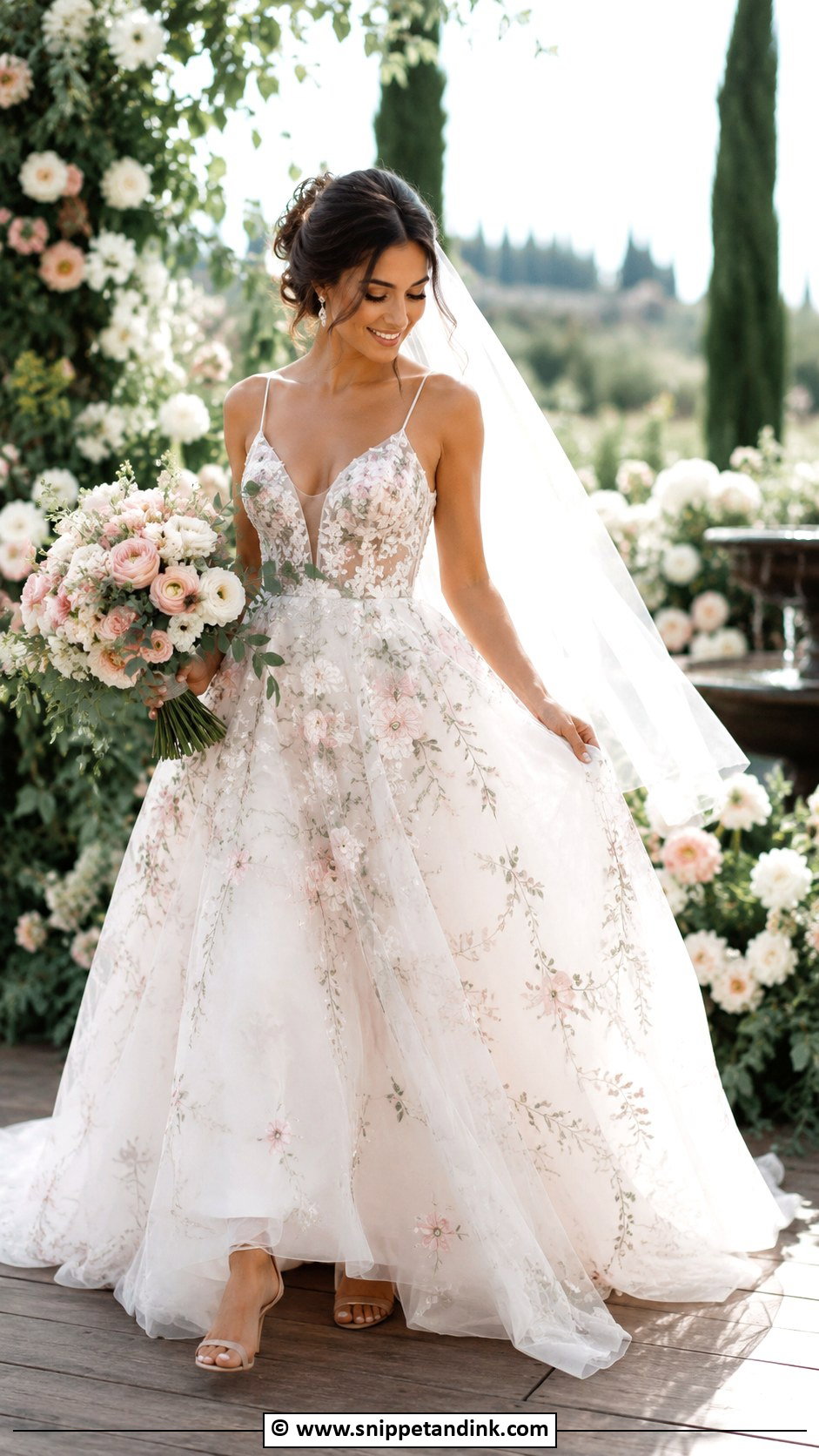
Embroidery can stay tone-on-tone in ivory thread or bring in blush, champagne or pale green. Colored thread changes how the whole gown reads next to your skin, so I always take it to a window and look in daylight, not just under boutique spotlights. A fitted bodice with a flowing skirt holds the shape. With this much detail on the dress, the veil should be plain and the earrings simple. Soft curls and delicate heels finish it, and it sits naturally in a spring garden or an estate lawn.
7. Strapless Ball Gown Bride Gown
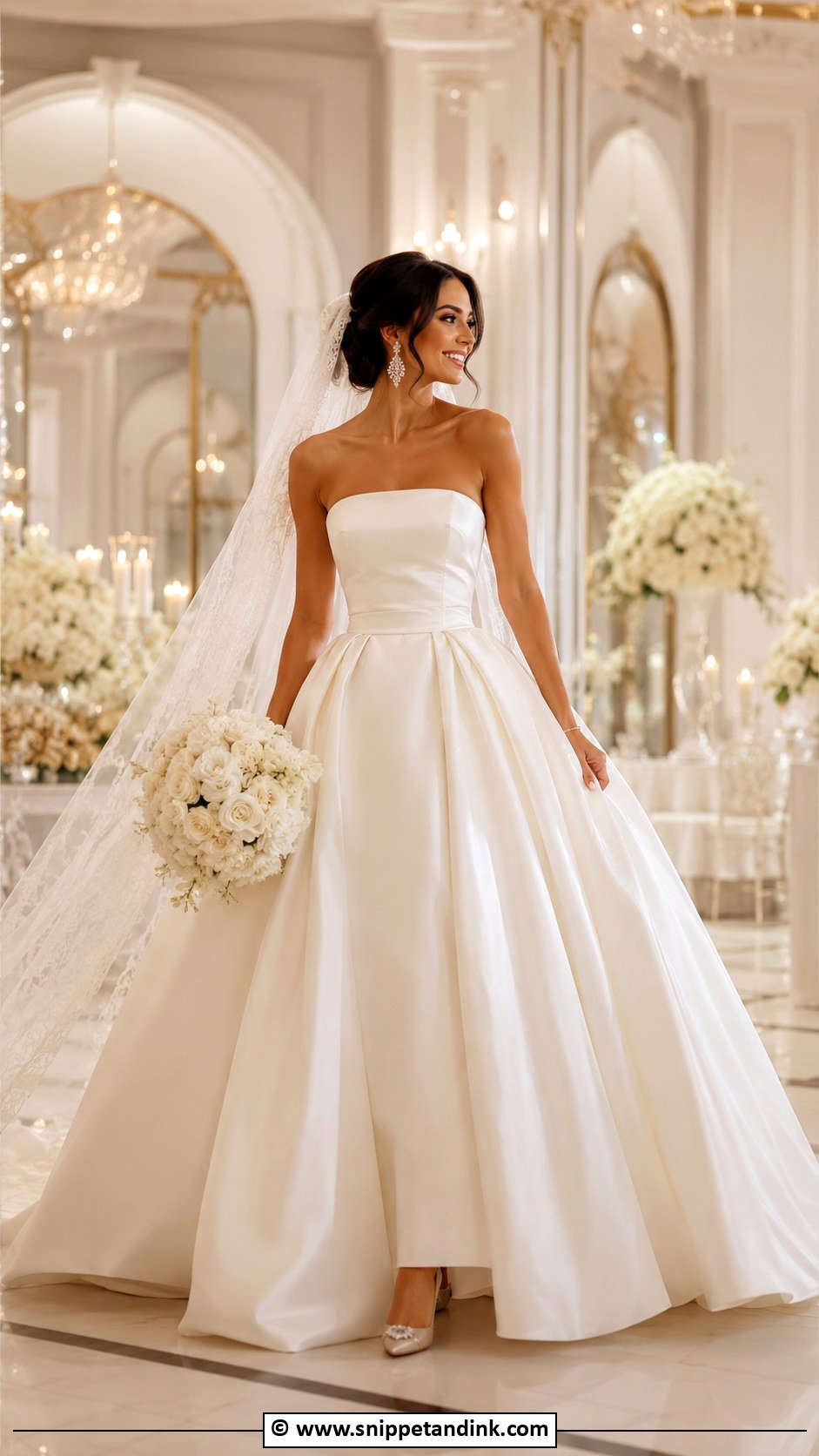
A strapless ball gown is built for an entrance, and it needs a bodice strong enough to carry the skirt. In satin or mikado the skirt gets heavy, so the boning and the inner waist stay have to be snug; a loose strapless top slides down a little with every step. Layered tulle is lighter and moves more. A cathedral veil, crystal earrings and a neat updo keep the neckline clear. Ballrooms and estates give the skirt room, while a small venue makes it fill the aisle. Practice getting into a car and sitting down in it before the day.
8. Square Neck Bride Gown
A square neckline draws straight lines across the chest and opens up the upper body without showing much skin. It needs a firm fabric to hold its corners. In soft crepe those corners can collapse, so I ask the seamstress to add interfacing along the neckline. It works with straps, sleeves or a strapless fitted bodice. A smooth bun, pearl studs and plain ivory heels keep it modern, and a long veil softens the geometry. I’d avoid it on a gown with heavy beading at the bust, because the two details compete.
9. High Neck Bride Gown
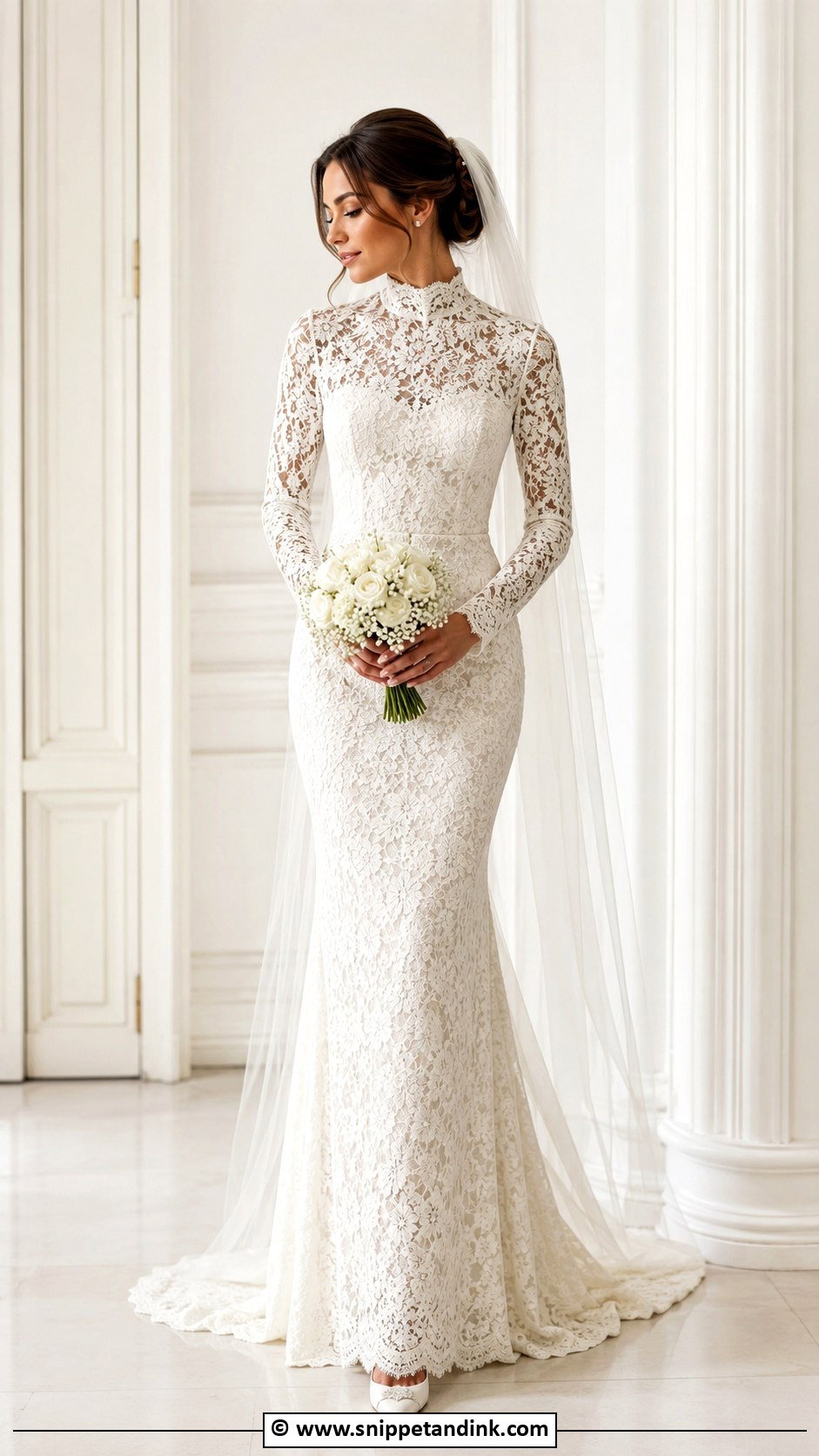
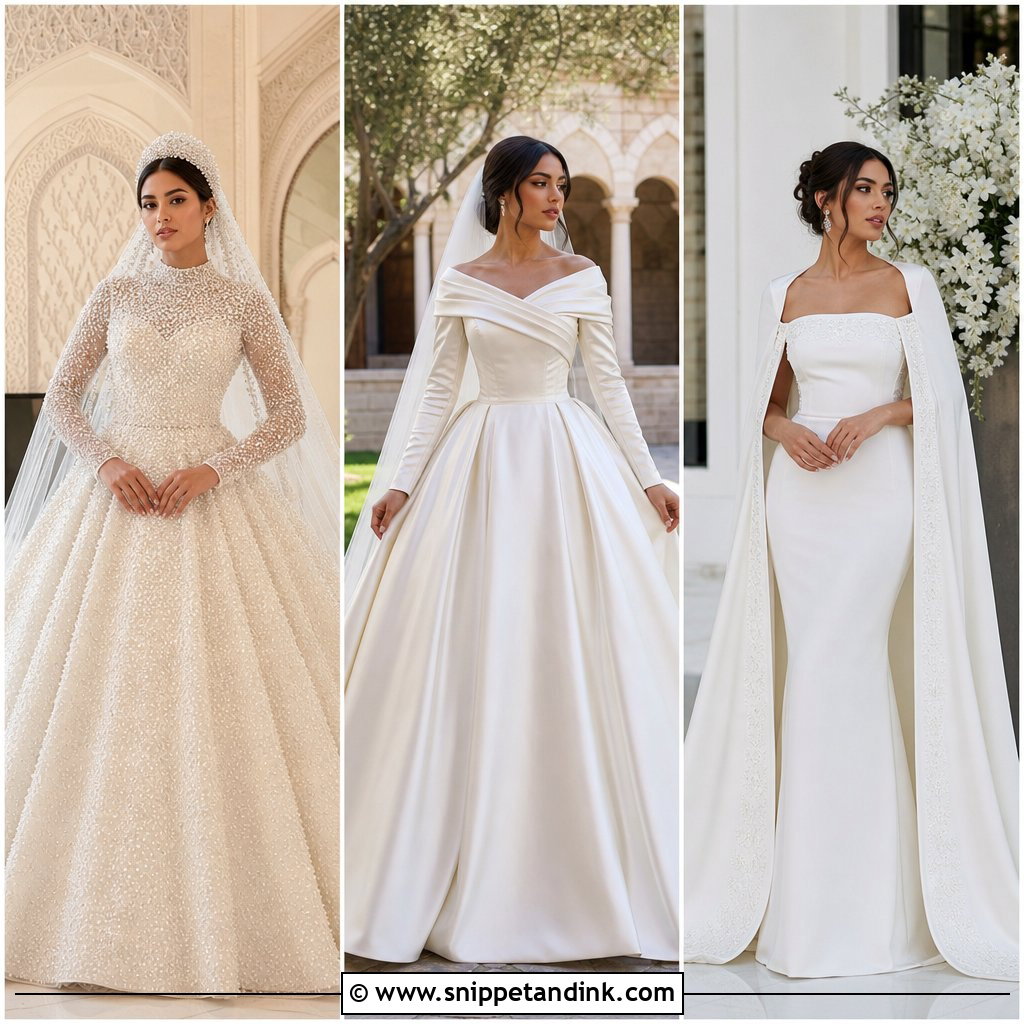
A high neck needs very little jewelry. If the collar carries lace or beading, skip earrings or wear tiny studs. Getting the fit at the throat right matters most: too close and you feel it every time you swallow, too loose and it gapes in profile photos. A fitted high-neck bodice with a slim skirt reads modern, and lace over a fuller skirt reads romantic. A sleek updo keeps the collar visible, with pointed heels and a simple veil. For a covered look at a formal wedding, it’s one of the most comfortable options I fit.
10. Corset Bodice Bride Gown
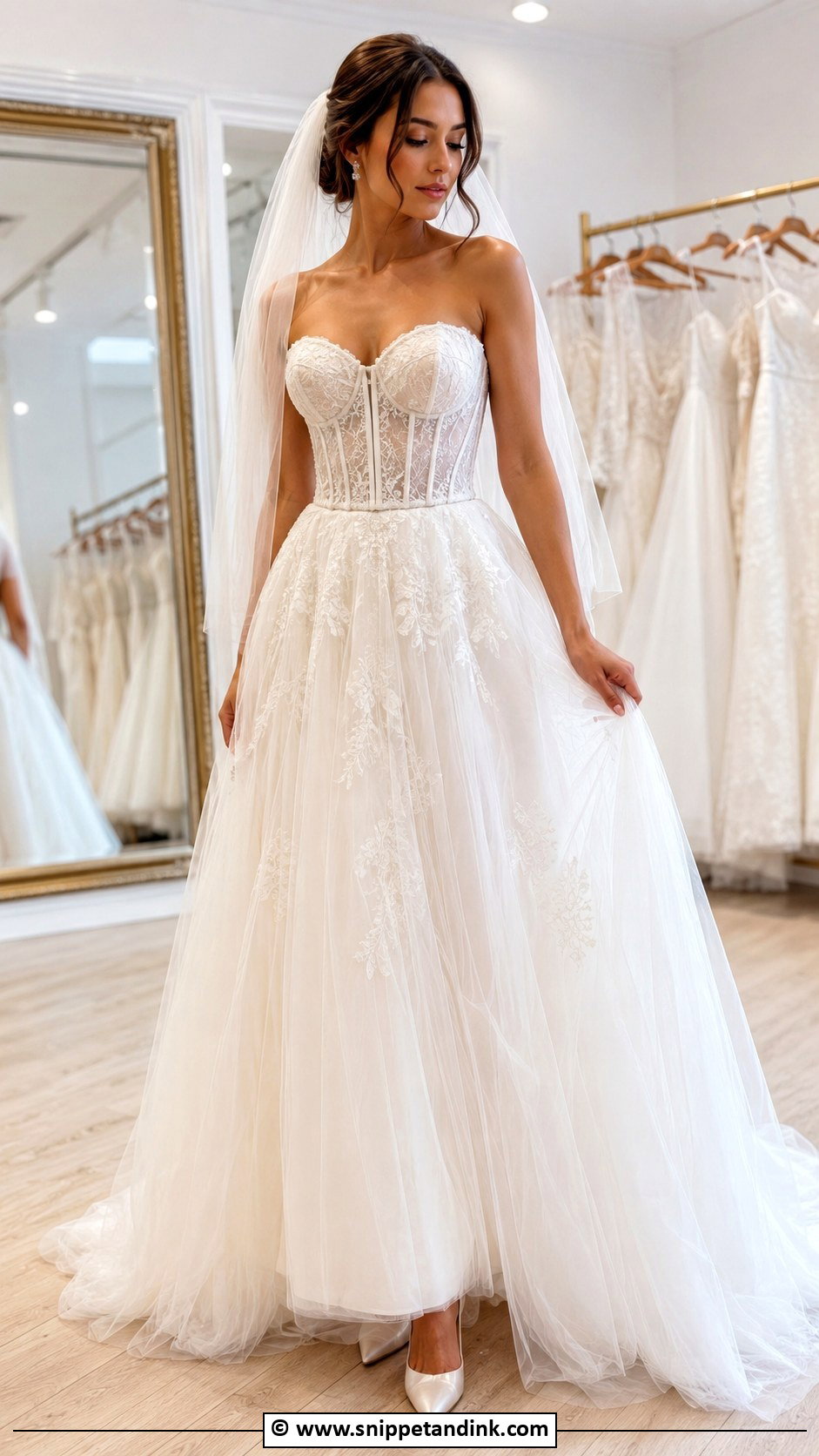
A corset bodice shapes the waist and supports the bust, so many brides can skip a separate bra. Fit decides whether you enjoy wearing it. The boning should lie flat, not dig into your hips when you sit, and you need to be able to breathe deeply and eat dinner. I bring a chair into the fitting room and make brides test both. Lace over soft tulle feels dreamy; satin over a full skirt is more polished. Keep the veil plain so it doesn’t fight the bodice, and match the shoes to the gown’s tone in ivory satin or nude.
11. Mermaid Bride Gown
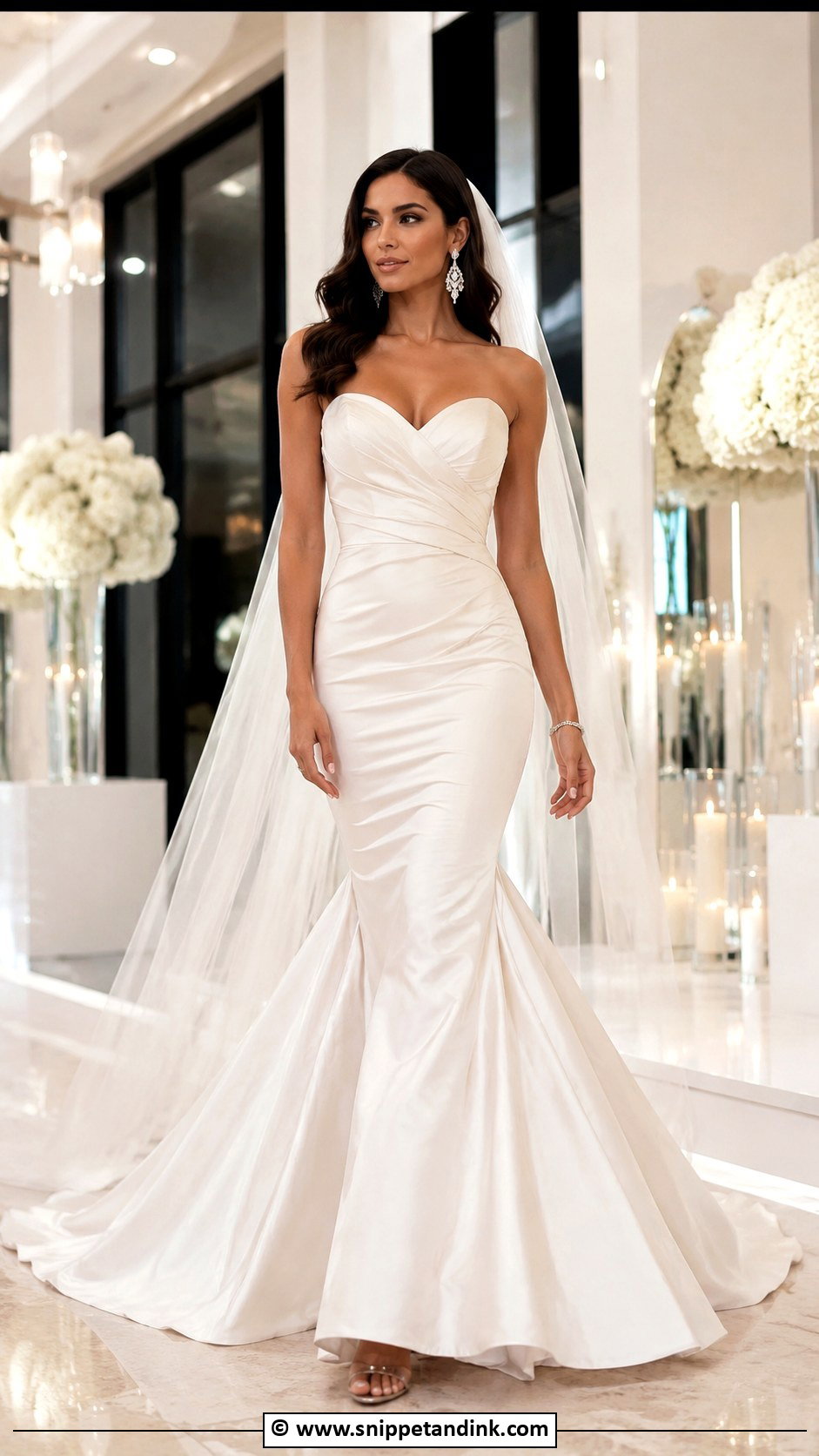
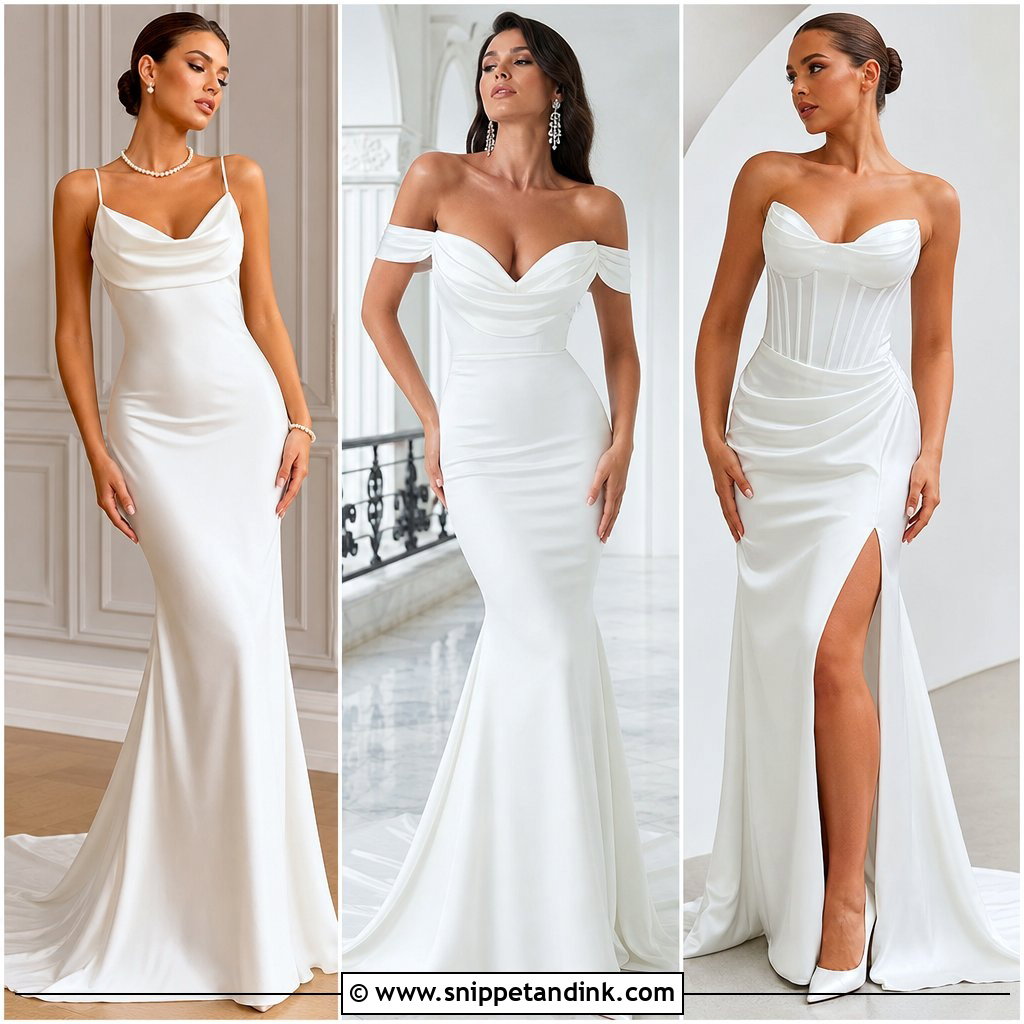
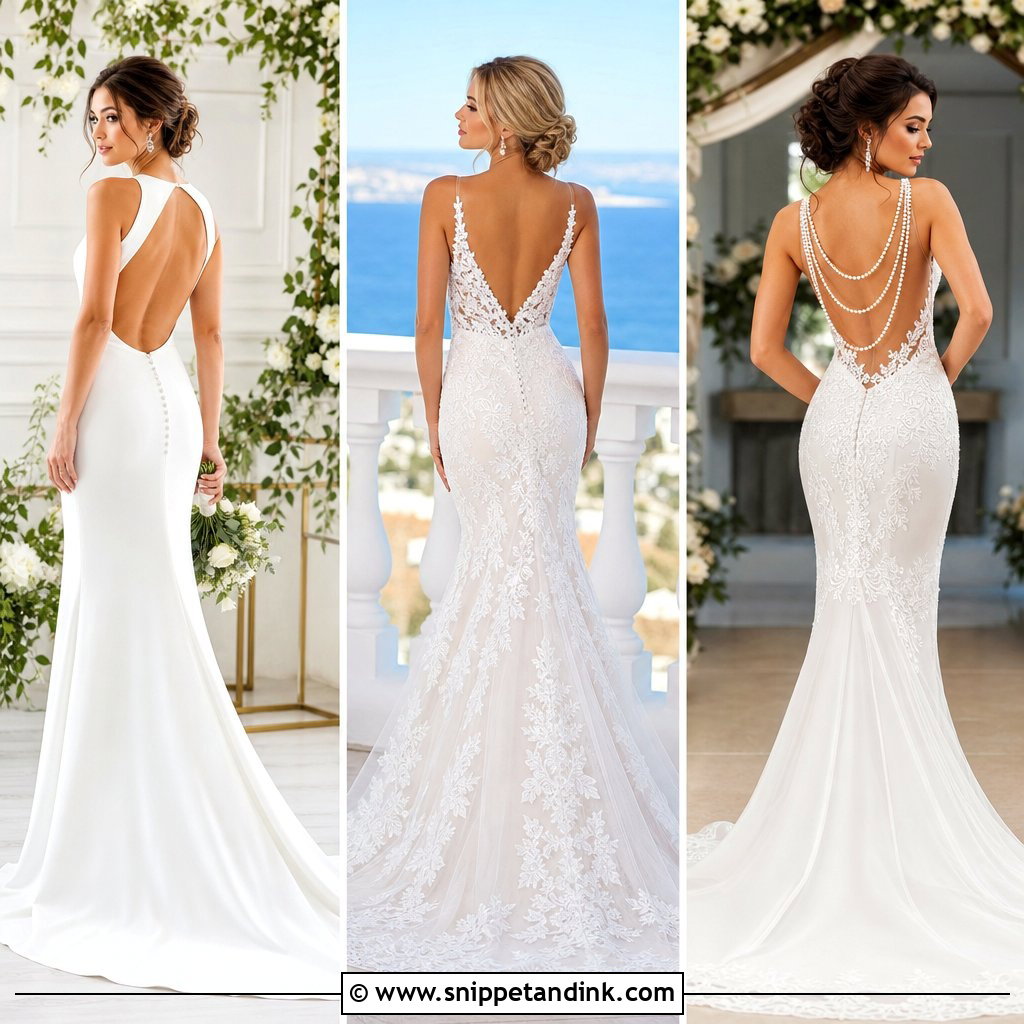
A mermaid gown fits through the bodice, waist and hips and then flares near the knee. Where that flare starts matters more than anything else. Set too high, you shuffle; set too low, you can’t climb a step. I have brides walk briskly, take stairs and sit down at the fitting. Crepe looks sleek, lace softer, satin more glamorous. Bring the heels you’ll actually wear, since the hem is set to them, and plan a bustle so you can dance. A long veil softens the fitted shape, and statement earrings balance the face.
12. Sheath Bride Gown
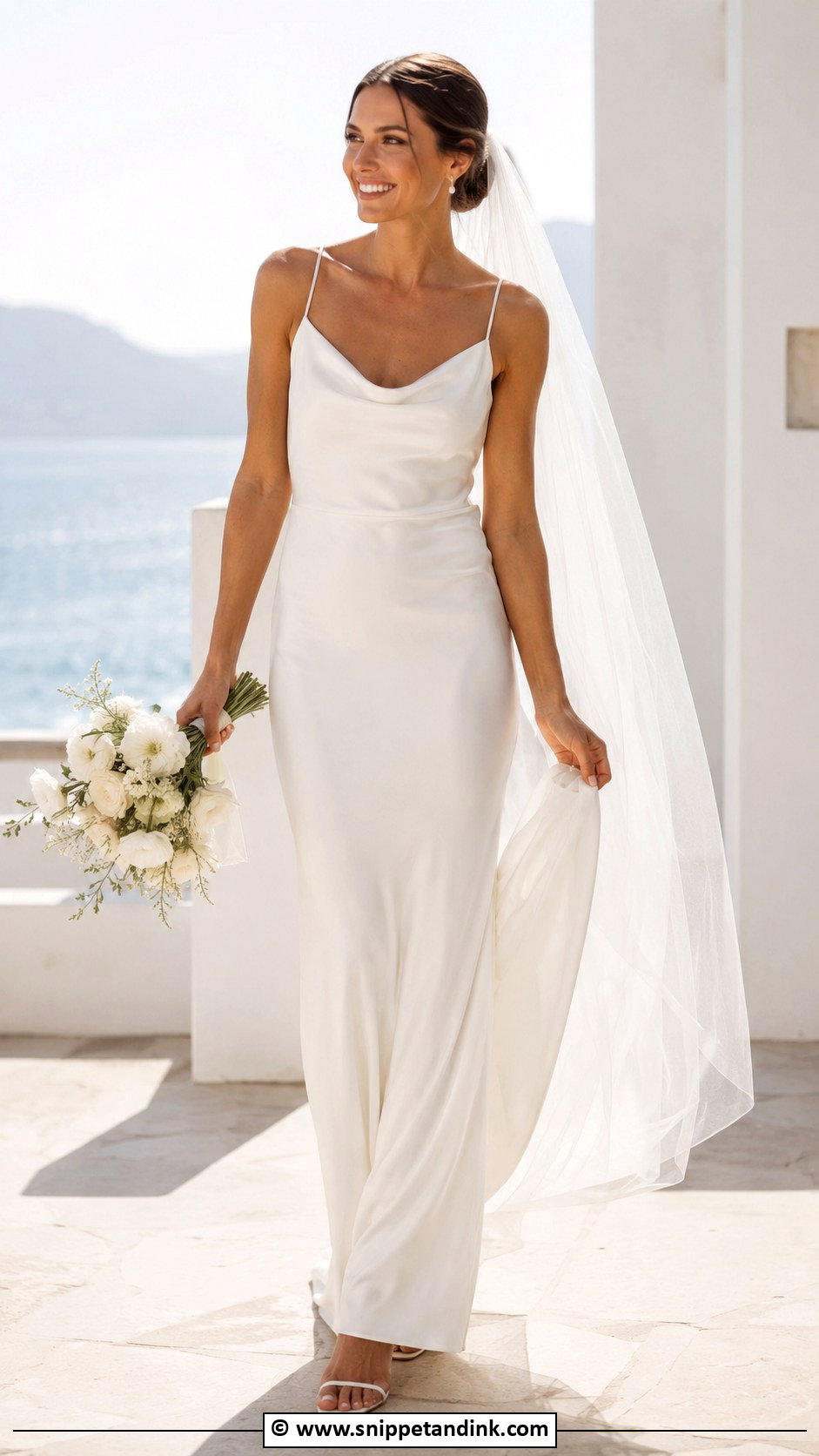
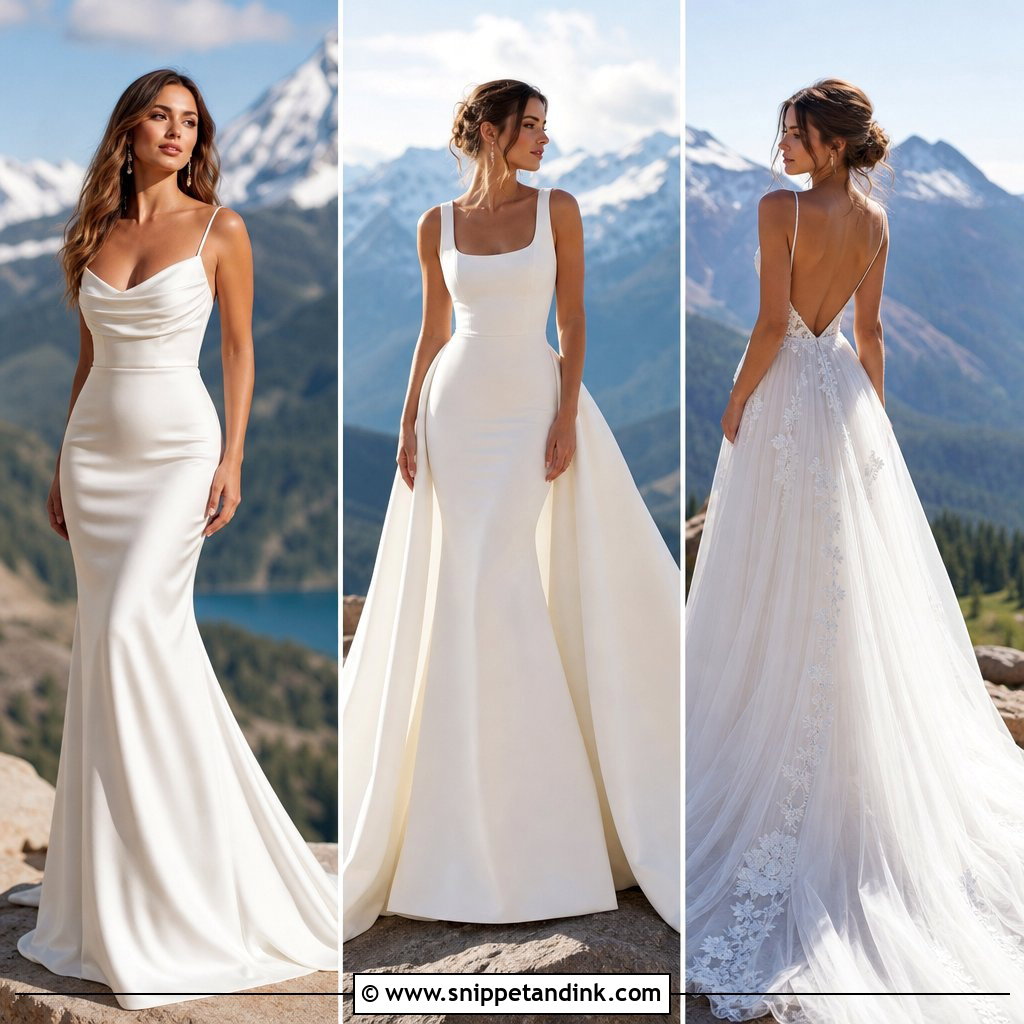
A sheath follows your natural line with no volume, which makes it one of the easiest gowns to wear through a long day. Silk, crepe and lightweight satin drape best. Silk and satin both show water marks, so be careful with drinks, sea spray and rain. Beaches, city weddings and small ceremonies suit it. Strappy heels, a clean veil, minimal jewelry and a loose bun or soft waves keep it relaxed. If you want the dress to hold you in, though, this isn’t the shape.
13. Tulle Princess Bride Gown
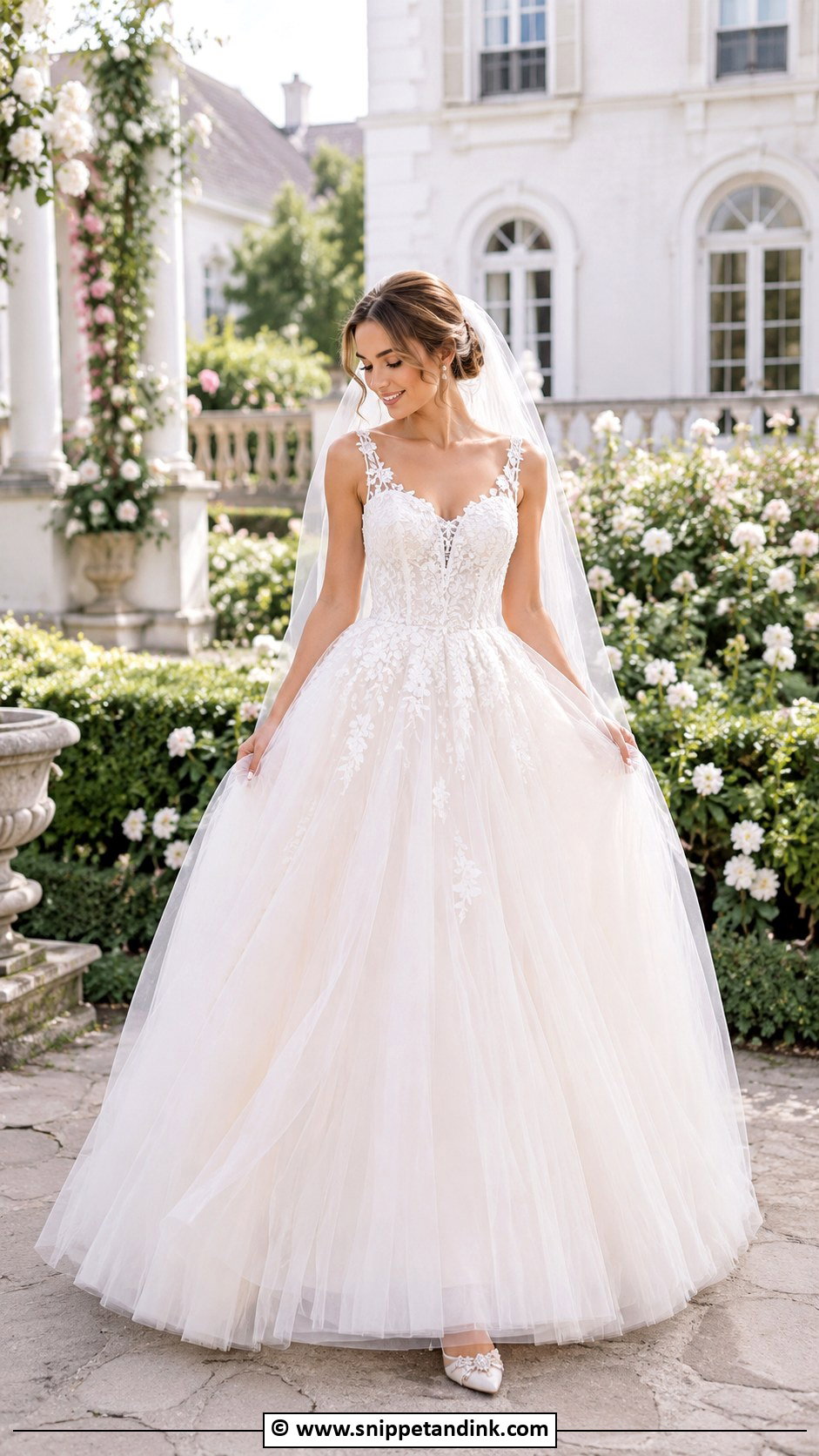
Tulle gives volume without weight, so a princess skirt in tulle wears far lighter than the same shape in satin. The catch is snagging. Tulle catches on beaded bodices, chunky bracelets, rough stone floors and the hook-and-loop strips on garment bags, so keep your jewelry smooth. A fitted bodice balances the fullness. Crystal studs, a soft veil and comfortable heels or flats hidden under the skirt finish it, and half-up hair suits the shape. If you want the skirt to move rather than stand out, ask for soft English net instead of stiff tulle.
14. Detachable Train Bride Gown
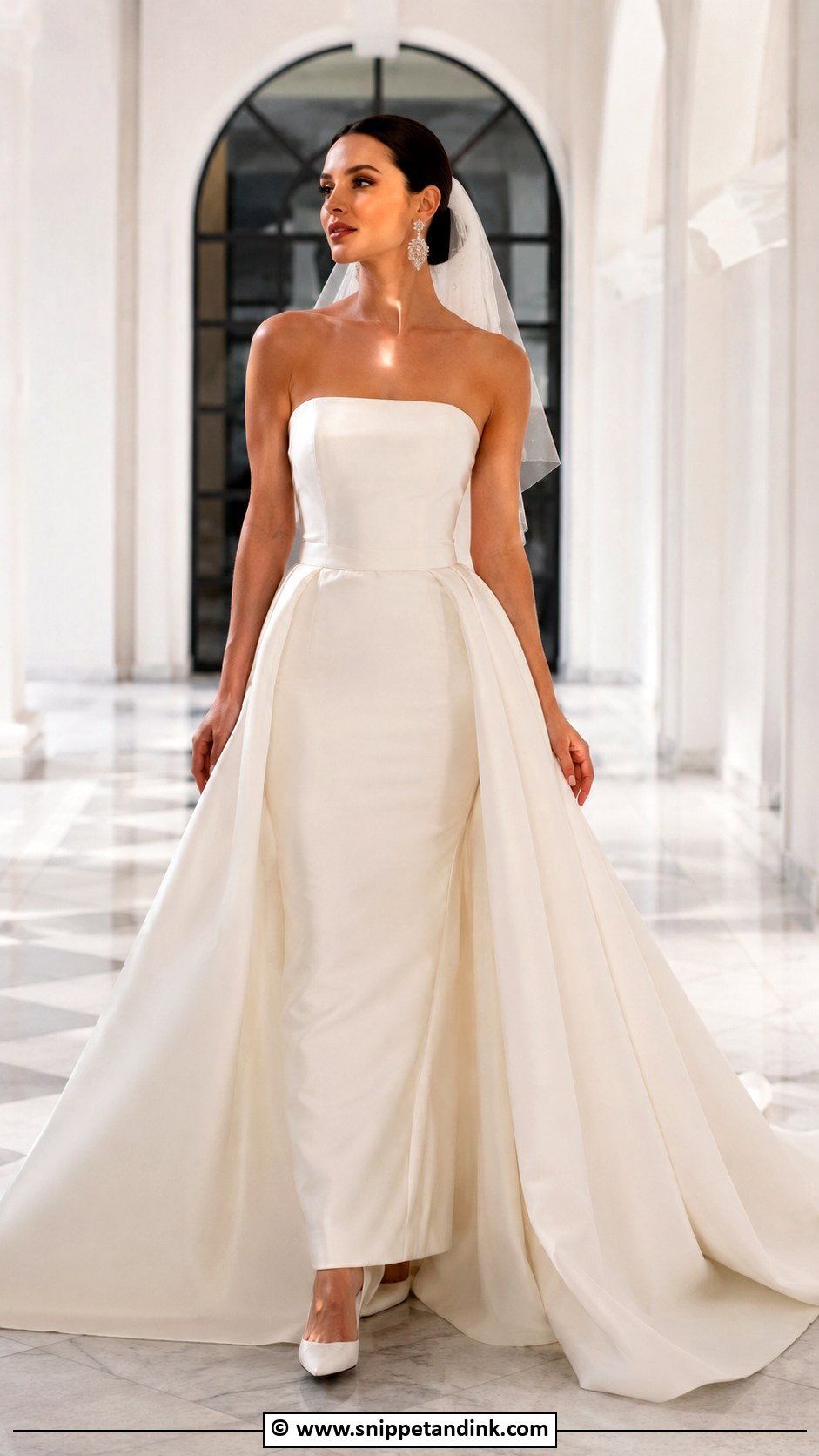
A detachable train bride gown gives you a ceremony look and a lighter reception look without a full change. Ask how the train attaches. Hooks and buttons hide well but are slow; snaps come off in seconds. Whoever will help you should practice removing it at the last fitting, because nobody works it out for the first time under pressure. It suits sheaths, crepe dresses, satin columns and corset gowns. Sleek heels, statement earrings and a veil that matches the train’s length complete it.
15. Bow Back Bride Gown
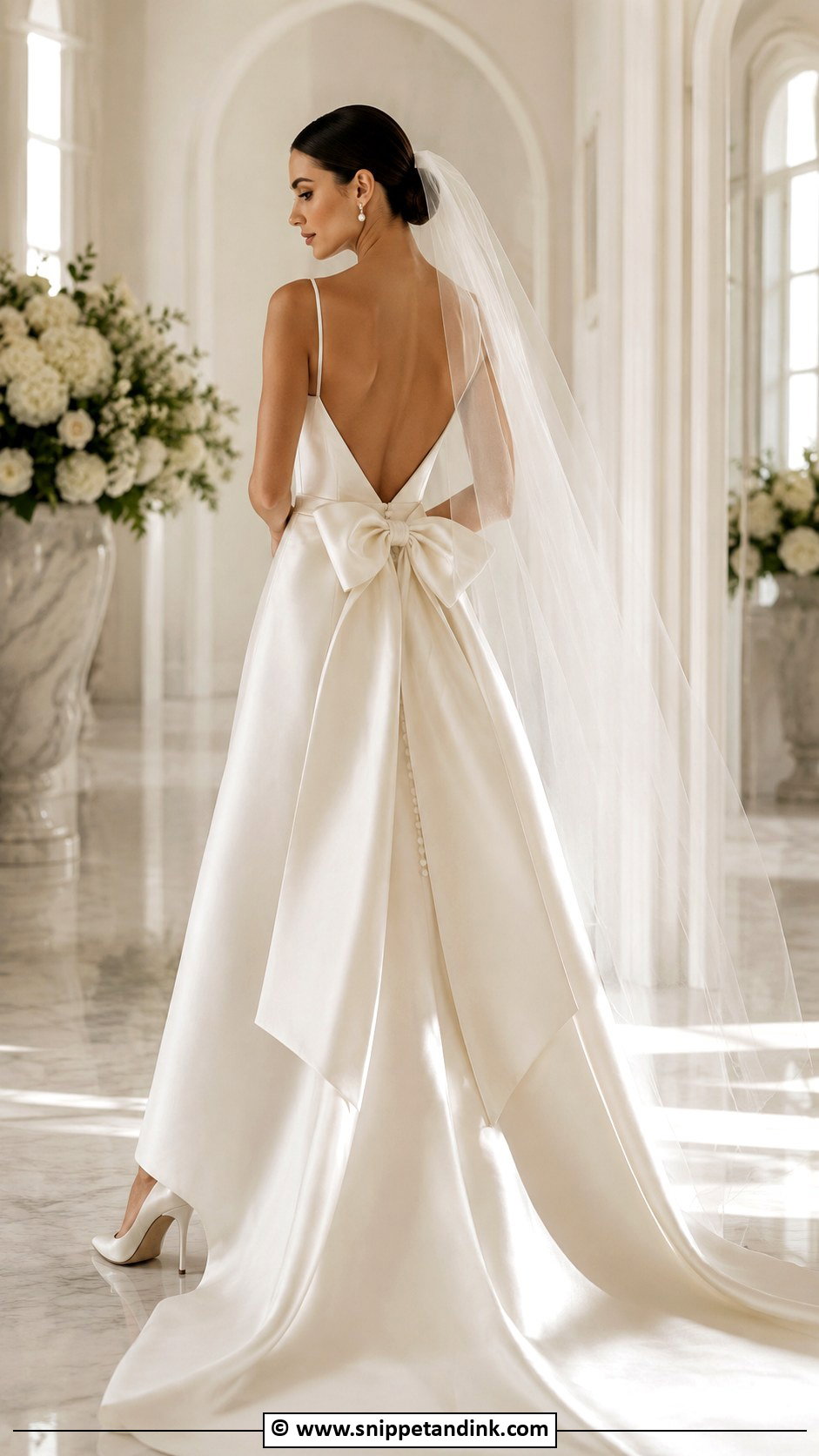
A back bow is seen mostly as you walk away, at the aisle and in portraits, so decide early where the veil goes. Comb it in above the bow or attach it below so the bow isn’t buried under tulle. Large satin bows crush in the car or against a chair back. I keep a handheld steamer in my kit for exactly this, and a quick pass before photos brings the loops back. A clean satin or crepe gown shows a bow best, with simple earrings, a smooth bun and ivory pumps.
16. One Shoulder Bride Gown
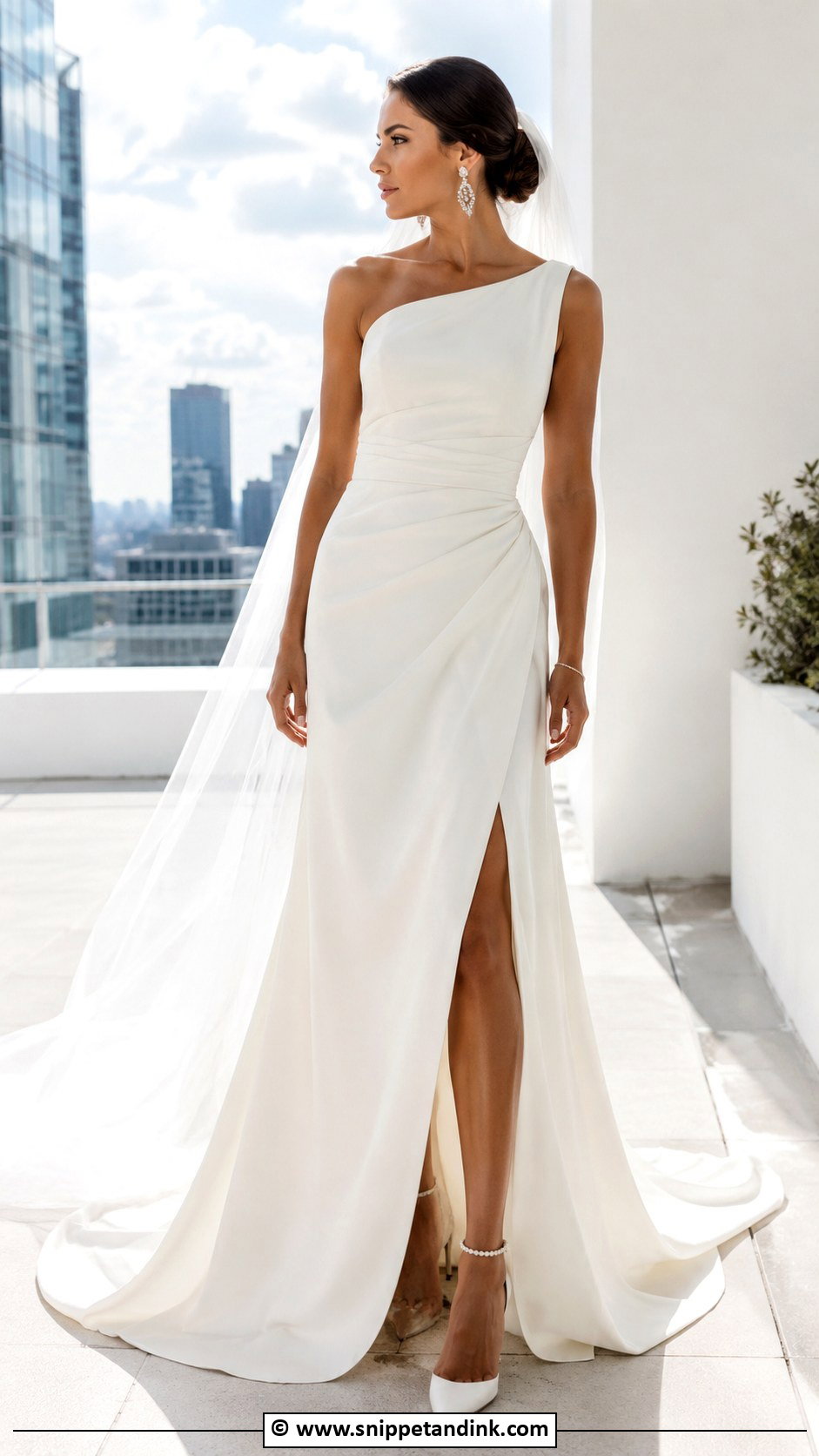
One-shoulder gowns look sculpted and hold that shape best in crepe, satin or mikado. The single strap carries the bodice, so I check that it doesn’t slide toward the neck when the bride lifts her arm. Put a statement earring on the bare side and leave the necklace off. Sleek hair keeps the neckline clear, and a plain veil or a cape veil softens it for the ceremony. Rooftops and modern rooms suit it, and it stays classic as long as the rest of the outfit is quiet.
17. Halter Neck Bride Gown
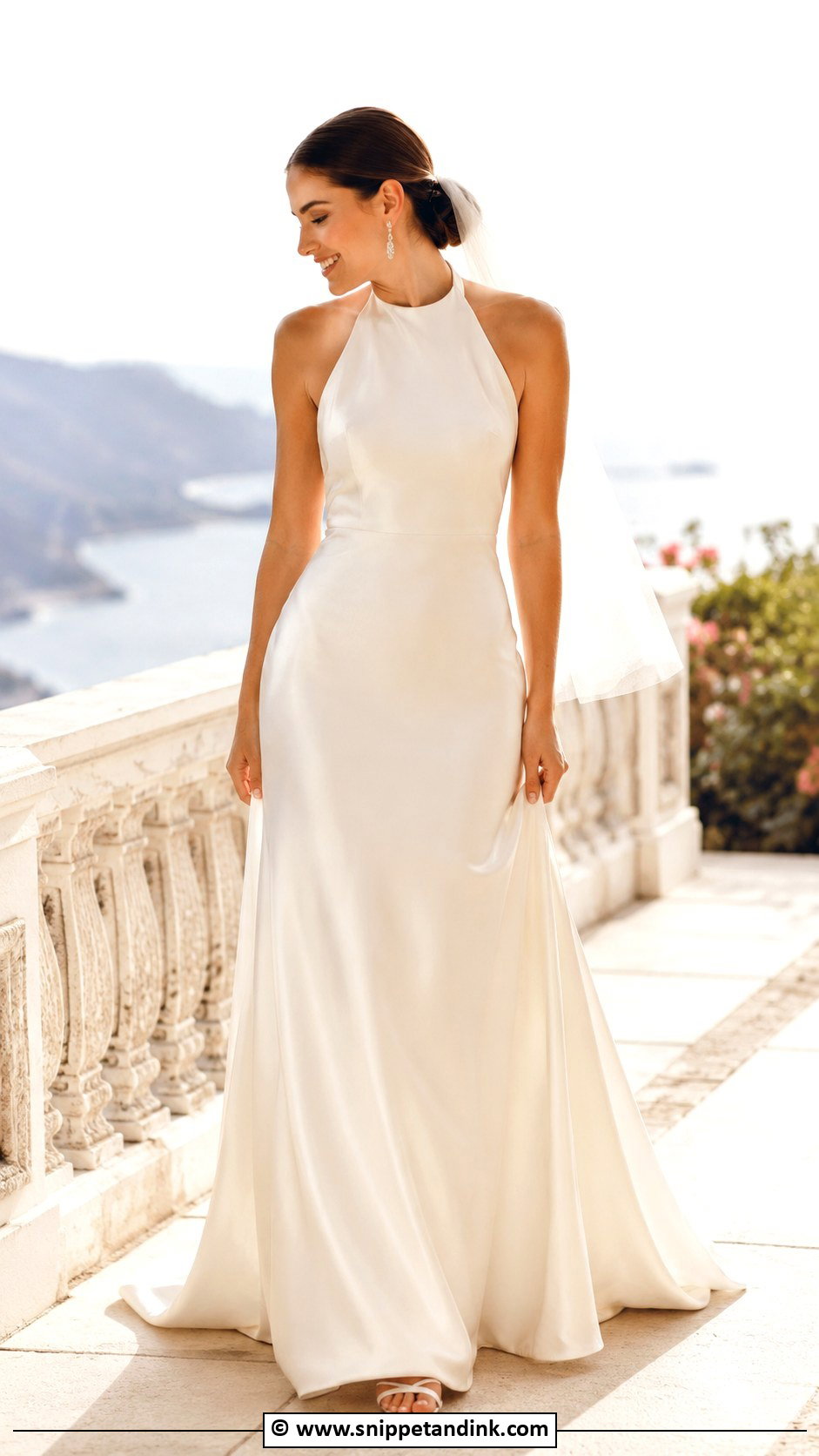
A halter neck bride gown supports the bust from the neck and shows off the shoulders and upper back. Over a long day a halter can pull on the back of the neck, so I prefer designs with a back band or bodice structure that takes some of the weight. Crepe, satin and beaded fabrics all work. A fitted skirt gives a sleek line; an A-line gives movement. Drop earrings, a low bun, simple heels and a veil anchored low on the head keep the strap line visible. Warm-weather and destination weddings suit it.
18. Tea Length Bride Gown
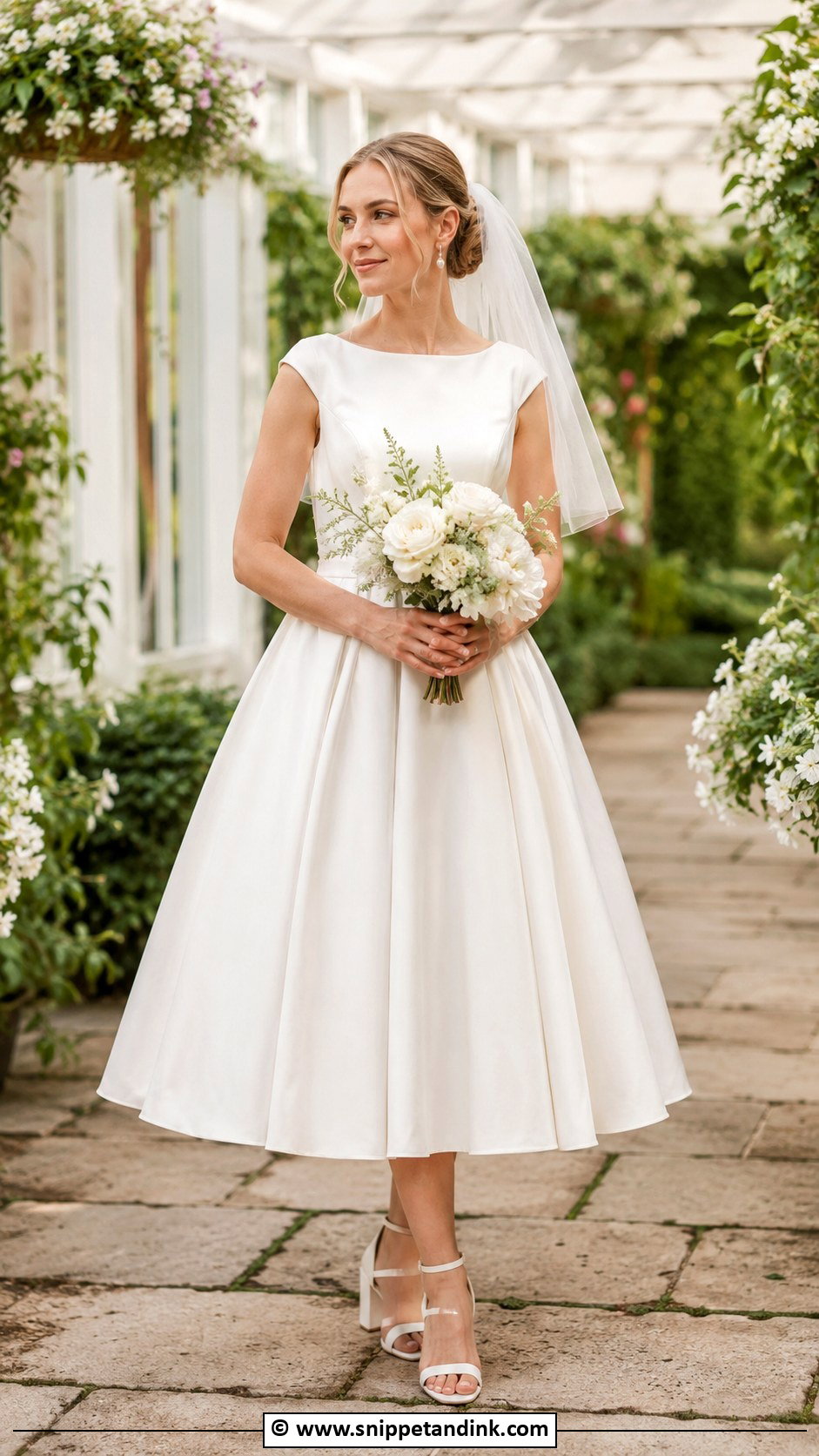
Tea length puts the hem between the knee and ankle, which means your shoes are on show all day. Choose them alongside the dress, not afterward. Satin pumps, embellished flats and block heels all work, but hem length shifts with heel height, so fit the gown wearing the actual pair. A fitted bodice with a full skirt reads 1950s, and plain crepe reads current. Add pearl earrings, a short veil or a hair bow. Courthouse, daytime and garden weddings suit it.
19. Bridal Mini Gown
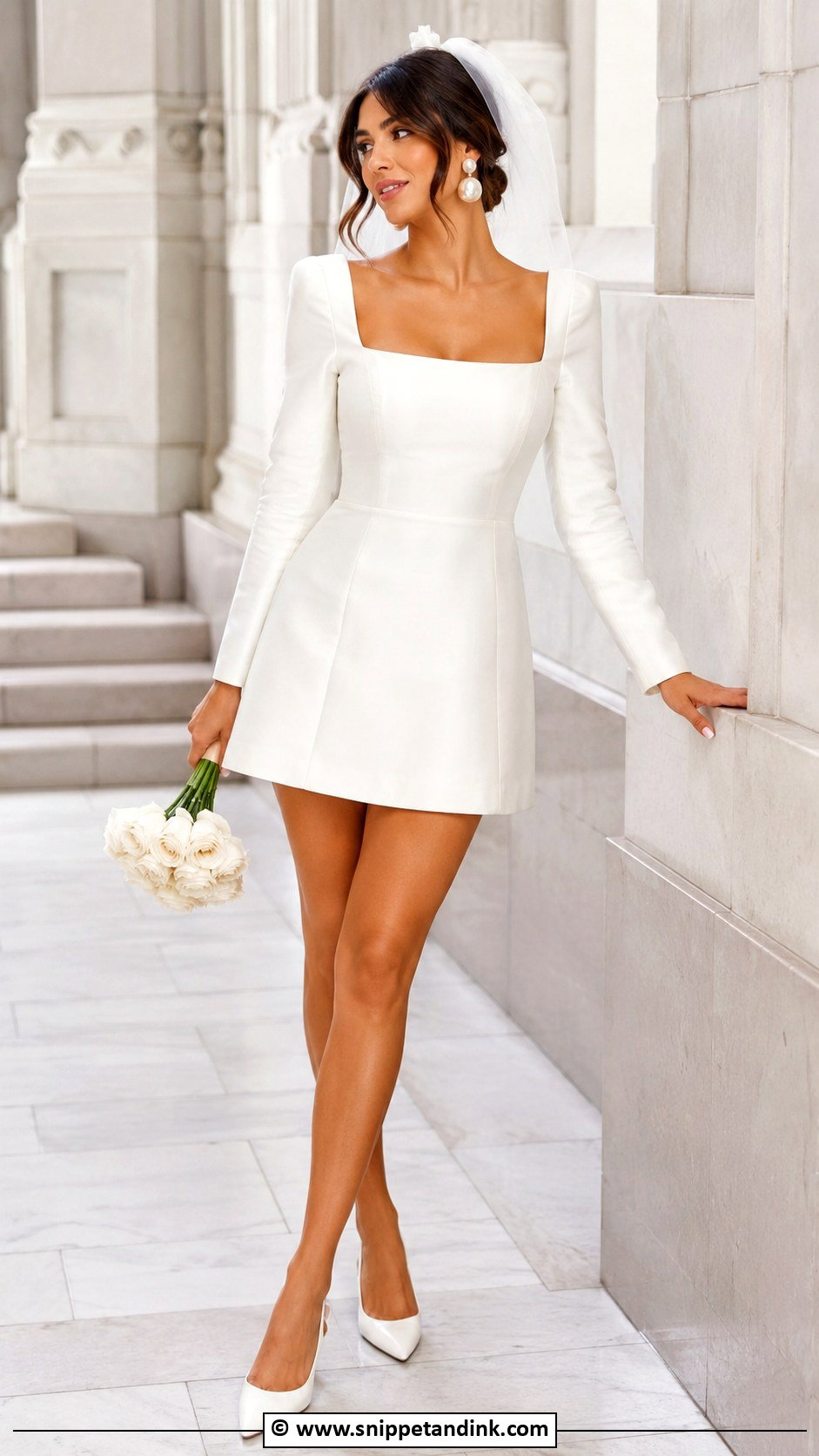
A bridal mini gown works for civil ceremonies, receptions, after-parties and second looks, but it needs structure to read as bridal rather than as a party dress. Heavy satin, tailored crepe, feathers, pearls or long sleeves do that. Sit down in front of a mirror before you buy, because minis ride up more than you’d expect. Slingback heels, a short veil and bold earrings finish it. I suggest sheer tights in winter and bare legs in summer.
20. Cape Sleeve Bride Gown
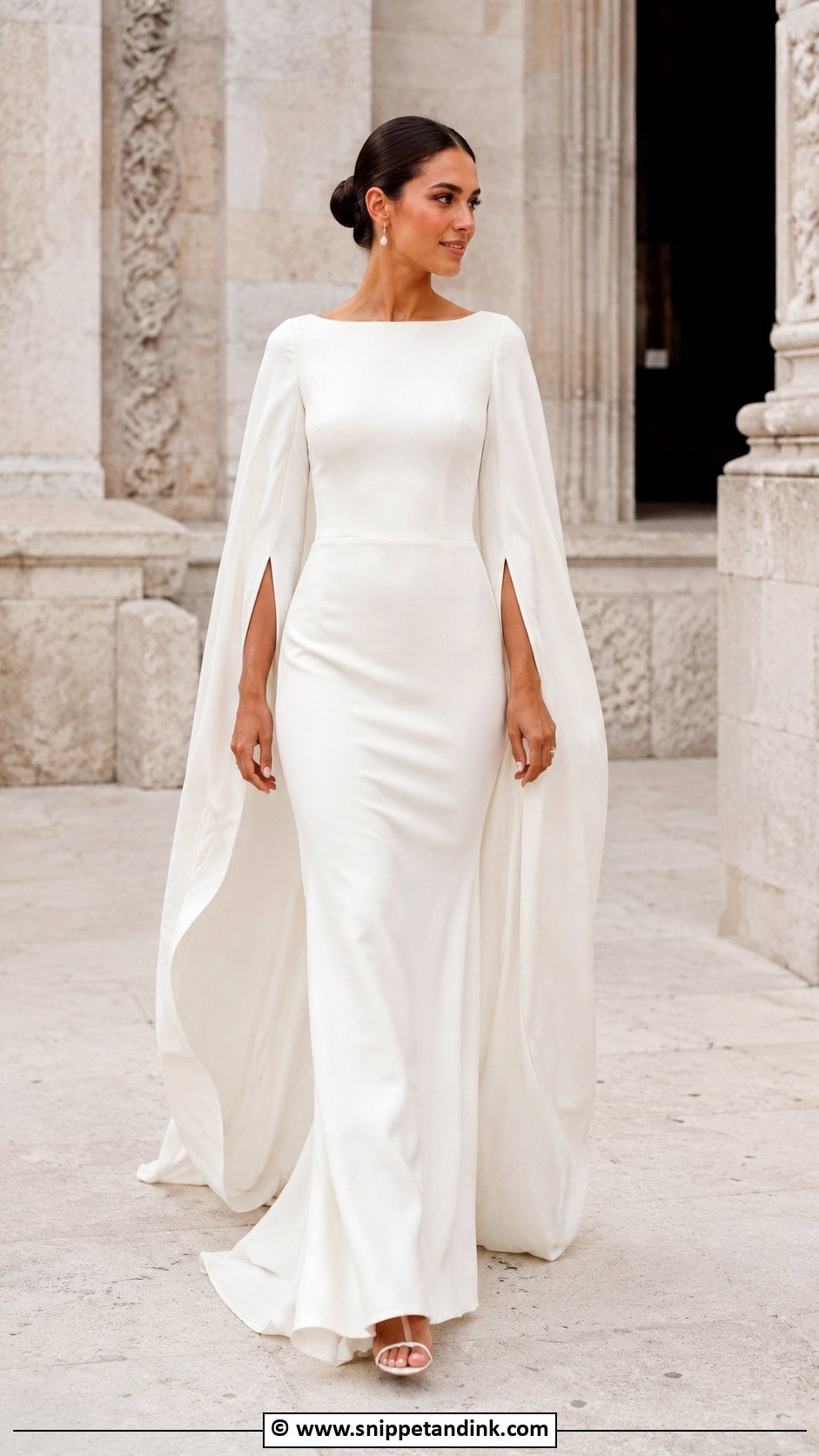
A cape gives you movement behind you without a veil’s weight on your head. It can fall from the shoulders, attach at the neckline or flow from the back of the gown. Keep the dress underneath simple so the cape stays the feature. Outdoors, watch the wind: a long chiffon cape lifts and wraps around you in a breeze, so I ask for small hem weights or a shorter length for open-air ceremonies. Minimal jewelry, sleek heels and clean hair. Your arms are covered but still free to hug and dance.
21. Beaded Bride Gown
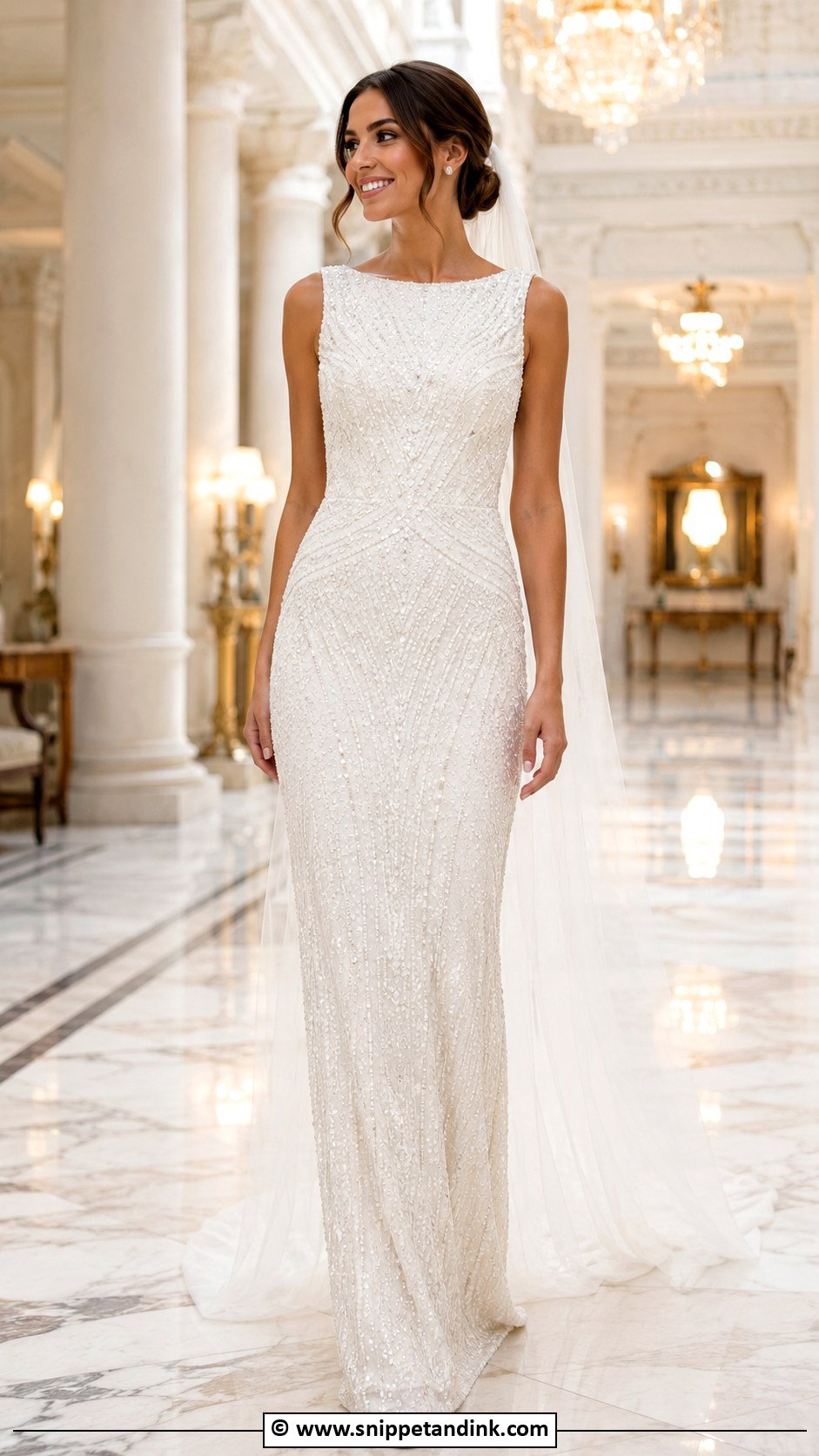
Beading catches light, and it also adds real weight. A fully beaded gown pulls on the shoulders over a long day, so I have brides sit, walk and lift their arms before committing. Delicate beading gives a soft glow, and allover beading is more glamorous. A sheath, column or soft A-line keeps it balanced. Simple heels, small earrings, a plain veil and smooth hair let the beadwork carry the look. Ask how it will bustle, too, since beads hooked up against plain fabric can scratch or snag it.
22. Slip Bride Gown
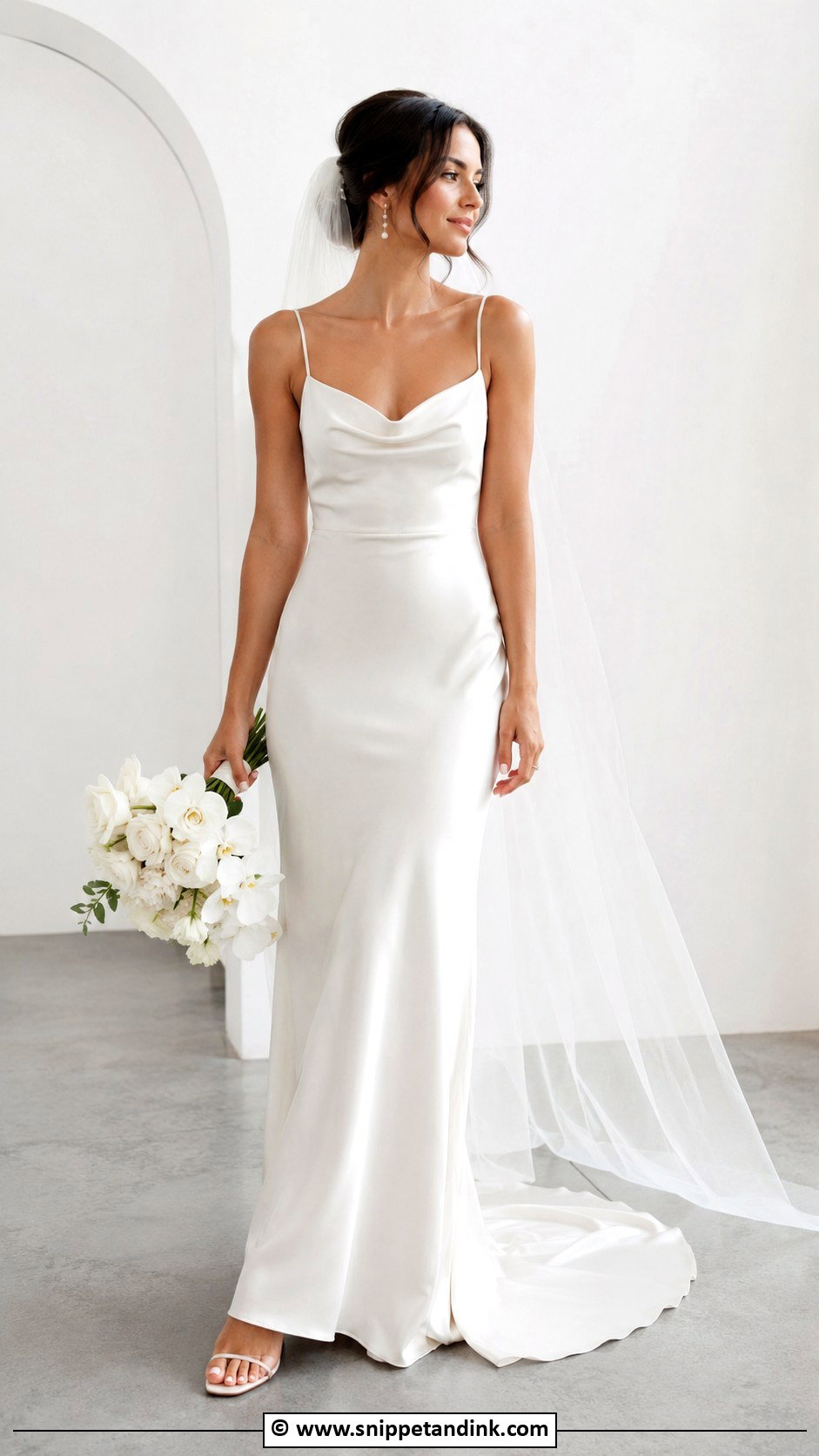
Slip gowns are usually cut on the bias, which lets silk or satin follow the body and move with it. It also means the dress shows everything, from underwear lines to a seam that isn’t quite straight. No-line shapewear in your skin tone, tested at a fitting, makes the difference. Thin straps, strappy heels, delicate earrings and a simple veil or none at all. A neat bun, soft waves or a clean ponytail. Alterations need a careful hand, because bias-cut fabric twists if it’s taken in carelessly.
23. Ruffle Skirt Bride Gown
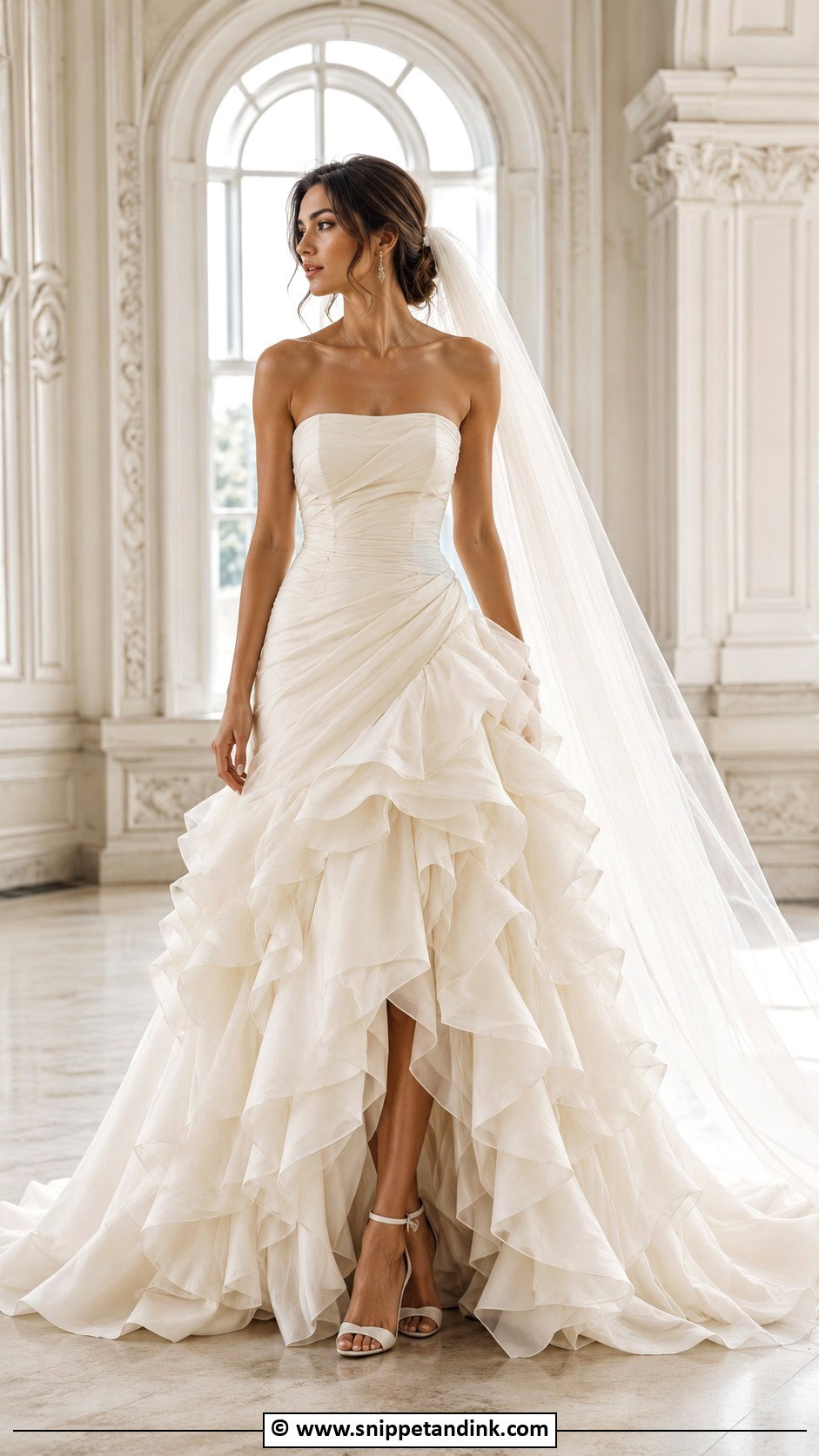
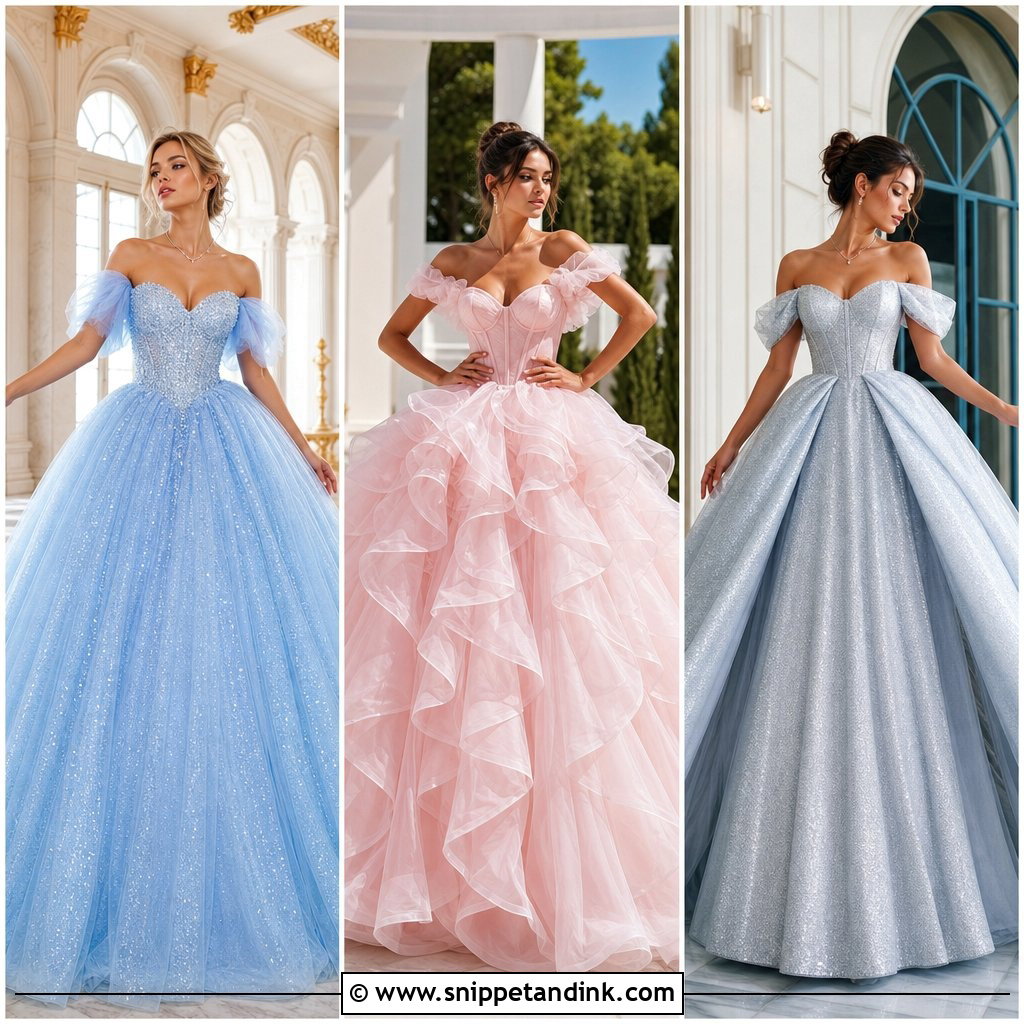
Ruffles bring movement and volume, and they need a calm bodice to sit under: strapless, square neck or a fitted corset. Ask what’s holding them up. Organza ruffles keep their shape all night, while chiffon ones flatten after hours of sitting. Soft ruffles pair with a long veil; a bold, sculptural skirt often looks better with no veil. Simple heels and understated jewelry. Before you commit, check the aisle width and the space between reception tables, because a big ruffled skirt needs room.
24. Vintage Inspired Bride Gown
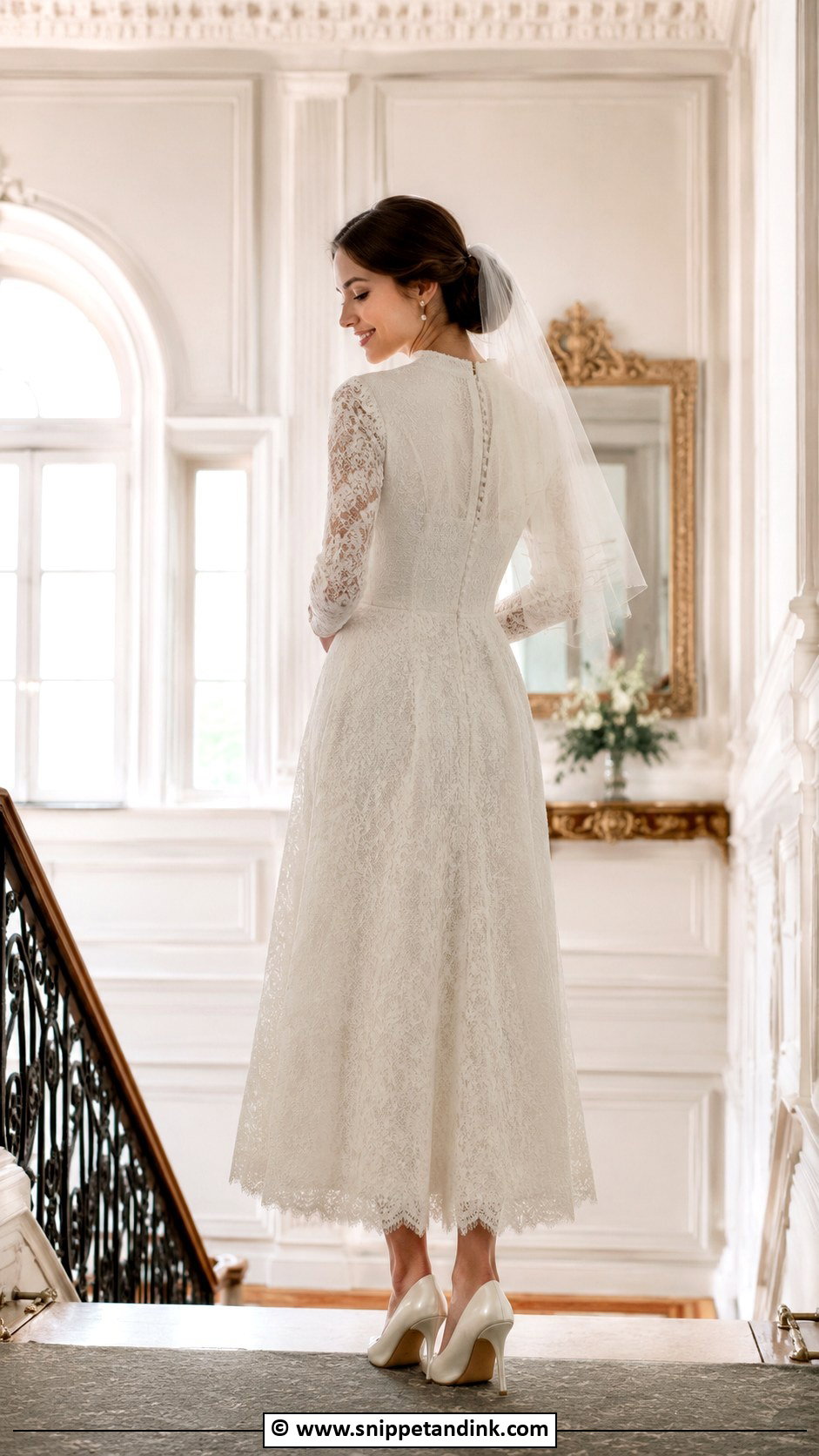
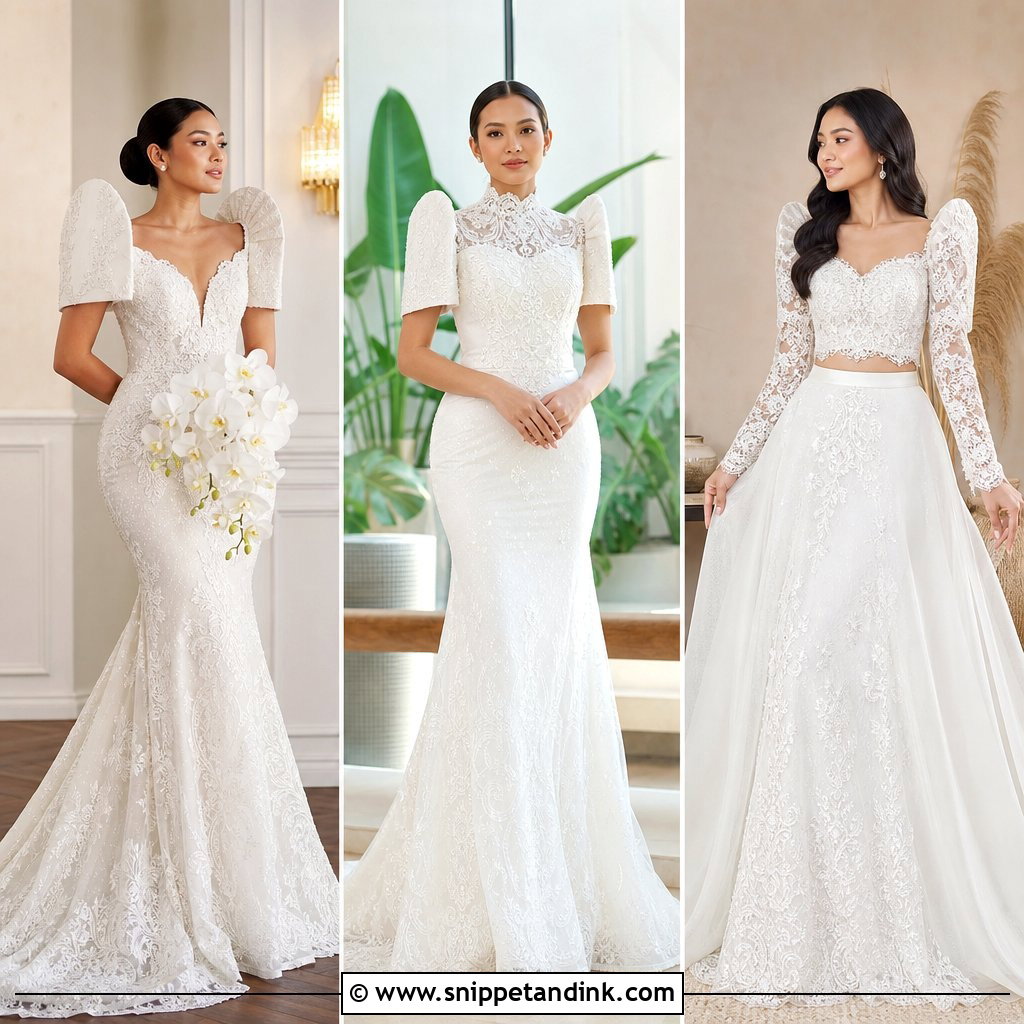
Lace sleeves, covered buttons, soft satin, drop waists, fine beading and tea-length hems all point to the past. The aim is to reference an era, not wear a costume, so I pick one or two period details and keep everything else current. If you’re buying a true vintage gown, get it checked by a specialist: old silk gets fragile at the seams and underarms, and yellowing doesn’t always clean out. Pearl earrings, classic pumps, a soft veil and brushed waves or a bun. Historic venues and garden weddings suit it.

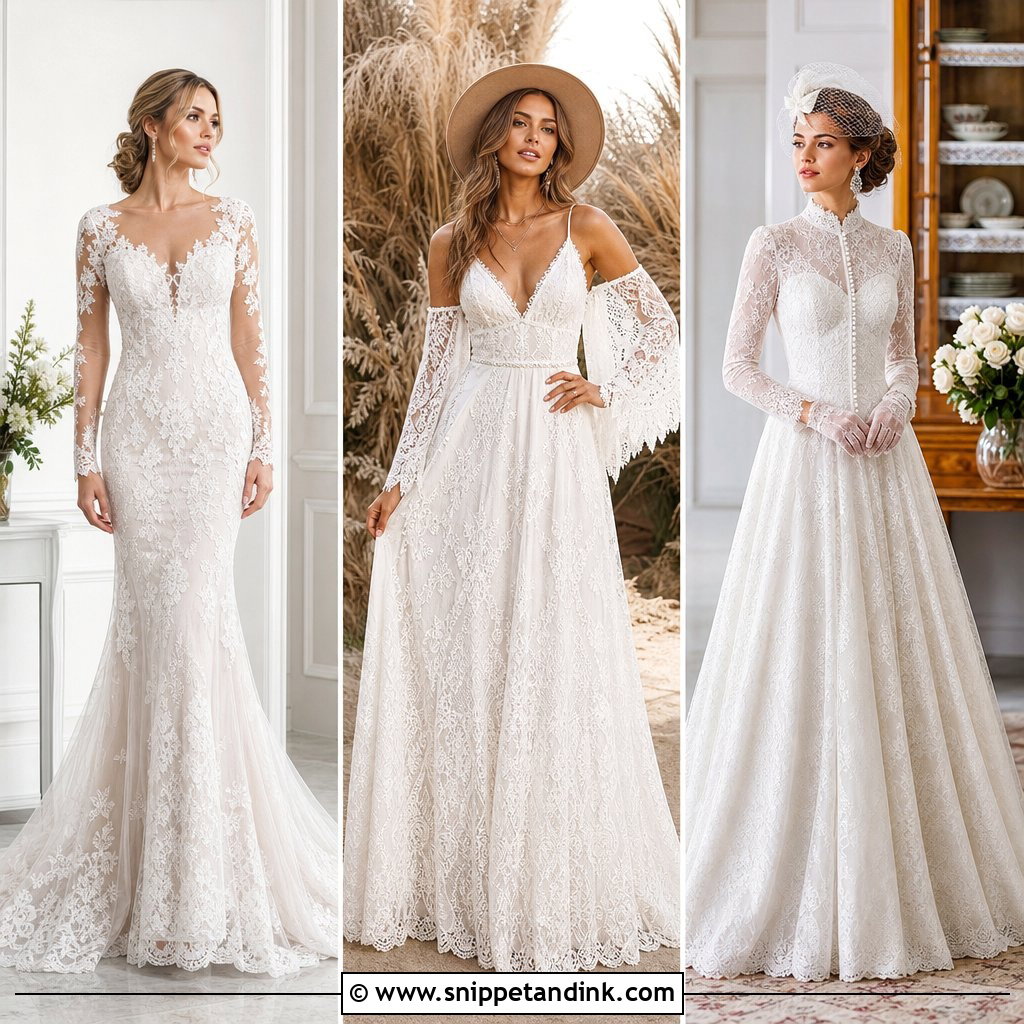
25. Floral Applique Bride Gown
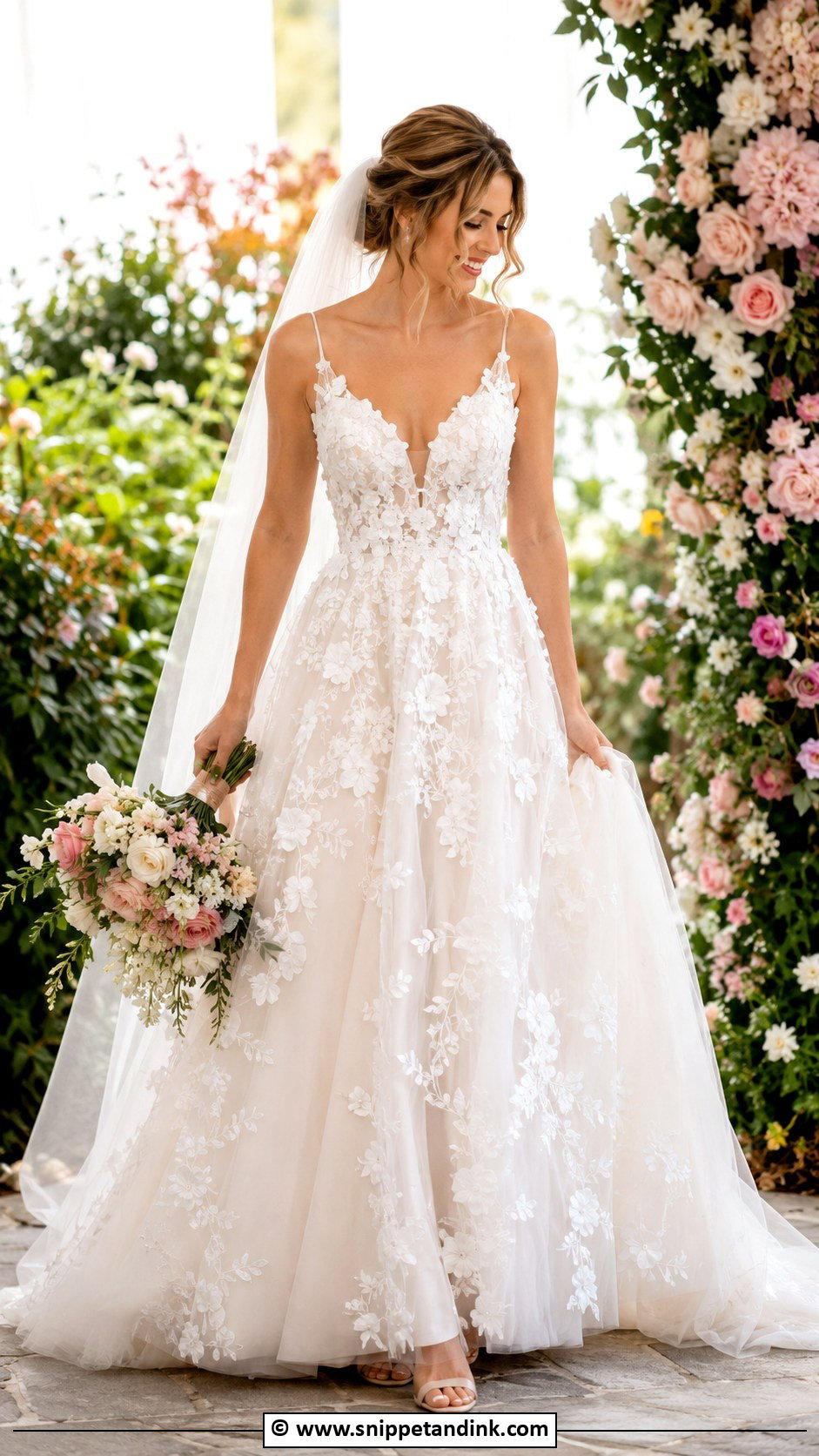
Appliqué flowers sit on top of the fabric, so they cast tiny shadows and give the gown depth you can see from across a room. Soft 3D appliqués on tulle feel garden-like; larger florals look more dramatic. They’re usually hand-tacked, so if a petal lifts during the day a seamstress can stitch it back afterward. Neutral heels, small earrings and a plain veil keep it calm, with a soft updo or loose waves. Spring and summer weddings outdoors suit it.
26. Long Sleeve Satin Bride Gown
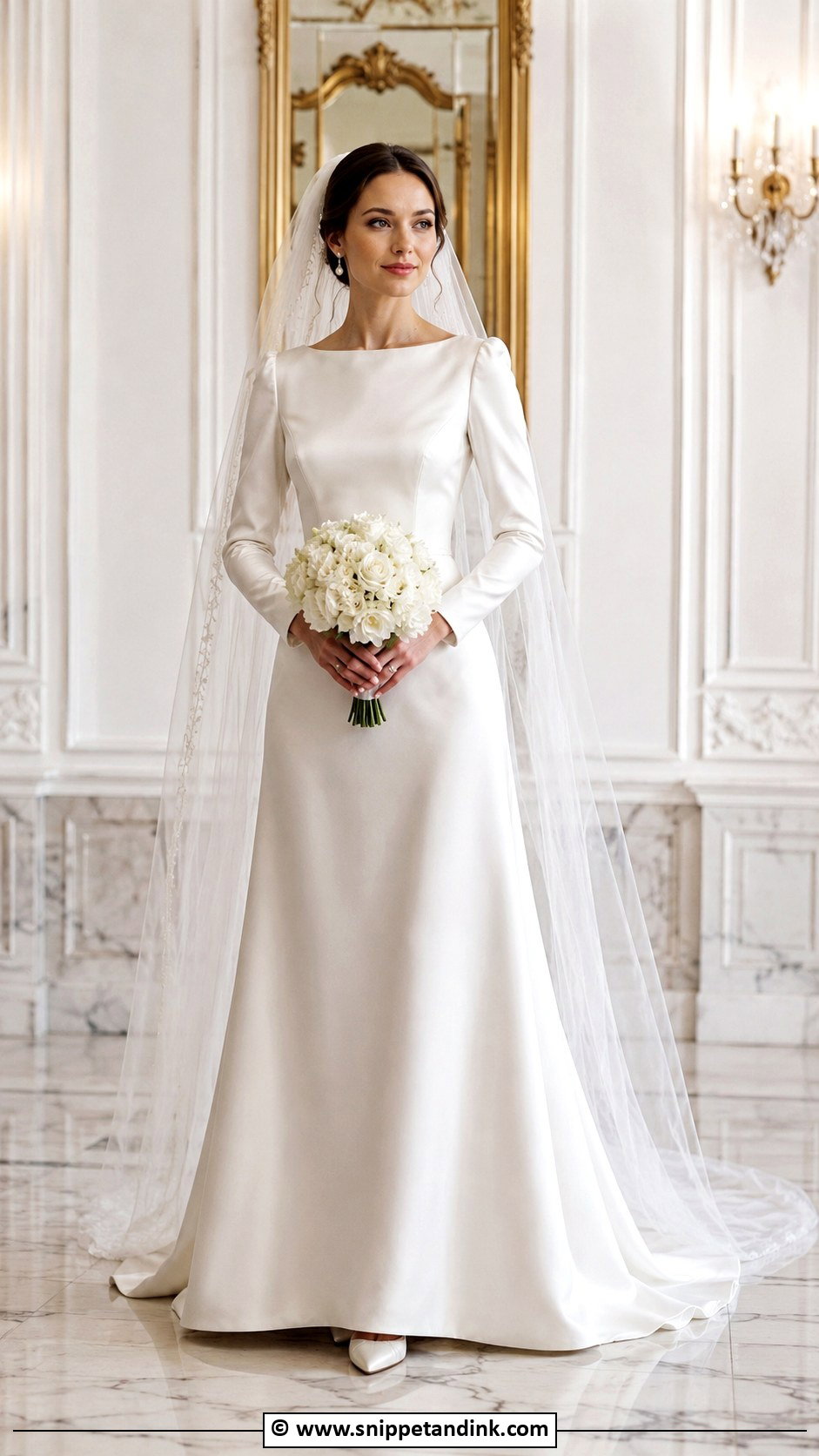
Long-sleeved satin gives coverage and polish, and it’s warm, which is why I steer brides toward it for cooler months. The sleeves need room at the elbow. Cut too narrow, satin creases and pulls every time you bend your arm. A fitted bodice with an A-line skirt is classic, while a slim column is more modern. Pearl earrings, closed-toe heels, a long veil and a sleek bun or low ponytail. Feel the fabric between your fingers: it should be substantial without being stiff.
27. Pleated Bride Gown
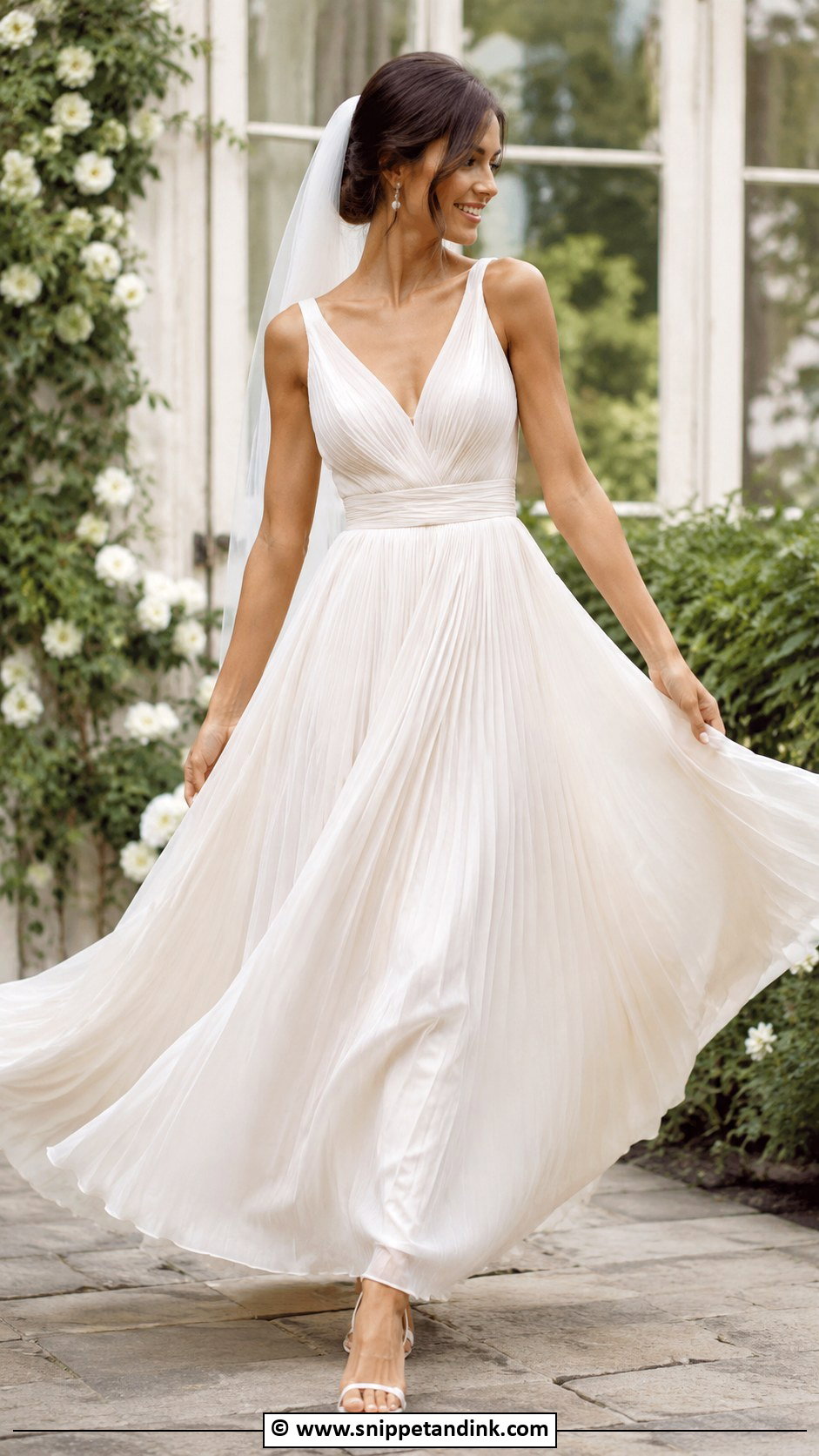
Pleats give texture without any embellishment. Fine pleats in chiffon or organza feel airy; sharper pleats in satin look structured. Ask how they were made. Heat-set pleats in synthetic fabric hold through humidity, but pressed pleats in natural fibers can relax by evening. A fitted bodice balances the movement of the skirt. Simple heels, delicate earrings and a veil that doesn’t cover the pleats. Bright outdoor daytime ceremonies suit it.
28. Basque Waist Bride Gown
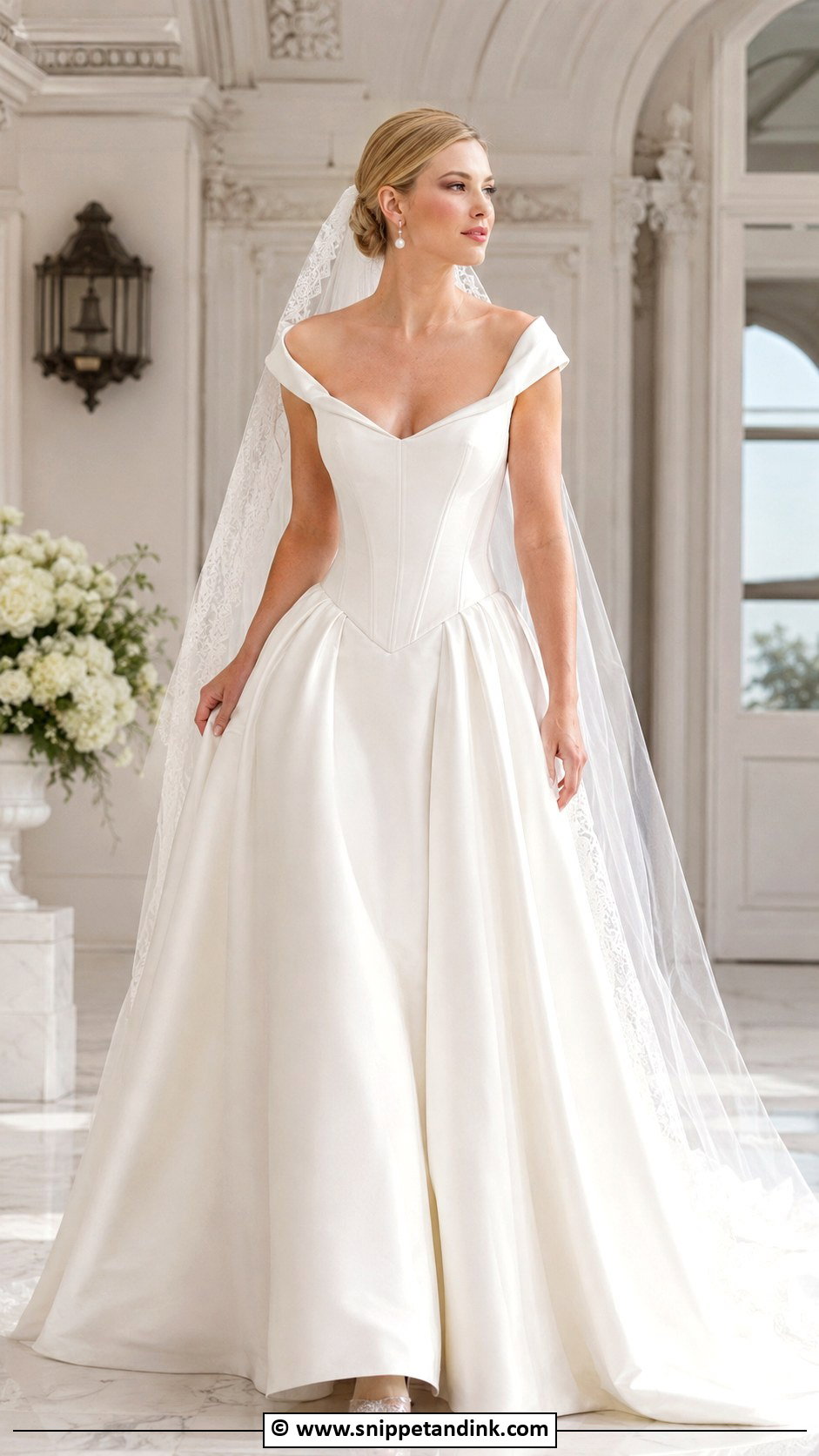
A basque waist bride gown dips into a V below the natural waist, which lengthens the torso and gives a sculpted line. The point of that V must sit exactly at center front. Even a small shift reads as crooked in photos, so alterations here have to be precise. Ball gowns, A-lines and corset bodices all carry it. Satin is classic, lace and tulle softer. A long veil, pearl earrings, elegant heels and a clean updo show the bodice. If you have a short torso, try one before ruling it out; the dropped point often helps.
29. Overskirt Bride Gown
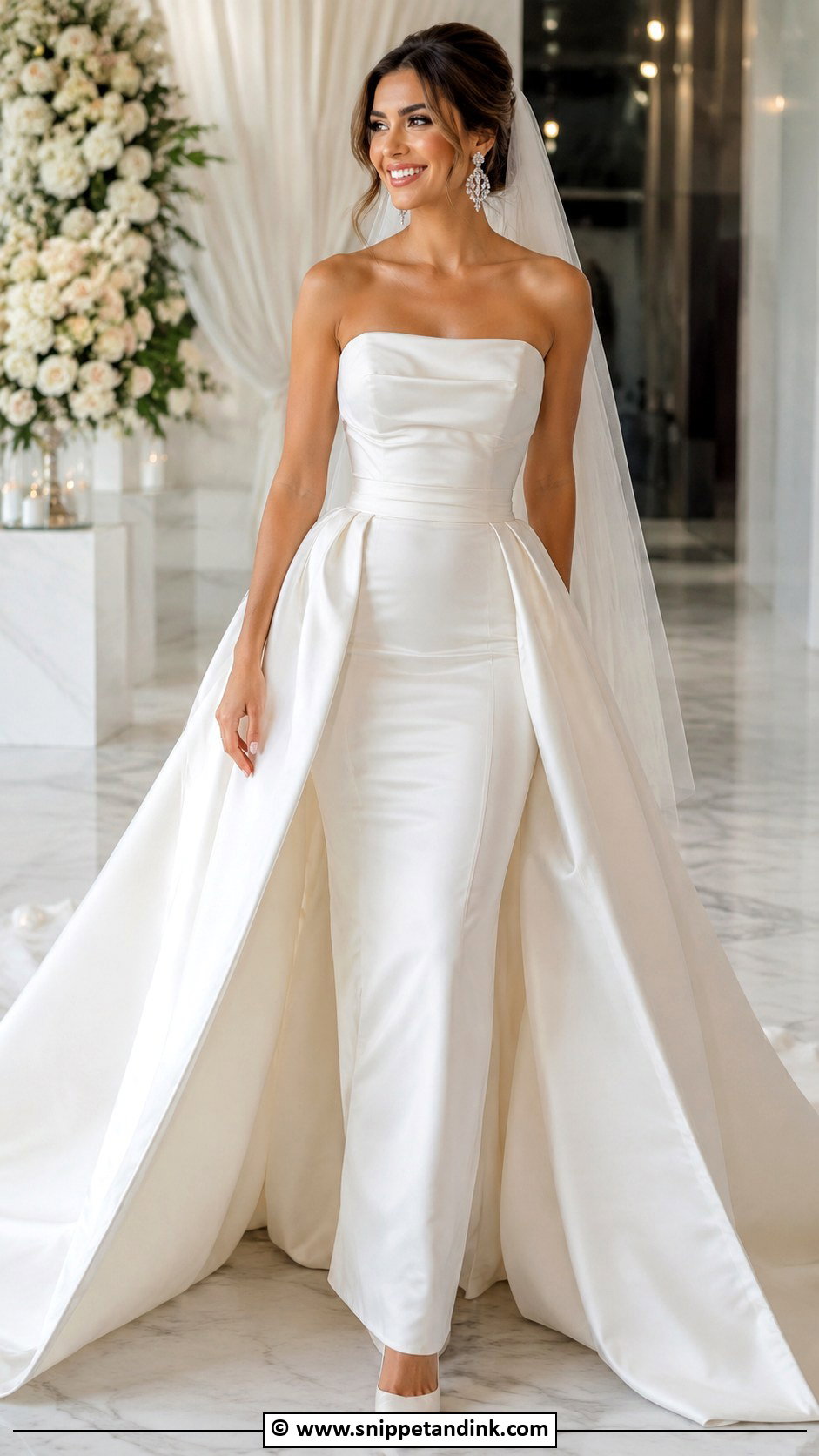
An overskirt lets you wear volume down the aisle and in portraits, then take it off for a sleeker reception look. It can sit over a sheath, a mermaid, a mini or a slim satin gown. Practice unhooking it with whoever will help you, and plan where it goes afterward, since a big tulle overskirt needs a hanger and somewhere safe to hang. Classic heels, statement earrings and a veil sized to the ceremony silhouette complete it.
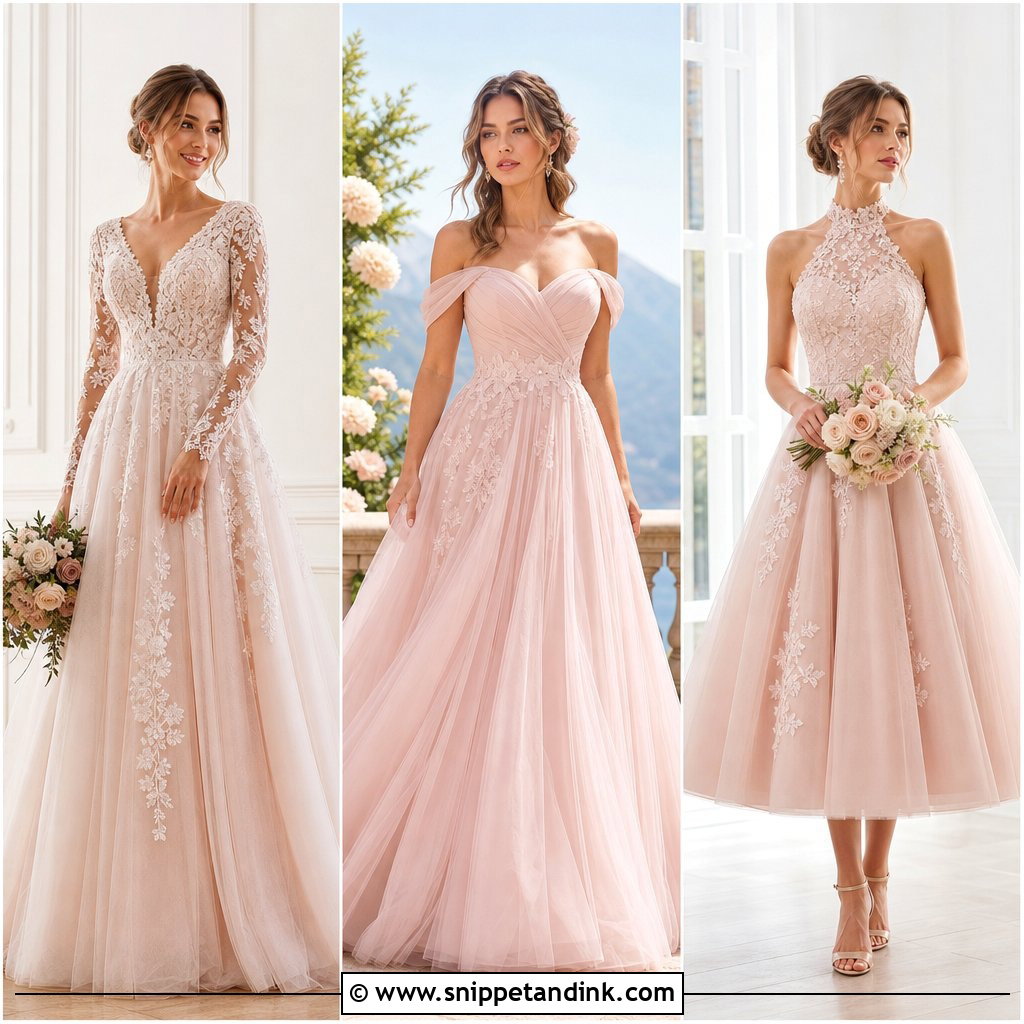
30. Colored Bride Gown
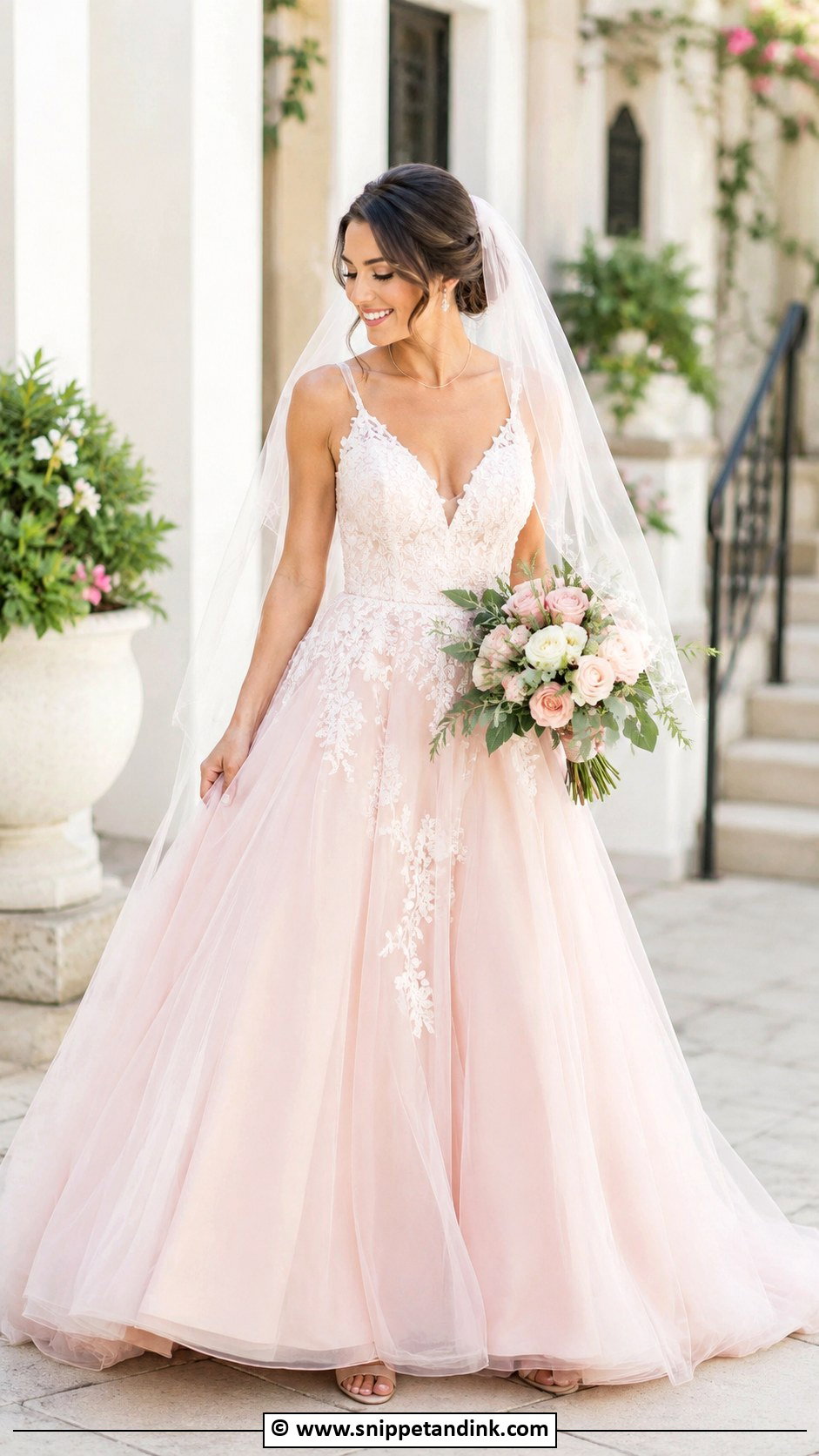
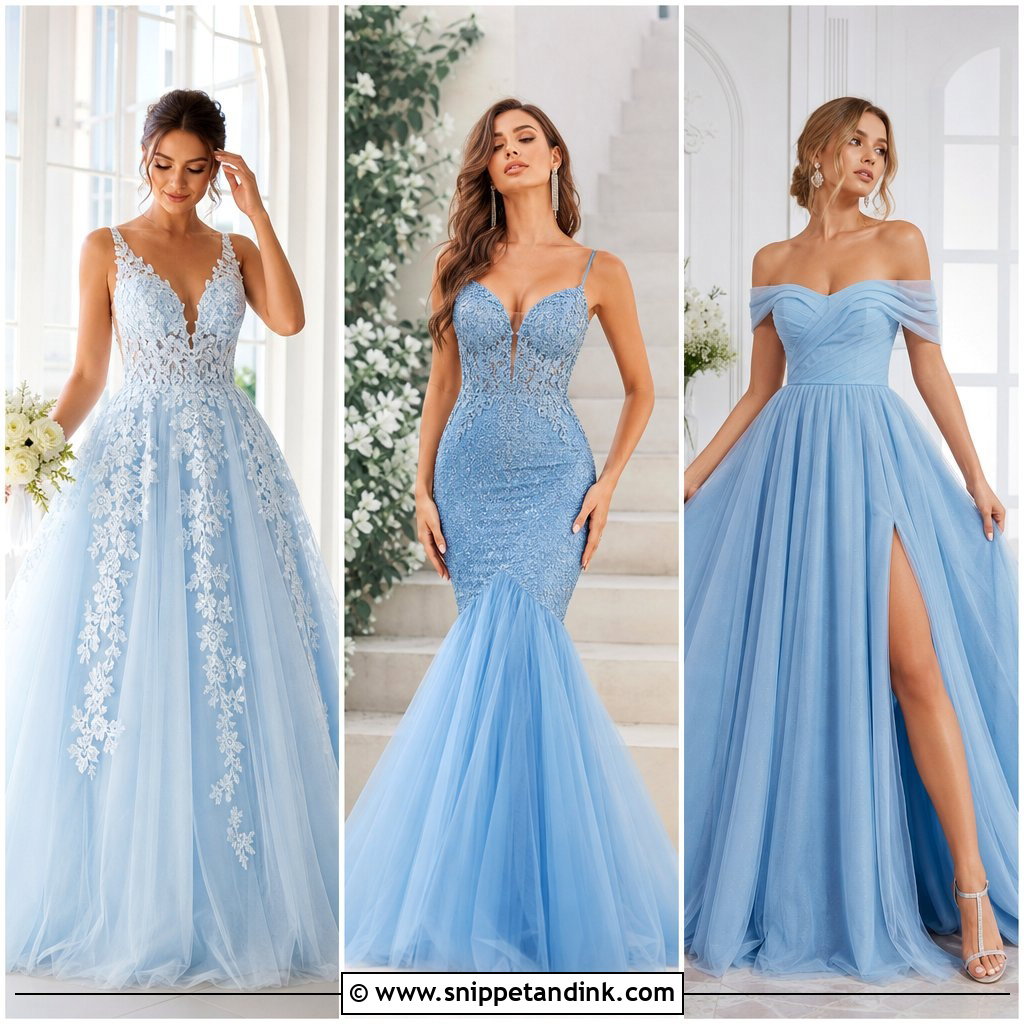
A colored gown makes the look more personal while still reading as bridal. Blush, champagne, pale blue, misty gray and warm ivory are the shades I see work most often. Hold the color against your face in daylight first: some blush tones wash out very fair skin, and champagne can turn beige on olive skin. A flowing A-line suits outdoor venues, and a satin column suits modern ones. Neutral heels, simple jewelry and a veil in a matching or sheer tone. Keep the bouquet soft so the color looks intentional.
Three Fittings, and What Each One Is For
Alterations usually begin eight to ten weeks before the wedding. Each fitting has a job, and bringing the right things saves you an extra appointment.
- First fitting. Bring the shoes and undergarments you’ll actually wear. The hem, straps and side seams are pinned to them, so a different heel height later throws everything off.
- Second fitting. Check the changes, then decide the bustle. A French bustle tucks the train under with ties; an American bustle lifts it over with hooks. Your train’s fabric usually decides which one sits flatter.
- Final fitting. Bring whoever will dress you and bustle you. Have them practice both, and walk, sit and dance in the gown once more.
After the Reception, Before It Goes in a Box
Sweat, champagne and grass leave marks that are invisible at midnight and turn yellow months later, especially sugar-based spills. Get the gown to a specialist wedding dress cleaner within a few weeks rather than leaving it in the garment bag.
For storage, I recommend acid-free tissue in the folds and an acid-free box kept somewhere cool and dark. Avoid plastic covers, which trap moisture, and wire hangers, which stretch the shoulders of heavy gowns over time.
Let the Fitting Room Settle It
Photos narrow the list, but the fitting room makes the call. Shortlist three or four silhouettes from the looks above, try each one on, and sit, walk and lift your arms in every one. Think about your venue, the season and how many hours you’ll be wearing it. Then build the shoes, veil, earrings and hair around the gown you chose, so they support it instead of competing. The right dress is the one you forget you’re wearing by the second hour of the reception.
You'll Like These Ideas:




Leave a Reply