
Most brides arrive at a consultation with a folder of hair they love and no idea which of it will survive their own wedding day. That’s normal. Bridal hair right now leans polished but not stiff: soft texture, real movement, clean shine and a few well-placed accessories. Some of you want a bun that won’t budge for twelve hours; others want waves, braids, a ponytail or your natural curls. The look that works is the one that suits your neckline, veil, weather and hair texture, so I’ve added notes on each of those to the fifteen styles below, all worth saving to your bridal Pinterest board.
Read Your Neckline Before You Fall for a Hairstyle
When a bride can’t decide between ten hairstyles, I ask to see the dress. Hair and neckline share the same frame in nearly every photo, so the dress usually rules half the list out in a minute.
- Strapless or sweetheart: almost anything works, but loose waves or a low pony keep bare shoulders from looking unfinished.
- High neck or halter: lift the hair. A chignon, sleek bun or high pony stops hair and collar from crowding each other.
- Open or low back: an updo or low bun shows the detail. Long hair down covers most of it.
- Off the shoulder: half up or waves swept to one side balance the wide line.
- Heavy lace or beading at the neck: keep the hair simpler and skip big accessories.
If the dress isn’t chosen yet, I’d hold off on committing to one hairstyle. Fitting hair to a gown is far easier than the reverse.
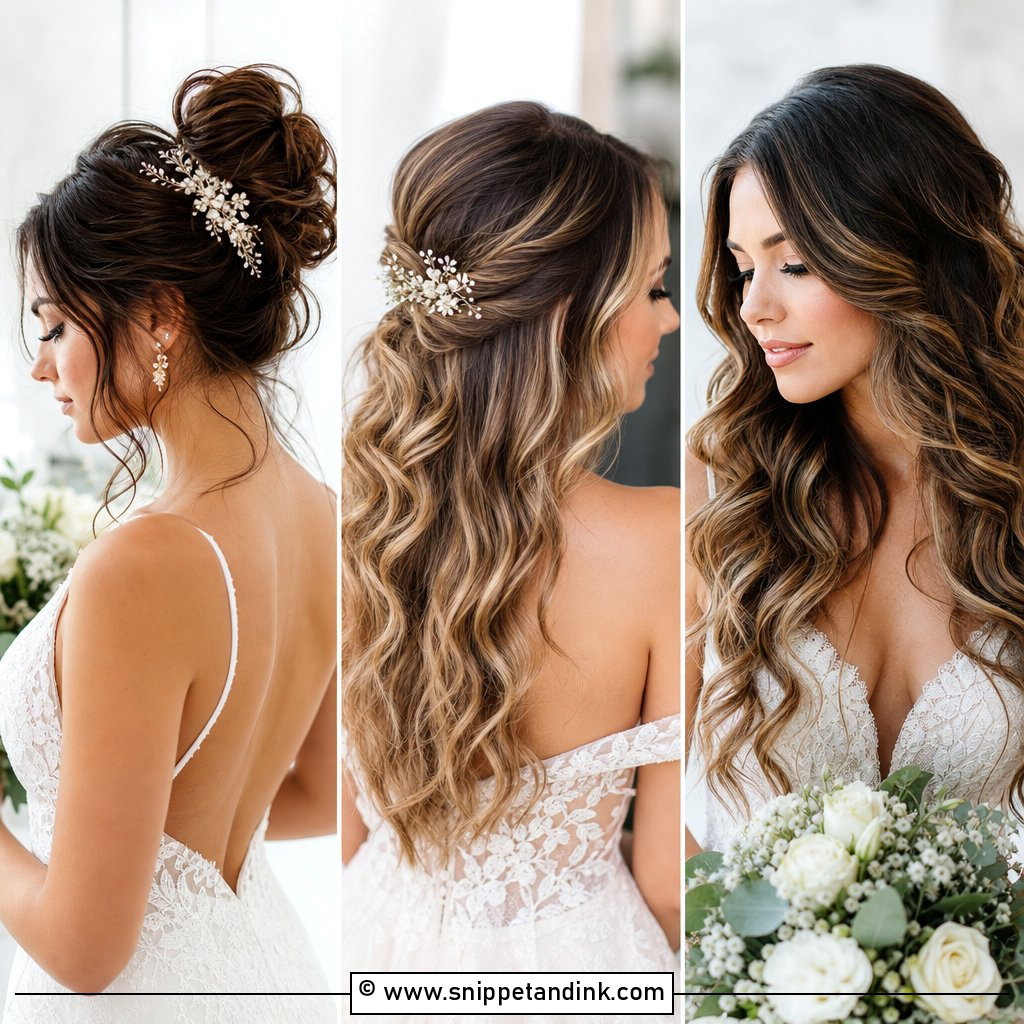
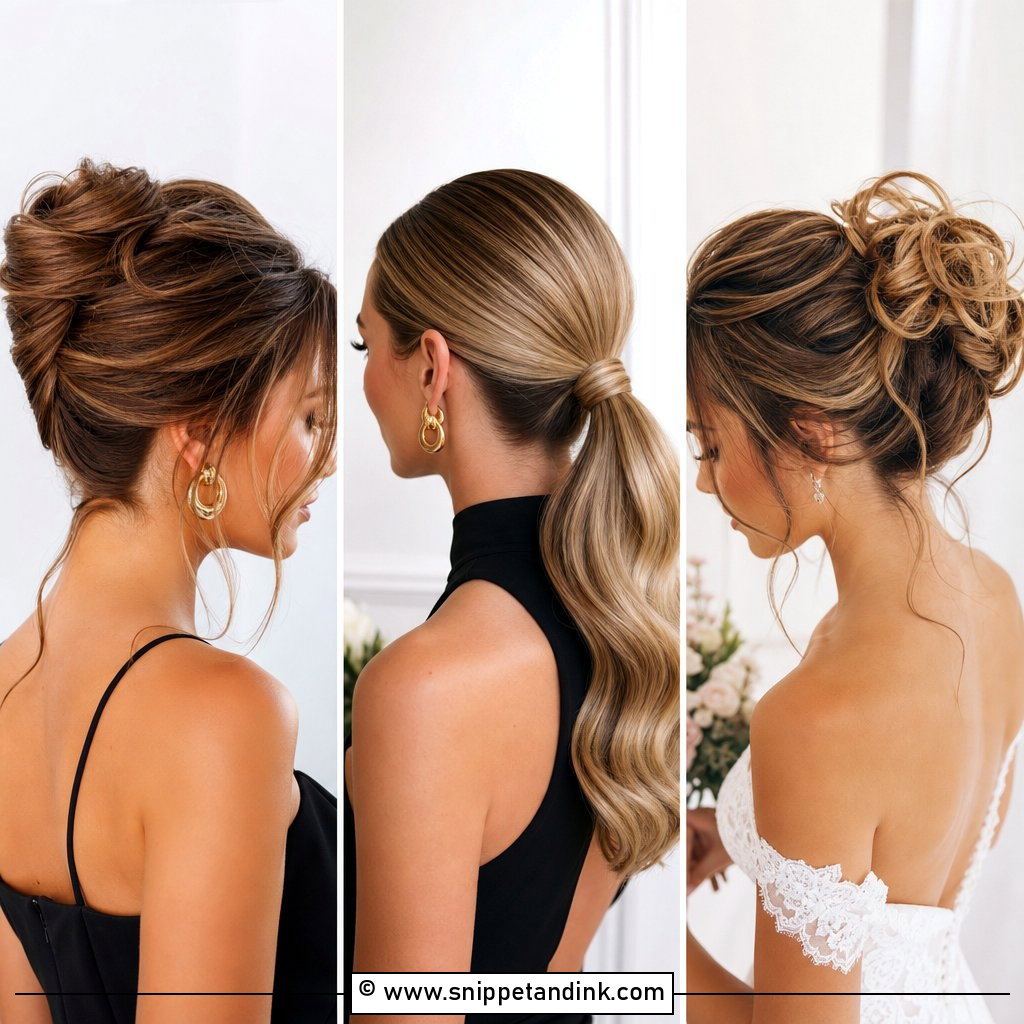
1. Classic Wedding Updo
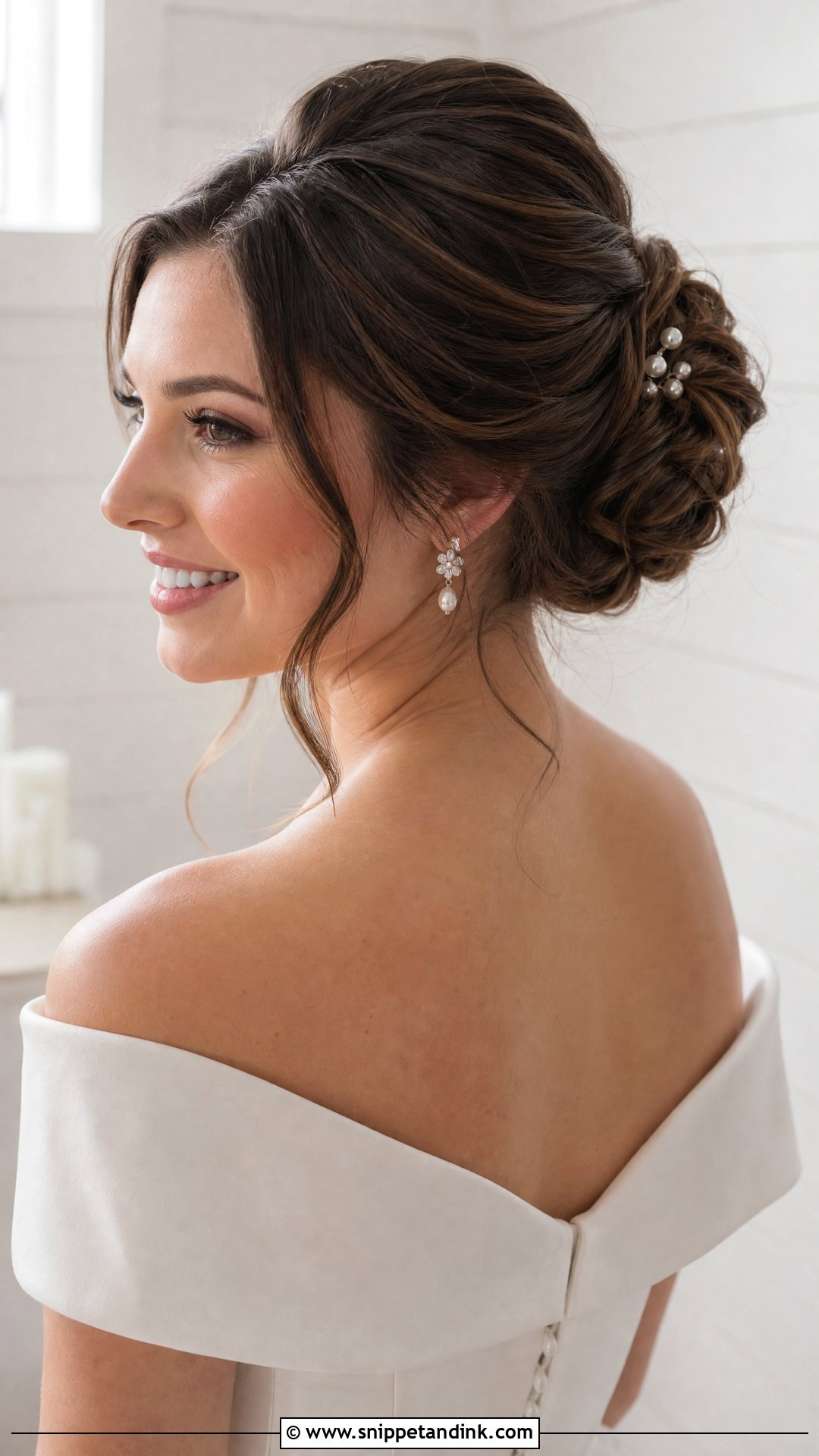
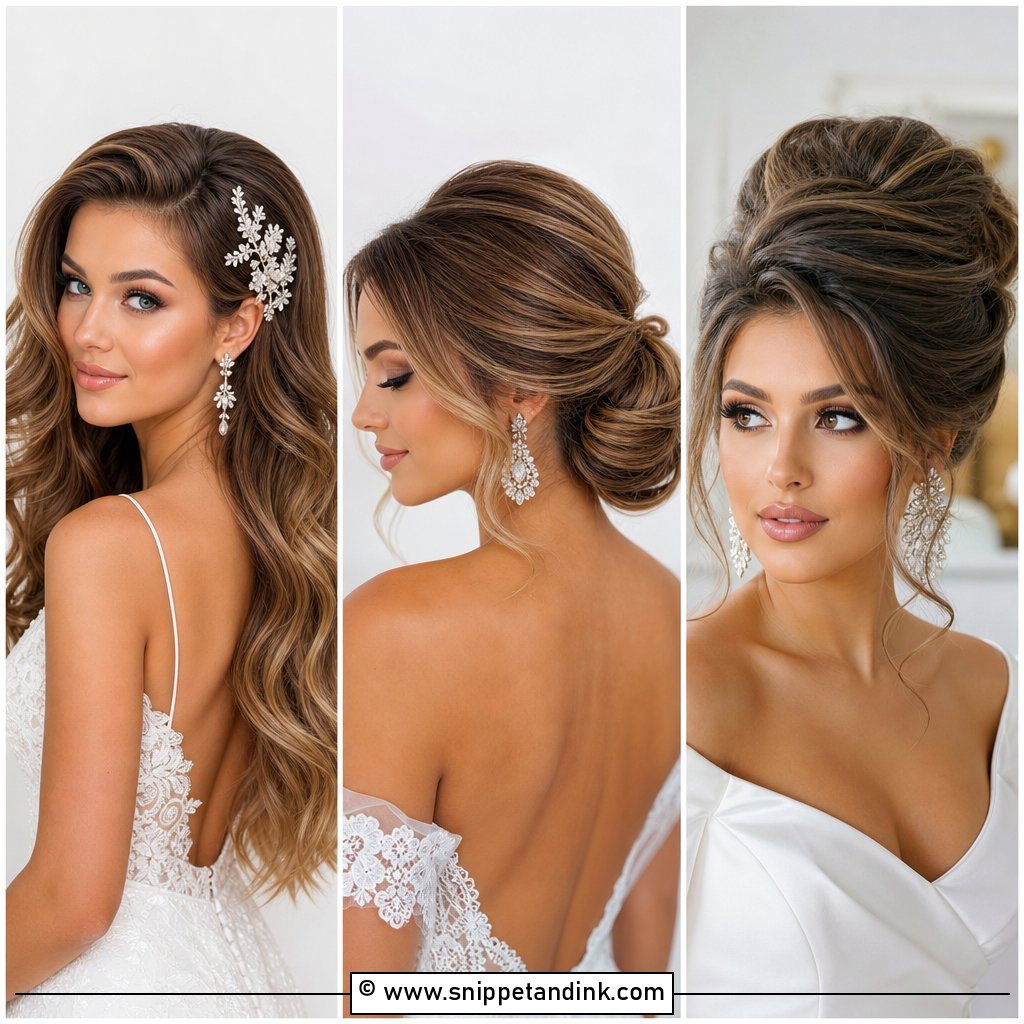
The classic updo is the style I’d bet on if you’re nervous about hair falling apart. I build it on a hidden foundation, usually a small ponytail or a pinned base at the back, then wrap and twist the rest around it so the pins grip each other instead of slippery hair. Done this way it holds a veil, pearl pins or a crystal comb without strain. What I avoid is pulling it too tight. Leave a little volume at the crown and a couple of soft pieces at the face, and you’ll still be comfortable at the last dance instead of nursing a headache.
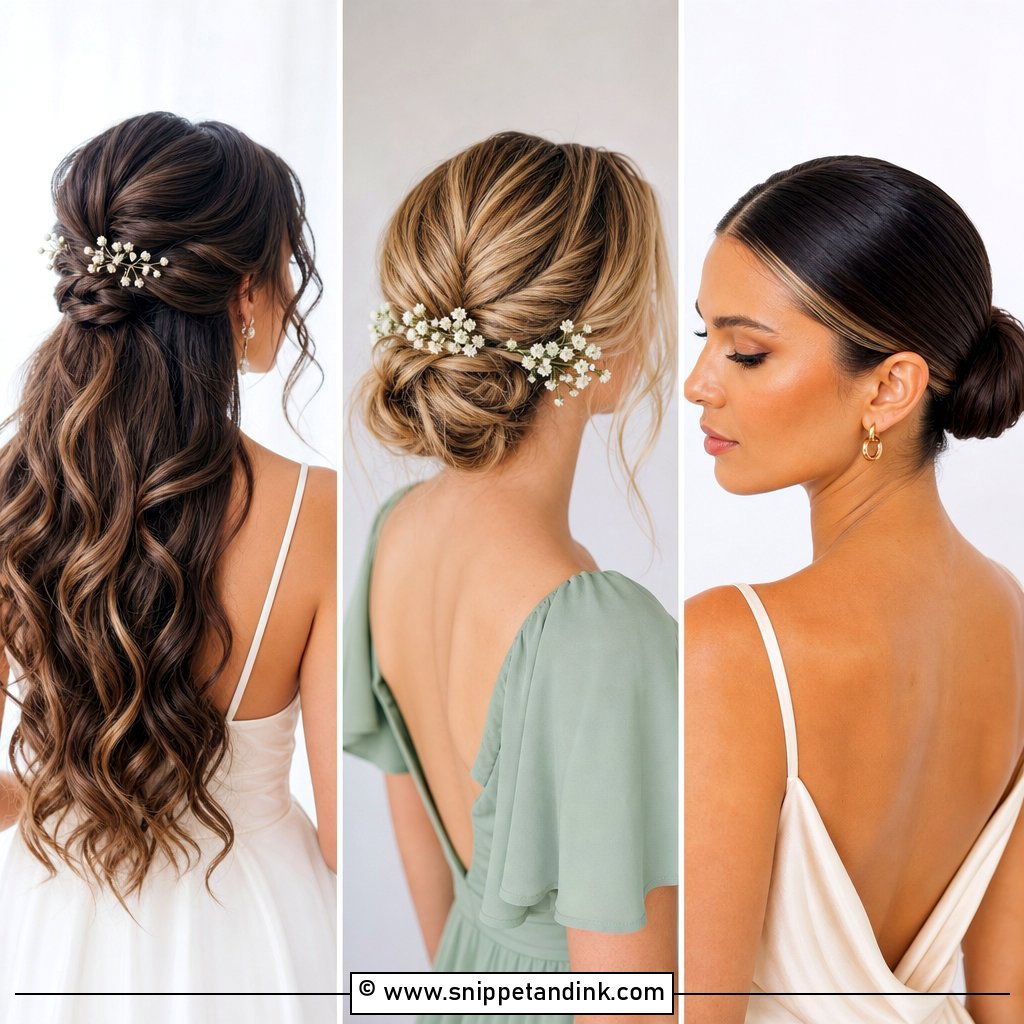
2. Low Chignon Wedding Hair
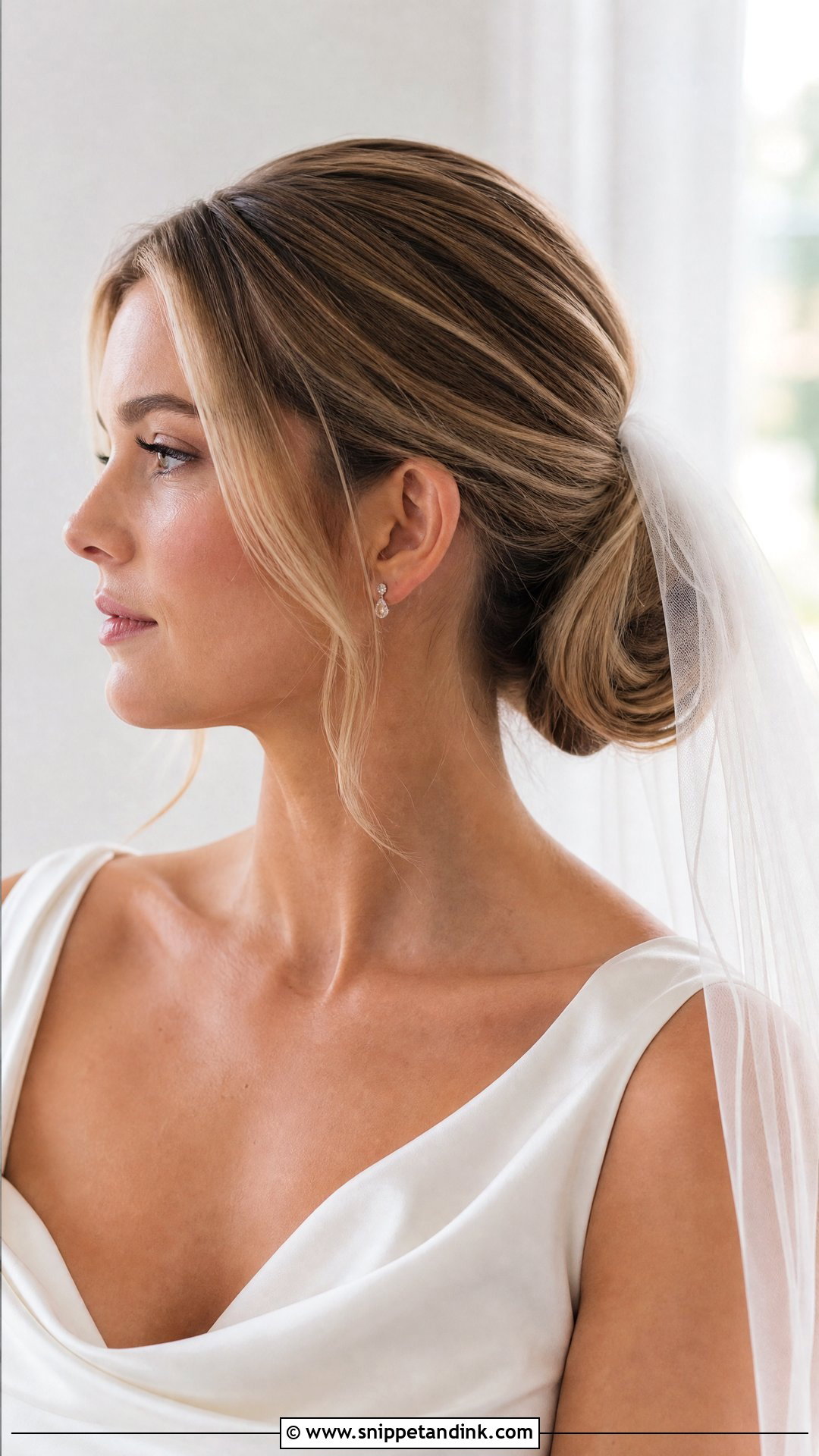
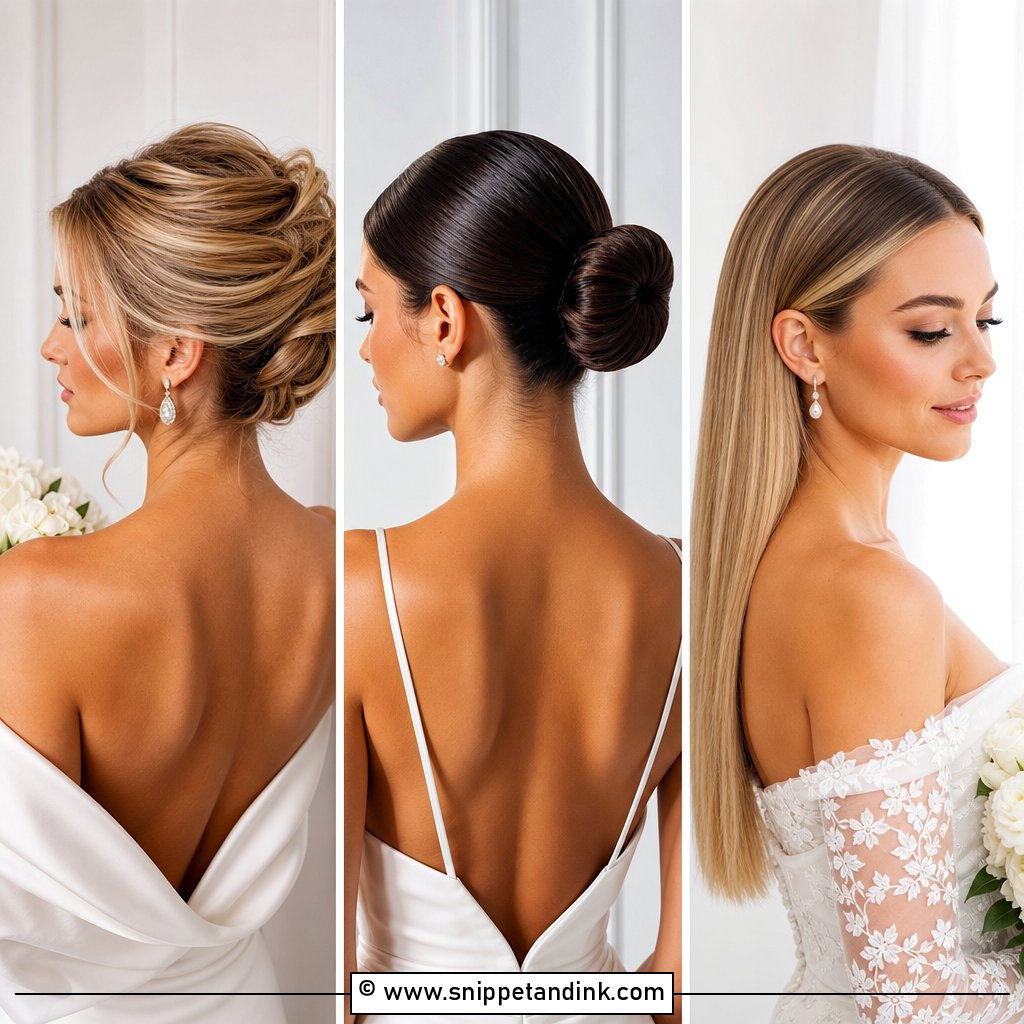
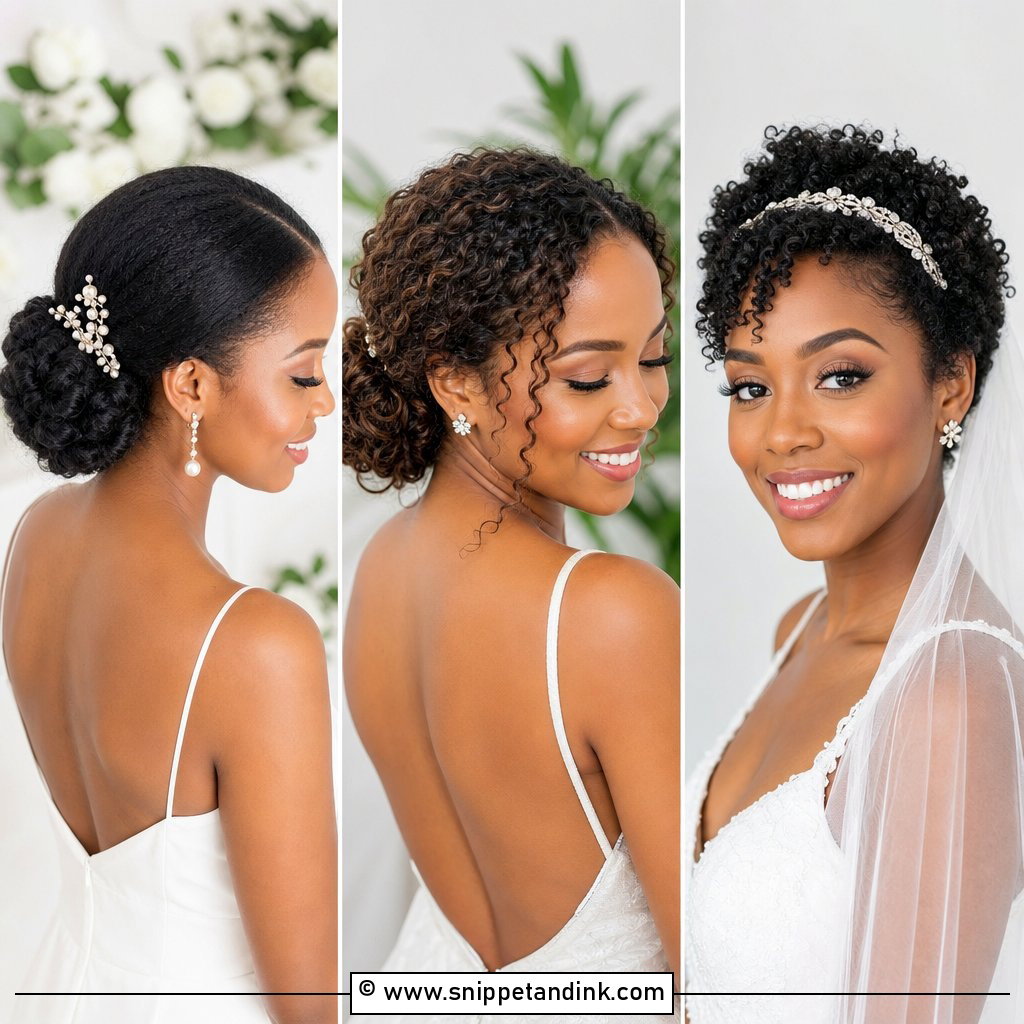
A chignon sits right at the nape, so it shows off an open back and stays out of the way of a high neckline. It also sits nicely under a long veil, since the comb can go just above it. I can make it sleek or a bit undone; the sleek version wants a center part, while a side part softens it. Very fine hair sometimes needs a hidden donut or padding to give the bun enough size. A pearl comb or a few small floral pins are plenty here.
3. Soft Waves Wedding Hair
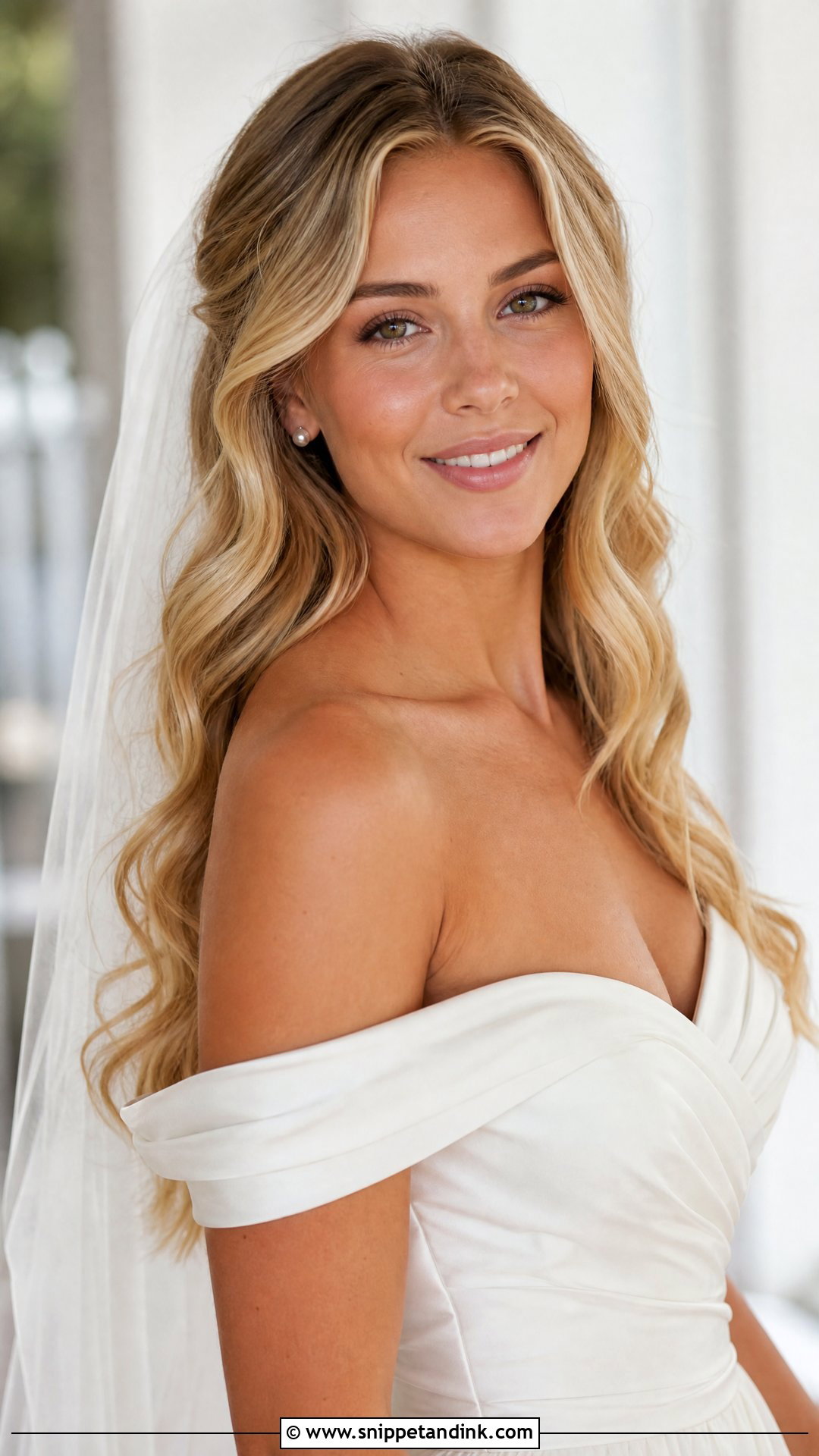
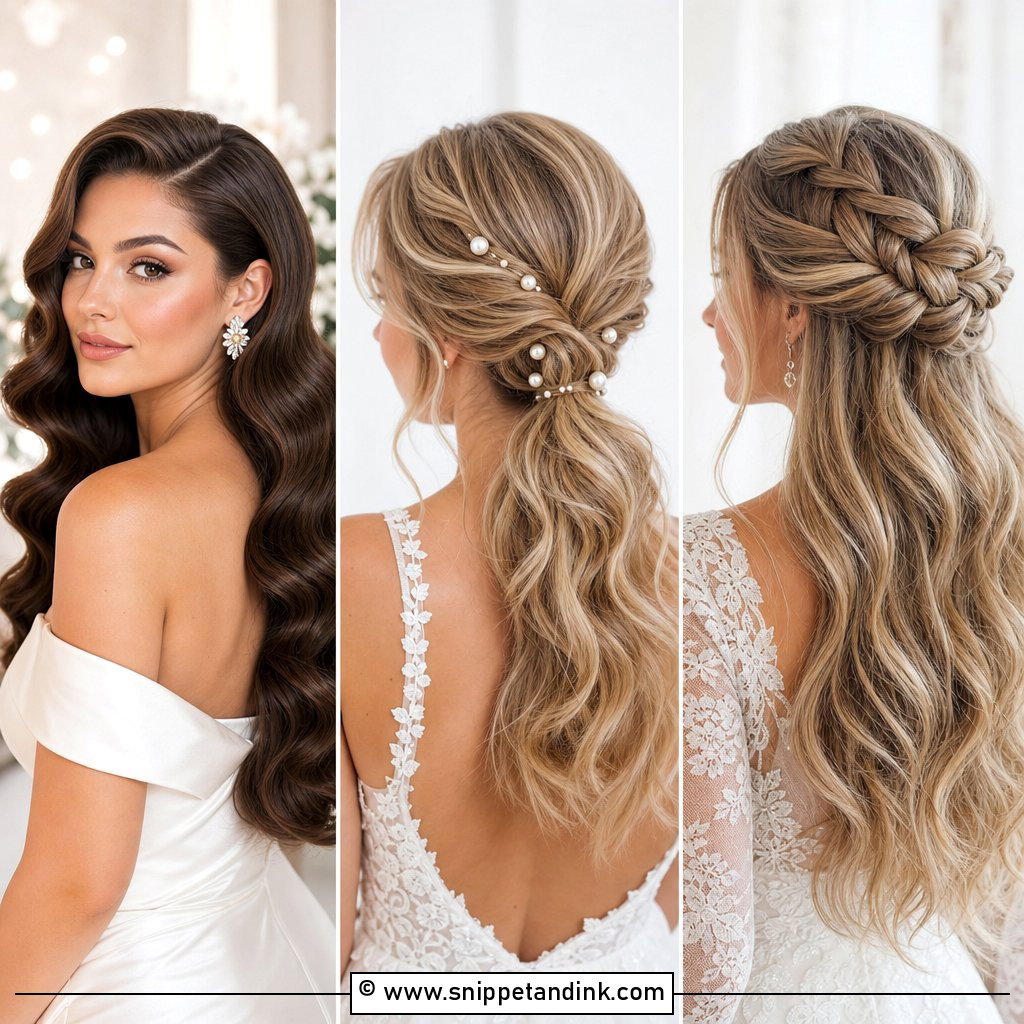
Soft waves look simple and aren’t. The difference between waves that last and waves that drop by dinner is mostly in the set: I curl in sections, let each one cool fully, and only then brush through. These are smoother and more defined than beachy waves, which is why they move from a garden to a ballroom without looking out of place. If your hair has never held a curl, tell your stylist at the trial. Extensions or a stronger setting product usually fix it, and you’ll want to know before the day, not on it.
4. Half Up Half Down Wedding Hair
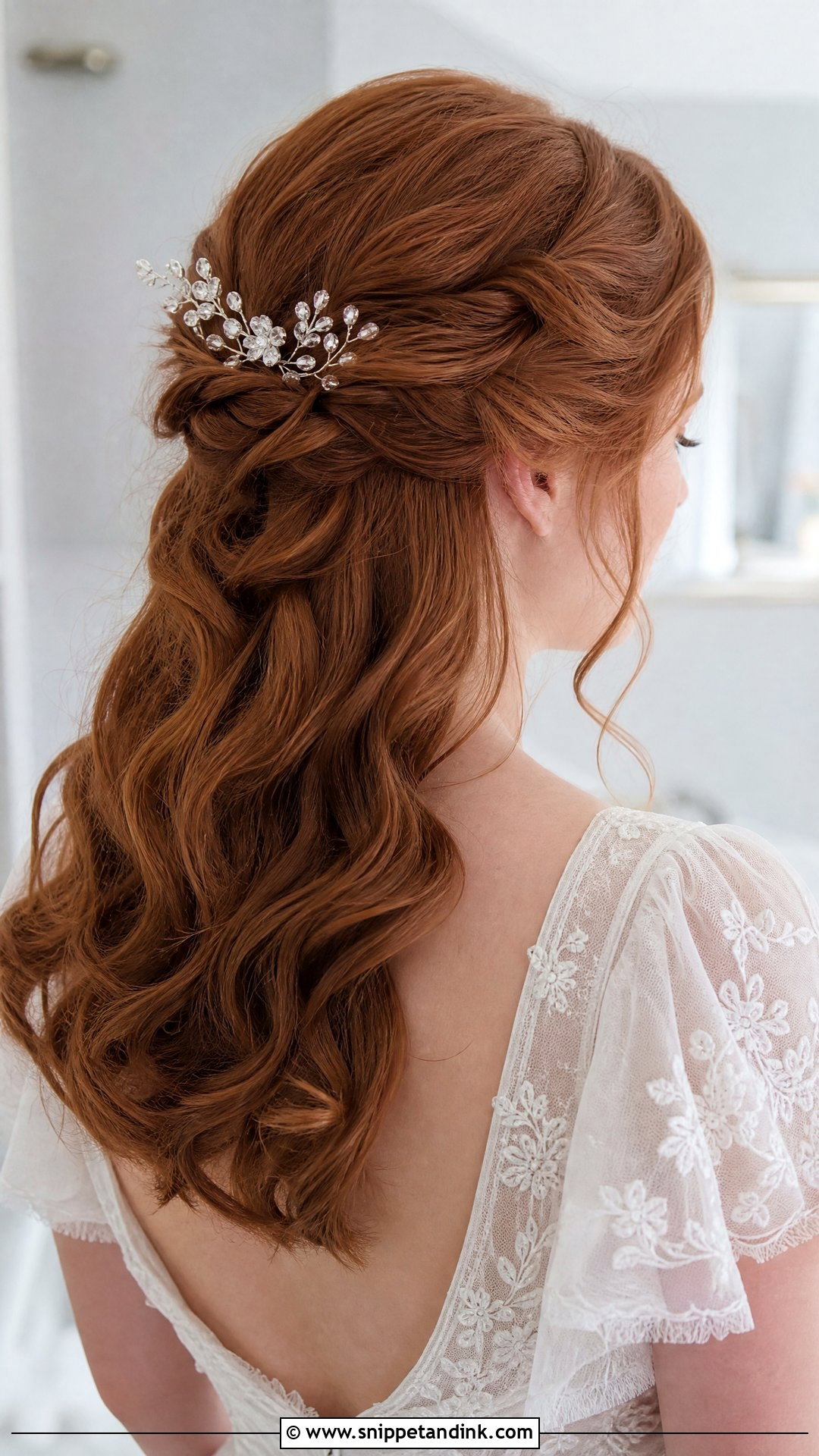
I suggest half up to brides who want length in photos but can’t stand hair in their face. The pinned crown section does two jobs: it keeps the front clear during vows and gives a veil comb something solid to grip. Loose curls, waves and natural texture all work underneath. The top can be twisted, braided or simply lifted and pinned. One thing to check at your trial is the back view in a mirror, because a pinned section that looks neat from the front can look flat from behind if the crown isn’t teased first.
5. Sleek Bun Wedding Hair
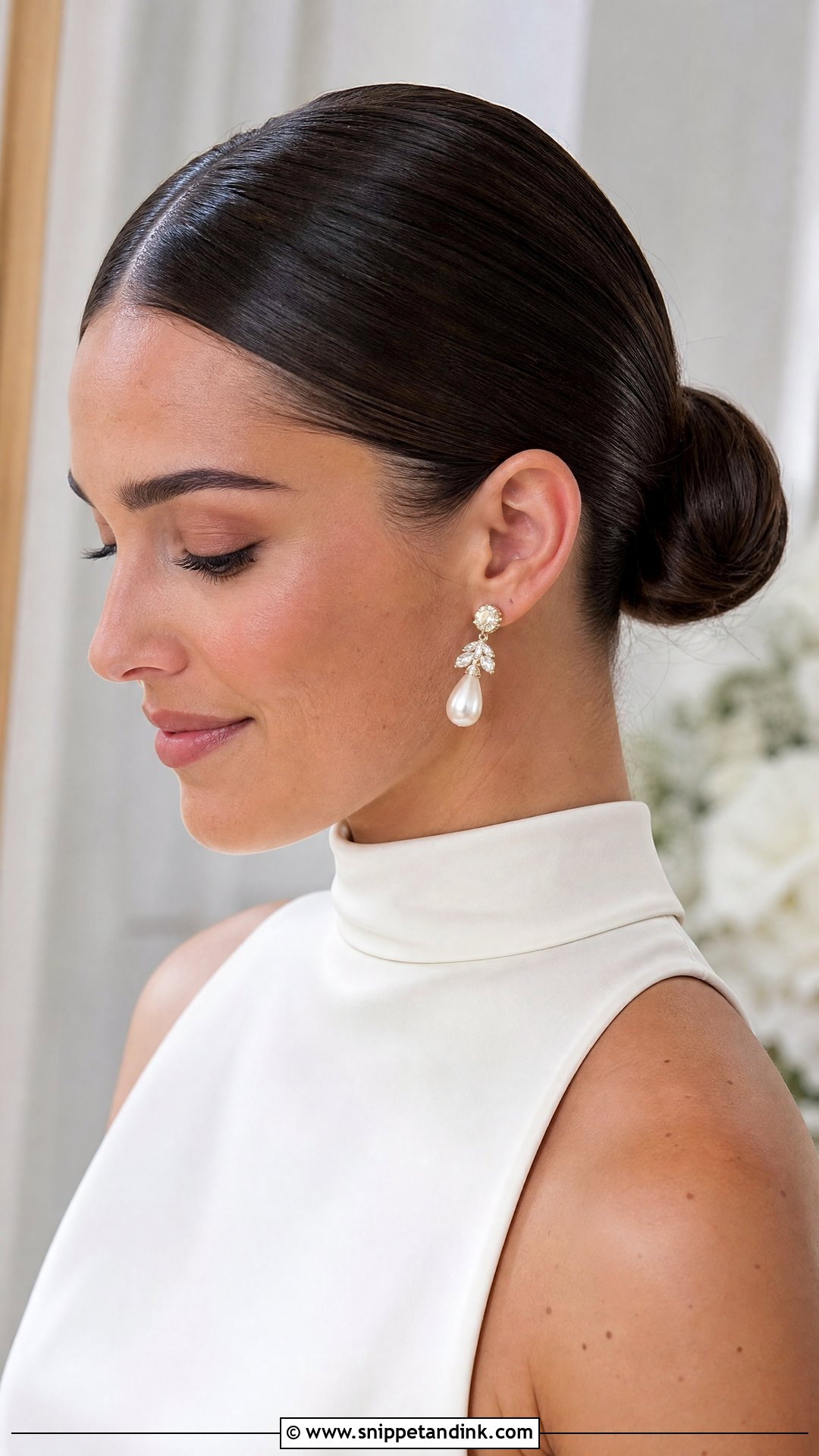
Everything about a sleek bun depends on prep. Any frizz or bump shows, so I blow-dry the hair completely smooth, use a fine-tooth brush and a frizz-control product, then finish with a light gloss spray. It can sit low, mid or high. It looks sharp with minimalist and structured gowns and leaves room for statement earrings. It’s also the most humidity-proof look on this list, since there’s no curl to lose. The honest downside: a tight sleek bun can give some brides a headache after several hours, so wear a practice version for an afternoon.
6. Braided Wedding Updo
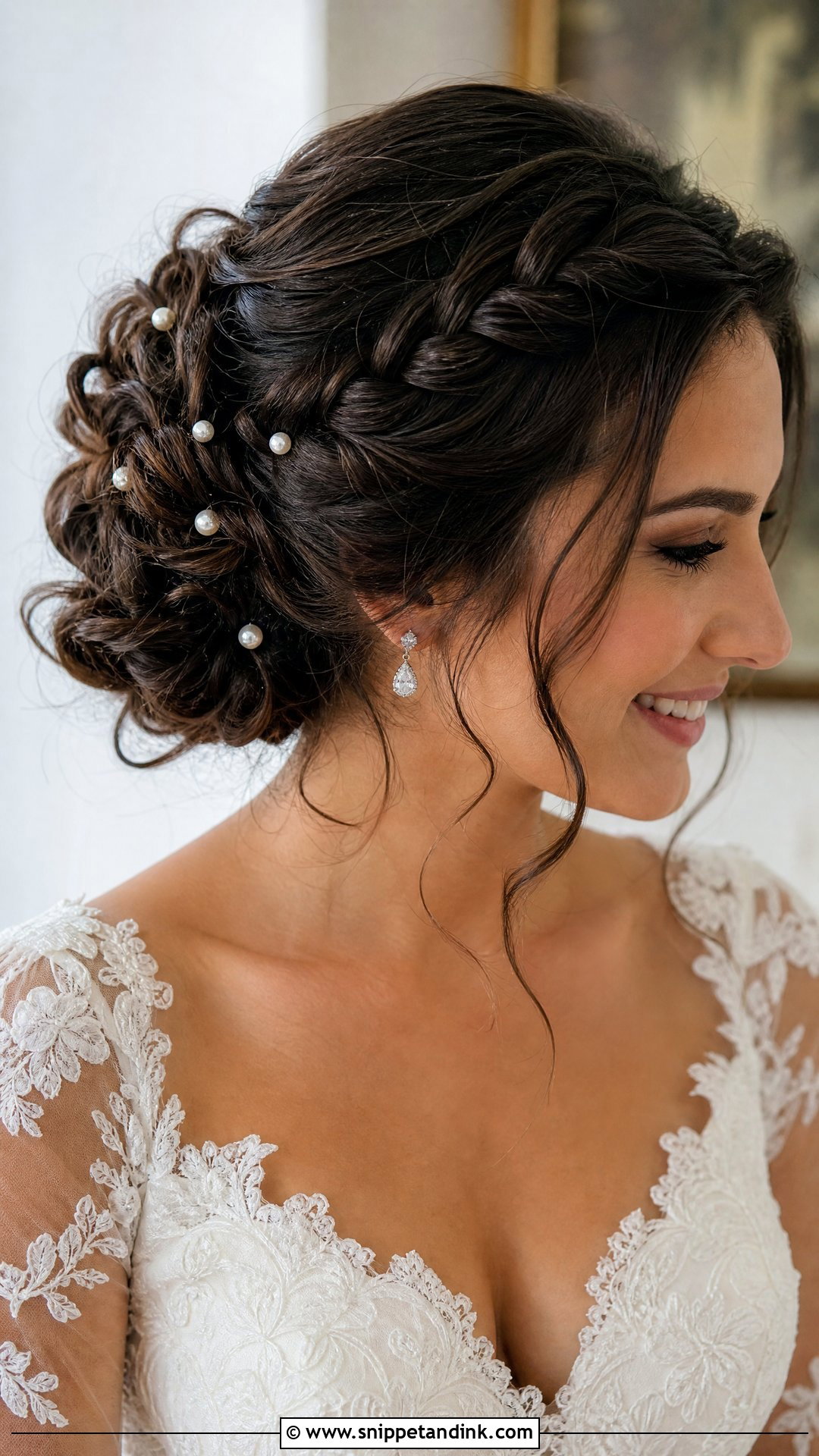
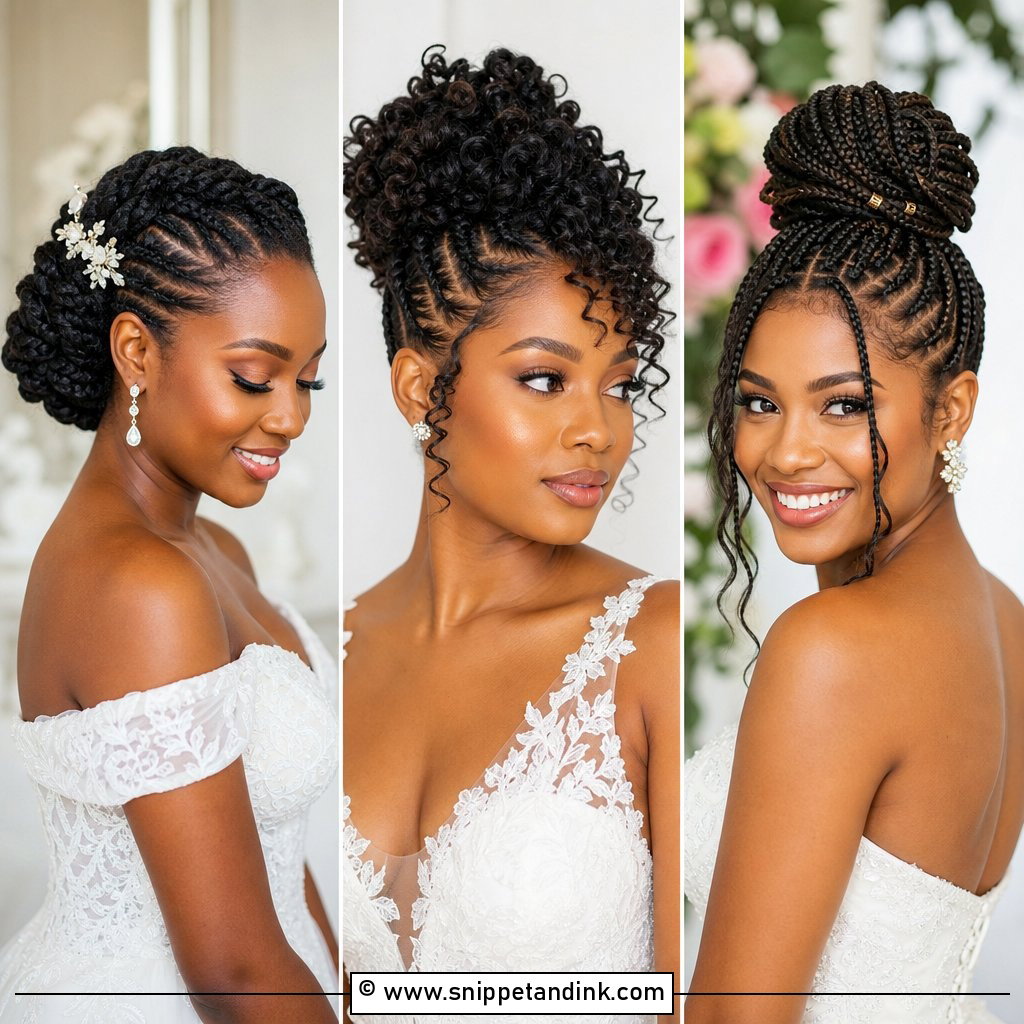
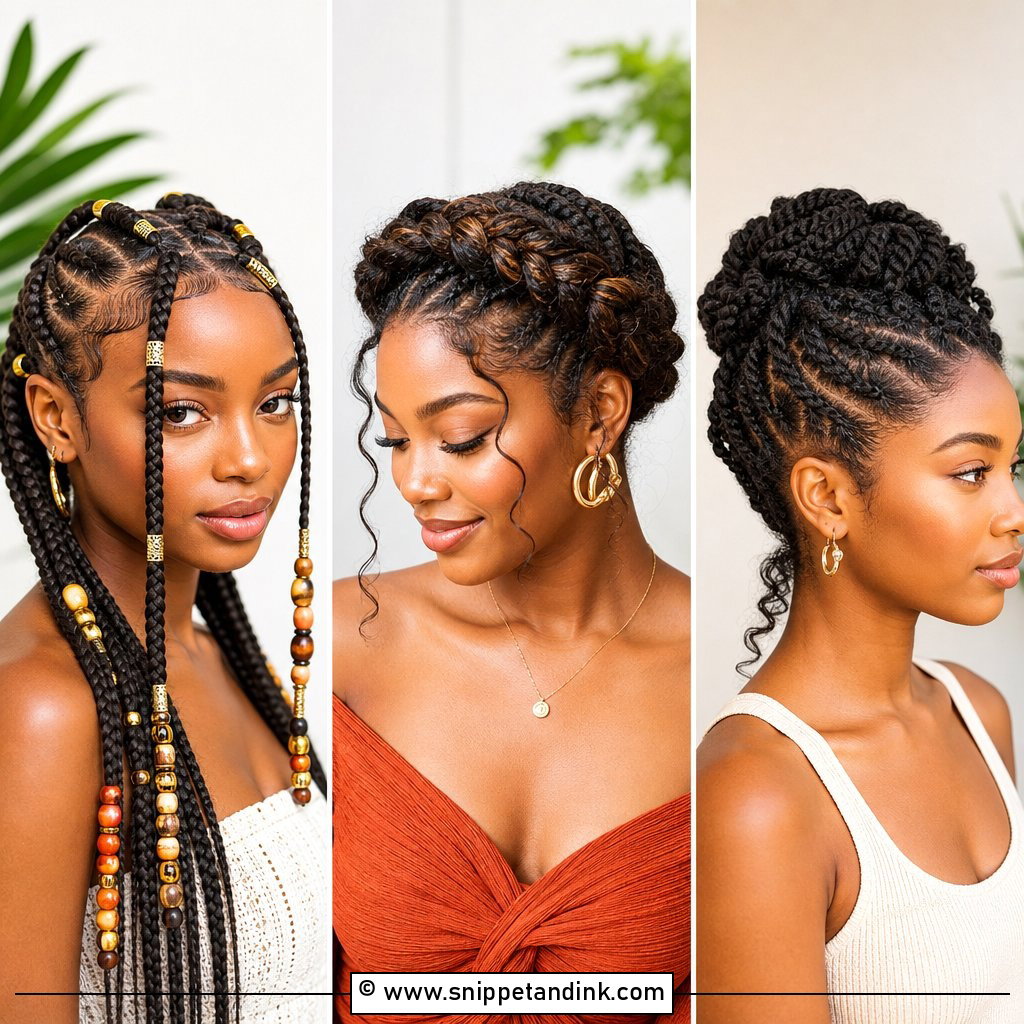
Braids add structure, which is why a braided updo stays put outdoors. It might be a crown braid, a side braid, a fishtail braid or a few braided strands wound into a low bun. I always loosen the braid after it’s pinned, pulling each loop out gently so it looks full rather than tight and bulky. The braid also holds tiny pearl pins or small flowers far better than loose hair would. If your hair is layered, short layers can poke out of a braid, and a little pomade on the fingers smooths them in.
7. Hollywood Waves Wedding Hair
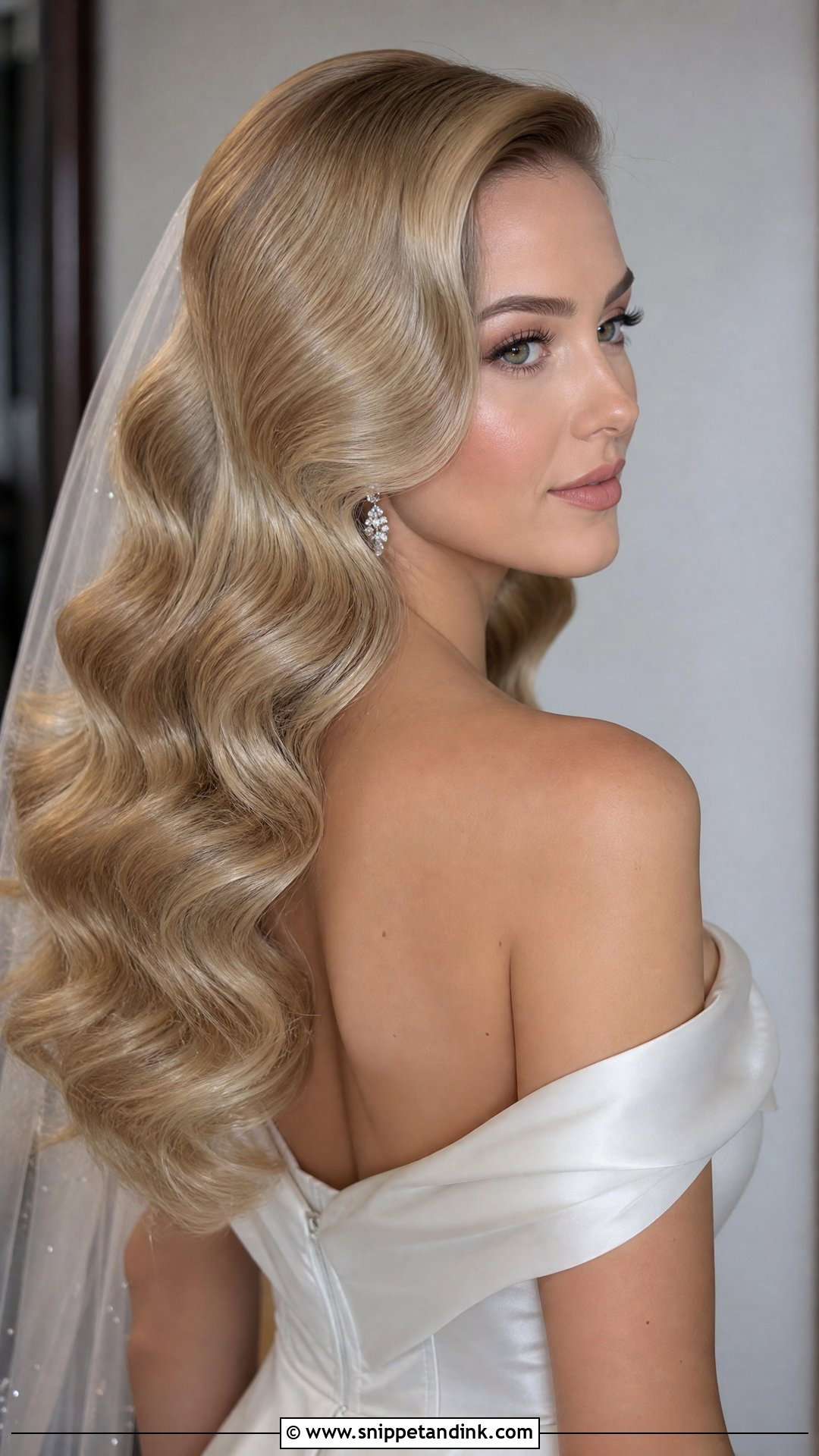
Hollywood waves are built, not brushed out loosely. I set the curls all in the same direction, brush them into one continuous S-shape and press the ridges with clips while they cool. The result is glossy and sculpted, and it suits satin, fitted dresses and evening weddings. It reads best on medium to long hair; extensions help with fullness. A deep side part gives the classic shape. This style needs a trial more than most, and ask your stylist directly how the waves will behave in your venue’s humidity, because damp air flattens the ridges fast.
8. Boho Wedding Braid
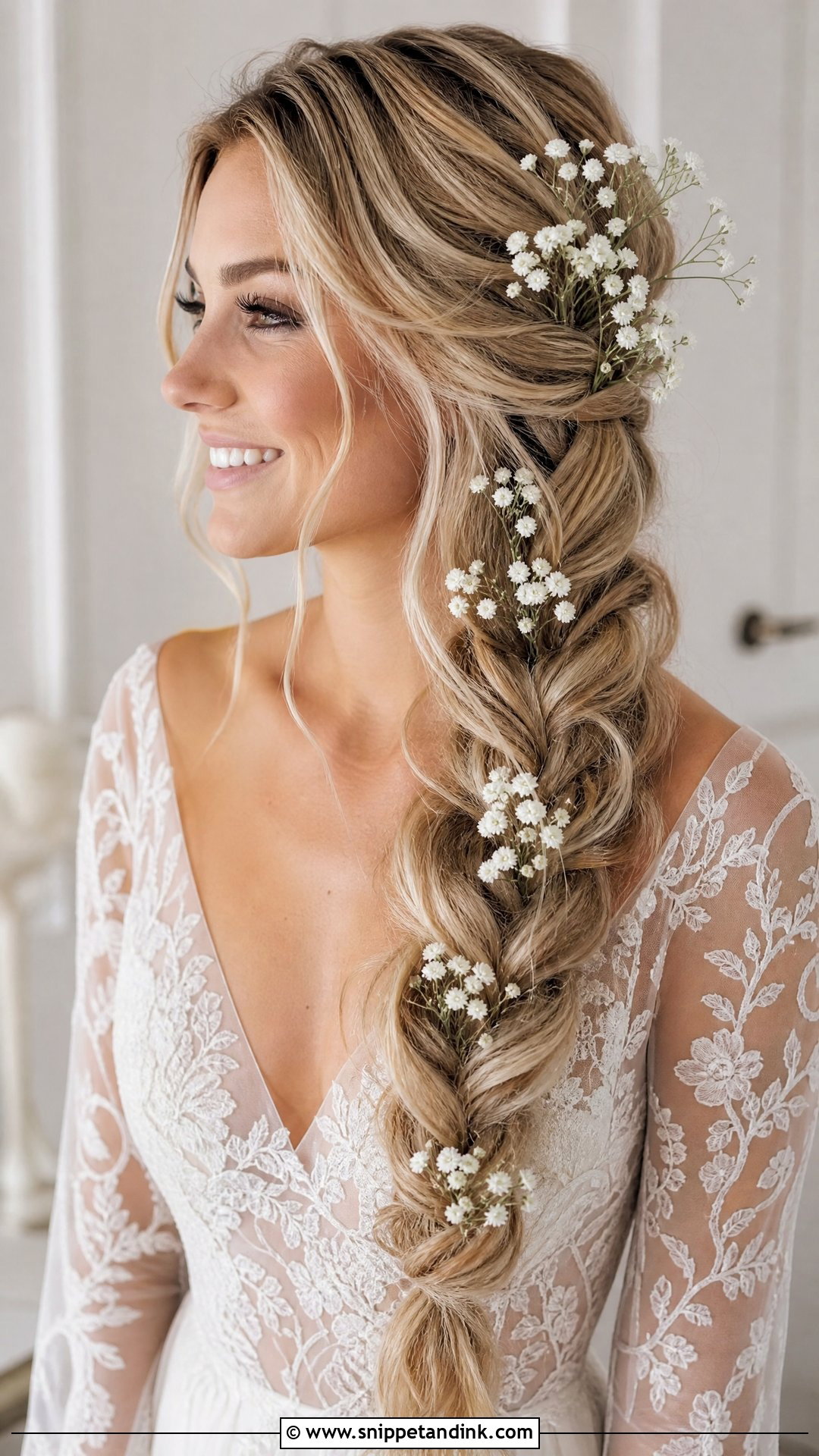
A boho braid only works when it’s loose. A long textured braid down the back, a side braid or a half-up braid over waves can all look relaxed, but tight plaits look like school hair. I texturize first so the braid has grip, then pull it apart once it’s tied. Outdoor, rustic and beach weddings suit it best. Tiny flowers, pearl pins or a delicate vine are lovely woven in, but I keep it to one kind of accessory so the braid still leads.
9. Wedding Ponytail
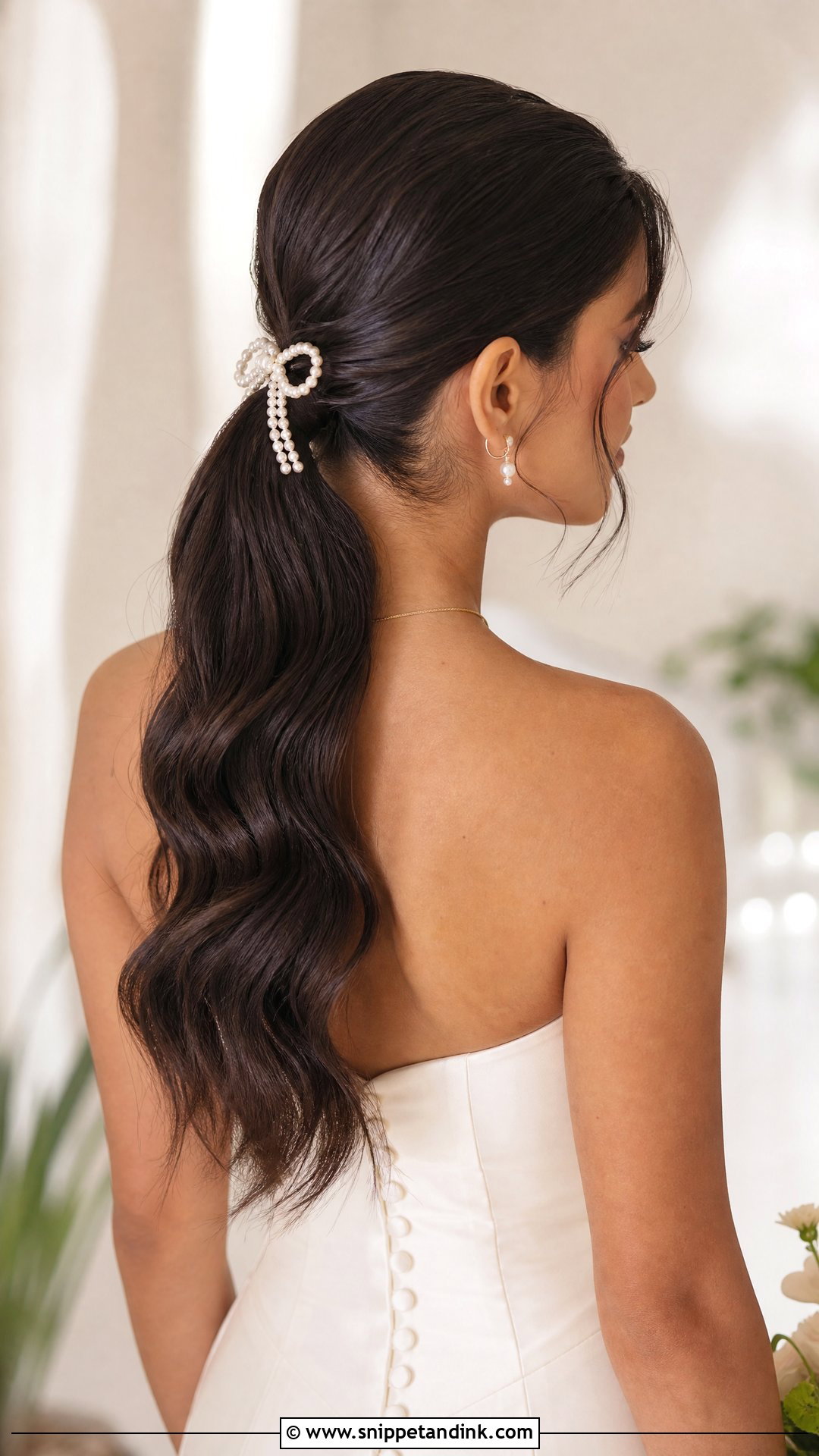
The ponytail is more bridal than people expect, and it’s practical. Low feels softer; high gives lift and drama. What makes it look finished is smooth roots, wrapped hair around the elastic and styled ends. I always tie it with two elastics, one at the base and one an inch below, so it doesn’t sag through the evening. Waves at the ends read romantic, and straight ends look modern. Strapless gowns and clean necklines suit it, and a bow or pearl clip at the base finishes it.
10. Curly Wedding Hair
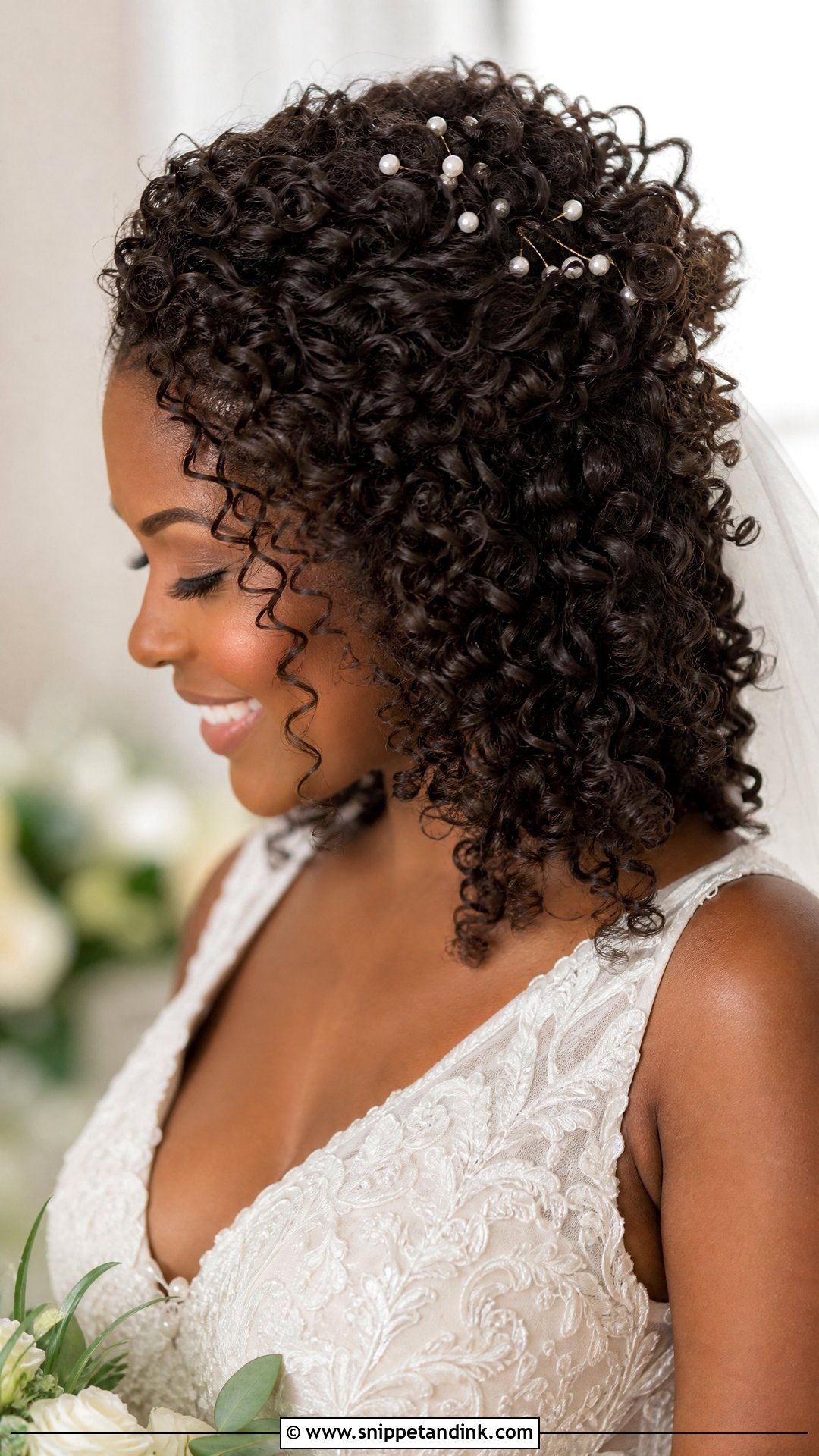
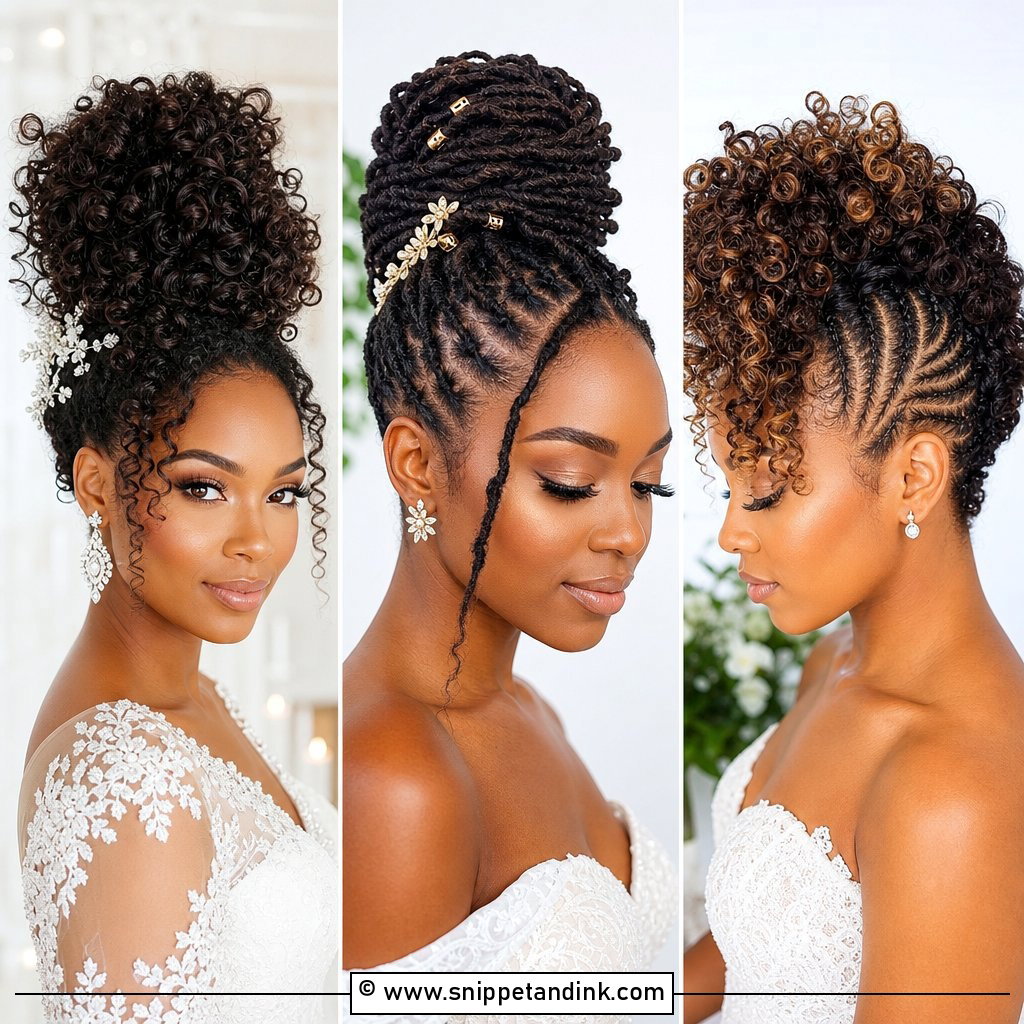
With curly hair, the job is to show the curls at their best, not to tame them. Worn down, half up, pinned to one side or in a soft updo, they need shape, shine and definition. I’d find a stylist who works with curls regularly, because the drying method matters as much as the product: a diffuser on low heat keeps the pattern, and a brush wrecks it. Plan a few weeks of deep conditioning beforehand, as hydrated curls clump better and frizz less. A few curls left at the face and a floral comb or pearl pins are enough.
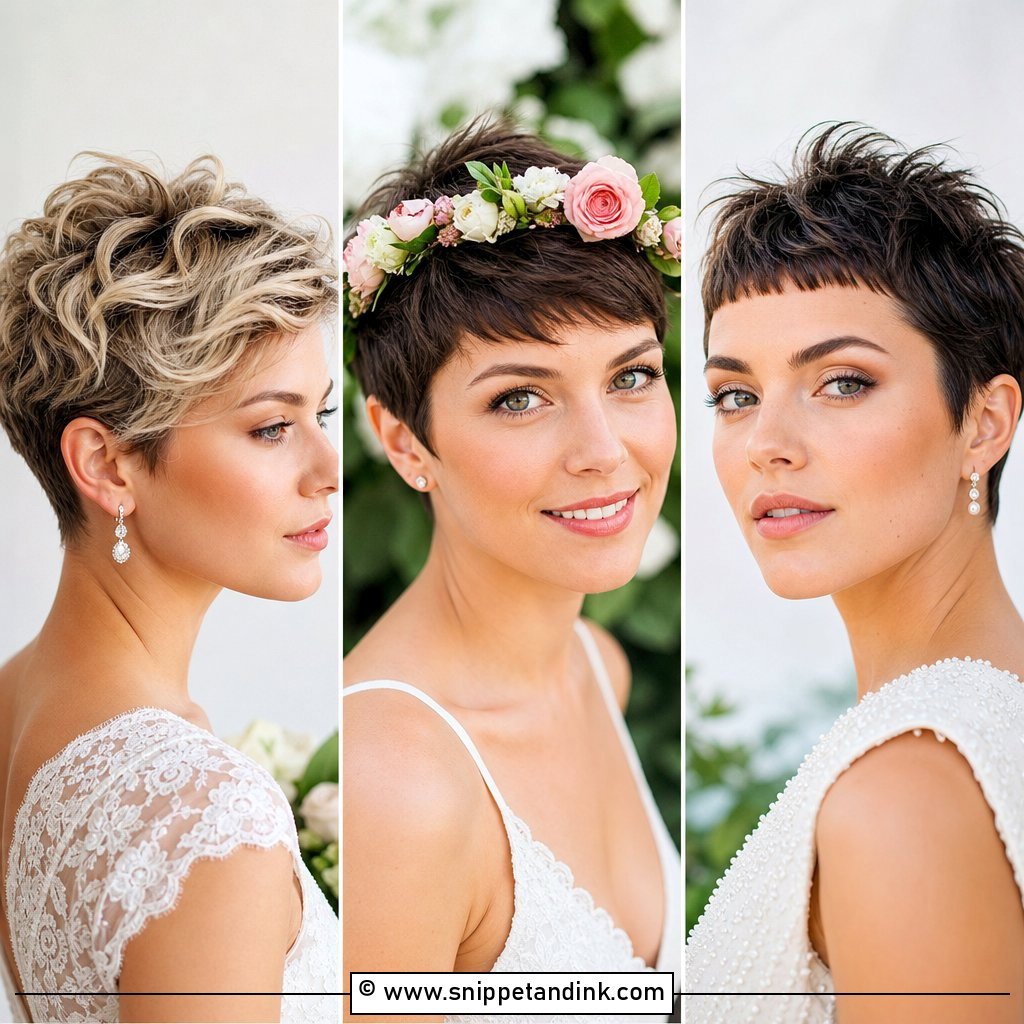
11. Short Wedding Hair
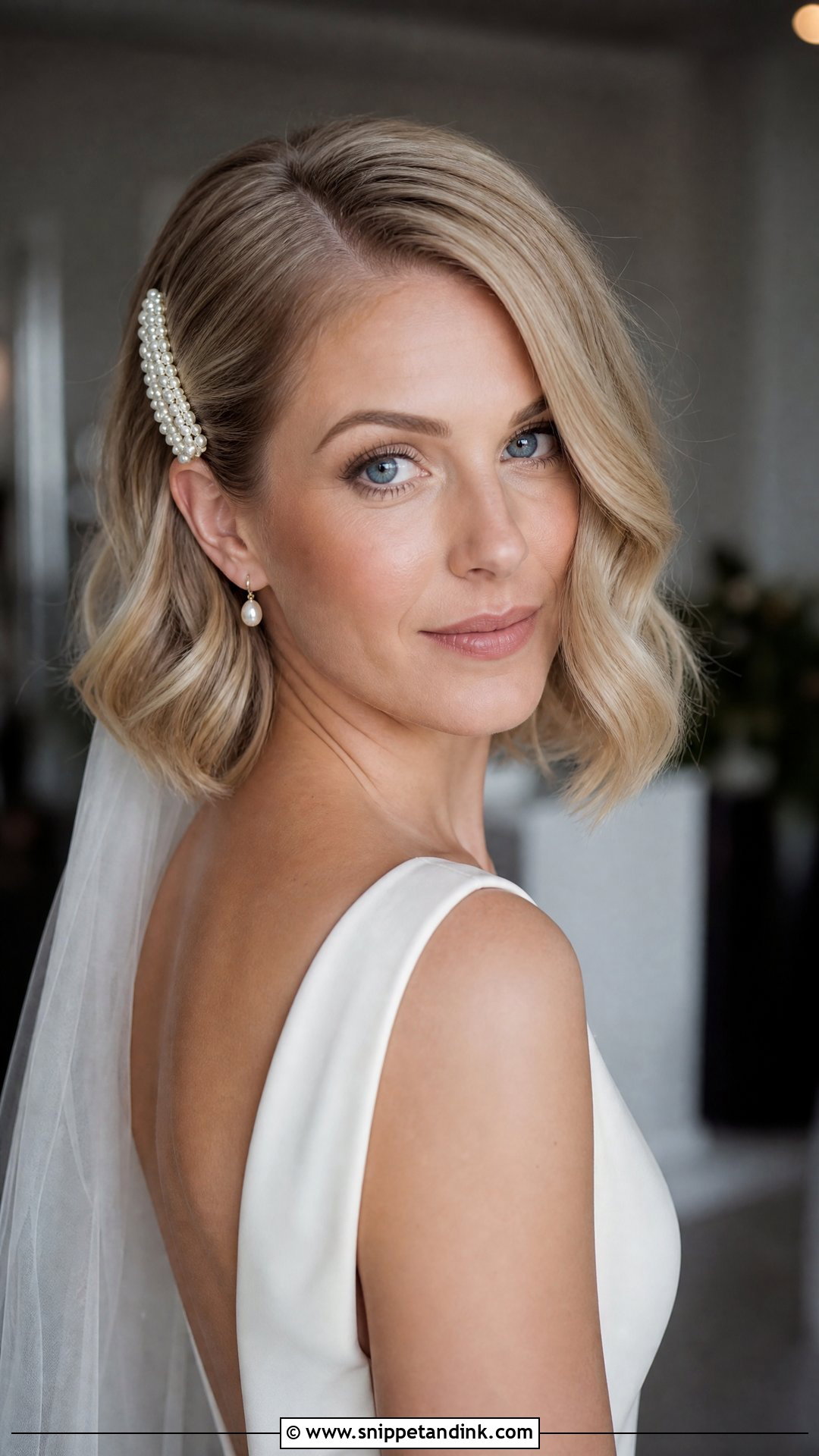
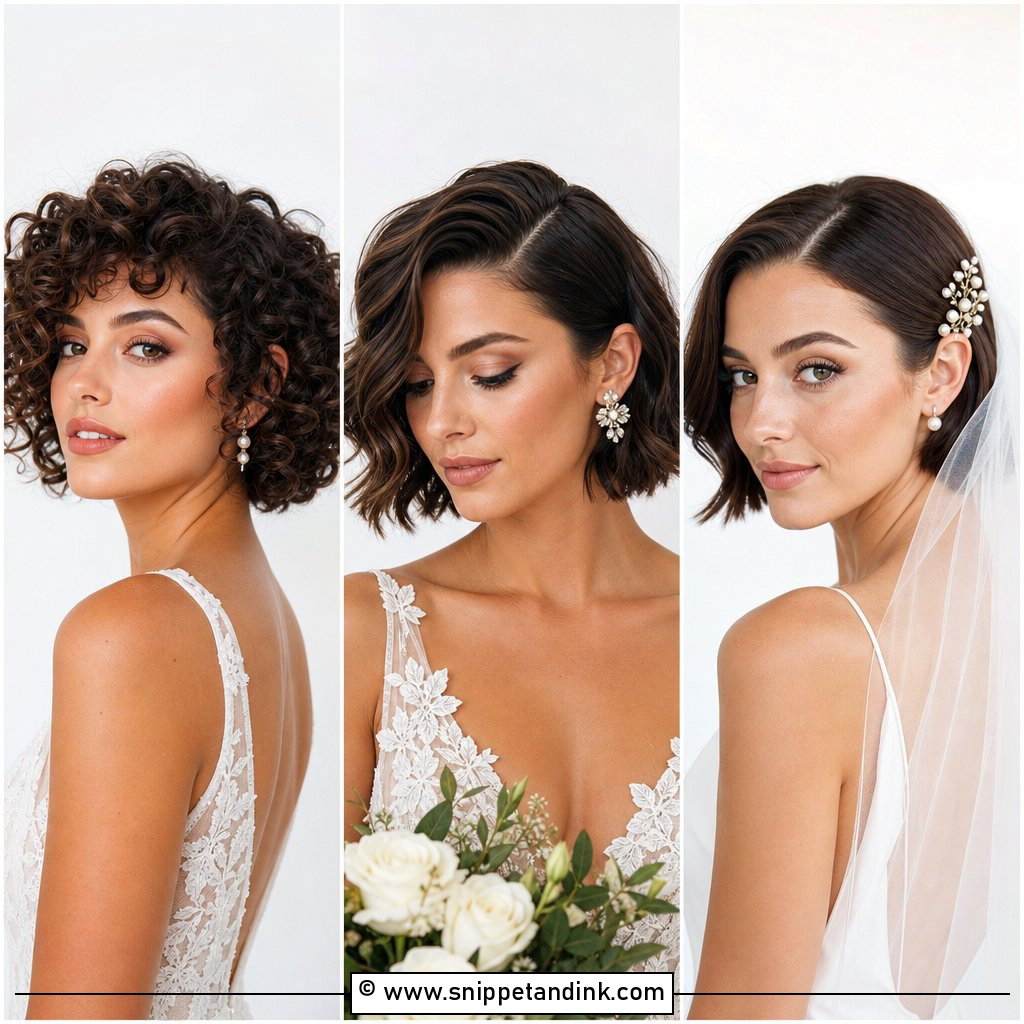
Short cuts need intention more than length. A bob, pixie or crop can take soft waves, a sleek polish, tucked sides or a lifted crown, and any of those makes it read as bridal. Short wedding hair is also the easiest to accessorize. Clips, pearl pins, mini veils, headbands and floral combs need very little hair to grip. My one warning is timing: get the last cut about two weeks out, so the edges soften and don’t look freshly clipped in photos.
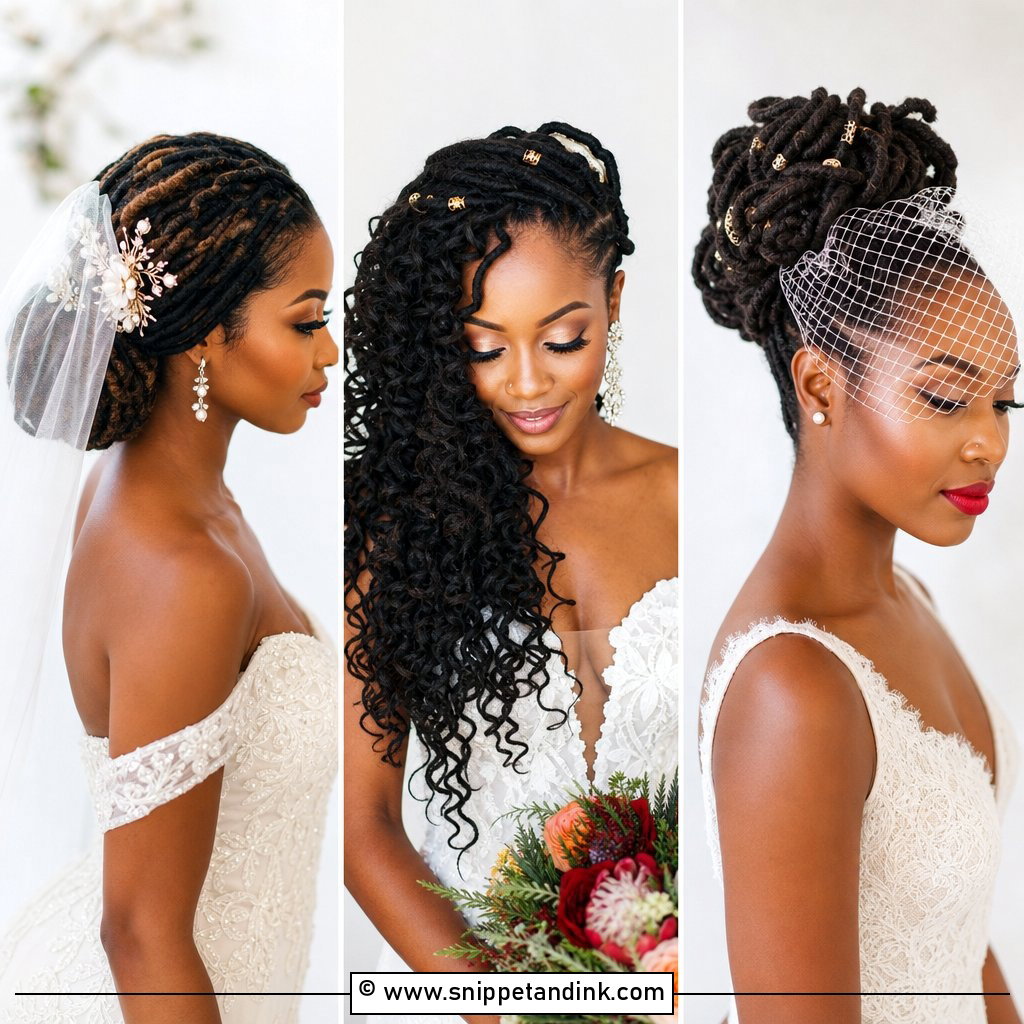
12. Wedding Hair With Veil
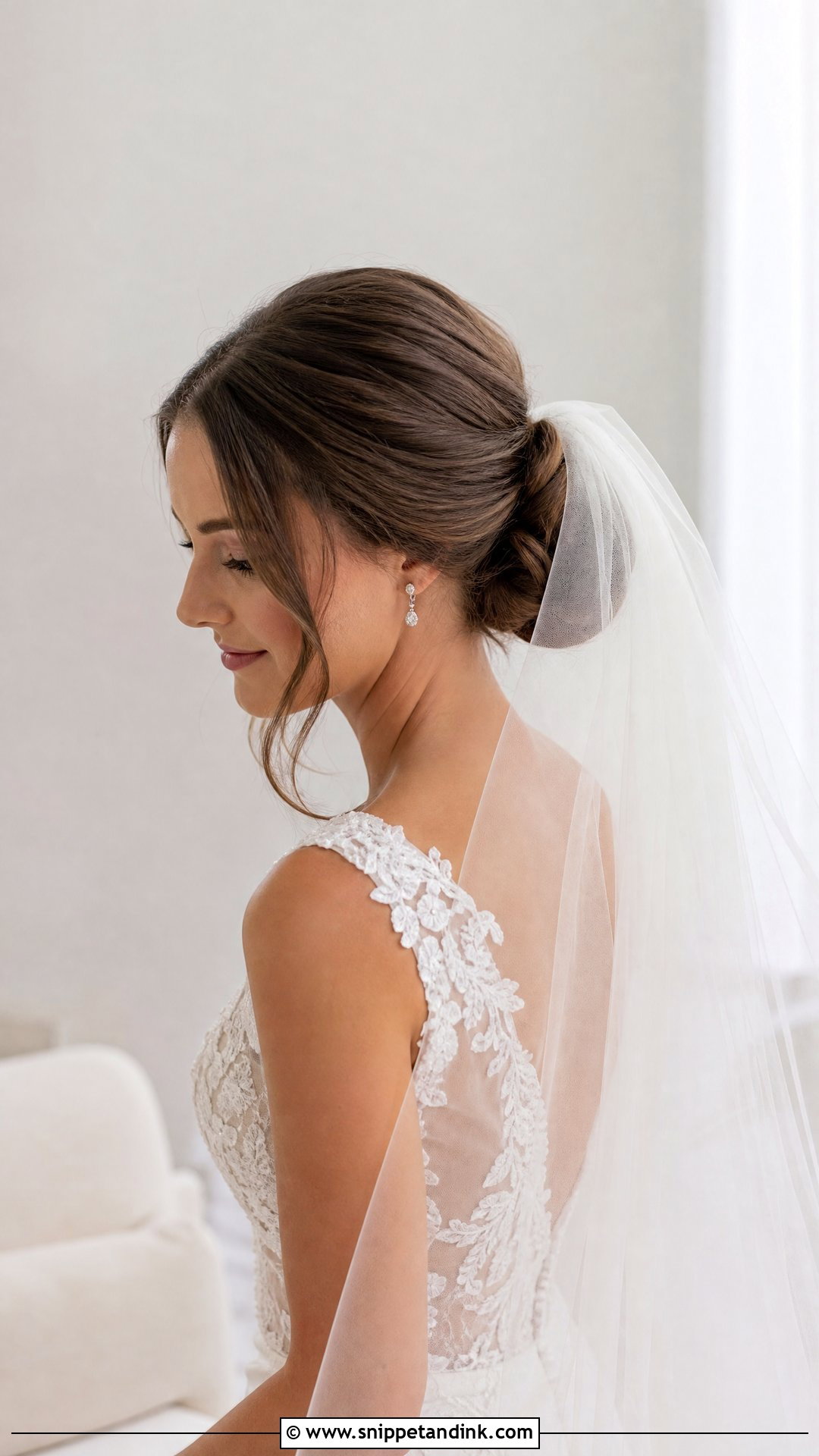
Plan the veil and the hair together, never separately. The hairstyle needs a firm spot for the comb and still has to look good once the veil comes out after the ceremony. Low buns, chignons, half-up styles and pinned waves all give that spot. A long or heavy veil may need extra pins or a hidden support section. Bring the veil itself to your trial, not a photo of it, and check it from the front, side and back. Above the bun, under it or at the crown each changes the outline, and I can only judge that with the real veil in hand.
13. Wedding Hair With Flowers
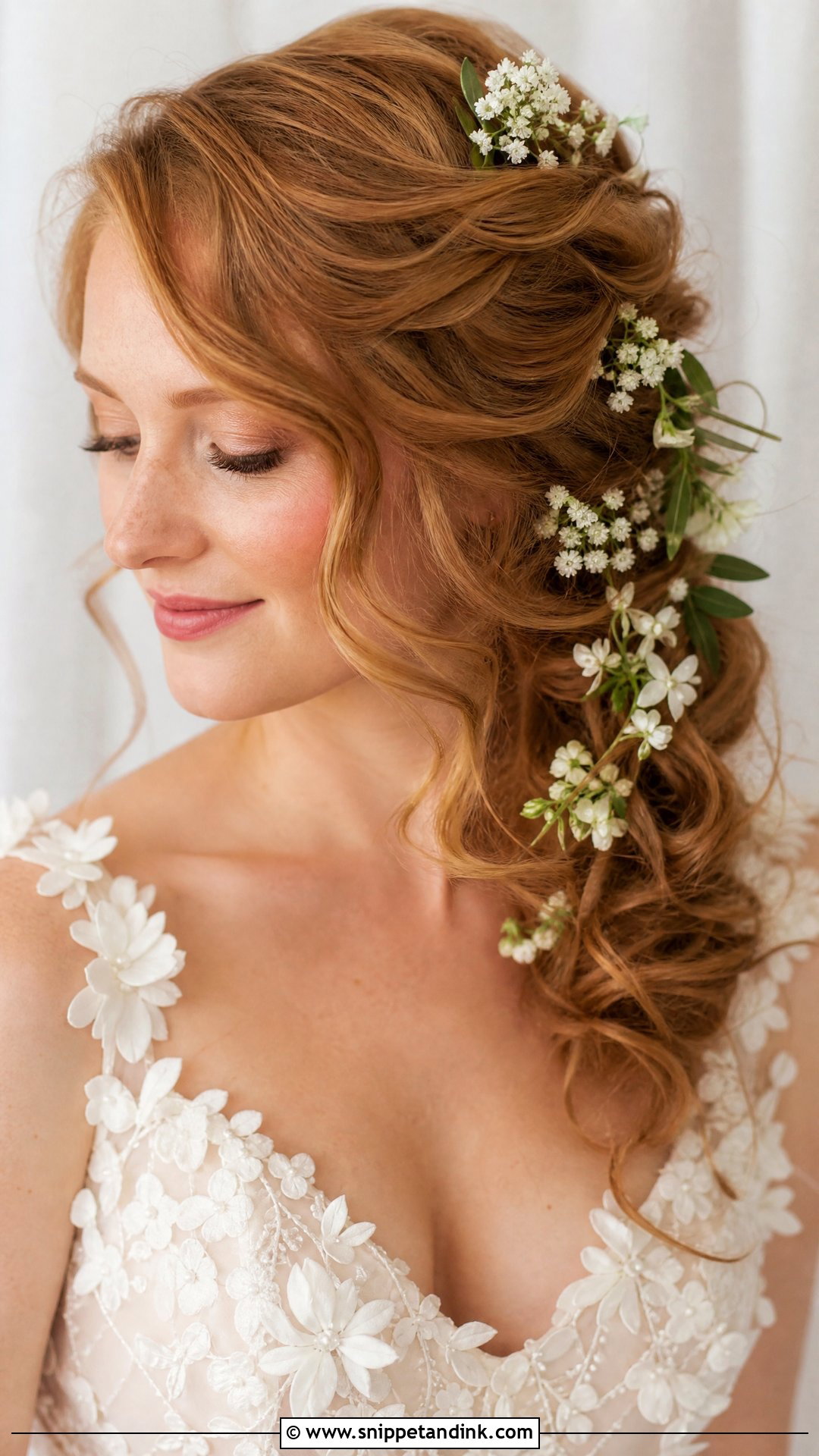
Scale is everything with flowers. Tiny blooms look delicate tucked into braids; one larger bloom can carry a low bun on its own. Flowers suit waves, braids, buns, ponytails and half-up styles, and they fit garden, beach, spring and summer weddings best. Fresh flowers should come from your florist, wired and ready, so they last the day; some go limp within hours out of water. Silk flowers give you more control and won’t wilt. On fine hair, I keep pieces light, because heavy stems drag a style down.
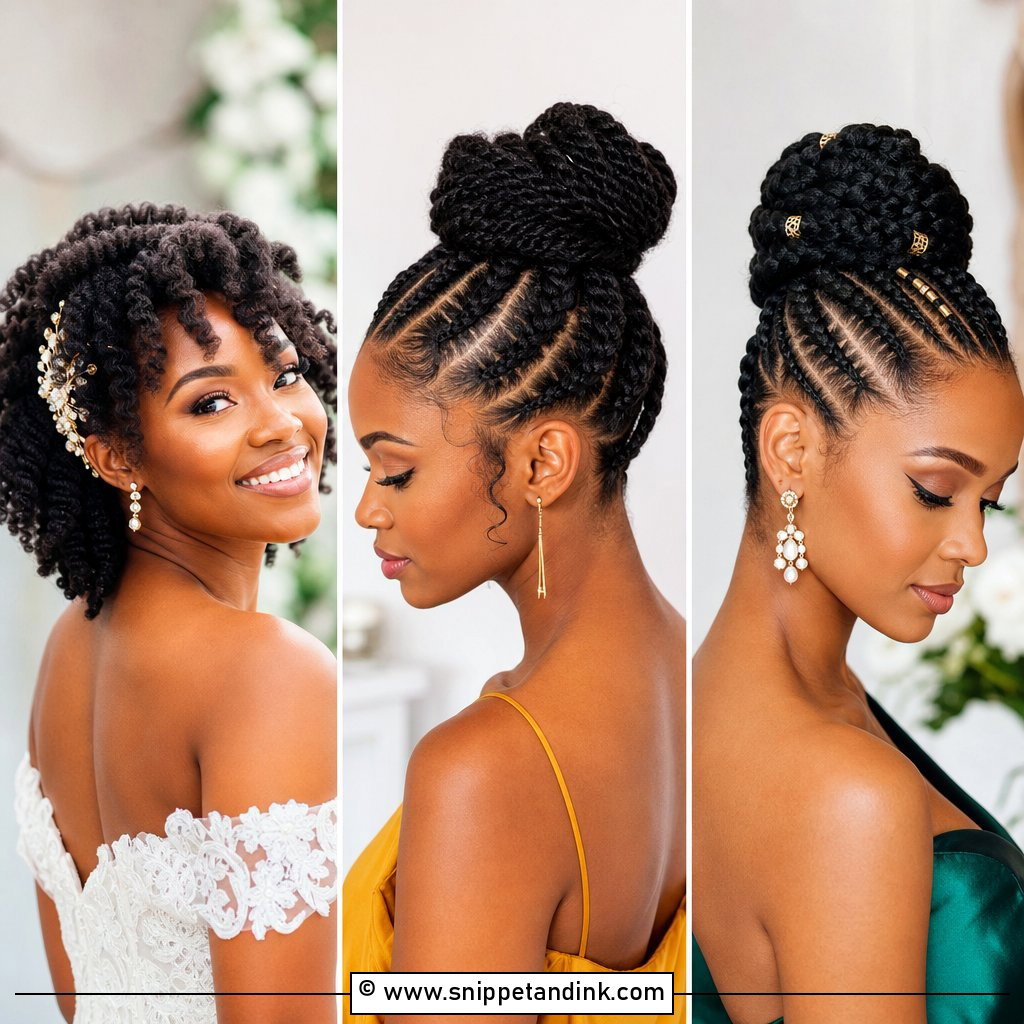
14. Natural Wedding Hair
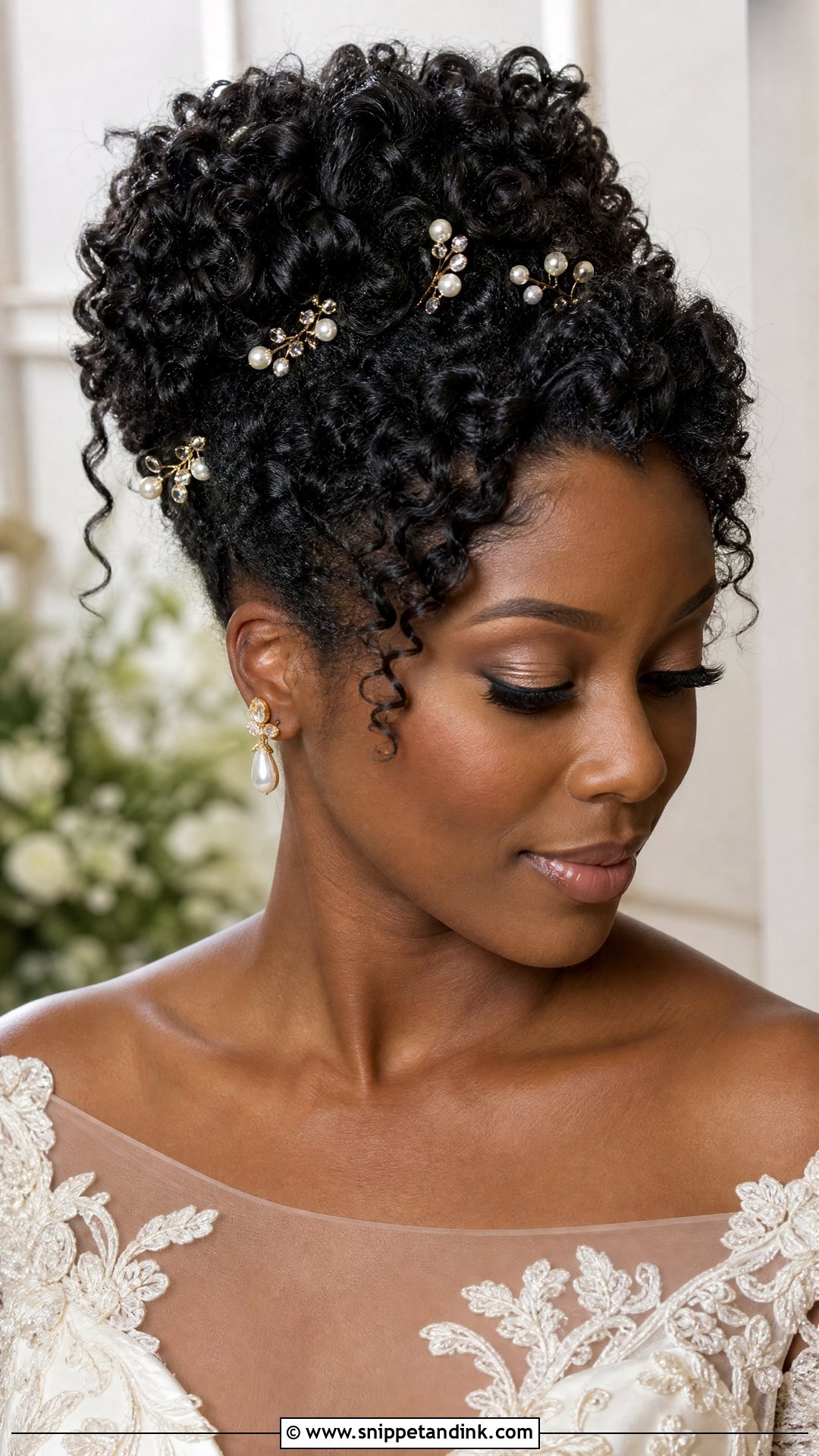
Natural hair looks its best when it’s moisturized, shaped and shown off rather than hidden. A defined twist-out, wash-and-go curls, a puff, a braided crown, a low bun or a textured updo can all be bridal. Which one suits you depends on density, shrinkage, length and how much tension your edges tolerate. I’d start planning months early so trims and treatments are done well ahead. A twist-out set the night before gives better definition than one rushed that morning. Gold pins, pearls, flowers or a veil add the bridal finish without covering the texture.
15. Vintage Wedding Hair
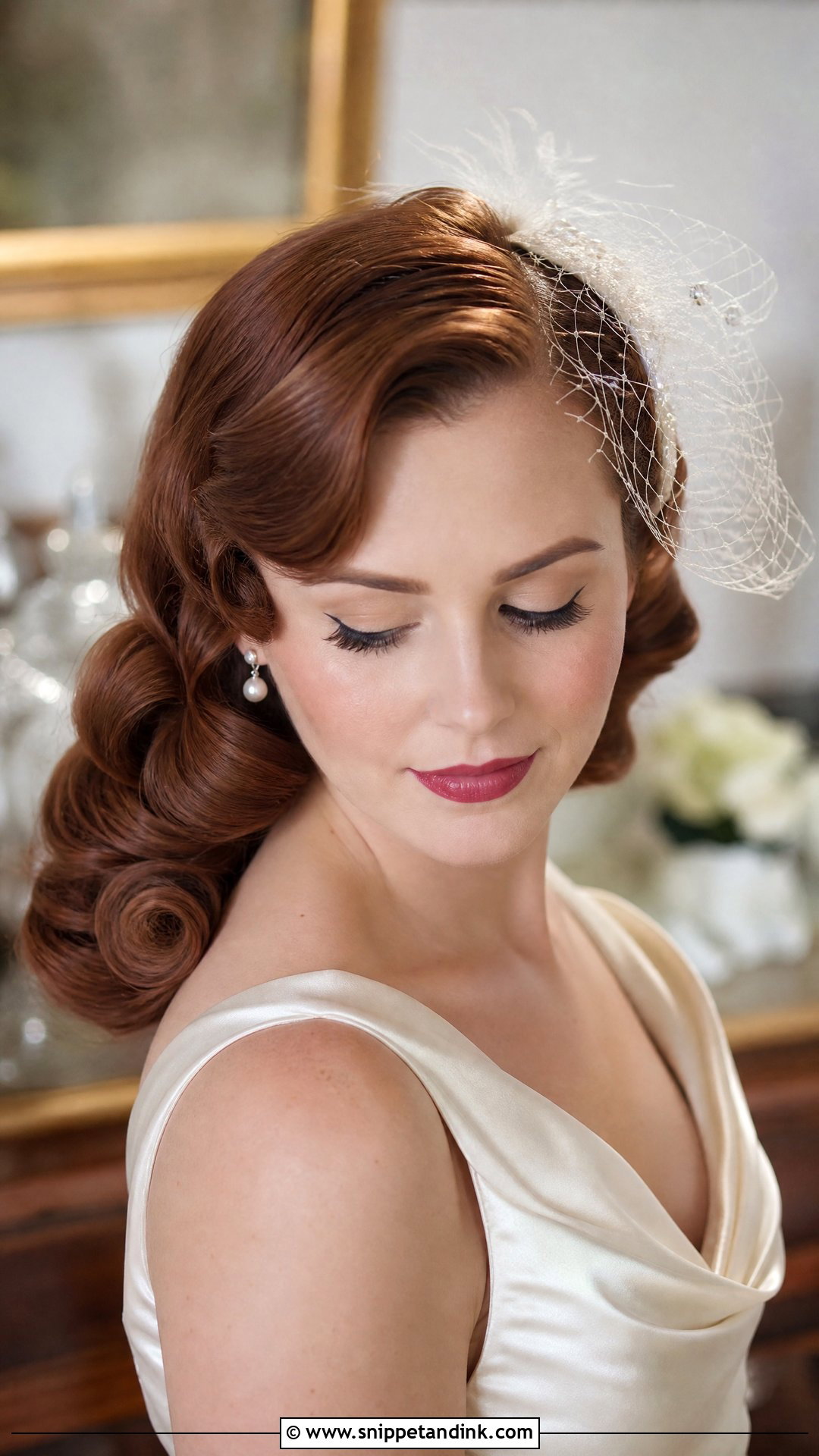
Vintage hair is about clean lines and proportion. Finger waves, rolled curls, a sharp side part or a sculpted low bun all need a firm set, so this is a style I insist on trialing. Lace and satin gowns, birdcage veils and heirloom pieces suit it. The trap is drifting into costume. I keep the shine soft and the shapes slightly relaxed, and the makeup should match the era lightly rather than completely. Check it from every angle at the trial; a roll that looks crisp from the front can be lopsided at the back.
Six Months Out to the Morning Itself: A Hair Calendar
Most of what makes wedding hair work is decided long before the morning. Adjust this to your own hair and stylist, but the order rarely changes:
- Six months or more ahead: start growing if you want length, and book your stylist, since popular dates fill early.
- Two to three months ahead: the trial, ideally once the dress and veil are settled. Bring the veil.
- Four to six weeks ahead: color, so it has time to settle and any surprise can be corrected.
- One to two weeks ahead: a light trim only. A big cut this close changes how every style sits.
- The day before: wash as your stylist suggests and skip any mask or product you’ve never used.
On the morning, give it more time than you think. An intricate updo, a vintage set or full Hollywood waves can take well over an hour, and very thick or natural hair longer still. I’d ask for your exact timing, then add a buffer for the veil and photos. Going last sounds smart, but the final slot is where every earlier delay piles up; a middle slot with a quick refresh before you dress is usually calmer.
Does This Hair Still Feel Like You at Midnight?
A style can look perfect on a pin board and still be wrong for your hair, dress, veil, weather or schedule. Bring your photos to the trial, then let your stylist adjust the details that flatter your face and keep it lasting longer. Updo, waves, braid, ponytail, curls or a short cut, what you want is comfort and balance. If you forget you’re wearing it by the reception, it was the right choice.
You'll Like These Ideas:


Leave a Reply