
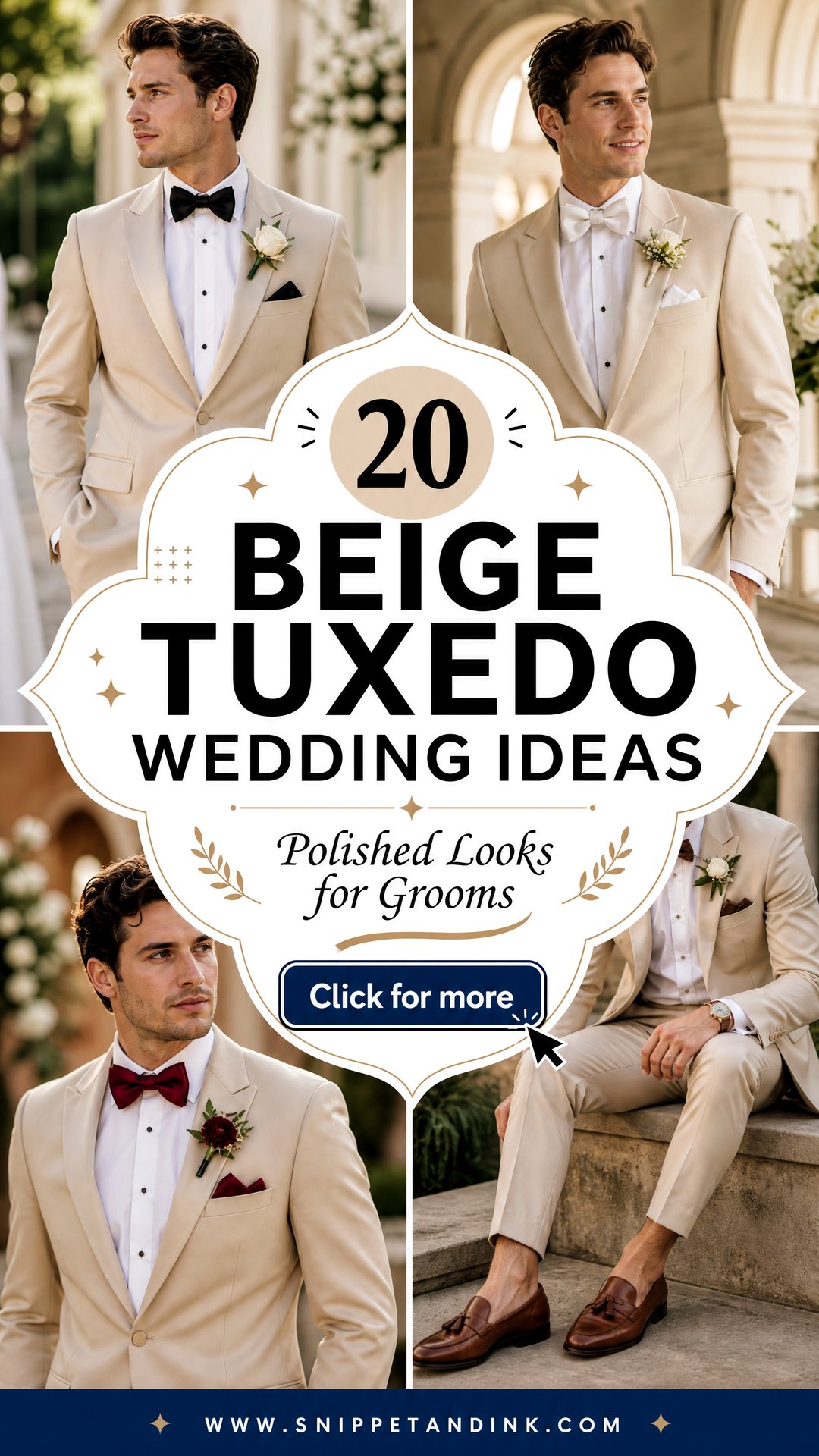
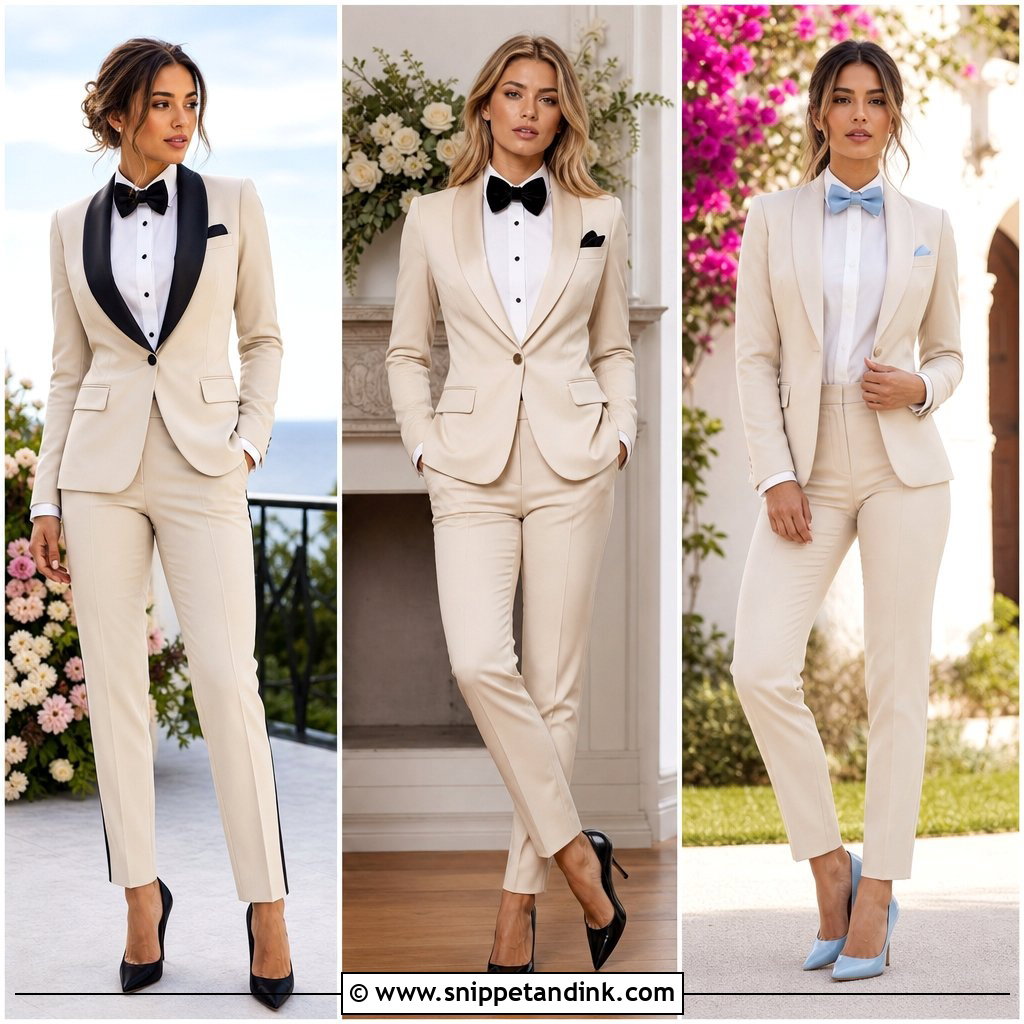
A beige tuxedo is still a tuxedo, and that’s the part grooms forget. What separates it from a beige suit is the formal hardware: satin-faced lapels, covered buttons, a trouser with a clean line and often a braid down the side. When I fit one, I treat the color as the easy decision and the fit as the hard one, because a pale cloth shows every pull across the shoulders and every wrinkle at the knee far more than black does. The neutral sits comfortably beside black, navy, sage, burgundy and brown, and it suits a garden, a beach terrace or a bright ballroom. Below are 20 ways I’d build it out from collar to shoe, depending on season, dress code and how much contrast you want in the photos.
Matching the Shade of Beige to His Skin and the Light
Beige is a family, not a single color. Some cloths lean yellow and read as sand or camel; others lean grey and read as stone or oatmeal. In my fitting room the first thing I do is hold two swatches under the groom’s chin by a window. The wrong one makes the skin look sallow or ruddy within seconds, and the right one just disappears into a healthy face.
- Warm or olive skin usually takes sand, camel and honey beige well.
- Fair skin with pink undertones often looks better in a cooler stone or putty shade, which stops the face from reading flushed.
- Deep skin tones carry both, and a darker camel gives strong, clean contrast against a white shirt.
- Very pale beige close to cream needs a darker tie or lapel near the face, or the whole upper half goes flat in photos.
Check the venue light as well. Warm indoor bulbs push beige toward yellow, while open shade outdoors pulls it grey. If the ceremony and reception are in different light, pick the shade that looks right in the room where most of the photos will be taken.
1. Beige Tuxedo With Black Bow Tie
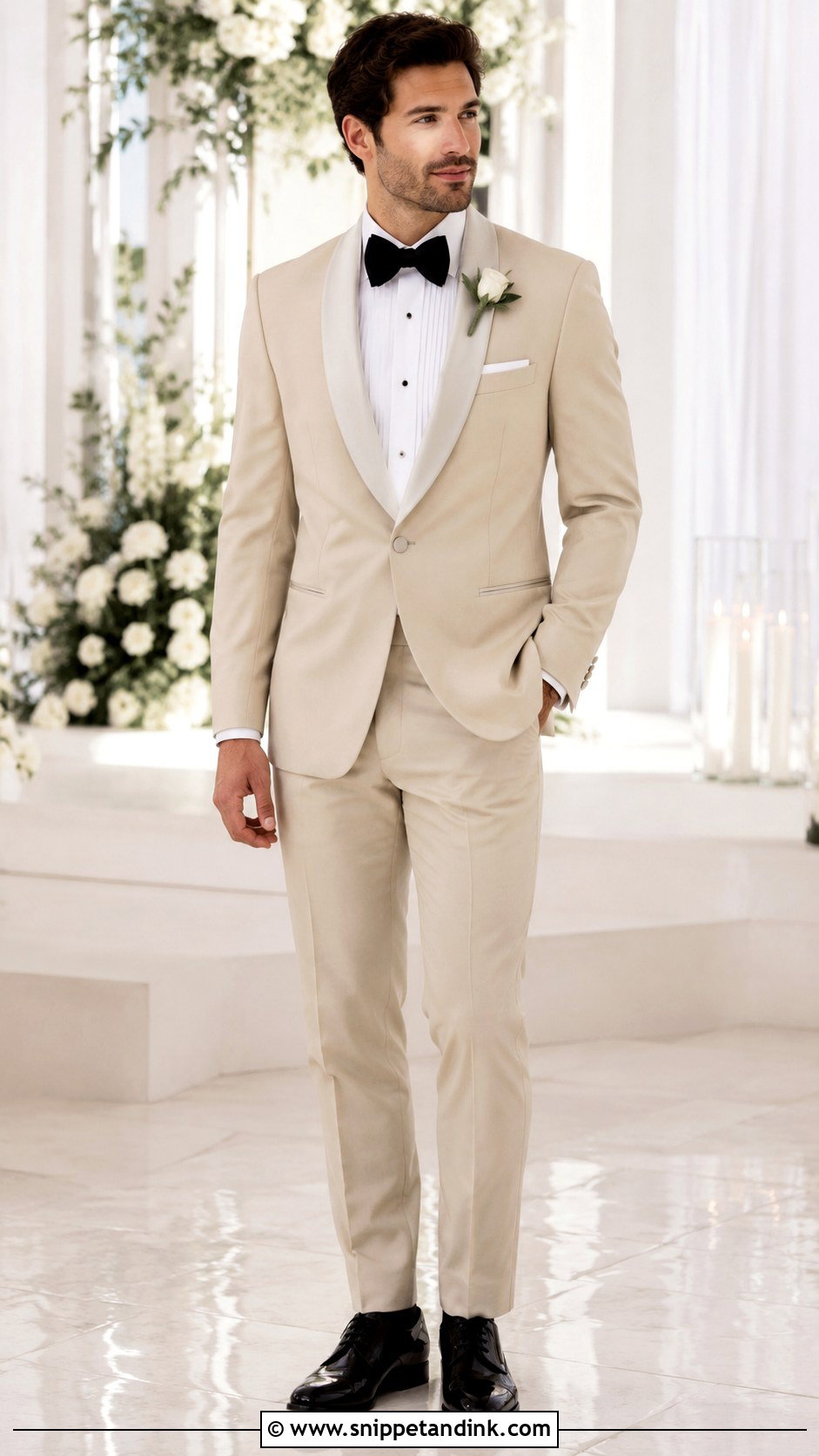
This is the combination I reach for first when a groom wants beige but the invitation still says formal. A beige tuxedo with black satin peak or shawl lapels gives the black bow tie something to talk to, so the tie doesn’t look like a lone dark spot. Keep the trousers beige for a modern neutral palette. The white tuxedo shirt matters more than people think: without it, a light jacket can look washed out against the face. Black patent oxfords, a white pocket square and small black-and-silver cuff links finish it, and a black satin trouser stripe ties the dark accents together. I like it most at a summer evening wedding or a bright ballroom where full black would feel heavy.
2. Beige Tuxedo With White Bow Tie
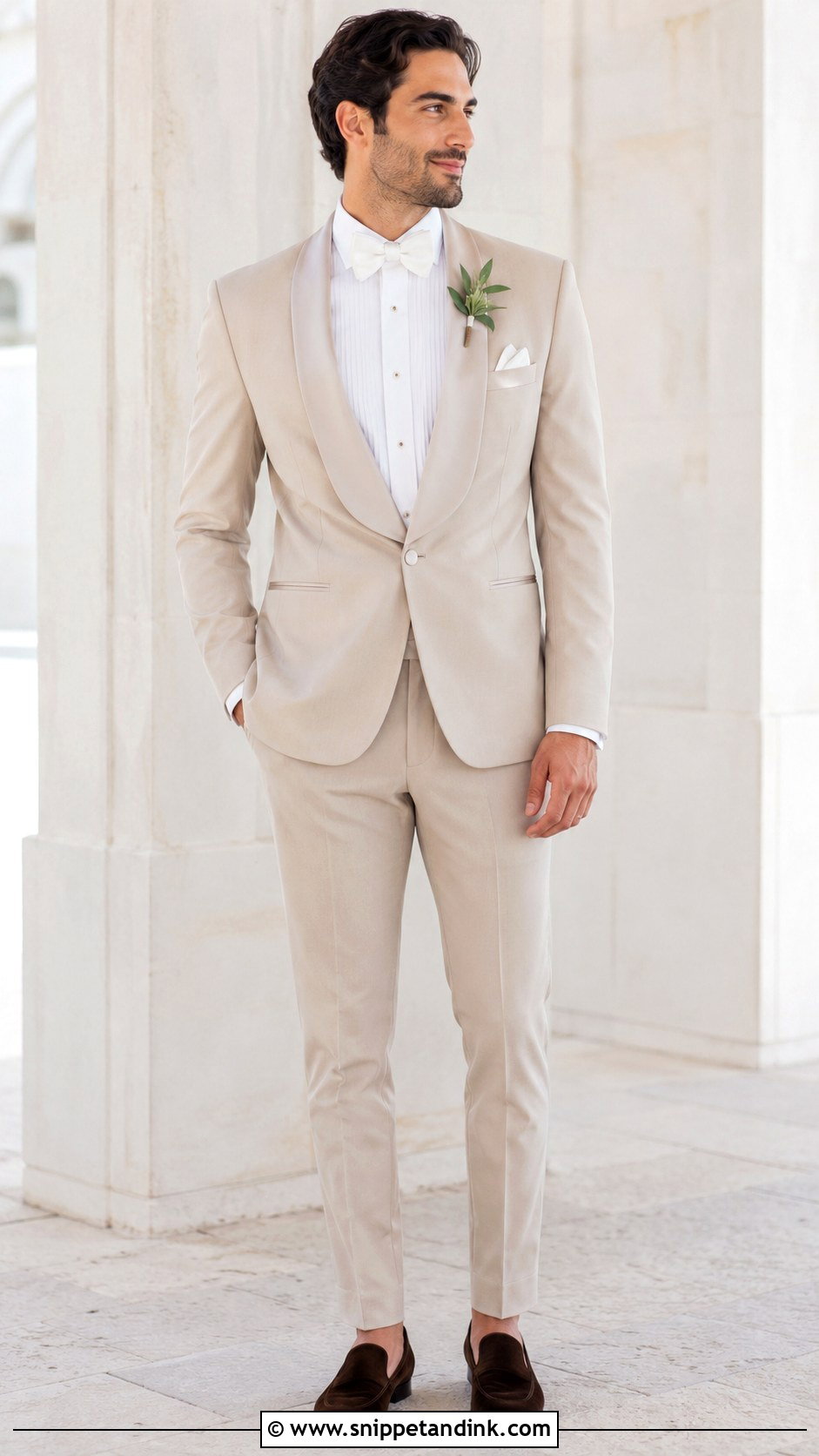
A white bow tie on beige only works if the jacket is dark enough to show it. On a very pale sand cloth the tie disappears, so I steer grooms toward a medium beige here. Matching trousers, a structured pleated white shirt, a white silk bow tie and a white pocket square keep the palette tonal. Shoes set the formality: dark brown velvet loafers soften it, polished black oxfords hold it to a stricter dress code. A small boutonniere with a bit of muted green is all the color it needs. I’d save this one for daytime, by the coast, or a minimal room full of cream flowers and pale stone.
3. Beige Tuxedo With Navy Tie
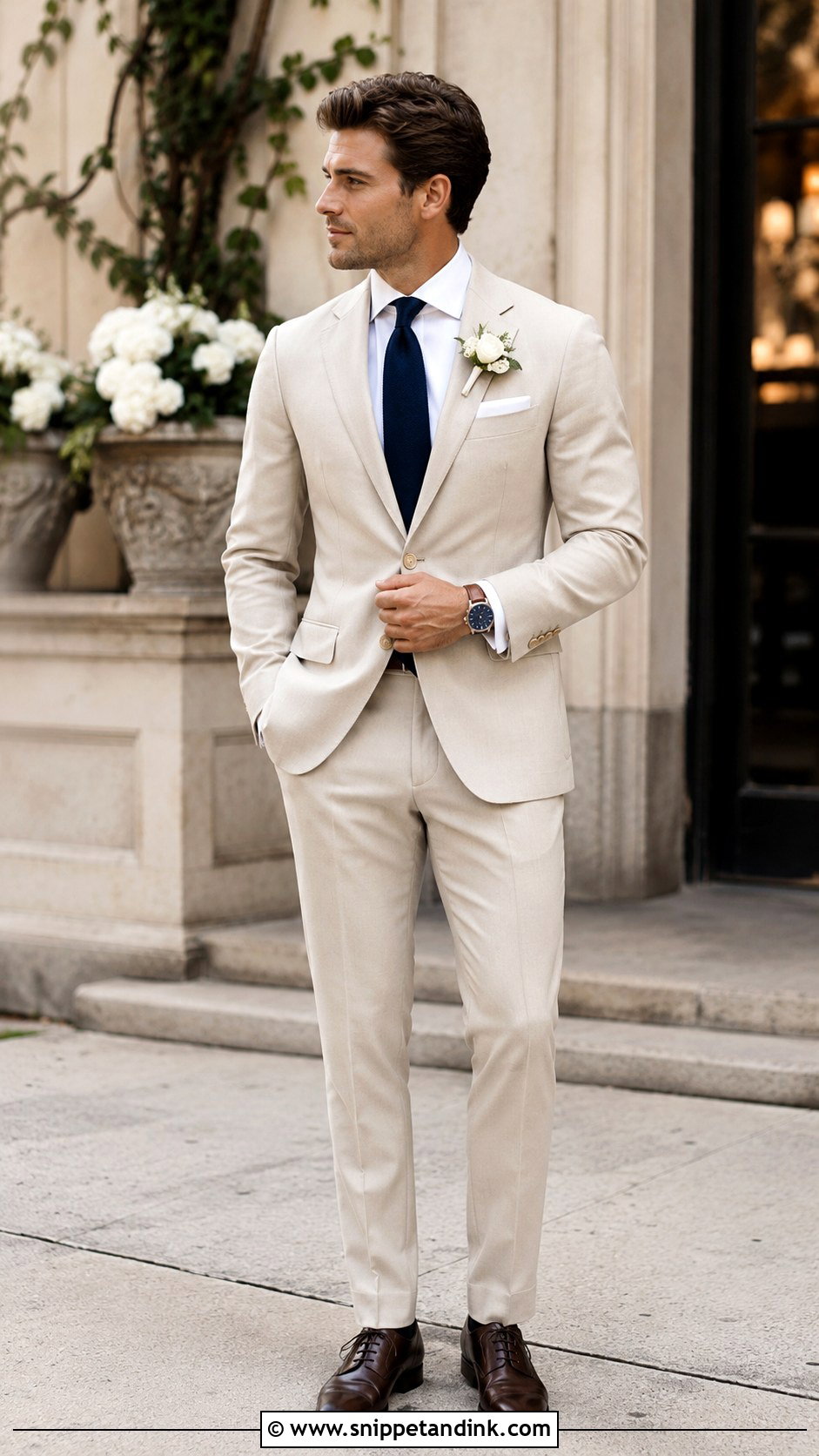
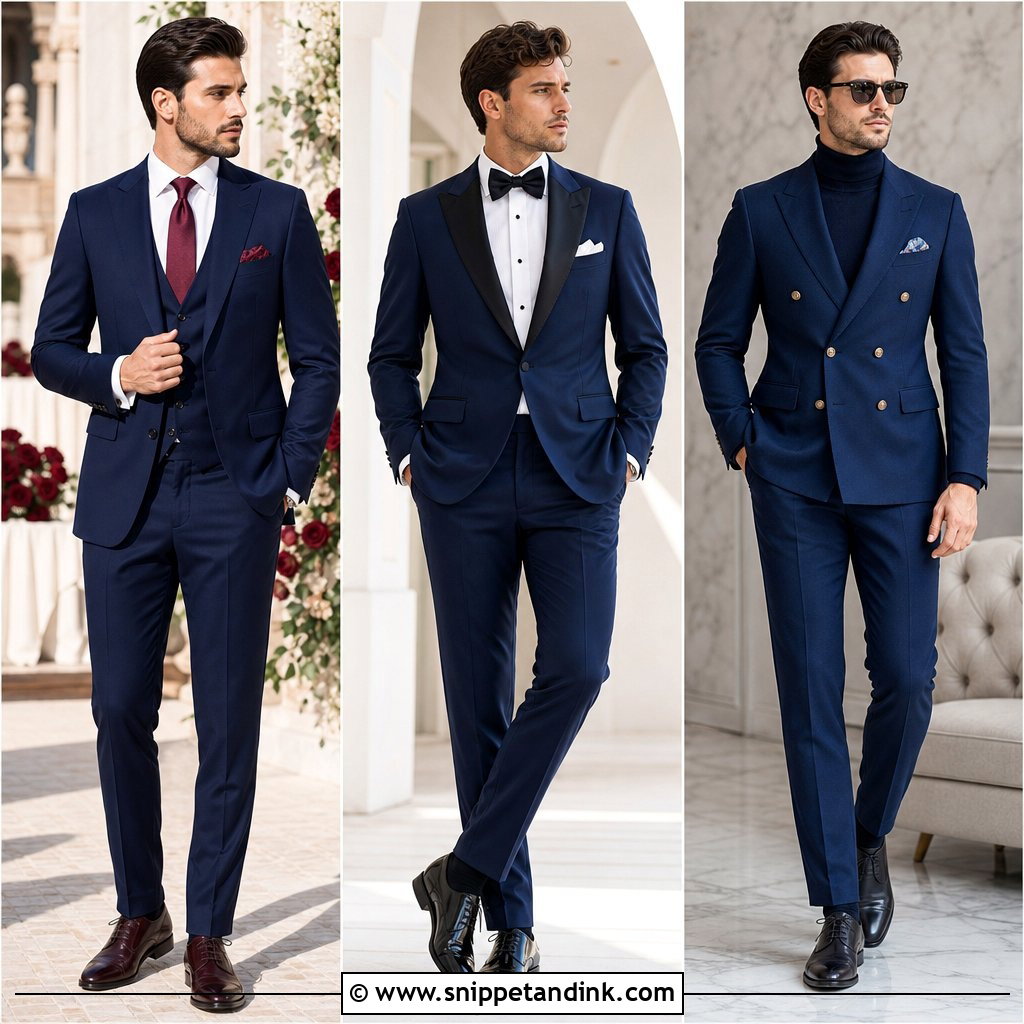
Navy is my quiet alternative to black. It gives depth without the hard edge, and it forgives a groom who flushes in the heat because it doesn’t sit as starkly against the skin. Start with a light beige jacket, matching tailored trousers and a crisp white spread-collar shirt. A solid navy silk necktie keeps it classic; a navy bow tie pushes it more formal. Dark brown oxfords, a white linen pocket square and a navy-faced watch finish it. If the jacket has satin lapels, navy satin facing is a custom touch worth asking a tailor about, though beige facing is quieter. It sits easily beside navy wedding-party attire and white flowers, which is why I suggest it to grooms who need the least fuss coordinating a big party.
4. Beige Tuxedo With Sage Green Tie
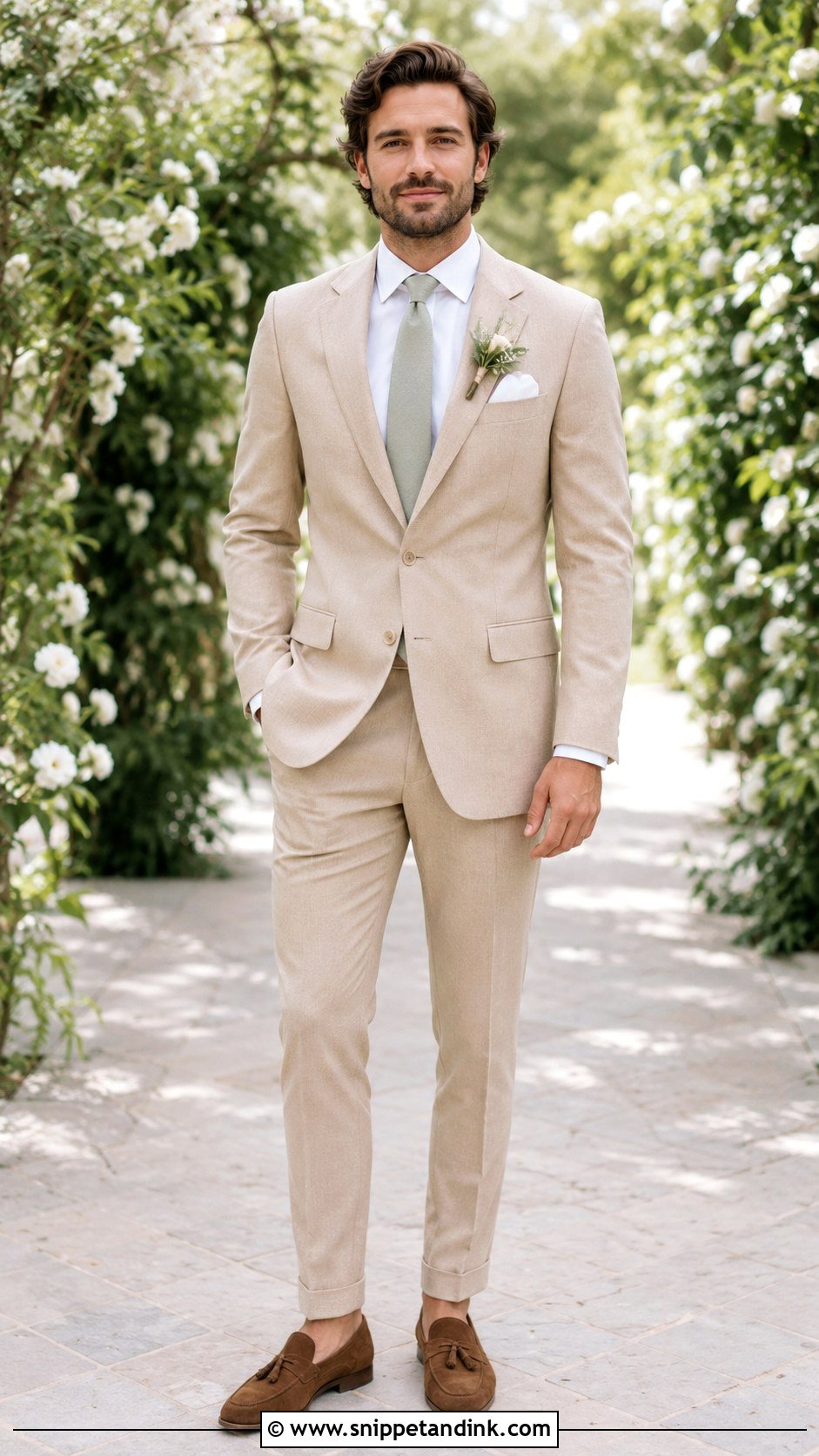
Sage belongs at a garden ceremony with green all around. Pair a sand-colored jacket and matching trousers with a clean white shirt, then decide on the tie by the hour: a matte sage necktie for a relaxed afternoon, a silk bow tie once the sun goes down. Brown suede loafers keep the earthy feel. Here’s where I usually have to pull a groom back. Sage tie, sage socks, sage pocket square and a sage boutonniere turns into a costume, so I stop at one or two green accents and let a white square with a thin green border carry the rest.
5. Beige Tuxedo With Burgundy Bow Tie
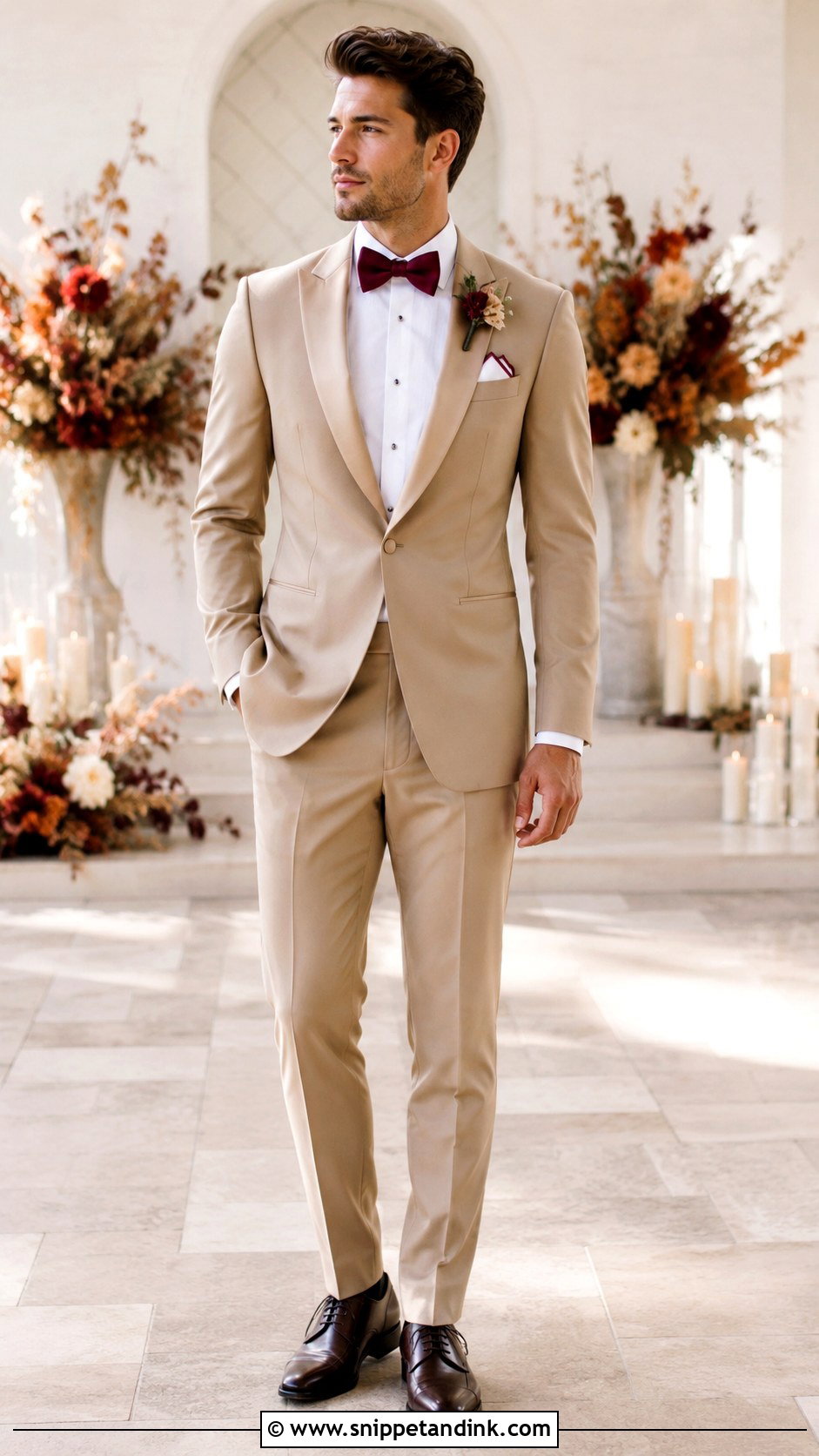
Burgundy is the accent I trust most for late summer into fall, because it holds its color in evening photos when lighter shades go muddy. Build on a warm beige jacket and flat-front trousers, a white tuxedo shirt with a smooth front or restrained pleats, and a deep burgundy silk bow tie. I never match the pocket square exactly to the tie; a white square with a burgundy edge looks chosen rather than bought as a boxed set. Dark brown whole-cut shoes, a brown leather watch and a single burgundy bloom in the boutonniere complete it.
6. Beige Tuxedo With Dusty Blue Tie
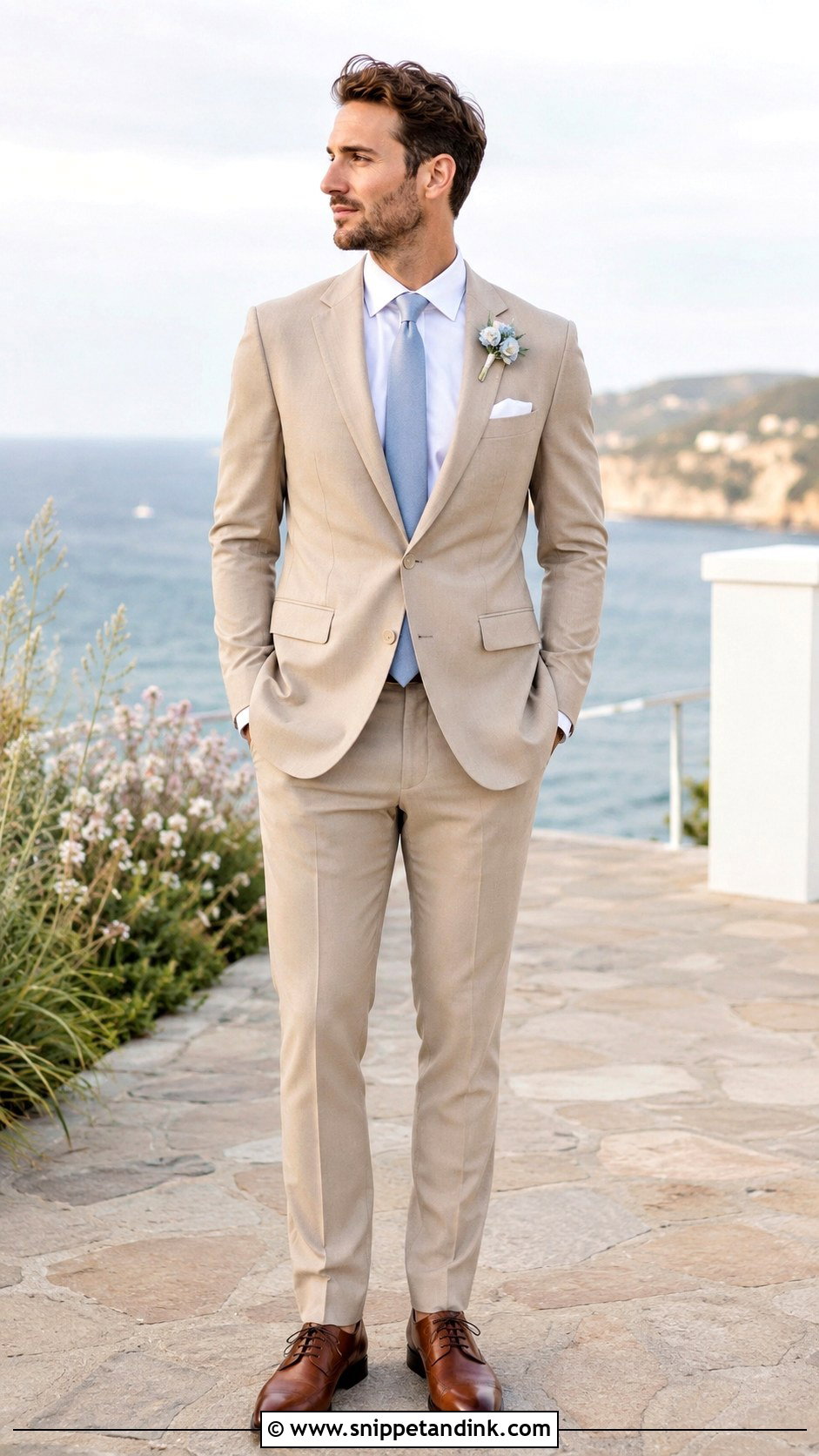
Dusty blue cools the warmth of beige, which is useful when the bridesmaids are already in blue. Start with a stone-beige jacket and matching trousers, and keep the shirt bright white so the neckline stays crisp. A silk necktie reads semi-formal for daytime; a bow tie dresses it up. Medium brown derbies or sleek loafers, chosen by the venue floor, a white pocket square and a pale blue boutonniere repeat the color once. The advantage I see at fittings is coordination: the groom can echo the wedding party’s blue without dressing identically.
7. Beige Tuxedo With Chocolate Brown Tie
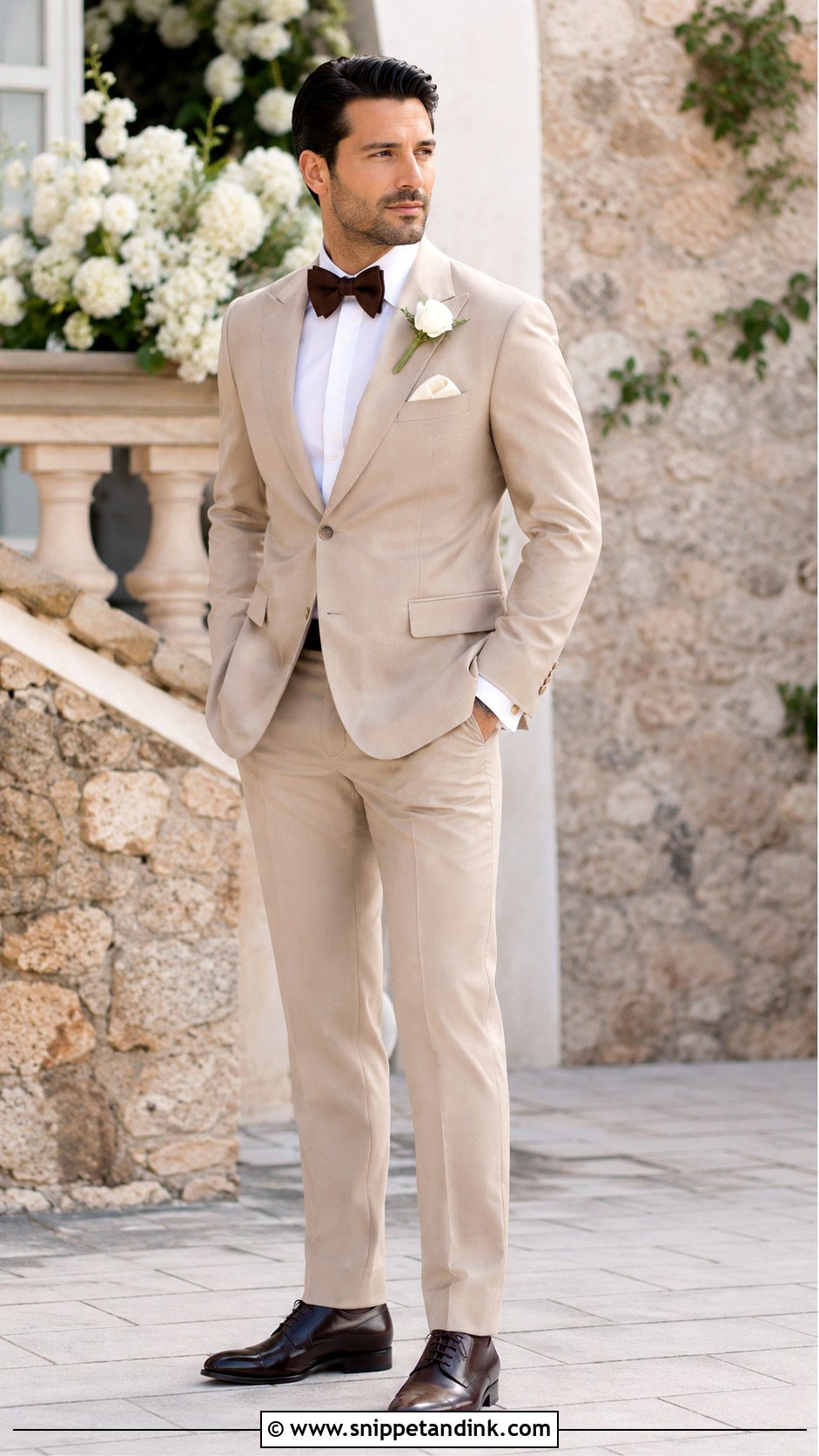
Chocolate brown is the warmest, most grounded accent on this list. I like a light sand tuxedo with lapels a shade deeper than the body, a white shirt, and a chocolate silk tie or a textured bow tie. Dark brown cap-toe oxfords carry the color from neckline to floor, and a cream pocket square with gold-toned cuff links stays in the same warm family. One trick I use to set the groom apart: he wears the bow tie while the groomsmen wear long brown ties. It sits naturally among wood, stone and linen at a rustic venue or a fall outdoor ceremony.
8. Beige Tuxedo With Terracotta Tie
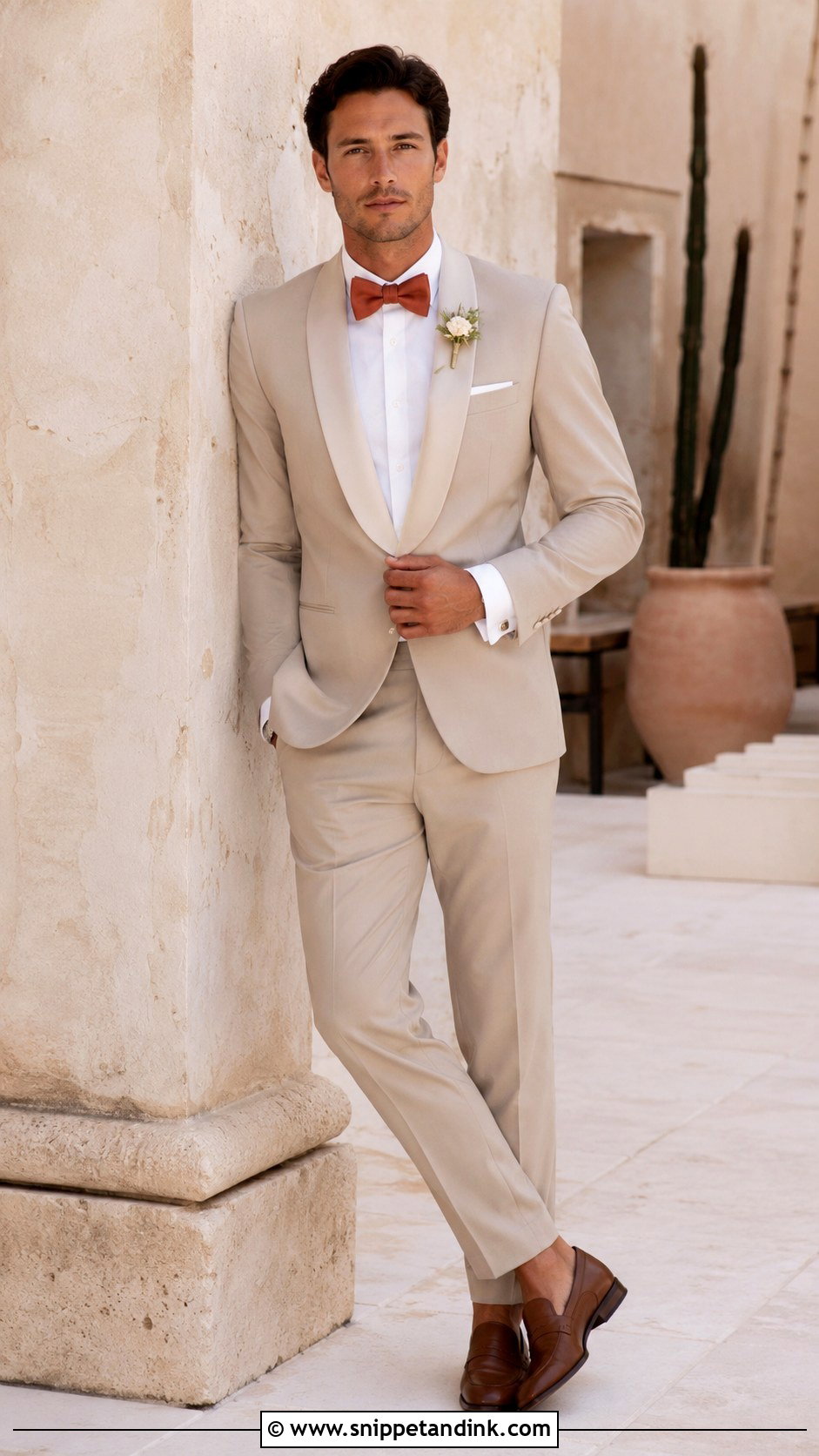
Terracotta needs restraint. Start with a pale beige jacket, tapered matching trousers and a white cotton tuxedo shirt, then choose a muted terracotta bow tie for formal styling or a slim necktie for something looser. Medium brown loafers, a white pocket square, brushed gold cuff links and cream flowers with a rust detail in the boutonniere complete the look. I tell grooms to skip the matching socks. The accent should appear in one or two places only, otherwise it starts to look like a theme. It belongs at a late-summer desert venue or a fall wedding full of clay and rust florals.
9. Beige Tuxedo With Black Shirt
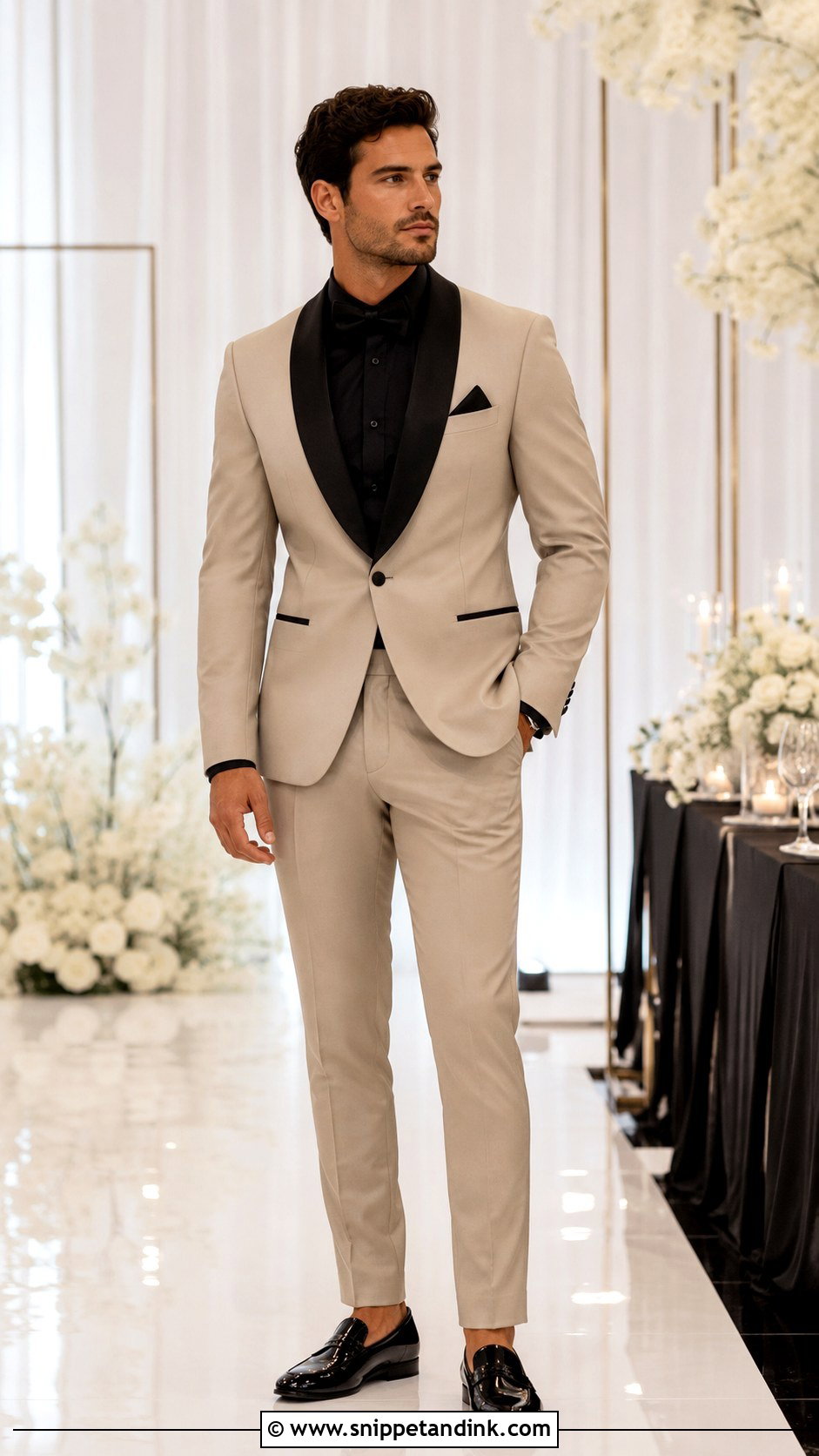
A fitted black shirt under a beige tuxedo is the boldest move here, and I only suggest it after reading the invitation twice. The dark shirt makes the jacket look more structured and sharpens the black satin lapels. Leave the tie off for creative formal, or add a slim black bow tie for traditional detailing. Black patent loafers, a black pocket square and plain metal cuff links keep the accents in one family, and a small boutonniere keeps it sleek. It belongs indoors in the evening. Under strong daylight a black shirt can look harsh against a pale jacket, and some families will read it as less traditional than white.
10. Beige Tuxedo Jacket With Black Trousers
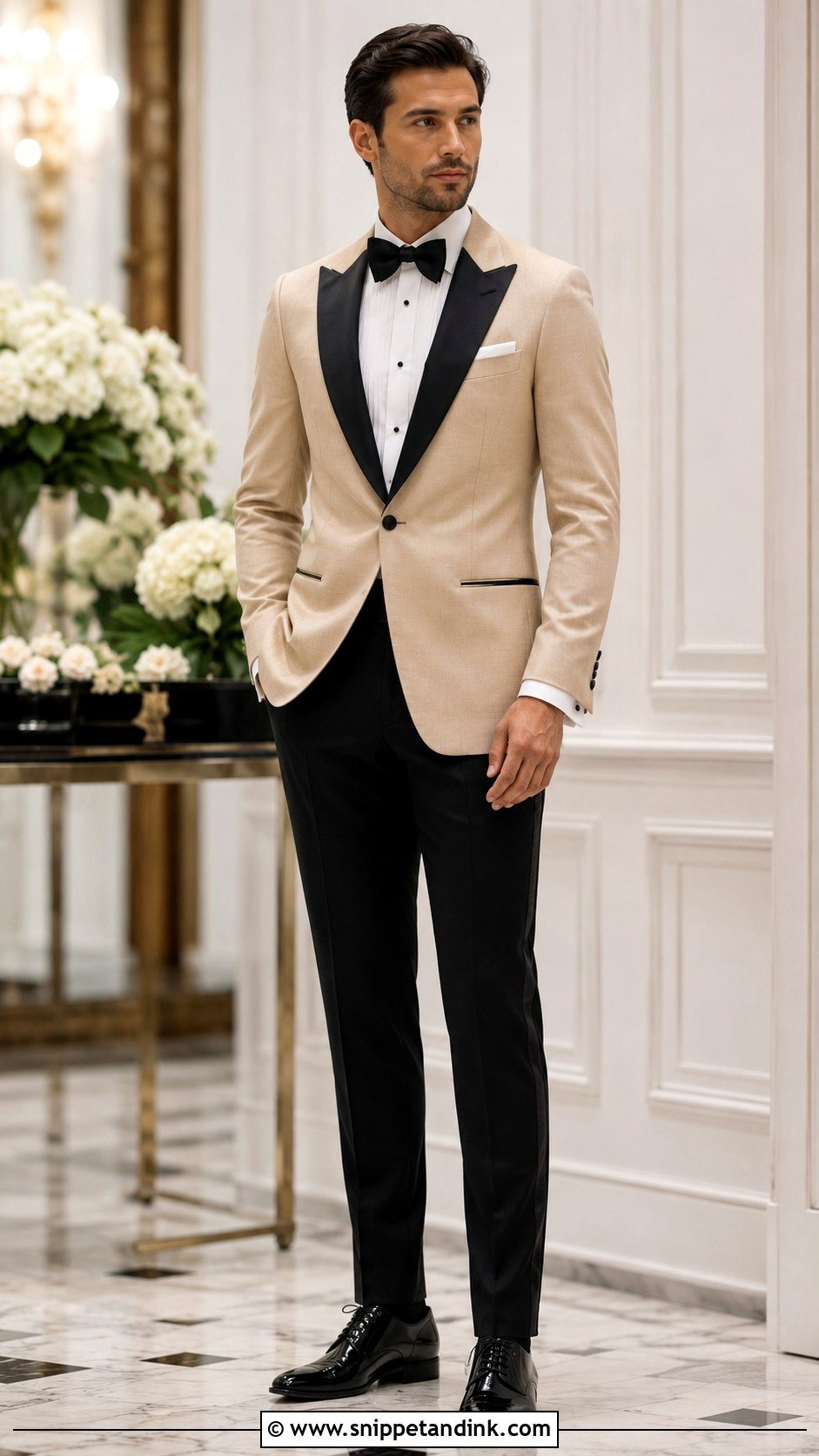
Put a beige tuxedo jacket with black formal trousers and you have the classic dinner-jacket arrangement, which is why it reads correct at evening events where an all-beige look might not. Look for black satin peak lapels and covered black buttons, then black trousers with a satin side stripe and no belt loops. A pleated white shirt and a self-tied black bow tie, polished black oxfords and black socks complete it. The two-tone split also gives the groom a natural way to stand apart from groomsmen in full black. I check one thing at the fitting: the jacket hem must fully cover the trouser seat, or the color break cuts the body in half.
11. Beige Tuxedo With Cream Shirt
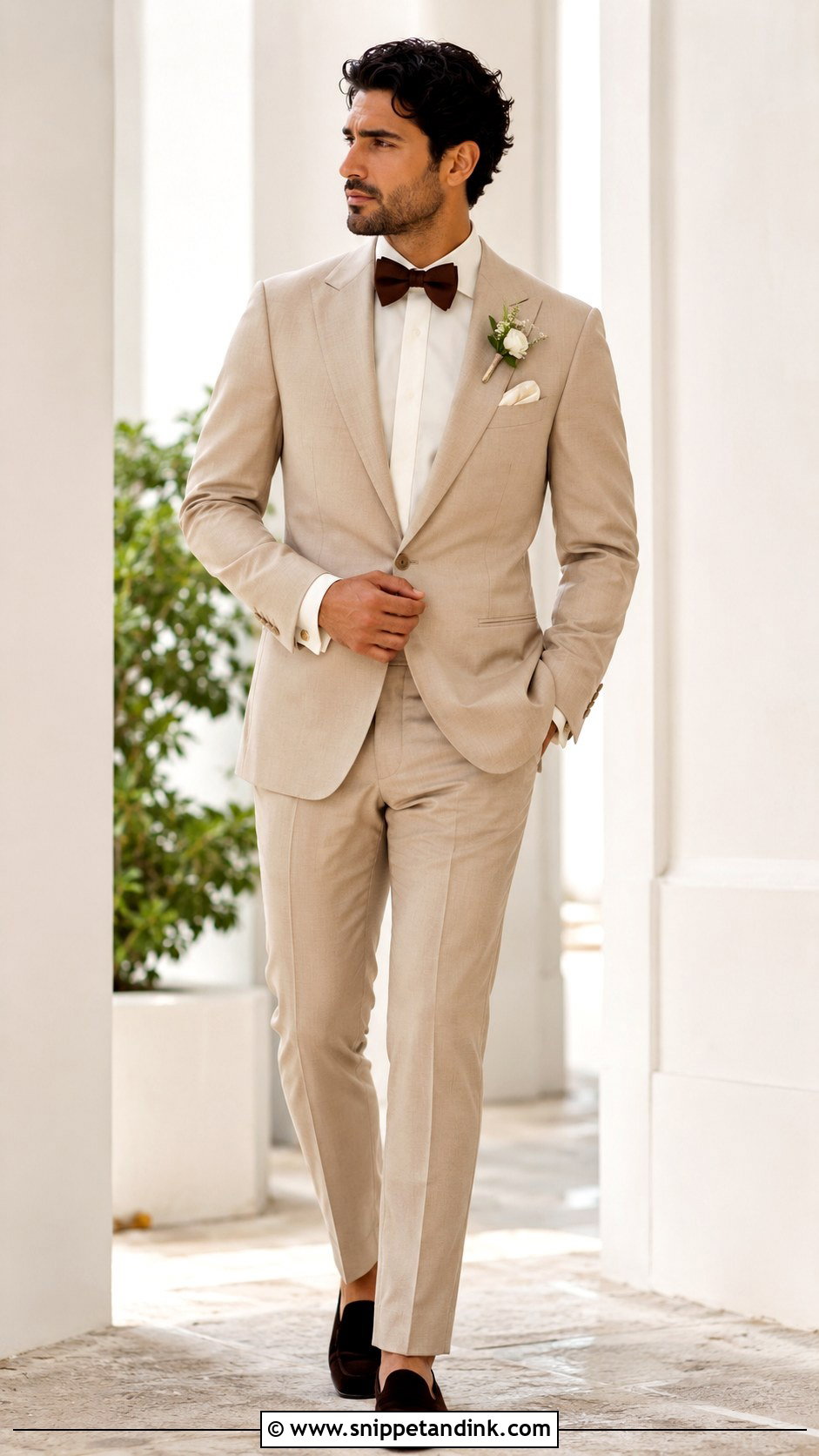
Tonal dressing only works when each layer is clearly lighter or darker than the next. I put a cream shirt under a medium tan-beige jacket so the two never merge, and choose a covered placket to keep the front clean. A chocolate brown bow tie gives the face a frame, a cream pocket square links shirt to jacket, and dark brown velvet loafers with warm metal cuff links finish it. The mistake I see often is a very pale tuxedo over an ivory shirt; in photos the two blur into one flat block. Keep this one for daytime and natural light.
12. Double-Breasted Beige Tuxedo
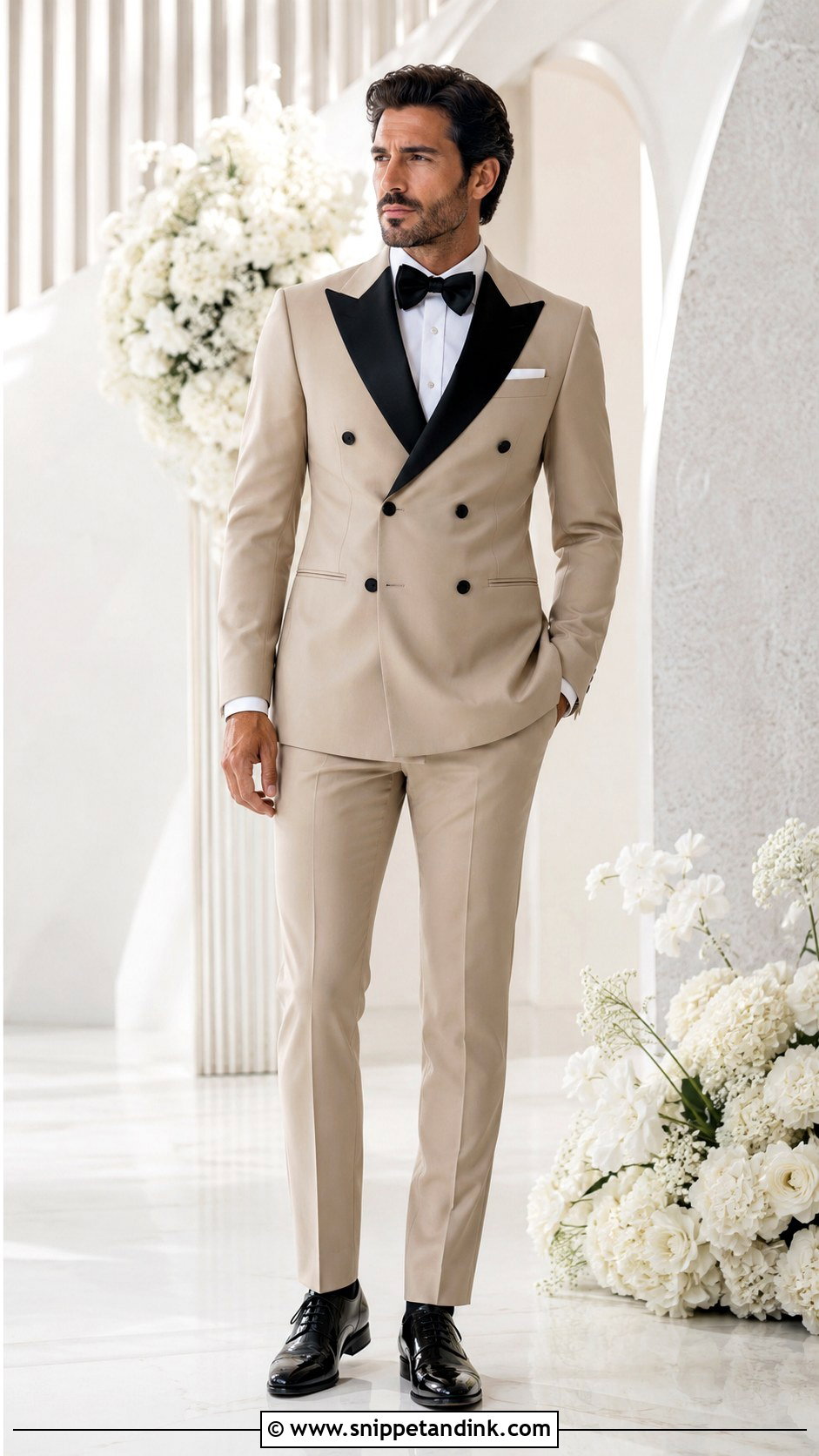
A double-breasted beige tuxedo carries itself, so I strip the accessories back. Look for a six-button front with sharp peak lapels, a defined waist and enough jacket length to balance the wider chest. Matching trousers, a crisp white tuxedo shirt, a black silk bow tie, black patent oxfords and a straight white pocket square are all it needs. The rule I repeat at every fitting is to keep it fastened while standing. Unbuttoned, a double-breasted front flaps open and loses its whole shape. It suits architectural venues and evening receptions with neutral decor.
13. Beige Velvet Tuxedo Jacket
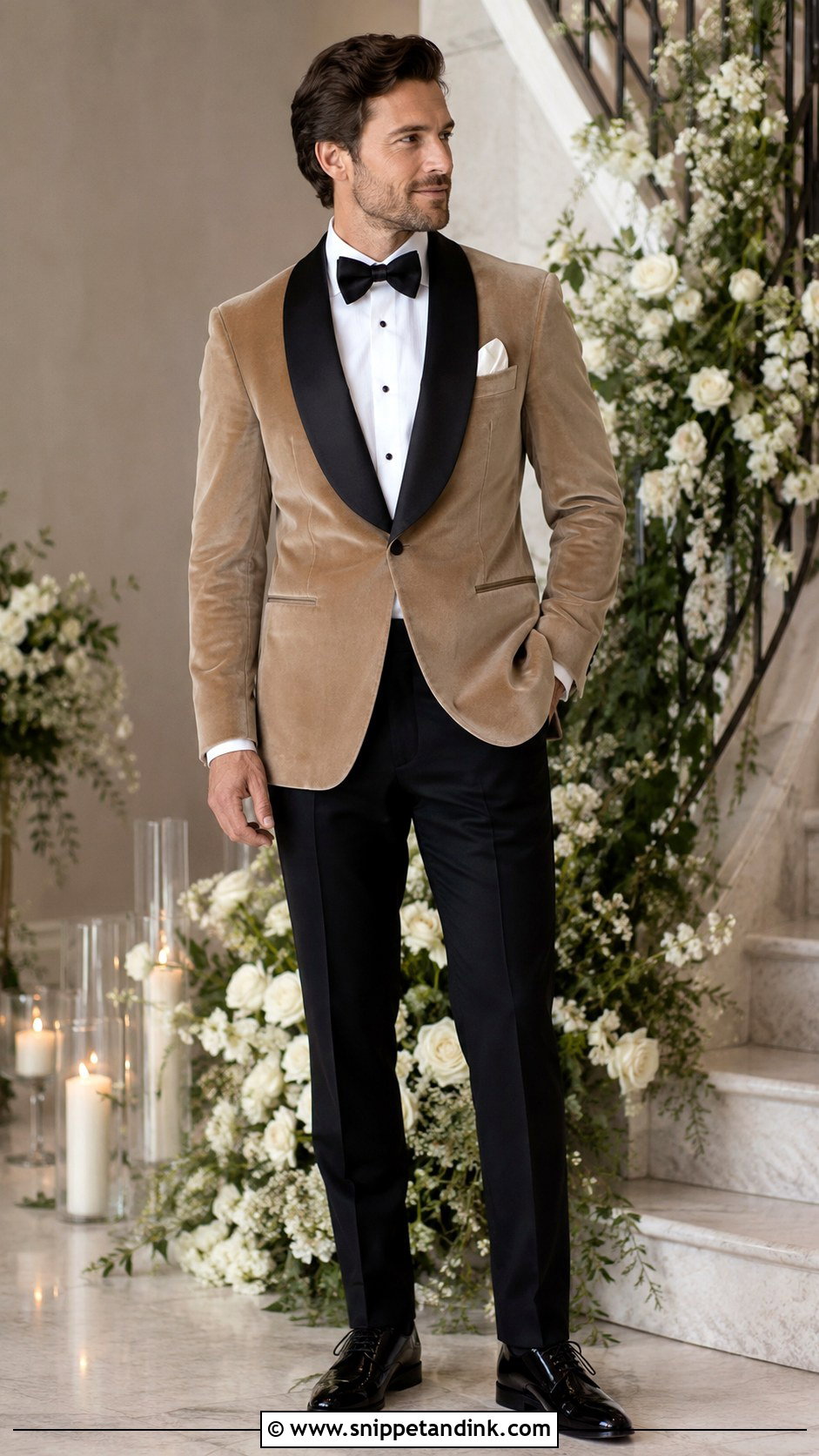
Velvet is how I bring beige into winter. A camel-beige velvet jacket with black satin shawl lapels, smooth black tuxedo trousers, a pleated white shirt and a black silk bow tie gives you texture against shine. Keep the lower half plain: black patent oxfords, black socks, simple cuff links. Fold the pocket square flat rather than puffing it, so the velvet stays the feature. I lean toward the deeper camel shade here because pale cream velvet goes grey and flat in low seasonal light. One practical note: velvet crushes where it’s pressed, so the jacket should hang on a broad hanger until the last minute.
14. Beige Linen Tuxedo For Beach Wedding
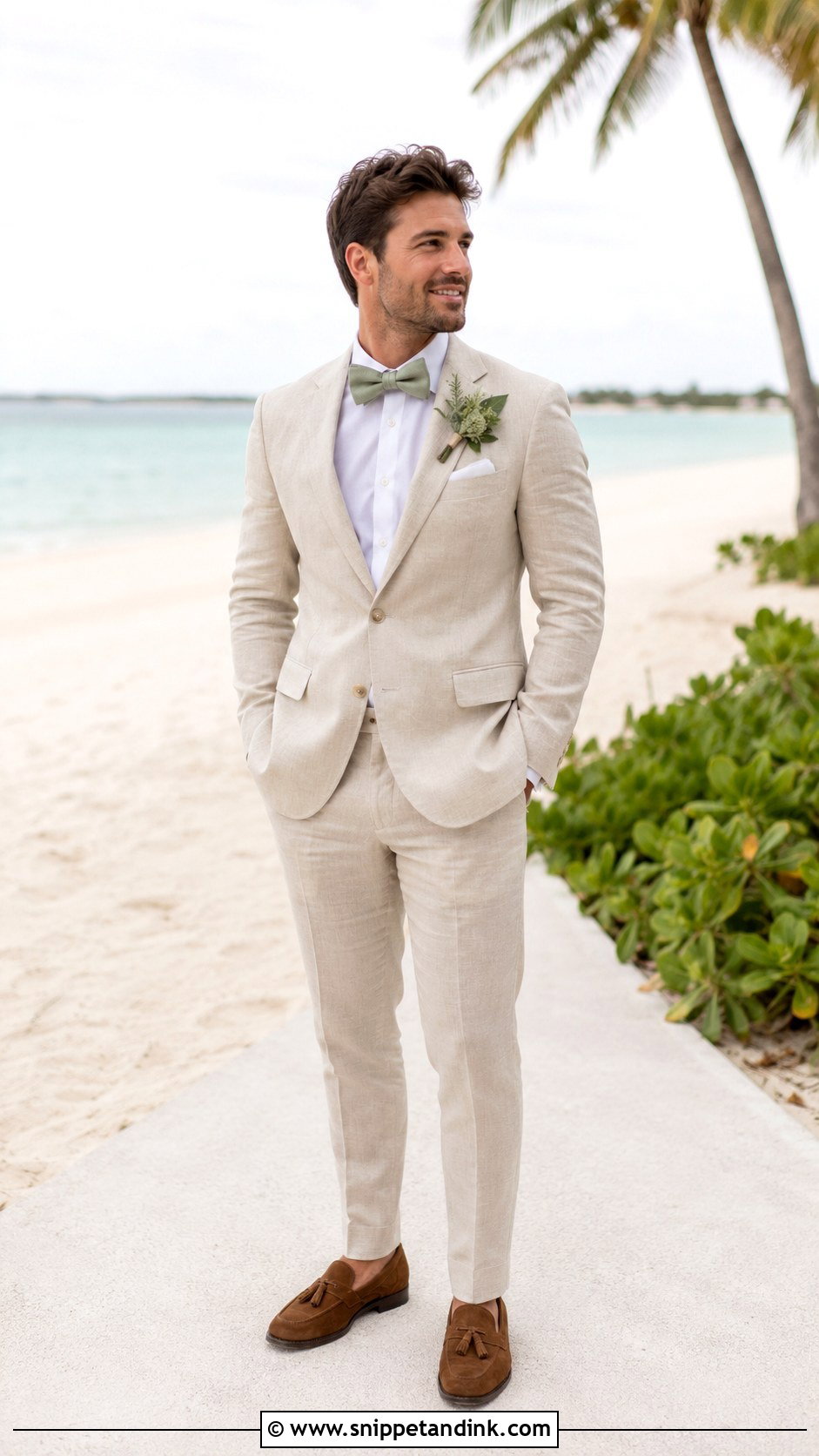
On a beach the heat decides the cloth before style does. I go for a linen blend over pure linen because it still creases but recovers better when the groom stands up. A structured shawl collar, matching breathable trousers and a lightweight white cotton shirt keep it formal enough. A soft brown or sage bow tie gives quiet contrast. Brown suede loafers with no-show socks work if the venue allows relaxed footwear; on sand, check the shoes in daylight because suede marks easily. Get both pieces pressed as close to the ceremony as you can. It fits beach-formal, not strict black tie.
15. Beige Shawl Collar Tuxedo
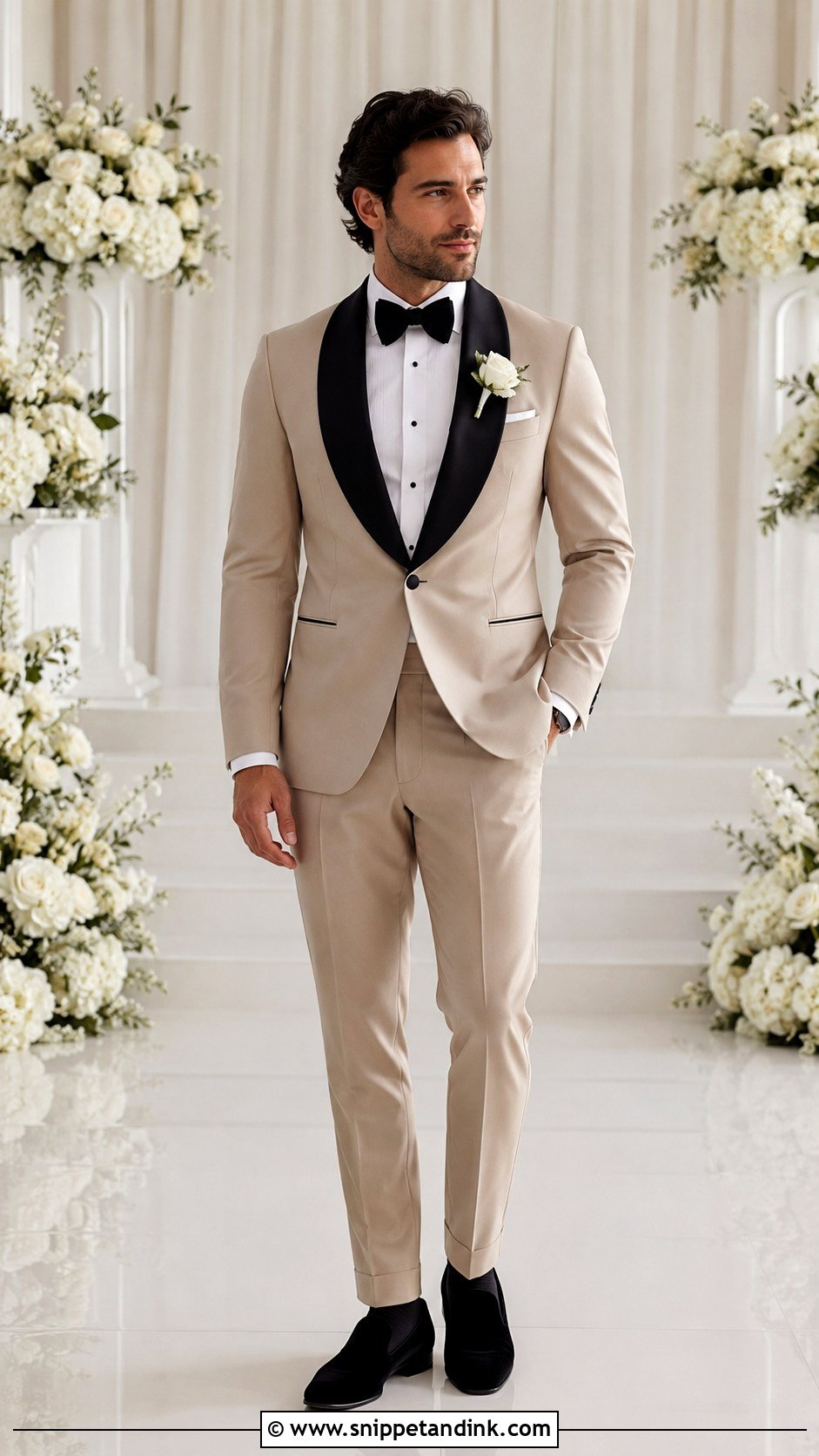
The rounded shawl collar softens a beige jacket, so I keep everything below it sharp. Beige satin facing gives a tonal look; black satin gives stronger definition. Matching trousers with a clean taper, a crisp white bib-front shirt and a hand-tied black bow tie hold the structure. Black velvet loafers add texture without bulk, and a white pocket square, dark socks, plain cuff links and a simple white boutonniere complete it. The thing I check in the mirror is the trouser. If it’s wide or long, the soft collar and soft leg together make the whole outfit look shapeless.
16. Beige Peak Lapel Tuxedo
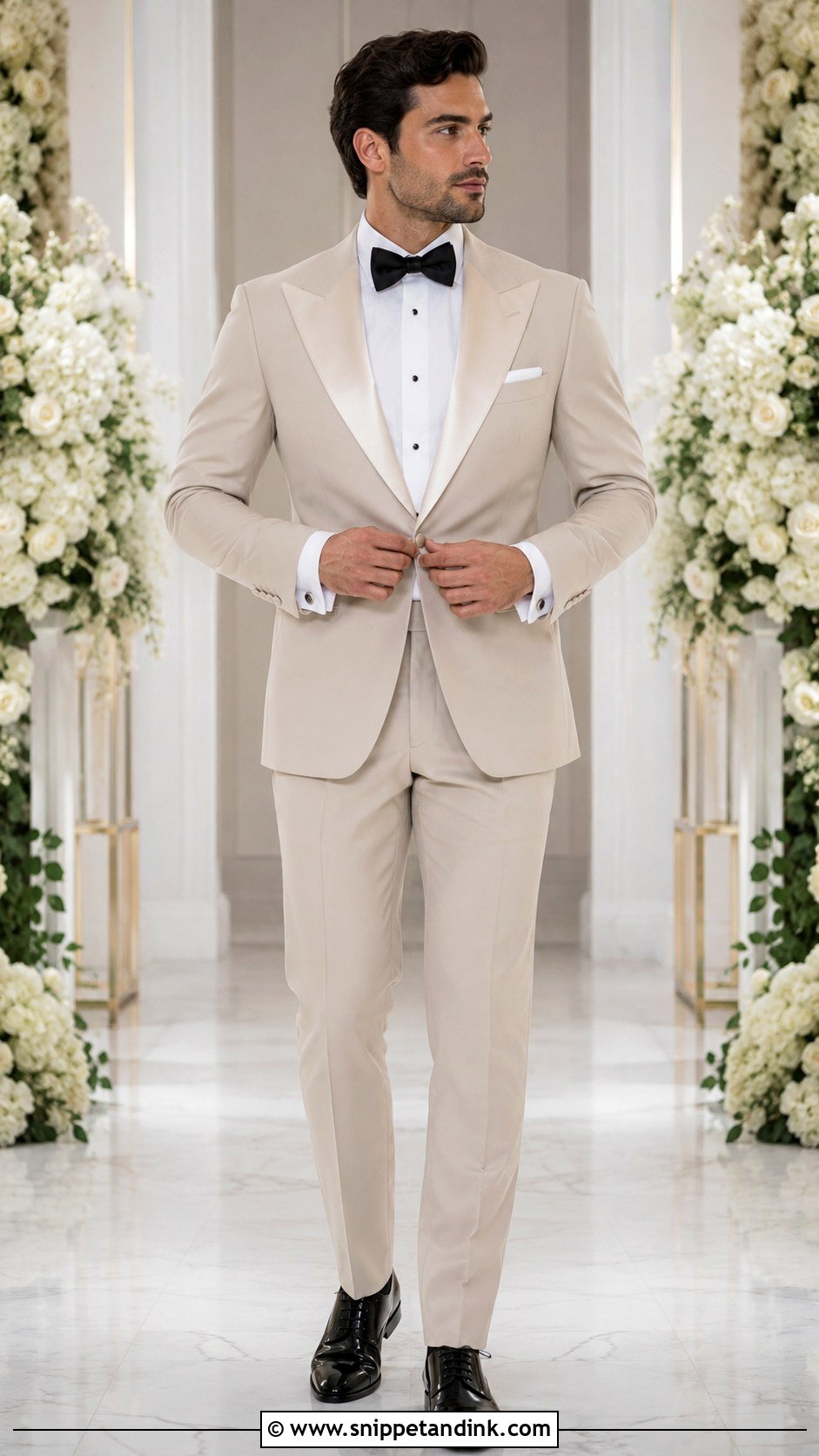
Peak lapels point up and out, which widens the shoulders visually, so they’re the lapel I’d pick for a slighter frame or a groom with sloping shoulders. Go single-breasted with satin-faced peaks, one covered button and a defined waist, plus matching beige trousers and a white spread-collar shirt. A black bow tie is the most formal choice; deep navy is a softer step down. Polished black oxfords, black socks, silver-toned cuff links and a white pocket square finish it. Ask the tailor for a minimal break so the trouser falls straight. It reads well in a ballroom, a modern event space or a formal outdoor venue.
17. Beige Tuxedo With Matching Waistcoat
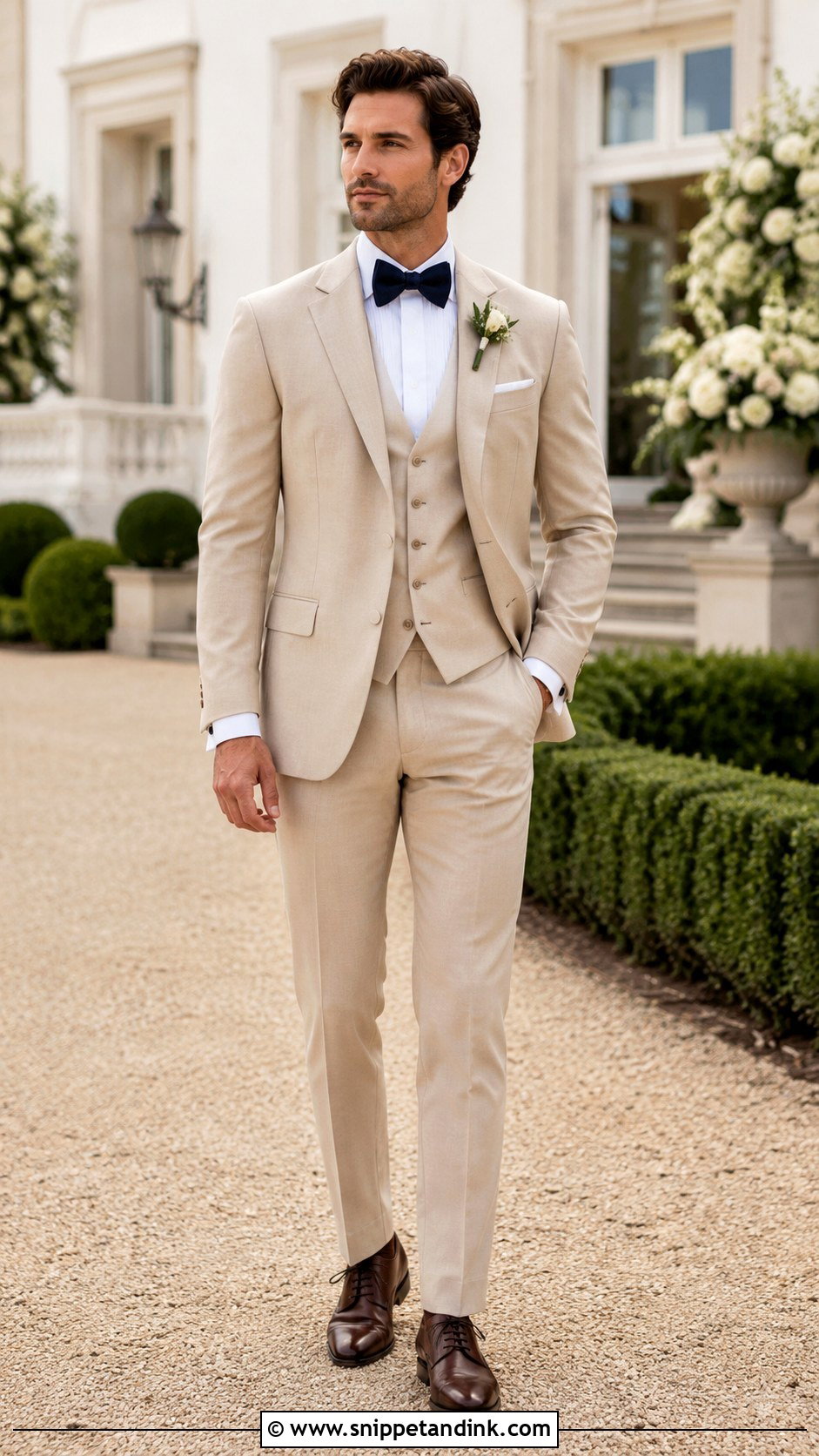
A matching waistcoat is my practical pick for long days, because the jacket always comes off at some point and the waistcoat keeps him dressed. Choose a three-piece in one consistent shade, with satin saved for the lapels and covered buttons. A bright white shirt and a dark brown, navy or black bow tie supply contrast. At fittings I check two things: the waistcoat must cover the trouser waistband even when he raises his arms, and the buttons shouldn’t strain across the stomach when he sits. Skip the belt. Tailored formal trousers with side adjusters or braces give a cleaner line.
18. Beige Tuxedo With Brown Loafers
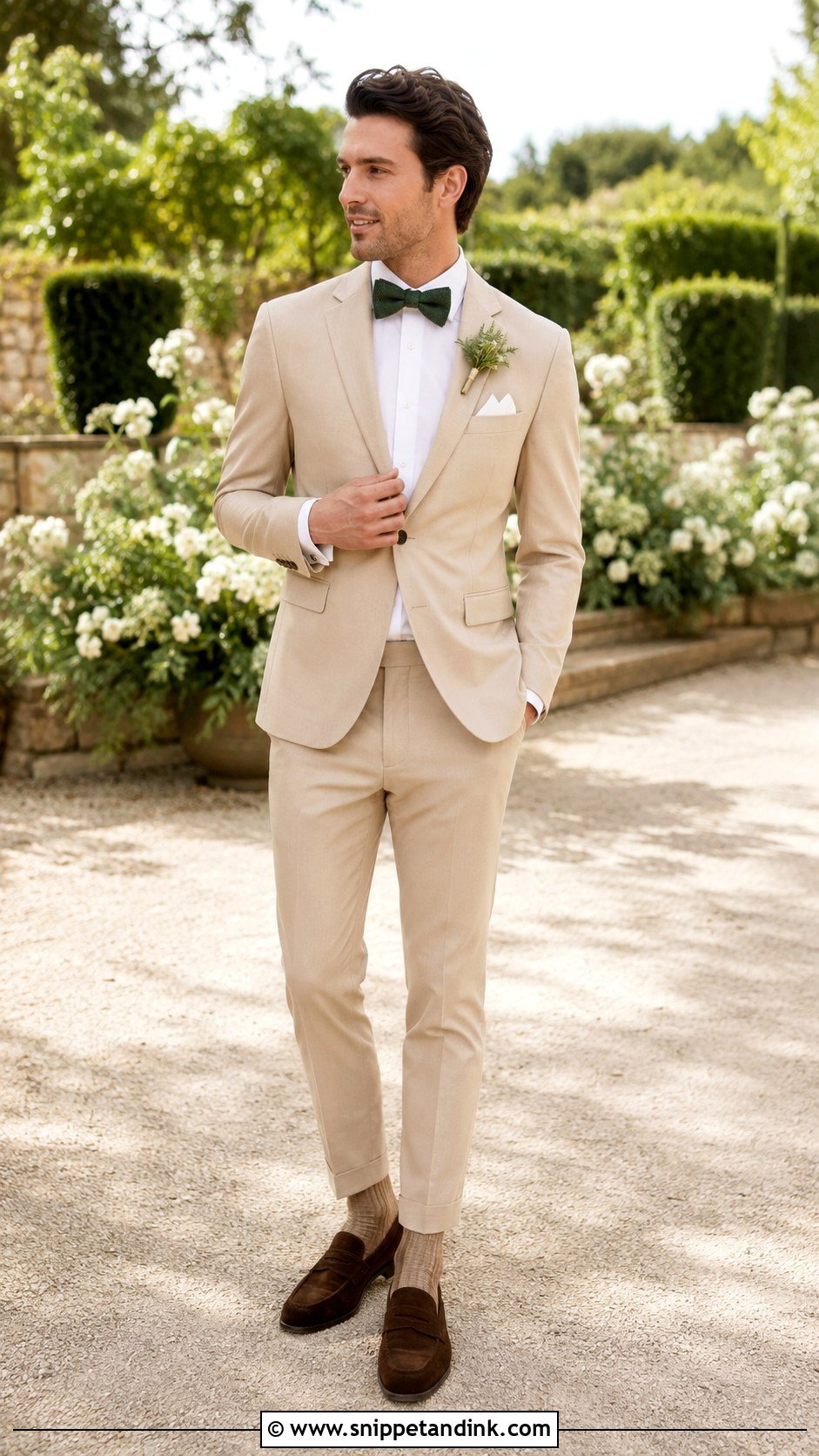
Brown loafers relax a beige tuxedo without taking it out of wedding territory. A slim sand-colored jacket with trousers cropped to show the shoe, a white shirt and a textured brown or forest green bow tie set it up. Suede loafers for a garden, polished leather penny loafers when the ceremony is dressier. Dress socks keep it traditional; no-show socks only where the venue is clearly casual. The detail I police here is proportion: a chunky lug-soled loafer under a slim cropped trouser looks clumsy, so keep the sole slim and the vamp low.
19. Beige Tuxedo With Black Patent Shoes
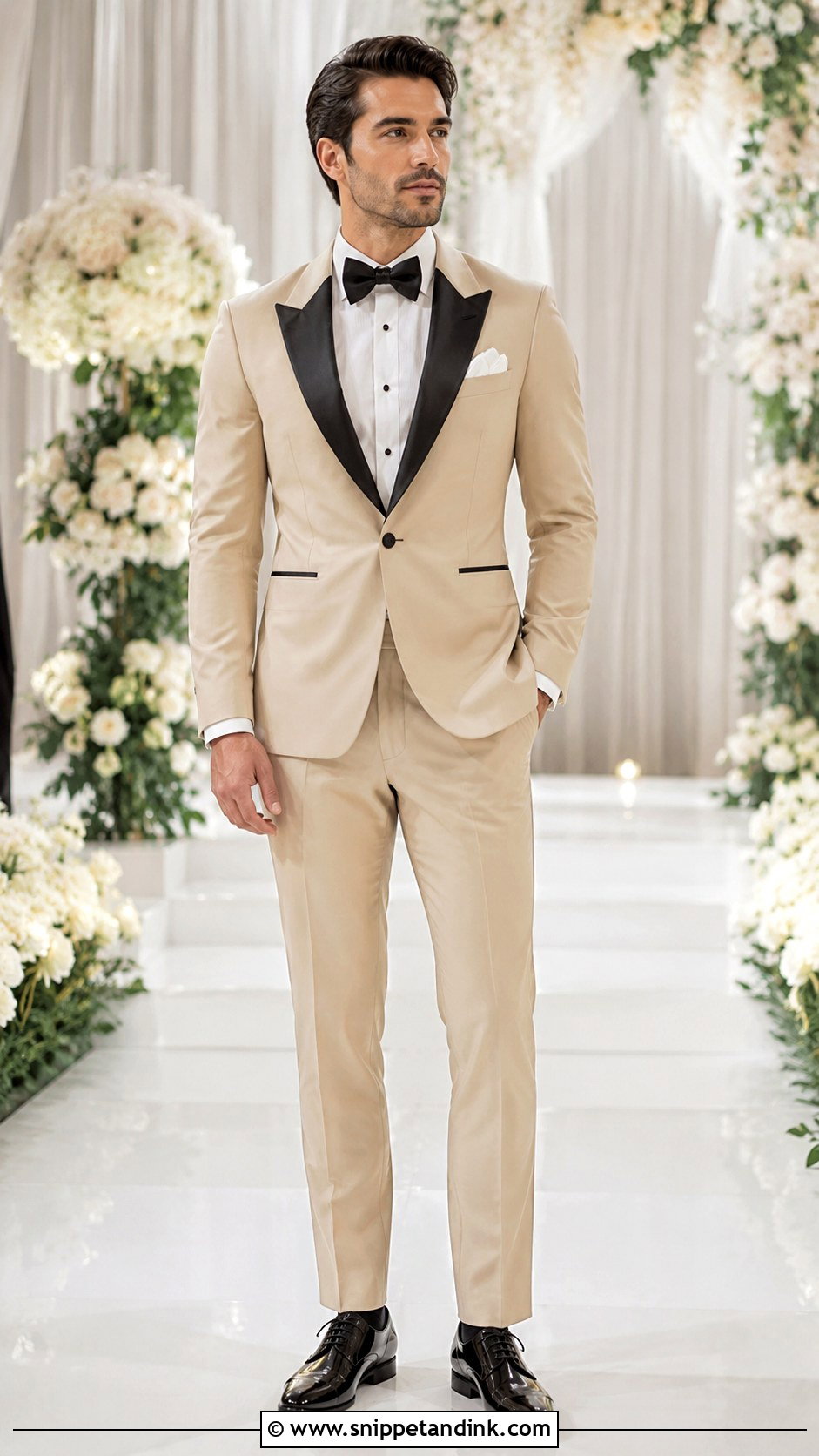
Patent shoes are the fastest way to make a beige tuxedo read evening. Their shine pairs with satin lapels, so I keep jewelry and cuff links small to avoid too many reflective surfaces fighting for attention. Build on a structured beige jacket with black satin lapels and either matching beige or contrasting black trousers, a crisp white tuxedo shirt, a black silk bow tie and black socks so the shoes connect to the rest. A straight-fold white pocket square is the only bright accent it needs. Use this when the palette is beige but the dress code is formal evening and indoors.
20. Beige Tuxedo For Groom And Groomsmen
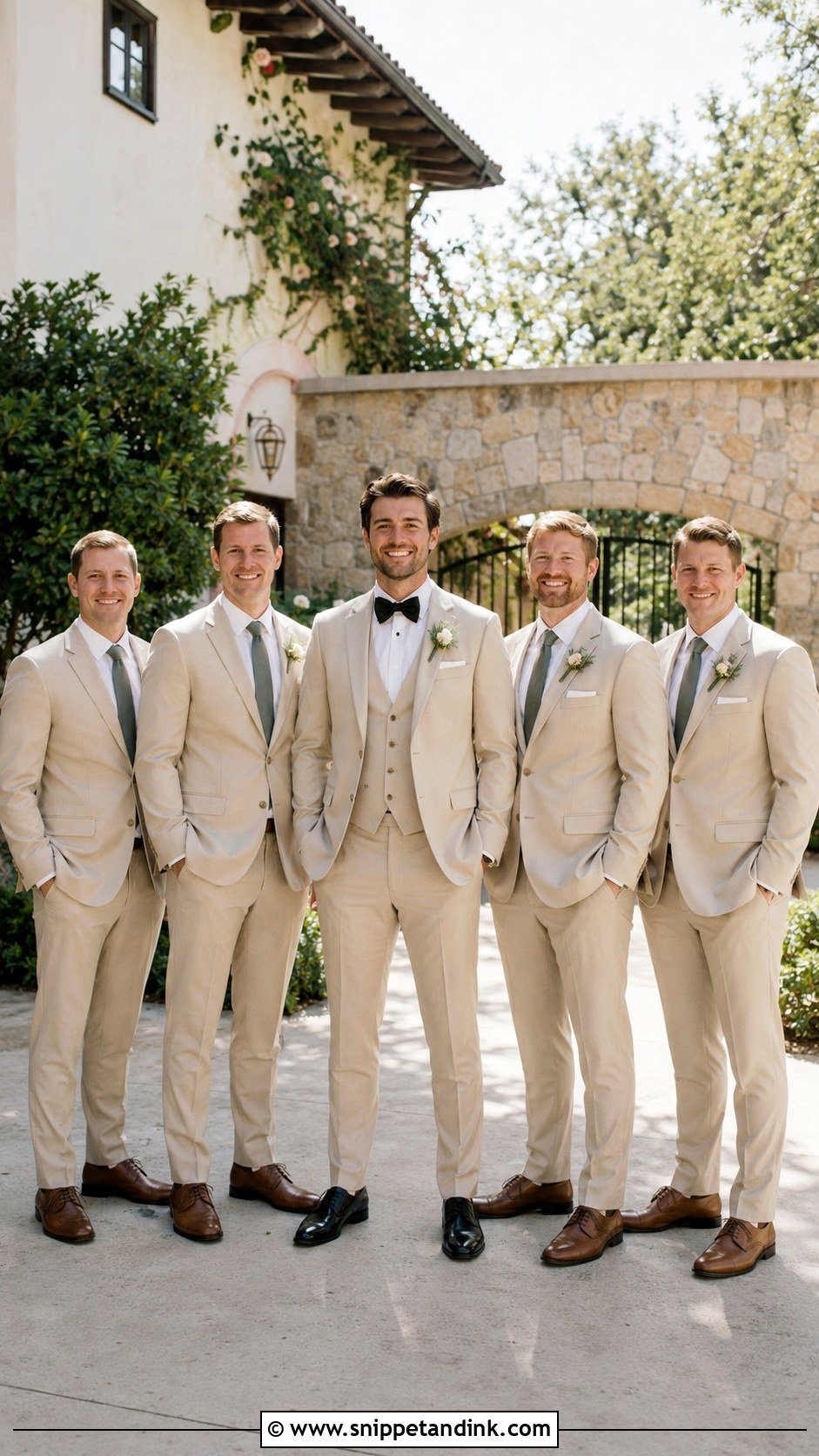
Coordinated beige tuxedos work for a wedding party as long as the groom gets something the others don’t. I put him in a double-breasted or three-piece version with a black bow tie, and the groomsmen in simpler single-breasted jackets with navy, sage or brown ties from the wedding palette. Shirts, pocket squares and shoe color stay identical across the line, which is what makes the group look planned. A larger boutonniere is another quiet way to mark the groom. Measure everyone properly, even the friend who swears he knows his size, because uneven trouser lengths and boxy jackets are the first thing you notice in a group photograph.
Rental or Made to Measure for a Light-Colored Tuxedo
Rental beige tuxedos exist, but stock is thinner than it is for black, and lighter jackets show past wear more readily: faint marks at the cuffs, shine on the seat, slight yellowing at the collar. If you rent, ask to see the actual jacket rather than a catalog photo, and inspect it in daylight. I’d also confirm the shade matches across every groomsman’s rental, since batches can differ.
Buying off the rack and tailoring it gives you control over color and fit. Made to measure takes longer and costs more, though prices vary widely by maker and cloth. As a rough plan, I’d have the order placed several months out and leave room for at least two fittings, with the last one close enough to the date that any weight change is caught.
Wine, Grass and Makeup on a Pale Jacket
A light tuxedo shows everything, so I send grooms off with a short plan for the day itself.
- Blot, never rub. Rubbing spreads red wine or foundation into the weave of a light cloth.
- Keep a stain pen and a few white cloths with whoever holds the rings; plain cold water on a white cloth is the safest first step on most fabrics.
- Hug the bride with the jacket open or turned slightly, because makeup transfer lands on the lapel and shoulder first.
- Take the jacket off for lawn games and outdoor dancing; grass stains on beige are hard to lift.
- After the wedding, get it to a dry cleaner within a few days and point out every mark, since stains set the longer they sit.
Fit Decides More Than the Accent Color
Beige formalwear comes down to four things: color, fit, texture and the dress code on the card. Black accessories give the classic contrast; navy, sage, burgundy, brown and terracotta bring warmth and personality. Matching trousers look modern, while black tuxedo trousers make a beige dinner jacket feel properly traditional after dark. Let the season choose the fabric, from a linen blend by the sea to velvet in winter. My last request to every groom is the same: book alterations early and look at the whole outfit once by a window and once under indoor light. That ten-minute check catches color and proportion problems while there’s still time to fix them.
You'll Like These Ideas:


Leave a Reply