
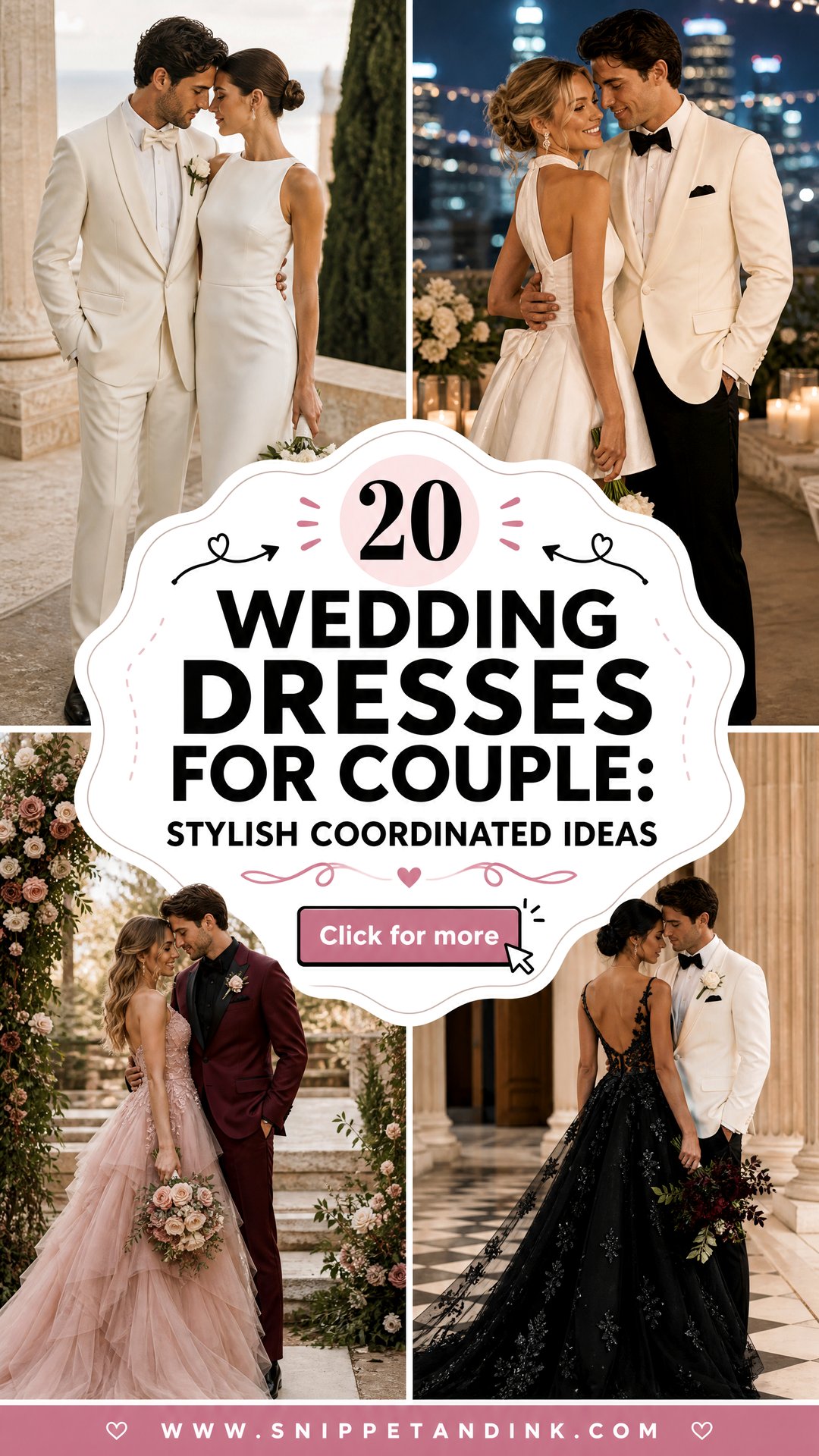
When a couple comes to me, the first thing I ask about isn’t the suit. It’s the dress, or the second outfit, because everything I build has to sit at the same level of formality and catch the light in a similar way. Matching colours is the easy part. Two outfits look like they belong together when they share a dress code and one or two deliberate details, such as a thread colour, a fabric texture or a flower. Below are twenty pairings that work in practice, from a classic ballroom gown and tuxedo to beach linen, a pantsuit, two brides, two grooms, and lehenga, sari and African ceremonial wear, with the connecting detail I’d use for each.
Matching the Dress Code Before Matching Any Colour
The most common mismatch I see is a full ball gown beside a casual grey suit, or a relaxed slip dress next to a stiff tuxedo. Colour can’t fix that. Settle the level first, then the palette.
- Full gown, cathedral veil, evening start: a tuxedo or dinner jacket.
- Structured gown or lace A-line in the afternoon: a dark three-piece suit.
- Slip dress, midi or courthouse look: a well-cut lounge suit, tie optional.
- Beach or boho dress: unlined linen or cotton suiting, open collar.
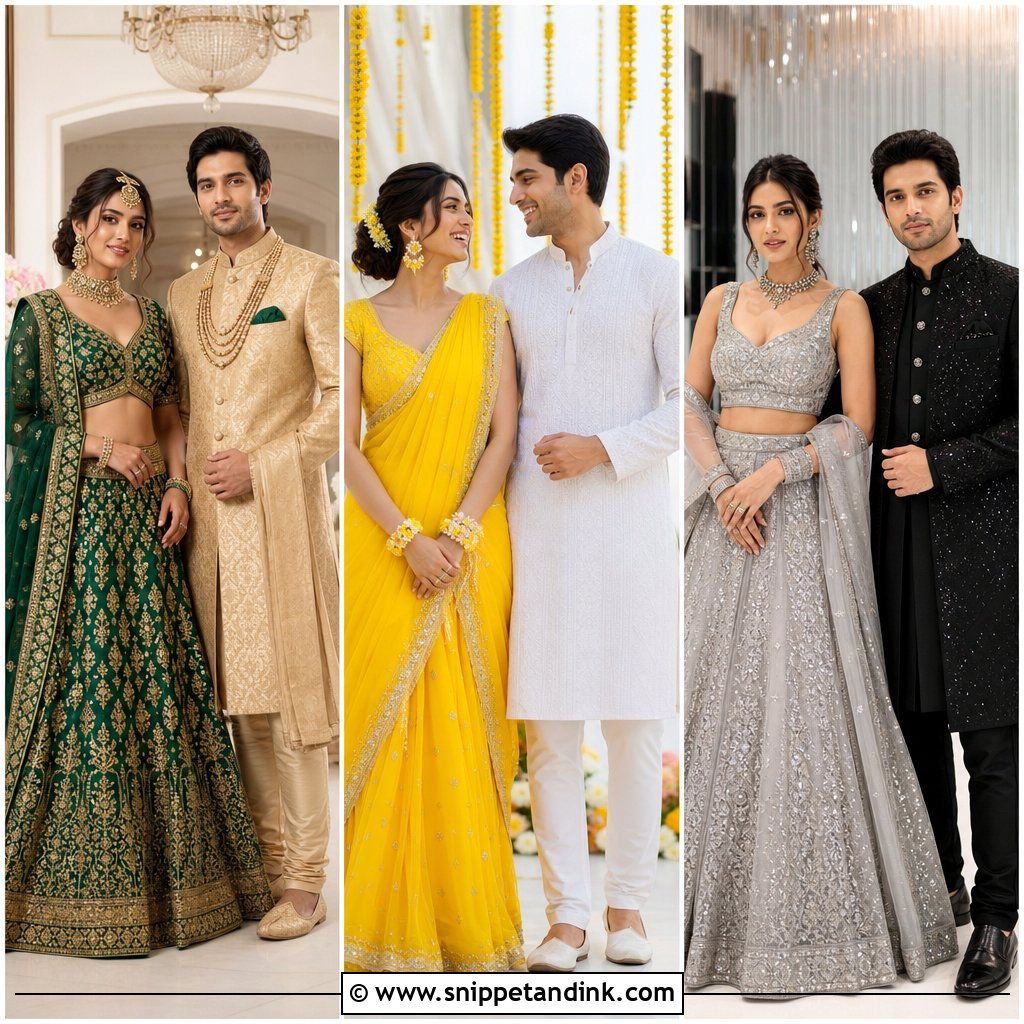
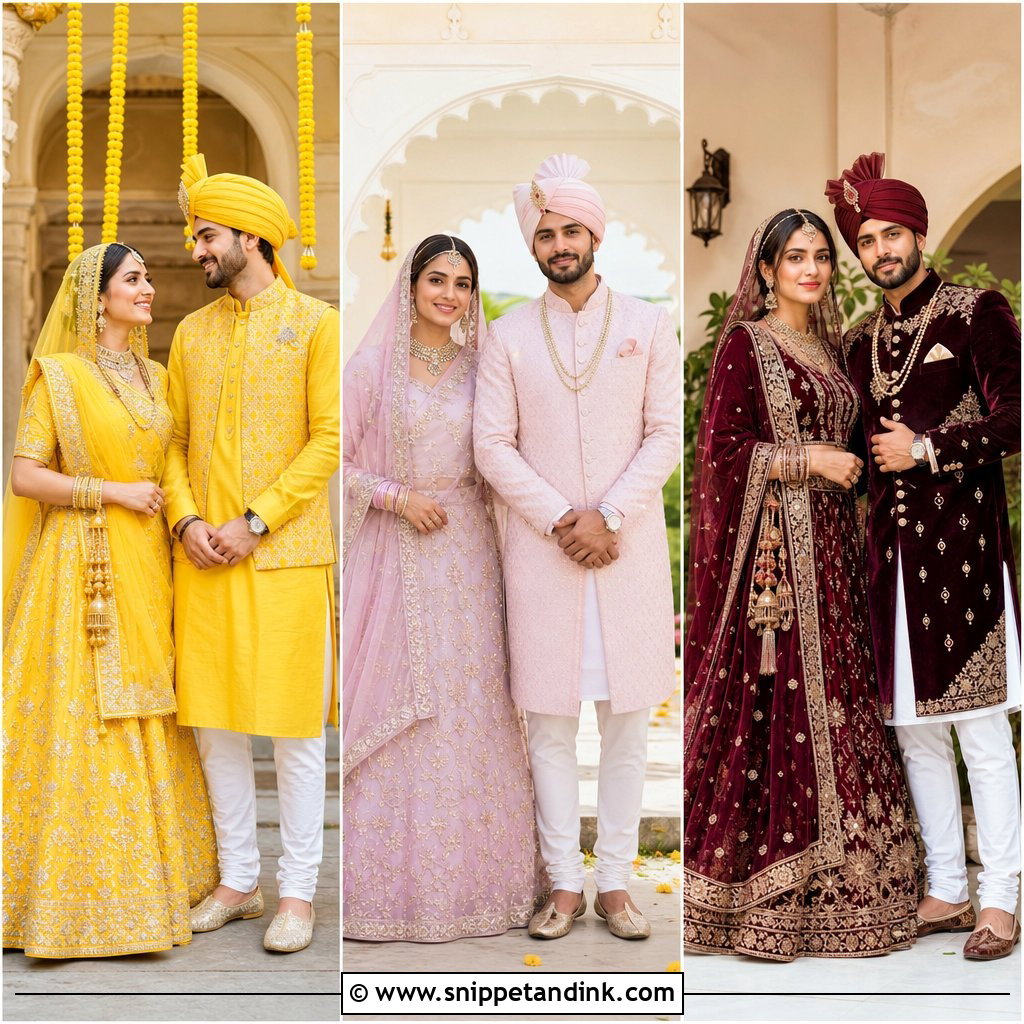
- Cultural ceremonial wear: the counterpart garment from the same tradition, at the same weight of embroidery.
Fabric finish counts as part of formality too. Satin, silk and velvet read dressier than matte crepe, linen or cotton, so try to keep both outfits in roughly the same family of sheen.
1. Ivory Ball Gown And Black Tuxedo Wedding Couple
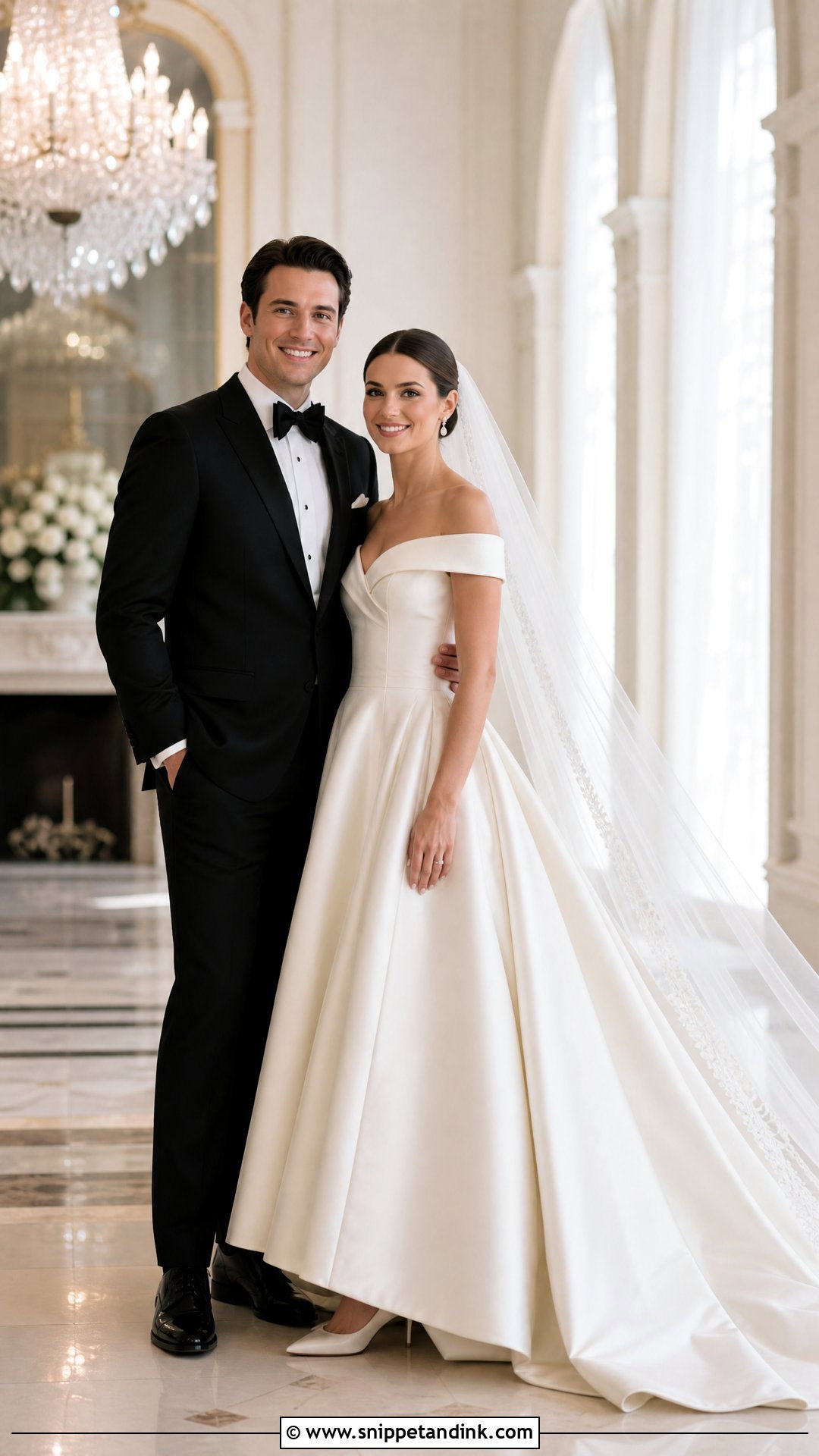
This is the pairing every other one on the list is measured against. A fitted bodice, full skirt and lace or light beading on the gown sits naturally beside a sharply cut black tuxedo with a pleated white shirt and black bow tie. The link I’d use is an ivory pocket square, folded flat, so the partner carries the dress shade without looking matched. One thing to check: a bright white shirt next to an ivory gown can make the dress look yellowish in photos, so I’d ask for an off-white shirt if the gown is deep ivory. Suits a ballroom, hotel, museum or evening ceremony.
2. Satin Slip Dress And Navy Suit Wedding Couple
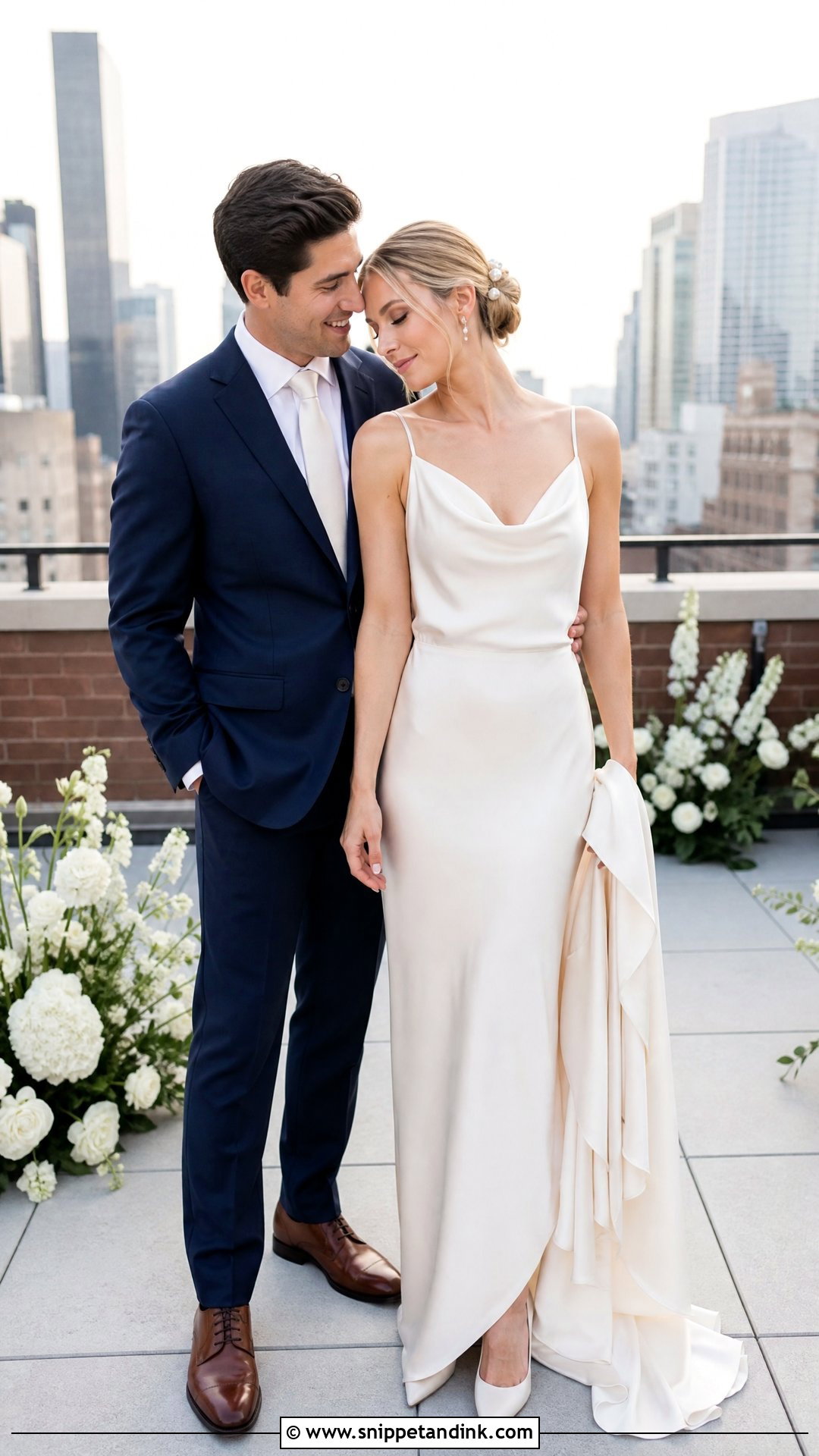
Sheen is what links a satin slip dress to a deep navy suit, so I put the satin in the tie rather than in the suit cloth. A tie cut from fabric close to the dress tone, with a crisp white shirt and dark brown or black shoes, ties the two together quietly. The slip itself, with narrow straps and a fluid skirt, reads modern and less formal than a gown, which is why a suit fits better here than a tuxedo. Keep the navy truly dark. Mid-blue against bias-cut satin looks daytime and casual. Good for a restaurant, loft or rooftop, with a wrap on hand if evenings turn cool.
3. Lace A-Line Dress And Charcoal Suit Wedding Couple
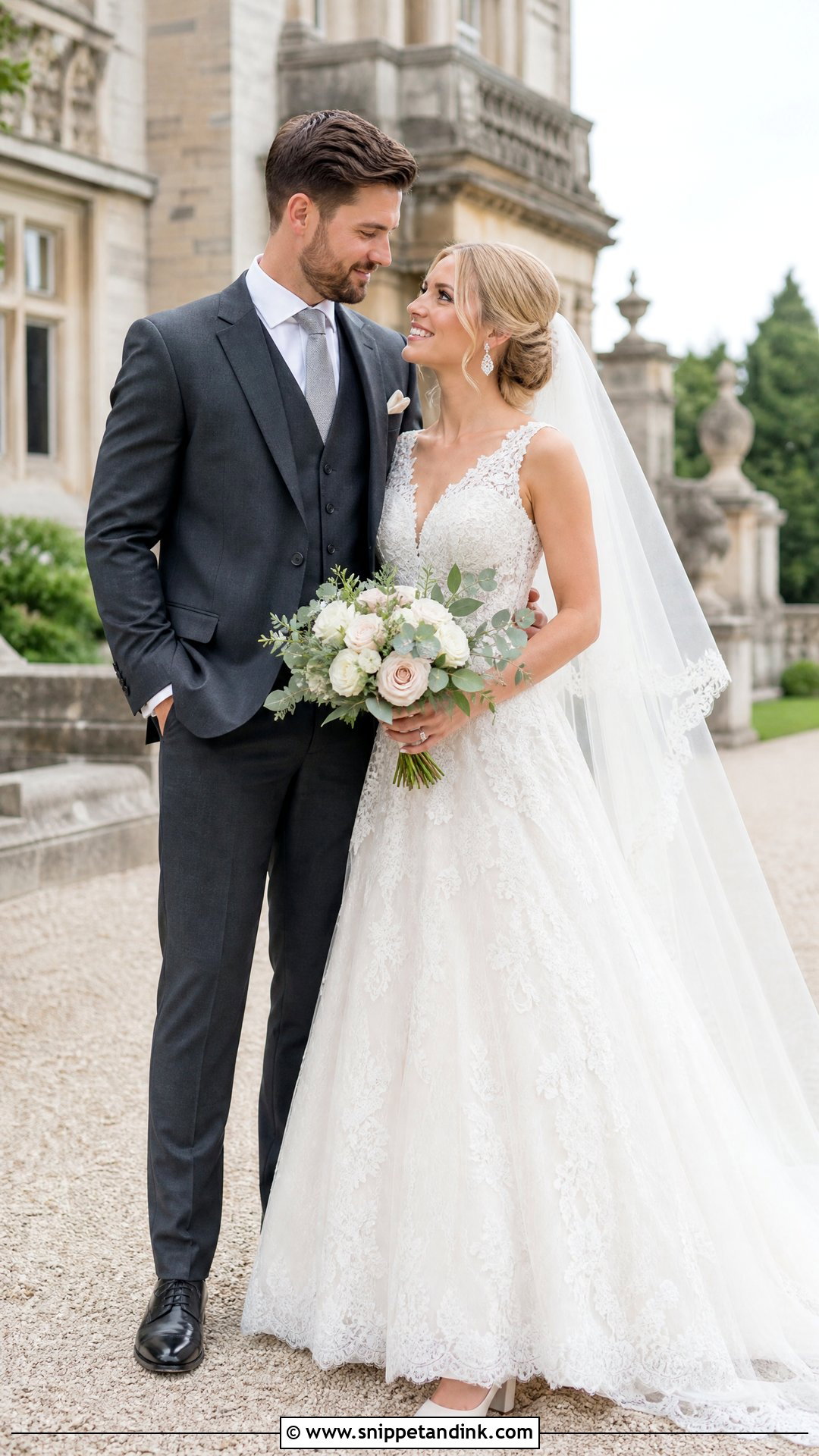
Charcoal is my go-to for a couple who find black too severe for a late-afternoon ceremony. Against an A-line lace gown, a charcoal three-piece with a white shirt, black shoes and a silver-grey tie keeps the structure without the evening weight of black tie. Floral lace, sheer sleeves or a scalloped neckline are chosen by season. A small ivory pocket square bridges the two. I’d steer the partner toward a flat or lightly textured worsted rather than a shiny finish, because lace is matte and the contrast looks odd up close. Works at historic homes, barns and traditional venues.
4. Minimalist Column Dress And Ivory Tuxedo Wedding Couple
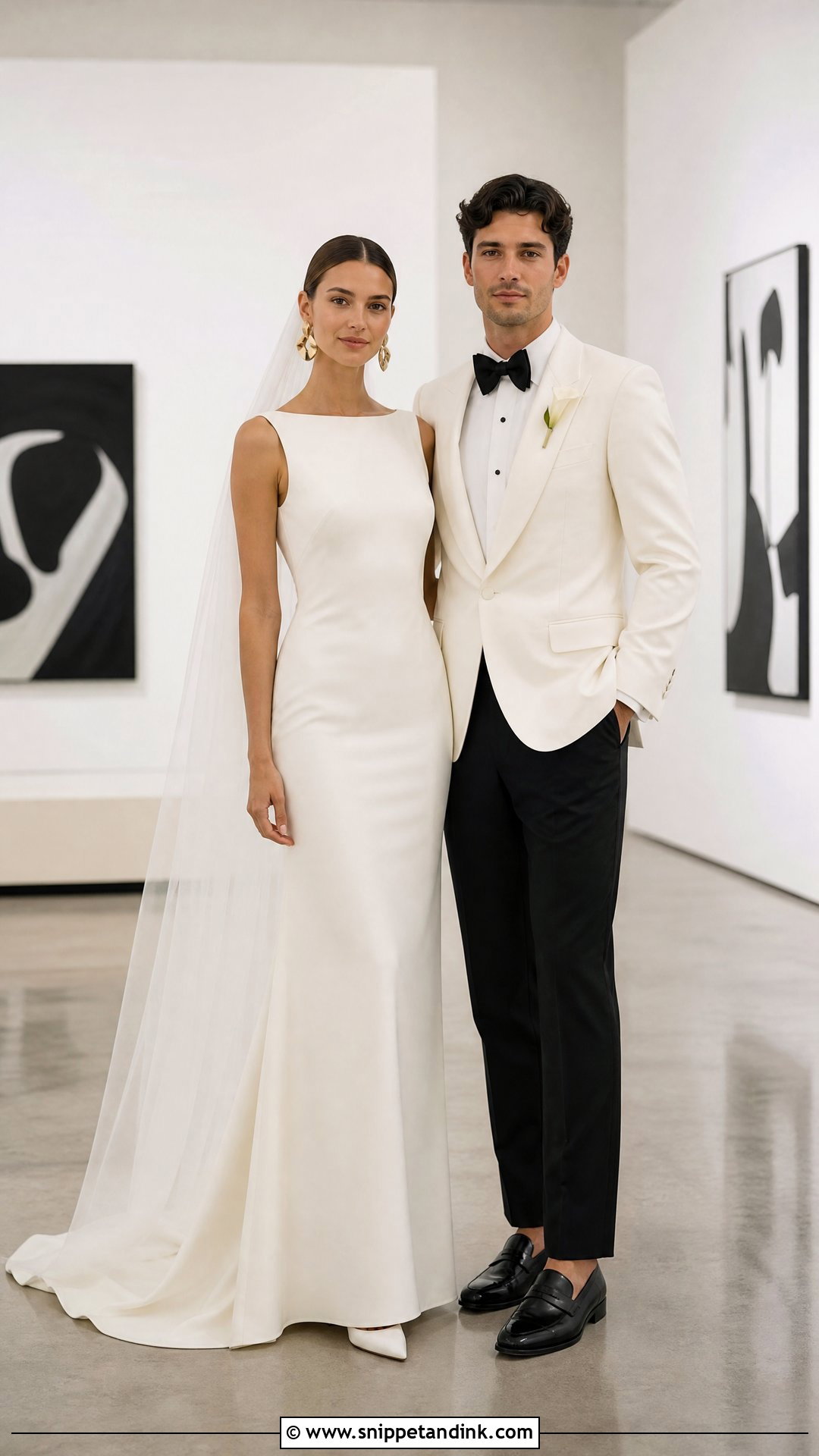
A minimalist column dress hides nothing, and neither does an ivory dinner jacket, so fit carries both. Crepe or structured satin on the gown, a square, bateau or one-shoulder neckline, and a plain chapel veil keep it crisp. The partner wears the ivory jacket over black trousers with a black bow tie, which gives the pale jacket a frame. Ivory jackets show creases from sitting faster than black, so I’d have the jacket pressed on the morning and avoid a long car ride in it. Ideal for galleries, modern hotels and black-tie city weddings.
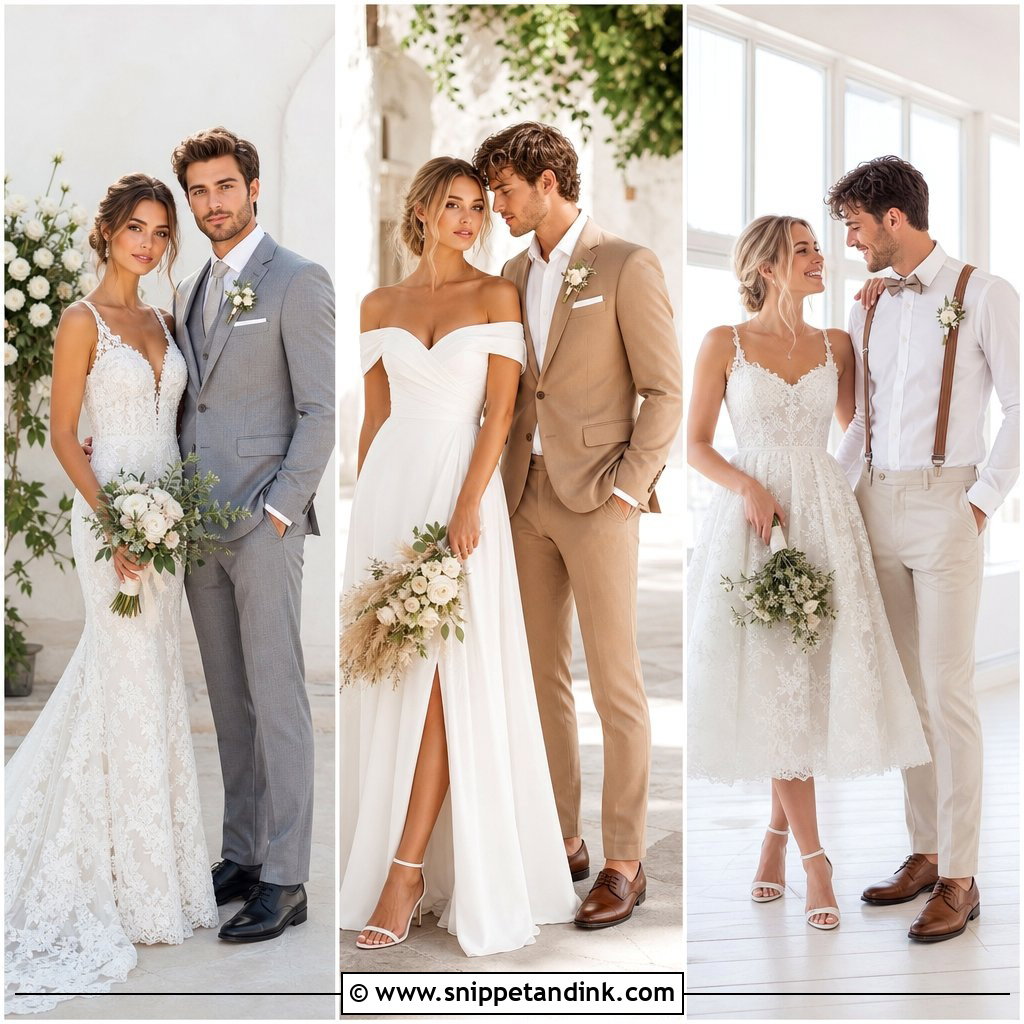
5. Boho Lace Dress And Tan Linen Suit Wedding Couple
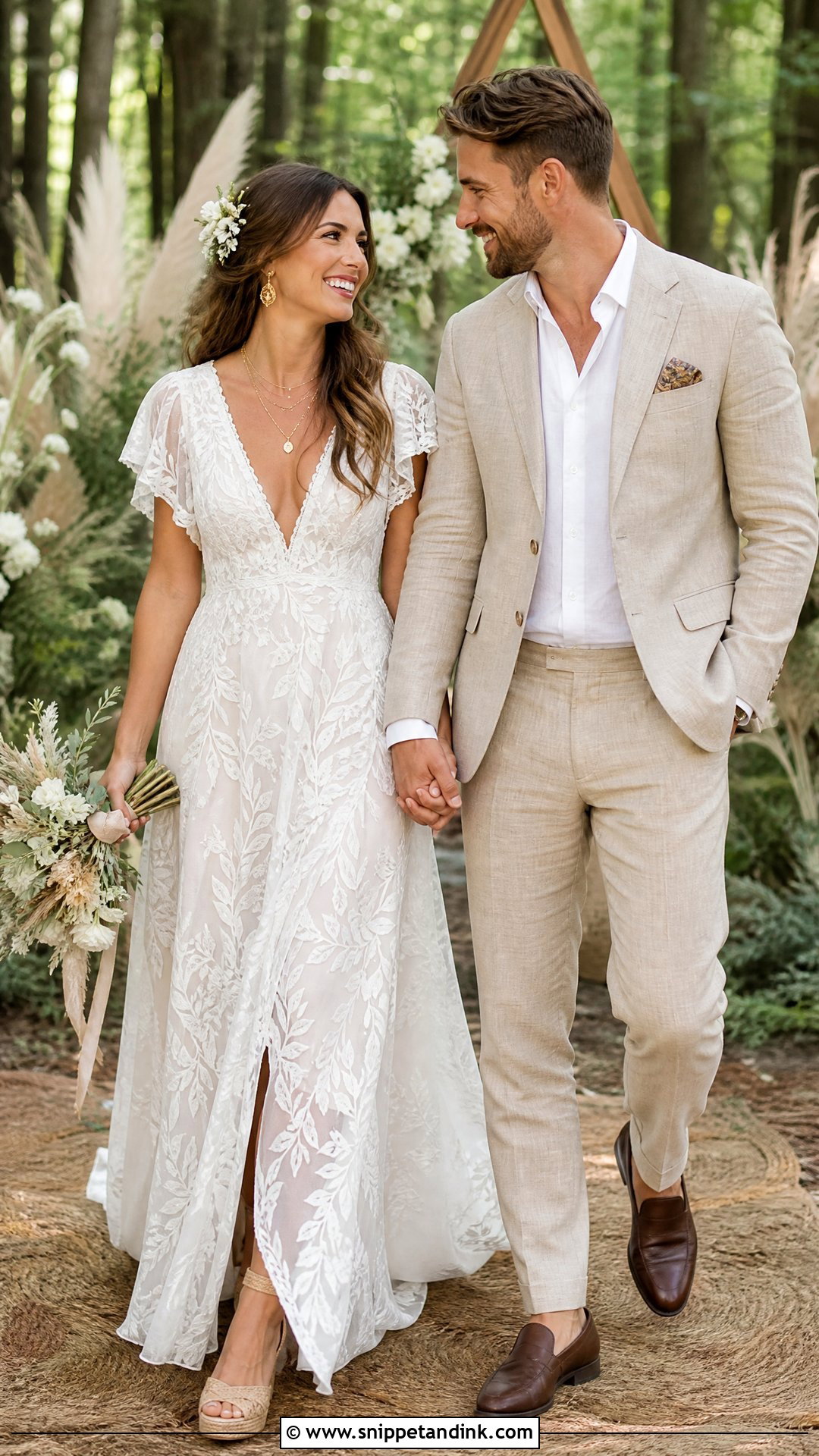
Linen creases within minutes, and for an outdoor boho wedding that’s fine, as long as both of you accept it rather than fighting it. A flowing dress with botanical lace, flutter sleeves and a soft waist pairs naturally with a tan linen suit, an open-collar shirt and brown loafers. I’d choose a linen blend if the partner wants a cleaner line through the ceremony. Skip the tie; add a vest only if you’d like more polish. Woven block heels and a loose bouquet keep the bride’s side relaxed. Woodland, desert and rustic properties suit it.
6. Chiffon Beach Dress And Beige Suit Wedding Couple
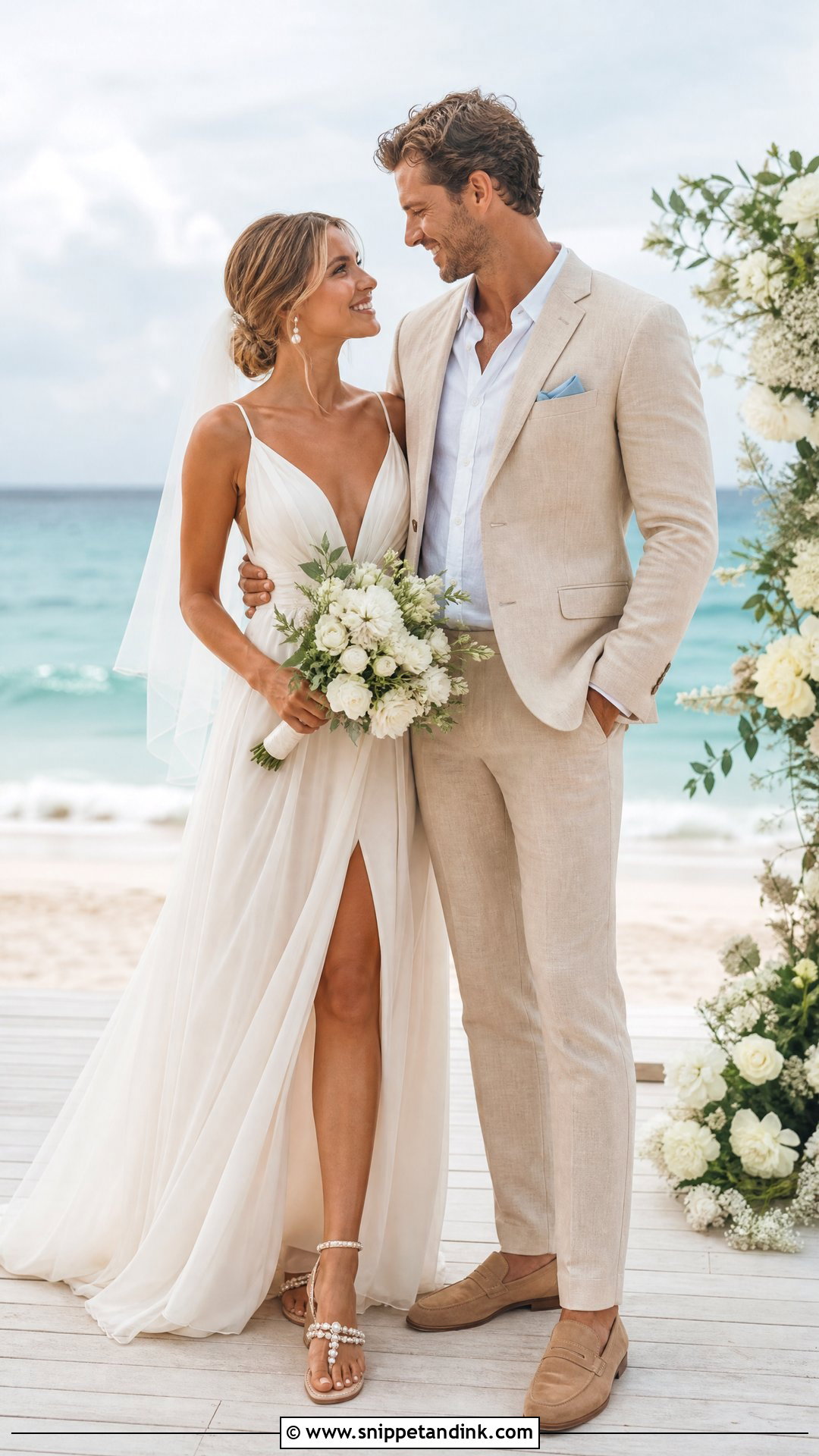
Sand and wind decide most of this outfit. A light chiffon dress with a fitted bodice moves well in a breeze, but a long veil will wrap around everyone, so I’d keep it short. Flat embellished sandals beat heels that sink. For the partner, a breathable beige suit in a cotton or linen weave with a white linen shirt and tan loafers, no lining in the jacket if the tailor can manage it. A pale blue pocket square brings in the water. Hems on both outfits should clear the ground slightly, as wet sand darkens fabric fast.
7. Floral Wedding Dress And Sage Green Suit Couple
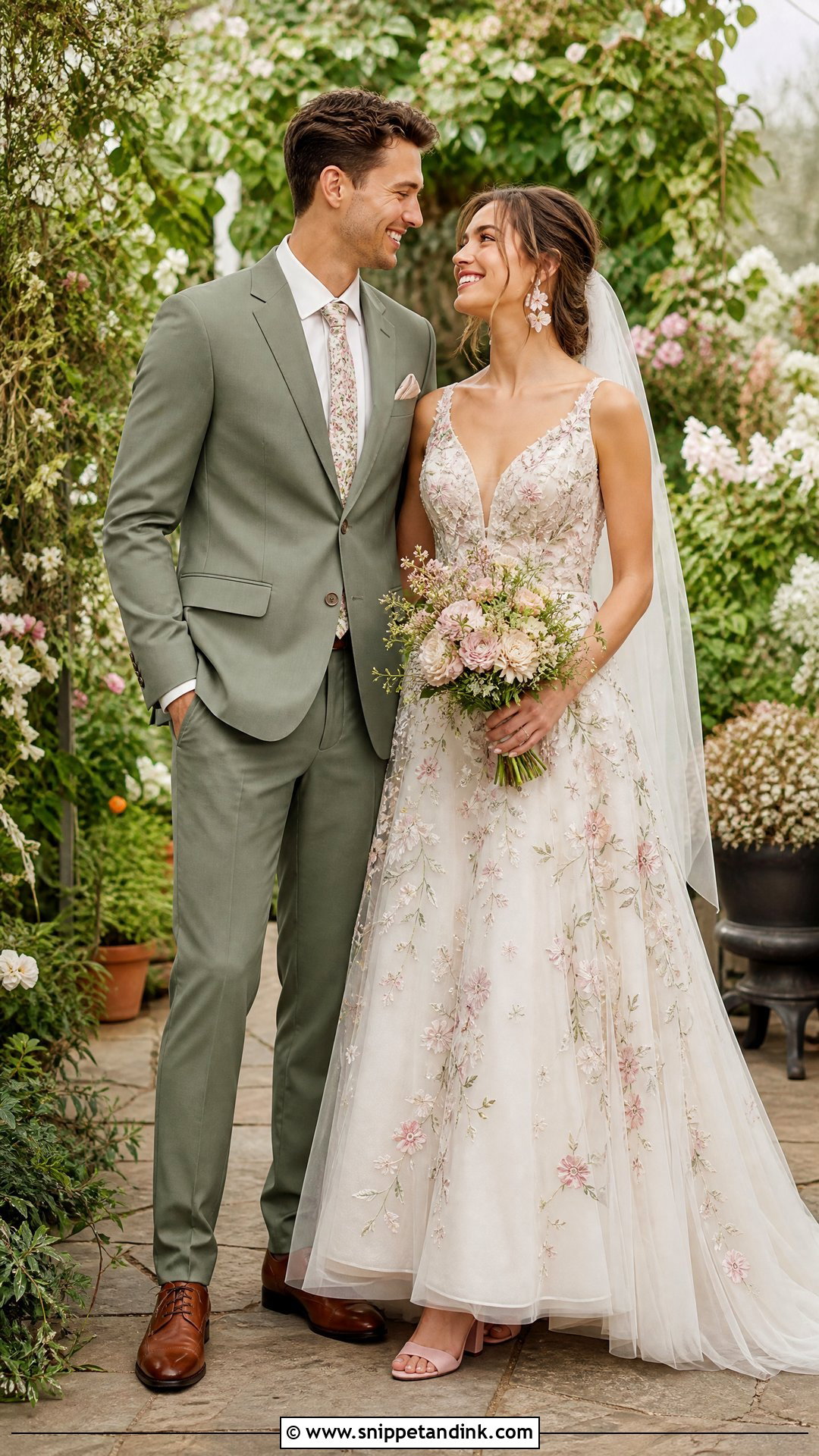
Sage green and floral embroidery both belong in a garden, and the trick is not letting the tie argue with the dress. I’d pick a floral tie that borrows only one or two colours from the embroidery, never a full print. The gown can carry blossoms on a sheer overlay, A-line skirt or bodice; pastel threads look romantic, brighter ones playful. An ivory shirt is softer than white against sage. Keep the pocket square neutral. Sage varies a lot between mills, from grey-green to minty, so look at it outdoors before ordering. Botanical gardens, greenhouses and spring estates suit it.
8. Long-Sleeve Dress And Velvet Tuxedo Wedding Couple
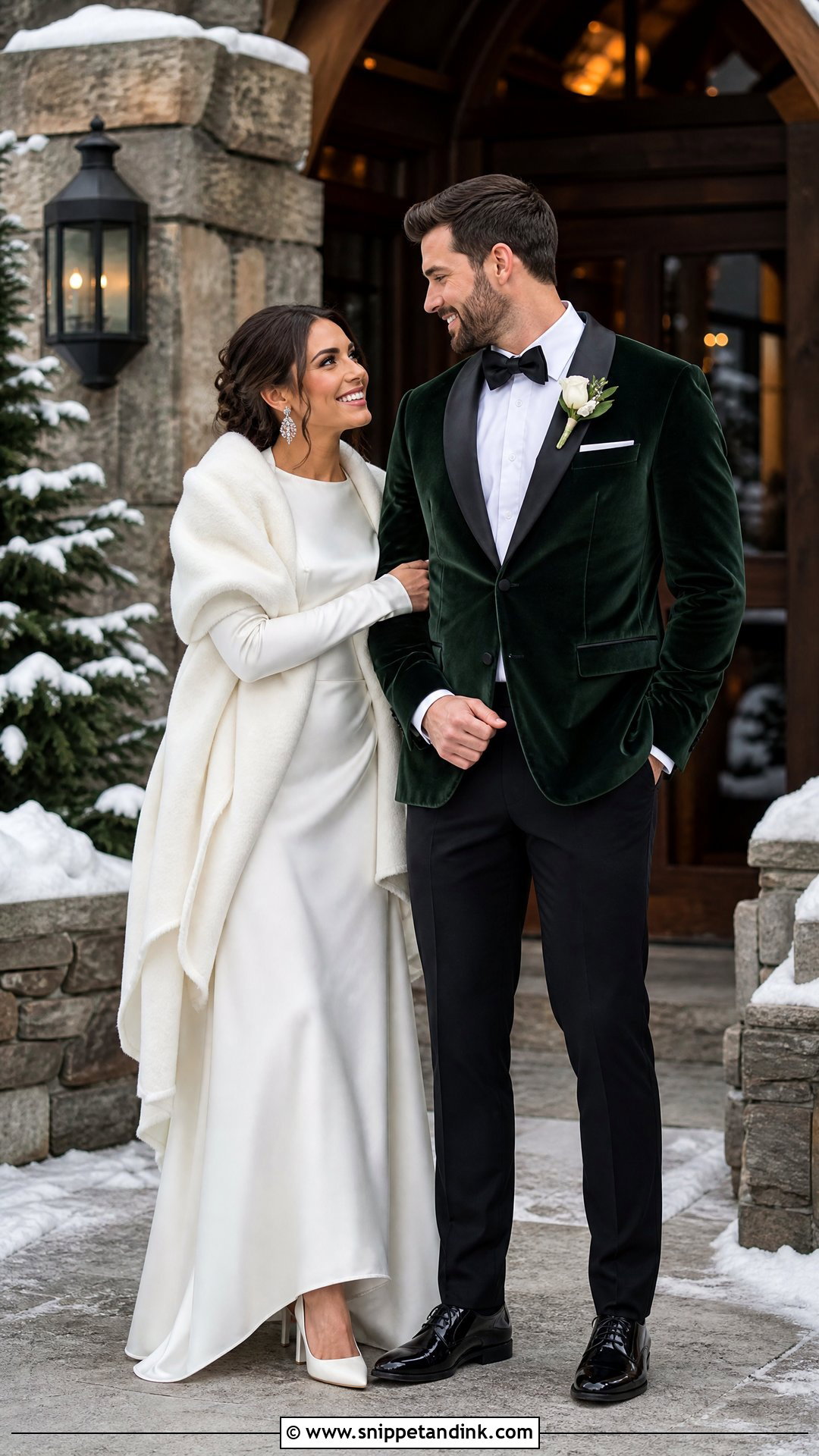
Velvet is a winter fabric, and it gives a long-sleeve satin, crepe or lace gown a partner with real weight beside it. A black, navy or deep green velvet tuxedo jacket with black trousers, a white shirt and a bow tie reads rich without decoration. An ivory boutonniere connects back to the dress. Velvet crushes where it’s pressed, so the jacket should hang, not be folded into a bag, and it should be steamed, never ironed. A bridal wrap covers outdoor photos. Winter hotels, mansions and mountain lodges are its natural setting.
9. White Midi Dress And Tailored Suit Wedding Couple
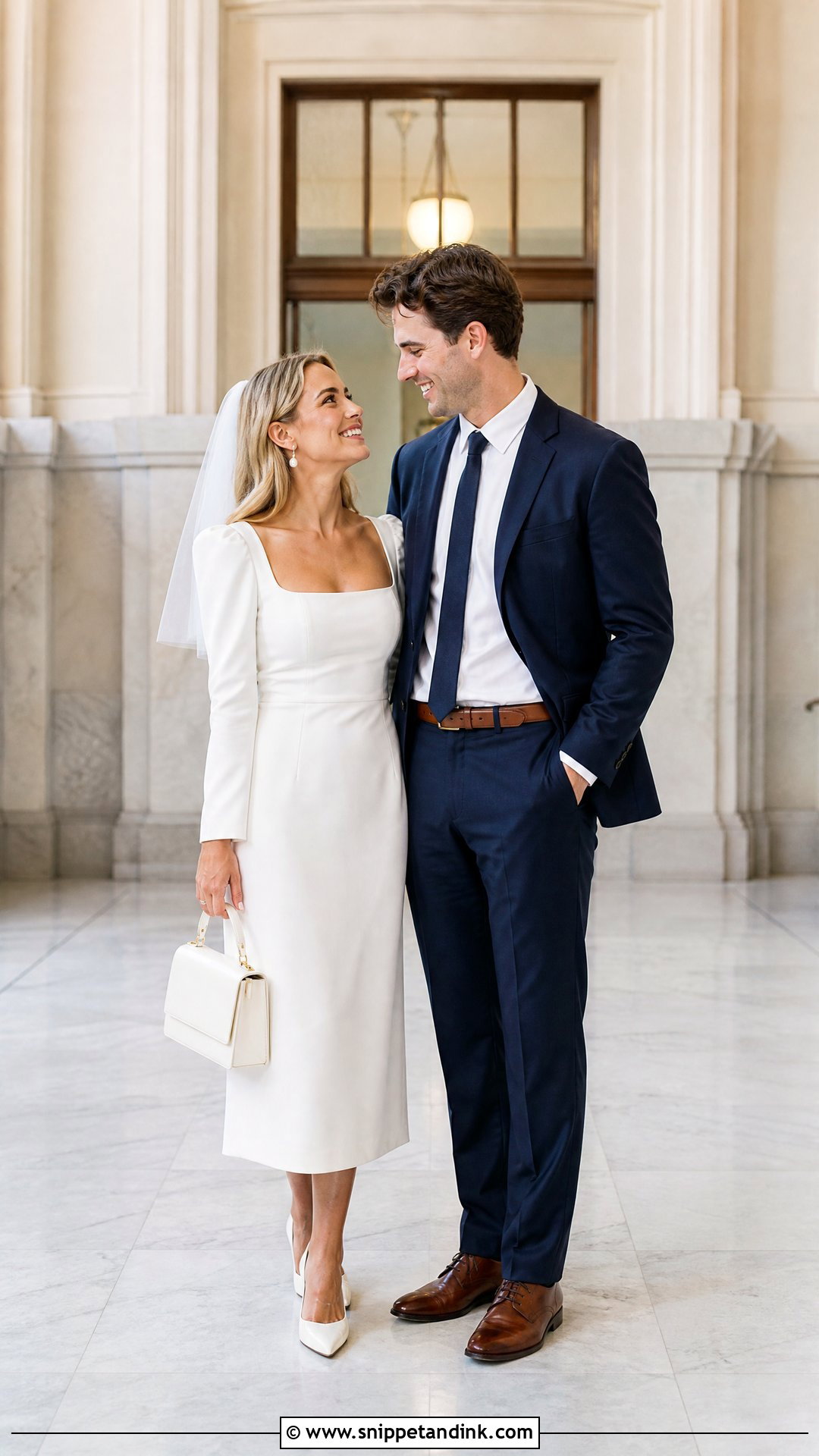
A courthouse wedding is where I tell couples to buy clothes they’ll wear again. A white midi with a square neckline and flared skirt, or a sleek sheath or wrap, goes on to every summer party afterwards. A tailored navy, charcoal or light grey suit with a slim tie does the same for the partner. Pointed pumps, a structured bag and a short veil keep the bride clearly bridal. A white or ivory pocket square is the link. The pairing moves easily from ceremony to lunch and an evening party, which is usually how these days run.
10. Bridal Mini Dress And White Dinner Jacket Couple
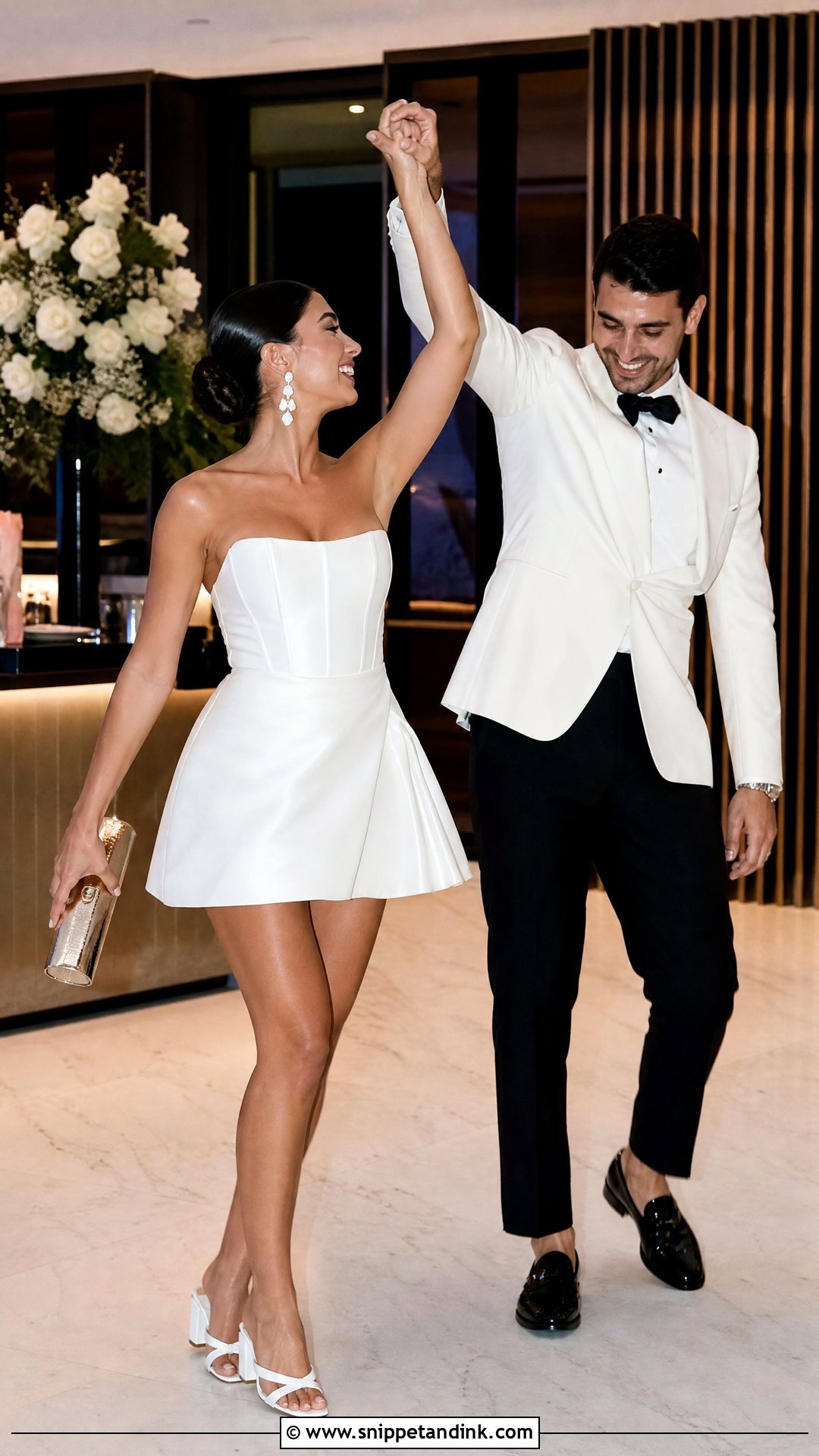
A mini is a reception outfit, so it has to dance. A white mini with a structured bodice, textured trim, a bow or light beading changes the mood from the ceremony gown. The partner’s white dinner jacket with black trousers and a black bow tie mirrors that black-and-white contrast without copying it. Footwear matters for both: block heels and loafers with grippy soles rather than slick leather on a polished floor. Breathable fabrics help after hours of dancing. City receptions and after-parties suit it.
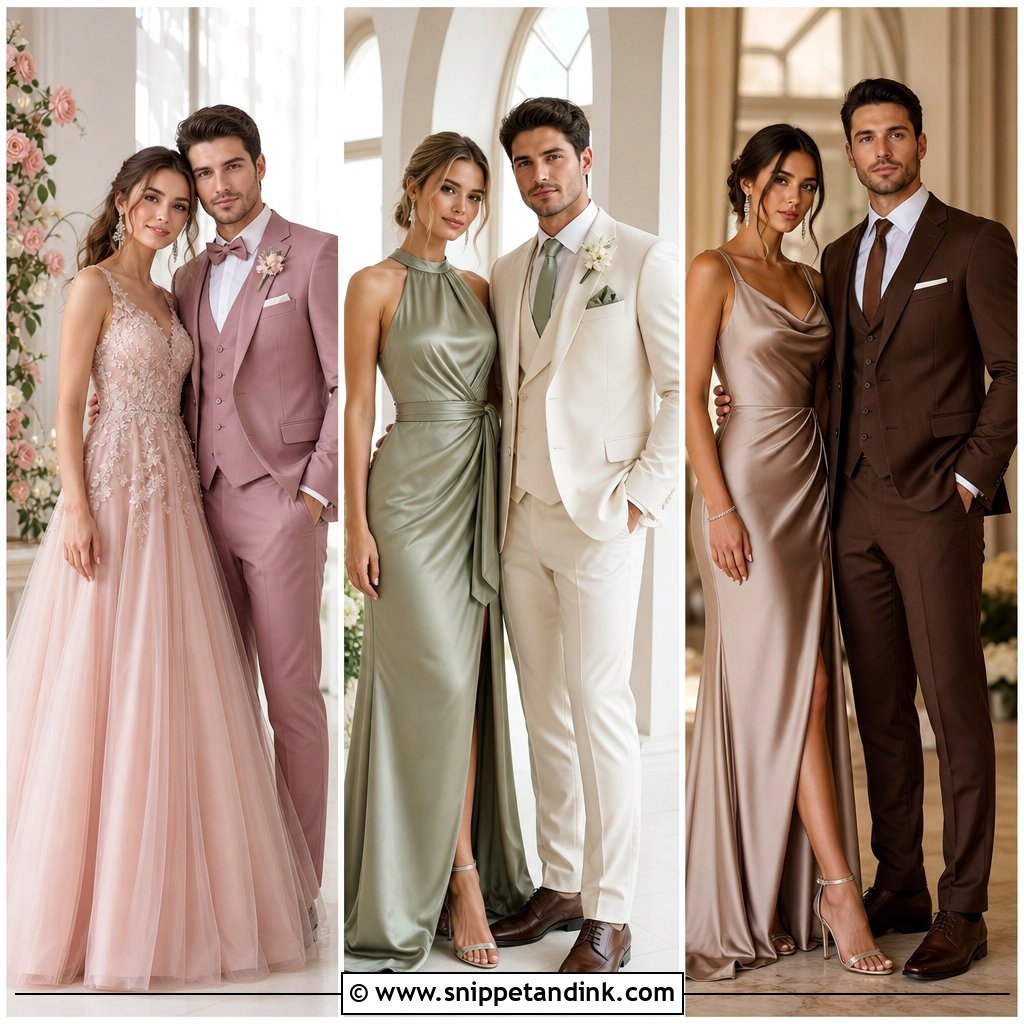
11. Blush Tulle Dress And Burgundy Suit Wedding Couple
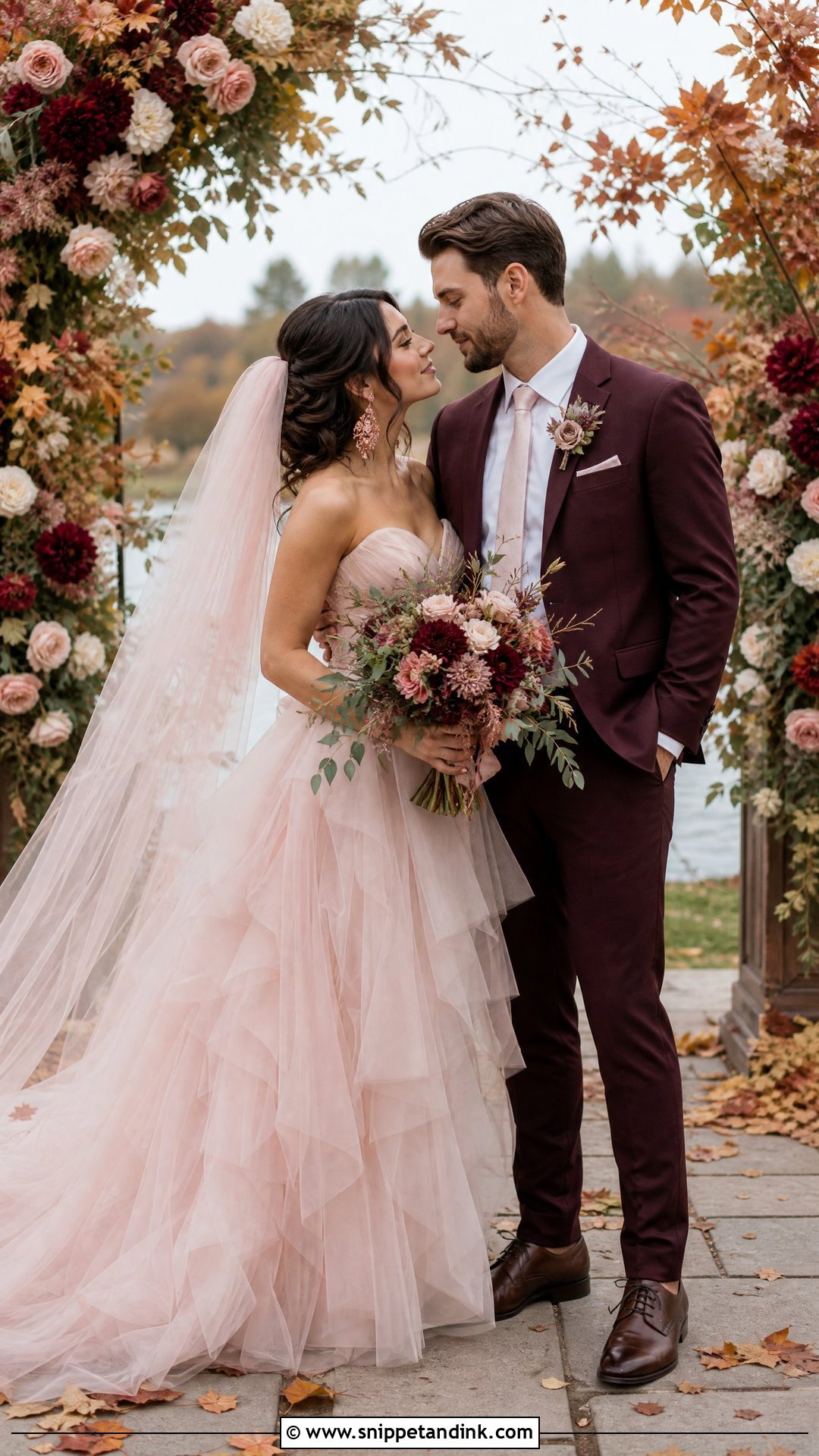
Burgundy suits can tip into costume quickly, so the cut has to be modern: slim lapels, clean trousers, no shine. Against a blush tulle gown with a fitted bodice and delicate embroidery, the depth of burgundy gives a strong colour contrast that holds up in photographs. An ivory shirt and dark brown shoes soften it, and a blush tie or pocket square links back to the dress. Keep the flowers to ivory, dusty pink, burgundy and greenery. Good for autumn weddings, vineyards and candlelit receptions.
12. Champagne Wedding Dress And Brown Tuxedo Couple
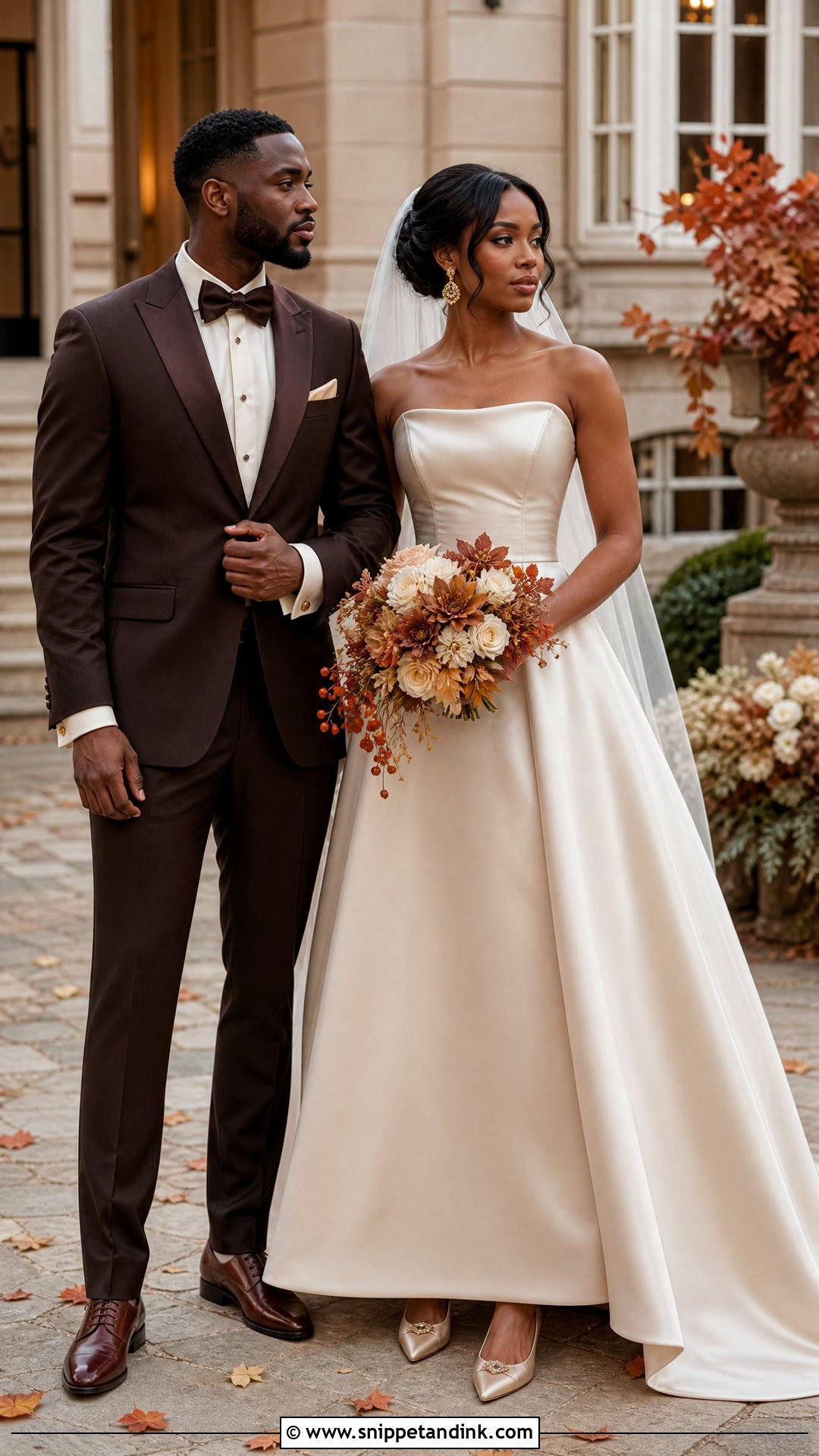
Warm neutrals are softer than black and white, and they flatter a wide range of skin tones. A champagne gown in satin, tulle or beaded fabric, mermaid, A-line or ball gown, sits beside a dark chocolate-brown tuxedo or suit with a cream shirt and brown shoes. A champagne pocket square and gold cufflinks echo her jewellery. My caution: too many beige tones together look flat on camera, so keep the brown genuinely dark to give the palette depth. Autumn, barns, desert venues and formal interiors all suit it.
13. Black Wedding Dress And Ivory Tuxedo Couple
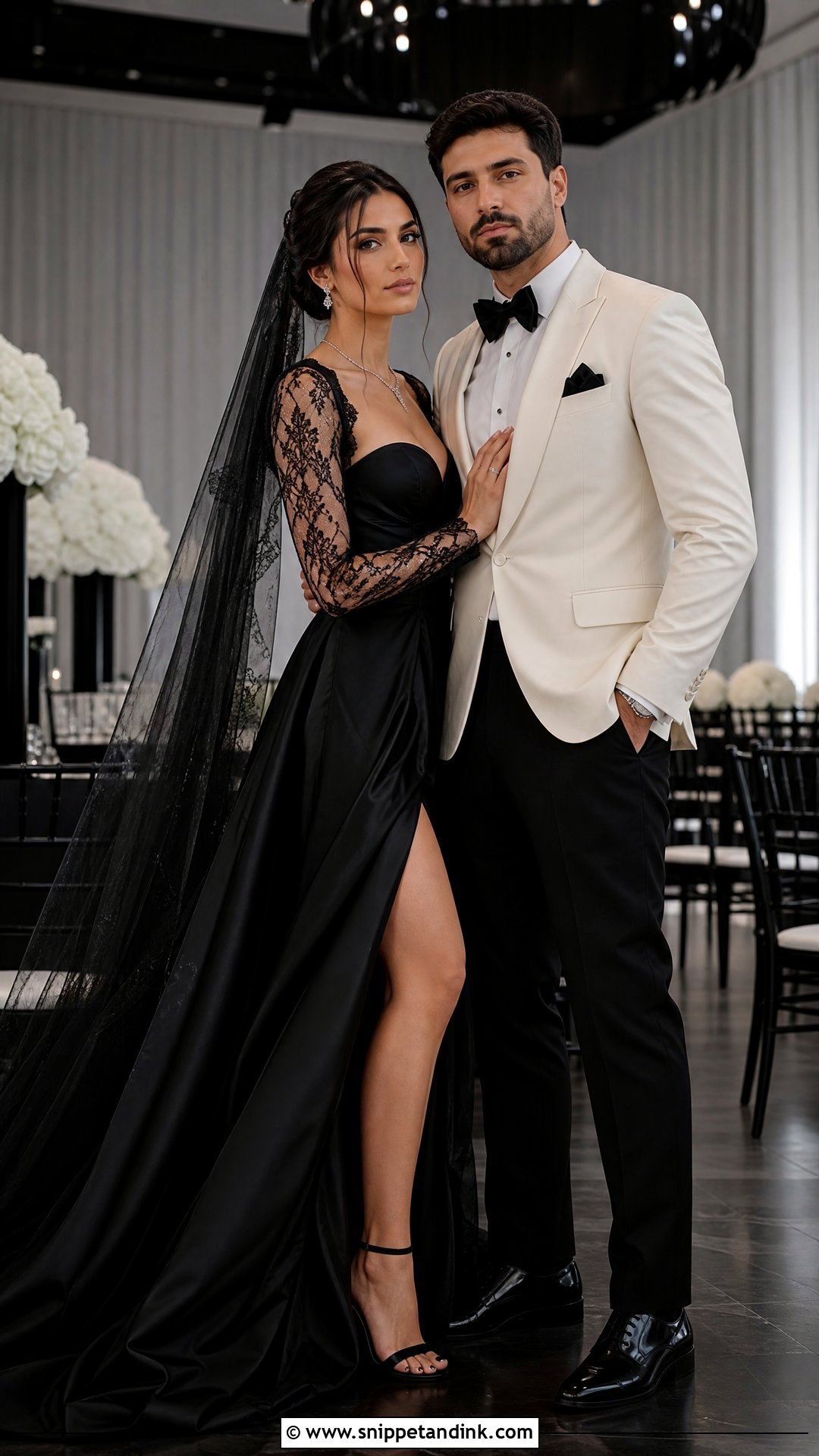
Here the usual colours swap places. A black gown with a corset bodice, satin skirt, square neckline or black lace sleeves becomes the focal point, and an ivory tuxedo jacket with black trousers and a black bow tie balances it. With only two colours on show, every wrinkle and badly pressed lapel stands out, so precise tailoring on both outfits matters more than usual. Keep the bouquet light or colourful so it doesn’t vanish against the dress. Modern ballrooms, art spaces and evening ceremonies are a natural fit.
14. White Bridal Pantsuit And Classic Tuxedo Couple
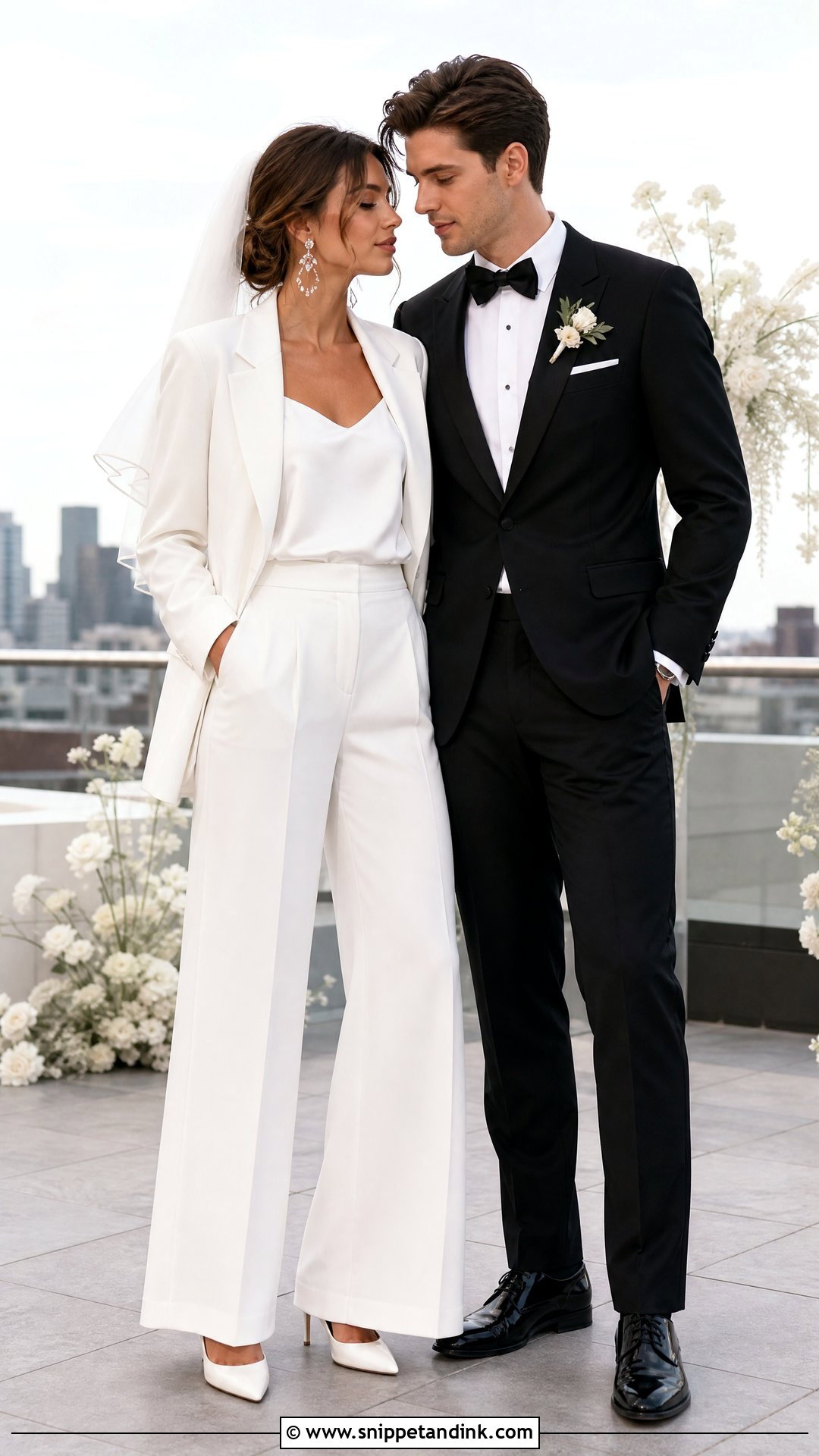
Shared tailoring is what makes a white pantsuit and a black tuxedo look like a pair. Wide-leg trousers and a fitted or slightly oversized blazer, worn over a silk camisole, lace bodysuit or bandeau, give a strong modern line. I’d have both jackets cut with similar lapel widths so they relate side by side. A short veil or a structured hat makes the bridal role clear. White trousers show everything, so a fully lined pair is worth it. Courthouses, rooftops and modern venues suit it.
15. Coordinated Wedding Dresses For Two Brides
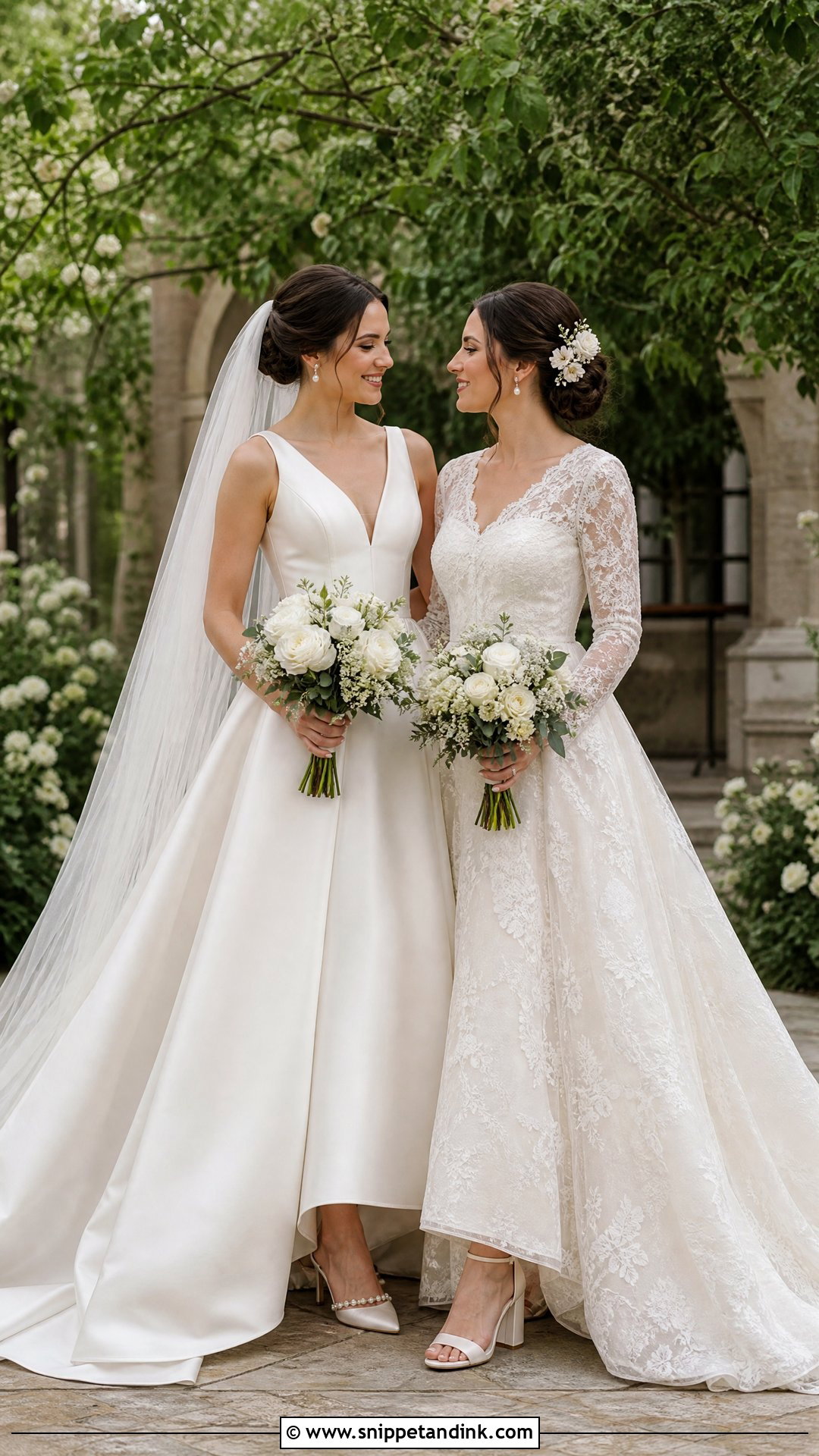
Two brides rarely want the same dress, and they don’t need to. A structured satin ball gown with a square neckline can stand beside a soft lace A-line with long sleeves. Compare the whites together in daylight first. A bright white beside an ivory looks like a mistake unless it’s a deliberate choice. Shared details then connect them: pearl earrings, the same shoe colour, matching bouquet ribbons. Veils can differ, a cathedral for one and a shoulder-length veil or floral piece for the other. Each outfit can suit its wearer while the portraits still read as a pair.
16. Coordinated Tuxedos For Two Grooms
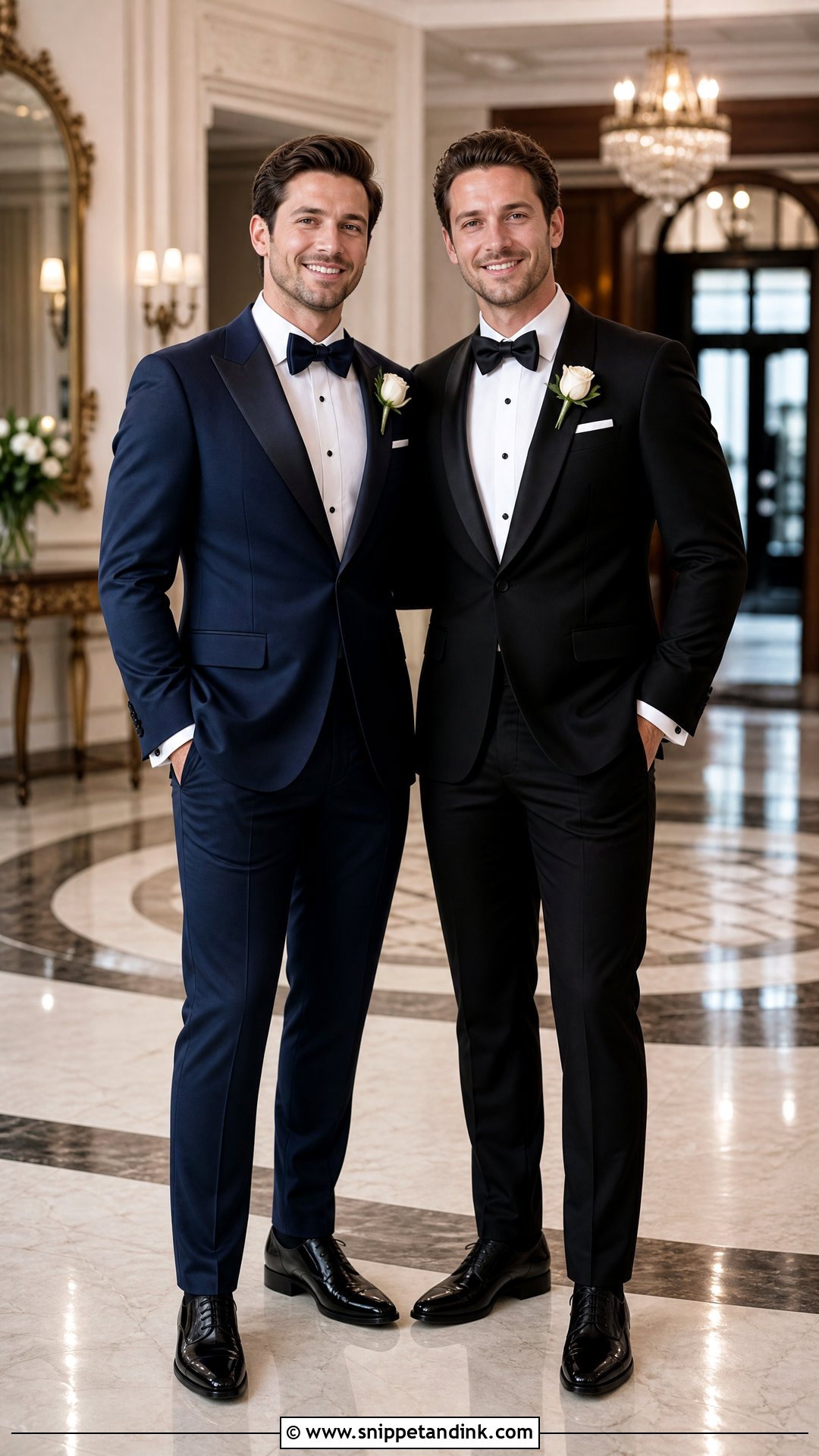
With two grooms, I like keeping the base identical and letting one detail differ. Both in black tuxedos, white shirts and polished black shoes, then a peak lapel and black bow tie for one, a shawl lapel and ivory bow tie for the other. Or pair midnight blue with black, keeping shirts, shoes and boutonnieres consistent. Midnight blue reads almost black indoors and richer in flash photos, so it works well. Alterations matter most at the shoulders and trouser length, since two suits side by side make every small difference obvious.
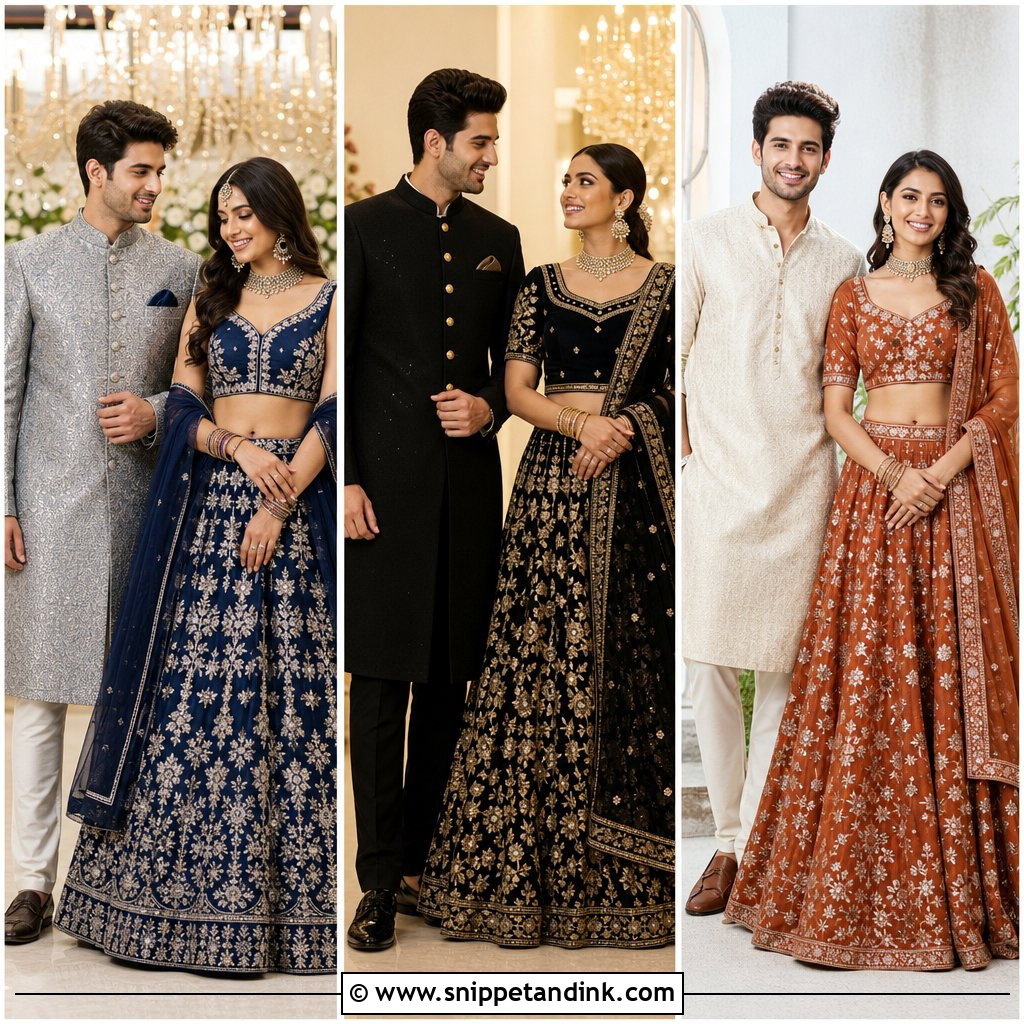
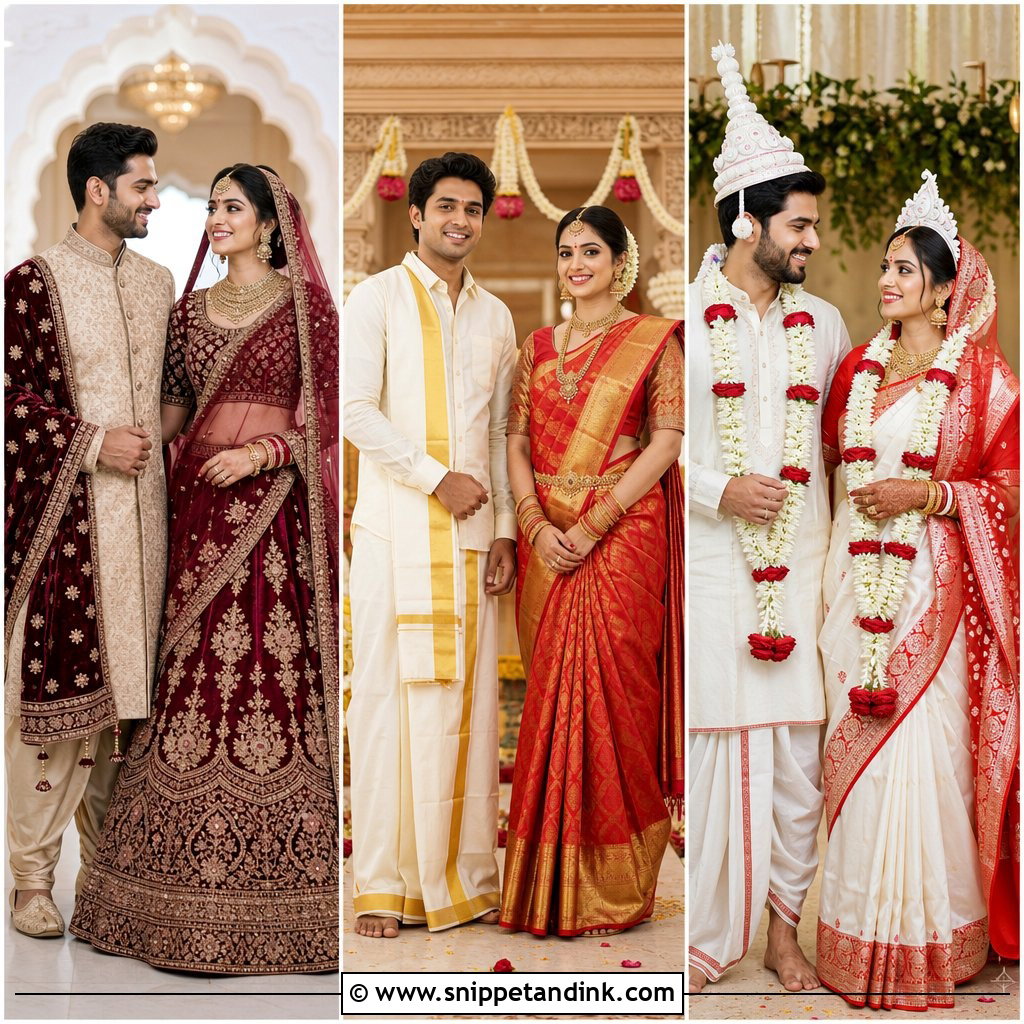
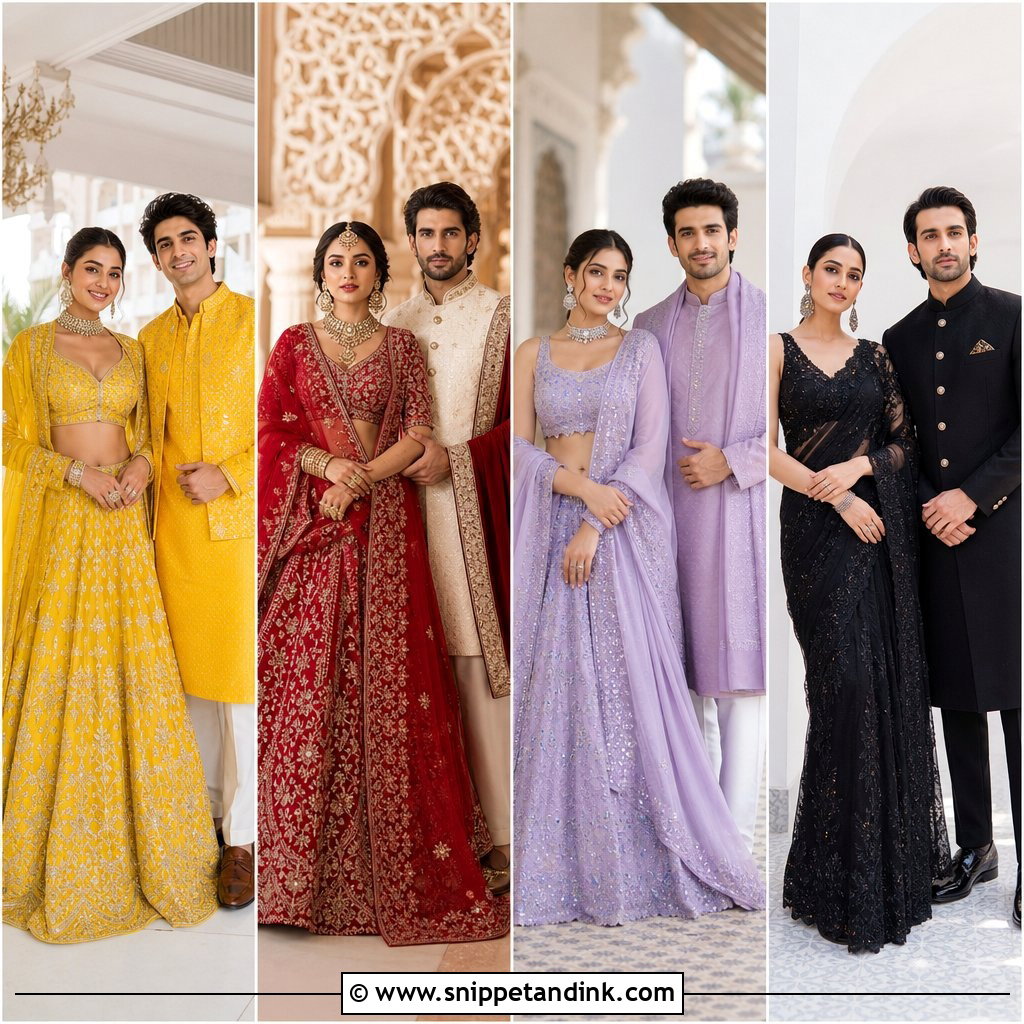
17. Red Bridal Lehenga And Ivory Sherwani Wedding Couple
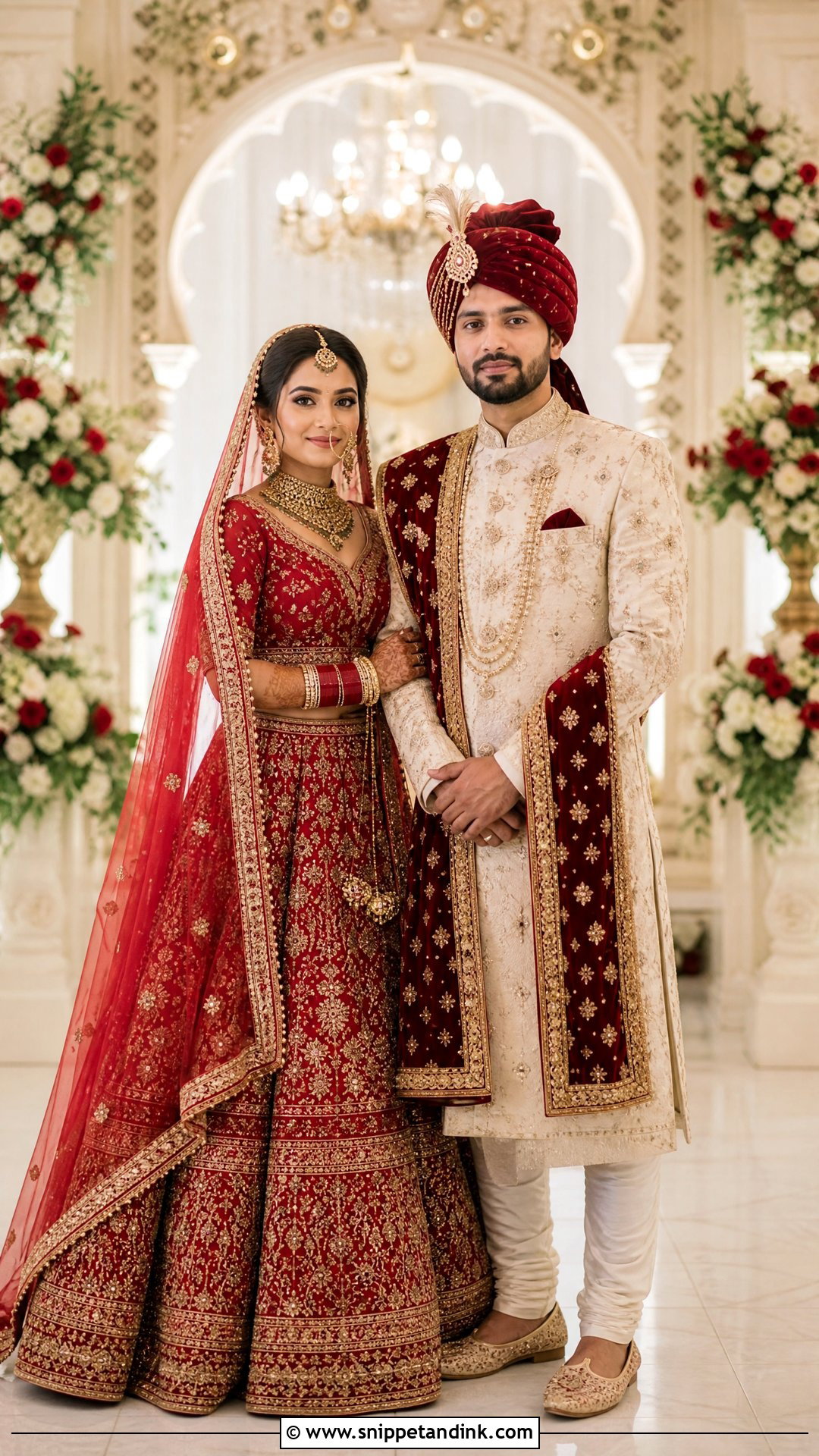
A red lehenga with gold embroidery, a fitted blouse and a carefully draped dupatta is the centre of this pairing, and the ivory sherwani should support it rather than compete. Red or gold embroidery on the sherwani, with a red turban or stole where the family’s tradition calls for it, repeats a detail without duplicating the colour. Jewellery and footwear follow family custom. Work with designers who know these garments well, and ask them to match the gold thread on both pieces, since gold zari varies from yellow to antique tones.
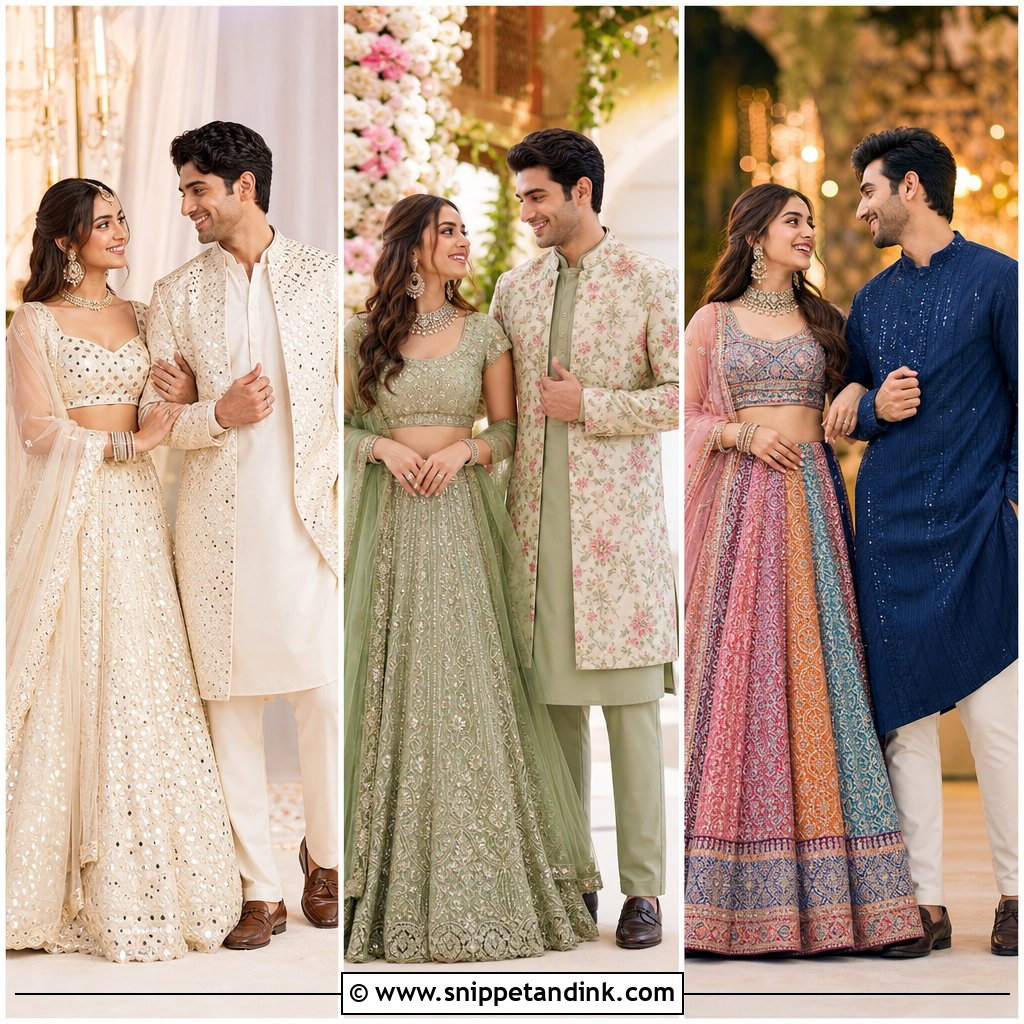
18. Ivory Bridal Lehenga And Pastel Sherwani Couple
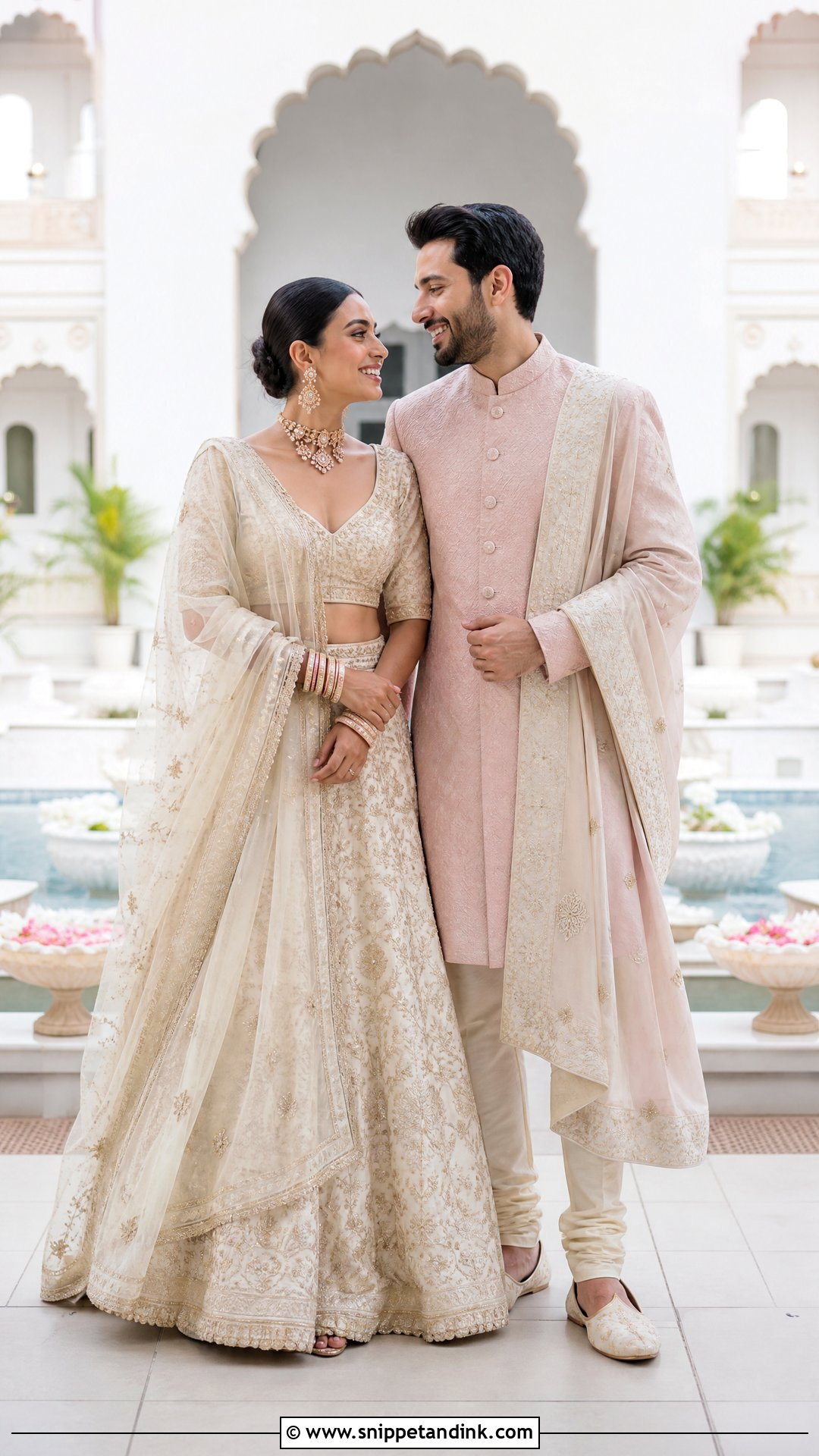
Pale outfits change colour between indoor light and daylight more than deep ones do, so I’d compare swatches of both garments together under both before confirming. An ivory lehenga with silver, pearl or pale gold embroidery and a light dupatta pairs with a dusty pink, pale blue, mint or soft lavender sherwani worn with ivory trousers. An ivory stole or turban makes the connection clearer. Metallic footwear and jewellery should repeat the embroidery rather than add a new colour. Daytime and warm-weather ceremonies suit it best.
19. Silk Sari And Bandhgala Wedding Couple
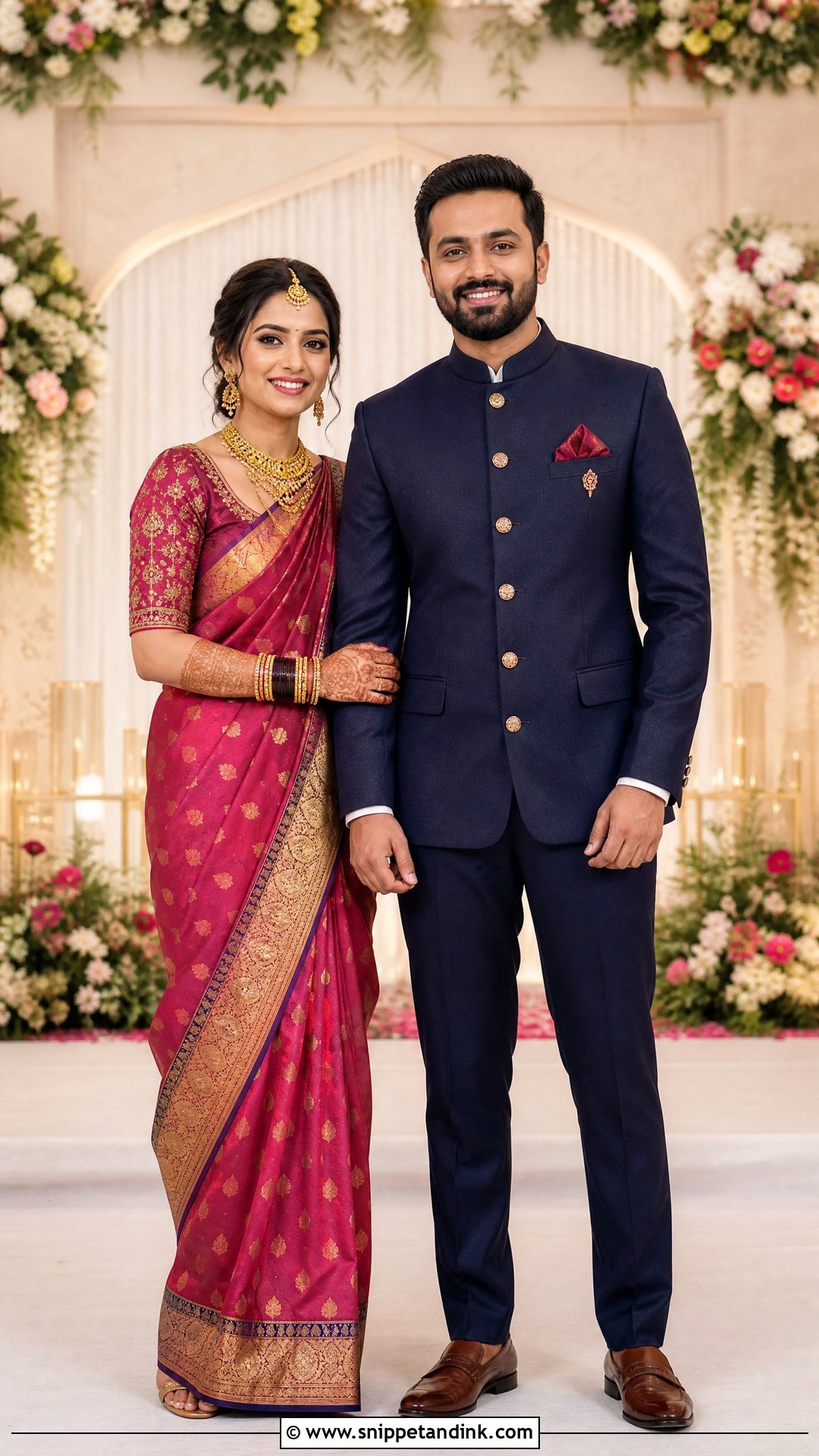
A silk sari and a tailored bandhgala both carry ceremonial weight, so the fabrics should feel equally rich. The sari can be red, green, gold, ivory or another shade meaningful to the family, with a fitted blouse and traditional jewellery. Shoes need to stay secure under the drape during long standing and movement. For the bandhgala, I’d pull one colour from the sari’s border into the pocket square or lining instead of matching the whole outfit. Drape, jewellery and accessories should follow the couple’s regional and family traditions.
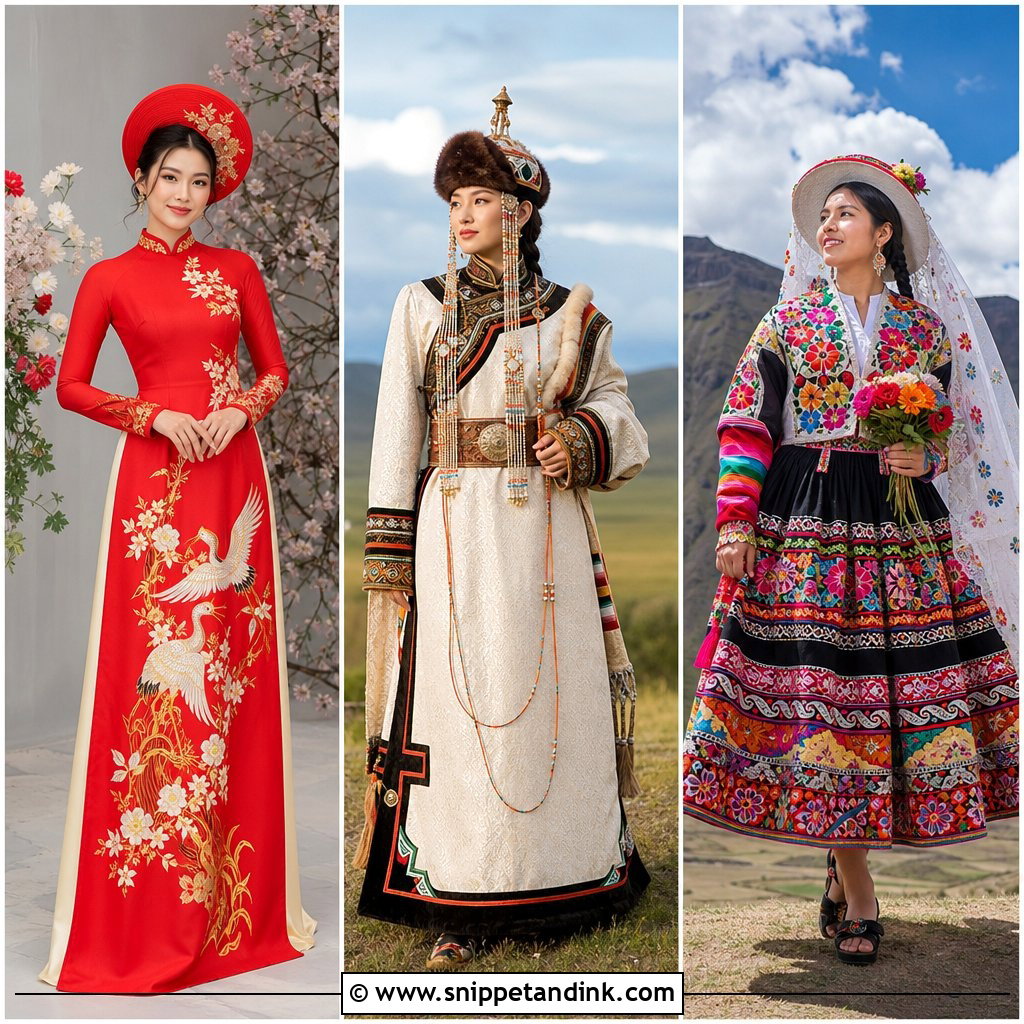
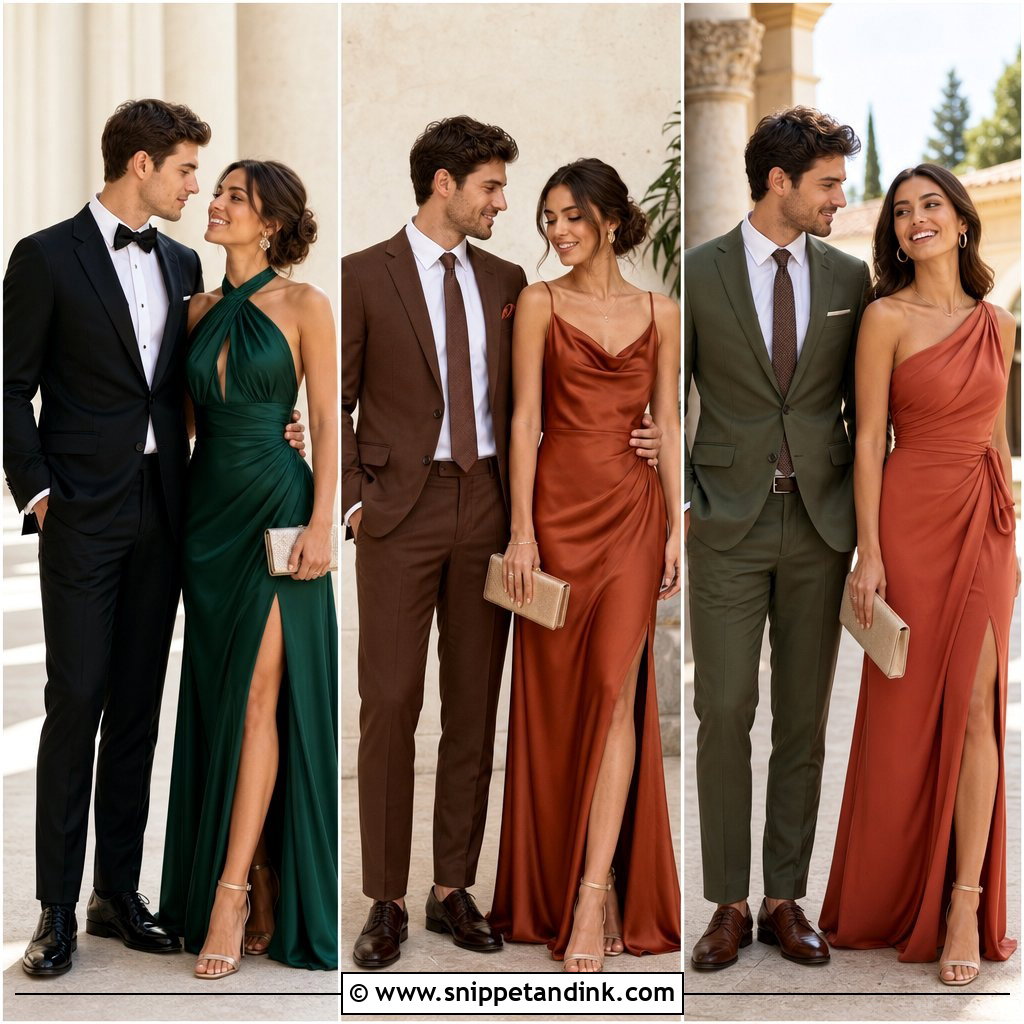
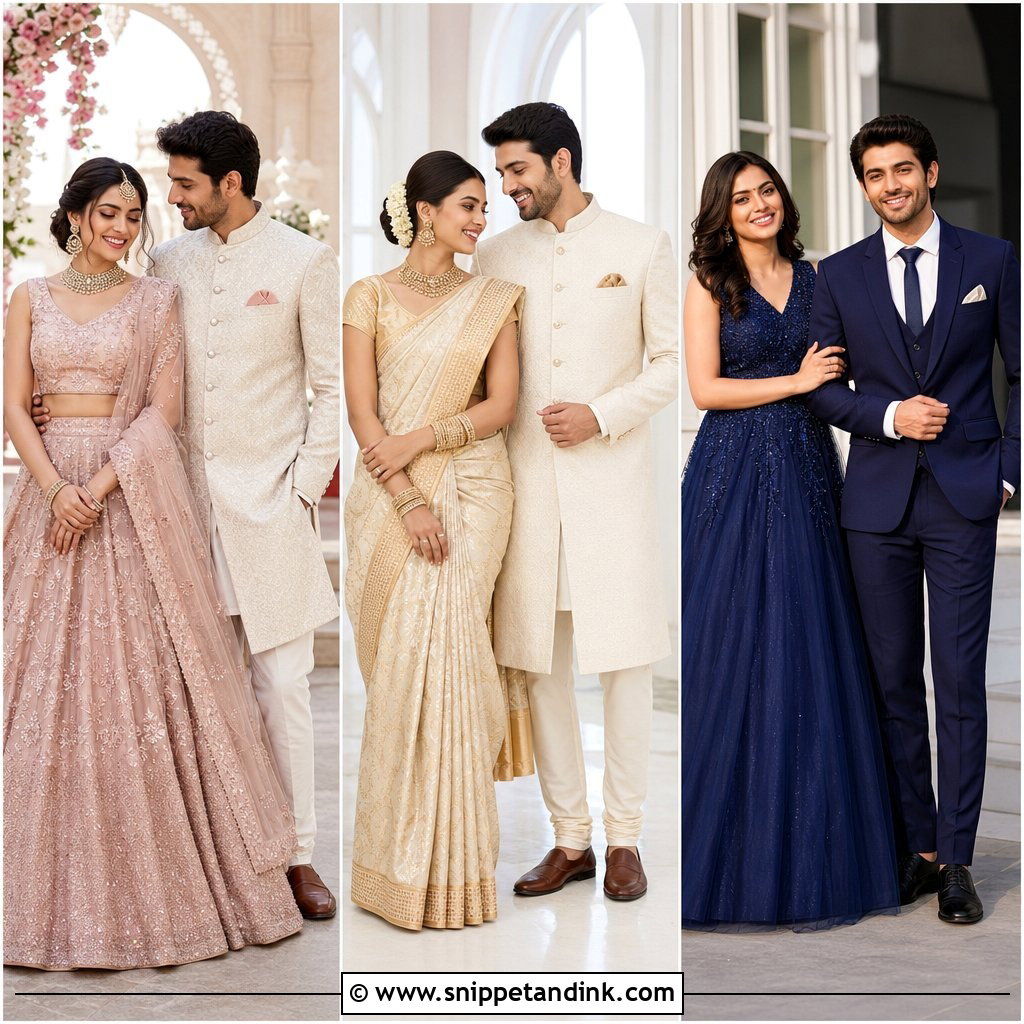
20. Coordinated African Wedding Attire For Couple
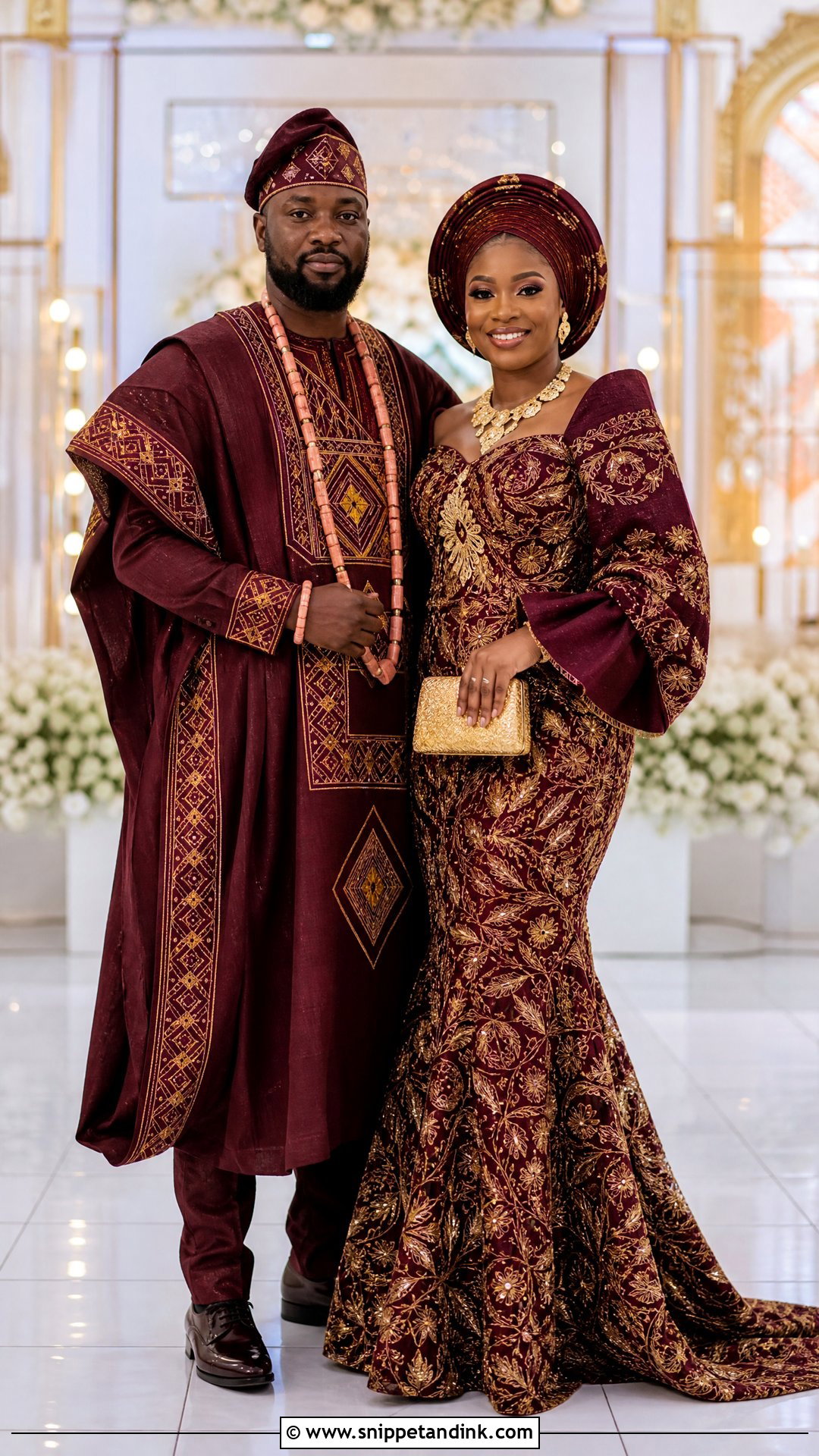
Coordinated African wedding attire should come from the couple’s own culture, not from a general idea of African fashion. Depending on tradition, one partner may wear a long gown, a wrapper and blouse, or a structured dress in patterned fabric; the other a tunic, agbada, suit or ceremonial outfit in the same textile or a complementary one. Headwear, jewellery, footwear and embroidery can link the two. Work with knowledgeable designers and family members. Practically, buy enough fabric for both outfits from one bolt, since prints can shift between dye lots.
Carry a Swatch of the Dress to Every Suit Fitting
The bride’s side usually has a fabric sample long before the suit is ordered. Ask the bridal shop for a small cutting of the gown fabric and lining, and take it to the tailor. Whites and ivories are almost impossible to compare from memory or a phone photo.
Lead times for two outfits
Gowns often take several months to arrive, and alterations come on top. A made-to-measure suit can need six to ten weeks, and a rented tuxedo still needs fitting a few weeks out. Embroidered lehengas, sherwanis and custom ceremonial garments can take longer than either, so start those first. Timings vary by maker, so ask each one directly.
The details that tie it together
Pocket squares, ties and boutonnieres are the easiest place to match the dress, and they can be bought last. Hold them against the swatch in daylight, then check again under warm indoor bulbs, since a blush that matches by the window can turn peach at the reception.
Stand side by side once
Before the final alterations, try both outfits on together, even at home. Hem lengths, jacket length against the dress waist and the height difference in your shoes all show up at once. It’s also when you notice a shirt that’s whiter than the gown, which is a quick fix two weeks out and a frustrating one on the morning.
Same Dress Code, One or Two Shared Details
Start with formality, and get both outfits to the same level. Then pick one or two links: a colour, an embroidery thread, a fabric texture, the flowers or an accessory. Think about the venue, season, ceremony customs and how long the day runs before anyone buys anything. Fit and comfort come first for both of you, because a pairing only looks right when neither person is tugging at a collar or a strap.
You'll Like These Ideas:


Leave a Reply