
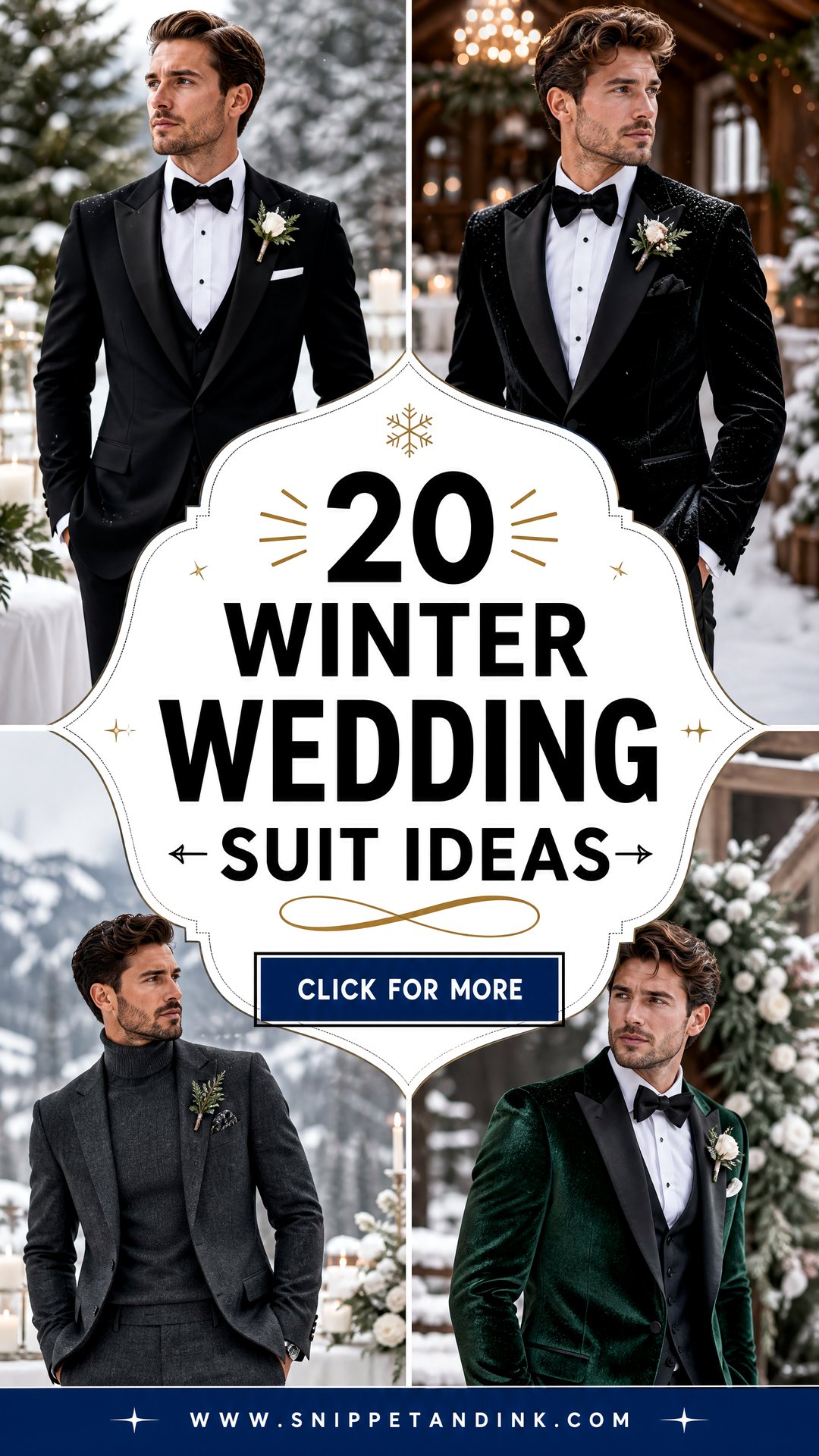
Winter is the one season when a man can wear the cloths I’d happily dress every groom in: wool flannel, tweed, corduroy and velvet, in navy, charcoal, burgundy, forest green and chocolate brown. Heavier fabric drapes better, holds a crease longer and gives a three-piece or double-breasted cut the weight it needs to sit properly. The suits below cover grooms, groomsmen and guests. Before you pick one, read the invitation for the dress code and check the time of day and the venue, because a velvet jacket that’s right at an evening hotel party looks out of place at a noon ceremony in a barn.
Cloth Weight Matters More Than Color in a Cold Venue
Suit cloth is sold by weight, and that number tells you more about how a winter wedding will feel than the color does. Lightweight year-round worsteds sit at the lower end; flannels, tweeds and heavier worsteds sit higher, and the difference is obvious the moment you step outside. In the shop, I hold the cloth to the light and squeeze it in my hand: winter cloth should feel dense and spring back without deep creases.
- Heavier cloth drapes straighter, so trousers hang cleanly instead of clinging to the leg in static-heavy indoor air.
- A heated reception room can feel warm in heavy flannel once the dancing starts. That’s where a vest earns its place, because the jacket can come off and the outfit still looks finished.
- Velvet and corduroy are warm but mark easily. They need a covered route from the car to the door if snow is falling.
- Very heavy tweed adds visible bulk to a slim frame. A mid-weight tweed or a flannel gives the texture without it.
One more practical point I raise with every groom: try the suit on with the shirt and shoes you’ll actually wear. A heavier cloth changes how the trouser break falls, and a winter boot or thicker sole can make a hem that looked right in sneakers suddenly too short.
1. Navy Wool Winter Wedding Suit
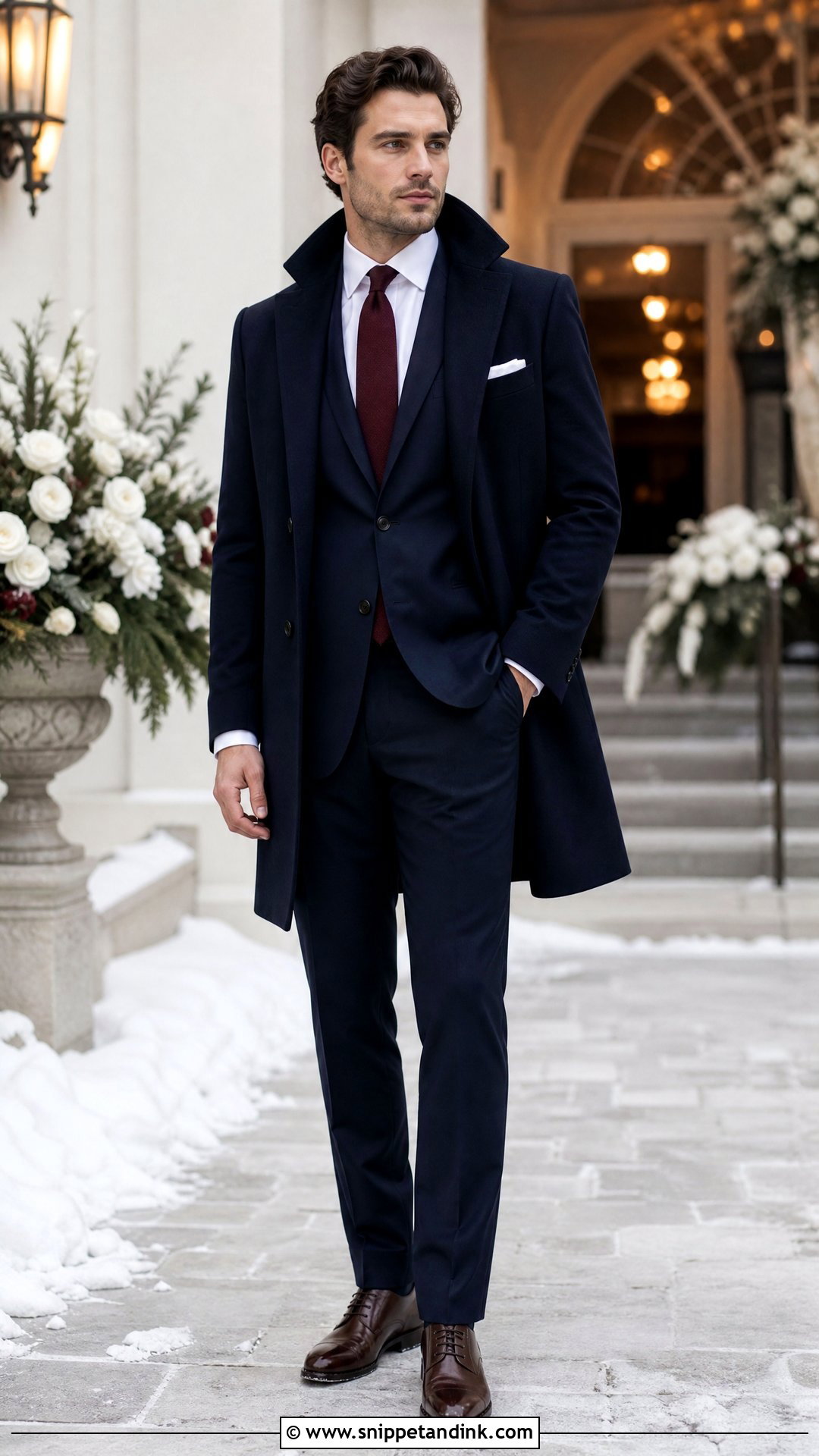
If a groom can’t decide, I start him in a navy wool suit and adjust from there. Go for a medium or heavyweight cloth with a smooth finish for a formal indoor ceremony, a crisp white shirt, and a tie in burgundy, forest green or silver. Dark brown Oxfords warm it up; black ones push it more formal. A white pocket square in a plain fold, a leather-strap watch and a tailored navy overcoat for photos outside are all it needs. Navy is also forgiving for groomsmen of different builds and skin tones, which is why it rarely goes wrong.
2. Charcoal Three-Piece Winter Wedding Suit
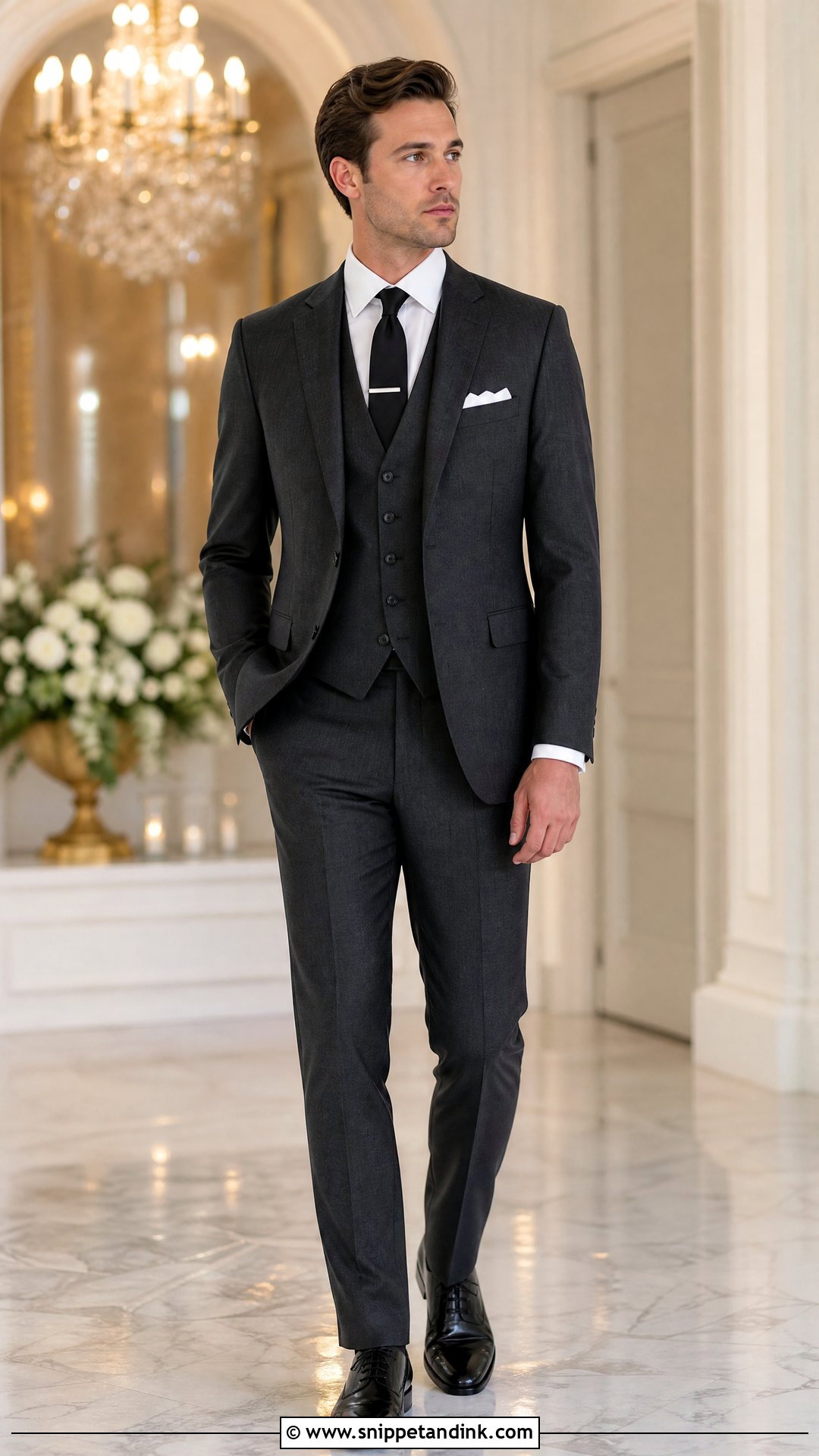
The vest is the reason I recommend three pieces in winter. It’s an extra layer of warmth, and it keeps the outfit looking finished once the jacket comes off at the reception. In charcoal, wear it with a white spread-collar shirt, a black silk tie and black cap-toe Oxfords, plus a silver tie bar and a neat white pocket square. Choose cloth with a little texture, brushed wool or flannel, so the color has depth under winter light. At the fitting, check that the vest covers the waistband when you stand, sit and raise your arms. A gap of shirt between vest and trousers is the most common fault I see.
3. Black Tuxedo Winter Wedding Suit
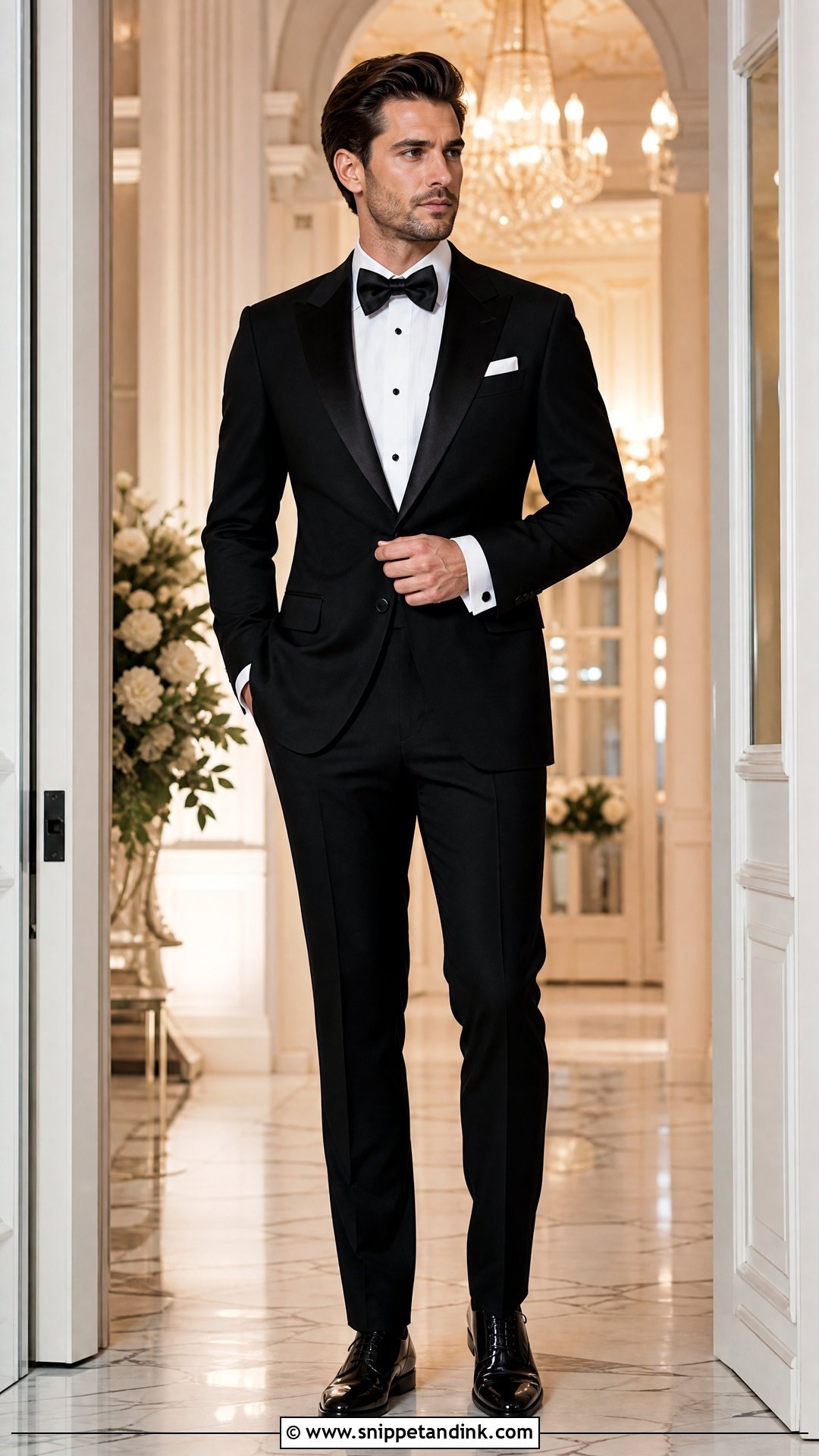
Black tie on the invitation means a tuxedo, and the traditional black one is still the safest answer. Look for a single-breasted jacket with peak or shawl lapels, satin facings and matching trousers with a satin stripe. A white formal shirt, a black self-tie bow tie and black patent shoes complete it, and a low-cut evening vest or cummerbund covers the waist if the jacket style calls for it. I keep accessories to simple cuff links and a white pocket square. For arrival, a long black or charcoal wool overcoat, never a puffer, because the coat ends up in more photos than people expect.
4. Burgundy Velvet Winter Wedding Suit
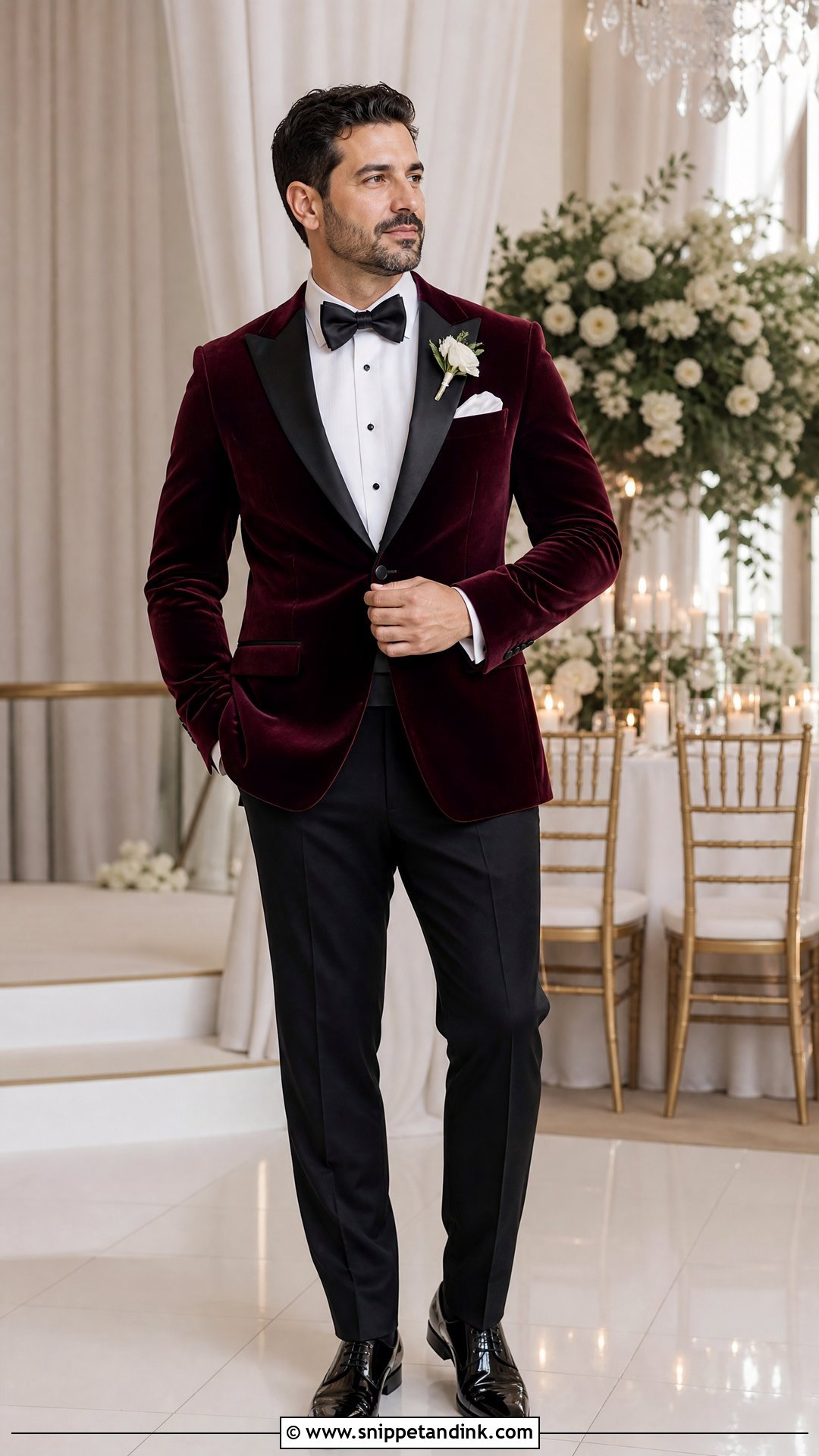
A burgundy velvet dinner jacket is a groom’s jacket, mostly. Wear it with black tuxedo trousers, a white formal shirt, a black bow tie and black velvet loafers or polished Oxfords, with black satin lapels so the top and trousers connect. A plain white pocket square is the only extra it needs. Guests should be sure the invitation allows a bold dinner jacket before wearing one. Velvet hates wet weather: snow and rain flatten the pile and leave marks, so keep it under a coat or an umbrella between car and door.
5. Forest Green Winter Wedding Suit
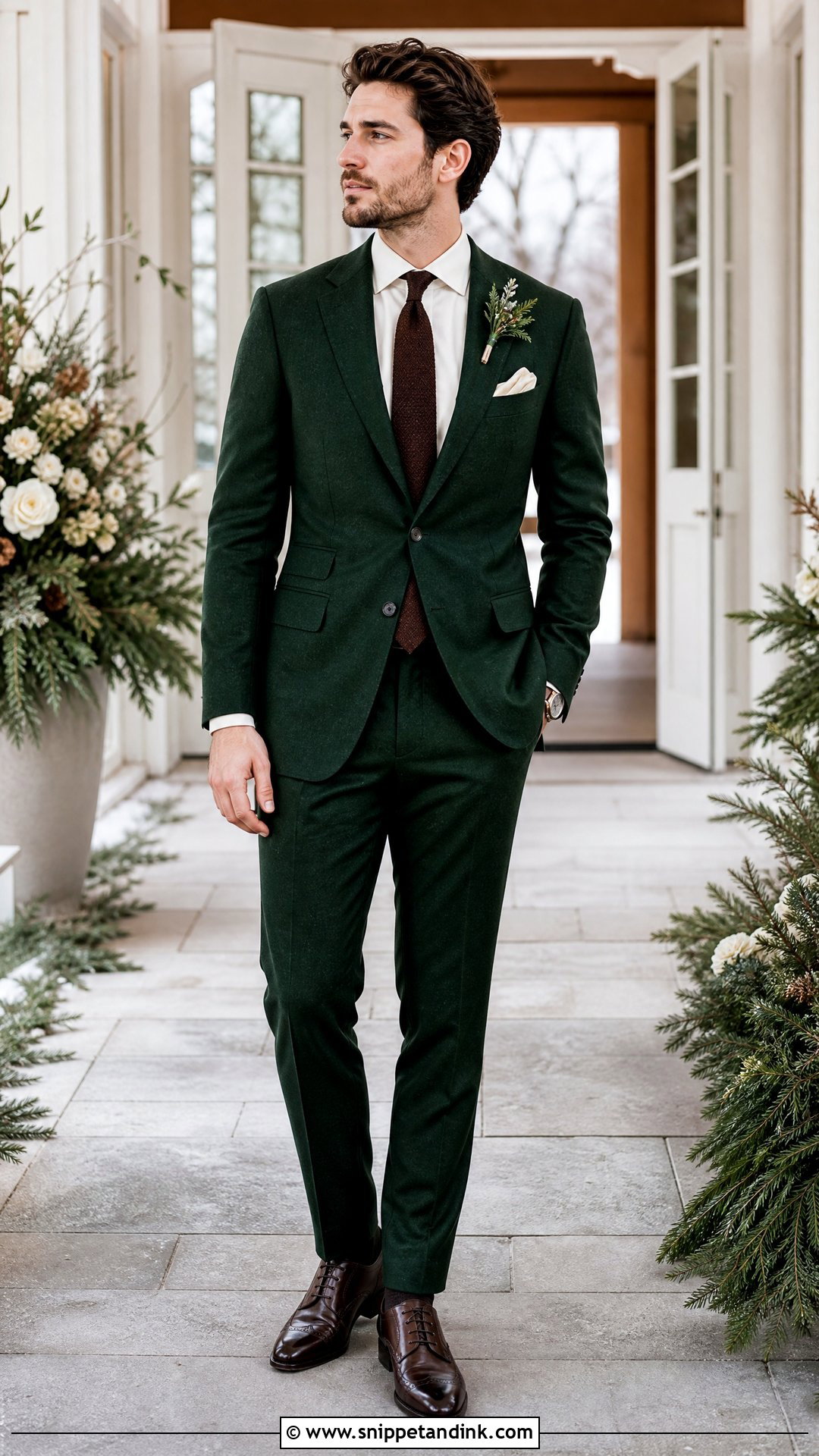
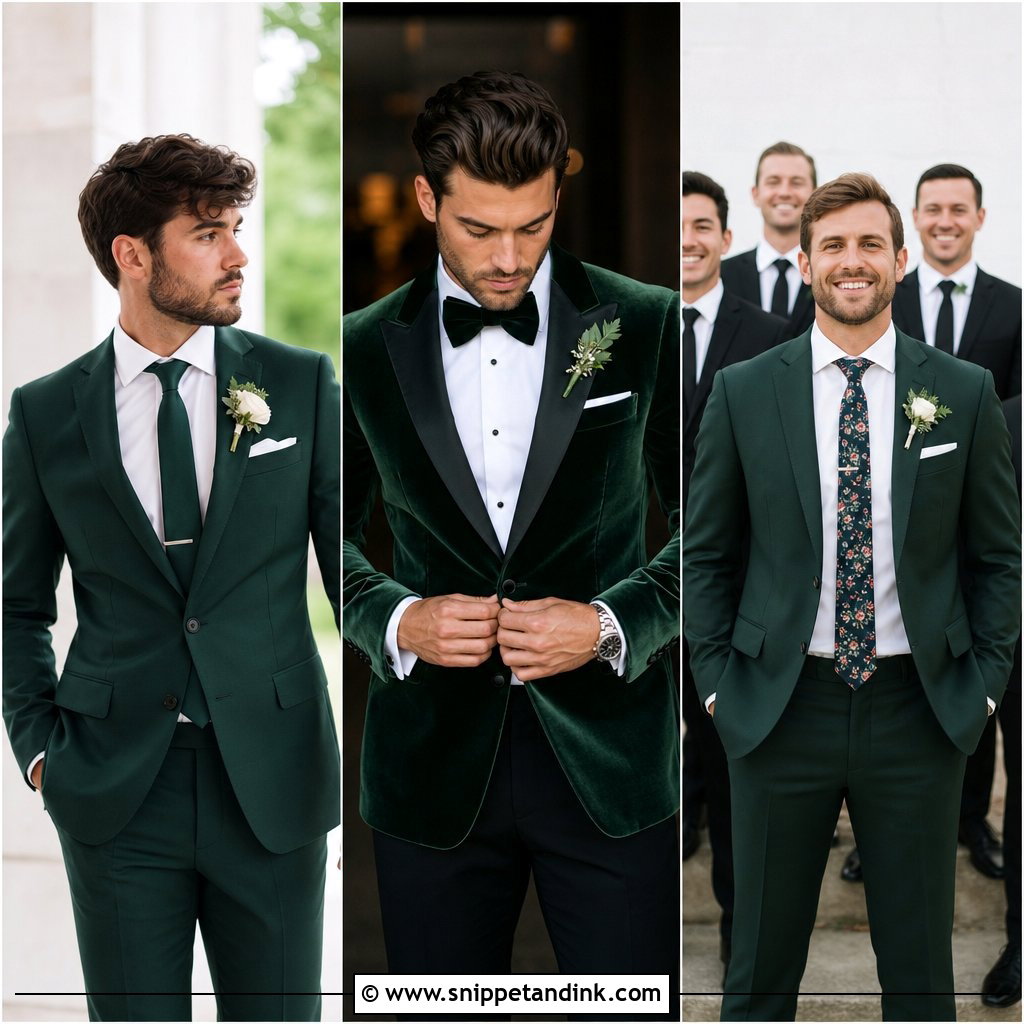
Forest green is the color I suggest to grooms who are tired of navy but don’t want to look themed. It looks richest in wool, flannel or a subtle twill. Style it with an ivory or white shirt, a dark brown tie and polished brown shoes, a cream pocket square and a gold-toned watch. For a dressier wedding, switch to a black tie, black belt and black Oxfords. Two pieces read contemporary, three pieces formal. Woodland venues, mountain lodges, historic estates and candlelit receptions all suit it.
6. Brown Tweed Winter Wedding Suit
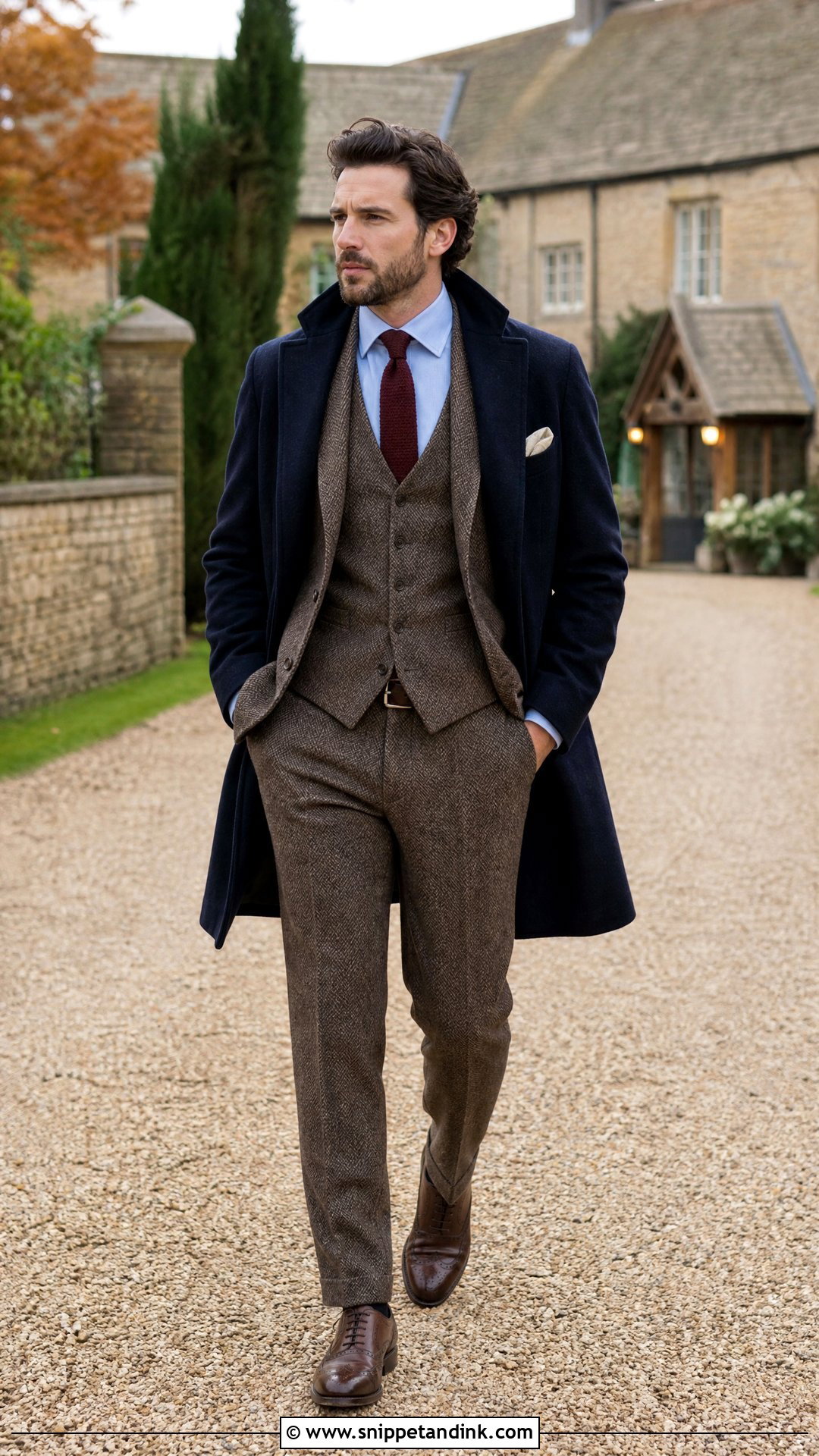
Tweed is a thick, often springy cloth, and that’s the danger: on a loose fit it adds bulk everywhere. A tailored three-piece in chocolate, tobacco or a muted brown herringbone, with the shoulders, sleeves and trouser length taken in properly, looks sharp rather than old-fashioned. A pale blue or white shirt keeps it fresh, a burgundy knit tie adds color, and dark brown brogues, a matching belt and a folded cream pocket square finish it. Outdoors, layer a dark brown or navy wool overcoat on top. It belongs at rustic, countryside or relaxed formal weddings.
7. Midnight Blue Tuxedo Winter Wedding Suit
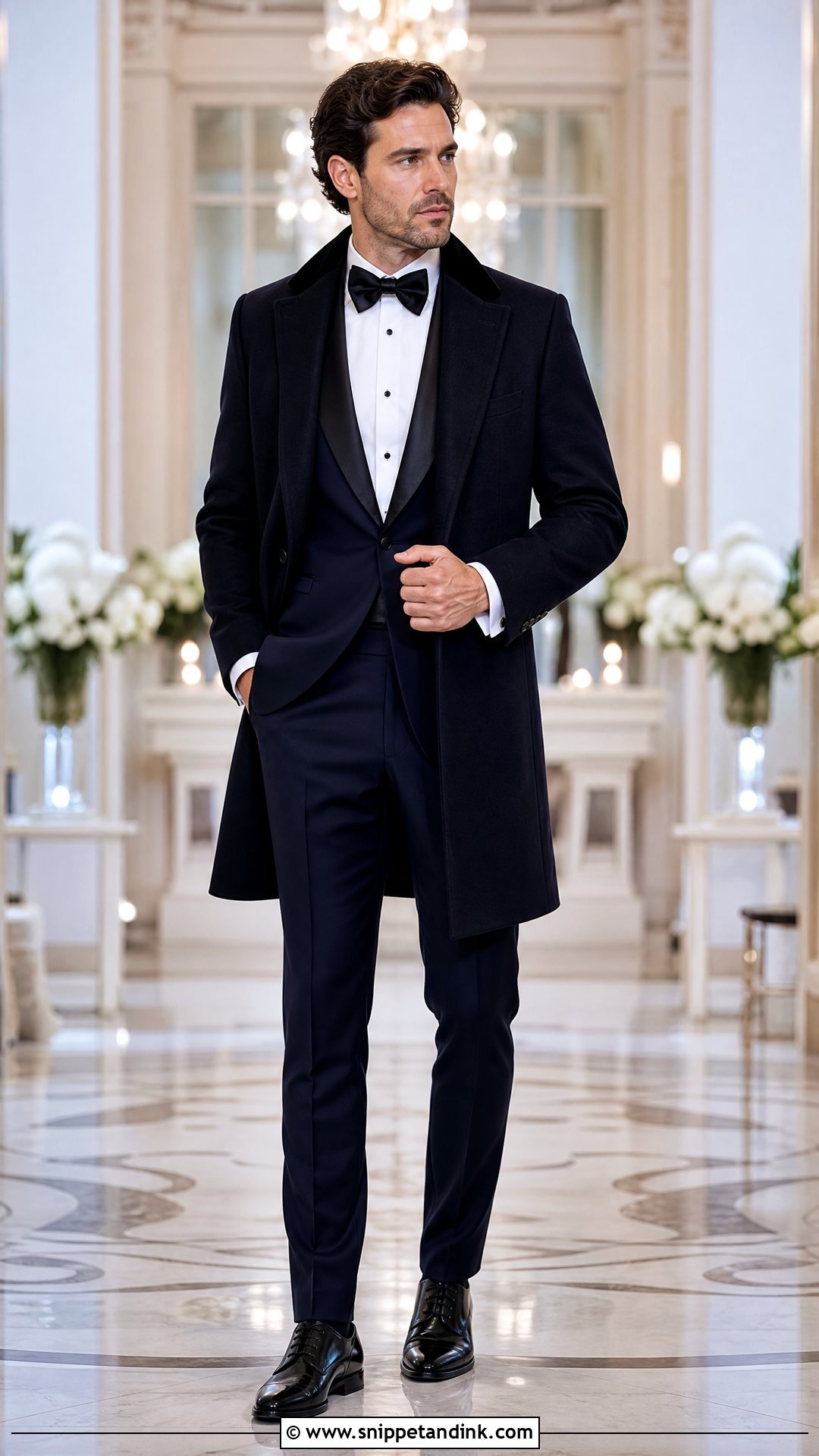
Under evening light, midnight blue can look darker and richer than black, which is the reason it was adopted for tuxedos in the first place. Choose a jacket with black satin peak lapels and matching midnight trousers with a clean, tapered cut, then add a pleated or bib-front white shirt, a black bow tie and polished black Oxfords. Minimal cuff links and a white linen pocket square are enough detail. A fitted black wool overcoat keeps the palette unbroken on a cold arrival. It’s my pick for a groom who wants something slightly different from black while staying fully black tie, and it sits well against snow and cool-toned decor.
8. Gray Flannel Winter Wedding Suit
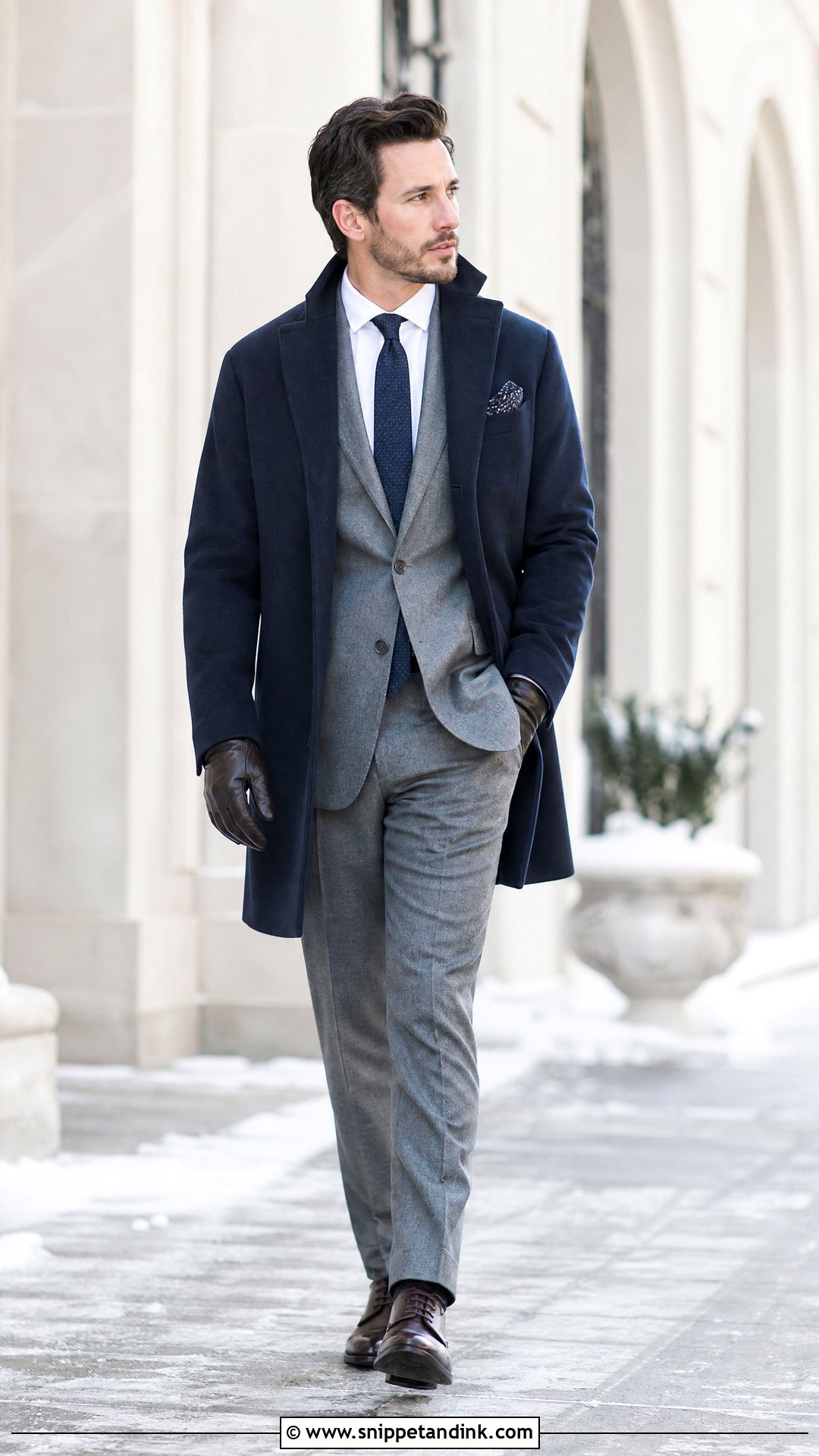
Flannel is woven and then brushed, which gives it that soft, slightly fuzzy face and makes it one of the warmest suit cloths. Pick medium or charcoal gray rather than a pale shade, and wear it with a white shirt, a navy tie and dark brown suede or leather Oxfords, plus a navy pocket square with a restrained pattern. Add a navy overcoat and dark leather gloves for outdoor photos. Because flannel looks soft, the tailoring has to be crisp: clean shoulders, tapered trousers and a small or no break at the hem stop it looking heavy. Semi-formal and cocktail afternoon weddings suit it.
9. Black Velvet Tuxedo Winter Wedding Suit
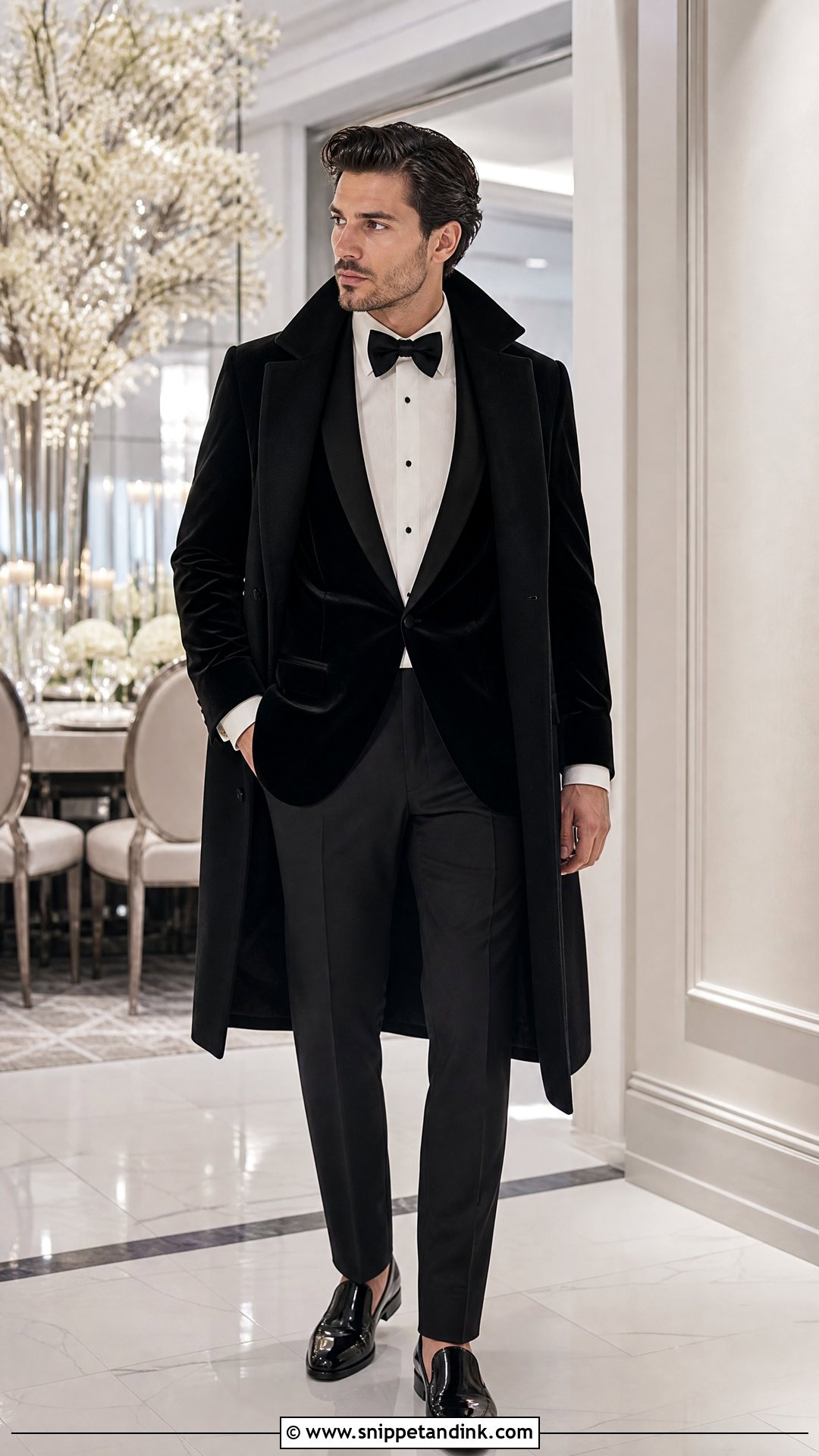
All-black velvet is about texture, so keep everything else plain. Start with a fitted velvet dinner jacket with satin shawl lapels, black tuxedo trousers, a white formal shirt and a black self-tie bow tie. Patent loafers or lace-up Oxfords and small silver cuff links finish it. A big boutonniere or a patterned pocket square only competes with the fabric. Outside, a long black wool overcoat keeps it formal. I like it for grooms and coordinated wedding parties; guests can wear it when the invitation clearly says black tie or creative black tie.
10. Navy Plaid Winter Wedding Suit
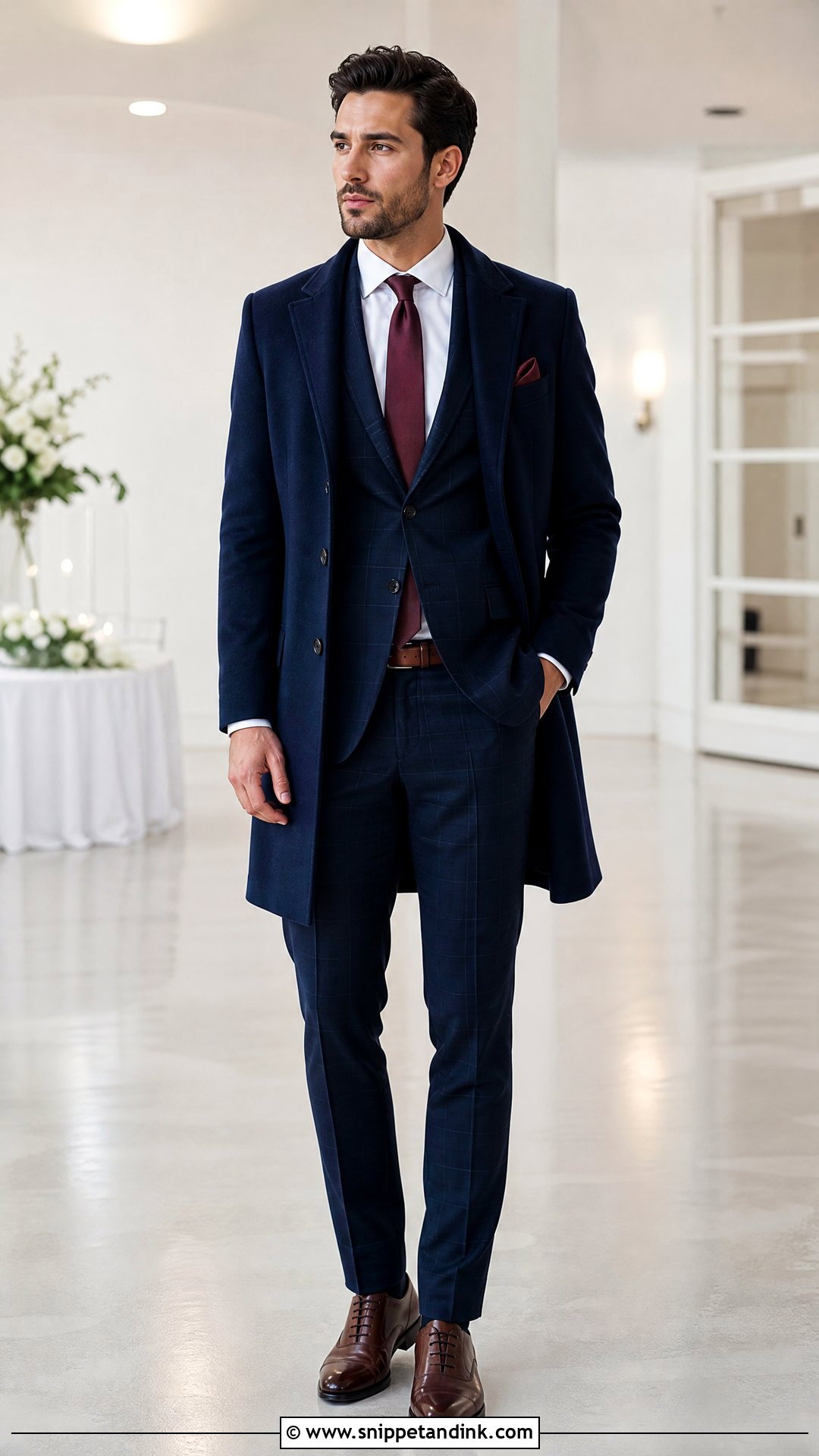
Pattern is easier to wear than people think, as long as it’s quiet. On a navy suit, look for a windowpane, a Prince of Wales check or a tonal plaid rather than a bright, high-contrast design, and pair it with a plain white shirt and a solid burgundy or dark green tie. Brown Oxfords and a matching belt keep it warm. The suit already carries the pattern, so the pocket square stays simple and no other checks or stripes come near it. A solid navy overcoat on top. It suits cocktail, semi-formal and daytime weddings and gives a guest or groomsman some personality without disrespecting the occasion.
11. Chocolate Brown Winter Wedding Suit
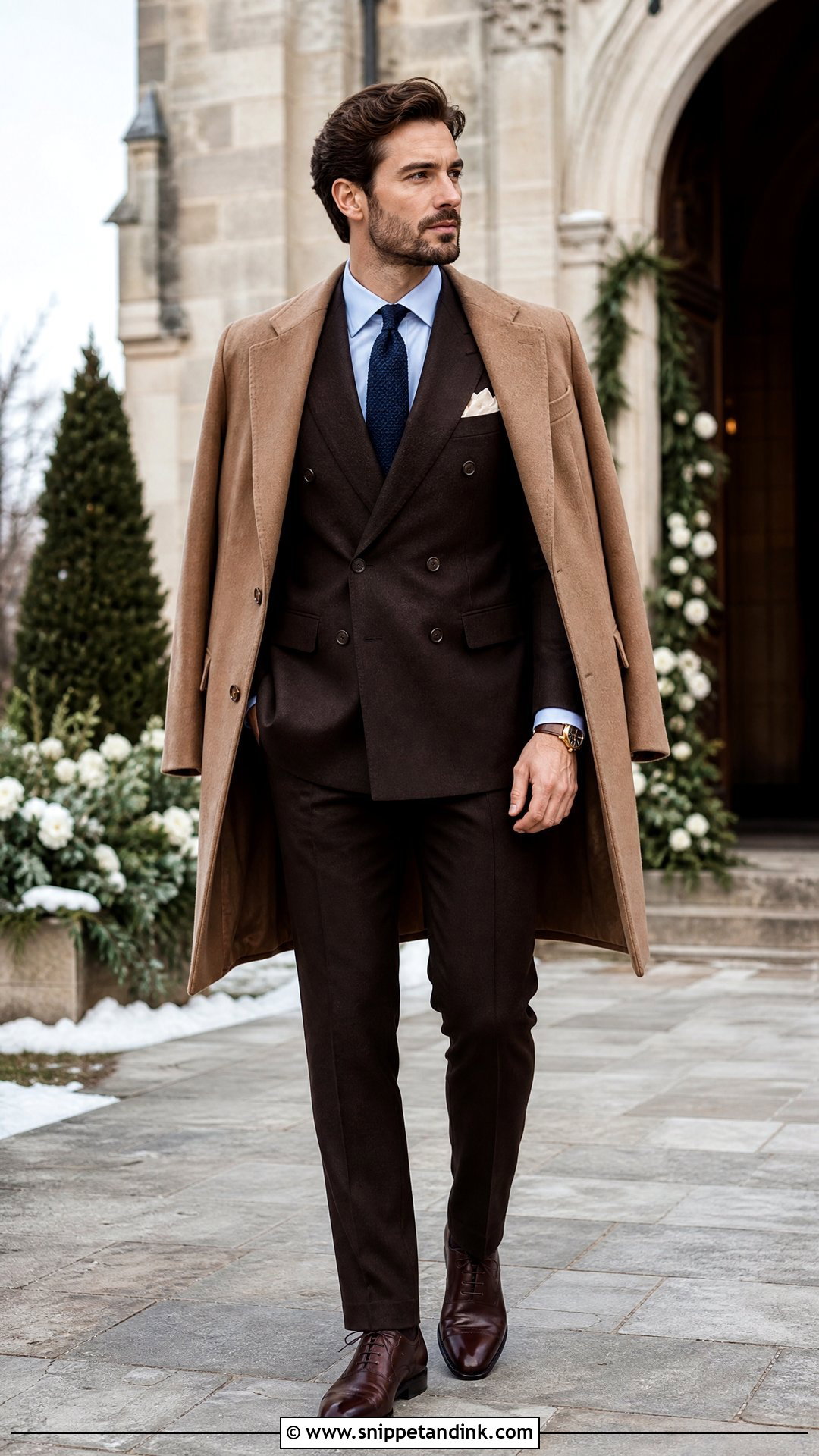
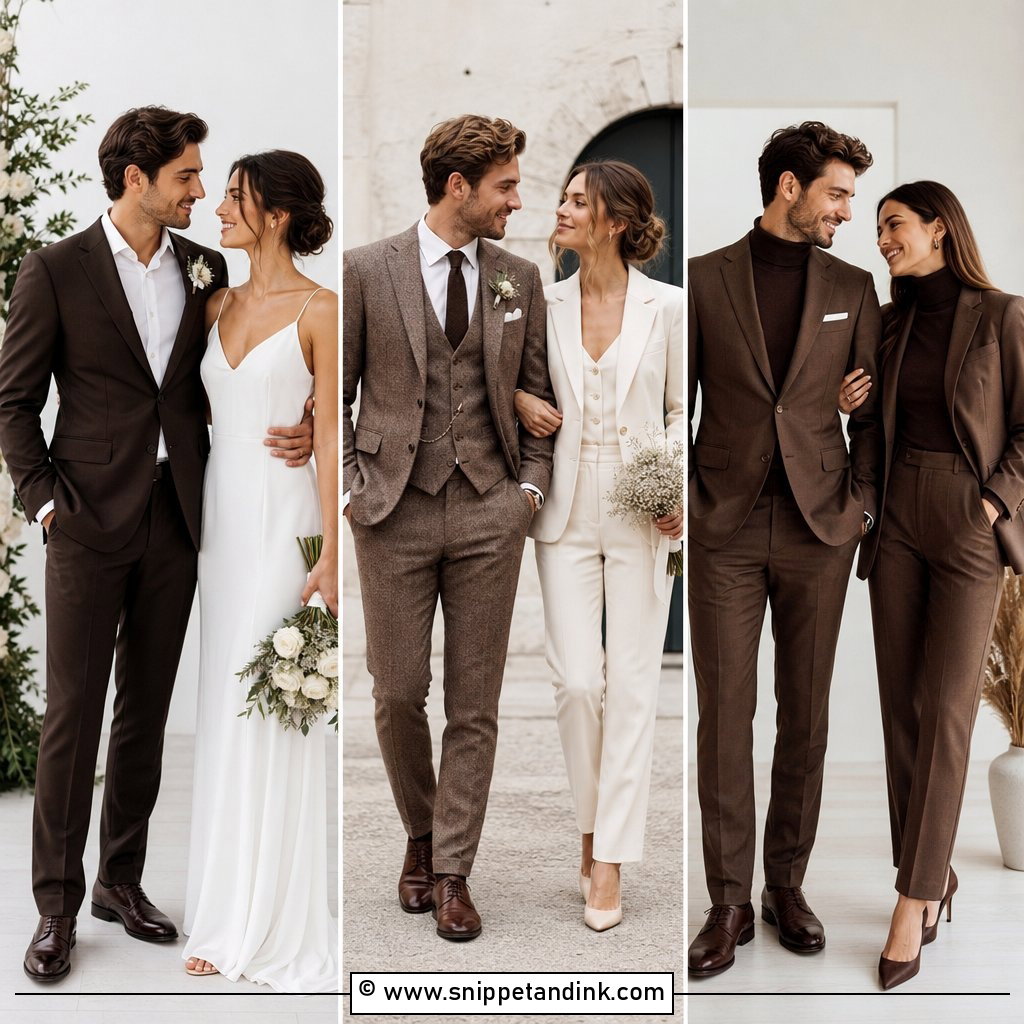
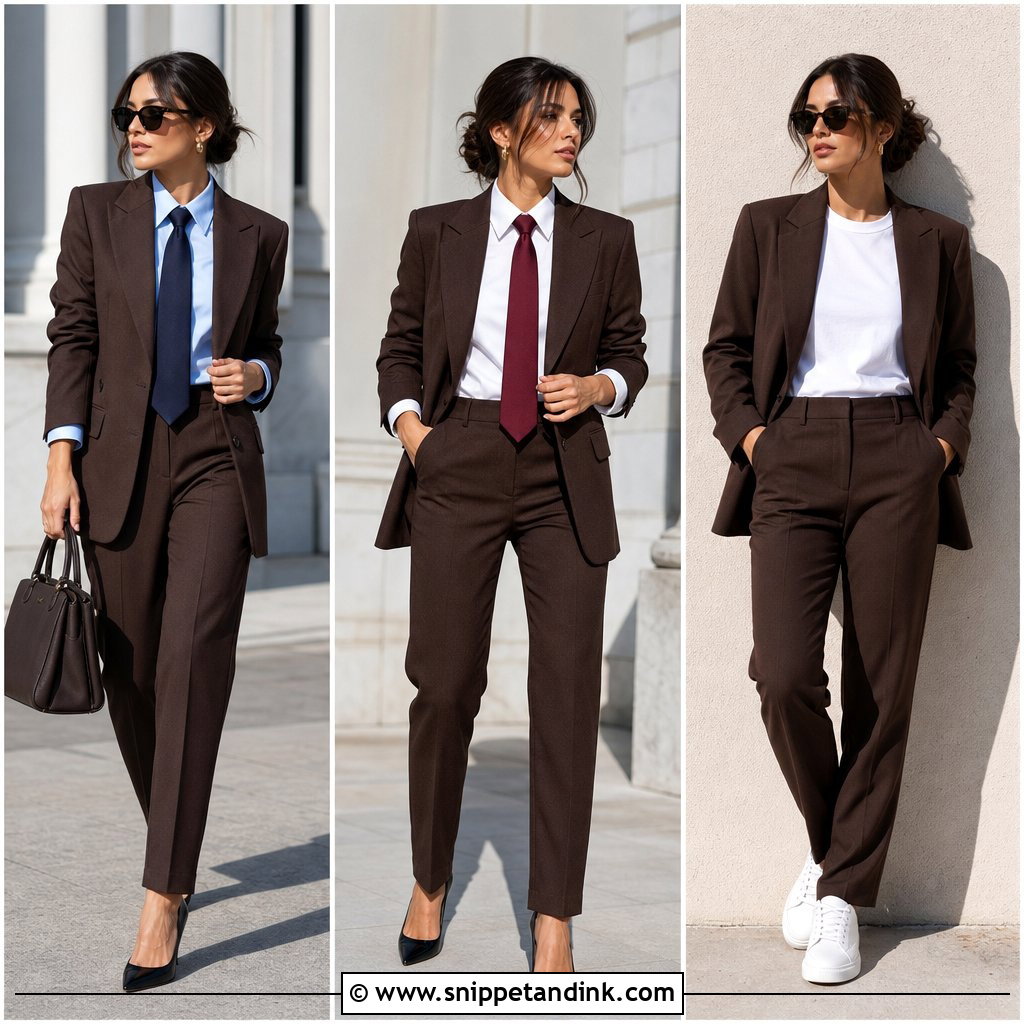
Chocolate brown has quietly become one of the most requested colors in my fittings. A double-breasted wool cut gives a strong outline, a two-button jacket more flexibility. Wear it with a white or pale blue shirt and a textured navy tie, and dark brown shoes for a tonal look or black for more formality. A cream pocket square and a gold-toned watch add contrast, and a camel or charcoal overcoat goes on top outdoors. Keep the shirt and accessories light. A dark brown suit with a brown shirt and brown tie collapses into one heavy block in photographs.
12. Tan Wool Winter Wedding Suit
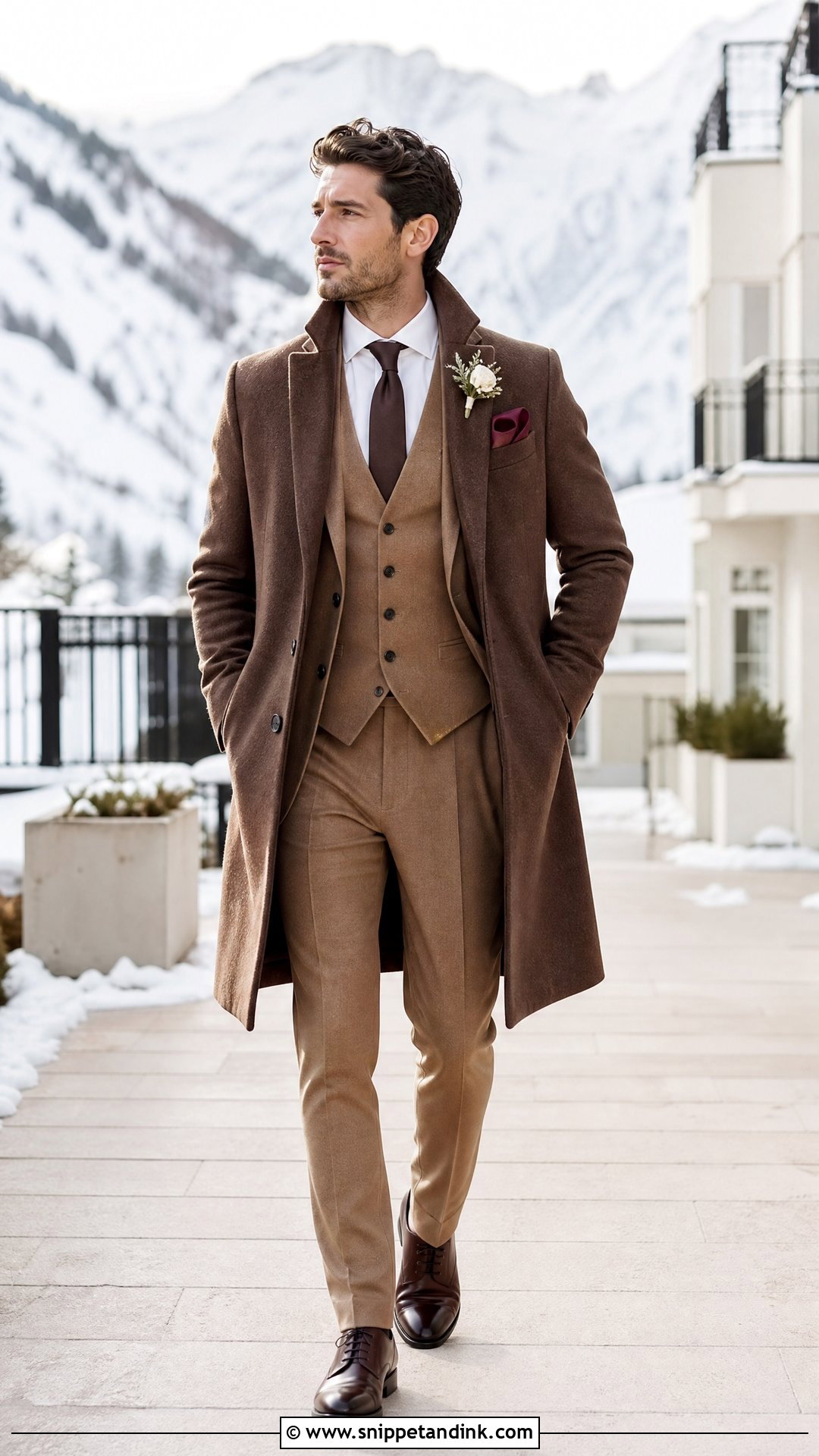
Tan in winter only works if it reads as winter cloth. A tan wool suit in camel, taupe or deep beige, with real substance and texture, looks right at a daytime wedding; a light summer khaki or linen does not. Pair it with a white shirt, a chocolate brown tie, dark brown Oxfords and a burgundy pocket square, and a structured brown overcoat for the cold. Pale loafers and other summery details are out. A matching vest adds warmth and formality. Outdoor ceremonies, mountain venues and relaxed celebrations in daylight are where it belongs.
13. Charcoal Turtleneck Winter Wedding Suit
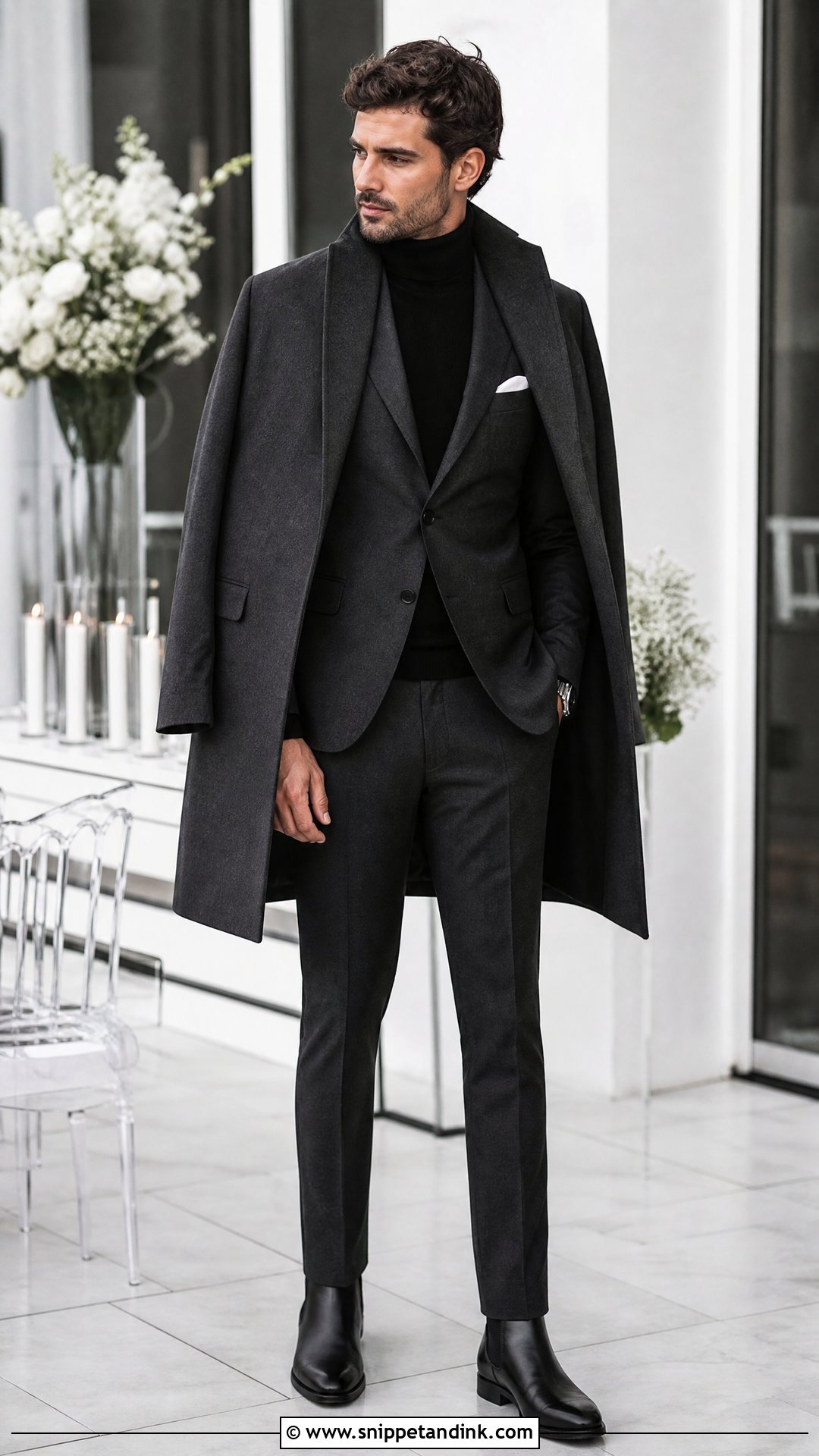
A fine-knit black turtleneck under a charcoal suit is the most modern option here, and the most misused. The knit has to be thin and close fitting, merino rather than a chunky sweater, or it distorts the jacket’s shoulders and collar. Pair it with a sharply tailored charcoal wool suit with clean, minimal lapels, black leather Chelsea boots, a simple watch, a white pocket square and a long black or charcoal overcoat. Keep it to cocktail, modern or dressy casual weddings. It never replaces a tuxedo when the invitation says black tie.
14. Navy Corduroy Winter Wedding Suit
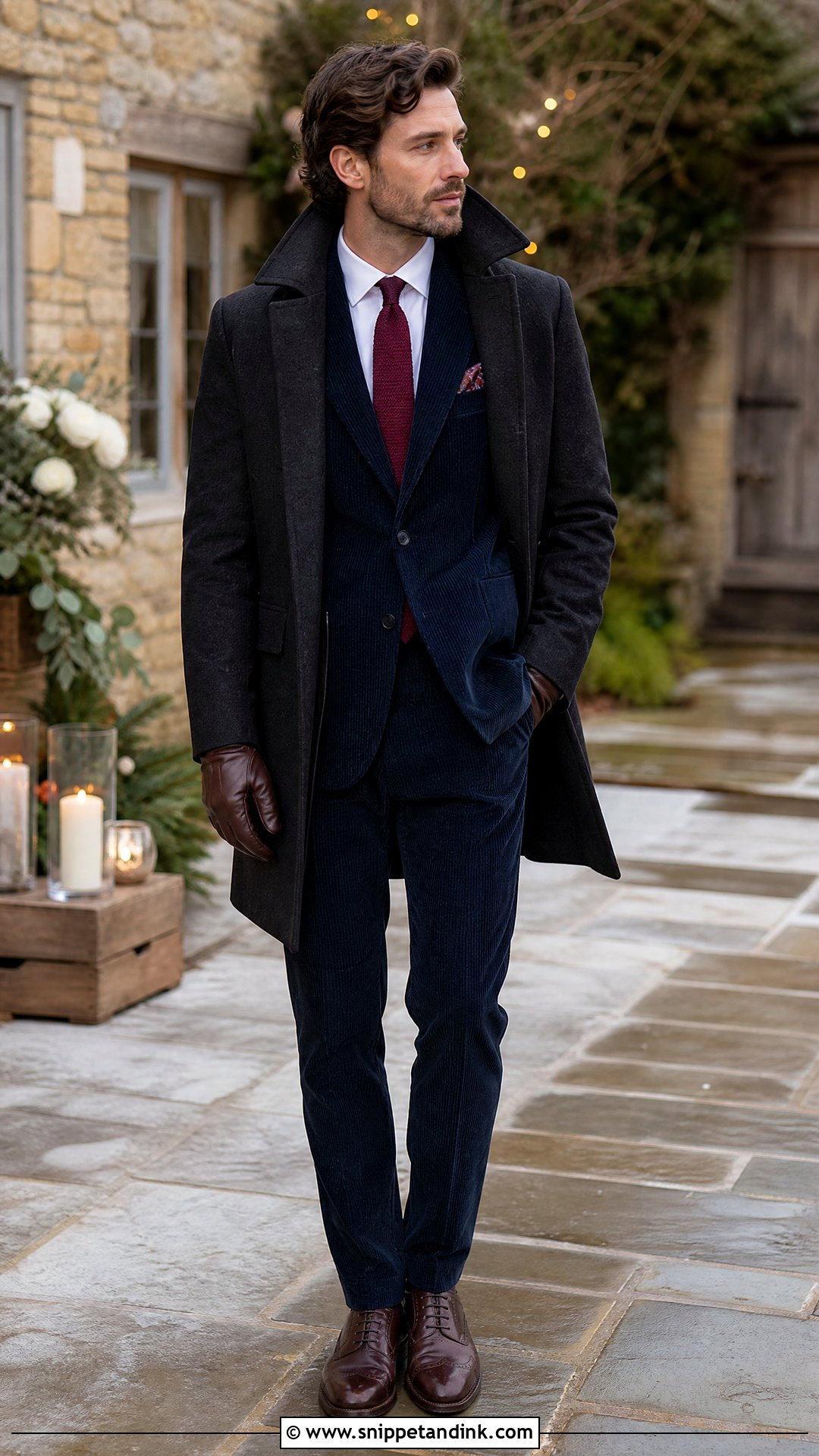
Corduroy is measured by its wale, the number of ridges per inch, and for a wedding suit I only use fine wale; wide cord looks like weekend trousers. A tailored navy suit with narrow ridges and a clean cut works with a crisp white shirt, a burgundy knit tie and dark brown leather brogues. A muted patterned pocket square is fine, and a charcoal wool overcoat and brown leather gloves cover the outdoor parts of the day. Polished shoes and structured accessories keep it from drifting casual. Jacket and trousers must be from the same cloth, since cord shades vary between batches. Rustic, creative or semi-formal weddings only.
15. Gray Houndstooth Winter Wedding Suit
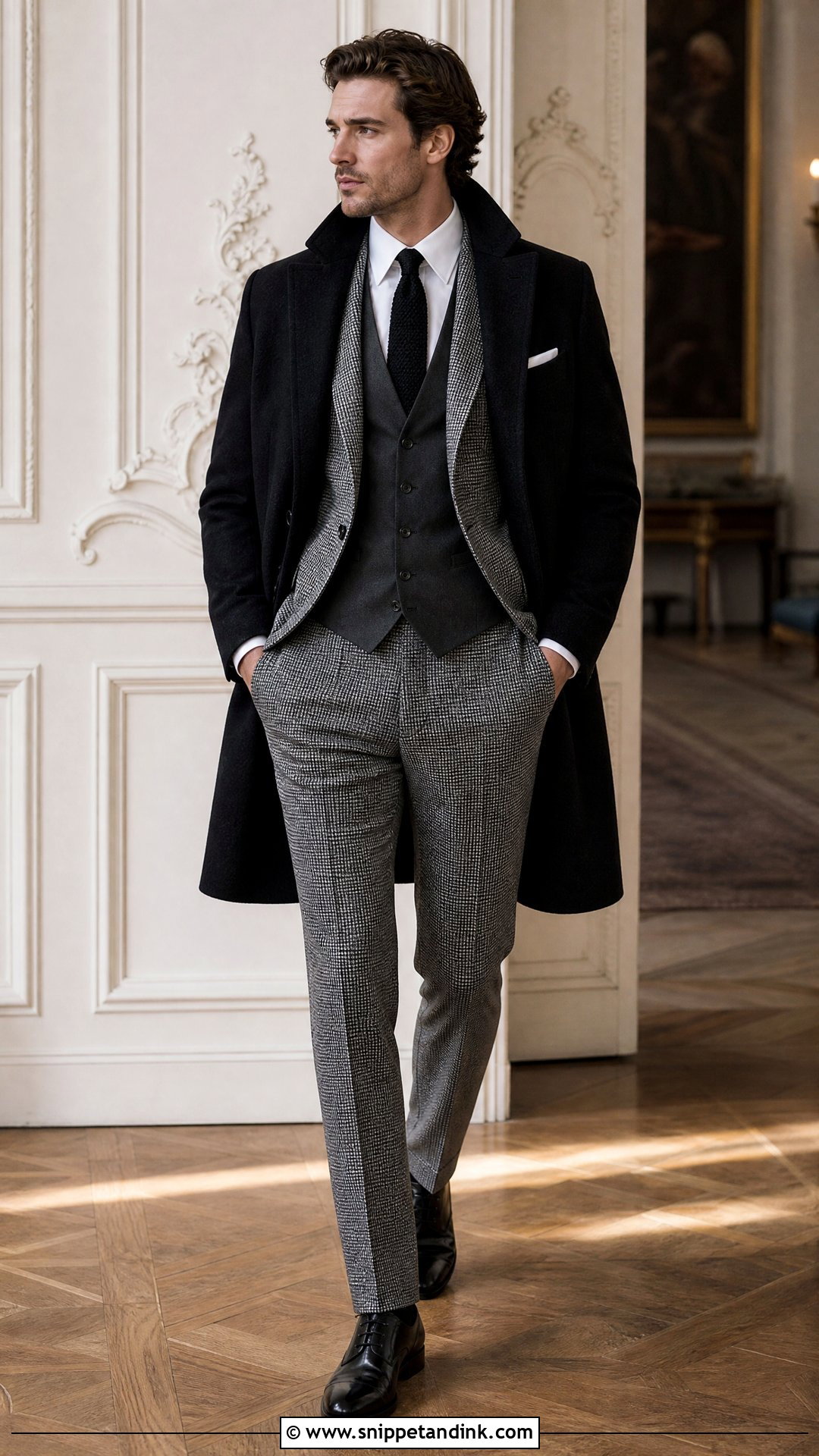
Small-scale houndstooth in charcoal and medium gray holds up in photos; large houndstooth can shimmer on camera and turn into a blur. Pair the suit with a plain white shirt, a black grenadine tie and polished black Oxfords. A solid charcoal waistcoat adds warmth, as long as its weight and texture are close to the suit’s. Keep the pocket square simple and leave out other bold patterns, with a black wool overcoat for travel and outdoor photos. I ask the tailor to align the pattern at the pockets and center back seam. It suits a groom, best man or stylish guest at a formal daytime celebration.
16. Emerald Velvet Winter Wedding Suit
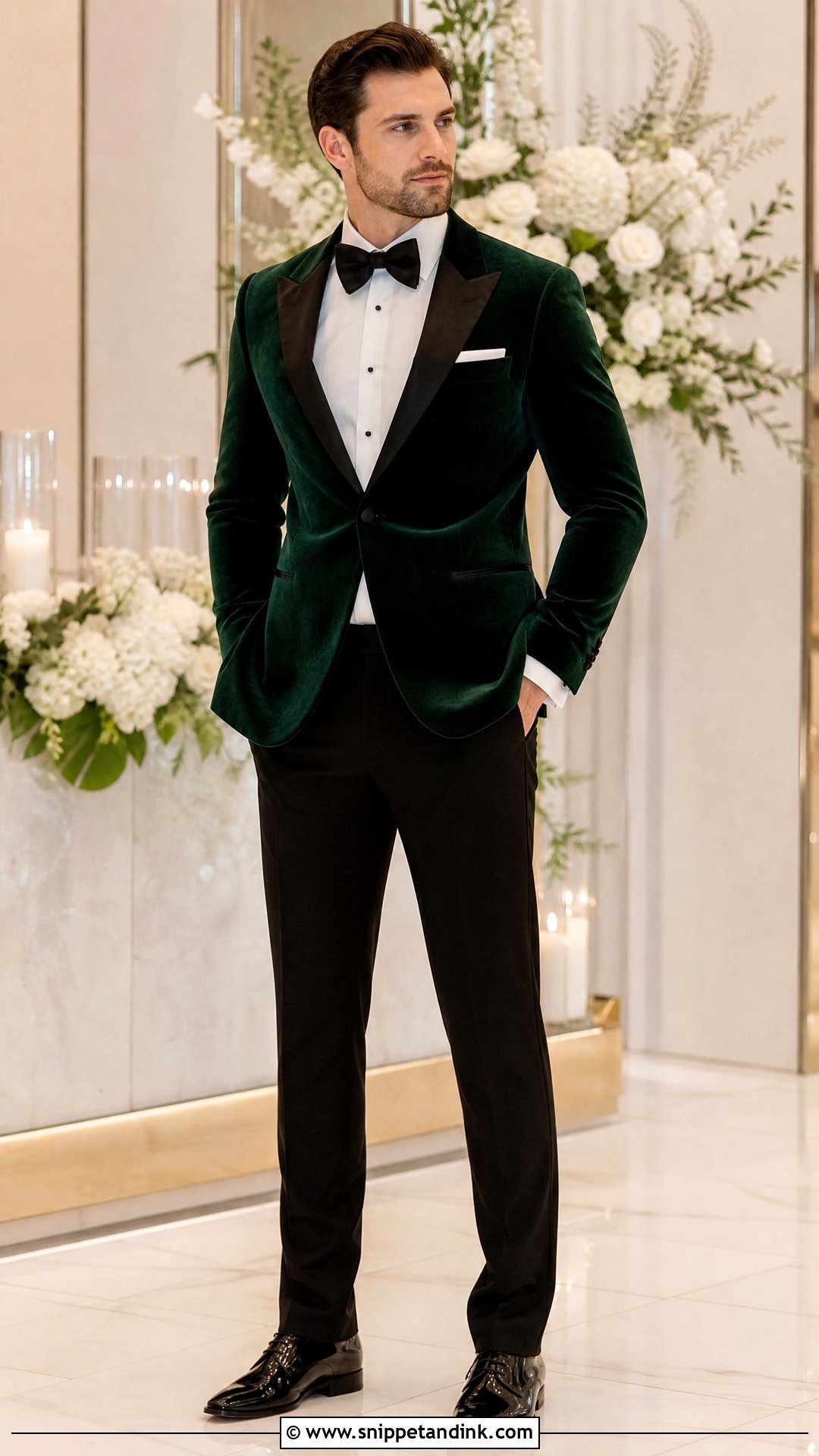
An emerald velvet dinner jacket is loud, so everything around it should be quiet. Black tuxedo trousers, a white formal shirt, a black bow tie and black patent shoes or velvet loafers, with black satin lapels to tie jacket and trousers together and a crisp white pocket square. Colorful ties or busy accessories only fight the jacket. It’s a groom’s or creative wedding party’s piece; a guest should wear it only when bold evening dress clearly suits the invitation. Outdoors, finish with a structured black wool overcoat.
17. Black Winter Wedding Suit
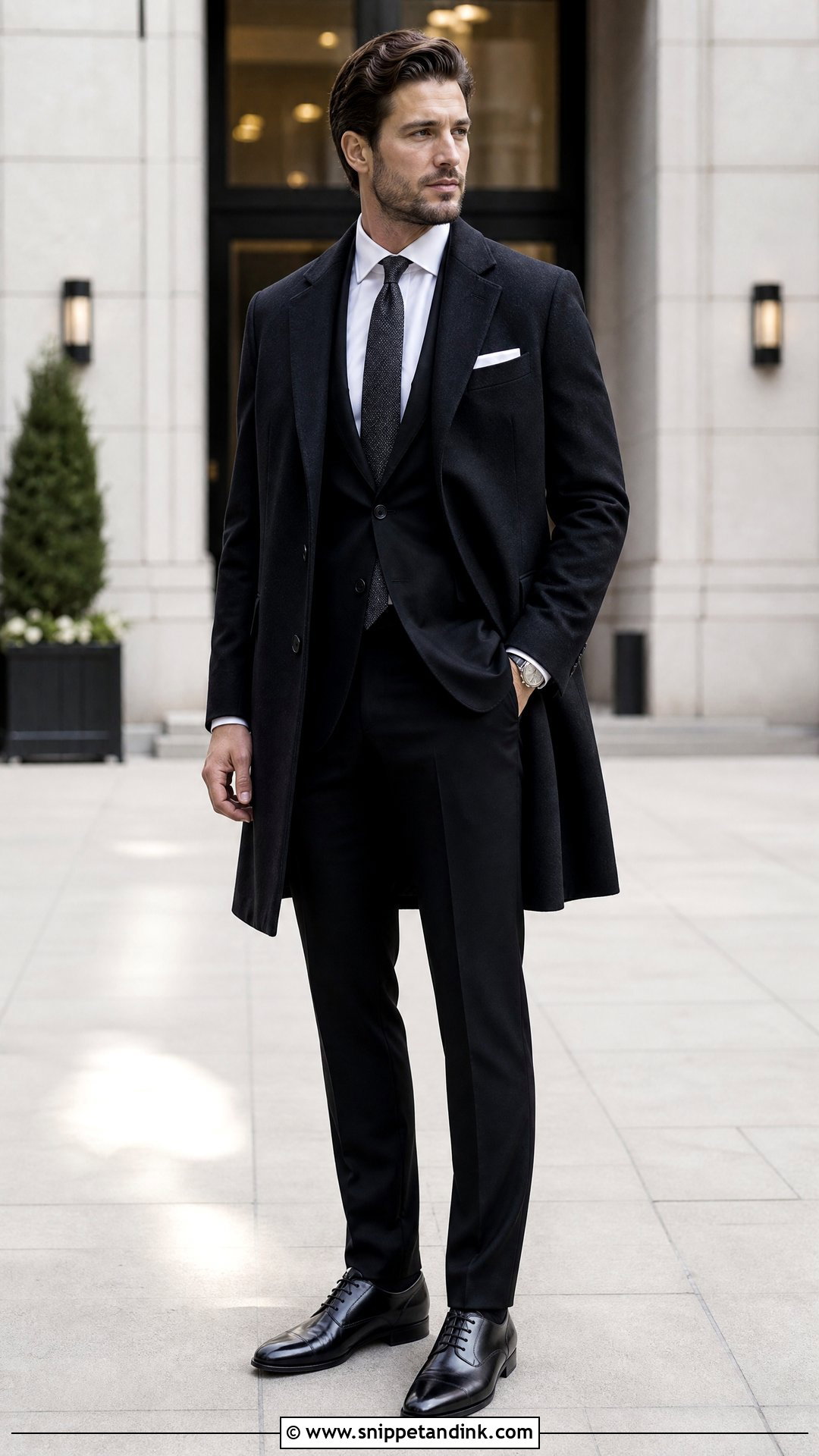
Plenty of men already own a black suit, and for a formal evening wedding that doesn’t require a tuxedo, it works if the fit is exact. Wear it with a white shirt, a textured charcoal or black tie, polished black Oxfords and a white pocket square, with a silver watch or tie bar as the only detail. Choose wool with a matte finish; shiny black cloth turns cheap-looking under indoor lighting. The jacket should sit cleanly through the shoulders and the trousers need a precise hem. A charcoal overcoat gives subtle separation between layers. City venues, hotel receptions and indoor ceremonies suit it.
18. Burgundy Three-Piece Winter Wedding Suit
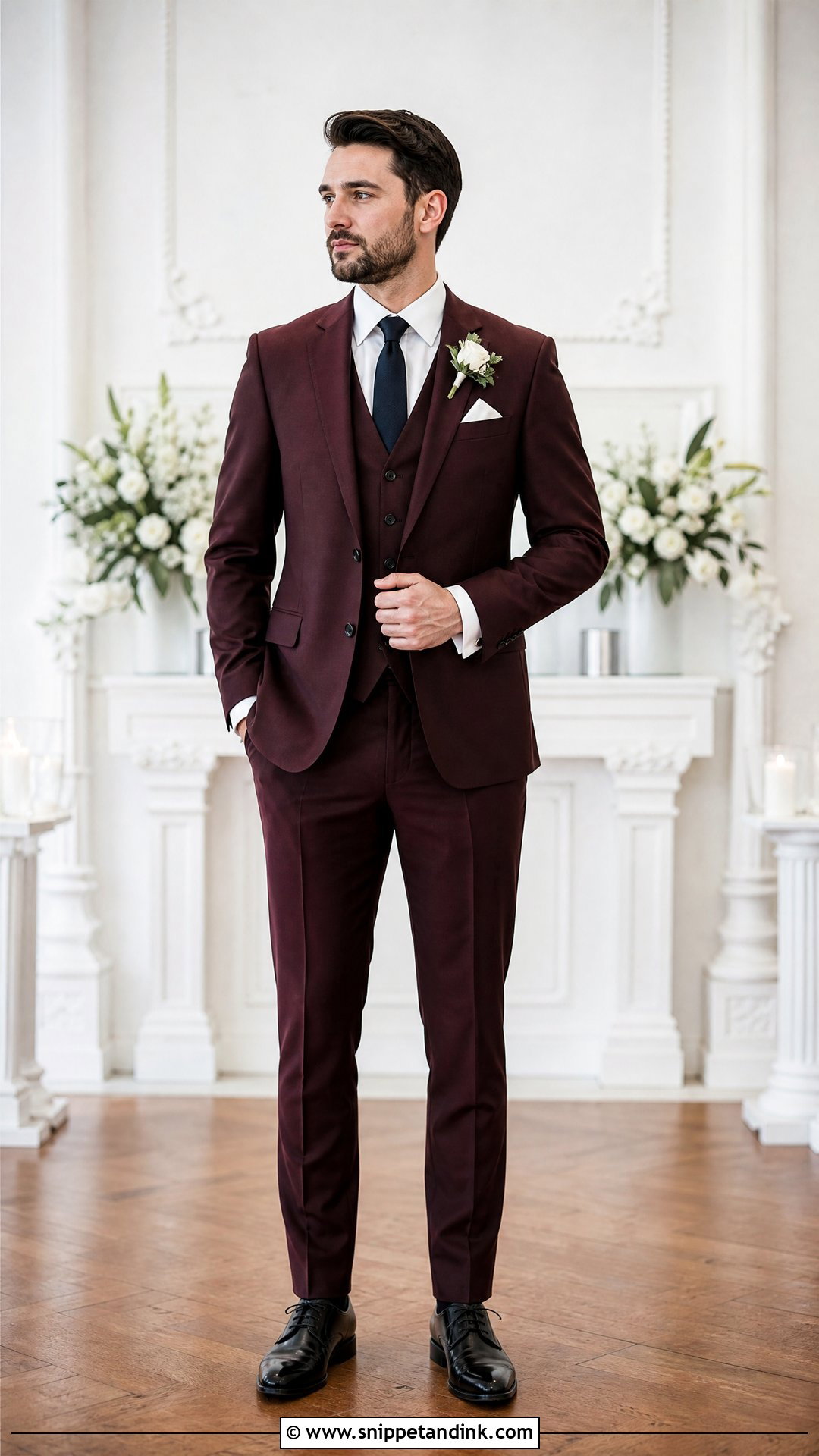
Burgundy in three pieces is a commitment, and I’d only suggest it to a groom who’s comfortable being looked at. Balance the saturated cloth with a white shirt and a dark navy or black tie, then choose black Oxfords for formality or dark brown for something softer. A plain cream pocket square and minimal cuff links are enough. The waistcoat must be cut from exactly the same cloth as the jacket and trousers, or the color breaks at the waist. Coordinated groomsmen can wear it when the palette supports it. Keep the cut slim and modern so the color doesn’t swamp a smaller frame.
19. Navy Winter Wedding Suit With Camel Overcoat
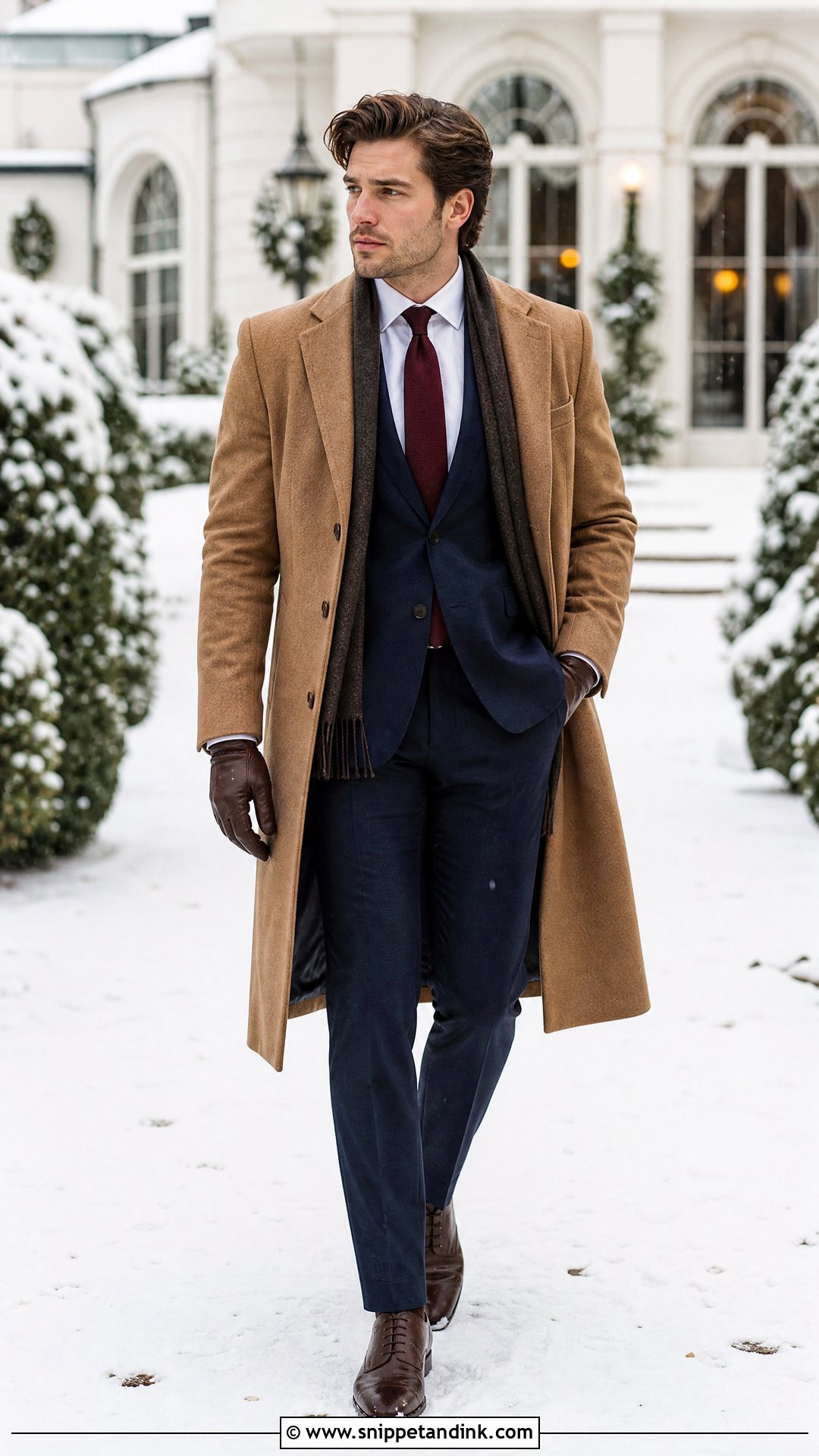
In winter the overcoat is part of the outfit, because it’s on in every arrival and outdoor shot. Start with a tailored navy wool suit, a white shirt, a burgundy tie and dark brown Oxfords, then add a knee-length camel wool overcoat for contrast, brown leather gloves and a dark scarf that comes off before the ceremony. Take the suit jacket to the coat fitting: the coat has to be cut roomy enough to go over it without pulling across the shoulders. Casual parkas ruin formal photos. Because every layer coordinates, it suits guests and wedding party members equally well.
20. Dark Green Plaid Winter Wedding Suit
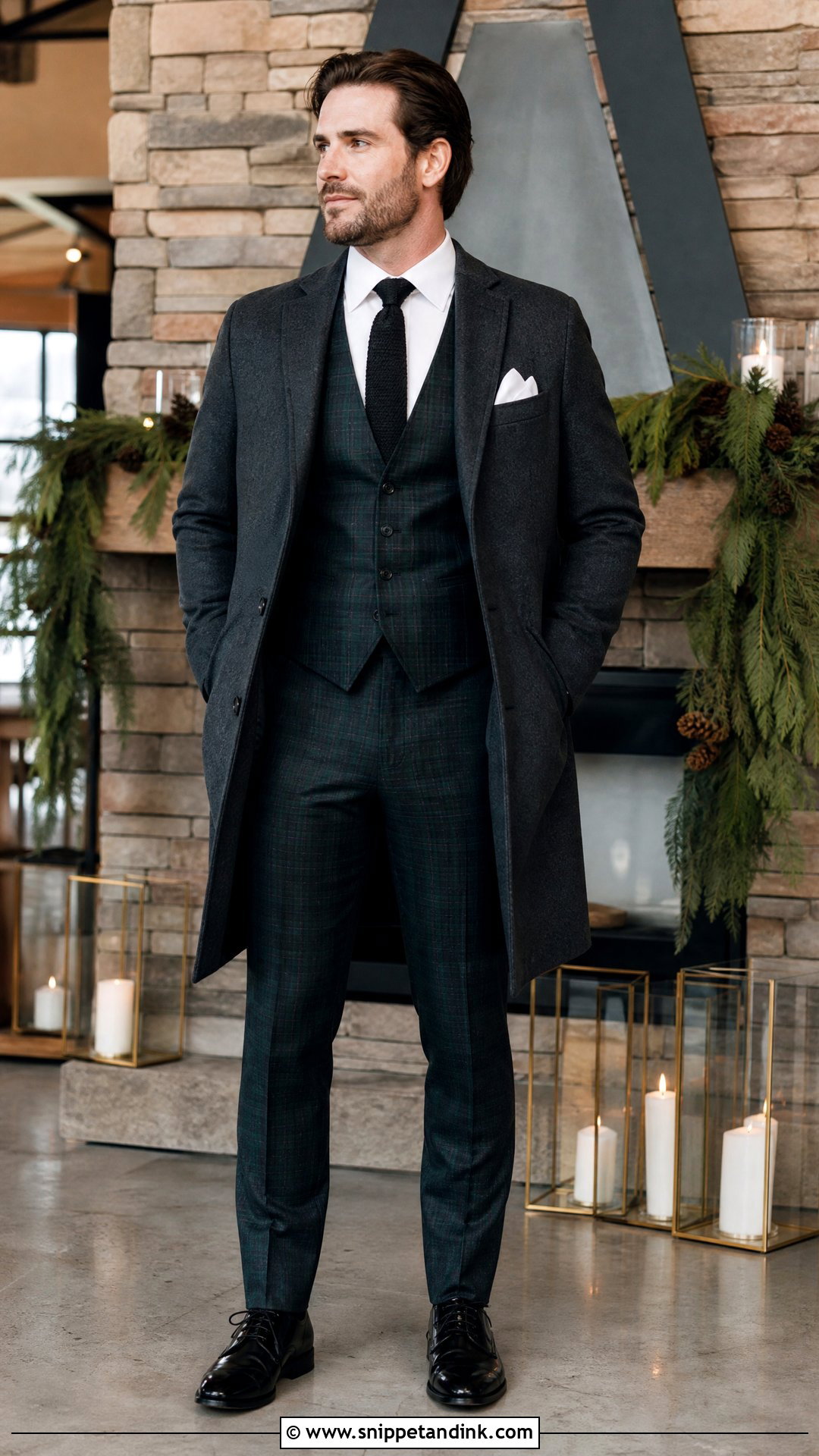
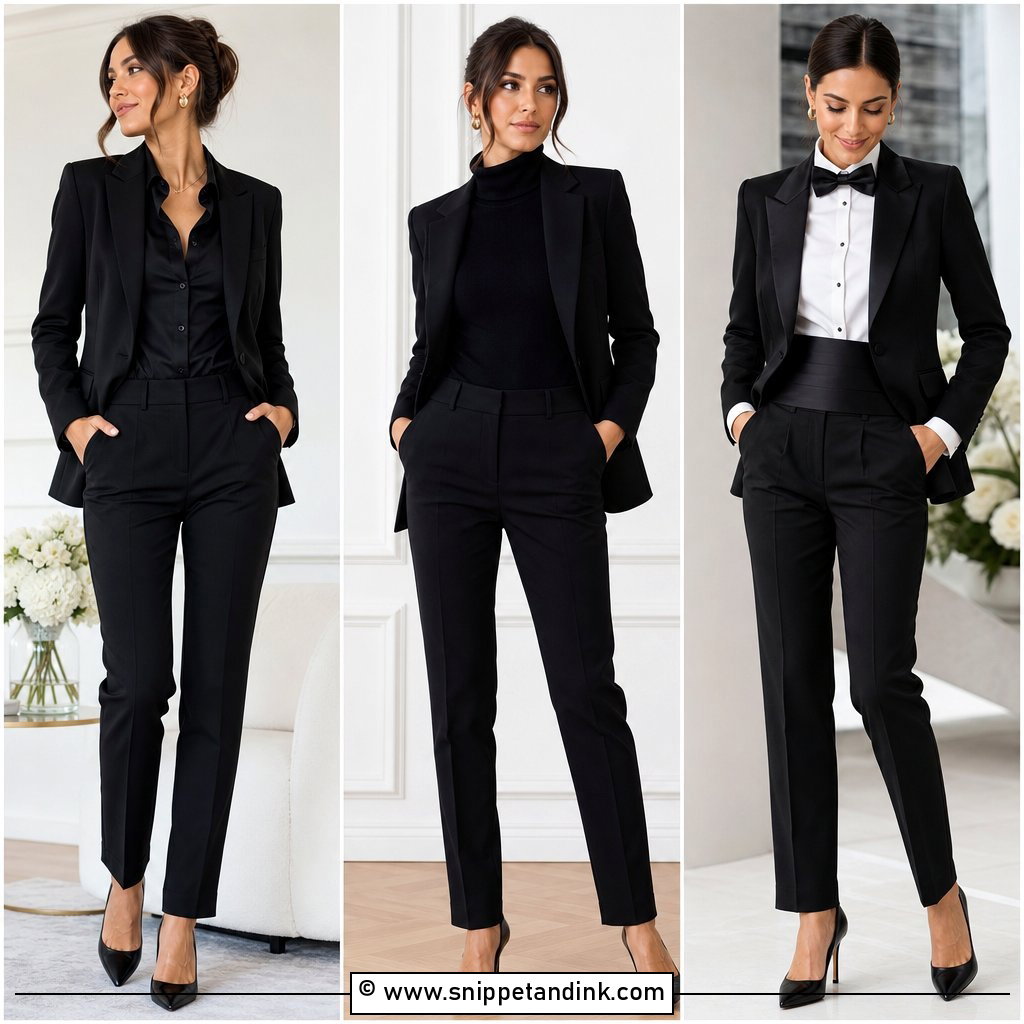
A dark green plaid suit mixes seasonal color with a cold-weather pattern, and it works best when the check is subtle: black, navy or charcoal lines rather than a bright multicolor design. Wear it with a white shirt, a black knit tie, polished black Derbies or Oxfords, a black belt and a plain white pocket square. Add a matching vest or a solid charcoal overcoat for warmth. Check that the pattern lines up across the pockets, lapels and seams, which is the sign of a well-made suit. Grooms, groomsmen and confident guests at cocktail or semi-formal weddings can carry it.
Getting a Groom and His Groomsmen to Actually Match
Matching sounds simple until six men turn up in navy suits from three different shops and the photos show six slightly different blues. Dark colors vary a lot between mills and even between dye lots of the same cloth, so I either have everyone order from one supplier at the same time or let the groom wear a different color on purpose.
How the Timing Usually Works
Made-to-measure suits often take several weeks to arrive, and alterations need their own window after that, so I like the order placed two to three months ahead and the final fitting a week or two before the wedding. Rentals are faster, but book the measurements early, because winter weekends around the holidays get busy. Ask every man to send real measurements taken by a tailor, not the size on an old jacket.
Details That Give the Game Away
- Shoes in different shades of brown. Agree on one color and one polish.
- Socks. Dark socks that match the trousers keep the leg line unbroken when the men sit in the front row.
- Ties tied at different lengths. The tip should touch the top of the belt buckle.
- Pocket squares folded five different ways. Fold them all the same morning, or buy them pre-folded.
Fit Beats Fabric, Even in December
Start with the dress code and the venue, then the weather. Wool and flannel work almost anywhere, while tweed, corduroy and velvet bring the texture winter is known for. Navy and charcoal are the safe ground; forest green, burgundy, chocolate brown and a quiet plaid are the more personal routes. Whatever you choose, finish it with the right shirt, shoes that match the formality, restrained accessories and a proper overcoat. Most of all, spend on the tailor. An expensive suit with the wrong sleeve length still looks borrowed, and a modest one that fits looks made for you.
You'll Like These Ideas:


Leave a Reply