
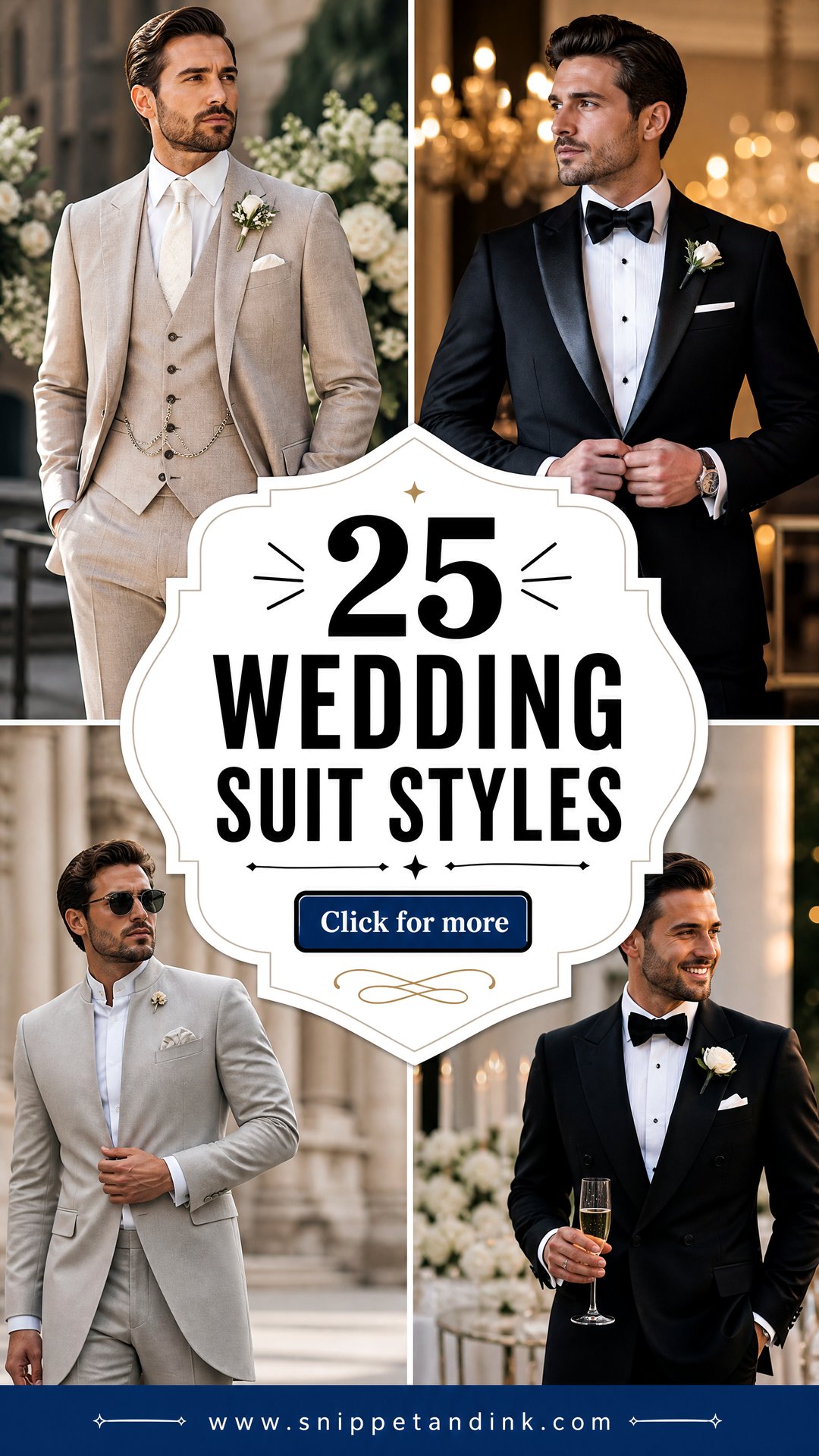
A suit can be the most flattering thing a bride or guest wears all season, but only if it fits at the shoulder and the hem. Most of the tailoring I do for weddings now involves women who want a jacket and trousers instead of a dress, and the styles below cover what I see working: classic tuxedos, three-piece sets, skirt suits, linen for heat and velvet for cold. I’ve styled each one head to toe, with notes on fit, fabric and where it suits best. Brides can work in white and ivory; guests should check the couple’s color guidance and the stated dress code first. Leave proper time for alterations, because a suit off the rail almost never fits straight away.
Which Alterations Are Worth Paying For?
Not every fitting problem can be fixed, so I sort them before anyone buys. Buy the jacket to fit your shoulders, because that’s the hardest area to change and the one everyone notices. Almost everything else can be adjusted.
Easy and usually affordable
- Trouser hems, done in the exact shoes you’ll wear. Floor-skimming for wide legs, a slight break for straight legs.
- Sleeve length, ideally ending at the wrist bone so a bracelet or the shirt cuff shows.
- Taking in the waist of the jacket and trousers.
Possible but costly or risky
- Shortening a jacket body, which moves the pockets and button stance.
- Letting out seams, which depends on how much fabric the maker left inside.
- Anything at the shoulder or collar.
I’d allow at least two fittings and several weeks of tailoring time before the wedding, more in busy summer months when tailors are booked up.
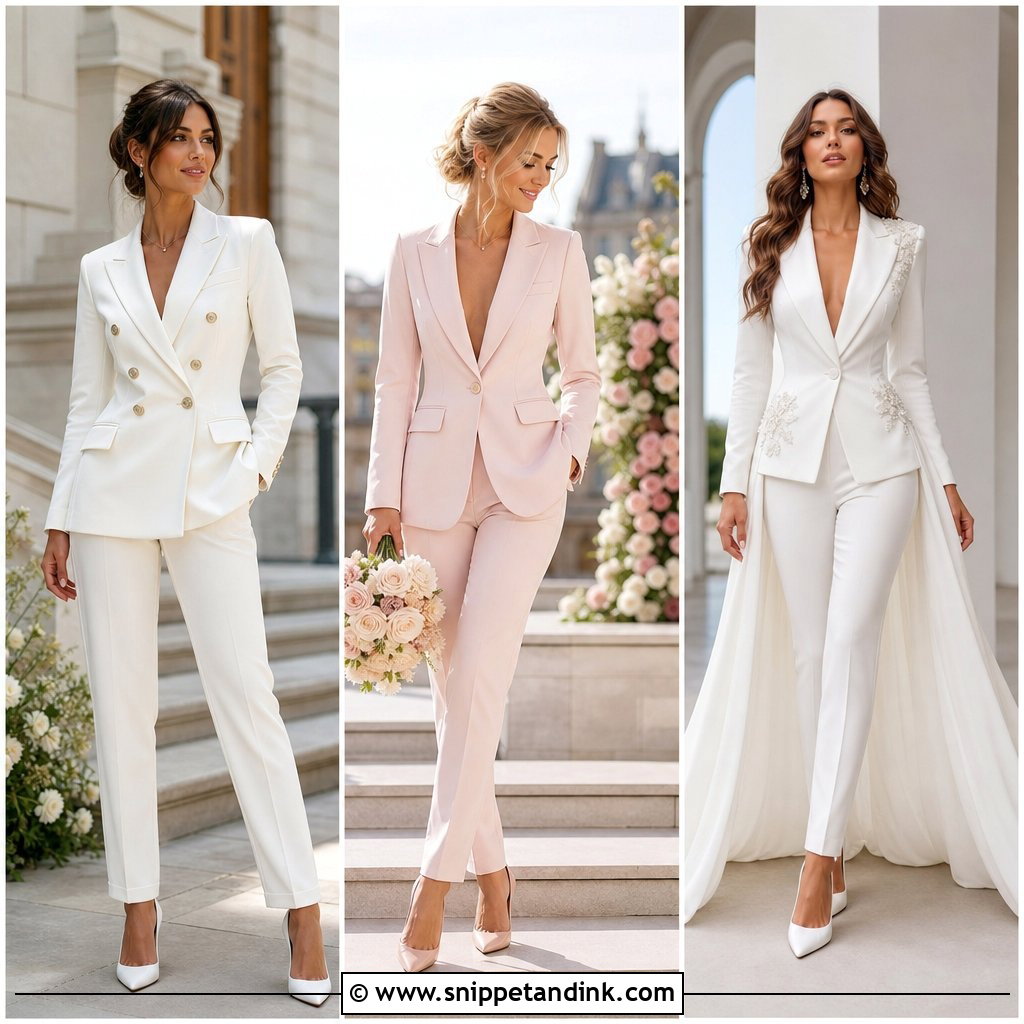
1. Ivory Wide-Leg Wedding Suit
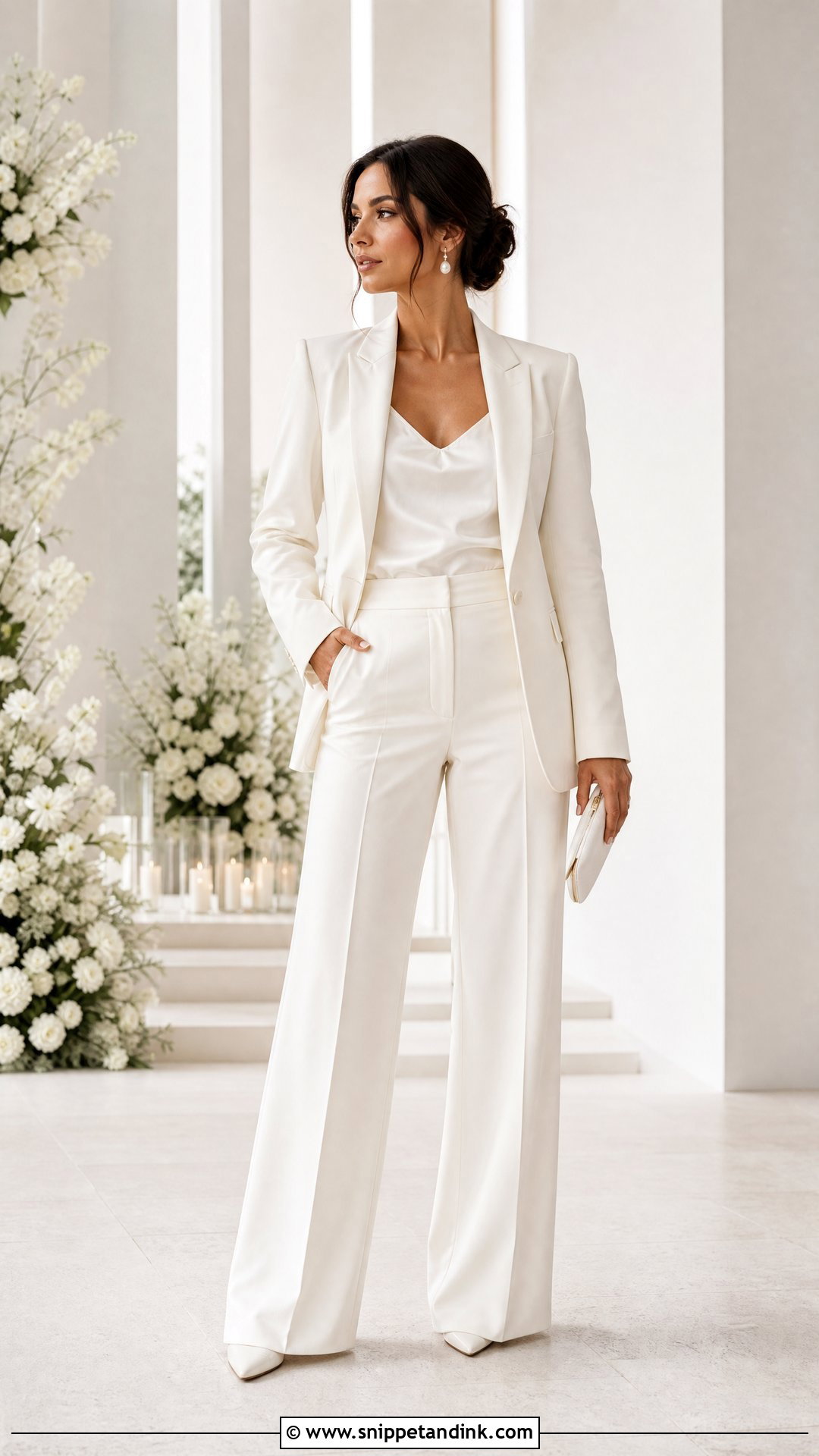
Wide trousers move with you, so this is the suit I suggest to brides who want drama when they walk without a train to manage. A single-breasted blazer shaped at the waist balances the volume, and high-rise, floor-skimming trousers add length. Underneath, a silk camisole, satin shell or bodysuit in the same ivory. Pointed pumps keep the line long; block heels are kinder outdoors. Pearl drops, a structured clutch and a low bun finish it, with a detachable veil for the ceremony. Ivory varies a lot between fabrics, so I hold the jacket, trousers and top together in daylight before anything gets altered.
2. White Double-Breasted Wedding Suit
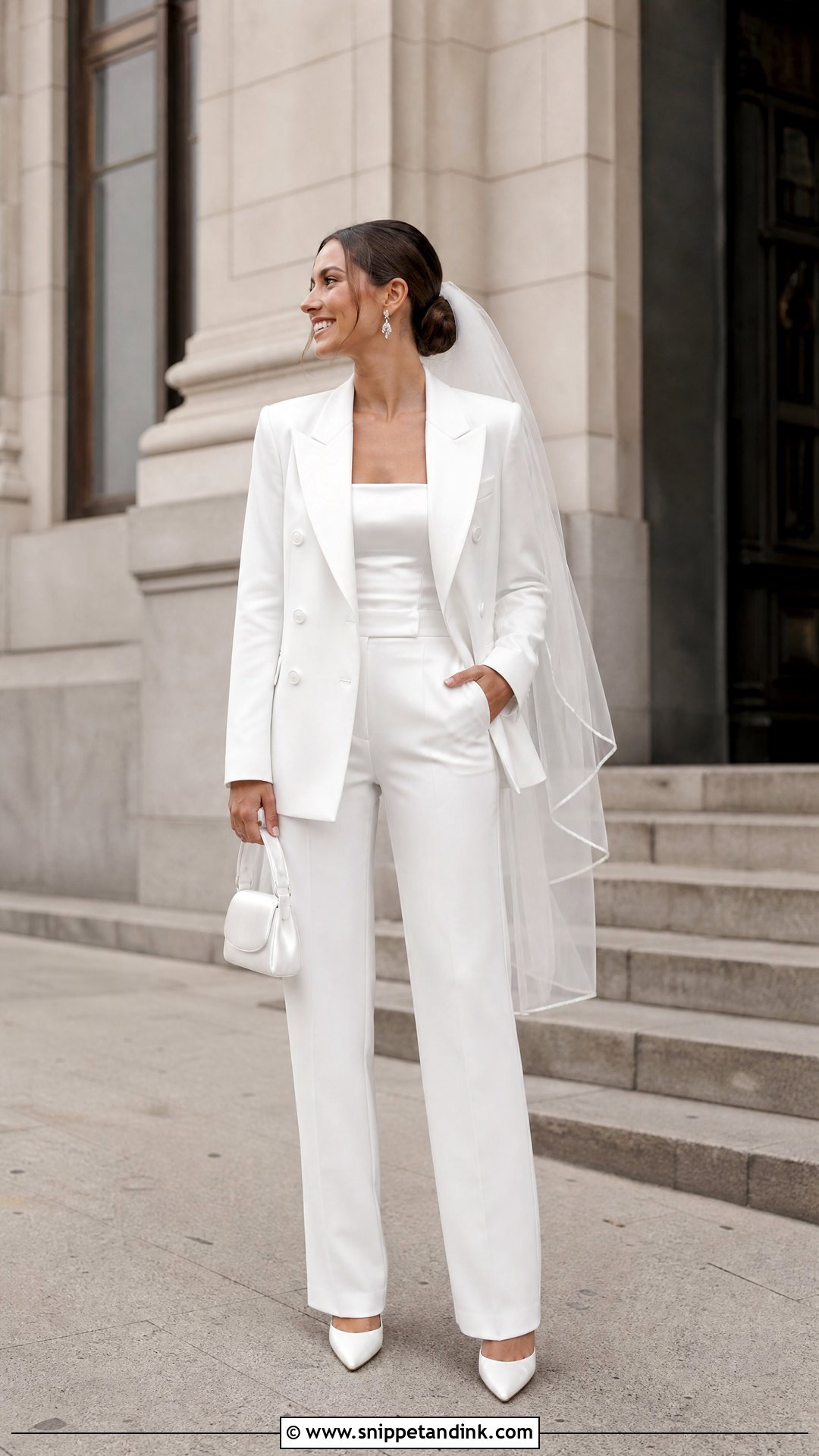
Double-breasted jackets add structure across the chest, which reads confident and fashion-forward. A white double-breasted wedding suit needs a slightly shaped waist and buttons that lie flat when fastened; if they strain, the jacket is too small and no tailor can fix it. Straight or gently tapered trousers balance the top. A silk tank or square-neck bodysuit keeps it from looking corporate. White pointed heels, crystal earrings and a satin bag finish it, and a fingertip veil or small floral hair piece softens it. City ceremonies, courthouses and reception changes suit it well.
3. Three-Piece Wedding Suit With Waistcoat
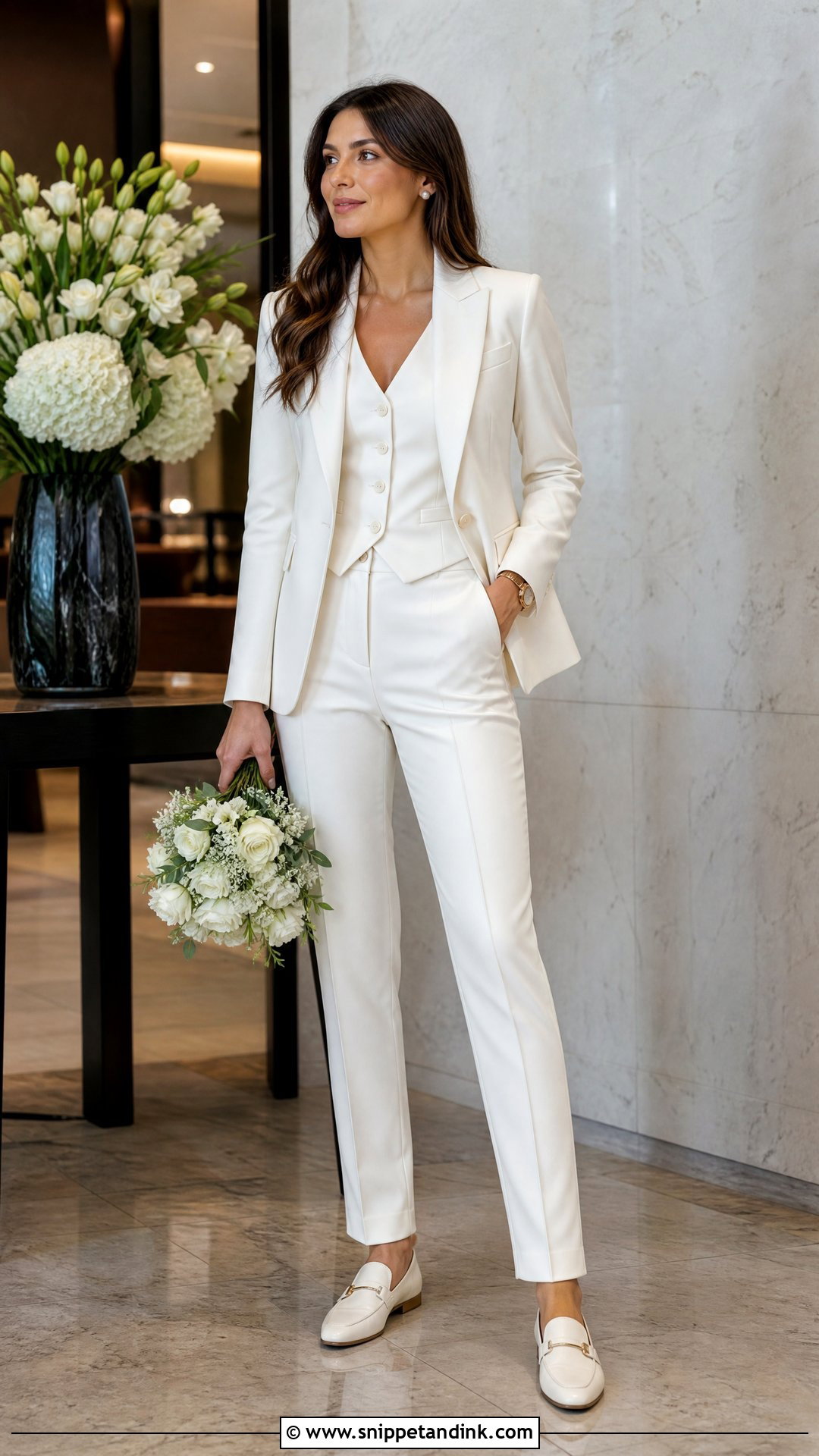
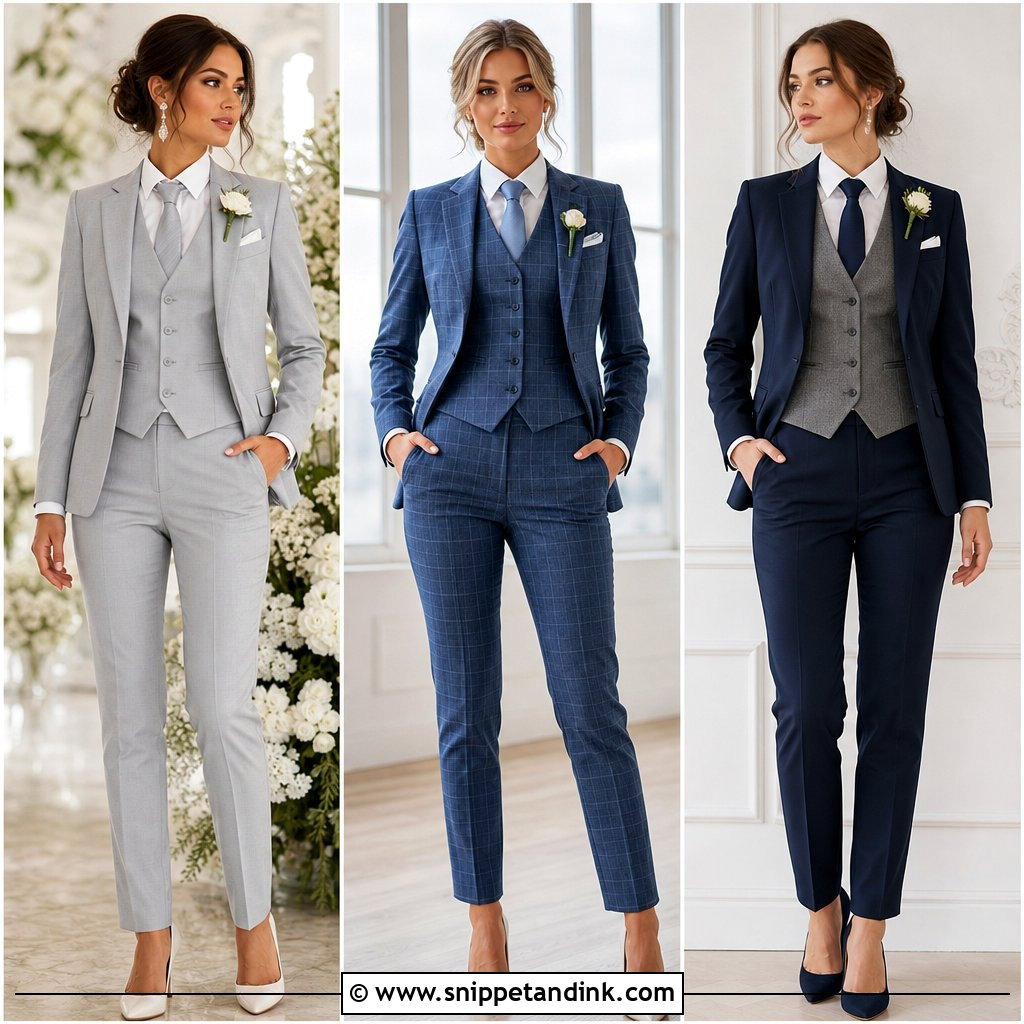
Three pieces means three looks across the day: full suit for the ceremony, waistcoat and trousers for the reception. Build it in white, cream or ivory with a fitted blazer, coordinating waistcoat and high-rise trousers. I fit the waistcoat with a little ease, because a tight one creases across the stomach as soon as you sit for dinner. Sleek pumps or polished loafers both work. Pearl studs, a fine watch and a top-handle bag keep it neat, and a low ponytail under a long veil makes a sharp contrast with the tailoring. Matching buttons across all three pieces keep it cohesive.
4. Satin Lapel Wedding Tuxedo
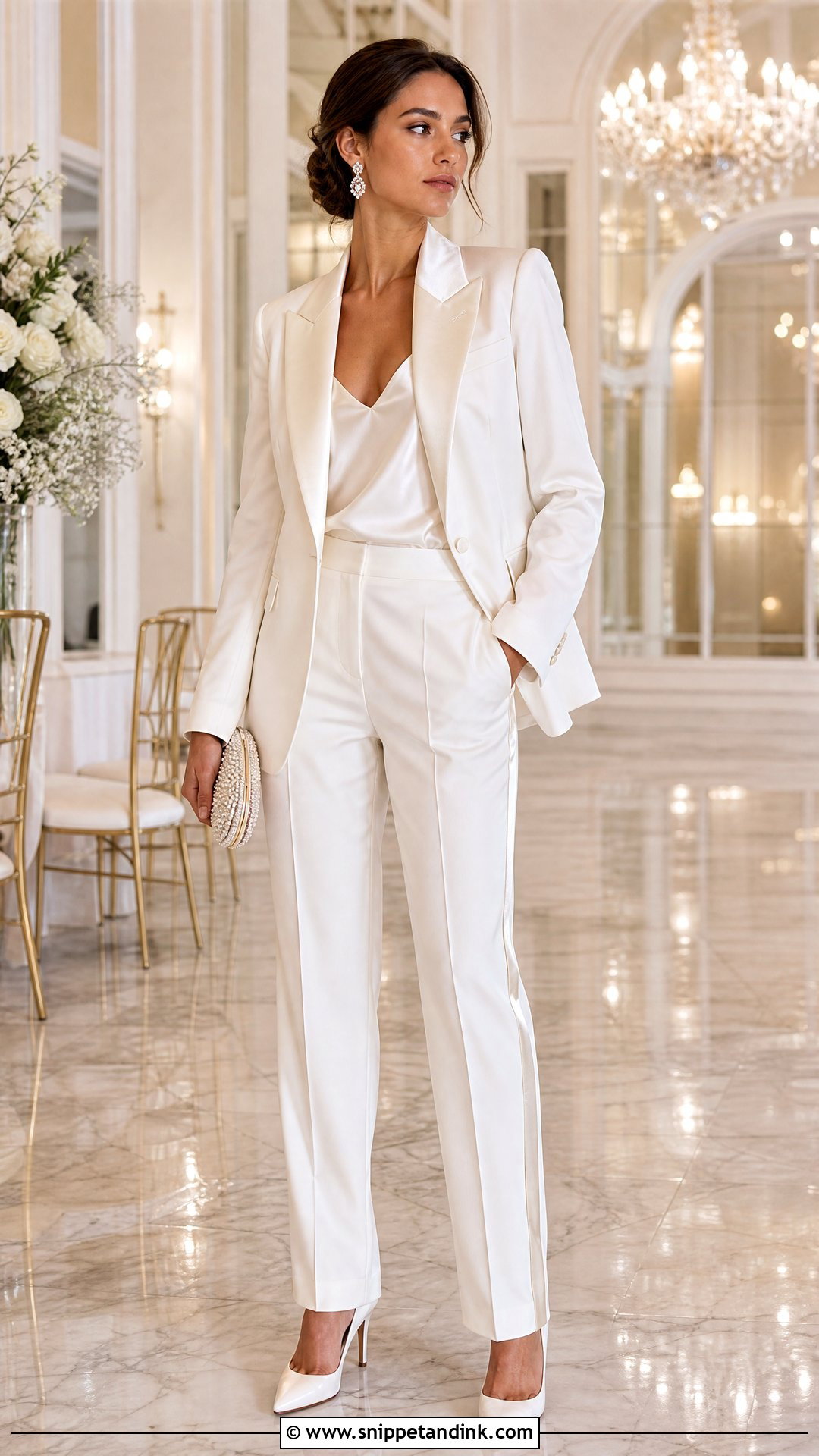
Satin peak lapels on a white or ivory jacket are the clearest signal of evening formality short of a gown. A satin lapel wedding tuxedo pairs with straight-leg trousers carrying a subtle satin side stripe. A silk camisole keeps the neckline soft; a crisp shirt and small bow tie push it toward a traditional black-tie reading. Pointed pumps, a crystal clutch and understated sparkle finish it, with hair in a low chignon so the lapels stay visible. I hem tuxedo trousers to just clear the floor in the exact shoes. Steam satin from a distance, since direct heat leaves shiny marks.
5. Wedding Suit With Lace Camisole
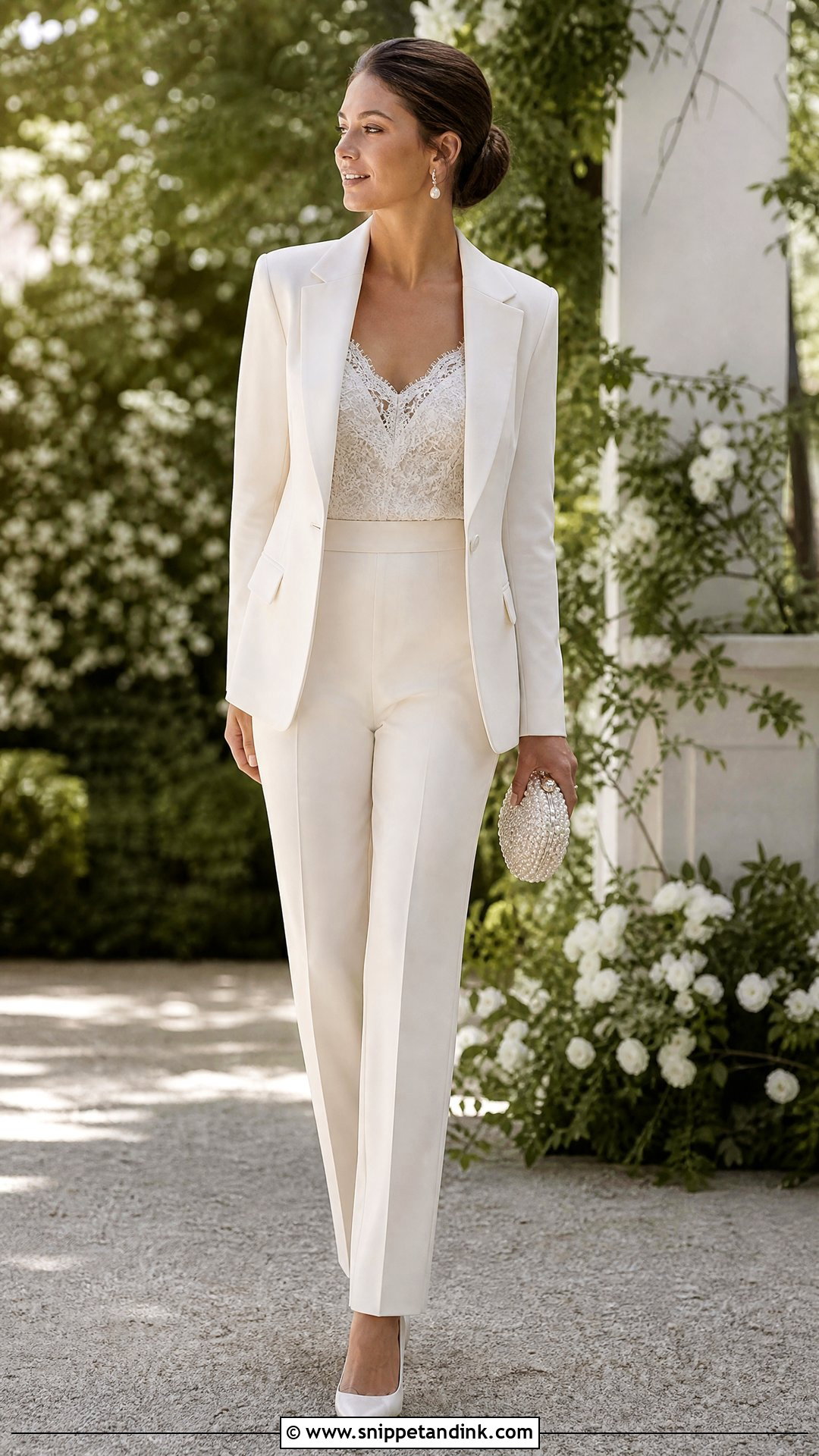
Lace under a structured jacket gives romance without losing the clean line. Start with an ivory single-breasted blazer and matching trousers, then layer a good lace camisole beneath. A scalloped neckline adds detail, but it must sit securely; I check it with the client bending forward. Nude-lined lace gives the pattern definition; fully ivory lace reads softer. Pointed pumps, pearl earrings and a small beaded clutch complement it, and other accessories should stay quiet. Garden ceremonies, restaurant receptions and courthouse weddings suit it, with a loose low bun and natural makeup.
6. Wedding Suit With Corset Top
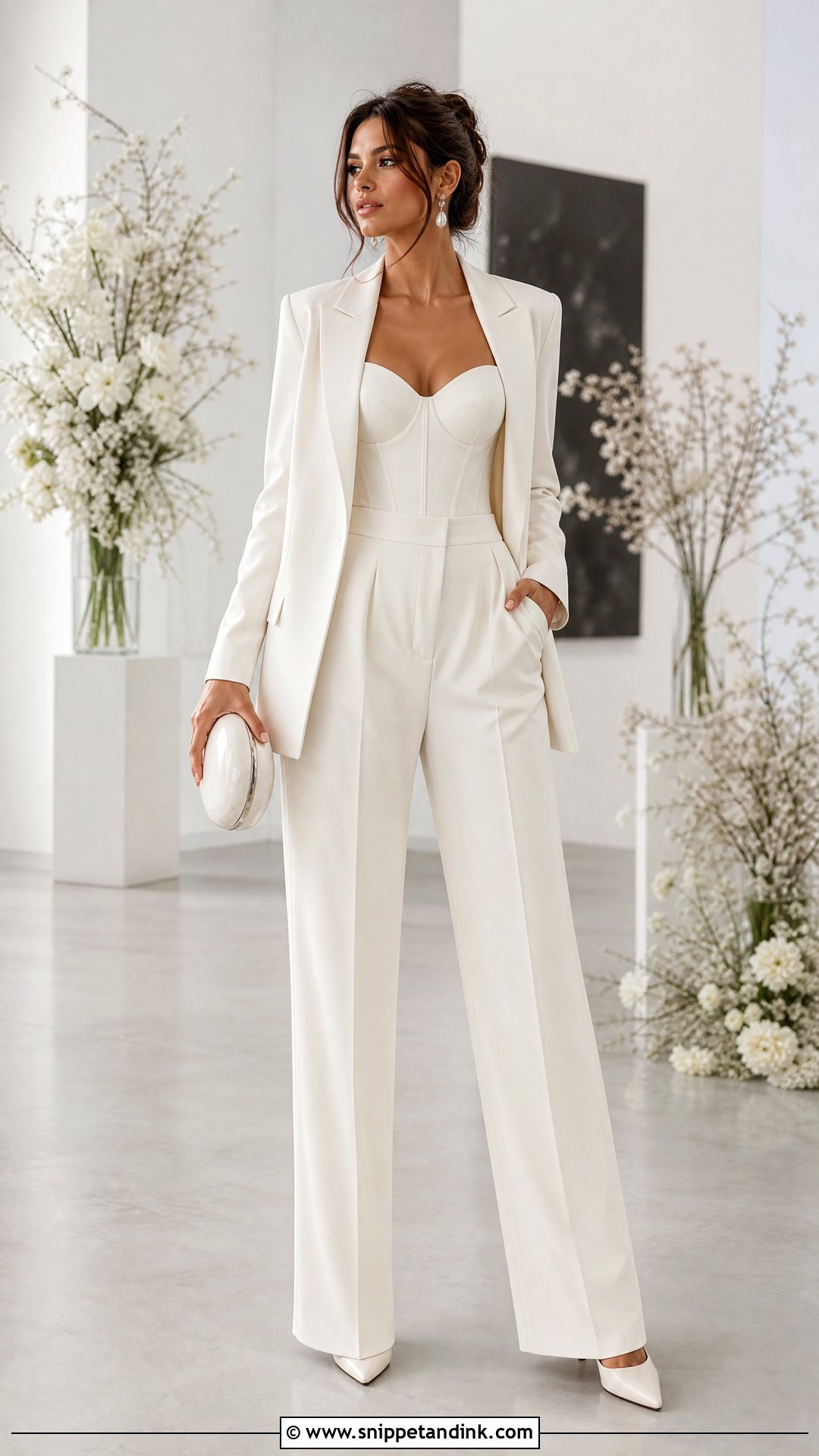
A corset under a blazer shapes the waist and gives you a second look when the jacket comes off. Pair a well-made corset with high-rise wide-leg trousers and a matching white or ivory blazer worn open. The corset needs real boning, supportive cups and enough length to meet the waistband; a short one leaves a gap that opens every time you move. Pointed heels, a sculptural clutch and drop earrings finish it, with a sleek bun or ponytail. Corset sizing doesn’t follow normal tops, so I fit it with the trousers on and have the client sit, lift her arms and walk.
7. Cape Blazer Wedding Suit
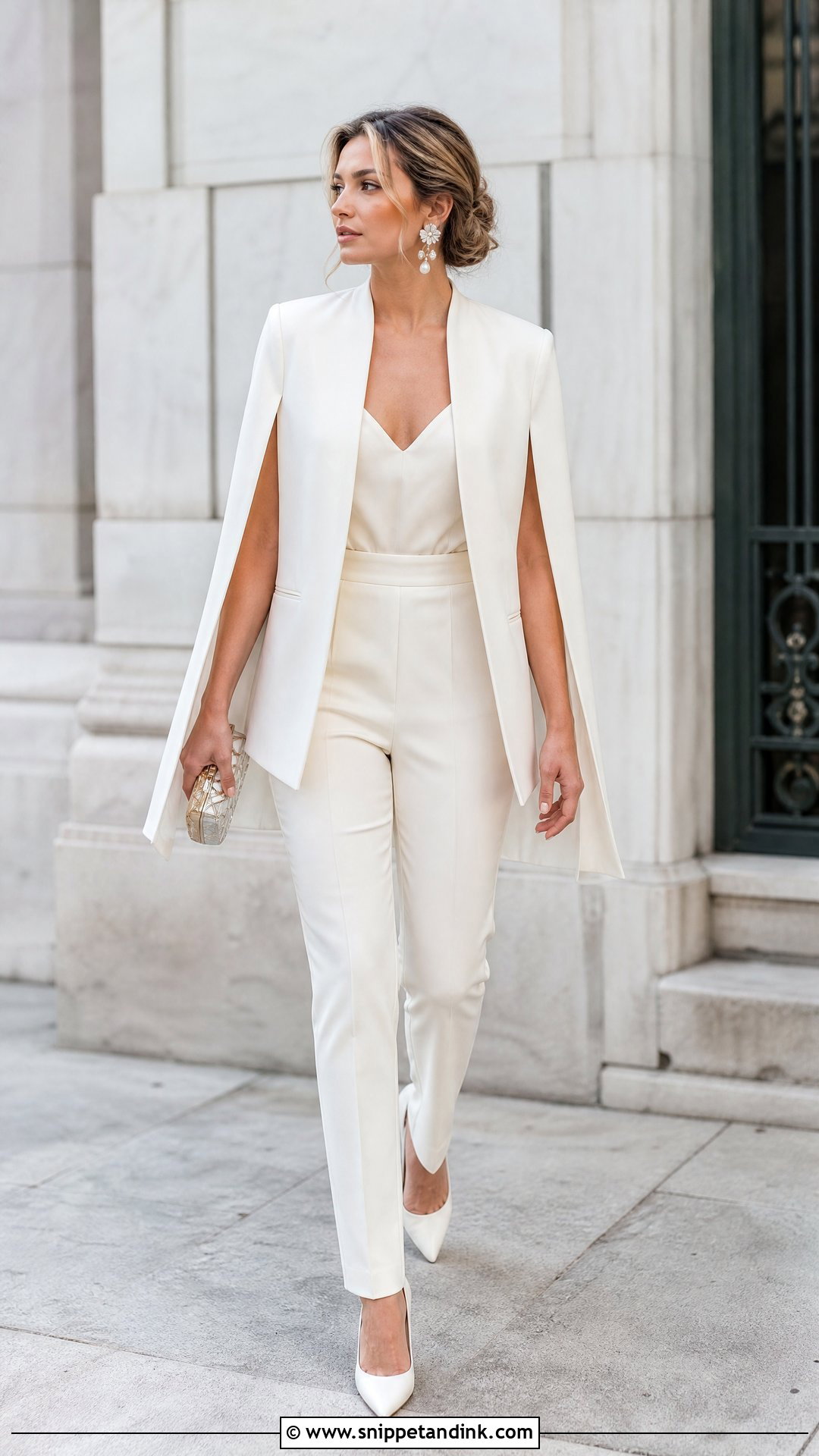
A cape jacket falls from the shoulders and moves as you walk, so it gives drama with no fabric dragging on the floor. Narrow or straight trousers balance its volume. A sleeveless silk shell or minimal bodysuit underneath keeps the foundation smooth. Pointed pumps, statement earrings and a small metallic or satin clutch complete it, and a short veil is optional since the cape already says plenty. Modern indoor ceremonies and city hall weddings suit it. Capes get in the way of a bouquet and a handbag, so practise holding both, and choose lighter fabric if you plan to dance.
8. Peplum Blazer Wedding Suit
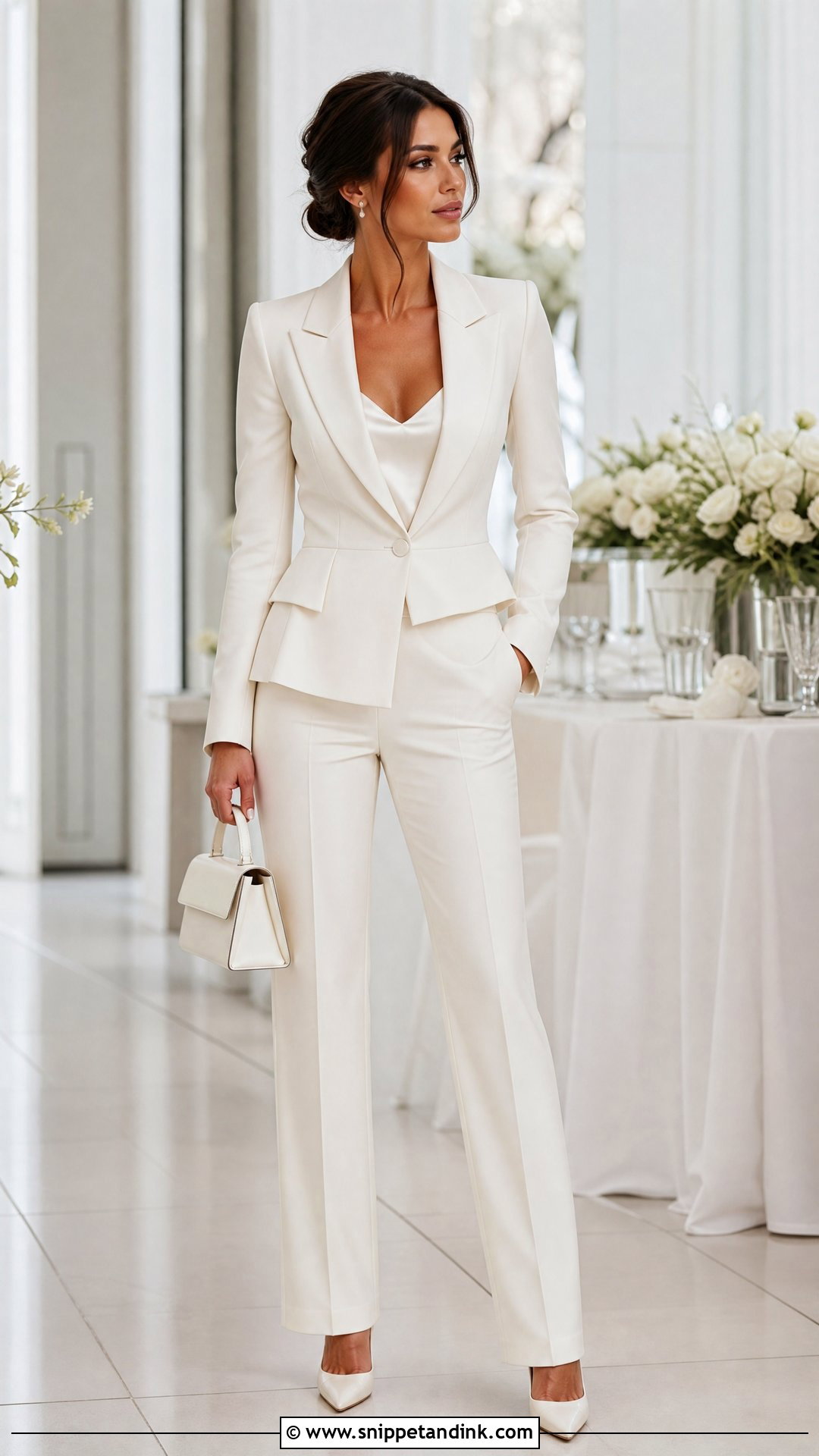
A peplum jacket fits close through the body and flares gently over the hip, which defines the waist without a belt. Pair it with straight or slightly flared trousers in the same fabric. A silk camisole works under a low neckline, or a fully buttoned peplum can be the top when it covers securely. Pointed heels, pearl or crystal studs and a structured mini bag finish it. Keep the flare moderate; a big ruffled peplum looks fussy rather than formal. A smooth updo and minimal necklace let the jacket shape speak.
9. Cropped Blazer Wedding Suit
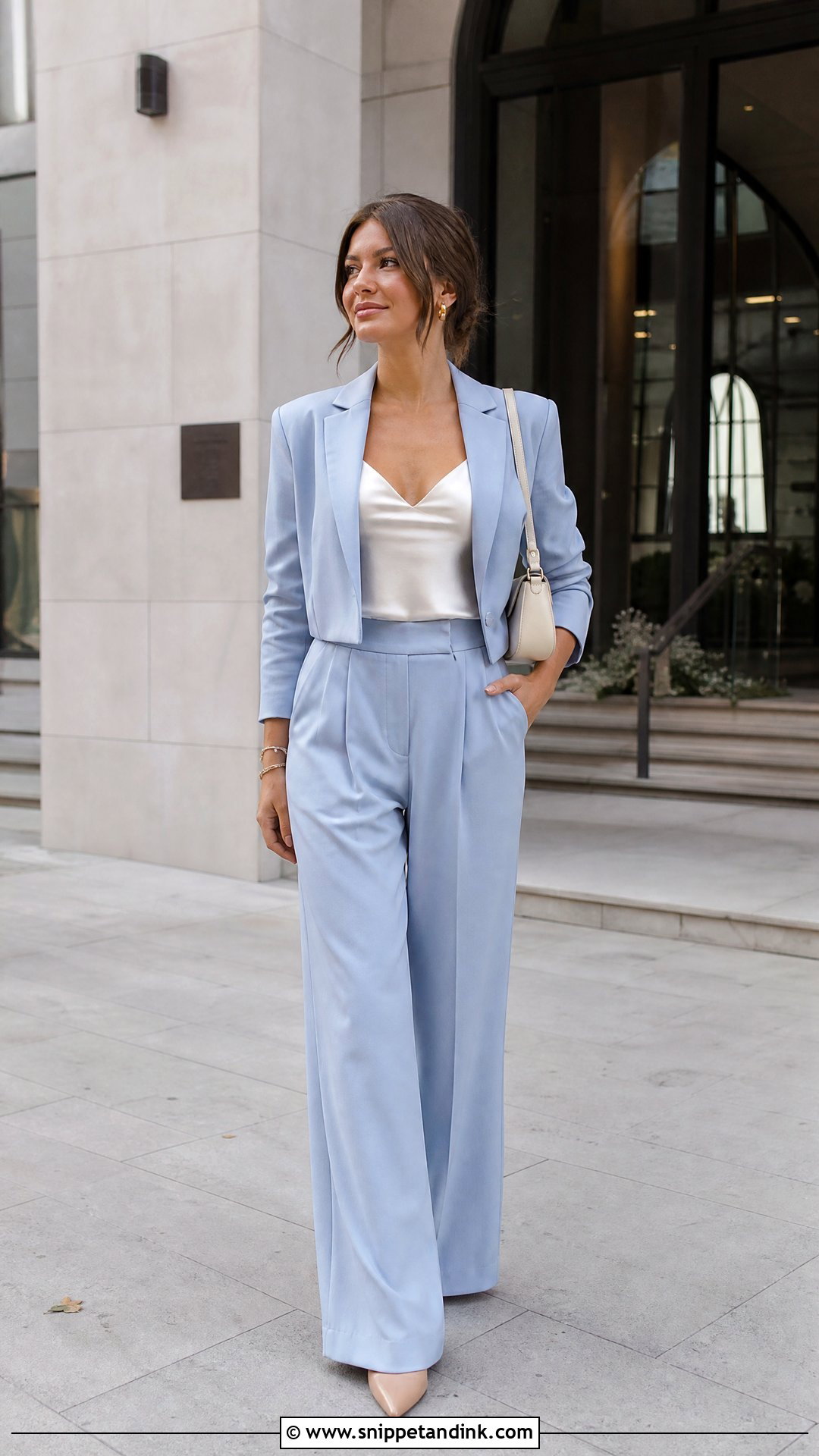
Waist-length jackets with very high-rise trousers look clean and current, showing only a narrow band of the top underneath. A fitted camisole, square-neck bodysuit or silk bandeau works. Trousers skimming the floor over pointed heels make the short jacket look lengthening rather than chopped. A small shoulder bag, simple hoops and a sleek ponytail keep it uncluttered. Brides wear ivory or white; guests can try blue, pink, green or rich neutrals. The jacket must end at the natural waist, not the widest part of the torso, or it adds width exactly where you don’t want it.
10. Longline Blazer Wedding Suit
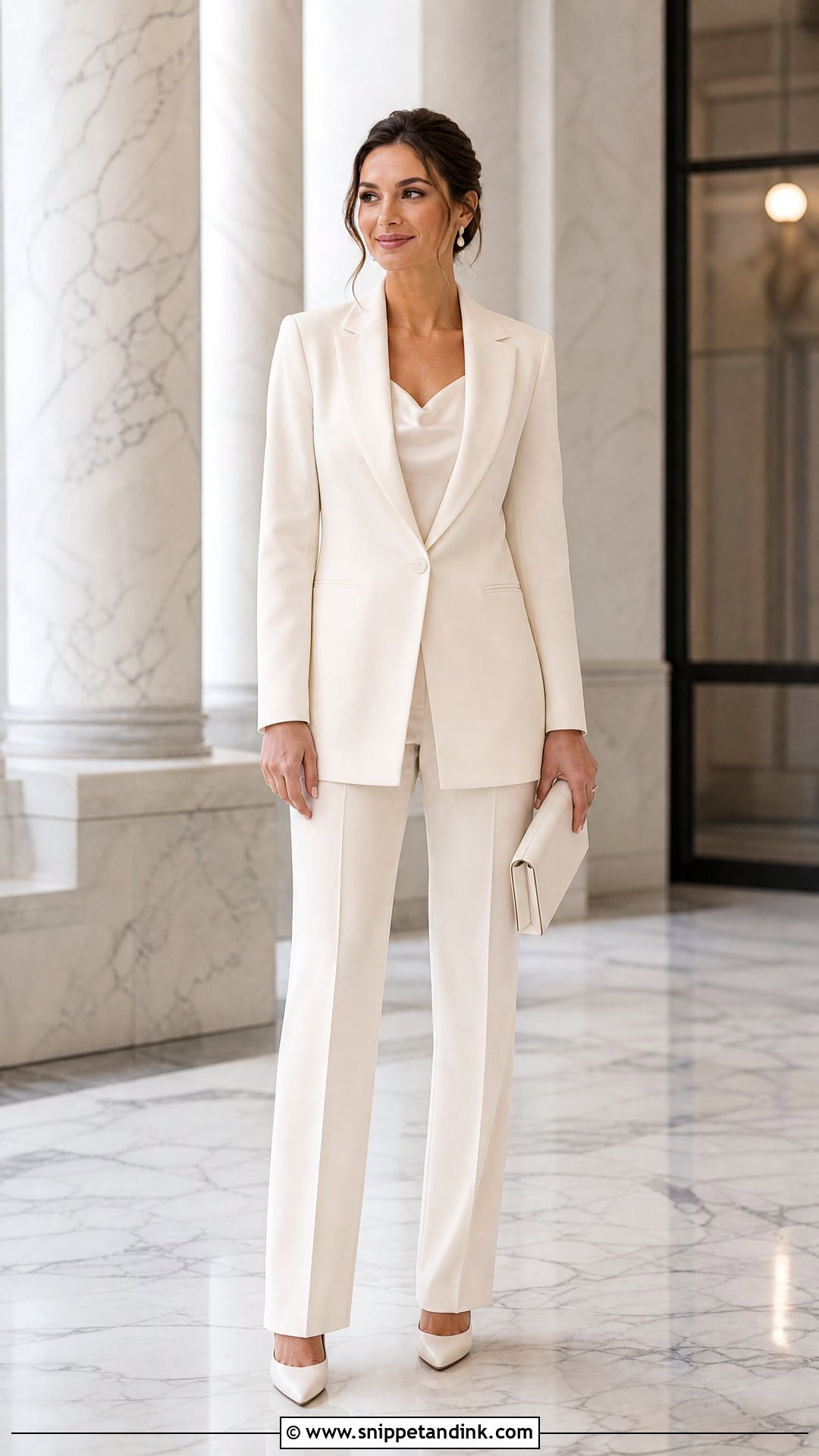
A jacket that falls below the hip gives coverage and an easy, relaxed sophistication. Look for subtle waist shaping and a clean single-button closure, with straight or gently tapered trousers so it doesn’t look bulky. A tonal silk blouse or fitted camisole keeps things streamlined when the blazer is open. Pointed pumps make it formal; embellished flats are a good option for a long day. A structured clutch, delicate earrings and a low bun finish it. Tall women carry this length easily. On a petite frame, I’d shorten the jacket a little and pair it with high-rise trousers to protect the leg line.
11. Midi Skirt Wedding Suit
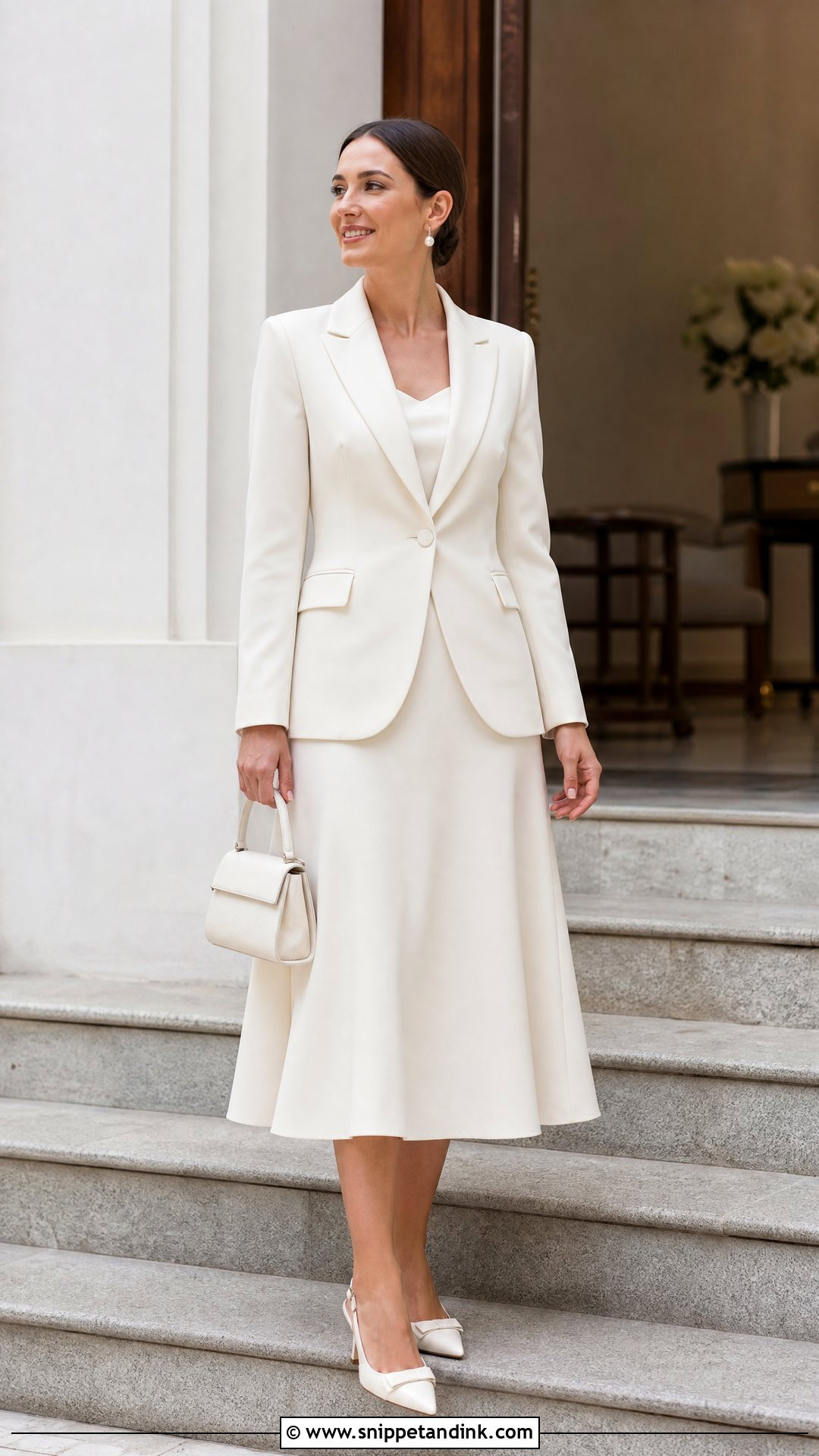
Not every bride wants trousers, and a midi skirt suit keeps the blazer’s structure with a skirt’s movement. Pair a fitted ivory jacket with a matching column, A-line or softly pleated midi. A silk shell is a clean base; a lace camisole adds bridal texture. Slingbacks or pointed heels that show the ankle keep the midi length from looking heavy. Pearl earrings, a compact handbag and a neat updo or waves finish it. Courthouse ceremonies, daytime receptions and civil weddings suit it. A straight midi needs a vent or kick pleat so you can climb steps comfortably.
12. Mini Skirt Wedding Suit
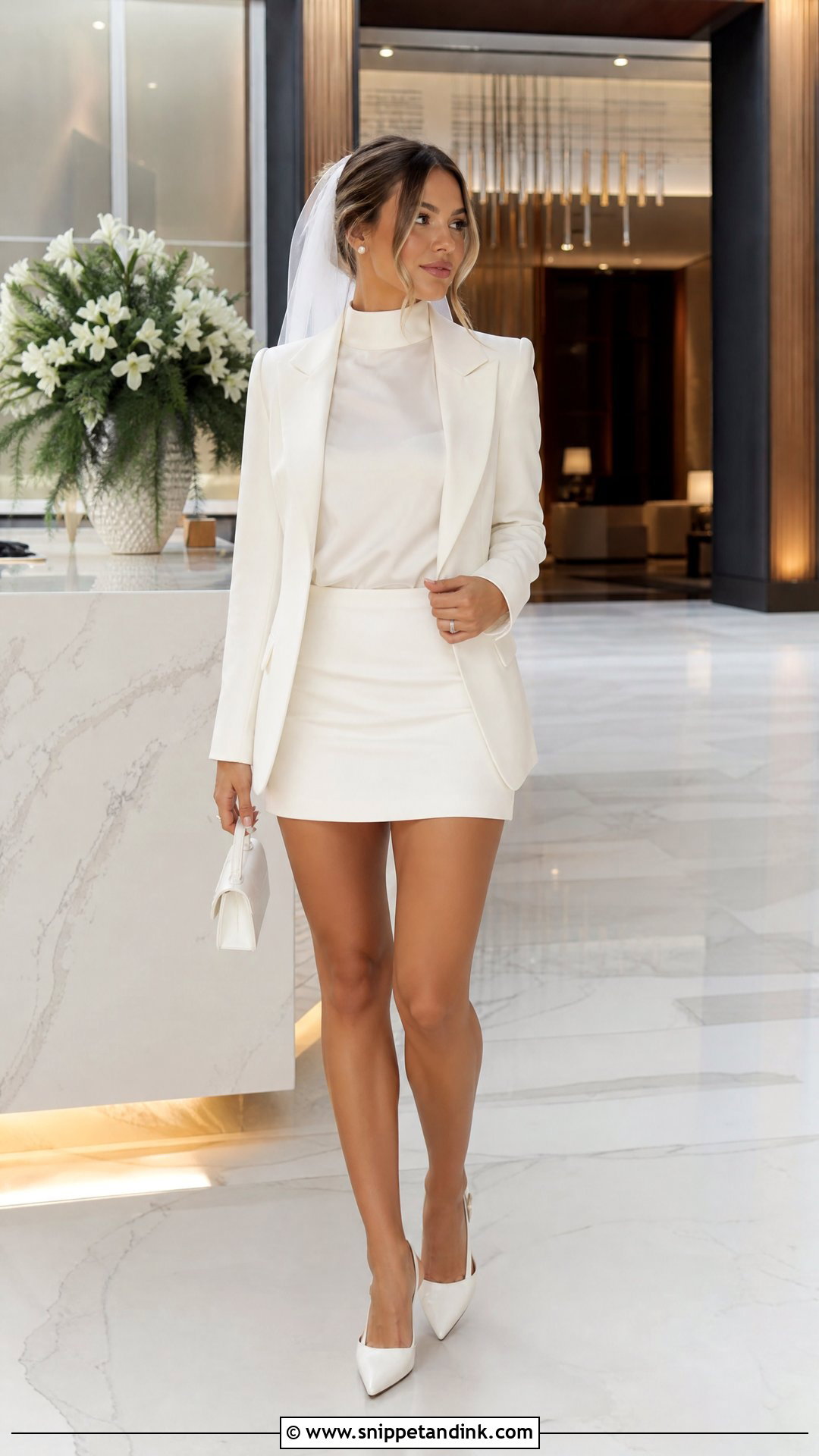
A tailored mini with a matching jacket is playful and still clearly bridal, which makes it a good civil ceremony outfit, welcome party look or reception change. Start with a fitted or slightly oversized ivory blazer and a structured mini. A high-neck silk shell, satin cami or fully buttoned jacket balances the short hem. Sheer tights help in cold months. Pointed pumps, slingbacks or ankle straps work depending on the venue, with a top-handle bag, pearl studs and a short veil. Sit down in it before final alterations; minis ride up more than you expect on a low chair.
13. Satin Wedding Suit
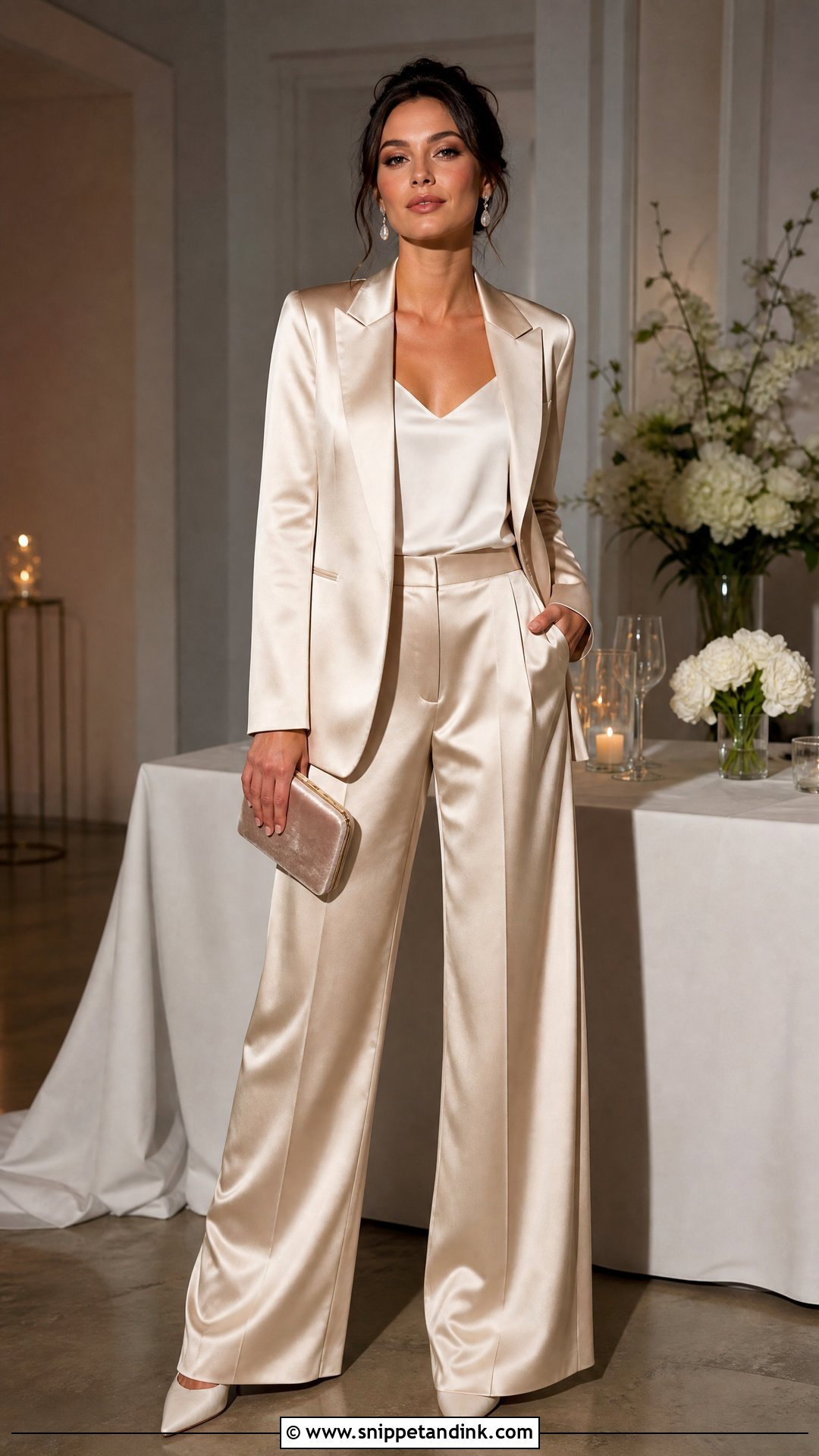
Satin reflects light, which looks striking in the evening and unforgiving in harsh daylight. Choose a fluid blazer and wide-leg trousers in ivory, champagne, navy or another appropriate color, cut simply with minimal hardware. A matte crepe camisole breaks up the shine. Sleek pointed heels, a velvet or beaded clutch and delicate drop earrings finish it, with a smooth bun or side-parted waves. Satin shows wrinkles, water spots and strain at the seams more than suiting does, so I insist on good lining and a little ease across the hips. Steam it; never press it directly with a hot iron.
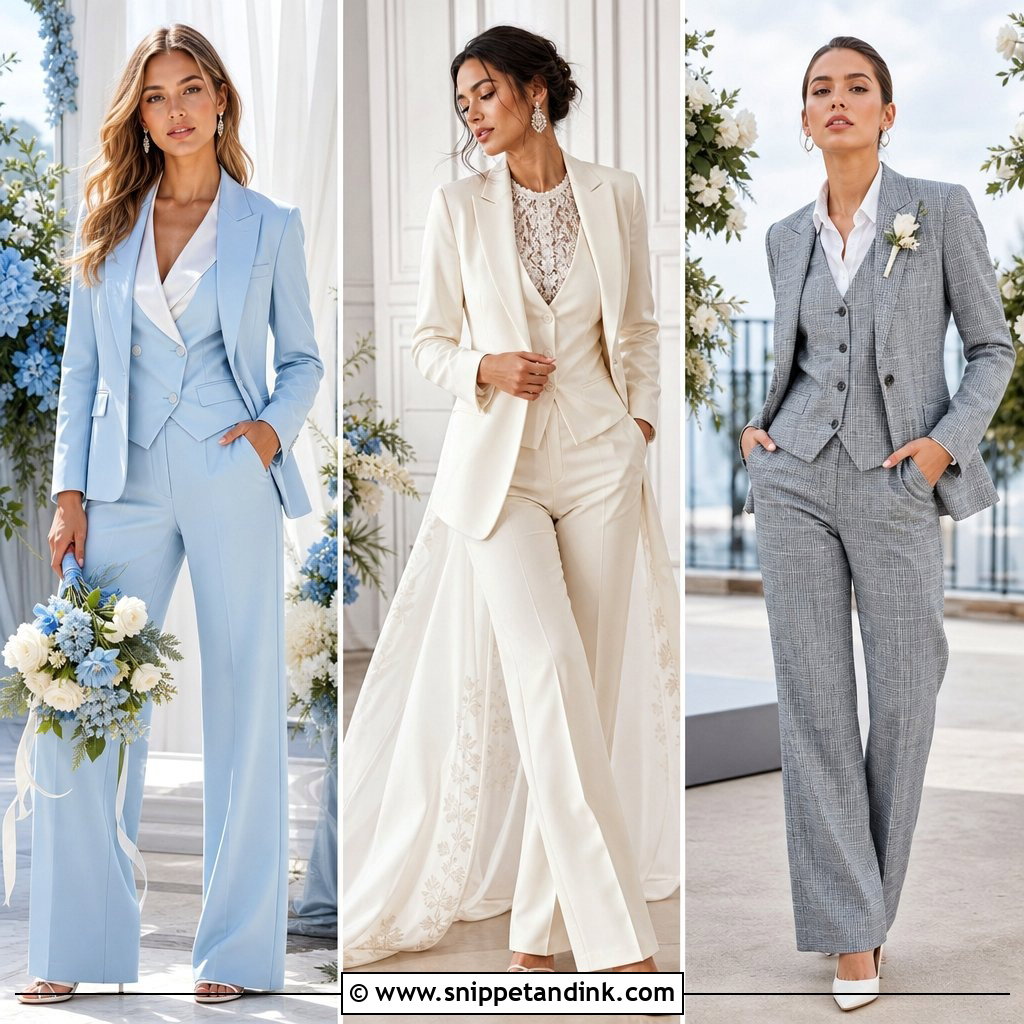
14. Linen Wedding Suit
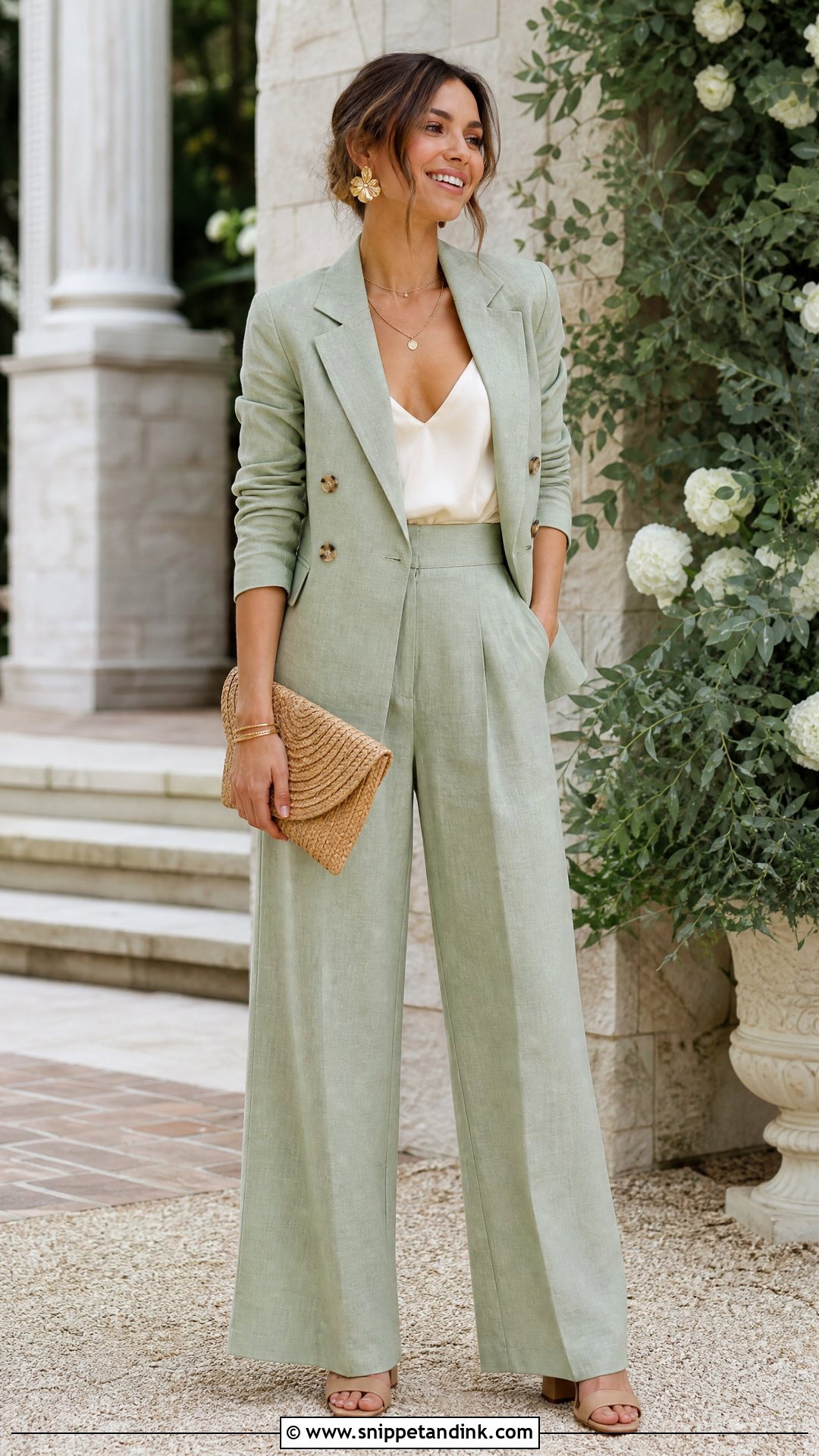
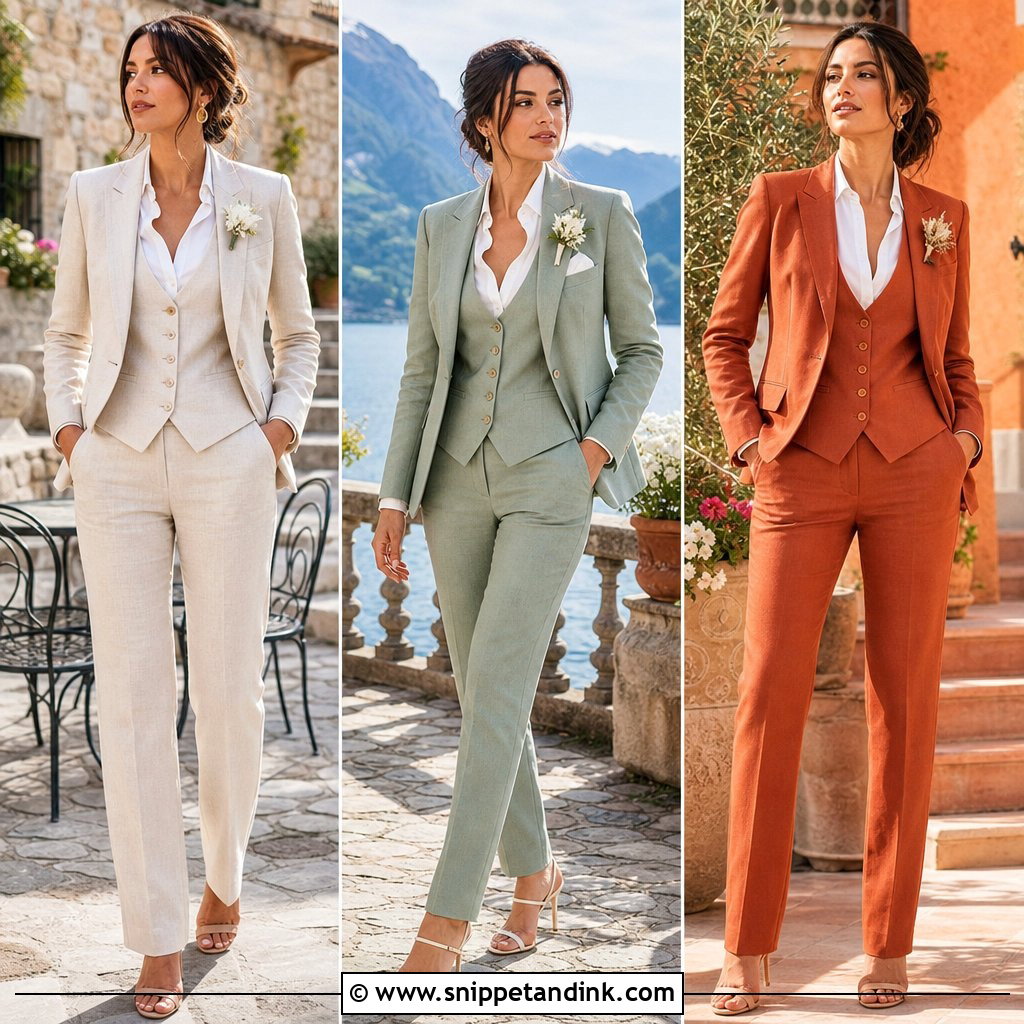
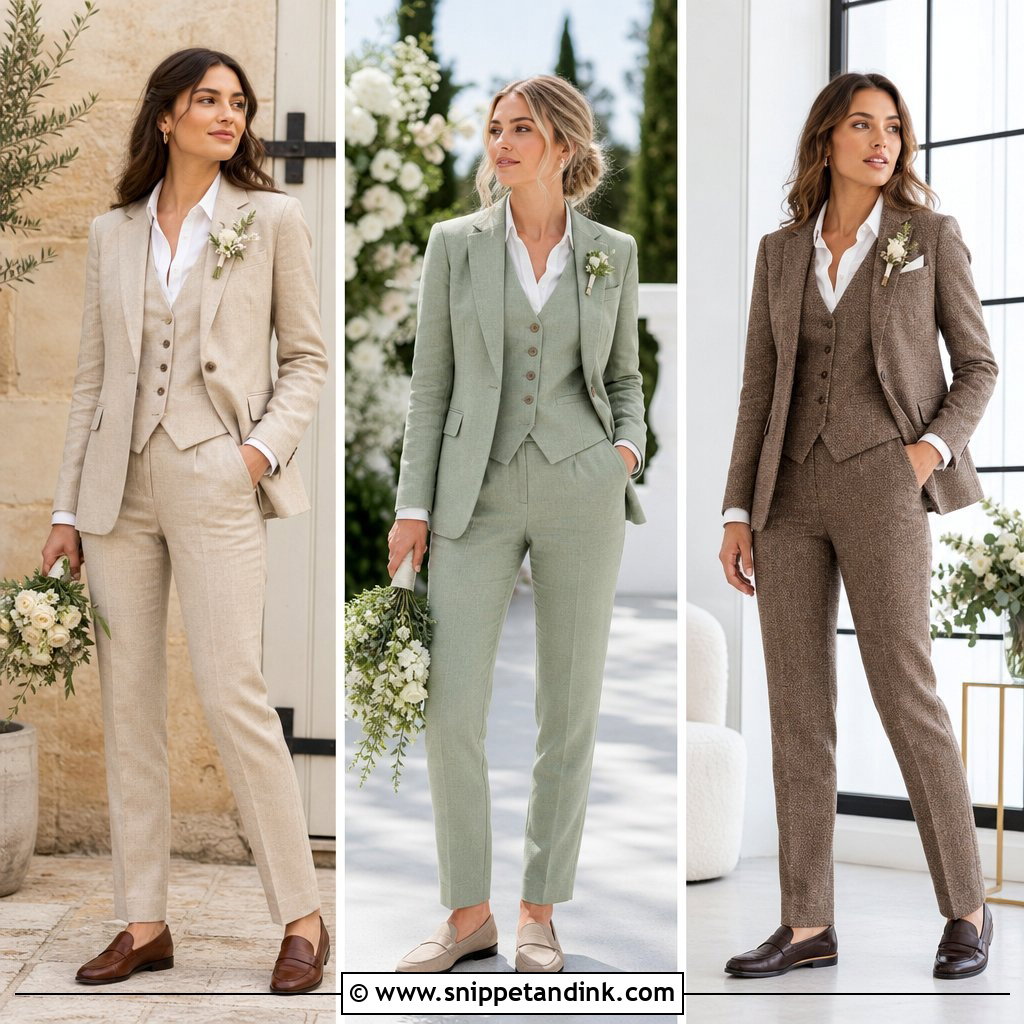
Heat is where linen proves itself, and a linen wedding suit suits beach, garden and destination weddings better than anything heavier. Choose a lined linen or linen-blend blazer with wide-leg or straight trousers. Brides wear ivory; guests might pick sage, powder blue, coral or sand. A silk camisole underneath adds softness against the texture. Leather block heels, flat sandals or pointed mules manage grass and stone. Add a woven clutch, simple gold jewelry and soft hair. Pure linen creases within minutes of sitting, which is part of its charm; a blend with viscose or silk creases less if that bothers you.
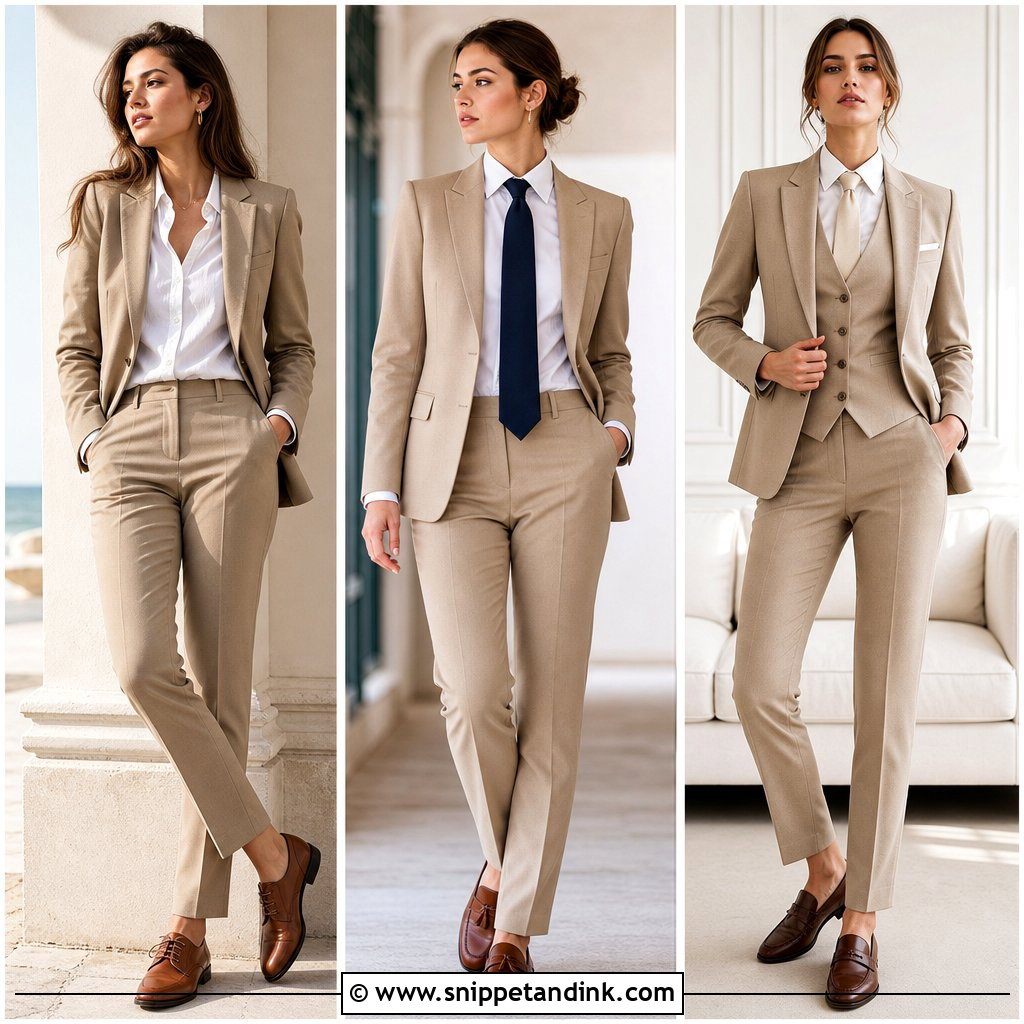
15. Velvet Wedding Suit
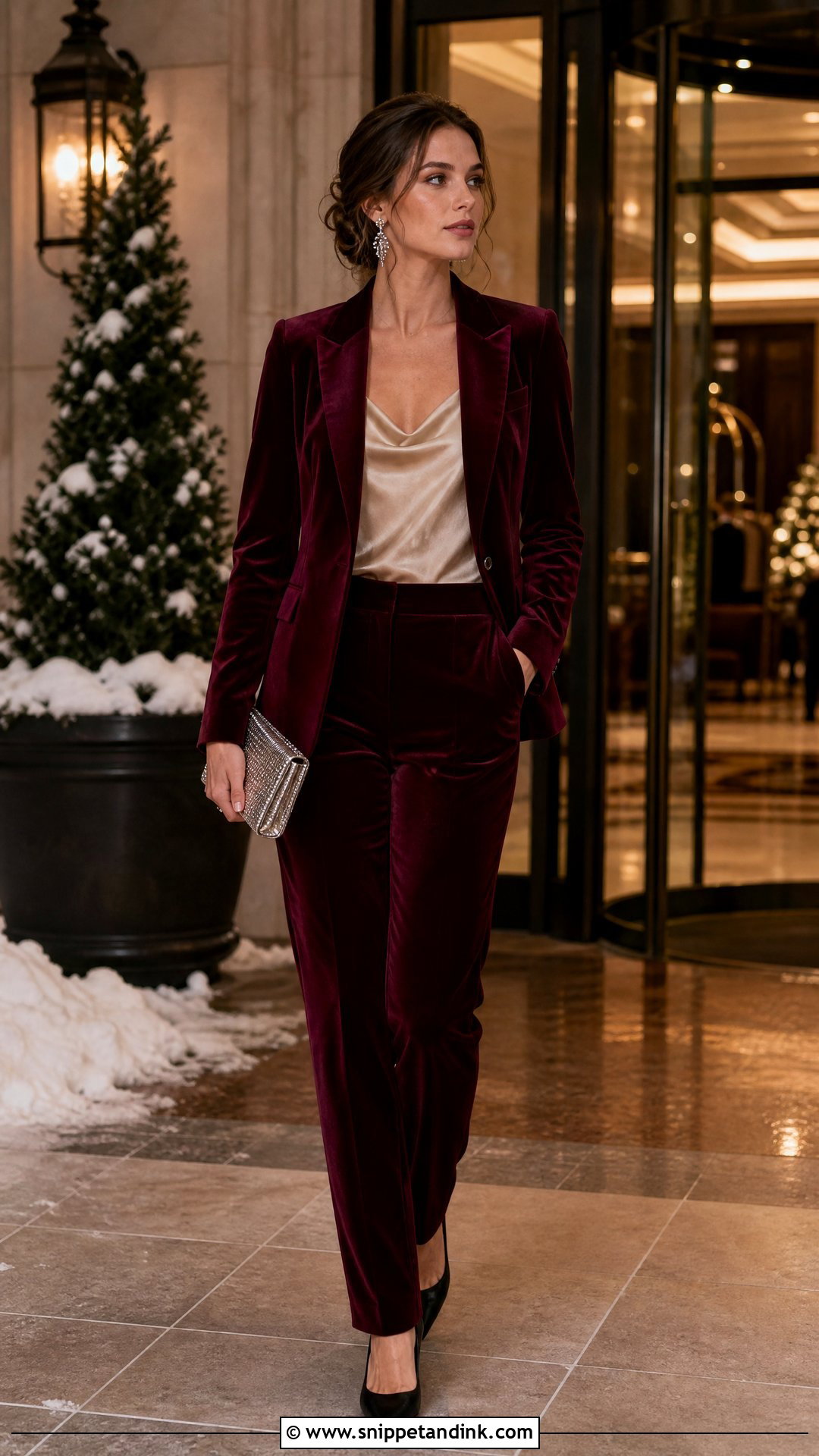
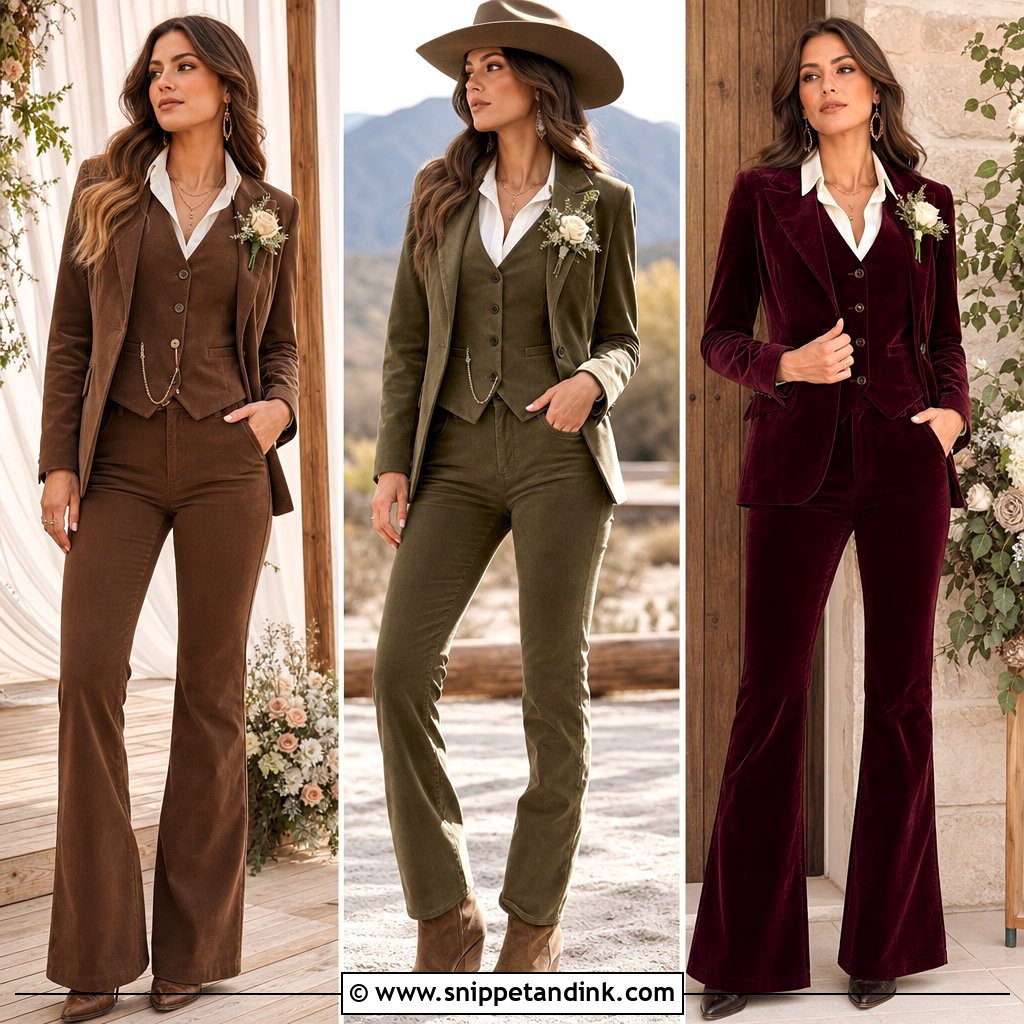
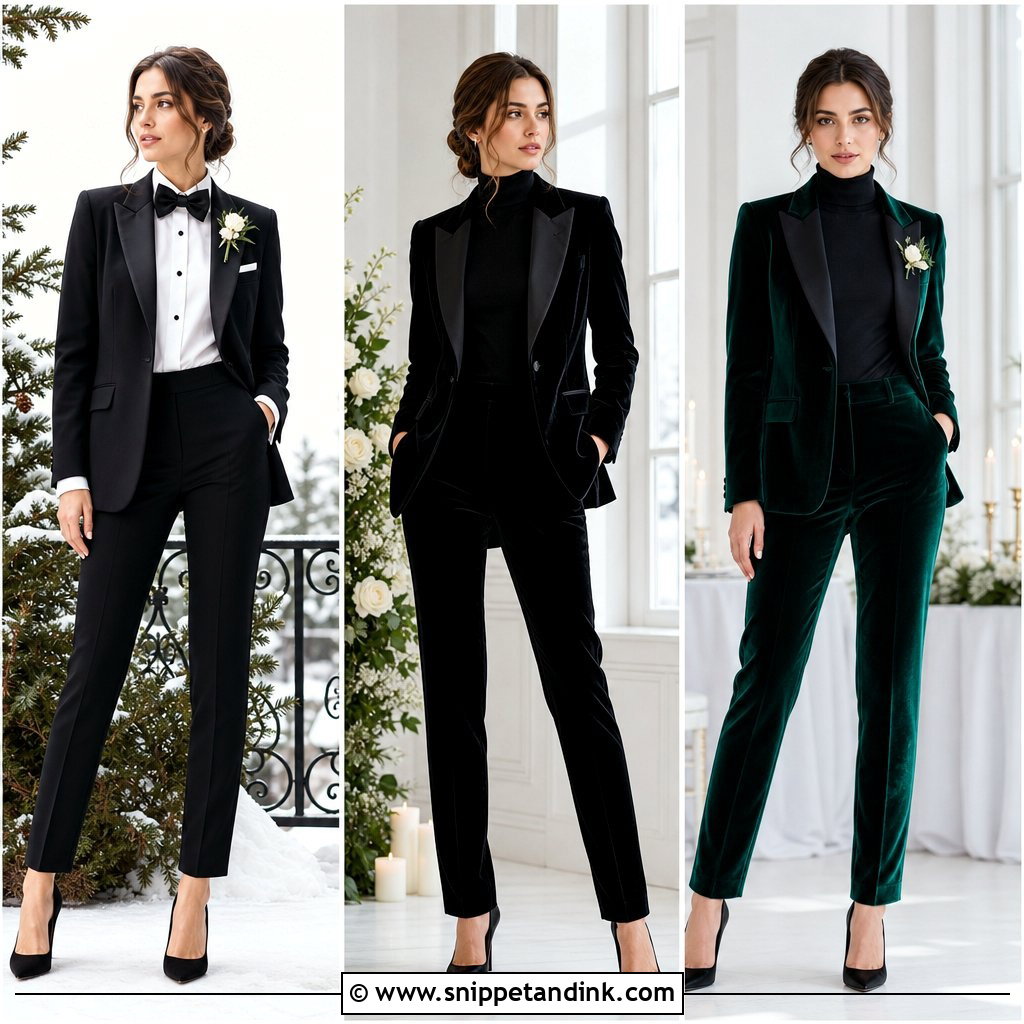
Velvet is warm, deep and formal, so it belongs to cold-weather weddings. A tailored velvet blazer in burgundy, emerald, navy, plum or black pairs with matching trousers or smooth crepe pants. A satin camisole adds contrast and keeps it from feeling heavy. Pointed pumps or closed block heels suit the season, with a metallic clutch, crystal earrings and a sleek low bun. Velvet already carries plenty of texture, so I keep accessories few. Guests should check that dark colors fit the dress code. Velvet crushes where it’s pressed, so hang the jacket in the car rather than wearing it there.
16. Powder Blue Wedding Suit
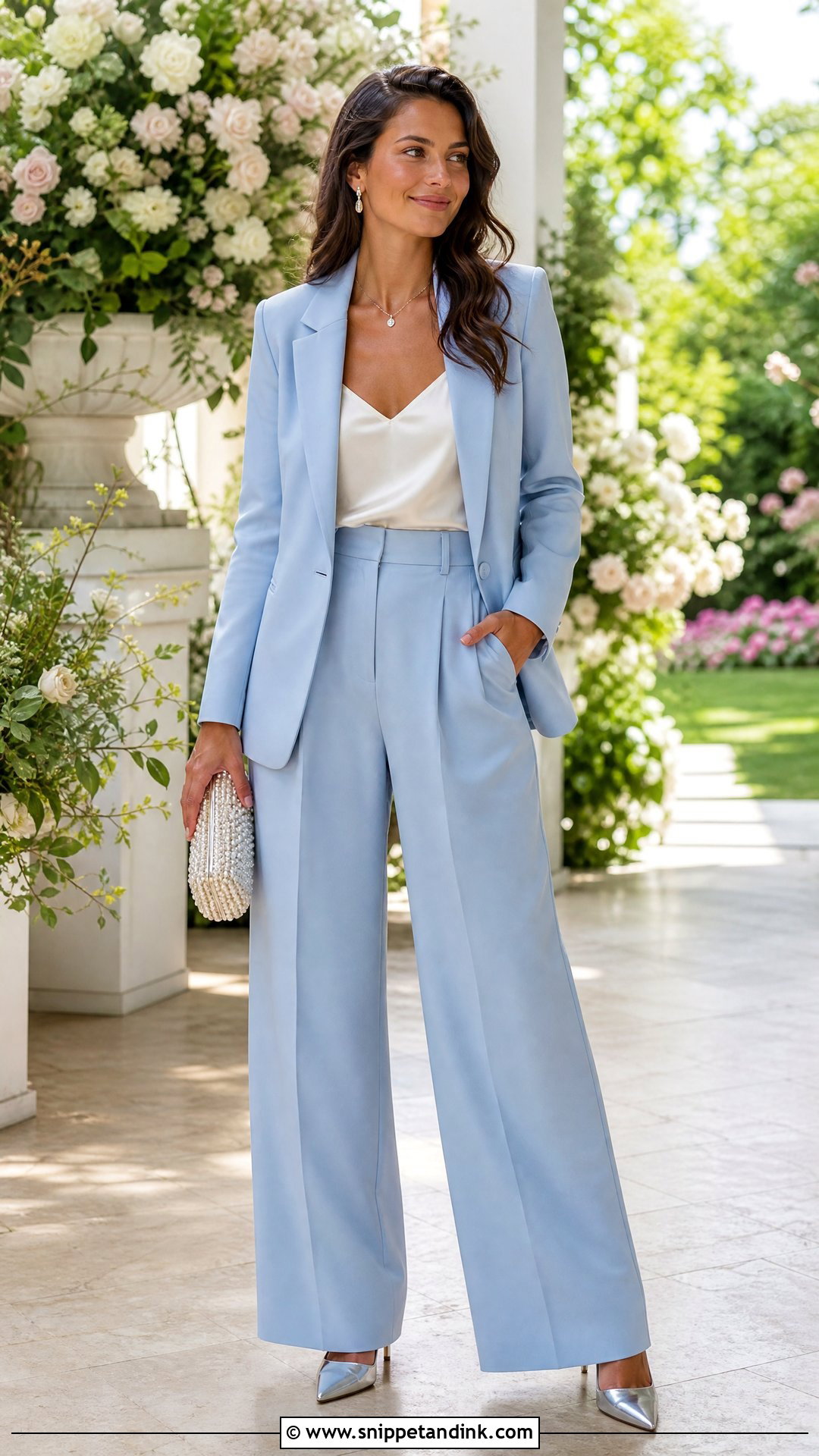
Spring and summer weddings suit powder blue, which reads fresh in daylight. Pair a lightly tailored blazer with high-rise wide-leg trousers and a cream or pale blue silk camisole. Nude, silver or matching blue heels keep it light, with a pearl clutch, fine silver jewelry and a softly structured hairstyle. Guests, bridesmaids and mothers of the couple can all wear it when it fits the palette, and a bride could wear it as her something blue for the reception. Pastels look cheap in thin fabric, so crisp tailoring matters. Check the invitation or wedding website first, as blue is often reserved for the bridal party.
17. Blush Pink Wedding Suit
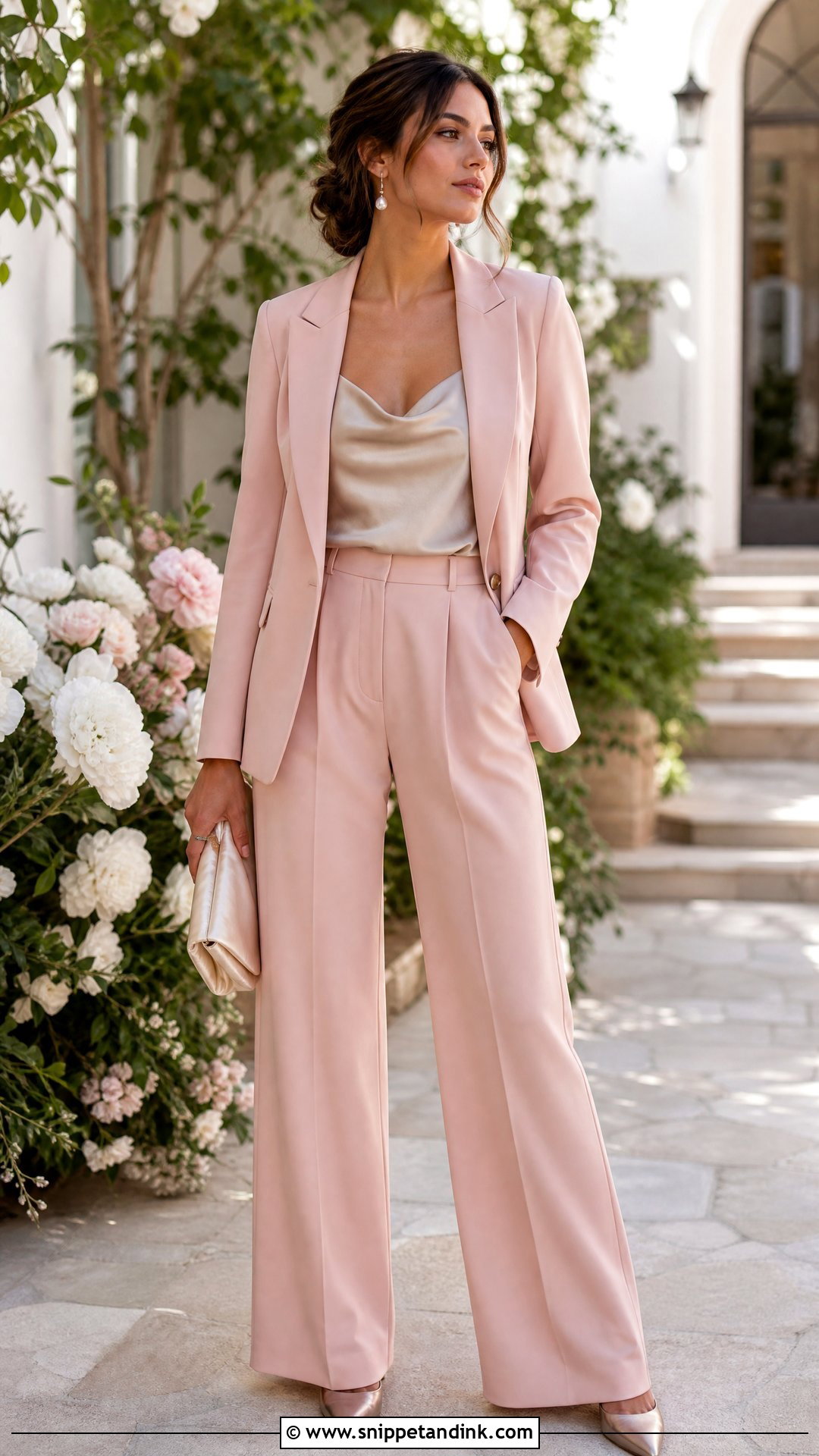
Blush tailoring is a quiet alternative to a floral dress. A single-breasted blazer with matching straight or wide-leg trousers, a champagne silk shell or pale rose blouse underneath, and no distracting prints. Metallic heels feel celebratory; nude pumps lengthen. Add a satin clutch, pearl drops and loose waves or a low ponytail. Daytime ceremonies, garden venues and semi-formal receptions suit it. As a guest, I’d make sure the shade is clearly pink; a very pale blush can look ivory in photos. Dusty rose suits autumn, and a cooler pastel blush suits spring.
18. Sage Green Wedding Suit
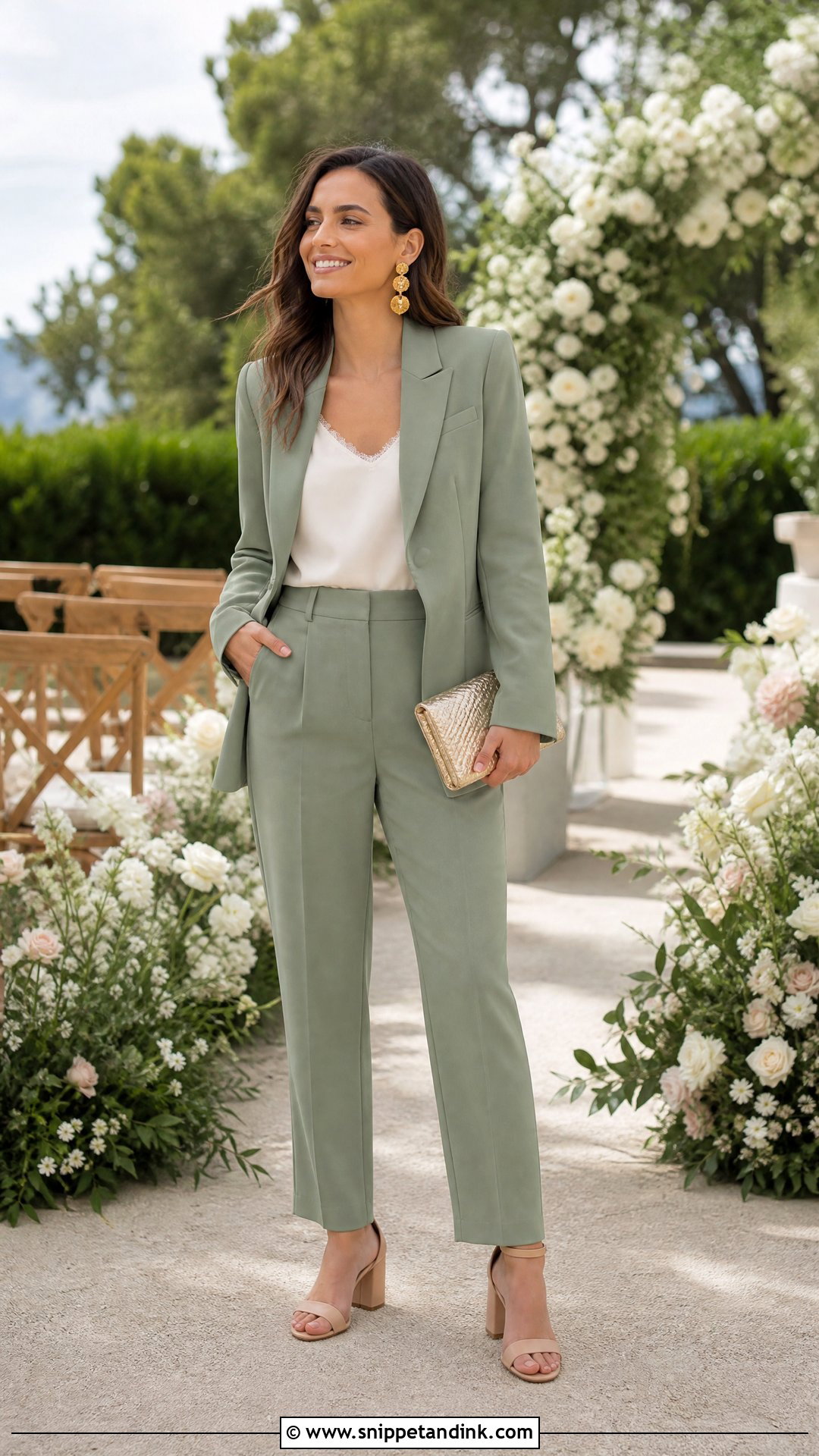
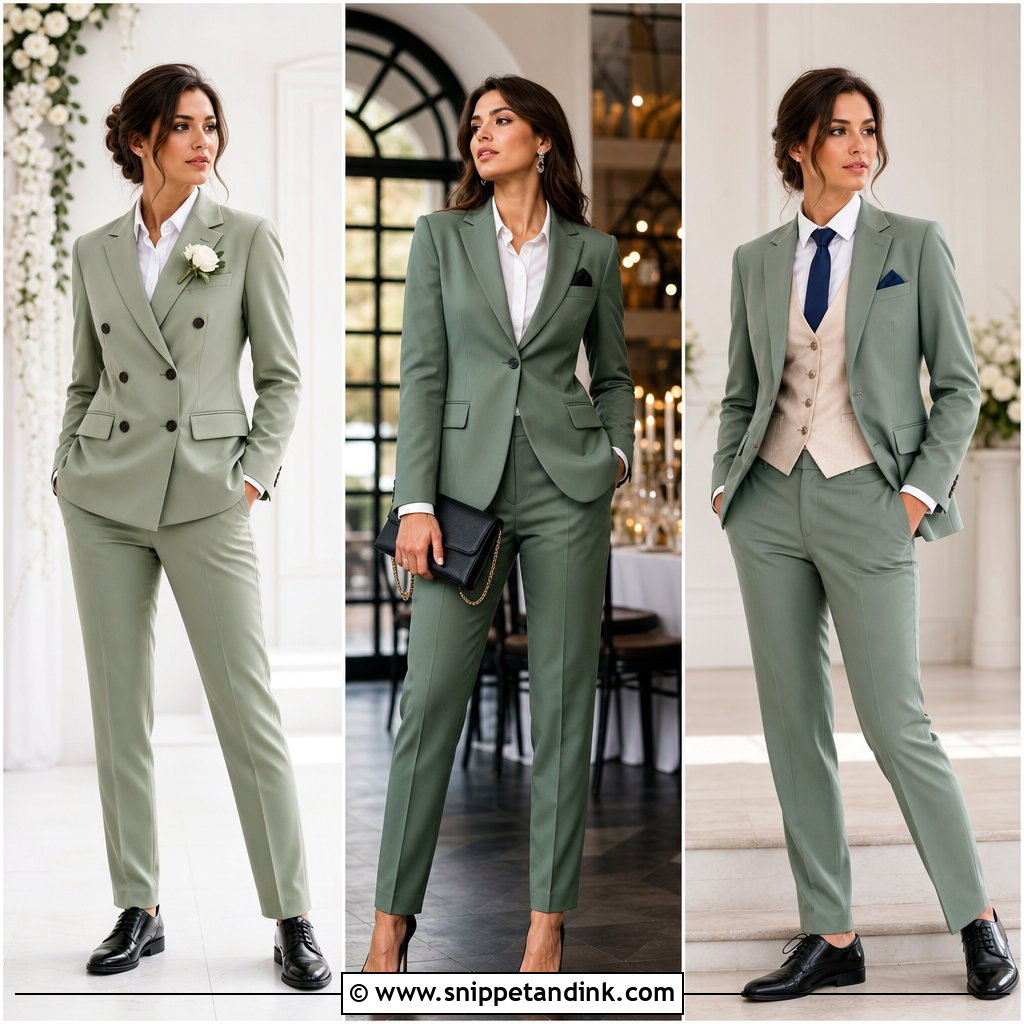
Sage sits comfortably against grass and trees, which is why it’s become a garden wedding favorite. A fluid blazer with soft shoulders and matching high-rise trousers, plus a cream camisole, champagne blouse or tonal green shell, keeps the palette calm. Nude block heels manage lawns better than stilettos; gold earrings and a woven or metallic clutch finish it. Linen blends feel relaxed and crepe or fine wool more formal, so the fabric can carry sage from spring into early autumn. Guests should check green isn’t the bridesmaids’ color. I keep floral accessories small, or the outfit tips into theme.
19. Burgundy Wedding Suit
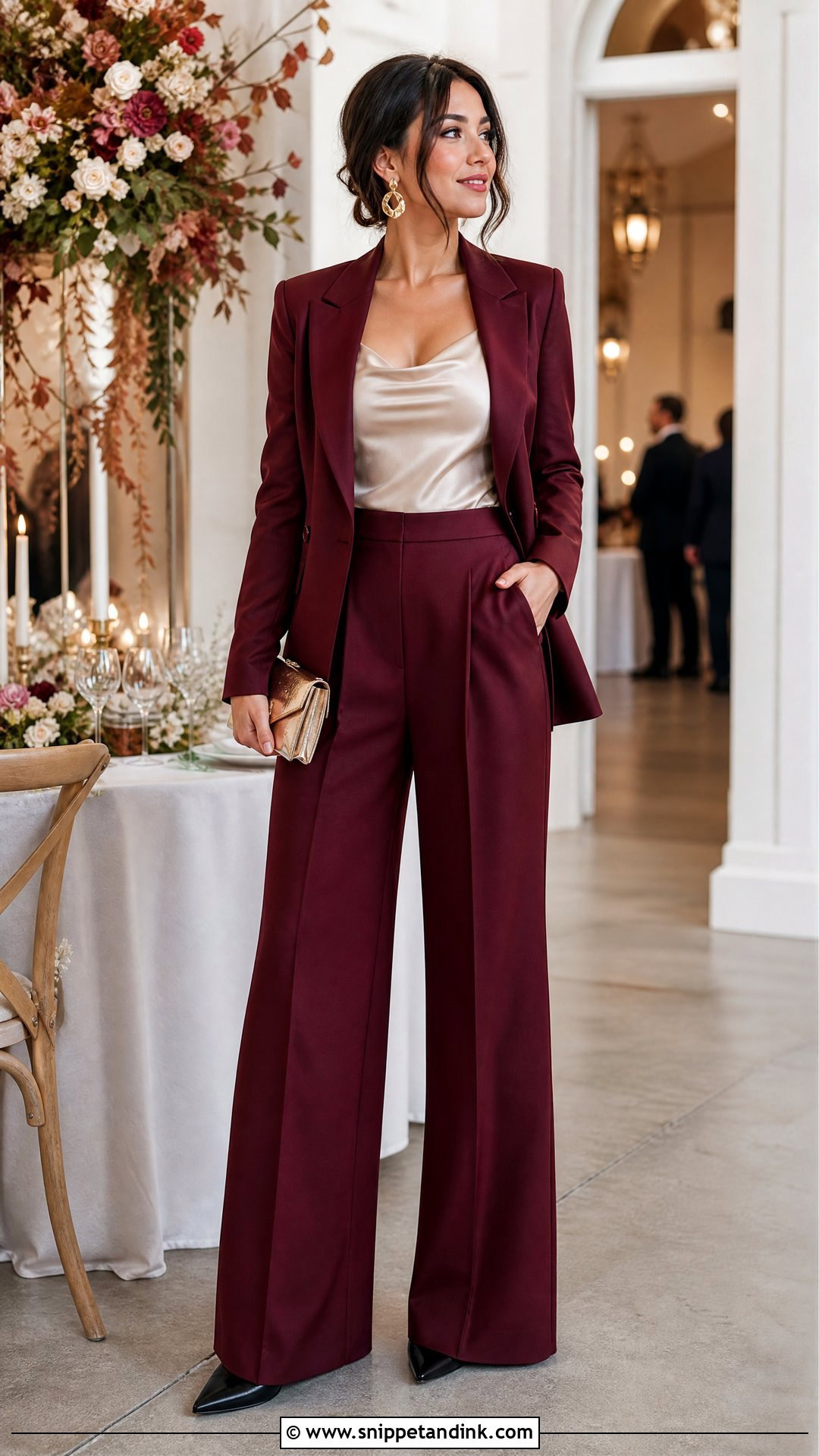
Burgundy suits autumn and winter, and it’s deep enough to feel formal without black’s severity. Pair a fitted blazer with wide-leg trousers and an ivory, blush or champagne camisole. Pointed black pumps are classic; metallic heels feel festive. A compact gold clutch, sculptural earrings and a smooth low bun finish it. Crepe, wool blends or velvet all work depending on formality and temperature. The color already makes an impact, so I keep the blouse simple; guests can add a silk scarf or brooch if the dress code invites personality. Deep reds shift between daylight and indoor light, so check the trousers and jacket match in both.
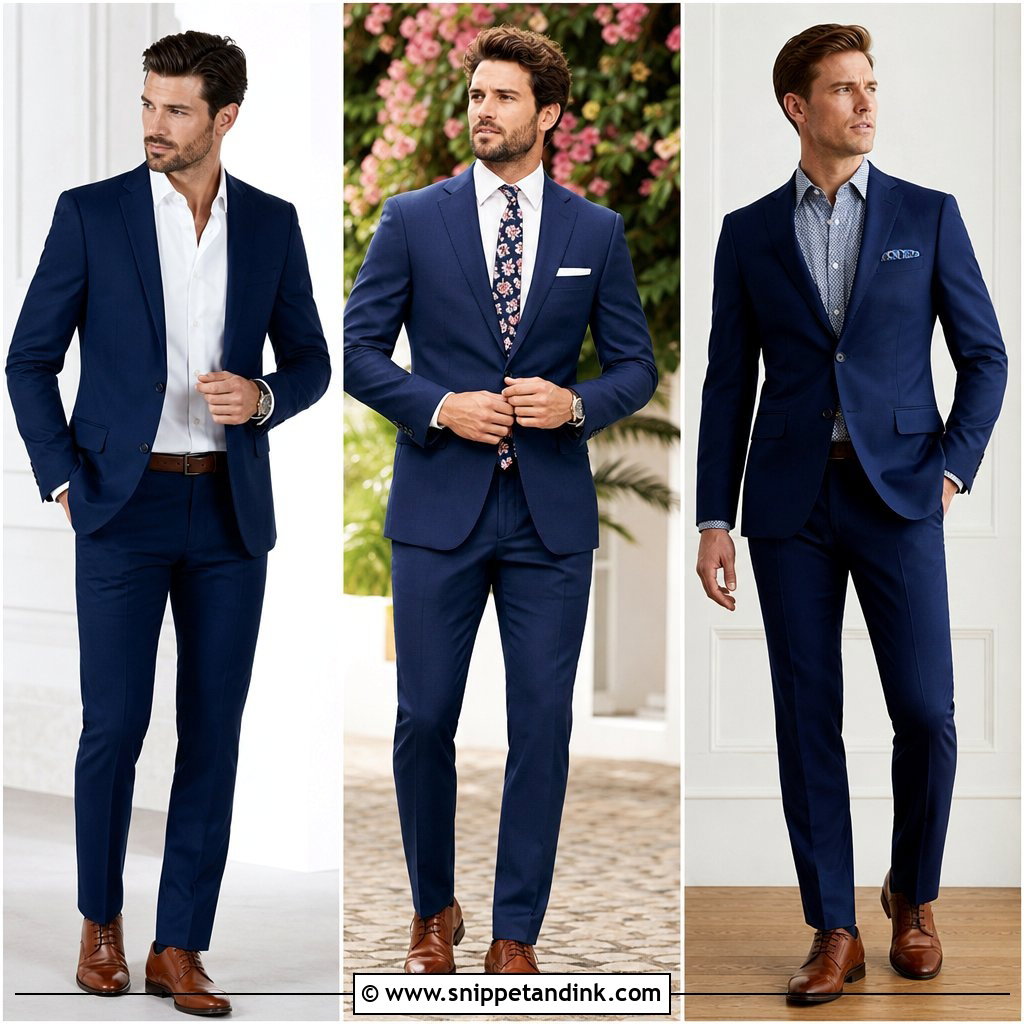
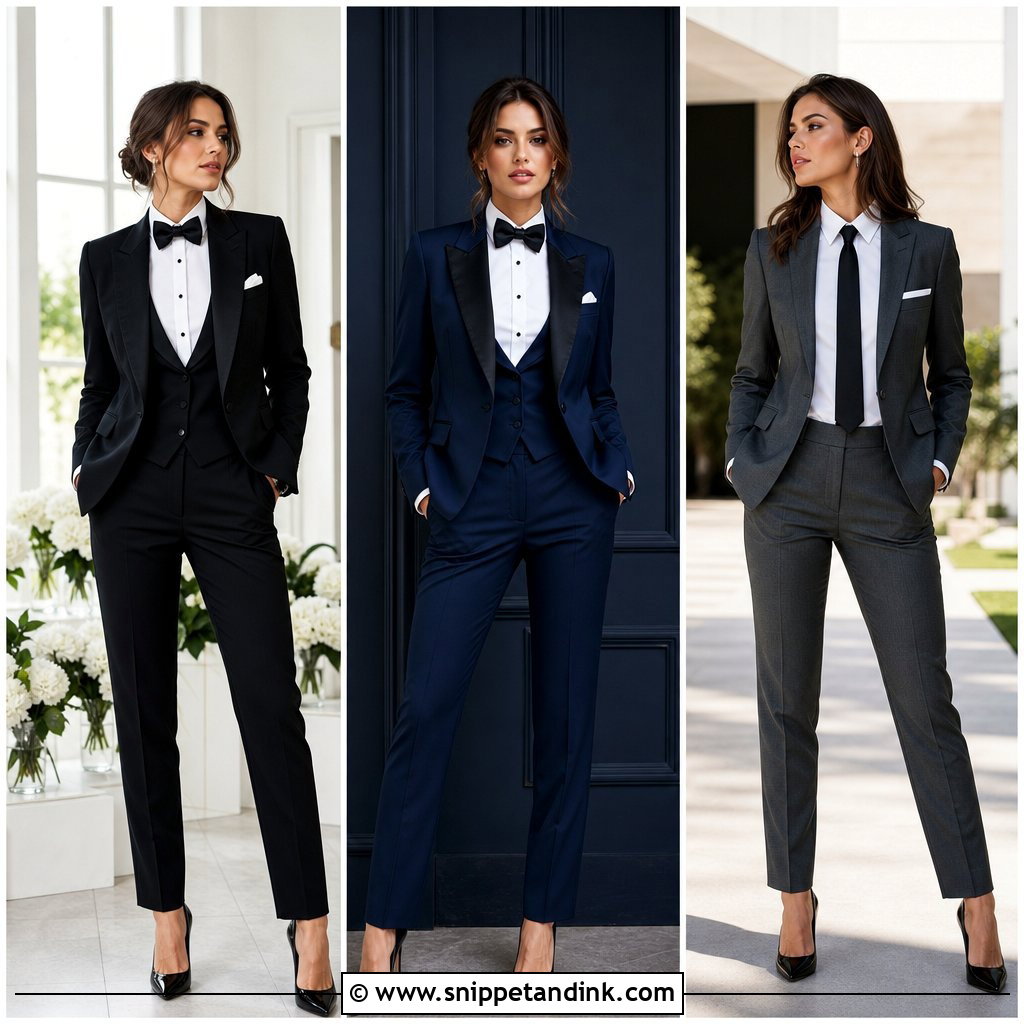
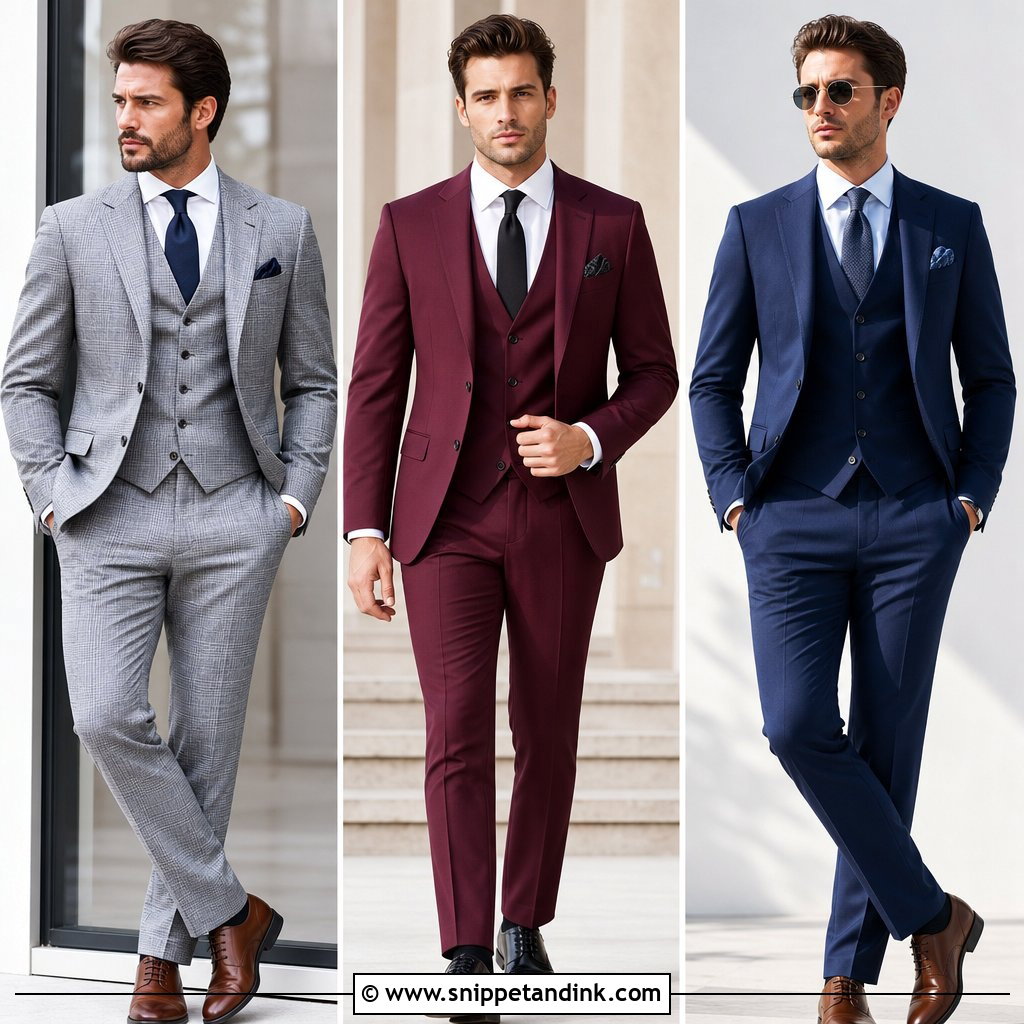
20. Navy Wedding Suit
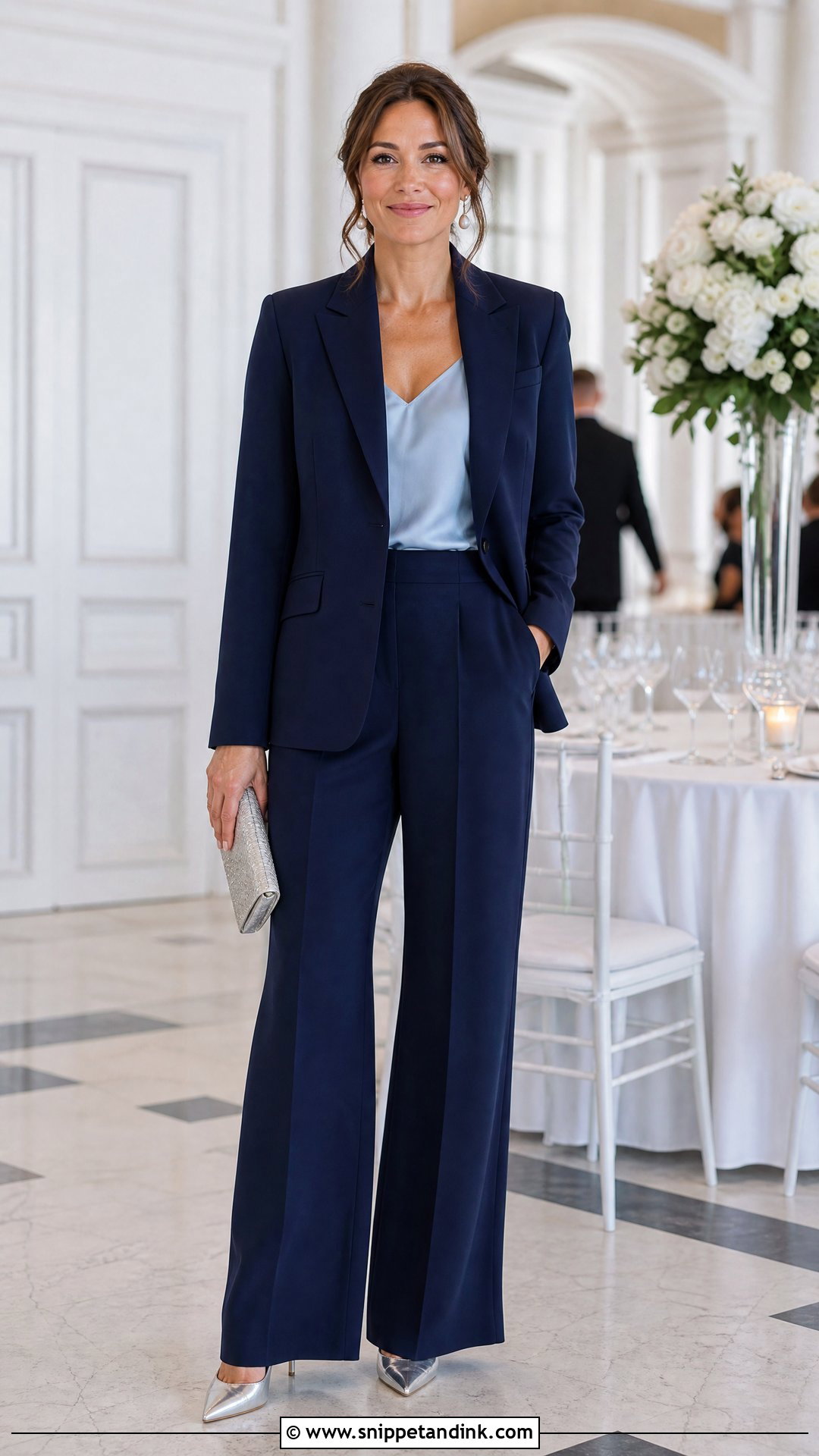
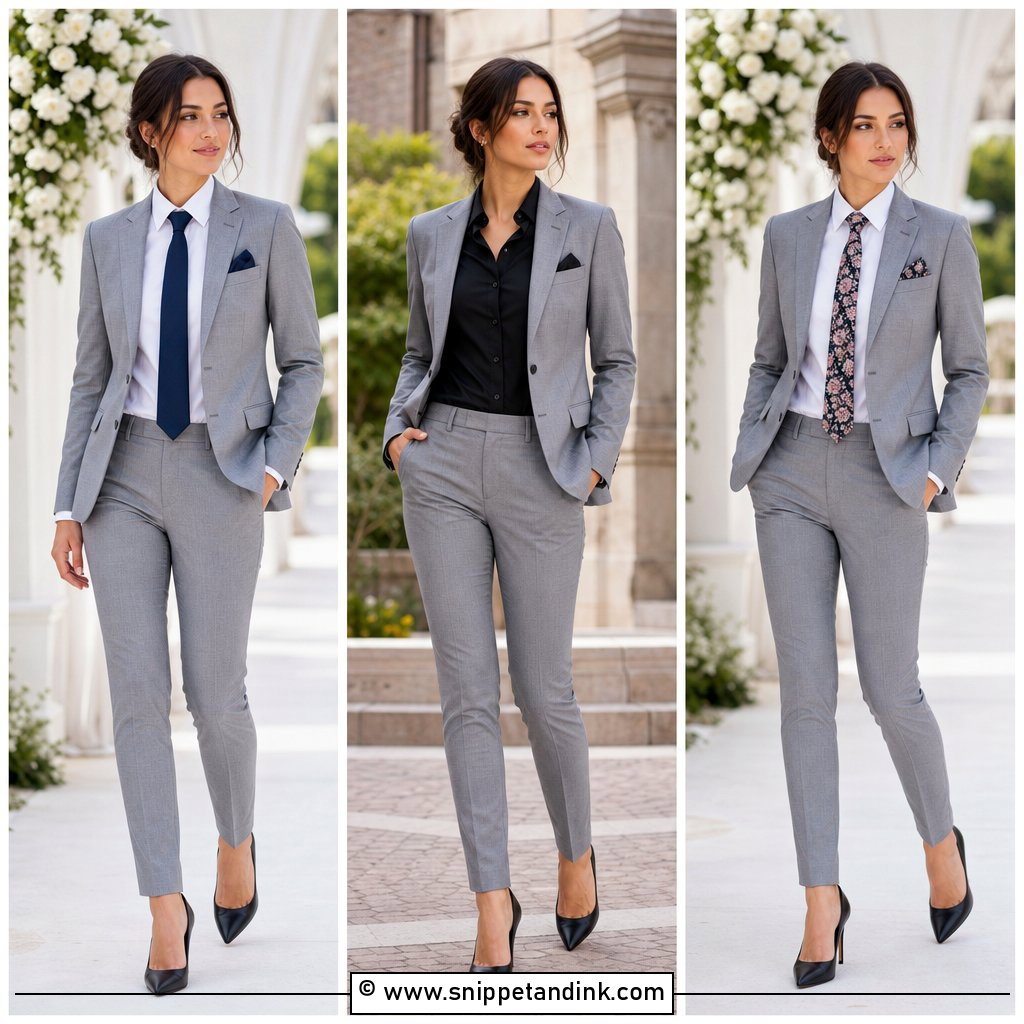
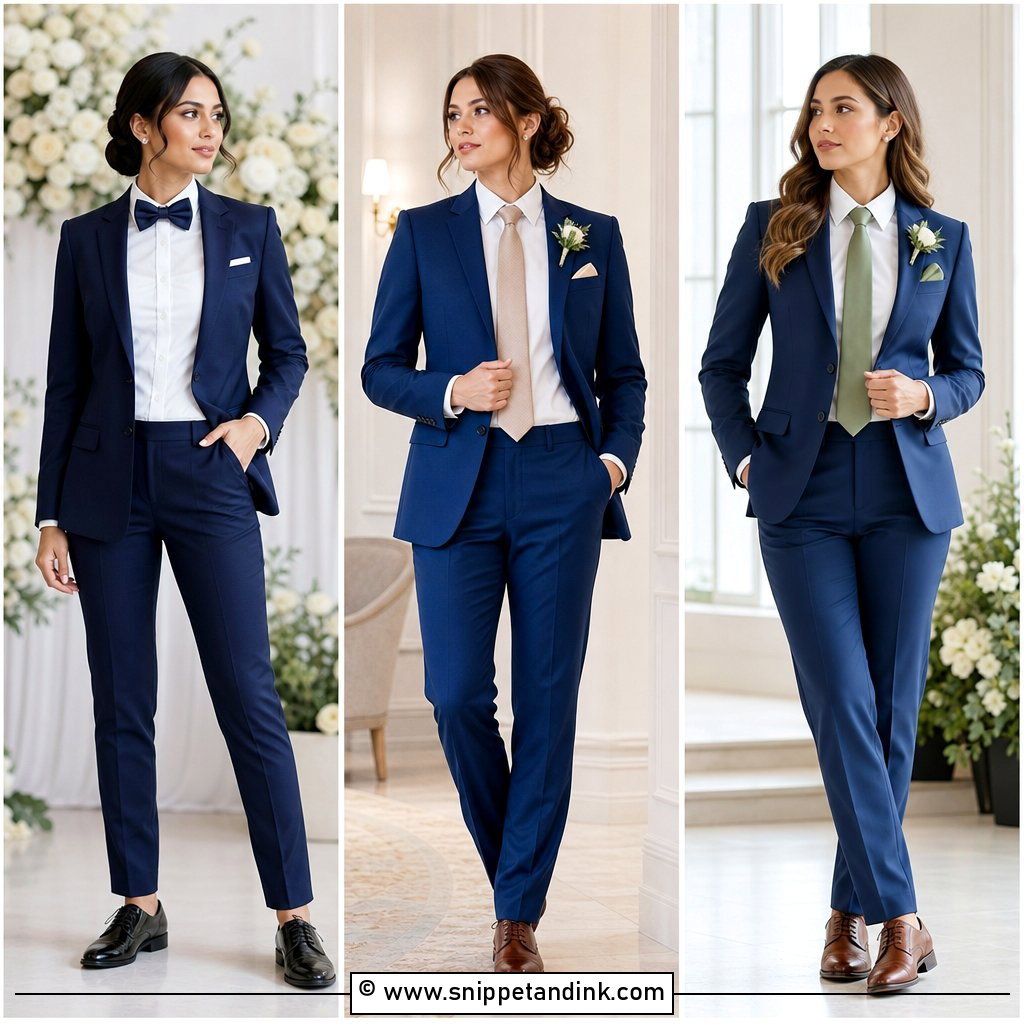
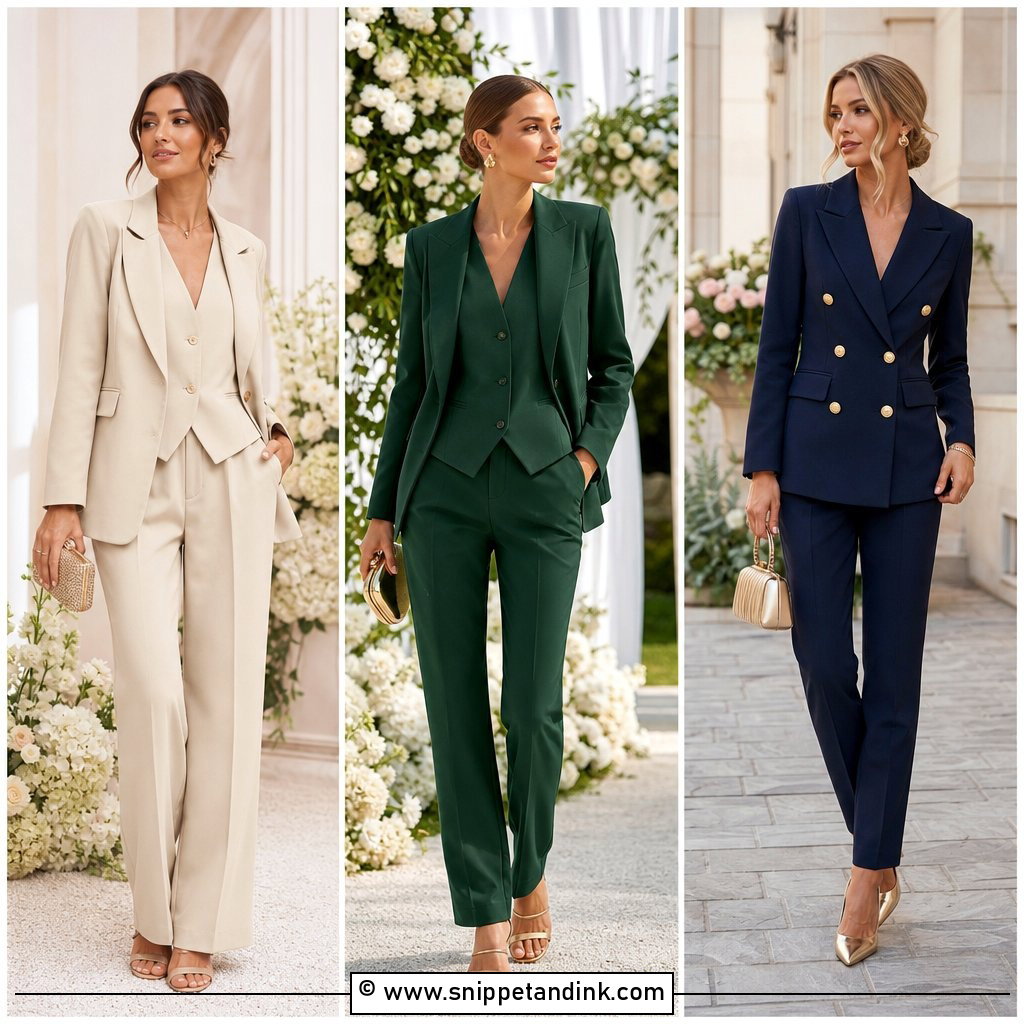
Navy is the suit I’d tell anyone to buy if they want to wear it again. Choose a defined blazer and matching trousers in a smooth fabric with a slight sheen or fine texture, and lighten it with a pale blue, soft pink, champagne or silver silk camisole. Metallic pumps, pearl earrings and a structured clutch finish it. Wide-leg trousers with an open blazer look current; a fitted jacket with tapered pants is more traditional. Navy works across seasons and at cocktail, formal and semi-formal events. What separates it from office wear is the details: skip work shirts and big totes, and choose dressy fabric and shoes so it reads as wedding attire.
21. Black-Tie Wedding Suit
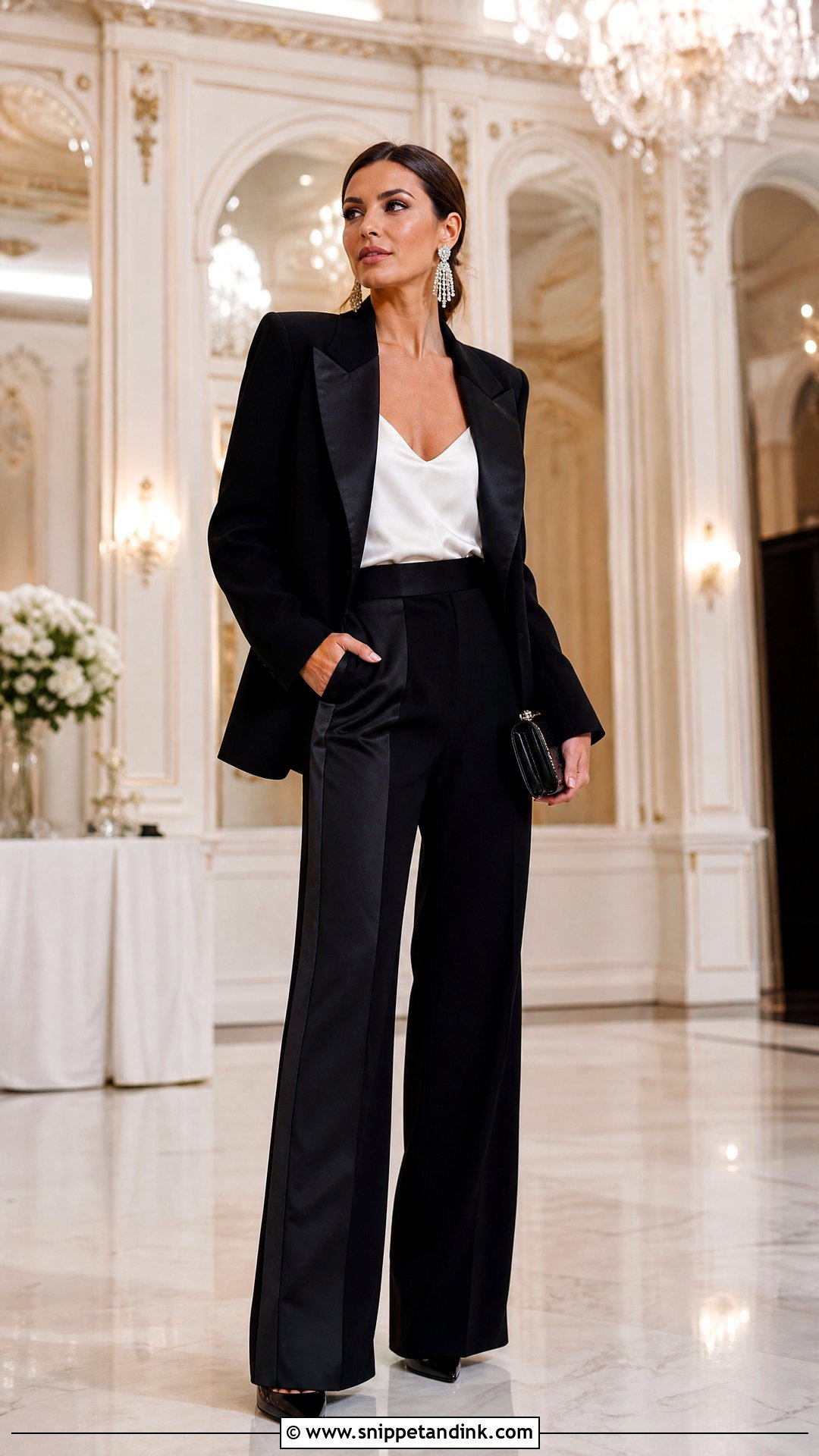
A black-tie invitation needs a suit with real formality in the fabric and finish. Start with a black tuxedo jacket with satin peak or shawl lapels, and add wide-leg trousers with a satin side stripe and a silk camisole, bodysuit or crisp white shirt. Pointed black pumps keep the line continuous; crystal heels are more decorative. A small evening clutch, statement earrings and a polished updo finish it. Black is usually welcome at formal weddings, but follow any color guidance from the couple. The jacket must look deliberate, not borrowed, so I check the shoulder seam sits exactly on the shoulder bone. Properly hemmed trousers and smooth lapels turn it into a true alternative to a gown.
22. Floral Jacquard Wedding Suit
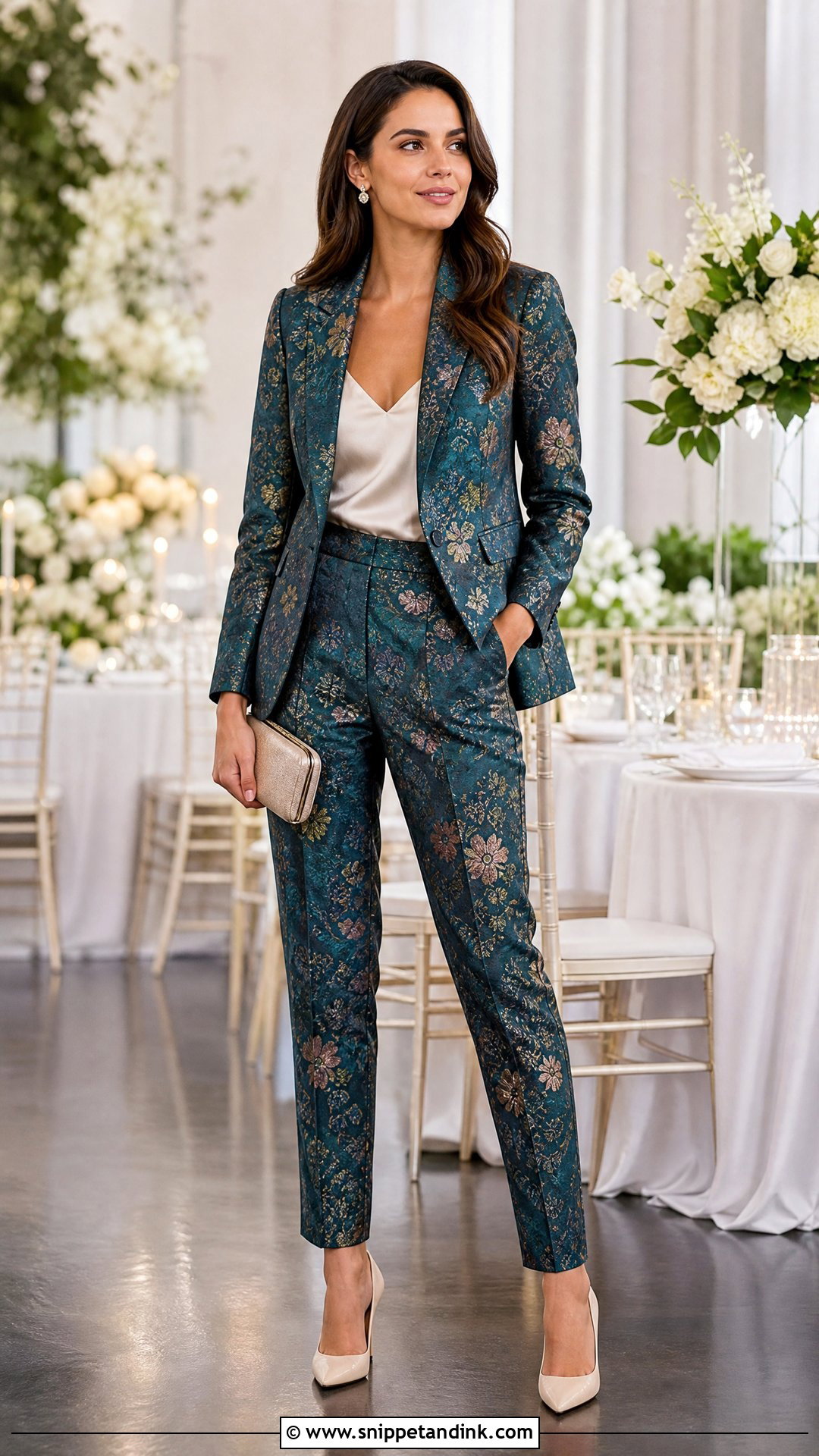
Jacquard has its pattern woven into the cloth, so a floral jacquard suit brings texture without any extra layers. Look for a subtle woven floral rather than a big printed motif. Keep the inner top solid and pick a silk cami in one of the suit’s quieter background tones. Pointed pumps, a compact clutch and small earrings let the fabric lead. Brides can explore ivory on ivory; guests can choose jewel tones, pastels or metallic weaves. Jacquard is often stiff, so bend your elbows and sit down in the shop; if the jacket fights you, it’ll fight you all day.
23. Pinstripe Wedding Suit
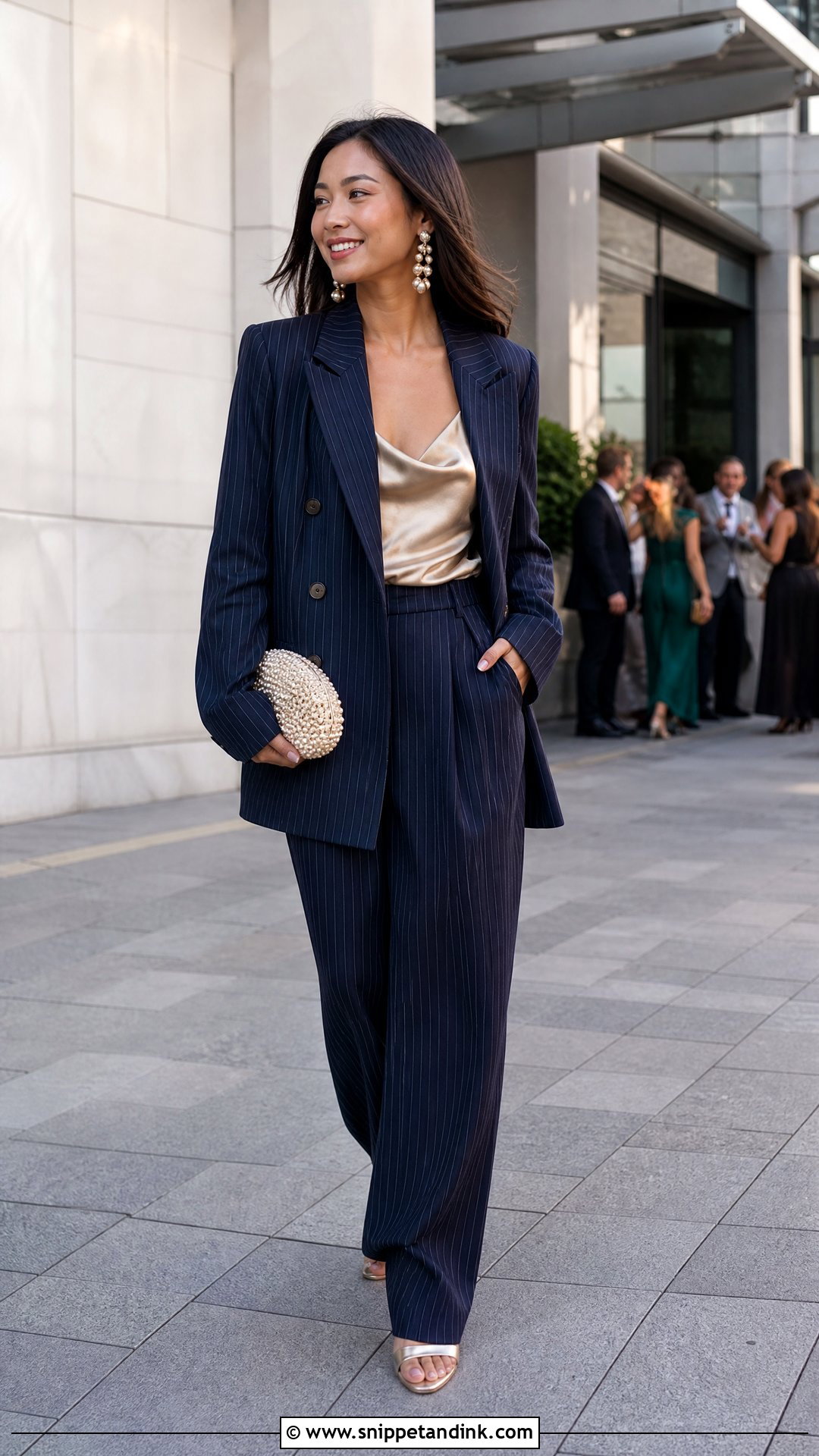
Pinstripe needs to shed its office associations, and the styling does that. Choose a relaxed double-breasted blazer with matching wide-leg trousers in navy, charcoal, burgundy or a lighter seasonal shade, and swap the button-down for a silk camisole, draped blouse or fitted satin top. Metallic heels and a beaded clutch make it festive straight away. Bold earrings or a brooch work; a large tote does not. A widely spaced stripe feels softer than a narrow corporate one. On a well-made suit, the stripes line up at the main seams, and that’s the first thing I check on the rail.
24. Belted Plus-Size Wedding Suit
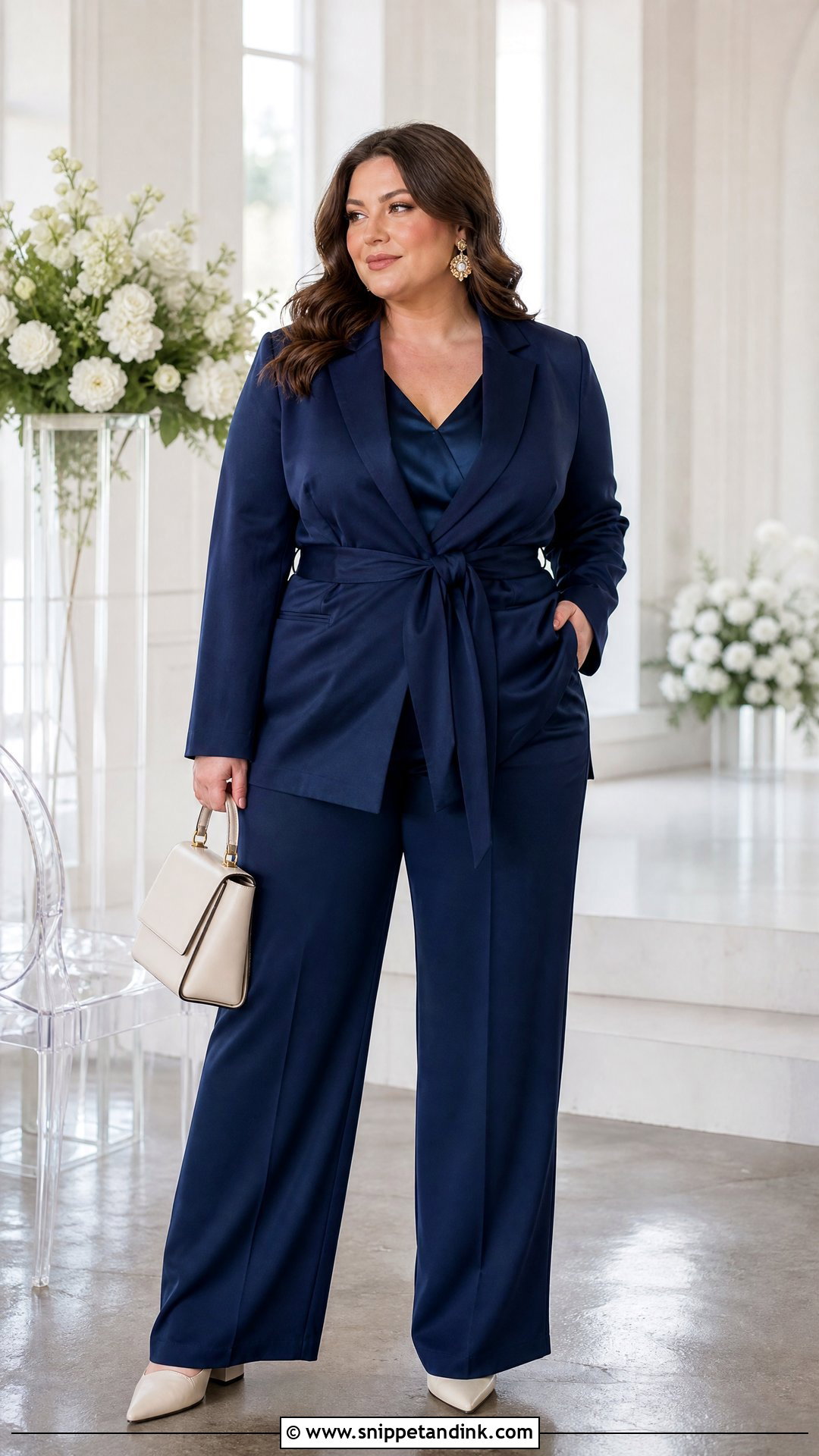
A belt at the natural waist gives definition while the jacket keeps comfortable coverage, which is why plus-size clients often feel best in this style. Start with a longline or wrap blazer that follows the body without clinging, and pair it with high-rise straight or wide-leg trousers. A V-neck silk shell keeps the neckline open. Pointed pumps, block heels or polished flats all work depending on comfort and trouser length. Statement earrings and a structured bag finish it. Look for breathable fabric with some stretch and smooth lining. I’d always size up and alter rather than squeeze into a size that restricts you; taking in is easy, letting out often isn’t possible.
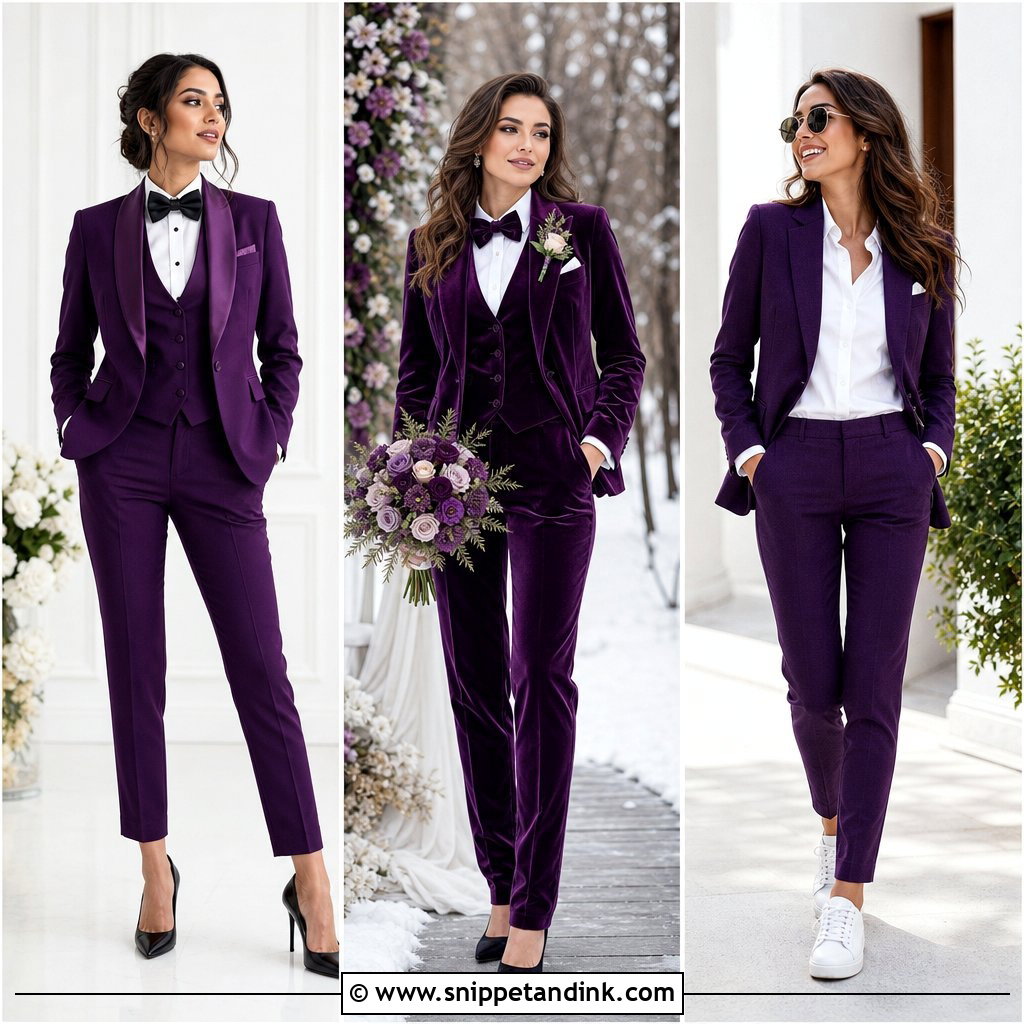
25. Petite Monochrome Wedding Suit
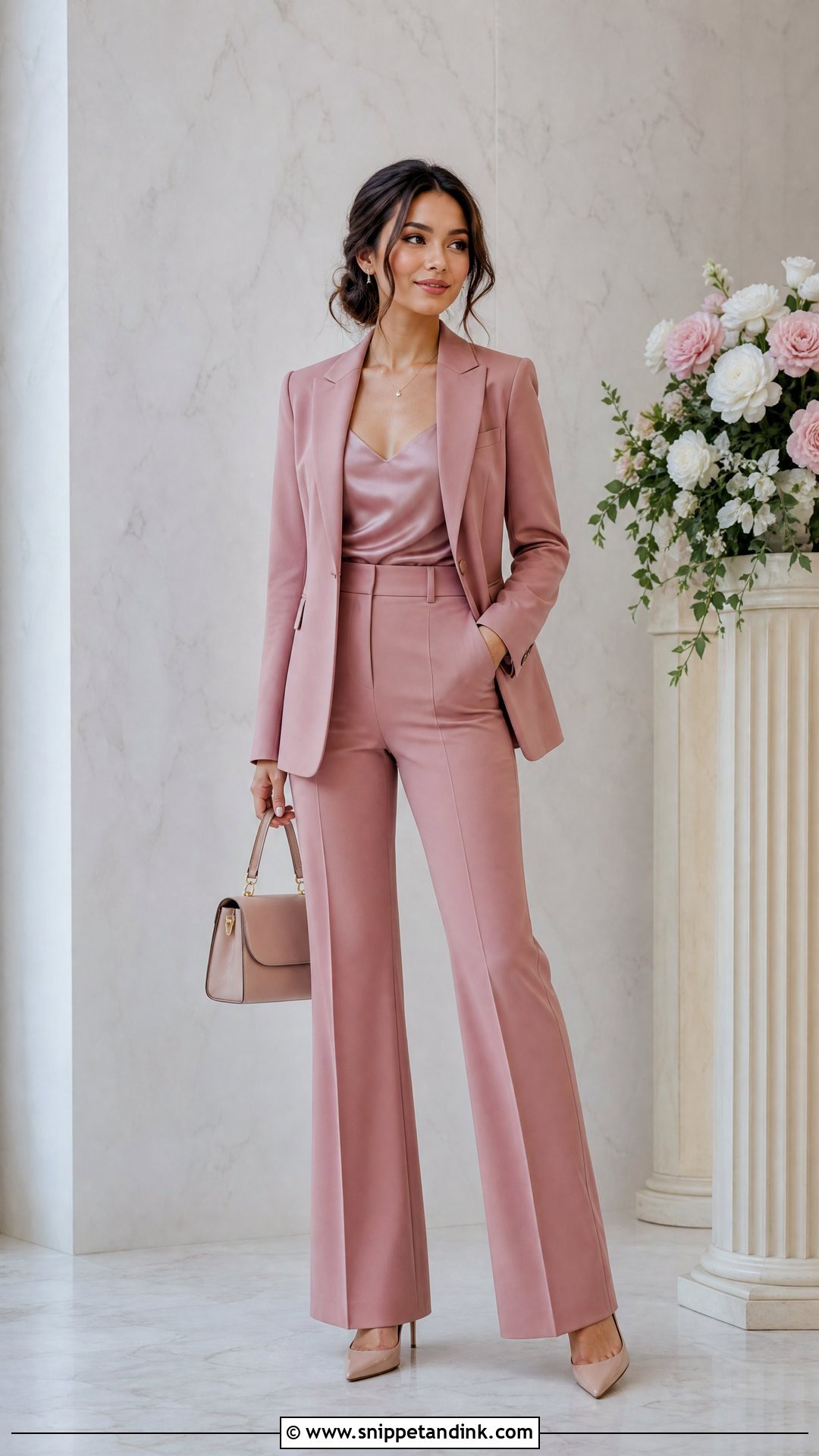
One color from shoulder to shoe removes visual breaks, which makes a monochrome wedding suit one of the best tricks for a petite frame. Choose a shorter single-breasted blazer ending near the hip, with high-rise straight or gently flared trousers. Keep the camisole, shoes and jacket in one family. Pointed heels or low slingbacks extend the leg, and a small handbag stays in proportion. Brides use white or ivory; guests can try blue, rose, green or navy. Petite fits need precise sleeve and hem lengths, since even a centimetre of bunching shortens the whole look. Minimal jewelry and a neat hairstyle keep it streamlined.
The Jacket Will Come Off, So Plan What’s Under It
At almost every wedding, the jacket comes off once the dancing starts or the room warms up. What you’re wearing underneath then becomes the whole outfit, and it’s in a lot of photos.
- Choose a top that stands alone: a bodysuit, a corset, a silk shell with proper finishing. A thin cami chosen only to peek out at the neckline usually looks unfinished on its own.
- Check what the trouser waistband looks like without the jacket. Belt loops and bulky zips that were hidden now show.
- Think about bra straps and sweat. Silk marks easily under the arms, so a dress shield or a fabric with a little texture helps on a hot day.
- Ask someone to hang the jacket, not throw it on a chair. Satin and velvet crease badly when crushed under a coat pile.
If you want two distinct looks, plan the top as the reception outfit and the jacket as the ceremony layer. That’s a cheaper and simpler outfit change than a second dress.
Shoulders and Hems Decide How a Suit Looks
A wedding suit should be comfortable, fit properly and suit both the person and the occasion. The range runs from tuxedos and three-piece sets to relaxed linen, skirt suits and colorful guest tailoring. Start with the dress code, venue, weather and your role. Brides can personalise ivory tailoring with veils, lace, pearls or satin details; guests can explore color and texture while steering clear of shades reserved for the couple or wedding party. Book alterations early and try every piece on together, shoes and underwear included. Precise tailoring is what makes any of these suits look like it was made for you.
You'll Like These Ideas:


Leave a Reply