
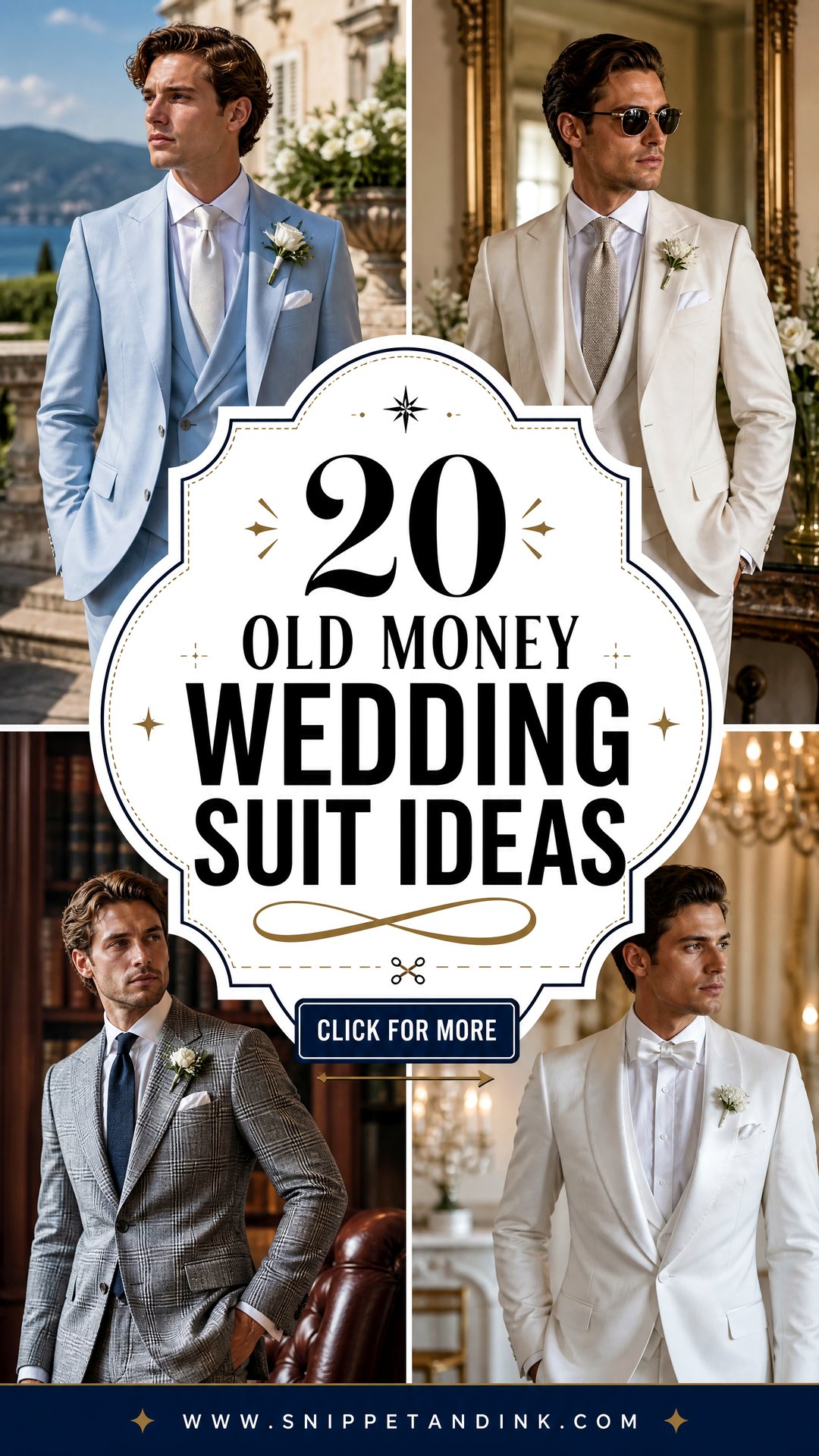
Old money suiting works because nothing in it is trying hard: the fabric is good, the cut follows the body and the accessories stay small. For a woman dressing for a wedding, that can mean a relaxed linen pantsuit at a garden ceremony or a sharp tuxedo at an evening reception. When I style a suit for a wedding, I start with the fabric and the hem, because those two things decide whether it reads as occasionwear or as something borrowed from the office. Follow the stated dress code, and keep white and bridal ivory for the bride. Navy, soft pastels and heritage checks all have a place below, each matched to a season and setting.
Altering a Ready-Made Suit in the Right Order
Most women’s suits bought off the rack need two or three alterations before they look expensive, and the order matters. I send clients to the tailor wearing the exact shoes they’ll have on at the wedding, because every hem decision depends on heel height.
- Shoulders first. If the shoulder seam sits past your own shoulder bone, the jacket is too big. Shoulders are the hardest and most expensive part to alter, so buy for the shoulder and alter everything else.
- Then the waist. A tailor can take in the back and side seams so the jacket follows your shape without pulling at the button.
- Sleeves next. They should end at the wrist bone, leaving a little of your hand and any bracelet visible.
- Trousers last, pinned in your shoes. Wide legs hover just off the floor, straight legs break lightly on the shoe, and ankle cuts stop just above it.
Leave at least two weeks for the work, and more in late spring and early summer when tailors are swamped with wedding alterations. Ask for a final fitting a few days before the wedding, then collect the suit pressed and on a shaped hanger rather than a wire one, which leaves dents in the shoulders.
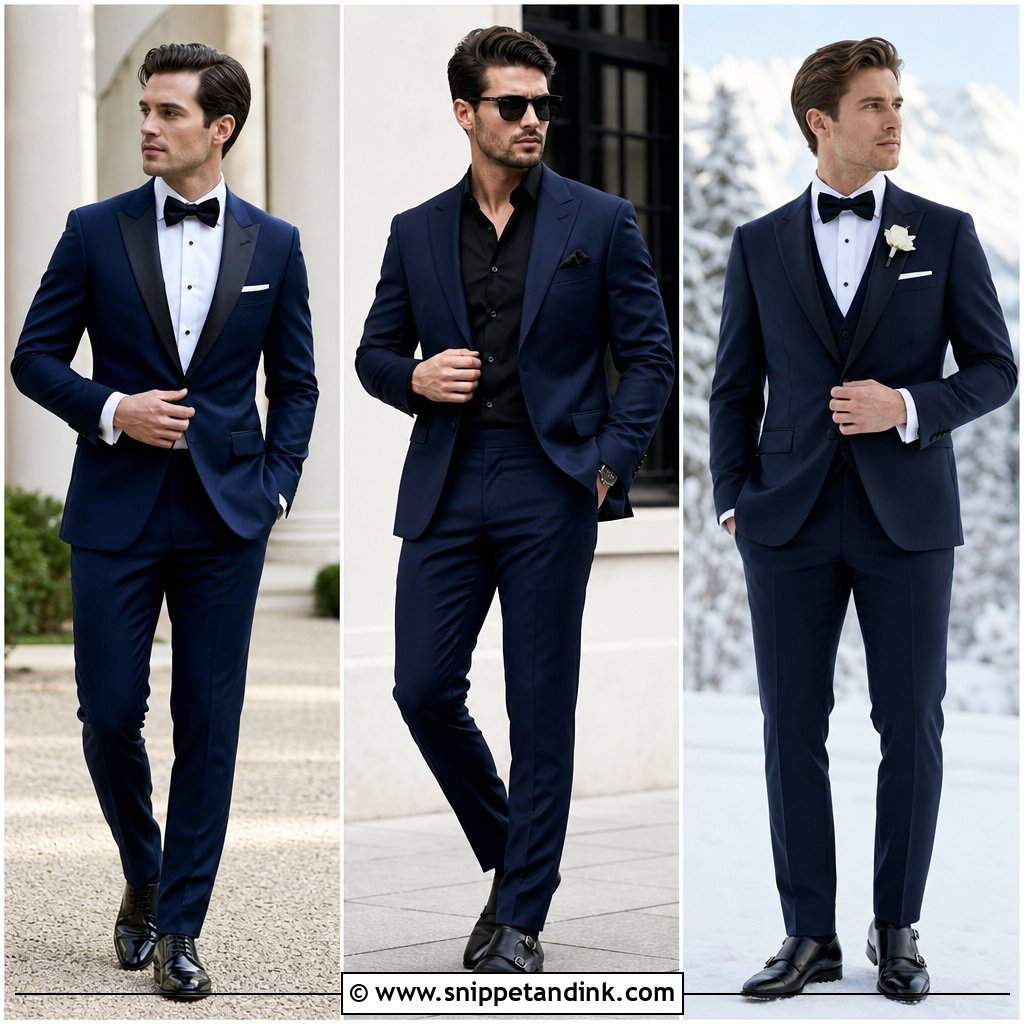
1. Navy Double-Breasted Wedding Suit
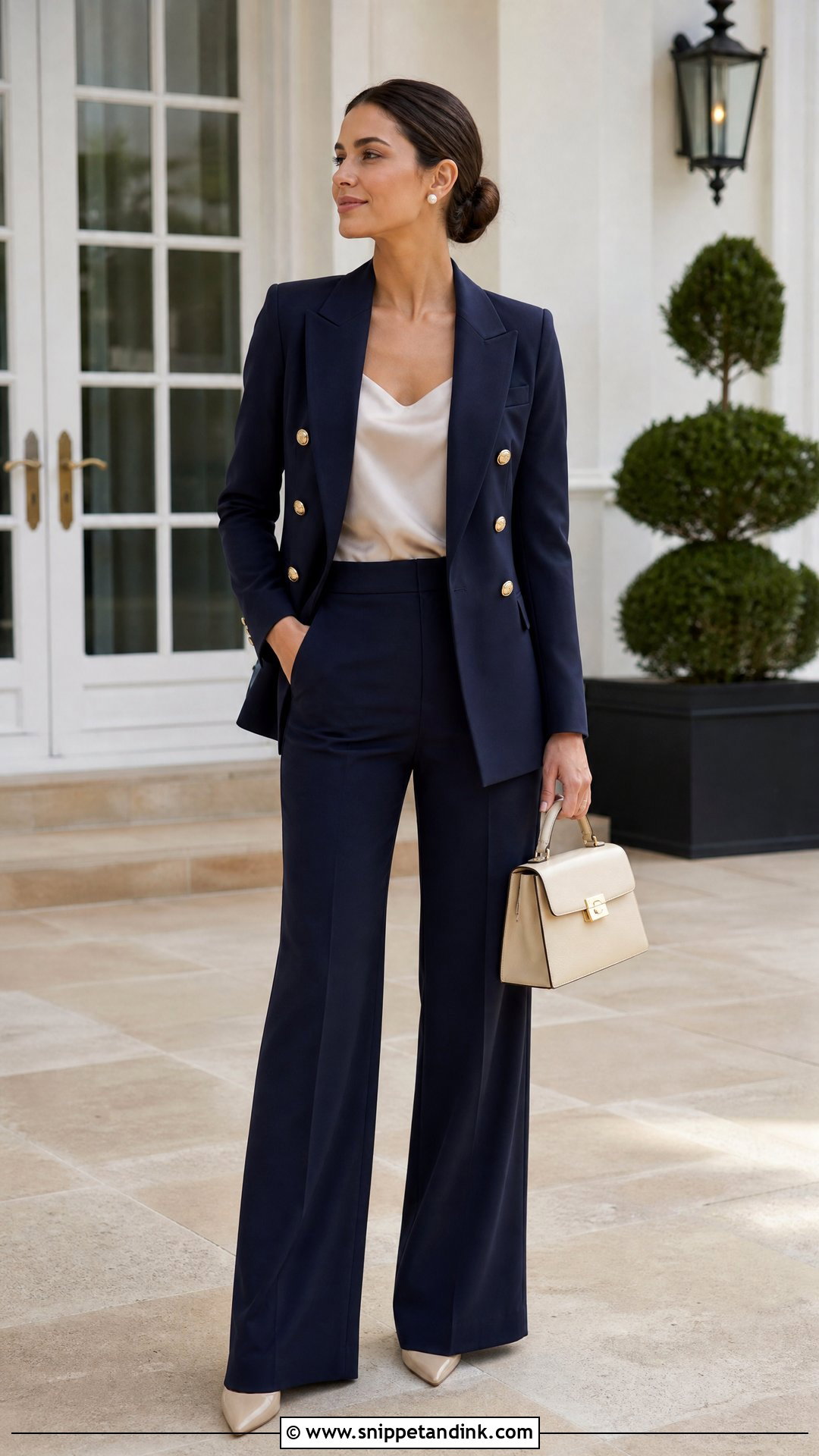
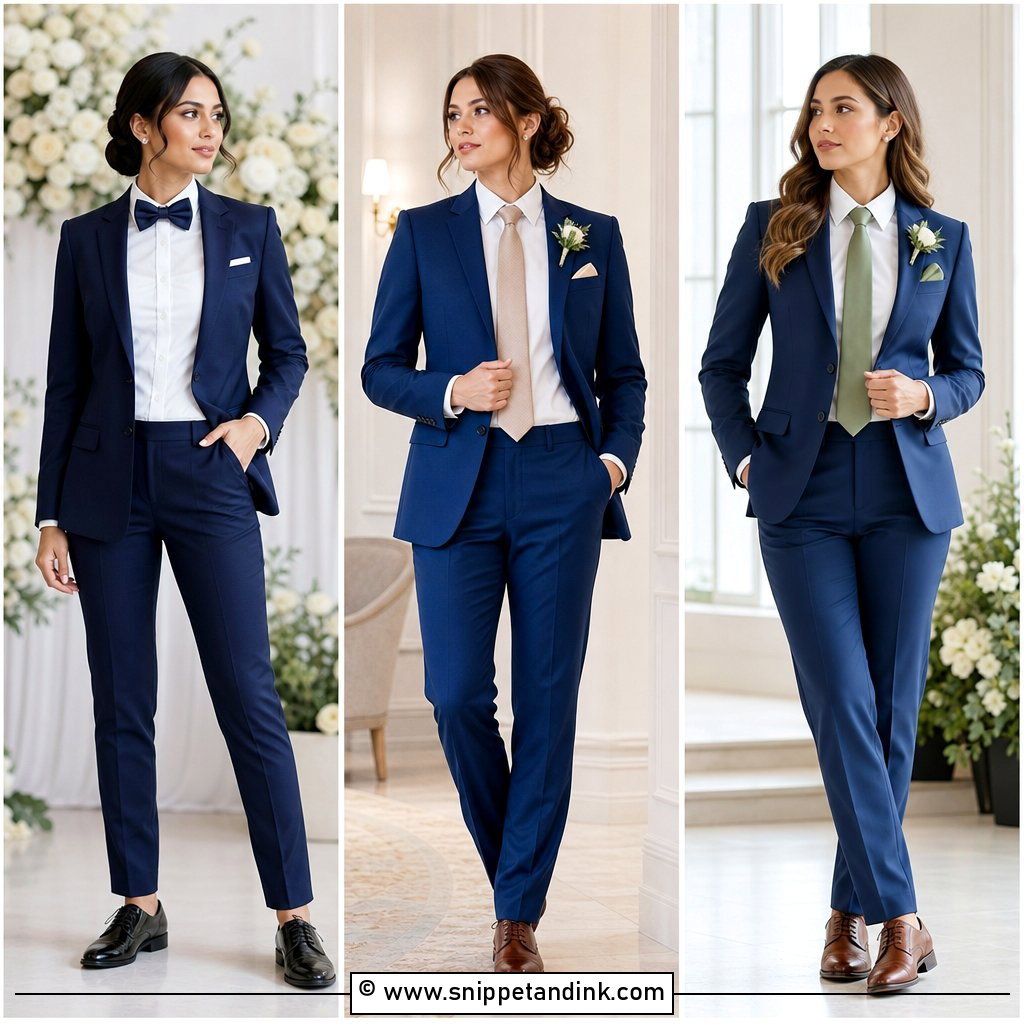
A navy double-breasted suit has structure built in, so it looks formal without any help from embellishment. I look for gently padded shoulders and a defined waist, with buttons in navy, horn or muted gold; shiny brass reads more naval than wedding. Matching wide-leg trousers and a silk camisole in champagne or pale blue keep it soft underneath. One thing to test in the fitting room: a double-breasted jacket is cut to be worn fastened, and over a fuller bust the overlap can pull into an X across the front, so size for the bust and have the waist taken in. Pointed pumps, a small top-handle bag, pearl studs and a slim watch are all it needs. Lightweight wool or crepe suits a daytime wedding, while a richer wool blend carries better into an evening at a country club or city hotel.
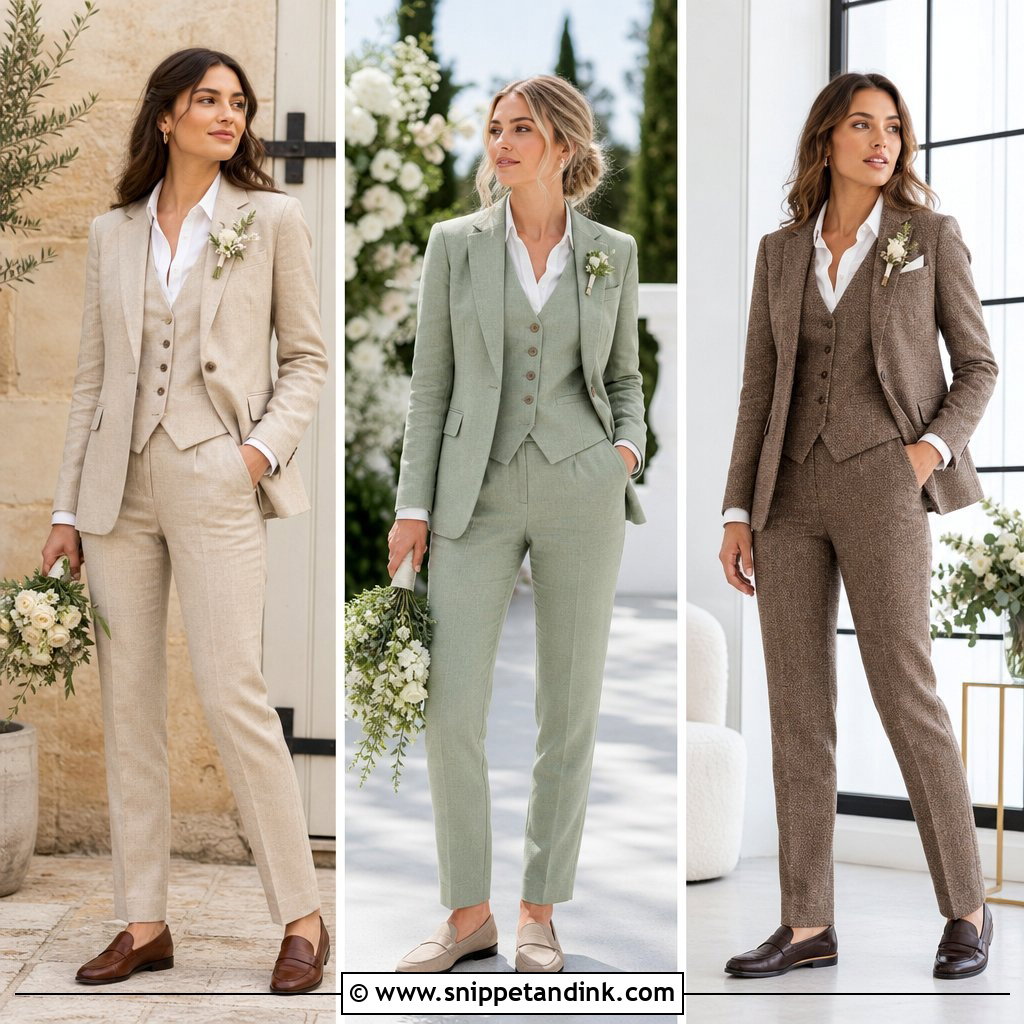
2. Beige Linen Wedding Suit
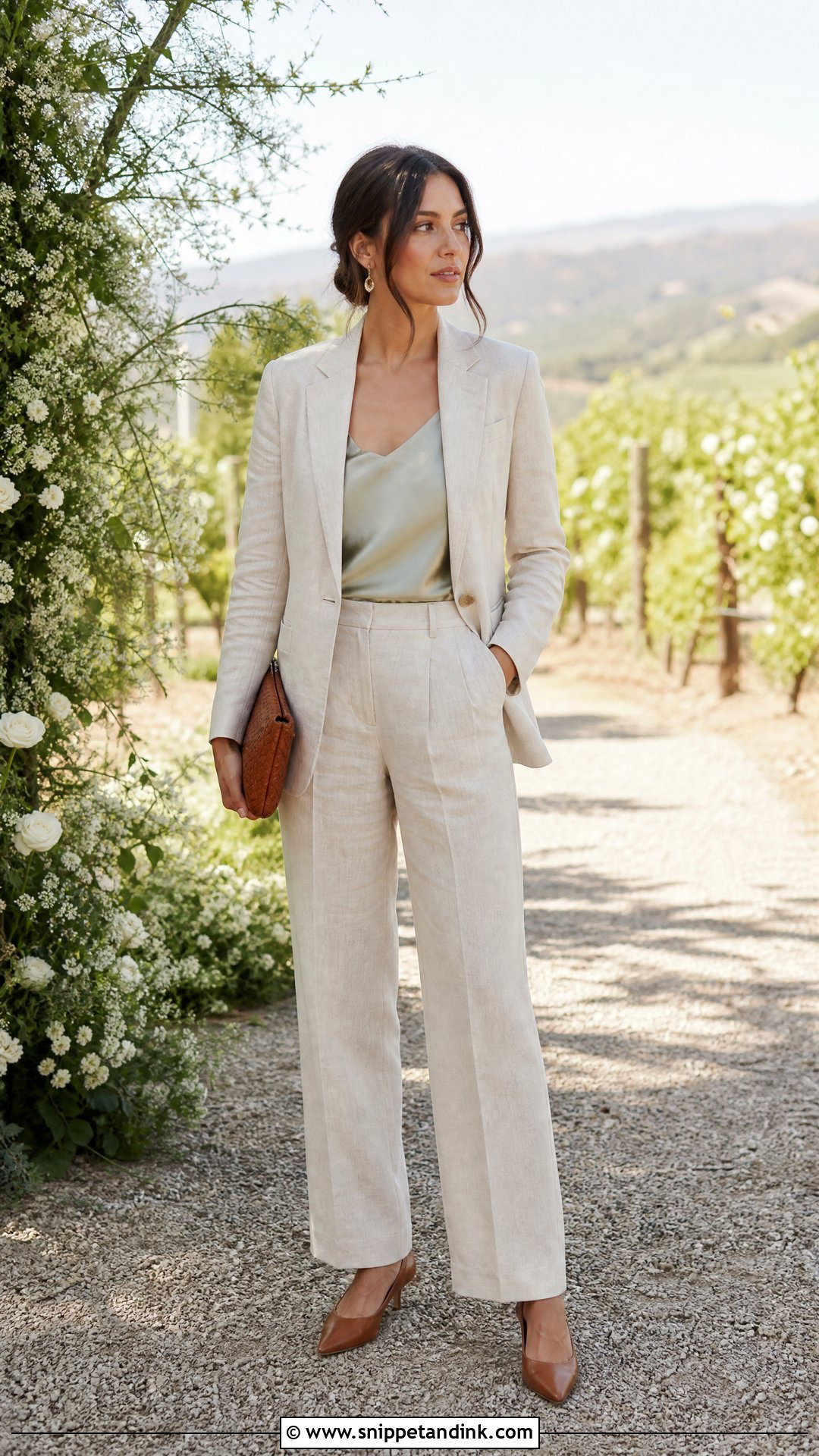
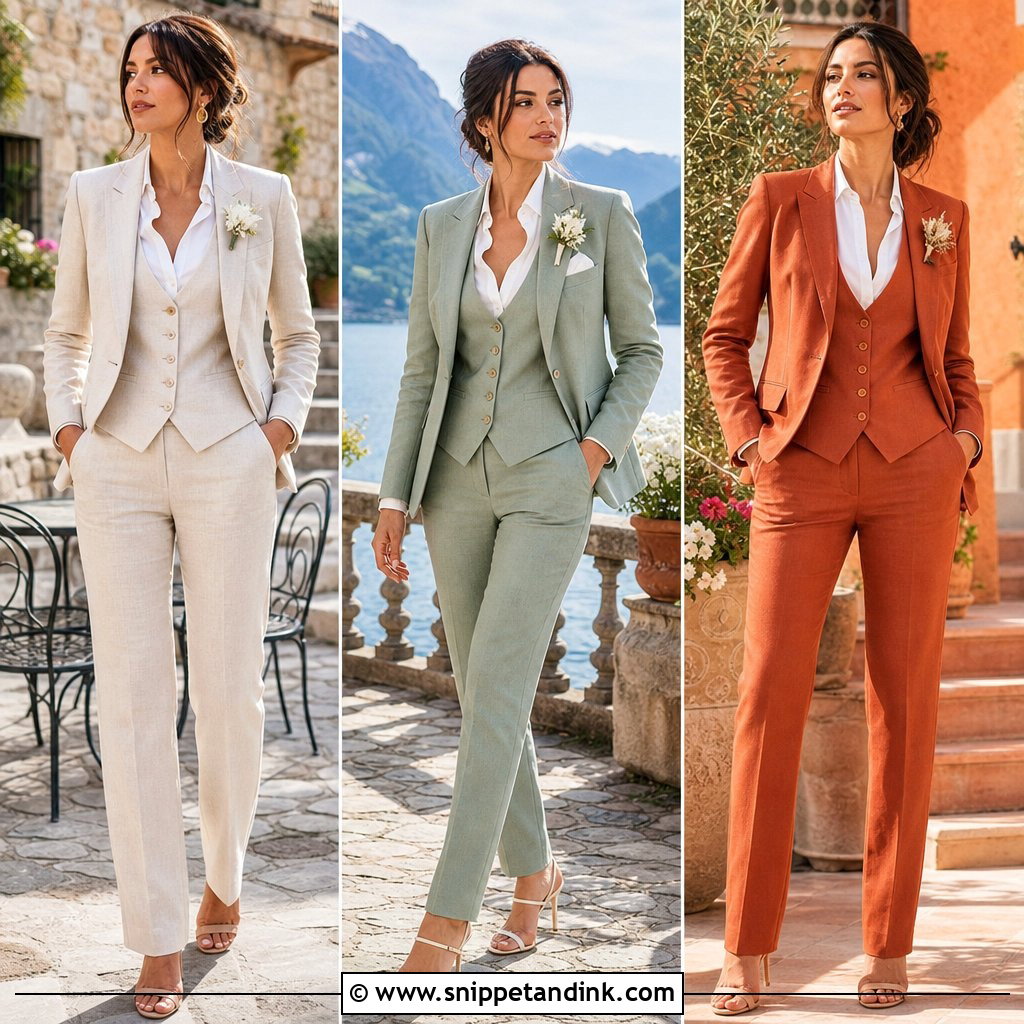
Linen is the obvious garden fabric, but pure linen creases the moment you sit through a ceremony. For a beige linen wedding suit I steer clients toward a blend with some wool, viscose or silk in it, which holds its shape and softens creases into folds rather than crumples. A single-breasted blazer over high-waisted, full-length trousers keeps the outline relaxed. Put a silk shell in muted peach or sage underneath, since beige next to ivory can tip toward bridal in photos. Tan slingbacks, a woven leather clutch and small gold earrings finish it, and the sleeves stay down rather than rolled. If the invitation says cocktail attire, swap flat sandals and a beach tote for sleek heels and a structured bag. Vineyards and coastal estates in warm weather are where this one earns its place.
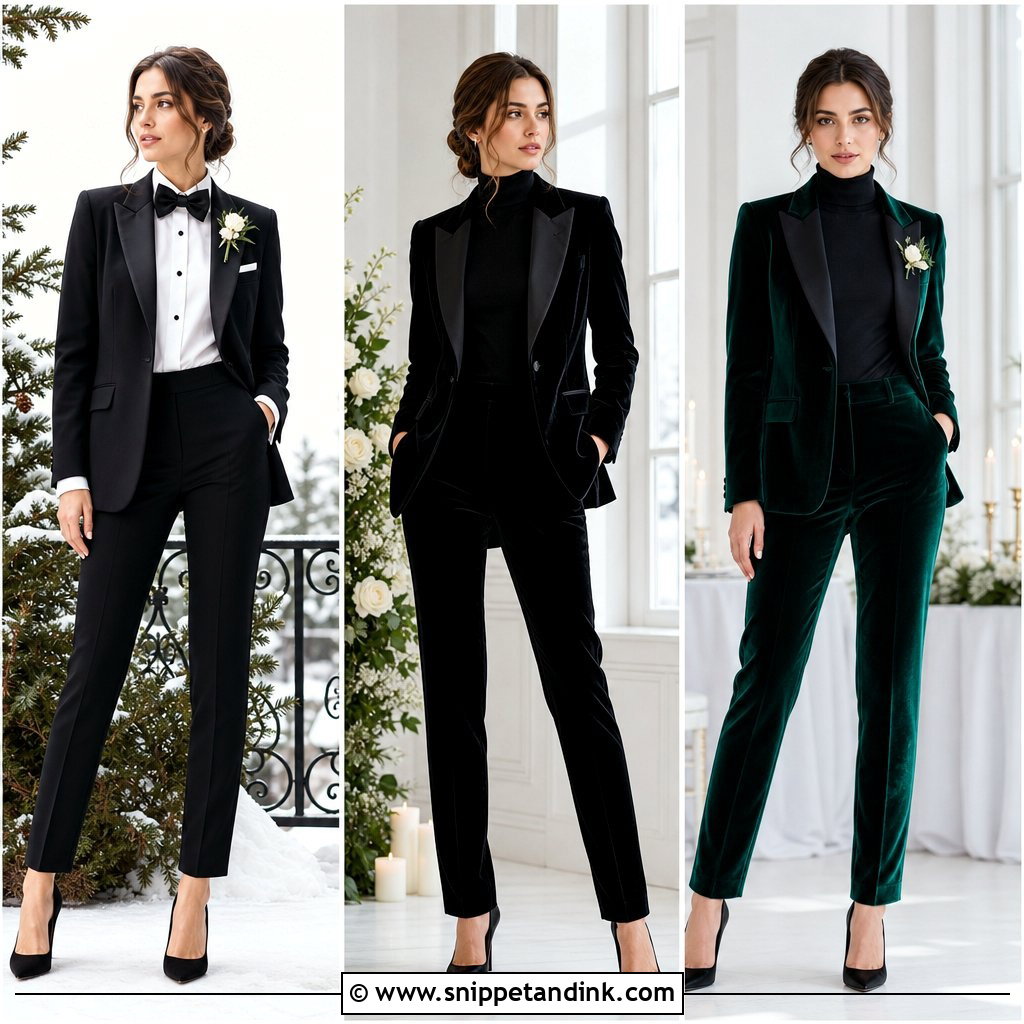
3. Black Tuxedo Wedding Suit
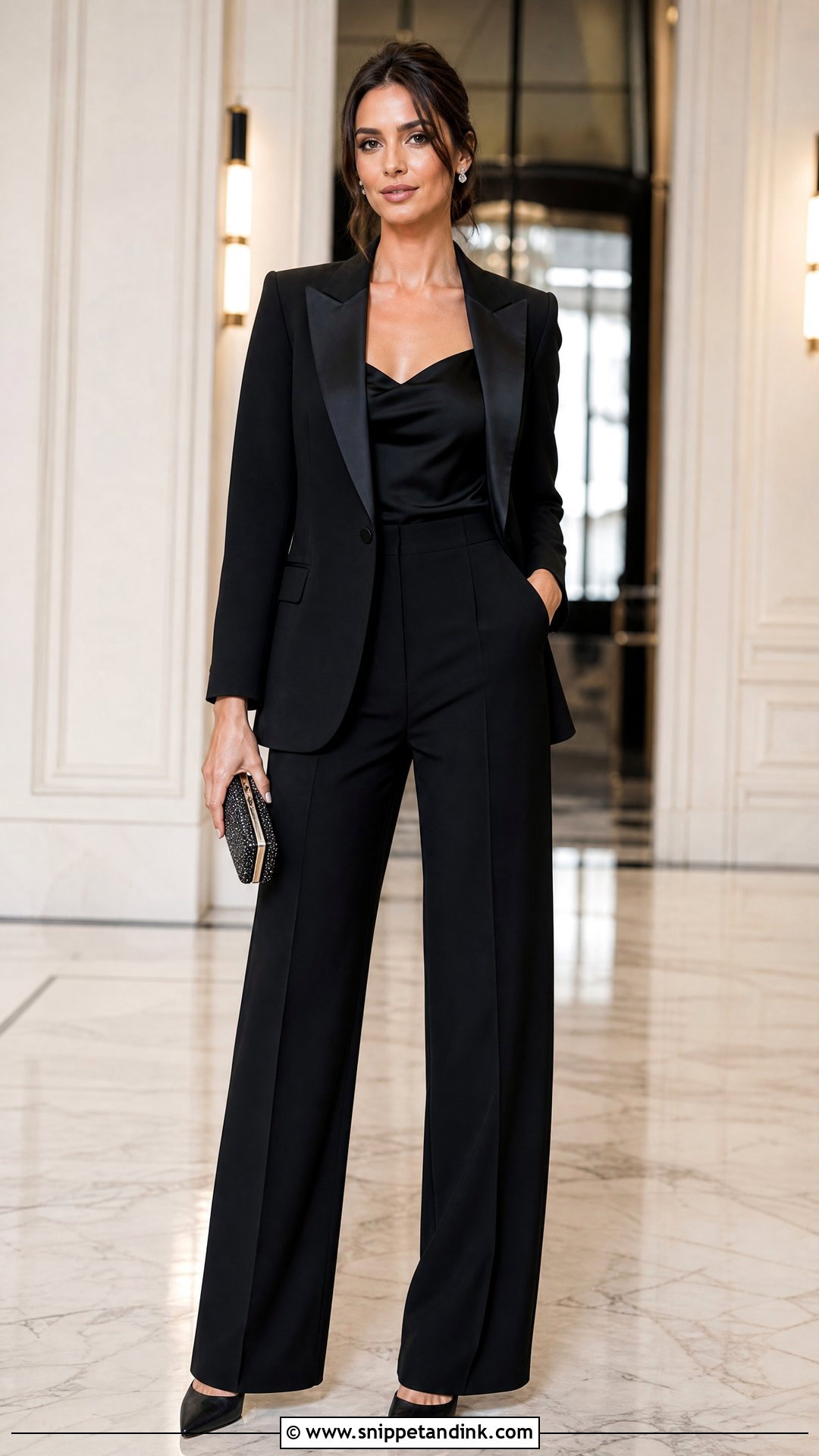
Satin peak lapels do the work in a black tuxedo, so I keep everything else quiet. The jacket can be fitted or softly oversized; under it, fluid tuxedo trousers and a black silk camisole make one clean monochrome column. A white silk blouse adds contrast, but as a guest, be careful: crisp black and white can look like the venue’s serving staff. Pointed satin pumps, diamond-like studs and a compact black clutch are plenty, with a low bun or smooth shoulder-length waves to echo the sharp lines. Wear it to evening cocktail, formal or black-tie-optional celebrations. Skip sequins and statement necklaces, because next to satin lapels they make the outfit look busy rather than dramatic.
4. Powder Blue Wedding Suit
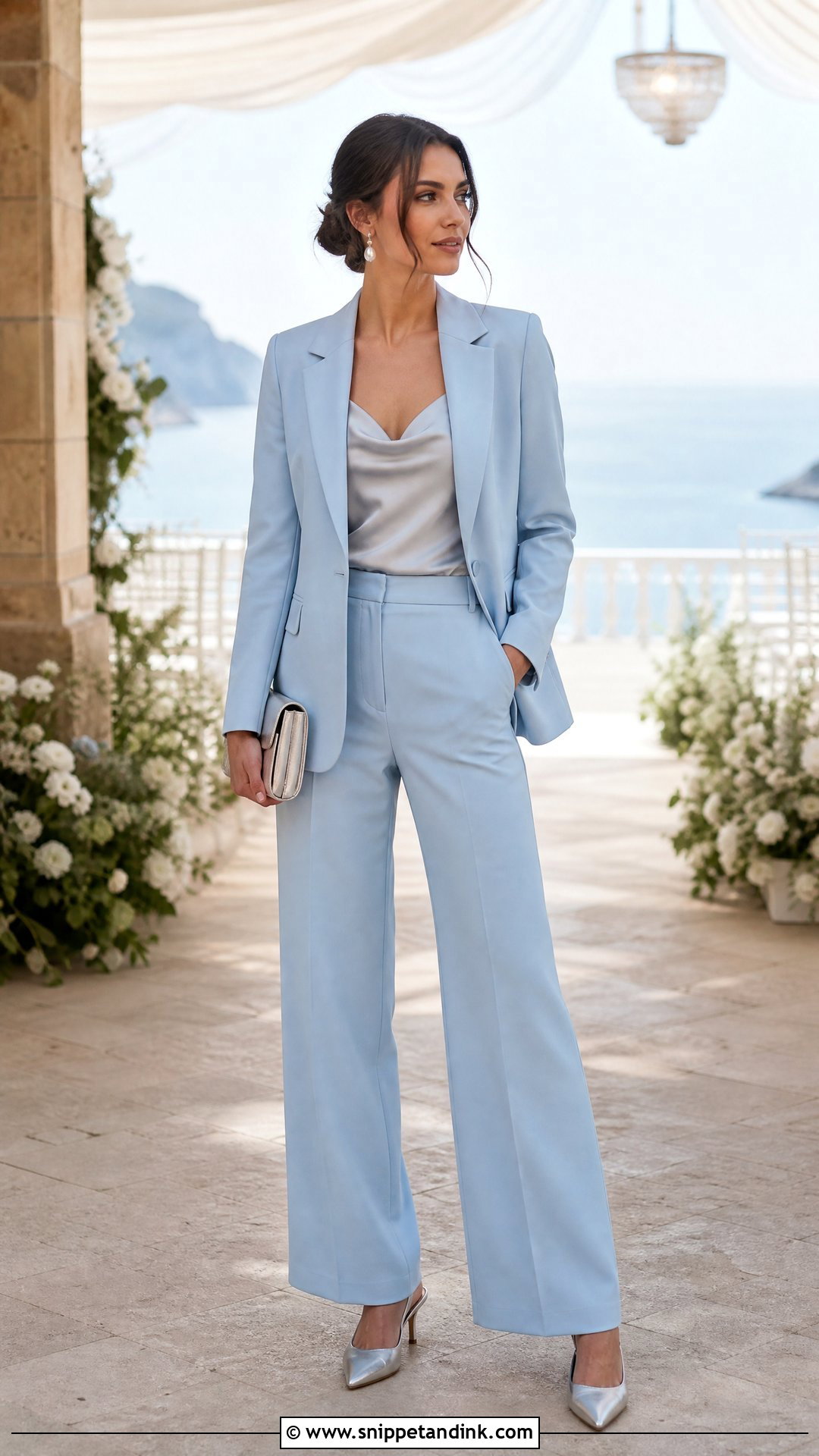
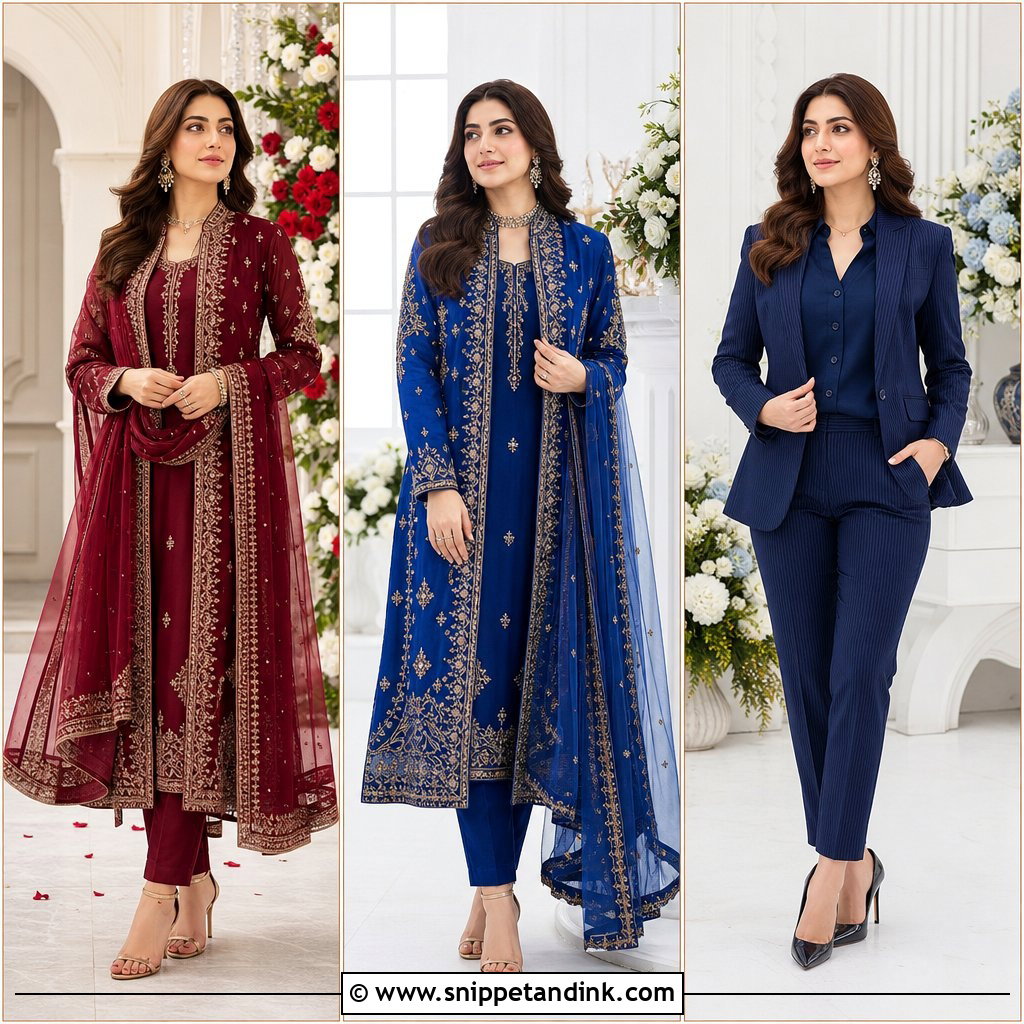
Powder blue is one of the easiest pastels to wear as a suit. It sits well against most skin tones and doesn’t wash out under evening lighting the way some pinks do. Wool crepe, a silk blend or structured twill holds the color cleanly; cheap polyester in this shade tends to shine along the seams after pressing. Underneath, a tonal satin camisole or a dove gray blouse, then silver slingbacks and a pearl-trimmed clutch. I’d give the jewelry one focus, pearl drops or a single vintage brooch, never both. On a petite frame, high-rise trousers with a slightly cropped jacket lengthen the leg, while taller women can carry a longer blazer with fluid pants. Spring ceremonies and coastal afternoons suit it best.
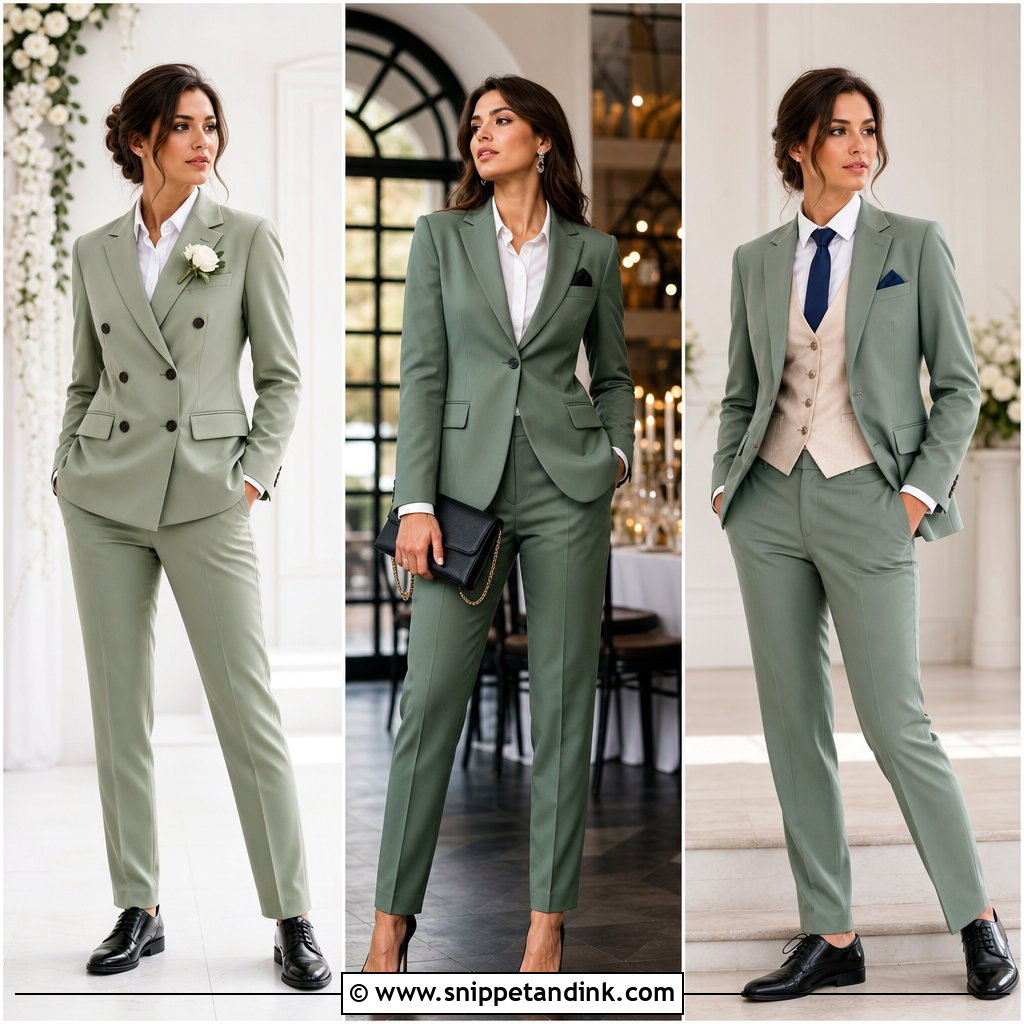
5. Sage Green Wedding Suit
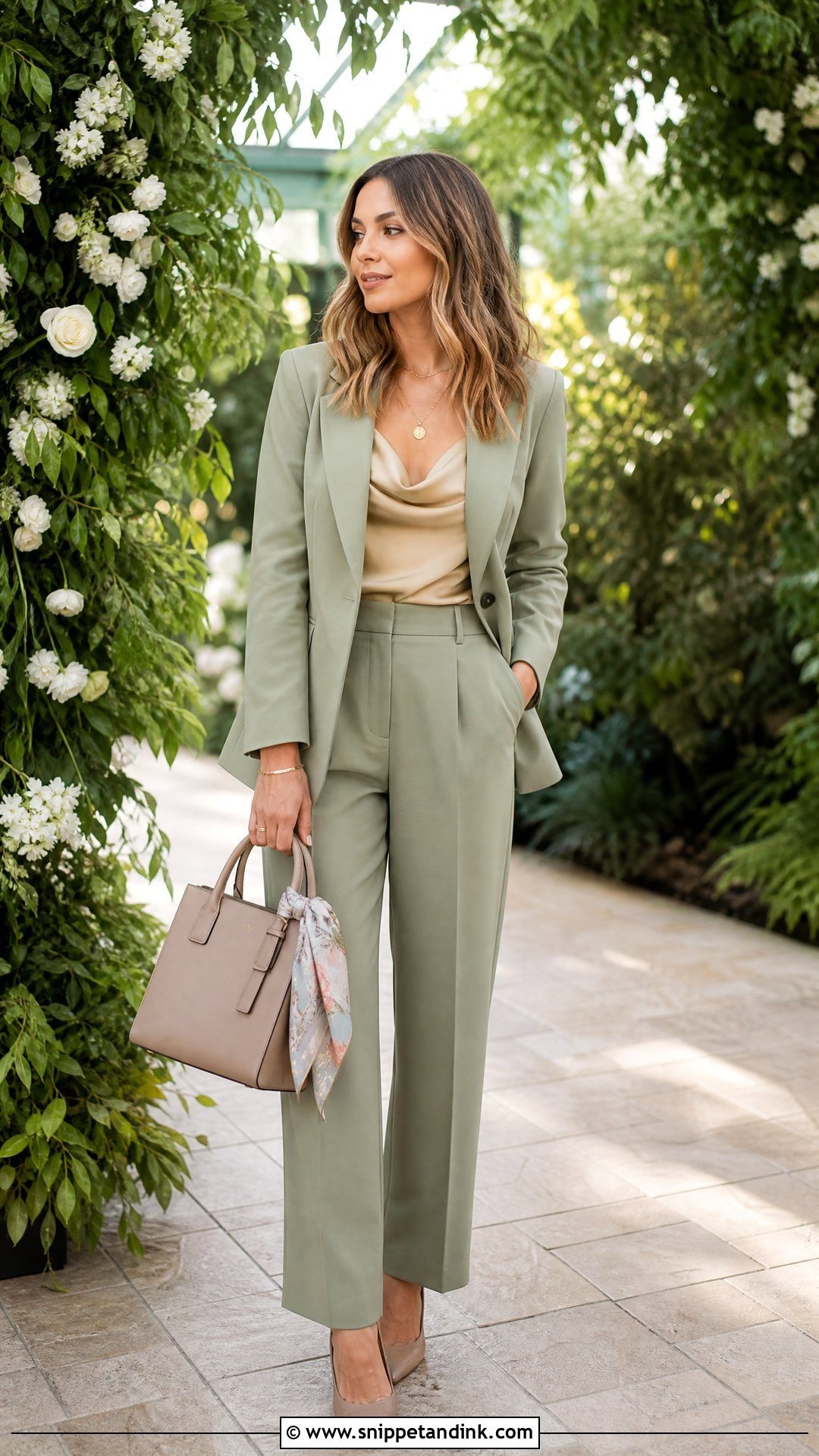
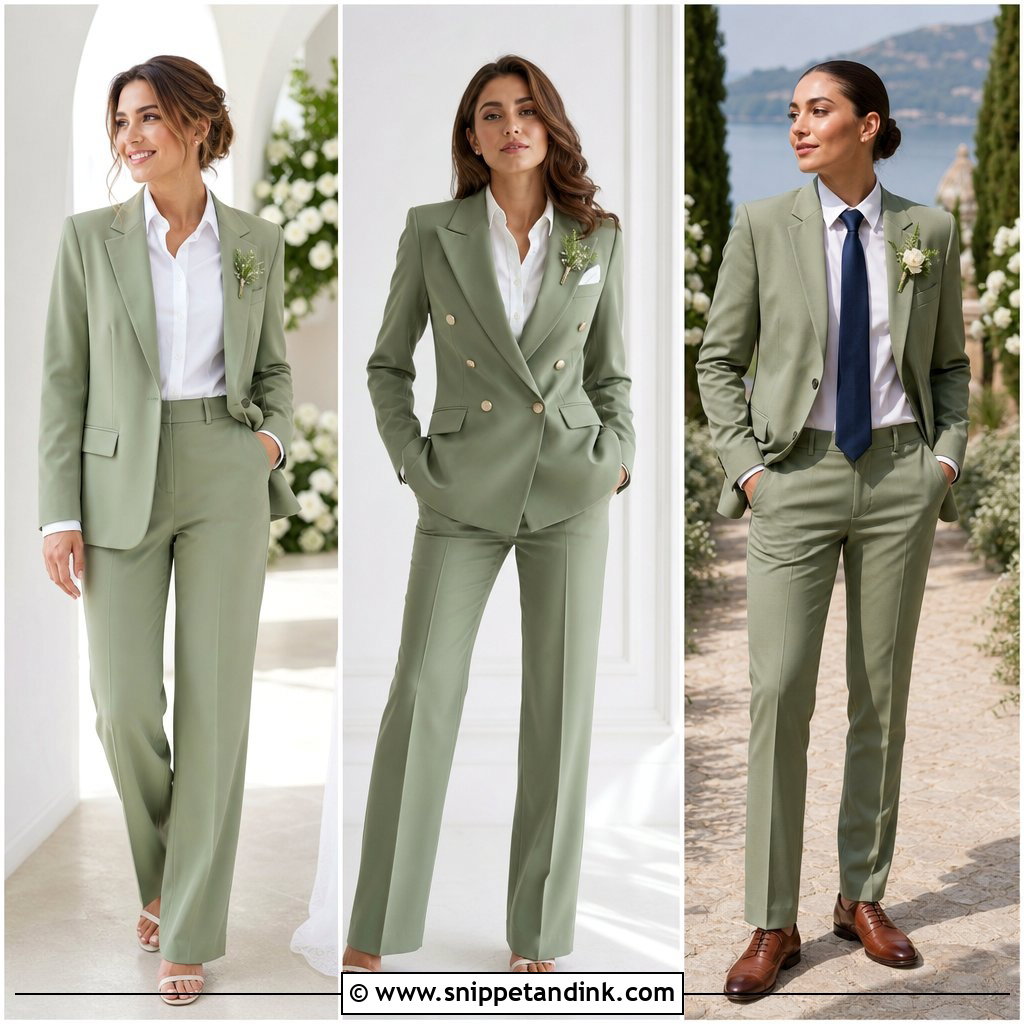
Sage looks natural outdoors, yet in a flat, muddy fabric it can start to resemble a uniform, so the cut has to be right. I fit the blazer to follow the waist without pulling and pair it with matching pleated trousers and a matte silk top in cream, pale gold or a deeper green. If you are attending as a guest, let the top be visibly colored rather than going ivory from head to toe. Taupe pumps, a small leather bag and gold jewelry warm up the muted green, and a printed silk scarf knotted on the bag handle adds a heritage note. Linen blend in summer, wool crepe once it cools. Either way, have it pressed before you leave, since creased sage looks casual very quickly.
6. Burgundy Velvet Wedding Suit
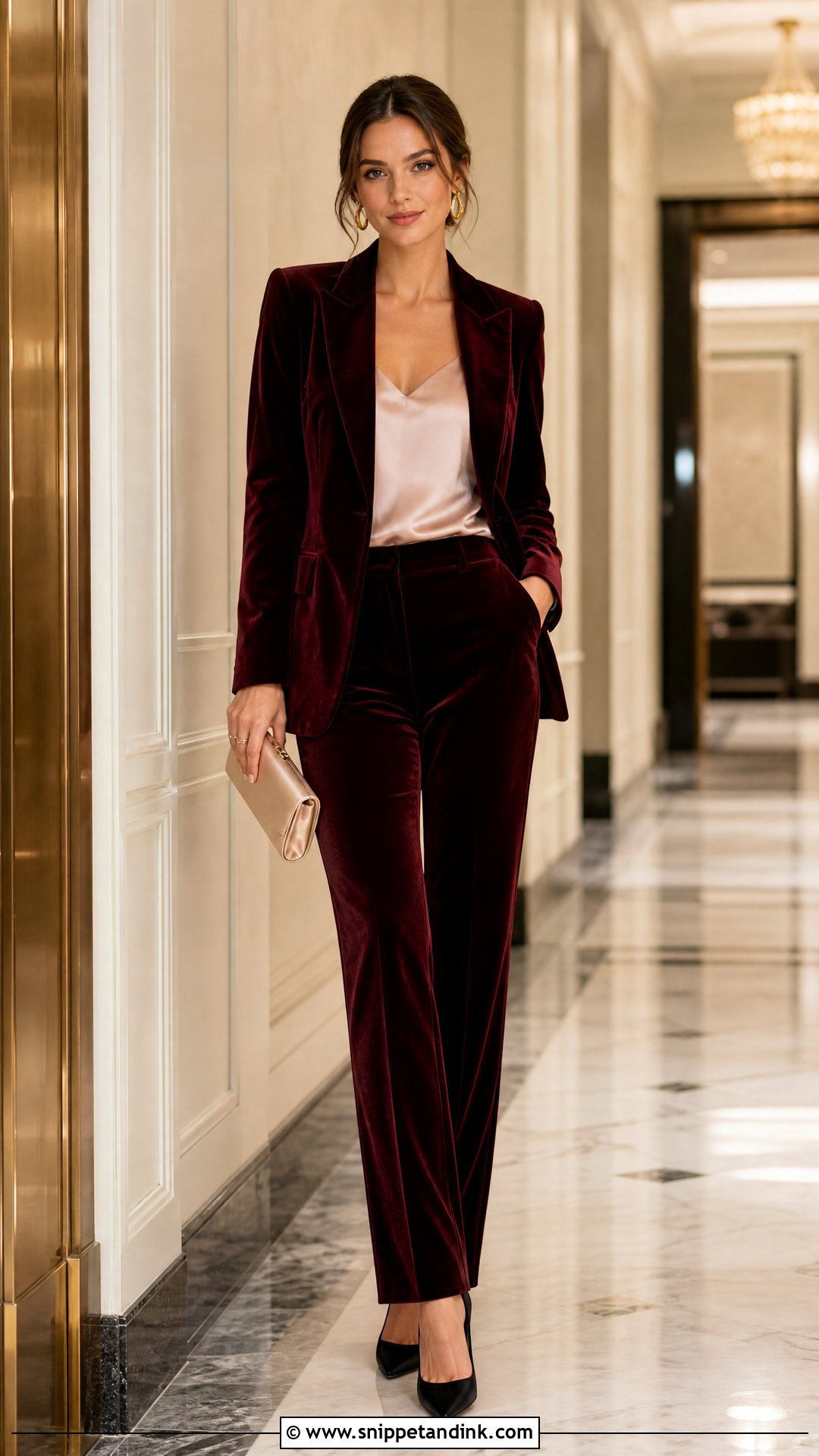
Velvet has a pile, and the pile changes color depending on which way light hits it. Before buying a burgundy velvet suit, I hold the jacket and trousers side by side under a bright lamp; if one piece looks lighter, the pile runs in a different direction and it will show in flash photos. Choose a streamlined blazer with straight or gently flared trousers, then a silk camisole in blush or black to lighten all that fabric. Black pointed pumps, a satin clutch and understated gold earrings are enough. Leave velvet shoes and big necklaces at home, as they make the whole thing heavy. Wear the blazer slightly open for a softer line or fastened for waist definition. Evening receptions and winter weddings in grand hotels or historic venues are its natural setting.
7. Charcoal Pinstripe Wedding Suit
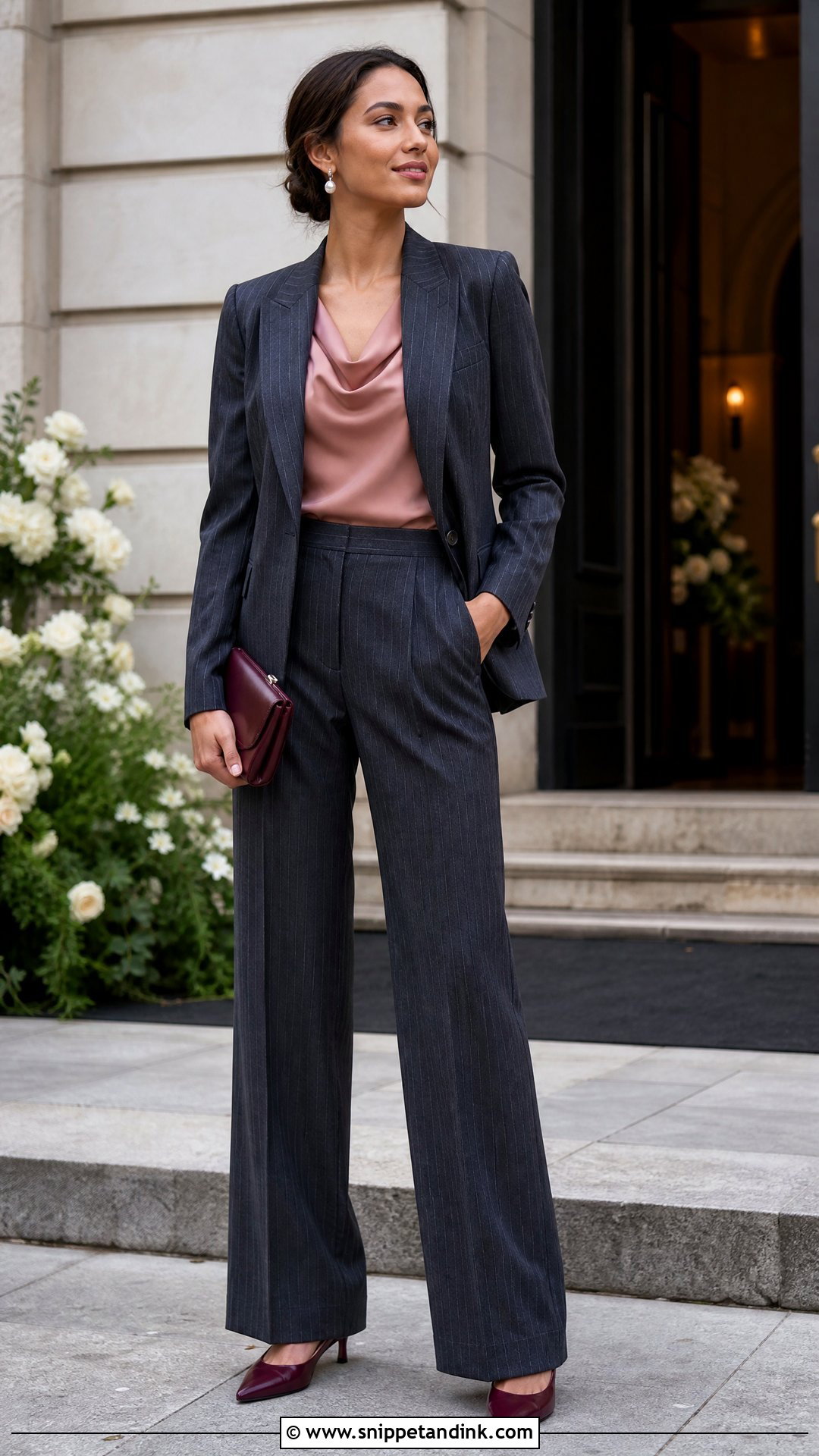
Pinstripe is office cloth until you change what goes with it. With a charcoal pinstripe suit, I pick a narrow, subtle stripe, because a wide chalk stripe reads banker no matter how you style it. A shaped single-breasted jacket goes over high-rise wide-leg trousers, with a draped satin blouse in dusty rose or pale lavender and a soft cowl neck instead of a collared shirt. Burgundy pumps, pearl earrings and a smooth leather clutch take the edge off. Hem the trousers so they nearly skim the floor with the toe of the shoe still showing. An oversized jacket plus overlong trousers makes the outfit look borrowed. Fall ceremonies and city cocktail receptions suit it.
8. Camel Three-Piece Wedding Suit
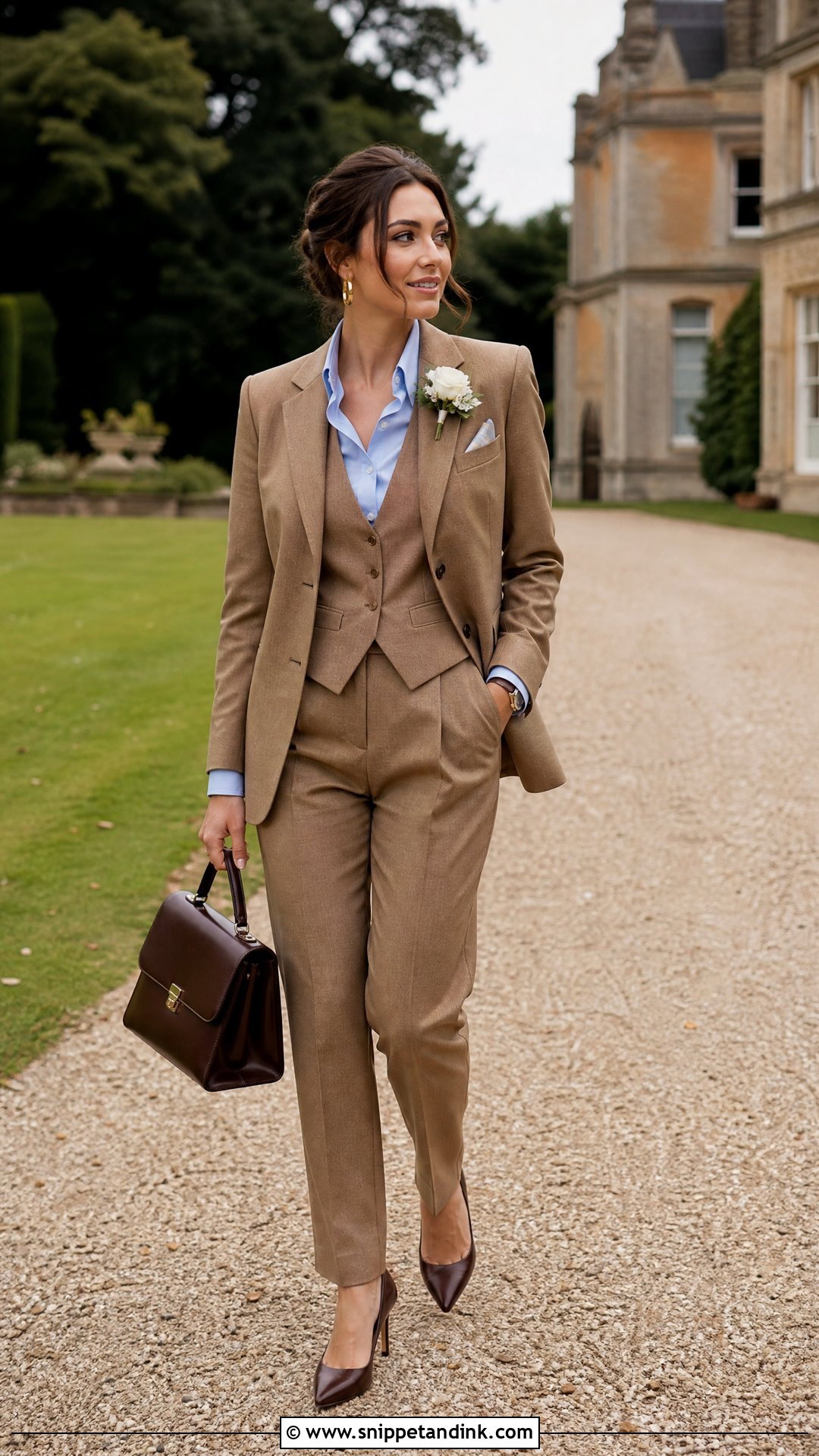
A camel three-piece is mostly a fit problem: three layers in one color only look intentional when each is cut close. The blazer, fitted waistcoat and full-length trousers should be fine wool or wool crepe bought together, since camel drifts between yellow and pink from one dye lot to the next. A pale blue silk shirt under the vest gives contrast, and you can take it off for a sleeveless reception look if the waistcoat covers enough. Chocolate leather pumps, a structured brown bag and small gold hoops follow. A vintage watch or plain signet ring adds personality without a logo in sight. I like this one for fall weddings, daytime formal events and country venues with an equestrian feel.
9. Cream Bridal Wedding Suit
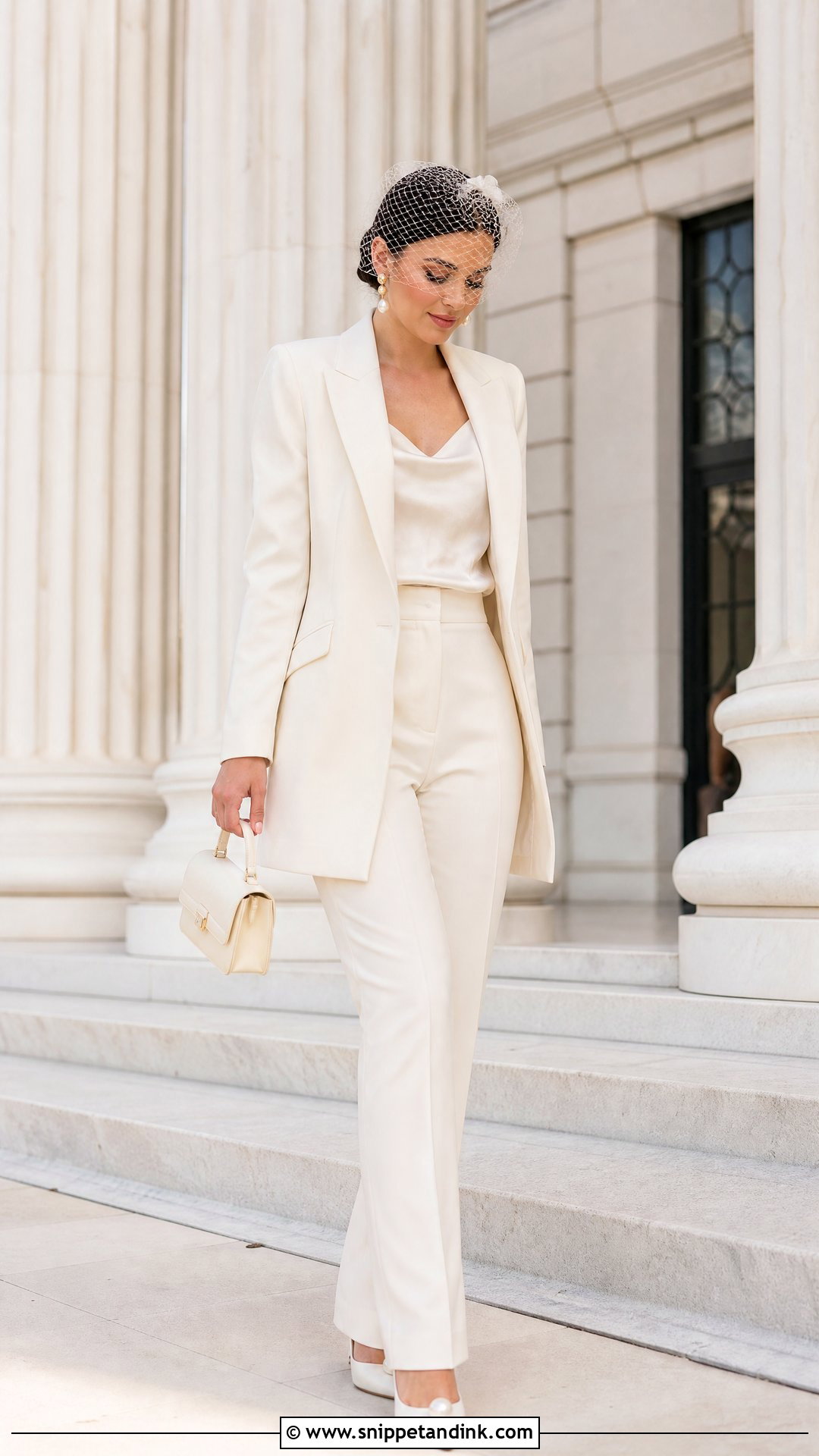
For a courthouse ceremony or a small civil wedding, a cream suit gives a bride something to marry in that she can still eat dinner comfortably in. I choose a longline blazer with covered buttons and trousers that fall straight from the waist, with a silk camisole or a structured bustier with a modest neckline underneath. Cream is where mismatches happen, because one maker’s cream is another’s butter. Check the jacket, trousers and top together by a window before you buy, not under shop spotlights. Pearl pumps, a small top-handle bag and heirloom-style earrings carry the bridal feel, and a birdcage veil or simple hair bow adds ceremony. A removable silk flower on the lapel is a sweet extra for photos. It suits second ceremonies and smaller celebrations especially well.
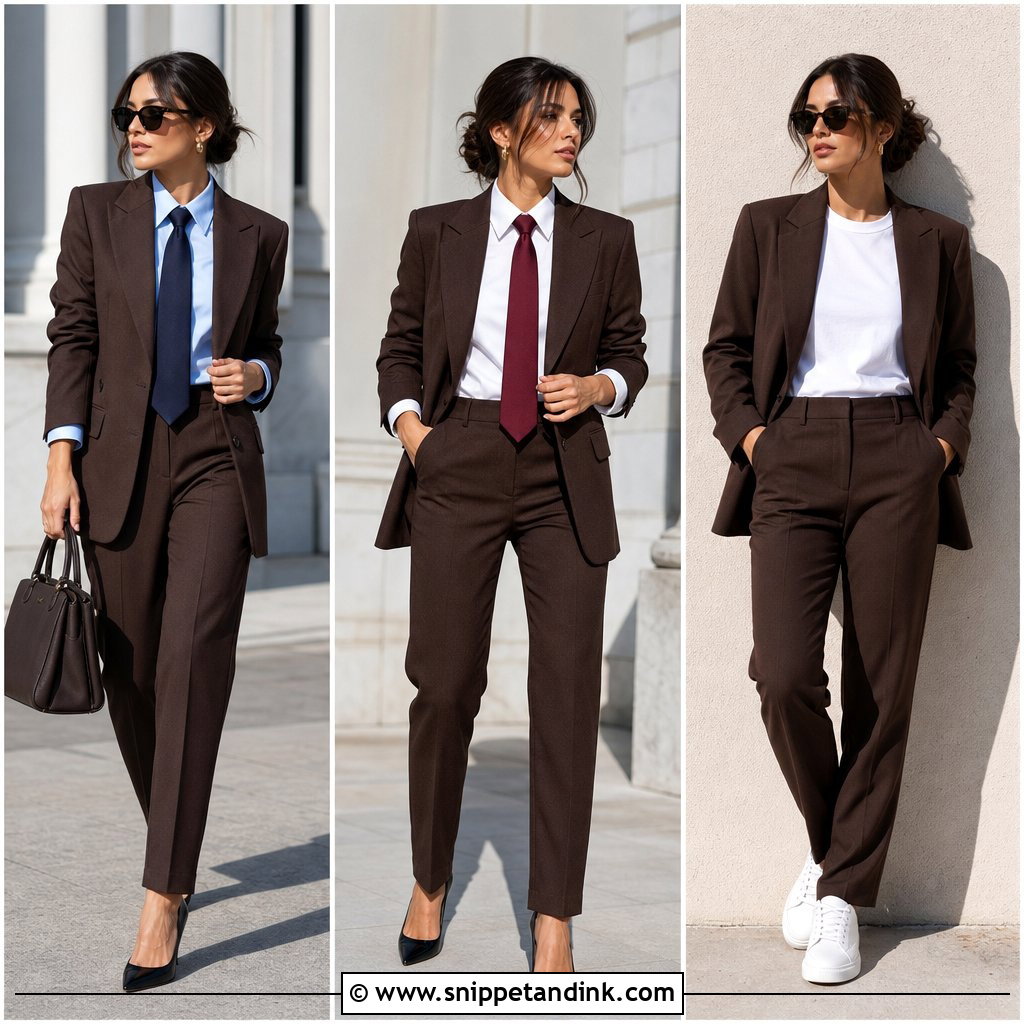
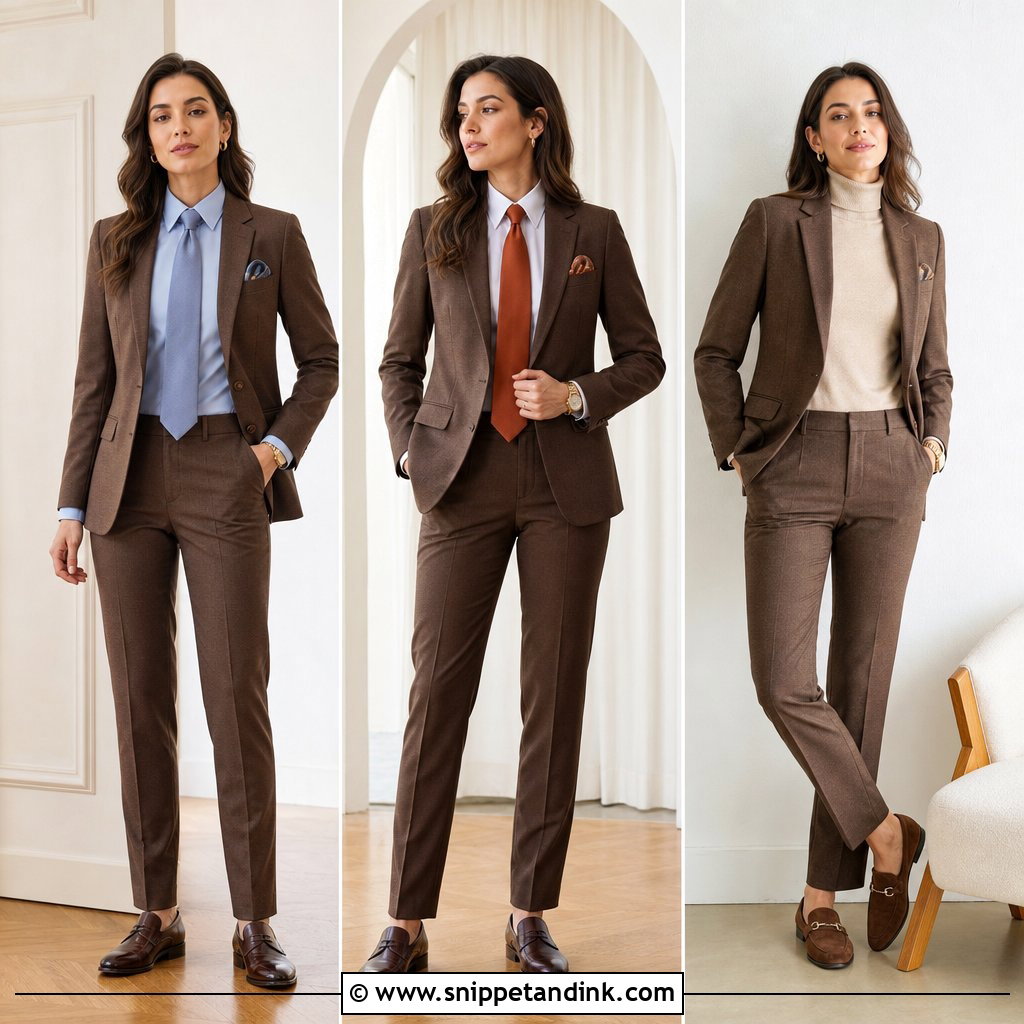
10. Chocolate Brown Wedding Suit
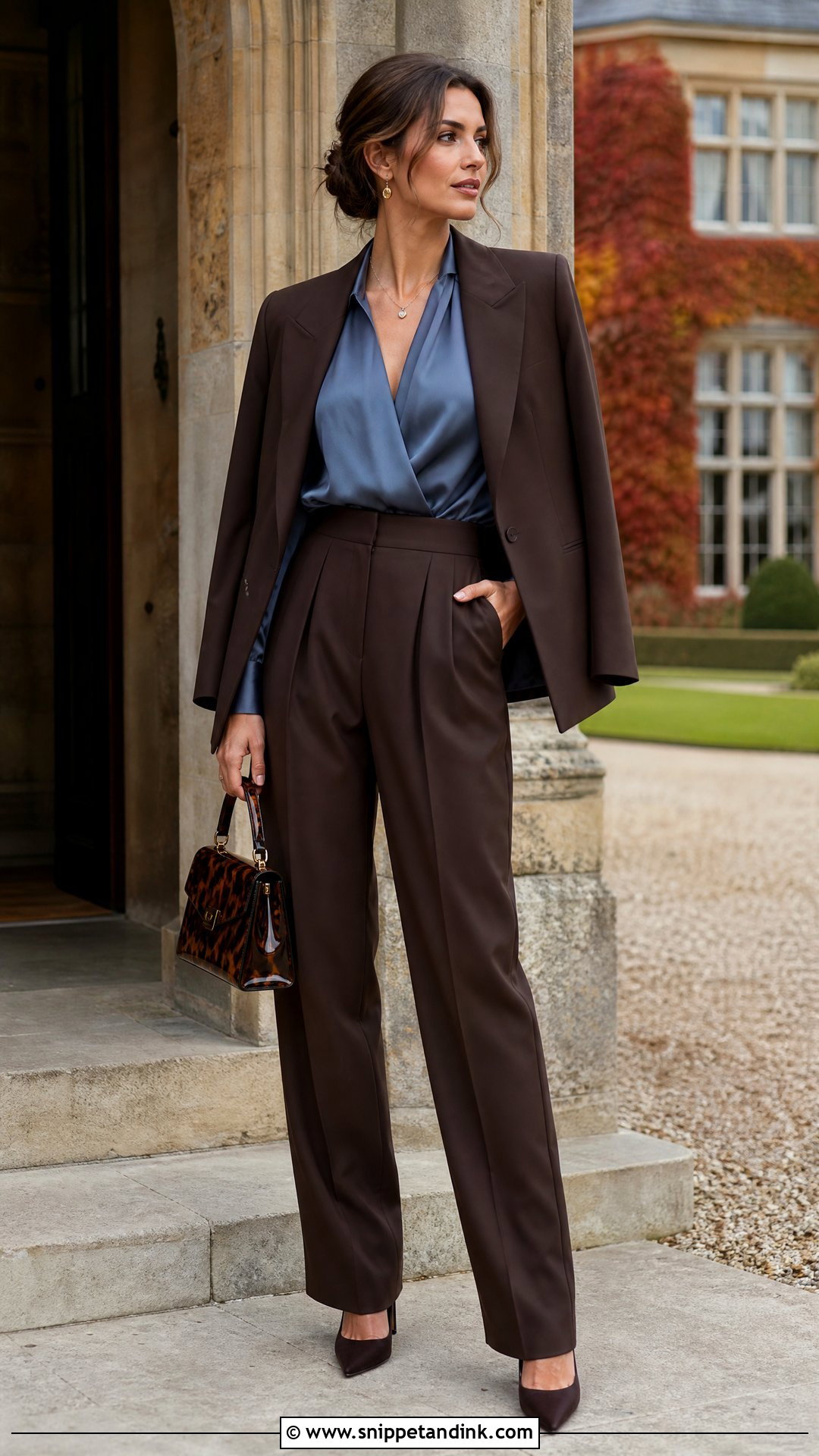
Brown is what I suggest to guests who default to black for an autumn wedding but want something warmer. Look for a softly draped blazer and pleated trousers in wool crepe or brushed twill. A muted blue or copper silk top gives depth; blue against brown is one of the oldest tailoring pairings for good reason. Add espresso pointed pumps, a compact tortoiseshell bag, a thin chain and small drop earrings. If you belt the jacket, use matching leather with a small buckle. It sits well against fall leaves and wood-paneled rooms. Keep the hair polished and the makeup natural, or the earthy palette can tip into rustic.
11. Gray Plaid Wedding Suit
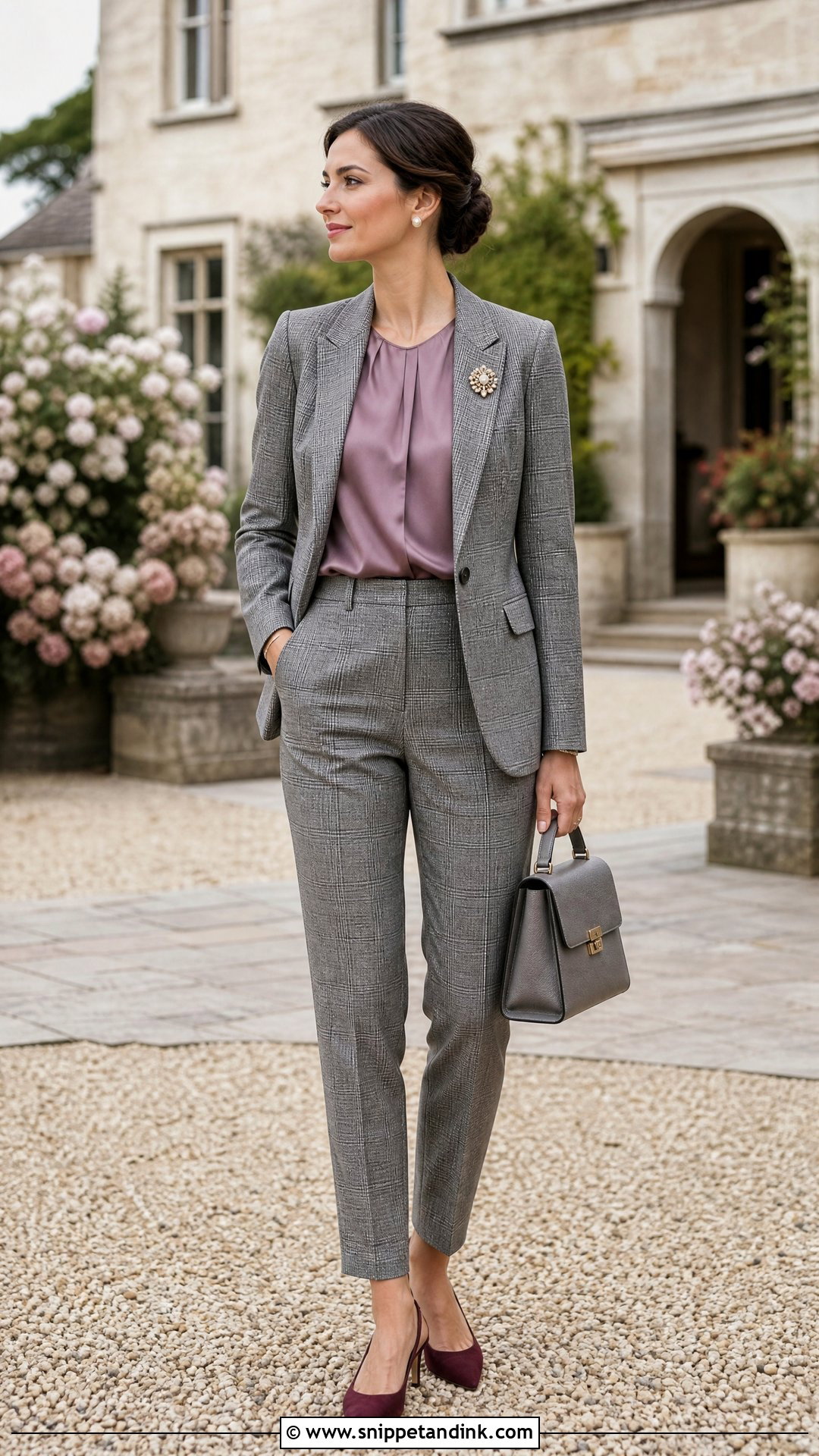
Pattern scale is what separates a wedding plaid from a work plaid. I’d choose a small windowpane or glen check in low contrast, since anything you can read from across the room starts to look like a sports jacket. Pair the fitted blazer and ankle-length trousers with a mauve or soft blue silk blouse, then burgundy slingbacks and a structured gray bag. Wear one antique-style brooch on the lapel or pearl studs, and no second print anywhere. The trousers should stop just above the shoe; at mid-calf they cut the leg in an awkward place and the suit drifts toward everyday officewear. Daytime fall weddings at historic inns and countryside venues are its home.
12. Dusty Rose Wedding Suit
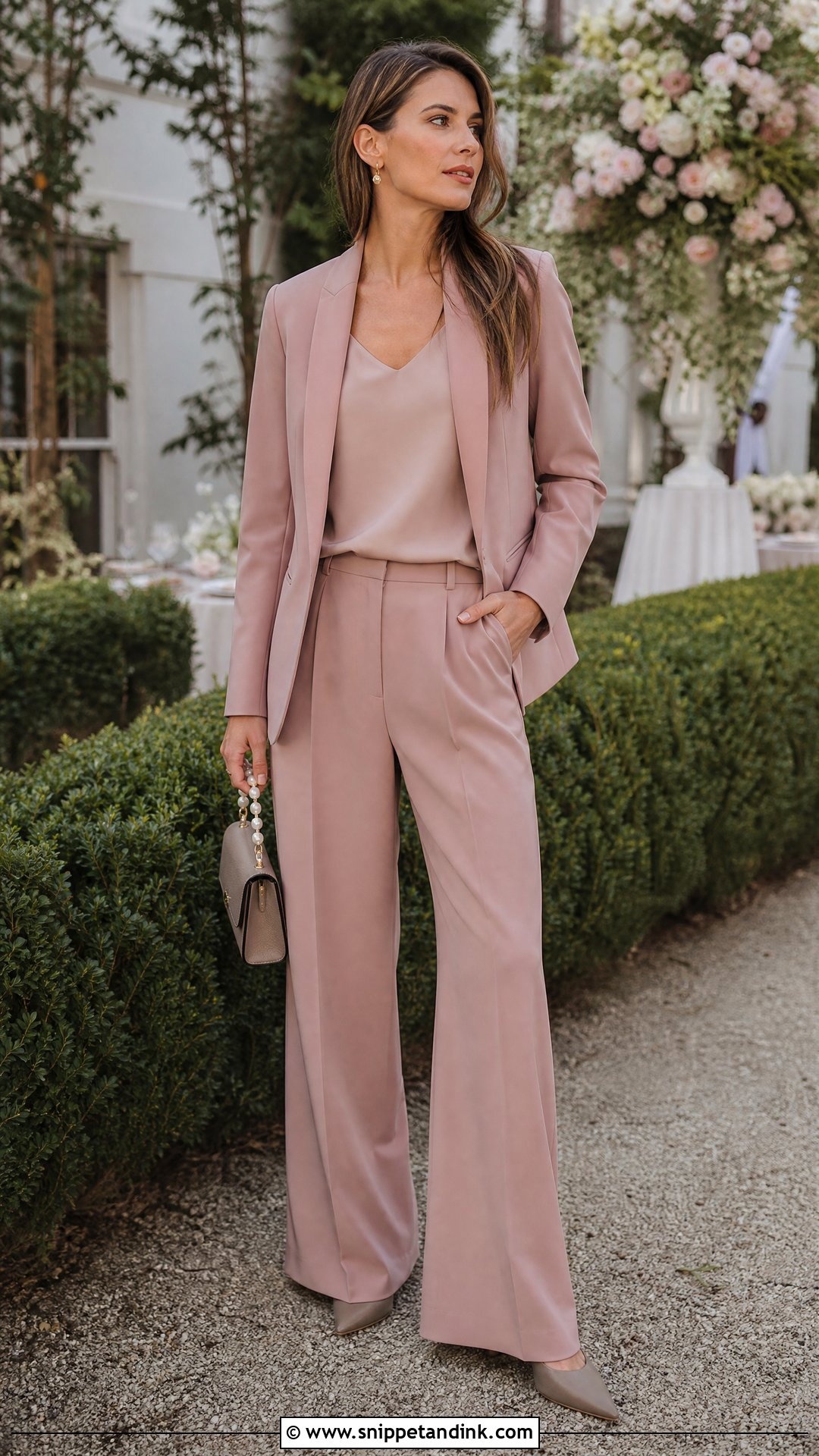
Dusty rose gives you a romantic outfit without a scrap of lace or ruffle. Get it in matte crepe, with a softly fitted blazer, fluid wide-leg trousers and a tonal silk shell so the color runs in one long column. Nude or taupe pumps, a pearl clasp bag and rose-gold or yellow-gold earrings, plus a slim belt in the suit’s own shade if you want the waist marked. The thing I check most is undertone. Pick a rose with gray or brown in it rather than candy pink, because the muted version looks grown-up and holds its color on camera. Garden ceremonies, hotel terraces and spring or summer daytime receptions suit it.
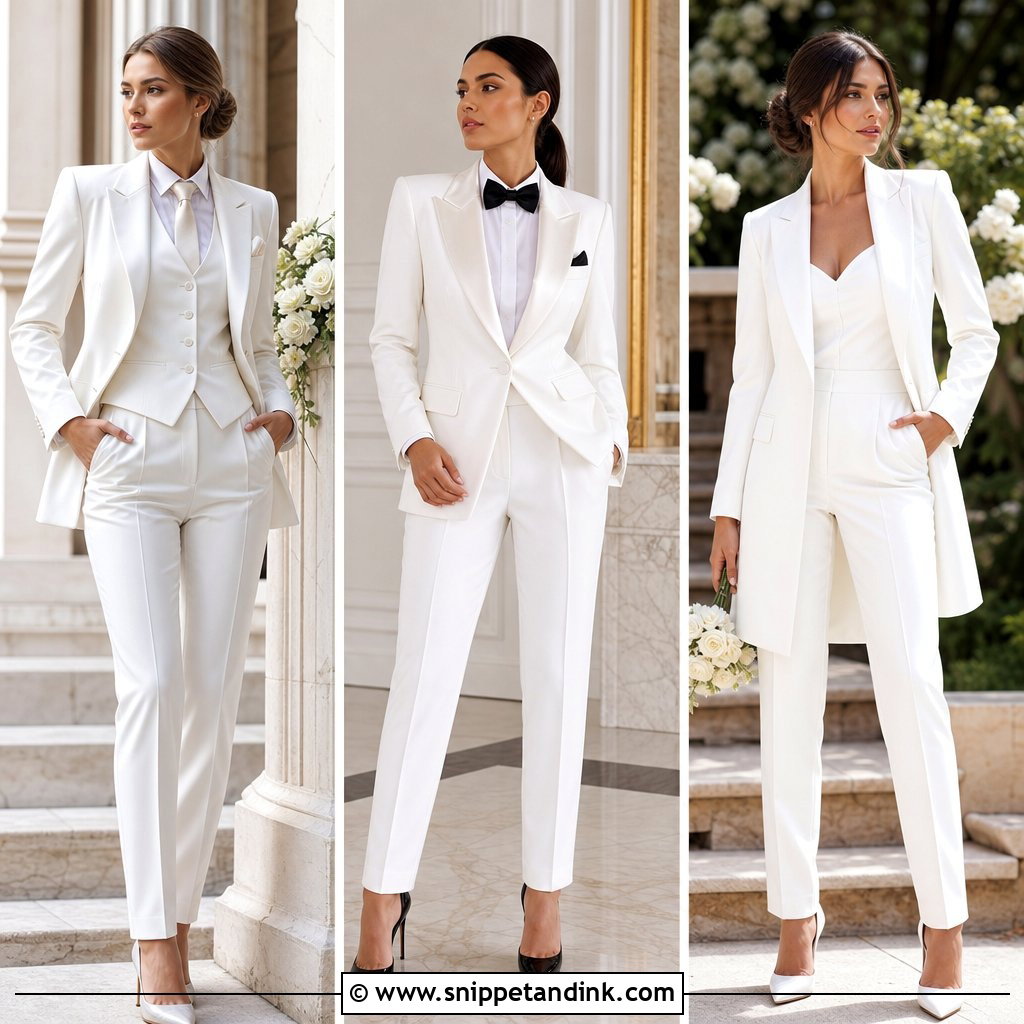
13. White Satin Lapel Bridal Suit
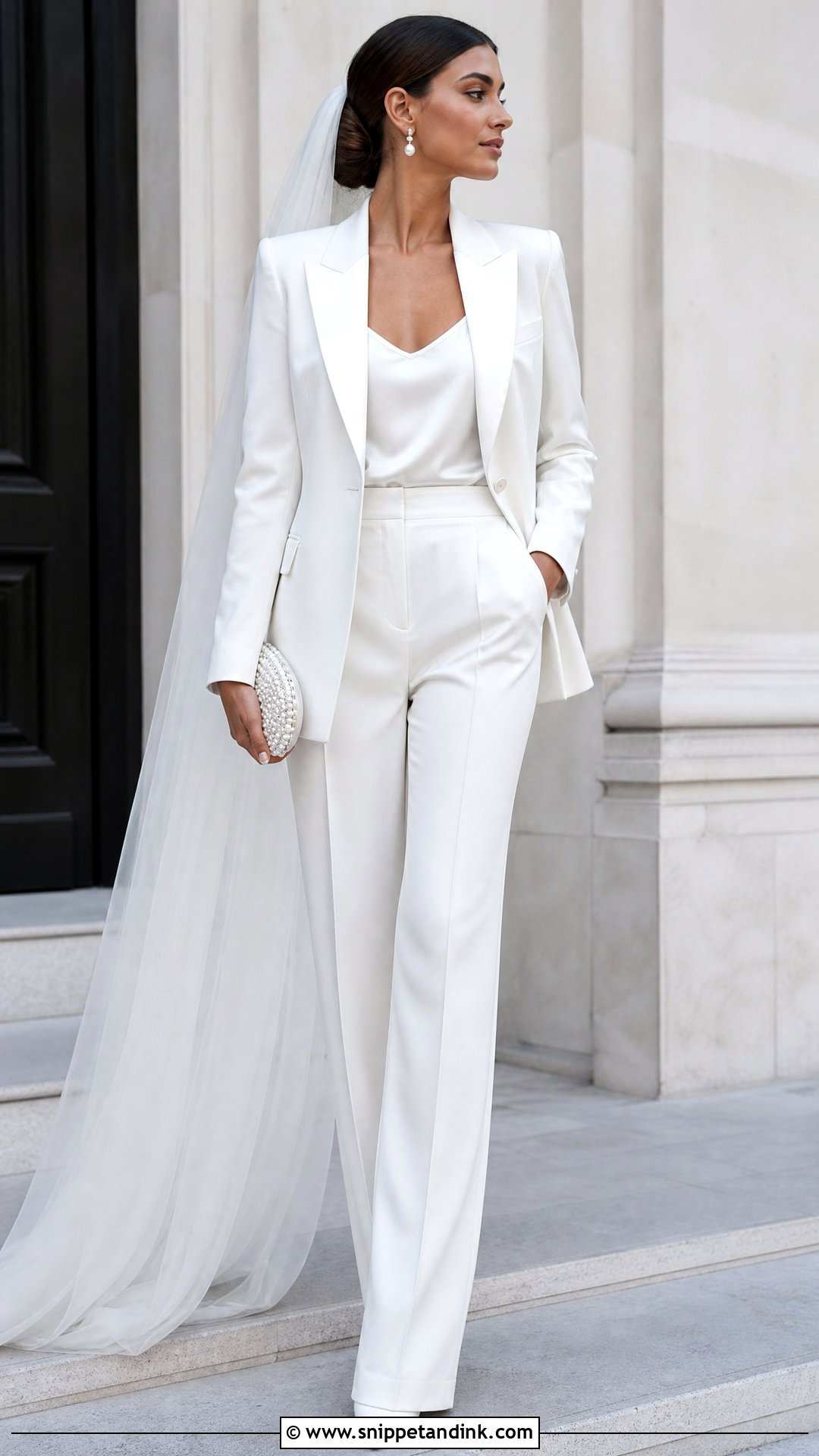
A white tuxedo gives a bride clean lines and real presence at the altar. I look for a tailored jacket with white satin lapels and covered buttons, trousers with a fluid but controlled leg, and a silk camisole, fitted shell or waistcoat underneath. Pointed white pumps and a pearl or crystal clutch with little ornament. Bridal earrings can be bolder here, but keep the neckline bare or nearly so, so nothing competes with the lapels. A sleek veil anchored beneath a low bun brings the ceremony into it. Evening vows, a reception change and city weddings all suit it. Hemming matters more in white than in any other color: bright white shows pooling, creases and uneven hems far more than navy does, so bring the exact shoes to your final fitting.
14. Olive Green Wedding Suit
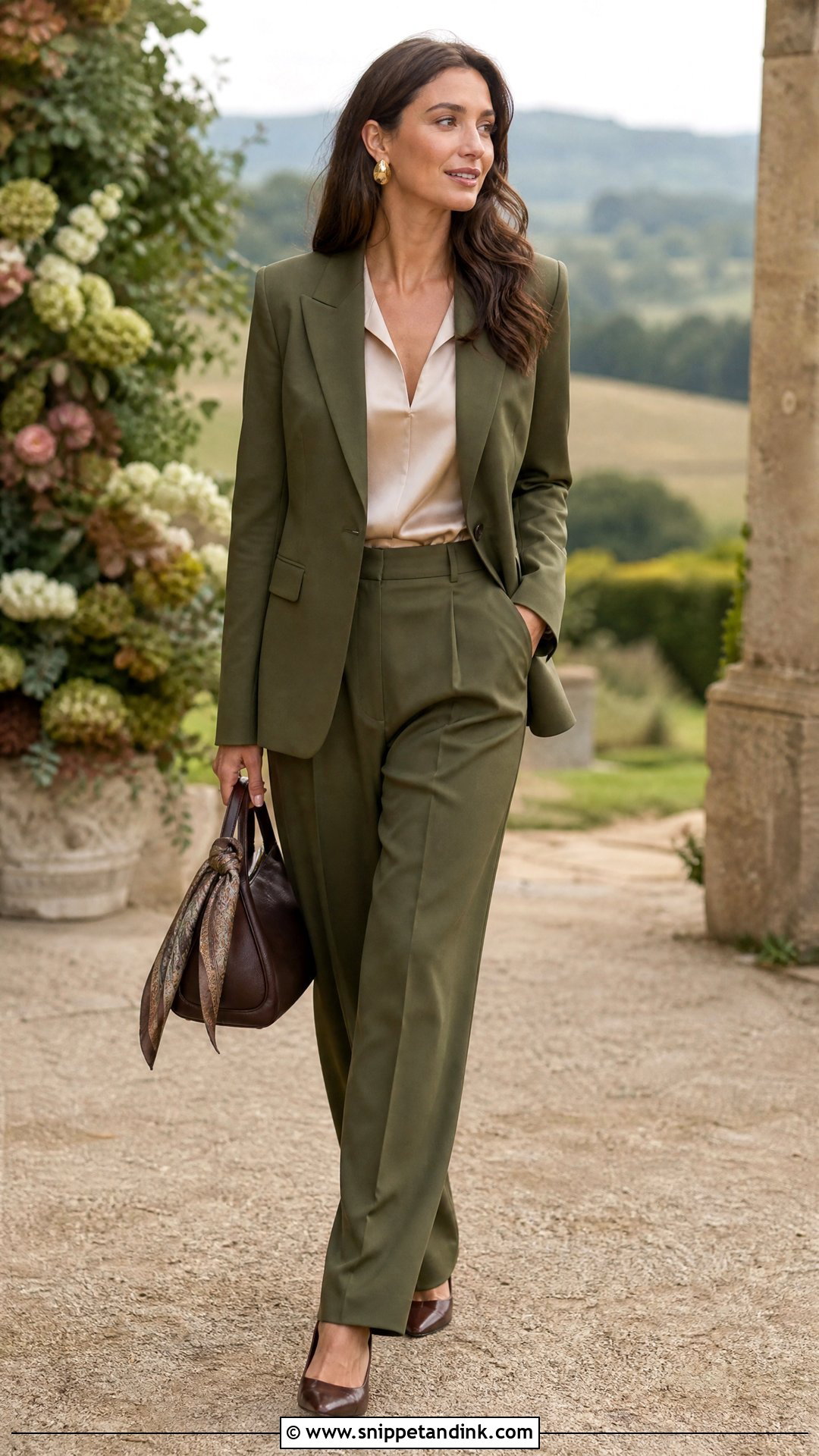
There is a fine line between olive and khaki, and it decides whether this suit looks formal. I go for a deep, neutral olive; a yellowish khaki tone looks like weekend clothes. A structured blazer with tapered or wide-leg trousers in matte crepe or light wool, then a champagne or pale blush blouse to soften the earthiness. Dark brown slingbacks, a small suede or leather bag and brushed gold jewelry finish it. A silk scarf in muted green and cream can sit folded in the bag instead of adding another layer. Late summer into early fall, especially in the countryside, is its season. Press the blazer and polish the shoes; small as they are, those two things make it event-ready.
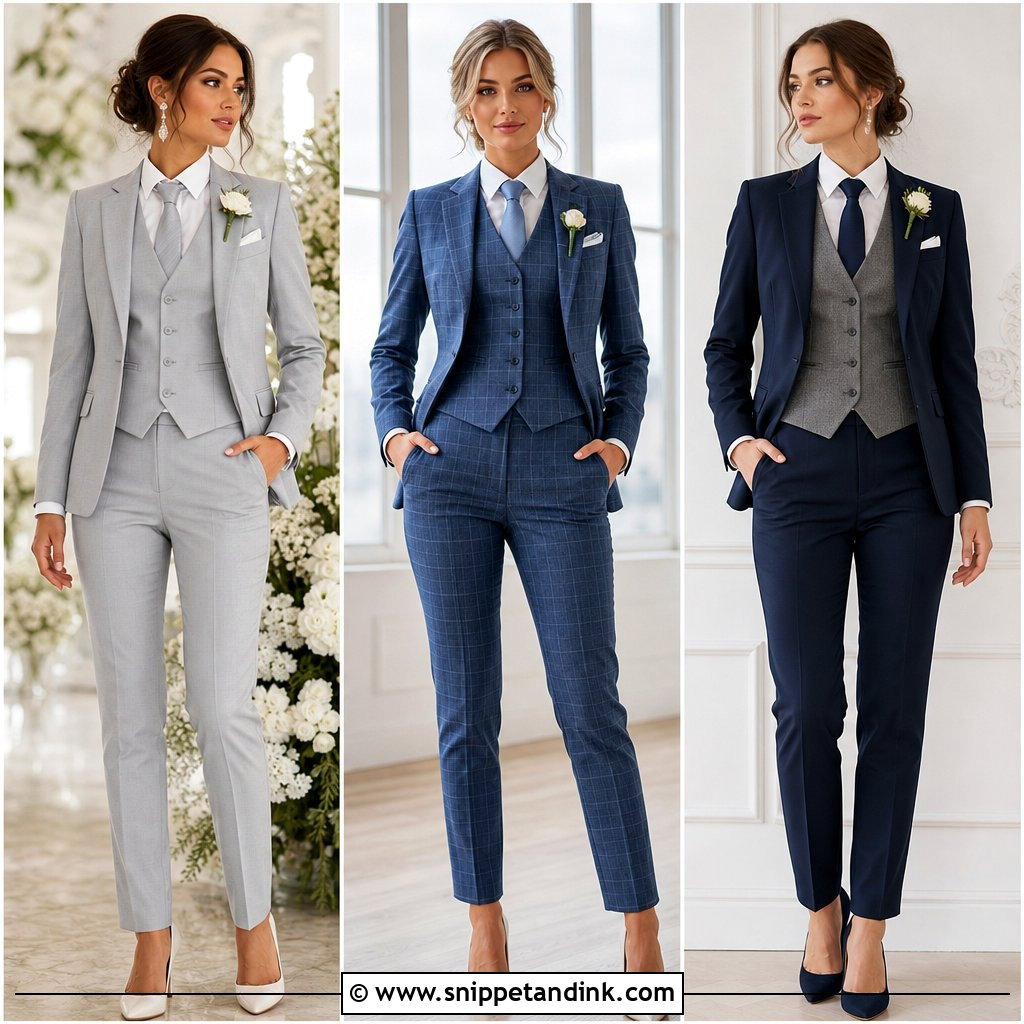
15. Navy Waistcoat Wedding Suit
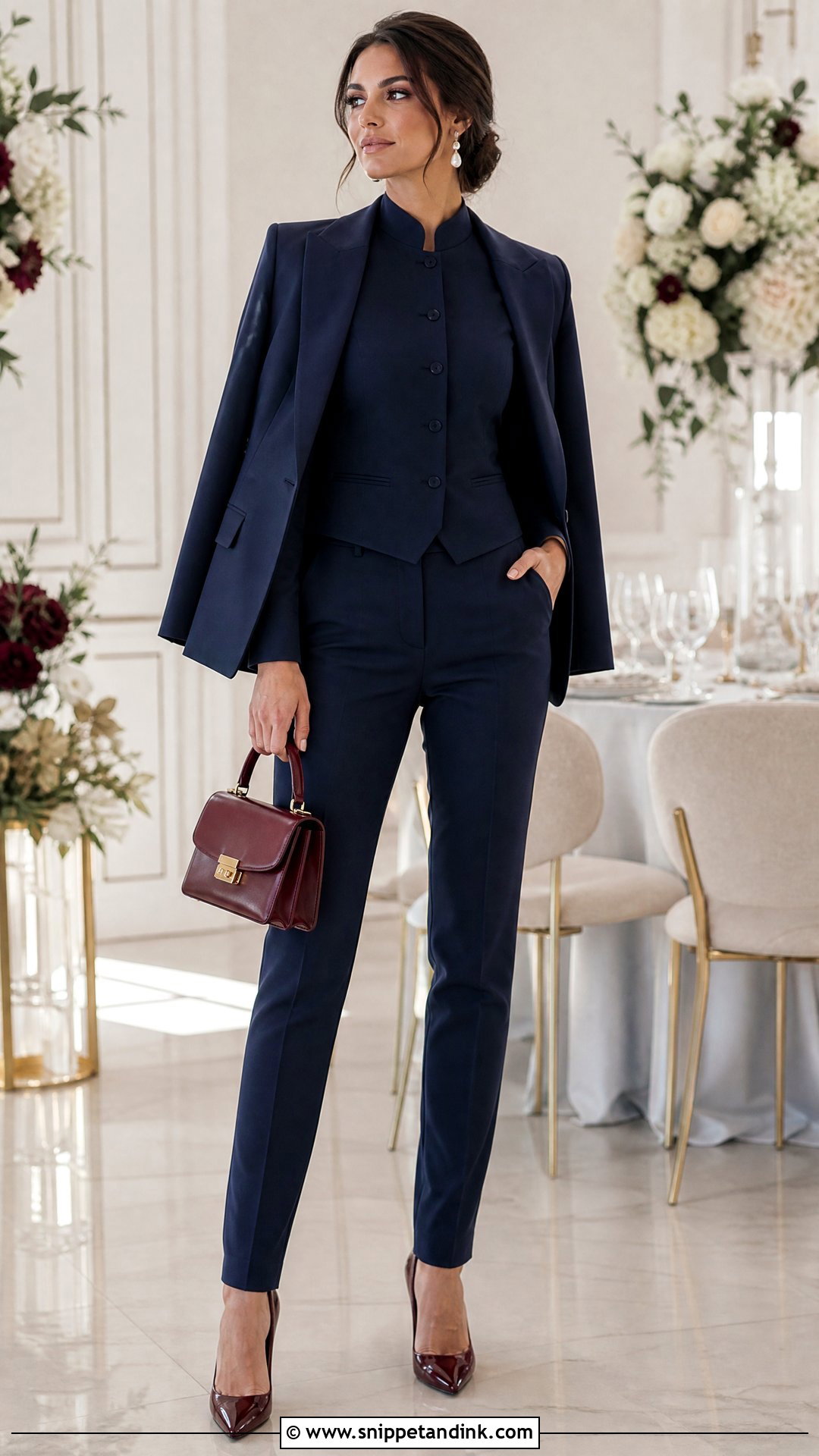
A waistcoat suit lets you skip the blouse and still look layered. Pair a fitted, high-neck waistcoat with high-rise trousers and a matching blazer: jacket on for the ceremony, off for the reception. Pointed navy or burgundy pumps, pearl drops and a structured top-handle bag complete it. Test it sitting down. A waistcoat that just meets the waistband when you stand will often gap when you sit, showing skin or a shirt tail, so I have clients sit in the fitting room before signing off on the length. Fine wool, crepe or a silk-wool blend drapes far better than stiff synthetic fabric. It’s right for formal daytime events and evening receptions alike.
16. Taupe Wide-Leg Wedding Suit
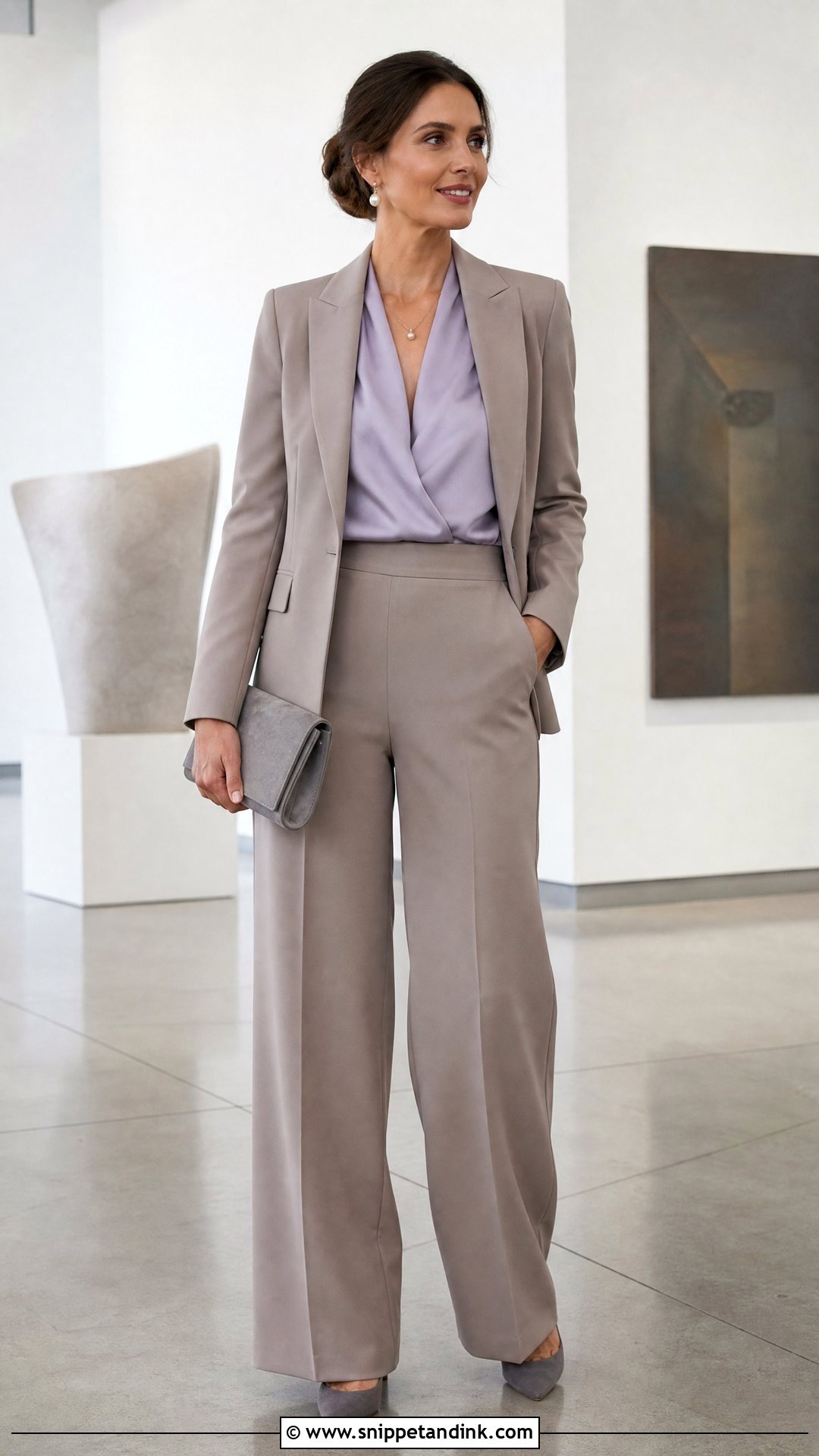
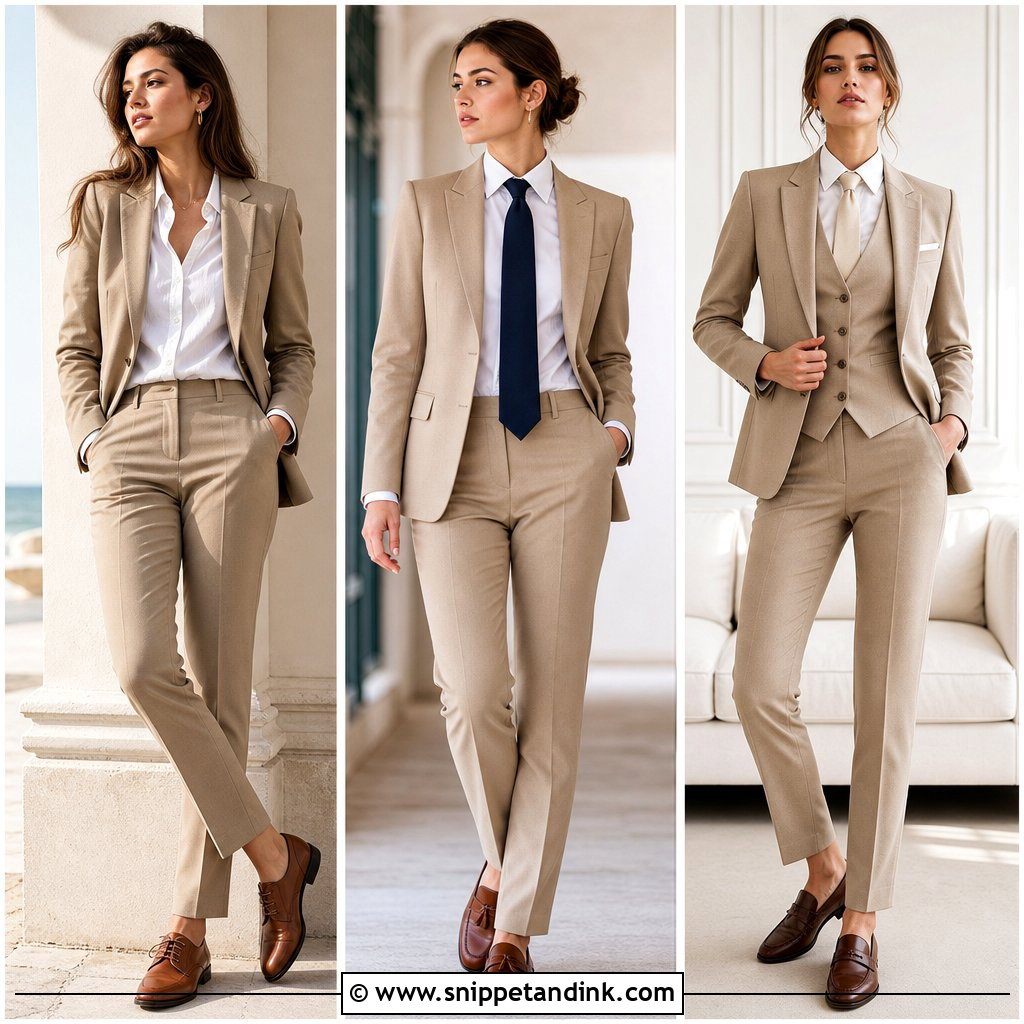
Taupe is a tricky neutral on camera because it can sit very close to some skin tones. In a wide-leg suit, I break it up with a blouse in pale lavender or muted coral and steer clear of beige shoes and bags that blend into the skin, since the outfit loses definition in photos. Start with a softly shaped blazer and trousers that fall from a high waist into a long, fluid leg. Pewter heels, a structured suede clutch and simple pearls make it feel dressed. The hem should hover just off the floor in the shoes you’ll actually wear. If the blazer is oversized, keep the blouse fitted, or the shape disappears. Modern venues, galleries and smart daytime celebrations suit it.
17. Bouclé Skirt Wedding Suit
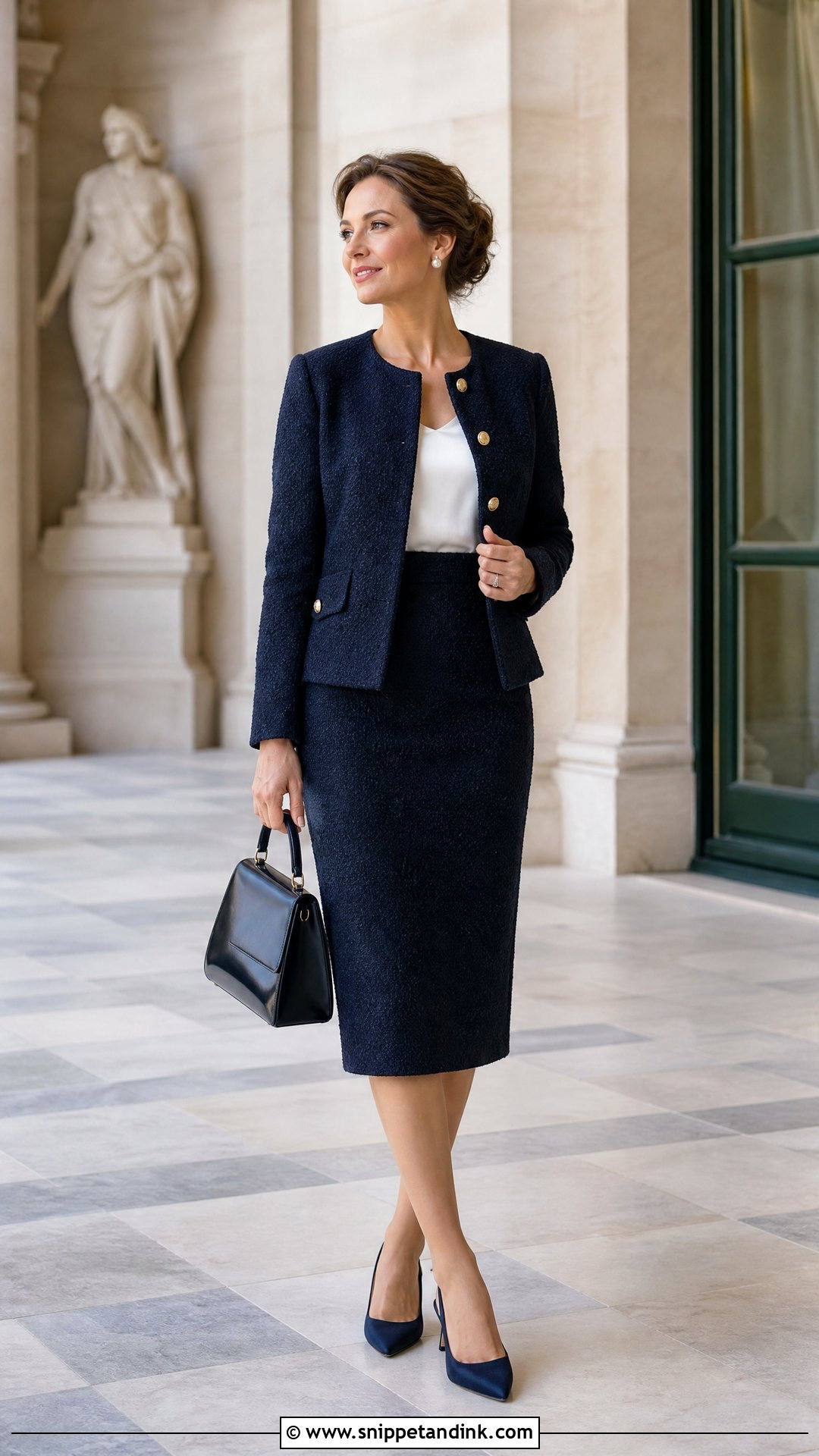
Bouclé is a looped yarn, and the loops snag on anything with a sharp edge: bag chains, bracelet clasps, the prongs of a ring. With a bouclé skirt suit, I keep jewelry smooth and choose a bag without chain straps. A collarless jacket goes over a knee-length or midi pencil skirt in navy, pale blue, soft pink or black, with a simple silk shell beneath. Fasten only the upper buttons so you can move. Slingback pumps and pearl studs give it a vintage tone; skip heavy trim, contrast braiding and logo buttons, which push it toward costume. A smooth lining helps the fabric fall and stops it itching. Walk and sit in the skirt before the day, because a pencil cut in a thick weave can ride up. Daytime ceremonies, luncheons and historic venues are its territory.
18. Pastel Yellow Wedding Suit
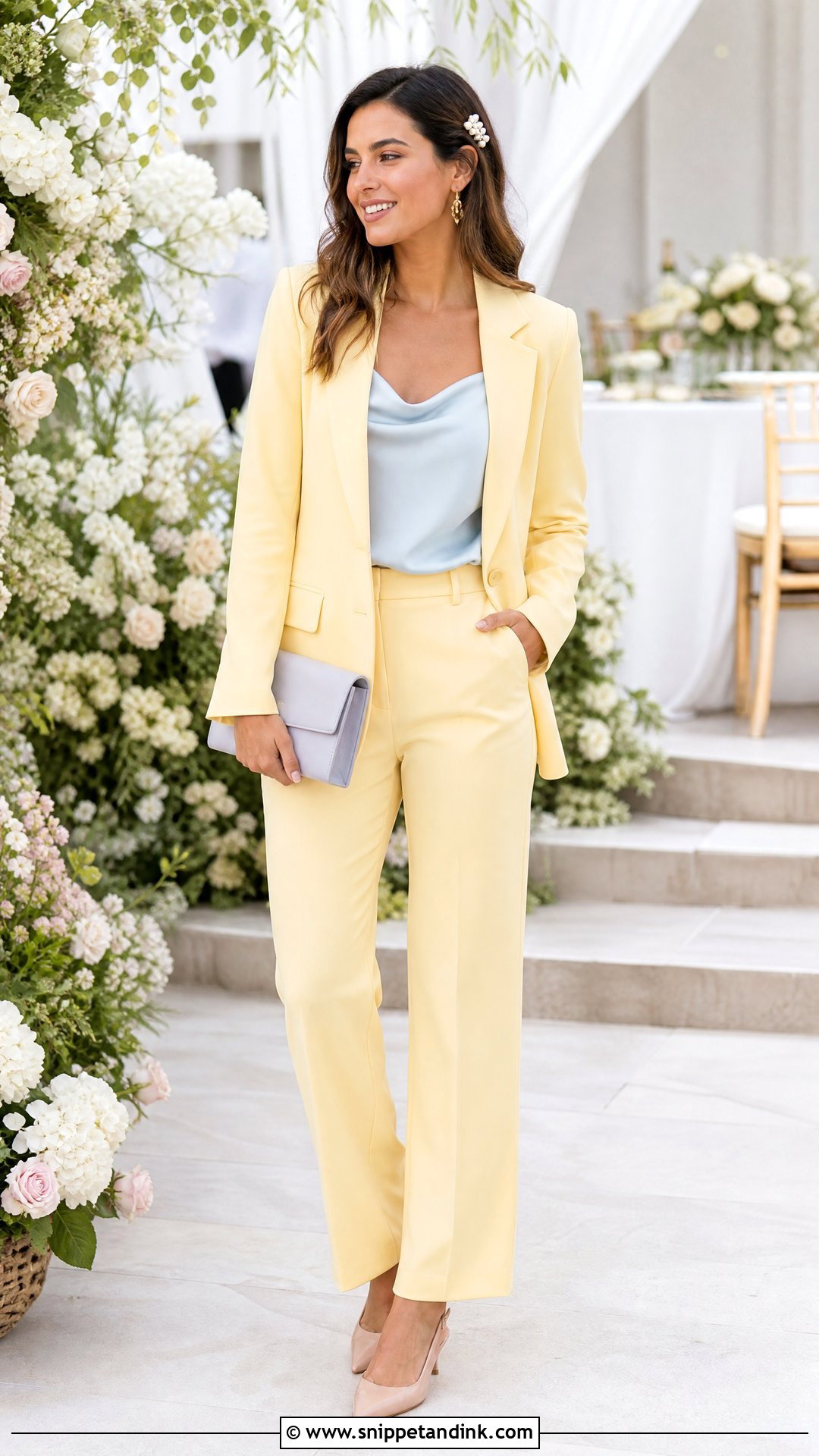
Yellow is cheerful at a spring or summer wedding, and the exact shade decides whether it looks chic or costume. I’d pick butter or primrose, never neon. A single-breasted blazer and straight-leg trousers form the base, with a pale blue or cream silk camisole for contrast. If you wear cream underneath, keep the yellow jacket on in photos so you never read as ivory. Nude slingbacks, a light gray clutch and delicate gold earrings, plus a pearl hairpin if you want one romantic detail. Insist on lined crepe, fine wool or structured silk. Thin, unlined yellow turns see-through in sunlight, and nothing undoes a refined suit faster. Garden ceremonies, daytime hotel receptions and coastal settings suit it.
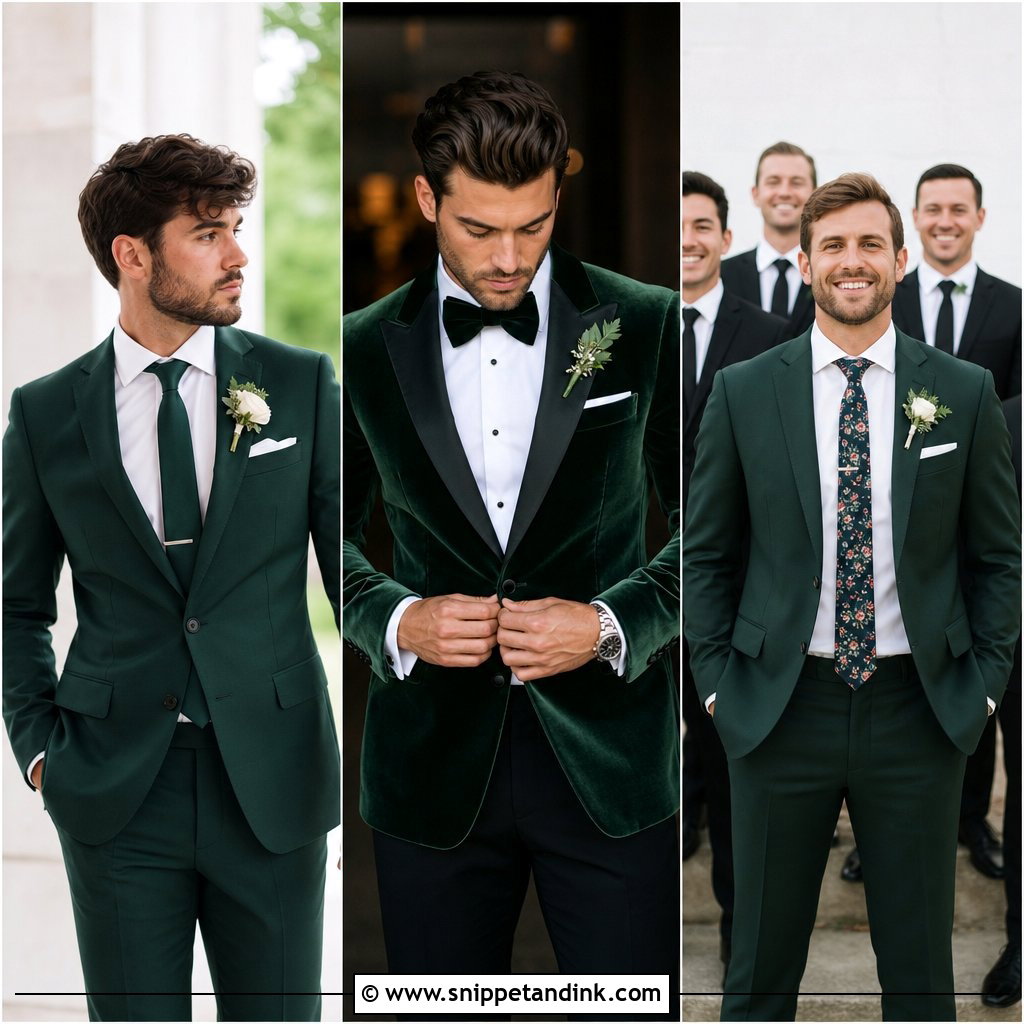
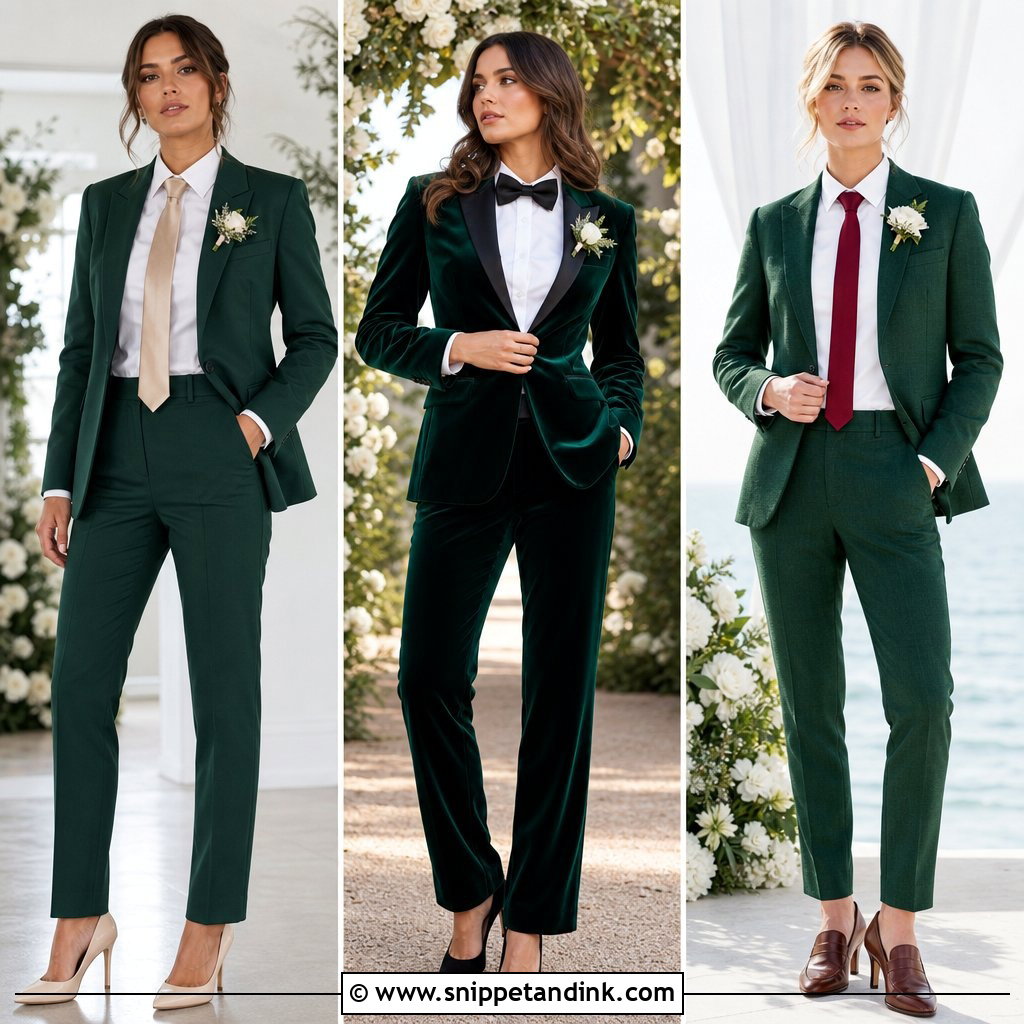
19. Deep Green Wedding Suit
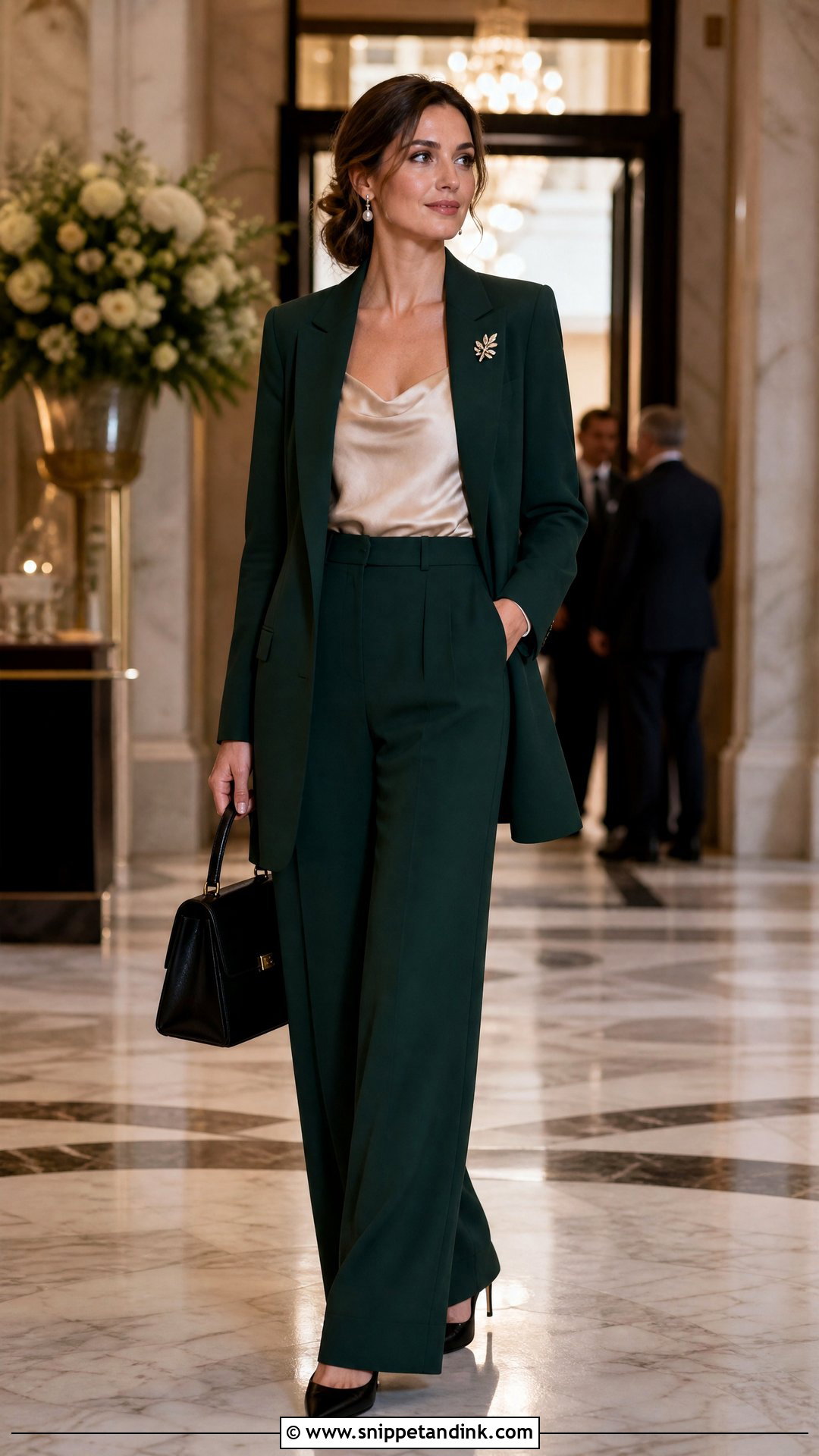
Deep green has jewel-tone richness while staying quieter than emerald. Choose a longline blazer and wide-leg trousers in wool crepe or satin-backed crepe, or fine velvet in winter, over a black or champagne silk top. Black pumps, a small structured bag and gold or pearl earrings are enough, with a discreet brooch on the lapel for a formal evening. Buy the jacket and trousers together in the same fabric. Dark greens vary slightly from one cloth to another, and under event lighting one piece can suddenly look almost blue. Autumn celebrations, winter receptions and black-tie-optional venues are where it belongs, and it needs very few accessories.
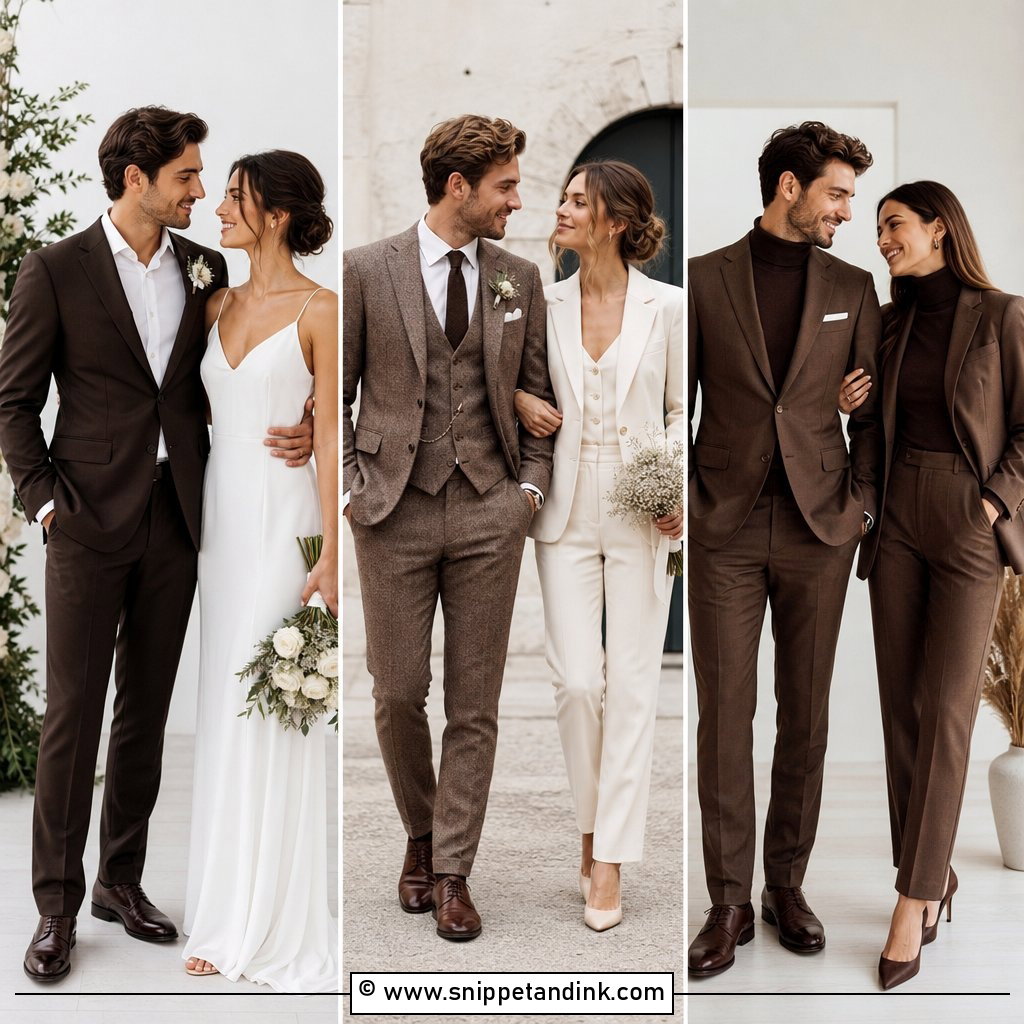
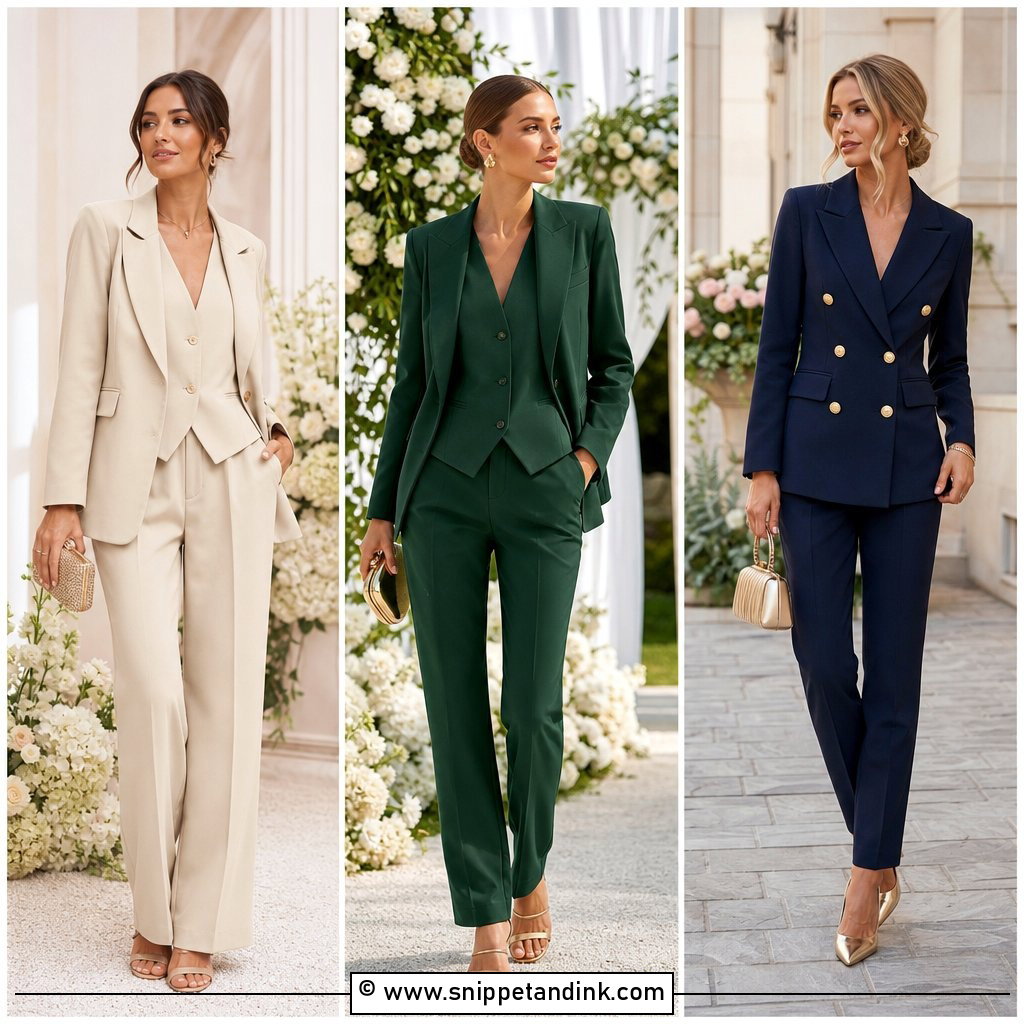
20. Dove Gray Cape Wedding Suit
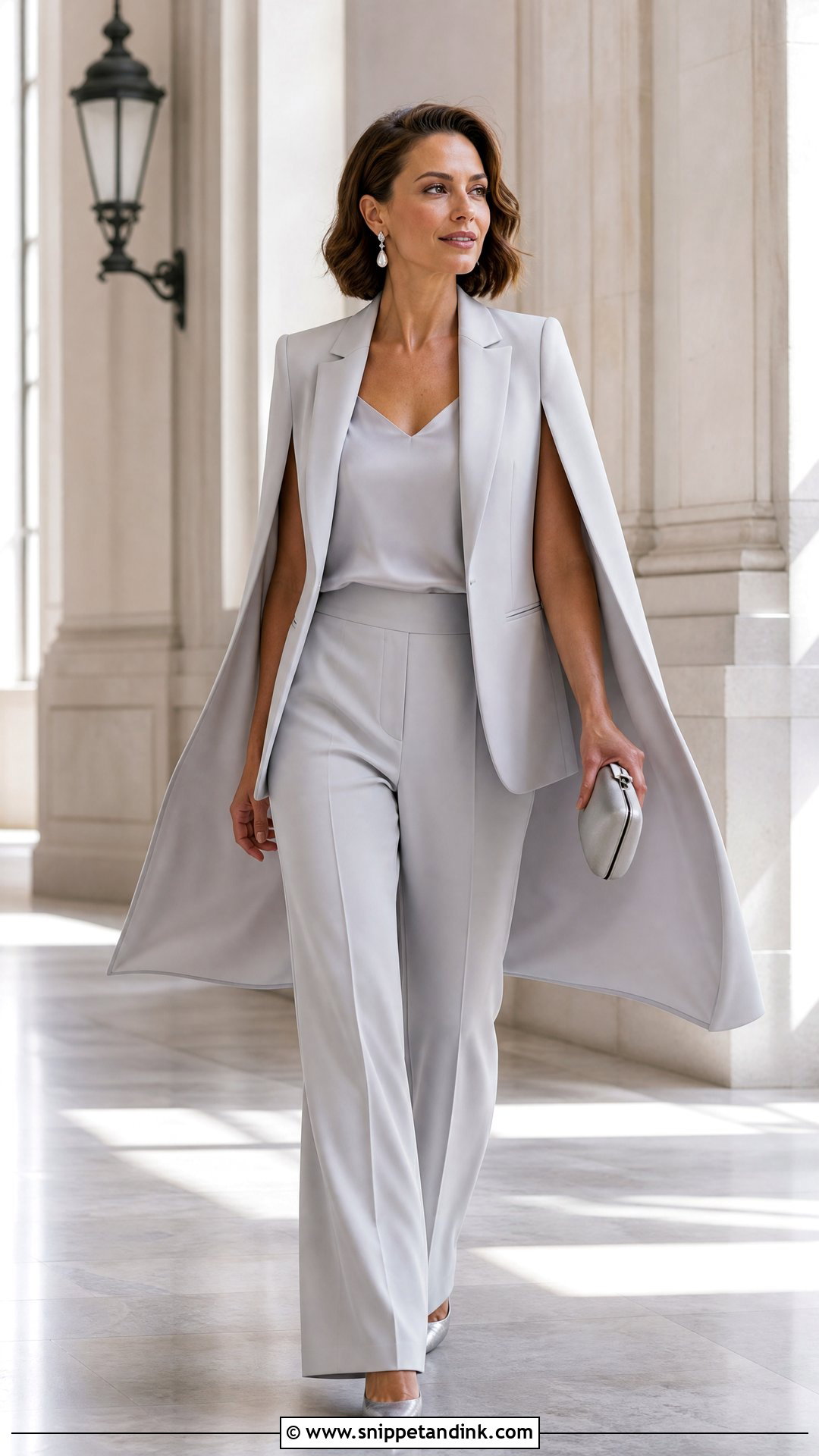
A cape overlay adds movement to a tailored suit, and proportion is the first thing I check. The cape should end at the hip or upper thigh; any longer and it swallows the trousers, and petite women usually look better in a shorter overlay still. Choose a sleeveless or long-sleeved blazer with an attached cape and slim or wide-leg trousers, and keep the silk shell tonal so the dove gray runs uninterrupted. Silver pumps, a pearl-gray clutch and delicate diamond-like earrings bring light to the cool neutral. Skip bracelets, because the cape already moves around your arms and will catch on them. Crisp fabric is essential, as a soft one makes a cape collapse. Formal spring weddings, modern city venues and evening receptions suit it.
How Linen, Crepe and Velvet Hold Up Over a Long Wedding Day
A suit works harder at a wedding than at the office: a car journey, a seated ceremony, photos, dinner, dancing. By evening, fabrics behave very differently, and it’s worth knowing what you’re signing up for before you buy.
Linen and linen blends
Pure linen creases at the hip and behind the knee within the first hour of sitting. Blends crease less and relax a little as you move. I accept a few soft folds as part of the look, but I’d steam the suit right before leaving and hang the jacket in the car rather than sitting in it.
Wool crepe and fine wool
This is the workhorse. It breathes, springs back after sitting and barely marks. If the wedding runs from afternoon into night and you can only buy one suit, wool crepe is the safe answer.
Velvet and satin-backed crepe
Velvet crushes wherever you lean against a chair back, leaving shiny flattened patches. Hang it in a steamy bathroom overnight or steam it from the inside; never press it flat with an iron. Satin-backed crepe shows water marks, so blot any spill at dinner with a dry napkin instead of rubbing it.
Quiet Tailoring Comes Down to Fabric and Hems
None of the Old Money Wedding Suit Ideas above relies on loud embellishment or visible branding. A well-fitted jacket, properly proportioned trousers, good shoes and one or two quiet accessories are the whole formula. Navy, taupe, gray, brown and muted green work year-round, while powder blue, dusty rose and pastel yellow bring seasonal color. Brides can look at cream or white tuxedos; guests should leave bridal shades to the person getting married. Above all, follow the dress code and test the suit standing, sitting and dancing. Precise alterations will make almost any good suit look like it was made for you.
You'll Like These Ideas:


Leave a Reply