
An Indian wedding is rarely one outfit. It’s a haldi in the morning, a mehendi that runs all afternoon, a sangeet with hours of dancing and a reception under bright lights, and each one asks for a different weight of fabric and a different amount of sparkle. That’s what I plan around when I style a guest or a bride for this kind of wedding. Lehengas, silk sarees, Anarkalis and sharara sets still lead across the functions, with fusion pieces filling the gaps. Before choosing anything, think about the venue, the weather and how long you’ll be on your feet. The twenty looks below run from bridal red to dhoti pants, with the fitting and comfort notes that make each one wearable.
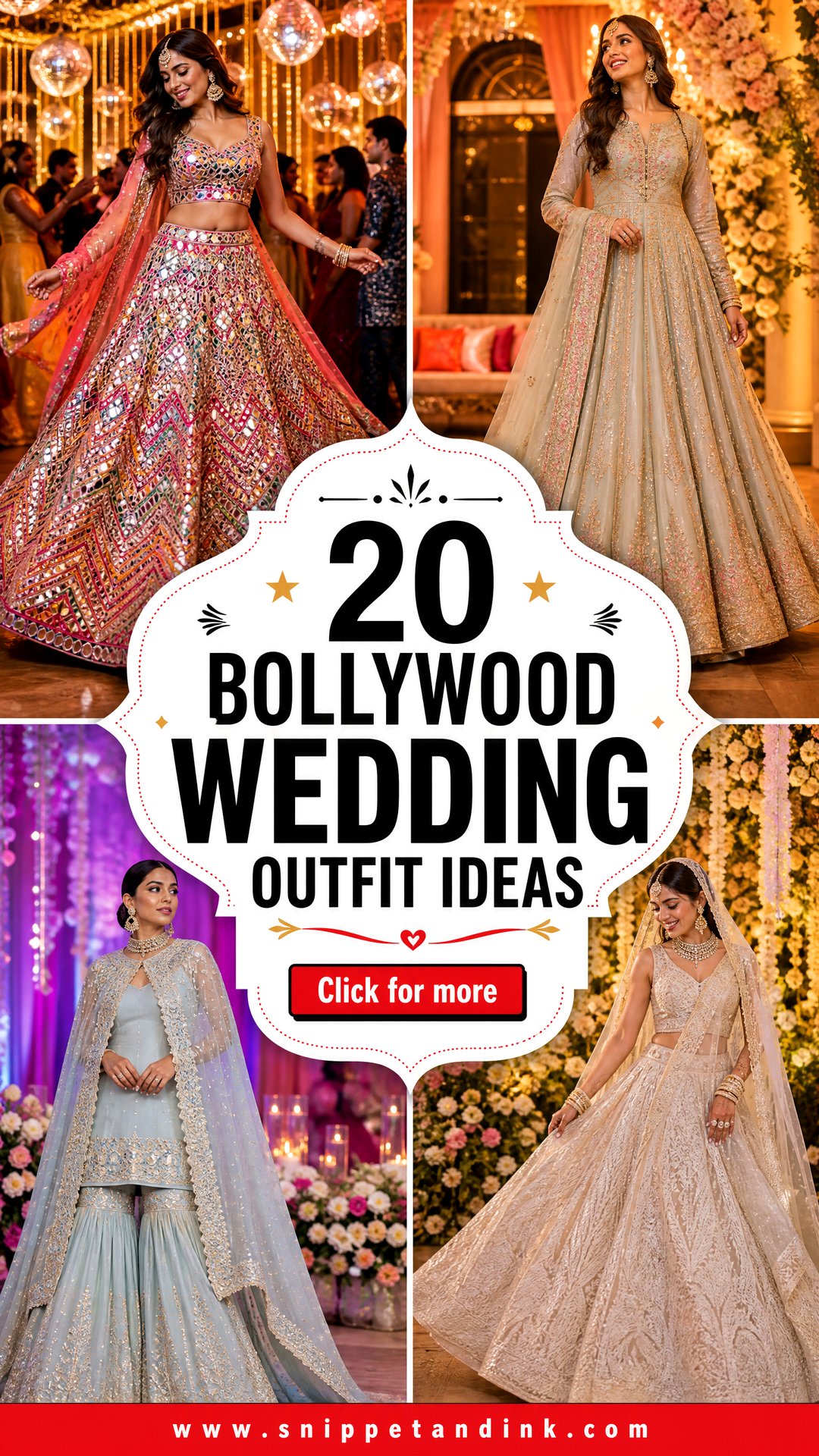
Planning One Wardrobe Across Four Functions
When a client is invited to the full wedding, I plan the outfits together, as a set, rather than one at a time. That way the jewelry and shoes can travel between them and you aren’t packing five pairs of heels.
- Haldi: something washable and inexpensive in yellow, cotton or cotton silk. Expect stains.
- Mehendi: light and colorful, with a short or pinned dupatta and flat shoes. You’ll sit on the floor and keep your hands still for a while.
- Sangeet: the outfit you can dance in. Sharara, Anarkali, cape set or a lighter lehenga, with the blouse tested for arm movement.
- Wedding ceremony and reception: your richest pieces, silk sarees or embroidered lehengas, and the heaviest jewelry.
Blouses are where timelines go wrong. Custom stitching usually takes a few weeks and often needs a second fitting, so order fabric early. Bring the bra and shoes you’ll wear to every fitting, and ask for a little extra seam allowance in case you need it let out later.
1. Red Bollywood Bridal Lehenga
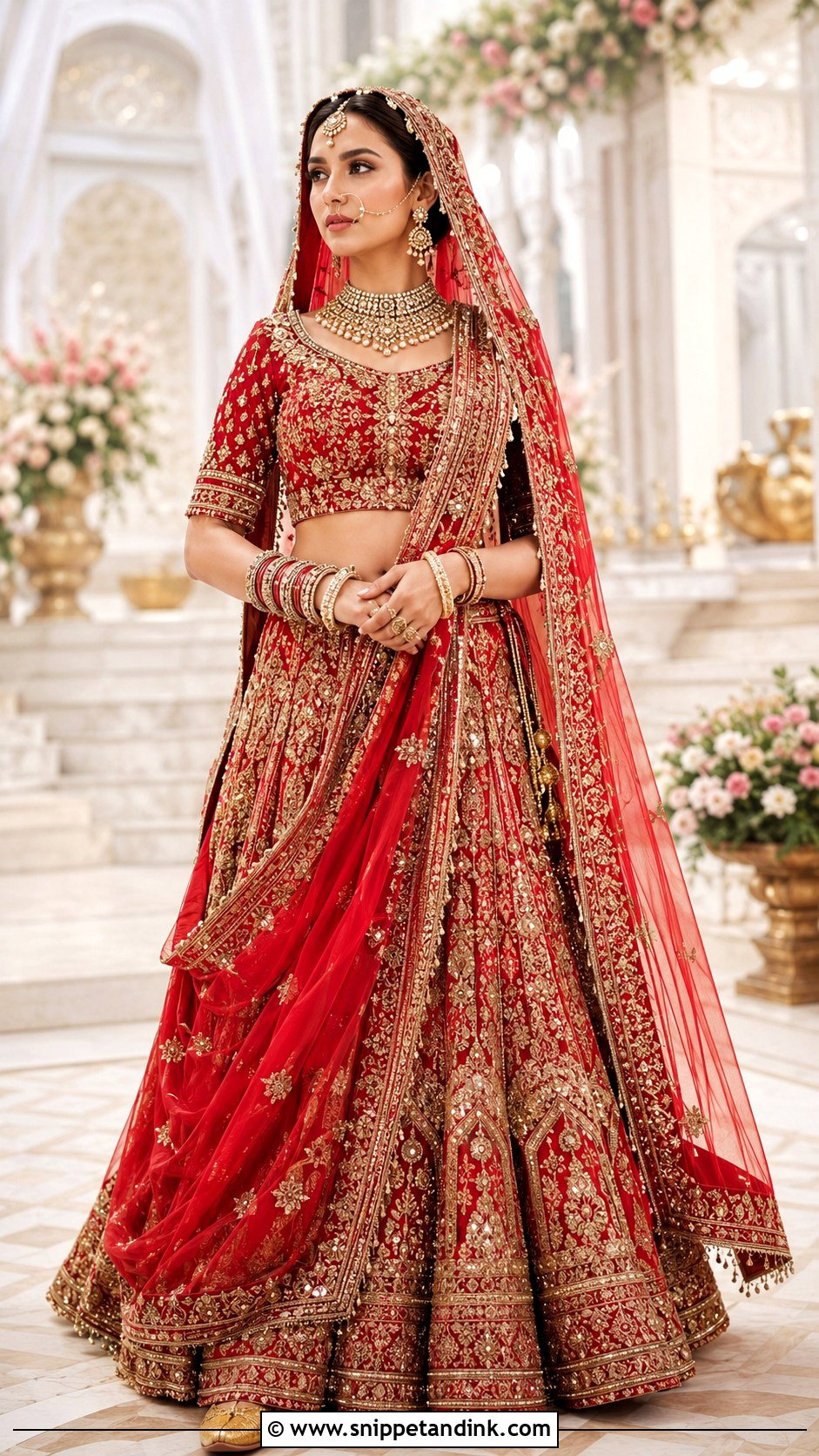
A heavy bridal lehenga can weigh several kilos, and most of it sits on the waistband, so the first thing I check is whether the skirt has a wide, padded waist and proper can-can support underneath. A deep red A-line or circular skirt with zardozi or traditional floral motifs, a fitted blouse and an embroidered dupatta gives classic Bollywood bridal glamour without burying the handwork. Many brides wear one dupatta over the head and a lighter second one across the shoulder. Kundan necklace and earrings, a maang tikka, stacked bangles and embroidered juttis complete it, with a flower-trimmed bun. Red runs from scarlet to maroon, and the right one depends on your skin tone and the hall’s lighting.
2. Gold Bollywood Bridal Lehenga
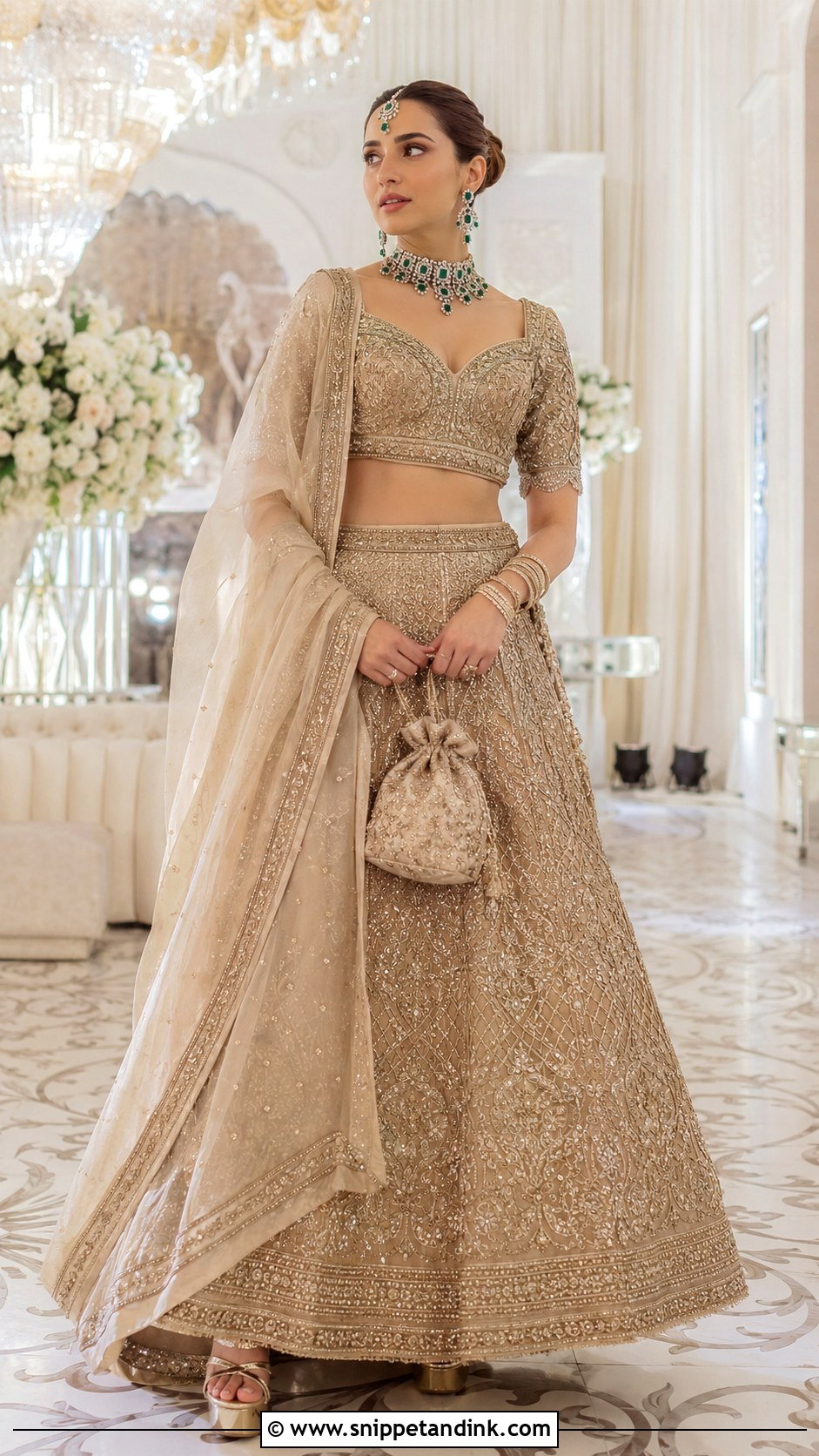
Flat gold photographs like foil. I steer brides toward antique gold, champagne or a metallic with tonal embroidery, beads and threadwork, which gives depth under camera flash. A structured blouse with a comfortable neckline and secure sleeves anchors the skirt, and a sheer dupatta with a defined border finishes the traditional silhouette. Emerald or ruby jewelry brings color in; polki keeps it soft and neutral. Gold platforms or block heels add hidden height under the skirt. A center-parted bun and bronze eyes suit the warmth of the fabric. Look at the gold under daylight and indoor bulbs before choosing; the same cloth can read yellow or pink.
3. Pastel Bollywood Mehendi Lehenga
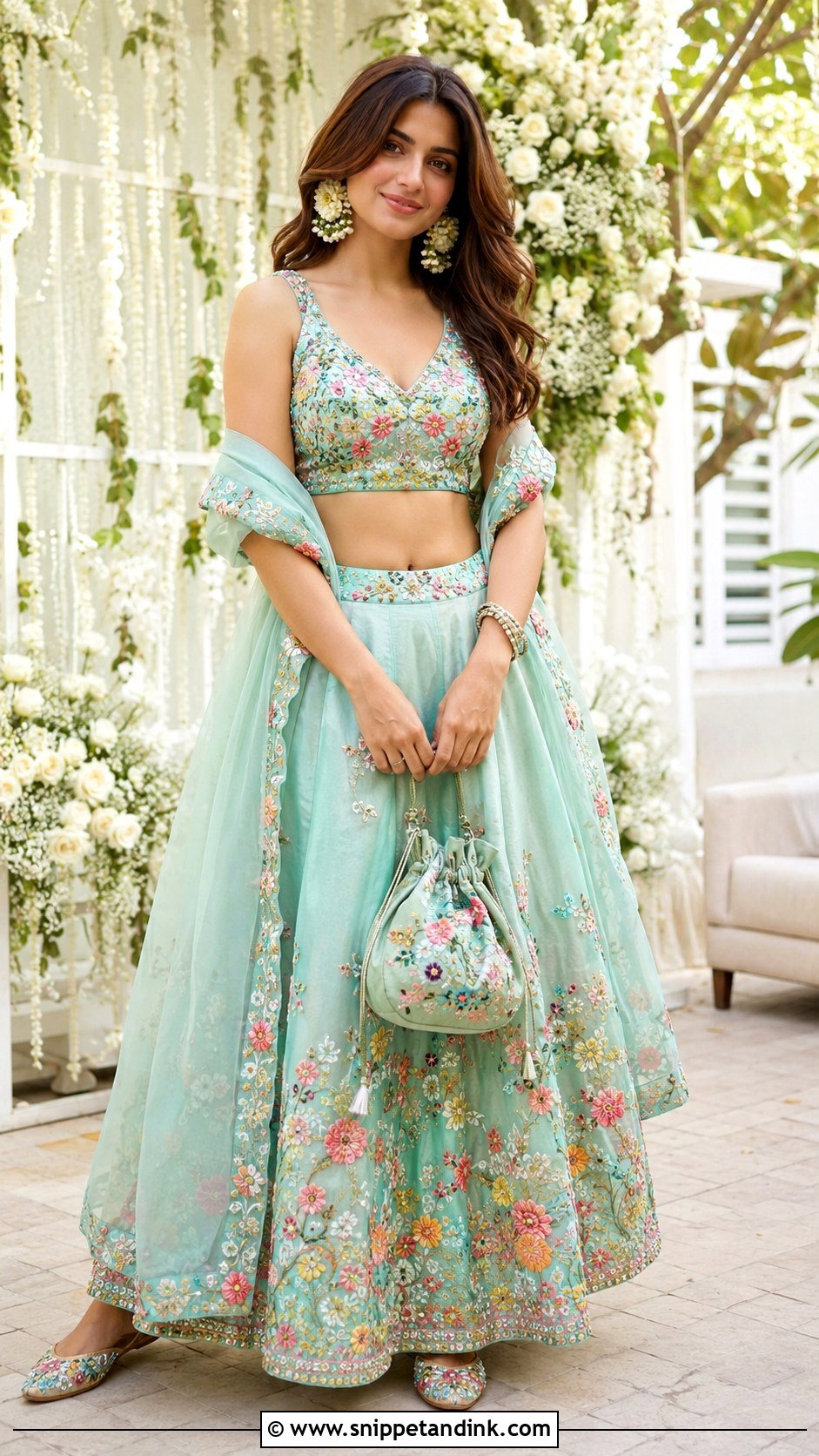
At a mehendi, your hands will be wet with paste for hours, so the dupatta has to stay out of the way. Pin a short one firmly, or skip it. Mint, blush, peach or lilac in a light skirt with floral threadwork, prints or small mirrors gives a fresh Bollywood-inspired lehenga outfit for daytime. Floral earrings, colorful bangles and a small potli are festive without weight. Flat juttis or low block heels suit the sitting on floor cushions and the impromptu dancing. Pastels can wash out on camera, so give them a contrast border, brighter jewelry or a slightly deeper blouse. Wear a long-wear lip, because you won’t be touching it up with henna on your fingers.
4. Yellow Bollywood Haldi Sharara
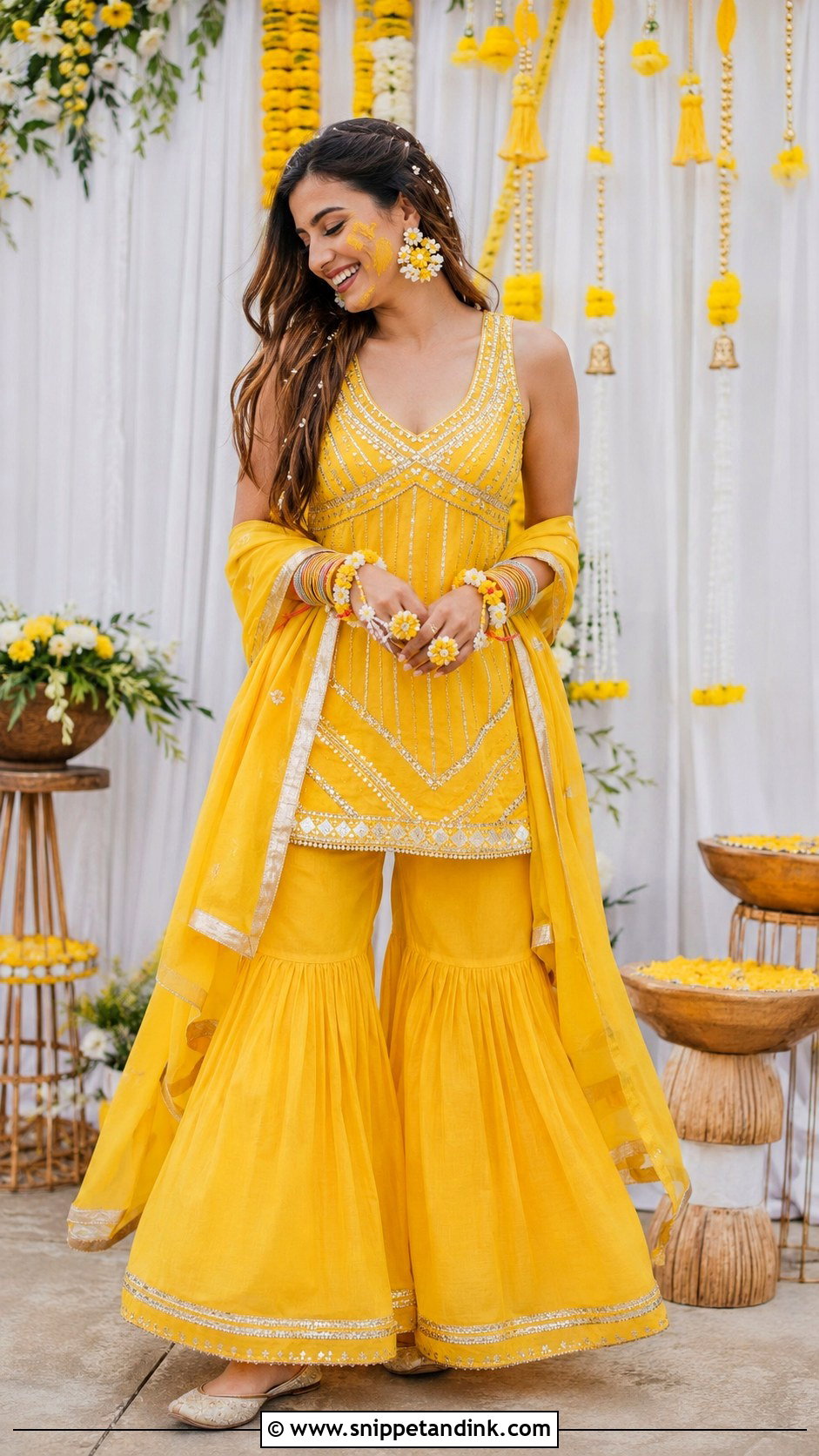
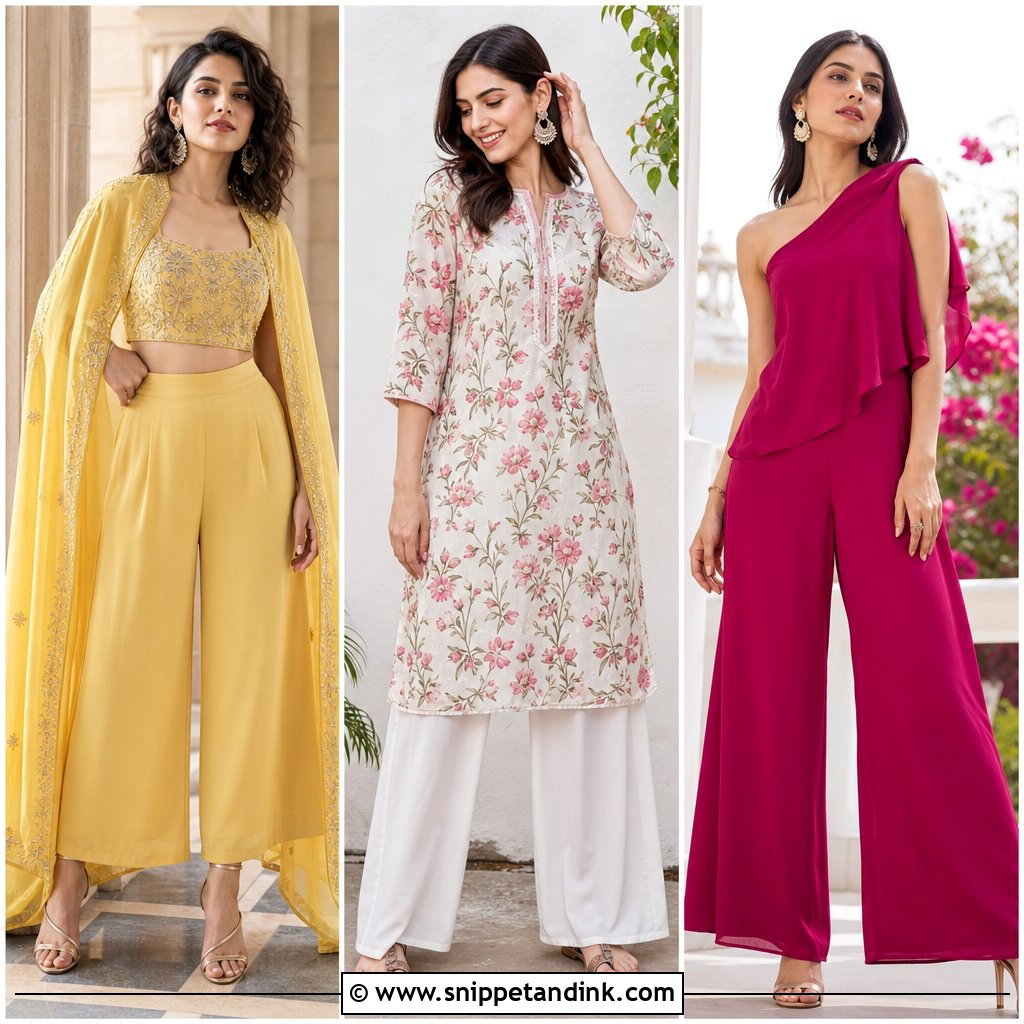
Haldi stains. The turmeric paste marks fabric yellow and doesn’t always wash out, so I tell guests to wear something they don’t mind losing. Sunshine yellow makes a sharara set the natural pick: a short kurta over wide flared pants in cotton silk, georgette or another breathable fabric, with gota trim, a little mirror work or white floral embroidery. Pin a light dupatta over one shoulder, or swap it for a short cape. Floral earrings, simple bangles and flat juttis you can wipe clean are better than delicate heels. A braided ponytail keeps hair out of the paste, and orange, pink or green accents keep all that yellow from looking flat.
5. Mirror Work Bollywood Sangeet Lehenga
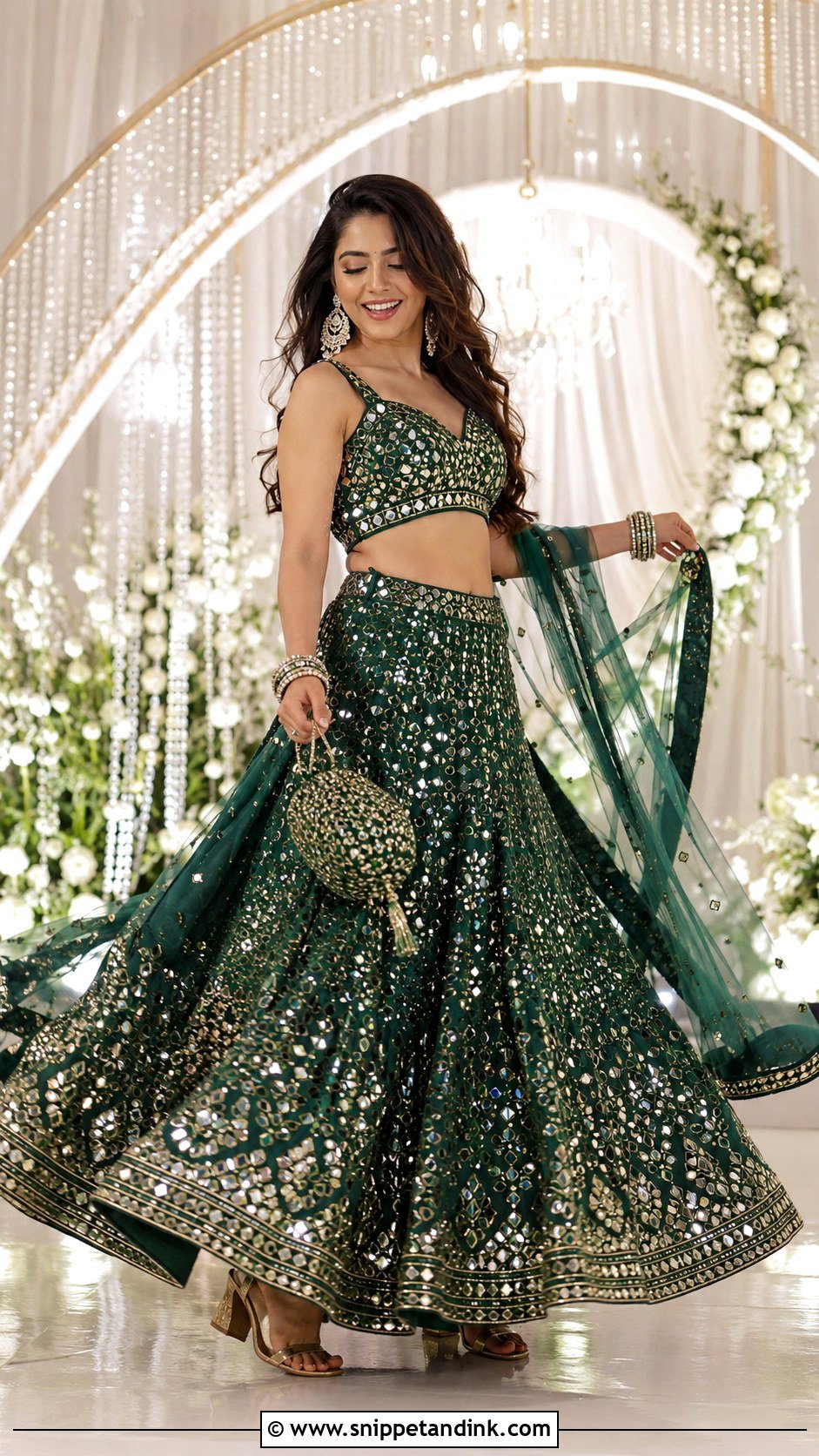
Sangeet is the function where outfits fail, because it’s where you actually dance. A mirror-work lehenga in emerald, cobalt, magenta or deep purple gives sparkle with less weight than full sequins, as long as the mirrors are evenly spaced and firmly stitched. The blouse must let you lift your arms. Wear the dupatta across one shoulder and pin it at two points. Statement earrings, stacked bangles, a compact potli and cushioned block heels are enough; skip the necklace if the blouse neckline is busy. A high ponytail or sleek braid moves with you. Before the event, do a full spin in the outfit and check the waistband, blouse hooks and dupatta pins all hold.
6. Sequin Bollywood Reception Saree
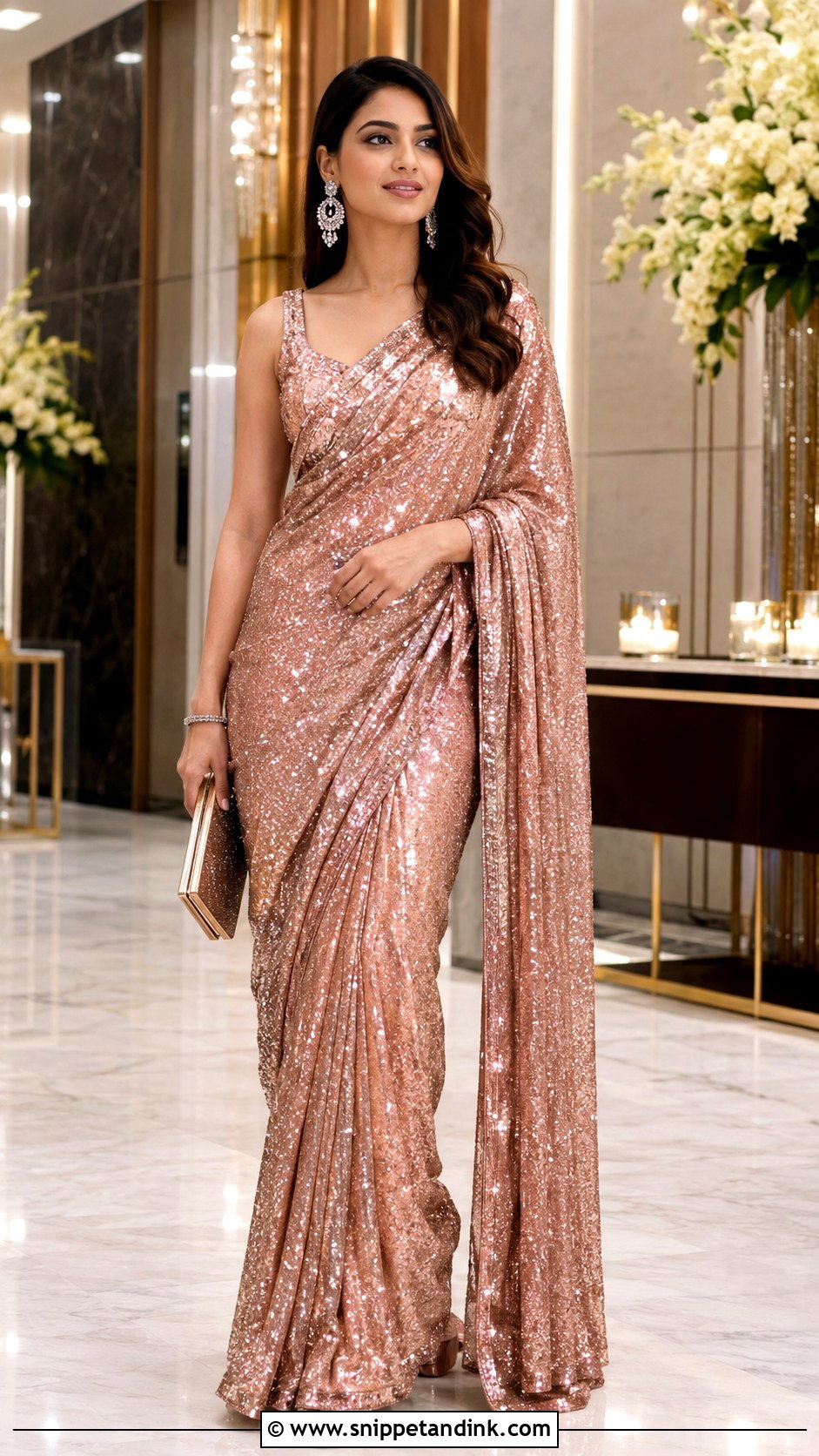
If you’ve never draped a saree, the reception is not the night to learn. A pre-stitched or pre-pleated sequin saree gives the full look and stays put through dinner. Choose fluid georgette or light net in champagne, rose gold, navy or emerald, and a fitted blouse with clean lines and proper support; a contrasting velvet blouse adds drama if you want it. Under evening lights, the sequins do most of the work, so keep to chandelier earrings, a slim bracelet and a metallic clutch rather than layered heavy pieces. Platform heels give height without ankle strain. A sleek bun or side-parted waves keep it refined.
7. Velvet Bollywood Winter Lehenga
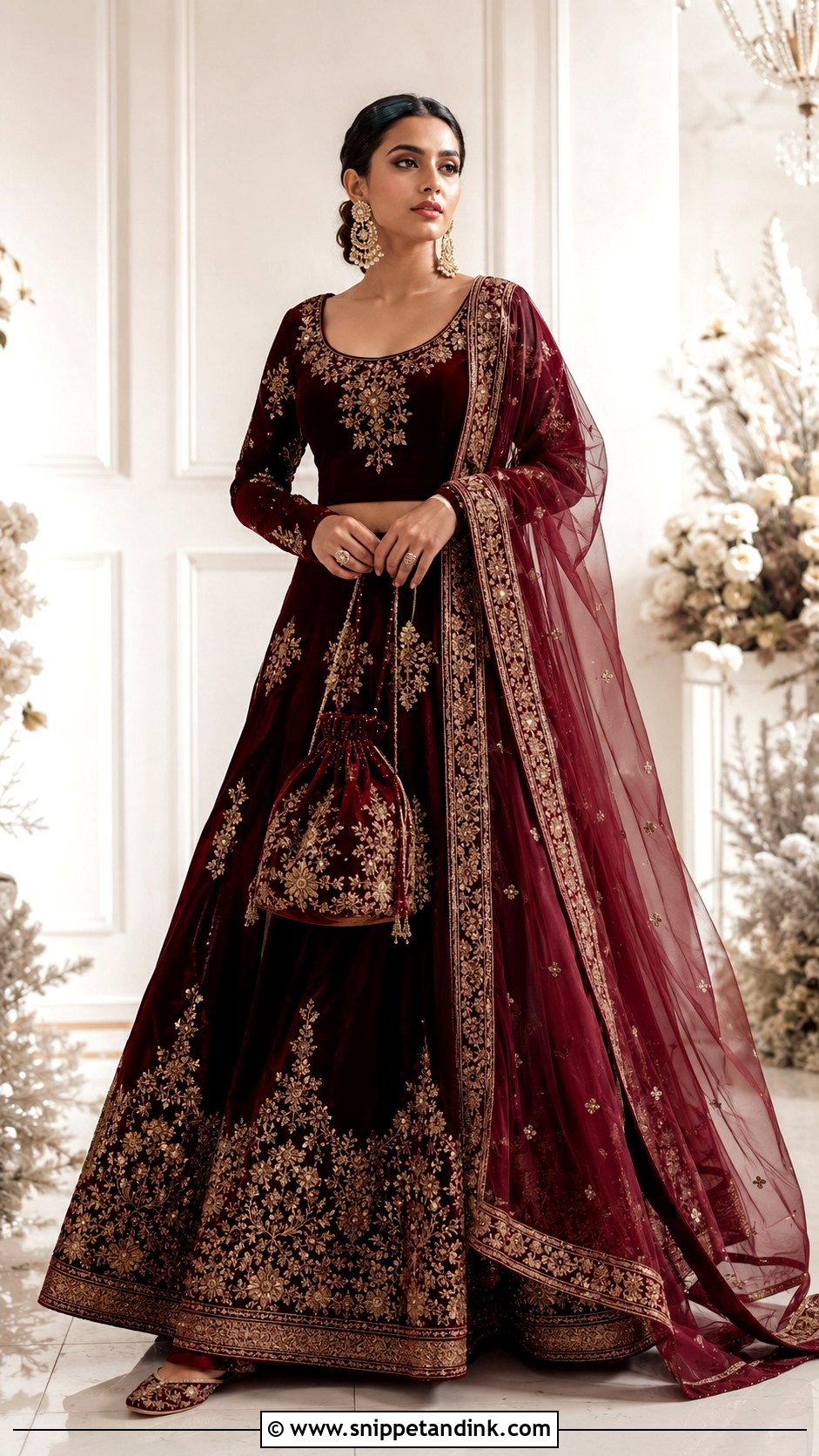
Velvet is warm and rich, and it is also heavy, so I always lift a velvet lehenga skirt by the waistband before recommending it. If it drags on your hands, it will drag on your hips by midnight. Burgundy, forest green, midnight blue or plum suit a winter evening. Keep embroidery to the hem, waist and blouse rather than covering every inch. A fitted long-sleeve blouse that still lets the shoulders move, plus a lighter net or organza dupatta, balances the weight. Antique gold jewelry, a structured potli and closed-toe embroidered juttis suit the fabric, with a deep lip that picks up its color.
8. Banarasi Silk Bollywood Wedding Saree
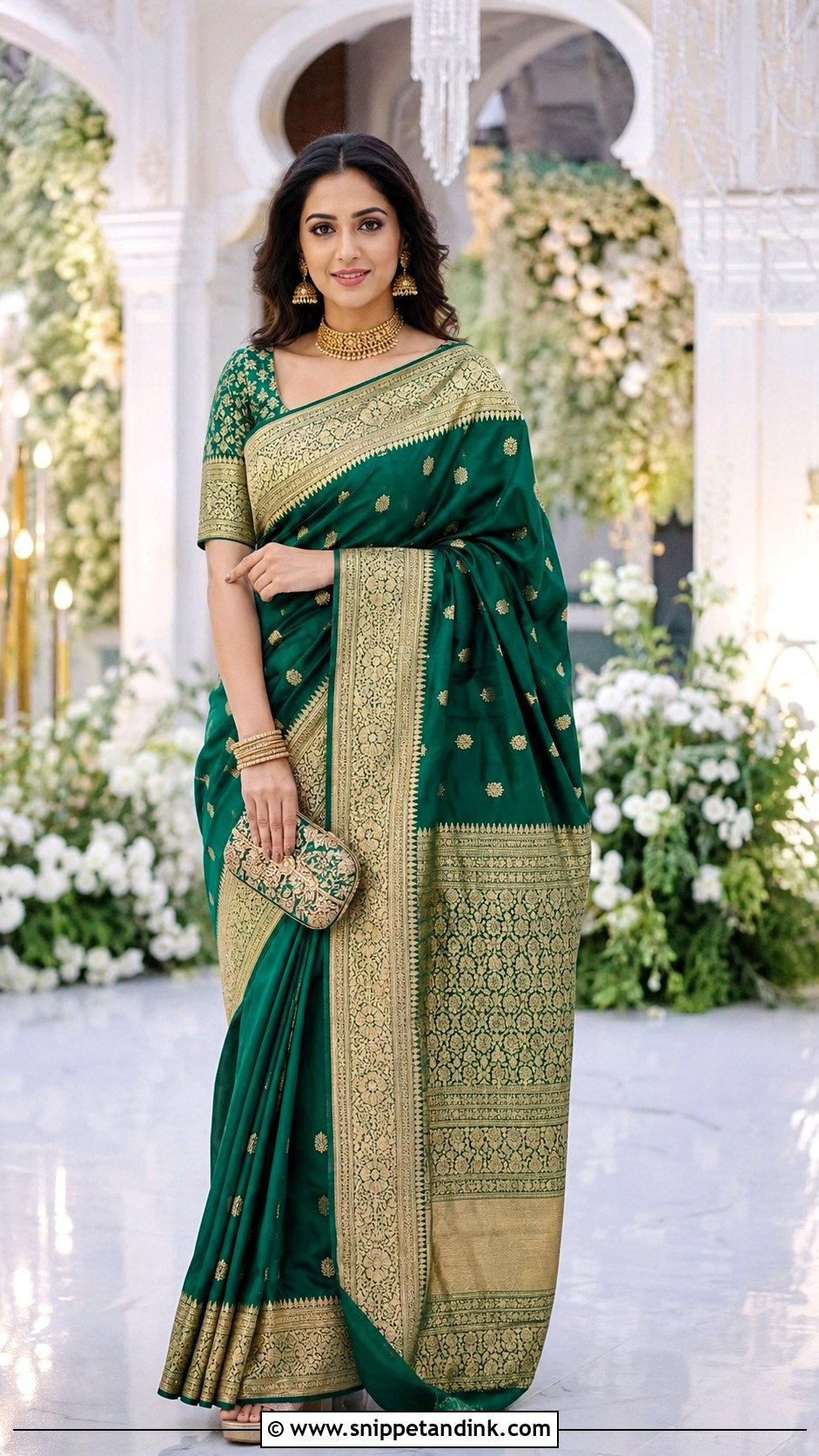
Pure Banarasi silk is woven with real zari and is heavier and stiffer than people expect, which is why it holds a crisp pleat and why it can feel warm in a crowded hall. Choose emerald, royal blue, magenta or deep purple with a contrasting gold border, and a brocade or plain silk blouse lined in breathable cotton. A choker, jhumkas, bangles and a small embroidered clutch suit it. Gold block heels keep you steady under the drape. Pleat the pallu neatly so the woven pattern shows, and pin the front pleats firmly. Check the saree length with your actual shoes on before the day.
9. Kanjivaram Bollywood Wedding Saree
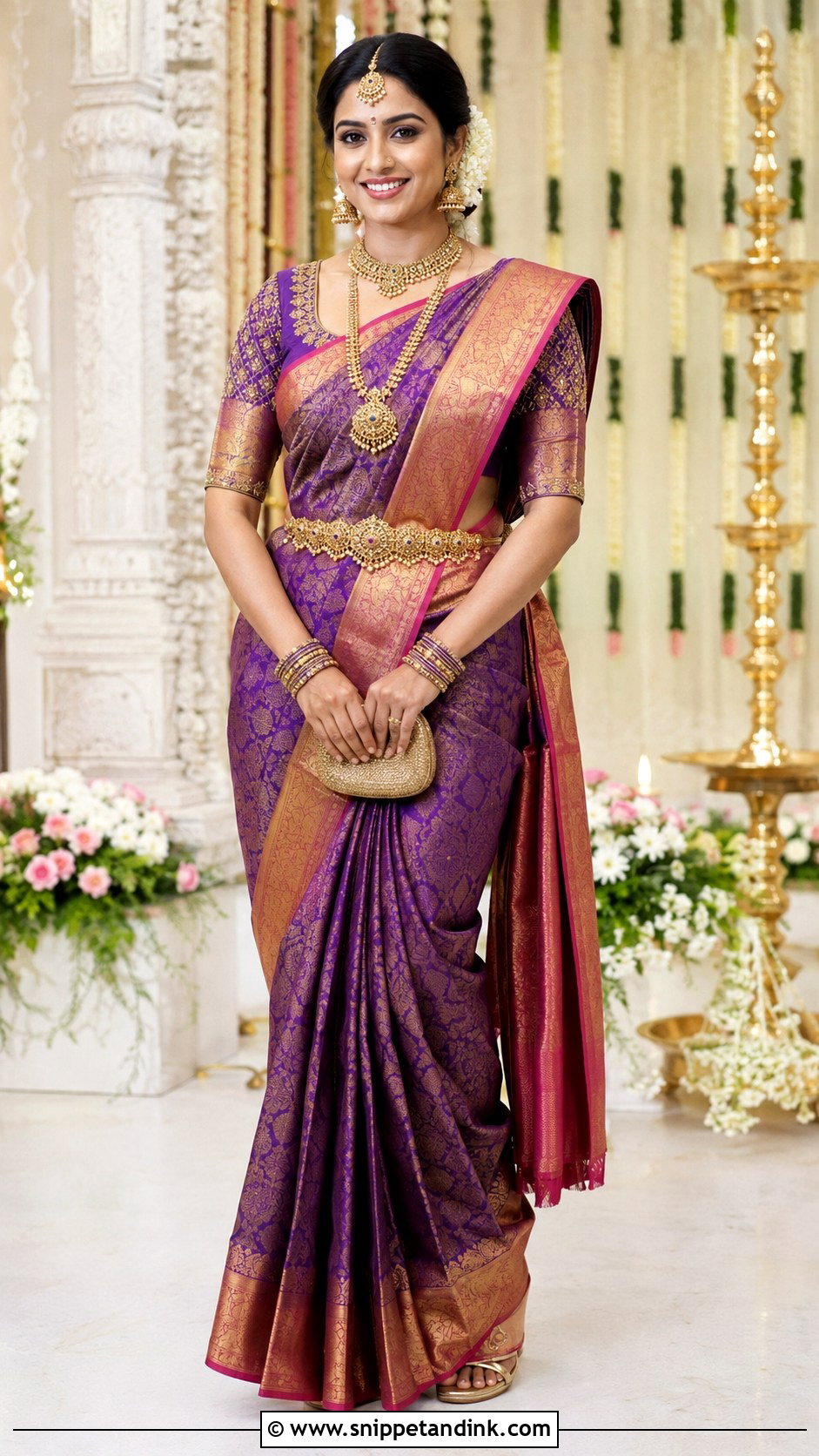
Kanjivaram silk is thick enough that the pleats fight you if you drape it yourself. Either practice twice beforehand or have it pre-pleated and box-folded by someone who does it often. The broad zari border and strong contrasts, purple with gold, green with pink, blue with copper, are the point of the weave. An elbow-sleeve blouse that repeats one border color ties it together. Temple jewelry, gold bangles, a waist belt and a coordinated clutch give the full ceremonial look. Wear supportive sandals for long ceremonies, a flower-trimmed low bun, a small bindi and defined eyes.
10. Floor Length Bollywood Anarkali
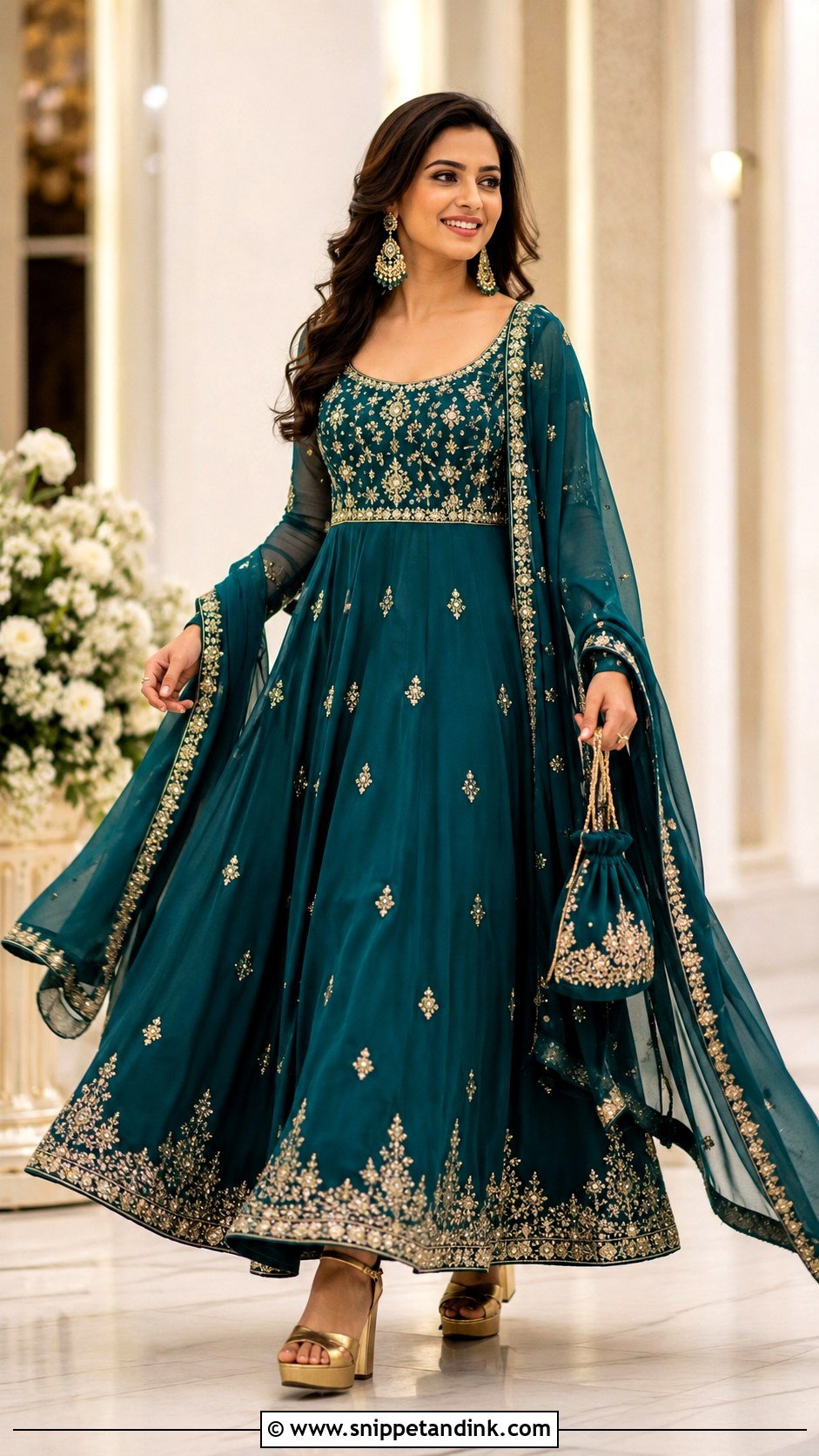
An Anarkali gives you the sweep of a lehenga without a separate skirt, blouse and dupatta to manage, which is why I suggest it to guests attending several functions in a row. A fitted bodice, a defined waist and a generous flare do the work; teal, wine, sapphire, rose and olive all suit a wedding. Embroidery at the neck and hem frames the shape, and vertical motifs lengthen it. Add a light dupatta, statement earrings, a ring and a small potli. Hem it to your shoes, platforms or embellished flats, so the flare doesn’t catch. Soft curls finish it.
11. Embroidered Bollywood Gharara Set
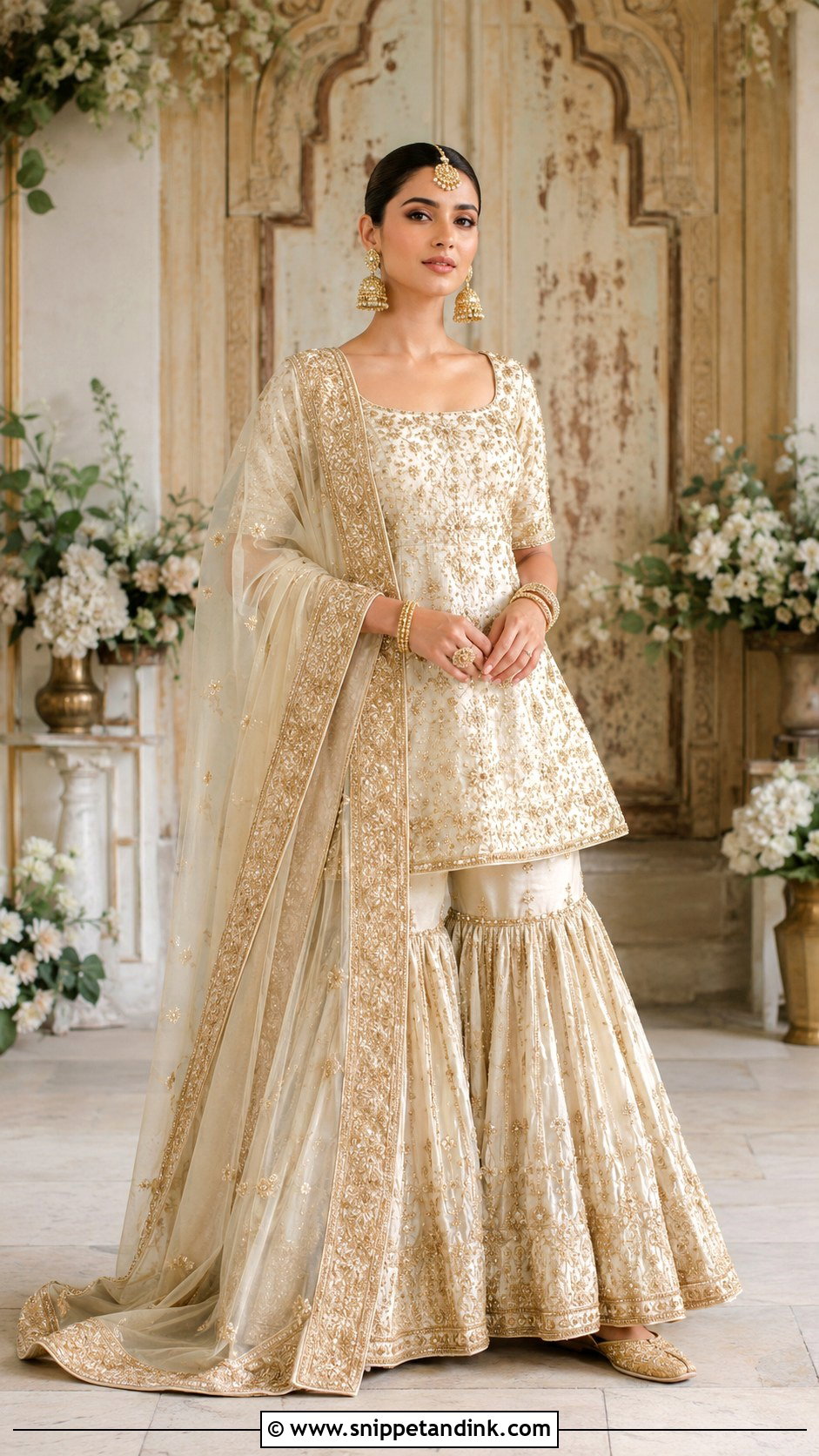
A gharara lives or dies by the knee seam. The pants are fitted to the knee and then flare, and if that seam sits too high or too low, the whole outfit hangs wrong. Have it set while you stand in your shoes. A short kurti ending at the hips and structured gharara pants in ivory and gold, emerald and pink, or powder blue and silver carry an old-film charm. Gota, zari or thread embroidery shows off the shape. Pin a matching dupatta discreetly over one shoulder. Jhumkas, a maang tikka, stacked bangles and juttis suit it, with a soft braid. Keep the kurti fitted so the volume stays below.
12. Cape Bollywood Sharara Set
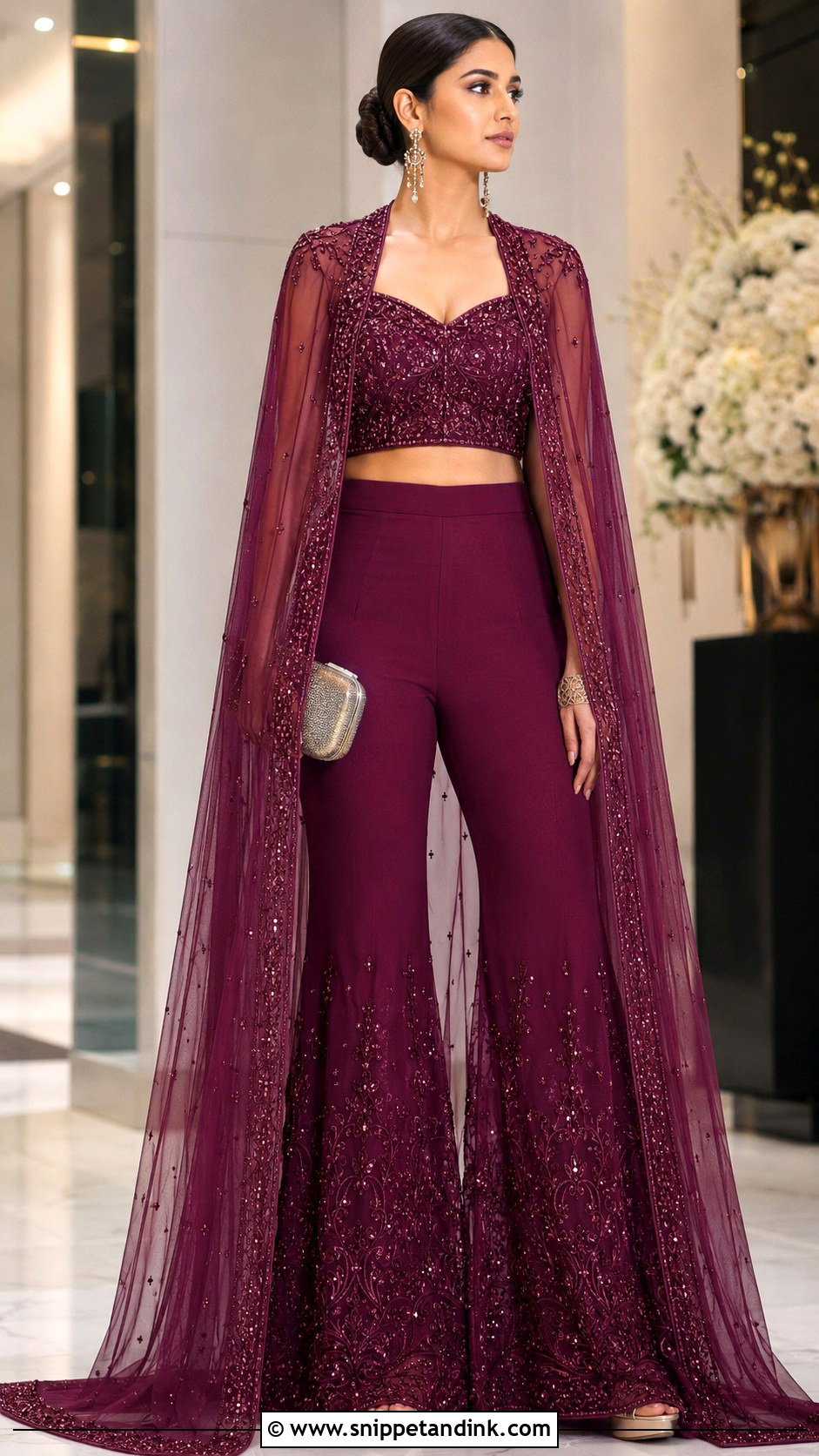
A cape replaces the dupatta, and that’s the real advantage: both arms free and nothing to re-pin all night. High-waisted flared sharara pants with a fitted blouse in the same color, under a sheer embroidered cape falling somewhere between hip and ankle, make an easy fusion look for a sangeet or reception. Deep teal, berry, navy or soft metallics suit the evening. Drop earrings, a cuff, a sleek clutch and platforms finish it; leave the neckline clear. Walk and turn in it at the fitting to make sure a long cape doesn’t catch under your heels, and look for a breathable lining underneath.
13. Pre-Draped Bollywood Saree Gown
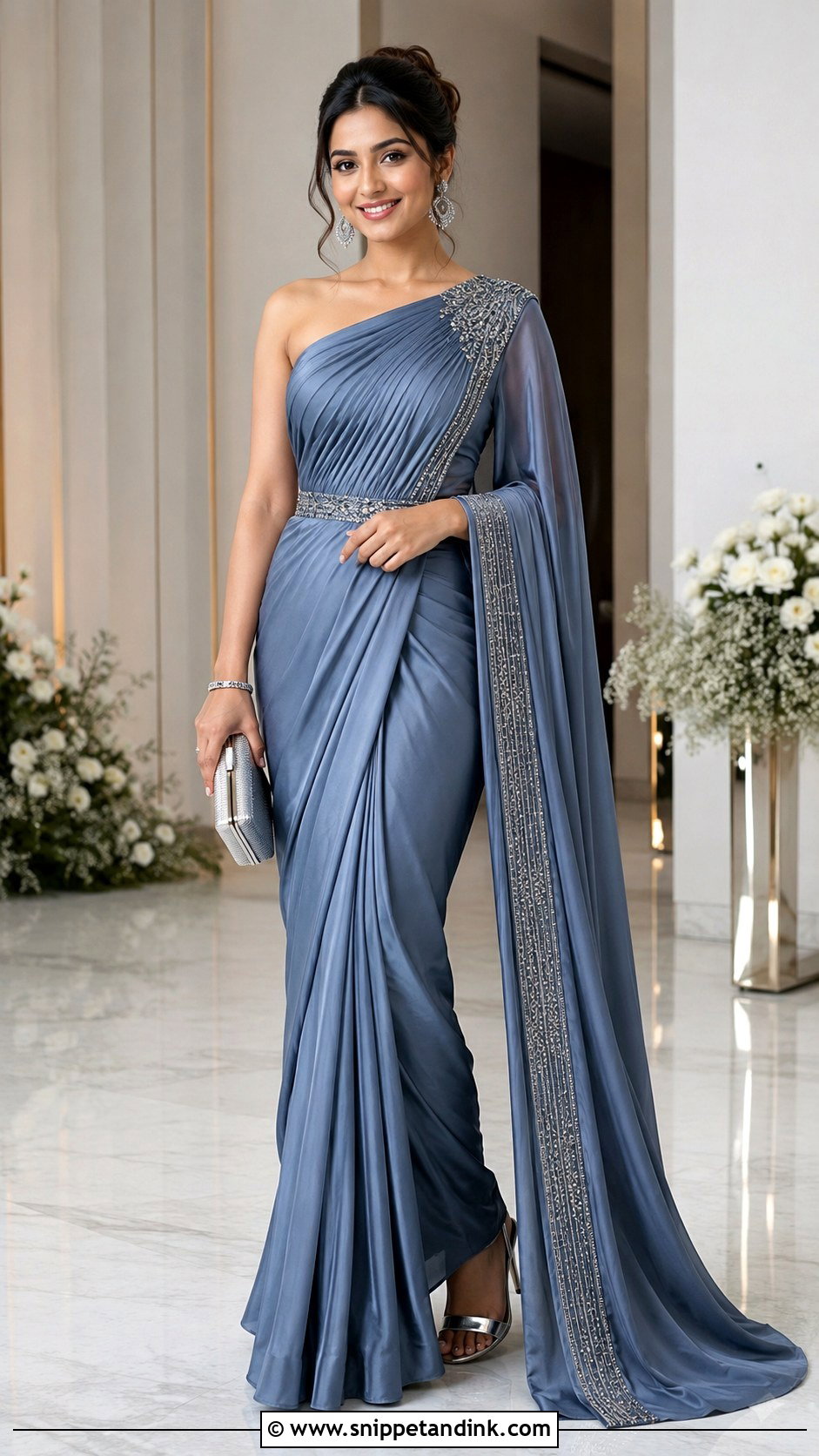
A saree gown is stitched to look draped, with the pleats and pallu sewn in and a side zip, so it goes on in a minute. I check two things on any I recommend: that the pleats fall straight rather than pulling across the hips, and that the pallu stays anchored when you raise your arms. Satin, georgette and crepe move fluidly; beadwork or sequins bring reception shine. Deep green, plum, steel blue or rose gold suit it. Sculptural earrings, a slim bangle, a small clutch and heeled sandals are enough, without a big necklace over an embellished neckline. Polished waves keep it modern.
14. Dhoti Pants Bollywood Wedding Outfit
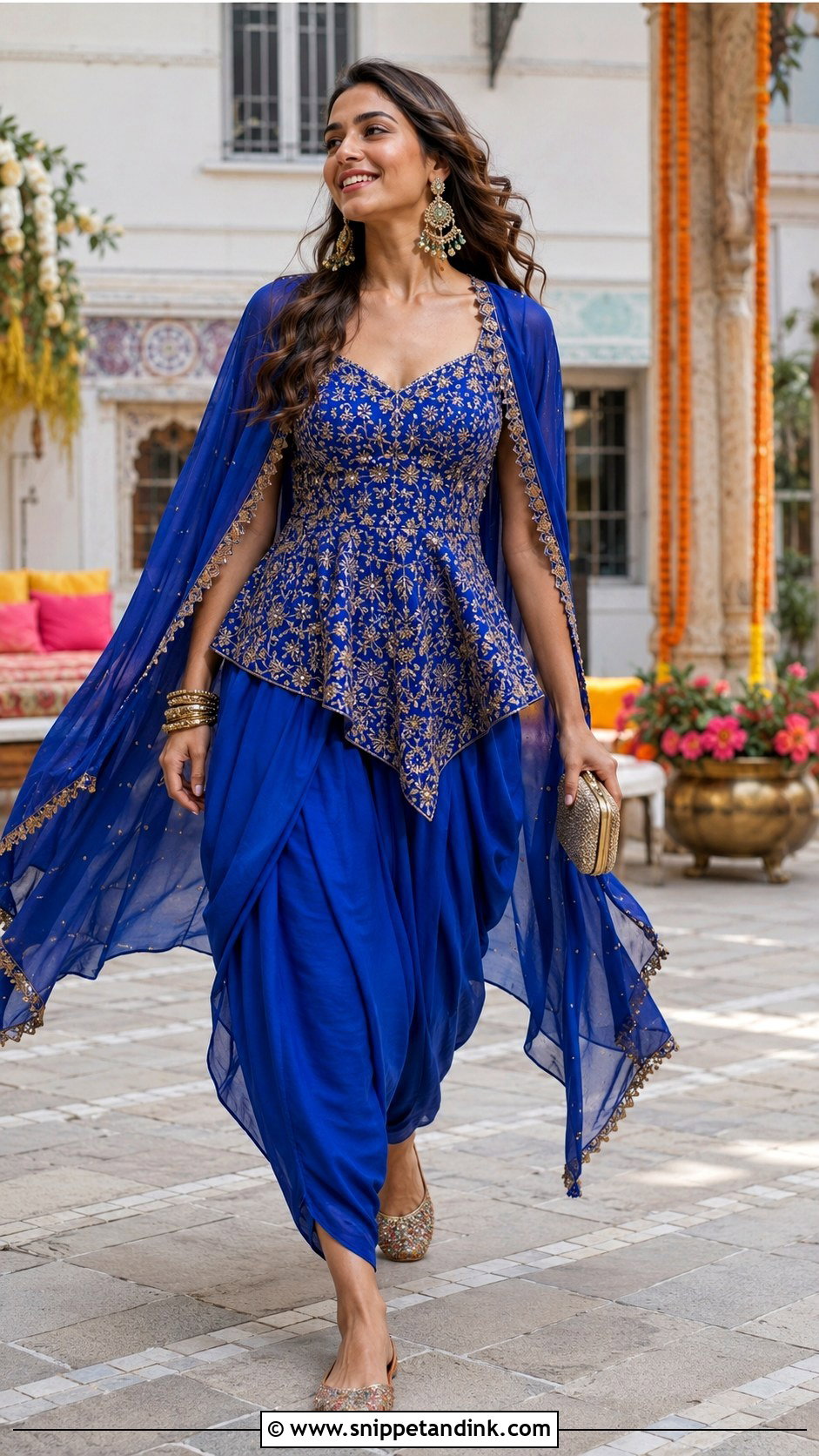
Dhoti pants look relaxed, but the rise matters. Sit down cross-legged in them before buying, because a low crotch drape pulls when you sit on floor cushions at a mehendi. Satin or silk-blend dhoti pants with an embroidered crop blouse or a fitted peplum top give a modern take for a mehendi or sangeet. A light cape, an asymmetric jacket or a narrow dupatta completes the layering. Pink, turquoise, saffron and cobalt suit daytime; emerald or wine suits evening. Statement earrings, metallic bangles and embellished juttis finish it, with a high ponytail. Keep the top tailored to balance the volume below.
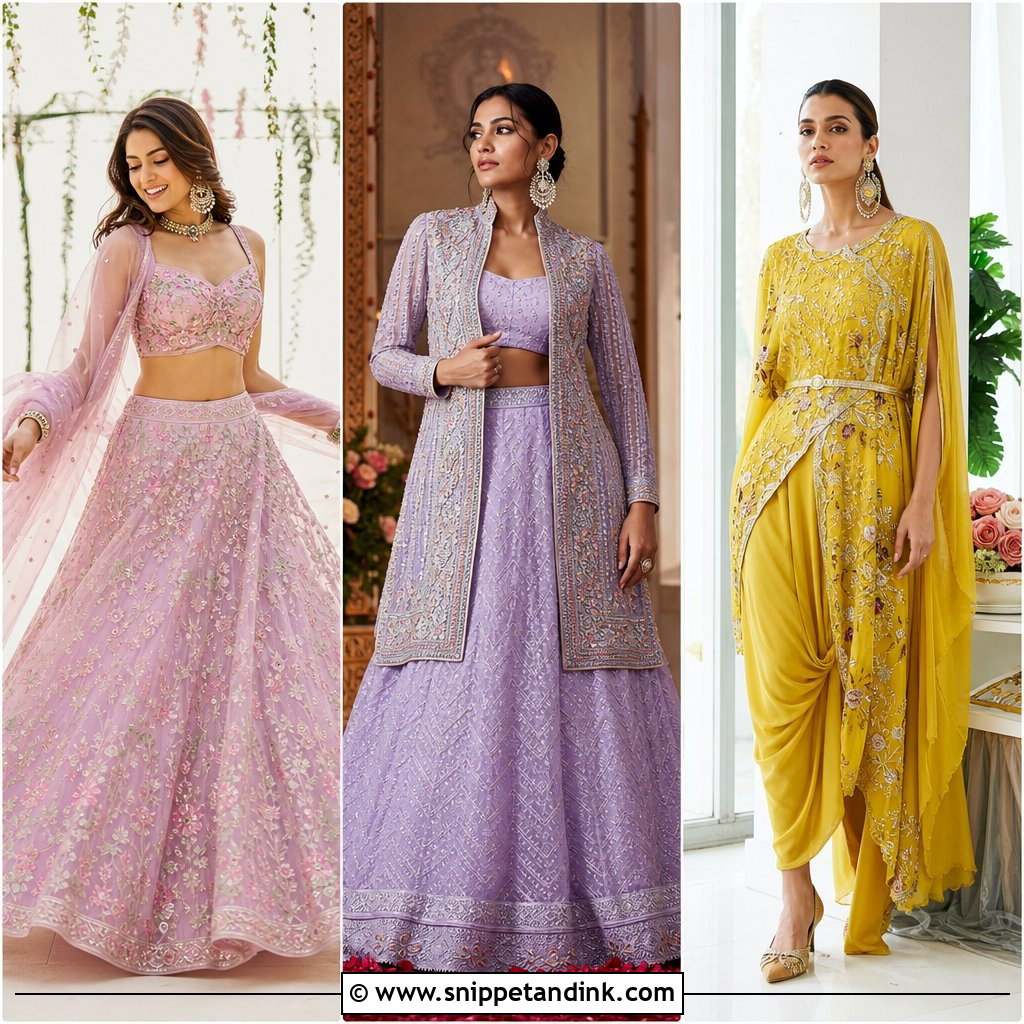
15. Embroidered Bollywood Wedding Pantsuit
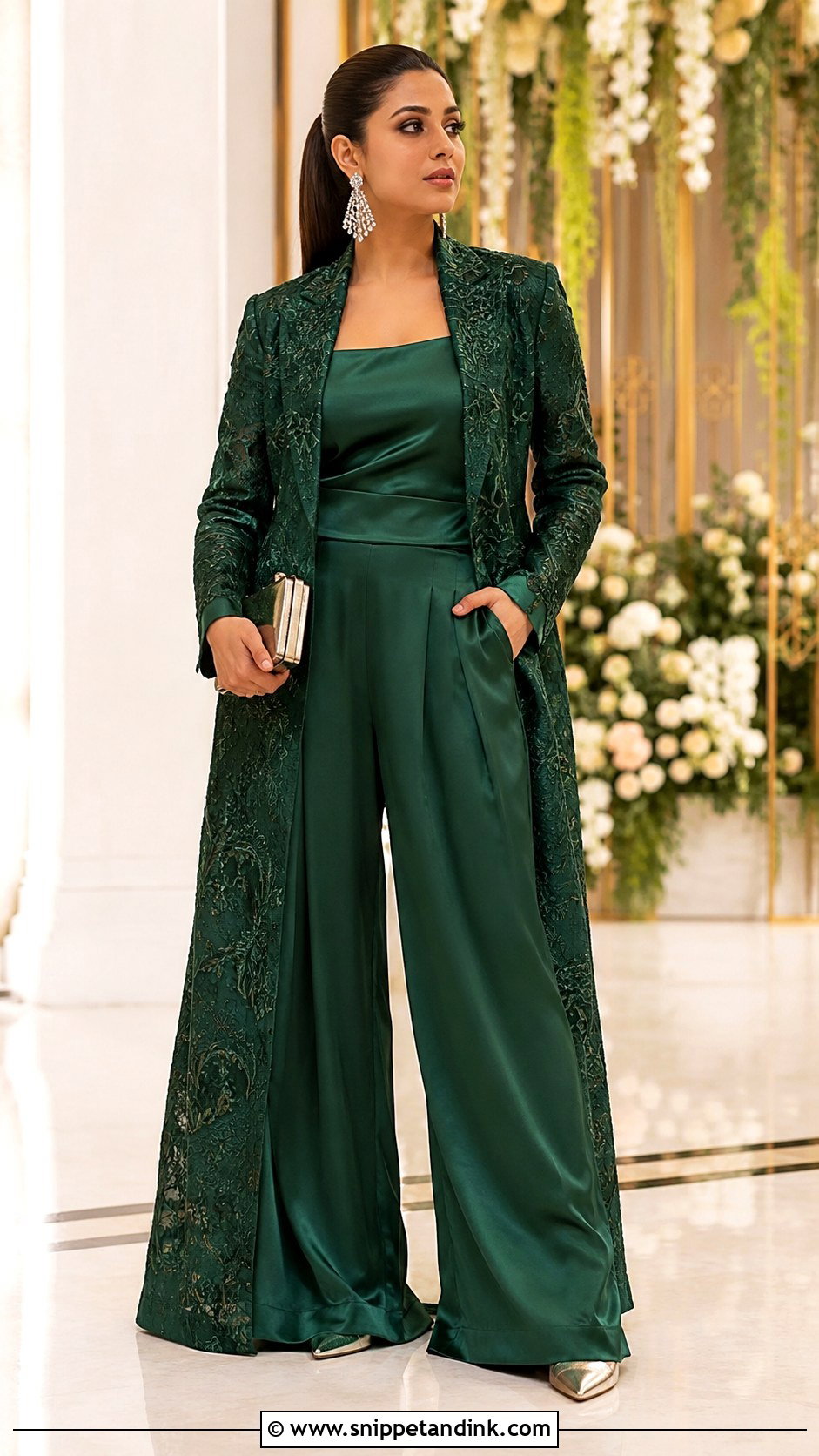
Not every guest wants to wear a saree or lehenga, and an embroidered pantsuit is a respectful, formal alternative. Wide-leg trousers with a fitted blouse, bustier or silk camisole under a long tailored blazer with tonal threadwork, sequins or ornate borders reads as reception dress in jewel tones or soft metallics. Pointed pumps or platforms, chandelier earrings and a structured clutch suit the clean lines, with a sleek ponytail. Hem the trousers to skim the shoe without touching the floor. If the blazer is heavily worked, keep the inner top plain. It’s also the piece on this list you’ll wear again most easily.
16. Floral Organza Bollywood Wedding Saree
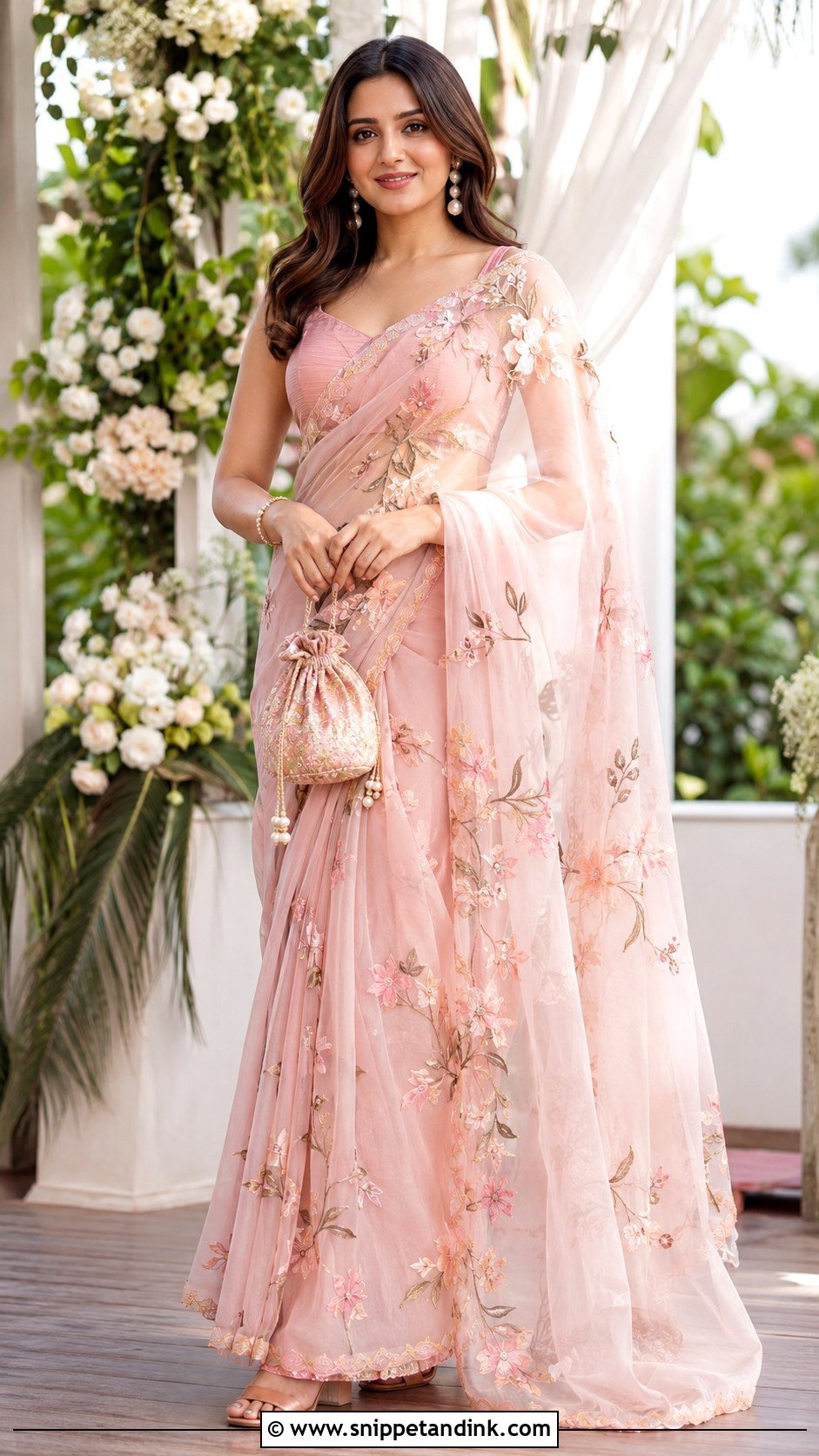
Organza is crisp and holds its shape, which makes it wonderful for daytime and fiddly to pleat. It springs back unless each pleat is pressed and pinned. A floral organza saree in mint, blush, lavender or powder blue, with printed or lightly embroidered flowers, suits a garden venue or a pre-wedding lunch. Pair it with a fitted silk blouse in a matching or contrasting shade. Pearl earrings, a slim bracelet, a pastel potli and low block heels keep it refined. Let the pallu fall naturally over the shoulder, and add a narrow waist belt if the drape needs extra security. A soft bun suits the light mood.
17. Chikankari Bollywood Wedding Lehenga
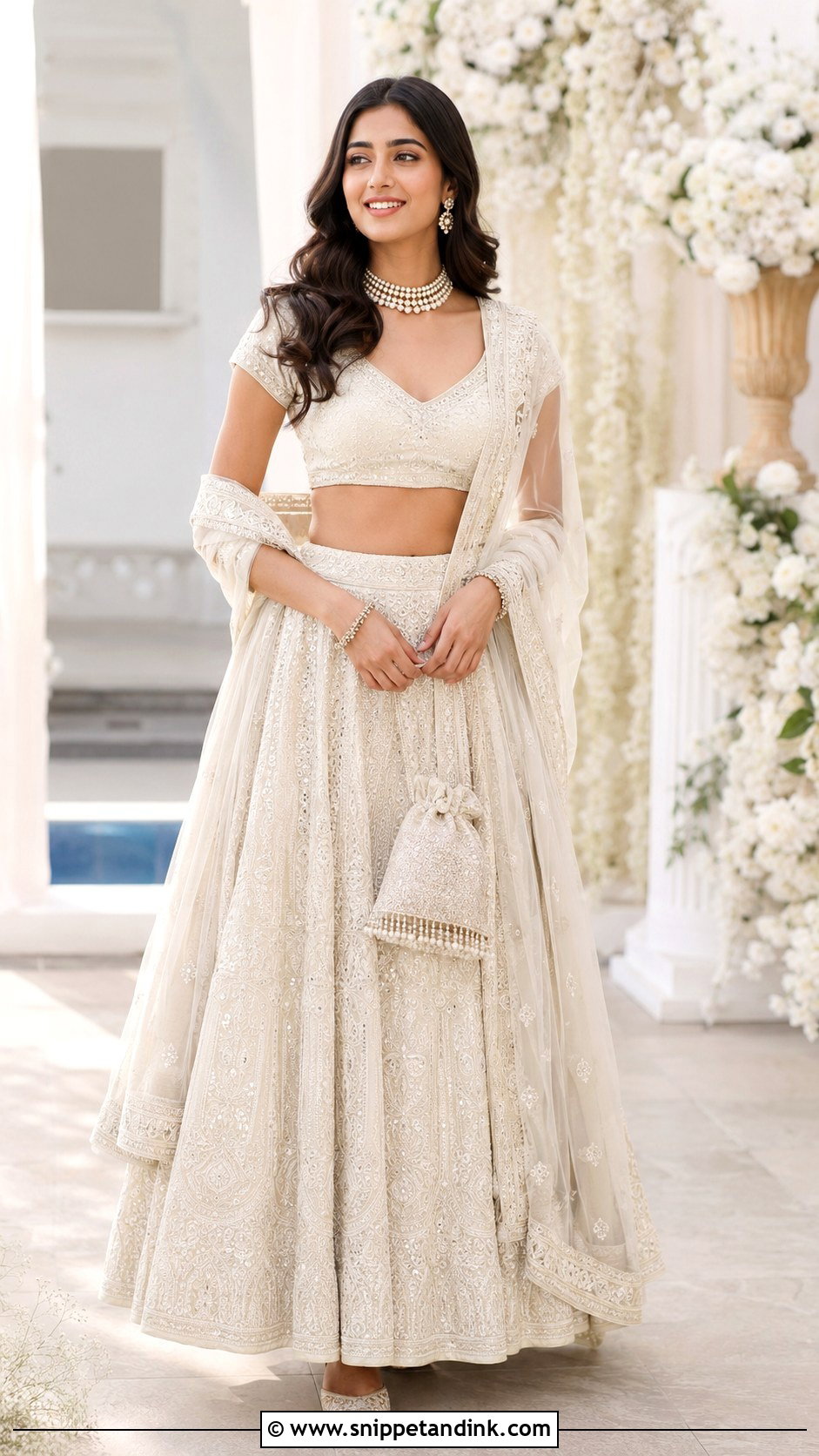
Chikankari is hand embroidery, traditionally white thread on fine cotton or georgette, and its texture comes from the stitch itself rather than from metal. That gives a lehenga real detail without weight. Ivory, pistachio, blush, lilac or pale blue suit a day function. A tonal blouse and flowing skirt keep the silhouette smooth, and small sequins can add a little controlled sparkle. Drape a sheer dupatta over one shoulder or tuck it behind the arms. Pearl or kundan earrings, a delicate choker, a beaded potli and juttis suit it. Fine fabrics are often sheer, so check the lining. Emerald jewelry adds contrast if you want it.
18. Bandhani Bollywood Wedding Lehenga
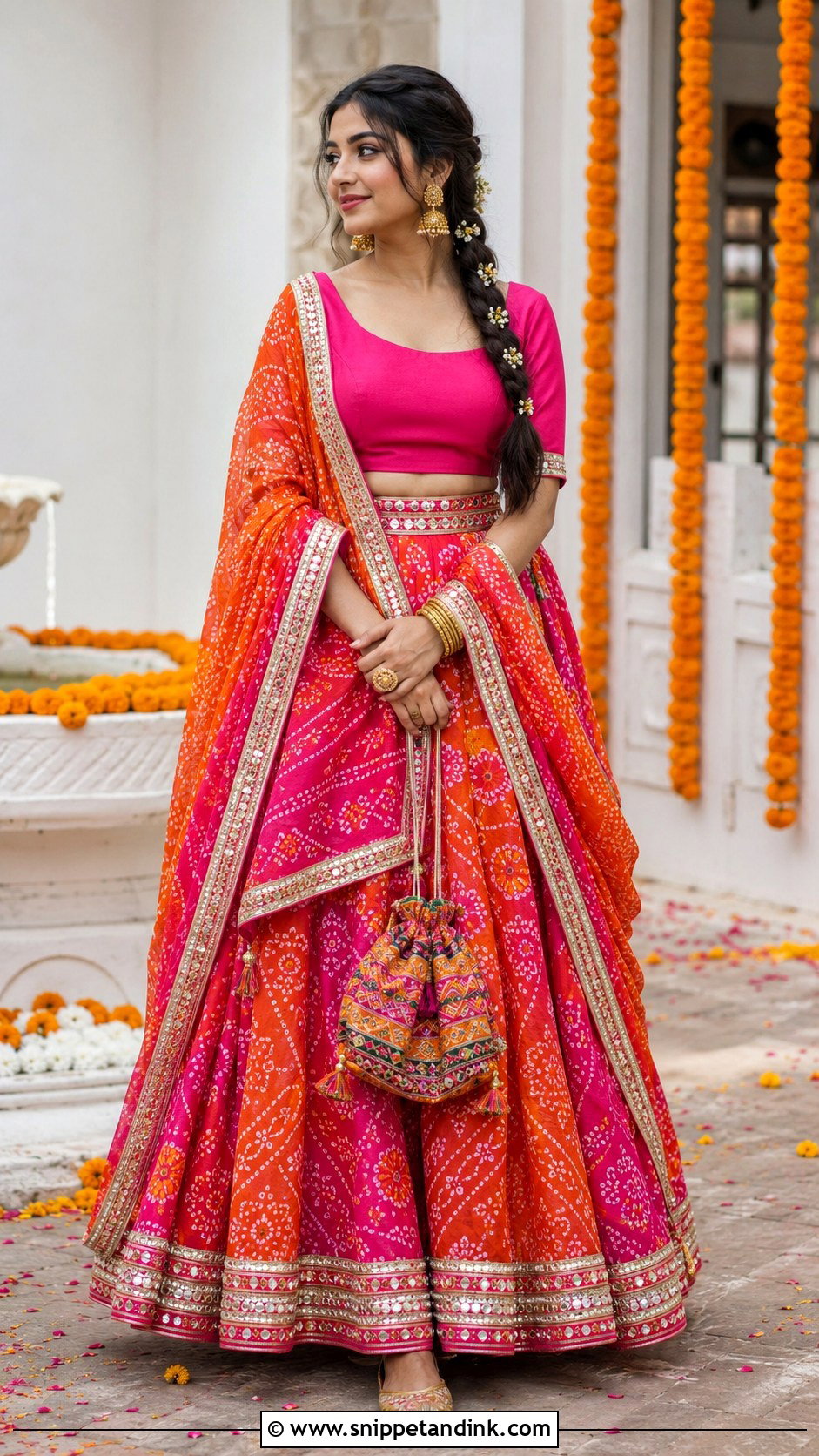
Bandhani is tie-dye, made by binding tiny points of cloth before dyeing, and the dots are slightly irregular because they’re done by hand. That’s how I tell real bandhani from a print. A flared lehenga in pink, red, orange, green or a mix carries strong traditional character. Balance the pattern with a plain silk blouse, or a lightly embroidered one for a more formal function, and add a bandhani dupatta with a gota border. Jhumkas, bangles, a potli and gold juttis complete it, with a long braid. Pick one or two colors from the fabric for your accessories and makeup, not all of them.
19. Emerald Bollywood Reception Lehenga
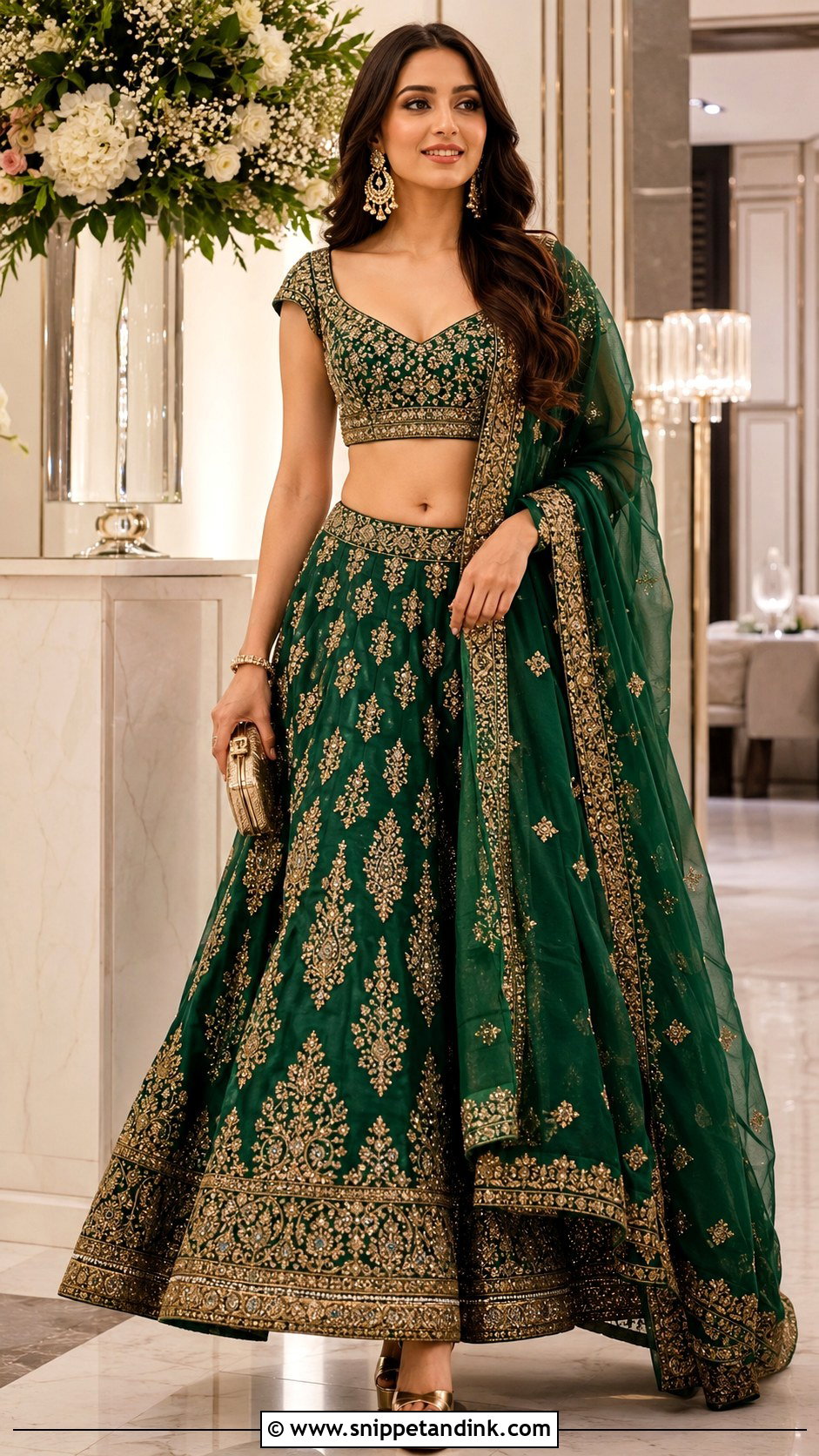
Green is the trickiest color to judge in a shop. Some emeralds lean blue and some lean yellow, and they suit very different complexions, so take a photo of yourself in it under flash before deciding. Velvet, georgette or silk with antique gold, silver or tonal embroidery gives a rich reception look. A fitted blouse and a light dupatta let the skirt show. Diamond-style jewelry reads modern; kundan or antique gold reads traditional. A metallic clutch and platforms with a secure ankle strap suit it, with a sleek bun or high ponytail and a muted lip.
20. Coordinated Bollywood Bridesmaid Lehengas
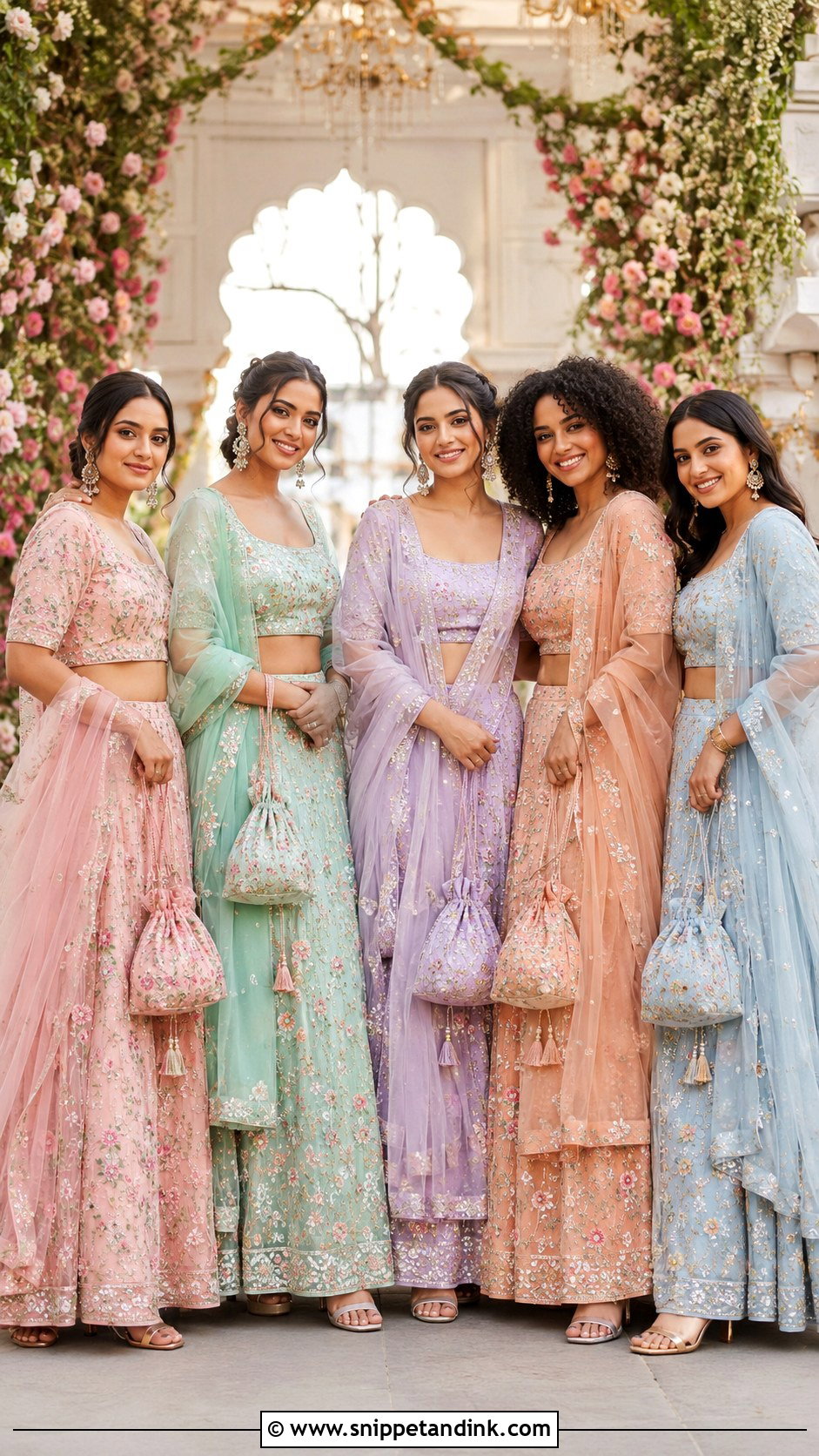
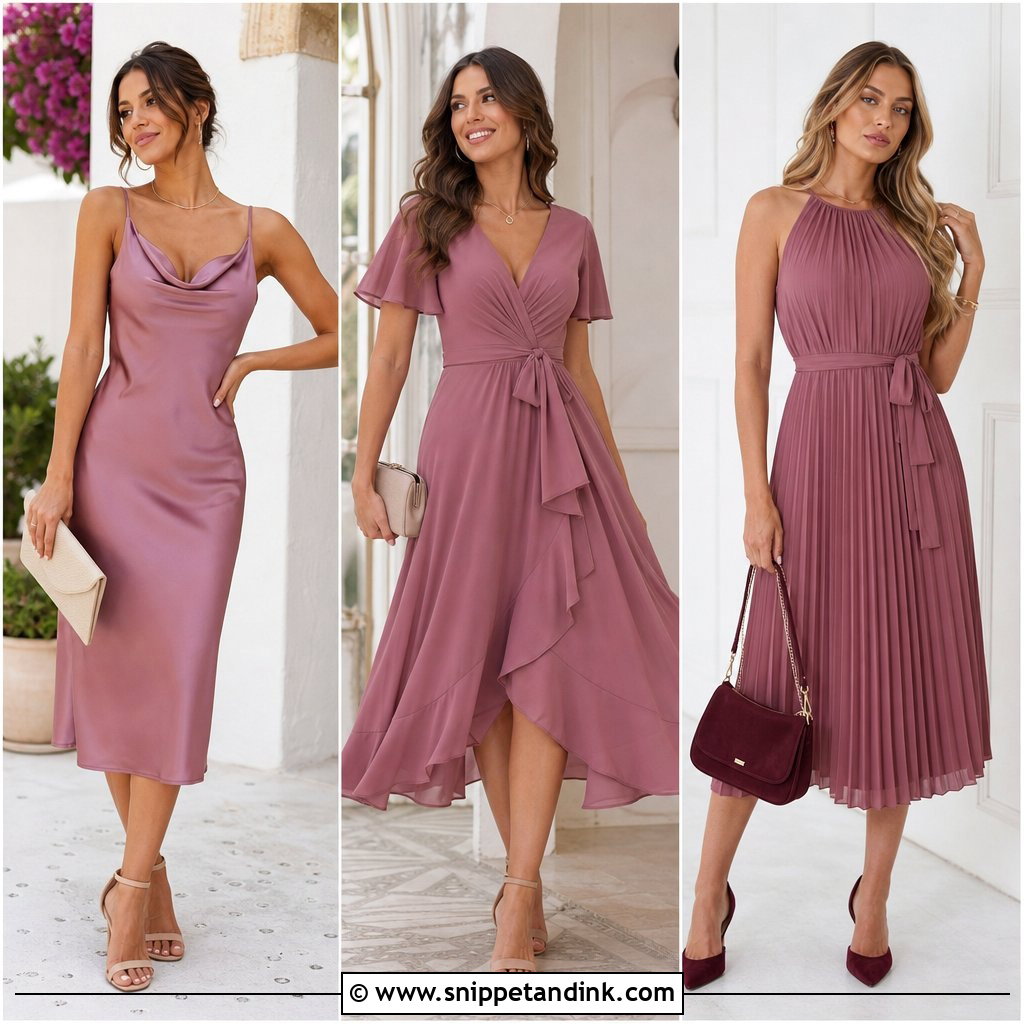
Identical bridesmaid lehengas rarely suit every body in the group. I’d rather agree on one shared element, a pastel palette, a type of embroidery, a metallic border or a matching dupatta color, and let each woman choose her own silhouette and blouse neckline within it. Coordinate earrings, bangles, potlis and shoes loosely rather than exactly. Low block heels and embellished flats make long ceremonies bearable. Hair can vary while sharing one detail, like flowers or a center part. Nobody should copy the bride’s main outfit; the group exists to frame her.
First Indian Wedding as a Guest? A Few Customs Worth Knowing
Customs vary between regions, religions and families, so the surest guide is always a quick question to the couple. These are the points I raise most often with guests who are new to it.
Colors to sidestep
Red is traditionally the bride’s color in many communities, so guests usually choose something else for the main ceremony. In many Hindu families, all-white or all-black is associated with mourning, though attitudes are relaxing and a white chikankari outfit with color in it is often fine at day events. If unsure, choose a jewel tone.
Temples and gurdwaras
At a Sikh ceremony in a gurdwara, everyone covers their head, so keep a dupatta or scarf with you, and shoes come off before you enter. Many temples ask the same. Choose footwear that slips off easily and a hemline you can sit cross-legged in, since some ceremonies seat guests on the floor.
Borrowing and draping
If a friend lends you a saree, ask her or an aunt to drape it on the day. Families are usually delighted to help, and it’s far quicker than learning from a video the night before.
Haldi to Reception Without an Outfit Malfunction
Pick each outfit for the function it’s going to, and build in comfort and movement before sparkle. A red lehenga belongs at a traditional ceremony, while a mirror-work skirt, sharara set or cape outfit makes the sangeet much easier to dance through. Silk sarees carry formal ceremonies, and pre-draped versions remove the stress of draping. Think about the venue, the weather and the customs of the couple’s families. Then test every blouse hook, shoe, pleat and pin a few days before you need them, and go with the outfit that feels like you.
You'll Like These Ideas:


Leave a Reply