
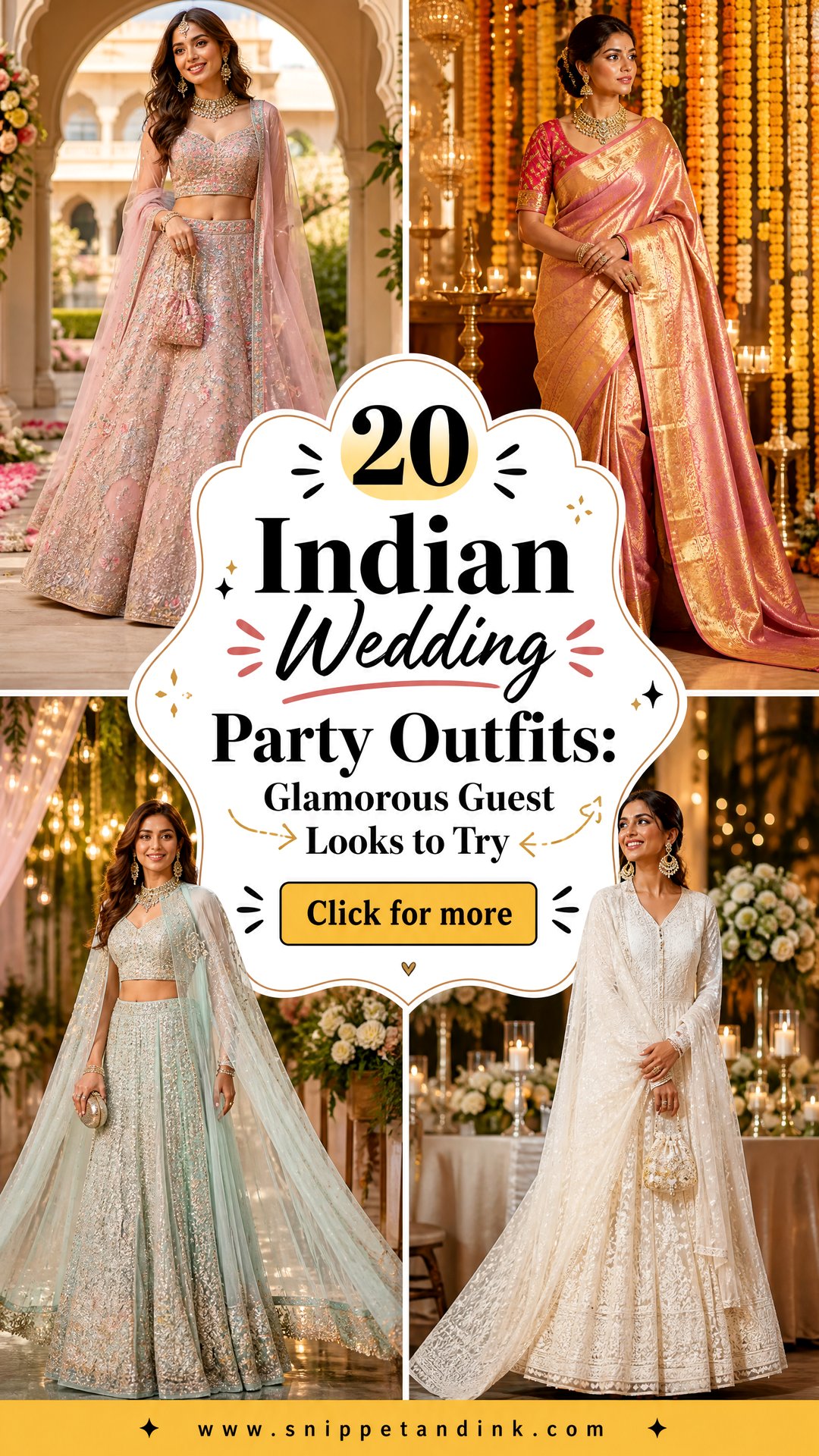
Dressing as a guest at an Indian wedding is less about one outfit and more about reading the whole schedule. Sarees, lehengas and Anarkali suits are still the backbone, but plenty of the clients I dress now reach for pre-draped silhouettes, coordinated sets and fusion pieces because they are easier to manage over a long day. Before we talk fabric, I always ask which events you’re invited to, where they’re held and whether the family has sent colour guidance. A daytime haldi in a garden and a late reception in a ballroom call for completely different weights of embroidery. The twenty looks below are grouped loosely from light and daytime to heavier and evening, with notes on how each one actually behaves once you’re wearing it.
Mehndi, Sangeet, Ceremony, Reception: Dressing for Each Function
The first question I ask a guest is not what colour they like but which events are on their invitation. Indian weddings often run over two or three days, and each function has its own mood. Wearing the same weight of outfit to all of them is the most common way guests end up too hot at lunch or underdressed at night.
- Haldi: expect turmeric paste to fly. Wear yellow or something you don’t mind staining, and skip silk.
- Mehndi: usually relaxed and seated on cushions. Shararas, dhoti pants and cotton Anarkalis are easy to sit in for hours.
- Sangeet: the dancing night. Pre-draped sarees, sharara sets and anything secured with pins rather than held by hand.
- Wedding ceremony: the most traditional. Silk sarees, Banarasi suits and lehengas with sleeves are the safe ground.
- Reception: the dressiest and most open to fusion, so sequins, capes and jumpsuits belong here.
Colour etiquette varies by region and family. Red is very often associated with the bride, so I steer guests toward other jewel tones at the ceremony. White and black are fine for many modern families and avoided by some traditional ones. If no guidance arrives, a quiet question to the person who invited you is perfectly normal and much better than guessing.
Religious settings carry a few practical rules of their own. At a gurdwara, everyone covers their head and removes shoes, so a dupatta long enough to drape over your hair is essential. Many temple ceremonies also mean sitting on the floor, which is where a fitted lehenga skirt or a narrow straight suit becomes uncomfortable fast.
1. Pastel Lehenga Indian Wedding Outfit
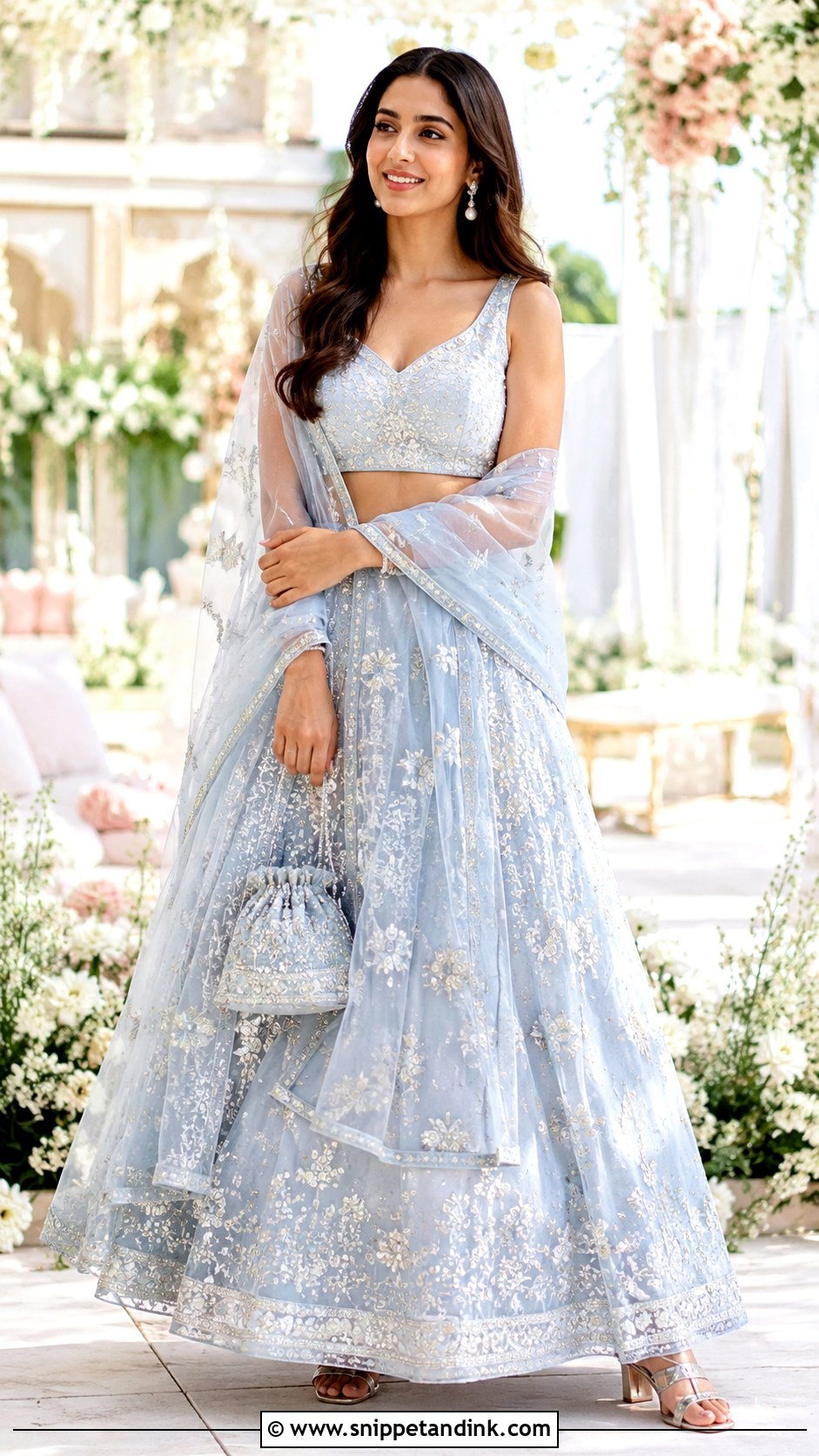
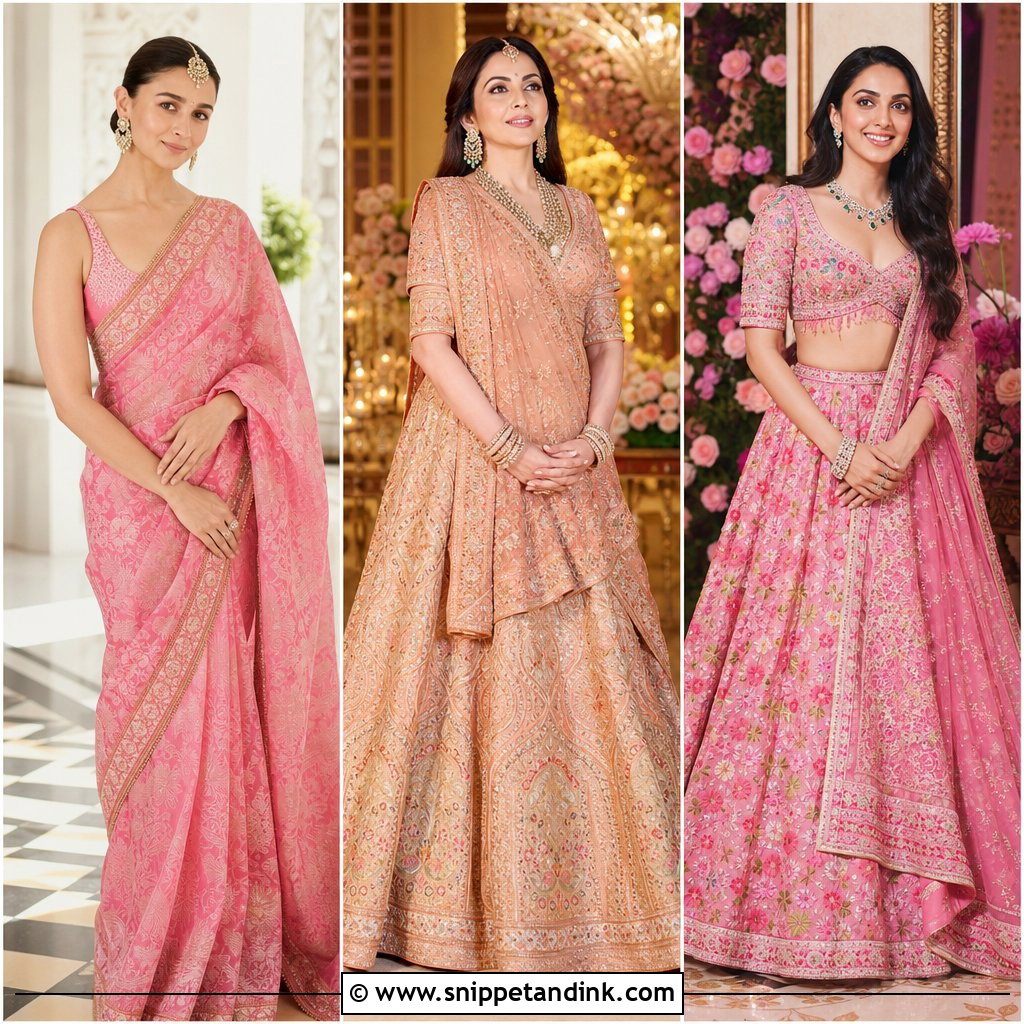
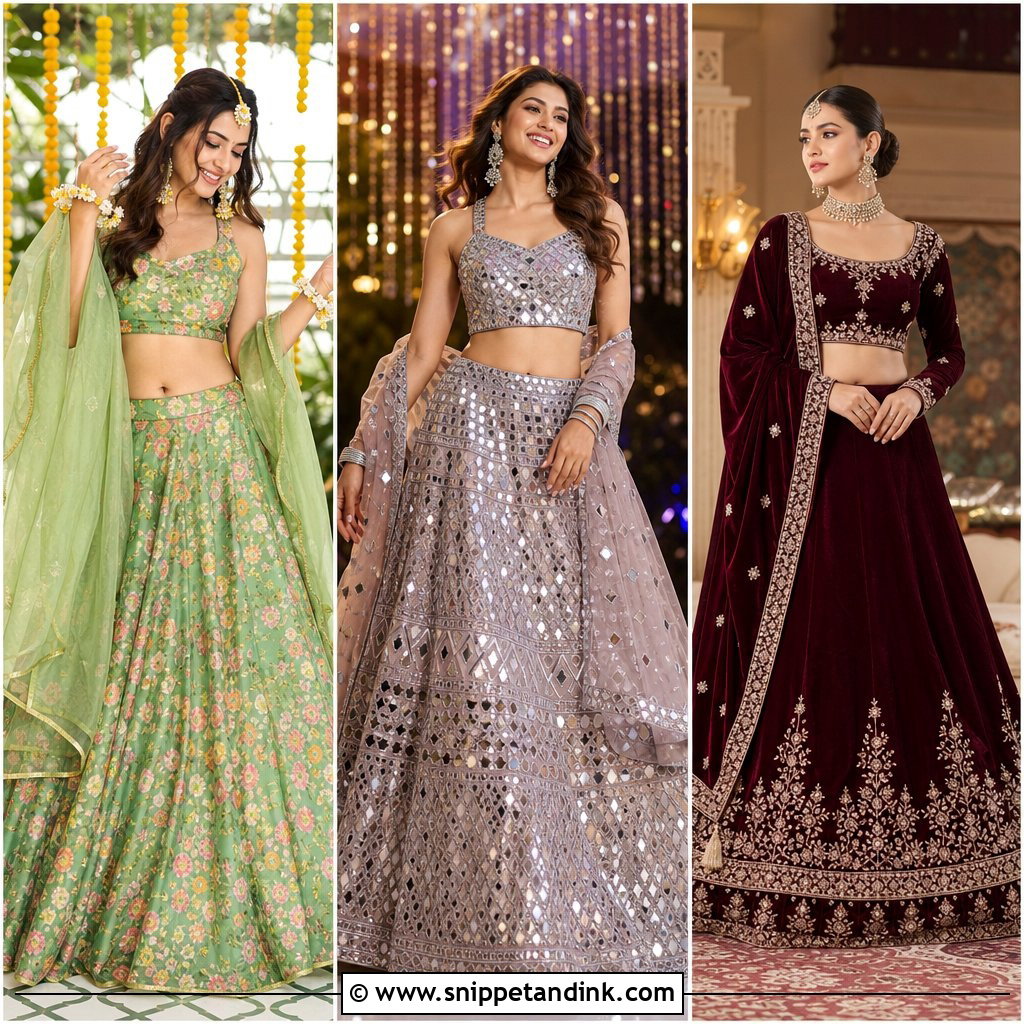
Pastel lehengas suit daytime functions because the light does the work and the embroidery doesn’t have to. I’d pick powder blue, blush, sage or peach with fine threadwork rather than heavy zardozi, which looks dull and flat in strong sun. A net or organza dupatta over one shoulder is the most forgiving drape, as it won’t drag on the skirt when you sit. Pearl earrings, a small potli and cushioned juttis are enough. One honest warning: very pale skirts show every grass stain at an outdoor event, so lift the hem when you walk across a lawn.
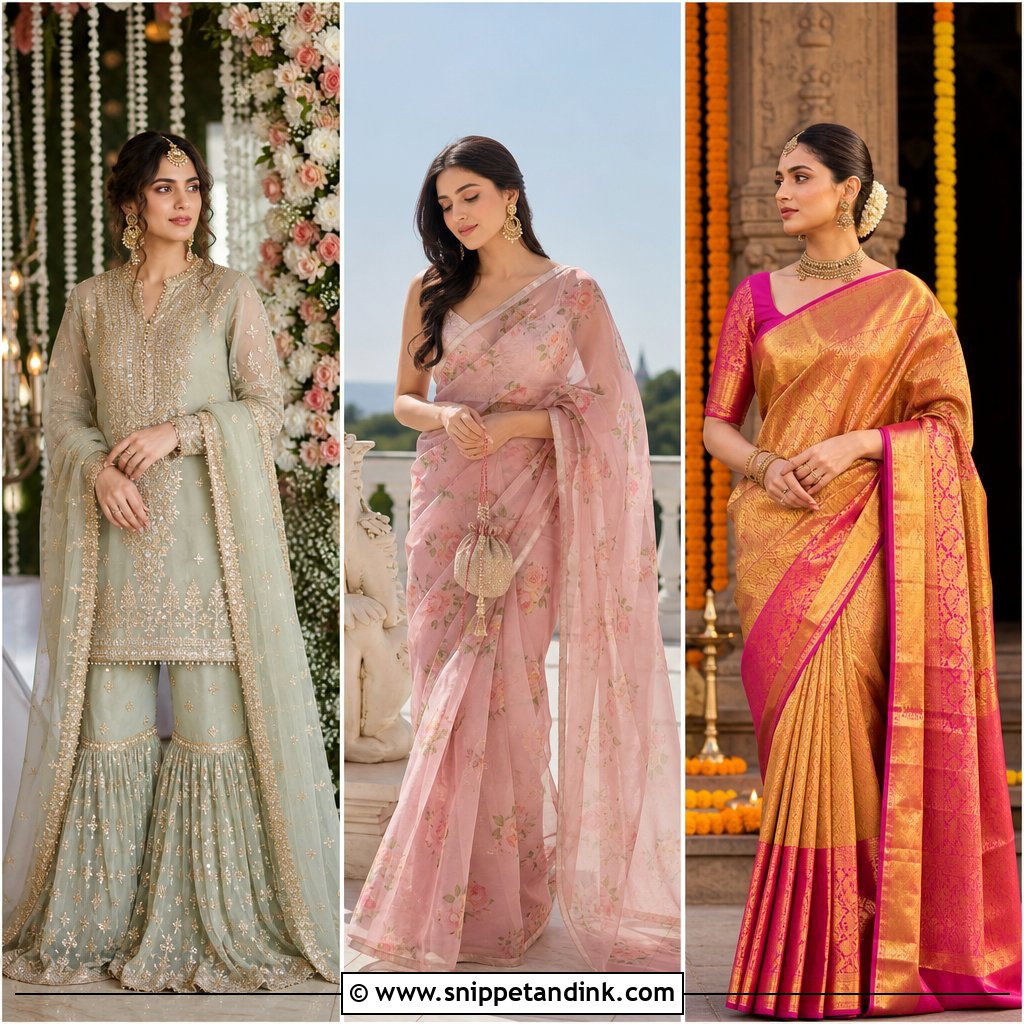
2. Kanjivaram Silk Saree Indian Wedding Outfit
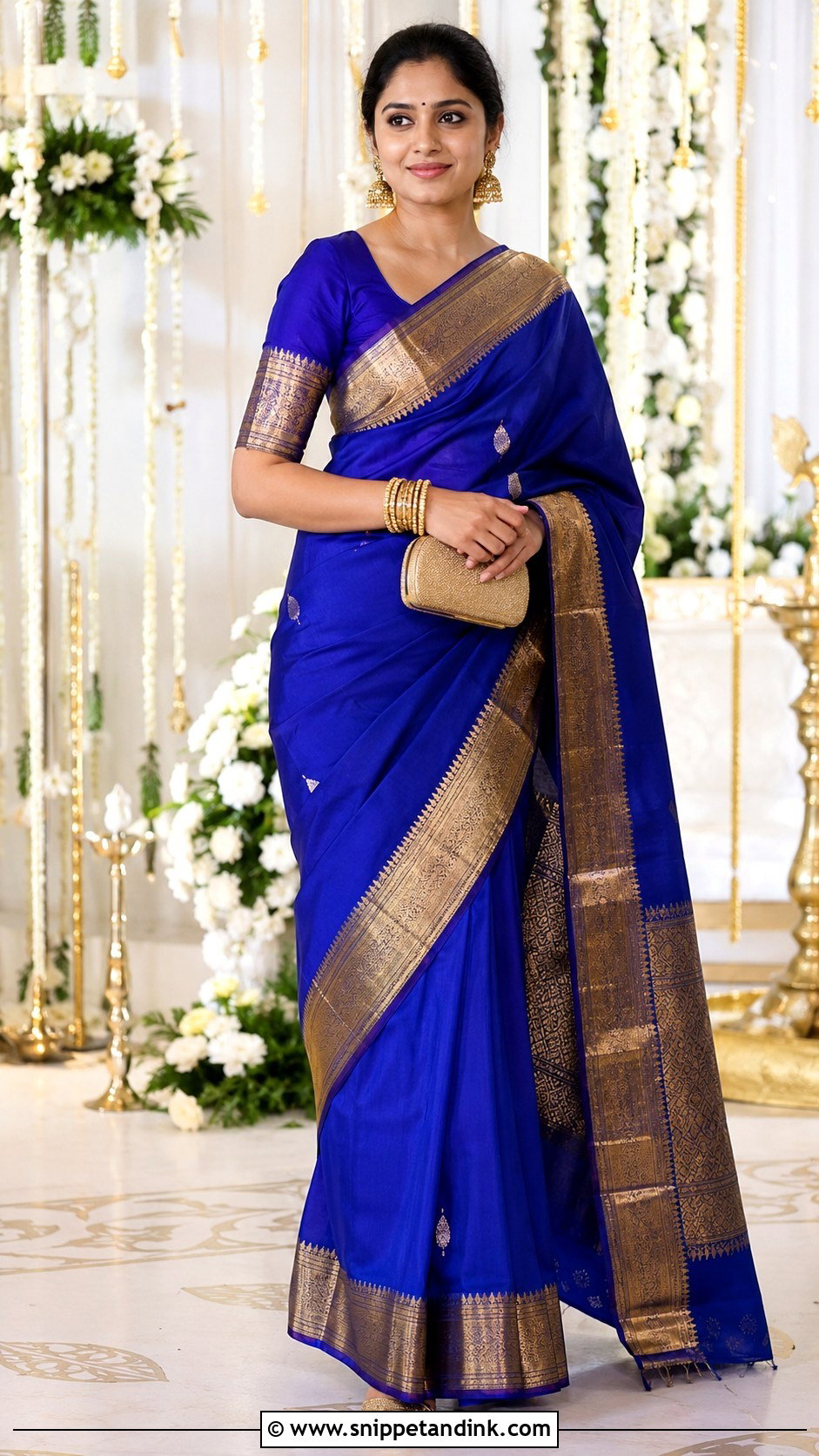
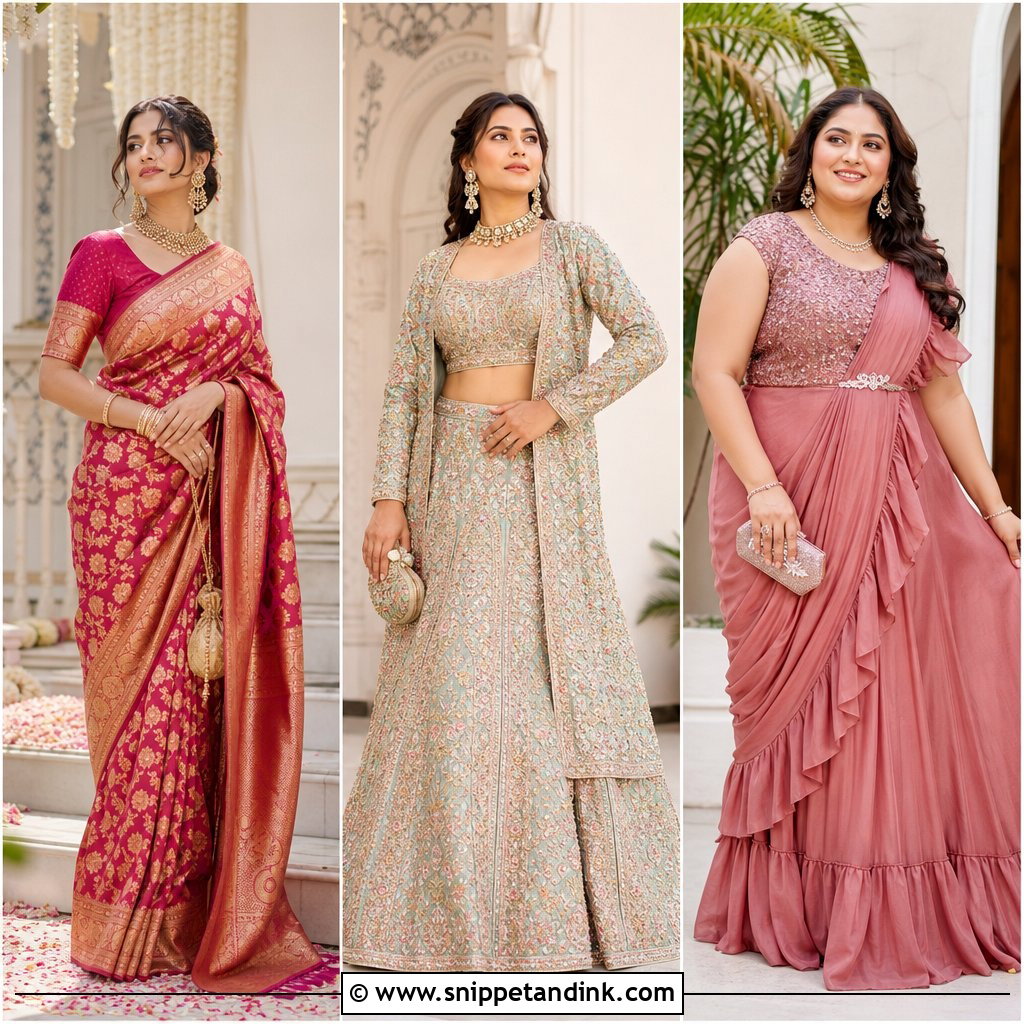
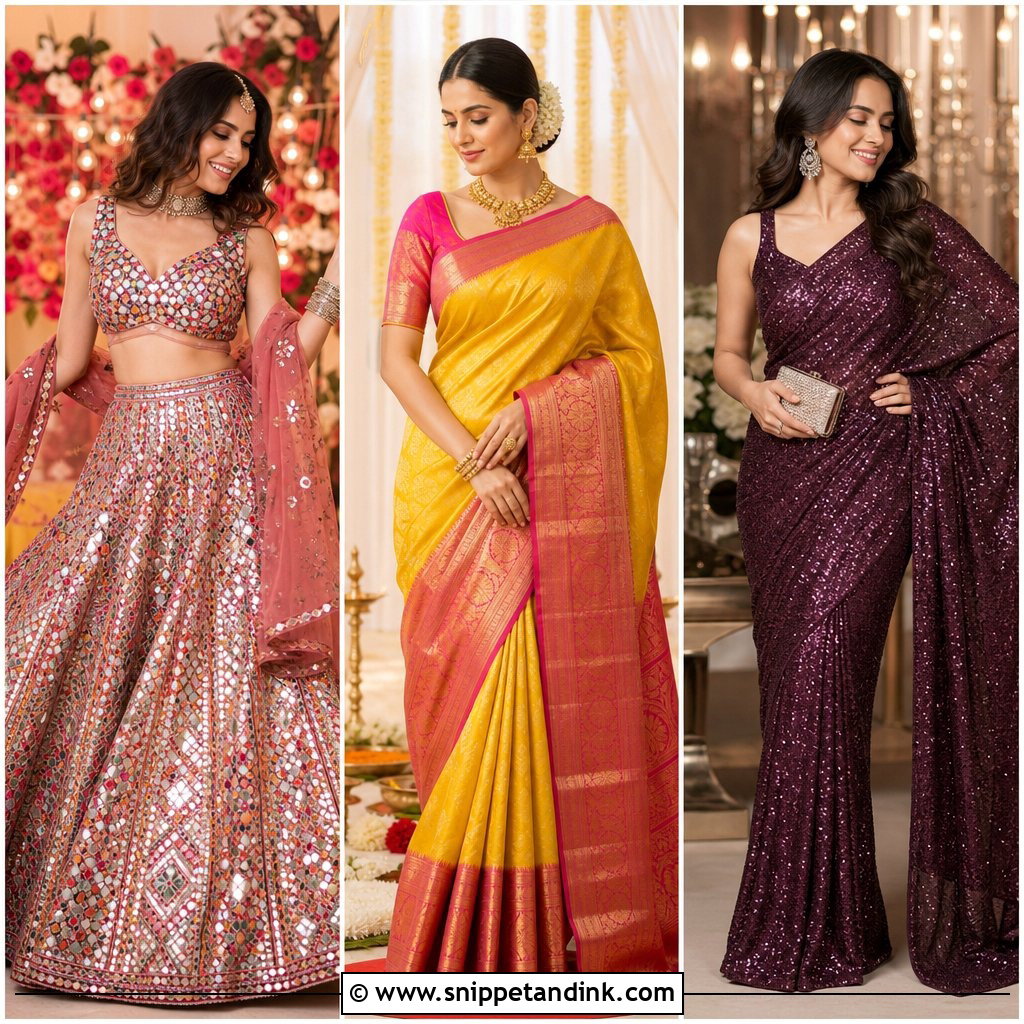
A Kanjivaram is heavy silk, and that weight is exactly why it suits a formal morning ceremony: the pleats fall straight and stay there. Emerald, royal blue, magenta and teal with a contrasting zari border are classic. Have your blouse cut with elbow sleeves if you want the structured look, and wear a cotton petticoat tied firmly, because a slippery one lets the whole drape slide by mid-afternoon. I pin the pallu at the shoulder with two pins, not one. Temple earrings, gold bangles and a centre-parted bun with flowers finish it in the traditional way, and block heels keep the hem away from your toes.
3. Sequin Saree Indian Wedding Outfit
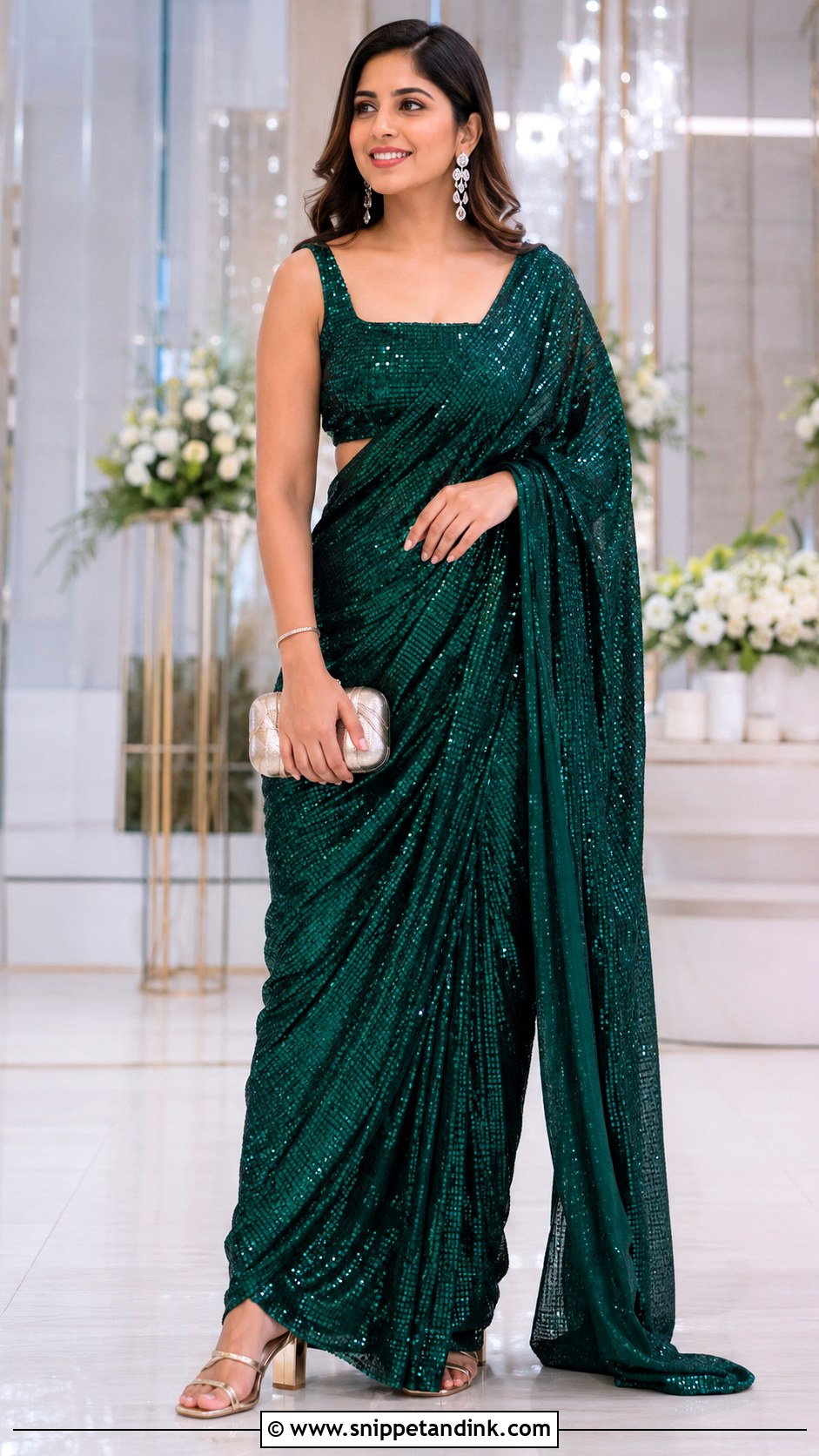
Sequins are the evening answer when you want sparkle without layering a jacket or cape over everything. Stay tonal: navy on navy, plum on plum or champagne on champagne reads far richer under event lighting than a multicolour mix. The catch is that sequins scratch the inner arm and catch on a dupatta, so I suggest a smooth fitted blouse and keeping the dupatta off entirely. If you plan to dance, a pre-stitched version saves you from pleats loosening on the floor. Crystal drops, one cuff and a sleek ponytail are plenty; any necklace starts fighting with the fabric.
4. Floral Organza Saree Indian Wedding Outfit
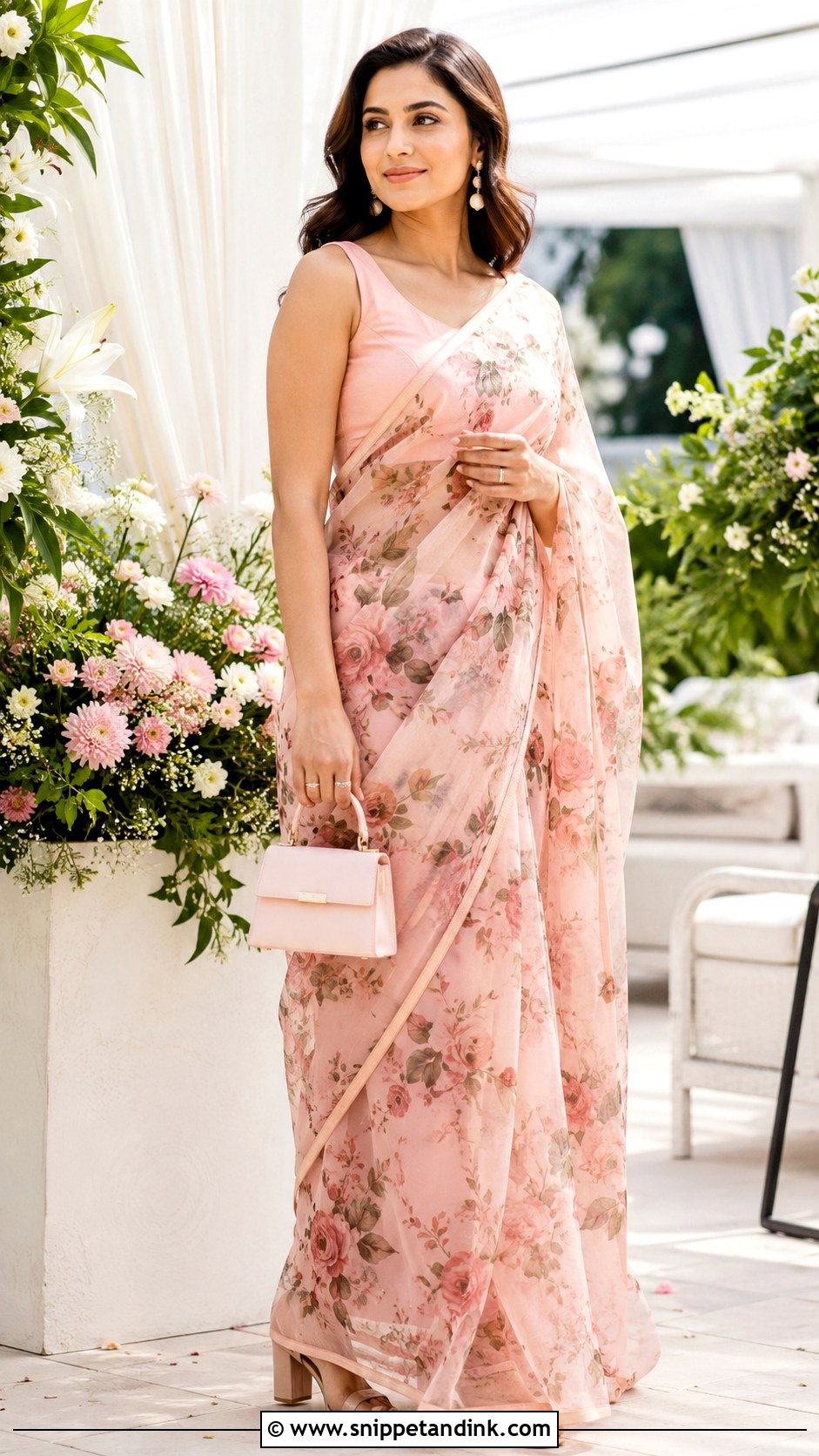
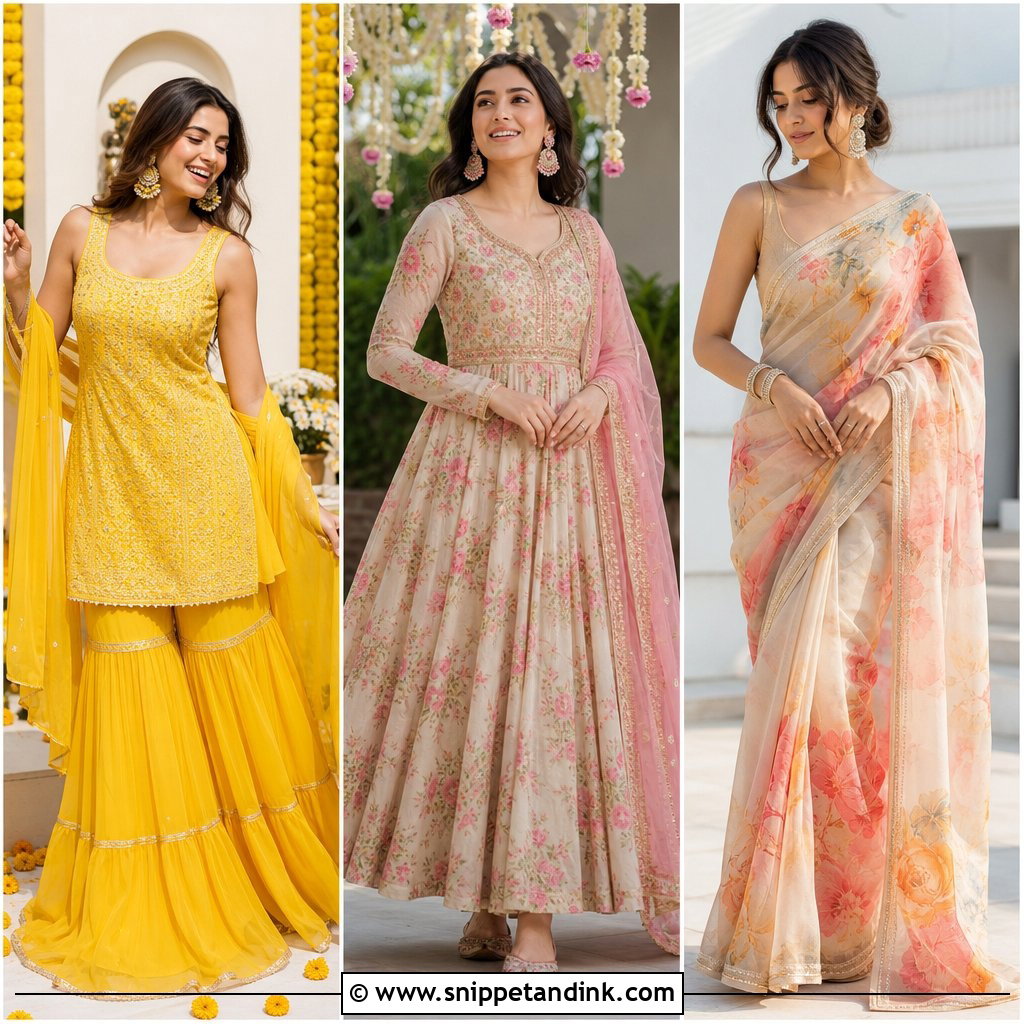
Organza is crisp and holds air, which is lovely in photographs and slightly unruly in a breeze. Watercolour florals or a printed botanical border keep it light for a garden function. Pick a solid blouse in one of the smaller print colours so the eye doesn’t bounce around. I always add discreet pins at the shoulder and at the waist tuck, because organza puffs out where silk would lie flat. Pearl studs, a small pastel bag, neutral block heels and loose curls keep it fresh, and you’ll be far cooler than anyone in velvet.
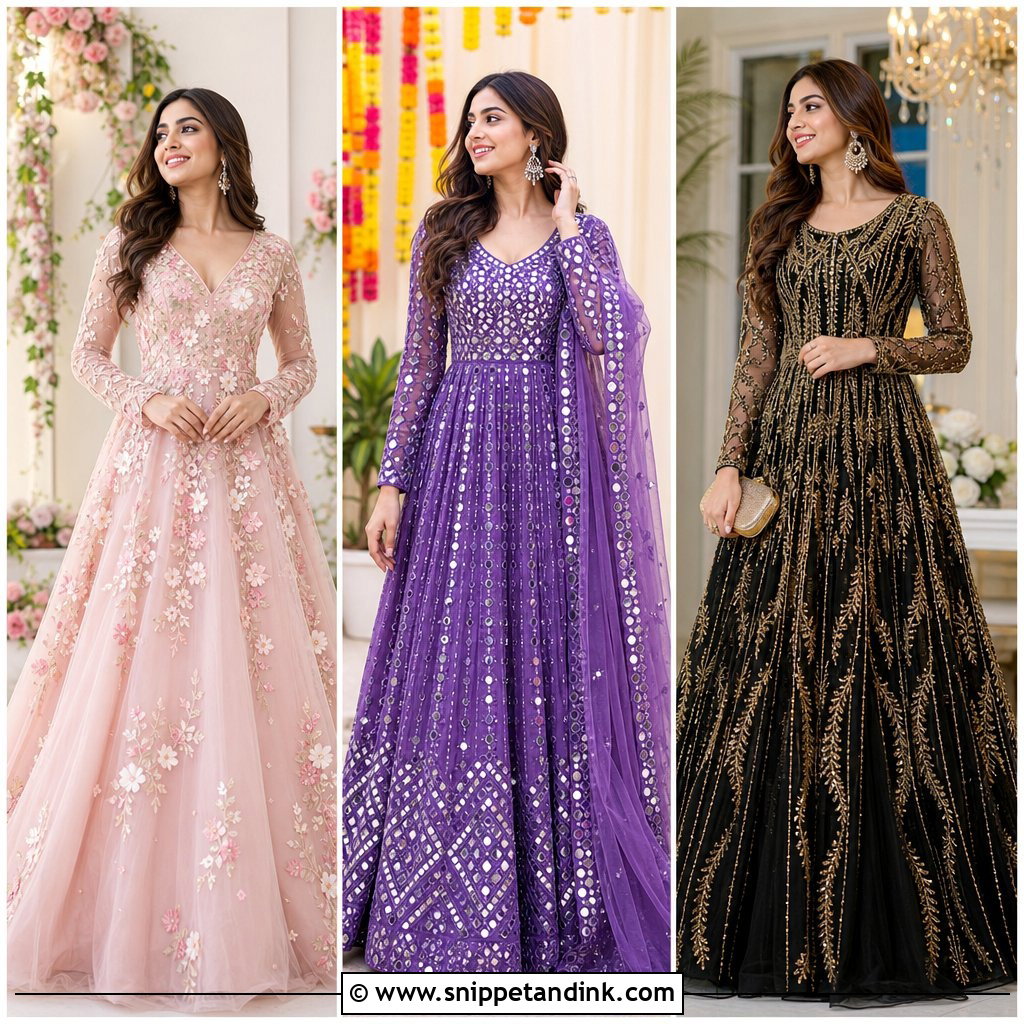
5. Anarkali Suit Indian Wedding Outfit
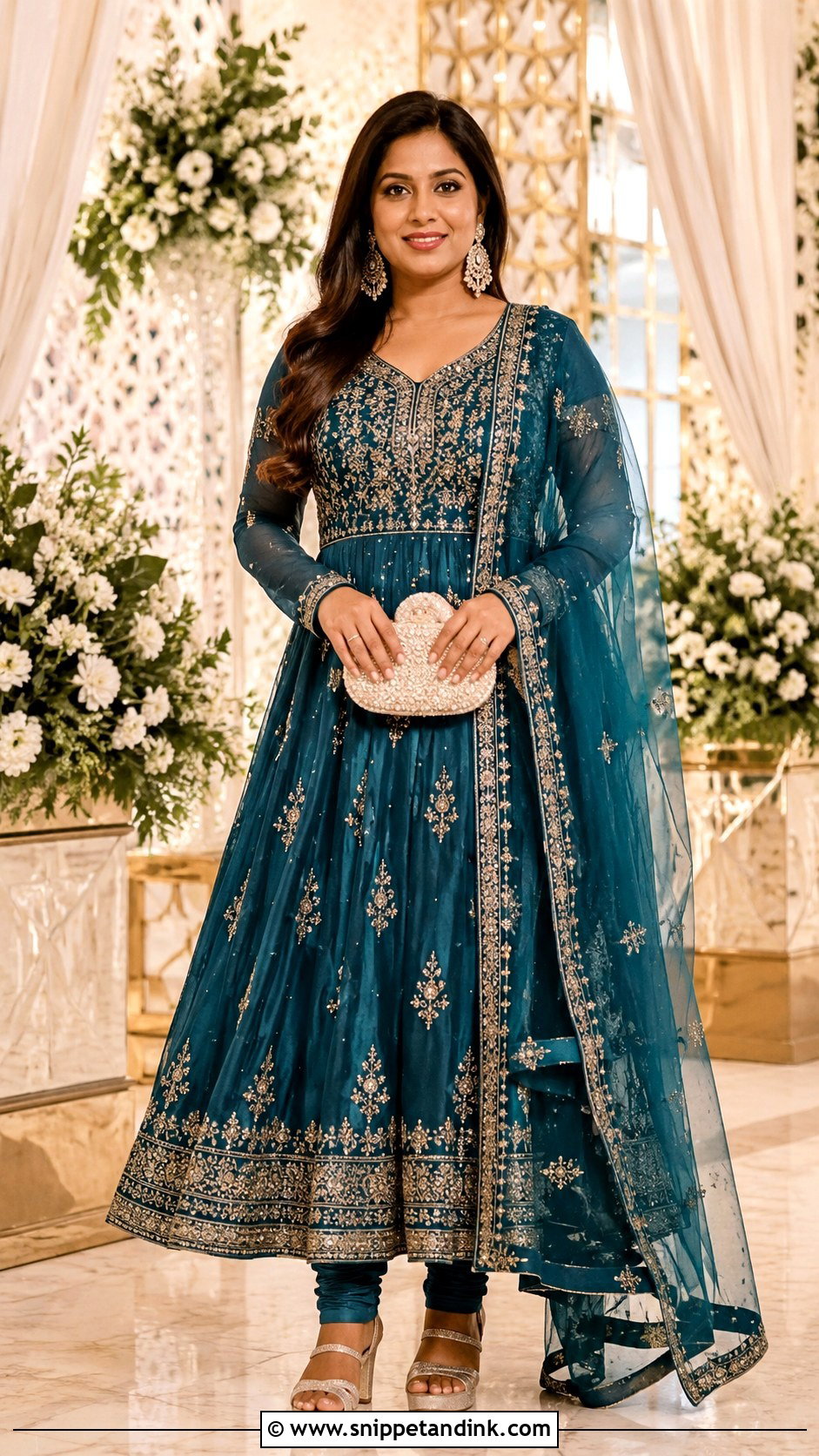
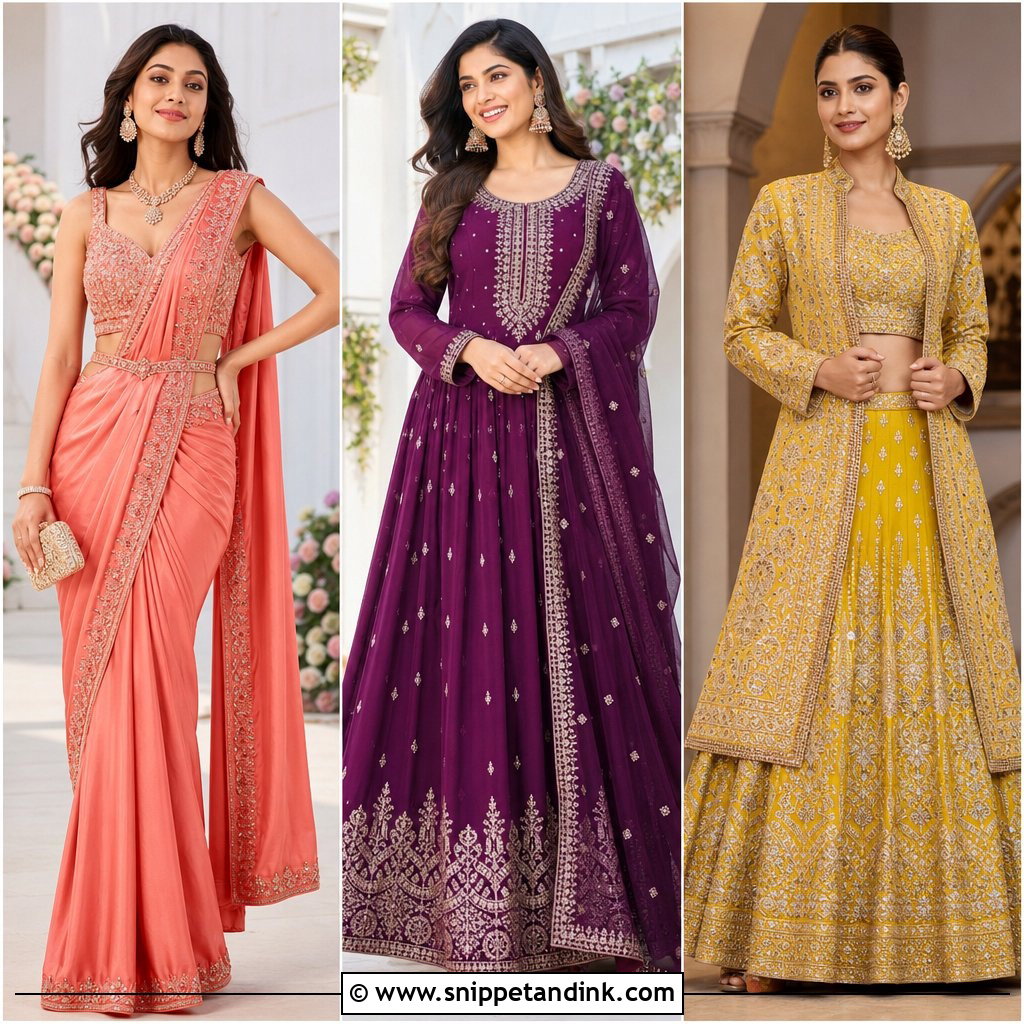
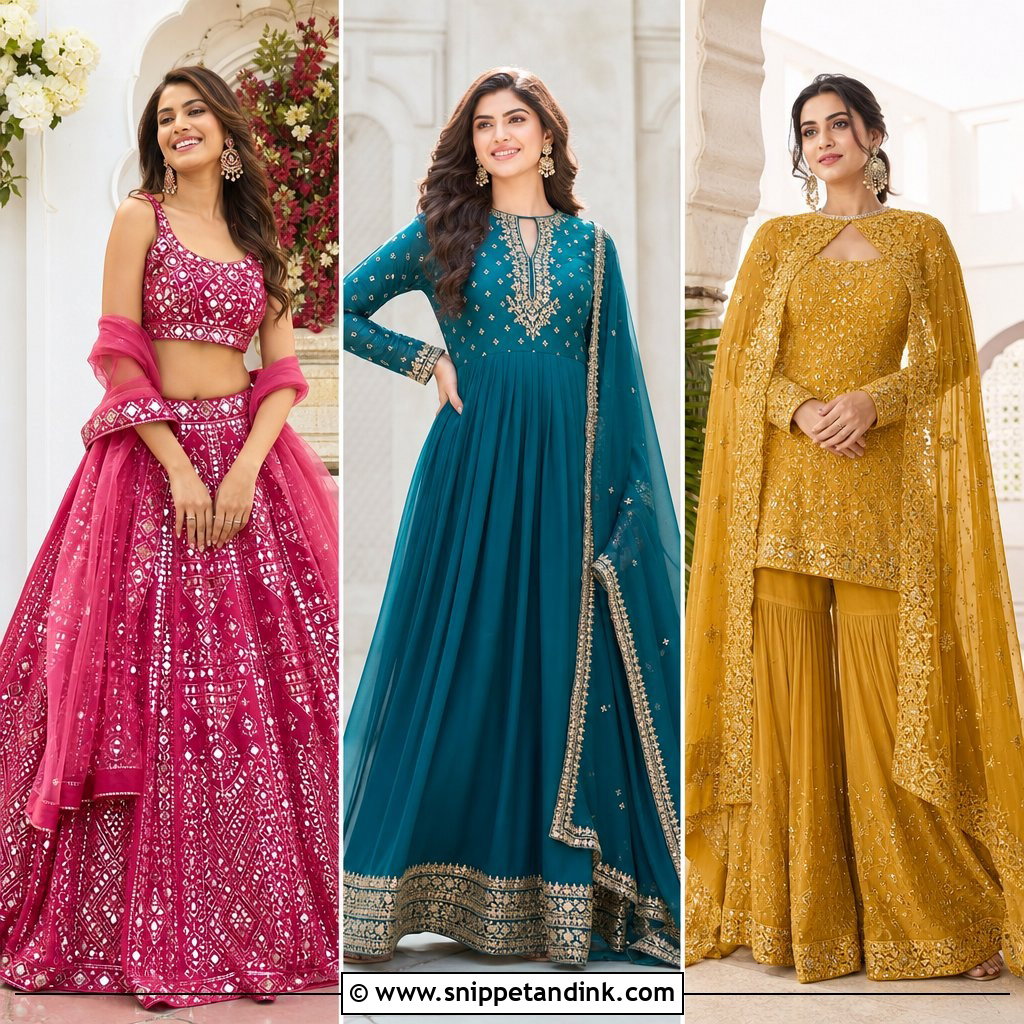
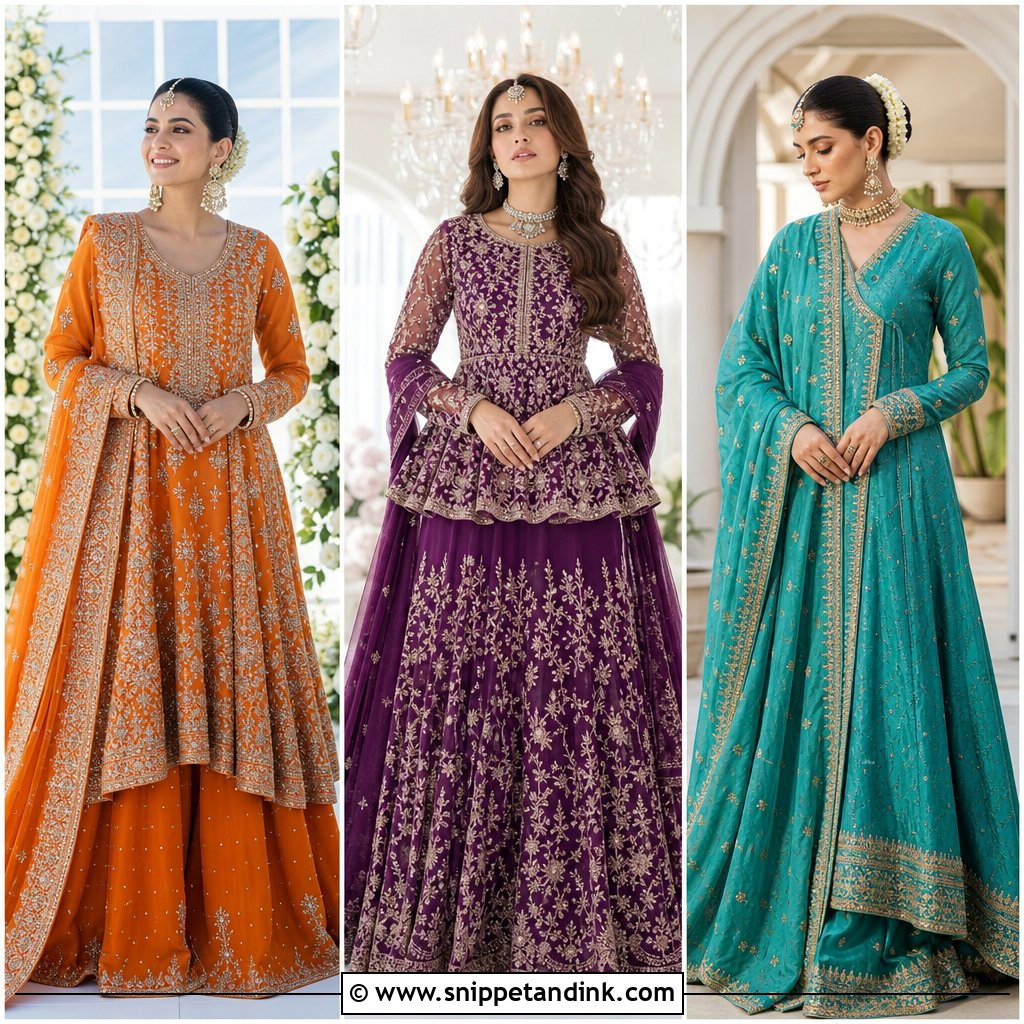
A floor-length Anarkali suit gives you the movement of a gown without asking you to learn draping. Wine, teal and dusty rose with embroidery at the neckline and hem are reliable. The fit point I check first is where the bodice seam meets the flare; if it sits too low on a shorter frame, the skirt swallows you, so ask the tailor to raise it to your natural waist. Fitted churidar pants, a soft dupatta over one arm and chandelier earrings are all it needs. Platform sandals help with the hem length, but get the hem finished while wearing them.
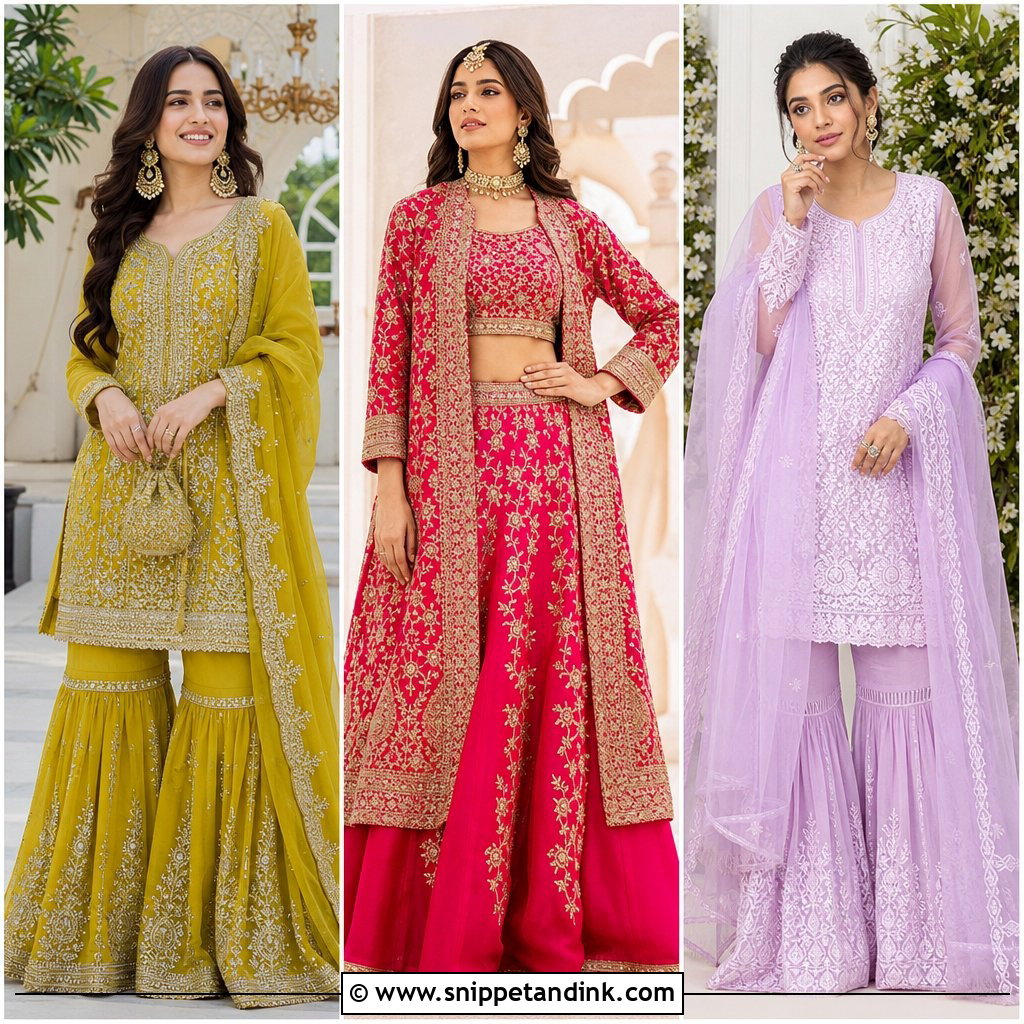
6. Sharara Set Indian Wedding Outfit
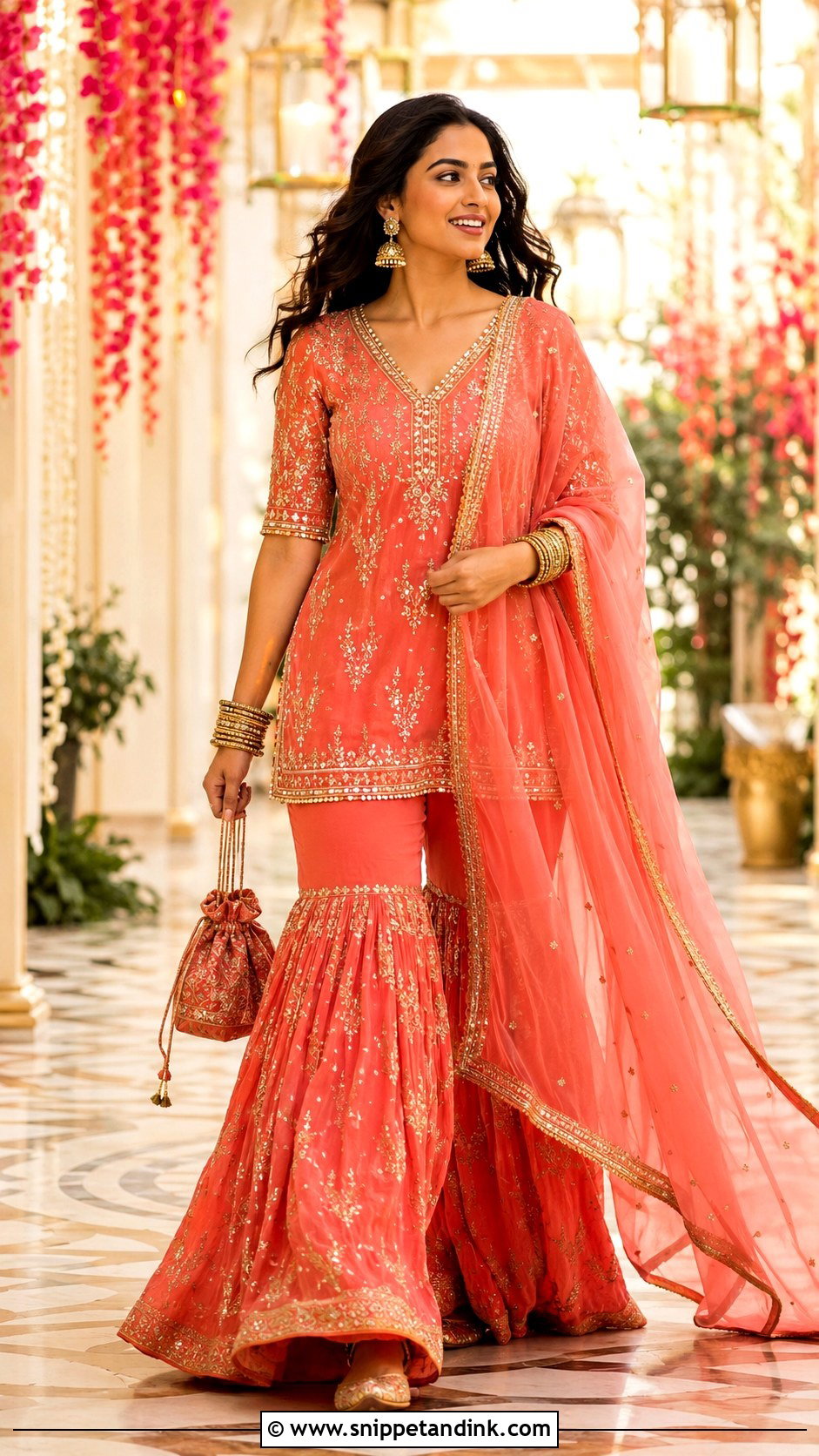
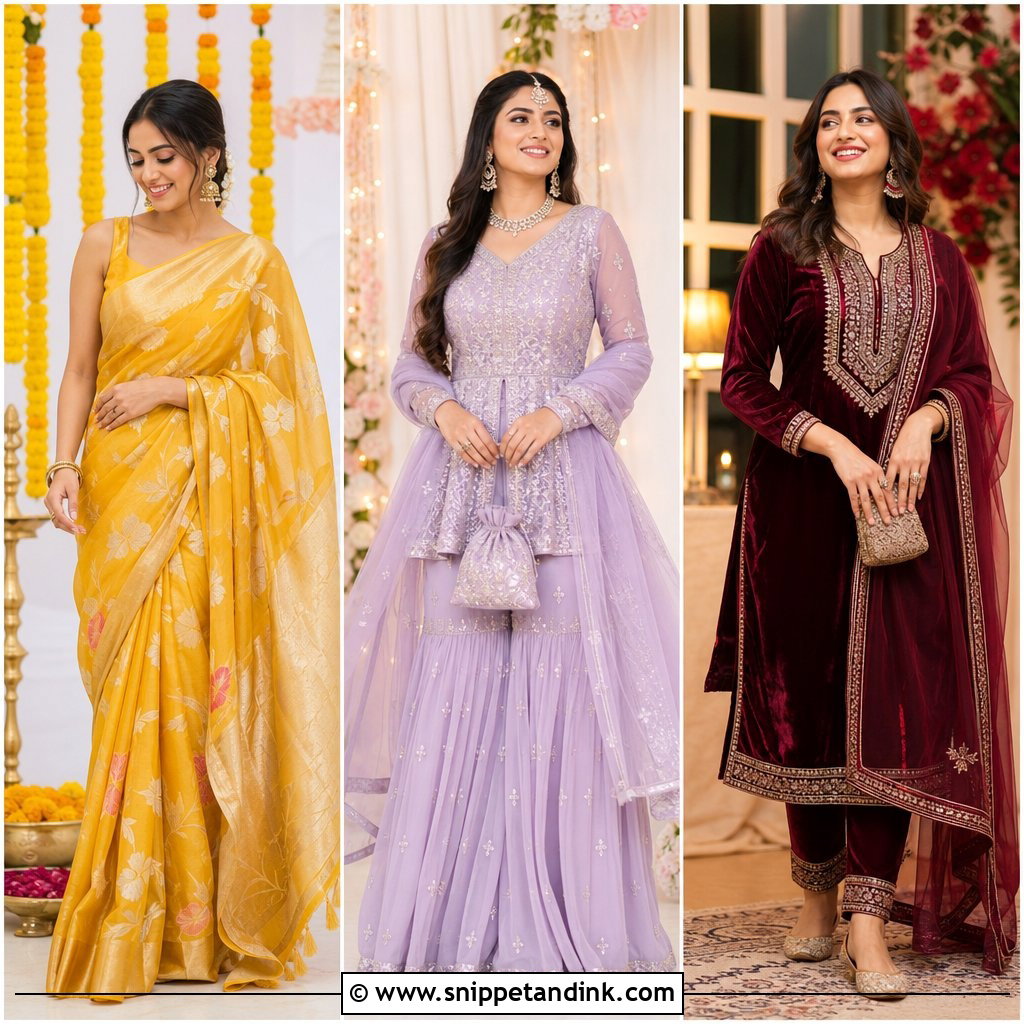
Sharara sets are what I recommend most often to guests who know they’ll be on the dance floor at the sangeet. The short or mid-length kurta keeps your top half neat while the flared pants move with you. Jewel tones suit the evening; yellow, mint and coral suit a day function. Gota and mirror work add festivity without real weight. For dancing, pin the dupatta across one shoulder and catch the other end at the hip so it can’t slip. Jhumkas, stacked bangles, embroidered juttis and a braided ponytail make it feel finished.
7. Gharara Set Indian Wedding Outfit
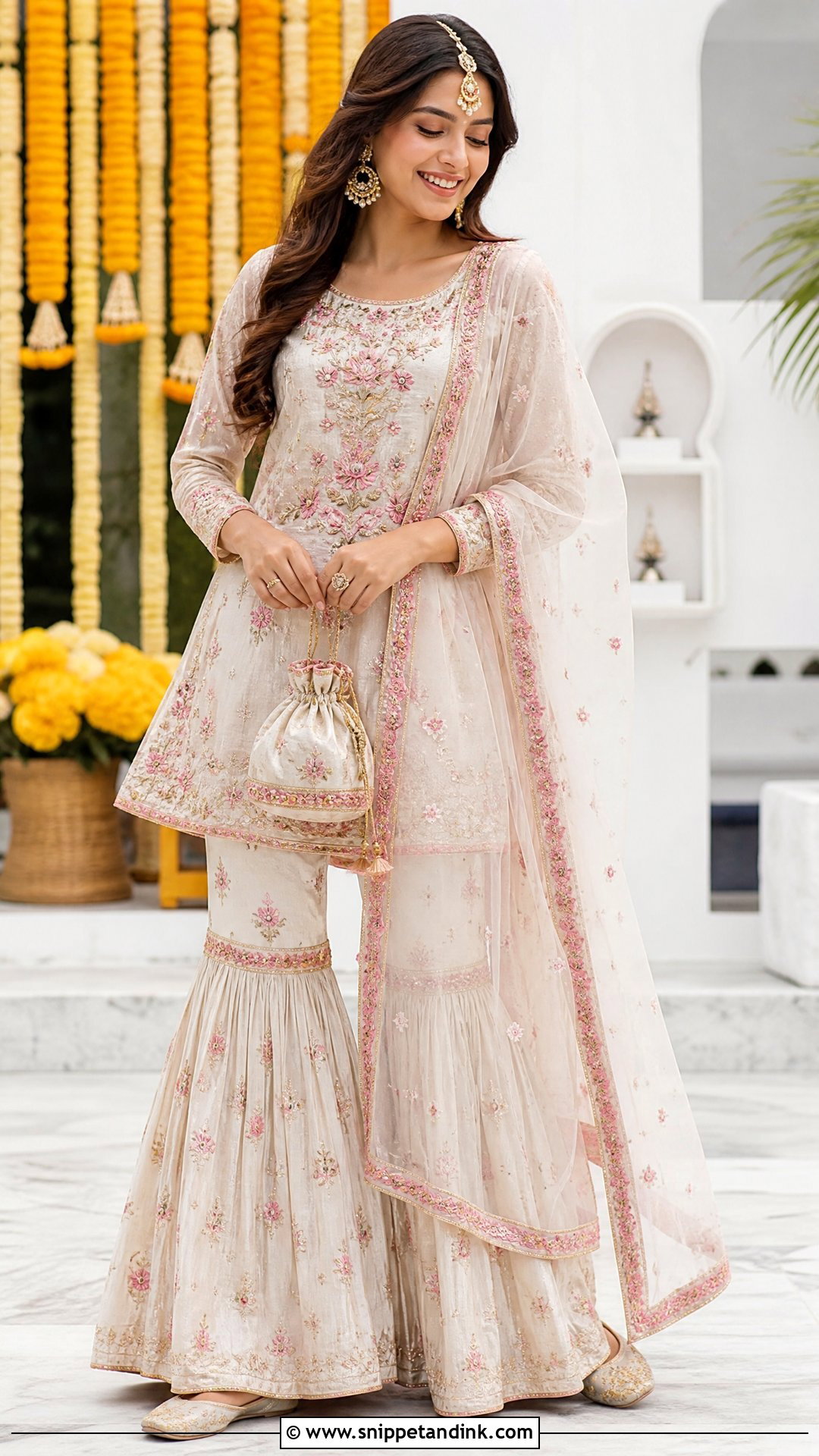
A gharara set has a vintage feel because of its construction: the pants are fitted to the knee, then a joint band releases a full flare below. That band is where a poor fit shows, so stand in front of a mirror and check it sits level on both legs. A short embroidered kurti and a light bordered dupatta complete it. Ivory and gold or rose and burgundy are classic pairings, but check the family’s colour notes first, since some households reserve certain shades for the bride. Embellished flats keep the flare visible, and a small maang tikka is enough jewellery for a mehndi.
8. Palazzo Suit Indian Wedding Outfit
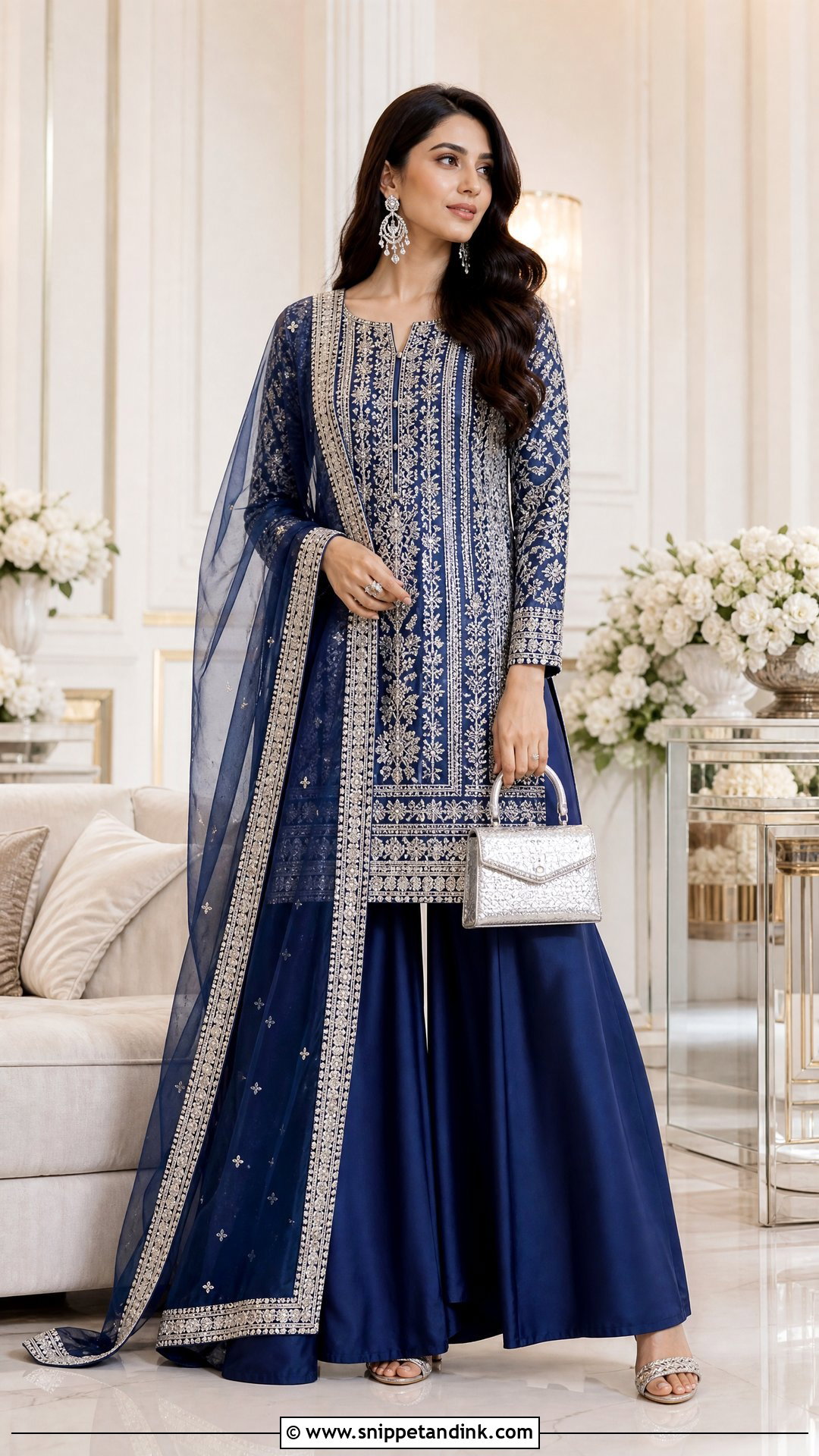
When a celebration involves hours of sitting on chairs or floor cushions, I steer people to a palazzo suit. Silk, georgette and soft crepe all drape well; stiff brocade palazzos balloon when you sit. The kurta should have side slits deep enough to sit without it riding up. A sheer dupatta with a narrow border keeps it formal. Cobalt with silver or mustard with antique gold are easy wins. Get the hem taken up with your chosen sandals on, because wide trousers that drag are the first thing to get stepped on in a crowd.
9. Straight-Cut Suit Indian Wedding Outfit
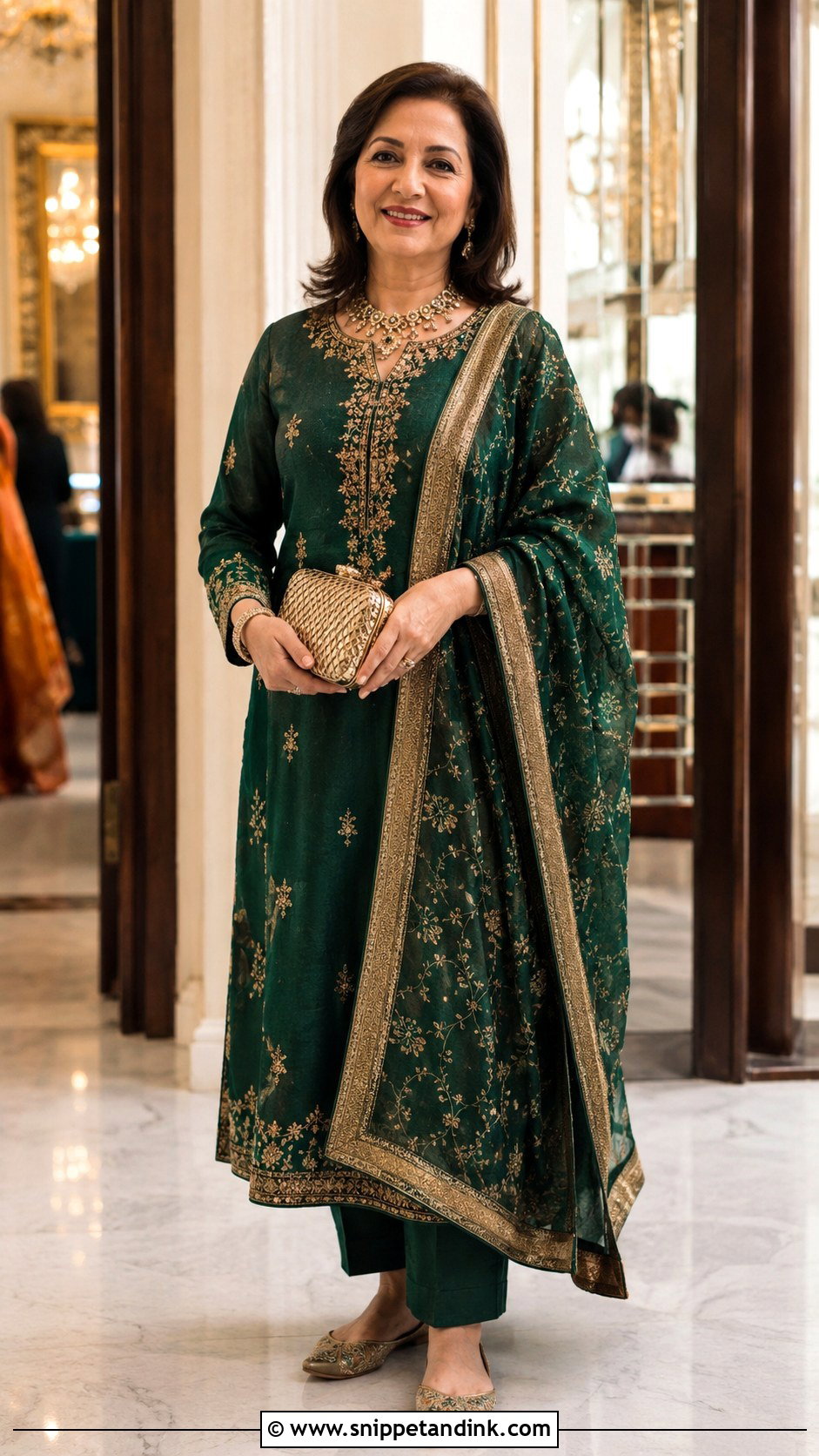
Straight-cut suits rely entirely on fabric and finishing, since the silhouette itself is plain. That makes them honest choices for guests who want modest coverage and no fuss. Brocade or an embroidered silk-blend kurta in ruby or forest green, ankle-length slim pants and a contrasting dupatta with zari give it the occasion feeling. Pointed juttis lengthen the line. My one fitting note: ask for a little ease through the hips, because a straight kurta that is snug standing will pull across the thighs every time you sit.
10. Jacket Lehenga Indian Wedding Outfit
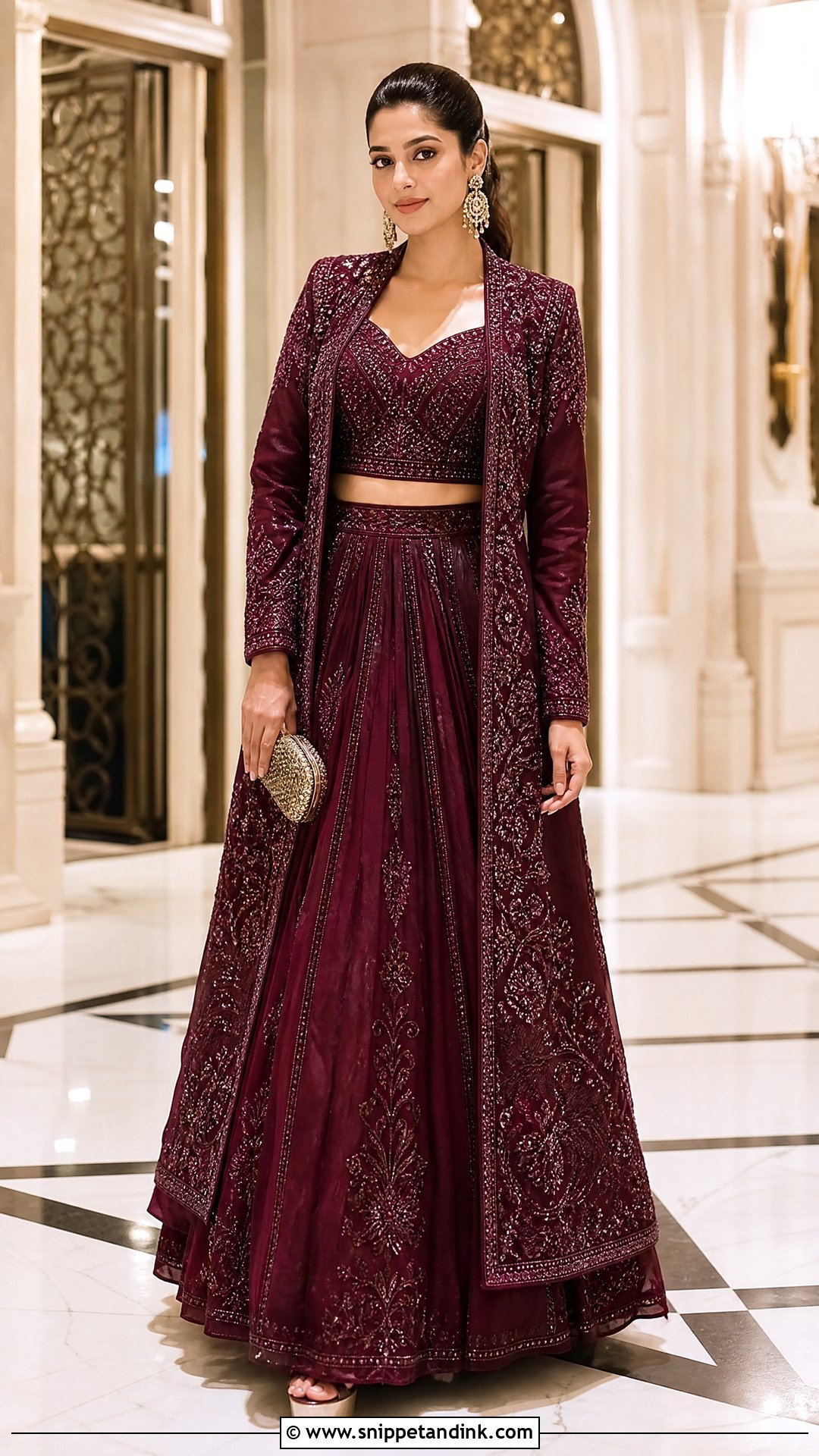
A jacket lehenga lets you skip the dupatta, which is a relief at an evening event where you’d otherwise be adjusting it all night. Keep the skirt and blouse simple and let the long jacket carry the beadwork. Deep blue, berry and antique gold combinations look rich under warm lighting. Skip a heavy necklace if the jacket has a worked neckline. I like this for cooler venues in particular, since the jacket is a real layer, but it is warm, so an outdoor summer sangeet is not its place.
11. Cape Lehenga Indian Wedding Outfit
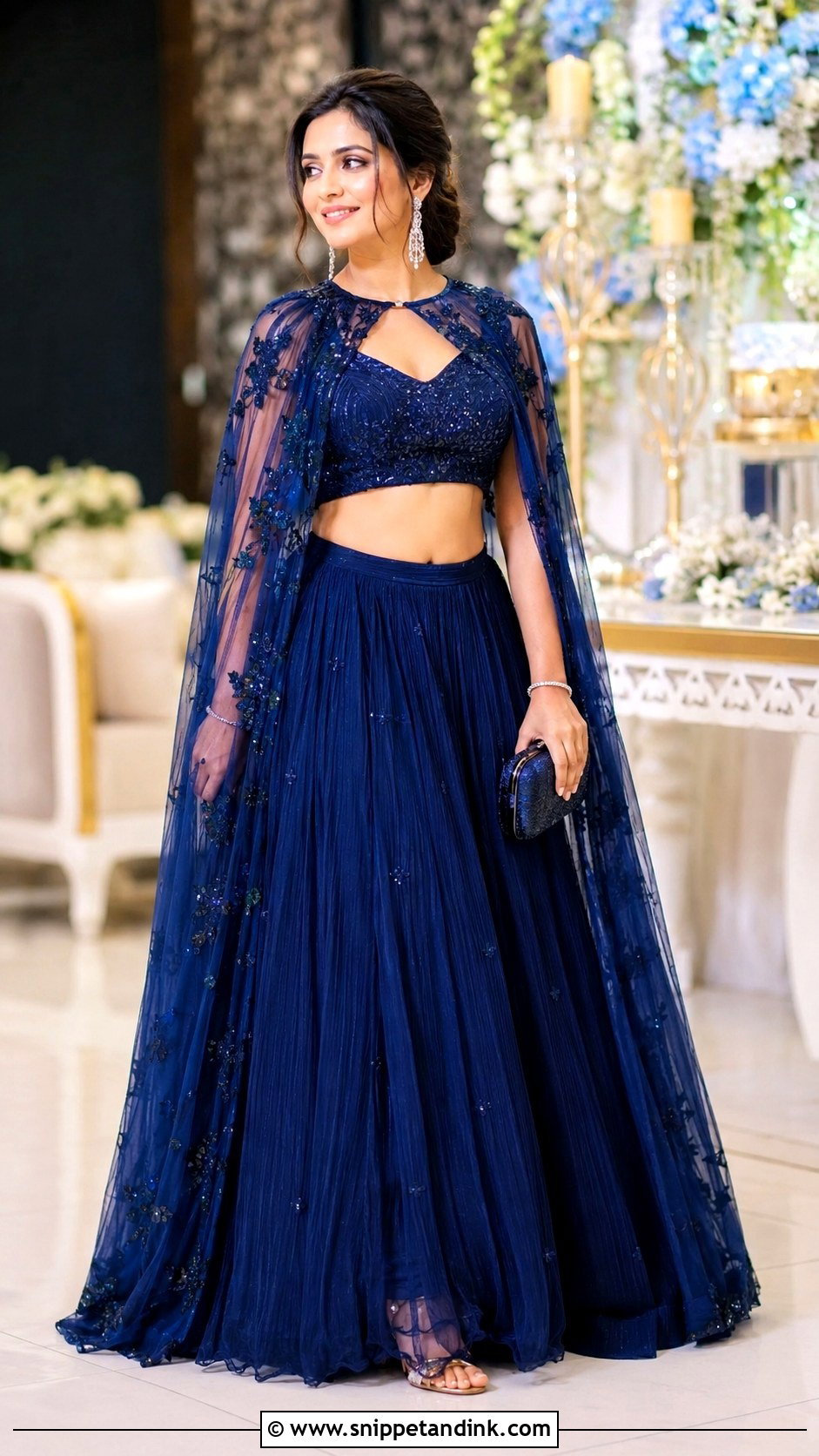
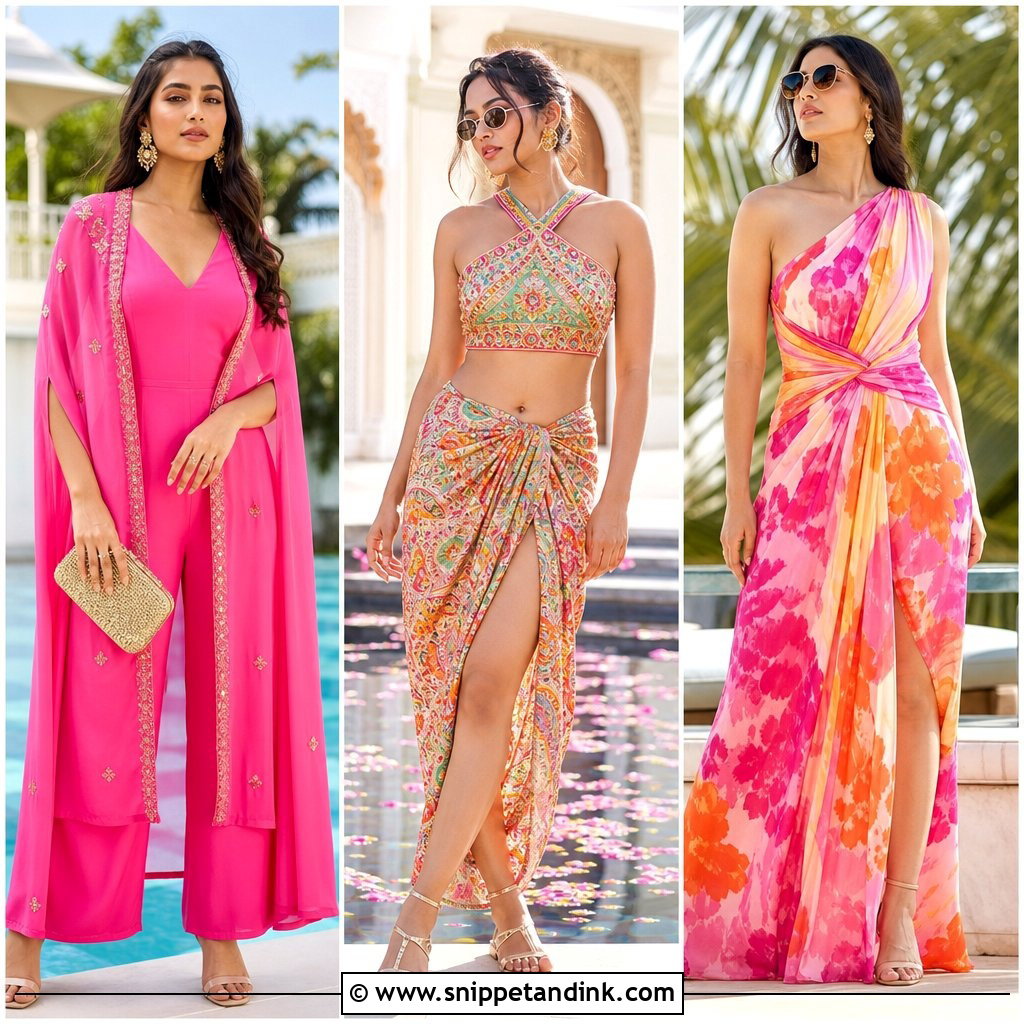
The cape version keeps the skirt-and-blouse structure but covers the shoulders and upper arms with sheer embroidered fabric. Ask whether the cape is stitched to the blouse or separate; a separate one can slide back when you raise your arms, so I add a small snap or pin at the shoulder seam. Monochrome works best here, in plum, midnight blue or emerald. Leave the necklace off because the cape already frames your neck. Block heels and a sleek bun keep the upper half clean for a formal evening reception.
12. Pre-Draped Saree Indian Wedding Outfit
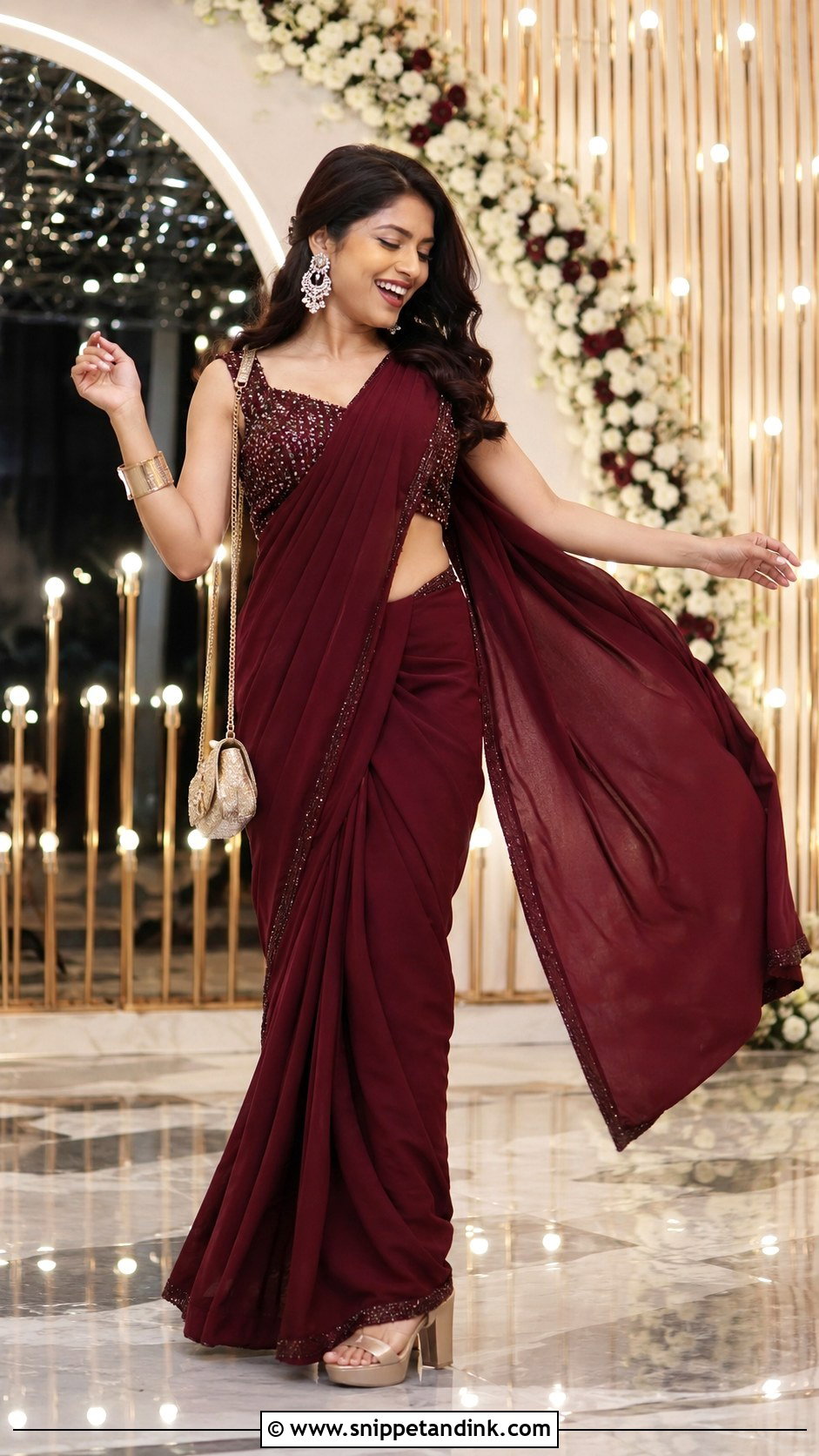
A pre-draped saree is the one I hand to guests who love the saree line but have never draped one alone. The pleats and pallu are stitched in place, so you step in and fasten it like a skirt. Satin, georgette and crepe in deep green or burgundy all suit it. The mistake I see is people setting the hem in flat shoes and then wearing heels, so the drape hangs short; finalise length in your event shoes. An embellished blouse that lets you lift your arms comfortably matters more here than any jewellery, because you will dance in this.
13. Saree Gown Indian Wedding Outfit
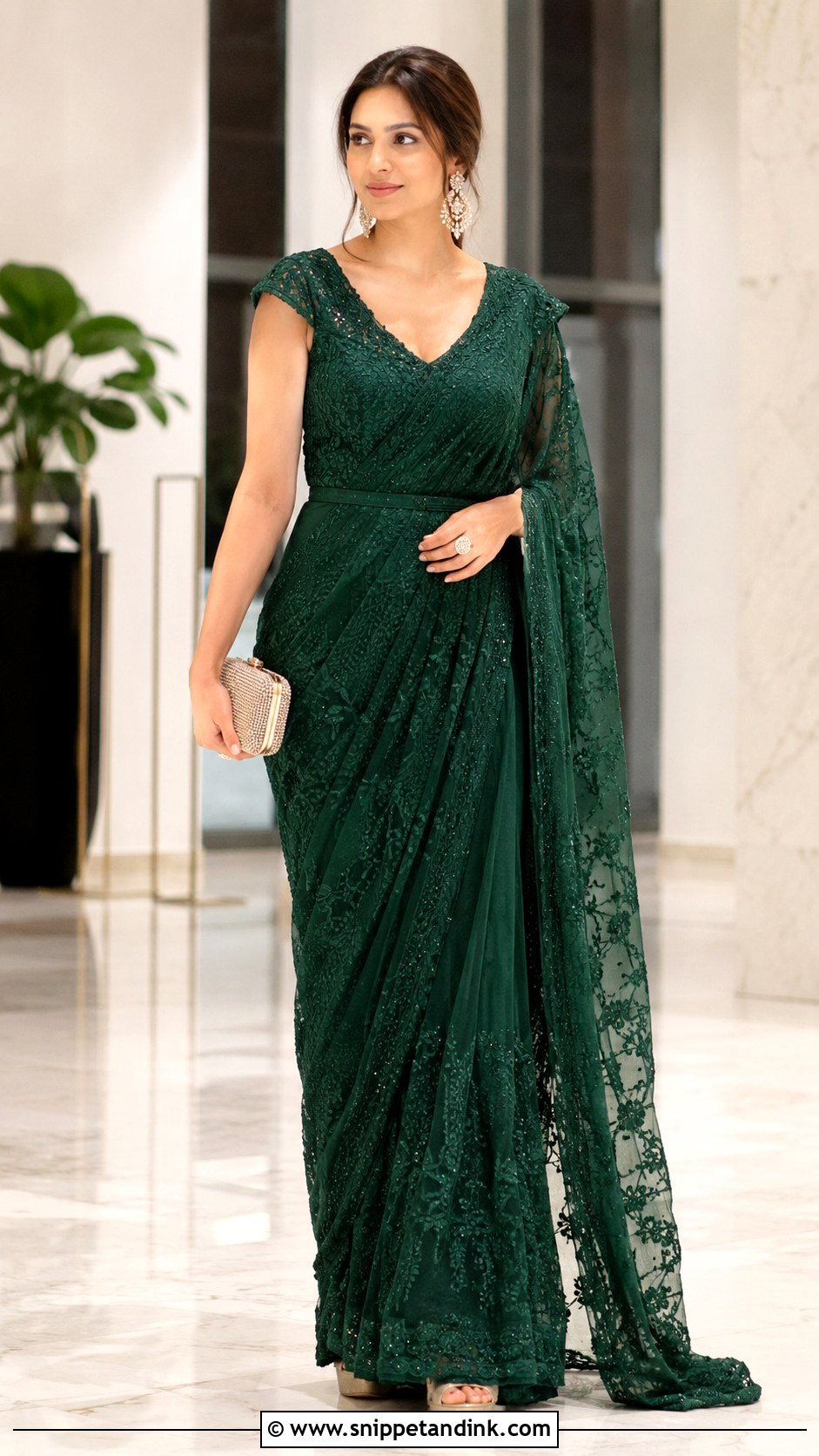
Saree gowns give you a draped look with the security of a one-piece dress, which helps if you’re anxious about anything coming loose. A defined waist, an attached pallu and soft skirt pleats are the features to look for. Jewel tones with tonal embroidery suit evenings, pastels suit daytime. Sit and raise your arms in the fitting room; armholes on these gowns are often cut high and tight. Chandelier earrings, a cocktail ring and a low bun or side-swept waves are enough to finish it.
14. Draped Skirt Indian Wedding Outfit
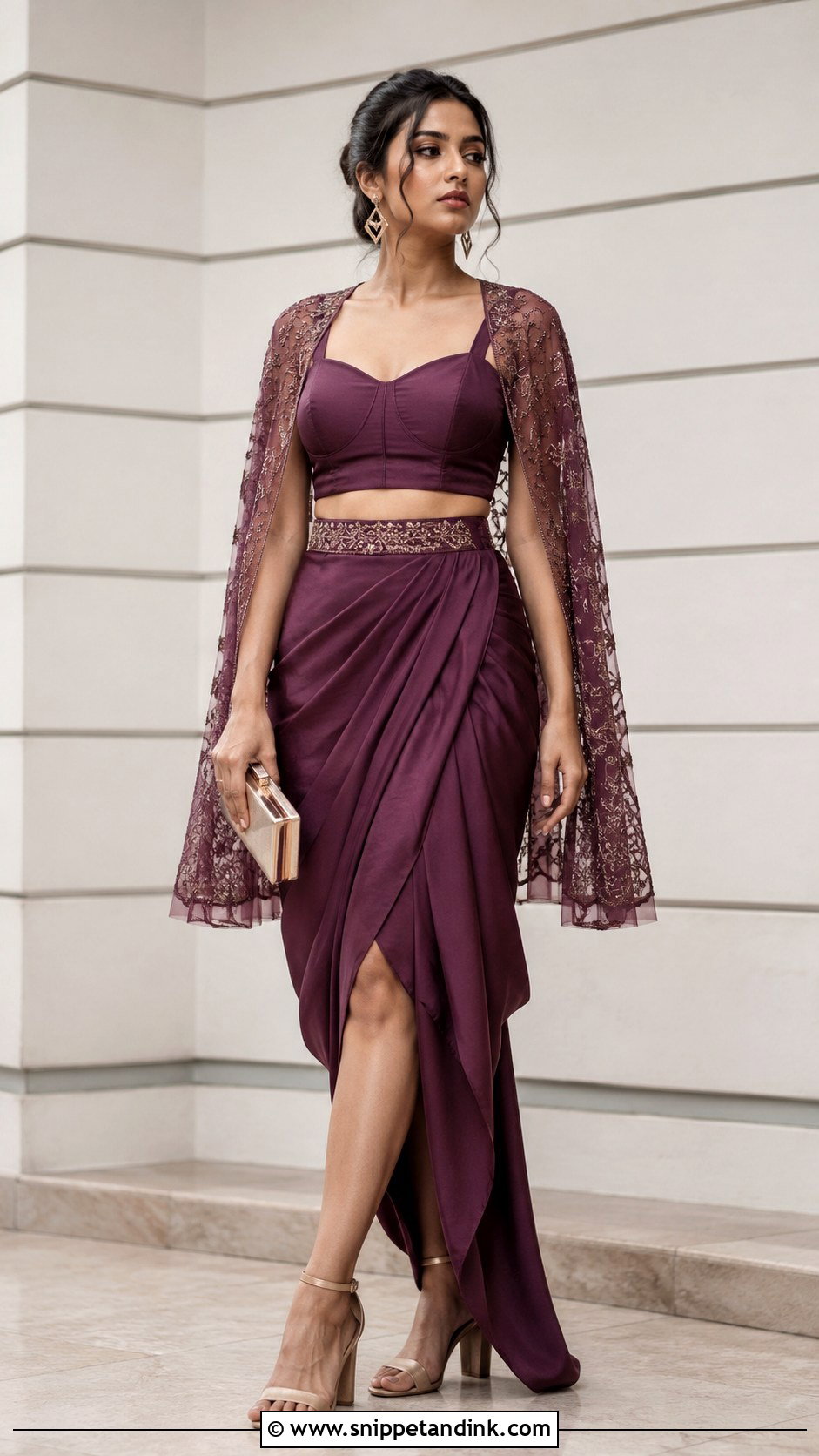
A draped skirt with a structured blouse is fusion done quietly, and it reads best at receptions with a relaxed dress code. Look for a high waist with soft pleats or an asymmetric overlay. Matching blouse and skirt in one colour family adds height. An embroidered belt does real work here, holding the drape in place as well as defining the waist. Keep the jewellery geometric and minimal so the cut of the skirt is what people notice, and I’d save it for a cocktail-style party rather than a traditional ceremony.
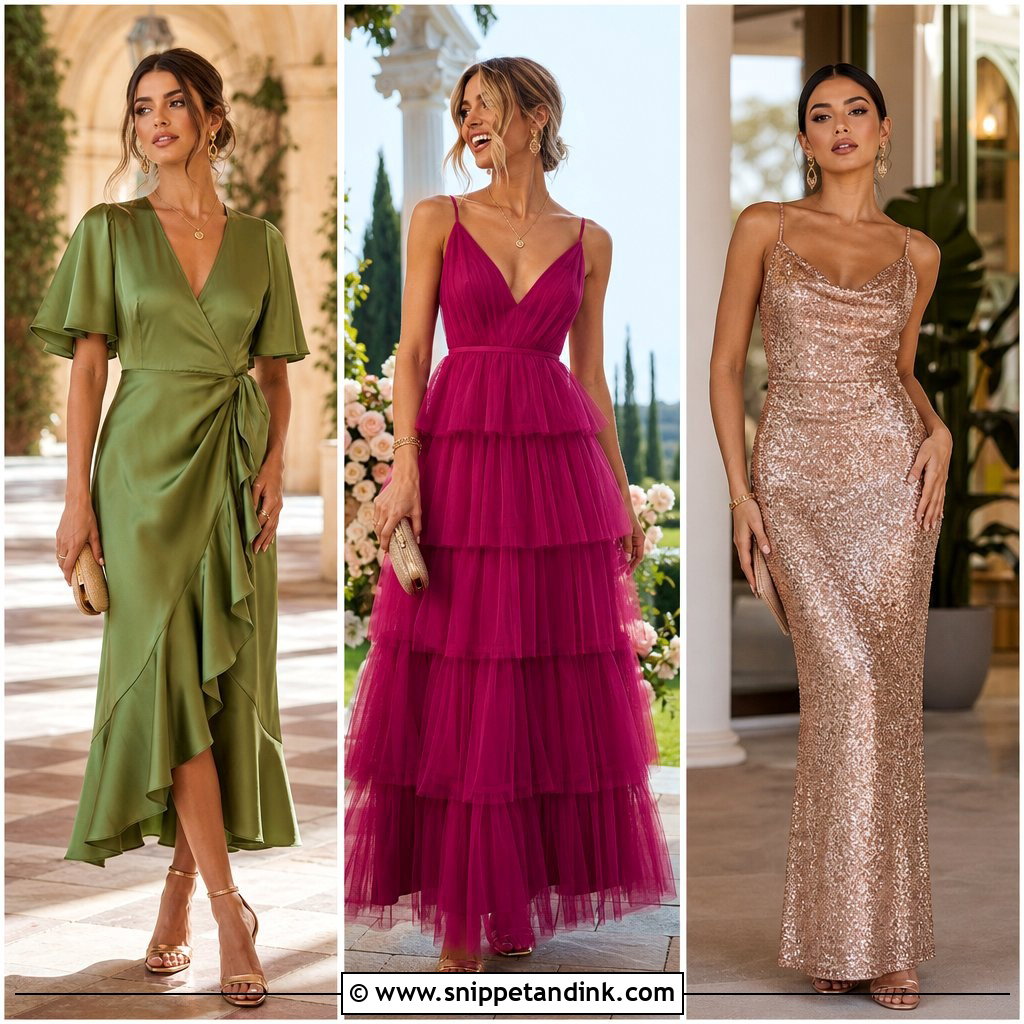
15. Dhoti Pants Indian Wedding Outfit
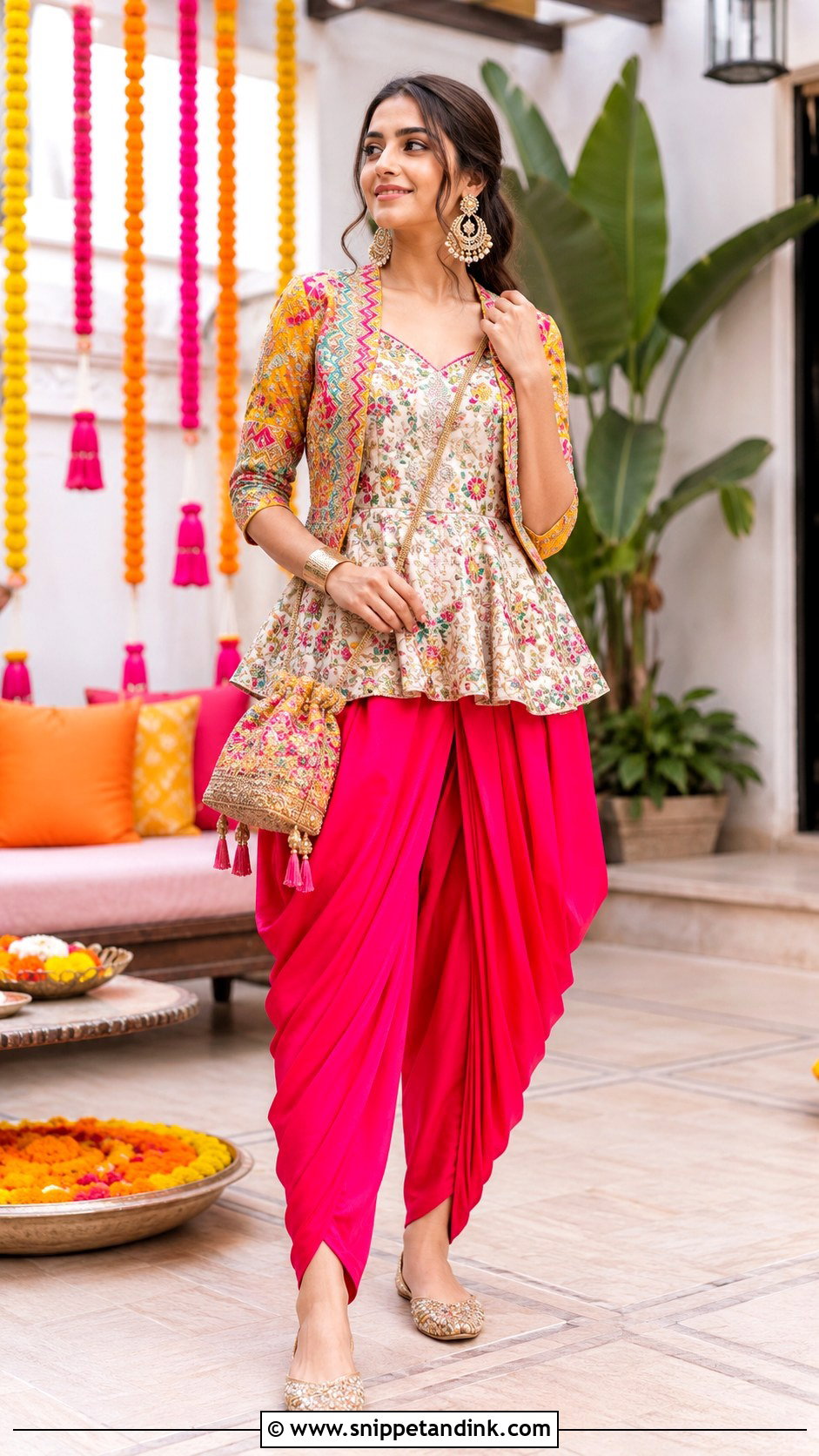
A dhoti-pants outfit is the most comfortable look on this list for a mehndi where you’ll be cross-legged on cushions for hours. The volume sits in the pleated pants, so the top has to stay close to the body: a fitted short kurta or a peplum, never a loose tunic. Fuchsia, teal and mustard show the folds well. Pointed embellished flats look right with the shorter hem, and a crossbody potli keeps your hands free for the henna cone if you’re having a little design done yourself.
16. Peplum Sharara Indian Wedding Outfit
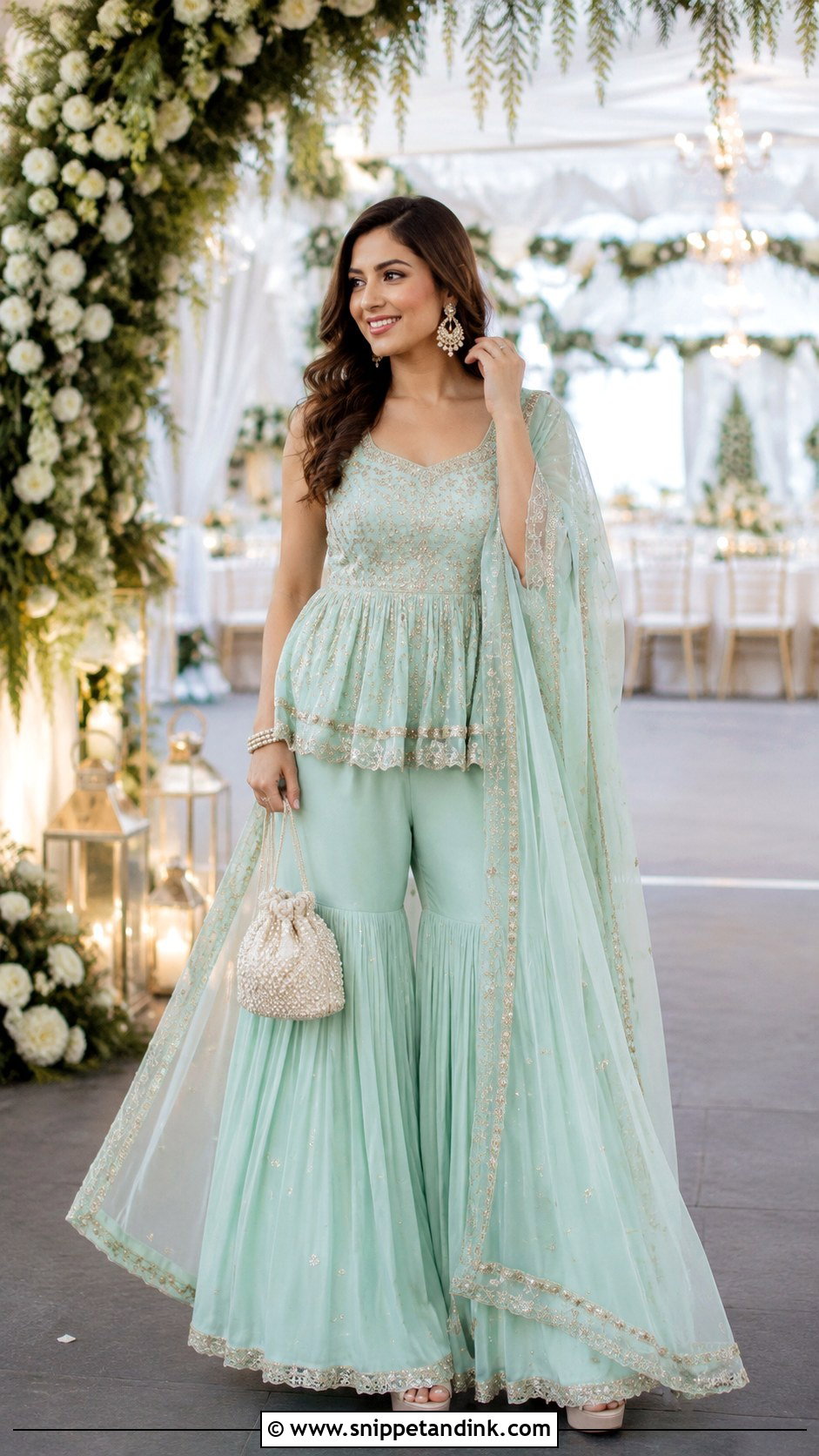
A peplum sharara uses the peplum to mark the waist so the wide pants don’t make you look boxy. The peplum should end at the upper hip; any longer and it starts to look like a short kurta. Embroidery placed at the neckline, waist and pant flare is enough. Deep pink, saffron and navy all suit it. Platform sandals sit well under the wide hem and are steadier than stilettos on a crowded dance floor. Medium jhumkas and a few slim bangles keep it light, and you get more coverage than a cropped lehenga blouse.
17. Velvet Lehenga Indian Wedding Outfit
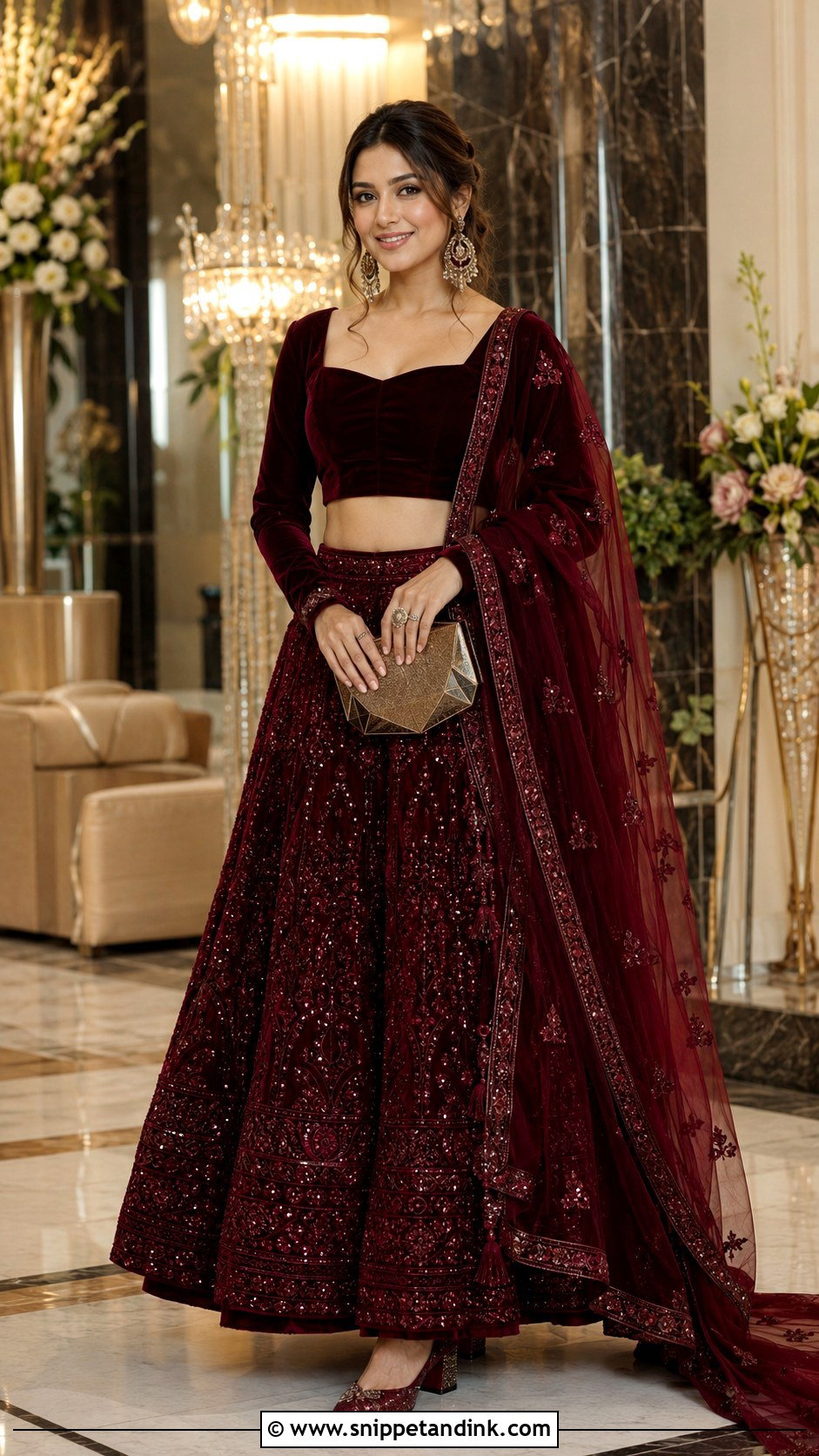
Velvet earns its place at winter evening events, and it is hard work in a warm room. The pile already gives depth, so I’d choose placed embroidery rather than an all-over worked piece, which can feel like wearing a rug. Burgundy, navy and forest green look right. If the venue is heated, pair the velvet skirt with a lighter silk blouse and a sheer dupatta. Closed-toe block heels add warmth, and antique-finish earrings suit the texture. Velvet also marks easily where a bag strap rubs, so carry a rigid clutch rather than a shoulder bag.
18. Banarasi Silk Suit Indian Wedding Outfit
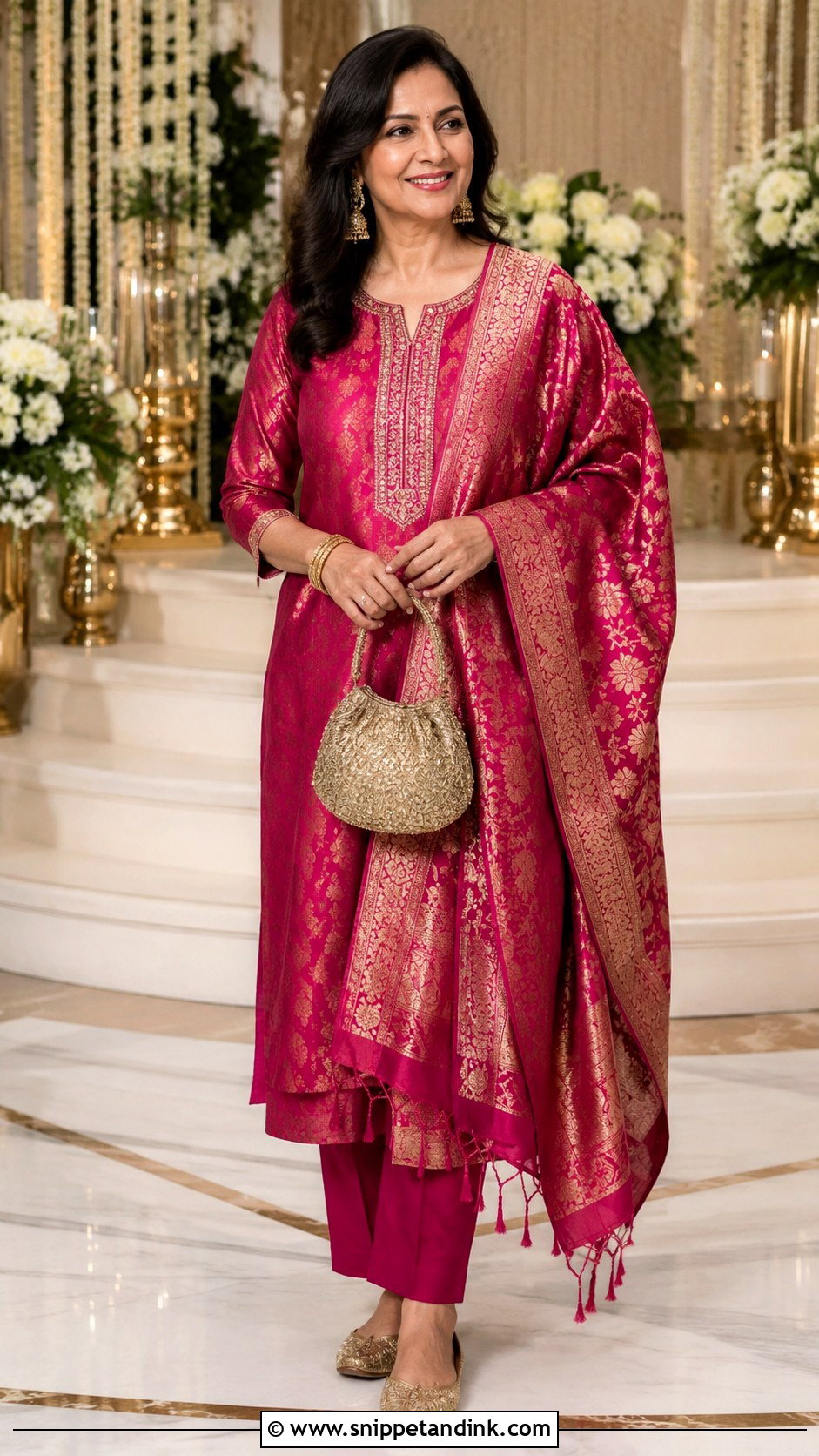
A Banarasi silk suit gives you the richness of woven brocade without a voluminous skirt. Choose a straight or gently flared kurta with woven motifs, solid silk pants and a matching dupatta. If the kurta is heavily patterned, keep the pants plain so the outfit doesn’t look busy. Warm pinks, rich blues and green-gold all suit a traditional ceremony. Banarasi silk creases sharply at the elbow and lap, so I steam it the morning of the event and carry the dupatta rather than sitting on it.
19. Chikankari Anarkali Indian Wedding Outfit
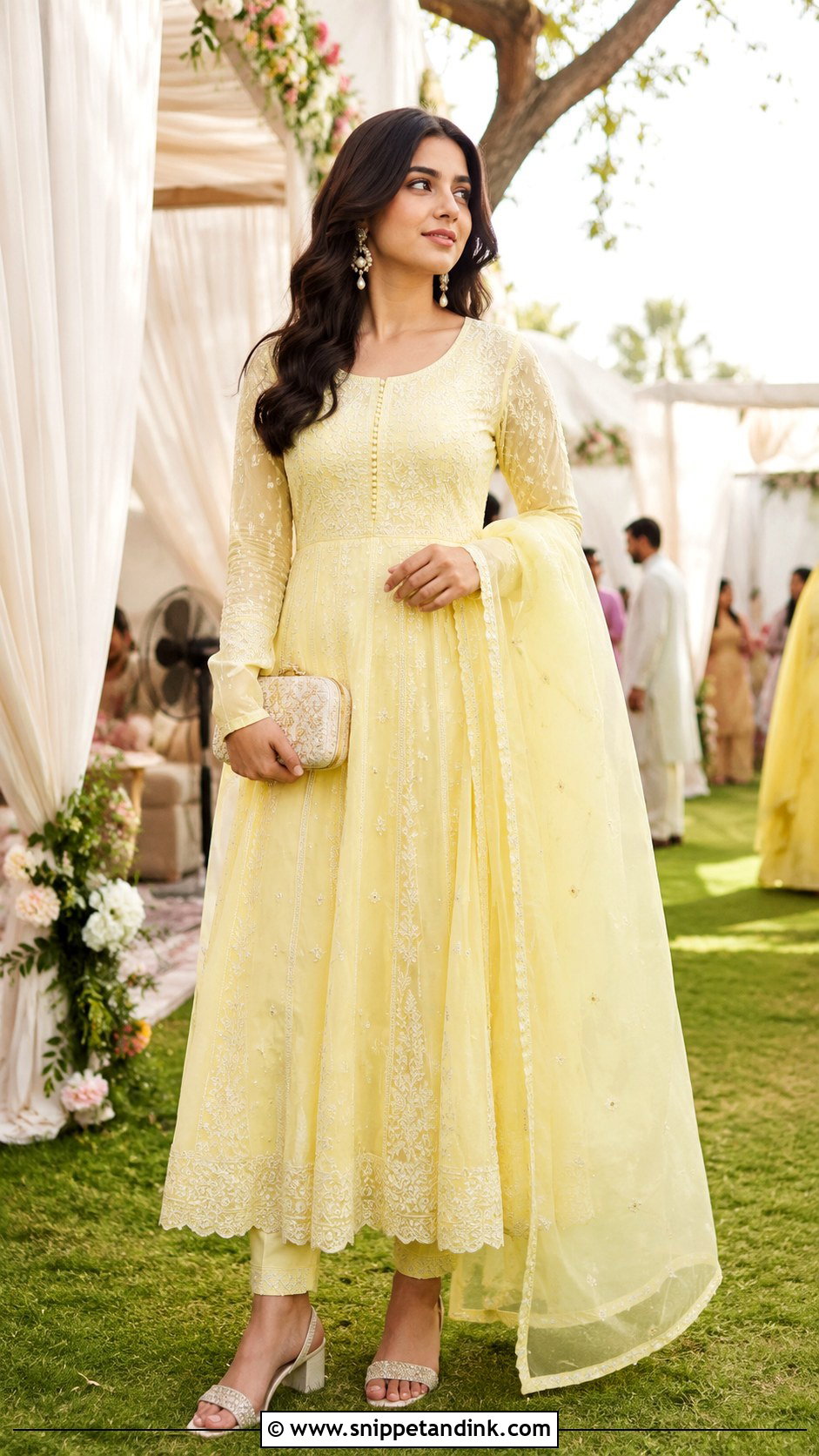
Chikankari is fine hand embroidery on light cotton or georgette, and an Anarkali in it is one of the coolest things you can wear to a summer daytime function. Make sure it is lined; unlined chikankari is sheer in daylight. pale yellow, mint, lilac, powder blue and rose all suit the work. Small pearls or sequins added to the embroidery lift it for a wedding without weighing it down. Pearl drops, an organza dupatta with a narrow border, neutral juttis and soft curls are the right finish, and it looks especially good in natural light at an outdoor mehndi.
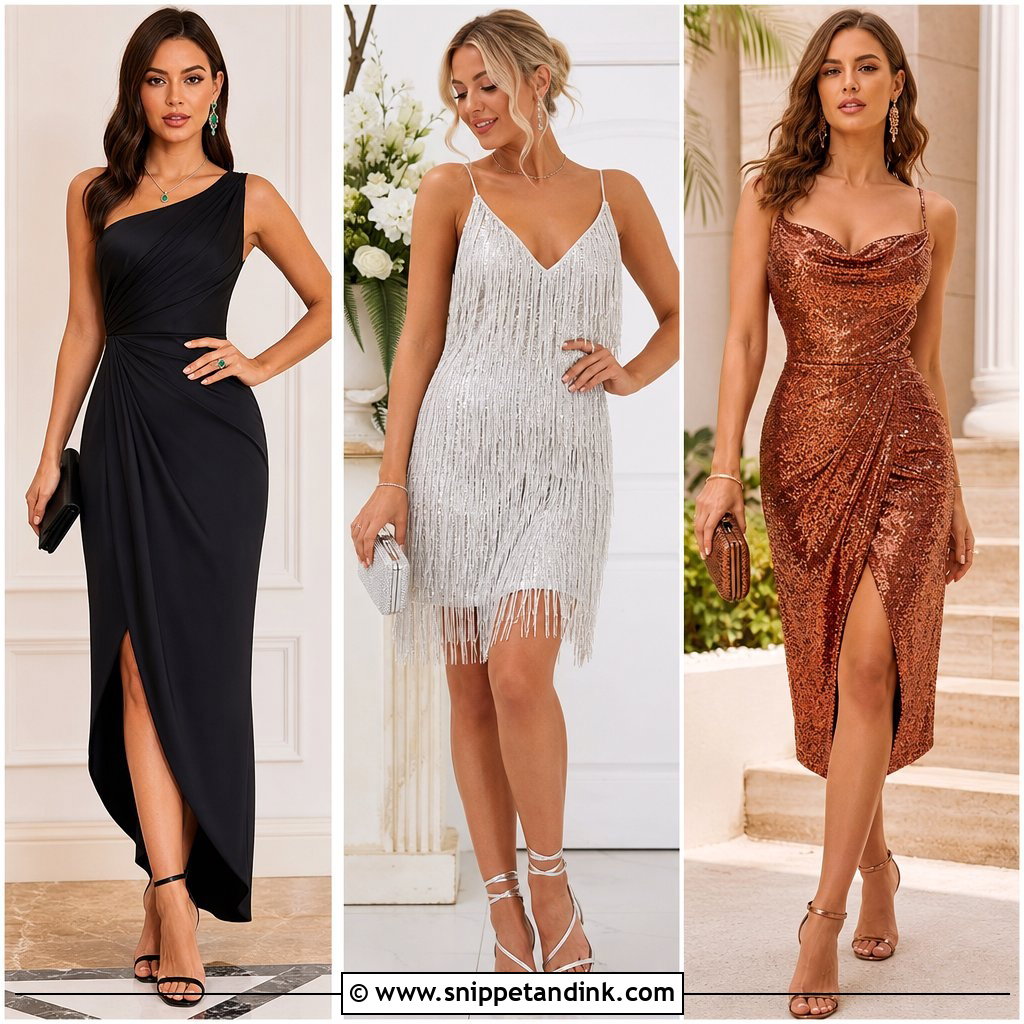

20. Embellished Jumpsuit Indian Wedding Outfit
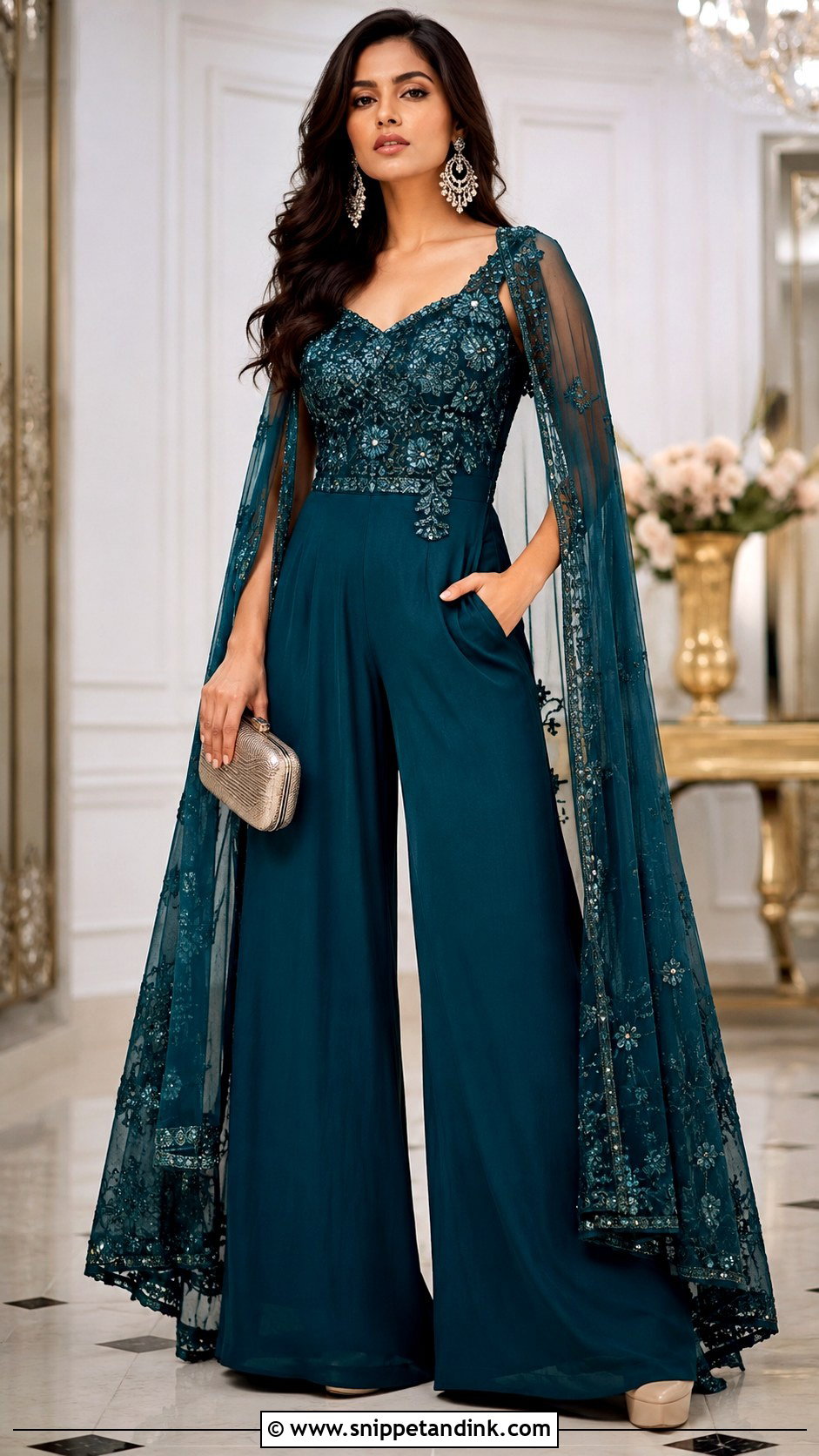
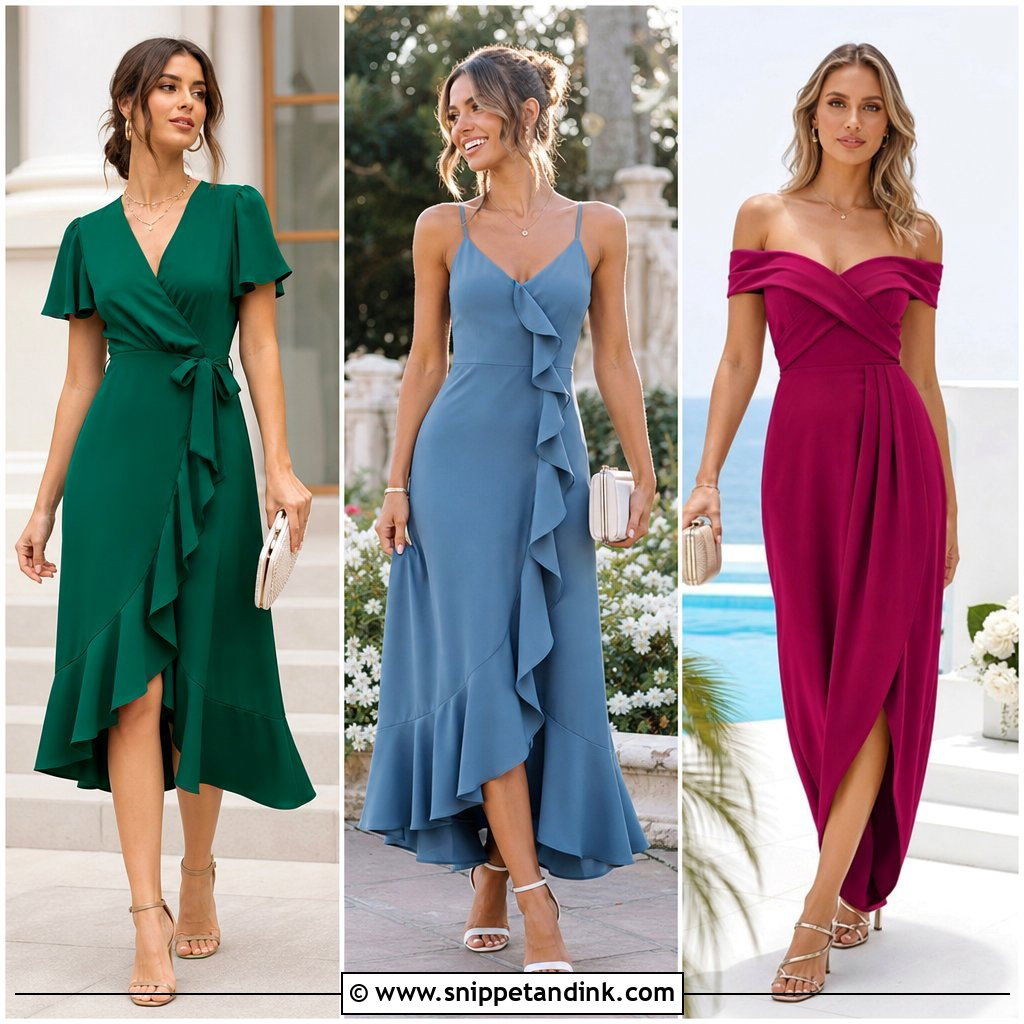
An embellished jumpsuit is the most modern choice here, and I only suggest it when the invitation clearly welcomes fusion or cocktail clothing. A wide leg, a defined waist and a properly supportive bodice are essential, because there is no dupatta to rearrange if the top shifts. A detachable drape, cape or long jacket adds the Indian layer. Choose emerald or berry with beadwork at the neckline. Practise the bathroom question before the day: a back zip you cannot reach alone is a genuine problem at a twelve-hour event.
Stitching, Pins and Shoes: Prep That Saves the Night
Almost every outfit above involves a stitched blouse or kurta, and tailoring takes time. I tell guests to have blouse fittings booked at least a few weeks ahead, longer in wedding season when tailors are swamped. Ready-made blouses rarely fit at the shoulder and bust together, and an ill-fitting blouse is the reason most sarees get adjusted all evening.
The small kit I pack for guests
- A strip of safety pins in two sizes, already threaded onto a larger pin so you can find them in a potli.
- Double-sided fabric tape for a blouse neckline that gaps when you bend.
- Blister plasters, because new juttis rub at the heel before the baraat has even arrived.
- A spare hair tie and a few U-pins, since dupattas pull at buns all night.
Do one full dress rehearsal at home with the jewellery, shoes and dupatta on. Sit on the floor, climb a few stairs and raise both arms as if you were dancing. Anything that slides, scratches or pinches in your living room will be worse after six hours. Fix it with a stitch or a pin then, not in a venue bathroom.
Finally, think about shoes you can kick off. Many ceremonies ask guests to remove footwear, and slip-on juttis are far easier than strappy heels with buckles when you’re juggling a clutch and a dupatta at the door.
Which Outfit Fits Which Night of the Wedding?
Most guests attend two or three functions, so think in terms of a small wardrobe rather than one piece. Check the schedule and any colour guidance from the couple, then match weight to the event: chikankari and organza for daytime, sequins and velvet for the evening. Sit, walk and lift your arms in every outfit before the day. A suit that you never have to adjust will look better in the photos than an elaborate lehenga you spend all night holding up.
You'll Like These Ideas:


Leave a Reply