
A floor-length gown is the one guest outfit where getting it slightly wrong shows. Too bridal, too sparkly for a garden, too heavy for July, and everyone notices in the photos. Most of my work with wedding guests is matching the fabric and cut to the venue and the invitation wording before we even talk color. Below are 30 gowns, from satin and lace to sequins, velvet and two-piece sets, with the shoes, jewelry and hair for each. I’ve flagged the ones a guest should avoid and the ones better kept for brides.
Decoding Black Tie, Formal and Cocktail on an Invitation
Before I pull a single gown for a guest, I ask to see the invitation. The wording tells you whether a gown is expected or just allowed, and it’s the most common thing guests misread.
- Black tie: floor-length gowns are expected. Rich fabrics like satin, velvet or beading fit the tone.
- Black tie optional or formal: a gown is the safest choice, though an elegant midi or dressy jumpsuit is acceptable.
- Cocktail: knee to midi length is standard. A floor-length gown is allowed but can feel overdressed at an afternoon event.
- Garden formal or beach formal: a gown in a lighter fabric, with shoes you can walk outdoors in.
If the wording is vague, check the time and the venue. An evening ceremony in a hotel ballroom almost always means a gown. A noon wedding in a barn rarely does. When I’m unsure, I’d ask a member of the wedding party rather than guess.
Colors I steer guests away from
White, ivory, cream and very pale champagne belong to the bride. I also avoid anything that matches the bridesmaids’ color too closely, which can look odd in group photos. Black is fine at most evening weddings now, but some families and cultures still read it as mourning, so I’d check if you’re unsure.
1. Satin Wedding Gown
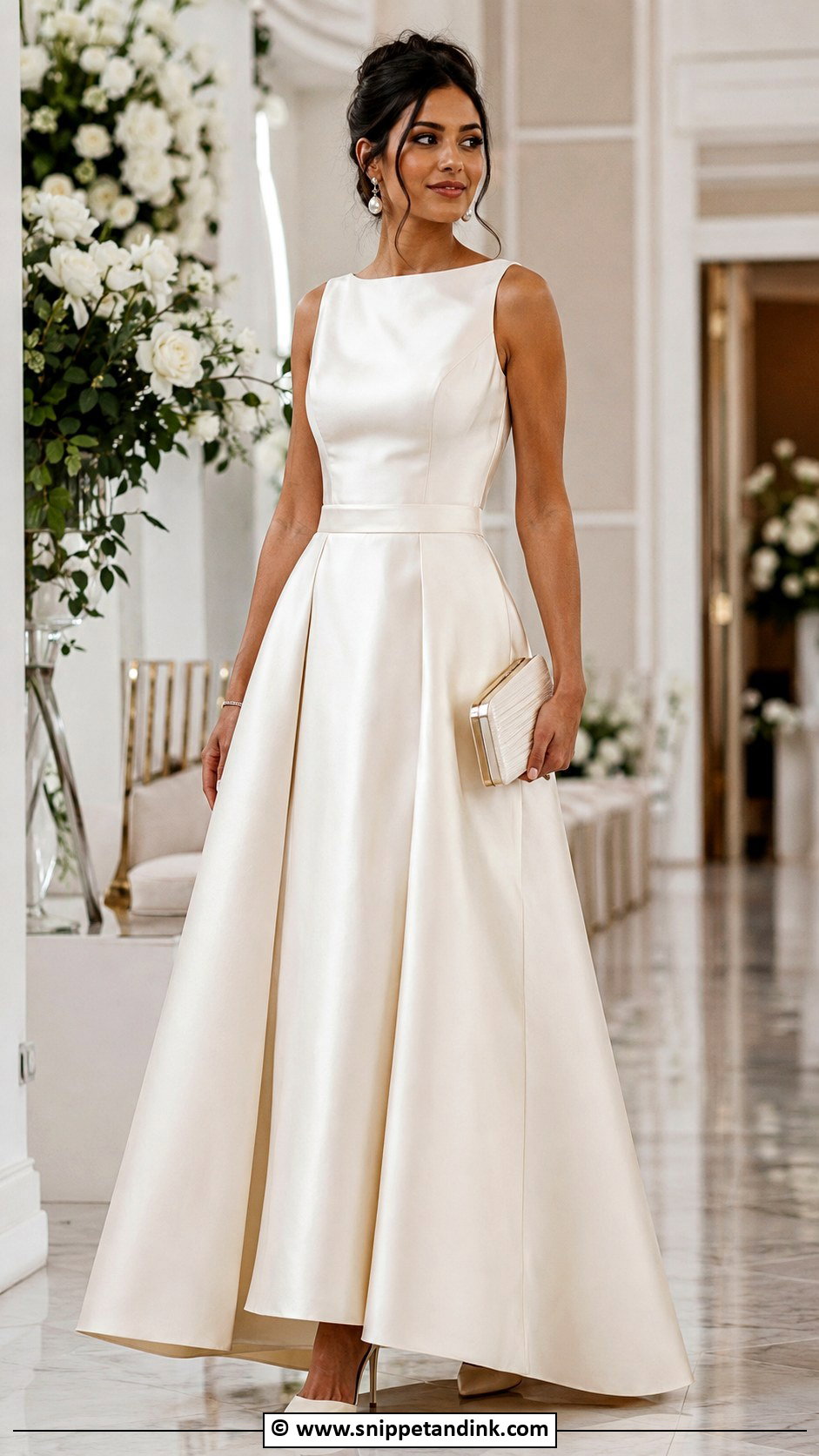
Satin is the fabric I reach for first at evening weddings, because it holds color richly under warm reception light. Navy, emerald or blush for guests; ivory and champagne stay with the bride. A wrap or cowl-neck satin gown suits a guest well. The catch is creasing, which shows across the lap after the ceremony. A lined, heavier satin creases less, and I’d steam it at the venue if you can. Pointed heels and drop earrings, with sleek hair.
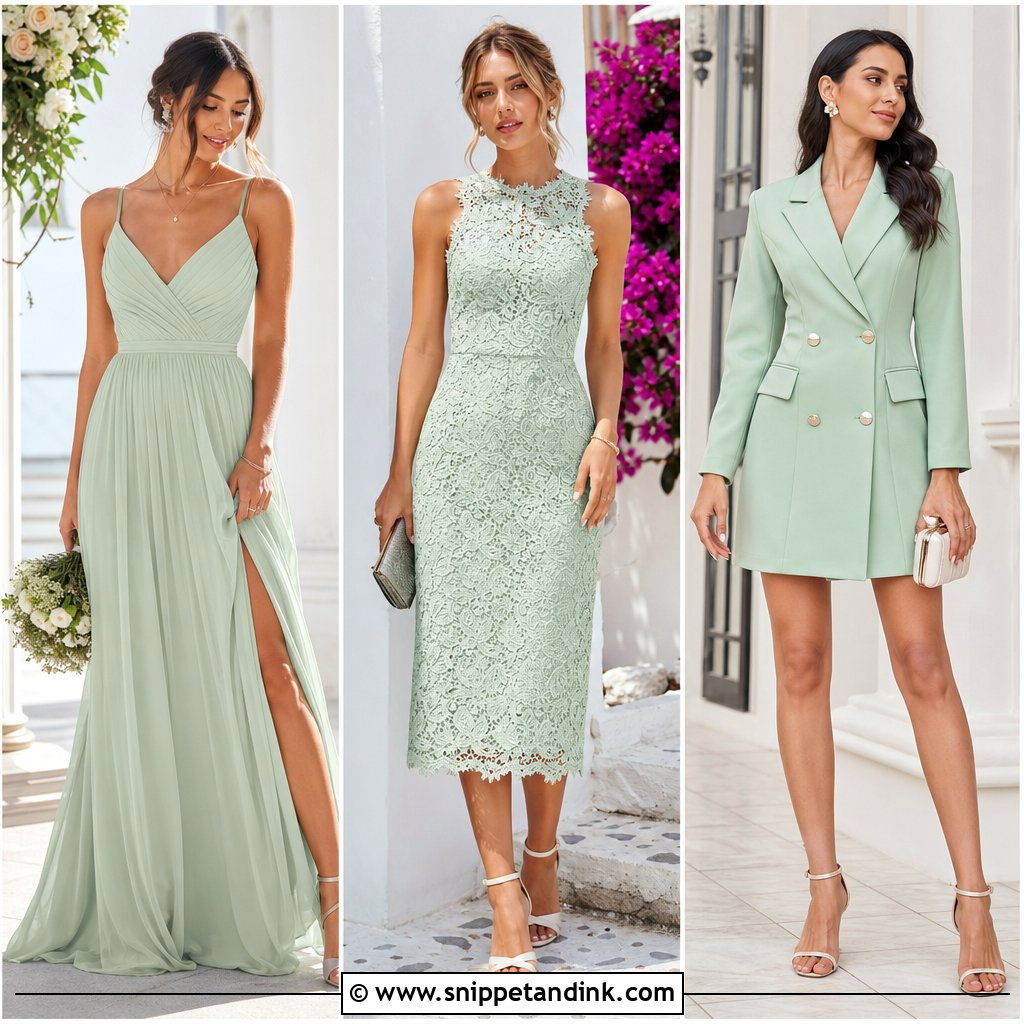
2. Lace Wedding Gown
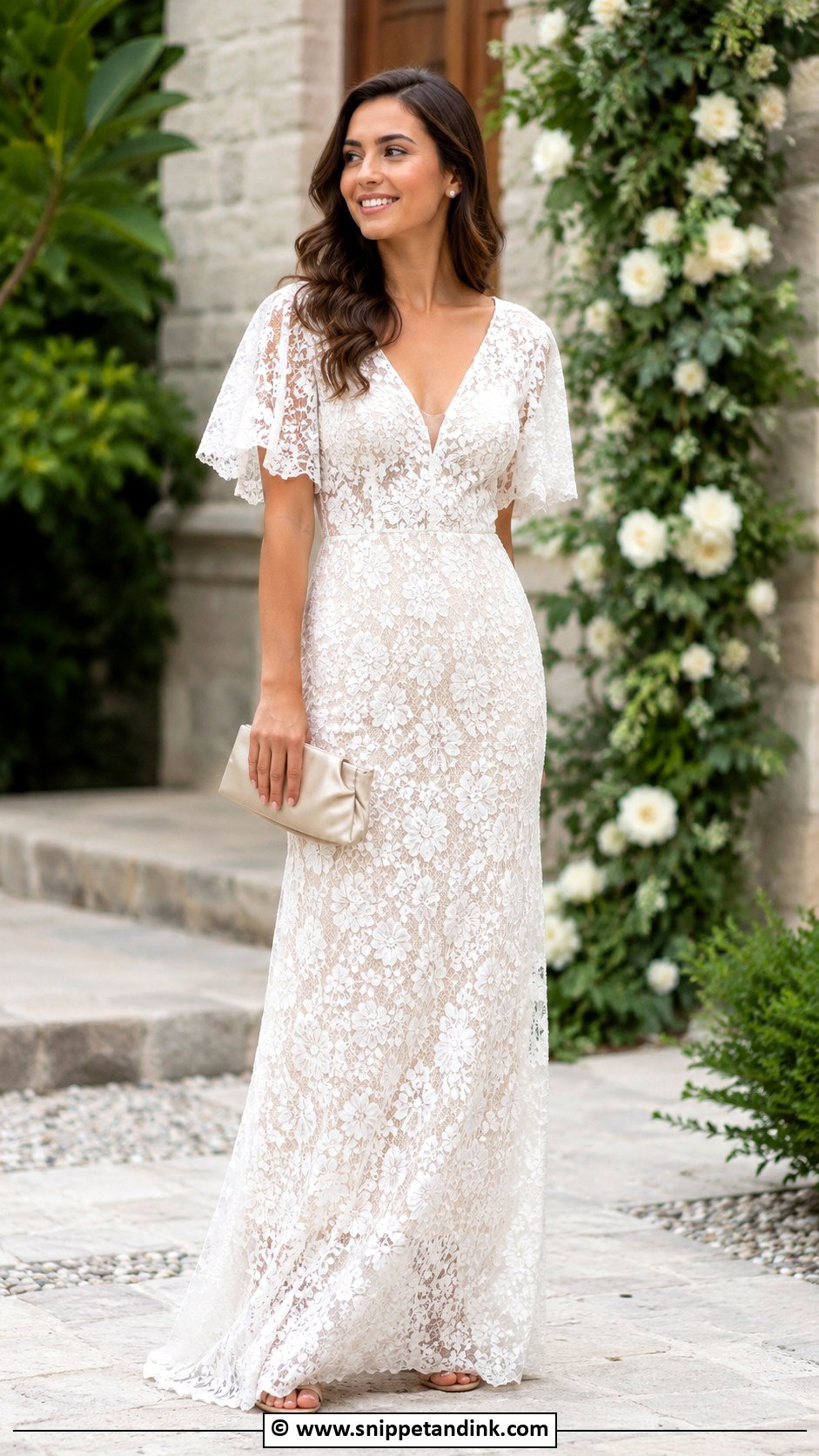
Lace carries its own texture, so I keep everything else quiet. A lace wedding gown in sage, mauve, navy or dusty blue reads clearly as a guest outfit; an ivory one doesn’t, however small the wedding. Chantilly lace is light and drapes; heavier embroidered lace suits a more formal room. Pearl studs and a simple bracelet are plenty. A soft updo shows the neckline lace.
3. Floral Wedding Gown
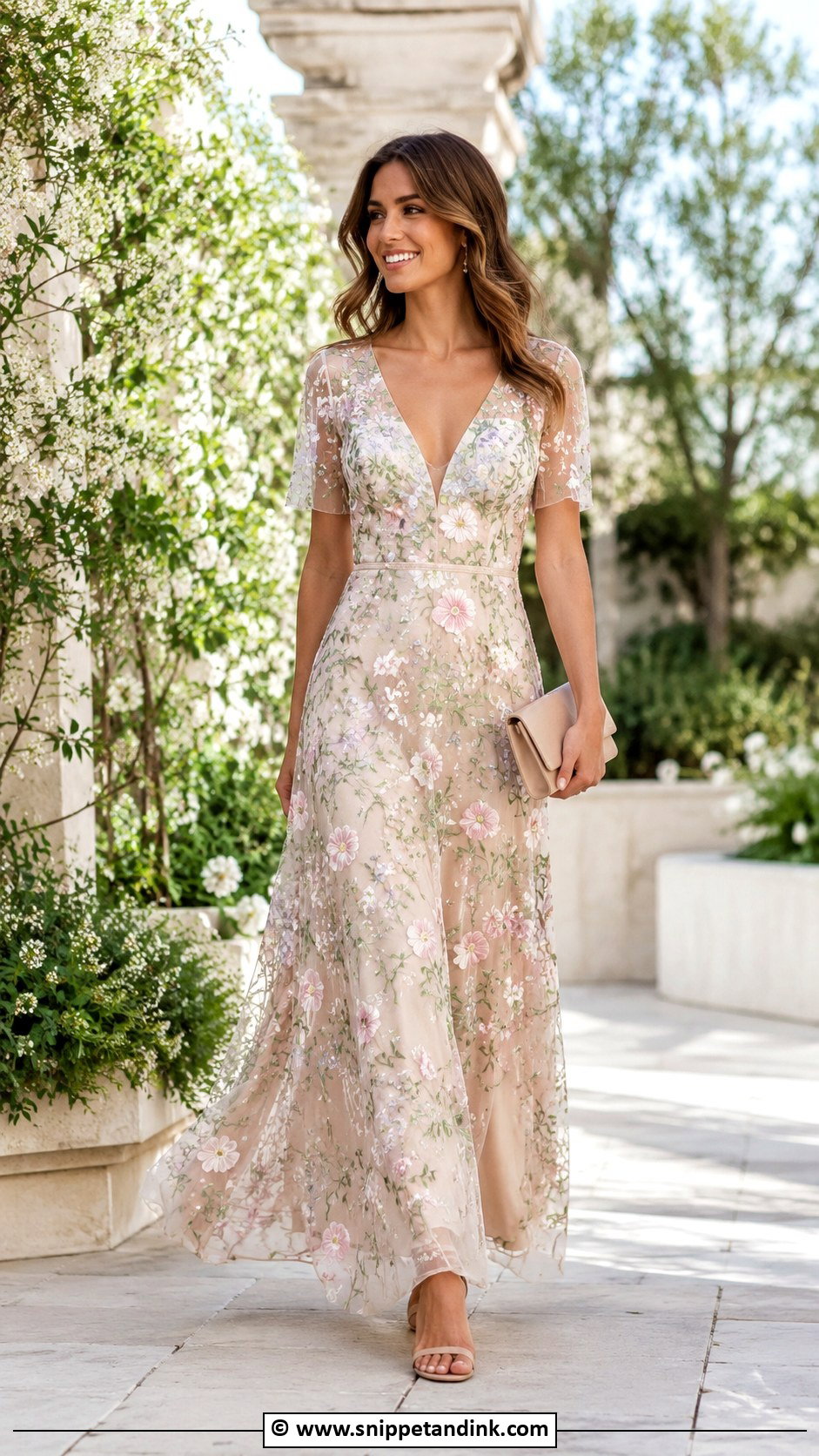
A floral gown needs a dressy finish to work as formalwear. Embroidered blooms, appliqué or a watercolor print on a good fabric read formal; a cotton sundress print doesn’t. I check the background color first: a floral on a white ground can look bridal from a distance. Pastel florals with nude sandals for gardens, dark florals with metallic heels for evening. Loose waves and natural makeup.
4. Sequin Wedding Gown
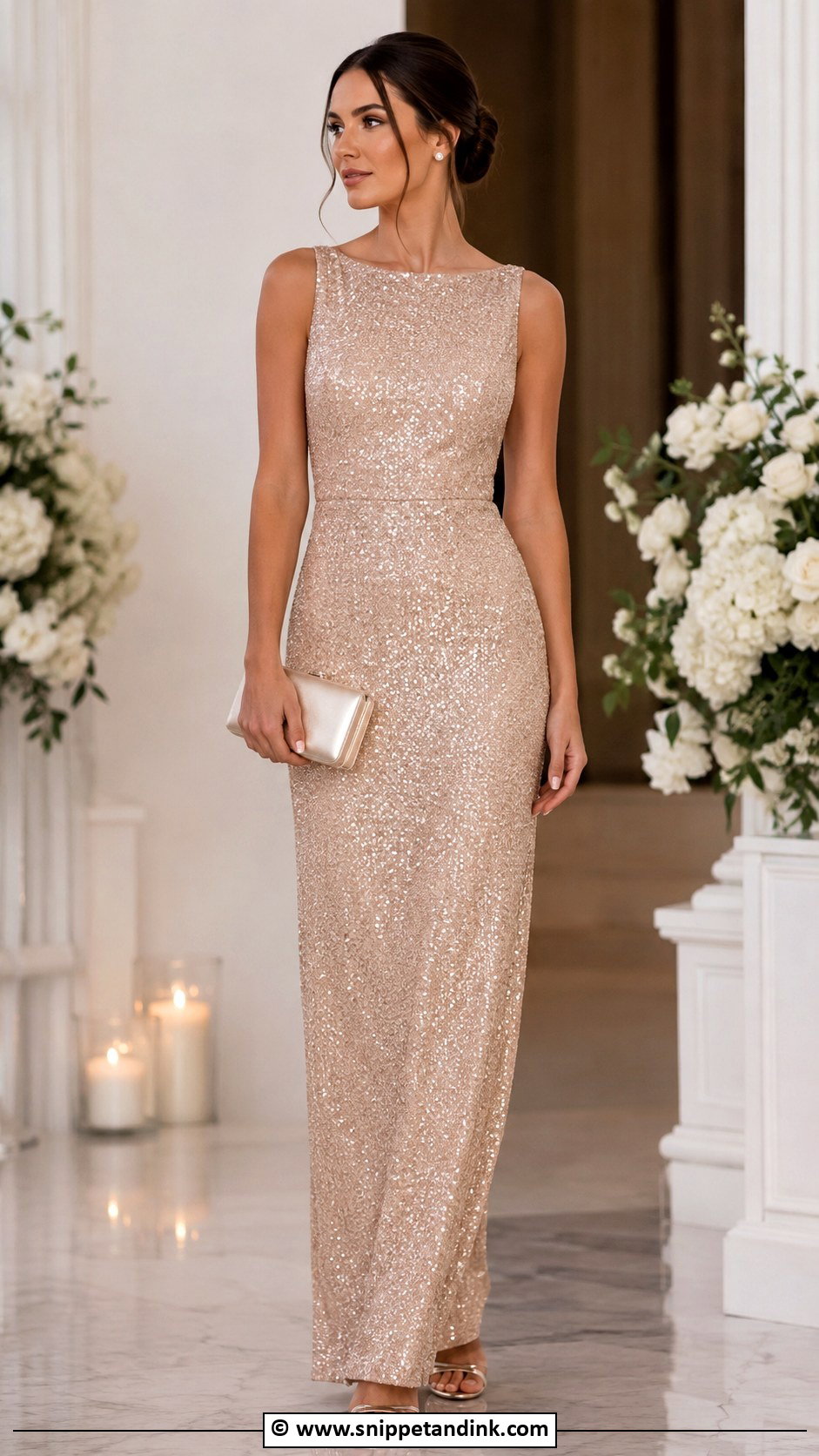
A sequin wedding gown belongs at evening and black-tie weddings. Daytime sun turns sequins into a mirror. Champagne, bronze, silver, navy or deep green are safest for guests. I keep the shape simple, a column or long-sleeve cut, and the jewelry tiny. Sit down in it before buying: some sequined fabrics scratch the inner arm and the back of the knee.
5. Chiffon Wedding Gown
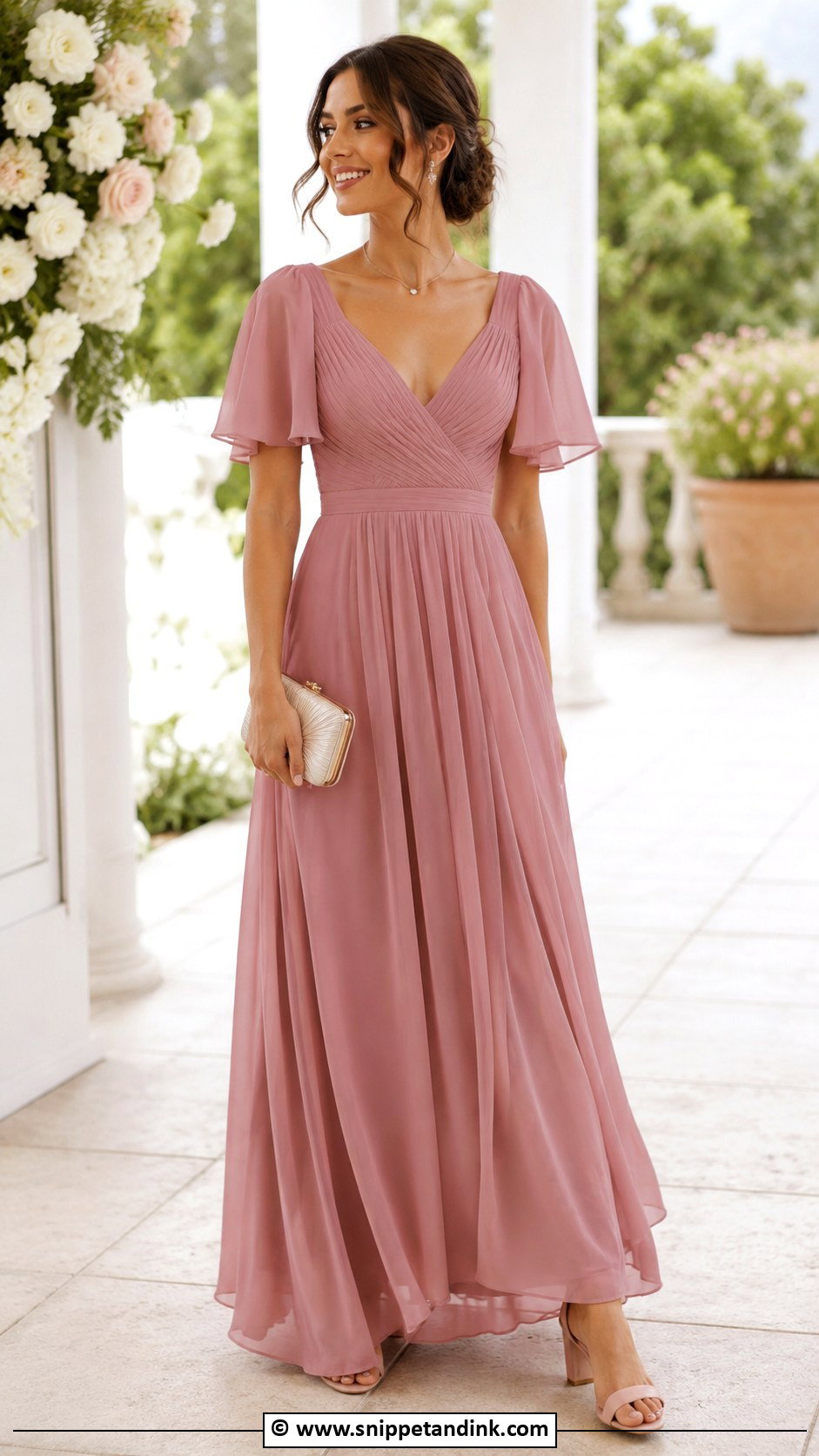
Chiffon is my answer for heat and long days. It’s light, it moves and it doesn’t trap warmth, which is why bridesmaids are so often put in it. Dusty rose, sage, lavender and slate blue suit it. The weakness is wind: chiffon lifts easily, so a lined skirt or a slightly weighted hem helps at a beach. Strappy sandals, a delicate necklace and loose waves or a low ponytail.
6. Mermaid Wedding Gown
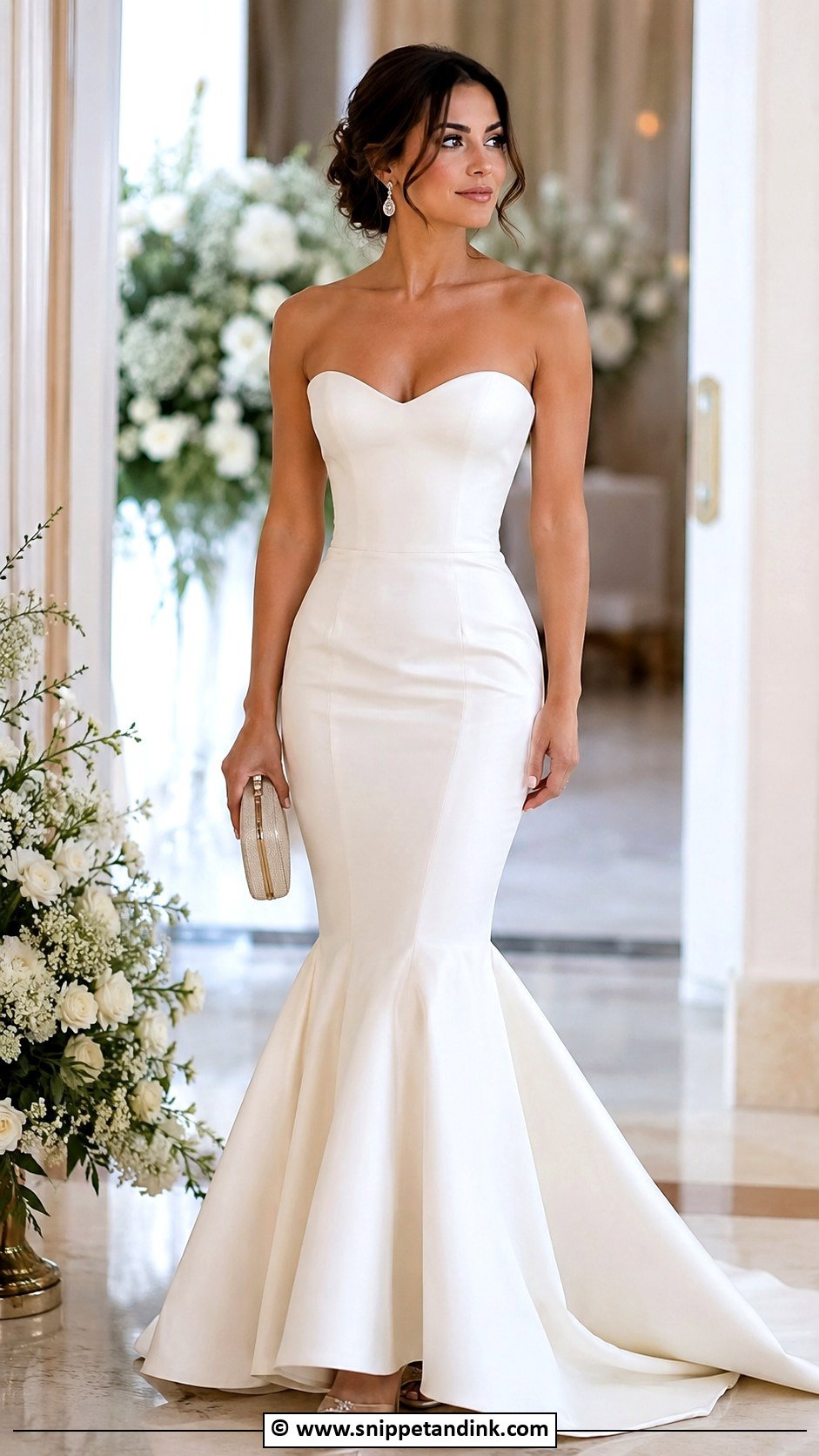
Mermaid shapes depend entirely on tailoring. A mermaid wedding gown fits through the bodice and hips and flares near the knee, so where the flare starts decides whether you can walk. Too low, and you’ll shuffle. Guests can wear a softer, mermaid-inspired cut in jewel tones at black tie. Statement earrings with strapless; just a bracelet with a high neck.
7. Ball Gown Wedding Gown
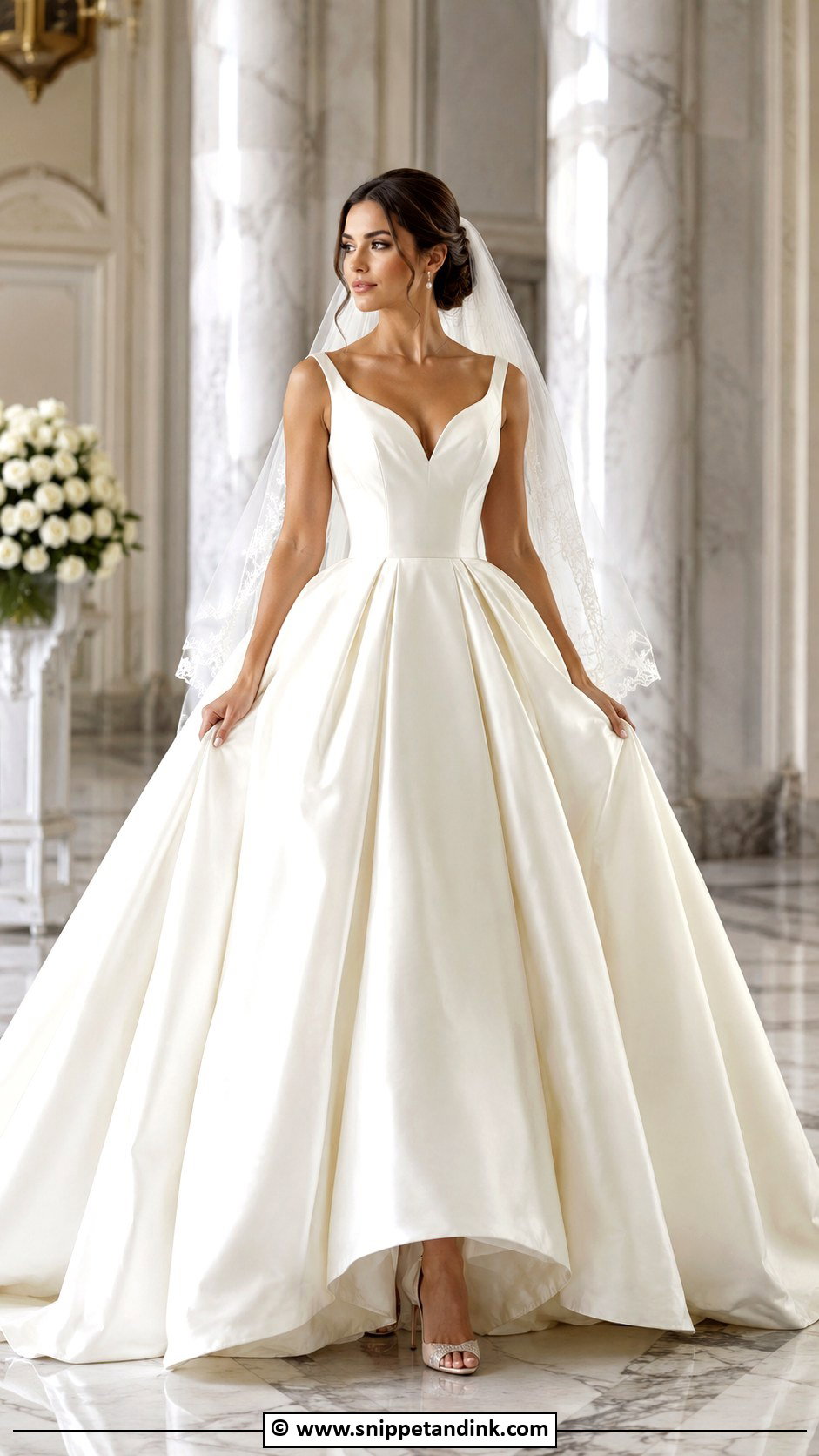
A full ball gown is bridal territory. On a guest, that much volume competes with the bride, so I’d only suggest it for a bride or for a white-tie gala. Satin, tulle, organza or mikado depending on season. Elegant heels and a veil or hair accessory. With heavy beading, skip the necklace. A polished bun or half-up style.
8. A Line Wedding Gown
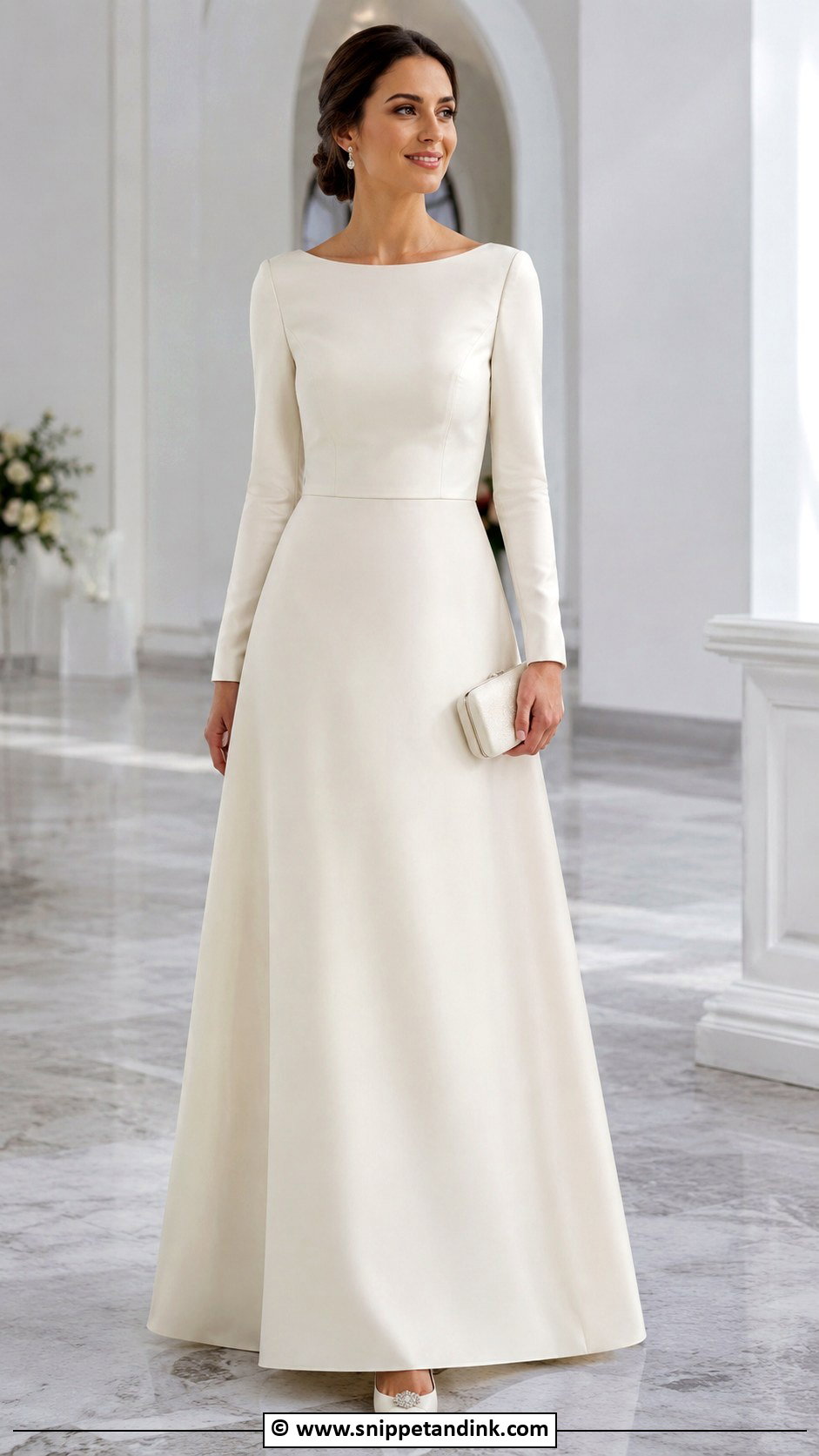
A-line is the safe, flattering choice, and that’s not a criticism. Fitted on top and flowing from the waist, it works for brides, bridesmaids and guests alike. V-neck, square neck or sweetheart, it suits most necklines. Block heels for lawns, pointed pumps for ballrooms. A simple clutch and bracelet finish it.
9. Off Shoulder Wedding Gown
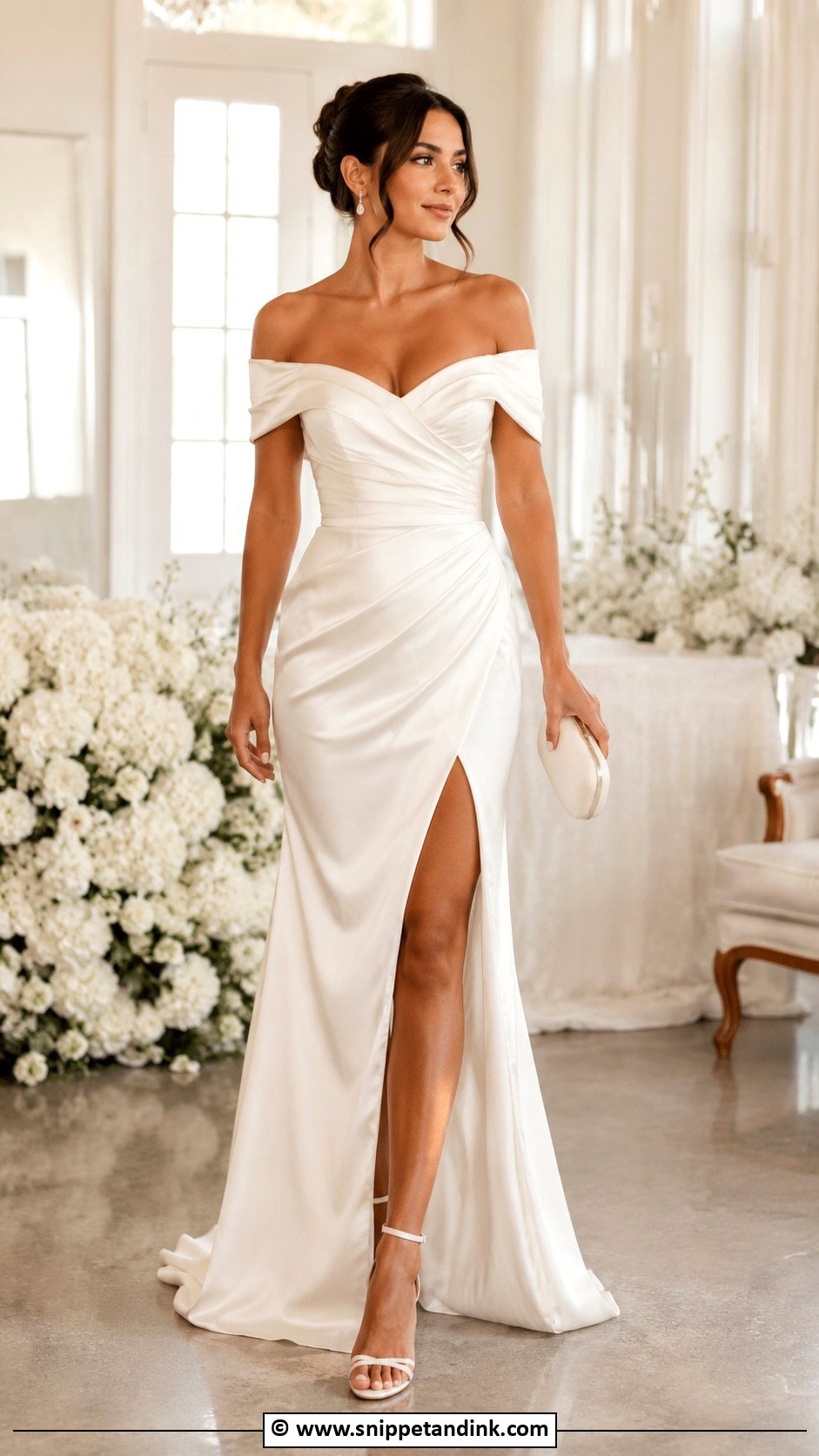
Off shoulder necklines frame the collarbone, but they have one weakness: they slip. I look for a structured bodice with grip at the neckline, or I warn clients they’ll spend the evening adjusting it. Satin, crepe, chiffon and lace all suit the shape. Drop earrings rather than a necklace. A low bun or side-swept waves.
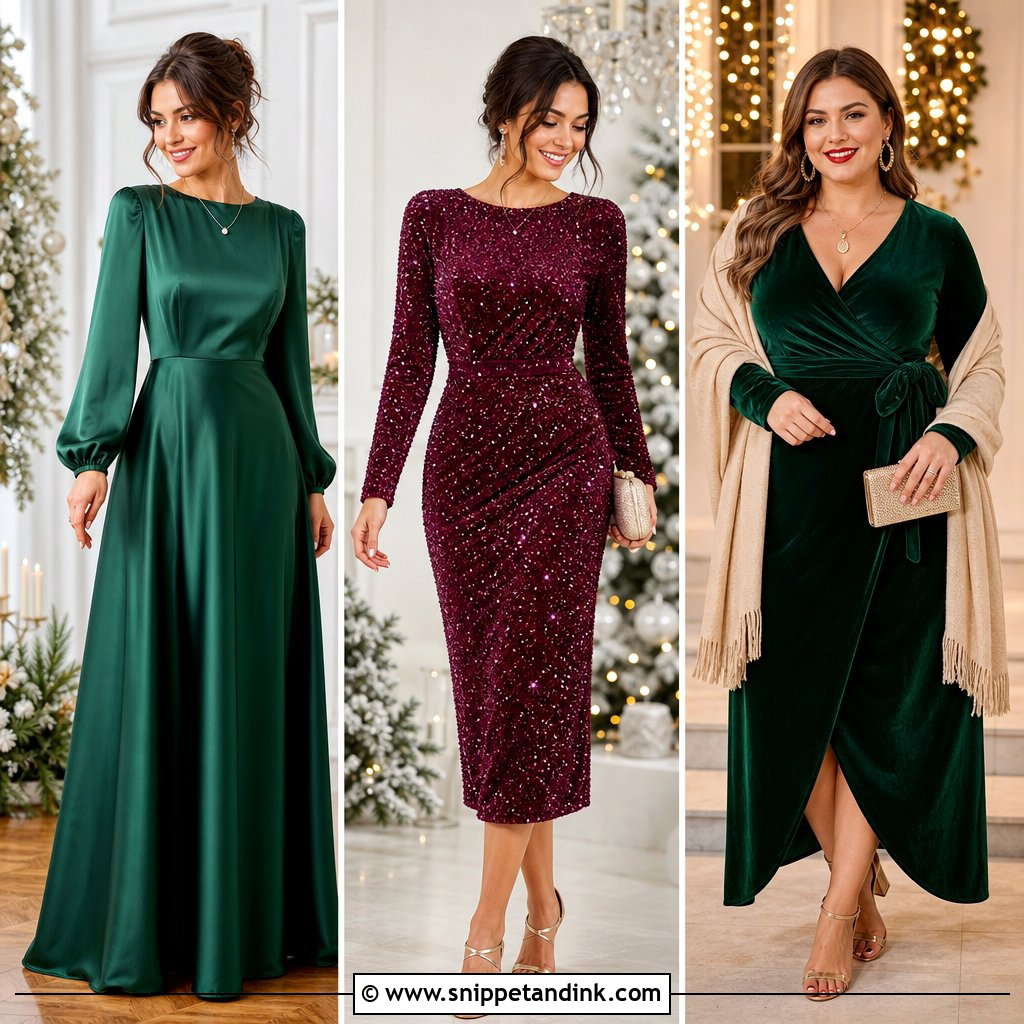
10. Long Sleeve Wedding Gown
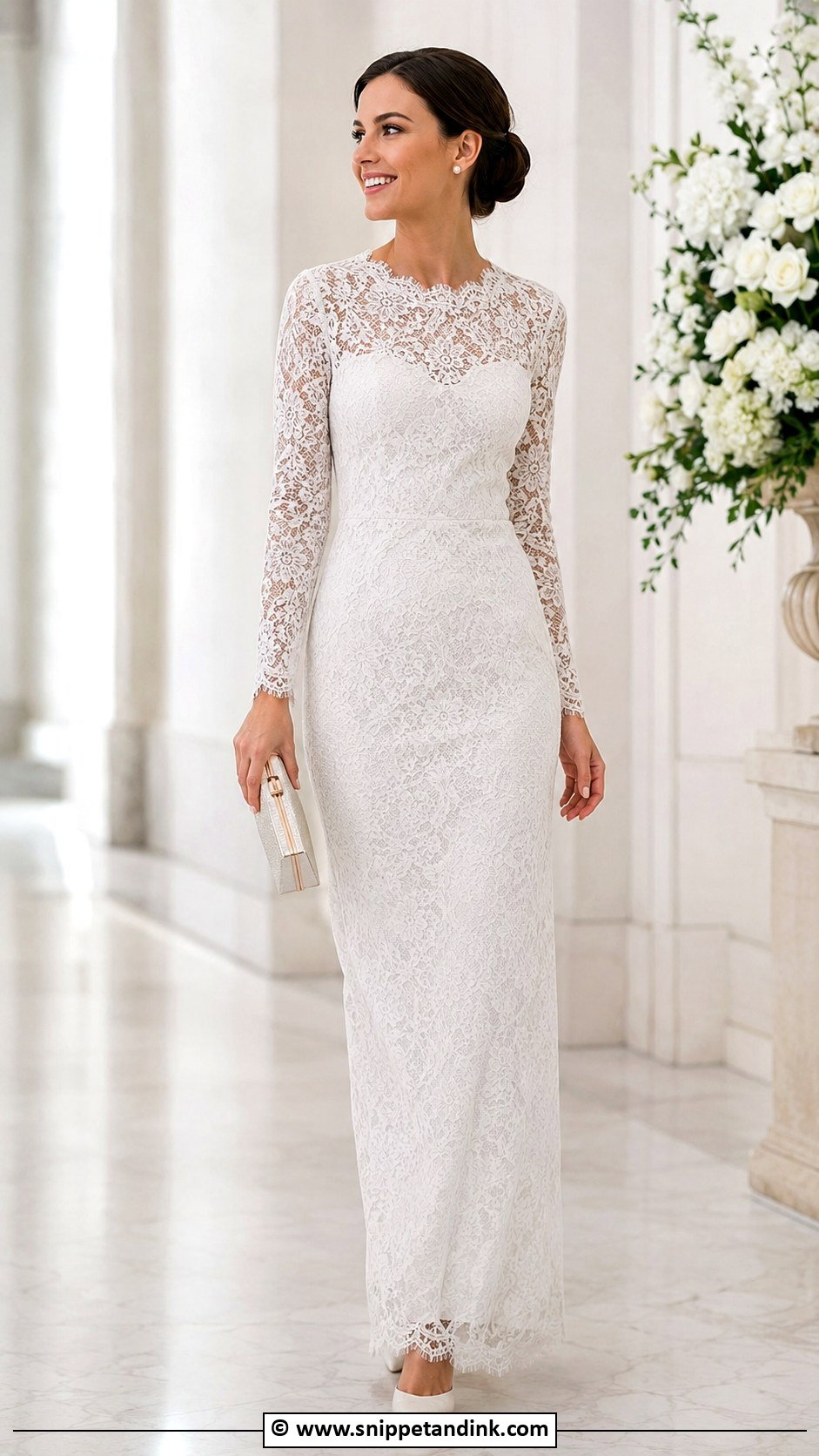
Sleeves earn their place in cool weather and churches with modesty expectations. Sheer lace, fitted crepe or satin sleeves change the formality level. Navy, burgundy, forest green and plum are classic guest colors for evening. With detailed sleeves, don’t stack bracelets; they snag lace. Closed-toe pumps and a structured clutch. A sleek bun keeps it fresh rather than heavy.
11. Strapless Wedding Gown
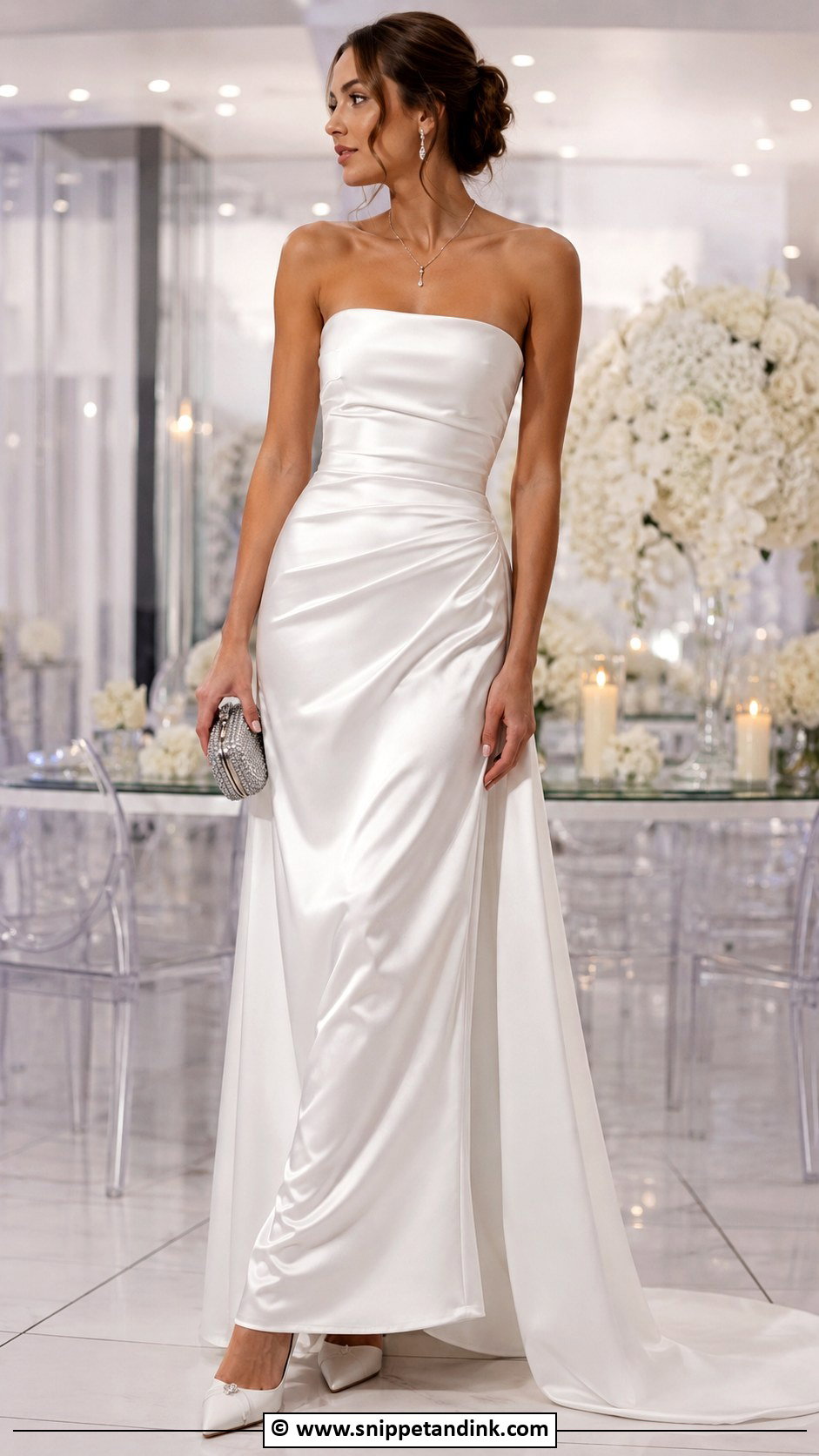
Strapless gowns live or die on the bodice. I have clients raise their arms and lean forward in the fitting room, because a bodice that slides down will distract you all night. A strapless gown in a rich color suits black tie. Carry a wrap or tailored blazer for cool venues. A necklace or statement earrings, not both.
12. Halter Wedding Gown
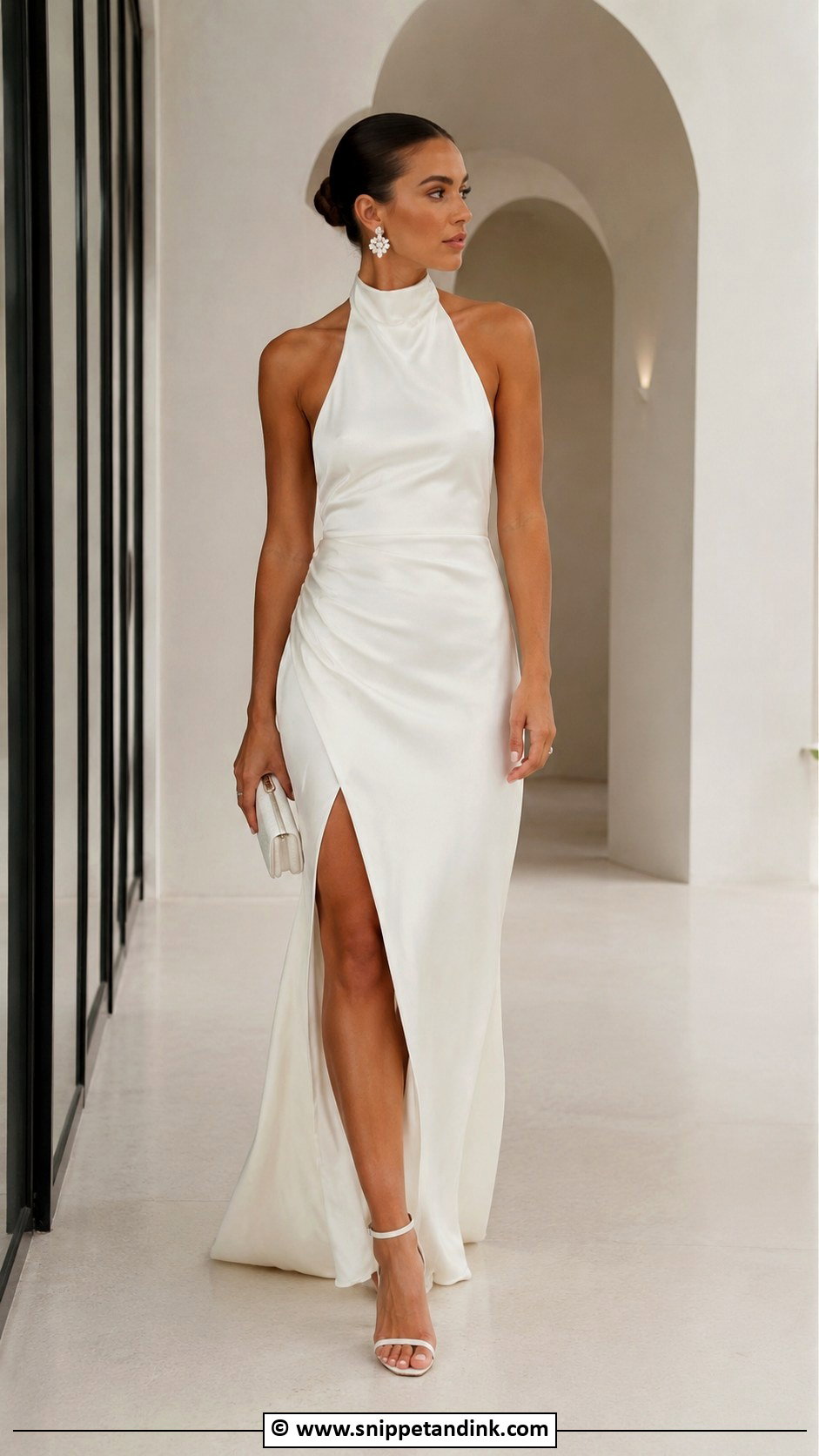
Halters suit dancing better than most necklines, as the strap keeps everything in place. Satin, crepe, chiffon and jersey all work. Black, cobalt, emerald and soft metallics look right for formal guests. Earrings only, hair up so the neckline shows. If the halter ties at the nape, check that it doesn’t pull on your neck after a few hours; a hook closure is kinder.
13. One Shoulder Wedding Gown
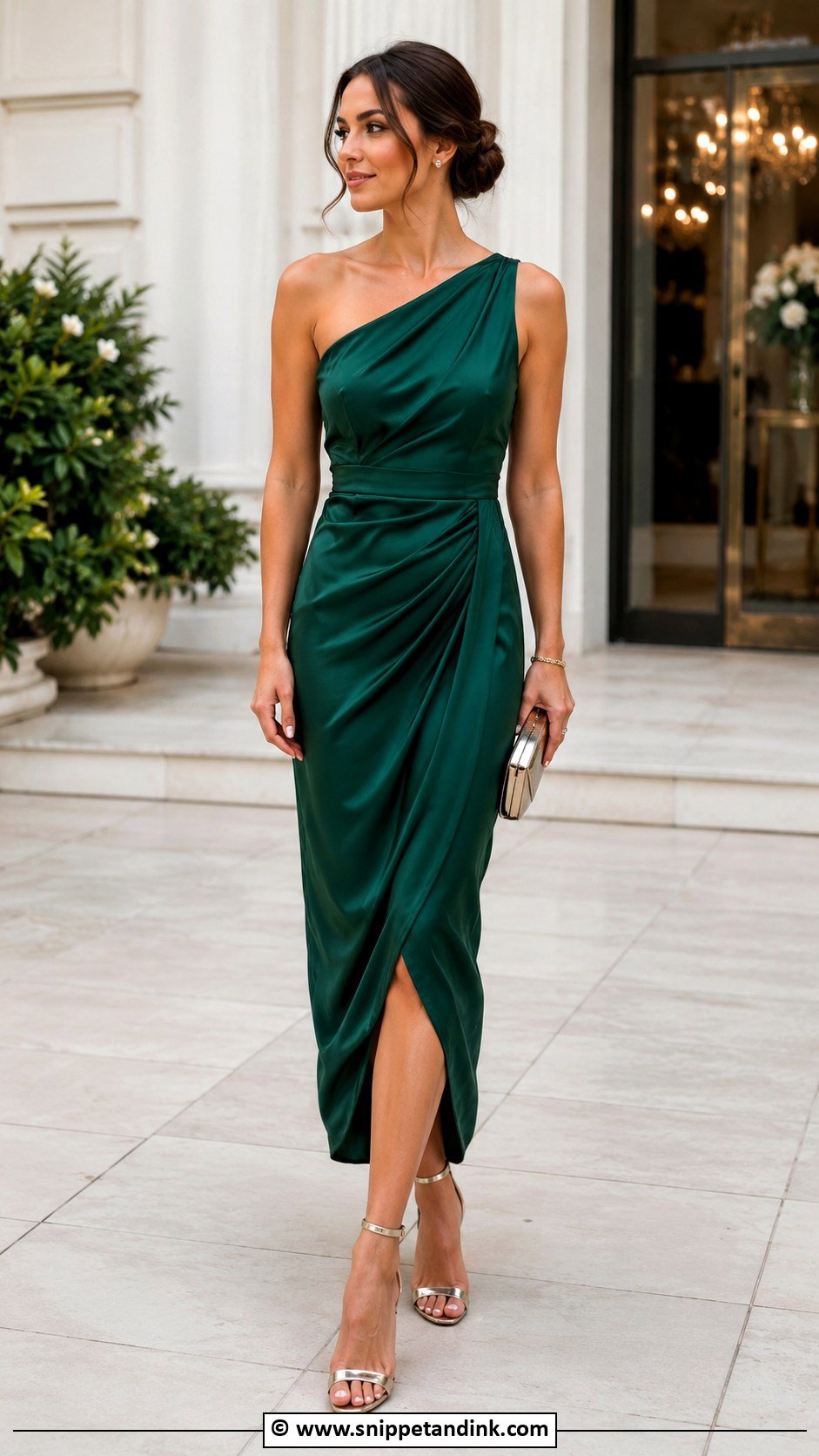
One shoulder gowns look modern because the asymmetry is the decoration. Jewel tones, pastels or metallic fabrics for guests. A bracelet on the bare arm and small earrings balance it; necklaces interrupt the line. Sweep the hair to the covered side or wear a low bun. I’d check that the single strap actually carries the dress when you lift your arm.
14. High Neck Wedding Gown
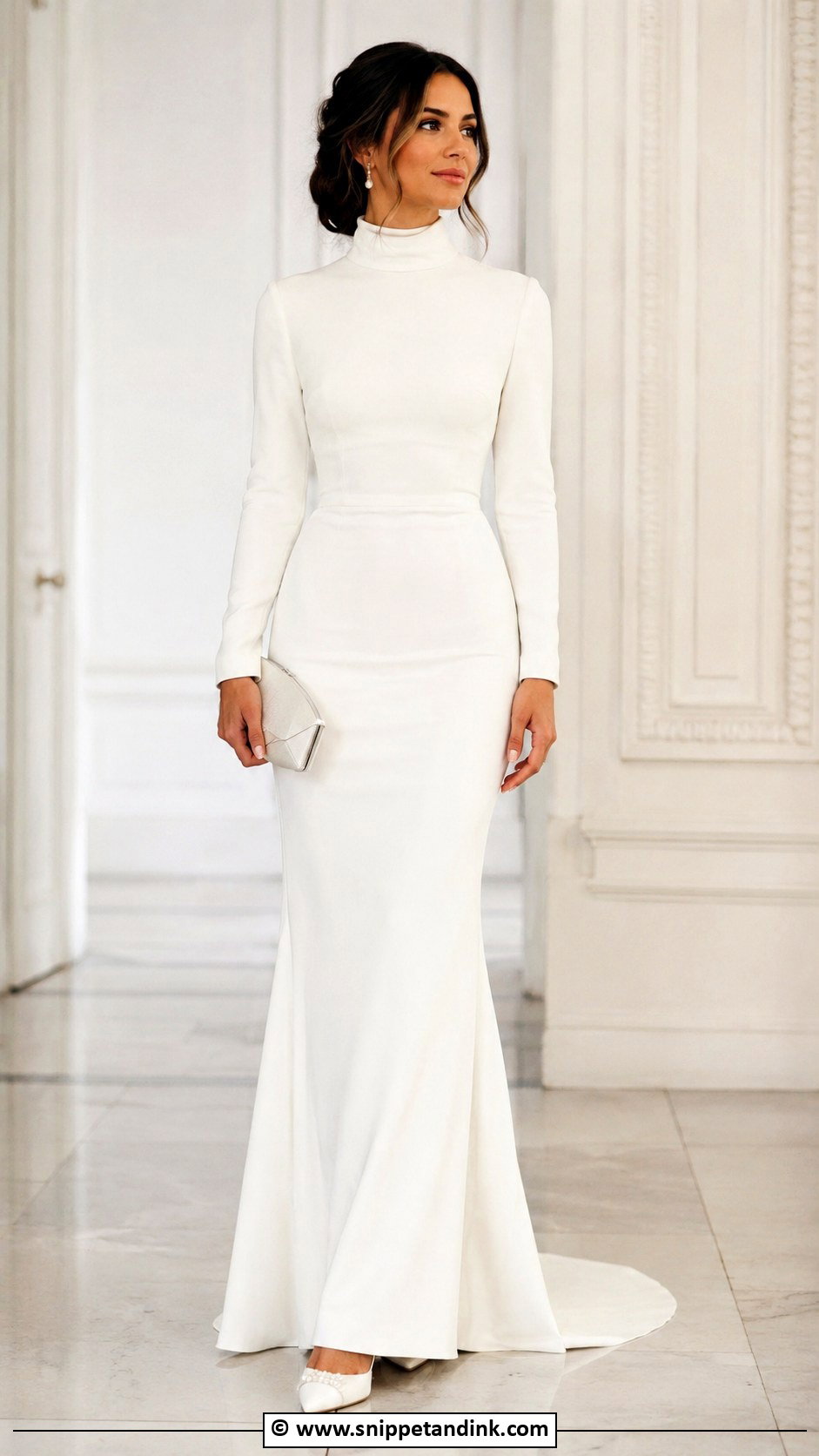
High necklines put the focus on earrings. Pearl drops, crystal studs or slim hoops. A high-neck gown in a soft or rich color suits formal guests who’d rather not show skin. Pull the hair back, or the collar and hair crowd each other. Pointed heels and a structured bag. It’s one of the most practical choices for religious ceremonies.
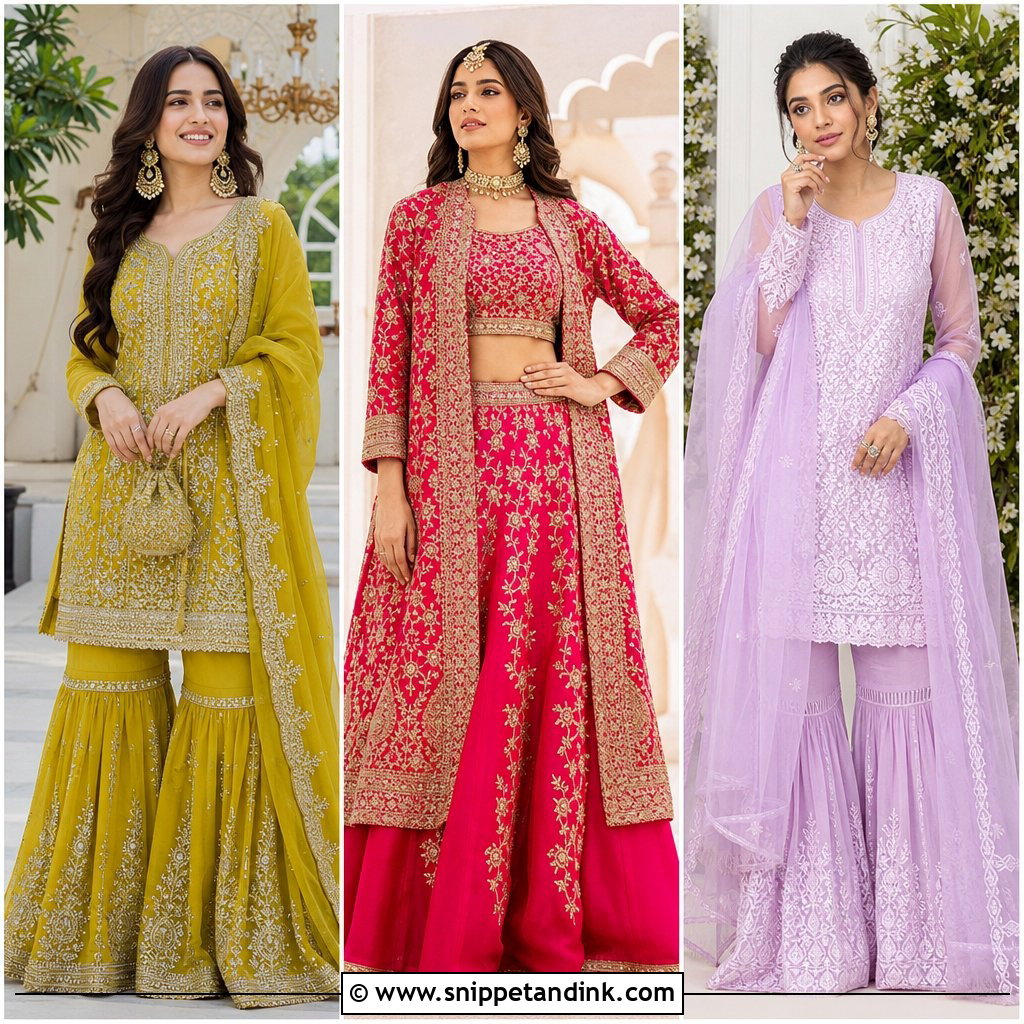
15. Square Neck Wedding Gown
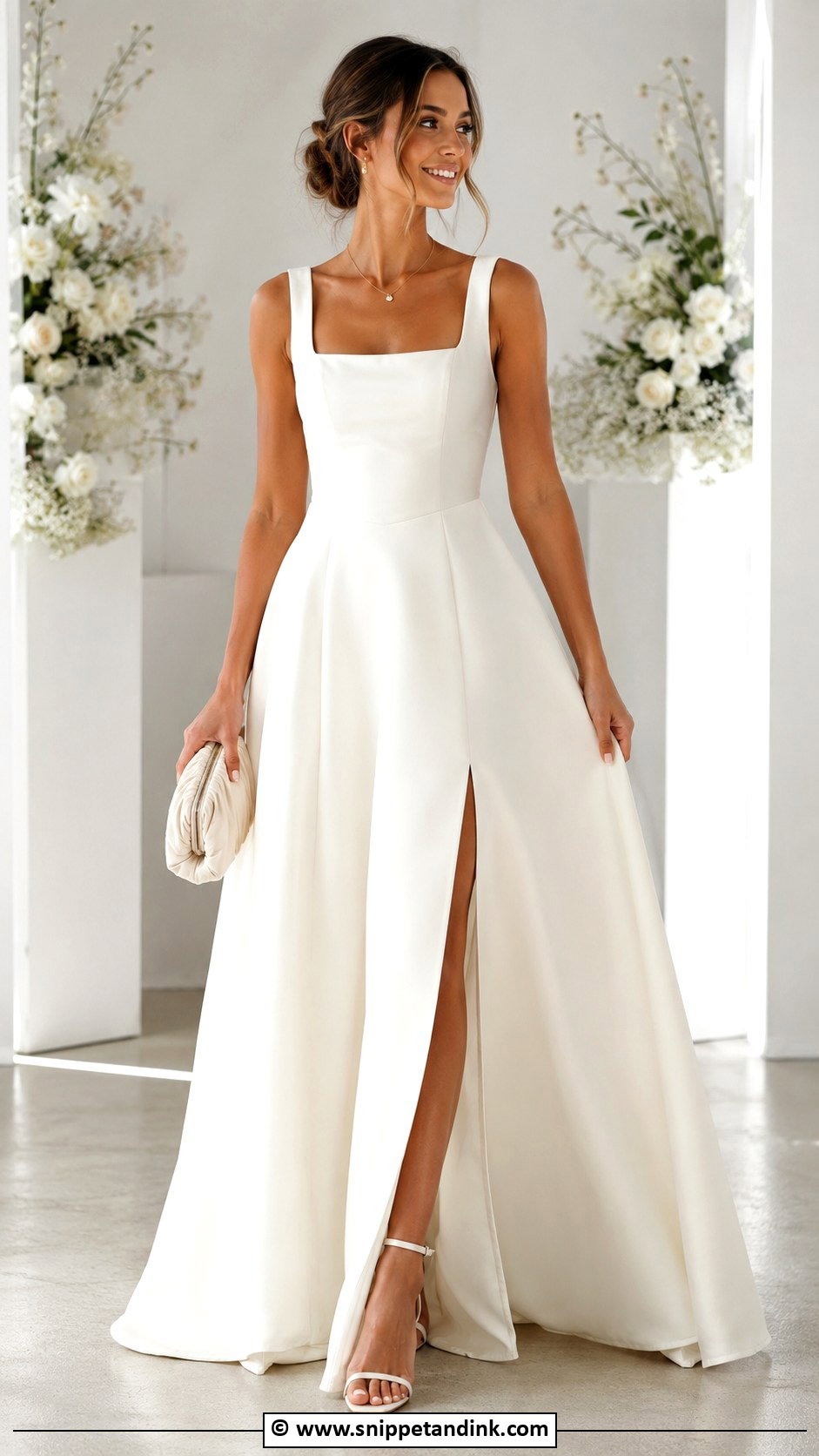
Square necklines frame the chest without revealing much, and they suit broader shoulders well because the straight line balances them. Satin, crepe or soft stretch fabrics for guests. A short pendant or small earrings depending on the gown’s detail. Sleek buns or soft curls. Heeled sandals and a clutch.
16. V Neck Wedding Gown
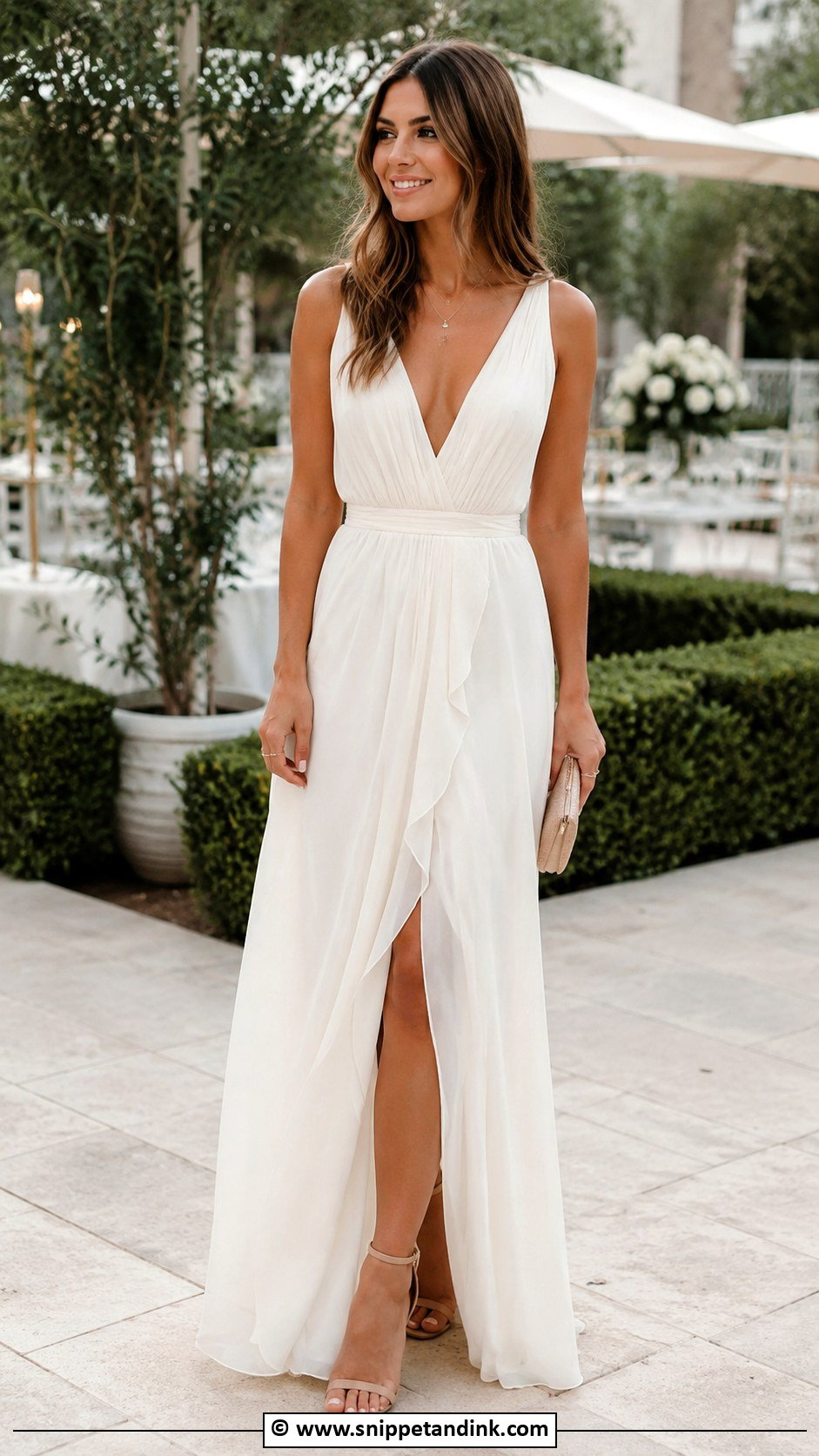
A V neck lengthens the upper body, and the depth is the decision. A soft V wears easily all day; a deep V needs tape and a well-fitted bodice. Guests can choose wrap styles, empire waists or flowing chiffon designs. A pendant with a plain neckline, earrings with a beaded one. Fit through the bust is what makes it.
17. Beaded Wedding Gown
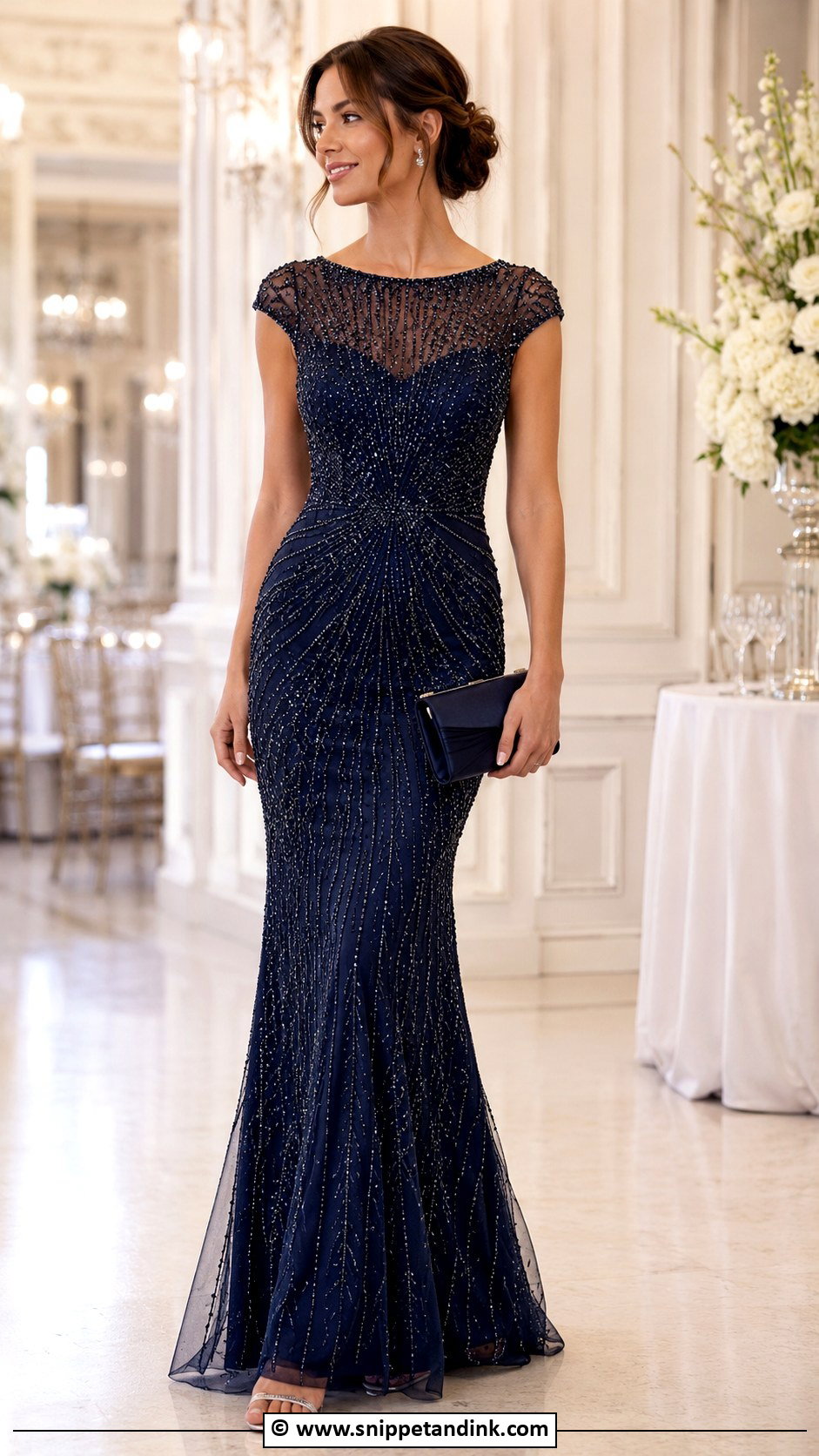
Beading is more refined than full sequins, and also heavier. A beaded gown in a non-bridal color suits evening and ballroom weddings. Pearl beading, crystal lines or Art Deco patterns. Keep accessories simple: metallic heels, a smooth clutch, small earrings. I check that heavy beading has reinforced shoulder seams, because the weight pulls over a long night.
18. Pearl Wedding Gown
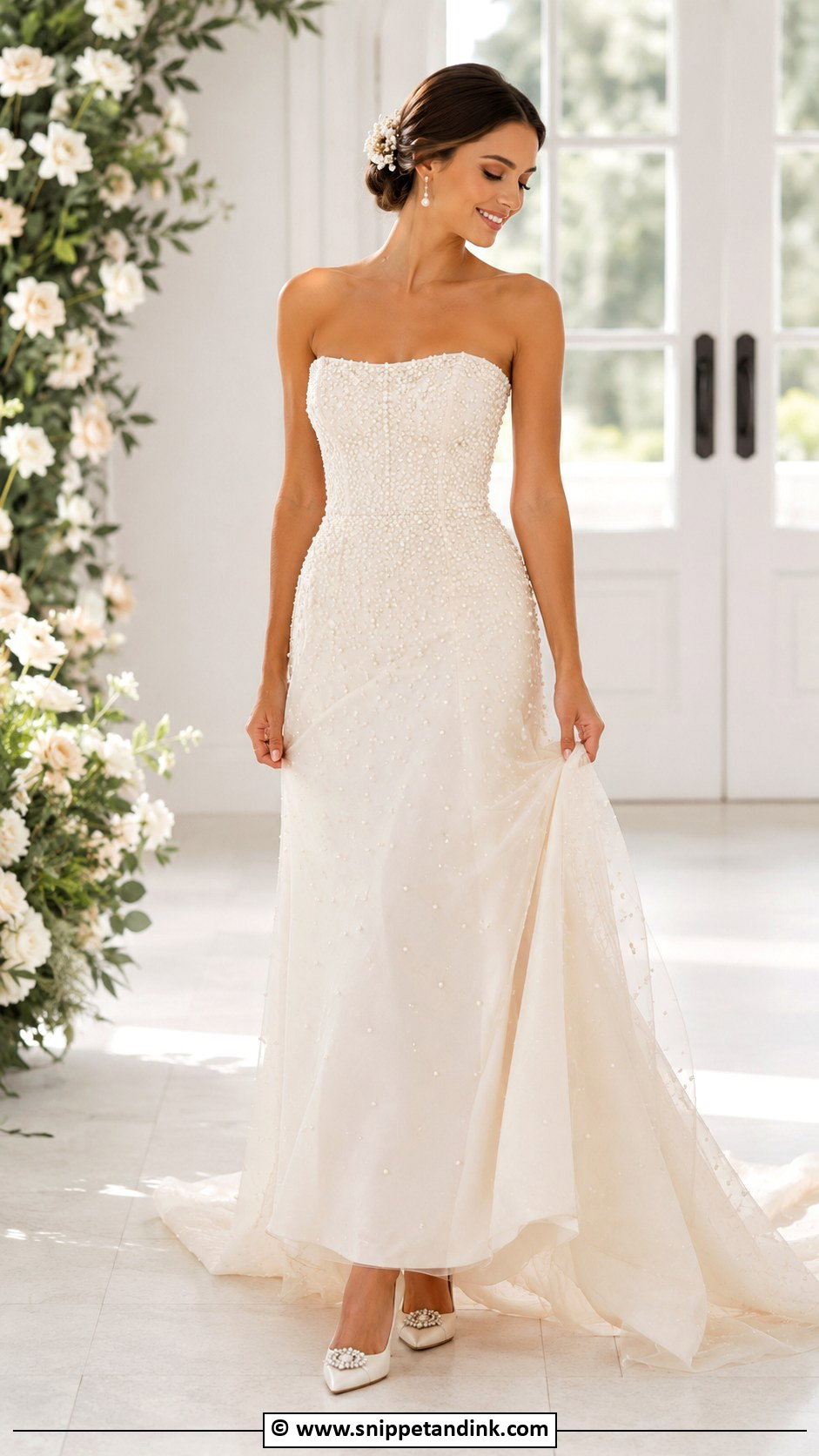
Pearls feel softer than crystals and read romantic rather than flashy. Scattered pearls, pearl straps or a pearl bodice suit brides. Guests can wear subtle pearl trim in blush, navy or taupe. Don’t pile pearl accessories onto a pearl gown; one source of pearls is plenty. Ivory heels and a simple comb for a bride.
19. Tulle Wedding Gown
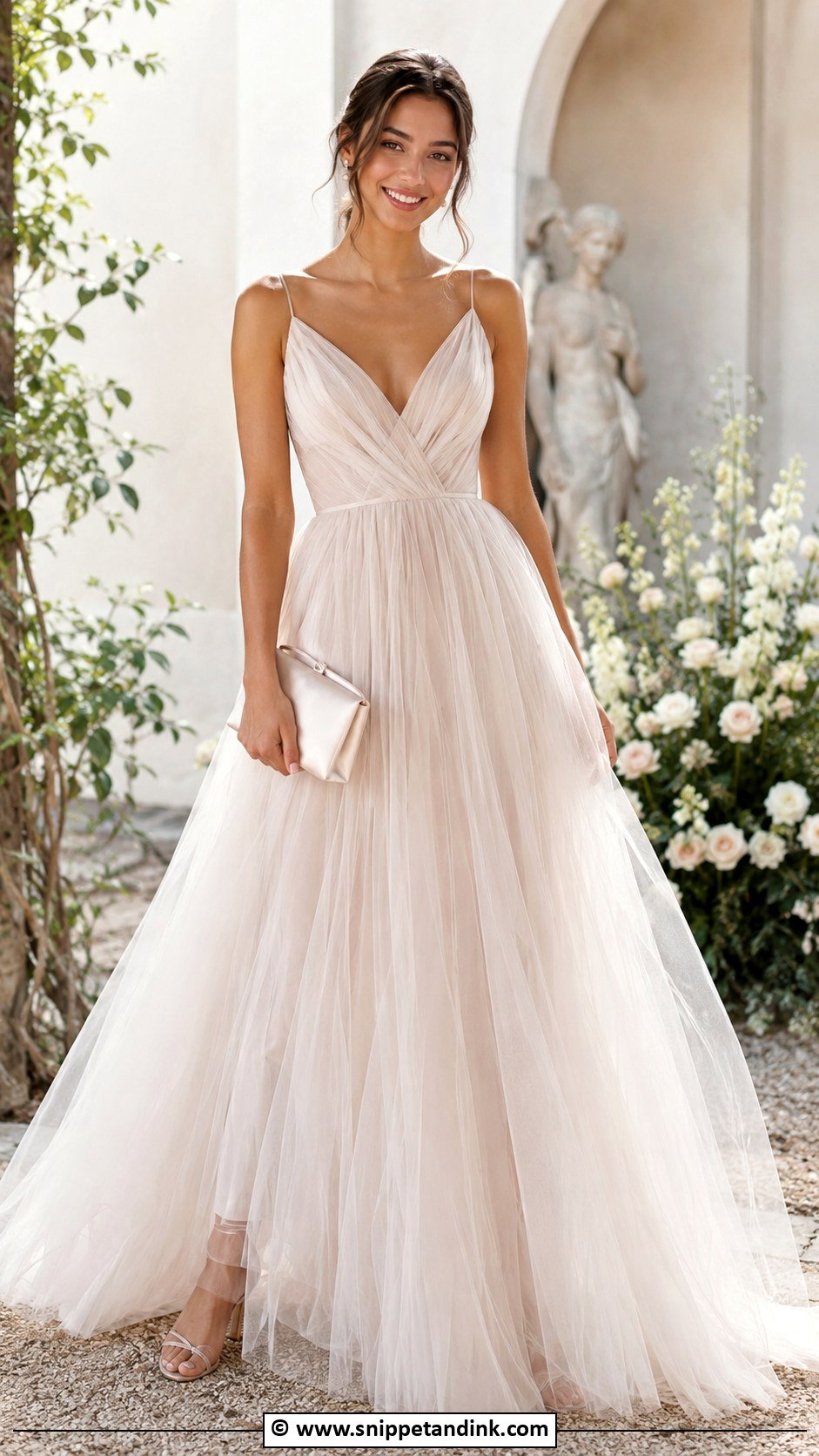
Tulle gives volume without much weight. Layered in a ball gown or A-line for a bride; in muted colors for a formal guest, as long as it doesn’t look like a second wedding dress. It catches on rough stone and jewelry clasps, so watch bracelets. Delicate heels and simple jewelry. A soft bun or loose waves.
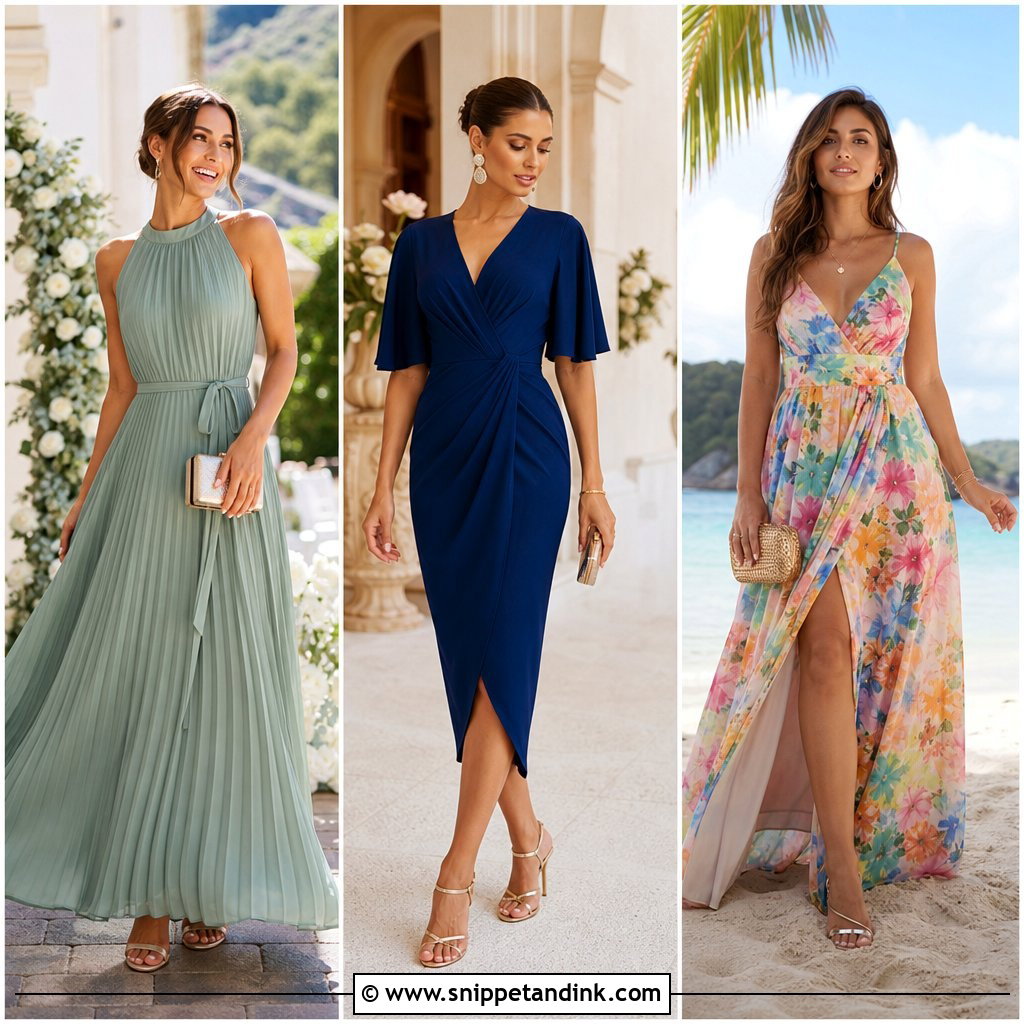
20. Organza Wedding Gown
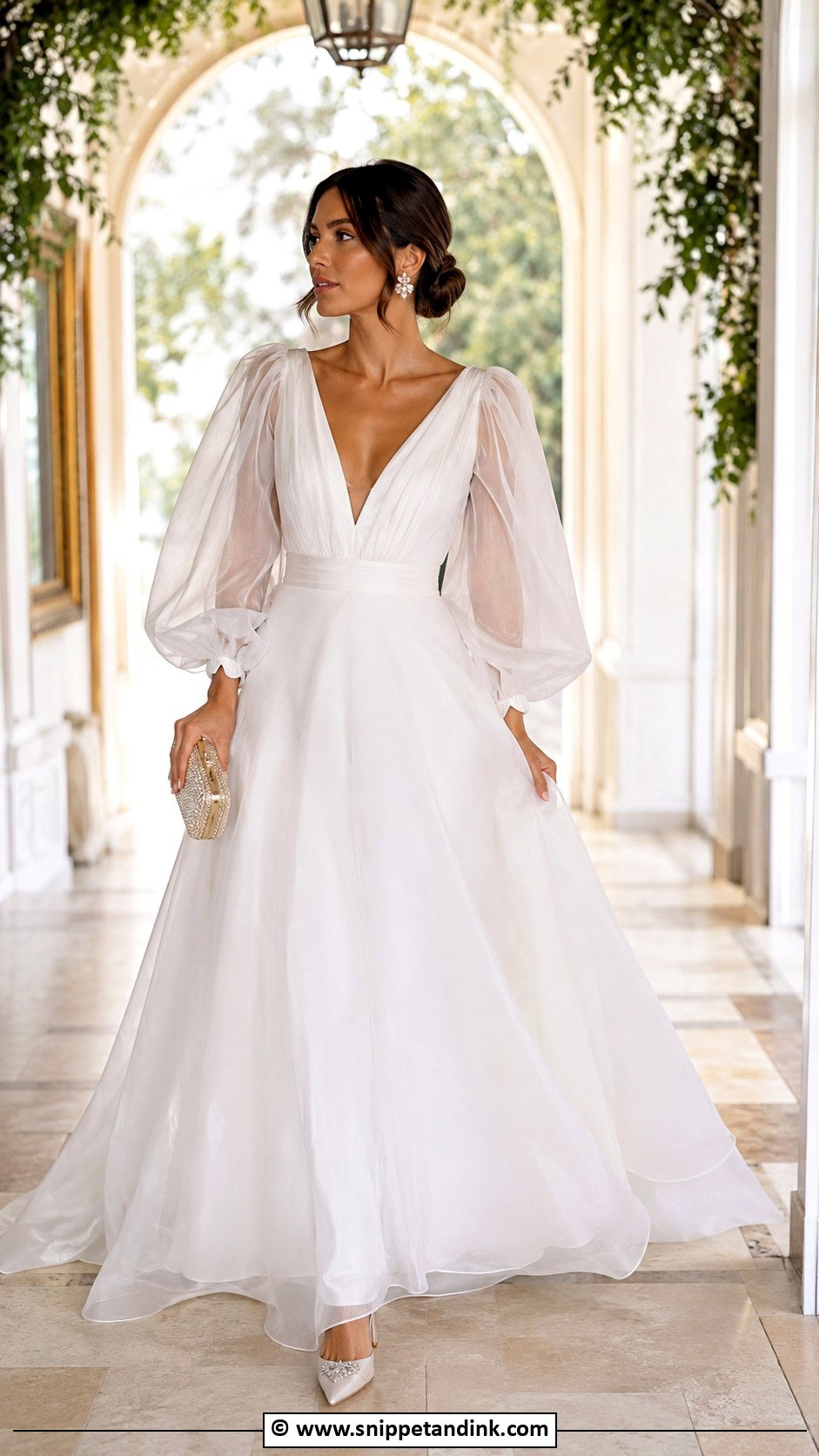
Organza is crisp where tulle is soft. It holds shape and sits away from the body, so a full skirt looks structured but light. Organza sleeves or layered skirts add interest without beading. It creases sharply, though, so I wouldn’t pack an organza gown in a suitcase without a steamer at the other end. Soft blue, rose or sage for guests. Polished hair and fresh makeup.
21. Crepe Wedding Gown
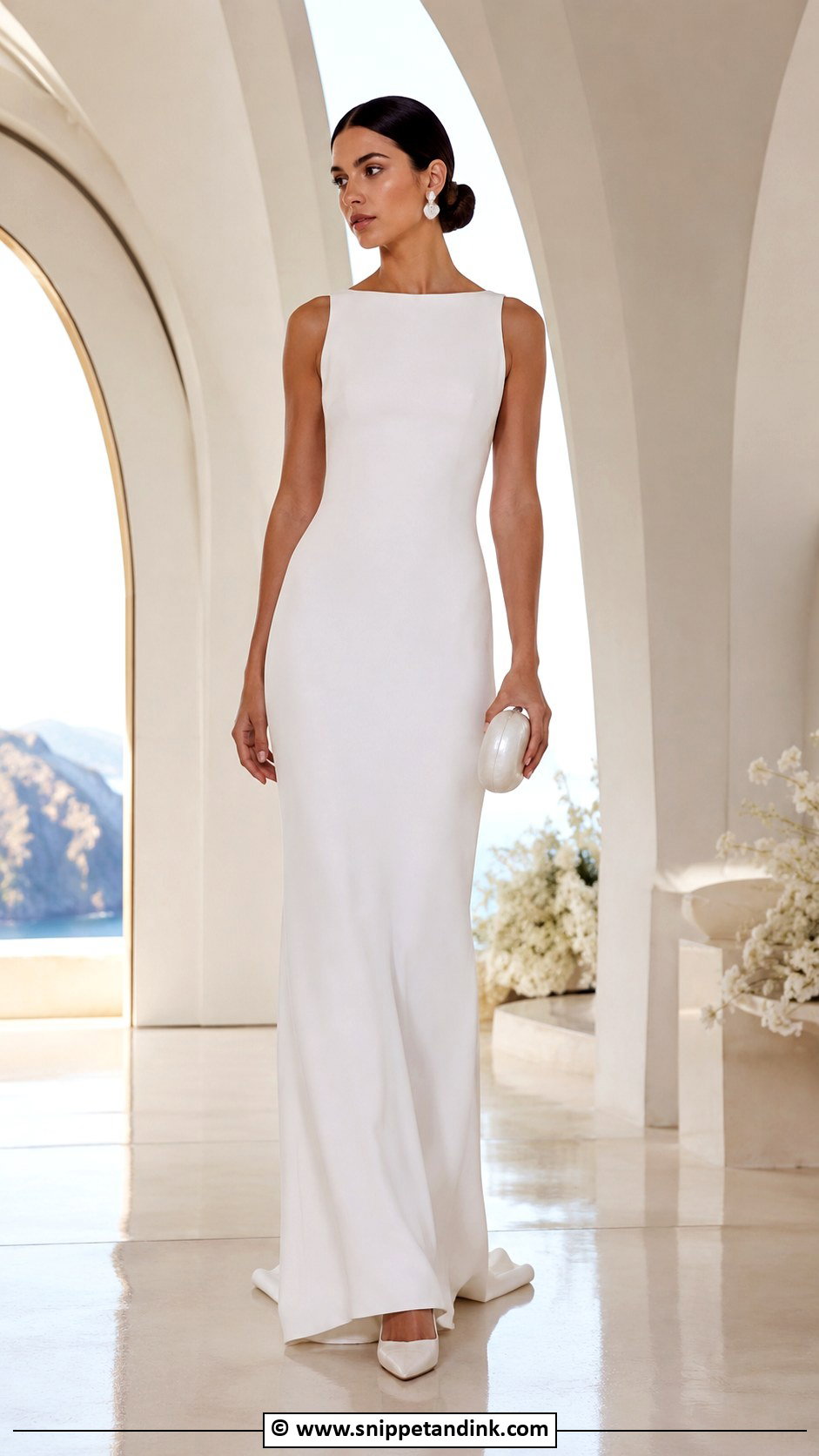
Crepe skims the body and shows every tailoring decision. That’s why I’d budget for alterations on a crepe gown: the fabric shows any pull across the hips or back. Square neck, long sleeves or an open back. Deep green, navy, berry or chocolate for formal guests. Pointed heels and sculptural earrings. Glossy waves or a low bun.
22. Velvet Wedding Gown
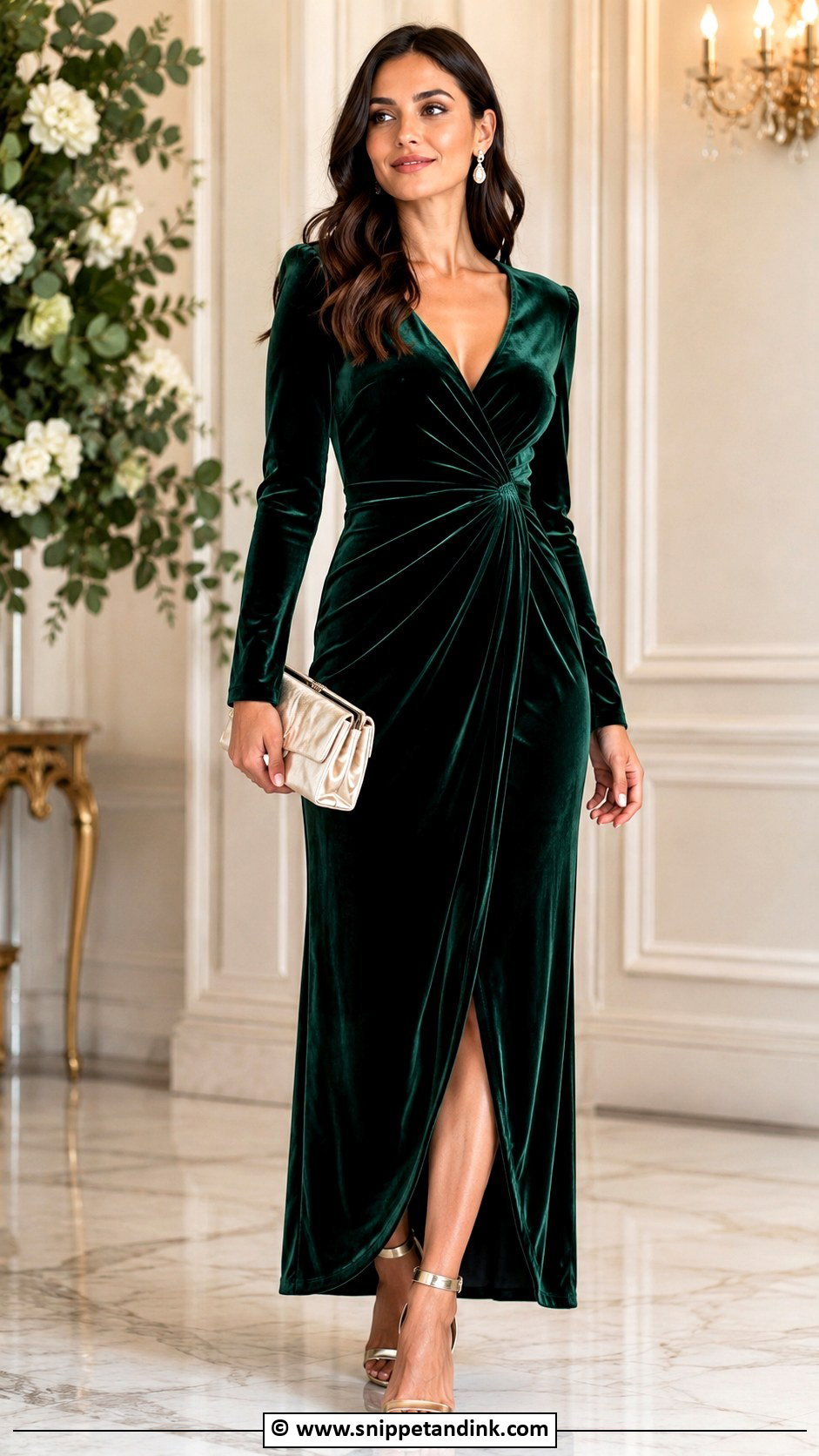
Velvet only works in cold months. A velvet wedding gown in emerald, burgundy, sapphire or plum looks rich in candlelight, but in a warm summer marquee it’s punishing. Velvet also marks where it’s crushed, so I hang it in a steamy bathroom rather than ironing it. A wrap, column or long-sleeve cut. Metallic heels and simple earrings.
23. Cape Wedding Gown
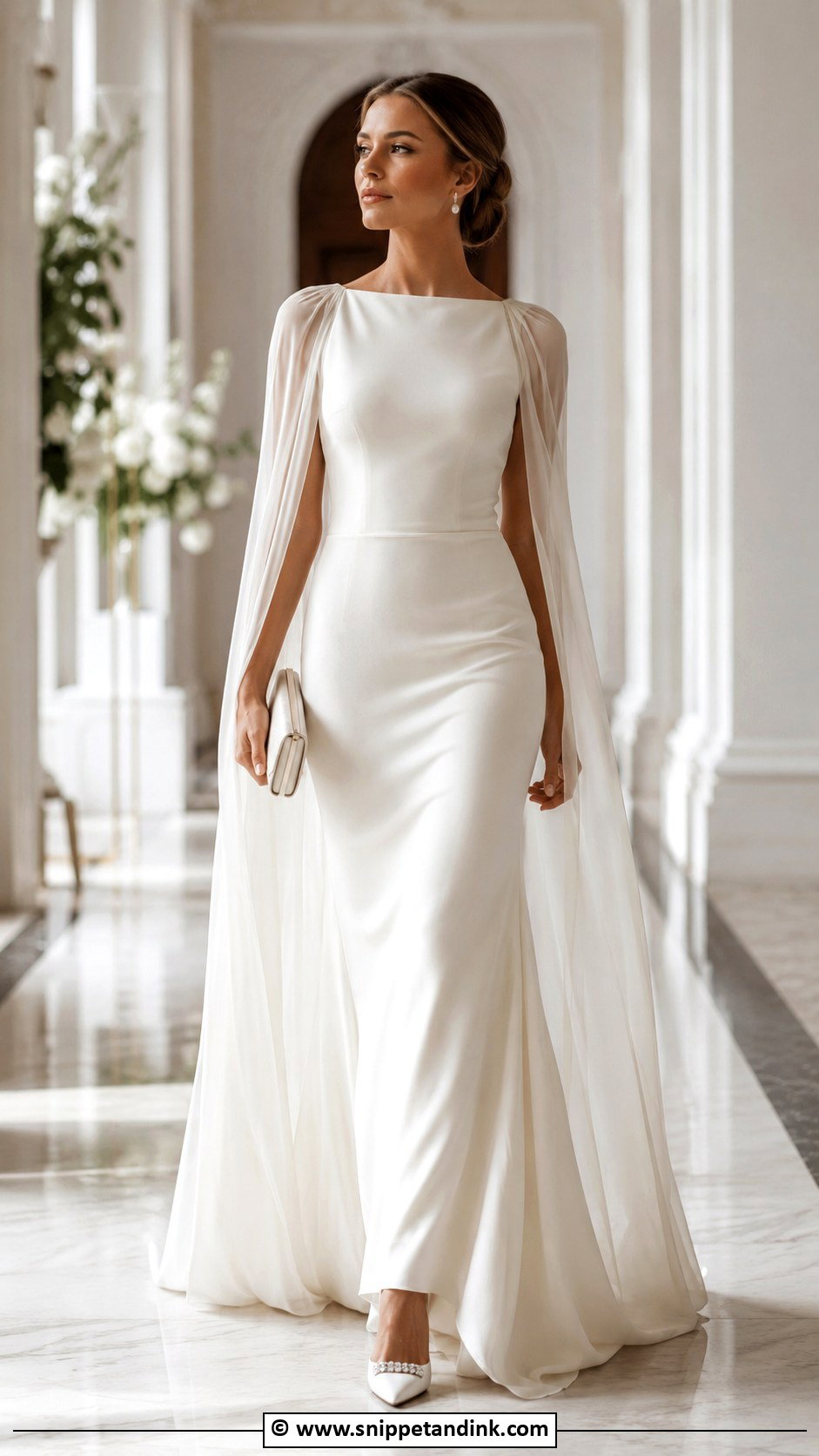
A cape gives drama from behind and coverage over the shoulders. Brides can wear a sheer, lace or detachable satin cape instead of a veil. Guests can choose cape-sleeve gowns in rich colors. The cape should end where it doesn’t swamp your frame; on petite women I prefer one that stops at the waist. Keep the gown underneath simple.
24. Bow Wedding Gown
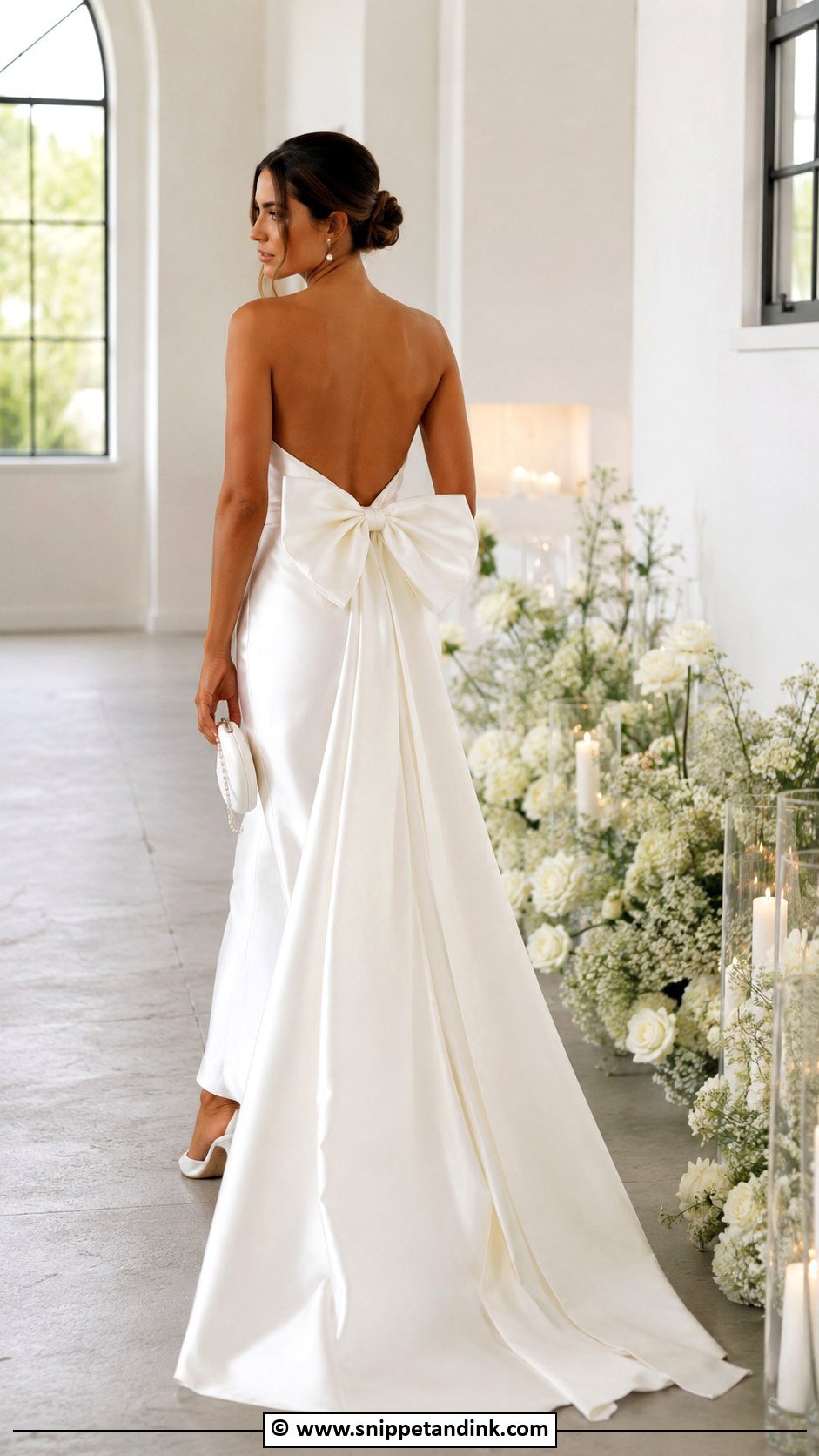
Bows have to look deliberate. One bow, at the back, waist, shoulder or neckline, and nothing else competing. A large back bow suits plain satin or crepe; a small bow suits softer designs. Navy, mauve, sage or rose for guests. Hair pulled back shows a back bow. Watch that a large bow doesn’t crush when you sit; stiffened bows bounce back, soft ones don’t.
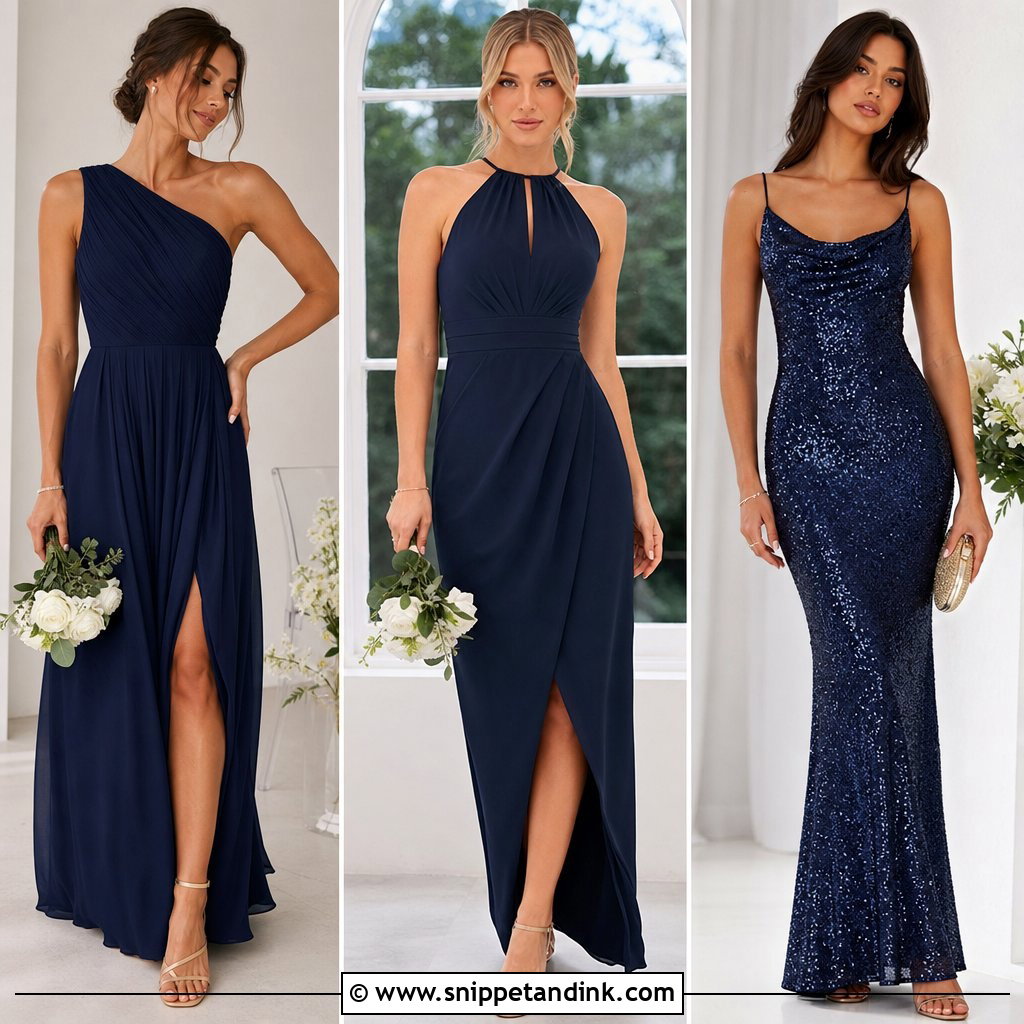
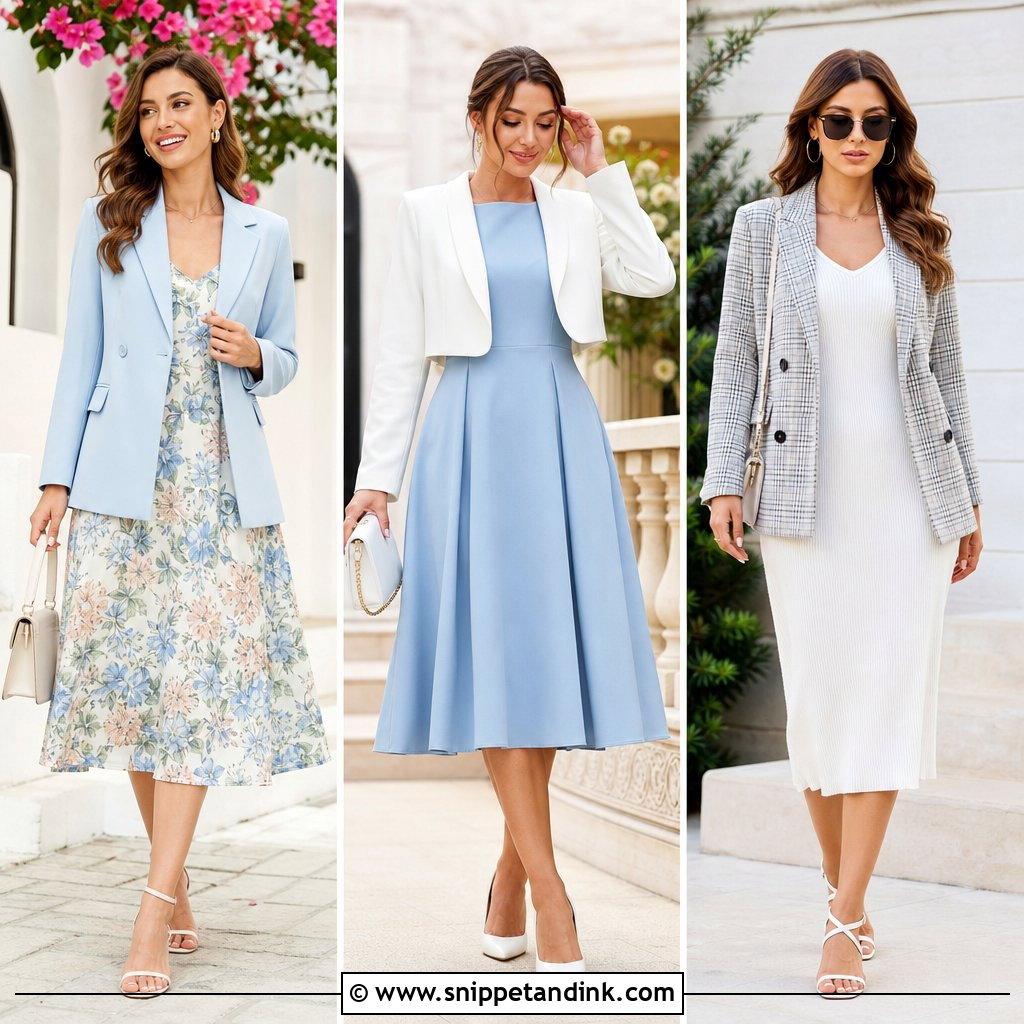
25. Corset Wedding Gown
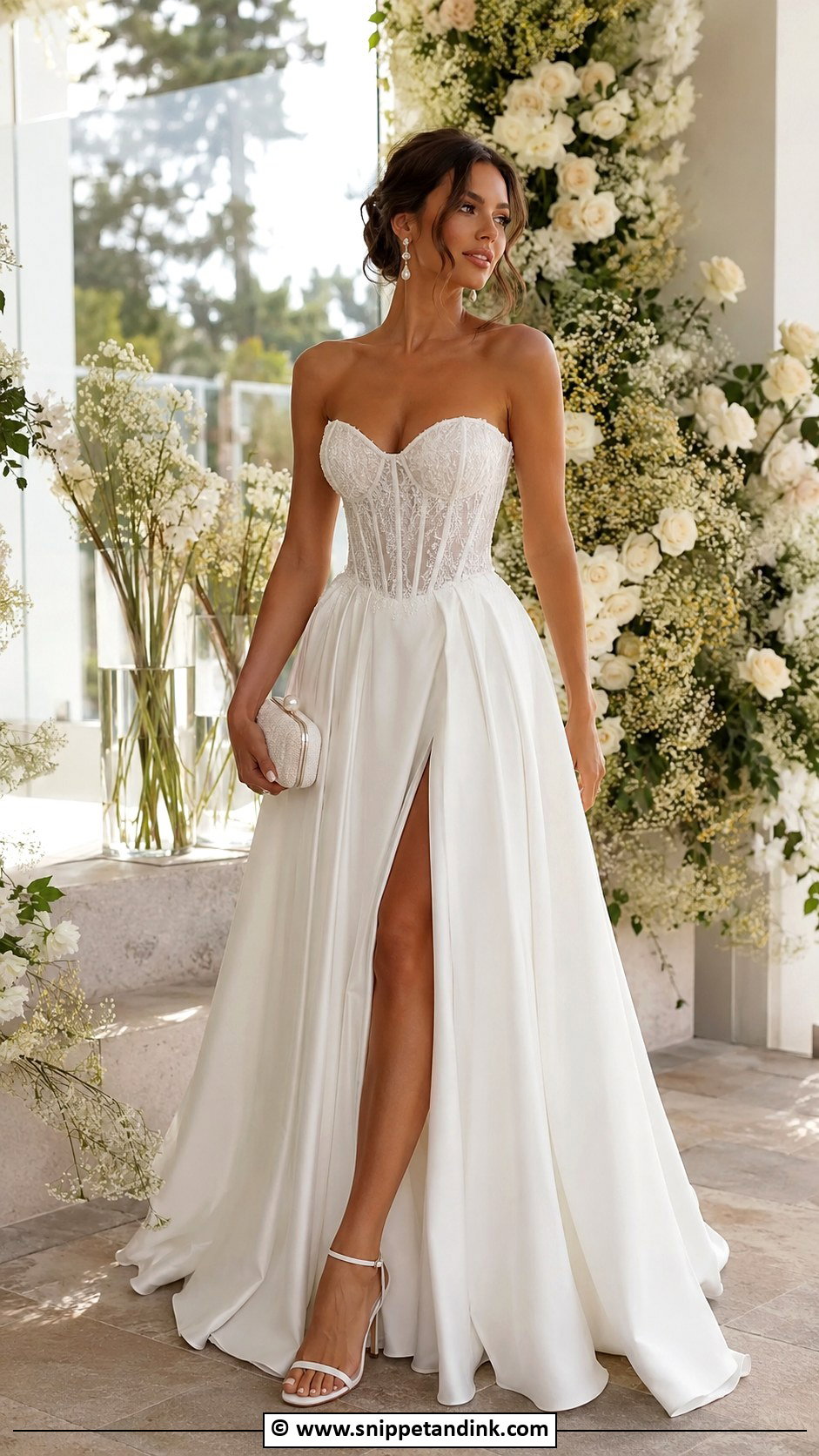
Corsets give support and shape, and they can be uncomfortable if fitted only standing up. I always do a seated check, because a corset that’s fine on the podium can dig into the ribs at dinner. It pairs with a ball gown, A-line, mermaid or chiffon skirt. Muted or dark colors for formal guests. Earrings with a detailed neckline.
26. Slip Wedding Gown
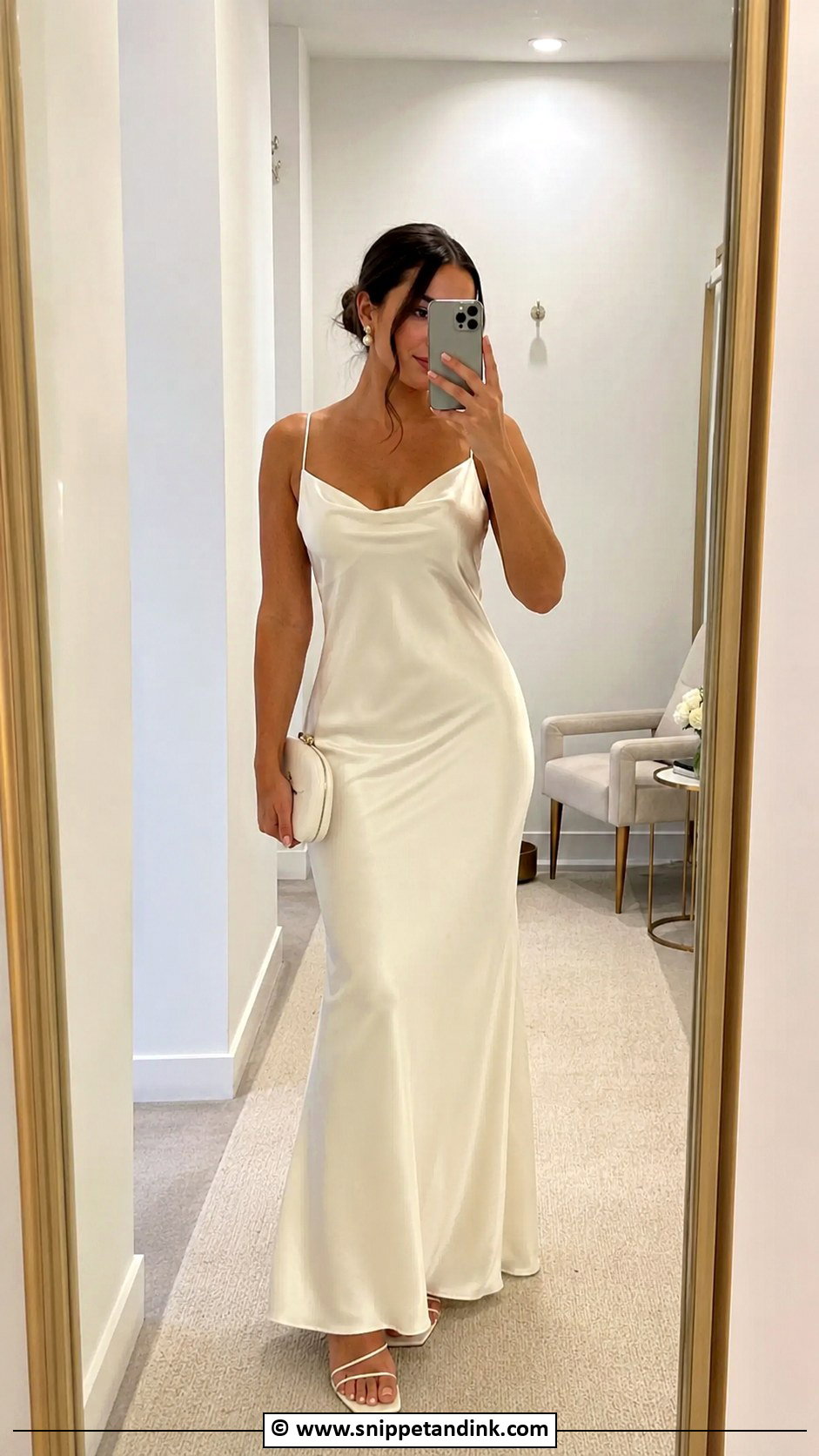
Slips reveal fabric quality instantly. A silk or heavy satin slip drapes; a thin one clings and shows seams. Brides wear it in ivory with a veil and strappy heels. Guests can choose champagne, olive, navy or rust. Add a tailored wrap for coverage. Soft waves, a low bun or a clean middle part all suit the simple shape.
27. Two Piece Wedding Gown
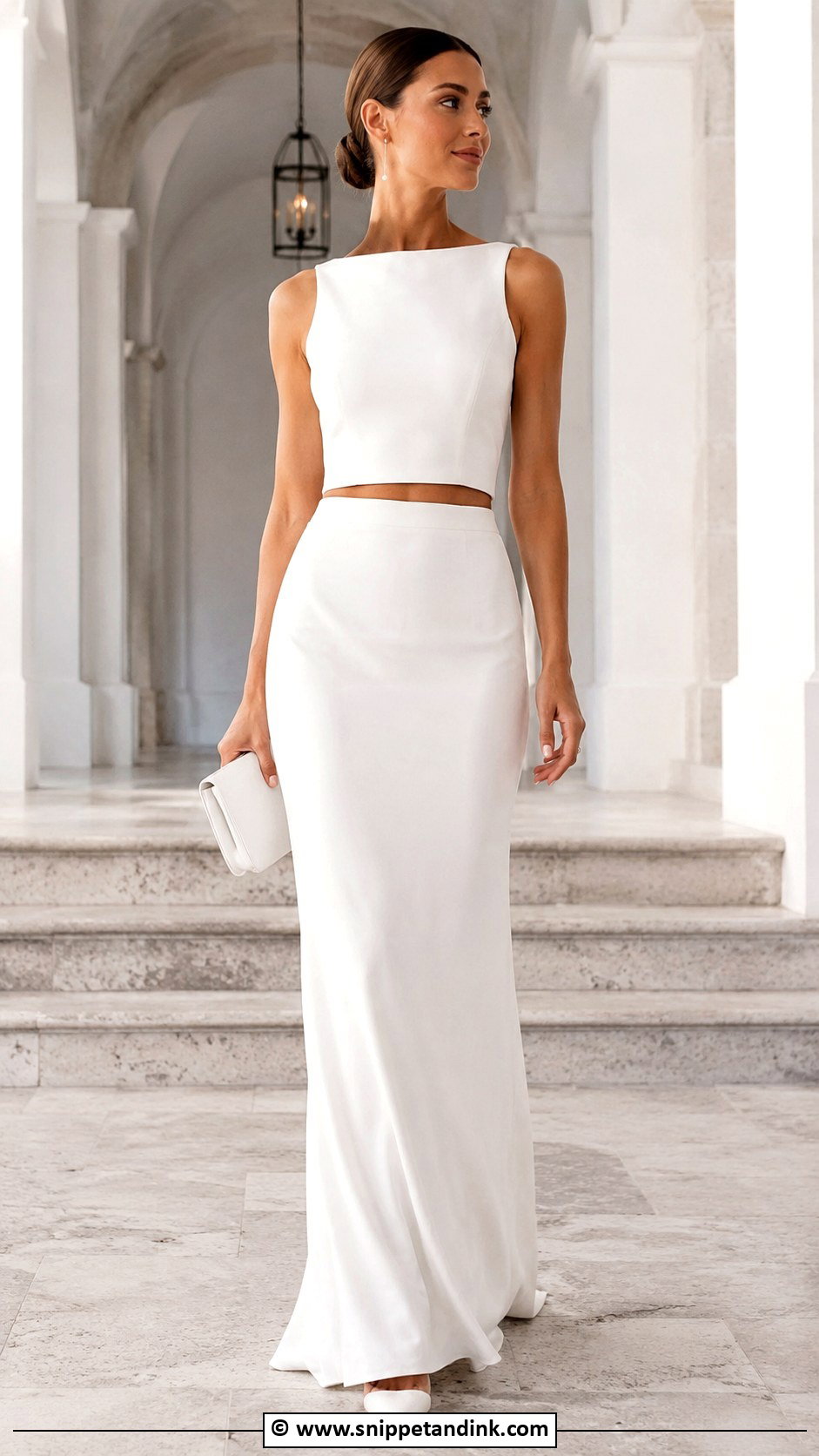
Two-piece sets are more practical than they look, since top and skirt can be altered separately and the top can be worn again. A fitted top with a full skirt, a lace crop with a high waist, or a structured bodice with a column skirt. Watch the proportions at the waist: the gap between top and skirt should be small and intentional. Clean heels and a clutch.
28. Color Wedding Gown
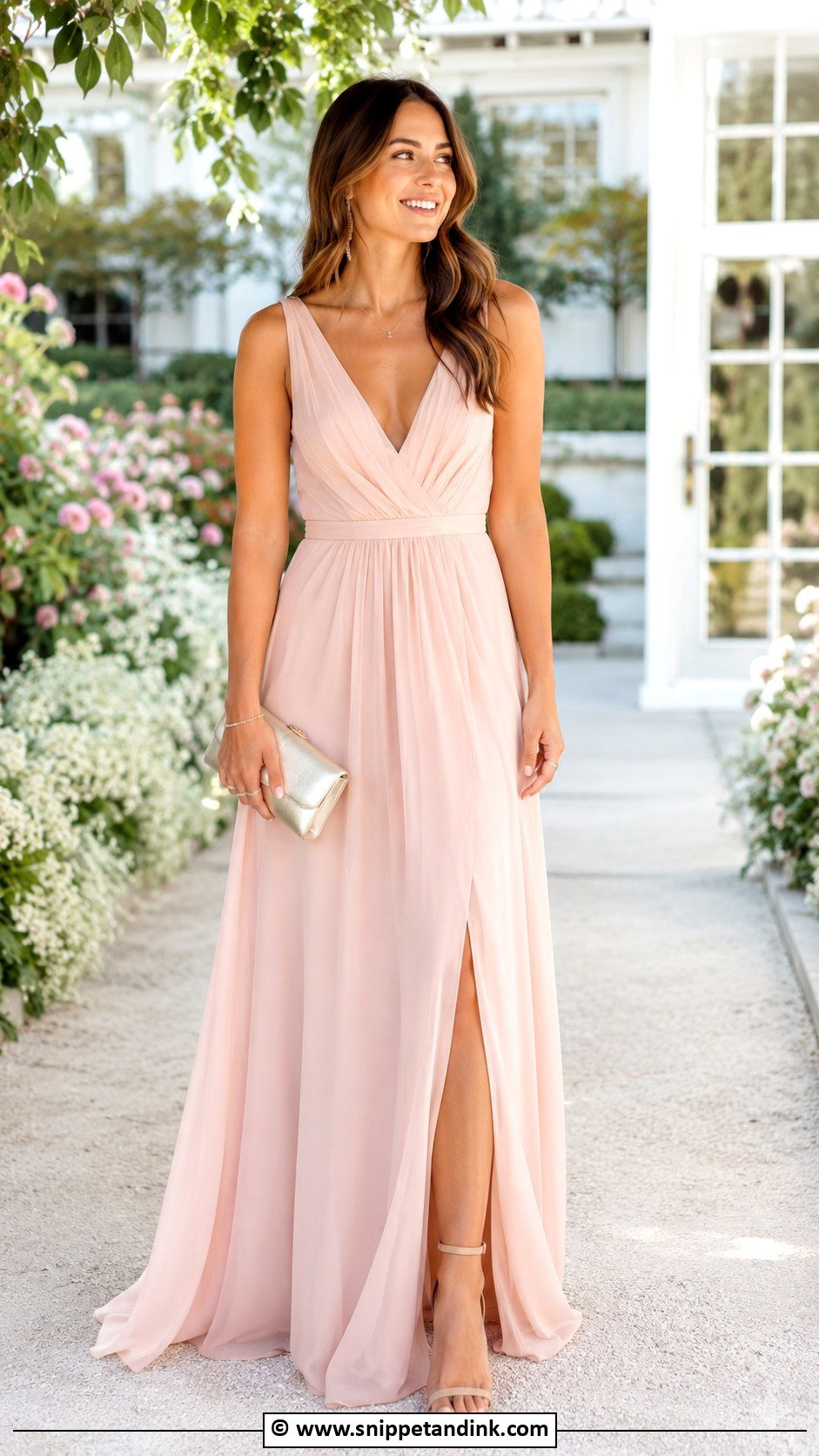
Color says as much as cut. Brides can choose blush, champagne, pale blue or grey; guests can go stronger with emerald, burgundy, cobalt or plum. Match the depth of color to the season and time of day. Pastels with nude or silver heels, deep shades with gold or black. It’s a strong option for second looks, destination weddings and formal guest attire.
29. Plus Size Wedding Gown
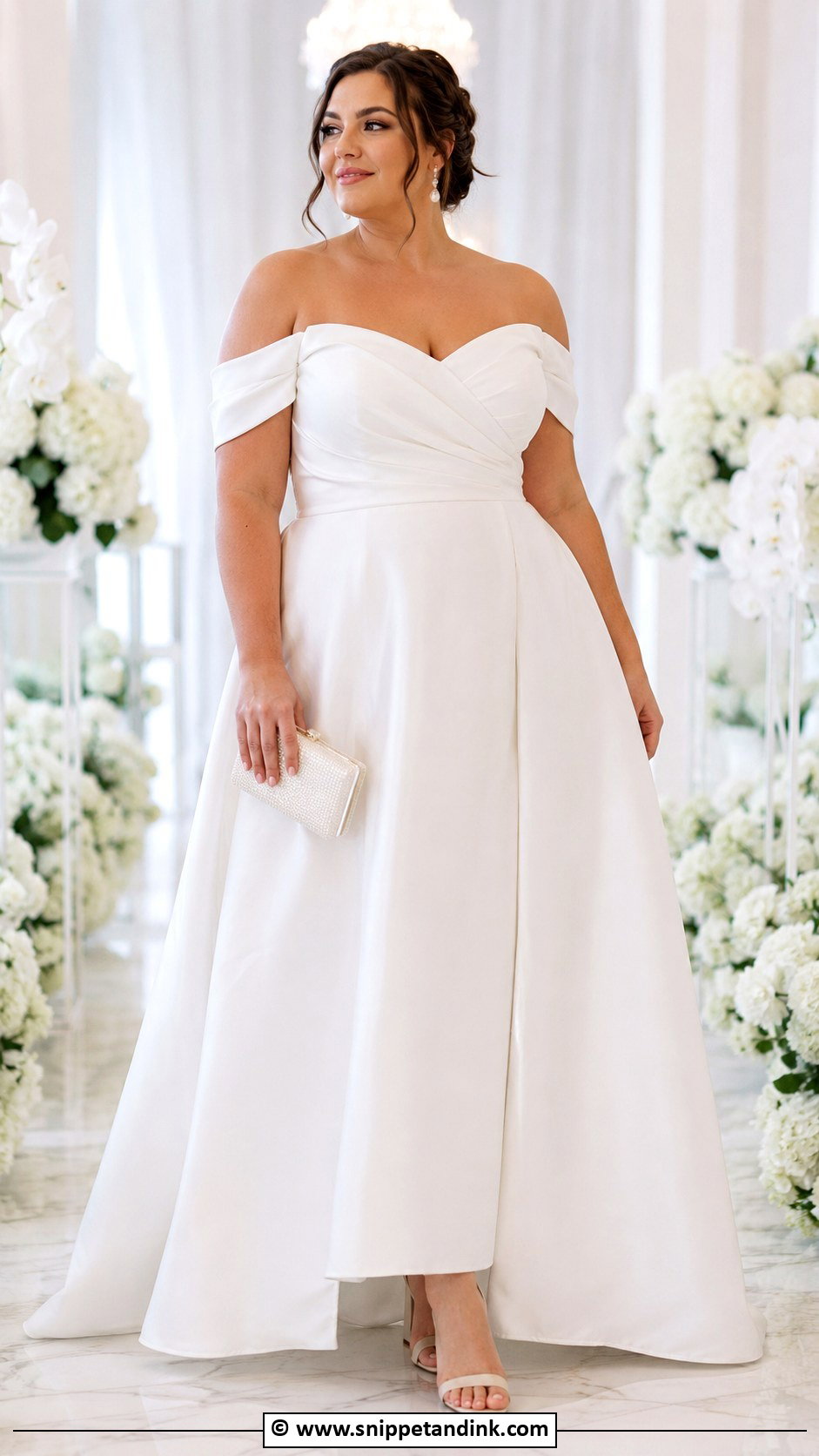
Structure and lining matter more than the silhouette name. A plus size gown with a good lining, secure straps and tailoring that follows your shape looks better than one cut to hide you. A-line, wrap, corset, empire waist and off shoulder cuts all work. I’d sort the bra or built-in support first, then judge the gown, because the right support changes how every bodice sits. Comfortable heels or dressy flats.
30. Mother Of The Bride Wedding Gown
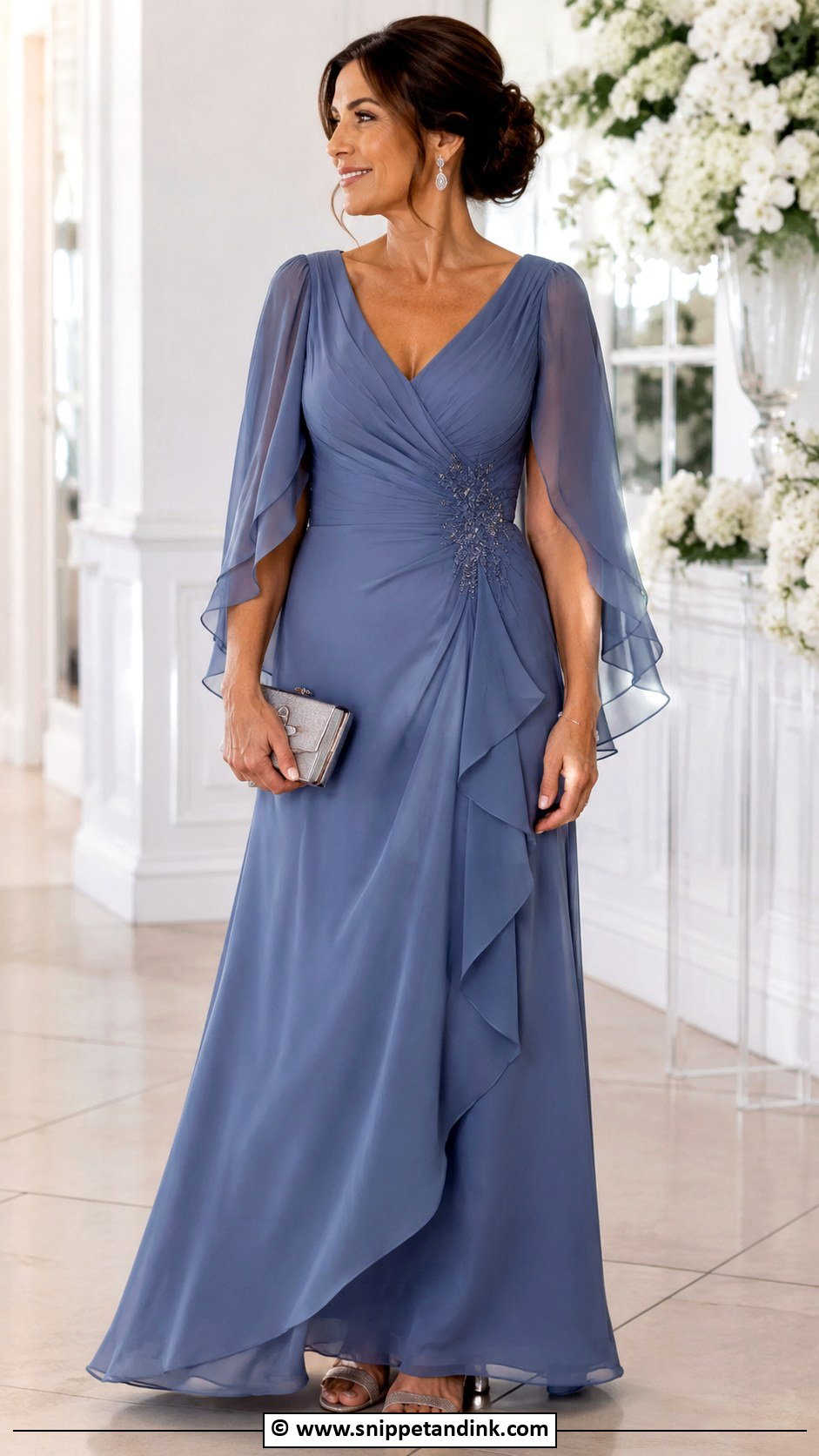
A mother of the bride wedding gown has to survive hours of photographs, greetings and standing. Chiffon, crepe, lace and cape-sleeve designs in navy, mauve, champagne, slate blue, sage or plum suit most palettes. Coordinate with the wedding colors, but don’t match the bridesmaids unless it’s planned. Low or block heels. A sleeve and neckline you’re comfortable lifting your arms in, since you’ll hug a lot of people.
Hemming a Gown to the Shoes You’ll Actually Wear
Most floor-length gowns arrive too long, and the hem is the alteration that matters most for a guest. Get it wrong and you’ll trip on stairs or drag the hem through the reception.
- Buy the shoes first. Bring them to the fitting, since even two centimetres of heel changes where the hem falls.
- Ask for the hem to just kiss the top of the shoe at the front. Longer looks elegant standing still but catches when you walk.
- Allow time. Alterations shops get busy in wedding season, and beaded or lace hems take longer than plain ones.
- If you plan to switch to flats later, hem for the heels and accept a slight brush on the floor, or choose a gown with a hem loop you can hook up.
Rented gowns usually can’t be hemmed permanently. I’d order a rental in the length closest to your height with heels on, and use toupee tape or a few loose stitches that come out cleanly if it needs a temporary fix. Read the rental terms on alterations before you try anything.
What Makes a Gown Right for the Room
A gown is right when it suits the venue, the invitation and your body, and lets you sit, eat and dance without thinking about it. From satin and lace to velvet, pearls and bows, the fabric sets the mood more than the color does. Decide on the shoes and the hem together, plan the jewelry around the neckline, and check the whole outfit sitting down before the day.
You'll Like These Ideas:


Leave a Reply