
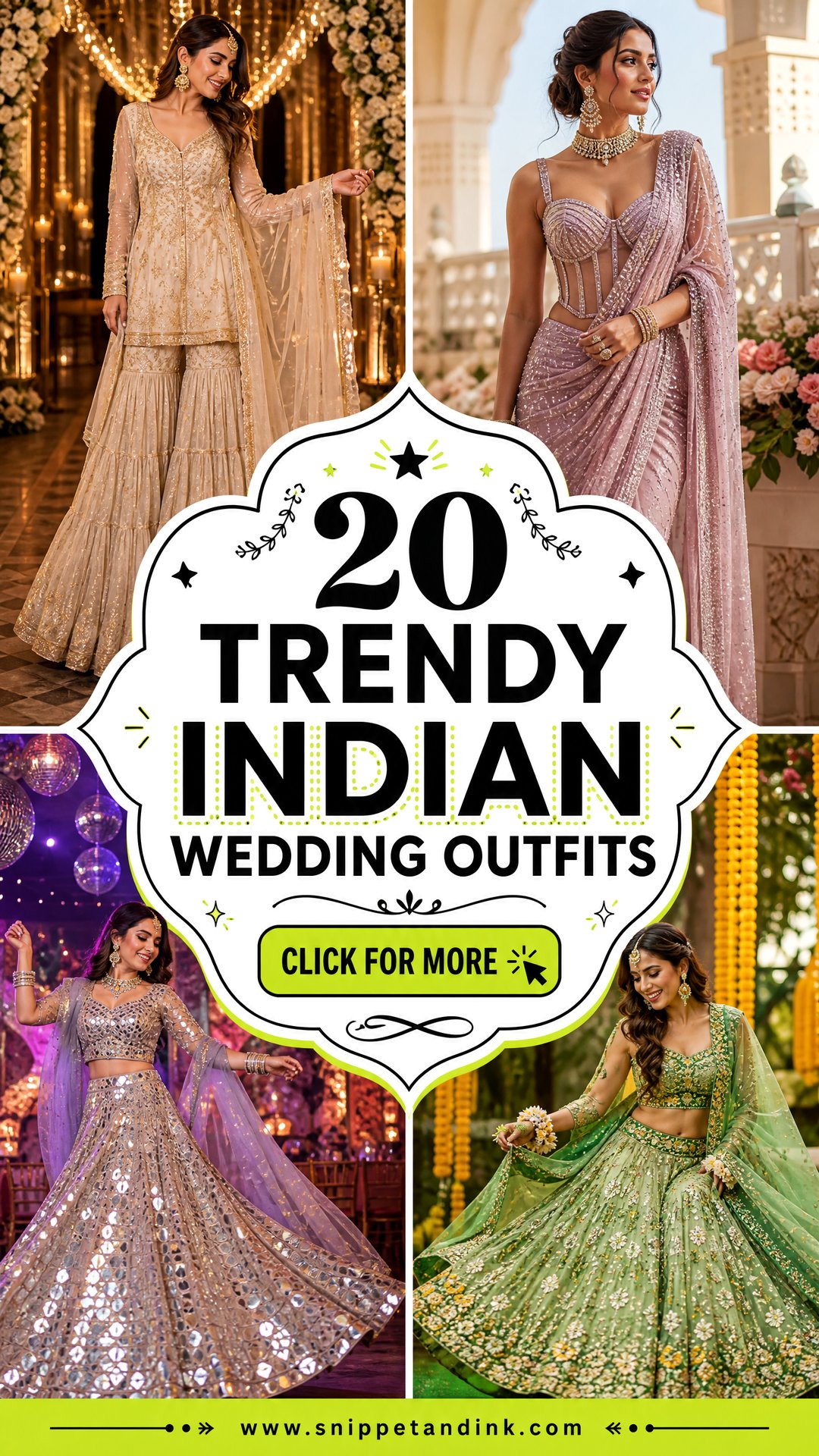
An Indian wedding is rarely one outfit. Between haldi, mehndi, sangeet, the ceremony and the reception you may need four or five looks, and each event asks something different of the fabric. Below are sarees, lehengas, sharara sets, Anarkalis and polished Indo-Western combinations, with the practical details I look at as a stylist: pre-draped shapes, lighter fabrics, structured jackets and separates you can wear again. As a rule, softer colors suit daytime functions and richer finishes suit the evening. Match each look to the venue, the weather and how much you’ll be moving.
Which Outfit Goes to Haldi, and Which Waits for the Reception?
When I plan a guest wardrobe for a multi-day Indian wedding, I sort by event first and color second. Each function has its own practical demand, and the wrong fabric at the wrong event is the regret I hear about most often.
- Haldi: washable cotton, georgette or blends in yellow or bright tones. Turmeric marks are hard to remove, so wear nothing precious.
- Mehndi: short sleeves or a cape, and nothing that will drag through drying henna. Greens, pinks and multicolor prints suit it.
- Sangeet: something you can dance in. Shararas, lighter lehengas and jumpsuits beat heavy silk here.
- Wedding ceremony: your most traditional look, usually a silk saree, lehenga or Anarkali, with a dupatta to cover your head if the ceremony is at a gurdwara.
- Reception: the place for fashion-forward pieces like a corset blouse saree, a cape lehenga or a saree gown.
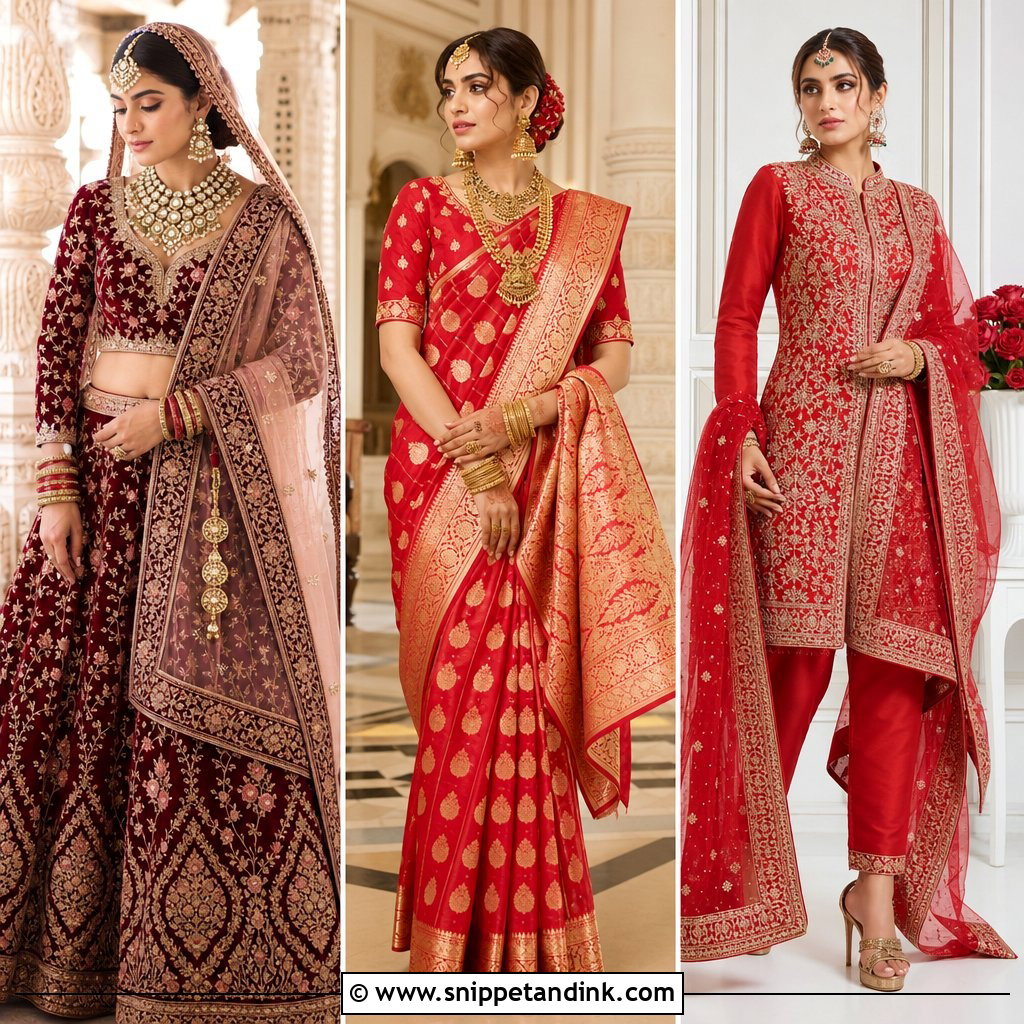
As a guest, I’d avoid red, which many families still treat as the bride’s color. Black and all-white are read differently from family to family, so if you’re unsure, ask the couple or a relative before you shop.
Making three outfits do five events
Separates stretch further than full sets. An embroidered blouse worn with a lehenga skirt at the sangeet can go under a plain silk saree for the reception, and one long jacket can top both an Anarkali and a palazzo set. Nobody notices a repeat when the silhouette changes.
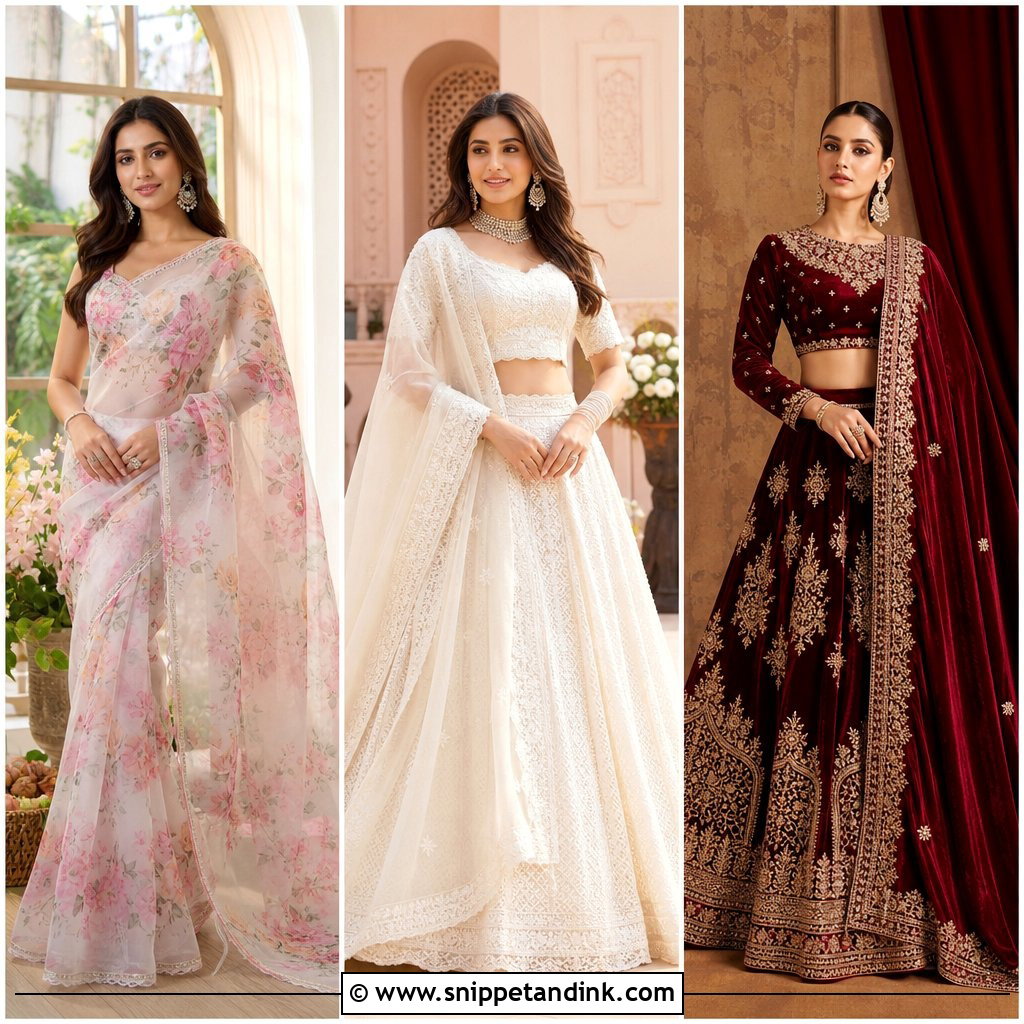
1. Pastel Floral Lehenga For Indian Wedding
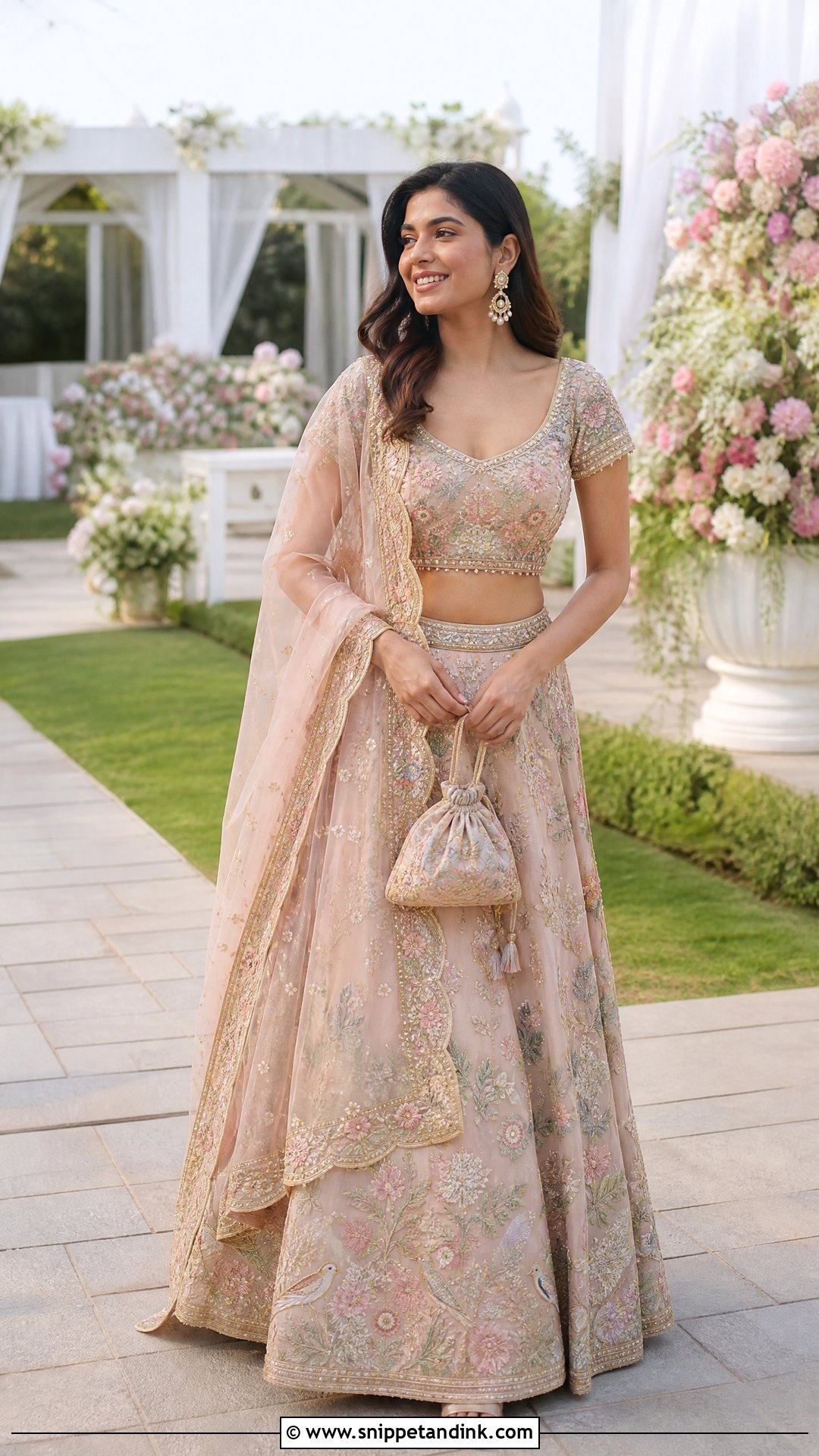
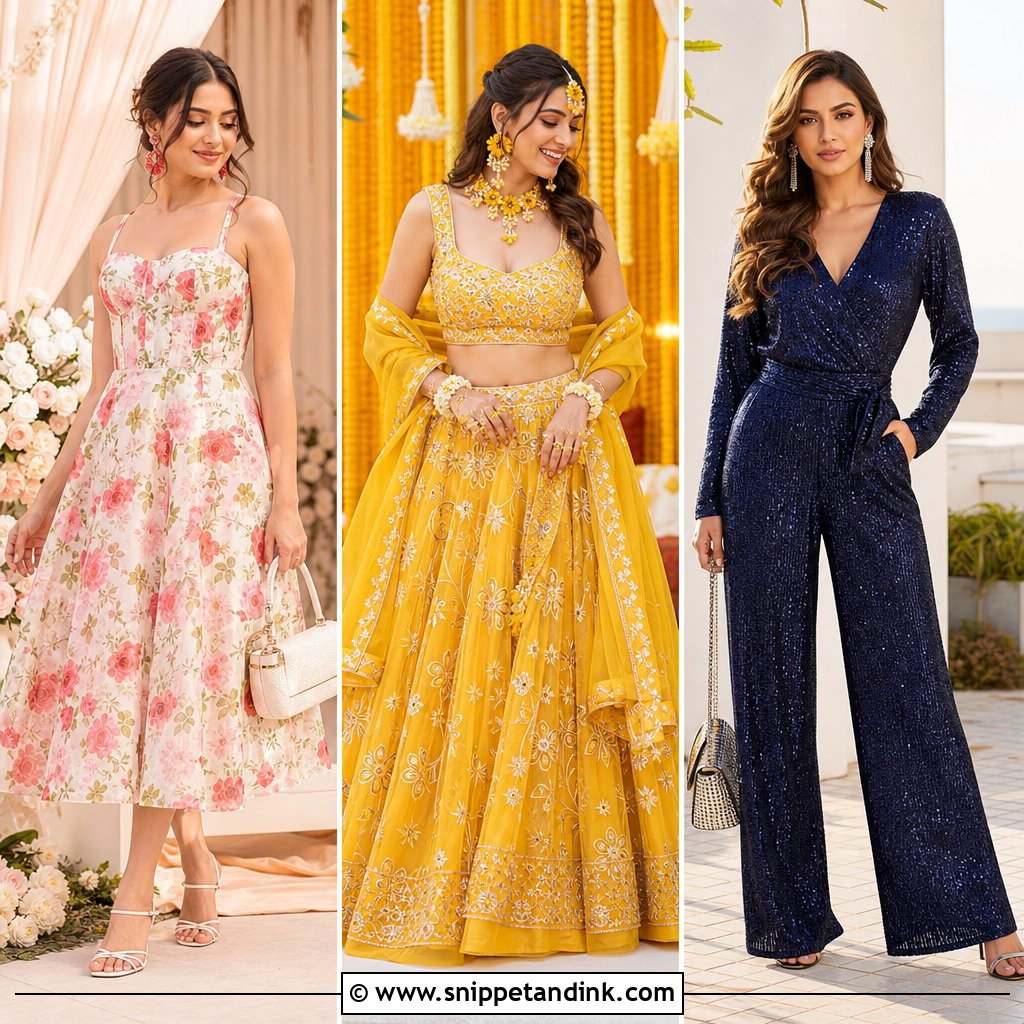
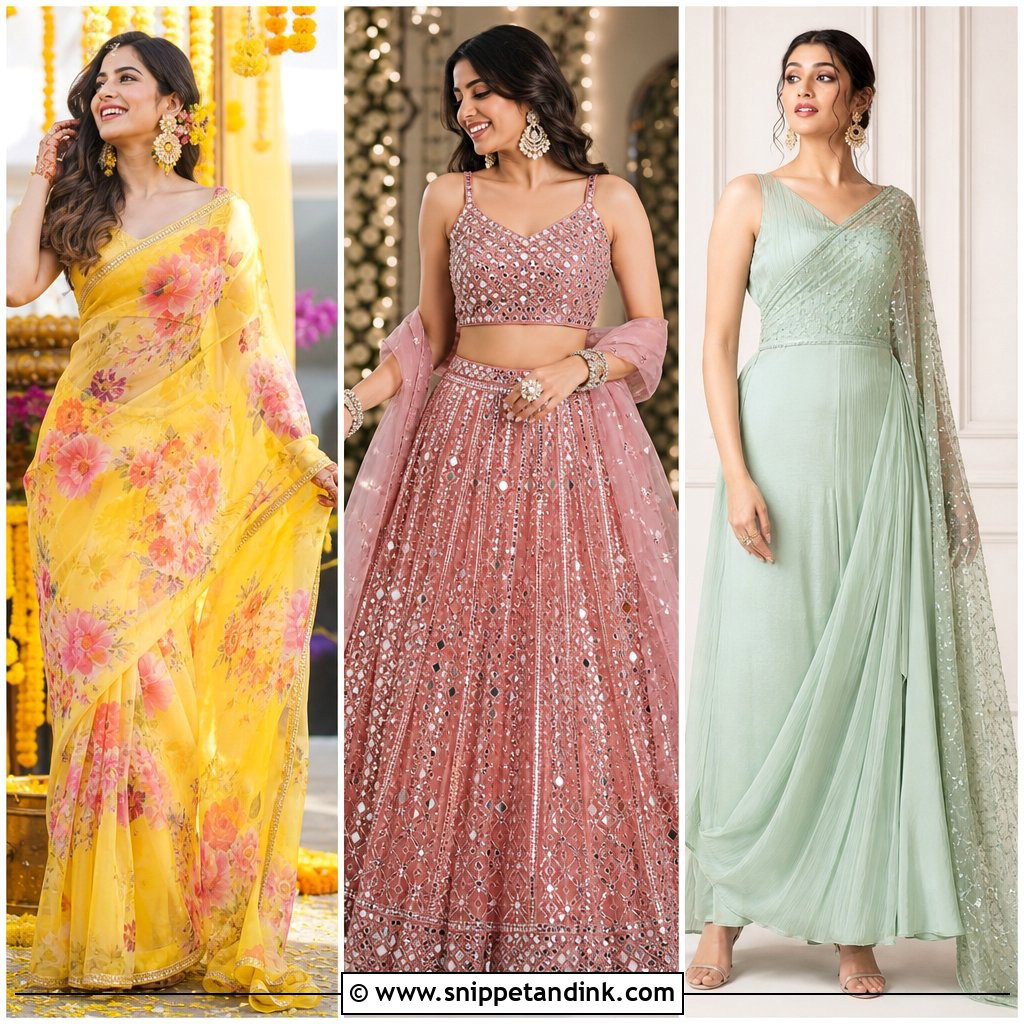
Pastel florals belong in daylight; under warm evening lighting, blush and mint can wash out to beige. I look for printed organza or fine floral embroidery, which stays festive without the weight of heavy zardozi in midday heat. A short-sleeved or square-neck blouse keeps it fresh, and a light dupatta over one shoulder leaves the skirt visible. Pearl drops, a small potli and metallic block heels, which won’t sink into a lawn the way stilettos do, finish it. Luminous makeup and loose waves or a low bun suit garden venues and wedding lunches.
2. Sequin Lehenga For Indian Wedding
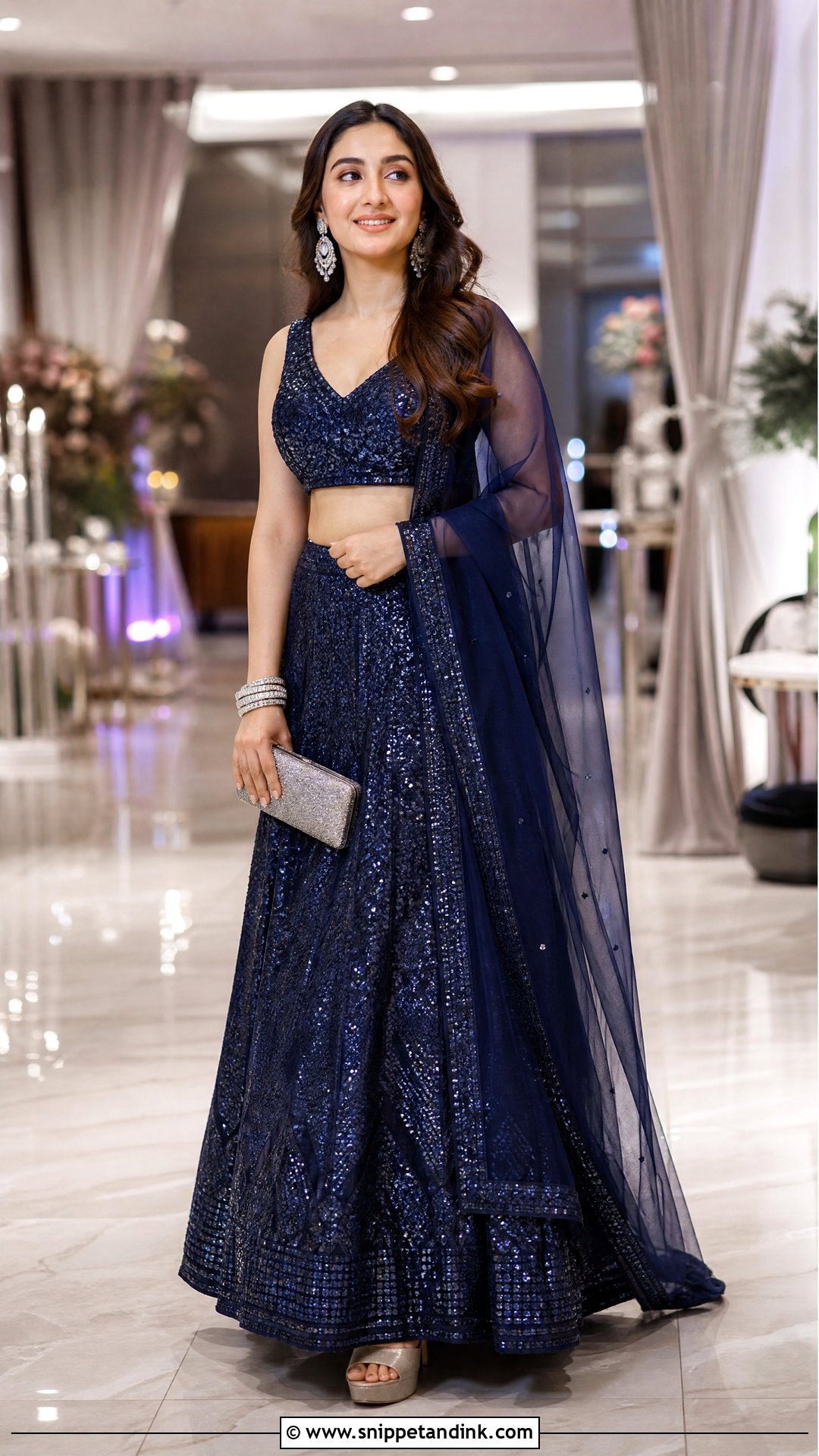
Sequins need evening light to come alive. Choose navy, plum, emerald, charcoal or muted gold with evenly spread embellishment rather than big decorative patches, which look heavier in photos. A matching blouse and skirt lengthen the line. I always check the inner blouse seams and underarms on sequin sets, because unlined sequins scratch once you start dancing. A sheer dupatta with a narrow border gives coverage without hiding the sparkle. Crystal earrings, a few bangles and cushioned platforms are enough for a sangeet or reception, and a sleek ponytail balances the shine.
3. Banarasi Silk Saree For Indian Wedding
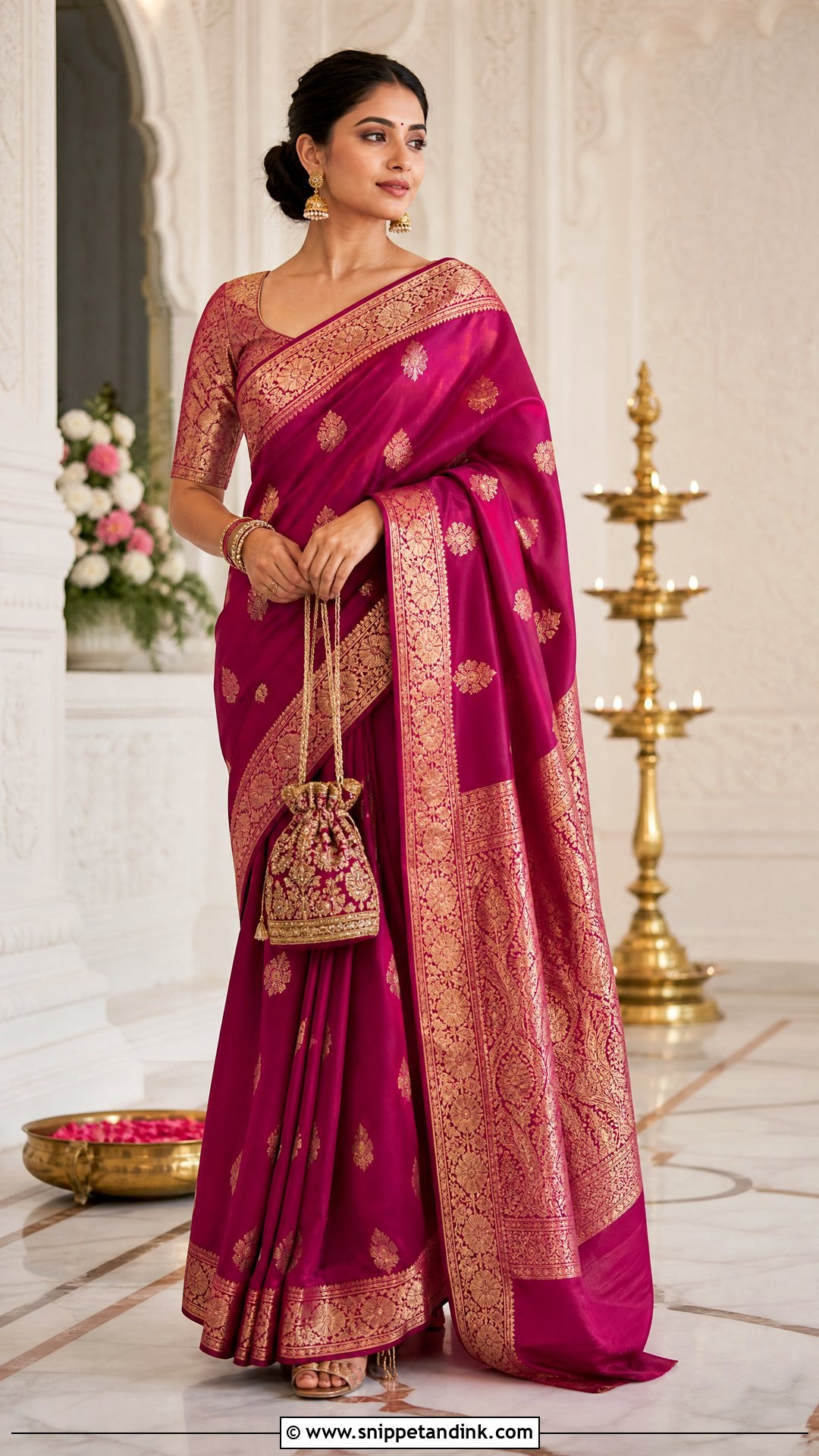
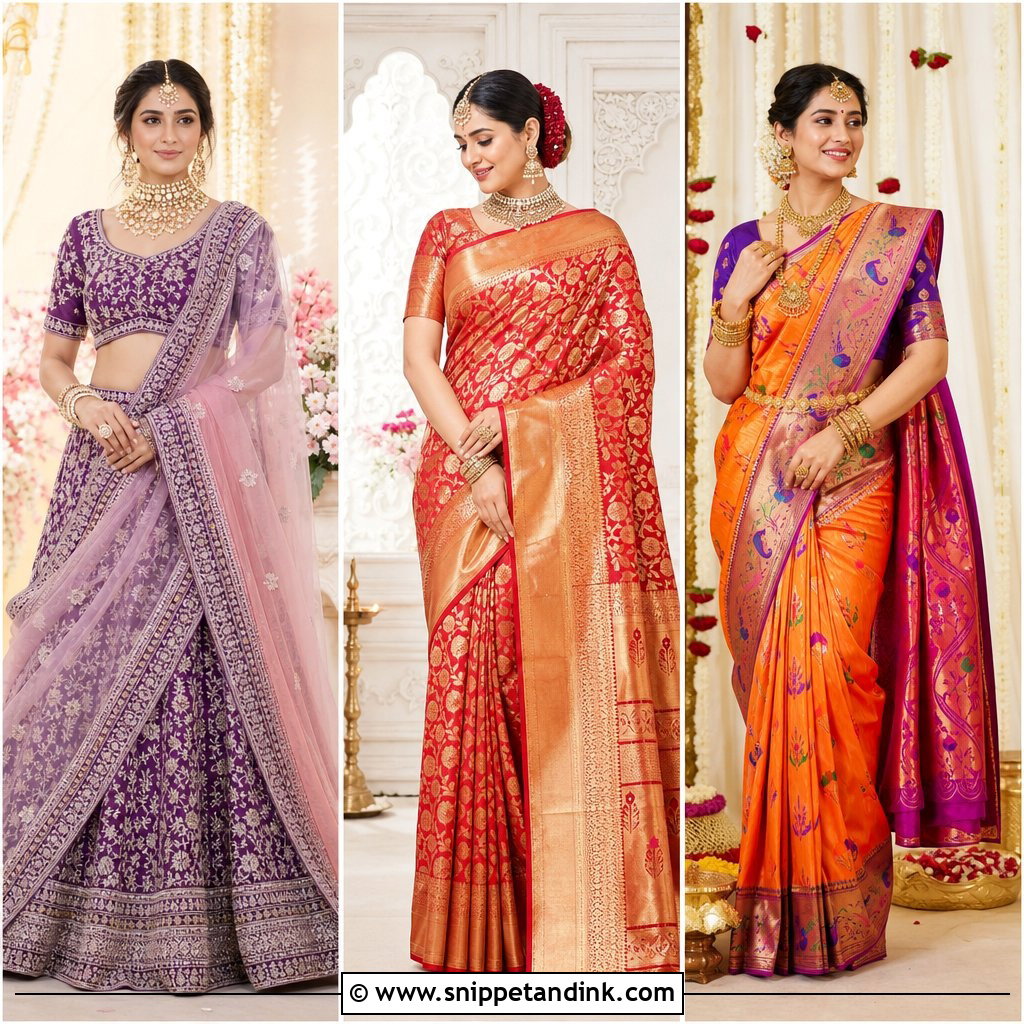
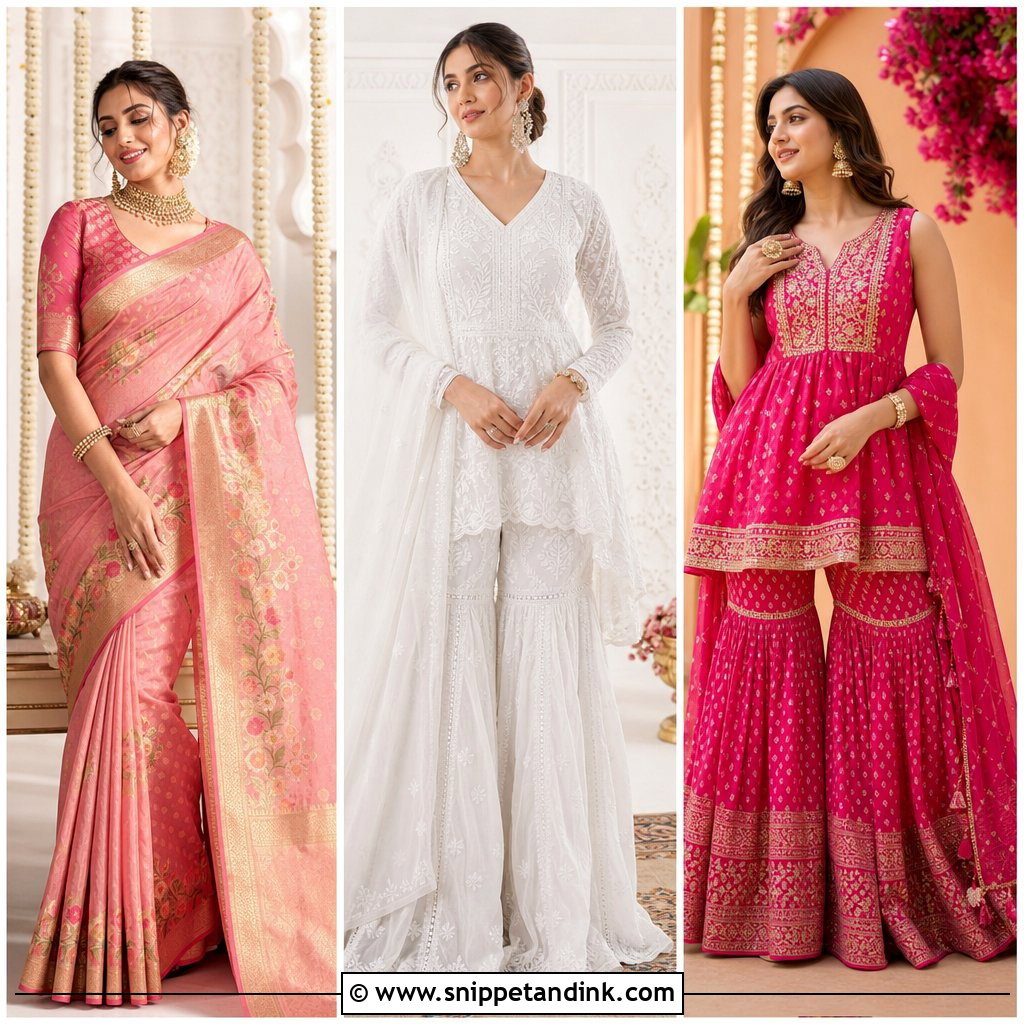
Banarasi silk earns its place at the main ceremony because of its woven zari, and jewel tones like magenta, royal blue, emerald and deep purple show it off best. I pair it with a well-fitted brocade or raw-silk blouse in a complementary color, usually with elbow sleeves and a modest neckline. Real zari makes the pallu heavy, so I pin it at the shoulder and again at the back to stop it dragging the drape down during a long ritual. Jhumkas, gold bangles and a structured potli echoing the border work well. Low block heels keep the pleats off the floor, and a smooth bun with fresh flowers completes it.
4. Kanjeevaram Saree For Indian Wedding
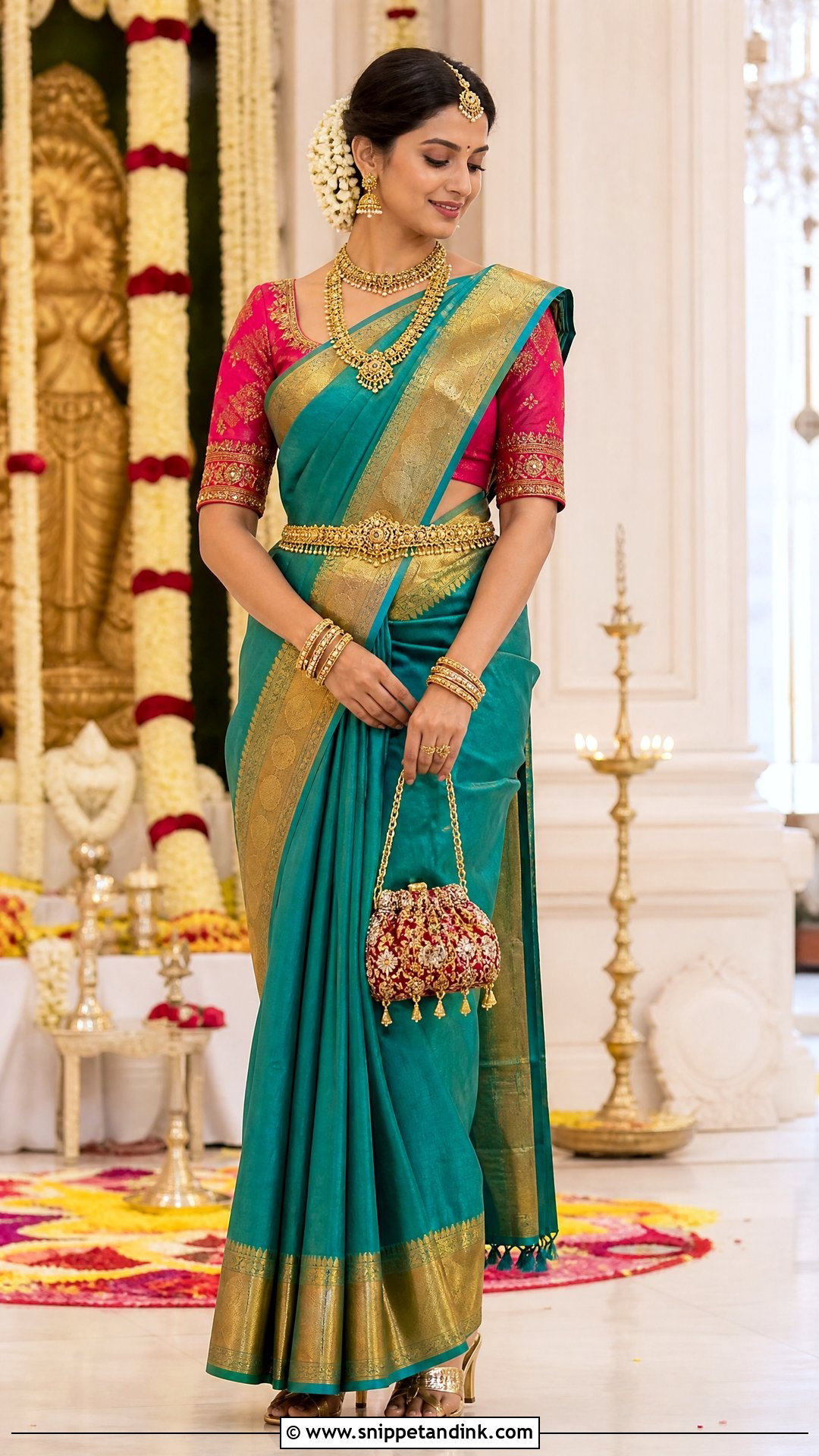
Kanjeevaram silk is thick and holds a pleat almost like card, which is why it looks so stately. Rust, teal, maroon, mustard or violet with a contrasting woven border are the classic choices. A matching silk blouse gives continuity, while a contrast blouse feels more current. Because the fabric is stiff, I set the pleats with a couple of extra pins at the waist; they won’t fall into place on their own the way georgette does. Temple earrings, bangles and a small necklace suit its weight, with gold sandals and a compact embroidered bag. A center-parted bun decorated with jasmine gives the ceremonial finish that South Indian weddings and heritage venues call for.
5. Pre-Draped Saree For Indian Wedding
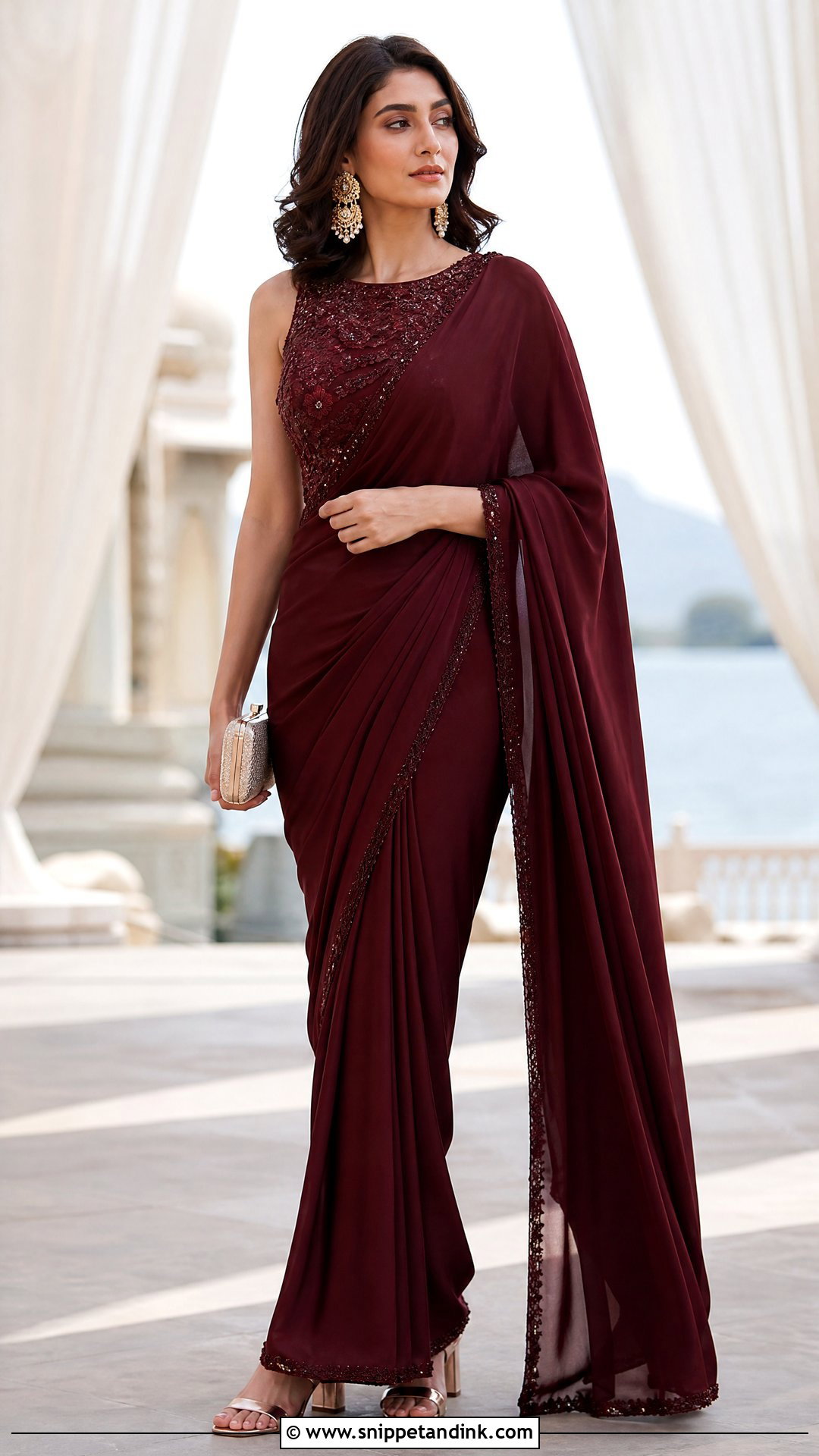
Pre-draped sarees save the time spent pleating and, more to the point, the scramble to find someone who can pleat. Georgette, satin or crepe with a clean waist and a naturally falling pallu work best. I check one thing before anyone buys: the waist must be adjustable or fitted to you, since a stitched drape that sits too low pulls the pallu off the shoulder. An embroidered blouse adds structure. Wine, midnight blue, rose gold and sage suit modern venues. Shoulder-grazing earrings, a cuff and a box clutch are plenty, and a neat ponytail lets the drape do the work. Destination guests and anyone new to sarees get the most from it.
6. Saree Gown For Indian Wedding
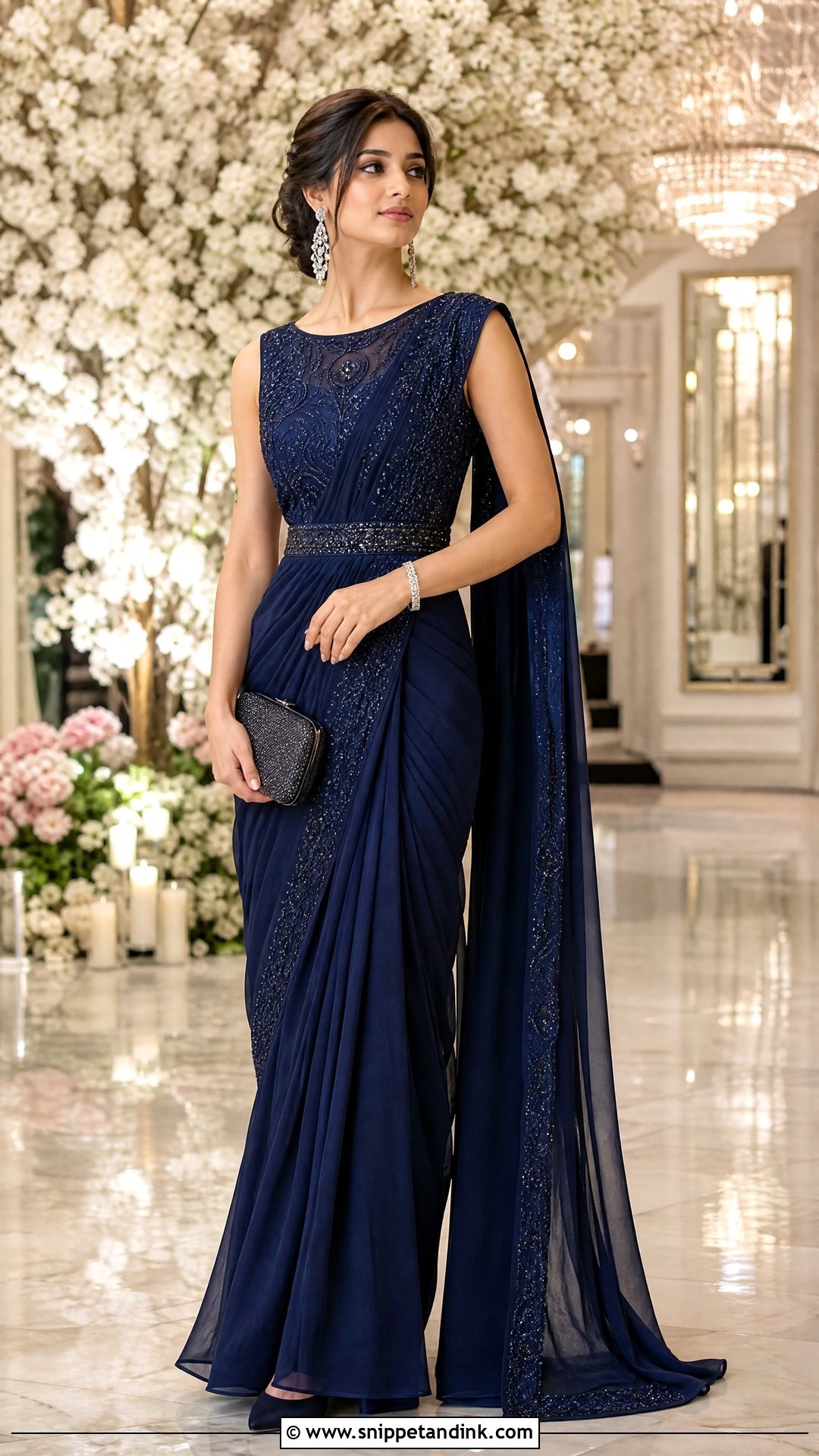
Love how a saree moves but want the security of a gown? A saree gown gives you both. Look for soft waist draping, an attached pallu and a floor-length skirt you can actually walk in. I ask clients to try a few stairs in it before buying, since some attached pallus wrap around the legs. Embellished shoulders or a defined waistband add formality. Deep green, sapphire, burgundy and metallic gray suit evening receptions. Long earrings, a slim bracelet, a structured clutch and closed-toe heels are enough, with a sleek bun to keep the neckline clear.
7. Floor-Length Anarkali For Indian Wedding
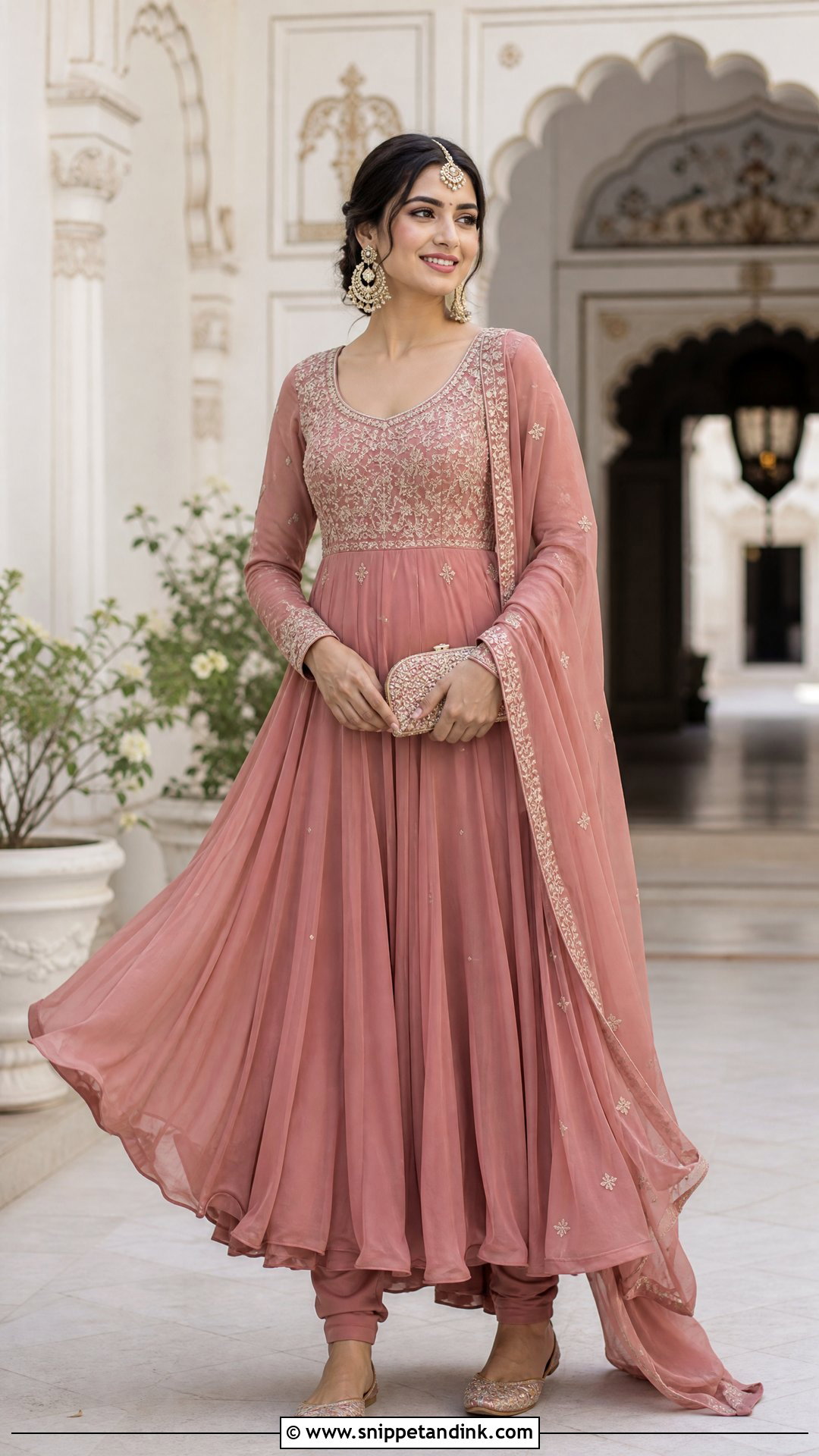
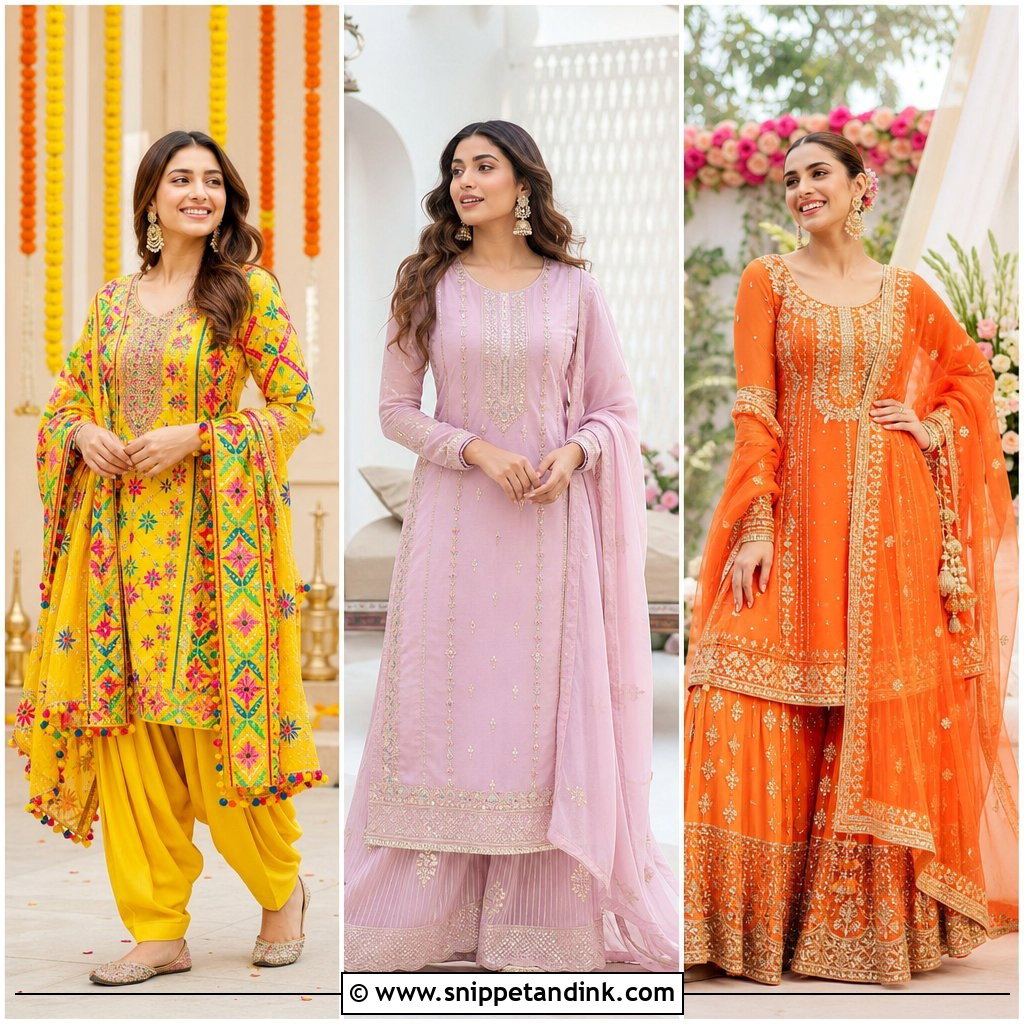
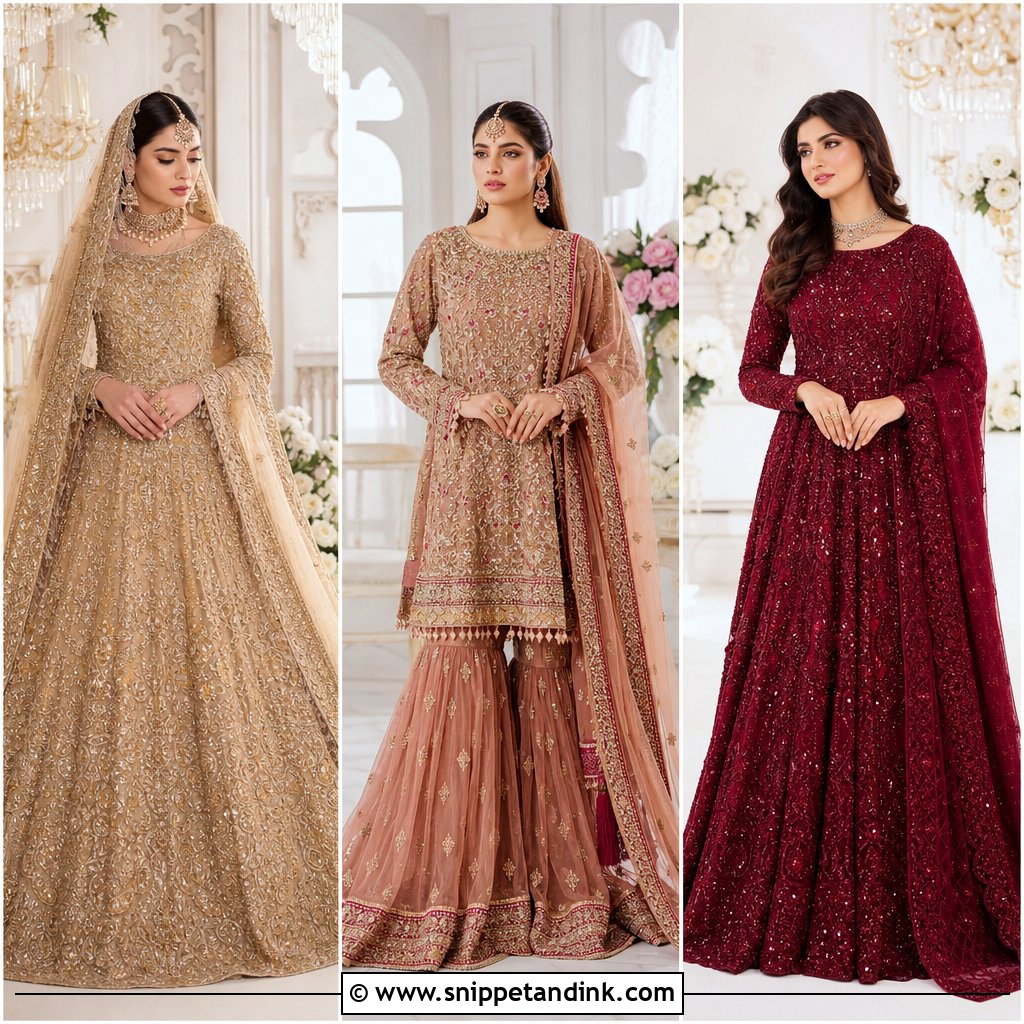
A floor-length Anarkali gives formal coverage and still lets you move freely. Chiffon or georgette suit warm months, while silk blends and embroidered net hold their shape better in cooler weather. The bodice is where I spend fitting time: the flare should start right at your natural waist, or the panels bunch and the whole dress looks shorter. Slim pants underneath and a dupatta over both shoulders or one arm complete it. Chandbalis, a ring and an embroidered clutch, with juttis for long ceremonies or block heels for height, then a half-up style or low bun.
8. Jacket Anarkali For Indian Wedding
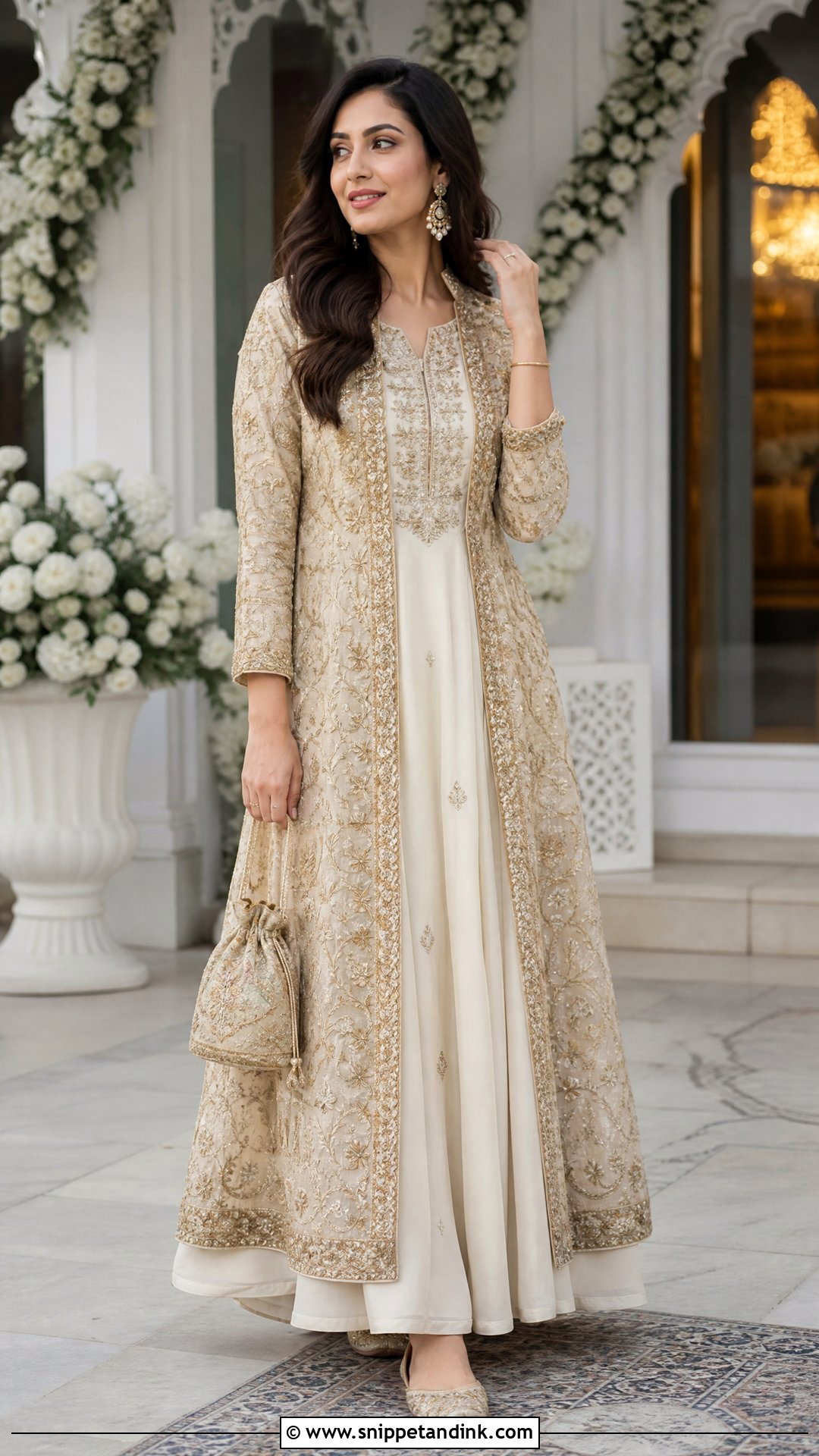
A long embroidered jacket over a plain or lightly worked Anarkali adds structure and lets you skip both heavy jewelry and the dupatta. Worn open it feels relaxed; closed, it reads more regal. Coordinated pairs like ivory and gold, navy and silver, or dusty rose and burgundy keep the layers connected. Layering adds heat, so I save this one for winter weddings and air-conditioned evening venues. Drop earrings, a slim bangle and a velvet bag go with pointed juttis under the long hem.
9. Sharara Suit For Indian Wedding
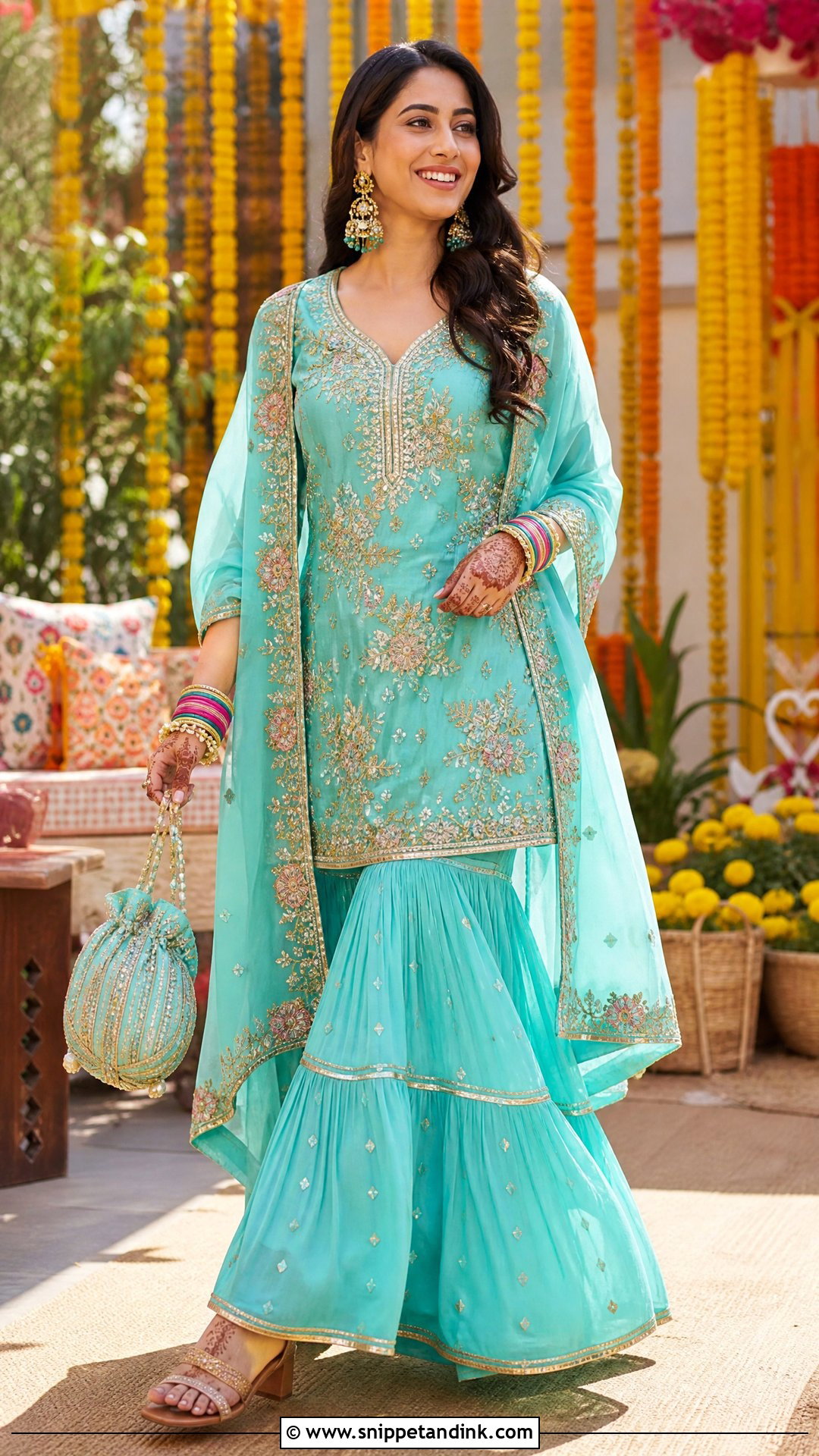
Sharara sets are what I suggest when someone tells me she plans to dance all night. Wide flared pants with a short or mid-length kurta that defines the waist move easily. Georgette flows; silk blends look more structured and formal. Check the length with your shoes on, because sharara hems that brush the floor get stepped on, especially on stairs. A light dupatta with an embroidered border connects top and bottom. Coral, turquoise, lavender or deep pink work across most functions, with jhumkas, stacked bangles, a beaded potli and embellished flats.
10. Gharara Suit For Indian Wedding
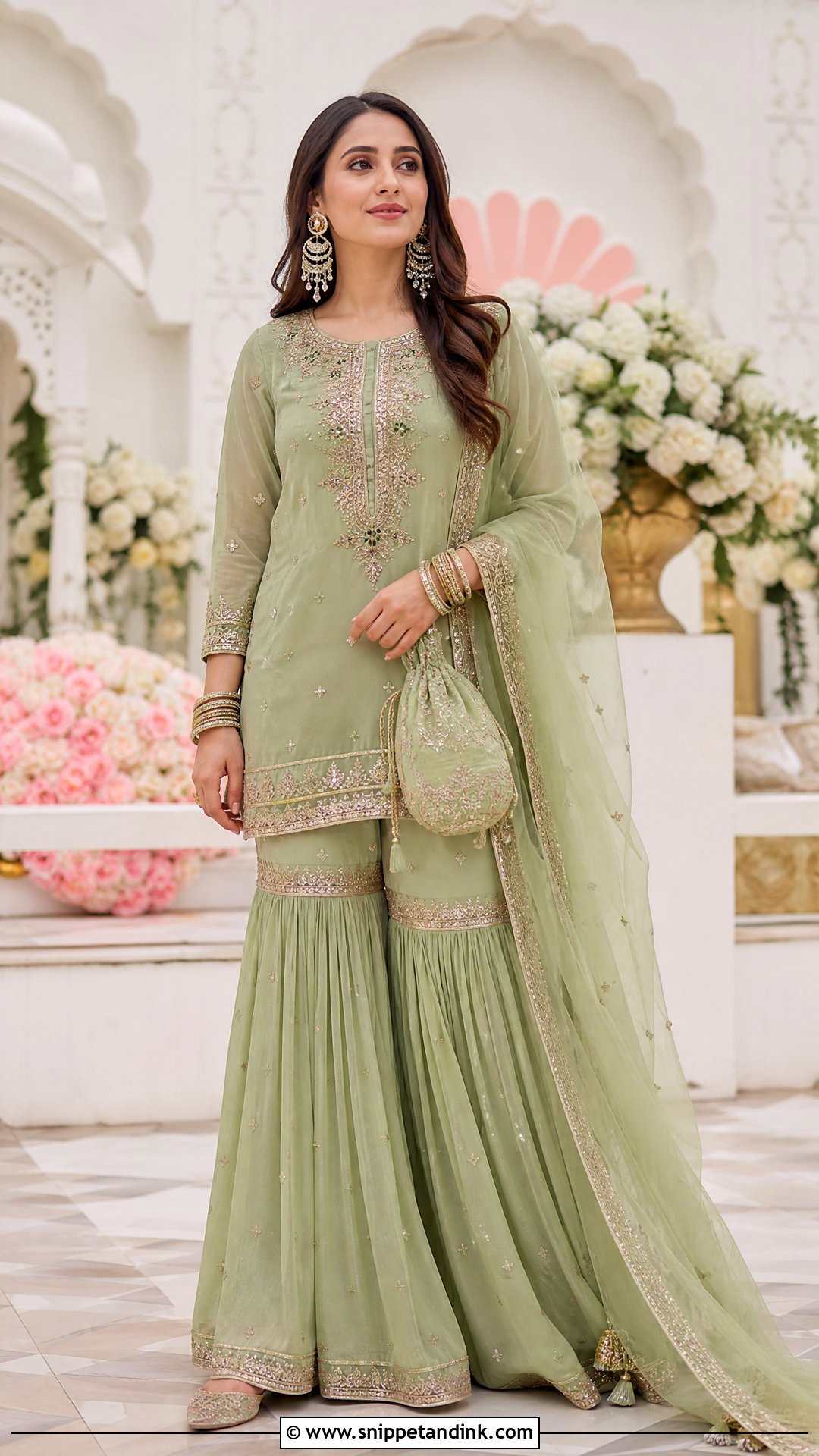
The fitted-to-flared shape of a gharara suit comes from the knee joint, the trimmed seam where the fitted upper leg meets the flare. Wear a short kurti so that seam stays visible, because a long kurta hides the very detail that makes it a gharara. Chiffon, tissue, brocade and silk all give a formal finish. Drape a bordered dupatta over one shoulder and keep jewelry antique-finish to match. Pointed juttis sit neatly under the wide hem. Ivory, pistachio, rose and jewel tones suit nikah ceremonies and evening receptions.
11. Peplum Sharara For Indian Wedding
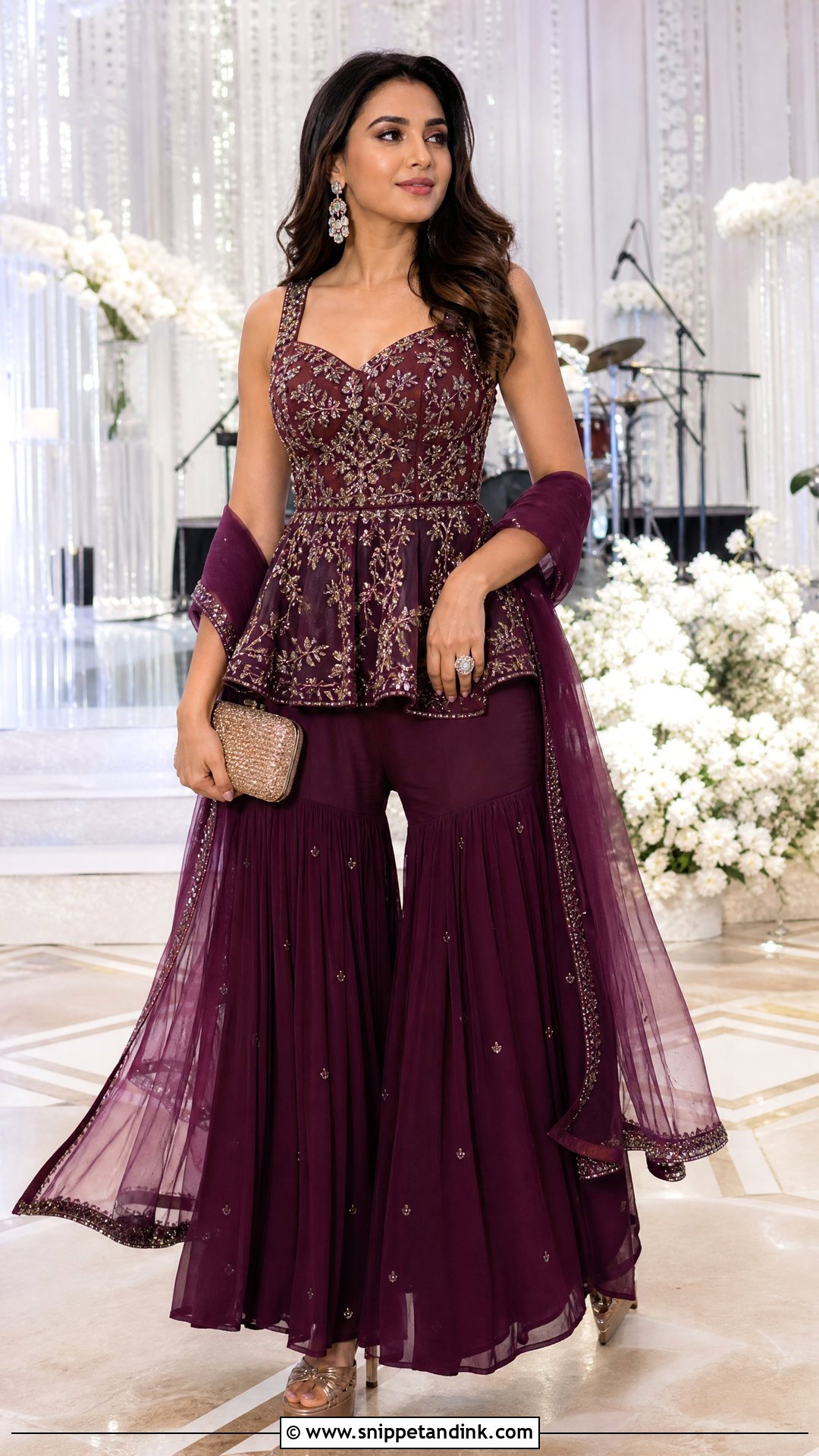
Wide sharara pants blur the waist, and a peplum top puts it back. I prefer the embroidery kept to the neckline, cuffs or hem of the peplum, with pants in the same color for one long line. The peplum should end at the high hip; any lower and it cuts your legs short against the flare. A sheer dupatta can sit behind the arms or over a shoulder. Medium earrings, a cocktail ring and platform heels, with a high ponytail or smooth waves, suit a sangeet or engagement party.
12. Cape Lehenga For Indian Wedding
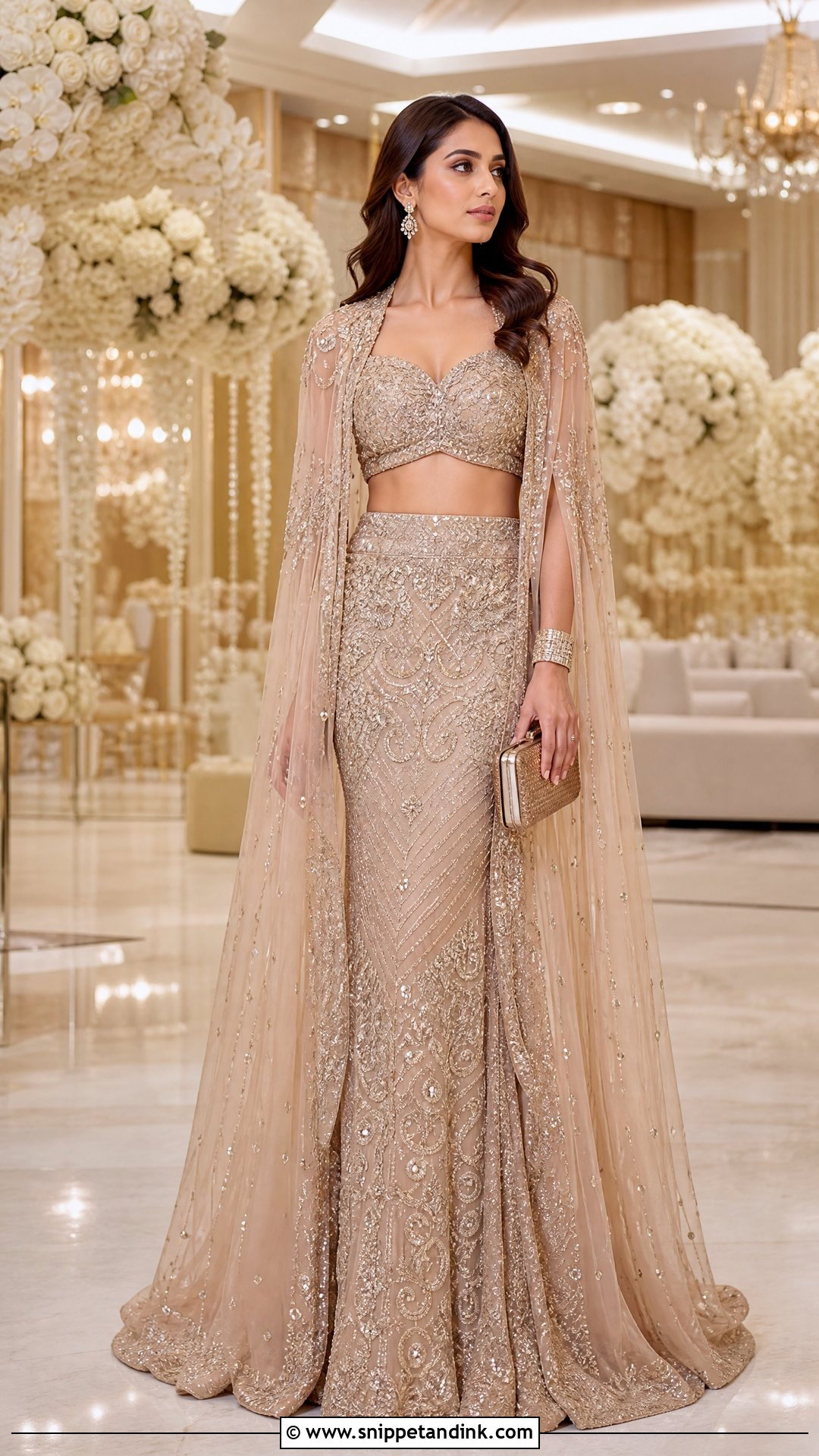
A cape replaces the dupatta, which means nothing to keep re-pinning while you dance. Start with a streamlined skirt and fitted blouse, then add a sheer embroidered cape from the shoulders. Waist-length reads modern; floor-length is more formal. If the cape is heavily embroidered, I ask the tailor to tack it to the blouse at the shoulder so it doesn’t slide back and pull on the neckline. Tonal colors like lavender, champagne, emerald or midnight blue keep the layers connected. Simple earrings, a cuff, a hard clutch and a polished bun let the cape lead.
13. Corset Blouse Saree For Indian Wedding
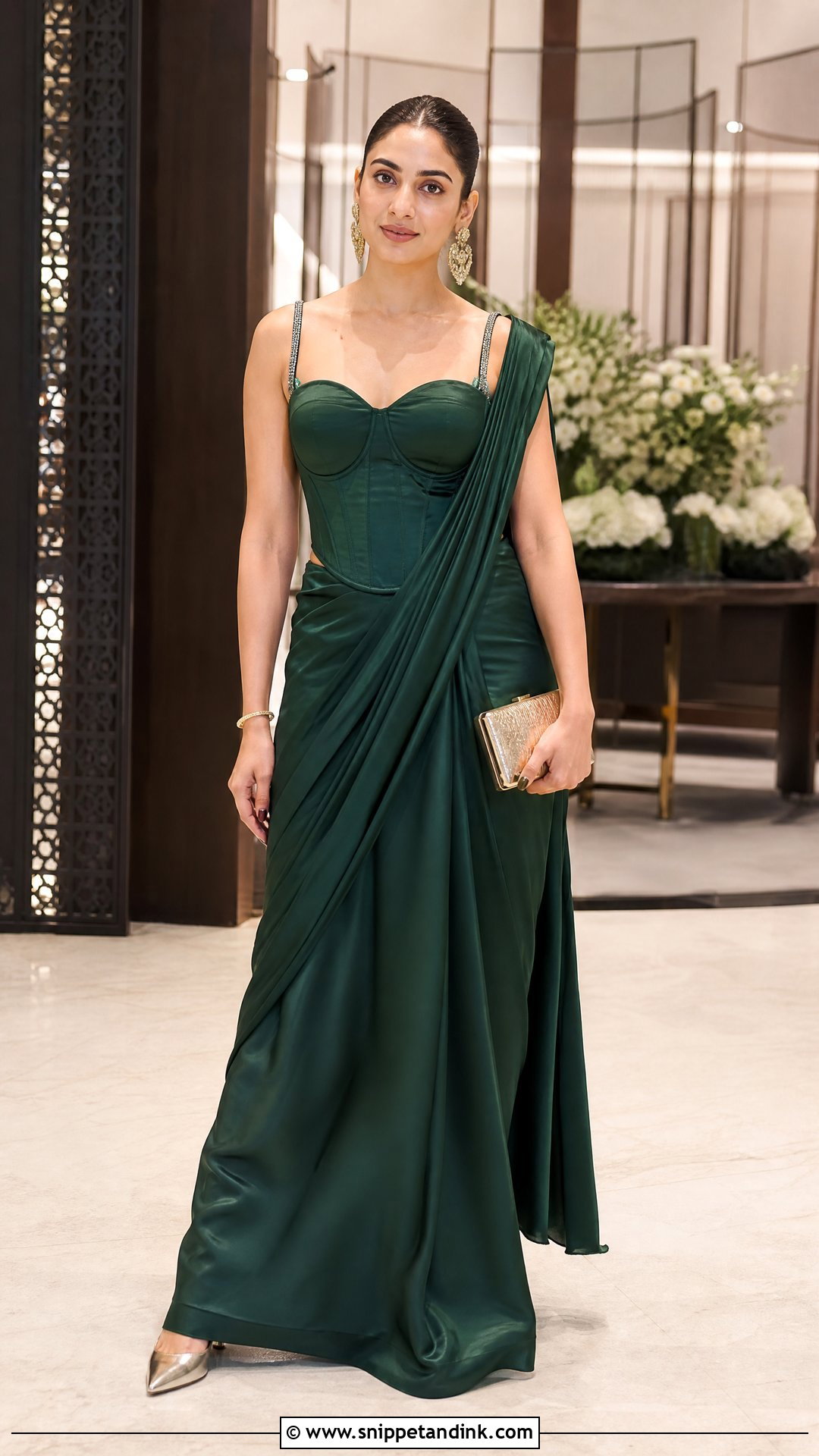
A corset blouse sharpens a saree, but only when the fit is right. It should be boned and fitted through the ribcage so it stays put when you lift your arms or bend for a ritual; a loose corset rides up and shows it. Balance it with a fluid satin, crepe or light organza saree. A tonal pairing looks streamlined, or let an embroidered blouse do the talking over a plain drape. Sculptural earrings and a minimal clutch keep it clean. Pointed heels lengthen the drape, though metallic block heels are steadier. A sleek bun or brushed-out waves suit modern receptions.
14. Embroidered Jacket And Palazzo Set For Indian Wedding
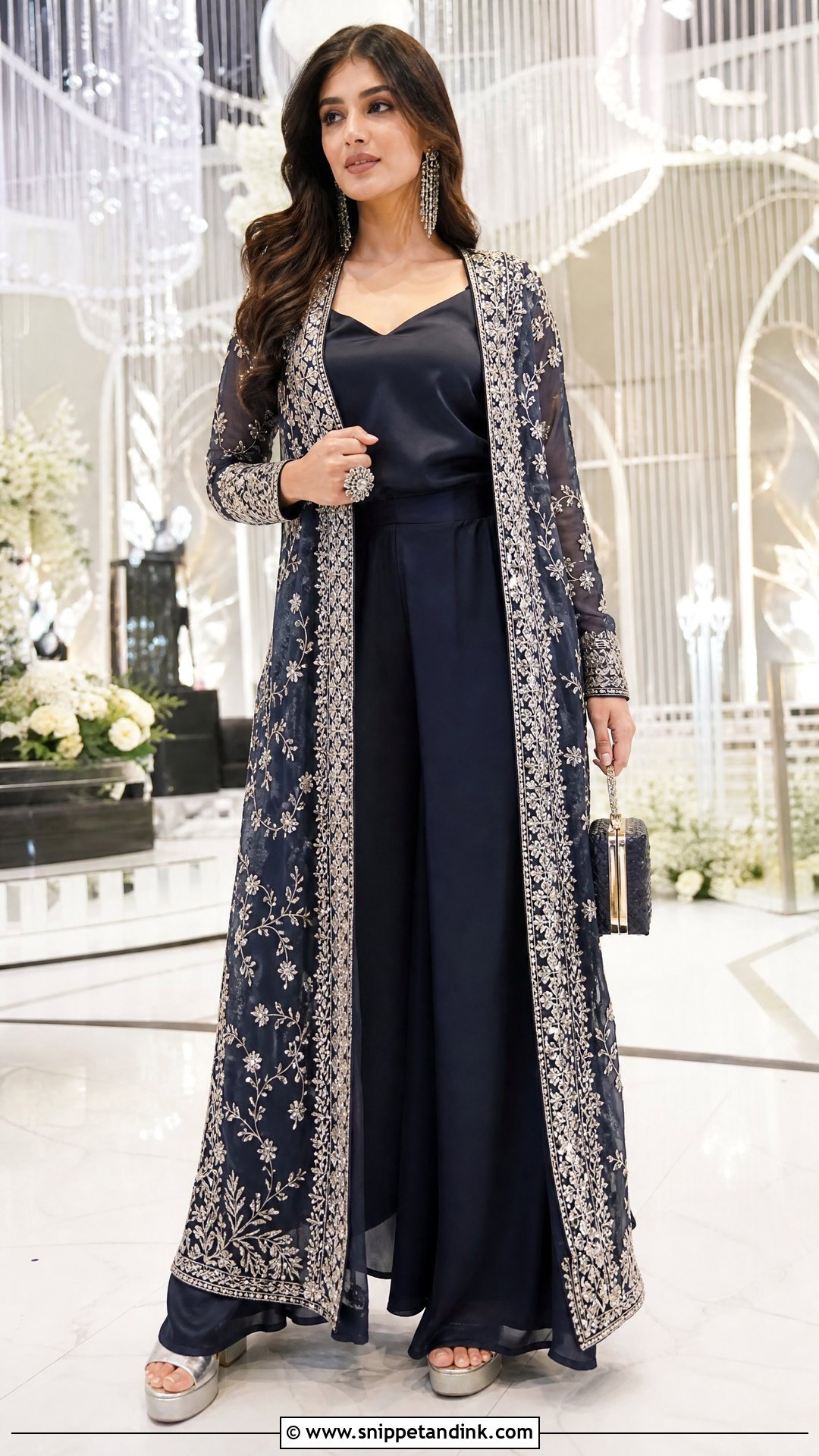
A long embroidered jacket worn over palazzo pants gives you coverage and comfort, and each piece goes back into your wardrobe afterward. Start with a fitted camisole or short kurta and high-waisted wide-leg pants in a matching color, then add a floor-length jacket worn open for long vertical lines. Teal, plum, navy and berry suit evening events. I hem palazzos with the actual sandals on, because a hem that’s even slightly long catches on platform soles. Long earrings, a single ring and a structured mini bag finish it.
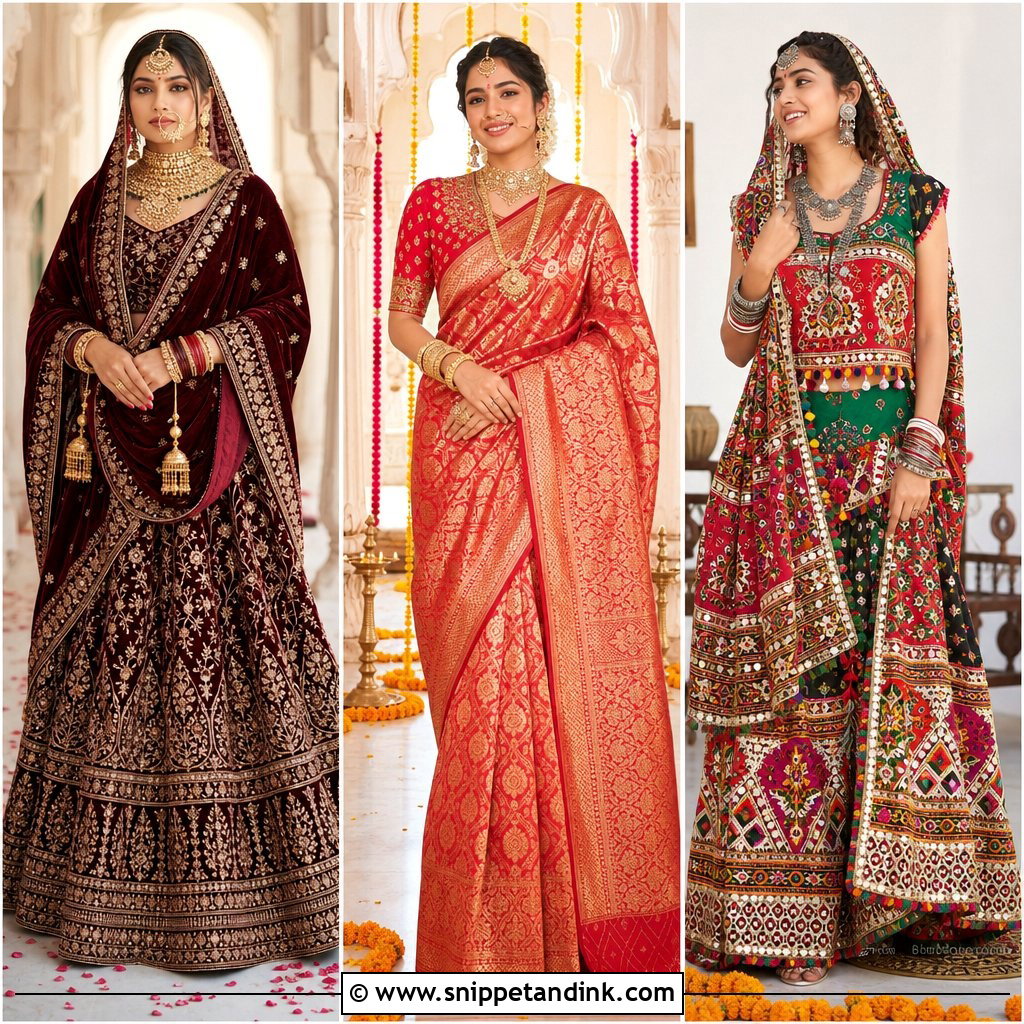

15. Indo-Western Jumpsuit With Dupatta For Indian Wedding
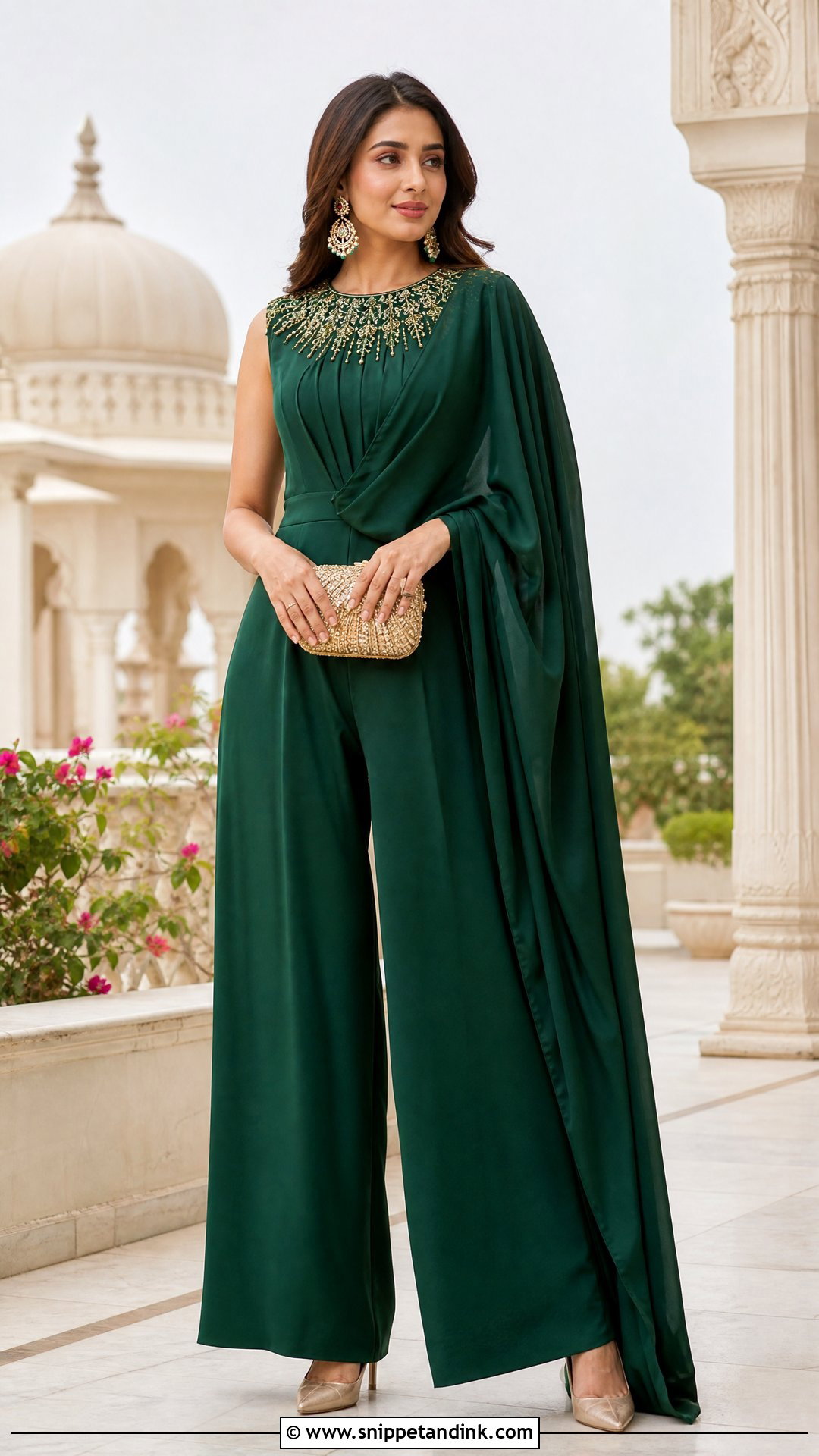
An Indo-Western jumpsuit is convenient without looking casual, provided the fabric has some weight. Silk, crepe or georgette with embroidery at the neckline or waist is right; thin polyester jumpsuits cling and look like daywear. A dupatta attached at one shoulder brings in the traditional drape, or you can wear a short embellished cape instead. One practical point I always raise: check how easily you can get in and out of it, since a long back zip means asking for help every time you visit the restroom. Chandelier earrings, a slim belt if needed and pointed pumps suit welcome parties, modern sangeets and destination receptions.
16. Velvet Lehenga For Winter Indian Wedding
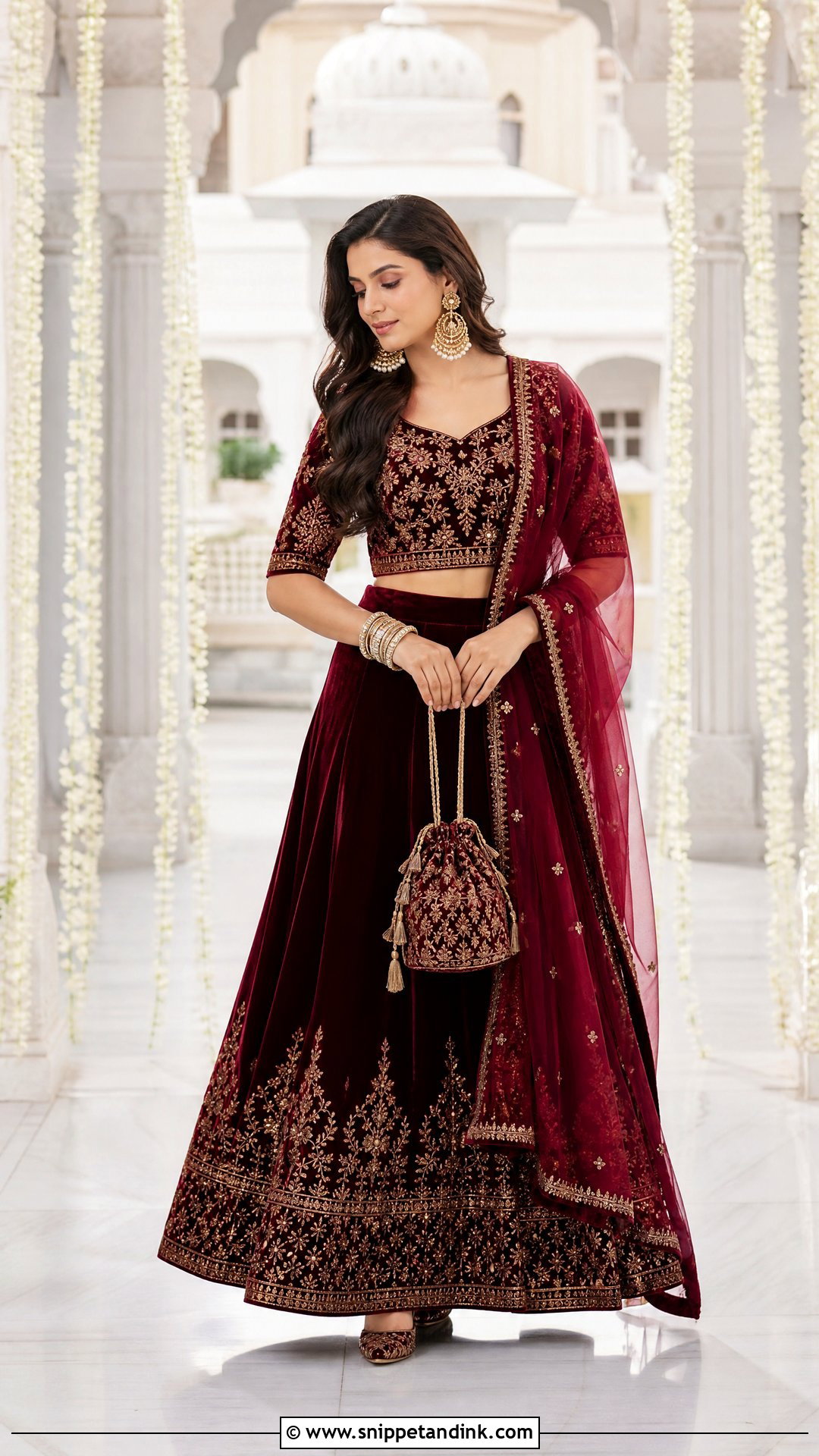
Velvet is warm, so I only put clients in it for winter evenings or outdoor events in the cooler months. A controlled A-line in maroon, forest green, navy, aubergine or deep teal keeps the bulk in check. Velvet also shows pressure marks where you sit, so steam it on the day and try not to crush it in the car on the way. Full or elbow sleeves and a higher neckline suit the season. A light net dupatta stops the outfit feeling heavy, while antique gold jewelry, a brocade potli and closed-toe block heels suit the plush pile.
17. Organza Saree For Day Indian Wedding
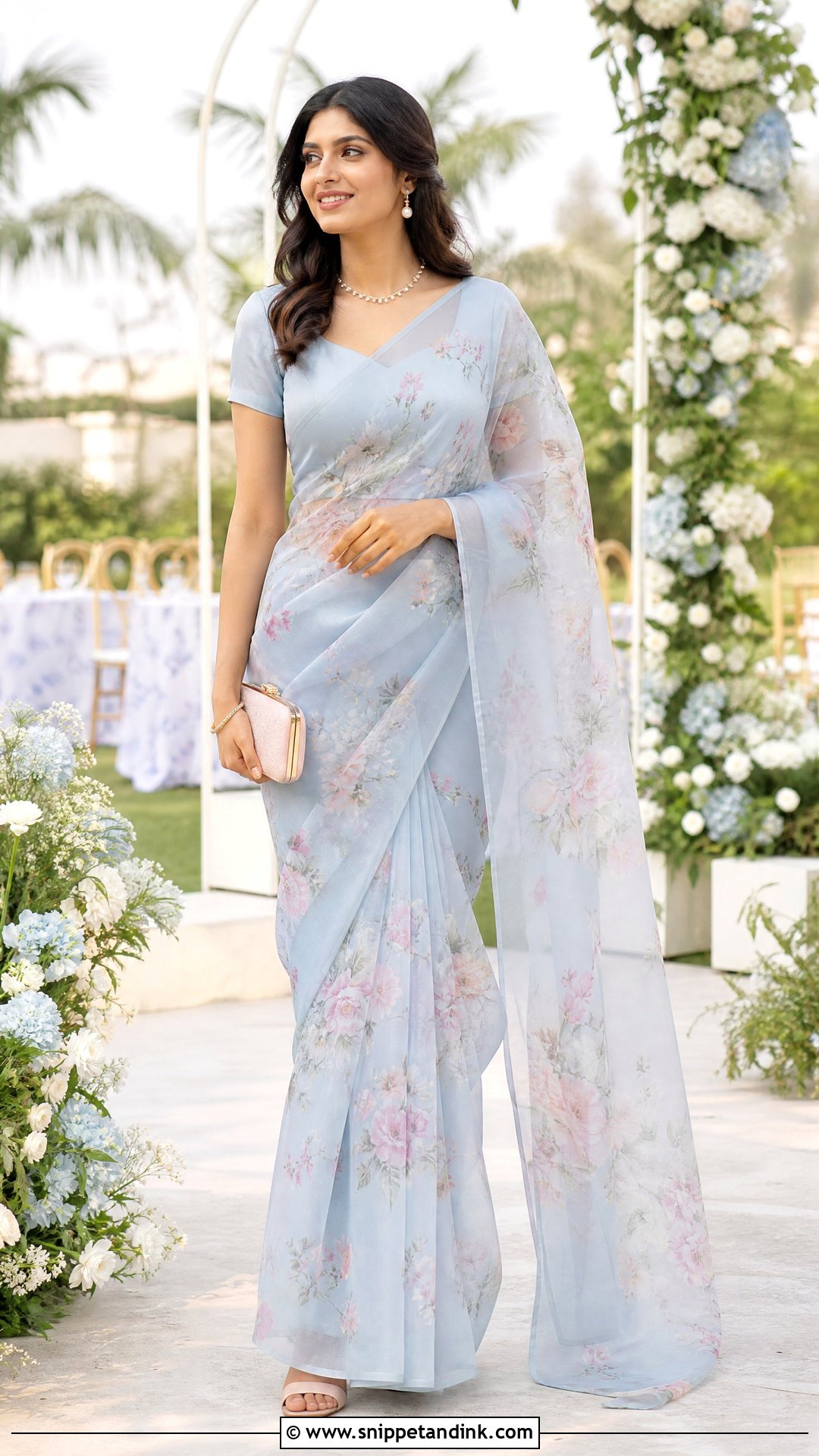
Organza is crisp, so a saree in it holds a little volume instead of clinging, which is welcome in daytime heat. Lilac, lemon, blush, powder blue and ivory with floral prints or fine threadwork suit bright ceremonies. A fitted sleeveless, short or elbow-sleeve blouse balances the fabric’s body. Keep the pallu flat; organza resists being bunched into many shoulder pleats and will stand up stiffly if you force it. Pearl earrings and a small pastel clutch keep it light, with block-heel sandals and a low bun or soft curls.
18. Mirror Work Lehenga For Sangeet
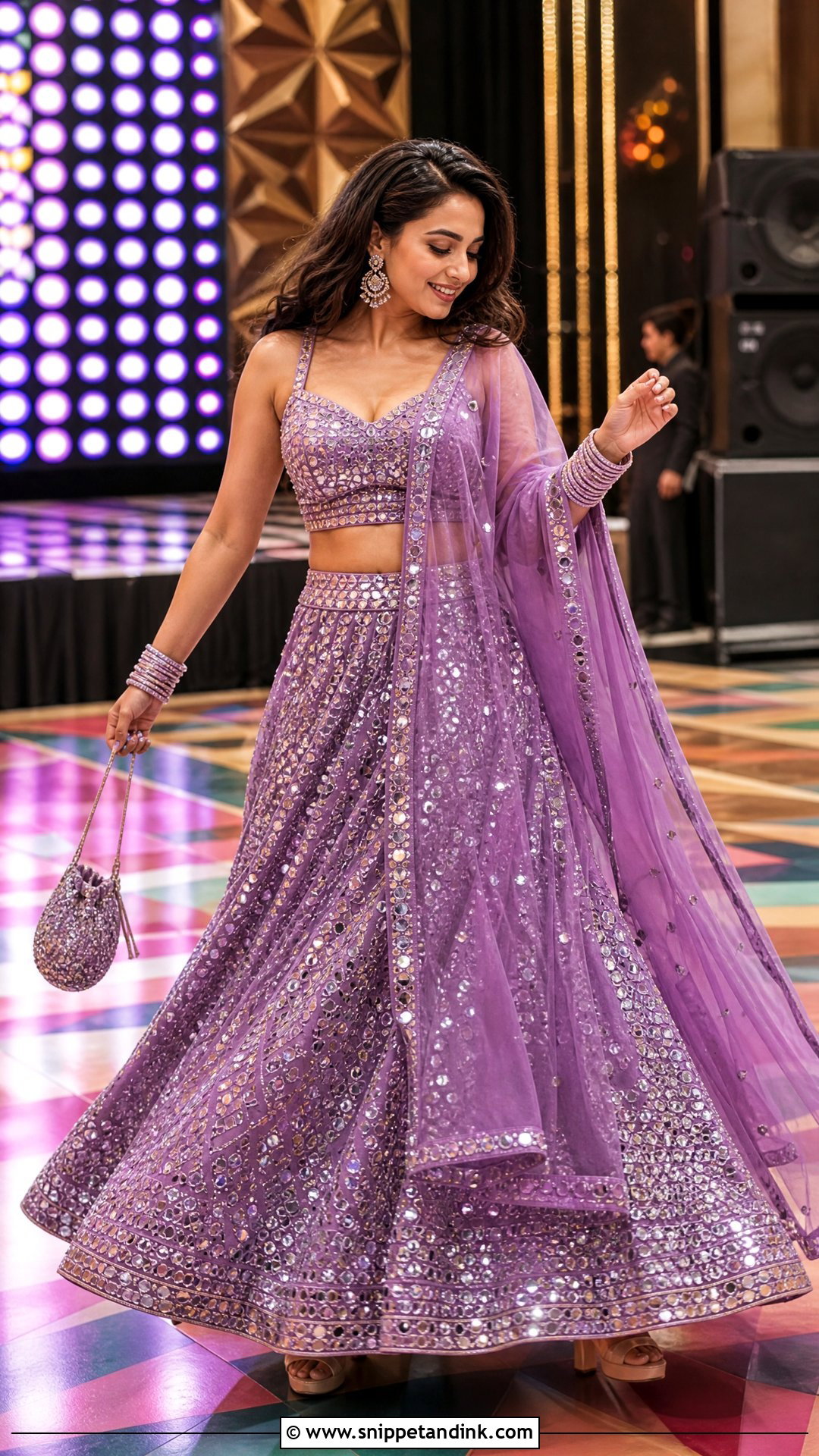
Mirror work catches stage lights during sangeet performances better than almost anything else. Before I approve one, I check that the mirrors are securely stitched and evenly spread, because loose mirrors along a skirt edge snag or drop off mid-dance. Jewel tones, hot pink, turquoise or deep purple suit the mood. Choose a blouse that lets your shoulders move and pin the dupatta firmly to one side. Statement earrings, a few bangles and a crossbody potli keep your hands free. Cushioned wedges are steadier than stilettos, and a braided ponytail stays put while you dance.
19. Yellow Sharara For Haldi
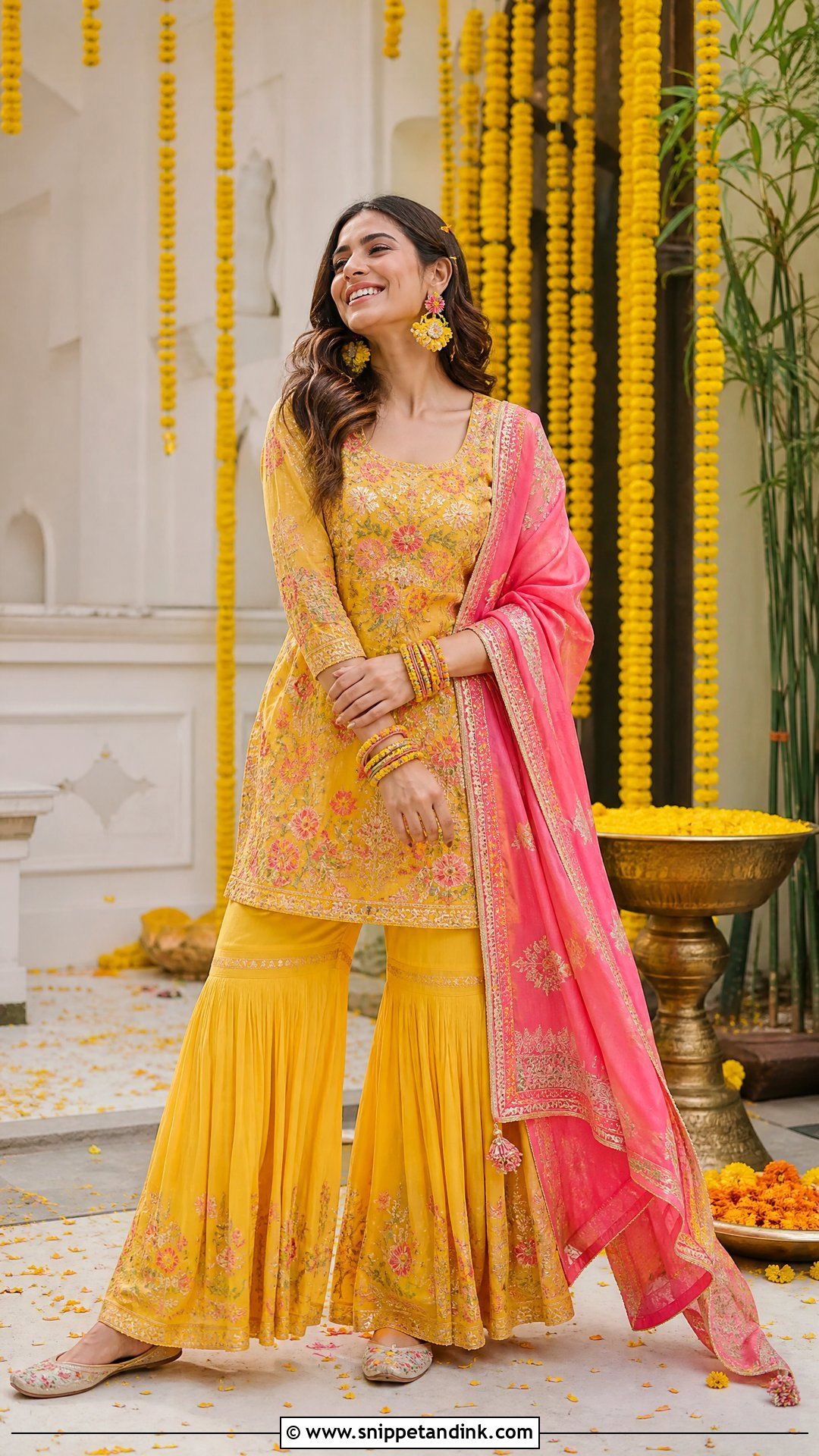
Turmeric stains, and it is very hard to get out of silk, so for haldi I dress clients in something washable: cotton silk, georgette or a washable blend. A light sharara with a short kurta in bright yellow is the classic pick. Small floral motifs or mirror accents add interest without making it formal. Pin the dupatta at the shoulder to keep your hands free. Skip anything precious: floral earrings, colorful bangles and flat juttis, and no elaborate bag. A braid or secure ponytail keeps hair tidy for daytime haldi festivities.
20. Green Lehenga For Mehndi
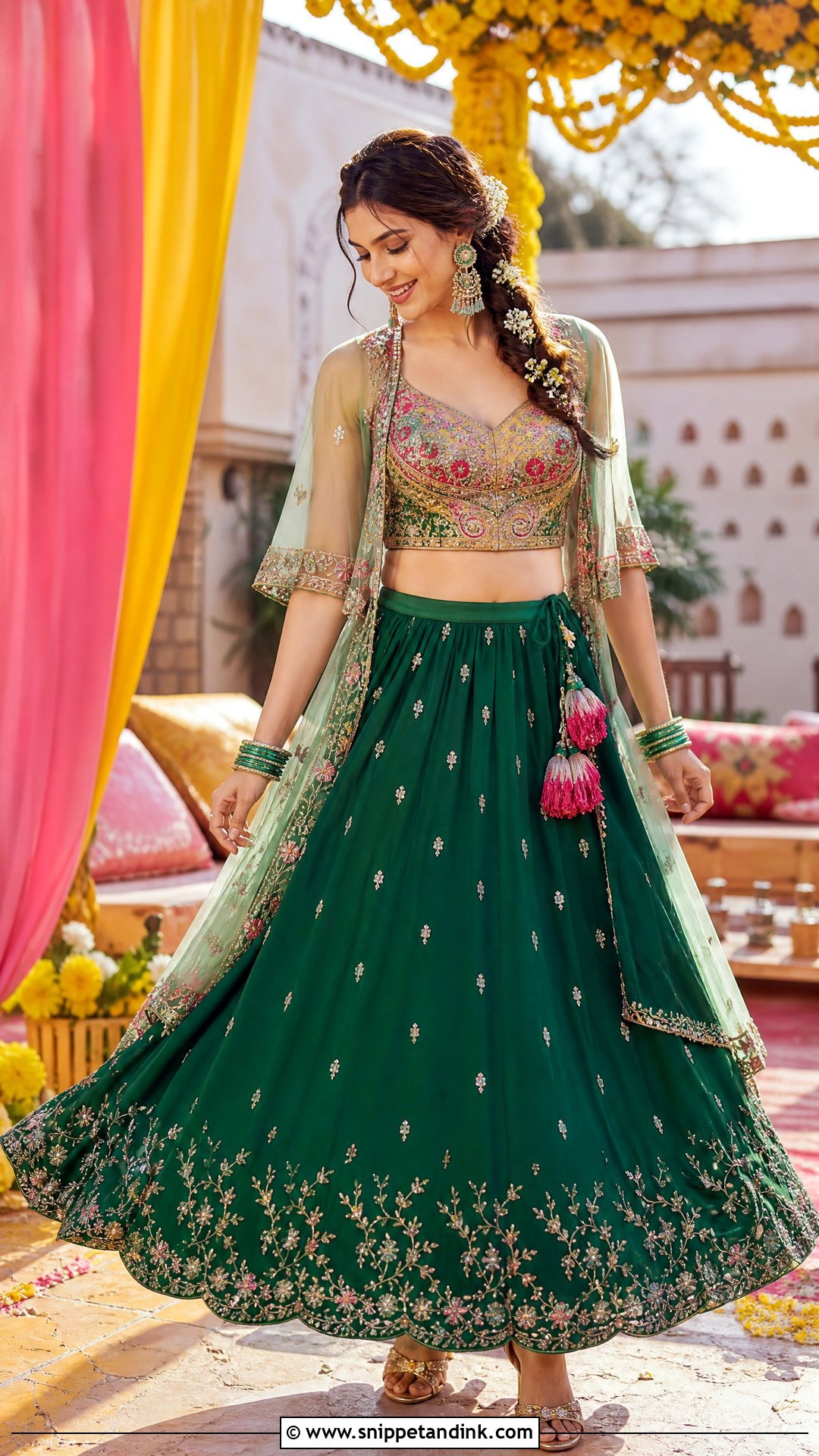
Fresh henna has to stay undisturbed while it dries, for the bride and for any guest who sits with the artist, so I plan mehndi outfits around free hands. A green lehenga in lime, sage, emerald or bottle green suits the event. Choose a short cape or a dupatta pinned away from the arms, and skip long sleeves that will brush wet paste. A blouse in the same shade or a pink, ivory or gold contrast both work. Wear only a few bracelets you can slide off before the artist starts. Embroidered juttis or low wedges and a side braid with small flowers suit a long afternoon on floor cushions.
Sarees and Blouses Need Weeks, Not Days, to Be Wearable
Most Indian outfits don’t arrive ready to wear, and that catches out a lot of first-time buyers. I plan backward from the wedding date.
Fall and pico on a new saree
A new saree usually needs a fall, a cotton strip stitched inside the lower edge that gives the pleats weight to hang, and pico finishing on the raw edges so they don’t fray. A tailor can normally do both in a few days, though it takes longer in wedding season.
The blouse is the slow part
Custom blouse stitching commonly takes a couple of weeks, plus a trial and an alteration round. Bring a blouse that already fits you well as a pattern, and wear the bra you’ll wear on the day to the fitting. Padding, hooks or zip, and sleeve length all get decided there.
Draping help and packing
If you can’t drape silk yourself, line up a draper or a relative who can and practice once before the day, with a small box of safety pins in mixed sizes. For travel, fold heavy silk inside muslin or a cotton bag rather than plastic, which traps moisture, and refold along new lines between wears so the zari doesn’t crack at the creases.
Dress for the Function, Then for the Photos
Daytime ceremonies, formal receptions, energetic sangeets and relaxed pre-wedding functions each ask for something different. Start by matching the silhouette and fabric to the season, the venue and what you’ll be doing there. A light sharara suits dancing, while a silk saree or velvet lehenga belongs at a traditional formal ceremony. Give footwear, hair and secure draping the same attention as the outfit, so you’re comfortable from the first ritual to the last dance. Then wear the colors and shapes you feel most like yourself in.
You'll Like These Ideas:





Leave a Reply