
Yellow shararas are the outfit I get asked about most in the weeks before a haldi, and with good reason: wide-legged trousers are far easier to sit cross-legged in than a lehenga, and yellow is the colour the morning ceremony expects. A good yellow sharara set can go from a puja at home to a mehndi evening depending on the top and dupatta you put with it. The decisions that actually change the result are the length of the kurti against the flare, the fabric’s weight and the exact shade of yellow on your skin. Below are thirty complete outfits, each with what I’d watch for when you wear it.
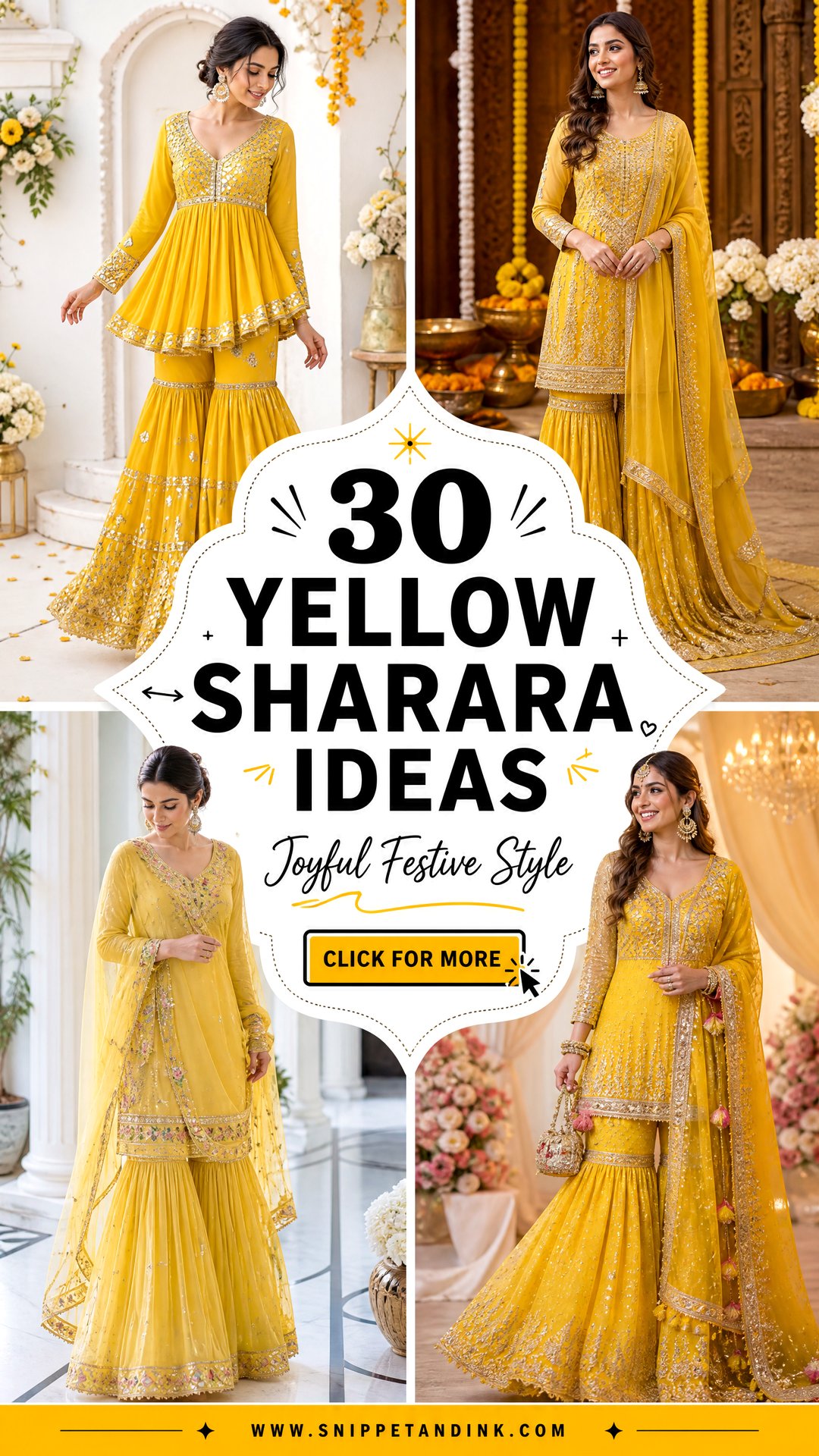
Which Yellow Suits Your Skin in Morning Light?
Yellow is the hardest colour I style, because the wrong shade sits right next to the face and can make skin look sallow or grey in photos. Before a client buys anything, I drape the fabric under her chin by a window, not under shop lights.
- Warm and olive undertones usually glow in mustard, turmeric, marigold and golden yellow.
- Cool and fair undertones tend to suit lemon, pastel and butter yellows with a little white in them.
- Deep skin tones carry saturated marigold and mustard especially well; very pale pastels can look chalky.
- If a shade almost works, move the colour away from your face: a contrast dupatta or kurti neckline in pink, green or ivory fixes most near-misses.
Think about the time of day as well. Haldi is usually morning and outdoors, where clear lemon and marigold look bright and clean. Evening functions under warm bulbs push everything orange, so deeper mustard and golden yellow hold their colour better there.
1. Yellow Sharara Suit For Haldi
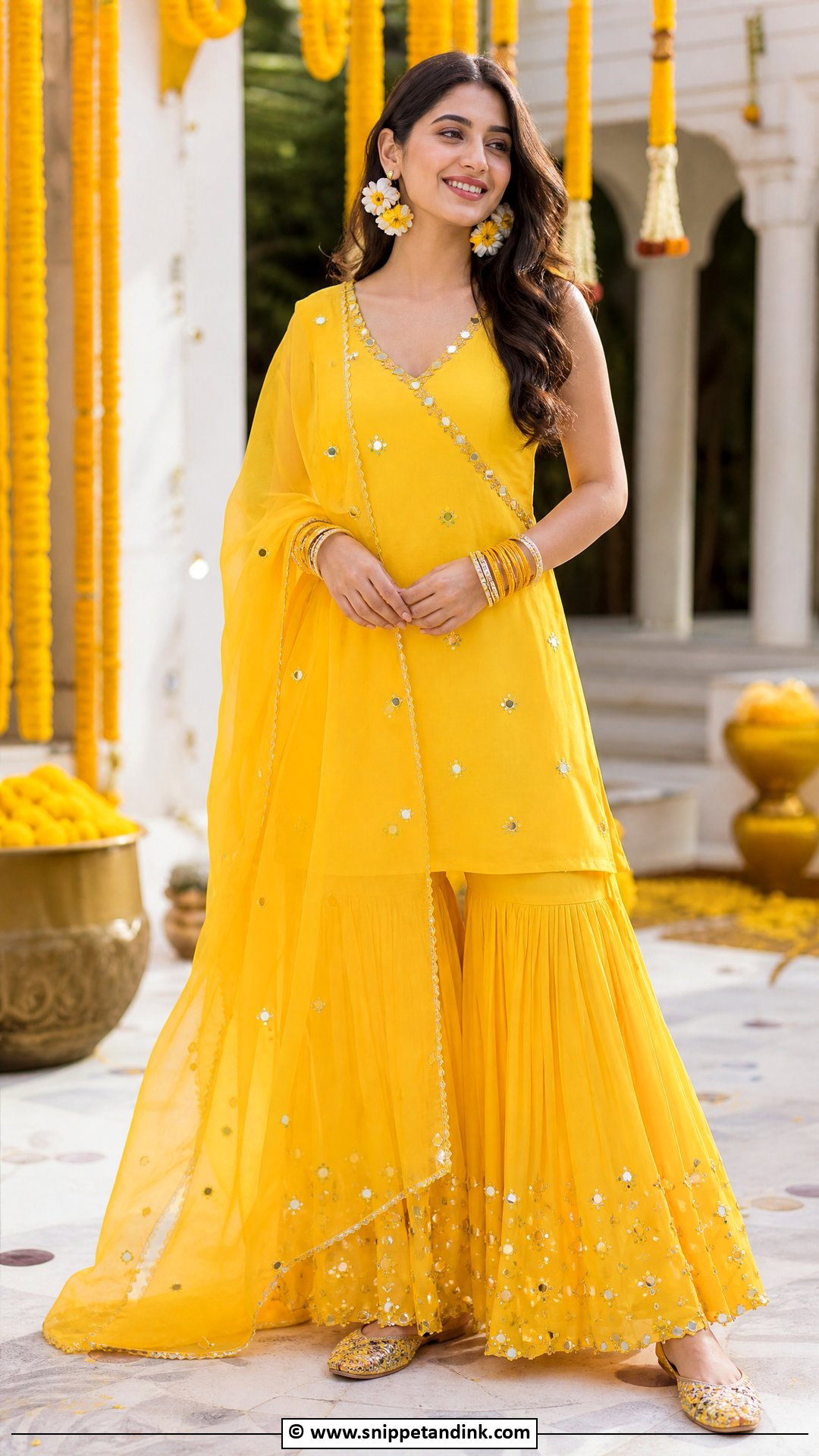
Haldi is the ceremony yellow was made for, and a yellow sharara suit for haldi lets you sit on the floor while relatives smear turmeric paste on your arms and face. Cotton or a cotton-silk blend is my first choice here, since it washes and you won’t mind losing it to the stain. A short kurti shows the flare; gota or mirror work gives sparkle without anything that can snag in sticky paste. Brides can go marigold with bigger jewelry, while guests look fresher in a softer lemon.
2. Yellow Sharara With Short Kurti
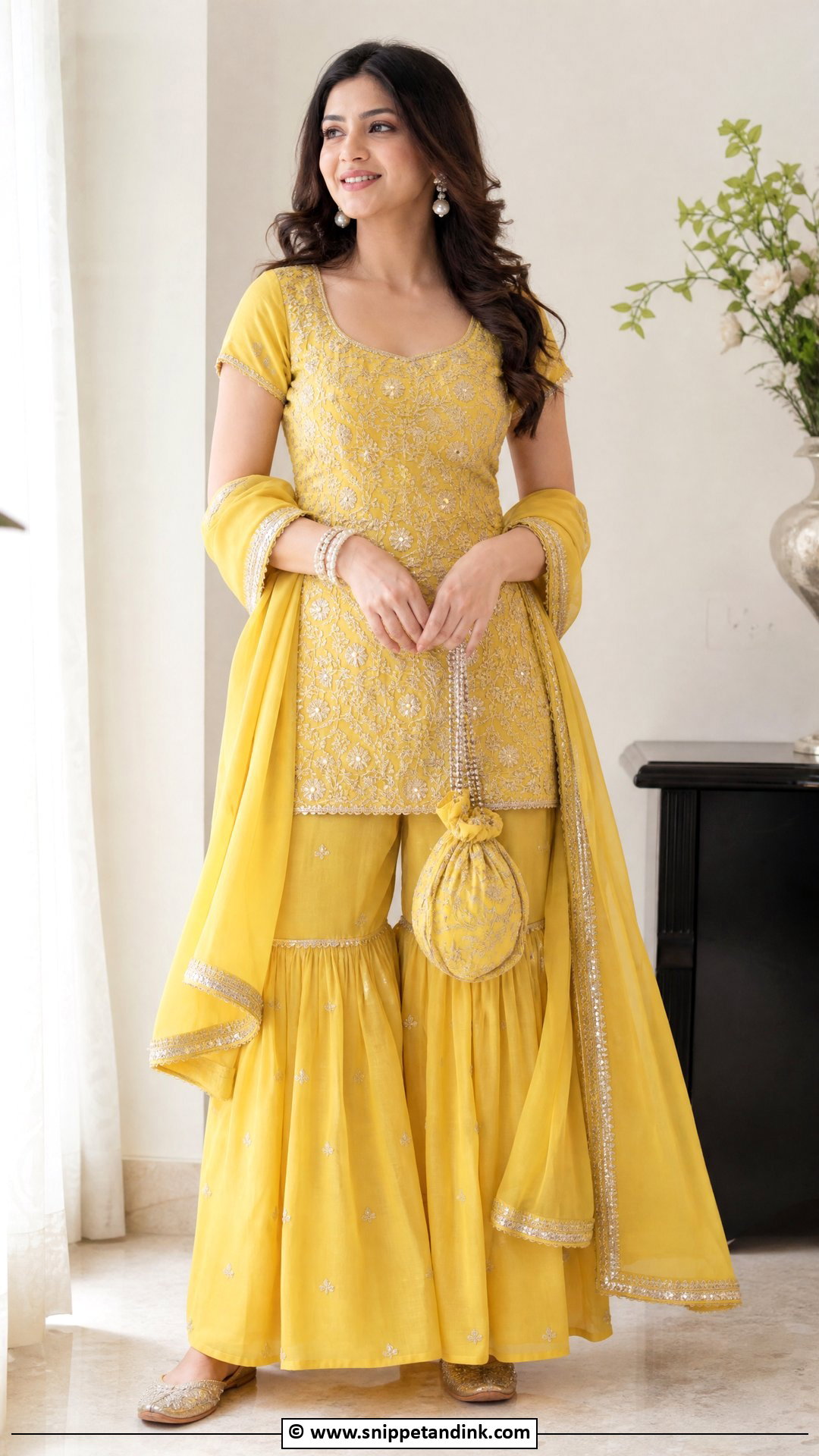
This is the combination I recommend most often, because a kurti ending at or just above the hip shows the waist and lets the flare start where it should. Pair it with a high-waisted sharara and the leg reads longer. When I fit it, I have the bride sit down: if the kurti rides up past the waistband seam, it’s too short for a seated mehndi. Keep embroidery at the neckline and sleeves, and finish with a sleek bun and a potli.
3. Yellow Sharara With Peplum Top
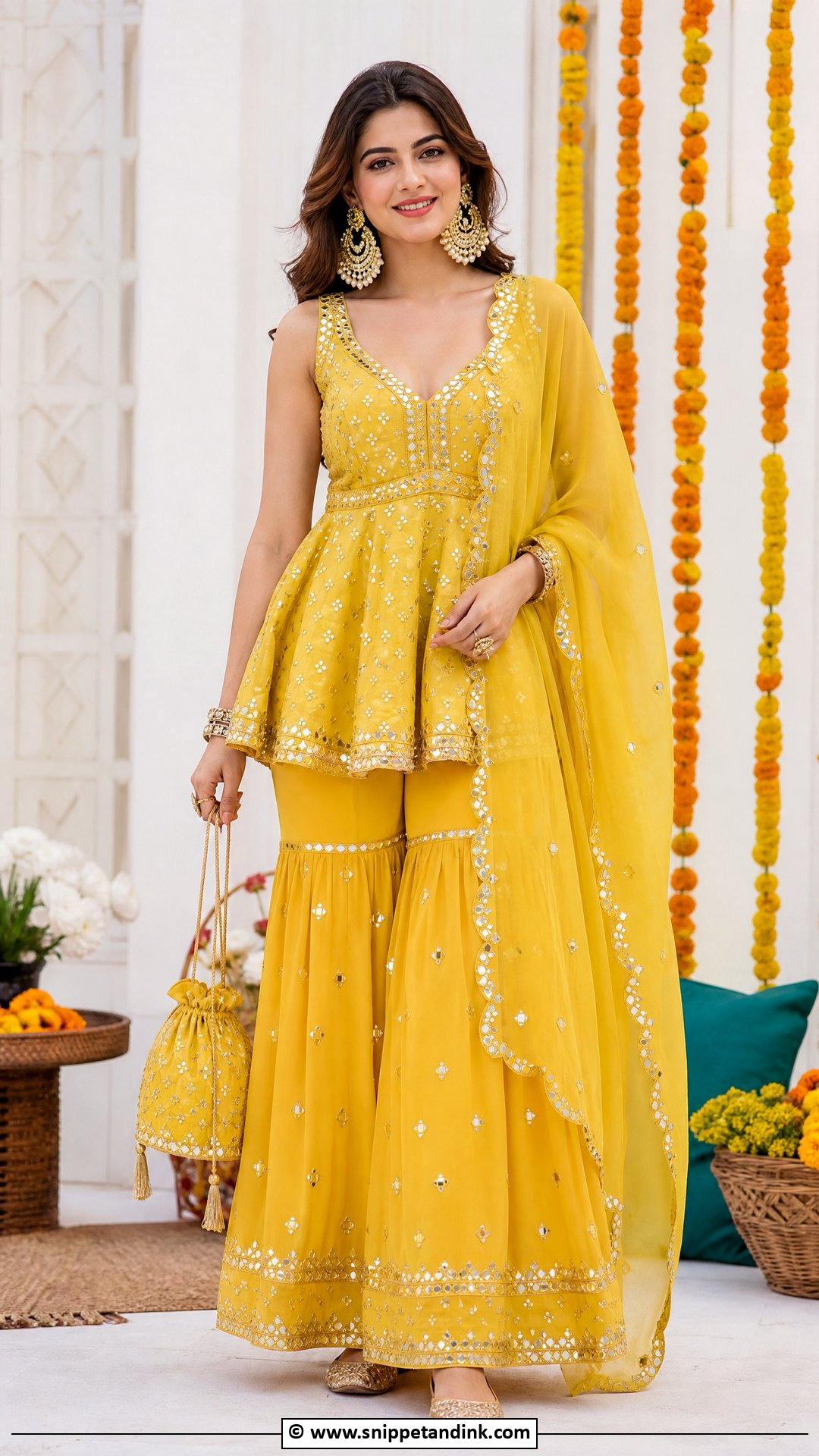
A peplum flares at the waist and then stops, which gives you shape plus a little coverage over the stomach without the length of a kurti. The catch is volume: a peplum on top and a full sharara below can make the whole outfit look wide. I solve that by keeping the peplum short and its fabric lighter than the sharara, and by letting the top carry the mirror work or zari while the trousers stay plain. Chandbalis and metallic juttis are all it needs.
4. Yellow Sharara With Crop Top
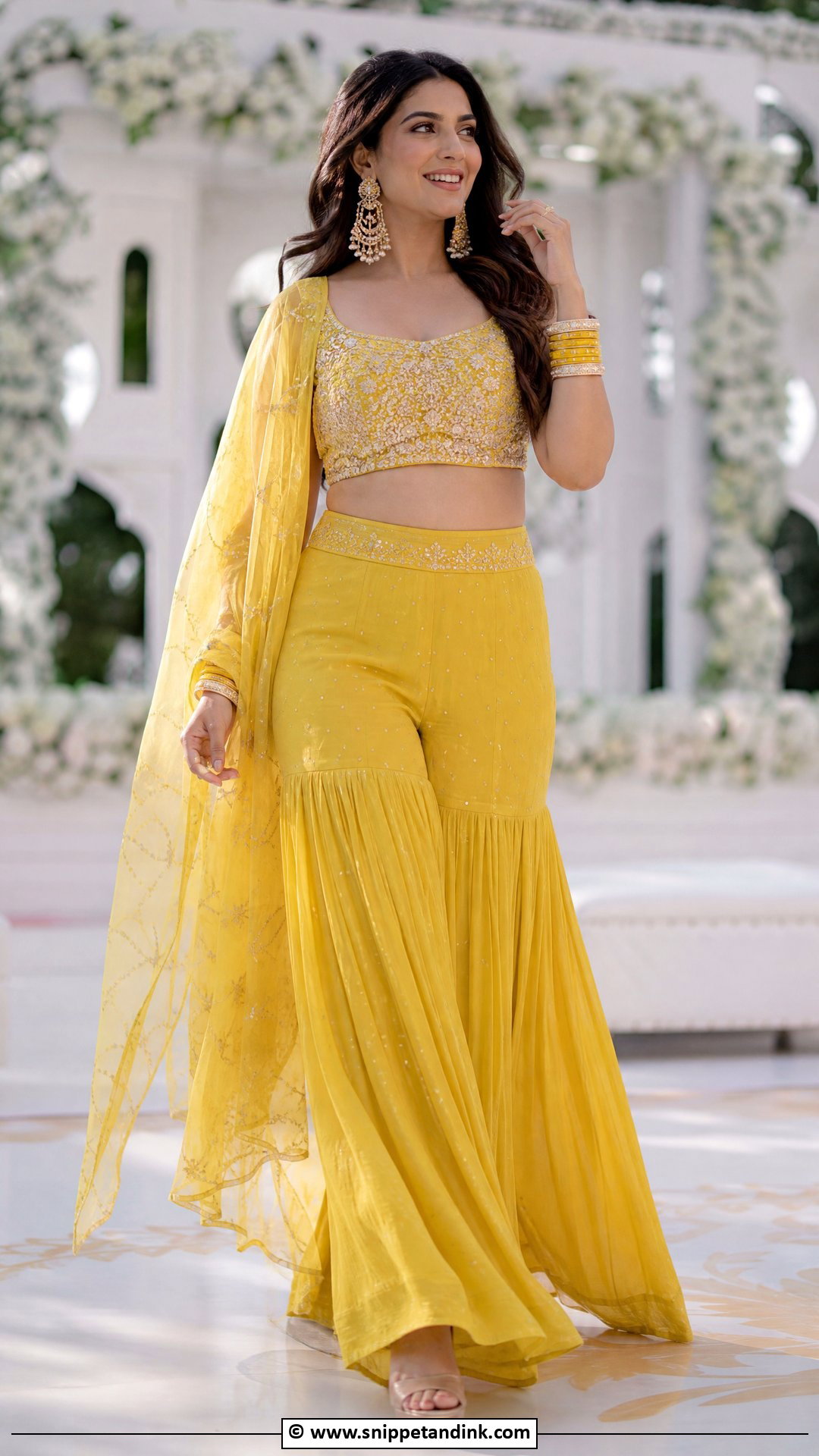
A crop top over a high-waisted sharara gives a lehenga silhouette that you can actually dance in at a sangeet. How much midriff shows is your call; a waistband that sits at the navel and a top ending two inches above it is the version most families are comfortable with. Sleeves change the mood more than you’d expect, so try cap and puff sleeves before choosing. Pin the dupatta at the shoulder, because loose ones slide off a crop top all night.
5. Yellow Sharara With Long Kurti
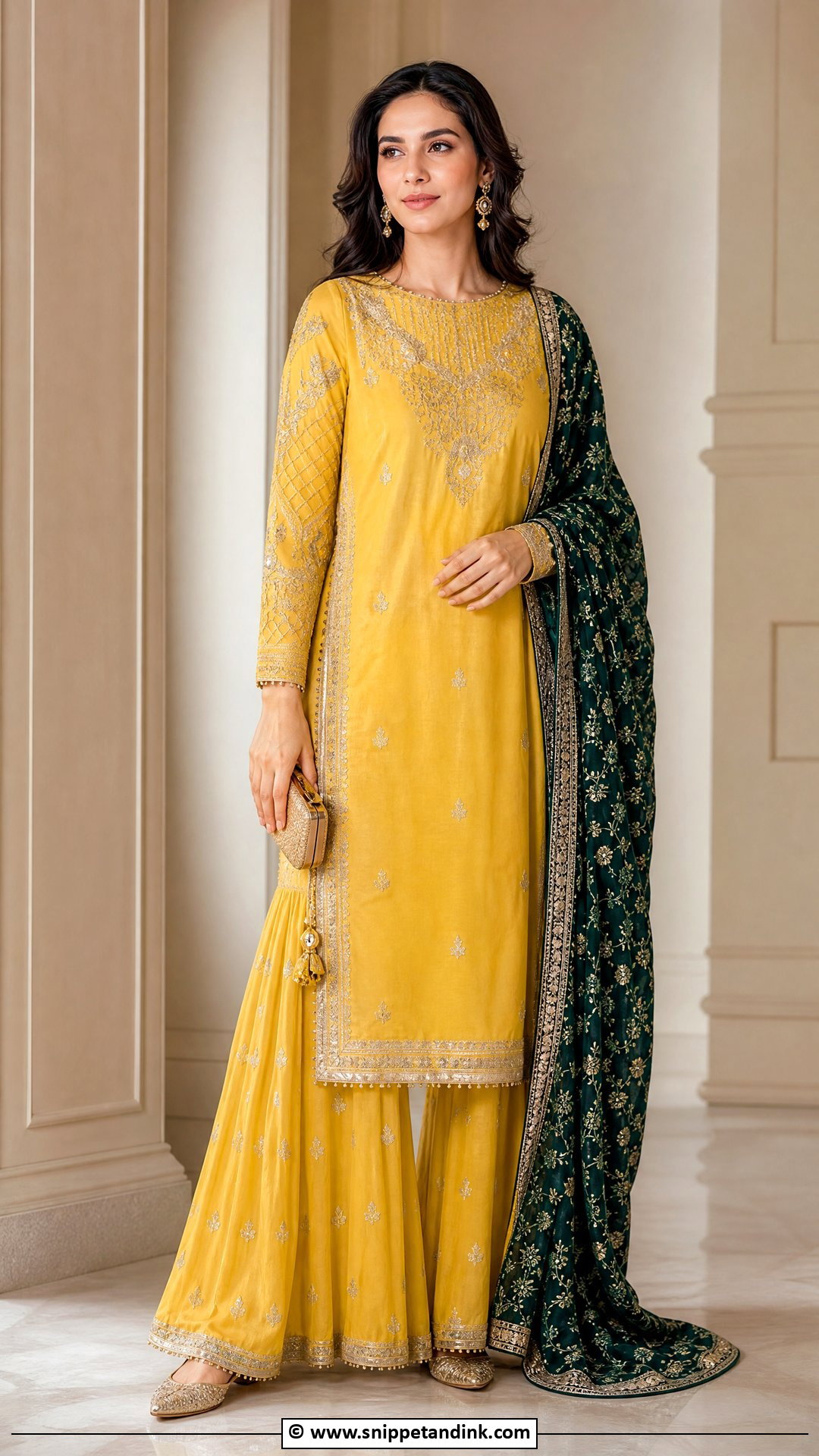
A long kurti gives a tall, unbroken line and the most coverage of any shape here, which is why I suggest it for pujas and conservative family functions. It needs side slits at least to the knee, otherwise the flare never shows and the outfit looks like straight trousers. Georgette, crepe and chanderi drape well at this length; stiff cotton tends to stand away from the body. Keep embroidery to the neck, cuffs and hem.
6. Yellow Sharara With Mirror Work
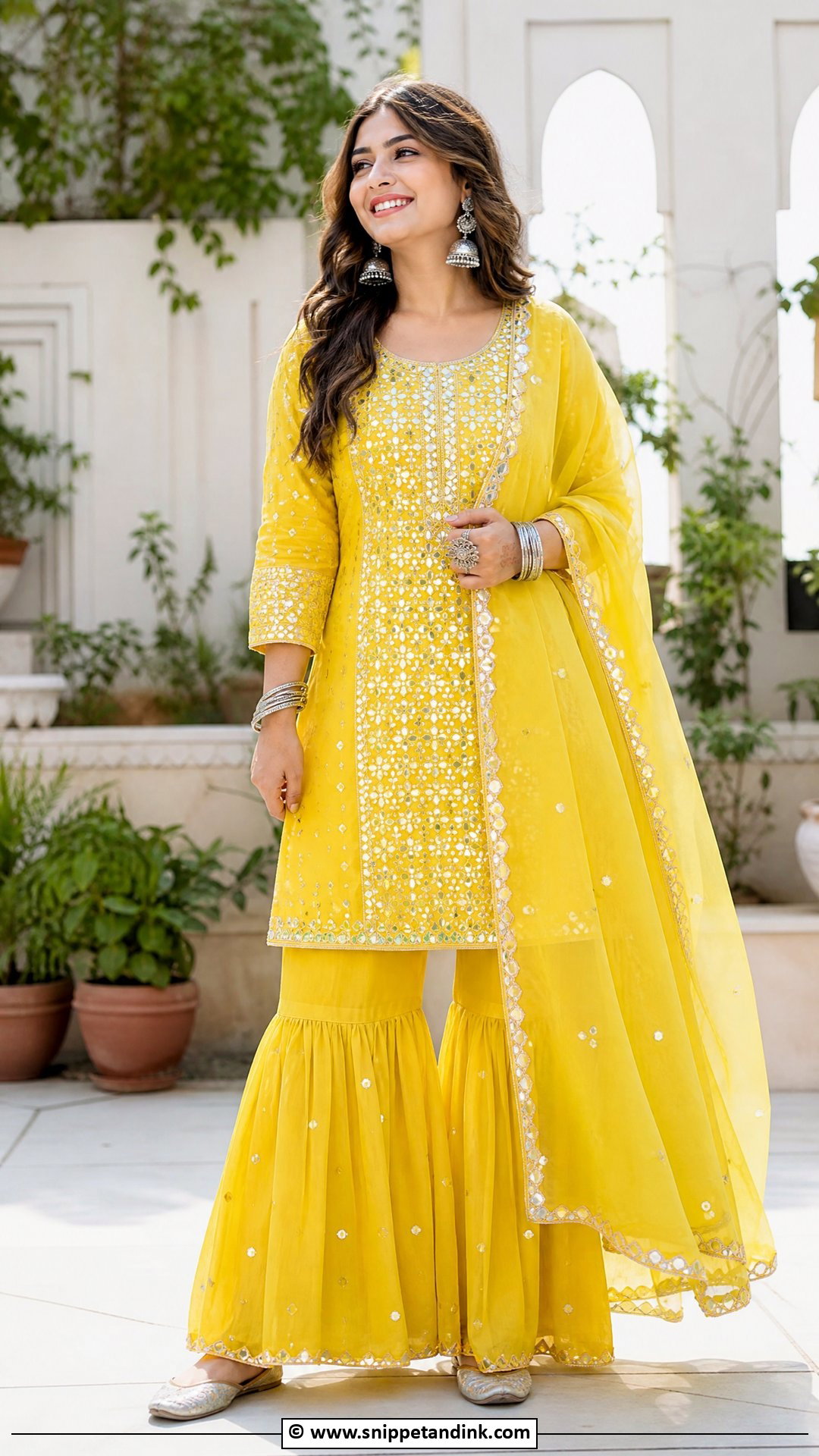
Mirror work catches every bit of daylight, so I treat it as the jewelry. I put the mirrors on the kurti or blouse and keep the sharara plain, because mirrors on a flared trouser hem get scuffed against the floor and other people’s shoes. Silver or oxidised pieces suit it better than gold. One practical point: real glass mirrors add weight and can scratch delicate skin at the underarm, so check the inside finish of the sleeves.
7. Yellow Sharara With Gota Patti
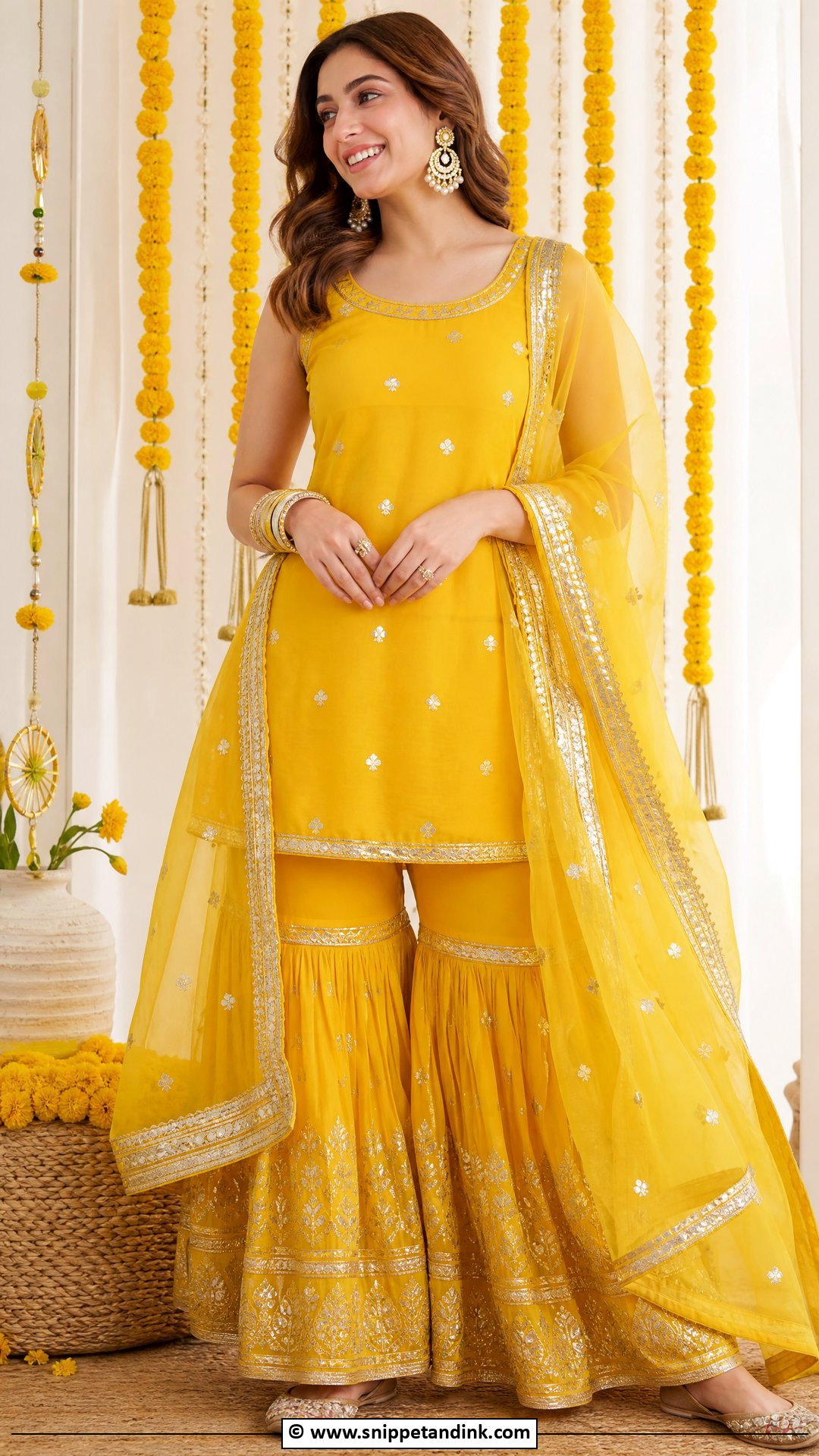
Gota patti is a ribbon of metallic woven tape, appliquéd onto the fabric, and it’s the traditional choice for haldi, mehndi and roka in many families. Mustard and turmeric yellows suit it best because the gold tone of the gota blends into them rather than sitting on top. An angrakha top brings out the Rajasthani roots of the work. Keep jewelry kundan and the maang tikka only for the grander functions.
8. Yellow Sharara With Dupatta
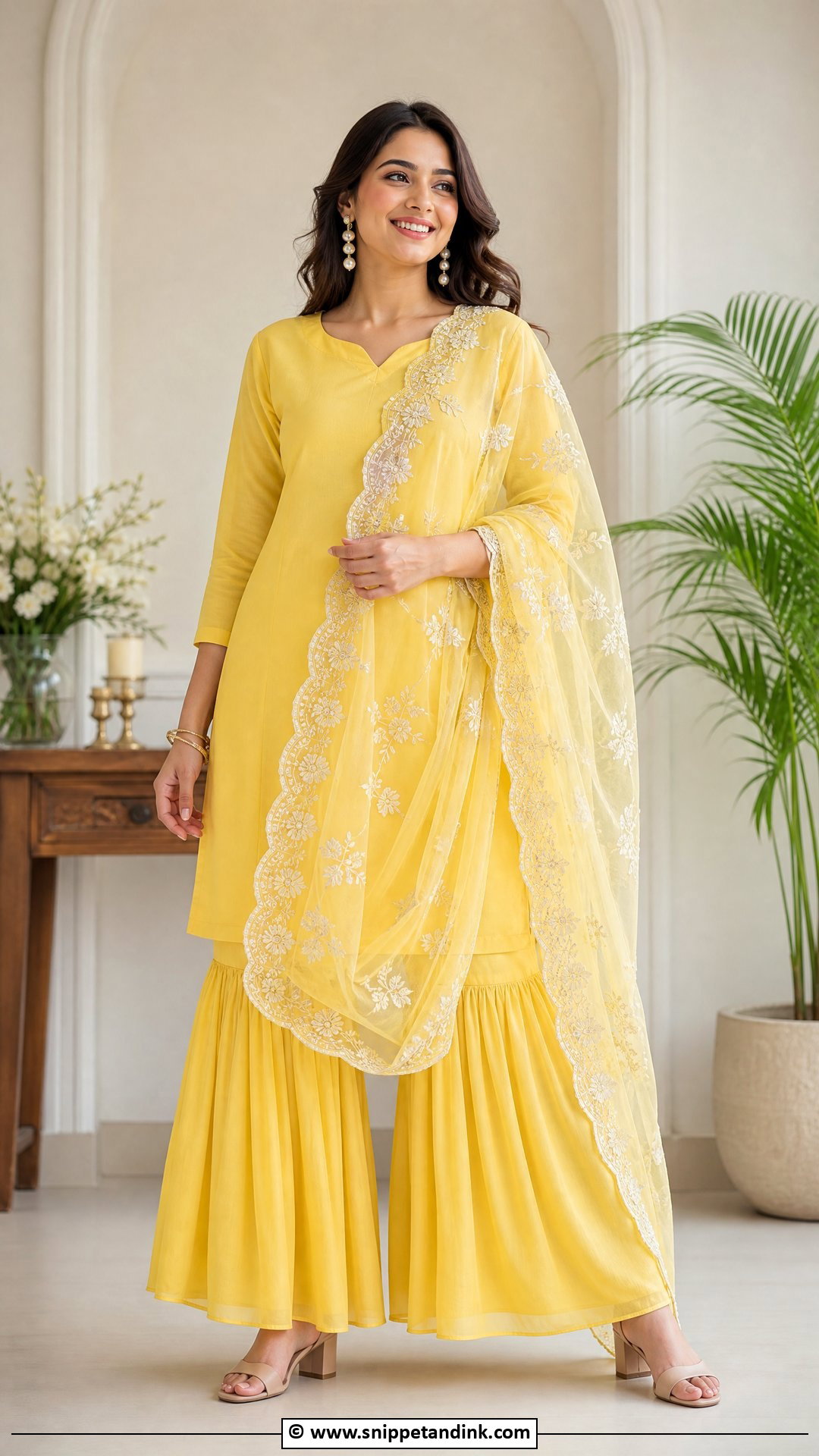
The dupatta decides how formal a plain sharara set looks. Organza, bandhani and leheriya each change the outfit completely. Over one shoulder reads modern; pinned across the front or over both shoulders feels traditional. For outdoor functions I always secure it with two pins at the shoulder and one at the waist, because a dupatta on a breezy terrace spends the whole day blowing into the bride’s face. Gold suits warm yellow; pearls or silver suit lemon.
9. Yellow Sharara With Jacket
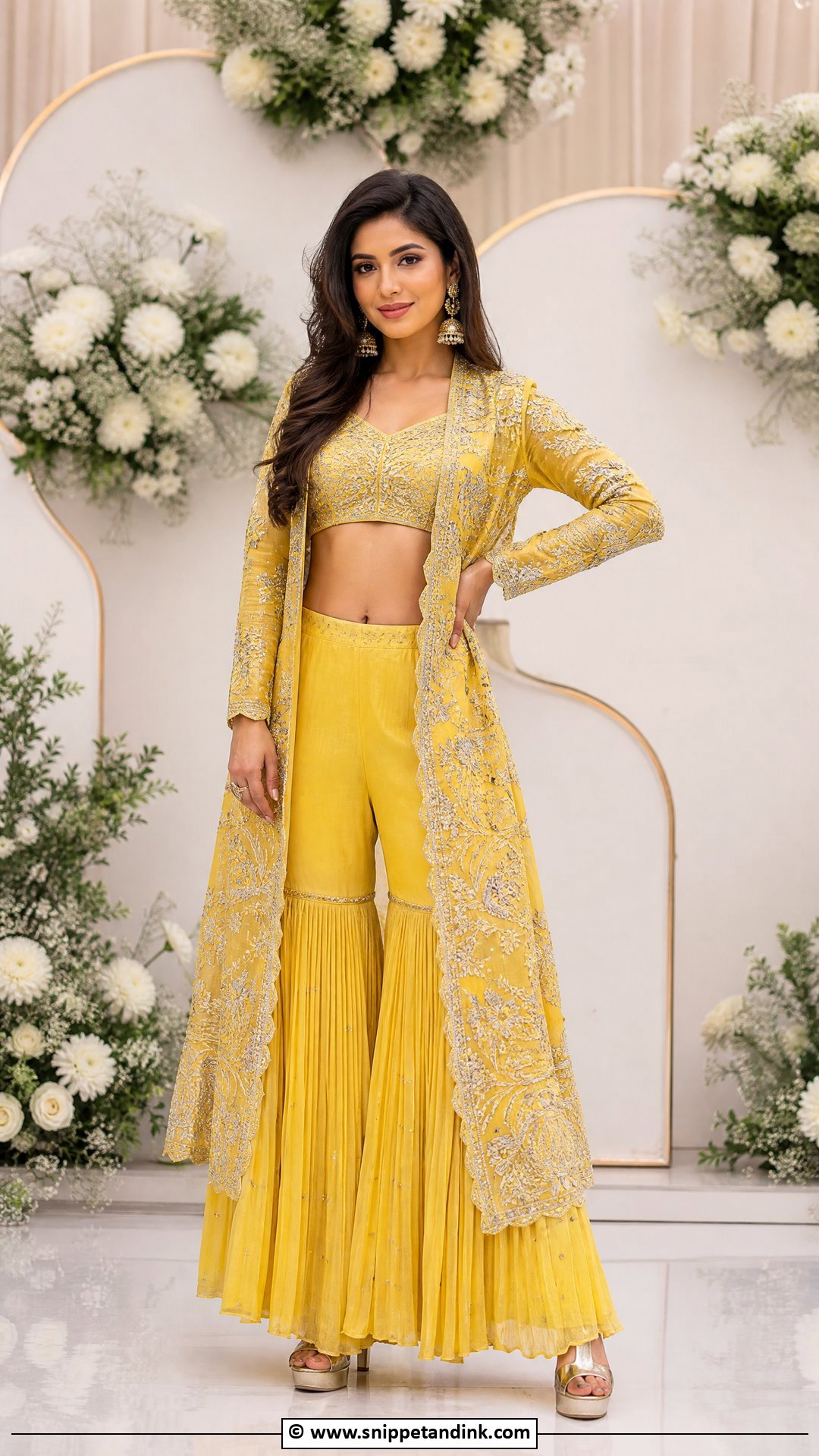
A jacket replaces the dupatta, which is a relief for anyone who hates managing one through a long evening. Long jackets over a crop top give a sleek line for formal events; short mirror-work jackets are more playful for a mehndi. If the jacket is heavily embroidered, keep the inner top plain. Check the armhole too: jackets cut tight at the shoulder make it hard to lift your arms for a dance.
10. Yellow Sharara With Anarkali Kurti
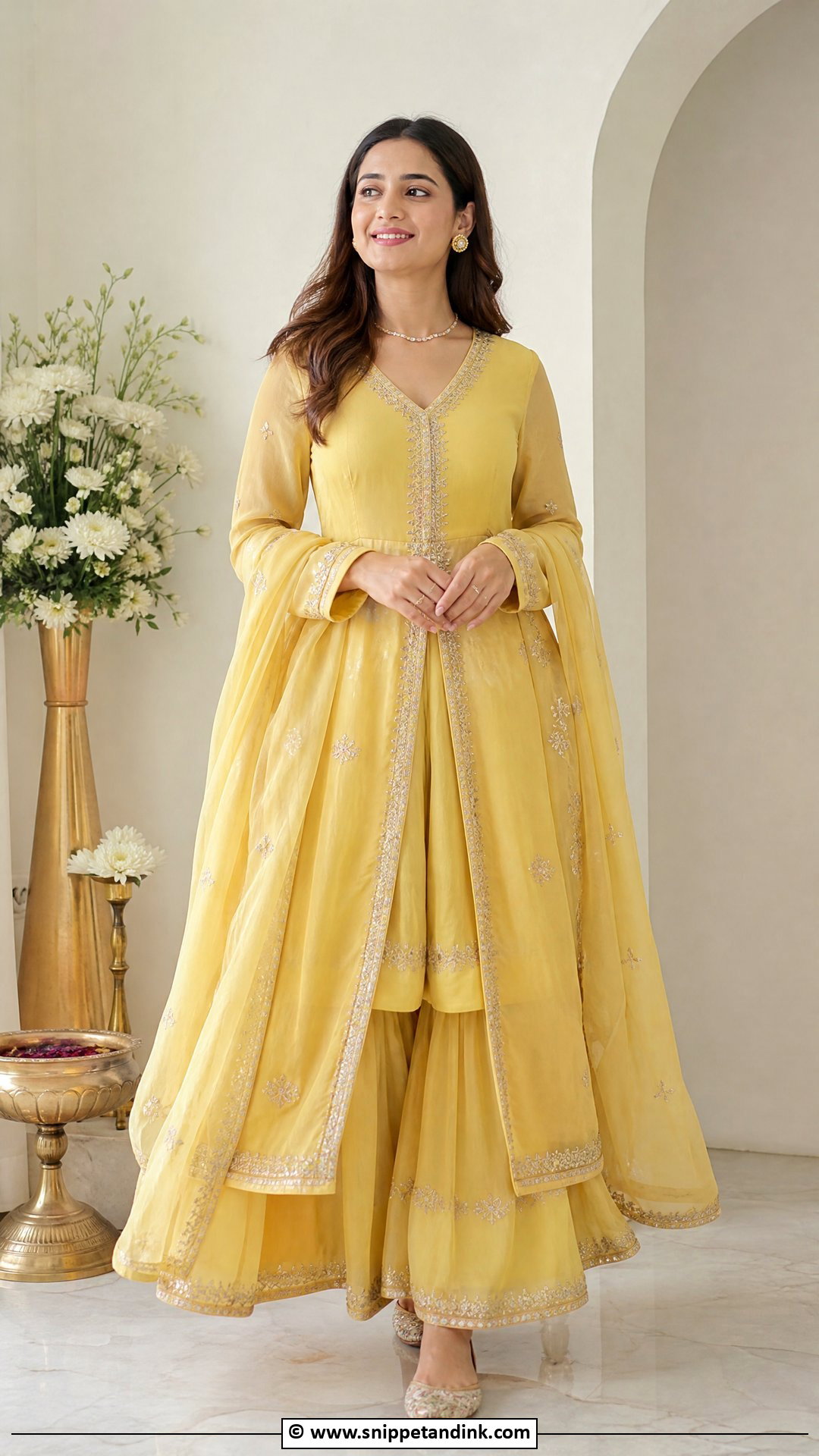
Two flared shapes stacked on each other can easily look bulky, so I only suggest this combination in light fabric with a clearly defined waist on the kurti. A front slit helps a lot; it lets the sharara show as you walk instead of disappearing under the anarkali’s skirt. It’s a good option if you love the anarkali shape but find a lehenga skirt too heavy. Kundan studs and a sheer dupatta keep the top half light.
11. Mustard Yellow Sharara Set
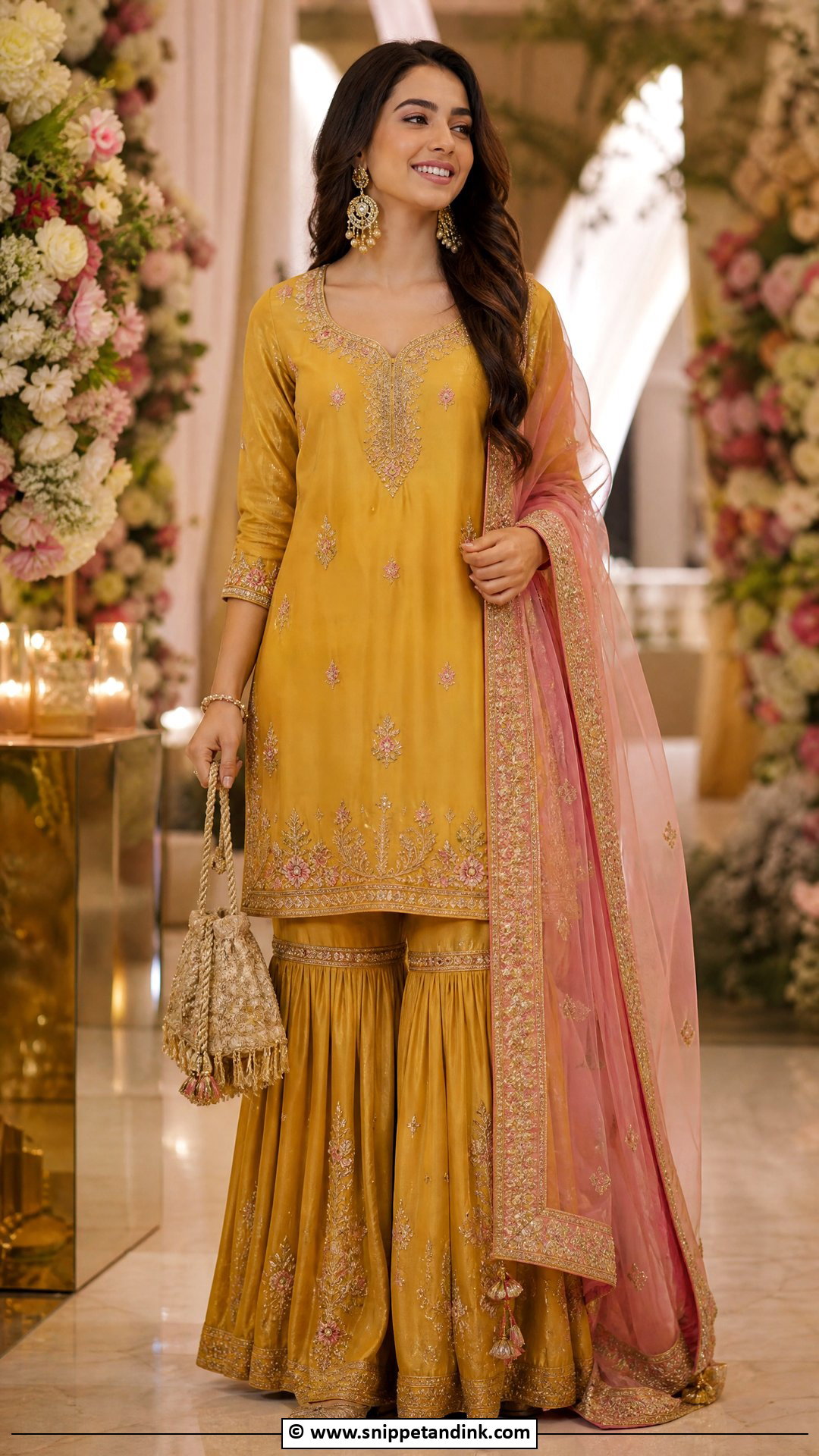
Mustard is the yellow I suggest for evening and winter functions, because the deeper tone reads richer under warm indoor lighting than bright lemon does. It flatters warm and olive skin especially. Silk, brocade and chanderi suit it, and zari embroidery sits naturally on it. Contrast borders in rust, emerald or pink stop it from feeling too sombre, and antique gold jewelry finishes it.
12. Lemon Yellow Sharara Set
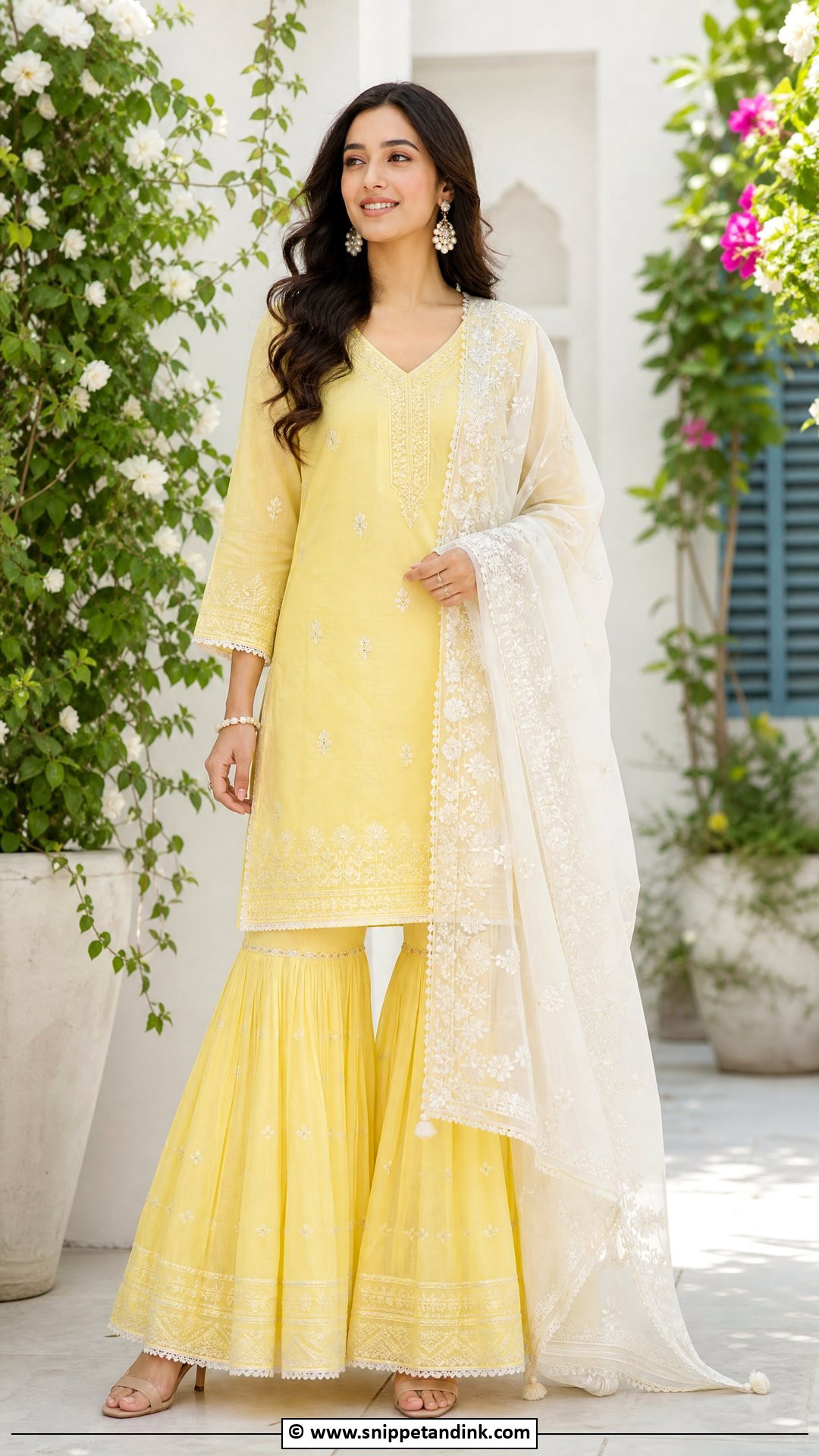
Lemon is the lightest, freshest yellow here, and it belongs outdoors in daylight. It suits cool and fair skin well; on deeper skin tones I sometimes find it can look washed out next to the face, so a lemon sharara with a stronger-coloured dupatta near the face helps. White threadwork, pearls and silver mirror work suit it. Cotton, chiffon and organza keep it breezy for a spring haldi.
13. Golden Yellow Sharara Outfit
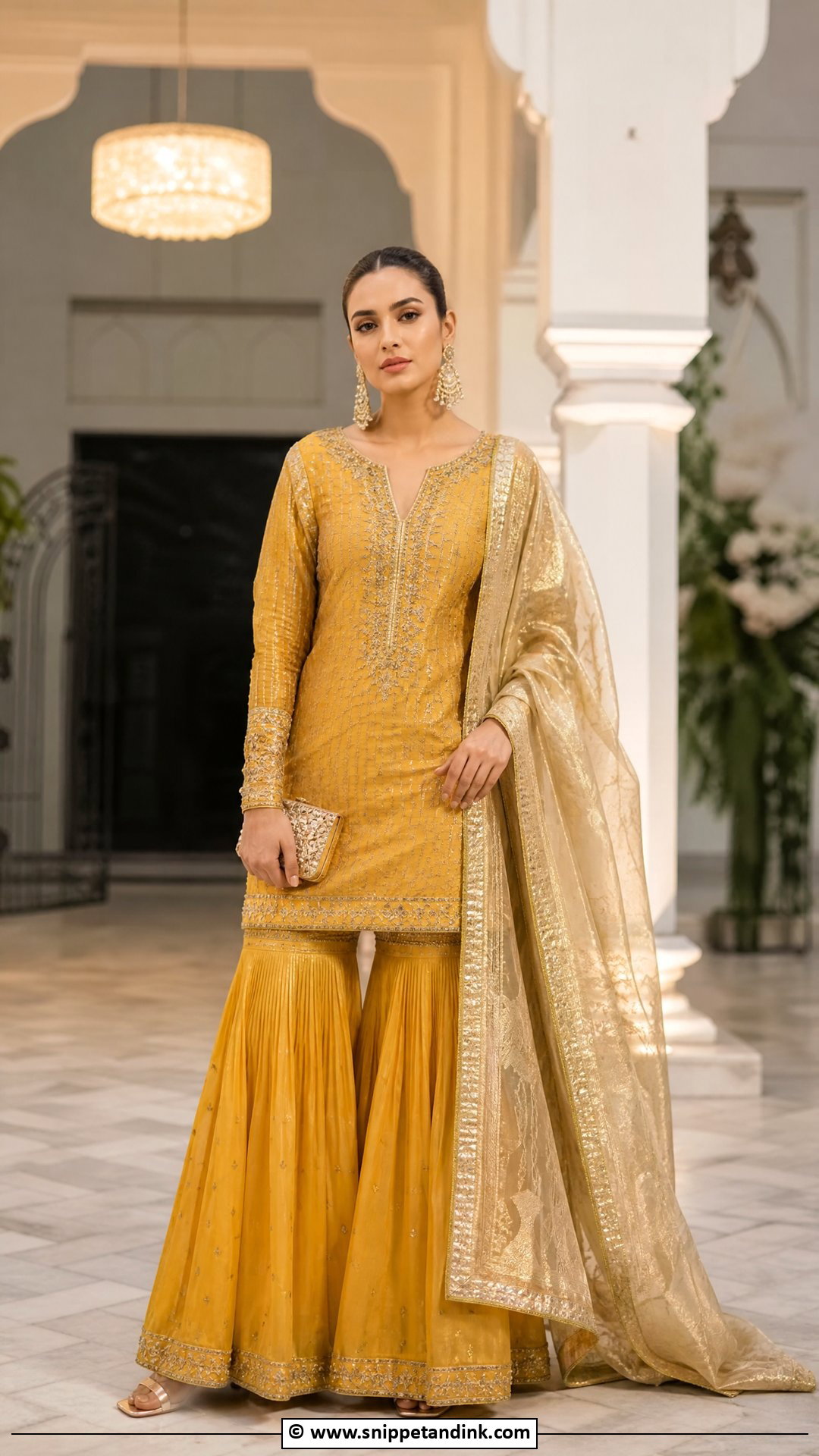
Golden yellow is the dressiest version of the colour. Because the shade already shines, I keep the cut clean and let zari or sequins do the decoration. A structured kurti with the flare below gives a strong silhouette for an evening function. Gold jewelry is the obvious match, but a pearl set softens all that shine if the outfit starts feeling too bright under flash.
14. Pastel Yellow Sharara Suit
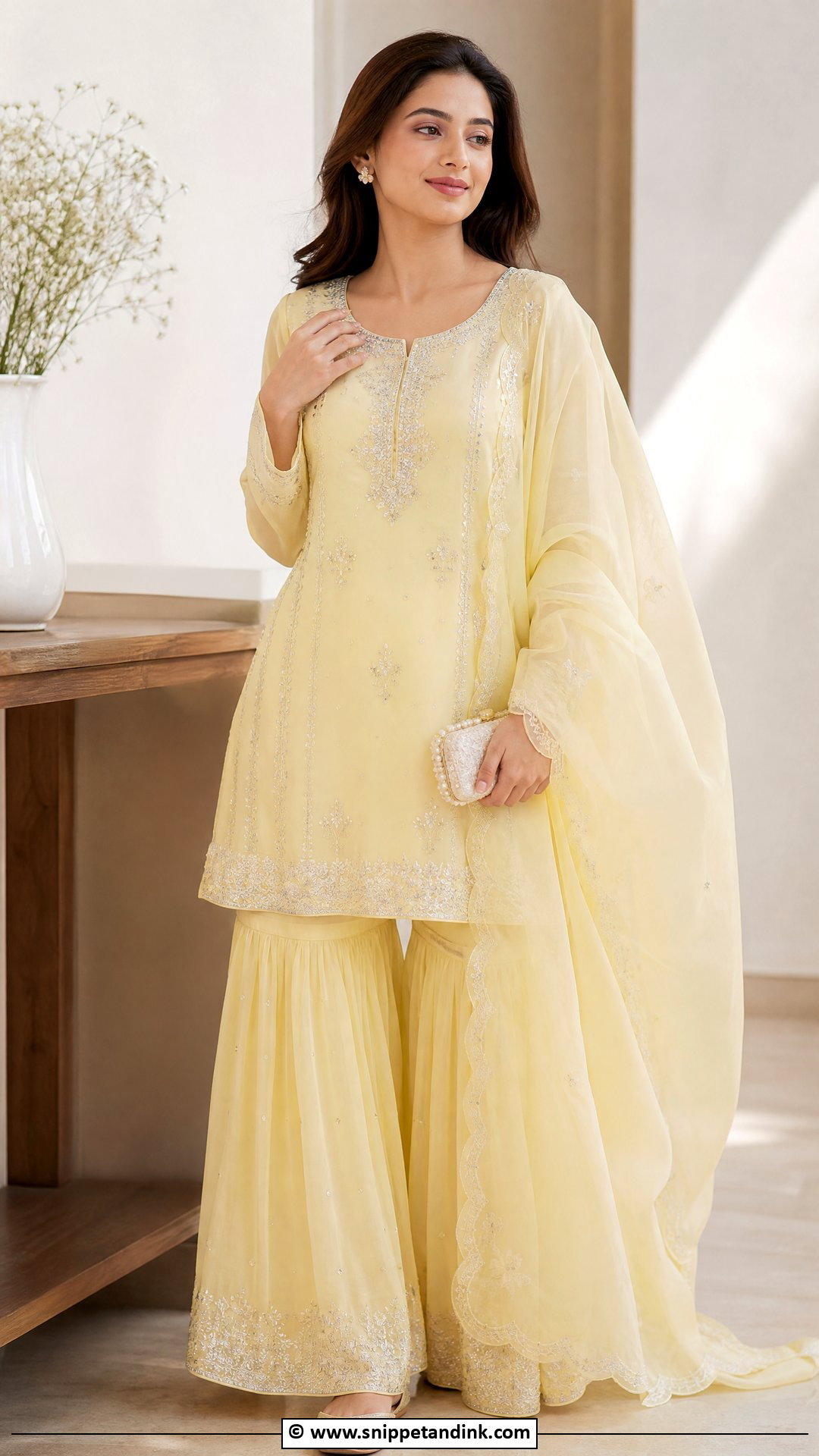
Pastel yellow is the shade that works across almost every age group at a family wedding, which is why I see mothers and aunts choose it often. Its gentleness means the details need to be fine: pearl embroidery, chikankari or narrow lace borders rather than bold gota. Ivory or nude footwear and a soft organza dupatta finish it. Keep makeup peachy rather than pink, which can clash with the yellow’s warmth.

15. Yellow Chikankari Sharara
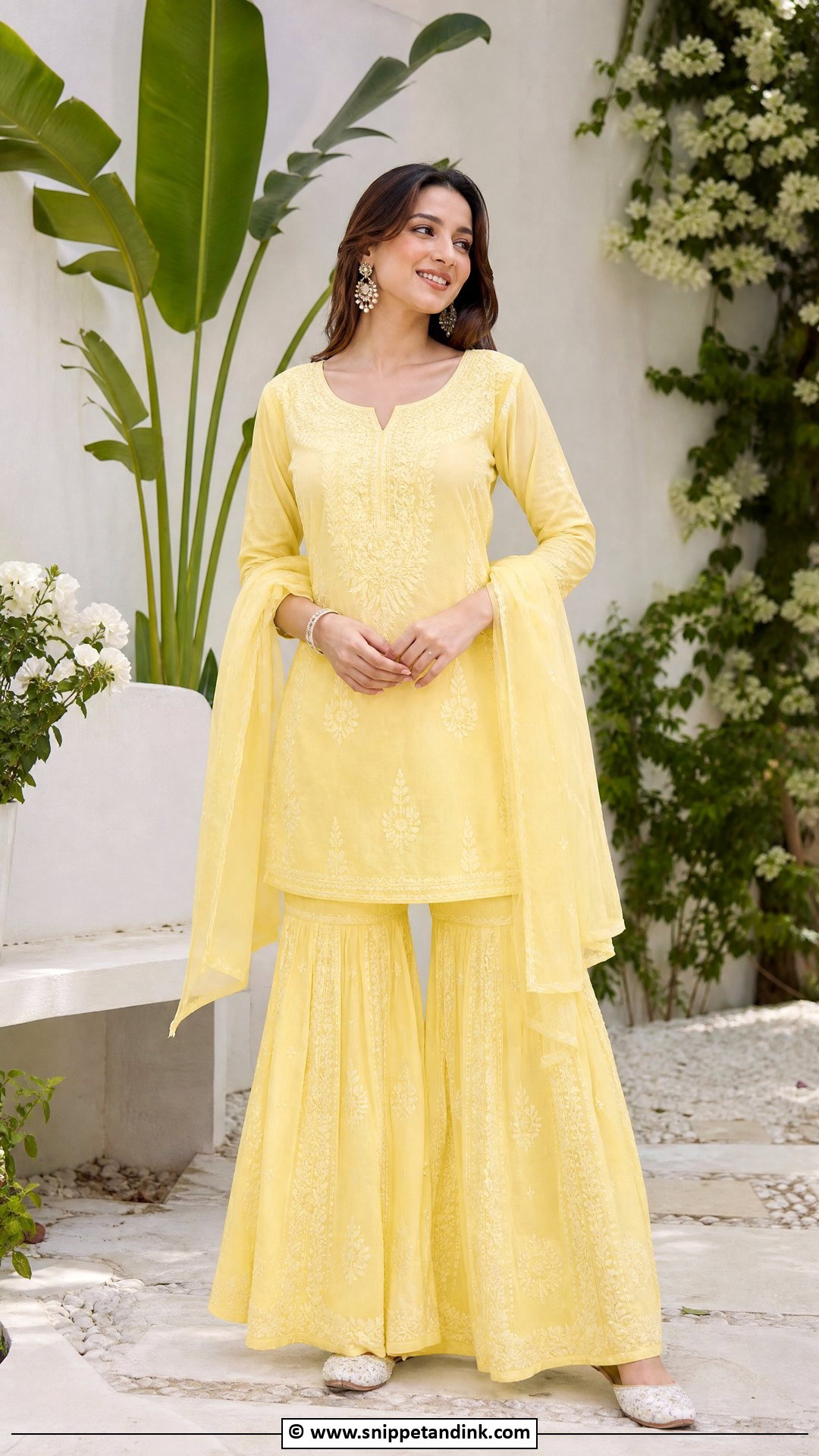
Chikankari is hand embroidery from Lucknow worked in fine thread on light fabric, and on yellow cotton or georgette it looks cool and handmade. I’d choose it for summer daytime functions. The one thing to know is that the delicate stitches pull easily, so avoid chunky bangles or rough-edged bags that rub against the kurti. The pieces separate well too: the kurti works with jeans long after the wedding.
16. Yellow Bandhani Sharara
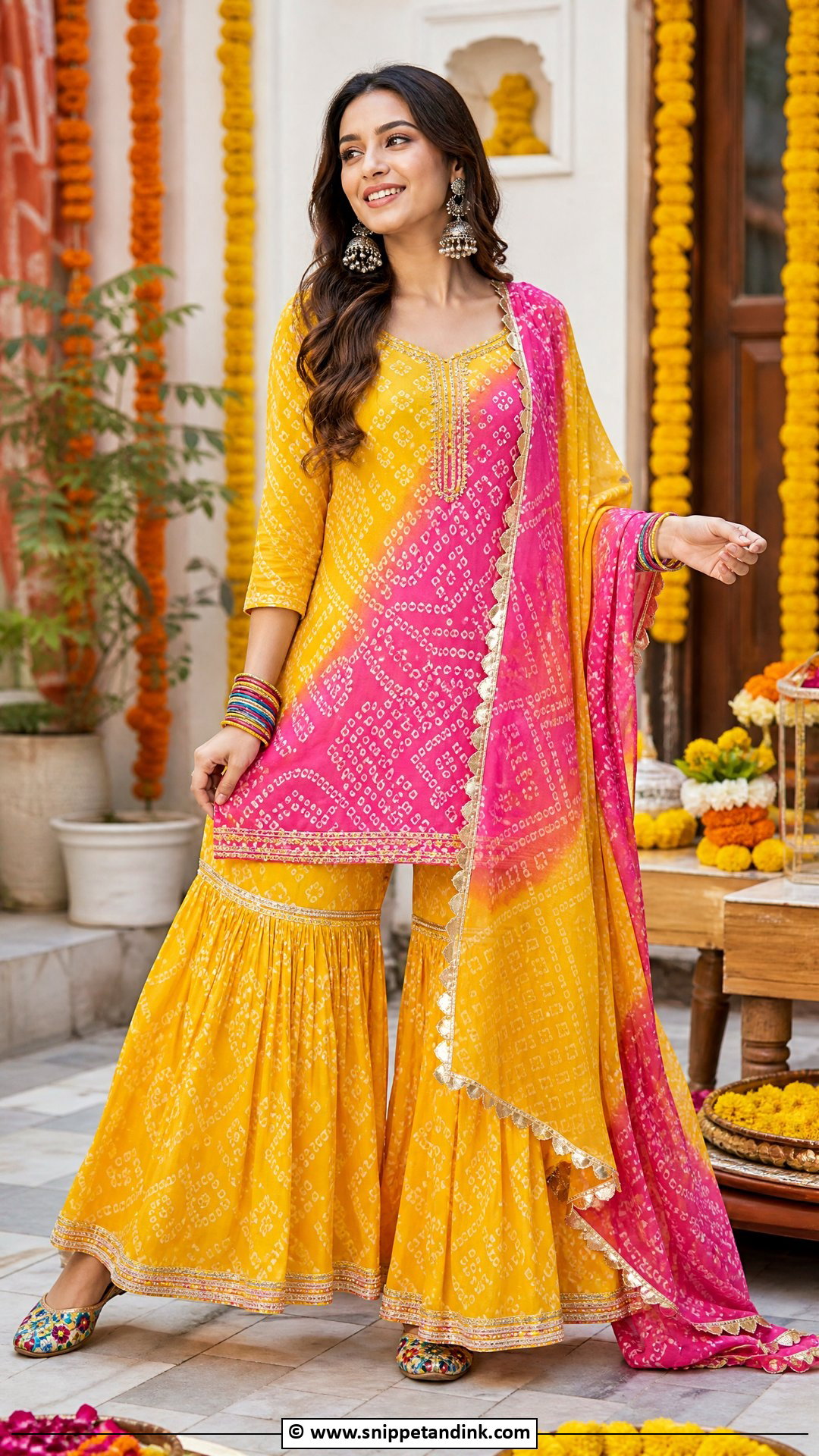
Bandhani is tie-dye made by pinching and binding tiny points of cloth, and yellow with red or green dots is a classic for festive dressing. A yellow bandhani sharara can be fully printed, or you can wear a bandhani kurti with a plain sharara if a full print feels busy. A solid dupatta with gota edging calms the pattern. Be aware that real bandhani dyes can bleed on first wash, so dry-clean it or wash it alone in cold water.
17. Yellow Leheriya Sharara
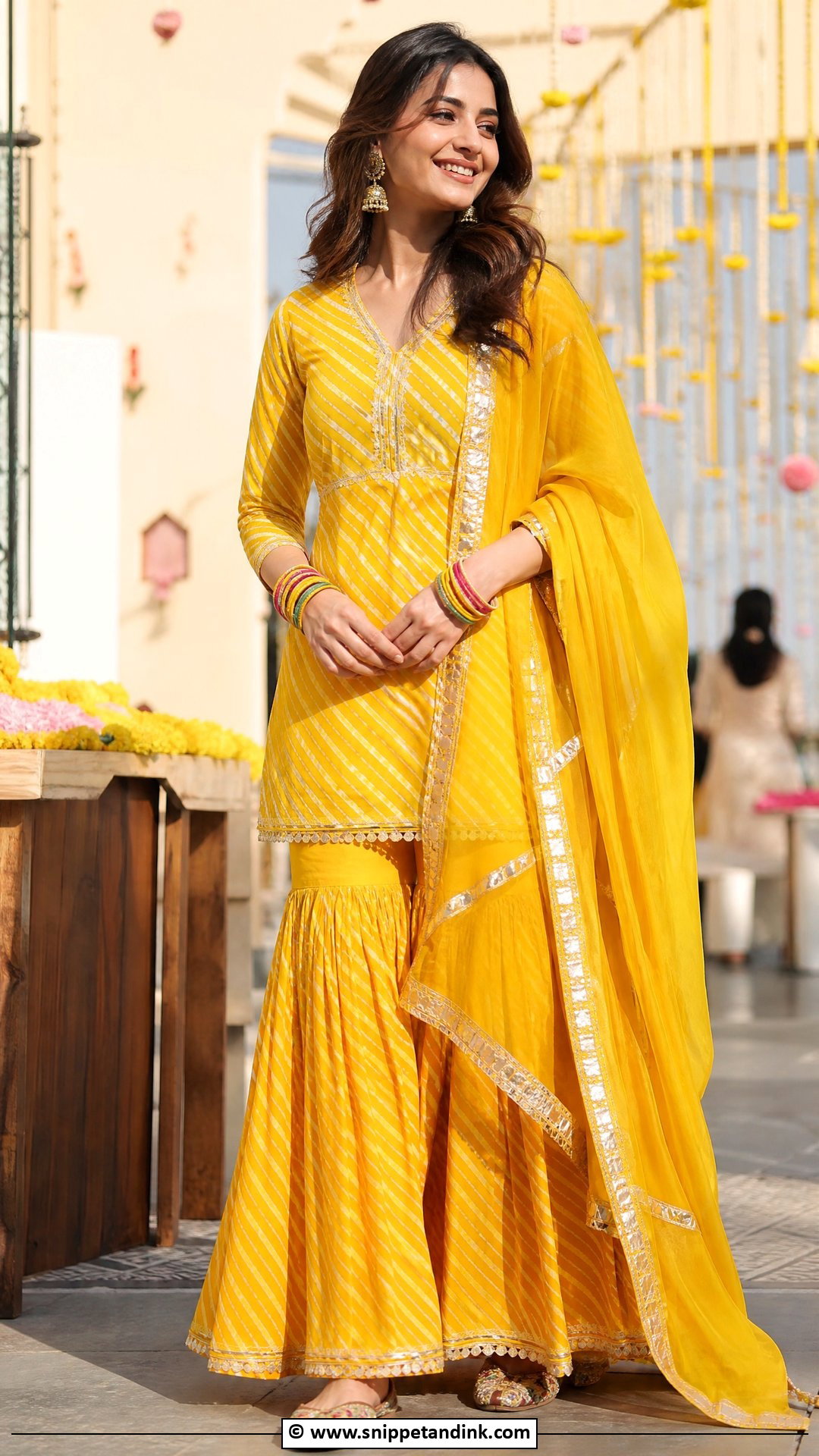
Leheriya’s diagonal waves give the outfit movement even when you’re standing still. If the sharara is printed, I keep the top solid; a full matching leheriya set is bolder and better suited to someone confident in pattern. Yellow leheriya with pink or green looks festive at a daytime mehndi. Coloured bangles and jhumkas suit the folk feel of the print.
18. Yellow Floral Sharara Set
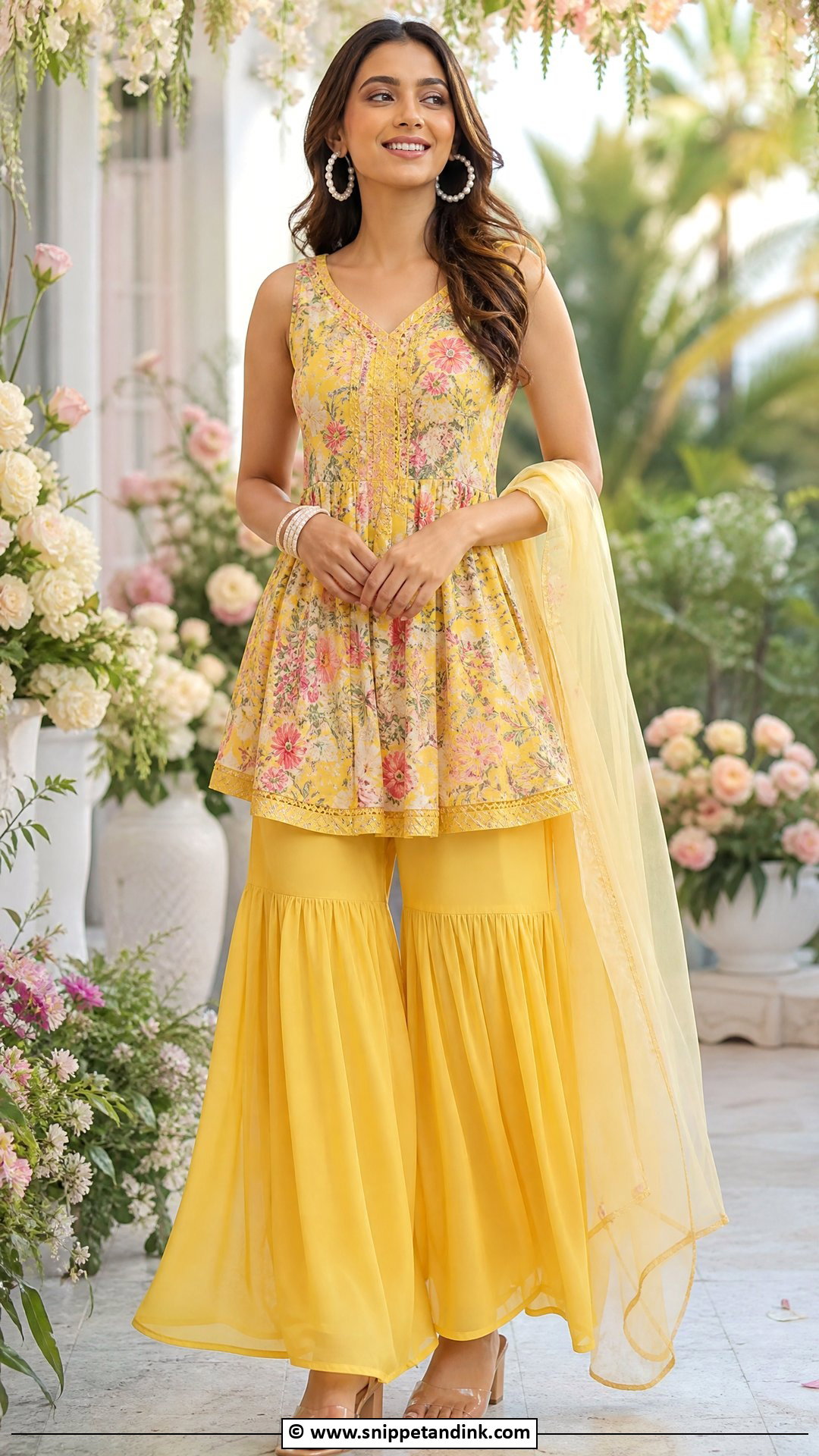
Florals work best outdoors, at garden functions where the print has real flowers around it. Small prints feel softer; large blooms are more dramatic and suit taller frames better, since big motifs can swamp a petite figure. My usual balance is a printed peplum or short kurti over a plain yellow sharara. Loose waves or a low bun keep it relaxed.
19. Yellow Silk Sharara Suit
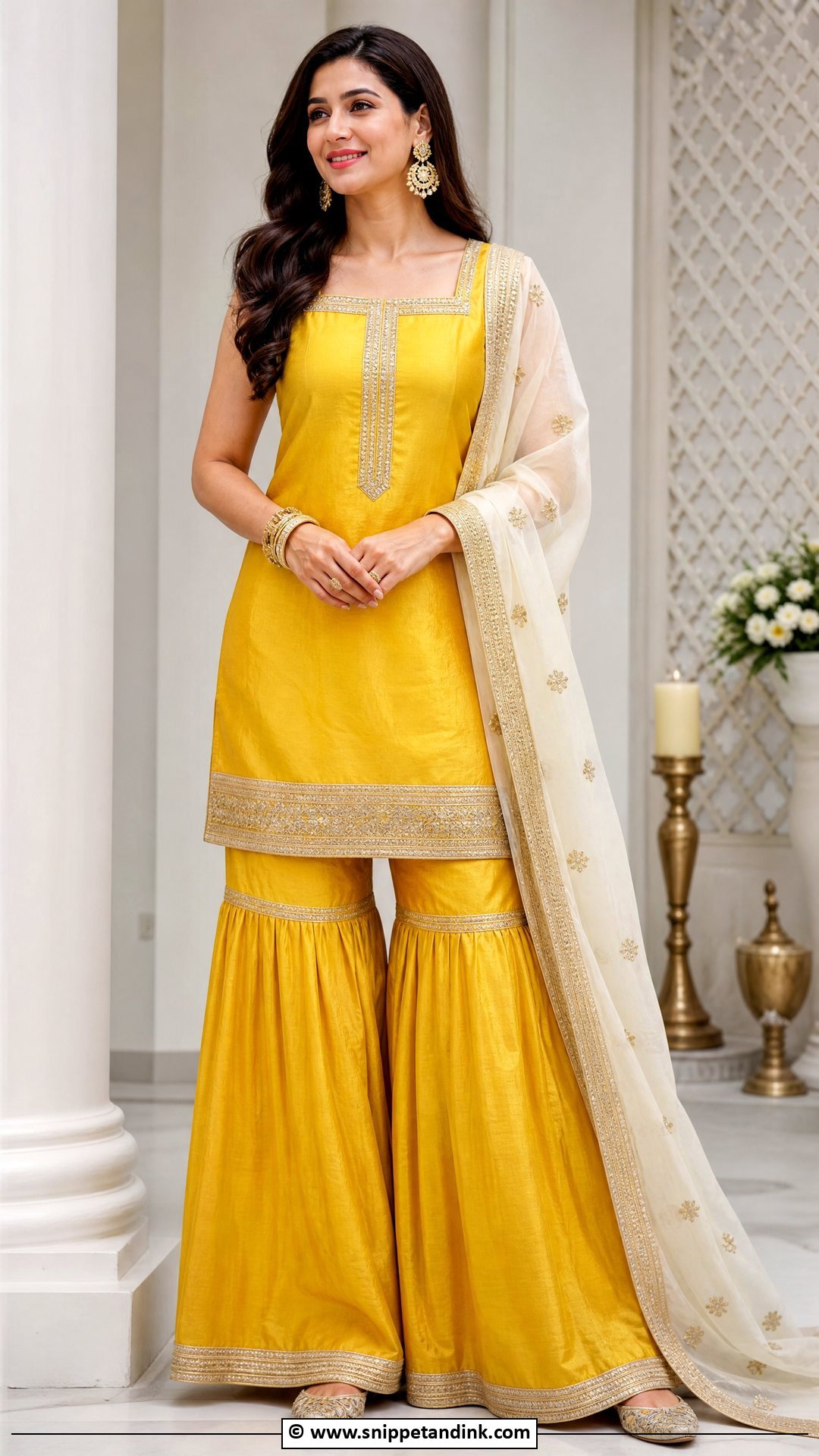
Silk gives the sharara a crisp flare, especially raw silk and cotton silk, which hold their shape well. It’s my choice for Eid and formal family functions. Because the fabric already looks rich, I limit jewelry to gold earrings and a bangle stack. Silk does show water and sweat marks, so in hot weather I suggest dress shields in the kurti underarms and an ivory or green contrast dupatta to lift the colour.
20. Yellow Georgette Sharara Suit
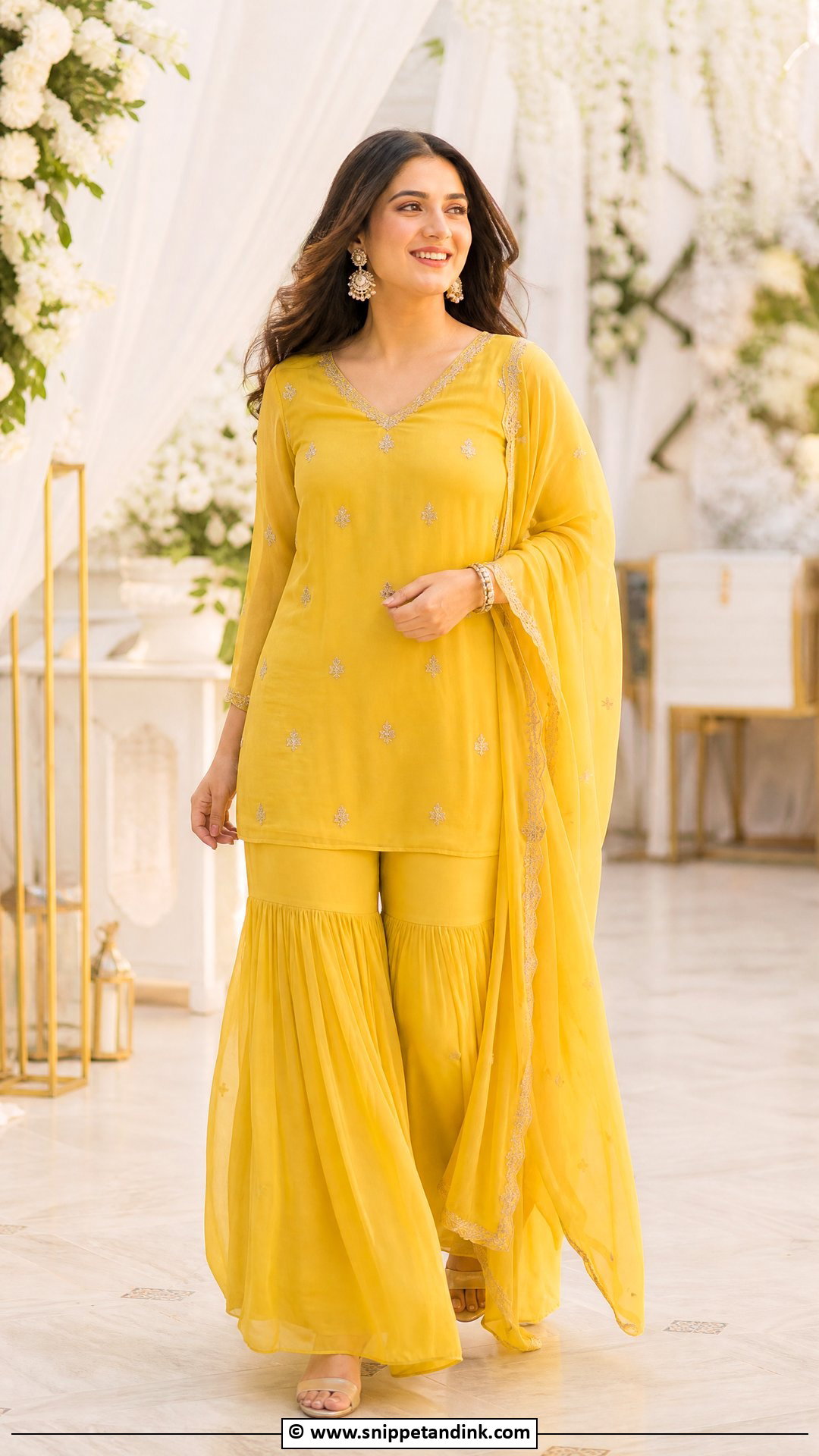
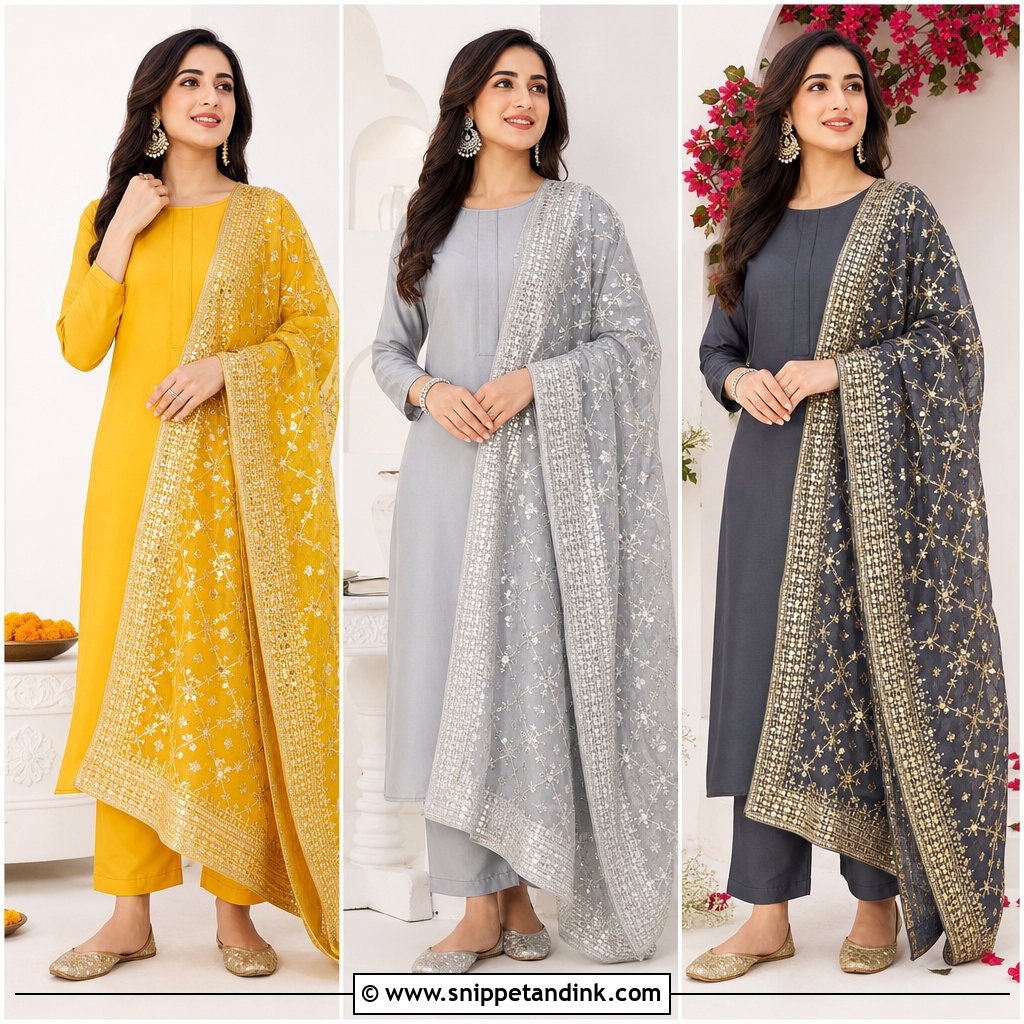
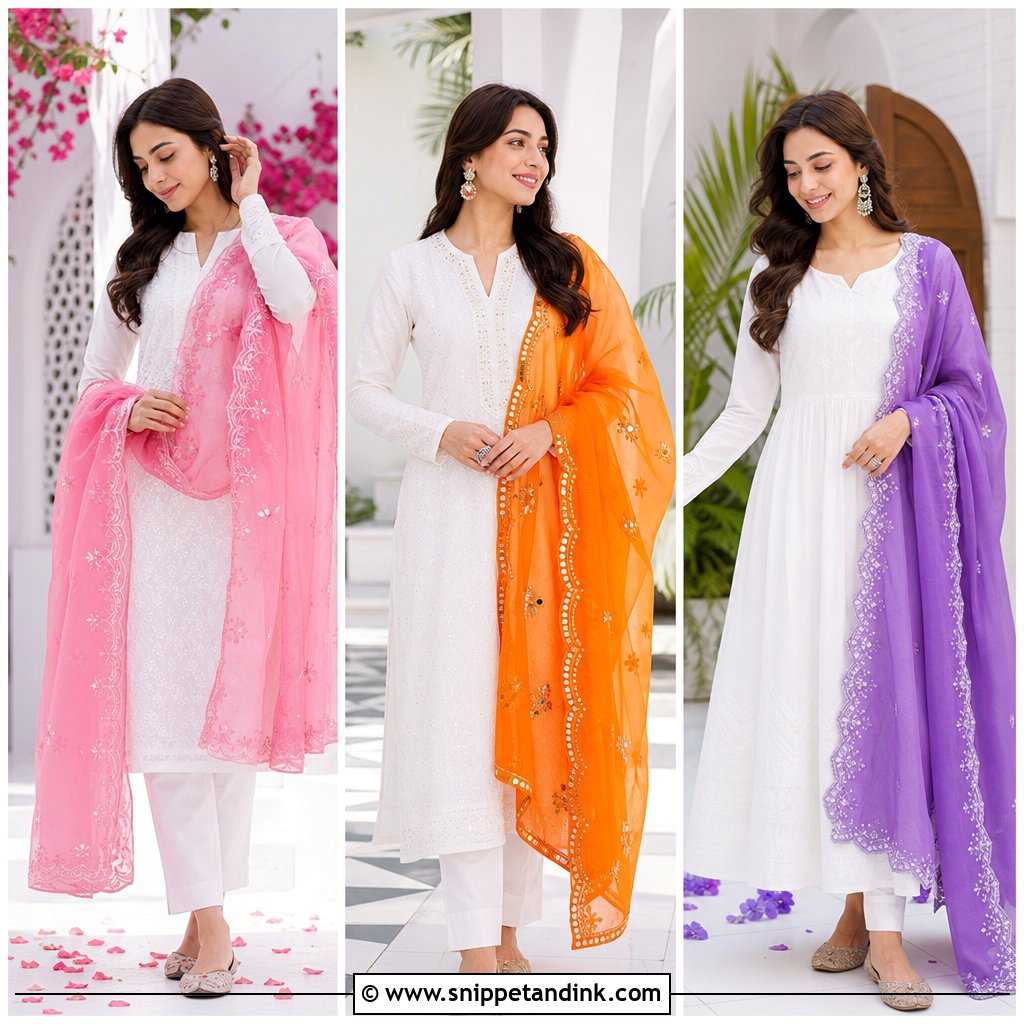
Georgette is the fabric I suggest for bridesmaids who’ll be dancing, carrying trays and running errands for the bride all day. It drapes softly, moves well and weighs very little. Because the sharara already flows, a short kurti or crop top keeps the outfit from looking droopy. Thread embroidery or light sequins add enough texture without adding weight.
21. Yellow Organza Sharara
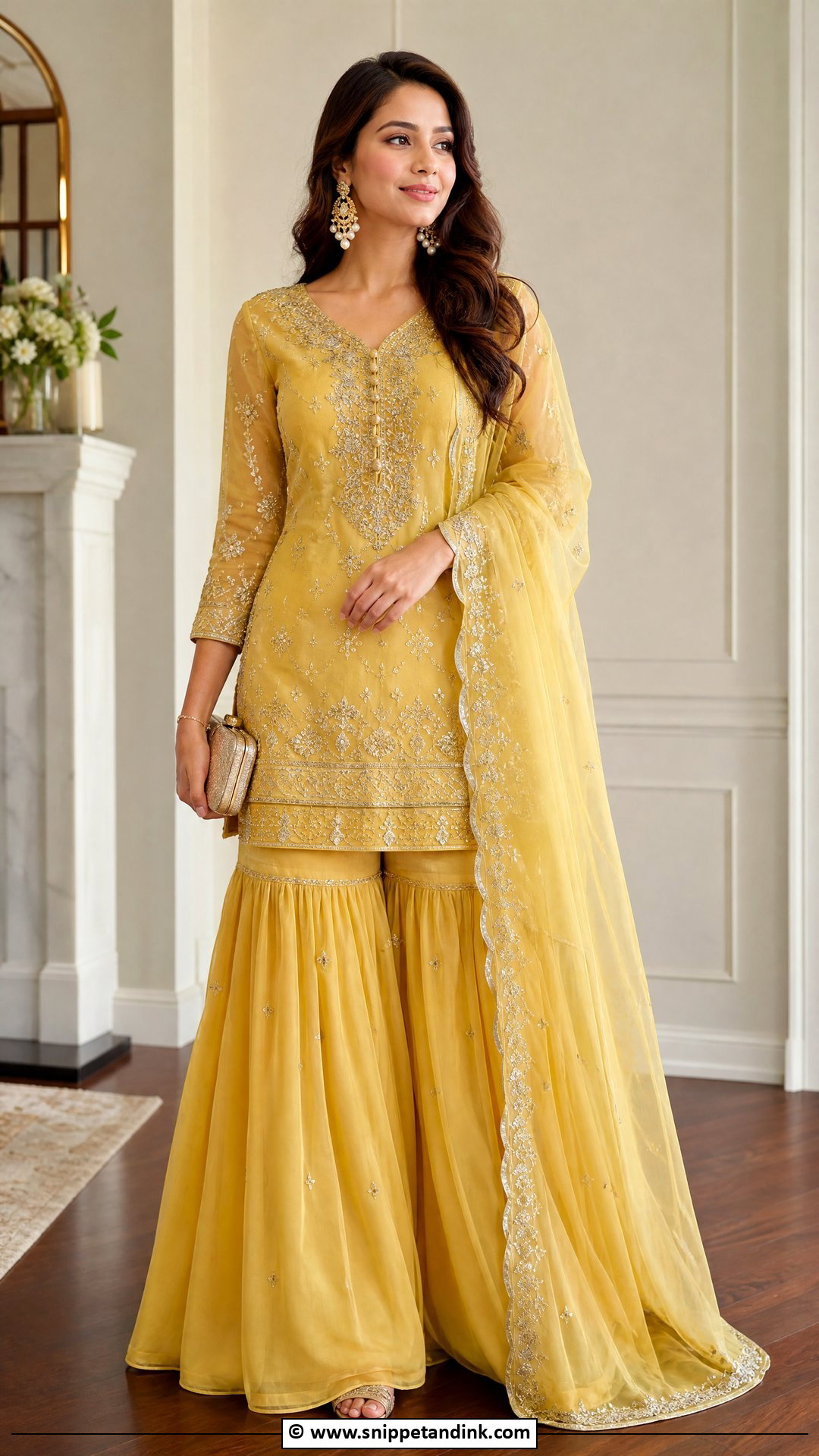
Organza is crisp and slightly sheer, so I use it as a dupatta, a sleeve or a peplum rather than for a whole sharara. A full organza trouser flares wide and stiff and rustles noticeably when you walk. An organza dupatta over an embroidered kurti is the easiest version. Keep the layers few; stacked organza looks puffy in photos.
22. Yellow Cotton Sharara Suit
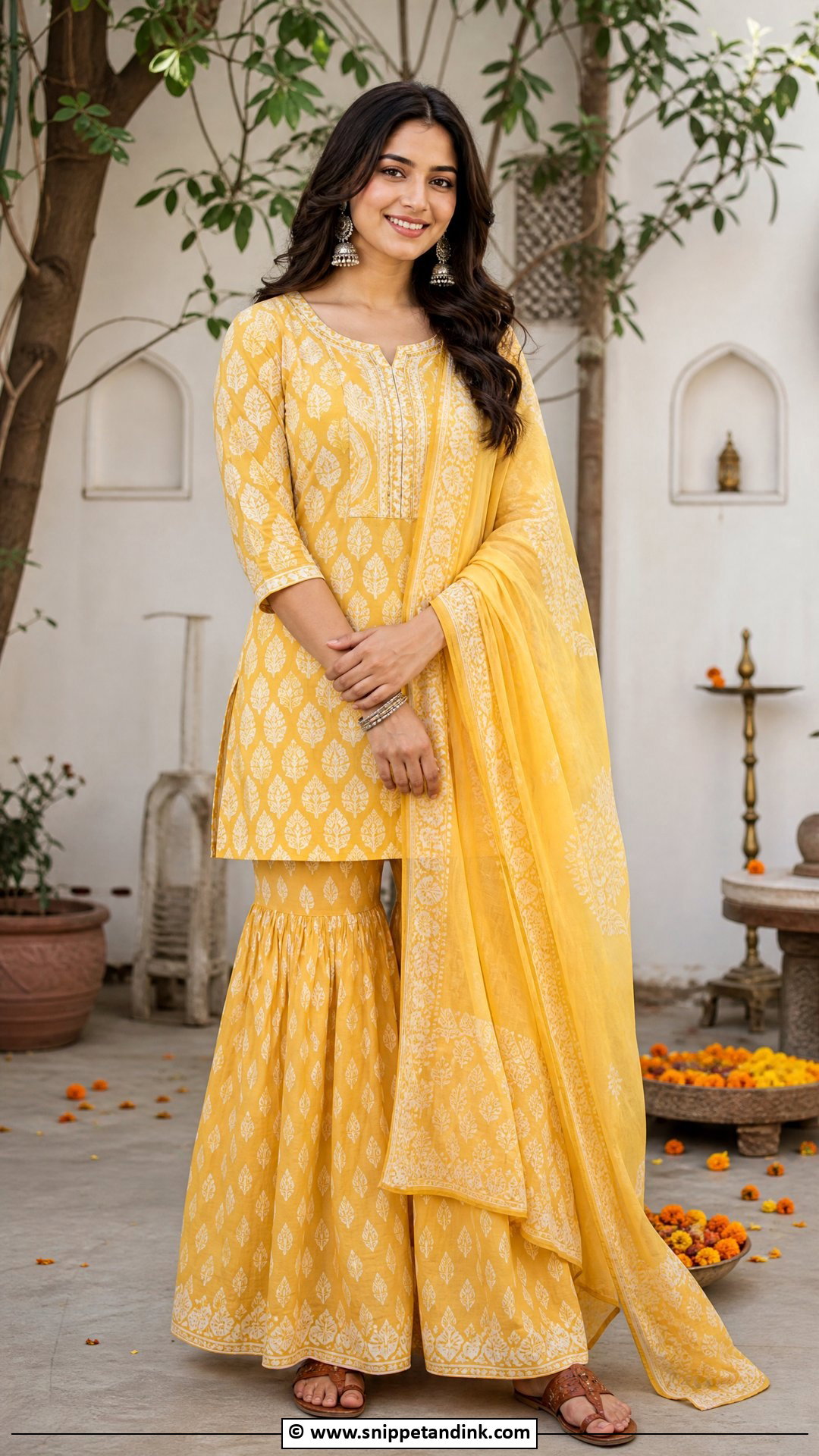
Cotton is the right call for a summer puja or a low-key haldi where you’ll be on the floor and outdoors. It breathes, it washes, and block prints or lace edging still make it festive. Expect cotton to wrinkle as you sit, which is part of the charm for a casual function but less so at a formal one. Kolhapuris or cotton juttis suit it best.
23. Yellow Sharara For Wedding Guest
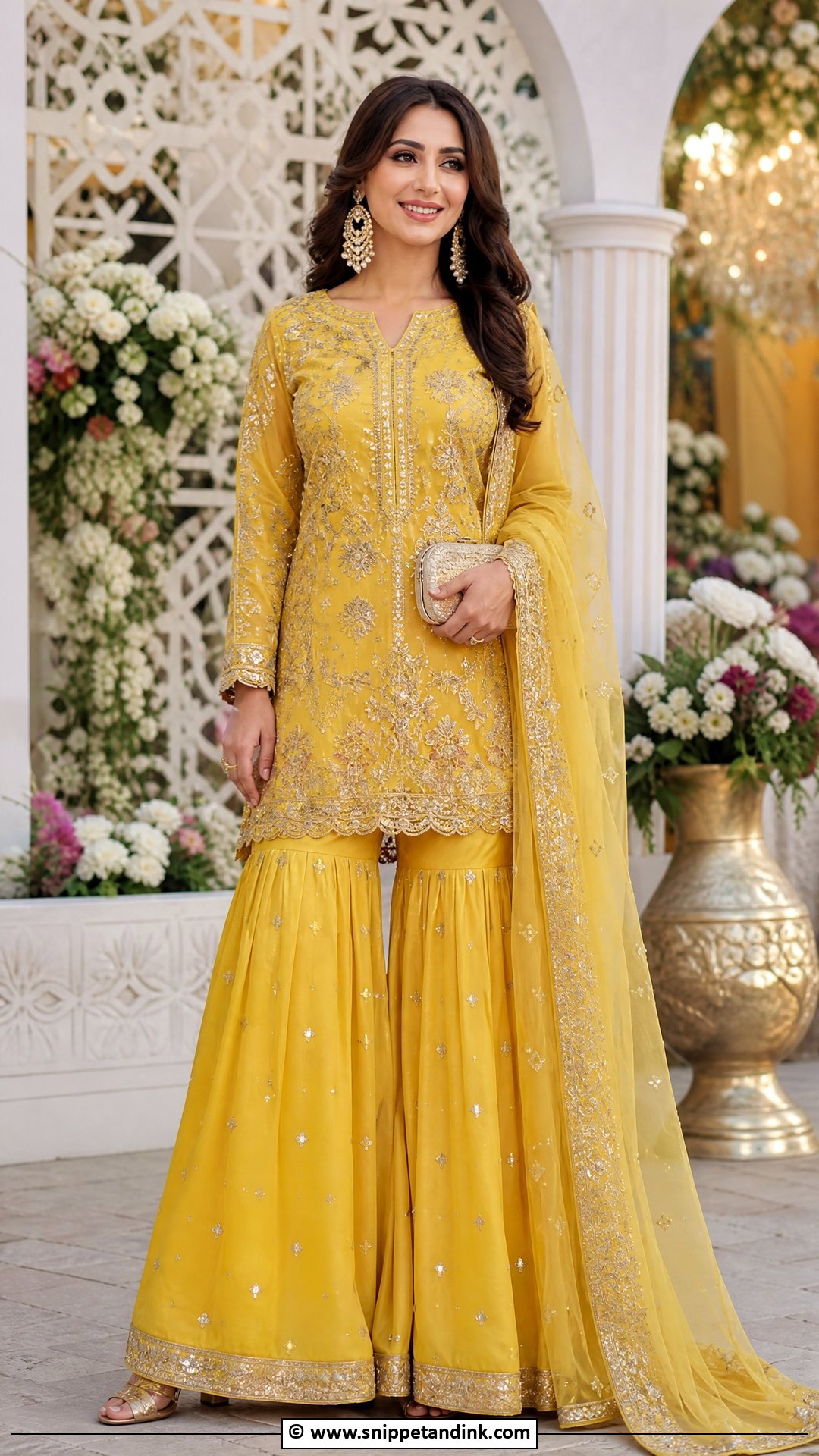
As a guest, the aim is to look festive without competing with the bride. A yellow sharara for wedding guest dressing should match the function: mirror work or florals for haldi, bandhani or gota for mehndi, silk or embroidered organza for something formal. I’d skip a heavy maang tikka and bridal-weight sets. And if the family has asked for yellow at the haldi, check whether they mean a specific shade before buying.
24. Yellow Sharara For Bridesmaid
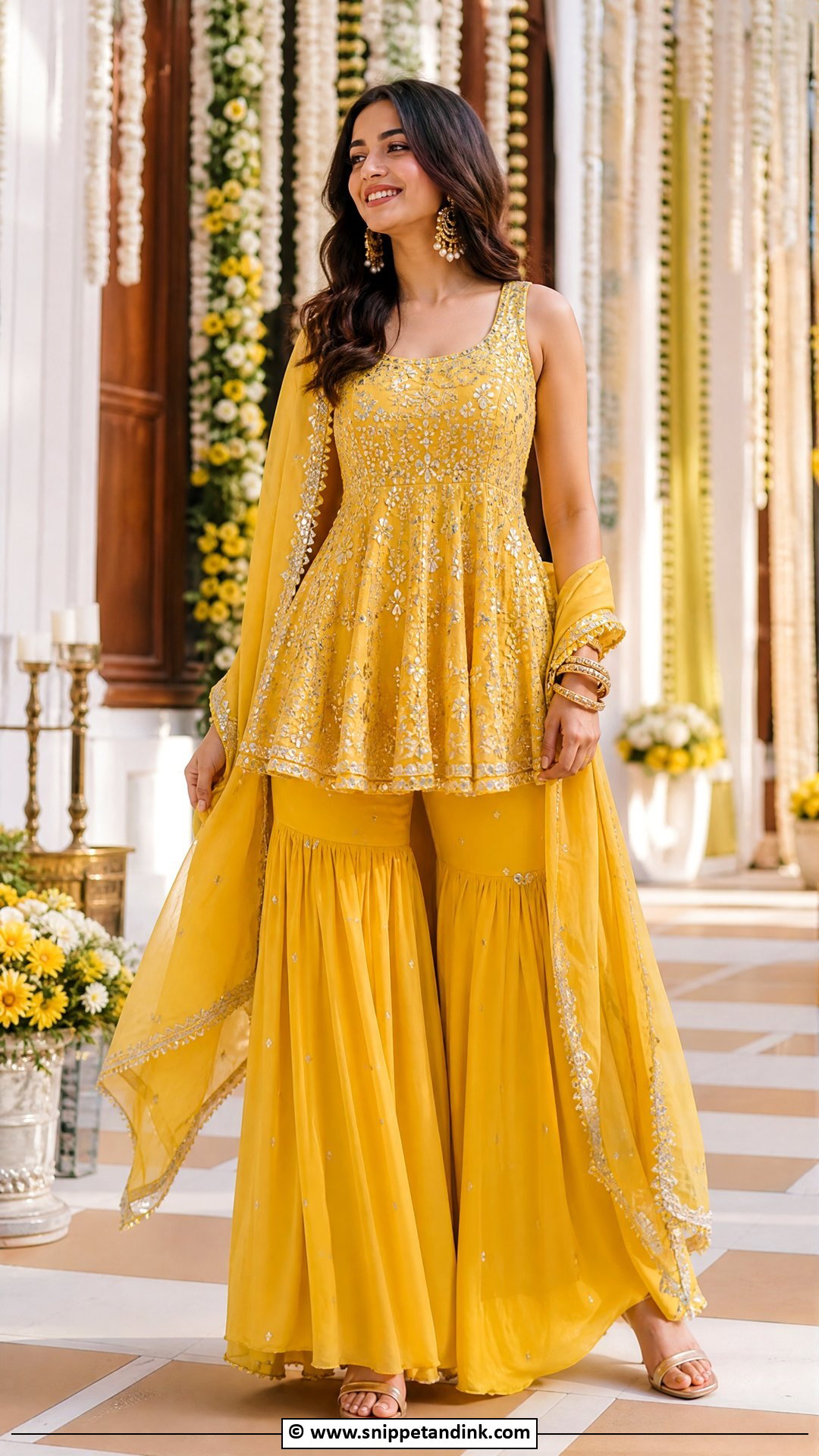
For bridesmaids in yellow, I keep one shade family and vary the shape: a peplum on one, a short kurti on another, a jacket set on a third. That keeps group photos coordinated without looking like uniforms. Lightweight georgette, cotton silk or organza suits the amount of running around bridesmaids do. Before ordering, I lay all the fabrics together in daylight, because ‘yellow’ from different shops can range from lemon to orange.
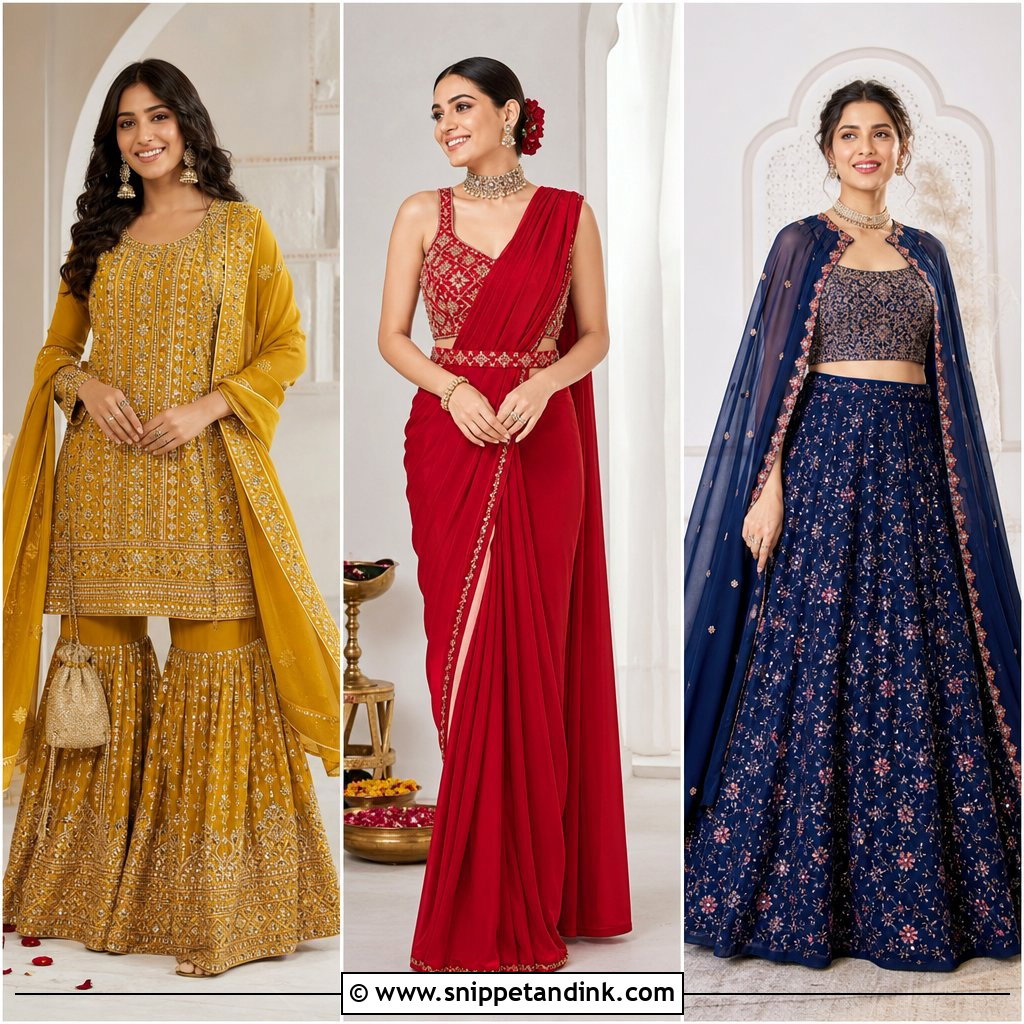
25. Yellow Sharara For Bride
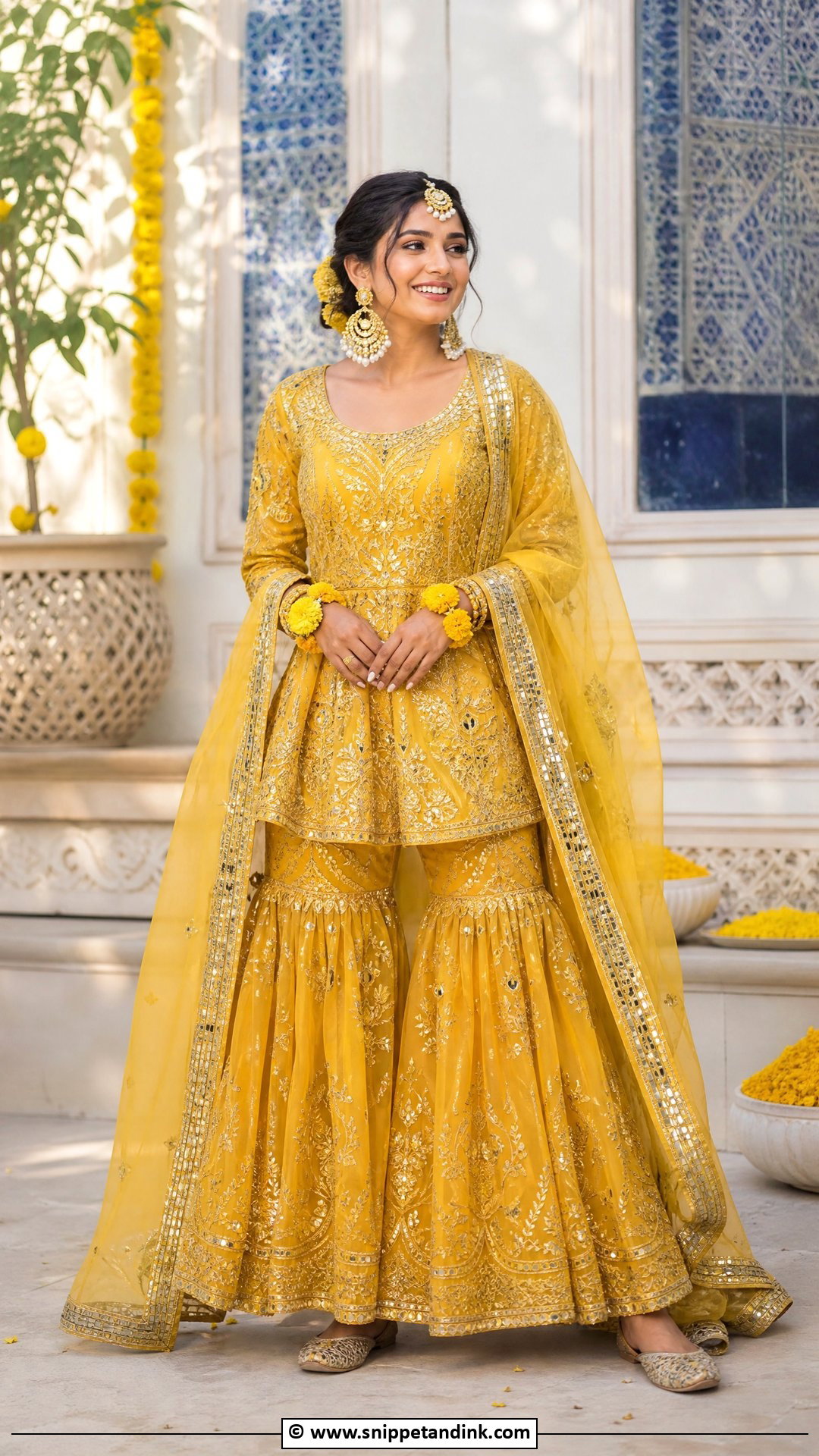
For a bride, a sharara is a lighter and more practical option than a lehenga at the haldi or mehndi. You can take it richer with heavy gota patti, mirror work, zardozi borders or an embroidered dupatta. Peplum, jacket or short kurti silhouettes all hold up as bridal. Floral jewelry suits haldi; kundan suits mehndi. Plan the weight carefully, since heavy zardozi on a full sharara can be tiring after a few hours of sitting.
26. Yellow Sharara With Floral Jewelry
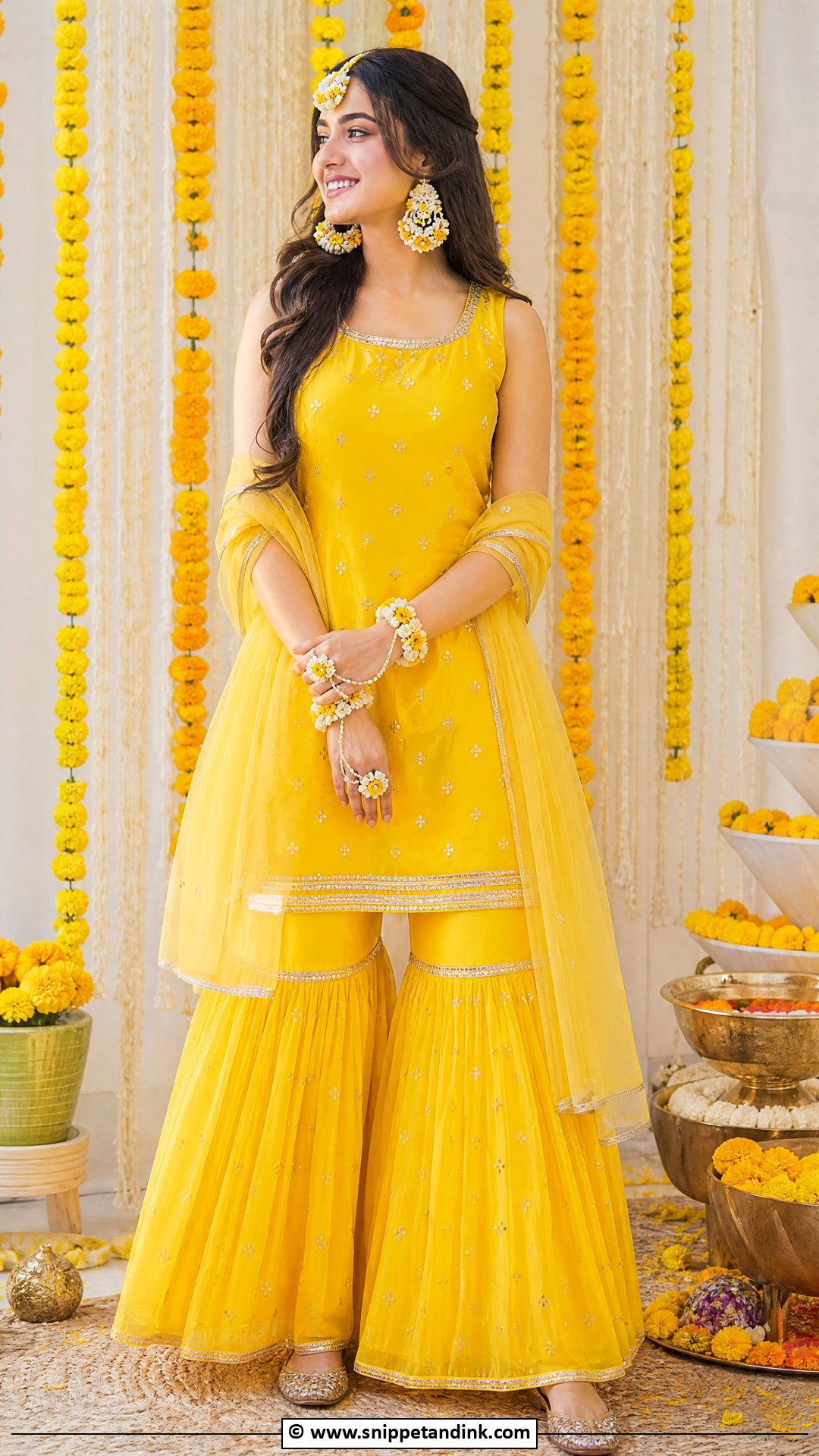
Floral jewelry is the haldi favourite. Fresh flowers smell wonderful and look traditional but wilt within hours in heat, so I order them for the morning of and keep them in a cool room until the last minute. Fabric or gota flowers last longer and are easier to manage. If the jewelry is big, keep the outfit’s embroidery quiet. A sleeveless kurti or crop top shows the haath phool best.
27. Yellow Sharara With Kundan Jewelry
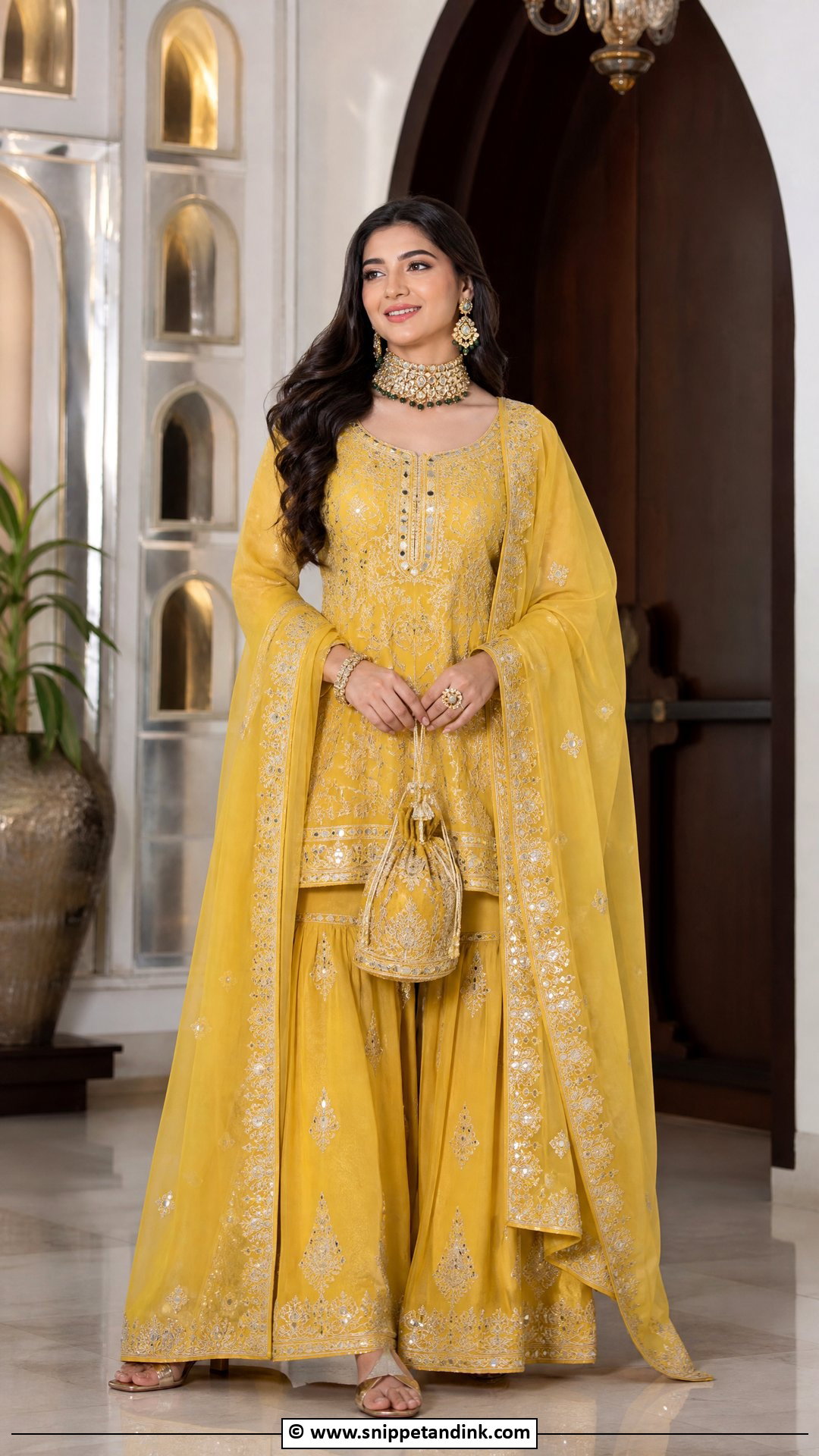
Kundan gives the yellow sharara a more formal finish, best for evening functions. Mustard, marigold and golden yellow suit it most. My rule: a choker with a plain neckline, statement earrings with a heavily embroidered one, never both. Kundan sets can be heavy on the ears, so if you’ll wear them for hours, buy earrings with a sahara chain that takes the weight over your hair.
28. Yellow Sharara With Juttis
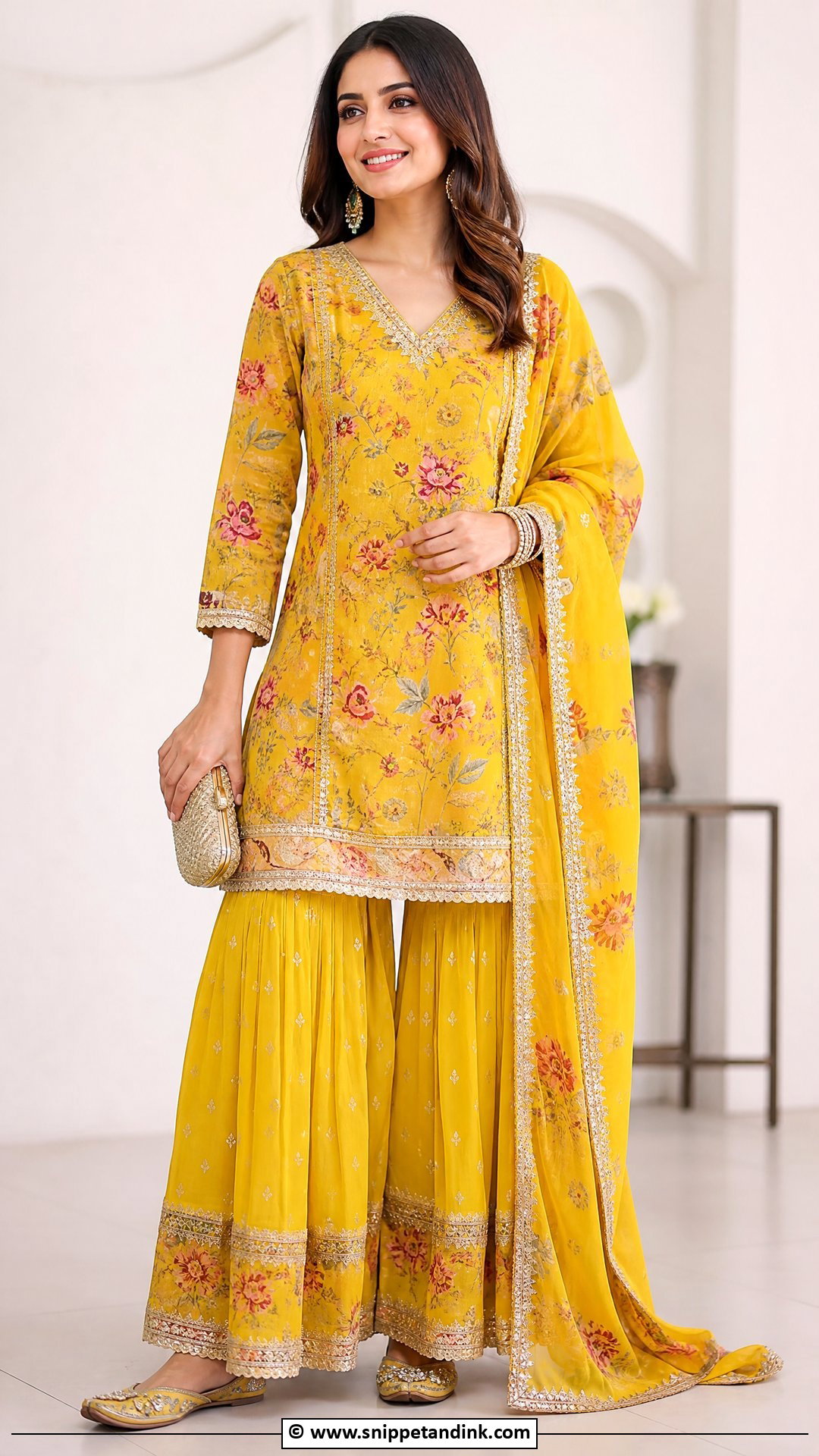
Juttis keep the outfit traditional and let you walk all day. Choose embroidered, mirror or metallic depending on the outfit. The length check I do at every fitting: the sharara should just skim the top of the shoe, not drag. Hem it with the juttis on. New juttis are stiff and can rub the back of the heel for the first few wears, so break them in at home.
29. Yellow Sharara With Potli Bag
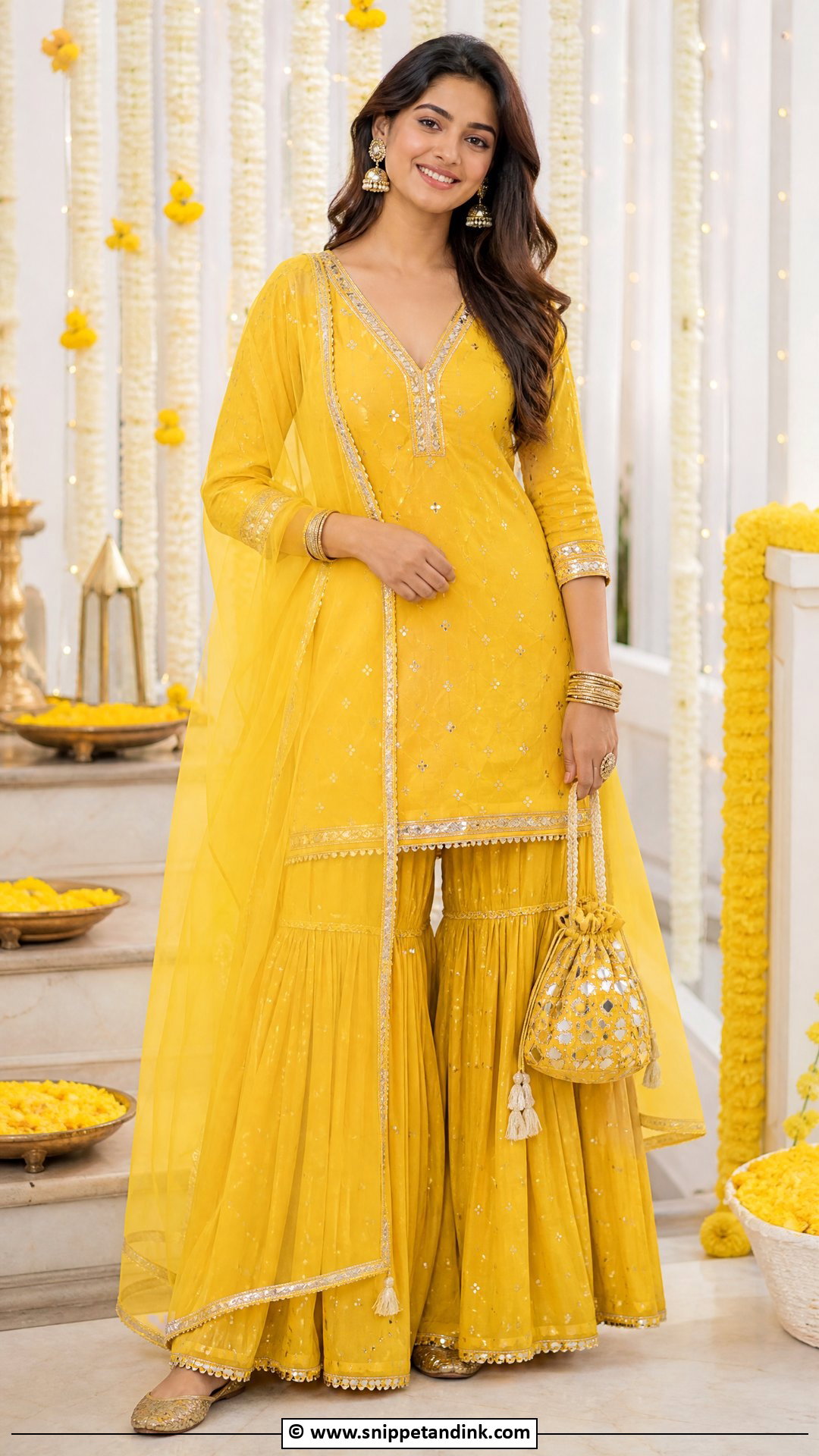
A potli is the bag that suits a sharara best because it’s small and soft and hangs from the wrist, leaving both hands free. Mirror work suits haldi, silk suits formal events, and beaded potlis add shine. If the outfit is plain, the bag can carry the colour; if it’s heavily embroidered, keep the potli quiet. I make sure every bride’s potli holds a safety pin, lip colour and a few tissues.
30. Yellow Sharara With Contrast Dupatta
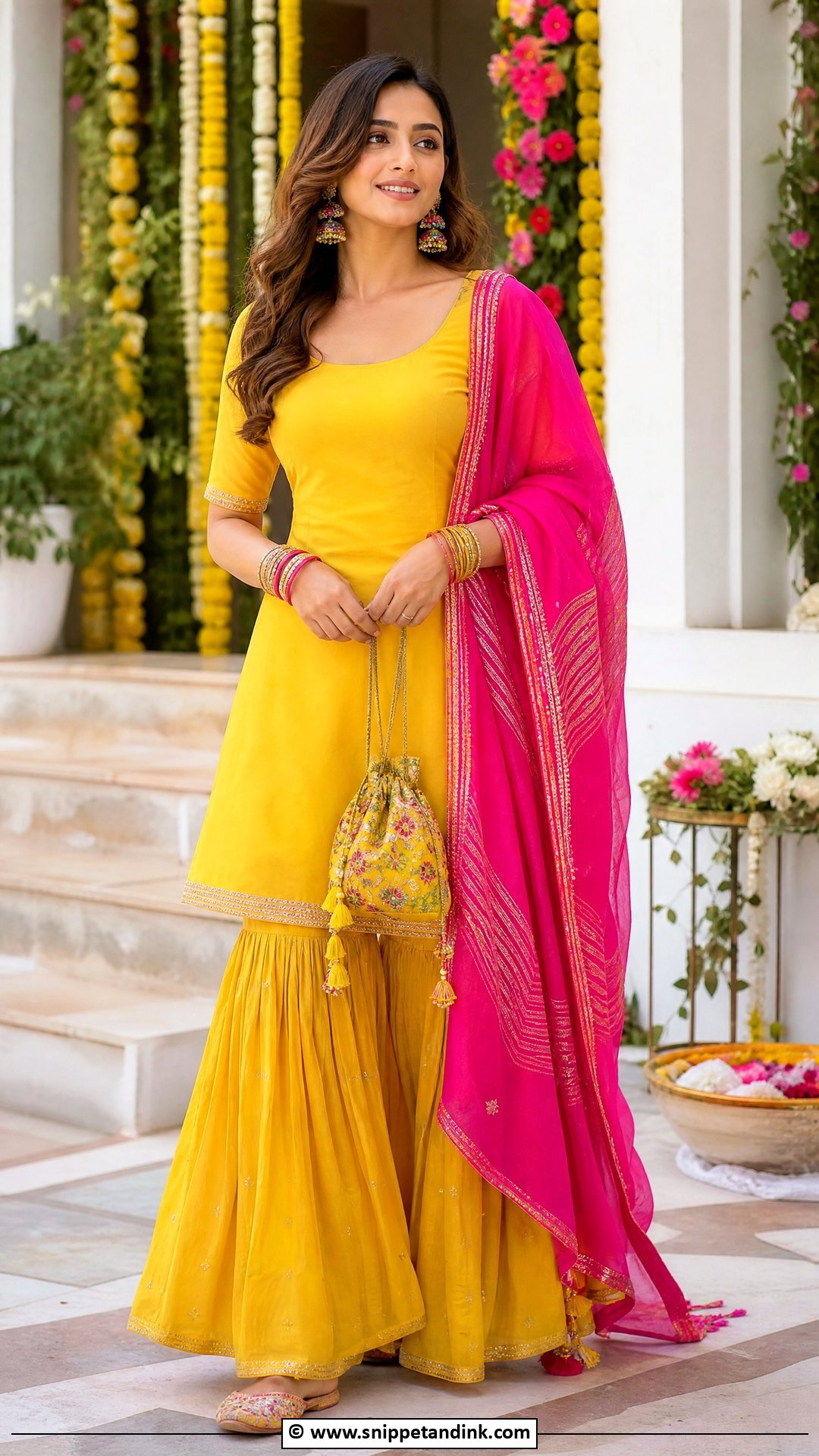
Pink, orange, green, ivory and turquoise all pair well with yellow. A contrast dupatta suits a plain or lightly embroidered set best, and it’s how I suggest reusing one sharara across several functions. Bandhani, leheriya and gota-bordered dupattas make it festive. Pick up the dupatta colour in your bangles or earrings so the contrast looks planned.
Turmeric Paste, Oil and Your Sharara
If you’re the bride or close family at a haldi, assume the outfit will be stained. Turmeric paste is mixed with oil or milk and it travels onto everything. I tell brides to wear a set they’re happy to keep as a haldi souvenir, and never a borrowed one.
Getting the stain out afterwards
- Scrape off any paste once it’s dry rather than rubbing it wet, which pushes the colour deeper.
- Rinse from the back of the fabric with cold water. Hot water sets turmeric.
- Avoid soap or alkaline detergents on the first rinse: turmeric turns a reddish orange in alkali and the mark looks worse.
- Dry cotton pieces in direct sunlight. Sunlight fades turmeric noticeably, and a day or two outside often does more than any product.
- Take silk, gota or zari pieces to a dry cleaner instead, and tell them it’s turmeric and oil.
For the ceremony itself, keep heavy embroidery and real jewelry off the haldi outfit. Paste gets into mirror work and between kundan stones, and it’s very hard to clean out of them.
Plain Cotton for the Haldi, Silk and Kundan by Evening
A yellow sharara can be as simple as cotton chikankari and juttis or as grand as silk, gota patti and a kundan set, and the same trousers can often do both with a change of top and dupatta. Start from the function and how long you’ll be sitting, then choose the fabric, and only after that the shade and the jewelry. Get the kurti length right against the flare and the rest follows.
You'll Like These Ideas:




Leave a Reply