
A Pakistani wedding is several parties, not one, and each has its own dress code. Mehndi and dholki nights are bright and playful; the nikkah is soft and modest; the baraat and walima are formal and dressy. How close you are to the couple changes things too. Family can wear heavier embroidery and bigger jewelry, while a friend or colleague usually looks best in lighter work with one strong accessory. When someone asks me to dress them as a guest, my first question is which function, and my second is whether they’ll be on the stage in the photos or watching from a table. The outfits below are complete looks for every function.
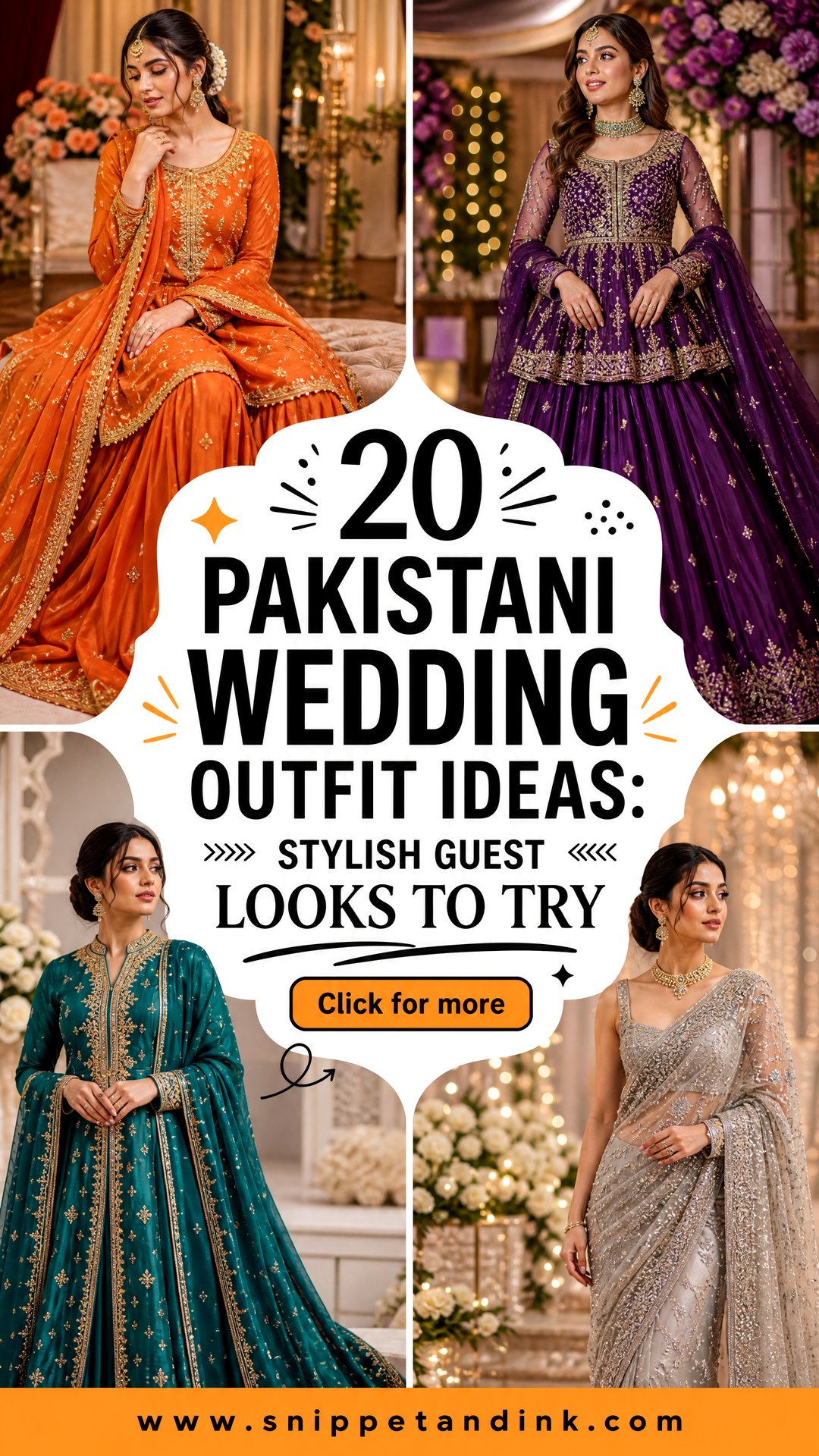
Colors a Guest Should Check With the Family First
Most colors are fair game at a Pakistani wedding, but a few carry meaning, and it’s always better to ask than to guess.
- Red and deep maroon at the baraat belong to the bride in most families. A guest in full red bridal-style embroidery will get noticed for the wrong reason.
- White and ivory are increasingly common for a bride’s nikkah or walima. If she’s in white, guests should choose a pastel.
- Black is welcome at plenty of evening receptions now, but some elders still see it as a mourning color. A quick message to the host settles it.
- Yellow and green are expected at the mehndi and mayun. Turning up in a muted grey to a mehndi is far more out of place than too much color.
Dressing for a Nikkah Held in a Mosque
If the nikkah is in a mosque, plan for full sleeves or a dupatta that covers your arms, a neckline that sits close, and something to cover your hair. A long organza or chiffon dupatta does both jobs. You’ll usually remove your shoes, so pick khussas or flats you can slip off easily and skip anything with buckles. A gharara, sharara or long kameez is more comfortable than a lehenga when you’re sitting on the floor.
1. Yellow Sharara Pakistani Wedding Outfit
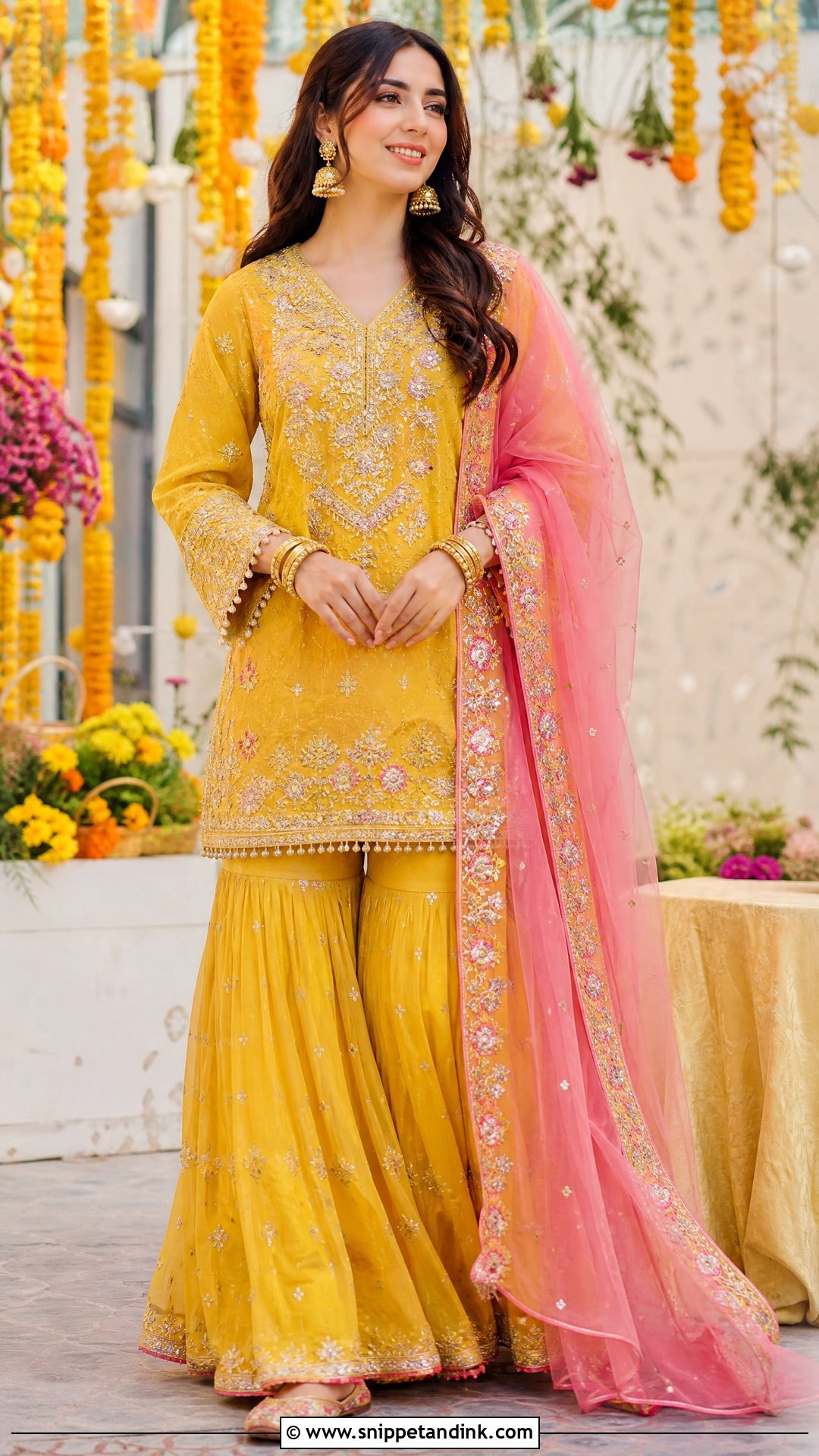
A yellow sharara is the easiest yes for a mehndi, mayun or daytime dholki. Pair a short embroidered kurti with a gently flared sharara in chiffon, silk or light organza. Gota borders and mirror accents add festivity, and because they’re flat they don’t make the outfit stiff. Throw a contrasting pink or green dupatta over one shoulder so your hands are free for clapping, dancing and henna. Gold jhumkas, stacked bangles and embroidered khussa flats suit the floor-cushion seating. As a guest, keep the embroidery light and let one accessory do the talking.
2. Green Lehenga Pakistani Wedding Outfit
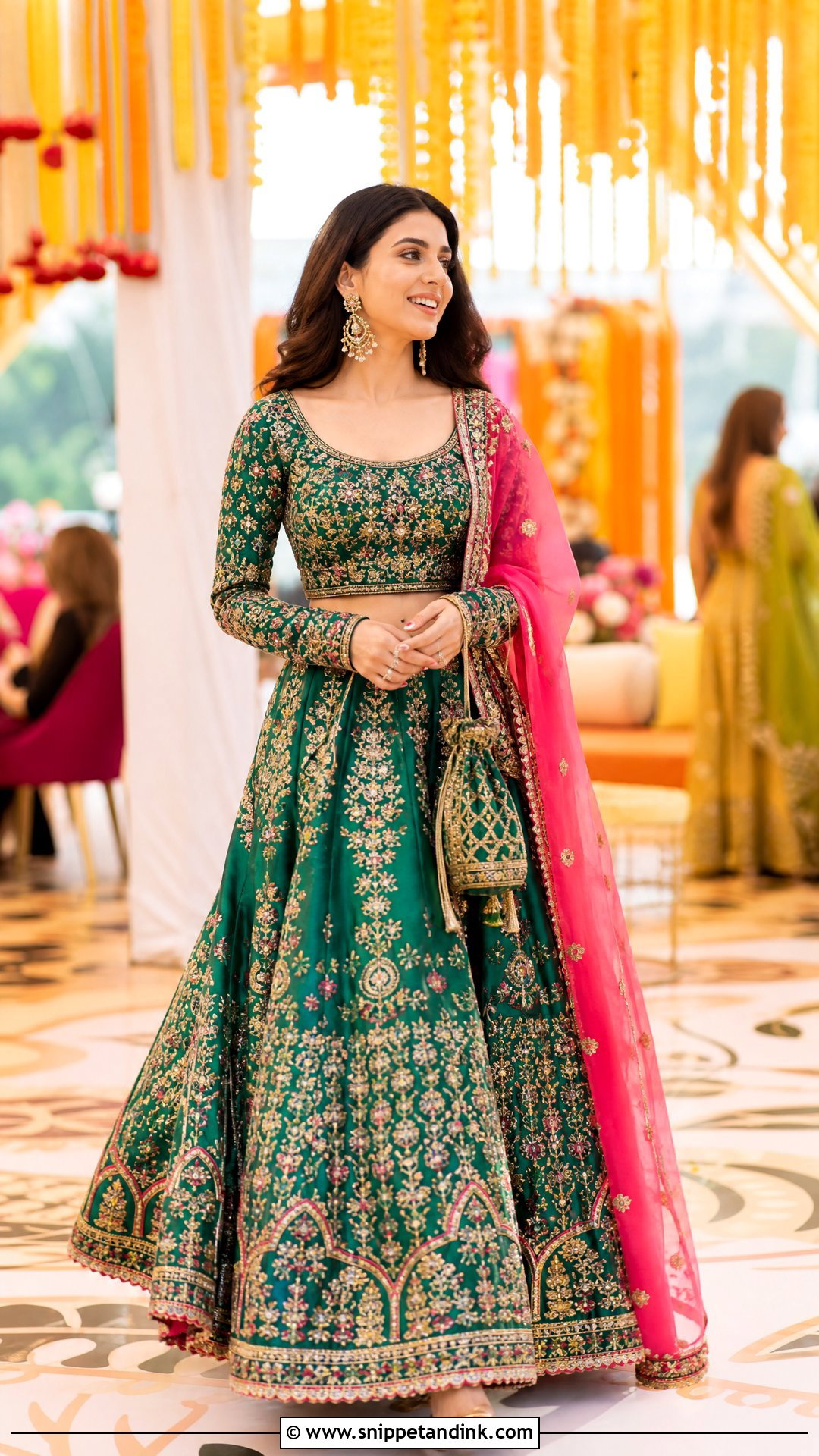
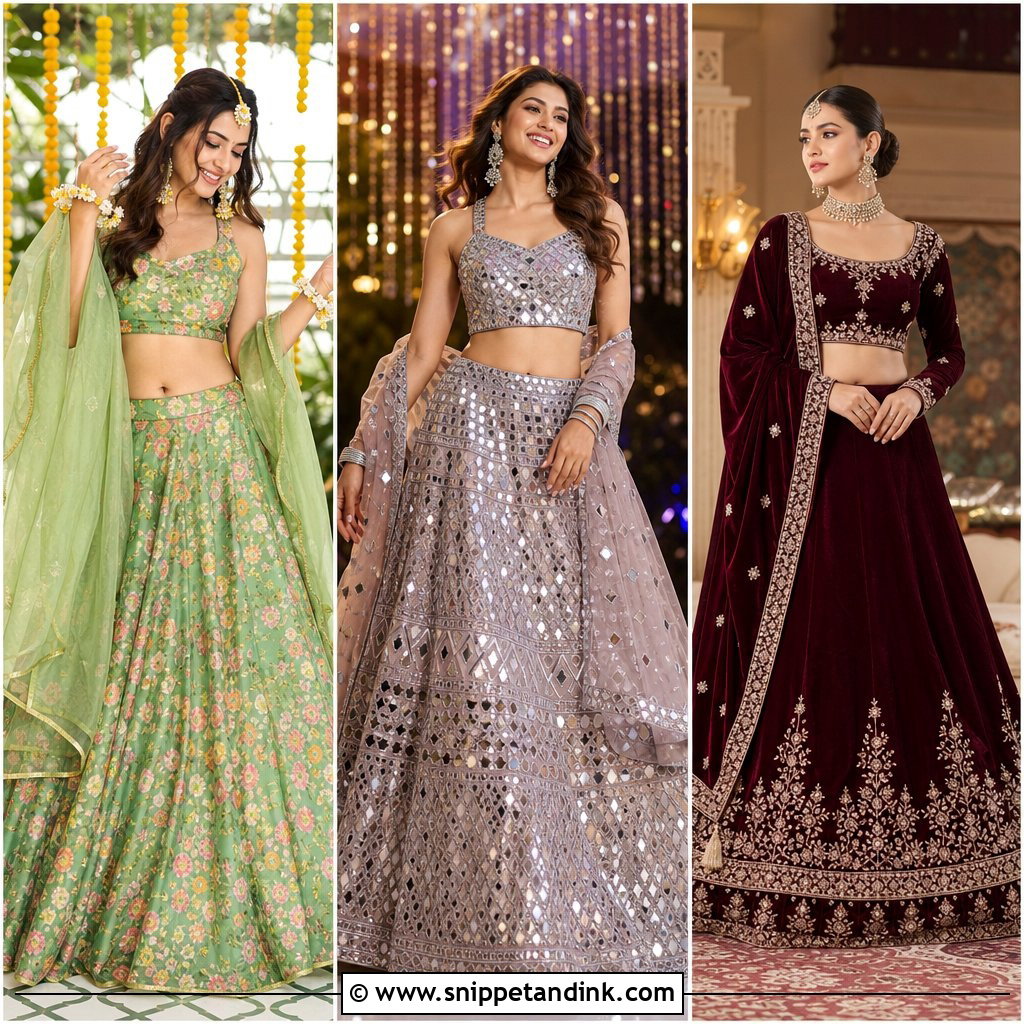
Green is the mehndi color, so a green lehenga fits in immediately. Emerald, lime or parrot green all work, with a decorative border and scattered embroidery on the skirt and a matching fitted blouse or short peplum. A yellow or hot pink dupatta gives contrast that shows up nicely in group shots. I’d keep the skirt at ankle length rather than floor length here, because mehndi floors are covered in petals and you’ll be dancing. Gold sandals, chandelier earrings and a small potli finish it. Heavy embroidery calls for delicate jewelry; a plainer skirt can take layered bangles and a statement necklace.
3. Pink Gharara Pakistani Wedding Outfit
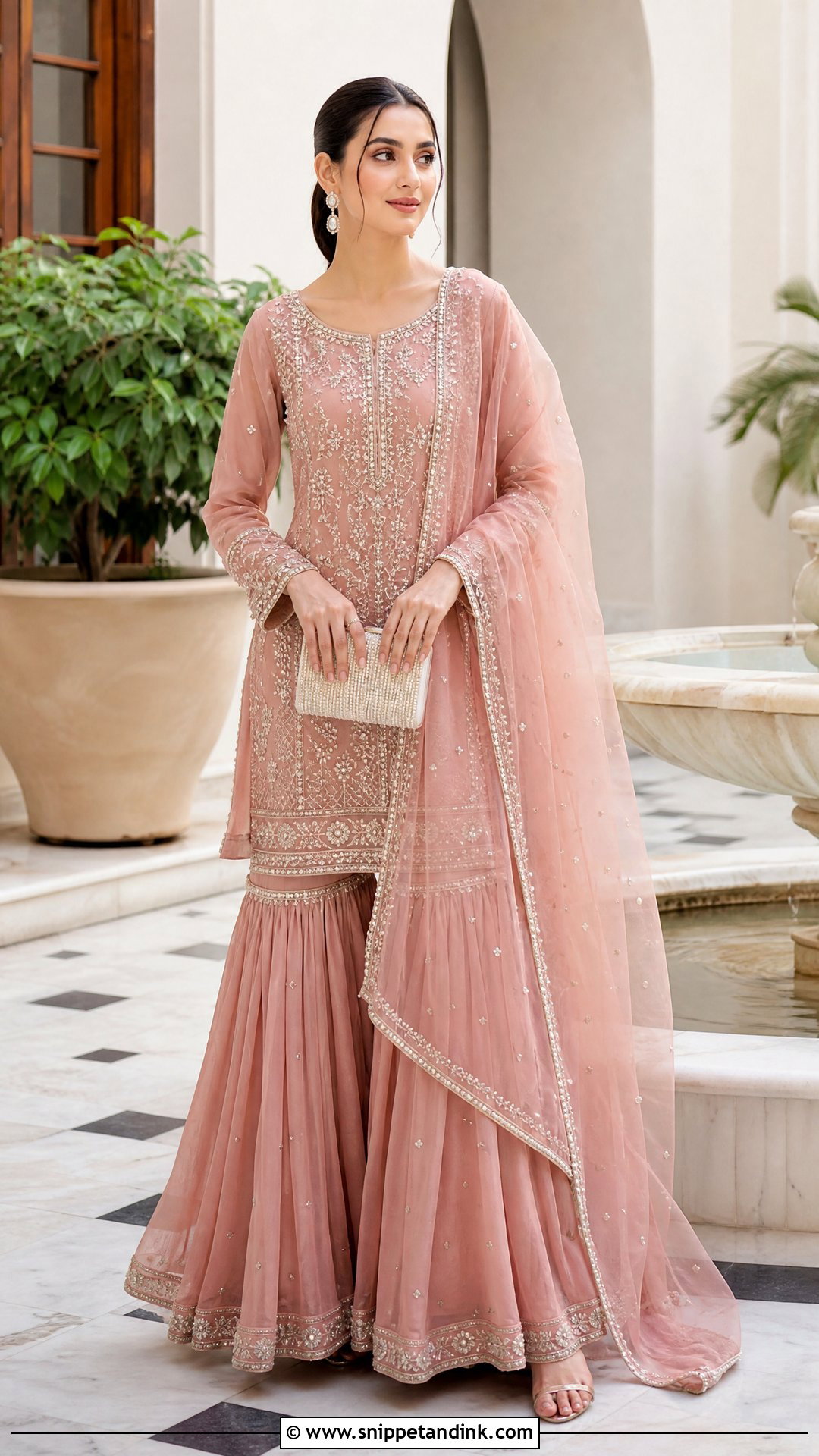
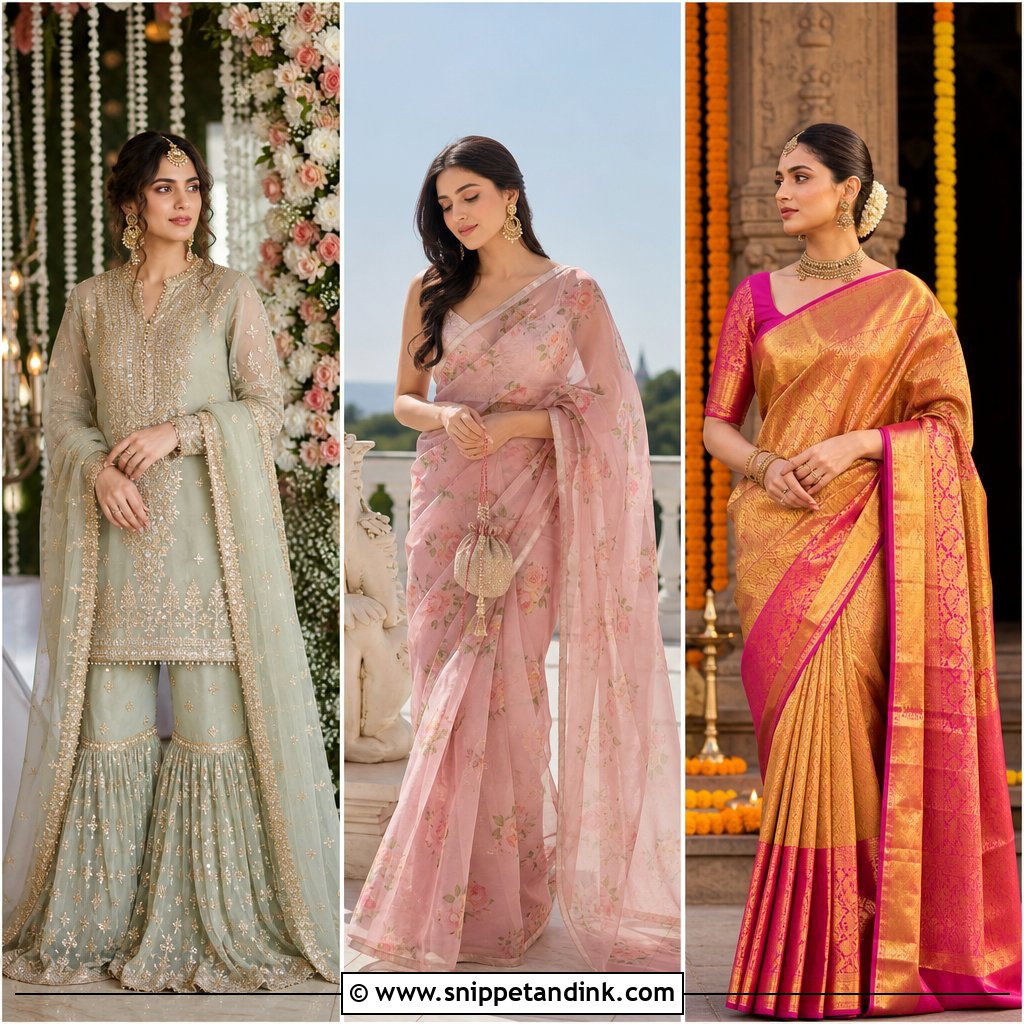
A pink gharara is one of the most adaptable guest outfits there is: it works at a nikkah, an engagement or a family dinner. Pair a knee-length kameez with a gharara that flares from the jor at the knee. Blush, dusty rose and mauve read as soft and refined; fuchsia is more festive. Pearl detailing or fine zari is enough. Wear the organza dupatta over both shoulders, which is the neatest drape for a seated ceremony. Pearl drops, metallic heels and a structured clutch complete it. Ghararas are also forgiving to alter: the tailor can move the jor up or down to suit your height.
4. Ivory Pishwas Pakistani Wedding Outfit
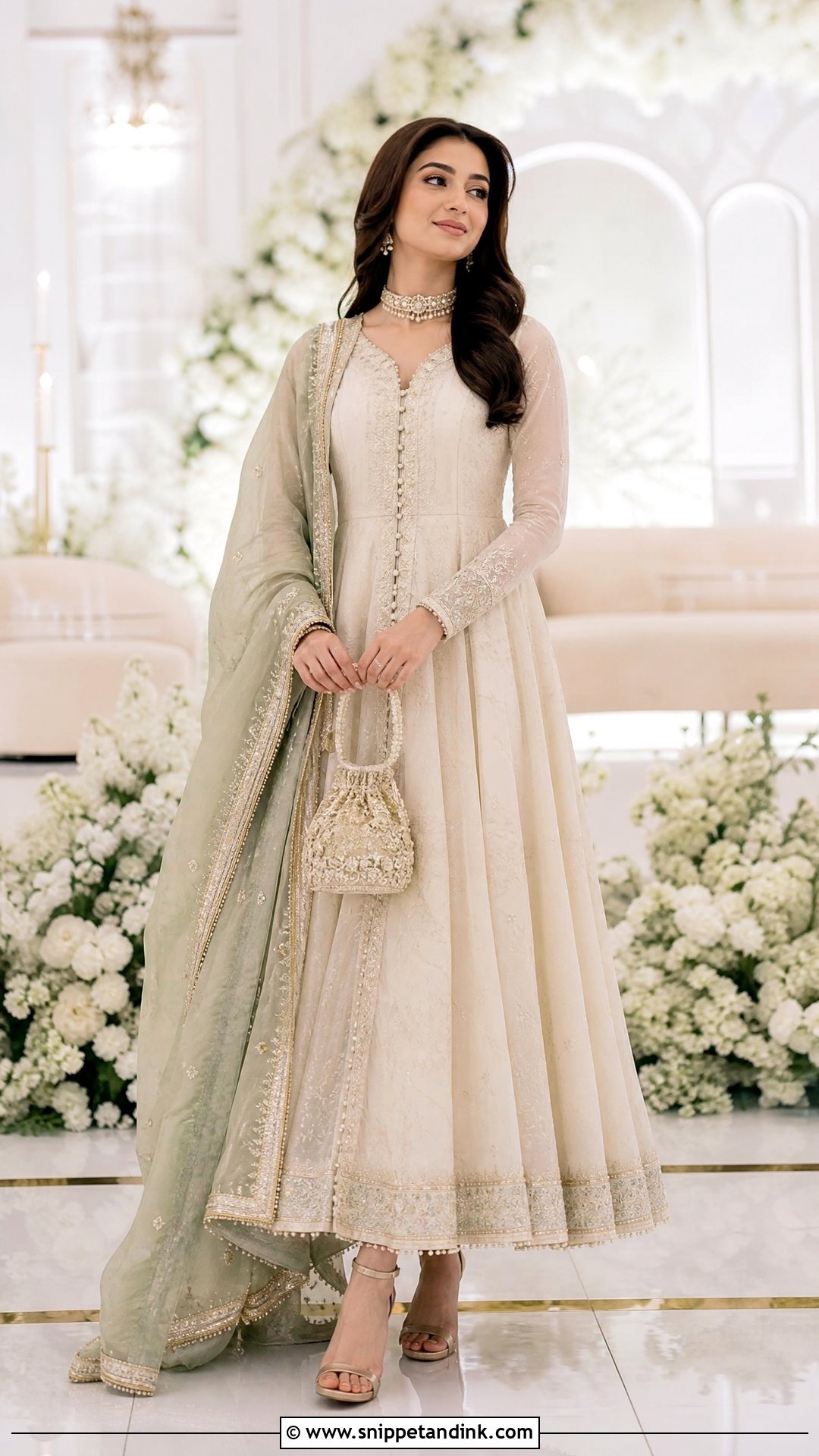
An ivory pishwas has a fitted bodice and long paneled skirt that moves well at a nikkah or walima. Cream or soft beige with gold threadwork and pearls is classic. As a guest, though, ivory needs care. Ask the family first; if the bride is wearing white or ivory at that function, pick a pastel instead. If ivory is fine, bring color in through a sage, blush or powder blue dupatta so you can’t be confused with her across the room. Champagne heels, a pearl choker and a small embellished bag complete it, with soft curls or a neat bun.
5. Red Bridal Lehenga Pakistani Wedding Outfit
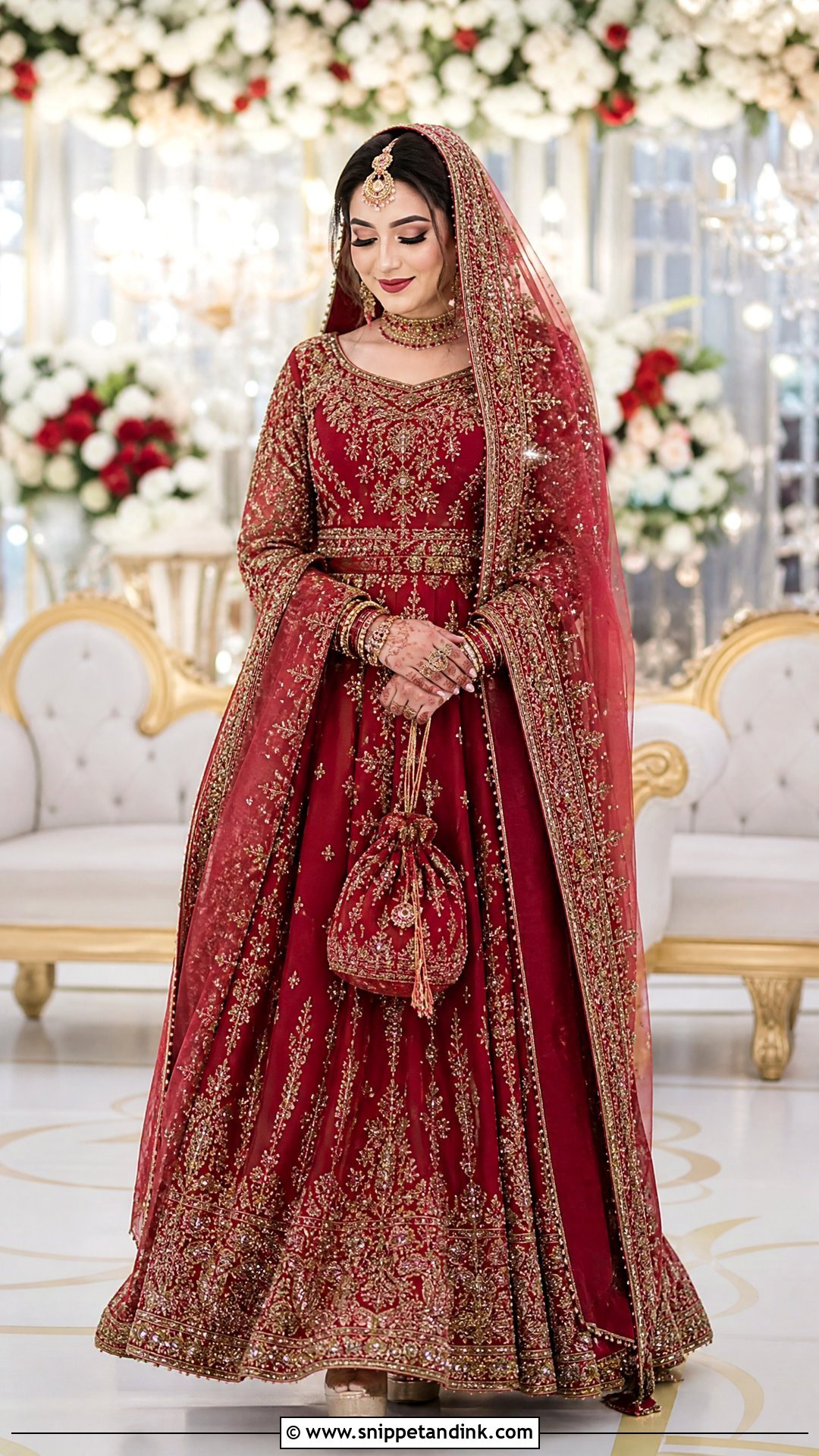
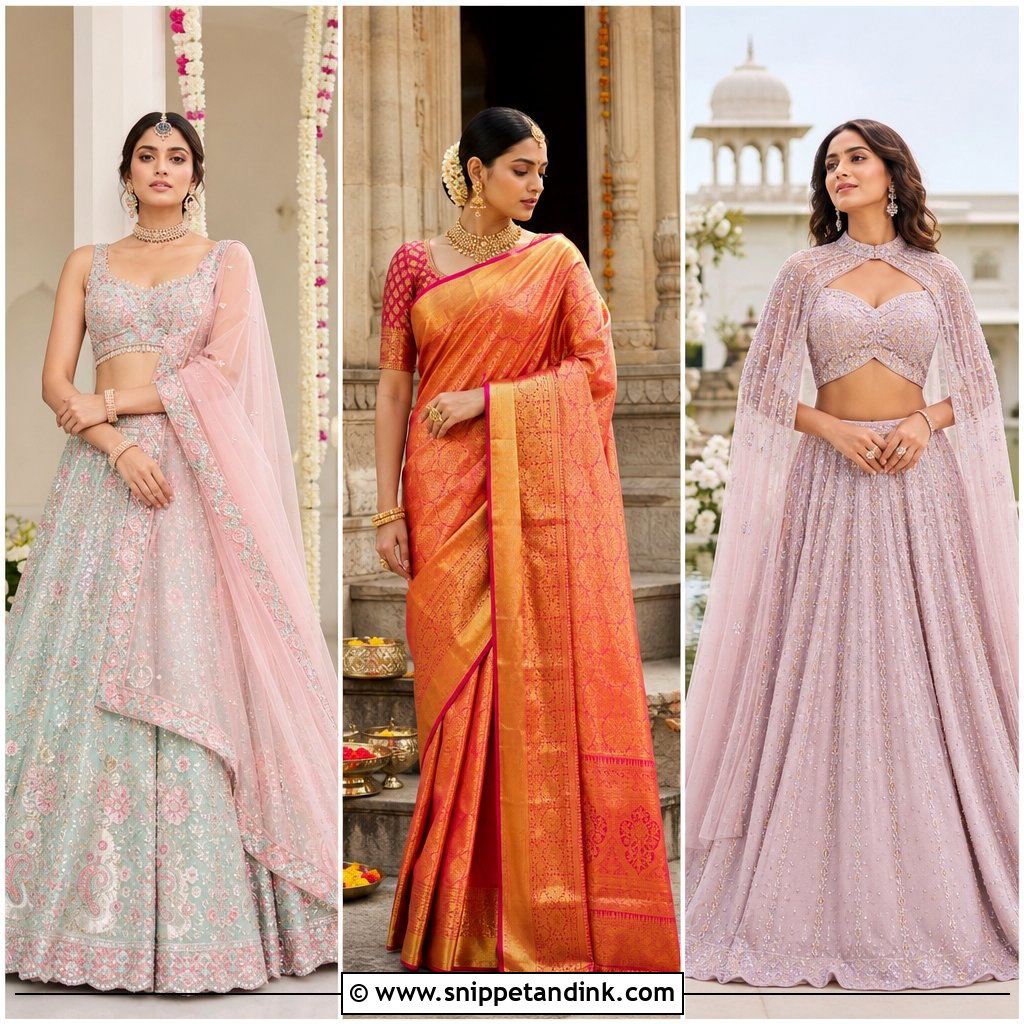
This one is for the bride or her immediate family, not for guests. A red bridal lehenga is the classic baraat look: richly embroidered skirt, structured blouse and one or two dupattas, one over the head and one crossing the body. Maroon, ruby and deep crimson tend to look richer than bright red under evening lights. Gold zari, dabka and sequins highlight the panels and border. Wear comfortable platform heels under the skirt, since bridal lehengas are long and you’ll be standing for photos. A secure potli for essentials, a full jewelry set and a well-anchored hairstyle keep everything in place through a long night.
6. Navy Blue Anarkali Pakistani Wedding Outfit
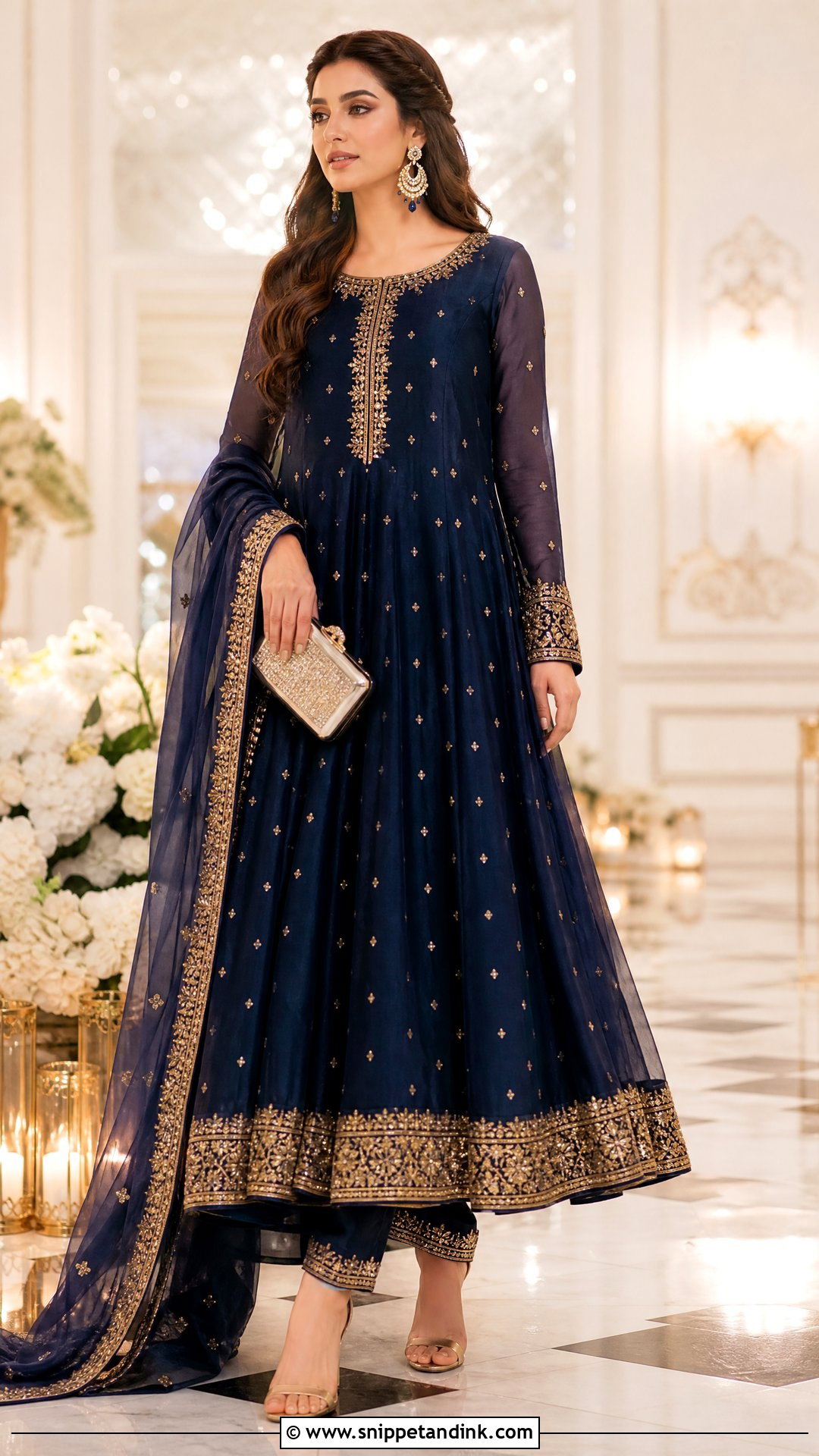
A navy Anarkali is my most-recommended guest outfit for evening baraats and receptions. It’s one piece, so there’s no separate skirt to manage, and the long flare looks formal without trying. Velvet suits cold months; chiffon or georgette breathes better in warm ones. Gold embroidery at the neckline, sleeves and hem gives navy its festive edge. Wear it with straight trousers or churidar depending on the length. Gold heels, a box clutch and earrings with blue or emerald stones finish it. Sweep the hair to one side so the neckline shows; dark colors look softer with some movement near the face.
7. Pastel Organza Suit Pakistani Wedding Outfit
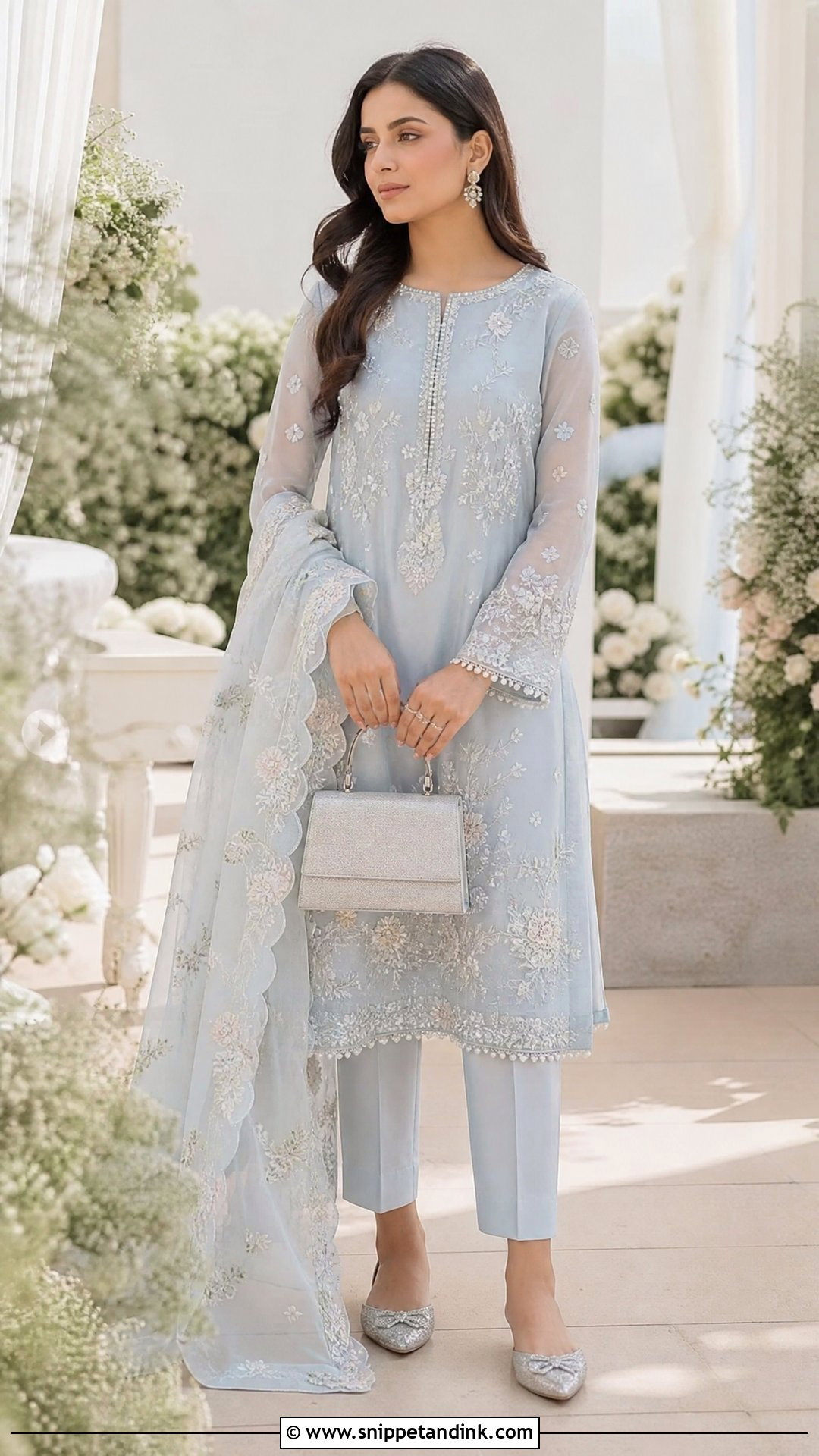
For a daytime nikkah, a pastel organza suit is light, modest and cool. Choose a straight or slightly flared shirt in powder blue, mint, peach or lavender with matching cigarette pants for a long, clean line. A scalloped organza dupatta with floral embroidery or tiny pearls makes it formal. Organza is sheer, so make sure the shirt is properly lined; I always check by holding it up to a window. Pointed metallic flats, delicate earrings and a small top-handle bag are enough. Fresh rosy makeup and a soft bun or loose curls suit it.
8. Black Saree Pakistani Wedding Outfit
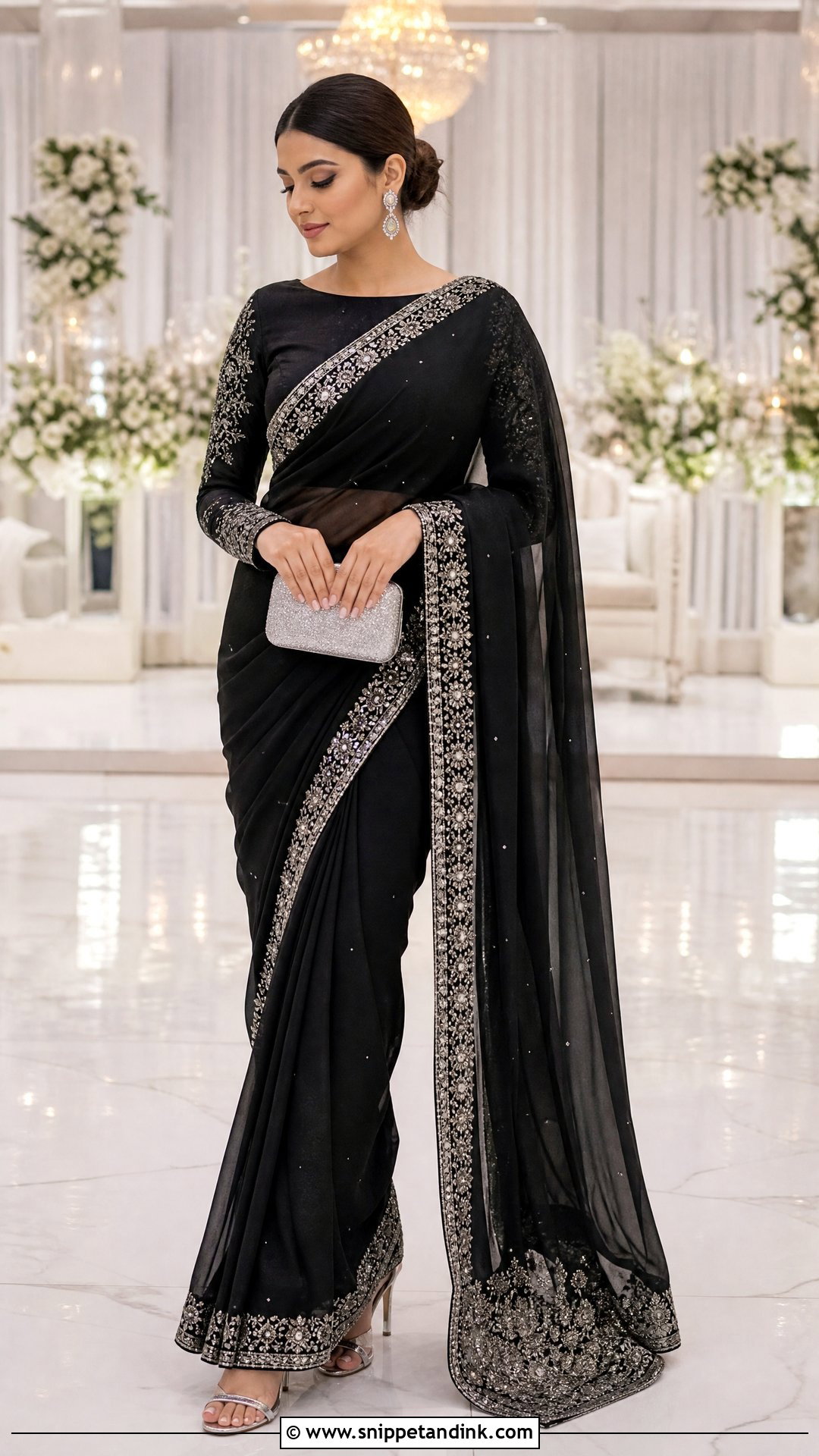
Black is the color I’d always check with the hosts before wearing. Many Pakistani families are perfectly comfortable with it at an evening walima, but some older relatives still consider it unlucky at a wedding. If it’s welcome, a black sari is one of the most polished reception looks there is. Choose chiffon, silk or net with silver, antique gold or tonal embroidery, and a fitted blouse with secure coverage. A clean shoulder drape shows the border. Silver heels, crystal earrings and a low bun complete it. Pick one strong detail, a bold lip or dense embroidery, not both together with big jewelry.
9. Maroon Velvet Suit Pakistani Wedding Outfit
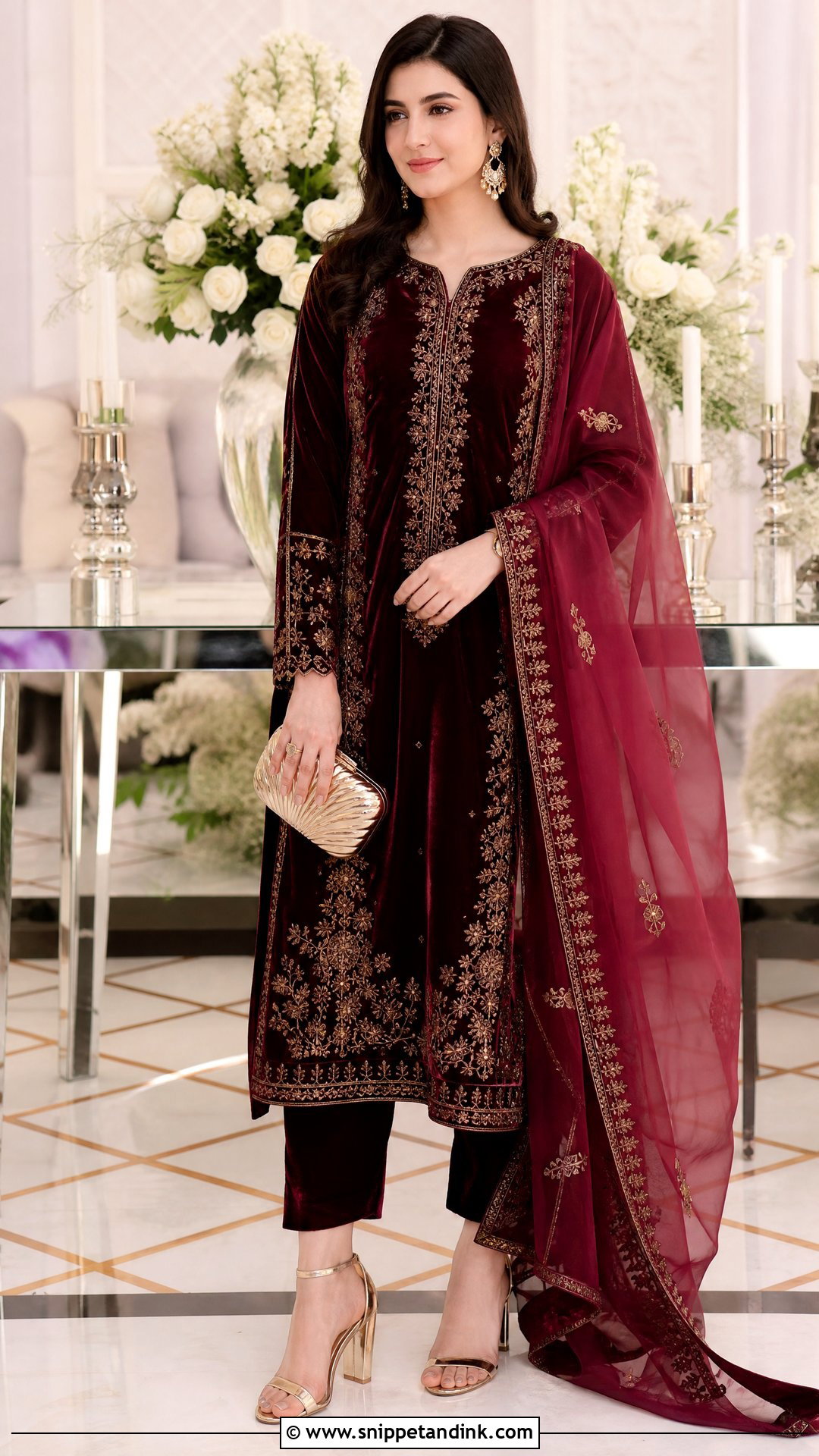
A maroon velvet suit is the guest outfit for a winter wedding. Choose a long velvet shirt with antique gold embroidery concentrated at the neckline, cuffs and hem. Velvet is heavy, so balance it with straight silk trousers or a lightly flared sharara rather than another heavy fabric, and add an organza dupatta for contrast. Gold block heels and traditional earrings finish it. Velvet crushes where you sit, so if you’ll be at a table for hours, hang the outfit in a steamy bathroom before you leave to relax the pile. Burgundy, plum and berry give similar warmth if you’d rather stay away from bridal red.
10. Orange Farshi Shalwar Pakistani Wedding Outfit
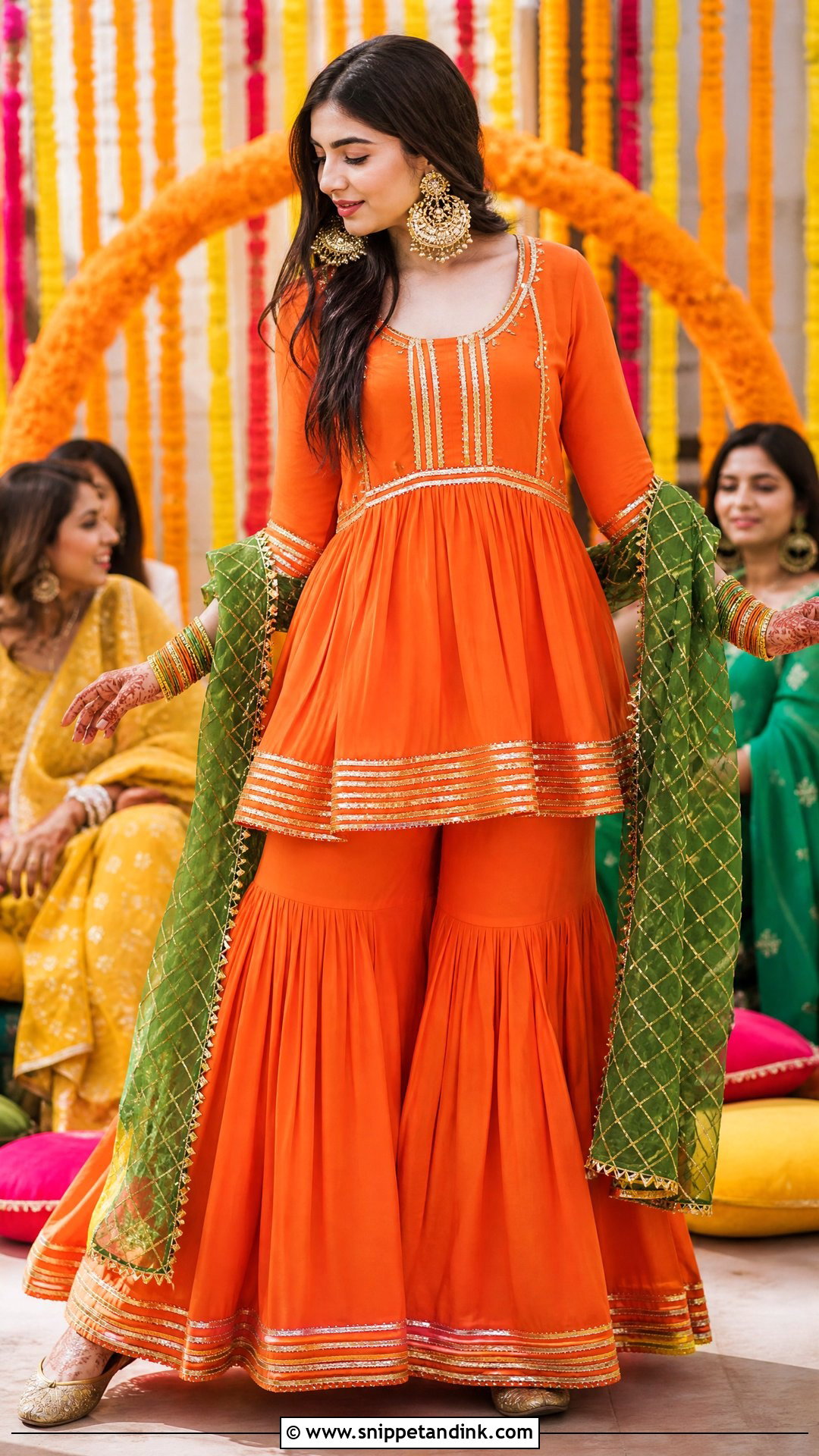
An orange farshi shalwar brings heritage shape and energy to a mehndi. Pair the wide, floor-skimming shalwar with a short kameez so its volume stays visible. Tangerine, rust and burnt orange all work depending on the season. Gota along the shirt and shalwar hem with a green or pink dupatta gives the classic mehndi palette. Gold khussas, oversized jhumkas and colorful bangles are comfortable for dancing. The farshi shalwar needs one practical thing: hem it in the shoes you’ll actually wear, or you’ll be stepping on it all night.
11. Champagne Maxi Pakistani Wedding Outfit
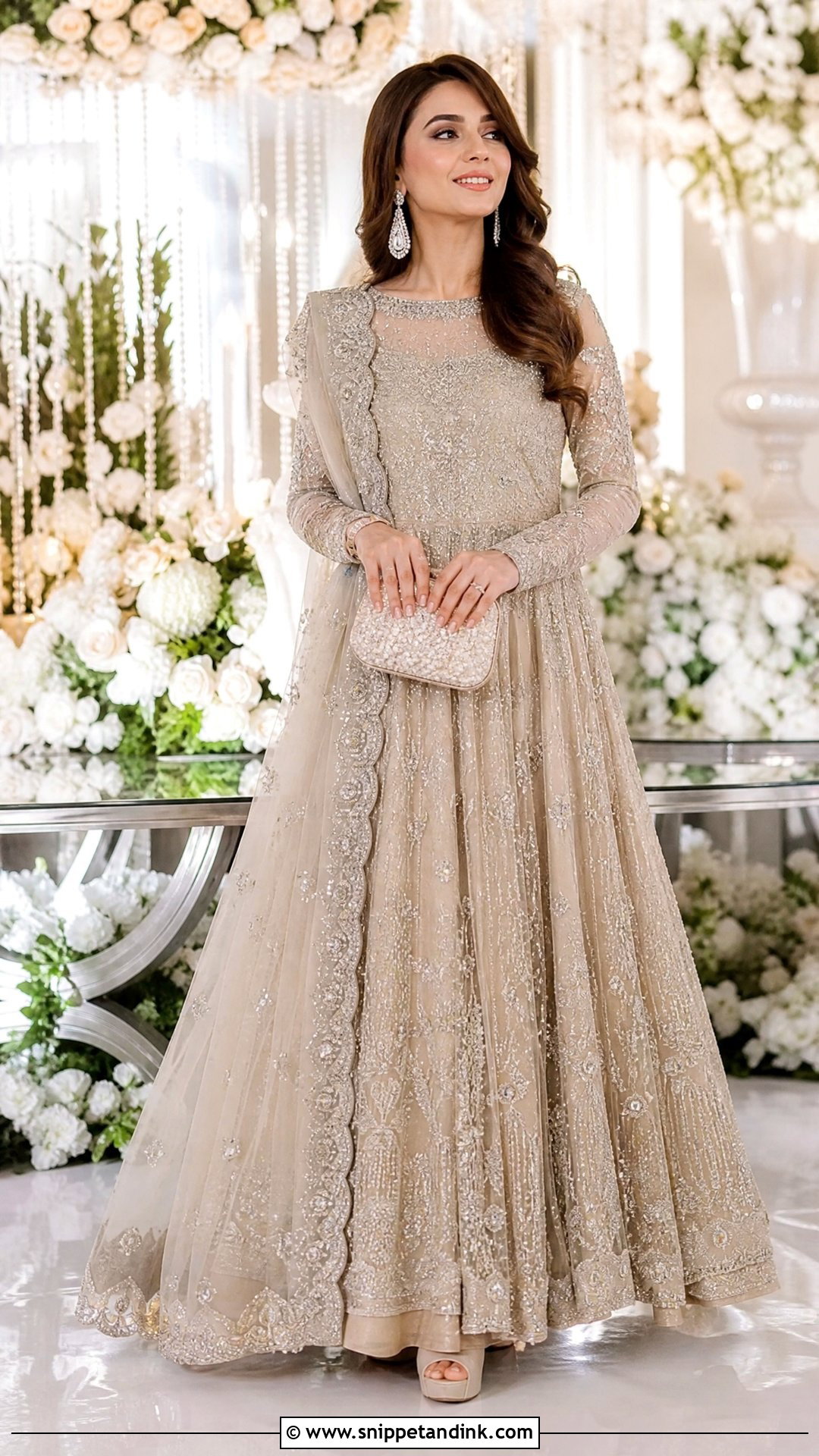
Champagne maxis look refined at a walima or a hotel reception. Look for a floor-length dress with a defined waist, flowing skirt and pearl or silver thread work that catches light without tipping into bridal. Add a sheer dupatta if the event expects traditional coverage, or a cape layer for something more modern. Neutral platform heels, crystal drops and a pearl clutch suit it. Here’s the catch for guests: champagne photographs very close to ivory under flash. If the bride is in a pale outfit, shift to taupe, silver-beige or muted gold.
12. Purple Peplum Lehenga Pakistani Wedding Outfit
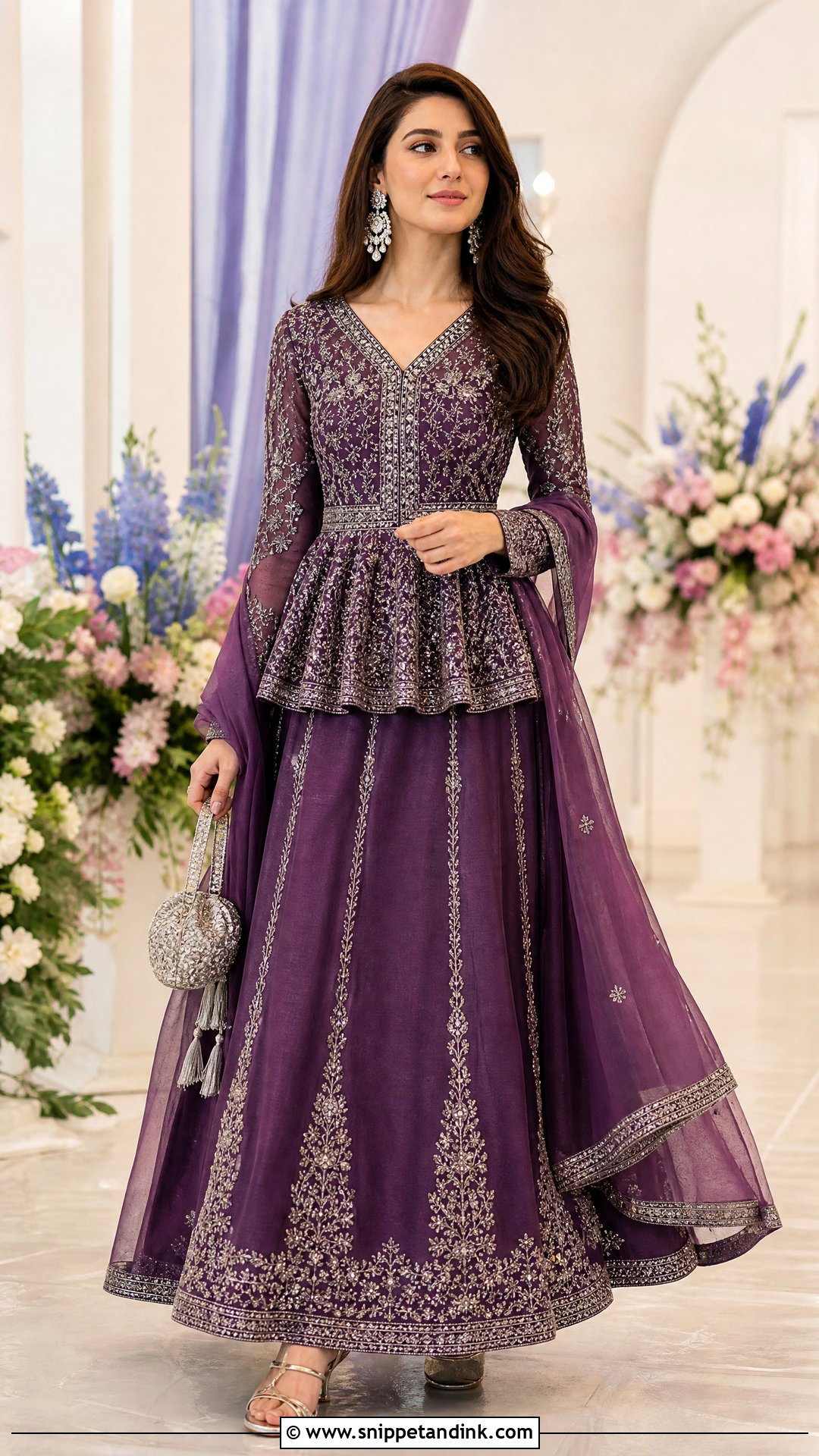
A purple peplum lehenga gives you a defined top half and a moving skirt below. The peplum should end around the hips over a paneled or softly gathered lehenga. Plum and aubergine suit evenings; lilac suits daytime. Silver embroidery makes purple feel modern, antique gold makes it traditional. Choose either a choker or statement earrings, not both, or the neckline gets crowded. It works for a sangeet, engagement or baraat. Peplum length is where fit happens: shorter on petite frames, a little longer if you’d like more coverage at the hip.
13. Teal Angrakha Pakistani Wedding Outfit
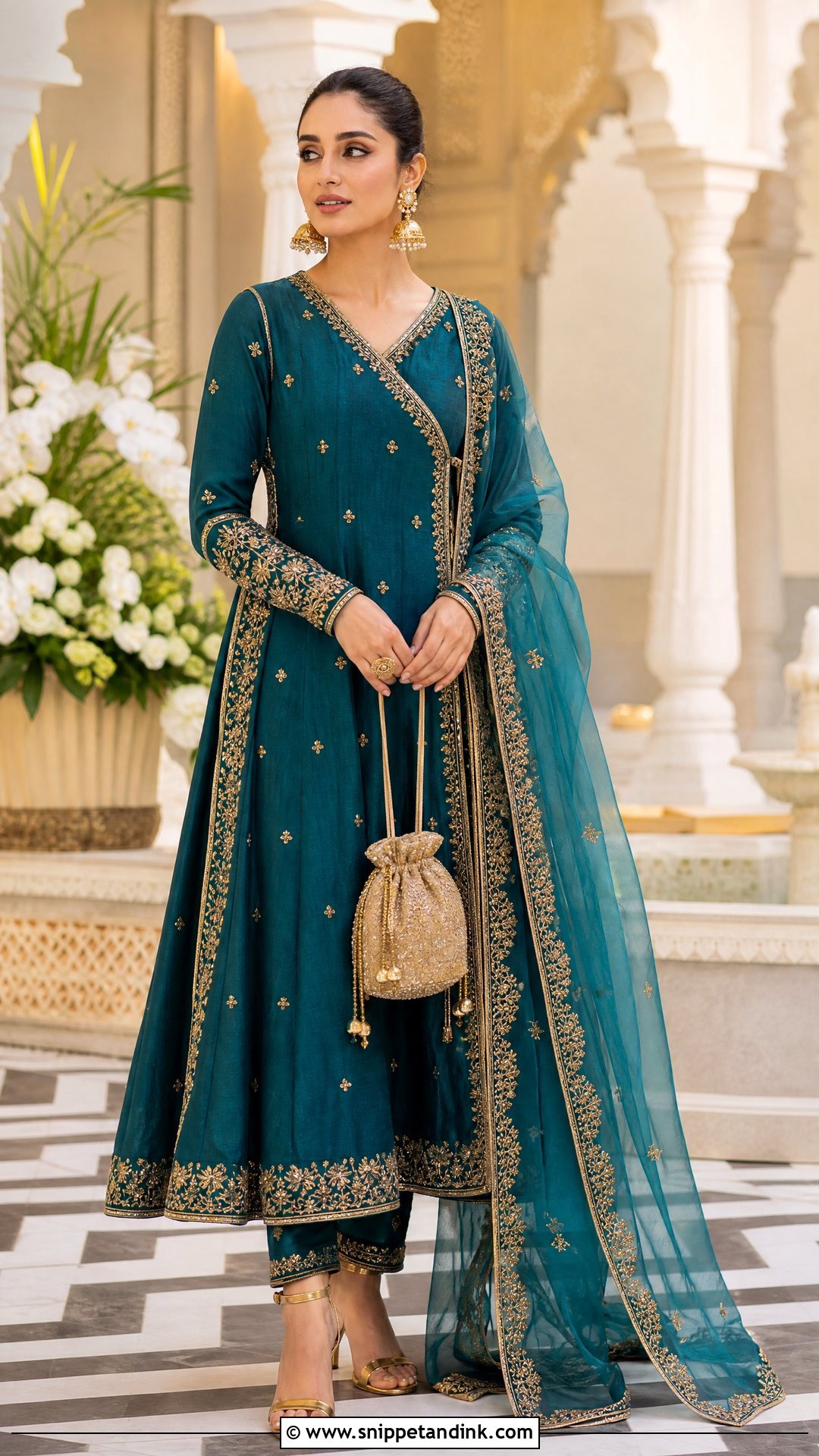
A teal angrakha is a good step up from a straight-cut suit. The overlapping front and side tie define the waist, and the flared lower section moves nicely. Chiffon, raw silk or jamawar with gold or copper embroidery all suit an evening function. Pair it with fitted trousers or churidar and a sheer dupatta with a narrow border. Gold heels, a traditional potli and medium jhumkas finish it. A small styling note: emerald jewelry disappears against teal, so warm gold or ruby-toned stones give better contrast. Ask your tailor to add a hidden hook under the tie so it doesn’t loosen over the evening.
14. White Floral Gharara Pakistani Wedding Outfit
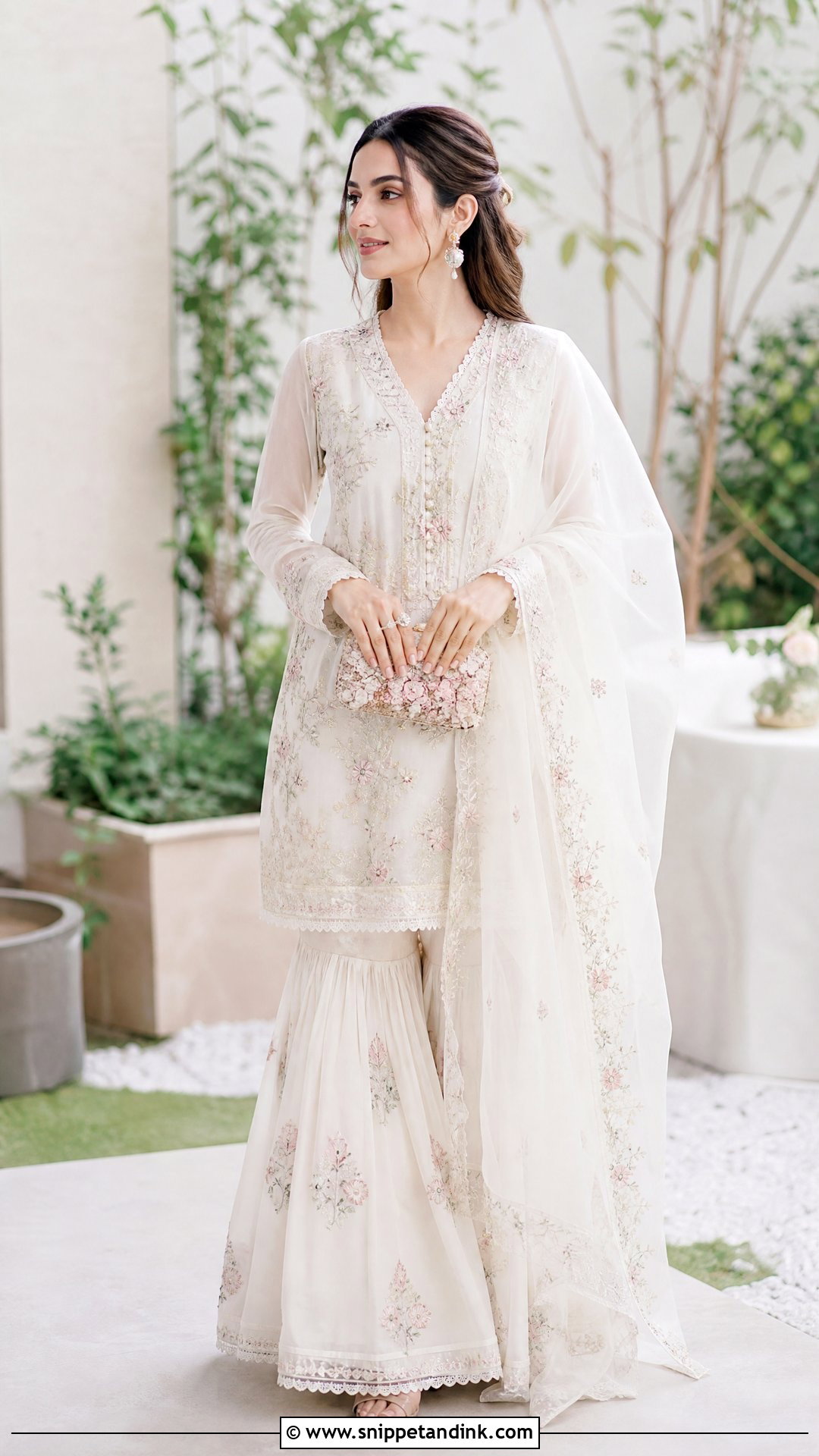
White florals feel fresh at a daytime nikkah. Pick an off-white or pearl kameez embroidered with pastel flowers, paired with a flared gharara and a matching organza dupatta edged with fine lace. Nude or pastel heels and a small floral clutch keep it light. Ask first whether white is reserved for the bride. If it is, the same outfit in pale blue, blush or pistachio carries the same mood without any awkwardness. A soft curled ponytail or low bun suits the relaxed feel.
15. Gold Tissue Saree Pakistani Wedding Outfit
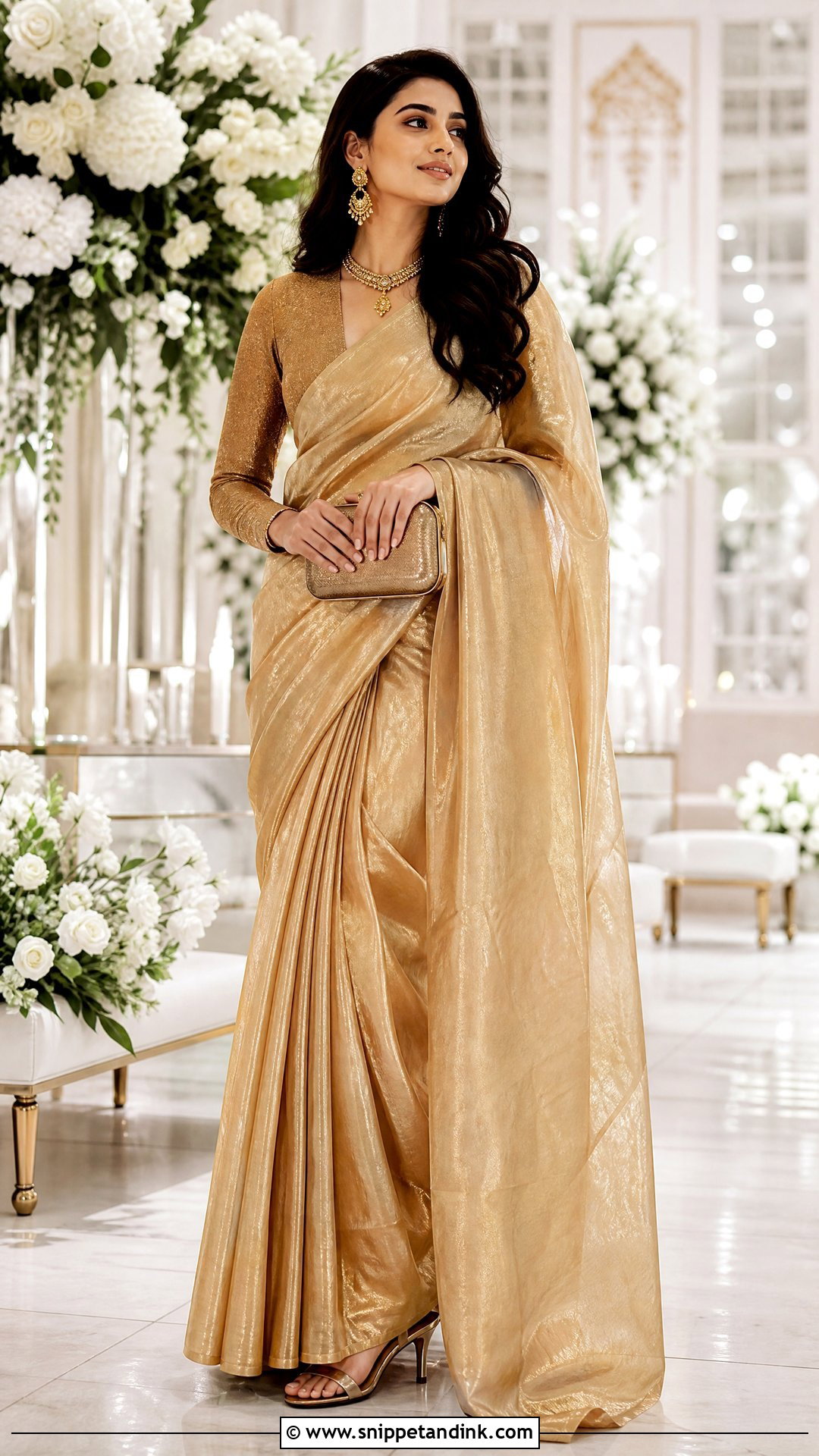
Gold tissue has a woven metallic shine that looks rich at a formal baraat or walima. Pair the sari with a fitted blouse in antique gold, bronze or a contrasting jewel tone. Sleeves help balance the shine and give coverage for a long event. Tissue is crisp and holds pleats well, but it also creases sharply, so pin the drape discreetly at the shoulder and waist and avoid sitting on the pallu. If the sari is heavily woven, wear a fine chain instead of a big necklace. As a guest, choose muted gold rather than bright bridal gold, and keep red accessories out of it.
16. Mint Green Sharara Pakistani Wedding Outfit
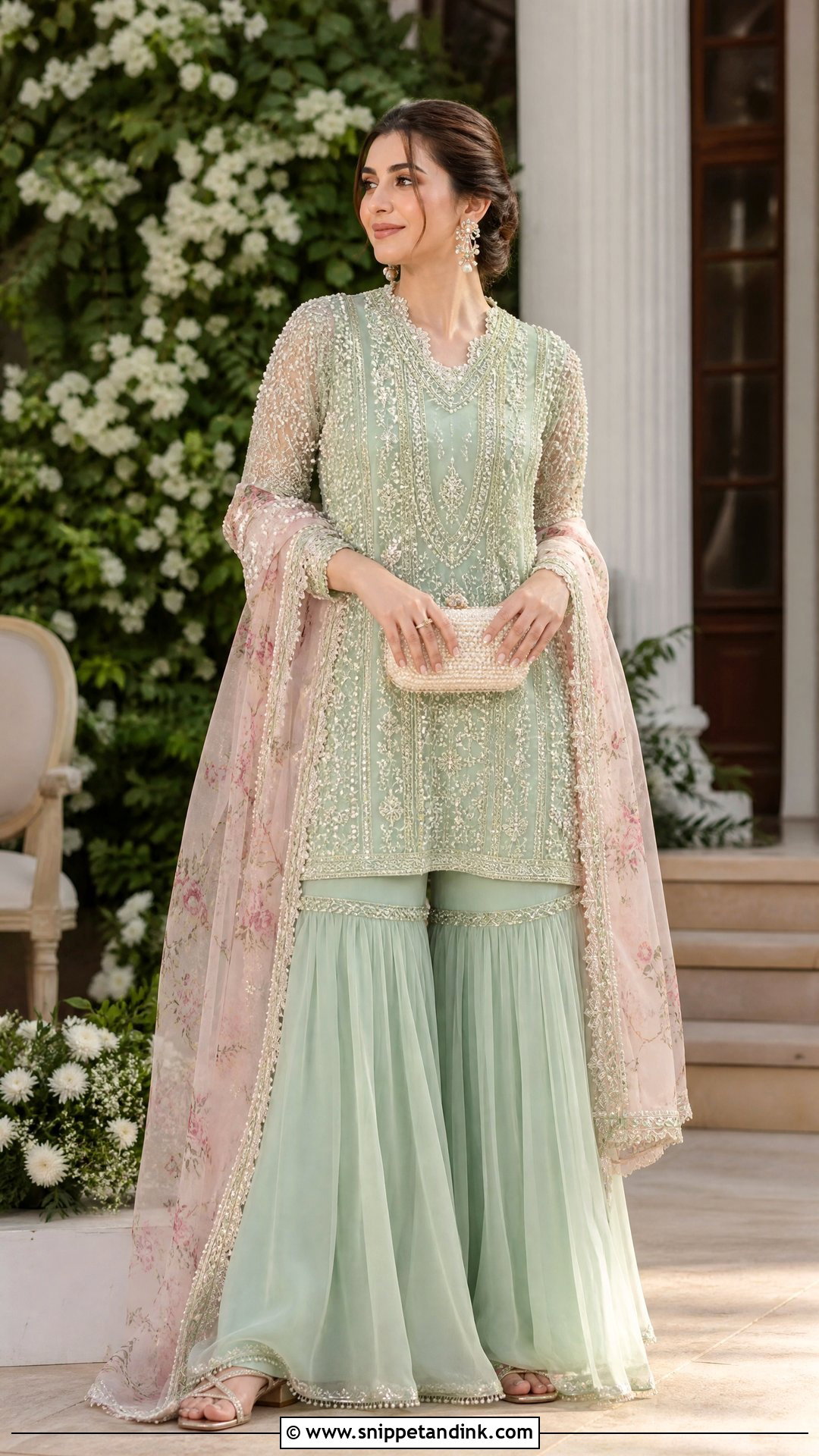
Mint is cool and delicate for a nikkah, engagement or daytime walima. Pair a medium-length embroidered shirt with a flowing sharara in chiffon or georgette. Pearl accents, silver thread and a little mirror work suit it. Add a matching dupatta or bring in soft pink through a floral-edged one. Mint has a habit of looking washed out on its own, so I give it definition with a slightly deeper border or a structured neckline. Silver sandals, pearl earrings and loose waves for daytime, a neat bun for a formal venue.
17. Royal Blue Long Shirt Pakistani Wedding Outfit
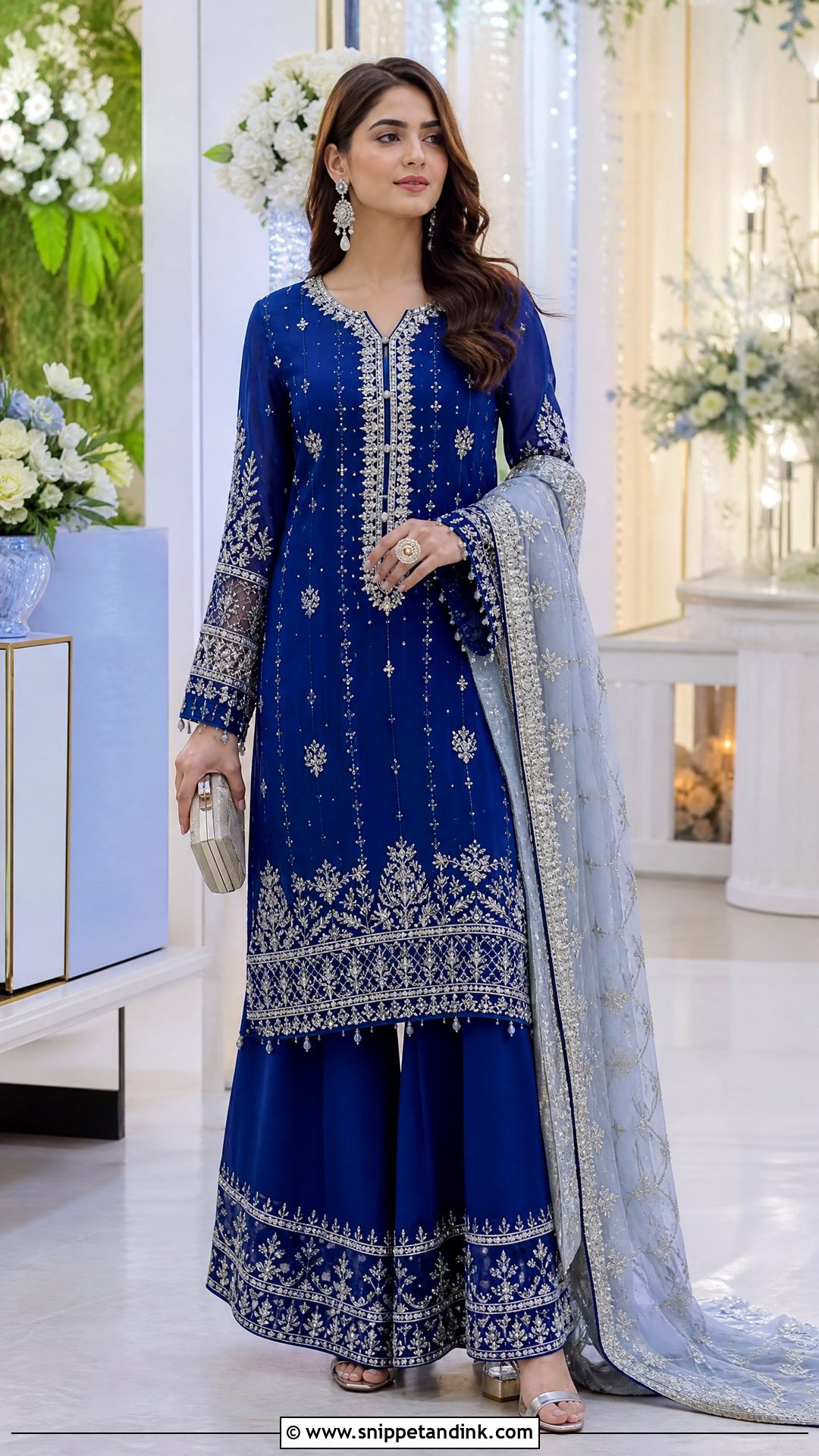
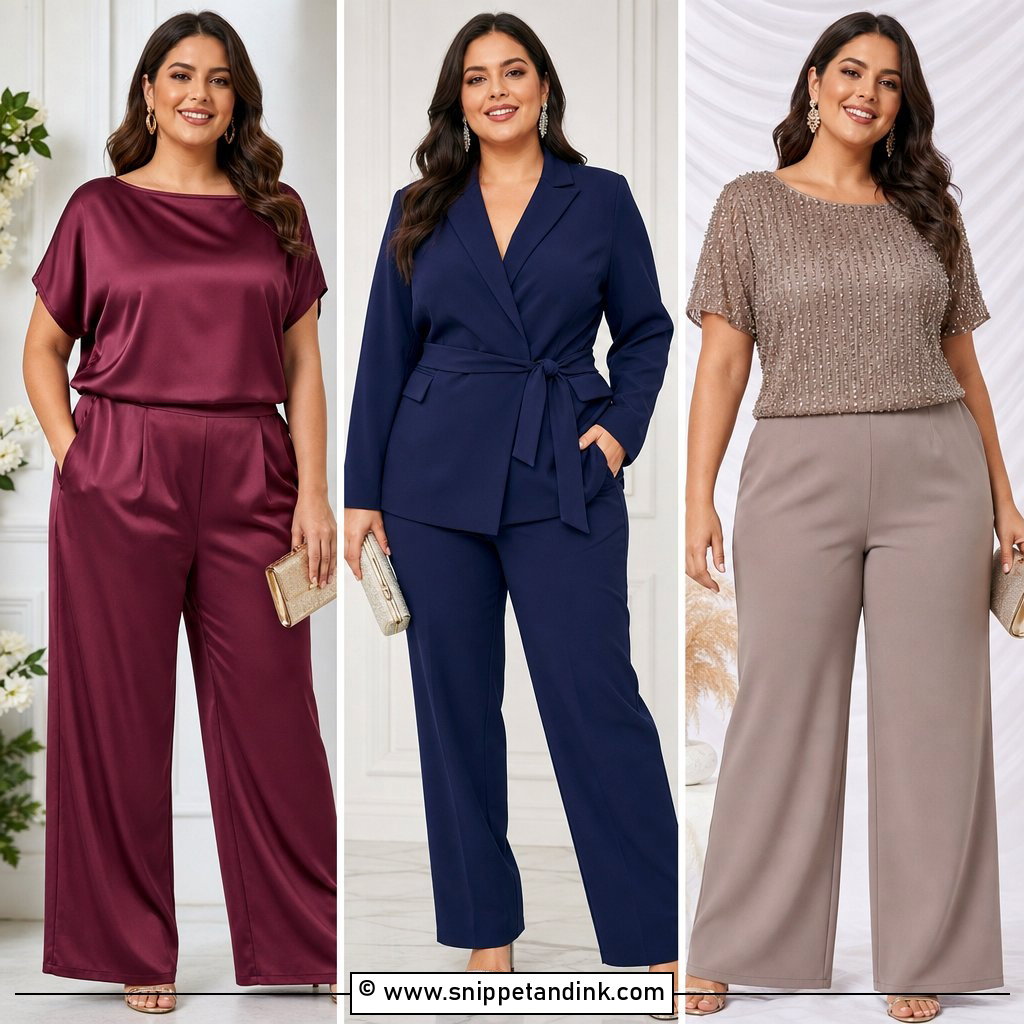
A royal blue long shirt with wide-leg trousers is a sleek Pakistani wedding outfit if you like clean lines more than volume. A knee- or calf-length shirt with silver, gold or multicolor embroidery over matching palazzos moves well. A lighter blue or silver dupatta softens the saturated color. Metallic block heels, a statement ring and drop earrings complete it, with a smooth ponytail or glossy waves. Check the trouser length in your shoes so the hem doesn’t drag. It suits a baraat, reception or formal dinner, and it’s the outfit on this list you’ll find easiest to rewear.
18. Blush Pink Cape Dress Pakistani Wedding Outfit
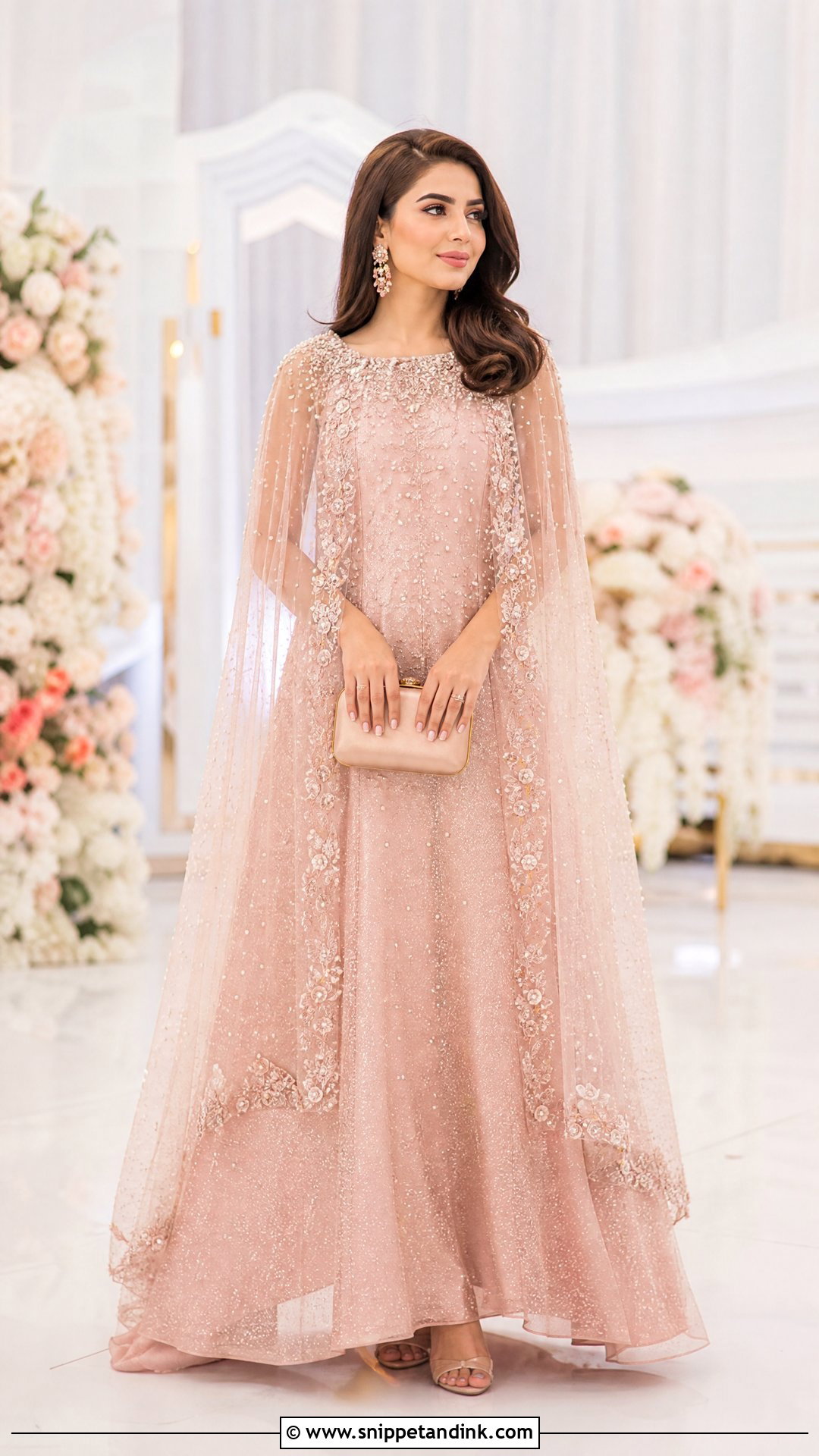
A blush cape dress mixes modern formalwear with the coverage many Pakistani events expect. Choose a floor-length dress with a fitted inner bodice and a sheer embroidered cape falling from the shoulders. Pearl work or tonal thread keeps the pastel interesting. The cape is your dupatta, so skip a separate one unless you need extra coverage. Nude heels, rose-gold earrings and a satin clutch finish it, with a low ponytail or sleek bun that keeps the shoulders clear. It’s best at a walima or engagement; a sister of the bride or groom can go for a more heavily worked cape than other guests.
19. Mustard Kurti And Lehenga Pakistani Wedding Outfit
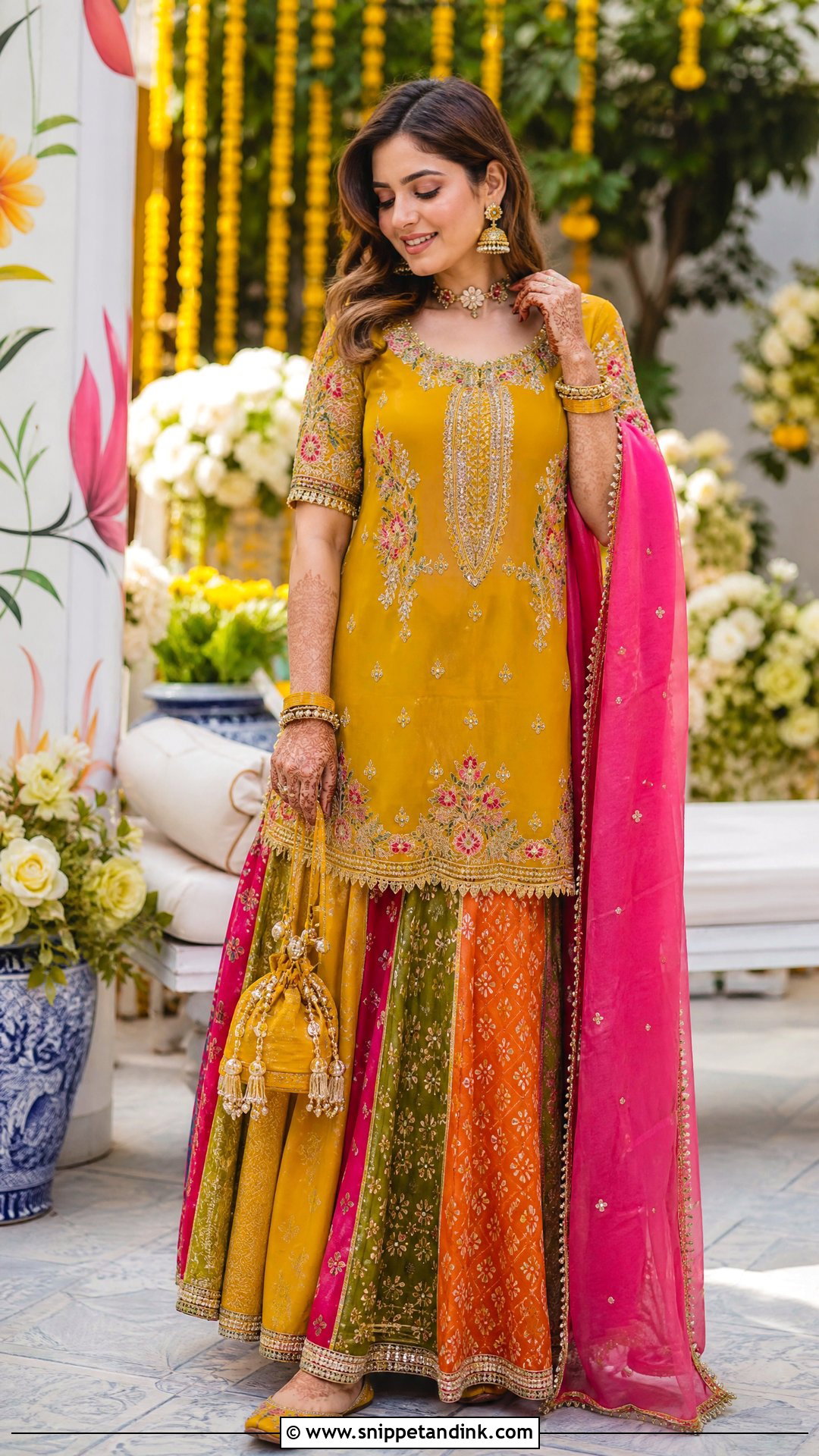
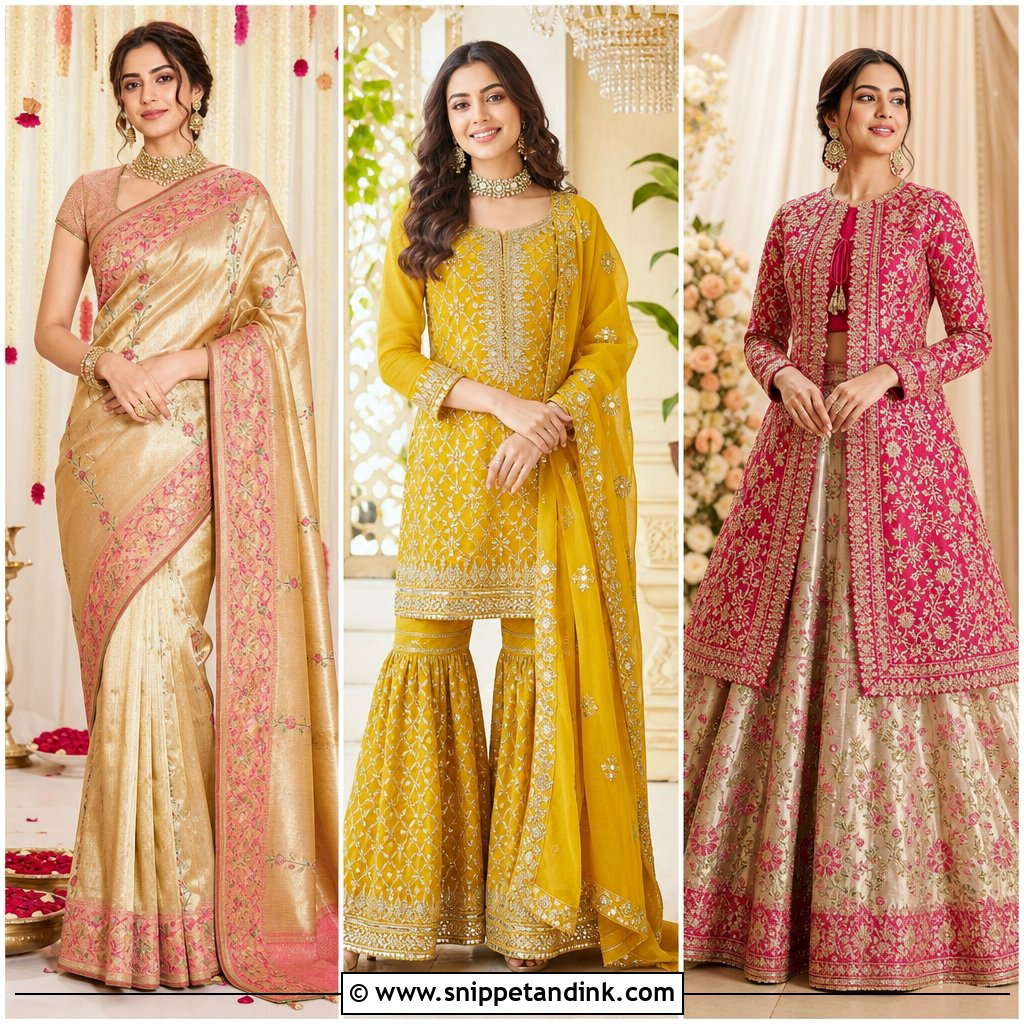
Mustard is warm and festive for a dholki, mayun, or outdoor mehndi. Style a short embroidered kurti over a printed or paneled lehenga mixing mustard with orange, pink and green. Gota trim at the hem and sleeves defines the shape without weight. Drape a contrasting dupatta over one shoulder or tuck it at the waist so it stays out of the way while dancing. Colorful khussa flats, gold earrings and fresh flowers in a braid suit it. Mustard is already loud, so keep the makeup soft. Because it’s separates, each piece can be reworn with other outfits later.

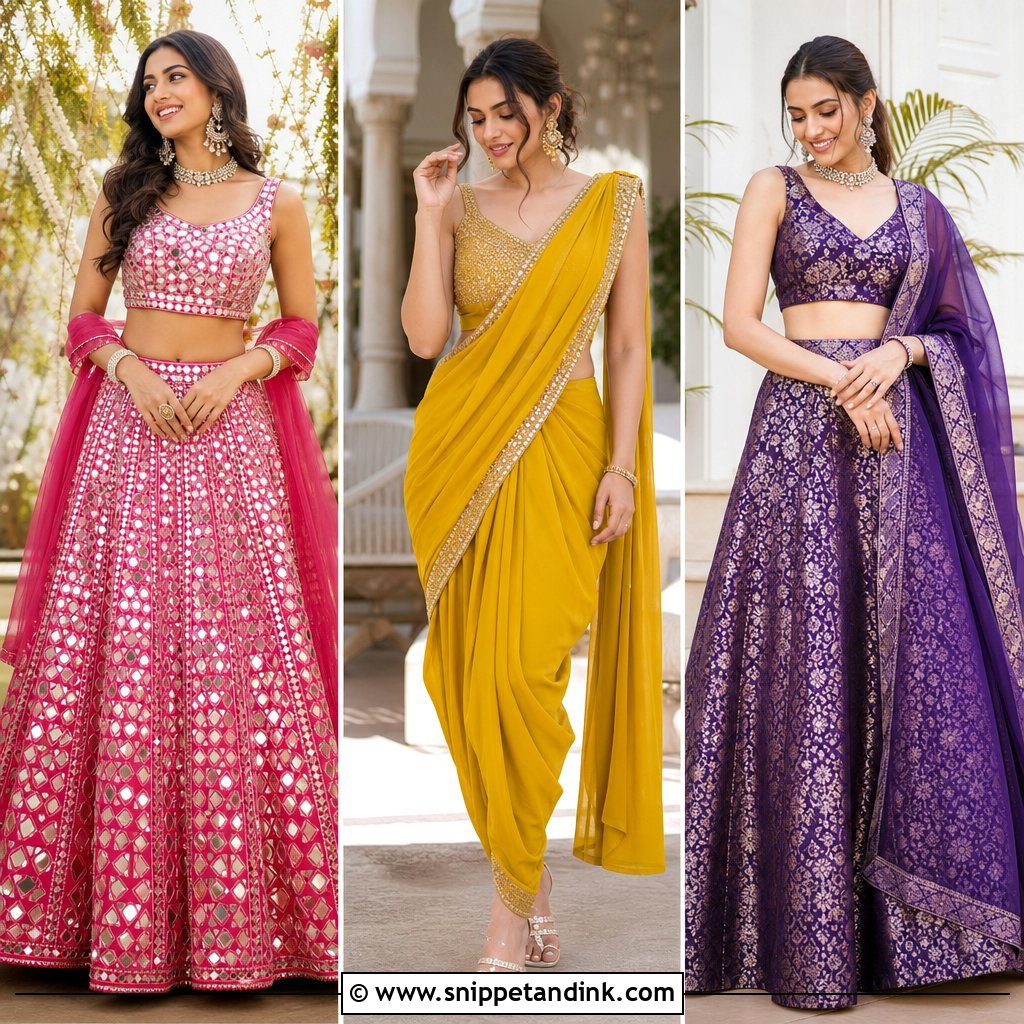
20. Silver Embellished Saree Pakistani Wedding Outfit
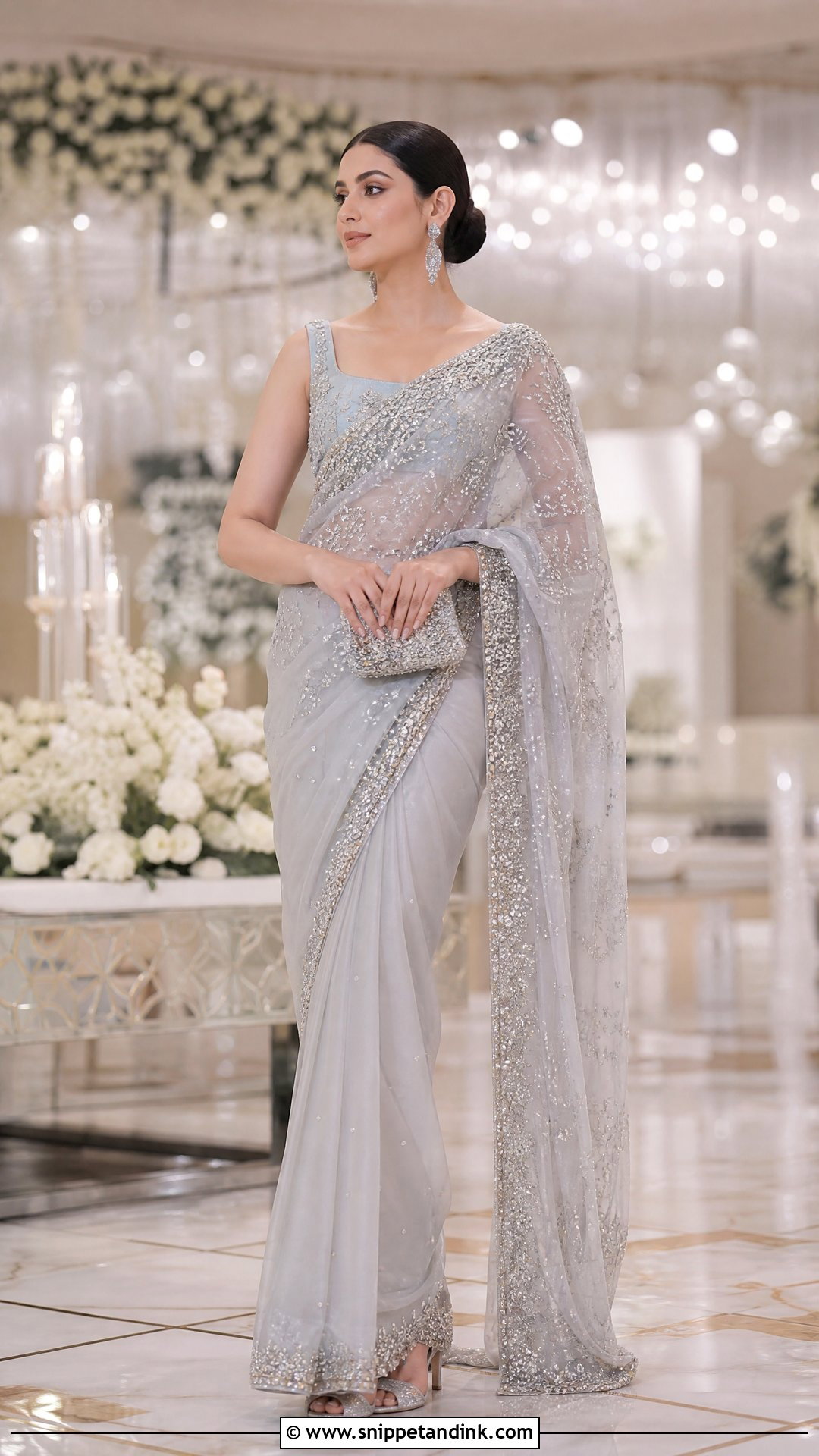
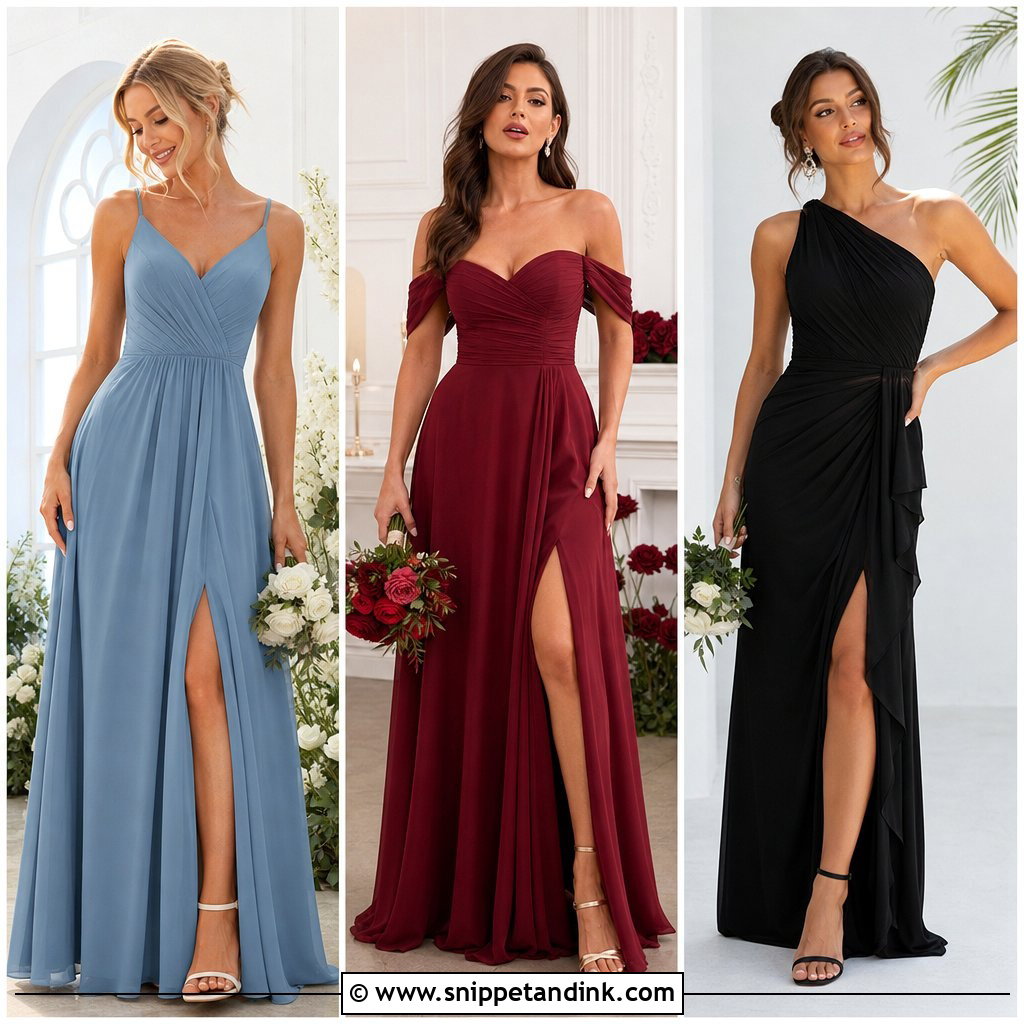
A silver embellished sari gives a polished evening look for a walima or reception. Chiffon, net and soft silk all suit crystal embroidery, sequins or a detailed border. Match the blouse, or add contrast in powder blue, lavender or charcoal. Secure the pleats so you can walk and sit comfortably; net slips more than silk, so it needs more pins. Silver heels, crystal earrings and a beaded clutch complete the cool palette. With dense sequins, keep makeup and jewelry restrained. Guests do best with scattered embellishment; close family can wear a heavier border.
Getting Three Functions Out of One Good Outfit
Close friends and cousins are often invited to every function, and buying four outfits as a guest is expensive. I’d invest in one well-made piece and restyle it. A plain or lightly worked kameez with matching trousers is the most flexible base you can own.
- For the mehndi, wear it with a bright contrasting dupatta in gota or mirror work, colorful bangles and flowers in your hair.
- For the nikkah, switch to a pastel organza dupatta, pearl earrings and a neat bun.
- For the walima, swap the trousers for a sharara or gharara in the same color and add a heavier dupatta and statement earrings.
The dupatta changes the outfit more than anything else, so that’s where to spend. Separates also mix with what you already own: a mustard kurti can go over the gharara from another wedding, and a good tissue dupatta lifts almost any plain suit. Just avoid wearing the exact same full look to two functions of the same wedding, since the same people will be in both sets of photos.
Your Place at the Wedding Sets How Much Embroidery You Wear
The right guest outfit comes down to three things: the function, the family’s expectations and your role. Bright shararas, farshi shalwars and lehengas suit mehndi nights. Pastel suits, floral ghararas and pishwas bring softness to the nikkah. Saris, velvet suits, Anarkalis and embellished maxis give the formality a baraat or walima calls for. Before you settle on anything, think about the venue, the weather and how long you’ll be there. Then check that the hem, shoes, dupatta and jewelry will still be comfortable several hours in, because a guest who’s fidgeting with her outfit never looks relaxed in the photos.
You'll Like These Ideas:


Leave a Reply