
Braids are the bridal style I trust most for a long day. A well-anchored plait grips the hair underneath it, so it keeps its shape through hugs, a veil and a dance floor in a way loose curls rarely do. They also adapt to most lengths and textures, from a loose plait over the shoulder to a tight crown pinned close to the head. Below are 20 braided looks I see brides ask for, with notes on how each one is built, what hair it needs and where it tends to struggle. Save the ones that fit your hair and your dress, then take them to your trial so your stylist can tell you honestly what will hold.
Adapting a Braid to Fine, Layered or Coily Hair
The photos in braid inspiration are usually of thick, long hair with extensions. That does not mean your hair cannot braid, but it does mean the plan changes. Before I suggest a style at a consultation, I check three things: how much length you have at the back, how short your shortest layers are, and how slippery the hair feels.
Fine or thin hair
Fine hair makes a skinny braid. I add grip with a texture or dry shampoo spray at the roots, braid it, then gently pull the edges out (pancaking) to double its visual width. For anything that wraps around the head, a clip-in weft hidden underneath gives the braid real body. Ask your stylist to place it at the trial, not on the morning.
Layers and growing-out cuts
Short layers pop out of a braid as the day goes on. Tighter, smaller sections catch them better than loose ones, and a little pomade on the ends helps them stay tucked. If you are still growing your hair for the wedding, skip a cut that adds layers in the months before.
Curly and coily hair
Textured hair holds a braid better than any other type. I prefer to work on hair that is stretched, by blow-drying or a braid-out set the night before, because braiding fully shrunken hair can make the plait uneven. Moisture matters more than hold: a leave-in and a light oil on the lengths keep the braid soft instead of dry.
1. Fishtail Braid Bridal Updo
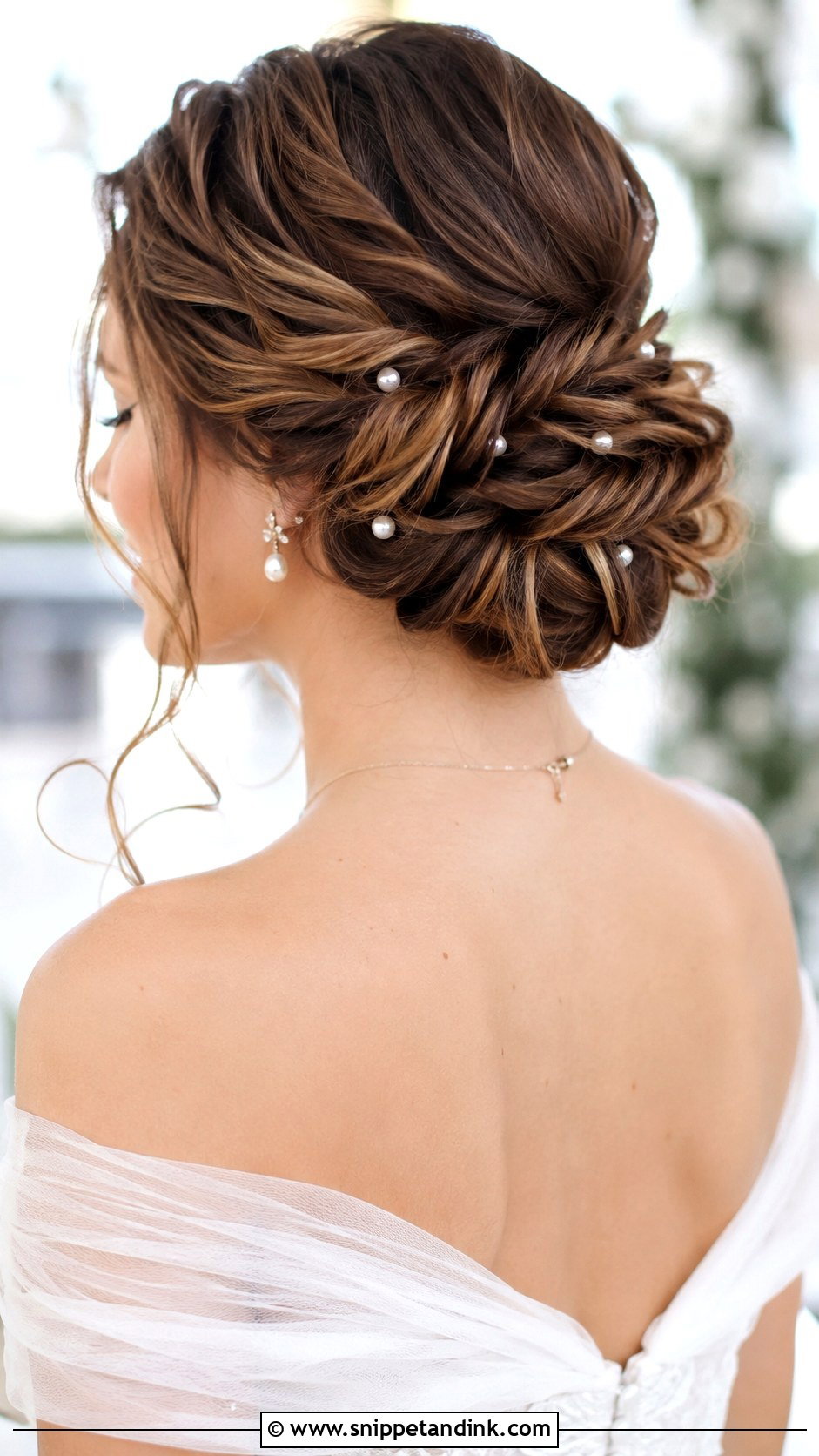
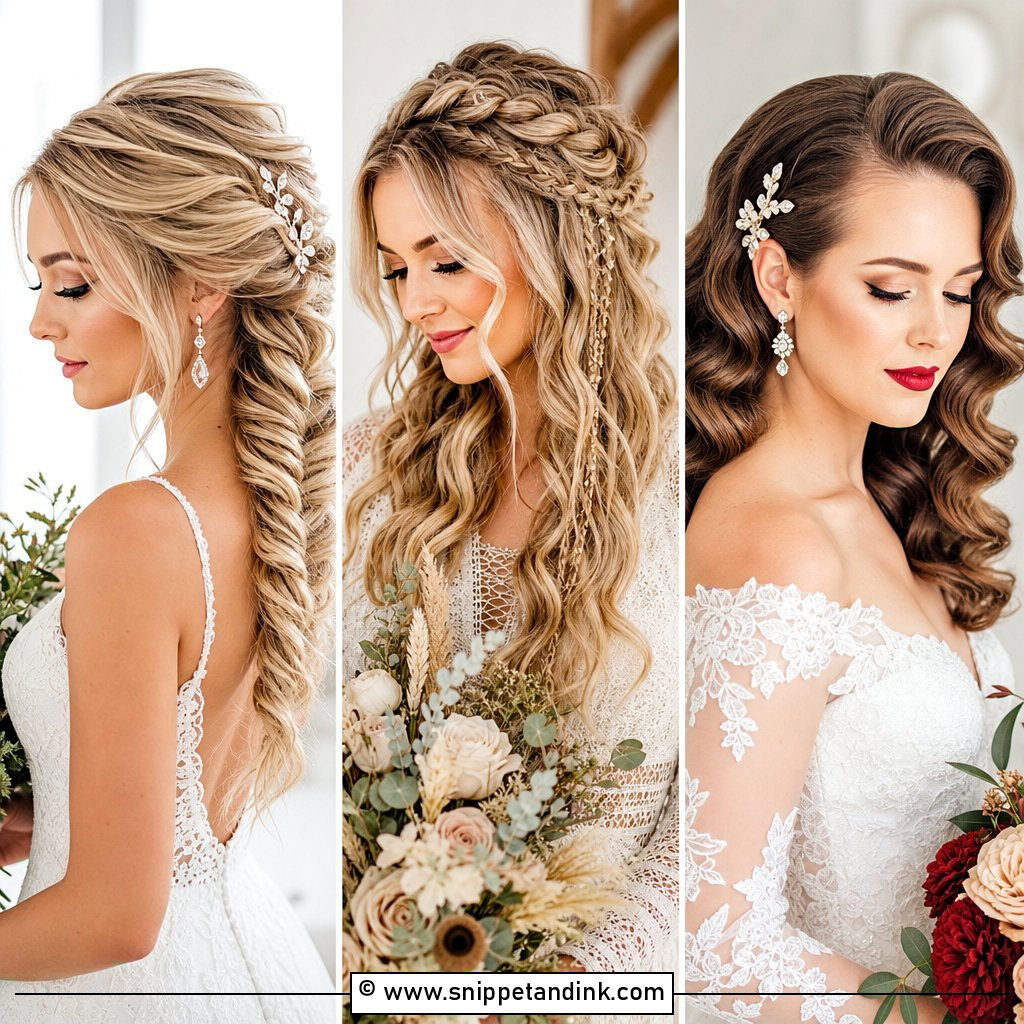
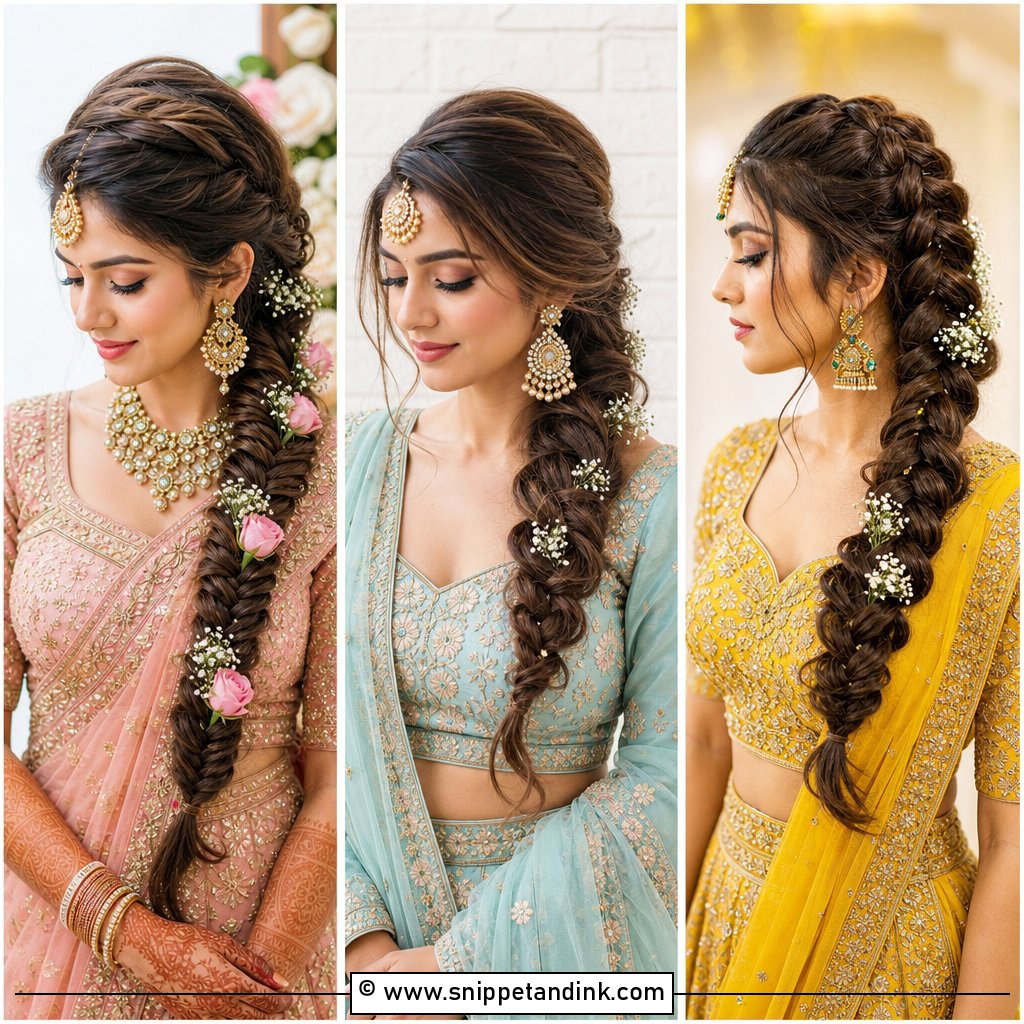
A fishtail splits the hair into just two sections and passes tiny pieces from the outside of one to the inside of the other, which is where that fine herringbone texture comes from. It takes longer than a three-strand braid but holds its pattern well because the pieces are so small. I usually braid it tight, secure the end, then pull the edges out gently to widen it, since a fishtail that is left tight can look thin in photos. Medium and long hair suit it best. Worn down the back or wrapped into a low bun, it sits comfortably under a veil comb.
2. Boho Loose Side Braid
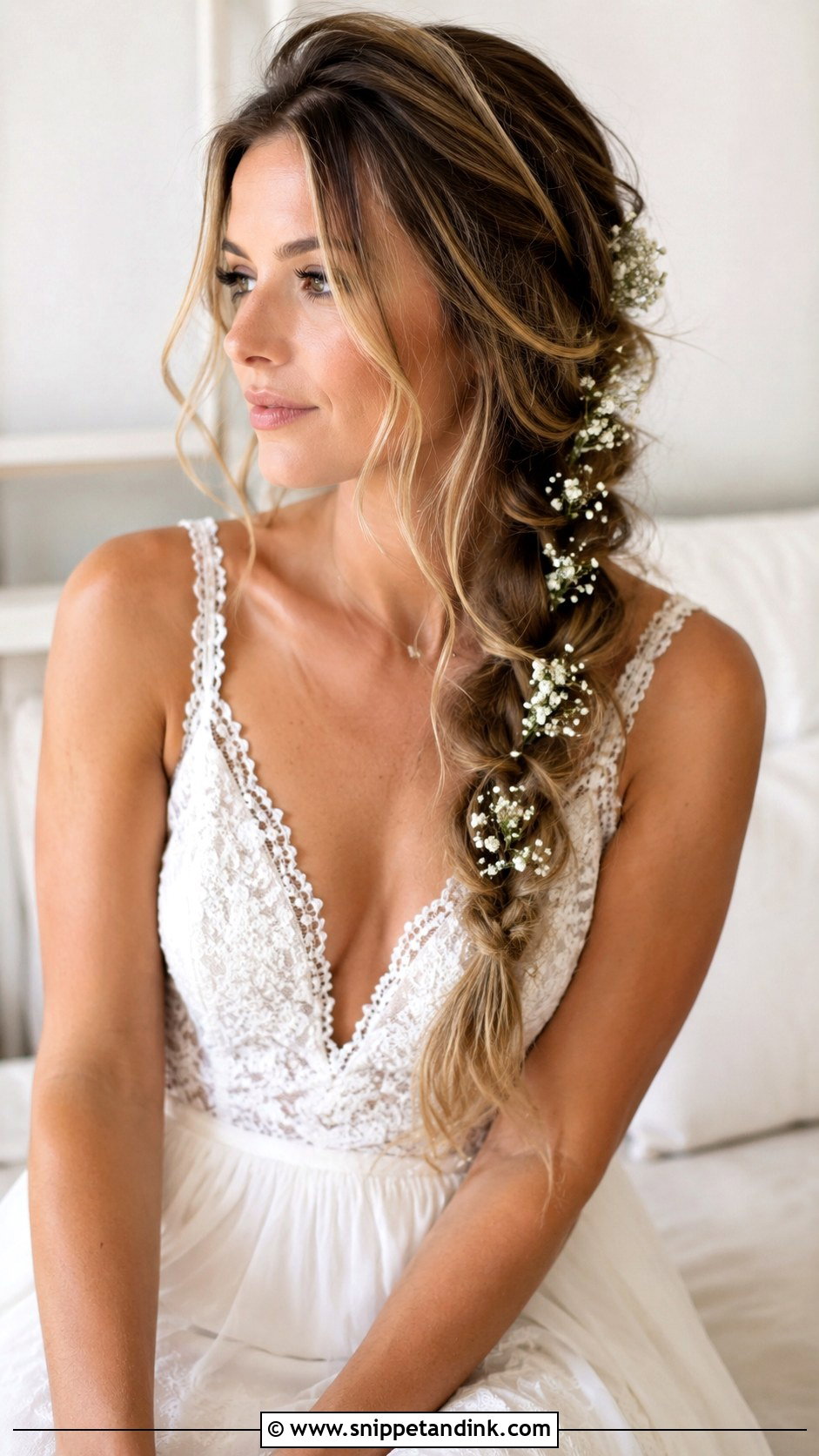
The boho side braid is meant to look a little undone: a loose plait resting over one shoulder with a few face-framing pieces left out. The catch is that loose braids on slippery, freshly washed hair slide apart by the afternoon. I prep with a texture spray and braid on day-old hair whenever I can, then pin the top of the braid behind the ear so its weight does not drag it forward. Brides with wavy or textured hair get the easiest version, because the grip is already there. Greenery, baby’s breath or a gold hair vine suit the garden and outdoor settings it is made for.
3. Braided Crown Halo
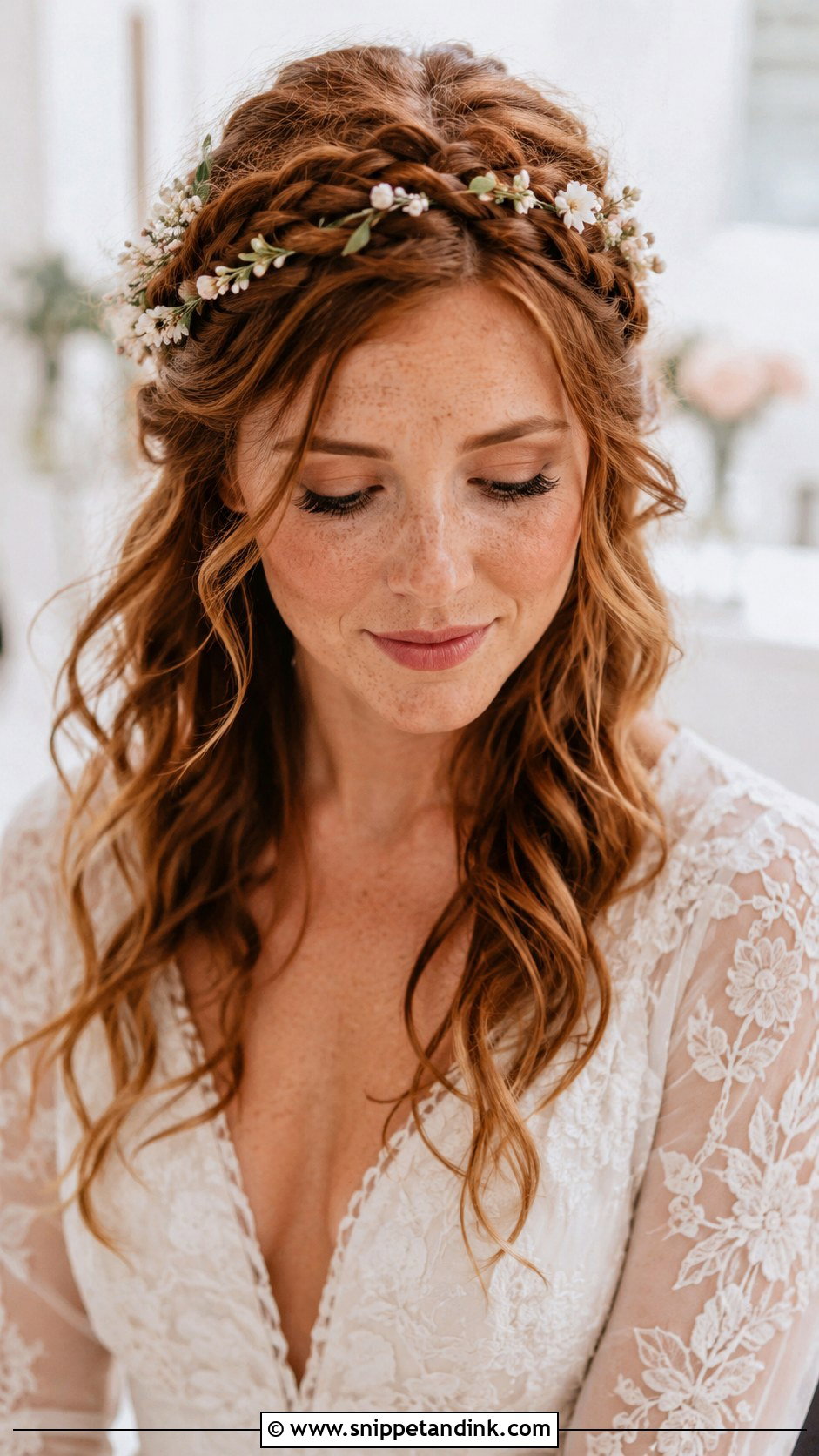
A crown braid circles the head from one ear to the other and sits like a band just behind the hairline. It needs enough length to travel the full distance, roughly shoulder length at the shortest, and I often build it from two braids joined at the back so the hair does not run out halfway. The rest can stay down in waves or be pinned up for a cleaner shape. It frames round and heart-shaped faces well because it adds a little height at the top. Small flowers or pearls tucked along the band give it a fairytale finish.
4. Dutch Braid Low Bun
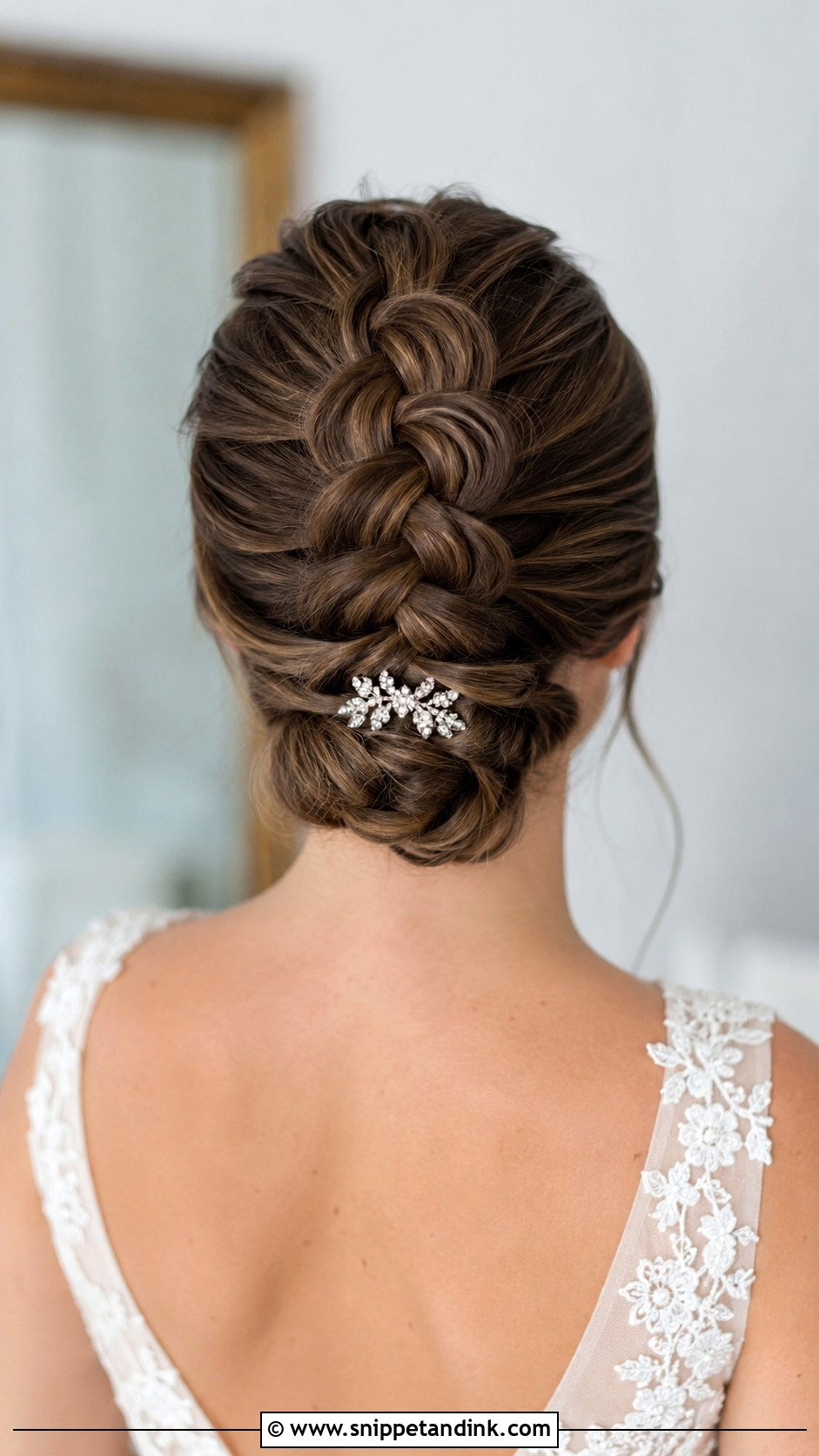
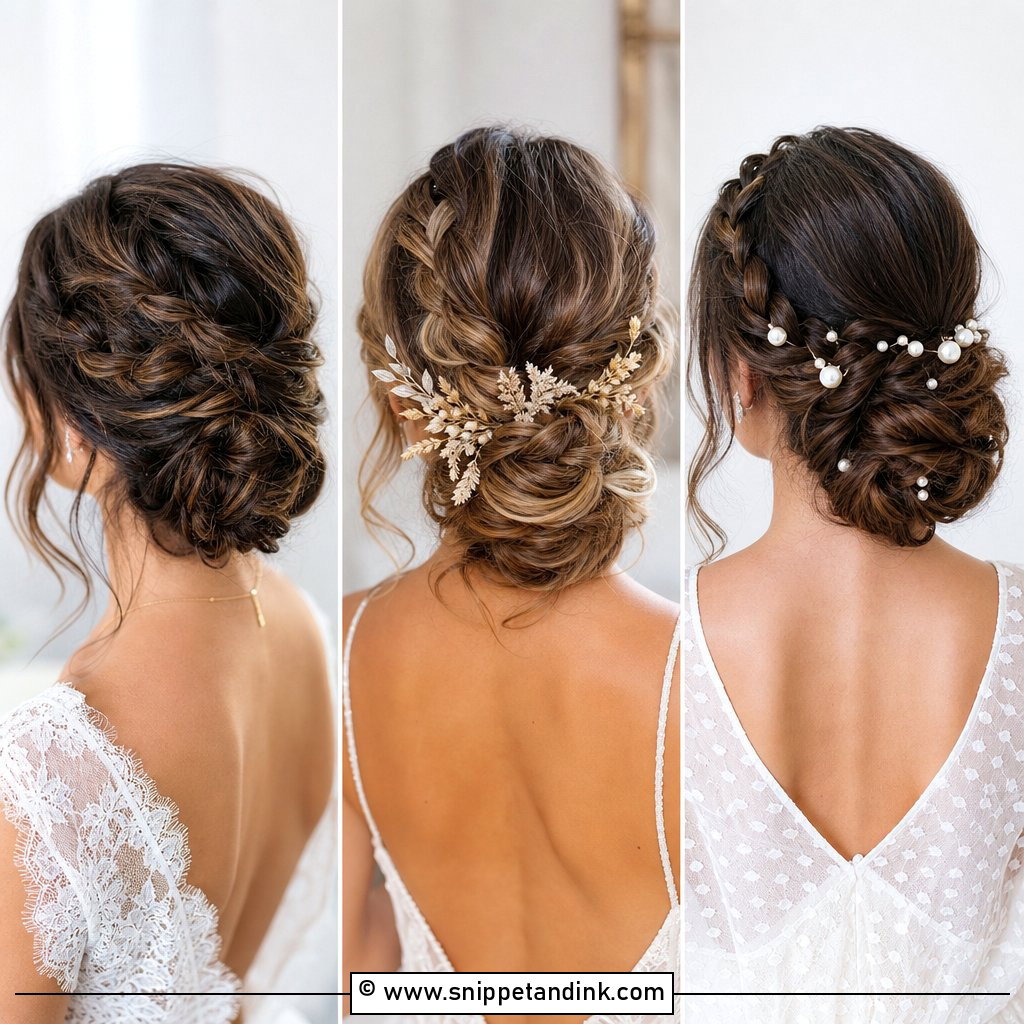
The Dutch braid is built by crossing strands under rather than over, which pushes the plait up off the head so it stands out. Running from the crown into a twisted knot at the nape, it is one of the most secure styles I do, and thick hair gives it real volume. Fine hair can still wear it, but I add a clip-in weft underneath or pancake the edges to give it width. A sparkly pin or a single bloom by the bun is enough decoration, and it holds up under a veil and next to statement earrings.
5. Waterfall Braid Half Updo
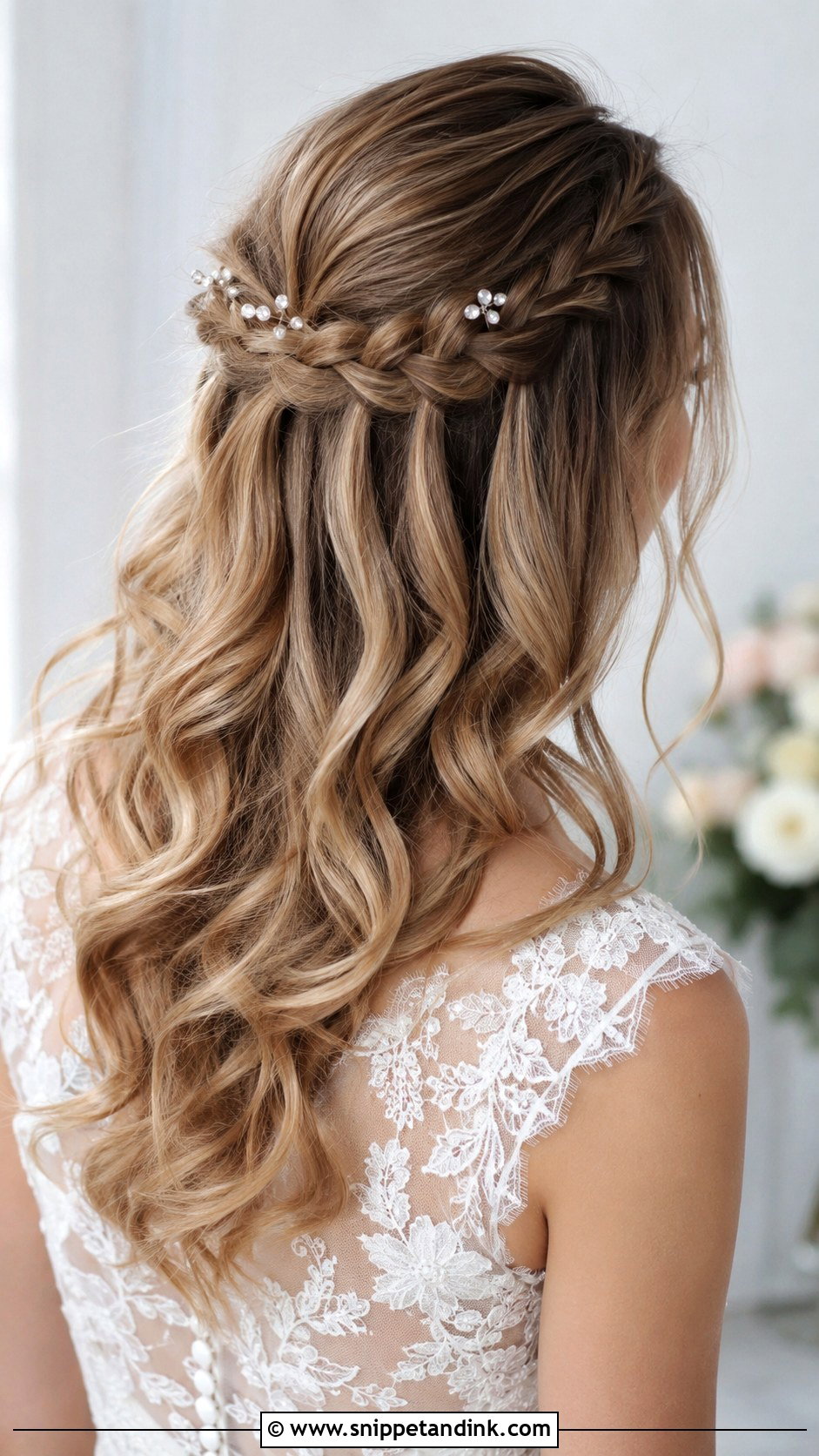
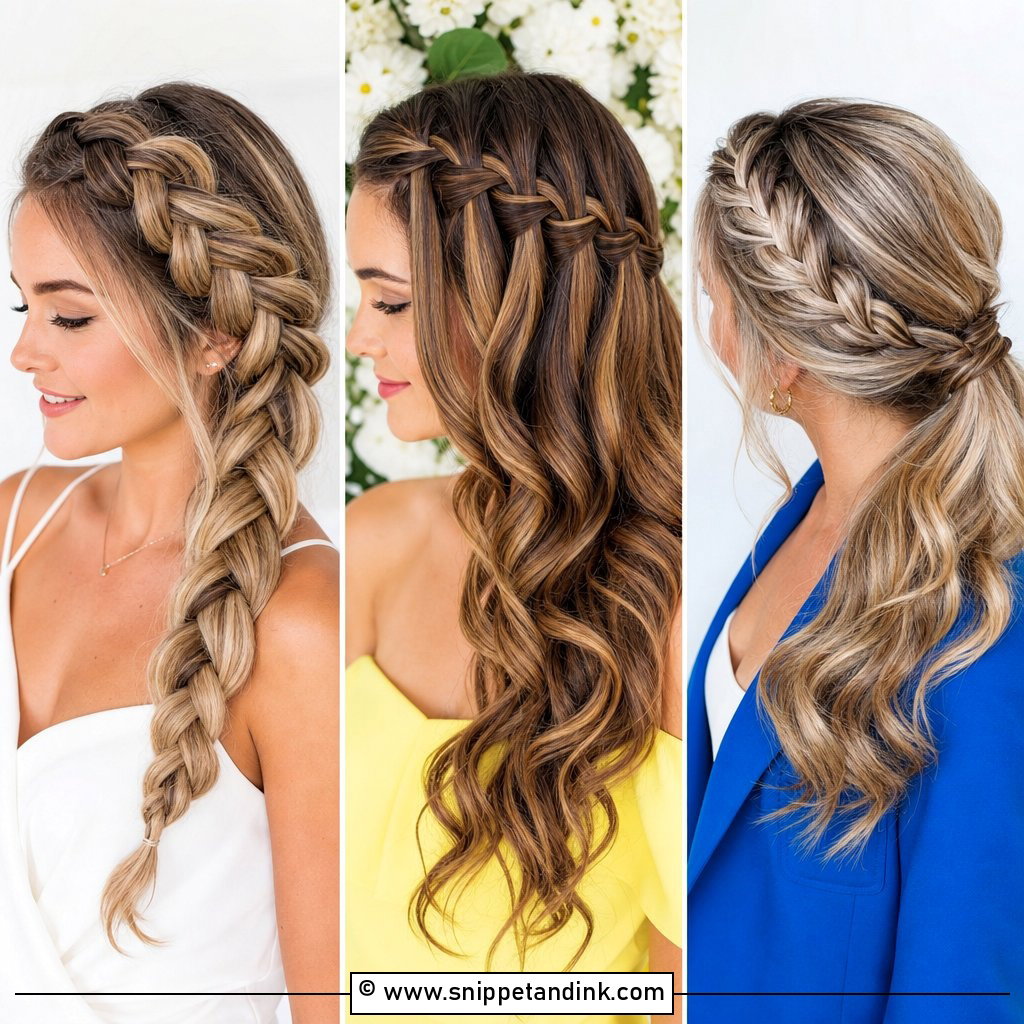
A waterfall braid runs horizontally across the back of the head and drops one strand through each time a new piece is picked up, so the loose ends fall like water through the plait. It keeps hair off the face while showing length and curls. Two things matter: the hair needs to be curled first, so the dropped pieces have shape, and the braid must be pinned at both ends or it slides down by the evening. Spring and summer weddings suit it, finished with a few small flowers or crystal pins along the braid.
6. French Braid Bridal Ponytail
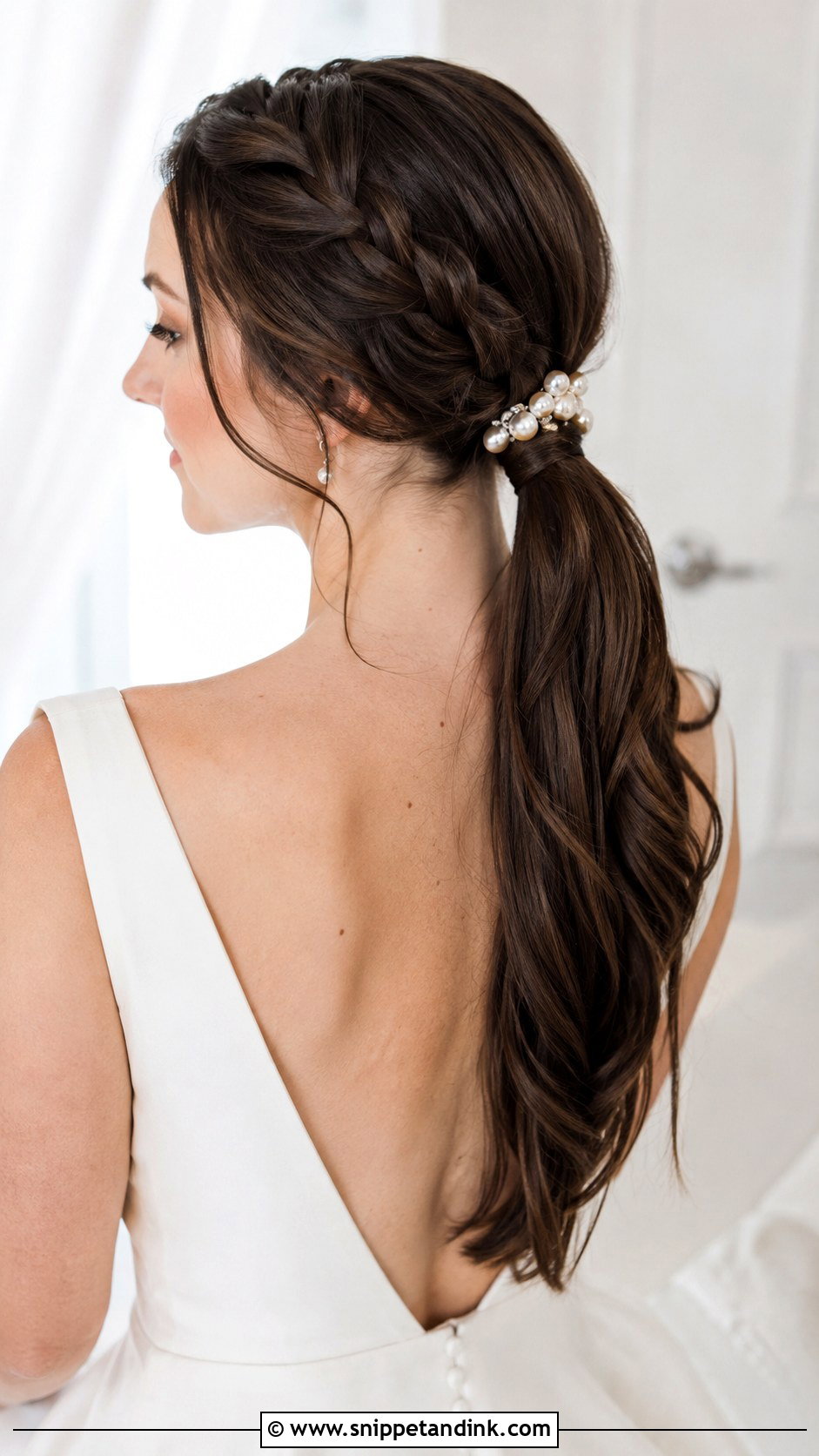
Pairing a French braid with a ponytail gives a clean, modern line. The braid runs down the center or along one side and gathers into the tail, and I wrap a small strand around the base to hide the elastic. The challenge here is the tail itself: in humidity a sleek ponytail frizzes, so I smooth it with a light serum rather than heavy spray, which can turn crunchy. Long hair gives it the most swing. A pearl clip at the base is all the decoration it needs for a minimalist wedding.
7. Braided Chignon Updo
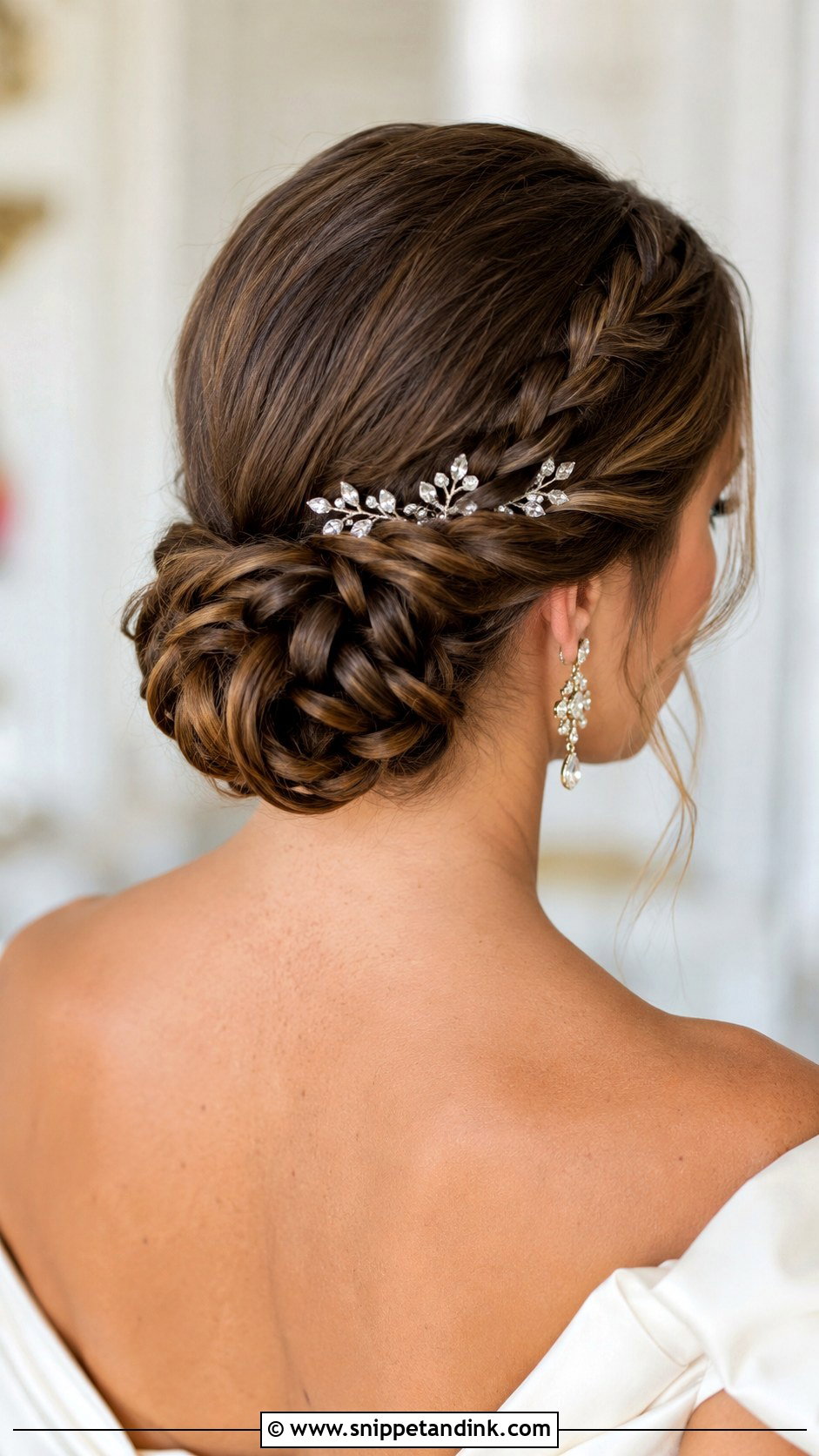
A braided chignon is a low, looped knot at the nape with a braid wrapped through it, which gives texture from every angle the camera catches. It is one of my go-to styles for black-tie weddings because the structure stays put for hours. I build the knot first and pin it in a cross pattern so it cannot shift, then wind the braid around it. A sleek center part or a couple of soft face-framing pieces both work. Pearls, crystals or a fine hairpiece add shine, and it gives a cathedral veil a solid place to anchor.
8. Milkmaid Braid Wedding Look
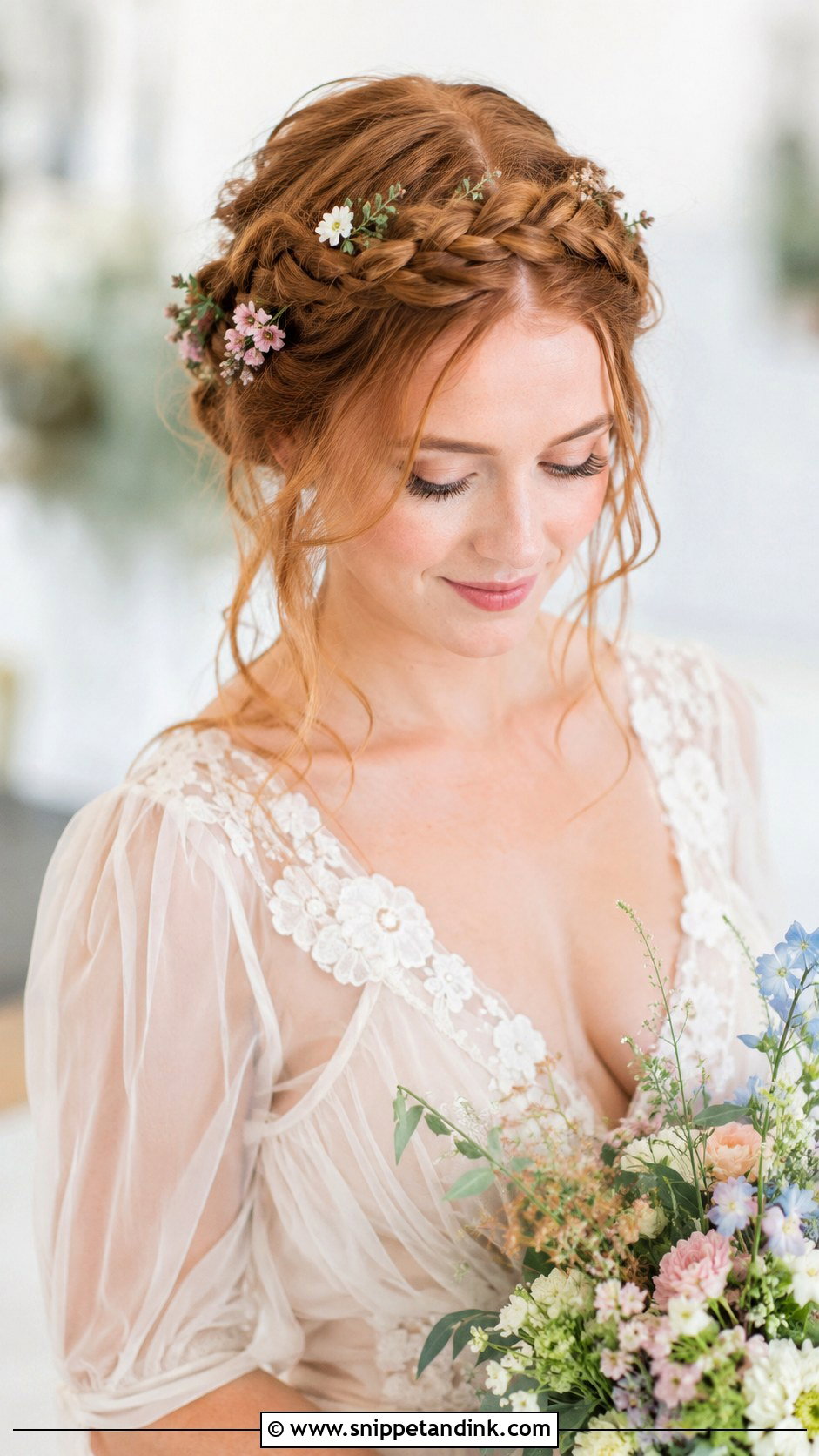
Milkmaid braids are two plaits lifted over the top of the head and pinned across each other, like a soft crown. They keep every strand off the face and neck, which brides at summer ceremonies appreciate. The look needs long hair, at least past the shoulders, because each braid has to cross the full width of the head. You can wear it neat and tight or loosen it for a rustic feel. Fresh flowers tucked into the braids suit a countryside setting, with simple jewelry and a light, flowing gown.
9. Braided Half-Up With Curls
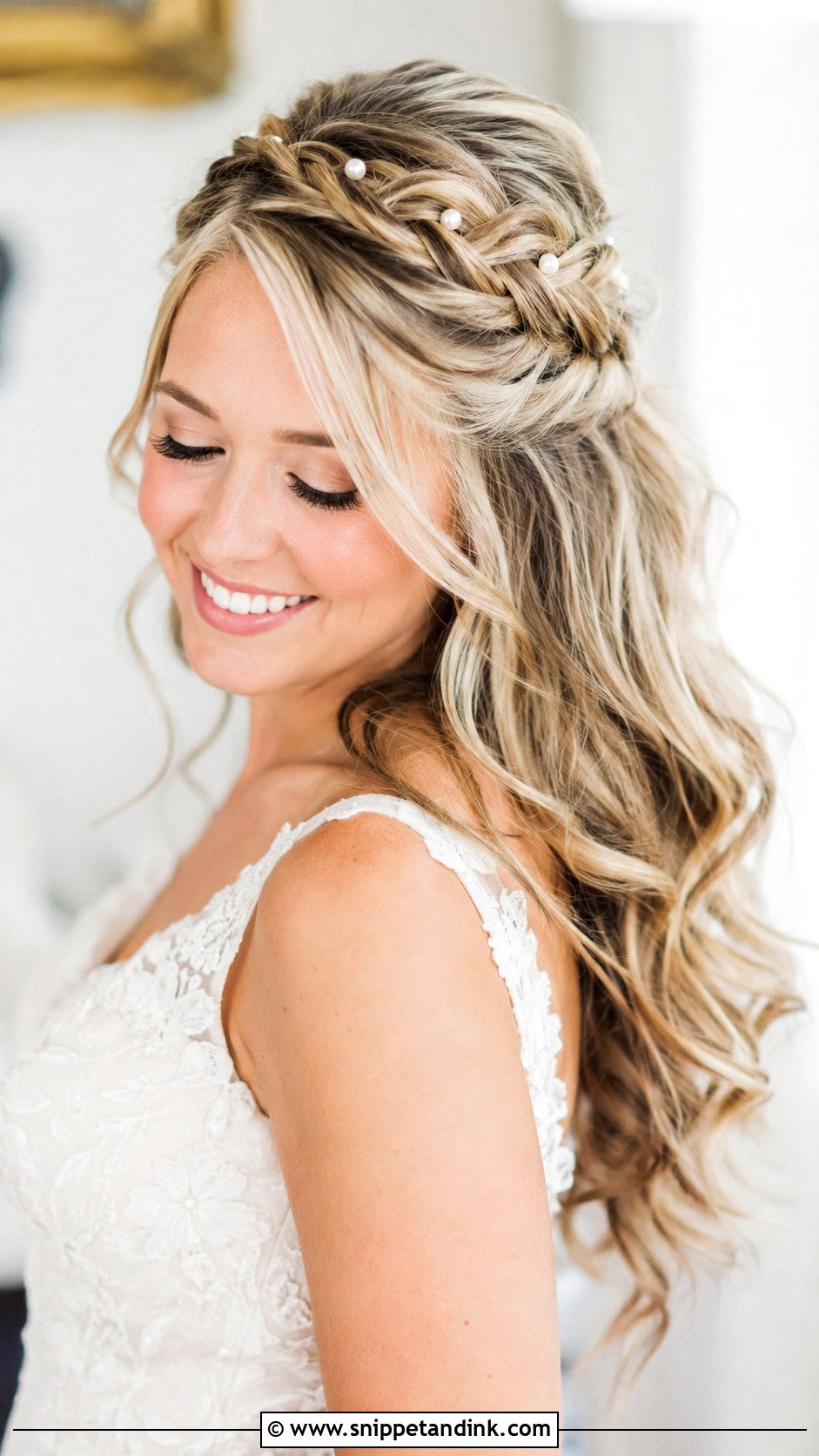
This half-up style braids just the top section and lets the rest fall in curls, so you show your length without hair in your face. Curls are the weak point. On straight or fine hair they can drop within a few hours, so I set each curl in a pin until it cools and use a firm-hold spray on the lengths only. The braided part keeps its shape far longer than the waves below it. Pearls, crystals or fresh blooms all work, and medium to long hair gives the most movement.
10. Rope Braid Low Updo
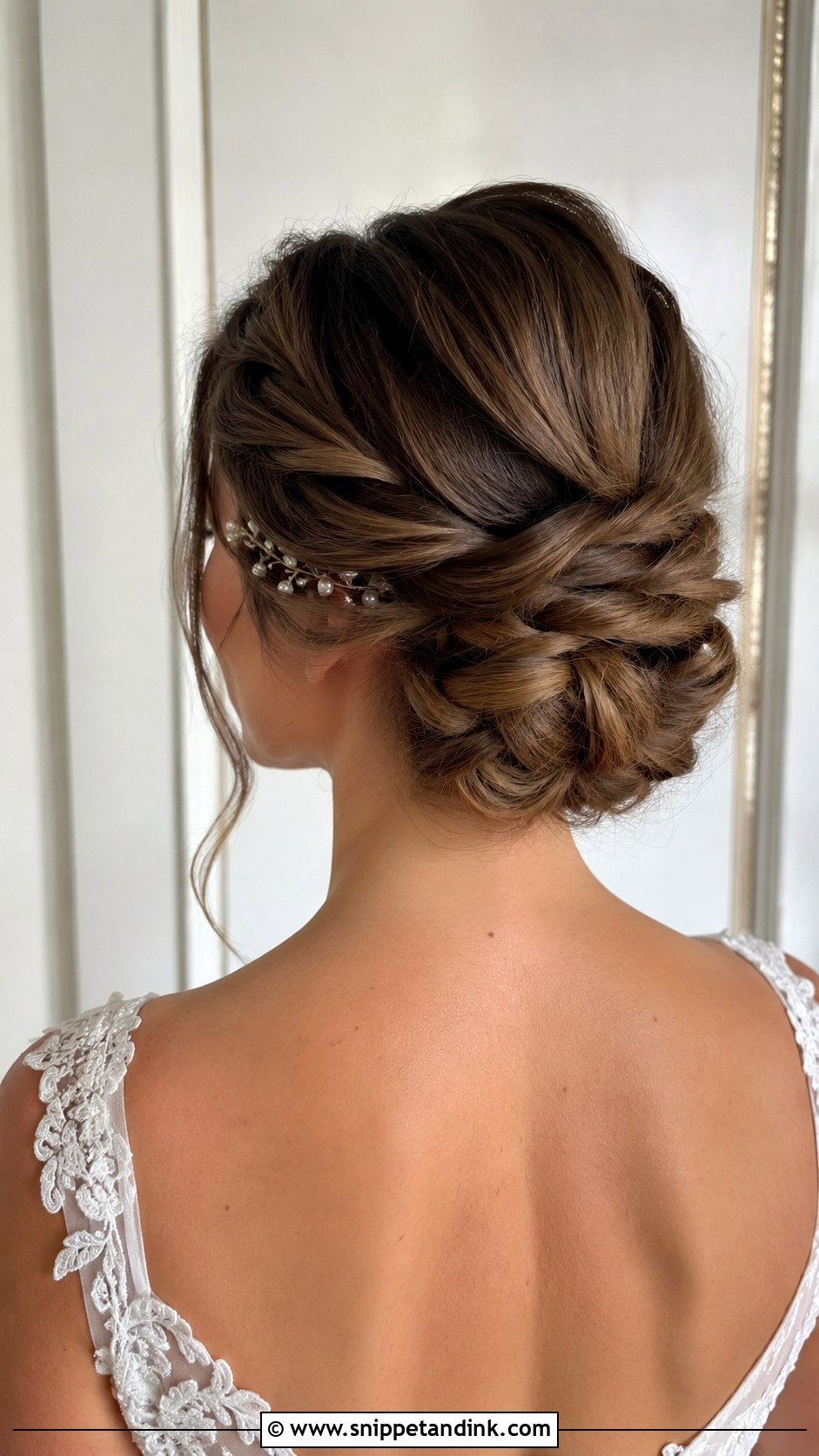
A rope braid is not really braided. Two sections are each twisted in one direction and then wrapped around each other in the opposite direction, and that tension is what locks the textured plait in place. It looks more complicated than it is, which is why stylists like it. Swept into a low updo, the twisted strands catch light and add quiet depth. If a twist starts to unwind, it is usually because the two directions were not opposite, so ask your stylist to check it at the trial. Delicate pins or a small floral accent finish it.
11. Braided Bun With Flowers
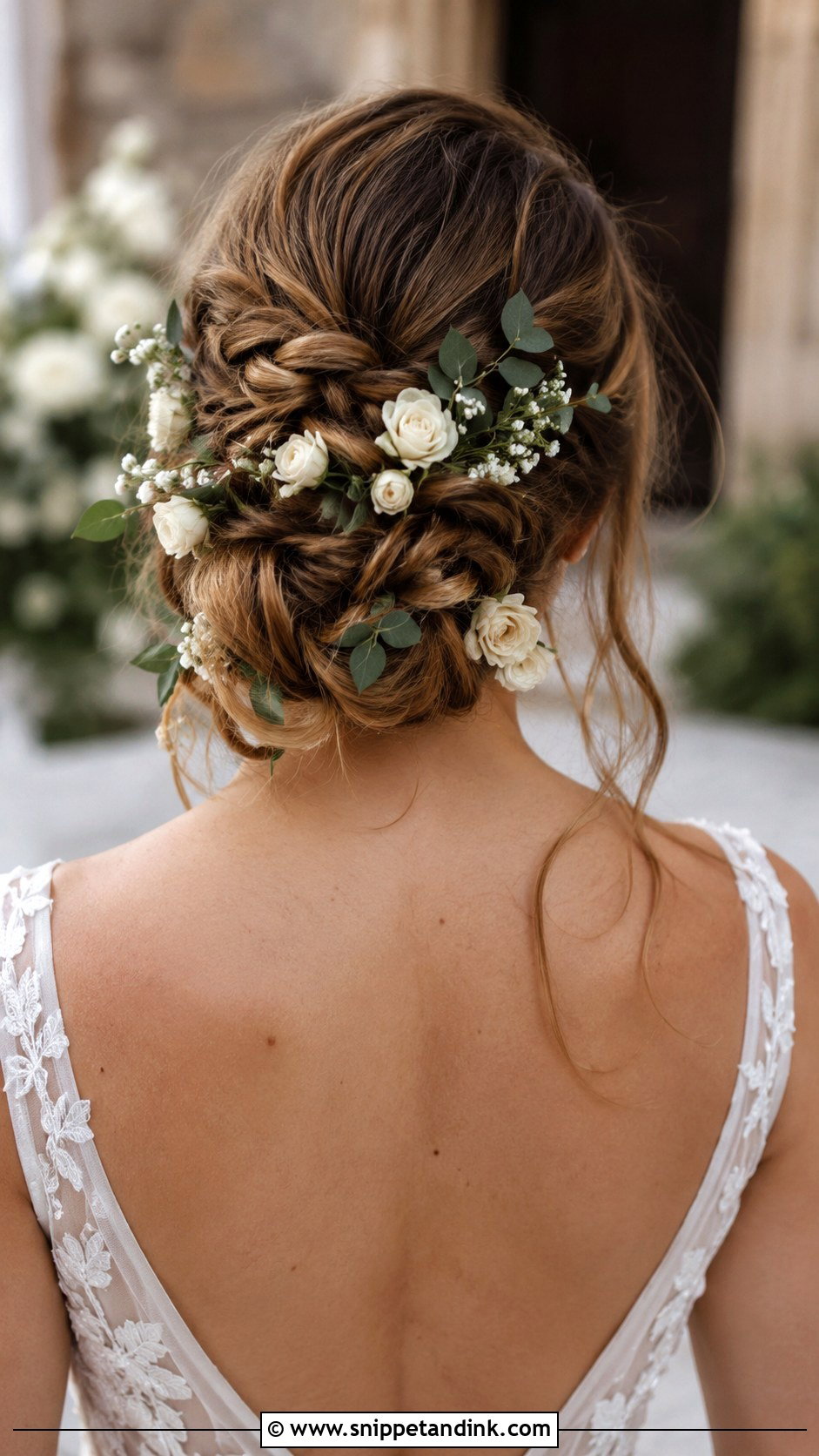
A braided bun with fresh blooms ties the hair to the bouquet better than almost any other style. I gather the braids into a structured knot first and add the flowers last, ideally right before the dress goes on, since cut flowers out of water start to wilt within hours. Hardy small flowers last longest: spray roses, waxflower and baby’s breath rather than soft petals like gardenias, which brown at the edges. Ask your florist for a few extra stems prepared for hair. Worn with a delicate veil or none at all, it suits spring and summer especially.
12. Side Swept Fishtail Braid
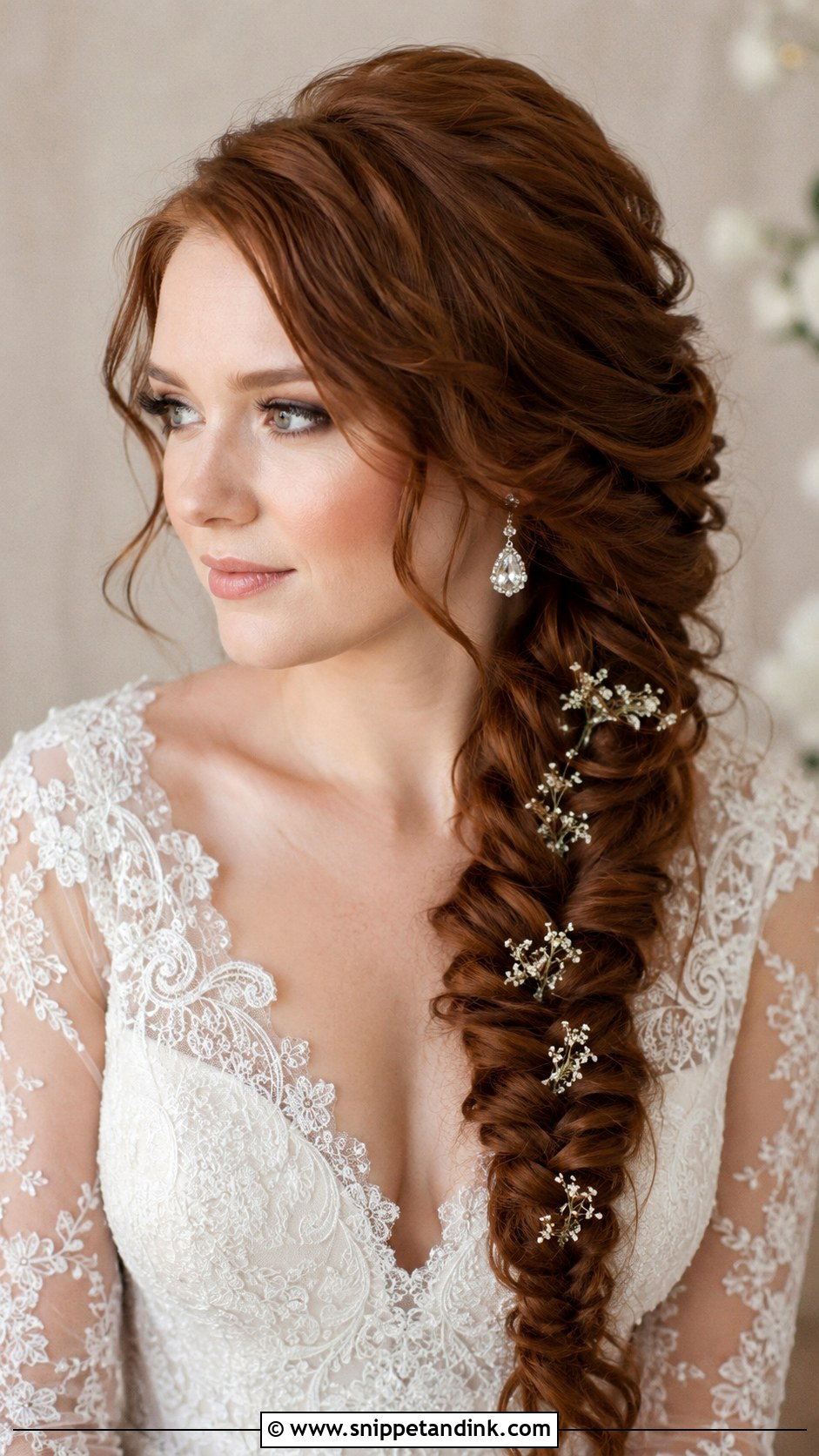
Swept over one shoulder, a fishtail shows off its weave and leaves the other side of the neck open for earrings. The off-center weight is the thing to plan for: without a hidden pin behind the ear, it slowly migrates down the front of the shoulder over the day. I loosen the pattern a little for a fuller finish and add tiny flowers or pearl pins. Long, thick hair gives the best result, and it sits comfortably with bohemian or vintage dresses.
13. Braided Updo With Veil
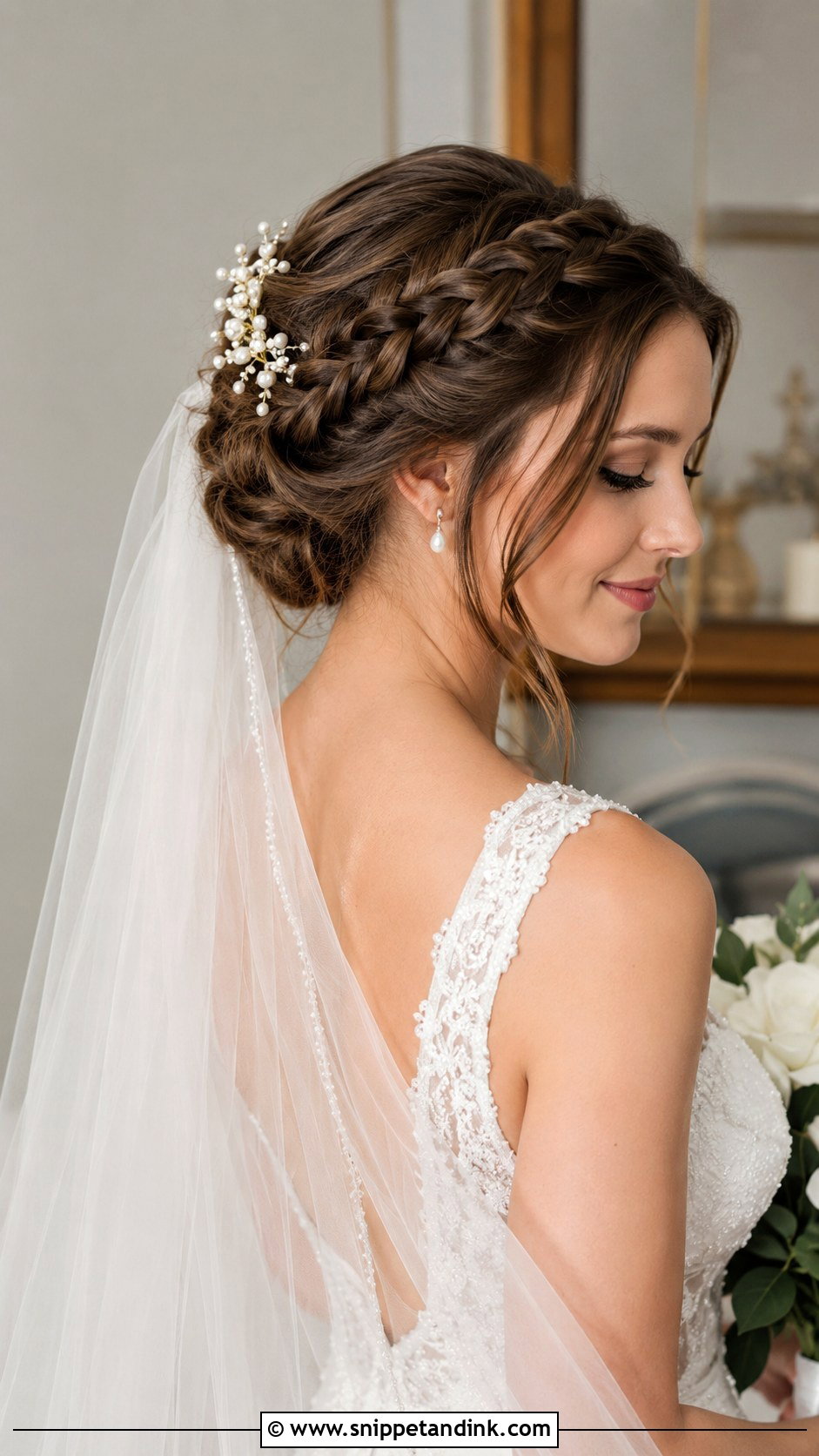
A braided updo under a veil is about as classic as bridal hair gets. The braid gives the veil comb something firm to grip, which is the real reason I like it: I slide the comb into the braided base and add two pins crossed over it, so the veil does not drag the style backward when it catches wind. When the veil comes off for the reception, the updo still looks finished. Pearls or crystals add shine, and it works with most face shapes and for both formal and semi-formal ceremonies.
14. Boho Braided Crown With Waves
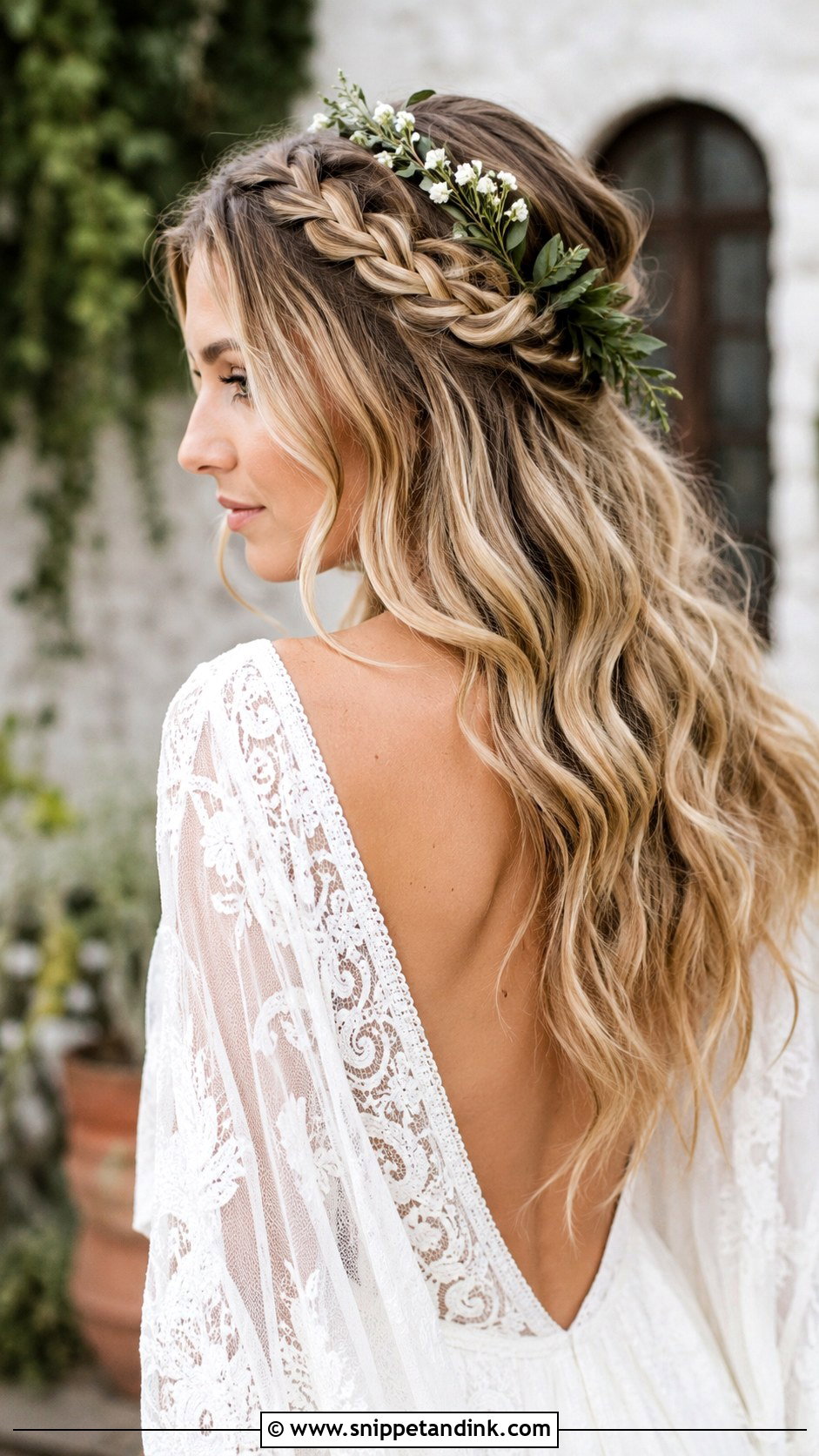
This is the boho version of the crown: a soft braid across the top of the head with the rest falling in loose, beachy waves. It mixes carefree texture with a bit of structure. On a beach, wind is the issue rather than the braid, so I keep the waves looser than a defined curl, which means they have less to lose. Greenery or fresh flowers woven into the braid suit outdoor and festival-style weddings. Medium to long wavy hair is the natural fit.
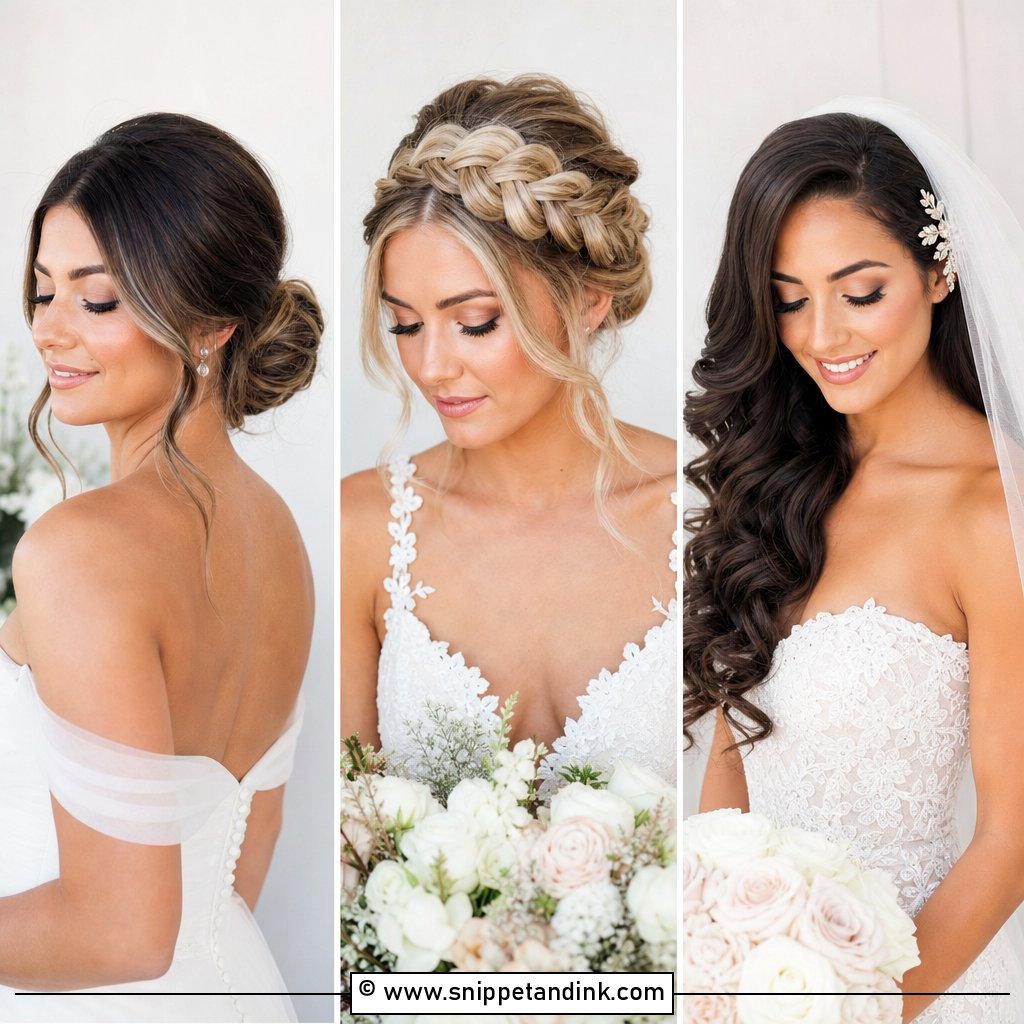
15. Twisted Braid Updo
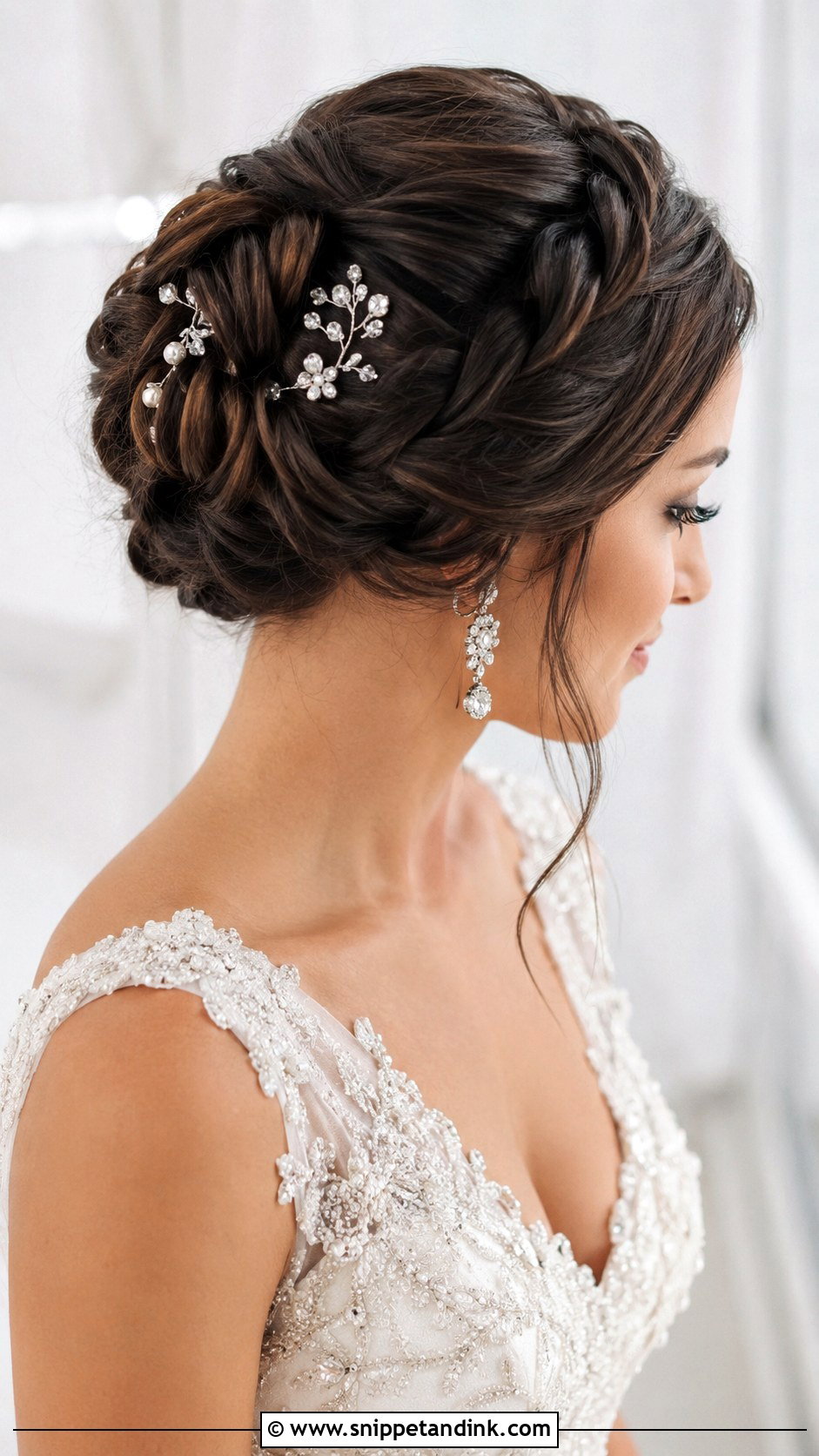
Twisted braid updos mix twisted sections with woven ones, which gives more depth than a single braid. Each twist is pinned close to the head, so the style feels very secure for a long event. I tend to keep it sleek for formal weddings and pull out a few soft pieces for a gentler look. Long, thick hair suits it best; with fine hair the twists can look thin, so I backcomb the base a little first. Crystal pins, pearls or a sparkling hairpiece go well with an open neckline and statement earrings.
16. Double Dutch Braid Style
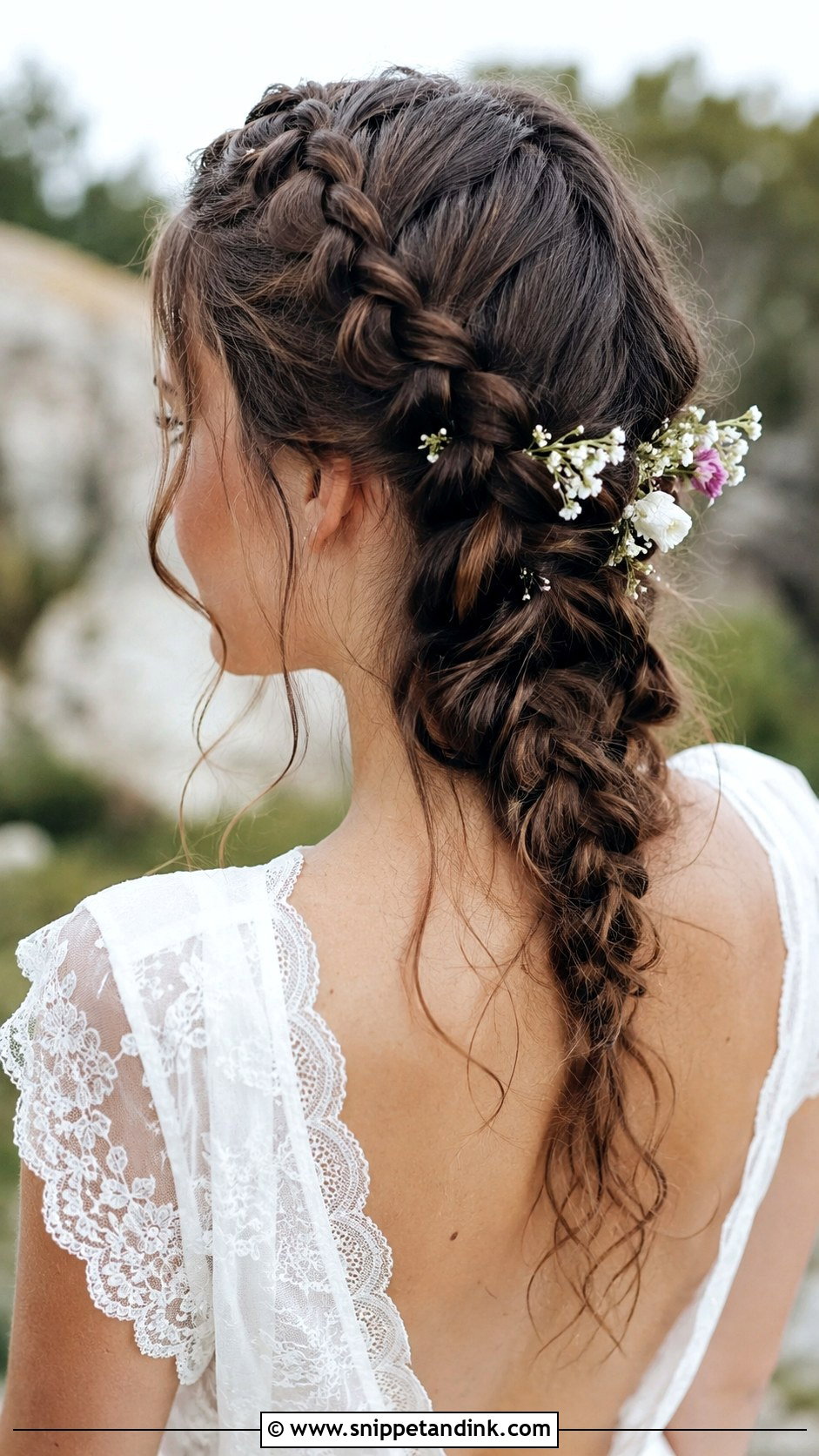
Two Dutch braids running parallel give a bold, symmetrical look with a sporty edge. The hard part is the parting: any wobble in the center line shows straight away, so I section with a tail comb and check it in a hand mirror from behind. You can leave the braids hanging or tuck them into a low bun. Thick hair gives them real presence, and loosening the edges softens them. Small flowers or pins make them bridal, and the style suits relaxed outdoor and bohemian weddings.
17. Braided Low Side Ponytail
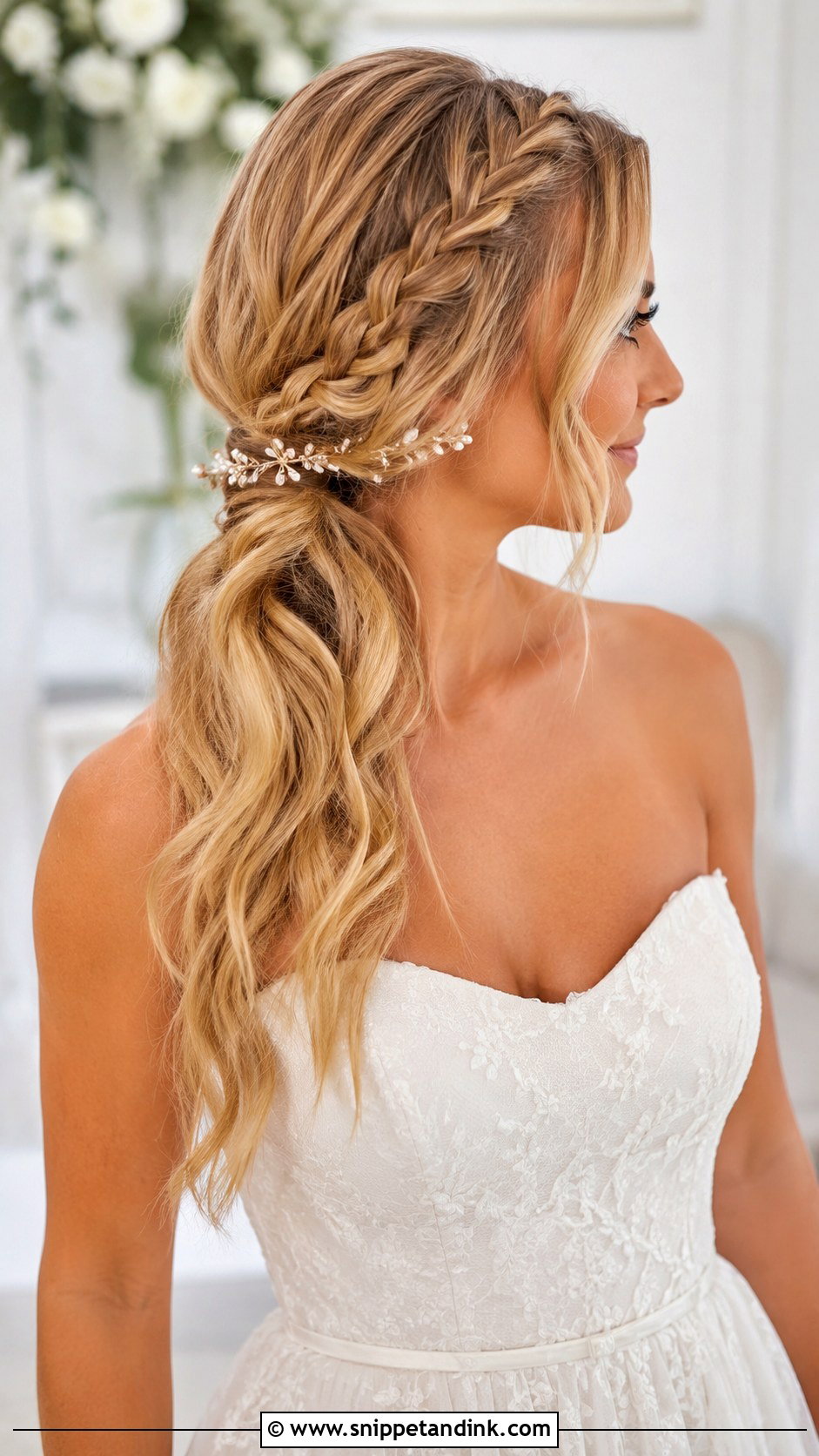
A low side ponytail with a braid along one side is comfortable to wear and shows length. The braid travels down to the nape and then gathers into a tail that falls over the shoulder, with a small strand wrapped around the base to hide the elastic. I secure the ponytail lower than feels natural, just behind the ear, so it does not swing back when you turn your head. Long, wavy hair suits it, with pearls or a hair vine and statement earrings, and it fits intimate and large weddings alike.
18. Halo Braid With Loose Tendrils
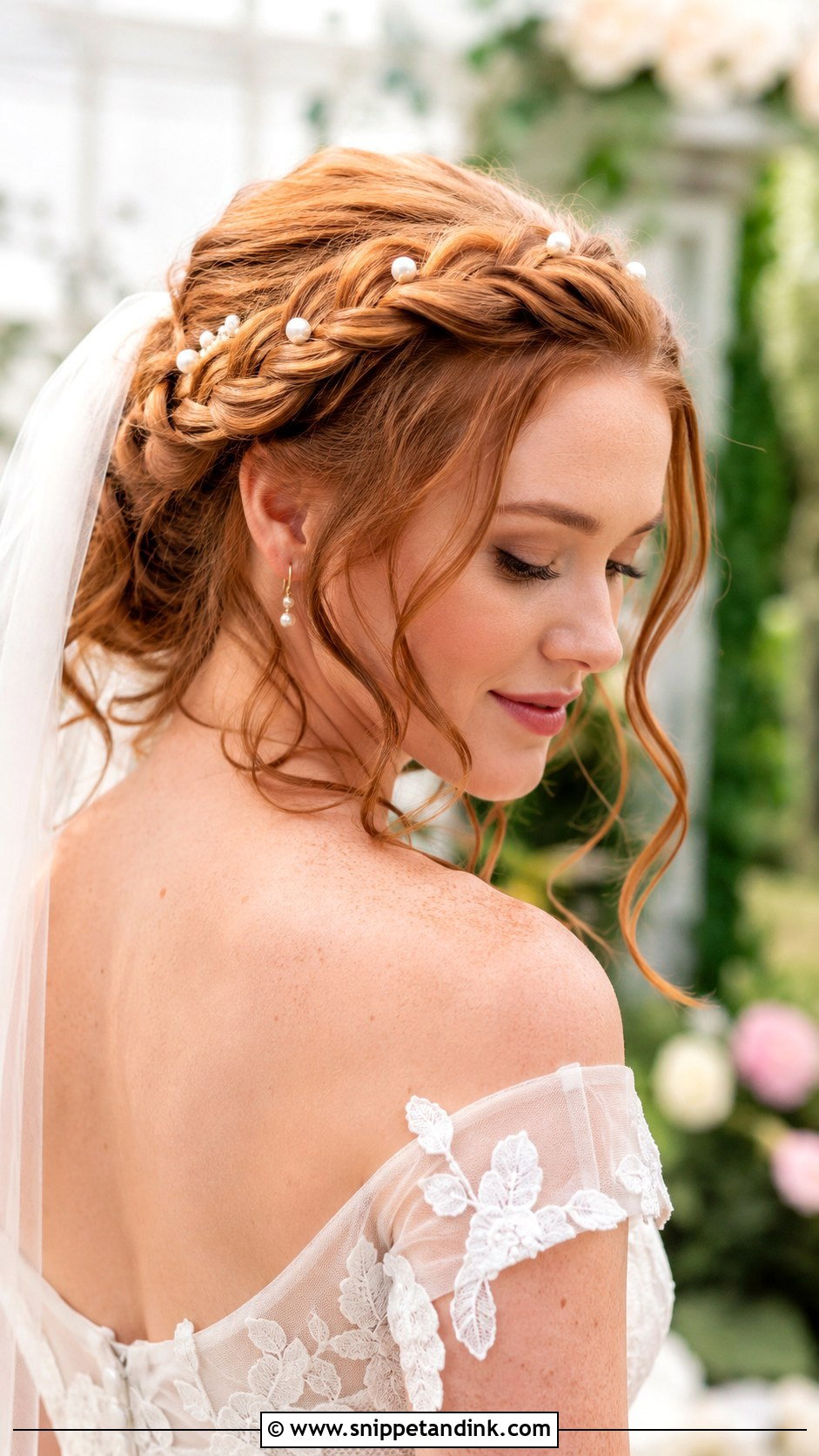
A halo braid with loose tendrils keeps most of the hair secure while a few soft pieces frame the face. I am careful with those tendrils. Cut too short or curled too tight, they look stringy by evening; I leave them slightly longer than the chin and curl them loosely. The braid itself keeps the back cool, which helps at warm-weather weddings. Small flowers or pearls finish it, and it sits easily in boho, vintage and garden settings.
19. Braided Bun With Pearls
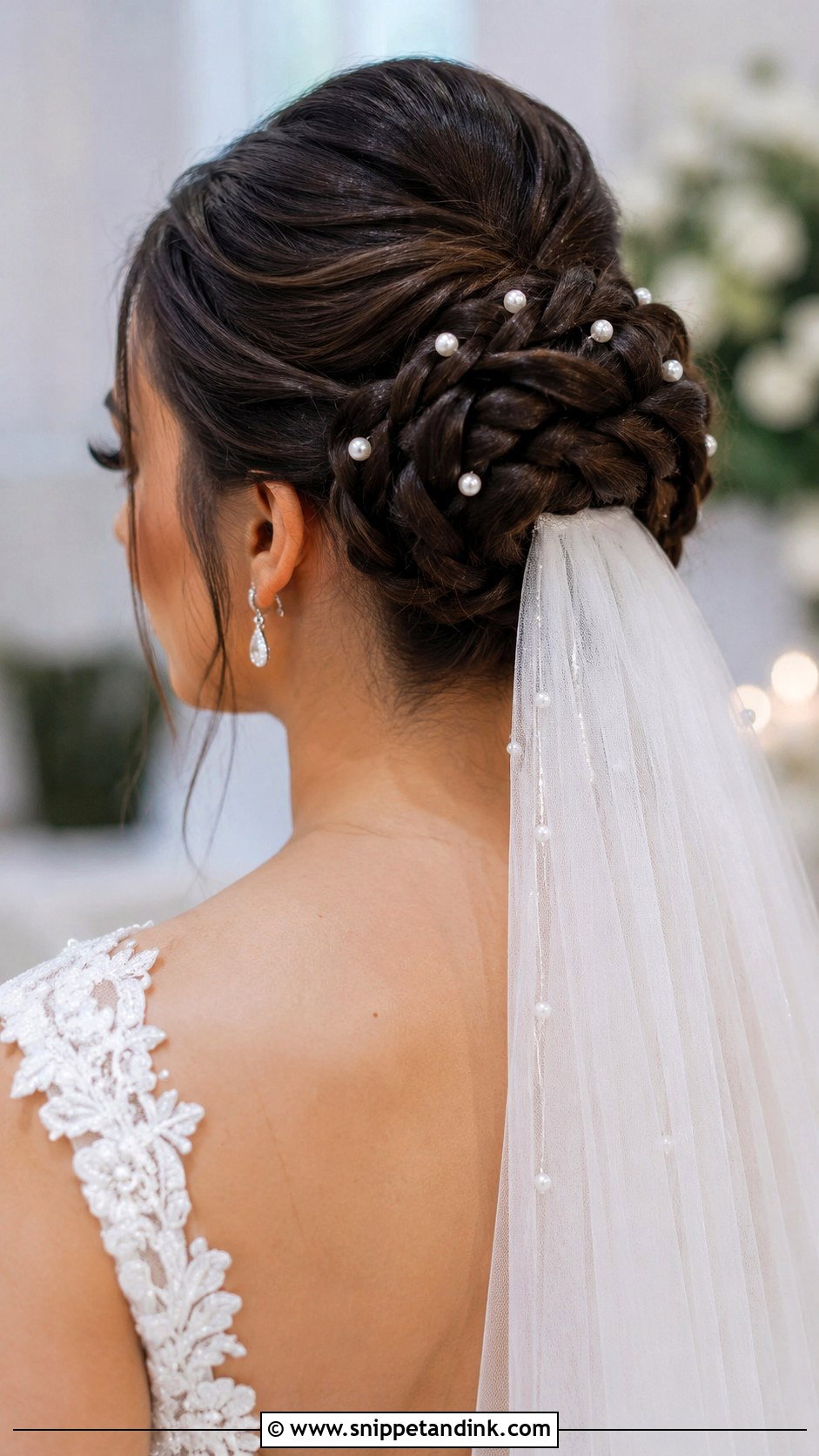
Here the braids are gathered into a sleek bun and dotted with pearl accents. I place the pins after the bun is fully secured, and I angle each one into the braid itself, not just into the outer hair, so they do not slide out during hugs. You can scatter the pearls throughout or cluster them by the bun. Formal and traditional weddings are where this look sits most naturally, and it pairs comfortably with a veil and statement earrings.
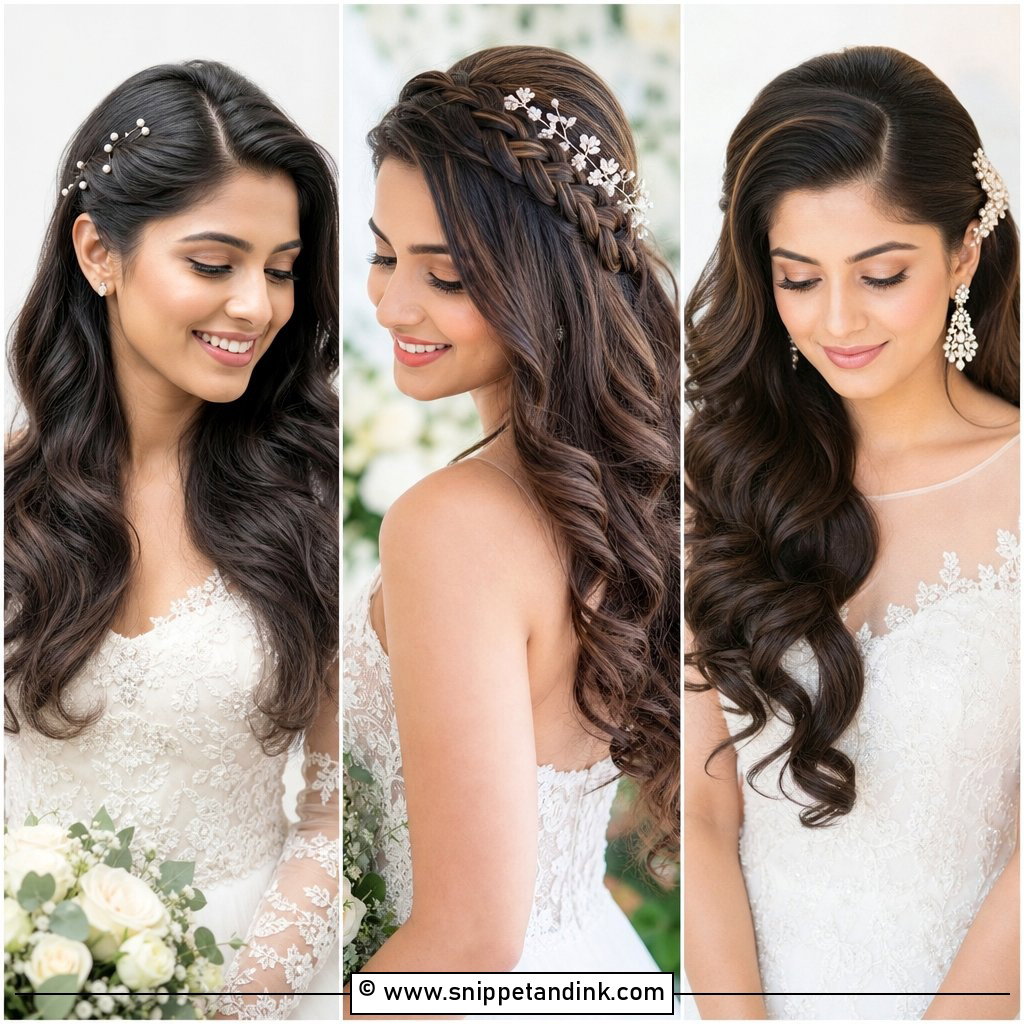
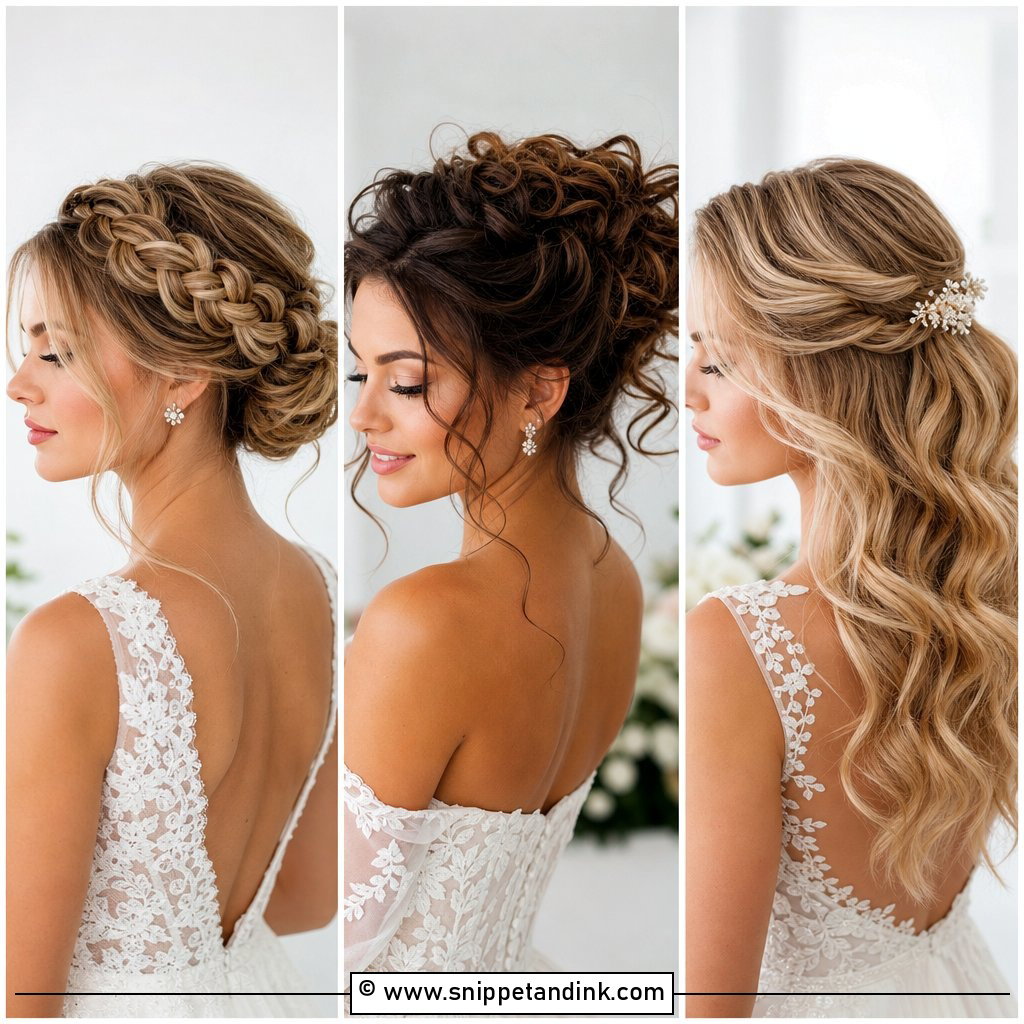

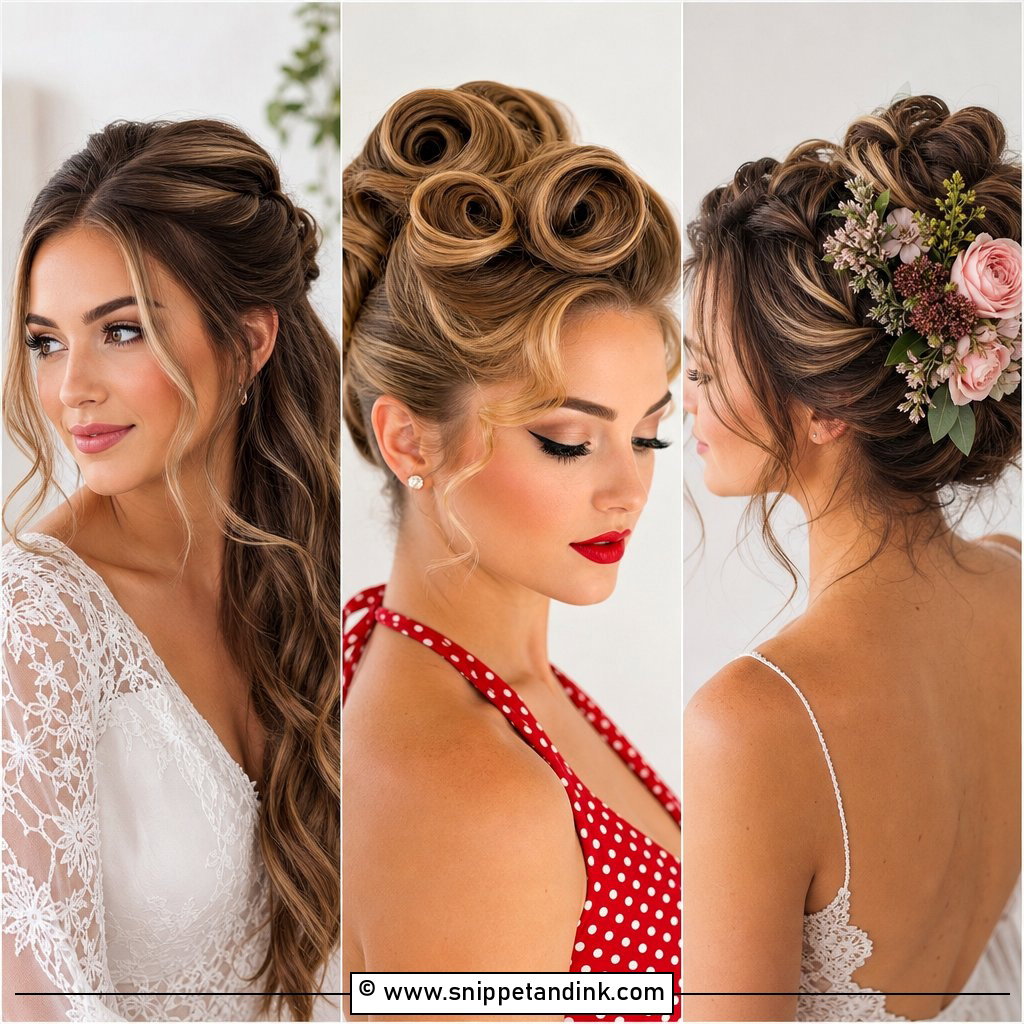
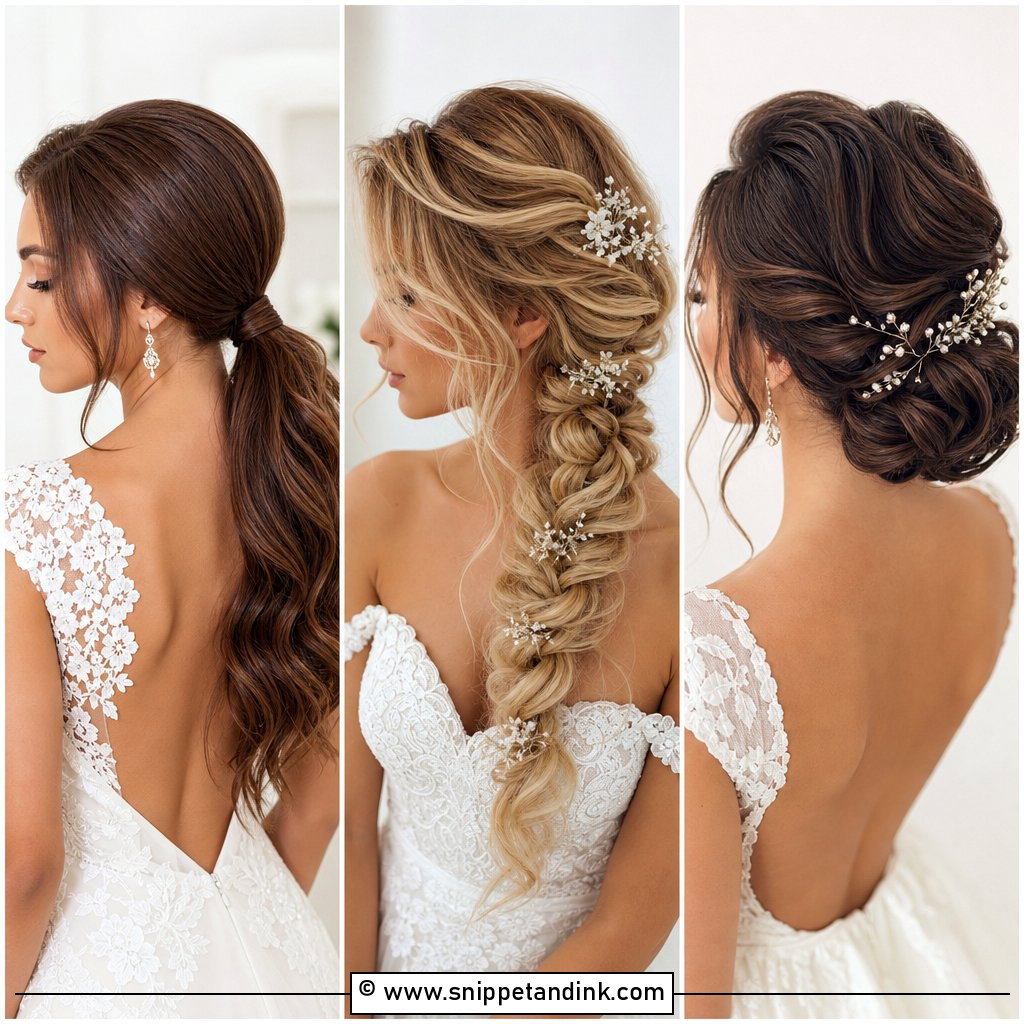
20. Messy Braided Half-Up Look
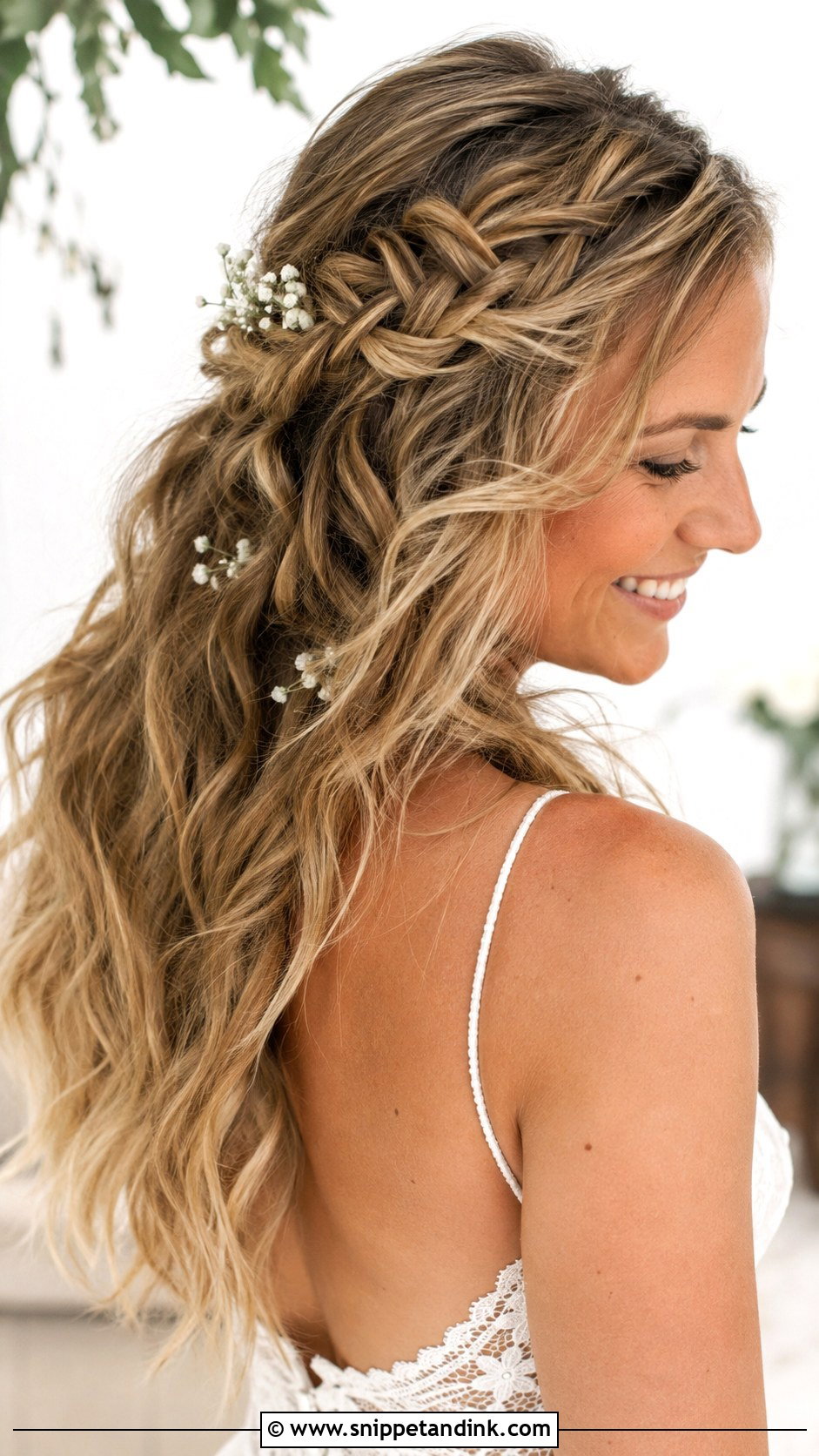
The messy half-up keeps the top section in a loose braid and lets the rest fall freely. It is meant to look easy, but a style that is too loose at the start will look unkempt by the reception, so I braid it firmly, pin it, and only then pull pieces out for softness. Wavy or textured hair holds the effect best. Small flowers or pins add a bridal touch, and the look suits boho, beach and outdoor weddings where you want to feel like yourself.
Why Braids Loosen by the Reception, and How I Stop It
Almost every braid relaxes a little over a long day. Body heat, humidity and a veil being pinned and unpinned all work on it. A slight softening looks good. A braid that slides, gaps or drops pins does not, and the cause is usually something done that morning.
- Wash the day before, not the morning of. Squeaky-clean hair is slippery and lets sections slide apart.
- Pins go in crossed pairs, in an X, into the braid itself. A single pin sitting on top just holds the surface.
- Spray in light layers. Heavy spray on the lengths makes a braid stiff and crunchy without making it stronger.
- Put the veil comb in after the hair is fully finished, and take it out by lifting, not pulling backward.
- Keep a small kit with bobby pins, a clear elastic and a travel spray with someone in the bridal party.
If a section does work loose during the evening, push it back along the braid and pin it in the same X shape. Do not pull the braid tighter to fix it; that usually opens another gap further down.
Take Your Real Hair, Not Just Photos, to the Trial
Braids cover a wide range, from a sleek fishtail updo to a loose boho crown, and they can read as classic, modern or relaxed depending on how tight and how high they sit. Most of what decides the result is your hair’s length, density and texture, so take your favorite photos to the trial and ask your stylist which ones your hair can actually hold for ten hours. Flowers, pearls, crystals or a veil come last. Get the braid right first and the accessories just finish it.
You'll Like These Ideas:


Leave a Reply