
A bridal braid has to do more work than almost any other wedding style. It carries flowers, kundan chains, pearls, jada pieces, a matha patti and dupatta pins, sometimes all at once, and it has to stay put through ceremonies that run for hours. That’s why I treat Indian bridal braid hairstyles as engineering first and decoration second. A classic South Indian jada braid and a loose fishtail for the mehendi are built very differently. Both have to look right from the back, because that’s the view guests and photographers see during the rituals, and both have to feel comfortable enough that you forget about them.

Carrying Gold, Flowers and Extensions Without a Headache
The most common complaint I hear from brides after a traditional ceremony isn’t about how the braid looked. It’s that it hurt. A full jada set, a long extension and fresh flowers together can weigh far more than you’d expect, and all of it hangs from the crown for hours. Most of that pain is avoidable.
- Spread the anchor points. I secure heavy pieces to the braid at several places along its length, not only at the top.
- Build a firm base braid underneath. Decorations go onto that base, so the decoration never takes the strain alone.
- Use extensions matched to your texture and color. A smooth synthetic piece against wavy natural hair looks false and slips.
- Keep the parting and crown relaxed. Tension at the hairline is where headaches start.
- Plan where you’ll sit. A heavy braid pressing against a high-backed chair or mandap seat for an hour gets uncomfortable fast.
If your hair is fine or you’re prone to headaches, I’d lean toward lighter jada, artificial flowers mixed with real ones, or a shorter extension. It’s better to scale back a little than to spend the muhurtham thinking about your scalp.
1. South Indian Bridal Braid
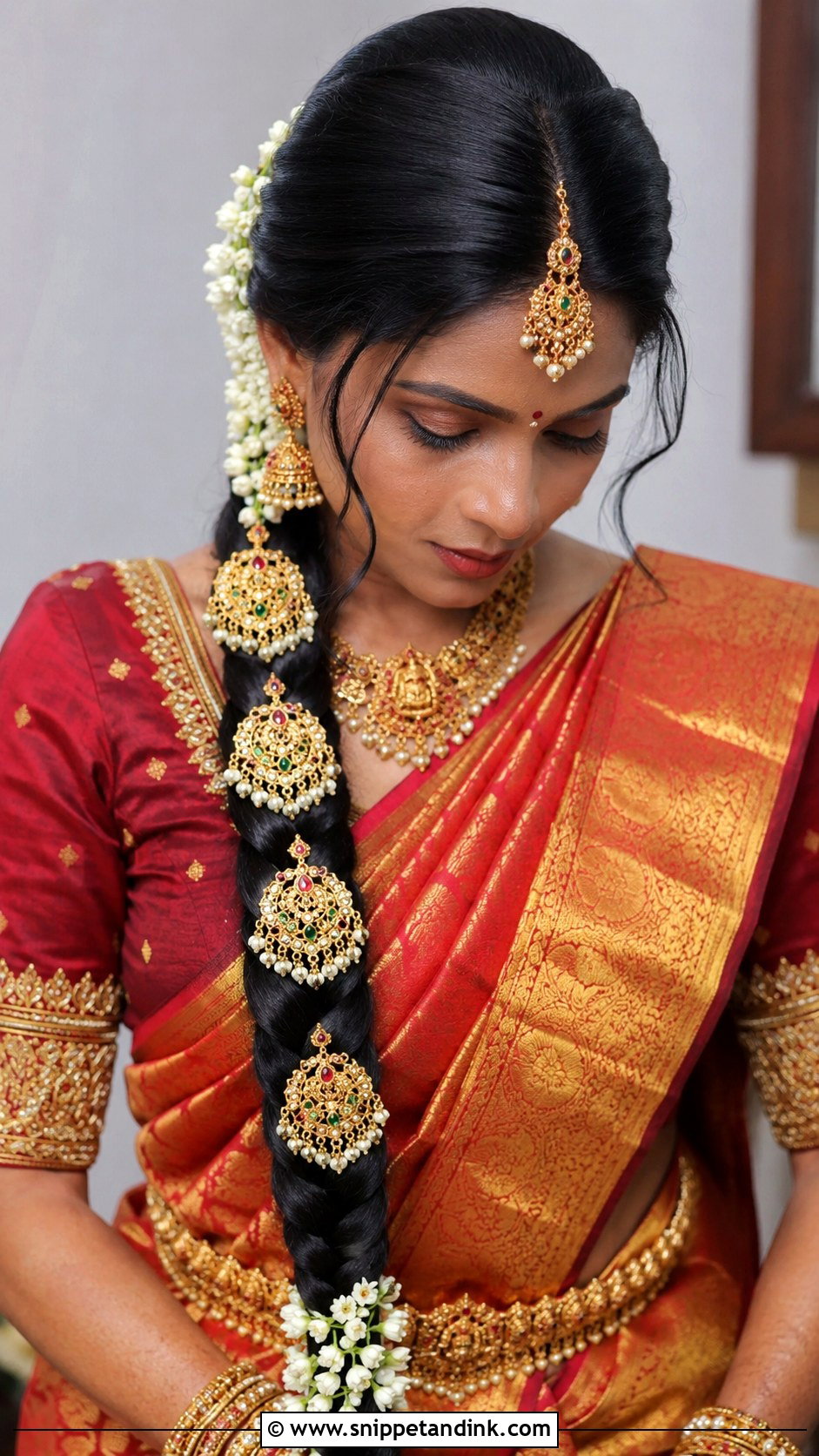
The South Indian bridal braid is the long, sleek plait dressed with gold jada pieces, jasmine strings or temple jewelry, worn with a silk saree, heavy gold and a center part holding a maang tikka or netti chutti. Most brides need extensions for the length and thickness this look expects. I add them as a clip-in weft or a braided-in hairpiece so the join sits high and hidden, then plait firmly. The crown stays smooth with a little lift, so it doesn’t flatten under the saree pallu.
2. Poola Jada Bridal Braid
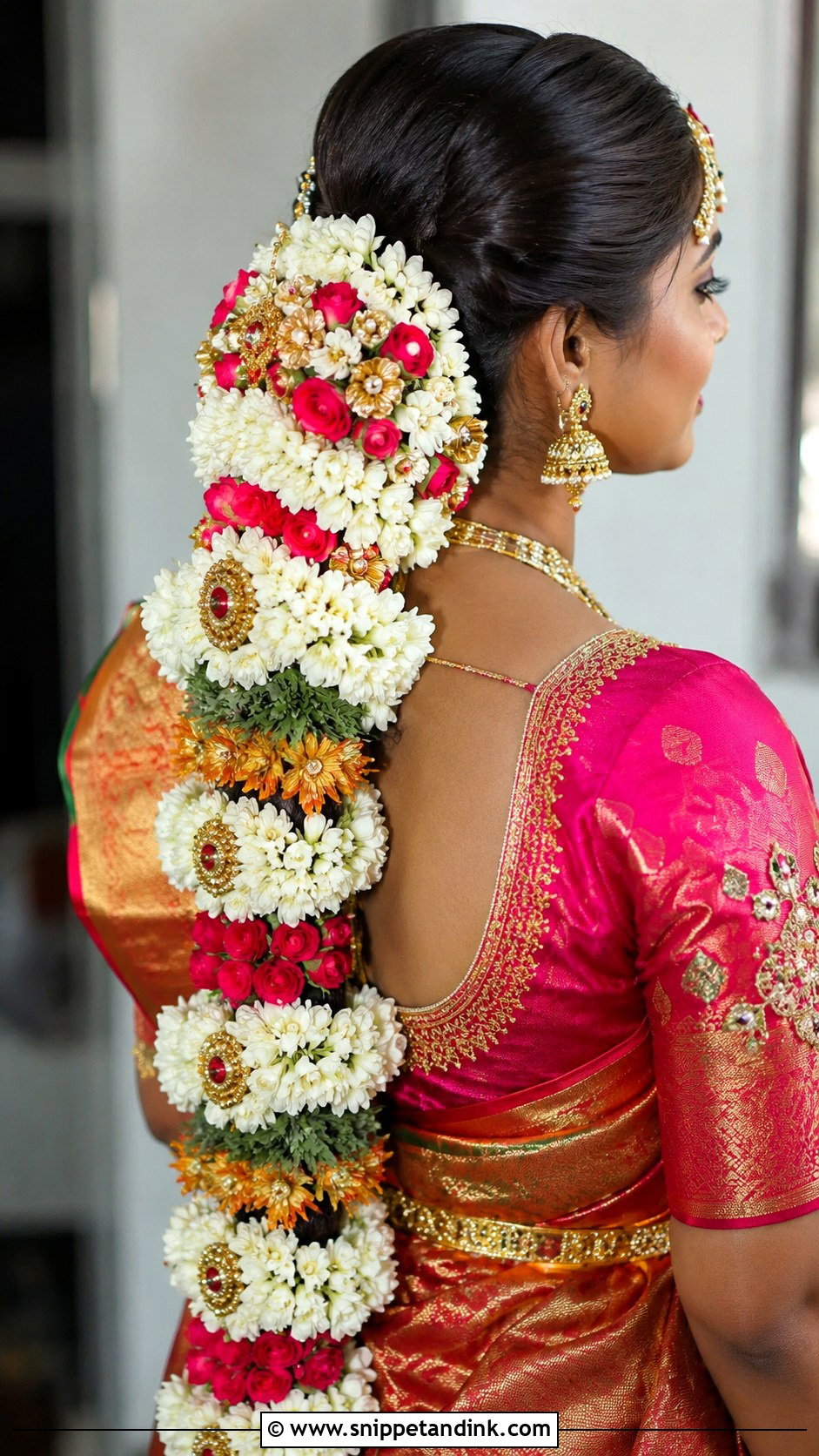
Poola jada bridal braid styling covers the hair in flowers from crown to tip: jasmine, roses, marigolds, sometimes silk blooms mixed in. The back view is the whole point, so it’s made for mandap portraits and saree shots. Flowers are heavy, especially when they’re fresh and damp. I build the floral panel on a separate base and attach it at several points along the braid instead of hanging it from the top, so the crown doesn’t take all the pull. Match the flowers to the saree border or blouse for a finished look.
3. Jasmine Bridal Braid
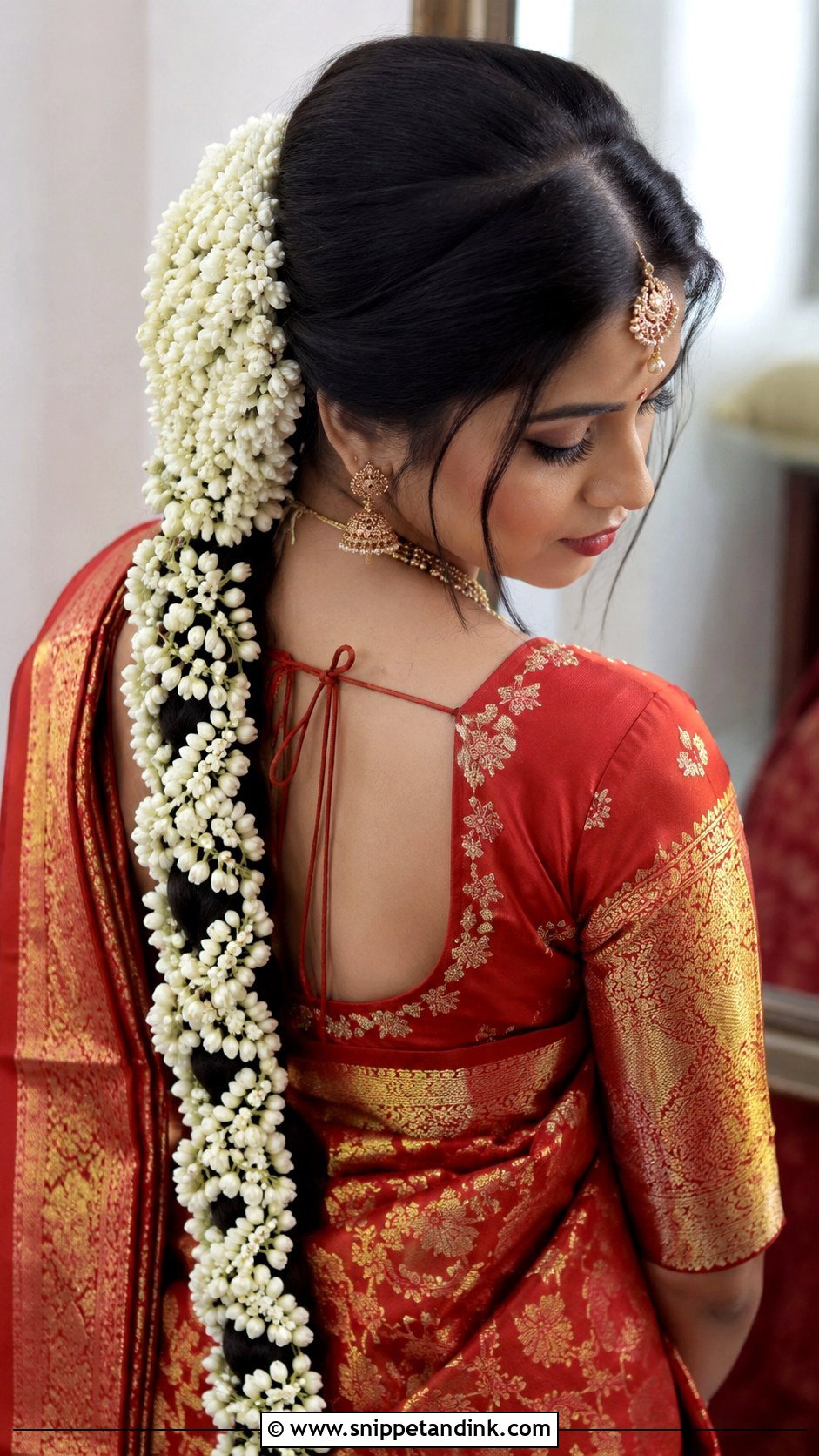
Jasmine works with nearly every bridal color, red, maroon, green, gold, ivory or pastel, and it adds fragrance and texture without fighting the outfit. Wrap it around the full braid, place it in sections, or edge a long plait with it. I braid tightly enough at the core to hold the strings, then gently pancake the outer loops so the braid looks full and the jasmine sits slightly inside the weave rather than on top. Morning and temple ceremonies suit it best, before the flowers start to brown in the heat.
4. Gold Jada Bridal Braid
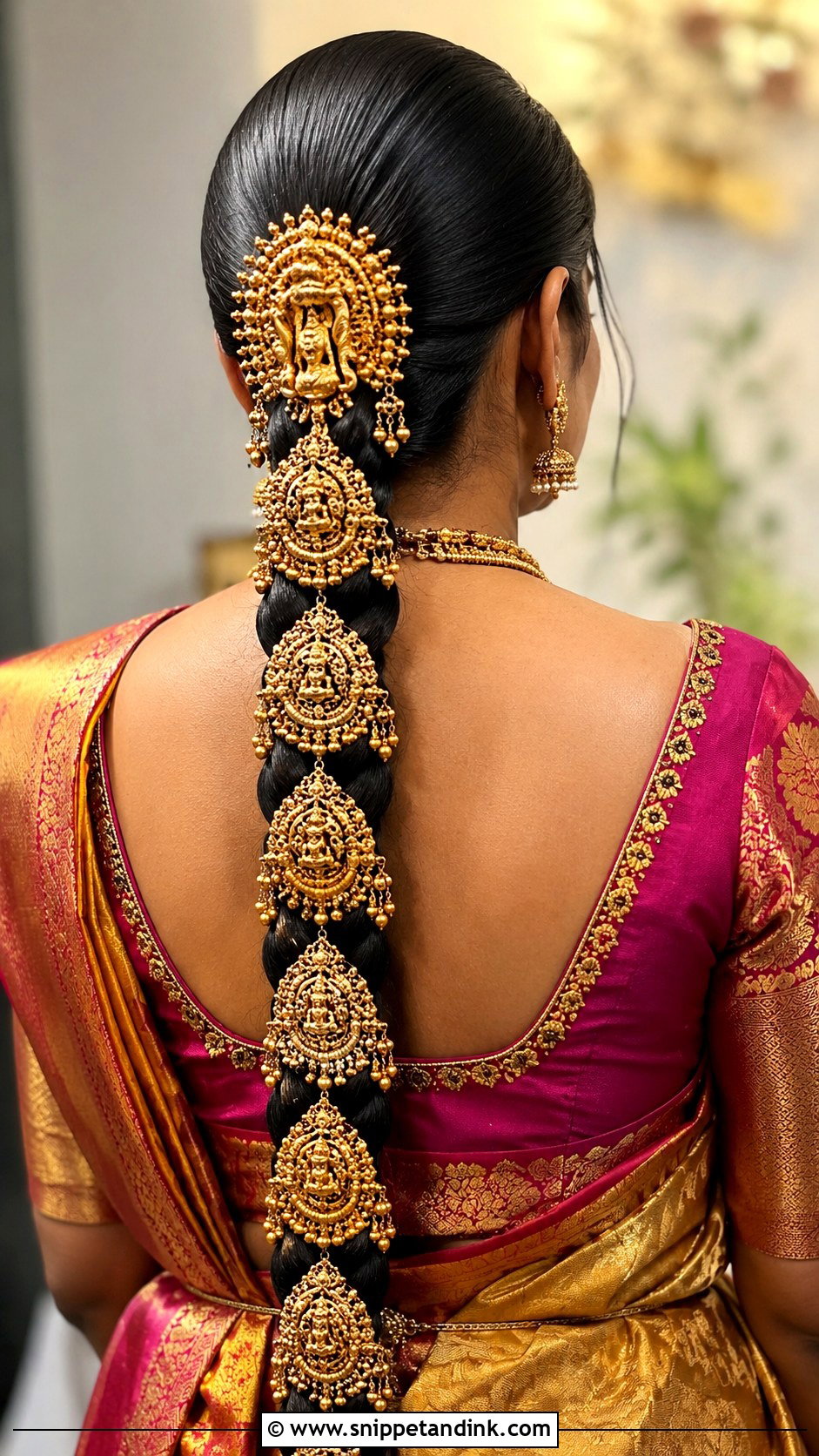
Jada billalu, temple motifs, coins or chain running down the length turn a plait into jewelry. It belongs with Kanjeevaram silk, temple jewelry and strong traditional makeup. The weight is real: a full gold jada set can pull hard on the scalp after a few hours. I braid a firm base first and stitch or pin the jada into the braid itself, never just hook it onto the top. Keep the front simple, a center part or a soft puff, so the braid stays the focus.
5. Fishtail Bridal Braid
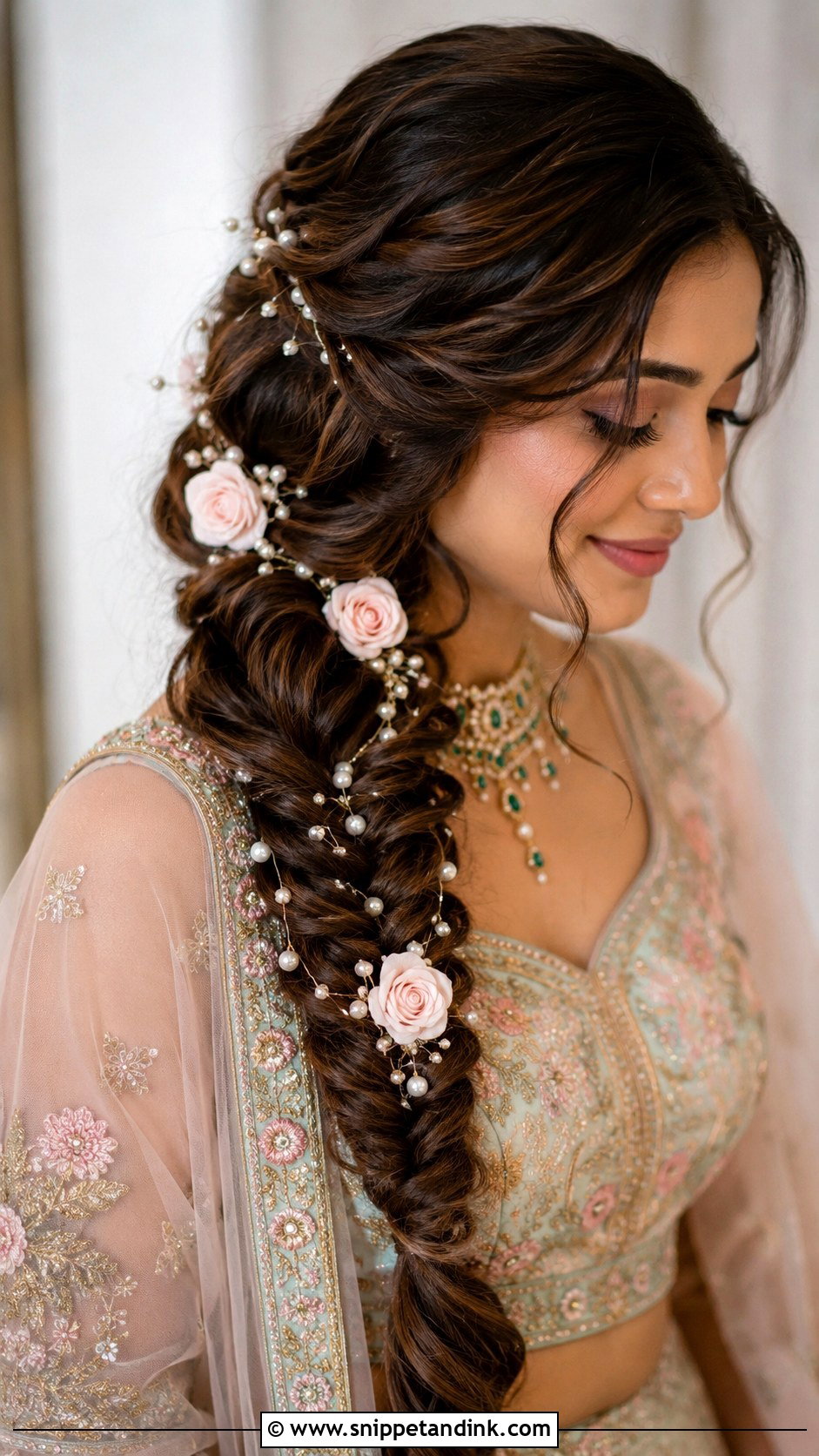
A fishtail is softer and more modern than a three-strand plait, and the woven pattern shows dimension, especially on highlighted or naturally wavy hair. I’d put it on the mehendi, engagement, haldi or reception day, or a lighter ceremony. Pearls, baby’s breath, small roses or a fine chain keep it bridal without weight. Fishtails loosen faster than regular braids because the strands are thinner, so I tie off the end tightly and set it with a little serum and spray before gently pulling the edges for width.
6. Side Bridal Braid
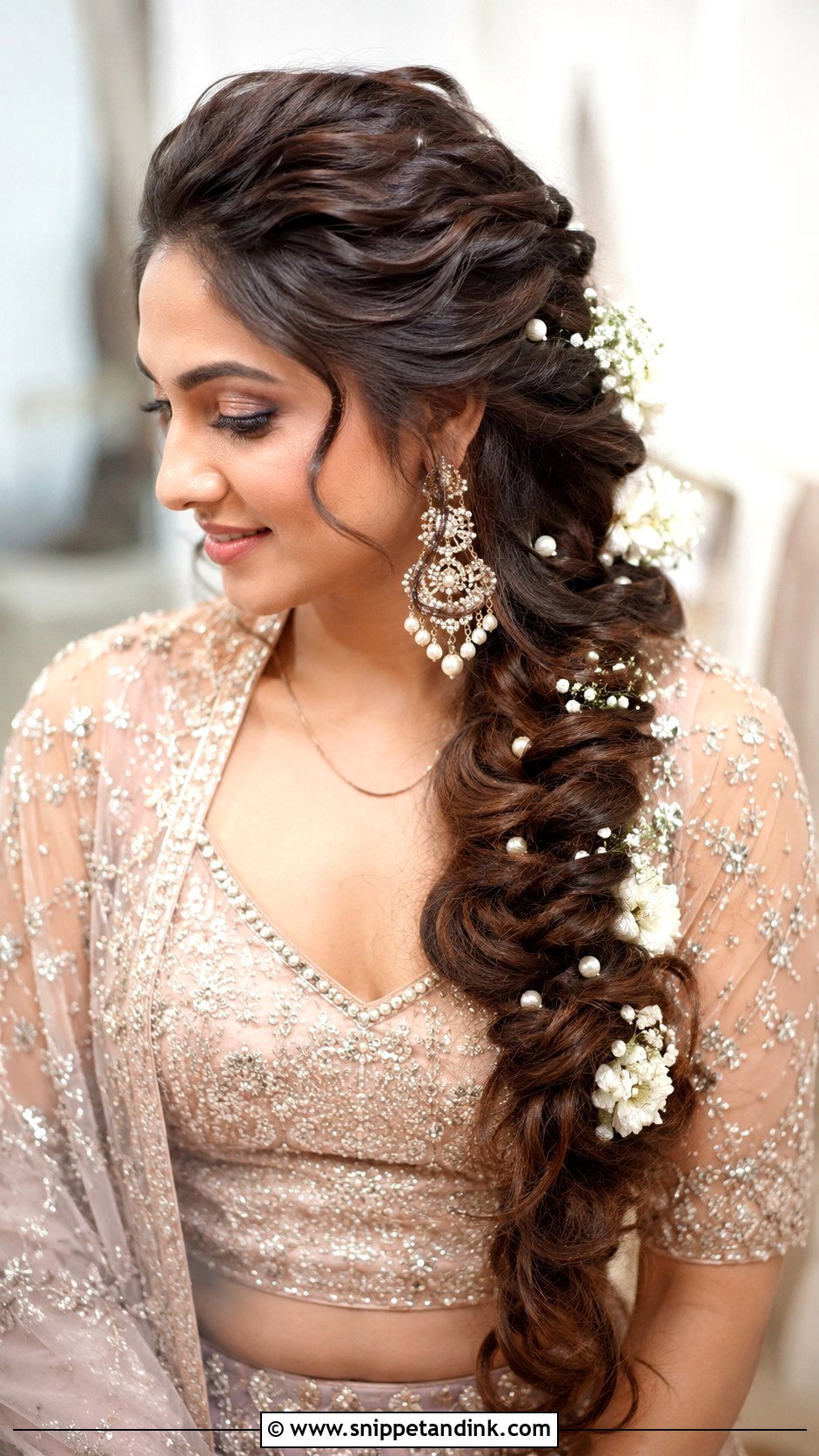
Bringing the braid over one shoulder means it shows in front-facing portraits, along with the flowers, curls and length. It’s a natural choice for sangeet, mehendi and engagement, or for a bride not wearing a heavy head dupatta. A side part, a few face-framing pieces or a small puff at the crown finish the front. I anchor the braid behind the ear with crossed pins before it comes forward, otherwise it slowly swings to the back every time you turn. It balances heavy earrings well.
7. Messy Bridal Braid
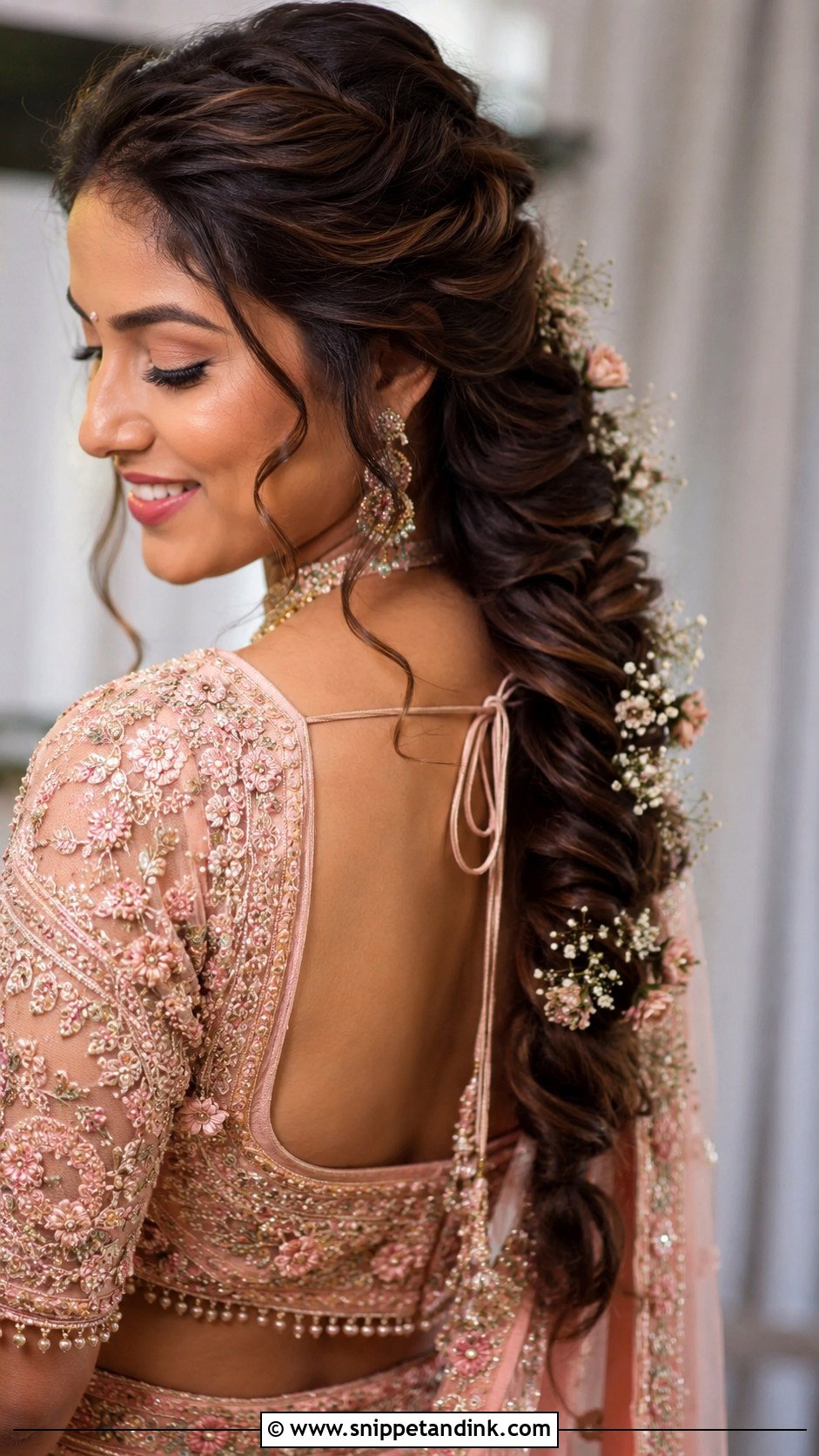
A messy braid looks relaxed but has to be built carefully. It’s textured, pulled apart, often with curls left at the face, and it suits floral lehengas, pastels, mirror-work blouses and outdoor or destination events. Small flowers, pearls, gota pieces or soft pins tuck into the loops. Here’s the catch: loose braids lose hold quickly, especially at a haldi with turmeric paste and water flying around. I braid the core firmly and pull only the surface apart, then pin the loops so they stay airy without coming undone.
8. Bubble Bridal Braid
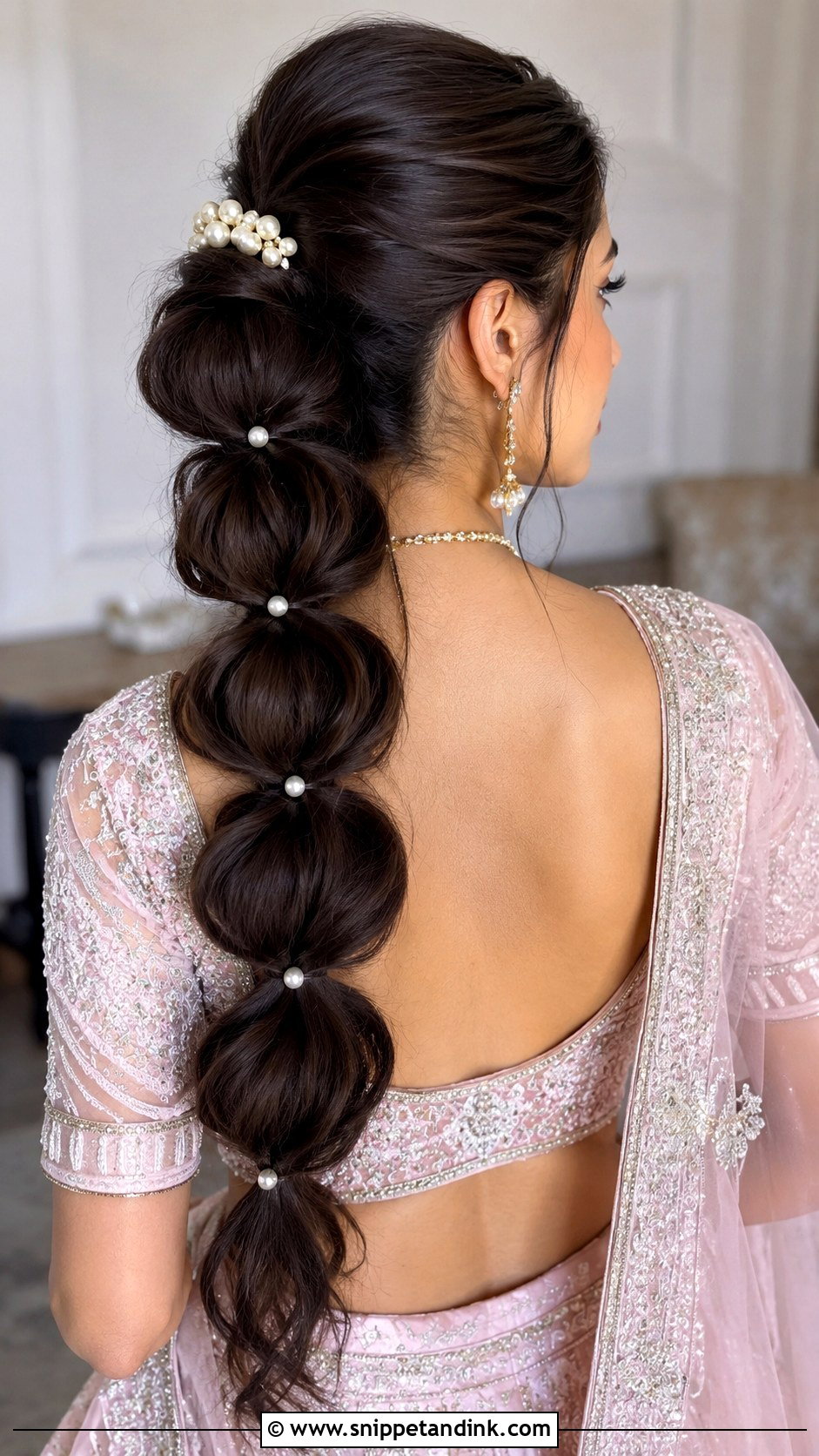
Bubbles made with hidden elastics and teased out for width give a bold, plush shape that suits thick hair or extensions. It looks modern with lehengas, gowns and contemporary sarees. Pearls, floral rings or jewelled clips can sit between each bubble. It’s comfortable because the weight is spread along the length rather than gathered in one knot. I use clear elastics matched to hair tone and space them evenly; uneven bubbles show up instantly in back-view photos.
9. Dutch Bridal Braid
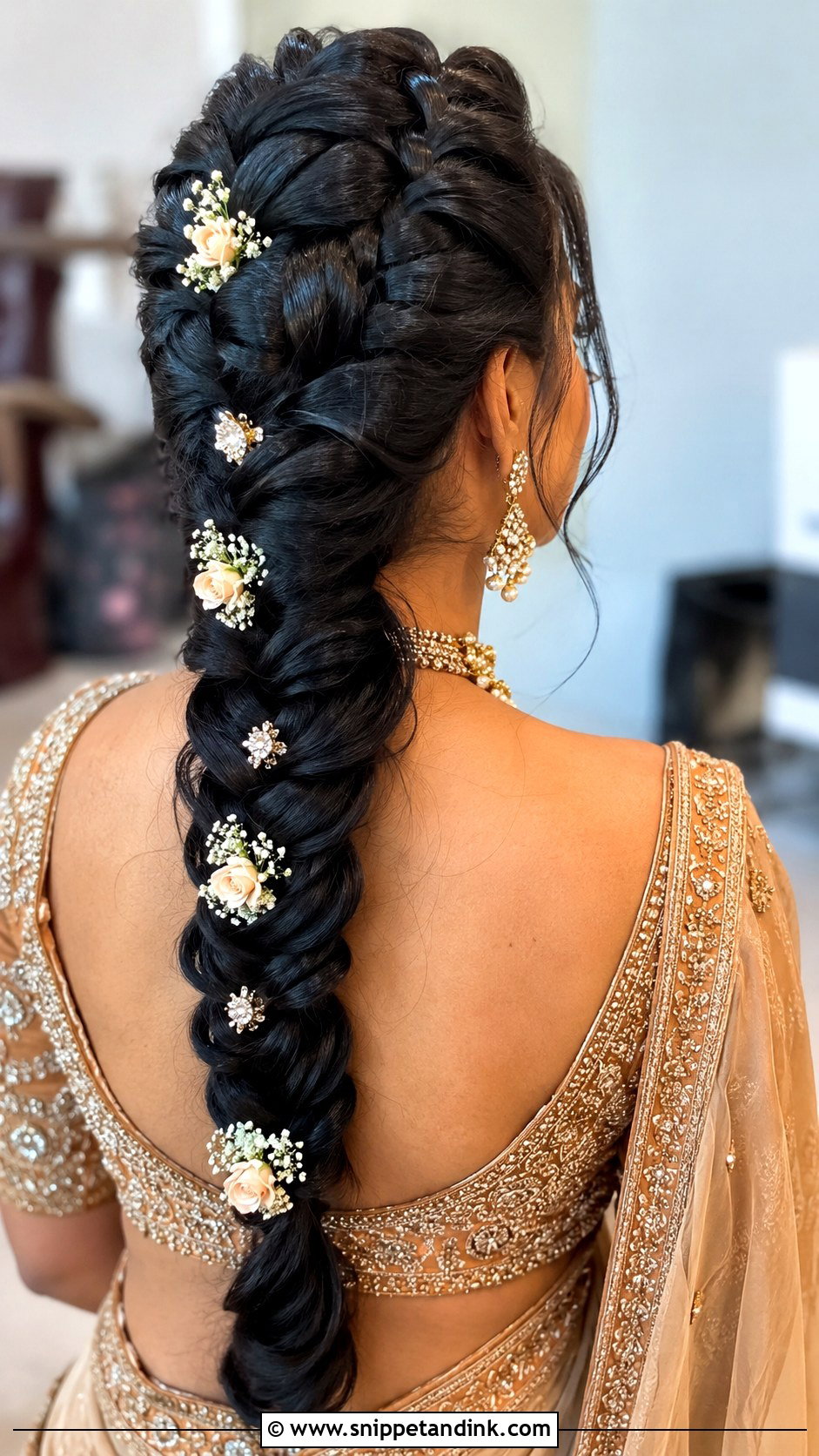
A Dutch braid sits raised on the surface of the head, so it reads clearly in photos and holds securely for a long event. It can start at the crown and run down the back, or run along one side. Layered hair is the tricky part: the shorter pieces poke out of the weave. I tuck them as I braid, then use a few small pins and a light spray to keep them in. A flower line or a statement piece at the base finishes it with lehengas, sarees or fusion outfits.
10. Crown Bridal Braid
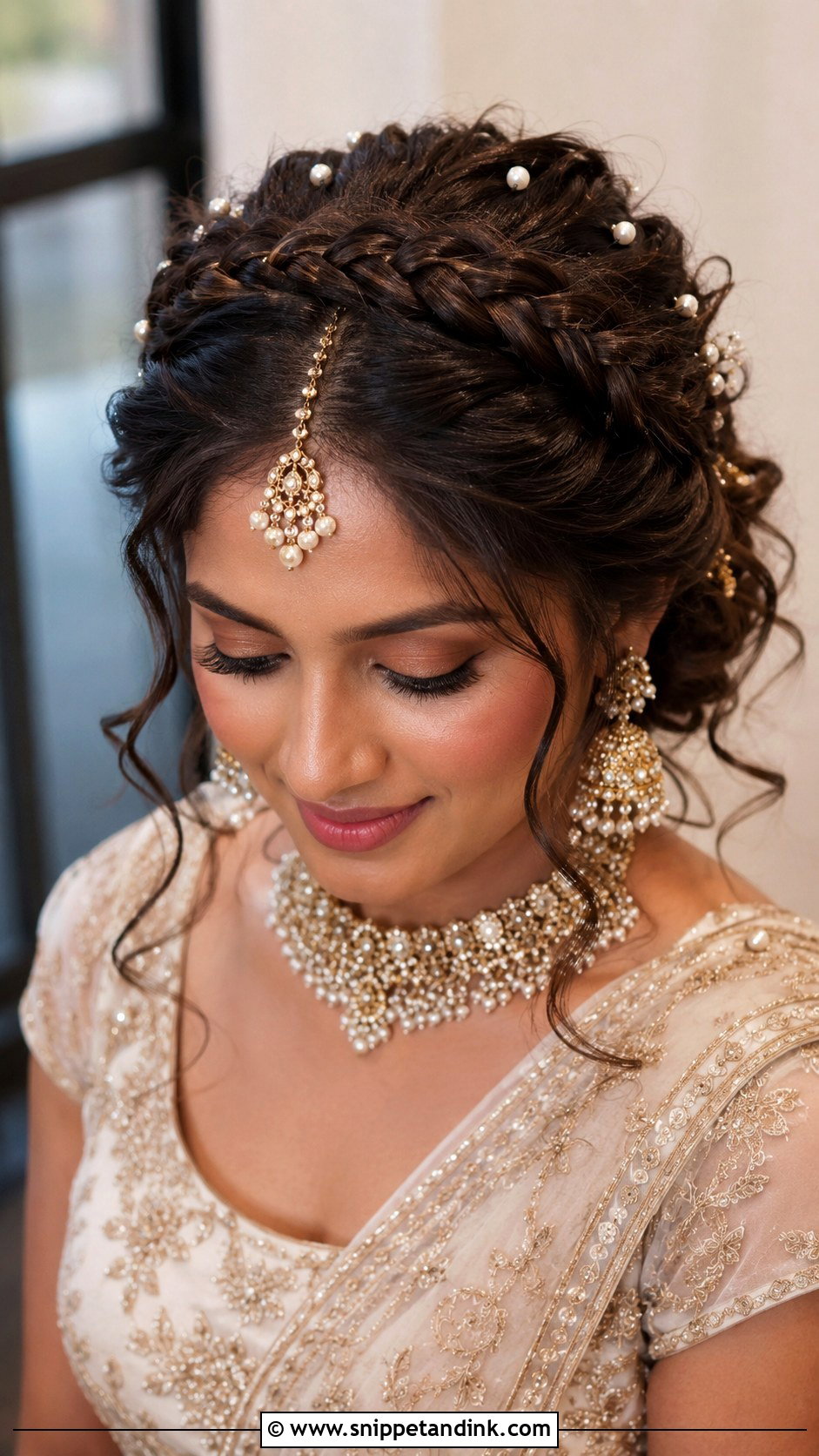
Wrapping a braid around the head like a halo keeps hair off the face, and it pairs with a bun, loose curls or a braid continuing down the back. With a matha patti or a small tikka it frames the forehead neatly, though I check where the matha patti chain will lie before I braid so the two don’t compete for the same line. The added height flatters round and oval faces. Keep it full, not tight, or it starts to look severe.
11. Half Up Bridal Braid
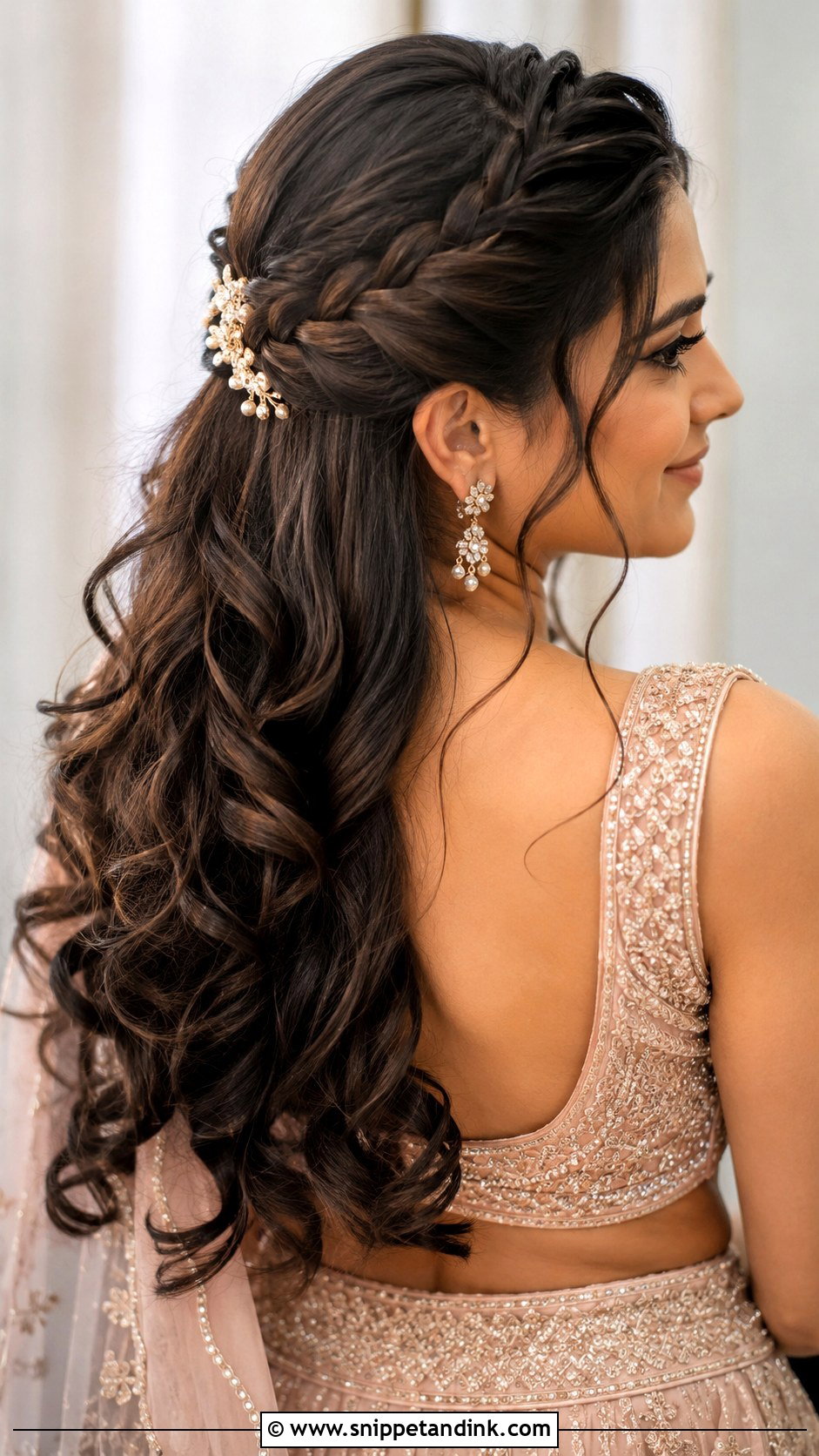
The top section is braided or twisted and the rest falls in curls, waves or a soft longer braid, which gives you open hair with some security. It suits engagements, receptions, sangeet and modern portraits, and works with lighter dupattas and statement earrings because the face stays clear. Open hair in a hot hall can frizz and flatten by evening, so I set the curls well and keep the braid section firm. Add pearls, flowers or a jewelled clip where the braid meets the loose hair.
12. Bridal Braid With Gajra
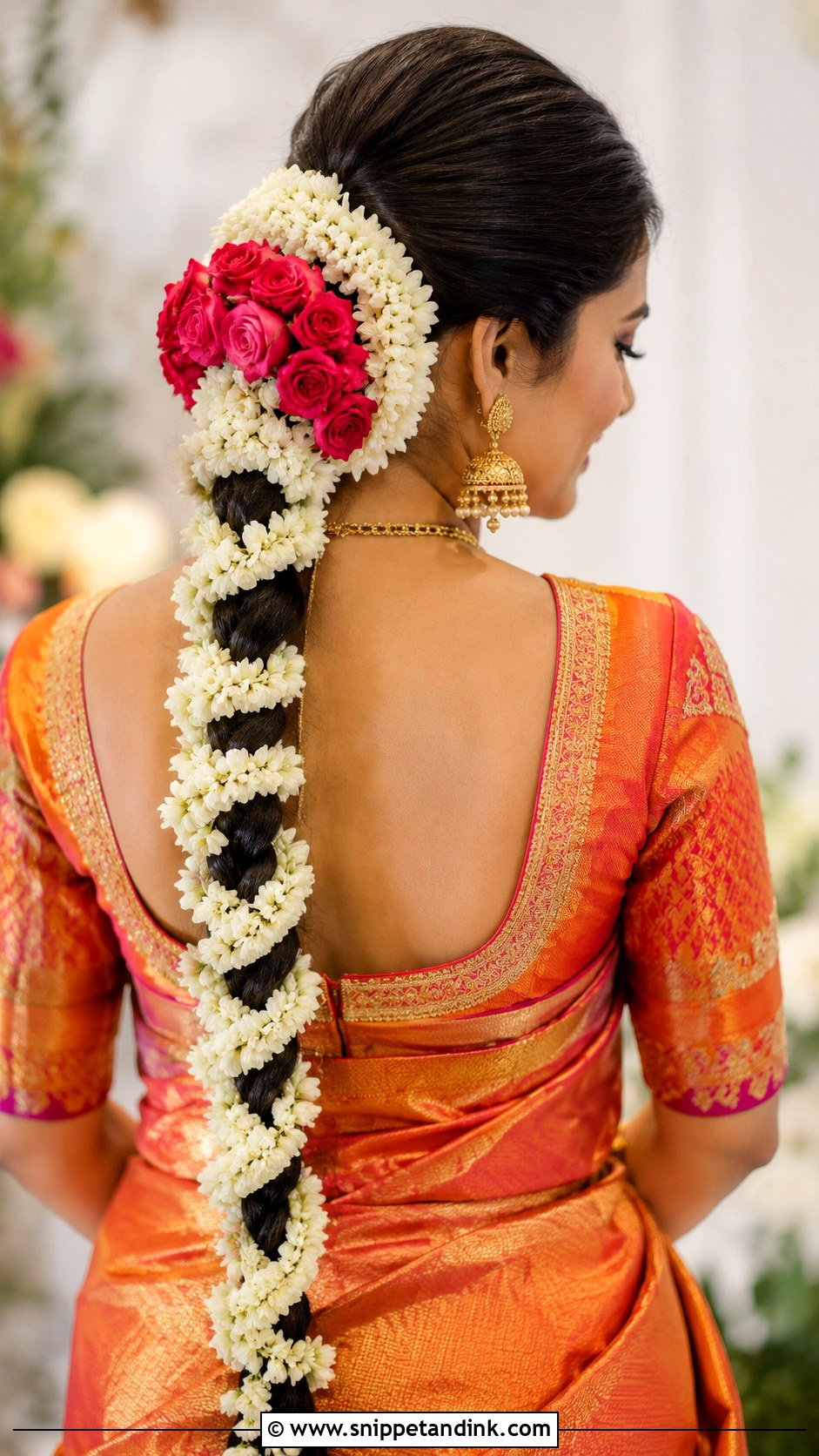
A bridal braid with gajra instantly feels festive. The gajra can wrap along the braid, sit at the base, or circle a bun with a braid below. White flowers against dark hair stand out in every photo, and they suit ceremonies, haldi, mehendi and temple functions. For a fuller effect, layer several strands and mix in roses or gold pieces. I pin each strand at both ends and once in the middle; a gajra held only at the top slides down as the day goes on.
13. Bridal Braid With Pearls
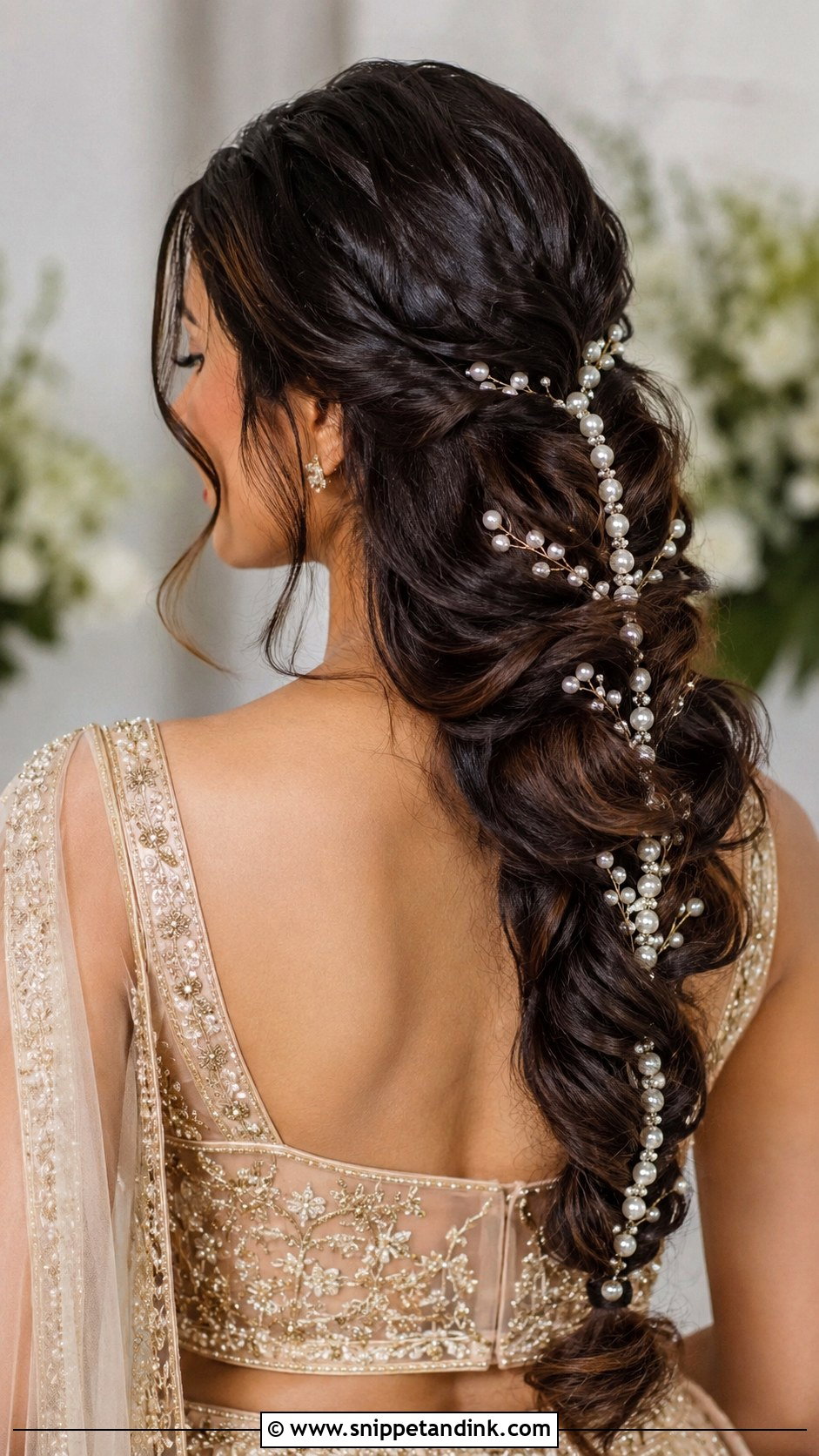
Pearls as pins, chains, strings or scattered accents give the braid a refined, less traditional finish that suits ivory lehengas, pastel sarees, champagne outfits and minimal jewelry. A fishtail, Dutch braid or loose textured braid can all hold them. I thread pearl strings in as I braid when possible, rather than pinning them afterwards, because woven pearls don’t shift. Soft face-framing curls at the front keep it balanced. Pearls catch light in photos without adding much weight.
14. Bridal Braid With Flowers
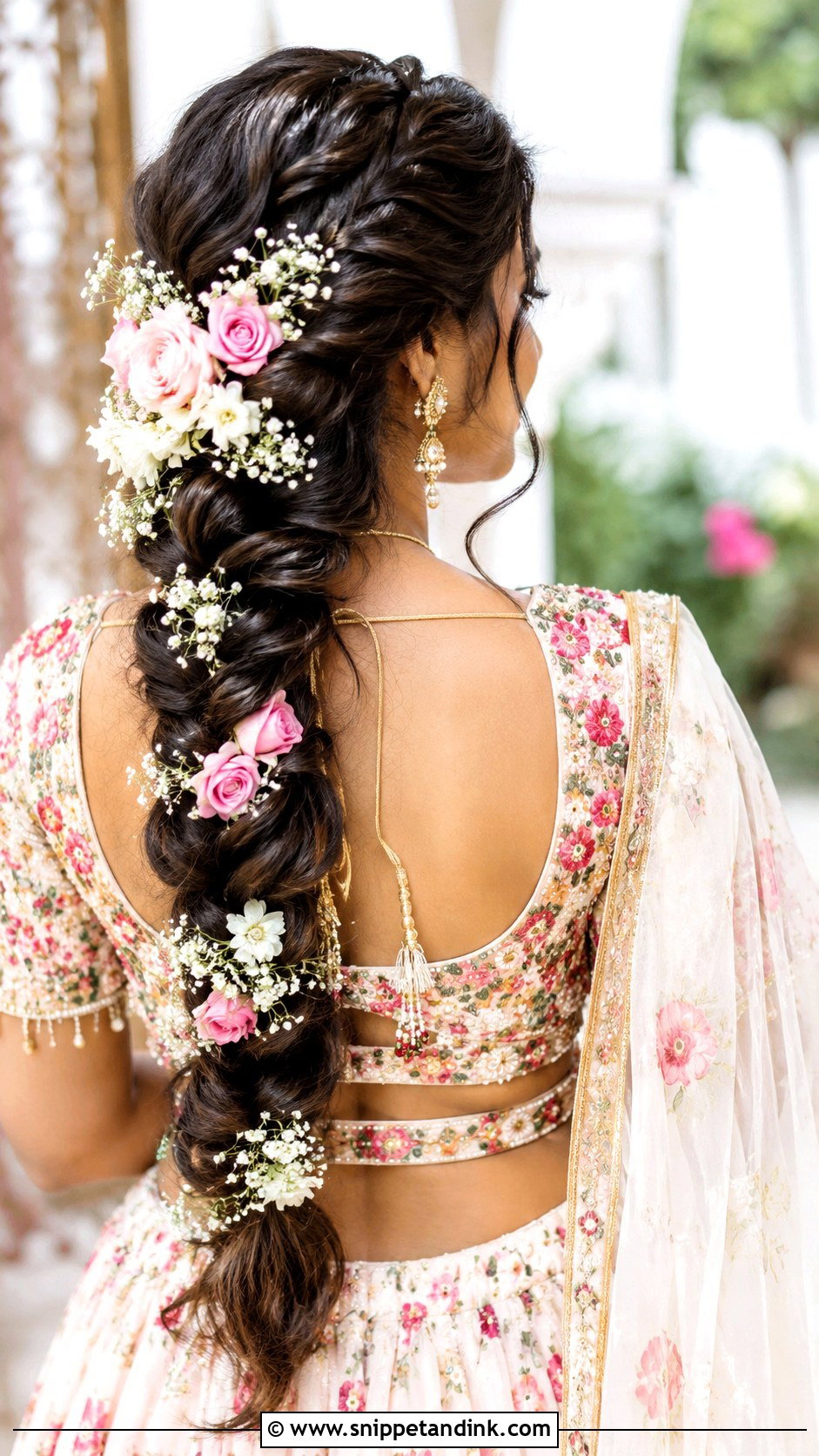
Flowers let you tune the braid to each function. Roses feel romantic, jasmine classic, marigolds bright, baby’s breath light and modern. Scatter them, cluster them, or make a full garland down the length. Day events, mehendi, haldi and garden settings suit florals most. Match the colors to the outfit, dupatta or jewelry stones. I wire or pin each bloom on its own and keep heavier flowers near the top where the braid is thickest, so the tail doesn’t drag.

15. Long Bridal Braid
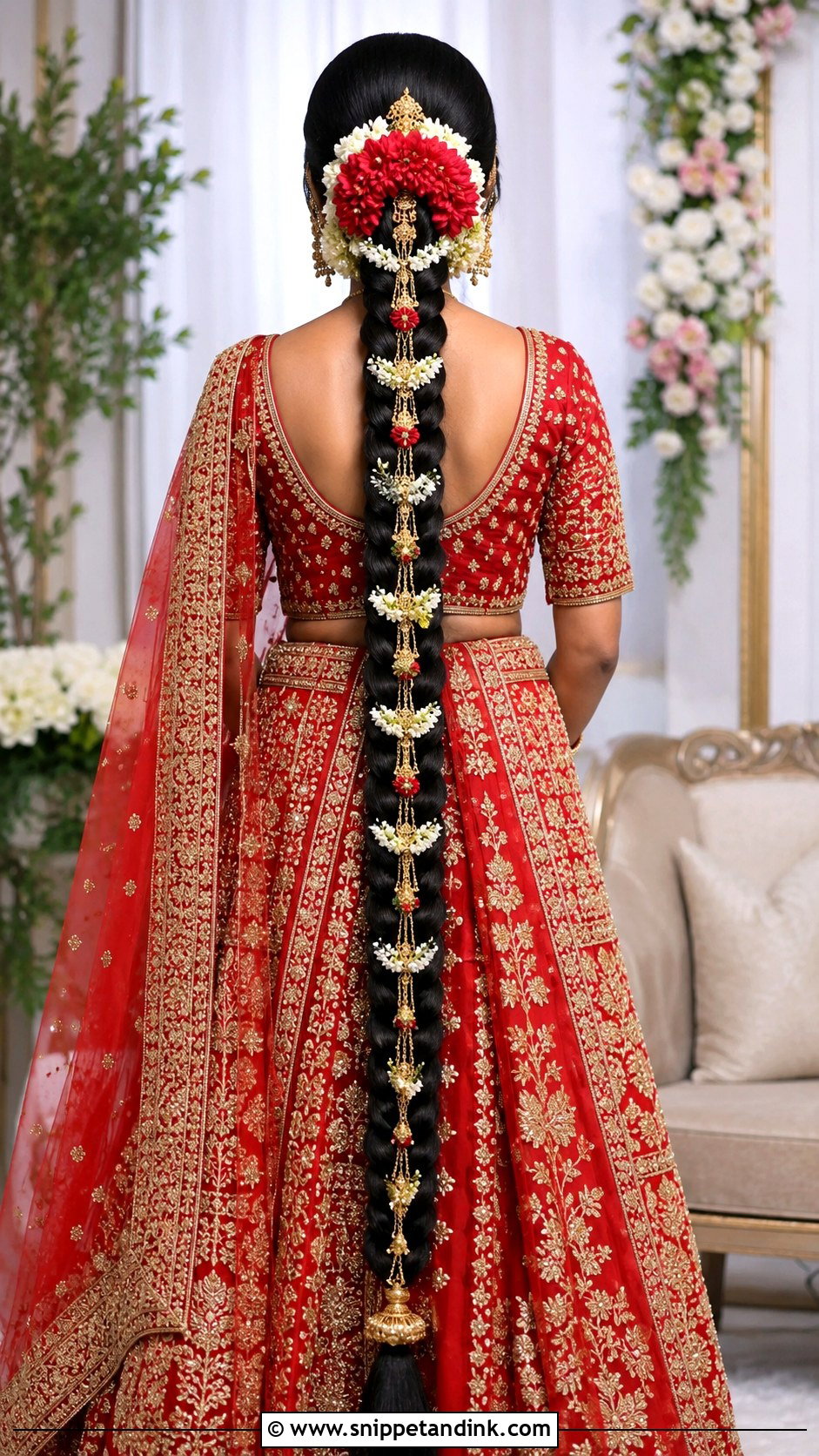
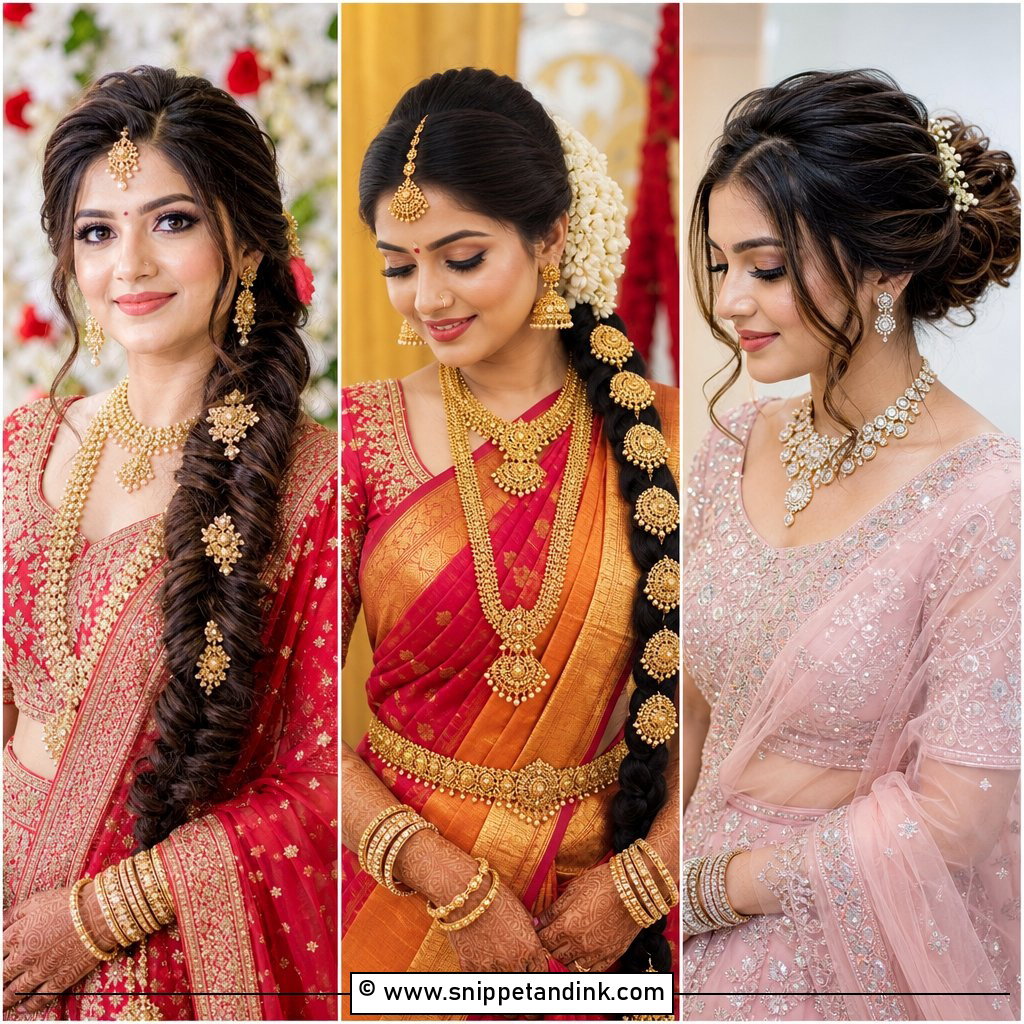
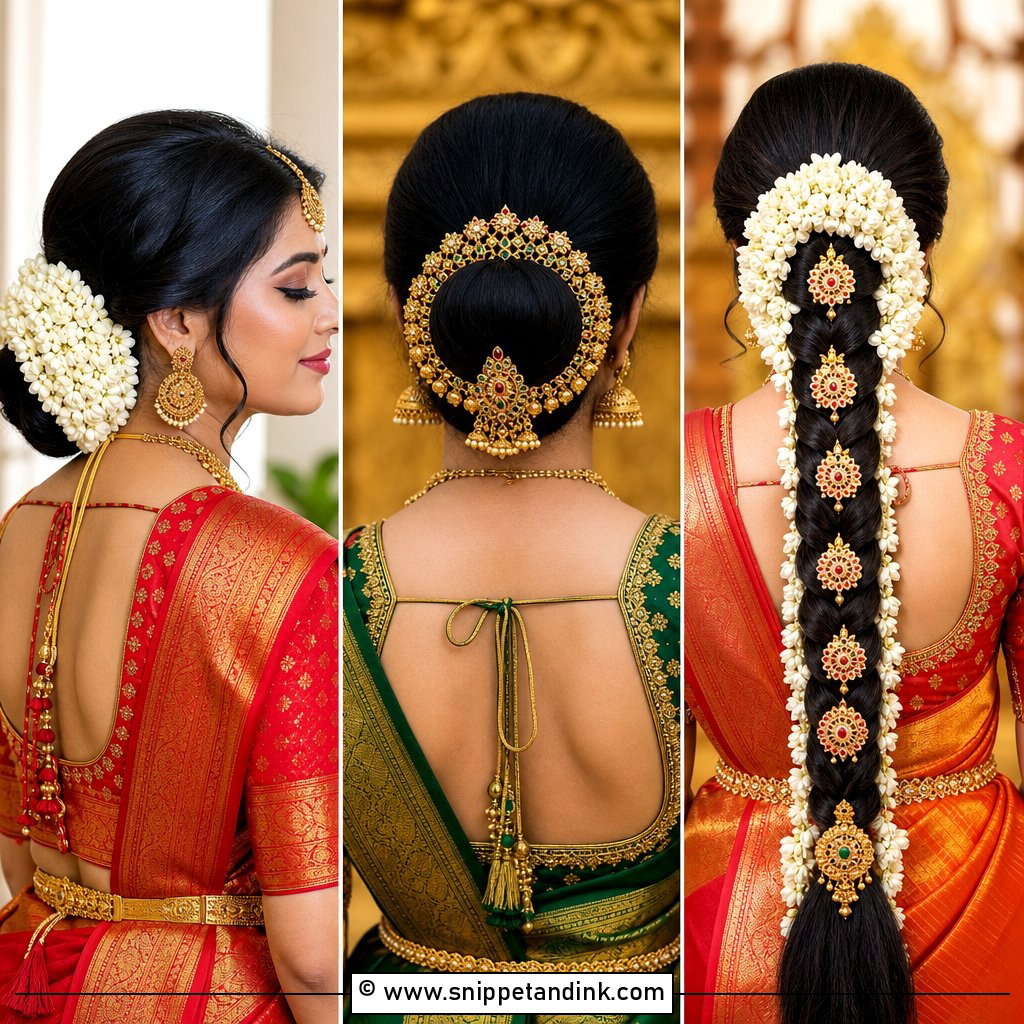
Nothing gives a back view like a long braid, sleek or full, dressed with flowers or jewelry or left textured. Most long bridal braids use extensions for length and density, especially under heavy accessories or full flower work. It moves well in walking shots and dupatta poses. The top section takes the strain, so I make sure the anchor point is firm and that the bride can turn her head comfortably before she leaves the chair. If it feels tight at the start, it will ache by the pheras.
Ordering Fresh Flowers So They Still Look Fresh at the Muhurtham
Fresh jasmine and gajra look their best for a limited time, so the flower order needs as much planning as the braid itself.
Ask the florist for tight buds rather than open flowers, especially for an evening or late ceremony. Jasmine opens and releases its scent as the day warms, and fully open blooms brown sooner. Collect them as close to the styling time as you can. Until then, keep the strings wrapped in a damp cotton cloth in a cool place or the fridge, never in a sealed plastic bag where they sweat.
I attach fresh flowers last, after the braid and jewelry are finished and any hairspray has dried, because spray scorches petals and leaves marks. Keep a spare string or two for touch-ups between functions.
If you’re sensitive to strong fragrance, say so at the trial. A full poola jada right behind your head for hours can bring on a headache, and a blend with silk flowers gives the same look with less scent.
Bring Your Jada and Extensions to the Trial
A bridal braid carries tradition, jewelry and flowers, and it has to stay comfortable through every ritual. A South Indian jada braid, a jasmine-covered braid, a modern fishtail or a soft messy braid should each be matched to your outfit, the ceremony, the weather and the accessories you’ll wear. Book a trial, and bring the actual extensions and jada pieces to it, because weight changes everything. When it feels secure from front, side and back, it’s ready.
You'll Like These Ideas:



Leave a Reply