
Braids have always been part of Indian bridal hair for a practical reason: a plait carries weight. Flowers, jewelry, dupatta pins, extensions and pearls all need something firm to hold on to through hours of rituals, and a well-built braid gives them that without losing shape. One braid rarely suits every function, though. What I’d braid for a relaxed mehendi is not what I’d build under a heavy dupatta for the main ceremony. The looks below run from classic South Indian braids and poola jada to fishtails, side braids and parandi, and the right one depends on your neckline, the weight of your jewelry, your hair length and how much you want the back of your hair to show in photos.
Matching the Braid to Each Function, Haldi to Reception
Indian weddings stretch over several events, and each one asks something different of your hair. I plan the braids as a sequence, so the styling for one function doesn’t wreck the next.
- Haldi: turmeric paste stains, and it can tint light-coloured extensions or a pale parandi for good. A simple messy braid on your own hair, with nothing precious in it, is the sensible choice.
- Mehendi: you’ll sit still for hours with both hands out of action. A side braid or bubble braid that keeps hair off the shoulders and away from your hands is far more comfortable than loose hair.
- Wedding ceremony: this is where the dupatta, the jewelry and often a jada or gajra all go on. A French braid, braided bun or South Indian braid gives the pins a firm base.
- Reception: lighter outfits and dancing suit open hair with a half up or waterfall braid, or a fishtail over one shoulder.
If two functions fall on the same day, tell your stylist early. Some braids can be adapted in twenty minutes; a poola jada cannot.
1. South Indian Bridal Braid
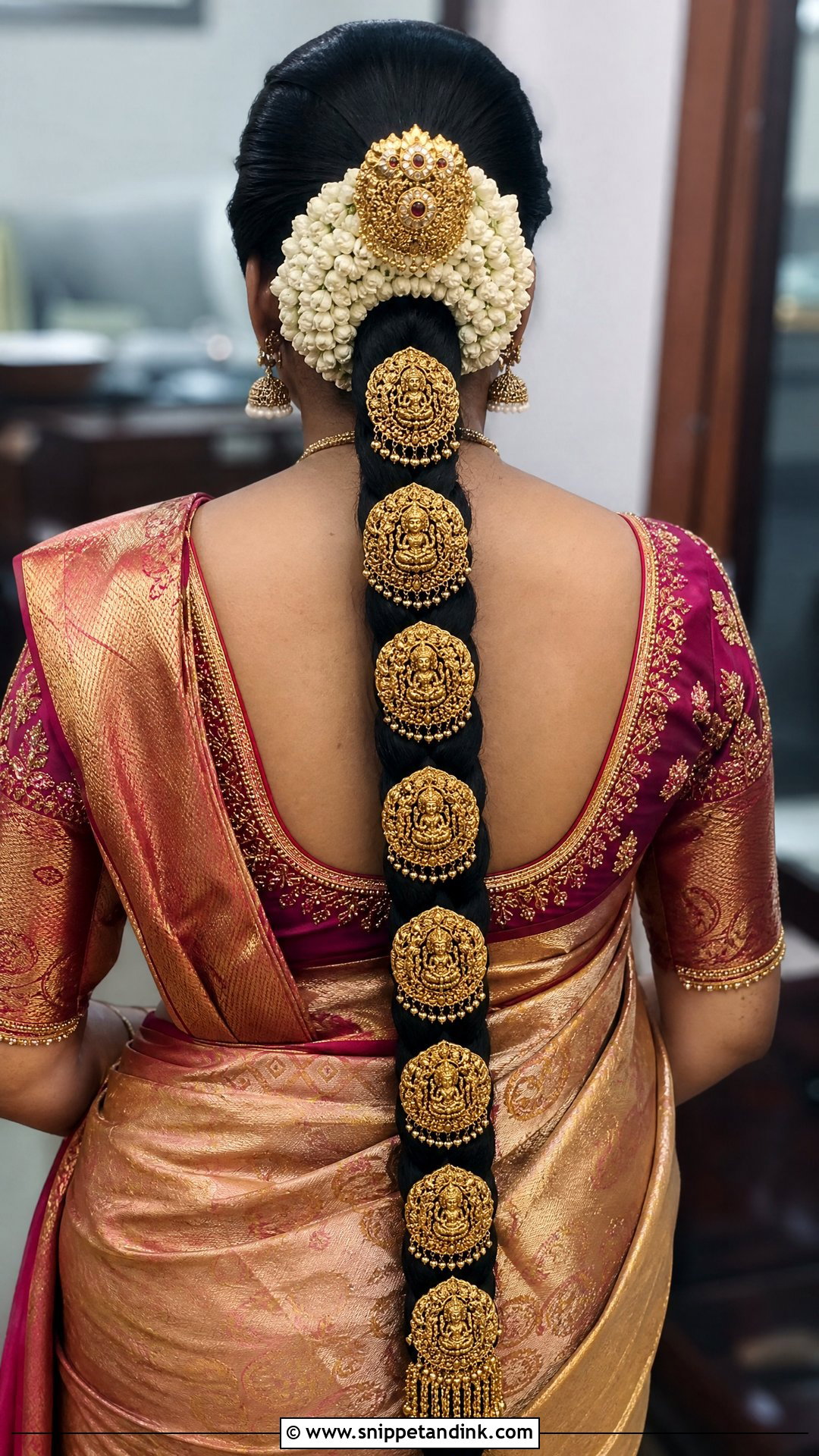
A South Indian bridal braid is long, sleek and decorated from crown to tip with gold accessories, fresh jasmine, temple jewelry or a full jada set. With a silk saree and a heavy necklace it balances the look by carrying the eye down the back. Most brides need extensions for the full length, and I’d much rather match them for colour and texture at the trial than find a mismatch on the morning. I keep the crown smooth, build a little volume at the back of the head, and plait firmly so the jada pieces have a solid base. Every section gets pinned, because this braid has to stay neat through rituals, photos and every bend to touch an elder’s feet.
2. Poola Jada Braid
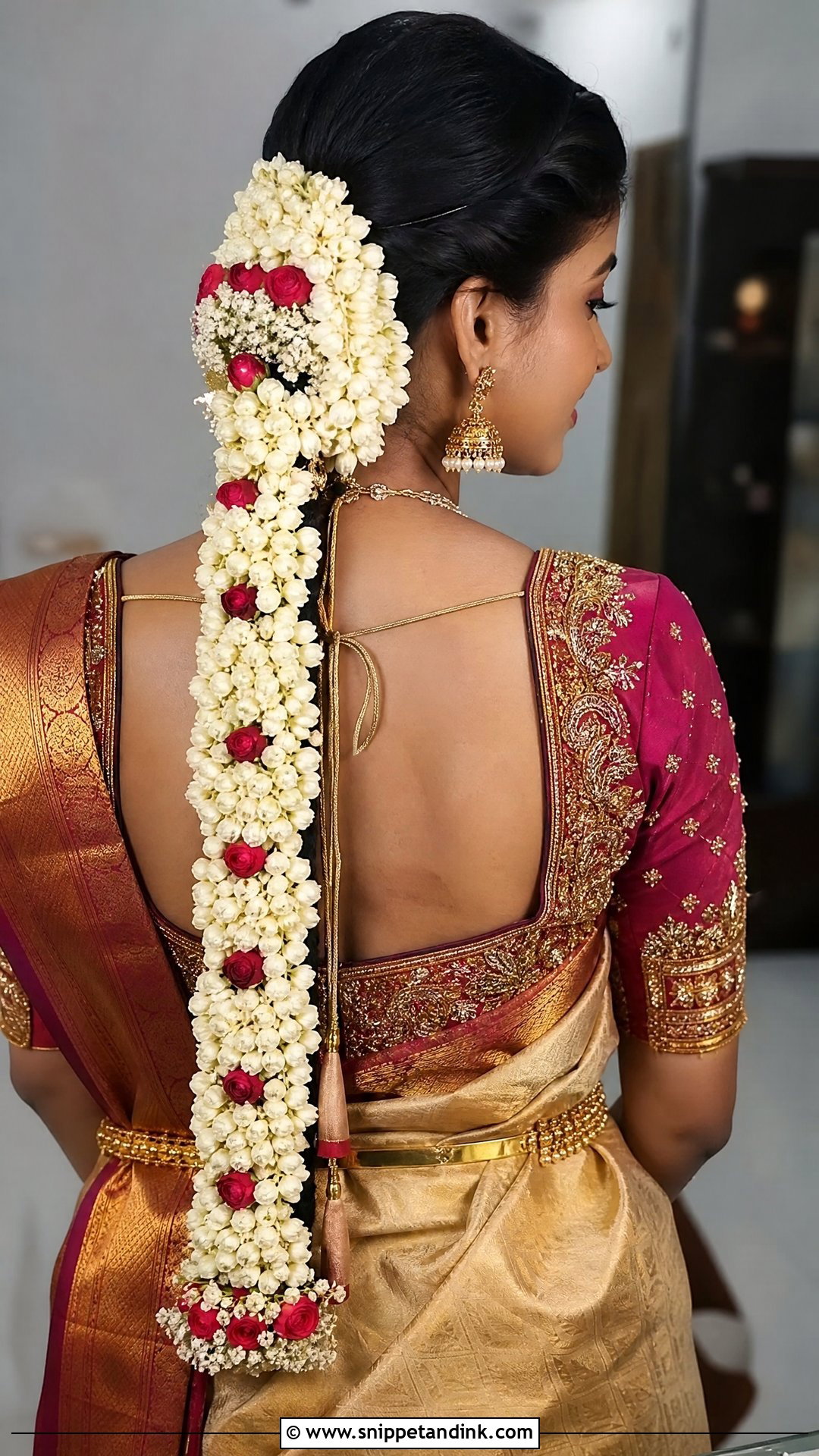
A poola jada braid covers the plait in fresh flowers or floral strings from the crown to the very end, and it’s about as ceremonial as bridal hair gets. Kanjeevaram sarees, temple jewelry and traditional makeup are its natural setting. The flower sets the mood: jasmine reads classic, roses read romantic, mixed blooms read festive. Real flowers along the full length weigh more than people expect, so I build a strong base braid, stitch or pin the strings in place, and keep the heaviest decoration away from the crown. Plan it at your trial, and order from a florist who has made a jada before.
3. Fishtail Braid Indian Wedding
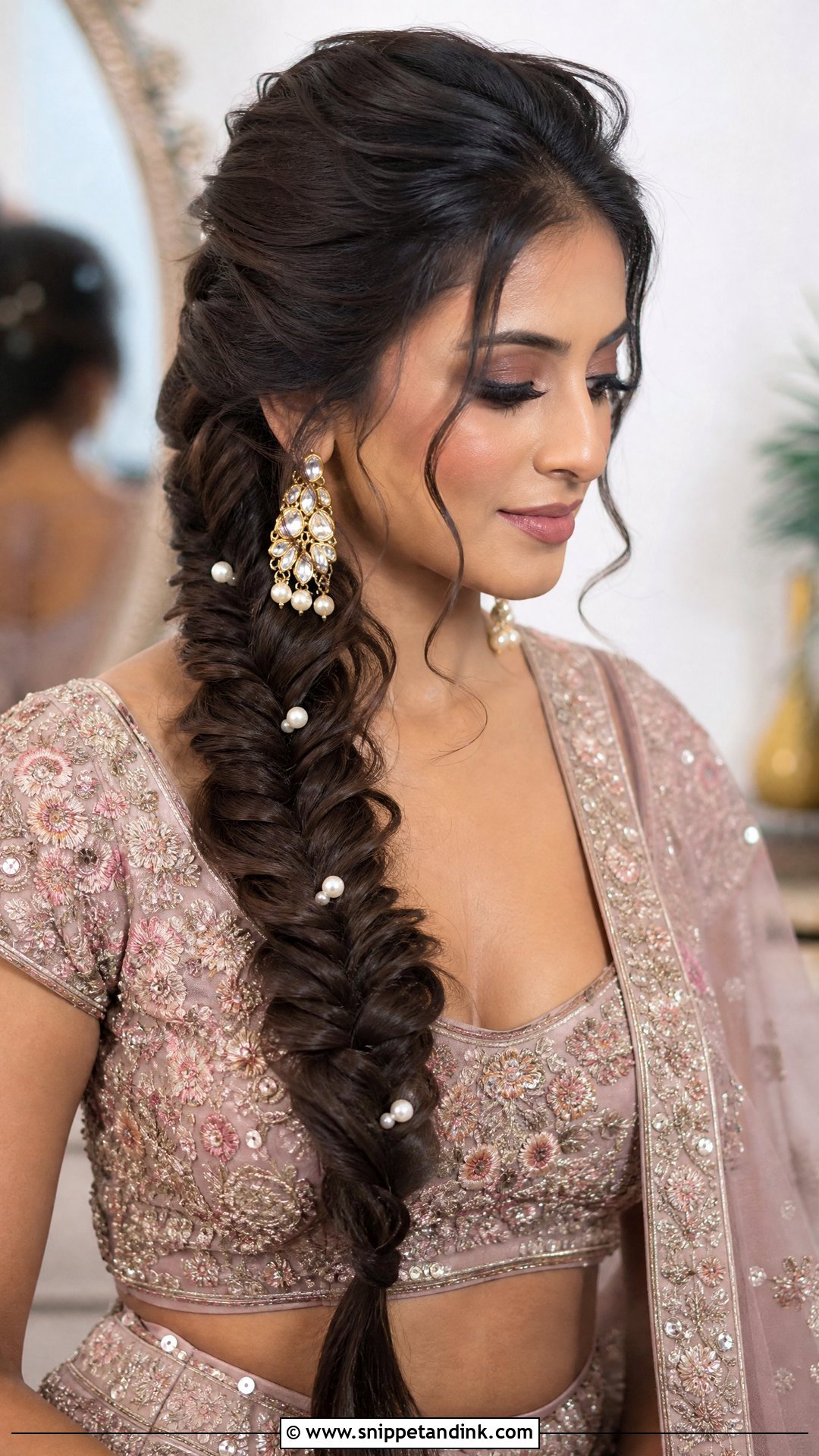
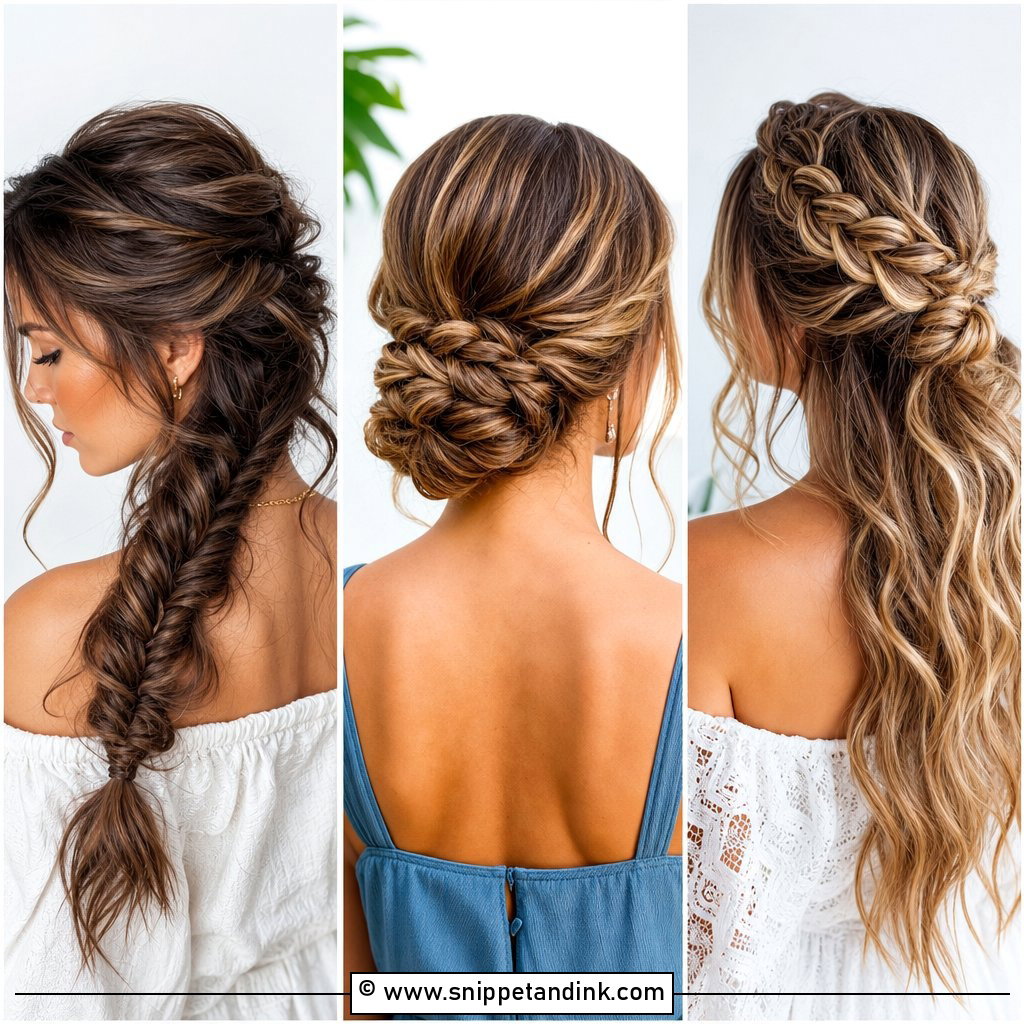
The fishtail is the softer, more modern braid on this list. Its fine woven pattern photographs well once I loosen the edges slightly for width. Lehengas, embroidered sarees and reception outfits all suit it, worn down the back or pulled over one shoulder. The catch is time: a fishtail on long, thick hair takes a while, and it doesn’t like being redone in a rush between functions. Pearls, small flowers or kundan pins add detail, and extensions make it fuller if your hair is medium length.
4. Side Braid Indian Wedding
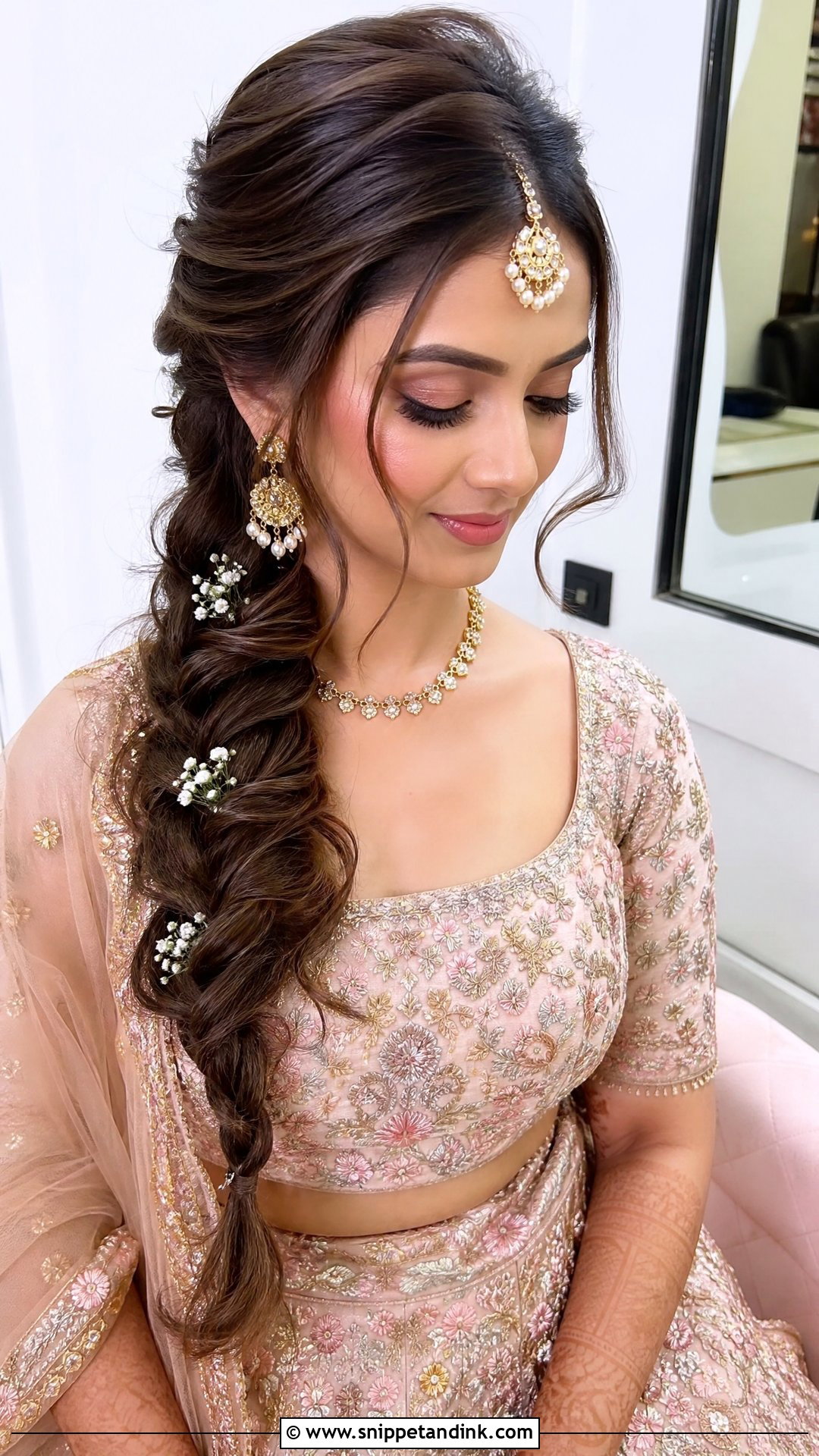
A side braid Indian wedding hairstyle rests over one shoulder, so the blouse, dupatta, earrings and neckline all stay visible. That’s why I suggest it so often for mehendi and sangeet. I tease the crown lightly for lift and curl the front pieces before braiding. There’s room for baby’s breath, pearls, a matha patti or small jeweled clips. At mehendi, ask for the braid on the side away from the hand being decorated, or it will end up resting in wet paste.
5. Bubble Braid Indian Wedding
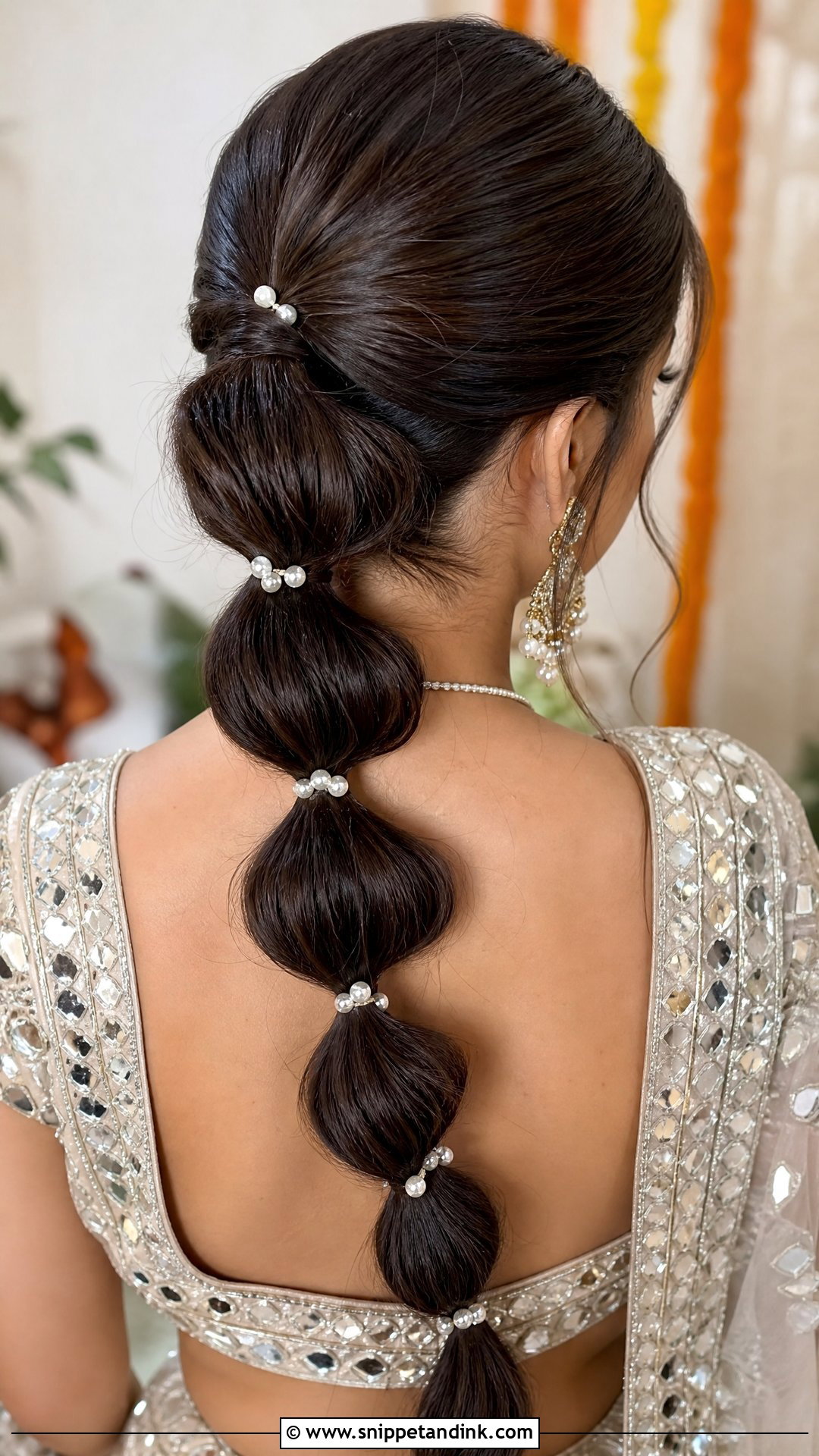
A bubble braid Indian wedding hairstyle skips weaving altogether. The hair is sectioned with hidden elastics and each section is pulled outward into a round bubble. It’s the fashion-forward pick for sangeet or mehendi, especially with mirror-work lehengas and pastel outfits. I use strong clear elastics and a smoothing serum so the bubbles stay even, then wrap a thin strand over each elastic to hide it. Gold rings, pearls or tiny floral pins can sit between the bubbles. Short, very fine hair struggles to make bubbles that look full, so extensions help here.
6. Dutch Braid Indian Wedding
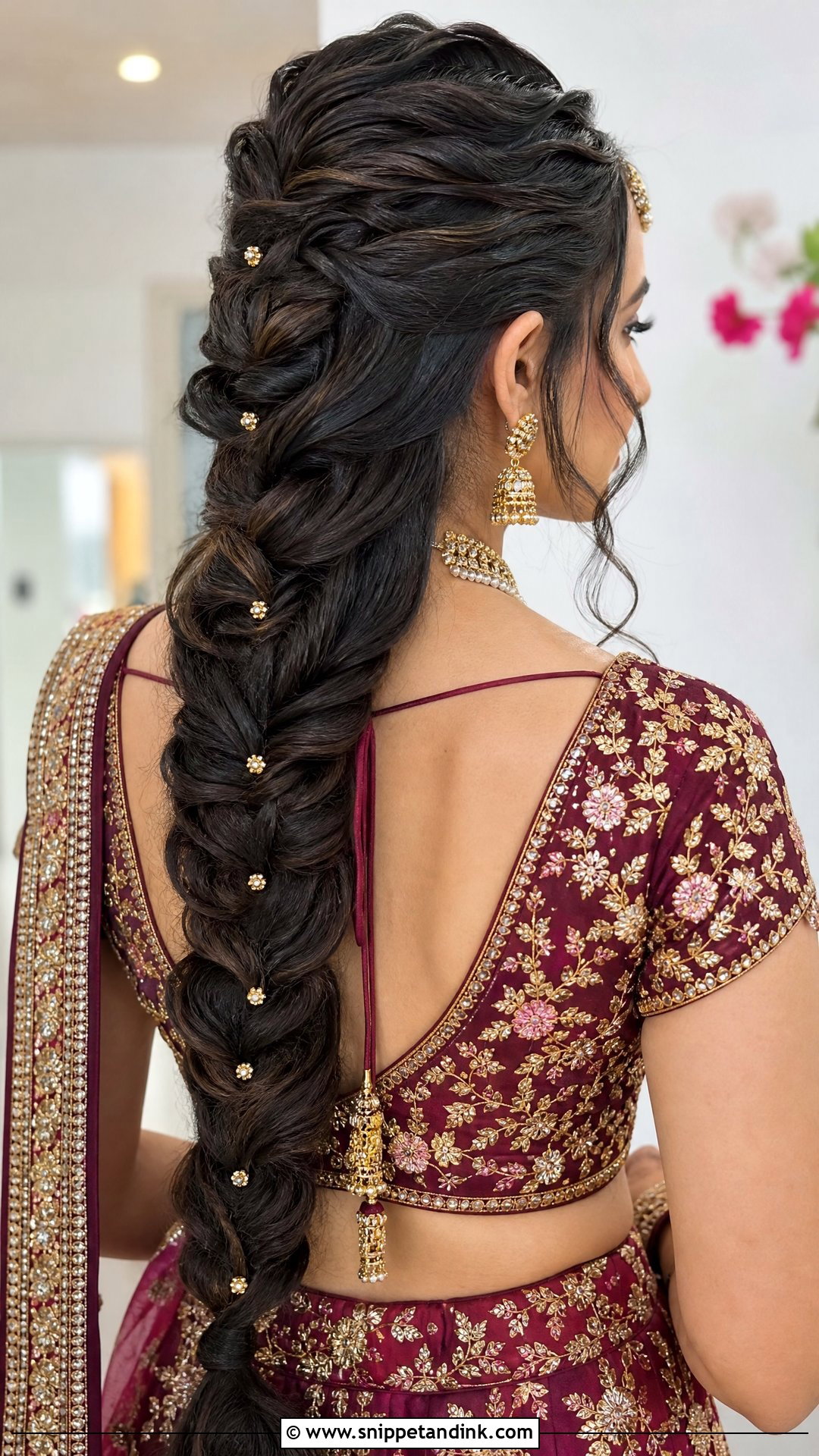
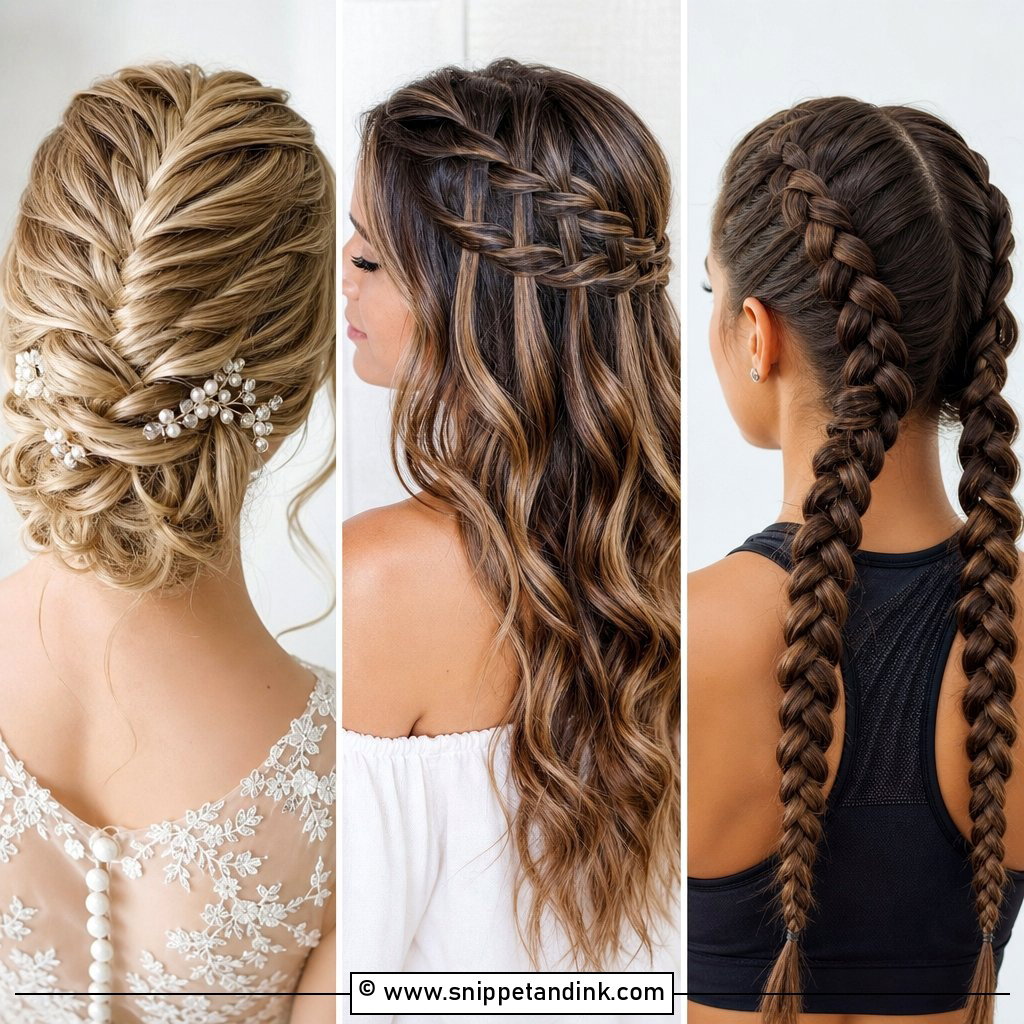
A Dutch braid crosses the strands underneath, so the plait sits raised on top of the hair instead of blending in. That raised ridge shows clearly in photos, especially on thick hair or with extensions worked through. It can start at the crown and run into one long braid, or two Dutch braids can meet in a single plait at the nape. Sarees, lehengas and Indo-western outfits all sit comfortably with it. Line it with small flowers, crystal pins or gold accessories, and leave the front soft so it doesn’t look sporty.
7. French Braid Indian Wedding
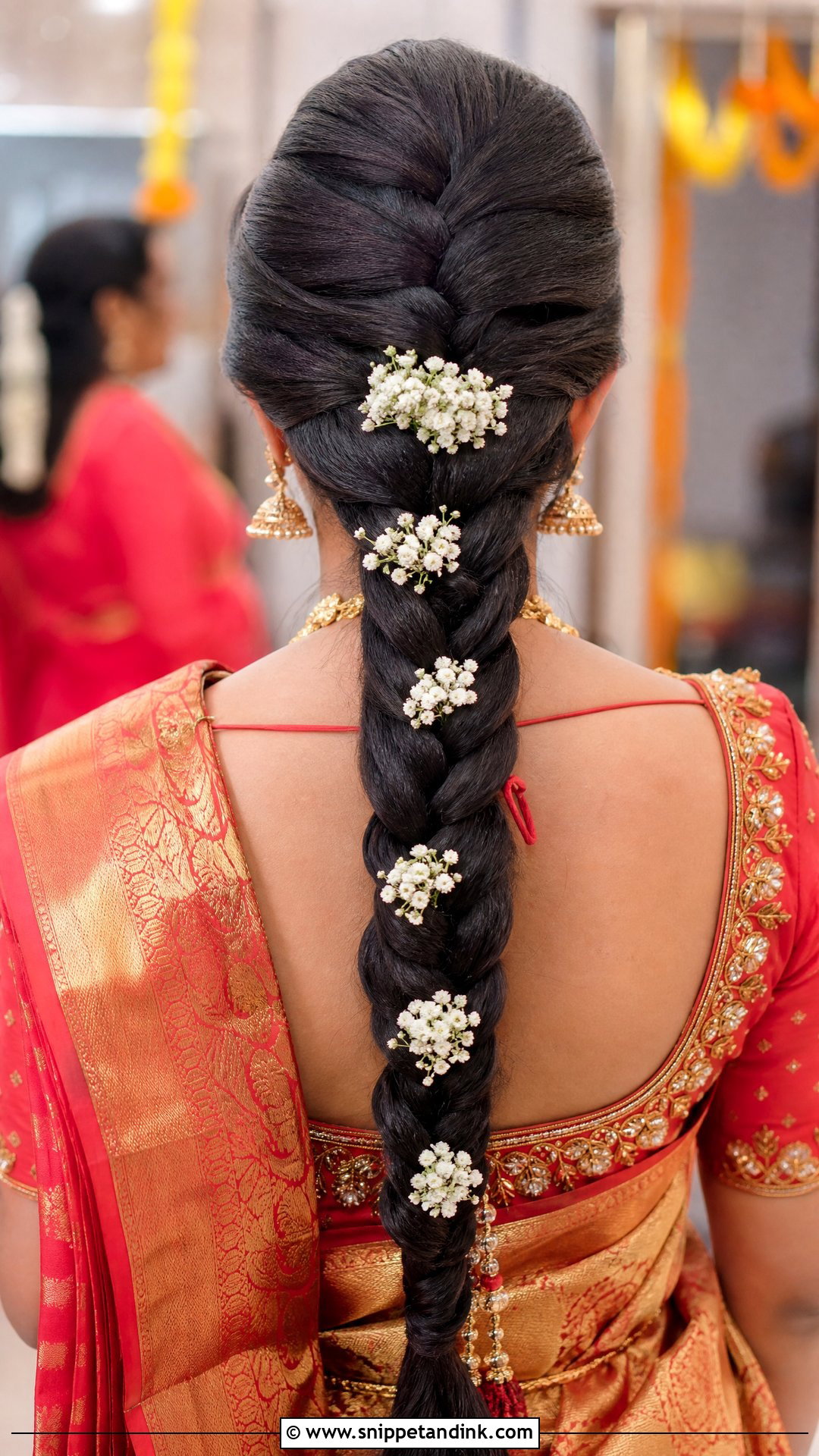
The French braid is the one I trust most under a dupatta. It gathers hair gradually from the crown, lies flat against the head and gives the dupatta pins something firm to go into, all without adding width at the sides. Keep it sleek for a classic finish or ease it out slightly for softness. Sarees, lehengas and anarkalis all suit it, and jasmine, pearls or small gold pins make it bridal. A smooth crown and a strong setting spray matter more than usual, since flyaways show straight through a sheer dupatta.
8. Loose Bridal Braid
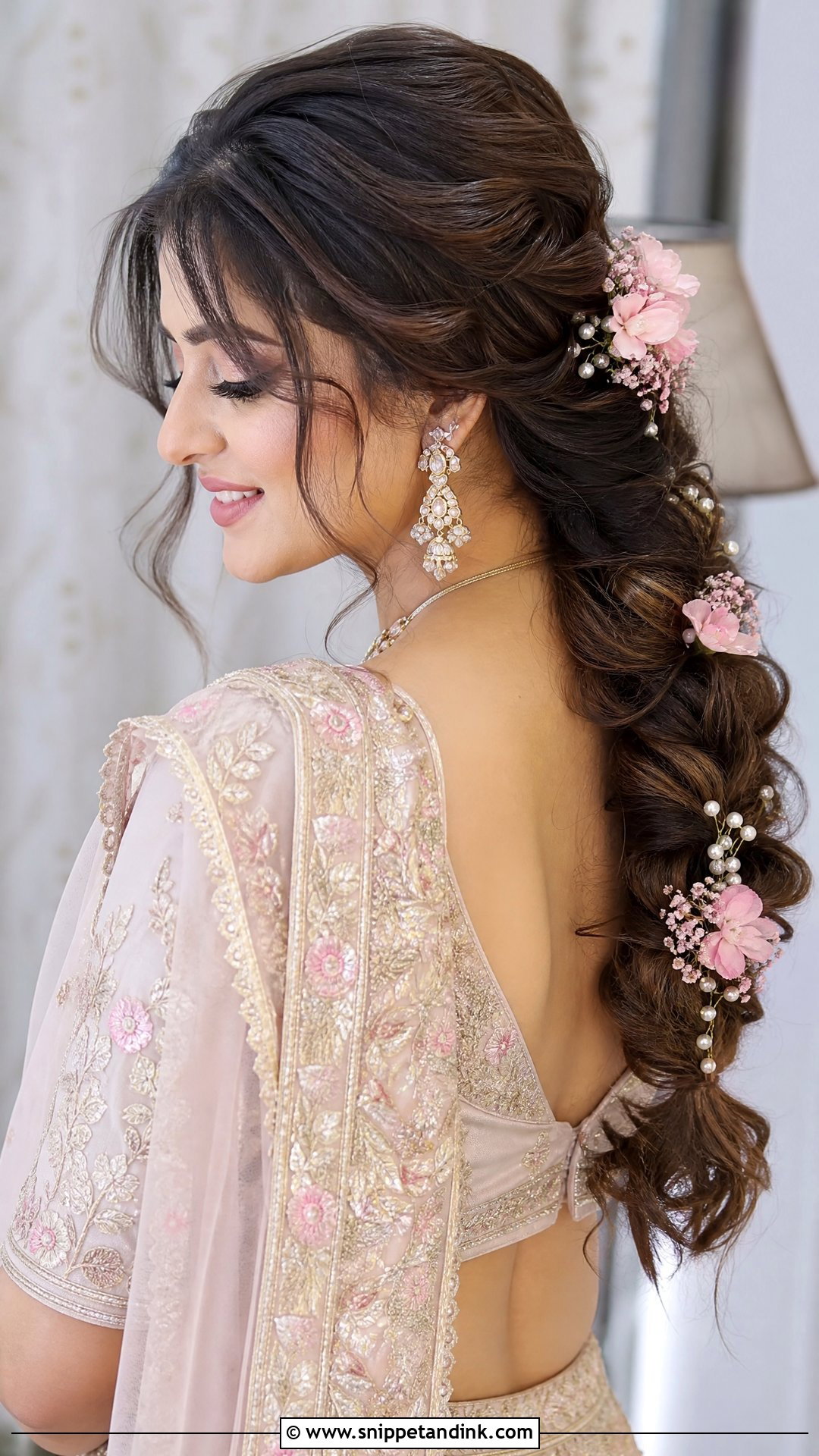
A loose bridal braid is full and slightly undone, with strands left out around the cheeks. Outdoor ceremonies, pastel lehengas, floral jewelry and lighter dupattas suit it. The volume doesn’t come from the braiding; I curl or texturise the hair first, then plait it. Fine hair usually needs extensions to look this full. The inner braid stays firm and only the outer edges get loosened, which is what stops it from falling apart by the evening.
9. Long Bridal Braid With Accessories
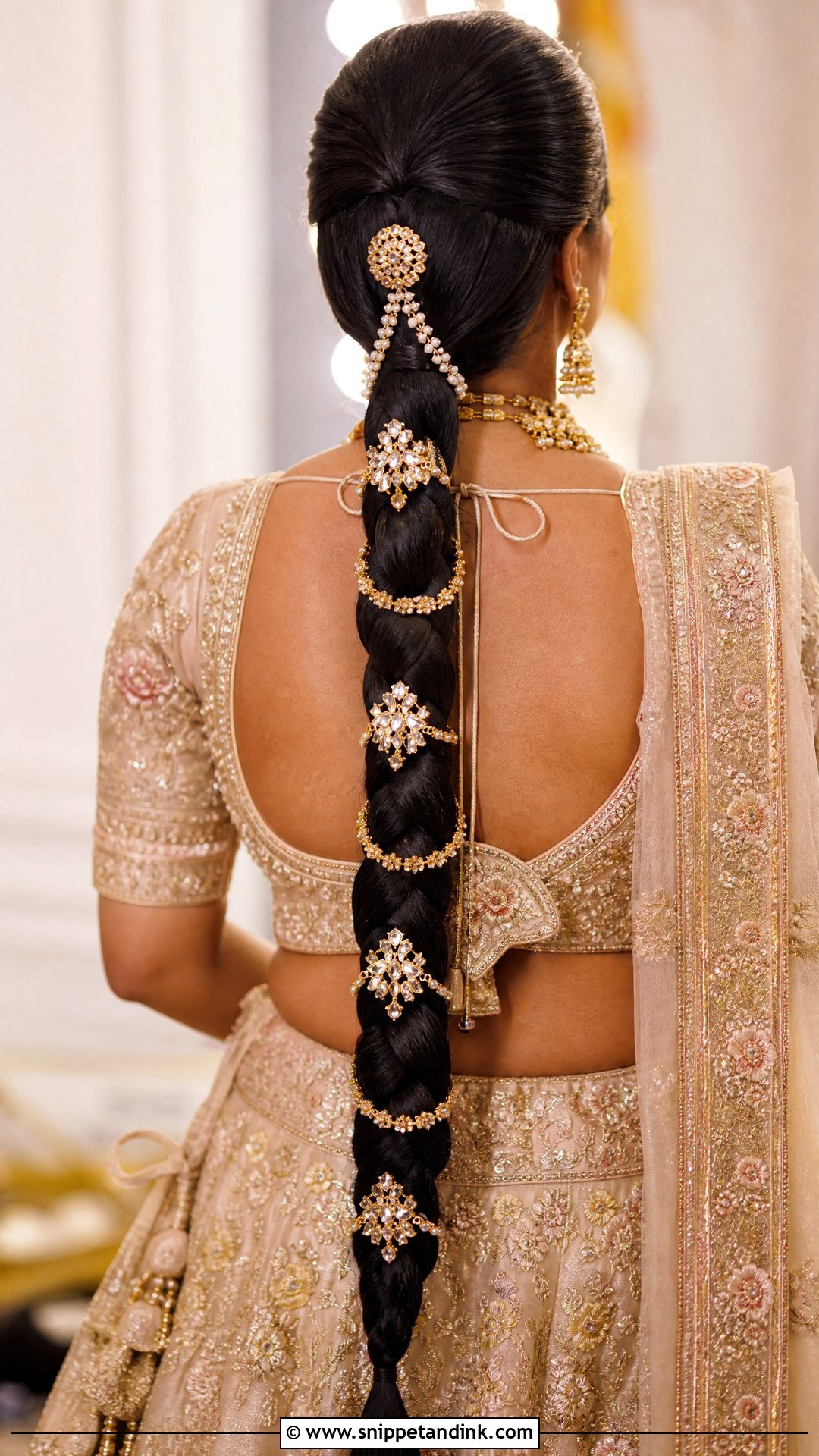
A long braid with accessories gets its grandeur from what’s added rather than from complicated work: gold braid chains, kundan pins, pearl strings, floral gajra or a jeweled parandi. With a heavy lehenga or saree it adds vertical drama and finishes the outfit from behind, and it keeps the hair controlled through the ceremonies. Balance is the rule I work by. Heavy outfit and jewelry means fewer hair accessories, while a simpler outfit can take a more decorated braid. Once everything is attached, I have the bride turn her head quickly a few times; if the braid swings hard, something comes off.
10. Messy Braid Indian Wedding
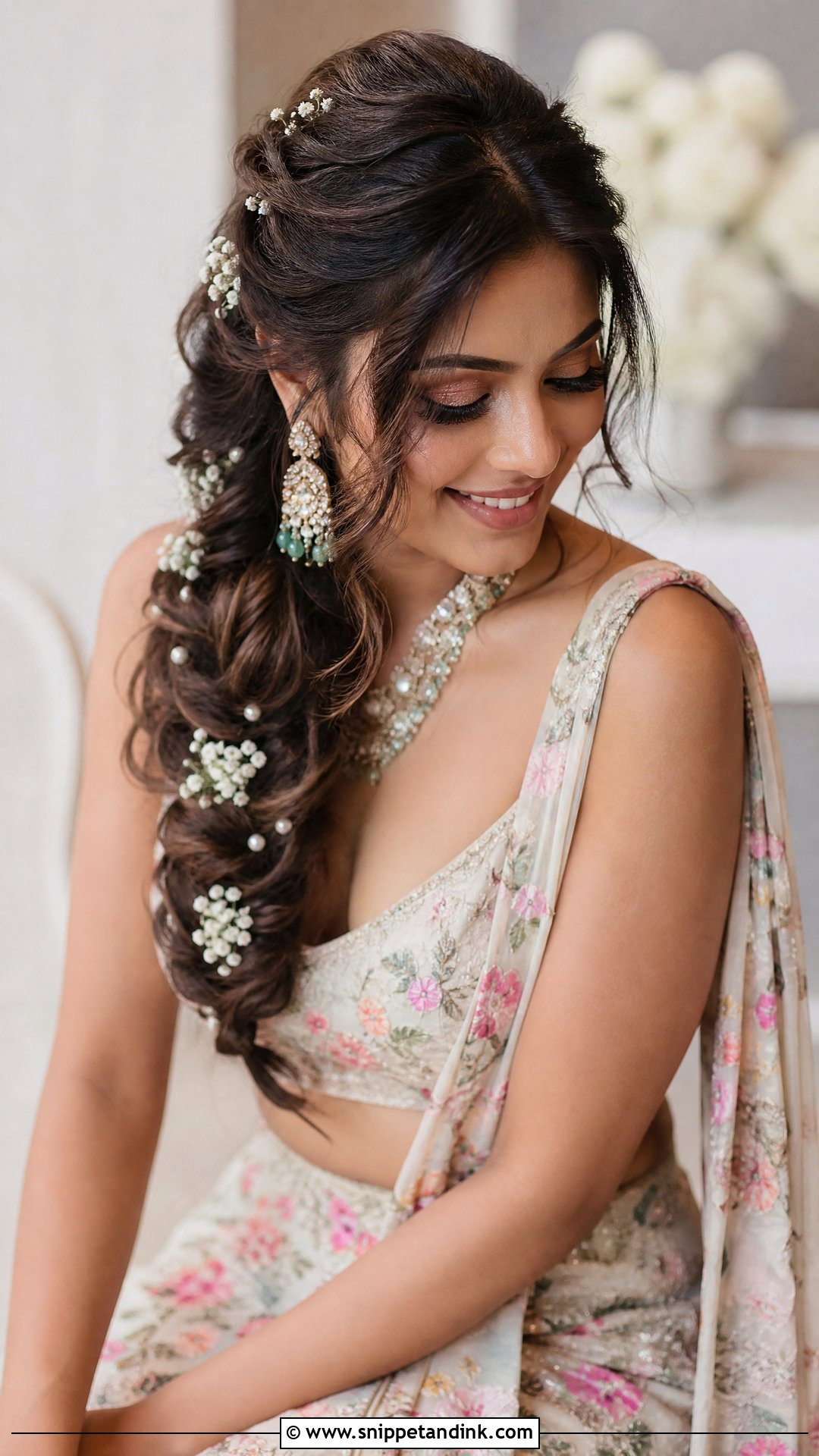
A messy braid is textured and full, with loose sections that make it look relaxed but still dressed up. It’s my usual suggestion for mehendi, haldi, sangeet and beach or garden weddings, alongside floral jewelry, lightweight lehengas and soft makeup. To keep it bridal I add one or two controlled details like pearl pins, tiny flowers or a statement maang tikka. The mess is only on the surface. Inside, the braid is pinned and secure, and only the outer loops are pulled out.
11. Braided Bun Indian Wedding
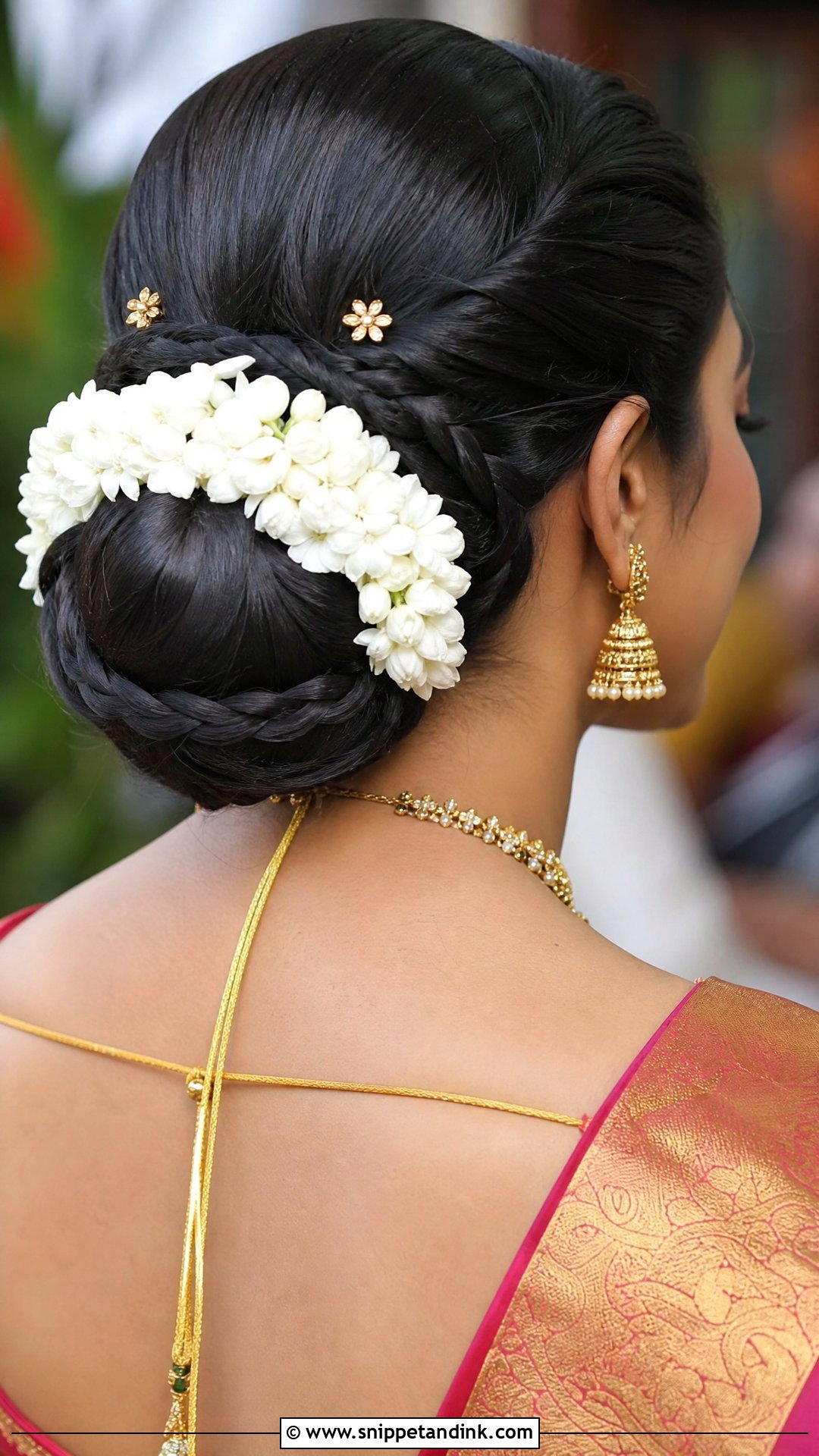
A braided bun has the texture of a plait and the security of a bun, which is why I reach for it whenever a heavy dupatta has to stay pinned for hours. The hair can be braided and wrapped low, or small braids can be woven around a bun for detail. Sarees, lehengas and high-neck blouses suit it because the neck and jewelry stay on view. Fresh flowers can circle the bun, or gold pins for something more regal. I secure it with large U-pins so the dupatta pins have something solid to catch.
12. Half Up Braid Indian Wedding
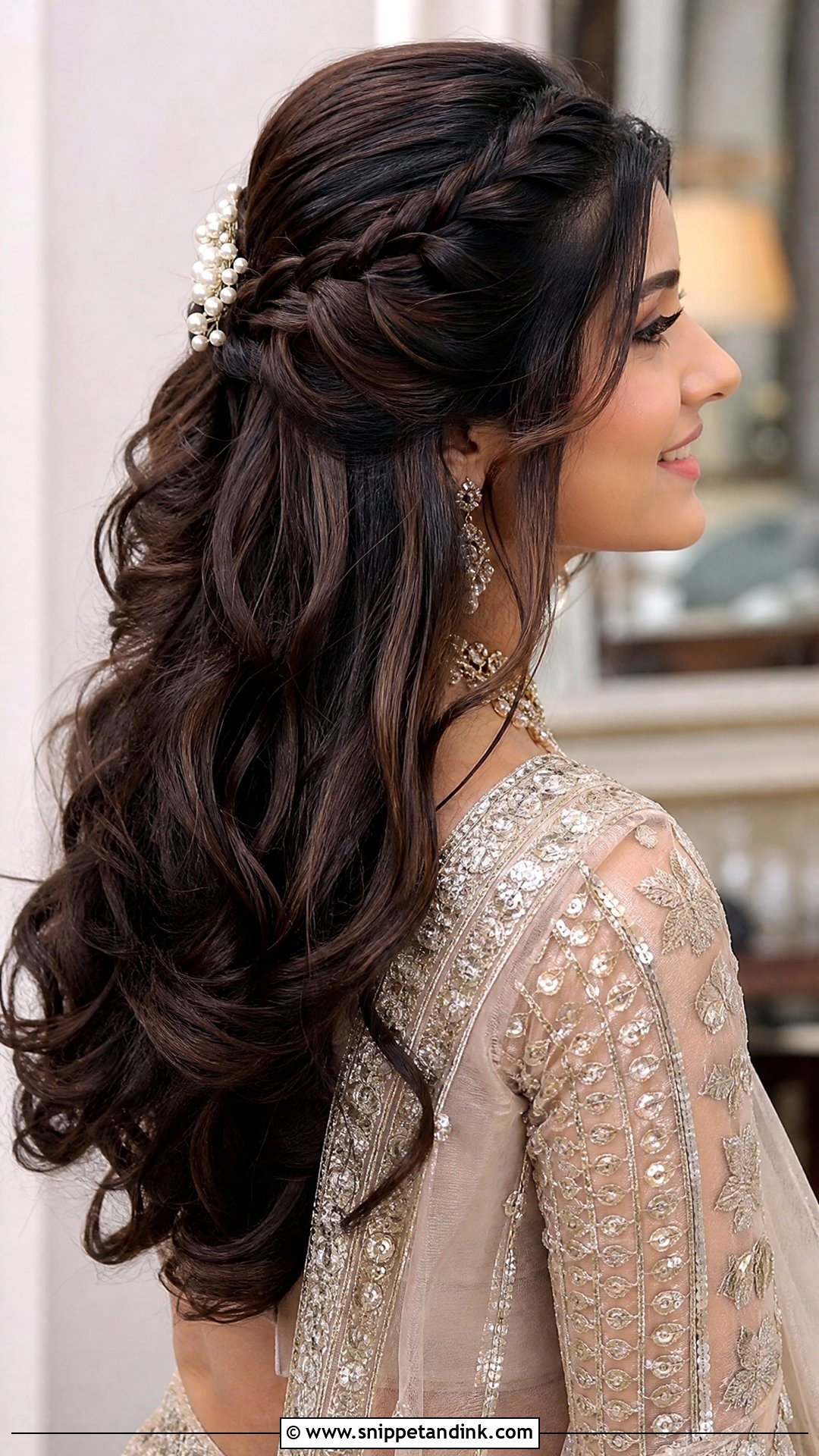
A half up braid gives you open hair with a braided detail at the back, which suits engagement, reception, mehendi and sangeet. The top section is braided and pinned back while the rest falls in waves or curls, and it can hold small flowers, pearl pins or a fine hair chain. Without movement in the loose hair it looks unfinished, so the lengths need curling first. Monsoon and humid weather drop those curls quickly. I set them with a firmer spray and hand a bridesmaid a few pins.
13. Waterfall Braid Indian Wedding
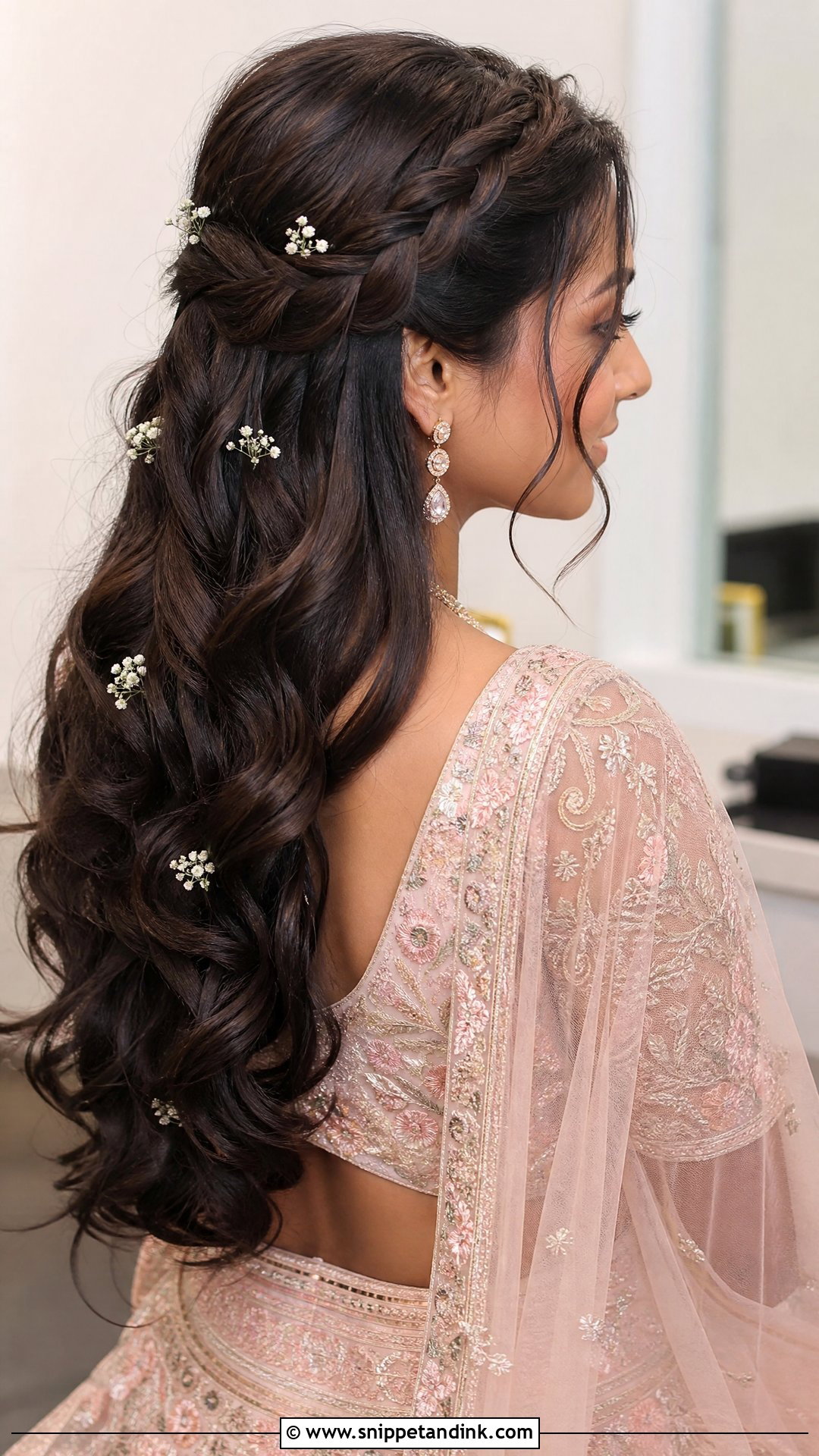
A waterfall braid runs across the crown or side while sections drop through it, so everything below stays open. Reception, engagement and pre-wedding shoots suit it, with curled lengths and pastel outfits. Its weakness is very dark hair, where the woven pattern can vanish in photos. Soft waves underneath, a little shine spray and good lighting help it read, and a few tiny pearls along the braid line help most of all.
14. Crown Braid Indian Wedding
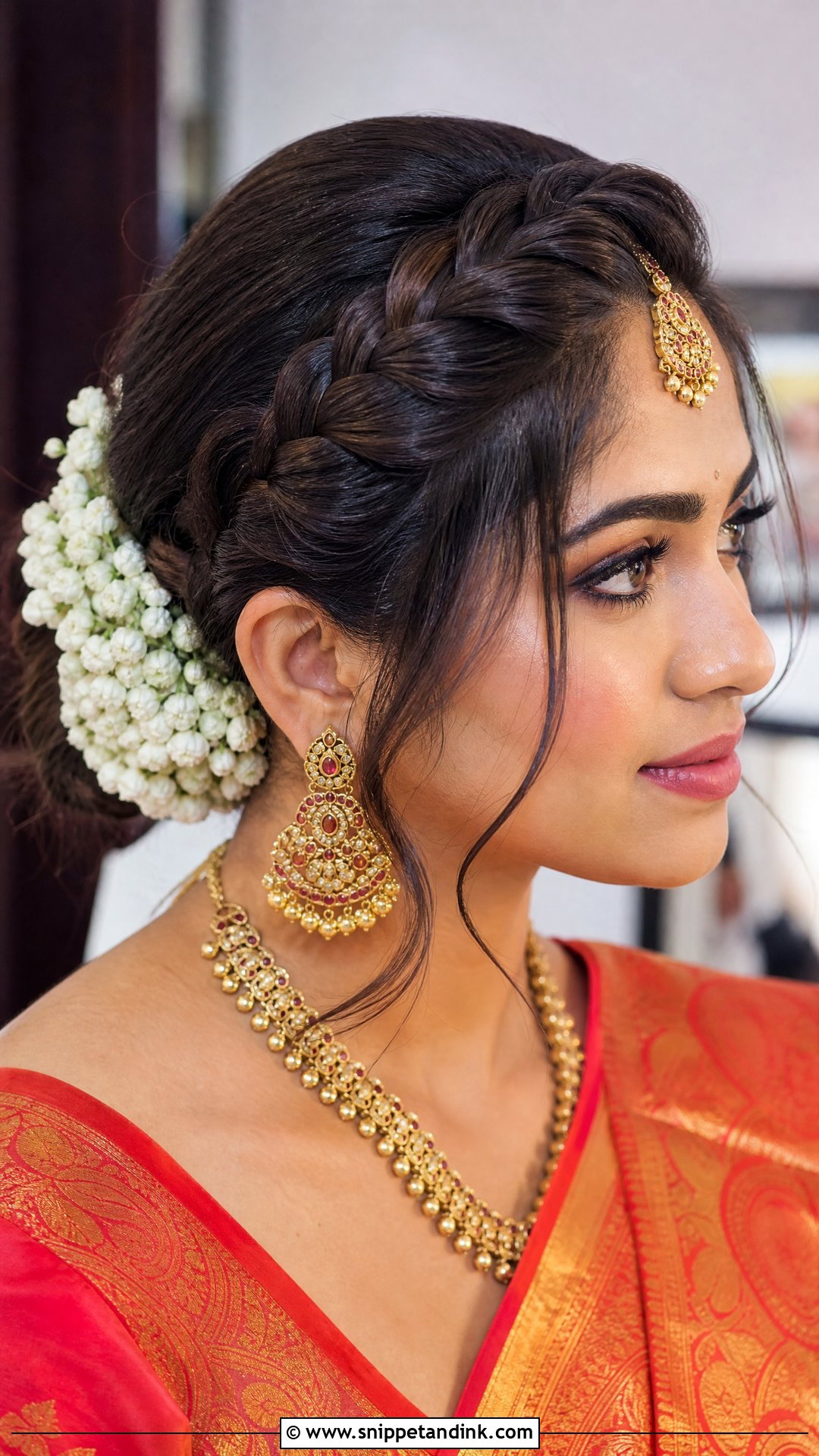
A crown braid wraps around the head and looks detailed from the front, sides and back. Because everything is pinned up off the neck, it’s one of my picks for humid weather and for brides wearing a light dupatta or none at all. Bridesmaids and guests wear it well too. It can be sleek and traditional or slightly loose, with statement earrings, a maang tikka or flowers tucked around it. On shoulder-length hair I add extensions so the braid actually reaches all the way round.
15. Parandi Braid Indian Wedding
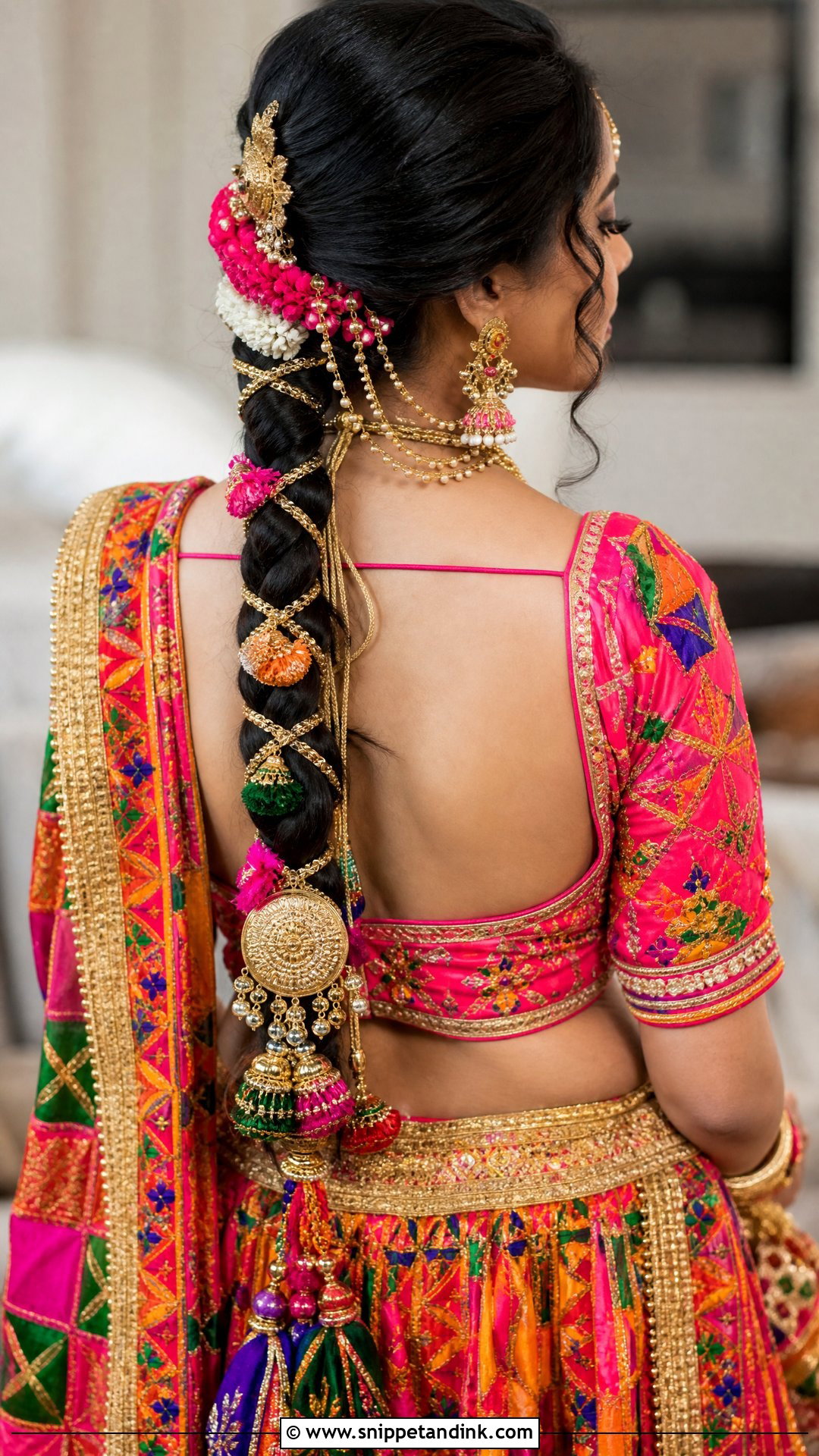
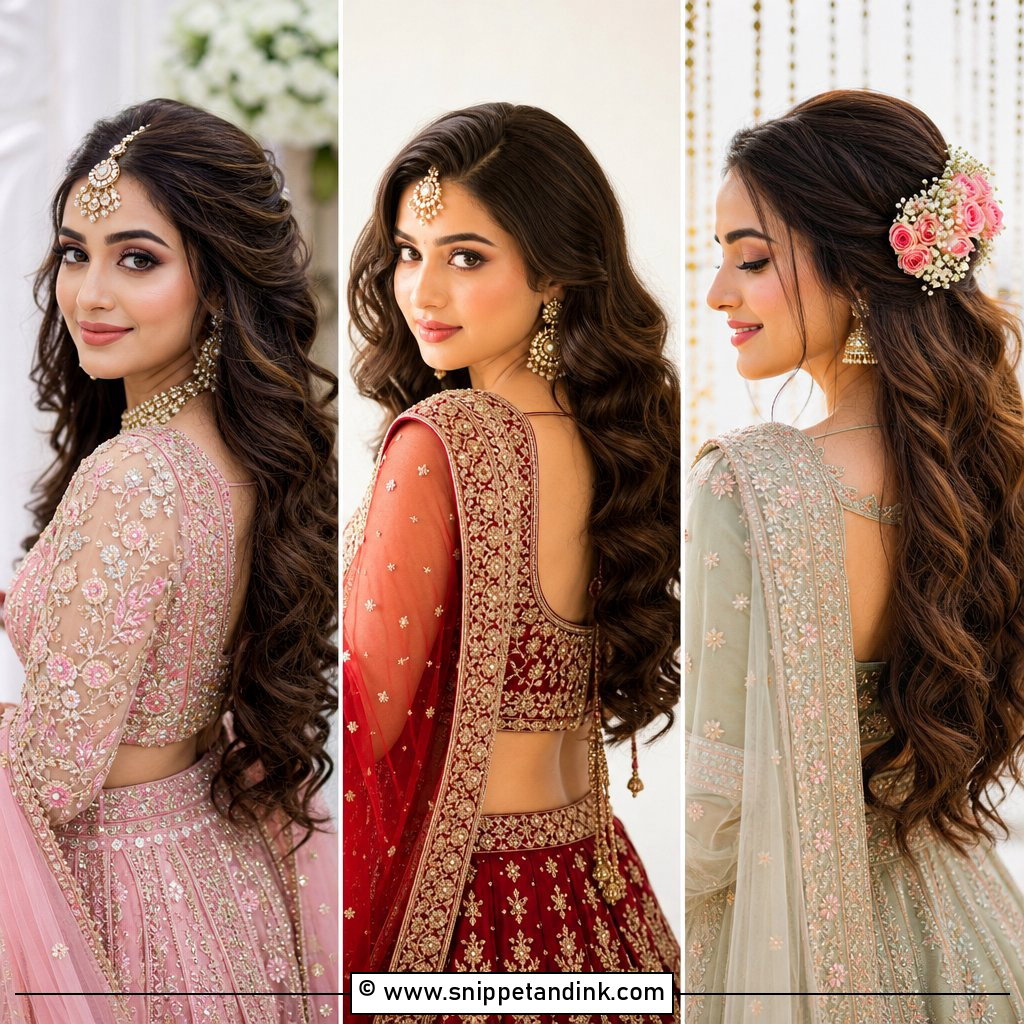
A parandi brings the colour of Punjabi tradition into bridal hair. It’s woven into the braid to add length and movement, and traditional ones carry tassels, threads, mirrors, beads or gold details. Mehendi, sangeet and bright wedding looks suit it, with phulkari dupattas and statement jewelry. It also lengthens the braid without relying entirely on extensions, though I start it a little way down the plait so it doesn’t bulk up the nape. Keep the crown smooth or add soft volume, and pick colours that match or deliberately contrast your outfit.
Extensions, Fresh Jasmine and a Dupatta Pinned Over the Plait
Blending extensions
Most long bridal braids use clip-in extensions. Bring them to the trial so they can be matched against your own hair in daylight; jet black extensions look flat and harsh beside natural dark brown. Human hair blends and holds a plait better than shiny synthetic fibre, and the clips should sit in rows that the braid will cover.
Keeping gajra and jada flowers fresh
Jasmine starts to brown and wilt within hours once it’s out of the cold. Order the strings for the morning of the ceremony, keep them wrapped in a damp cloth somewhere cool, and only attach them close to when you’ll be photographed. A light mist of water between rituals helps them last.
Pinning the dupatta
A heavy dupatta pinned only at the crown drags the braid backwards all day. I pin it at the crown and again at the sides into the braided base, with the pins angled into the braid so the weight sits on the plait rather than on your roots. Practise lifting and lowering it at the trial so you know it holds.
Plan the Braid for Every Angle the Camera Catches
Indian bridal braids blend tradition and personal taste in many different ways. A sleek South Indian braid feels ceremonial, a poola jada even more so, and a loose fishtail or side braid feels softer and more modern. Your outfit, the event, your hair length, your jewelry and your comfort decide between them. Look at the style from the front, back and side, because the photographers will. If flowers, extensions or heavy accessories are involved, book a trial first. A well-built braid looks right in the first photo and still feels secure when the last guests leave.
You'll Like These Ideas:







Leave a Reply