
Where a Bridal Cape Fastens, and Why It Matters More Than the Fabric
Brides tend to choose a cape by how it looks hanging in the shop. I start with how it attaches, because that decides whether you can hug people, lift your arms for a first dance and take it off without help.
- Sewn into the shoulder seams: the cleanest line and the most secure, but it stays on all day. Choose this only if you love the cape enough to dance in it.
- Snaps or hooks under the straps: invisible from the front and quick to remove. Ask for at least two points per shoulder so the cape does not swing to one side.
- A clasp at the neckline: looks regal, but all the weight hangs from your throat. Fine for chiffon, uncomfortable for velvet or beaded capes.
- Loops behind off-shoulder sleeves: needs to anchor into the bodice, not the sleeve, or the neckline gets pulled down.
Bring the cape to your first alteration appointment rather than adding it near the end. Fastenings sometimes need small stays or reinforced patches inside the dress, and that work is easier before the final fit is locked in.
1. Satin Ball Gown With Long Train Cape
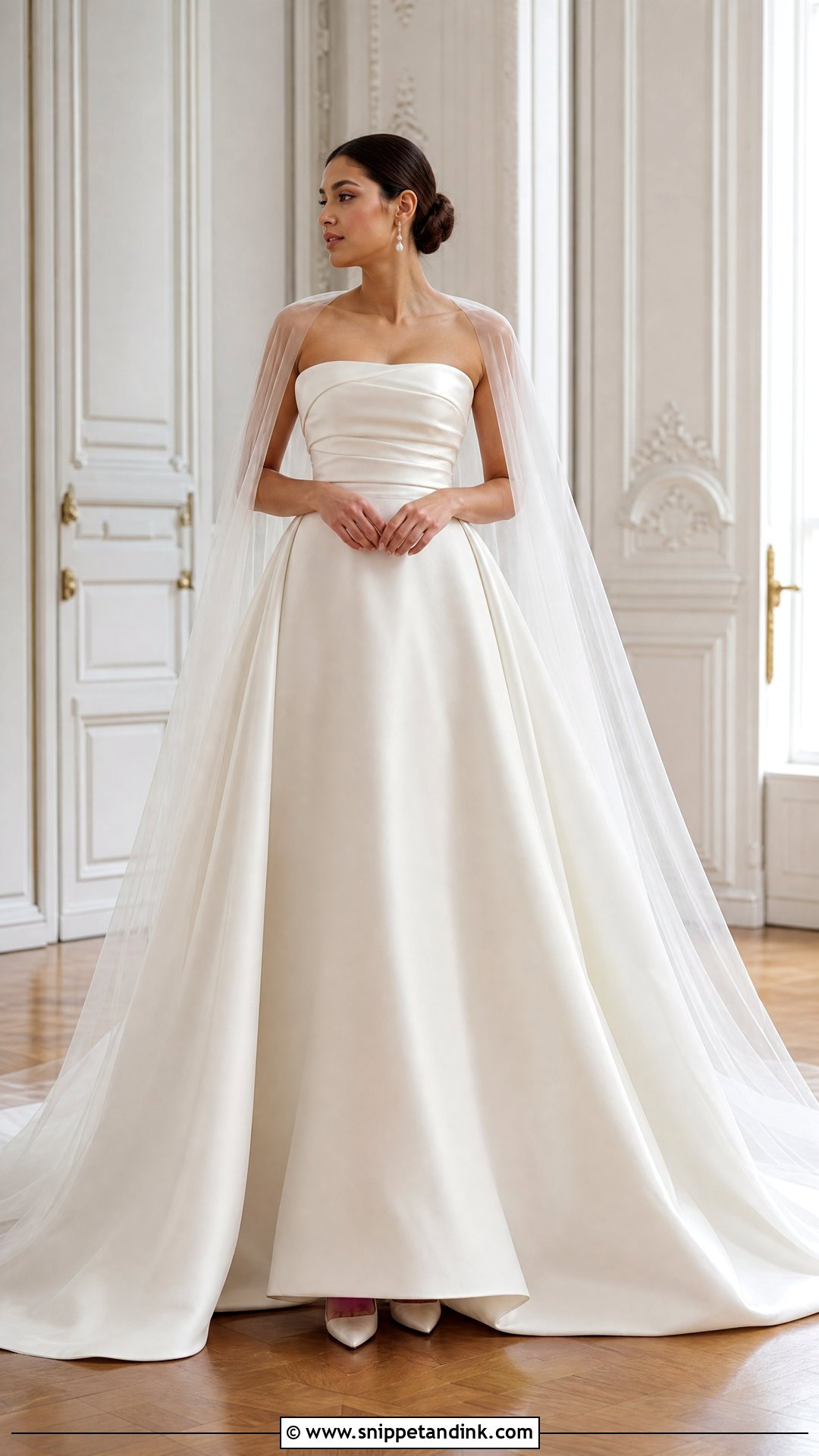
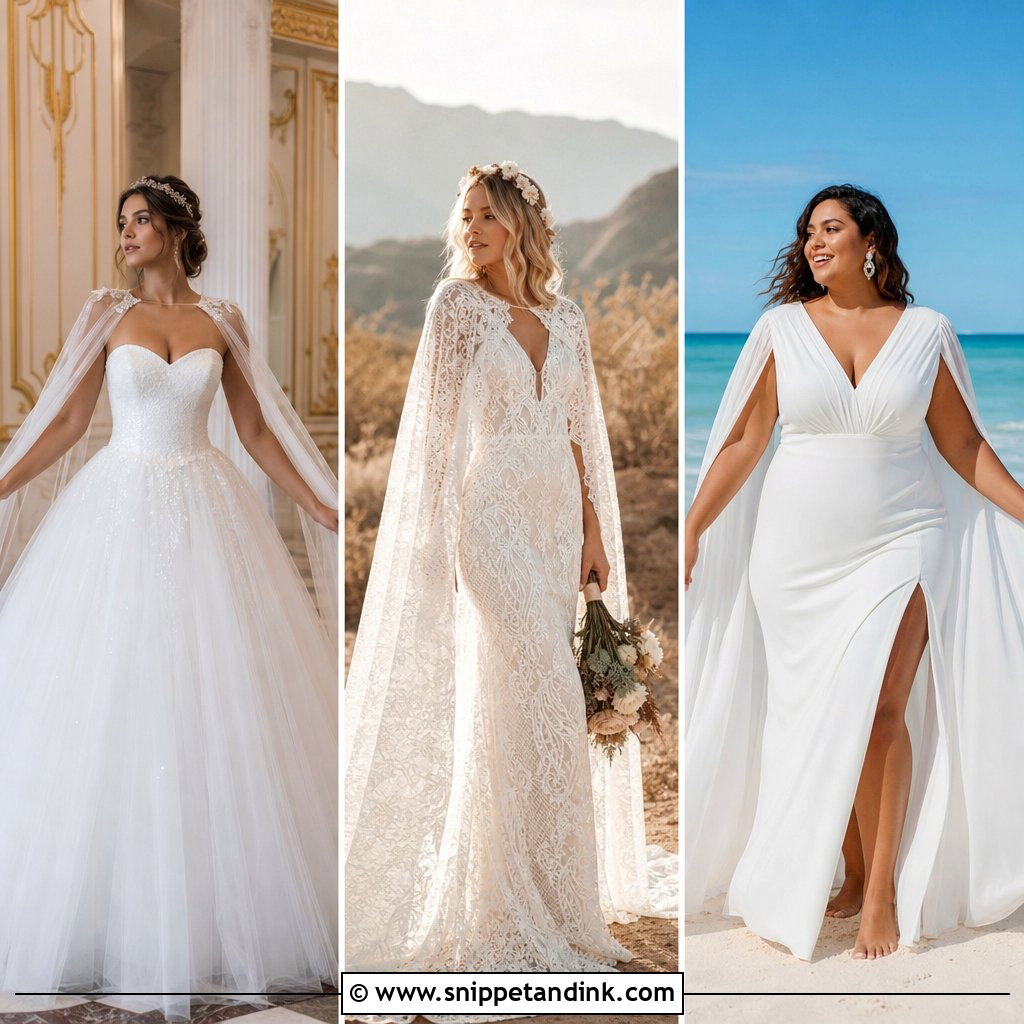
Satin and a long cape is the most formal pairing on this list, and it needs room. A strapless or square-neck ball gown with clean seams lets the cape be the decoration. I always choose tulle or organza for the cape here, never more satin, because the skirt already carries plenty of weight and a heavy cape on top makes the shoulders ache within an hour. Floor-sweeping length looks right in a wide aisle and wrong in a narrow chapel, where it piles up behind you. Pointed ivory pumps, pearl drops and a smooth low bun keep the outfit polished, with a compact bouquet of roses or calla lilies. If the cape fastens at the neckline, leave the necklace off; the clasp is already doing that job.
2. Lace A-Line Wedding Dress With Sheer Cape
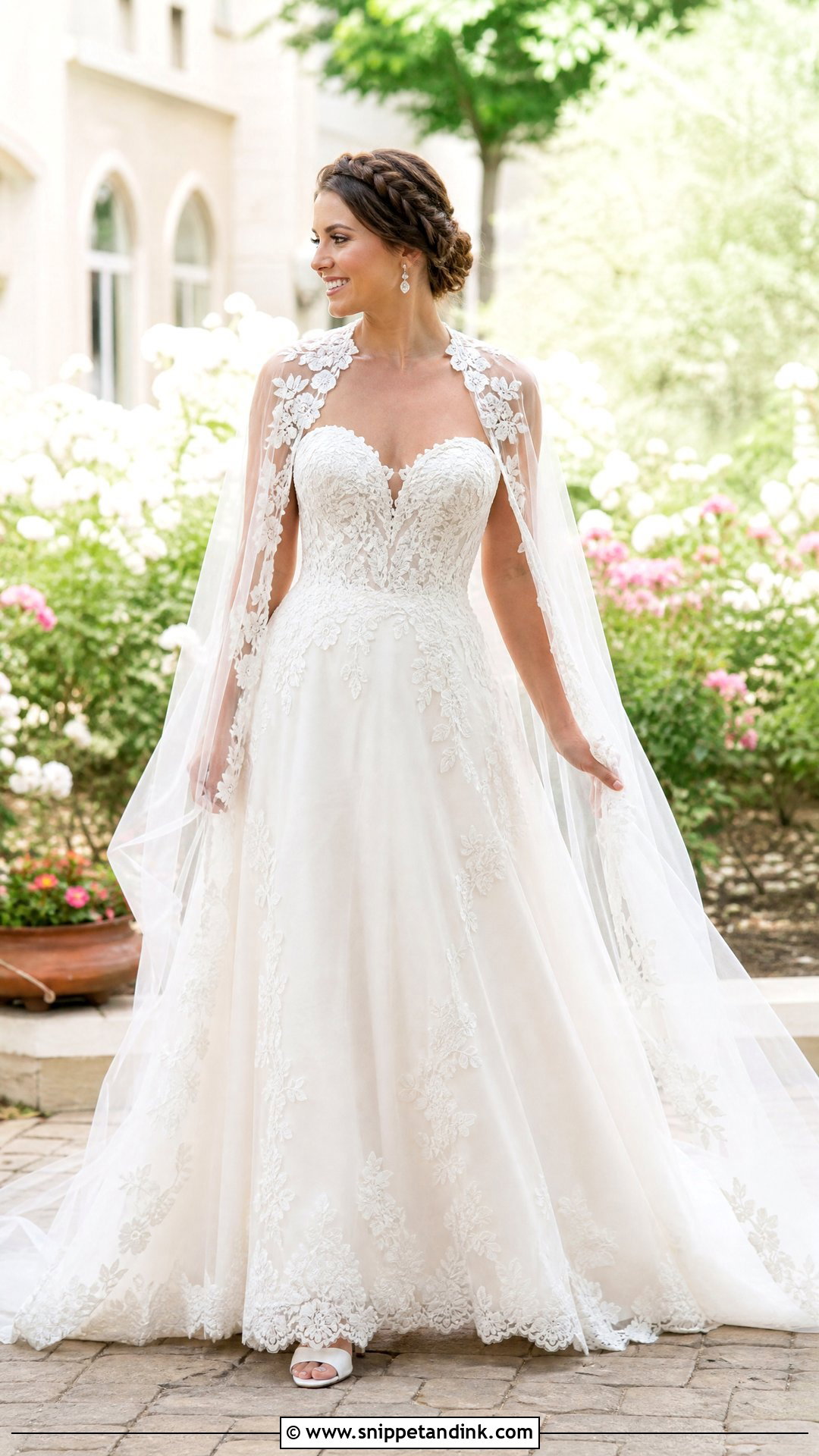
Lace and sheer tulle are a romantic match that never looks heavy. Start with an A-line whose floral lace covers the bodice and thins out over the skirt. The cape should borrow one or two motifs at the shoulders or border rather than copy the gown. A full match usually looks like too much fabric from behind. Fingertip or floor length both work. When I source a cape to go with lace, I bring a cutting of the dress lining, because tulle that looks white on its own can turn the lace slightly yellow next to it. Ivory block heels, small crystal studs and a loose braided updo suit it, along with a garden bouquet. Skip extra sparkle so the lacework gets the attention.
3. Minimalist Column Wedding Dress With Chiffon Cape
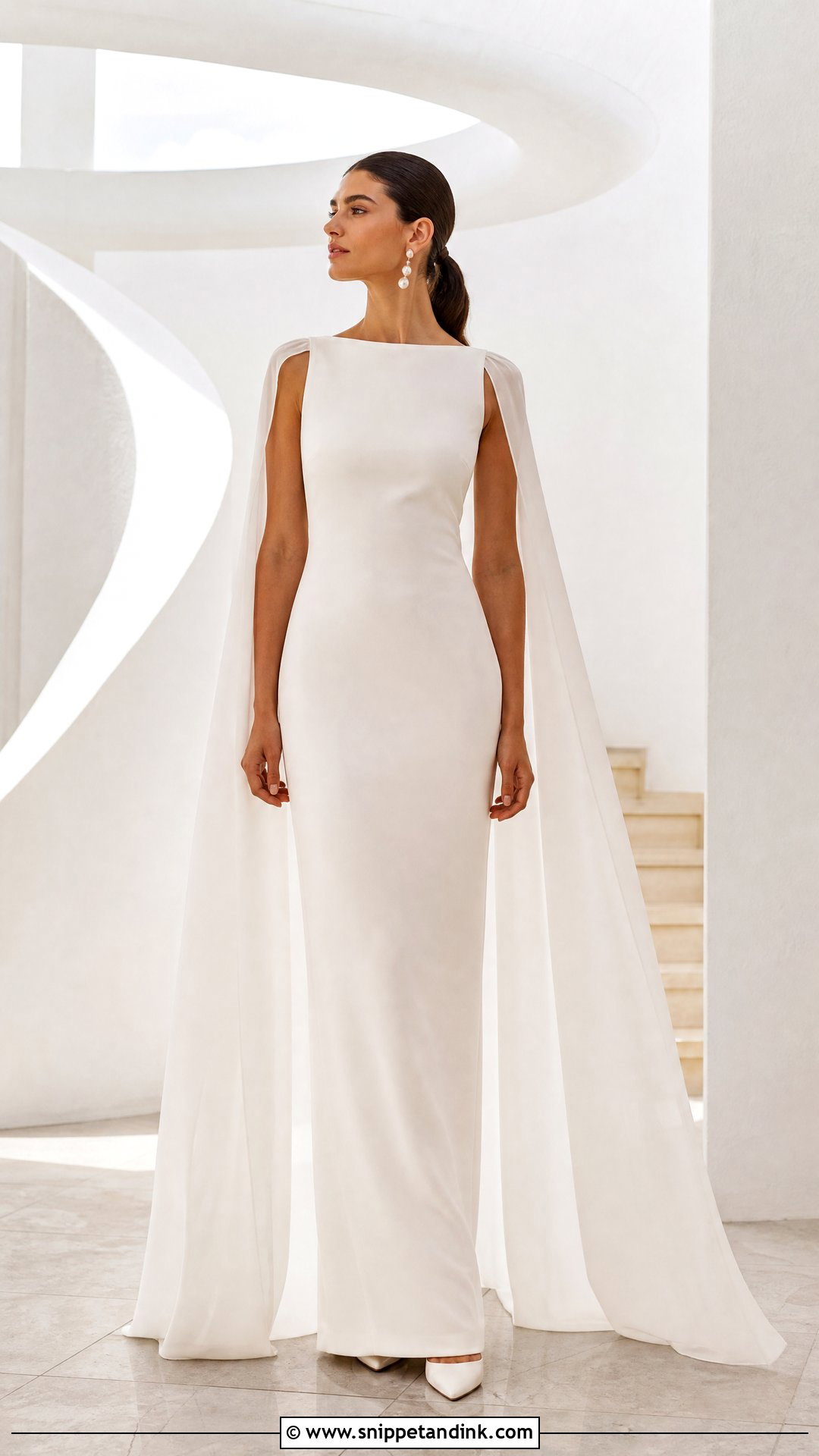
Clean lines make a cape look more dramatic, not less. Pick a sleeveless column in matte crepe or smooth silk, ideally with a bateau, scoop or high neck. A weightless chiffon cape dropping straight from the shoulders and running a little past the hem gives the narrow gown movement it does not have on its own. Keep the cape free from lace, crystals, and heavy edging. Chiffon frays easily, so ask for a rolled or narrow baby hem; a bulky hem weighs the drape down and breaks the line. Sleek pointed heels, sculptural pearl earrings and a low ponytail finish the look, with a single orchid stem or a small white arrangement.
4. Off-Shoulder Wedding Dress With Detachable Cape
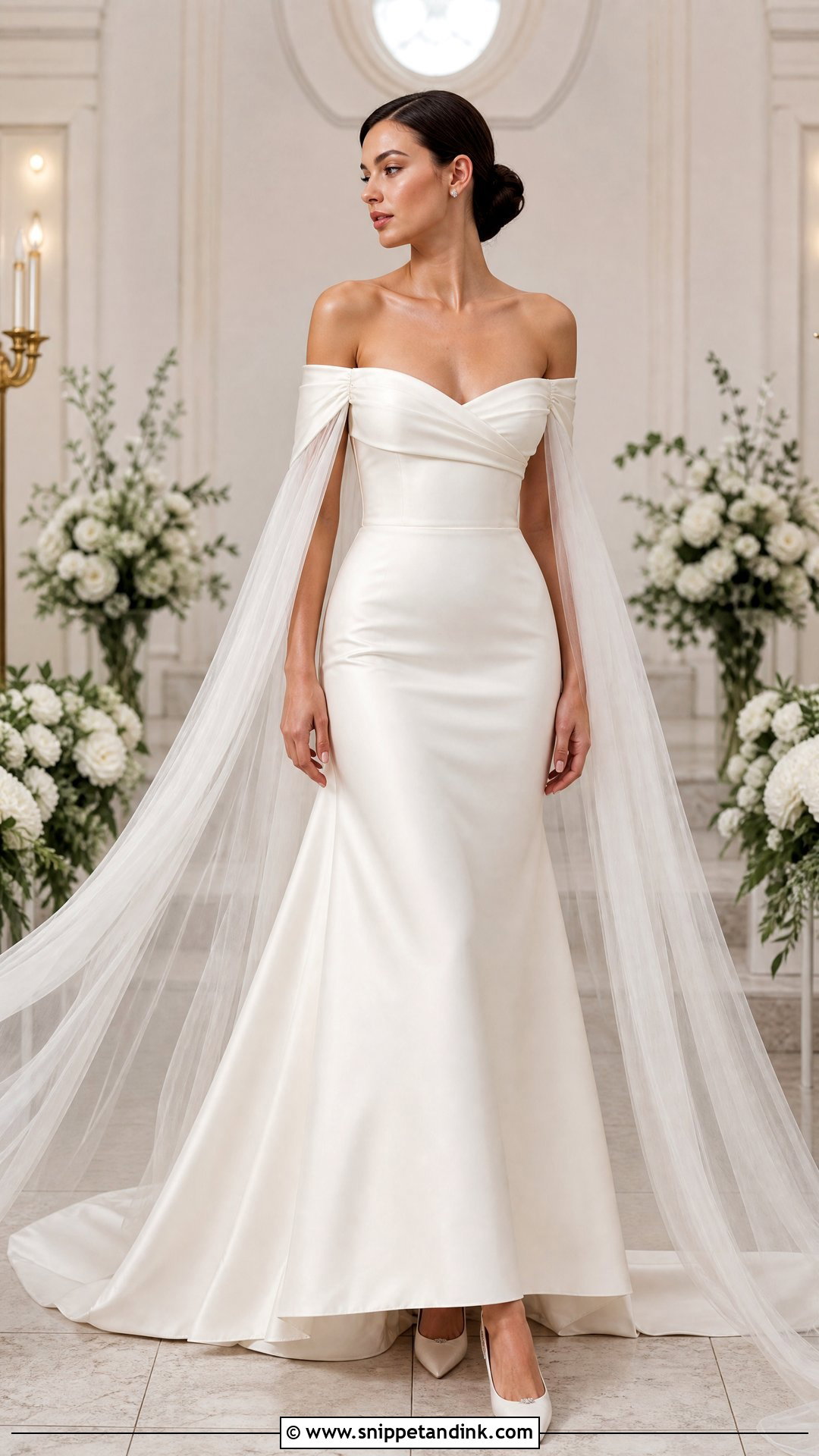
Off-the-shoulder necklines already show the collarbone, so the cape attaches behind the sleeves instead of at the neck. From the back, tulle panels hang from the upper arms like long sheer wings. A fitted bodice and softly flared skirt in satin, crepe or mikado work best. The hard part is the attachment: off-shoulder sleeves sit on elastic or a hidden band, and if the cape pulls on them they slide down your arms. I have the cape hooked to the bodice behind the sleeve, not to the sleeve itself. Wear it for the vows, take it off for the reception. Crystal studs, a delicate bracelet, ivory slingbacks and a side-parted bun keep the shoulders on show.
5. Mermaid Wedding Dress With Beaded Cape
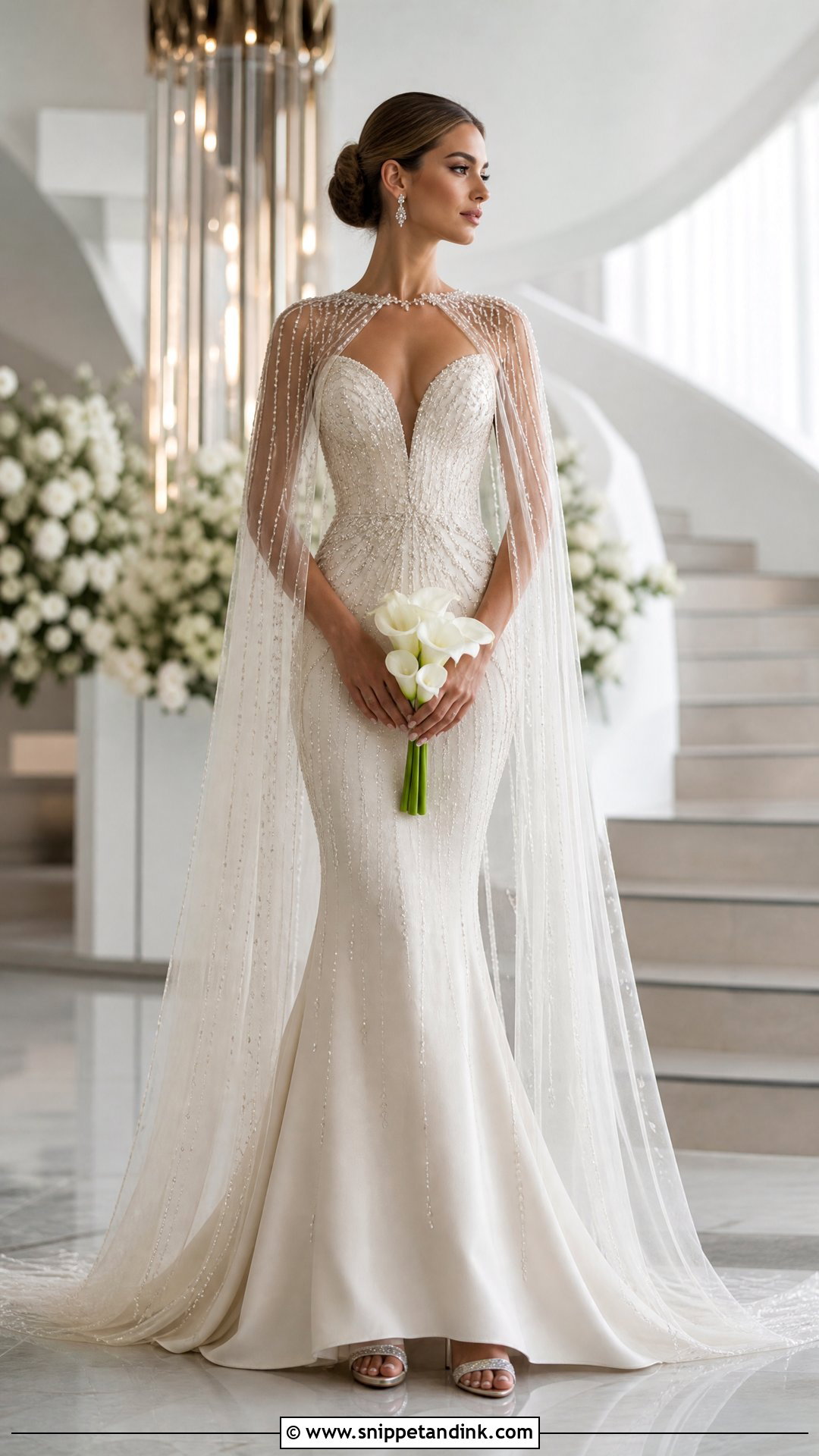
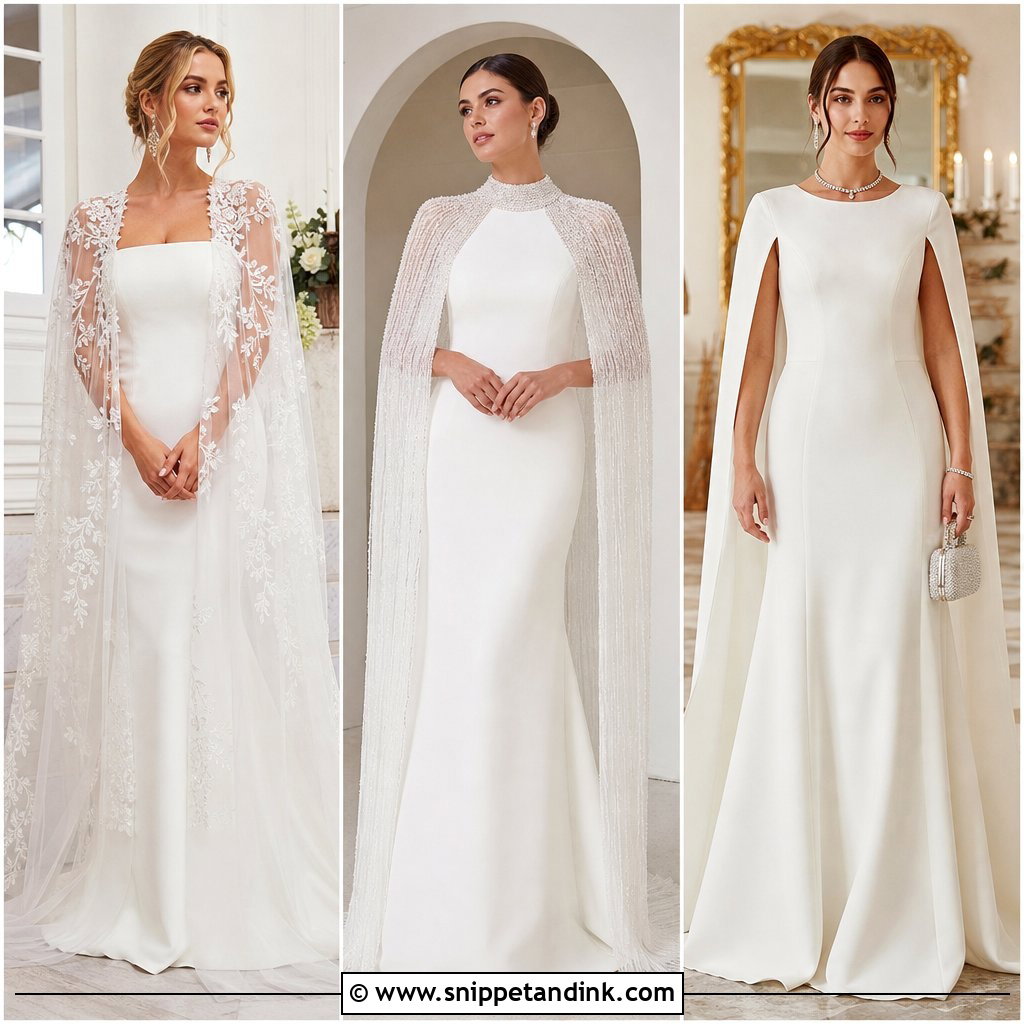
Beading on a cape over a mermaid gown is glamorous, but it adds real weight, and most of that weight hangs from your shoulders. The dress should hug the hips then flare in a controlled way, while the cape drops in a straighter line, which stops the whole thing looking too full. Choose beadwork that gets finer toward the hem so the fabric still moves. I’d keep the bodice plain here; one heavily worked area is enough. A few beads at the shoulders tie the two pieces together. Metallic ivory sandals, crystal drops, a small comb above a polished bun and a slim long-stemmed bouquet suit the long silhouette.
6. High-Neck Wedding Dress With Cape Sleeves
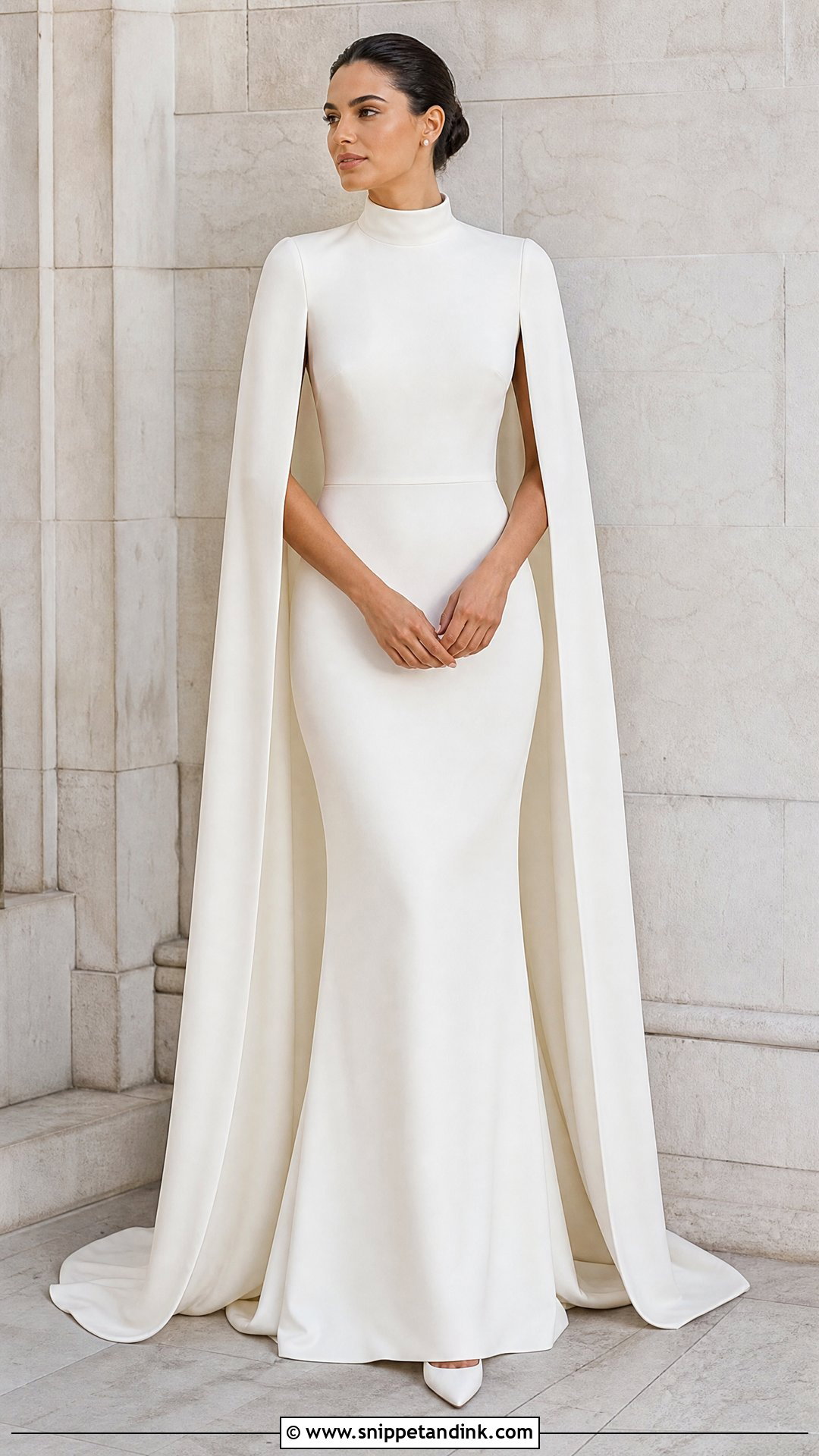
Cape sleeves give you coverage without the stiffness of a jacket. The panels start at the shoulder and stay open at the sides, so your arms move freely. Fluid crepe looks modern; fine lace looks more traditional. A fitted waist and straight or gently flared skirt balance the covered neck. Because the neckline frames the face so strongly, leave out the necklace and any big earrings. Studs are enough. A center-parted chignon and pointed pumps keep everything vertical, as do white tulips or long calla lilies. The thing I warn about is the bouquet: cape sleeves hang in front of your elbows, so practise holding the flowers low so the fabric does not bunch over them in photos.
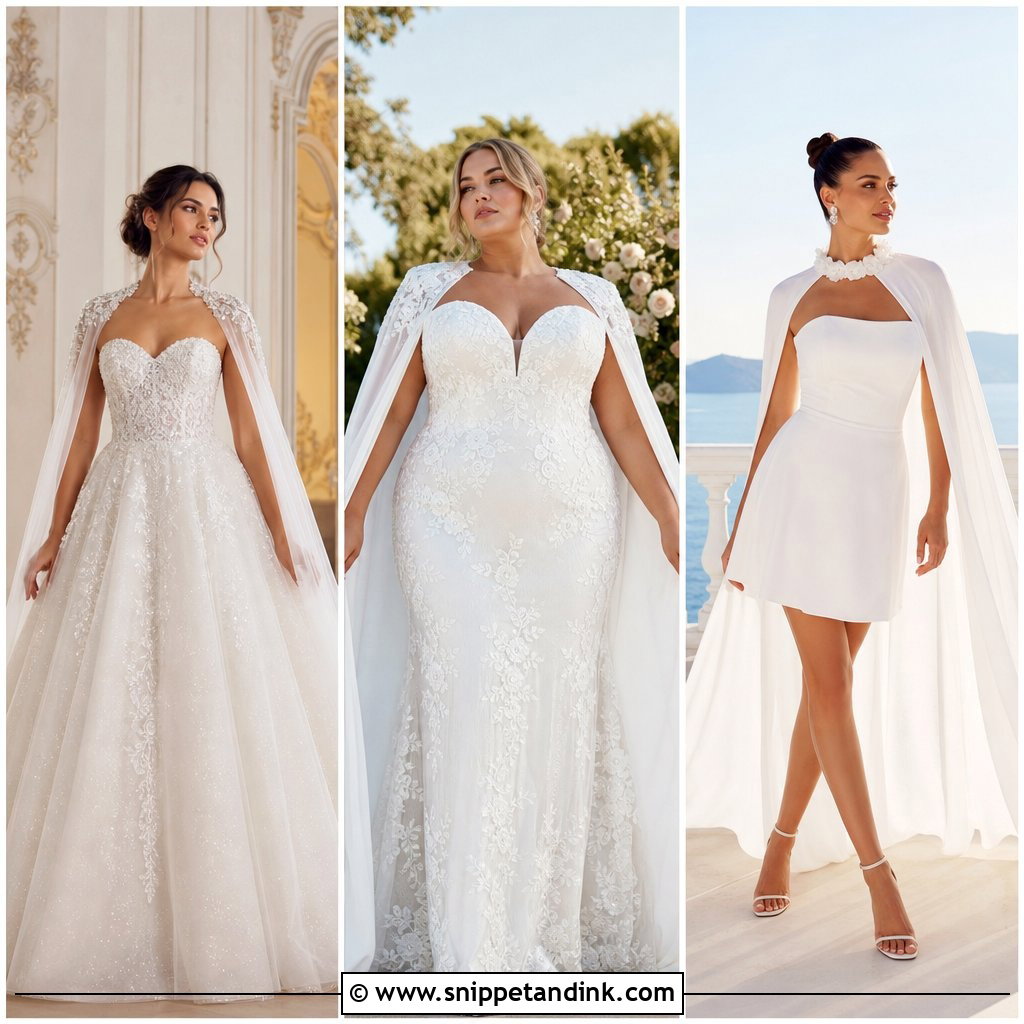
7. Strapless Wedding Dress With Floral Cape
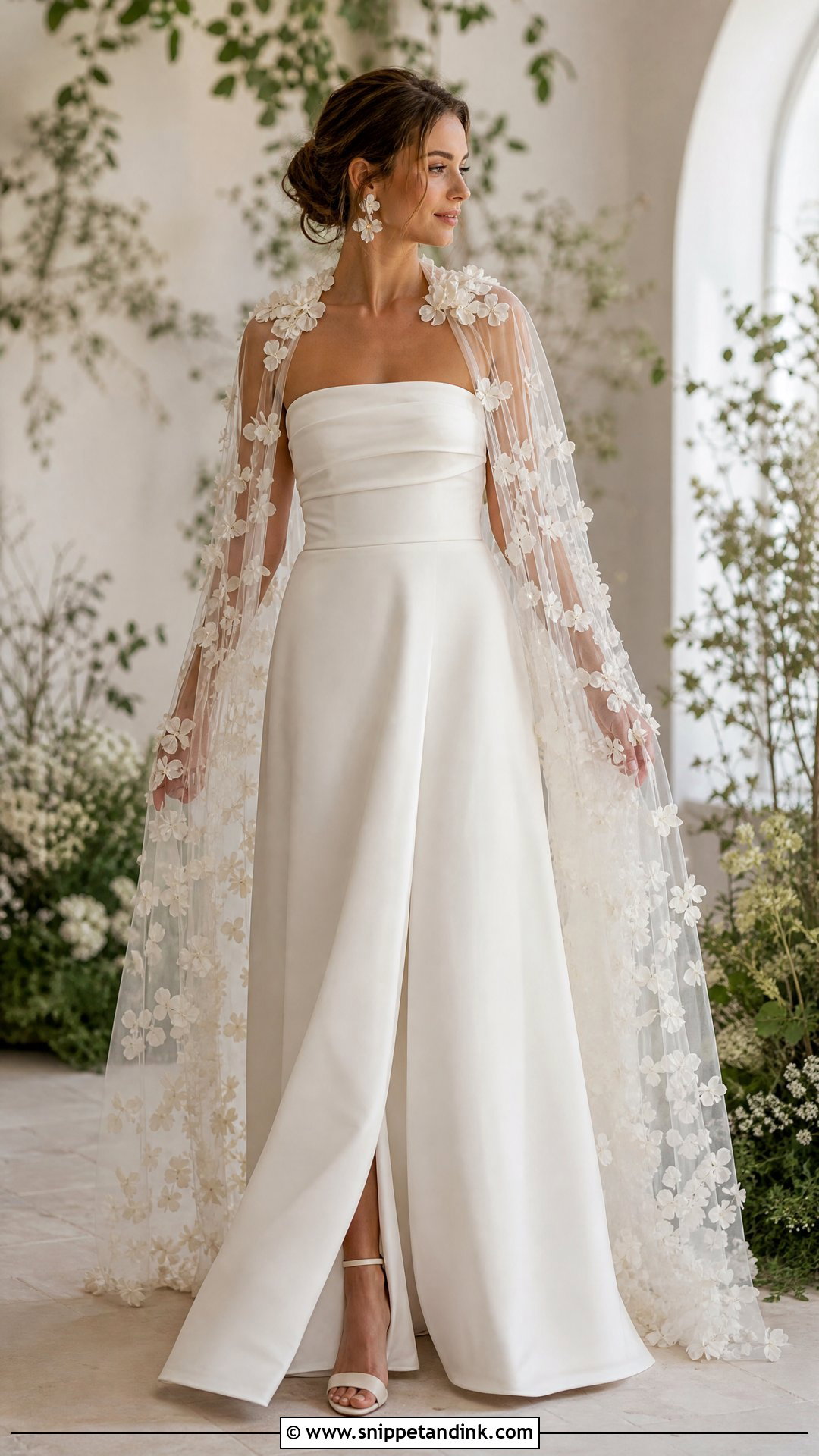
Three-dimensional flowers floating across the shoulders give a plain strapless gown all the decoration it needs. Choose a simple A-line or fit-and-flare in smooth satin, crepe or plain tulle, then add a transparent cape with appliqués clustered near the neckline and thinning out down its length. That graduation keeps it from looking crowded. Raised appliqués catch on everything, so I suggest a bouquet with smooth stems wrapped in ribbon, and warn brides that a lace-edged veil worn over the top will snag. Floral studs, ankle-strap heels and a soft updo with a few loose pieces are plenty. Keep the waist free from a jeweled belt.
8. Long-Sleeve Wedding Dress With Tulle Cape
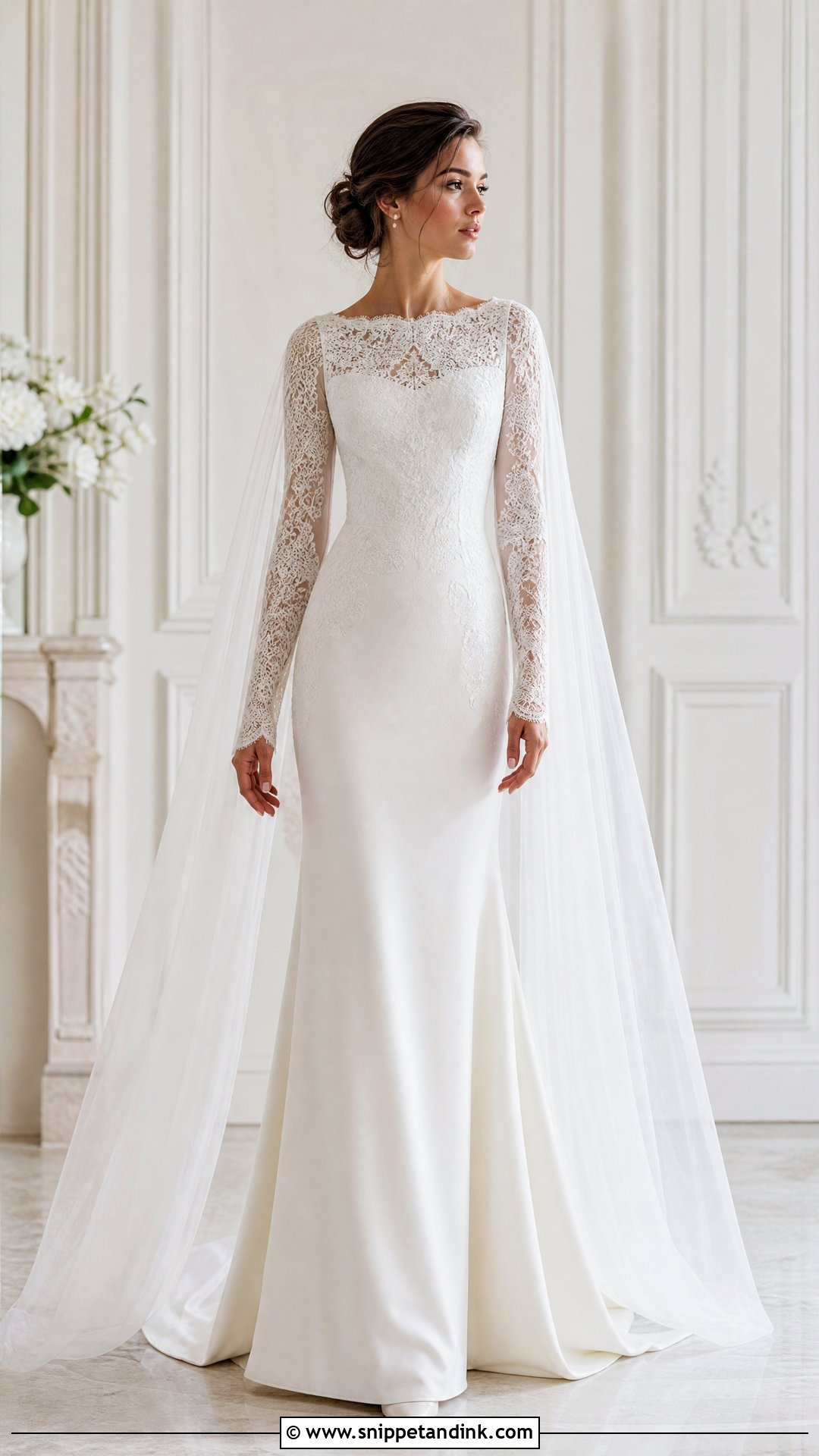
Long sleeves and a cape can sit together if both stay light. Choose a fitted dress with sheer lace sleeves and an unadorned skirt, then fasten a plain tulle cape at the back of the shoulders, not around the neckline, so the sleeve lace stays visible. The cape should be a little longer than the gown and lighter in weight than the sleeves. Three layers of fabric at the arms can get warm, which matters for a summer ceremony indoors without air conditioning. Closed ivory pumps, tiny pearl earrings and a low textured bun work here, with a narrow bouquet of white flowers and eucalyptus.
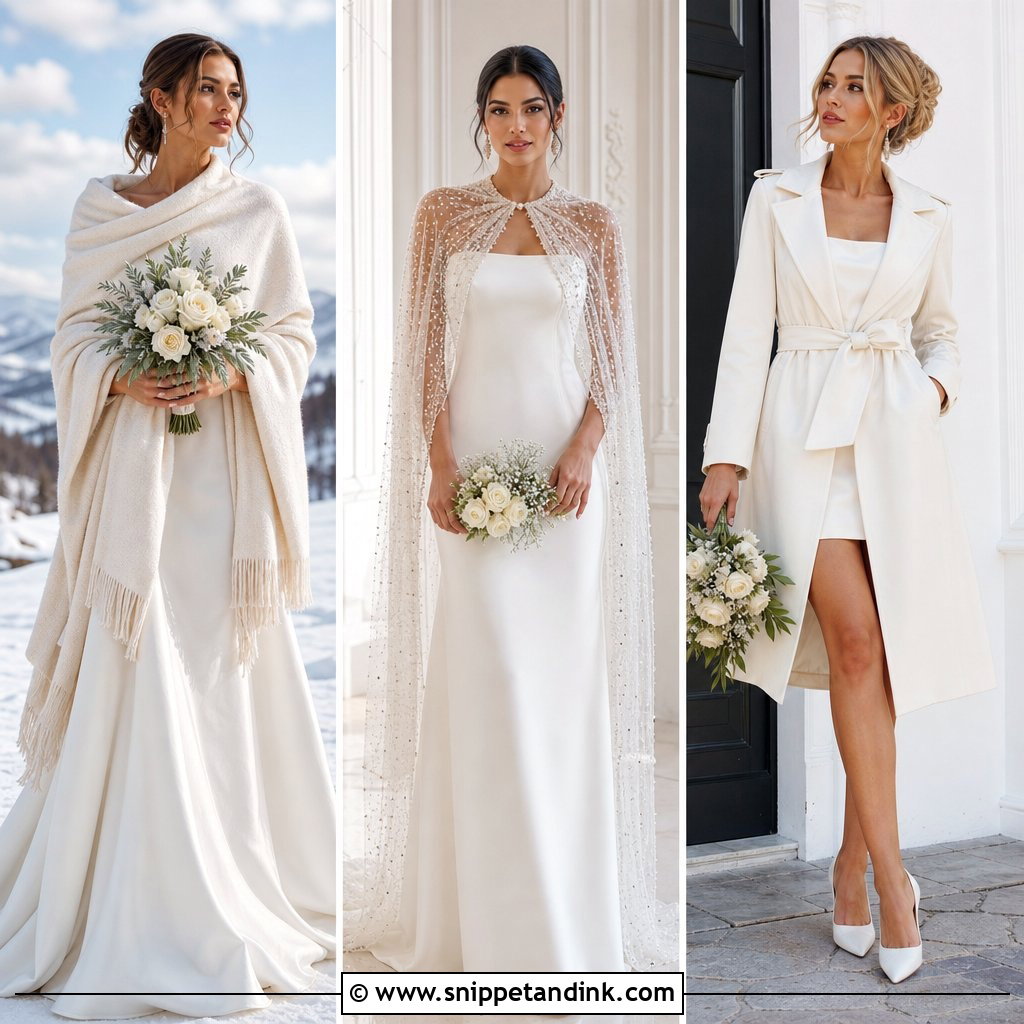
9. Square-Neck Wedding Dress With Pearl Cape
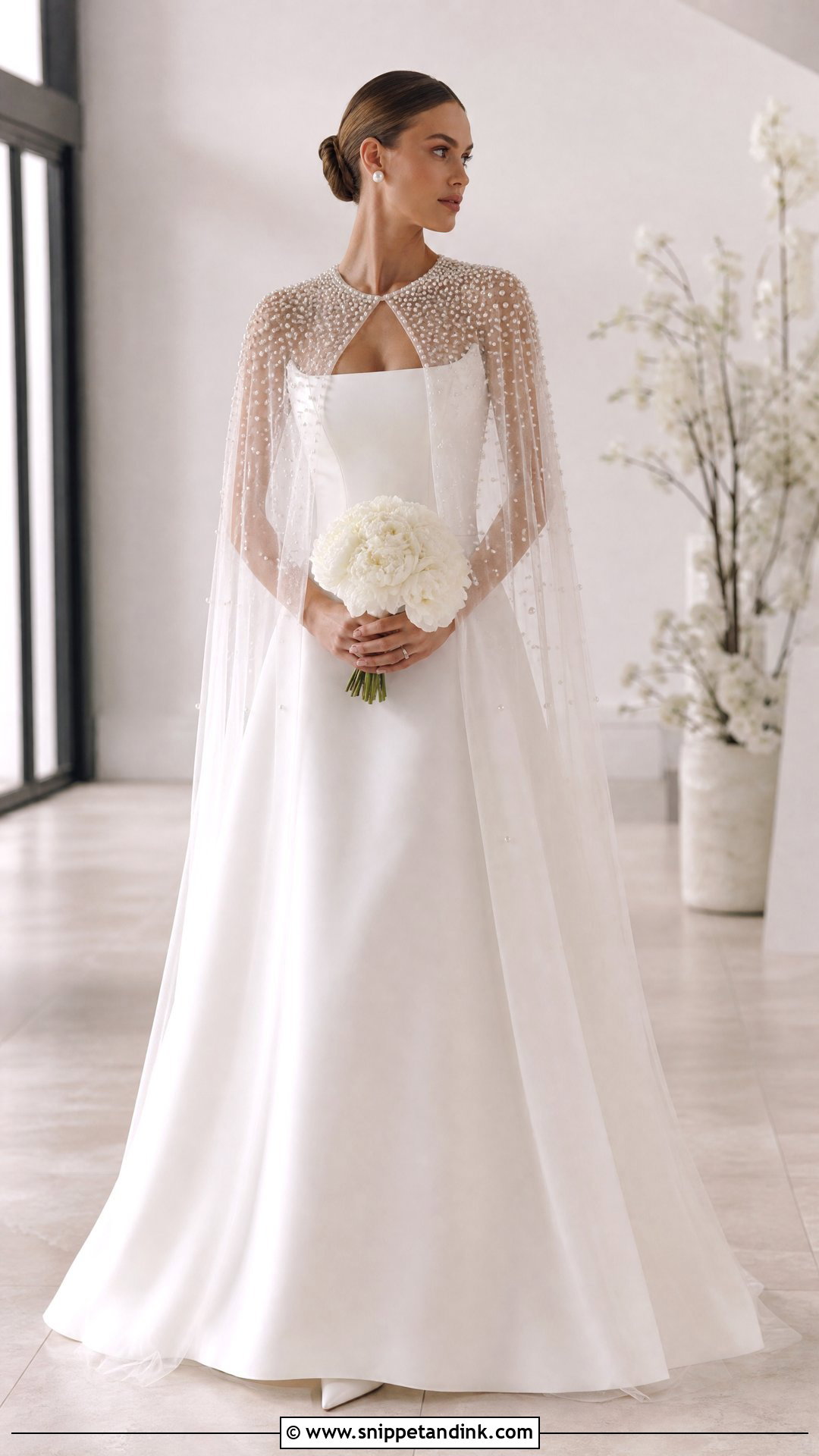
Pearls scattered over a sheer cape suit a square neckline because the straight edge gives the texture a clean frame. Pick a fitted or A-line dress in matte crepe, satin or mikado and keep the bodice simple. Look for graduated work, dense at the shoulders and sparse toward the hem. Pearls are heavier than they look; a cape loaded to the floor can drag the back of the dress, so ask for the weight to be checked once it is attached. Wear pearl studs and pointed satin heels, with a smooth bun or a waved ponytail. Leave off the pearl necklace, which crowds the neckline. A compact bouquet of ranunculus or roses tied in ivory ribbon is plenty.
10. Slip Wedding Dress With Floor-Length Cape
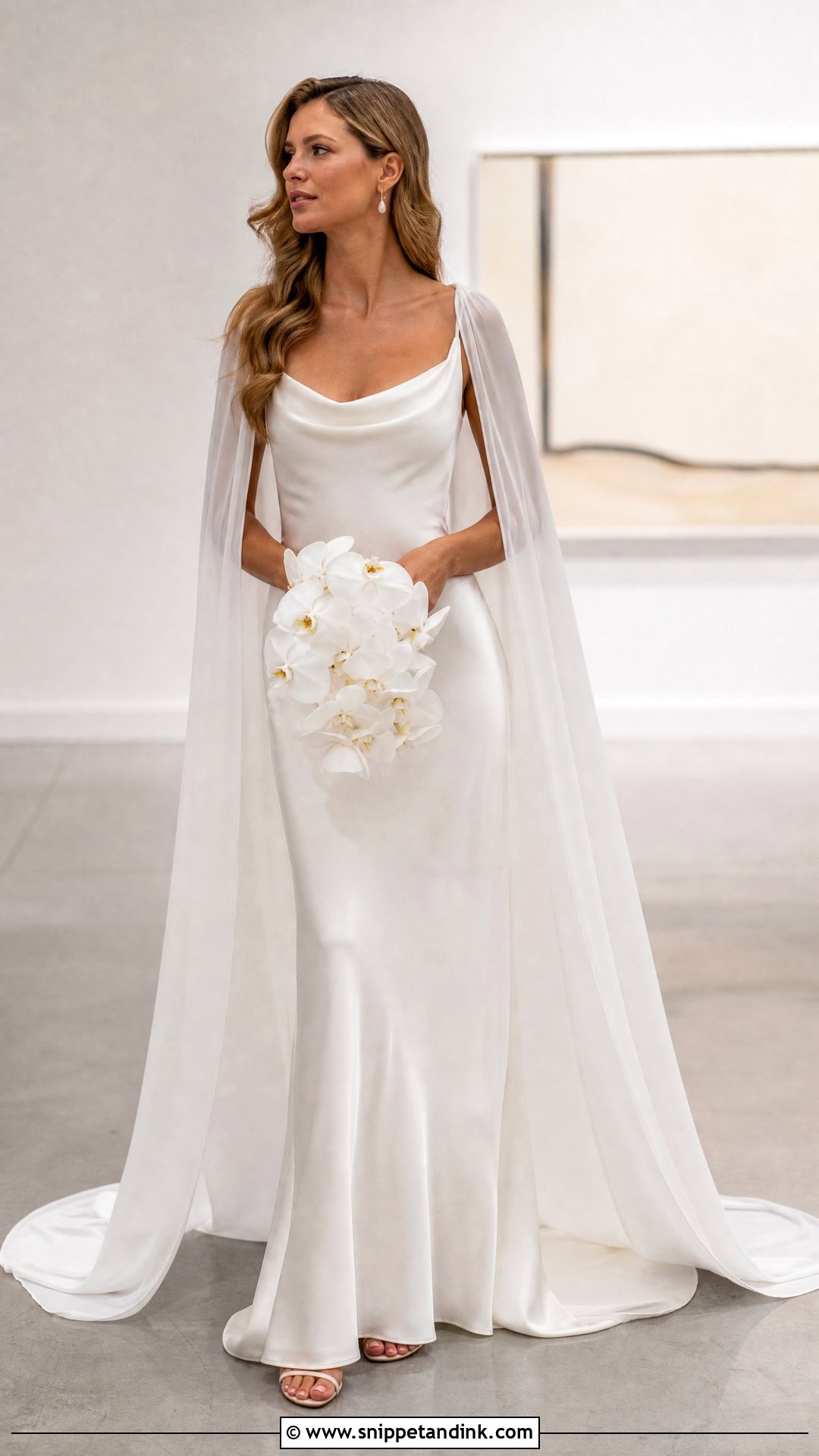
A bias-cut slip turns ceremony ready with a floor-length cape fixed at the back straps. Chiffon, silk gauze or fine tulle all work, depending on how sheer you want it. Attaching to the straps keeps the front of the gown untouched. Here’s my caution: bias silk shows every pull, so a cape tugging on thin straps will distort the neckline and print lines across the back. Have the attachment points reinforced with a small stay inside. Slim ivory sandals, understated drops and brushed waves tucked behind the ears suit the mood, with orchids or white anthuriums. Keep the cape train modest so the slip shape still reads.
11. Plus-Size Wedding Dress With Lace Cape
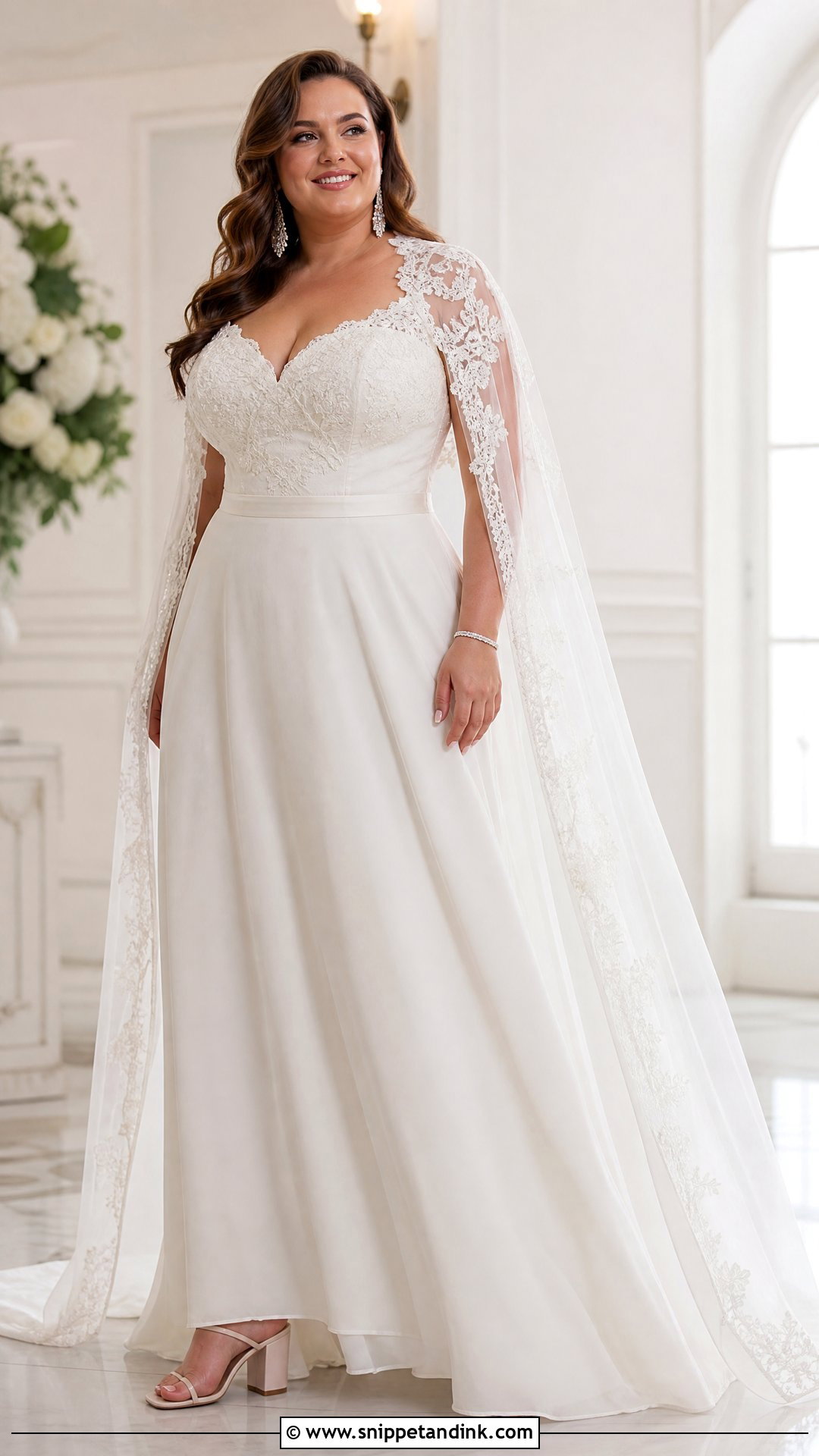
Fit comes before the cape. Start with an A-line or fit-and-flare gown that has secure bodice construction, supportive straps and a waistline set where you feel comfortable. Then add a soft lace cape attached at the shoulders and falling straight, not wrapping around the arms. A straight drop shows your shape; a wrap hides it. Many off-the-rack capes are cut for narrow shoulders, so I almost always have them recut to the bride’s shoulder width so the fastenings do not strain. Match the lace tone with care; ivory, white and champagne do not mix. Stable block heels, medium earrings and a side-parted updo or polished curls finish it, with a softly structured bouquet held away from the waist.
12. Modest Wedding Dress With Full-Coverage Cape
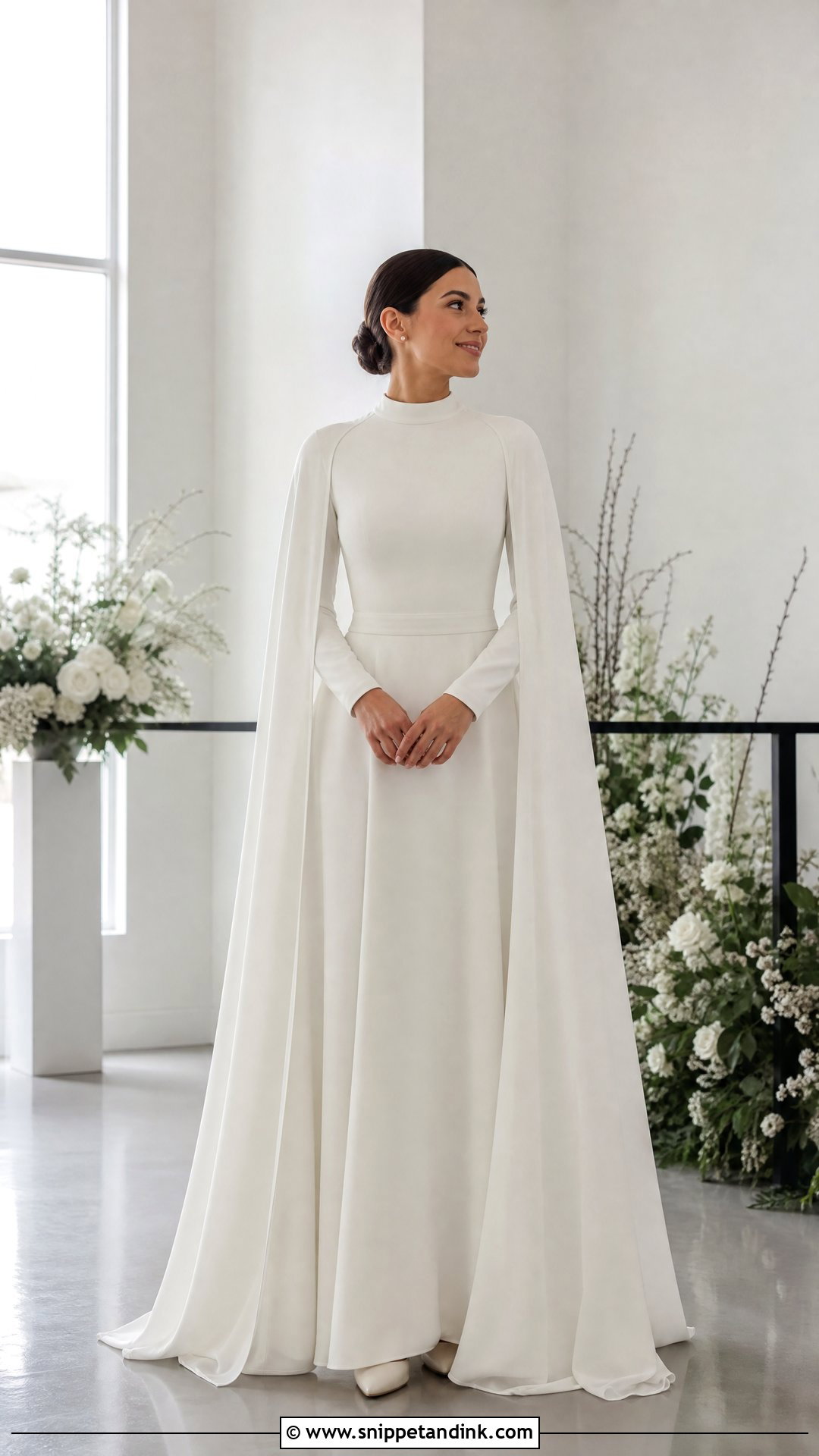
For full coverage, start with a long-sleeve dress that has a high neck, defined waist and a flowing skirt, then layer a cape of light crepe or lined chiffon. A front clasp or hidden fastening at the neckline keeps it secure and smooth. Floor length is formal; wrist length is easier to move in and to manage at a long meal. Thick fabrics make the shoulders look bulky, which is the most common problem I see with modest bridal capes. Closed pumps, refined studs and a sleek low bun keep it clean, and a medium bouquet of white blooms and greenery balances the coverage. With fine fabric and precise tailoring, the whole outfit feels graceful.
13. Boho Wedding Dress With Embroidered Cape
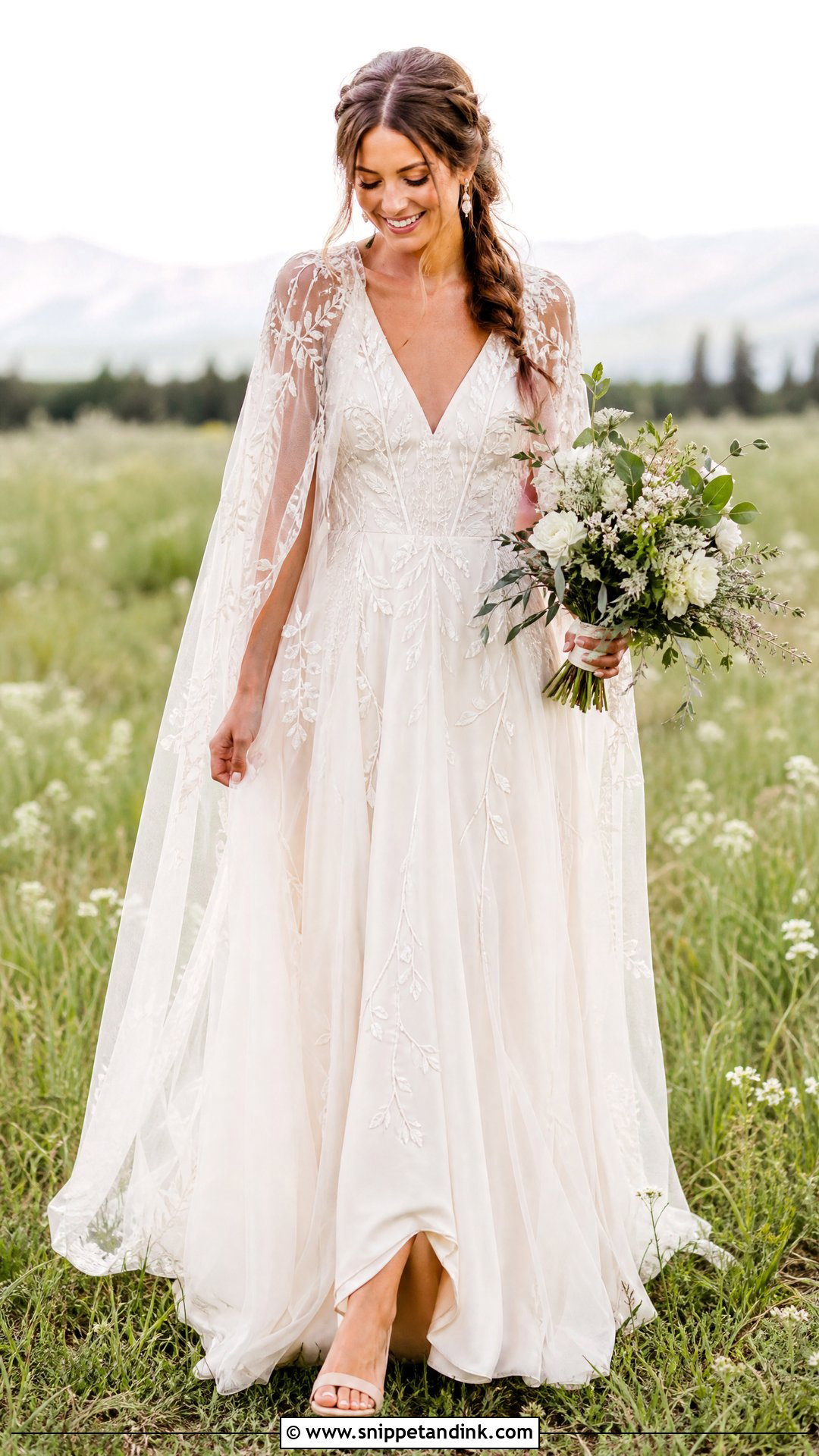
Embroidery gives a boho dress personality without sparkle. Choose a soft A-line in lace, chiffon or light crepe with a V-neck or a simple scoop. Then add a sheer cape stitched with vines or small florals. The edge should be soft; a stiff border fights the relaxed mood. Outdoors, a light cape catches every gust, so I ask for discreet weights sewn into the hem corners. Neutral low heels or bridal flats, small drop earrings and a loose braid suit it, with a gathered bouquet of white flowers and airy greenery. Few other accessories are needed, and it sits naturally in a meadow or woodland setting.
14. Beach Wedding Dress With Lightweight Cape
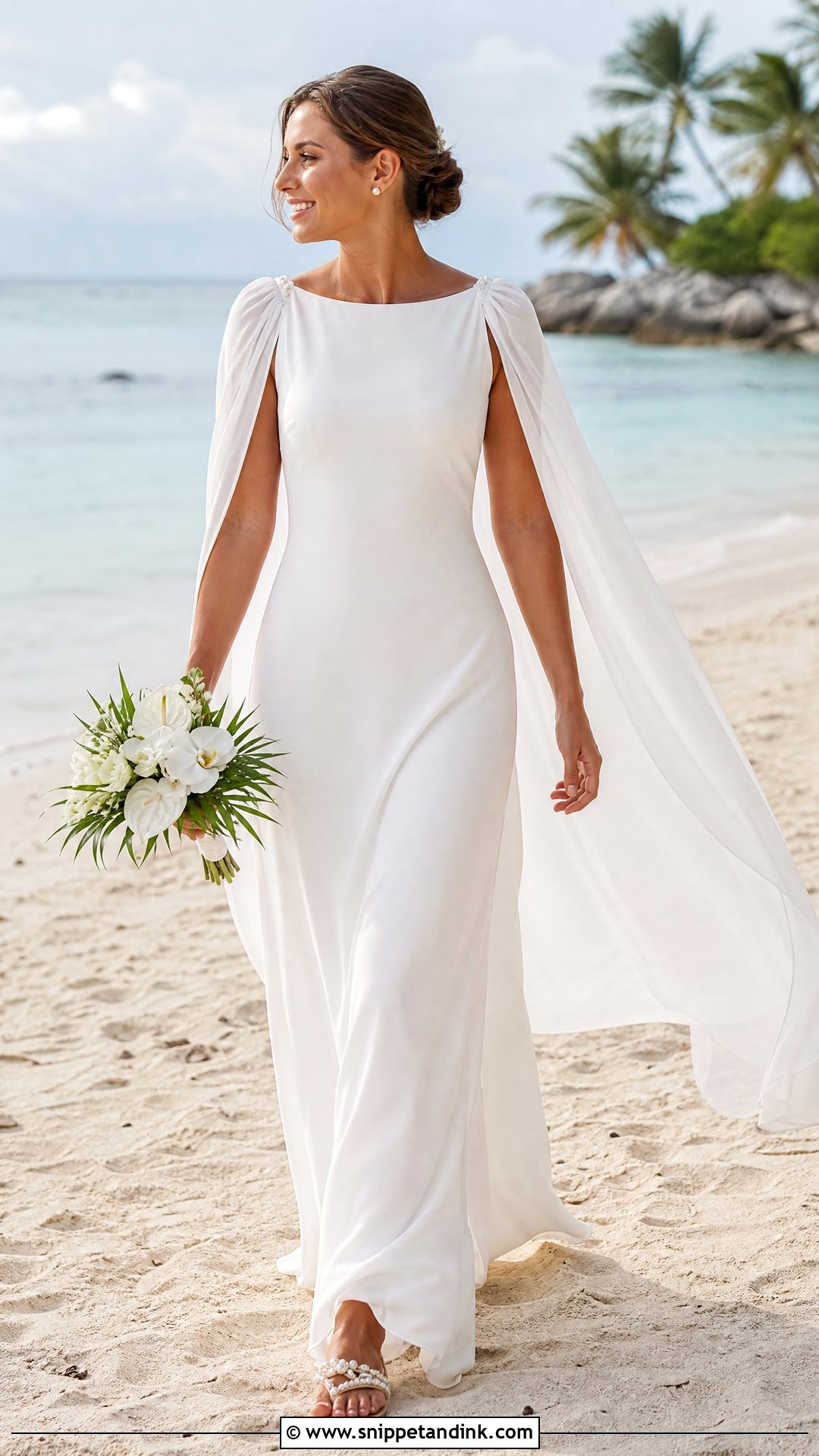
By the water, a cape moves well only if it stays light. Choose a simple chiffon or crepe dress, relaxed A-line, sheath or slip, and a short chiffon cape that lifts in the breeze without turning into a sail. Wind is the real test. A cape longer than your ankles will wrap around your legs at the shoreline, and I’d skip anything fastened only at the neck, because it pulls on your throat when it catches the wind. Fix it at both shoulders. Flat embellished sandals, pearl studs and a low bun are practical on sand. Leave stiff satin, dense beading and big appliqués for indoor weddings, and carry a small white and green bouquet.
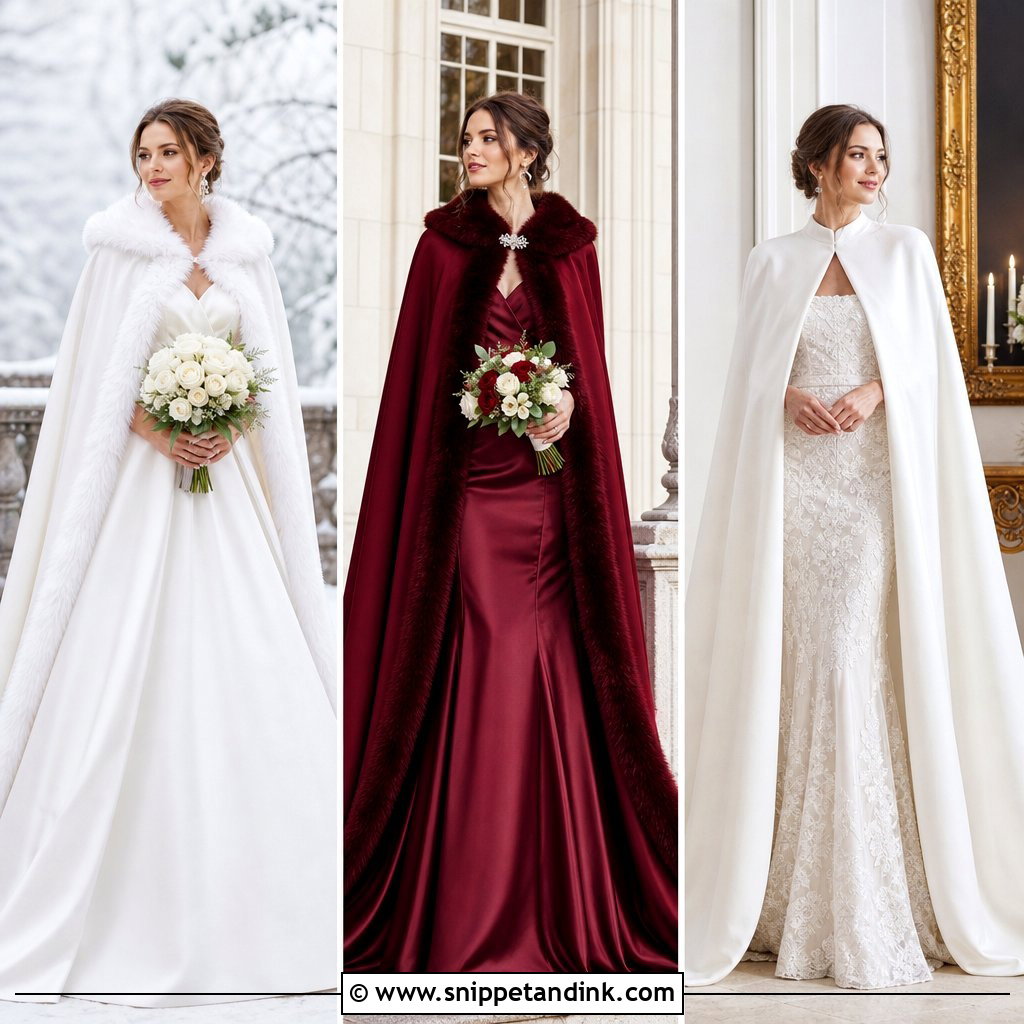
15. Winter Wedding Dress With Velvet Cape
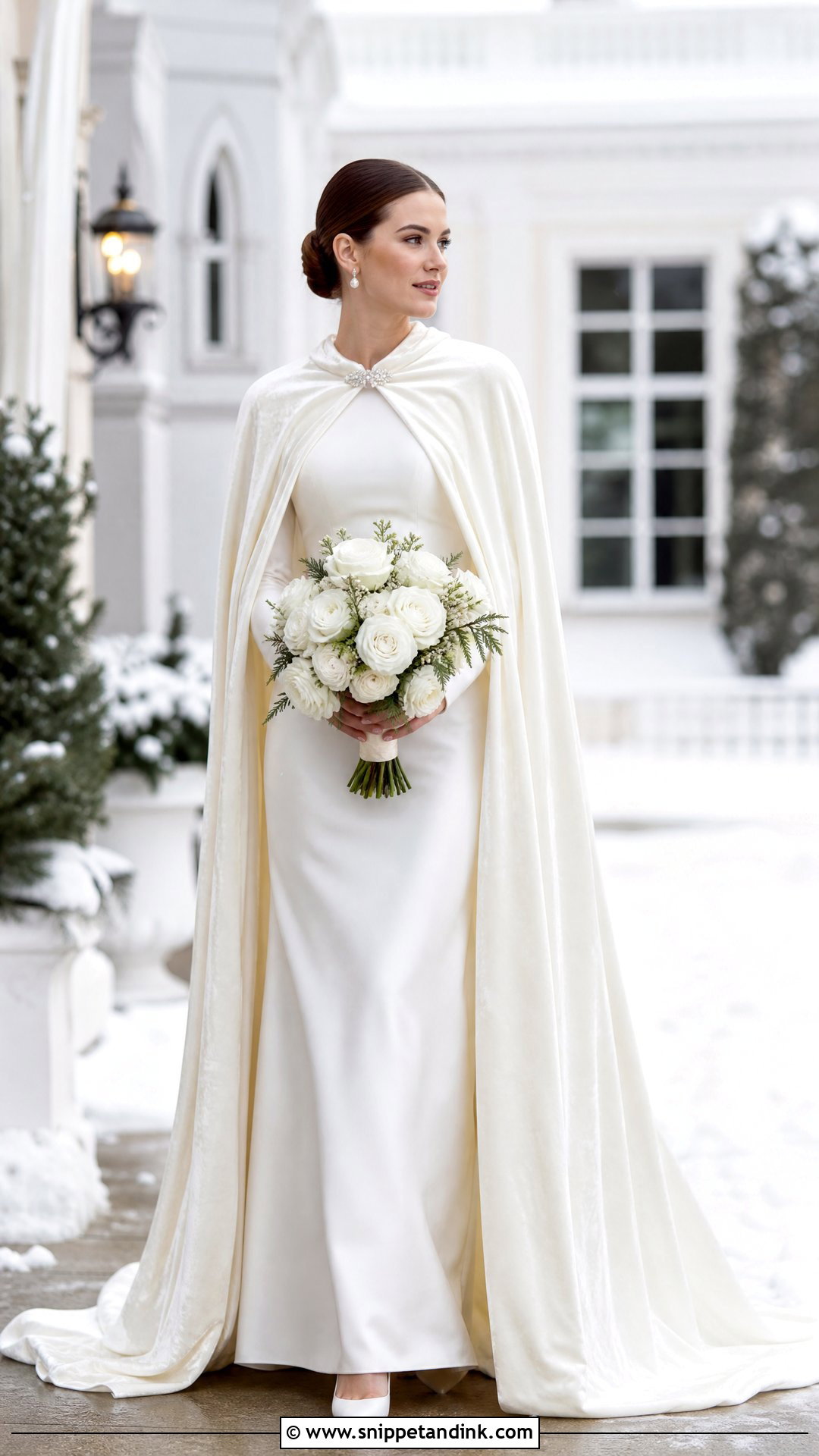
Velvet is the one cape fabric that actually keeps you warm, which is why it earns its place at a winter wedding. Pair a long-sleeve satin or crepe gown with a white, ivory or pale gray velvet cape that has a structured shoulder, a floor-length cut and a soft lining. Choose a hidden clasp or a small jeweled fastening; big closures look costume-like. Velvet crushes and marks where it is pressed, so it should travel hanging, never folded, and be steamed from the reverse side. Closed pumps, pearl earrings and a polished chignon suit it, as do white roses, hellebores or winter greenery. Keep the gown sleek, and take the cape off for indoor photos and dancing.
16. Short Wedding Dress With Dramatic Cape
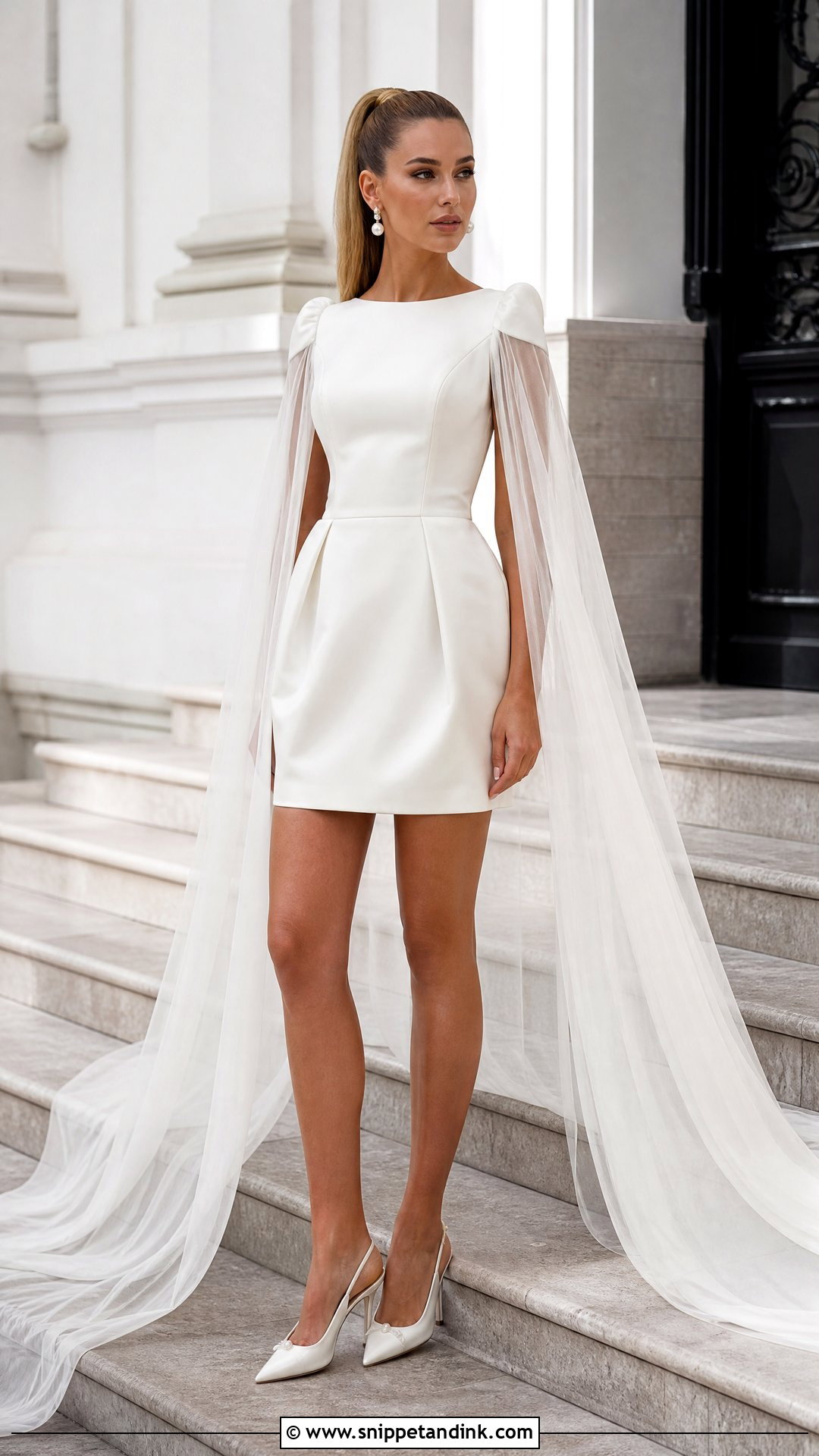
Short dress, long cape: modern proportions with formal movement. Pick a structured mini or knee-length dress with a clean neckline and tailored waist, then a sheer cape that reaches the floor but leaves the hem visible from the front. Pointed pumps, slingbacks or polished flats all work, depending on where you are marrying. Pearl drops with a smooth ponytail, sculpted bun or neat bob, plus a small bouquet, keep it in scale. Keep the attachment minimal and secure at the shoulders. Once it comes off, you are in a dress you can dance in all night, which is why I suggest this pairing so often for courthouse and city weddings.
17. Blush Wedding Dress With Matching Cape
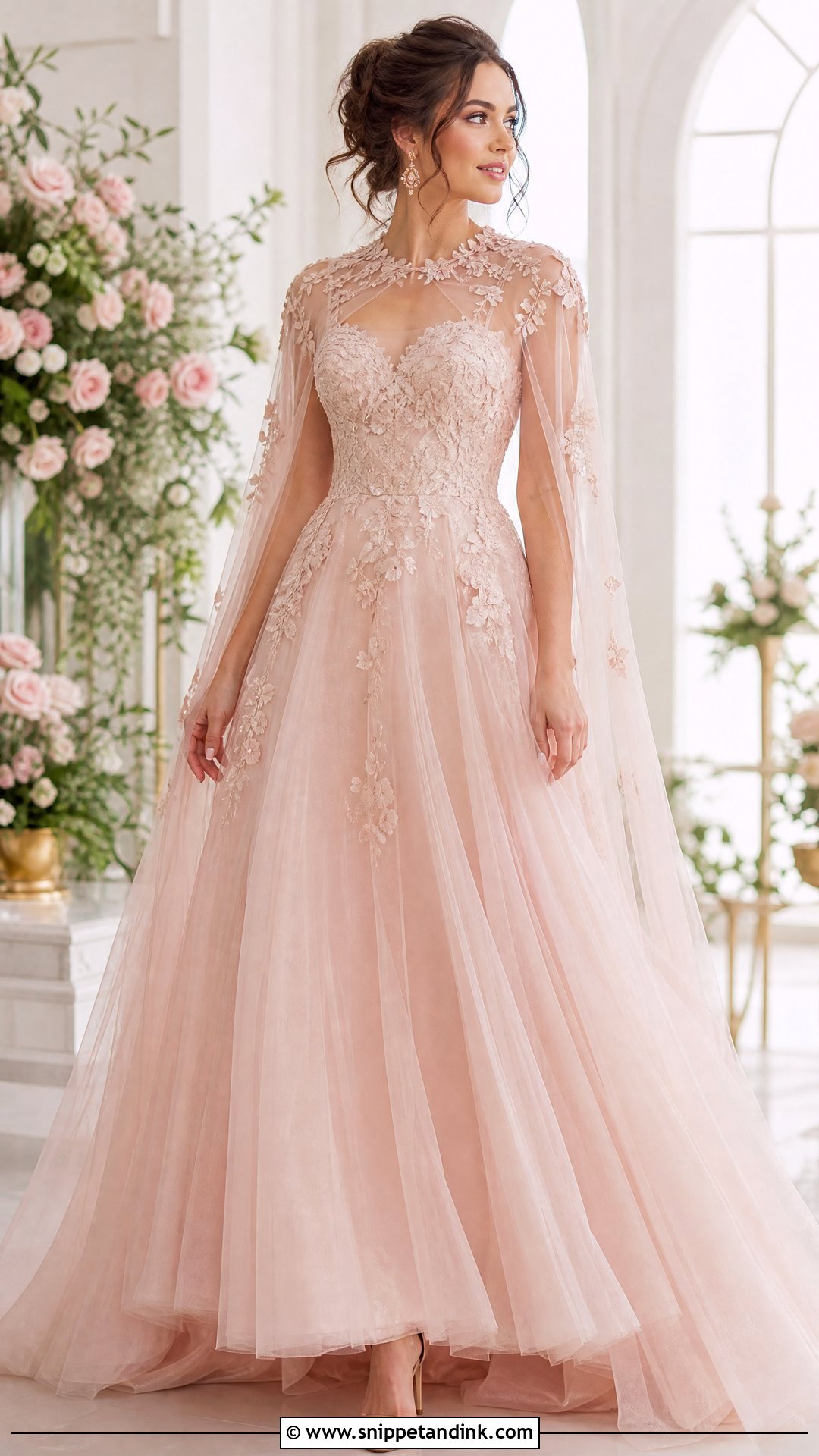
Blush gives a gentle step away from white while still reading clearly as bridal. Select a blush A-line or ball gown with a fitted bodice and light tulle layers, and match the sheer cape in the same undertone. Check the two fabrics together by a window and under warm indoor bulbs. Blush that matches in daylight can turn peach or grey at night, and tulle layered over itself looks deeper than a single layer, so judge the cape as it will hang. Tonal embroidery or pale crystals add definition. Nude or blush heels, rose-gold earrings and a softly pinned updo suit it. A bright white cape or shoes will make the gown look mismatched.
18. Vintage Wedding Dress With Lace Capelet
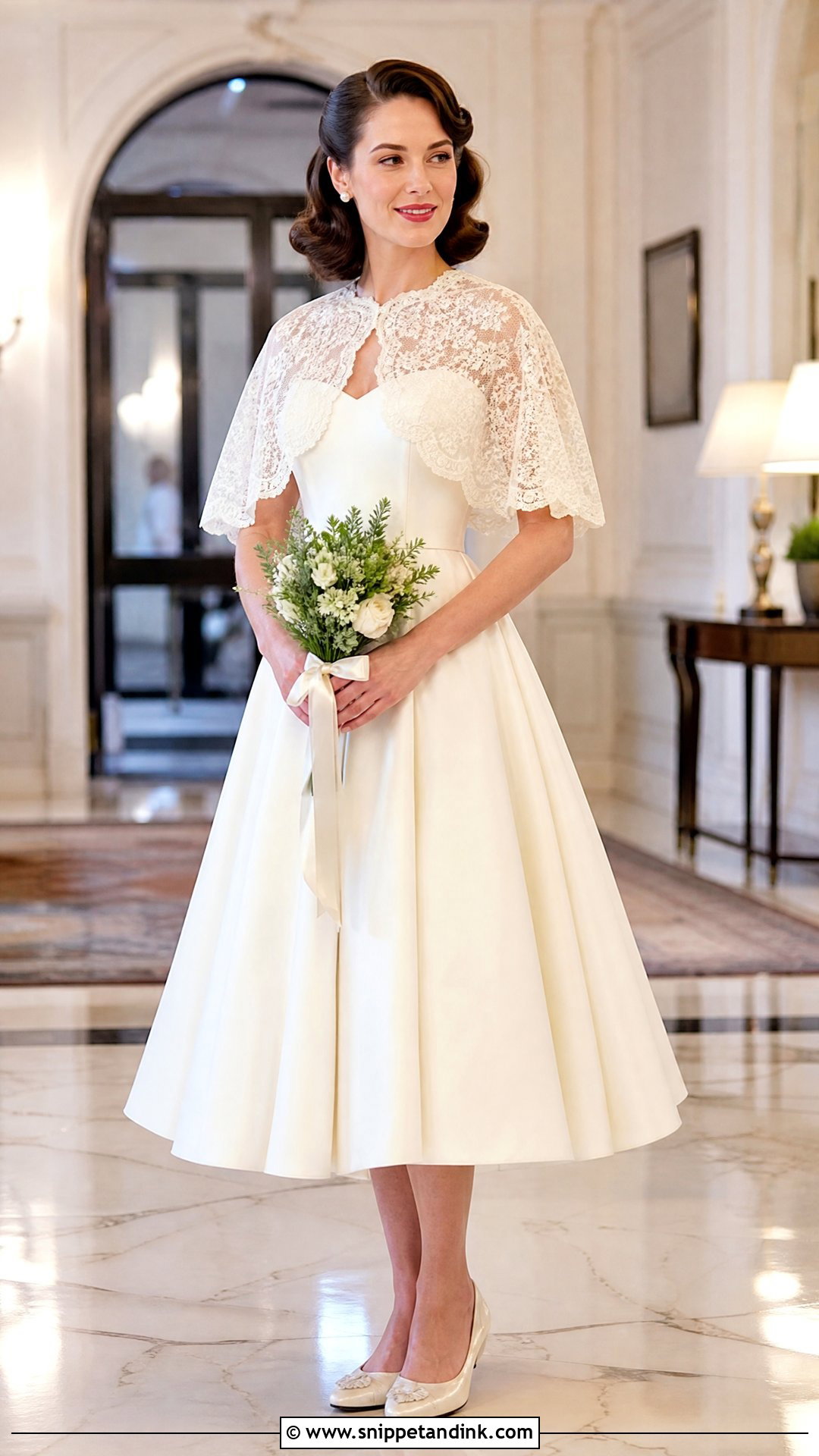
A lace capelet keeps a vintage gown light and wearable. Choose tea length or floor length with a defined waist, a softly fitted bodice and a quiet skirt. Add a scalloped lace capelet ending at the elbows or the waist; covered buttons, fine beading or a small collar can support the period feel. Keep the lace motif in scale with the dress, which usually means smaller motifs. Old capelets bought secondhand often have yellowed or weakened lace, so I have them checked and stabilised before any alteration. Low pumps, pearl studs, brushed waves in a side-parted updo and a compact bouquet tied in satin ribbon complete it without tipping into costume.
19. Princess Wedding Dress With Sparkle Cape
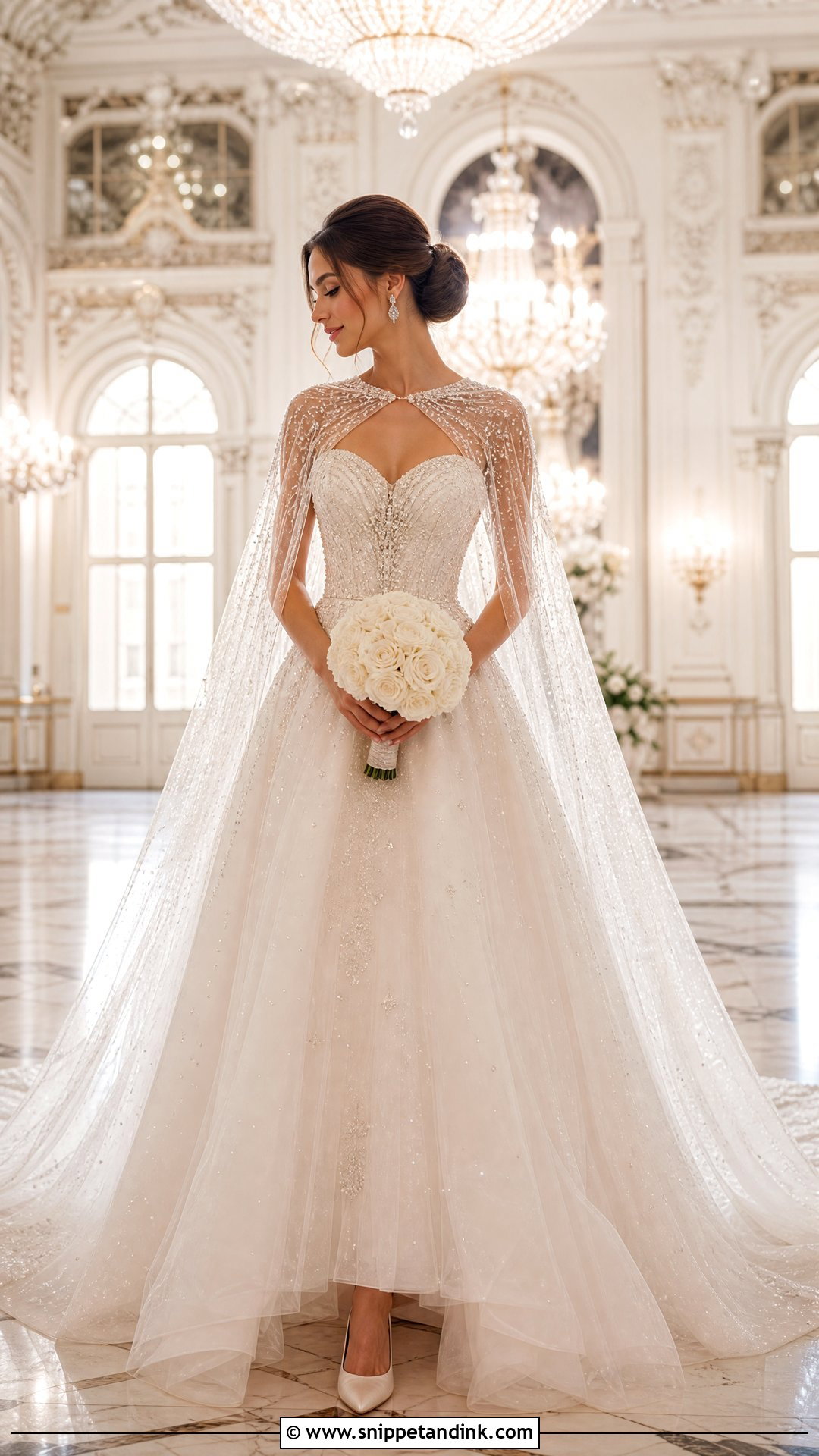
A princess gown can take a sparkly cape if the shine is spread out. Start with a fitted bodice and a big tulle skirt, plain or lightly glittered, then add a sheer cape with scattered crystals rather than a solid layer of shine. Attaching it at the shoulders keeps it above the skirt and gives a long, clean line down the back. Under camera flash, crystals on two layers can look busy, so I check a phone photo with flash on at the fitting before signing off. Crystal earrings, satin pumps and a bun with a delicate comb finish the look, with a rounded white bouquet. Leave out the big necklace and the jeweled belt.
20. Simple Wedding Dress With Removable Cape
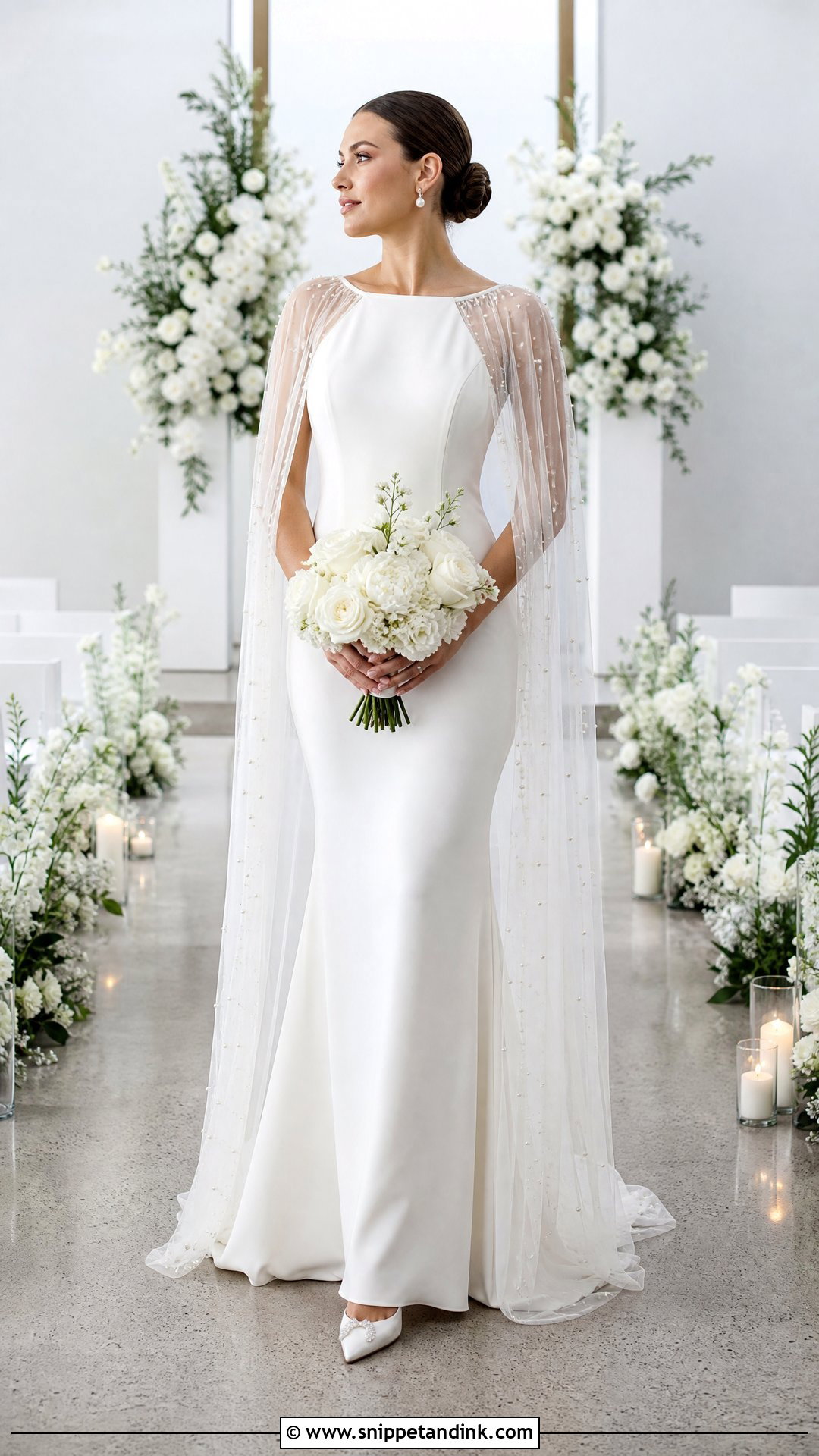
One plain dress, two looks. Choose a clean crepe, satin or mikado gown in a sheath, A-line or fit-and-flare shape, then add a removable cape decorated with lace or pearls for the ceremony. Hidden attachments under the straps or neckline let it come off without changing the dress. Pick a hairstyle that works with both versions, since you will not have time to restyle, and versatile ivory heels with classic earrings. During alterations, sit, walk and turn with the cape on. If it catches under you when you sit, it needs shortening at the back or a different fastening point.
Do You Still Need a Veil If You Wear a Cape?
Often, no. A cape already gives you the long sheer line from behind that most brides want a veil for. Wearing both can work, but it takes some planning, because two layers of tulle hanging from roughly the same spot tend to tangle and cling to each other.
- If you want both, let them differ in length by at least a foot, so the edges do not sit on top of one another.
- Place the veil comb above the bun, not below it, so it drops behind the cape rather than onto it.
- Choose a plain veil edge if the cape is decorated, and the reverse if the cape is plain.
- A short blusher over the face plus a long cape is the easiest pairing to wear.
Pressing and Storing a Cape After the Wedding
Sheer capes crease less than gowns but snag more. Steam tulle and chiffon from a distance, never with an iron, and keep velvet away from direct pressure entirely. For storage, roll the cape loosely around acid-free tissue instead of folding it, so you avoid permanent lines across the shoulders, and keep it in a breathable cotton bag away from light. Beaded and pearl capes should lie flat, since hanging lets the weight stretch the fine mesh over time.
Have the Cape Fitted on Your Actual Gown
A cape should frame your gown, never bury the neckline, waist or overall shape. Sheer tulle, lace, velvet and crystal each set a different mood, so let your venue, season and the dress fabric decide which one. Think about how much you need to move before settling on length. Detachable capes give you flexibility; integrated cape sleeves give a cleaner finish. Keep jewelry restrained, shoes comfortable and hair off the shoulders. Above all, never alter the cape on its own. It has to be fitted while you wear the actual gown, because that is the only way to see how the two hang together.
You'll Like These Ideas:


Leave a Reply