
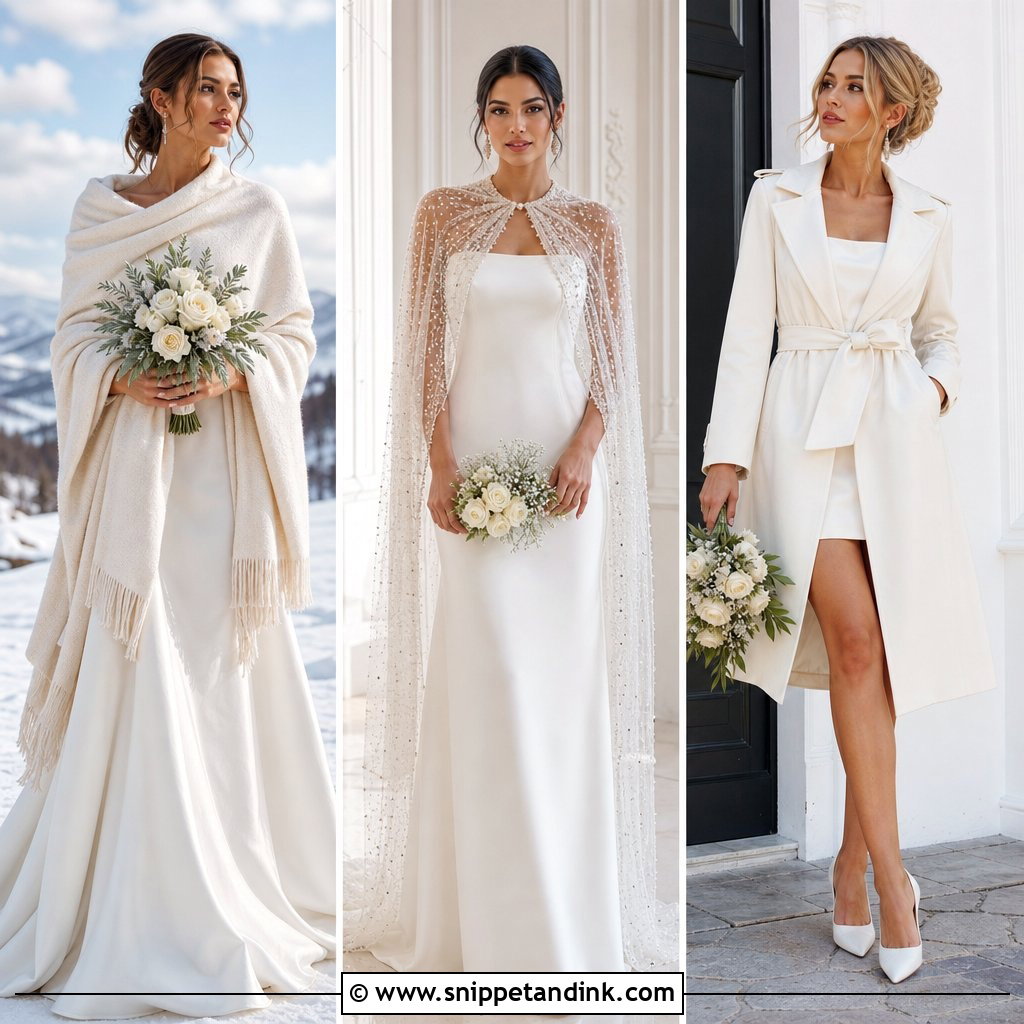
A cape is the one winter layer that adds to a wedding dress instead of hiding it. It warms the shoulders, moves when you walk, and comes off in seconds before the reception, which makes it an easy second look. How warm it needs to be depends on the venue: velvet, faux fur, jacquard and wool-blend designs protect you outdoors, while pearl tulle, lace and embroidered capes are mostly decoration for indoor ceremonies. Lengths run from a short capelet to a cathedral cape that replaces the veil. Before choosing, I think about fabric weight, where it fastens, train length and what the dress is already doing. The twenty pairings below show how each type works with a specific gown.
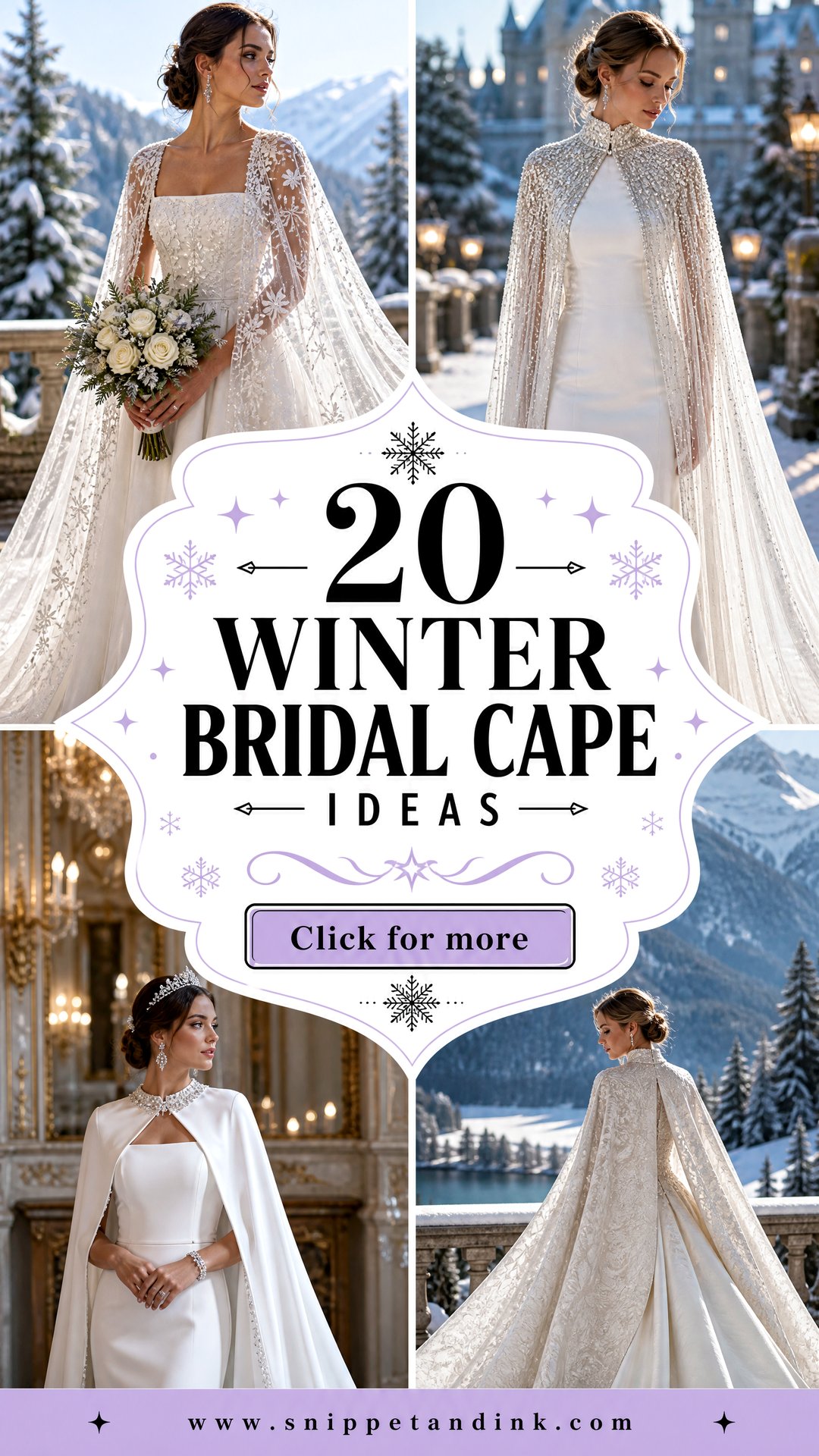
Where a Cape Fastens Decides How It Hangs
Most cape problems I see at fittings have nothing to do with style. They come from how the cape is attached. A cape held only by a tie or hook at the throat pulls backward as soon as the bride moves, and the neckline of the gown rides up to meet it. Heavier capes, anything beaded, velvet or long, need to be anchored at the shoulders as well.
- Shoulder snaps or thread loops sewn into the gown’s shoulder seams carry most of the weight and keep the cape centered.
- A neck closure, a hook, button or ribbon, keeps it closed in front but should not carry the weight alone.
- Sewn-in capes look neatest but cannot come off for the reception; detachable ones give you the second look.
- Wrist loops are useful on any cape that reaches the floor, so you can lift it on stairs.
Buy or order the cape early enough to bring it to your gown fittings. Custom capes and hand-beaded pieces can take several weeks to make, and the seamstress needs both pieces together to place the attachments. A cape added after the final fitting is the one that ends up slipping off a shoulder.
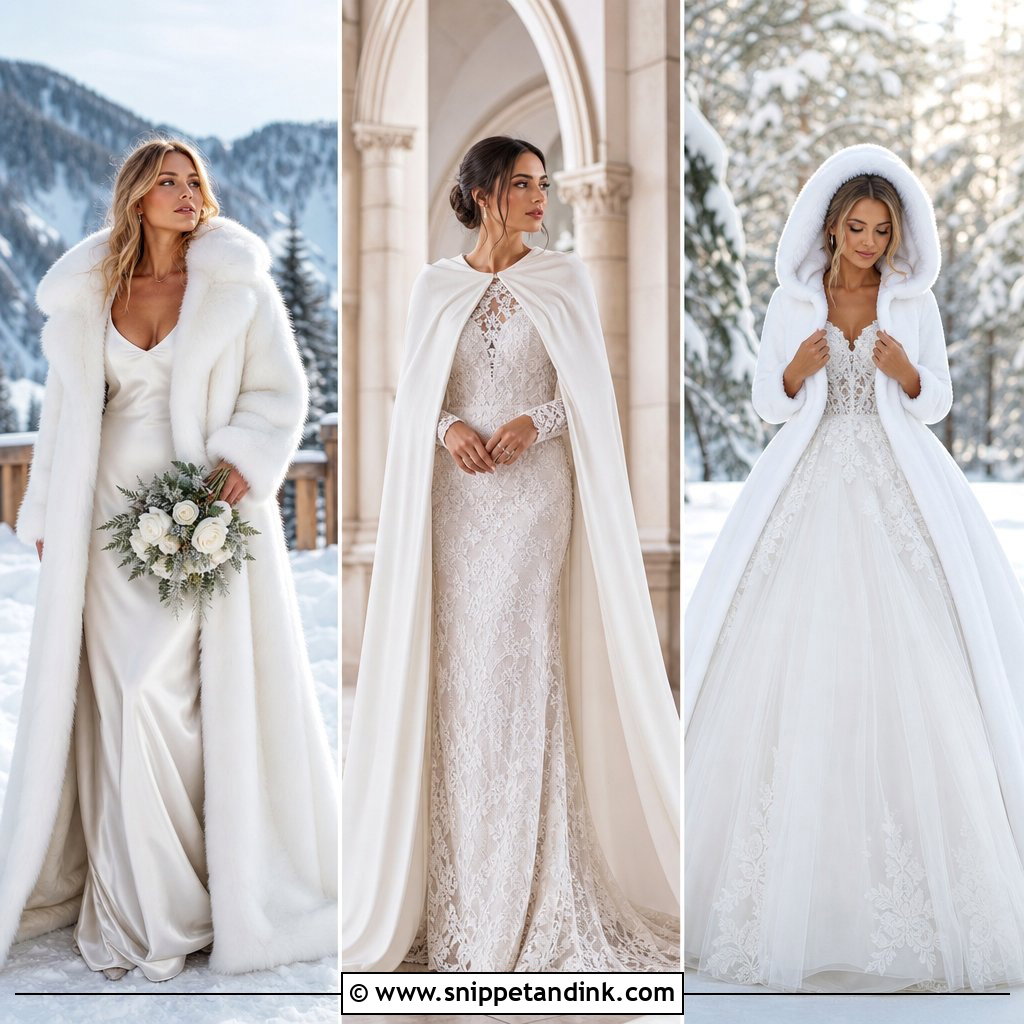
1. Ivory Faux Fur Bridal Cape With Satin Ball Gown
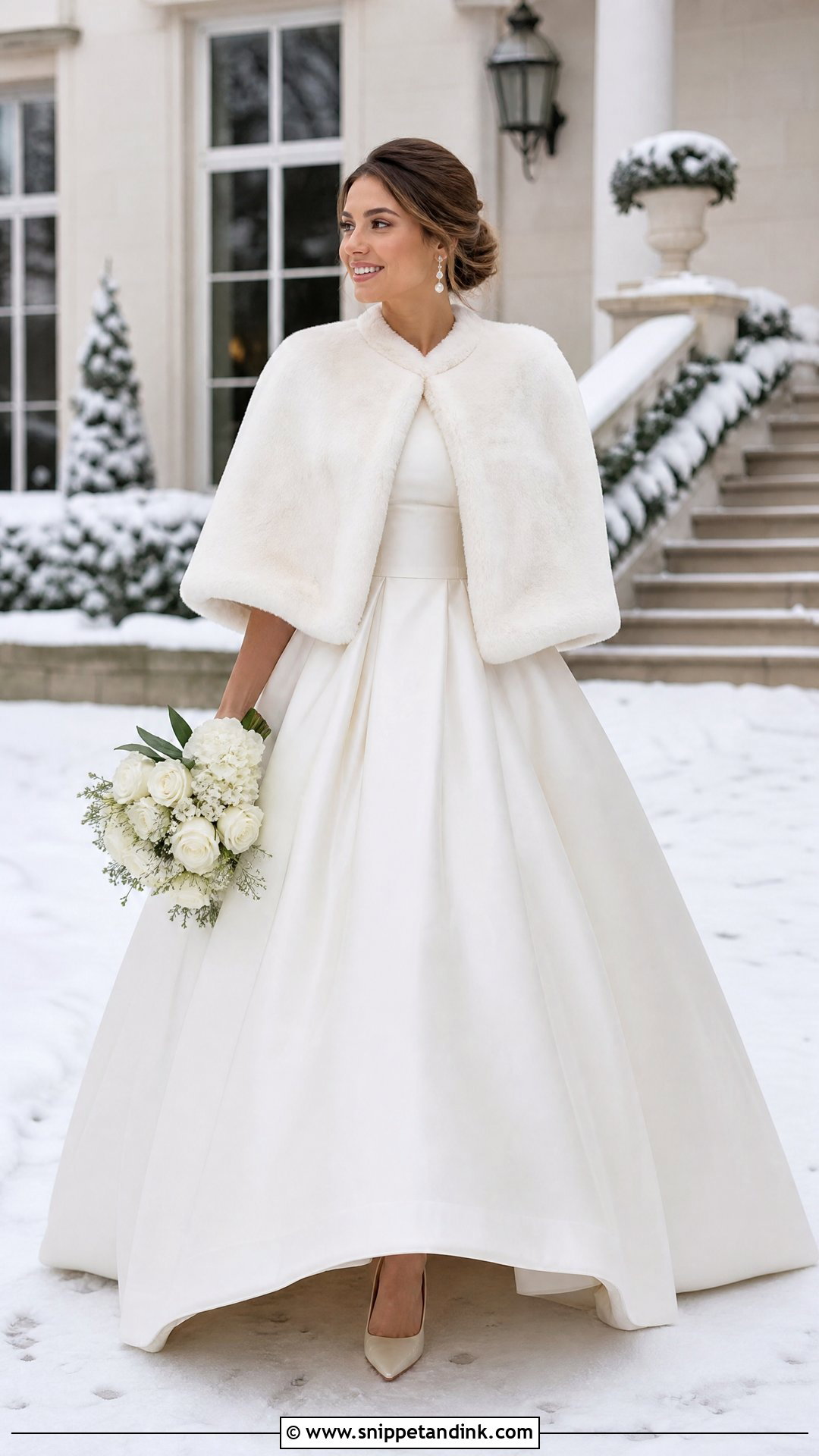
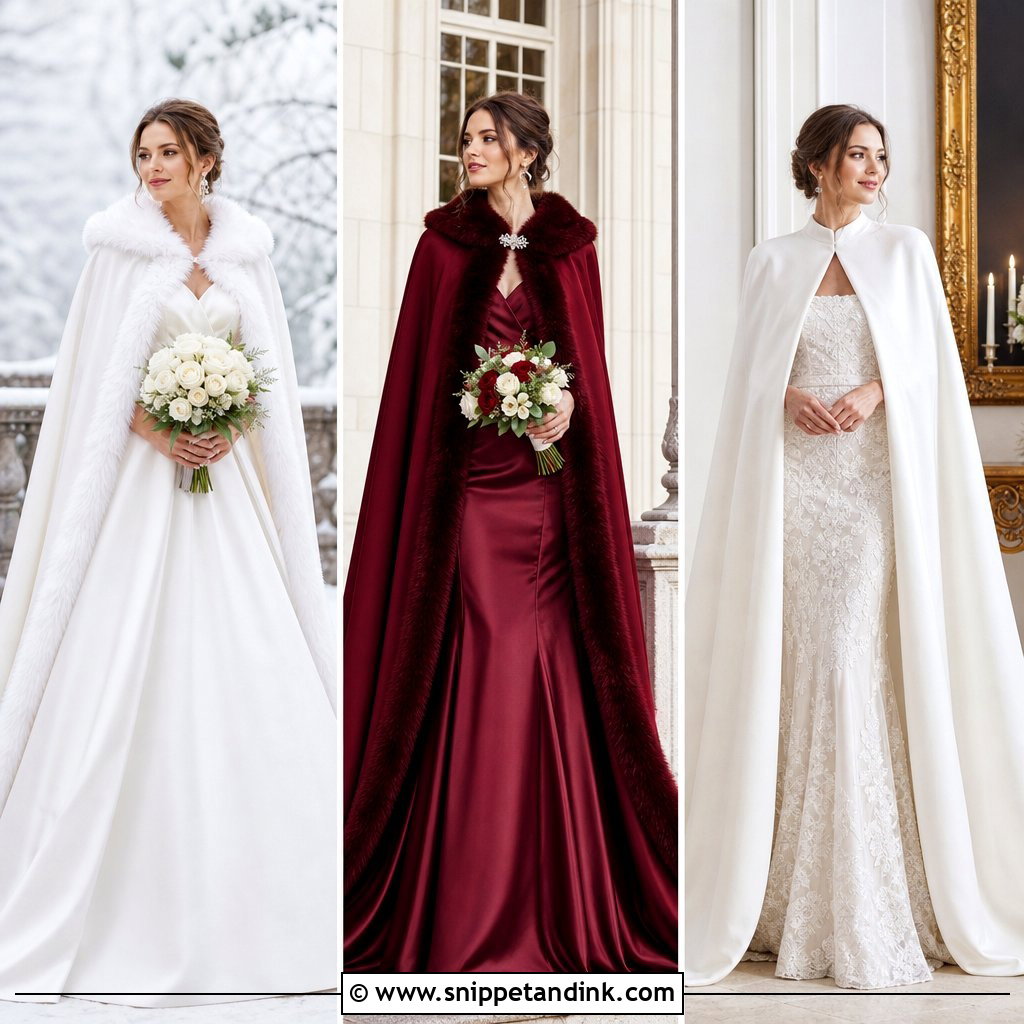
Faux fur over satin is the classic winter pairing, and the lining makes or breaks it. An unlined fur cape grips satin and drags it sideways; a smooth lining lets it rest over a structured bodice without bunching. I keep it waist-length so the ball gown skirt stays the focus. A bateau or strapless neckline sits cleanly underneath. Pearl drops, a sleek low bun, ivory pointed pumps and a satin clutch finish it. Match the ivories carefully, because fur tends to look whiter than satin. For snowy portraits, thermal shorts and warm insoles stay invisible.
2. Hooded Velvet Bridal Cape With Long-Sleeve A-Line Dress
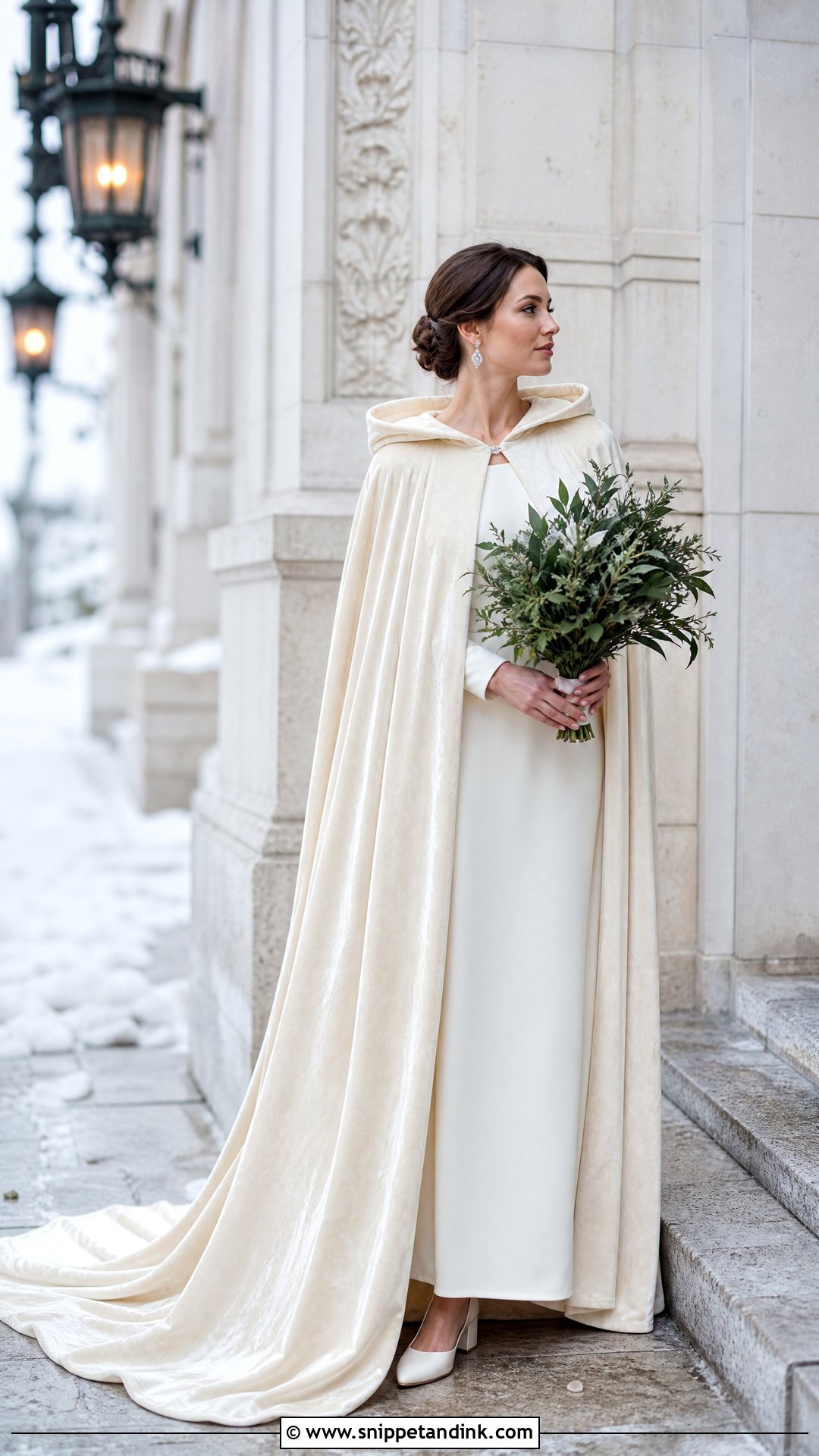
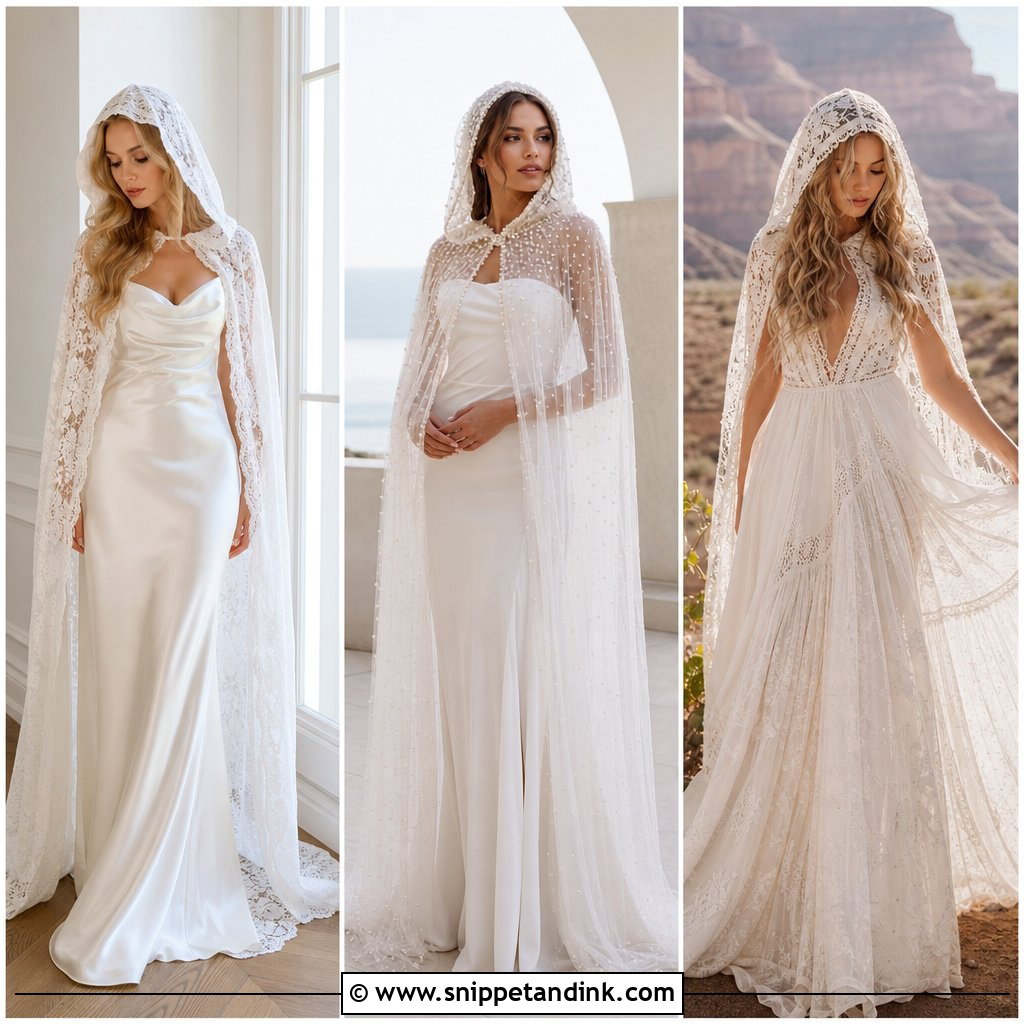
Floor-length velvet with a hood over a long-sleeve A-line dress is about as storybook as winter bridal gets. The hood should be roomy enough to frame the hair rather than flatten it, so a low chignon or soft braided updo is the practical choice. Velvet is the star; the gown underneath should be plain crepe or satin. Velvet is also heavy, and I’d have the hem measured with the actual wedding shoes, because an extra inch of velvet catches under the heel on every step. Crystal earrings, closed block heels and a bouquet of white blooms and greenery complete it.
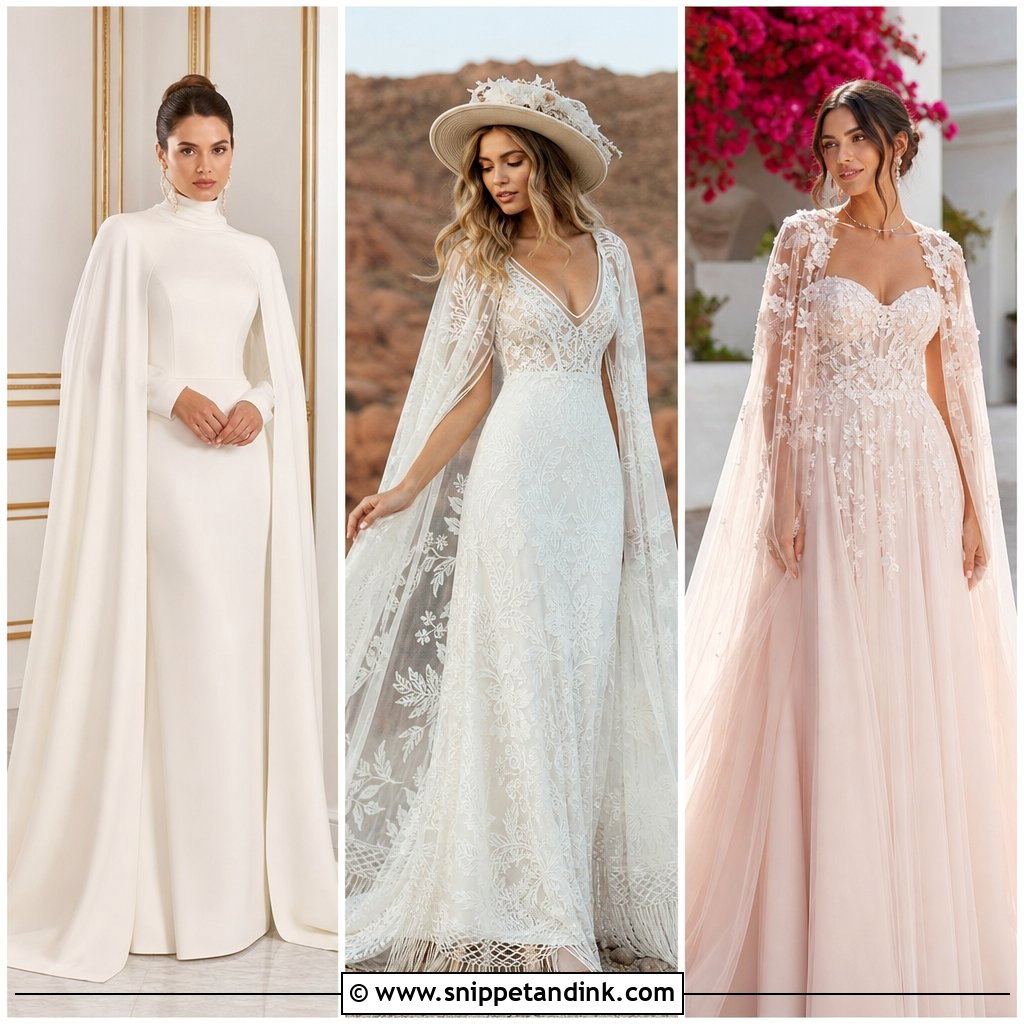
3. Cathedral Tulle Bridal Cape With Crepe Column Dress
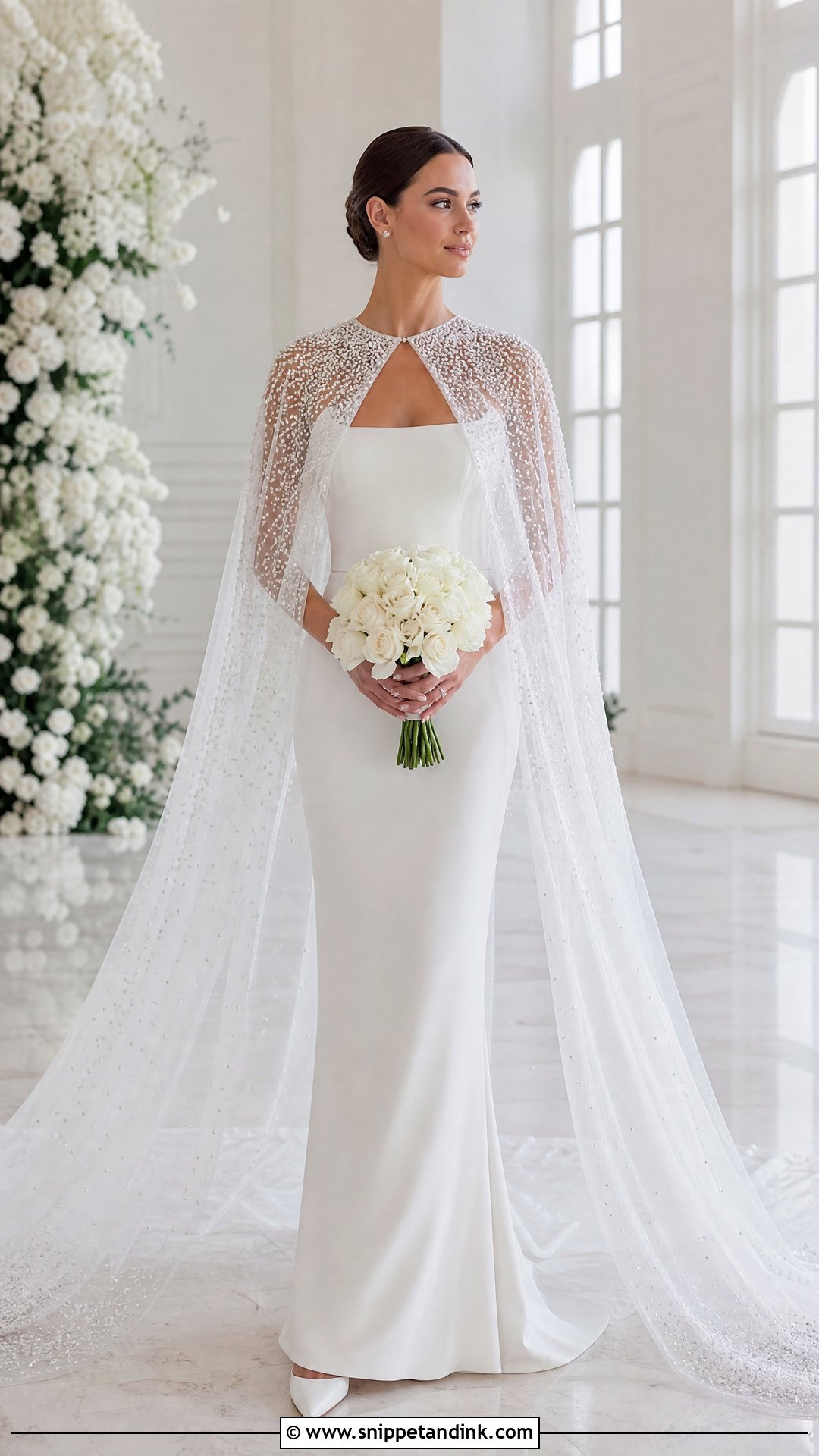
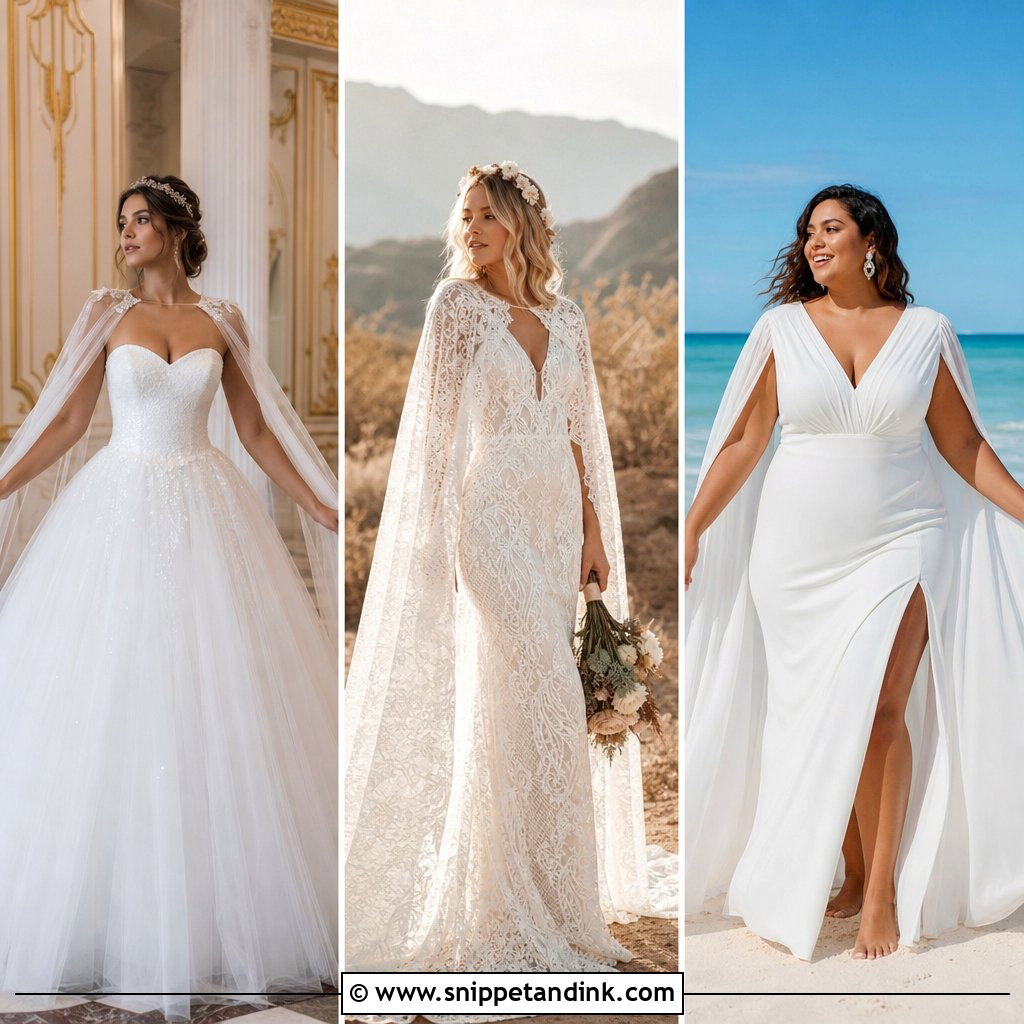
A cathedral tulle cape gives the long sweep of a veil while leaving the hairstyle fully on show. Over a crepe column dress with a square, bateau or soft scoop neck, the contrast between fitted and floating keeps it modern. Scattered crystals add a little winter sparkle; plain tulle keeps it minimal. Pointed satin pumps, small studs and a structured white bouquet finish it. Tulle gives almost no warmth and catches every gust, so I’d keep this for indoor ceremonies with a hidden wrap for transfers. Fasten it to reinforced loops at the shoulders, not to delicate straps, so the long train doesn’t pull the gown backward.
4. Pearl Bridal Cape With Minimalist Satin Gown
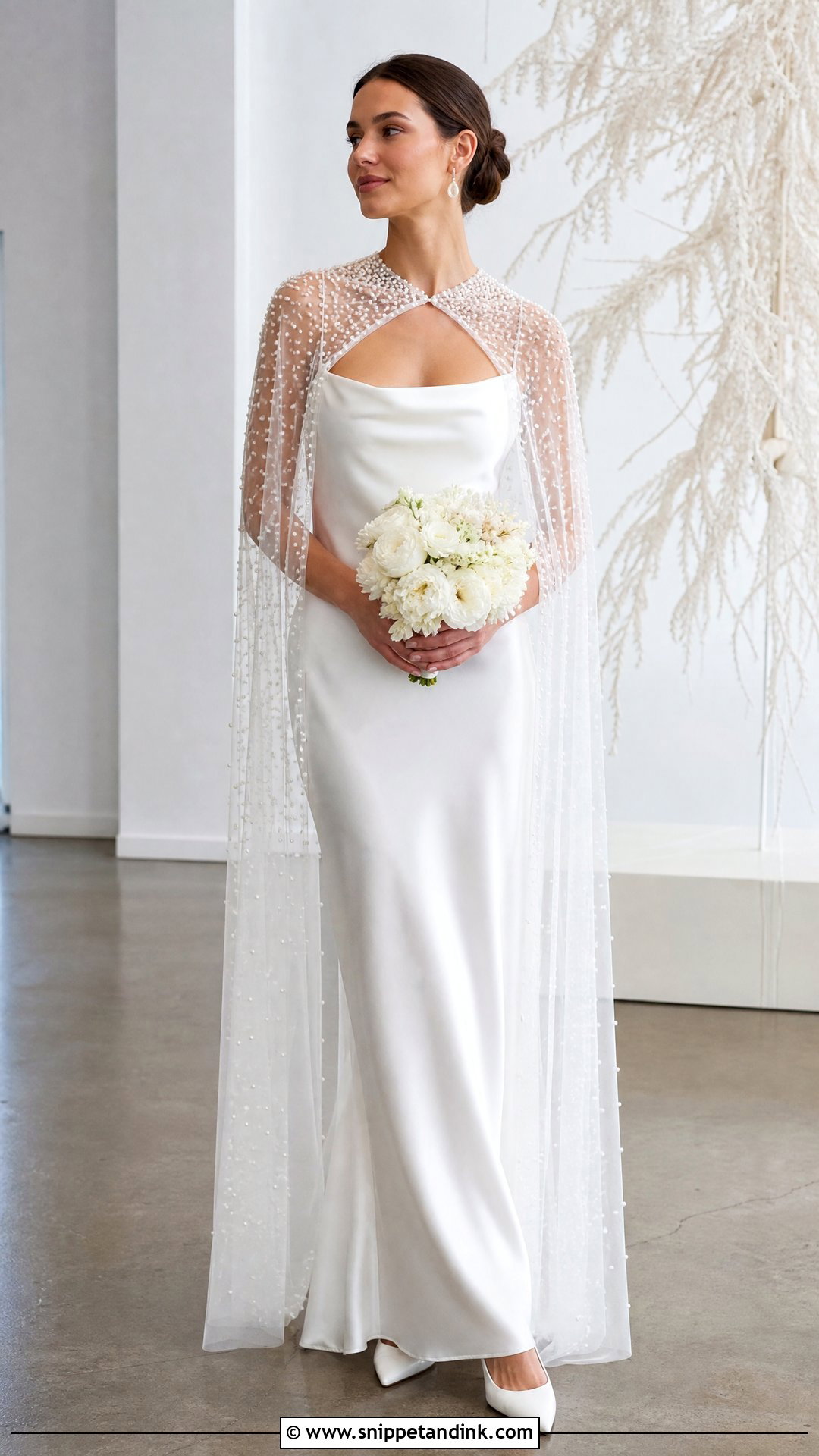
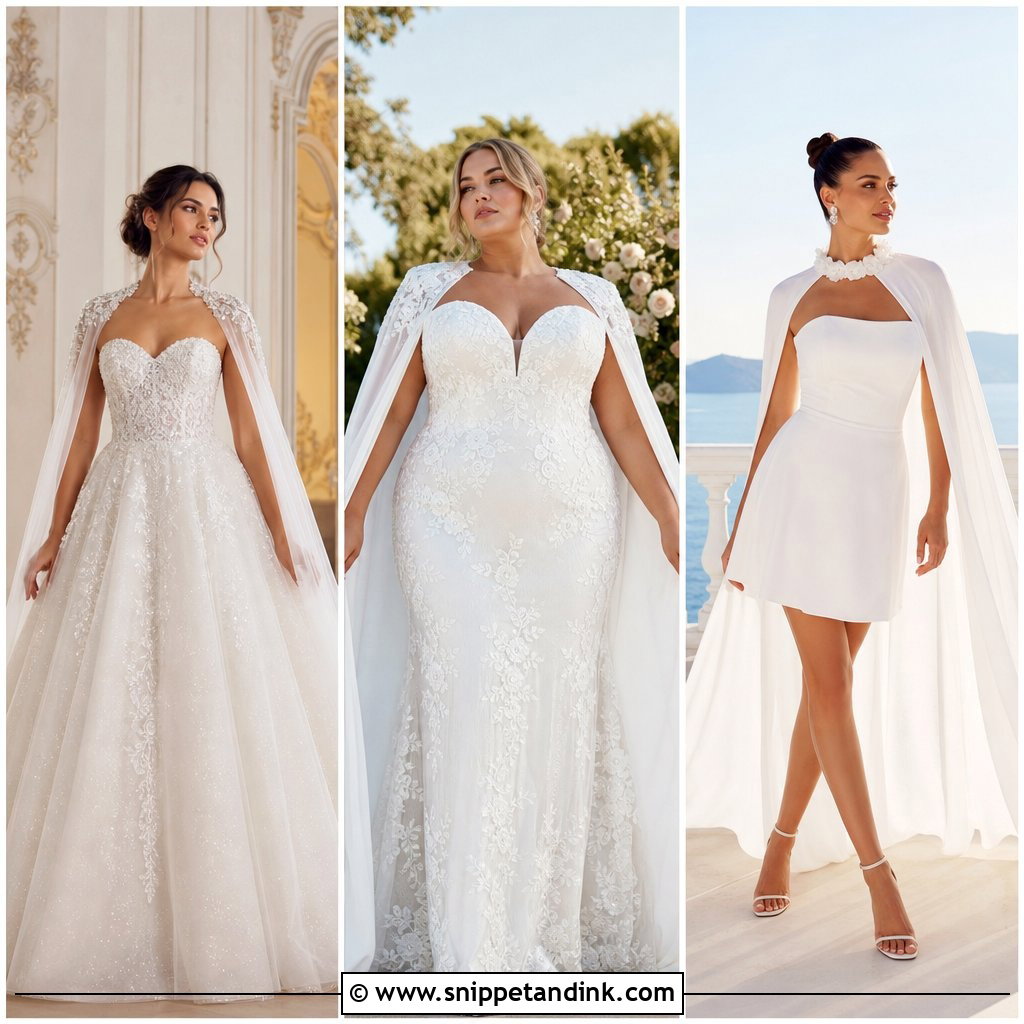
Pearls give a plain satin gown all the decoration it needs. A sheer cape with evenly spaced pearls at chapel or fingertip length looks finished over a bias-cut, sheath or simple A-line. The weight is what I check first: real or glass pearls add up quickly, so lightweight pearls and two reinforced attachment points keep it from dragging the neckline. Skip the necklace, since the cape already acts as one. Pearl earrings, a sleek bun, white slingbacks and a small ivory bouquet complete it. Remove the cape later and the dress becomes a clean reception look.
5. Lace Hooded Bridal Cape With Long-Sleeve Wedding Dress
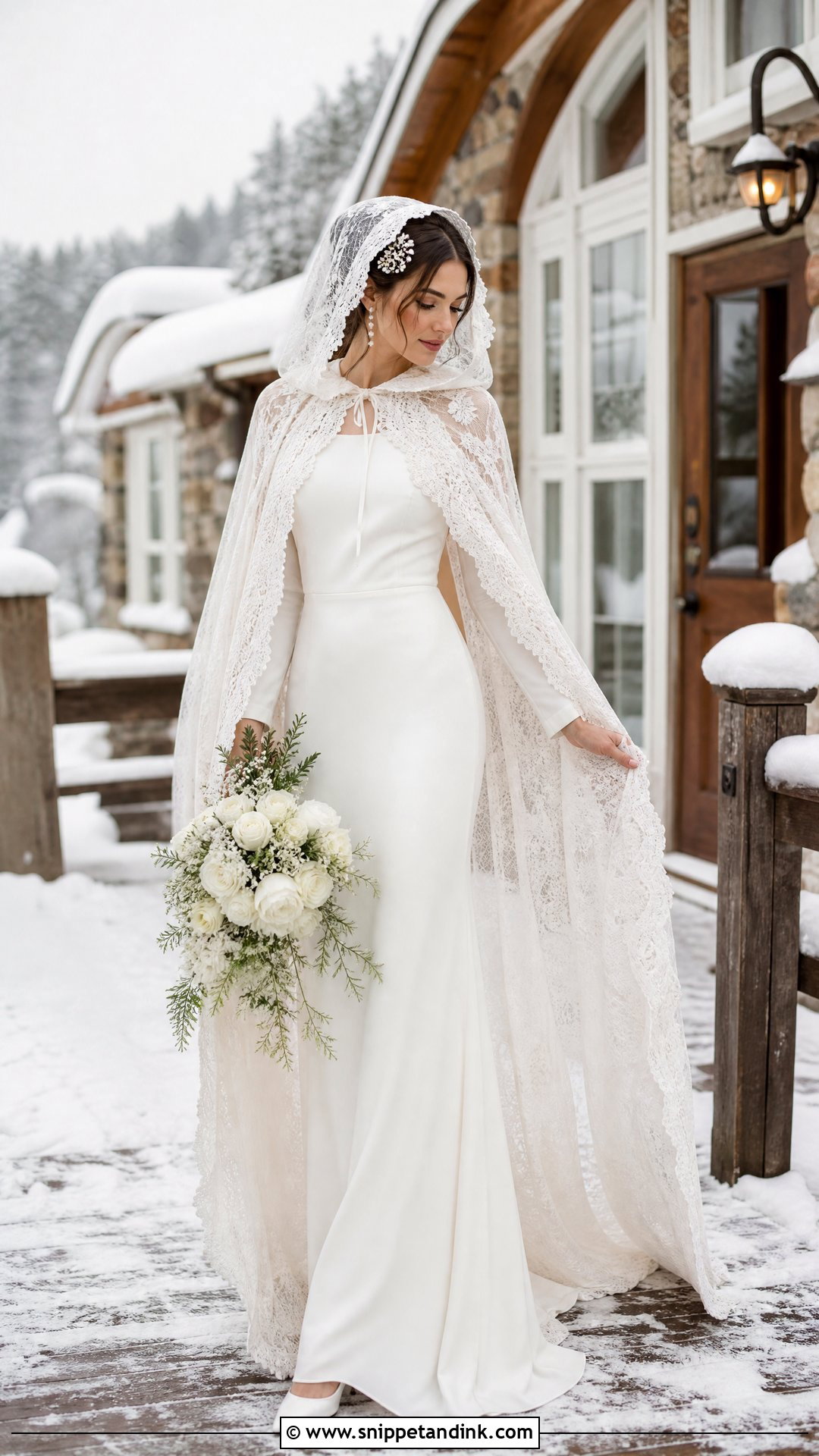
A lace hooded bridal cape gives coverage that feels light and romantic. I pair it with a long-sleeve gown in smooth crepe or matte satin so the lace has no competition. A scalloped hem, gentle shoulder shaping and a hood big enough to rest behind an updo are what I look for. The lace doesn’t need to match the dress exactly, but the motif scale and the shade should be close, or one will look like a stand-in. Pearl pins, simple drops, almond-toe heels and a loose bouquet finish it. Lace alone is cold outdoors, so a removable lining helps.
6. Wool Bridal Cape With Tea-Length Wedding Dress
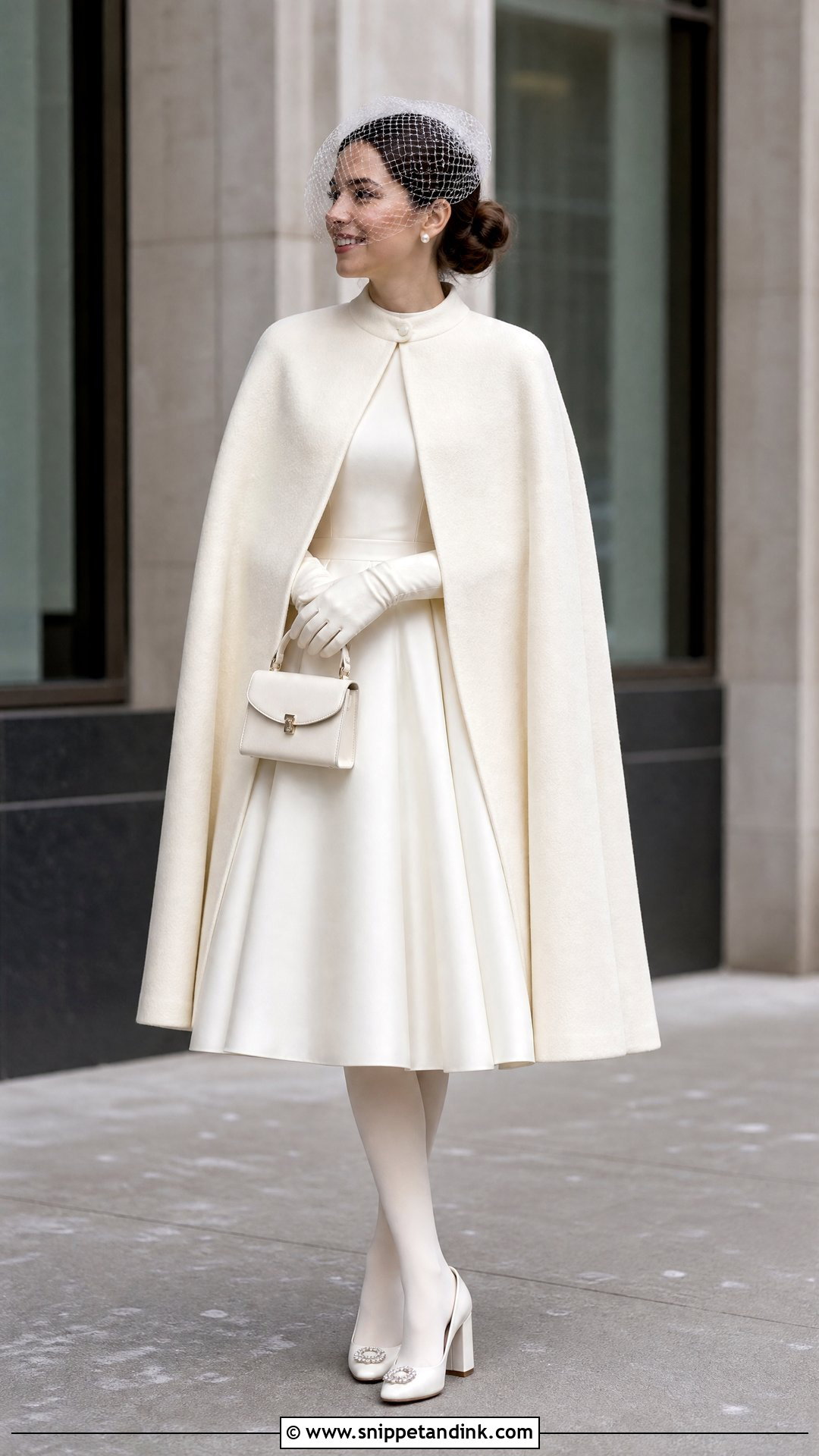
Wool and a tea-length dress give a vintage feel that is also properly warm. The cape should stop at the waist or upper hip so the full skirt still shows; anything longer turns the outline into a triangle. An ivory wool blend with a stand collar, covered buttons and a silky lining that won’t catch on lace is ideal. Opaque ivory tights, embellished block pumps, pearl studs and a small structured bag suit it, with a birdcage veil or French twist. Sit down in it at the fitting; stiff wool collars can dig into the neck when you’re seated.
7. Fur-Trimmed Velvet Bridal Cape With Strapless Ball Gown
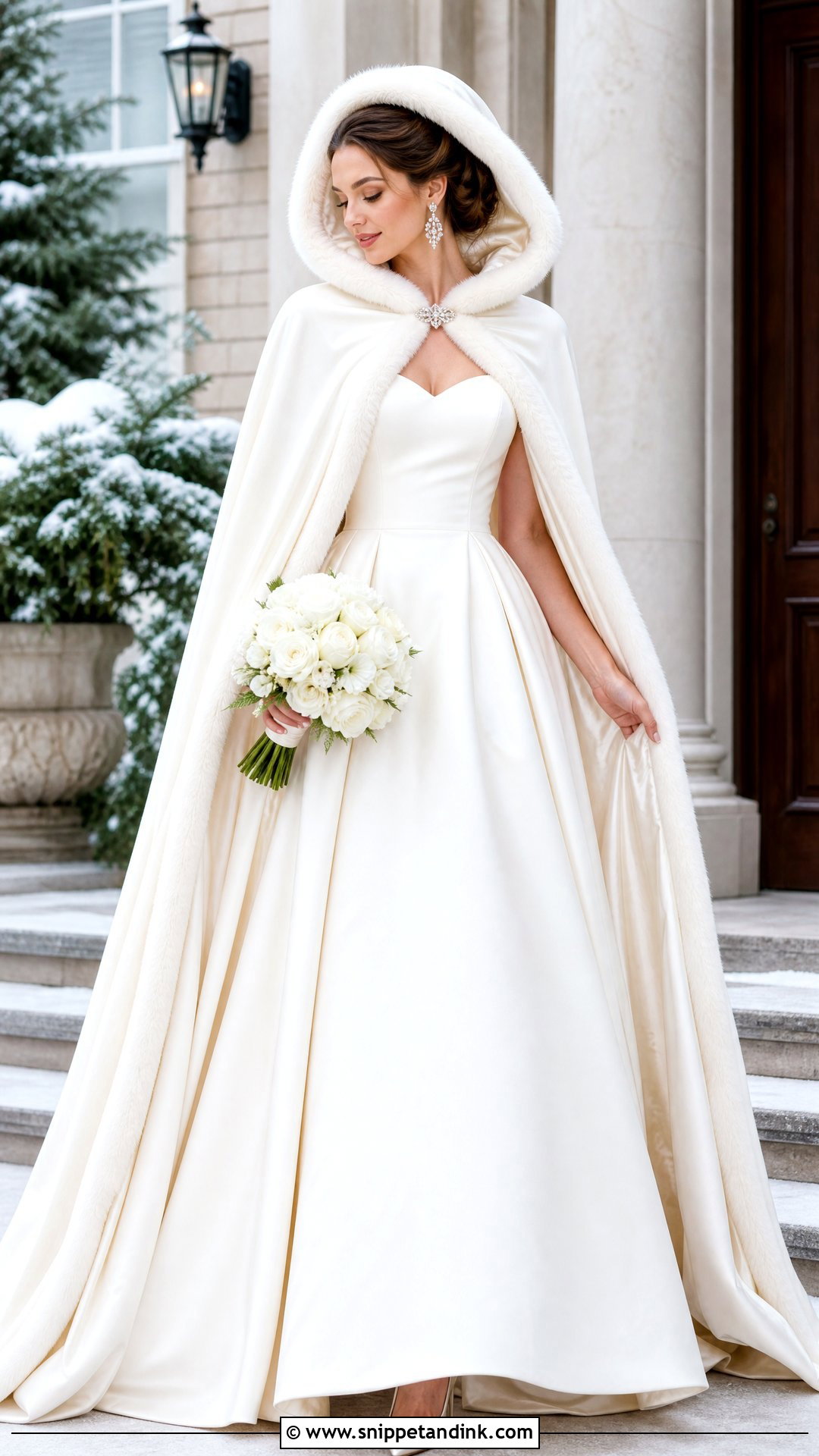
Velvet with fur trim makes a strapless ball gown workable for a cold outdoor entrance. A full-length cape with narrow faux fur along the hood, neckline and front opening looks regal without overwhelming the dress. The gown underneath needs structure, satin or Mikado, to carry the weight of the cape. A sparkling comb, crystal studs, closed satin heels and a formal white bouquet complete it, and no necklace, since the trim already frames the face. Ivory on ivory is traditional; pale blue or soft gray adds a hint of contrast. Fit both pieces together so the cape closes without crushing the bodice.
8. Satin Bridal Cape With Mermaid Wedding Dress
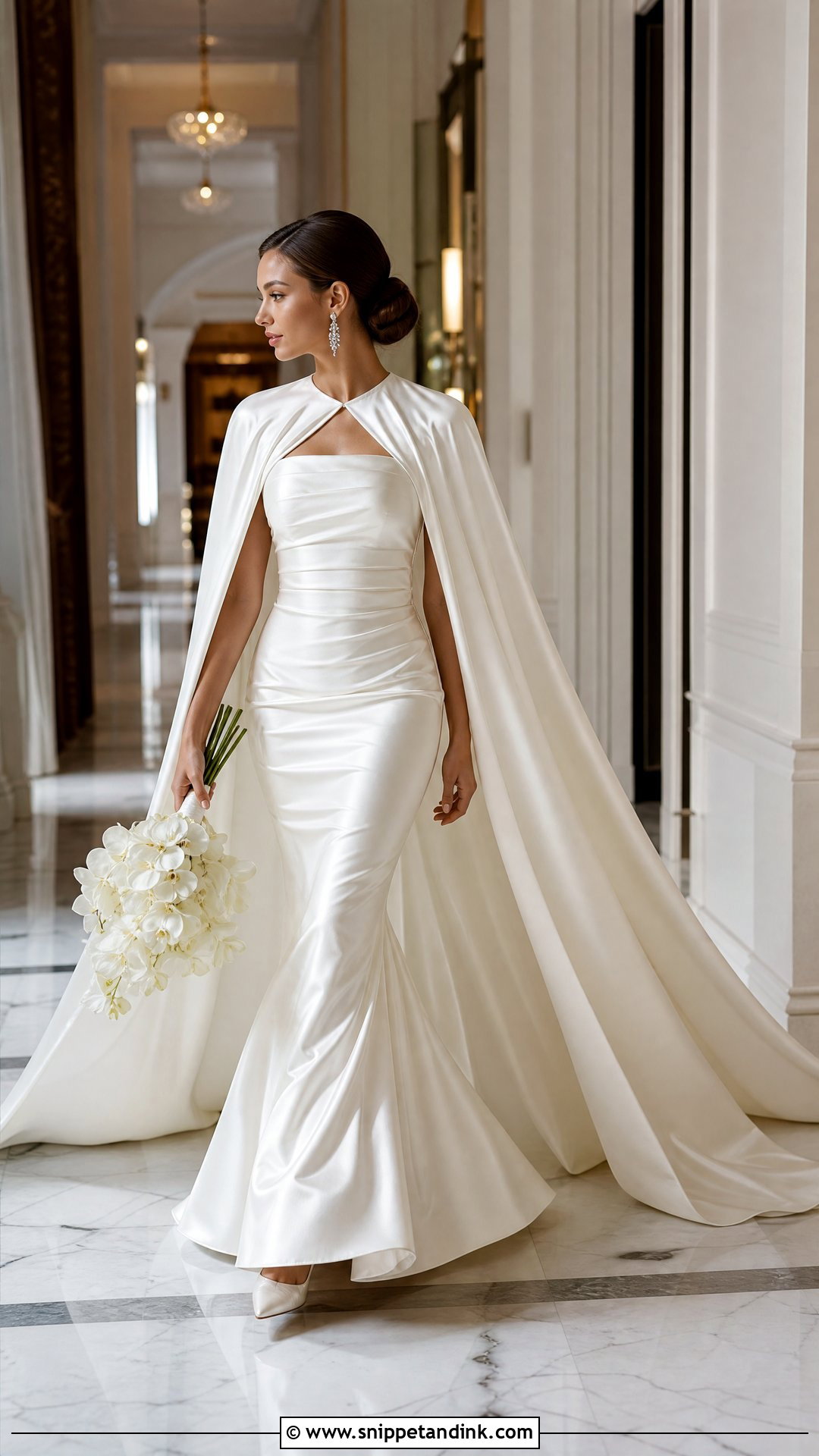
With a mermaid gown, the cape should add movement without adding bulk. A floor-length liquid satin cape that falls from the shoulders and opens at the front keeps the fitted bodice and flared skirt visible. If the gown already has a dramatic train, I keep the cape’s train shorter so the two don’t fight. Match the satin’s sheen and undertone closely to the dress. A side-parted bun, crystal drops, pointed pumps and a long-stem bouquet finish it. Ask for discreet wrist loops; lifting a long satin cape on stairs is much easier with them.
9. Embroidered Tulle Bridal Cape With Square-Neck Gown
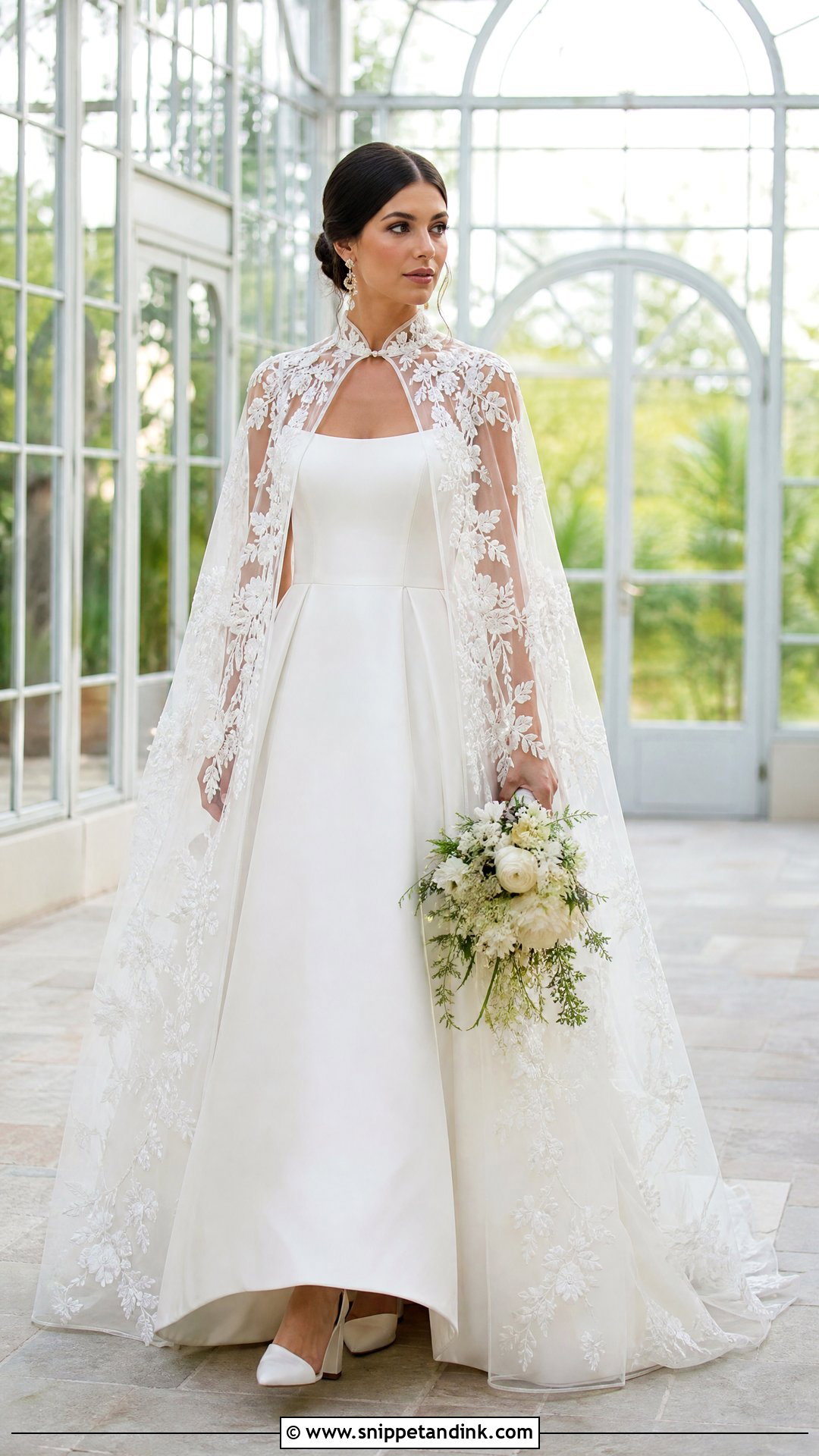
Embroidery needs a plain background to read, which is why I pair an embroidered tulle cape with a square-neck gown in matte crepe or Mikado rather than lace. Look for white floral motifs, silver thread or fine beading concentrated at the shoulders and hem. The square neckline frames the upper body neatly under the sheer layer. A center-parted updo, small gemstone earrings, satin block heels and a loose bouquet complete it. Turn the cape inside out before buying: rough knots on the reverse can pull threads on a delicate dress, and a soft shoulder facing solves it.
10. Feather Bridal Capelet With Silk Slip Dress
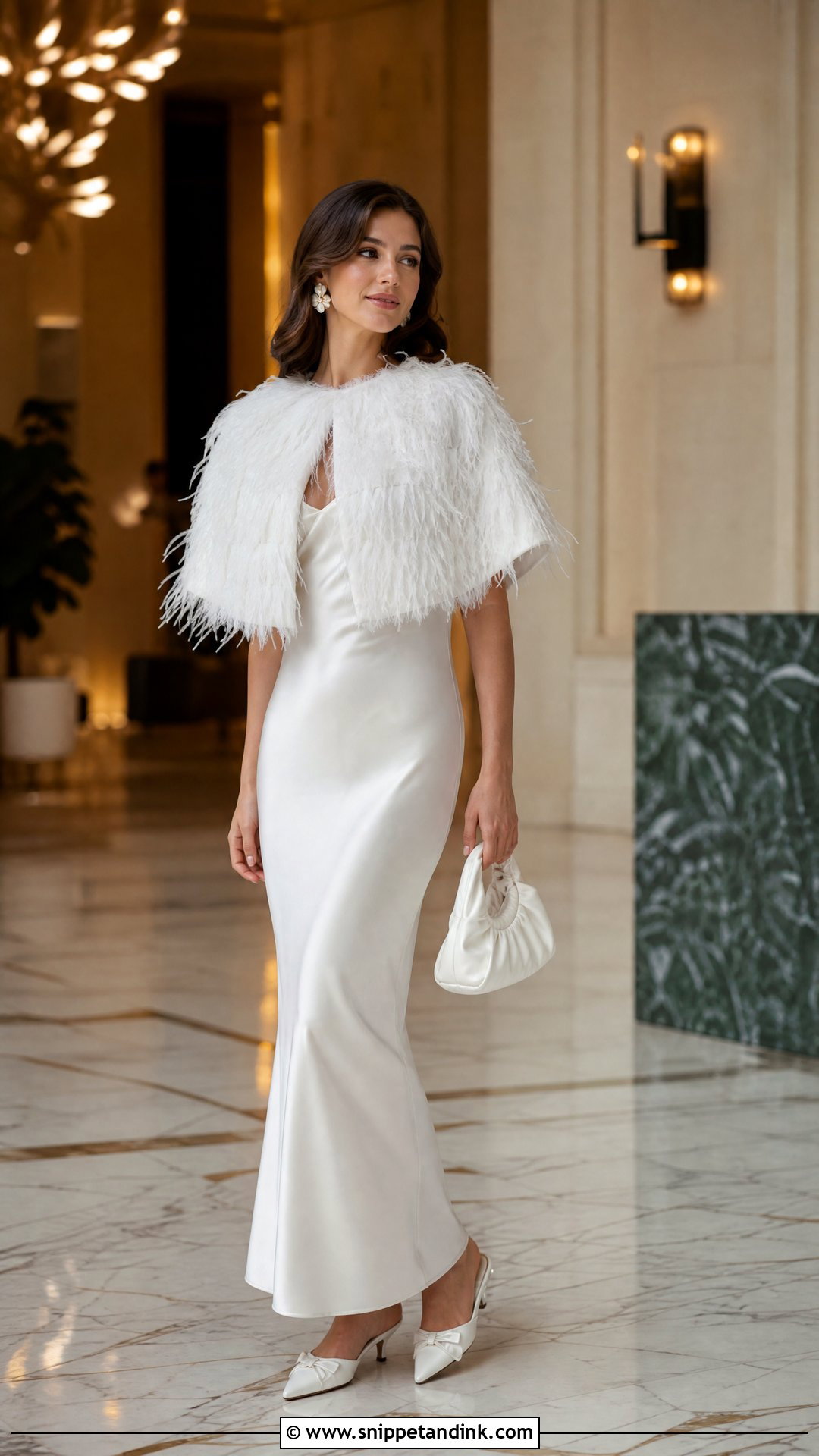
A feather bridal capelet adds playful movement to a silk slip dress. Keep it cropped above the waist so the long line of the slip survives, and choose soft synthetic trim rather than a thick, oversized ruff. Polished waves, statement earrings, pointed kitten heels and a small satin bag are enough with this much texture. It’s an indoor piece, best for a hotel ceremony or a reception entrance. Feathers shed, and silk shows every fiber, so I’d test the capelet against the dress beforehand and steam the two separately. A hidden hook or ribbon fastening keeps it secure.
11. Beaded Bridal Cape With High-Neck Crepe Dress
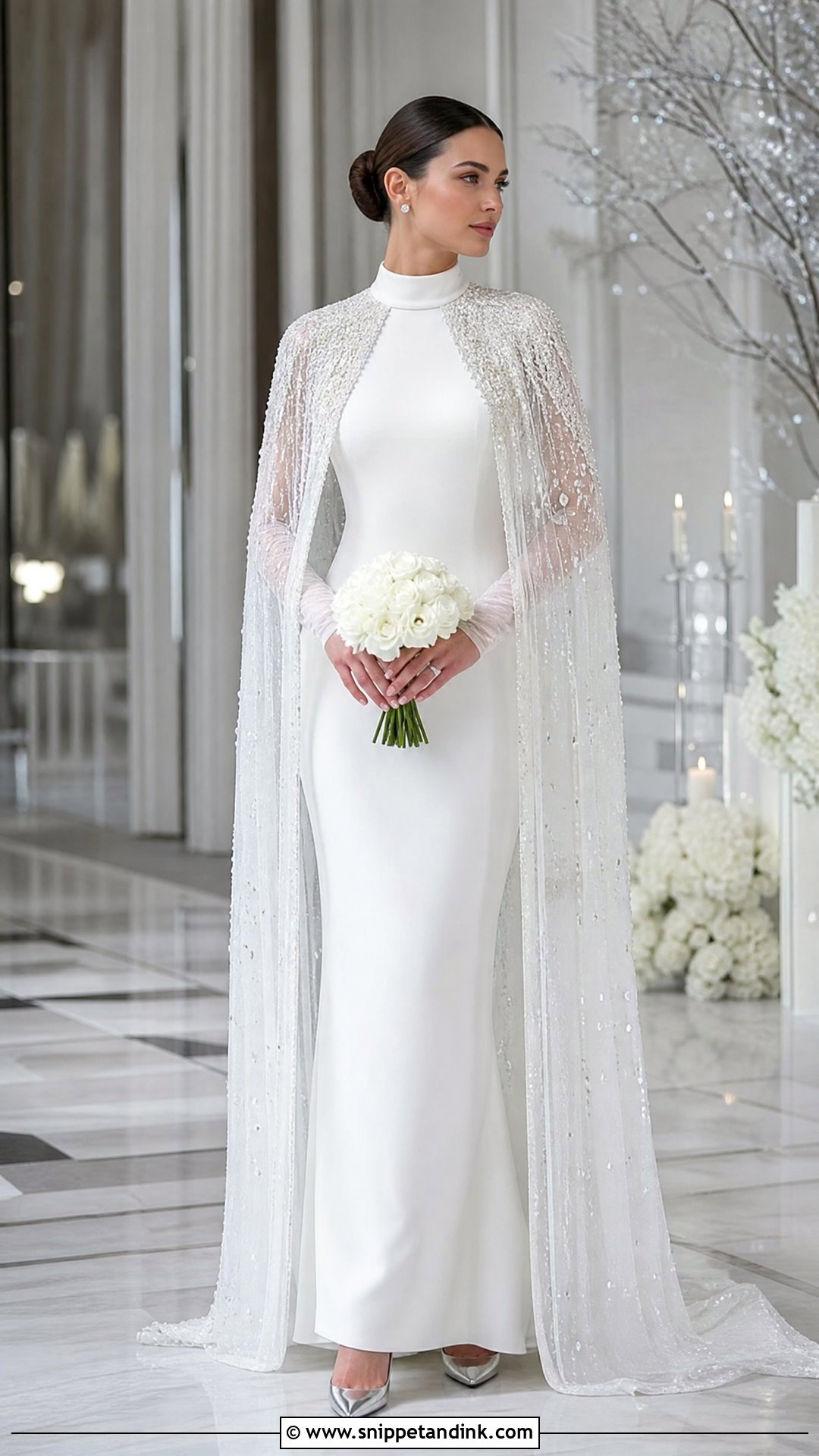
A beaded cape over a high-neck crepe column looks spectacular in evening light, and it’s also the heaviest option here. I look for beading concentrated at the shoulders and thinning toward the hem, both for balance and for weight. Reinforced attachment loops are essential; without them the cape drags the neckline back and the dress pulls at the throat all night. Skip a necklace. A smooth low bun, small studs, metallic silver pumps and a compact bouquet complete it. Walk and turn in the full outfit at the last fitting.
12. Cape-Sleeve Wedding Dress With Crystal Accessories
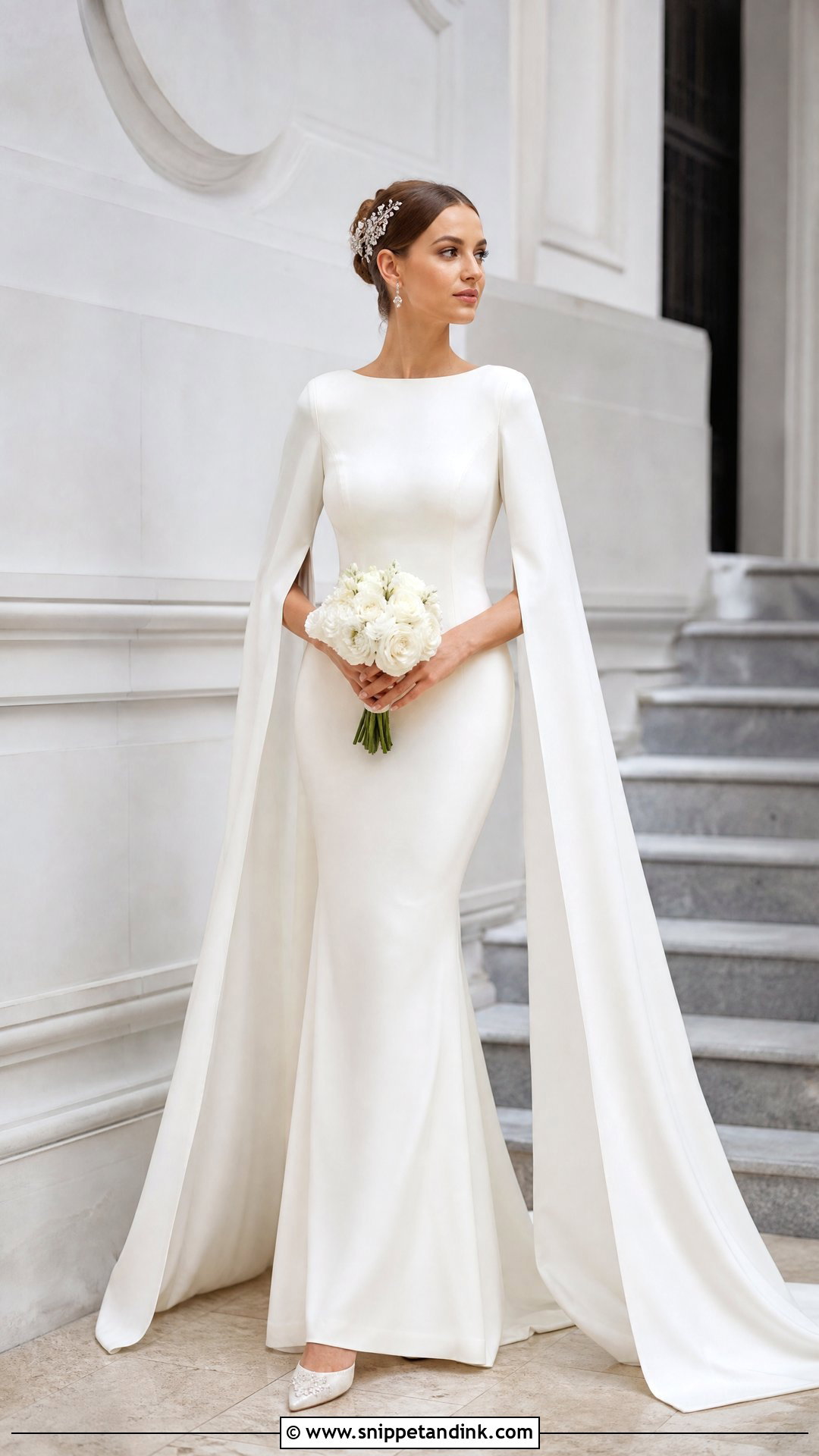
Cape sleeves give the drama without a separate layer to manage. A fitted crepe or satin gown with panels falling from the shoulders to the floor creates movement from behind. The panels should be narrow enough to leave the waist and arms visible. Because they can’t be removed, I’d test raising your arms, hugging and sitting at the fitting, since some attached panels restrict the shoulder. If they run past the hem, add a hidden bustle or wrist loops. Crystal earrings, a hair comb, pointed heels and a simple bouquet finish it, with sleek hair to show the construction.
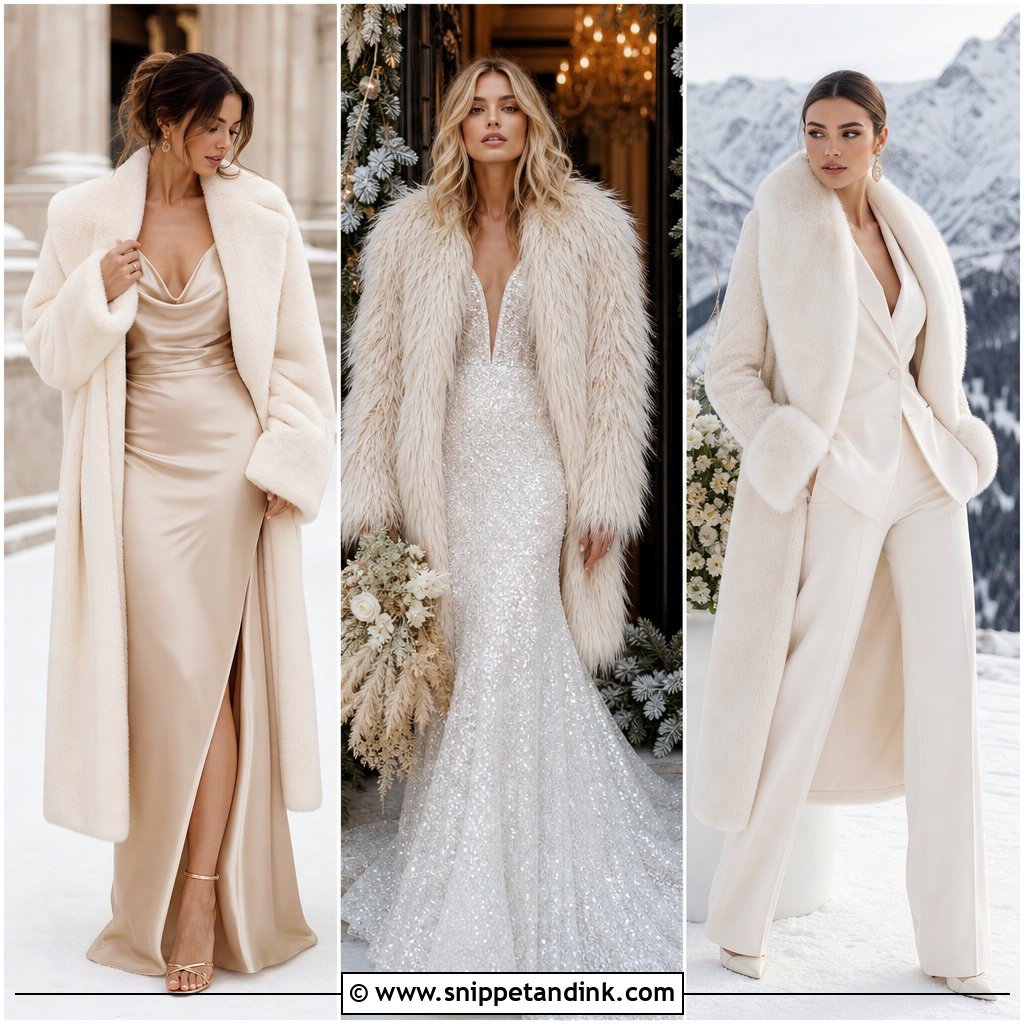
13. Blush Velvet Bridal Cape With Champagne Wedding Dress
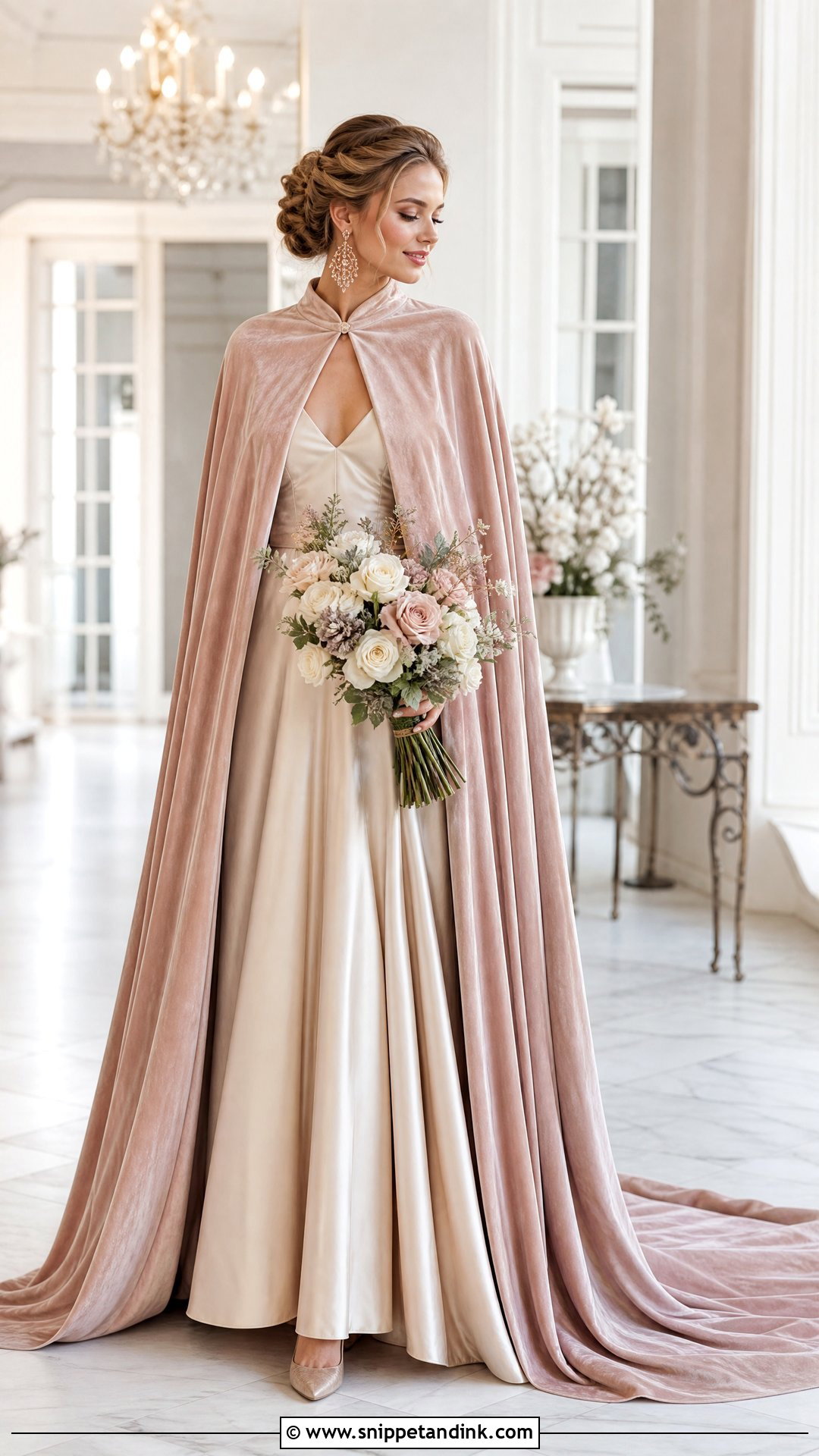
Would you prefer a touch of color to an all-white winter look? A blush velvet cape over a champagne, light gold or warm ivory gown does it softly. A softly structured cape at hip or floor length suits the formality of the venue. A satin A-line with a clean bodice makes the color pairing look planned. Keep the velvet a dusty rose rather than a bright pink. Rose-gold earrings, champagne pumps, a low textured bun and ivory and muted pink flowers complete it. I always compare the pieces in daylight and again under warm indoor light, since these undertones shift a lot.
14. Silver Faux Fur Bridal Cape With Beaded Wedding Gown
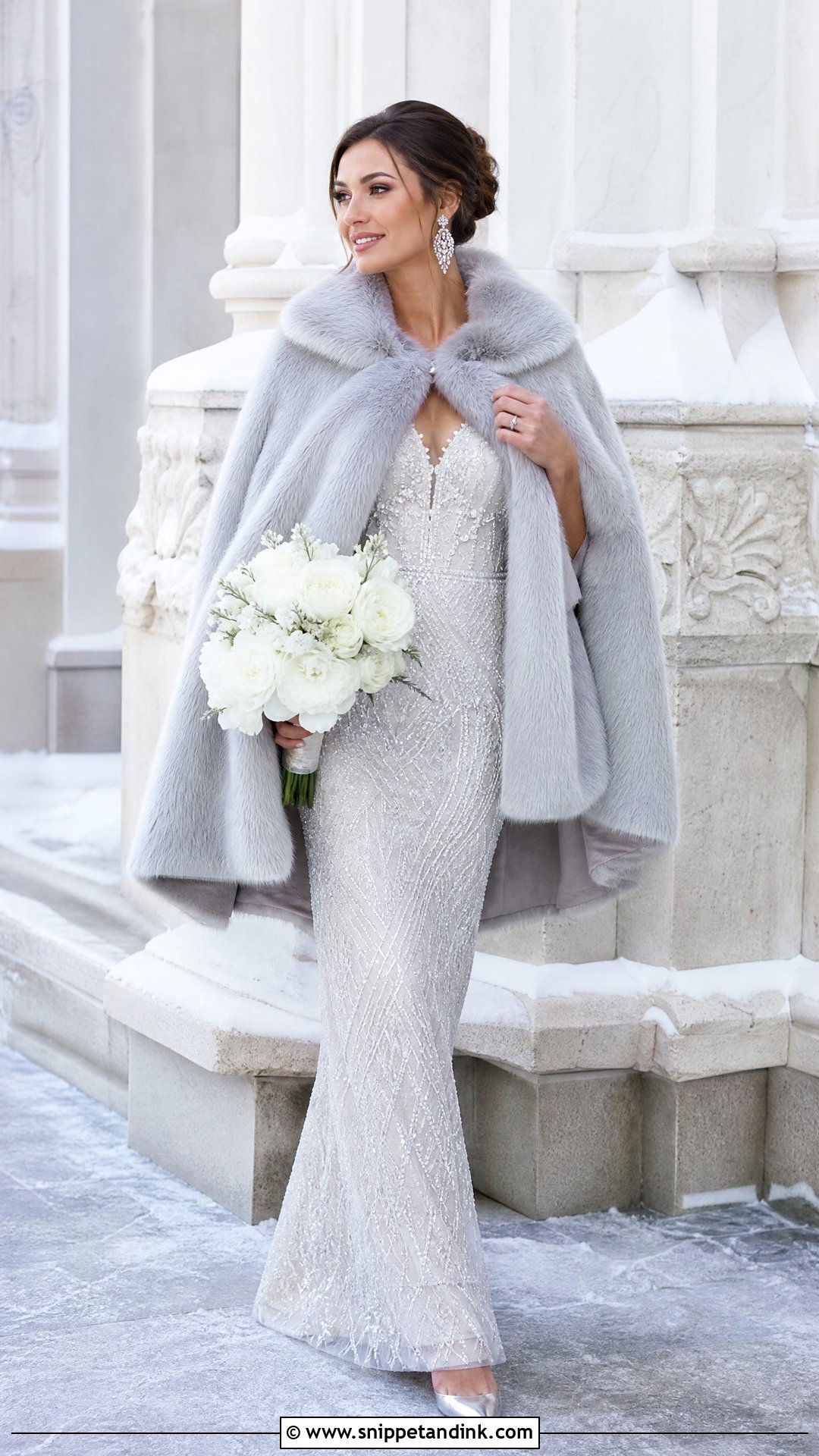
Silver faux fur suits a beaded gown because both lean cool. A cropped or hip-length cape in pale silver, dove gray or frosted ivory, with a short, smooth pile, keeps it neat. Underneath, a fitted gown with silver beading, crystals or a glittered skirt. White or metallic pumps, crystal earrings, a polished updo and an all-white bouquet are enough. Bring a swatch of the dress when shopping; a gray-toned fur can make a warm ivory gown look yellow beside it. A satin lining stops the beads from snagging inside the cape.
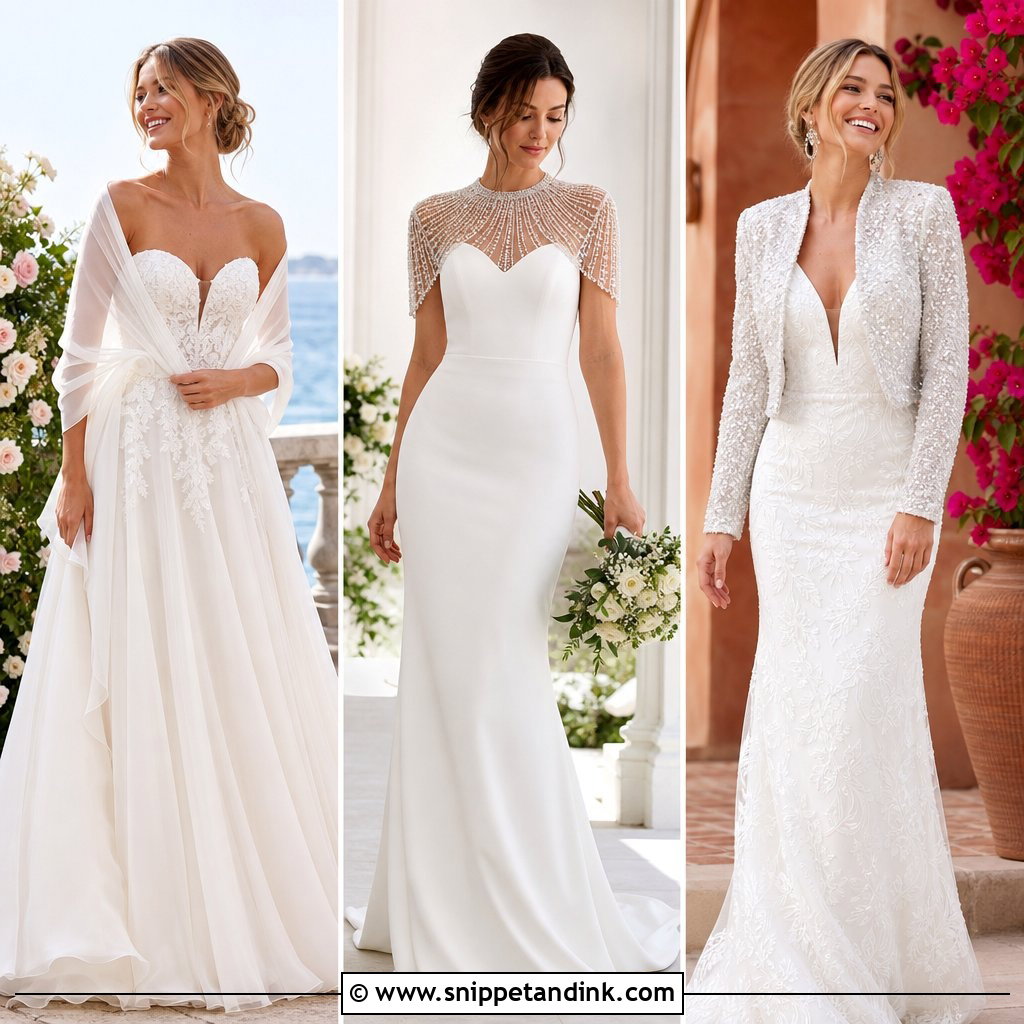
15. Jacquard Bridal Cape With Mikado A-Line Dress
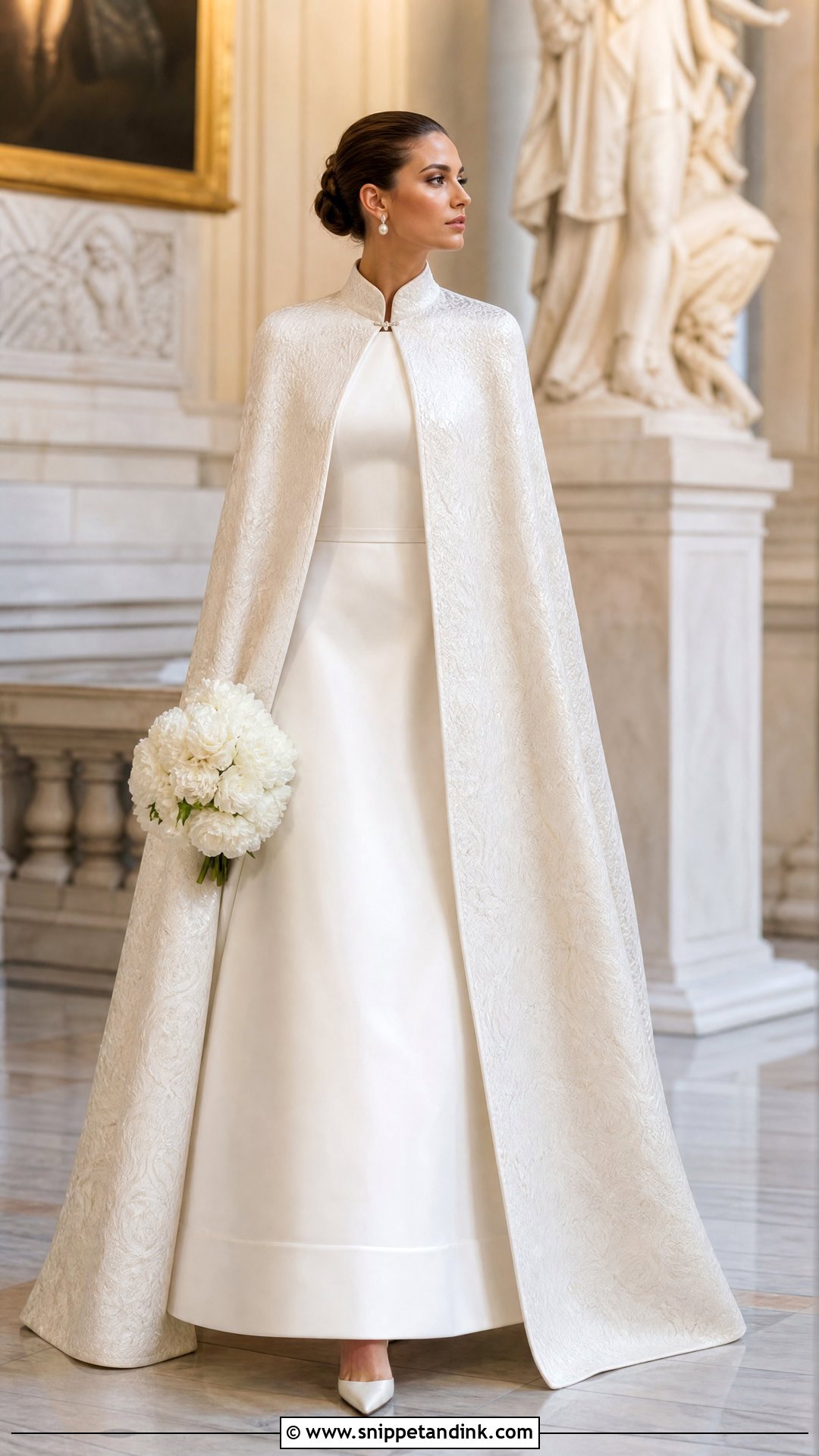
Embossed jacquard holds its own shape, which suits a structured Mikado A-line dress. A knee-length or full-length cape with a stand collar, hidden fastening and little trim lets the weave do the work. Floral or geometric patterns add depth without sparkle. Pearl earrings, a sculpted bun, pointed satin heels and a neat bouquet complete it. Two stiff fabrics together need careful fitting at the shoulders; the cape should skim the gown, not push the sleeves or neckline outward. A smooth lining helps it slide on and off.
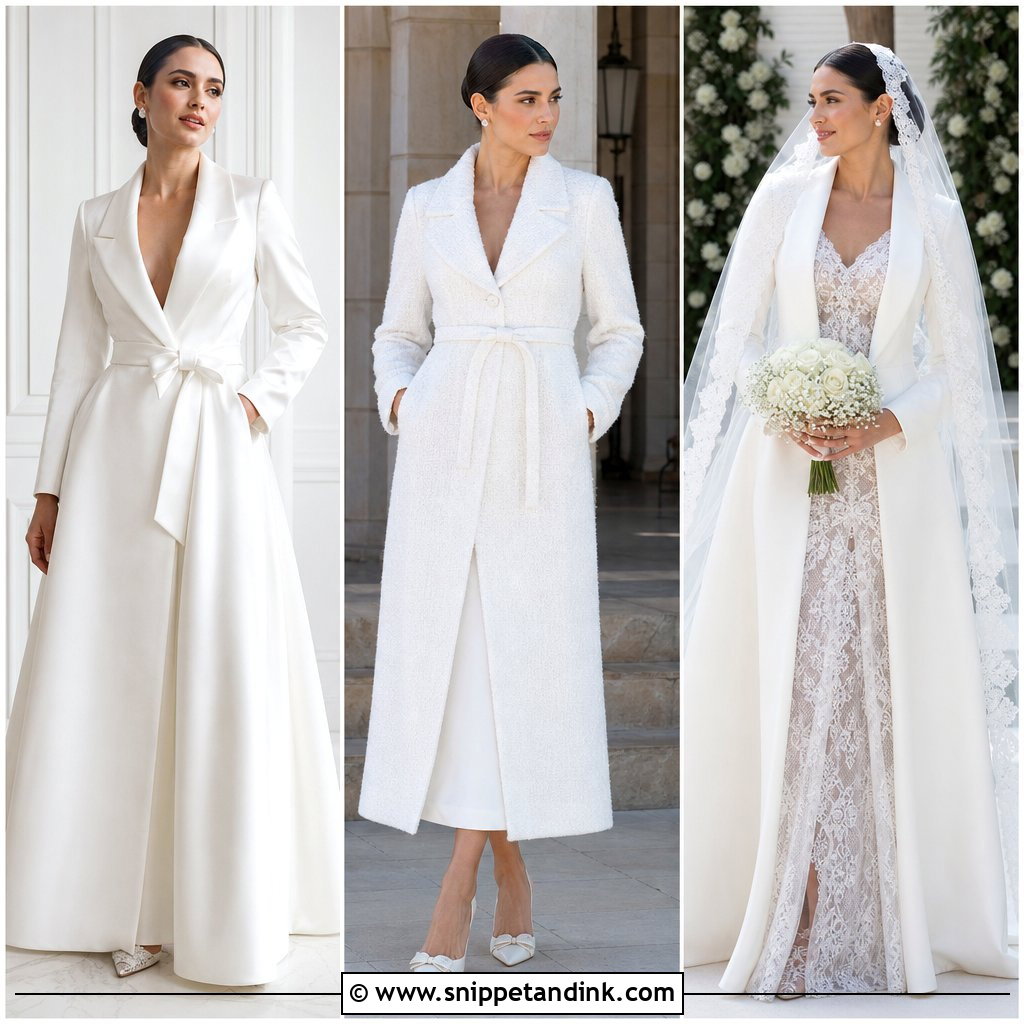
16. Short Faux Fur Bridal Cape With Wedding Jumpsuit
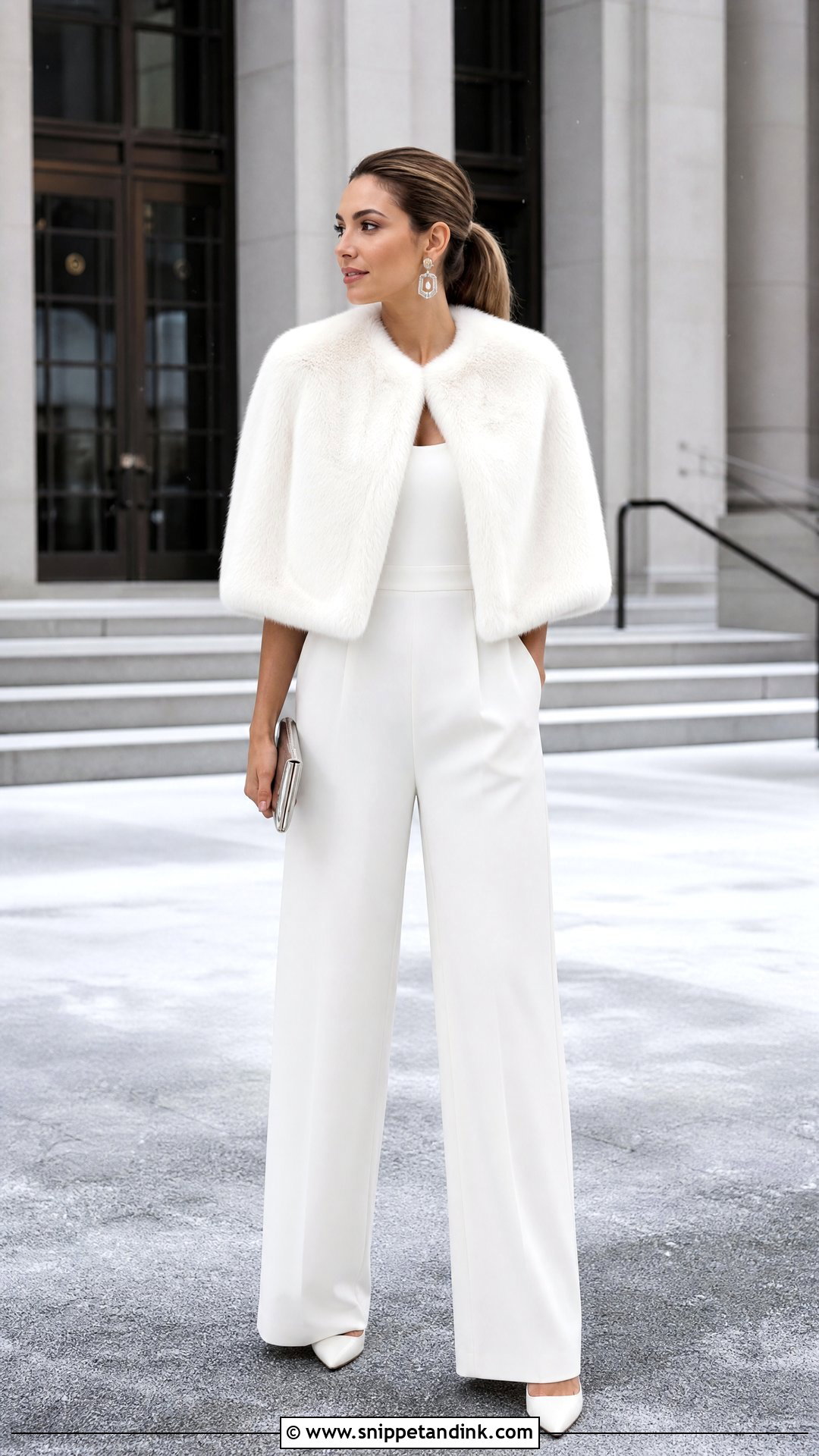
A tailored bridal jumpsuit with a short faux fur cape is a modern pairing for a courthouse or rooftop. A wide-leg crepe jumpsuit with a defined waist and full-length hem, and a capelet ending near the elbows or waist so the outline stays visible. A detachable overskirt can add ceremony drama. Pointed pumps, a metallic clutch, sculptural earrings and a sleek ponytail or bun finish it. Match the fur to the jumpsuit’s undertone as closely as you can, and test the fastening over the neckline so it lies flat against any lapels or straps.
17. Cashmere Bridal Cape With Sheath Wedding Dress
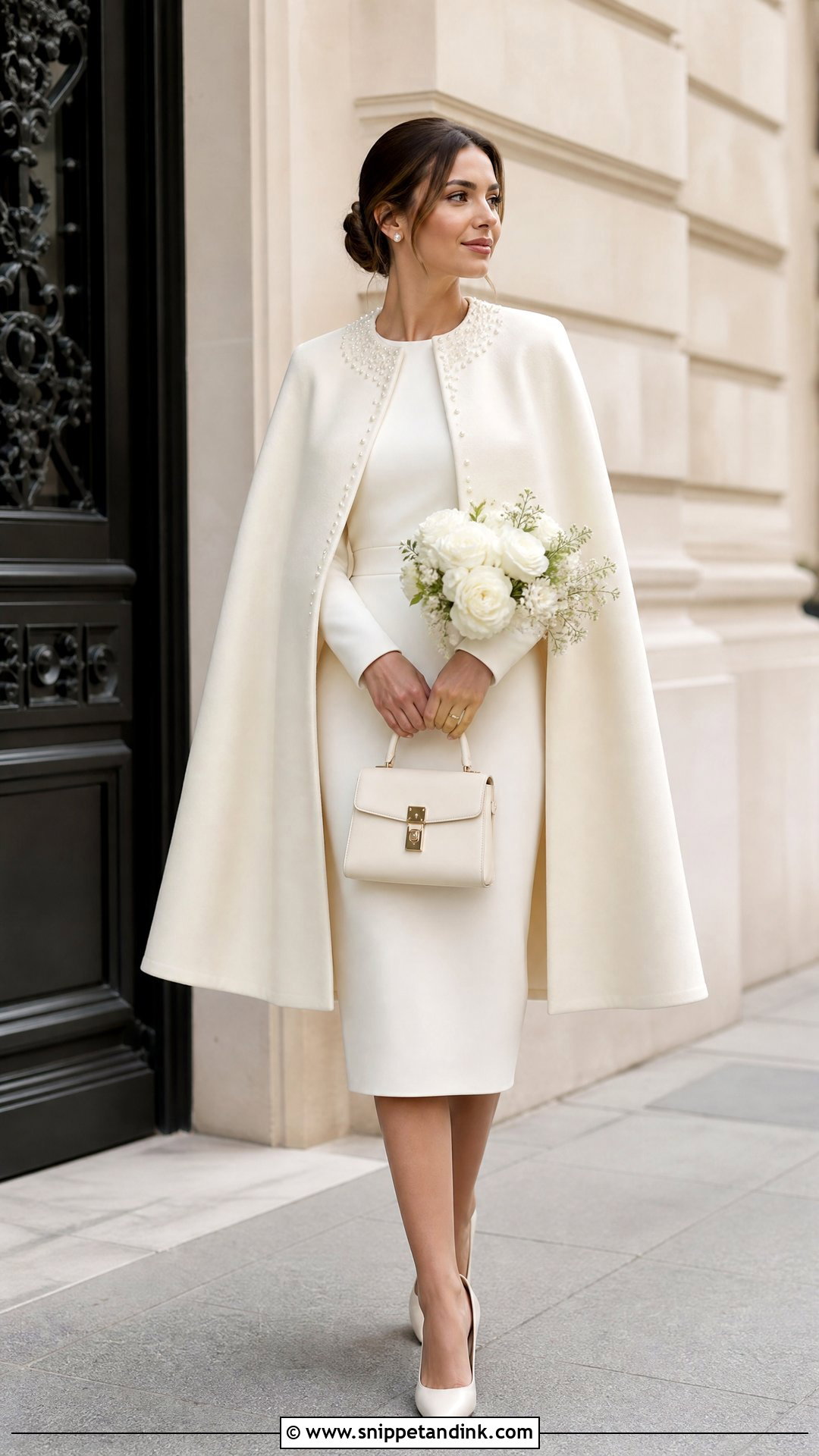
Cashmere is the quiet option: warm, soft, and easy to wear again after the wedding. A knee-length cape with clean edges, arm openings and a simple front closure suits a long-sleeve or high-neck crepe sheath. Pearl studs, leather pumps, a structured bag and a low bun keep it understated, in ivory, soft white or pale oatmeal. Because cashmere can look casual, sharp tailoring matters. I store these flat and steam gently; a cashmere cape left on a thin hanger for weeks develops shoulder bumps and stretched edges. It suits small city weddings and courthouse ceremonies.
18. Floral Appliqué Bridal Cape With Off-Shoulder Gown
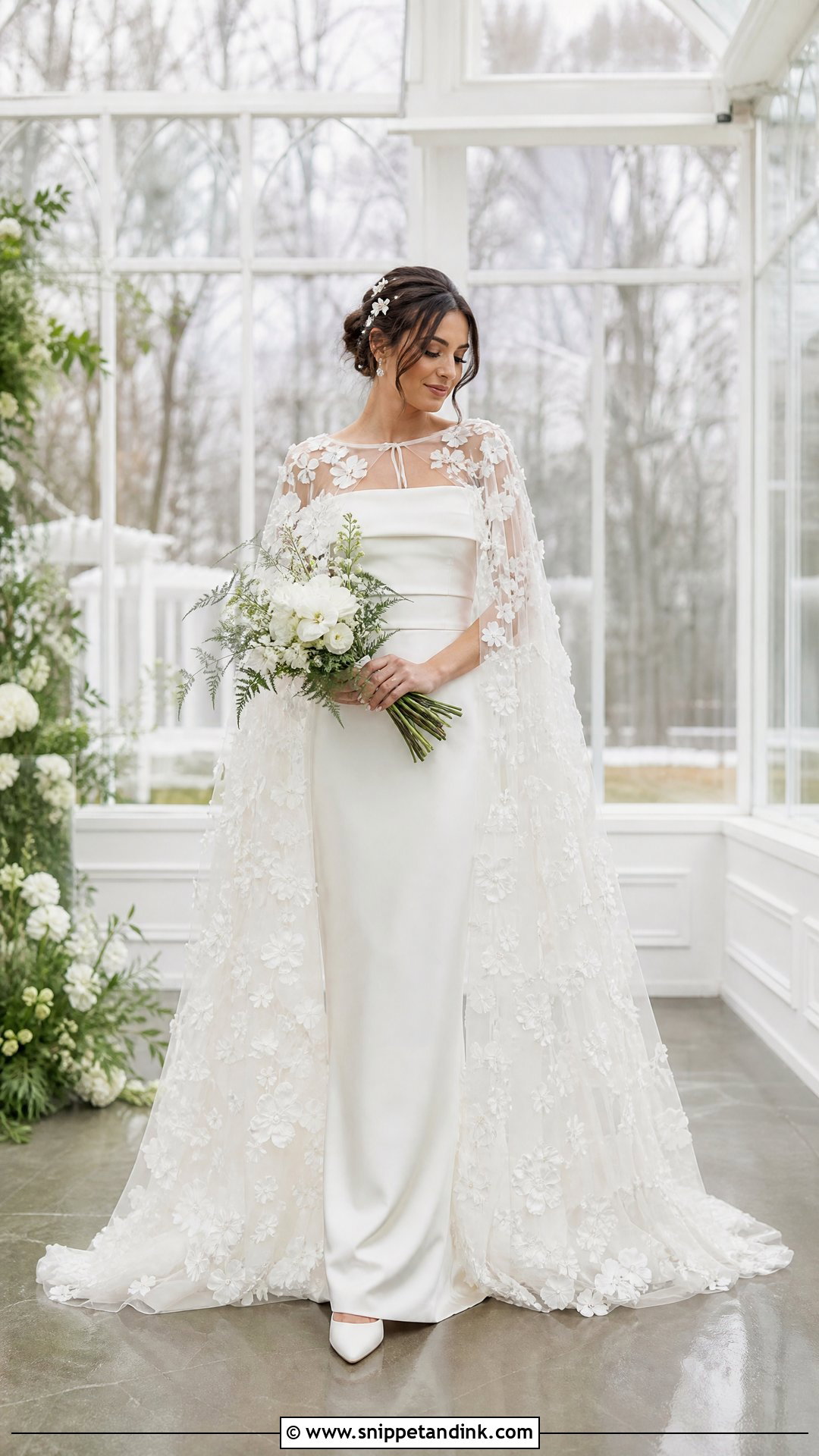
Three-dimensional appliqués turn a sheer cape into the main feature of an off-shoulder look. A chapel-length tulle cape with flowers clustered at the shoulders and fading toward the hem works over smooth satin or crepe. Floral hairpins, simple earrings, satin pumps and a bouquet that echoes the appliqués complete it. Hair should go up, because loose strands snag on raised petals. The shoulders still get cold, so I’d treat the cape as visual coverage indoors and keep a heavier wrap nearby for outdoor portraits. Check that the flowers don’t scratch your arms when you move.
19. Detachable Train Bridal Cape With Simple Wedding Dress
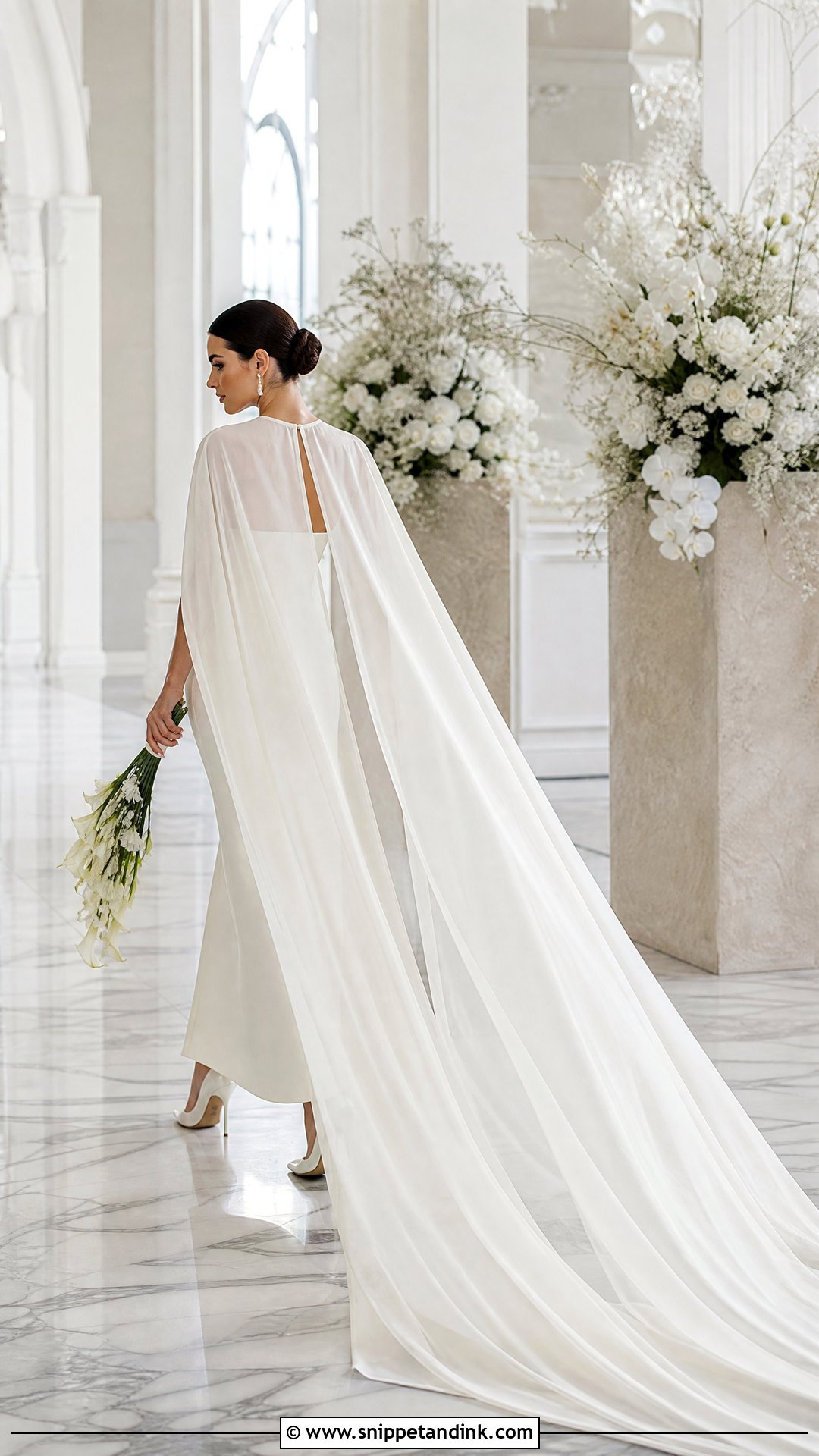
A detachable train cape adds ceremony drama to a simple dress and comes off before dancing. It attaches at the shoulders and runs past the hem, so the dress underneath should be clean: a column, sheath or A-line with little embellishment, to avoid two trains competing. It can also stand in for a veil, giving movement while leaving the hair uncovered. Drop earrings, a modern bun, pointed heels and a slim bouquet complete it. Have the attachment points sewn symmetrically and firmly, practice turning and climbing steps, and name the person who will remove and store it after the ceremony.
20. Minimalist Hooded Bridal Cape With Wedding Pantsuit
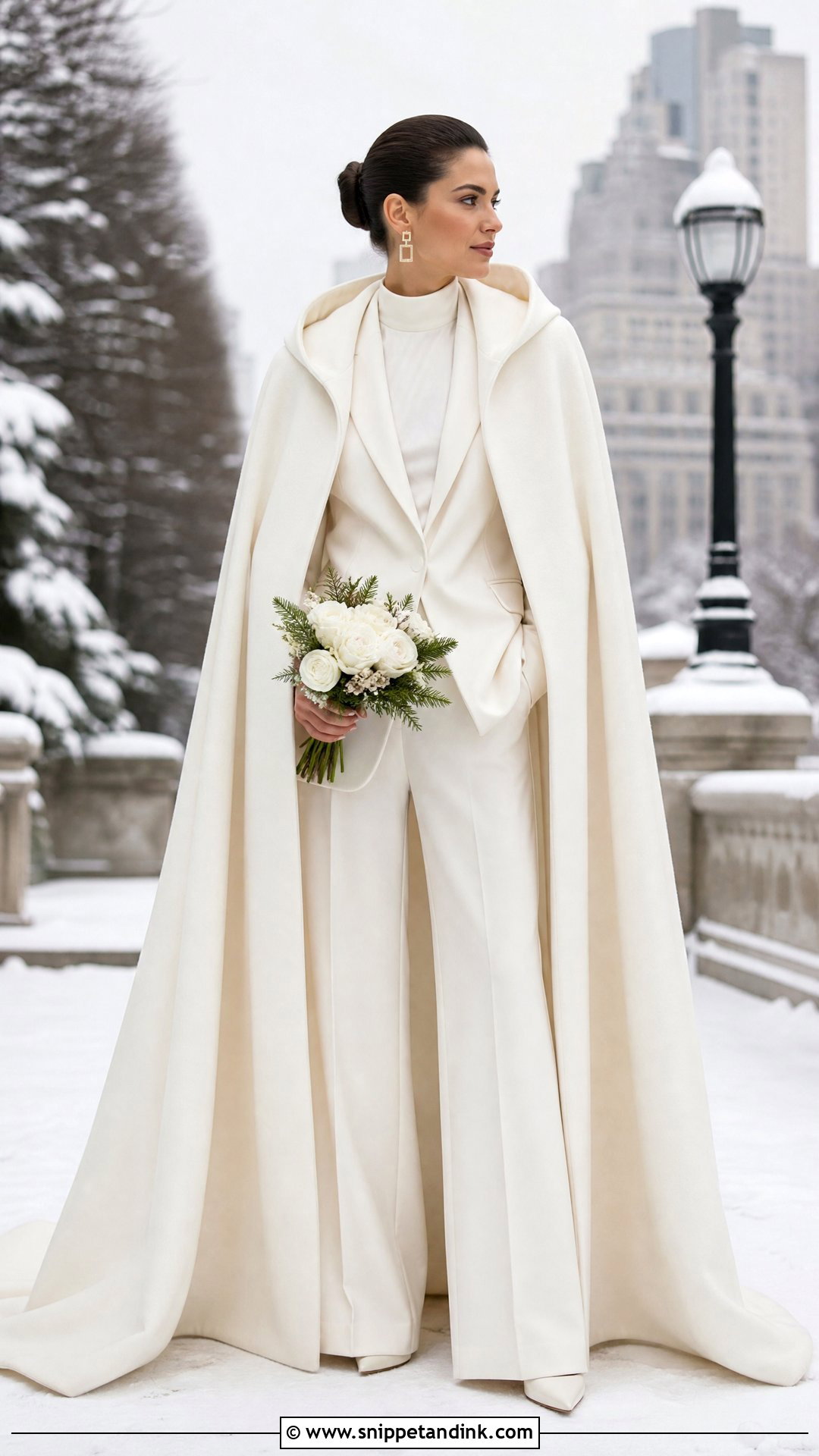
A minimalist hooded cape gives a tailored wedding pantsuit a strong winter outline. An ivory single-breasted blazer with high-waisted wide-leg trousers, and a smooth floor-length cape in velvet, crepe or wool blend over it. A softly draped hood without trim keeps the lines clean. A silk camisole or high-neck shell, pointed heels, geometric earrings and a small structured bouquet finish it, with a sleek bun so the hood sits comfortably. Hem both the trousers and the cape in the final shoes. Hidden hand openings make it far easier to hold a bouquet outdoors.
The Moment the Cape Comes Off
Plan this like any other part of the day. I ask brides to pick one person, usually a bridesmaid or the planner, who knows how the fastenings work and where the cape is going. Unhooking a beaded cape in a hurry is how threads get snapped and gown loops torn.
Bring a padded hanger and a breathable garment bag to the venue, and give the cape somewhere to hang away from coats and candles. Velvet and faux fur should hang rather than be folded on a chair, where they crush. If the cape is coming back on for evening outdoor photos, keep it close to the exit, not in the bridal suite three floors up.
Wind and snow in outdoor portraits
A long tulle cape in wind wraps around the legs and blows across the face. Heavier fabrics behave far better outside. For any light cape, I’d have someone stand just out of frame to settle the train between shots, and keep snow off velvet by brushing it away before it melts into marks.
Does Your Cape Look Like It Belongs to the Dress?
A cape should look like it was designed with your dress, not grabbed for the cold. Its fabric, color, length and embellishment all have to agree with the gown, shoes, hair and venue. Velvet, wool blends and faux fur keep you warm outside; tulle and lace are there for movement and detail. Bring the full outfit to a fitting, especially for a long, hooded or beaded cape, then test the fastening, walk in it, and decide where it goes once it comes off.
You'll Like These Ideas:


Leave a Reply