
A bridal cover is the piece most brides add last and regret rushing. The right one makes a gown warmer, more modest or simply different for the evening, without hiding the details you paid for. Boleros, shawls, capes, jackets and toppers each solve a slightly different problem, and the one you need depends on what you’re covering up for: a church, a cold field or a change of mood. In each of the twenty ideas below I’ve noted what it pairs with and the fitting check I’d make. The rule underneath all of them is simple: match the cover’s color, fabric, neckline and amount of embellishment to the dress, and try the two together before any alterations are made.
Why You’re Covering Up Decides the Layer
Before looking at a single bolero, I ask brides what the cover is for. There are three usual answers, and each points to different pieces on this list.
A ceremony that asks for covered shoulders
Many churches, temples and some family traditions expect shoulders and upper arms covered during the service. Here you want something that stays put through kneeling, standing and signing the register: a fitted bolero, a pearl topper or detachable sleeves. A loose shawl slips off at exactly the wrong moment. Ask the officiant what is expected rather than guessing; requirements vary even between churches of the same denomination.
Cold weather and travel
Warmth needs real fabric: wool, cashmere, velvet or faux fur. A coat or cloak earns its place if you’re moving between buildings or standing outside for portraits in winter. Think about the lining too, since a slippery lining slides over satin easily while a rough one drags on tulle.
A different look for the evening
If the point is a change, the cover can be the bold part: sequins, feathers, leather or a big organza sleeve. It goes on after the ceremony, so practicality matters less than how it looks with the dancing and lighting.
1. Lace Bolero Wedding Dress Cover
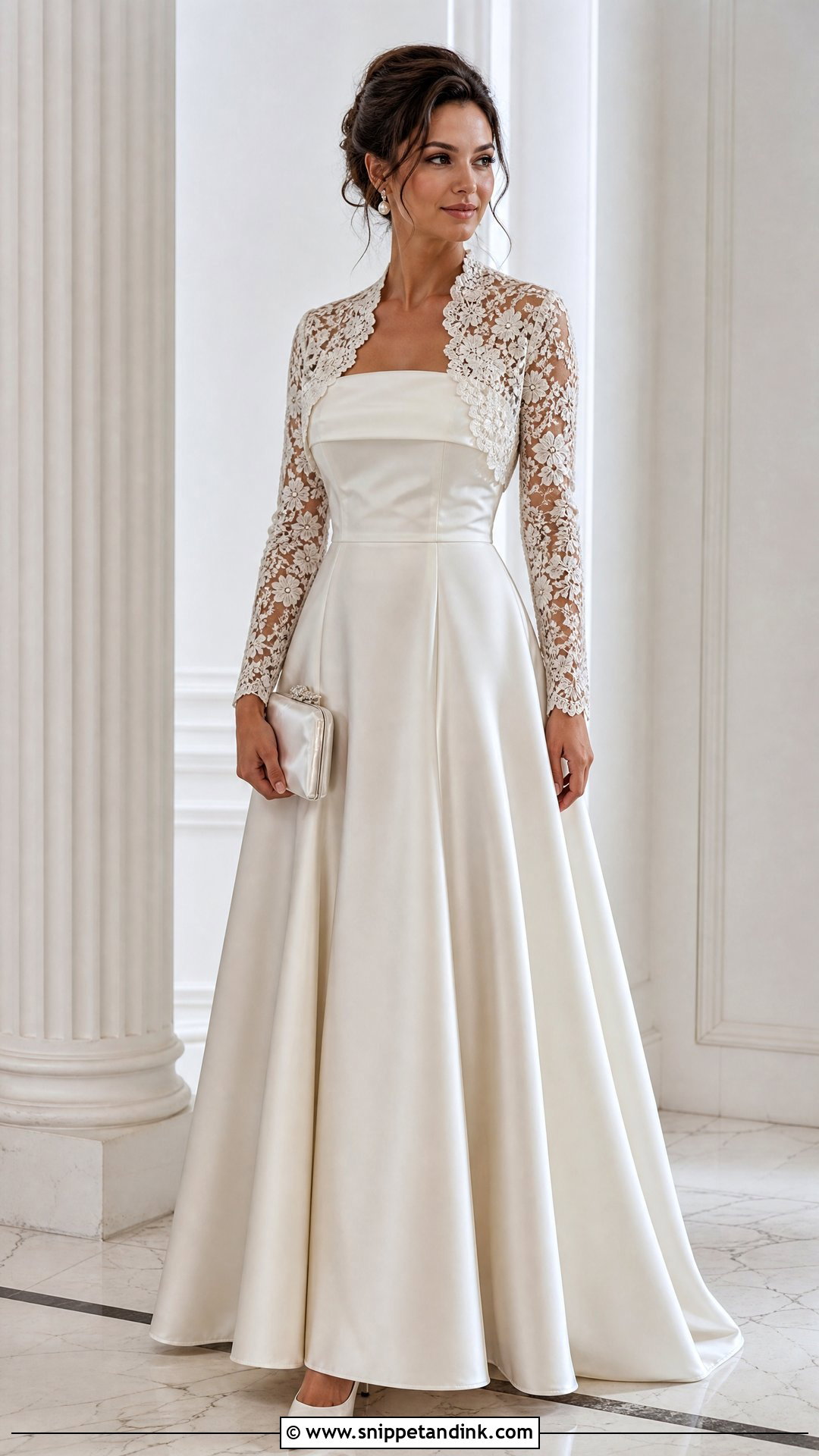
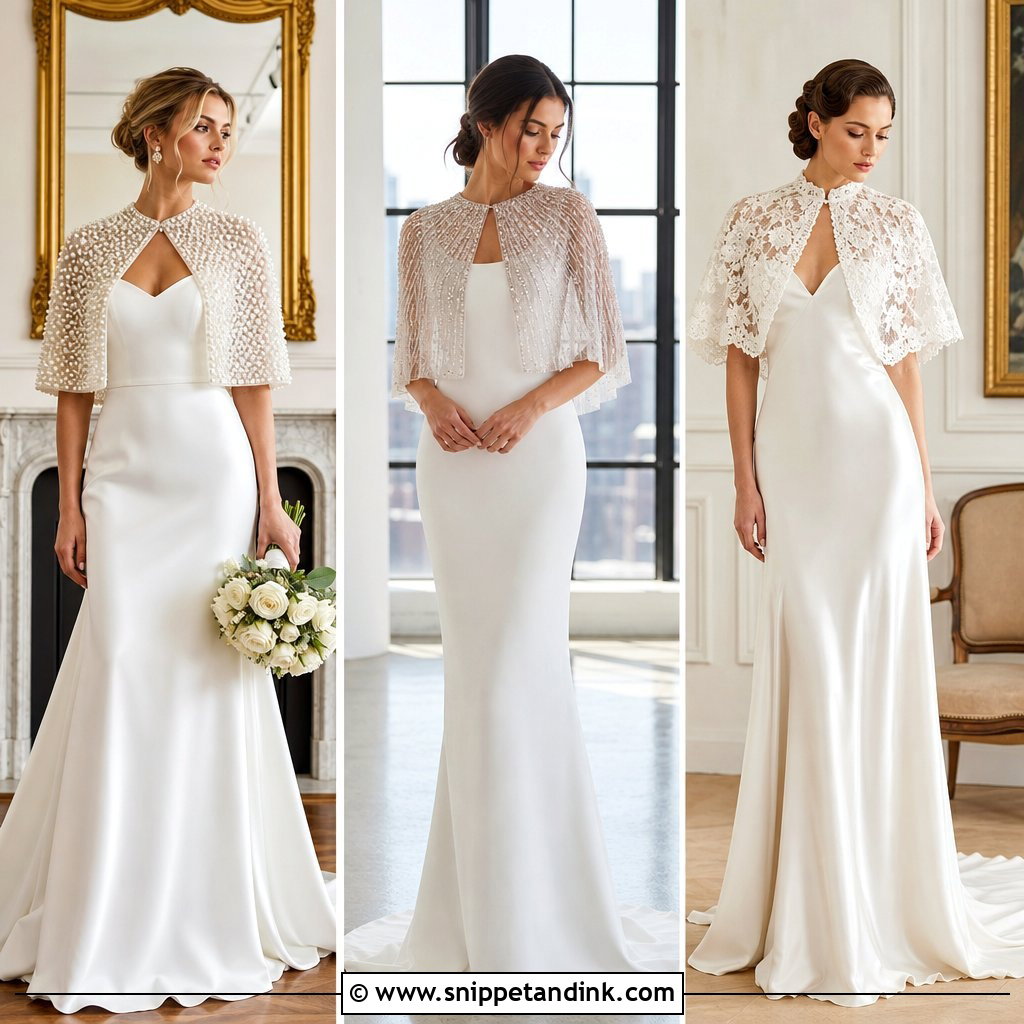
Lace on lace is where boleros go wrong, so I look for one whose pattern resembles the gown’s rather than introducing a second motif. A fitted, waist-skimming bolero sits best over a strapless A-line or plain satin dress, covering shoulders, upper arms and back. Pearl earrings, a low chignon, ivory pumps and a satin clutch keep the rest calm. With a fuller bust, an open-front style draws a cleaner vertical line than one that buttons. For a more modest ceremony, a higher neck with three-quarter or long sleeves does the job.
2. Sheer Tulle Cape Wedding Dress Cover
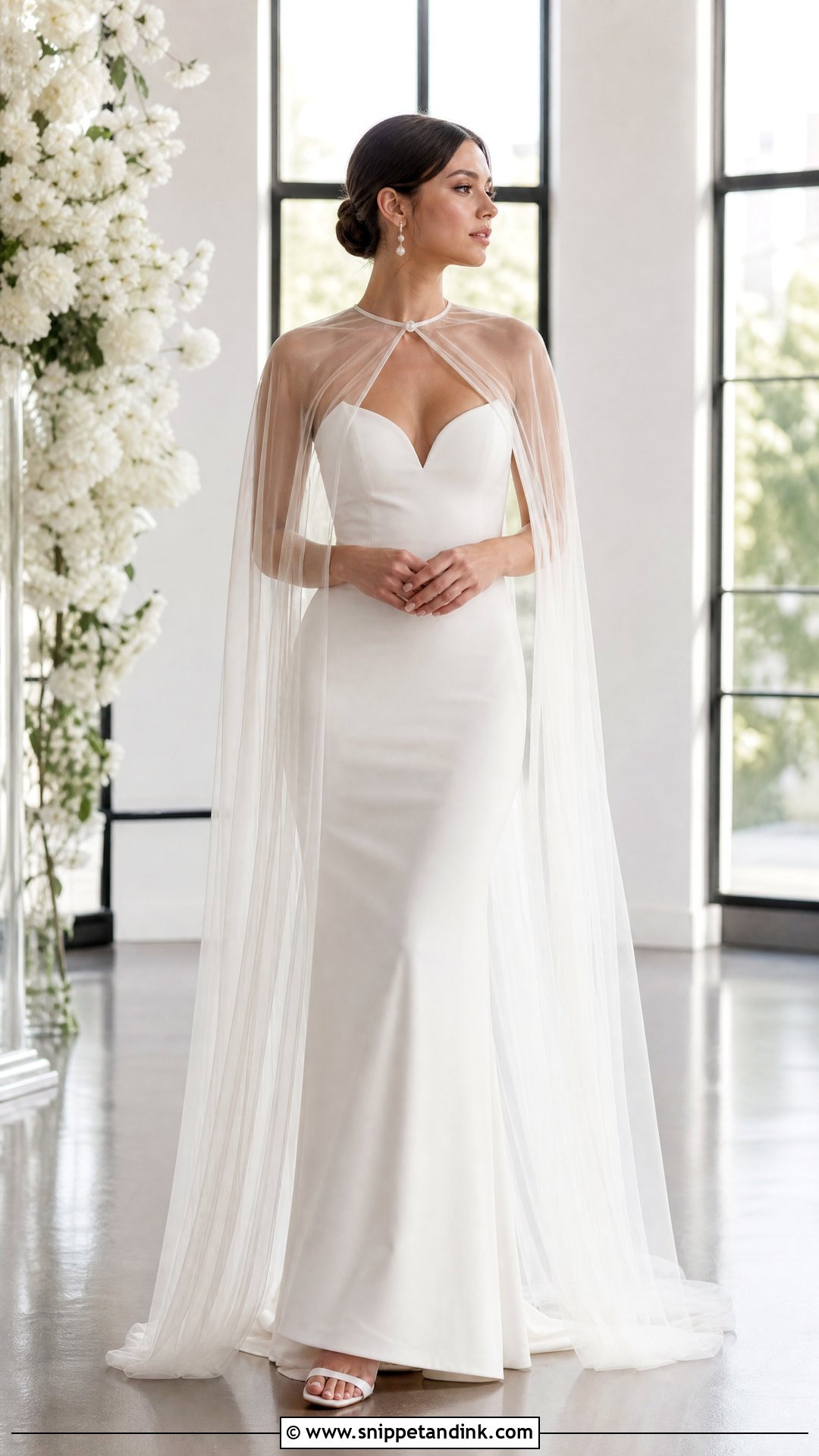
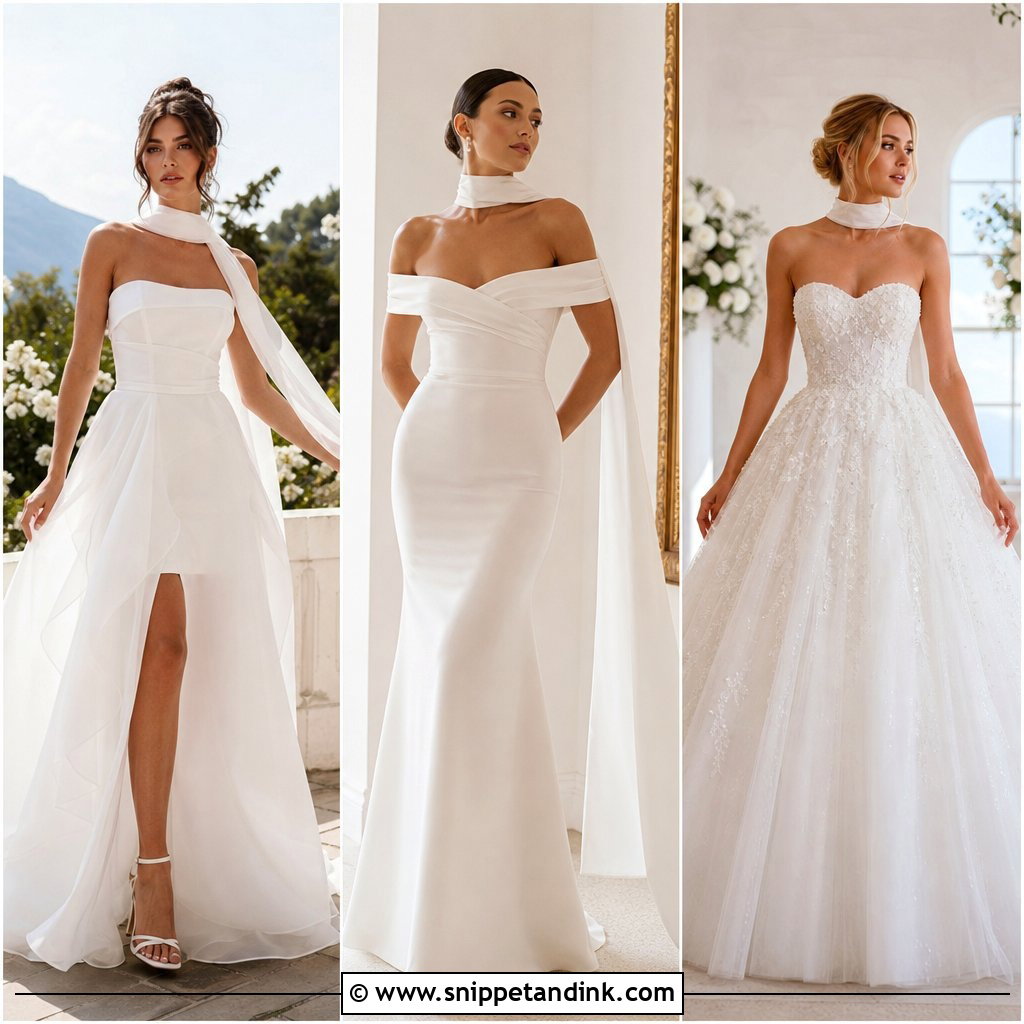
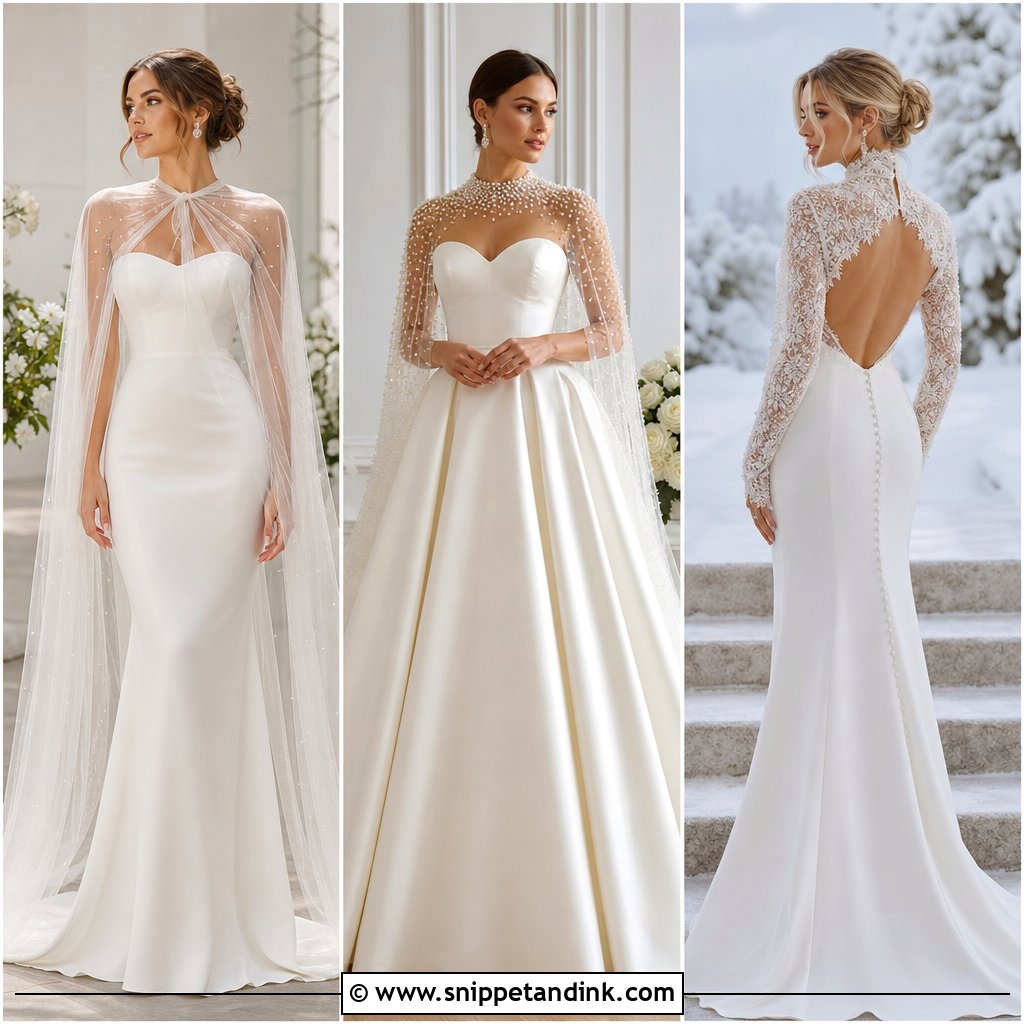
Tulle gives you movement behind you without the weight of a coat. A sheer cape suits a fitted crepe gown, a column or a clean strapless shape, fastened neatly at the neck and falling below the hips or to the floor. Here’s the check most people skip: lay the cape over the train and look from behind. If both end at the same length they compete in photos, so I’d have the cape stop well short of the train or run past it on purpose. Delicate drops, sleek hair, pointed satin shoes and a small structured bag finish the outfit. Plain tulle reads modern; scattered pearls add dimension. Over heavy beading, choose an unembellished cape.
3. Satin Bridal Jacket Wedding Dress Cover
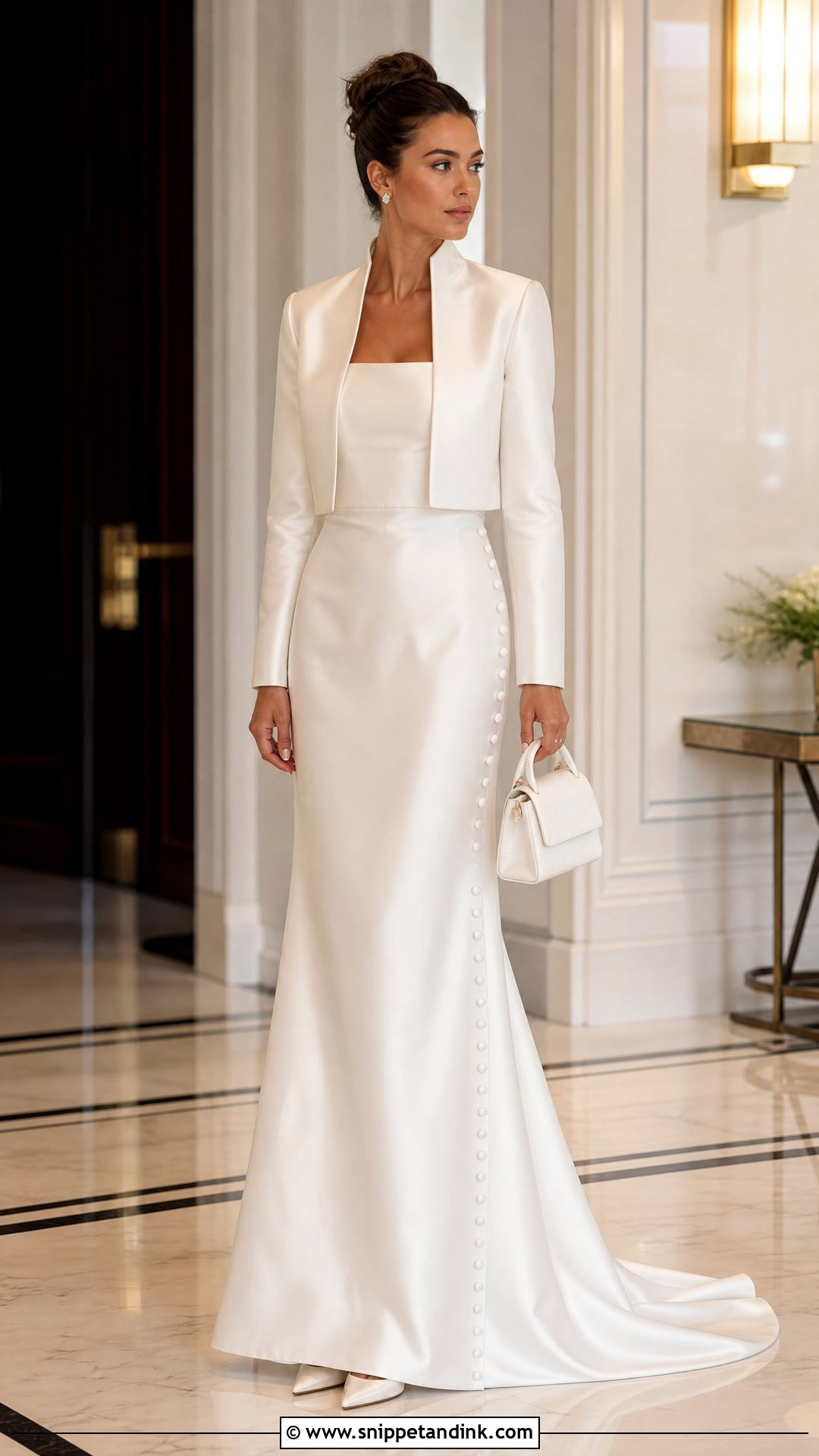
Satin gives a jacket enough body to look sharp while keeping the formality of a gown. A cropped satin jacket over a slip dress, square-neck gown or simple ball gown should end near the natural waist so it defines the figure instead of swamping the skirt. The real difficulty is color. Bright white, soft white, cream and ivory satins can look like different garments side by side, so match undertones in daylight. Crystal studs, a neat bun, ivory heels and a satin mini bag finish it. Covered buttons, a rounded neck or small cuff details make a jacket look custom without adding bulk.
4. Faux Fur Stole Wedding Dress Cover
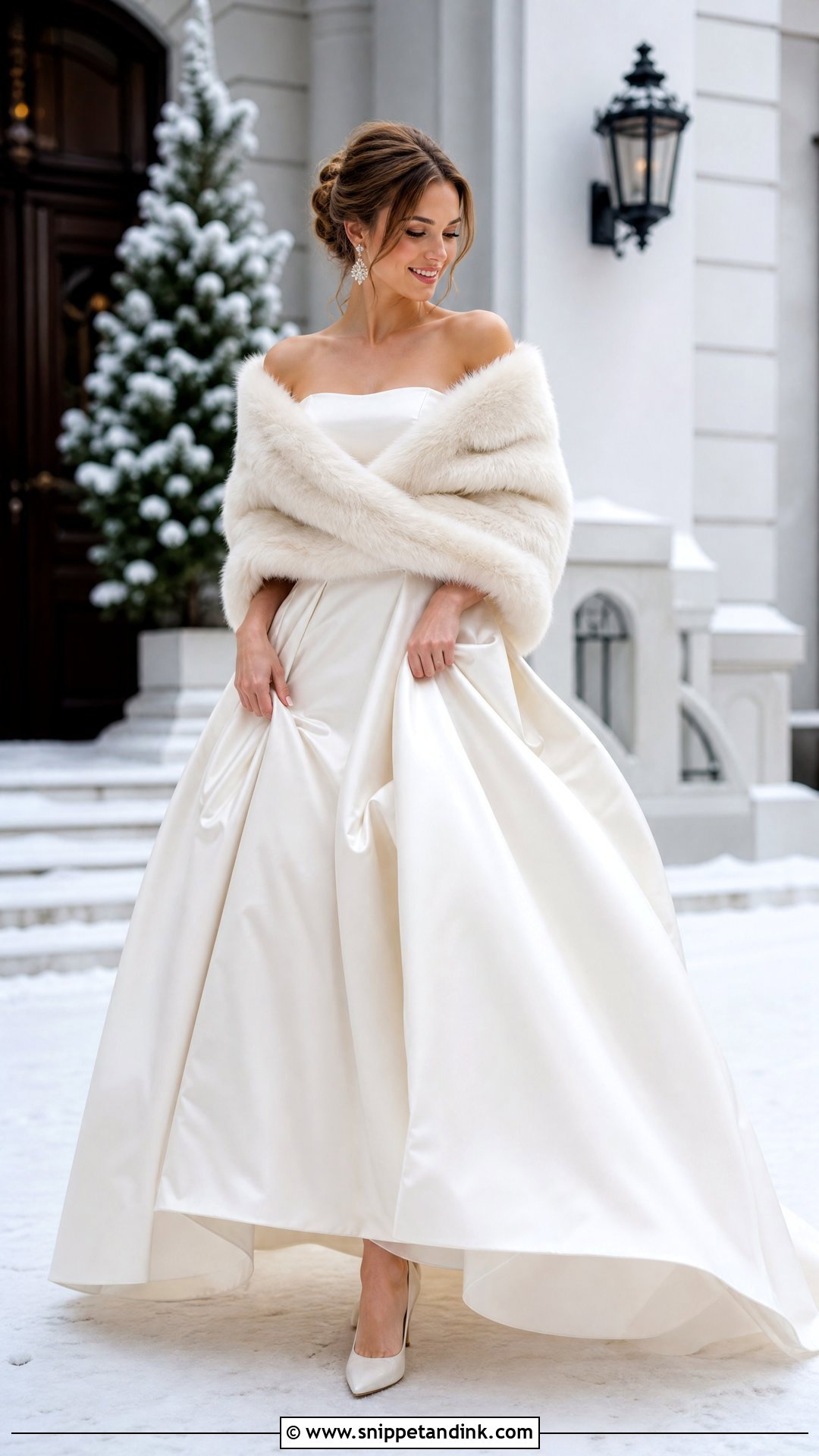
For winter, a faux fur stole is warm and photographs with real old-Hollywood glamour, but texture choice matters. Short, smooth faux fur reads refined and clean on camera; a long, shaggy pile can swamp lace or ruffles and only really suits a plain gown. Drape an ivory or winter-white stole over a long-sleeved satin gown, strapless ball gown or sleek fitted dress, and secure it with a hidden hook, ribbon or brooch so your hands stay free for the bouquet. Closed pumps, crystal earrings and a structured updo suit it. Make sure the stole is wide enough to cover the upper back without crushing the neckline.
5. Cashmere Shawl Wedding Dress Cover
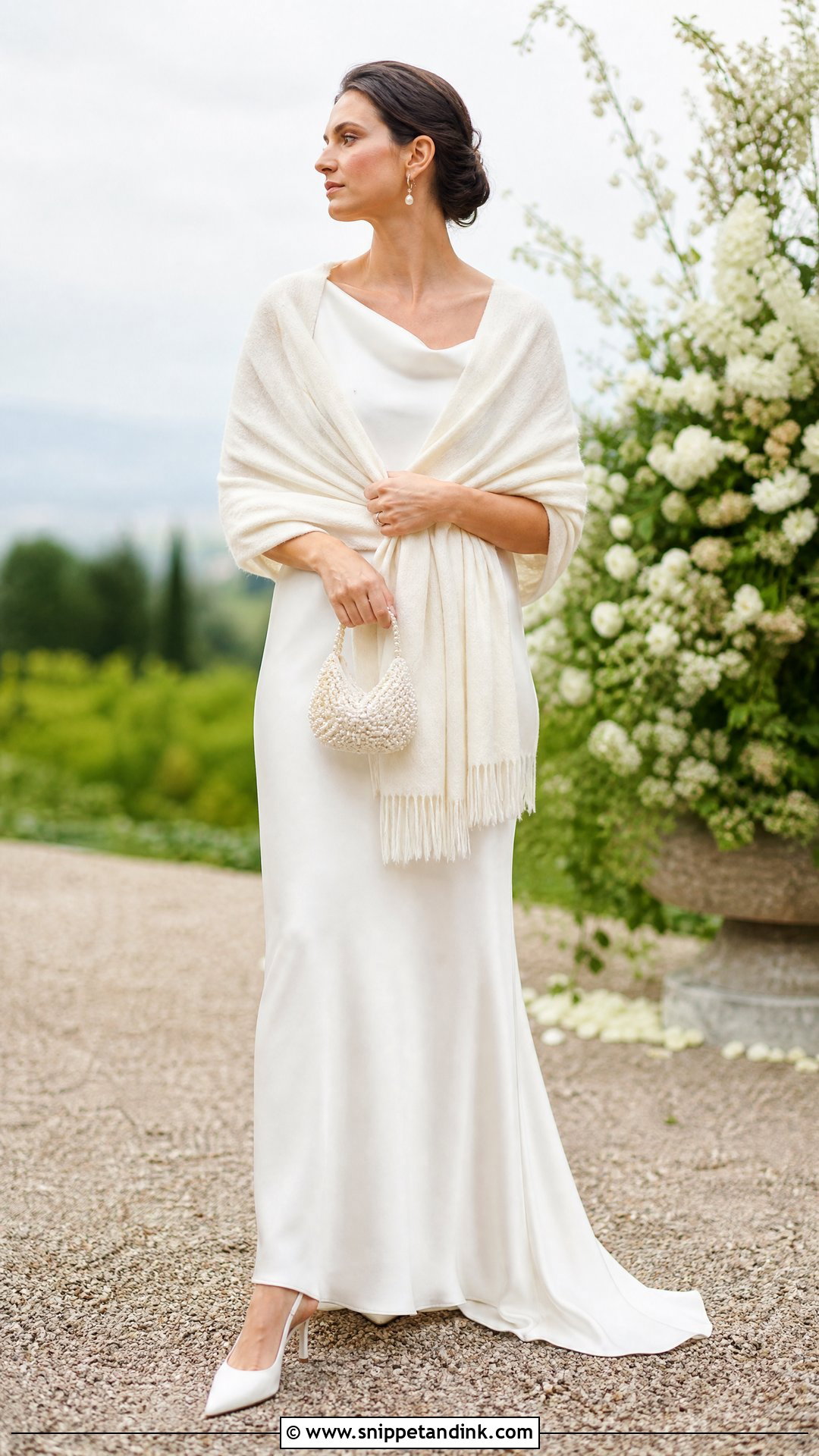
A cashmere shawl gives flexible coverage with no sleeves to fit, which makes it the easiest cover to buy late. It sits naturally with a silk column, a tea-length dress or a bias-cut gown. Wrap it across the shoulders for outdoor portraits, then let it drop to the forearms indoors to show the neckline. Fine cashmere in ivory, cream, pale gray or soft blue is wearable for years afterwards, which I count as a point in its favor. Pick a generous size with clean edges and little fringe; fringe catches on beading and lace. Bulky knits look casual and add uneven volume over a detailed bodice.
6. Velvet Cape Wedding Dress Cover
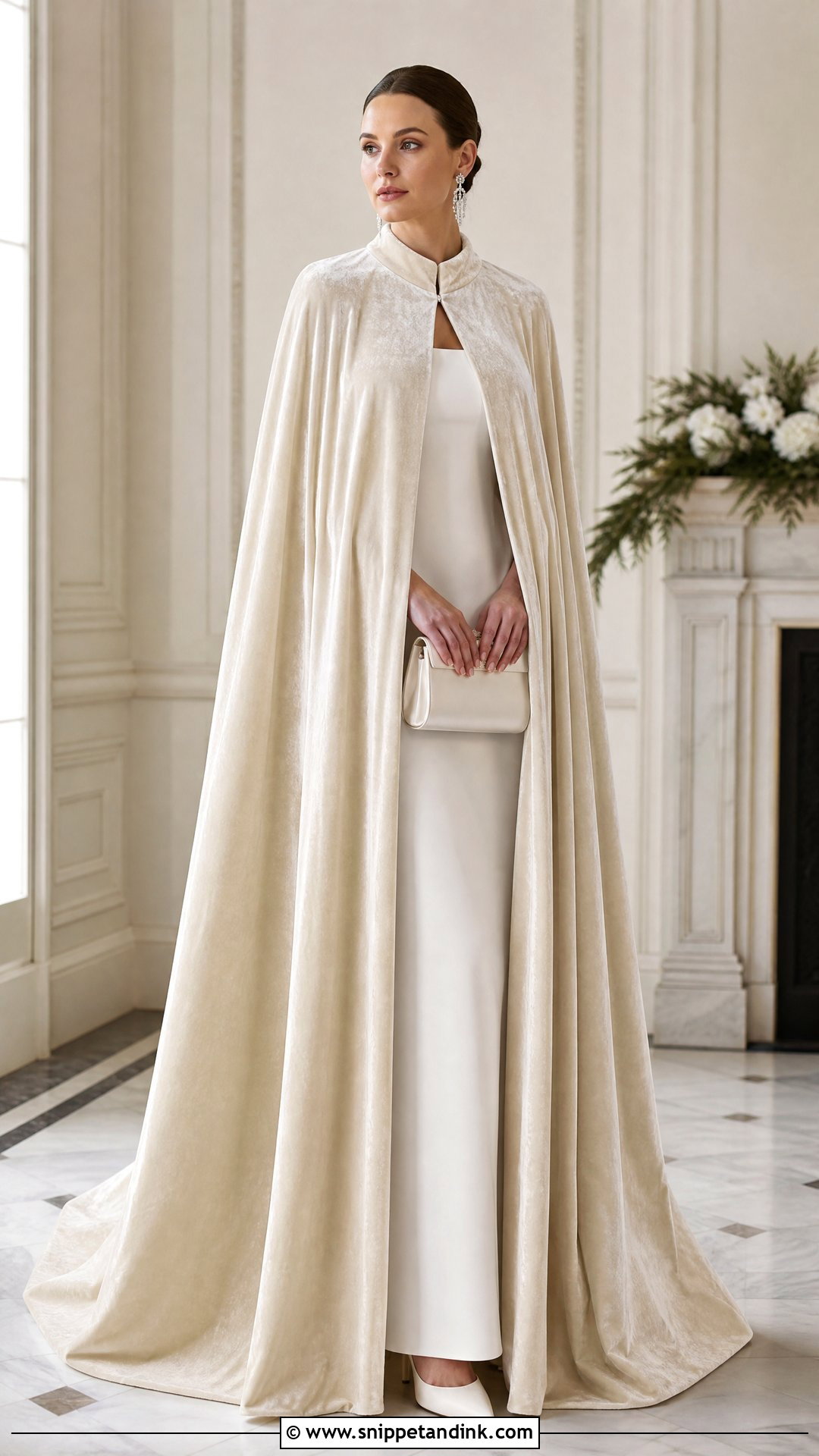
Velvet has visual weight, so a velvet cape belongs with a simple skirt. A floor-length ivory cape over a plain crepe gown, a long-sleeved column or a satin ball gown, with a clean neckline and concealed closure, keeps it formal rather than theatrical. Velvet also marks where it’s pressed: sitting in a car can leave shiny crushed patches, so I’d travel with the cape on a hanger and put it on at the venue. Polished waves or a smooth updo, crystal earrings and a velvet or satin clutch complete it. Deep navy, emerald or burgundy work if they fit your palette. Check you can walk, sit and hold the bouquet with it on.
7. Chiffon Wrap Wedding Dress Cover
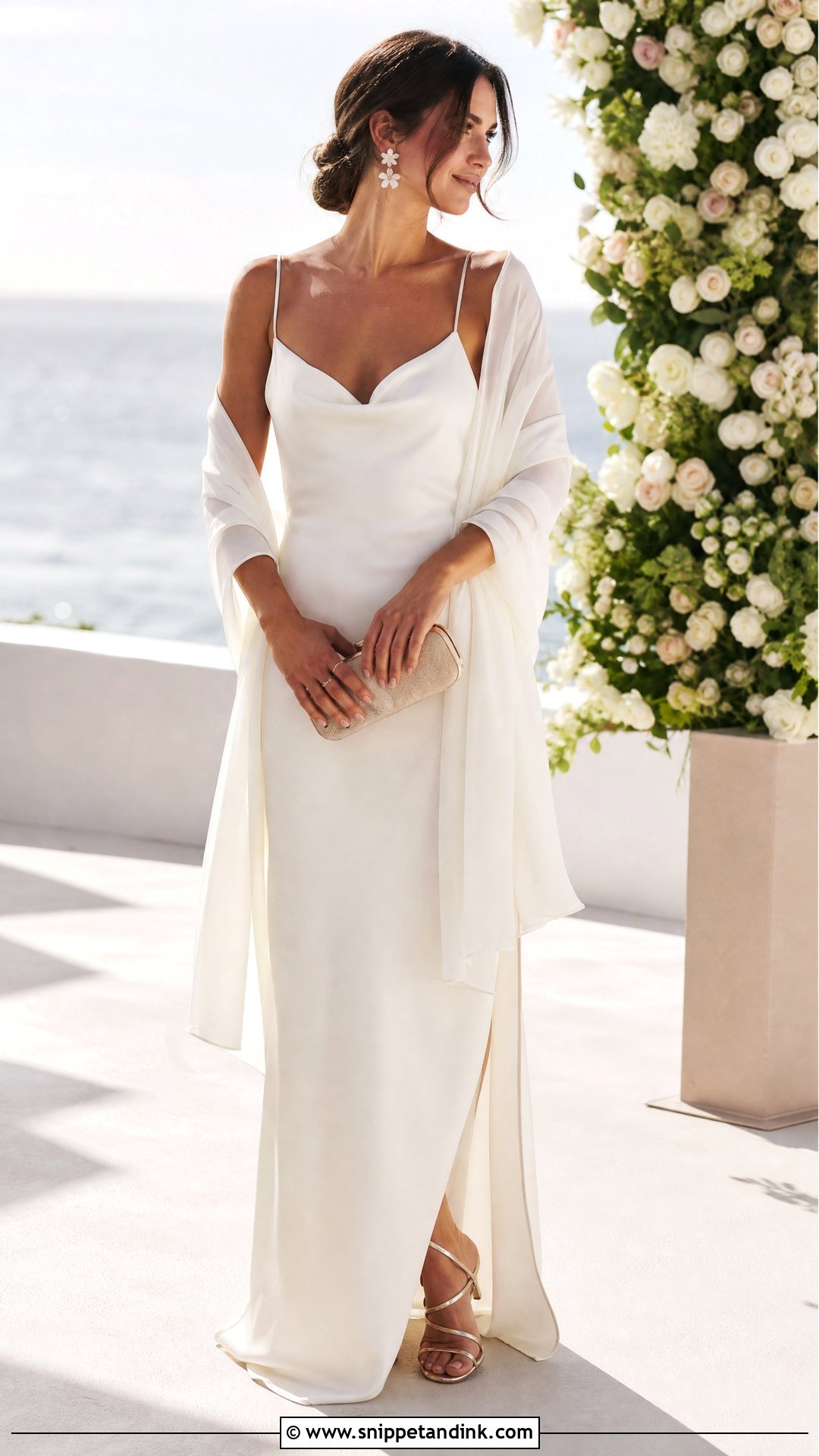
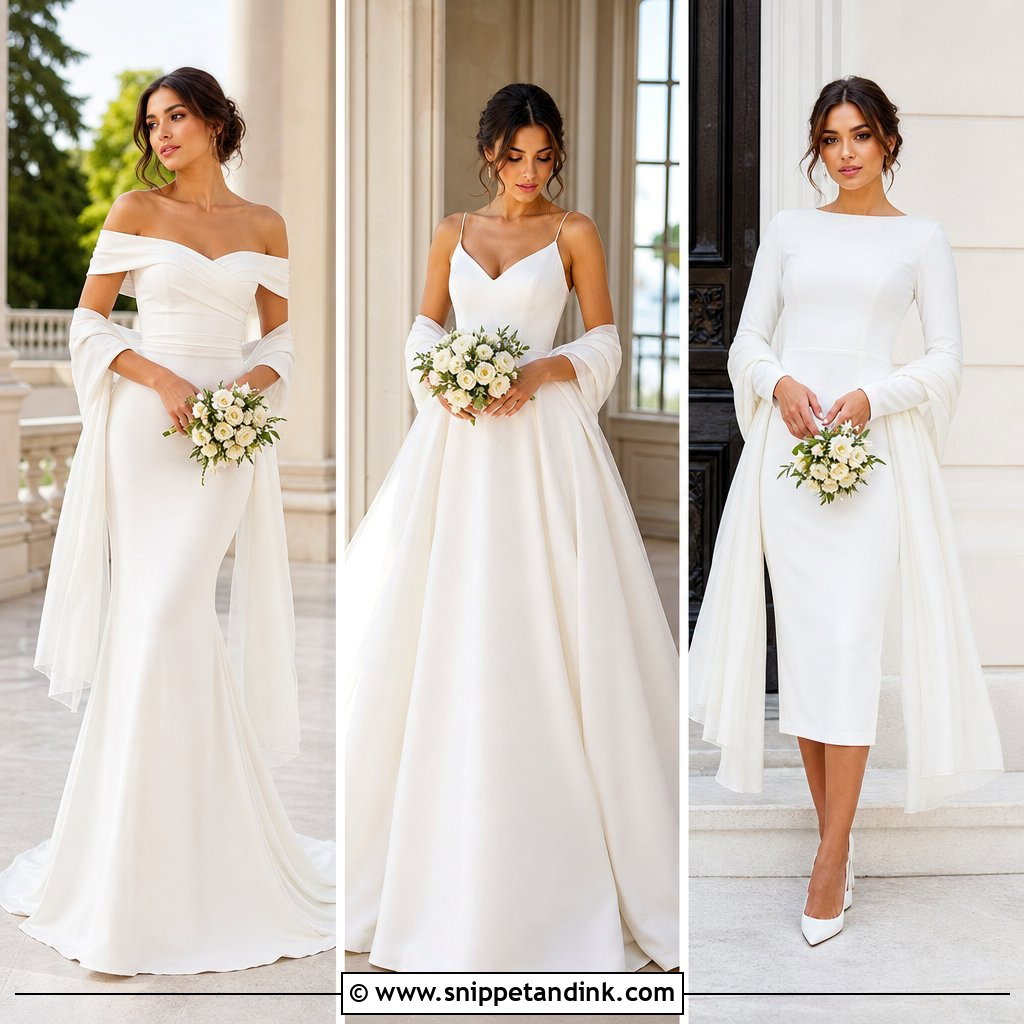
Chiffon is the cover for heat. A wide chiffon wrap softens a strapless sheath, a spaghetti-strap gown or an empire-waist dress without adding warmth or stiffness. Outdoors, secure it discreetly with a small pin at the back, because chiffon lifts in the lightest breeze. Floral earrings, a loose low bun, slim metallic sandals and a petite clutch suit it. Ivory to match the gown blends in; a muted pastel adds quiet contrast. Avoid twisting or knotting it around the neck, where it bunches. A finished edge and enough width to cover the upper arms make the wrap look planned rather than grabbed at the last minute.
8. Beaded Capelet Wedding Dress Cover
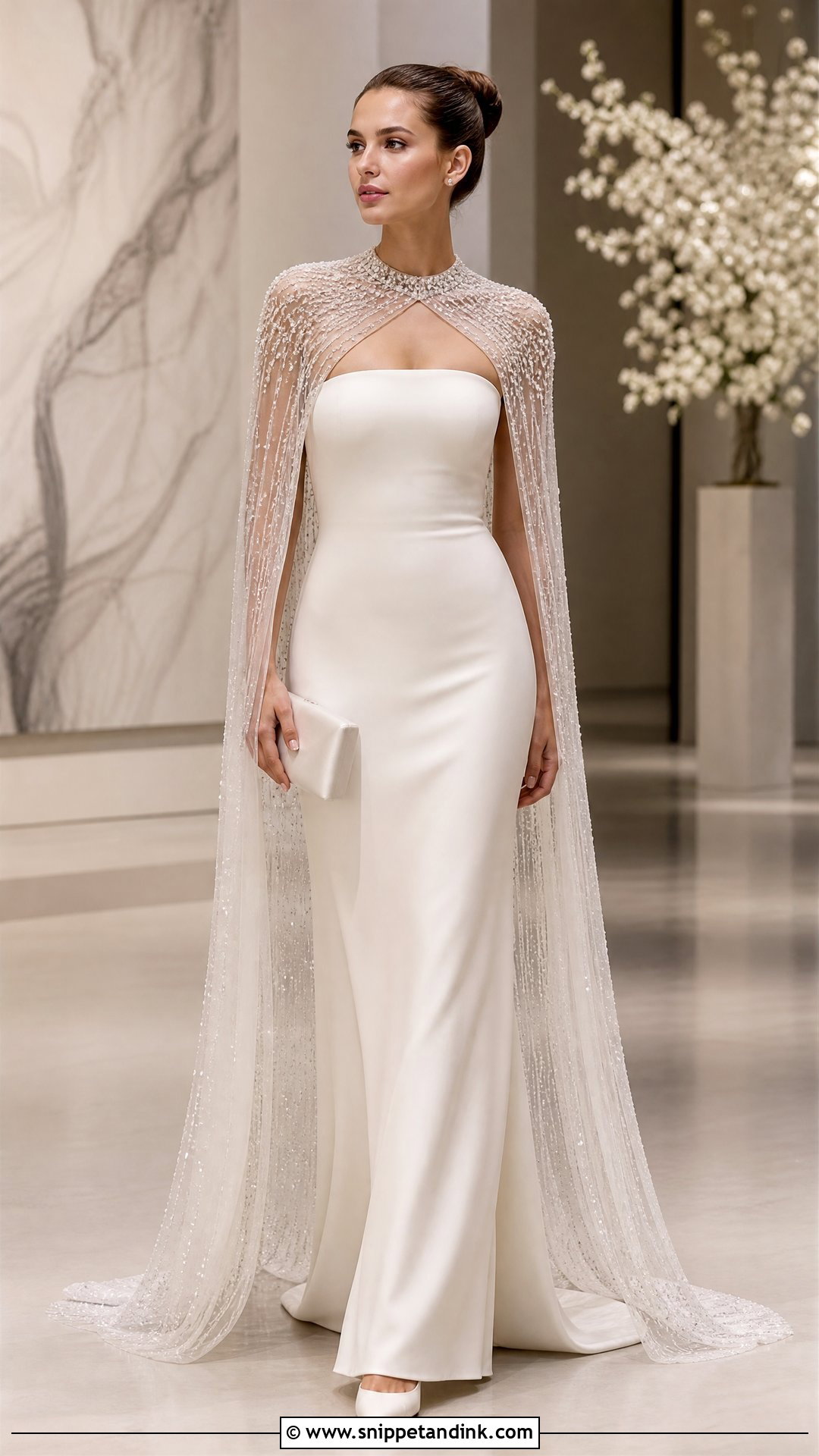
A beaded capelet adds detail to a simple gown with no alterations at all. A short pearl or crystal capelet over a clean strapless, crepe or satin fit-and-flare dress should sit smoothly on the shoulders and end above the waist. Before you buy, turn it inside out and rub the underside against your gown’s fabric: loose bead threads and rough clasps will snag silk and tulle within an hour. Since the capelet already sparkles, skip a jeweled necklace. Small studs, a sleek bun, pointed pumps and a plain clutch keep it in balance. Broad shoulders look better under softly draped beading than a rigid horizontal edge.
9. Pearl Bridal Topper Wedding Dress Cover
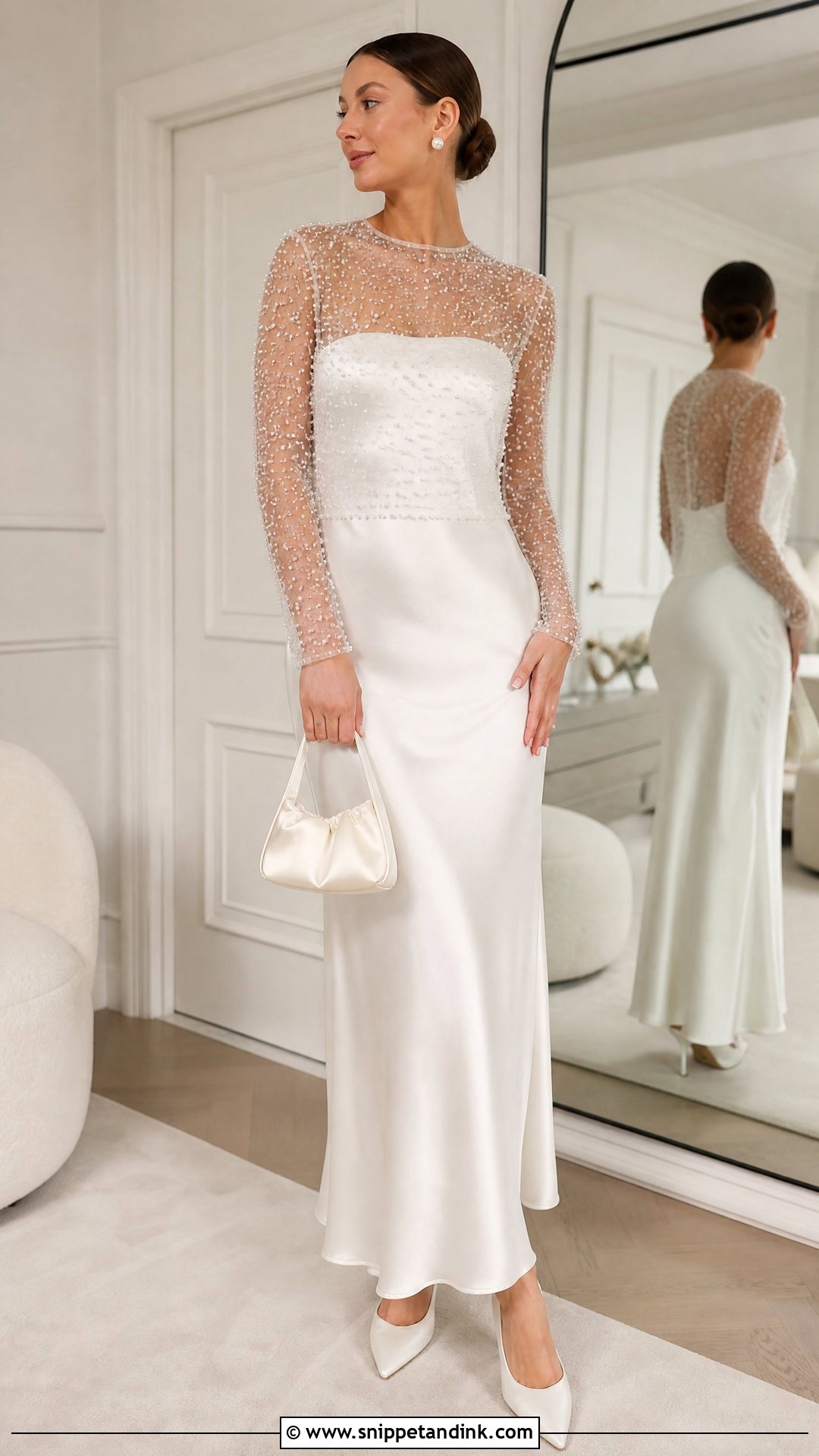
Pearl toppers can make a gown look like it has a completely different bodice for the ceremony. A sheer, fitted topper with long sleeves over a slip, strapless column or plain A-line changes the whole effect, then comes off for the party. Scale matters: tiny scattered pearls look delicate, larger ones read bold, and both should relate to the size of your jewelry. Pearl studs, a smooth low bun, ivory pumps and a clean satin bag finish it. The topper should sit close at the shoulders without pulling across the bust. Have a seamstress set the sleeve length and closure while you wear the actual gown.
10. Feather Shrug Wedding Dress Cover
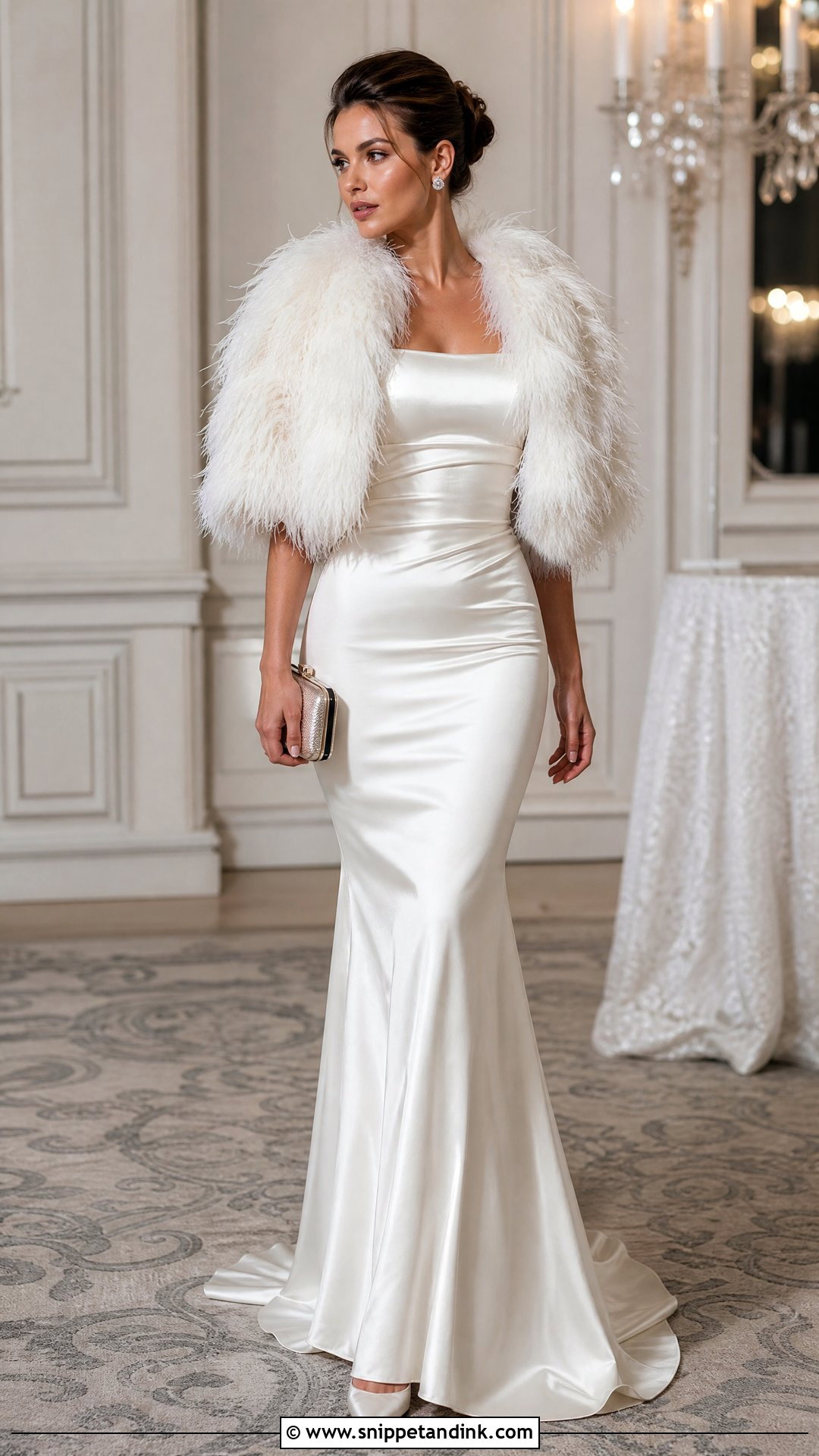
Feathers are fun, and they need a controlled outfit around them. A cropped ivory shrug over a sleek satin gown, a fitted mermaid or an off-shoulder dress is enough statement; pair it with crystal studs, a polished ponytail or bun, pointed pumps and a hard-case clutch. Feather trim at the neckline frames the face, while full coverage is much bolder. On a petite frame I’d choose a narrow, light shrug. Feathers shed, so keep a lint roller in the bridal kit and don’t hug guests in dark suits before photos. Good faux feathers give the same drama without natural plumage.
11. Cropped Cardigan Wedding Dress Cover
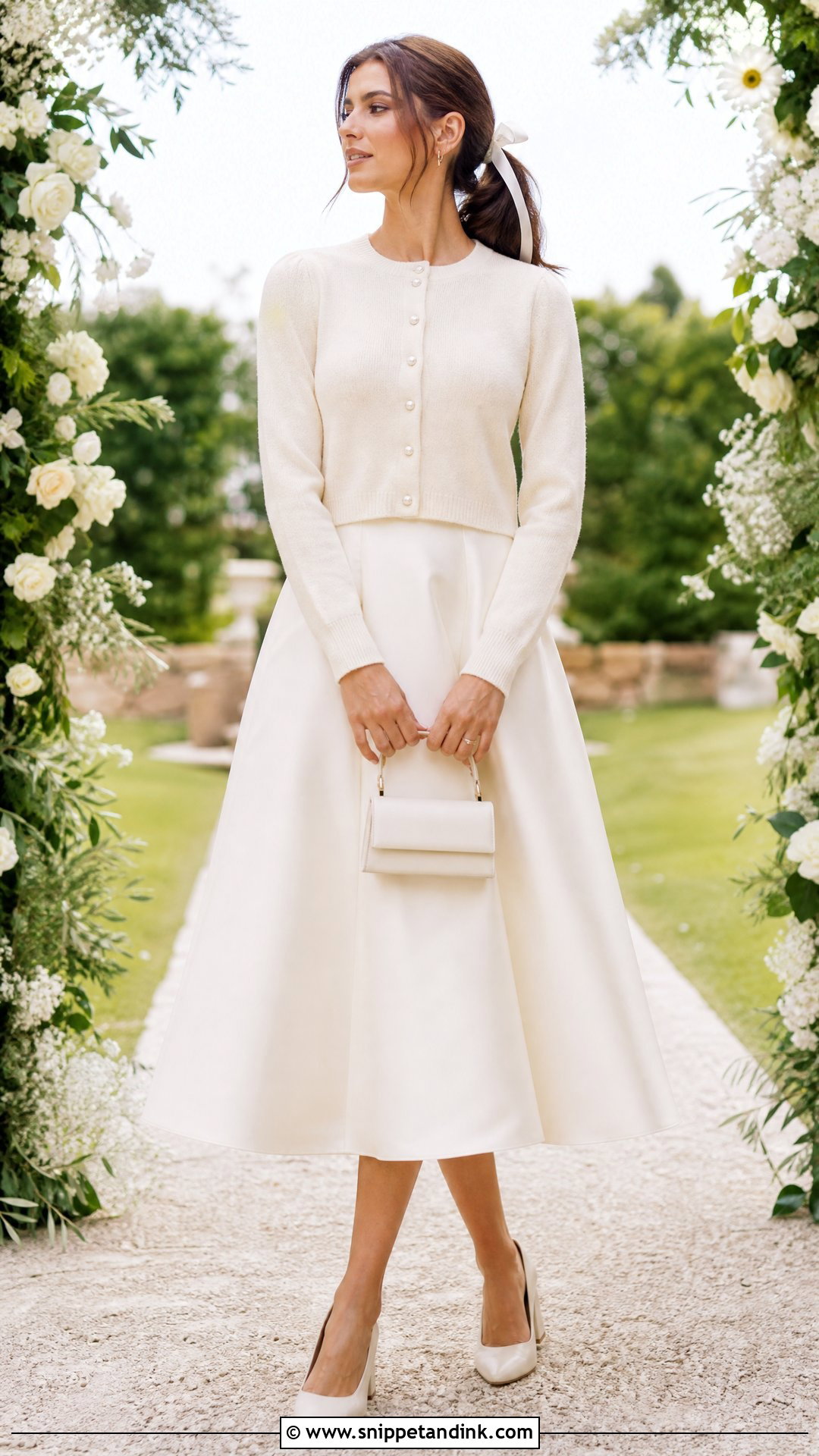
A cardigan makes a bridal outfit feel relaxed and personal, ideal for a garden, a courthouse or the countryside. Pair a fine-gauge ivory cardigan with a silk slip, a tea-length dress or a simple square-neck gown, ending at the natural waist with pearl, covered or crystal buttons. Fine cashmere, mohair blends and smooth merino look far more refined than chunky knits. Knitwear ivory rarely matches fabric ivory exactly, so bring the gown, or a swatch, when shopping and compare by a window. It should skim without stretching at the buttons. A ribbon-tied ponytail, small hoops and block-heel pumps complete the look.
12. White Tailored Blazer Wedding Dress Cover
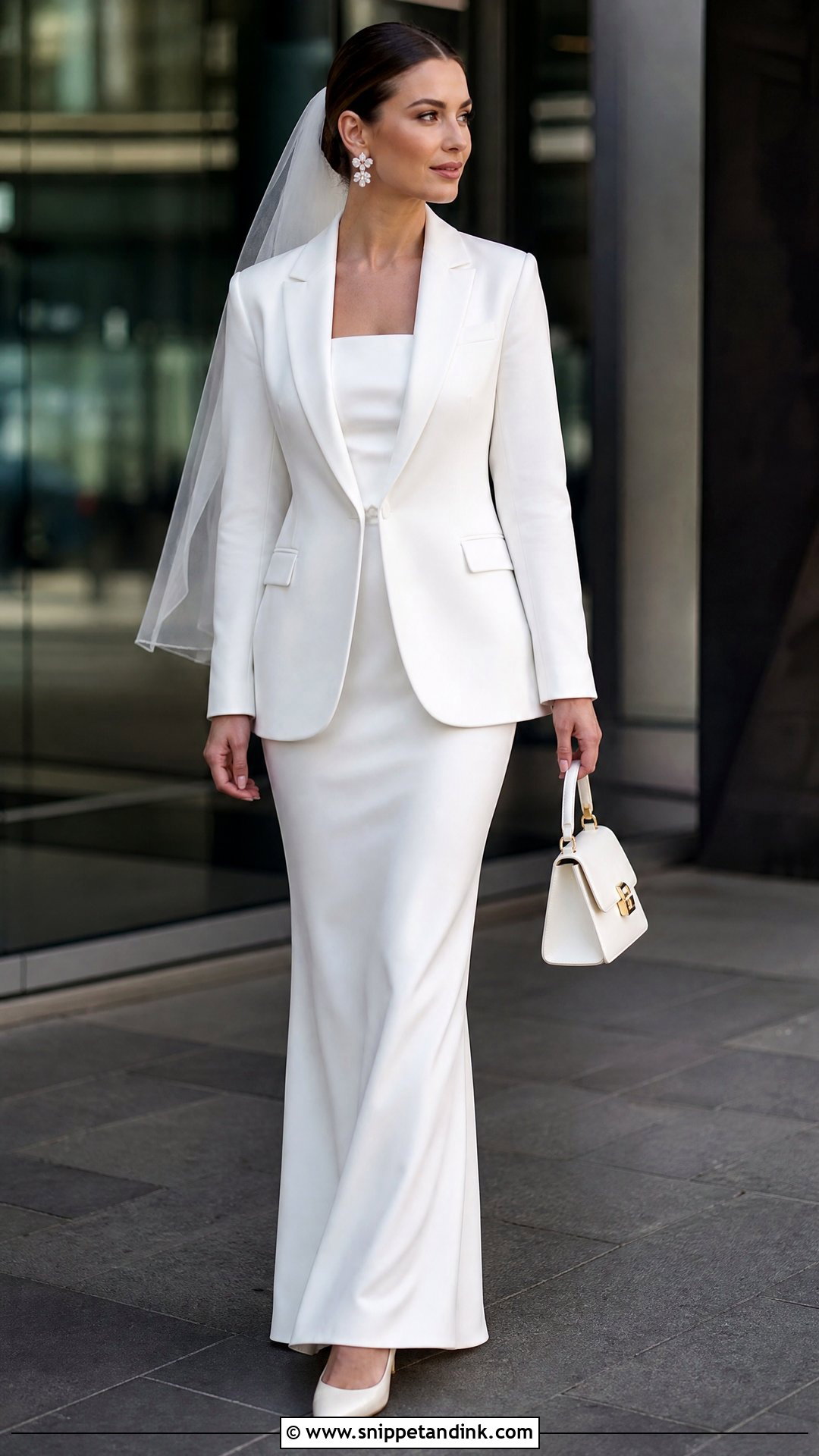
A white blazer gives a wedding dress a sharp, modern edge and practical arm coverage. Style a single-breasted blazer over a slip gown, fitted midi, column or bridal jumpsuit, slightly cropped or shaped so the waist stays visible. Crepe, satin or smooth suiting fabric looks more formal than linen or heavy wool. With fuller hips, a longer jacket with a soft waist balances the shape. Keep lapels narrow over a delicate neckline, and have sleeves professionally shortened; a blazer sleeve that covers the knuckles looks borrowed. Sculptural earrings, sleek hair and a structured top-handle bag suit it.
13. Bridal Leather Jacket Wedding Dress Cover
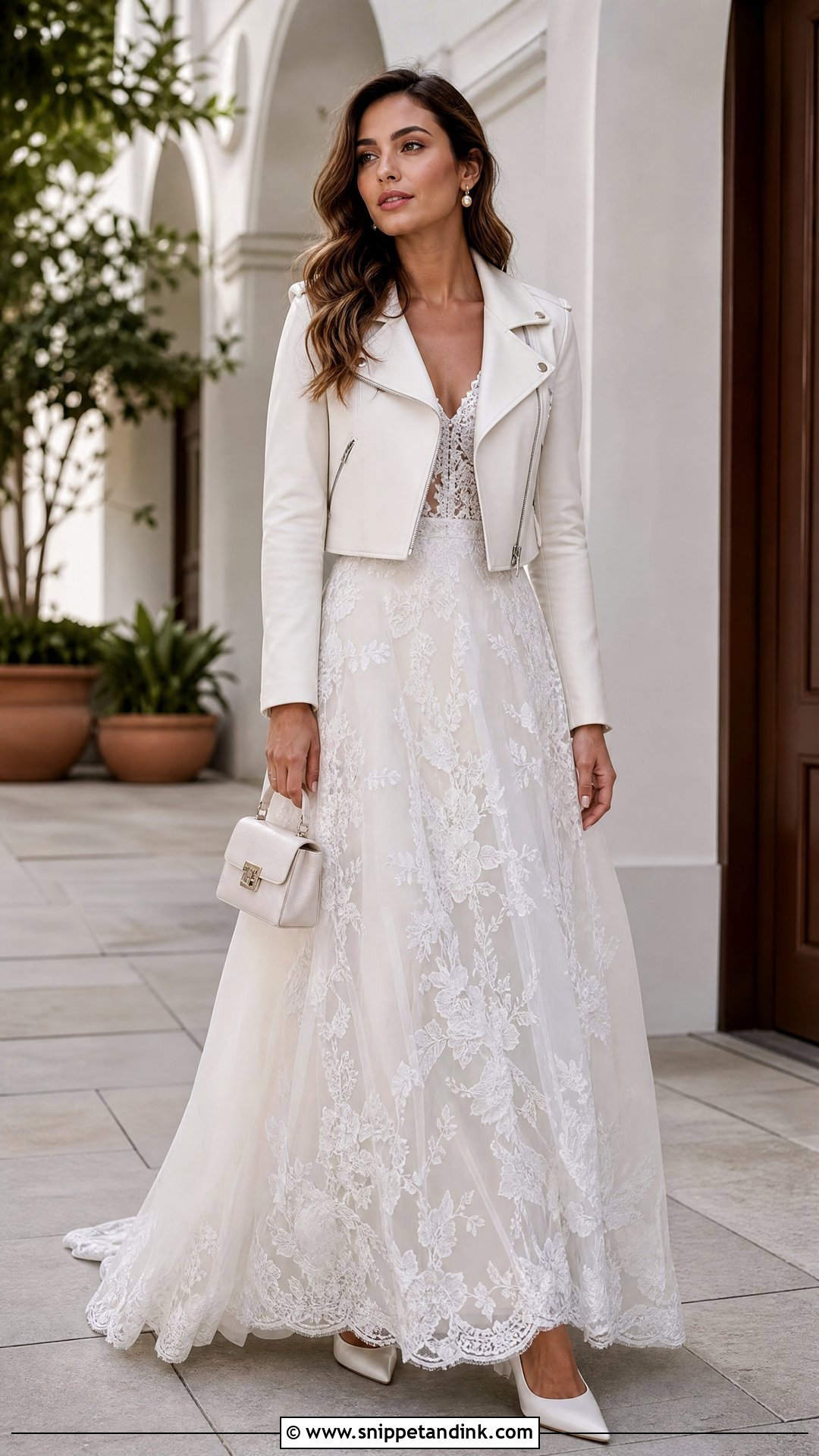
Leather against lace or tulle is a contrast I enjoy styling, mostly for portraits and the reception. A cropped bridal leather jacket in white or ivory works over a lace A-line, a satin slip or a tulle skirt, with loose waves, small statement earrings and ankle boots or pointed pumps. Keep hardware minimal; big metal zips and studs catch tulle. The hem should sit above the fullest part of the skirt. Embroidery on the back personalizes it, though a plain one is easier to wear again. Soft faux leather gives the same shape with more give through the arms.
14. Bridal Denim Jacket Wedding Dress Cover
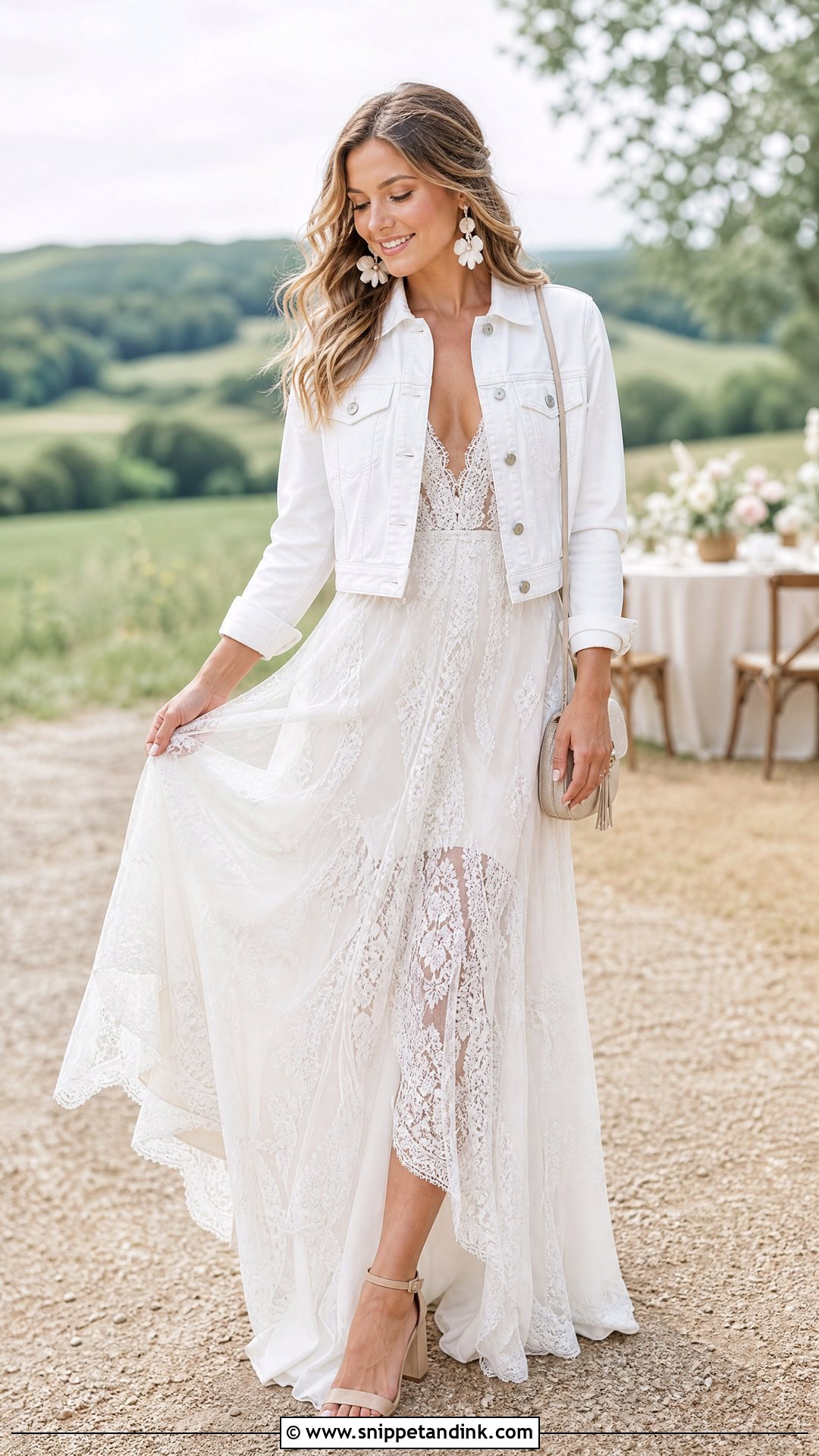
Denim is the cover for an outdoor wedding, a sparkler exit or a casual photo session. A cropped denim jacket in white, cream or pale blue over a lace midi, a bohemian gown or a simple satin dress keeps the waist visible and balances a full skirt. Blue denim can rub dye onto pale fabric, especially if it’s new or you get warm, so wash it a few times before the day or choose white. Soft waves, floral earrings and white sneakers or block sandals finish it. Avoid oversized cuts over a detailed bodice or big sleeves.
15. Hooded Bridal Cloak Wedding Dress Cover
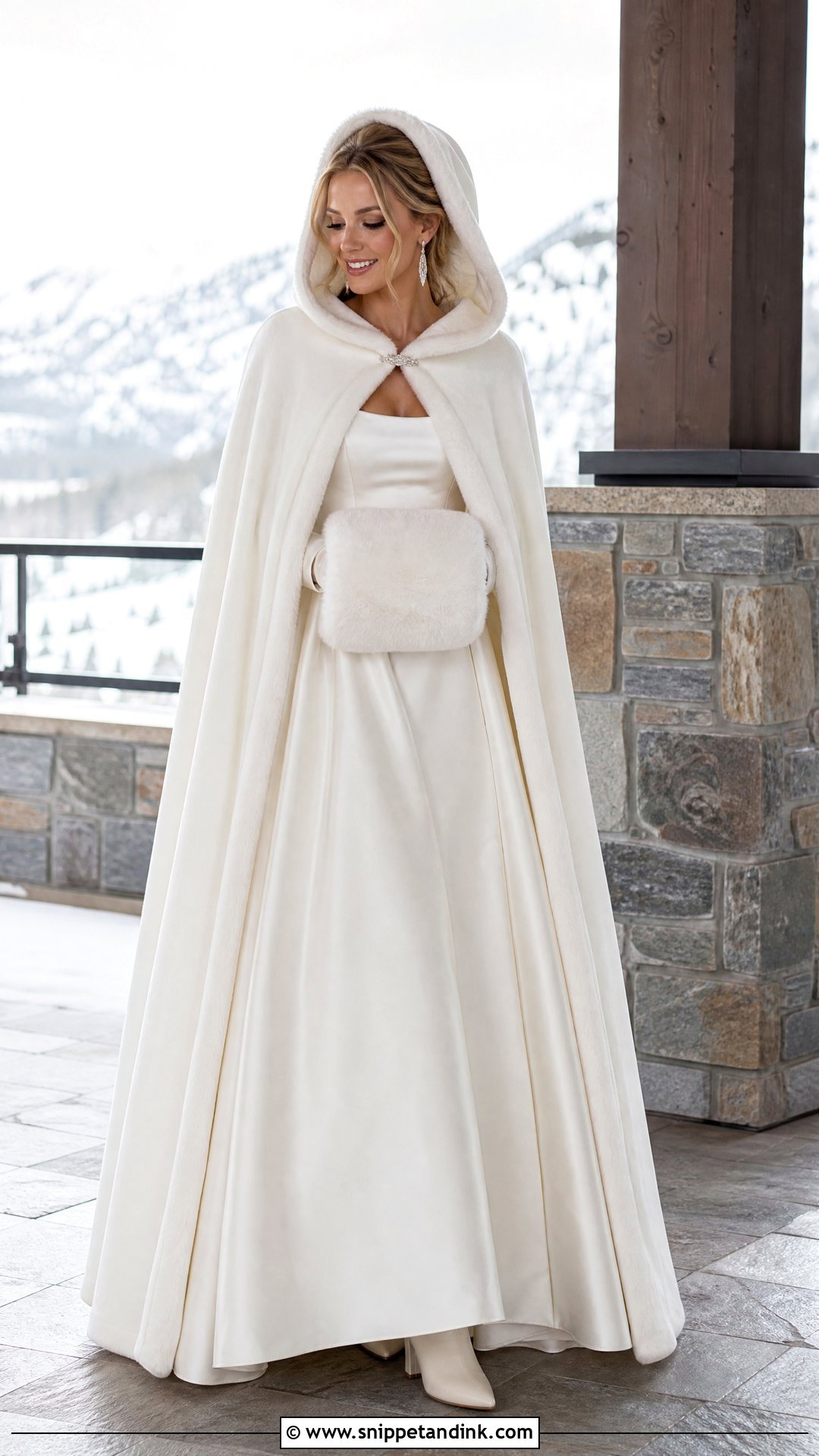
A hooded bridal cloak gives full-length coverage for a cold outdoor ceremony or a winter portrait session in the mountains. Ivory wool, velvet or lined crepe over a long-sleeved A-line or simple satin ball gown is the classic pairing. The hood is the part I fit with the hairstylist present: it needs enough room for the style and veil, or it flattens both the moment it goes up. A single front fastening looks clean and lets the dress show when opened. Avoid heavy trim near the face. Practice walking with the cloak over the gown so the hem and train move together safely.
16. Organza Jacket Wedding Dress Cover
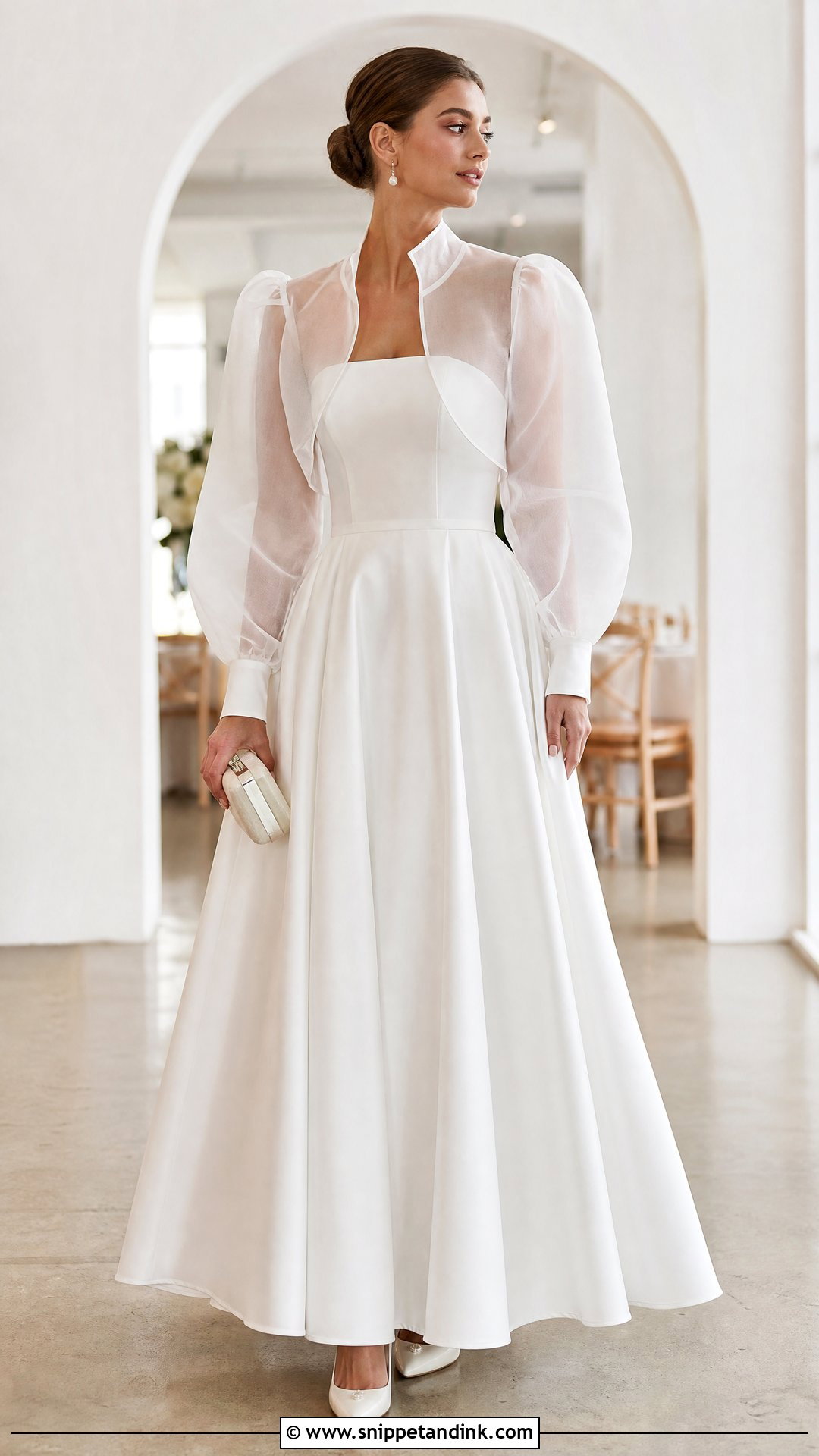
Organza is transparent, so every seam, dart and hem on an organza jacket shows. That’s why I check construction before style: look for narrow French seams and neat finishing inside. A cropped organza jacket suits a strapless satin dress, a clean ball gown or a fitted crepe silhouette. Puff sleeves make it fashion-forward, while straight sleeves stay quiet. Match the undertone to the gown. Over a full skirt, keep the jacket compact and waist-length. Pearl earrings, a polished bun, satin pumps and a box clutch finish it, and a rounded collar or covered buttons add interest without fighting the neckline.
17. Sequined Bridal Cape Wedding Dress Cover
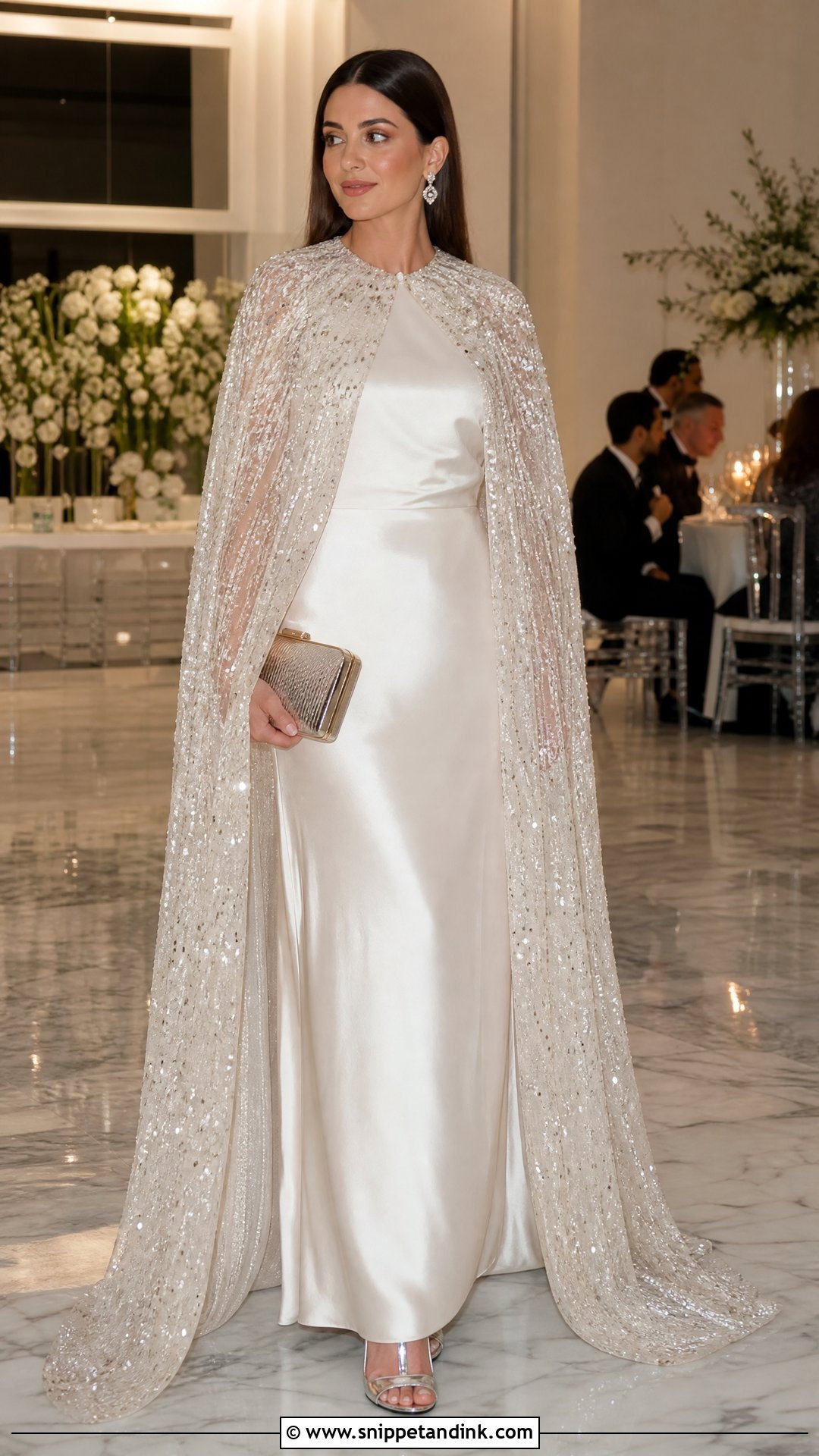
Sequins catch light from every direction, which makes a sequined cape a whole second look for the evening reception. Layer a short or mid-length cape over a plain satin column, a sheath or a bridal mini, in clear, silver or ivory sequins so it stays in the bridal palette. Keep hair, earrings and shoes simple. Insist on a soft lining: sequin edges scratch the neck and snag the gown beneath. Check every row for loose ends before the day. A lightweight design is far more comfortable for greeting guests and dancing.
18. Embroidered Bridal Kimono Wedding Dress Cover
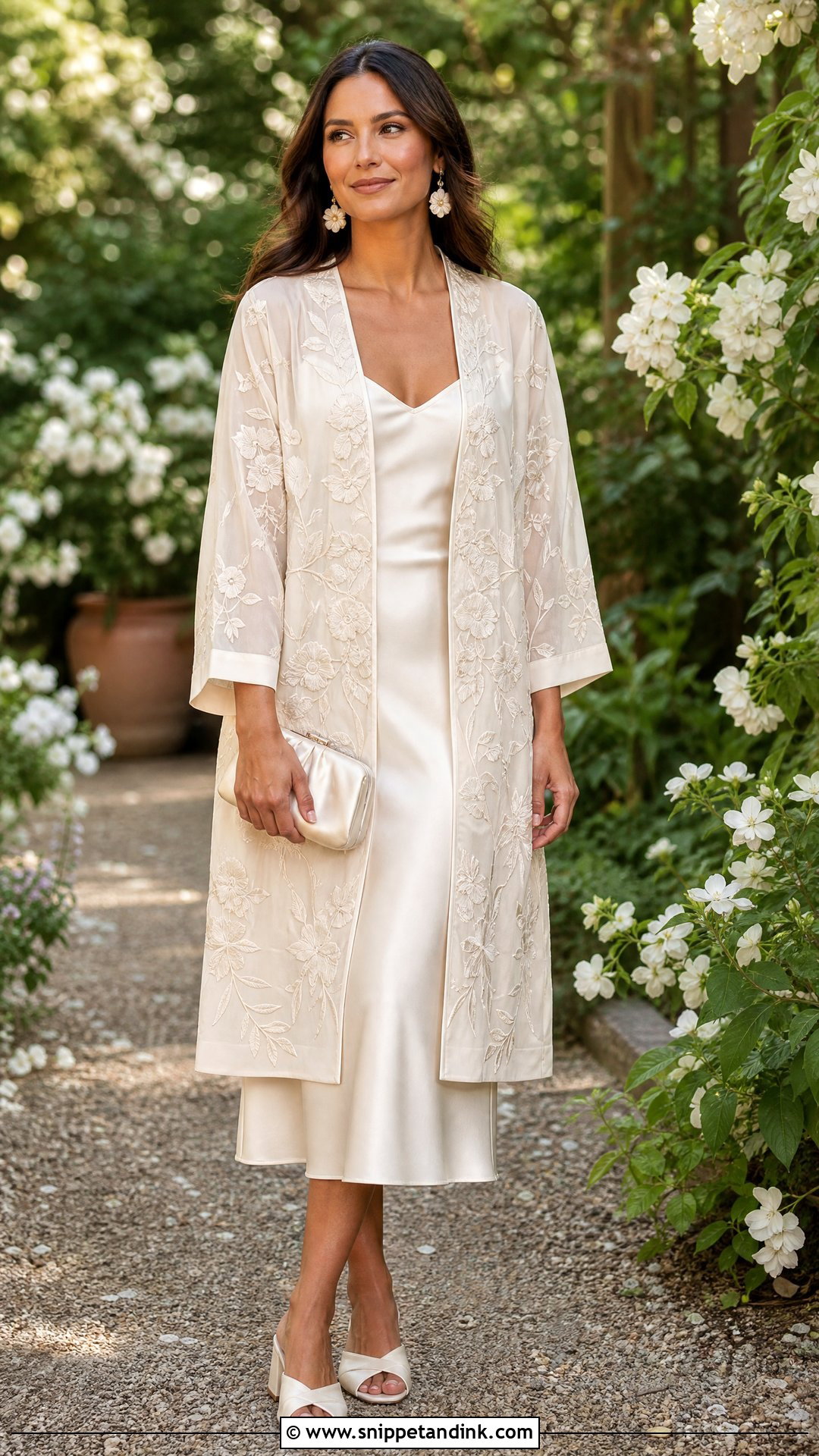
An embroidered kimono is graceful, loose coverage for a bohemian, garden or destination outfit. A knee-length ivory kimono over a plain slip, relaxed sheath or simple crepe dress lets floral embroidery, tonal vines or light beading add detail while the gown shows beneath. Wear it open or with a removable belt so the dress underneath isn’t crushed. Wide sleeves are easy to move in, but very deep ones drag through the bouquet. Proportion is the rule I use: longer kimono with a narrow gown, shorter one with a fuller skirt. Loose waves, floral earrings and low block heels suit it.
19. Long Bridal Coat Wedding Dress Cover
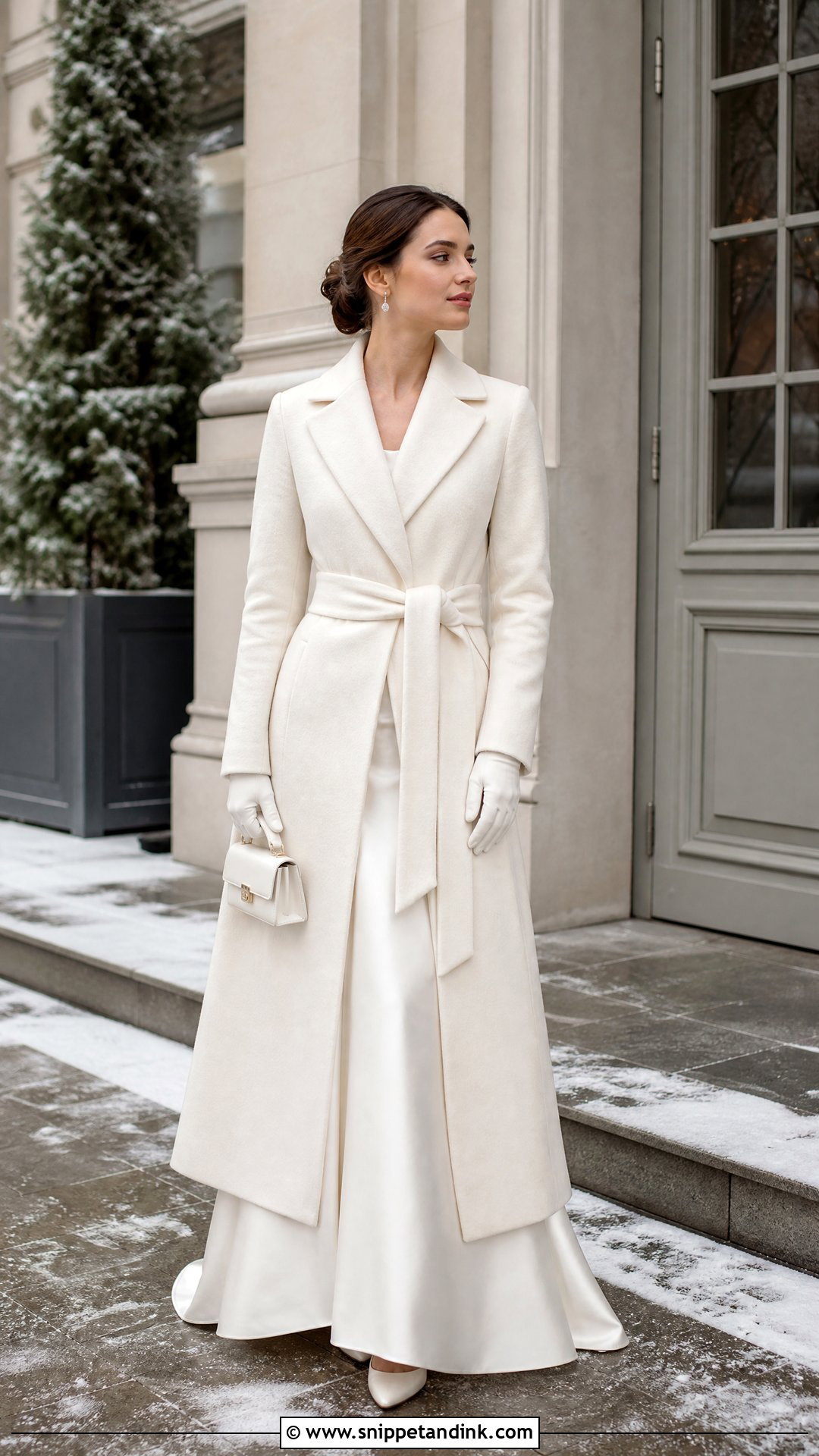
For a winter wedding with travel between ceremony and reception, a long coat is the most practical cover here. Choose a wrap, tailored wool or clean satin coat falling below the knee with room for the gown, over a slim crepe dress, long-sleeved satin or gently flared A-line. A belted coat defines the waist but tie it loosely, or the bodice creases. A full ball gown usually needs a custom coat cut with extra volume through the skirt. Check the lining is smooth, light-colored and free of hooks that catch lace. Pearl earrings, a structured hairstyle, gloves and closed heels finish it.
20. Detachable Sleeve Wedding Dress Cover
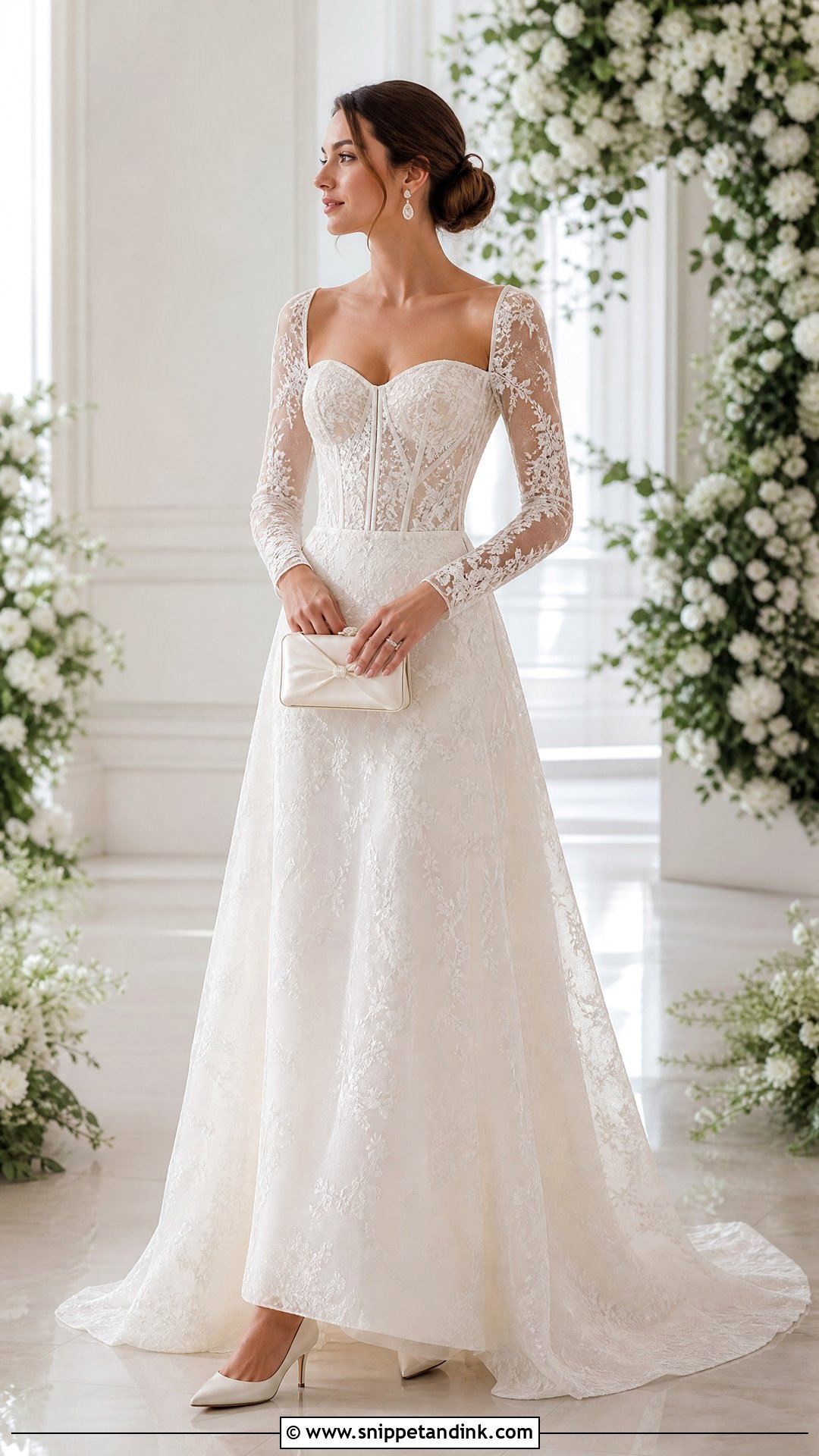
Detachable sleeves give coverage while keeping the gown’s own shape. Fitted lace, tulle, satin or organza sleeves can be added to a strapless dress, corset gown or sleeveless A-line, ideally in a fabric that repeats a detail already on the bodice or skirt. Puff sleeves give drama, fitted ones a streamlined, traditional line. The attachment points should sit securely under the neckline without gaps; I ask brides to reach forward and lift a glass at the fitting, because that is when badly placed loops pull. Delicate earrings, a low bun, ivory pumps and a small clutch complete it. Fit gown, undergarments and sleeves together.
Buying the Cover Separately From the Gown
Many covers come from a different maker than the dress, and that’s where most of the trouble starts.
- Ask your bridal shop for a small fabric swatch from the gown, or photograph the dress next to a white sheet of paper in daylight. Take either with you when you shop.
- Order early if the piece is made to order. Custom boleros, capes and coats from bridal makers often take several weeks, and lead times vary, so check before you commit.
- Plan the cover into your alterations. A seamstress may need to add a hidden loop or snap to the gown so a cape or sleeves stay in place, and that is easier before the final fitting than after.
- Agree with your photographer when the cover comes off. If you want portraits with and without it, put both in the schedule.
Afterwards, store the cover with the gown only if both are clean and dry. Keep faux fur loosely folded so the pile isn’t crushed, hang velvet rather than folding it, and wrap anything beaded in acid-free tissue so the beads don’t press into softer fabric.
A Layer That Looks Like It Came With the Dress
A cover should look like part of the gown, never like something thrown on in the car park. Start with the season and how much coverage you actually need, then compare color, neckline, sleeve shape, embellishment and length against the dress. Simple gowns can carry a detailed topper; ornate gowns look better under something plain. Bring your chosen layer to the final fitting and walk, sit and hold your bouquet in it. Whether it’s a bolero, a cape, a shawl or a pair of sleeves, that one rehearsal is what makes it feel like yours.
You'll Like These Ideas:


Leave a Reply