
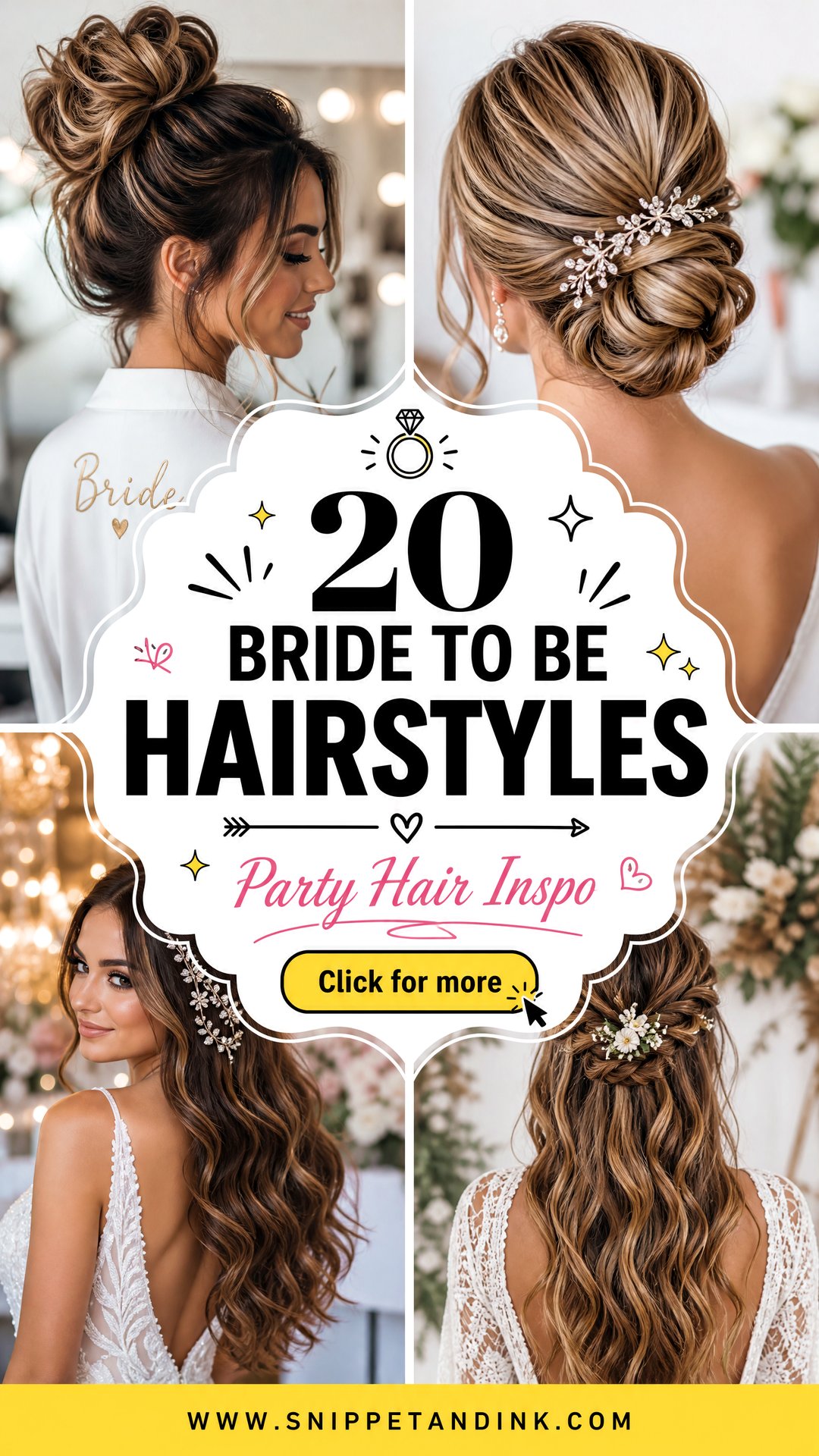
The hairstyle a bride shows me in a photo is rarely the problem. The problem is whether her hair, her dress neckline, her veil and a long day of hugging people will let that style survive. A garden ceremony and a ballroom reception ask very different things of the same updo. Below are twenty styles brides keep coming back to, from soft waves and crown braids to sleek low buns and a high ponytail, and for each one I’ve noted what it needs from your hair and where it tends to go wrong. Several of them also scale down nicely for a shower, a rehearsal dinner or the bachelorette, which I come back to near the end.
Heavy, Fine, Curly or Coily: What Each Style Asks of Your Hair
Every style below can be adapted, but some hair makes some styles much easier. Before you fall for a photo, it helps to know which group you’re in and what that means for your trial.
Thick, heavy hair
Thick hair holds curls well but makes updos heavy. A large bun pulls on the pins all day, and the weight can give you a headache. I split it into smaller sections that each get their own anchor, and I lean toward low placements, where gravity works with the style instead of against it.
Fine or silky hair
Fine hair drops curls and lets pins slide. It needs grip before it needs styling: a texture spray or dry shampoo at the roots and a curl set the night before helps. Braids and twists can look thin, and clip-in wefts fill them out invisibly. Old Hollywood waves and sleek straight hair, which rely on shine more than volume, often look better on fine hair than a big messy bun.
Curly and coily hair
Natural curls and coils are a gift for braids, crowns and sculpted updos, because the hair holds itself. I’d work with your texture rather than straightening it, since a silk press can revert in humidity on the day. Tell your stylist how your hair responds to moisture, and bring the products your hair likes, so the trial reflects how your hair actually behaves.
1. Soft Half Up Half Down Wedding Hair
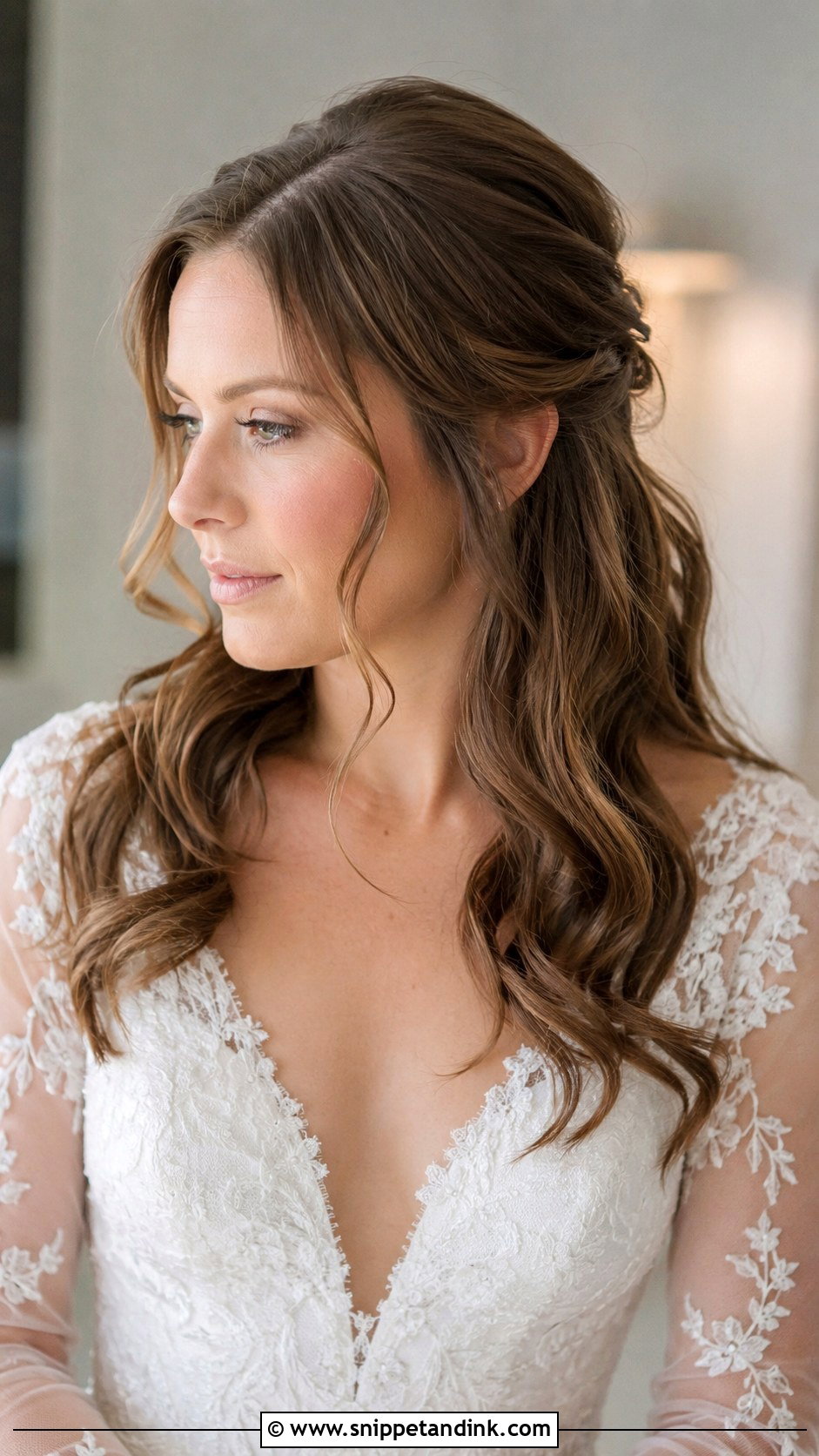
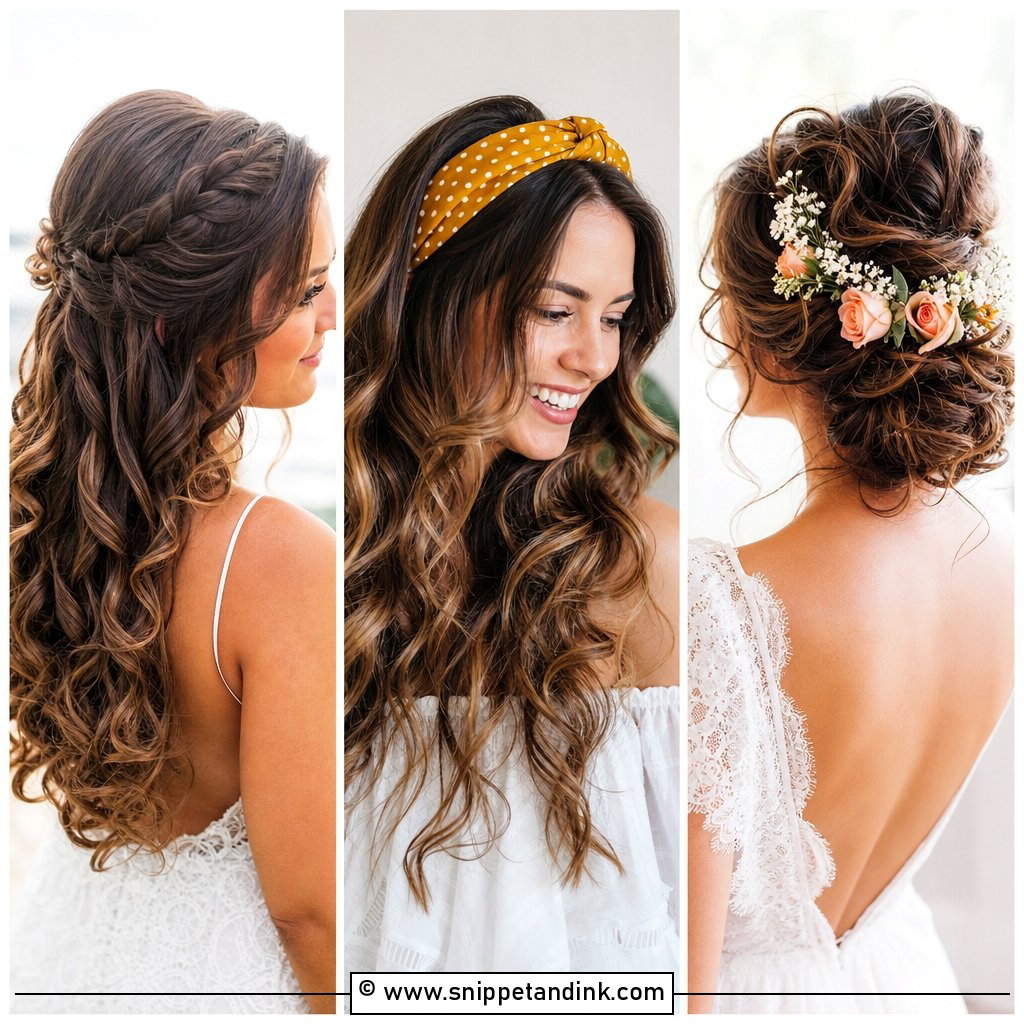
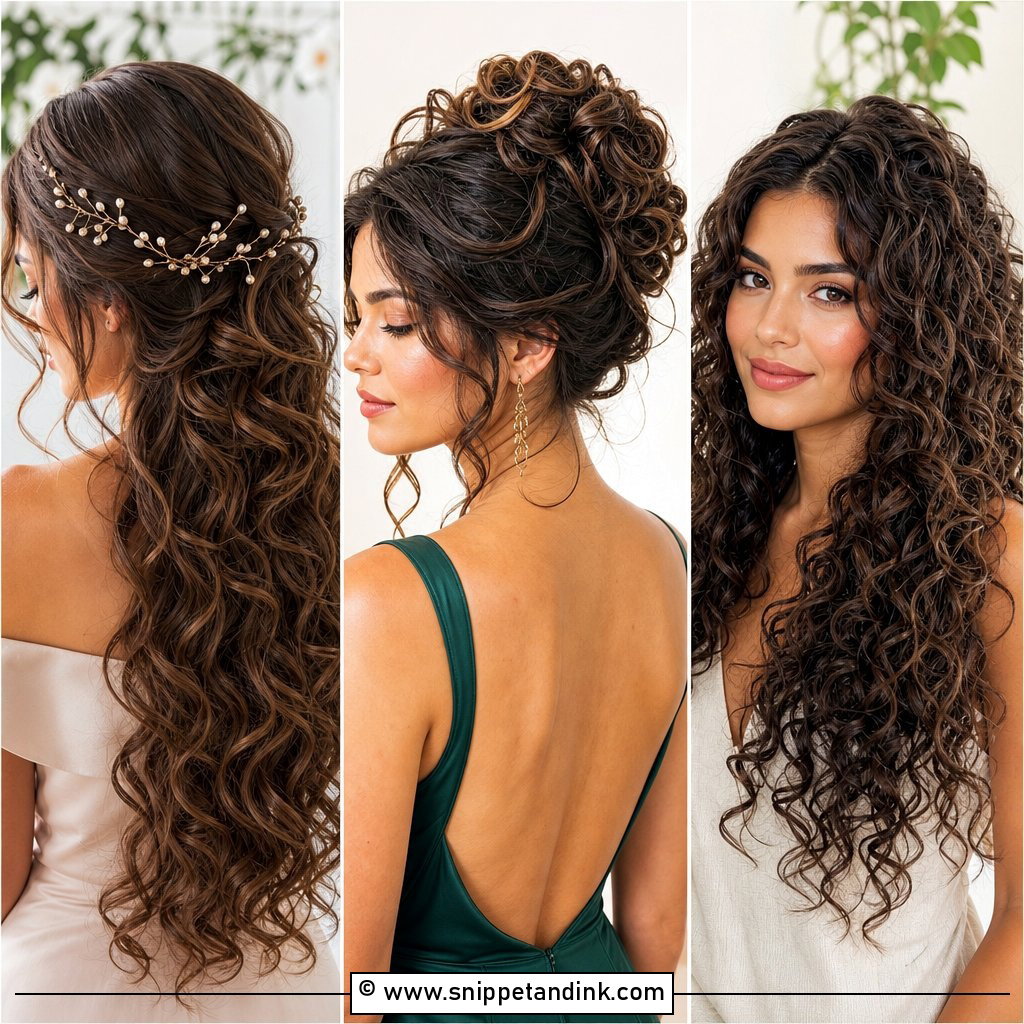
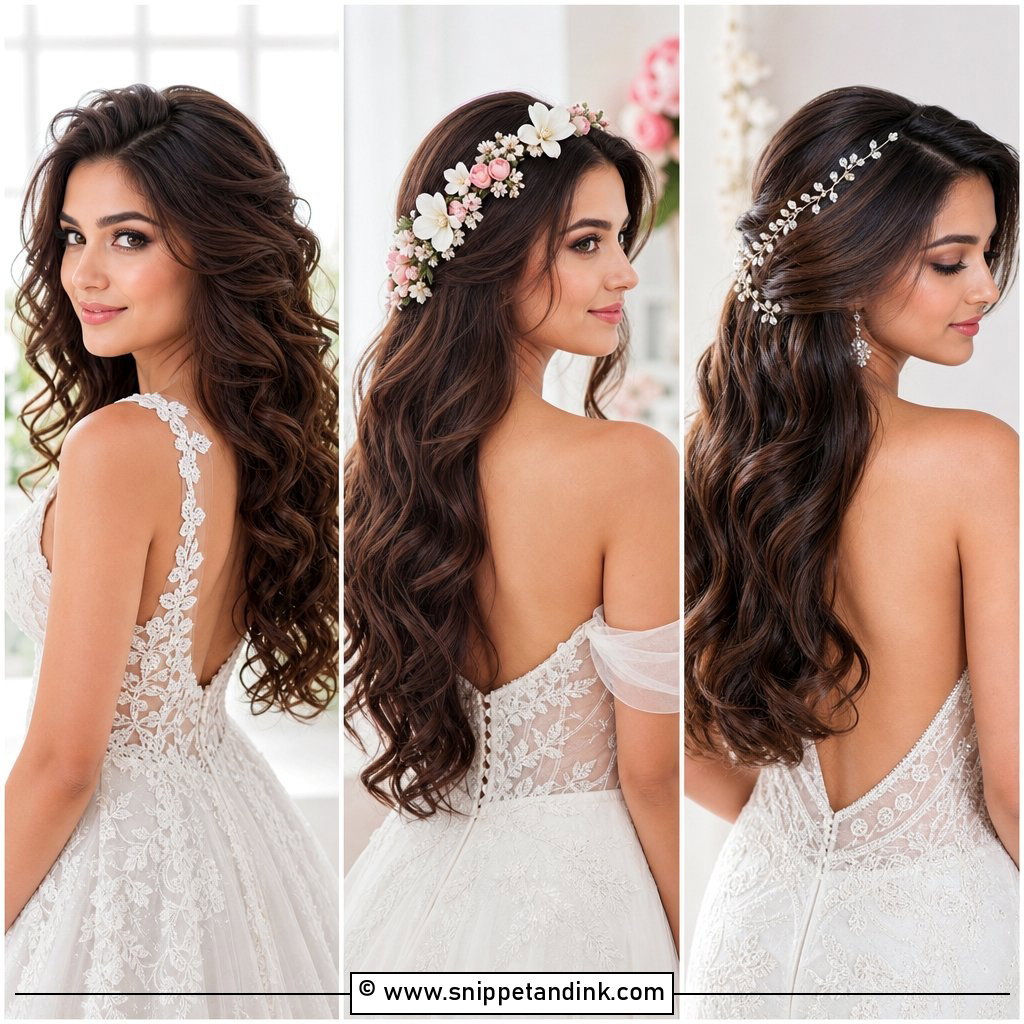
Half up, half down is the style I’m asked for most when a bride can’t choose between an updo and wearing it loose. The pinned sections keep hair off the face while the curls fall over the shoulders. What decides whether it lasts is the anchor at the crown: I build a small hidden base with crisscrossed bobby pins first, because twists pinned straight into silky hair slide down by the first dance. A few face-framing tendrils soften it. It takes a veil, a tiara or flowers tucked into the twists equally well.
2. Classic French Twist Updo
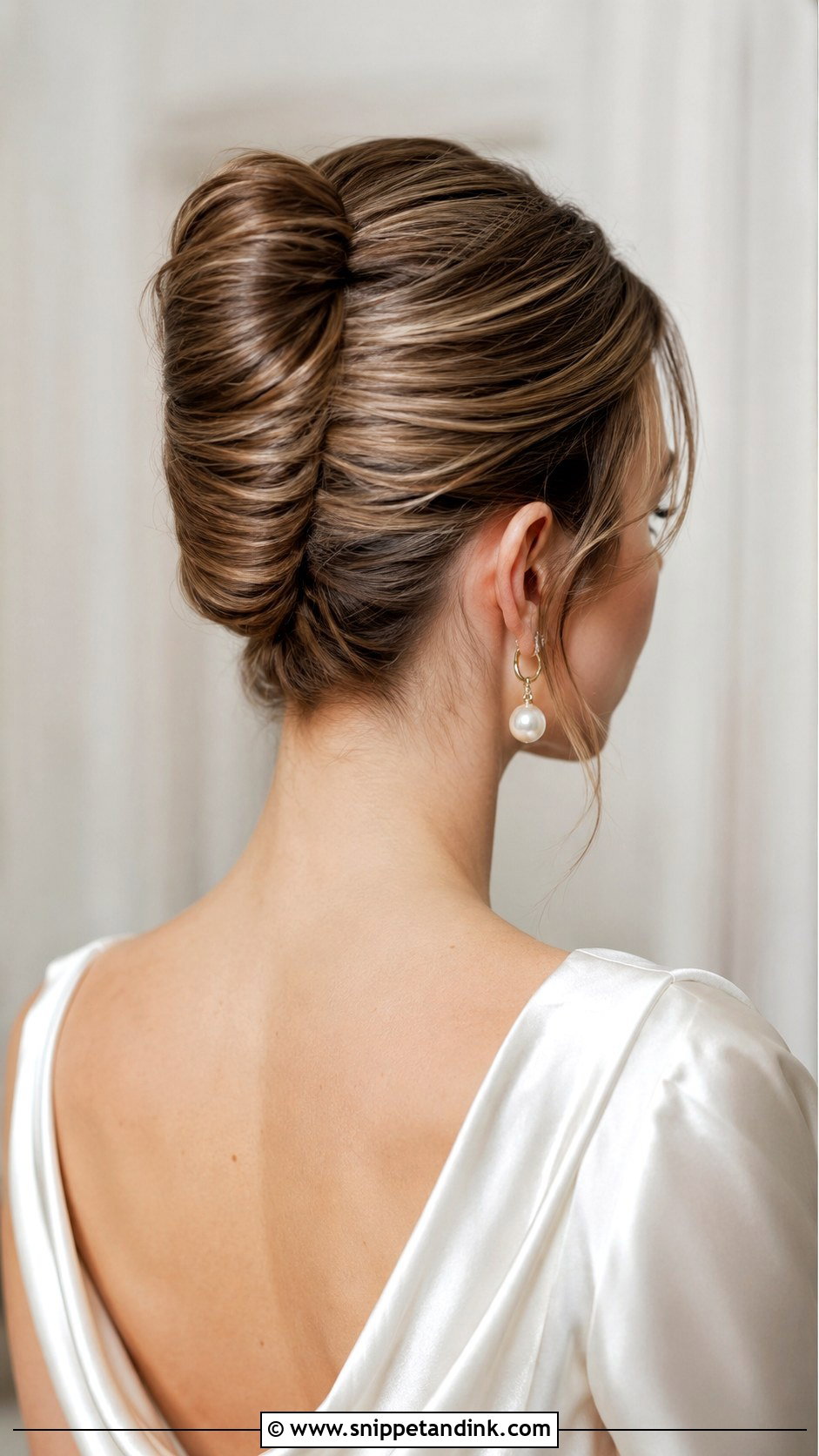
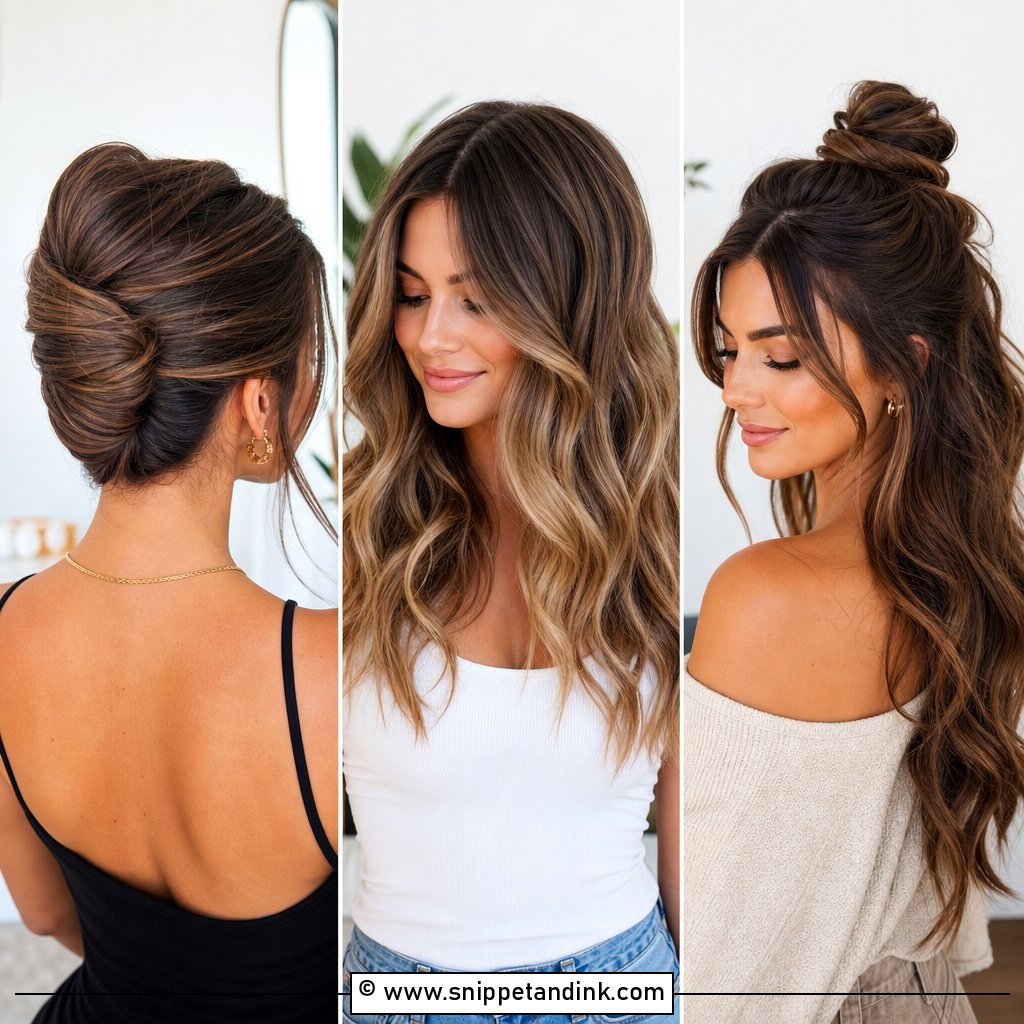
The French twist gathers the hair to one side and tucks it into a sleek vertical roll at the back. It shows off a neckline and earrings better than almost anything else. On fine hair I backcomb the inside of the twist lightly so the roll has something to grip; on very thick hair I sometimes remove a little bulk from underneath with a smaller inner twist, or the roll gets too wide. Wear it ultra-smooth for a formal wedding, or pull out two soft pieces at the temples for something gentler.
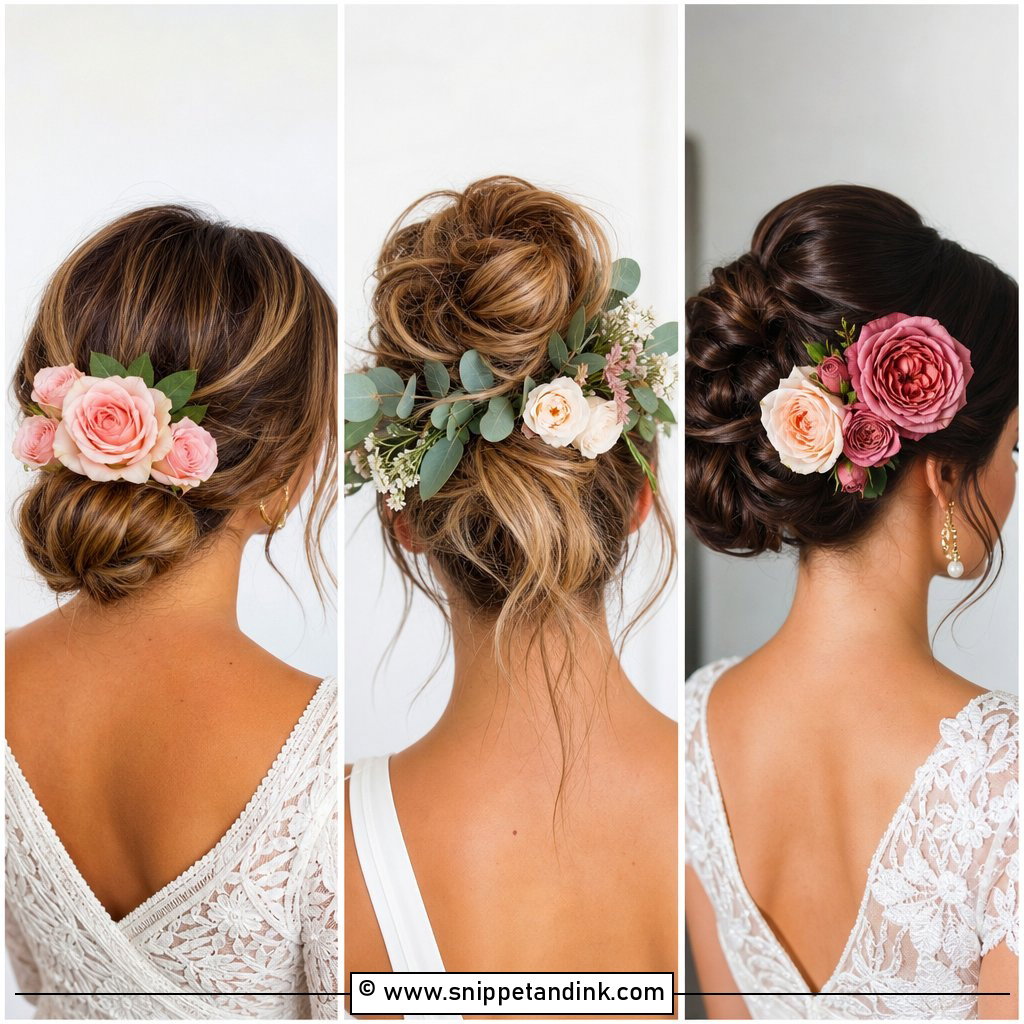
3. Messy High Bun With Face Framing Pieces
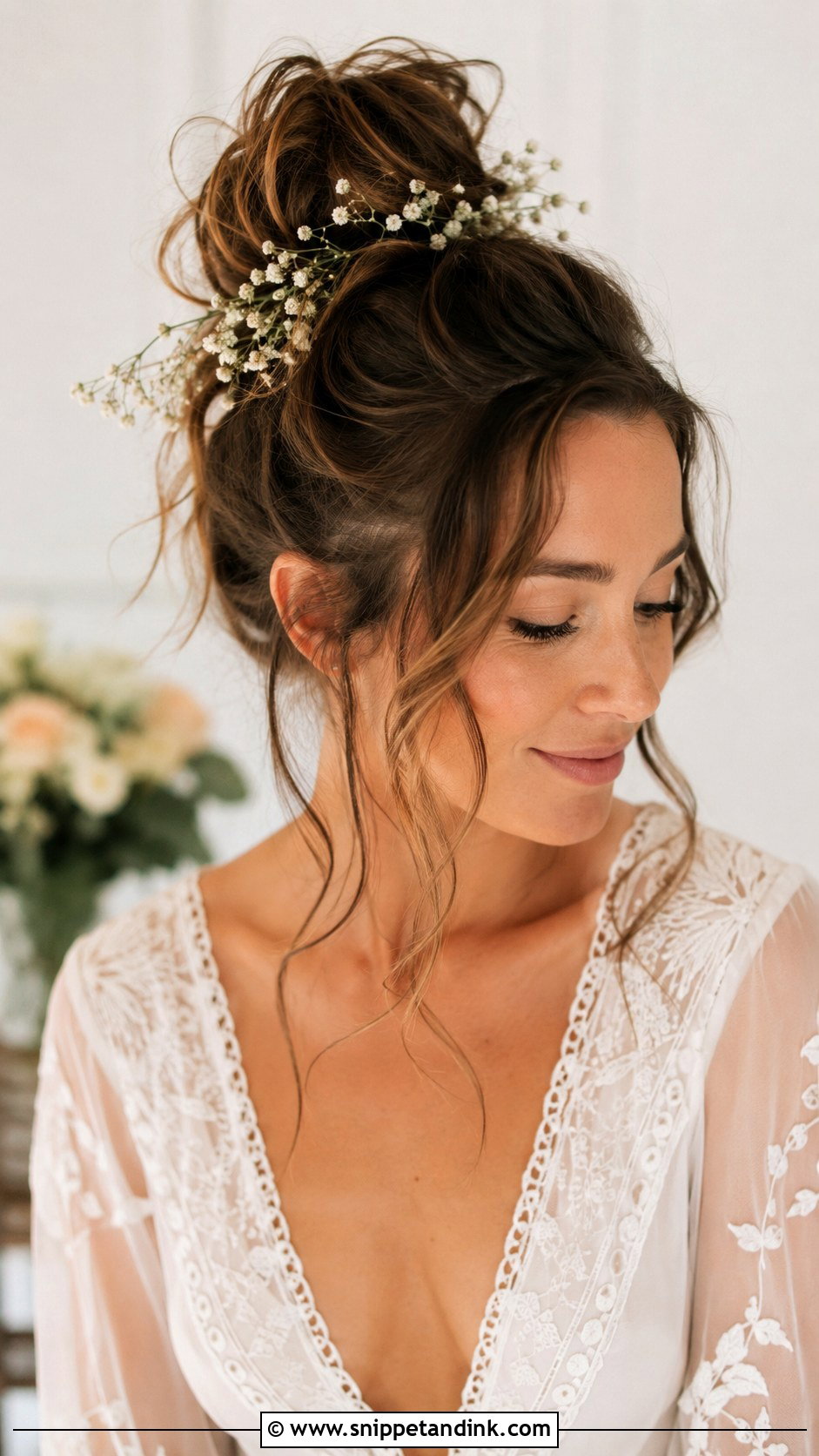
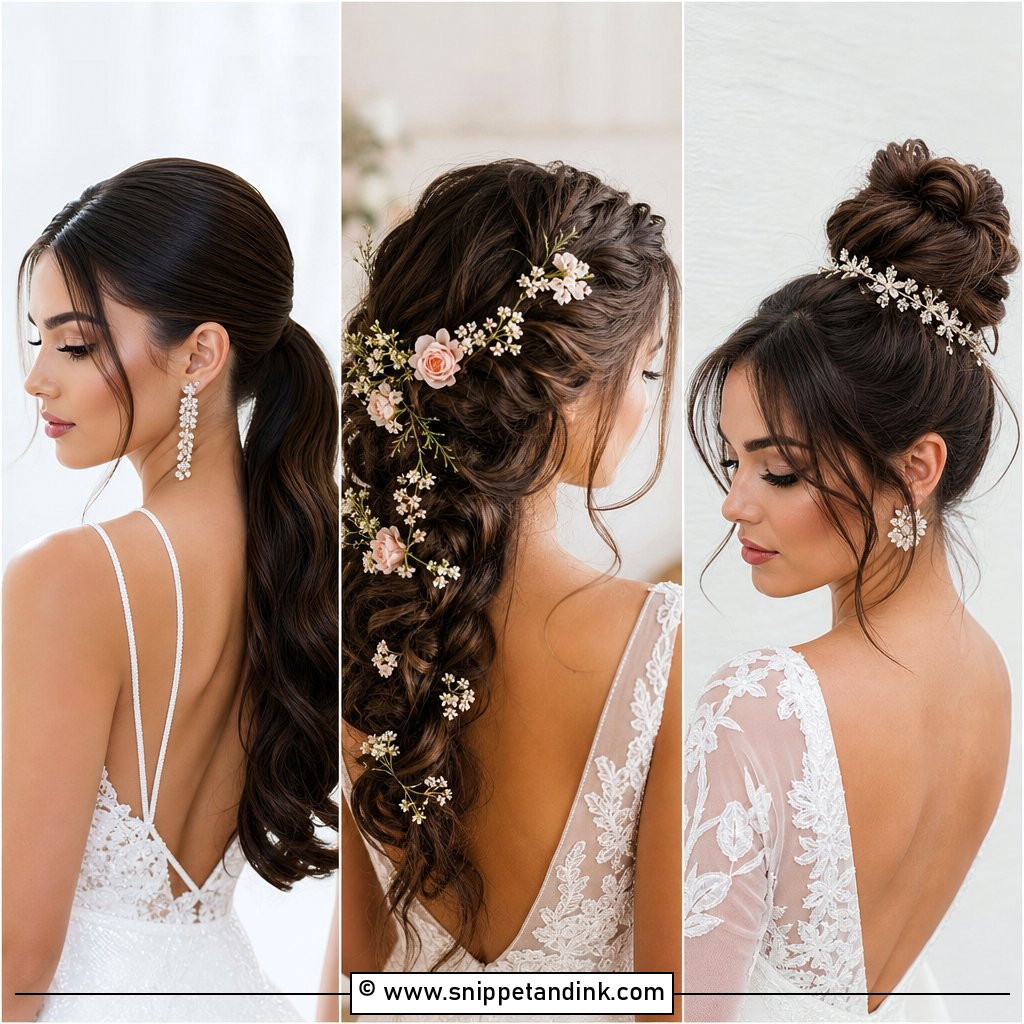
A messy high bun looks relaxed, but the mess has to be placed. I curl the hair first, then gather it loosely, pin it in sections and pull a few pieces out deliberately, because a bun that’s genuinely just messy flattens and loses shape within a couple of hours. Wispy, face-framing tendrils fall around the cheeks. It suits flowy gowns and outdoor weddings. The thing to check is the veil: a high bun leaves the comb fighting for the same spot, so the veil usually goes underneath the bun instead.
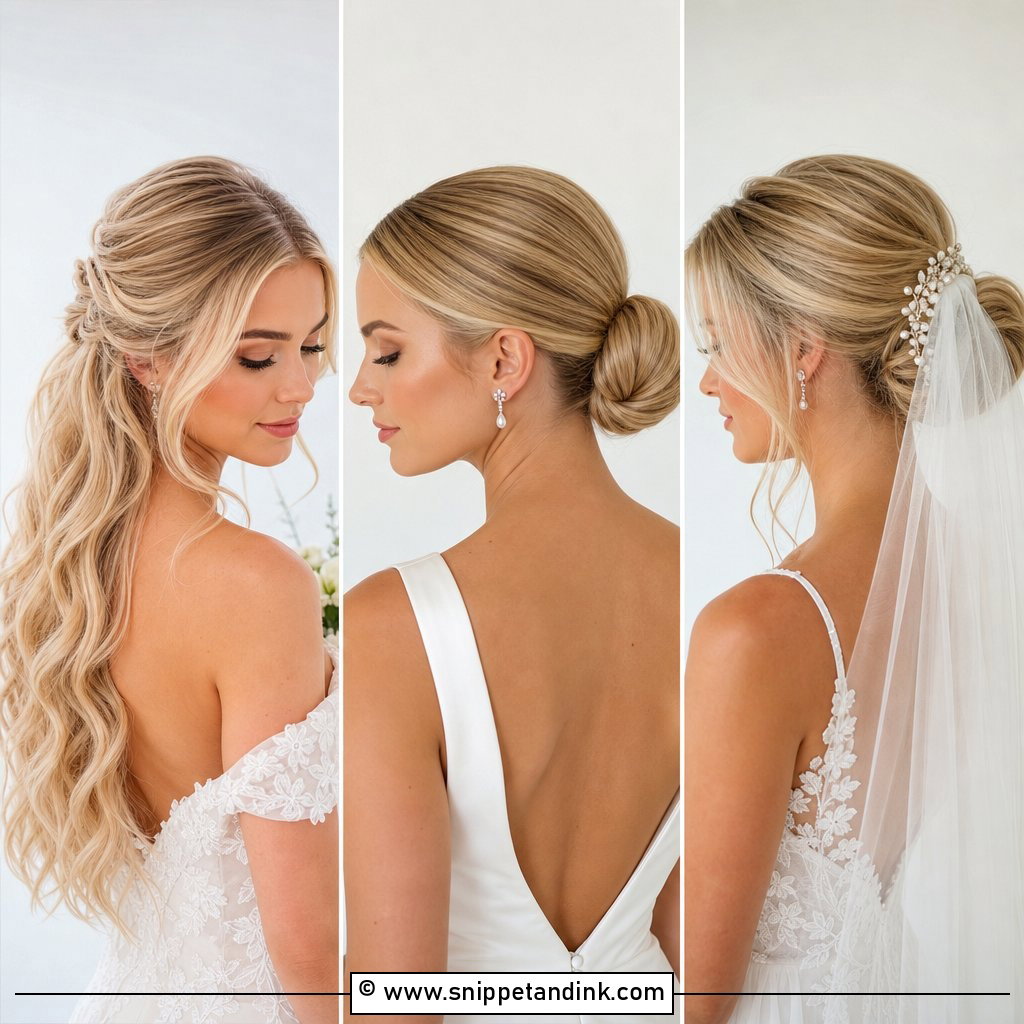
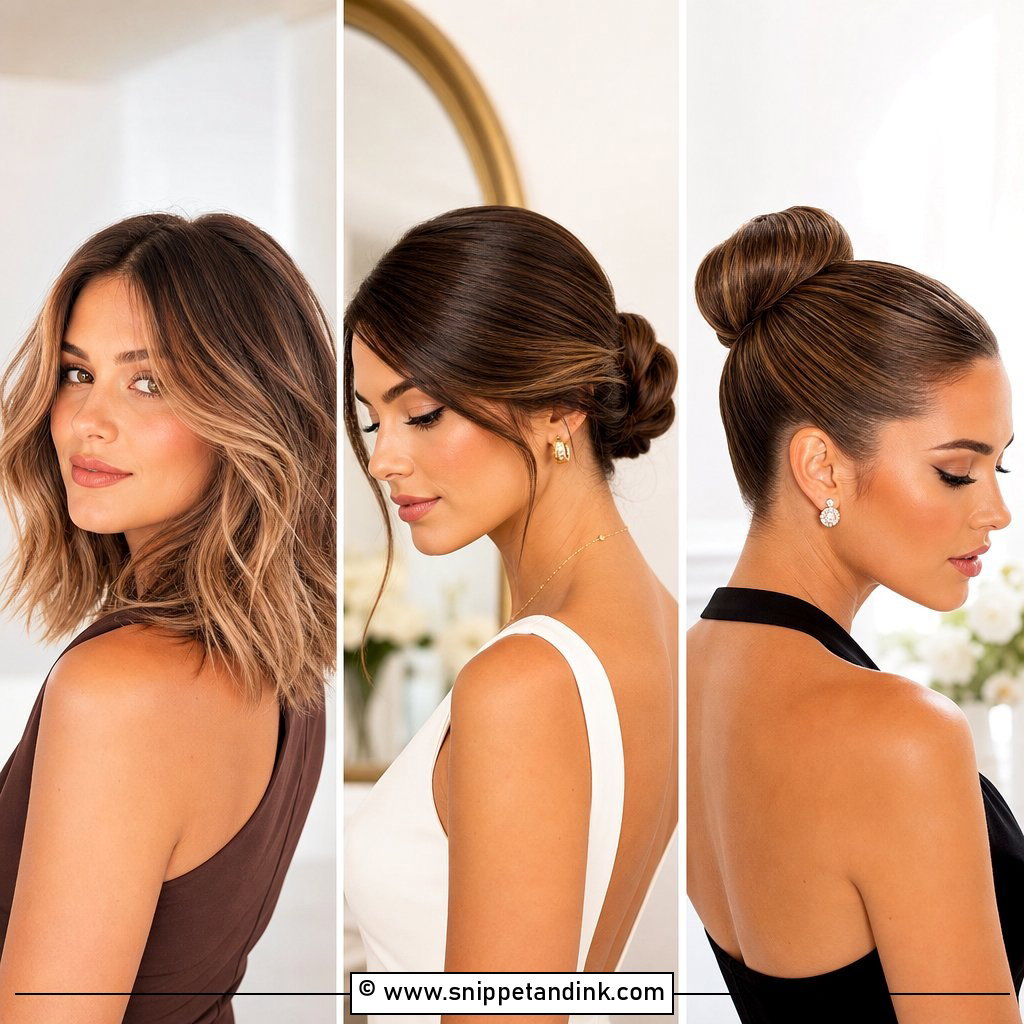
4. Low Bun Bridal Updo
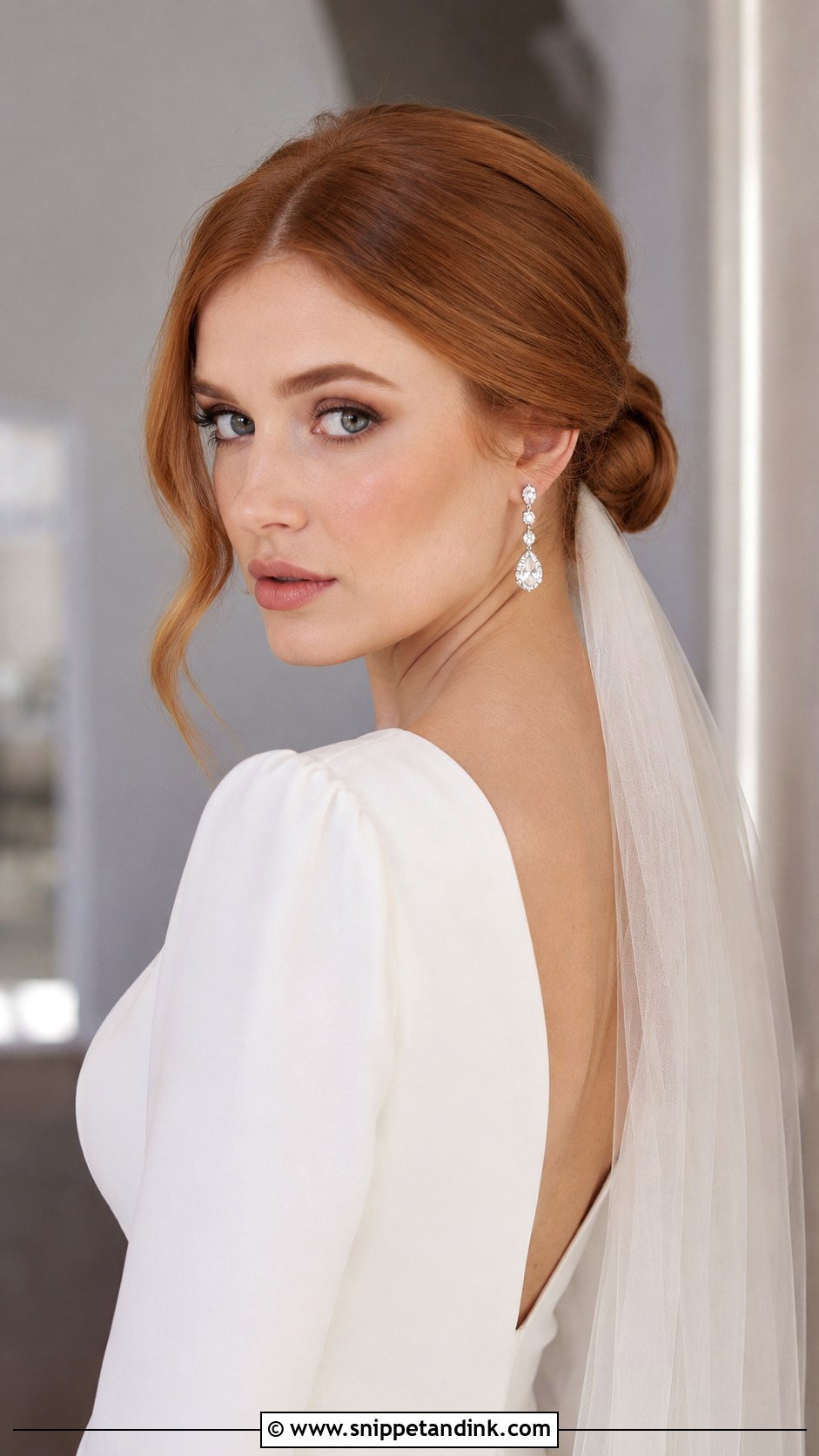
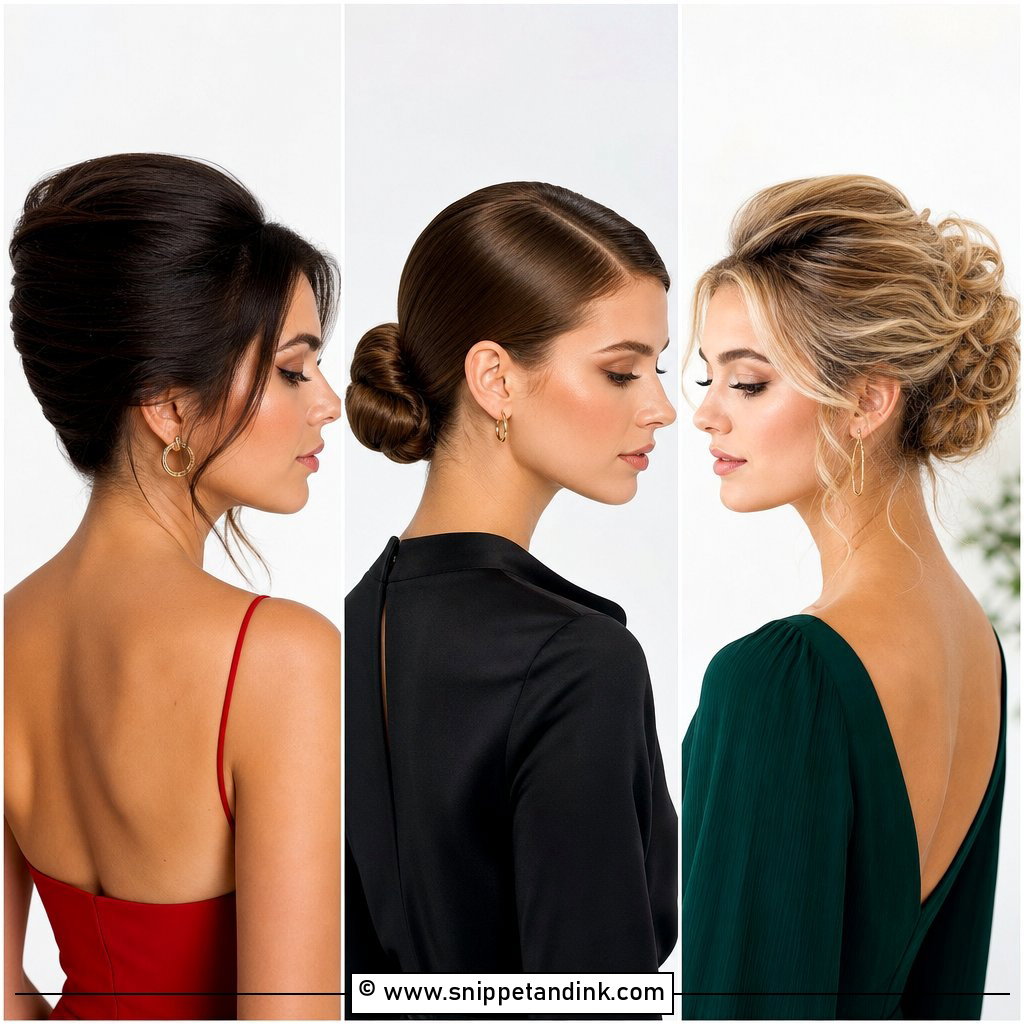
The low bun sits at the nape and keeps the face open, which is why so many brides with strong features or statement earrings choose it. Wear it sleek or add soft waves for dimension. It’s one of the most secure styles I do; with the weight sitting low and close to the neck, there’s little leverage to pull it loose while you dance. A longer veil anchors easily just above it. The one thing to try at your trial is sitting back in a chair: a bun placed too low pushes against the seat and gets squashed in the car.
5. Old Hollywood Glam Waves
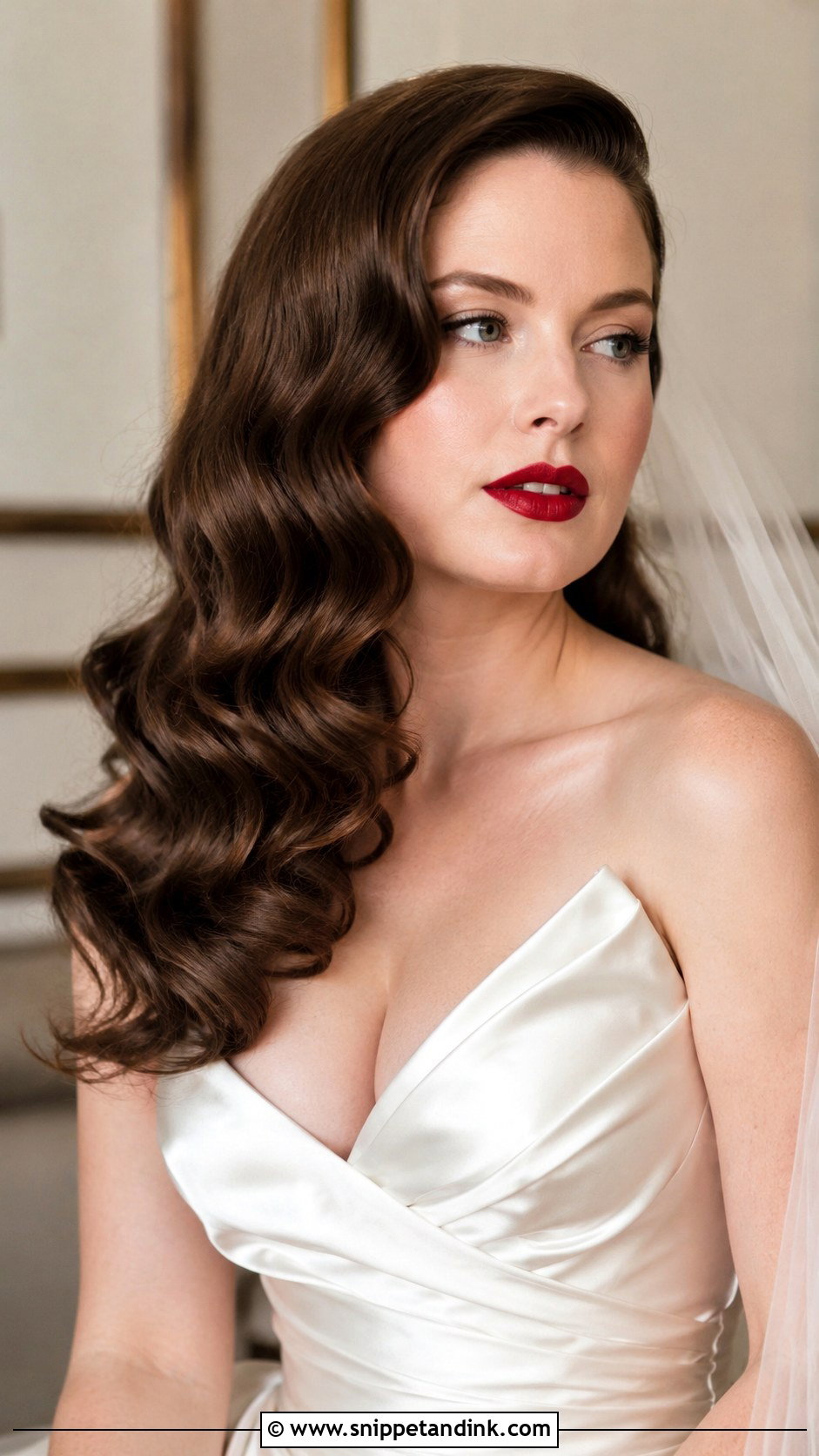
Old Hollywood waves are glossy, voluminous curls brushed into one sculpted wave pattern and swept over a shoulder. I set them in pin curls and let them cool completely before brushing, since brushing warm curls leaves them limp instead of sculpted. They need medium to long hair and they show frizz more than any other loose style, so I’d steer you away from them for a humid outdoor ceremony. A deep side part and a jeweled clip near it finish the look. Ballroom and evening receptions are where these belong.
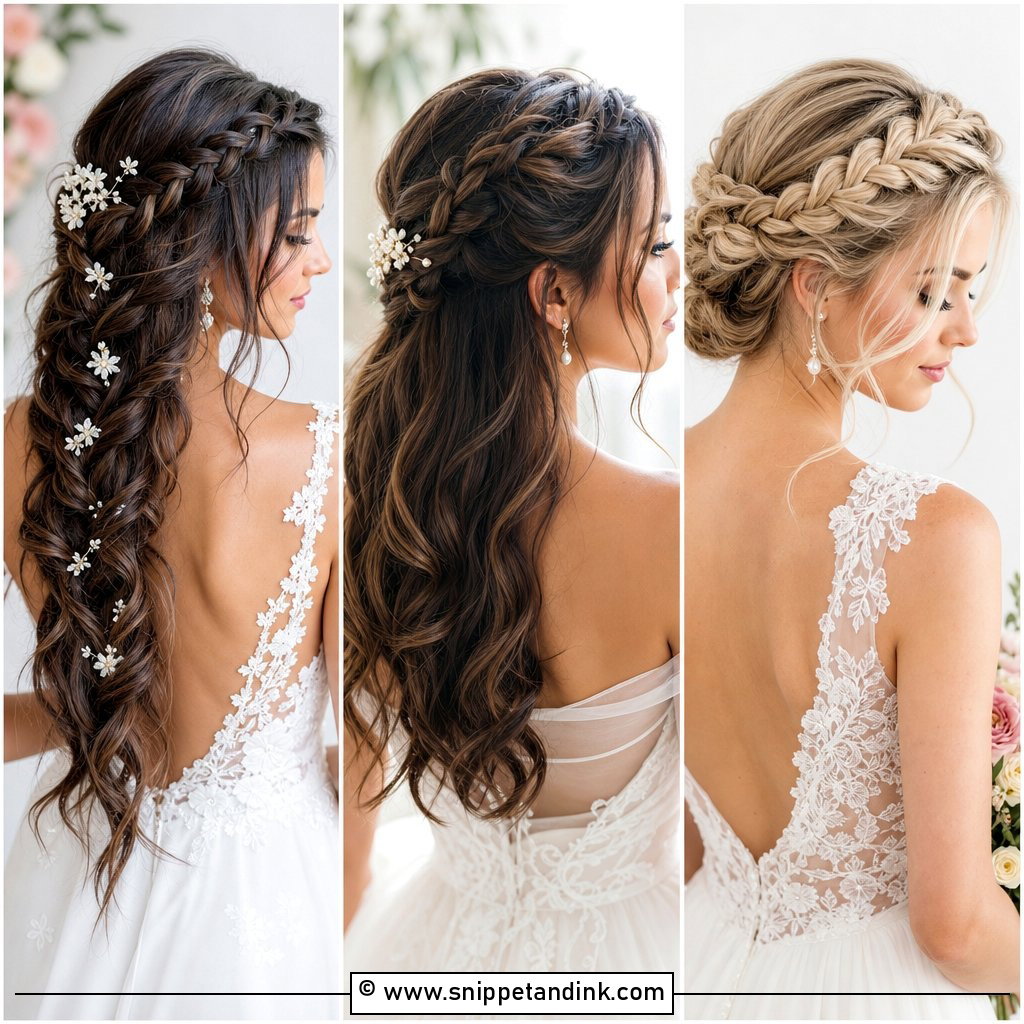
6. Crown Braid Wedding Hairstyle
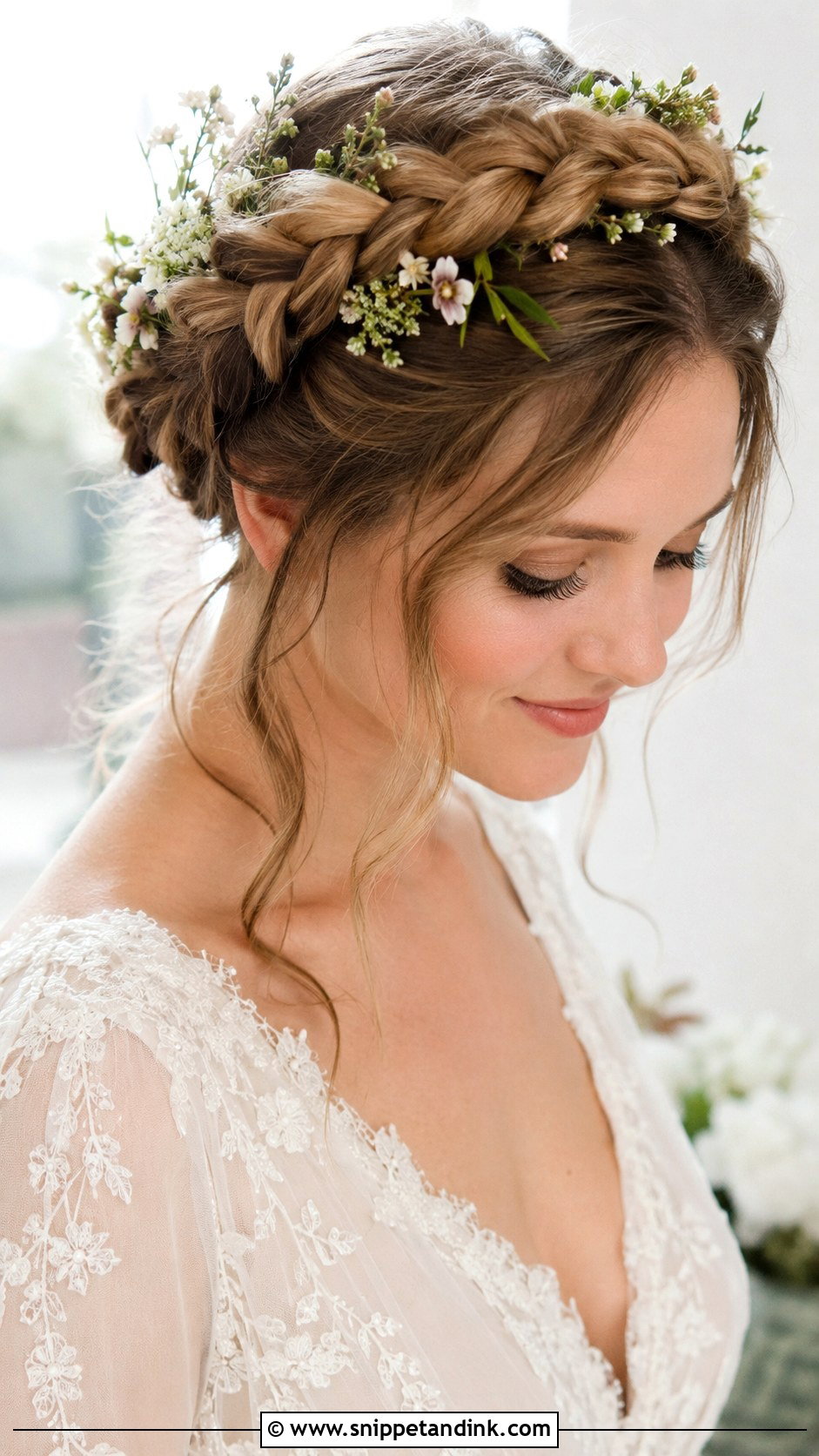
A crown braid wraps around the head like a halo and keeps every strand off the face, which makes it one of the best choices for wind. Small flowers or greenery tuck into it easily. Medium or long hair is needed for it to go all the way around; on shorter hair I braid two sides and meet them at the back, which looks almost identical from the front. I pancake the braid, gently pulling the edges wider, so it reads soft rather than tight. It holds well in heat because it doesn’t depend on curls staying in.
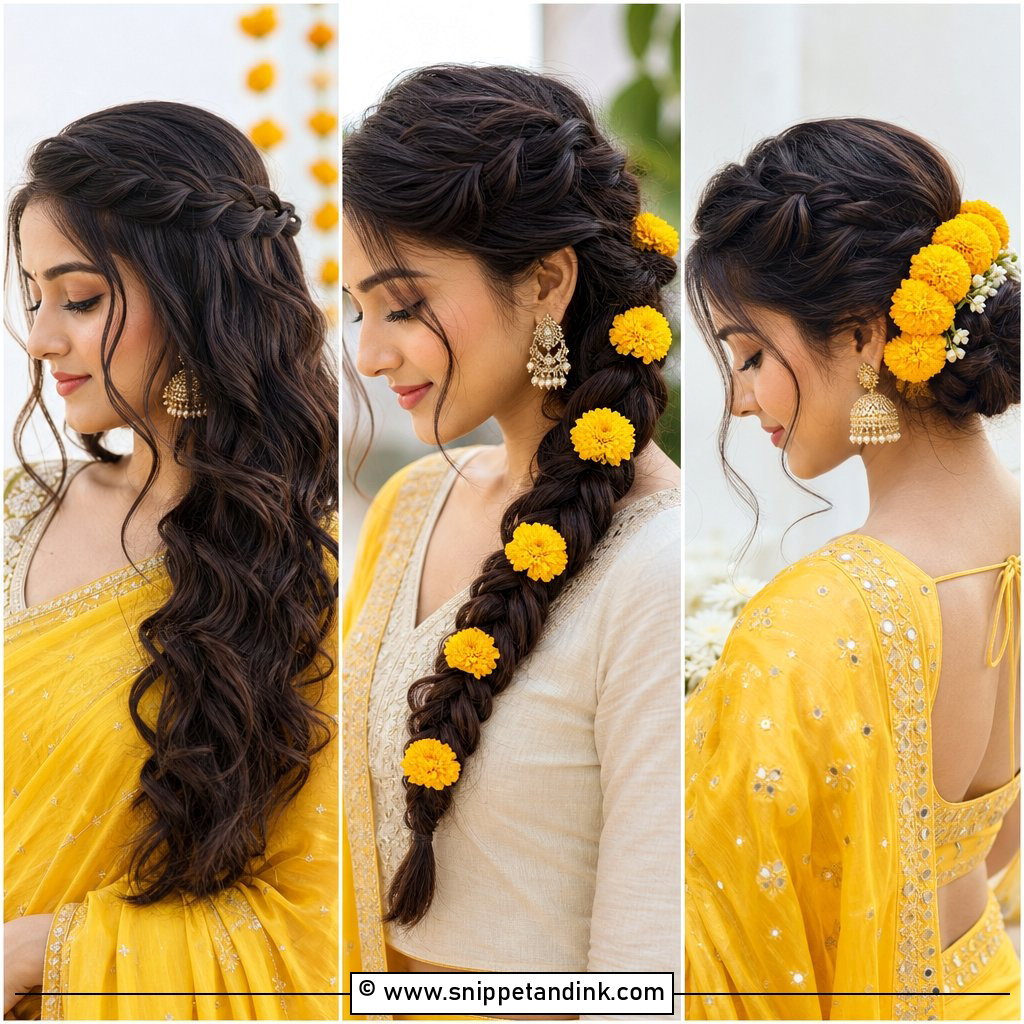
7. Bohemian Fishtail Braid
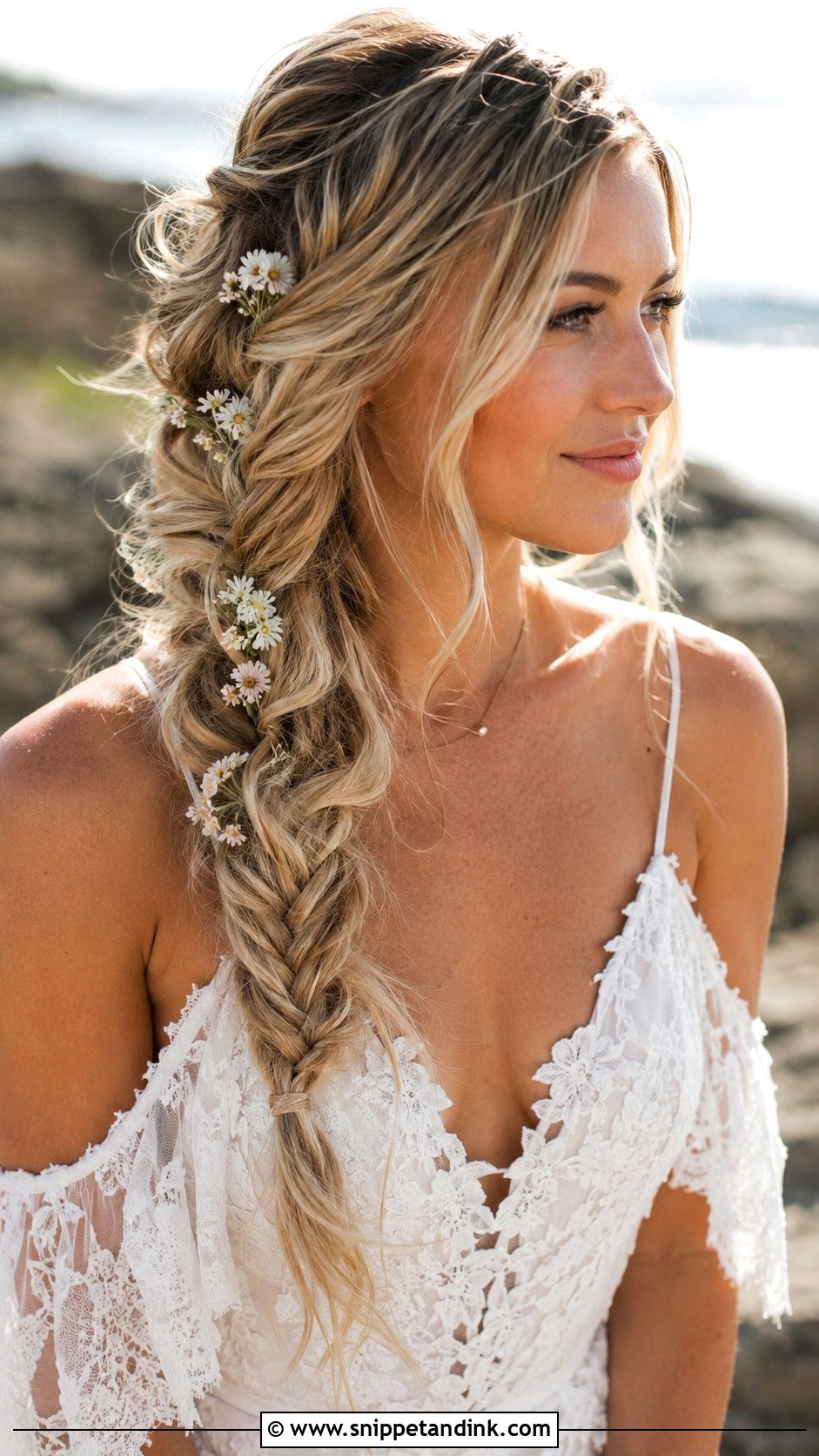
A fishtail braid has a fine, woven texture that looks fuller once the edges are gently pulled apart. It can sit to the side, down the back or woven into a half-up style. Fishtails take longer to braid than a regular three-strand, and layered hair pokes out of them unless I use a little texture paste as I go. It pairs well with flowing gowns, tiny wildflowers and beach or garden ceremonies. Very fine hair can look thin in a fishtail, so I’d add a clip-in weft underneath for bulk.
8. Sleek High Bridal Ponytail
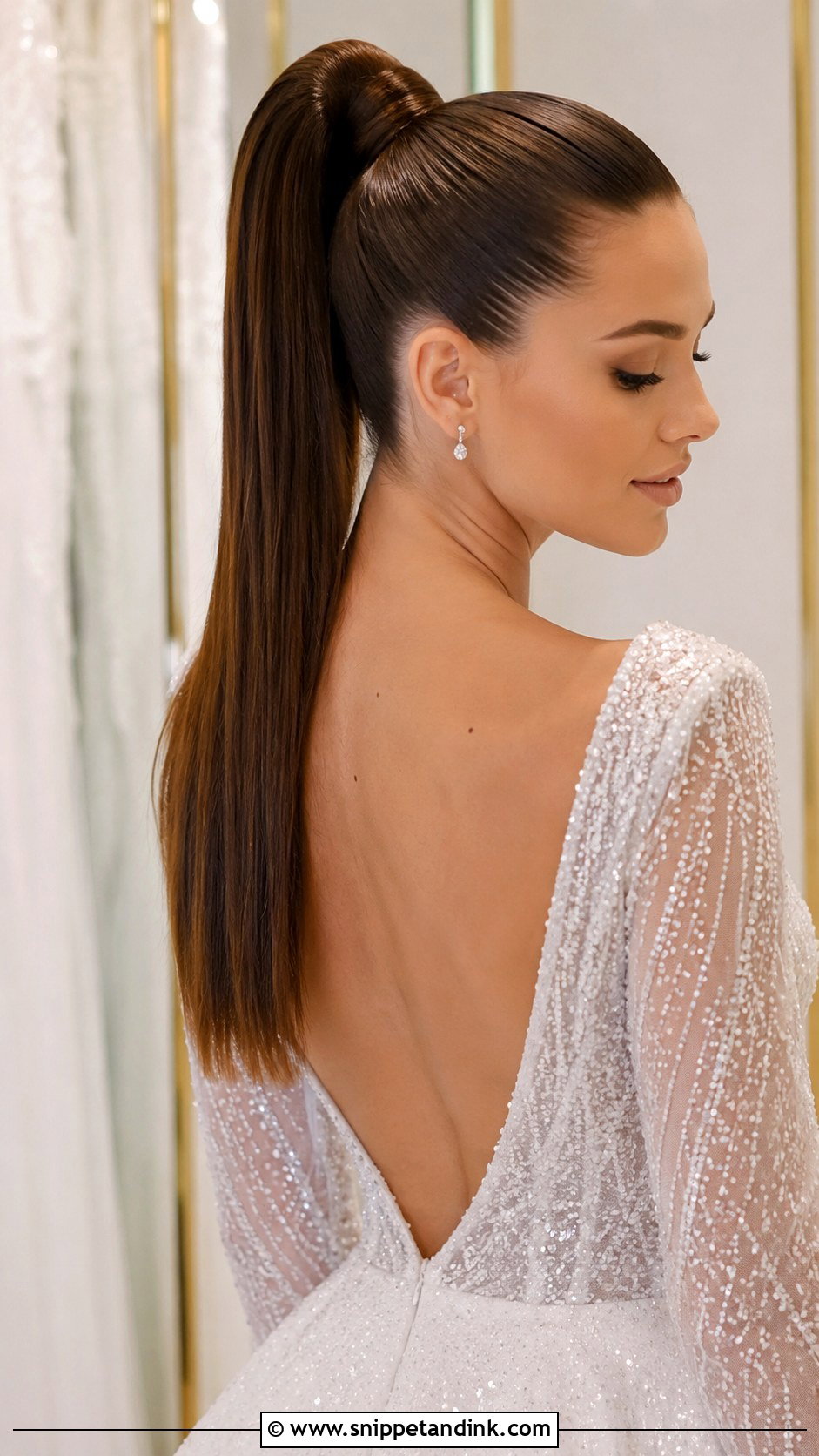
A sleek high ponytail is the most fashion-led style here, and it lengthens the neck and lifts the face. I smooth it with a boar bristle brush and a little gel, secure it with two elastics, and wrap a section of hair around the base to hide them. Extensions add length and swing if you want drama. Be honest with yourself about headaches: a high, tight pony worn for twelve hours pulls at the scalp, so for brides who get tension headaches, I set it slightly lower and use a softer elastic.
9. Low Textured Bridal Ponytail
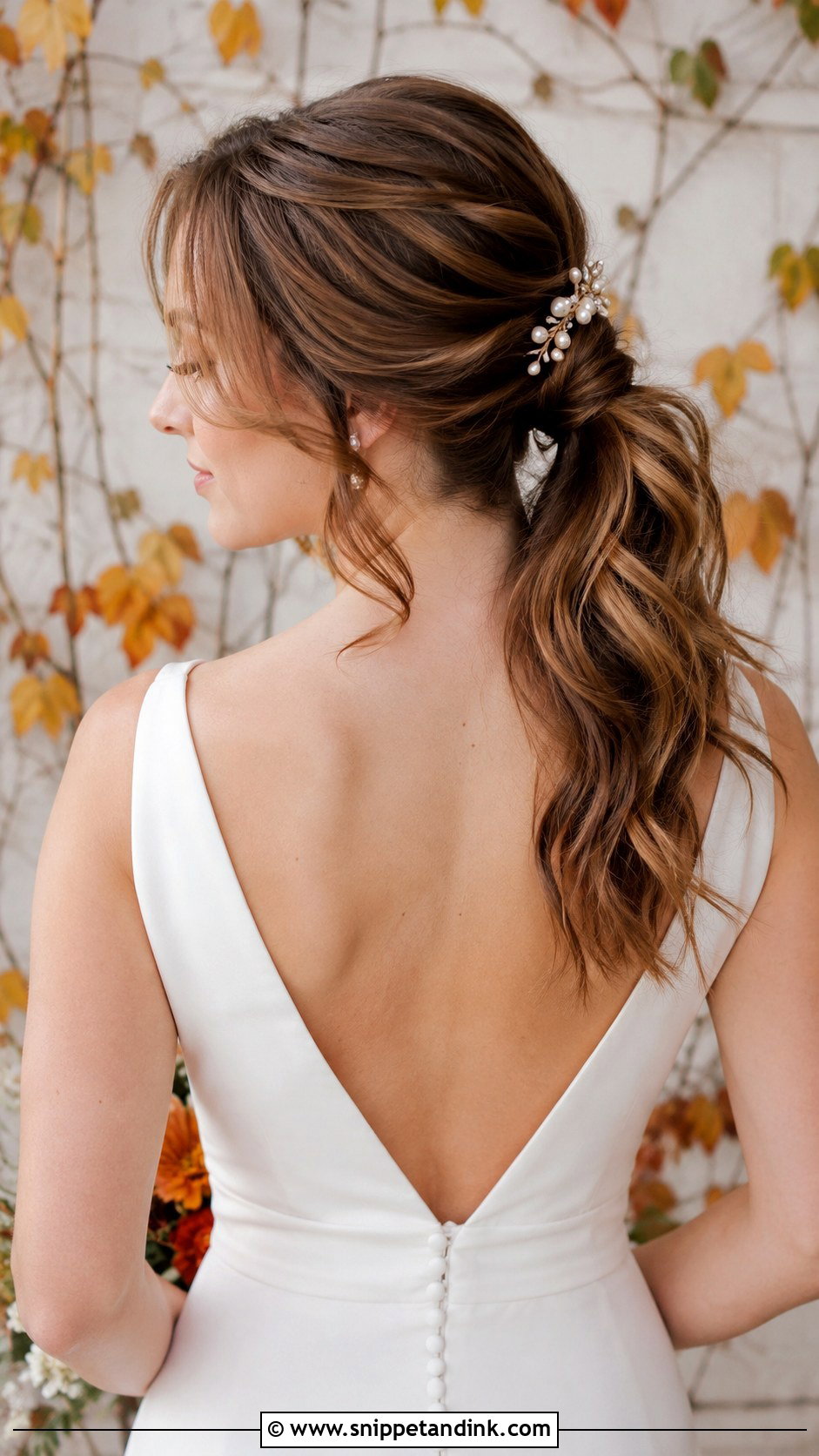
A low textured ponytail is the softer, more forgiving cousin of the high one. It sits at the nape, with loose waves and a few face-framing pieces, and looks polished without being severe. It suits minimalist gowns and detailed dresses equally. I wrap the base with a strand of hair or add a pearl pin, and I always put a little volume into the crown first, otherwise a low pony can look flat on top in side-profile photos.
10. Braided Low Bun
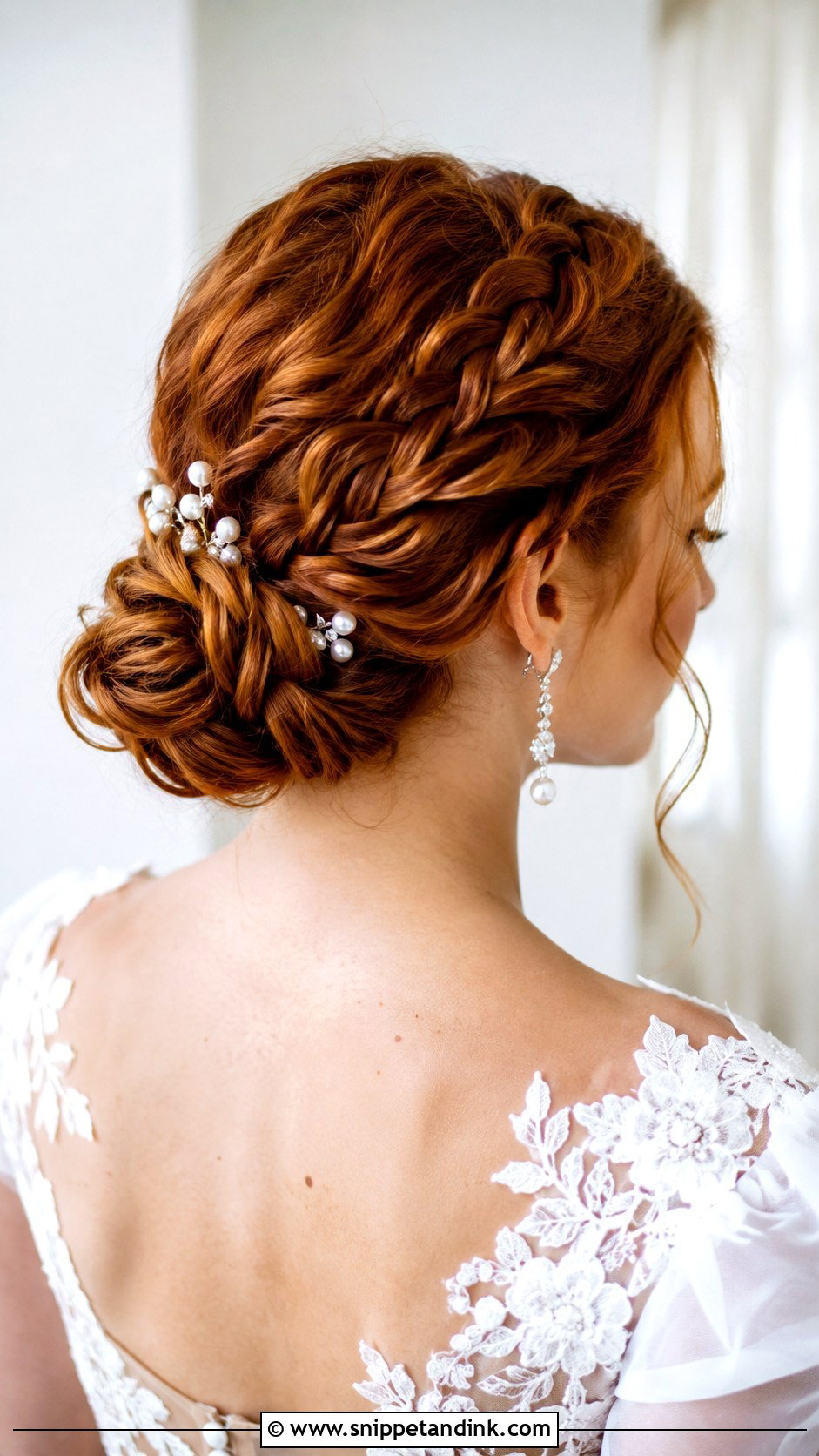
A braided low bun weaves a soft braid into a bun at the nape, so you get detail without anything too fussy. Keep the braid loose and pulled out for a romantic look, or tight and defined for something cleaner. It’s very secure through long dancing because braids lock the hair in place better than curls do. Pearls, crystals or fresh blooms can be tucked into the braid. Veils sit well above it, and statement earrings stay visible.
11. Loose Romantic Curls Down
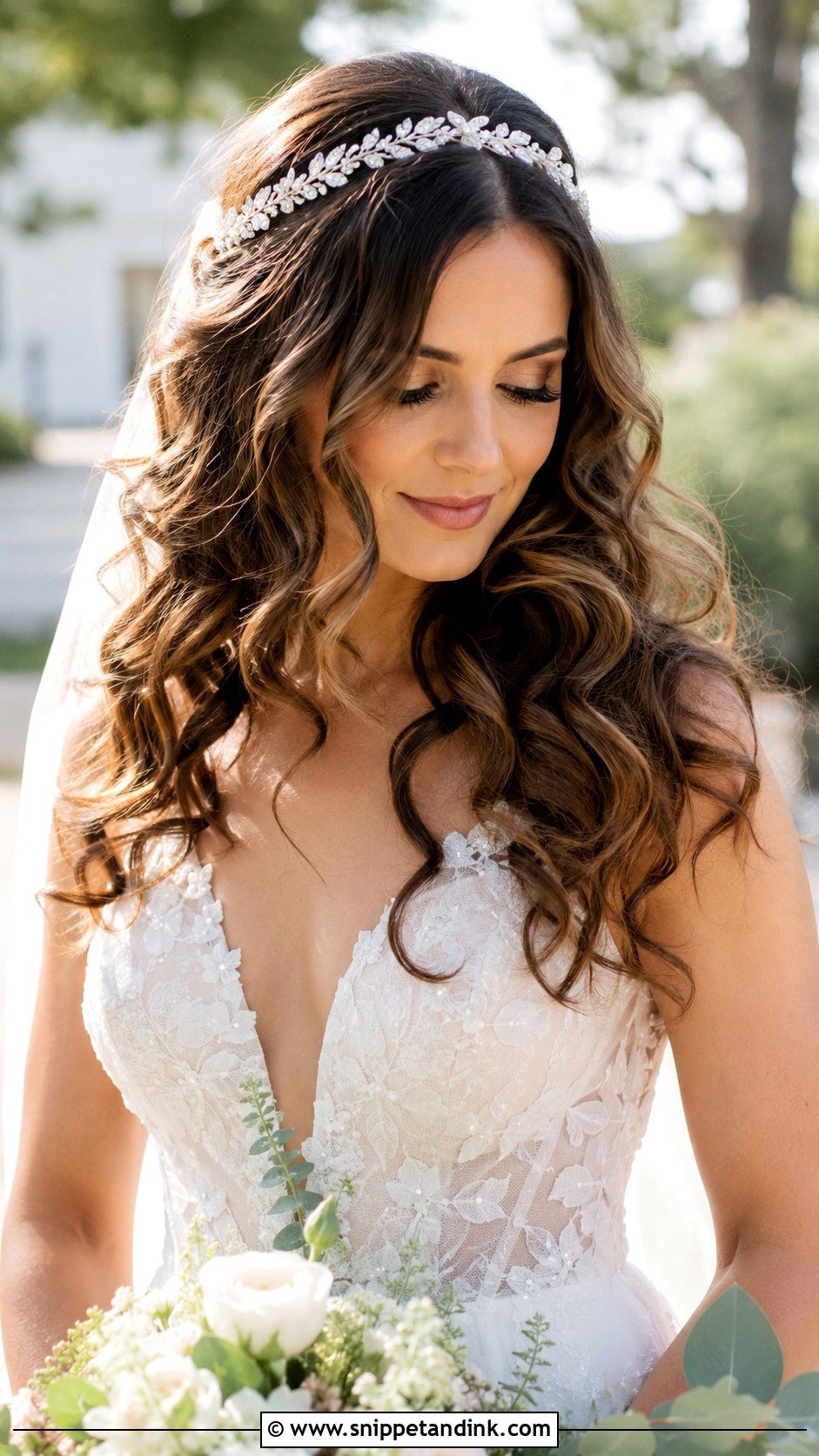
Loose curls are the right choice when you want to show off your length. They frame the face and shoulders and move in every photo. They’re also the least durable style here: curls drop, and by the evening, especially in humidity, loose hair can look very different from how it looked at noon. I set each curl with a light spray and pin it to cool before brushing out, which buys hours. A headband, flower crown or simple veil works with it. Garden and beach weddings suit it if you can live with softer curls by the end.
12. Chignon Bridal Updo
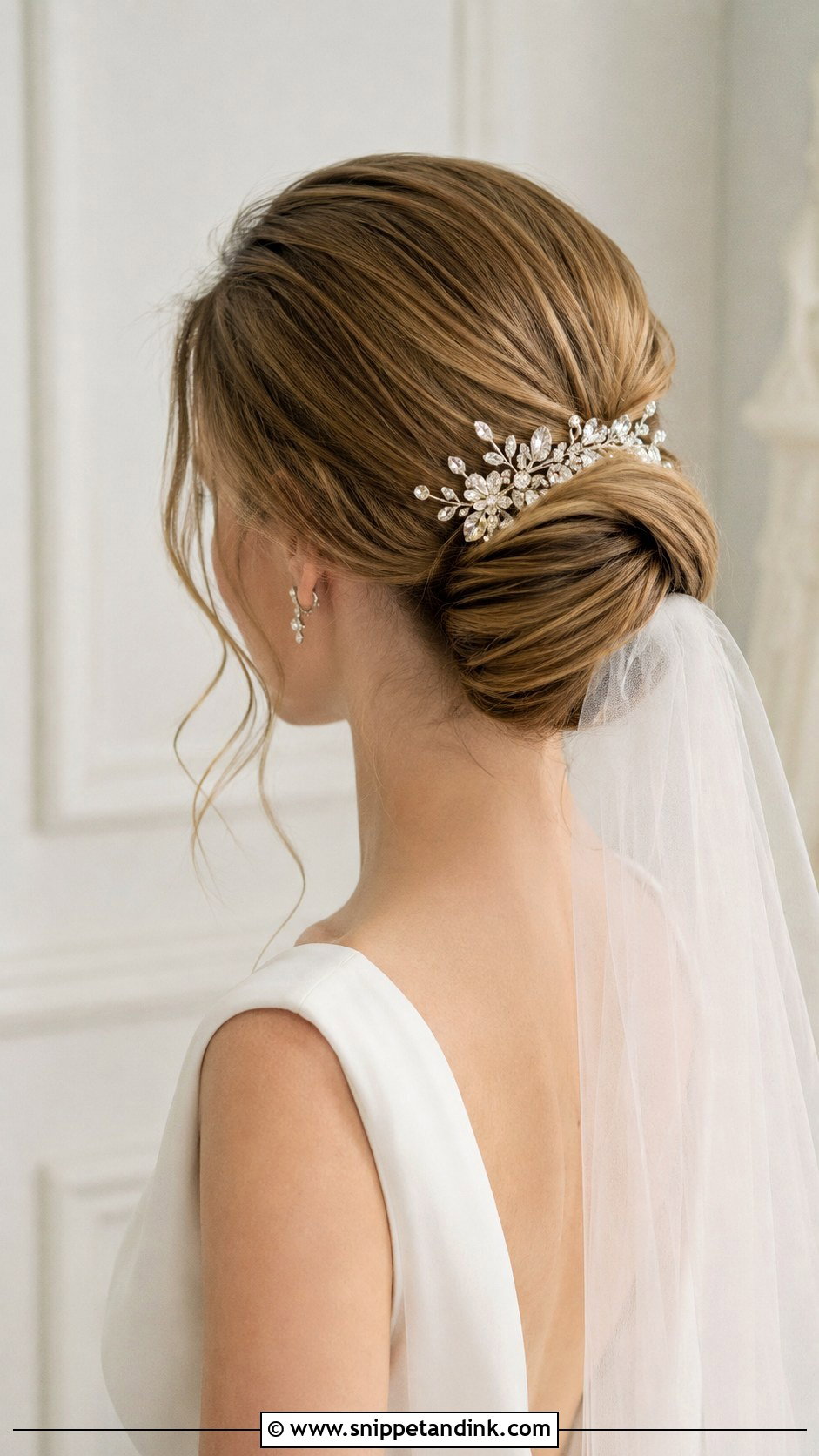
The chignon is a classic, gathered knot placed low at the back of the head. It’s been a wedding favorite for generations because it works with modern and traditional gowns and holds all day. Wear it sleek and structured or soften it with loose tendrils. I place it slightly off-center when a bride has a favorite side for photos, because a perfectly centered knot disappears when the camera only sees one side of her face. Combs, veils and statement earrings all sit comfortably with it.
13. Half Up Braided Crown
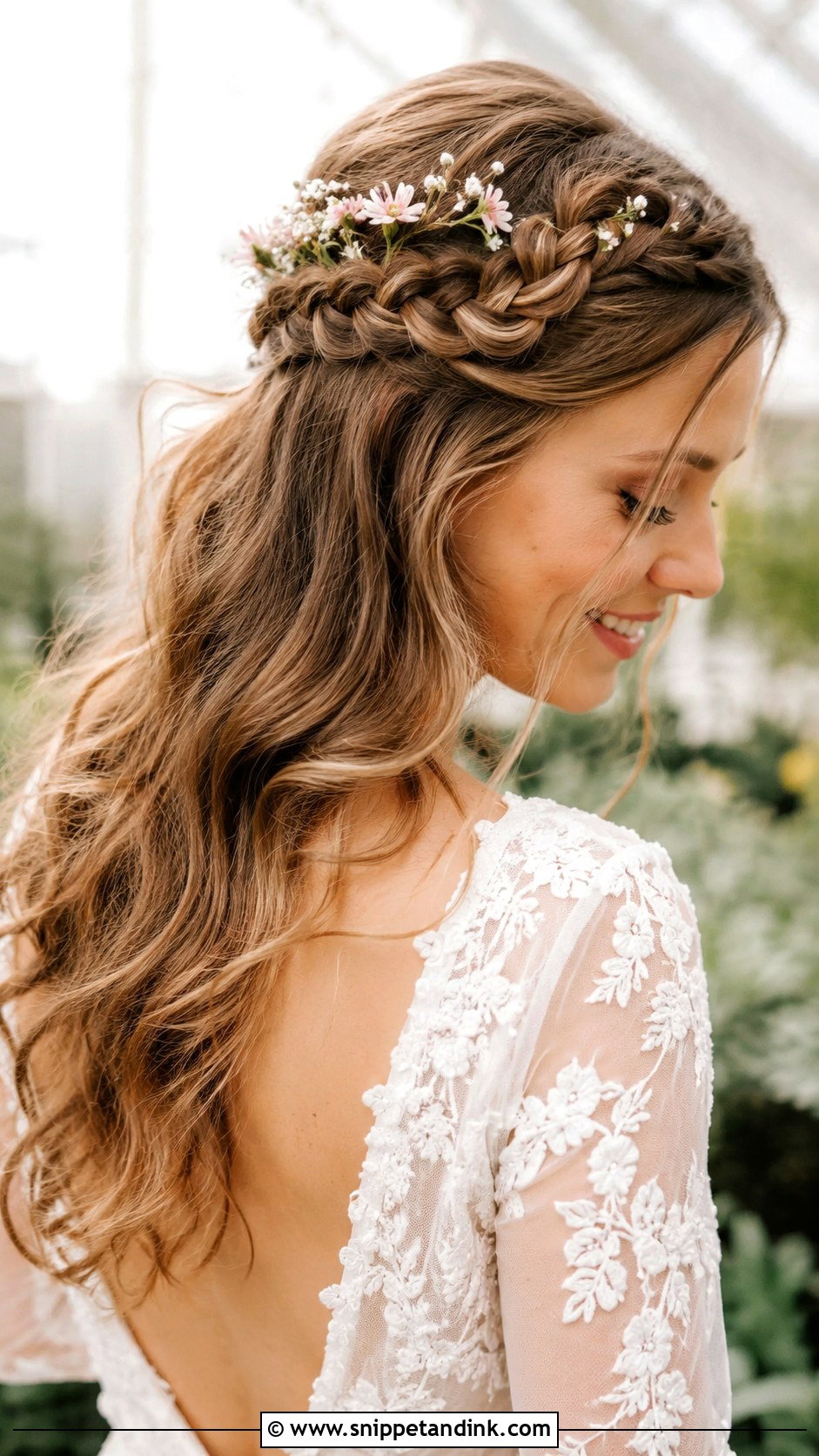
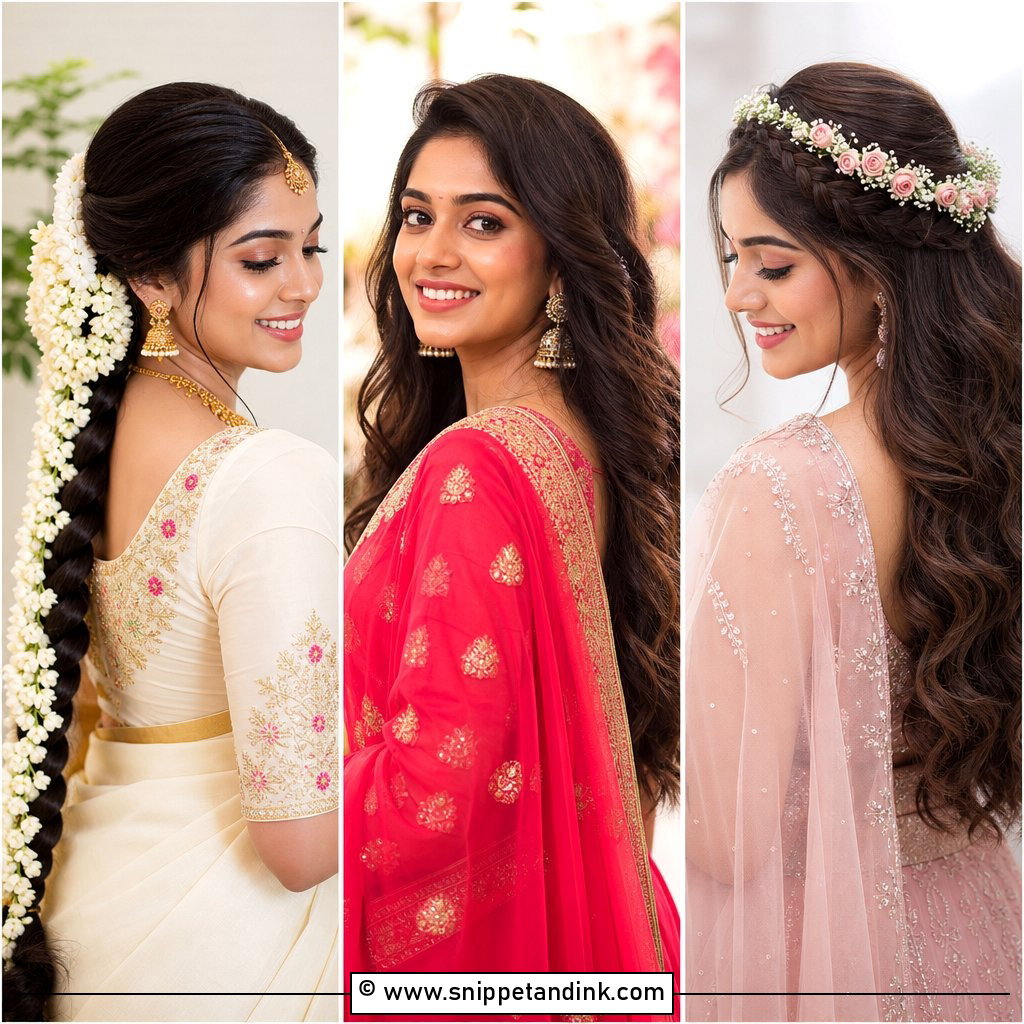
A half-up braided crown weaves braids across the top and leaves the rest of the hair loose down the back. The braids add texture and keep hair away from the face while the waves stay free. Small flowers can be tucked into the braid. I find it works best on medium to long hair with some natural grip; very silky, straight hair needs dry shampoo or texture spray at the roots first, or the braids slip loose. It’s a natural fit for outdoor ceremonies.
14. Sleek Straight Bridal Hair
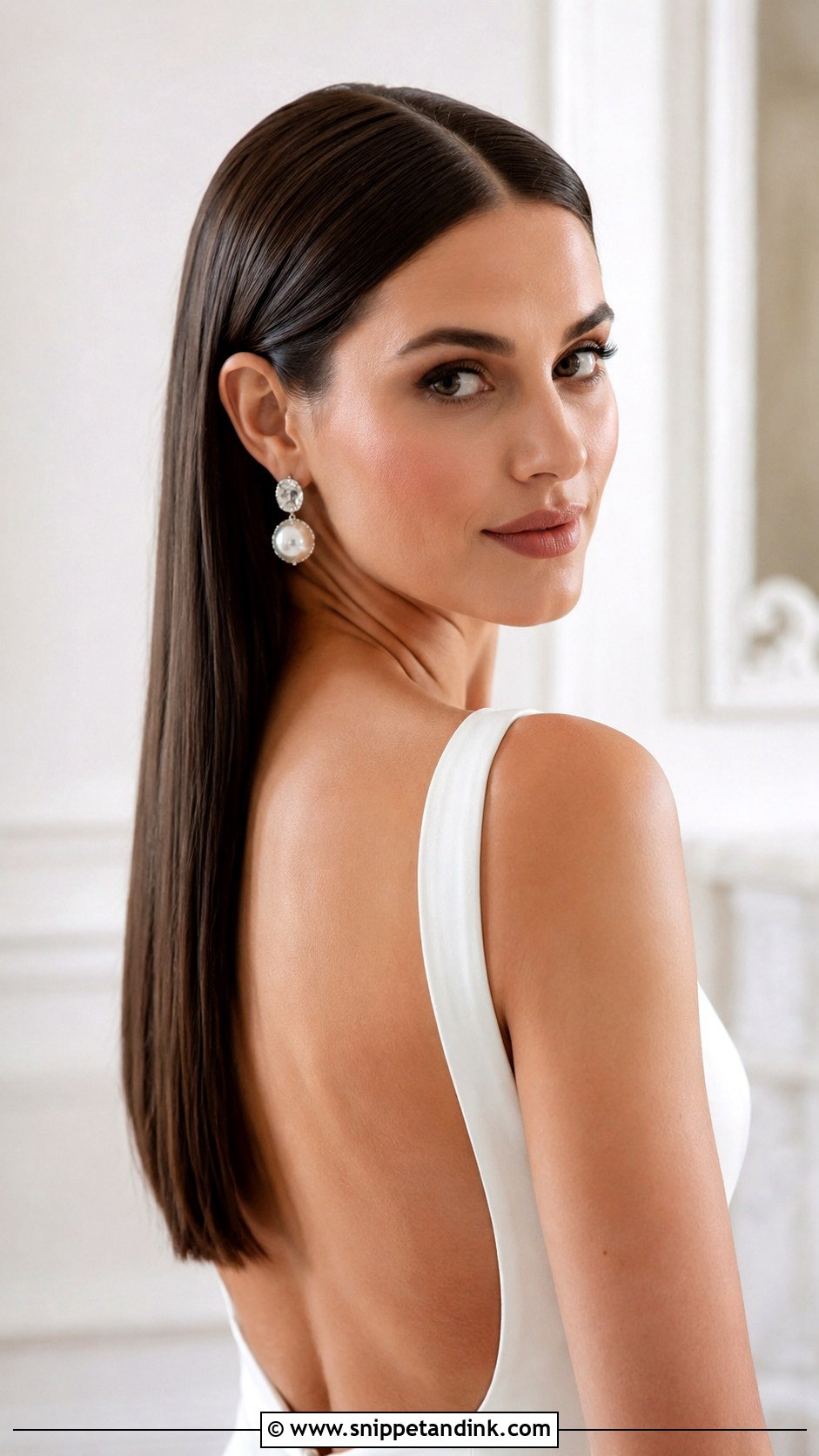
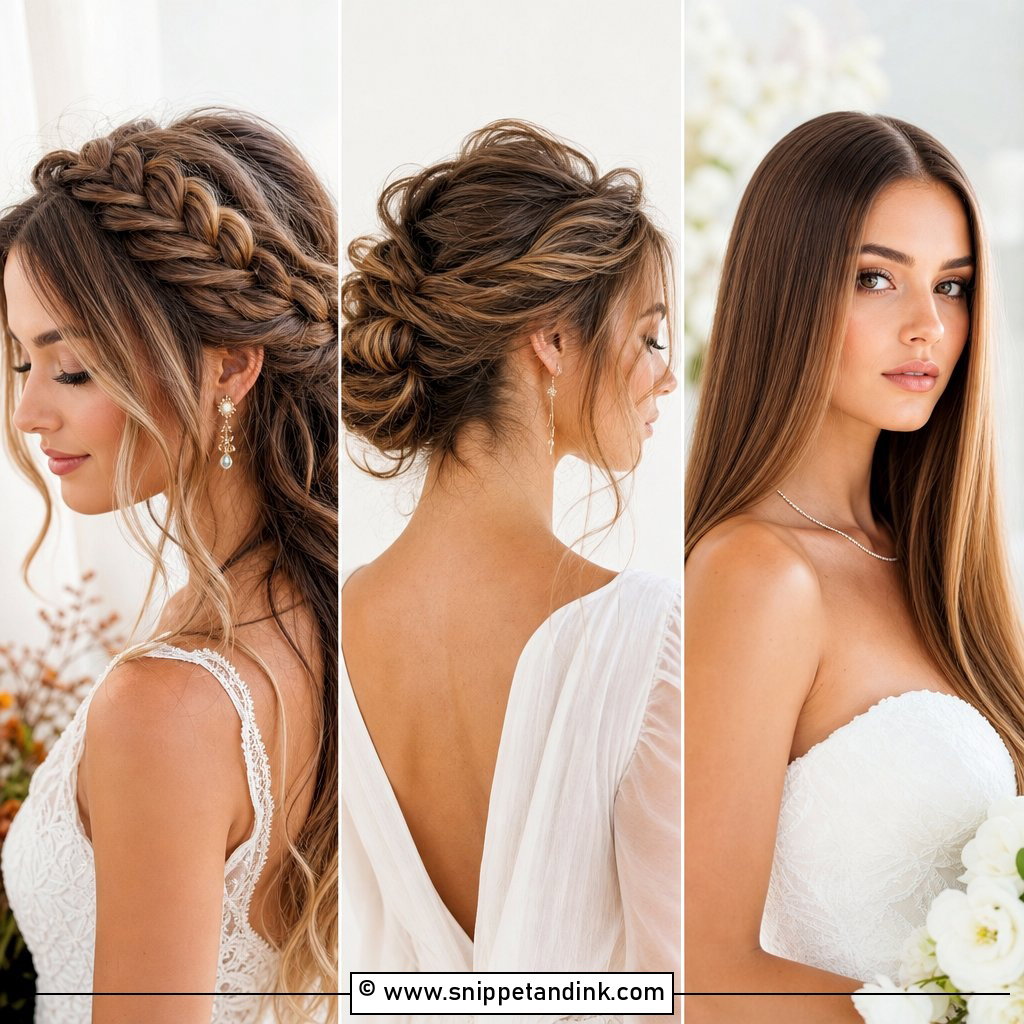
Sleek straight hair is the most minimal choice and, done well, one of the most striking. Mirror-shine strands let the gown and earrings take center stage. A center part reads sharp and modern; a side part is softer. The catch is that straight hair shows every flyaway and every bit of frizz, so I use a light smoothing serum and a fine-tooth comb and ask the bride to bring a small anti-frizz balm in her bag. It works well with sleek modern dresses and longer veils.
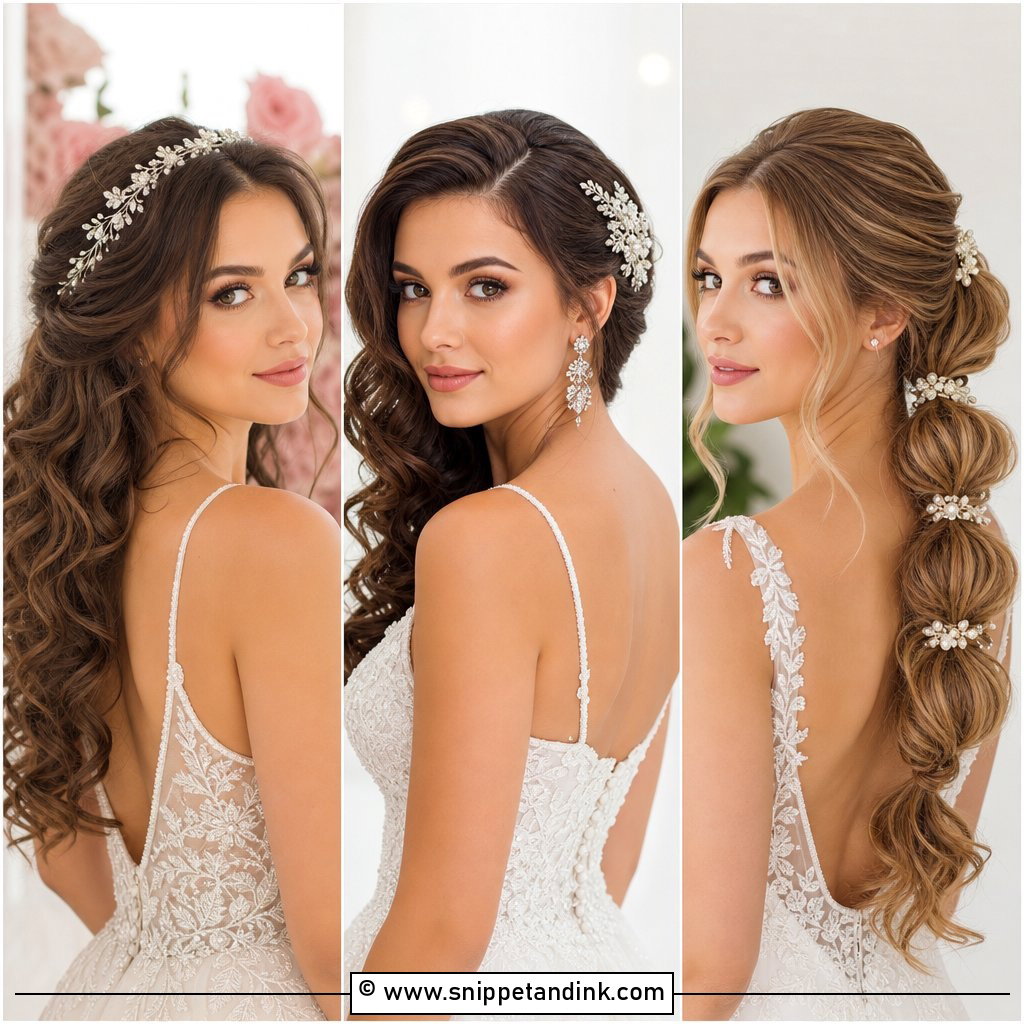
15. Floral Adorned Updo
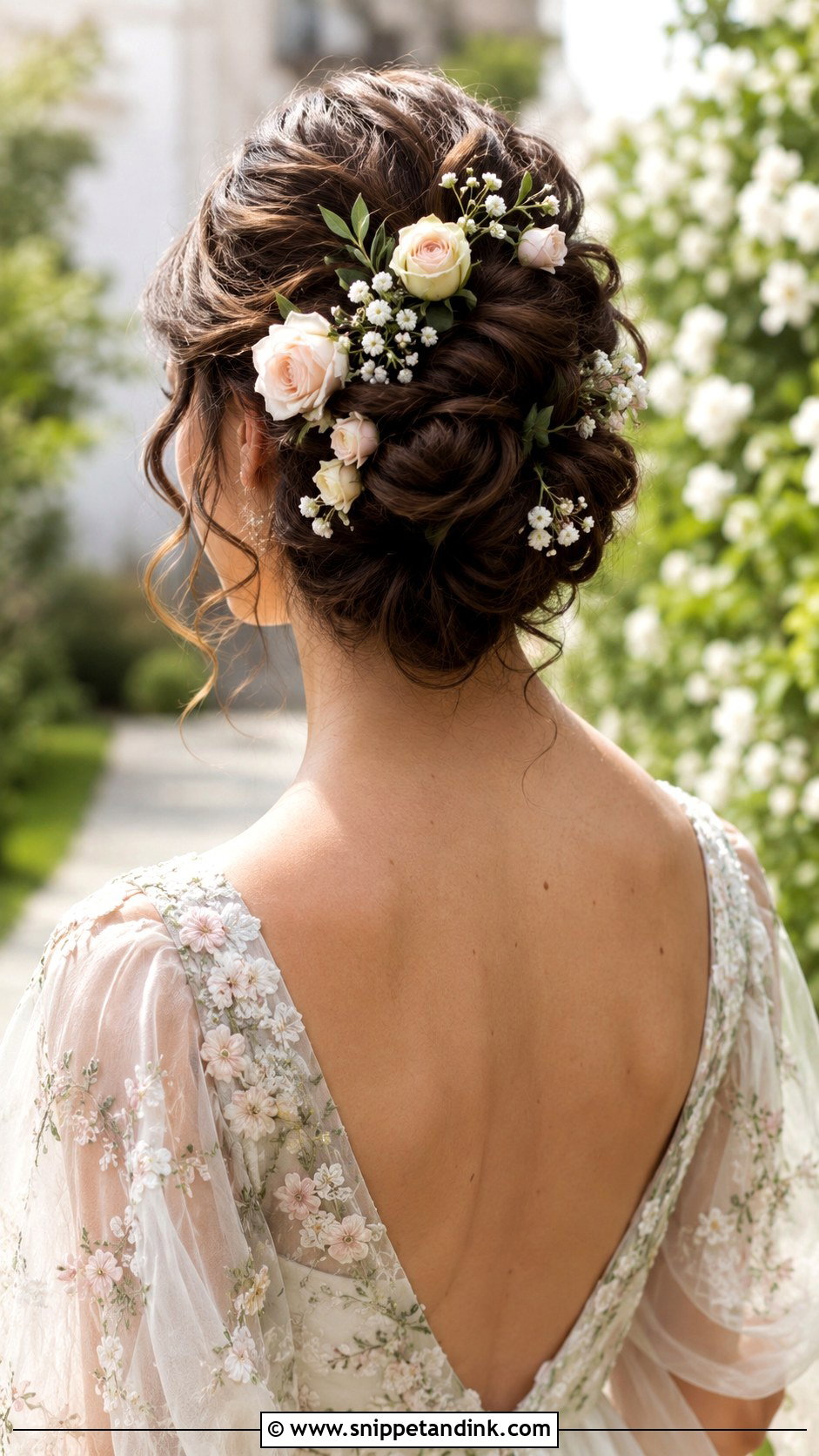
Fresh flowers tucked into an updo give a garden-inspired finish. Baby’s breath, roses, and greenery slip easily into twists and braids. I ask the florist for hardy blooms and have them wired or taped so I can pin them securely; soft petals like gardenias brown quickly against warm skin. Match the flowers to your bouquet for a cohesive look. I’d put the flowers in last, just before you leave, so they look as fresh in the evening photos as at the ceremony.
16. Twisted Updo With Loose Tendrils
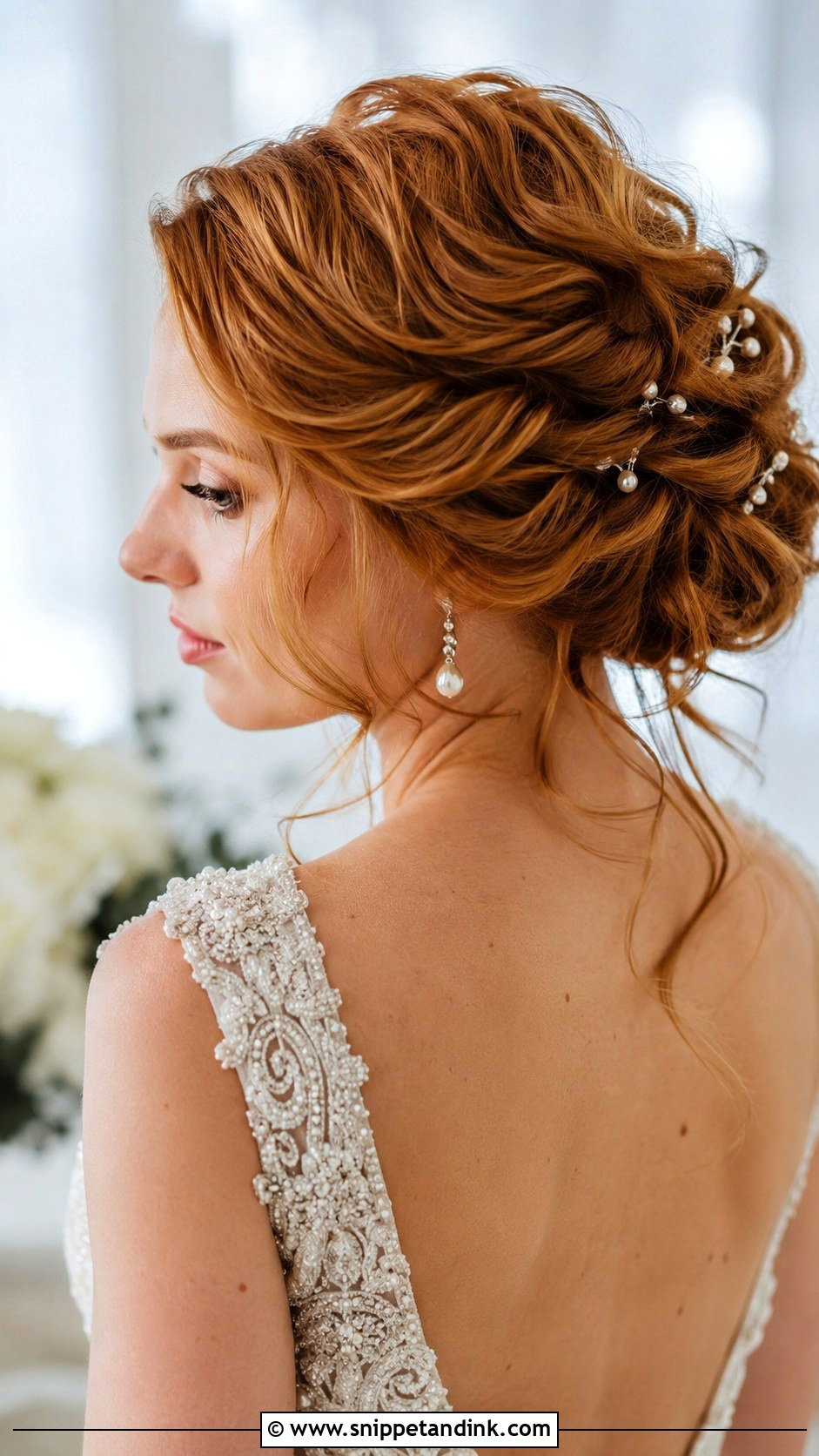
A twisted updo gathers sections of hair into twists that sit together in a sculpted shape, with loose tendrils around the face. It works best on medium to long hair. Keep the twists tight for structure or loosen them for a softer feel; looser twists need more pins hidden underneath. Pearl pins or a jeweled comb finish it. One thing I always check: the tendrils. Bone-straight pieces left loose look like a mistake, so I give each one a soft bend with a small iron.
17. Glam Waves With Hair Jewelry
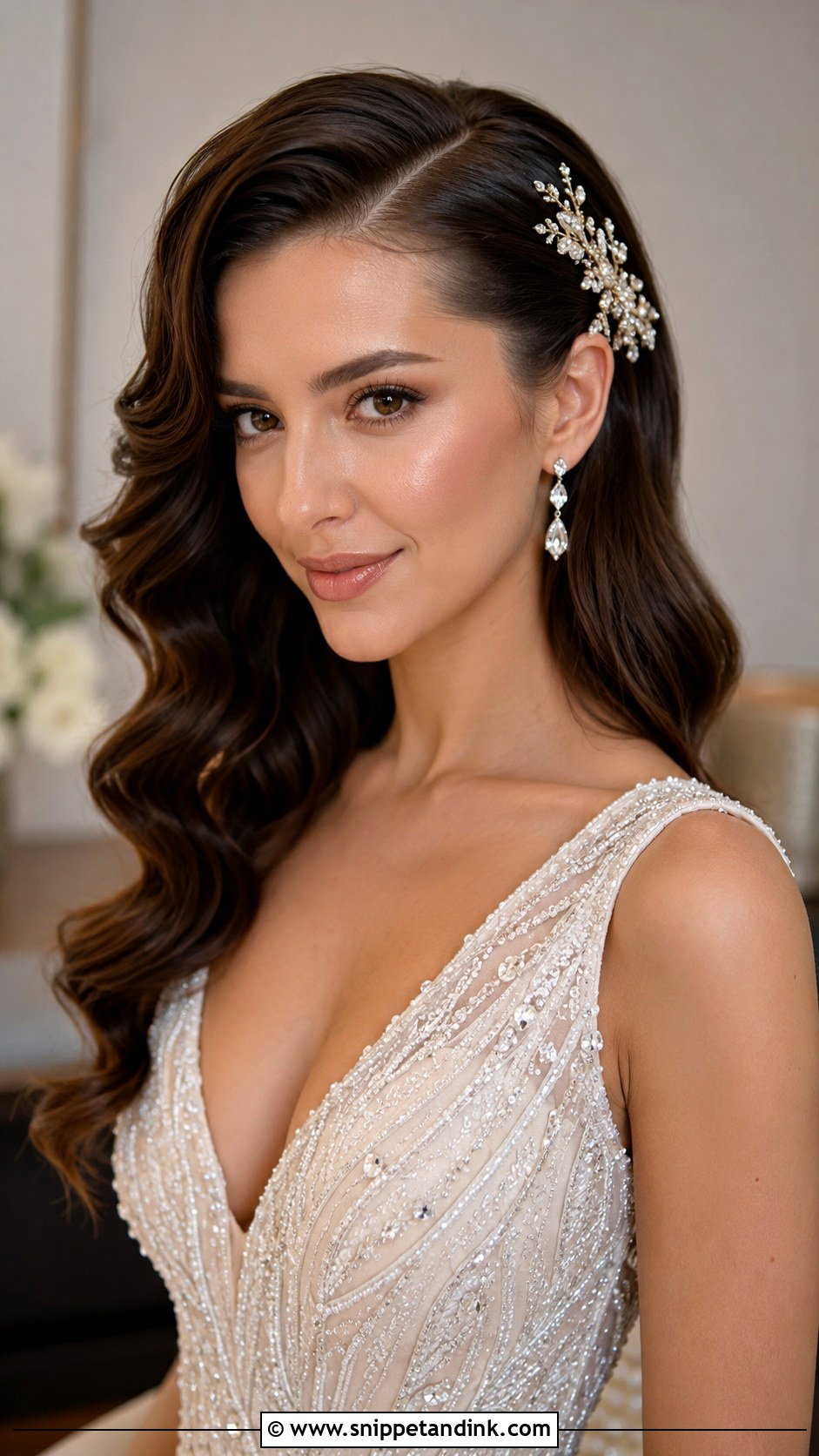
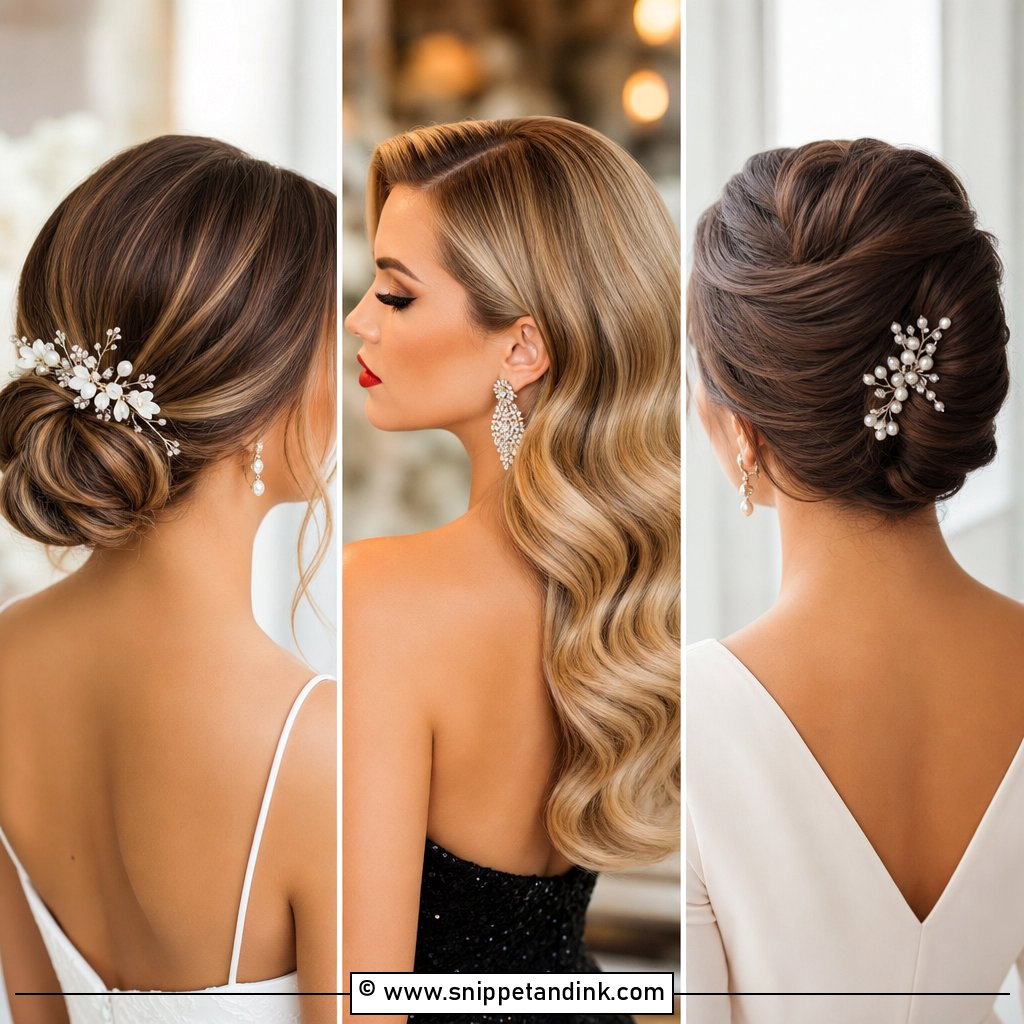
Glossy waves with hair jewelry add a little sparkle without changing the whole look. Clips, pins or crystal accents sit against the waves. I place jewelry where the hair already has a natural break, at the side part or behind the ear, because a clip in the middle of a wave flattens it. A deep side part adds drama. Keep the jewelry to one or two pieces. More than that starts to compete with earrings. Evening and ballroom celebrations suit it most.
18. Dutch Braid Bridal Updo
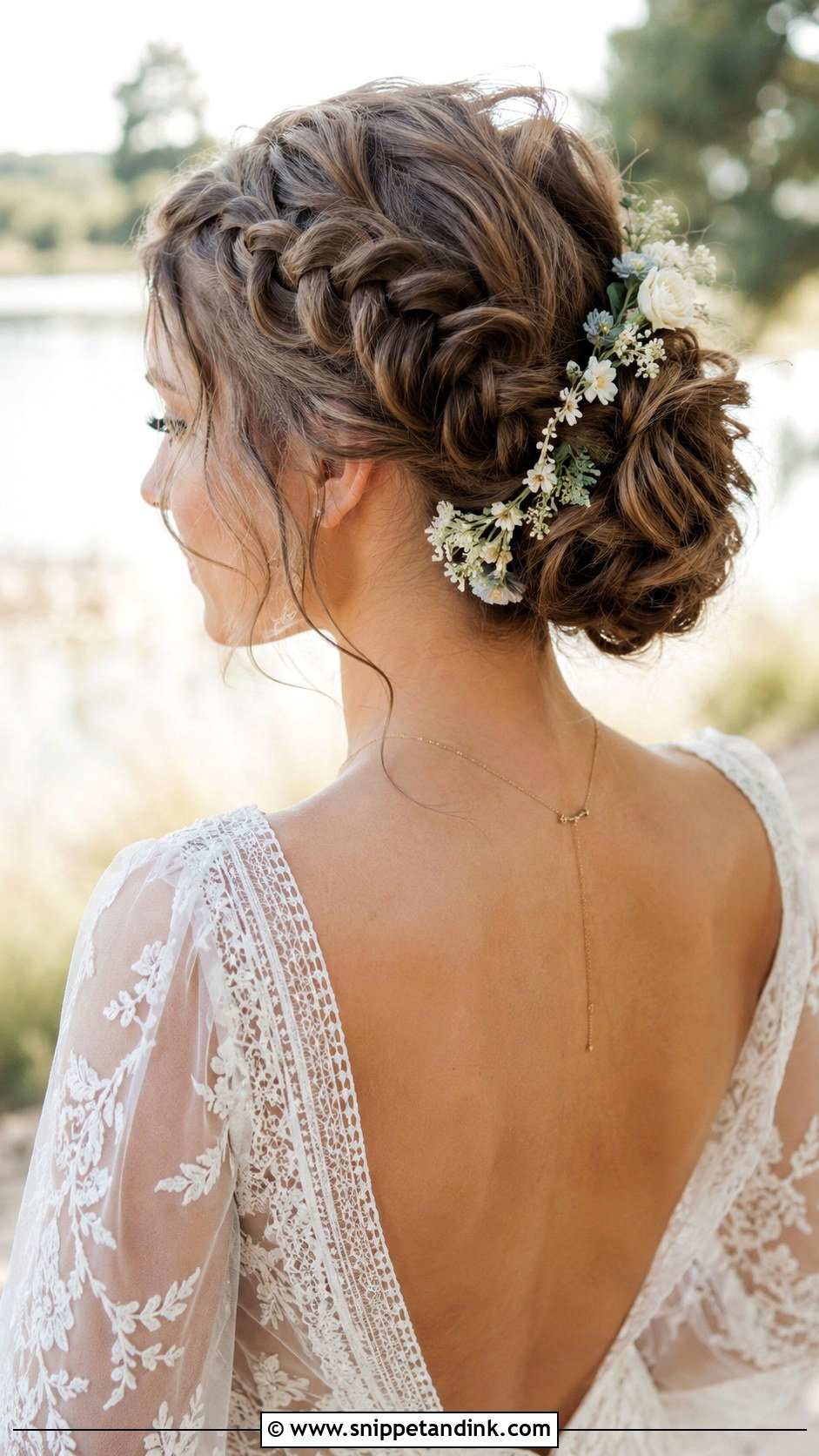
A Dutch braid sits on top of the hair rather than lying flat, so the braid stands out with bold, raised texture. It can be worked into a low bun or wrapped around as a crown. It keeps hair firmly off the face, which helps at a windy outdoor wedding. Small flowers or pearls tucked into the braid make it personal. Medium to long hair suits it best, and brides with natural curls or coils get the most definition from it because the hair grips itself.
19. Vintage Finger Waves
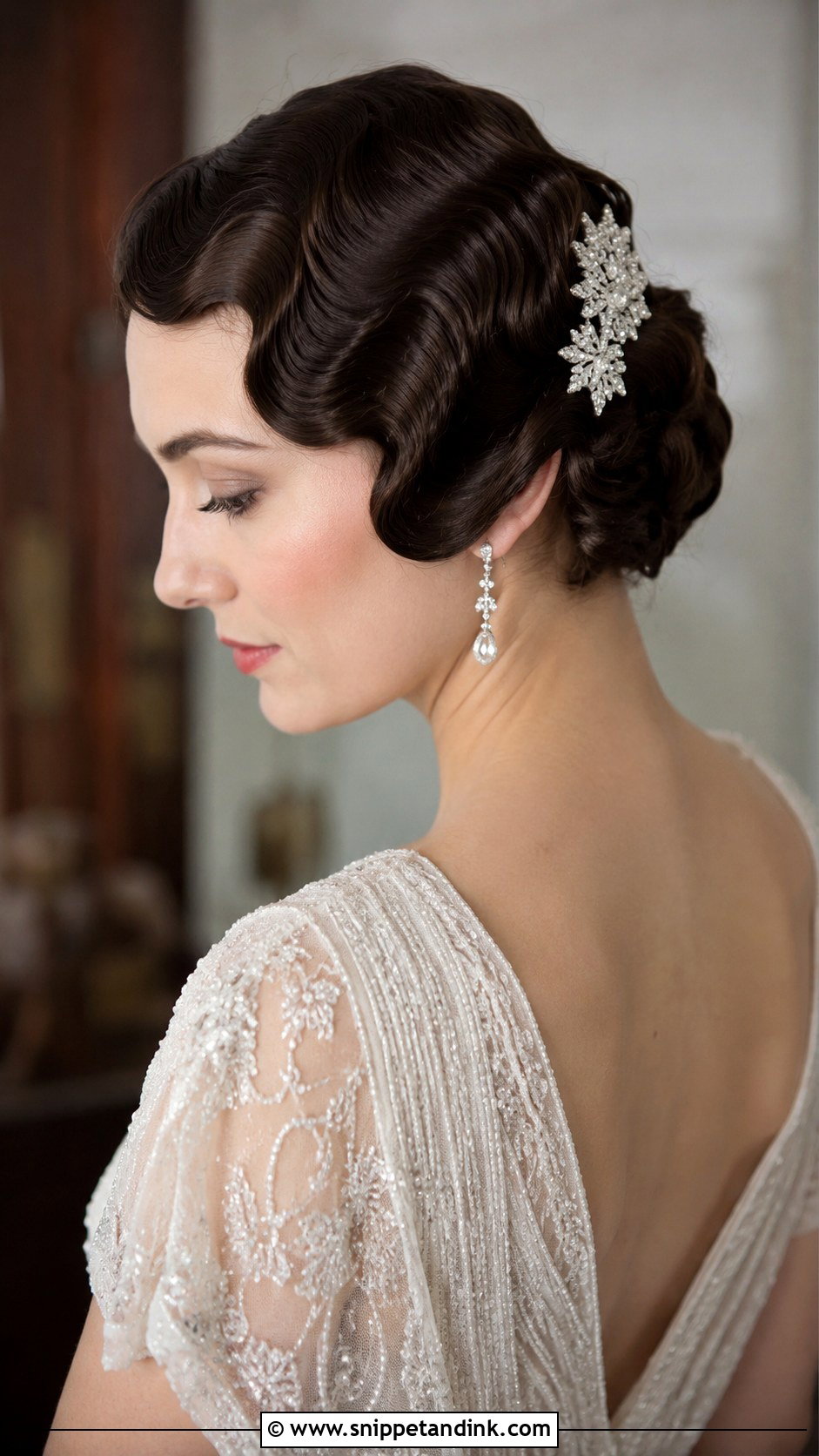
Few formal styles are as graphic as vintage finger waves, the sculpted S-shaped waves set close to the head that came straight out of the 1920s and 1930s. Finger waves suit short to medium hair, and they’re one of the few formal styles that look better on a bob than on long hair. Proper finger waves are set wet with gel and combed into ridges by hand, and they need time to dry, so they take longer than most styles here. A sparkly comb or a birdcage veil completes the look. Themed weddings and fans of old glamour will love it.
20. Boho Half Up With Waves
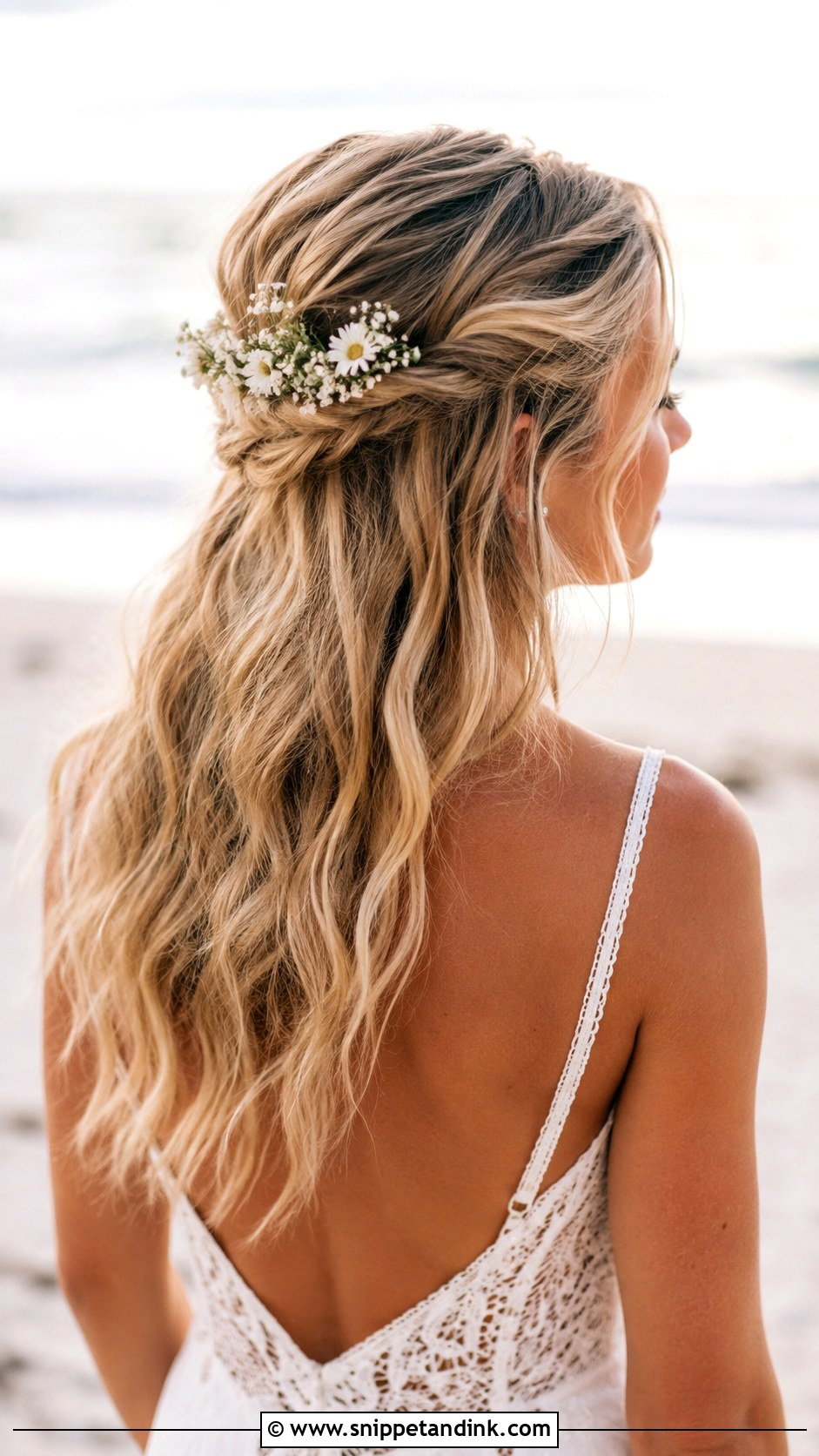
A boho half-up pins back the top section and lets tousled waves fall free below. Twisted or braided pieces add texture to the pinned part. Beachy waves are meant to look undone, so I curl with a flat iron and leave the ends straight, then break up the waves with my fingers. It suits beach and garden weddings and most hair lengths. Flowers or small pins can be tucked in. For a bride who wants bohemian romance without a fully loose style, it’s the easiest place to start.
Showers, Rehearsals and the Bachelorette: Scaling a Style Down
Not every bride-to-be event calls for a stylist. For a shower or a rehearsal dinner, I’d pick one element of your wedding style and do a lighter version of it yourself. A soft half-up with a curled pinned section is easy to do in front of your own mirror. A low ponytail with a wrapped base takes ten minutes. A crown braid can be faked with two simple braids pinned over the top.
The bachelorette is a different case. You’ll dance and probably stay out late, so think of the high ponytail or a sleek bun, which hold their shape and don’t need touching. Loose curls look great at the start of the night and flat at the end of it.
Humidity and Wind on the Wedding Day
Outdoor weddings change the order of priorities. In humidity, curls drop and frizz shows; in wind, anything loose ends up across your face in the vow photos. If your ceremony is outside, I’d choose a style where the hair is secured, like a braid, a low bun or a chignon, and keep loose waves for an indoor wedding.
- Ask your stylist for a few spare bobby pins in your bag, in your own hair color.
- A small travel hairspray and a fine comb fix most flyaways.
- Keep your hands off your hair; touching curls in humidity makes them drop faster.
- If the veil comes off after the ceremony, have someone remove it so the pins underneath stay in.
A Trial Run Worth Wearing to Your Shower
From updos and soft waves to braids and modern ponytails, the right style is the one your hair can hold all day and that suits your dress and veil. Look at your neckline and your hair’s texture before you look at photos. Schedule a trial with your stylist, and if the shower or rehearsal falls after it, wear the trial look there. You’ll learn more from five hours of real wear than from any mirror check. Then bring the feedback back to your stylist and adjust before the wedding.
You'll Like These Ideas:


Leave a Reply