
Tucking the veil under the updo changes what people see from behind. Instead of tulle covering the bun, the hair stays fully on show and the veil falls from beneath it, so the back of your head becomes part of the outfit. I like this placement for a practical reason too: the comb slides out from under the bun at the reception without disturbing the shape. It suits a sleek low bun, a tousled boho knot or heavy braid work. Below are 25 updos that work with an under-placed veil, with notes on how each one holds the comb and what I check at a trial.
Under the Bun or Over It? What Changes on Your Head
Where the comb goes changes more than the look. A veil placed above the bun, at the crown, covers the updo and adds height. A veil tucked underneath sits at the nape, leaves the whole hairstyle visible and falls straight down the back.
Under-placement suits most veil lengths, but heavier, longer veils pull harder on the nape. For a cathedral or a heavily beaded veil, I build a sturdier anchor under the bun with an elastic and crossed pins. For a light fingertip veil, a small teased pocket is usually enough.
Comb size matters more than people think
Many veils come on a wide comb meant for the crown. Under a bun, that comb can stick out on both sides or press into the back of the head. I usually ask for a narrower comb when the veil is ordered, or sew the tulle onto a smaller one. Bring your veil to the trial so your stylist can check this weeks before the wedding, not on the morning.
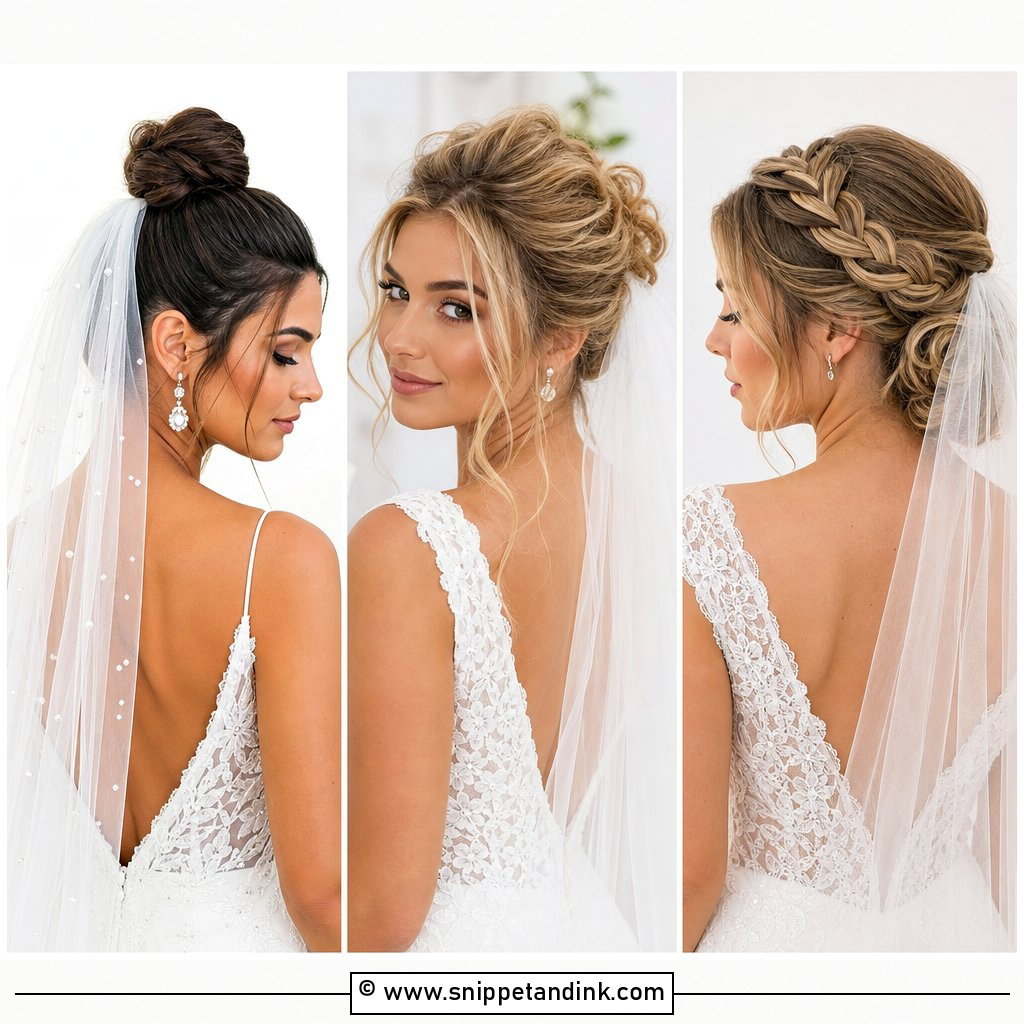
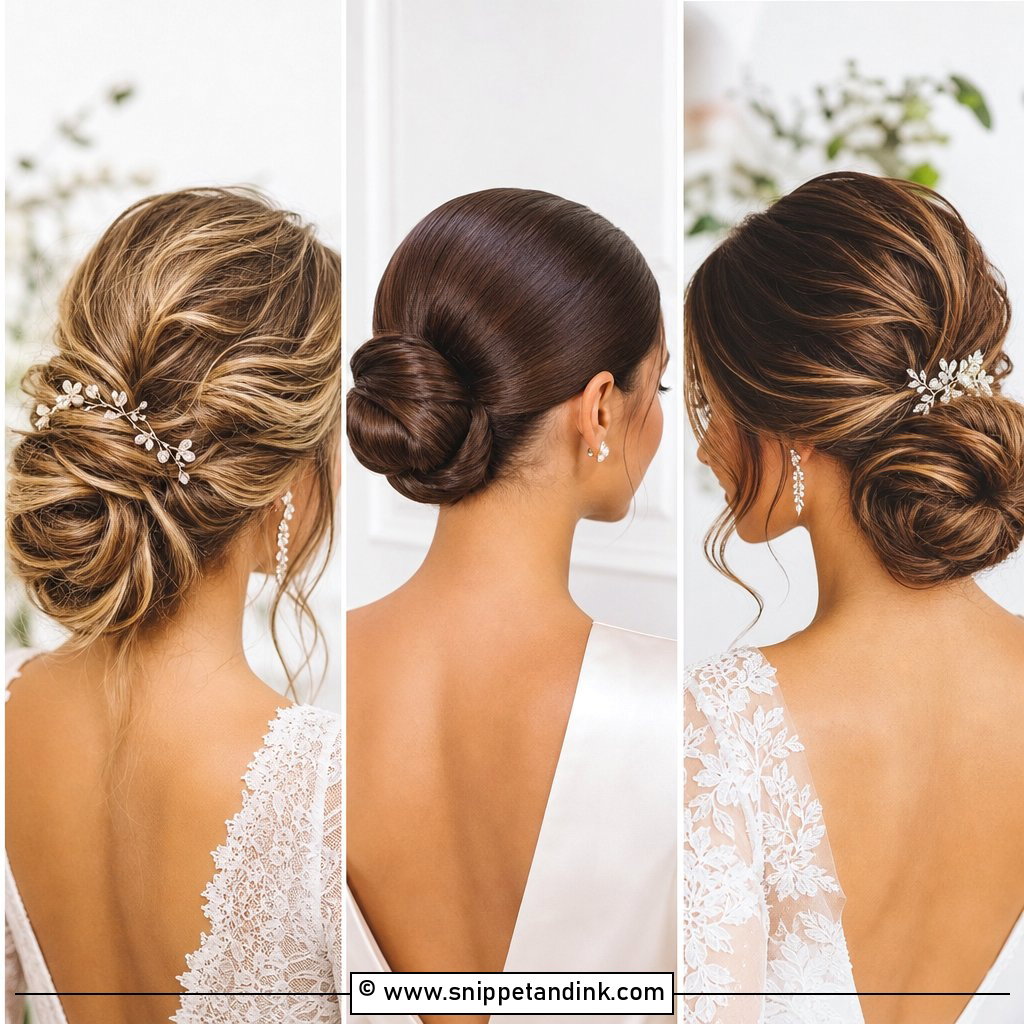
1. Low Chignon With Veil Underneath
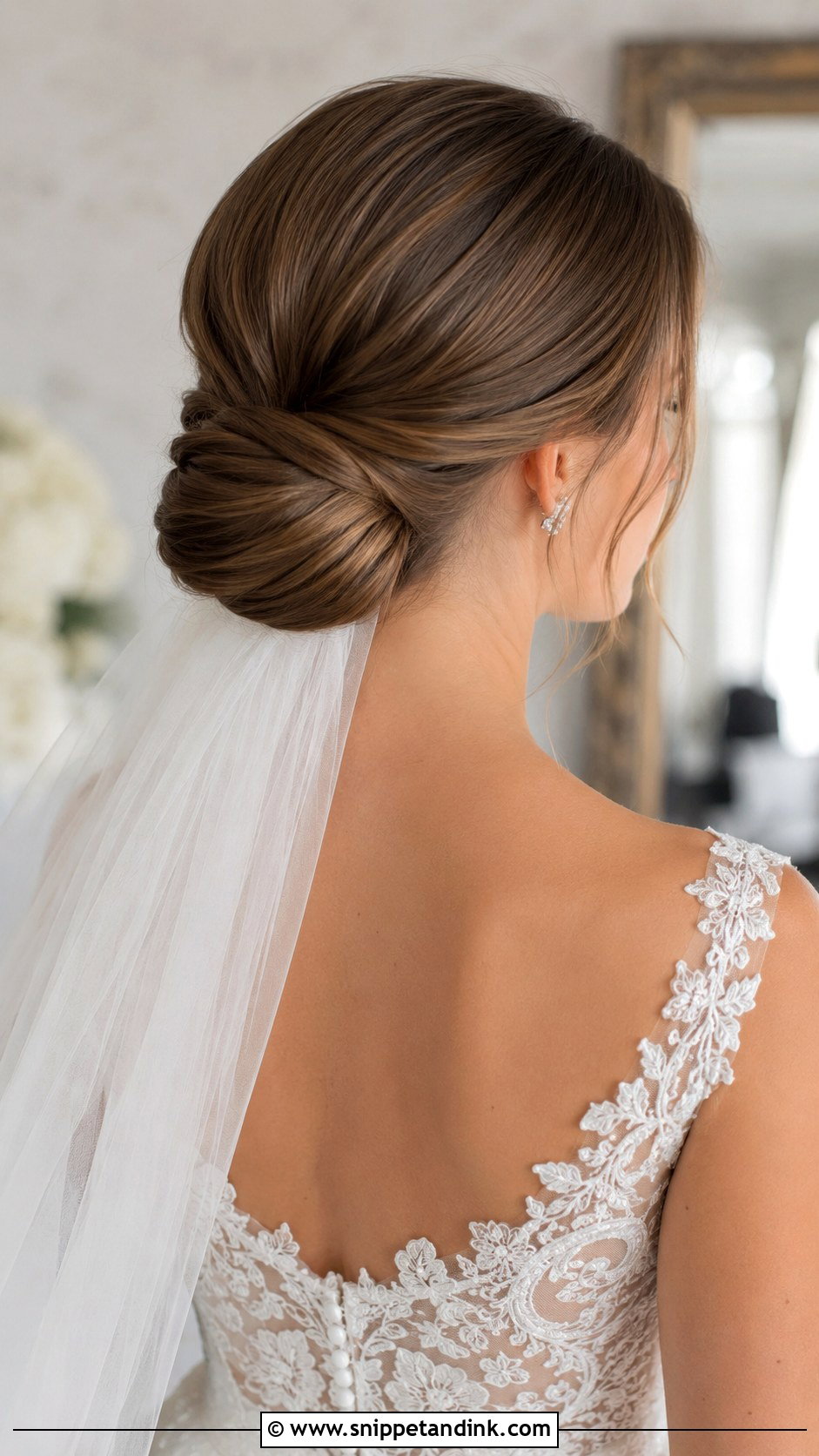
If I had to pick one updo for an under-placed veil, it would be the low chignon. The knot sits right at the nape and gives the comb a solid, predictable base. Before I finish the bun, I tease a small pocket of hair just beneath it so the comb has something to grip, then pin through the outer teeth. The veil falls from below and frames the back of the gown without hiding the hair. It reads as clean and editorial, and it suits structured gowns and statement earrings.
2. Sleek Low Bun With Veil Under
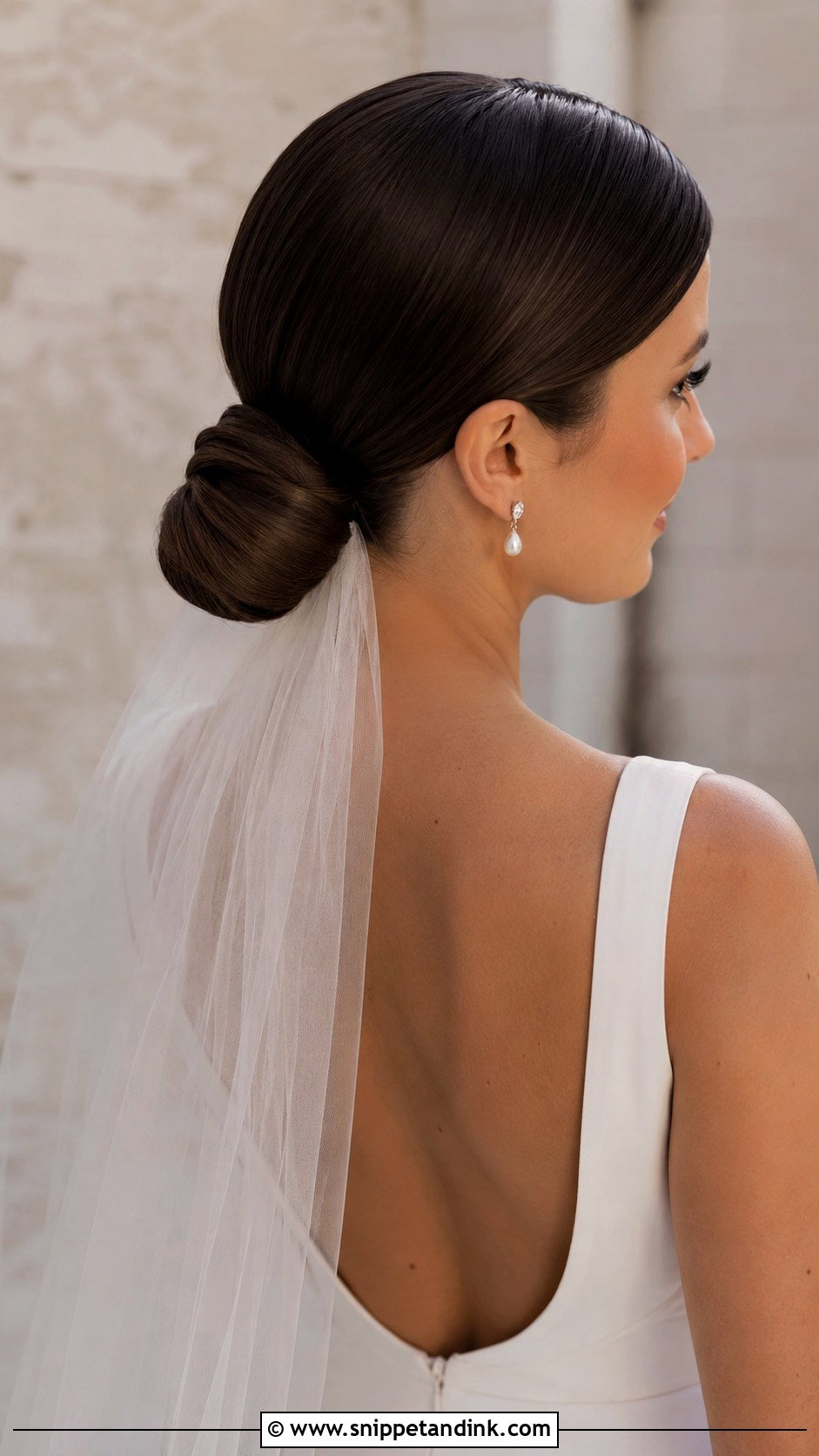
A sleek low bun is about control: every strand smooth, the shape tight, so the soft veil underneath provides all the contrast. Because the bun is low, the comb anchors at the nape without pulling on the style. Fitted and column gowns pair especially well with it. Sleek styles show every bump, so I brush the hair back while it’s still slightly damp with product, then dry it in place. A centre part adds symmetry, and a light shine spray finishes it.
3. Messy Bun With Veil Tucked Below
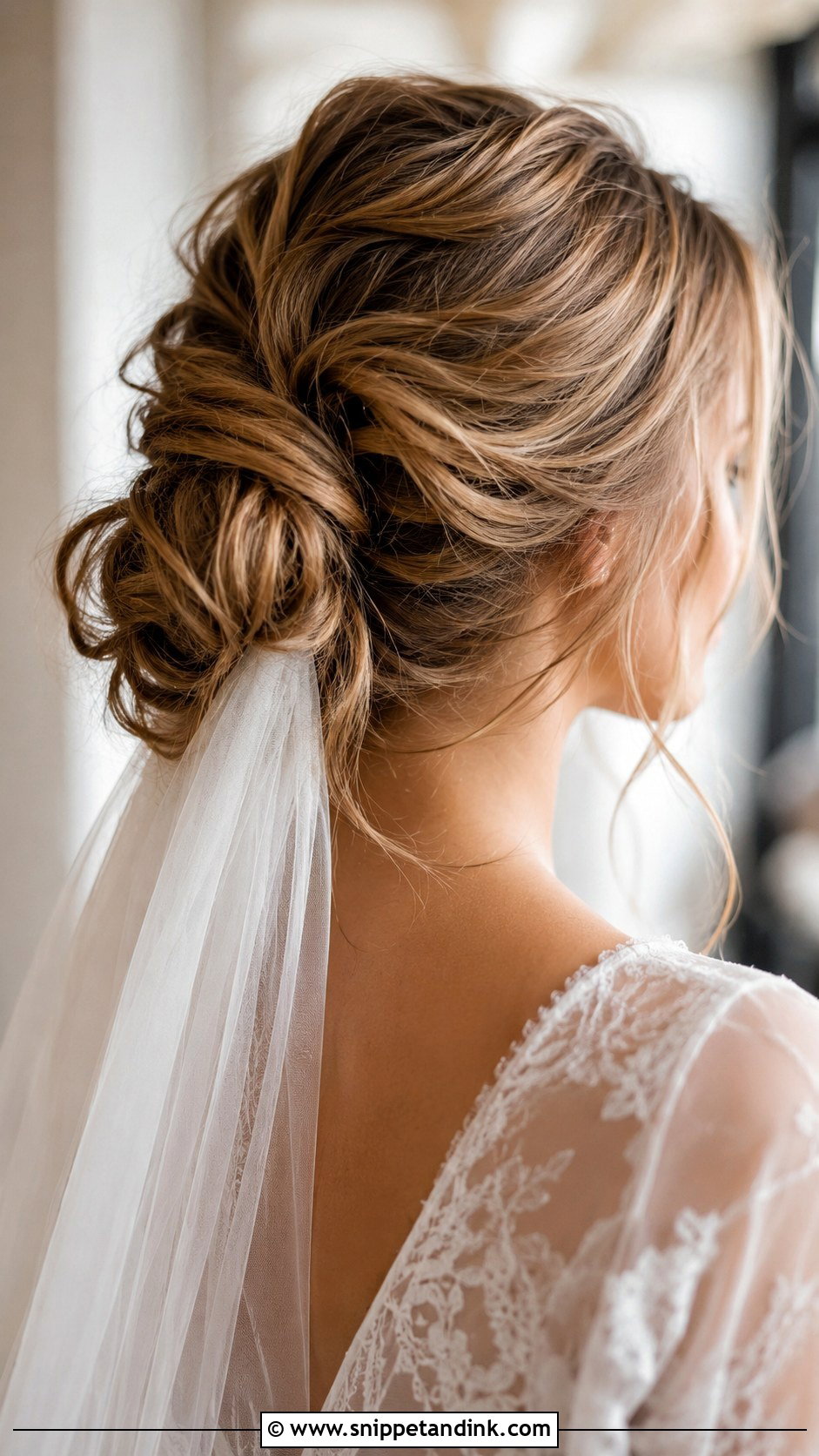
Messy buns look casual, but they’re built carefully. I set the hair with a curling iron first, pin the bun loosely in sections and then pull pieces out, so the texture is placed instead of accidental. The veil peeks out from below the knot. Outdoor and garden weddings suit it. One warning: a loosely built bun has less to grip, so I place the anchor pins into the base of the bun before I loosen anything.
4. Braided Bun With Veil Underneath
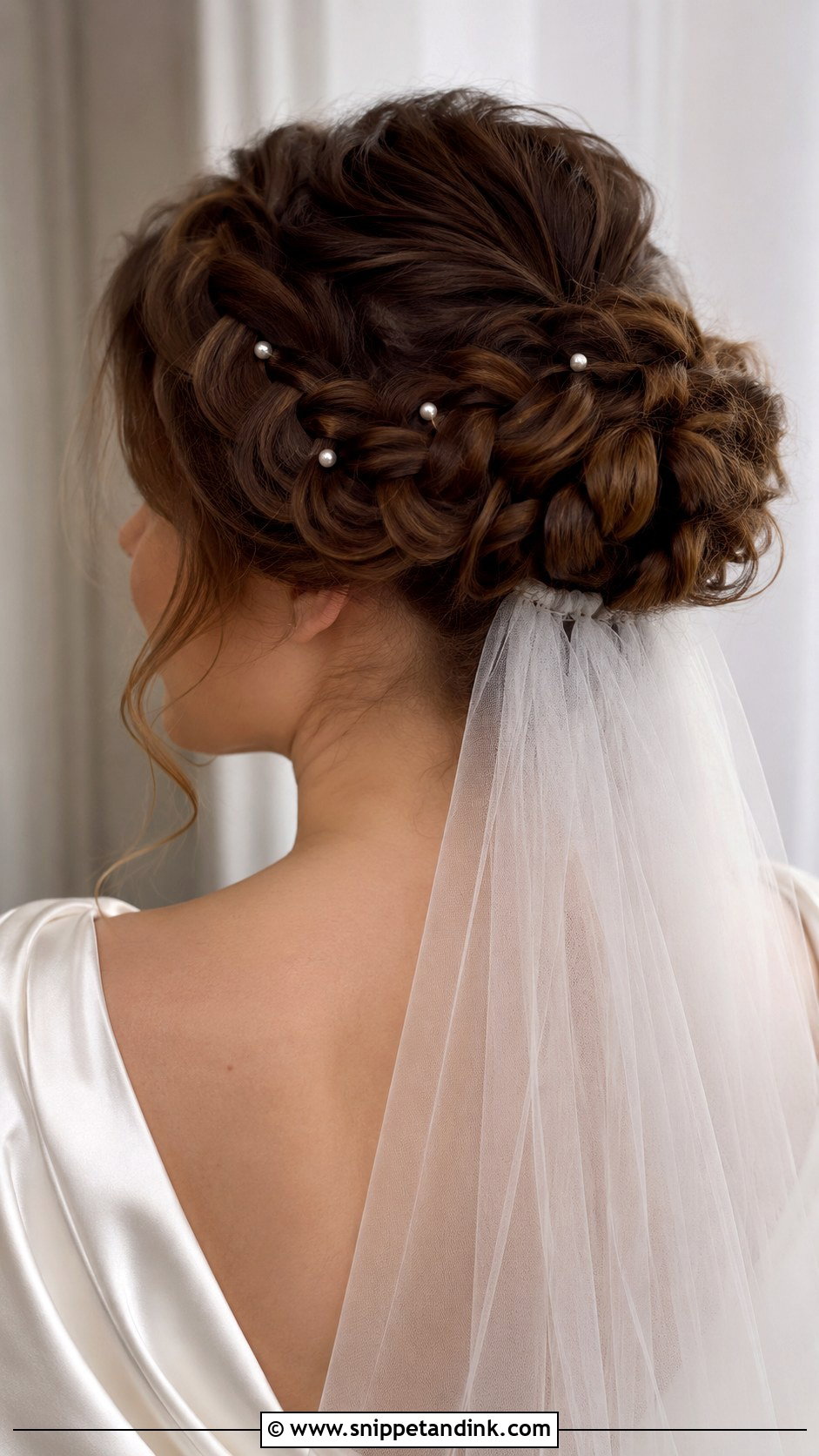
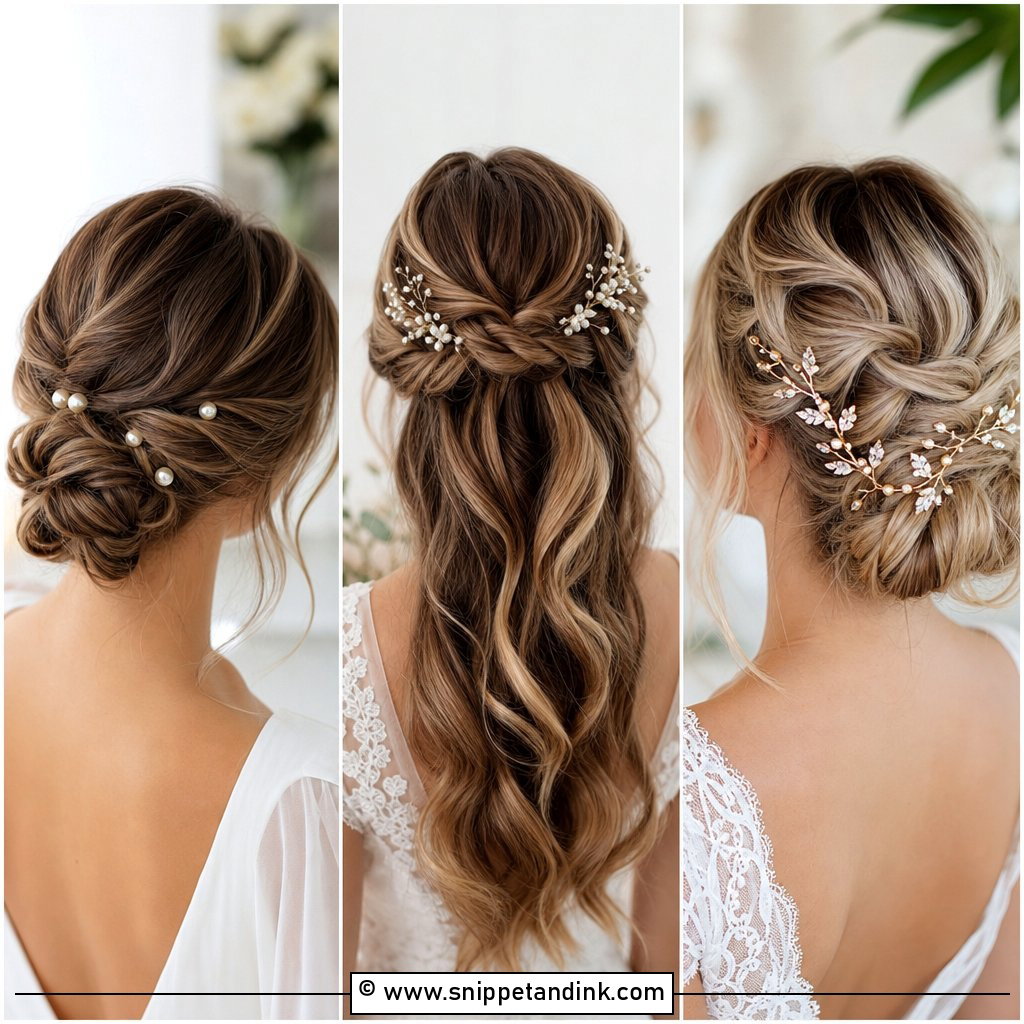
A braid wrapped around the bun or trailing into it adds detail you can see from the back of the room, and an under-placed veil keeps all that braid work visible. Long, thick hair carries it best; on fine hair, I gently pull each braid loop wider before pinning so it looks fuller. It also keeps hair off the neck, which matters on a hot day. Small pearl pins tucked along the braid catch the light without competing with it.
5. French Twist With Veil Below
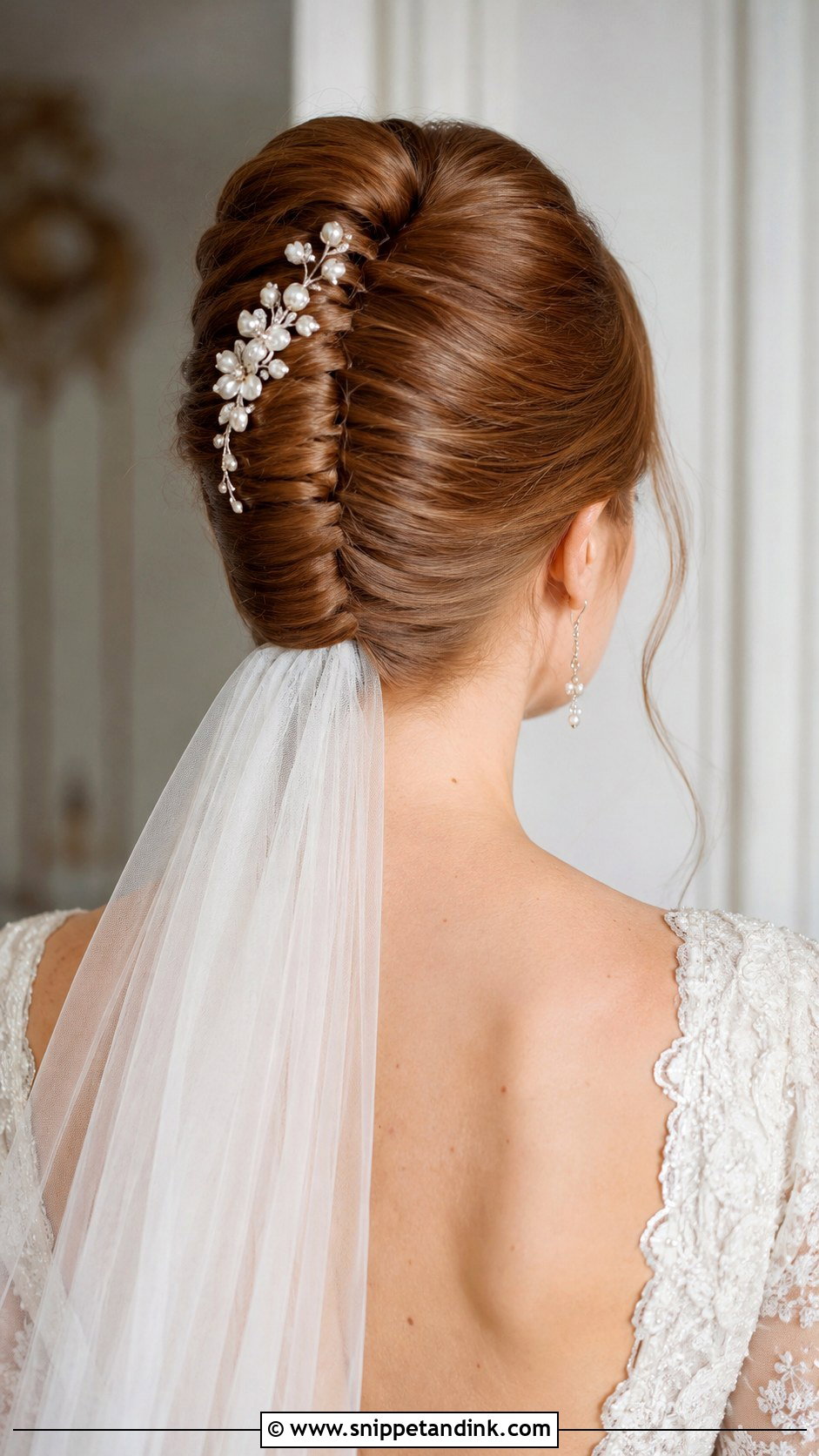
The French twist sweeps the hair up the back of the head into a vertical fold, and the veil goes in at its base. Tucking it there keeps the twist’s line visible from top to bottom. It’s a classic for vintage and old Hollywood looks. The twist works best on medium to long hair; very layered hair tends to poke out of the fold, so I smooth those ends with a little wax before closing it. A decorative comb peeking just above the twist is a nice finishing detail.
6. Boho Low Knot With Veil Under
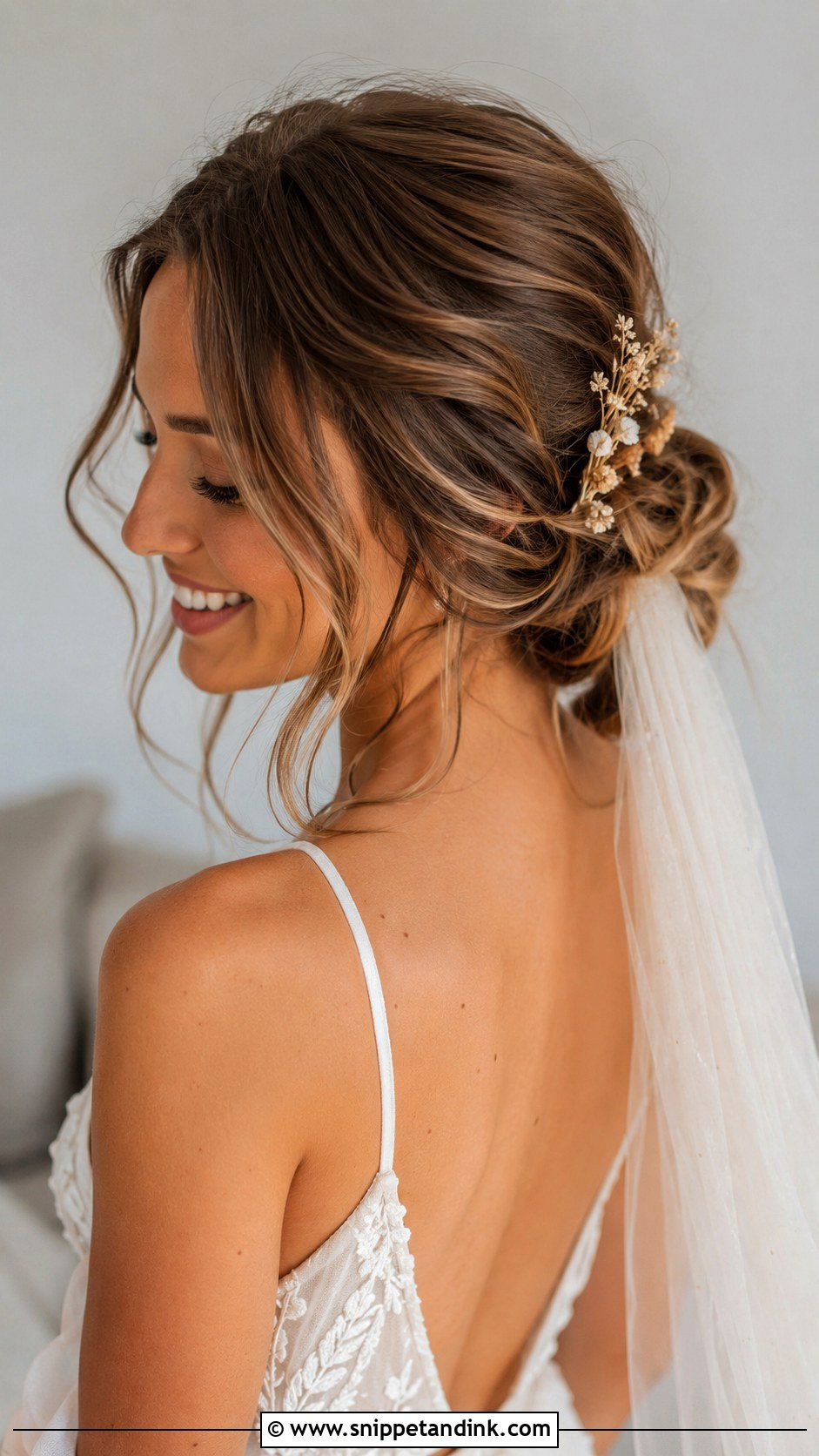
A boho low knot sits gently at the nape, with soft pieces loose around the face and the veil falling from beneath. It suits flowing gowns and natural flower accents, and beach or meadow ceremonies. I add a few twisted strands into the knot for texture. If you want small dried flowers or sprigs tucked near it, plan them before the veil goes in, since pinning flowers around a comb that’s already in place tends to loosen both.
7. Bouffant Updo With Veil at the Front
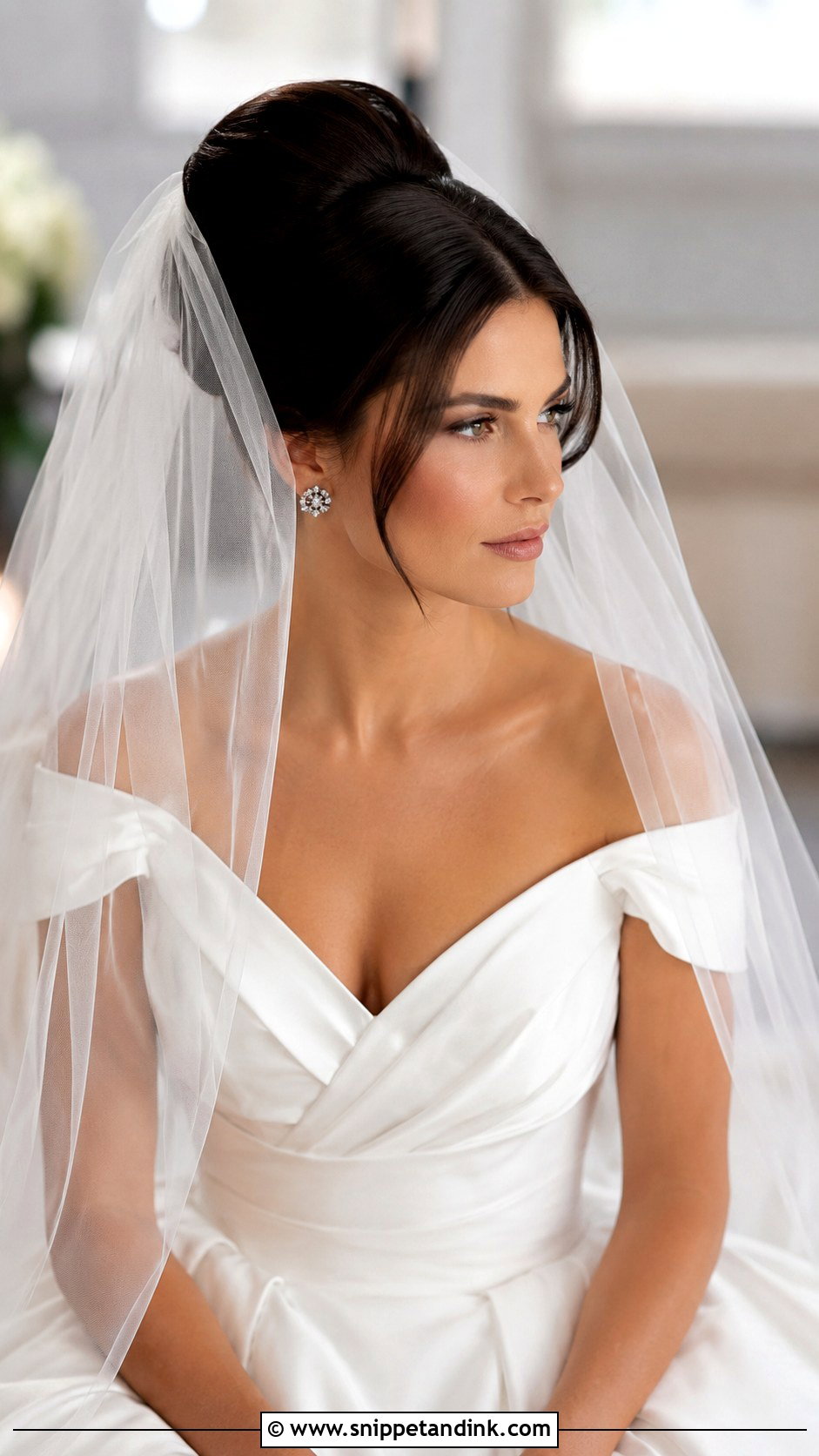
This one breaks the pattern: the veil sits in front of the bun, closer to the hairline, so the bouffant’s height frames the top of the tulle. The teased crown adds strong mid-century volume. Structured ballgowns and formal weddings suit it. I tease the crown in small sections and smooth only the top layer over it, so the lift holds all day without looking backcombed. The veil comb then goes into the base of the teased volume, which grips well.
8. Twisted Updo With Veil Underneath
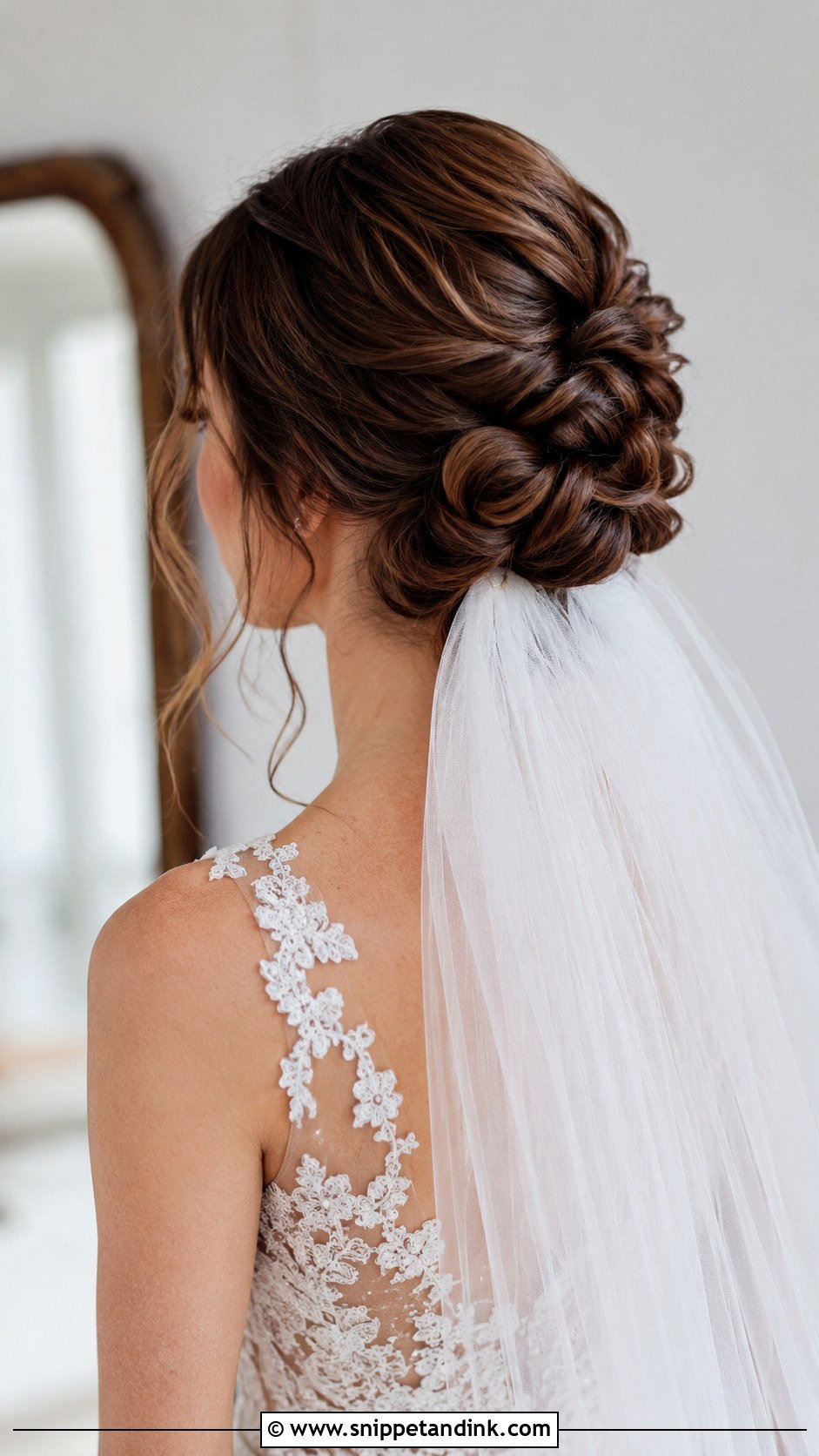
Multiple twists wrapped and pinned together give a soft, sculptural shape at the back, with the veil tucked beneath so the twisting stays in view. Medium to long hair works. Each twist is pinned separately, so if one loosens during the day the rest stay put, which makes this more forgiving than a single large bun. A few loose pieces at the face keep it fresh.
9. Curly Updo With Veil Below
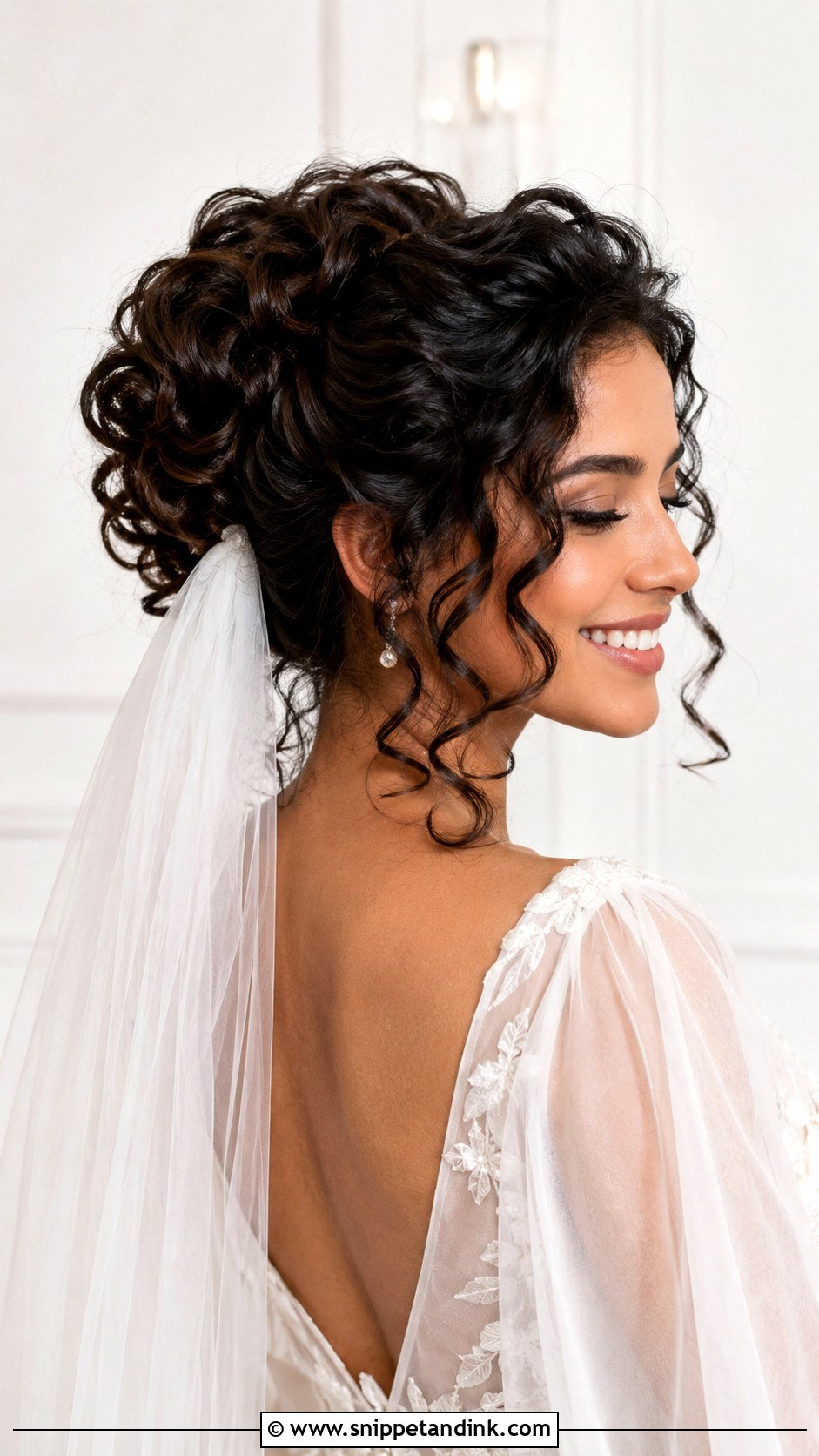
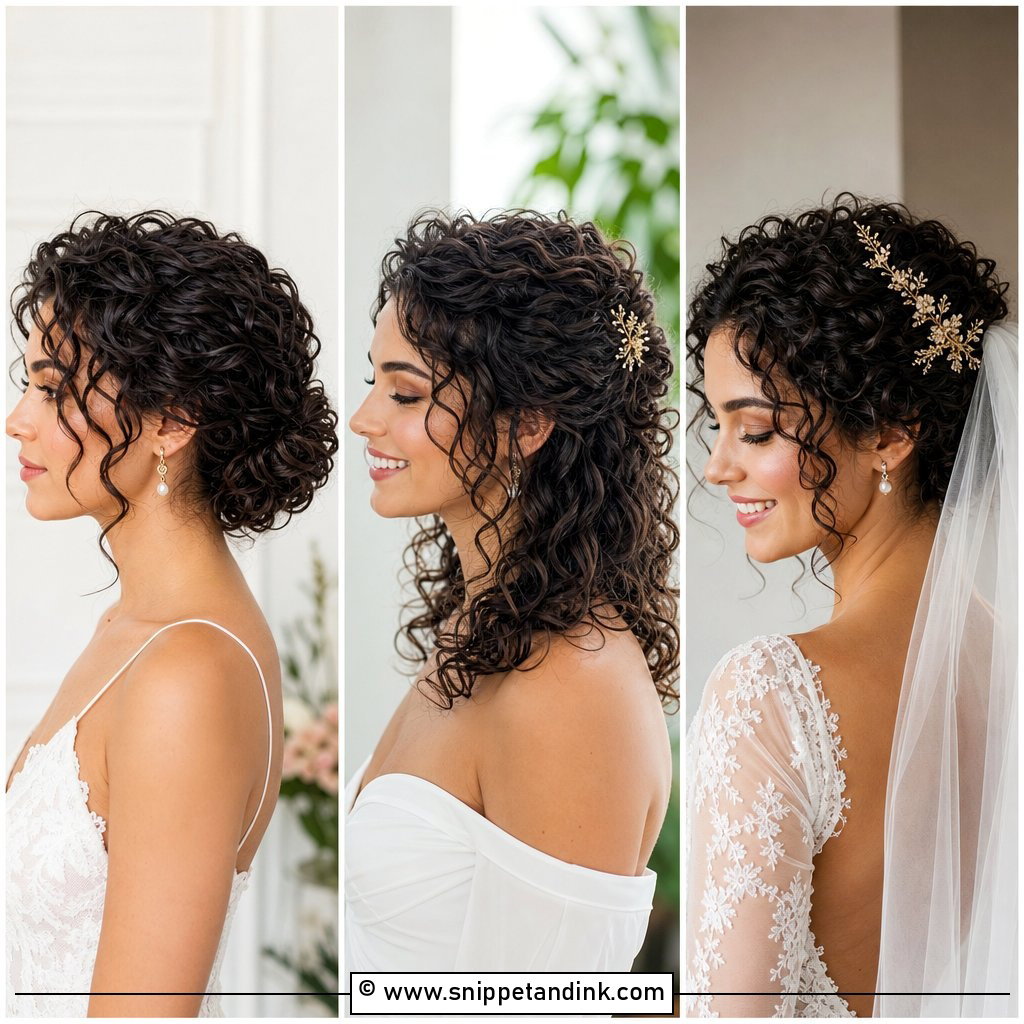
Curly and coily hair makes a natural updo with real volume, and the veil placed underneath keeps the curls on show. I pin defined curls loosely into shape rather than smoothing them, and I never brush dry curls. A comb pushed straight into curly hair can snag, so I flatten a small area under the bun and slide the comb in there. Leave a few curls loose at the face, and finish with a curl-defining spray to keep frizz down through the day.
10. Pearl-Adorned Bun With Veil Under
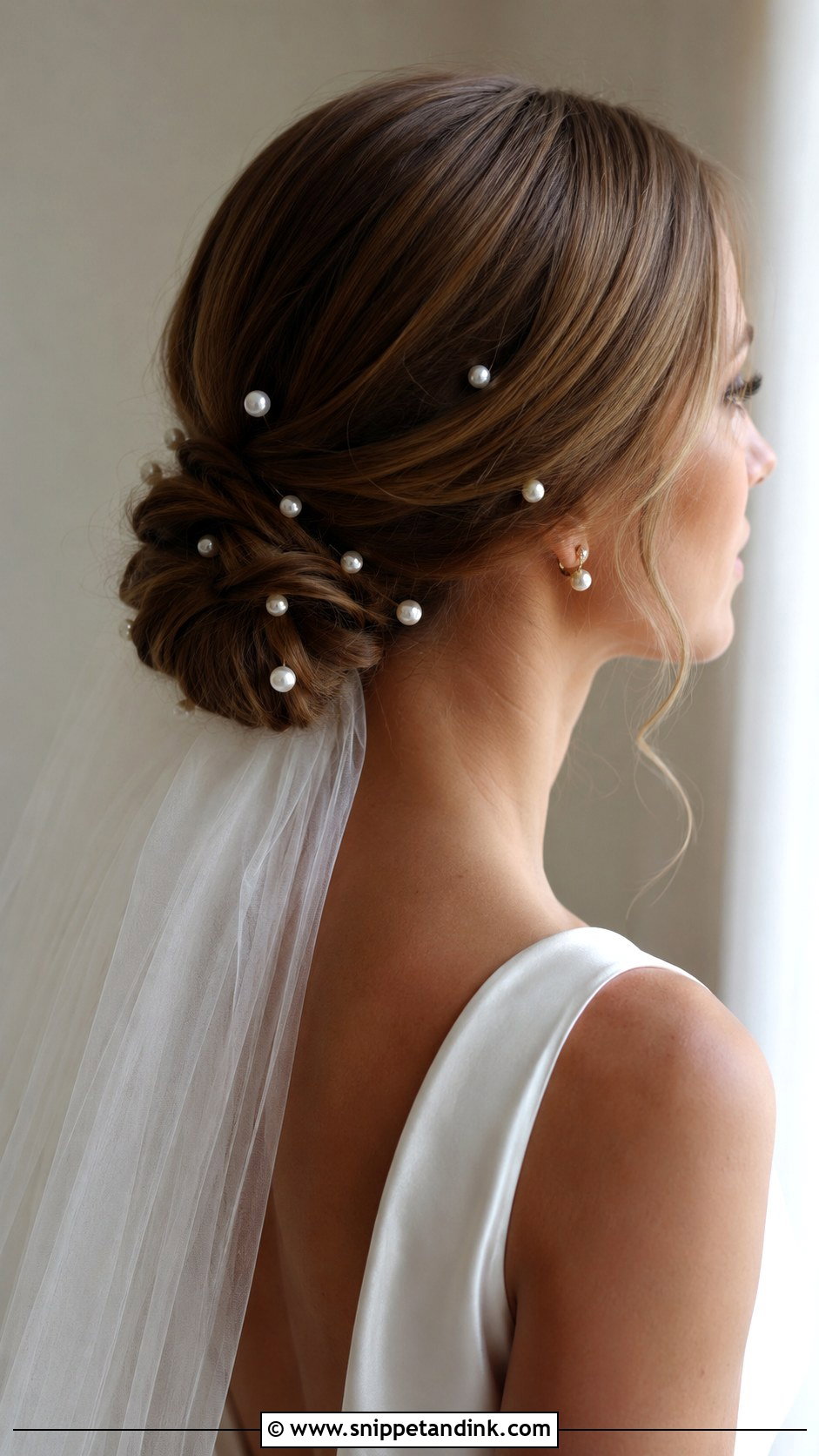
A pearl-adorned bun scatters pearl pins through the updo, and with the veil tucked below, the pearls stay visible instead of disappearing under tulle. Low or mid-height buns give the best balance. I place the pearls after the veil is in, never before, so the comb doesn’t knock them loose. Keep them spaced out; a few well-placed pins read better than a crowded cluster.
11. Side Bun With Veil Underneath
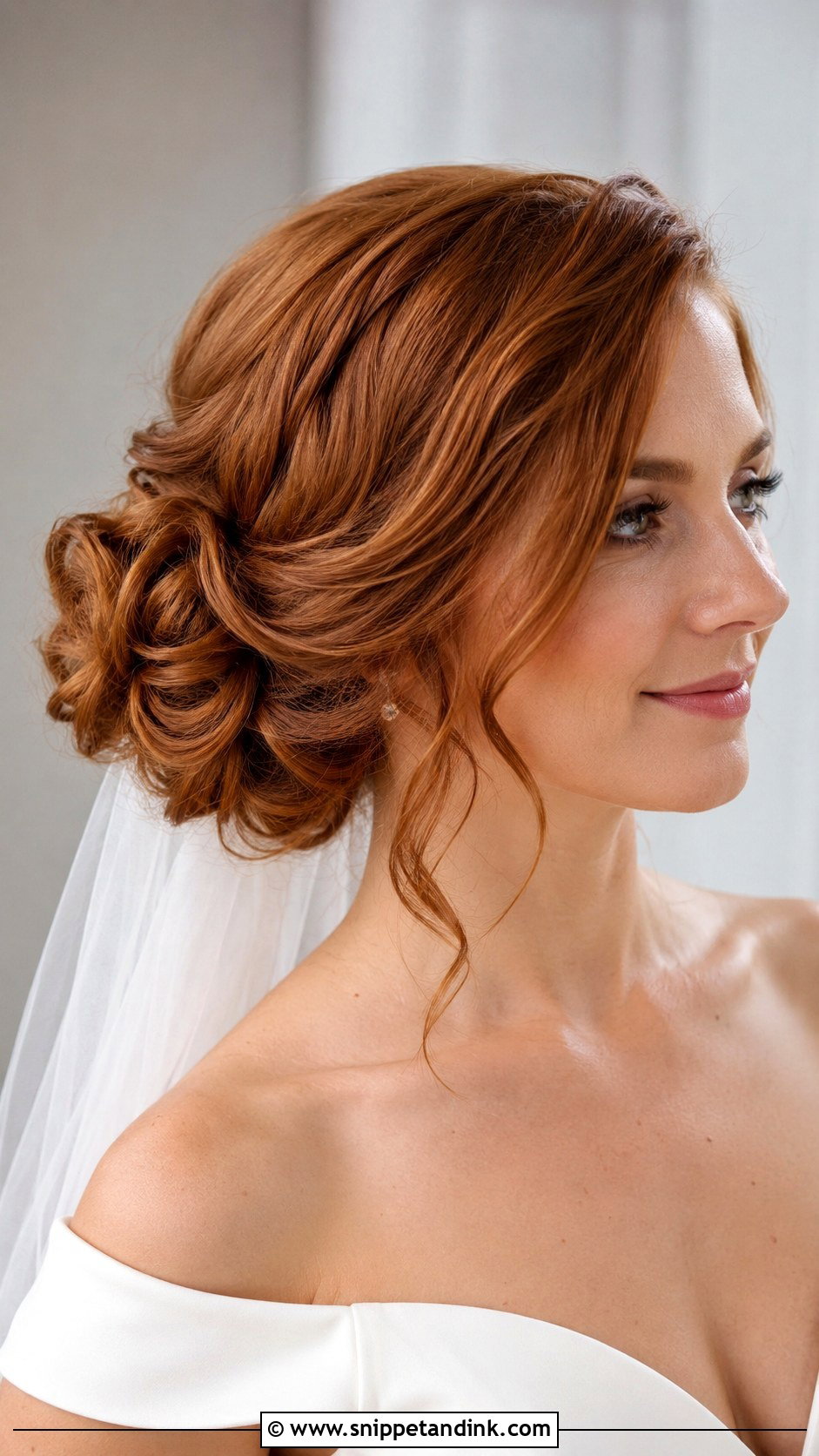
A side bun sweeps the hair to one side and rests near the ear or the nape, and the veil tucks beneath it. The tilt flatters off-shoulder and one-shoulder gowns, where it balances the bare shoulder. Here the veil anchors off-centre, so I make sure it falls straight down the back instead of following the bun to one side. A few loose waves near the face add softness.
12. Sleek Top Knot With Veil Under
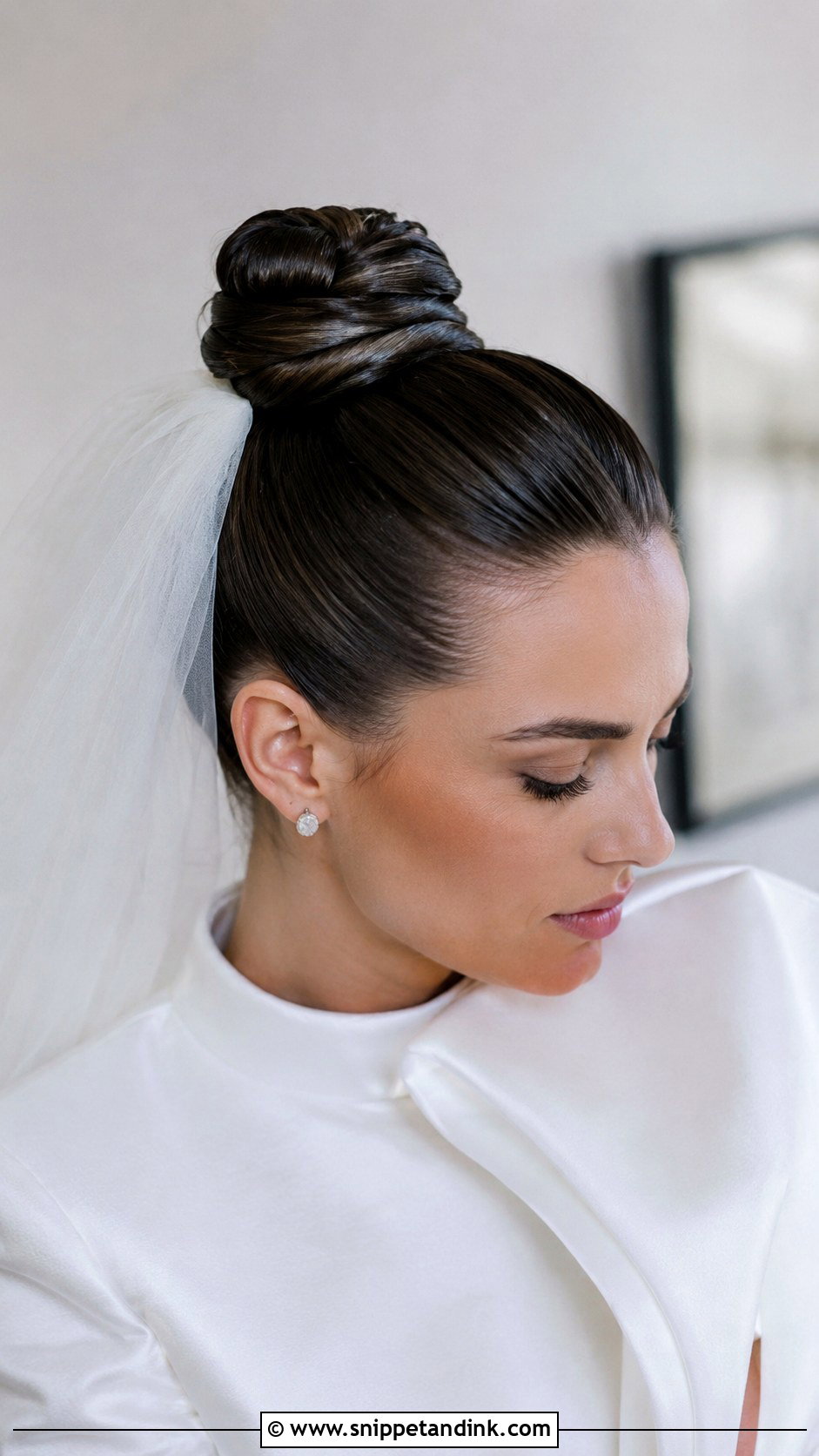
A sleek top knot sits high at the crown, and the veil clips directly beneath it, so the tulle starts much higher than in the other styles here. That gives a long, vertical line from crown to floor that suits contemporary and architectural gowns, and it leaves the neck and earrings fully clear. Smooth every strand. The weight of the veil pulls on a high knot, so I secure the base with an elastic and crossed pins before adding the comb.
13. Romantic Loose Updo With Veil Below
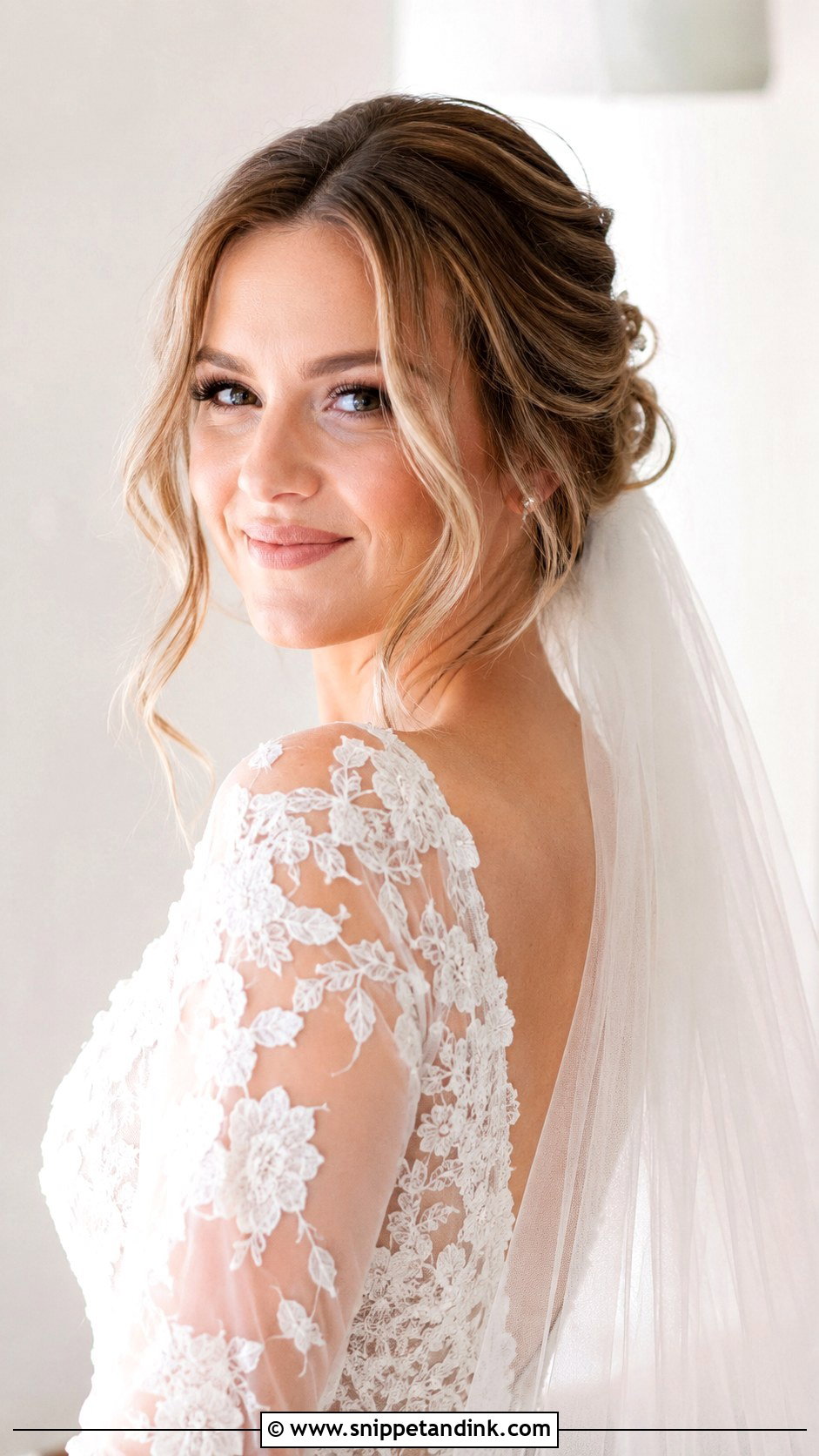
A loose updo is pinned waves and soft pieces in a relaxed shape, with the veil tucked underneath. Lace gowns and natural makeup sit well beside it. Loose tendrils frame the face. Loose updos hold best on hair with some grip; very silky hair slides out of soft pins by mid-afternoon, so I prep with a light texture spray and use more pins than the look suggests. A light hairspray holds the shape while keeping it soft.
14. Braided Crown Updo With Veil Under
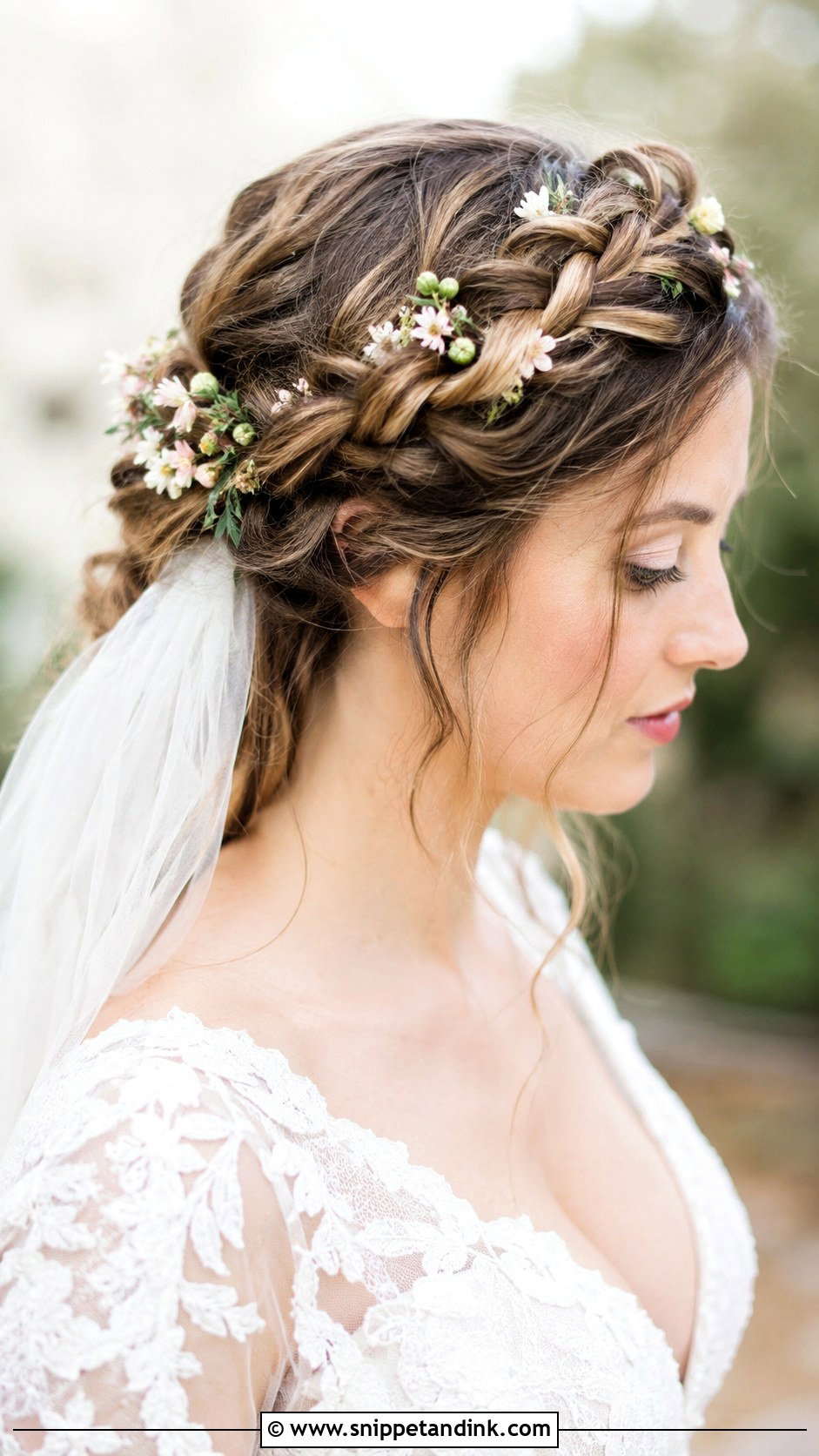
Braids wrapped around the head like a halo frame the face, and the veil goes in beneath the crown so the braiding stays fully visible. It fits boho and garden weddings and suits long, thick hair. With shorter or finer hair, I’d add a matching braided hairpiece rather than stretch your own hair too thin. Small flowers or pearls can be tucked in after the veil is placed.
15. Vintage Roll Updo With Veil Below
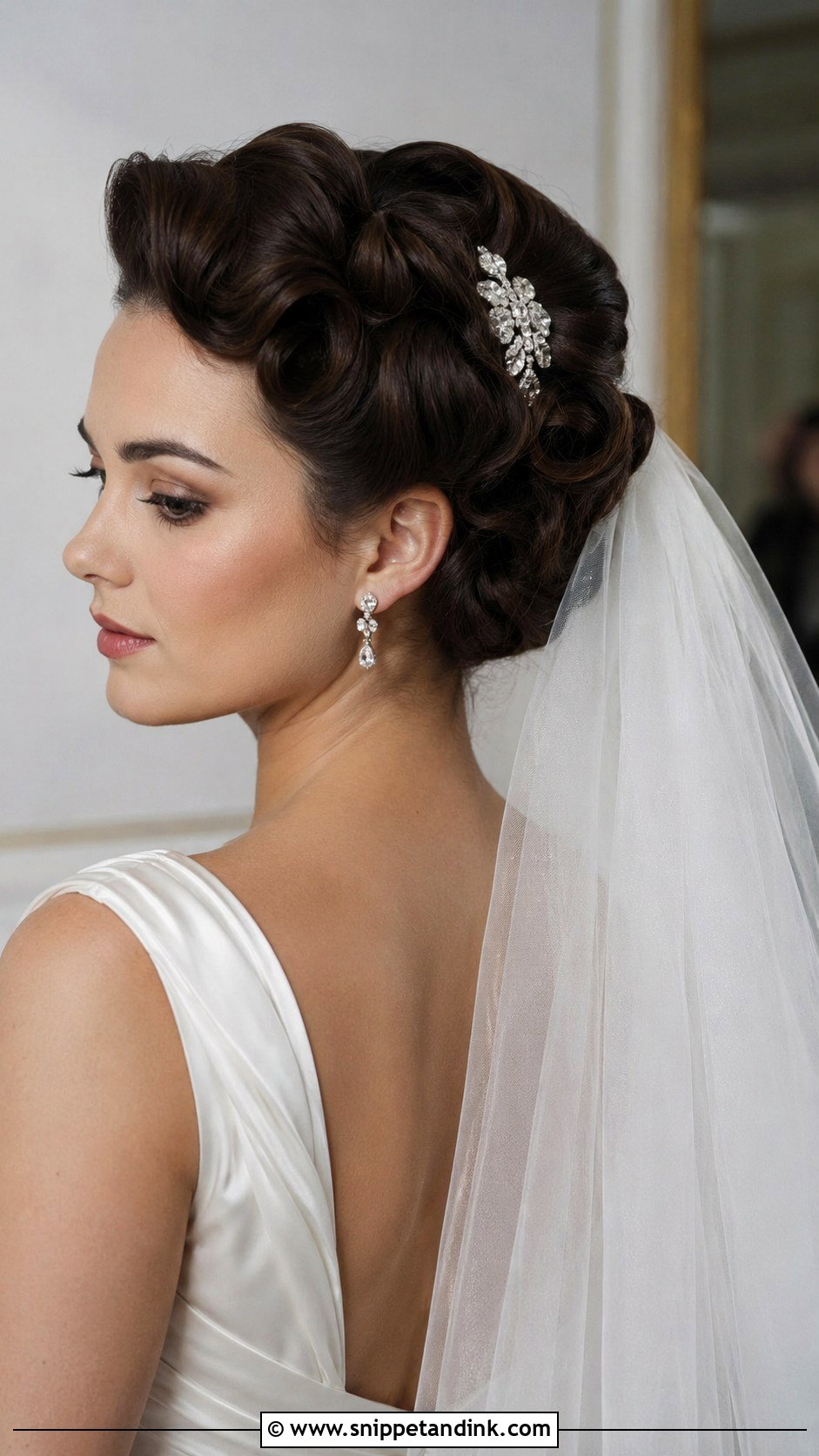
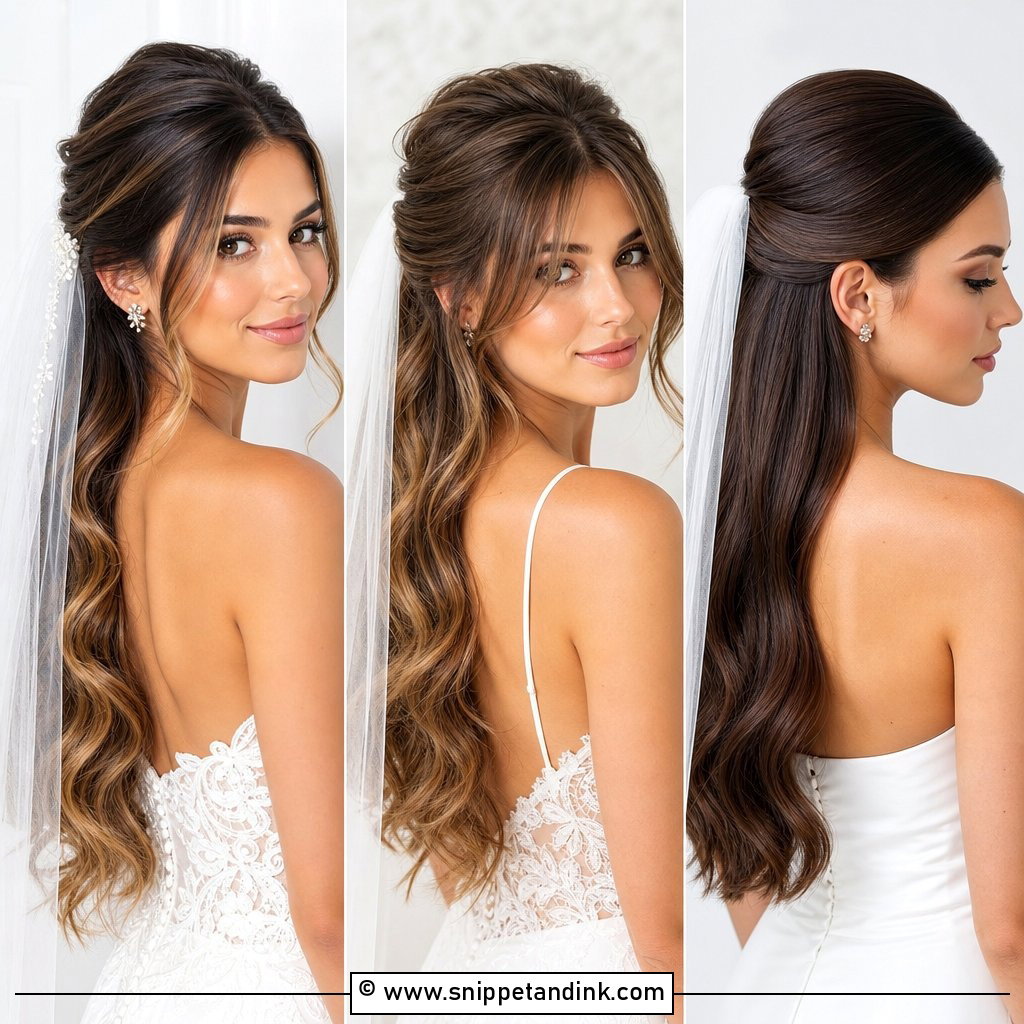
Vintage rolls are built from set pin curls, brushed and shaped into smooth, defined rolls. The structure is all old Hollywood. The veil tucks beneath to keep the roll detail on show, and satin gowns and vintage-themed weddings suit it. I set the curls the evening before or early in the morning and let them cool completely, because a roll made from warm hair loses its shape fast. A sparkling clip finishes it.
16. Textured Bun With Veil Underneath
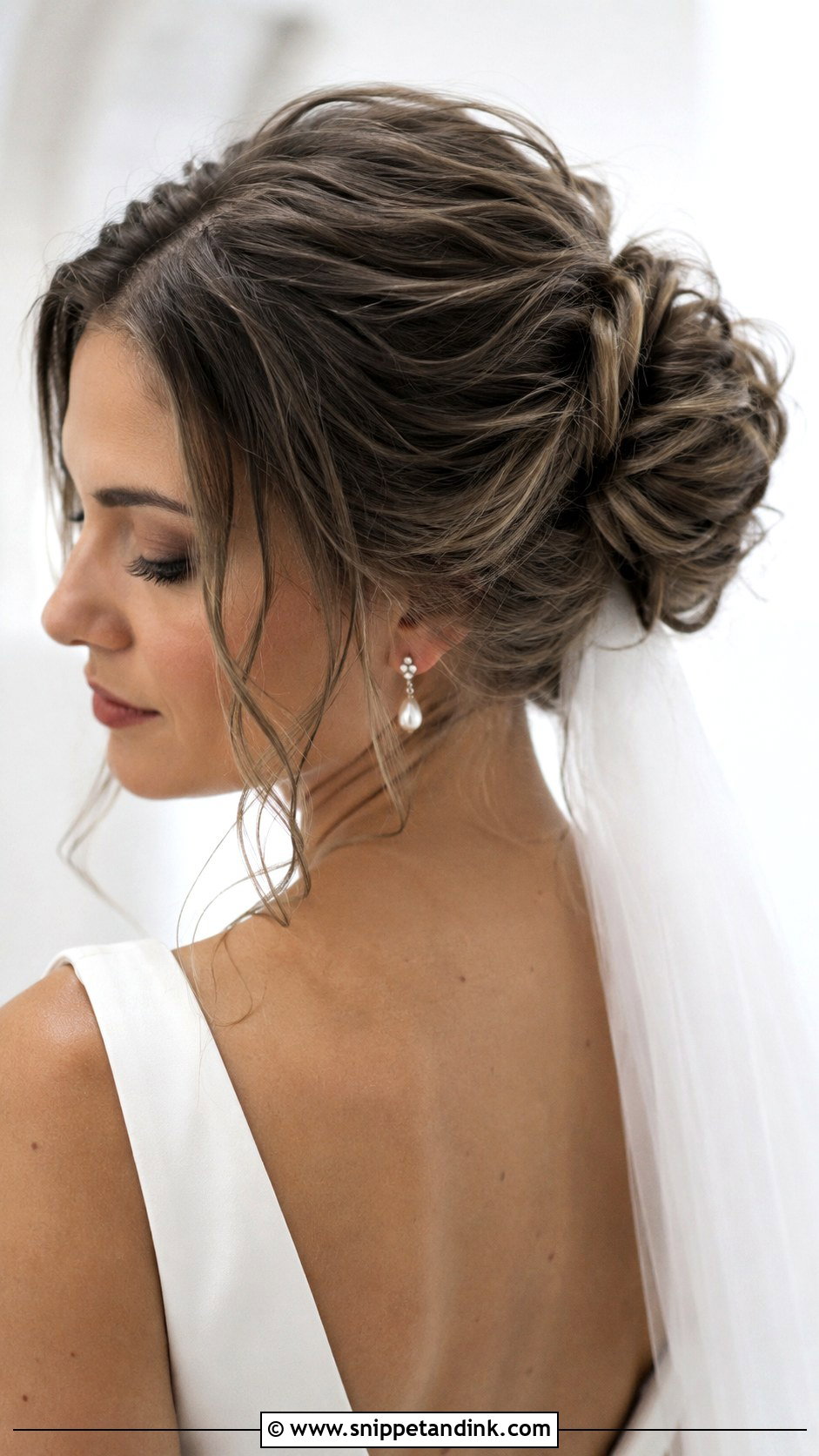
A textured bun is tousled and piecey but deliberately shaped, with the veil tucked below. Boho and minimalist gowns both suit it. I use texturising spray to give the hair grip and pull pieces out after the bun is secured. Keep spray away from the spot where the comb goes, because gritty hair can catch on tulle and pull threads.
17. Low Ponytail Updo With Veil Below
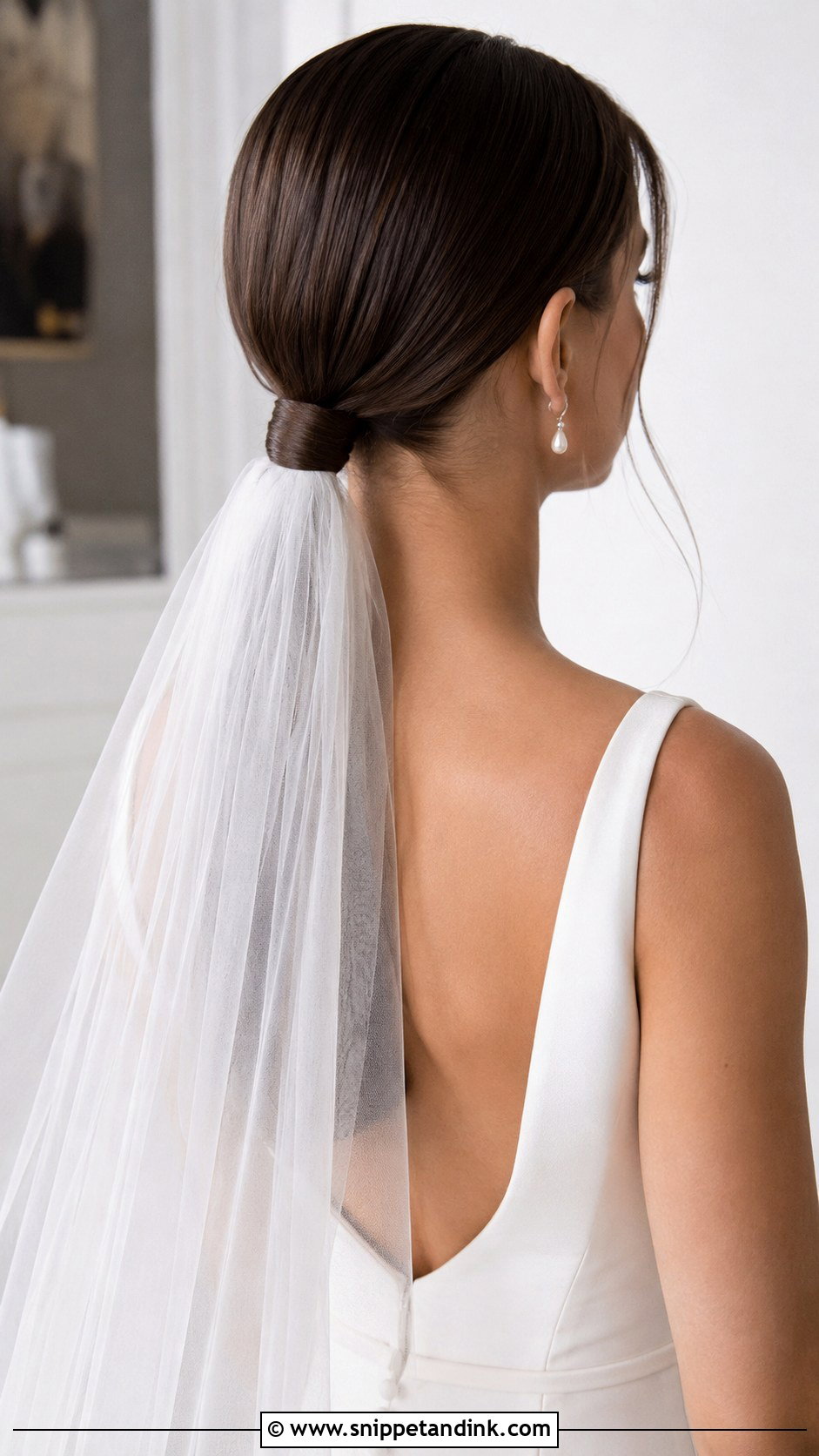
A low ponytail is a modern alternative to a bun: smooth, low, with a strand wrapped around the base to hide the elastic. The veil tucks right under that wrapped section. It suits contemporary brides and modern gowns. The comb has less to grip on a ponytail than on a bun, so I pin it into the wrapped base and add crossed pins on each side. Smooth every strand for a glossy finish.
18. Floral-Accented Updo With Veil Under
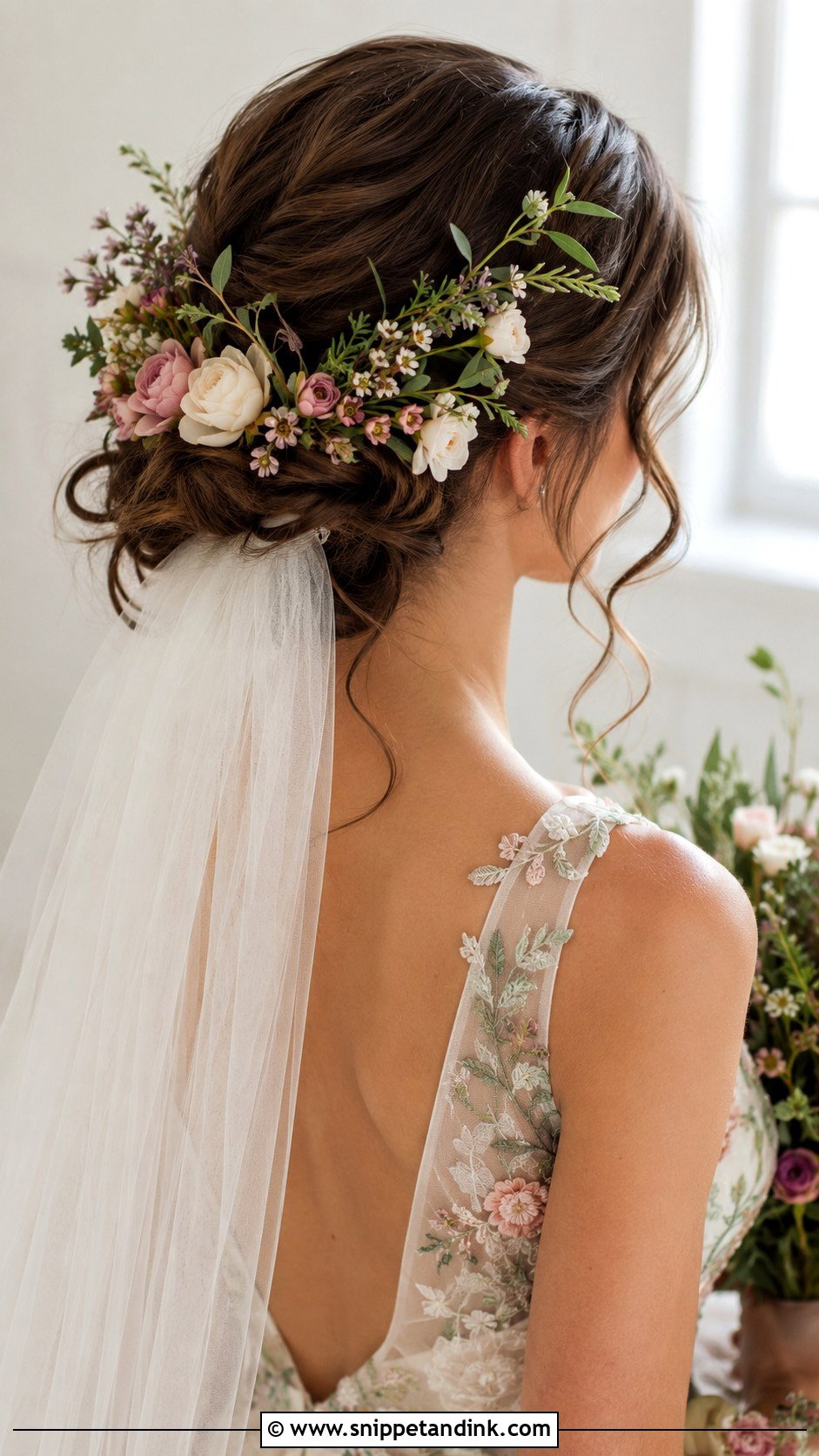
Fresh or dried flowers woven into the bun add colour and texture, and placing the veil beneath keeps them visible. Spring and summer weddings suit it, and matching the flowers to the bouquet ties the look together. Talk to your florist early. Fresh blooms need to be hardy enough to last out of water for hours, and delicate petals wilt and bruise against warm skin and hair. Small sprigs tucked throughout look natural.
19. Half-Up Bun With Veil Underneath
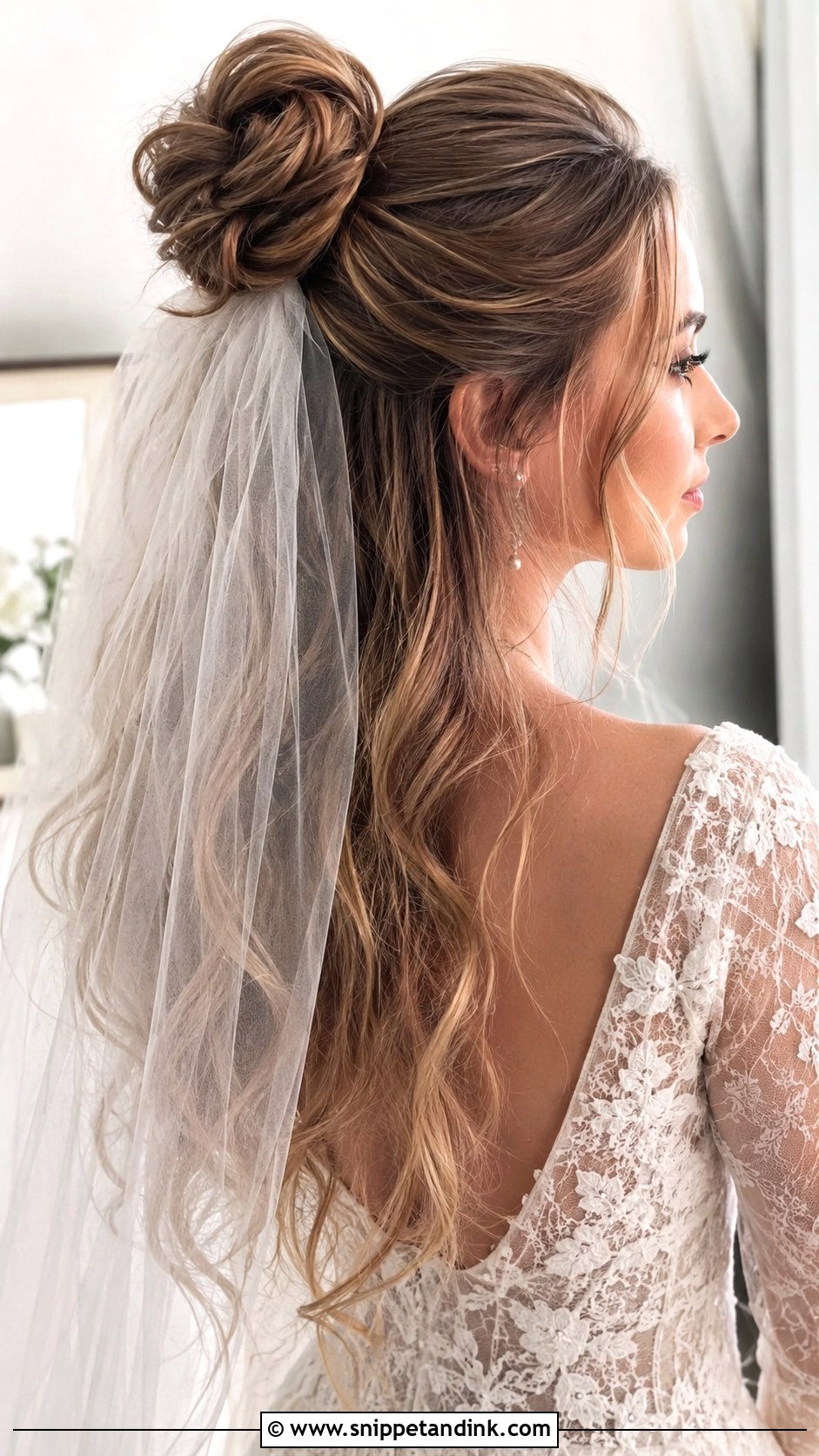
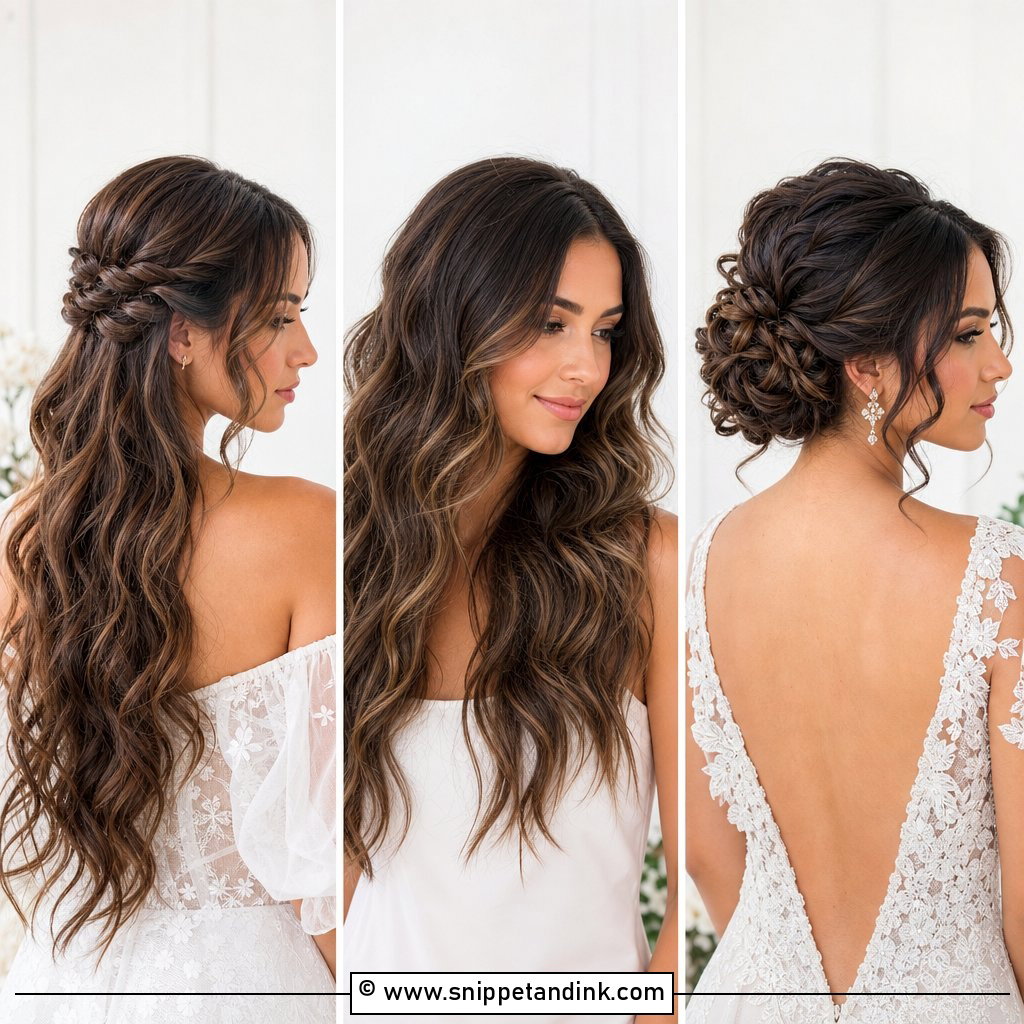
Can’t decide between up and down? A half-up bun gathers the top section into a soft knot while the rest flows, and the veil tucks beneath the bun, falling over the loose lengths. You show your length while keeping some structure. The bun is smaller than a full updo, so I make sure it’s firmly secured with an elastic before the comb goes in. Face-framing pieces add softness.
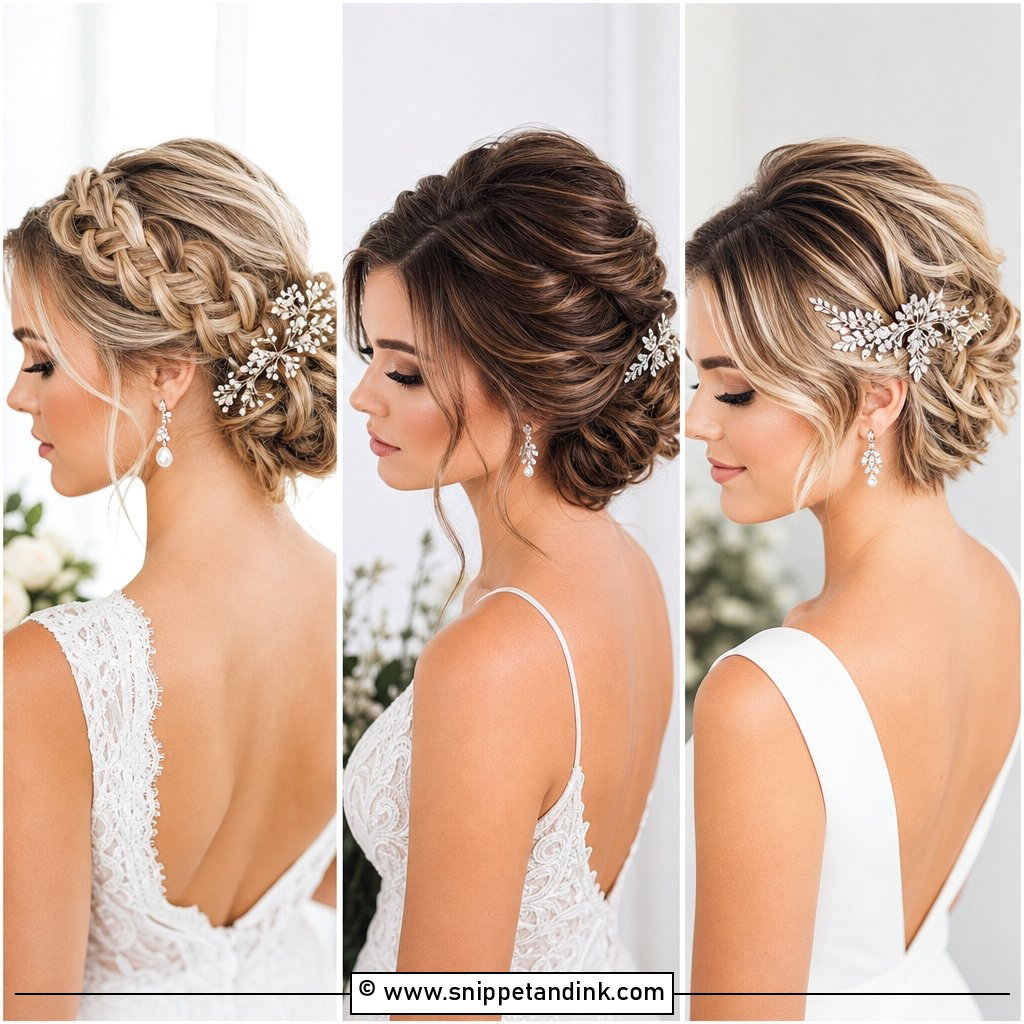
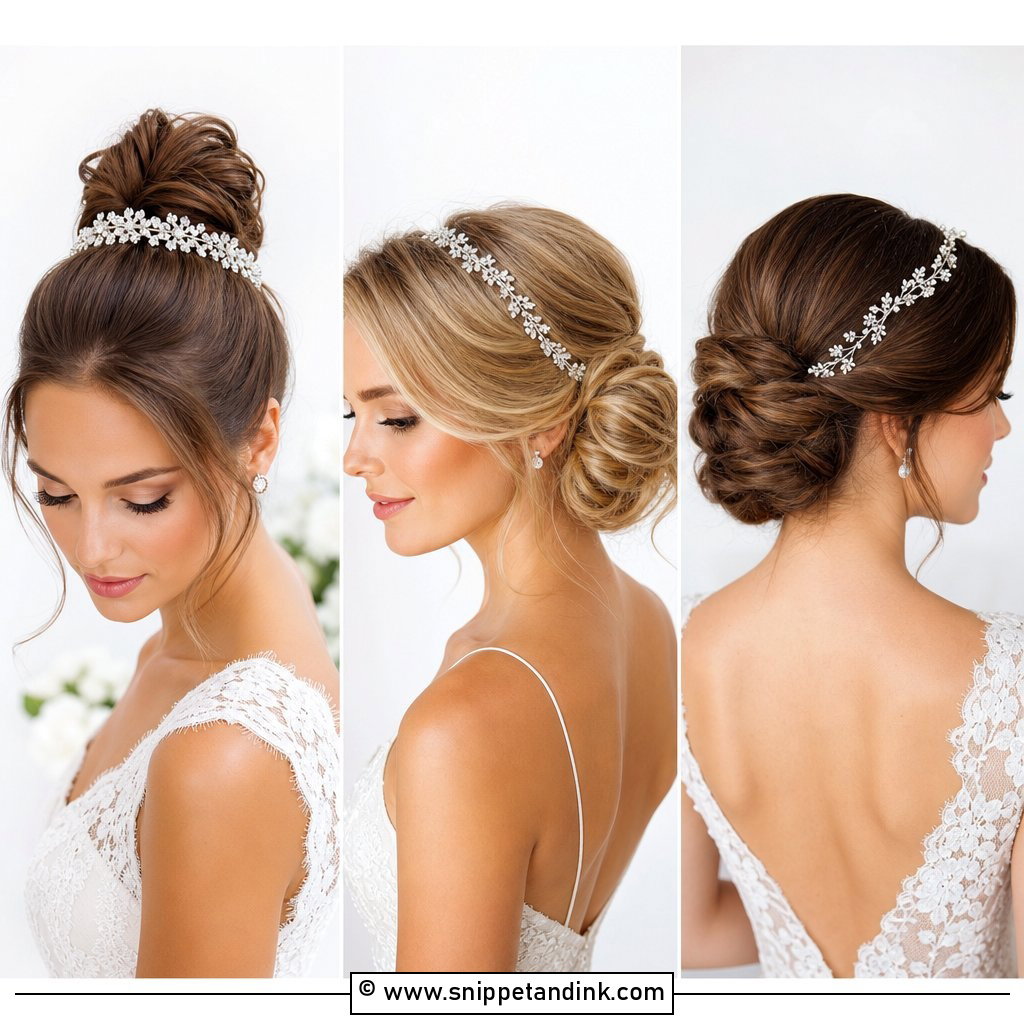
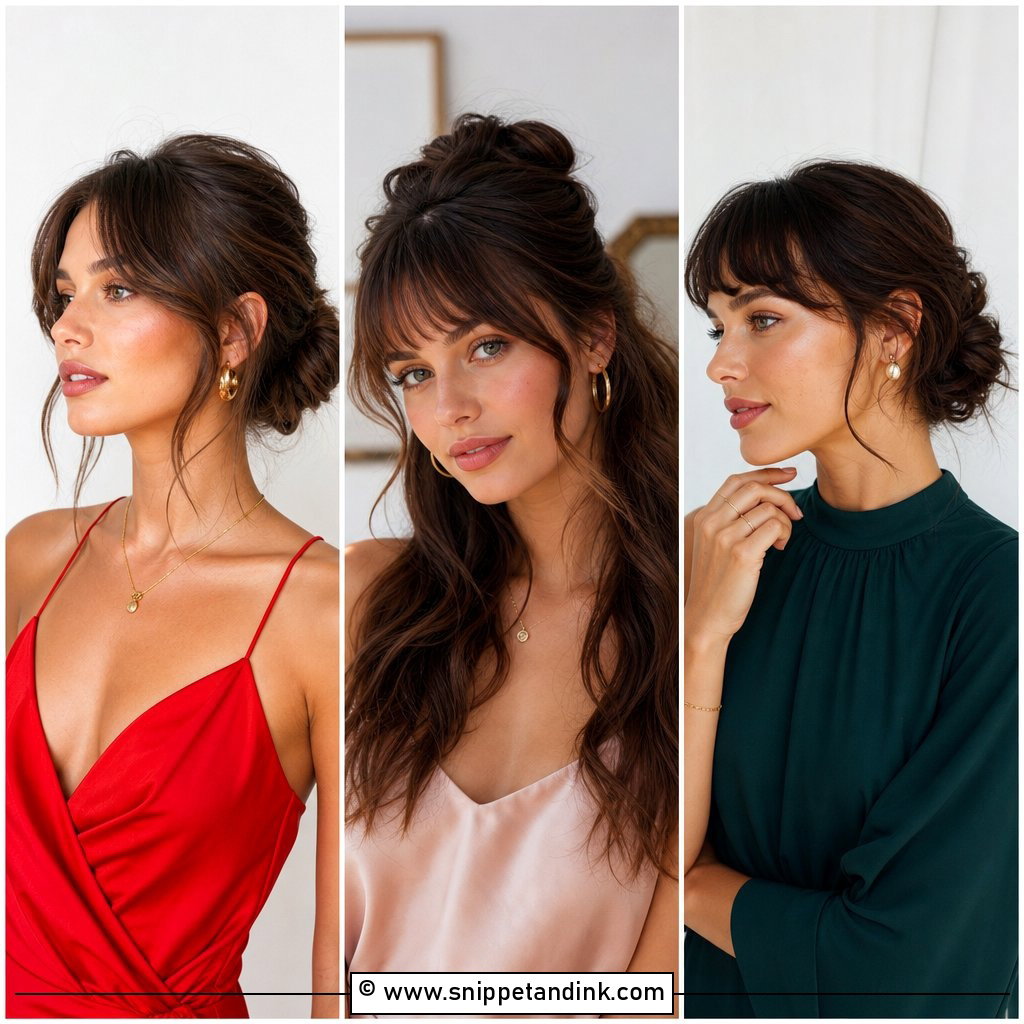
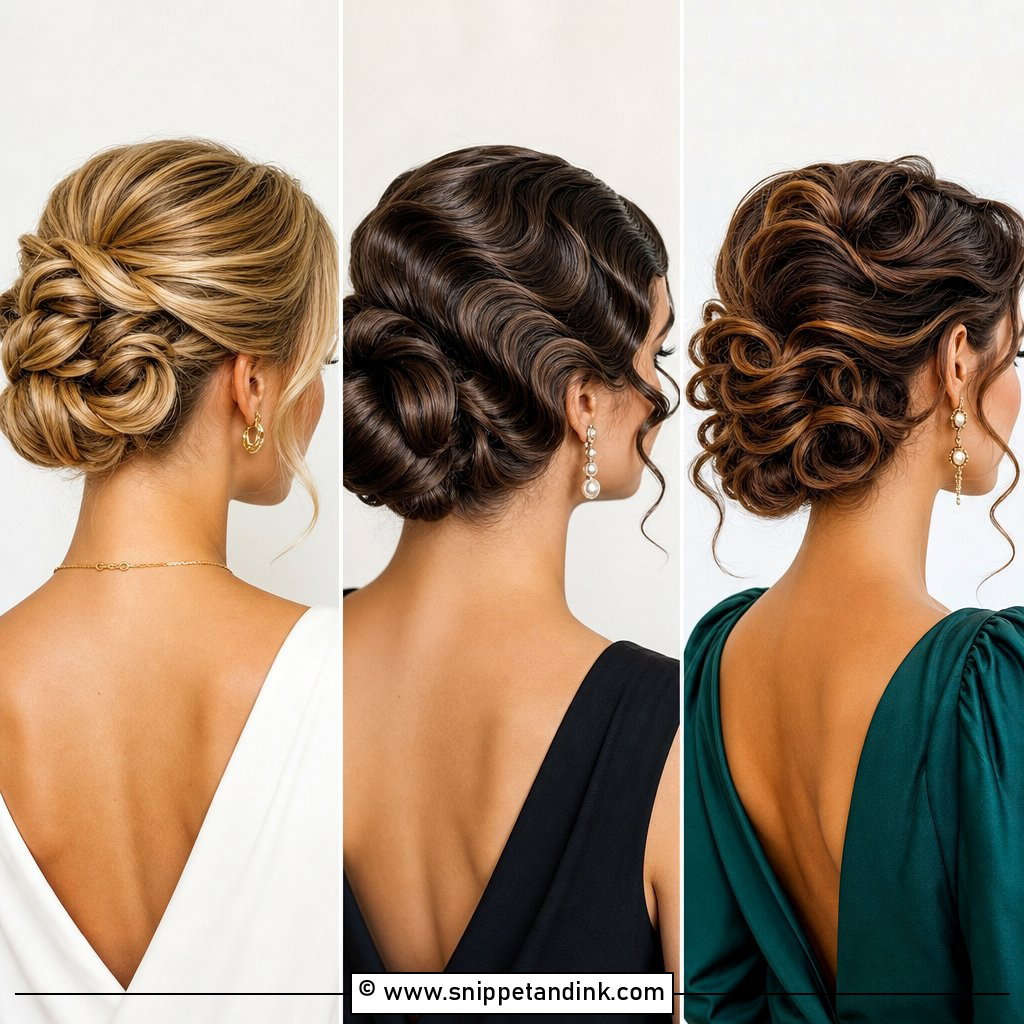
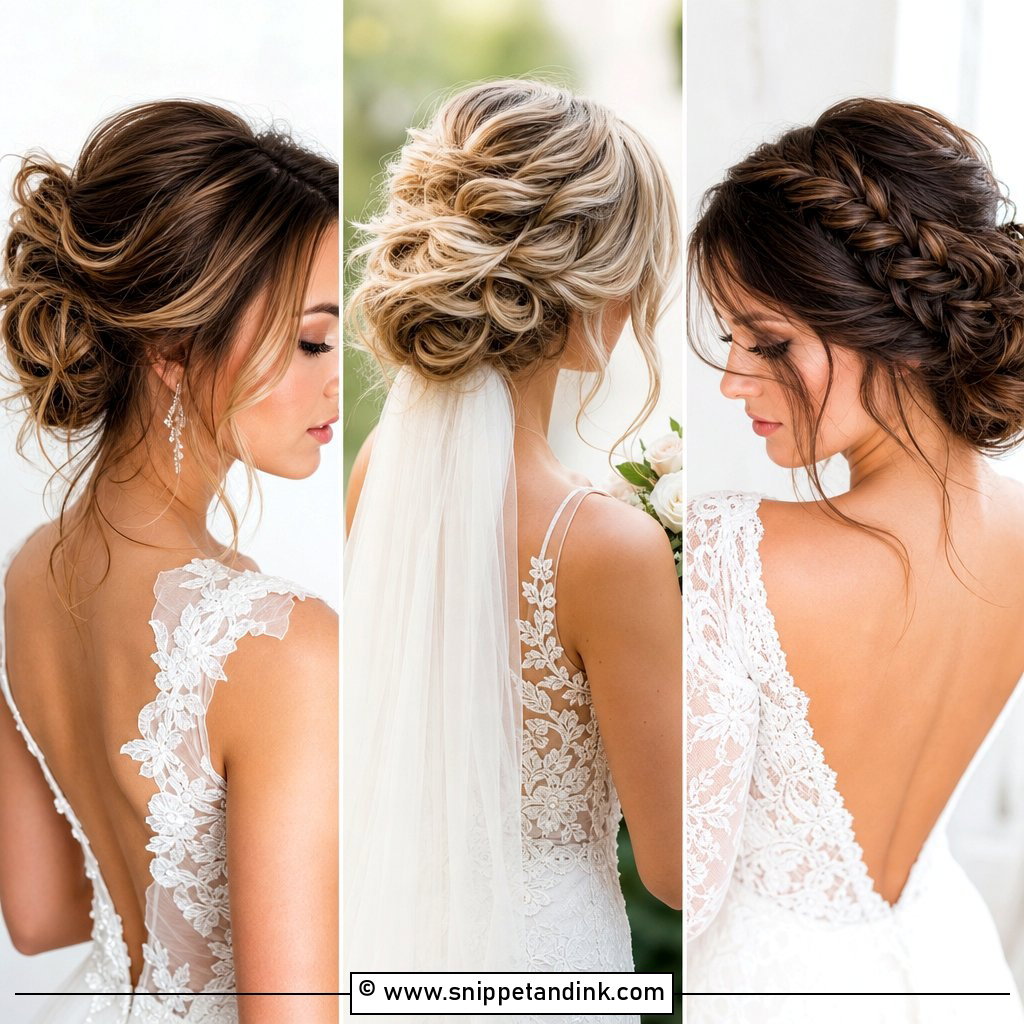
20. Wrapped Bun With Veil Below
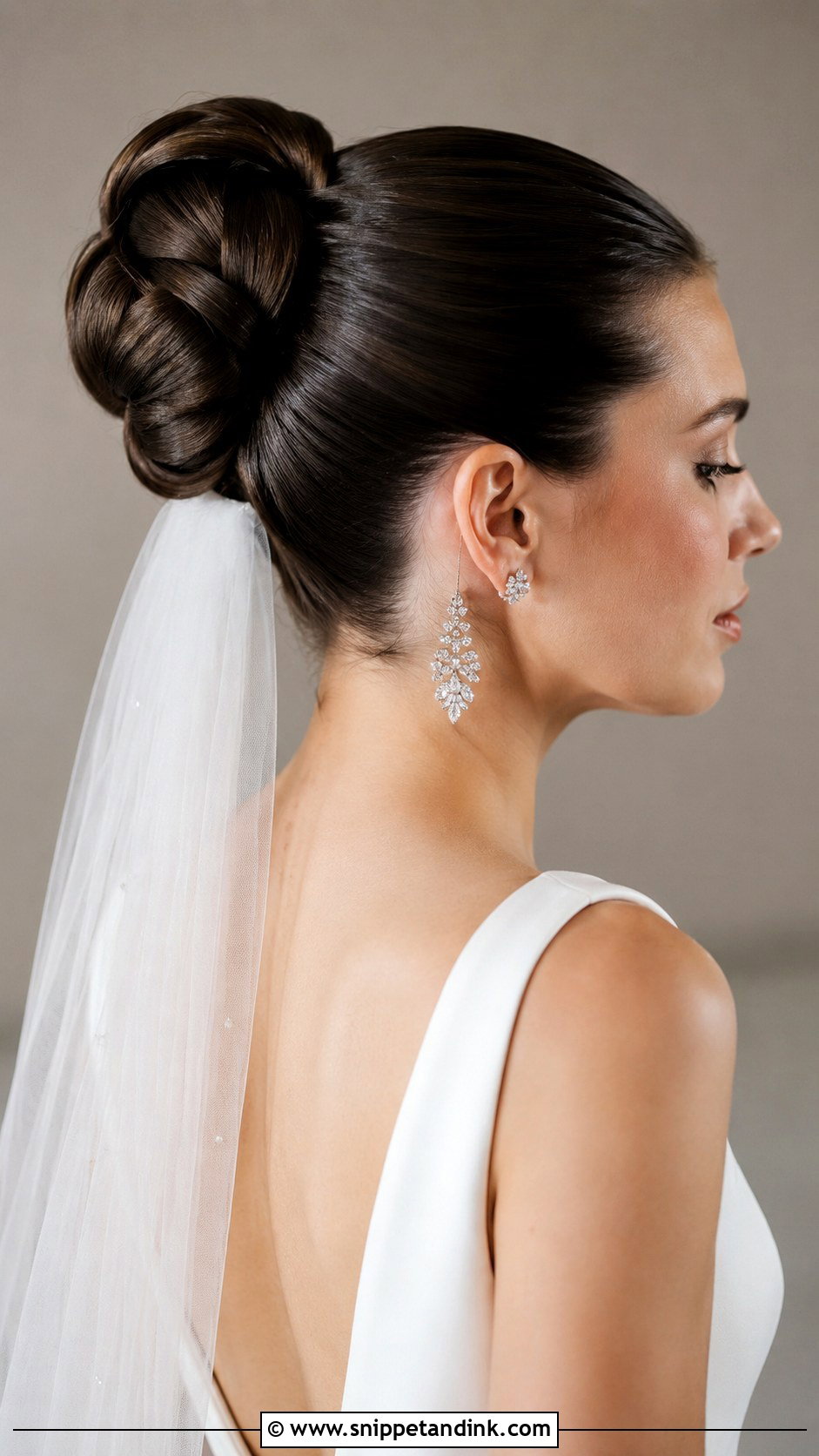
A wrapped bun coils the hair into a smooth, sculptural knot, and the veil tucks beneath it to keep the wrapping visible. Minimalist gowns and statement jewellery suit it. Long hair wraps easily; shoulder-length hair can still work with a small bun filler hidden inside. Smooth every strand for a glossy, editorial finish. It’s simple, but simplicity on the head shows every flaw, so I take my time on the wrap.
21. Twisted Low Bun With Veil Under
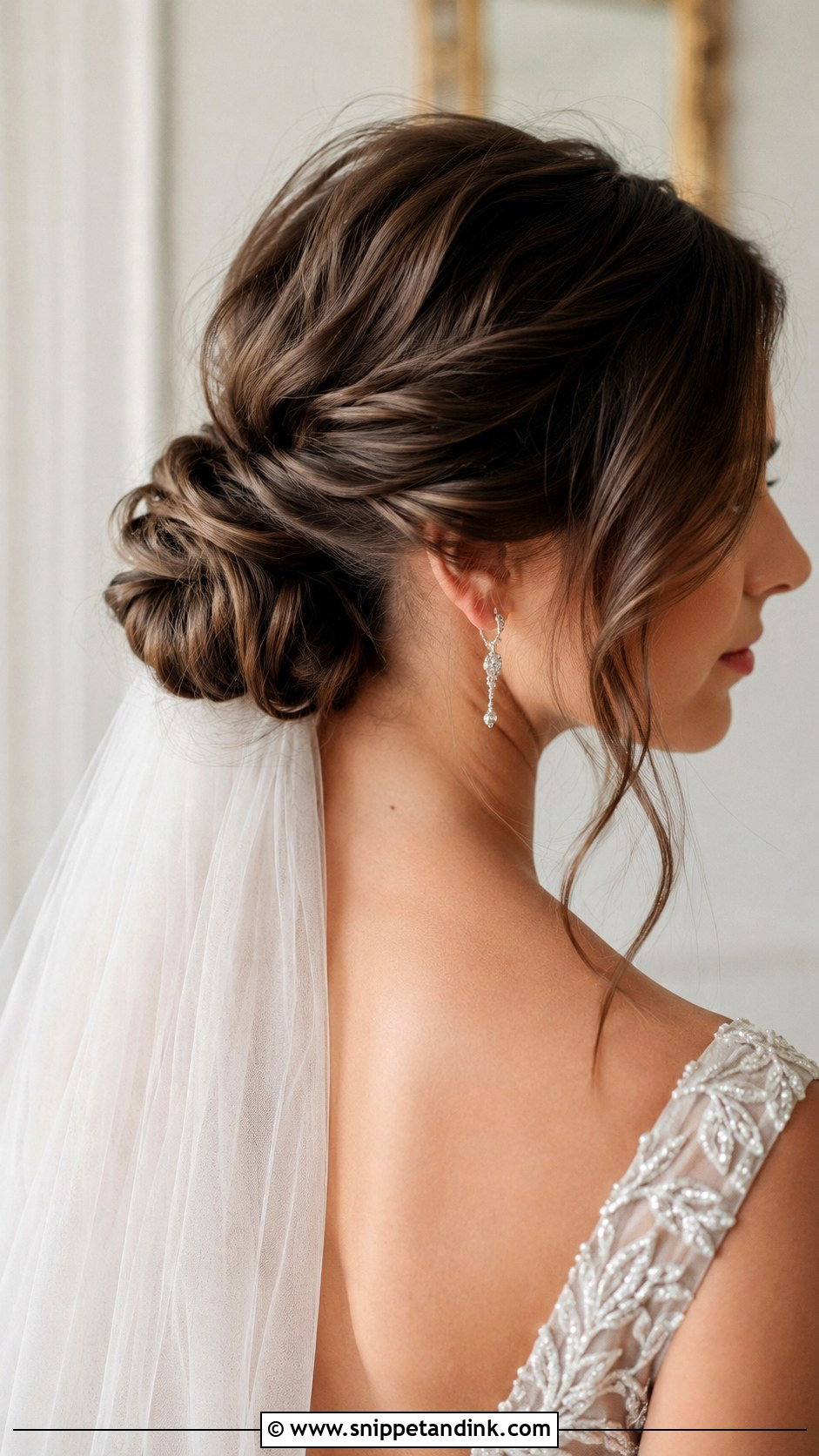
Soft twists from the sides lead into a low bun at the nape, adding texture as they gather in. The veil tucks underneath to keep the twists visible. Medium to long hair works, and it suits many wedding themes. I twist each side toward the back and pin the ends into the bun before shaping it, so the twists stay tight even as the bun is built. Leave a few loose pieces at the face.
22. Voluminous Updo With Veil Below
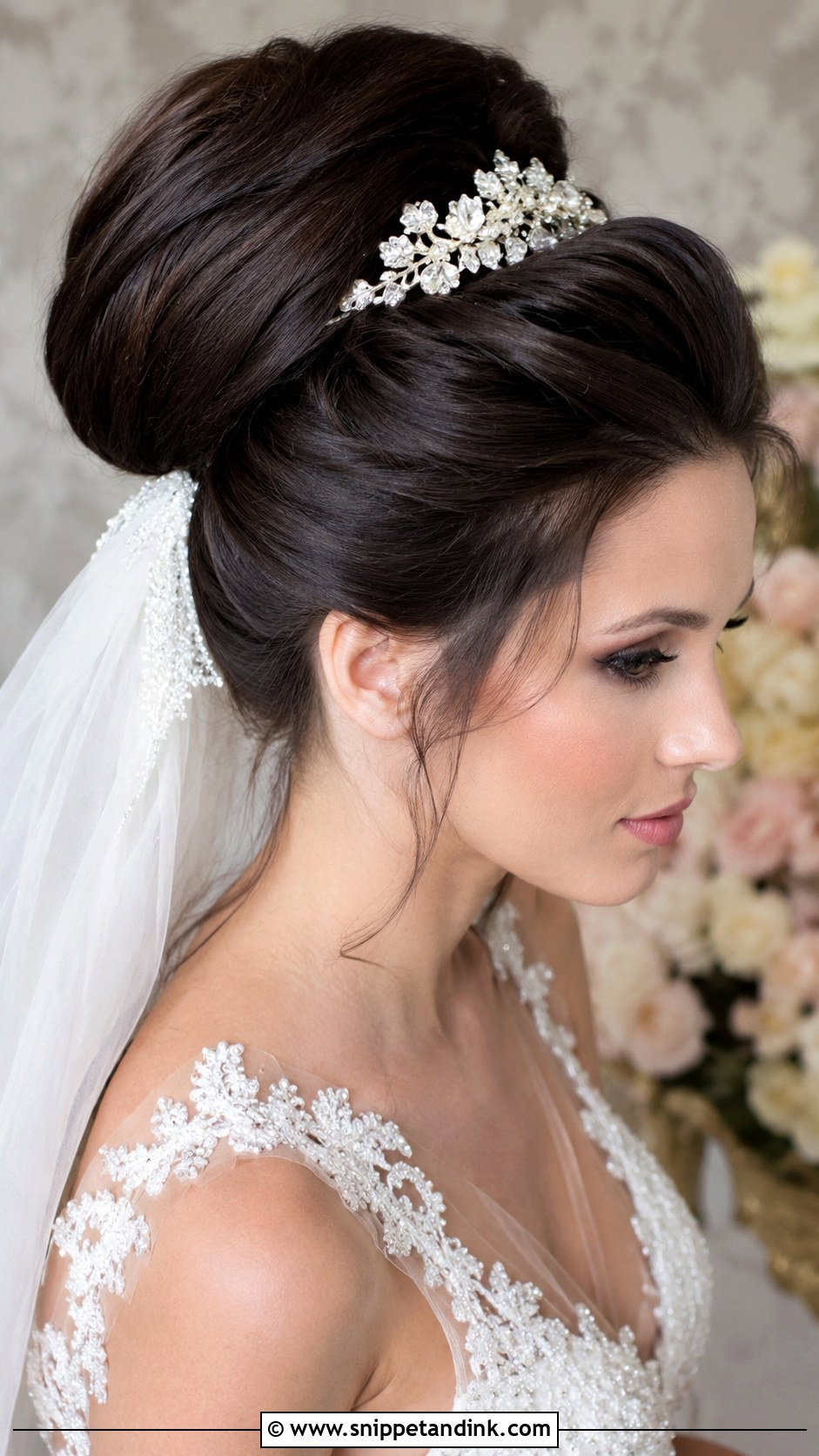
Height and fullness give a voluminous updo its drama, which suits formal weddings and ballgowns. Tucking the veil beneath keeps the attention on the shape of the hair, with the tulle balancing the volume from below. I tease the crown in small sections and smooth the surface for polish. Volume this big needs a firm base underneath, so I build it on a secured ponytail and pin the veil into that, not into the teased hair. A sparkling accessory can add glamour.
23. Knotted Updo With Veil Underneath
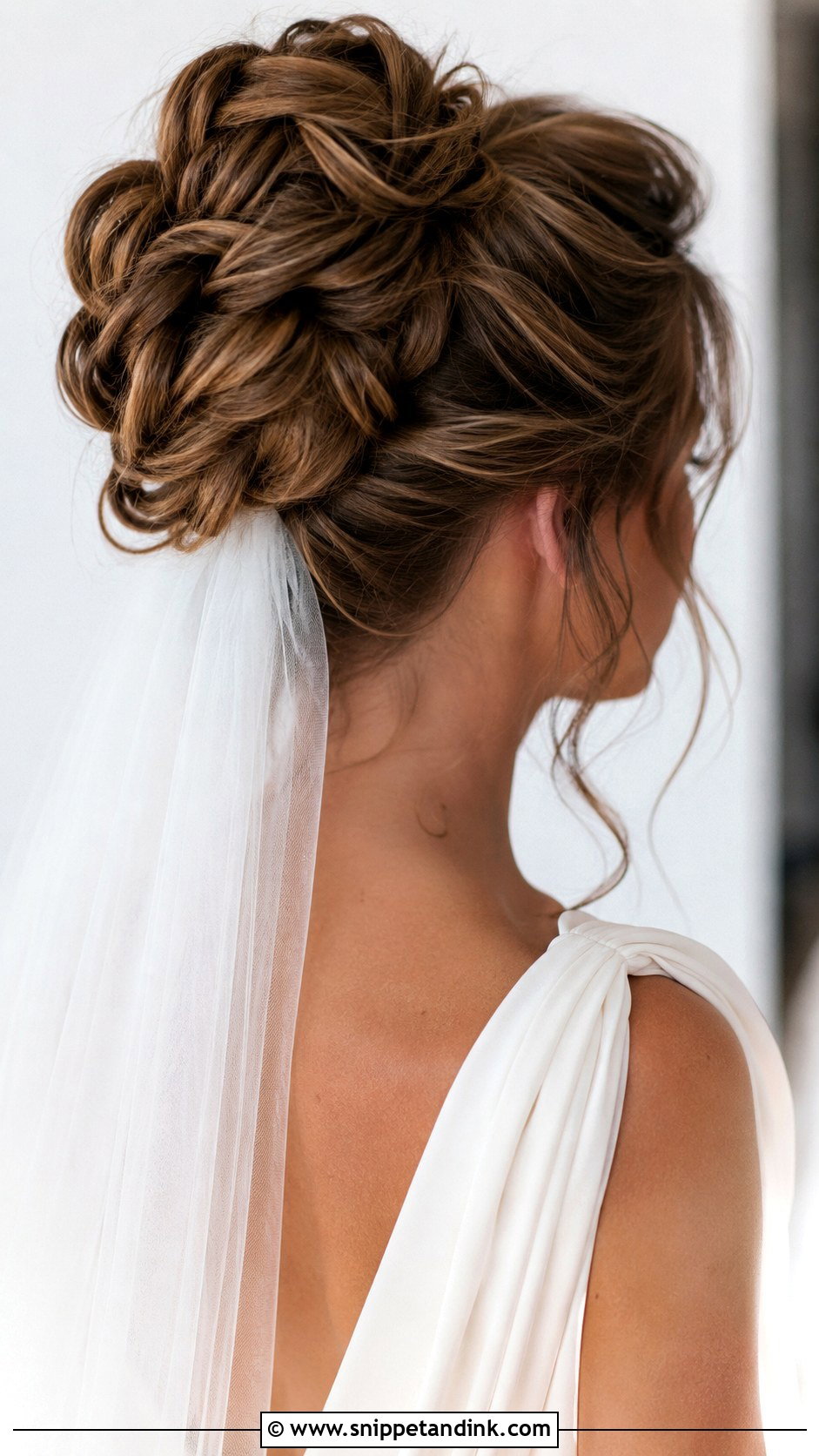
A knotted updo ties sections of hair into knots and weaves them into a textured, sculptural shape. It’s modern and creative, and the veil placed beneath lets the knotwork show. Medium to long hair works. Each knot is pinned individually, so the shape holds well, but it takes longer in the chair than a simple bun. Pull a few pieces around the face for balance and finish with light hairspray.
24. Soft Waves Updo With Veil Below
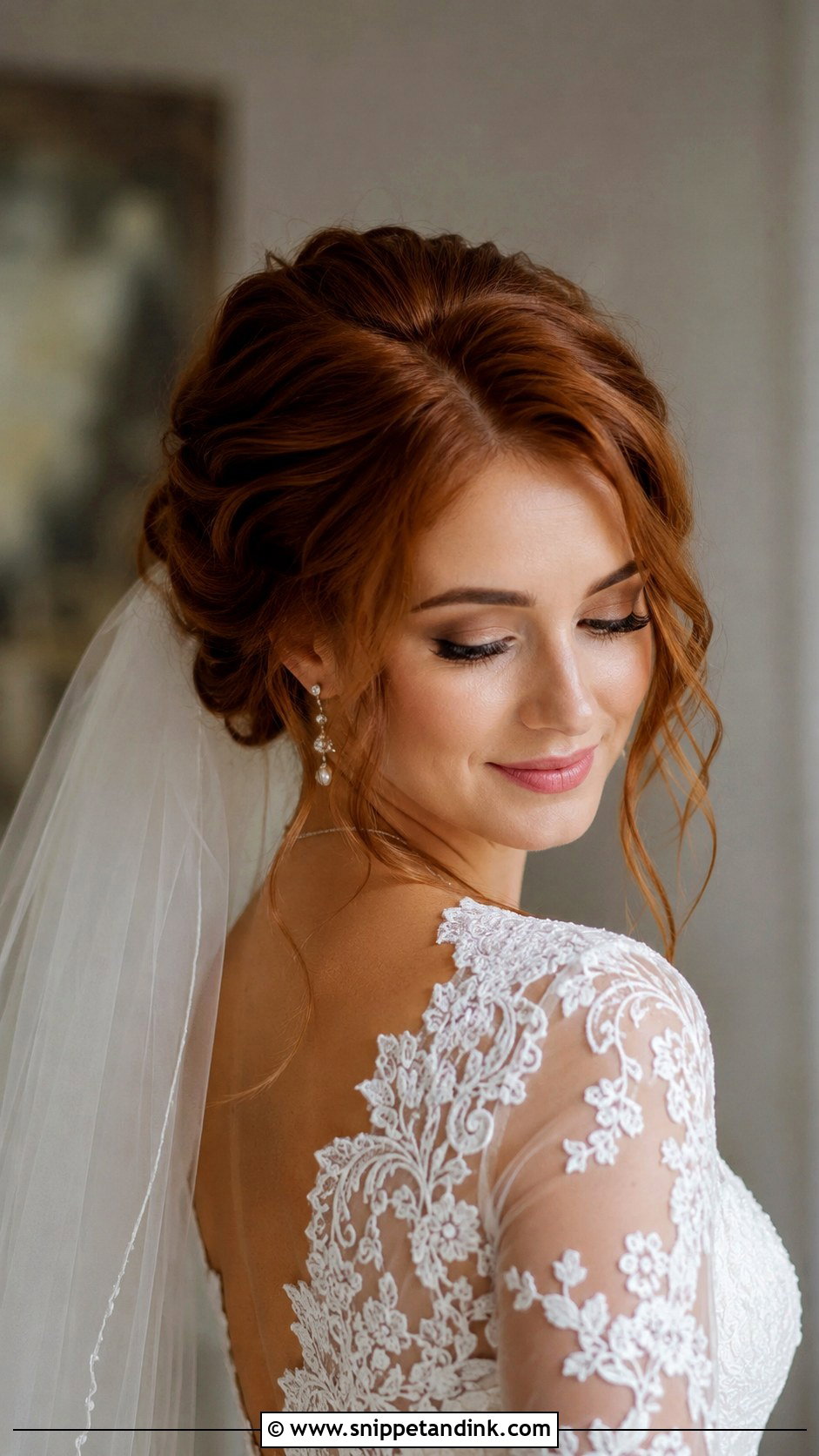
Soft pinned waves in a relaxed, flowing shape, with the veil tucked underneath, make this a gentle look for lace and flowing gowns. Wavy tendrils frame the face. The waves are set with a curling iron and cooled before pinning, which keeps the texture from falling flat. A light spray holds the shape while keeping it soft.
25. Elegant Updo With Birdcage Veil Under
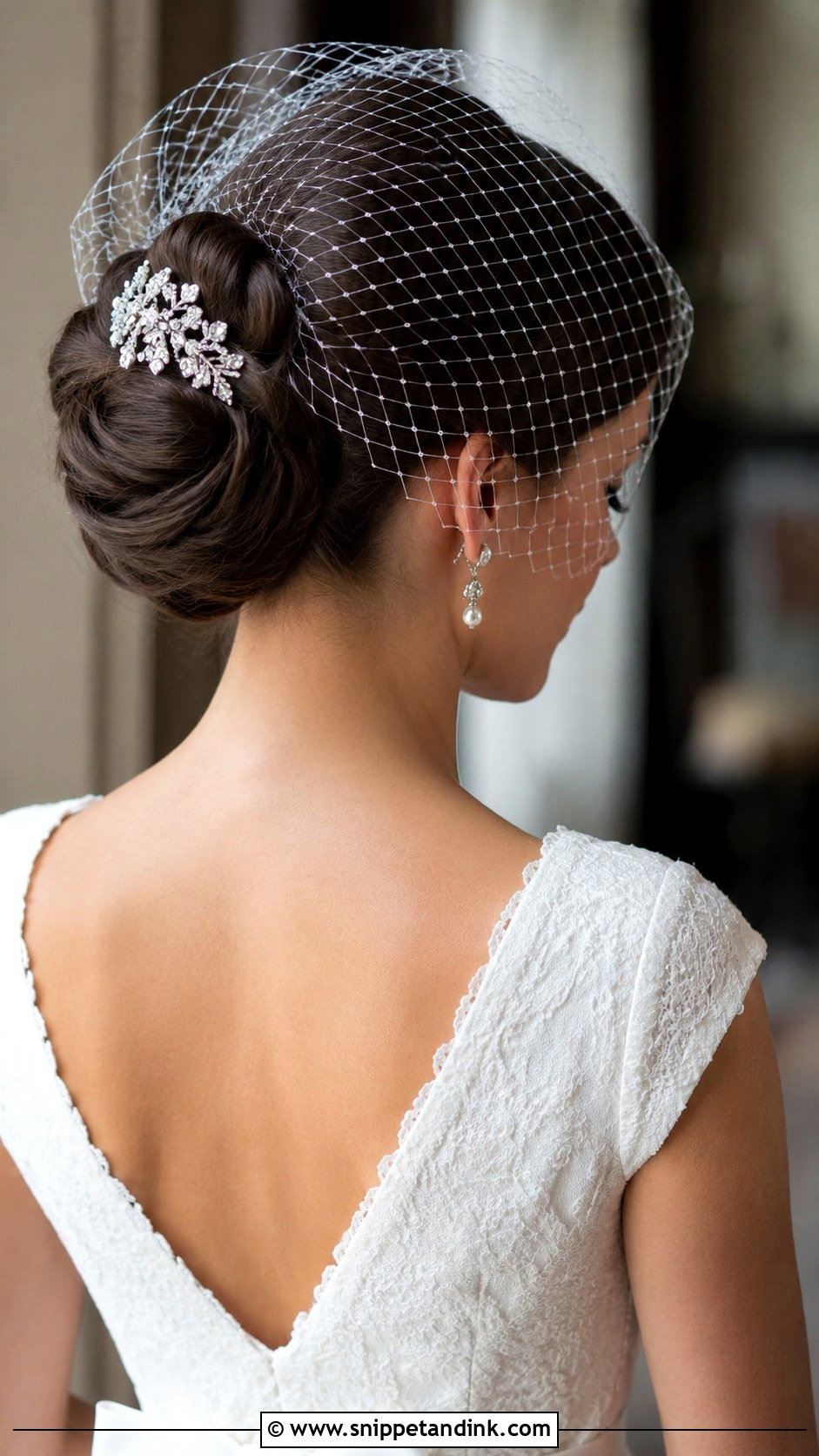
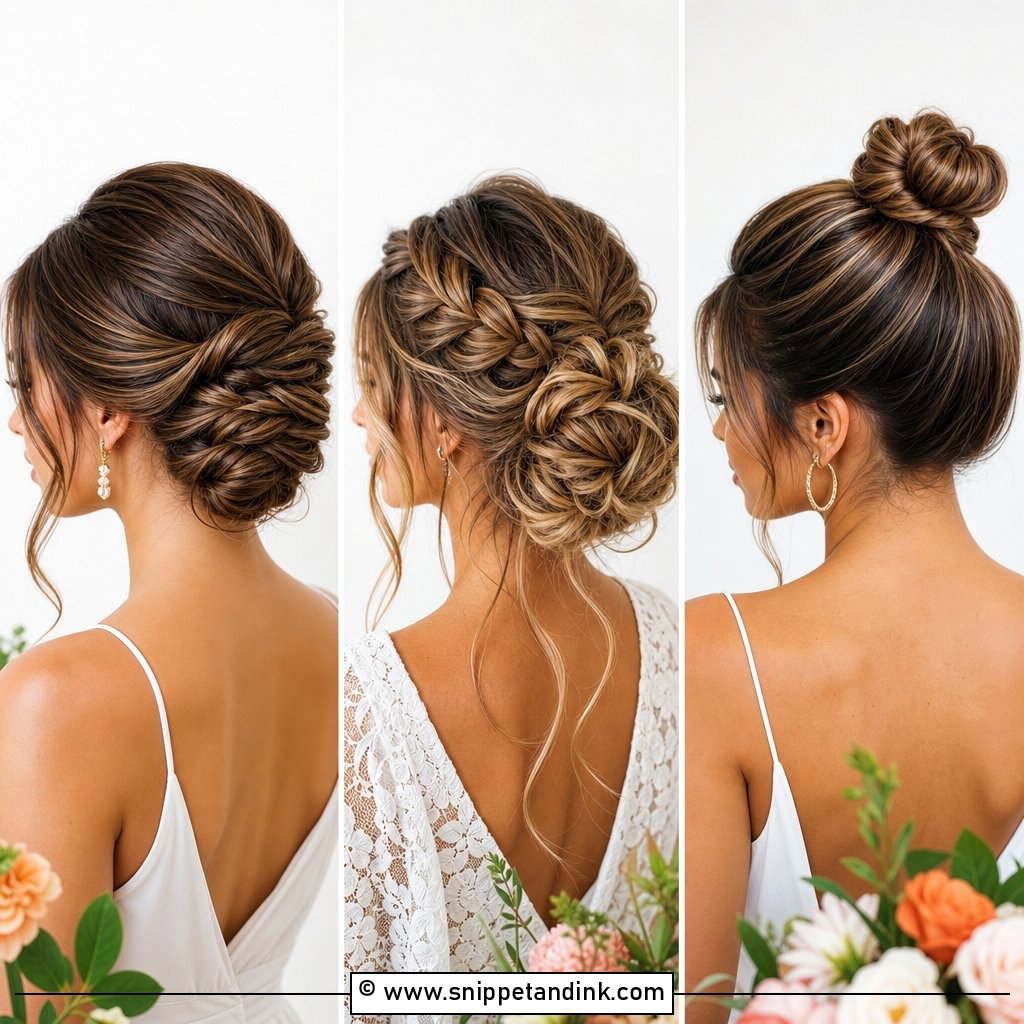
A short birdcage veil tucked beneath or just behind the updo brings retro character to a polished style. It suits old Hollywood or vintage themes and tea-length gowns. The netting is light, so the comb doesn’t need much anchoring, but it does need to sit at the right angle to frame the face. A sparkling brooch placed near the veil adds glamour. I pin the birdcage on the side with more hair so the pins stay hidden.
Sitting, Turning and Hugging With a Veil at the Nape
A veil at the nape behaves differently once you start moving. It hangs from the base of the skull, so anything that pulls on the tulle pulls on the bun. Most problems I fix during the day come from small, ordinary movements.
- Before you sit, gather the veil to one side or ask someone to lift it. Sitting on a long veil yanks the comb backward.
- Turn your whole head and shoulders when someone calls you, not just your head, especially with a cathedral veil trailing behind.
- Hug people from the side for the first hour or so. Arms around the neck catch the veil right at the comb.
- Watch high-collared and beaded gowns. The veil rubs against the back of the neckline, and beading can snag the tulle.
If the veil does slip, don’t push the comb back in yourself. Pull it out completely and have someone re-anchor it into the teased pocket. A half-reinserted comb sits crooked and keeps working loose.
A Nape-Placed Veil Lets the Back of Your Hair Do the Talking
An under-placed veil keeps the hair in full view, from sleek low chignons to braided crowns. The placement suits almost any wedding style. Ask your stylist for a smaller comb and a teased pocket beneath the bun for a secure, comfortable fit. Do a trial with the actual veil so you know how it sits and how it feels when you turn your head. Once it’s right, it stays put through the ceremony and slides out easily when you’re ready to change for the evening.
You'll Like These Ideas:


Leave a Reply