
More brides end up in a bun than in any other wedding style, and I think that’s because a bun solves problems. It holds a veil, survives a hug from every aunt, keeps hair off a sweaty neck in July and still looks right in the last photo of the night. The range is wider than people expect: a sleek low knot, a soft undone twist, a braided coil, a high top knot, a bun dressed in pearls or fresh flowers. Every hair length and texture can wear one, from a ballroom to a beach. Below are 35 bun styles I’d put a bride in, with notes on what each one needs from your hair and where it can let you down.
Where on Your Head the Bun Should Sit
The shape of the bun gets all the attention, but its height on the head changes the look more. Before I choose a style with a bride, I decide where it will sit, using three things.
The veil or headpiece
A long veil sits best with a low or mid bun, the comb tucked just above or below it. A tiara wants a bun that leaves room at the crown. A birdcage veil or hat needs the bun set further back so the comb can sit on the side.
The neckline and the back of the dress
High necks and halters look cleaner with a mid or high bun that clears the collar. A low back is shown off best by a bun sitting high enough not to touch it. Off-the-shoulder and sweetheart necklines suit almost any placement.
Your profile
Guests see you from the side for most of the ceremony. I check every bun in a hand mirror from the side before deciding. A bun that sits in line with the chin usually looks balanced; one far above or below can look like an afterthought in profile.
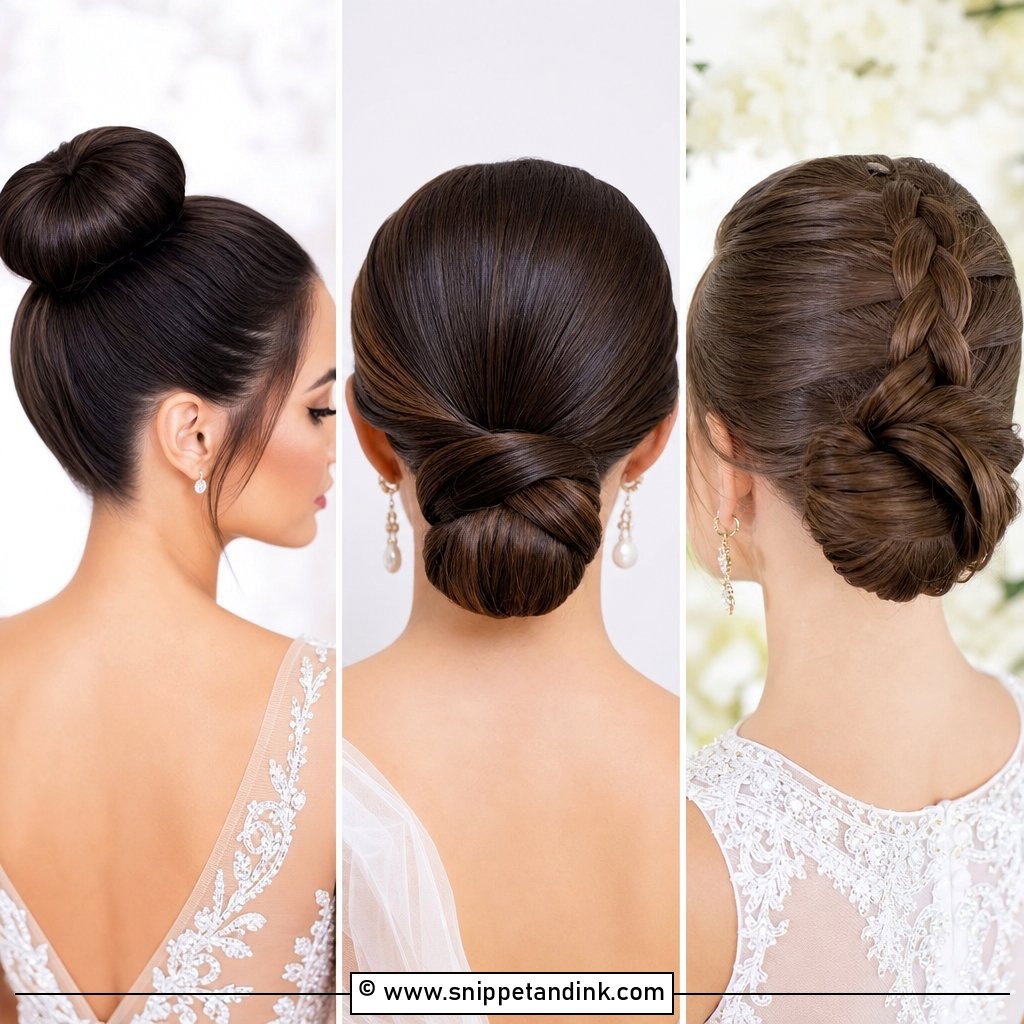
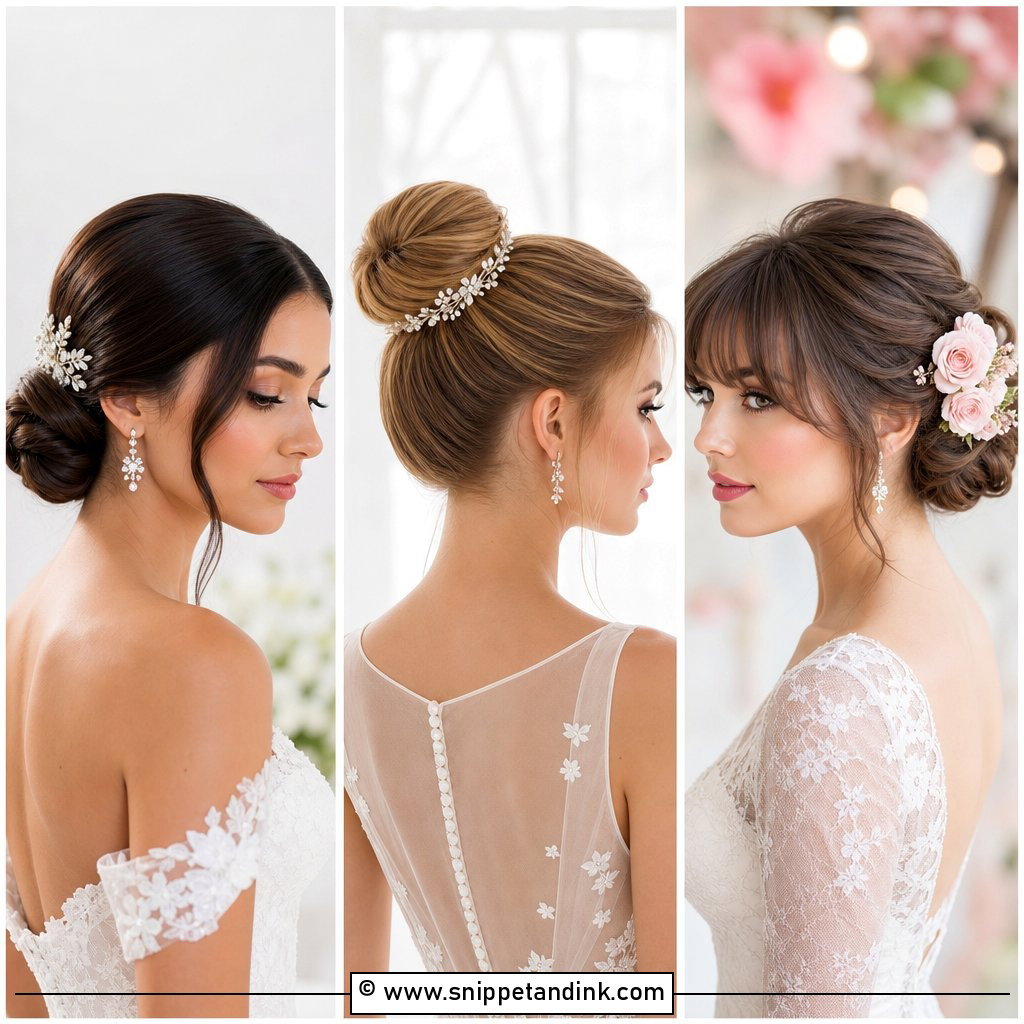
1. Sleek Low Bun for Wedding
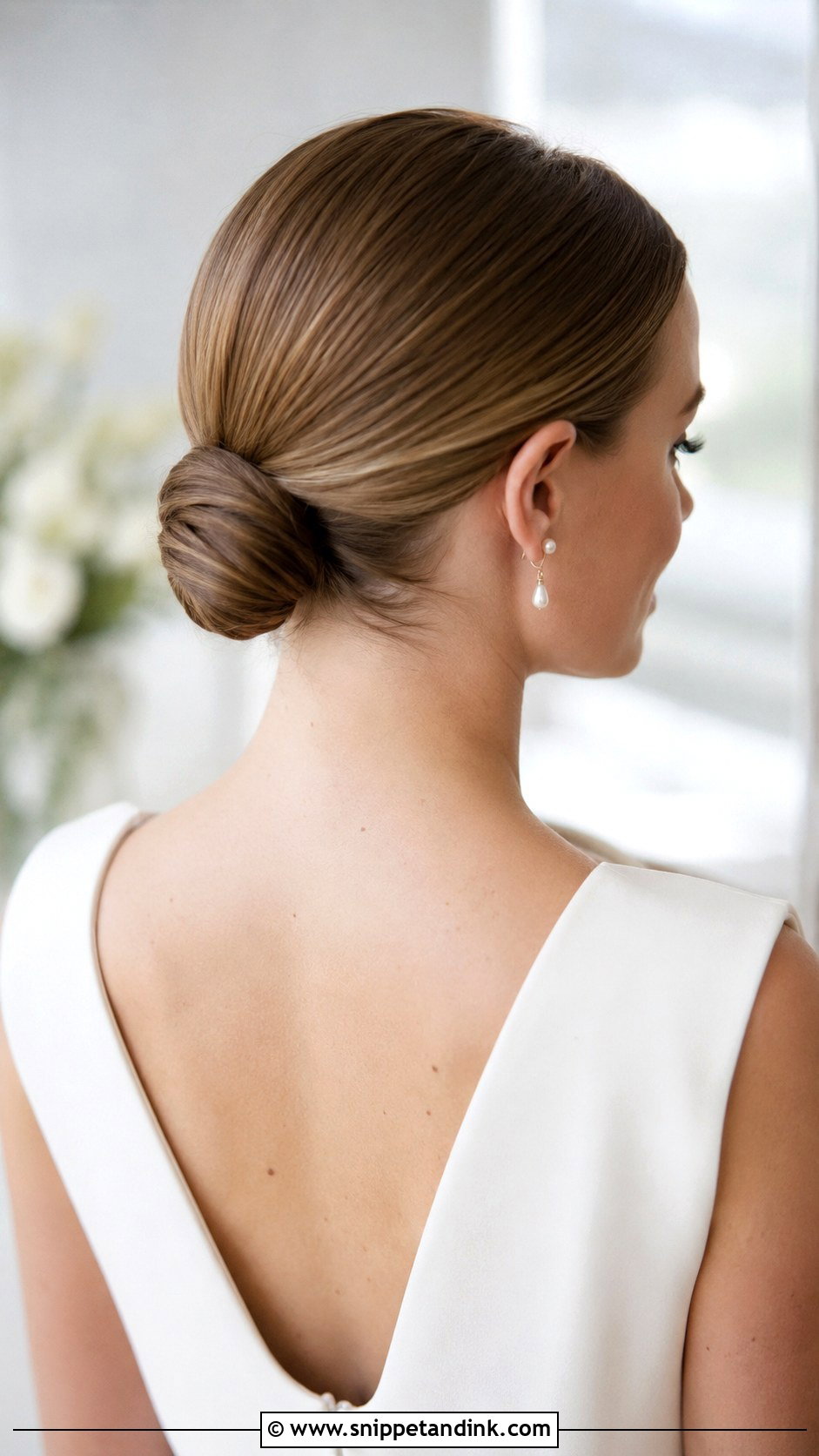
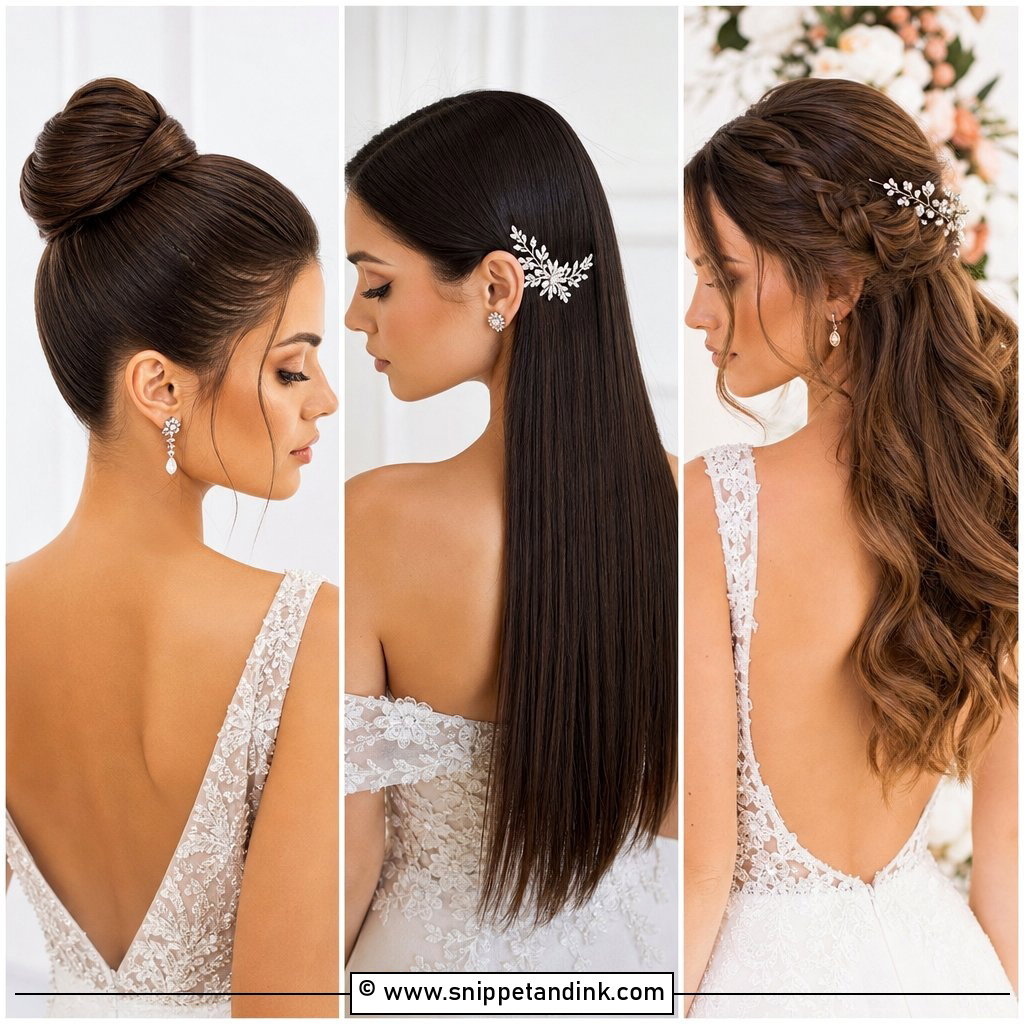
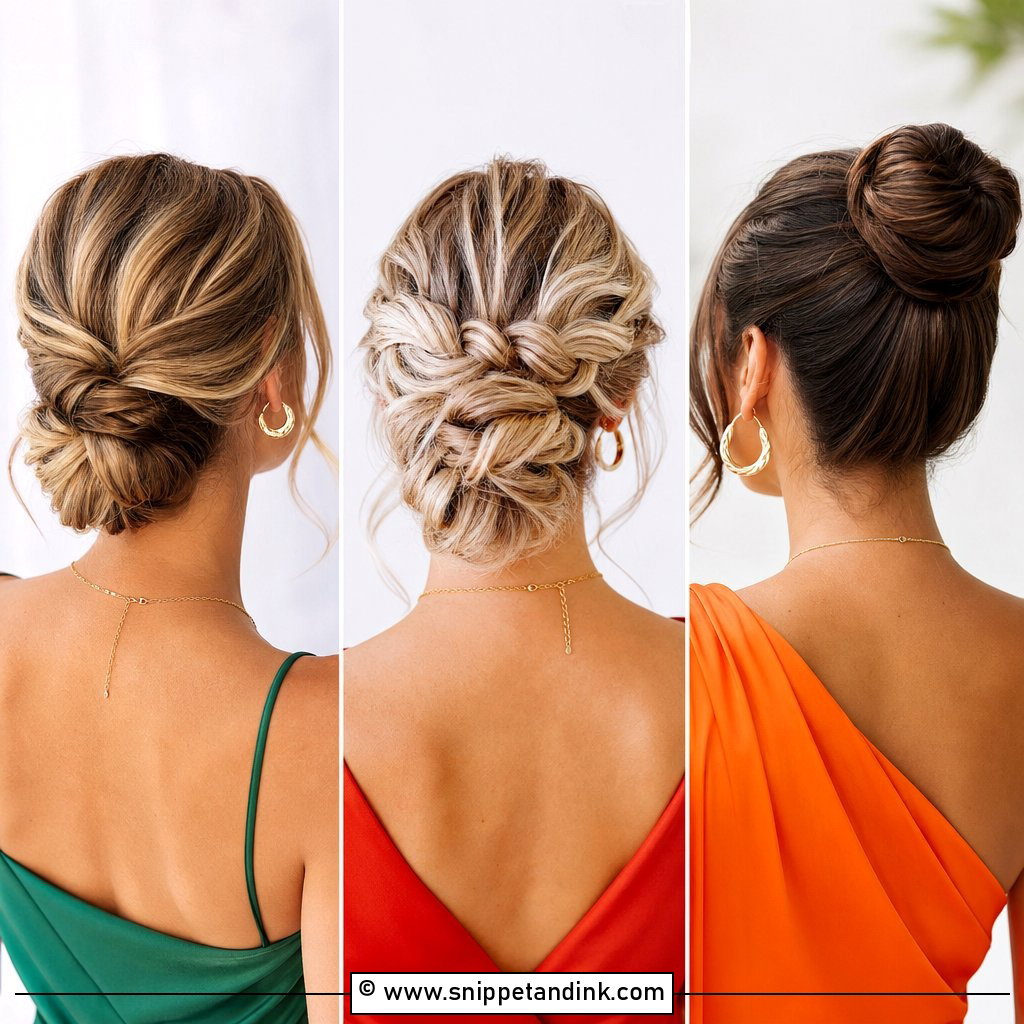
Smoothed back and knotted right at the nape, the sleek low bun is about clean lines and nothing else. It suits structured gowns and minimal jewelry, and it won’t look dated in your photos twenty years from now. Getting it truly smooth takes more care than it looks: I work a little cream through, brush with a boar-bristle brush, and tie the ponytail before forming the bun so the surface doesn’t ripple. A drop of shine serum finishes it. It flatters most face shapes, and once it’s pinned you can forget about it.
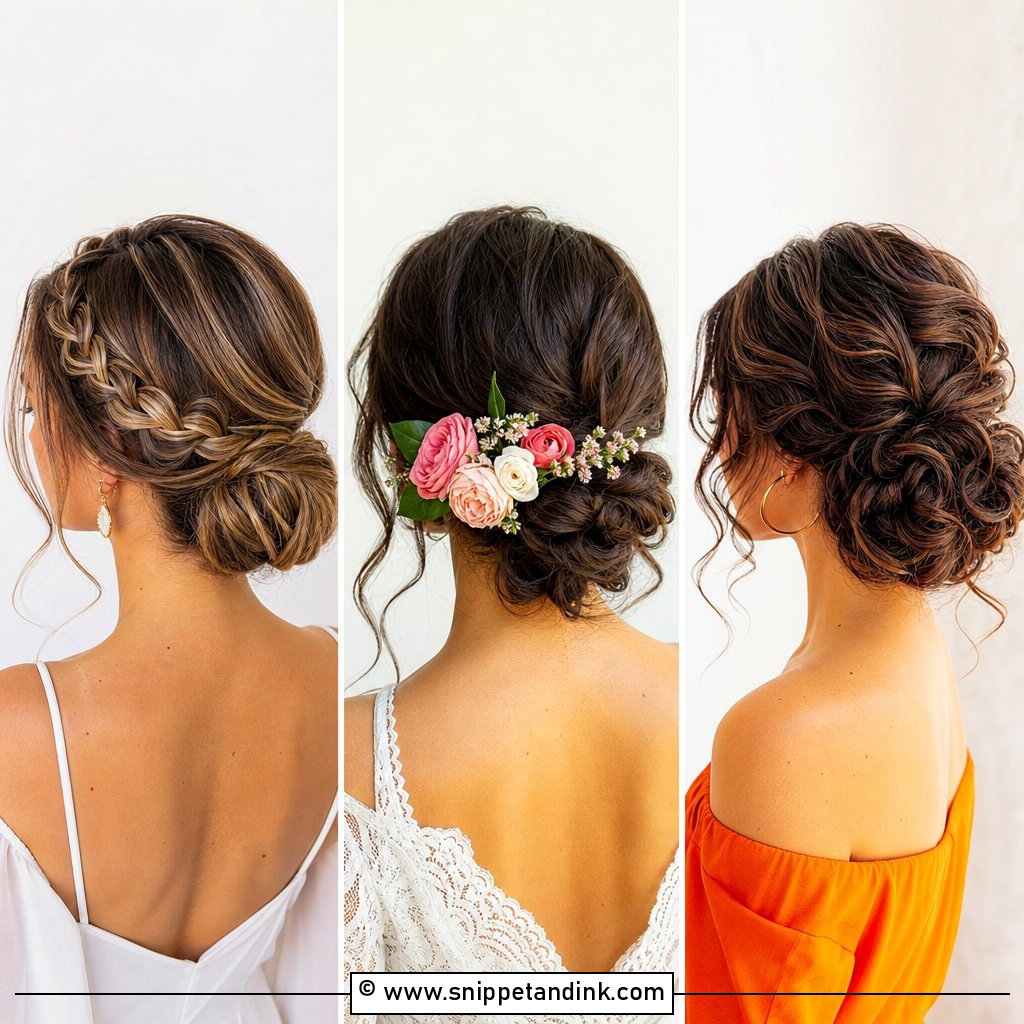
2. Messy Low Bun for Bride
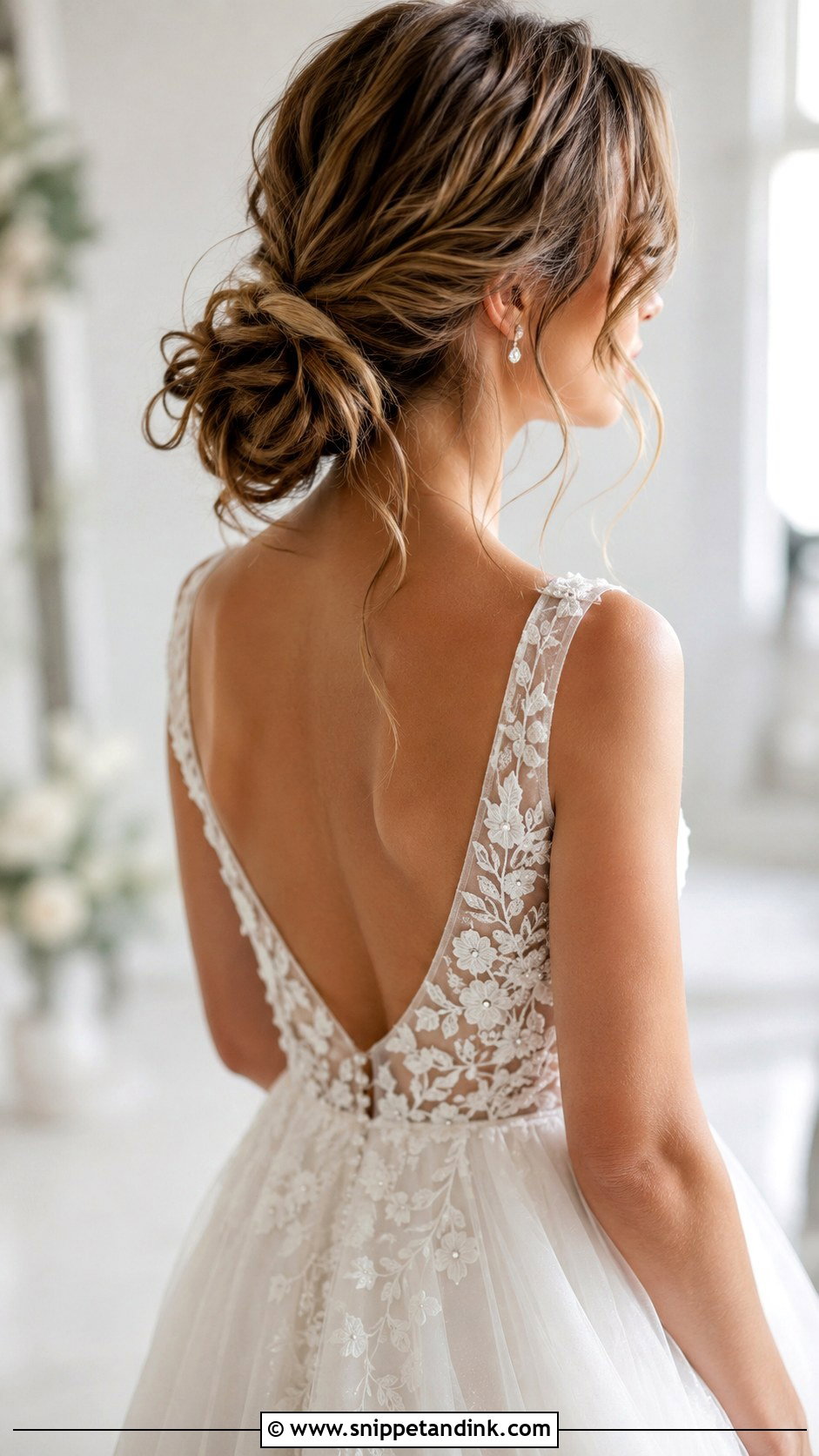
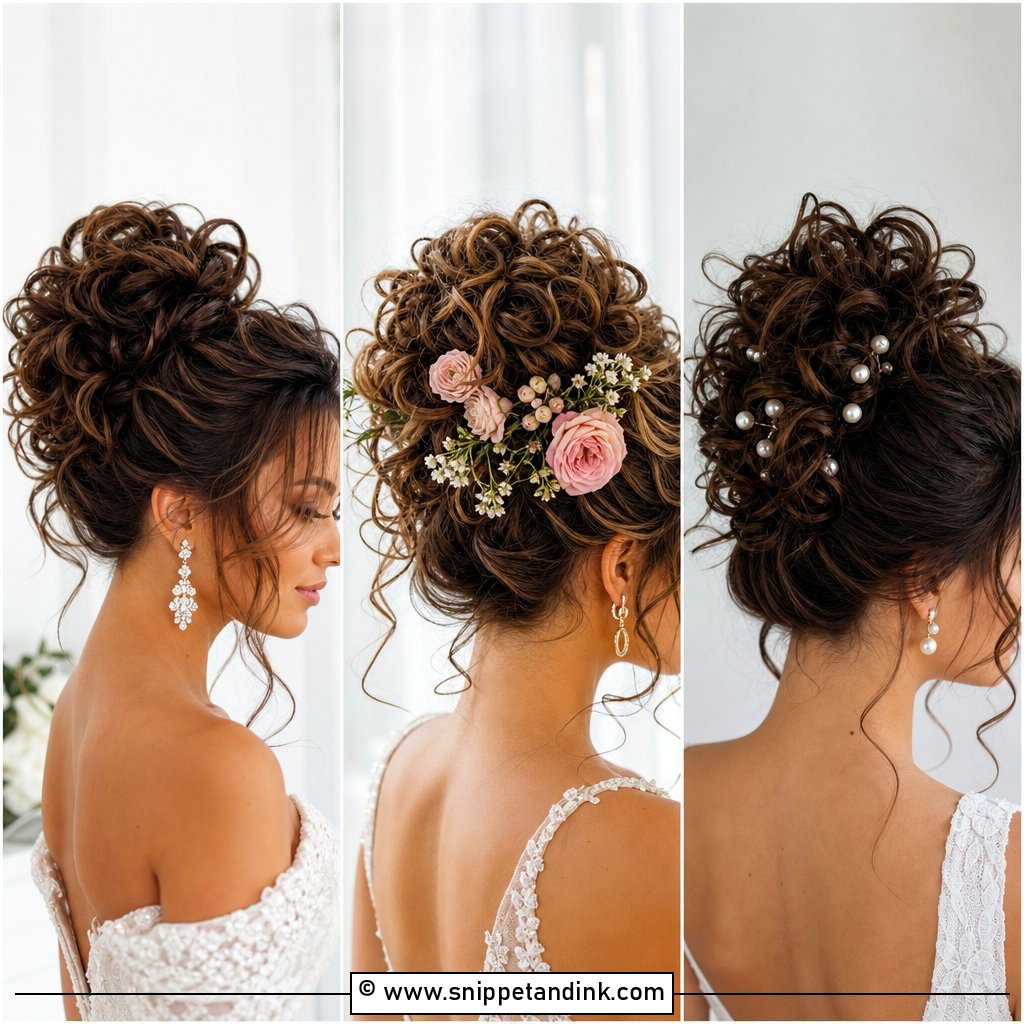
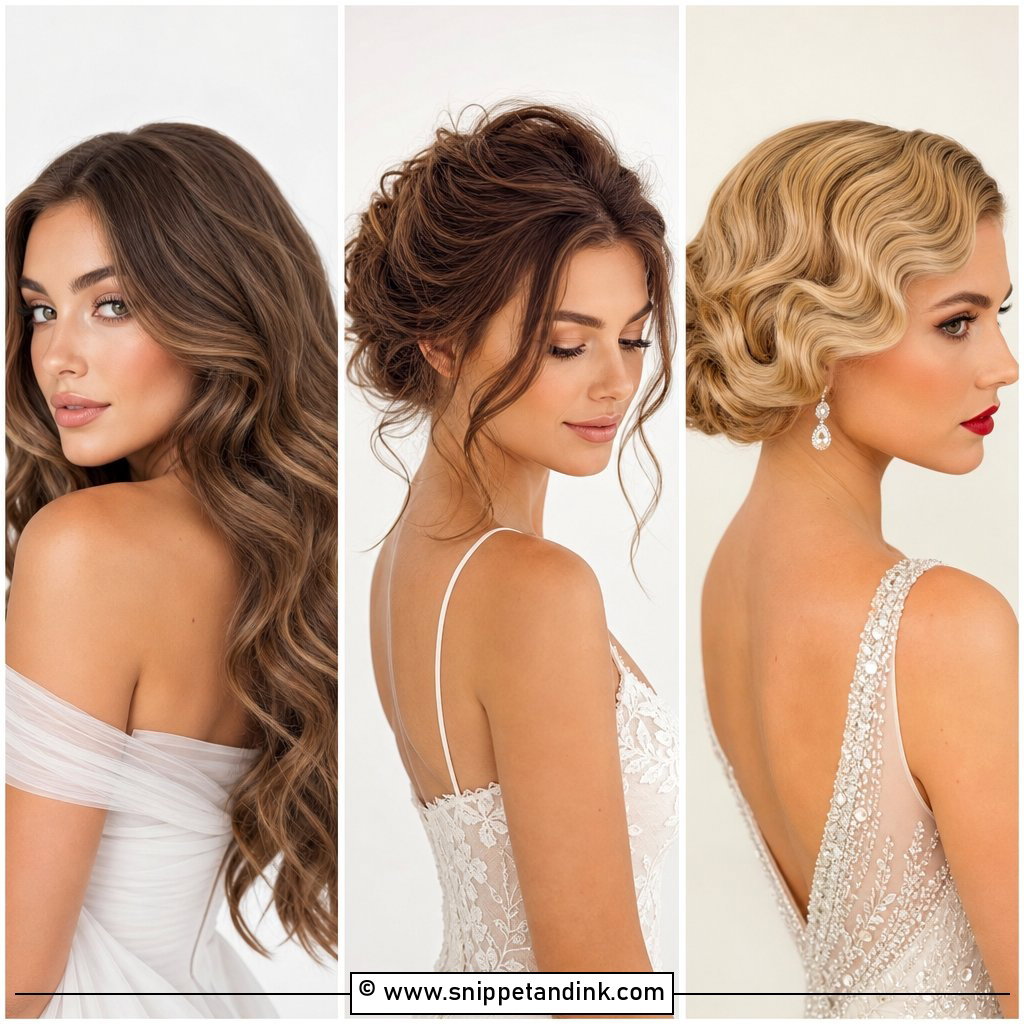
Low, loose and a little imperfect, the messy bun is the relaxed choice for boho brides and outdoor ceremonies. Waves or curls are worked into the knot for texture, and a few pieces are left out to frame the face. Don’t chase perfection here. The trick is that “messy” still needs a firm base: I secure a ponytail or a hidden braid first and loosen the hair over the top, otherwise the whole shape slips by the reception. Delicate florals or a simple veil suit it, and it looks as good after dancing as during the vows.
3. Braided Bun for Wedding
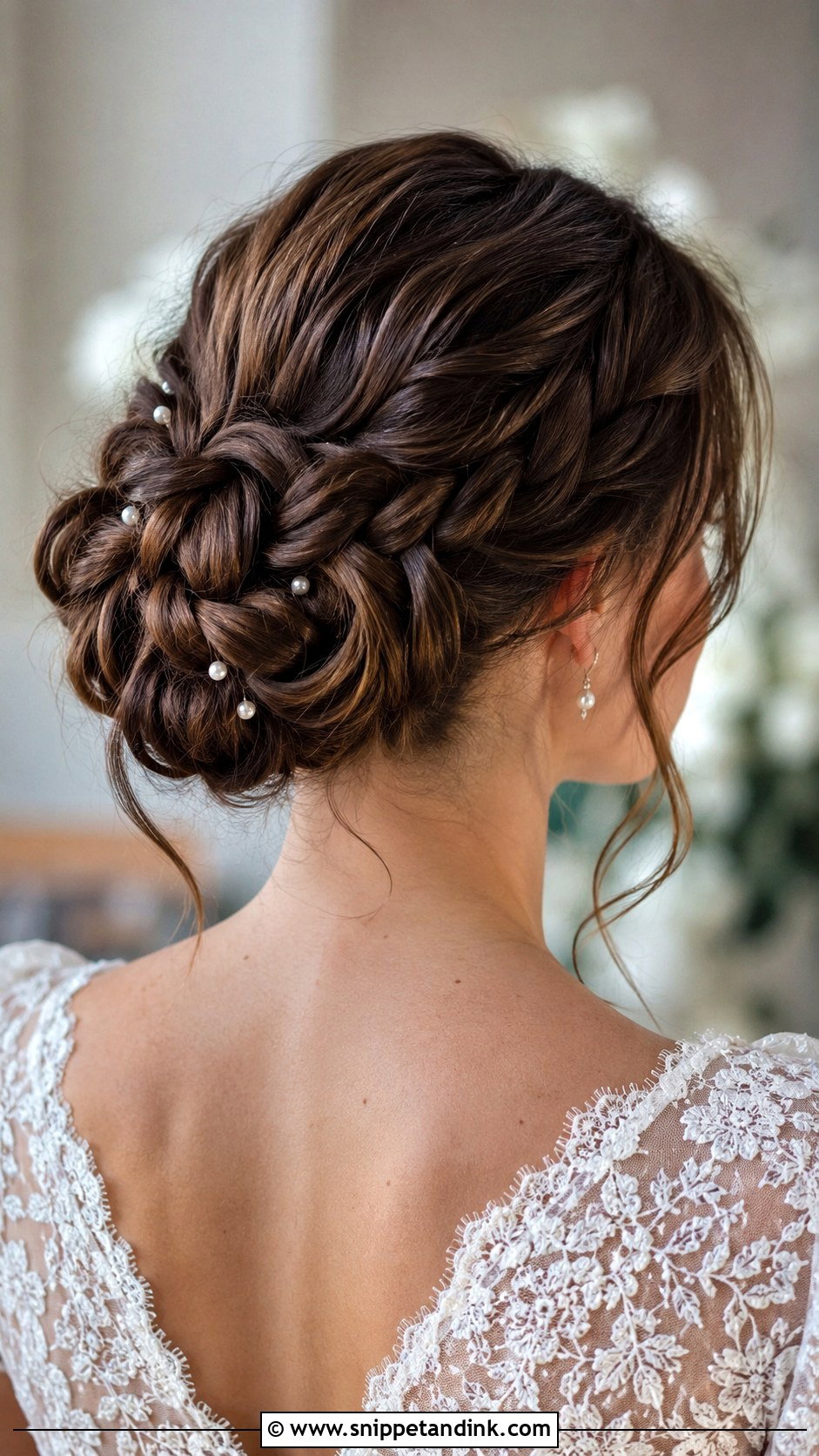
A braided bun gives detail you can see from the back of the church. One thick braid can coil into the bun, or several smaller ones can be woven together. Fine hair looks fuller this way, because each braid can be pulled wider once pinned, and thick hair stays under control. It holds through long days too, since braids grip pins far better than loose sections. Small flowers or pearls can sit between the plaits. It suits a rustic barn as easily as a formal garden.
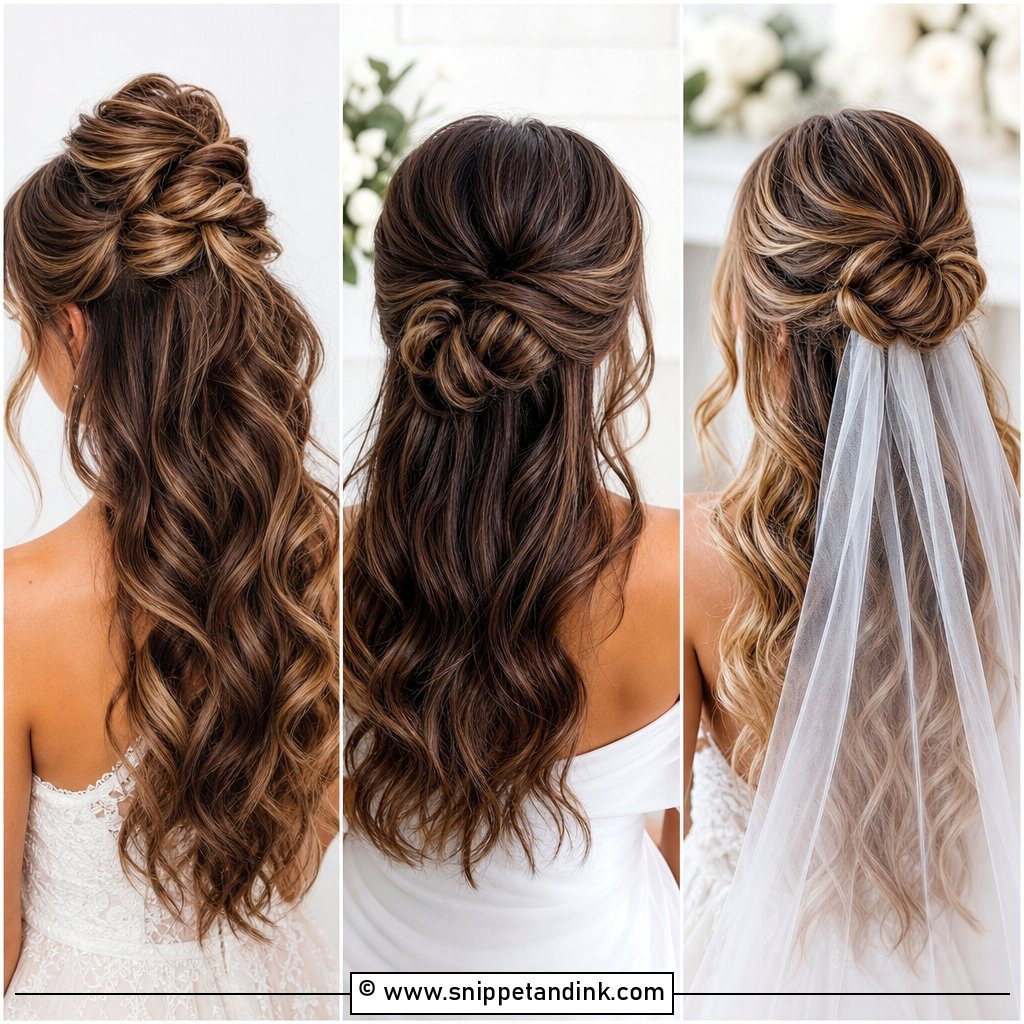
4. Low Bun With Loose Curls
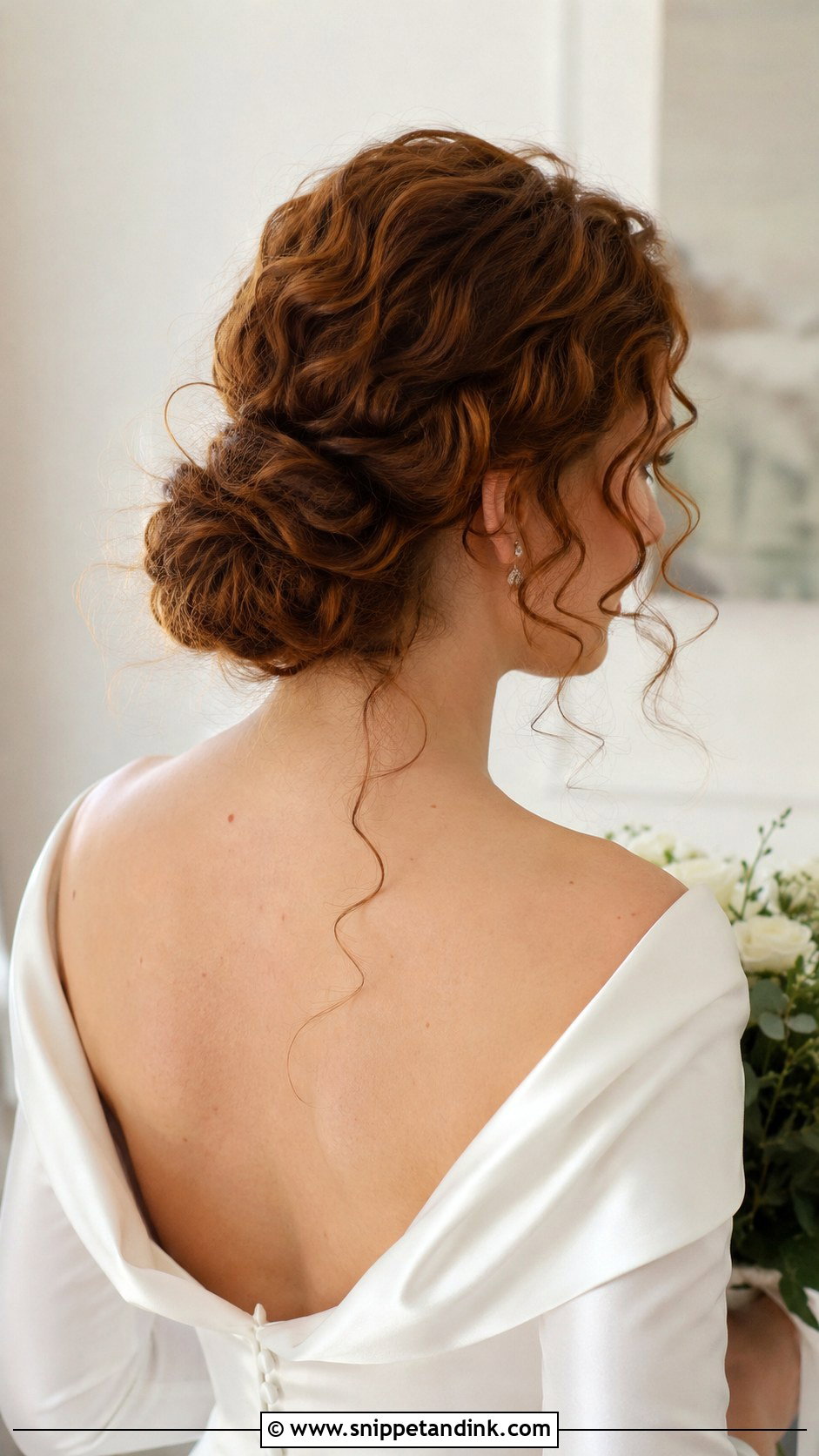
Pairing a low bun with cascading curls around the face gives you softness and movement without losing the security of an updo. The knot anchors everything at the back, while curls frame the cheeks and neck. Those loose curls are the part that drops first, so I curl them a little tighter than the reference photo and let them cool before touching them. Tight curls look defined, loose ones beachy. Fitted and flowing gowns both suit it, and a single bloom near the bun finishes it.
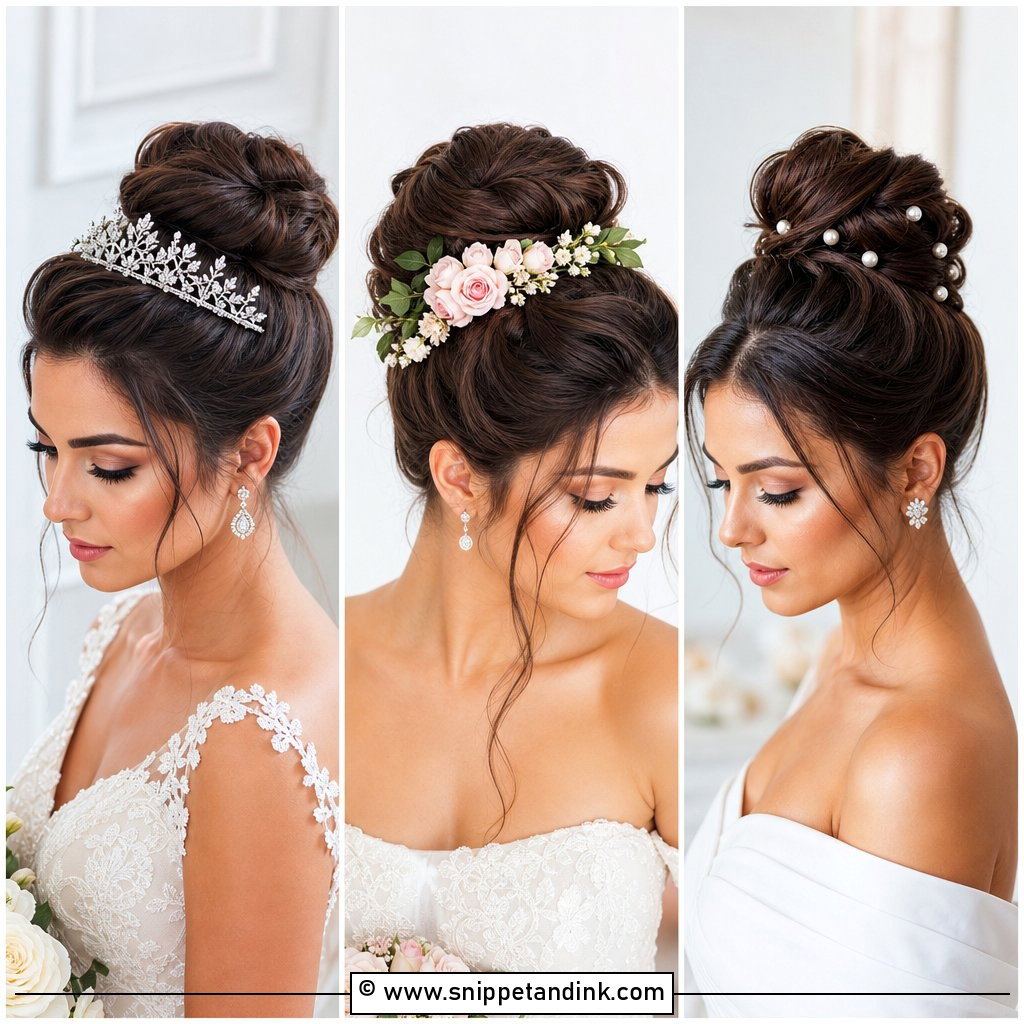
5. High Bun for Wedding
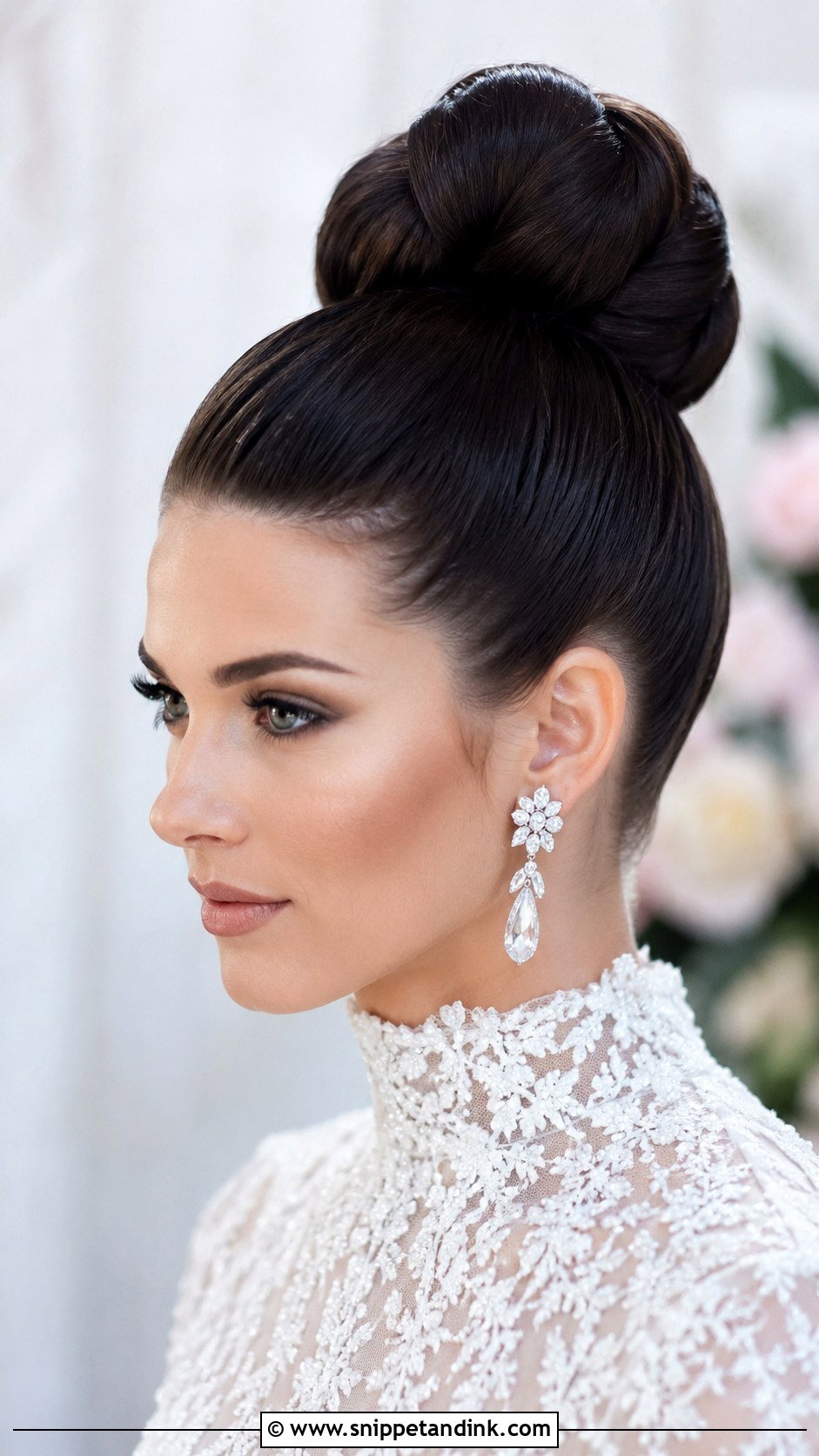
A high bun lifts the whole silhouette. Placed at the crown, it lengthens the neck and shows off statement earrings, which is why I suggest it for dramatic necklines. It also keeps hair completely off your face and neck at a warm ceremony. Sleek looks modern; slightly loosened gives soft volume. If you plan to wear a tiara or jeweled comb, a high bun gives it a natural backstop. Pinned too tight, though, it can ache by the evening, so tell your stylist if your scalp is sensitive.
6. Messy Bun With Face-Framing Tendrils
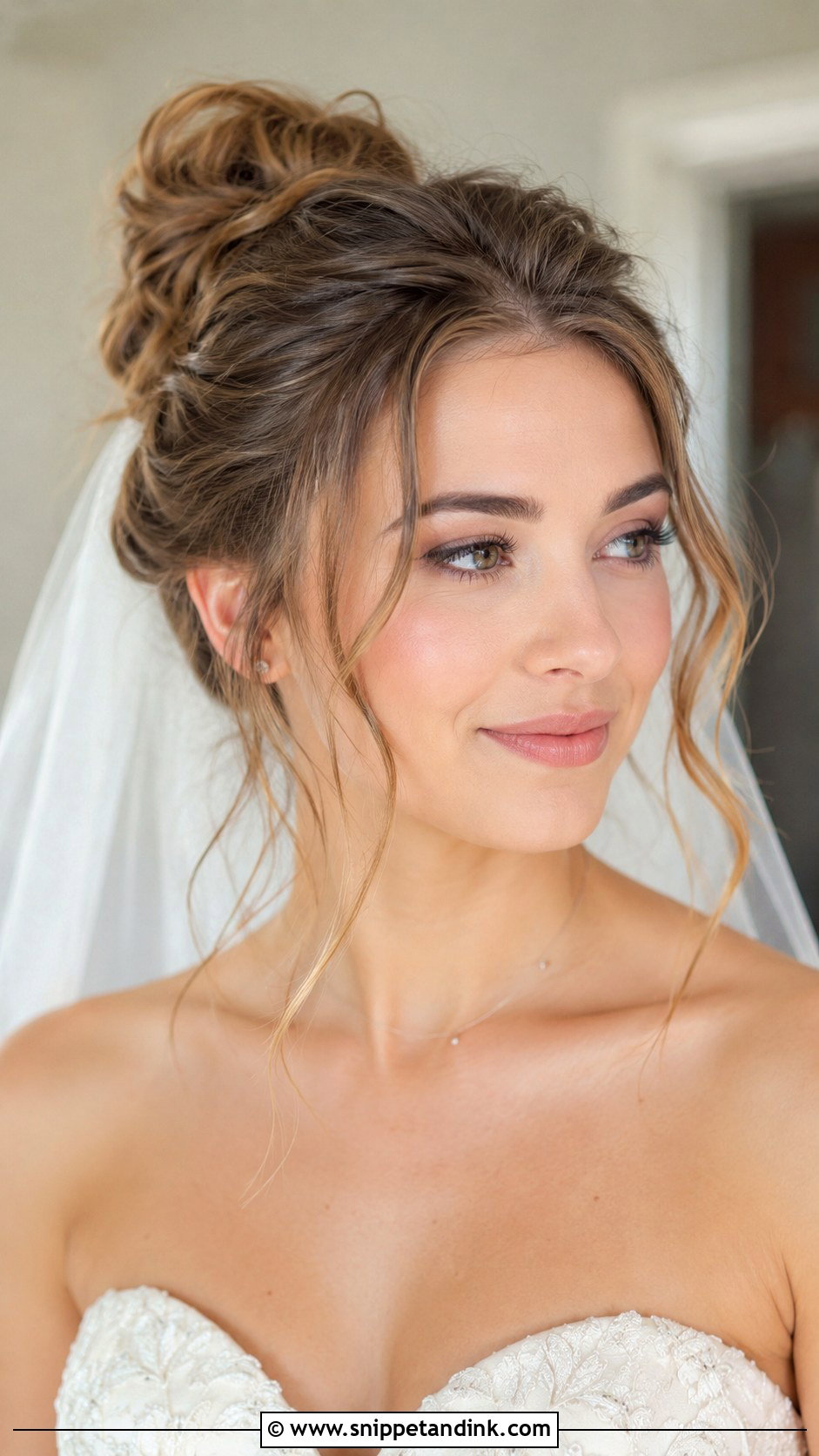
Tendrils change how a bun frames your face. Most of the hair stays up while a few soft pieces trace the cheekbones and jaw, softening strong features in portraits. The wrong tendril is a straight, limp strand by the first dance. I choose them from the hairline before anything is pinned, curl each one separately and spray it at the root. They work from beach to ballroom. A flowing veil and minimal accessories let the texture show.
7. Low Bun With Veil
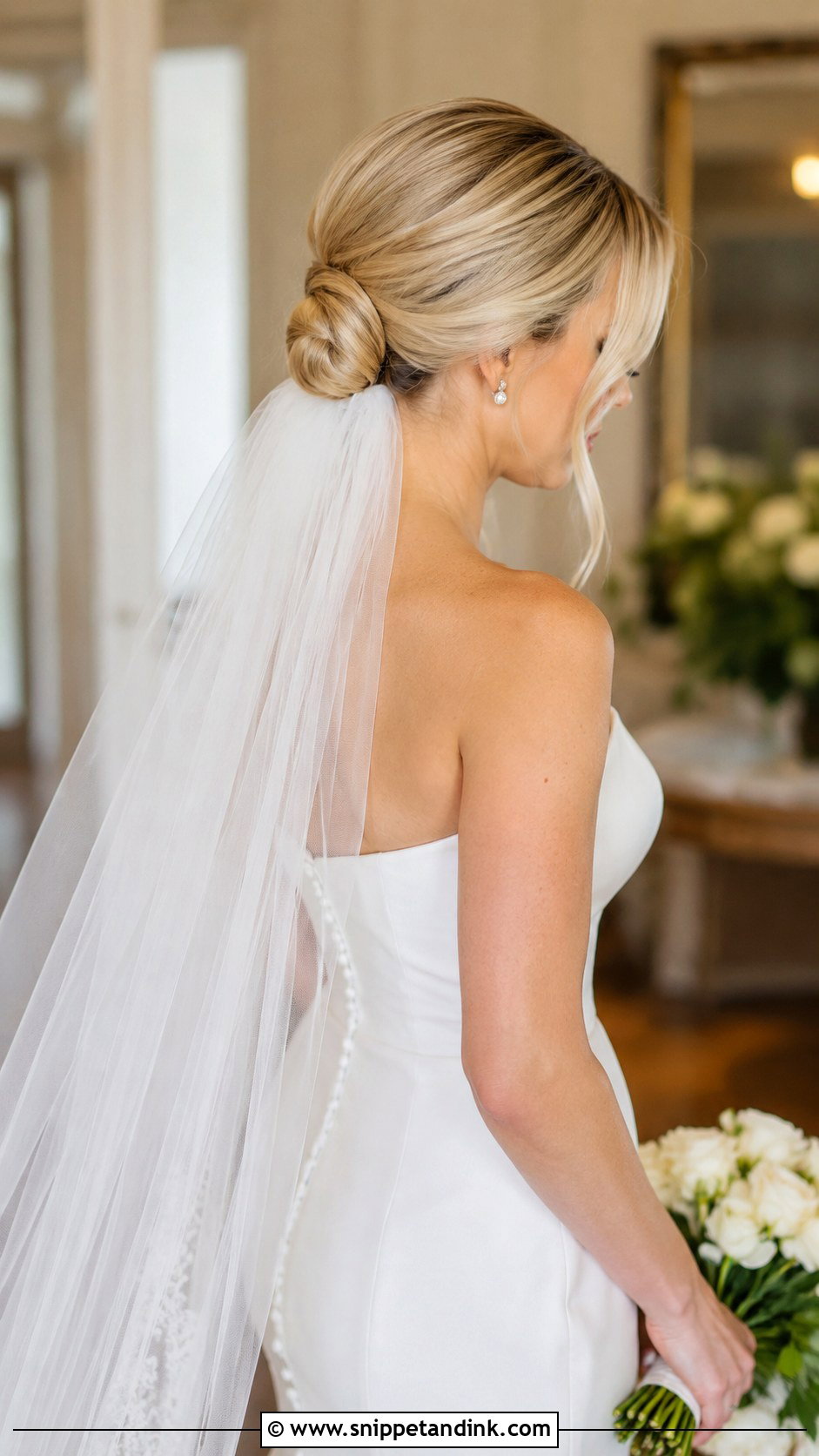
A low bun gives a veil a stable anchor at the back of the head. The comb can sit above the bun for volume over the crown or tuck just beneath it so the veil falls straight from the nape. It suits cathedral-length and shorter birdcage styles alike. A long veil is heavier than it looks, so I slide the comb in against the direction of the hair and back it with two crossed pins underneath. When the veil comes off for the reception, the bun stays neat, so you never need to restyle.
8. Twisted Low Bun for Bride
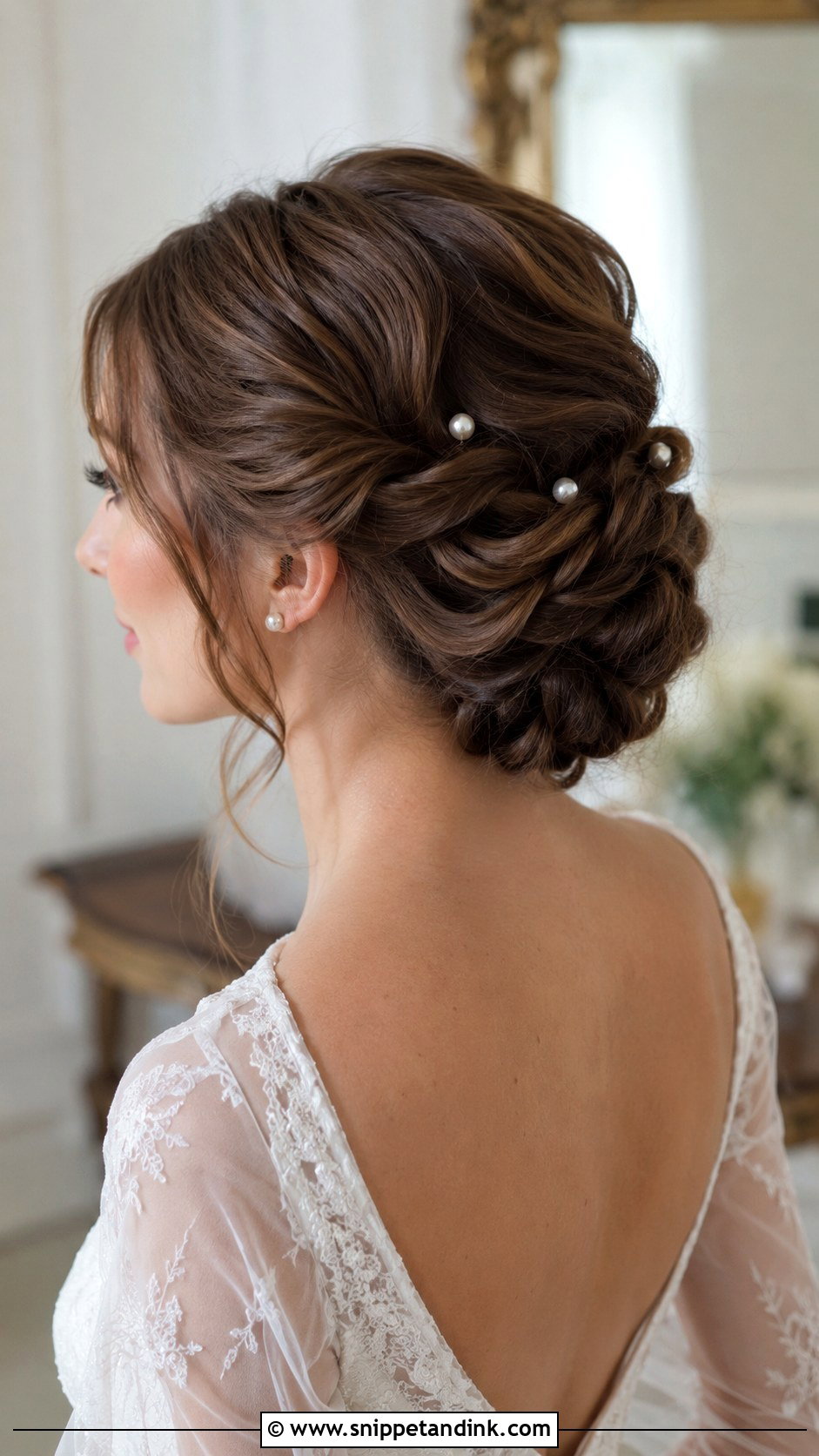
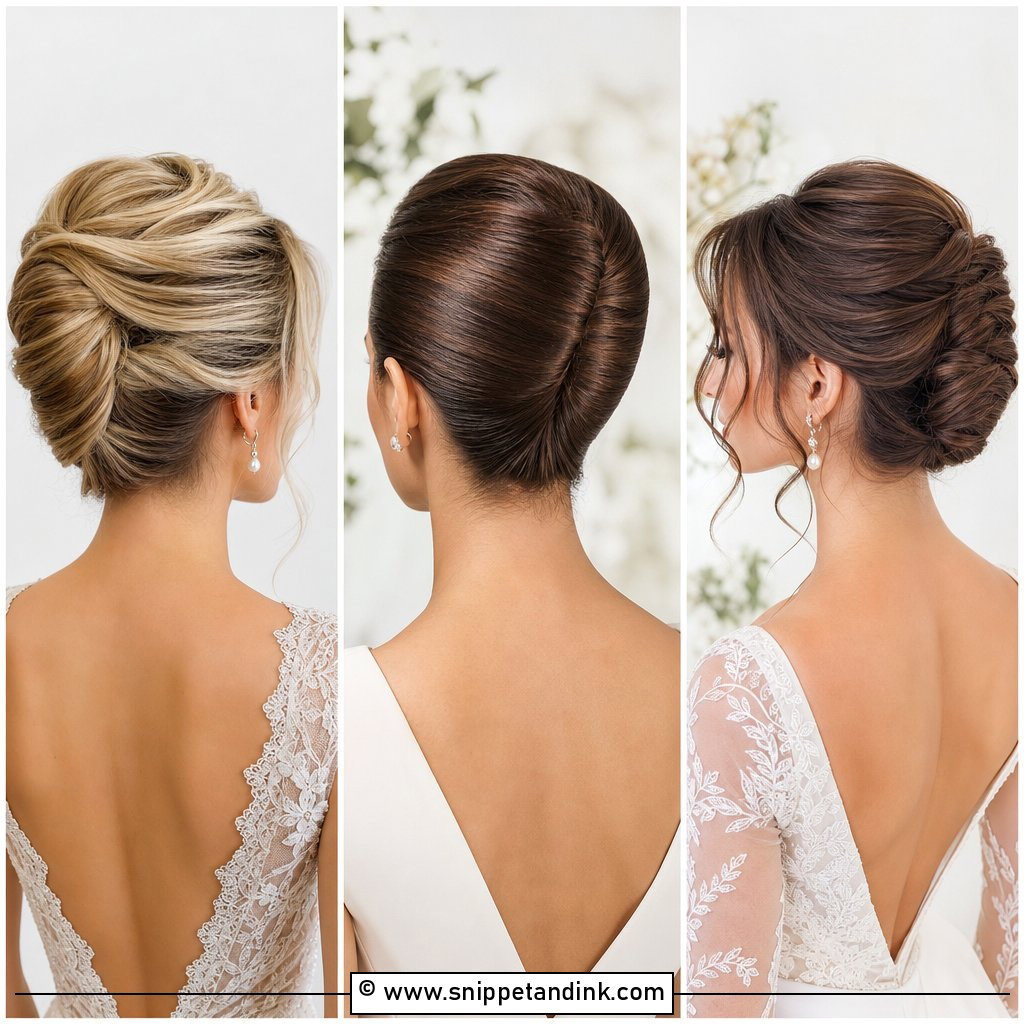
Twisting sections of hair as they wrap into the bun adds texture without fuss. The twists add visual volume and hide thin or fine hair well, and they hold firmly through a long day. Sleek suits formal weddings; loosened suits softer ones. Pearl pins set along the twists add a little shine. I always twist each section away from the face, as twists turned the other way tend to unwind toward the front. It sits comfortably with vintage-inspired and modern gowns.
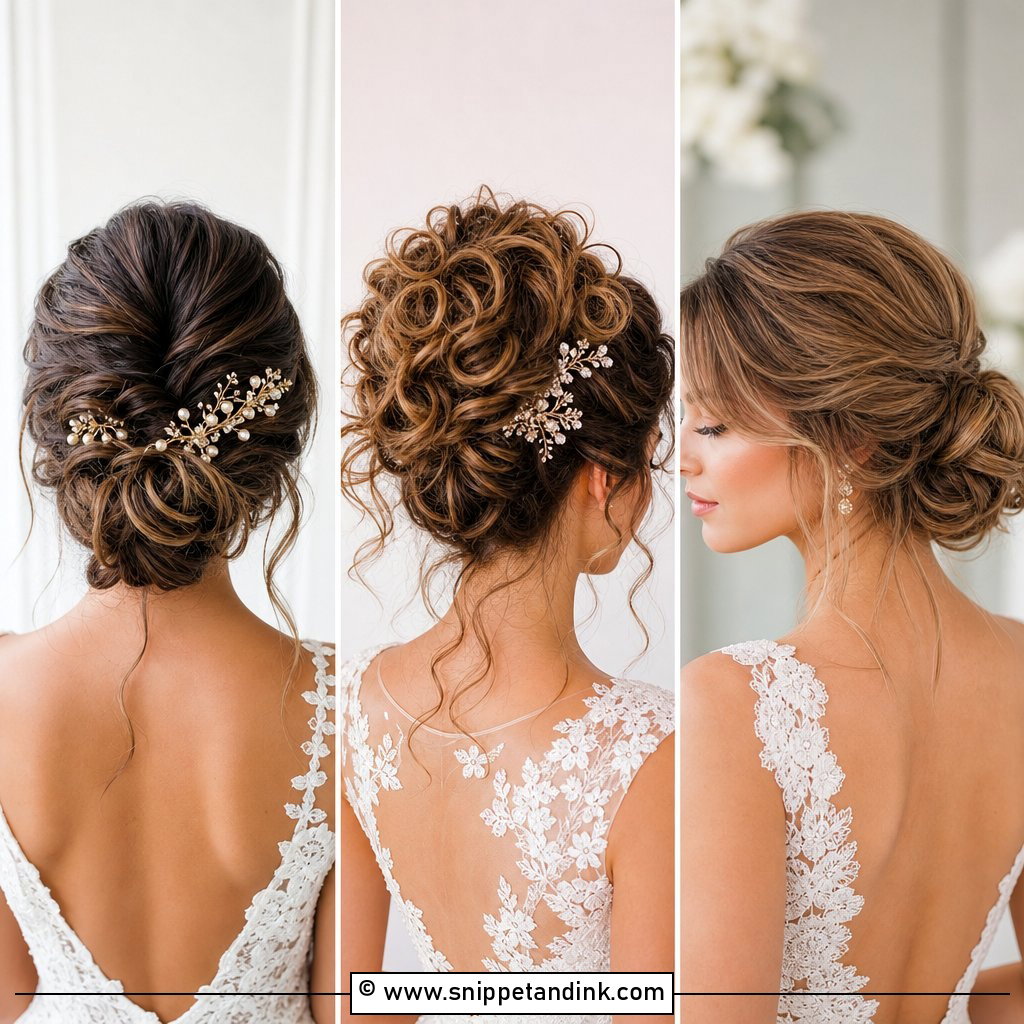
9. Bun With Pearl Accessories
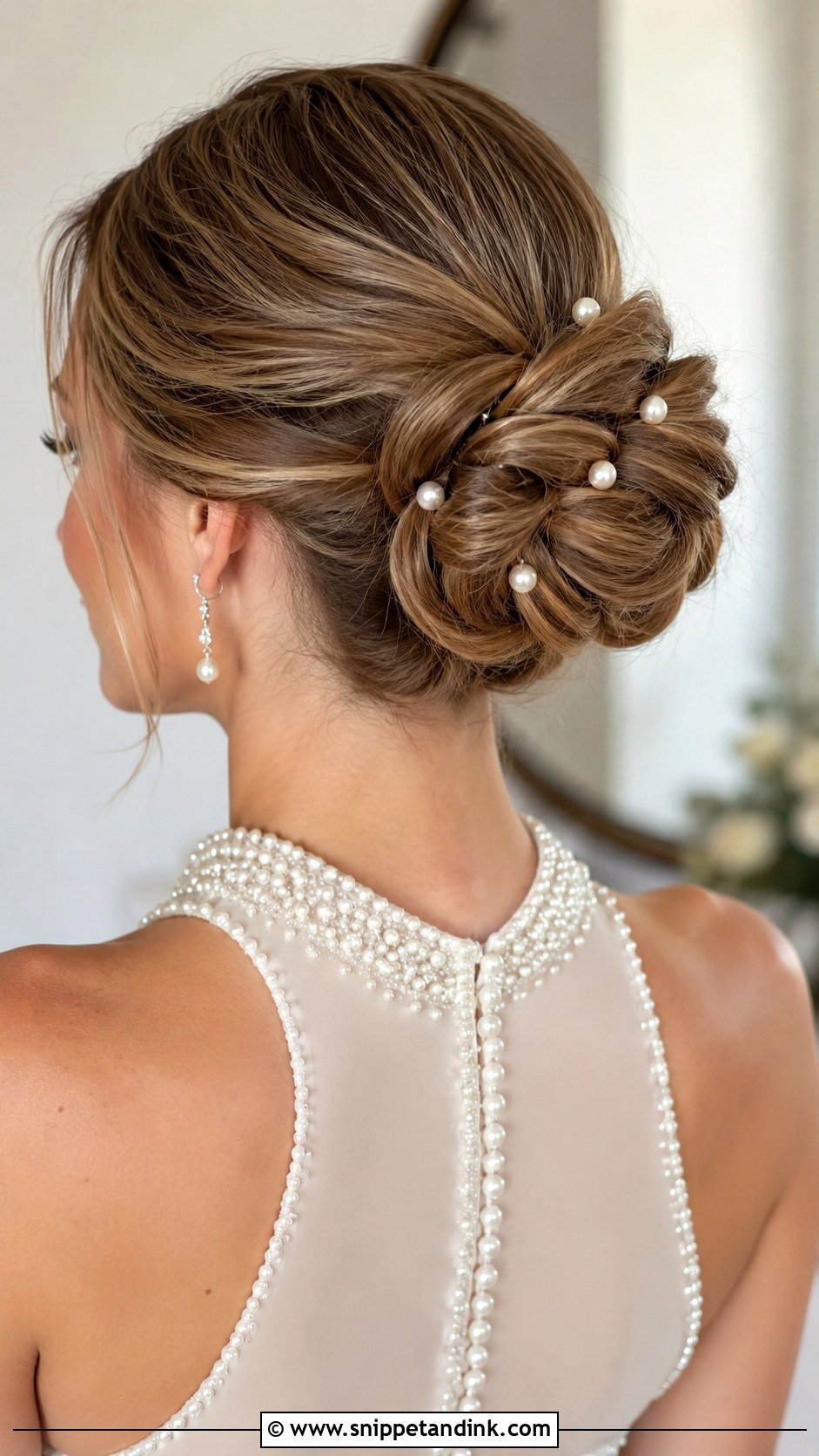
Pearl pins dress up a bun without making it fussy. A loose scatter is subtle; a tight cluster on one side reads more dramatic. They suit sleek and messy buns alike, and they tie in with pearl earrings or a pearl-trimmed gown. Most decorative pearl pins are too short and too smooth to hold any weight, so I build the bun with ordinary bobby pins first and add the pearls as the last step. Kept sparse, they never overwhelm the rest of the look.
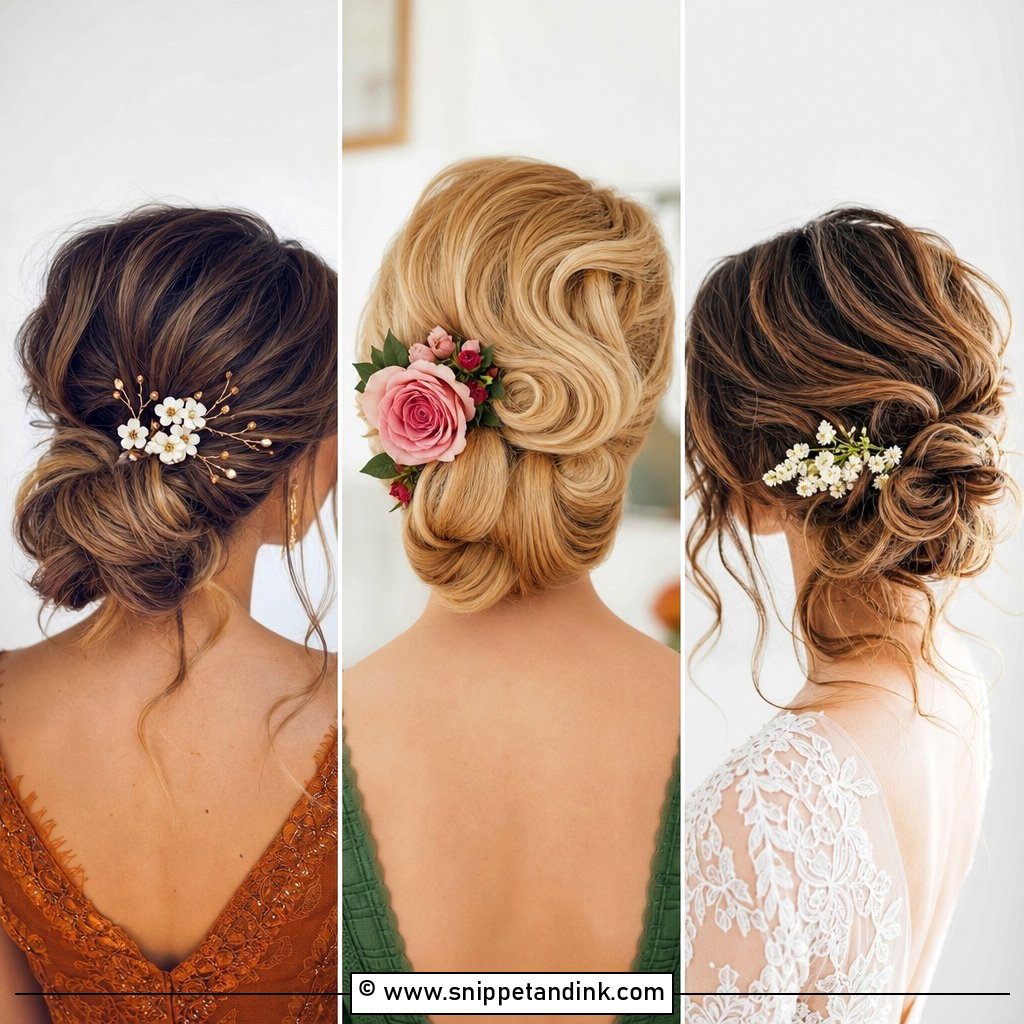
10. Floral Bun for Wedding
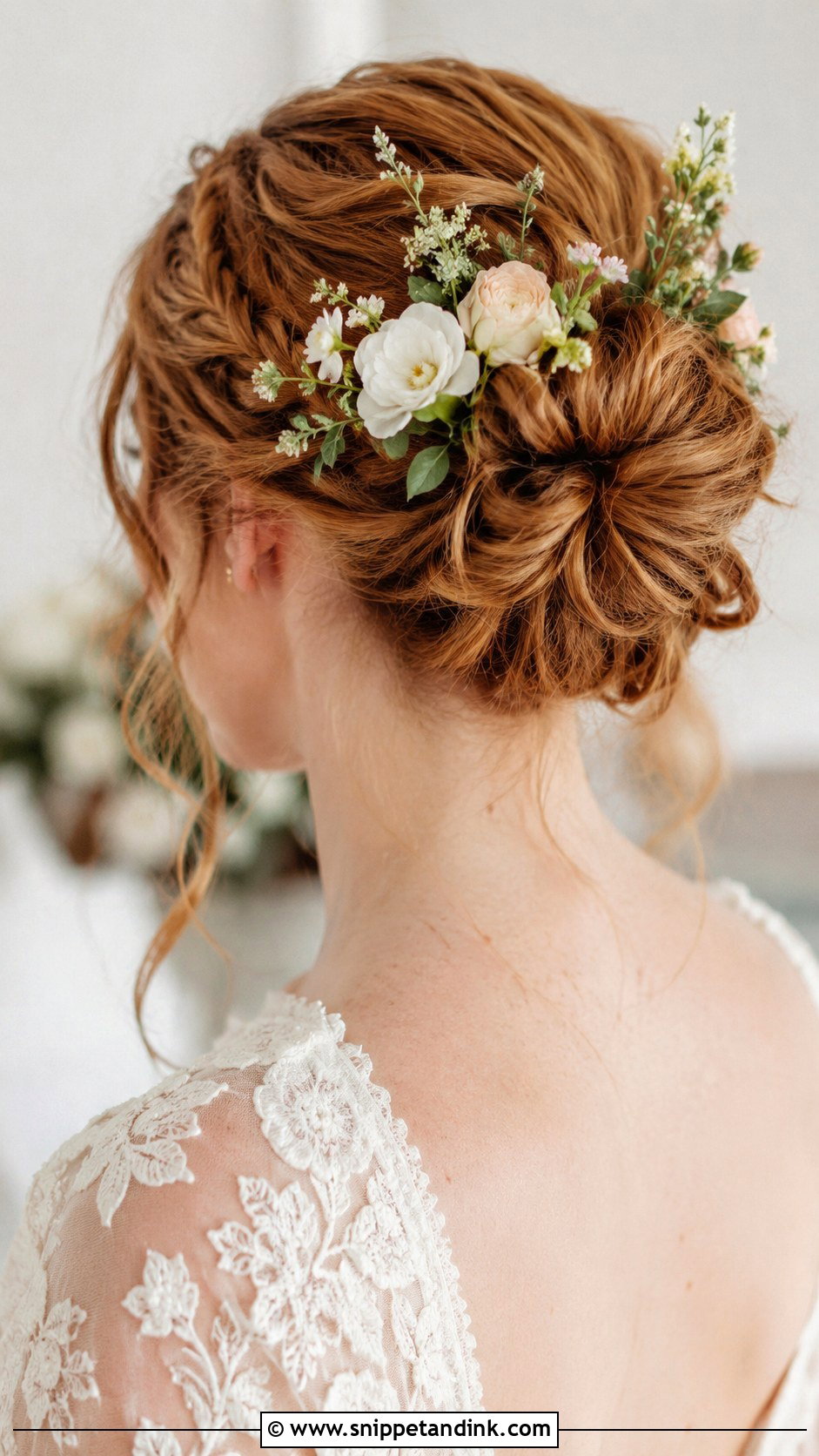
Fresh or silk flowers tucked into a bun suit garden weddings and boho celebrations. Baby’s breath gives a fine scatter; one bigger bloom on the side makes a focal point. Match them to your bouquet so the two read as one. Textured buns hold flowers better than sleek ones, because the stems have hair to grip. Fresh flowers wilt out of water, so ask your florist for hardy varieties, wired and kept chilled until the last minute; I add them at the very end of styling.
11. Chignon for Wedding
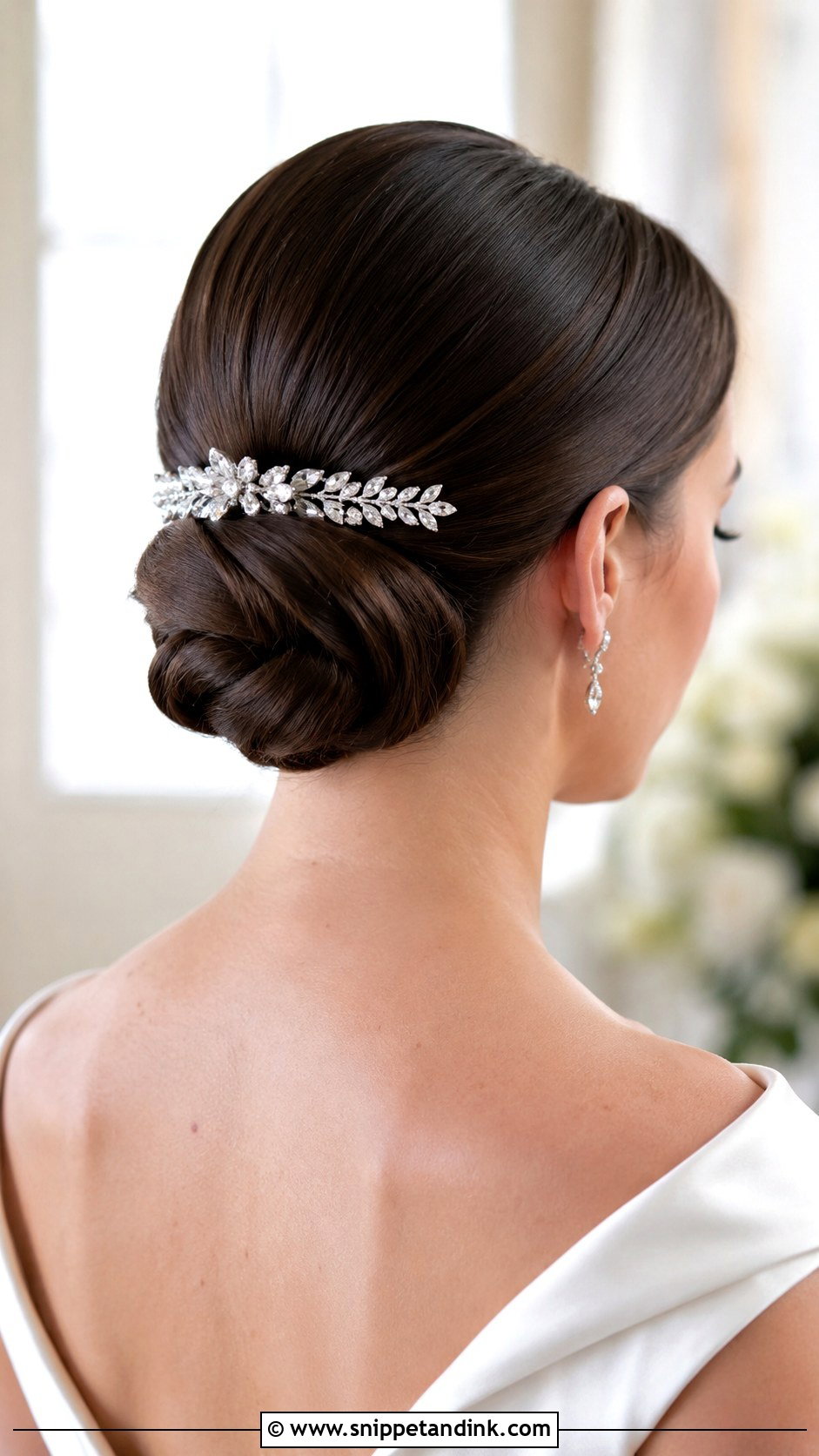
The chignon is the bun I’d recommend to almost any bride who can’t decide. A low, rolled knot at the nape, it has a French, slightly vintage feel and suits formal gowns and grand venues. Keep it smooth, or add soft waves for something more romantic. Nearly every length can wear one; shorter hair needs a small padding insert to give the roll shape. A jeweled comb or a single pin adds some shine. It holds securely and looks graceful from the side, which is the angle guests see most during the ceremony.
12. Low Bun With Braid
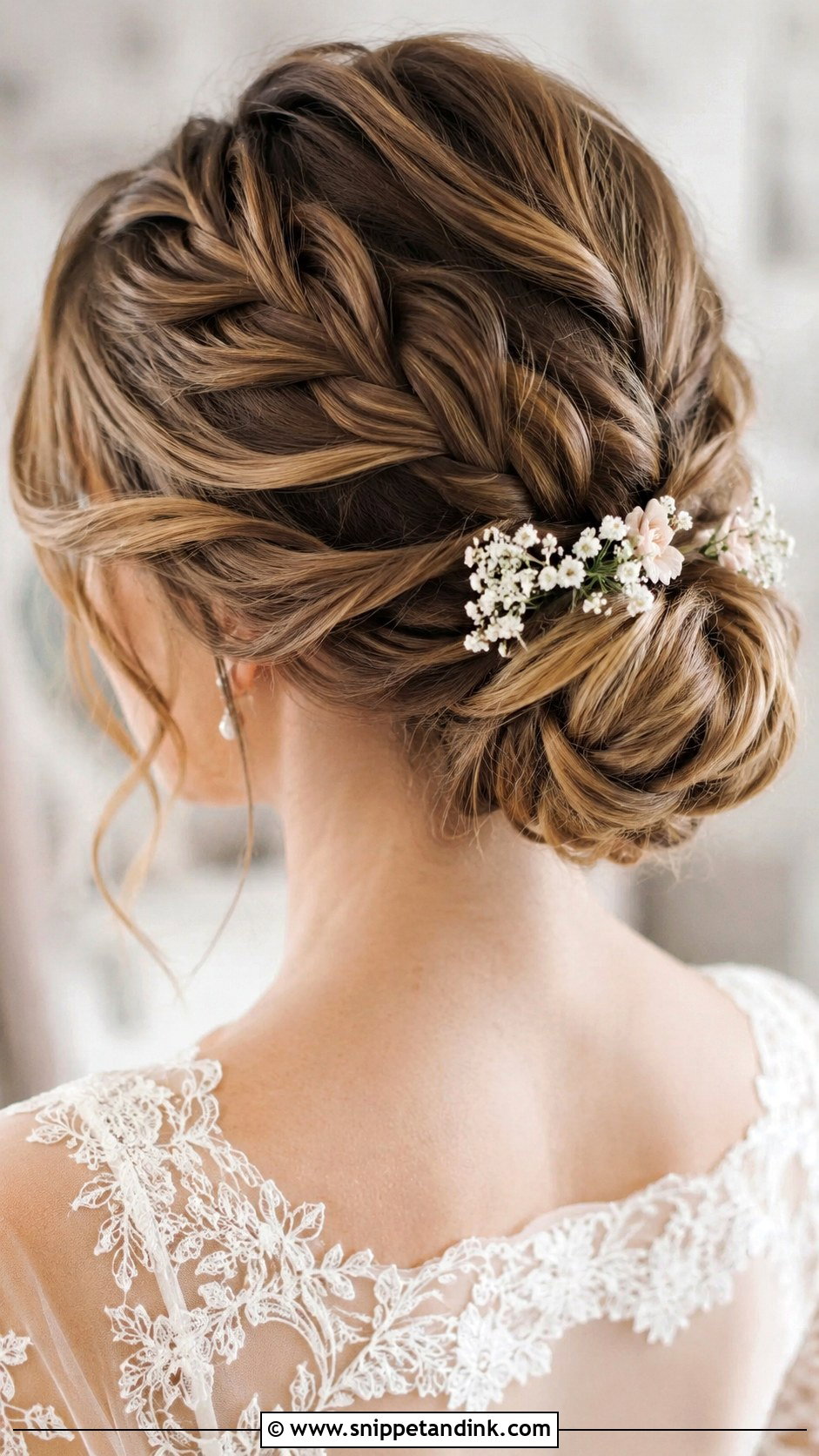
A braid running along the crown or side before it disappears into the bun adds detail while catching the loose layers that escape plain buns. French, Dutch or fishtail all work: French sits flatter, Dutch stands out, fishtail is the most intricate. It suits bohemian and formal weddings equally. Small flowers or pearls tucked into the braid add charm. I’d choose this for anyone with lots of short layers, as it’s one of the most reliable buns for staying put all day.
13. Bun With Hair Vine
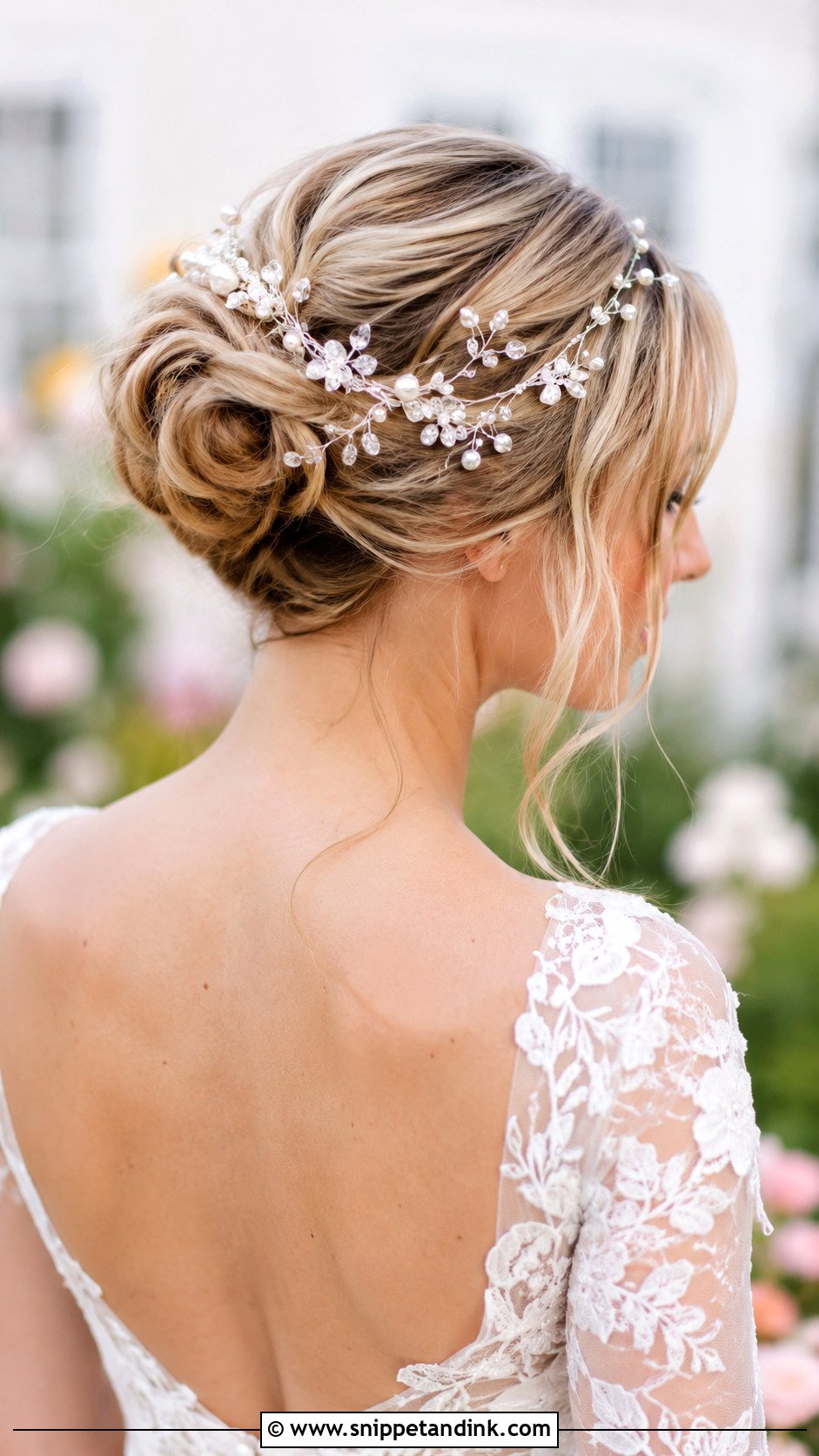
A hair vine is a flexible wire strung with tiny leaves, crystals or pearls, wrapped around a bun or laid across the front like a halo. It suits boho and fairytale-themed weddings, and catches light softly in photos. I sew a vine in with pins every few centimetres rather than wrapping it loosely, because the wire springs back and shifts as the day goes on. It suits messy and sleek buns, and it’s far lighter to wear than a traditional tiara.
14. Side Bun for Wedding
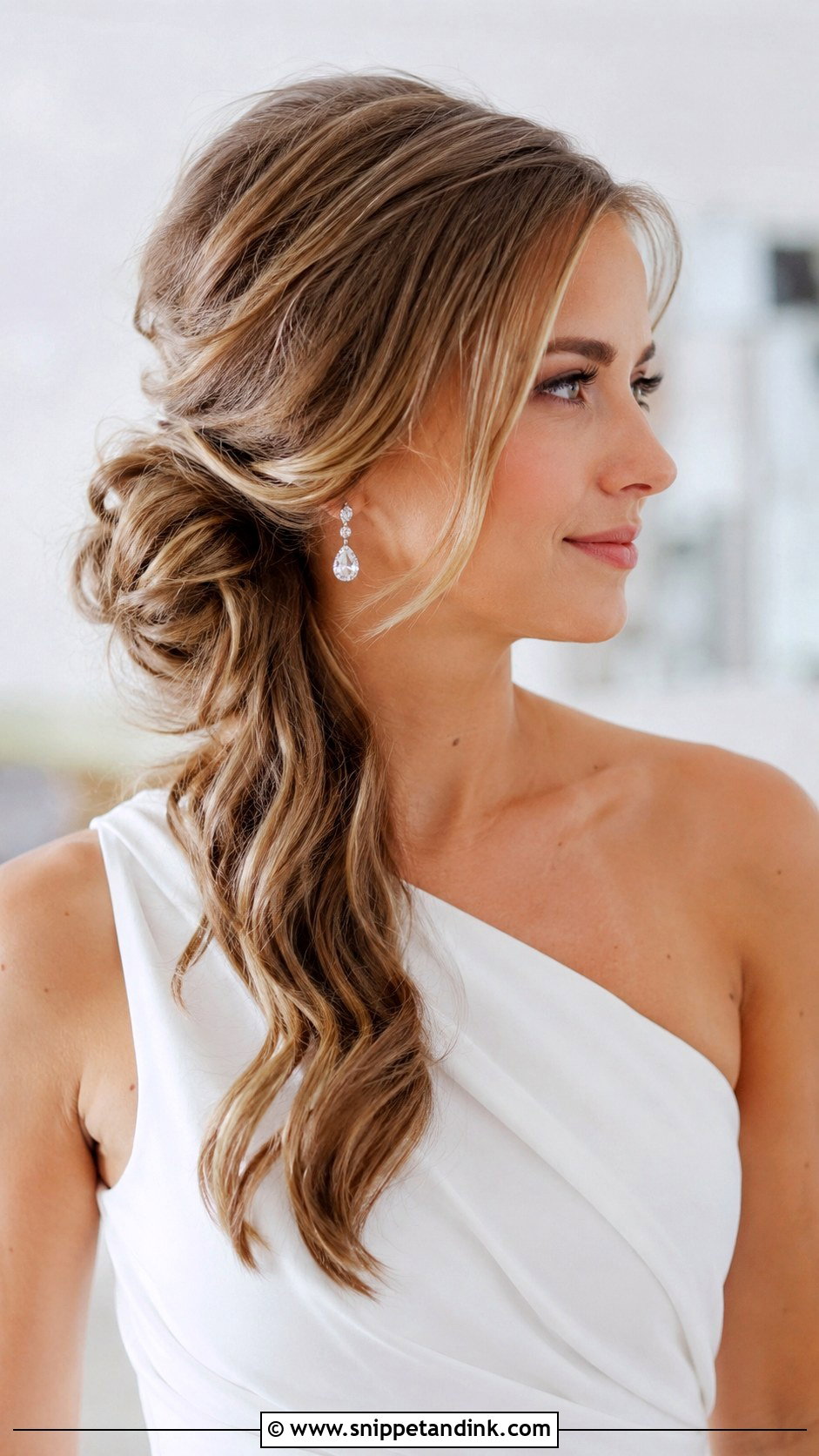
A side bun sits low on one side of the head, drawing the eye to the jaw and neckline with a touch of old-Hollywood glamour. One-shoulder and asymmetrical gowns suit it, and so do waves or curls falling over the shoulder. It tends to flatter round and heart-shaped faces. Think about which side the camera sees during the vows: I put the bun on the side facing your guests. Flowers or pearls on the opposite side keep it balanced.
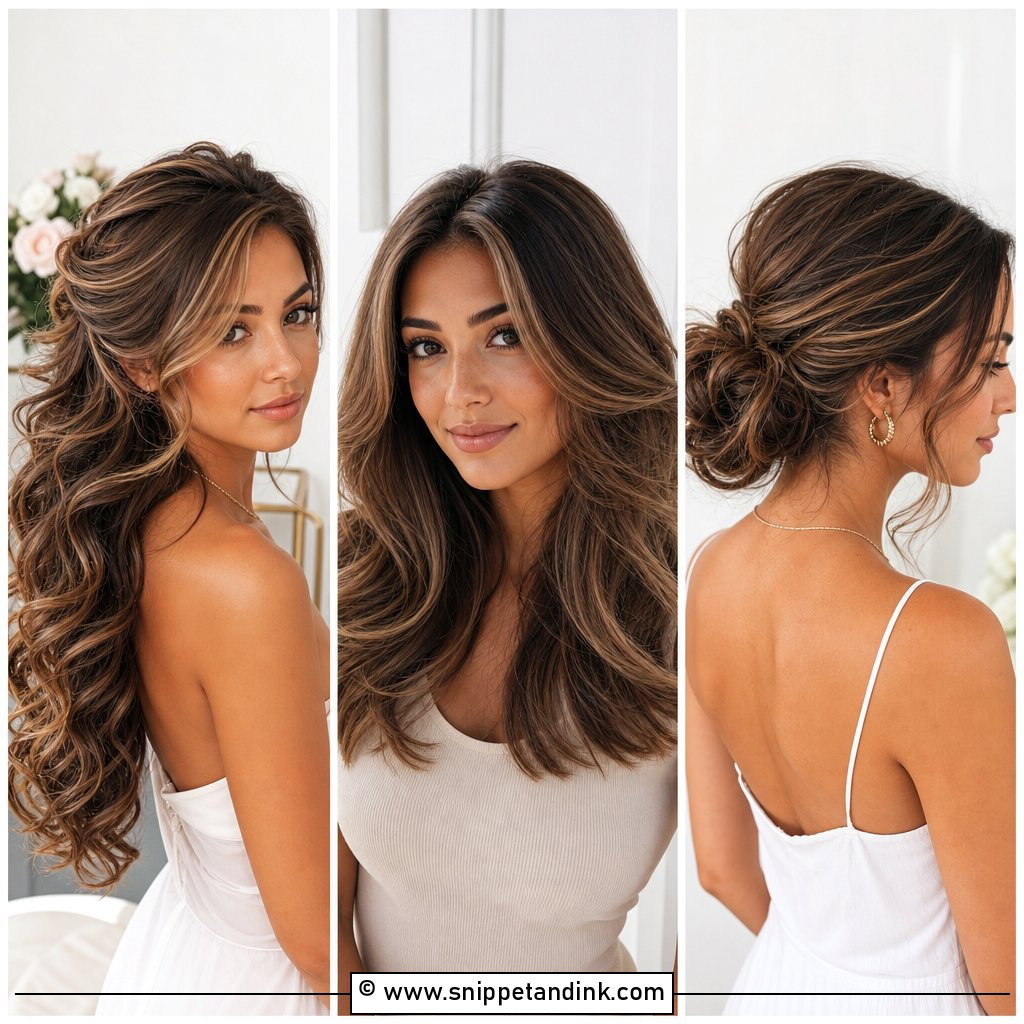
15. Bun With Curtain Bangs
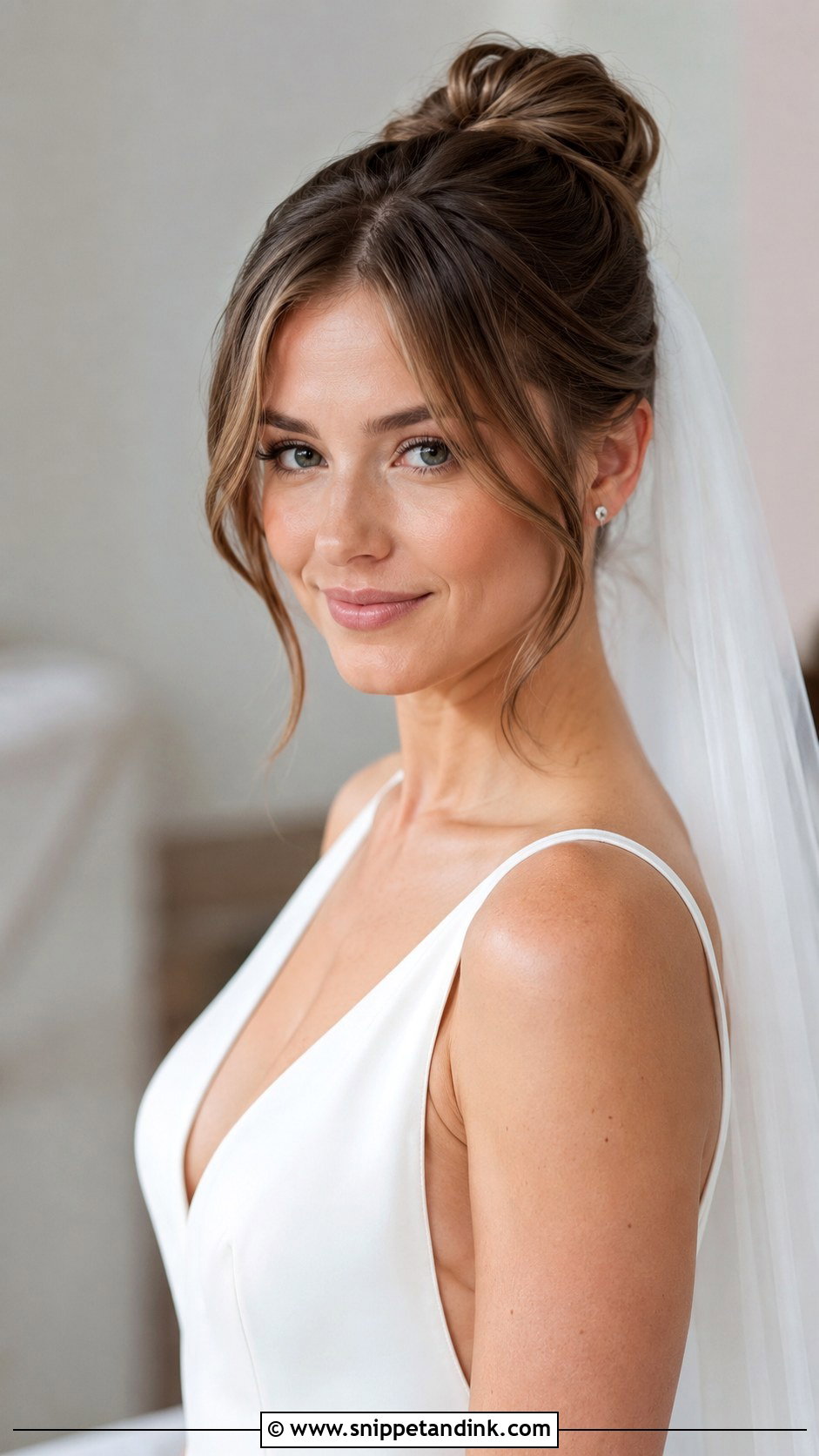
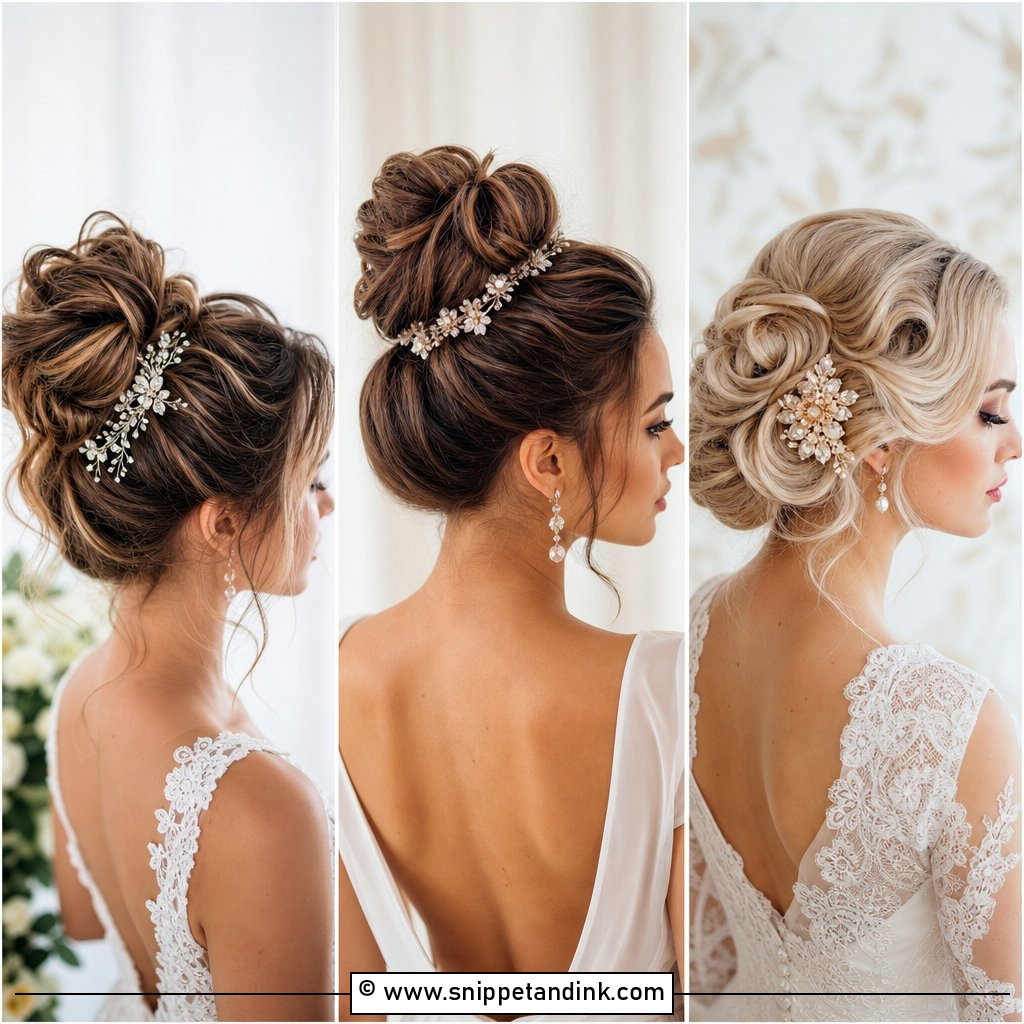
If you already wear curtain bangs, keep them; they soften the face and make a bun look current. They part gently in the middle and blend into the rest of the style. I’d say don’t cut new bangs in the last month before the wedding, because fresh bangs are hard to predict and need a few weeks to settle. On the day, a round brush and a quick curl away from the face give a soft sweep. They pair with high and low buns equally.
16. Romantic Bun With Waves
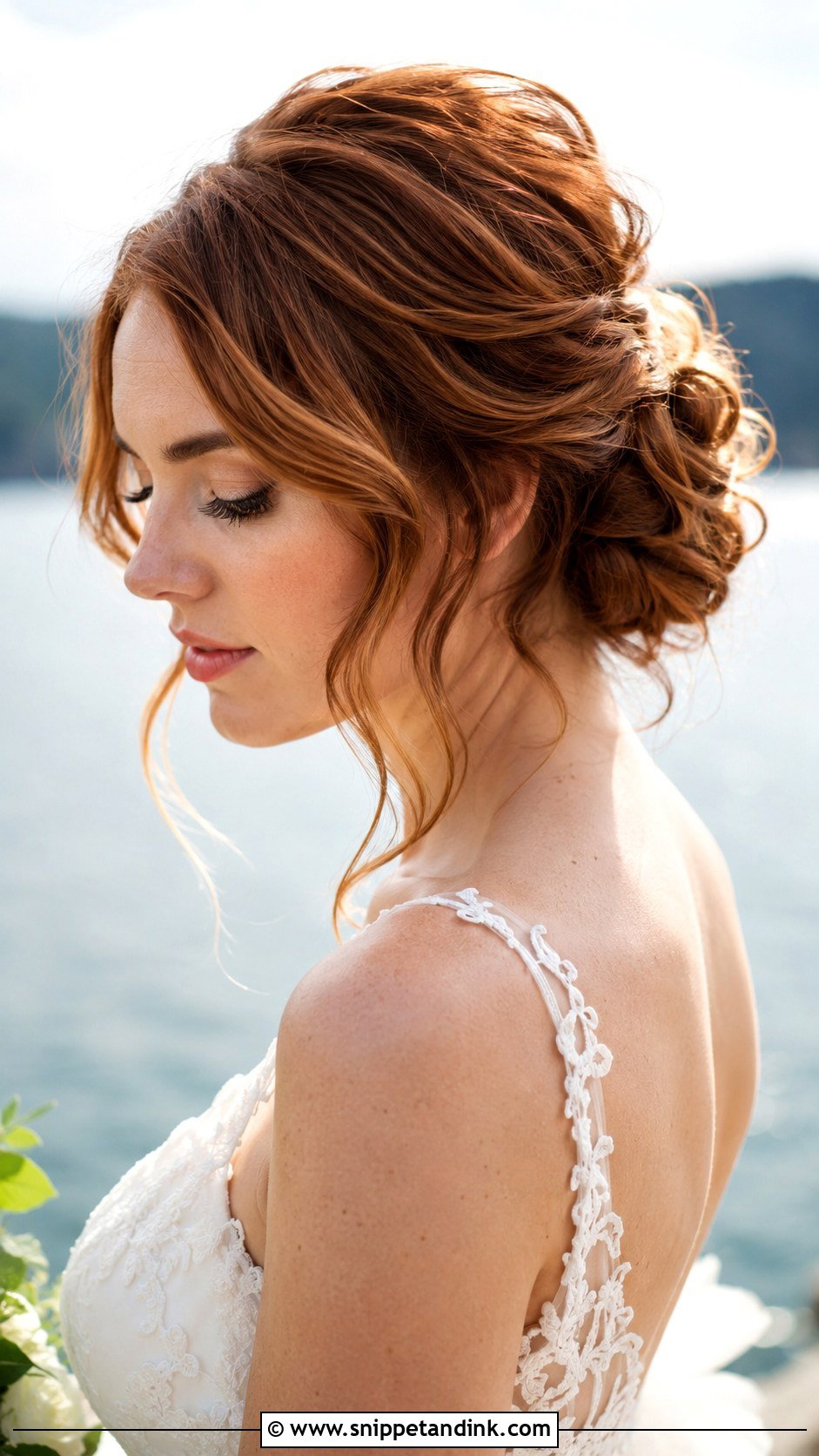
The hair is waved before the bun is pinned, so texture runs through the whole style, with a few waves left loose around the face. It suits garden, beach and outdoor ceremonies. Waves before pinning are what make this bun look full on finer hair; on very straight hair I set it in rollers first for grip. The bun can sit low or higher depending on the neckline. It’s a good match for brides who’d rather look tousled than sleek. Delicate florals finish it.
17. Sleek High Bun for Bride
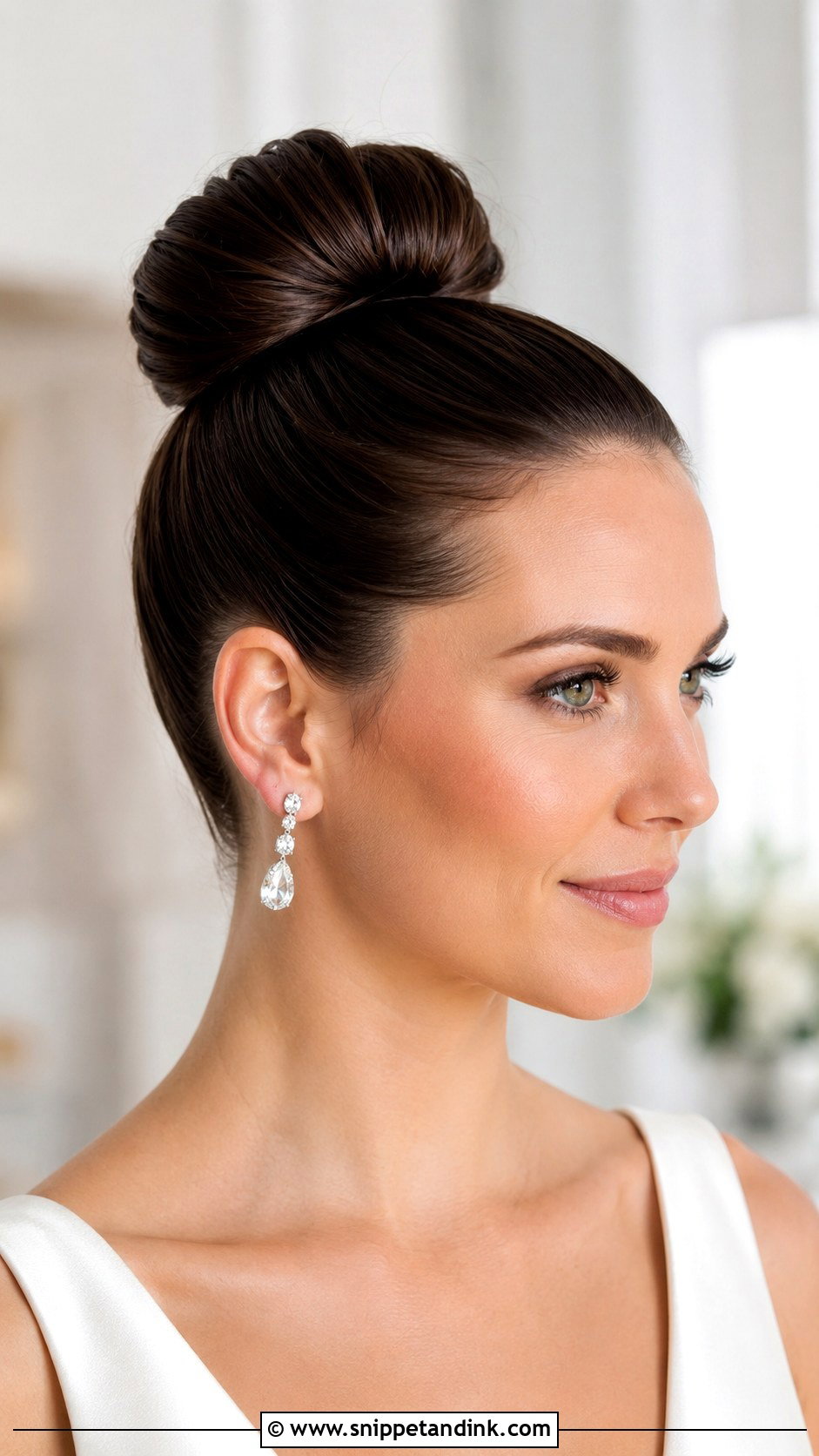
A sleek high bun is pulled tight and twisted into a smooth knot on the crown. It’s sharp, modern and very clean, made for minimalist gowns and structured silhouettes. It lengthens the neck, frames statement earrings and keeps hair off your face in the heat. Smoothing cream and a strong hold product give the glossy finish, and the ponytail has to be tied at exactly the right point before anything else. Leave it bare or add one sleek accessory.
18. Bun With Side Braid
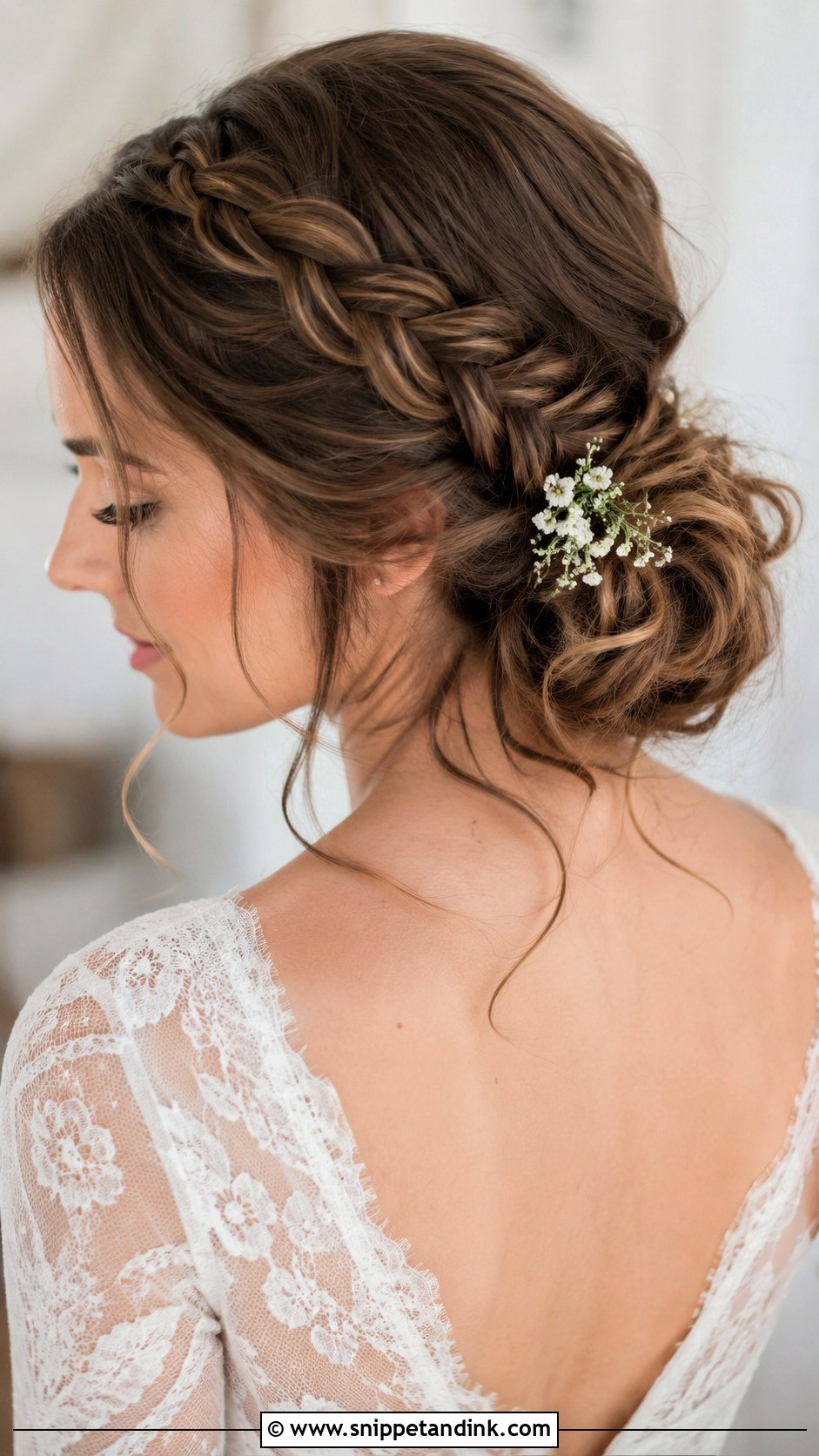
A side braid begins near the temple and sweeps across before joining the knot. It frames the face gently and suits rustic, garden and boho weddings. Loosen it a little for an airy feel, and tuck tiny flowers along it if you like. Messy or structured buns both work as the base. The braid also does a job: it holds back the shorter front layers that would otherwise fall across your face during the vows.
19. Low Bun With Center Part
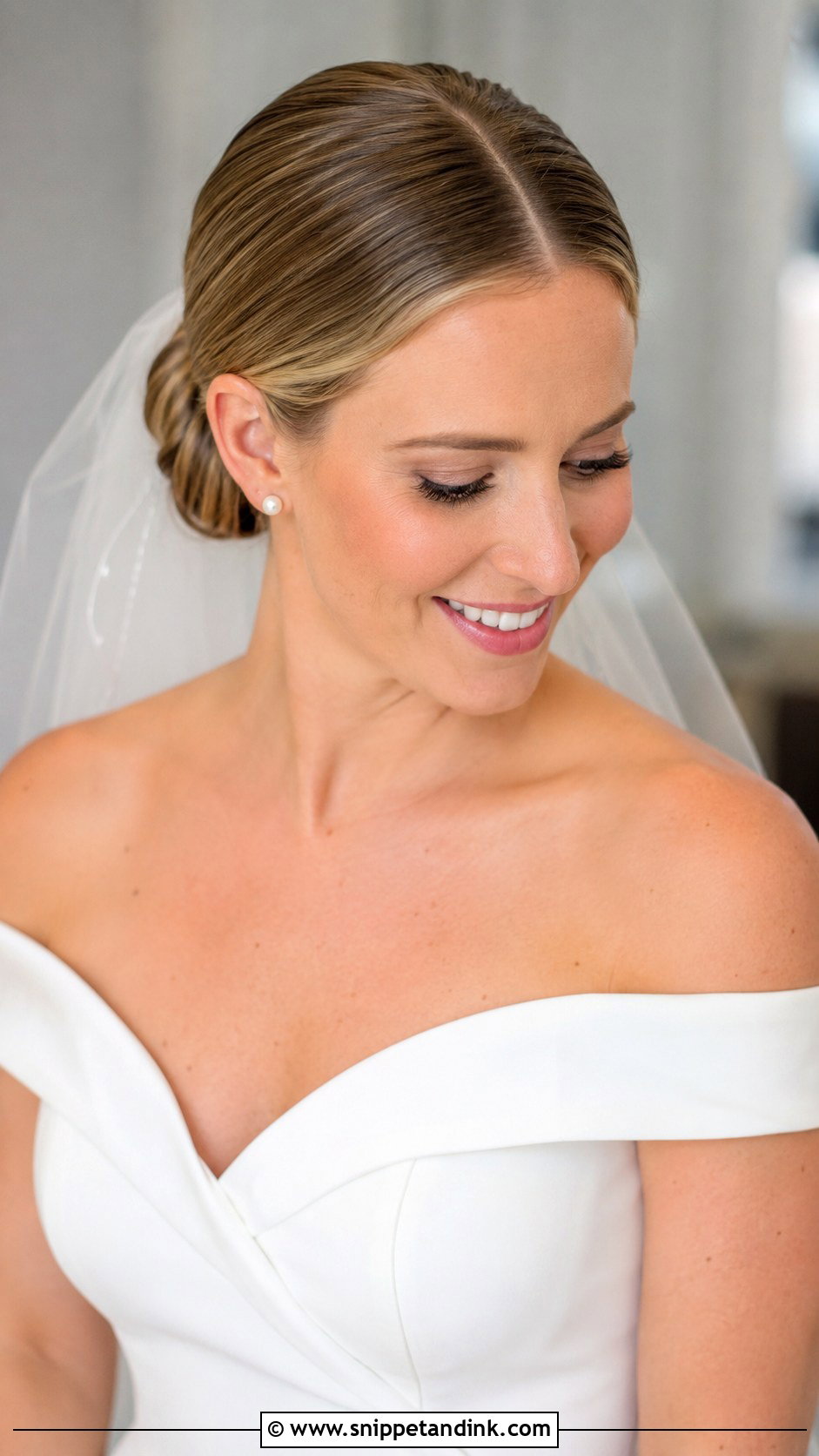
A centre part with a low bun is symmetrical and modern. Hair is smoothed down both sides and gathered at the nape. It often flatters oval and heart-shaped faces. The weak point is the part line itself, which shows any unevenness in a front-on photo, so I take my time getting it straight before smoothing. Sleek suits formal events; subtle waves soften it. Simple gowns and delicate jewelry suit it.
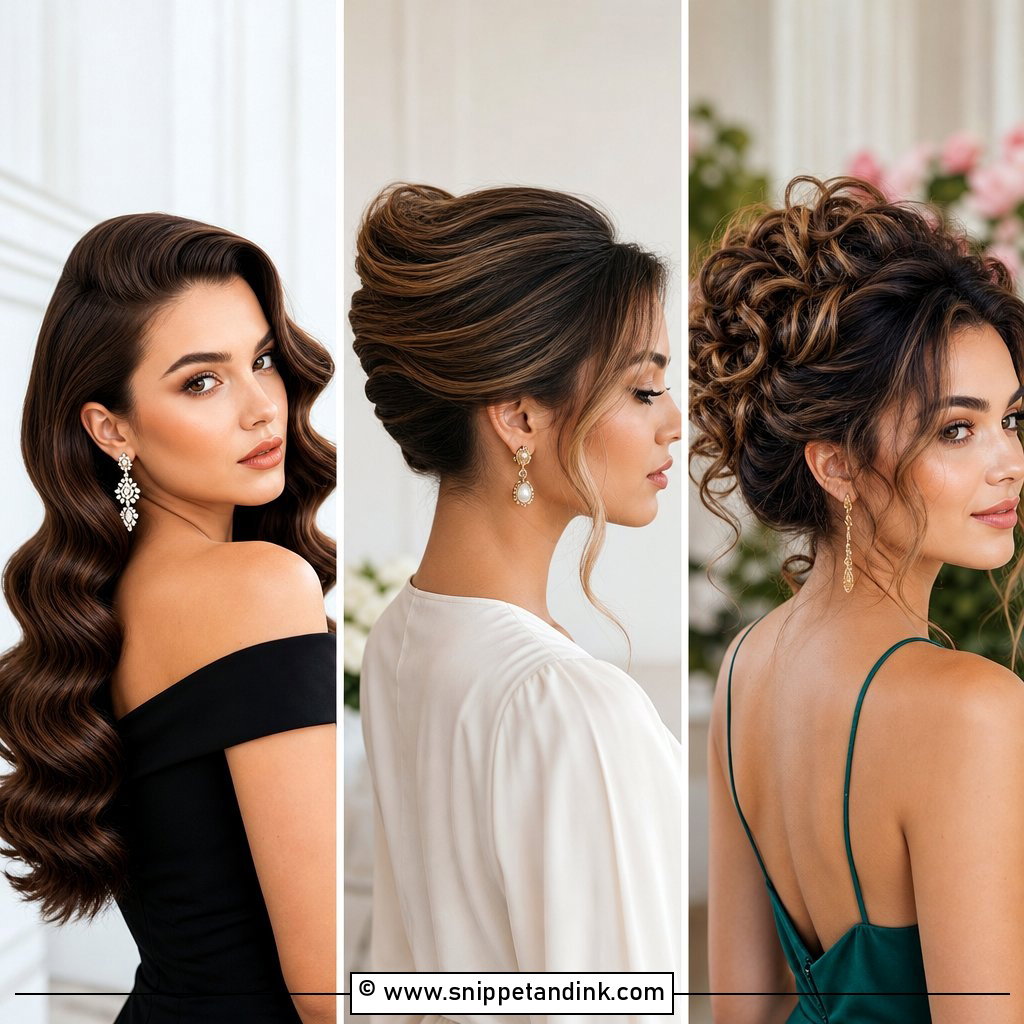
20. Bun With Tiara
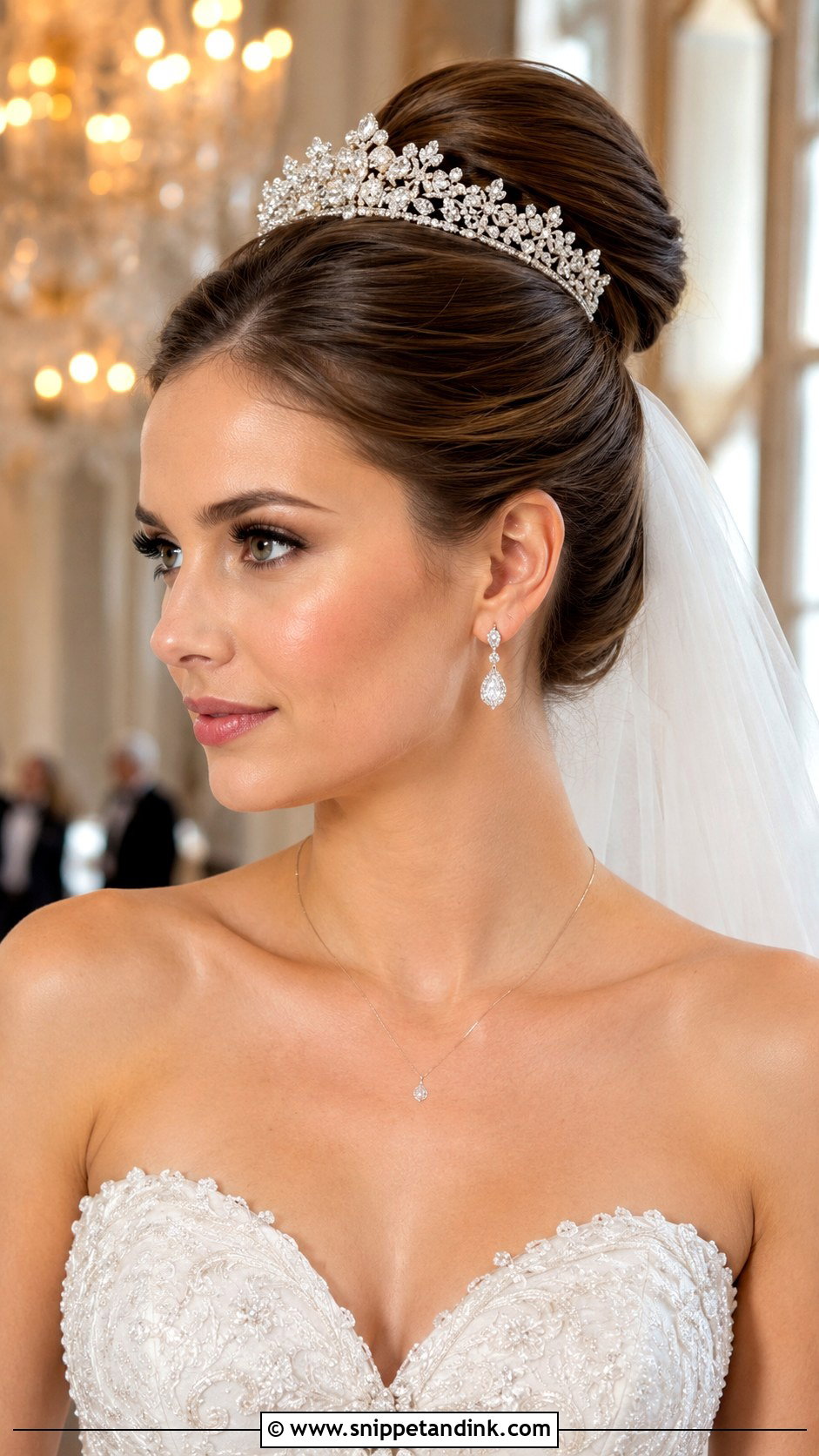
A bun is the most secure base for a tiara. The band can sit just in front of the knot or slightly further forward along the crown. Low and high buns both work, and the smooth knot gives the band something firm to sit against. A delicate band adds subtle sparkle, a bolder one more drama. Tiaras are anchored by pinning through the combs or loops at each end, into small hidden braids or backcombed sections, so they don’t slide forward. Grand ballrooms and formal weddings suit it.
21. Textured Bun for Wedding
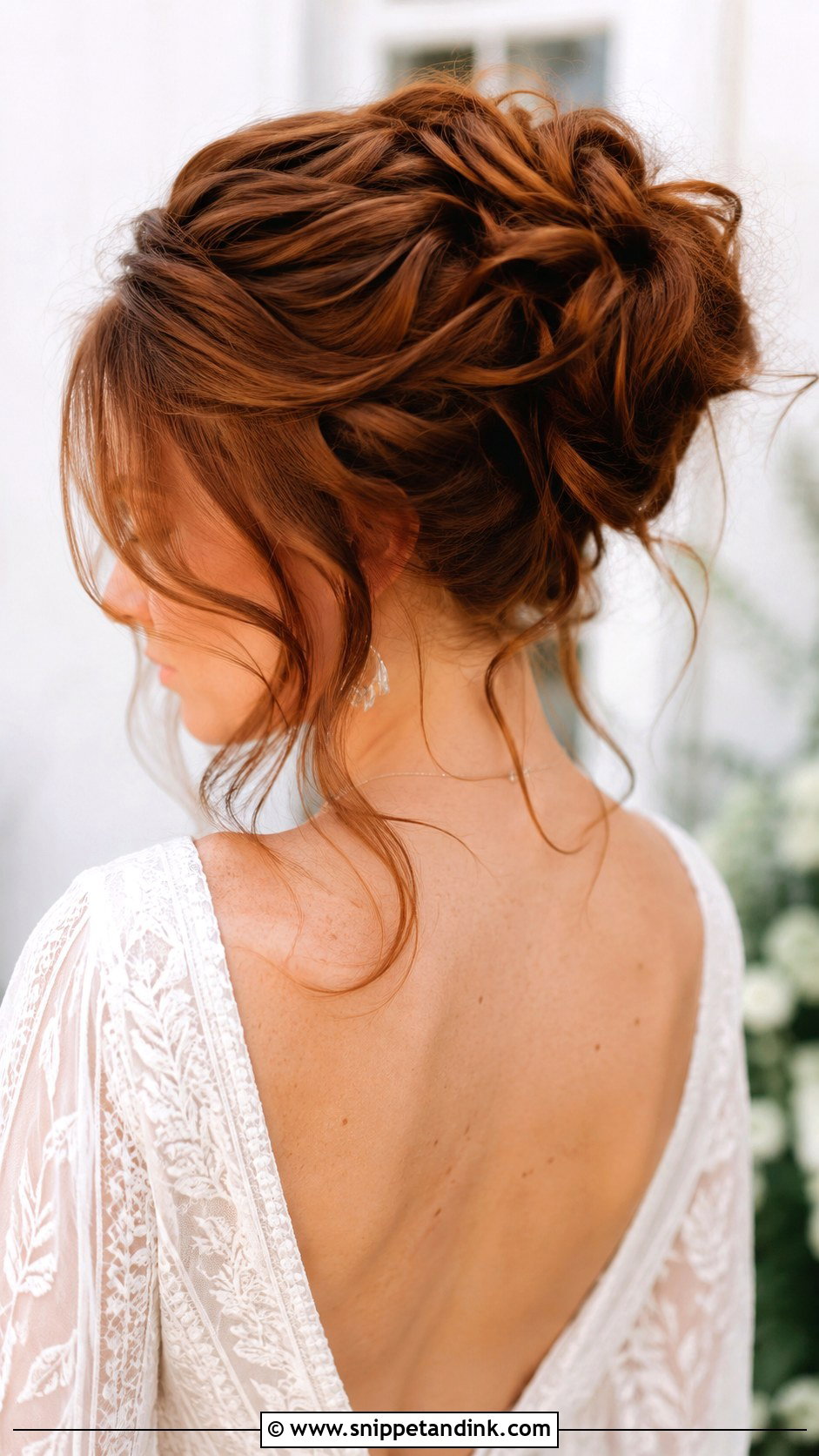
A textured bun keeps gentle waves and tousled pieces inside the knot instead of smoothing everything down. It makes fine hair look fuller and gives thick hair movement. Boho brides and outdoor ceremonies suit it, with florals and flowing gowns. I build texture with a dry spray and a light backcomb at the base of each section, which also gives the pins something to grip. Leave a few pieces loose at the face for softness.
22. Bun With Flowers and Greenery
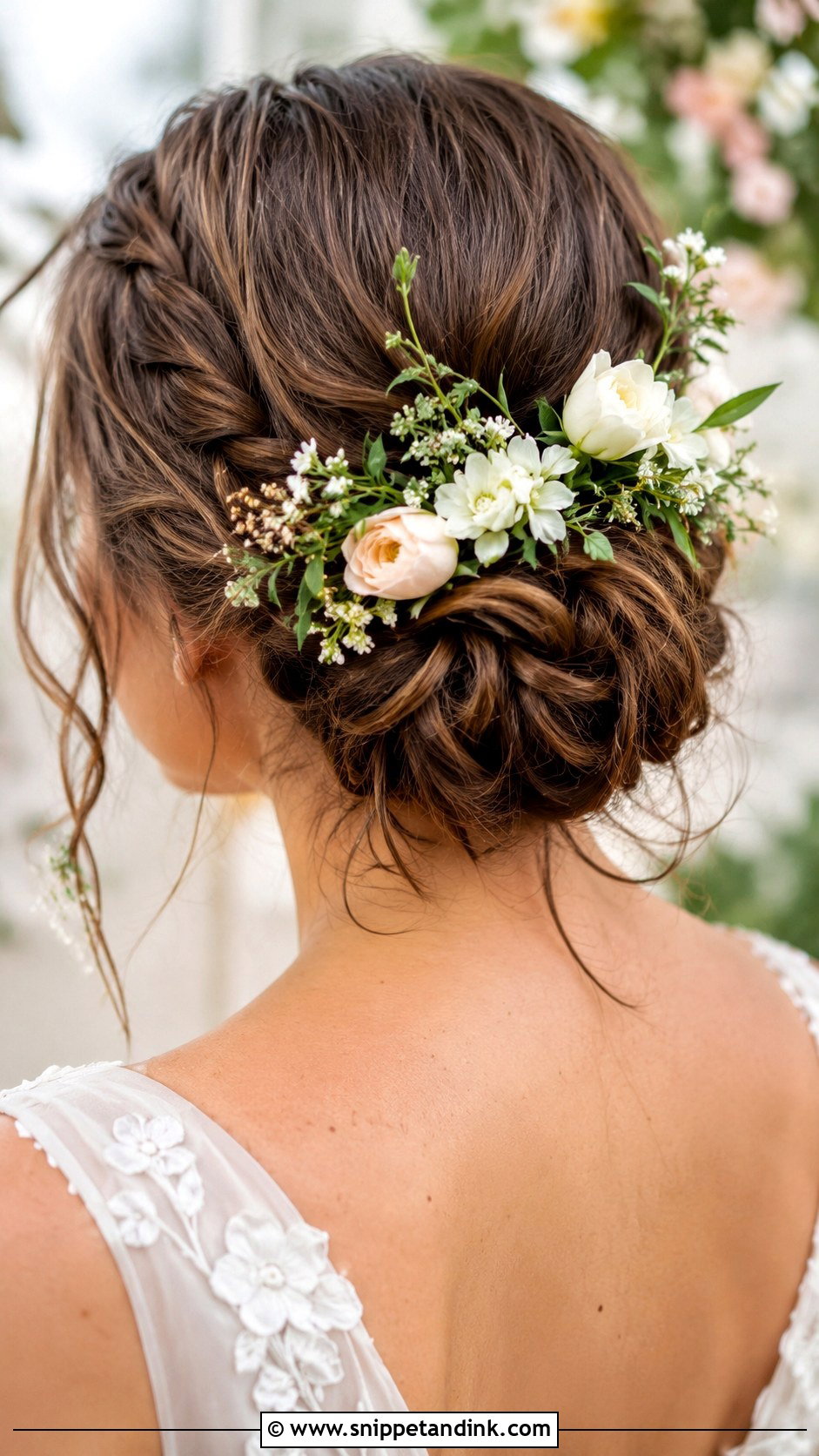
Blooms and leaves together give a bun a fresh, garden look. Rustic, outdoor and bohemian weddings suit it, and the greenery adds texture and colour against your hair. Wrap it round the entire bun or cluster it on one side, matching the bouquet. Messy, textured buns hold it better than sleek ones. Foliage like eucalyptus and ruscus lasts much longer out of water than soft-stemmed greenery, so I’d ask the florist for hardy pieces prepared for hair.
23. Double Bun for Wedding
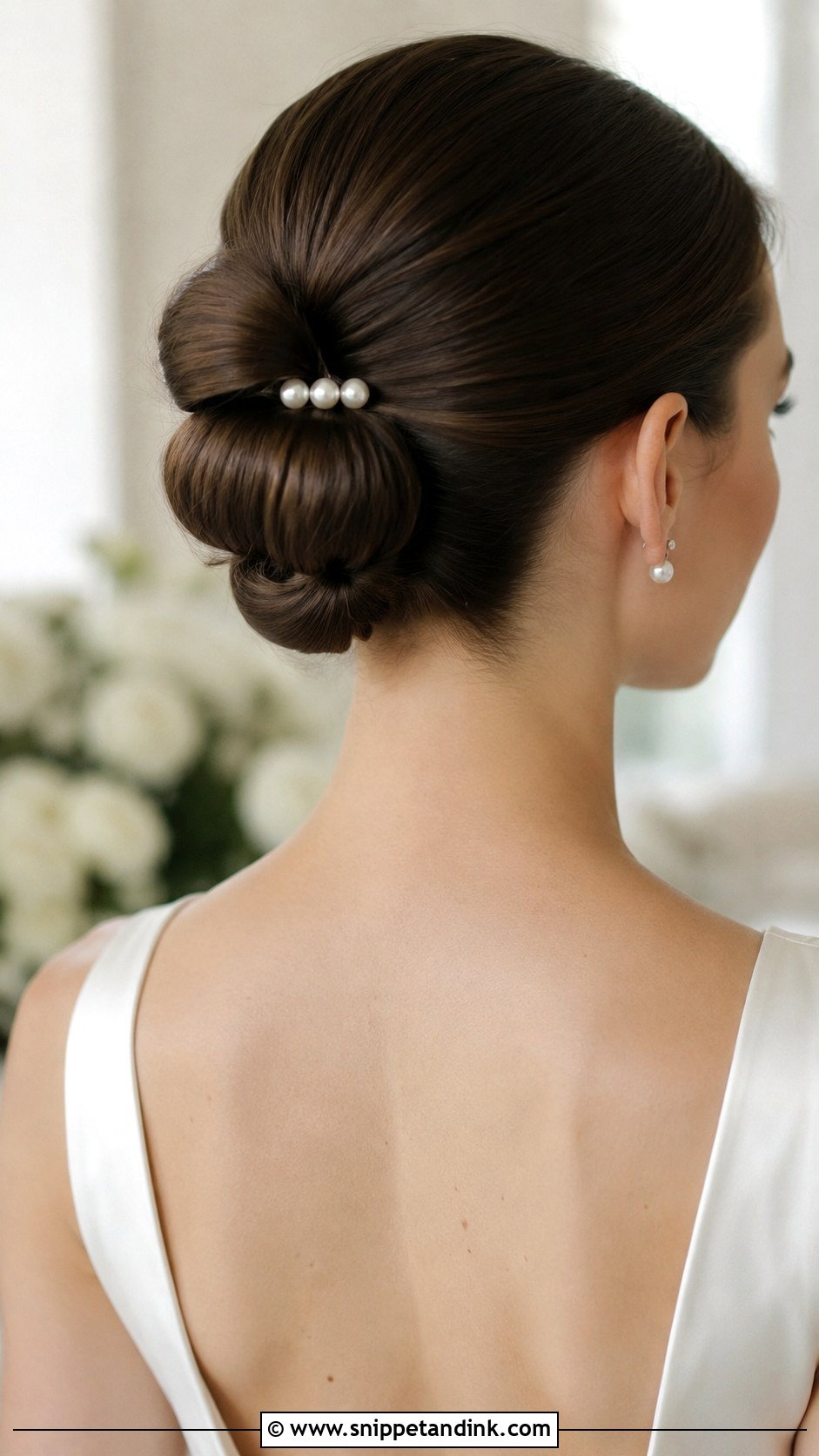
Two buns, side by side or stacked, make an unusual wedding look for fashion-forward brides. Sleek is polished; textured is softer. The double shape adds volume and suits minimalist gowns where the hair can lead. Small pearls or flowers between the buns add detail. Getting two buns to match is the challenge; I part the hair precisely and weigh each section in my hands before forming them. It’s the bun least likely to look like anyone else’s.
24. Low Bun With Pearls and Curls
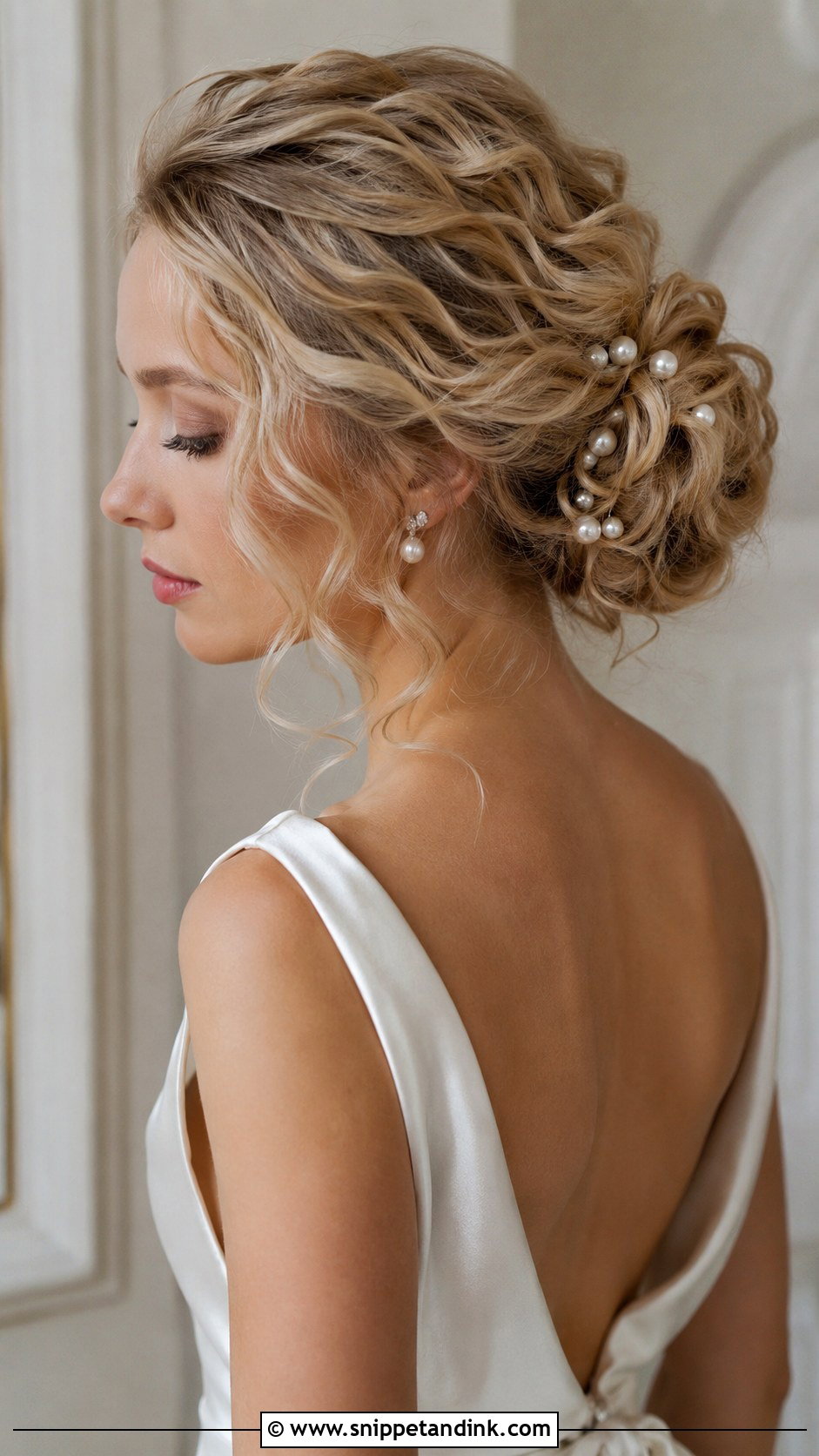
Soft curls, a low bun and scattered pearls together make a romantic, polished look. Curls frame the face, the bun anchors the back, and pearl pins add a soft shine throughout. It suits formal weddings and ballrooms. Loose beachy curls or tighter defined ones both work. With so many elements, restraint matters, so I keep the pearls to one area of the bun rather than spread everywhere. Pearl earrings tie it together.
25. Bun With Headband
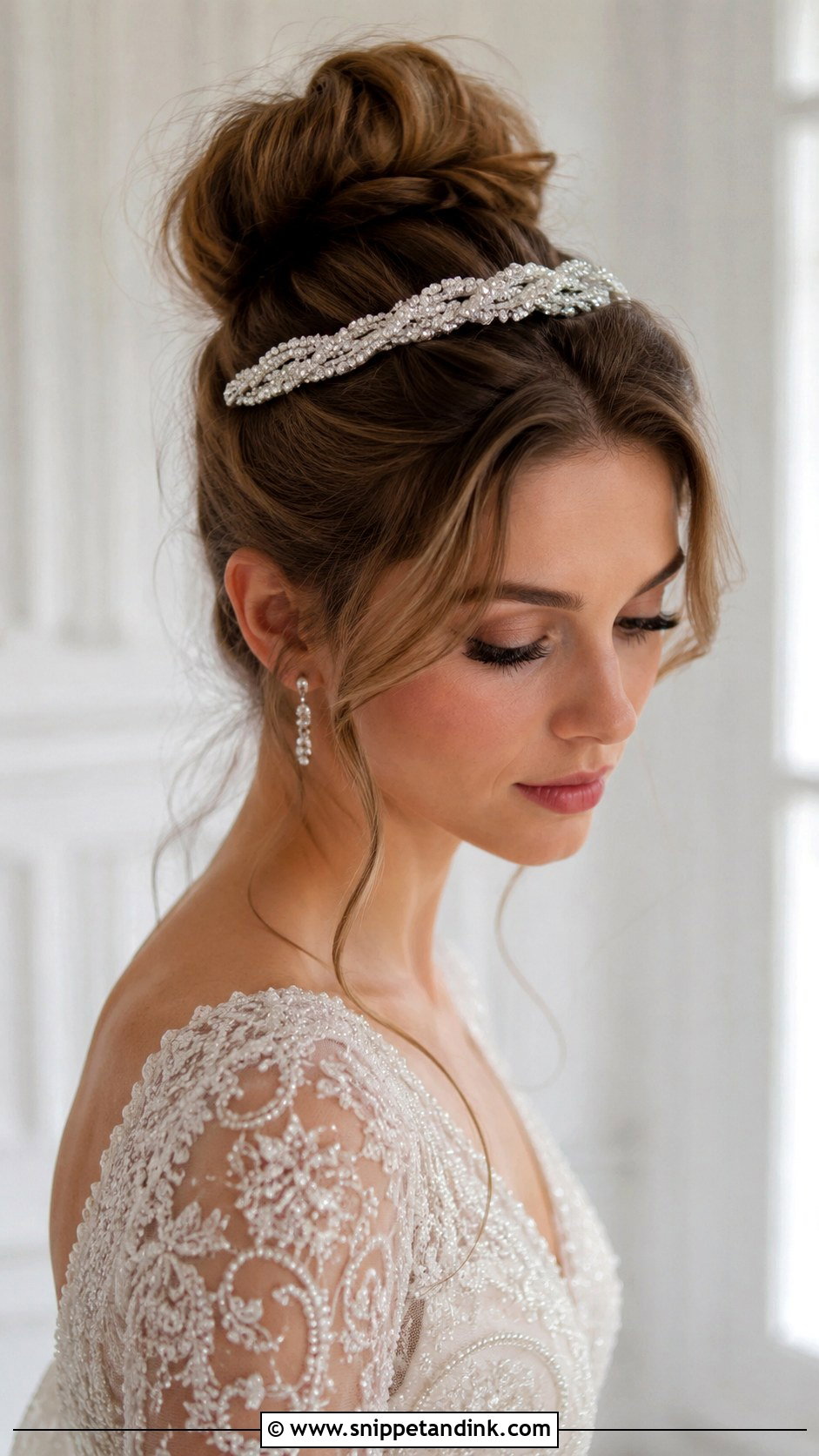
A jeweled or fabric headband sits across the crown, framing the face and adding sparkle or colour with a slightly retro feel. A sleek or soft bun suits it. Choose crystal-encrusted bands for glamour or floral ones for something boho. It keeps loose hair off the face and draws attention upward toward statement earrings. Tight bands can cause a headache behind the ears within a few hours, so wear yours for an afternoon before the wedding. It’s a good alternative if you don’t want a veil.
26. Voluminous Bun for Bride
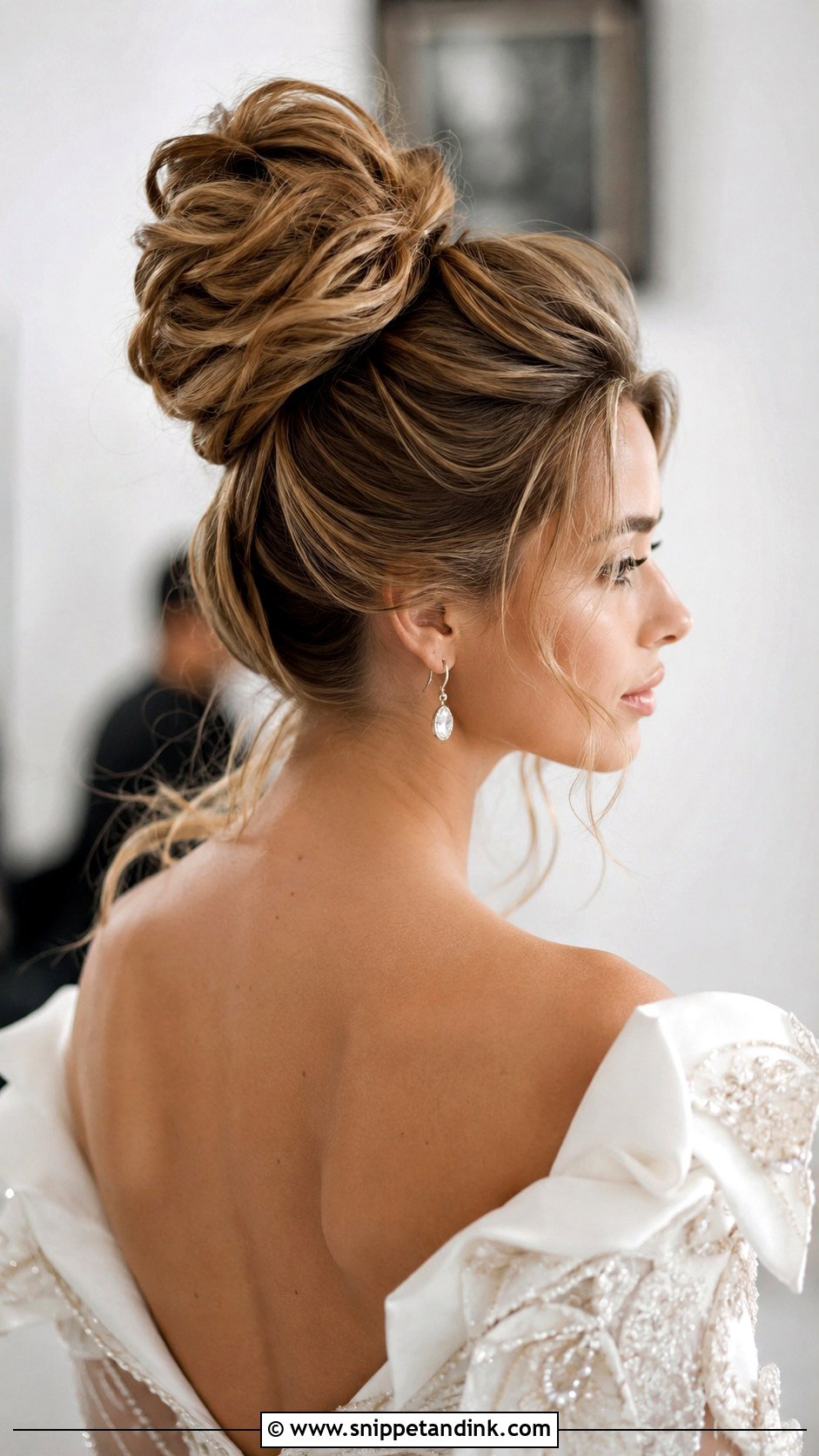
A voluminous bun brings drama and fullness. Backcombing and volume powder create height before the knot is formed, which suits formal venues, dramatic gowns and strong necklines. Sleek on top or textured throughout, both work, and it pairs with tiaras and statement accessories. Volume collapses in humidity, so I backcomb at the root rather than mid-length, then smooth only the top layer. Choose it if you’d like your hair to be noticed from across the room.
27. Bun With Loose Strands
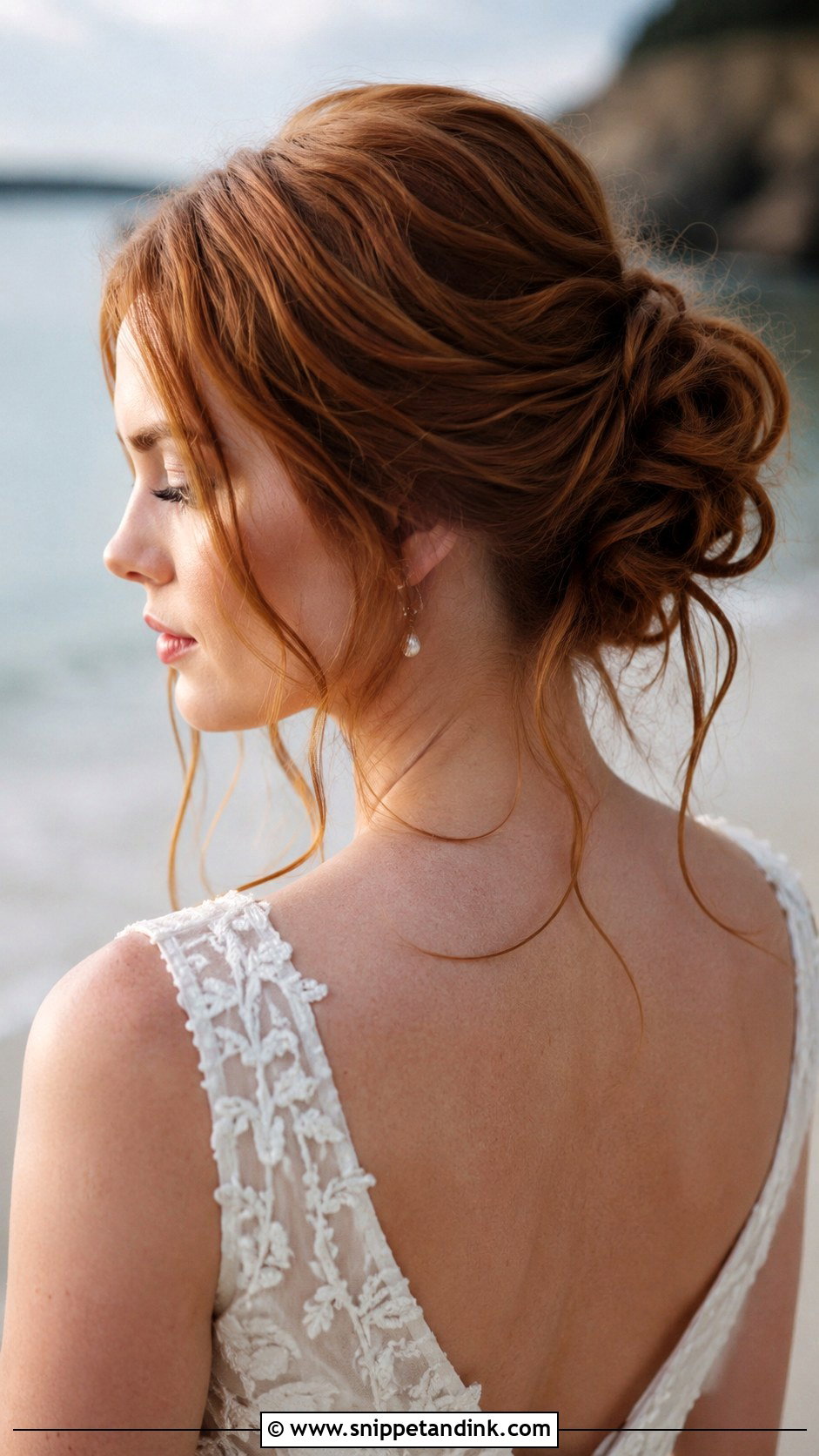
A few pieces left out around the face and neck give any bun gentle movement. It suits beach, garden and boho weddings and works with high or low buns. Curl the strands slightly so they keep their shape. The common mistake is leaving too many; three or four pieces look intentional, ten look like the bun has fallen. Delicate florals add charm. Choose this when softness matters more to you than a sleek finish.
28. Sleek Bun With Deep Side Part
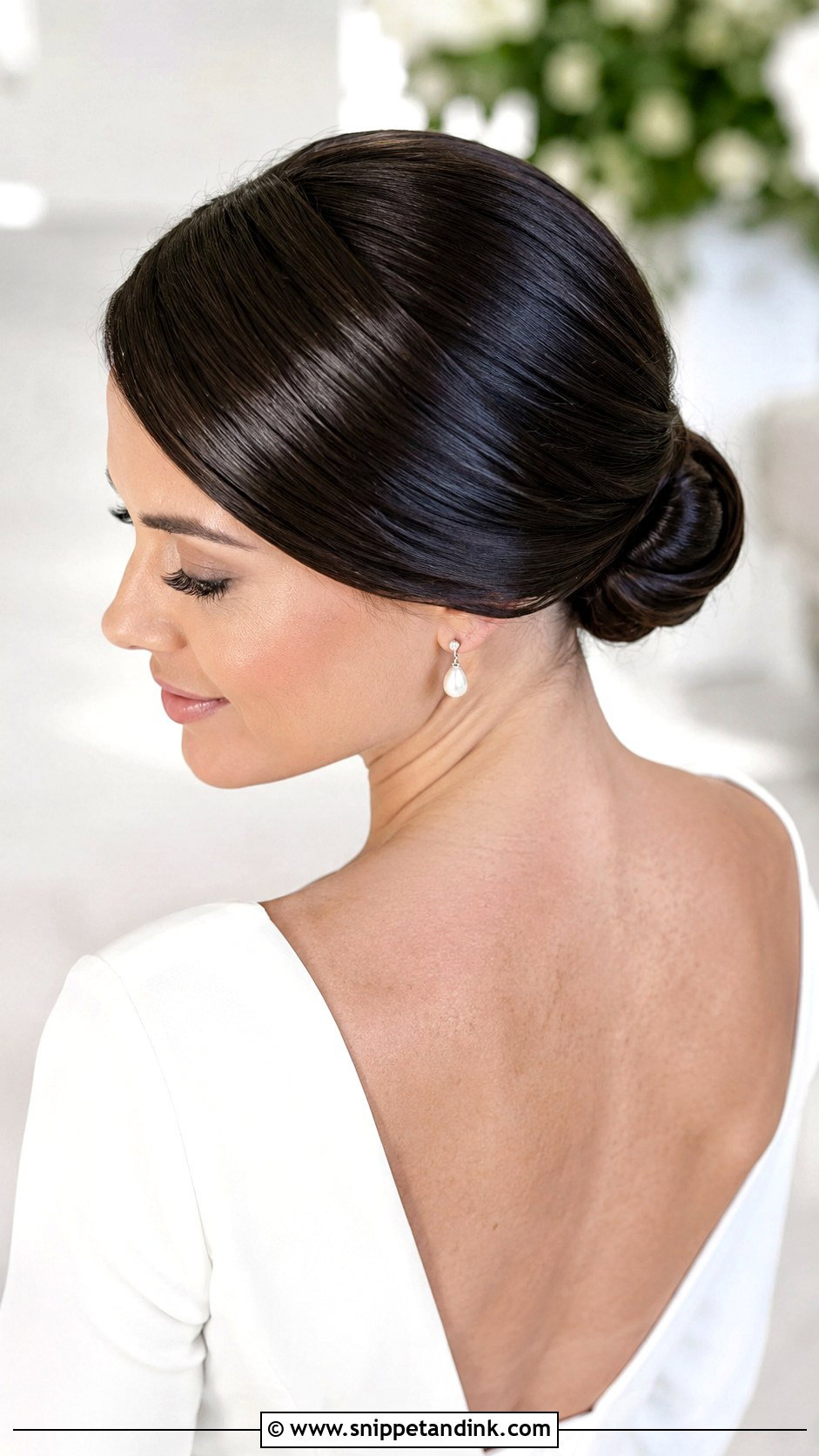
A deep side part sweeps the hair dramatically to one side before smoothing into a polished knot. It creates volume on one side, often flatters round faces, and looks modern and editorial. Formal and contemporary weddings suit it, with statement earrings and minimalist gowns. If you normally part on the other side, the hair fights the new direction, so I set it with heat early in the morning and pin it flat while I work on the rest. Smoothing serum gives a glossy finish.
29. Bun With Fishtail Braid
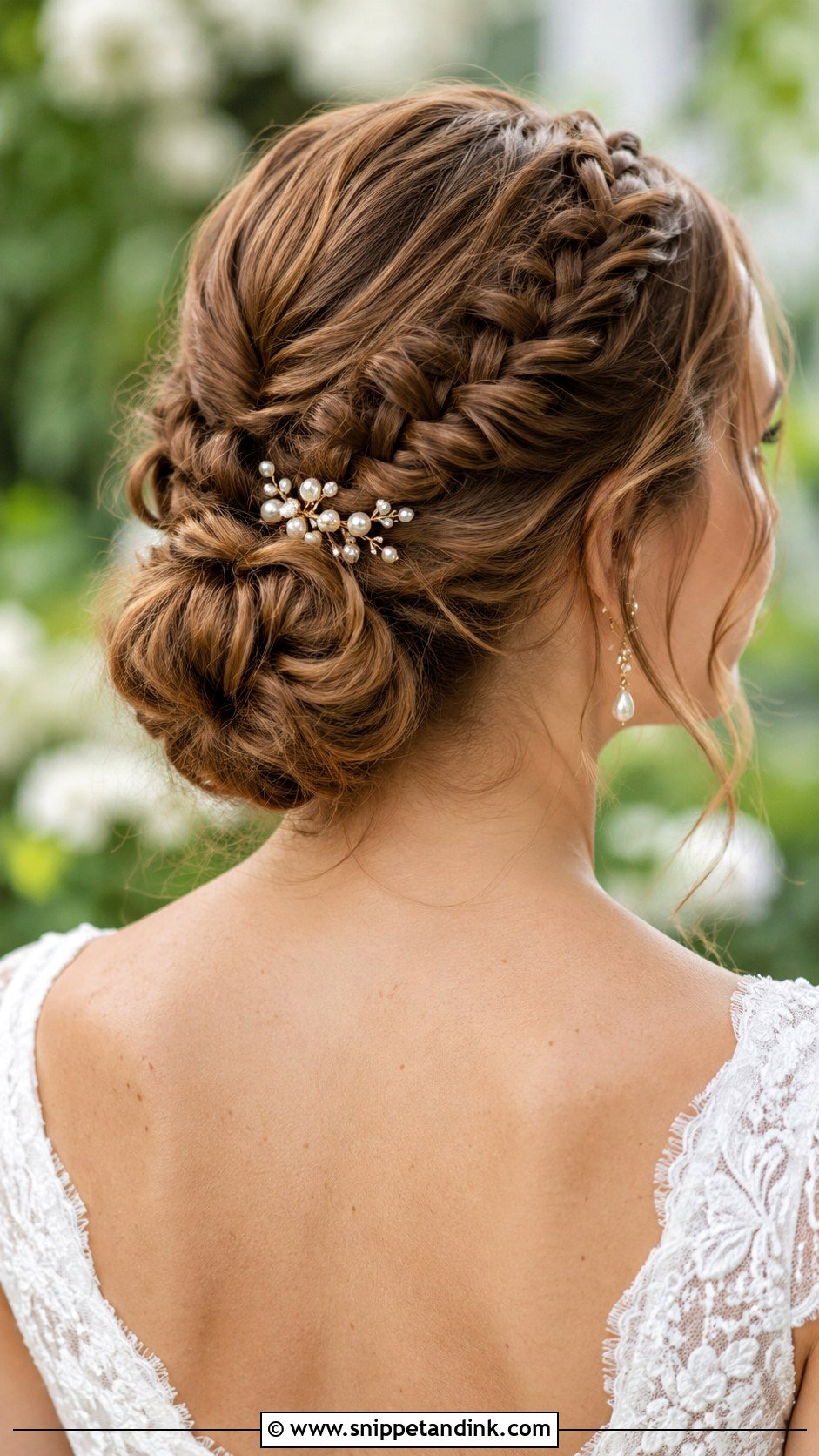
A fishtail braid wrapped around or fed into the bun adds intricate woven detail. Rustic, garden and outdoor weddings suit it, and a loosened braid looks airy. Tiny flowers or pearls can sit between the woven sections, and messy buns are its natural partner. Fishtails are slow to plait, so your stylist will need extra time. In exchange they hold firmly through a long celebration because each crossover locks the hair in place.
30. Low Bun for Long Hair Bride
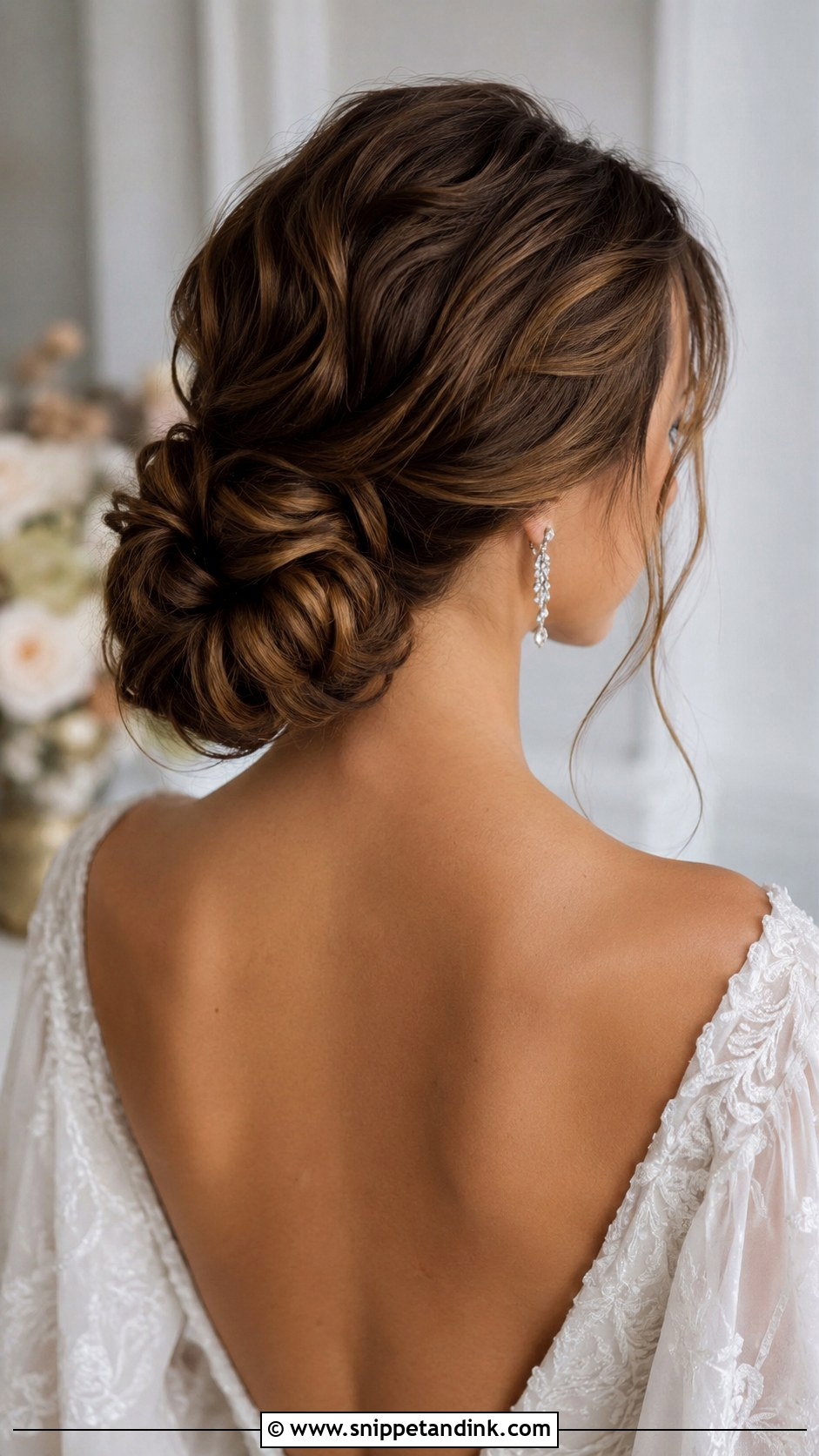
Long hair makes a full bun without any padding. All that length coils and wraps into a full knot at the nape, controlled but generous. Waves or twists add texture, and pearls or flowers can be tucked in. The issue with long, heavy hair is weight. A single large bun can drag down and start pulling at your scalp, so I split the hair into two or three sections and pin each separately. Sleek and soft finishes both suit it.
31. Bun With Cascading Curls
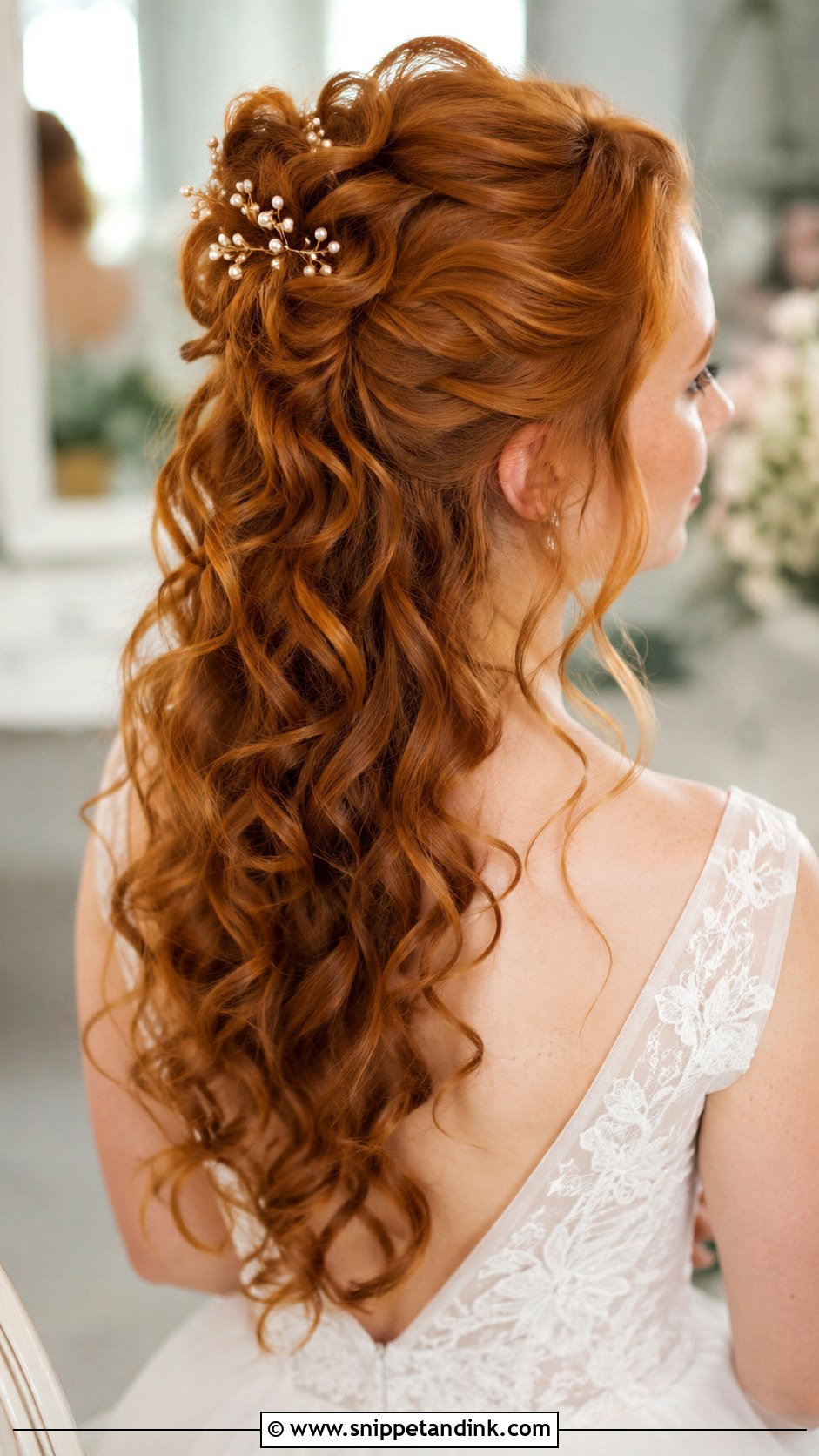
Cascading curls falling from a partial bun give you the best of both: a neat knot on top and curls tumble freely below. It suits brides who want movement rather than a full updo, and it pairs with delicate florals and flowing veils. Loose curls or defined ones both work. The curls carry no pins, so they’re the first part to relax; I’d use a setting mousse before blow-drying and set each curl cool. It’s a good option if you can’t decide between up and down.
32. Modern Top Knot for Wedding
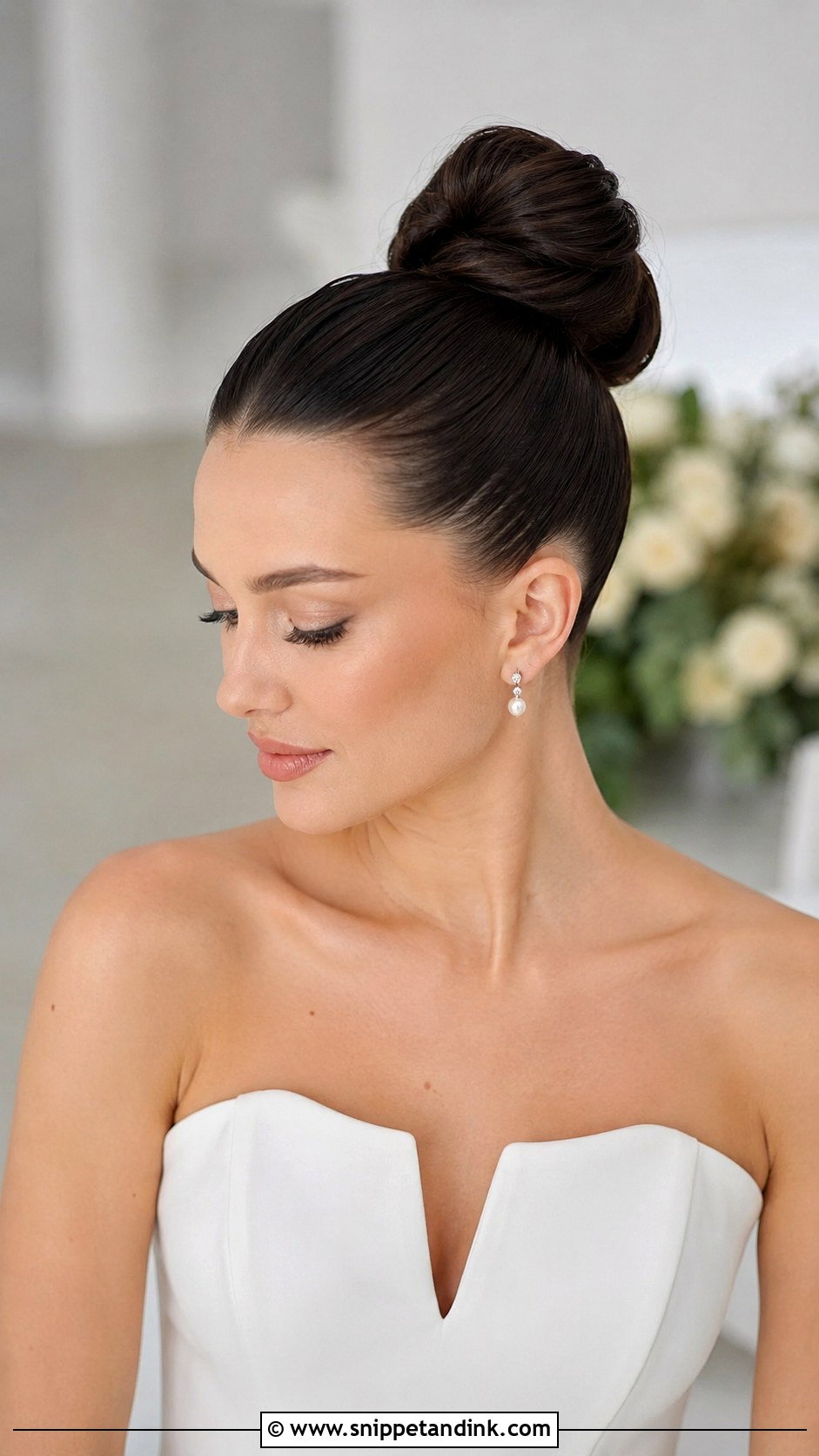
A top knot sweeps the hair high and twists it neatly at the crown. Sleek or slightly messy, it’s minimal and modern, and it lengthens the neck and frames bold earrings. Structured, minimalist gowns suit it. Smoothing products give a glossy finish. A top knot exposes your whole hairline and the back of the neck, so I’d tidy fine baby hairs with a small brush and gel. It’s understated in the best way.
33. Bun With Rhinestone Pins
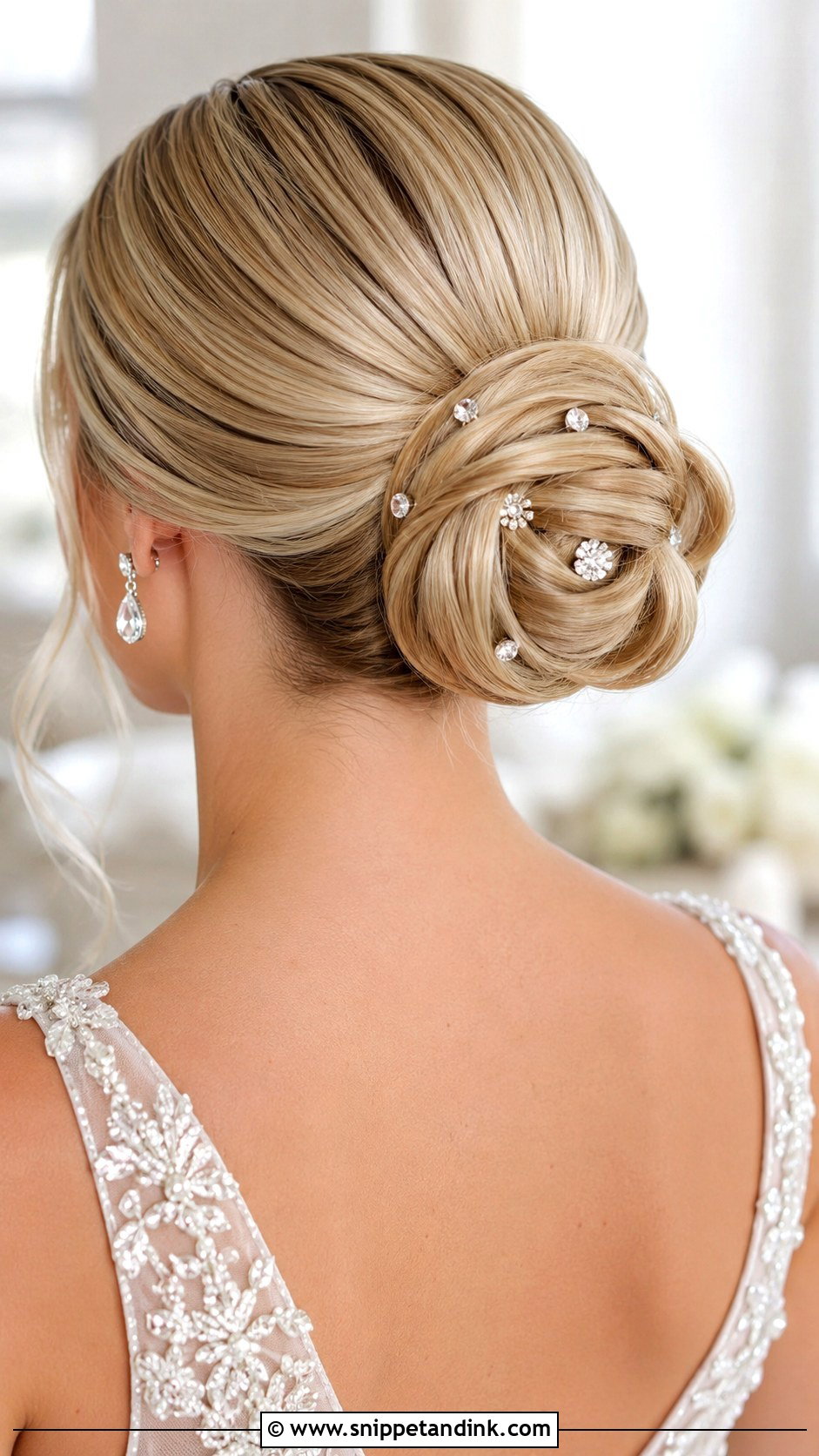
Rhinestone pins scattered through a bun catch the light and turn a simple style into something festive. Formal ballroom weddings and evening receptions suit them, with crystal earrings or a beaded gown. Cluster them for lots of sparkle or place them sparingly. They suit sleek and textured buns alike. As with pearls, decorative pins don’t hold structure, so the bun has to be secured first. Under evening lights, a few go a long way, so I’d start with fewer than you think.
34. Soft Bun for Boho Bride
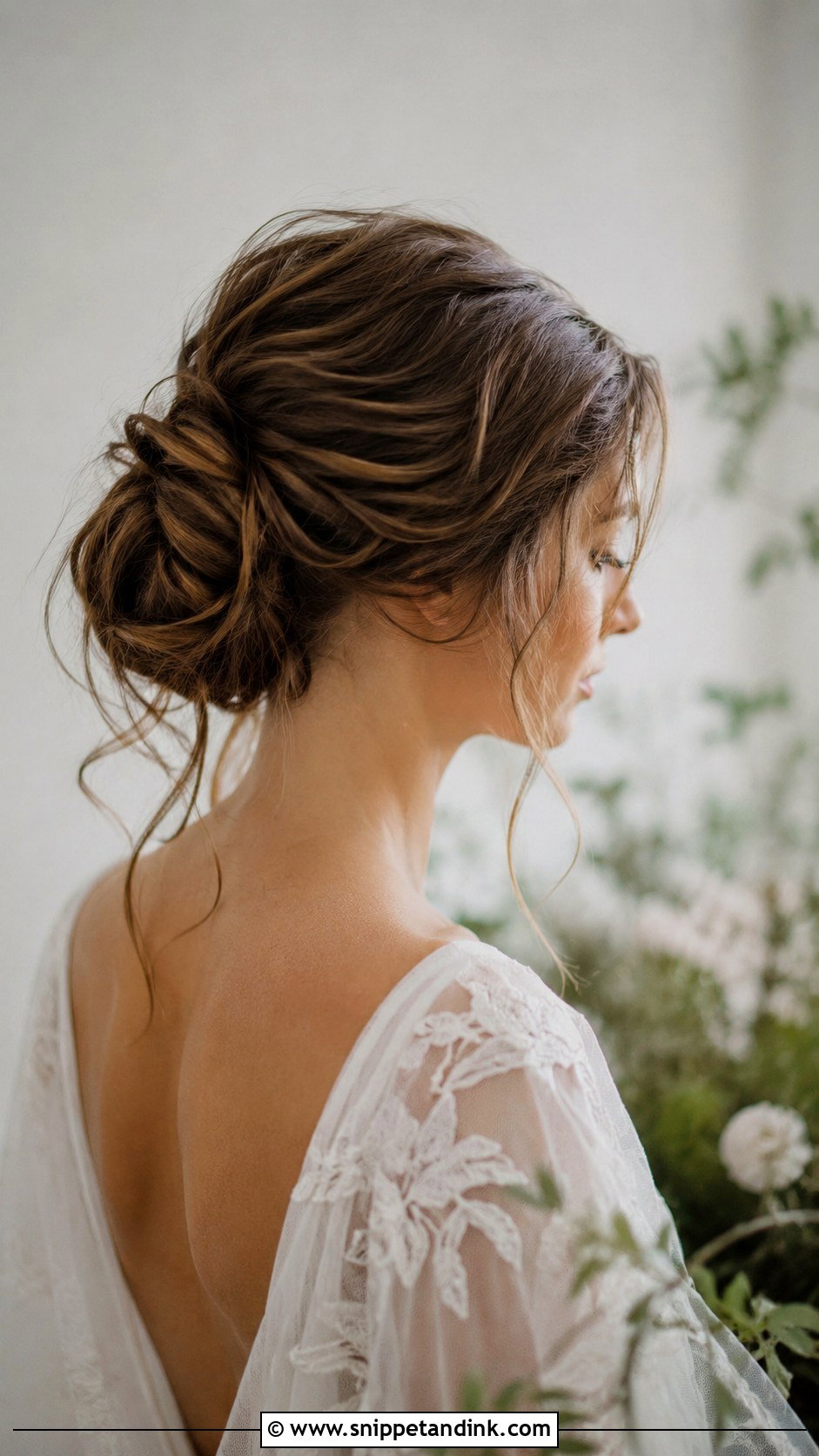
An undone bun suits beach, forest and garden weddings. Loose gathering, gentle waves and escaped tendrils create a relaxed look that seems lived-in. Flowers, greenery or a delicate hair vine add boho detail, and flowing gowns complete it. Texture spray gives the slightly imperfect finish. Even this soft bun has a secure core, a small hidden ponytail and pins, so it doesn’t fall apart in a sea breeze. It stays comfortable all day.
35. Bun With Birdcage Veil
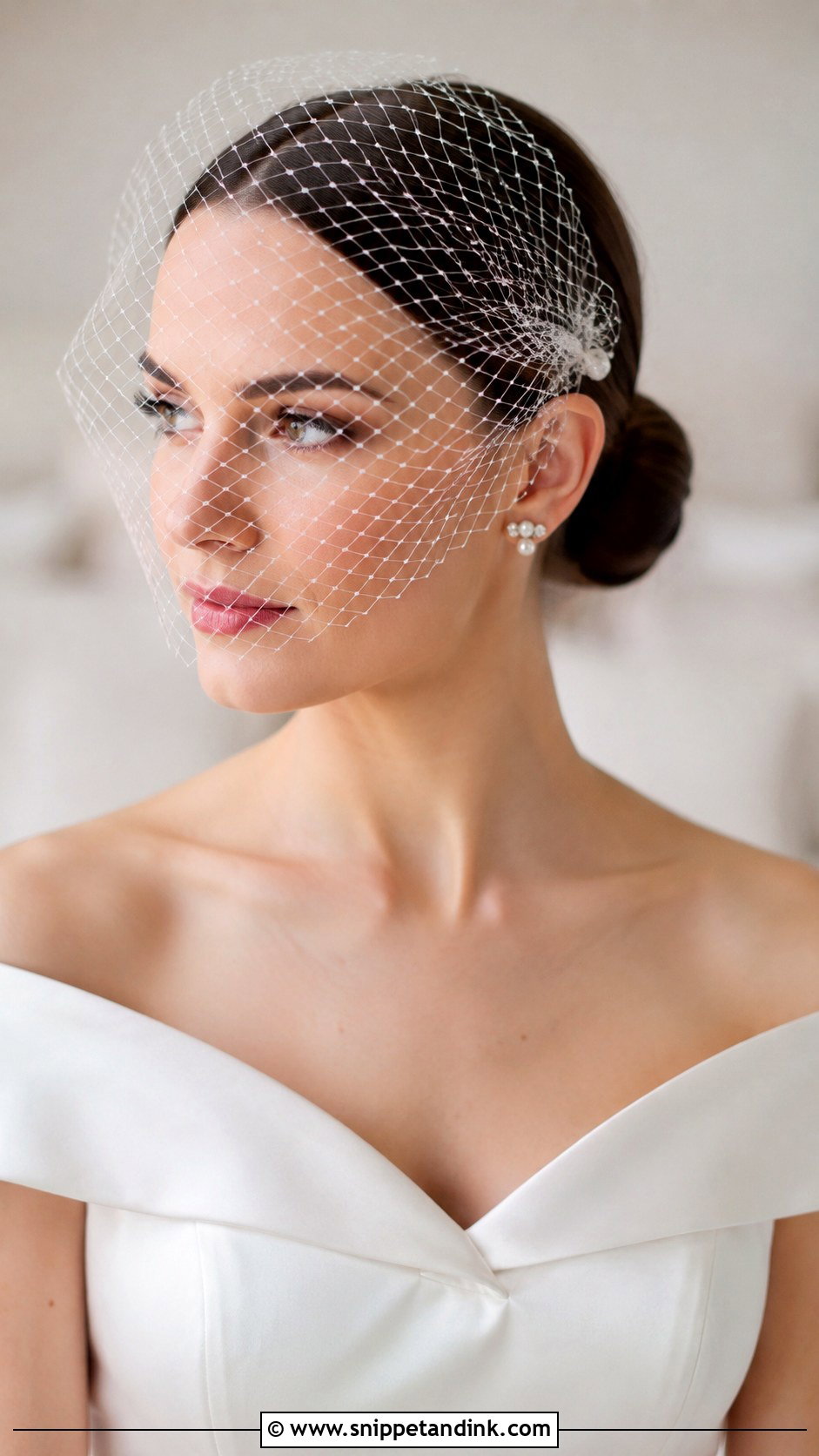
A birdcage veil is a short net that falls over part of the face, giving a retro, old-Hollywood feel. A sleek or soft bun gives it a firm anchor behind. It suits intimate, vintage-themed and formal weddings, draws attention to the eyes, and pairs with bold lipstick. The comb is usually pinned to one side of the crown, which means the bun needs to sit far enough back to leave room. It comes off easily for the reception.
A Bun Trial Should Be a Stress Test, Not a Preview
Most brides leave a trial happy with how the bun looks in the salon mirror. That’s the least useful thing to learn. What you need to find out is how it behaves over the next six hours.
- Book the trial on a day you can keep it in until the evening, and go about your normal day in it.
- Bring the veil or headpiece and wear it for at least an hour. Notice any pulling at the comb.
- Take photos from the front, both sides and the back in daylight, then again in the evening.
- Note what moves first: the face-framing pieces, the crown or the bun itself. Tell your stylist.
- Check whether a headache starts. If it does, the bun is pinned too tight or sits too high for your hair’s weight.
Taking the veil out between ceremony and reception
Ask someone who watched the comb go in to take it out. They should remove the backing pins first, then slide the comb out in the same direction it went in. Pulling it straight back drags the bun loose. A couple of spare pins in the maid of honor’s bag will fix any gap it leaves.
Your Gown, Your Venue and the Bun Between Them
Your venue, your gown and your own style point toward the right bun. Sleek low knots and dramatic high buns sit at one end, romantic floral styles and boho textures at the other, and there’s a version for every bride in between. Buns combine a polished look with comfort that lasts from the vows to the last dance. Pearls, flowers or a vintage veil make it personal. Take photos of the styles you like to your trial, and let your stylist tell you honestly which ones your hair will hold.
You'll Like These Ideas:


Leave a Reply