
Open hair has become one of the most requested bridal looks I do, for white gowns and for lehengas and sarees alike. It shows your natural texture, it moves in photos, and it feels less formal than a structured updo. It also has to carry more than people expect: a veil, a dupatta, a maang tikka or a passa, all pulling on hair that has nothing pinned underneath to hold them. The twenty ideas below cover boho waves, sleek lengths, Hollywood curls and traditional looks, with my notes on how to make each one stay put.
Anchoring a Dupatta, Veil or Tikka on Loose Hair
With an updo, a heavy dupatta or veil pins straight into the bun. With open hair, there is nothing to pin into, so the weight drags the hair flat at the crown and the fabric slides back as you move. I solve that before any curling starts.
- I create a small, hidden base at the crown: a flat twist or a tiny puff secured with an elastic. It sits under the top layer of hair, so it can’t be seen.
- For a heavy bridal dupatta, I place a row of crossed bobby pins along the back of the head as a track. The dupatta is pinned into that track, not into loose strands.
- The maang tikka gets a hidden pin either side of its chain and one at its base. Without them, it shifts every time you turn.
- A passa or jhoomar is attached on one side to the same pinned track, so its weight doesn’t pull the curls straight on that side.
Bring every piece of jewellery and the actual dupatta or veil to the trial. Weight varies a lot between pieces, and a heavily embroidered dupatta can need twice the anchoring of a light net one.
1. Loose Curls With Veil
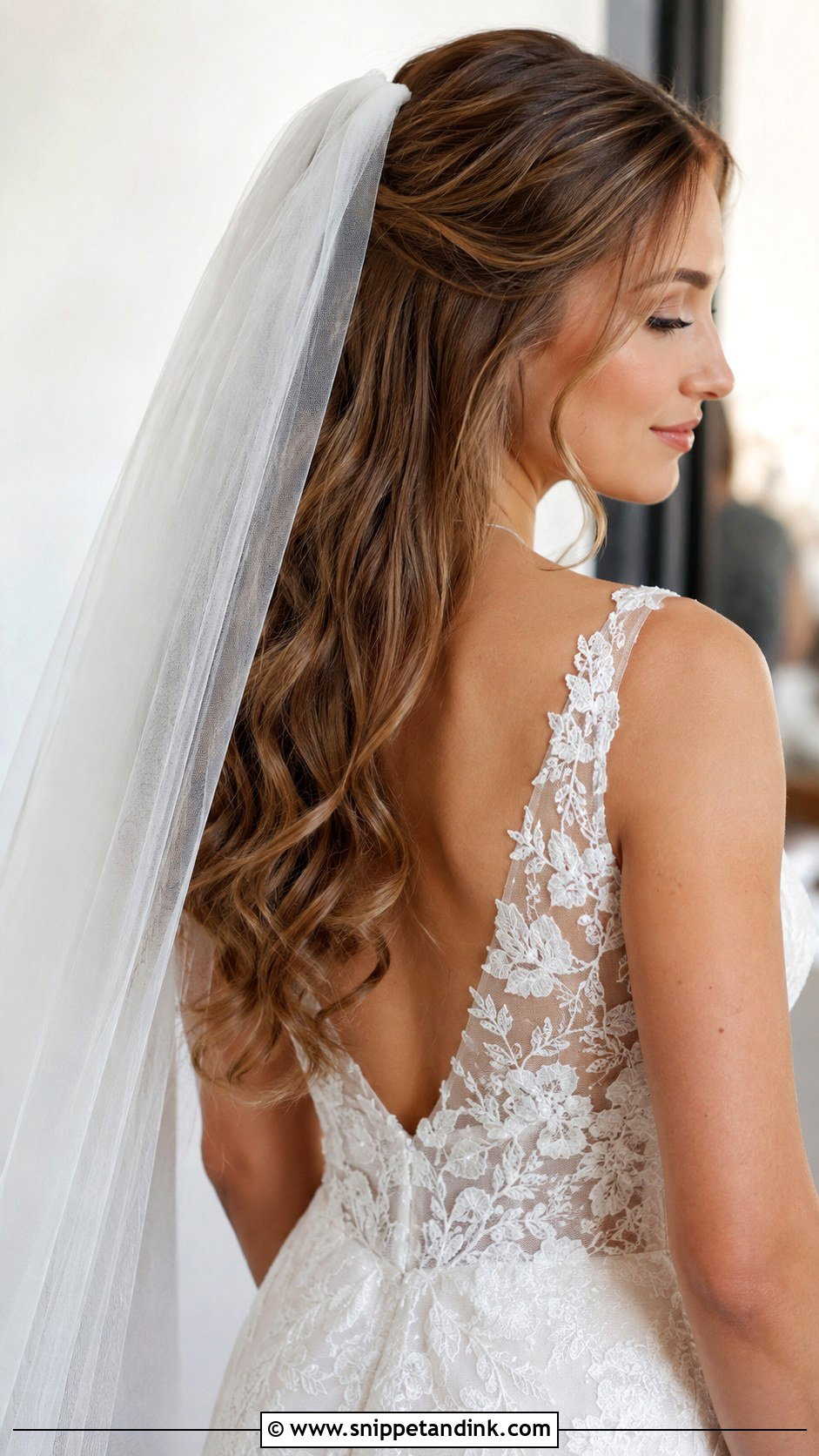
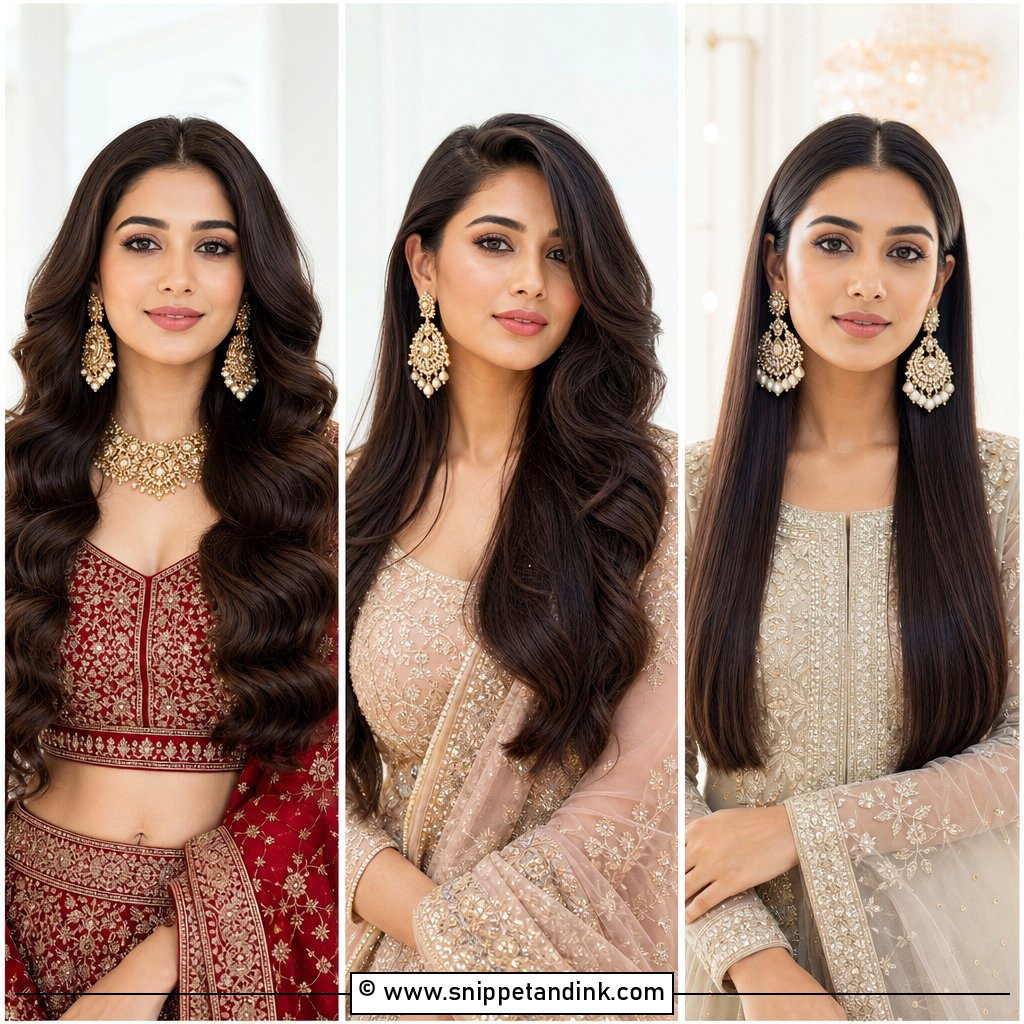
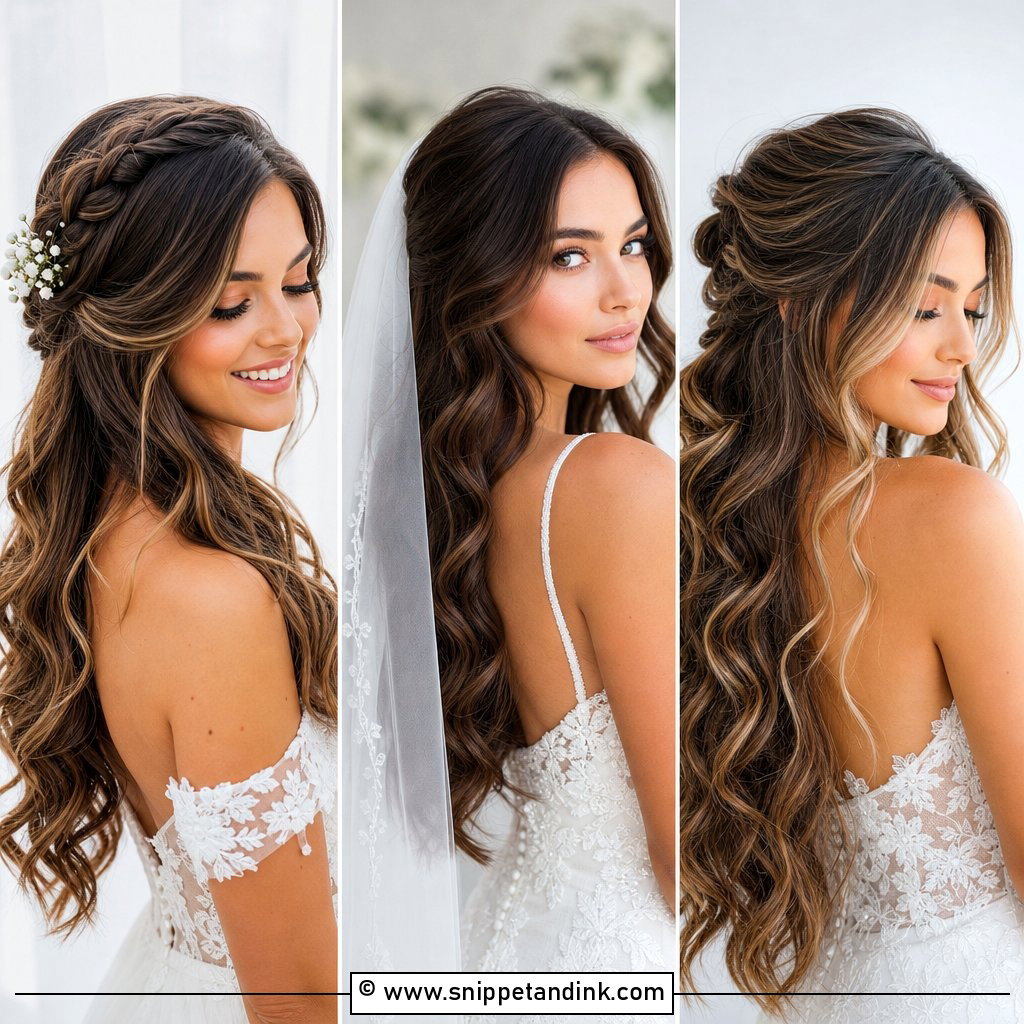
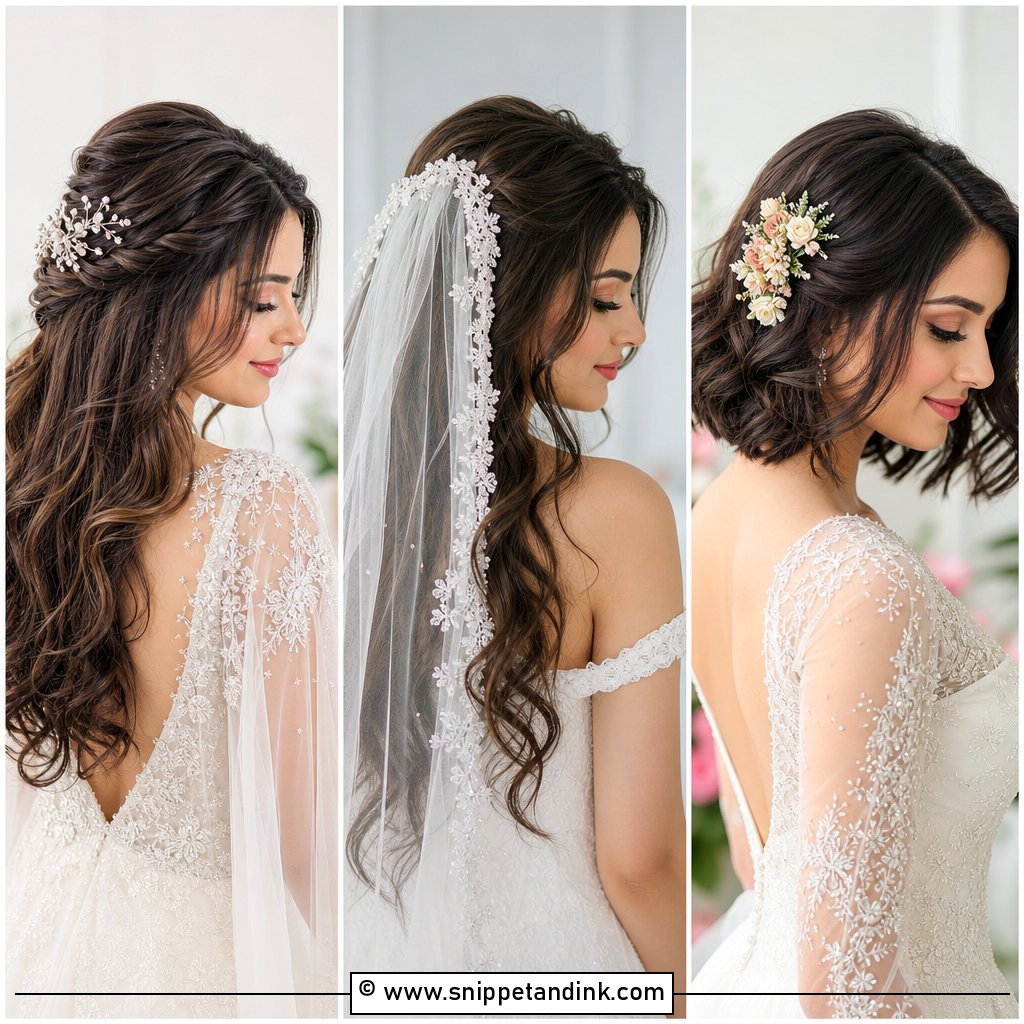
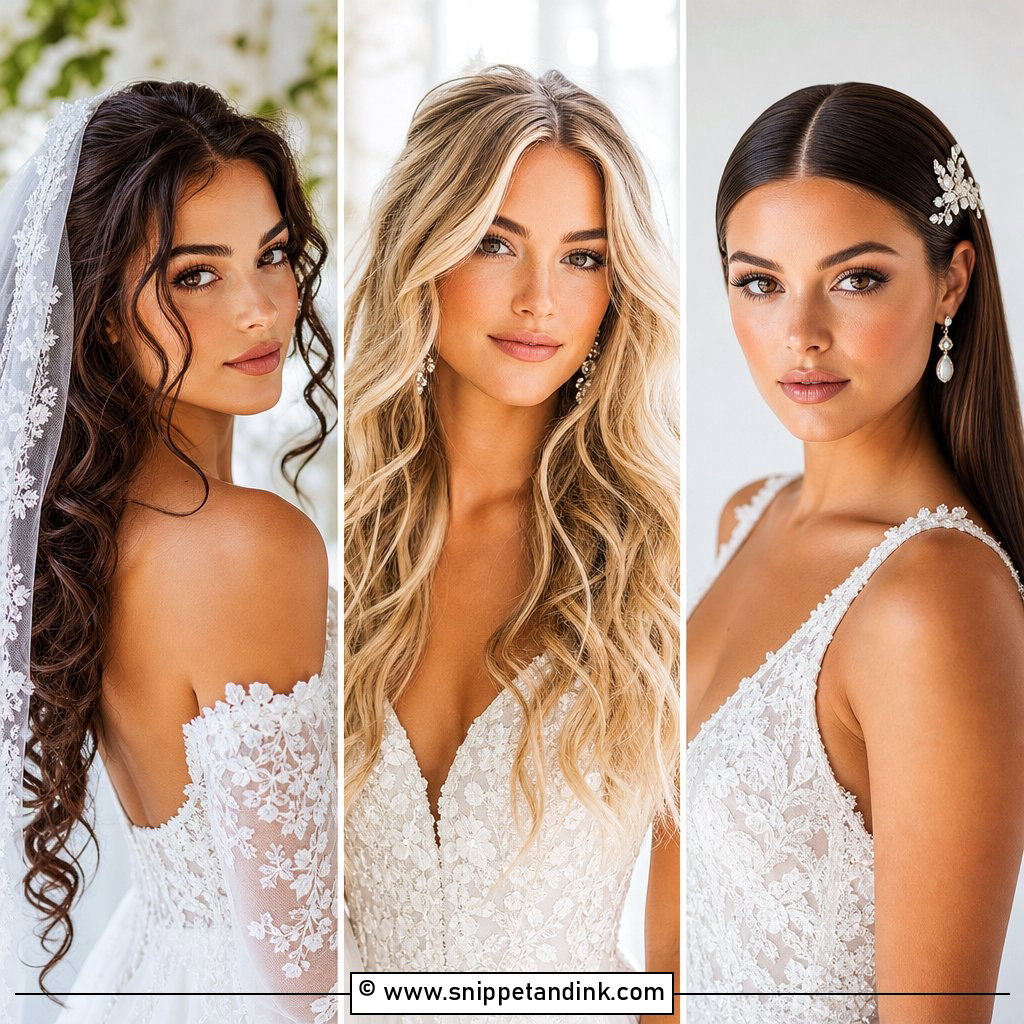
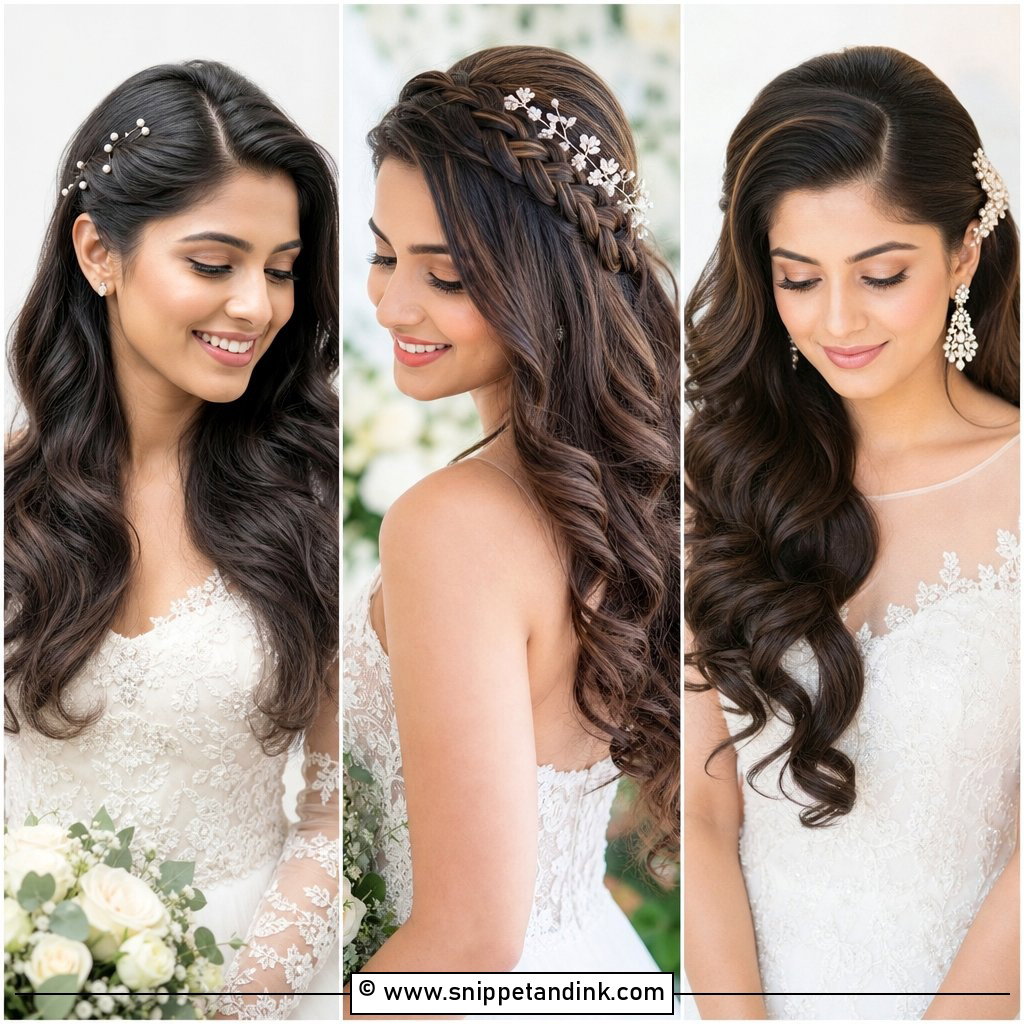
Loose curls under a sheer veil work on nearly every bride, which is why I treat it as the default to test first. I use a heat protectant, curl in large sections and let them cool before brushing them out. The veil can’t simply be pushed into loose hair, so I make a small hidden twist at the crown and anchor the comb into that. The curls then fall freely around your shoulders. It suits a chapel or garden ceremony, and the soft bounce shows well as you walk.
2. Beachy Waves for Boho Brides
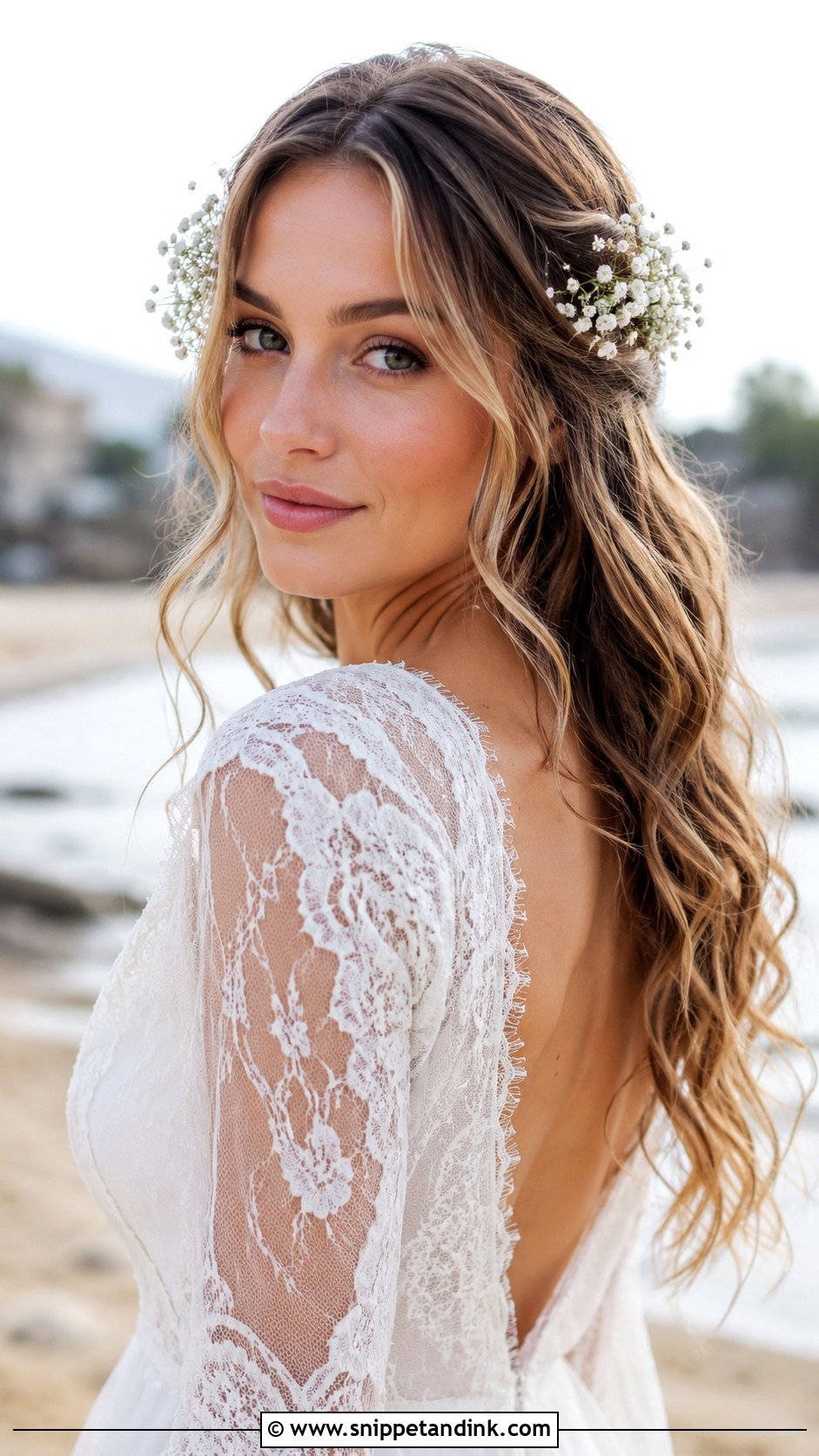
Beachy waves are about texture rather than shape. I curl with a wand in S-shaped bends, leave the ends straight, then rake my fingers through and add texture spray. It’s low-maintenance and suits outdoor and boho weddings, especially with medium to long hair. A few wildflowers or a sprig of baby’s breath at the temple finish it. They also handle wind well, since a breeze only makes tousled waves look more natural.
3. Sleek Straight Open Hair
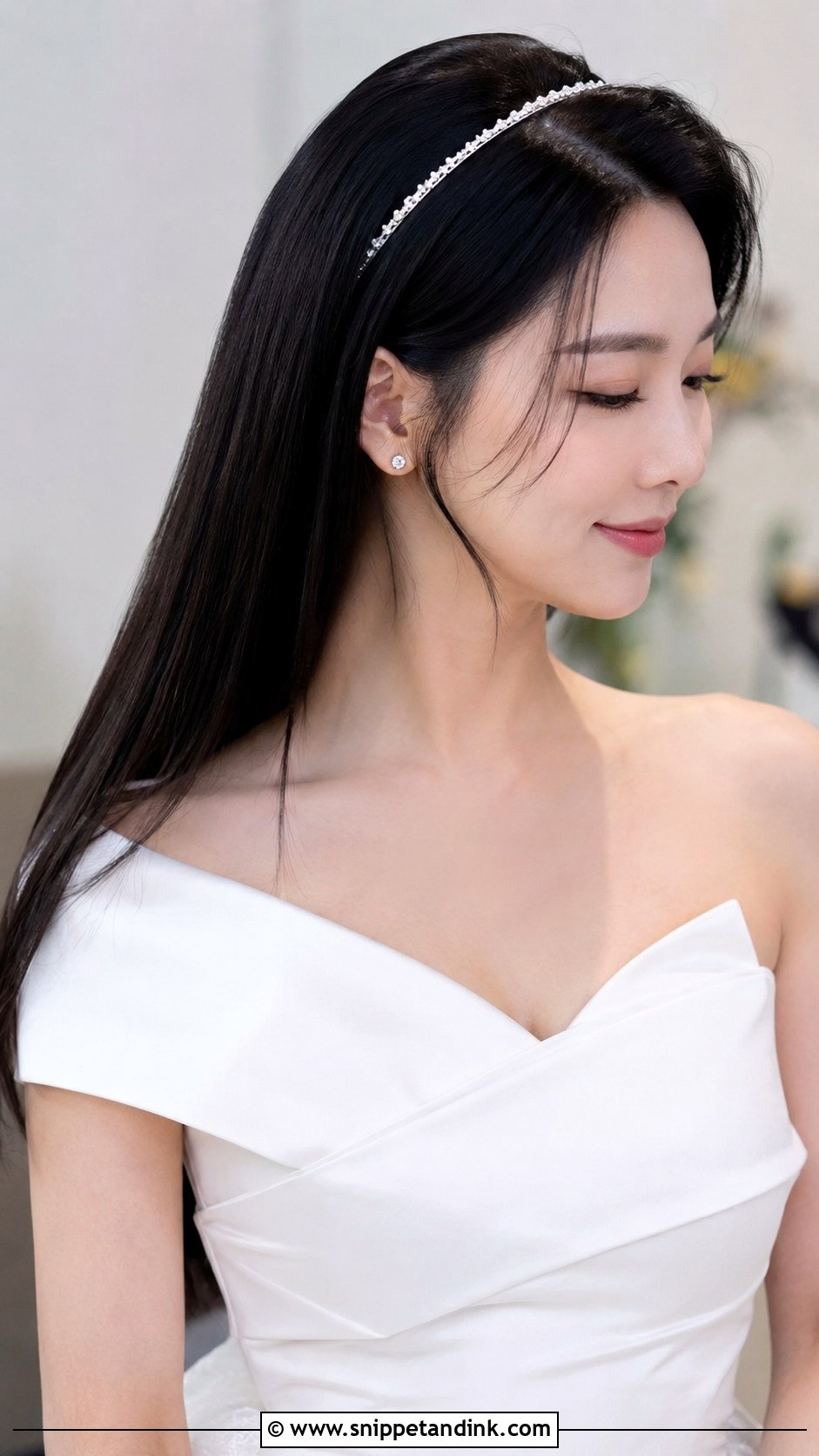
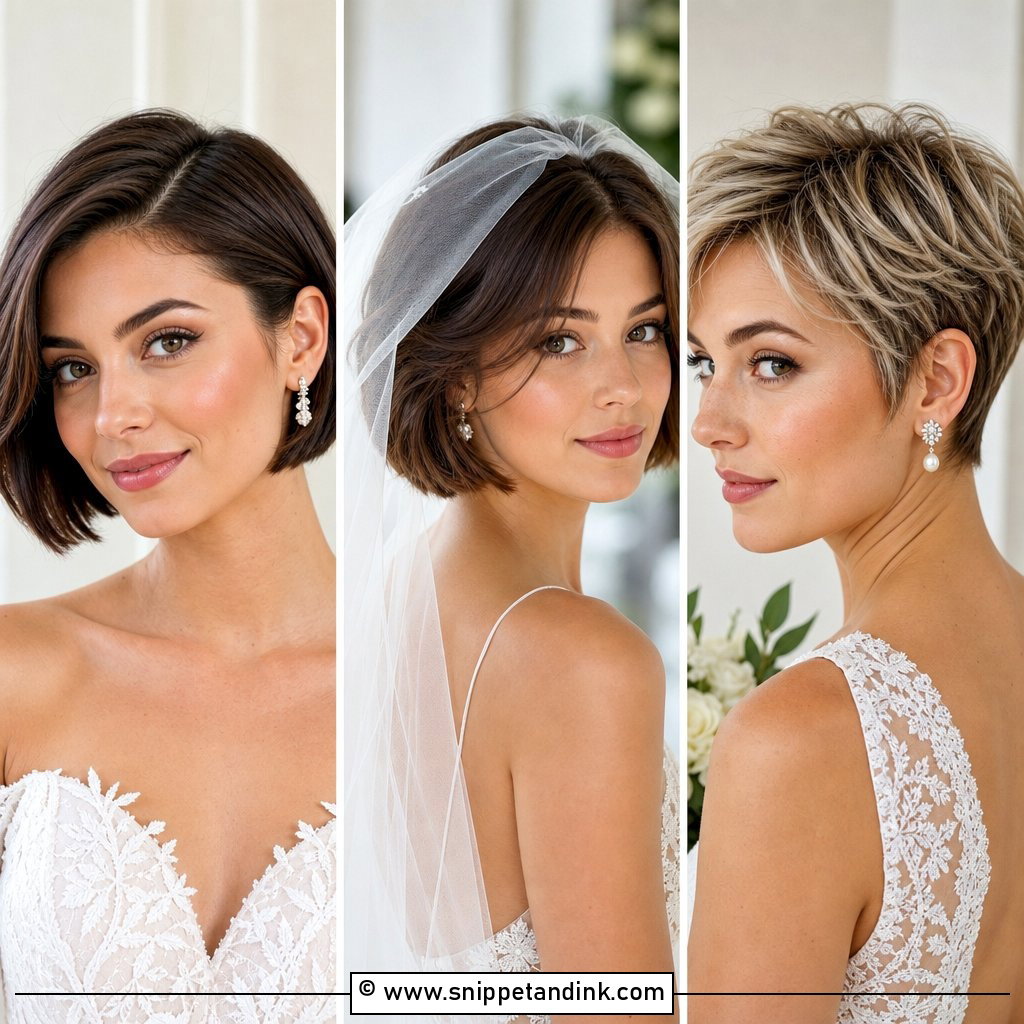
Poker-straight, glossy hair is the simplest open look, and the least forgiving. I apply a smoothing serum, then flat-iron small sections at a moderate heat so the cuticle lies flat and reflects light. Too much heat dulls the shine rather than adding it. A centre or deep side part keeps it clean, and a thin headband or jewelled pin adds a small accent. It suits structured and modern gowns and keeps the focus on your face and jewellery.
4. Half-Up Half-Down With Flowers
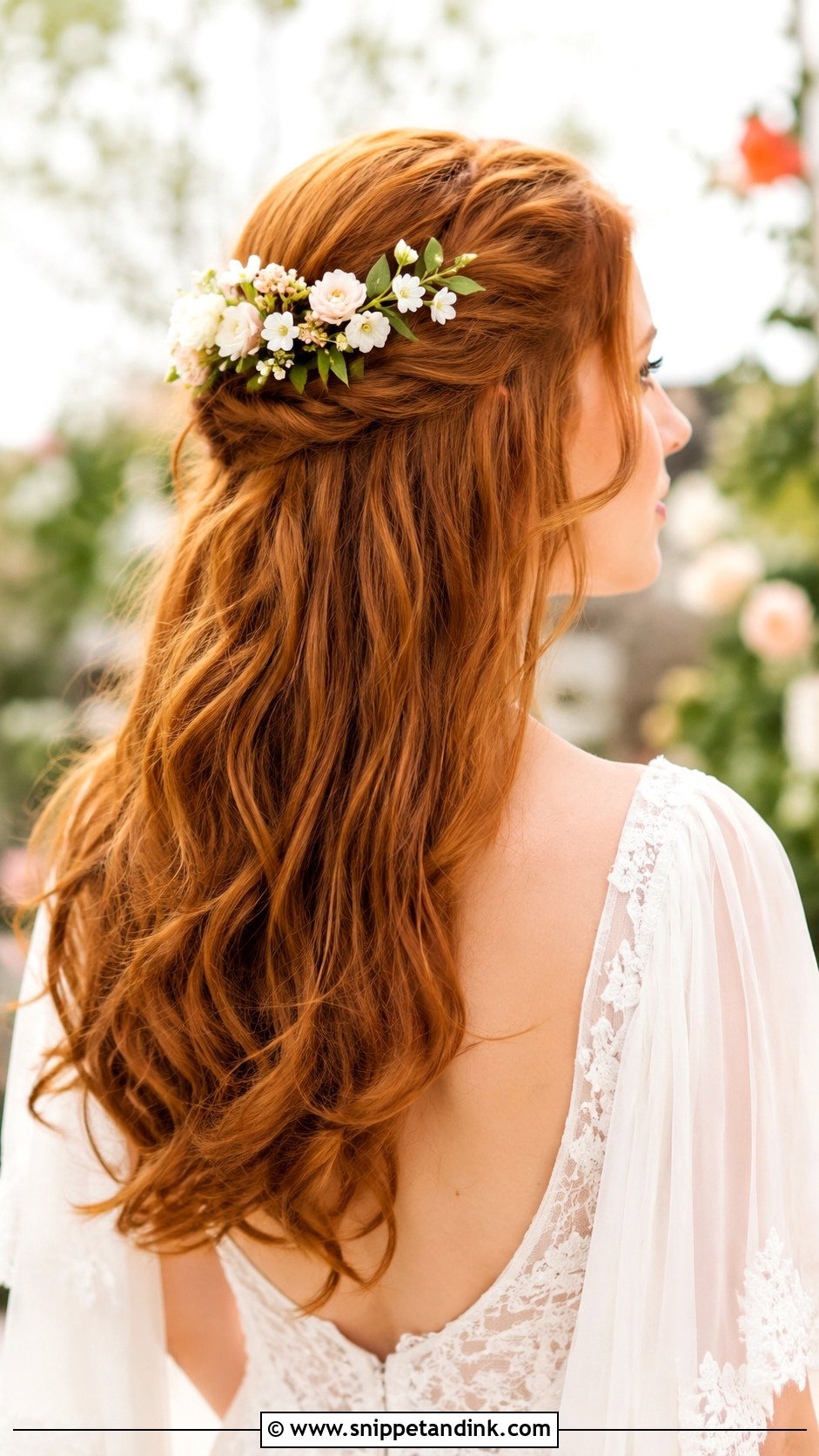
Gathering the top section back keeps your face clear during the ceremony while the length flows in soft waves. Fresh flowers or pearl pins sit at the join. That join is also the best place for a veil comb, because it’s the only point in the style with something firm to grip. It suits rustic, garden and classic weddings and flatters most face shapes. If you’re wearing fresh flowers, ask the florist for small wired stems that won’t drop petals into your hair.
5. Hollywood Glamour Waves
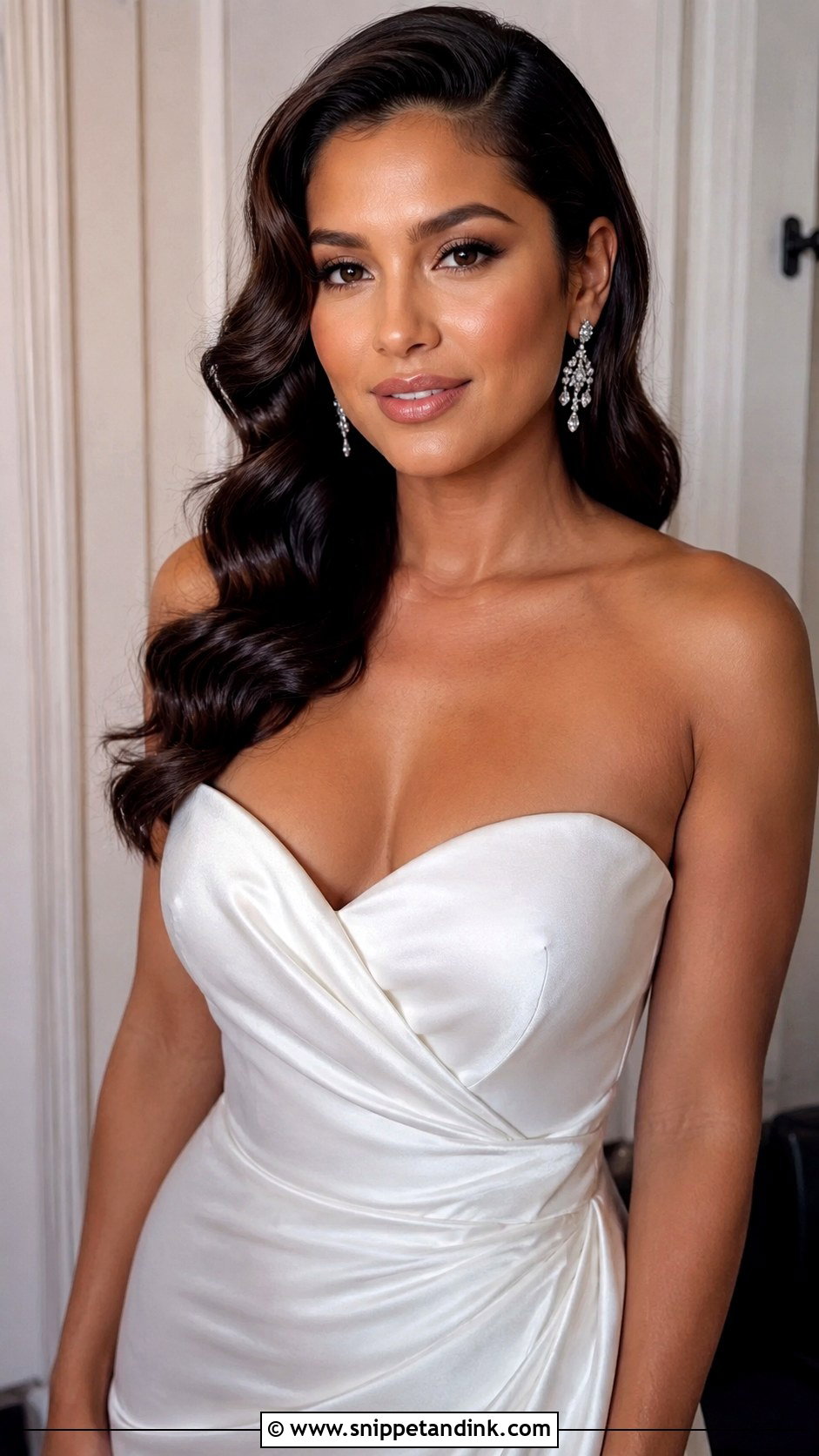
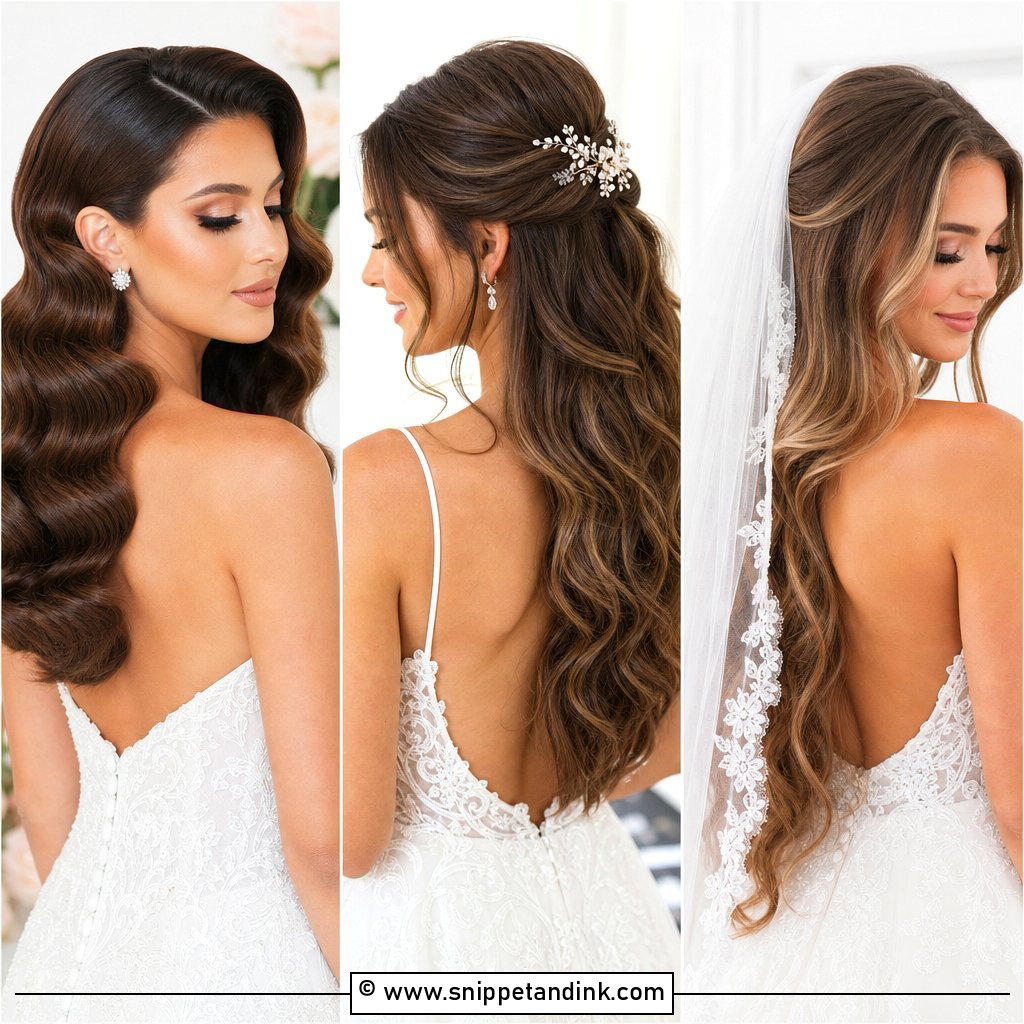
Deep, sculpted waves that fall to one side give open hair a classic glamour. I set the hair in large rollers or curl it with an iron, all in one direction, then brush through slowly until the curls join into continuous S-waves. A shine spray seals it. It suits statement earrings and a fitted gown, and the deep side part adds to the drama. It’s also the style most damaged by humidity, so I’d only suggest it for indoor or air-conditioned venues.
6. Braided Crown With Open Hair
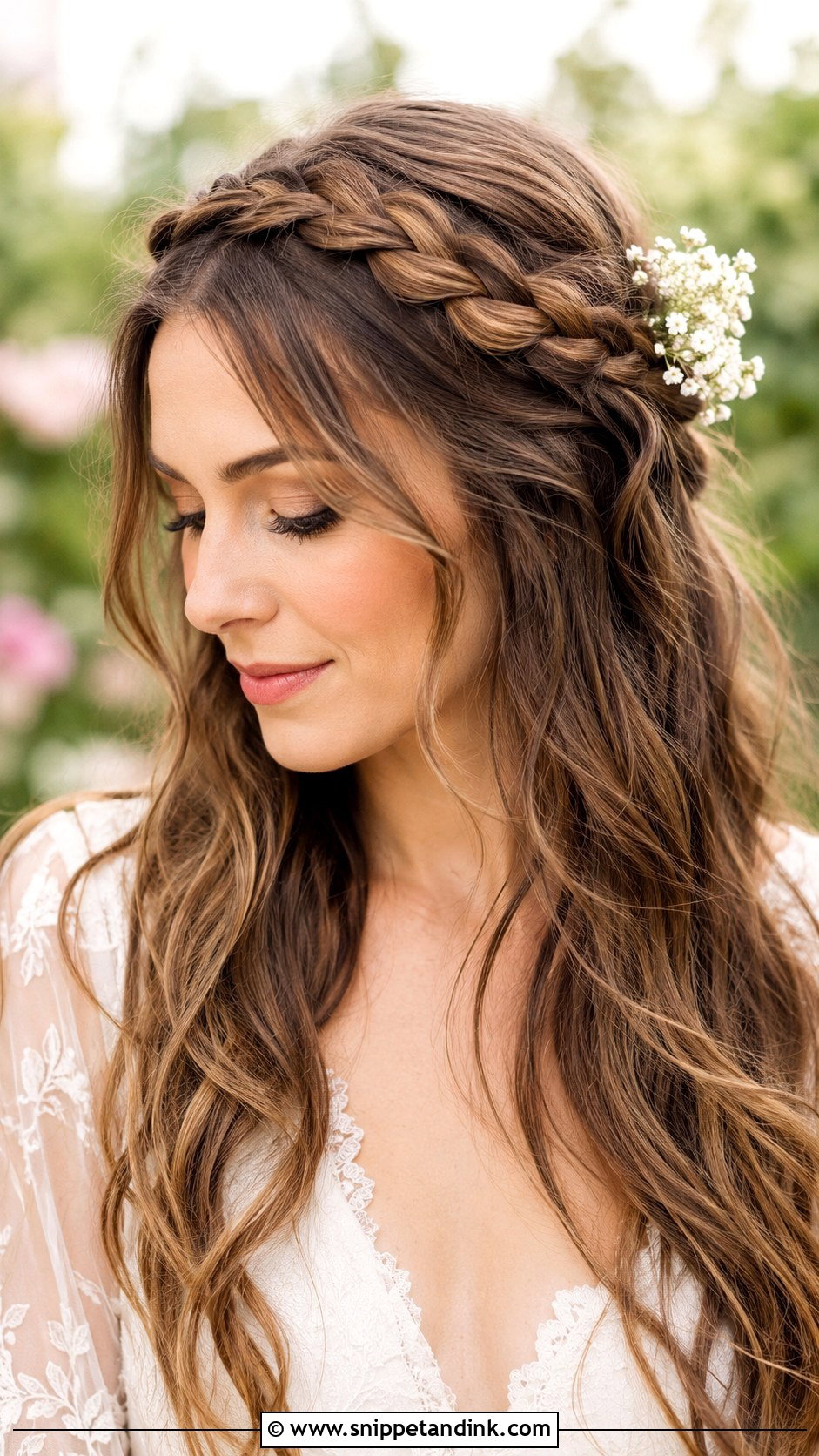
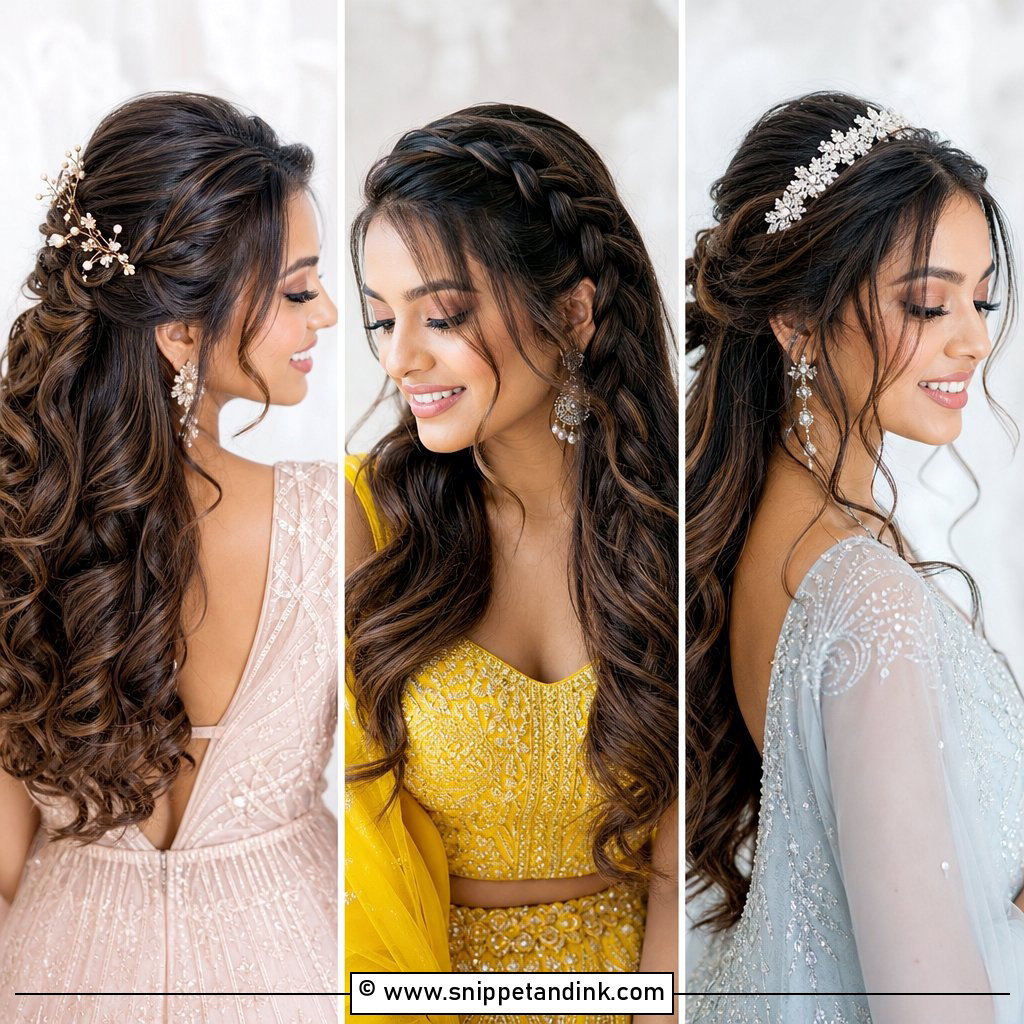
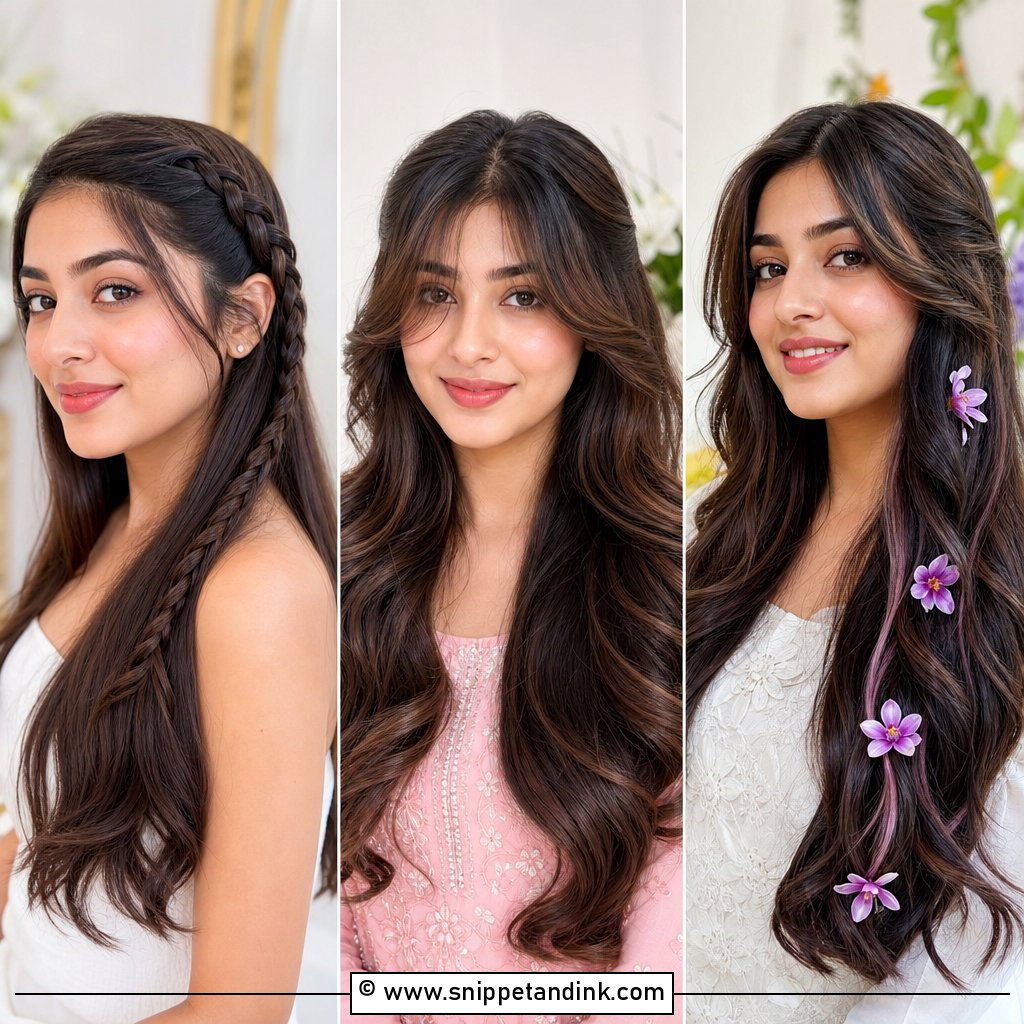
A delicate braid around the top of the head like a halo, with the rest left open, adds detail while keeping stray hairs in place. I leave a few face-framing strands out for softness. Small flowers tuck neatly into the braid. It works with both straight and wavy lengths underneath, and suits boho and garden weddings. I’d thread the braid slightly behind the hairline rather than right at it, so it doesn’t pull at the temples by the end of the evening.
7. Fishtail Braid With Loose Waves
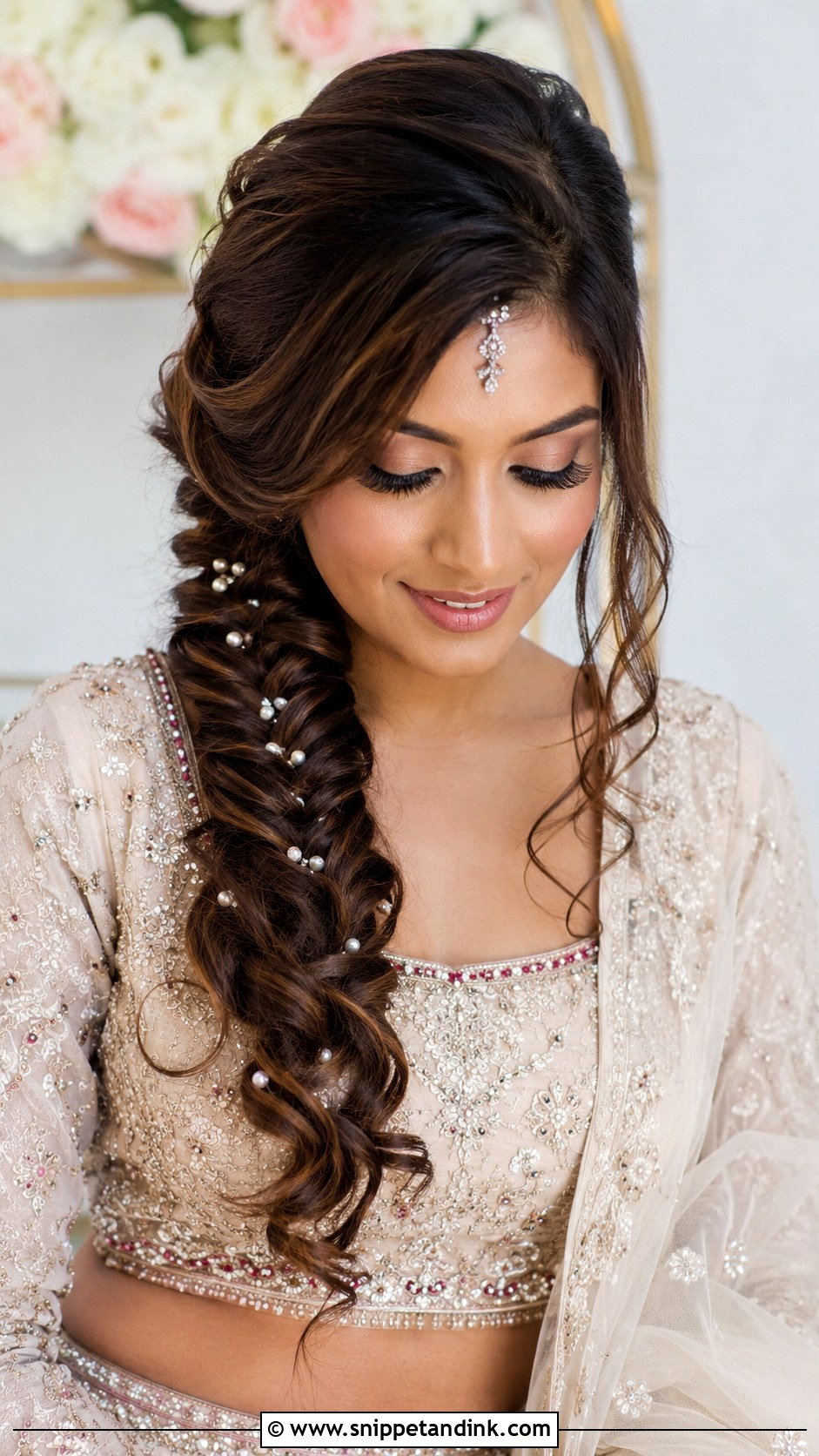
A fishtail braid drapes over one shoulder while the rest of the hair falls in waves. The crisscross pattern looks complex but is mostly patience: each crossing takes a tiny section. I loosen the edges gently once it’s done. It’s a good fit for mehendi, haldi or boho events, partly because a braid keeps hair away from wet henna and turmeric. Tiny flowers or pearls can decorate it. It needs long hair to work.
8. Side-Swept Curls
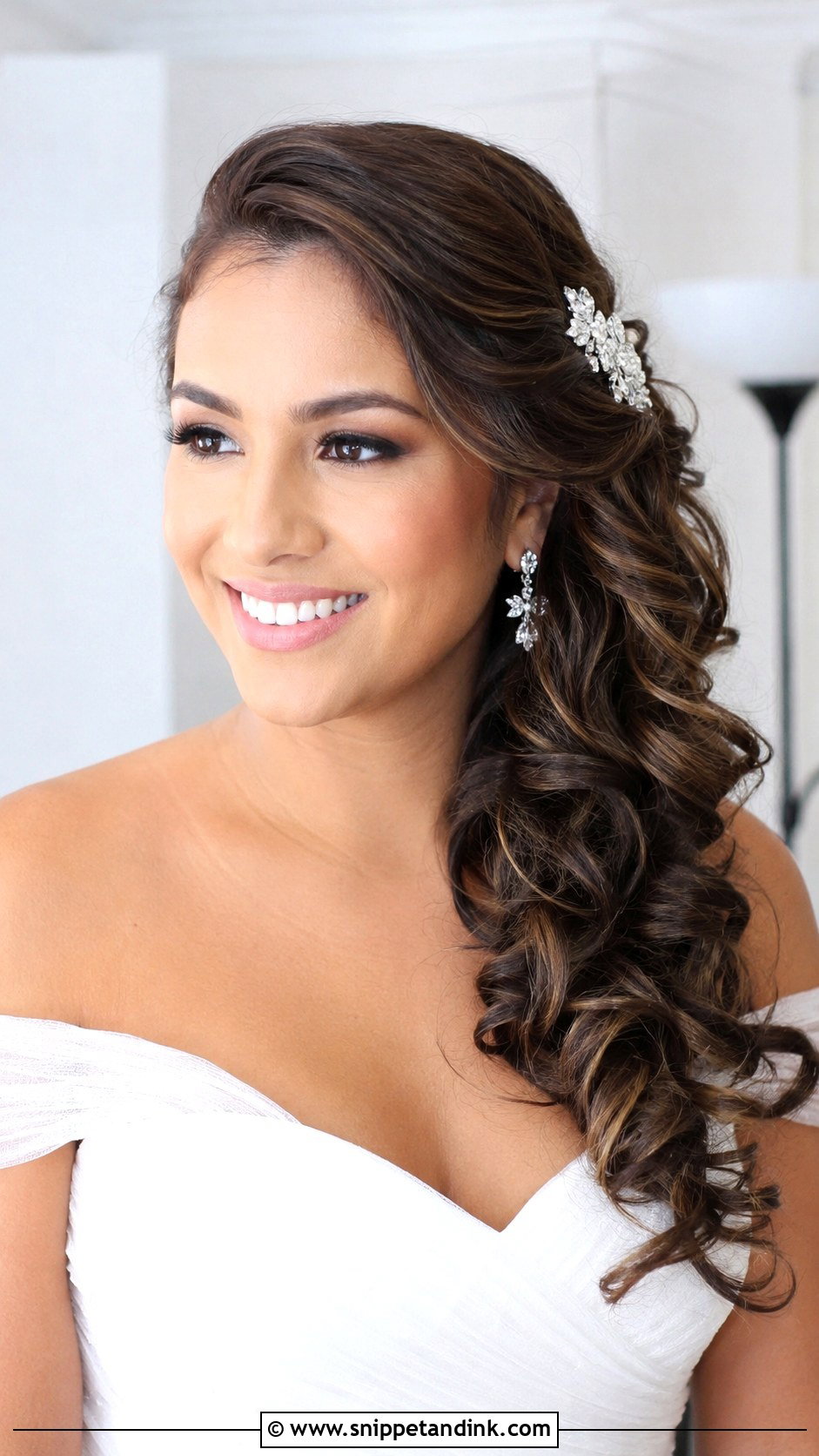
Sweeping curled hair over one shoulder opens the neckline and earrings on the other side. I pin it discreetly behind the opposite ear with crossed bobby pins, and that anchor decides whether the shape lasts. A sparkling clip can cover the pins. Off-shoulder gowns and statement jewellery suit it, as do medium to long lengths. If you’re wearing a heavy necklace, check at the trial that the hair doesn’t snag on it, since loose curls catch in metal settings.
9. Boho Waves With Hair Vine
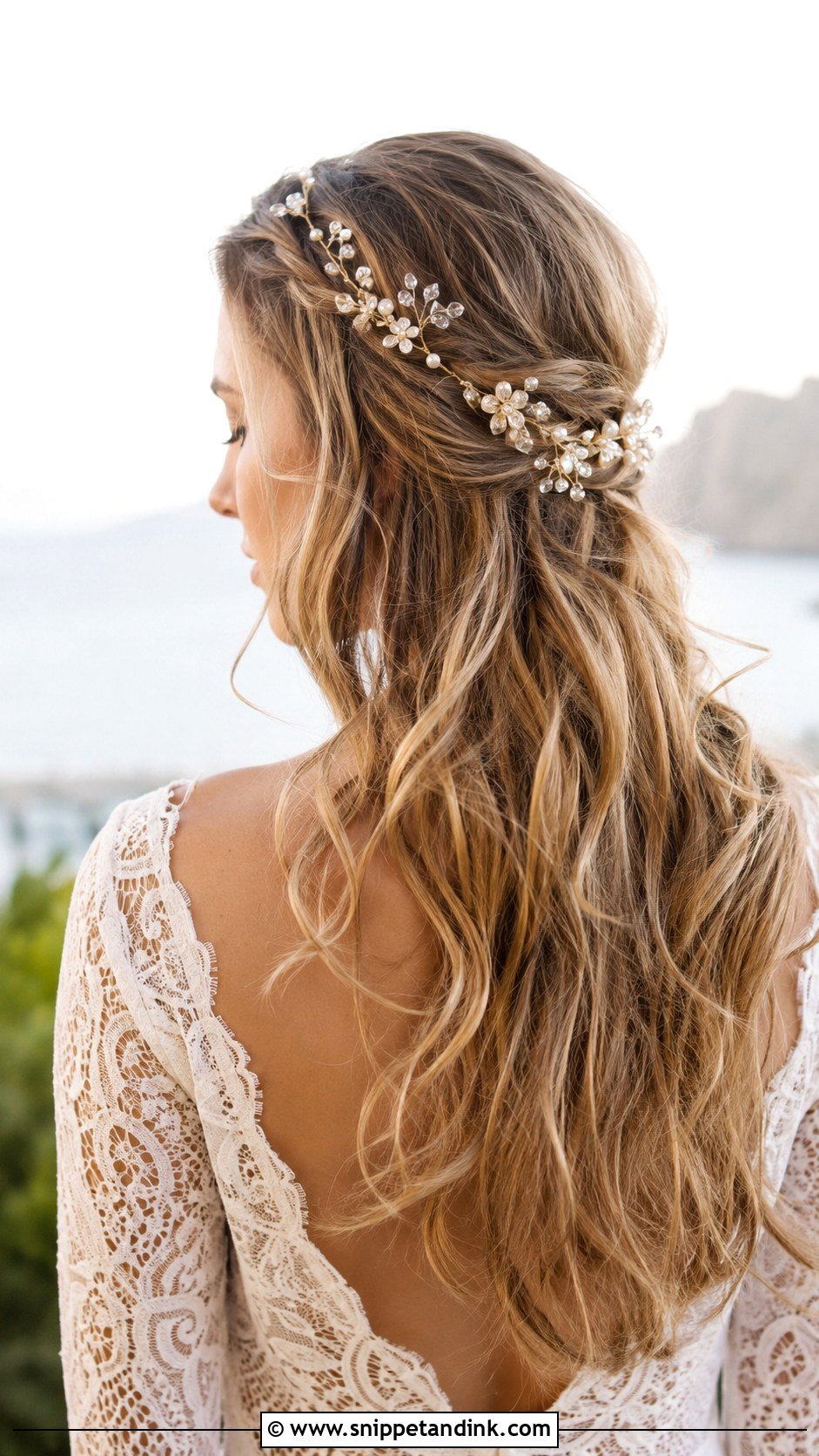
A jewelled or floral hair vine woven through loose, undone waves gives a soft, earthy feel. It drapes across the head and catches the light as you move. Outdoor and rustic weddings suit it, and for brides who’d rather skip a veil it can stand in as the main accessory. I leave plenty of texture in the waves, since the vine needs something to sit in. It’s an easy fit for nature-loving brides.
10. Open Hair With Maang Tikka
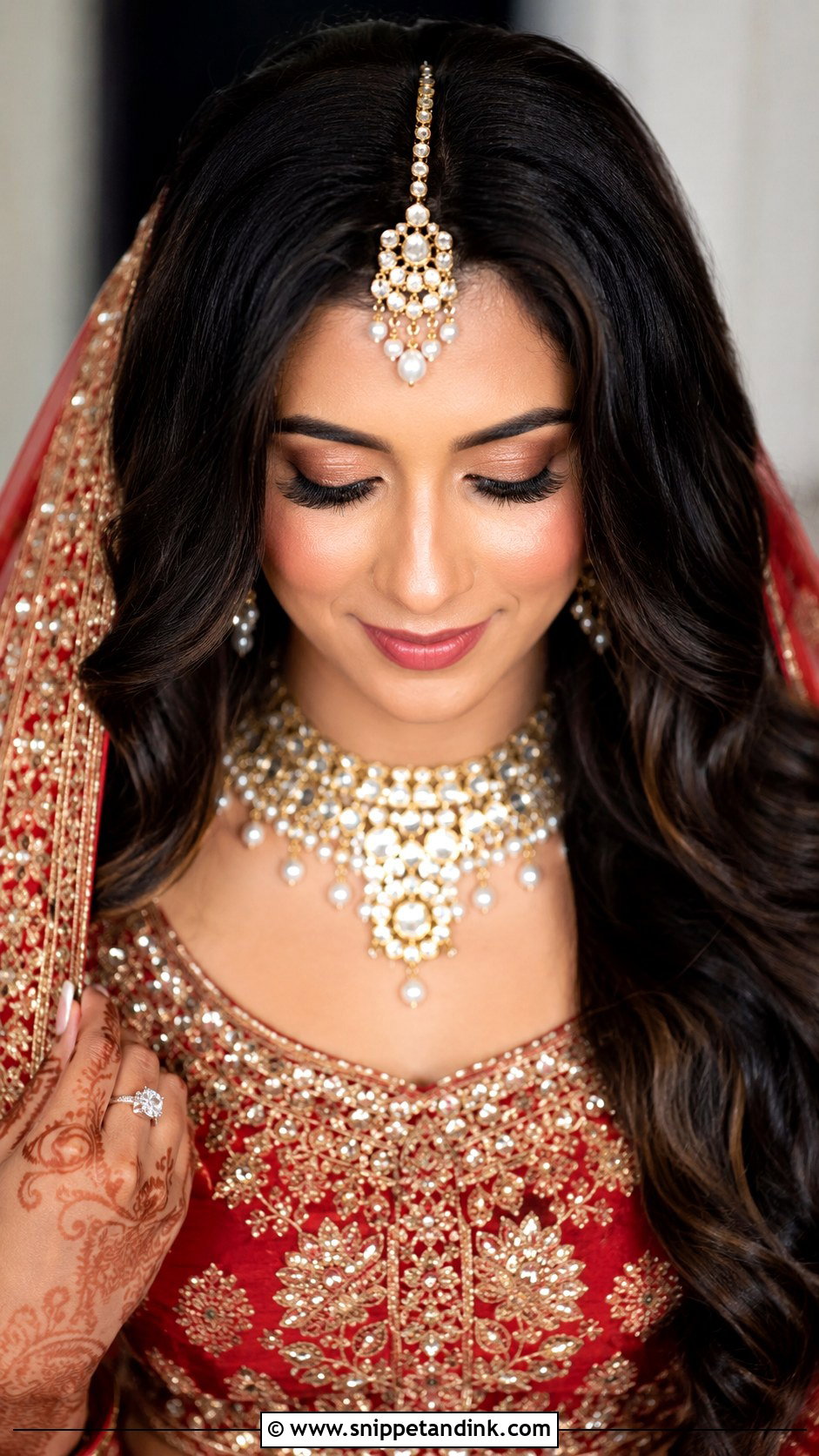
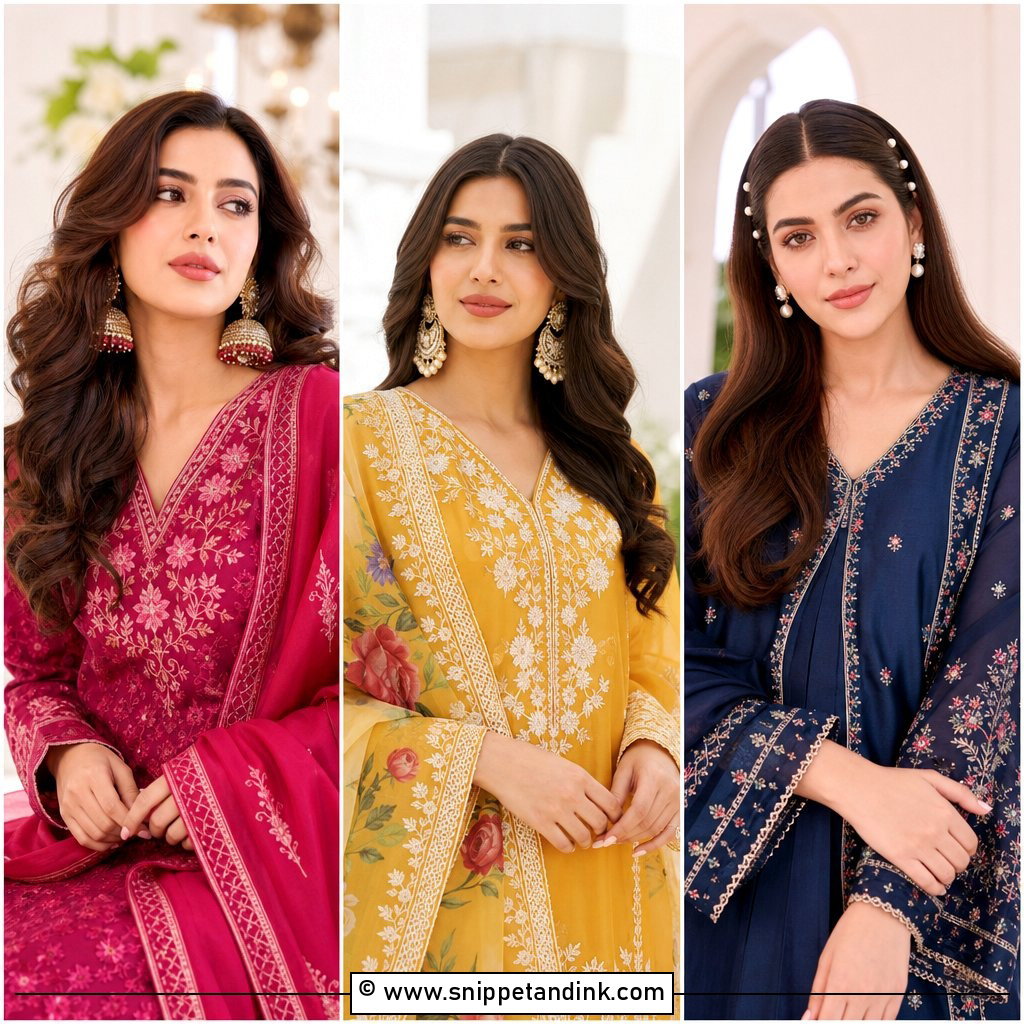
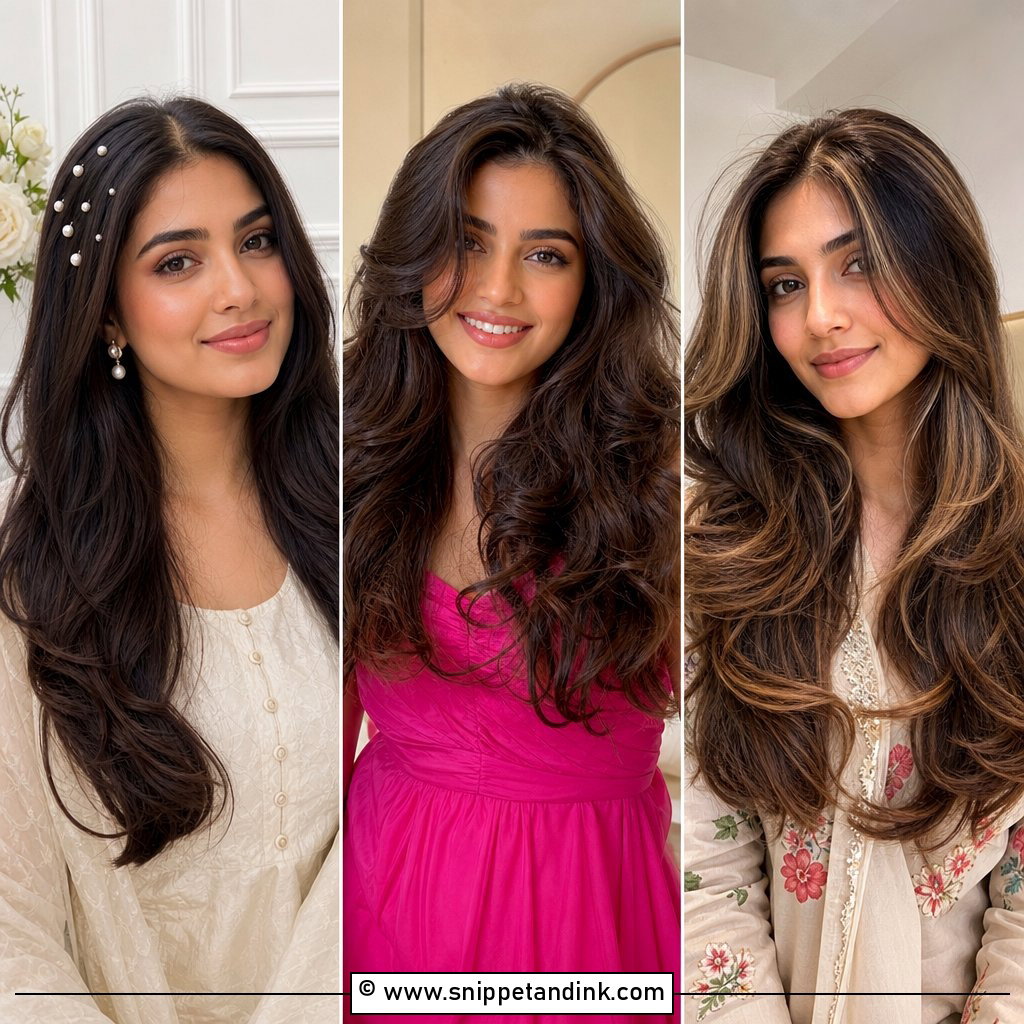
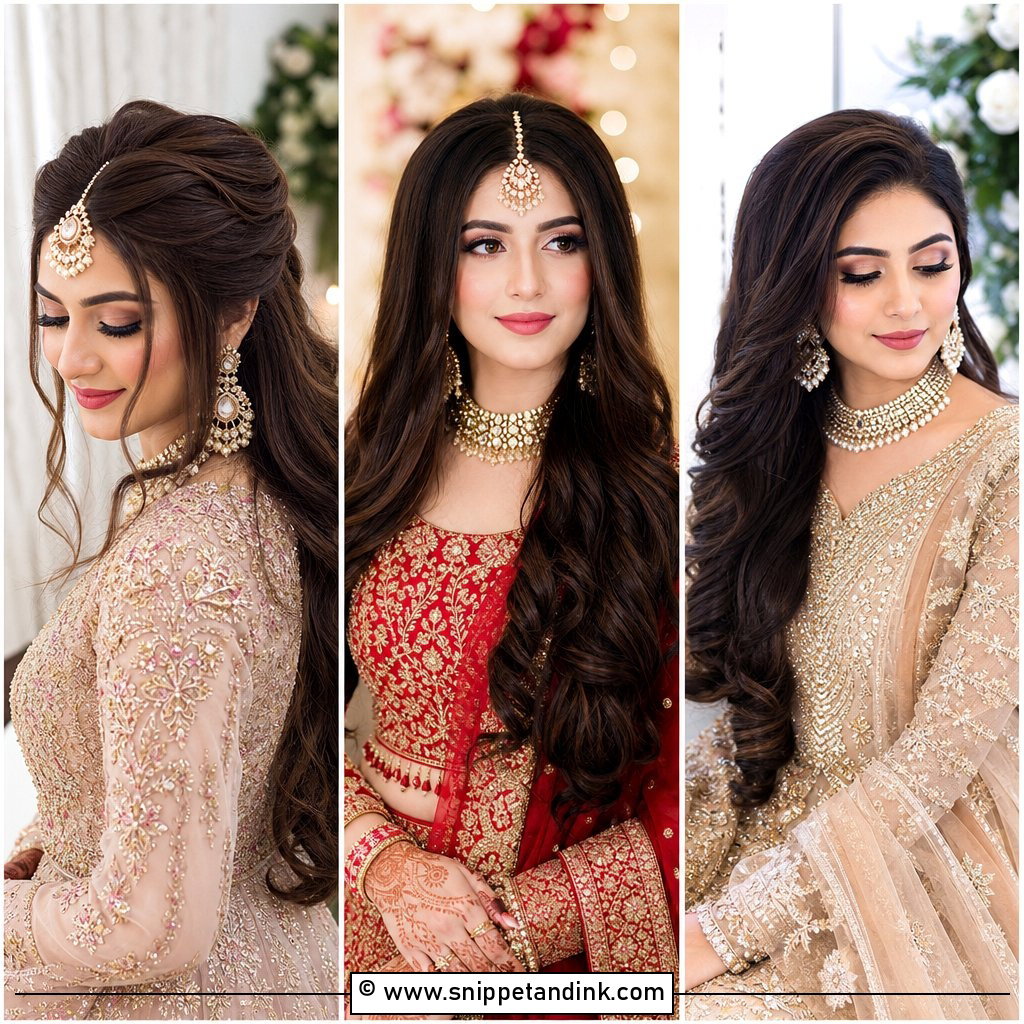
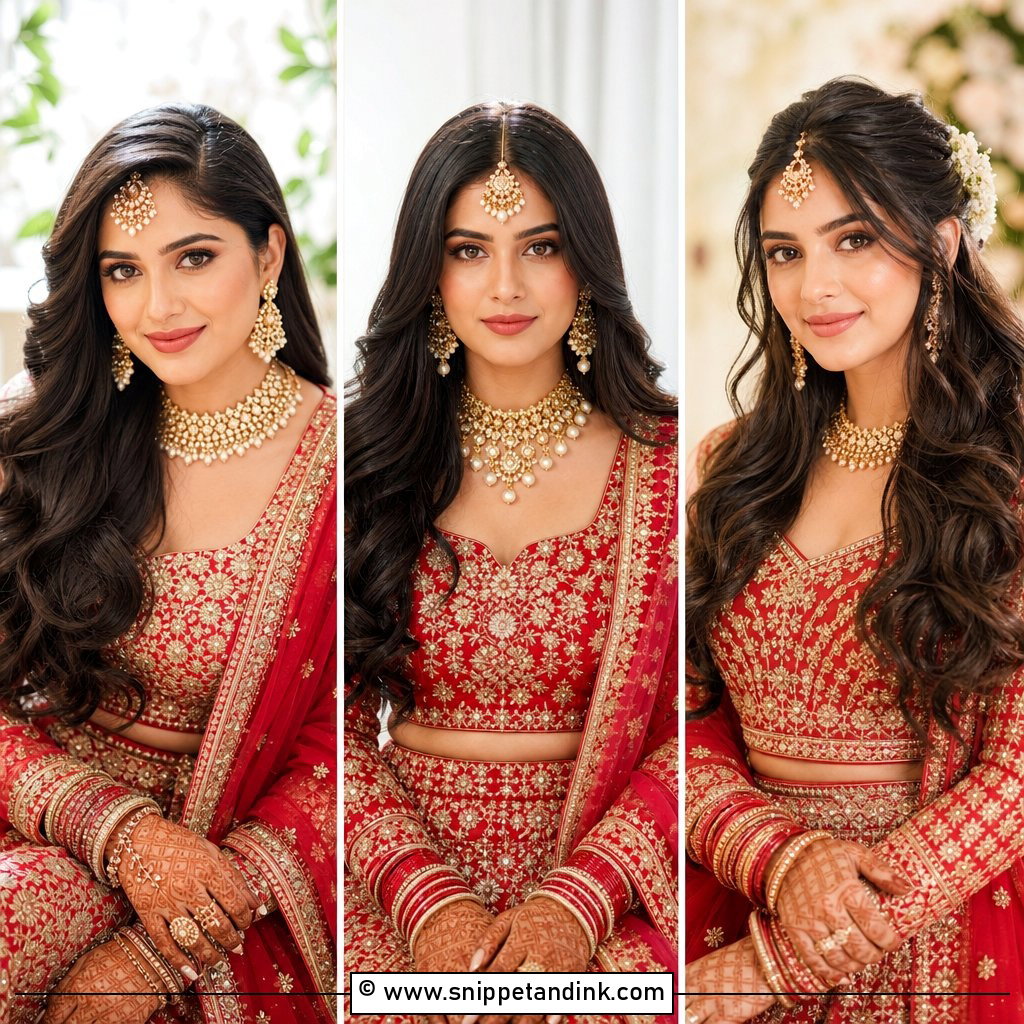
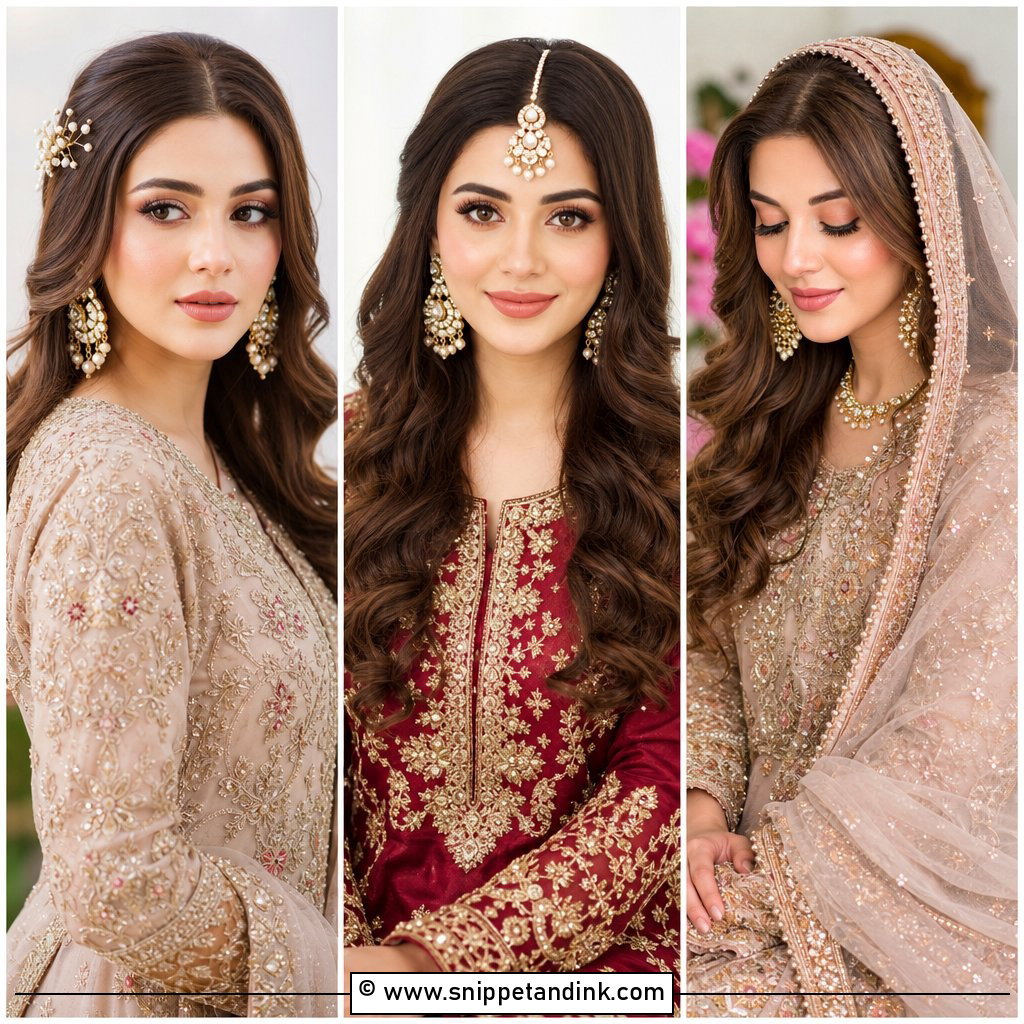
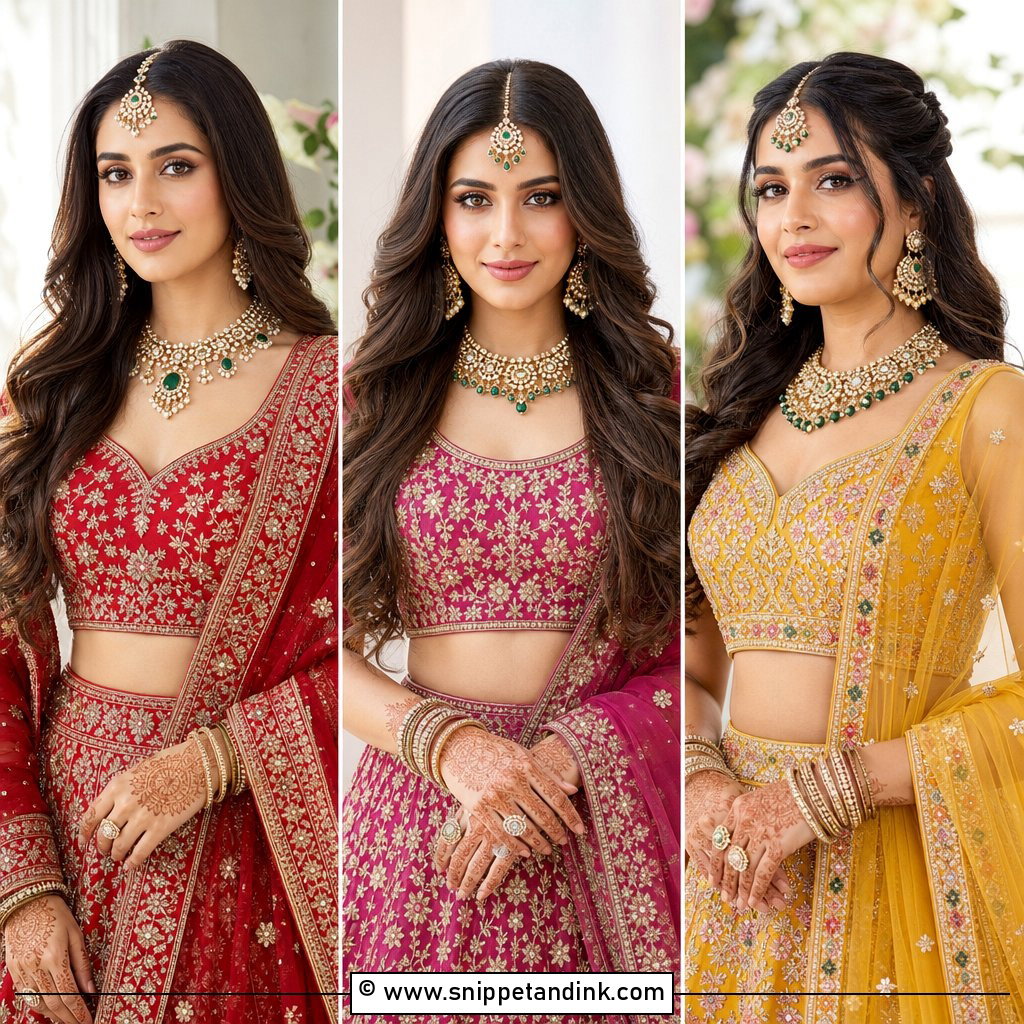
For traditional and fusion brides, open hair styled with a maang tikka is a classic pairing with a lehenga or saree and heavy jewellery. The tikka rests along a centre part. I secure it with a small bobby pin hidden under the hair on each side of the chain, and a tiny pin at the base, because on loose hair it will otherwise slide sideways the moment you turn your head. Soft waves or gentle curls keep the balance between hair and ornament. Add a passa on one side for a fuller look.
11. Voluminous Bouncy Curls
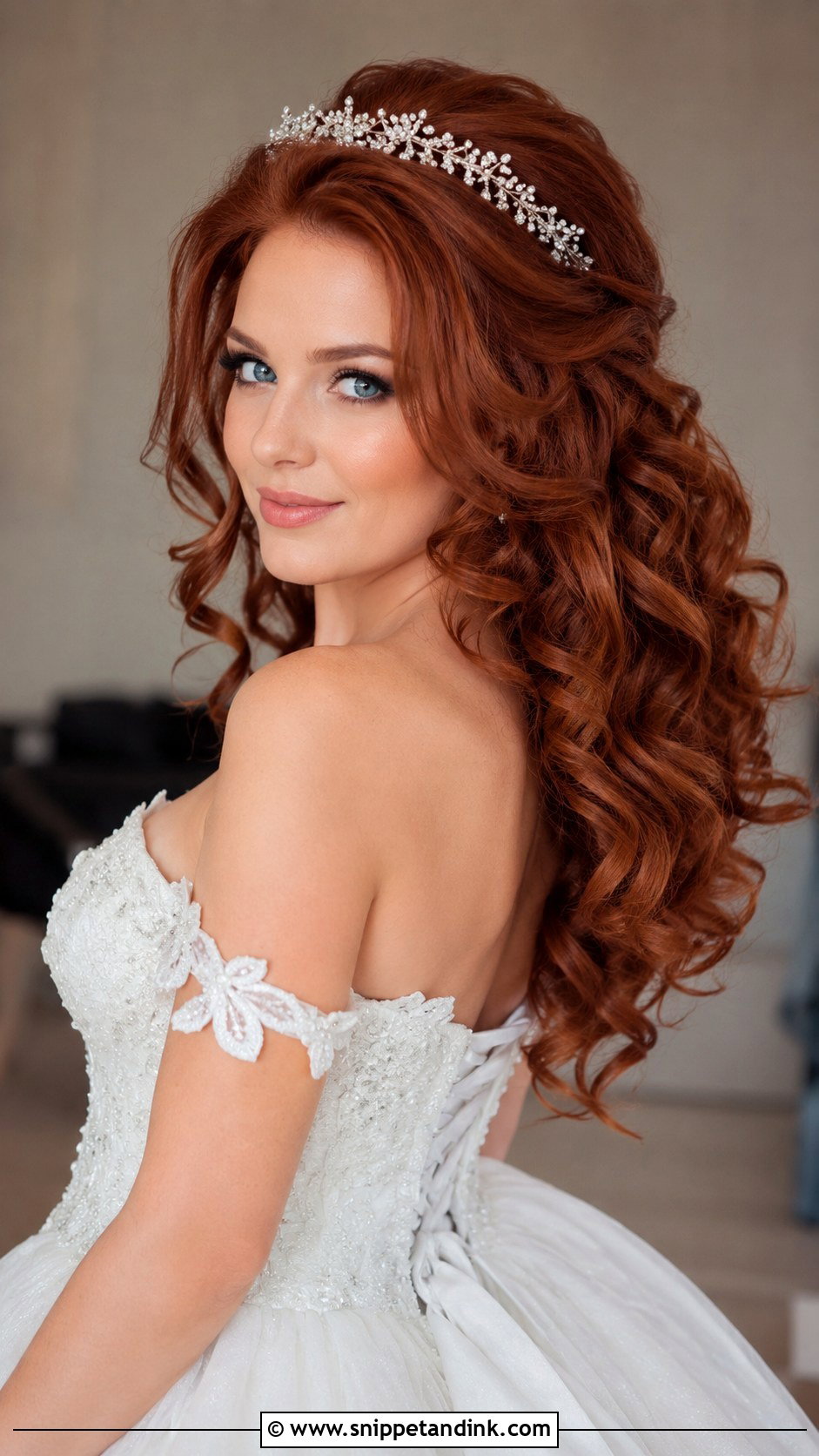
Smaller curling barrels and gentle teasing at the roots build curls with real bounce. A flexible-hold spray keeps them in place without stiffness. This suits thick or medium hair; on fine hair the same technique often looks thin at the ends. It works with modern gowns and traditional outfits alike, and frames the face well in motion. Big curls are heavy and warm, though, so for a summer daytime event I’d scale back the volume.
12. Soft Romantic Updo With Loose Strands
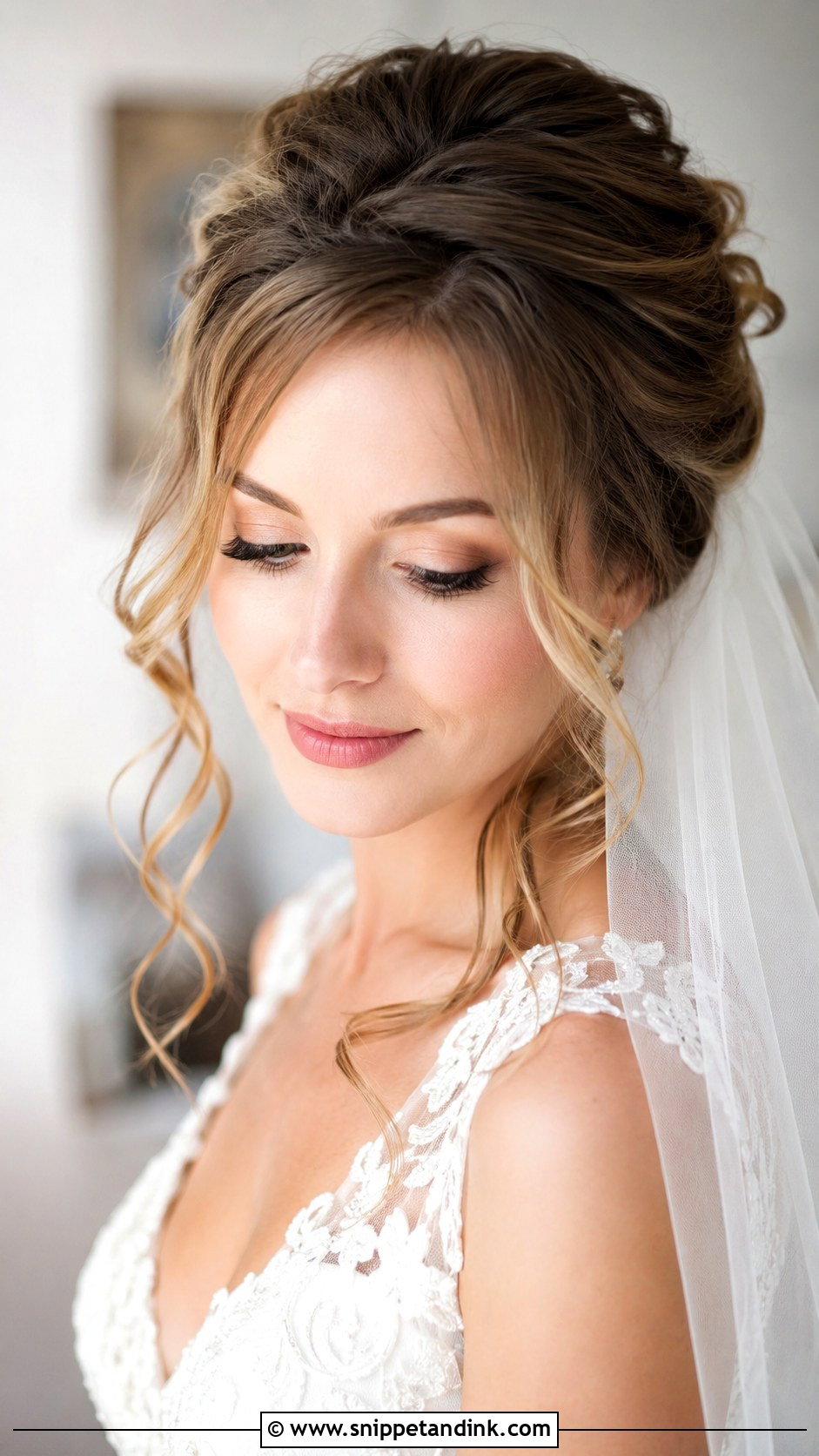
Most of the hair is gathered loosely, while several strands are pulled free and curled to frame the face and neck. It’s a middle ground between open hair and an updo, and the pinned base handles a veil or dupatta much better than fully loose hair. It suits all lengths and pairs with delicate accessories. I pick which strands to free based on where your hair falls naturally, so they don’t look forced.
13. Center-Parted Waves
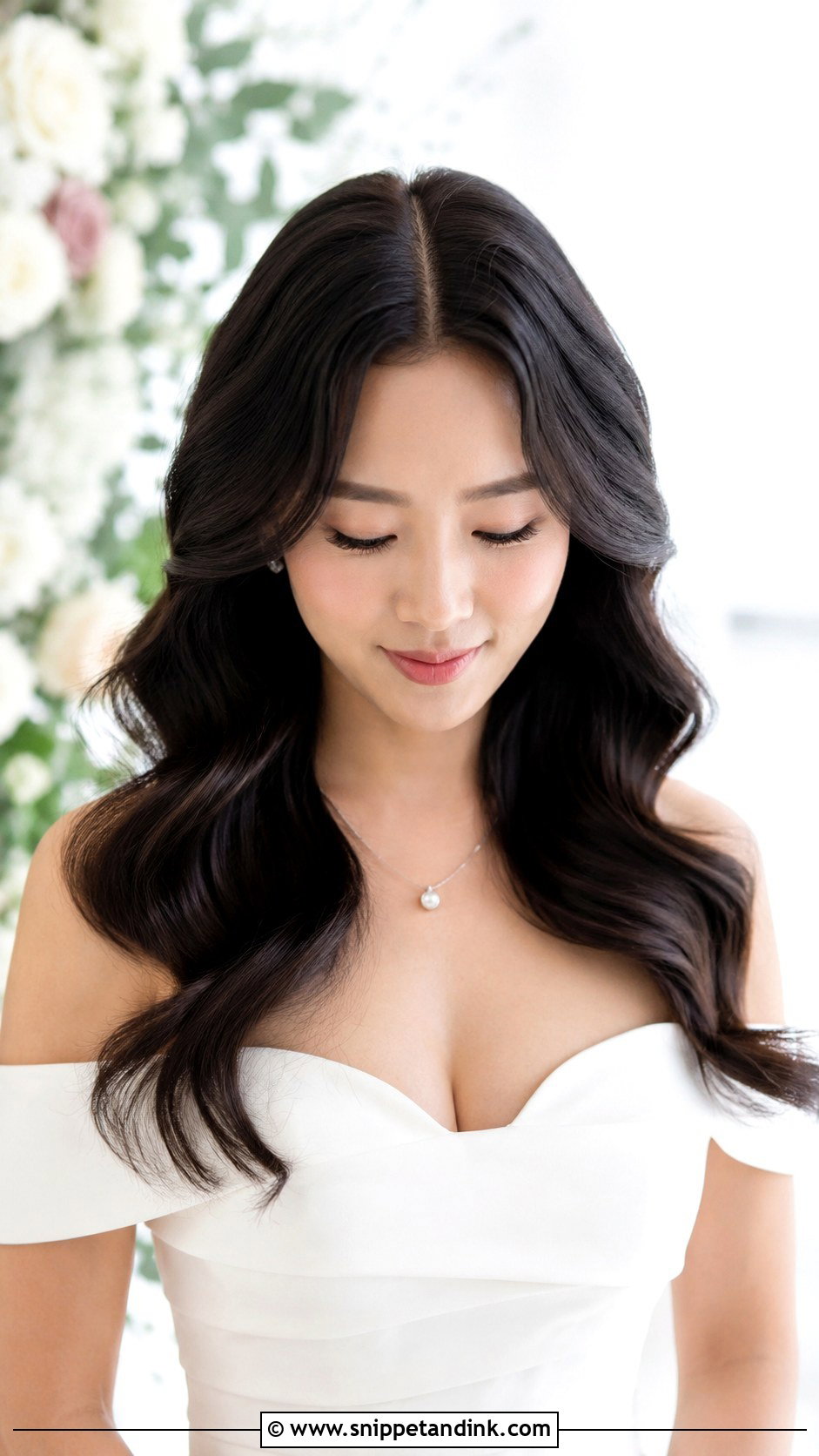
A centre part divides the waves evenly so they frame your face like a curtain. I curl with a wand for uniform waves, then set the part precisely and add a little smoothing serum to the lengths. It suits minimal gowns and dainty jewellery and flatters oval and long faces in particular. Not every hairline grows symmetrically, so I sometimes shift the part a few millimetres to make both sides fall the same.
14. Curly Hair With Floral Crown
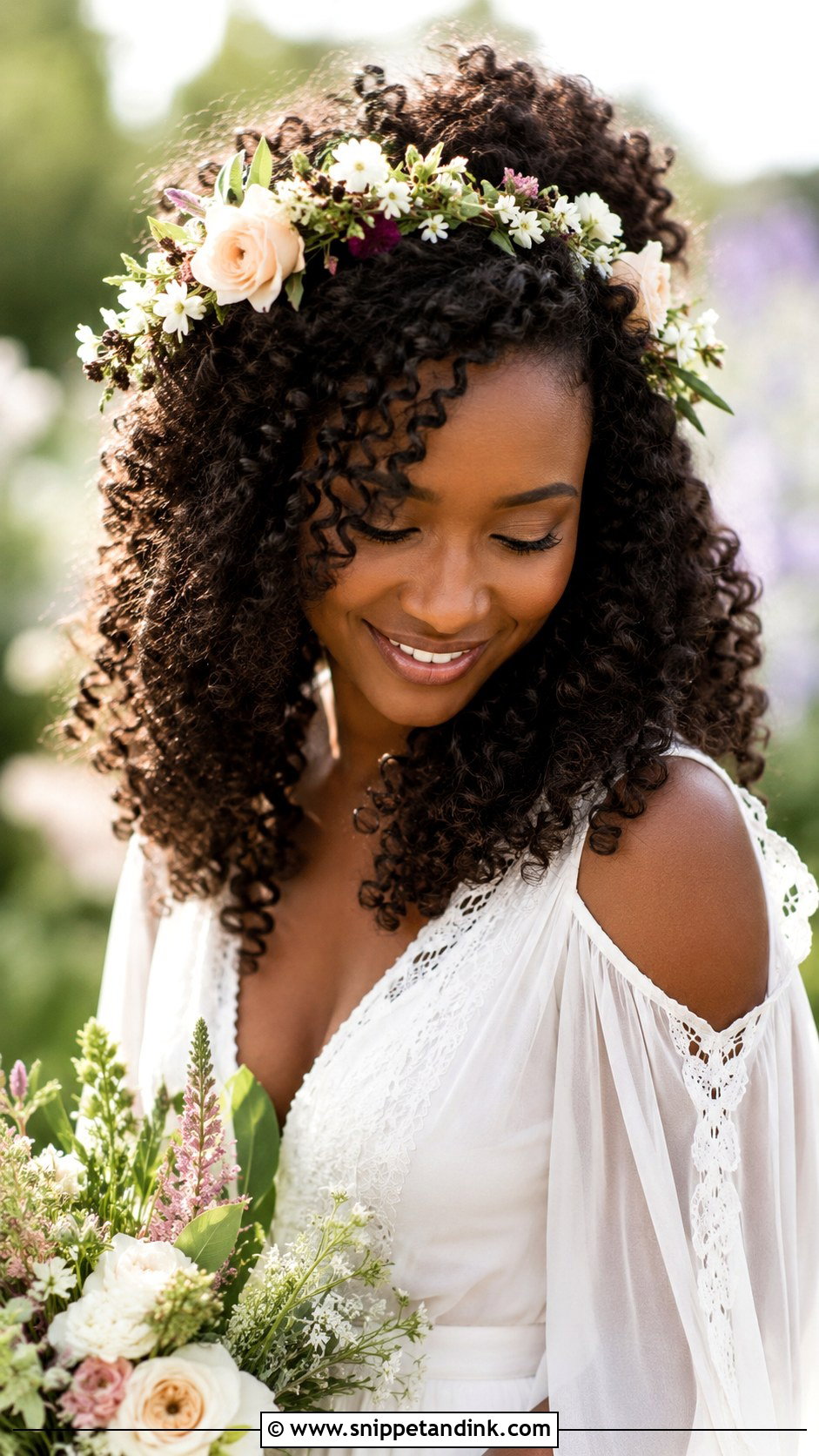
Natural curls with a crown of fresh or silk flowers lets your texture take the lead. I define the curls with a cream on wet hair and leave them alone to dry, so they keep their shape. The crown rests on top and the curls hold it in place better than straight hair would. It suits outdoor, garden and festival-style weddings and works well on naturally curly or coily hair. Silk flowers are the safer option on a hot day.
15. Twisted Half-Up With Veil
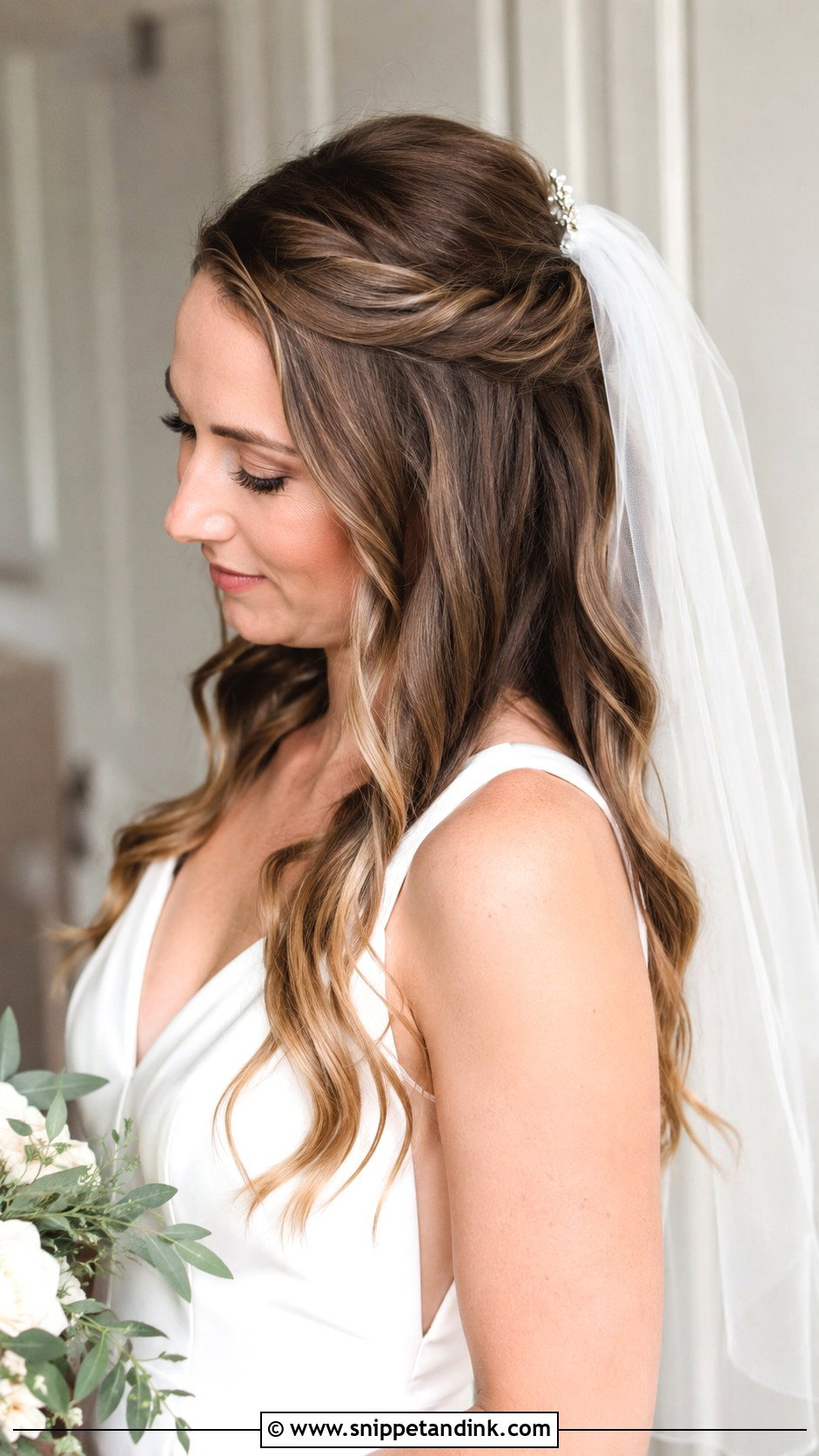
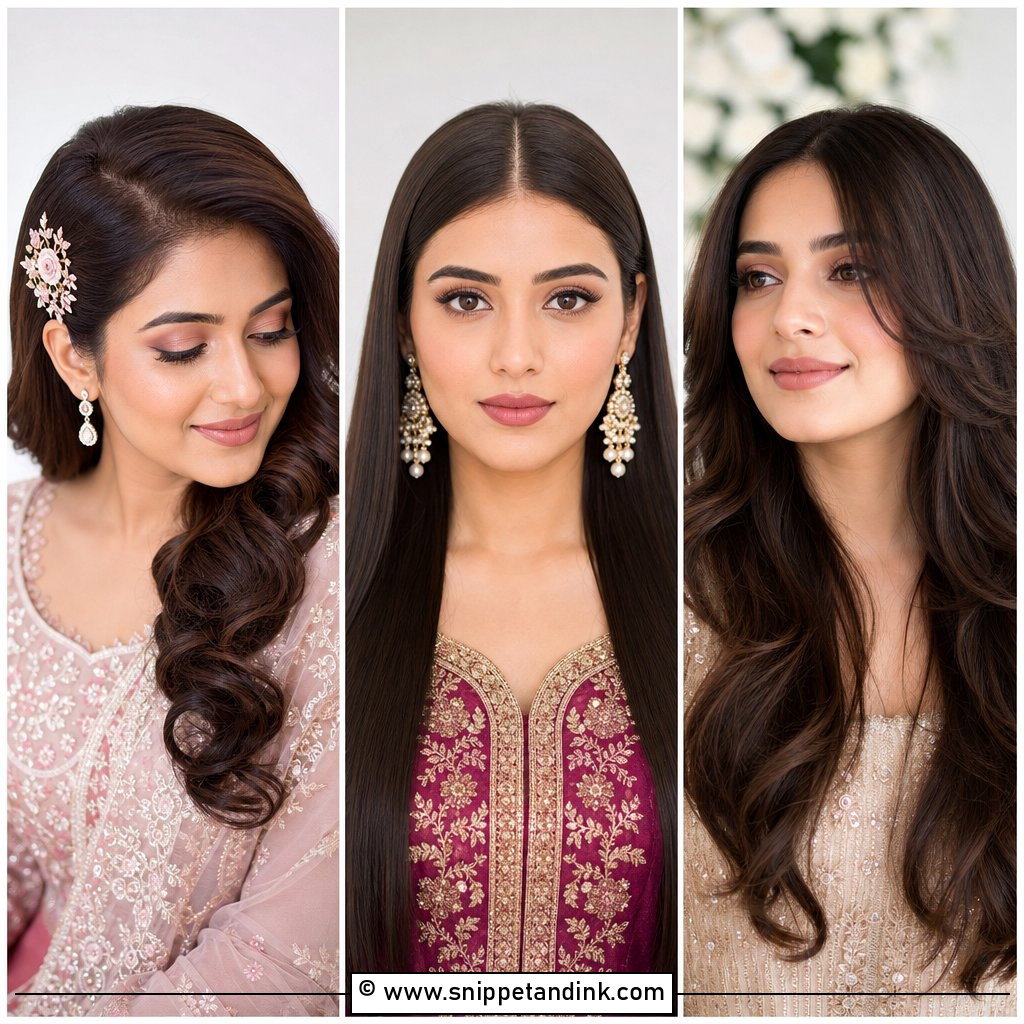
Two sections from the front twisted back and secured at the crown give a refined shape, and the veil tucks in just beneath the twist. It keeps your face clear and adds dimension without the effort of braids. A jewelled pin can sit where the twists meet. Because the twists put a little tension along the sides, this style holds through long ceremonies better than most open looks.
16. Deep Side Part With Waves
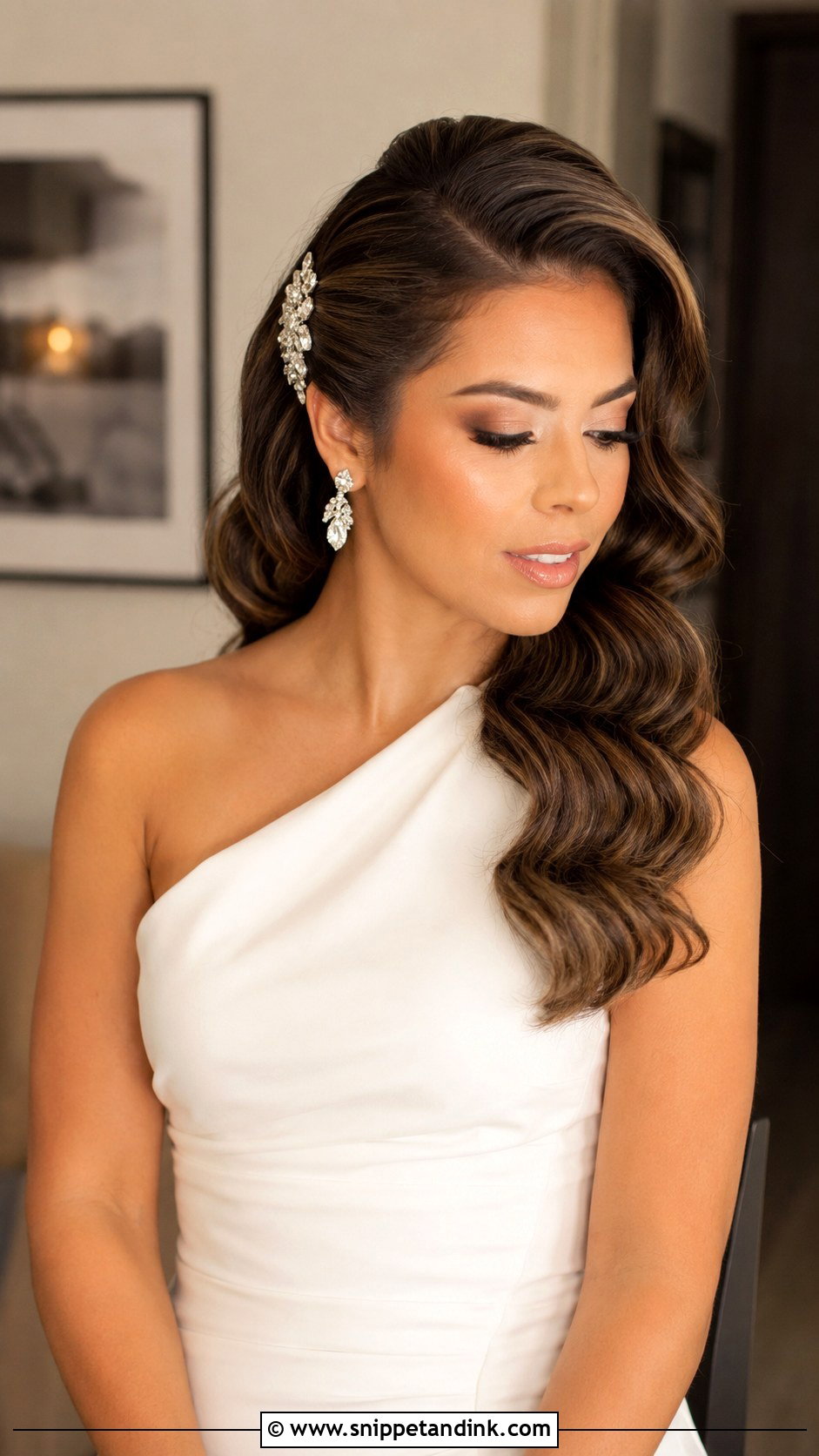
Sweeping a generous section over to one side adds volume and an asymmetric line. The waves cascade more heavily on one side. I tuck the shorter side behind your ear and can add a clip there. It flatters most face shapes by adding angles and suits one-shoulder gowns and statement earrings. One practical point: a deep part takes some training if you normally part on the other side, so I set it the night before with a clip.
17. Long Open Hair With Curtain Bangs
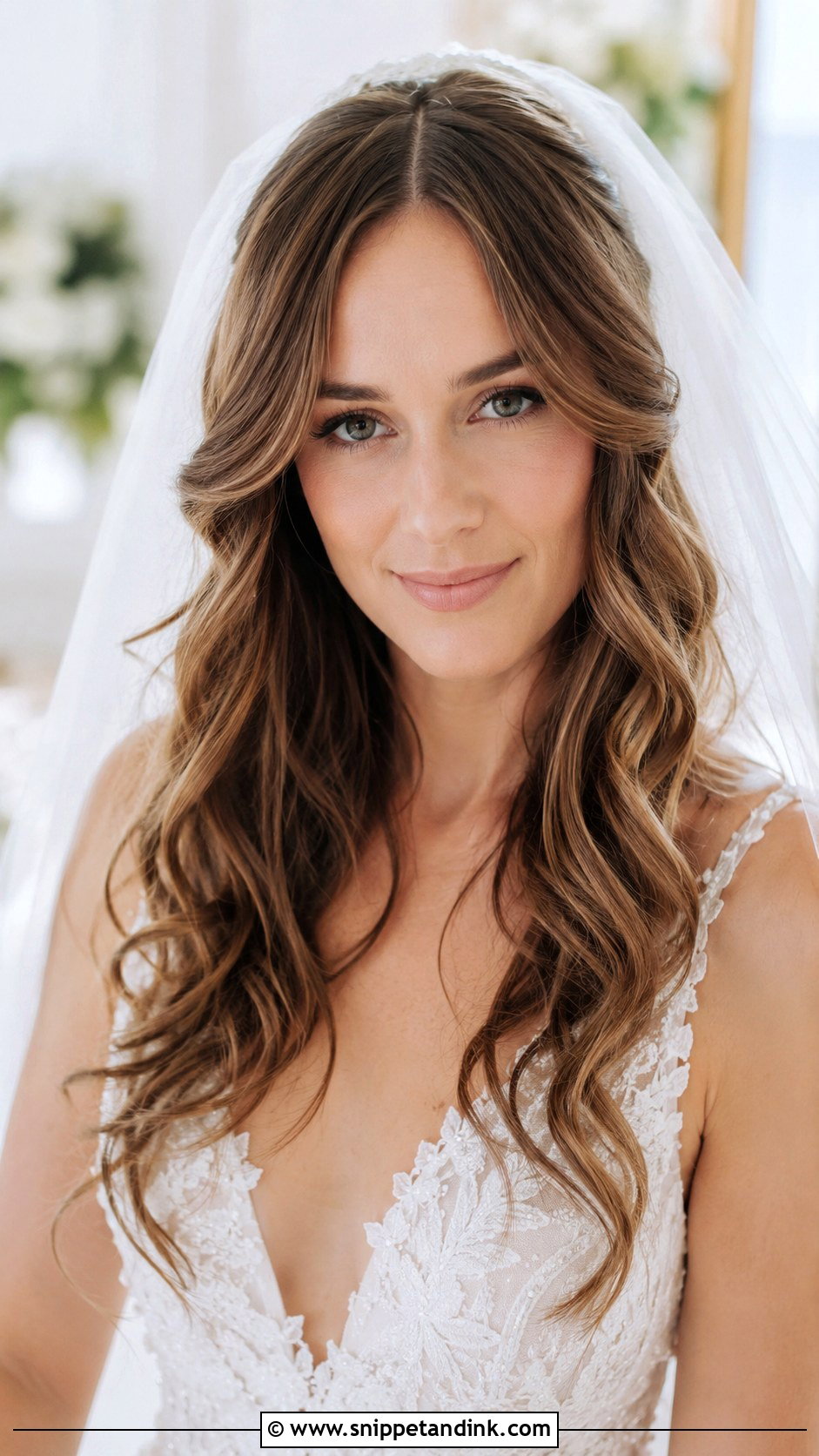
Curtain bangs part in the middle and sweep outward into the rest of the length. I style them with a round brush for a slight bend so they frame the cheekbones, and the rest can stay in loose waves or straight. It gives a youthful finish without the formality of an updo, and works with veils and accessories. Curtain bangs flatter most face shapes and soften the eye area, but have them cut at least six weeks before so they’re past their awkward stage.
18. Bohemian Braided Half-Up
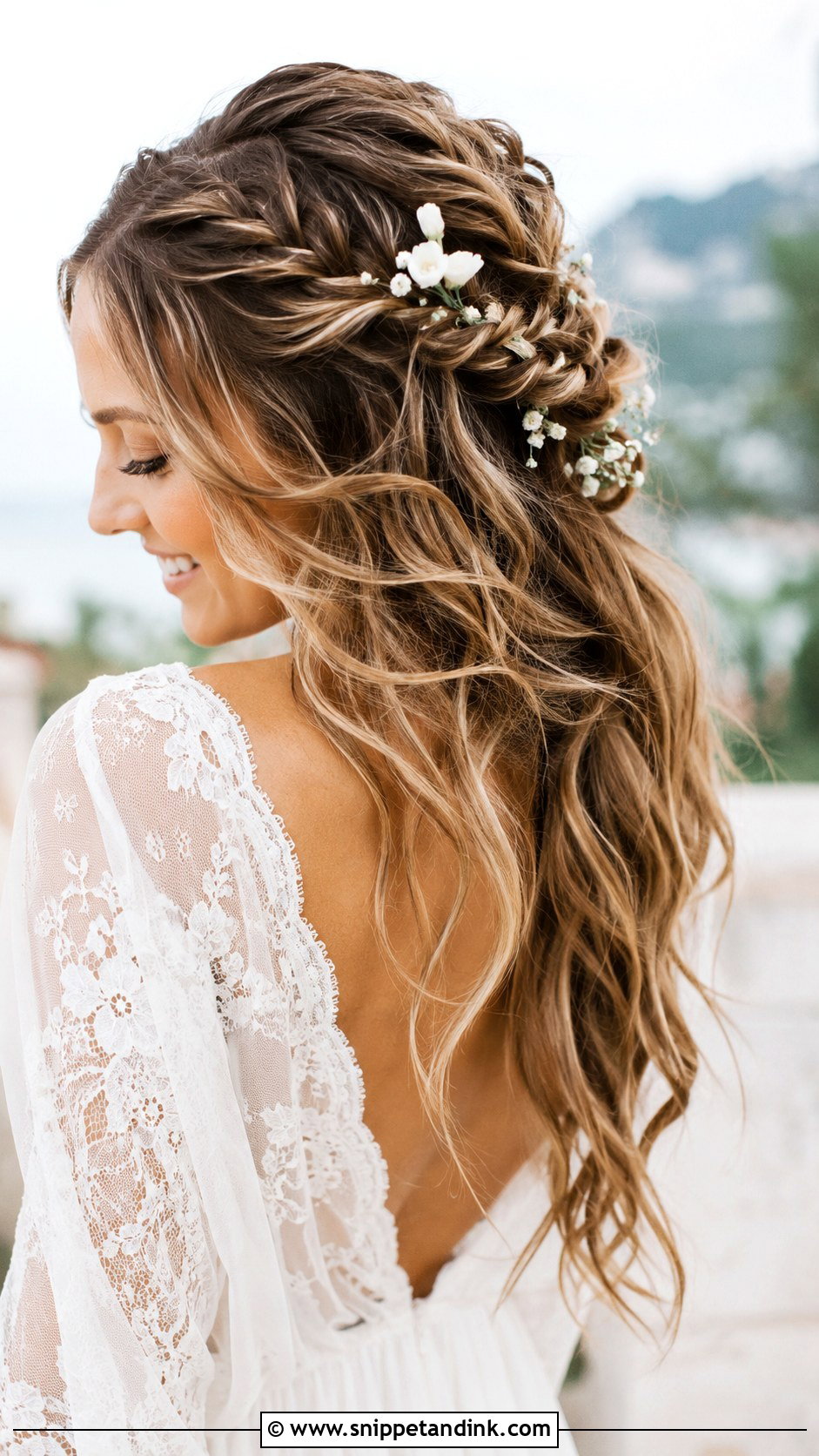
Small braids woven through the top section, gathered loosely at the back, add texture while the rest stays open. I leave it slightly undone and tuck in tiny flowers or beads. It suits outdoor, rustic and garden weddings, and works best on wavy or curly hair, where the braids blend into the texture. On very straight, silky hair I’d add texture spray first, or the small braids slip apart.
19. Glossy Straight Hair With Center Part
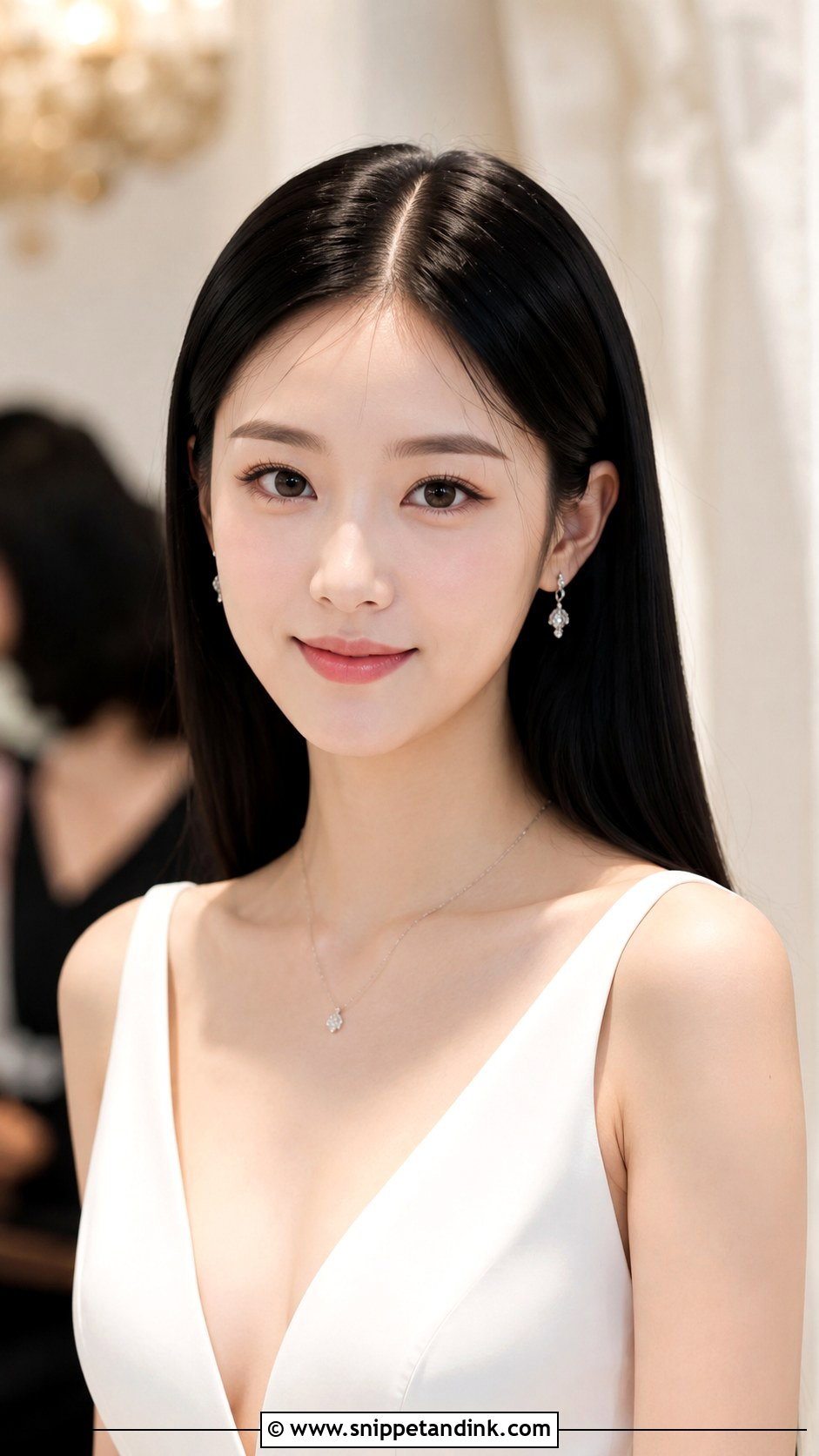
Straight, glossy and parted in the centre, this center-parted look is about clean lines and shine. I use a flat iron and a glossing serum on the lengths only, keeping product away from the roots so the hair doesn’t go flat by the evening. It suits sleek gowns and fine jewellery and lets your features lead. It needs healthy ends, so a small trim a month before makes a visible difference.
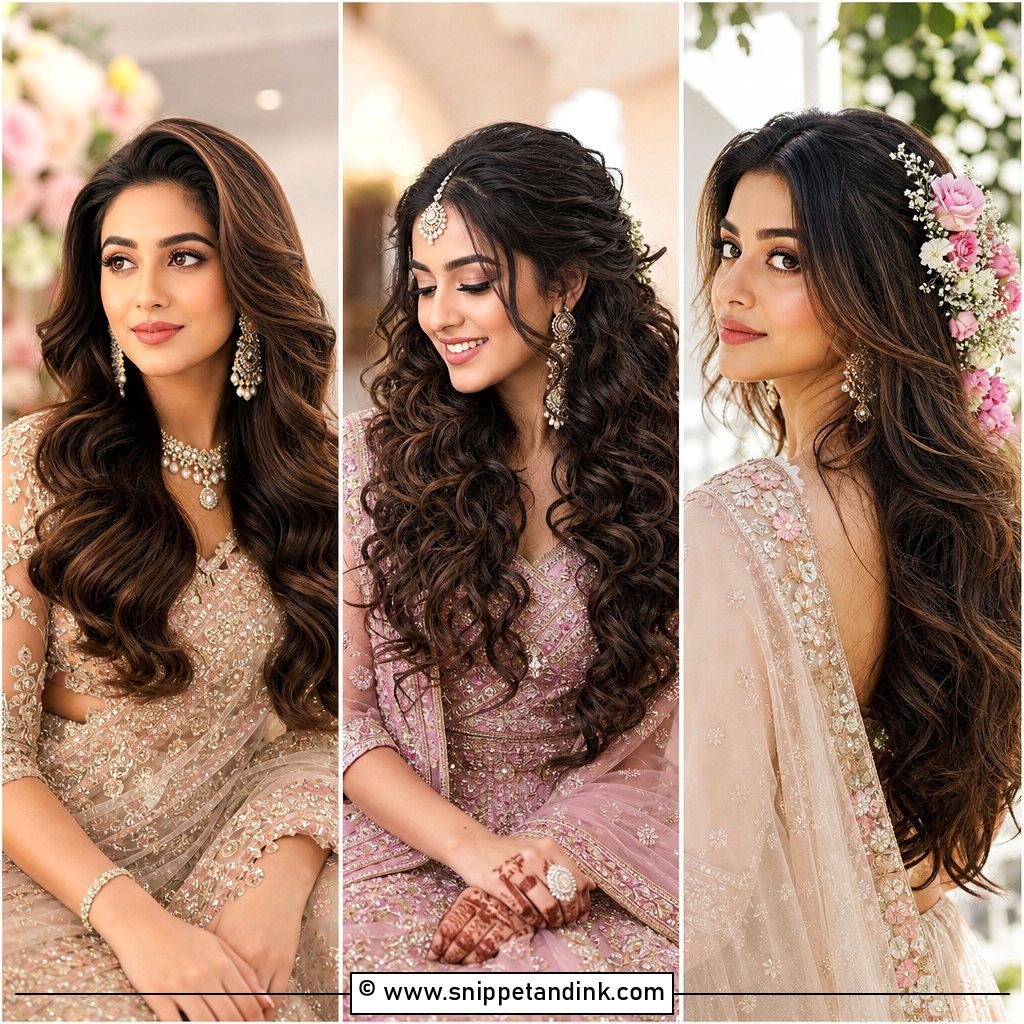
20. Open Hair With Pearl Accessories
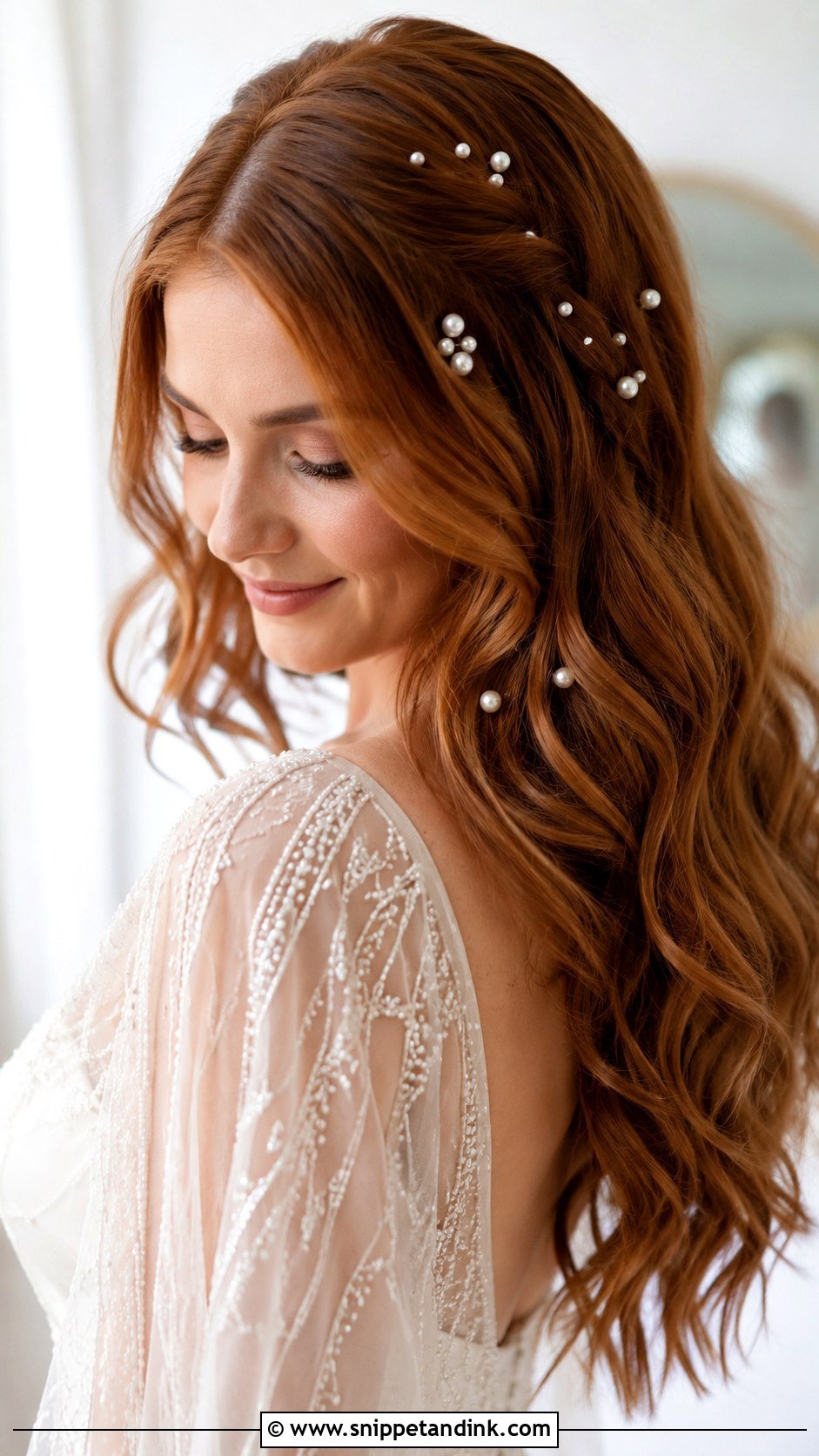
Pearl pins scattered through loose waves or curls add a soft glow without weight. On open hair, I cross a hidden bobby pin under each one so it can’t slide out. They can be clustered on one side or spread evenly, and they suit gowns and traditional outfits alike. Keep the hair soft around them, so they read as delicate rather than heavy. Five to seven pearls are usually enough.
Spacing Open Hair Across Mehendi, Haldi and the Wedding Day
Many brides wear open hair for more than one function, and the multi-day schedule needs planning so the hair isn’t worn out by the wedding itself.
Mehendi and haldi
During mehendi, open hair falls into wet paste and the henna stains it, so I’d keep it in a braid or a loose low bun while the design is applied and drying. At the haldi, turmeric can tint light or highlighted hair yellow. A braid or a scarf until the paste has been washed off saves you a lot of trouble.
Heat across several days
Curling every day for four or five functions weakens the ends. Between events, I’d suggest heatless sets: braids or soft rollers overnight on slightly damp hair, then a quick touch-up with the iron. Keep full heat styling for the main ceremony, and use a protectant every time.
Washing schedule
Wash the evening before the wedding rather than that morning, and dry it fully. Hair washed just before styling is too soft to hold a curl or support a dupatta, while one night’s natural oils give pins and accessories something to hold.
Open Hair That Lasts From Pheras to Reception
Wearing your hair open lets your texture and personal style lead, from loose curls and boho waves to sleek lengths and pearl-dotted styles. The right one fits your outfit, face shape and wedding setting, and keeps you comfortable through a long day. Flowers, hair vines or a maang tikka can make it personal, as long as each is anchored properly. Pick the looks you like most, test them at a trial with your actual dupatta or veil, and plan your touch-ups before the reception.
You'll Like These Ideas:




Leave a Reply