
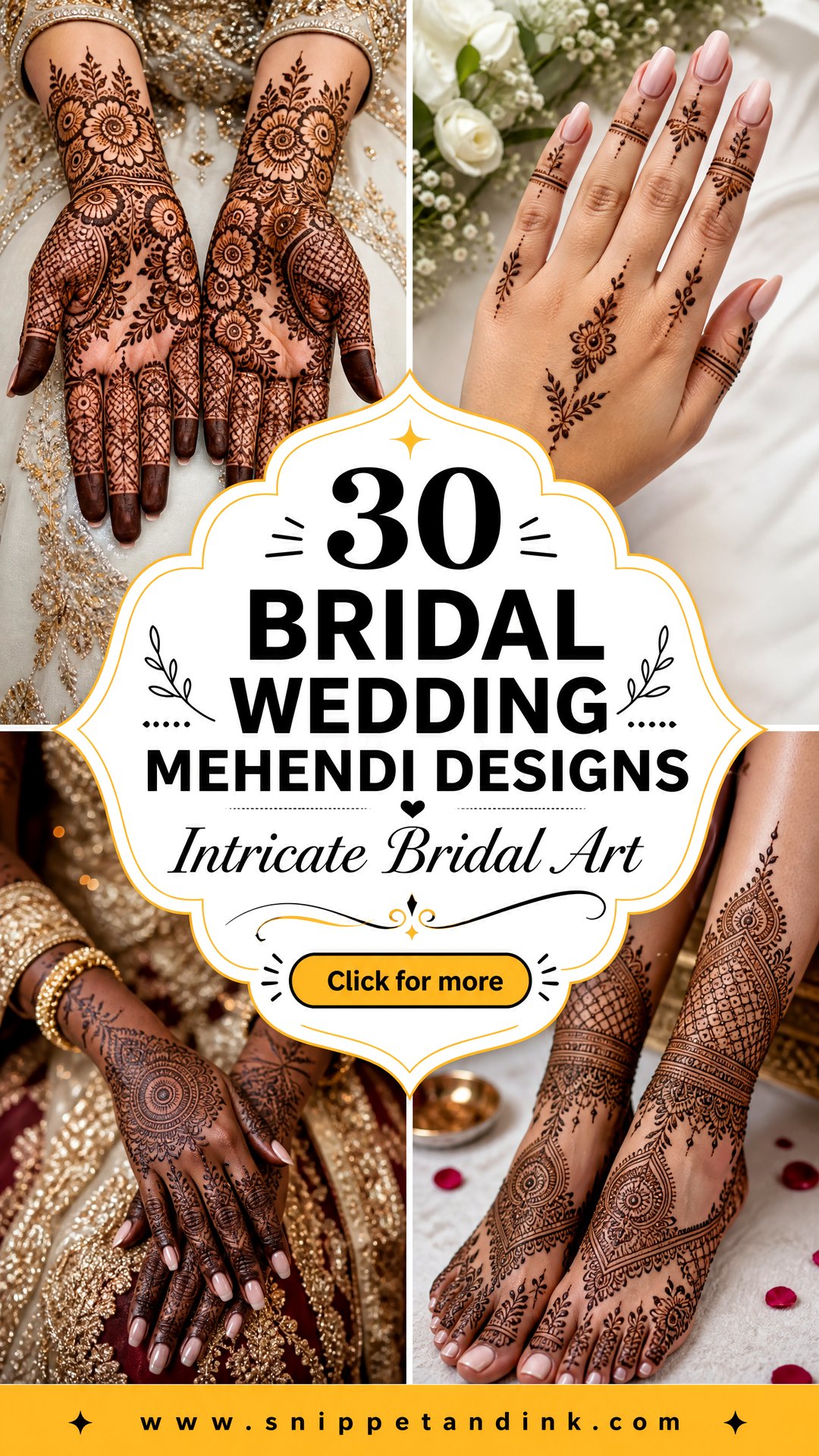
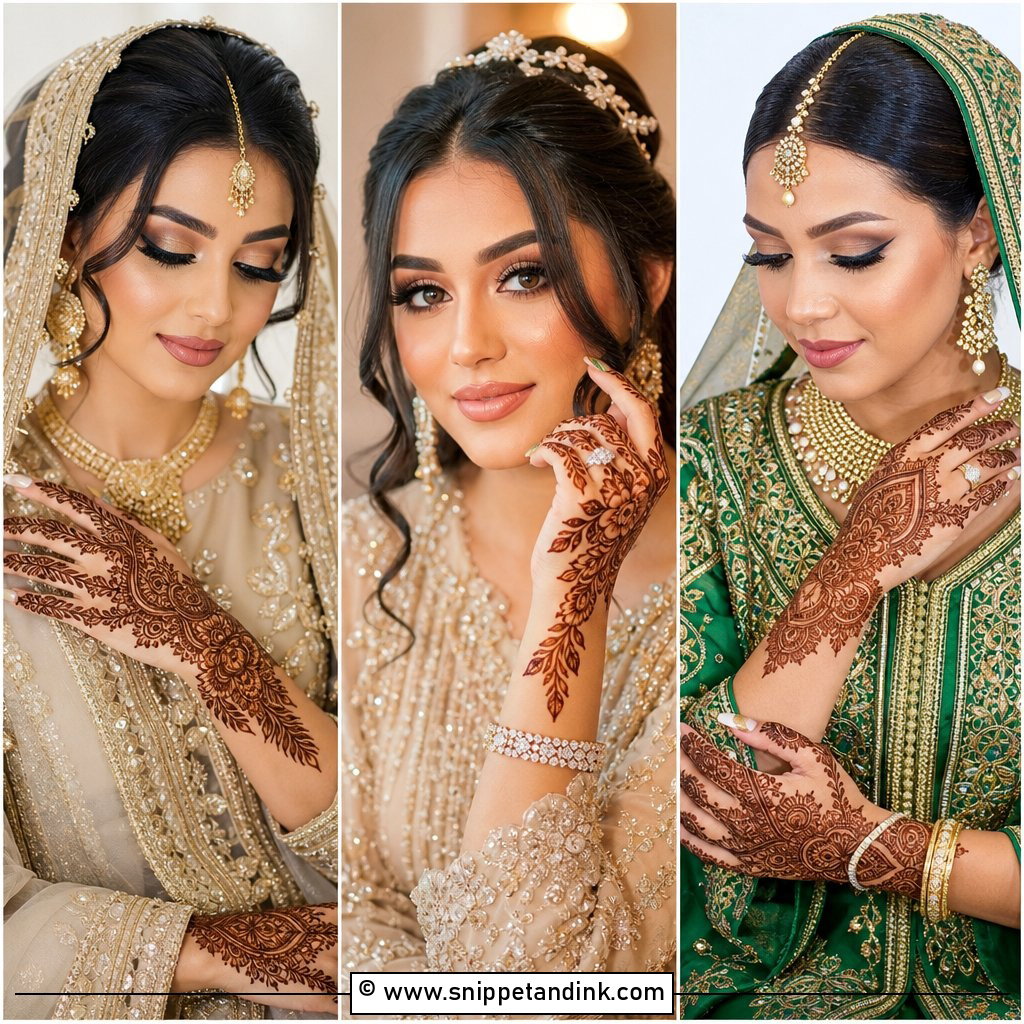
Bridal mehendi is the one piece of the wedding look that is drawn by hand on your skin, and it keeps changing color for two days after I finish. That’s why the design has to be planned around more than a photo: how dense you want it, what jewelry will sit over it, how long you can sit still, and how many days before the wedding it goes on. Below are thirty bridal directions I draw regularly, from traditional Indian full-hand patterns to Arabic trails, portraits, lotus layouts, jaali and pared back fingers, with notes on where each one works and where it struggles.
Timing the Application So the Stain Peaks on Your Wedding Day
Natural henna doesn’t come off the skin at its final color. When the dried paste is scraped away, the stain is bright orange, and it deepens to reddish brown over roughly the next 24 to 48 hours. That’s why I put bridal mehndi on one or two days before the wedding, not the morning of.
- Hands only, light to medium coverage: often around two to three hours.
- Full hands to the elbow with detailed work: plan for a long afternoon or evening.
- Hands plus feet or legs: allow extra time, and consider a second artist for the feet.
Schedule nothing that needs your hands for the rest of that day. Eat before you start, have someone ready with a straw, and use the bathroom right before the cone comes out. Once the paste is on, the more still you stay, the cleaner the lines will look.
Natural paste only
Ask your artist what is in the cone. Fresh bridal paste is made from henna powder, lemon juice or water, sugar and an essential oil, and it stains in that orange to brown range. Anything sold as black henna, or that stains black within an hour, can contain a chemical dye that causes serious skin reactions. If you react to essential oils, ask for a patch test a few weeks ahead.
1. Full Hand Bridal Mehndi Design
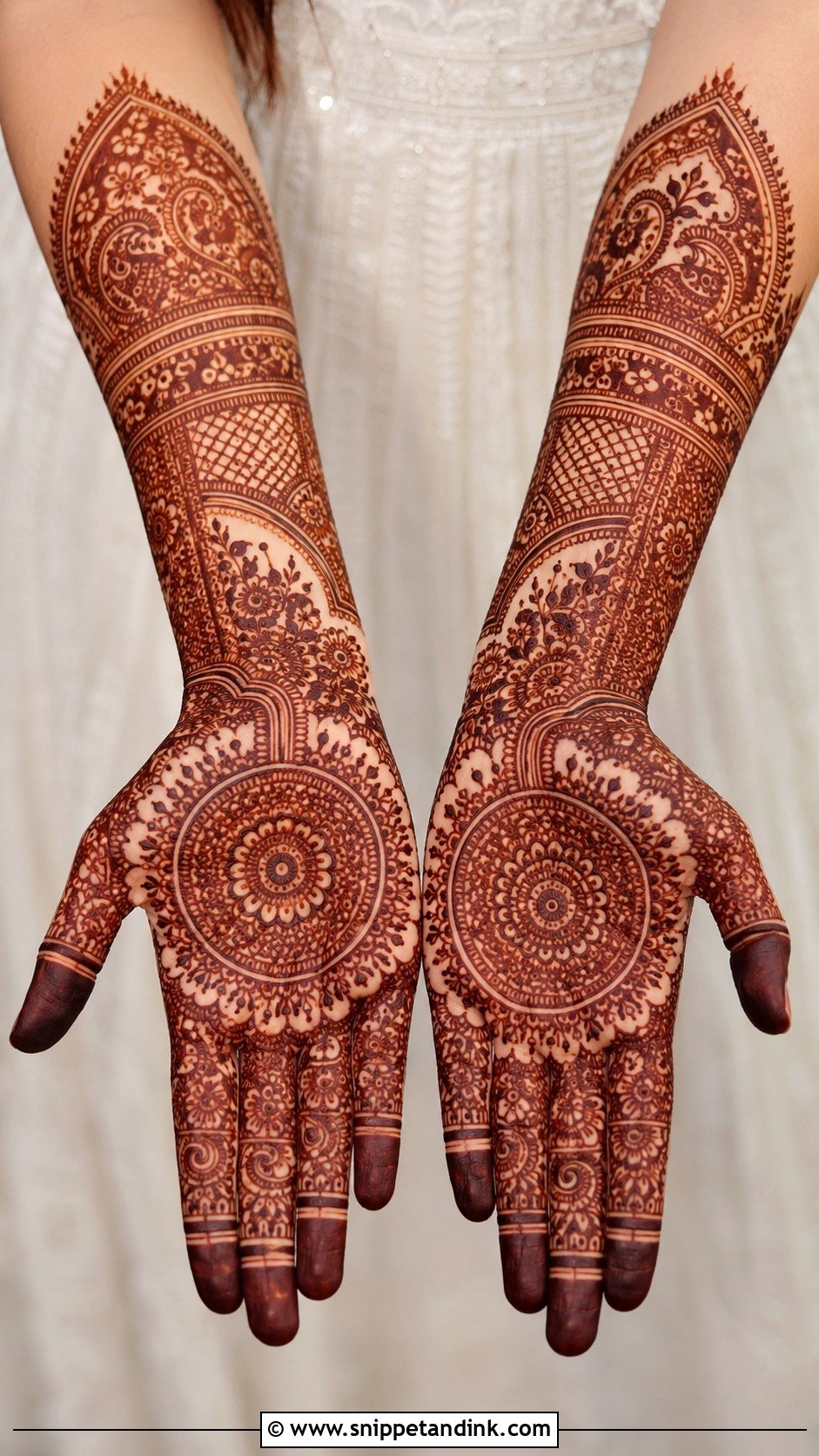
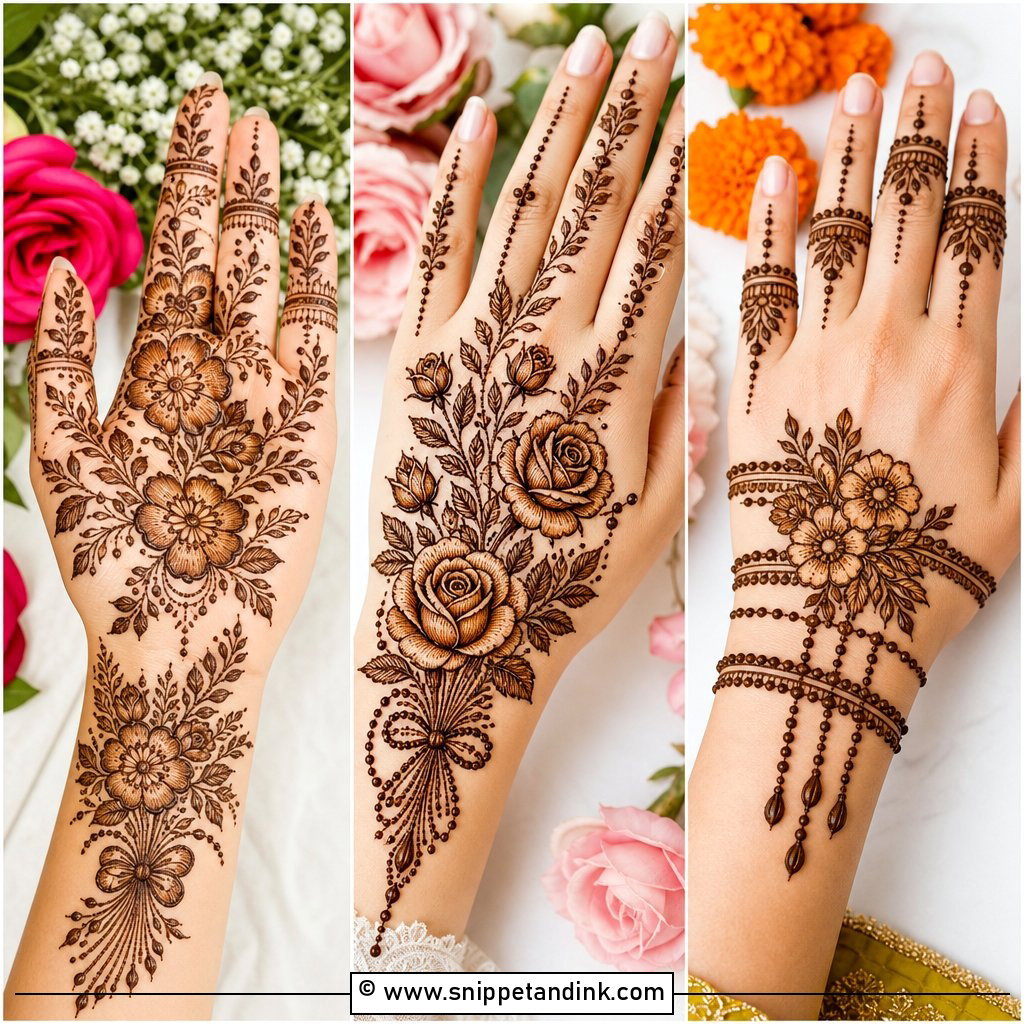
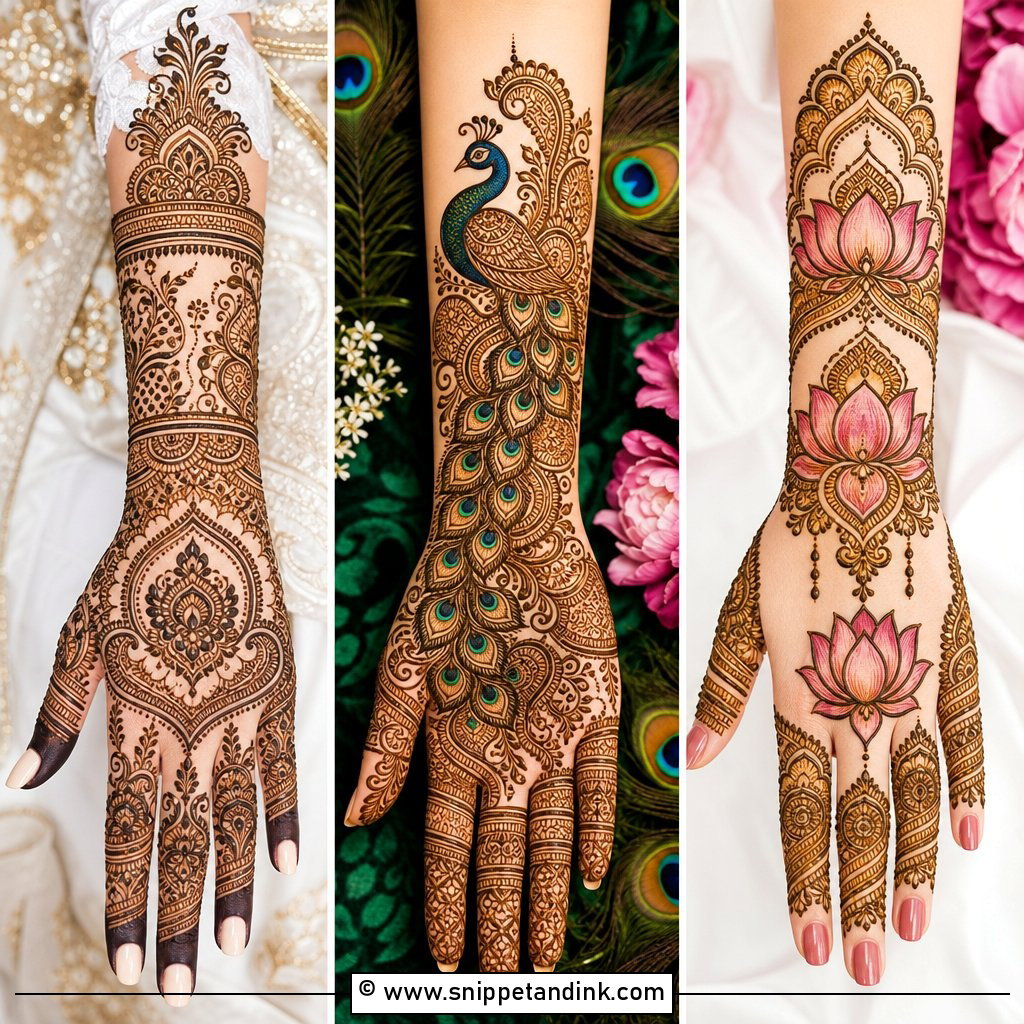
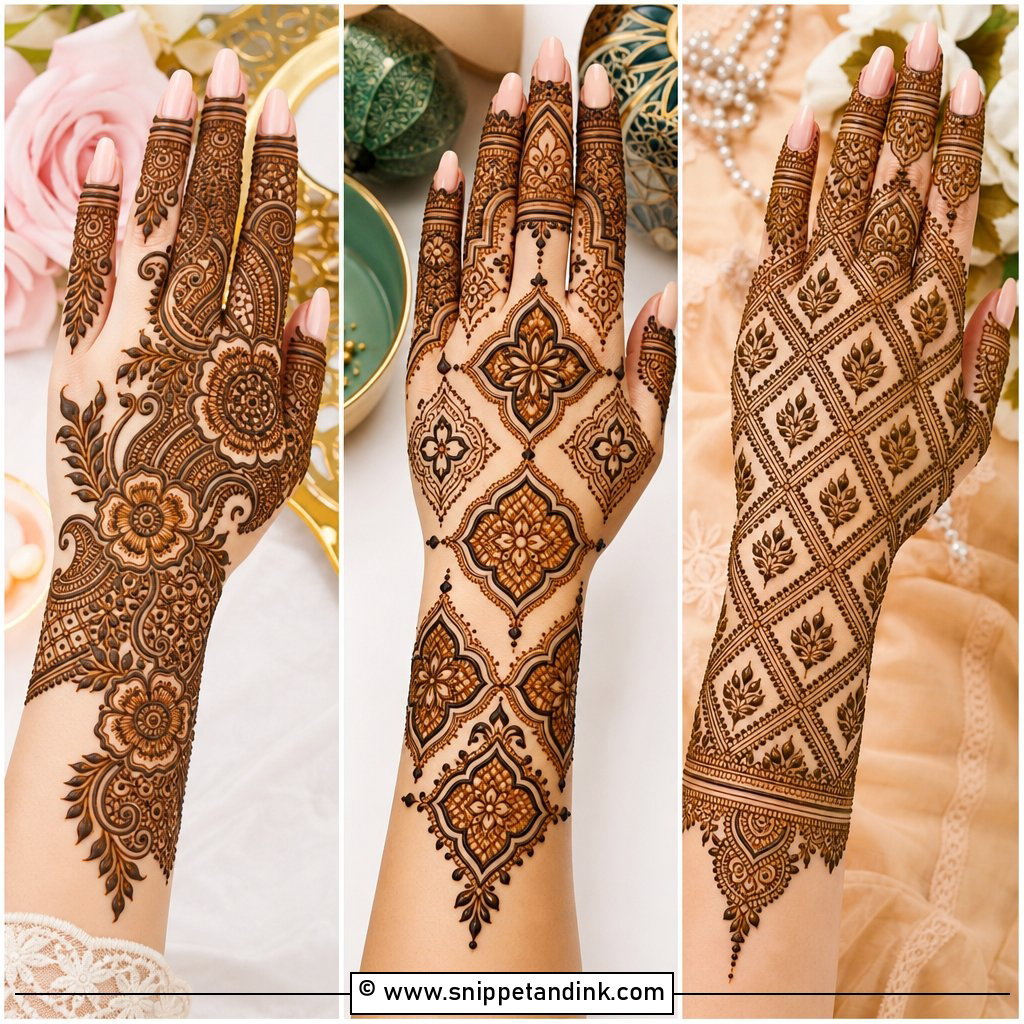
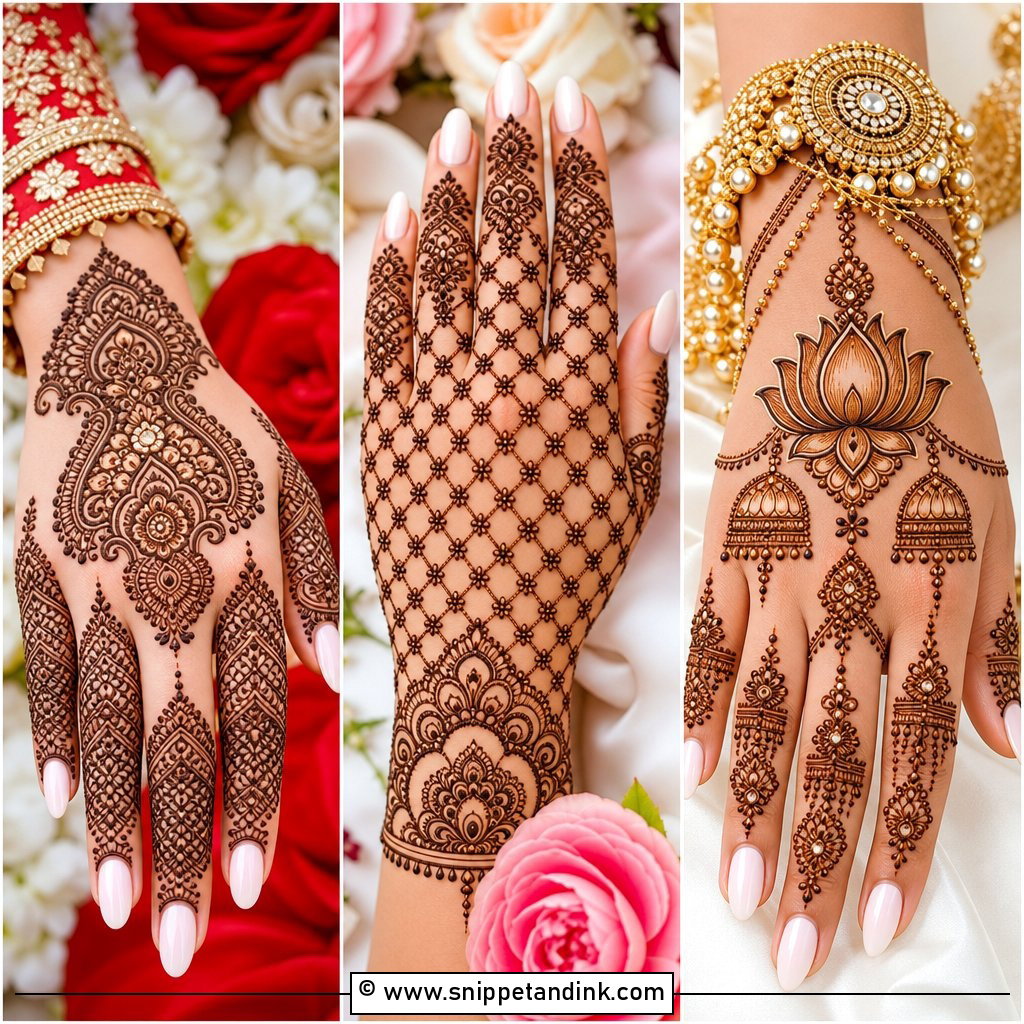
Full hand coverage is the design most of my brides start from, and it’s also the longest sitting. I plan it in zones before the cone touches skin: a focal point on the palm, a connecting band at the wrist, then the fingers and forearm. Without that map, a full hand turns into wall to wall filler that reads as a dark blur in photos. If you’ll wear kaleeras or heavy bangles, tell me where they’ll sit so the wrist band lands just above or below them instead of hidden underneath.
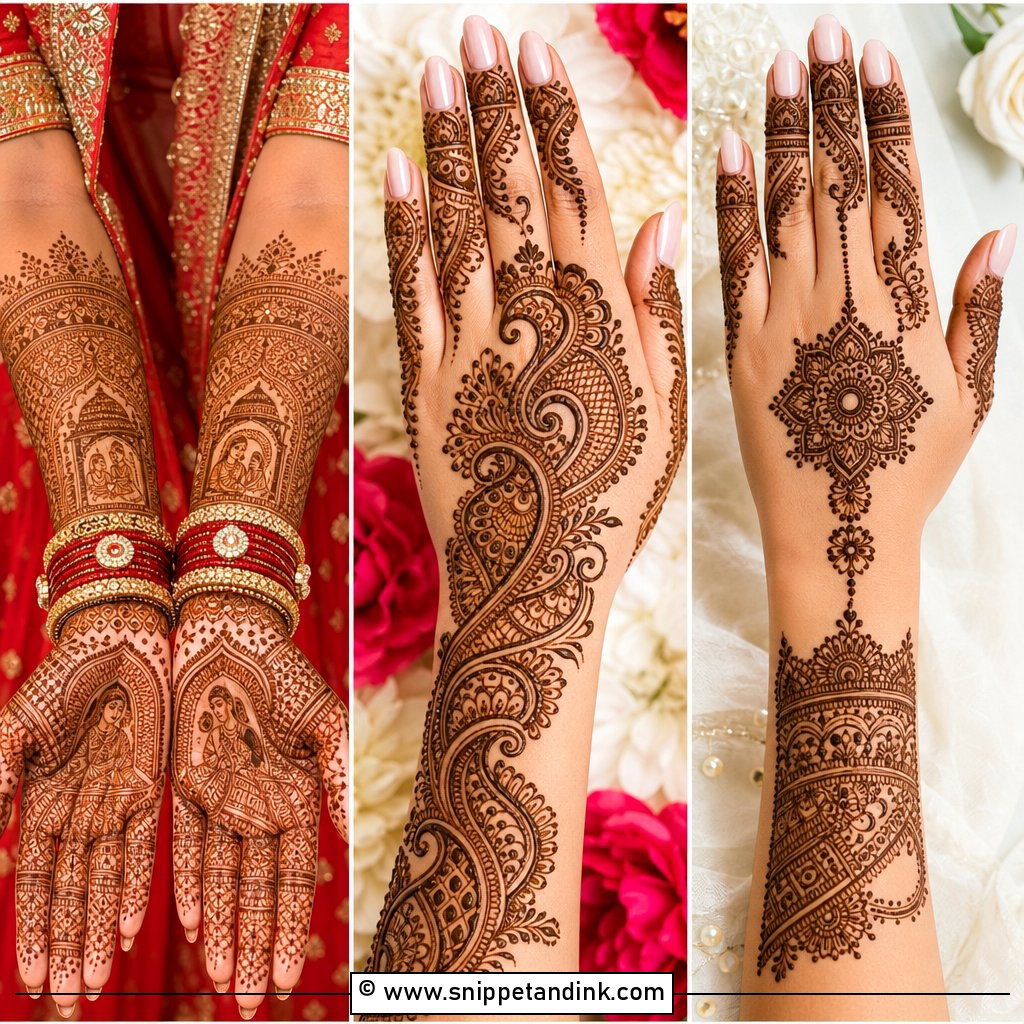
2. Indian Bridal Mehndi Design
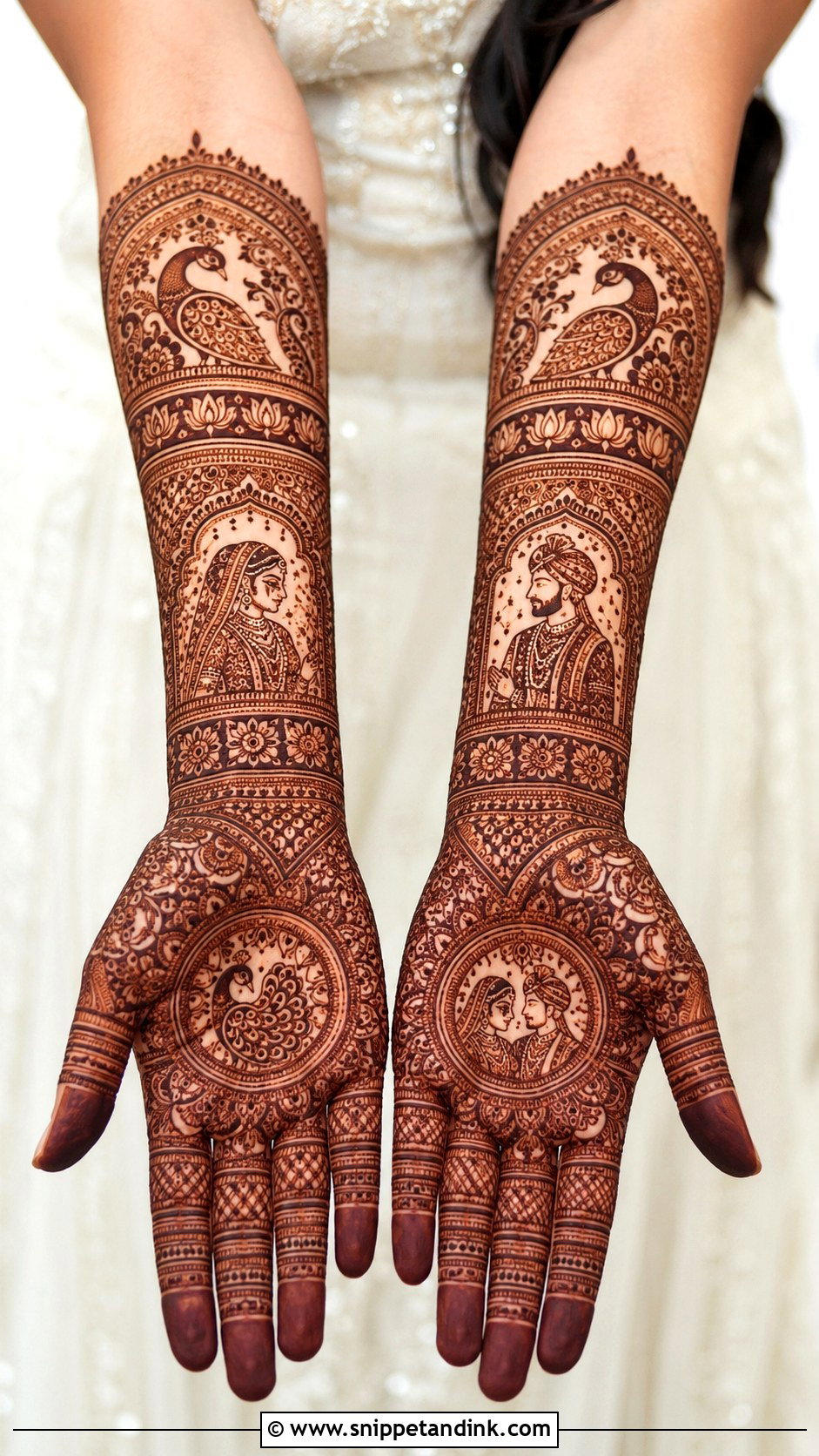
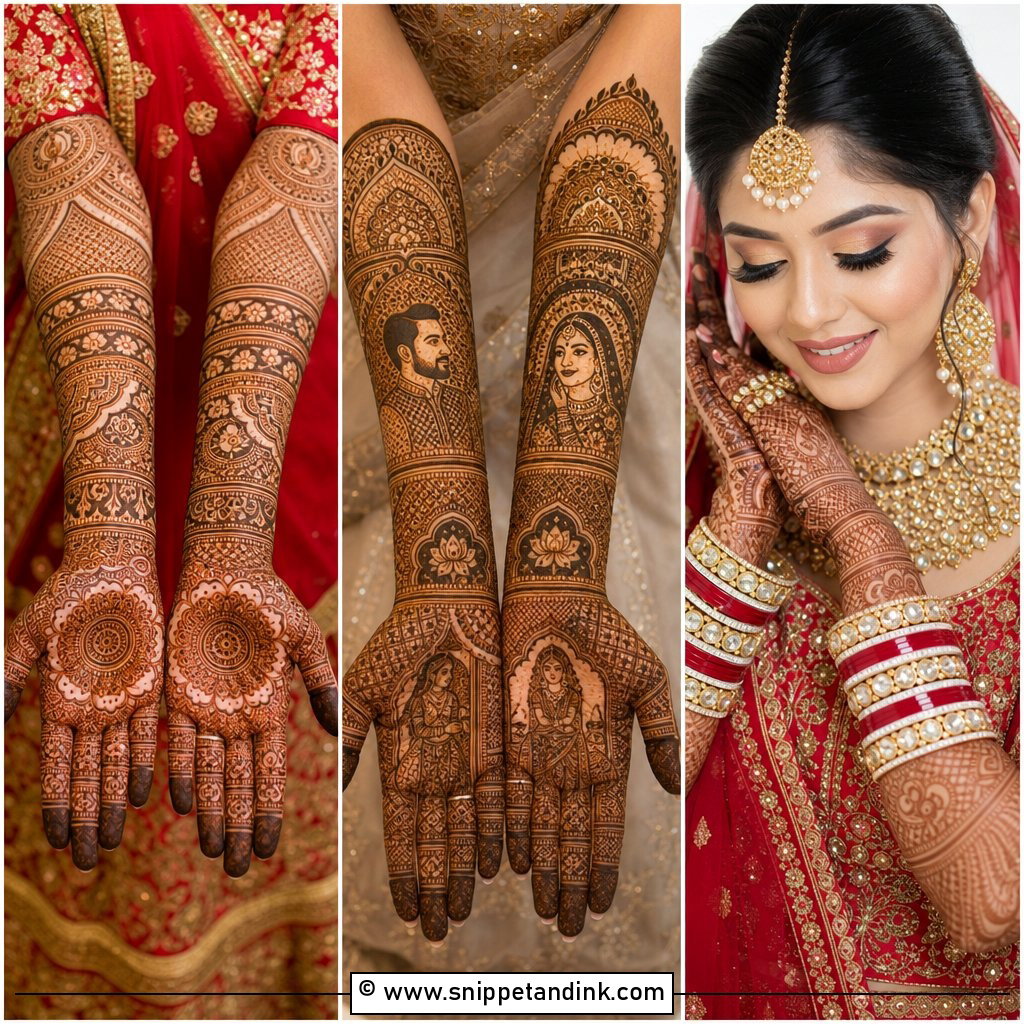
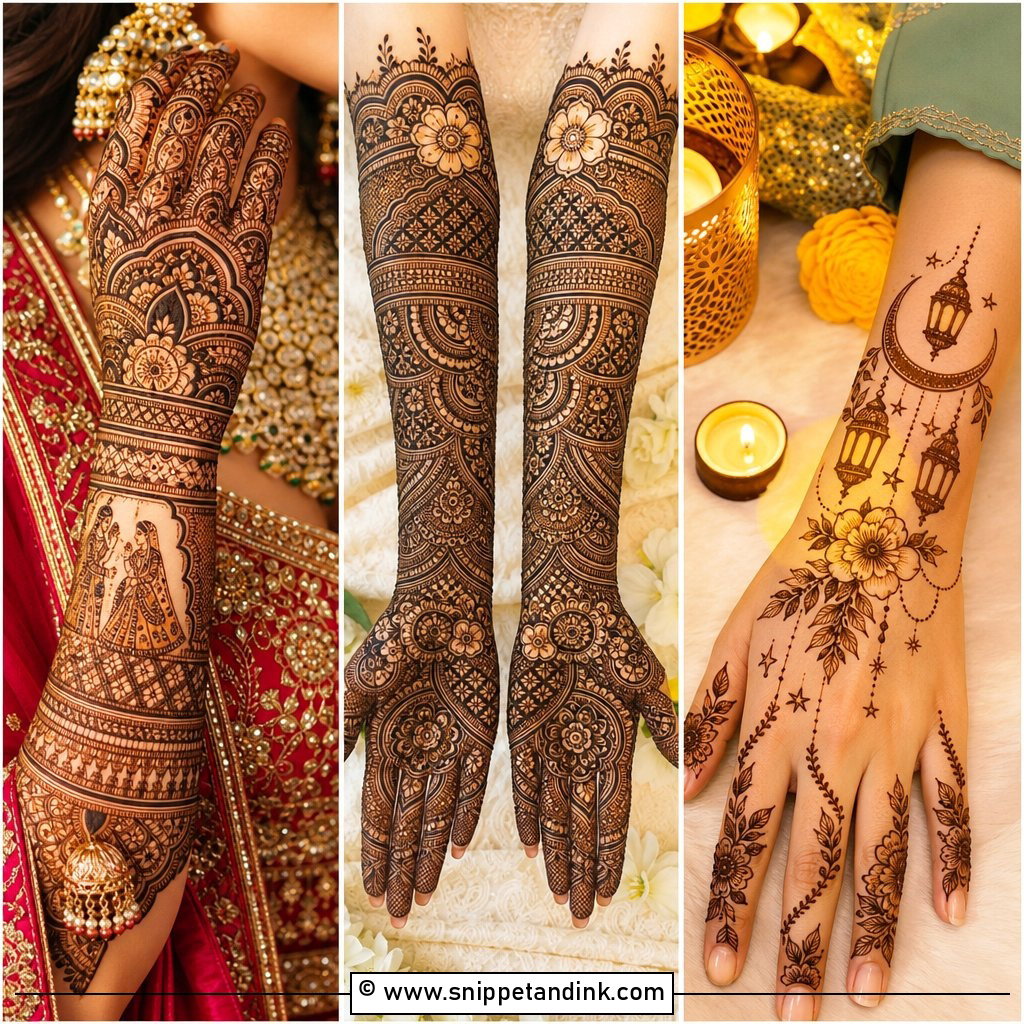
Traditional Indian bridal work is dense, symbolic and built from small repeated marks: paisleys, peacocks, lotus, mandalas, bride and groom figures, and lace fills between them. Each hand can carry a different scene while the borders keep them related. Fine lines like these only show properly with fresh, natural henna and good aftercare, because a thin line from a weak paste stays pale orange. Plan for a long sitting, often several hours for both hands to the elbow, and eat beforehand.
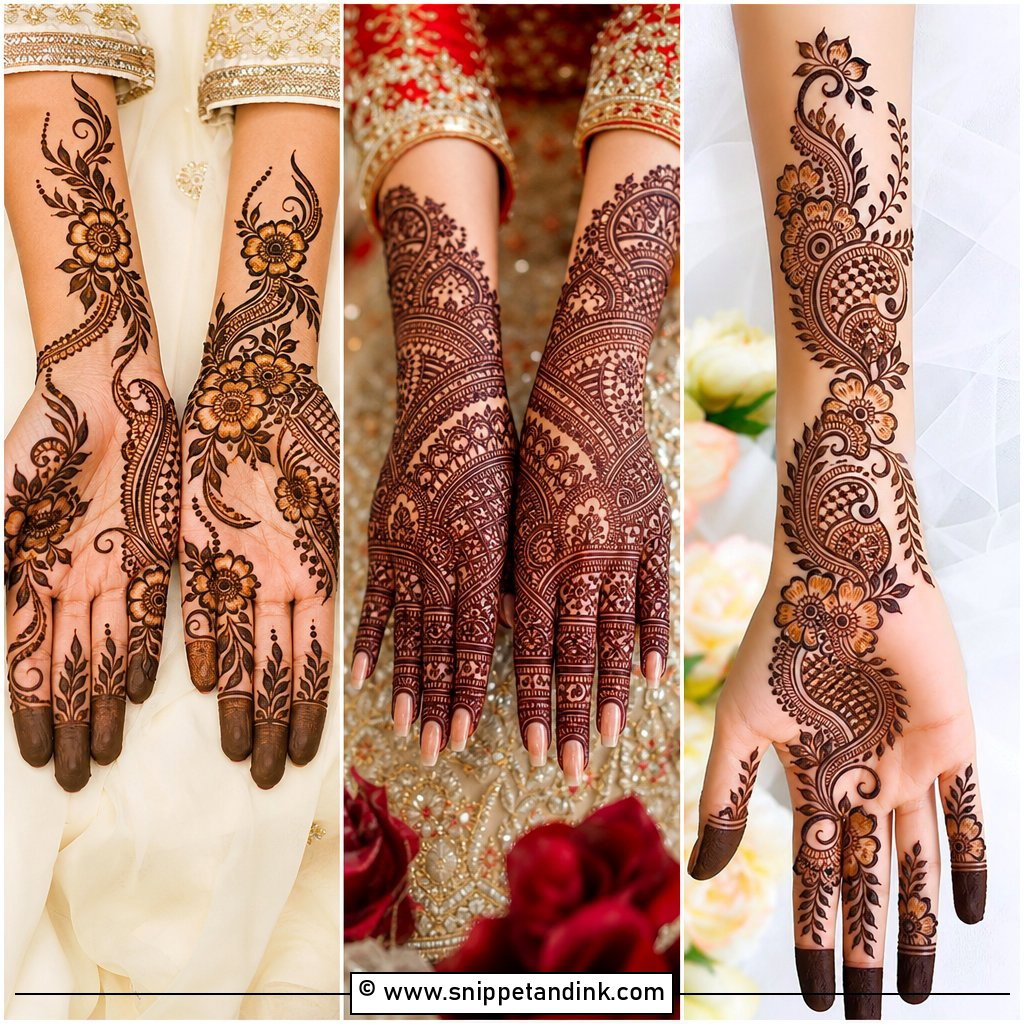
3. Arabic Bridal Mehndi Design
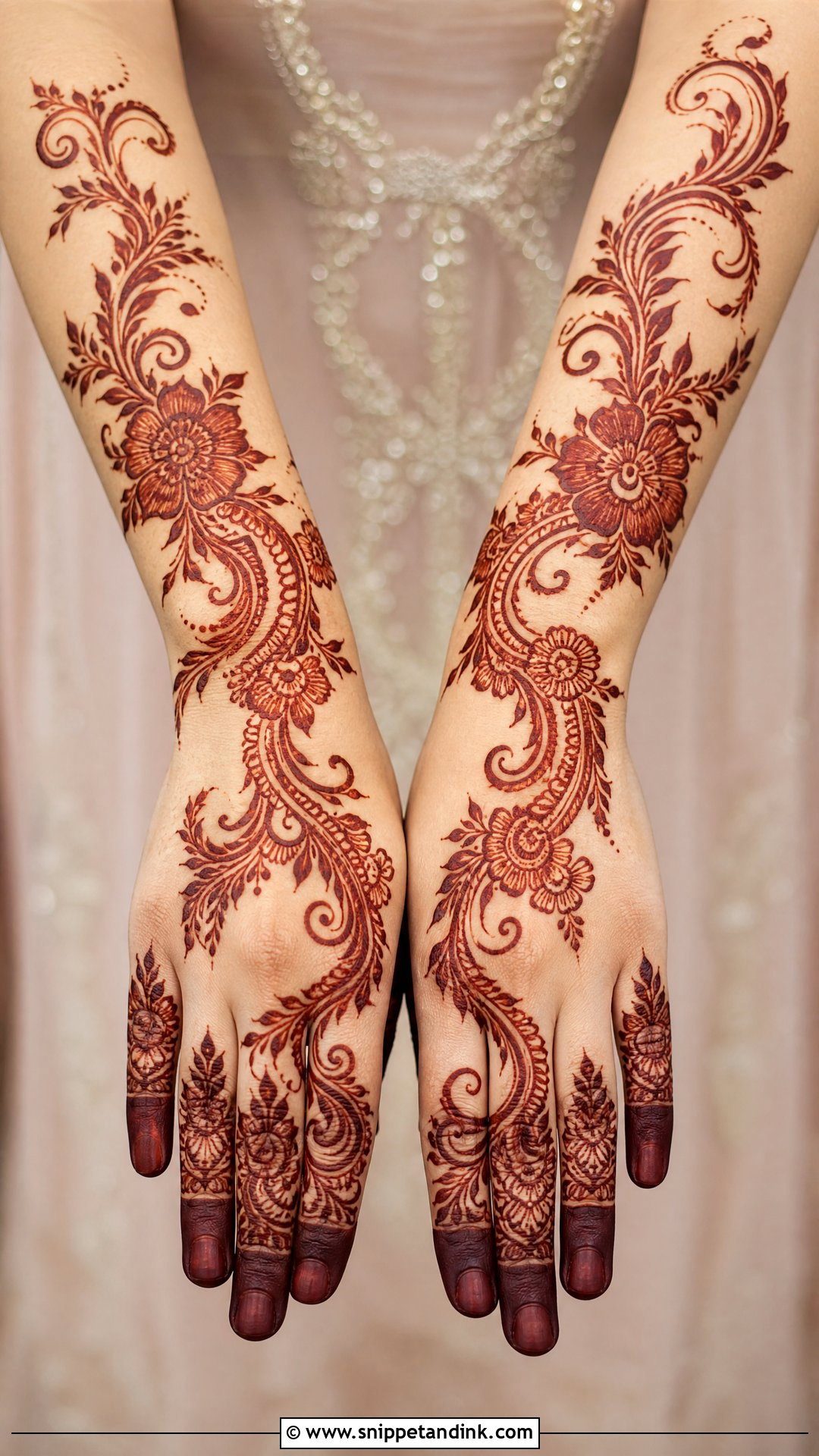
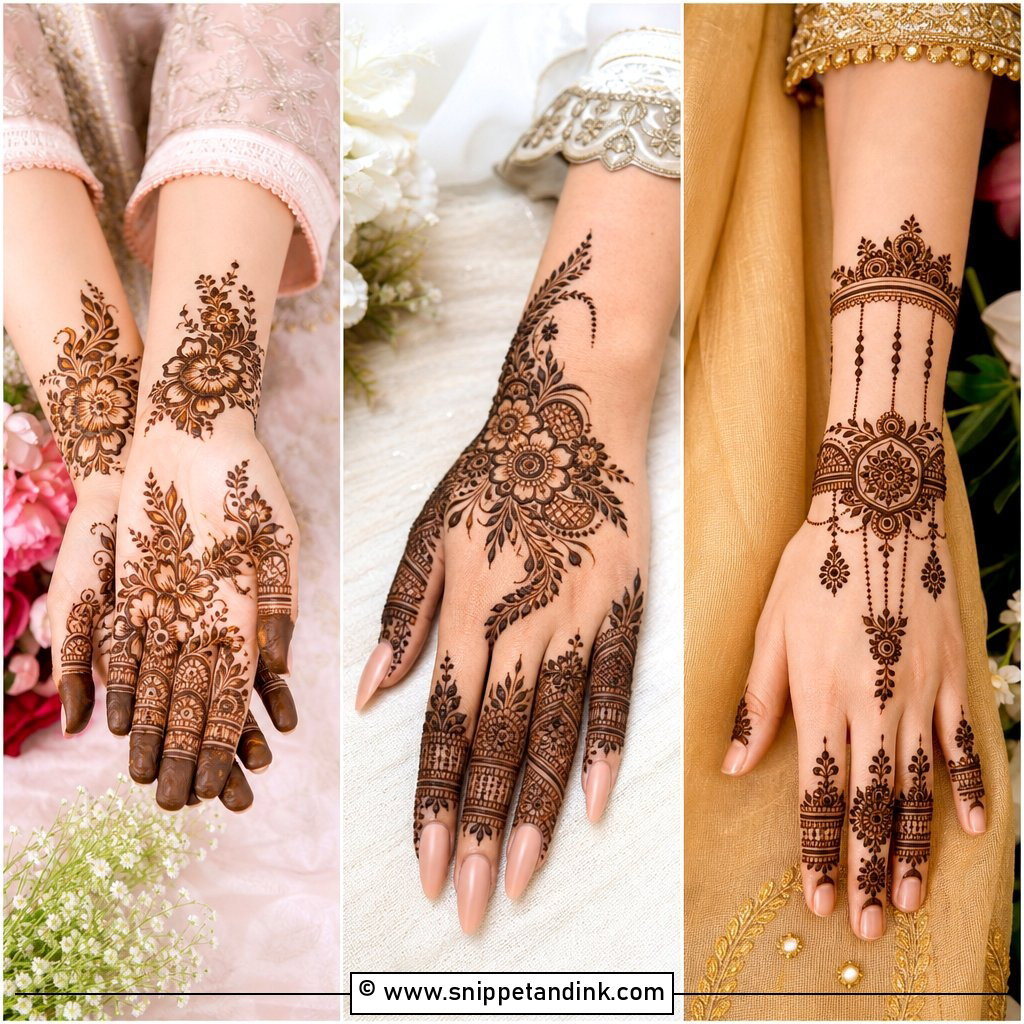
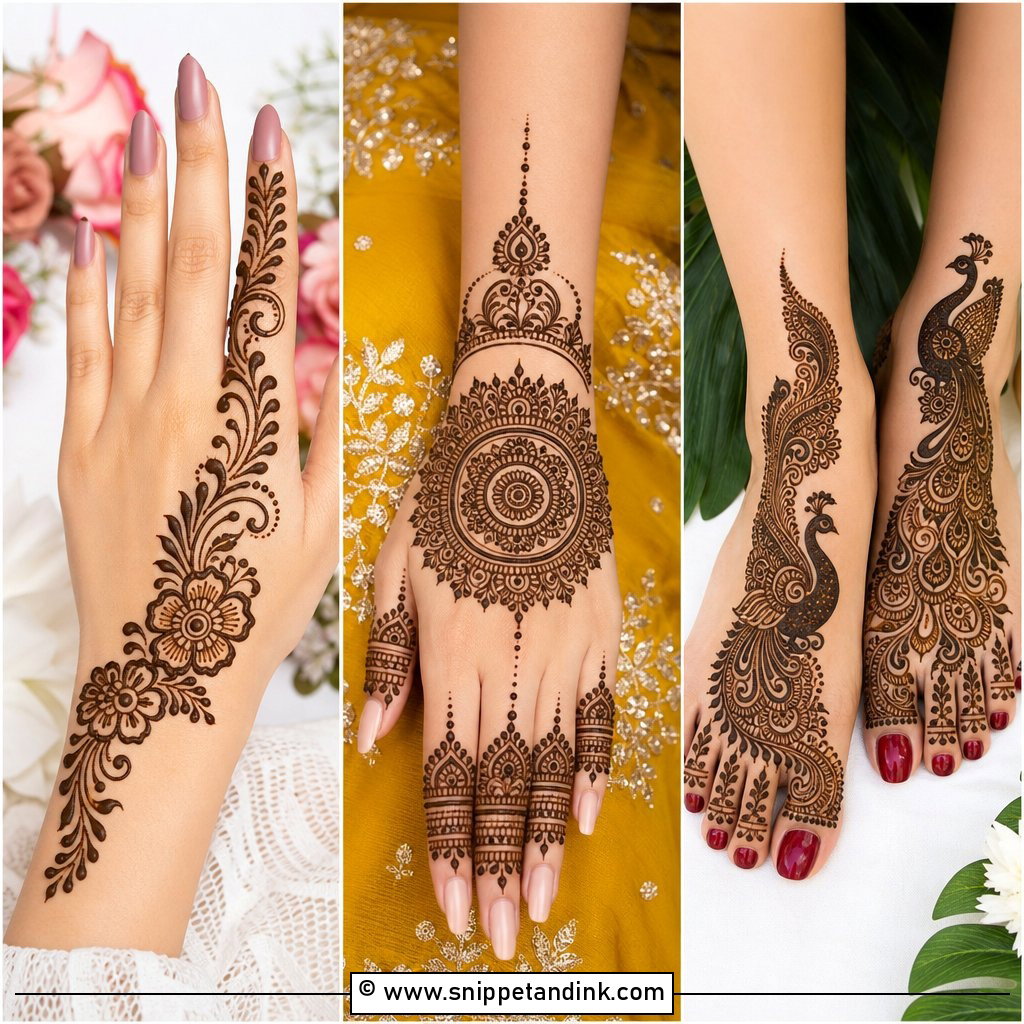
Arabic bridal work runs diagonally across the hand in bold trails of flowers, leaves and shaded paisleys, with plenty of bare skin between them. That open space is the point; it’s quicker to apply and dries faster, which helps if your sitting has to fit into a busy day. I use a slightly thicker line here and shade petals with short strokes. It suits engagements, nikah looks and destination weddings, and extending the trail to the forearm makes it read as bridal rather than festive.
4. Indo Arabic Bridal Mehndi Design
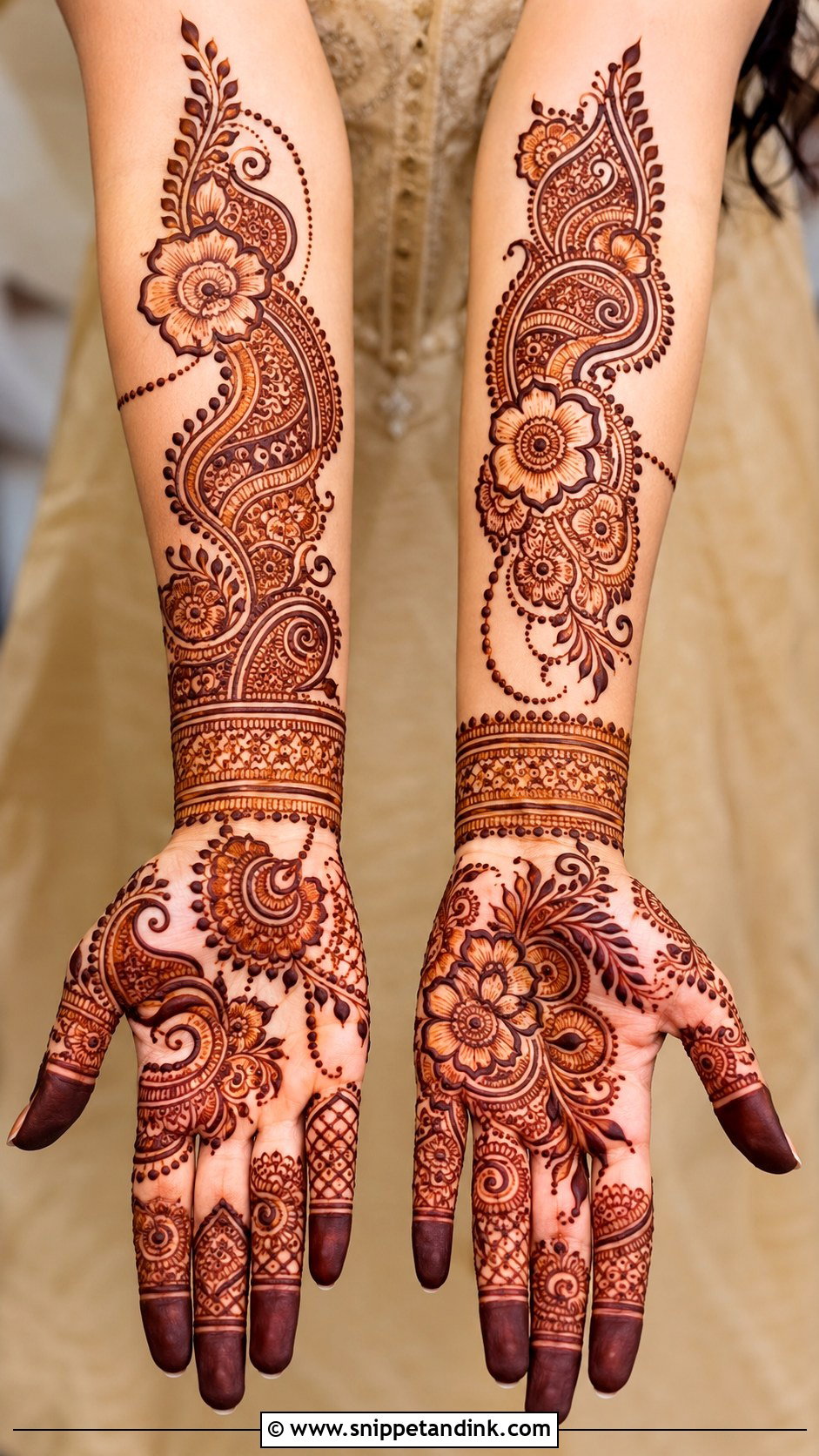
Indo Arabic sits between the two traditions: the bold diagonal flow of Arabic work with Indian detailing packed into its larger shapes. I’ll often fill a big Arabic flower with tiny jaali or dots so it holds up close and still reads from across a room. It’s a good answer for the bride who wants coverage but finds full Indian work too busy. Mirror work or mixed embroidery on the outfit pairs nicely with it because neither competes.
5. Bridal Mehndi Design Front Hand
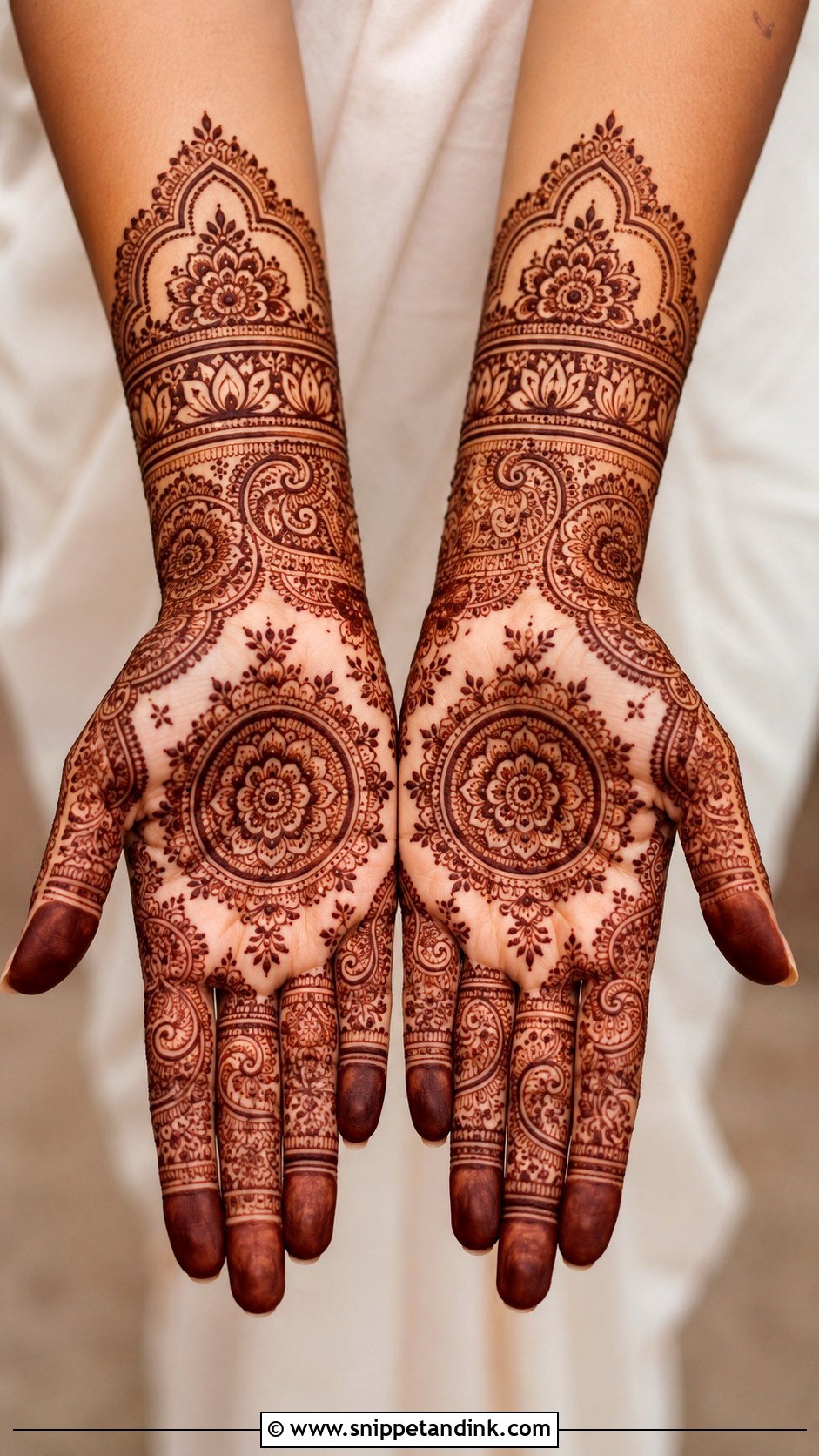
Palms are the part of the hand everyone sees during rituals, and they also stain darkest because the skin there takes henna well. I treat the center of the palm as the main canvas: a mandala, a couple portrait or a lotus, with the rest of the palm built outward from it. Fingers get denser tips or banded rings to finish the frame. If you want hidden initials, the palm is where I’d tuck them, inside a petal or a paisley curl where the skin stays flat.
6. Bridal Mehndi Design Back Hand
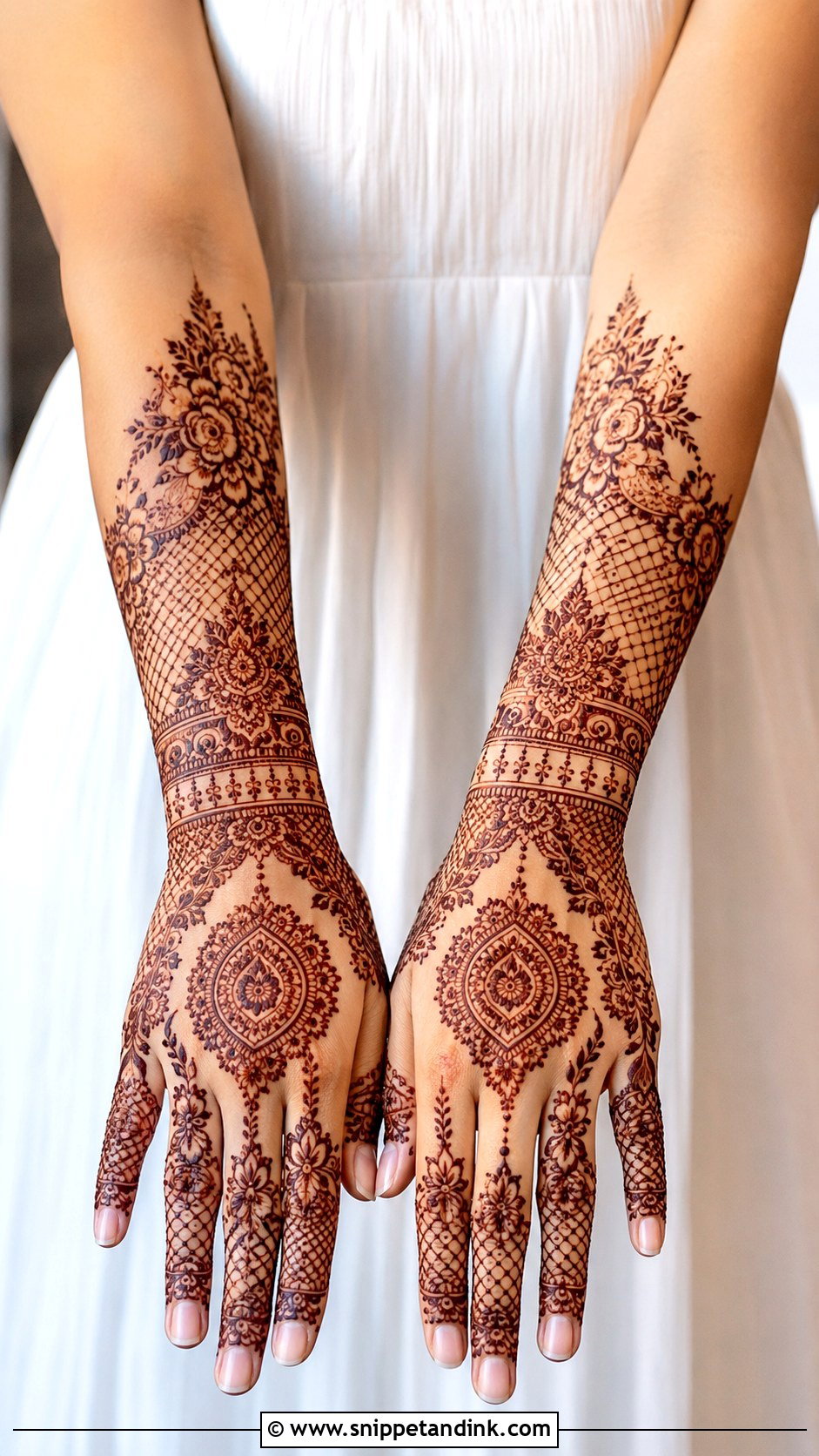
The back of the hand photographs constantly, holding a dupatta, showing a ring, resting on a partner’s shoulder. It also stains lighter than the palm, so I use a slightly bolder line there. Long fingers suit vertical trails; wider hands look better with a rounded mandala and a soft border. If you’ll wear a haath phool, bring it to the consultation so I can draw around its chains instead of under them.
7. Royal Bridal Mehndi Design
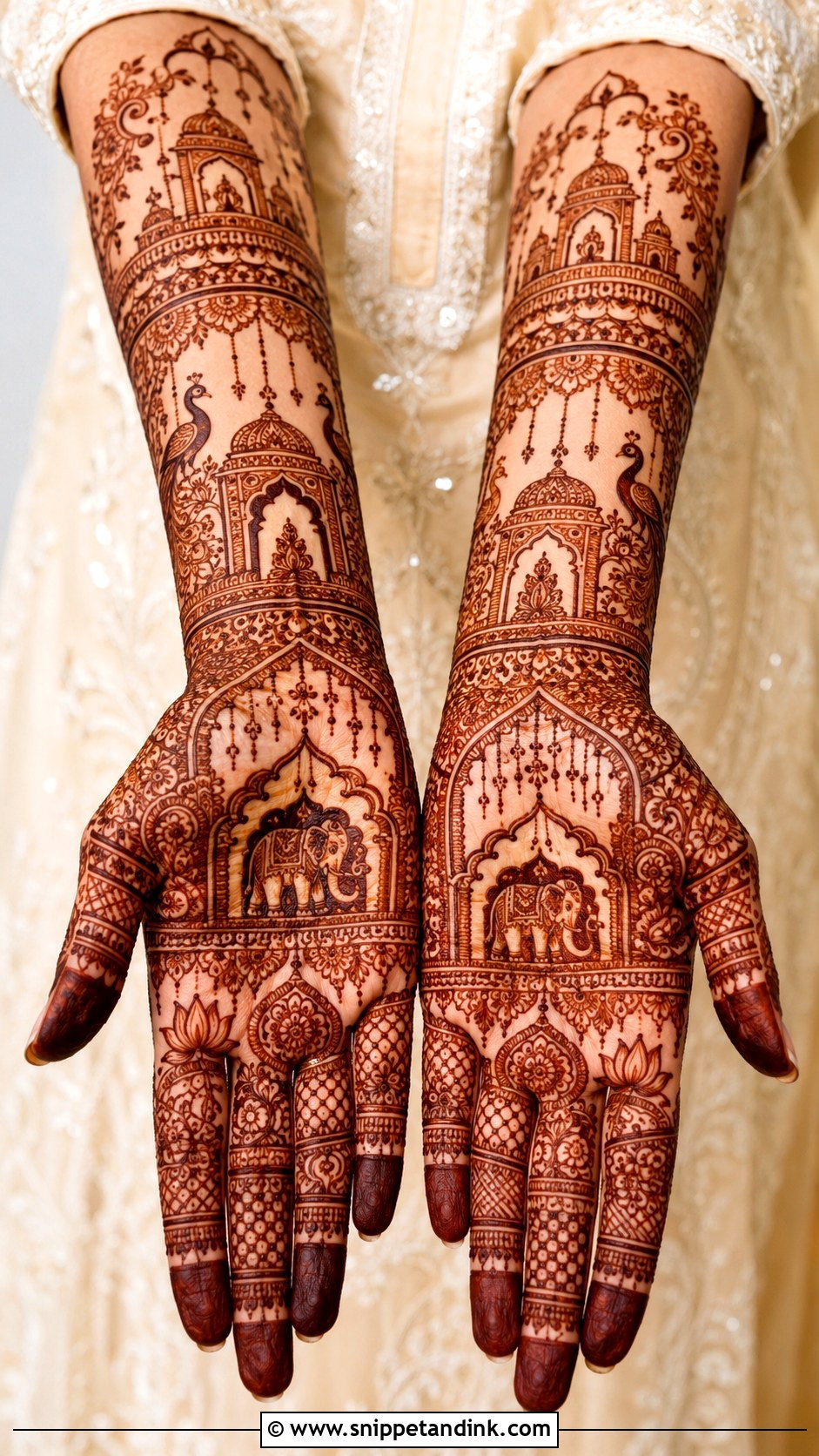
Royal designs borrow architecture and procession: palace arches, elephants, peacocks, lotus and chandelier drops in mirrored layouts. Scale is what makes them readable. I keep the main motifs a size larger than the fill and leave thin channels of bare skin between sections, otherwise a dense royal hand looks muddy once the stain darkens. Mirroring both hands takes more time but pays off in the shot where you hold them together.
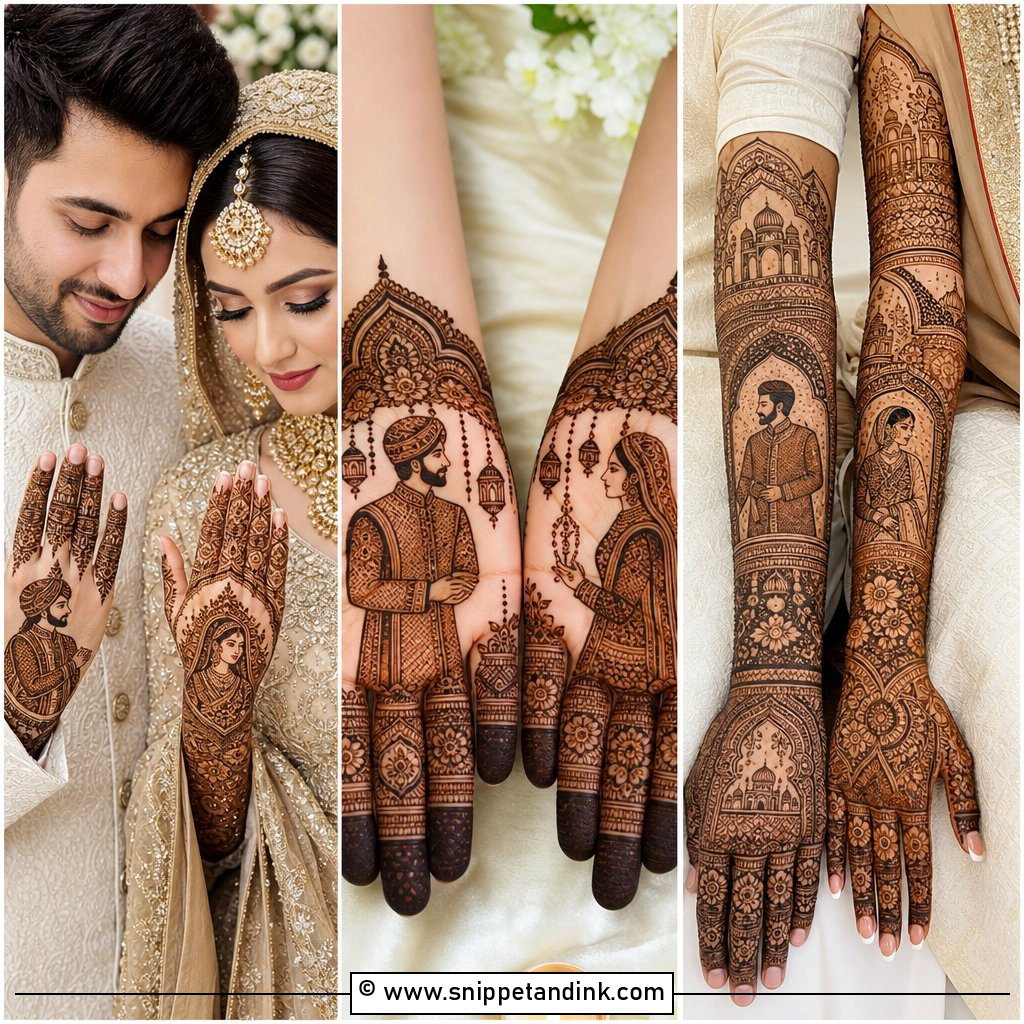
8. Portrait Bridal Mehndi Design
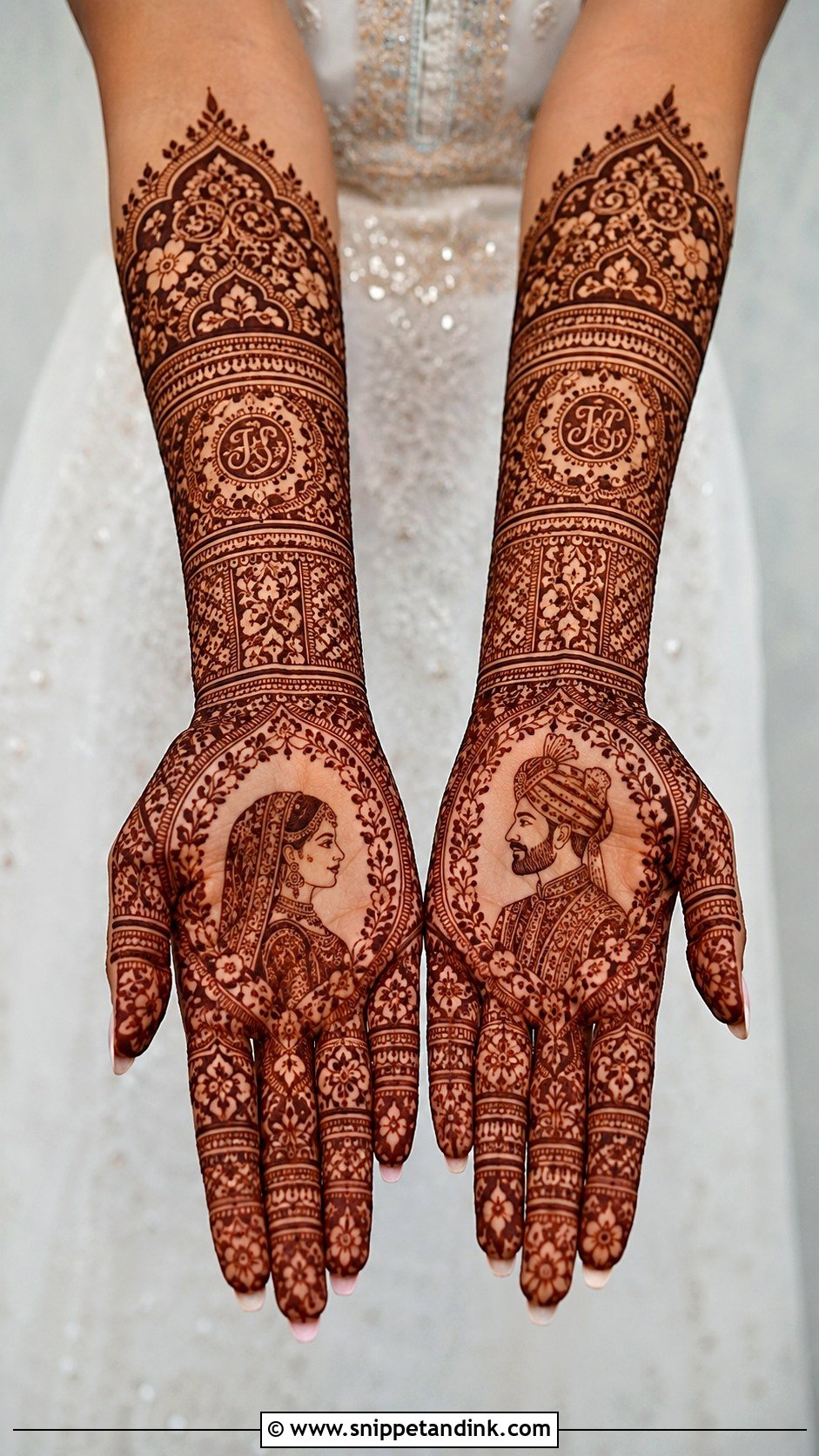
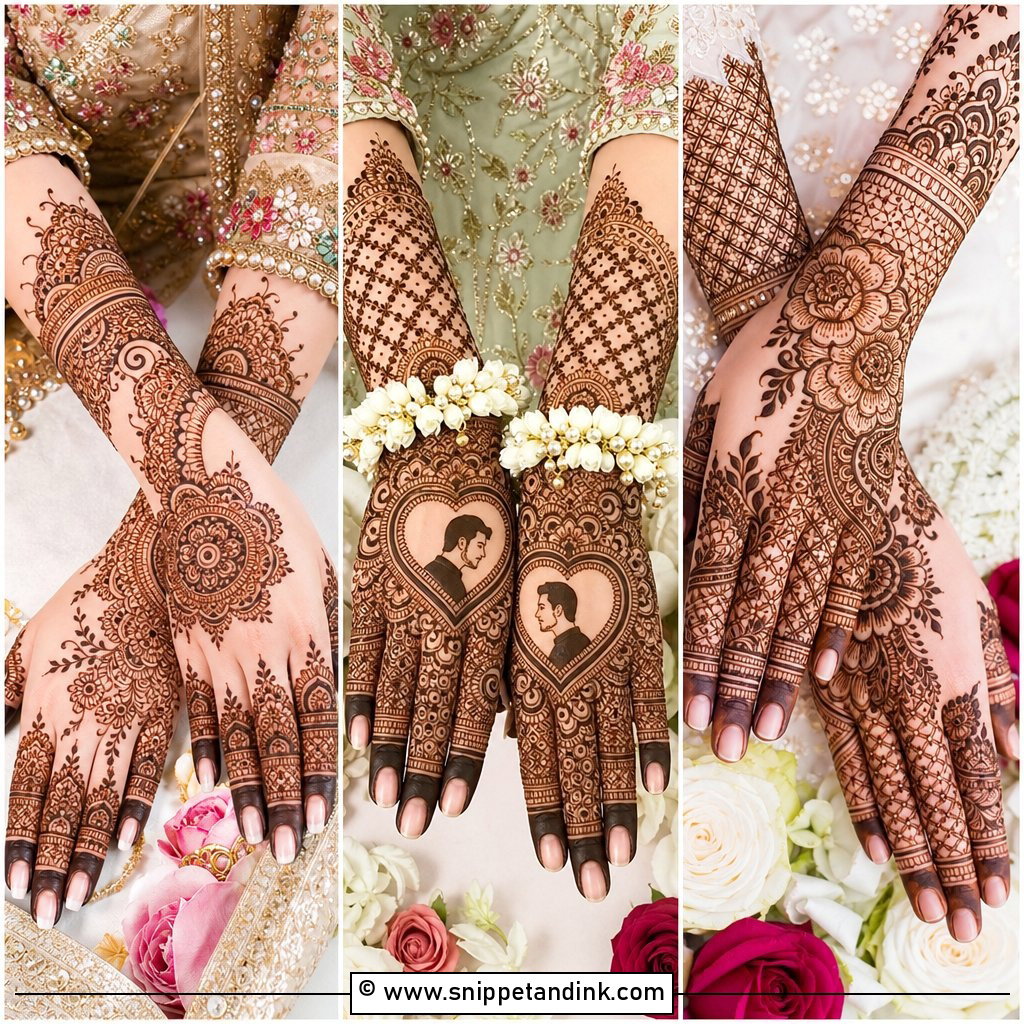
Portraits are skilled work, and I’d always ask an artist for close ups of faces they’ve drawn before you commit. The bride usually goes on one palm and the groom on the other, framed by florals or a doorway. Faces need the flattest part of the palm; drawn over the creases near the fingers, they distort when the hand relaxes. Keep the fill around them fine but not microscopic so the faces stay the focus.
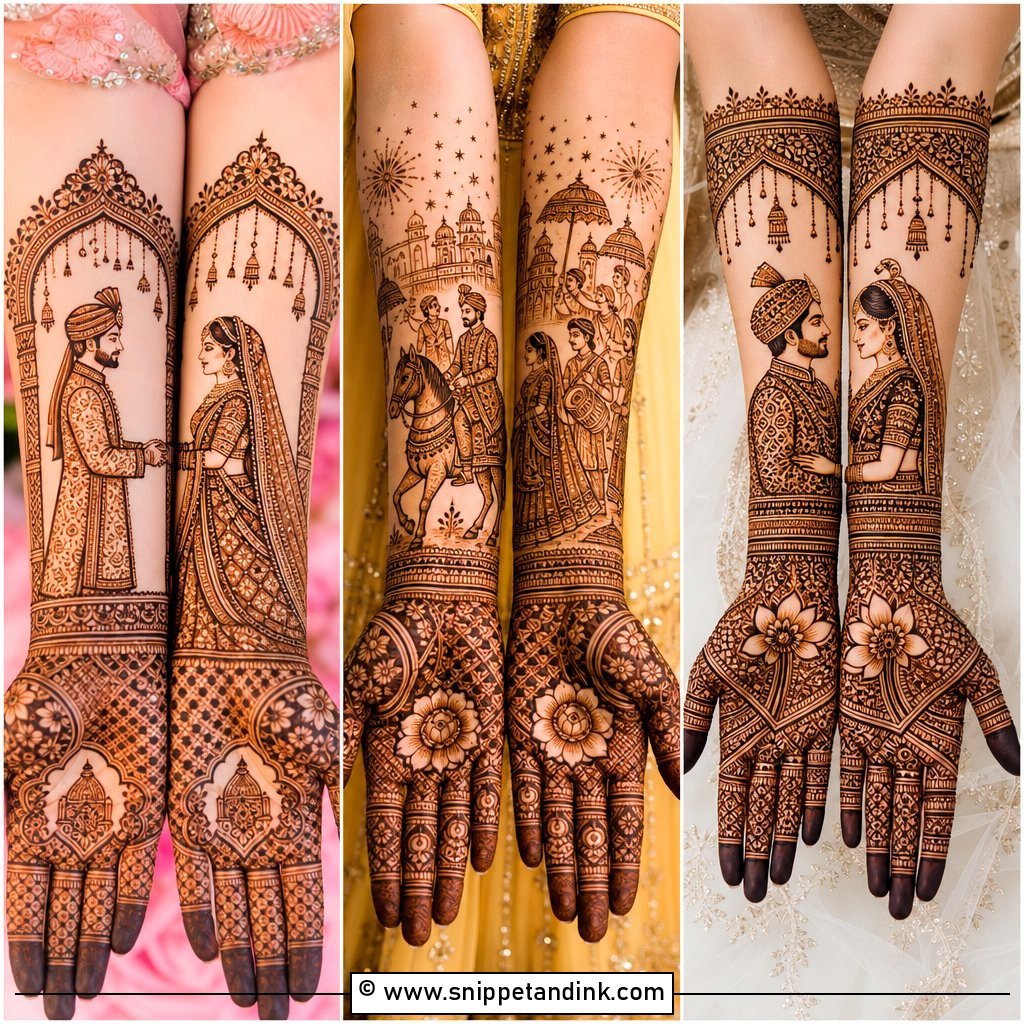
9. Dulha Dulhan Bridal Mehndi Design
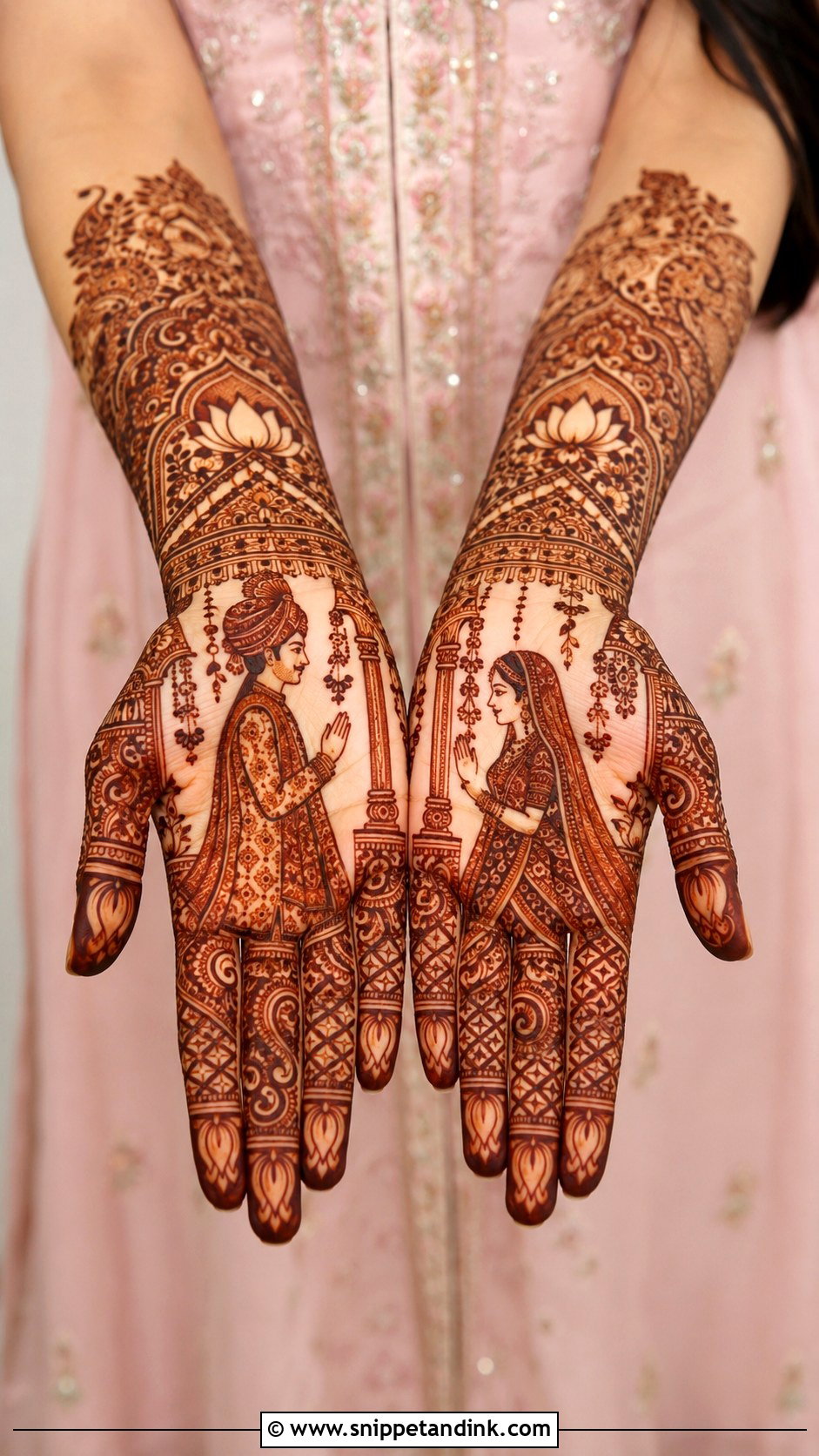
The Dulha dulhan bridal mehndi design tells the wedding as a pair: bride on one hand, groom on the other, with a mandap, garlands, a doli or dhol players around them. It needs full palms to breathe, so it’s not one I’d squeeze onto small hands with lots of other detail. Keeping the forearms a little more open with floral trails stops the whole design from feeling heavy.
10. Mandala Bridal Mehndi Design
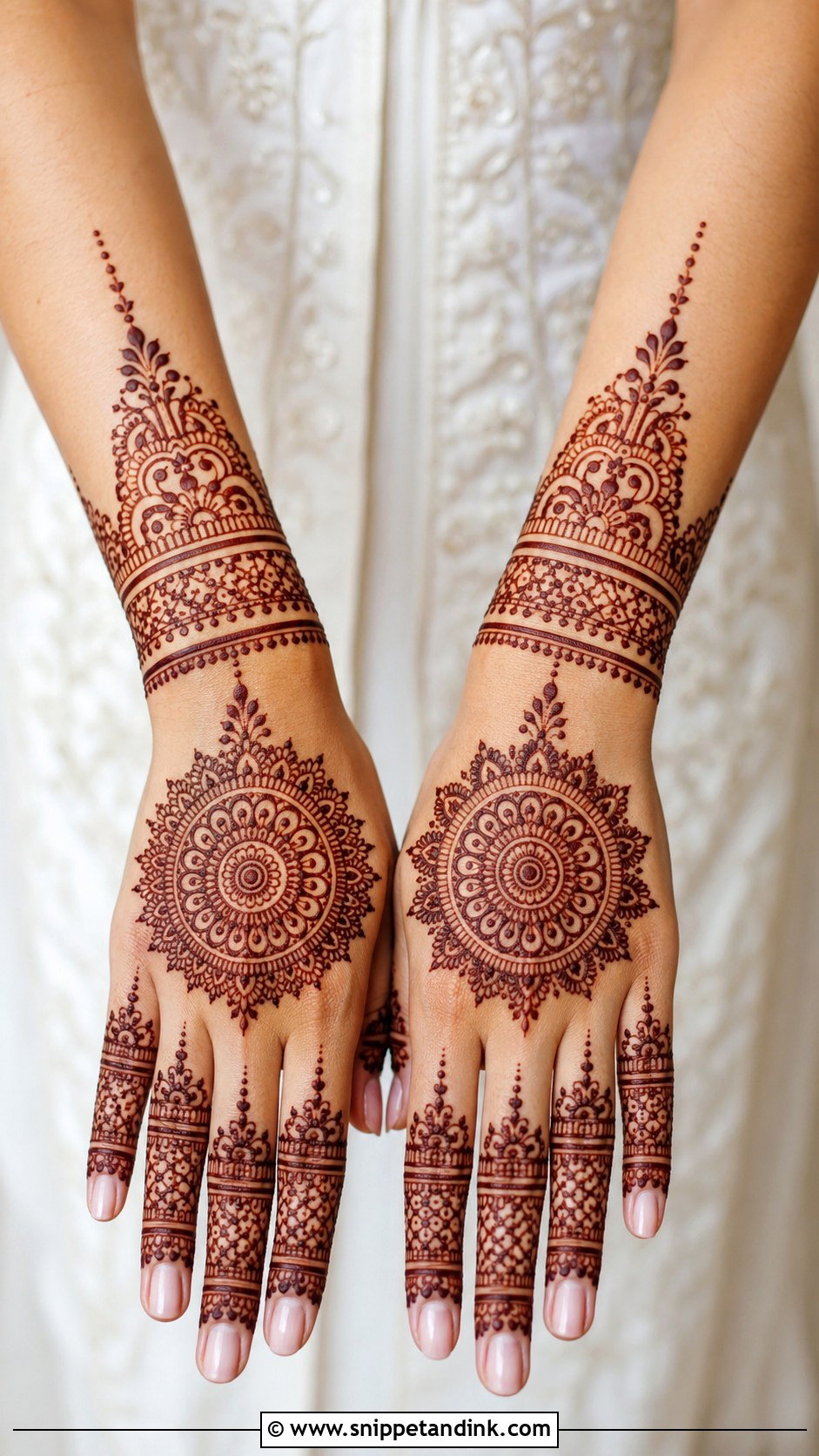
Mandalas are the easiest way to give a hand a calm center. I start from a dot in the middle of the palm or back hand and build rings outward, checking symmetry as I go, since a slightly oval mandala on a palm looks wrong once the hand opens. They work especially well on smaller hands. Keep the mandala bold and the rest light for a minimal bridal look, or let it radiate into fingers and forearms for full coverage.
11. Lotus Bridal Mehndi Design
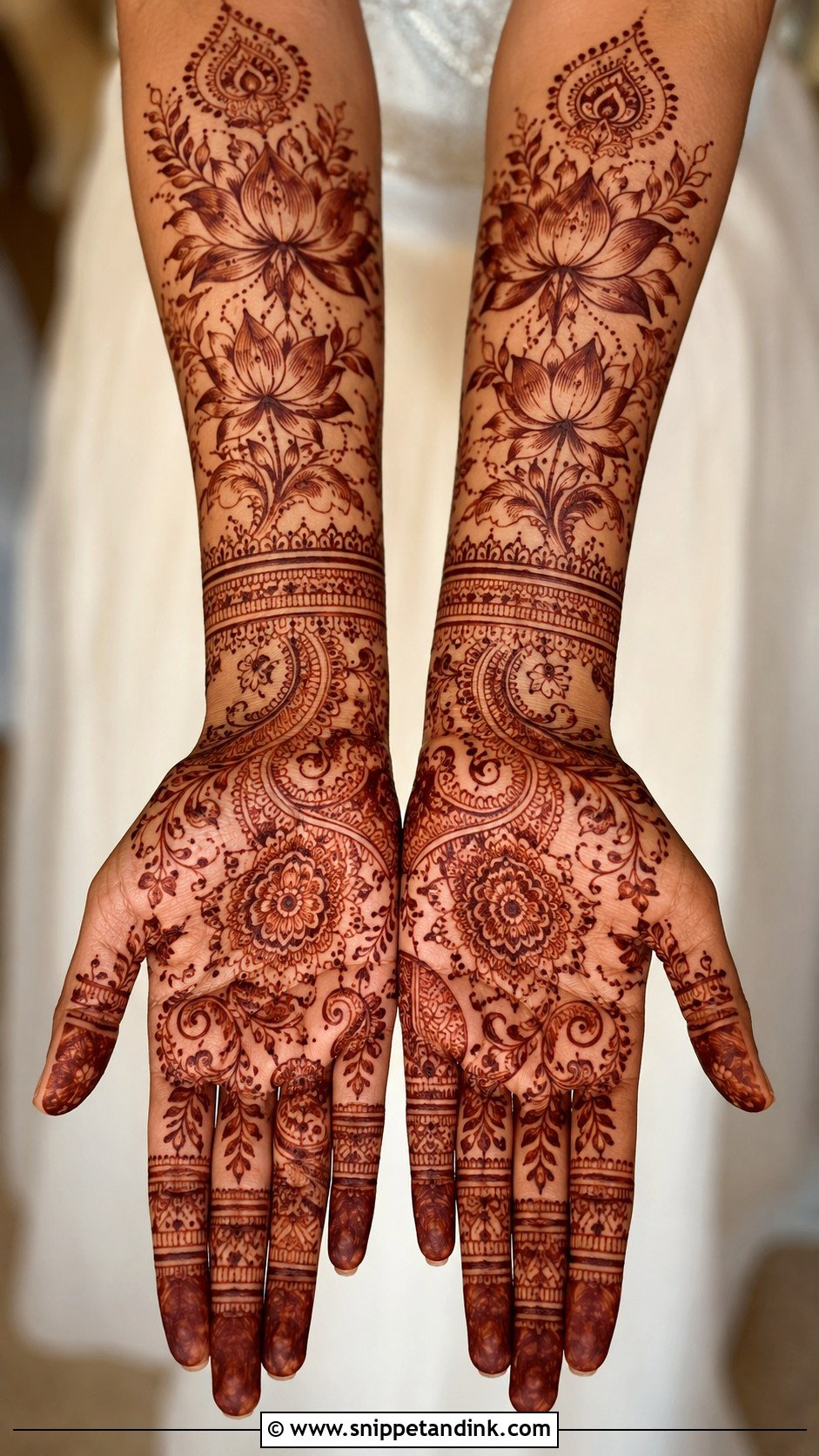
A lotus works at almost any scale, which makes it one of my most useful motifs. Drawn large on a palm with layered, shaded petals it holds a design together; drawn small, it fills a finger or a wrist band. Open lotus outlines with bold lines suit a lighter look, while shaded petals and dense fill give a heavier bridal finish. It pairs well with temple jewelry and pastel outfits.
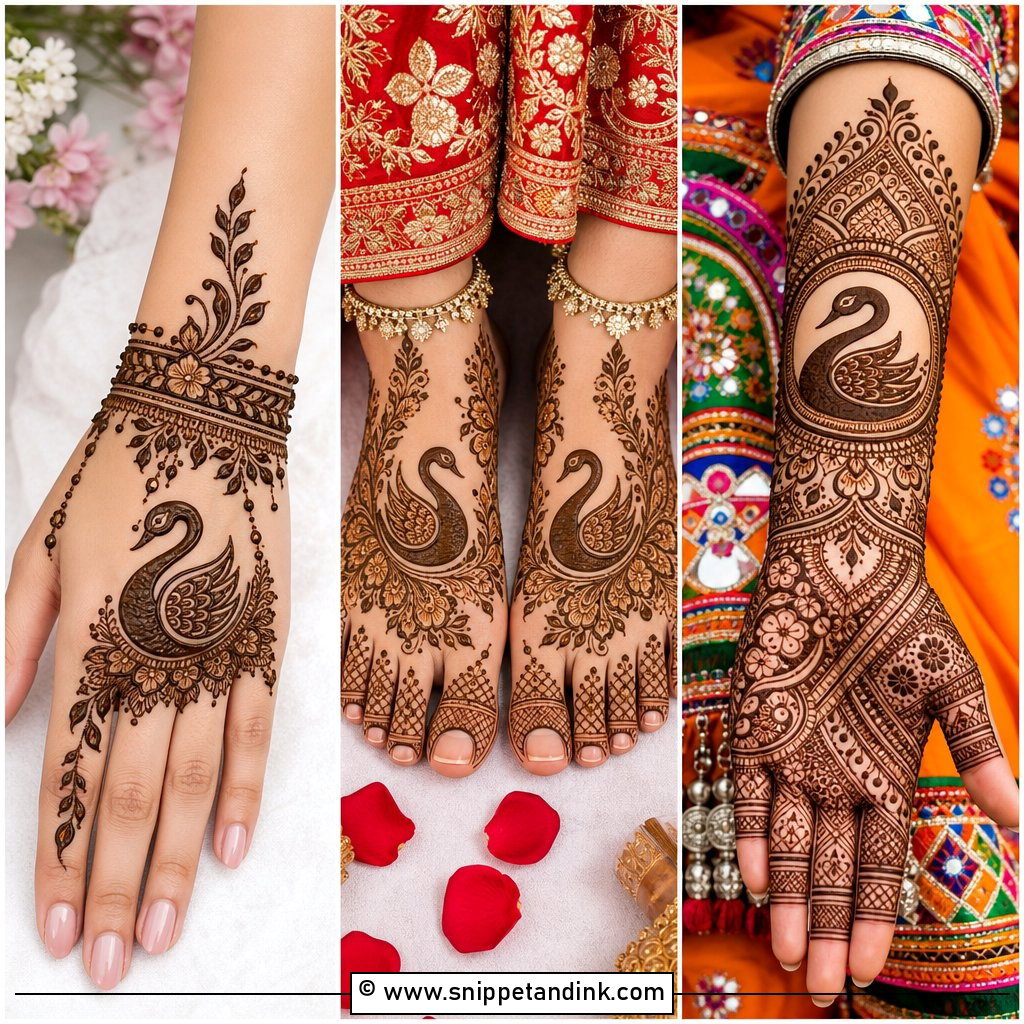
12. Peacock Bridal Mehndi Design
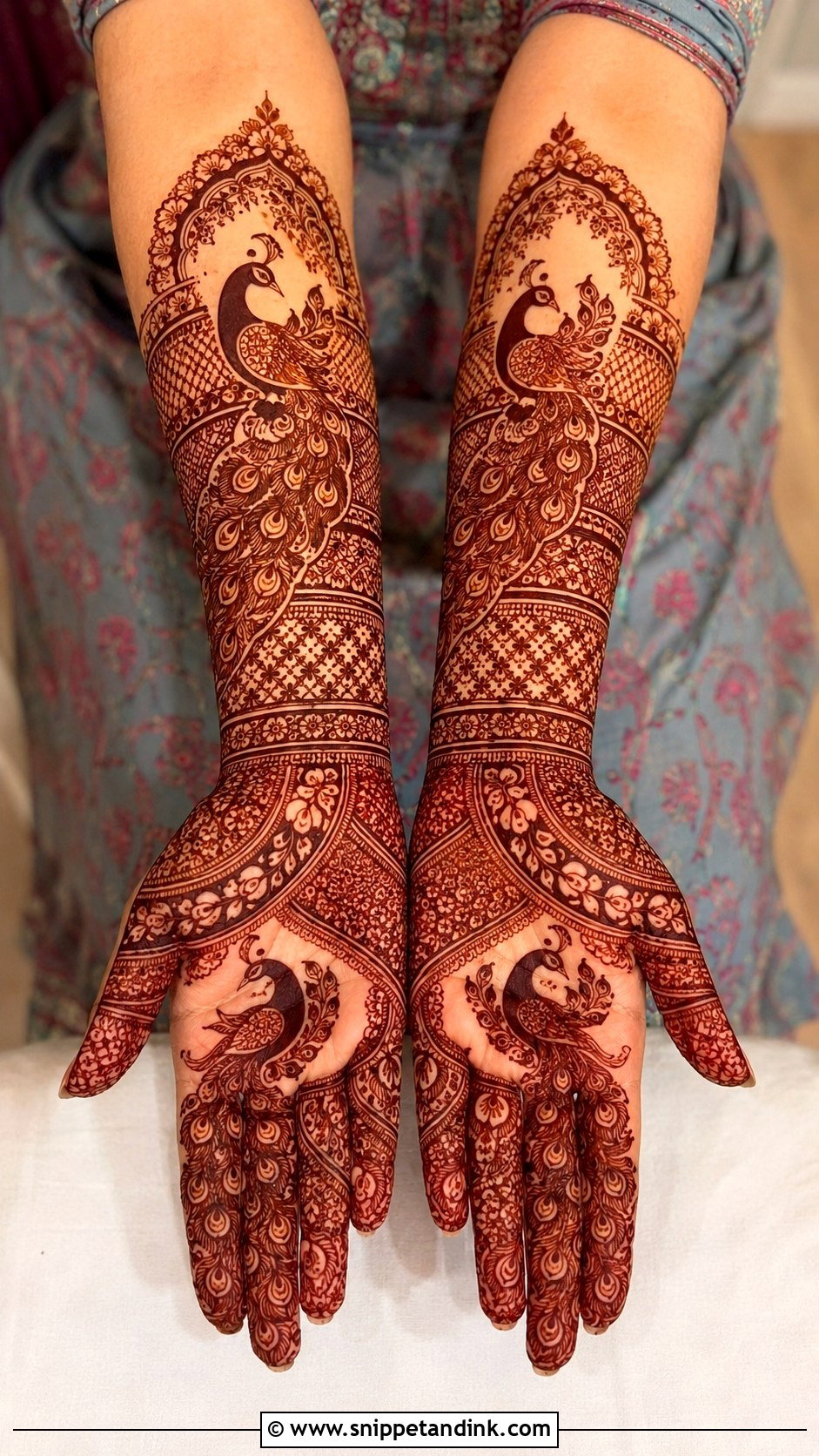
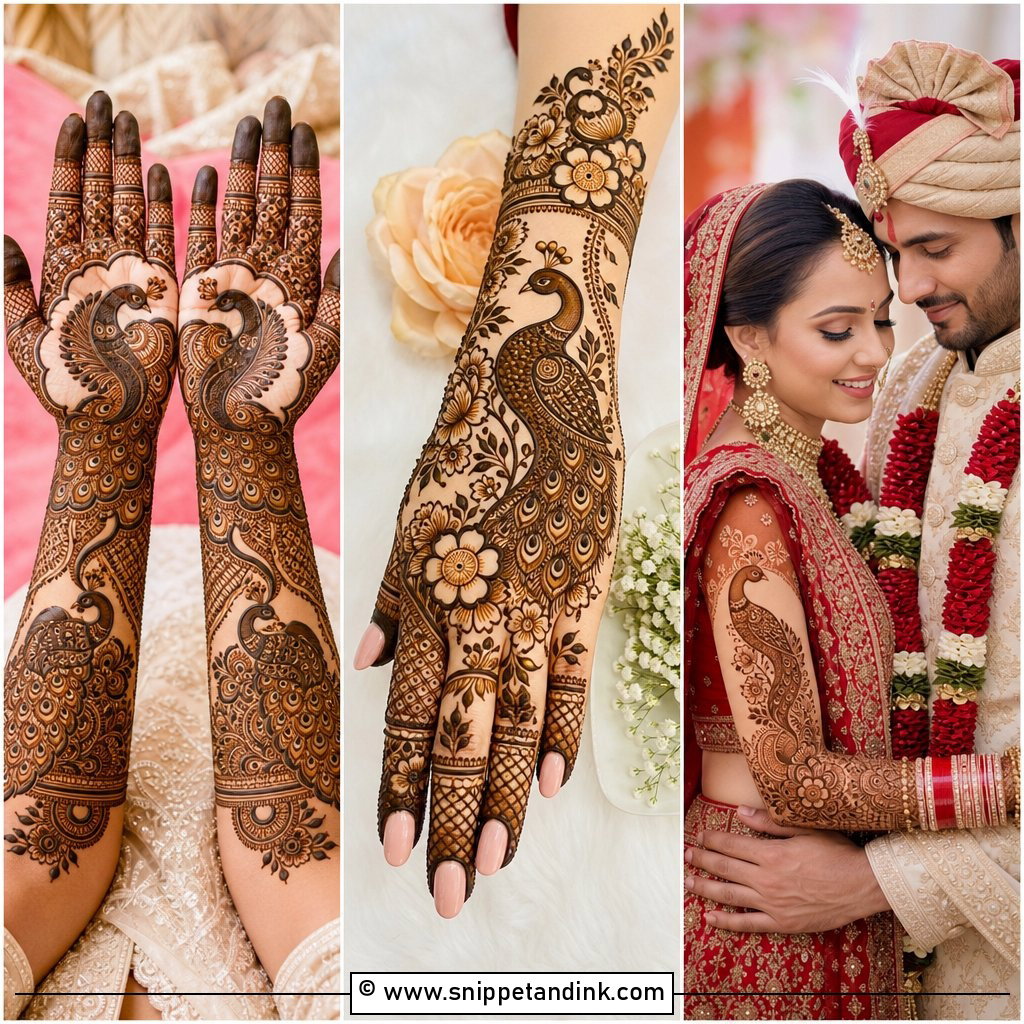
The peacock is a traditional favorite, and its feathers do a lot of the work by curving naturally into paisleys and vines. The detail that ruins it is crowding: when every feather eye touches the next, the bird disappears into the fill. I leave a hair’s width of skin between major elements so the stain reads cleanly. One peacock per hand with floral trails is softer; peacocks plus arches and lotus borders goes fully royal.
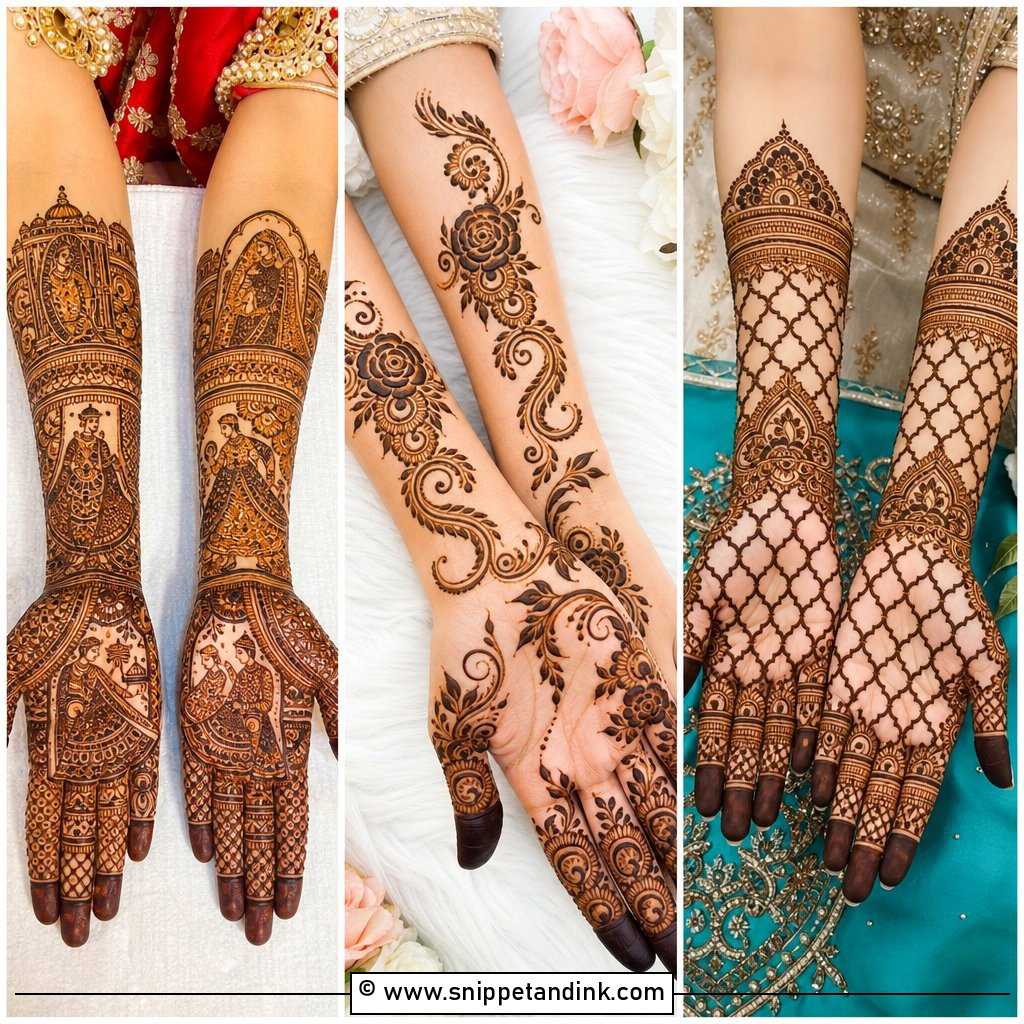
13. Jaali Bridal Mehndi Design
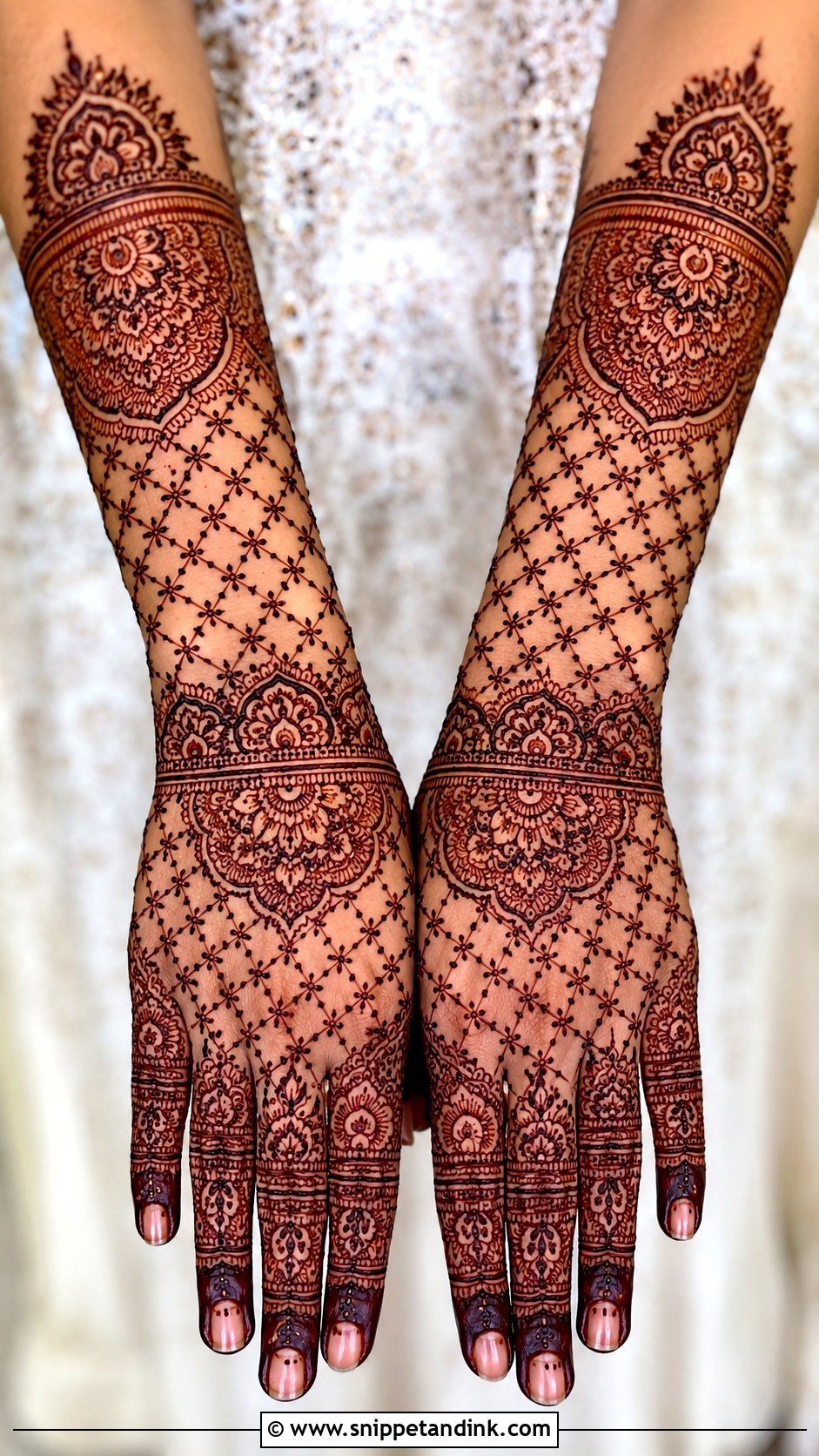
Jaali is net work, and on the back of the hand it looks like a lace glove. It is also the most unforgiving pattern for a shaky line, because every grid square is compared with its neighbor. I draw the guide lines in one direction across the whole panel first, then cross them, rather than finishing one small area at a time. Diamond, square and curved nets suit different hand shapes, and jaali sits well next to rings and a haath phool.
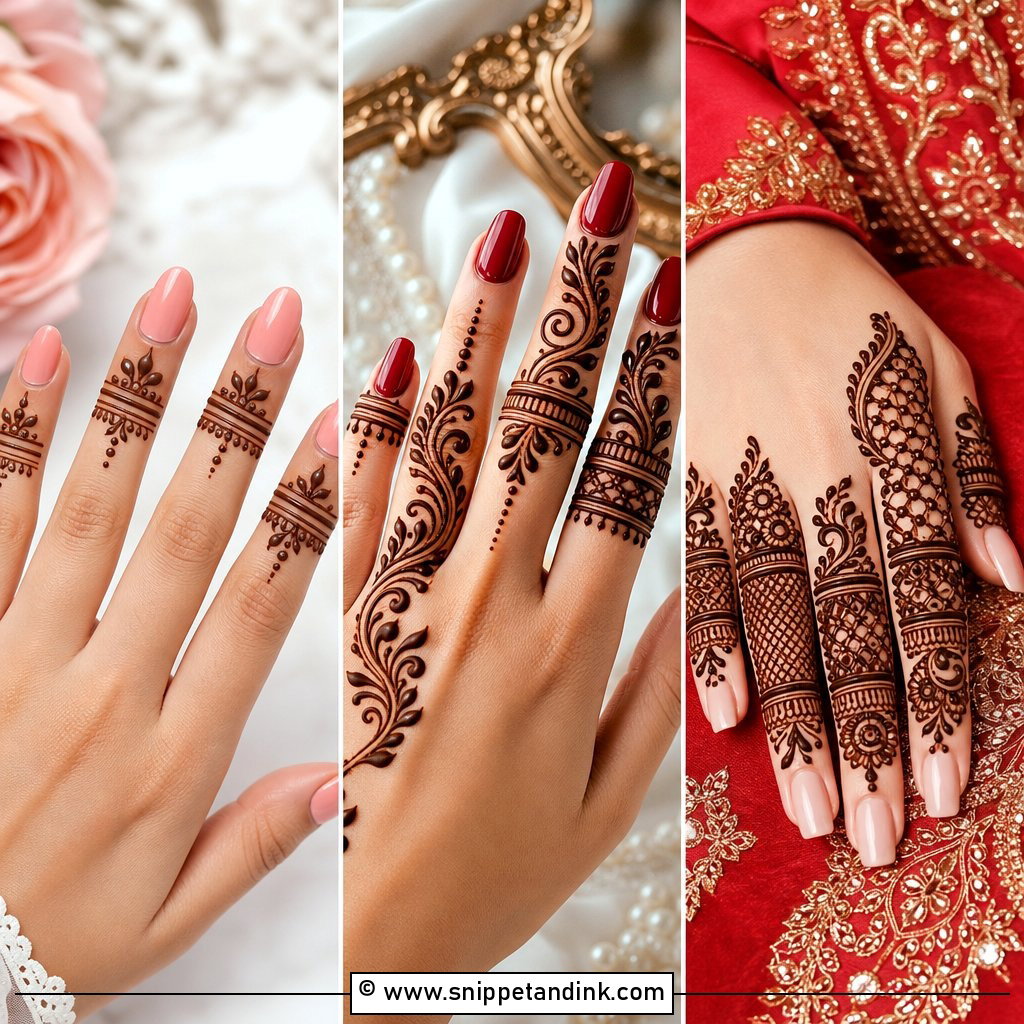
14. Minimal Bridal Mehndi Design
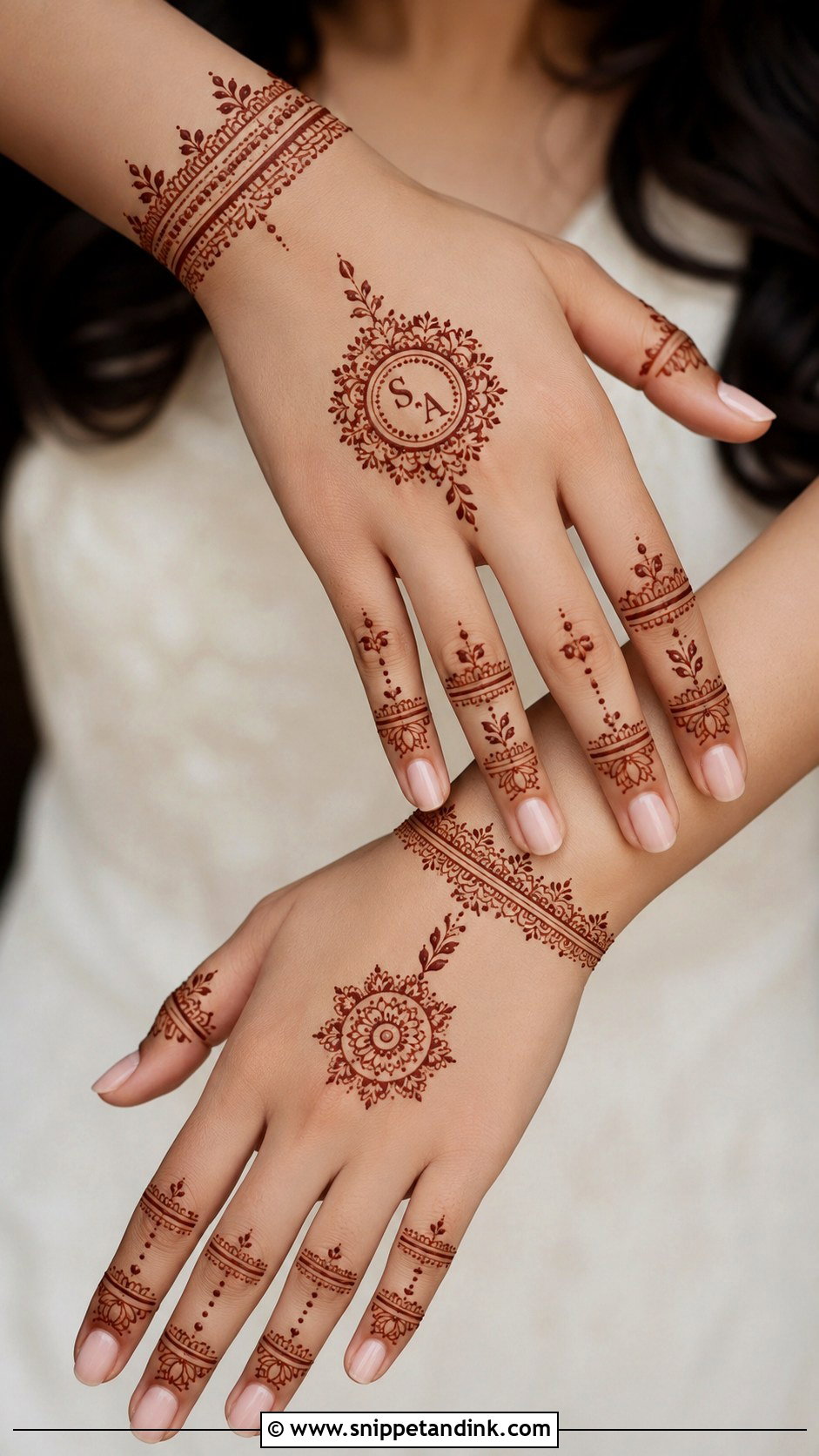
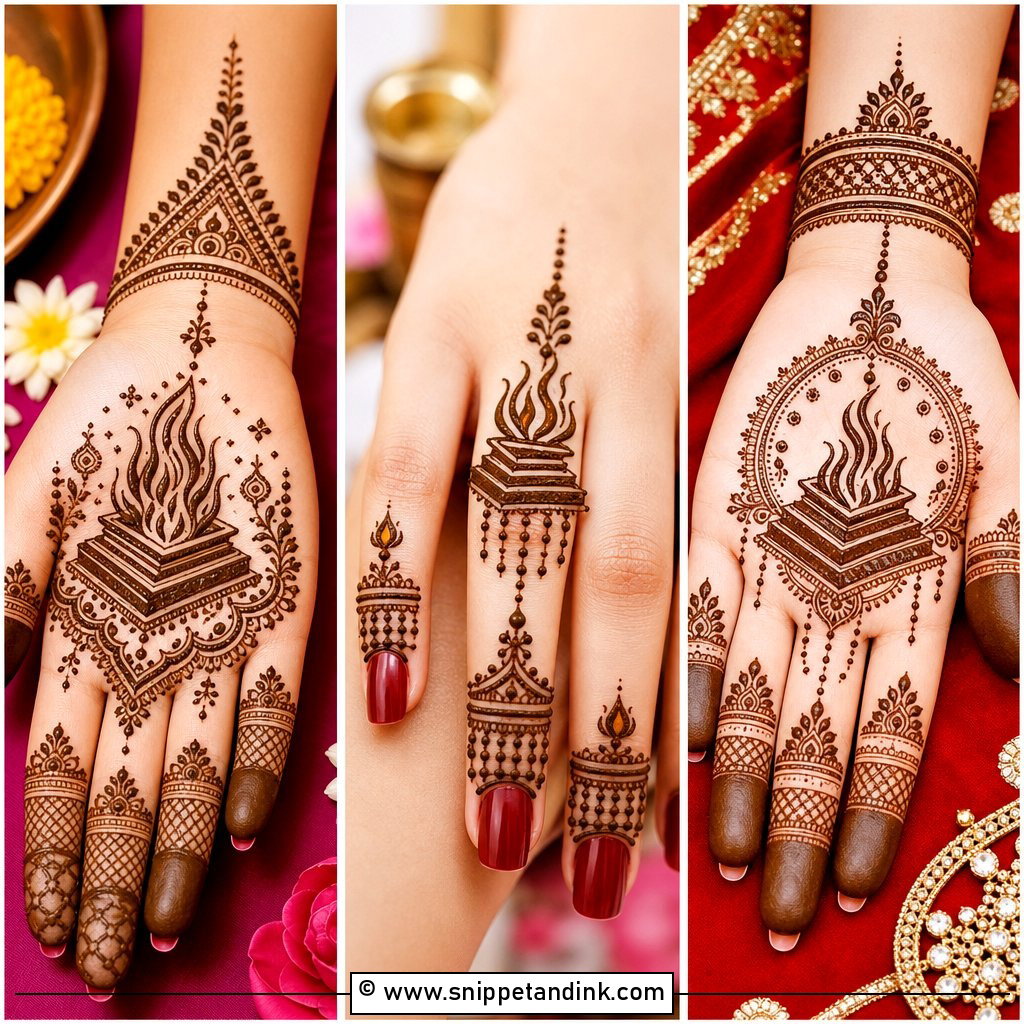
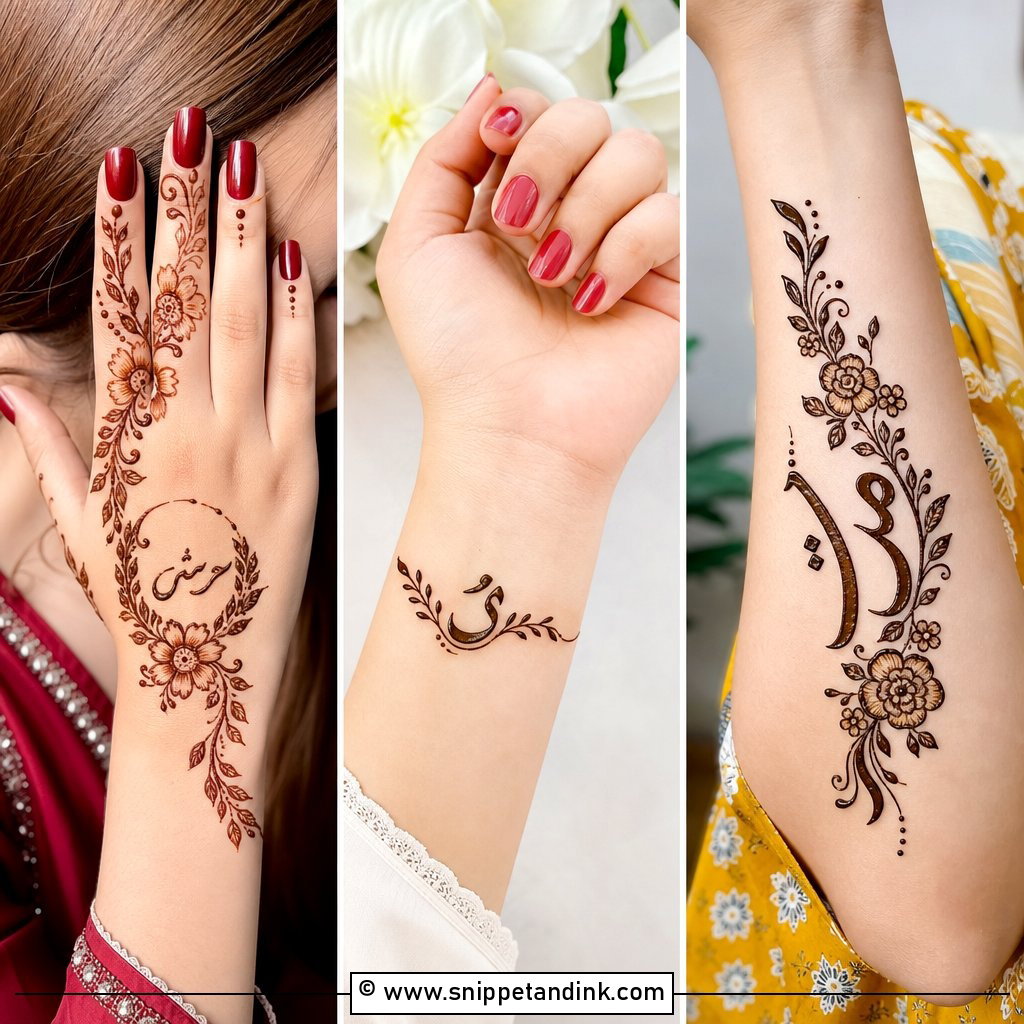
Minimal bridal mehndi suits brides who don’t want to sit for hours or who are wearing a modern outfit with sleek jewelry. A small palm mandala, finger trails and a wrist cuff are enough. With so little coverage, line quality matters more, so I’d still use fresh natural paste and keep the lines a touch thicker. One personal detail, such as initials or a small lotus, keeps it from feeling like a guest design.
15. Simple Bridal Mehndi Design
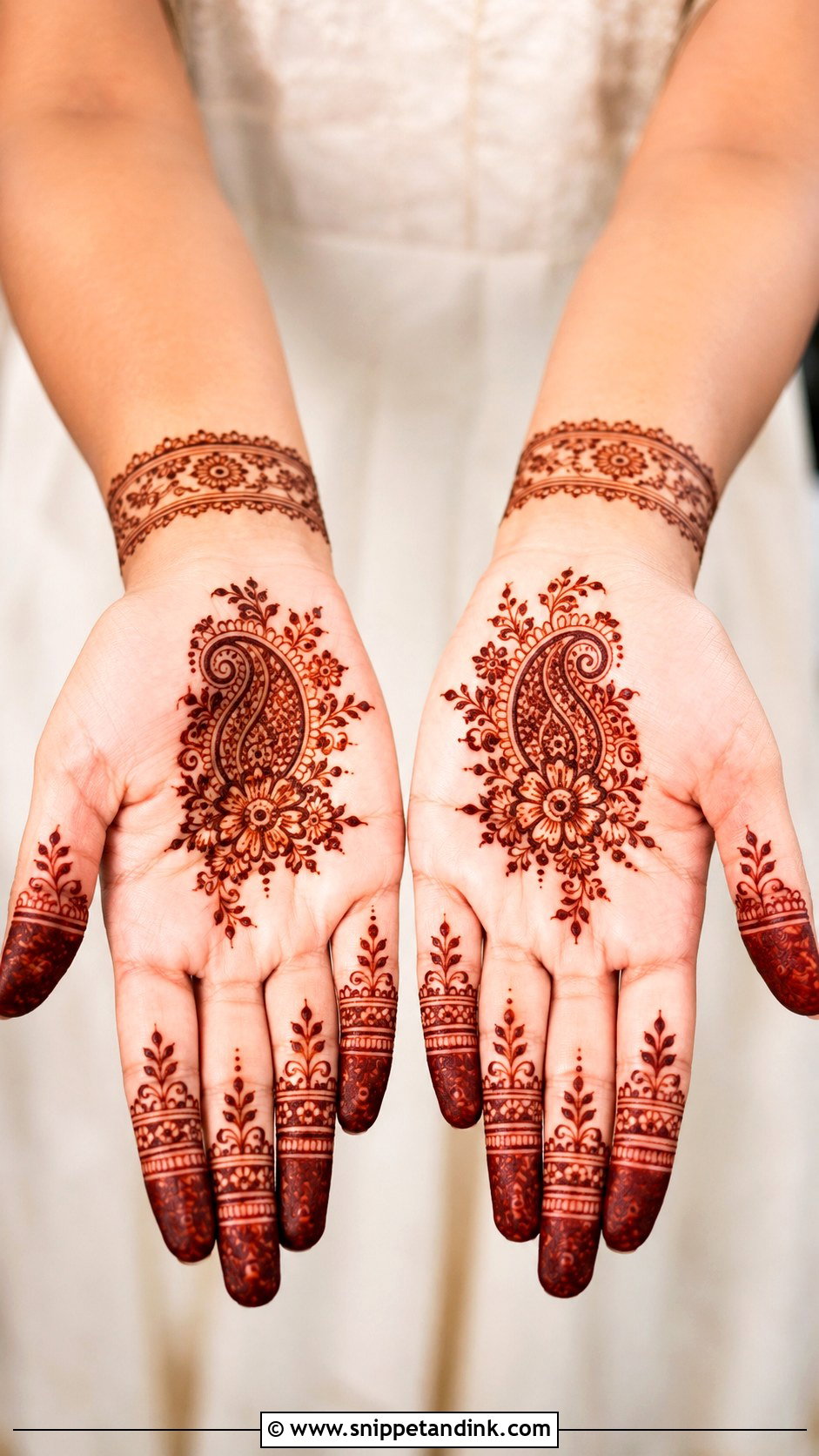
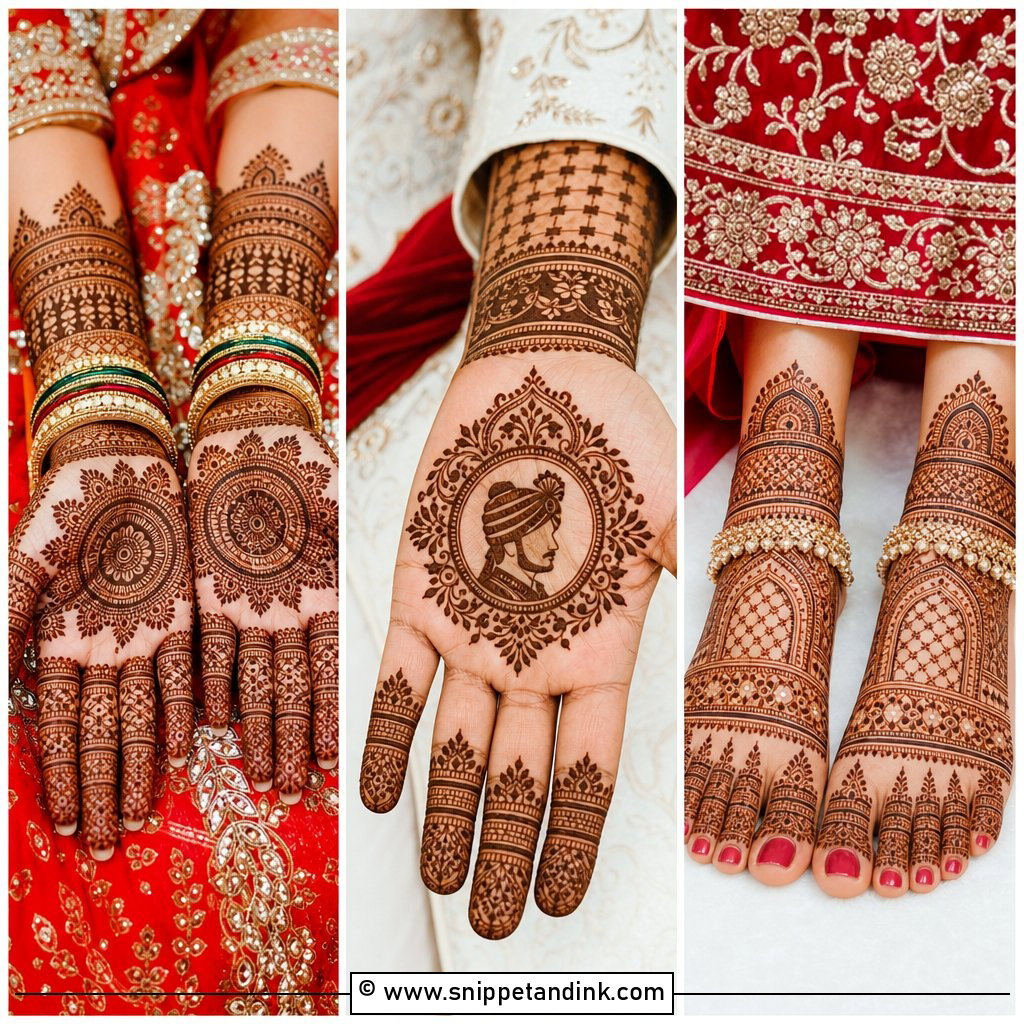
Simple doesn’t mean quick if you want it to look bridal. A clear palm motif, decorated fingers and a neat wrist extension are enough, but the spacing has to be even and the lines clean. I’d choose larger motifs here rather than tiny ones, since a simple design with fine fill tends to fade to faint orange on the back of the hand. It’s a good option if your wedding week is crowded and you only have a short sitting.
16. Modern Bridal Mehndi Design
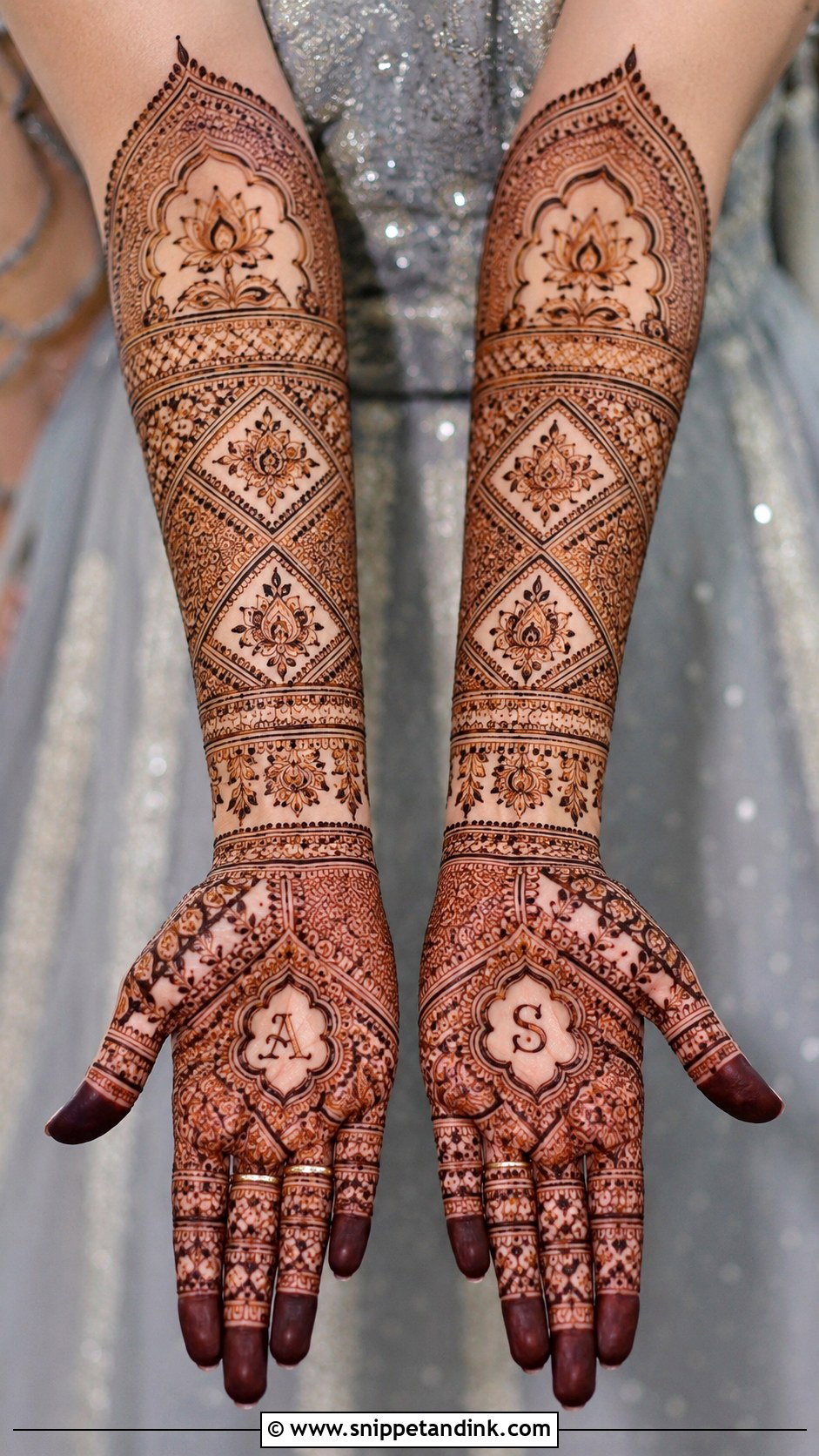
Modern bridal designs use negative space as part of the pattern: half and half palms, asymmetric back hands, geometric bands, travel symbols, a date. The structure has to be stronger than in traditional work because the empty skin is visible. I sketch the outline of every section first, then fill. It goes well with fusion outfits and a softer makeup look.
17. Pakistani Bridal Mehndi Design
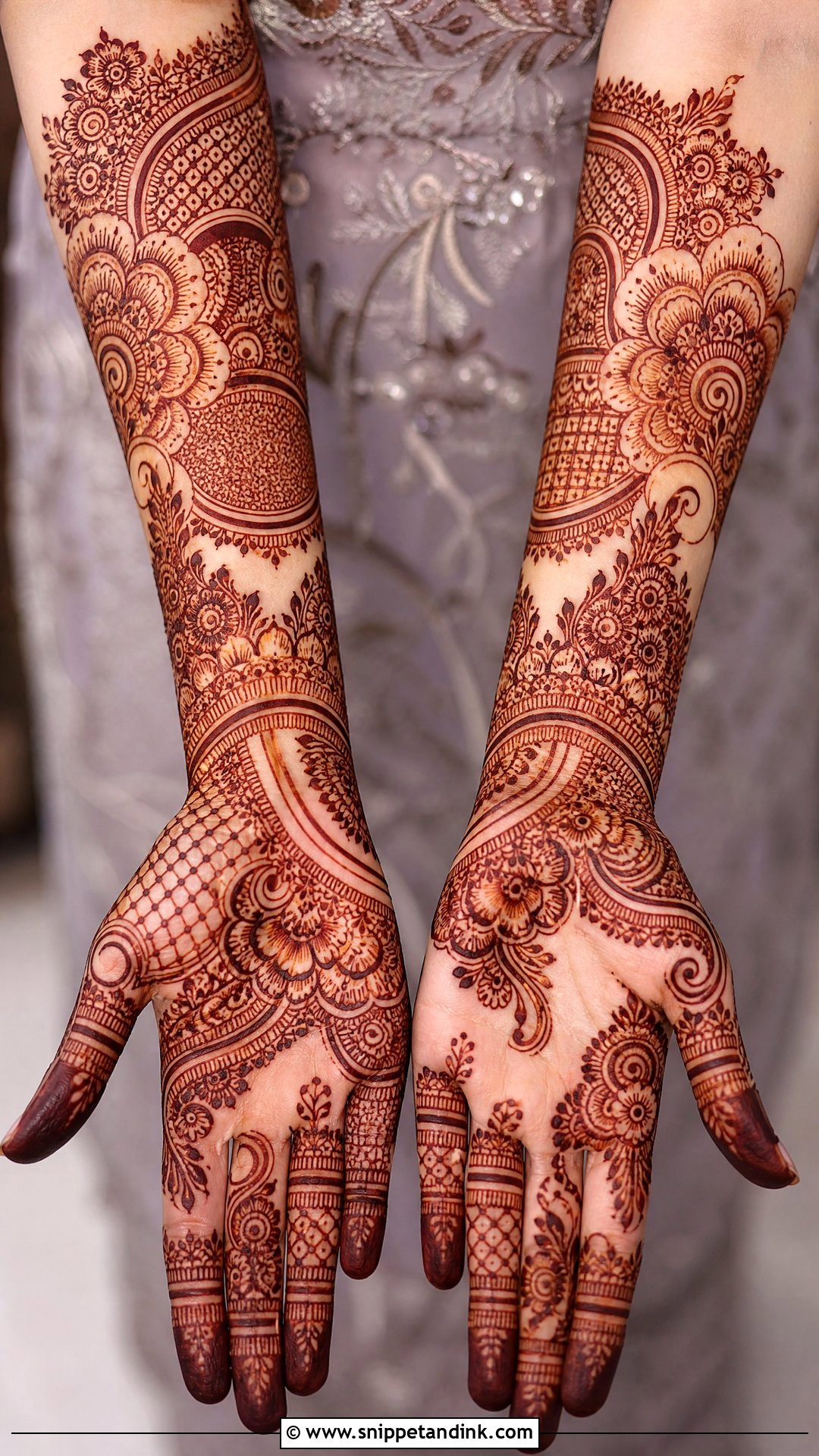
A Pakistani bridal mehndi design usually blends fine Indian detailing with Arabic flow, often with bold shaded leaves and domes. It’s common to wear it across several events, from the mehndi night to nikah and walima, so stain timing matters: the color peaks a day or two after application and then gradually fades. If your events span a week, I’d plan the application closest to the event where hands are photographed most.
18. Moroccan Bridal Mehndi Design
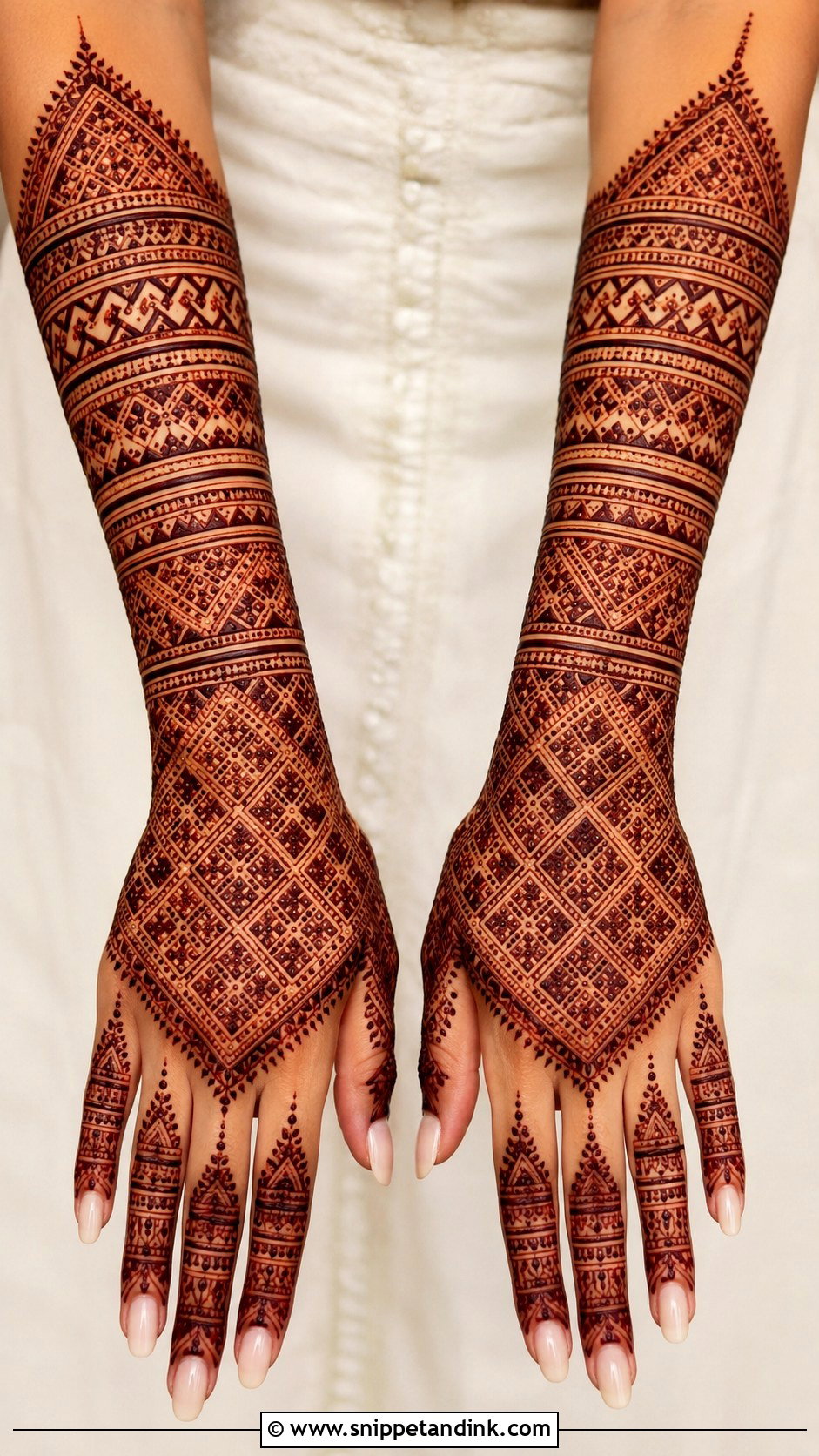
Moroccan work is geometric: diamonds, triangles, straight grids and repeated angular bands. It feels graphic rather than floral, and straight lines show every wobble, so I work slowly and turn the hand to pull lines toward me. For bridal coverage I layer geometric panels from fingers to forearm and soften the edges with dotted borders. It suits brides with modern outfits and bold metal jewelry.
19. Gulf Bridal Mehndi Design
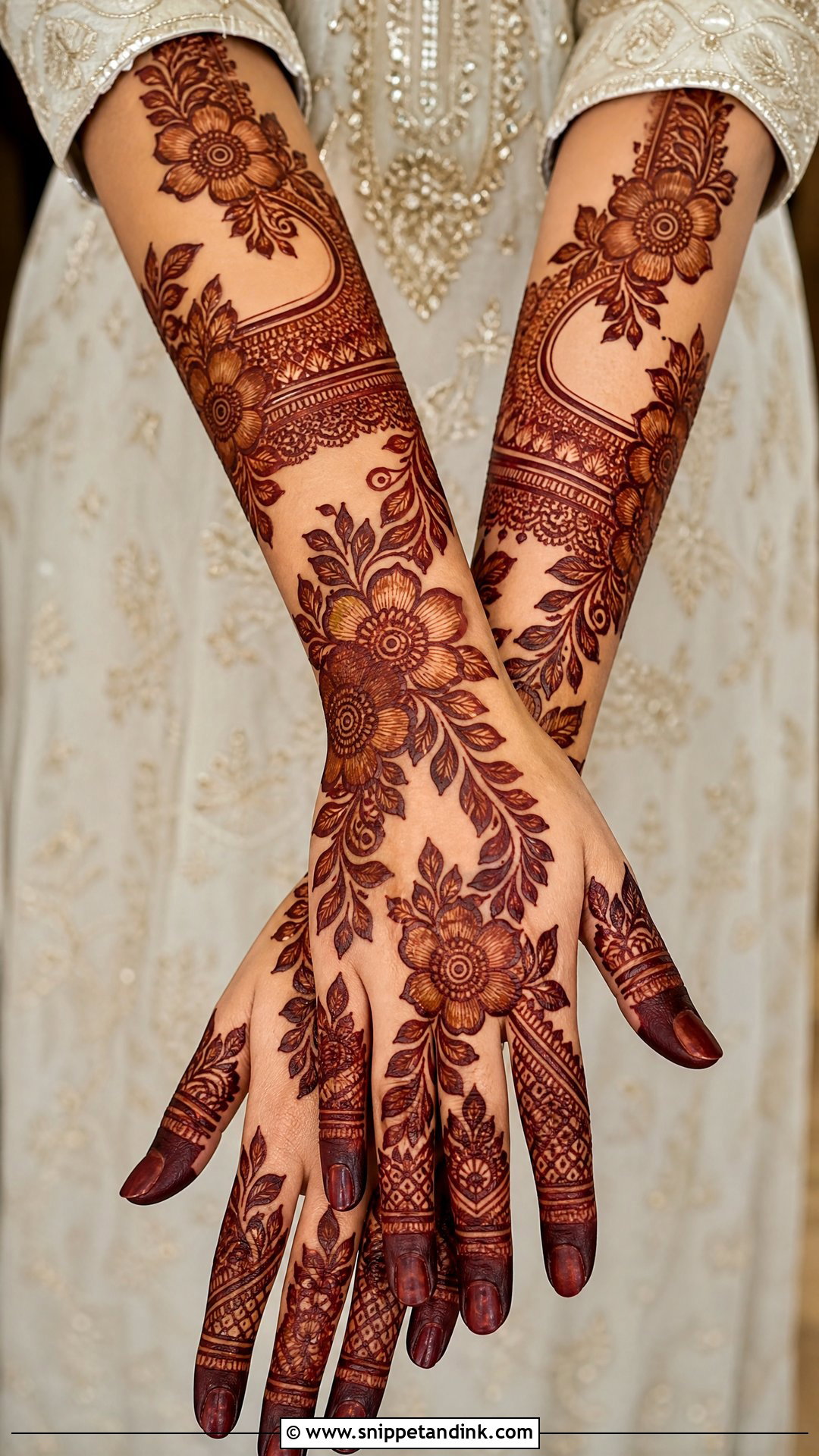
Khaleeji style is bold and airy: large flowers, sweeping vines, shaded leaves and lots of bare skin, often flowing diagonally across the back of the hand. It’s the richer, wedding version of everyday Arabic work. I’ll often keep the palm lighter and put most of the decoration on the back hand, since that’s the side that appears in jewelry shots. Because the shapes are large, it looks clear even from a distance.
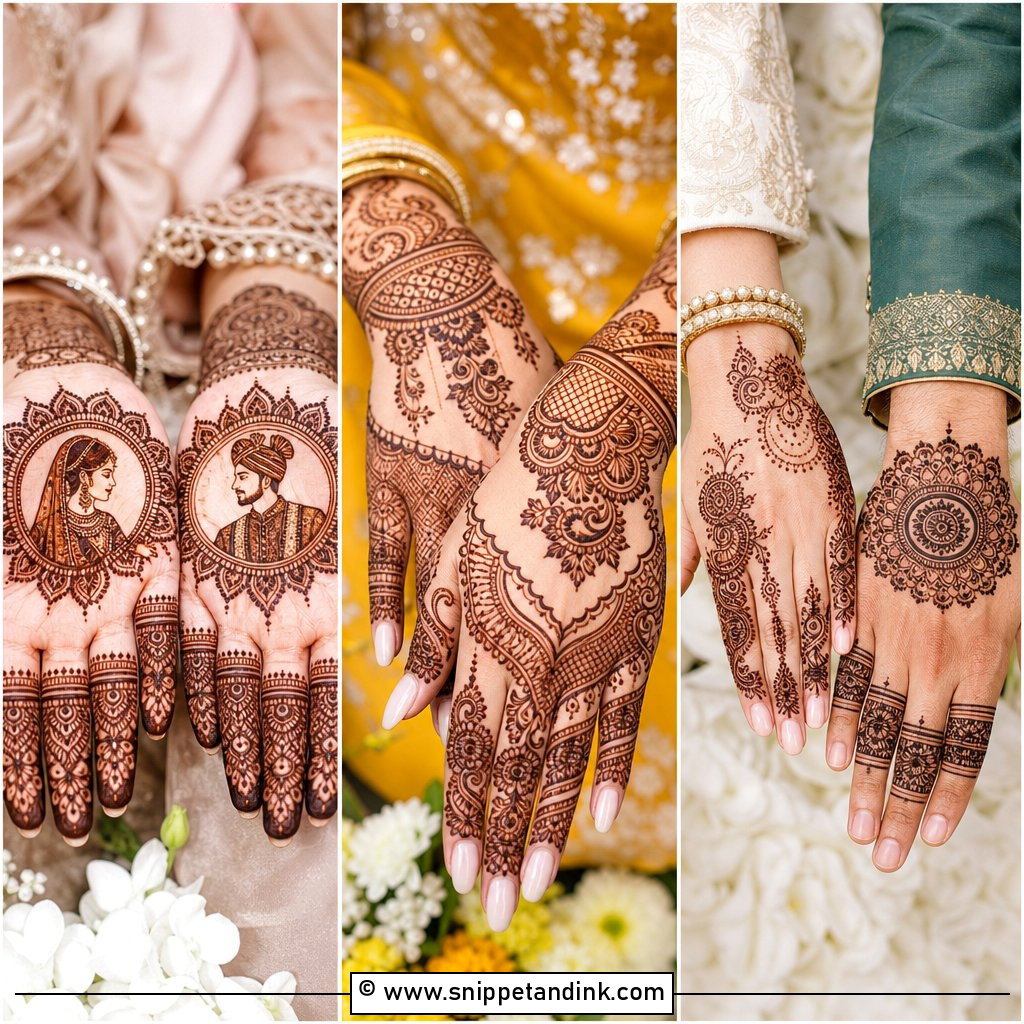
20. Rajasthani Bridal Mehndi Design
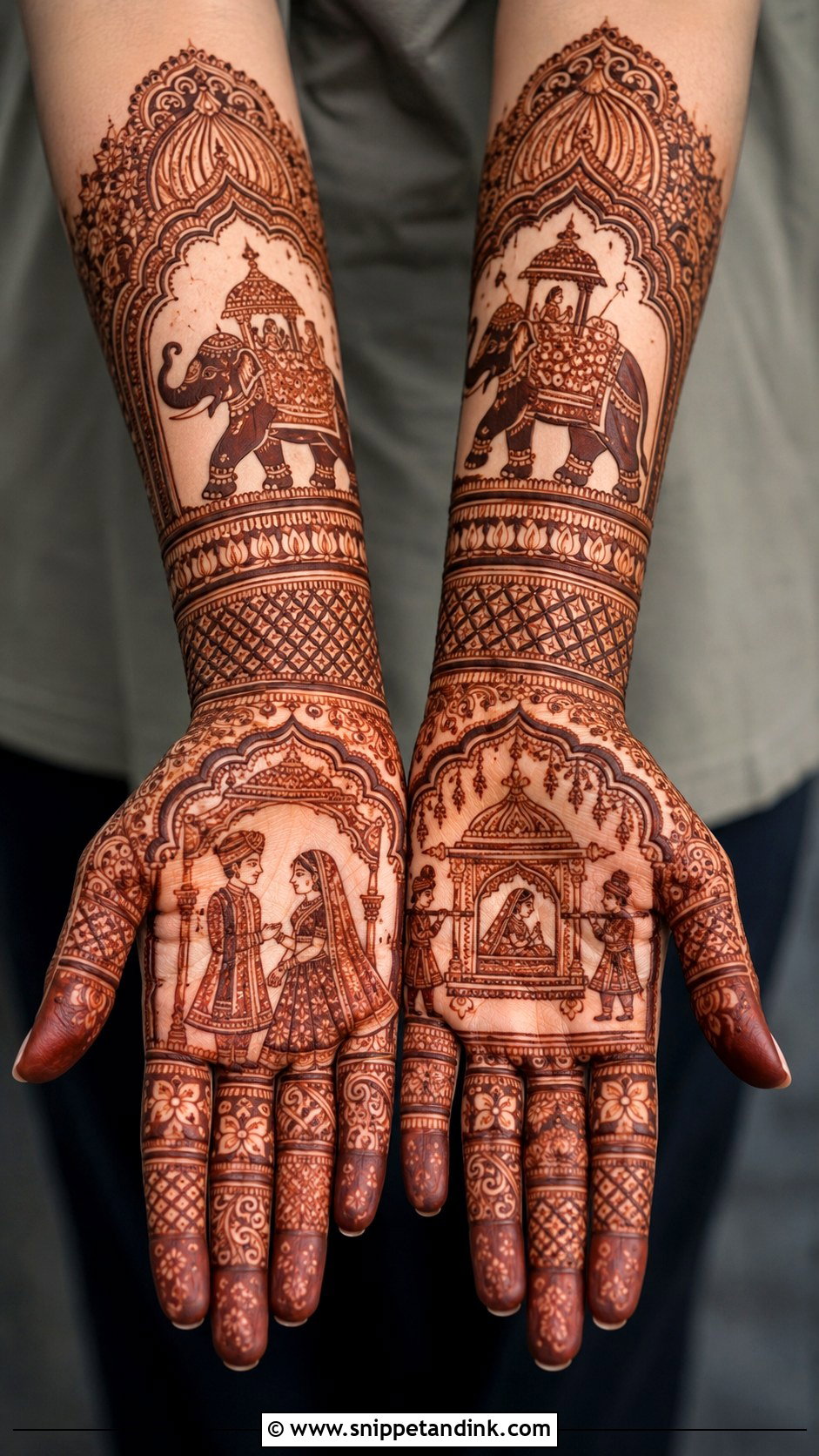
Rajasthani bridal mehndi is storytelling at full density: dulha and dulhan, elephants, palki, musicians, peacocks, lotus and very fine fill. It’s one of the longest sittings I do. Planning is everything; I place the story elements first and slightly larger, then let the small patterns fill the gaps. It suits bright lehengas and kundan jewelry, and it really needs good aftercare to show the fine work.
21. Marwari Bridal Mehndi Design
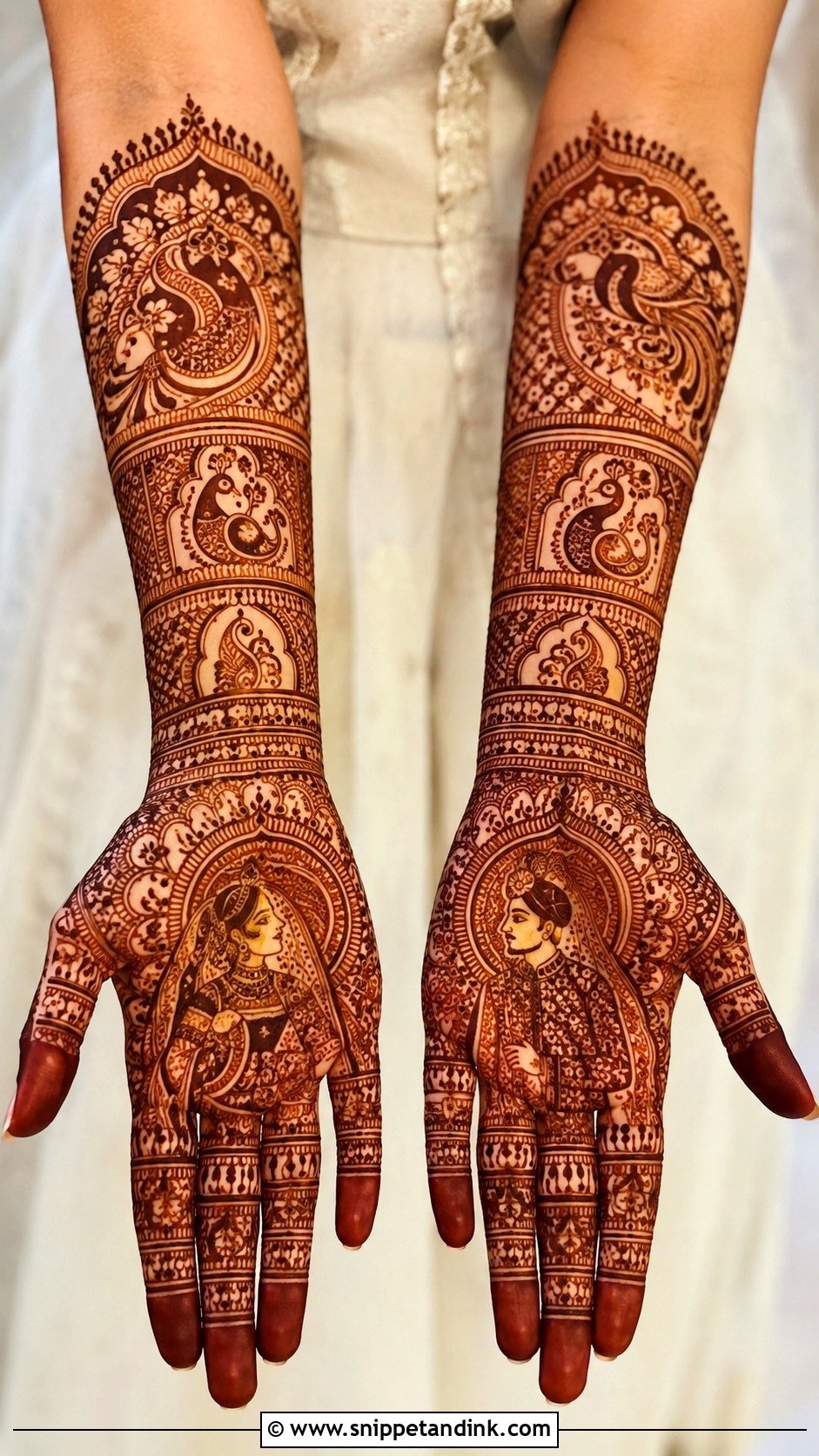
Marwari work is known for fine detail and almost complete coverage from fingertips to forearms. The risk with so much detail is that sections merge. I separate them with clear borders and thin bands so each motif keeps its edges after the stain darkens. Expect it to take time and to need patience while it dries; sitting still for the first hour stops smudges in the finest lines.
22. South Indian Bridal Mehndi Design
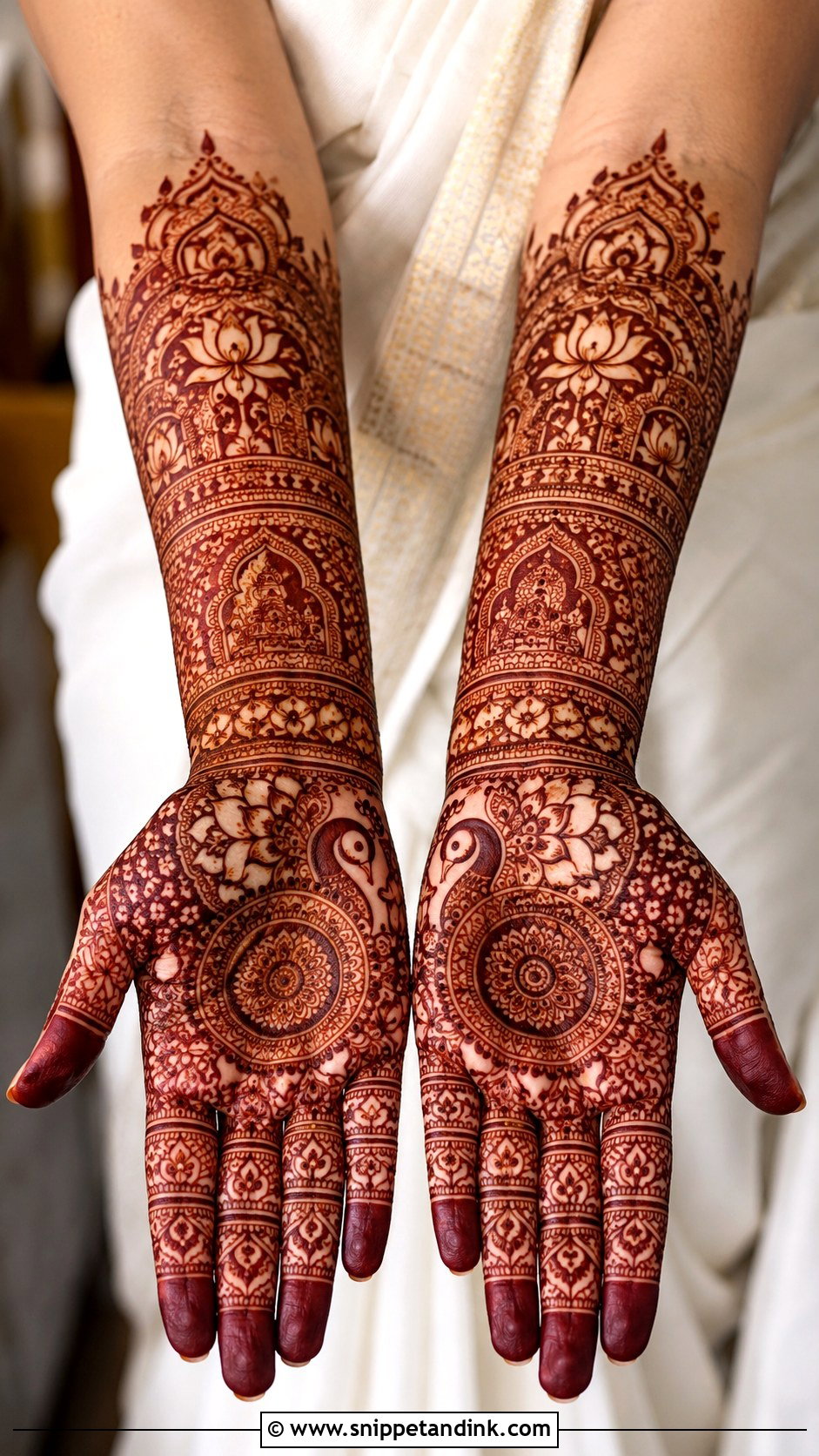
South Indian brides often want mehndi that sits comfortably beside a lot of gold. I like to echo the jewelry: temple borders, mango paisleys, lotus and wrist bands shaped like bangles. Some brides want just the palms and fingers so the jewelry stays the focus, others go full hand. A clean palm mandala with detailed fingers is a good middle ground, with lotus vines up the forearm if you want more.
23. Bridal Mehndi Design With Name
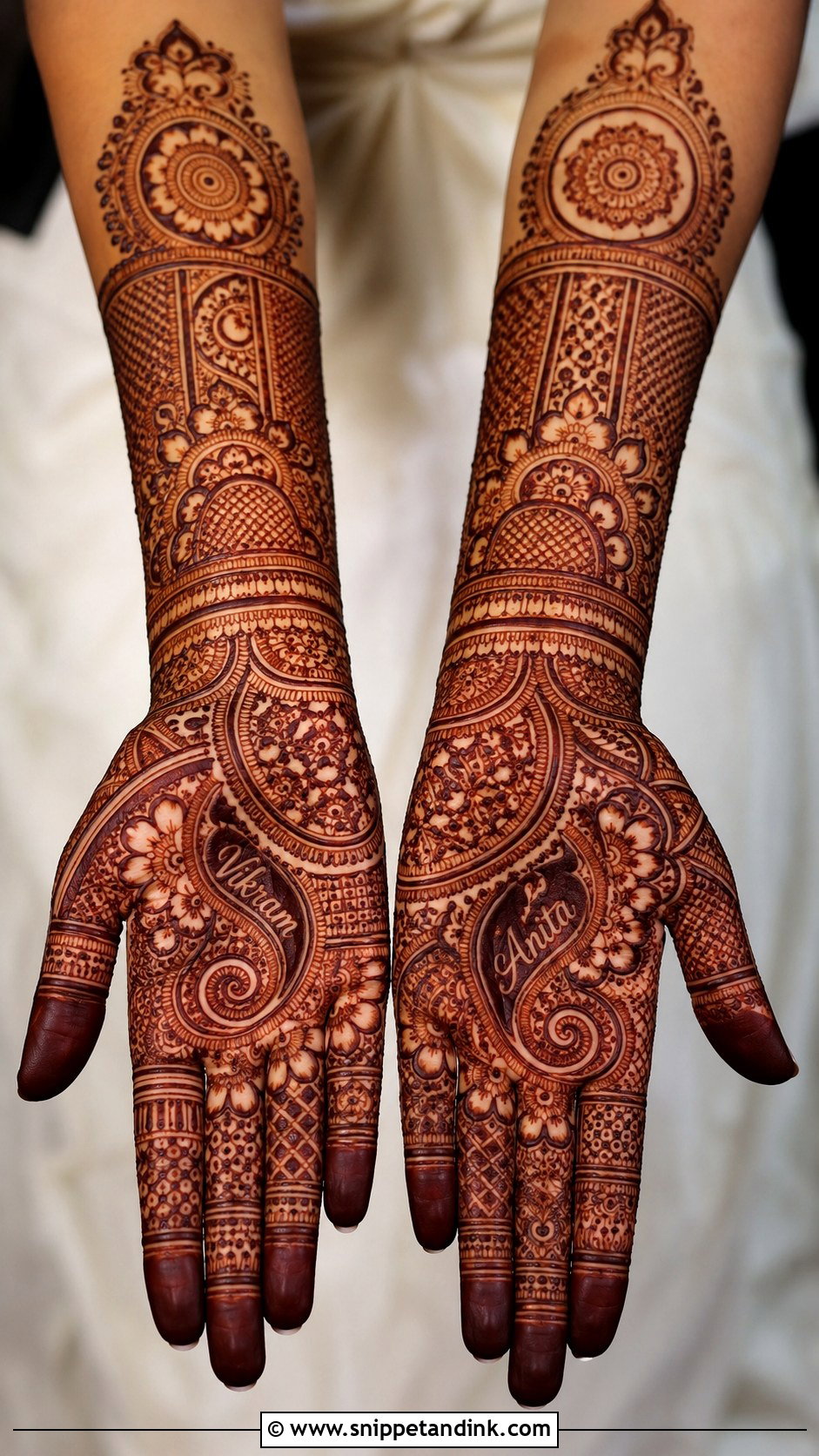
Hiding the groom’s name is a tradition guests enjoy, and a Bridal mehndi design with name works with almost any style here. I hide letters inside paisleys, petals or jaali panels. Keep them small enough to be a game but large enough to read; letters under a few millimeters usually blur once the stain darkens. Write the spelling down for your artist, especially for names in another script.
24. Bridal Mehndi Design With Wedding Date
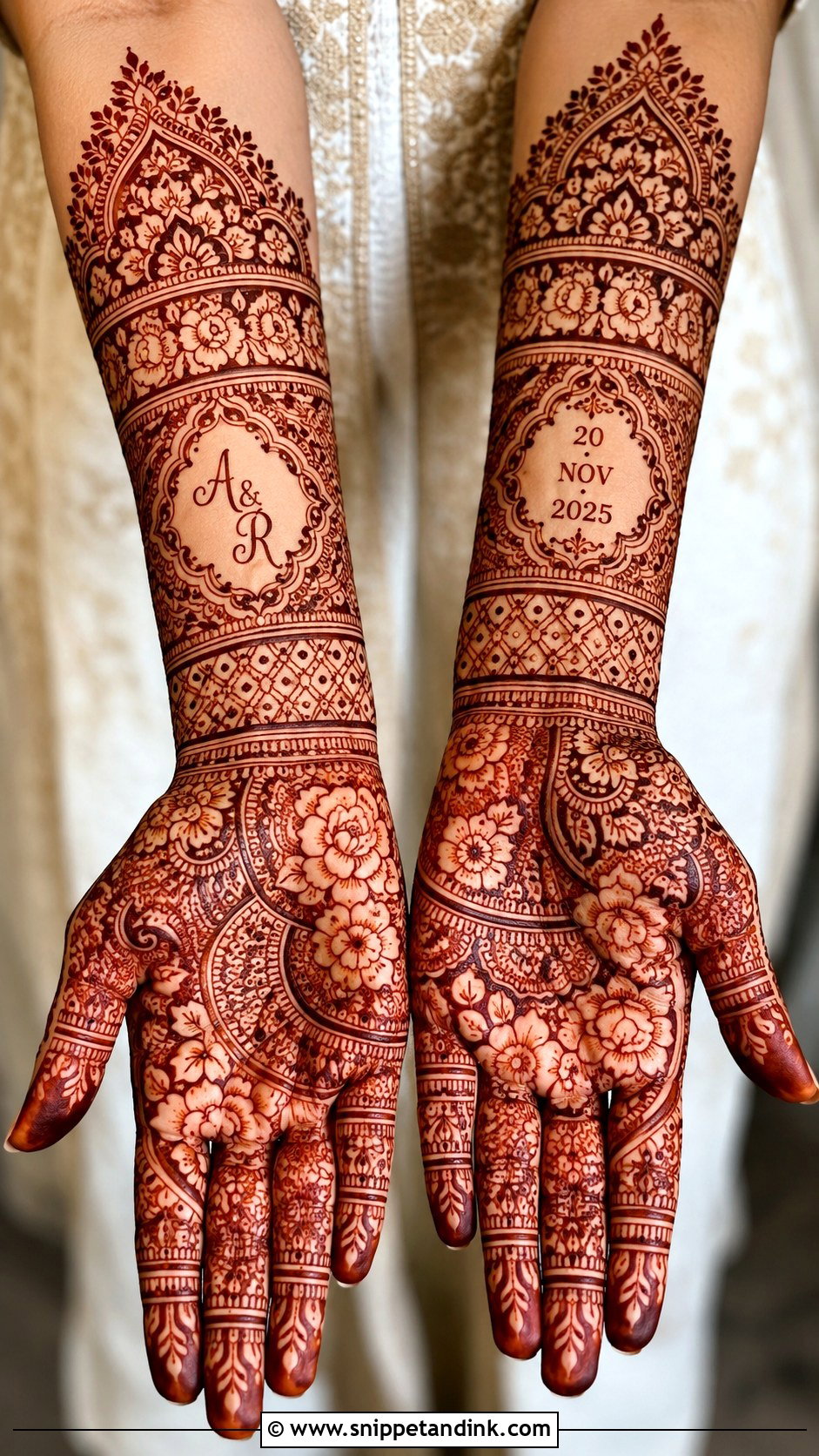
A wedding date is a sweet keepsake, and numbers are easy to place near the wrist, inside a mandala or along a paisley curve. Numbers need to be a bit larger than fill so they stay readable after the stain develops. Pair them with initials or a portrait if you like. Keep the surrounding work balanced so the date belongs to the design rather than sitting on top of it.
25. Bridal Mehndi Design For Short Fingers
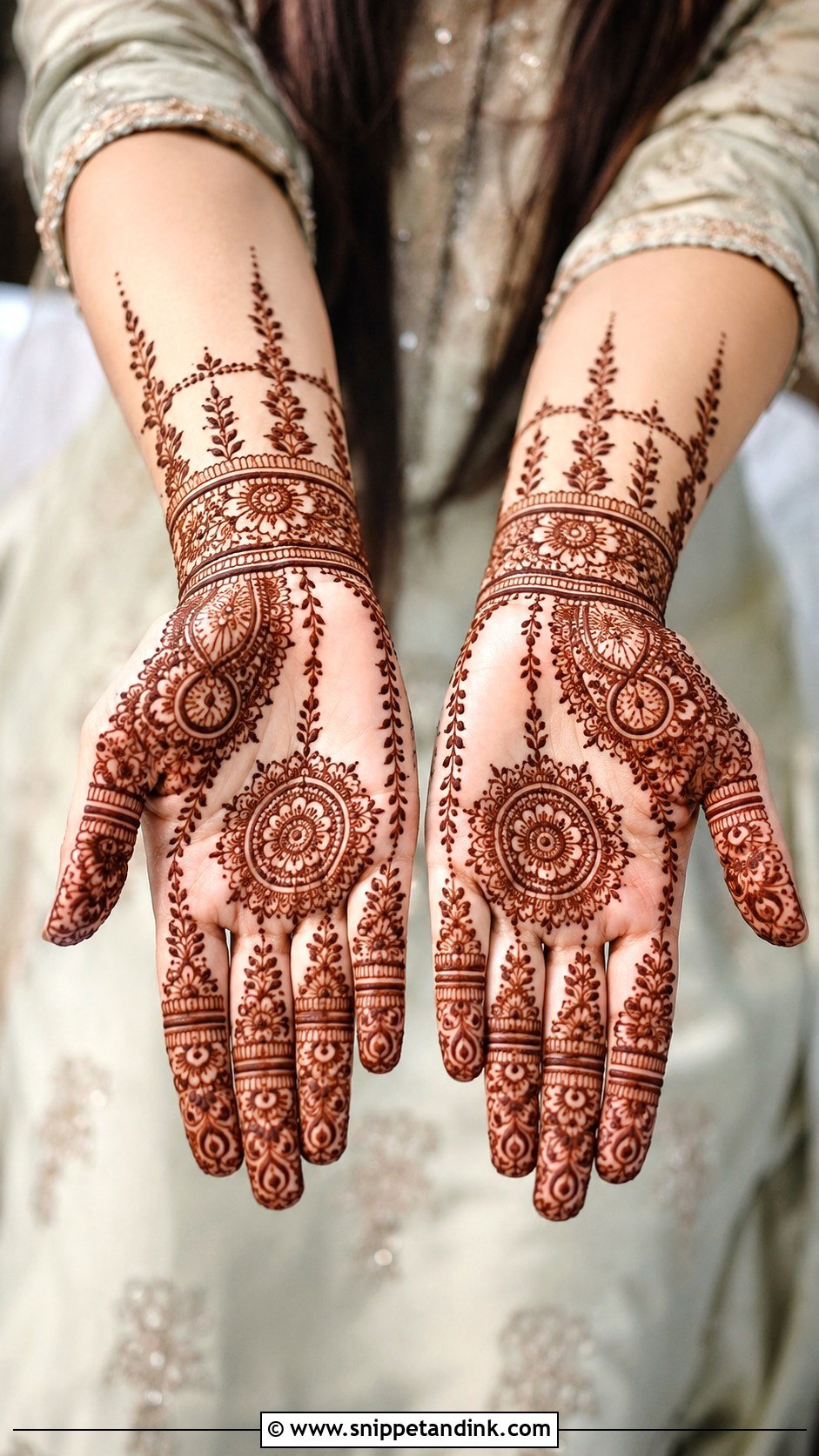
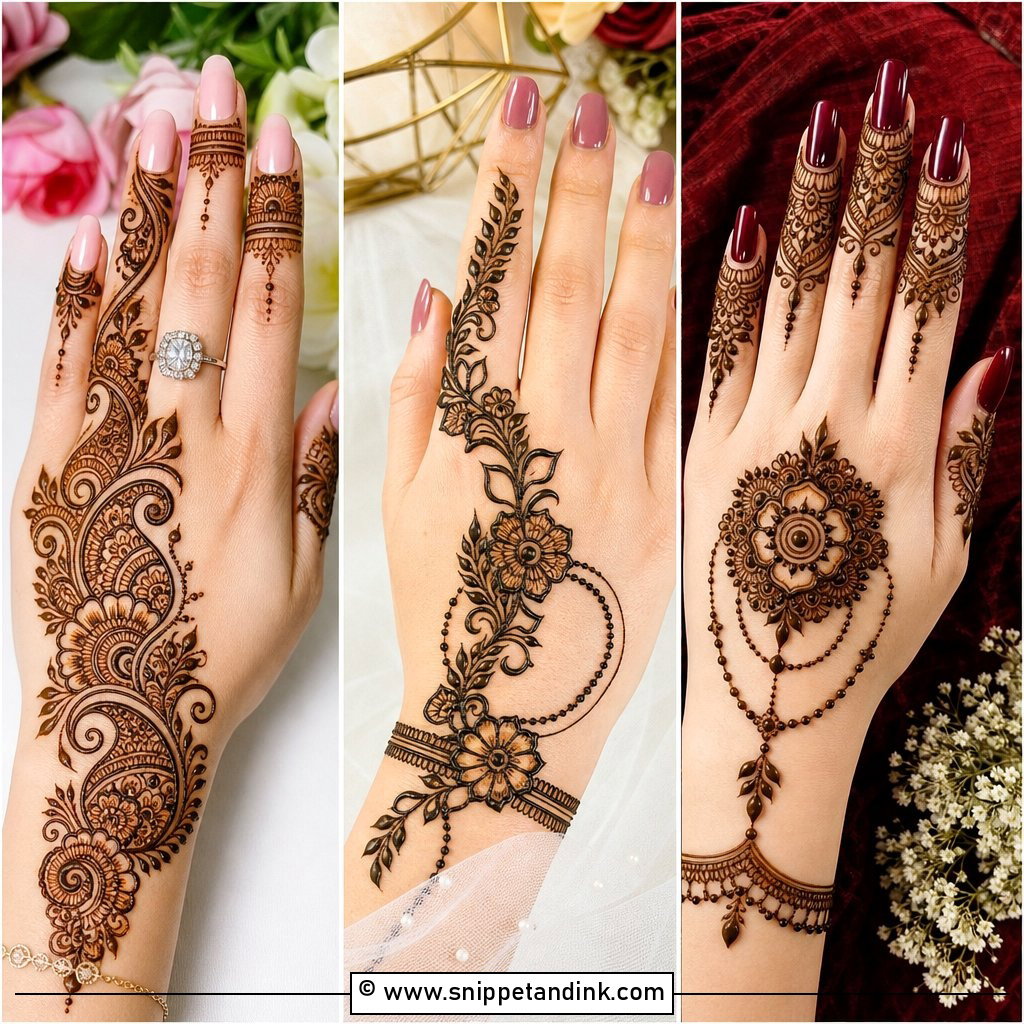
Heavy blocks at the fingertips make short fingers look shorter. I use slim vertical trails, narrow bands and tapered patterns instead, and keep fingertip fill fine. On the palm a central mandala or a paisley curving upward draws the eye toward the fingers. Short fingers can absolutely carry full bridal mehndi; it’s all about proportion and following the natural lines of the hand.
26. Bridal Mehndi Design For Long Fingers
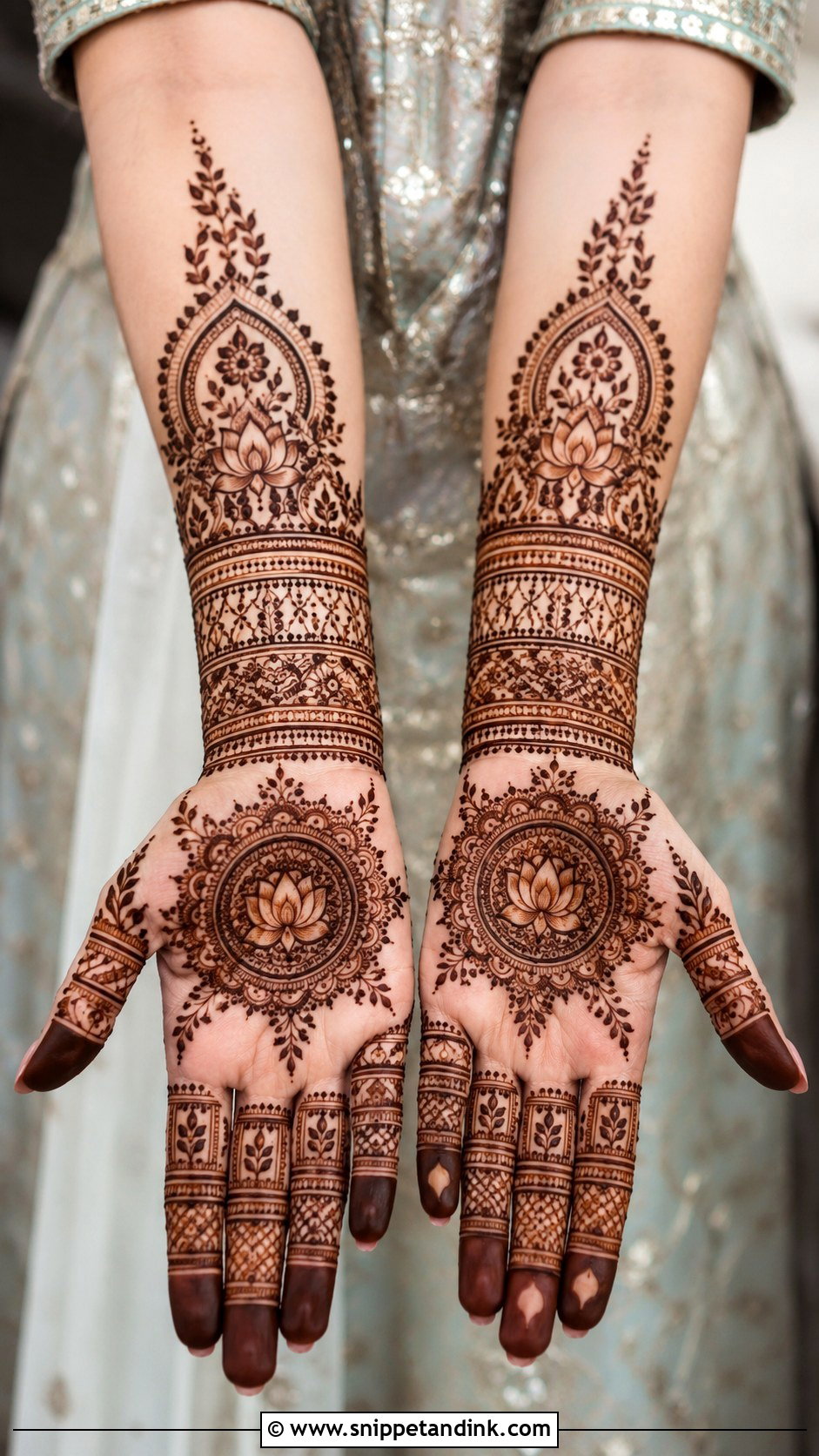
Long fingers give me room for stacked bands, leaf chains, lace sections and ring shapes, and they carry full coverage without crowding. The common mistake is leaving them plain under a heavy palm, which looks unfinished. On the back hand, a bracelet cuff linked to finger chains looks like jewelry. Round mandalas or lotus on the palm balance the length of the hand.
27. Bridal Mehndi Design For Small Hands
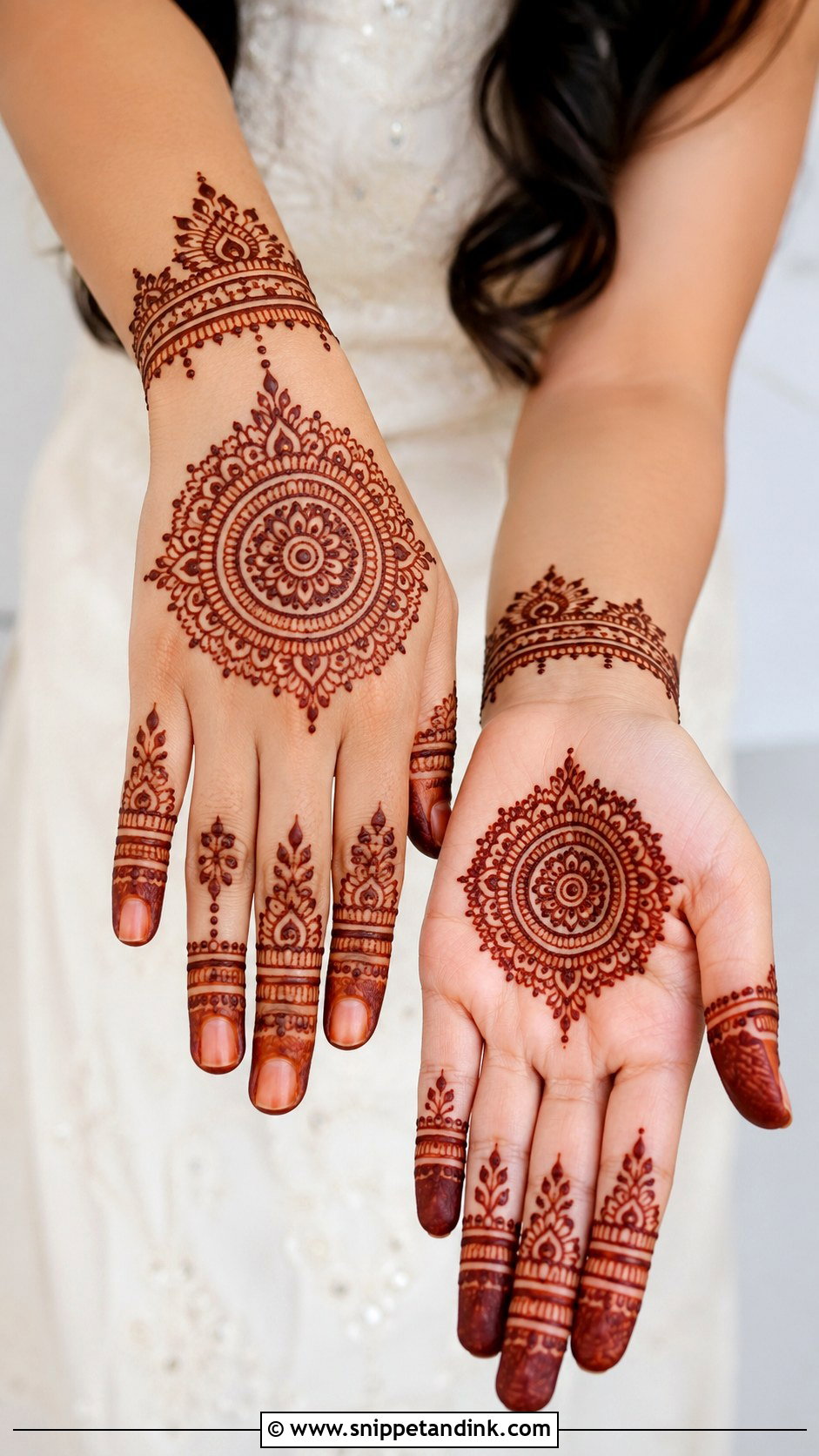
Small hands need scaled motifs. Huge flowers overpower them, and very tiny fill closes up once the stain darkens. I work with a medium mandala, soft paisley curves, neat finger detail and slim wrist bands, with small gaps between sections. If you want portraits or names on small hands, keep them simple and on the flattest part of the palm.
28. Bridal Mehndi Design For Dark Skin
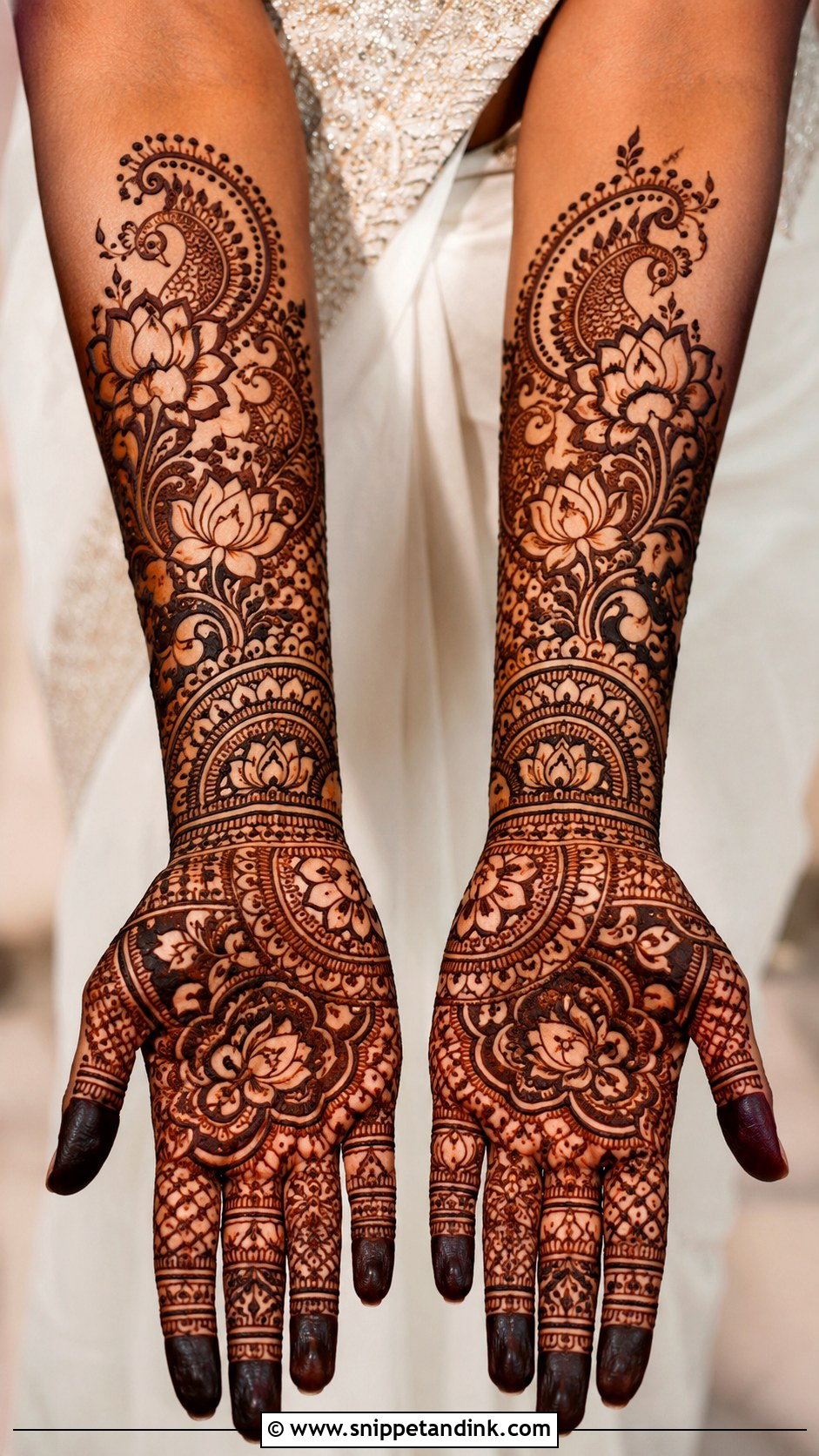
Henna stains every skin tone with the same reddish brown; on deeper skin the contrast is simply lower, so design choices matter. I use bolder outlines, clearer motifs and more space between them, and mix fine work with solid shaded sections so the pattern reads in photos. Back-hand jaali, Arabic florals and full Indian designs all work well. Ask your photographer to shoot your hands in soft daylight, which shows the stain much more accurately than warm indoor light.
29. Bridal Feet Mehndi Design
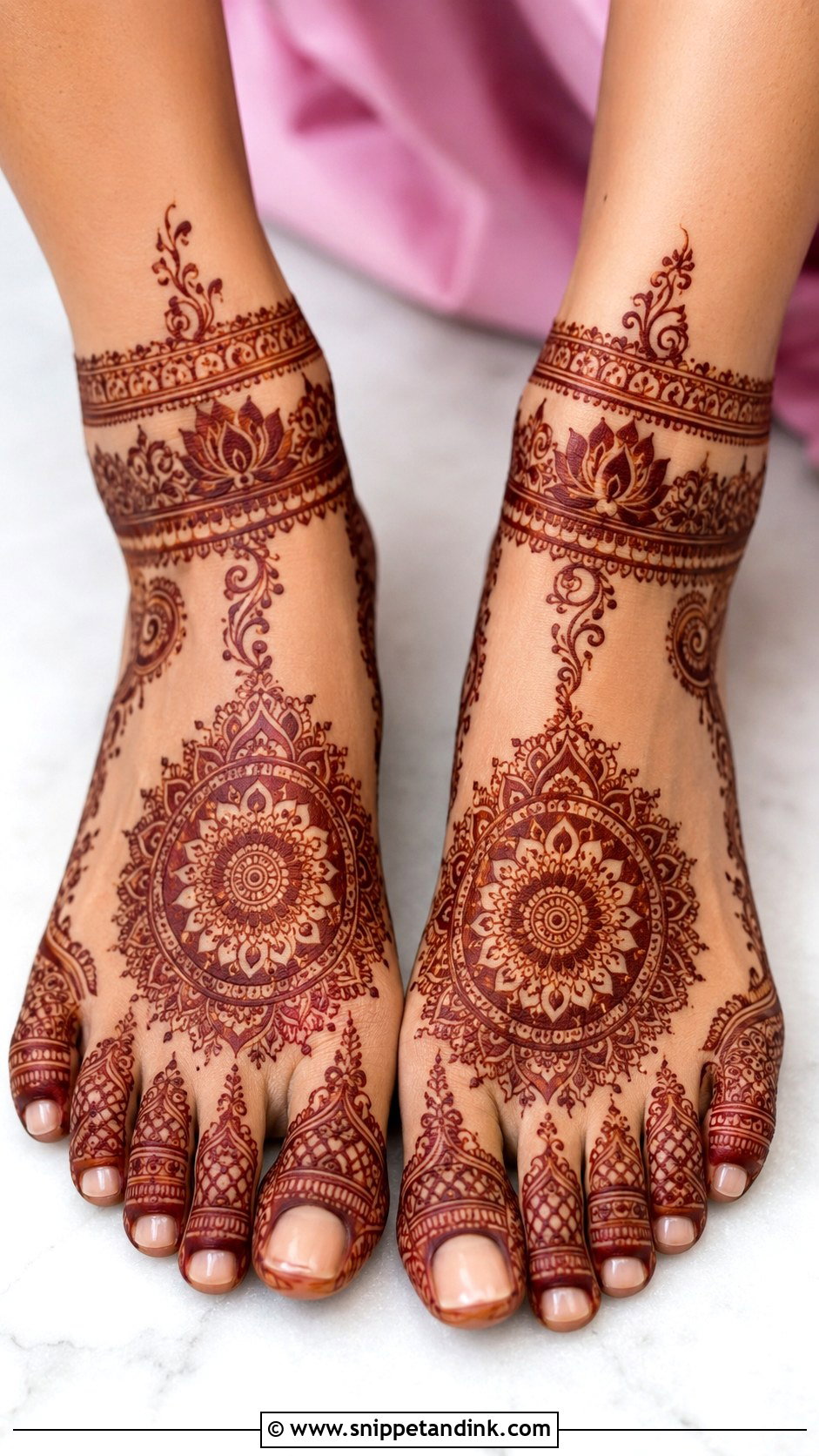
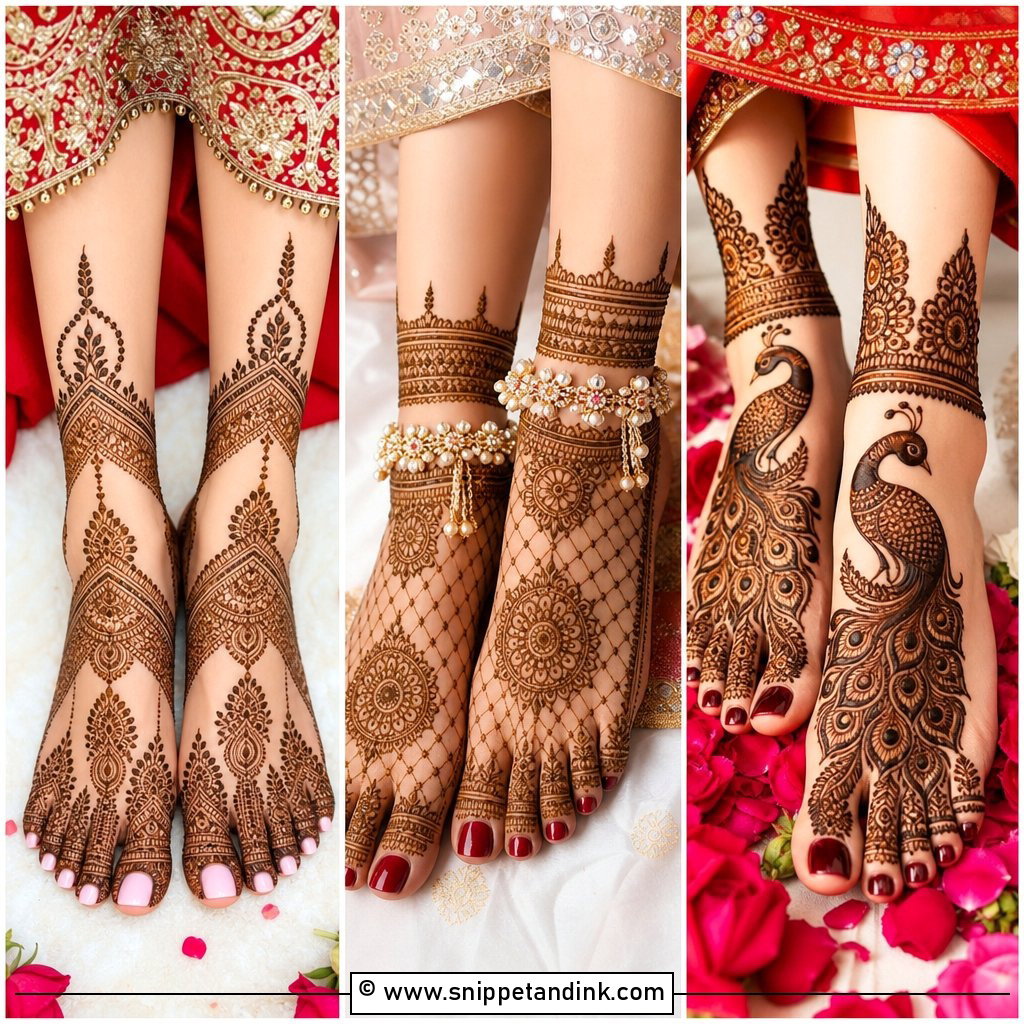
Feet complete the look for ceremonies where you’re barefoot or wearing open sandals. Tops of feet suit a mandala with anklet style bands and toe detailing. Plan around your footwear: if a sandal strap crosses the center of your foot, I’ll place the detail around the edges and ankle instead. Feet are also slow to dry and easy to smudge, so plan to stay seated with your feet up after the application.
30. Bridal Leg Mehndi Design
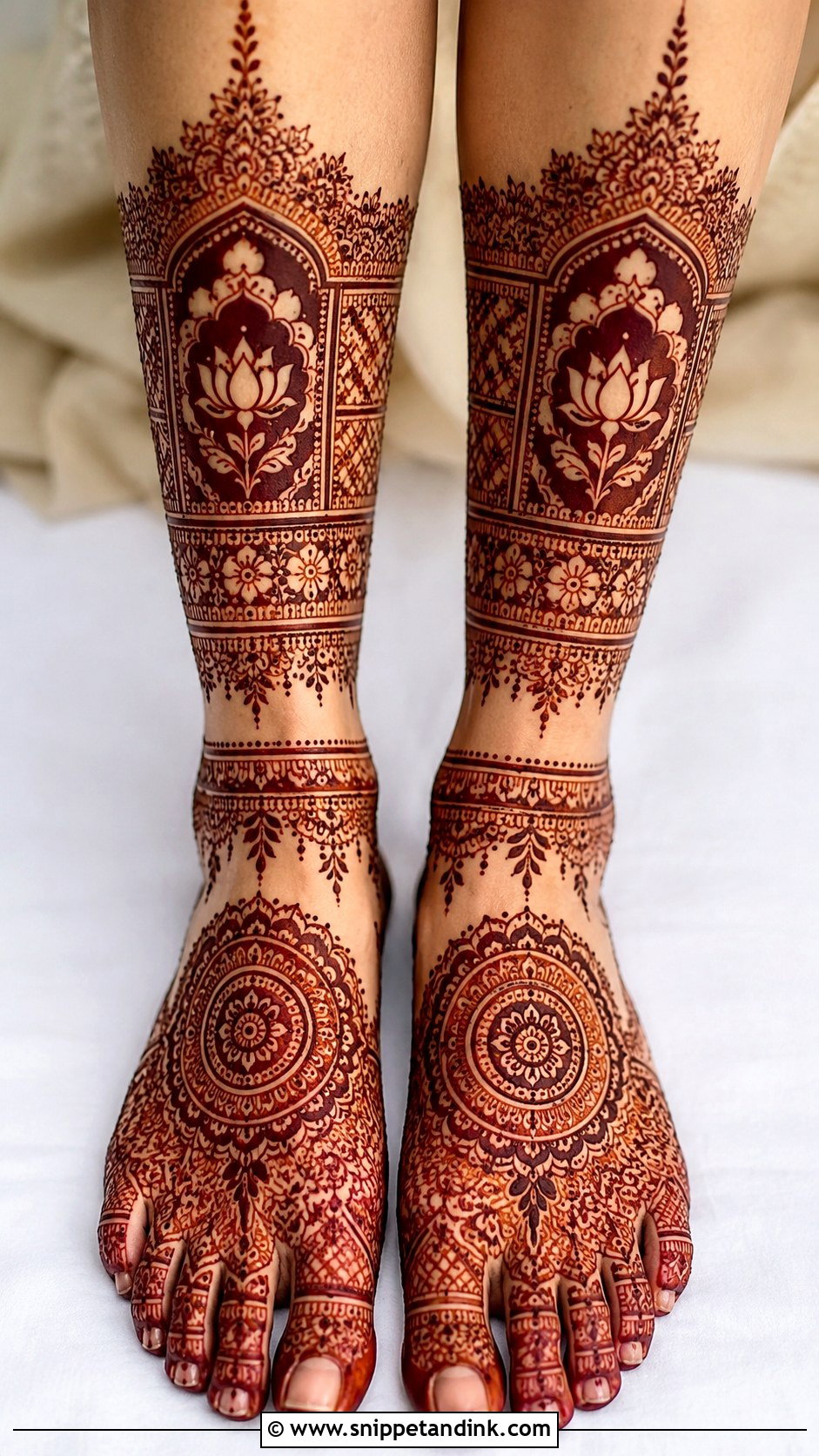
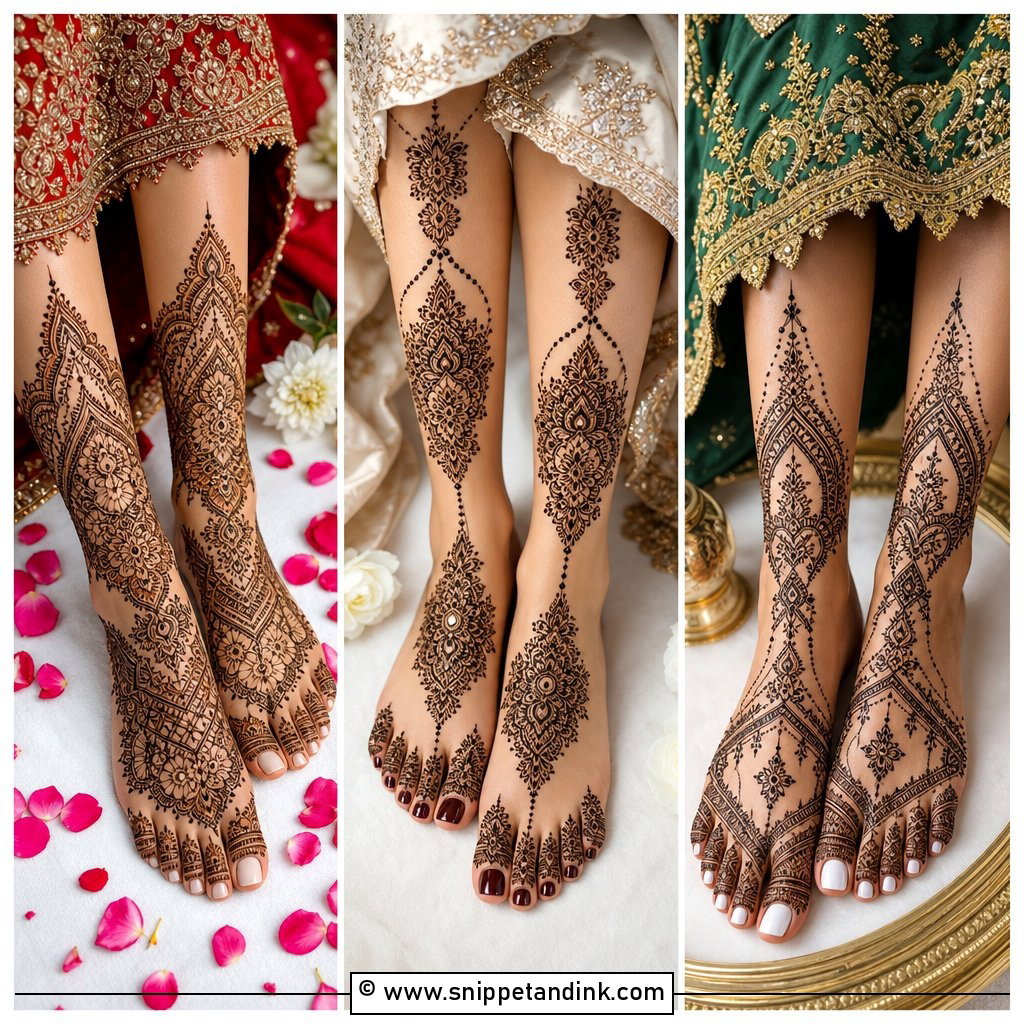
Leg mehndi runs from the toes to the ankles or up the calves, depending on family custom and outfit. Symmetry matters more on legs than hands, because both legs are usually seen together. A long lehenga mostly hides the calves, so I’d put the effort into feet and ankles; if your outfit shows the lower leg, vertical trails look graceful. Allow extra time in your appointment, since legs add a lot to the sitting.
Aftercare From the Last Line to the Mandap
The deepest stains come from paste that stays on the skin for a long time and stays moist. Most of the color is decided in the hours after I leave, not while I’m drawing.
- Let the paste dry, then dab on a lemon and sugar mix with cotton so it sticks to the skin and doesn’t crack off.
- Keep the paste on for as long as you can, ideally overnight. Wrap hands loosely in medical tape or tissue and wear cotton gloves to bed.
- Scrape the dry paste off with a blunt knife or your fingernail. Don’t wash it off with water.
- Avoid water on the design for as long as possible afterwards, and keep the hands warm; warmth helps the stain develop.
- Rub a little balm or natural oil over the design before you shower in the following days to protect it from soap and hot water.
Expect the palms to be darker than the backs of your hands and arms. Skin is thicker on the palm, so it holds more dye, and that difference is normal. The stain usually lasts one to three weeks, fading first where you wash and rub most.
Questions Worth Asking a Henna Artist at the Consultation
- Can I see close up photos of finished bridal stains, not only fresh paste?
- Do you mix your own paste, and how fresh will it be on my date?
- How long will my chosen design take, and will you bring an assistant for feet?
- Do you need a quiet, well lit space and a table, and how many family members can be done the same day?
Where Your Mehendi Story Goes From Here
Bring your outfit photos, your jewelry and your schedule to the consultation, and the design almost decides itself. Dense Indian or Rajasthani work suits a traditional bride with time for a long sitting; Arabic, Khaleeji or minimal work suits a cleaner look and a shorter appointment. Portraits, names, dates, lotus, peacocks, jaali and mandalas are the details that make the hands yours. Plan the timing so the stain peaks on the wedding day, look after the paste overnight, and the color will carry your memories for weeks afterwards.
You'll Like These Ideas:


Leave a Reply