
Leaving the hair down at an Indian wedding sounds like the easy option. From my side of the chair it’s the harder one, because a bun hides a lot and open hair hides nothing: frizz, a crooked parting, curls that dropped an hour ago. It also has to share space with a maang tikka, matha patti, a passa or a dupatta, all of which pin into hair that’s meant to look loose. Done well, it works for the engagement, mehendi, sangeet and reception, and for some brides the main ceremony too. Here are fifteen ways I’d wear it, with notes on what each one needs to last.
Sitting Through the Pheras With Your Hair Down
Open hair at the main ceremony is possible, but I talk through the practicalities with a bride before she commits. The ceremony is usually long and seated, close to a fire, with a heavy dupatta, a garland and a lot of hugging involved.
- Heat: sitting near the havan with lights overhead makes curls drop faster, so I set them firmer than I would for a reception.
- Hairspray and flame: most sprays contain alcohol, so I let the final mist dry fully well before the ceremony, and the bride keeps her loose lengths behind her shoulders near the fire.
- Garlands and necklaces: a jaimala or a long rani haar snags loose strands easily, so I pin the lengths back for the varmala.
- Knots at the nape: hours of turning against a heavy dupatta mat the hair at the back, so a light smoothing serum goes there first.
If two or more of those worry you, half-up or front braids are the honest compromise. Your hair still reads as down in photos, but the front and crown are anchored.
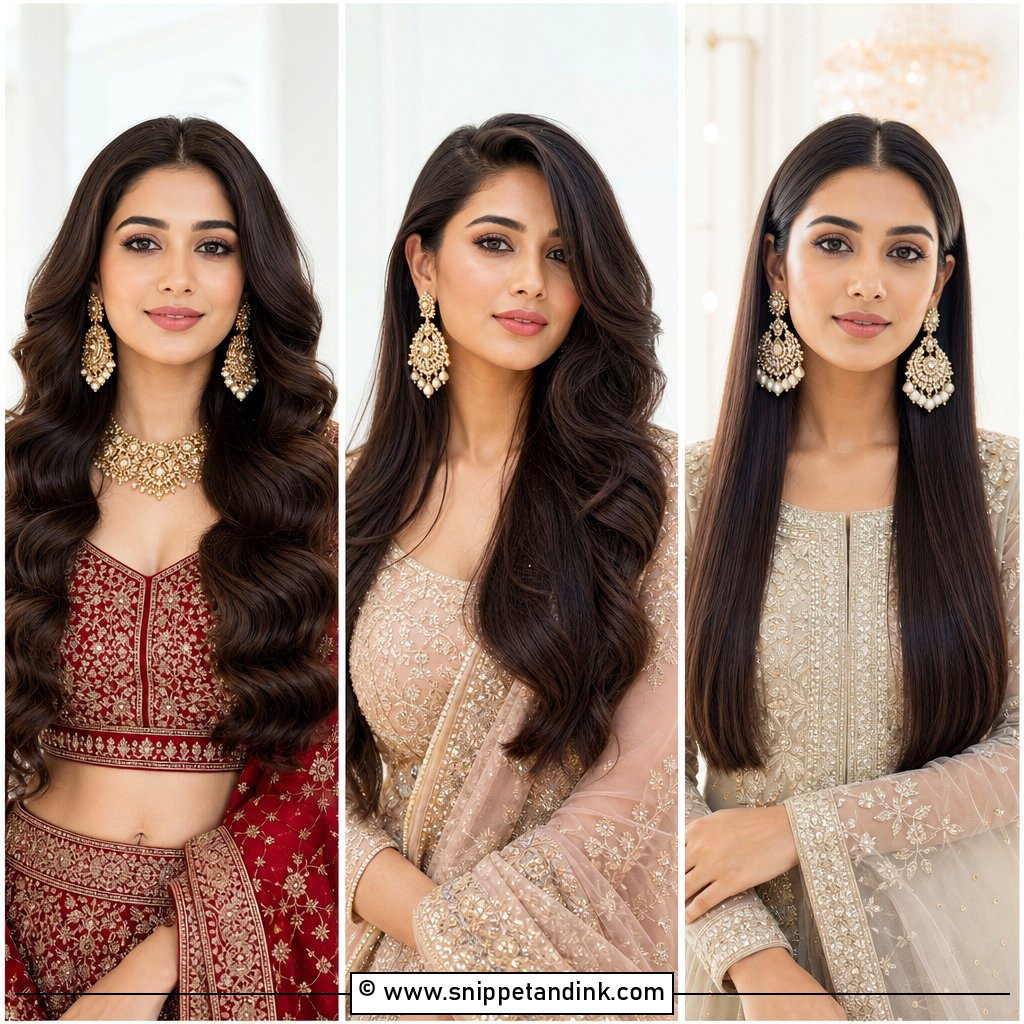
1. Indian Bride Open Hair With Soft Curls
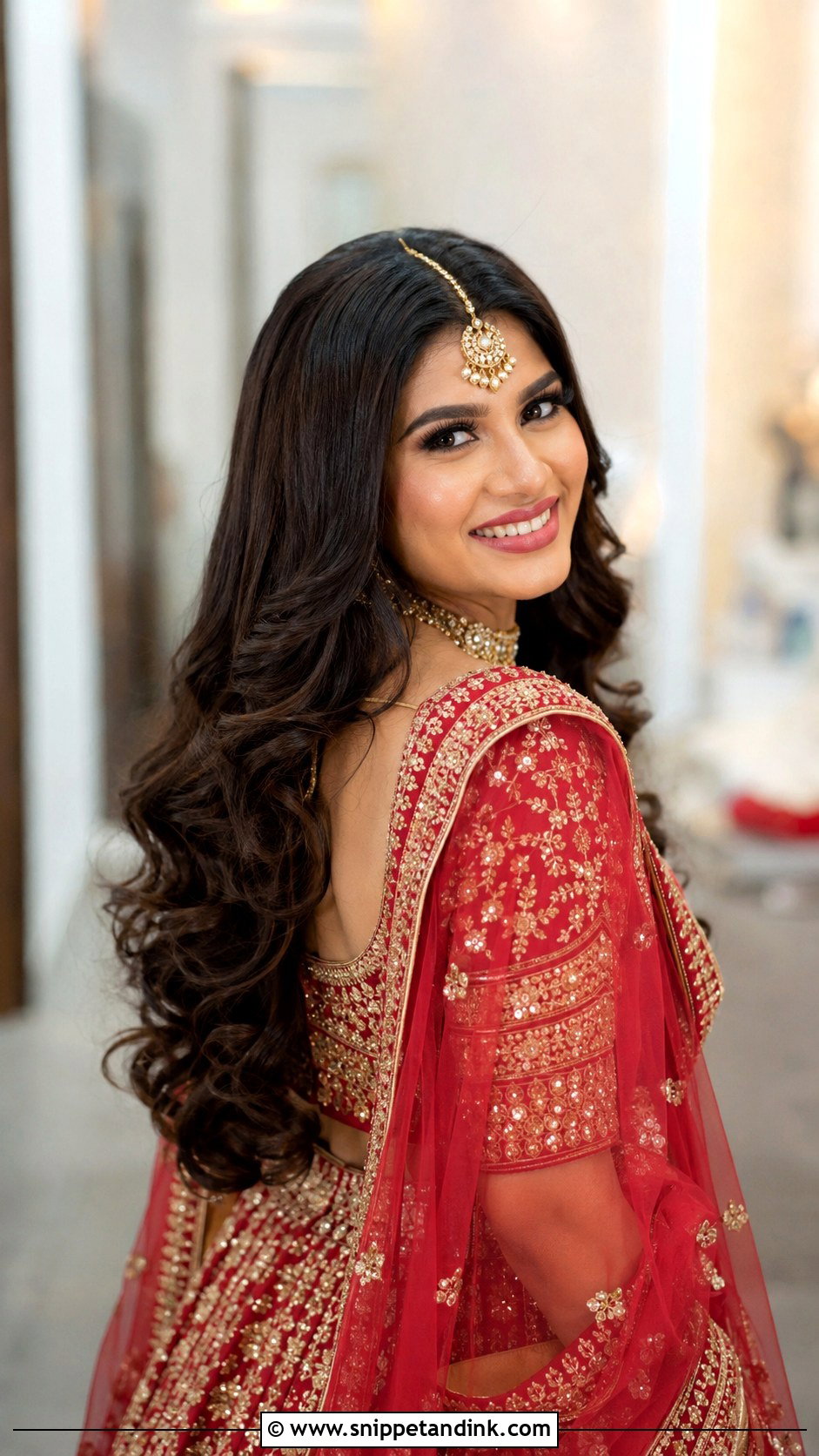
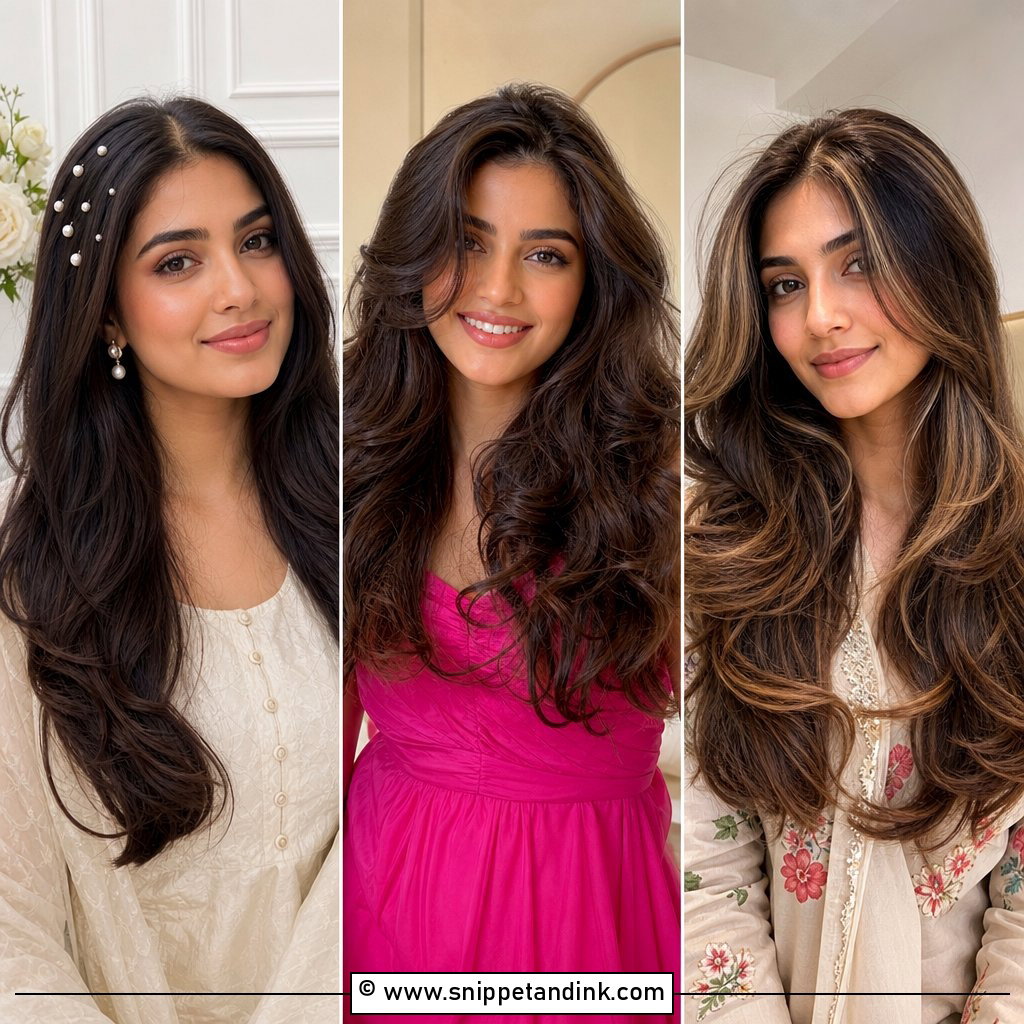
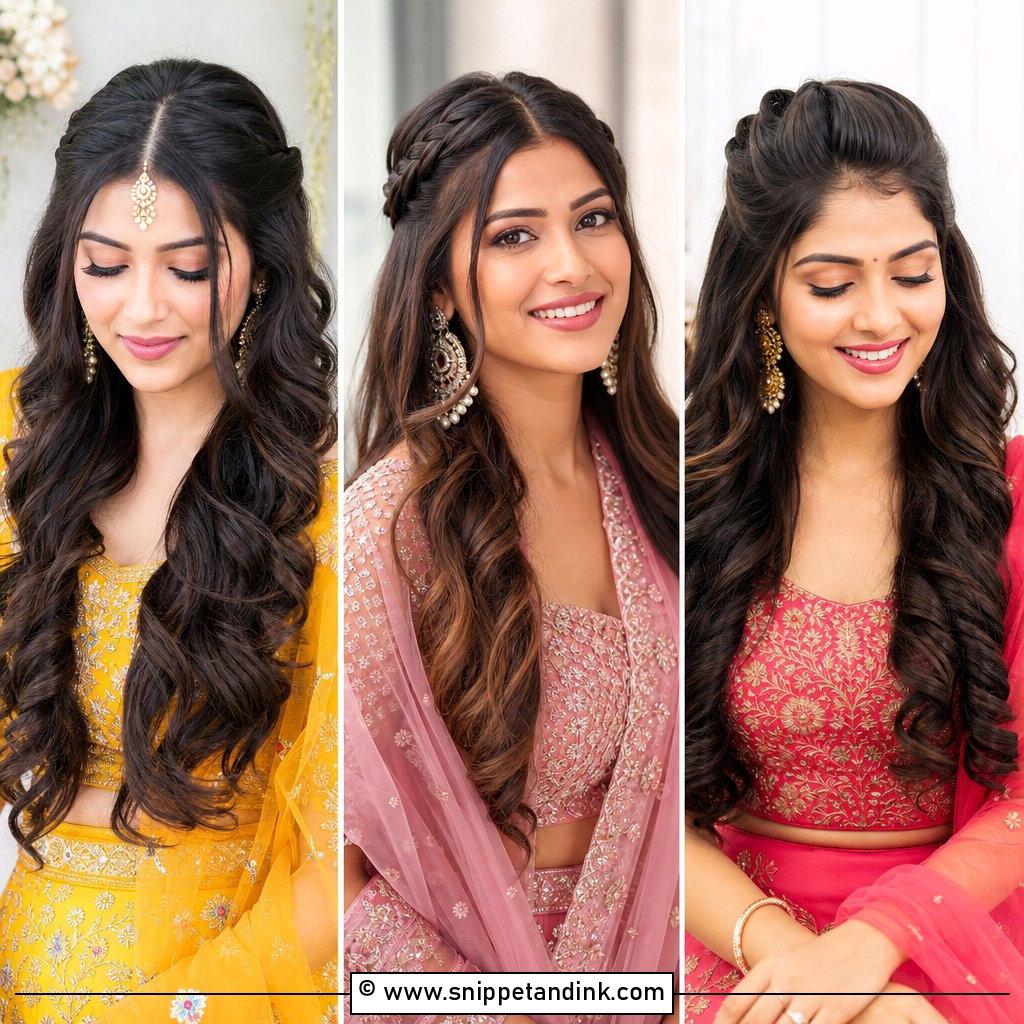
Brushed-out curls are what I recommend to a bride who has never worn her hair down at a big event, because they forgive a lot. Small flaws disappear into the movement. I curl in sections no wider than the barrel, pin each one while it cools, and only brush them out once the whole head is done. Ask for that brushed finish rather than ringlets, which separate and start to look dated as the night goes on. A flexible setting spray, not a stiff lacquer, keeps them moving without crunch.
2. Indian Bride Open Hair With Loose Waves
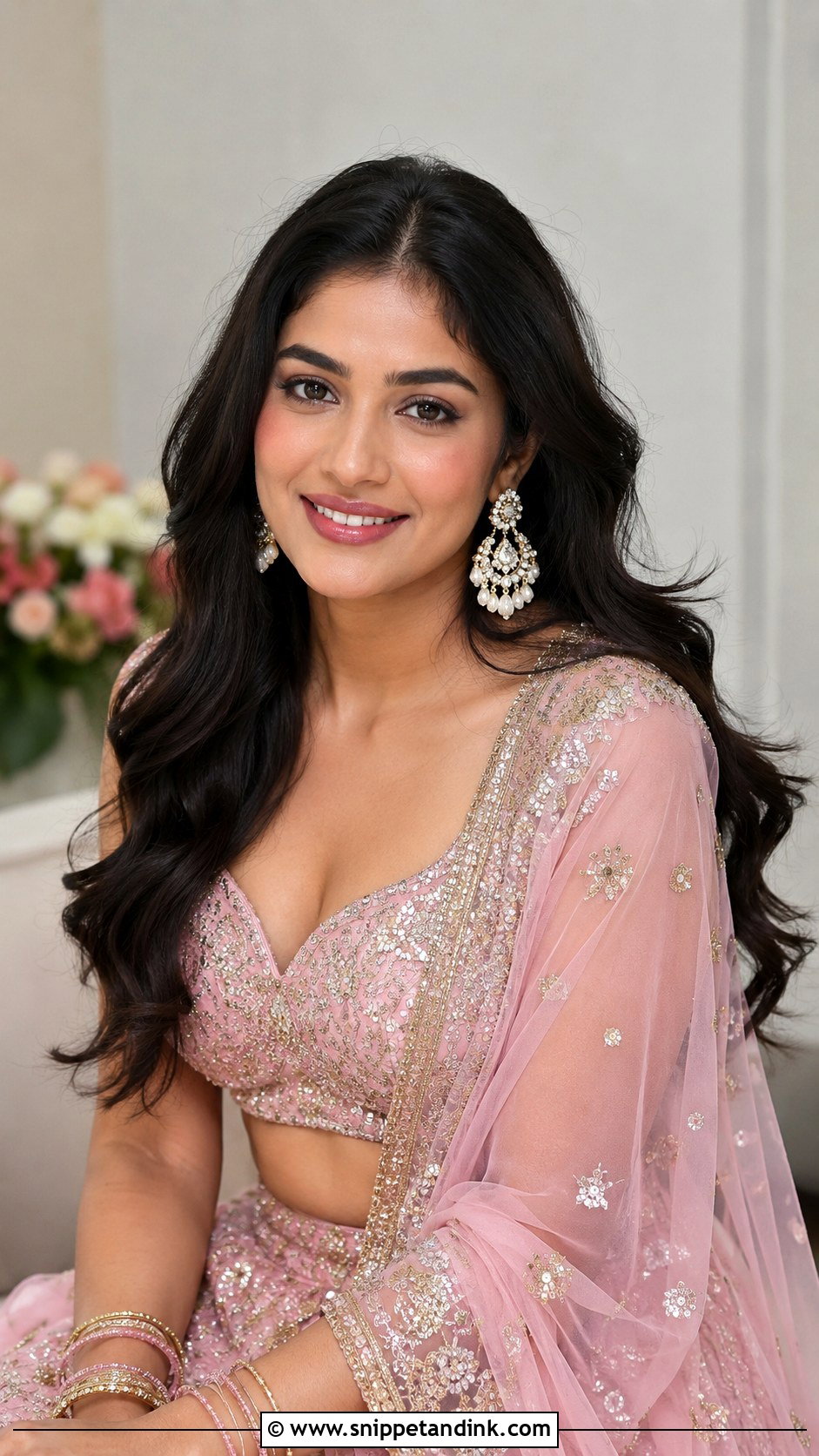
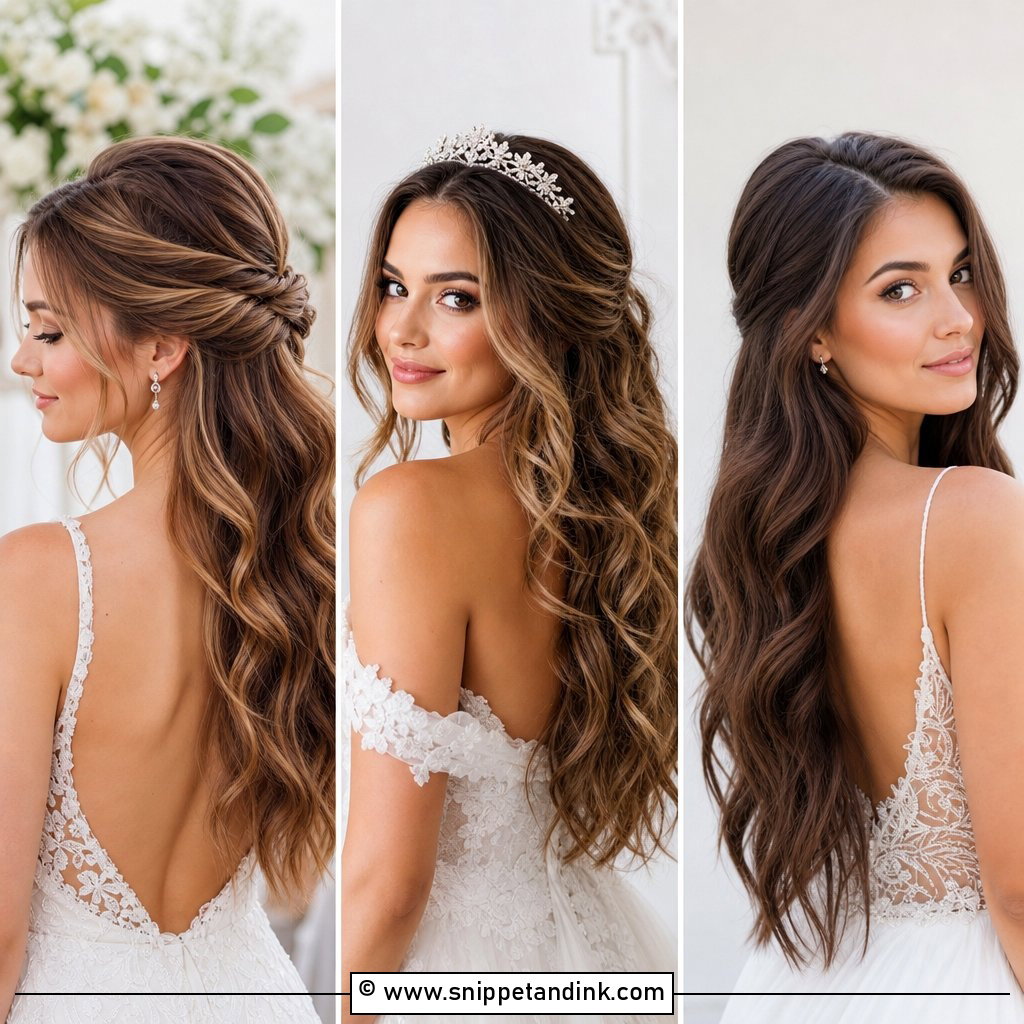
Waves are lighter than curls and sit lower, starting around the cheekbone rather than at the root, which keeps the face open for statement earrings. They pair especially well with a side dupatta drape, since the fabric rests on one shoulder and the waves stay visible from front and back. I set them with a flat iron or a large wand and leave the roots smooth. On very straight, fine hair, waves can relax into nothing by dinner, so I prep the roots with mousse and test them on a trial day that runs several hours.
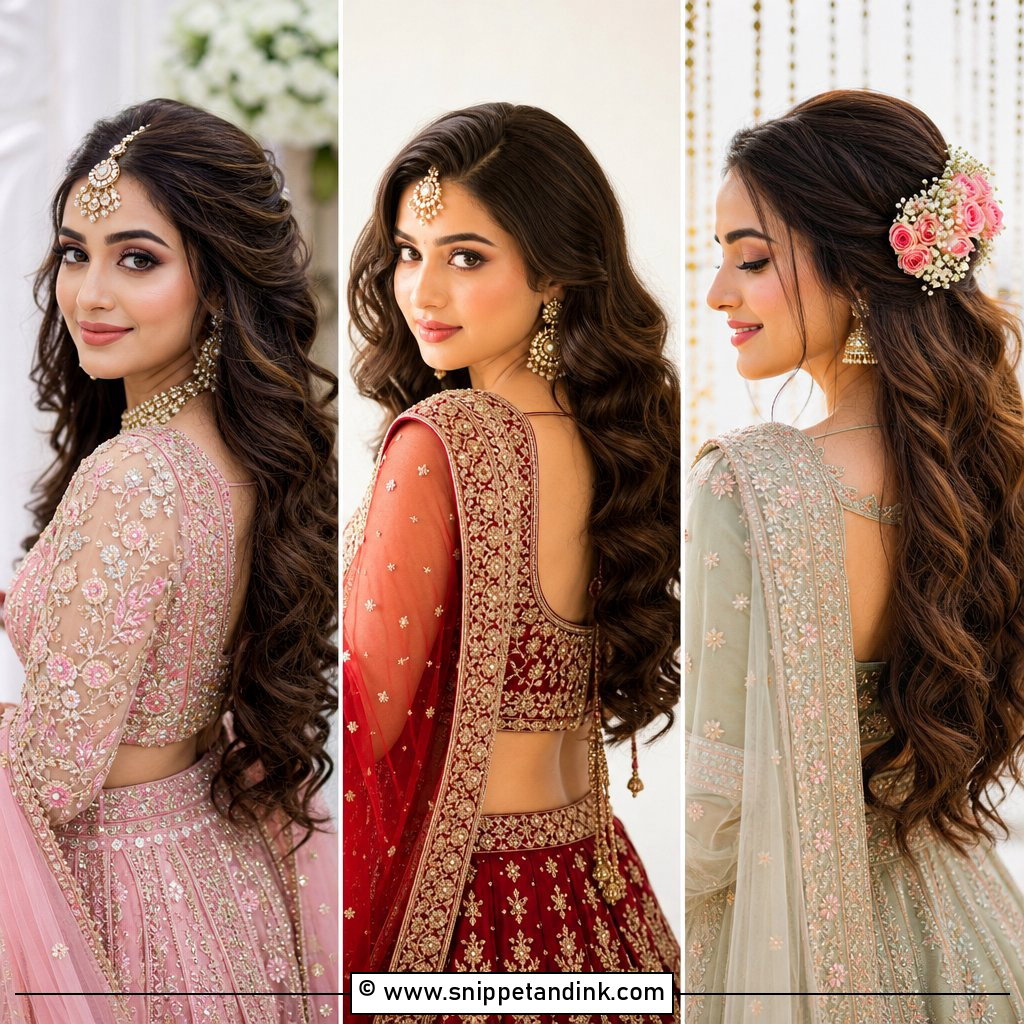
3. Indian Bride Open Hair With Maang Tikka
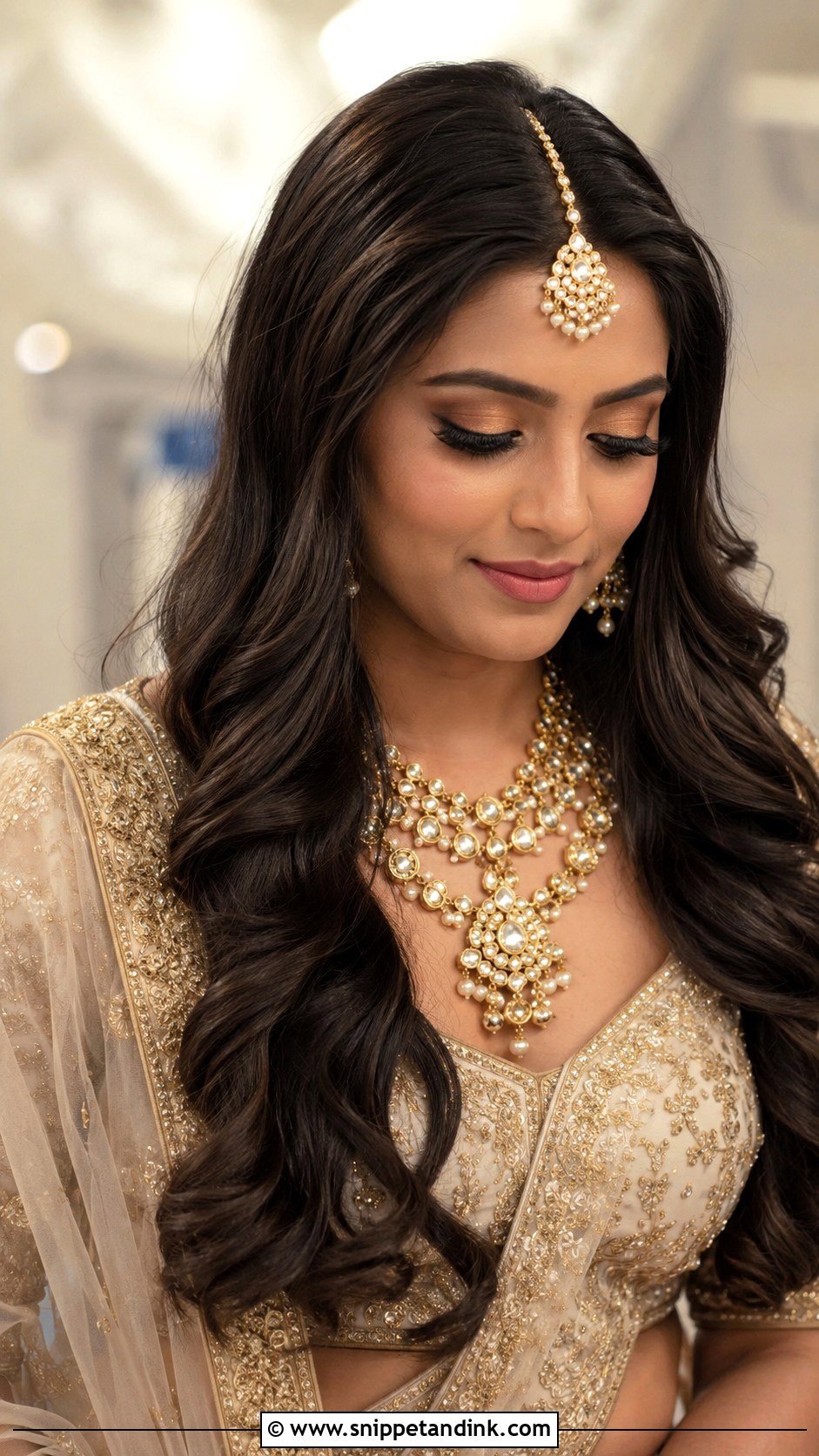
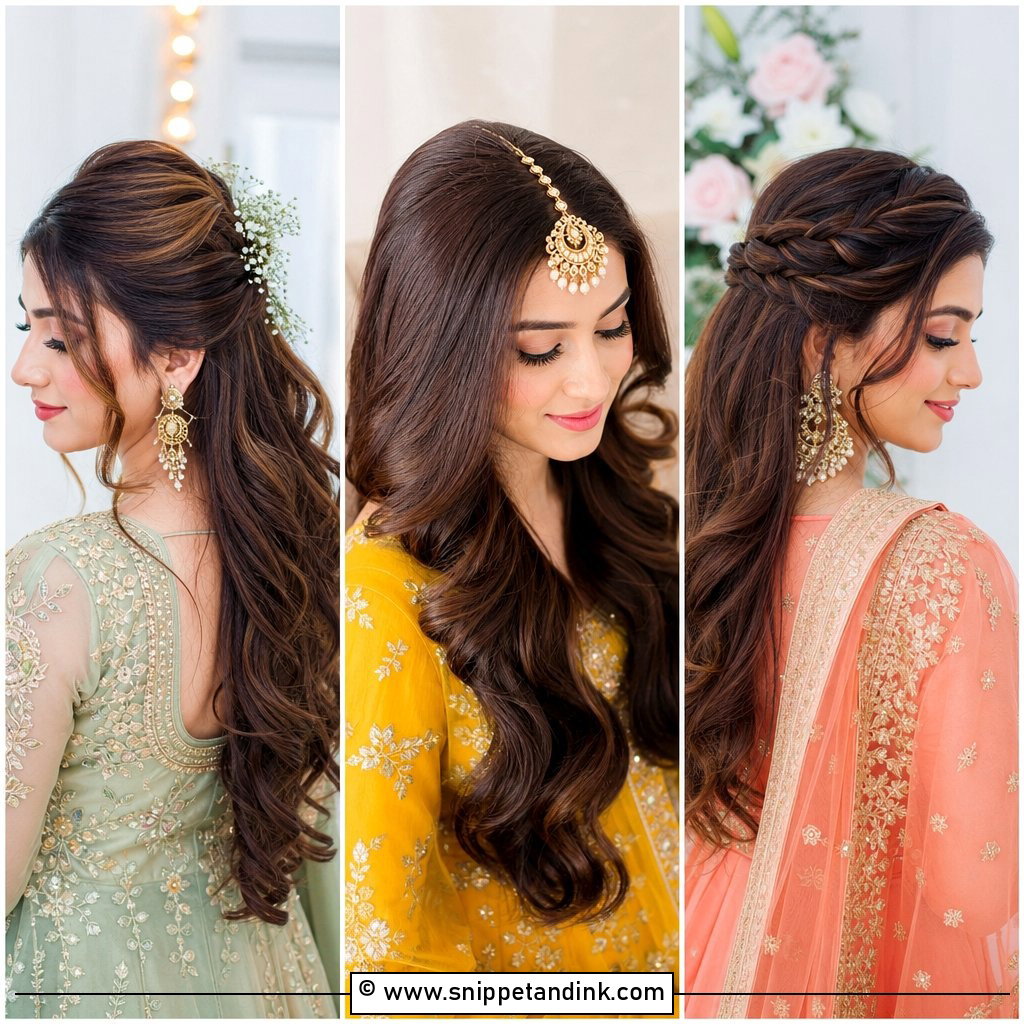
The parting has to be exact for this one, because the tikka hangs straight off it and any lean shows. I hide the hook under a small section at the crown, secure it with two bobby pins crossed in an X, then lay the top layer back over to cover the pins. That way the maang tikka stays put without flattening everything around it. Curls, waves or a smooth blowout all work underneath, with a lehenga, a sharara or a saree.
4. Indian Bride Open Hair With Matha Patti
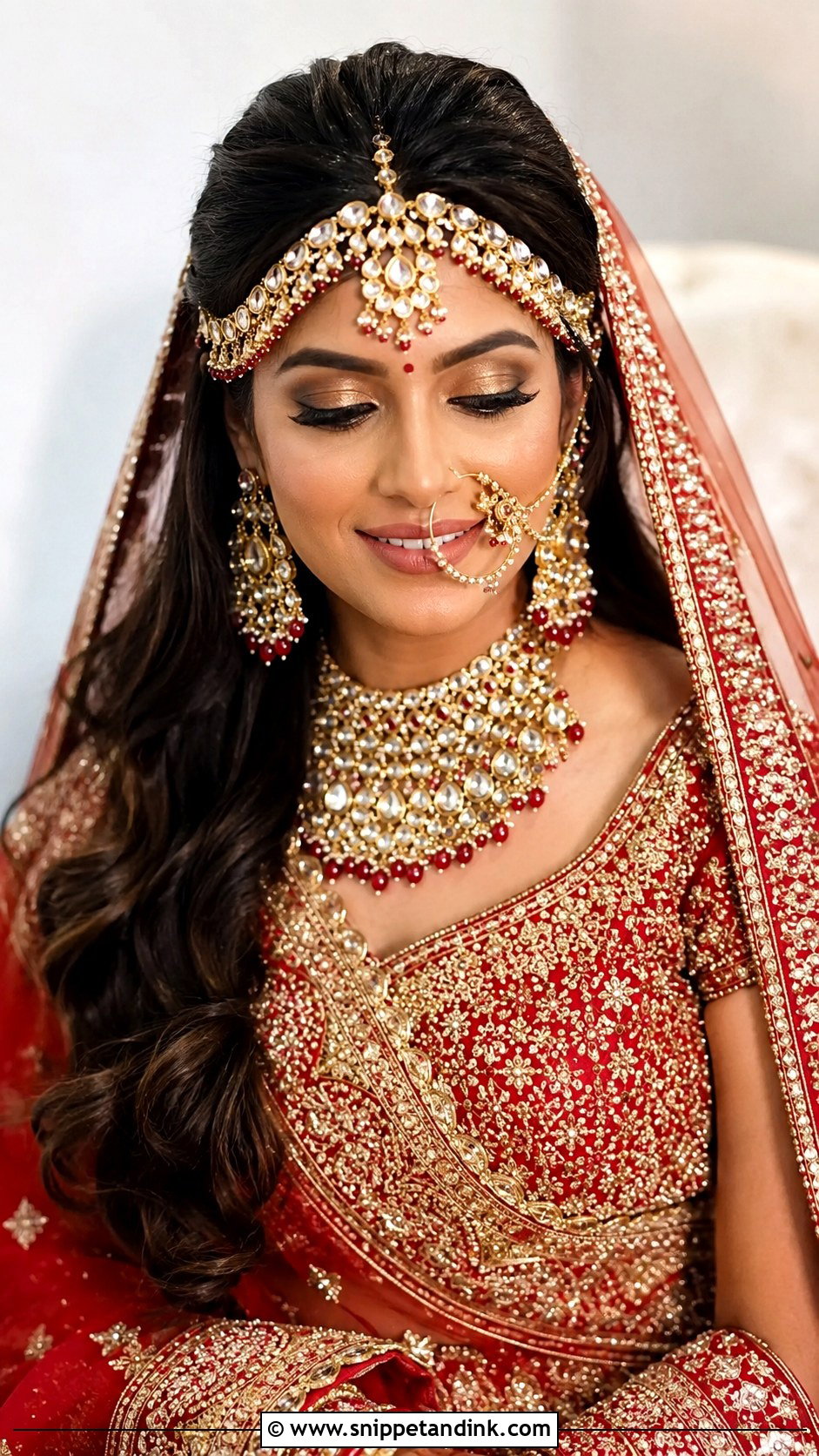
A matha patti has three anchor points, the centre and both sides, and all three need hair to grip. For North Indian and Mughal-inspired outfits I keep the crown smooth so the chains lie flat and put the movement into the lengths with loose curls. Order matters: the matha patti is pinned first, then the dupatta. Reverse it and the dupatta pins drag the chains crooked. Heavy kundan pieces can give a sensitive scalp a headache over a long day, so tell your stylist early and she can spread the weight across more pins.
5. Indian Bride Open Hair With Side Part
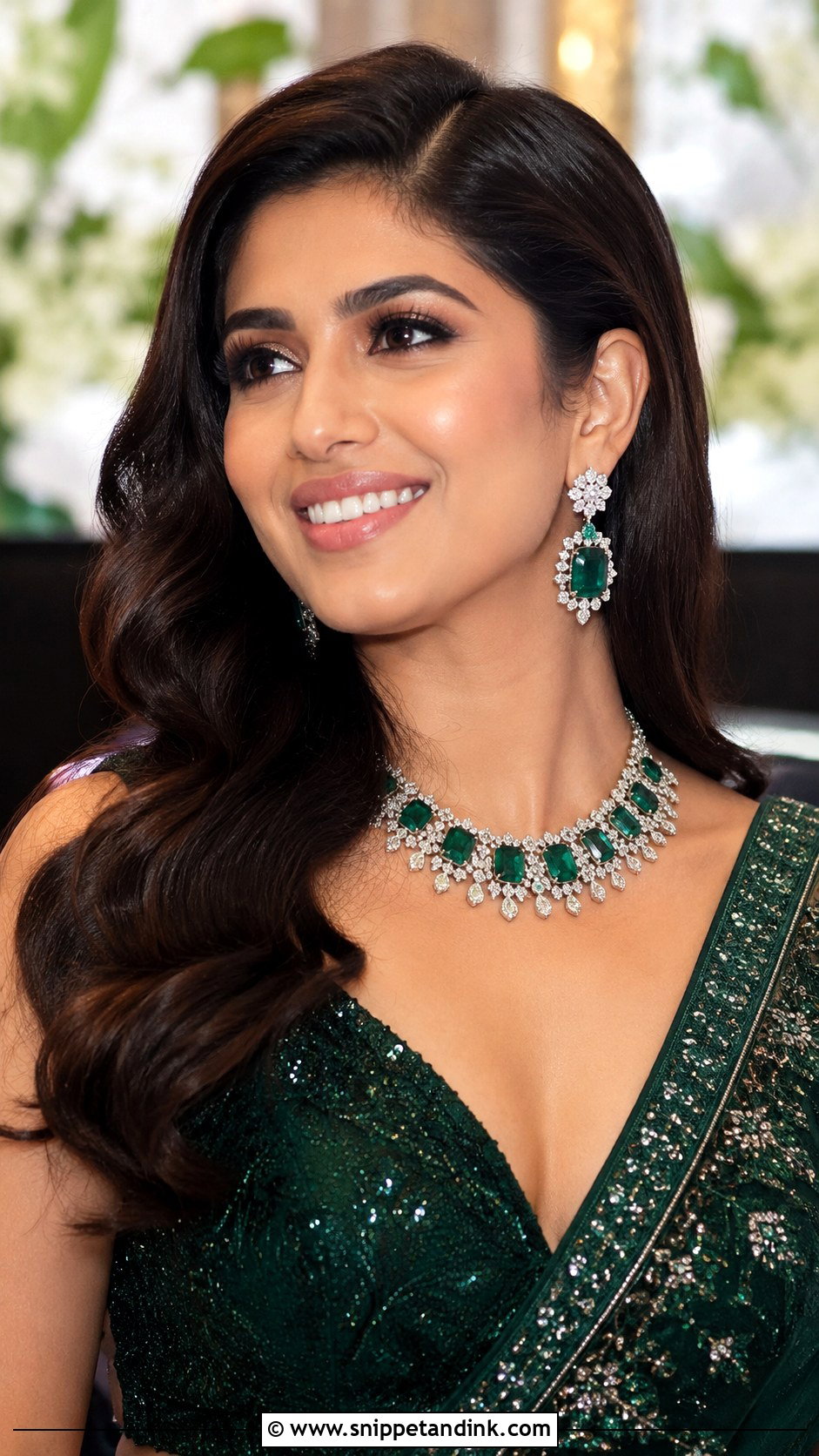
Moving the parting to one side shifts the mood toward glamour and softens a round or square jawline. I tuck the lighter side behind the ear with a hidden pin so the earrings show, and let the fuller side fall forward in waves. It’s the natural partner for a passa or a dupatta pinned on one shoulder. One catch: if your hair has a strong natural parting on the other side, it will fight you all day. I blow-dry it against its usual direction first so the new part actually holds.
6. Indian Bride Open Hair With Center Part
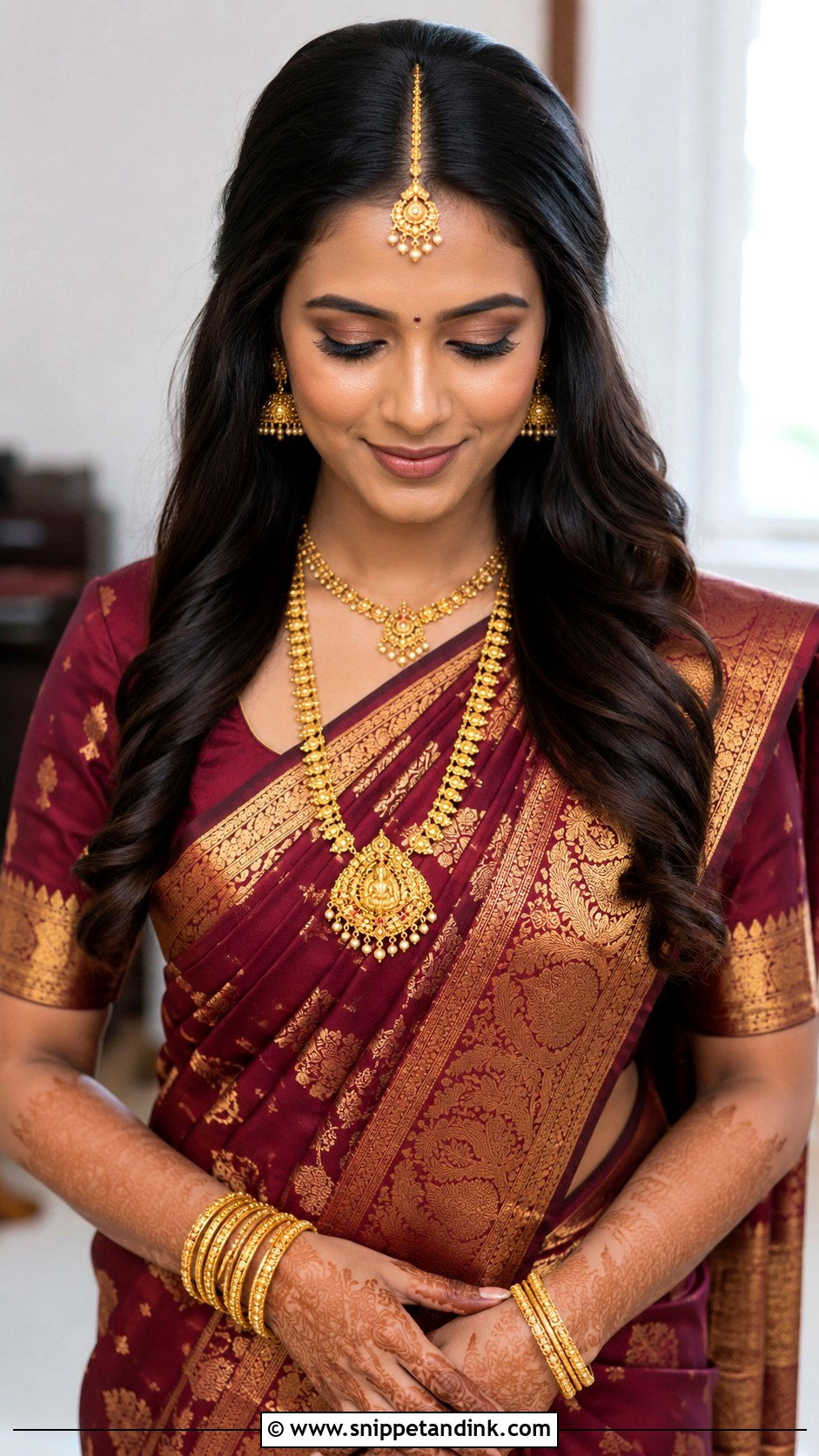
A centre part is the traditional pairing for sindoor, a maang tikka and symmetrical sets like temple jewelry. I sleek the roots with a little cream and keep the curls or waves for below the ears. If sindoor is applied during the ceremony, I keep the parting itself clear of shine spray so the powder sits on the line instead of clumping. Hair that moves a lot gets a few hidden pins at the crown; nobody sees them, but the shape stays. It suits a bridal lehenga and a Banarasi saree equally.
7. Indian Bride Open Hair With Half Up Hair
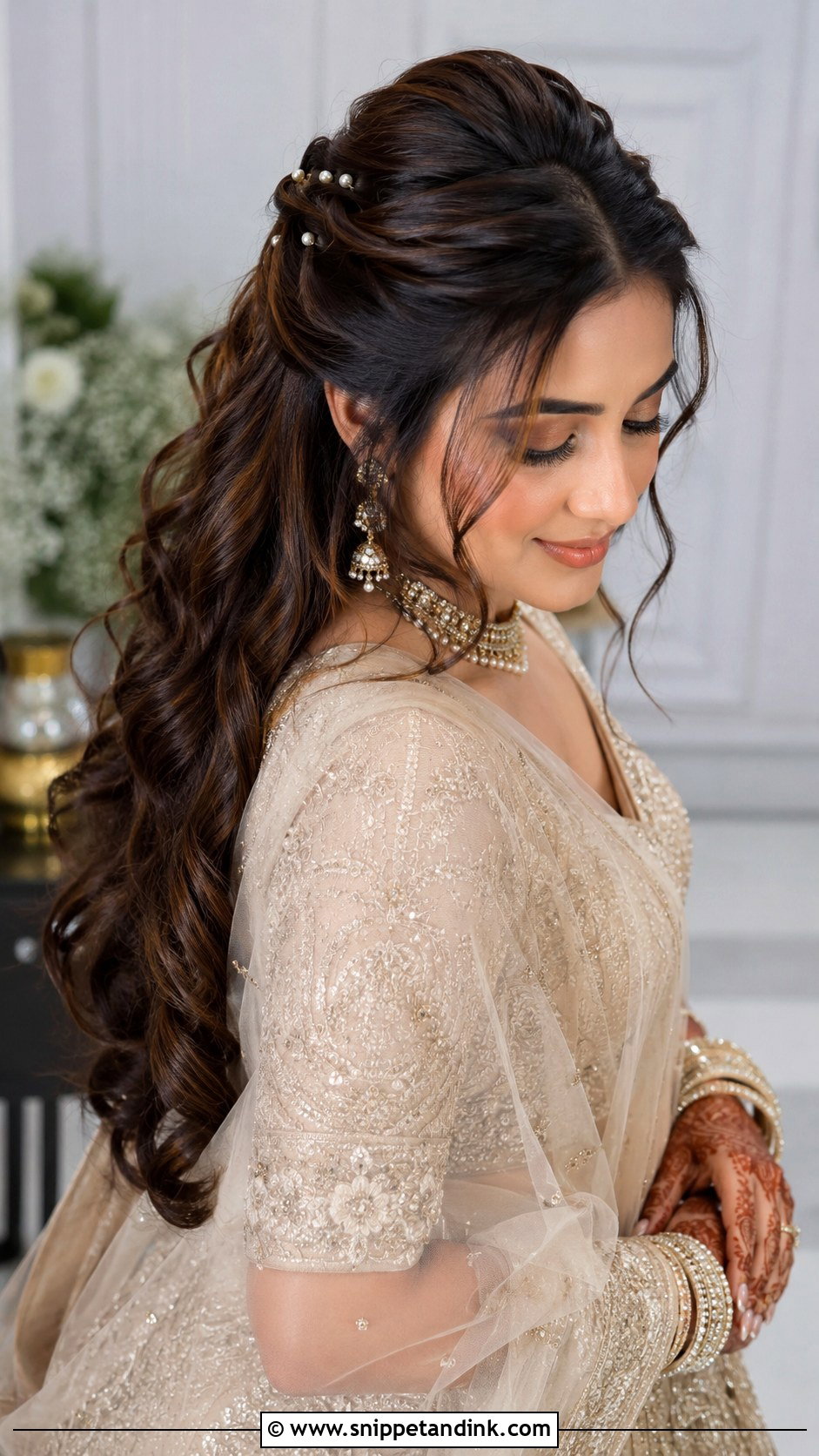
Half-up is where I land when a bride wants her hair down but also needs a dupatta or veil pinned securely. The twisted top section gives me a hidden base to pin into, and it keeps strands off the face during the pheras, when you’re bending and walking around the fire. Thick hair suits it particularly well, since pulling the top back removes bulk. I’d keep the decoration to a maang tikka and a few small pins, because the twist is already doing the work.
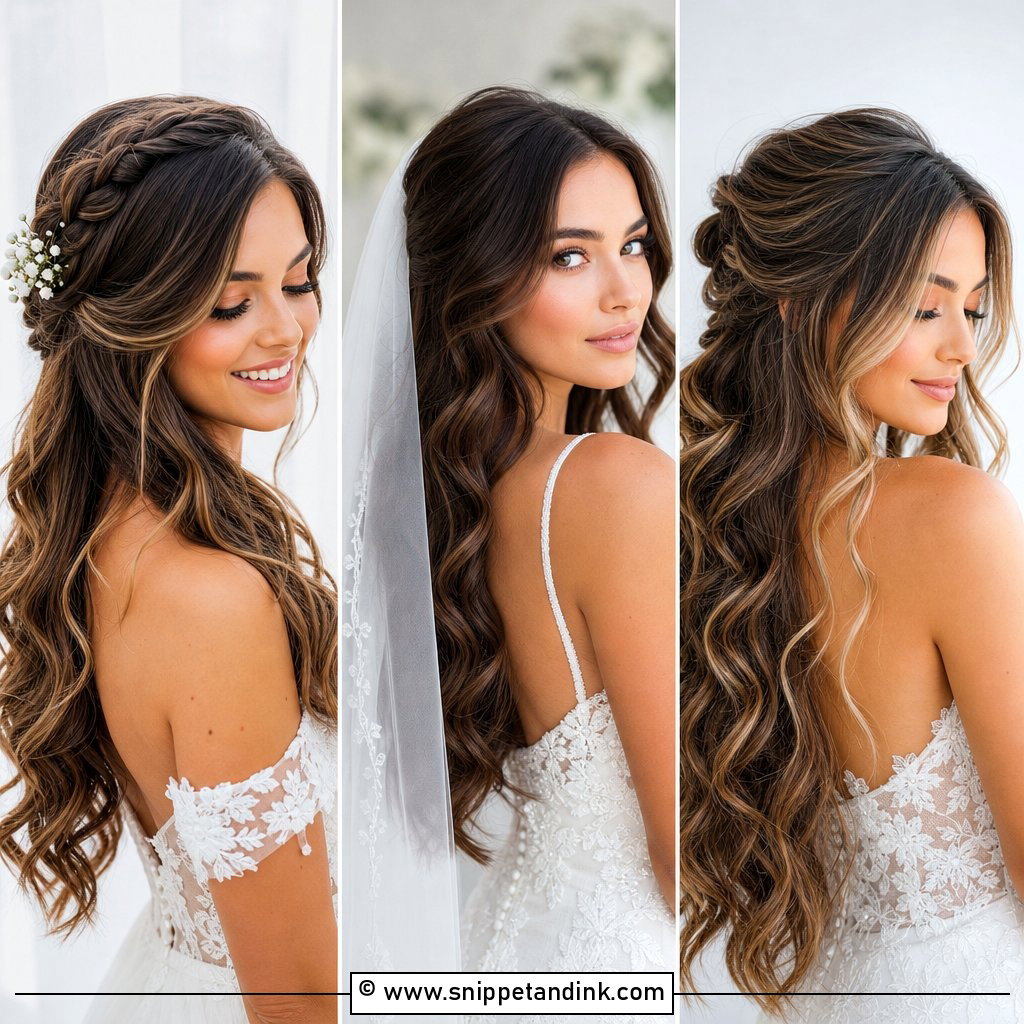
8. Indian Bride Open Hair With Floral Pins
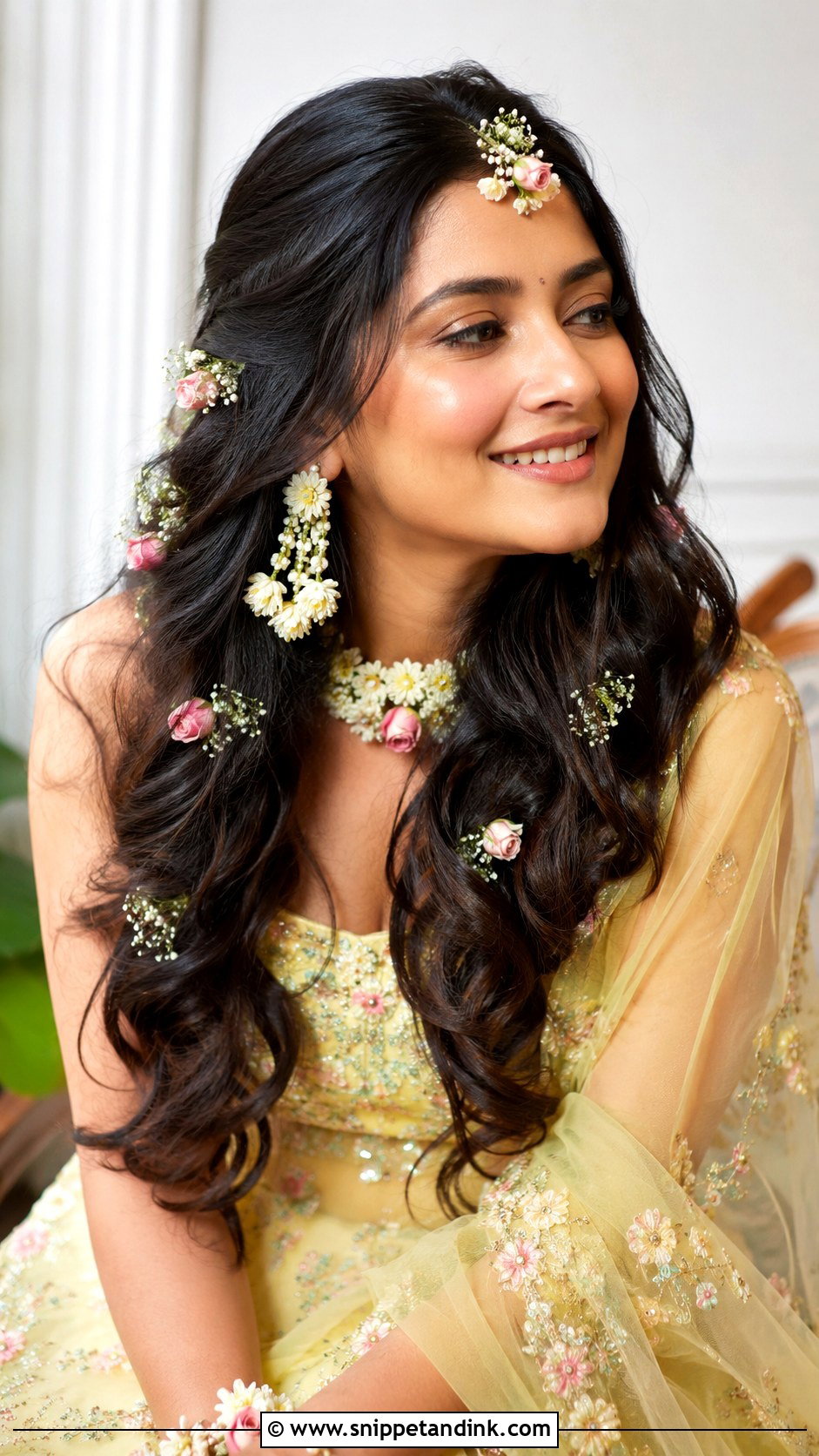
Floral pins are the lighter cousin of a gajra. I use small blooms on wire or hairpin stems and push them into the base of a wave rather than its surface, so they don’t slide out when you turn your head. Jasmine and baby’s breath are the usual choices; roses are heavier, so I use them sparingly. They suit mehendi, haldi and daytime events best. Group them in two or three clusters instead of spacing them evenly, which looks like confetti in photos.
9. Indian Bride Open Hair With Dupatta
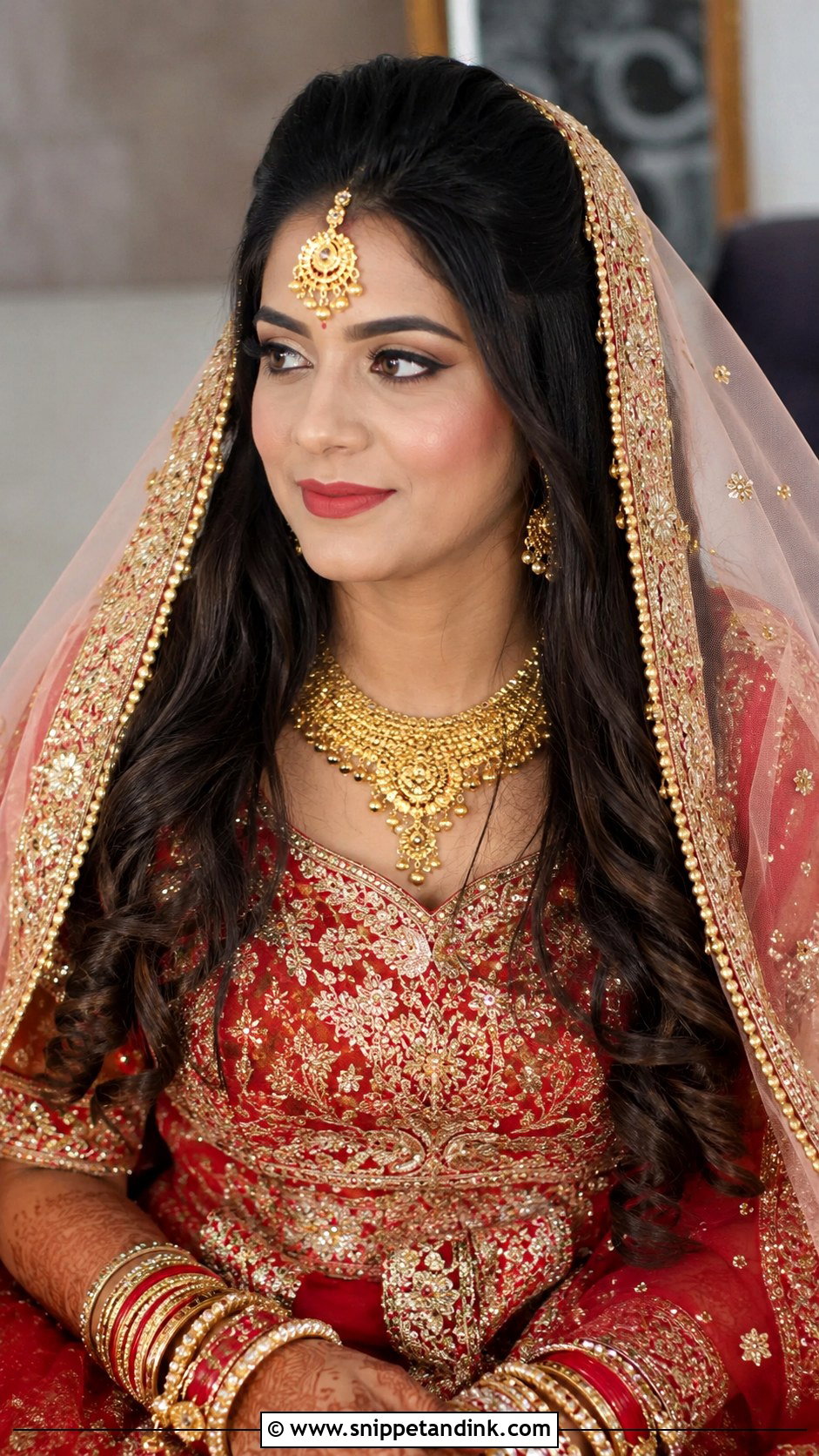
Open hair and a heavy dupatta are not a natural match, and I tell brides that early. The fabric weighs on the crown and presses the hair flat within an hour. What works is a little backcombed height at the crown, net or organza instead of heavy velvet, and pinning the dupatta slightly back from the hairline or over one shoulder. This is the style where a trial with the real dupatta matters most. A borrowed scarf behaves nothing like a fully embroidered piece.
10. Indian Bride Open Hair With Beach Waves
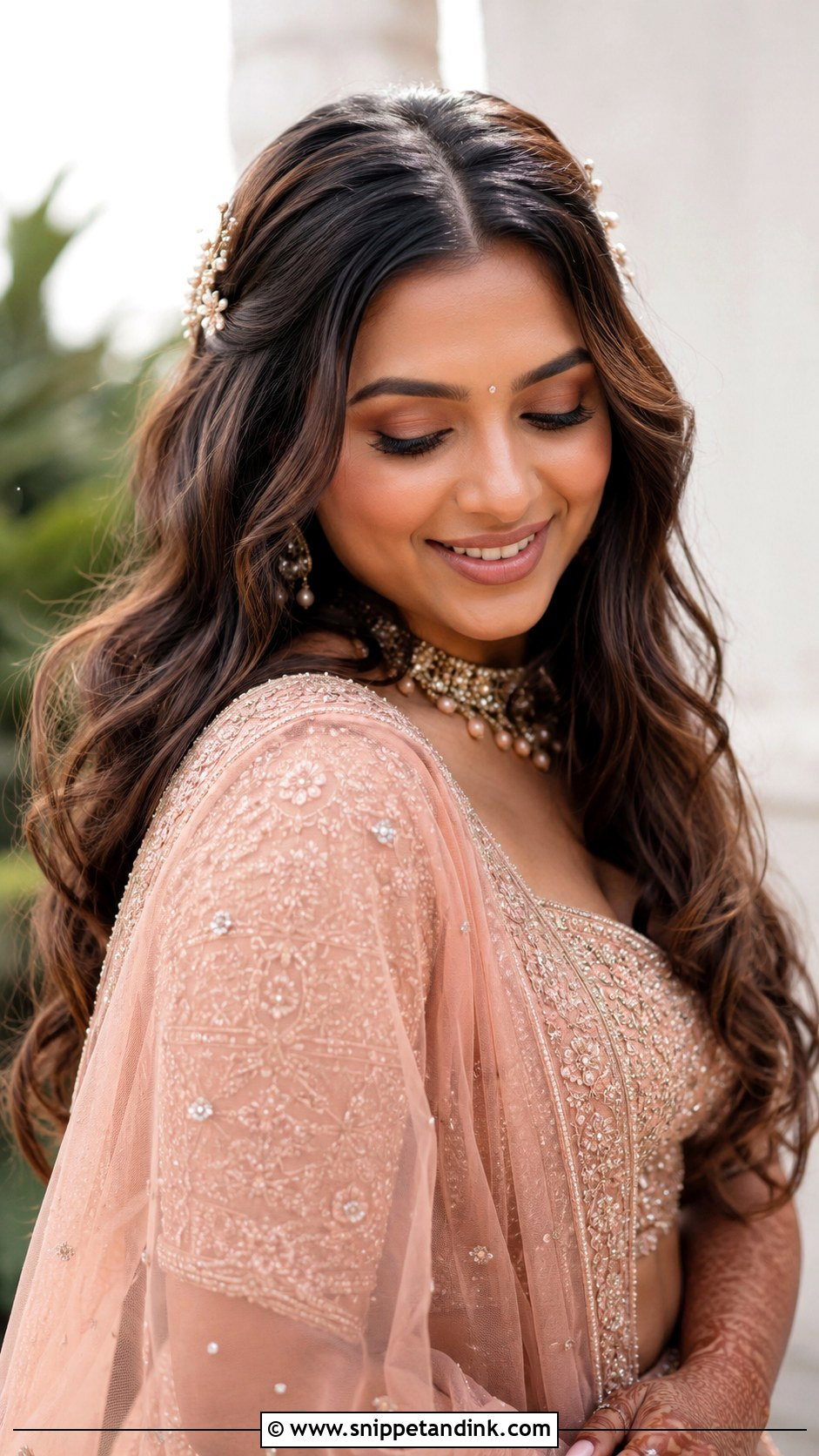
Beach waves are the loosest texture here, bent rather than curled, with the ends left straight. For an Indian bridal version I keep more shine than the beach look usually has, or it can read unfinished next to heavy embroidery. They suit destination weddings, mehendi ceremonies and relaxed receptions. Texture spray is the risk: too much and dark hair turns matte and dry-looking under flash. I mist it from a distance and finish with a drop of serum on the ends.
11. Indian Bride Open Hair With Hollywood Waves
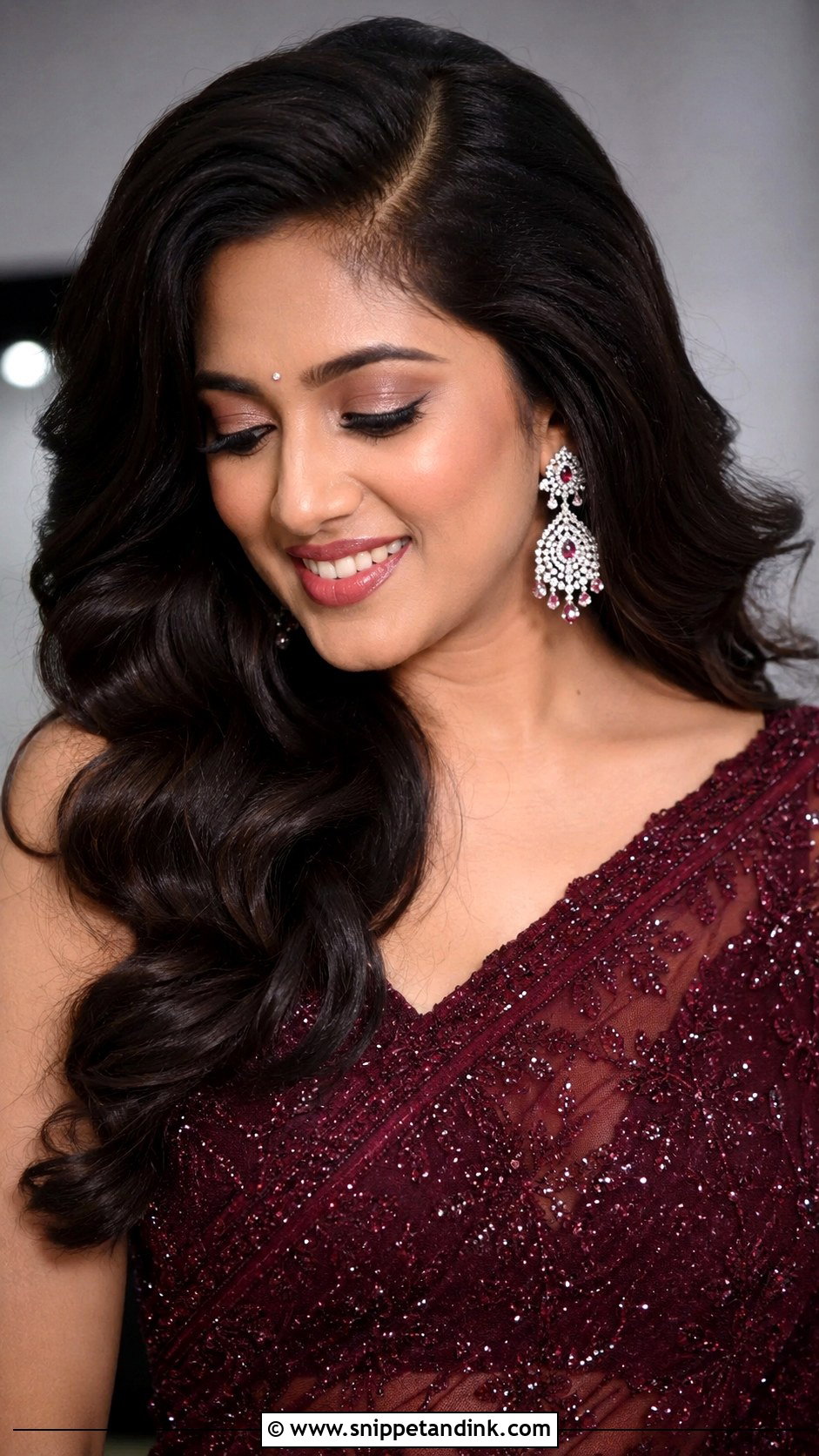
Hollywood waves are set, not tossed. I curl every section in the same direction, pin the curls flat, then brush them together into one continuous S and clip the ridges while the spray dries. That structure holds up under stage lights and in portraits, so I suggest it for receptions with gowns, velvet lehengas or jewel-toned sarees. It needs hair at least past the shoulders and doesn’t mix with lots of accessories; one jewelled pin at the side is enough. It’s also hard to rescue after an enthusiastic hug, so keep a brush nearby.
12. Indian Bride Open Hair With Straight Hair
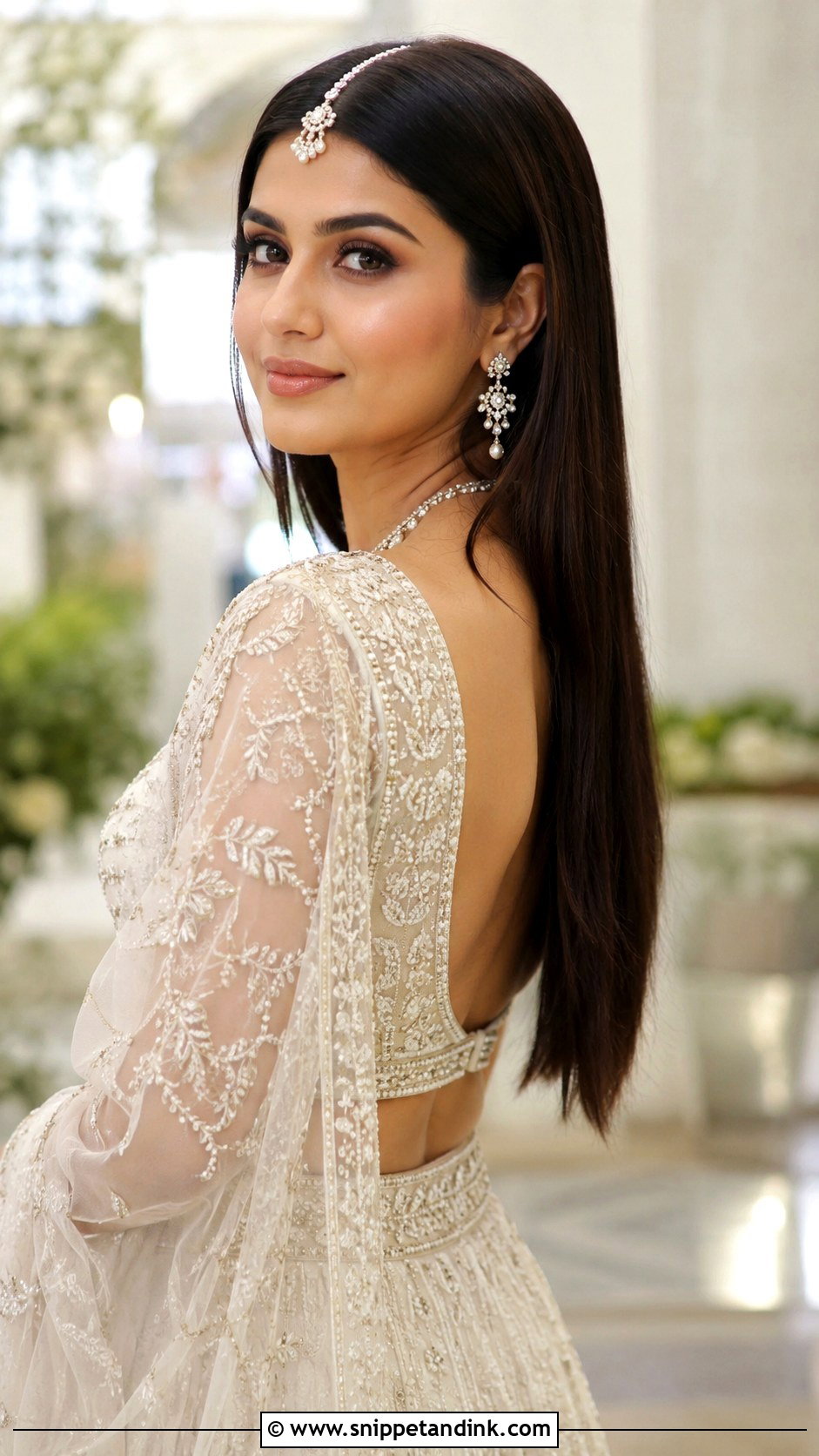
Straight hair gets underestimated, yet it shows every flaw, so it needs more prep than curls do. I start with a smoothing blow-dry, flat iron in thin sections and bevel the ends slightly inward so they don’t look blunt. Serum goes on the mid-lengths only; at the roots it turns greasy under hot lights. Brides who prefer minimal styling and sharp outfits, sleek sarees, modern lehengas and structured blouses, carry it best. Adding a maang tikka or matha patti brings it firmly back into bridal territory.
13. Indian Bride Open Hair With Front Braids
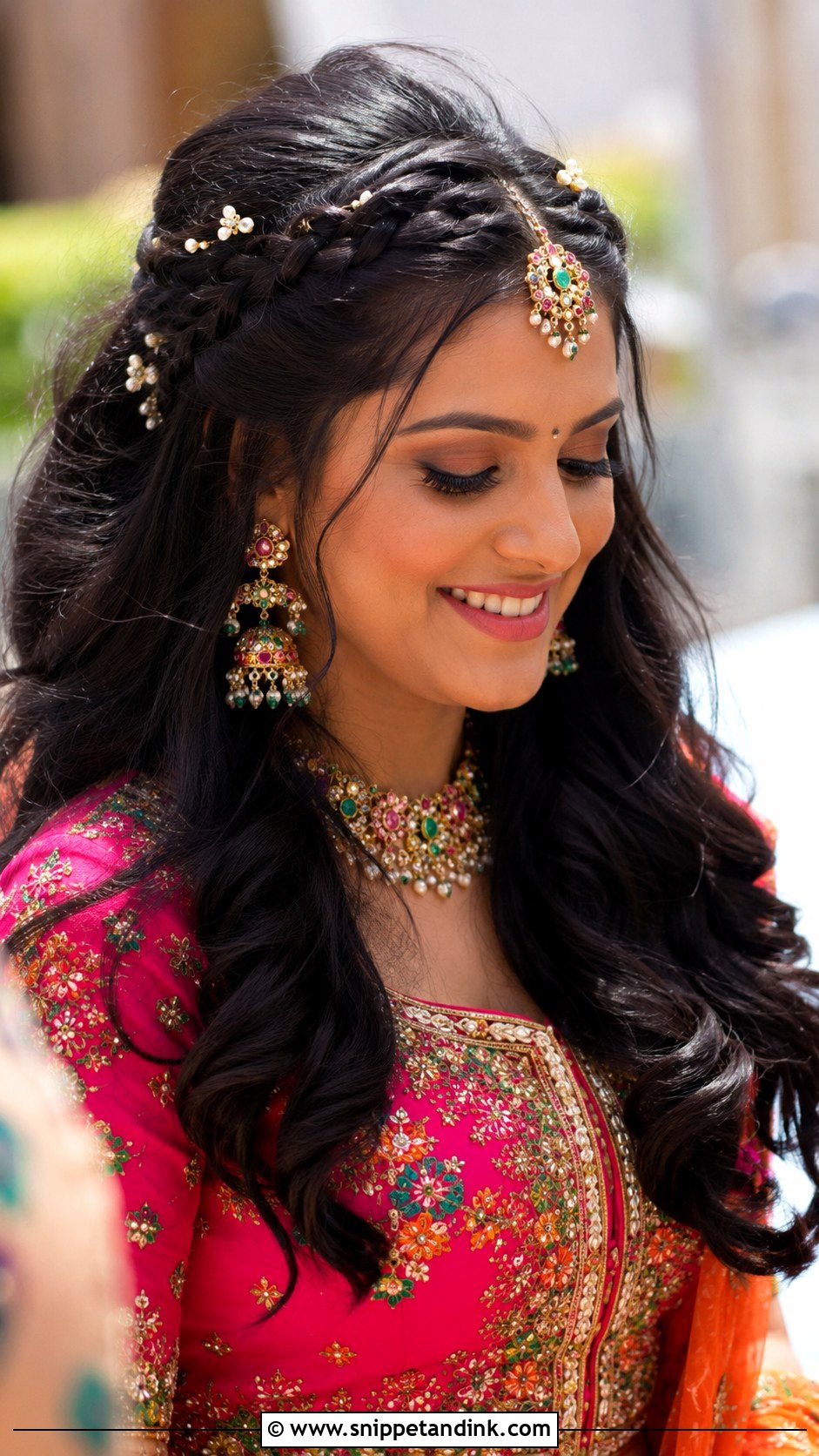
Two thin braids from the temples solve the biggest problem with open hair, which is front pieces falling into the face. I reach for them for outdoor ceremonies and sangeet nights with lots of dancing. Layered hair benefits most, since the shorter front layers get caught up in the braid. I braid loosely, ease the edges out a little, then pin the ends under the curls at the back. Tiny flowers or pearls tuck straight into the braid and won’t slip.
14. Indian Bride Open Hair With Passa
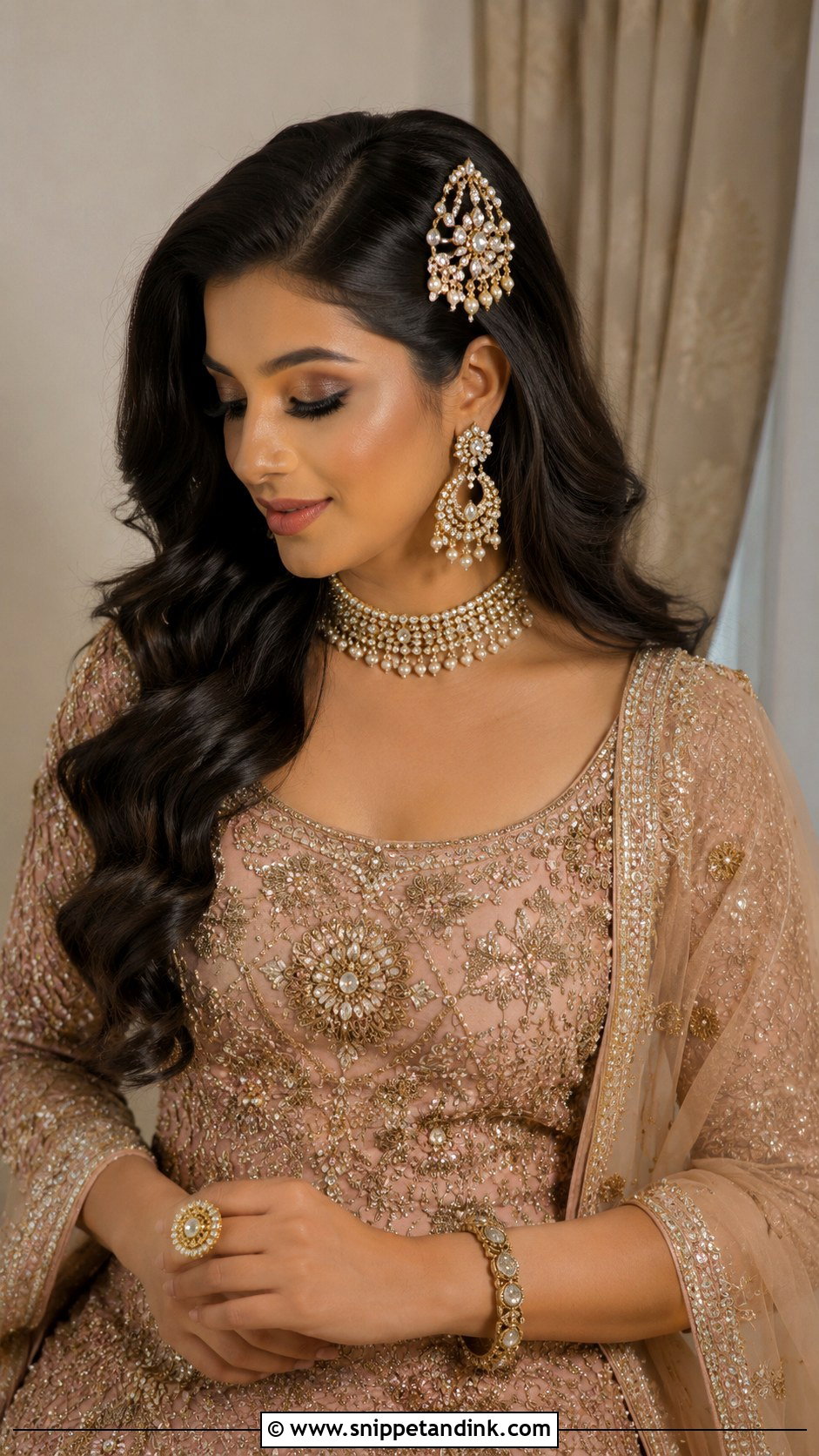
A passa sits on one side of the head, so the hair on that side has to carry it. I tuck that side back over a firm hidden pin structure and let the other side fall over the shoulder. It suits shararas, ghararas and lehengas, and many Muslim brides wear it for the nikah. Keep a touch of lift at the crown, or the passa looks like it’s sliding off. If a dupatta goes on too, drape it back or over the opposite shoulder so it doesn’t cover the passa you’ve just placed.
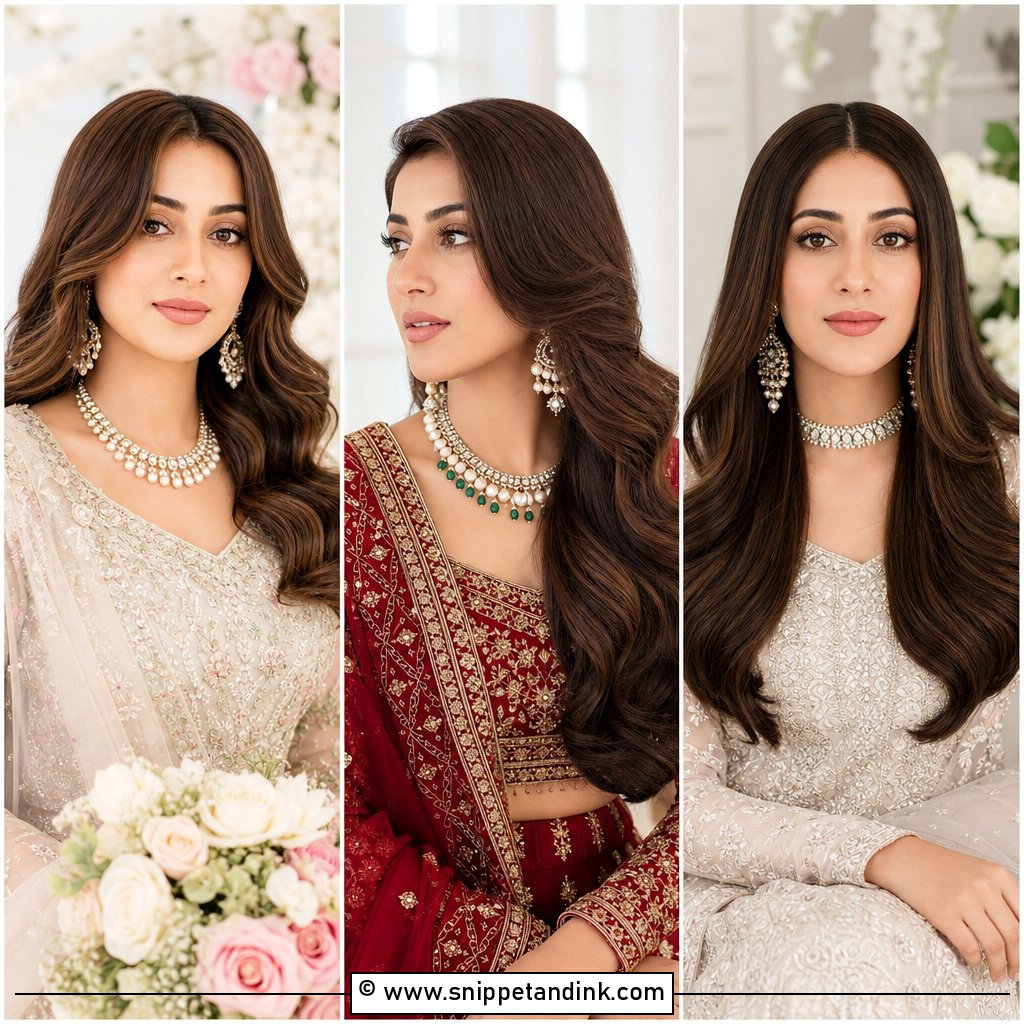
15. Indian Bride Open Hair With Pearl Accessories
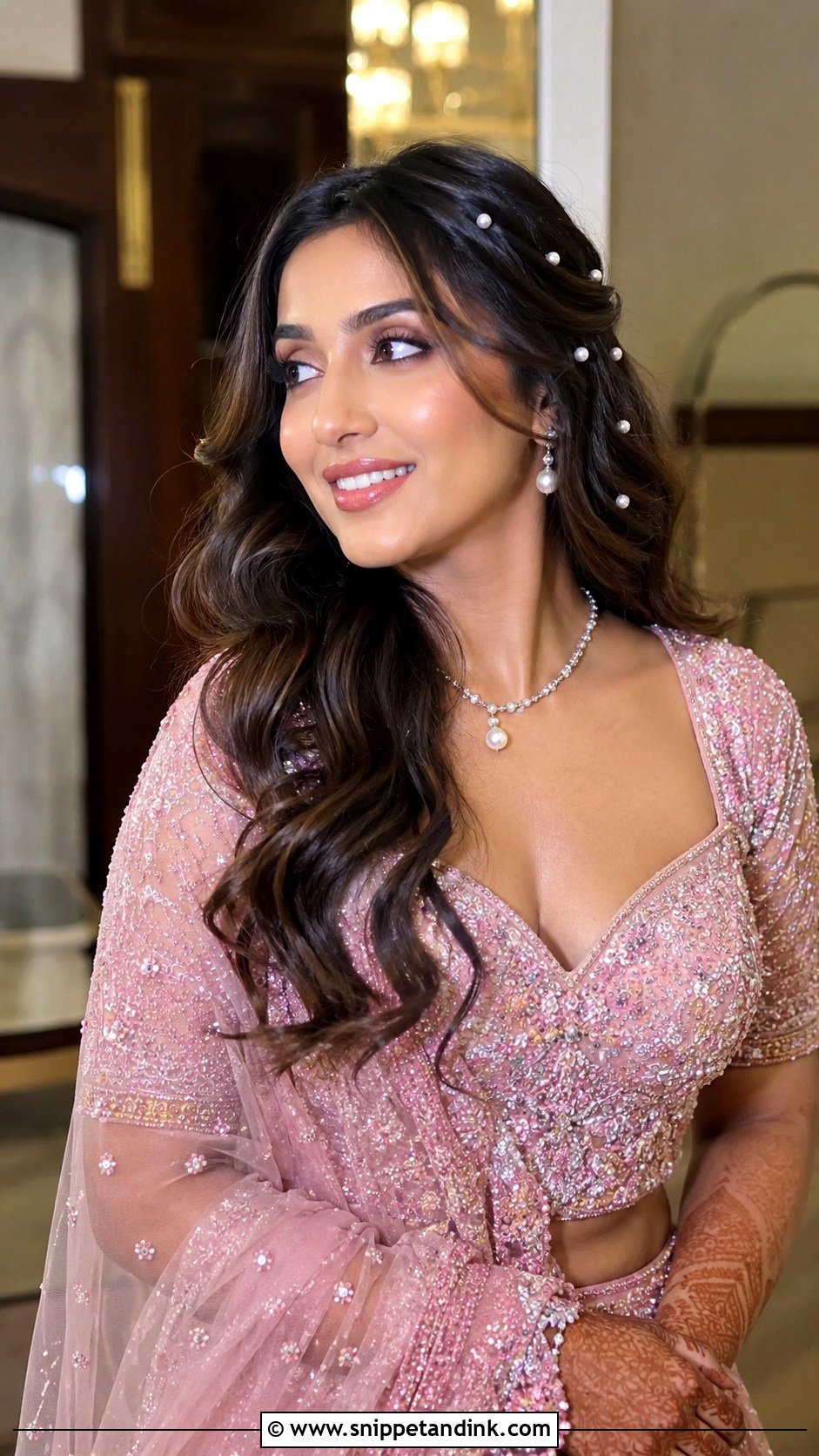
Pearls are the quietest accessory here and the easiest to overdo. I scatter a few small pearl pins through the waves, weighted toward one side, or use a single pearl headband for a reception. They sit well with ivory, blush, champagne and gold outfits. If your lehenga is already heavily embroidered, stop at three or four pins; the pearls should look like they landed there, not like a printed pattern.
Adding Fullness With Clip-In Wefts
Open styles show length and density more than any updo, and plenty of brides discover at the trial that their hair looks thinner down than they expected. Clip-in wefts fix that without a long-term commitment.
Matching and Placing Them
Match the colour in daylight against your mid-lengths, not your roots, which are usually darker. Human hair wefts can be curled along with the rest of your hair, while synthetic fibre tends to frizz or melt under a hot iron. I place them below the crown and above the ears, a finger’s width back from the parting, so the tracks never peek through when the matha patti or tikka goes in.
Order them several weeks ahead and bring them to the trial. Wefts that arrive the week before leave no time to cut, blend or exchange them.
What Goes in the Touch-Up Pouch
Open hair needs looking after through the evening, so I hand the bride, or a cousin who will stay close, a pouch with these:
- A compact paddle brush and a fine tail comb
- Six to eight bobby pins matched to your hair colour
- A travel-size flexible hairspray
- Blotting papers for the hairline
- Spare floral or pearl pins, if you’re wearing them
Ask whoever holds it to check the back of your hair before the reception entry and again after the varmala. Those are the two moments that most often leave a tangle nobody mentions.
Down Doesn’t Mean Undone
Hair worn down only works when it’s planned with as much care as an updo. Settle the parting first, then decide how much lift the crown needs to carry jewellery and a dupatta, and how much hold the lengths need for the hours you’ll wear it. The style for your engagement may not be the one for the pheras. Do a trial with the real dupatta and jewellery, then go about your afternoon in it before you commit.
You'll Like These Ideas:





Leave a Reply