
Leaving hair loose is not the same as leaving it alone. For an Indian bride, open hair has to stay put through rituals that last hours, carry real jewelry and still move when you dance. A good open hair Indian bride look works with lehengas, sarees, shararas, pastels or classic red, as long as there’s structure hidden underneath. These fifteen run from soft waves with a maang tikka to polished curls under a dupatta. Season and venue change which ones survive, so I’ve added notes on that too.
Monsoon, Winter and Open-Air Mandaps Change the Plan
Indian wedding dates cluster in the cooler months, but a lot happen in heat or rain, and open hair reacts to weather more than any updo.
Humid or monsoon weddings
Moisture in the air relaxes curls and swells smoothed hair into frizz. I set curls tighter than the finished look, use an anti-humidity spray and go for half-up or front-twisted styles. Sleek straight hair is the riskiest choice in this weather.
Hot, dry outdoor ceremonies
Sweat at the hairline loosens front pins and lifts baby hairs. Keep the front slightly back from the face, and choose flowers that cope with heat. Jasmine and roses wilt fast in direct sun.
Winter evenings
Cold, dry air and heated rooms create static, and wool shawls rub the back of the hair. A light anti-static spray and a silk-lined shawl keep it smooth. Curls usually hold well in winter.
1. Open Hair Indian Bride Look With Soft Waves
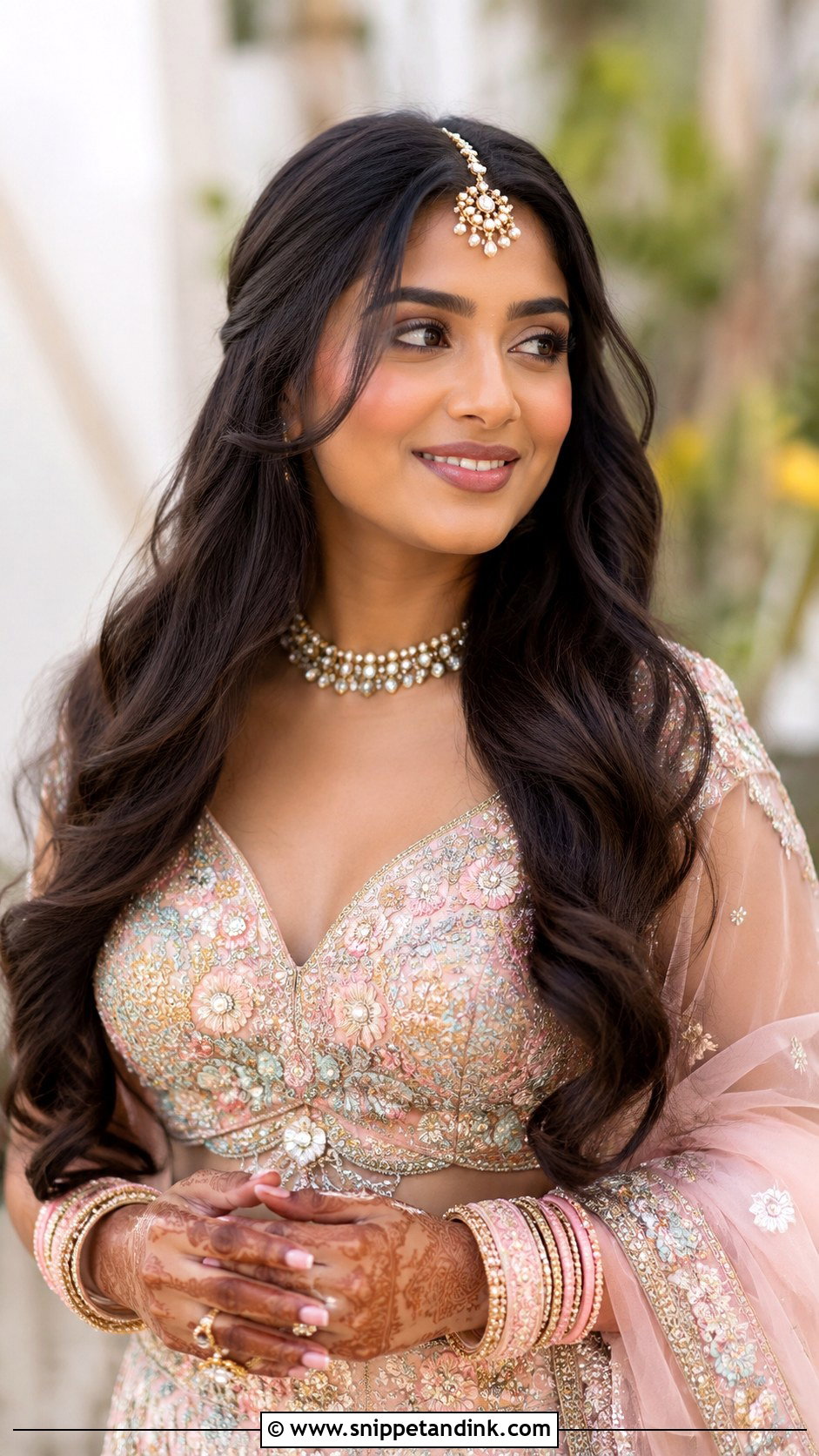
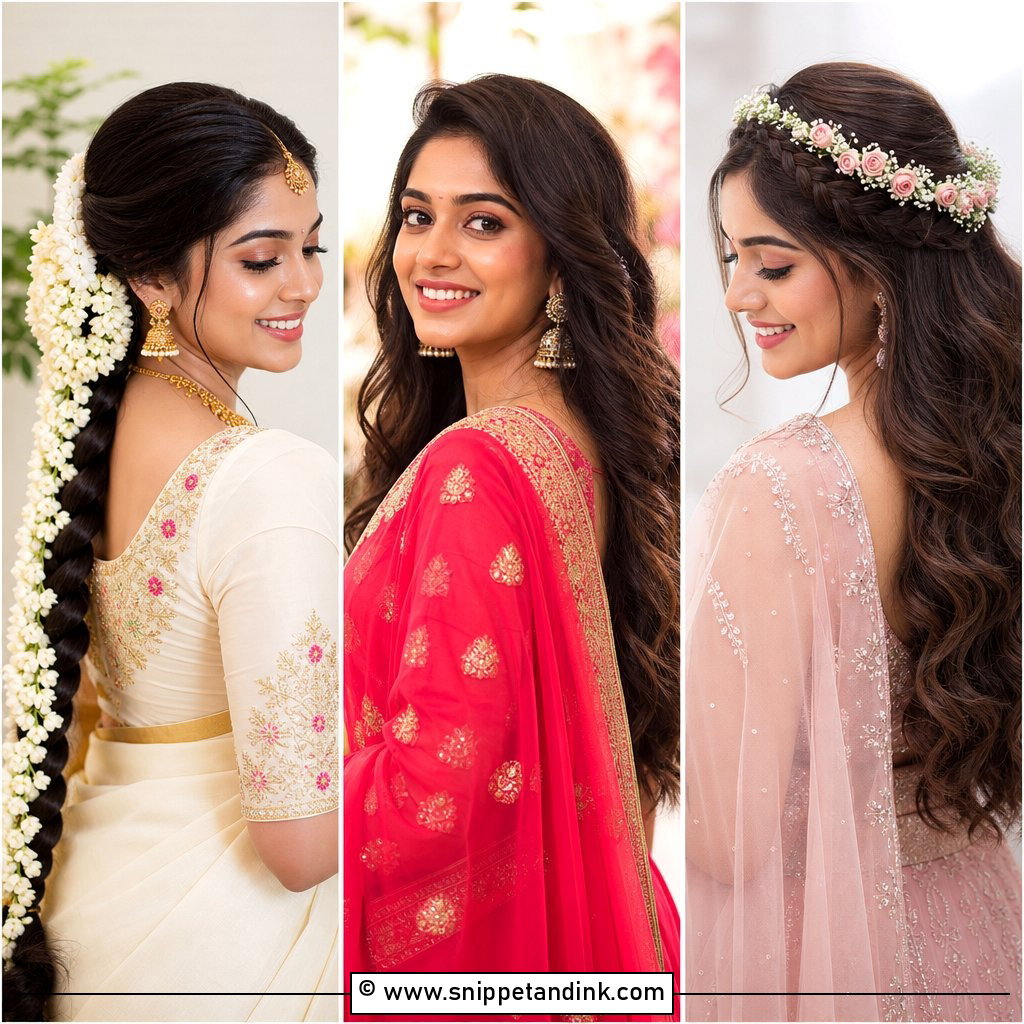
Soft waves give open hair movement and shine without looking casual. They suit a lehenga with heavy blouse embroidery or a deep neckline because they don’t compete with it. A center part with a tikka keeps it traditional, and a side part makes it reception-ready. Ask for brushed-out waves. On thick, coarse Indian hair, I spend more time on the blow-dry than the curling, since a smooth base is what makes the waves catch the light.
2. Open Hair Indian Bride Look With Loose Curls
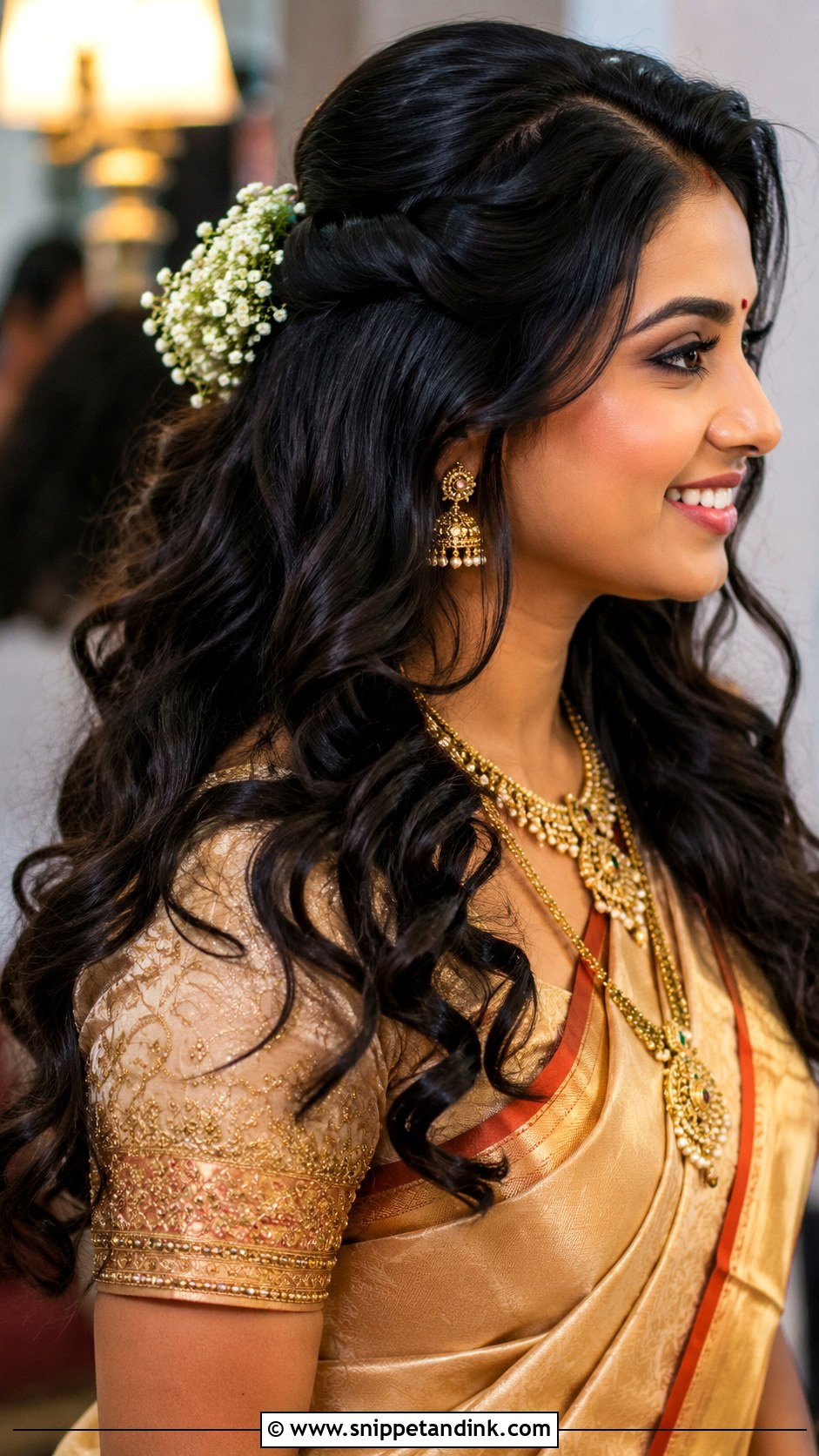
Loose curls bring a fuller shape and a little more drama than waves. They sit well with dupattas, veils and layered necklaces, adding body from the mid-lengths down. Defined enough to hold, soft enough to move: that’s the balance. Lift the crown slightly or the curls drag the top flat by the second hour. Pair it with a maang tikka, passa or a few small pearl pins.
3. Open Hair Indian Bride Look With Center Part
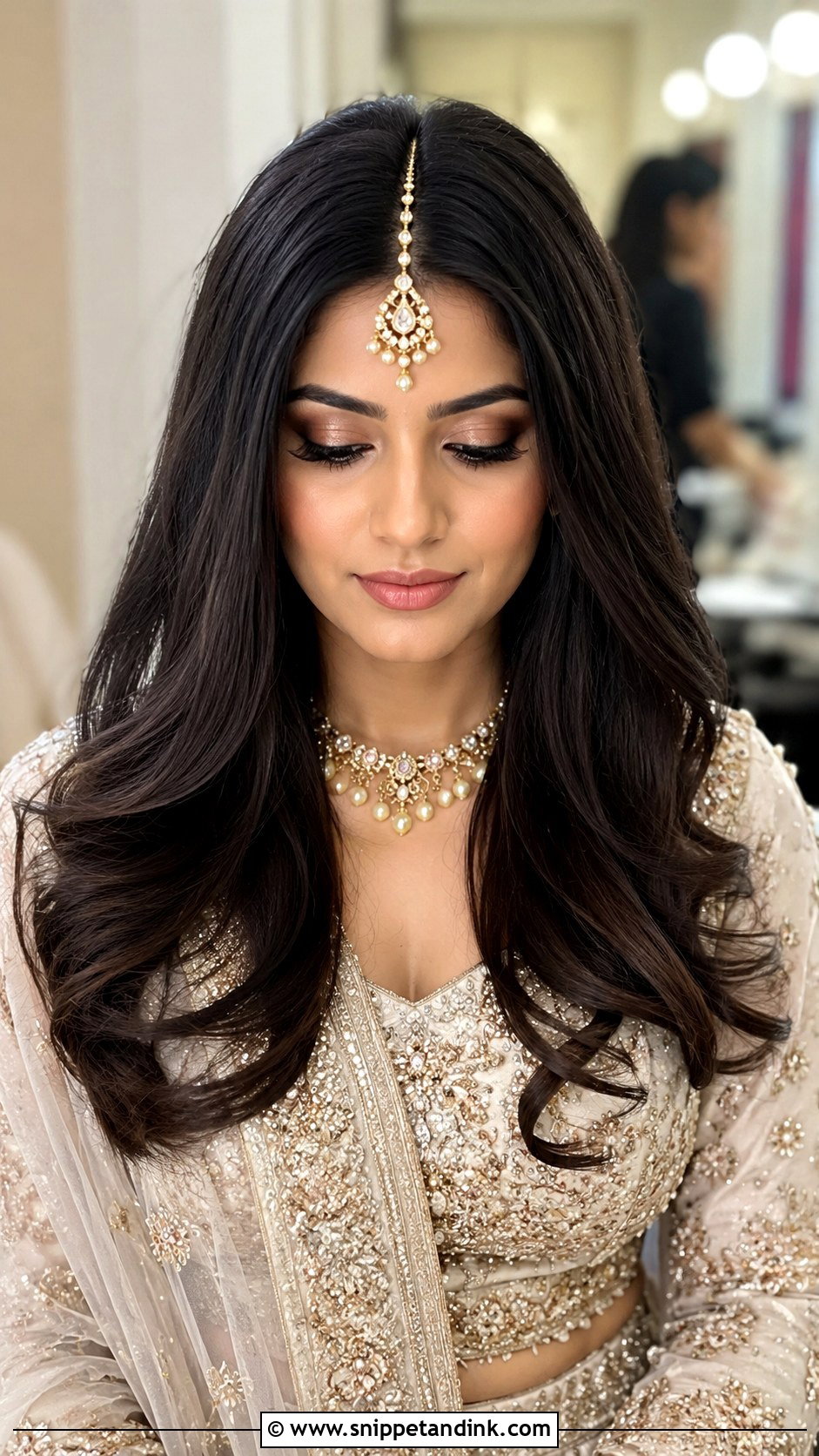
Symmetry is the whole point of a center part. It gives a maang tikka, matha patti or statement earrings an exact place to sit and frames the face evenly. The lengths can be straight, waved or curled at the ends. I check a center part against the nose and the chin, not just the hairline, because a hairline whorl can pull it off-center. Keep a little root volume so it doesn’t flatten under the dupatta.
4. Open Hair Indian Bride Look With Maang Tikka
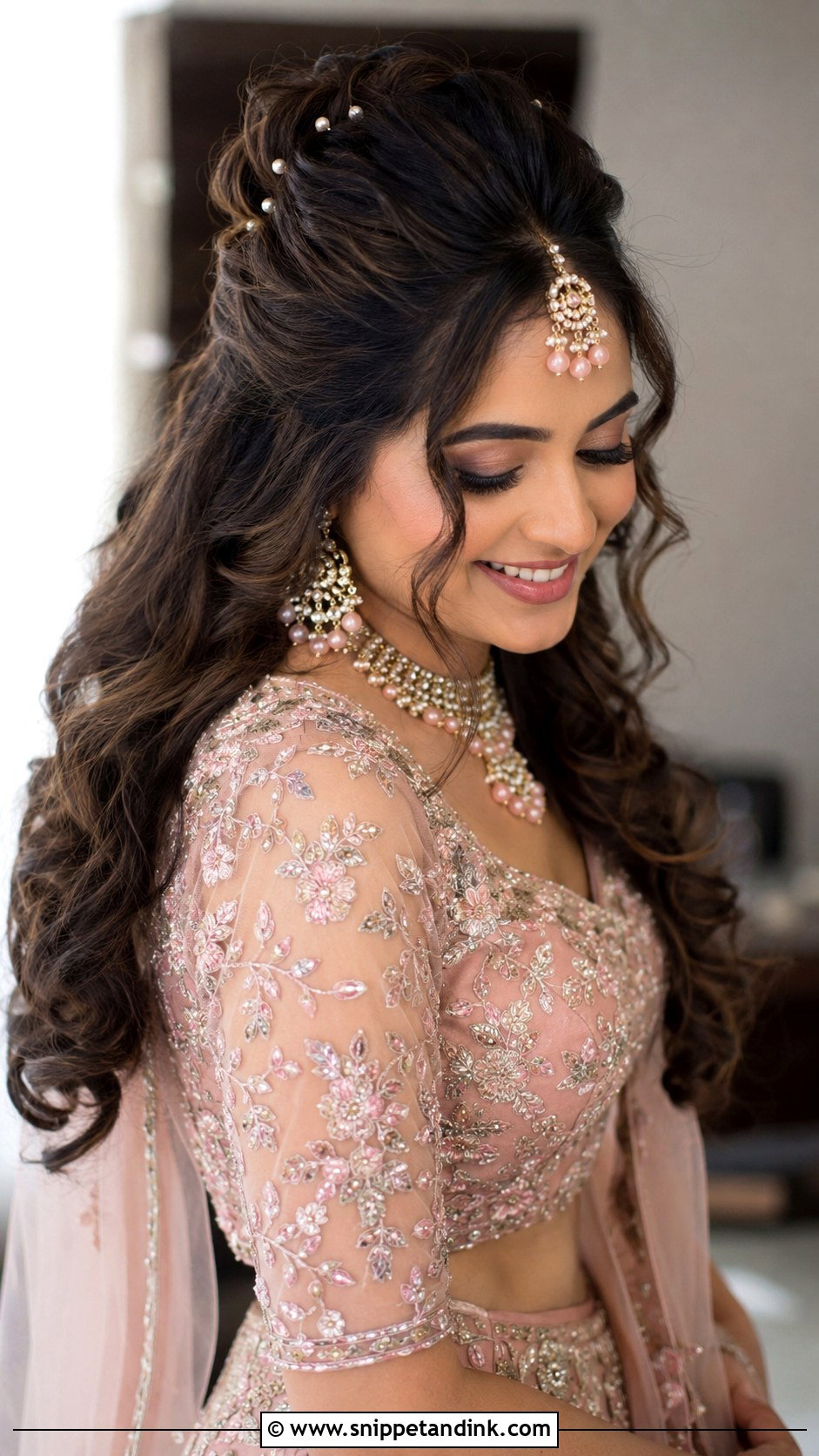
A maang tikka is what turns open hair into bridal hair. It needs a neat parting and a controlled front so the pendant stays centered. Soft waves, glossy curls or a sleek blowout all work below. Heavy tikkas need anchoring: I clip the hook into a small teased section behind the hairline and cross two hidden pins over the chain. Without that, the pendant creeps down the forehead every time you bow your head.
5. Open Hair Indian Bride Look With Matha Patti
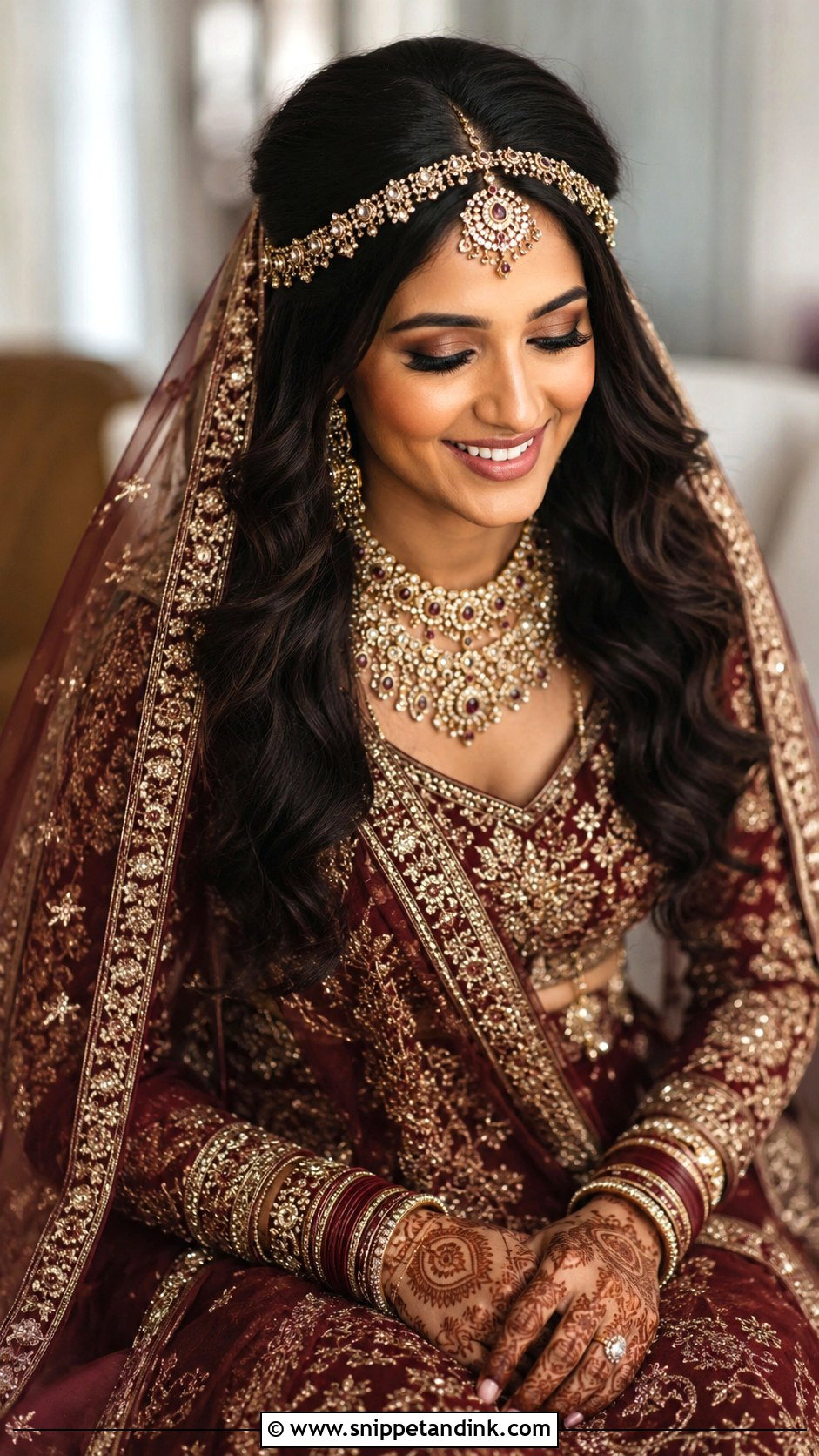
Matha patti with open hair already frames the forehead, so the crown should stay smooth and the lengths soft. Loose waves or controlled curls balance its structure. It reads strongest from the front, so it suits pheras, portraits and the entry. Fit it before the final shaping. If the hair is finished first, pushing the side chains through crushes the volume and leaves dents you can’t brush out.
6. Open Hair Indian Bride Look With Side Swept Curls
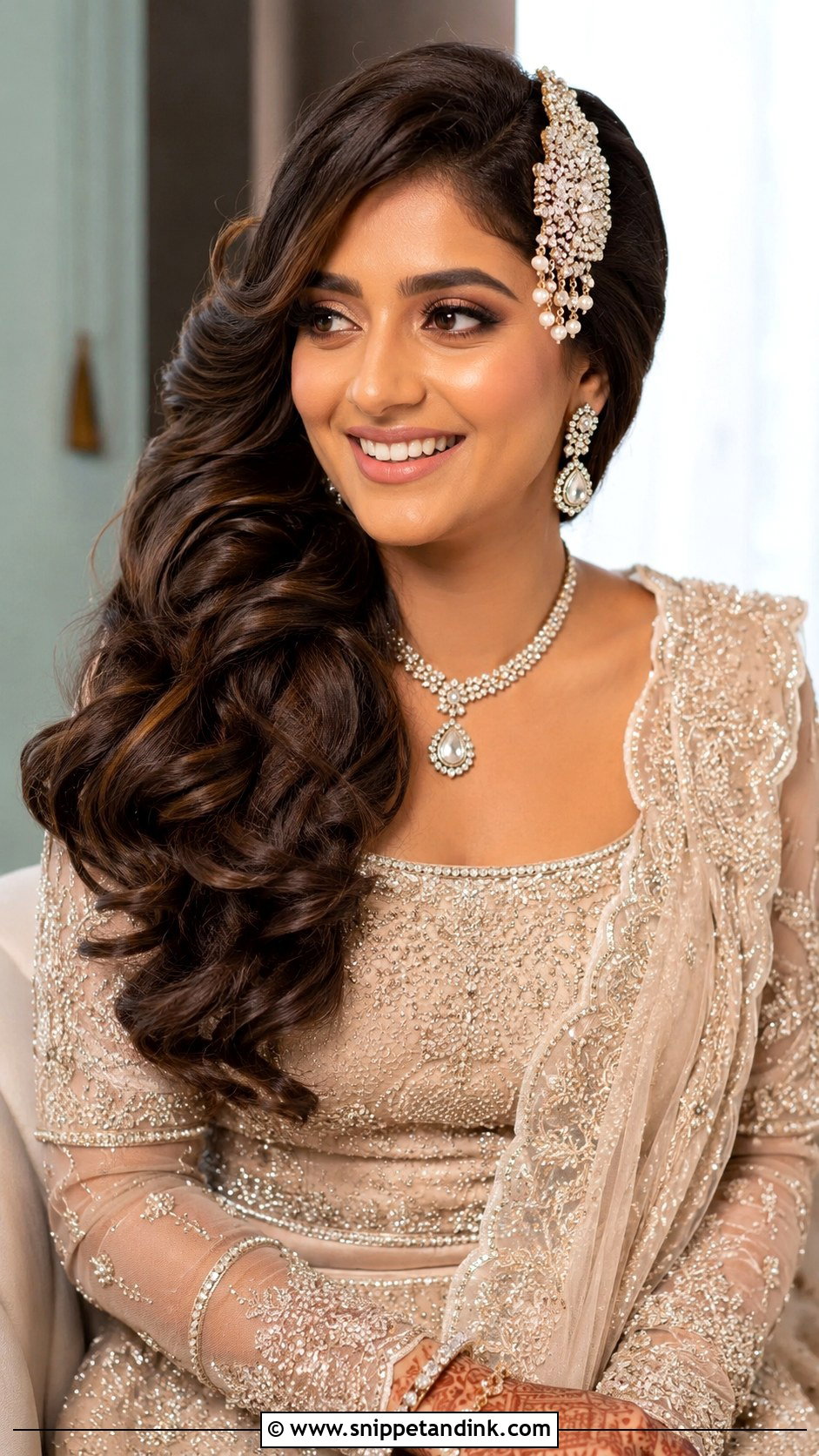
Side-swept curls are a reception, cocktail and sangeet look. A deep part, curls brushed into volume over one shoulder, the other side clear to show the earring, neckline and blouse detail. A passa or side accessory adds a bridal note. The pinned side carries the style, so I anchor it with crossed pins under the hair before any spray. Flexible hold keeps the curls from going crunchy in close-ups.
7. Open Hair Indian Bride Look With Half Up Curls
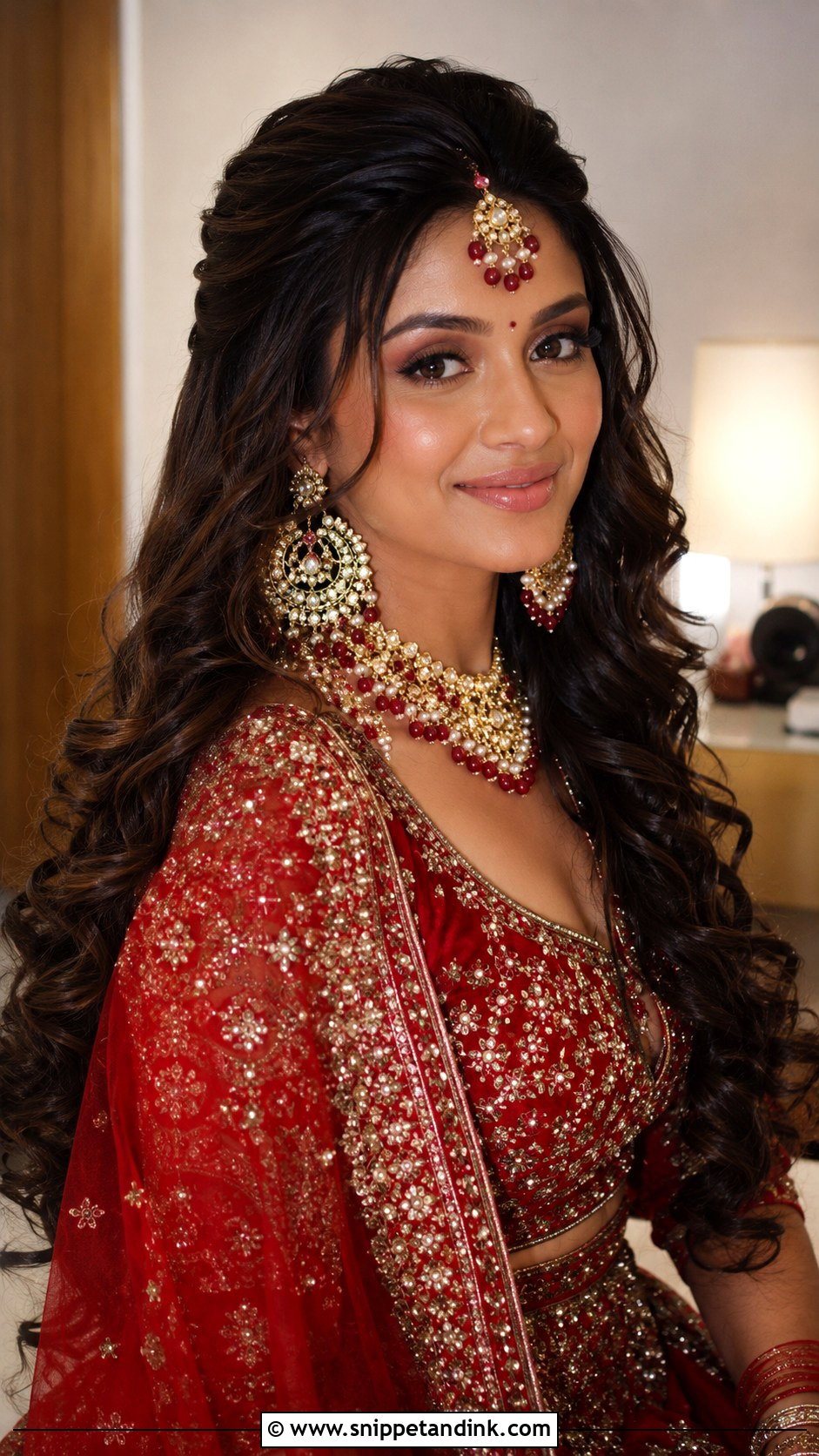
Half-up curls add security to open hair. The top is pinned back softly and the rest falls in curls or waves, which gives pins, jewelry or a light dupatta a stable base and keeps hair out of your face during rituals. Medium to long hair suits it best: you get height at the crown and fullness at the ends. Short layers can pop out of the half-up section, so I tuck them with a little wax. Finish with small pearls, crystals or floral pins.
8. Open Hair Indian Bride Look With Floral Pins
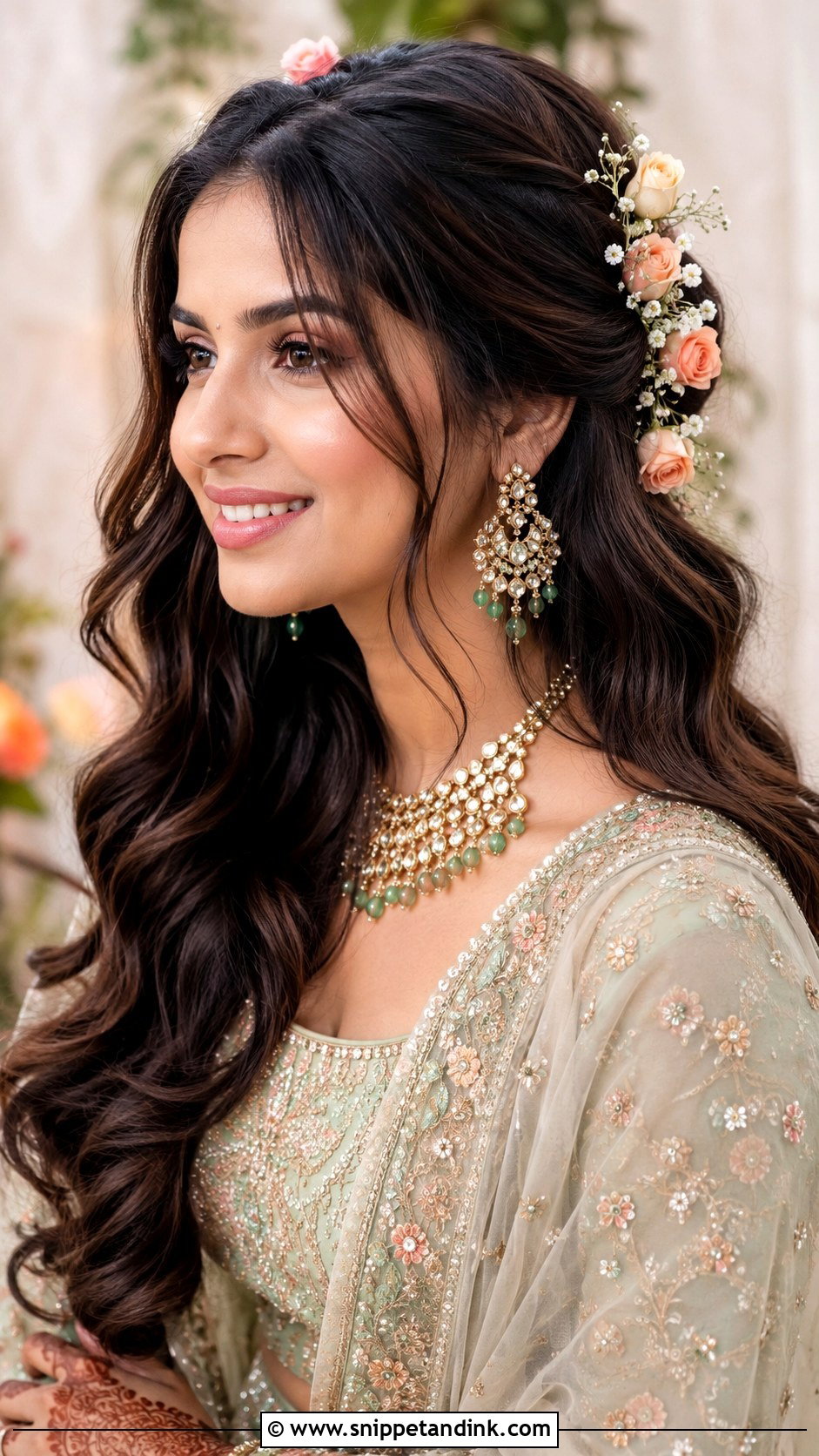
Floral pins suit mehendi, haldi, garden weddings and pastel outfits. Style the hair in waves, curls or a half-up shape, then place small flowers along one side or through the back. White, peach, pink and yellow flowers pick up the colors of most Indian bridal wear. Keep them small and spaced. Fresh flowers lose their shape in the heat within a few hours, so I’d pin them on last and pack a few spares.
9. Open Hair Indian Bride Look With Gajra
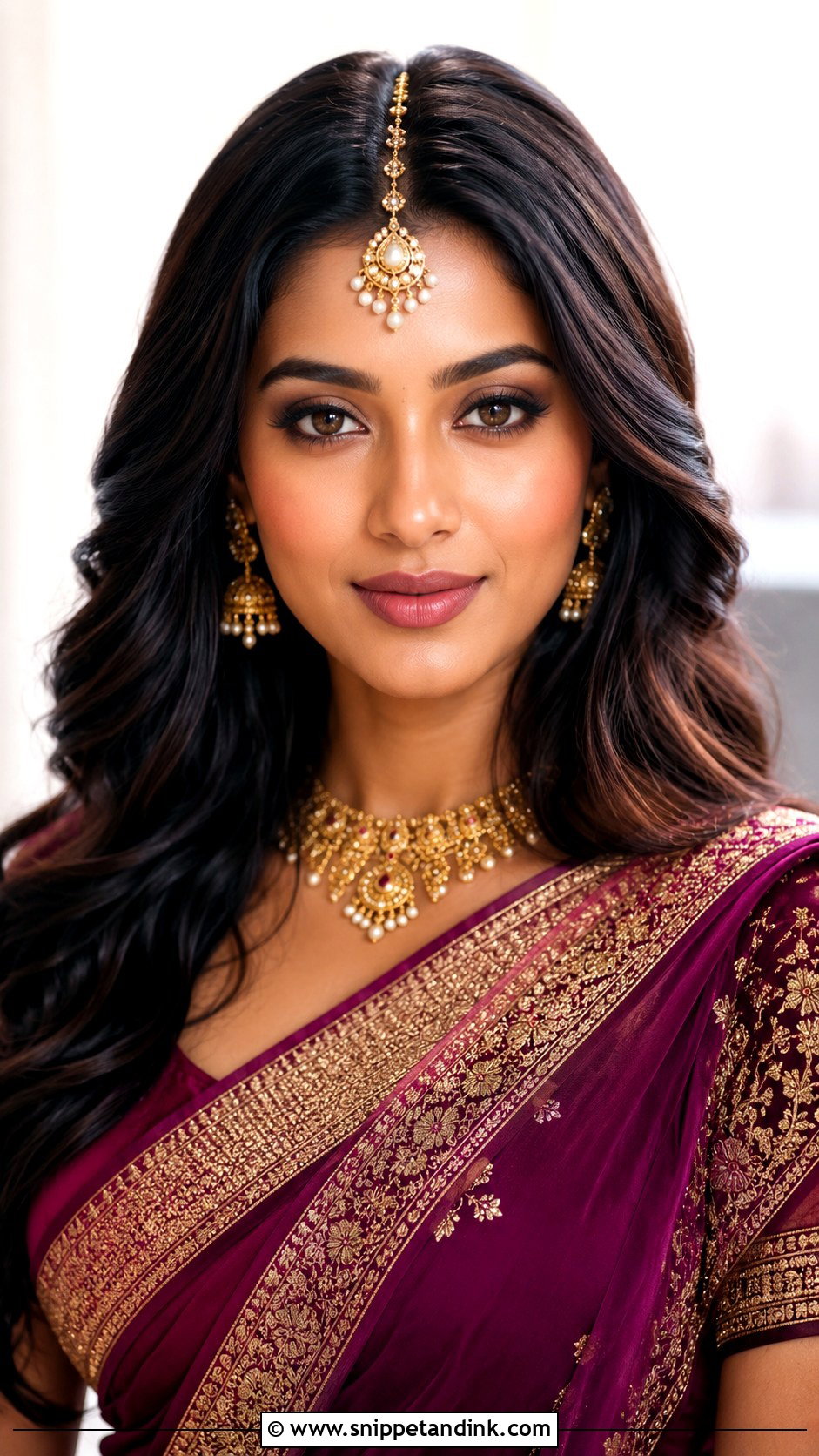
Gajra is usually wrapped around buns and braids, but it can accent open hair if you go lighter. A small gajra section can sit around a half-up crown, behind one ear or along the back of soft curls. Sarees, temple jewelry and South Indian bridal outfits pair naturally with it. Smooth curls or soft waves stop the strands tangling in the flowers. Sew or wire it to a short length; a full-length gajra pulls loose hair down with its weight.
10. Open Hair Indian Bride Look With Sleek Straight Hair
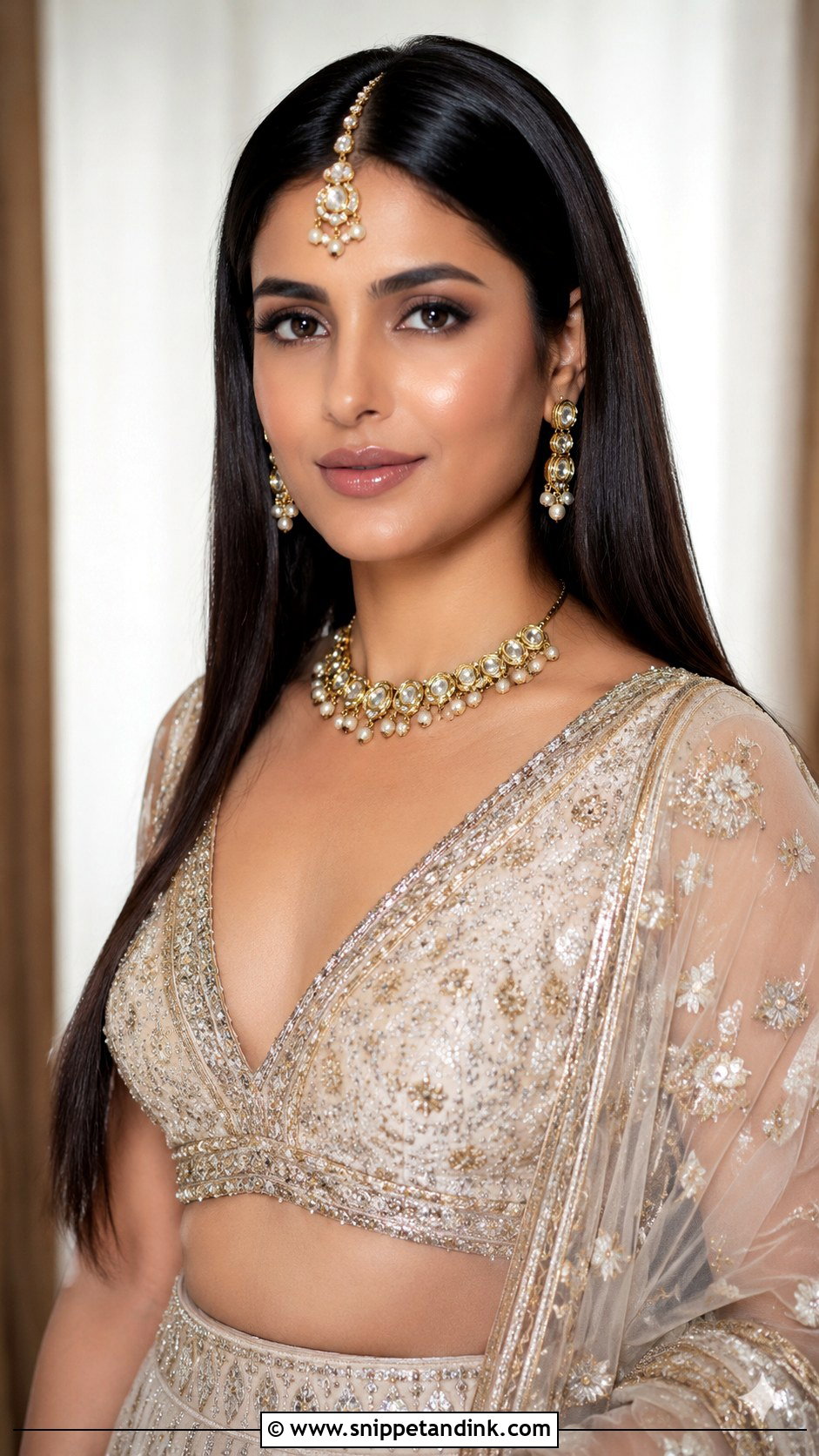
Sleek straight open hair suits a minimalist bride and a contemporary lehenga. It needs glossy hair and a sharp center part. A tikka, matha patti or bold earrings supply the bridal note. Frizz is the enemy, so smoothing prep starts with a mask a few days before. Ask for a glassy finish with a little bend at the ends. Ironed dead straight, it looks flat. I’d steer you away from it for a humid outdoor wedding.
11. Open Hair Indian Bride Look With Hollywood Waves
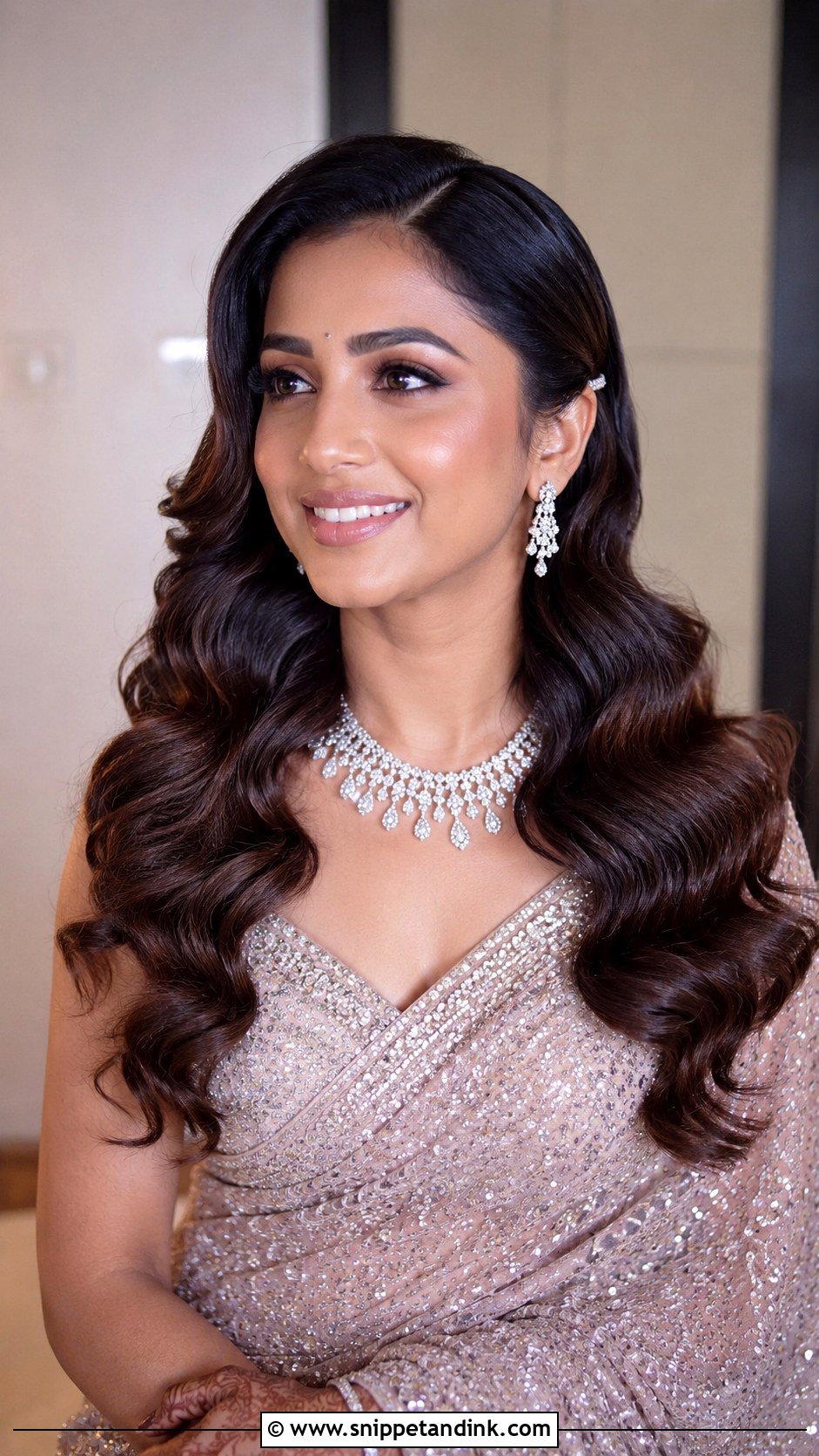
Hollywood waves are smooth and sculpted, set in one direction. They suit receptions, engagements and evening weddings under bright lights, with velvet lehengas, shimmer sarees, diamonds or polki. One side tucked or pinned behind the ear opens the face and shows the earrings. The finish should be glossy and controlled, which takes more time in the chair than softer waves. Budget for that in the schedule.
12. Open Hair Indian Bride Look With Front Twist
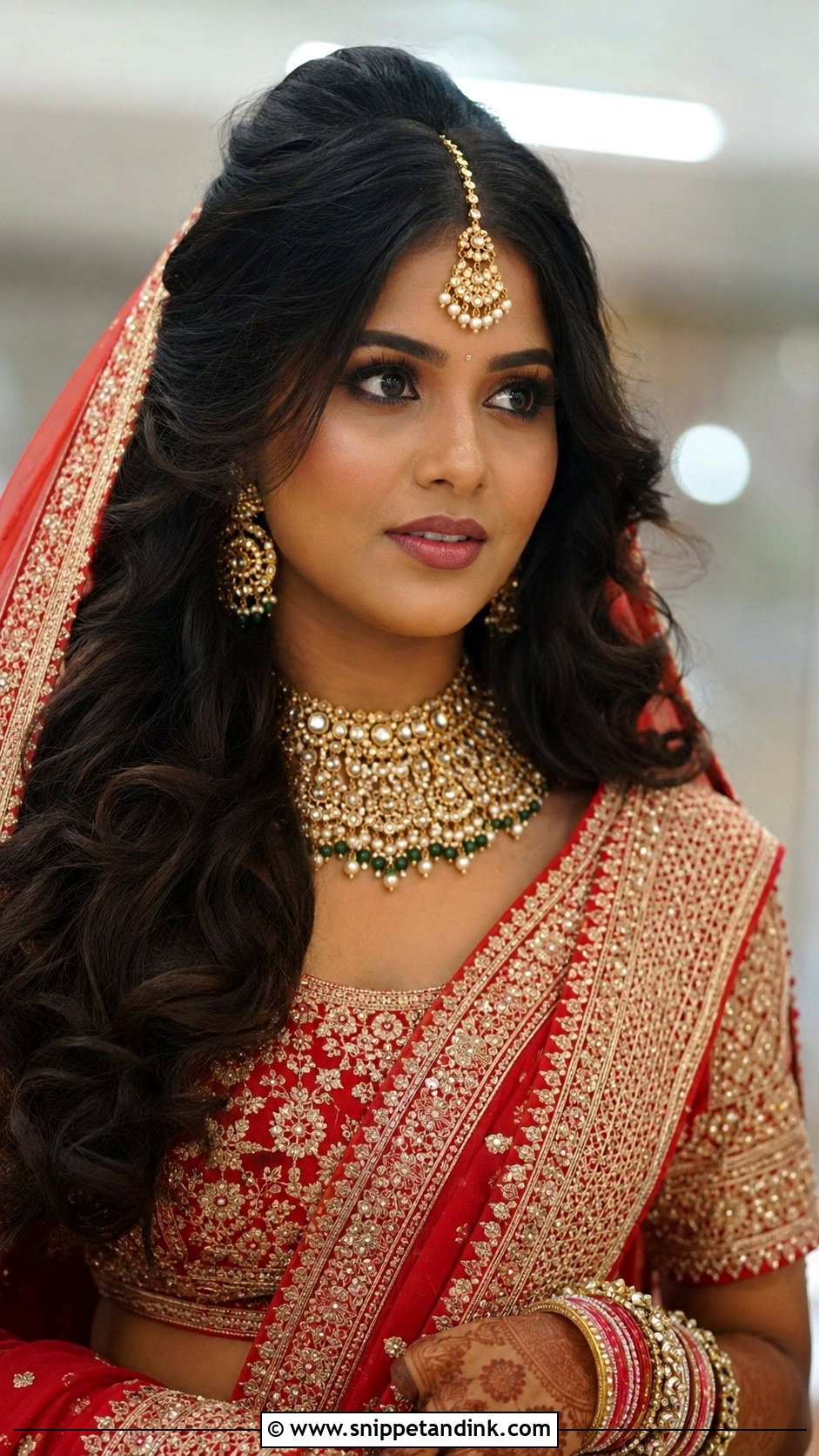
A front twist keeps open hair practical. Small front sections twist back and pin, while the rest stays loose in waves or curls. Hair stays out of your face during rituals without losing the softness around it, and the twist gives a neat base for small pins, pearls or flowers. Mehendi, engagement and morning ceremonies suit it. Twist loosely and pin with the pin pointing toward the crown so it grips against the twist.
13. Open Hair Indian Bride Look With Crown Volume
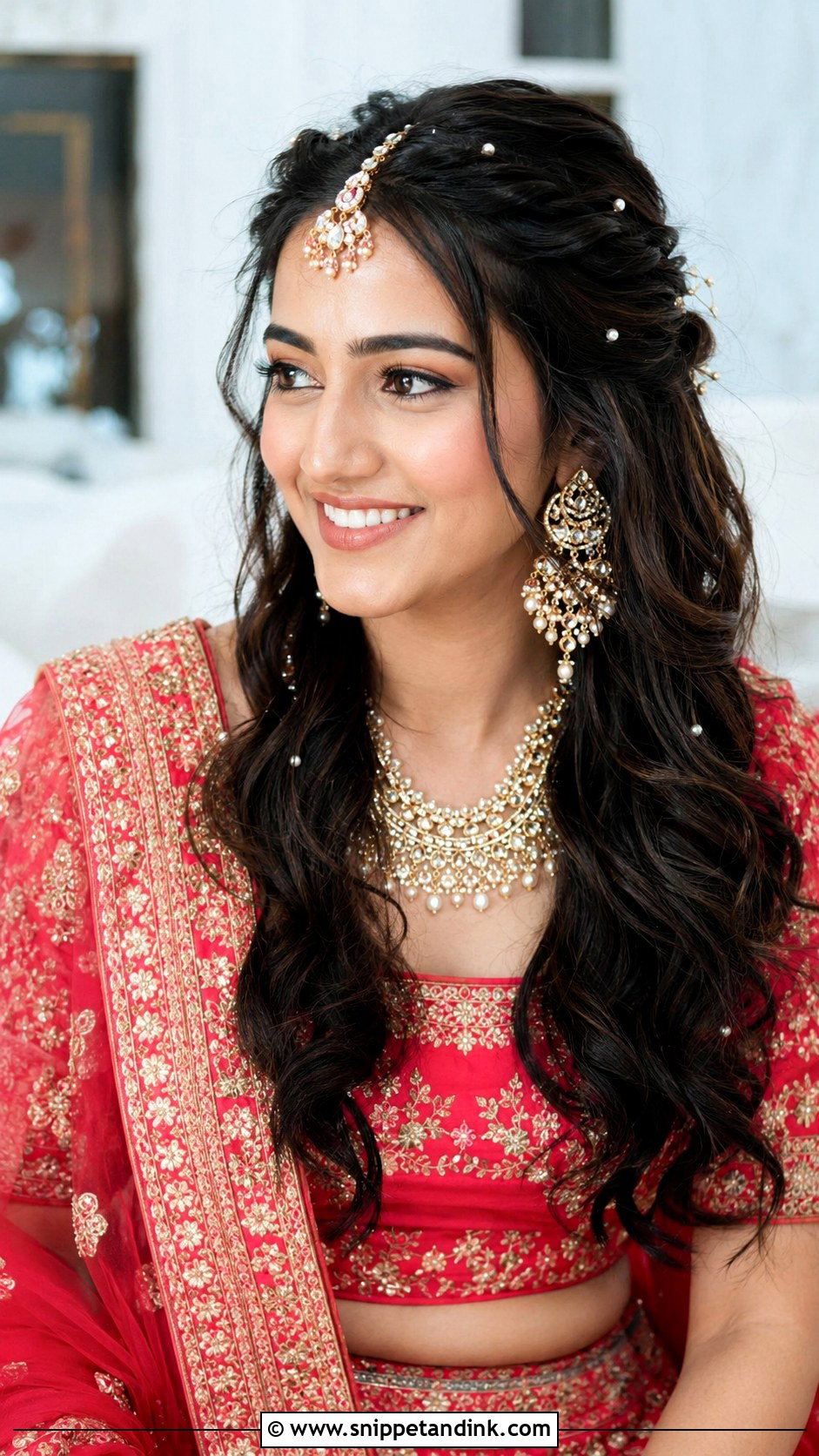
Crown volume balances a heavy outfit. Gentle height at the top while the lengths stay loose gives a dupatta a better shape to drape over. It should look soft, not teased into a bump. Center, side and half-up all work with it. It adds length to round and heart-shaped faces in photos. I build it with root lift during the blow-dry and a few teased sections underneath, so the top layer stays smooth.
14. Open Hair Indian Bride Look With Dupatta
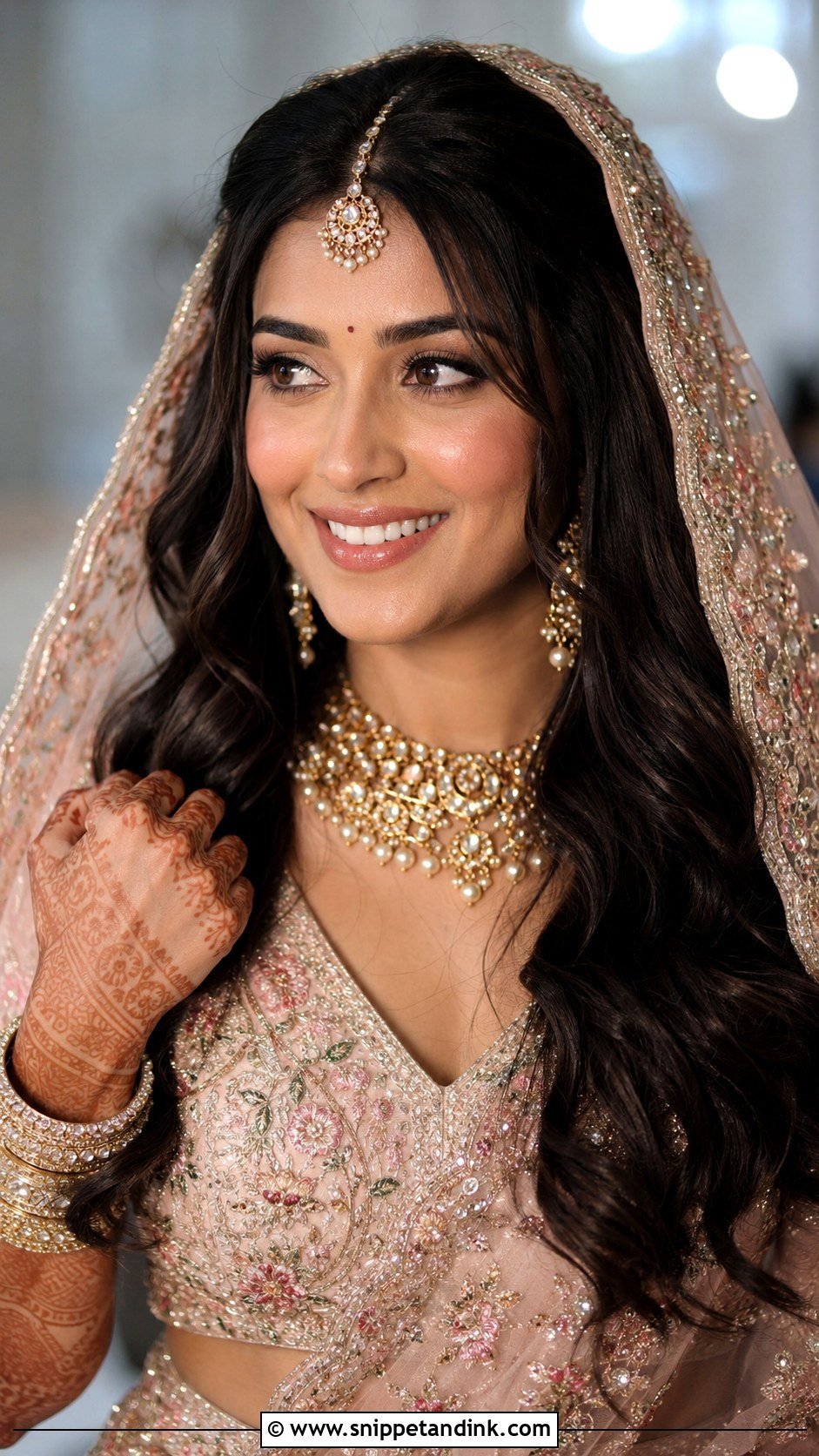
Open hair under a dupatta needs planning. The top section has to be secure even if most of the hair stays loose, so I use a half-up base, hidden pins or a little crown padding to hold the fabric without dragging the hair down. Soft curls or waves keep the lengths full. It gives traditional coverage without a bun. Pin the dupatta before final touch-ups, then smooth the front pieces, because placing the dupatta always disturbs them.
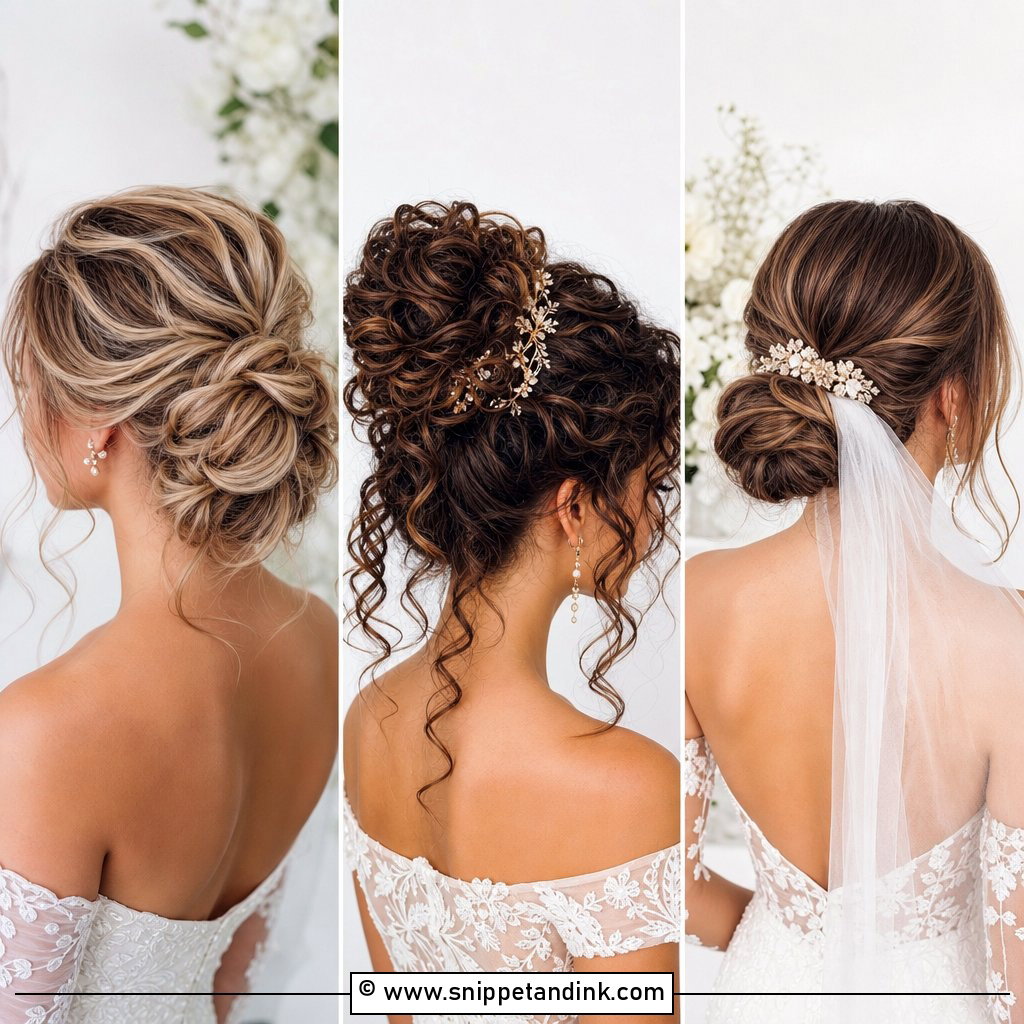
15. Open Hair Indian Bride Look With Pearl Accessories
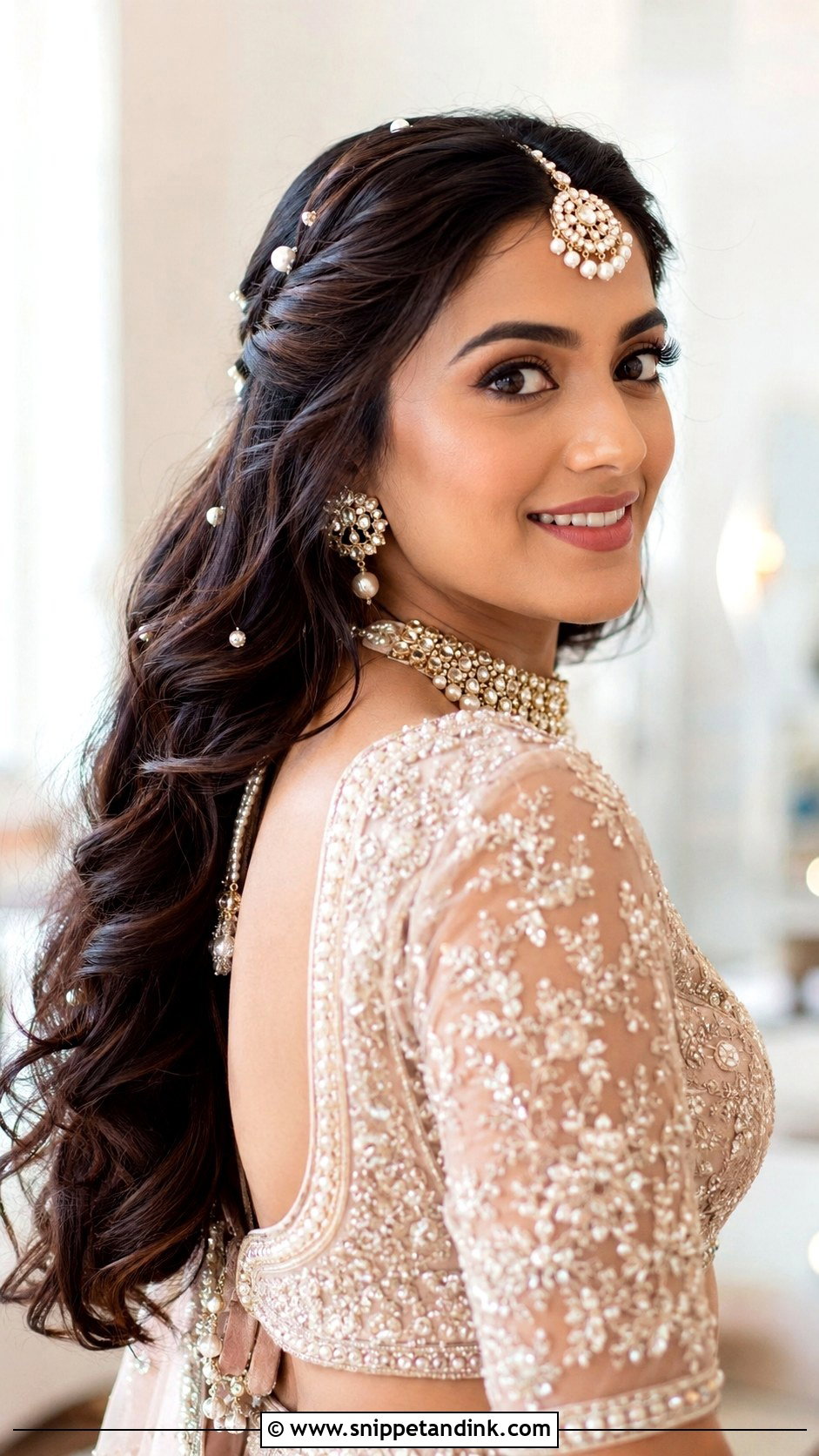
Pearls suit curls, waves, half-up and side-swept styles. Small pins scattered at the back look delicate, while a pearl hair chain looks more regal. Ivory, blush, champagne and pastel outfits pair best. Balance them against the rest of the jewelry so they don’t fight a heavy necklace. Pearls show up best against smooth, shiny waves; on frizzy hair they look like they’re floating.
From Pheras to Reception Without Starting Over
Many brides want a heavier ceremony look and a lighter reception look on the same day. Open hair adapts well, and you rarely need to wash or restyle from scratch.
- Remove the dupatta and its pins first, then the matha patti or passa. Pull pins out gently in the direction they went in so you don’t drag the curls.
- Brush out any dents from the dupatta base with your fingers, not a brush.
- Re-curl only the front pieces and a few top sections. The lengths underneath usually still hold.
- Change the part if you like. A center part can become a side part, which hides any flattening from the jewelry.
- Add the reception accessory: a lighter tikka, crystal pins or a single side clip.
- Finish with shine spray on the lengths and a light hold spray.
Plan thirty to forty minutes for the switch, and tell your stylist at booking that you want it. If she can’t stay between events, ask her to walk a bridesmaid through these steps at the trial. Keep the reception accessories, a curling iron and a fresh pack of bobby pins in one labelled bag so nothing has to be hunted for while guests wait.
Your Dupatta Decides More Than Your Hair Length
Open hair can be as bridal as a bun when it’s built with shape, hold and the right accessories. Your outfit, jewelry, wedding function, weather and how much support the dupatta needs will narrow your choices. Waves are romantic, curls add volume, straight hair is modern, and half-up shapes are more secure. Gajra, tikka, matha patti, pearls and floral pins finish it. Start with the look that feels like you, then let the hidden structure make it comfortable.
You'll Like These Ideas:



Leave a Reply