
Island weddings punish the wrong dress. Heat, humidity, salt air and sand will find every heavy lining and every long train, usually by the time the first toast starts. So when I style a Caribbean bride, I start from what she can walk, sit and dance in at thirty degrees, and only then talk about lace or silk. Chiffon, silk, light crepe, airy tulle and breathable lace all earn their place here. Short or manageable trains, necklines that stay put in wind and shoes chosen for the actual ground matter as much as the silhouette. The twenty looks below run from minimalist to romantic to barefoot boho, each with the detail I’d want you to check before you pack it.
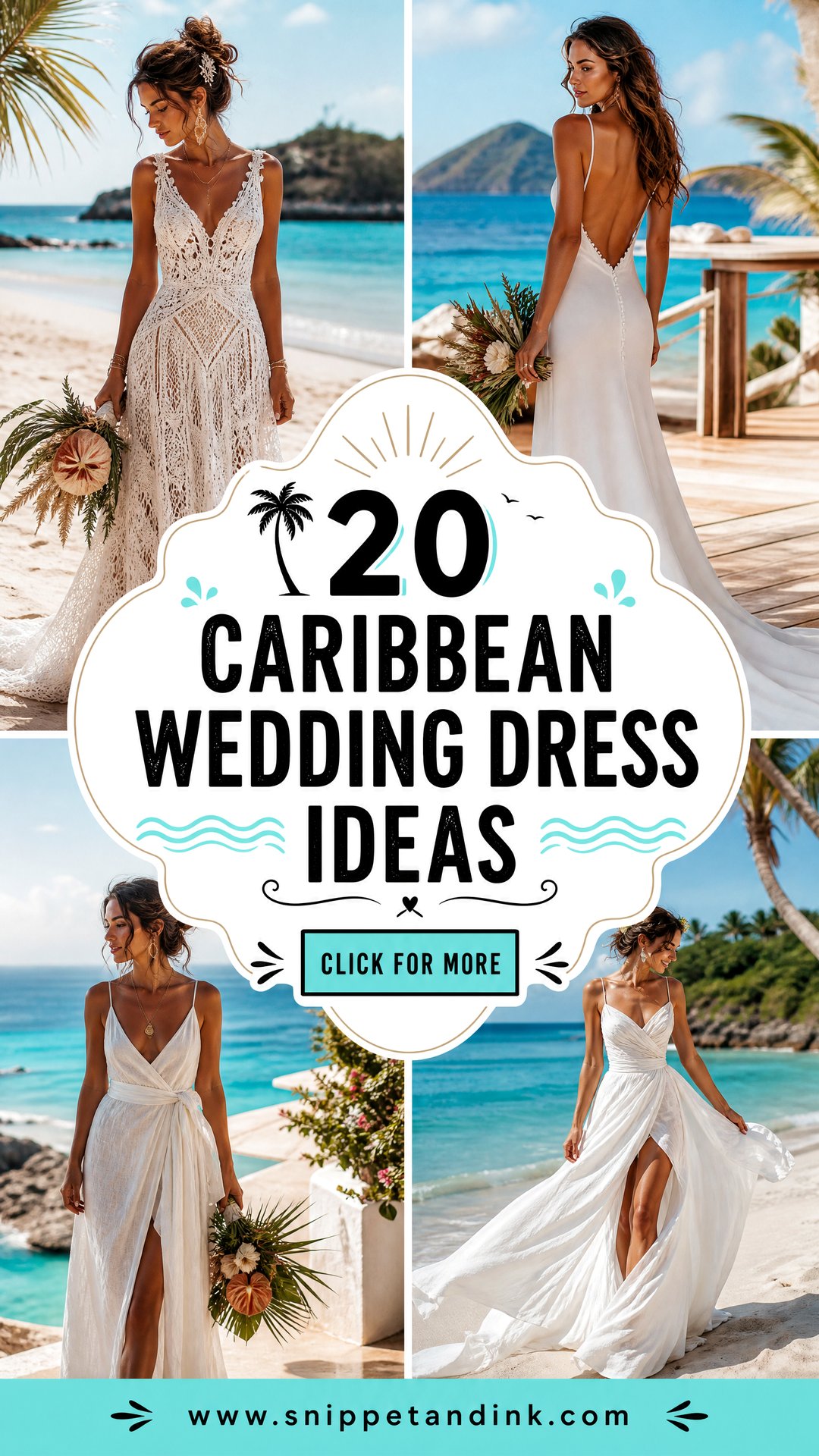
Fabric Weight Matters More Than Silhouette in Island Heat
In a humid climate, I judge a gown with my hands before my eyes. Lift the skirt in the shop and feel the weight, then look inside. Most of the heat in a wedding dress comes from the lining and the number of layers, not the outer fabric.
- Silk and silk blends breathe well but show sweat and water marks, so heavier silk satins are safer than thin charmeuse.
- Chiffon and georgette are light and forgiving; they also tolerate a quick steam at the resort.
- Polyester satin and heavy mikado look crisp but hold heat, and I’d keep them for an evening ceremony in an air-conditioned room.
- Lace is only as cool as what sits under it. Ask for a cotton or silk lining where the maker offers one.
Then think about where you’ll be standing. Sand swallows thin heels and grinds into a long train; a resort deck or tiled terrace lets you wear a heel and a little more length. Choose the hem for the ground first and the style second.
1. Chiffon A-Line Caribbean Wedding Dress
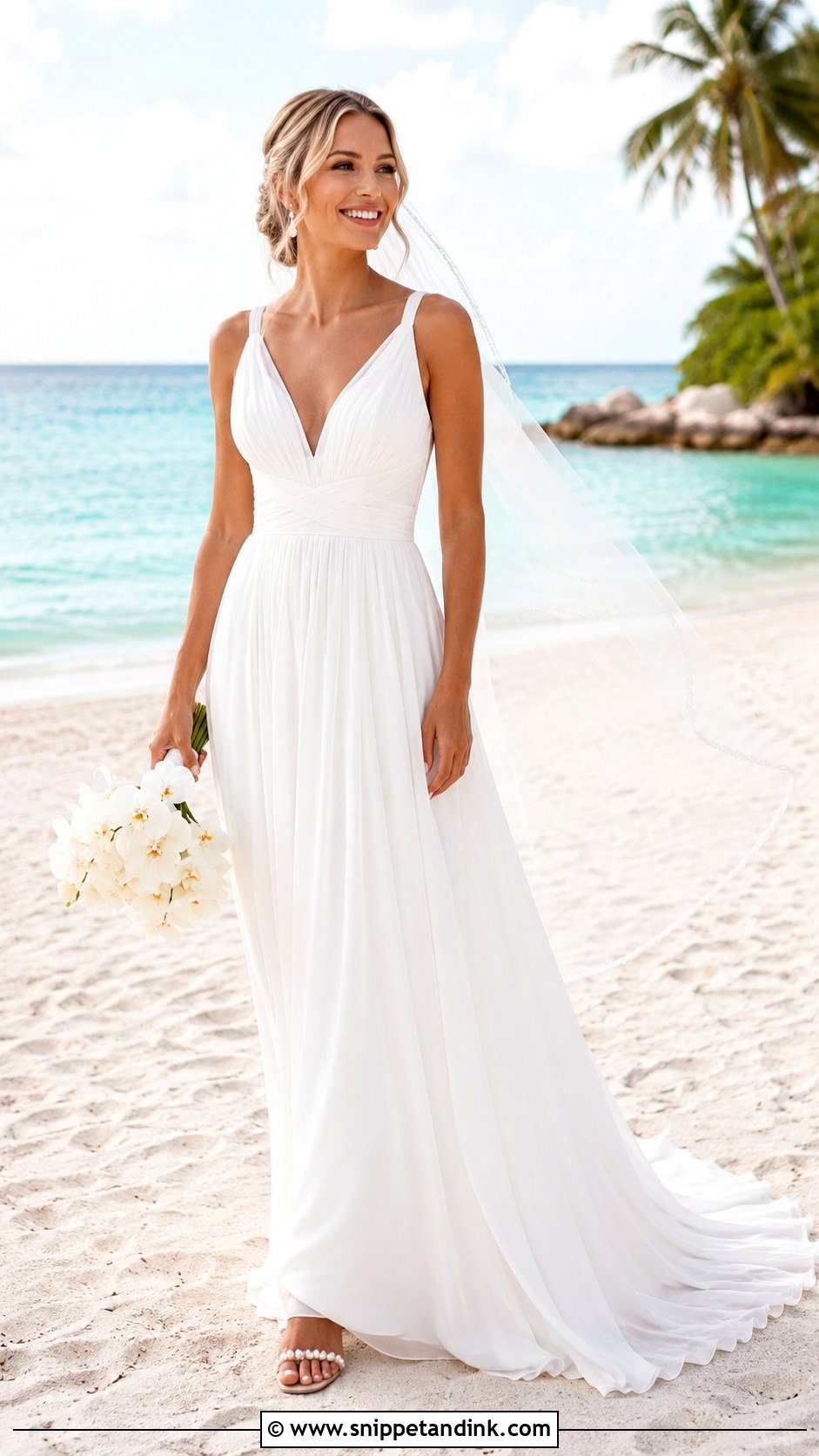
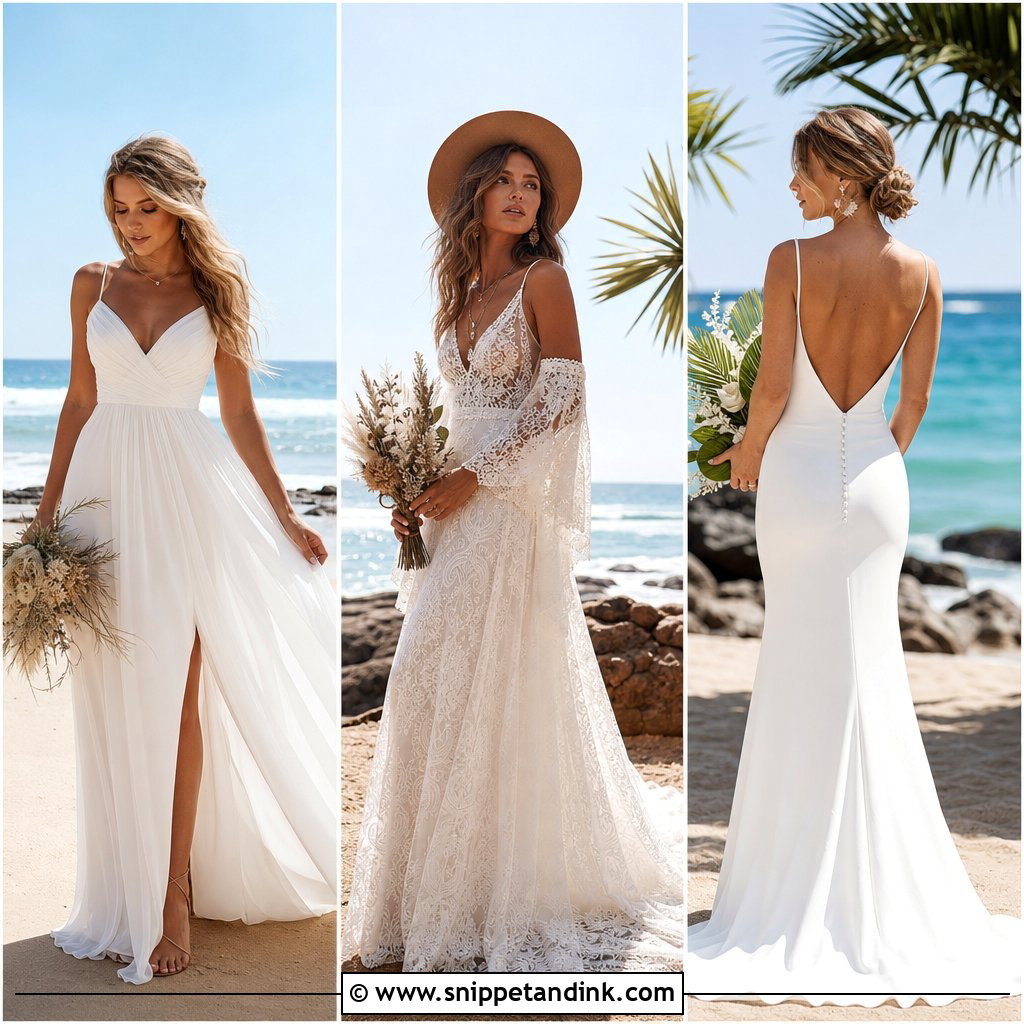
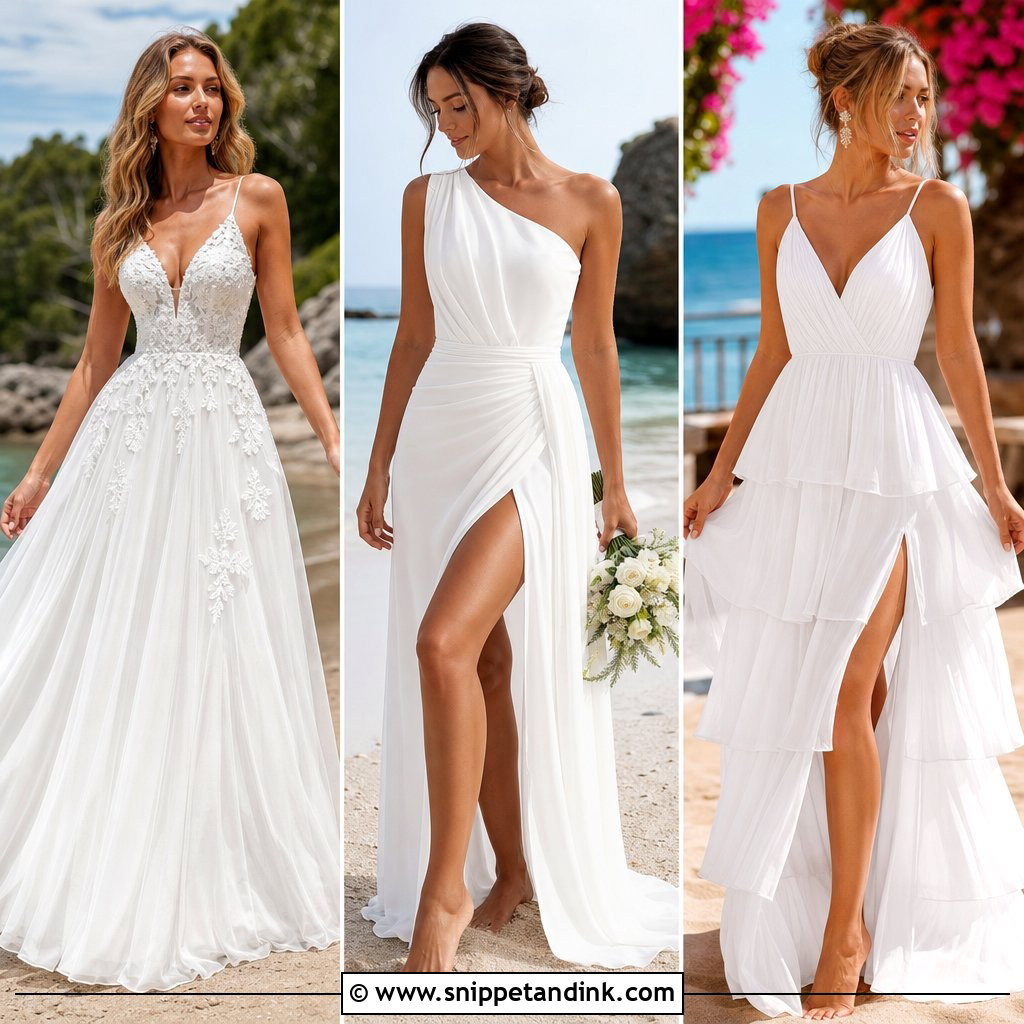
Chiffon A-lines are the safest bet on this list, and I don’t mean that as faint praise. A lightly lined bodice with supportive straps, a defined waist and a skirt that floats off the body lets air move. Choose a sweep train over a chapel one if you’ll walk on sand, since a long chiffon train drags and collects grit. Flat pearl sandals, small drops and a soft low bun secured against the breeze keep everything practical, and a fingertip veil gives movement without wrapping your ankles. The fitted top and loose skirt suit a wide range of figures. Finish with a compact bouquet of orchids, anthuriums or white tropical greenery, which hold up in heat far better than garden roses.
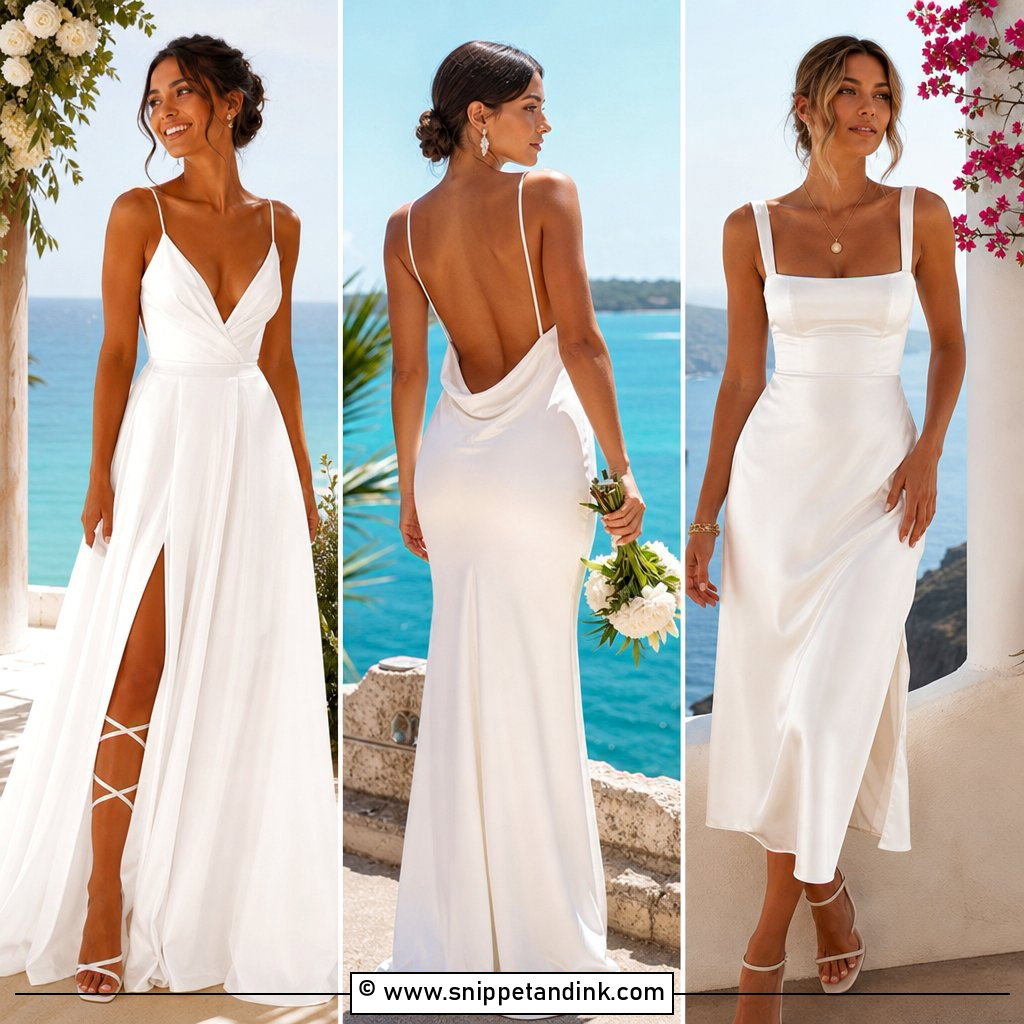
2. Silk Slip Caribbean Wedding Dress
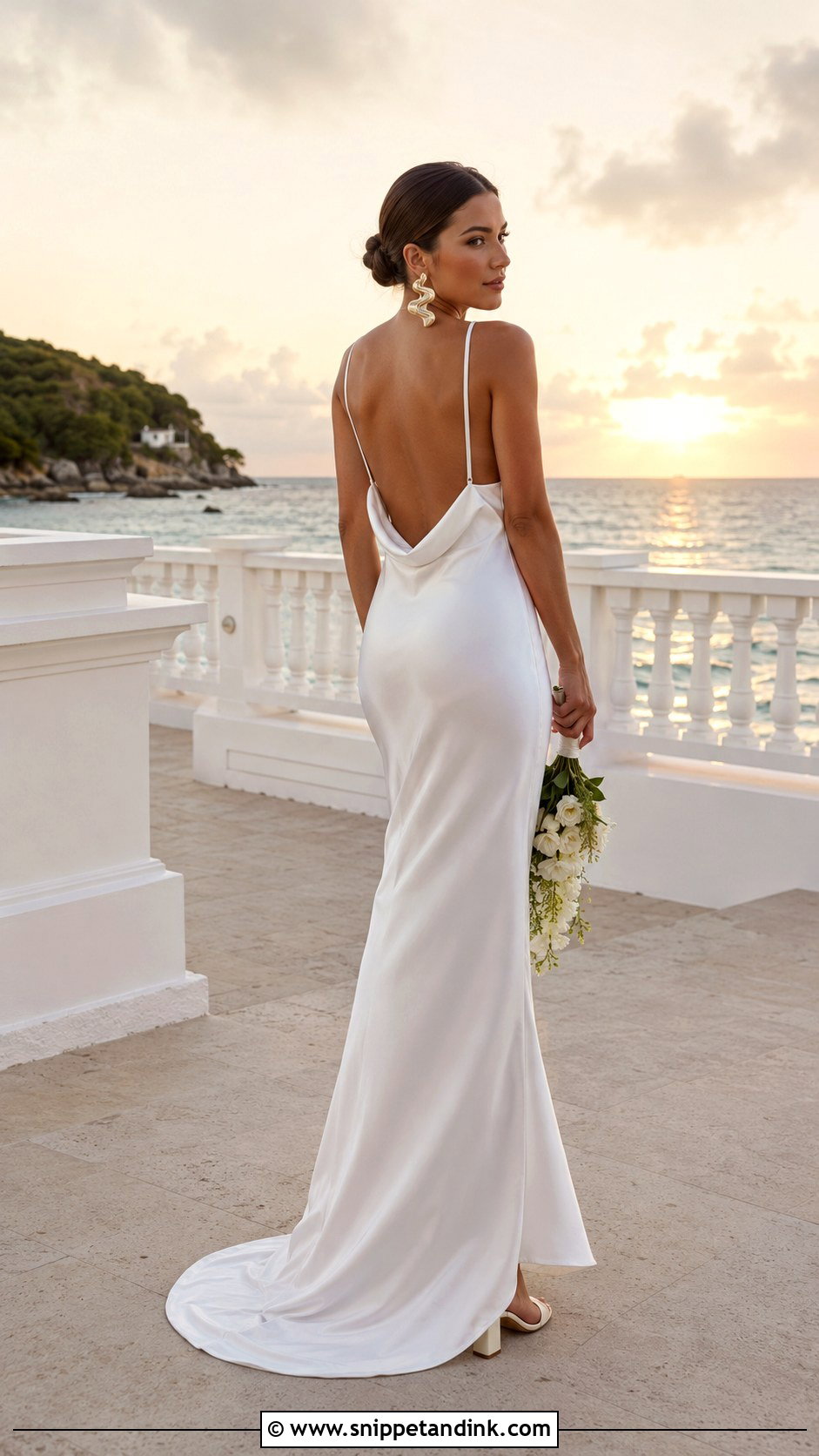
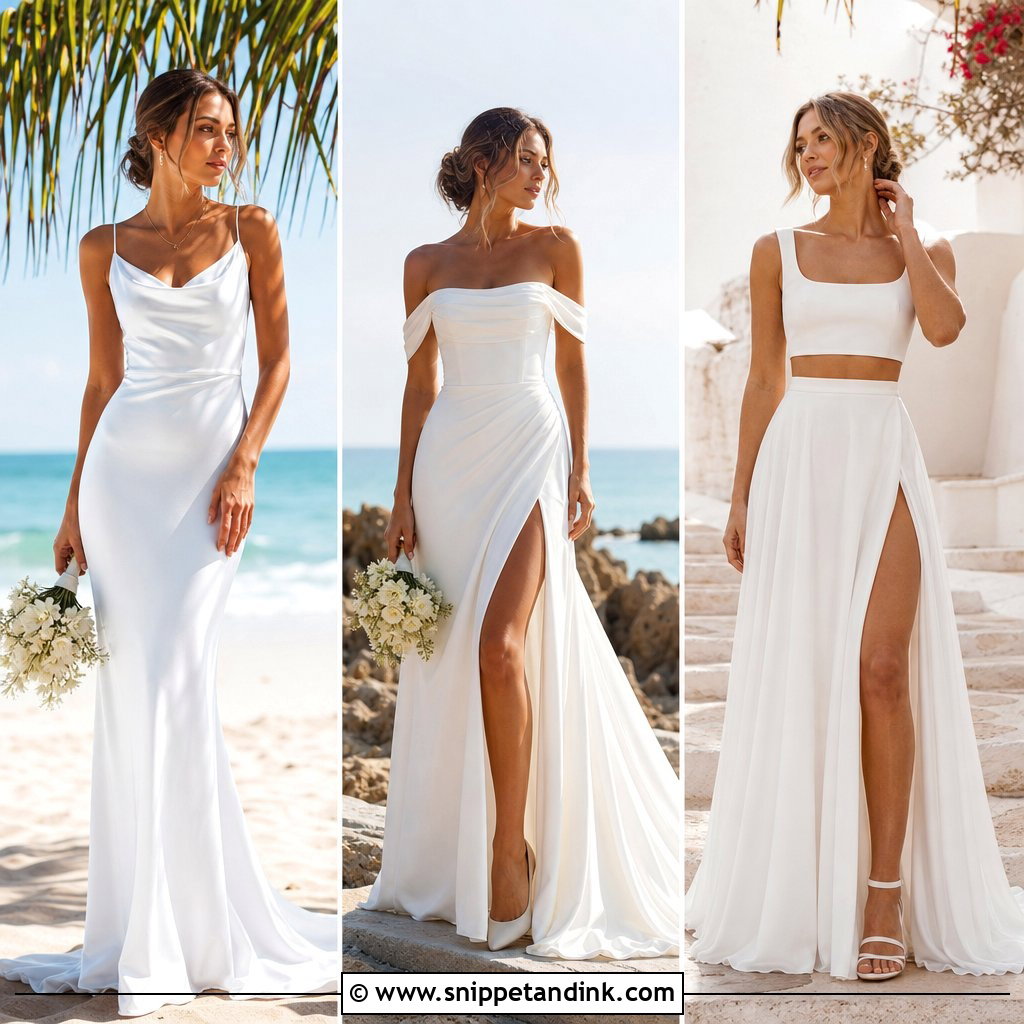
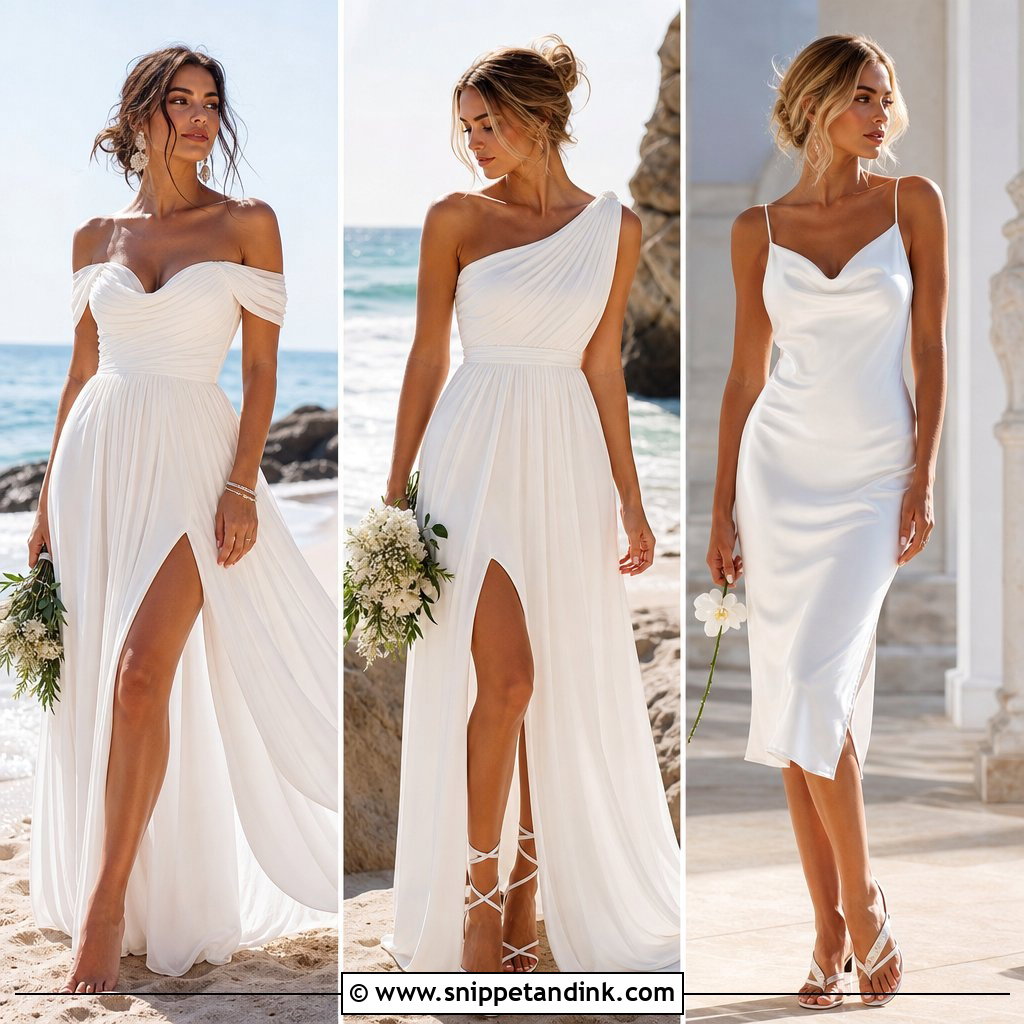
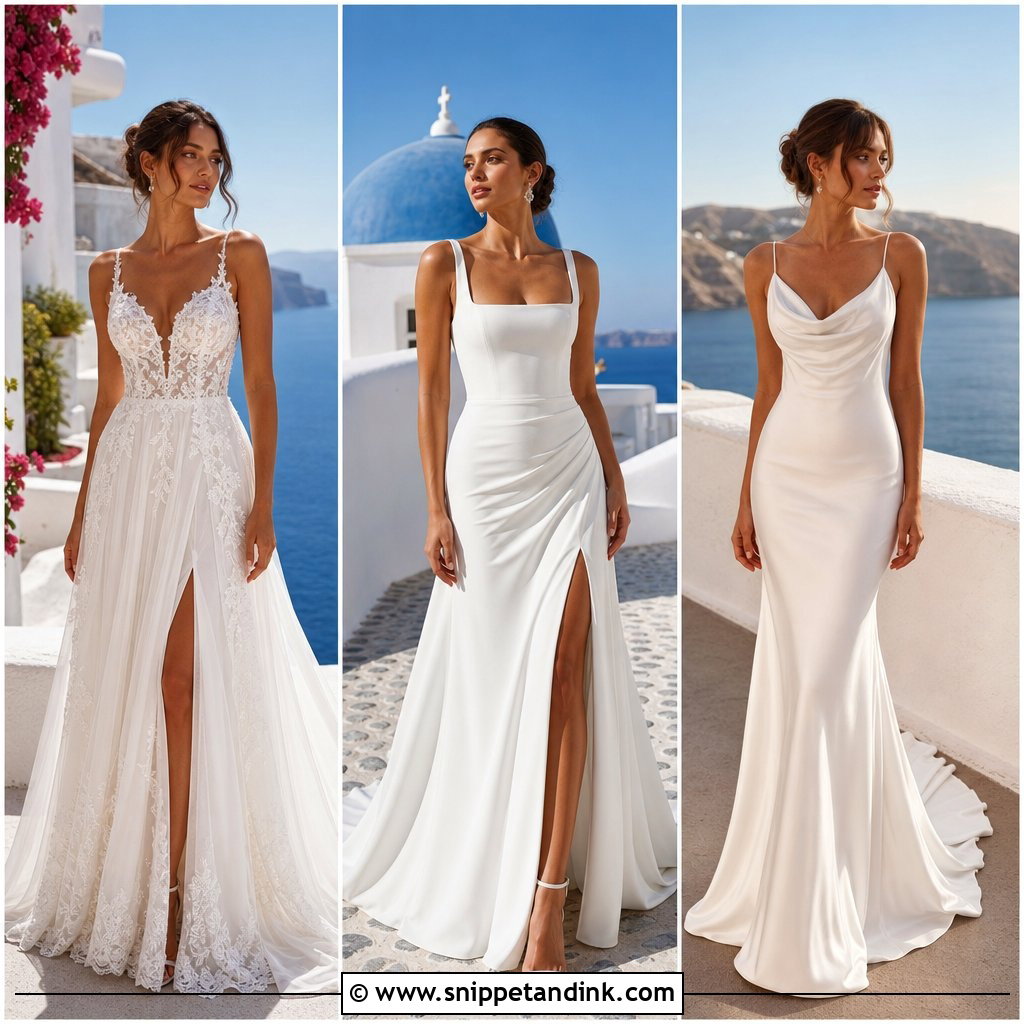
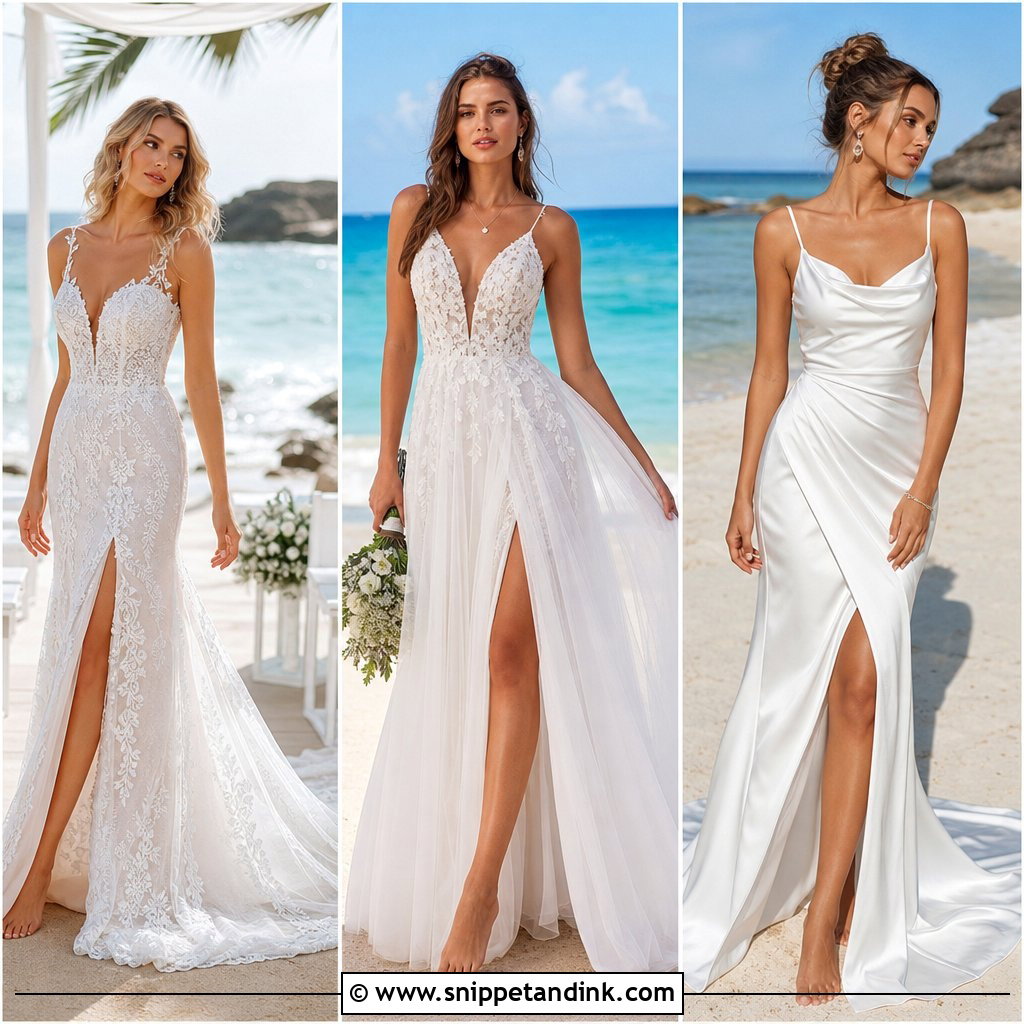
Silk is gorgeous in island light and honest about everything else. A bias-cut slip with adjustable straps and a softly draped neckline needs enough structure at the bust that you aren’t adjusting it all night, and a low back adds drama without extra fabric. Block-heel sandals suit a terrace; jeweled flats suit the beach itself. A delicate chain, sculptural earrings and a sleek bun or glossy waves finish it. The problem I always warn about is moisture: lightweight silk shows sweat marks and creases quickly. A heavier silk satin or a good silk blend hides both far better, which matters if you have sunset vows and a long open-air dinner after.
3. Lace Sheath Caribbean Wedding Dress
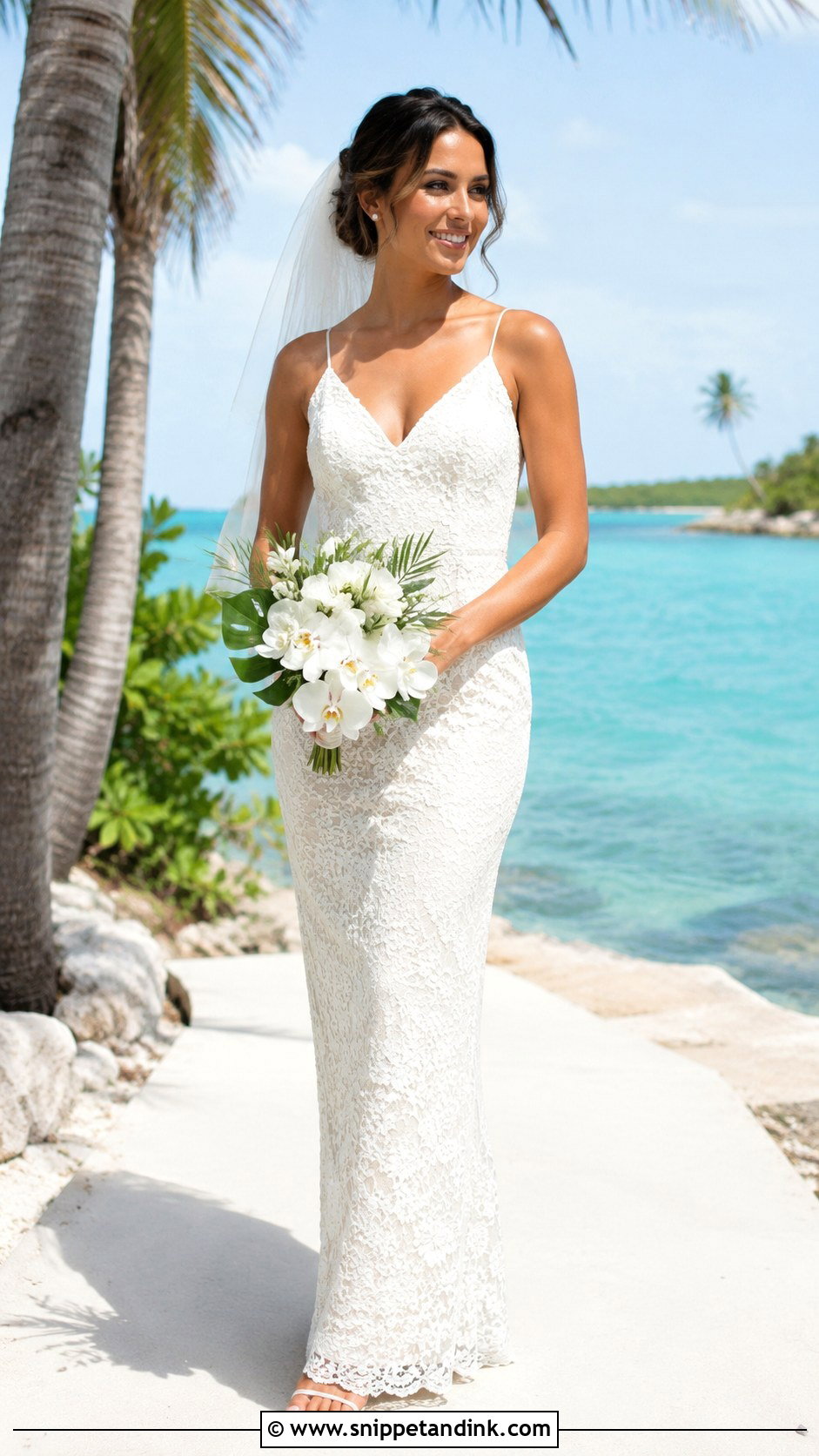
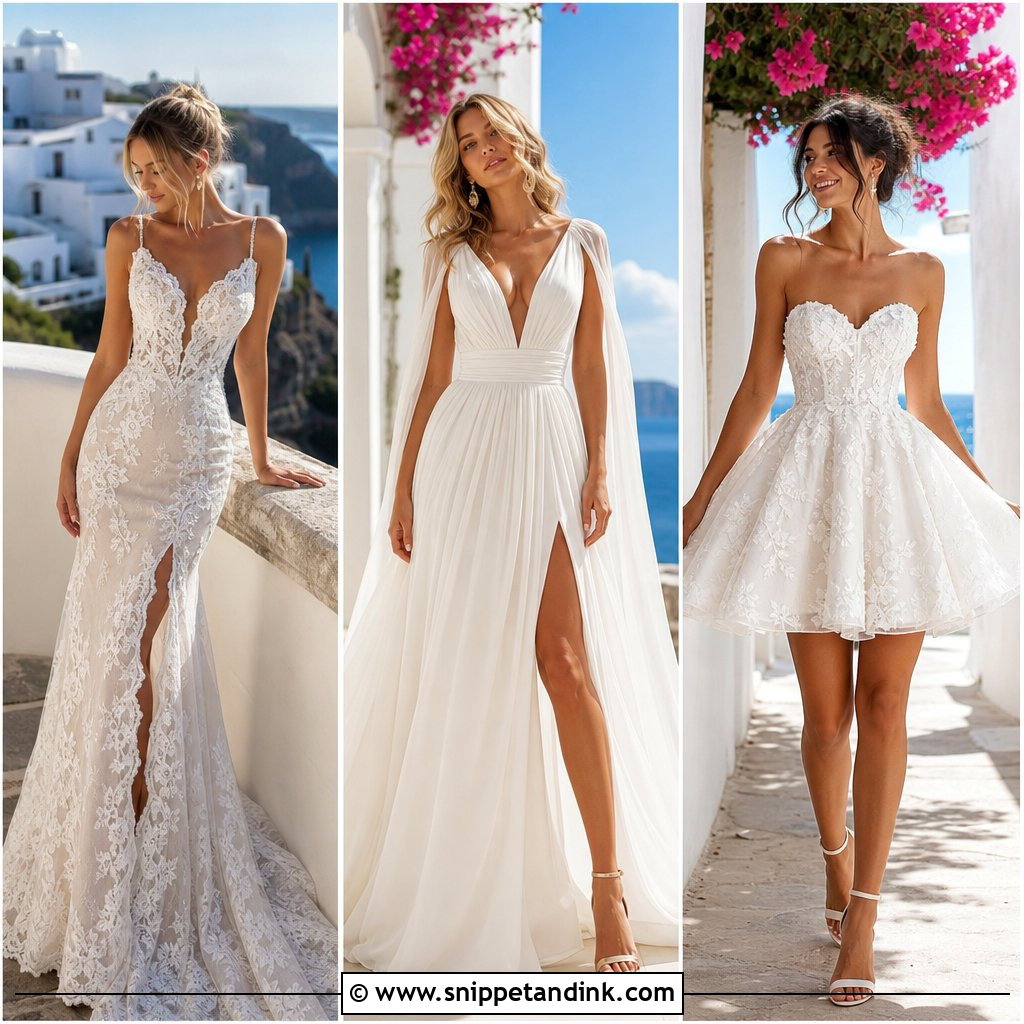
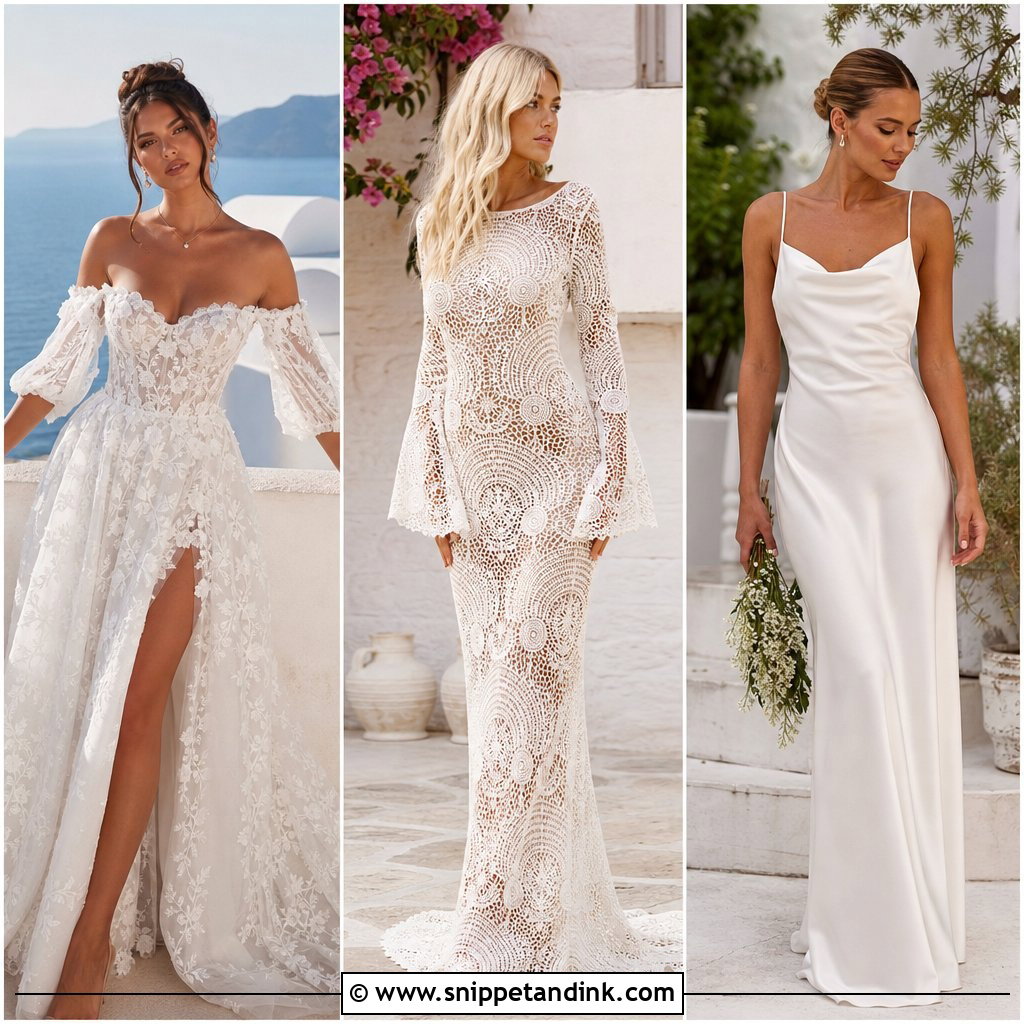
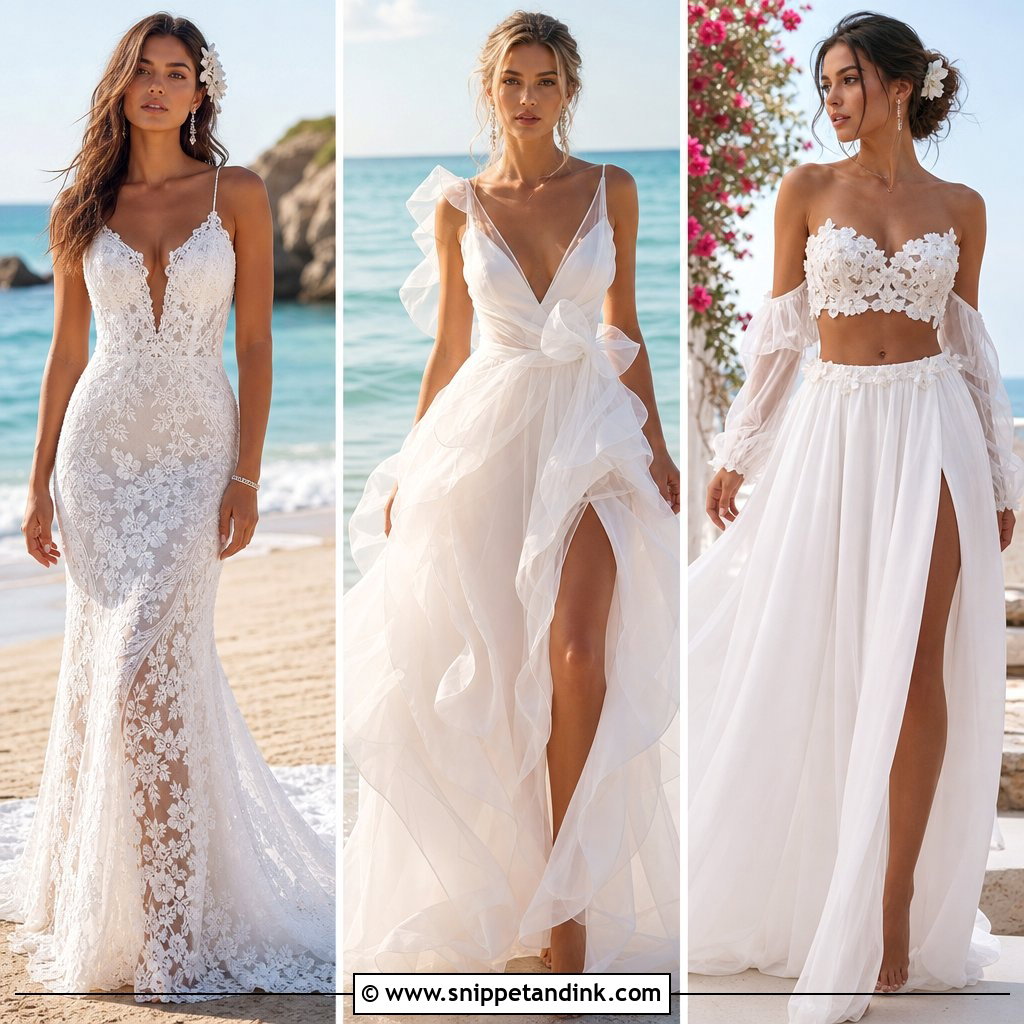
Lace against palms and pale sand is a classic for a reason, and a sheath keeps it from turning into a heavy skirt. I’d look for an airy overlay on a breathable lining with some stretch, in lace soft enough that you don’t feel the cord at the edges. Thin straps or a modest V balance the top half. Pair it with low strappy sandals, pearl studs and a short veil that won’t fight the lace pattern, and a loose updo for the humidity. A lace sheath is small enough to pack well and easy to walk in, which is why I suggest it so often for intimate ceremonies. Ask what the lining is made of. A synthetic lining under lace feels hot within minutes.
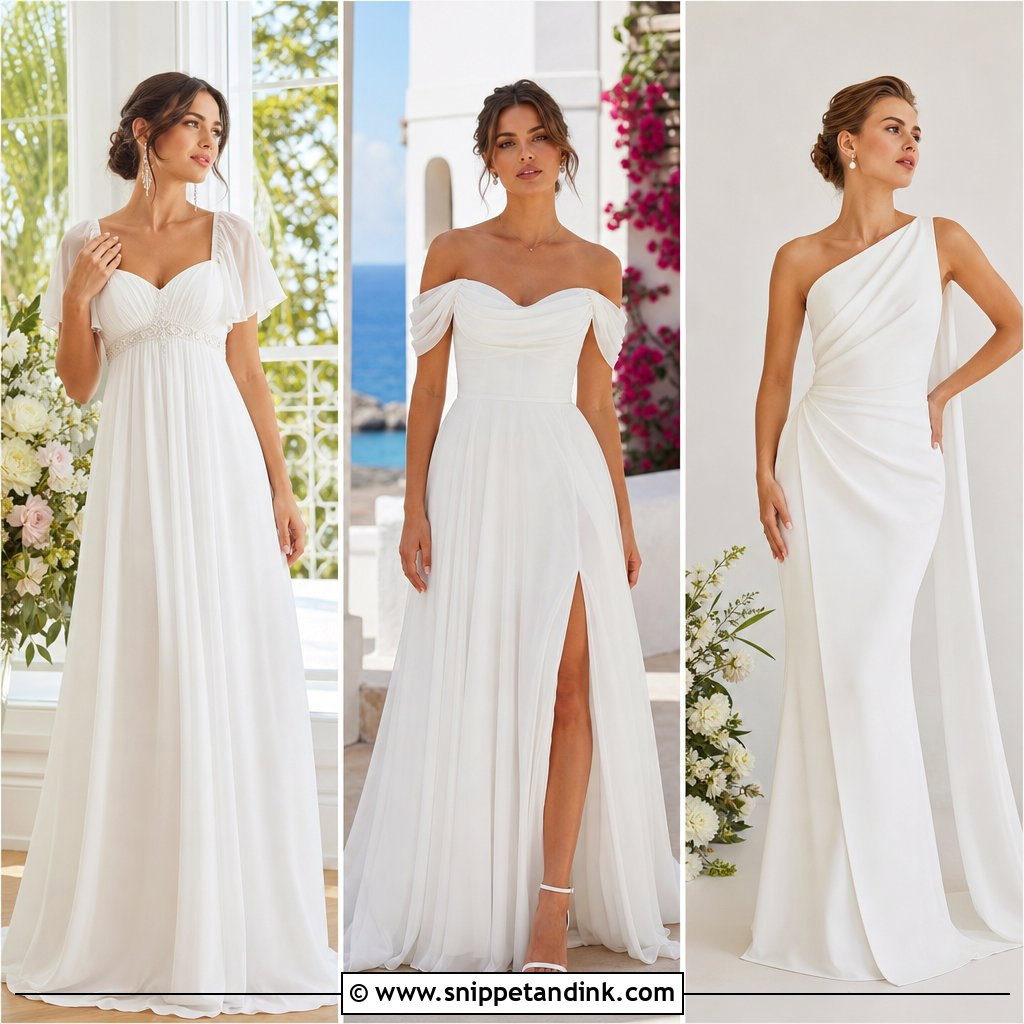
4. Off-Shoulder Caribbean Wedding Dress
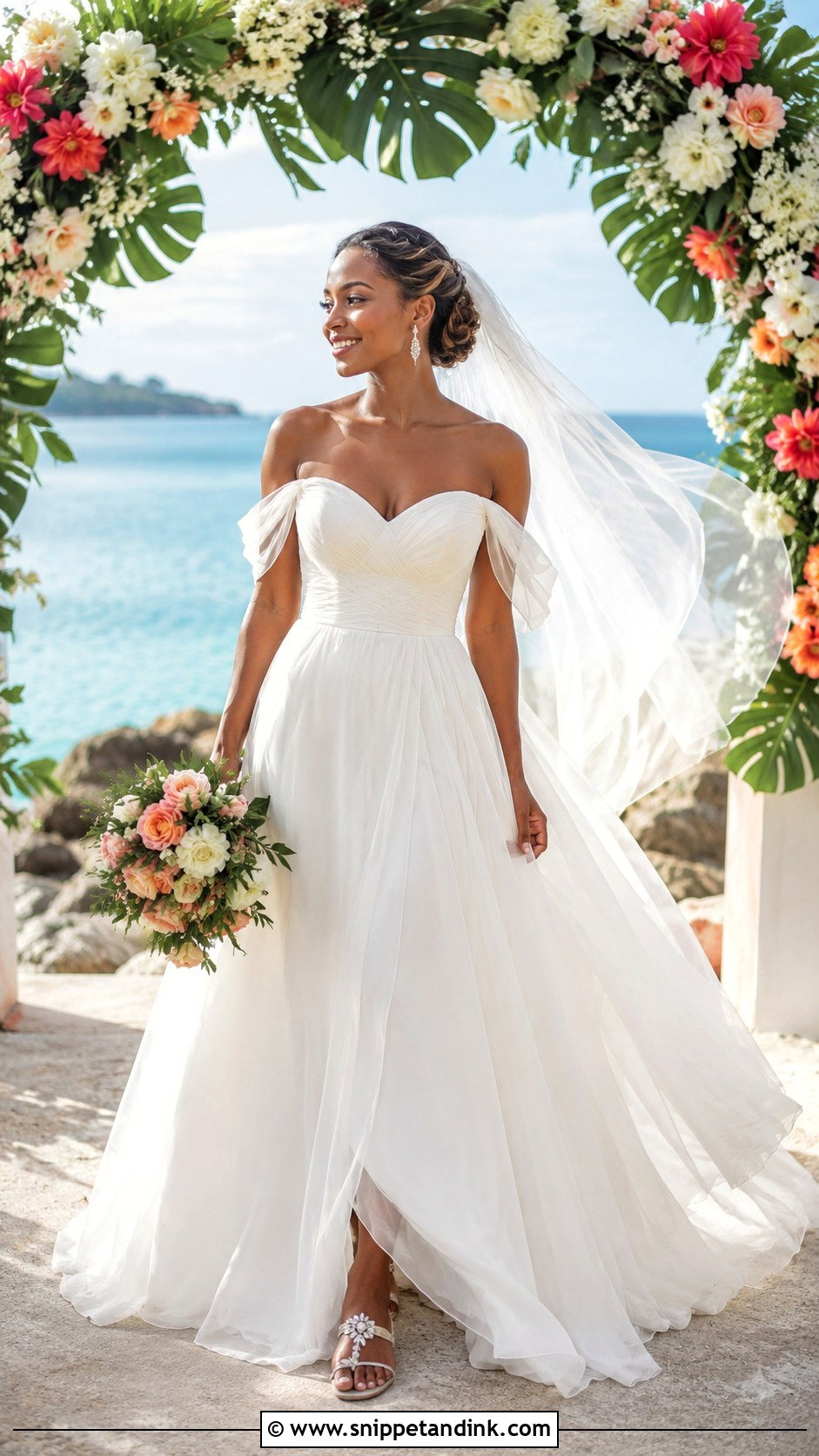
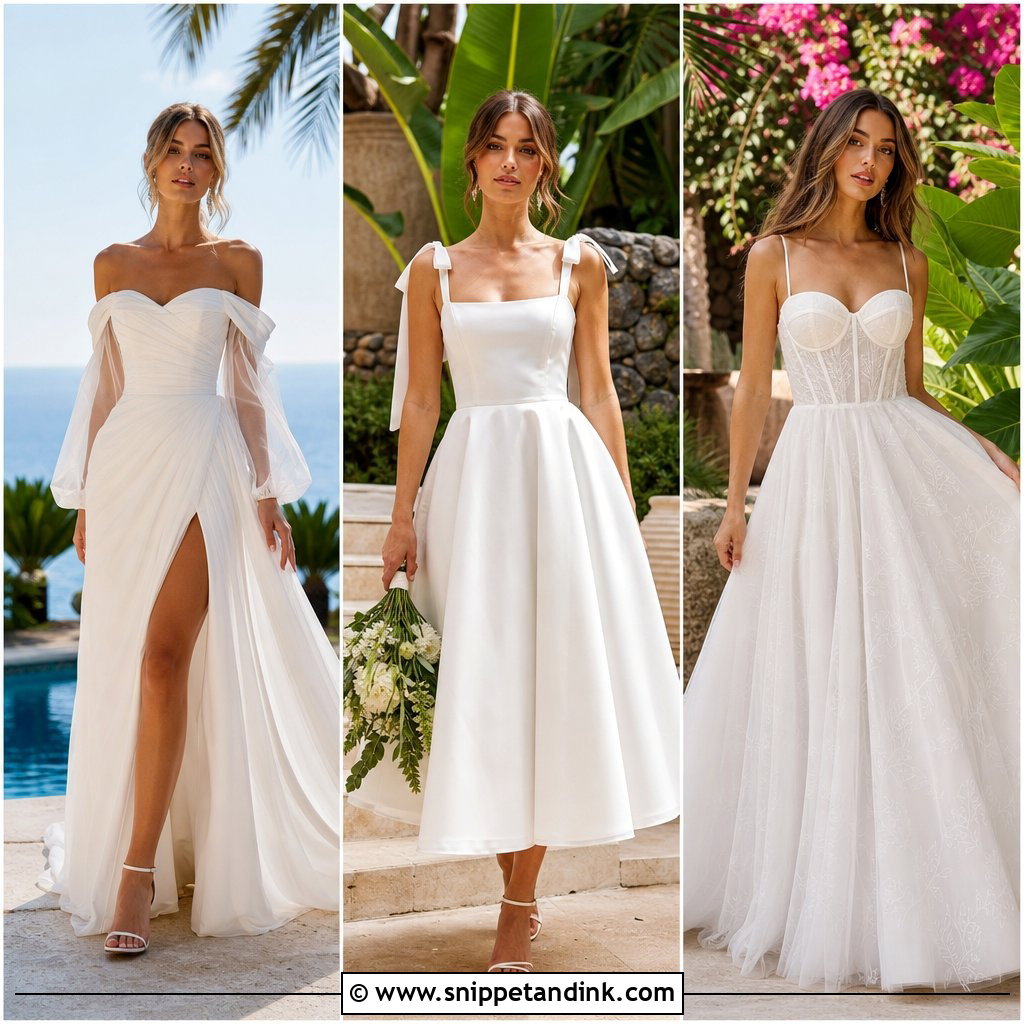
Off-the-shoulder necklines sit on the upper arm, and that is both the charm and the problem near the ocean. Without real internal support, coastal wind and arm movement walk the neckline down. I’d only choose this one in a lightweight A-line or fit-and-flare with boning or a stay inside. Chiffon or soft tulle drapes keep it light. A short pendant, crystal earrings and swept-back hair keep the shoulders clear, and the veil should be anchored firmly under the style. Low block heels are fine on a resort walkway; on sand, wear embellished flats. A shaded gazebo or a flowering garden suits this dress as well as the beach does.
5. Halter Neck Caribbean Wedding Dress
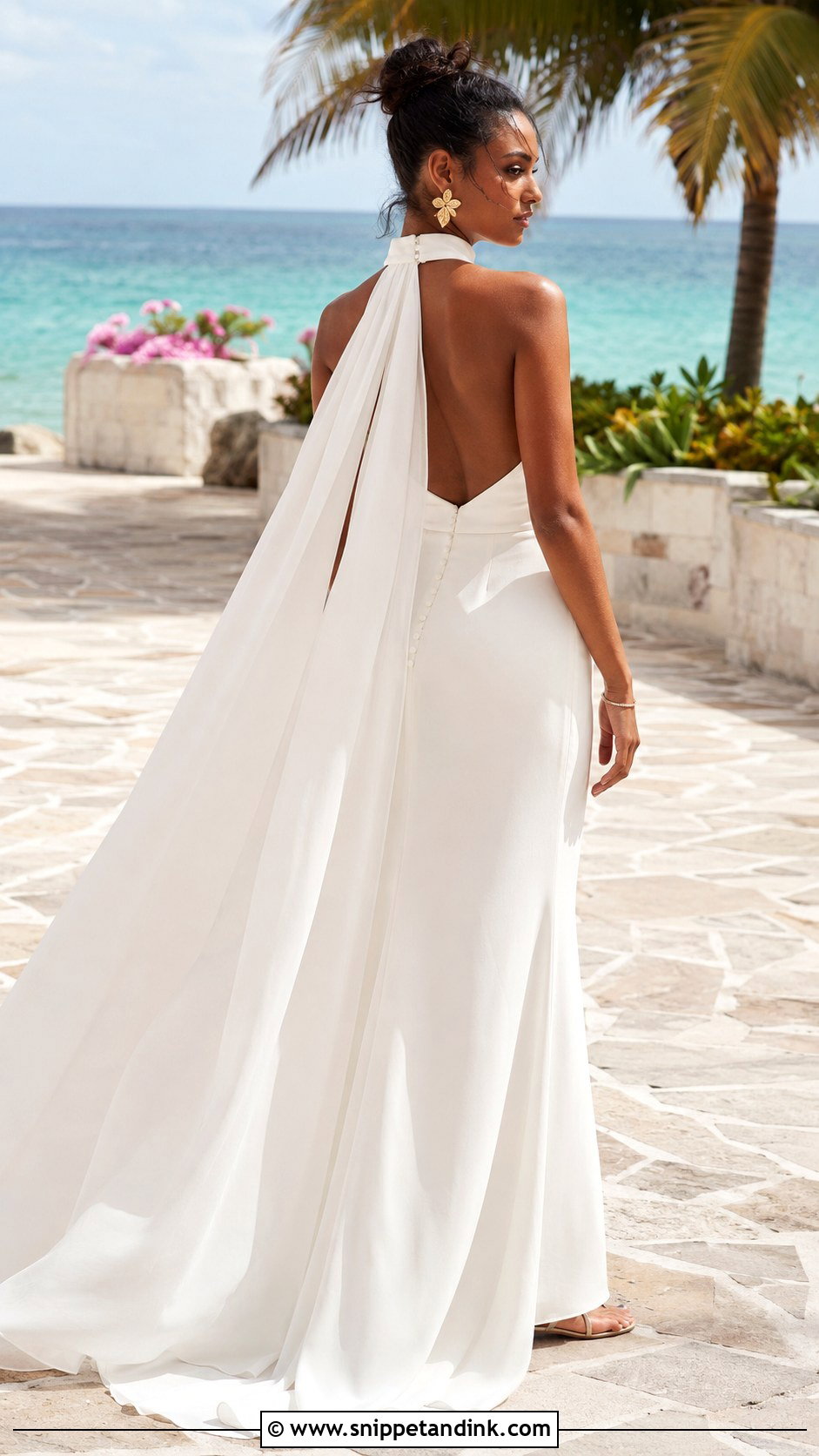
A halter-neck gown gives you support and shoulder definition without sleeves, which is useful when you want a secure neckline in heat. Soft crepe or chiffon, a fitted waist and a flowing skirt work best, and a keyhole or open back adds interest. Skip the necklace; medium earrings are enough. A high bun, metallic flat sandals and a slim bracelet finish it, and a detachable cape can replace a veil for movement in portraits. The thing to test is the neck fastening. Halters put weight on the back of the neck, and after six hours a tight one gives some brides a headache. Sit and dance in it at the fitting, and check the hem against the surface you’ll stand on.
6. Strapless Crepe Caribbean Wedding Dress
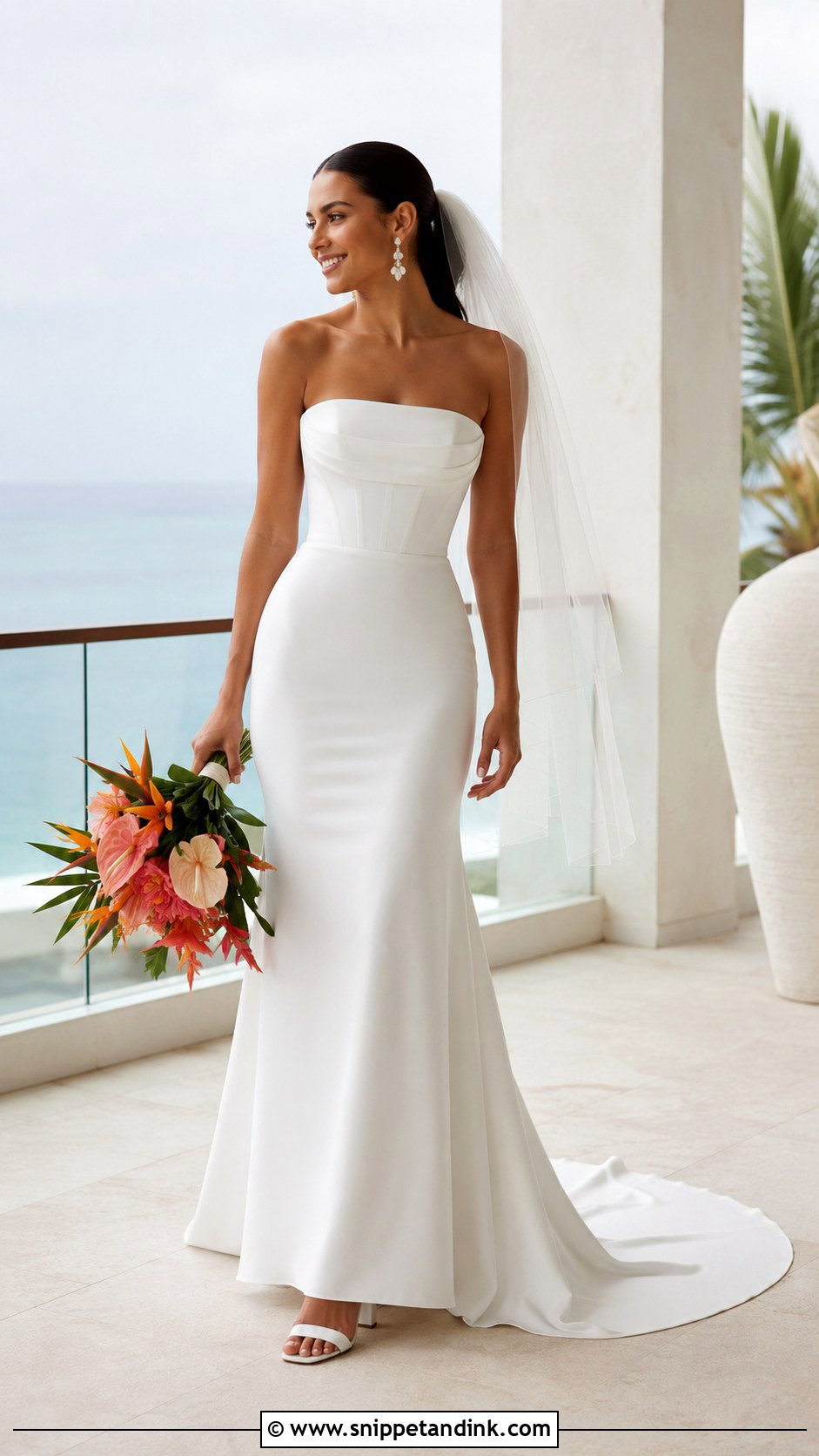
Strapless crepe lets the view do the decorating. A column or soft fit-and-flare with built-in cups, real boning and a gripping inner waistband is the only version I trust in heat, because strapless gowns slip when skin is damp. Light stretch crepe moves better than layered fabric. Statement earrings, a sleek ponytail and white or metallic block-heel sandals keep it modern. A cathedral veil can suit a formal resort, but near water a shorter veil is much easier. Carry a structured bouquet of white flowers and glossy leaves. The clean neckline and smooth fabric carry from ceremony to evening without needing a change.
7. Boho Crochet Lace Caribbean Wedding Dress
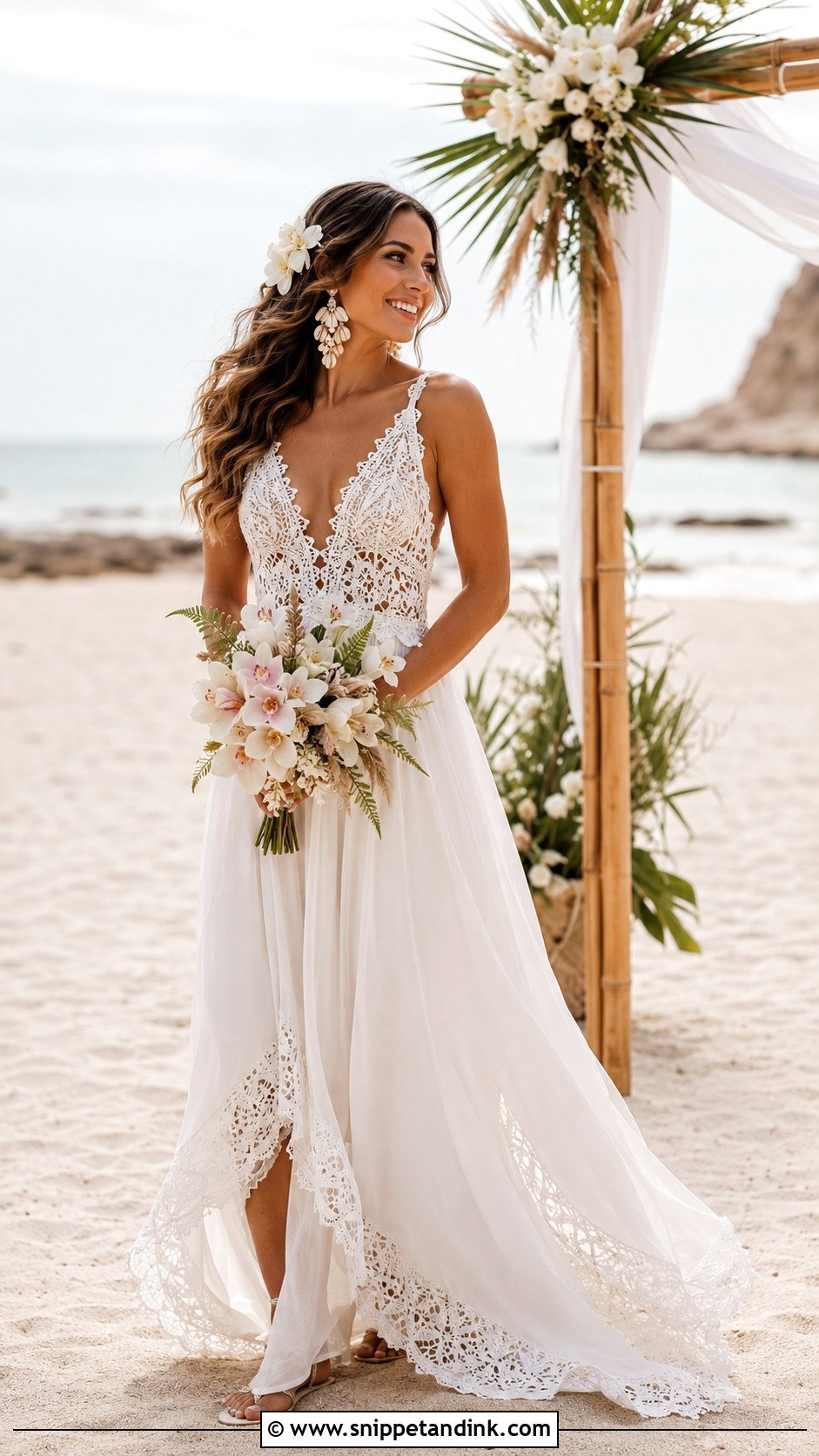
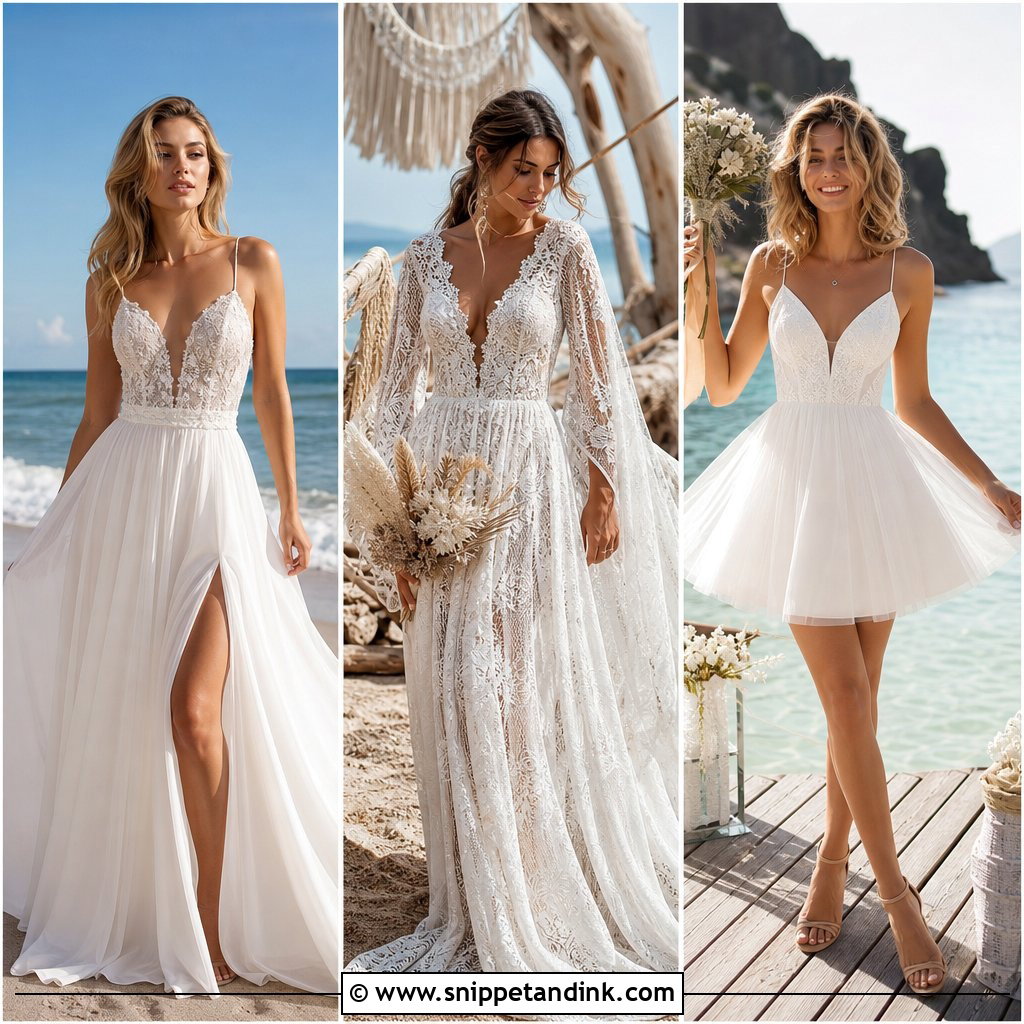
Crochet-style lace brings texture and a relaxed attitude to a beach wedding, as long as it doesn’t tip into costume. I look for a fitted lace bodice on a comfortable lining over a chiffon or light georgette skirt. Fringe, scalloped edges or openwork panels in small doses support the boho mood. Ivory leather-look sandals, shell-inspired earrings and loose waves pinned back from the face suit it, and a flower comb can replace the veil entirely. Keep the bouquet loose: orchids, greenery and soft neutral blooms. A wooden arch or a quiet cove is the natural setting. Watch the layer count, because crochet lace over too many linings stops breathing.
8. Empire Waist Caribbean Wedding Dress
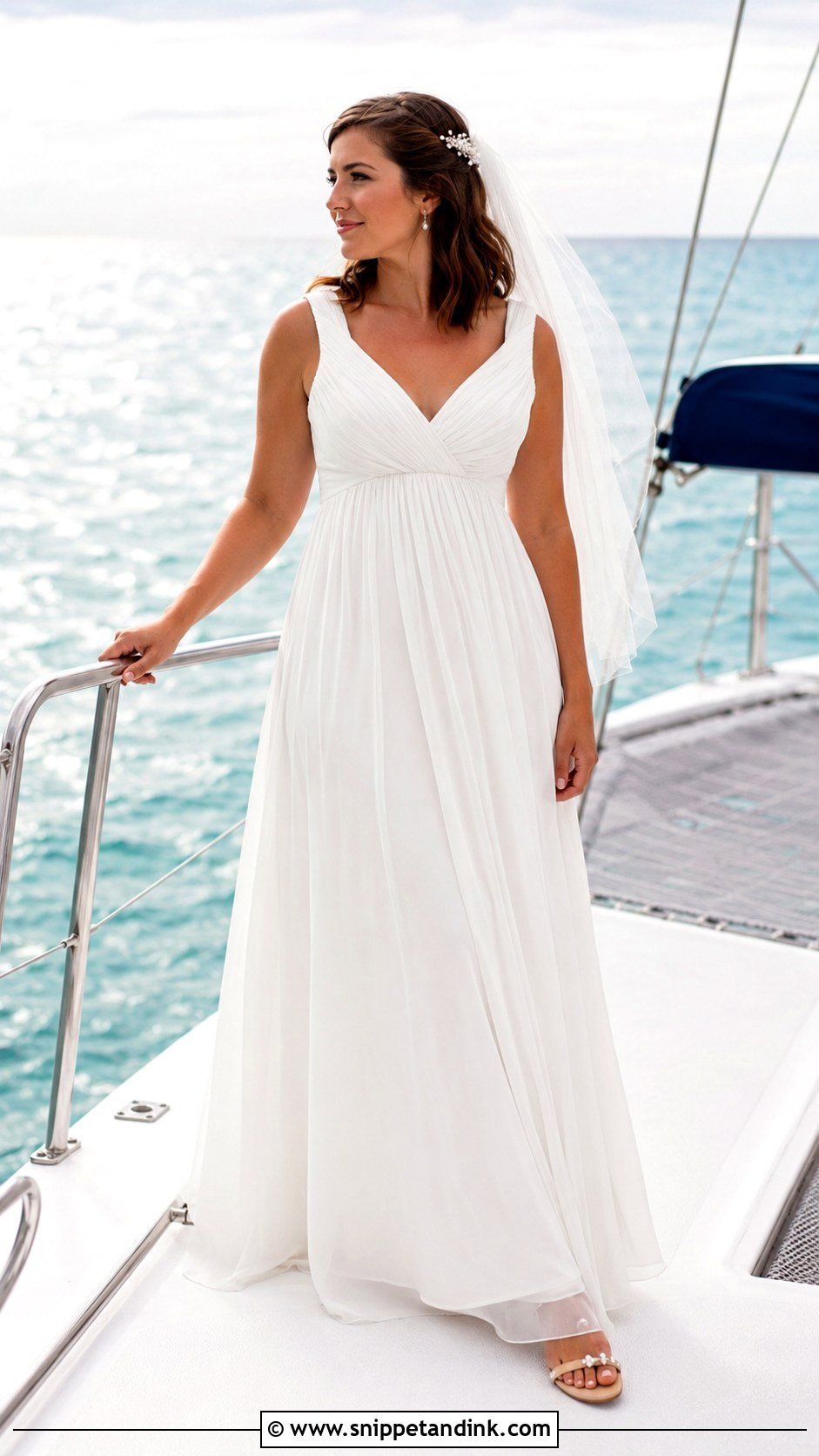
Empire waists are the most comfortable gowns I fit for hot destinations. The bodice ends just below the bust and the chiffon skirt falls with little lining, so nothing presses on the waist or hips during a long dinner. Wide straps, a V-neck or a gathered halter add support. Delicate sandals, a pearl comb and small earrings keep the drape in charge, and a shoulder-length veil adds a traditional touch without extra bulk. This cut is kind to pregnant brides and to anyone who dislikes restriction. It goes from a beach ceremony to a catamaran or an open-air reception without a second thought.
9. High-Low Caribbean Wedding Dress
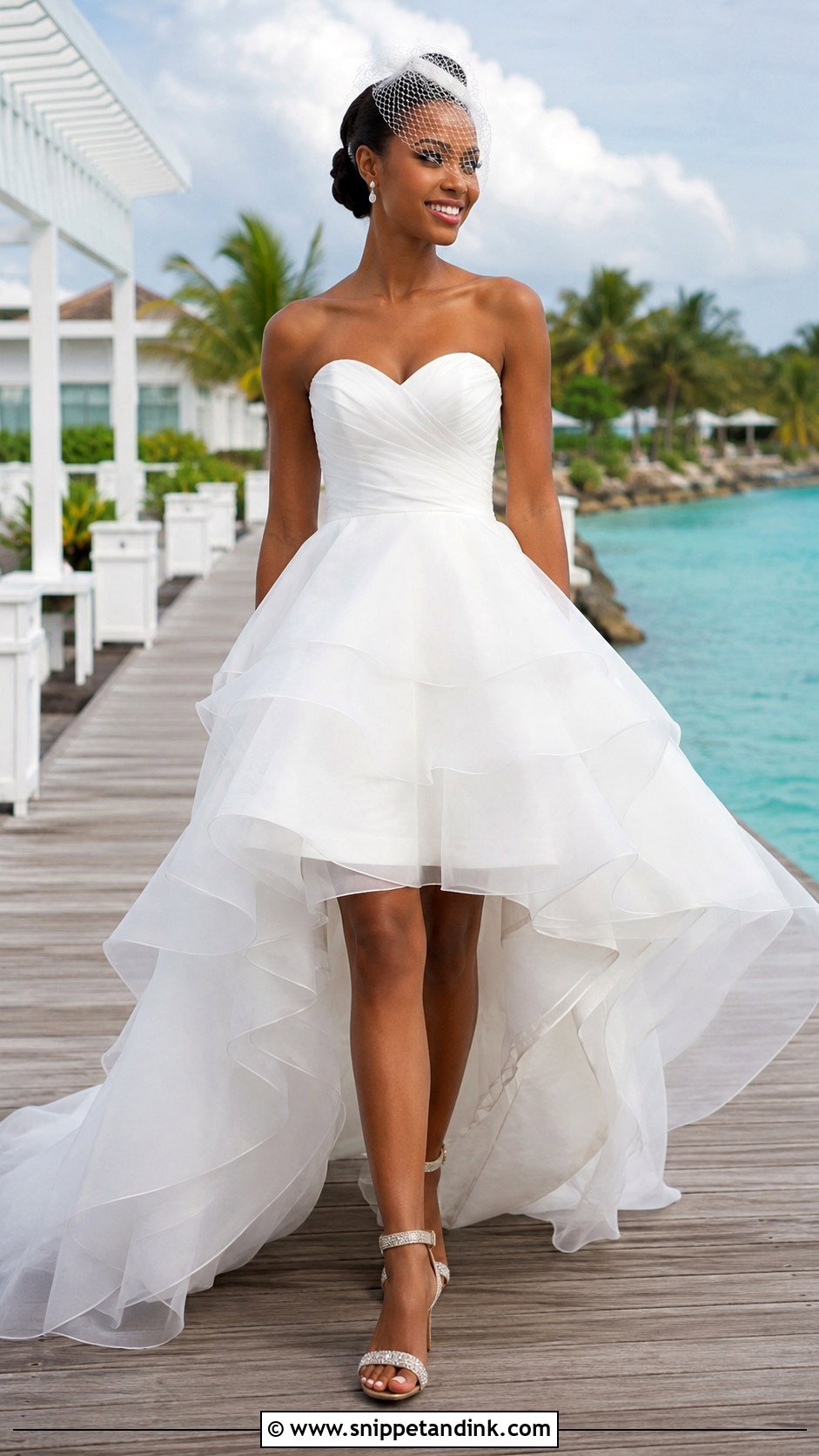
Short in front, long at the back, a high-low hem keeps the front of your skirt out of the sand and water while the back still trails. Chiffon, organza or light tulle give volume without weight, and the fitted bodice needs to stay secure in a breeze. Your shoes are on show, so pick embellished sandals or low block heels in ivory, gold or silver that you’re happy to see in photos. Simple earrings and a polished updo balance the dramatic hem. A birdcage veil or small hair accessory suits the proportions better than a long veil. It suits a bride who plans to walk the shoreline without lifting their skirt every few steps.
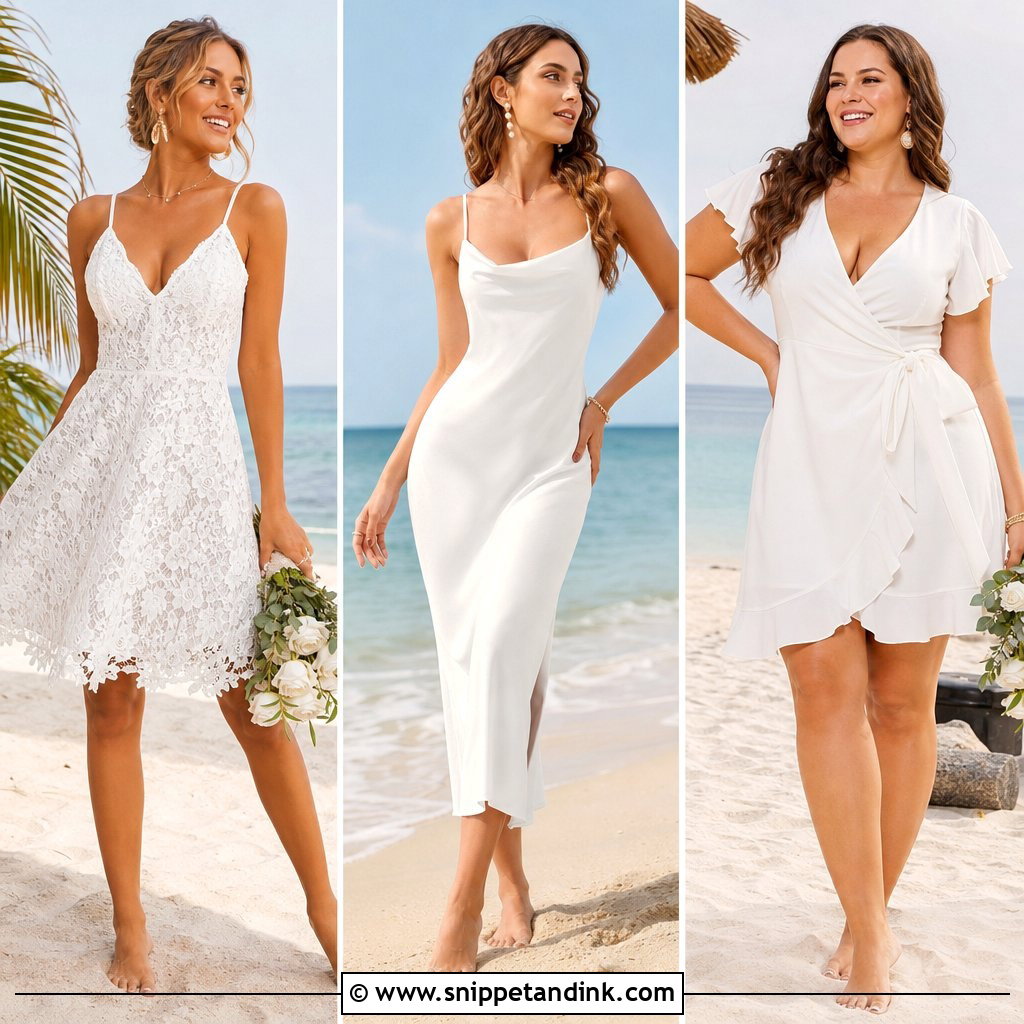
10. Short Caribbean Wedding Dress
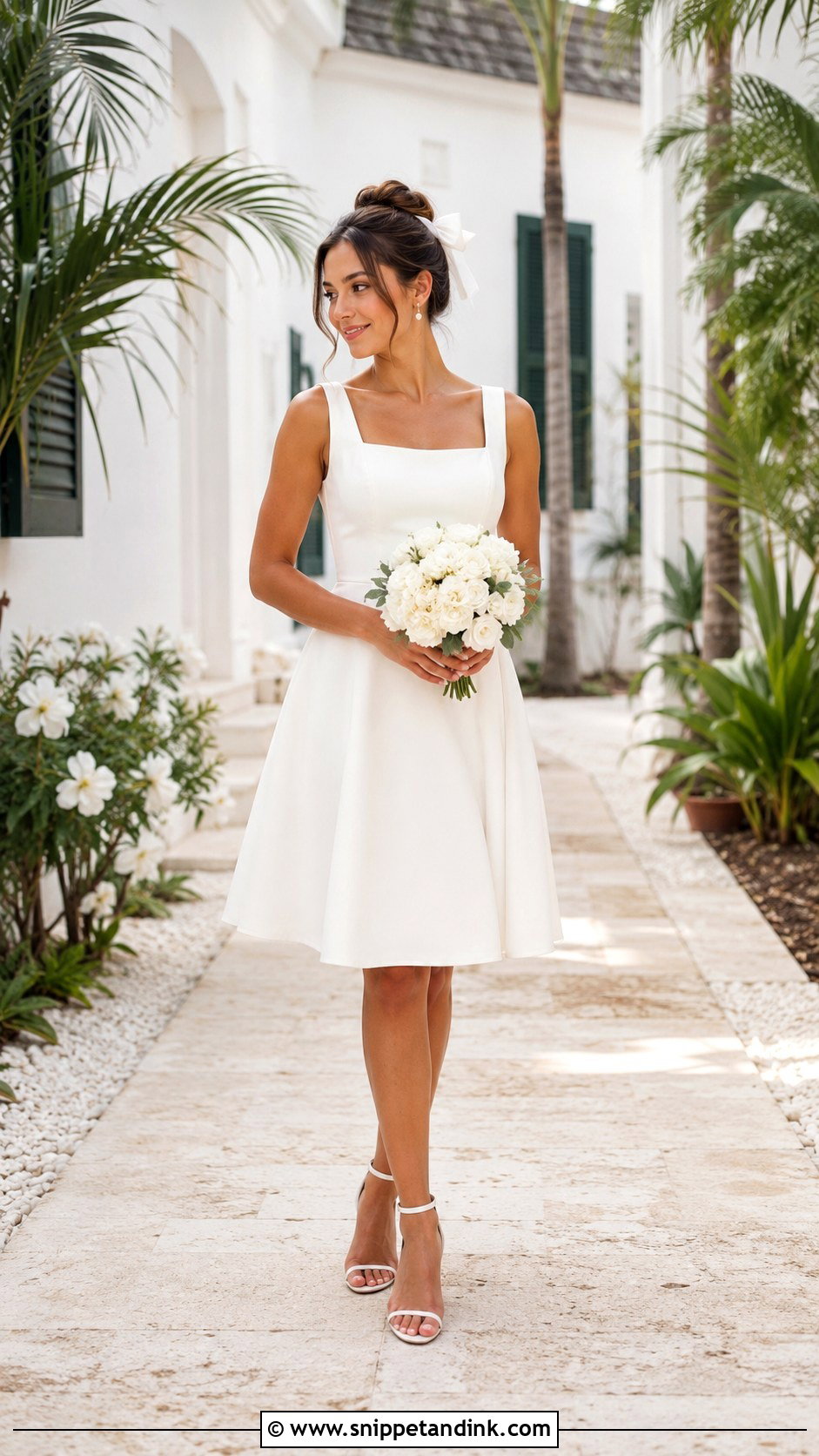
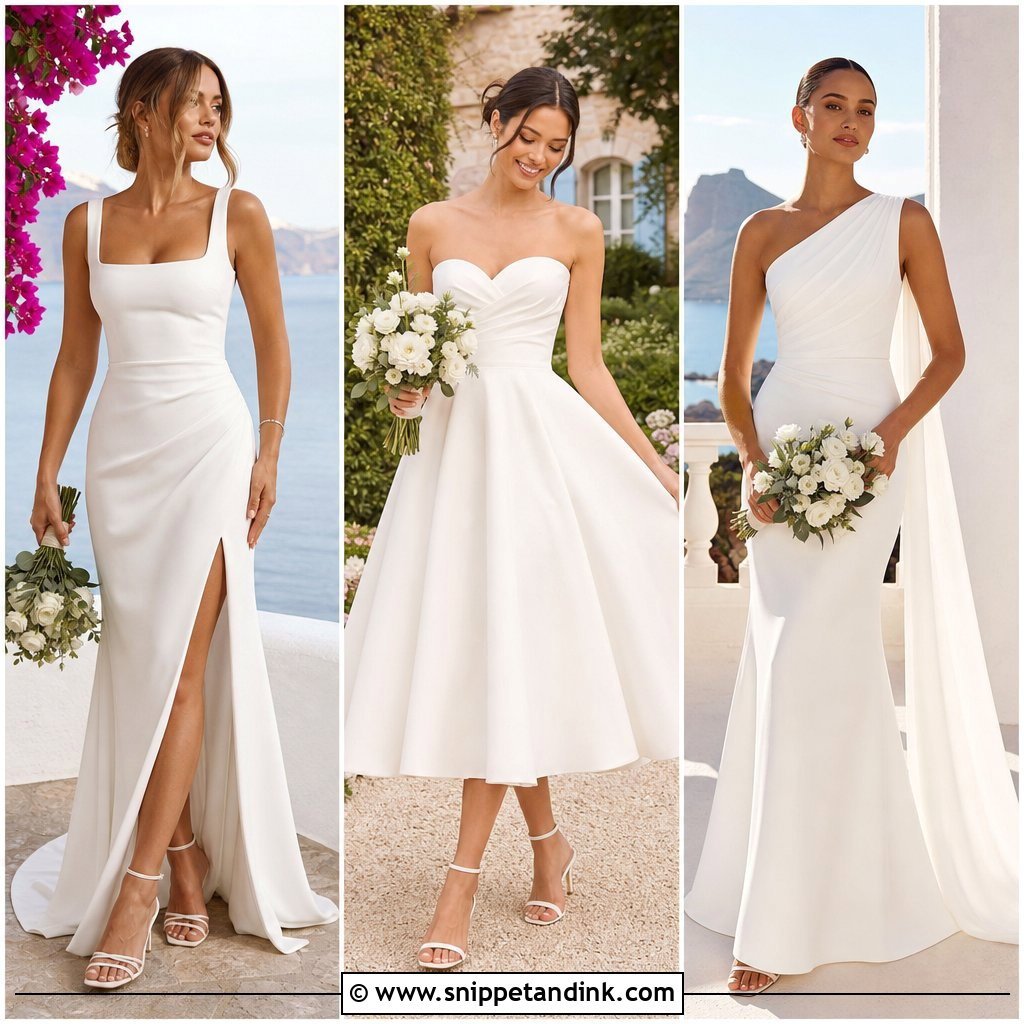
A short white dress is honest about the setting: it’s hot, you’ll be on sand, and you want to dance. A structured mini, a knee-length lace dress or a tea-length cut each sets a different level of formality, so match it to the venue. A square neck, fitted waist and flared skirt give a classic shape. Ankle-strap sandals, pearl or crystal earrings and a short veil or hair bow finish it. If you go mini, keep the neckline and accessories refined so it reads bridal. I suggest short dresses often for elopements, civil ceremonies, welcome parties and reception changes. Choose fabric with some body; thin fabric on a short dress flips up in coastal wind.
11. One-Shoulder Caribbean Wedding Dress
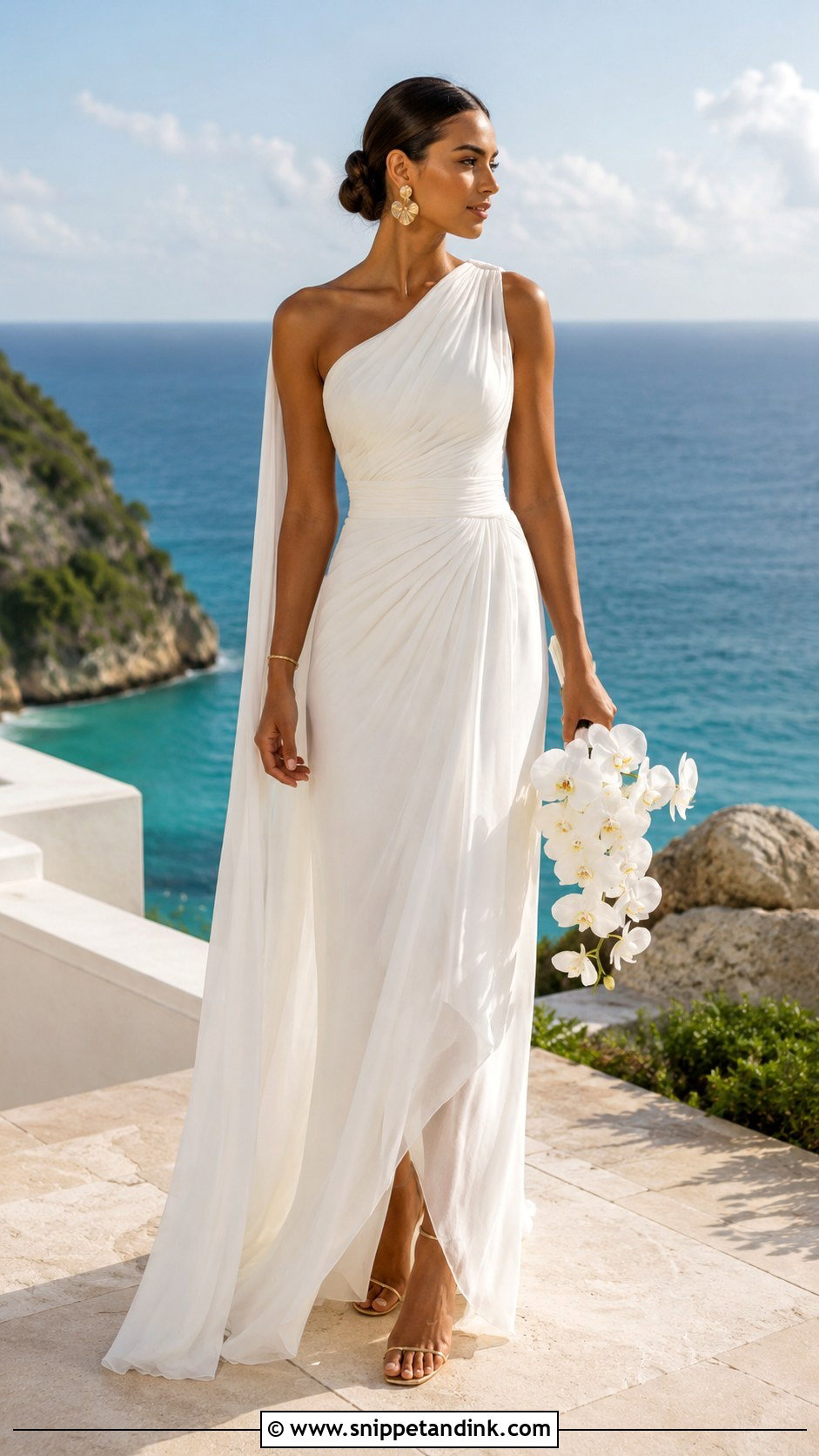
One-shoulder gowns make a strong diagonal line in photos. Draped chiffon, soft crepe or light satin with a fitted waist and a fluid skirt keep it soft. The single strap must sit firmly without digging in, and I check it with the bride’s arm raised, because that’s when a one-shoulder bodice tends to shift on the bare side. Sculptural earrings, a smooth low bun and metallic sandals suit it; skip the necklace. A narrow bracelet and a compact orchid bouquet are enough. A cape panel off the strap moves well in a breeze. Keep the train short so the asymmetry stays graceful on a cliffside terrace or modern resort.
12. Backless Caribbean Wedding Dress
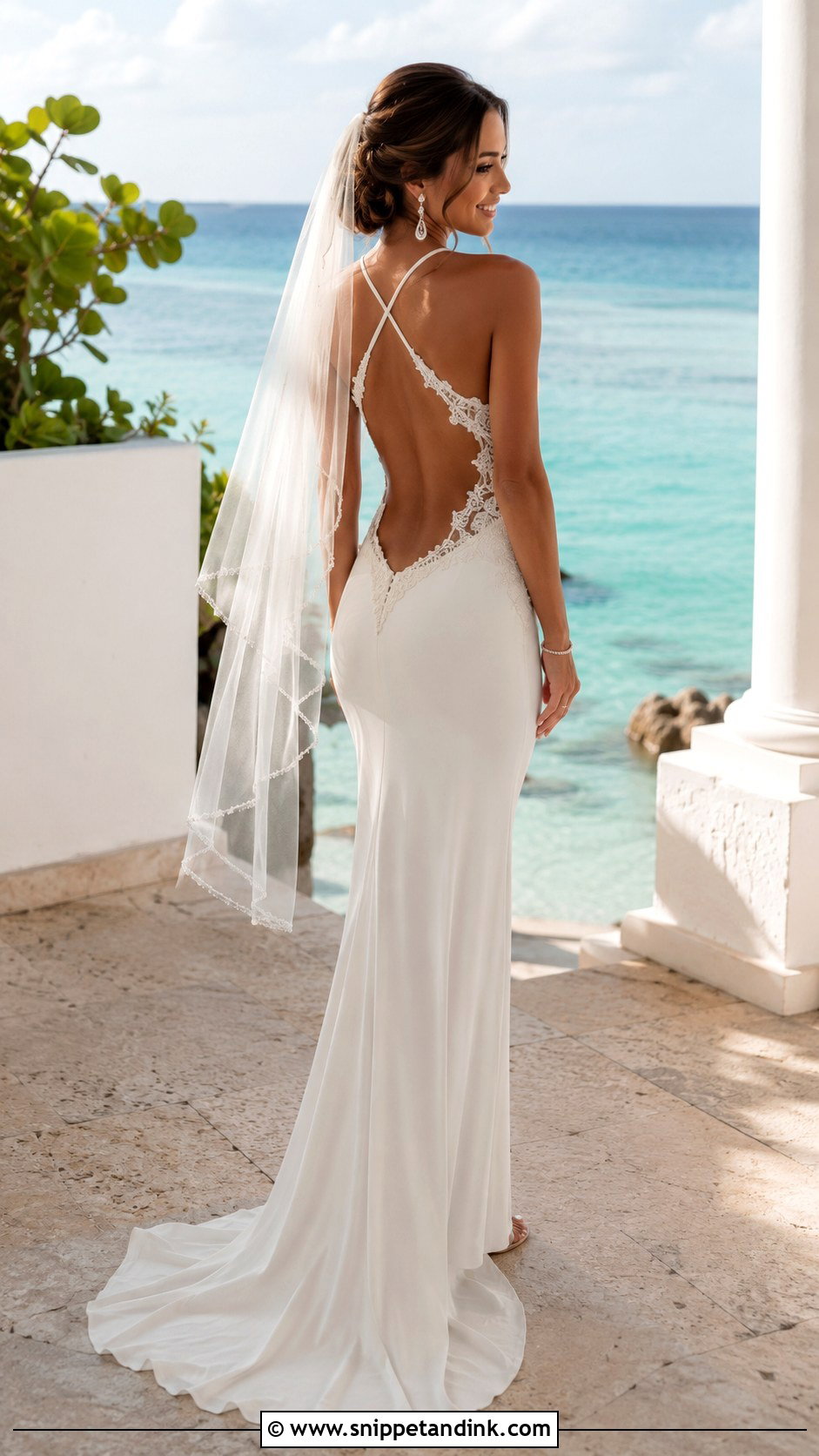
Backless gowns look simple from the front and do everything from behind. Choose a sheath, slip or A-line with secure side panels and straps that stay put, because an open back relies on the sides to hold the bodice in place. Lace edging, pearl buttons or crossed straps give the back a finished look. An updo or side-swept style keeps it visible, with drop earrings, a delicate bracelet and low sandals. Adhesive cups often lose grip in humidity, so I’d ask your seamstress to sew support into the gown instead, and test it before you fly. A fingertip veil frames the back for the vows and comes off for the reception.
13. Cap Sleeve Lace Caribbean Wedding Dress
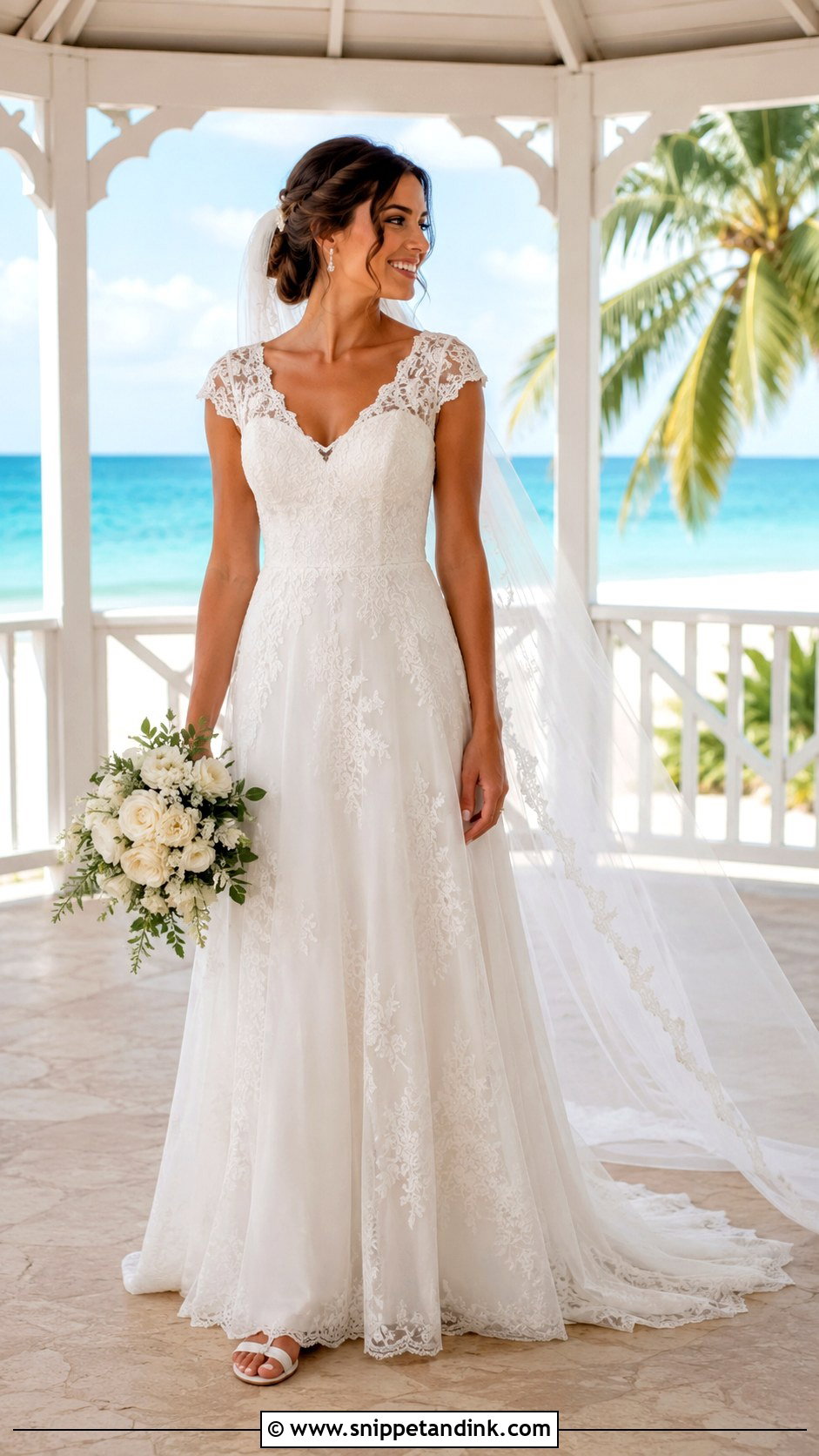
Cap sleeves give a little coverage without trapping heat. A lace A-line or sheath with a breathable lining, a defined waist and a modest V or scoop keeps it airy. Raise your arms at the fitting: a cap sleeve that rubs in an air-conditioned shop will chafe on a humid beach. Pearl earrings, a low textured bun and flat satin sandals suit it, and a narrow belt adds definition when the lace pattern is soft and continuous. A short or lace-edged fingertip veil matches without looking overly coordinated. This Caribbean wedding dress sits comfortably in a resort courtyard, garden or beachfront gazebo, and it’s the gentlest route to covered shoulders in tropical heat.
14. Sheer Long Sleeve Caribbean Wedding Dress
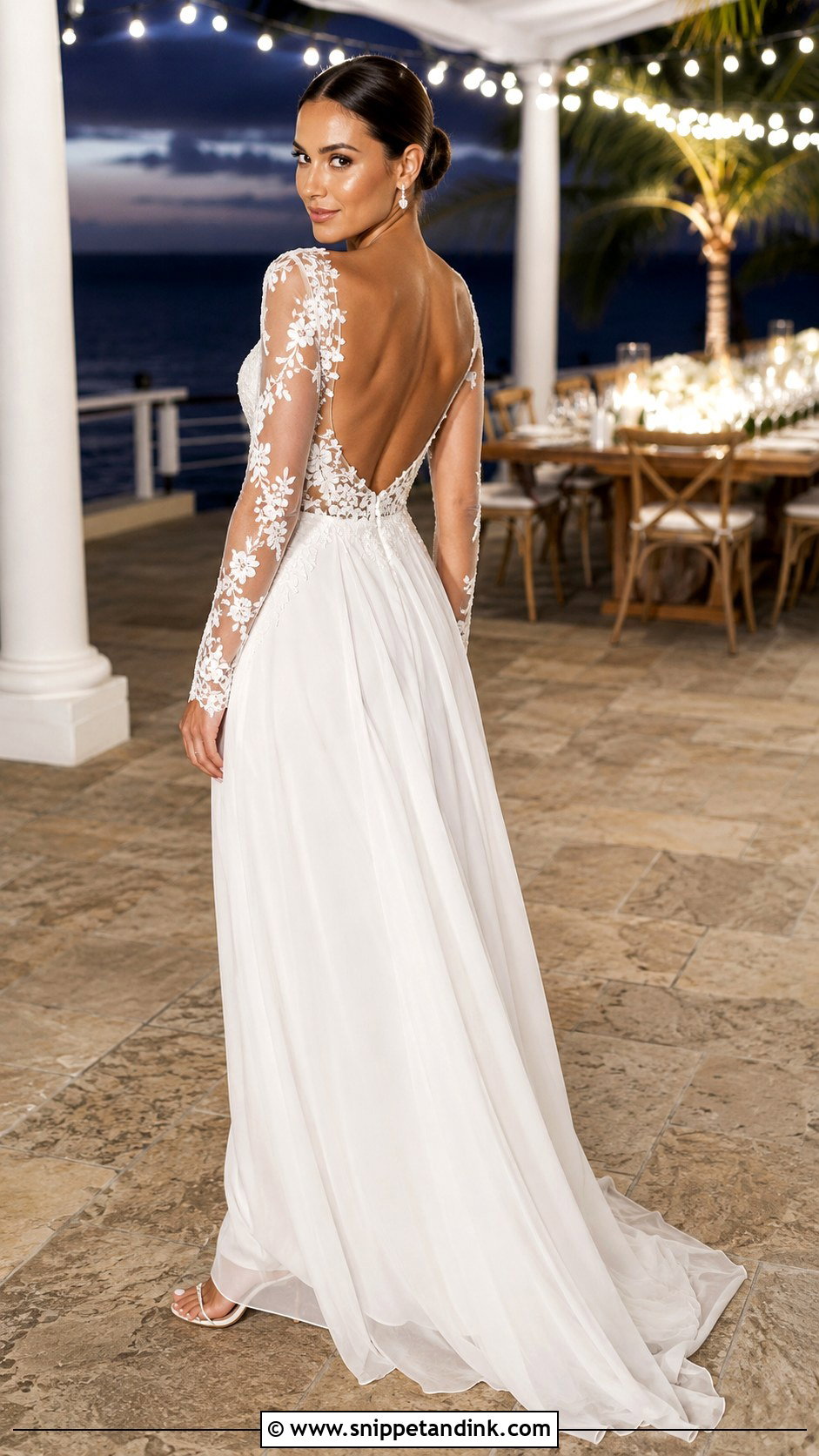
Yes, you can wear long sleeves in the Caribbean, provided they are sheer tulle, open lace or a light illusion fabric. Keep the bodice airy with minimal boning and a fluid skirt so the overall gown doesn’t feel covered from head to toe. Floral lace sleeves feel romantic; plain illusion ones look cleaner and more modern. Understated earrings, a smooth bun and open-toe sandals finish it, and the sleeves are detail enough without gloves or a heavy necklace. A low open back lets heat escape and balances the coverage. Evening ceremonies are kinder to sleeves than a noon one in full sun. Run a finger around every lace edge before you buy.
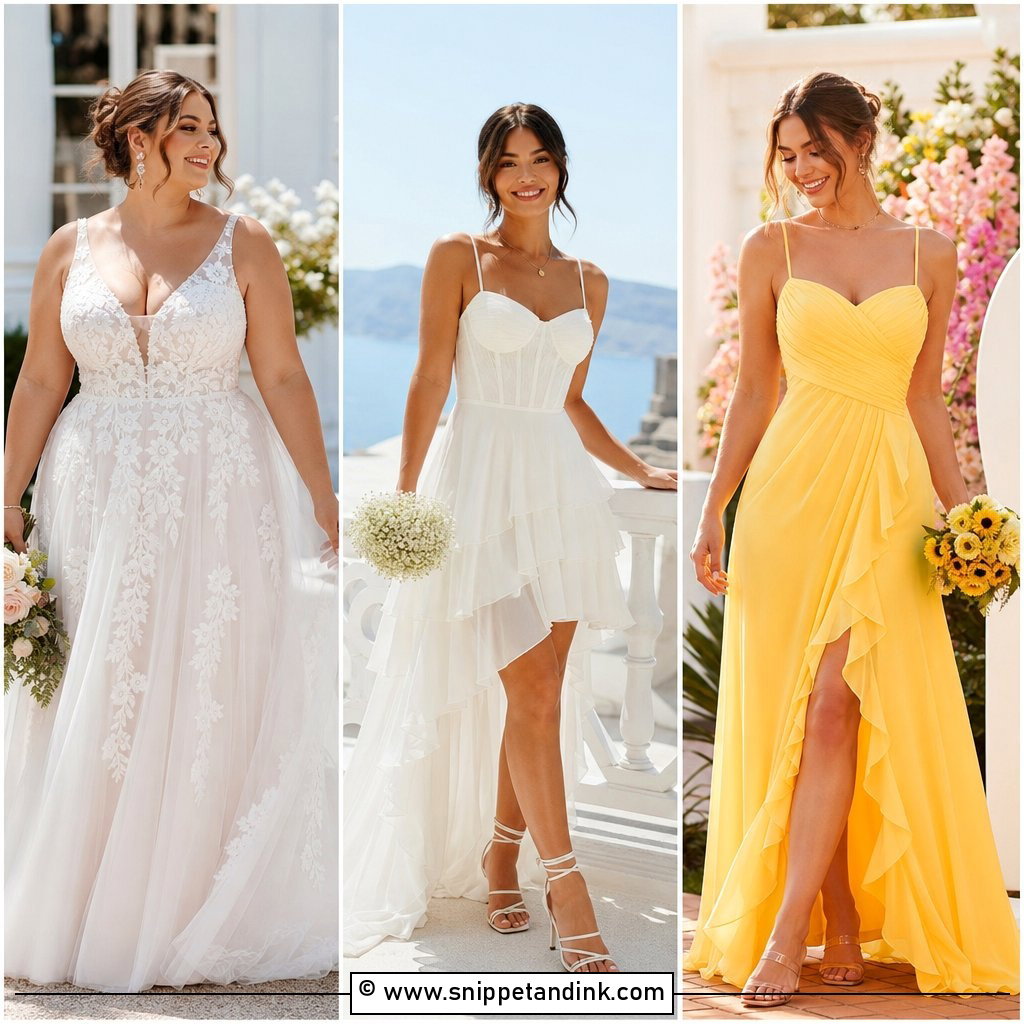
15. Soft Tulle Caribbean Wedding Dress
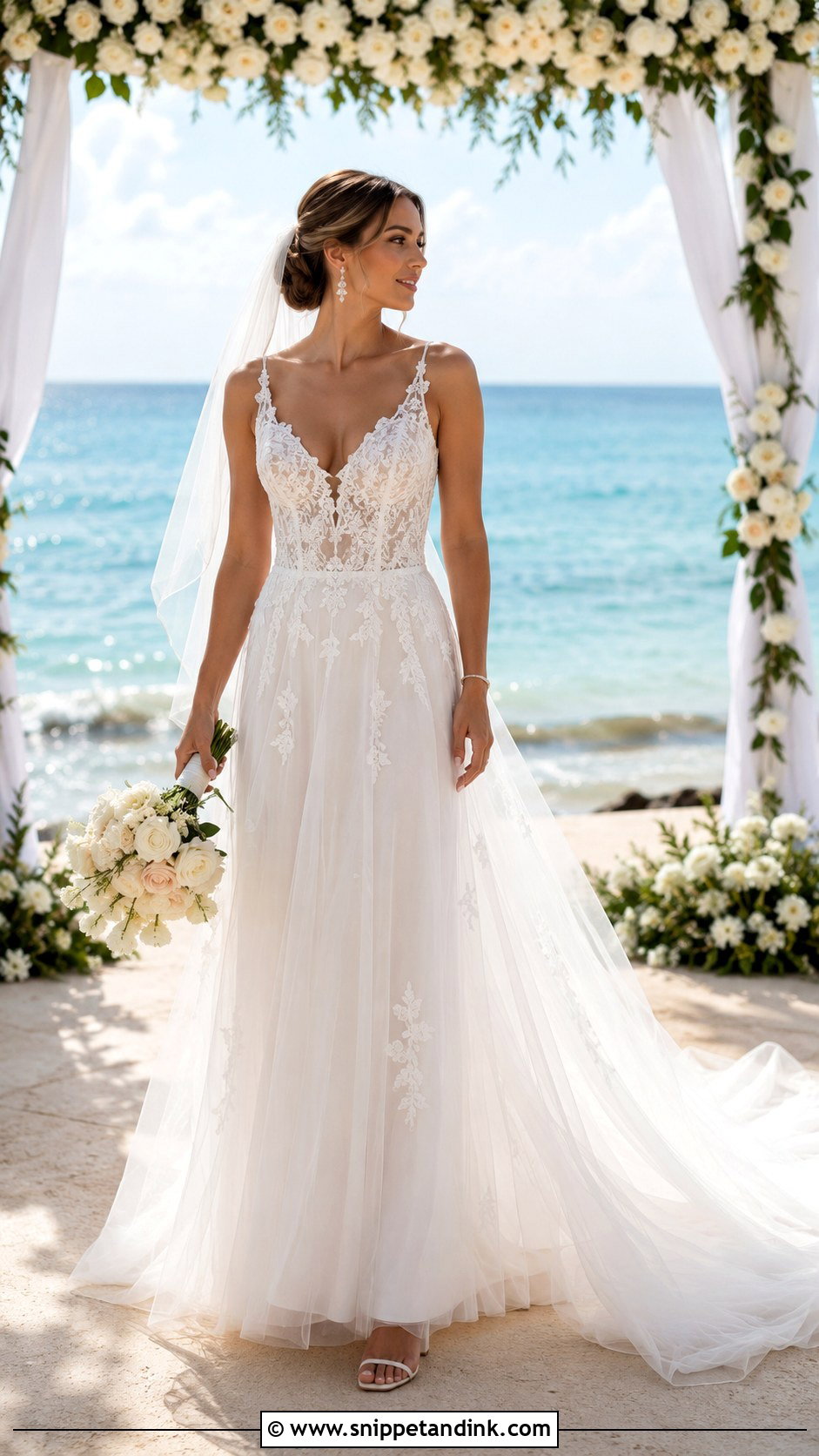
Tulle gives you fullness without the weight of a ball gown, if you keep the layers few. A fitted bodice, a handful of light tulle layers and a sweep train is the shape I aim for. Plain tulle looks modern; scattered appliqués or tiny pearls add texture. Slim block heels work on a resort floor and delicate flats on sand. A simple veil, small crystal earrings and a low bun keep it soft. Fine tulle catches on rough surfaces and holds sand in its layers, so keep the volume controlled and have someone ready to lift and shake the skirt between shoreline portraits. It’s the closest thing to a classic gown that still suits a formal beachfront ceremony.
16. Linen Blend Caribbean Wedding Dress
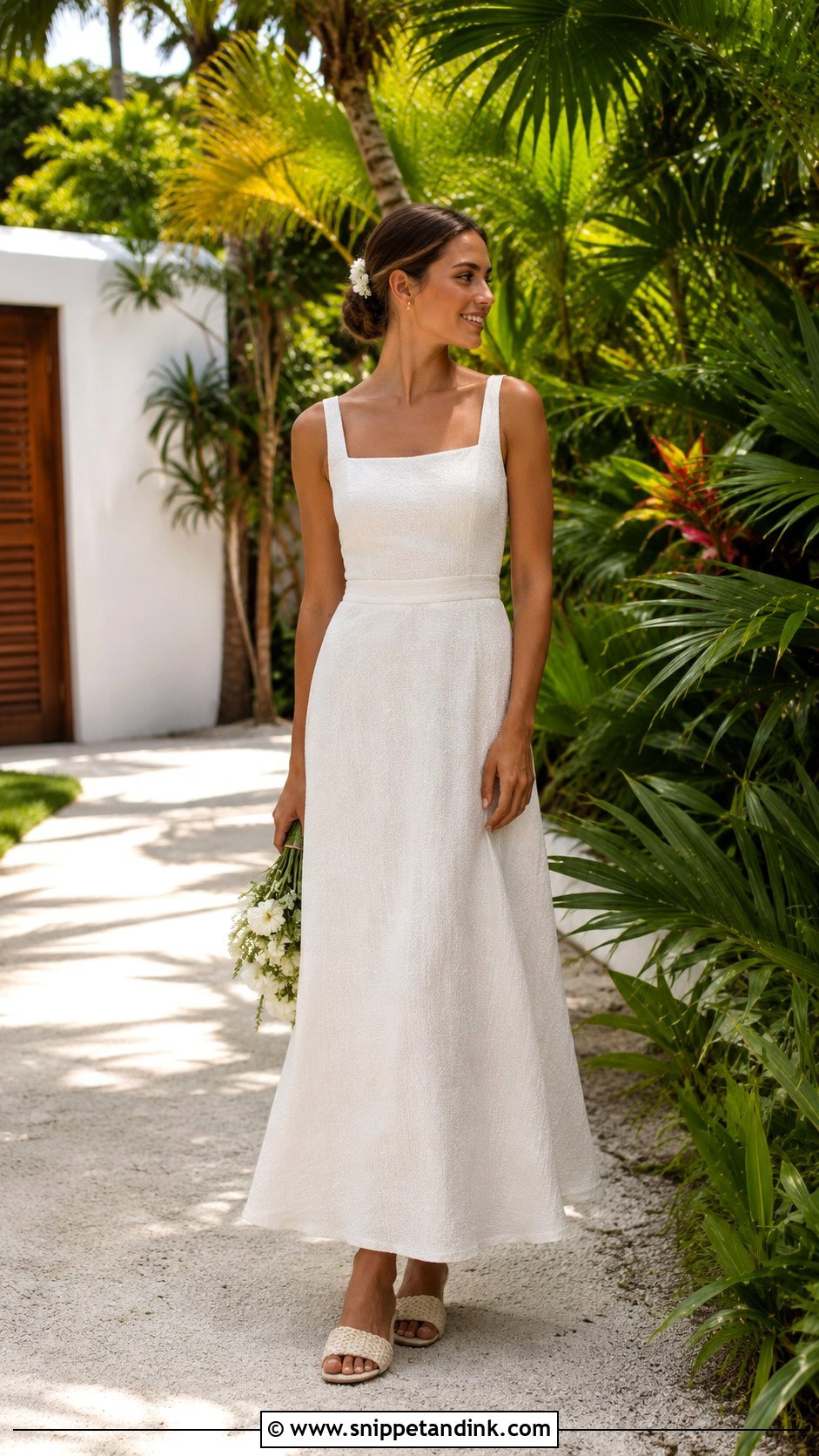
Linen creases. Accept that and a linen-blend dress becomes one of the most relaxed, natural choices for a casual island ceremony. A linen-viscose or linen-silk blend drapes more smoothly and wrinkles less than pure linen. I’d pick a refined cut with a square neck, wide straps, a defined waist and a soft flare. Woven ivory sandals, small gold earrings and a low bun with a flower comb suit it, and a light capelet or sheer scarf can stand in for the veil. A villa, garden, dock or barefoot celebration on the sand is where it belongs. Steam it shortly before you dress and stop fussing over the last soft creases; they’re part of the fabric.
17. Floral Appliqué Caribbean Wedding Dress
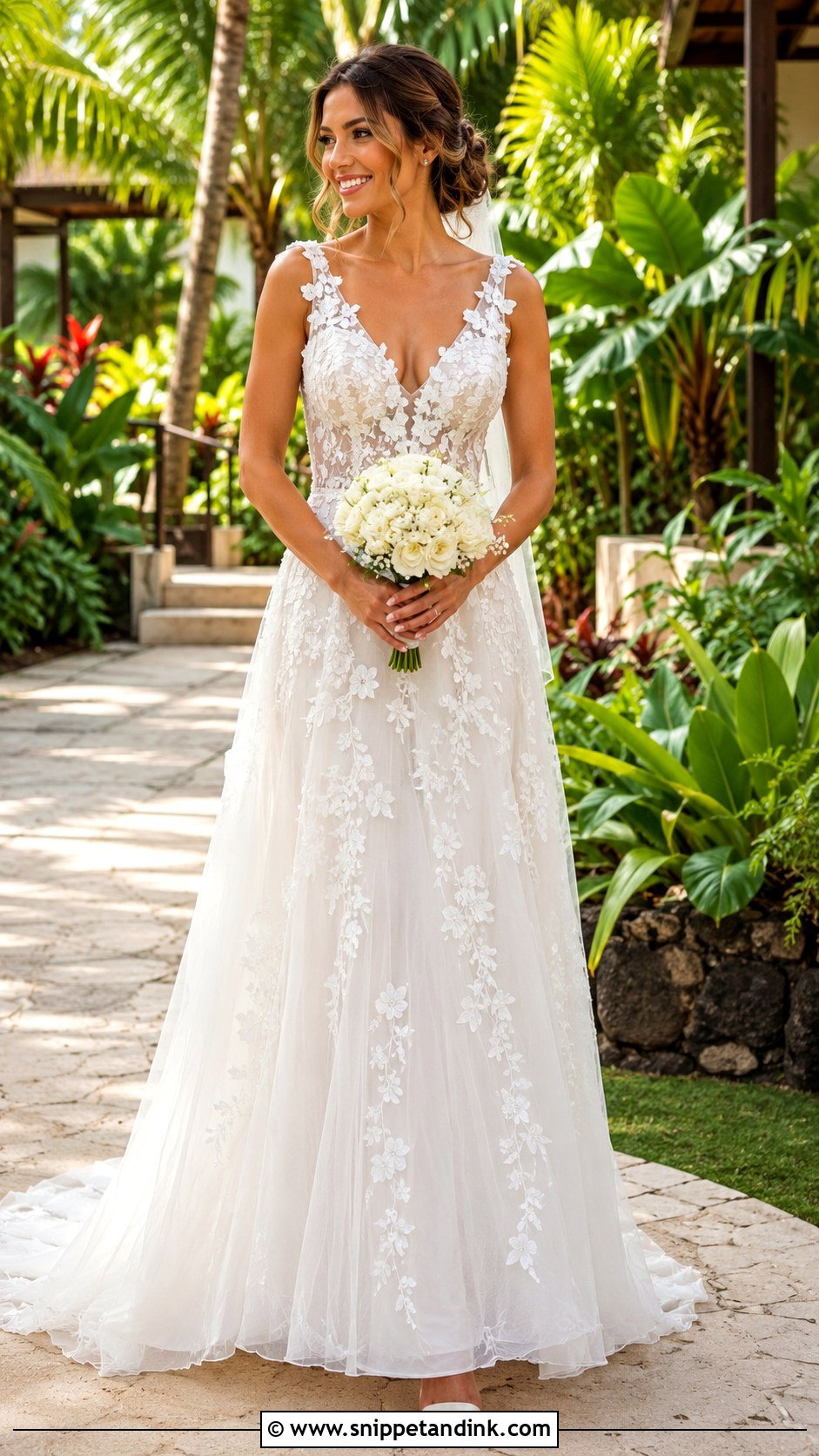
Floral appliqués echo the gardens around you without asking you to wear a colored gown. On a light A-line, I like three-dimensional flowers concentrated on the bodice, straps or upper skirt, with a plain base so the flowers have room. Plain ivory sandals, tiny earrings and a veil with minimal edging keep it calm, and a soft ponytail or loose updo suits the texture. Carry a bouquet in one or two colors so it doesn’t compete with the dress. If you’d like some color, pale blush, soft blue or light green embroidery still reads as bridal. Check how heavy the appliqués make the bodice. Dense flowers add surprising weight in heat.
18. Two-Piece Caribbean Wedding Dress
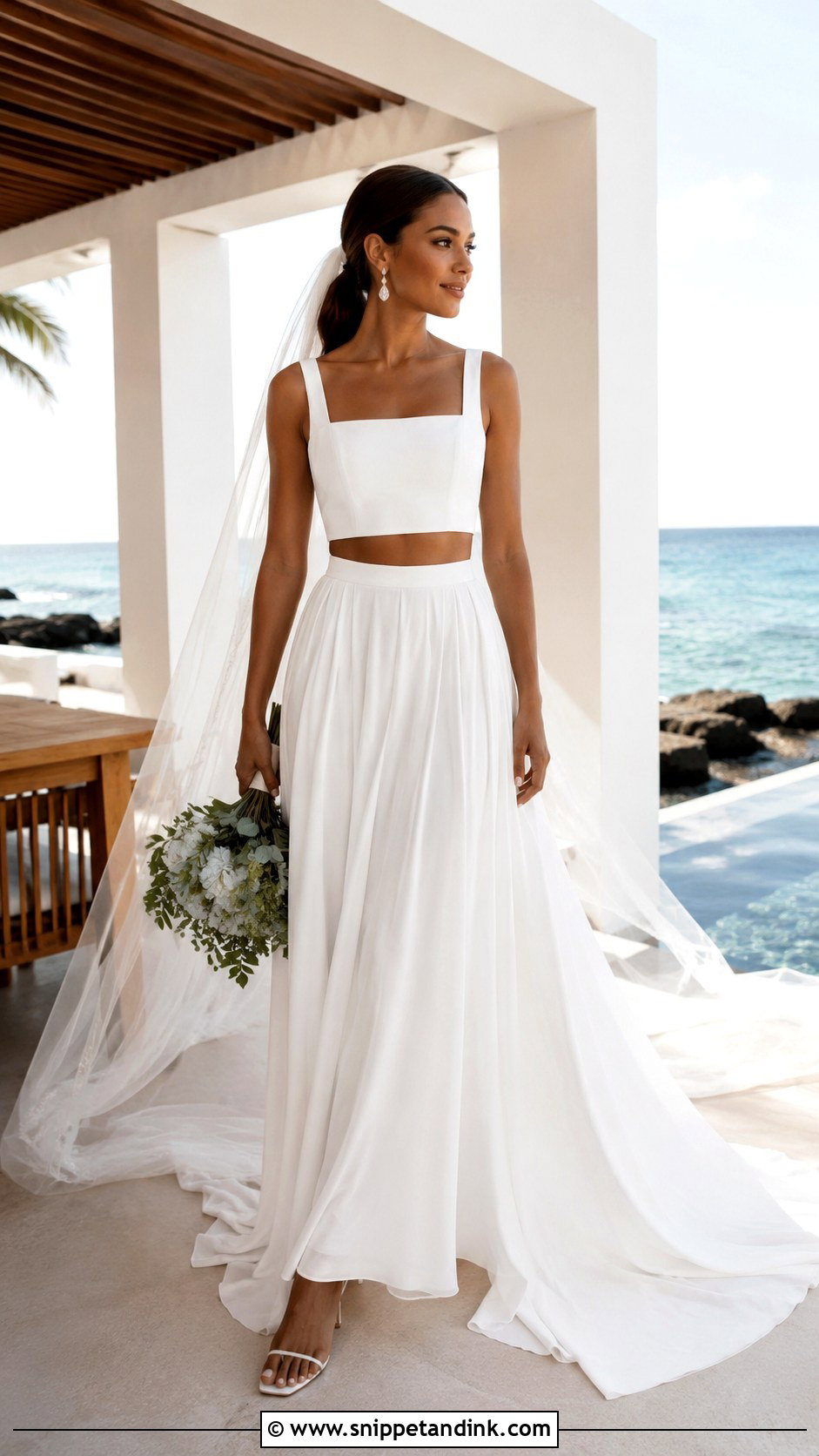
A two-piece bridal outfit is the easiest thing on this list to alter and pack. Pair a structured crop top or lace camisole with a high-waisted chiffon, crepe or satin skirt, and make sure the pieces overlap when you lift your arms unless you want a sliver of skin showing. A square-neck top with wide straps reads polished; a lace longline bodice feels more boho. Sleek sandals, drop earrings and a low ponytail finish it, with a fingertip veil for the ceremony only. Buy both pieces in the same shade from the same maker if possible. Two whites that matched in the shop can look different in strong sun.
19. Convertible Overskirt Caribbean Wedding Dress
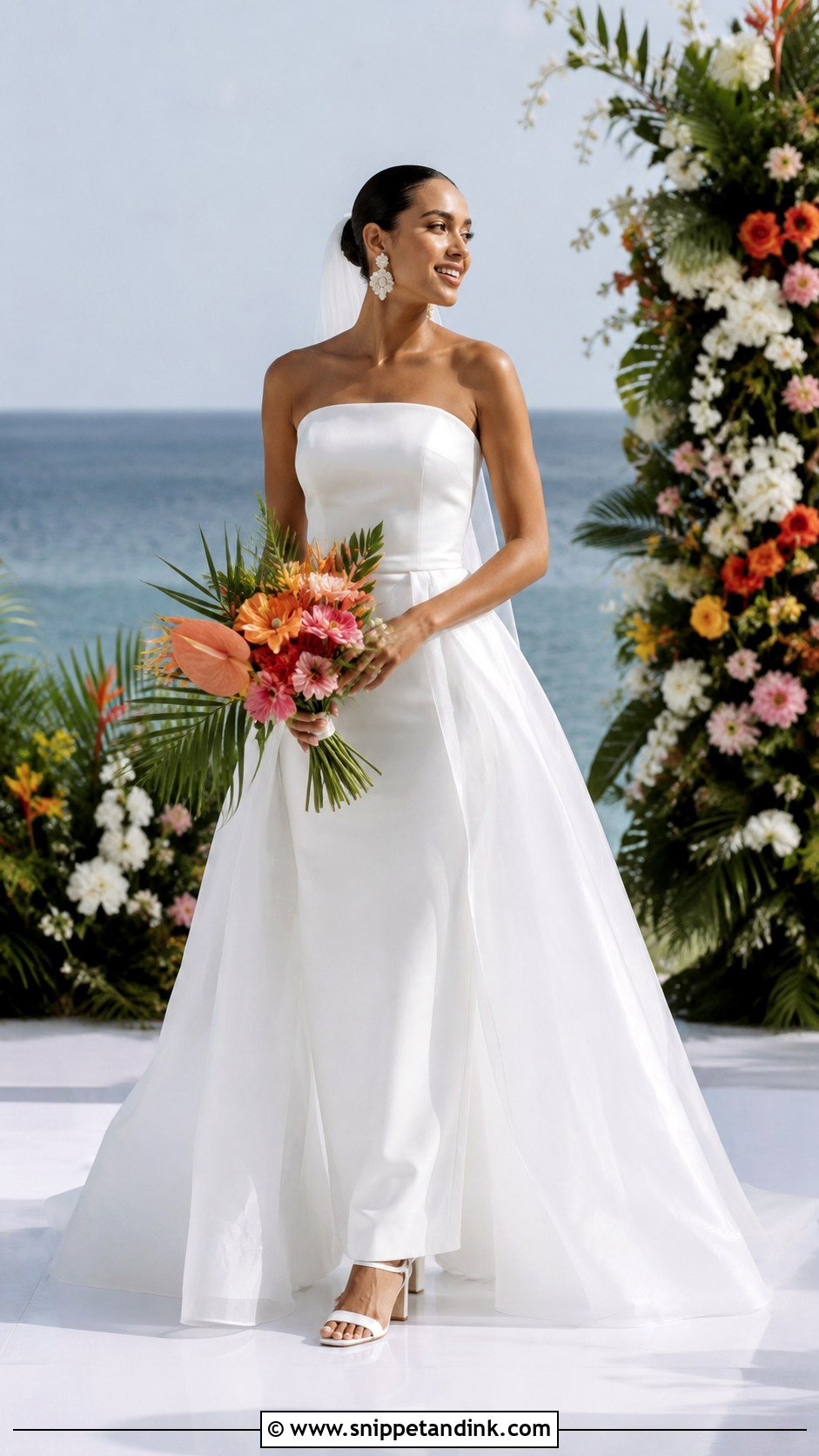
Two looks, one dress, no full change. Start with a fitted crepe sheath, a satin column or a simple mini, then add a light chiffon, organza or tulle overskirt for the ceremony. Take it off before dinner and the slim dress underneath carries you through dancing. Block-heel sandals, statement earrings and a sleek updo suit both versions. I always check the overskirt fastening in wind: a waistband that sits smoothly in the shop can twist on a breezy beach. Avoid very long overskirt layers on sand, and plan to remove the veil at the same moment as the skirt.
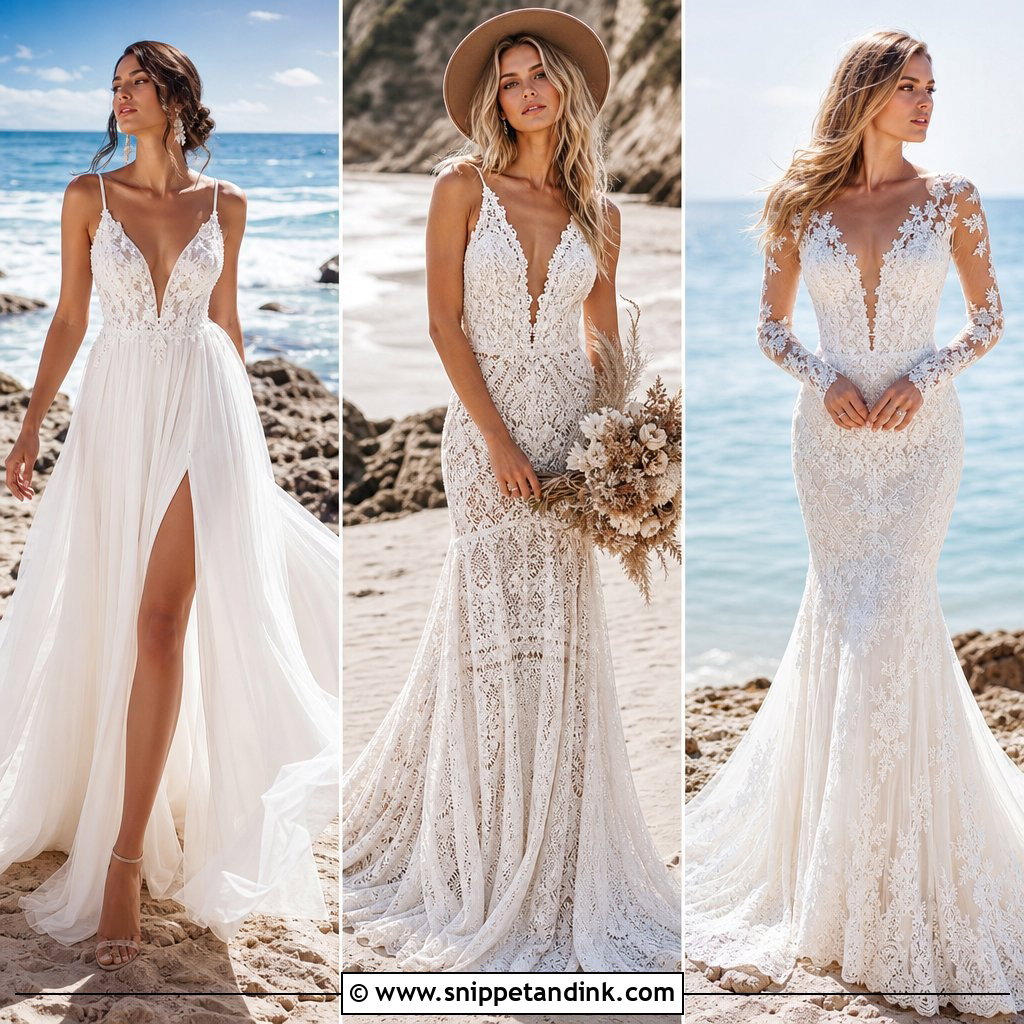
20. Ruched A-Line Caribbean Wedding Dress
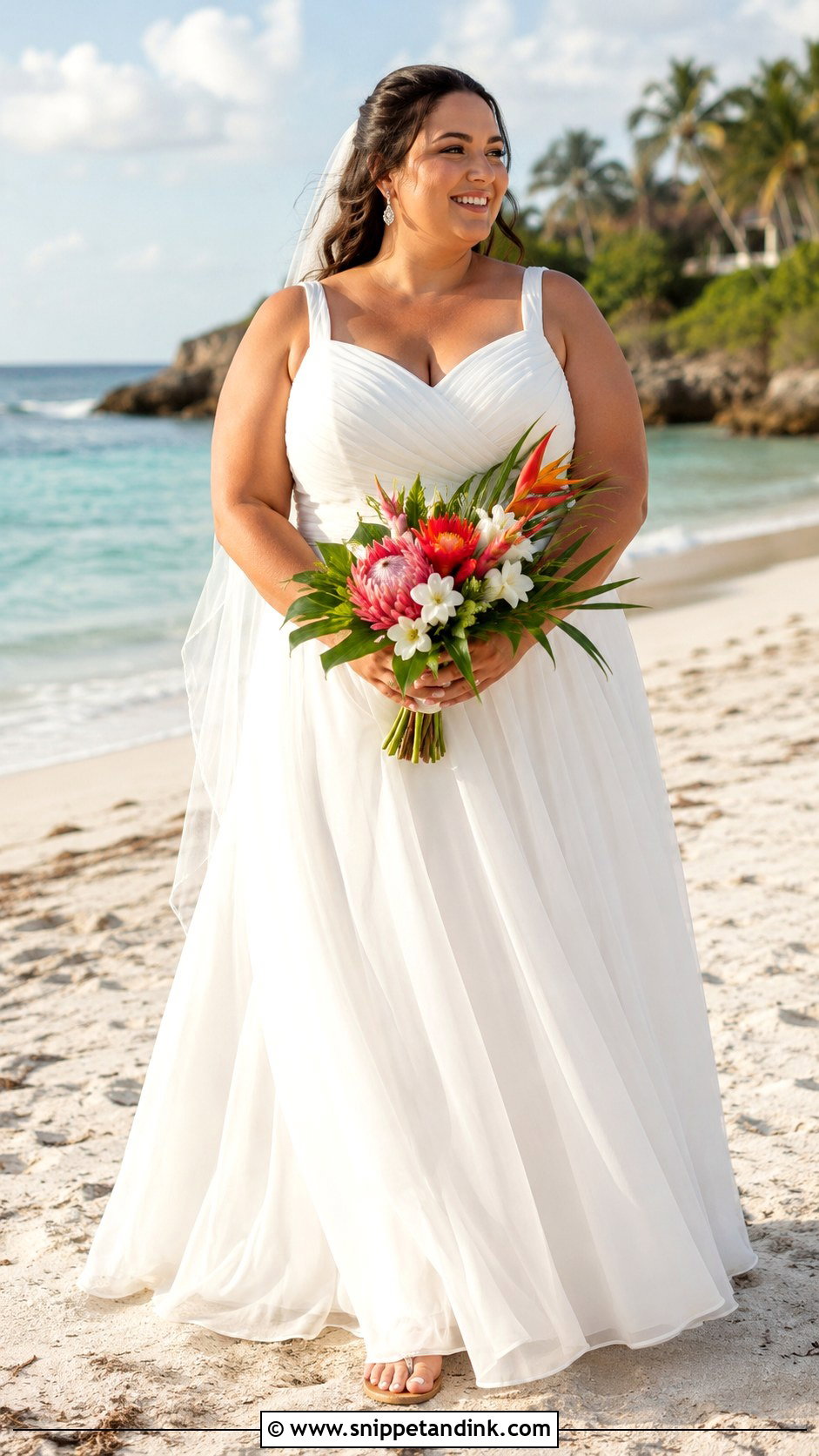
Ruching shapes the bodice and waist without boning, which makes it comfortable and easy to fit across many body types. An A-line in chiffon or stretch crepe with supportive straps, a secure neckline and smooth lining is the base. Diagonal ruching defines the waist; a gathered skirt gives room through the hips without bulky layers. Cushioned flat sandals, medium earrings, a structured tropical bouquet and a half-up style with a light veil keep it relaxed. Petite, tall, straight or plus-size, the adjustment points are the same: strap placement, hem length and bust support. One caution: ruched stretch fabric can ride up when you sit, so check it seated.
Flying the Dress to the Island Without Crushing It
I never let a gown go in checked luggage. If the bag is lost, there is no replacement on an island a week before the wedding.
- Call your airline before you book seats and ask how they handle a wedding dress in a garment bag. Some will hang it in a closet, but that’s at the crew’s discretion, so plan for it to fit in an overhead bin.
- Ask the shop to fold it with acid-free tissue between the layers and in the bodice. Folds set with tissue fall out far faster than creases from a crushed bag.
- Unpack and hang it the moment you arrive, high enough that the skirt doesn’t touch the floor, in a room with the air conditioning on rather than a damp bathroom.
- Use a handheld steamer on chiffon, tulle and crepe, held a little away from the fabric. Test silk on an inside seam first, because a drip of condensed water can leave a mark.
- Pack a small kit: clear nail polish for snags, a few safety pins, white chalk for marks, and a lint roller for sand.
Sunscreen, Self-Tanner and an Ivory Neckline
The stains I see most on destination gowns aren’t from sand or wine. They’re from sunscreen and tan transferring onto the neckline, armholes and inner bodice. Apply sunscreen well before you dress and let it set, choose a formula that dries clear rather than leaving a white cast, and skip any fresh self-tanner in the days right before. If your bodice touches your skin all day, put a cotton pad or tissue inside the neckline while your hair and makeup are being finished.
Try It on Sand Before You Fly
A good Caribbean bridal look is mostly about comfort that still looks deliberate. Light construction, real support, shoes that suit the ground and a hem you can manage will carry you from the ceremony to shoreline portraits and dancing, whatever style you pick. Before you travel, put the whole outfit on together: undergarments, jewelry, veil and shoes. Sit, walk, raise your arms and test the bustle during alterations. Then choose the dress that feels like you rather than the one beach brides are supposed to wear. Chiffon, silk, lace or a two-piece can all work in the islands; let the fabric and the venue narrow it before the trend does.
You'll Like These Ideas:


Leave a Reply