
Island weddings ask a gown to do something most bridal fabric wasn’t designed for: stay comfortable in heat, wind and humidity for hours. Below are dresses for sandy beaches, garden ceremonies, oceanfront resorts and breezy destination ceremonies. As a stylist, I steer warm-weather brides toward chiffon, airy lace, soft crepe and fluid satin over layered tulle and heavy beading. Open backs, small slits, botanical appliqués and removable trains add personality without bulk. Stable shoes and makeup that can handle humidity matter as much as the dress itself.
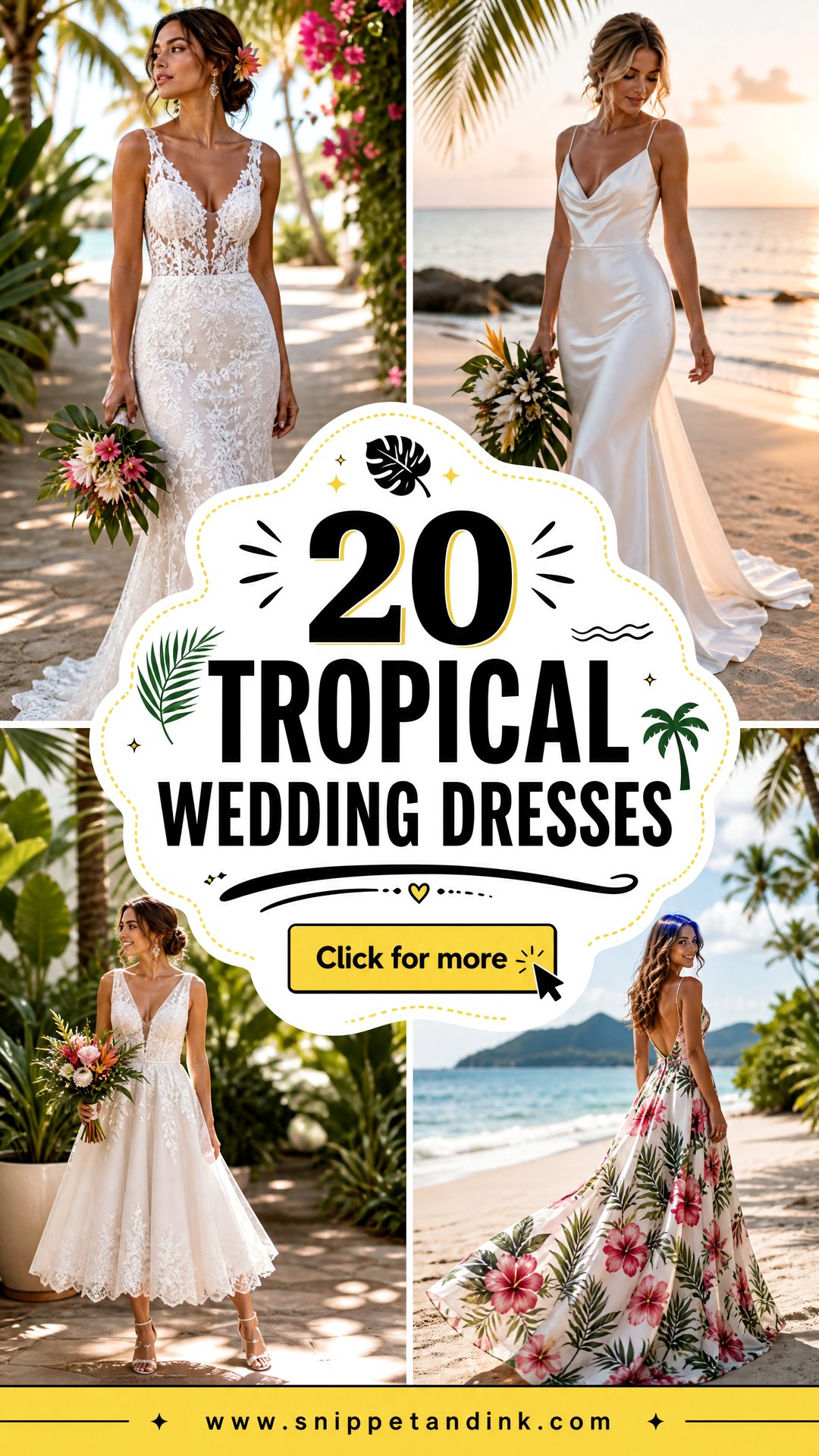
Getting the Gown to the Island in One Piece
The dress has to survive the trip before it can survive the heat, and this is the part destination brides most often leave until the last week.
- Carry it on. Call the airline ahead and ask whether there’s closet space on board; if not, a folded garment bag goes in the overhead bin. Never check it.
- Pack it the way a bridal shop would, with tissue paper in the folds of the skirt and inside the bodice, so creases soften instead of setting.
- Hang it in the bathroom during a hot shower the first night. Humidity relaxes chiffon creases on its own.
- Satin and crepe need a proper steamer held a few inches away. Bring a handheld one or confirm the hotel has one, and never put an iron directly on chiffon or satin.
Arrive at least a couple of days early if you can. If a strap needs a stitch or a hook comes loose in transit, you want time to find a local tailor, not a scramble on the morning itself.
1. Chiffon A-Line Tropical Wedding Dress
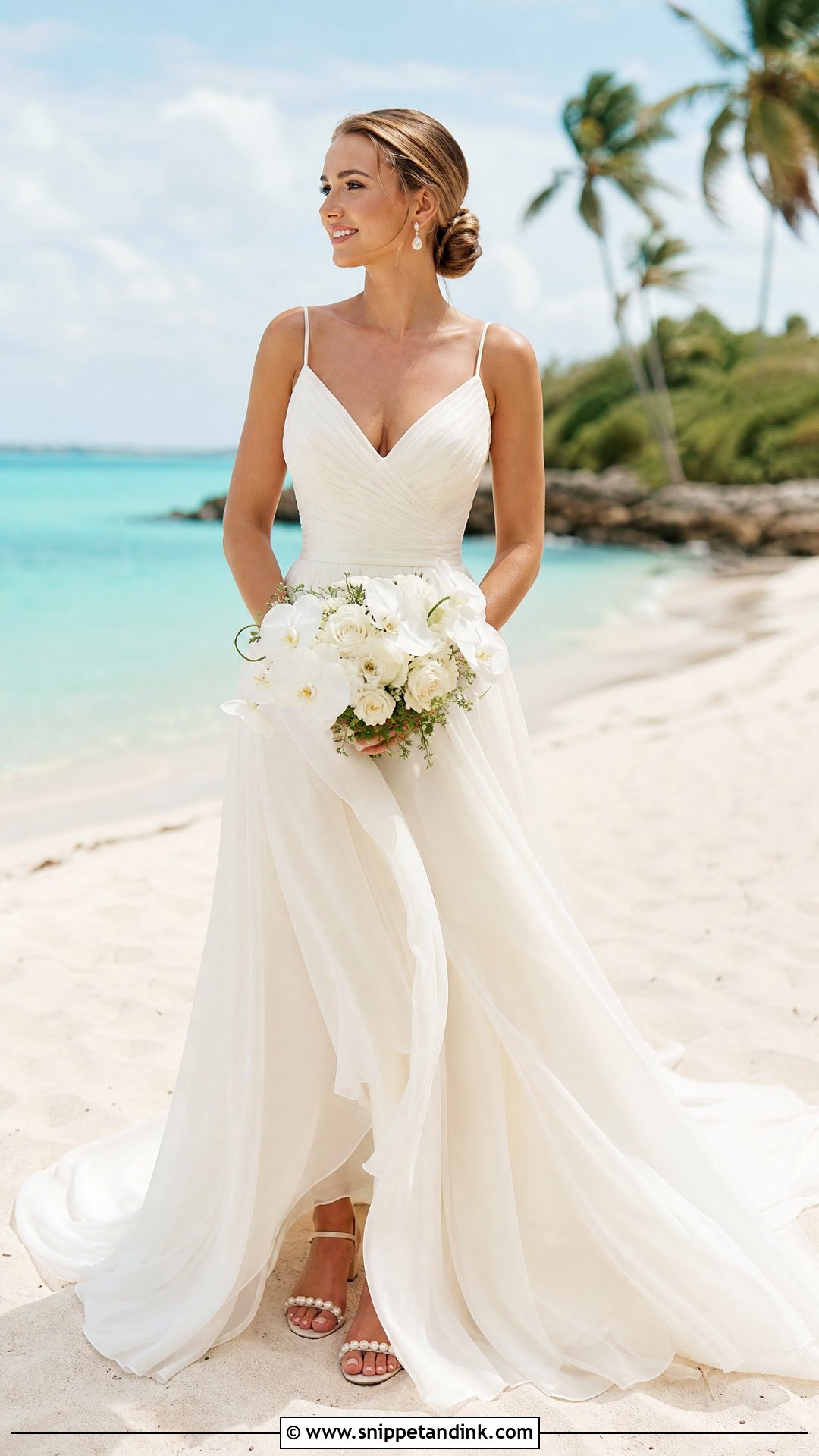
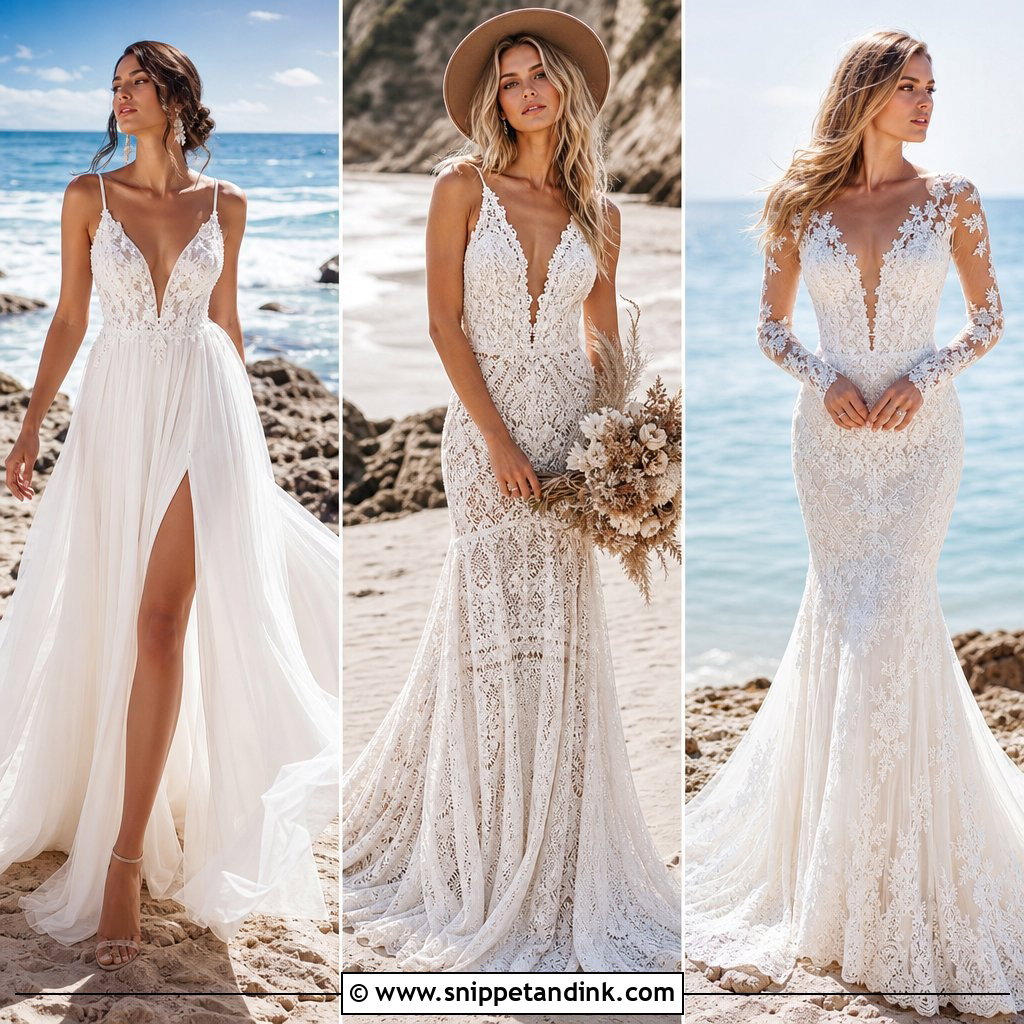
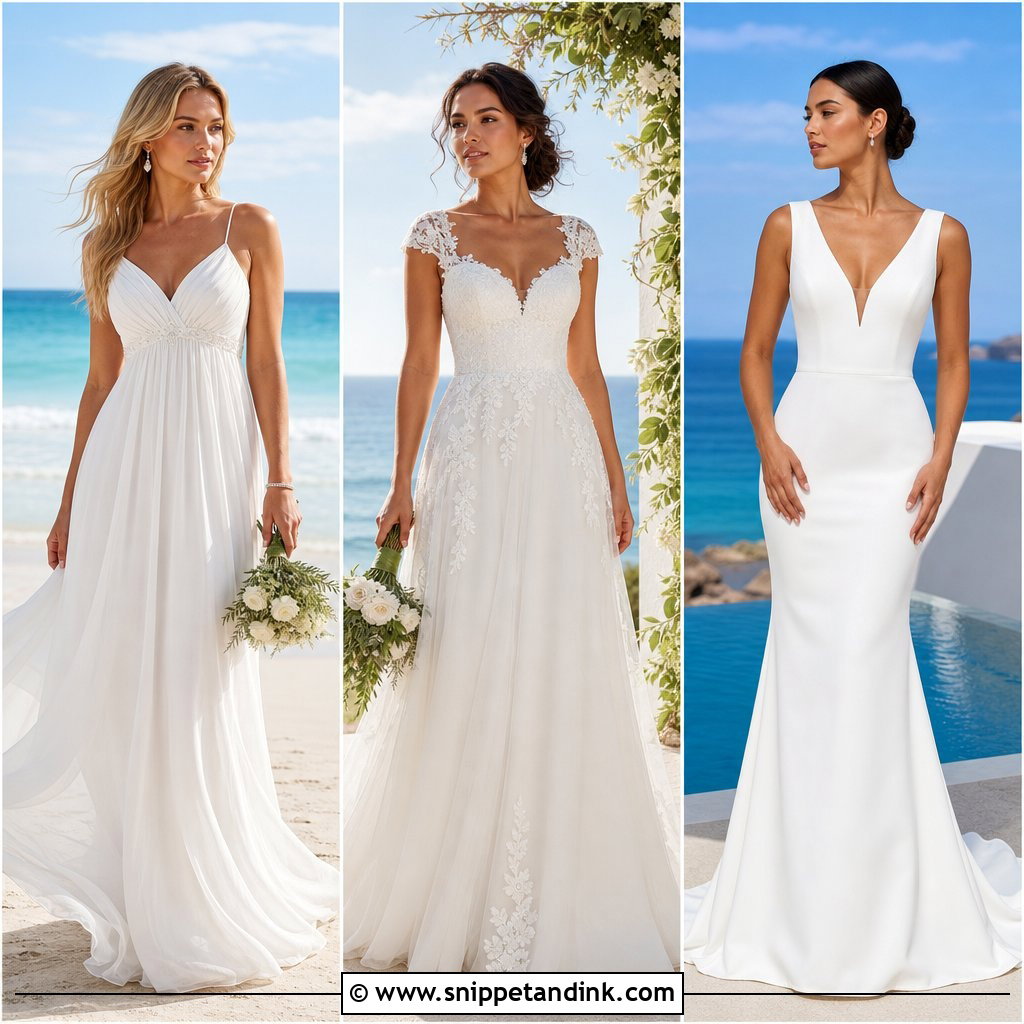
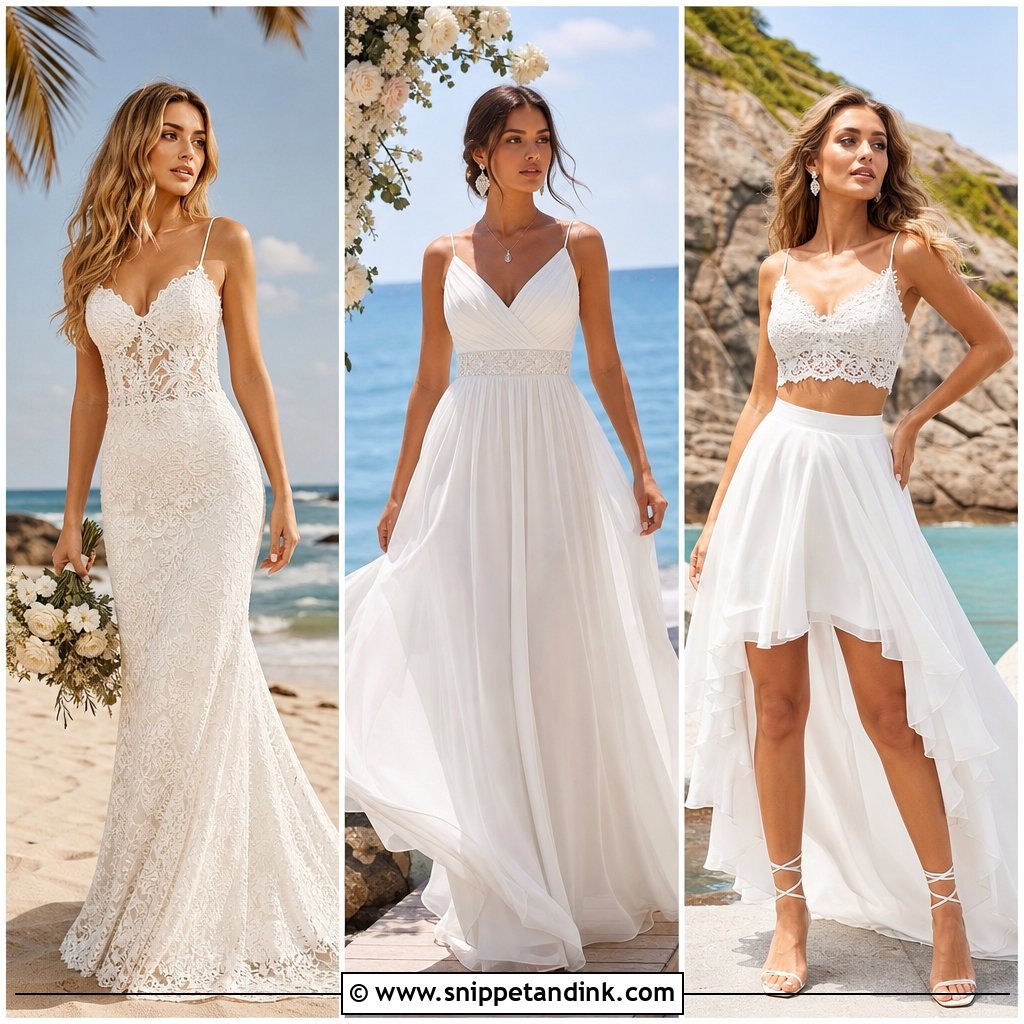
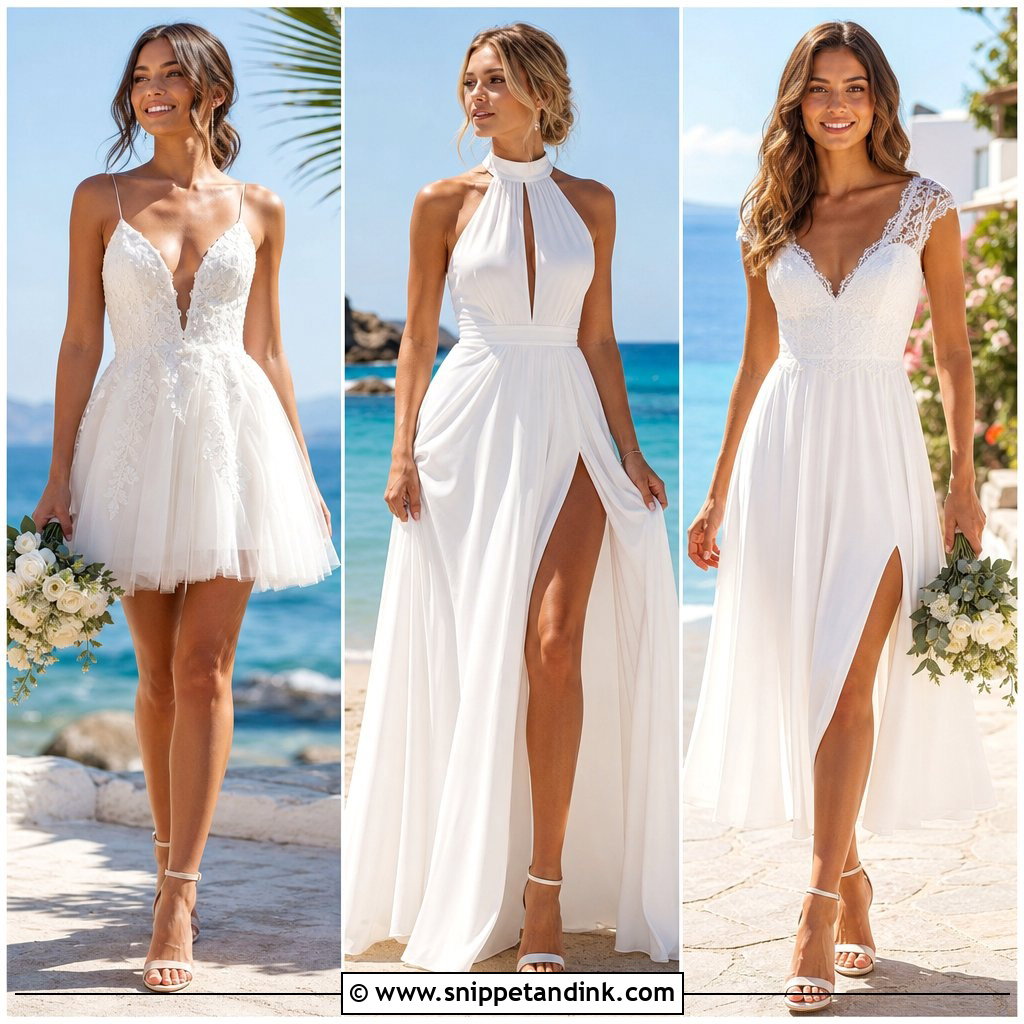
Chiffon is the fabric I reach for first by the ocean. It breathes, it moves in a breeze and it hardly wrinkles in a suitcase. A fitted bodice with narrow straps and a softly layered skirt keeps the volume modest, and ivory or soft white reads clean against blue water. Pair it with flat pearl sandals, delicate drops and a loose low bun pinned firmly, since sea air loosens hair fast. White orchids with greenery add color. On sand, skip the train and ask for a floor-skimming hem; even a short train collects sand and drags. It suits nearly every height and figure.
2. Lace Sheath Tropical Wedding Dress
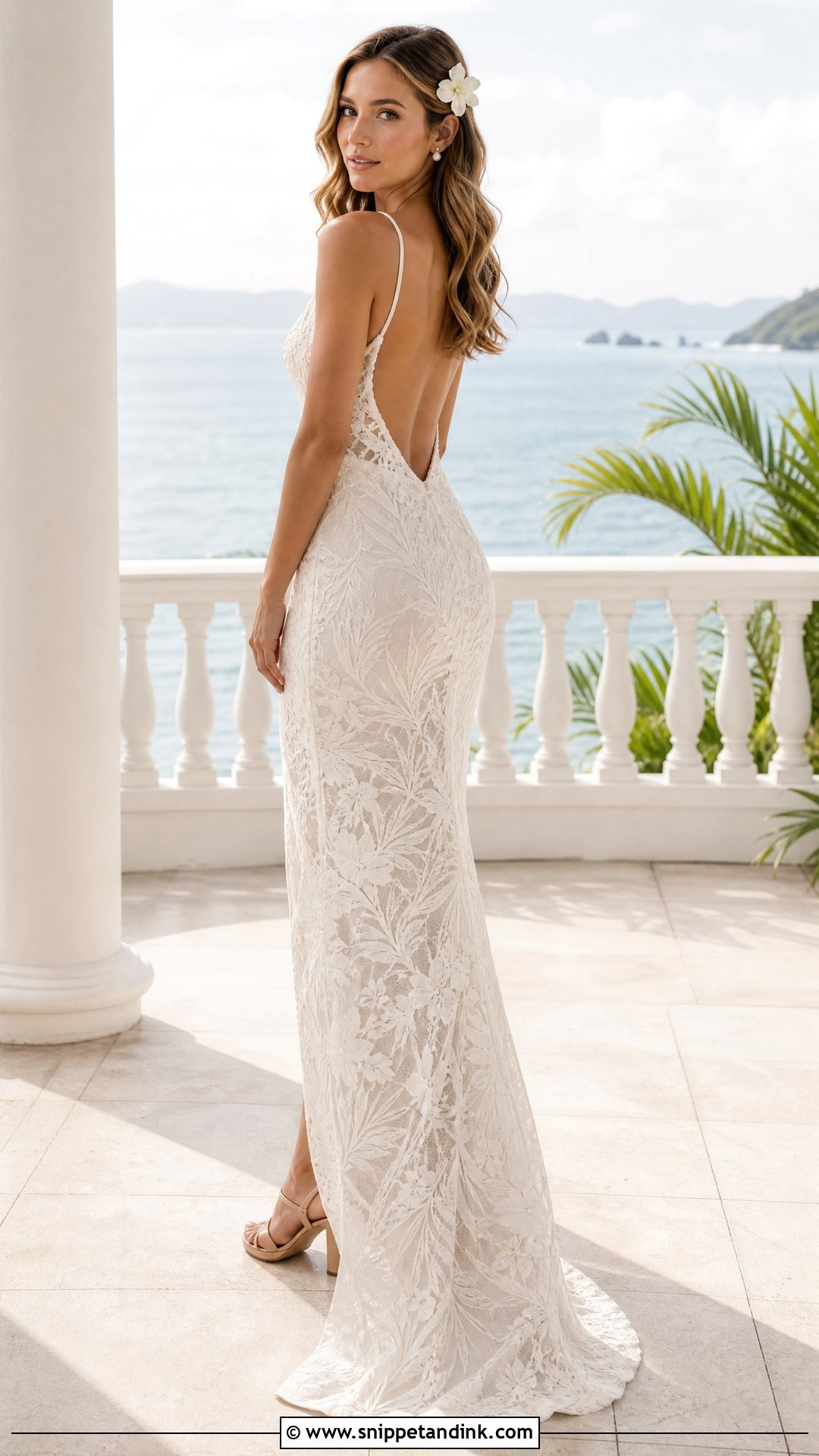
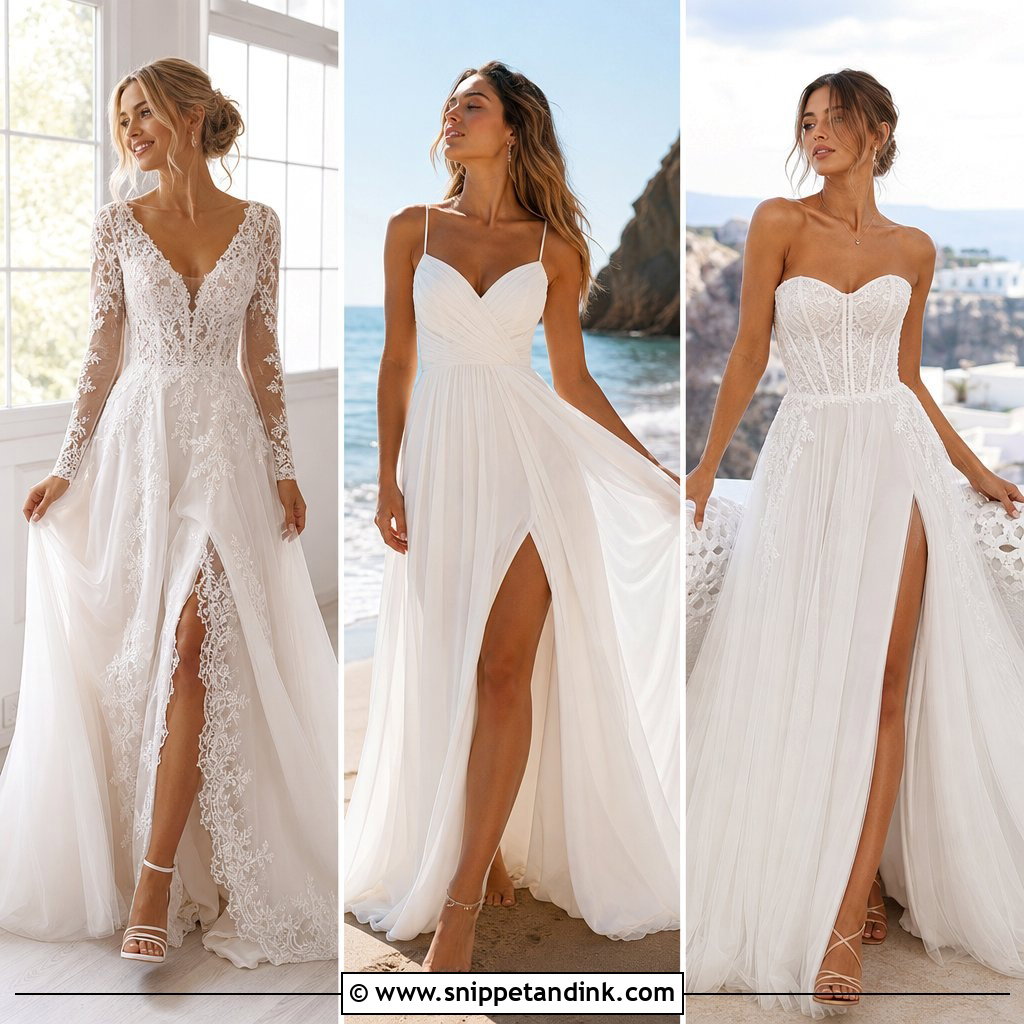
Heavy corded lace over a thick lining is warm, so for an afternoon ceremony I look for fine floral lace over a breathable lining. A sheath keeps it relaxed, and a V-neck with an open back lengthens the body without needing boning. Nude block heels suit a resort terrace; barefoot sandals suit the sand. Pearl studs, a slim bracelet and a flower tucked into soft waves are enough. I’d only add a chapel veil if the ceremony spot is sheltered. On an open beach a long veil whips across faces in every photo, and a floral comb gives the bridal finish without the fight.
3. Satin Slip Tropical Wedding Dress
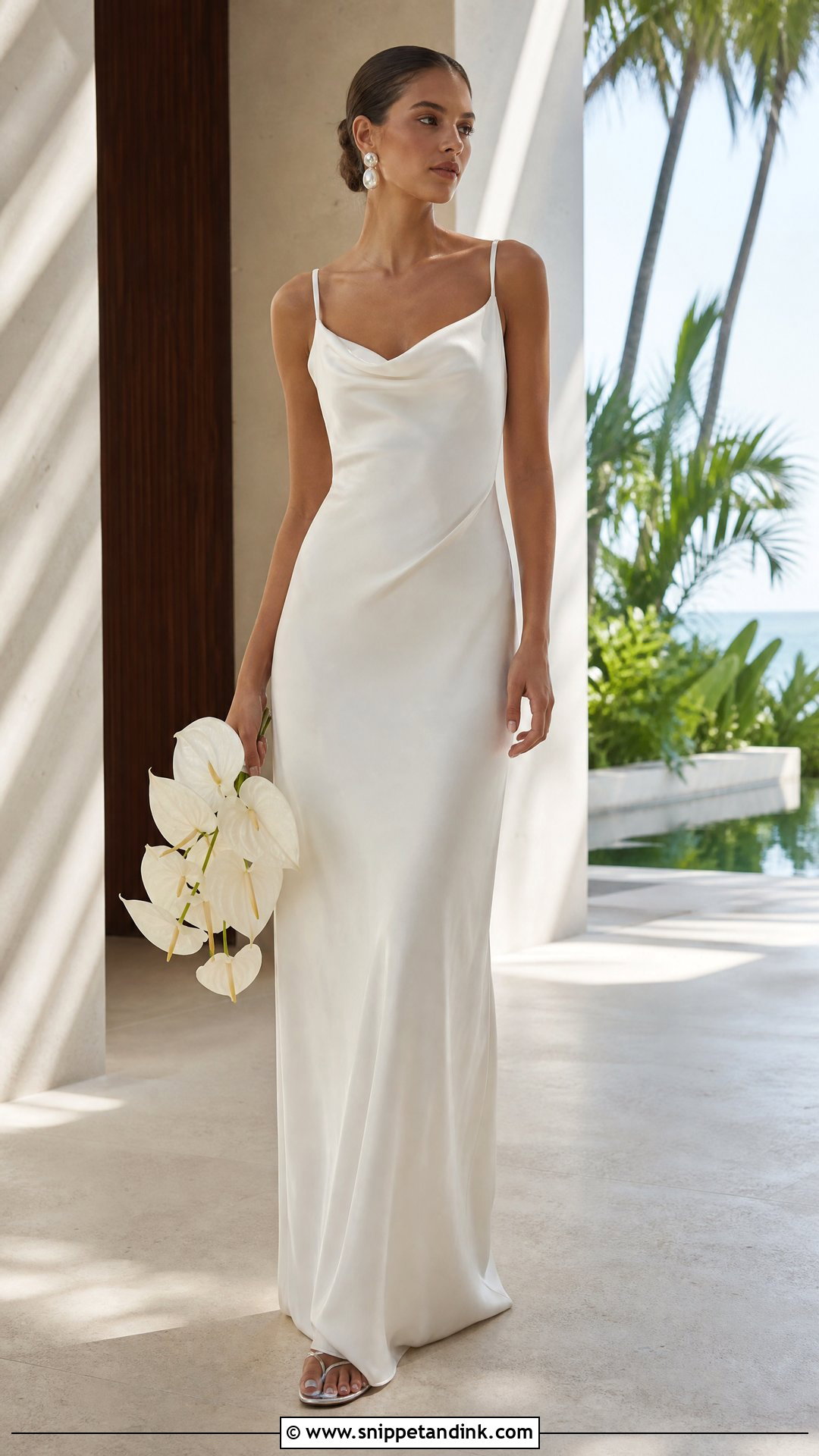
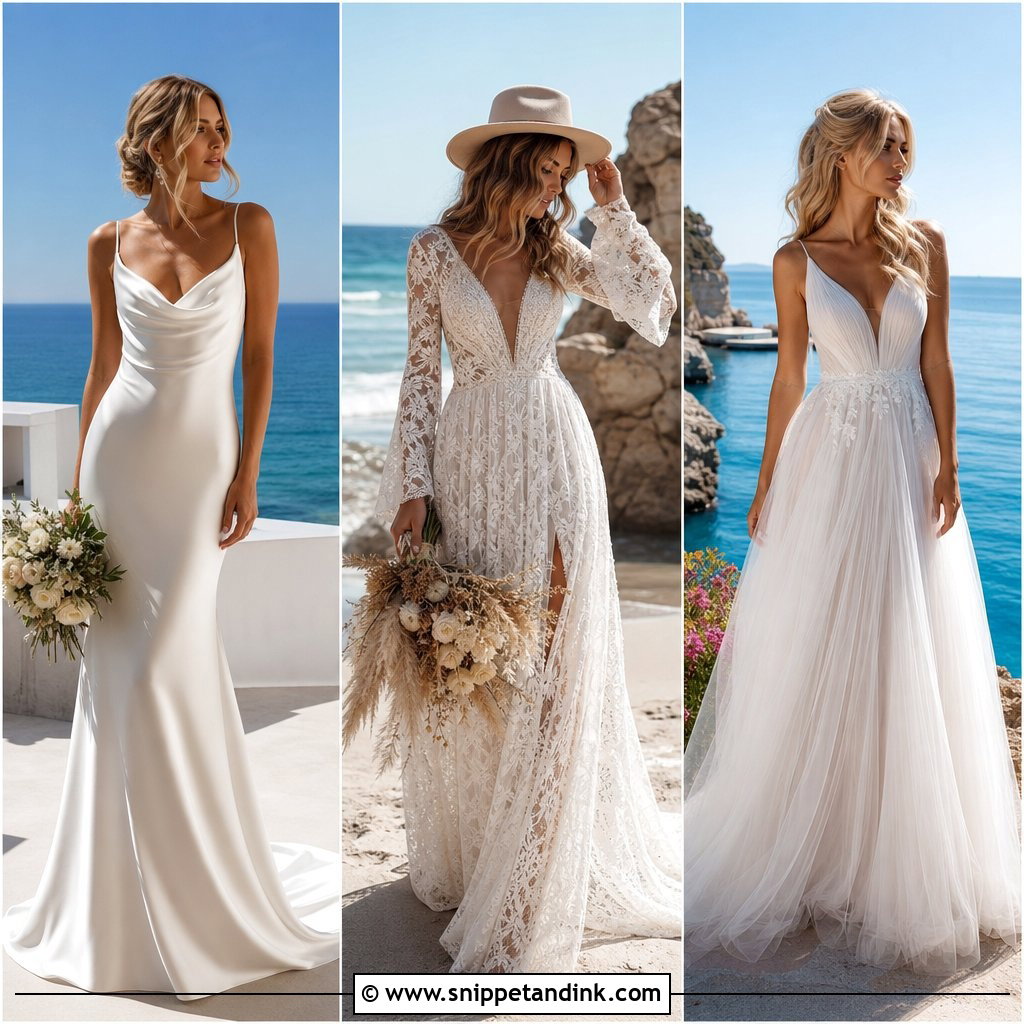
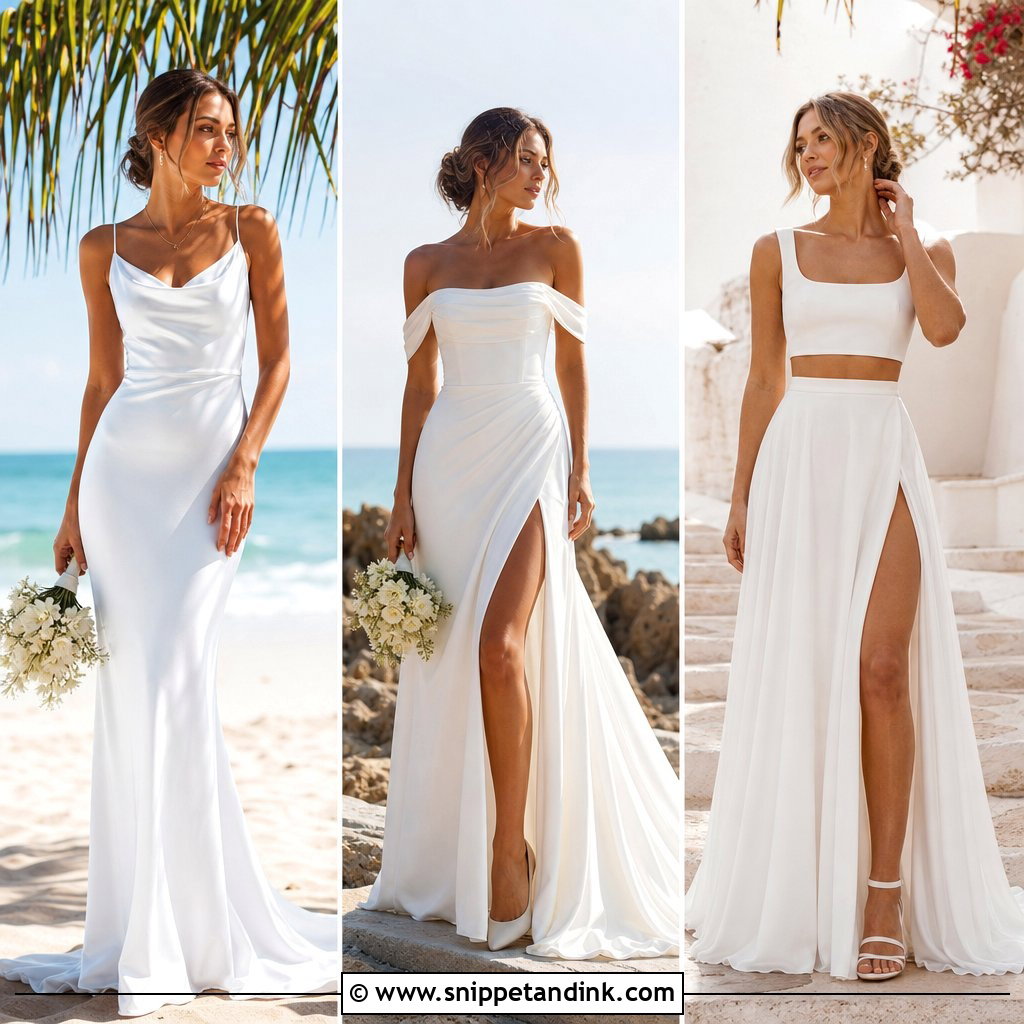
Bias-cut satin follows the body closely, which is both its appeal and its risk. It shows every line underneath and every drop of sweat, so I fit it early with the exact undergarments and keep blotting papers within reach on the day. Lightweight charmeuse with adjustable straps, a draped neckline and a low back suits a minimalist island ceremony. Metallic flat sandals, sculptural pearl earrings and a sleek bun or ponytail keep it modern, and a compact bouquet of white anthuriums adds the tropical note. A short veil or shoulder drape gives movement without weighing it down.
4. Off-Shoulder Tropical Wedding Dress
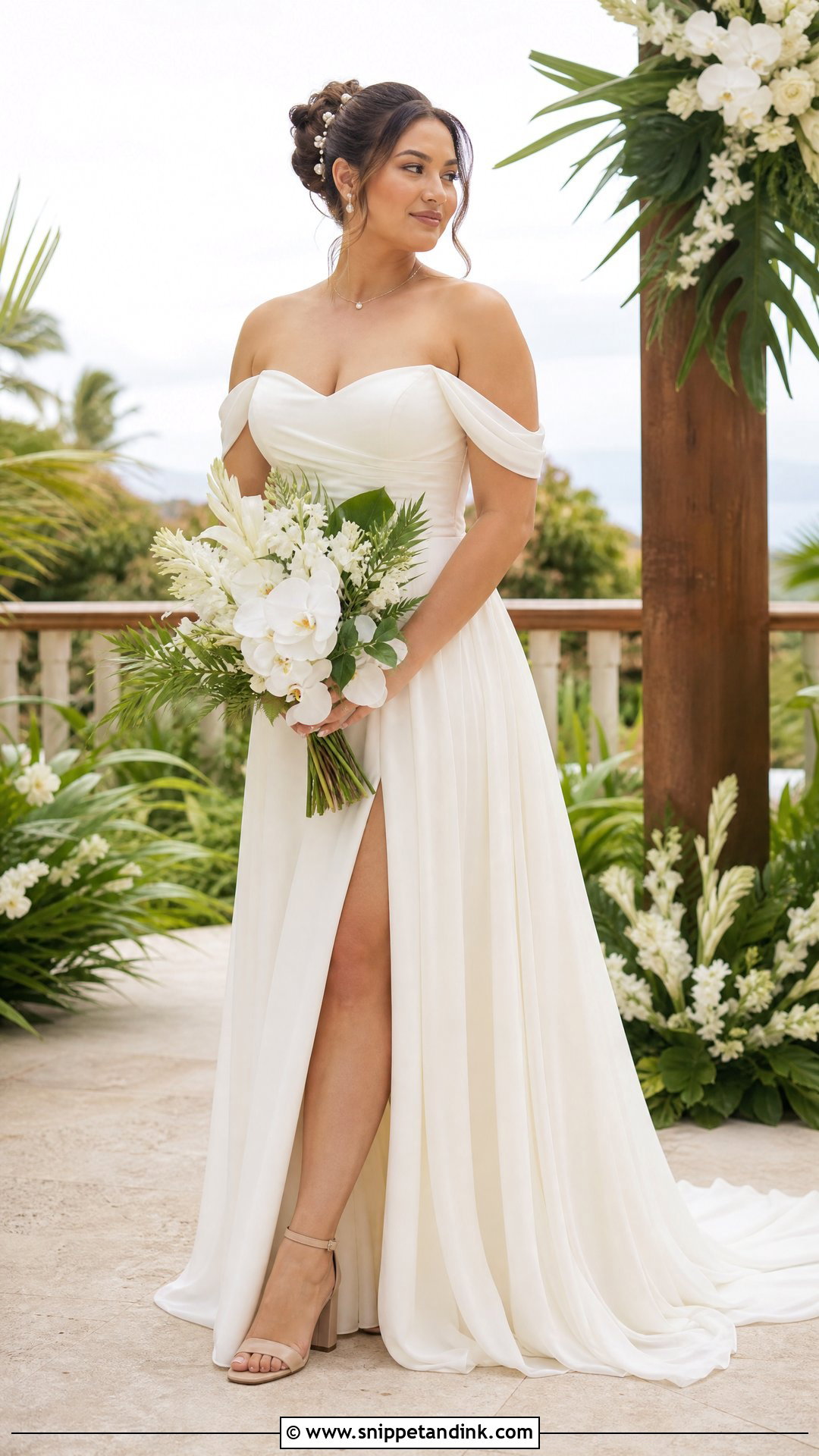
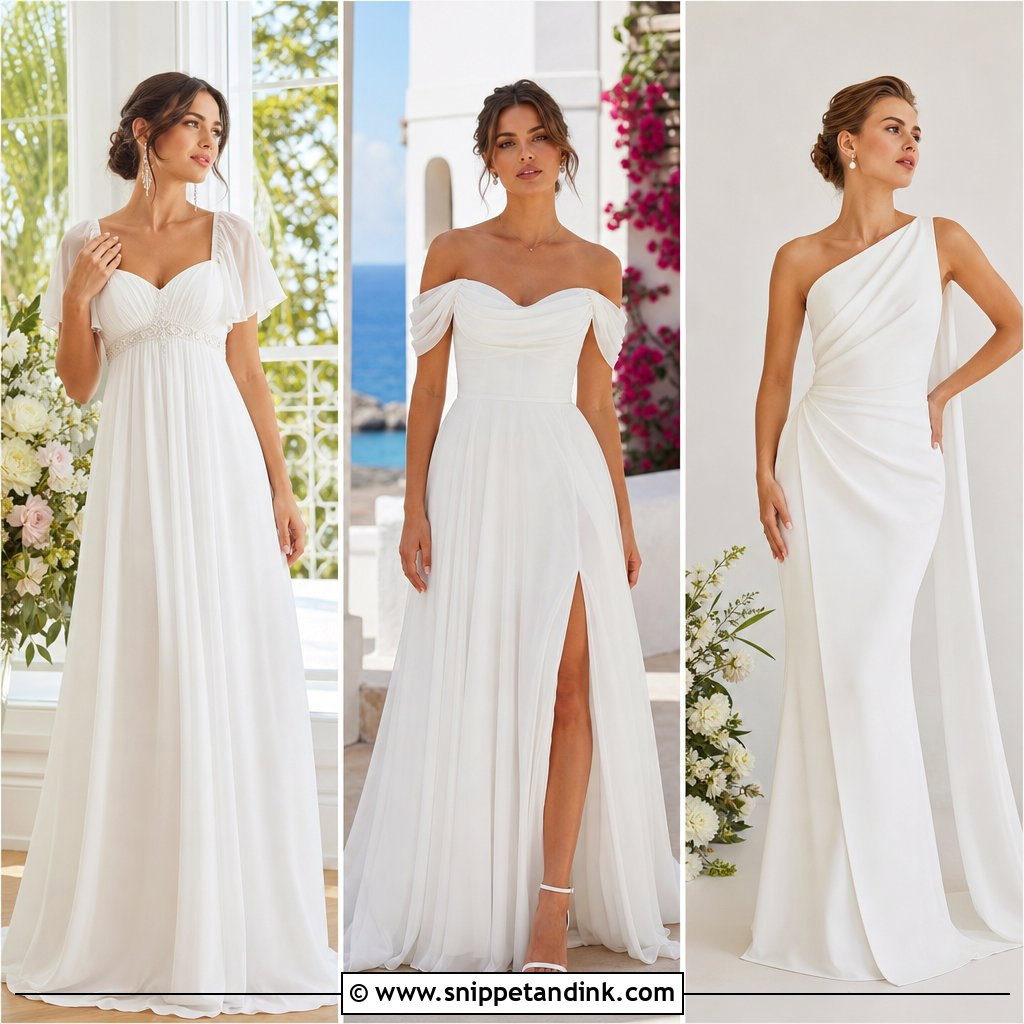
Off-shoulder sleeves look romantic until they start slipping, and loose ones slip constantly. I want sleeves that sit snugly on the upper arm, often with a little elastic or silicone grip inside, on a fitted crepe bodice over a chiffon skirt. Then I test movement: arms up for a hug, bouquet raised, a few dance steps. If the sleeves restrict any of that, they need adjusting. A fine pendant, pearl hairpins and low block heels finish it, and a loose chignon keeps the shoulders clear and your neck cooler. White ginger flowers, orchids and glossy greenery suit the setting.
5. Halter Neck Tropical Wedding Dress
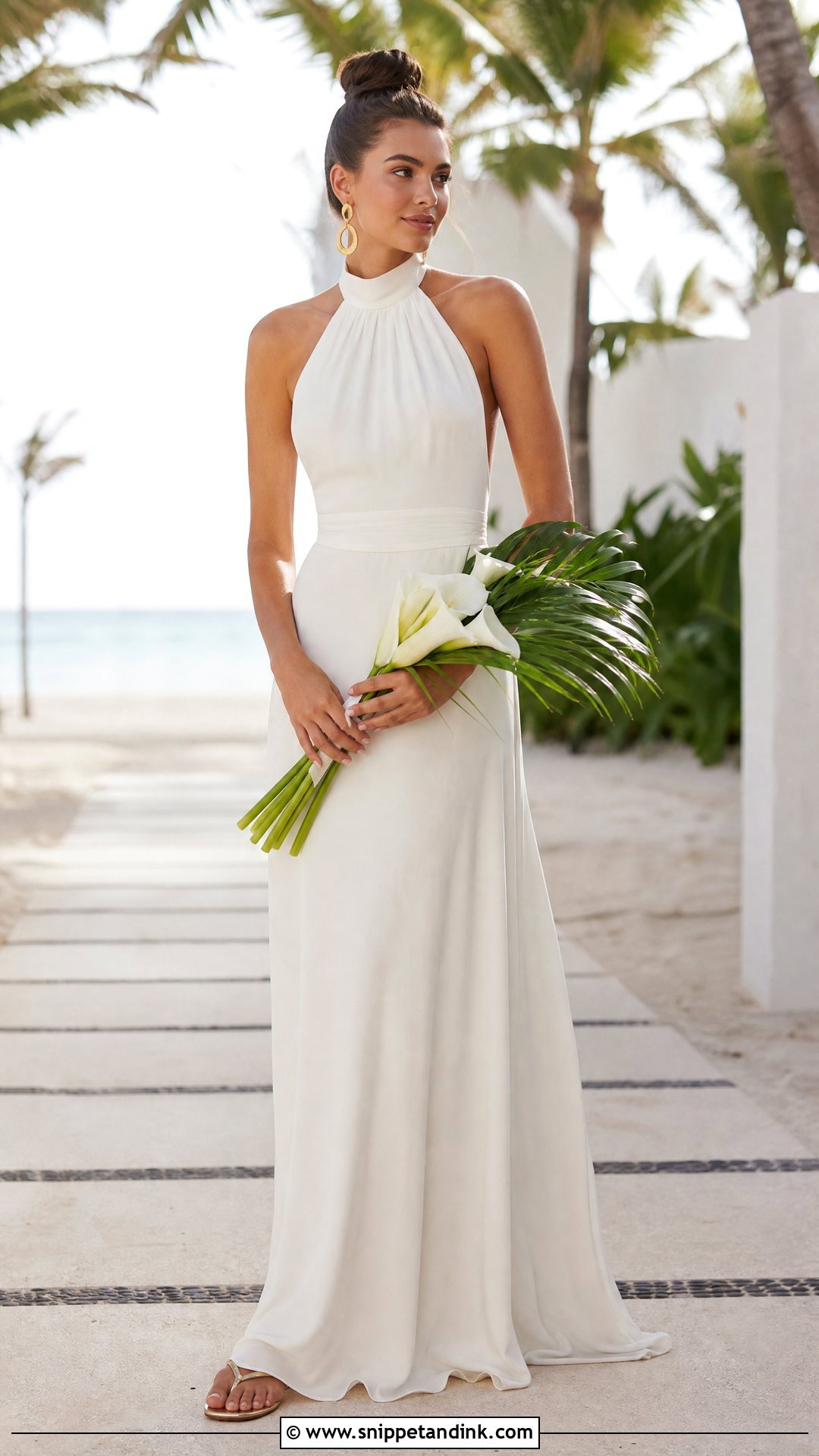
A halter leaves the shoulders bare and the arms free, which counts for a lot in heat. Lightweight crepe or chiffon with a defined waist and a fluid skirt works well, and the high neckline balances an open back. The neck strap carries weight, though, and a heavy bodice hanging from it gives some brides a sore neck by evening. If you need bust support, I’d build in a corset or cups rather than relying on the halter alone. Gold drops, a slim cuff and strappy flat sandals suit it, with a high bun that stays controlled in humidity. White calla lilies and palm leaves match its clean shape.
6. Boho Lace Tropical Wedding Dress
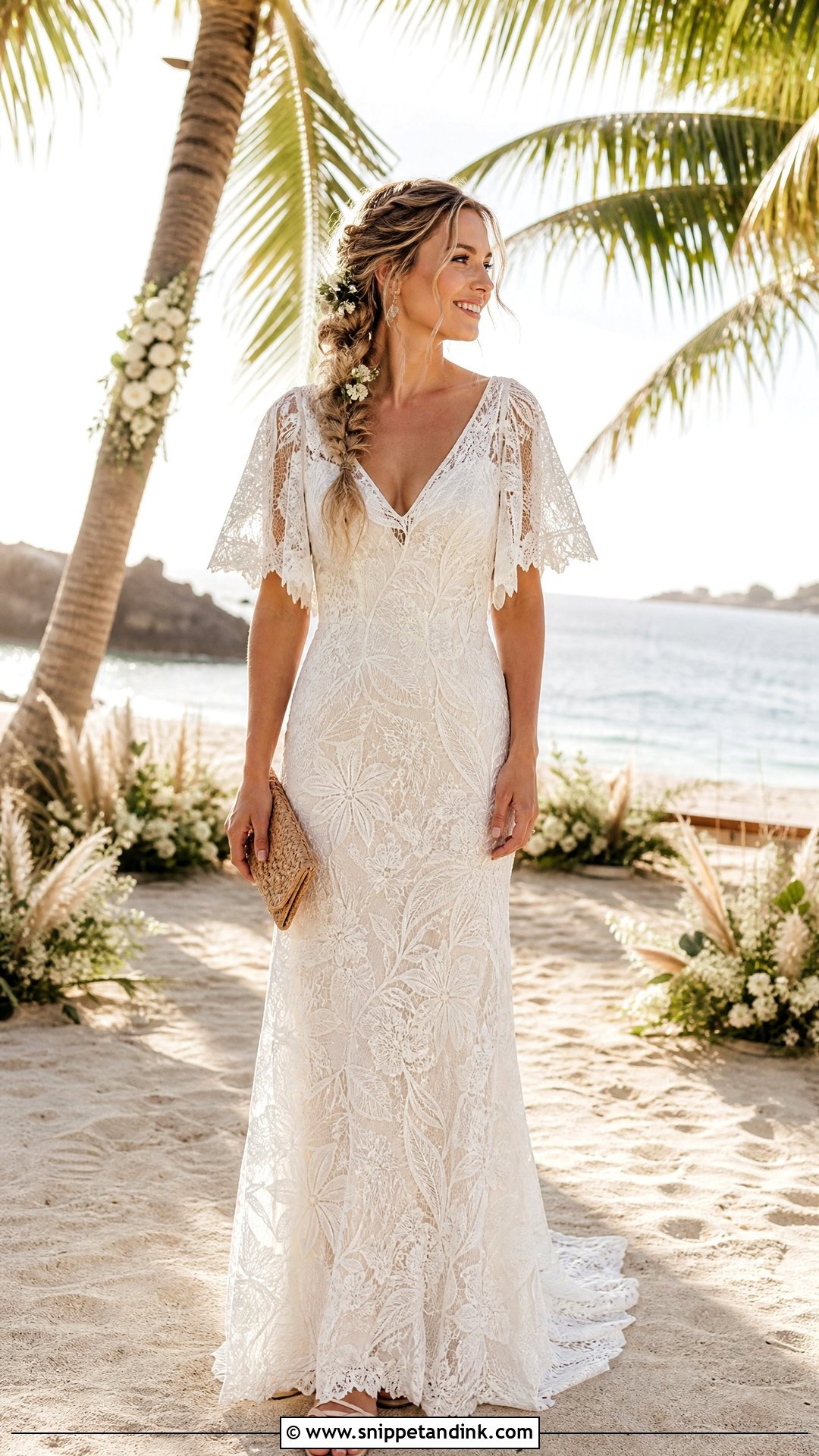
Boho lace belongs at a barefoot ceremony among palms and natural textures. Look for soft botanical lace with flutter sleeves and a gently flared skirt over a comfortable fitted lining. Stiff lace fights the breeze and looks stagey on the shore, so I always handle the fabric before recommending a style. Flat sandals, a woven clutch and small gold hoops keep it relaxed, as does a textured braid with tiny white flowers. Carry orchids, ferns and trailing greenery instead of a round bouquet, and keep to a short sweep train on sand, grass or uneven paths.
7. High-Slit Tropical Wedding Dress
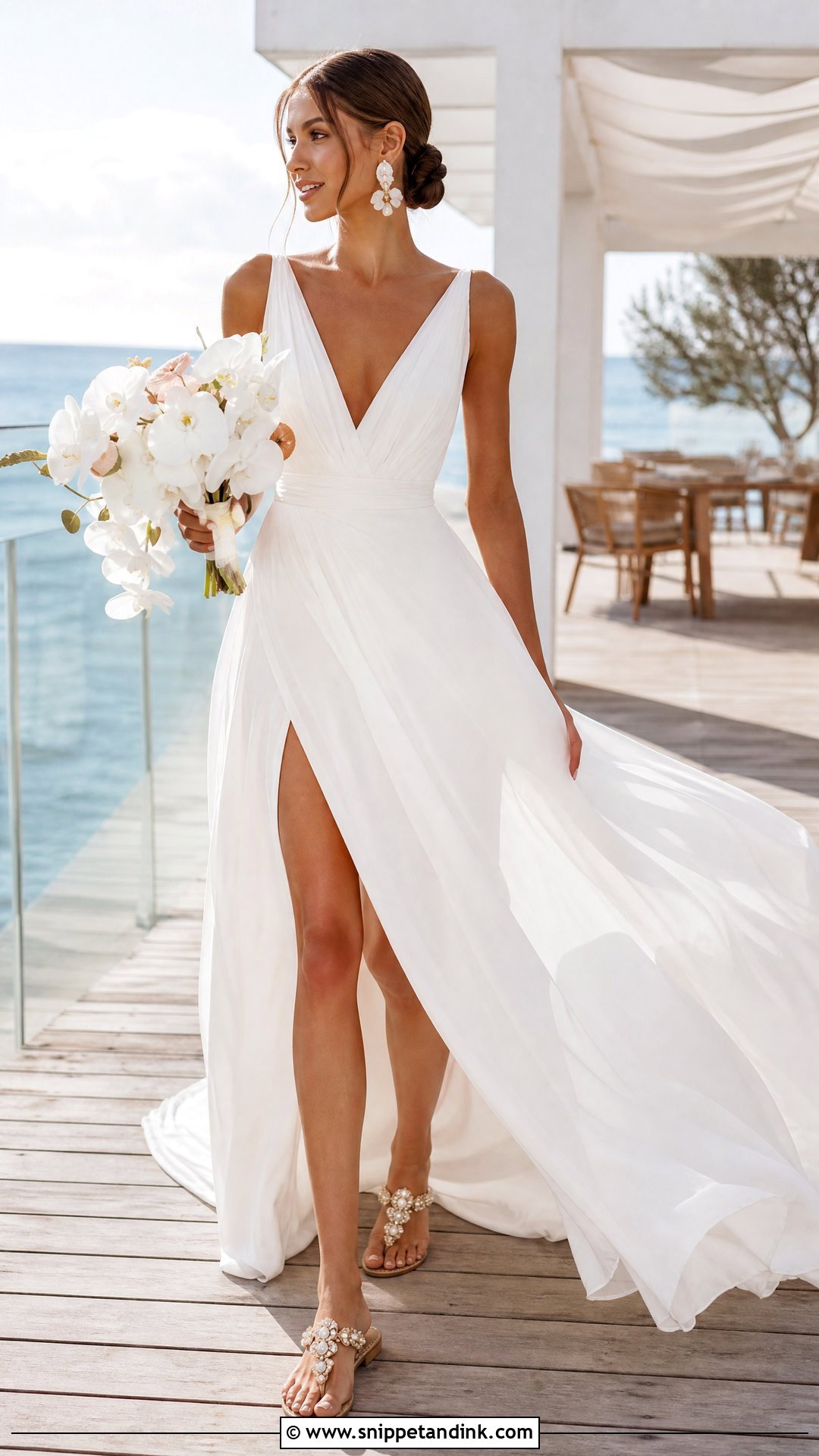
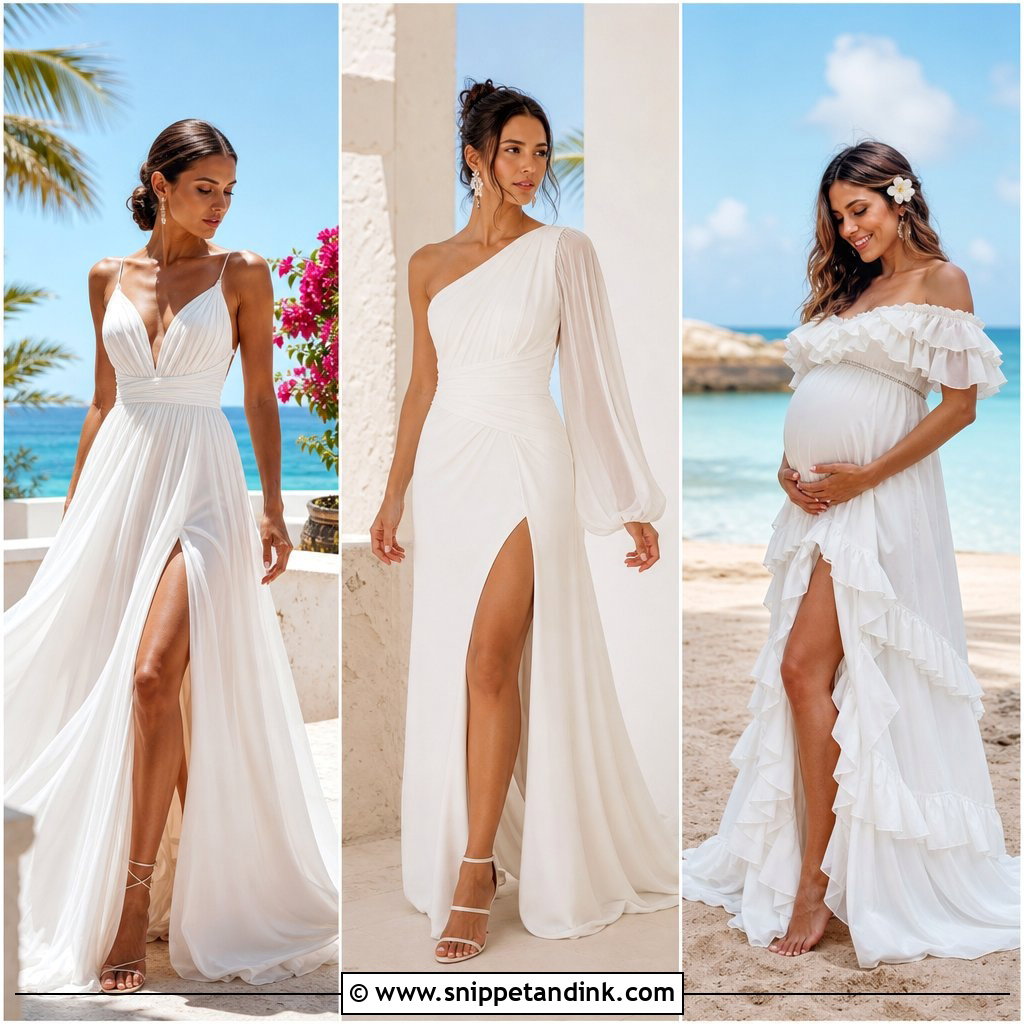
A high-slit gown gives you movement and airflow, both valuable in a warm climate. Flowing chiffon or soft crepe with a secure fitted bodice and a slit that opens naturally as you walk is the version I like. A V-neck or one-shoulder top balances the long skirt. Your shoes will show, so make them embellished flats worth seeing. At fittings, sit, walk and climb steps so you know where the slit lands. Wind is the variable nobody tests for, and fashion tape or a hidden lining panel keeps coverage where you want it.
8. Floral Appliqué Tropical Wedding Dress
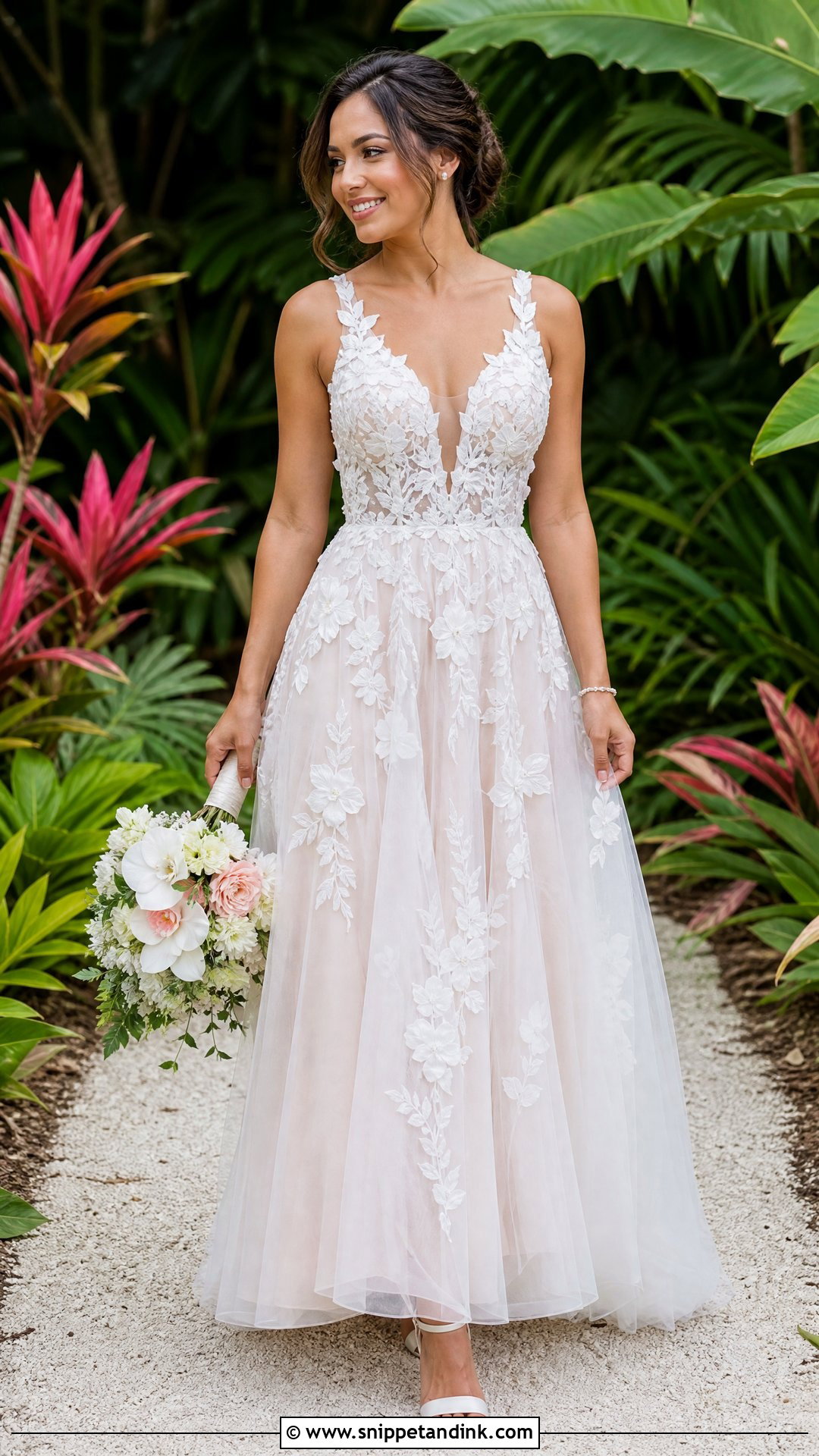
Three-dimensional floral appliqués bring the island planting into the dress. I prefer them clustered at the bodice and scattered more sparsely down a lightweight tulle skirt, which keeps the weight up where the bodice can carry it. Tulle snags on rough stone and coarse sand, so a manageable sweep train matters at outdoor venues. A blush, ivory or pale champagne lining behind white flowers makes them read as more dimensional in photos. Keep accessories quiet: pearl studs, ankle-strap sandals and a soft updo with a few face-framing pieces.
9. Square-Neck Tropical Wedding Dress
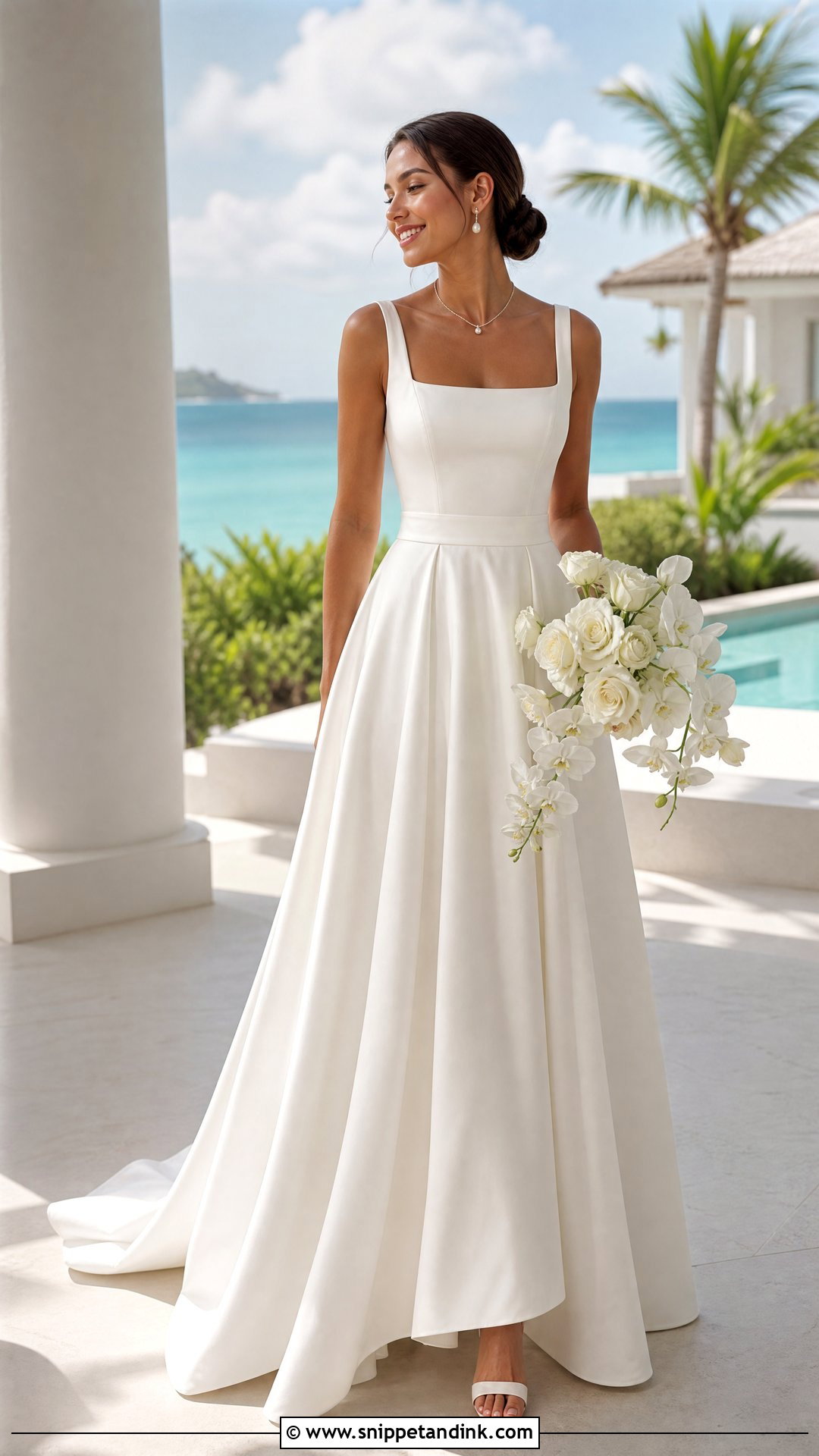
A square neckline gives a fresh, slightly architectural shape and leaves room for a short pearl necklace. In the tropics I’d choose breathable crepe or lightweight satin with wide straps and an A-line skirt, never a boned brocade. Block-heel sandals, pearl drops and a structured clutch for the reception work well. A smooth low bun with a few loose strands keeps it from looking severe. If you want coverage for the ceremony, wear a sheer detachable cape and take it off for dinner, when the evening air is still warm.
10. Backless Tropical Wedding Dress
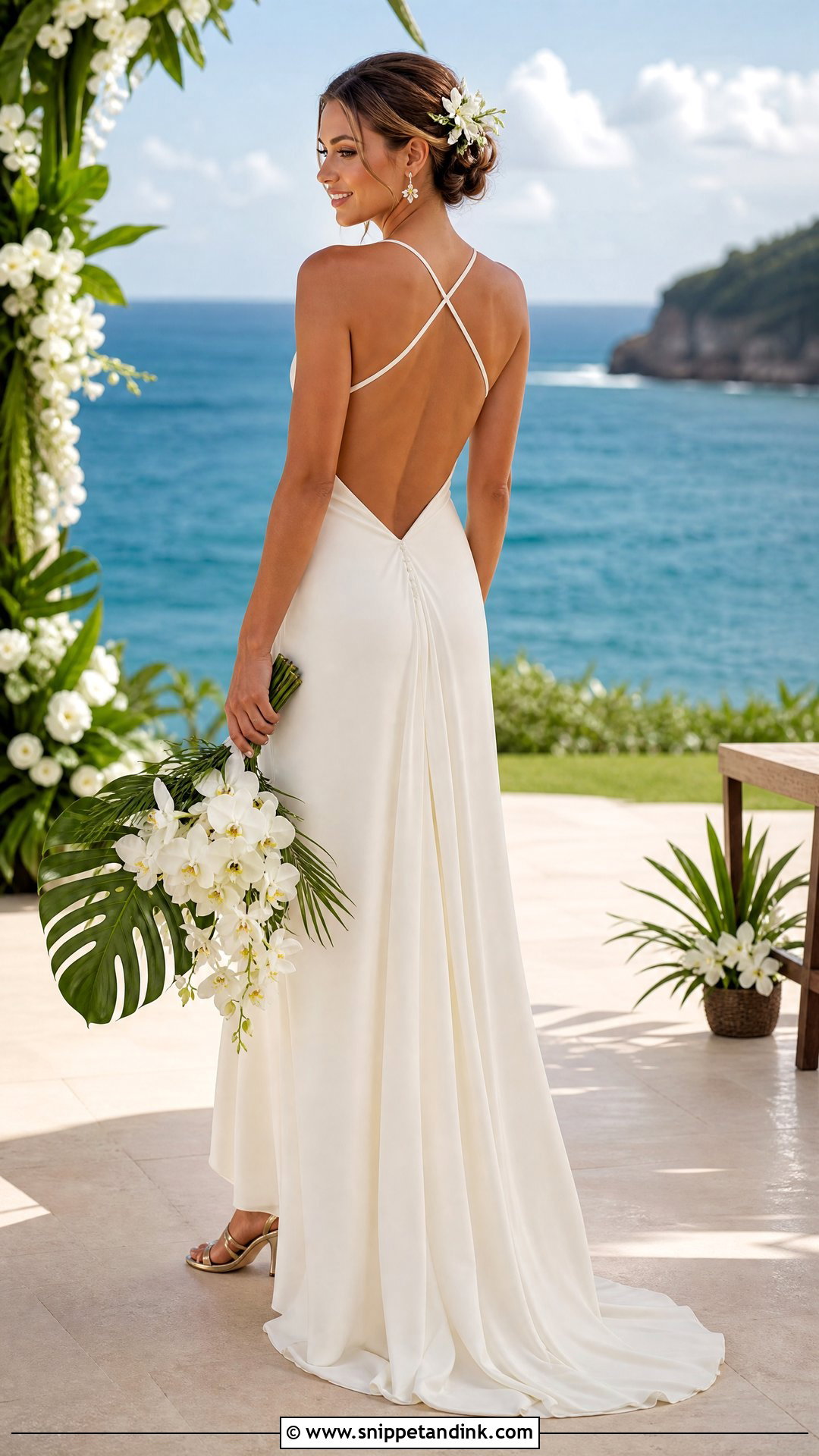
A backless gown is what guests see for the whole walk up the aisle, so the back has to be right. Soft crepe, chiffon or lace with supportive side panels and a secure waist hold best, and thin crossed straps or a draped cowl make the opening more stable. The trouble spot is the gap at the lower back when you lean forward; good tailoring closes it. Test undergarment options before buying and move naturally in the dress. Drop earrings, a floral comb, flat metallic sandals and a loose bun keep the back on show. Orchids and monstera leaves suit an oceanfront setting.
11. One-Shoulder Tropical Wedding Dress
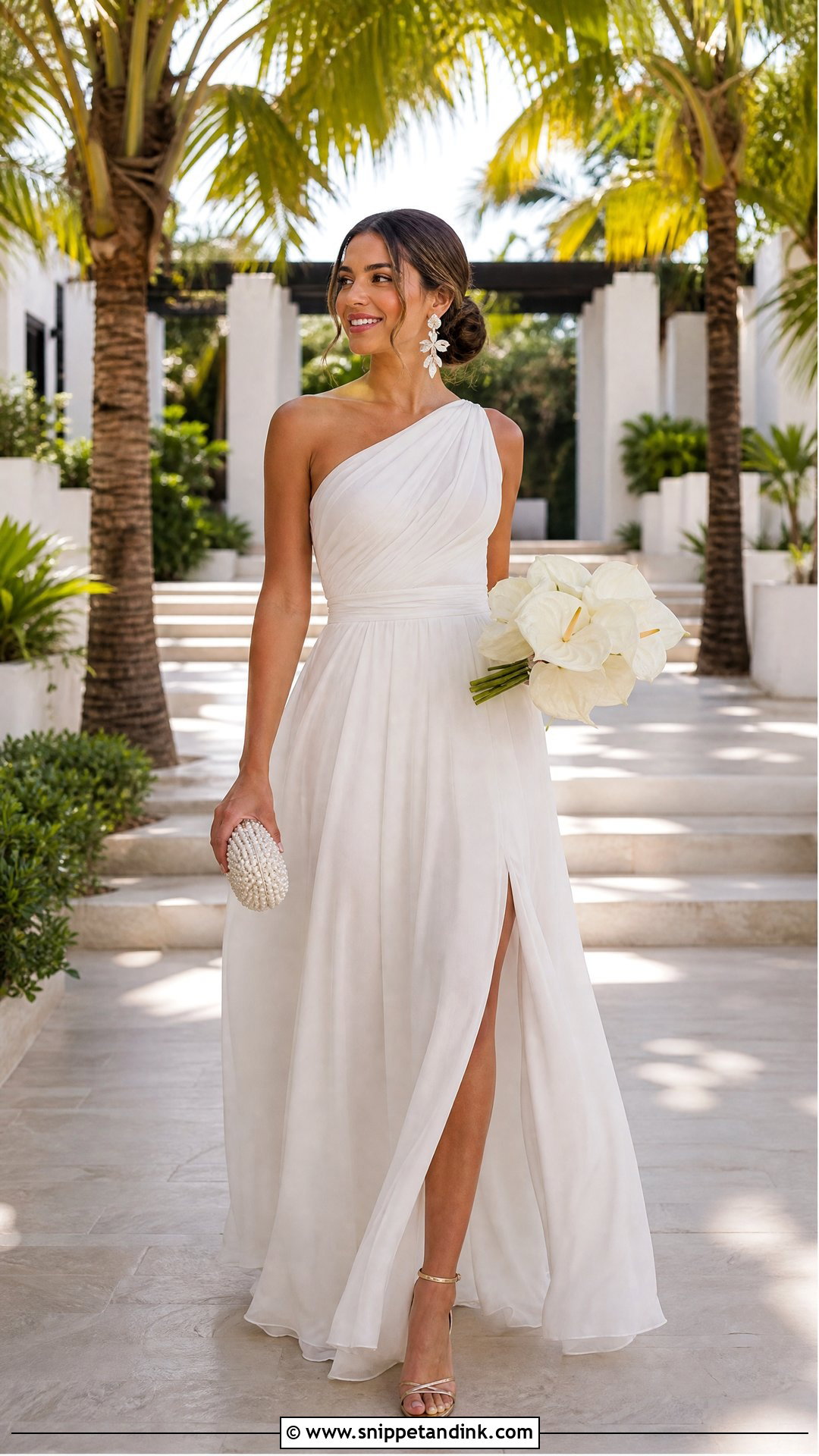
Asymmetry suits chiffon, which drapes softly across the body without rigid volume. A fitted waist, a flowing skirt and a subtle side slit make it easy to move in. With a one-shoulder neckline I skip the necklace and let statement earrings do the work, adding slim metallic sandals and a small pearl clutch. A side bun on the bare shoulder keeps the line visible. If the dress has a shoulder bow or draped panel, keep it compact, because oversized fabric flaps around in coastal wind. White anthuriums and orchids give a graphic tropical finish.
12. Crepe Mermaid Tropical Wedding Dress
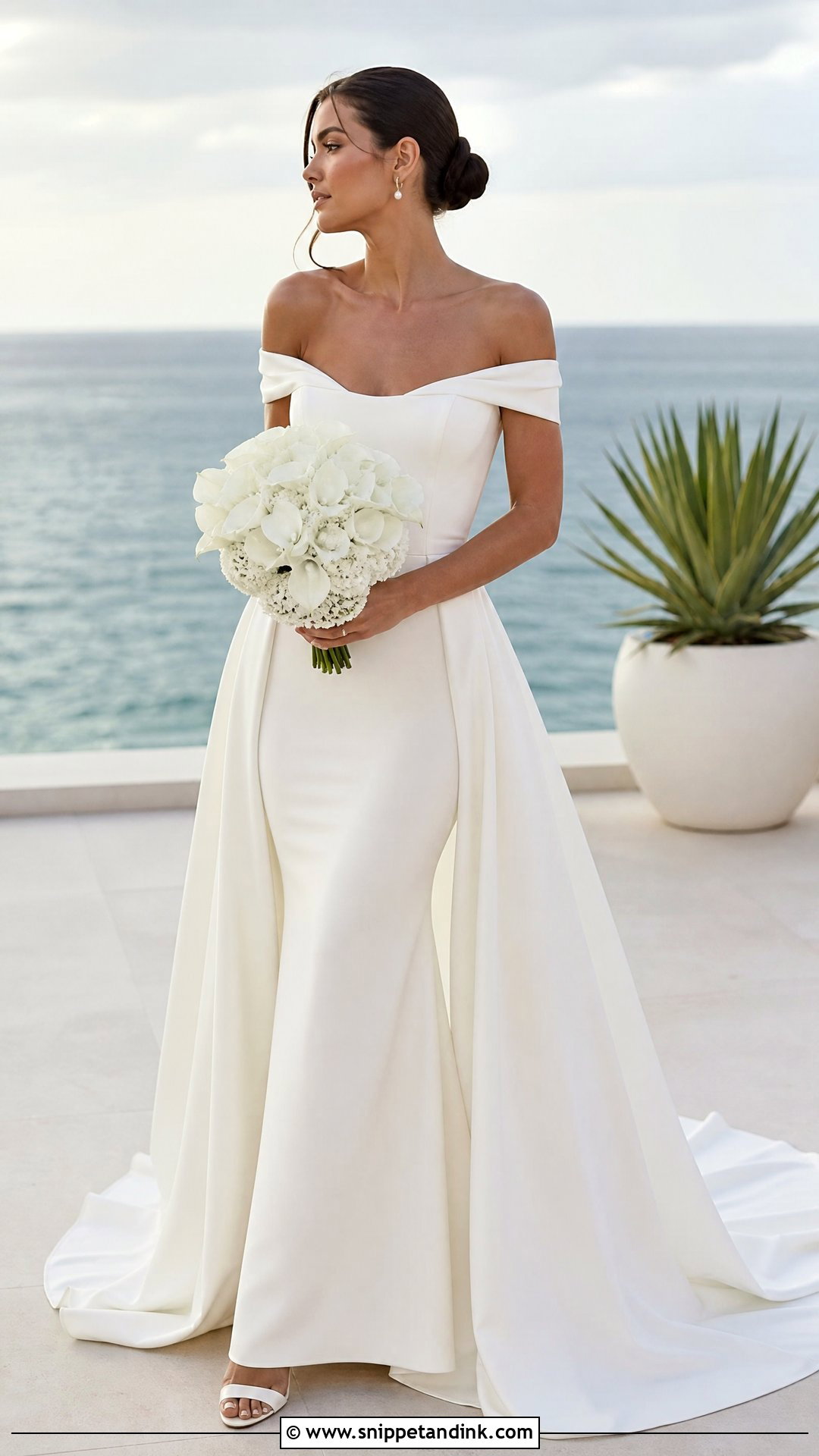
Crepe mermaids give a fitted silhouette without dense beadwork or layered skirts, which is why they handle hot venues better than most fitted gowns. Choose stretch crepe and have the flare start at or just above the knee. Set any lower, it limits your stride, and on sand that turns into a shuffle. A strapless or off-shoulder neckline with a low back suits it. Pearl earrings, ivory block heels and a sleek updo keep it clean, with a structured bouquet of white tropical flowers. A detachable overskirt can add ceremony volume. Practice walking on the real aisle surface, whether that’s sand, decking or grass.
13. Empire-Waist Tropical Wedding Dress
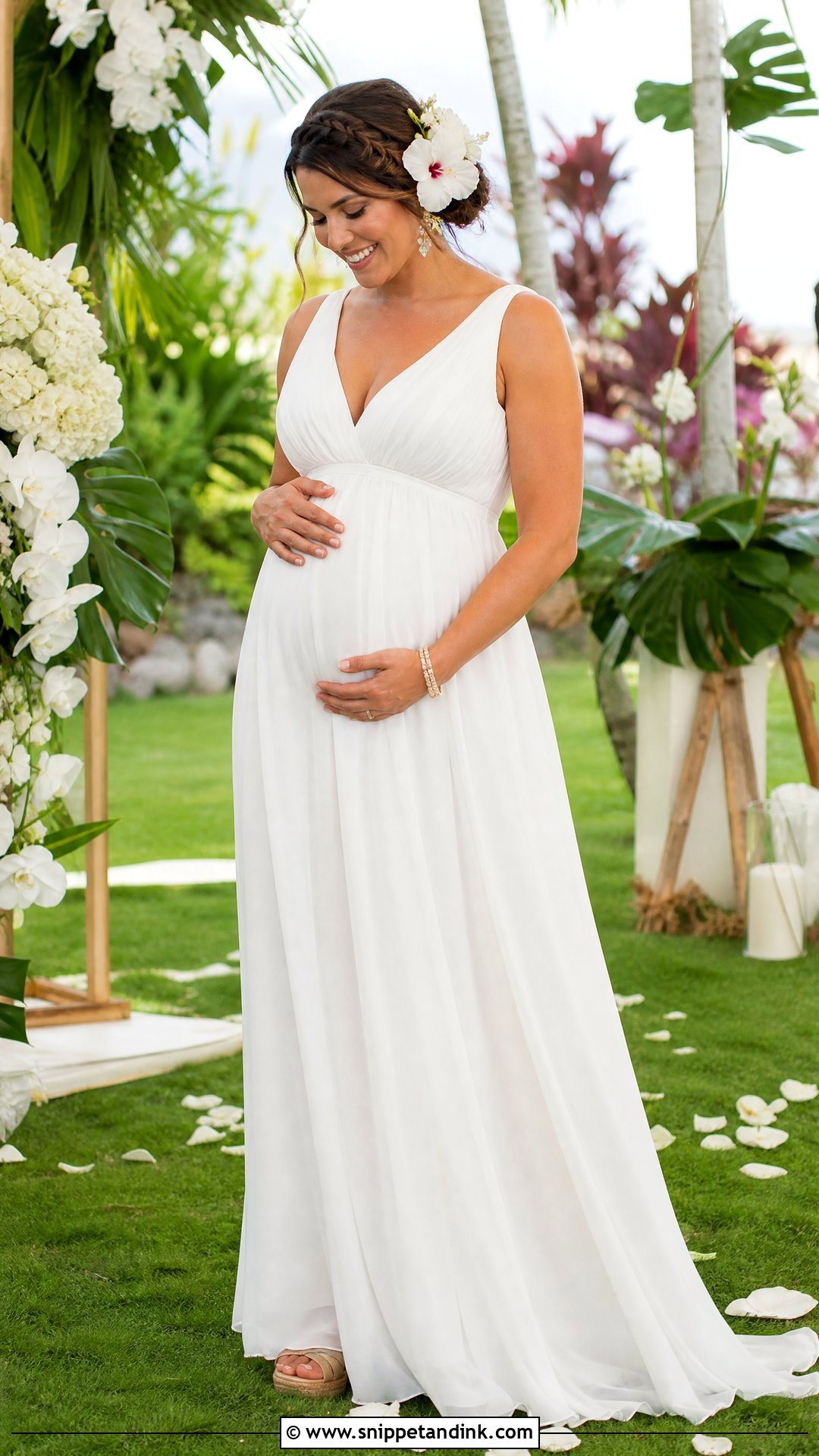
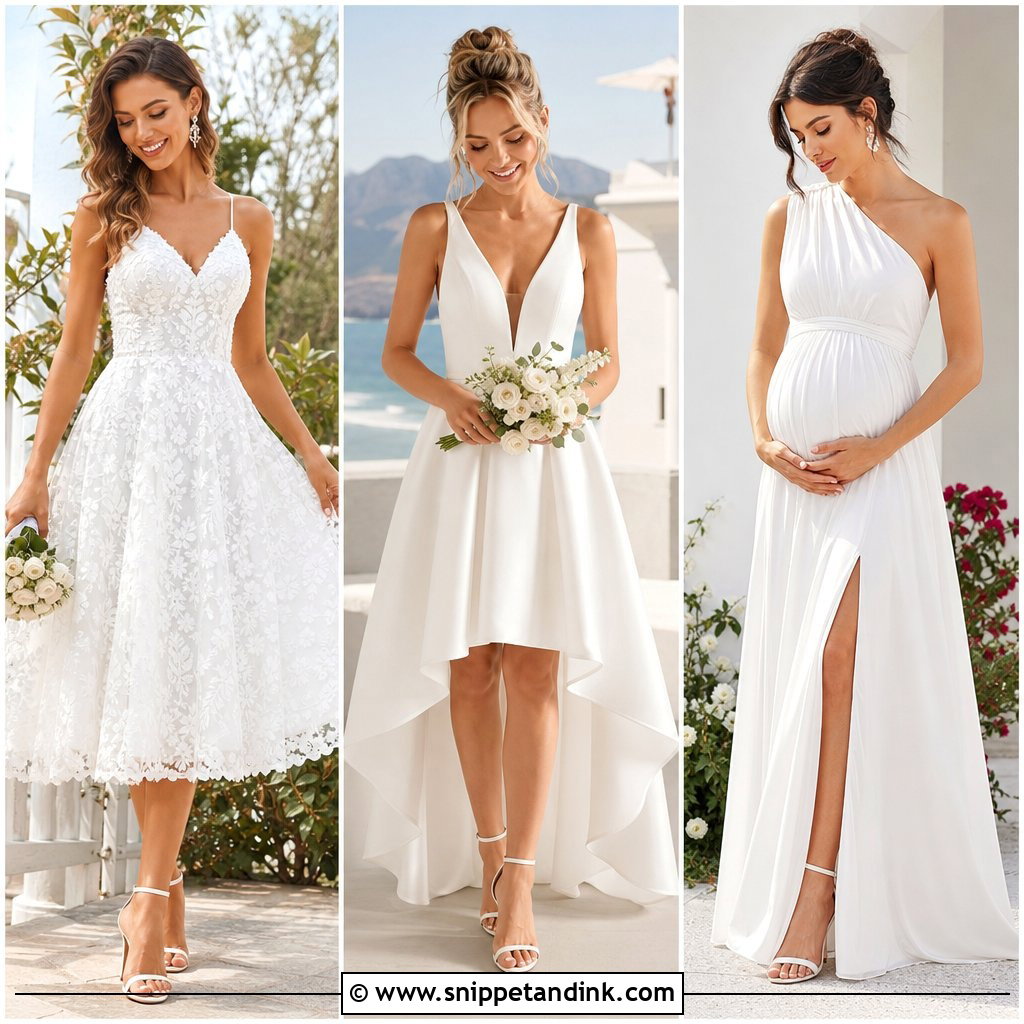
An empire waist sits just under the bust and lets the skirt fall freely, so it’s comfortable on many body types and for pregnant brides. Airy chiffon with a supportive V-neck bodice, wide straps and a light lining that won’t cling in humidity is the version I’d pick. Avoid heavy gathers right under the bust; gentle draping lies smoother. Low wedge sandals won’t sink into grass. Delicate earrings and a loose braided updo suit it. A flowing veil works in a sheltered garden, while a flower comb is more practical on an exposed beach. Carry white hibiscus, orchids and green foliage.
14. Long-Sleeve Lace Tropical Wedding Dress
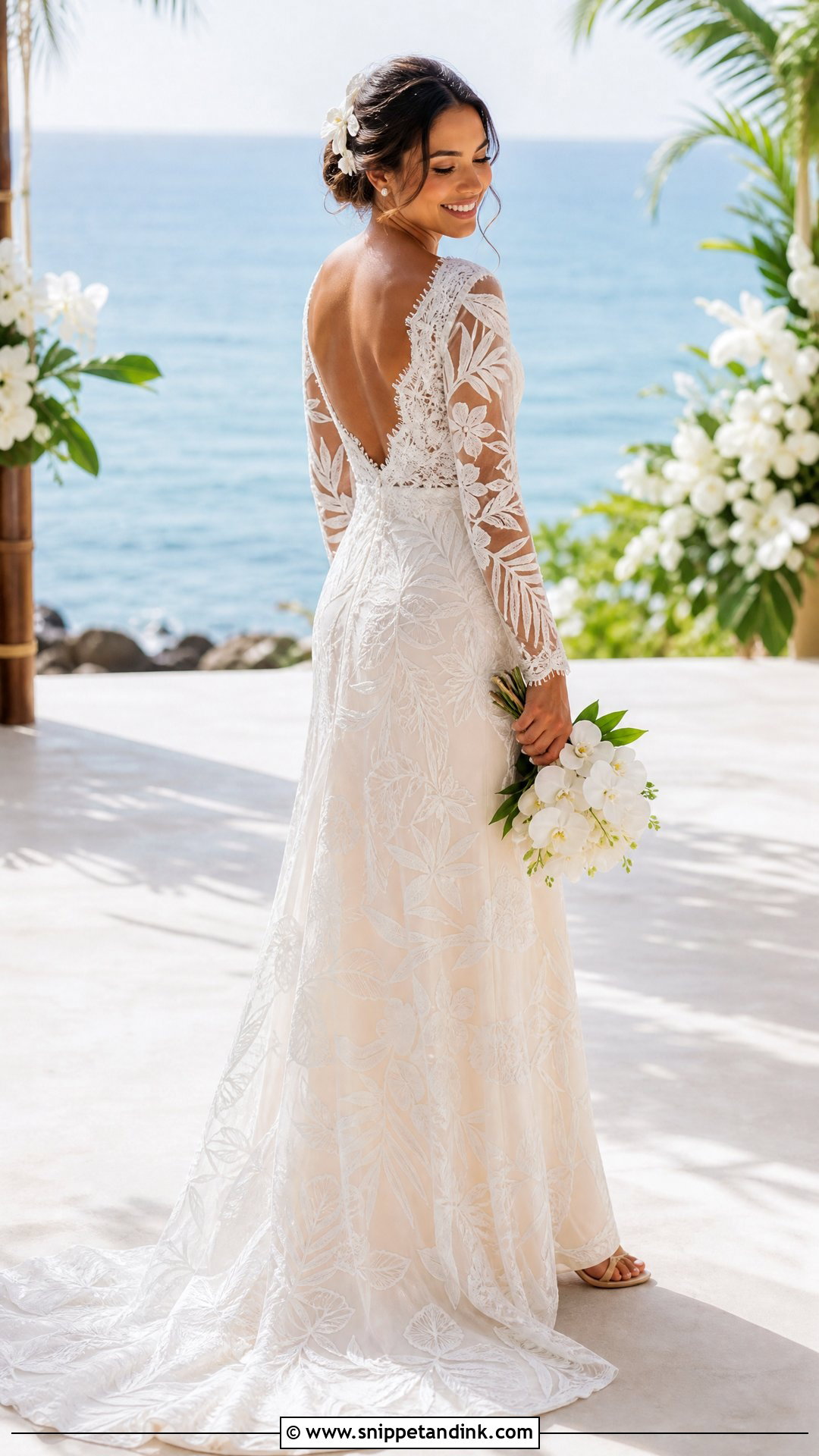
Long sleeves can work in the tropics when they’re unlined, open-pattern lace that air passes through. Pair them with a lightweight sheath or A-line skirt and a deep V, open back or illusion neckline so the gown doesn’t feel buttoned up. I check the elbows and shoulder seams closely, because lace sleeves that feel fine in an air-conditioned shop feel tighter once you’re warm and a little swollen from the heat. Ivory sandals, pearl studs and a floral comb are enough, with a neat low bun. It suits a sunset ceremony or an air-conditioned reception best.
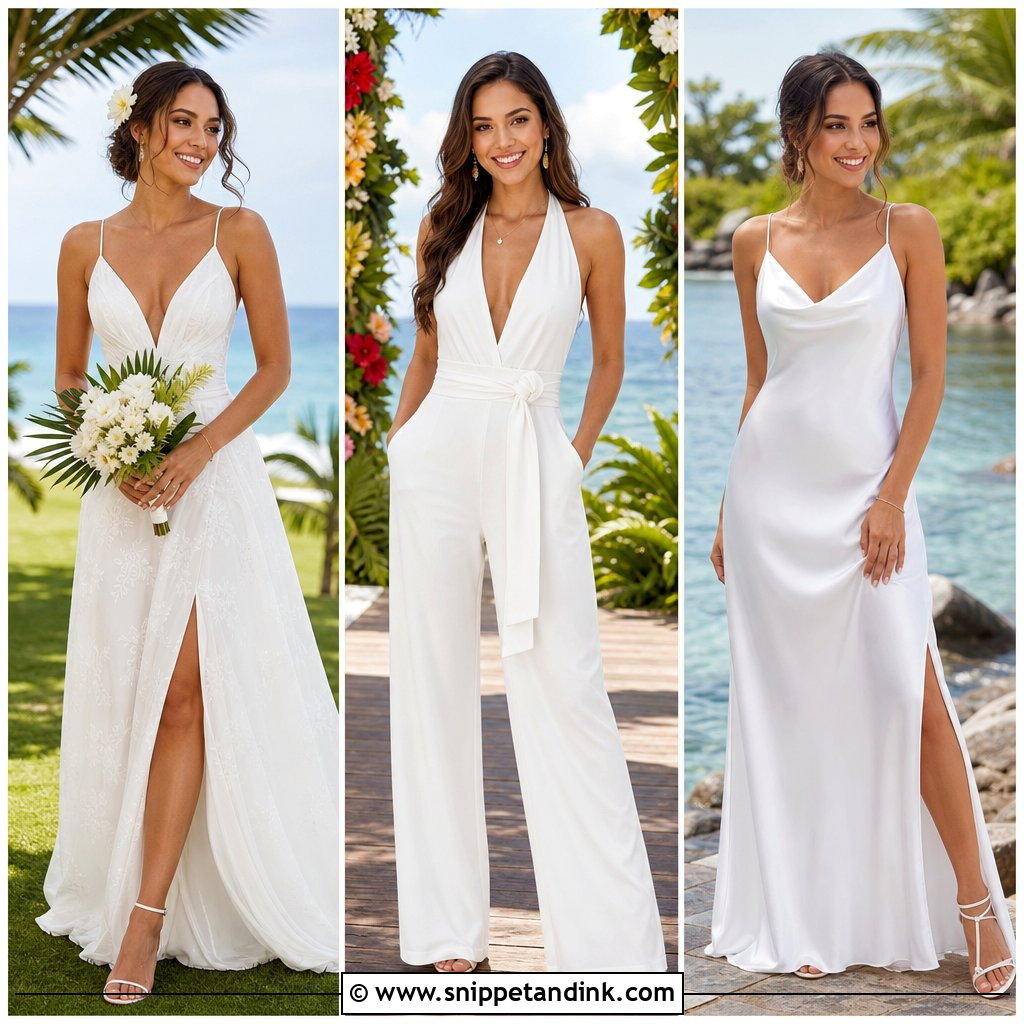
15. Tea-Length Tropical Wedding Dress
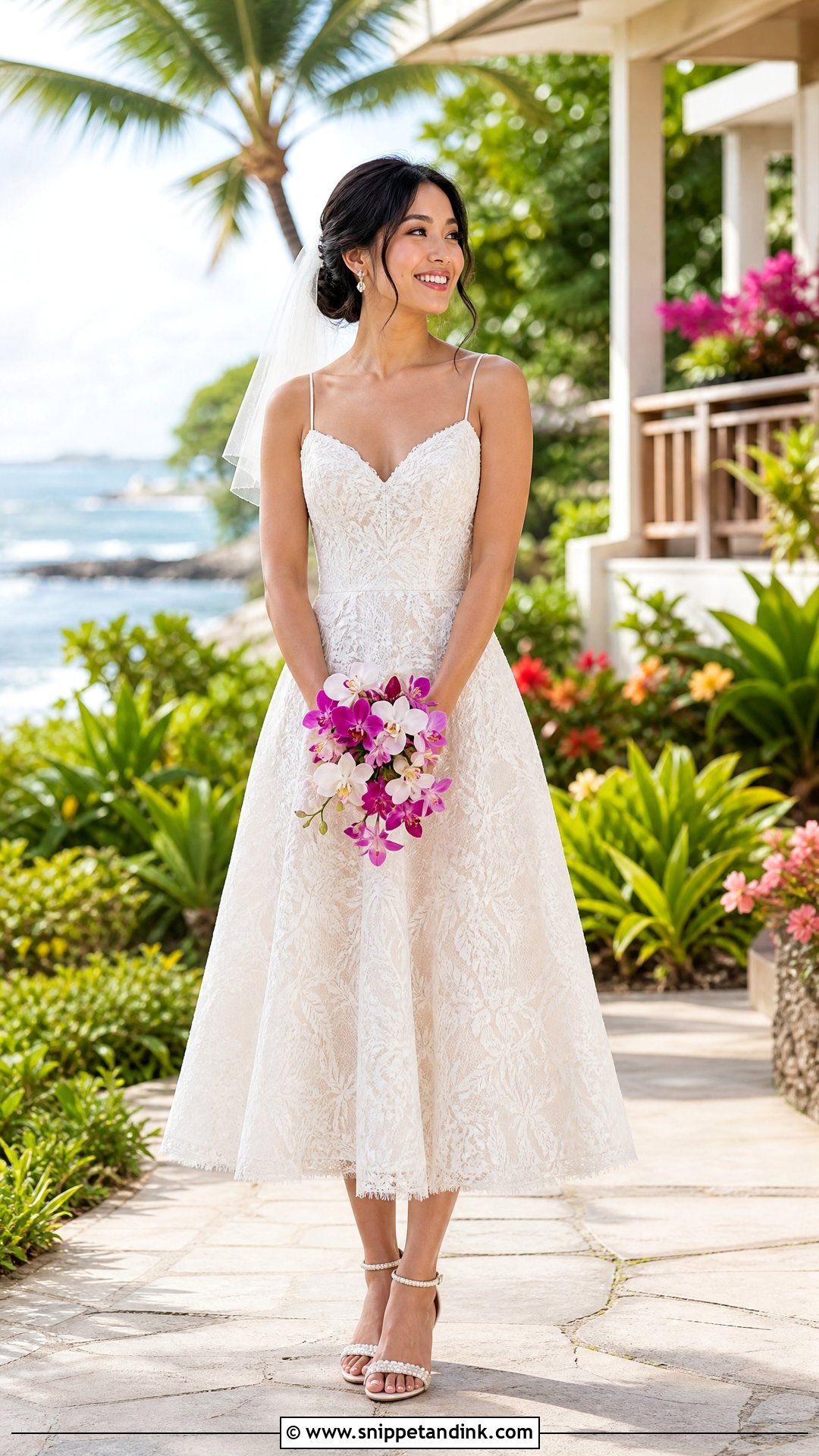
Tea length lands between knee and ankle, so no hem drags through sand. A lightweight A-line with a fitted bodice in cotton lace, chiffon or soft organza holds its shape without a heavy underskirt. Because the shoes show, they become part of the look: pearl-trimmed sandals, low block heels or espadrille wedges. Small drop earrings, a short veil and a tidy bun or shoulder-length waves keep the proportions balanced, with a compact bouquet of orchids and white roses. Courthouse-to-beach days and intimate garden weddings, where you’ll be mingling more than processing, suit it well.
16. Strapless Tropical Wedding Dress
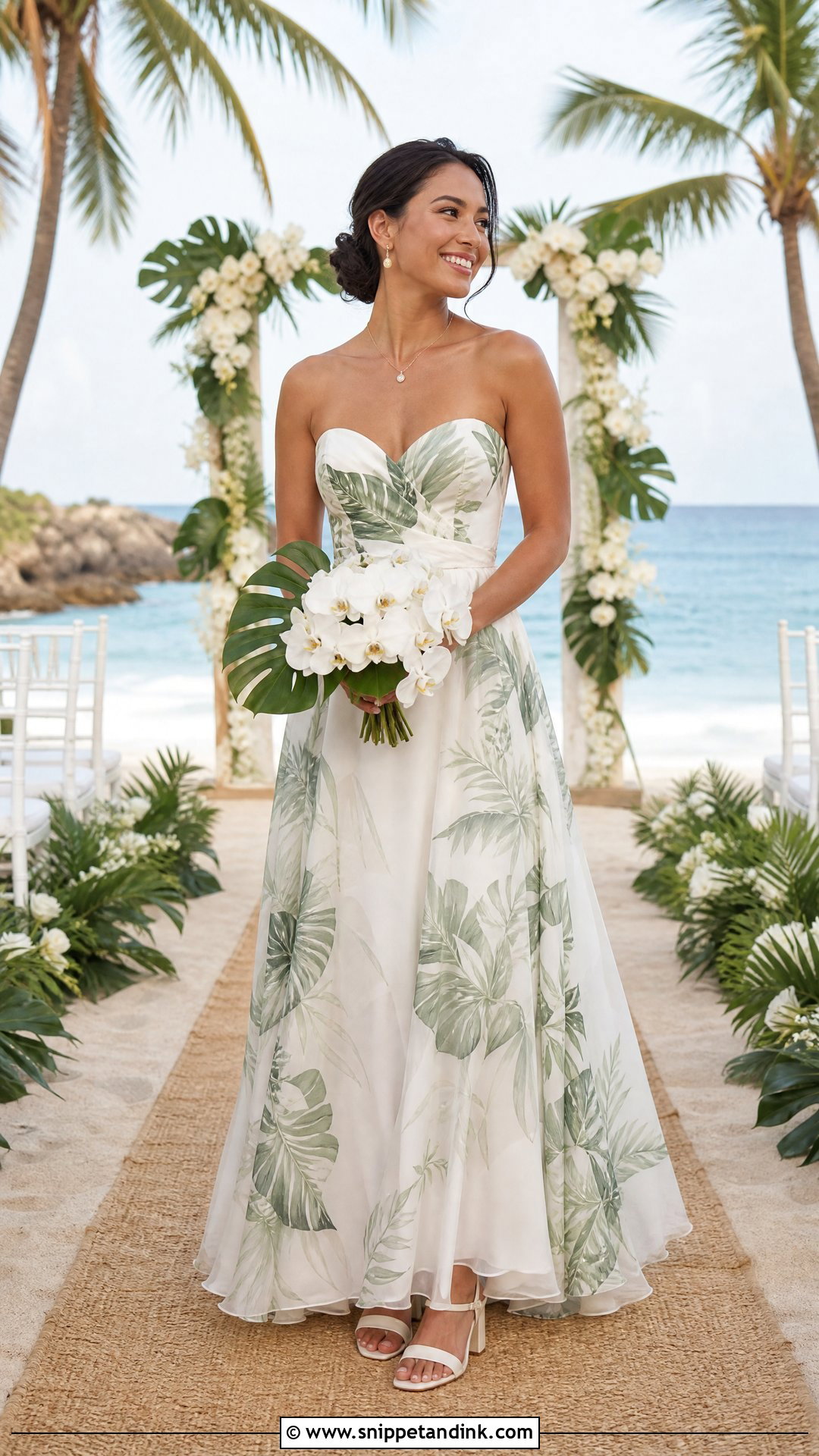
Strapless gowns are cool to wear, but they only stay up if the bodice is built properly, with internal boning, secure cups and a fitted waist. In heat your skin gets damp and a loose strapless bodice slides faster, so I’m stricter about this fit for a tropical wedding than for a ballroom one. A chiffon A-line or smooth crepe column skirt keeps it manageable. A short pendant, pearl earrings, block heels and a low twisted bun finish it, and a sheer wrap covers you in an air-conditioned dining room. Test the bodice sitting, dancing and with your arms raised.
17. Short Tropical Wedding Dress
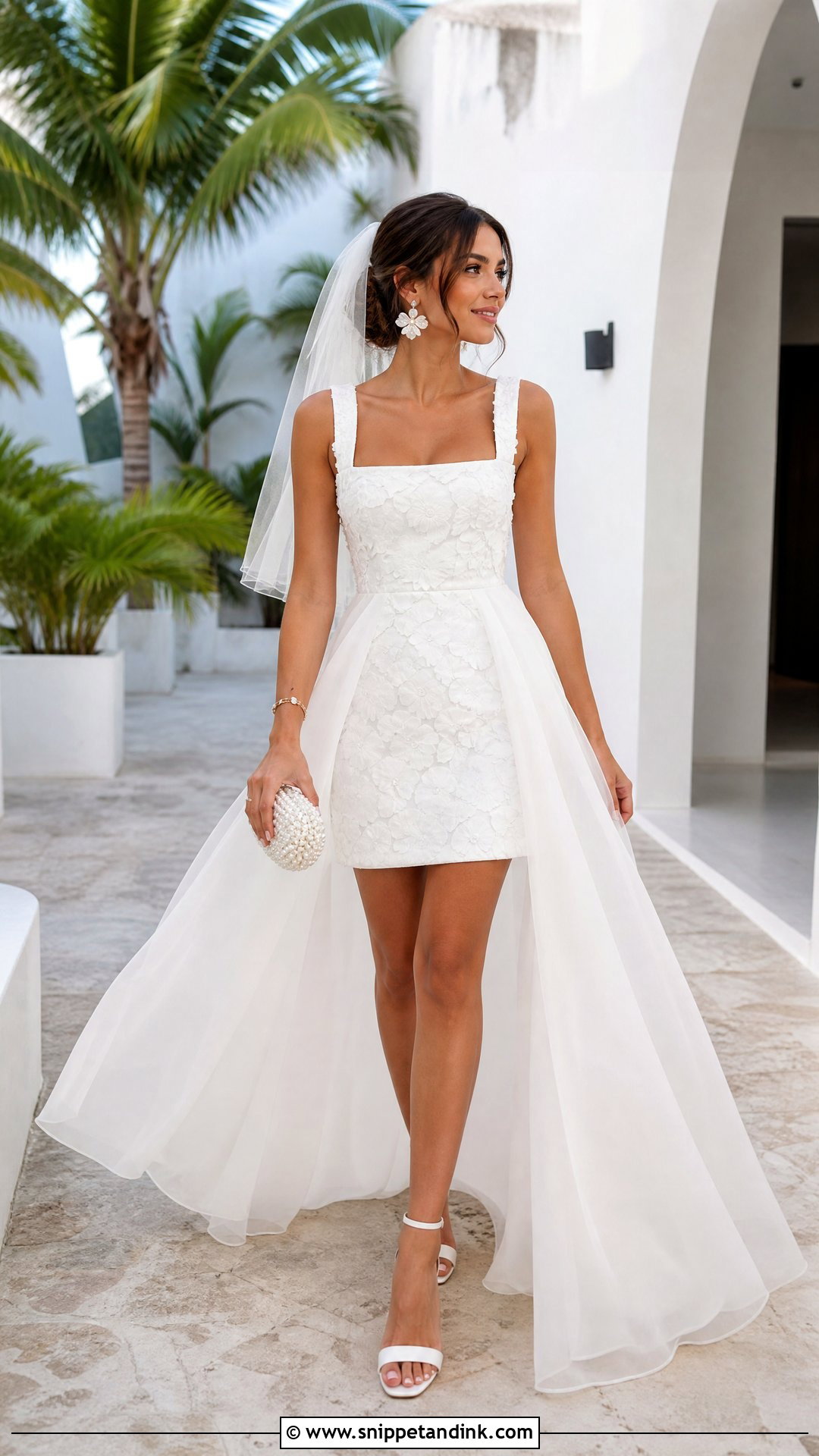
A short white dress suits a relaxed beach ceremony, a welcome party or a reception change. A structured mini or knee-length A-line with breathable lining, wide straps and subtle floral texture keeps it bridal. Ankle-strap block heels work on a resort terrace; decorated flats work on sand. Statement earrings, a pearl clutch and a short veil or oversized hair bow finish it. Check the hem with coastal wind in mind, because a light skirt lifts easily. For a bigger aisle moment, layer a removable chiffon overskirt over the shorter dress and reveal the mini later.
18. Detachable Train Tropical Wedding Dress
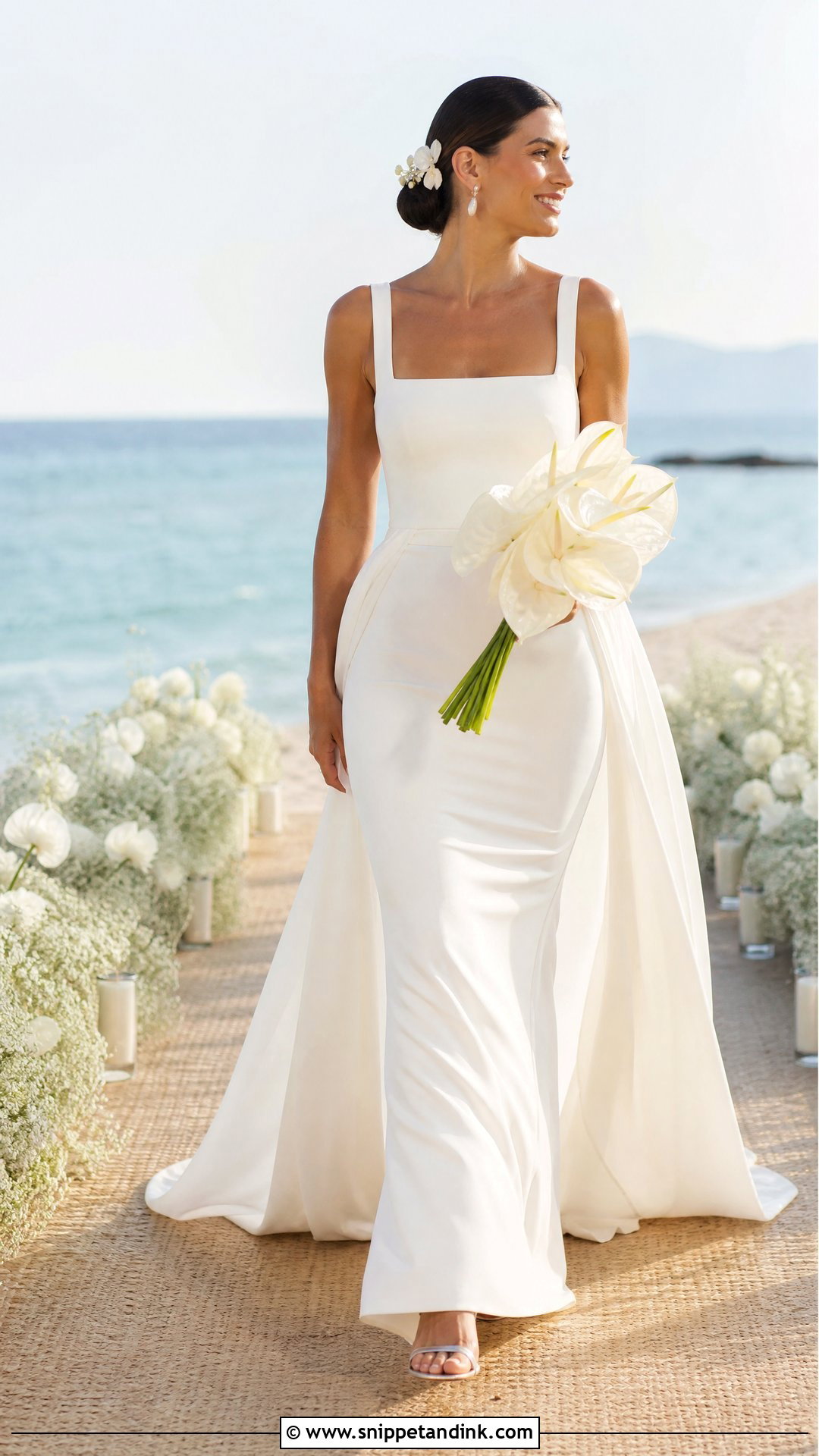
A detachable train gives you the ceremony moment and the reception freedom in one dress. Start with a fitted crepe or satin column with supportive straps, then add a chiffon or tulle overskirt fastened at the waist. At the final fitting I ask the bride to unhook it herself; if the closure needs two people and five minutes, it needs rethinking, and the attachment points should stay hidden. Outdoors, a sweep or chapel-length layer is far easier than a cathedral train. Pearl earrings, metallic sandals and a sleek bun with a small floral comb keep it clean.
19. Plus-Size Tropical Wedding Dress
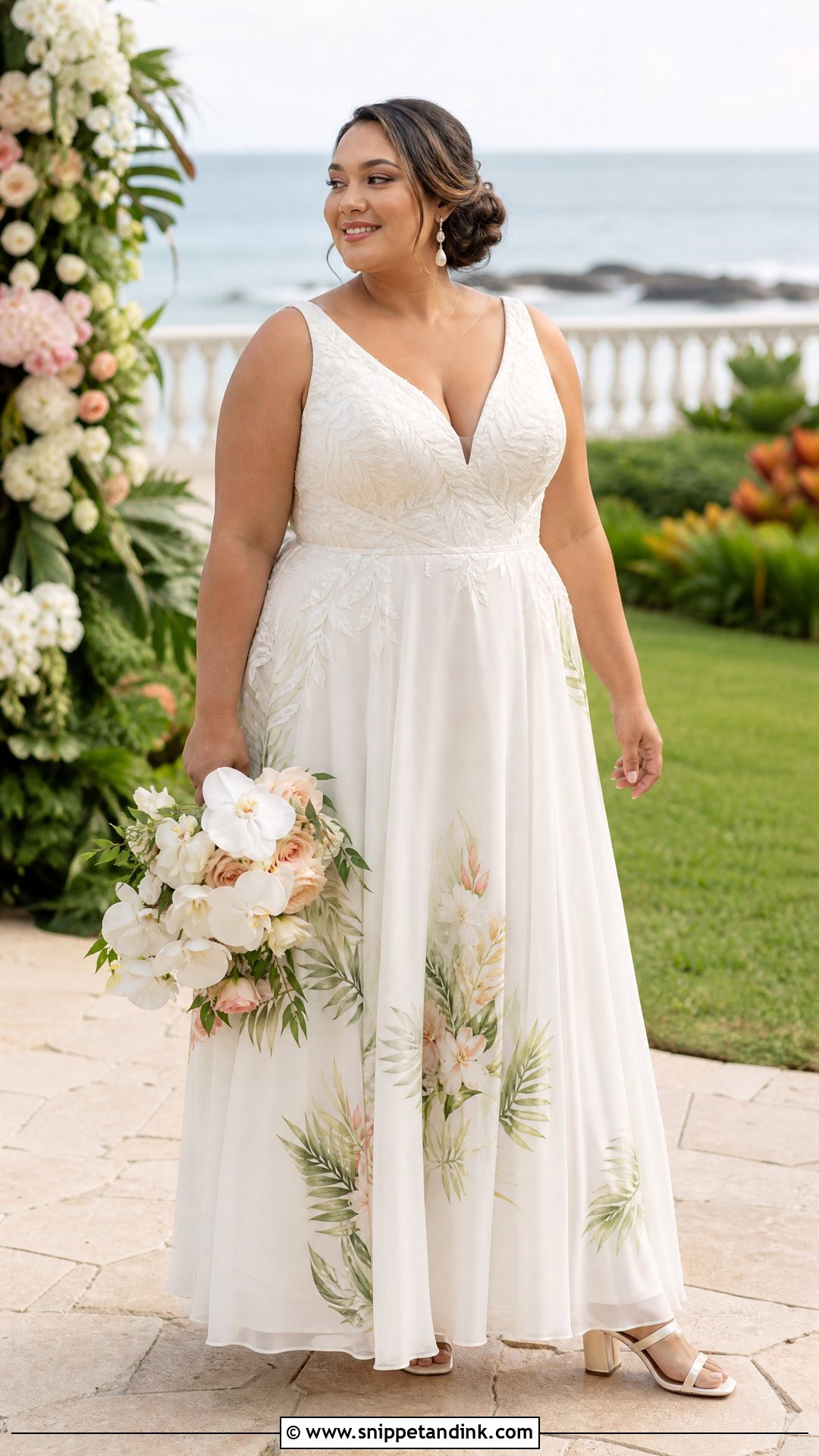
For a plus-size bride in the heat, structure and breathability have to work together. Breathable chiffon or stretch crepe with wide straps, a structured bodice and a softly draped skirt does both, and a V-neck with a natural waist gives shape without restricting movement. Bust support and a smooth lining matter far more than the size on the label. I also bring up thigh chafing, which heat makes worse; anti-chafing shorts under the skirt solve it. Do alterations in the exact undergarments and shoes you’ll wear. Stable block heels, pearl drops and a side-swept updo suit it, with a medium bouquet in proportion to the dress.
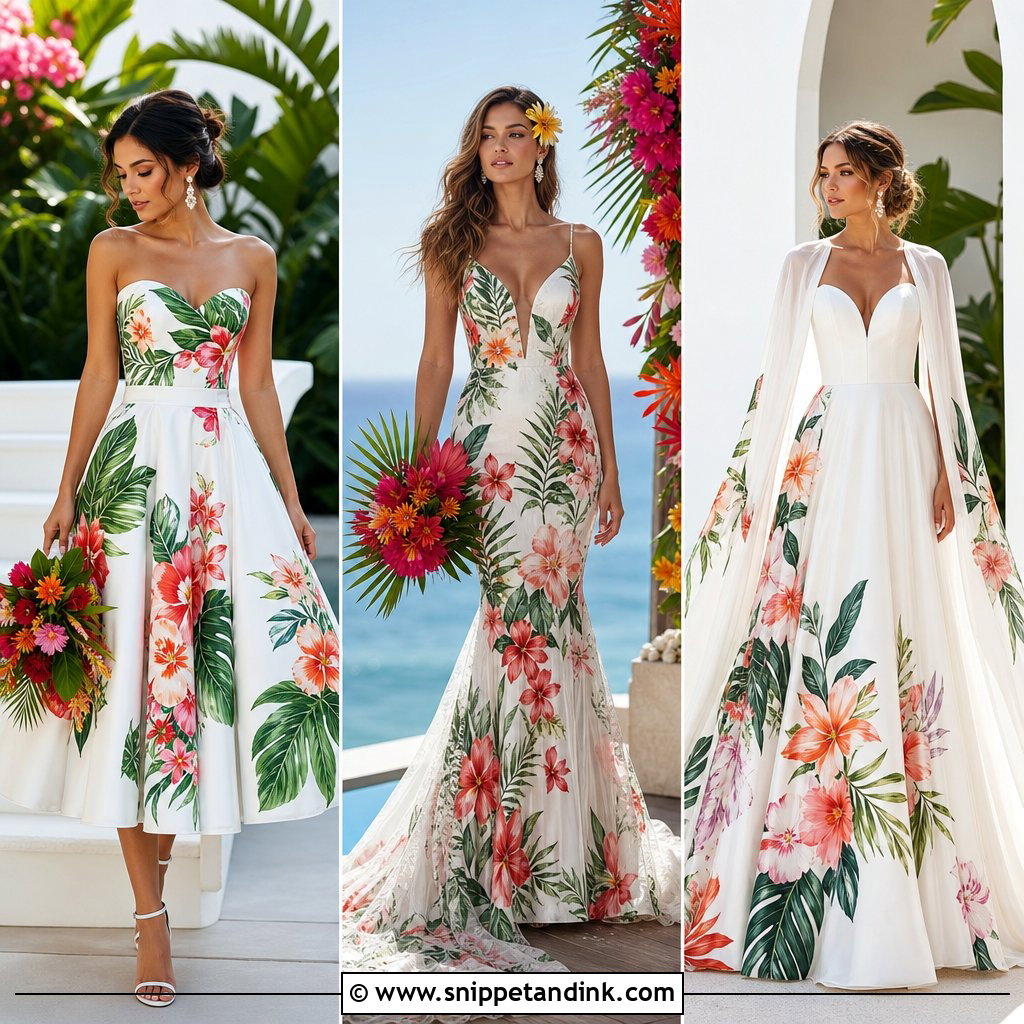
20. Tropical Print Wedding Dress
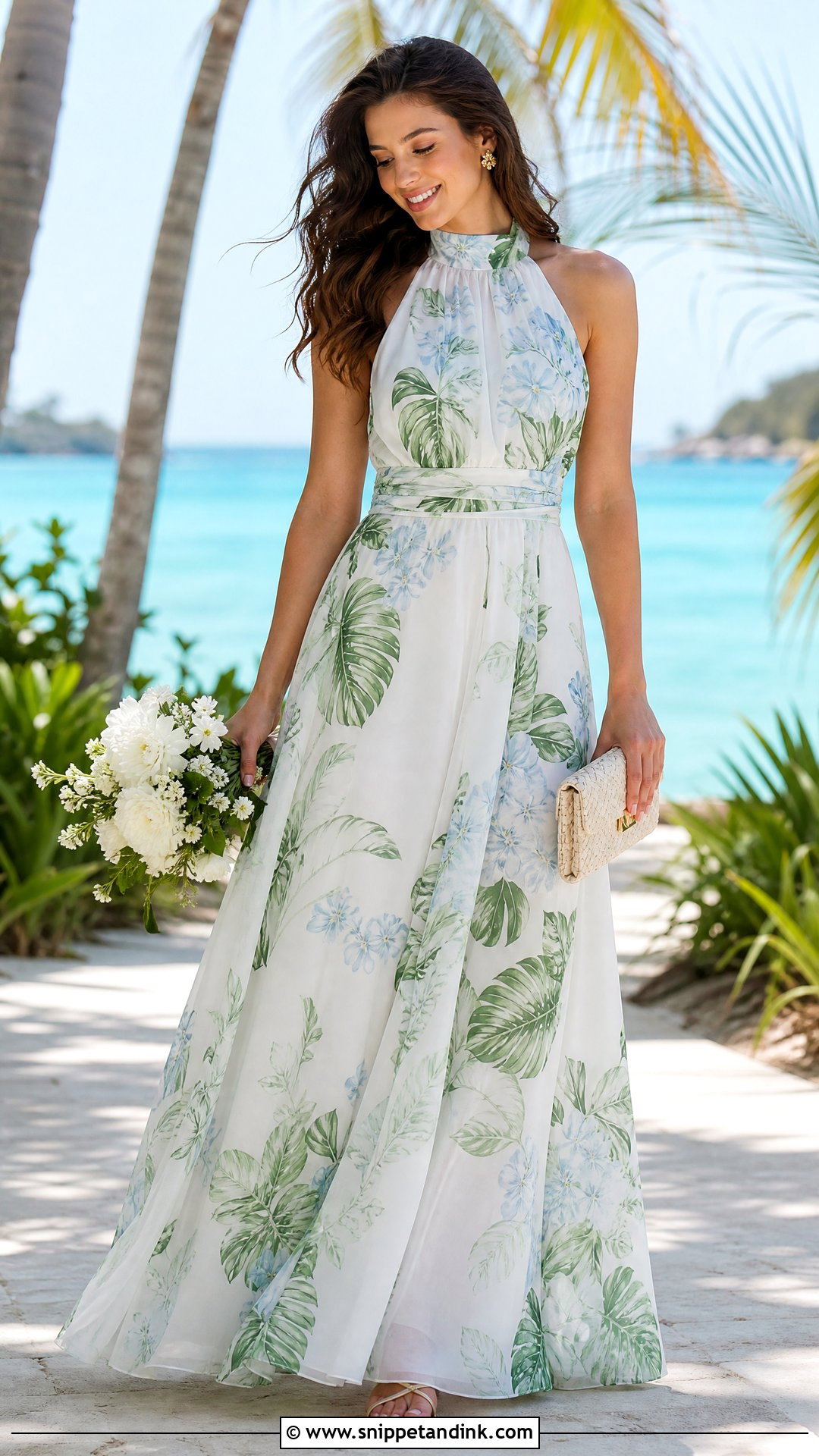
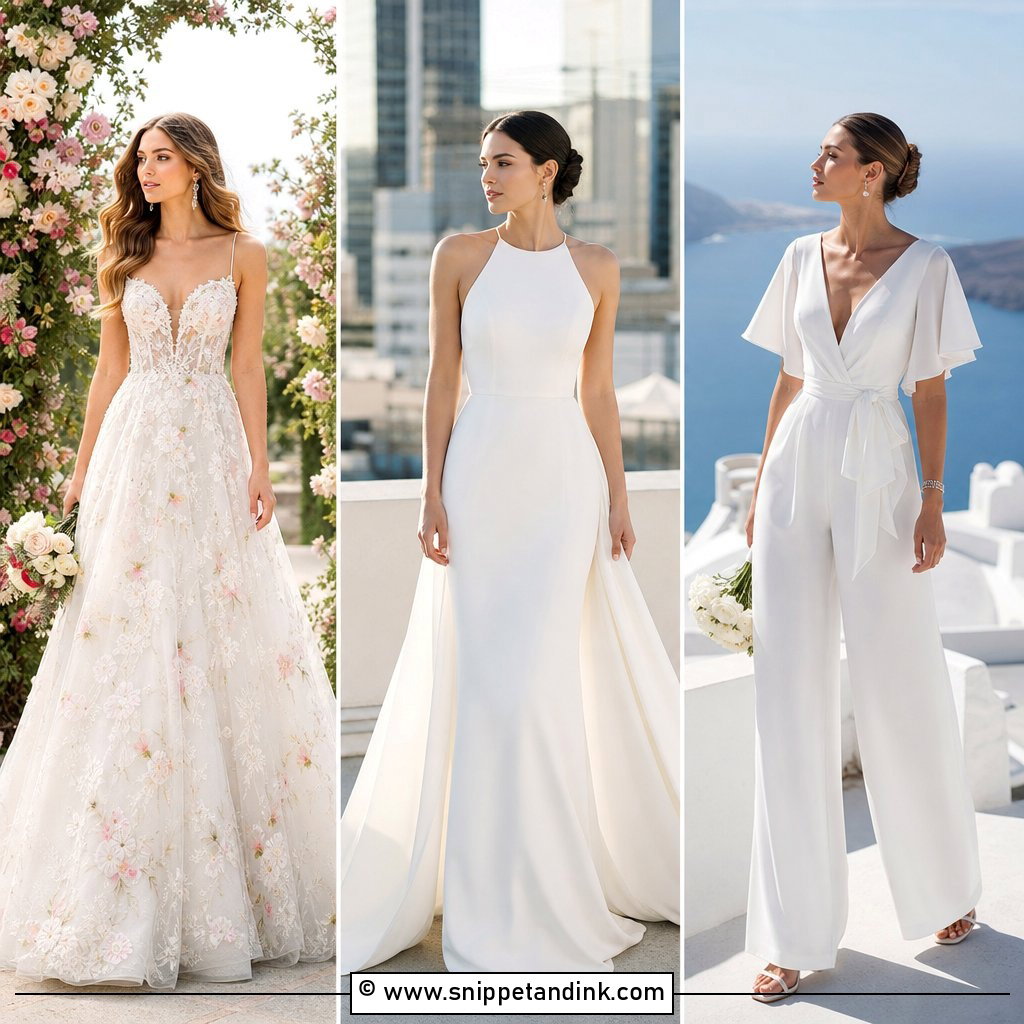
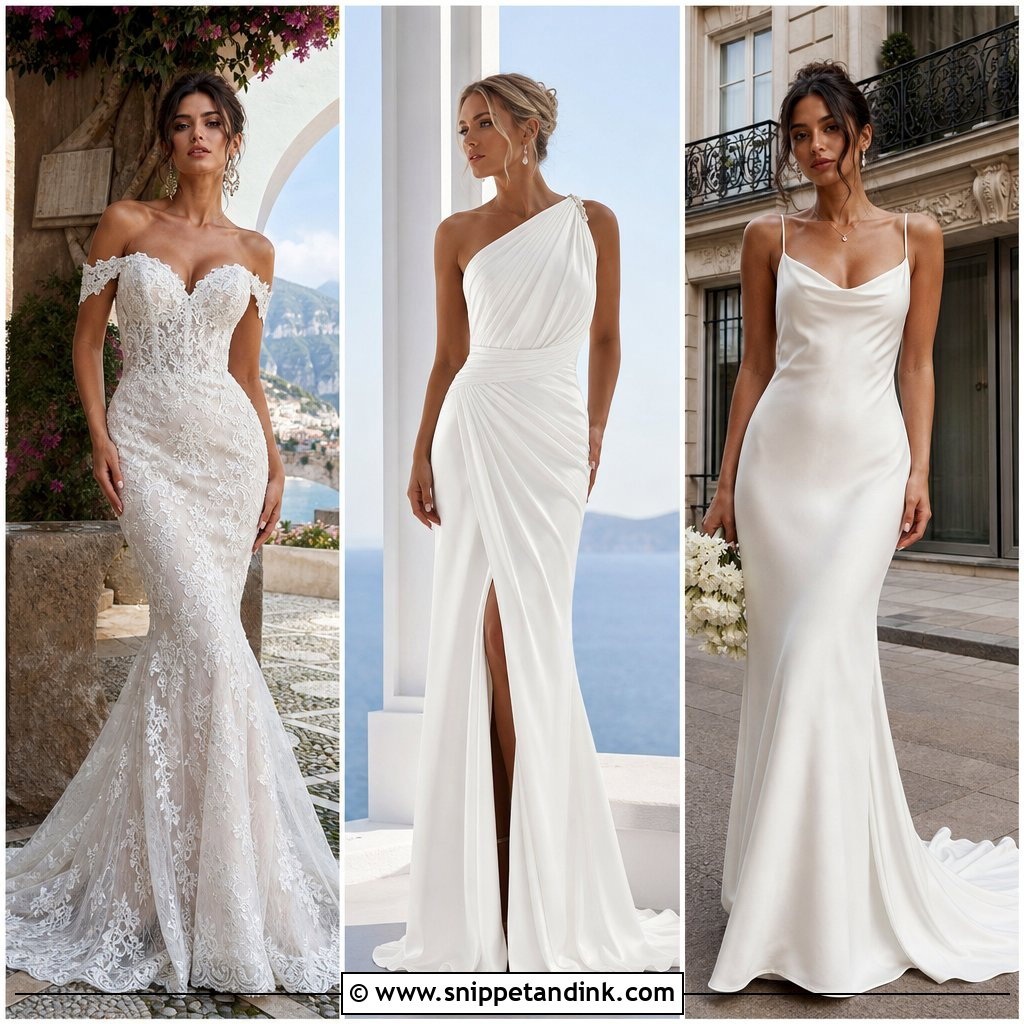
A tropical print is the boldest option here. I prefer a white or ivory base with soft green leaves, pale blue flowers or subtle coral motifs, so it still reads as a bride’s dress. A chiffon wrap, A-line or halter silhouette keeps the print graceful. Look at the fabric outdoors and photograph it on your phone before committing, since large motifs look stronger on camera than in the hand while small ones soften. Keep the bouquet mostly white and green to avoid clutter. Neutral flats, simple gold earrings and loose waves or a low ponytail keep it relaxed.
Sweat, Salt and Sunscreen on an Ivory Dress
Tropical weather leaves marks that a temperate wedding never would. Most of them are preventable once you know where they come from.
Damp skin and silk
Silk satin shows water and sweat marks easily. Underarm shields fixed inside the bodice help, and so does getting dressed in a cool room so you don’t start the day already damp.
Tan and sunscreen transfer
Spray tan and self-tanner rub off onto ivory at the neckline, the underarms and wherever your arms rest on the skirt. Book any tan several days before and shower it through first. Some sunscreens also leave yellowish marks on white fabric, so apply early, let it set and keep it away from the bodice edge.
Sand and salt in the hem
Sand works its way into tulle and chiffon layers, and salt spray can leave a faint tidemark as it dries. Shake the hem out after shoreline photos, and tell your cleaner about the salt water when you drop the dress off so it gets treated before storage.
Heat, Wind and Sand Decide More Than the Mood Board
A tropical gown has to look right and still let you move comfortably in warm, breezy air. Lightweight fabric, solid construction, practical shoes and good alterations make the biggest difference. Think about the ground you’ll stand on, the humidity, the ceremony time and where the reception happens before you commit to a silhouette. Flowing chiffon suits relaxed beaches, while crepe, satin and detailed lace look polished at an oceanfront resort. Tropical flowers, pearls, removable layers and stable sandals then finish the outfit, whatever your size or level of formality.
You'll Like These Ideas:


Leave a Reply