
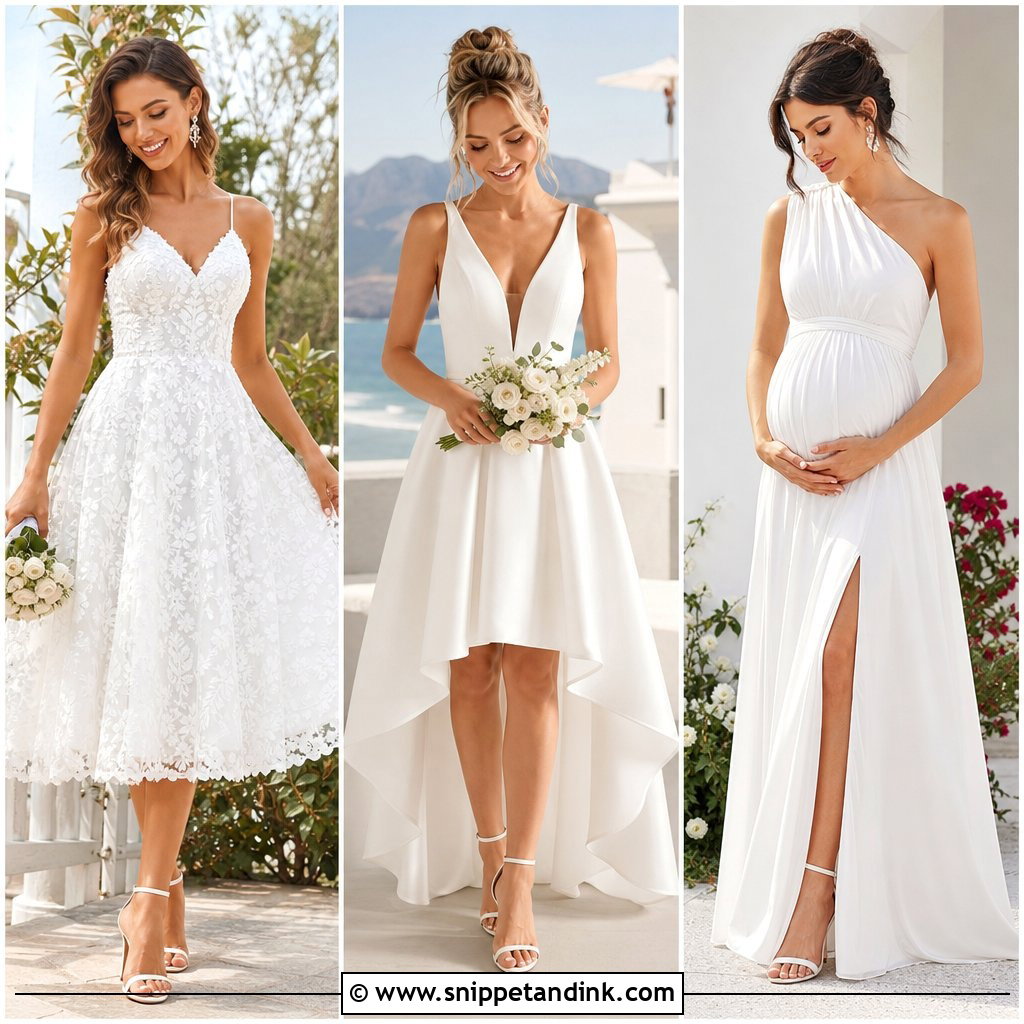
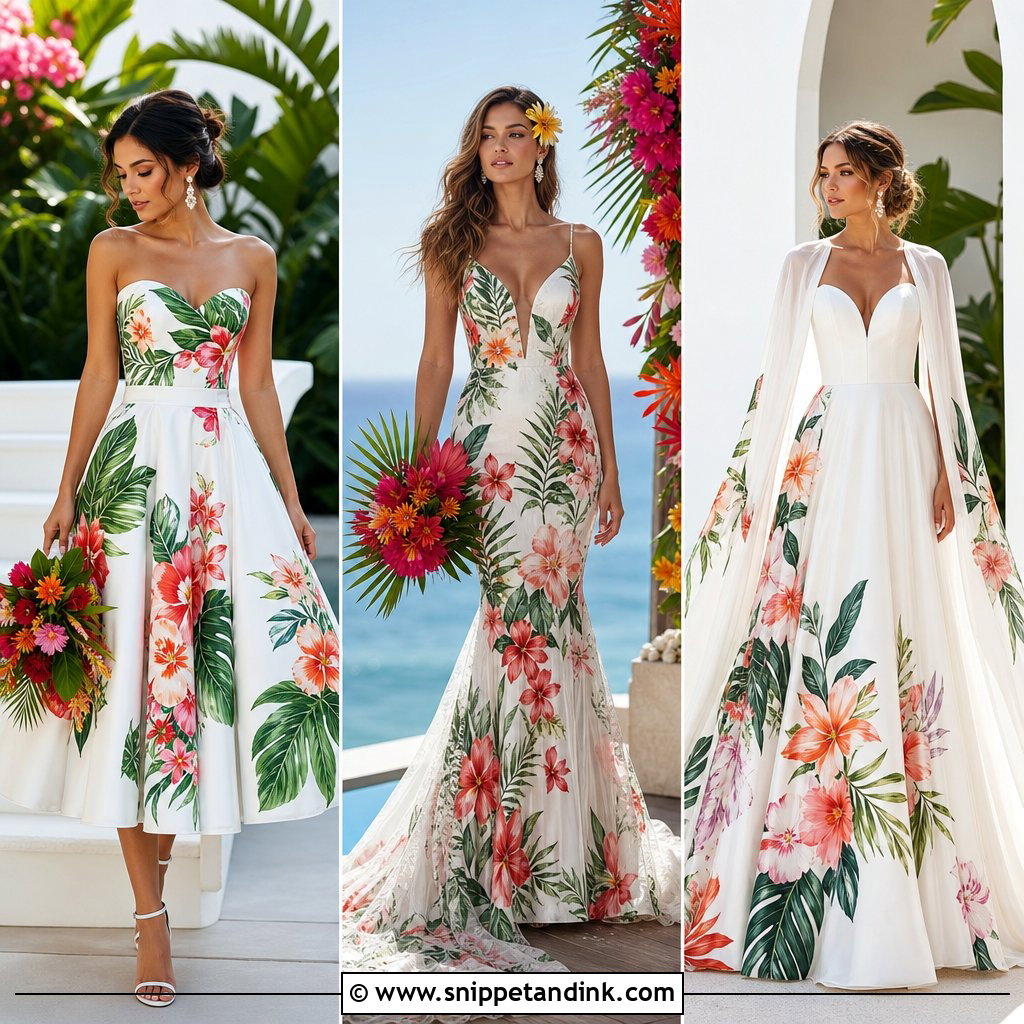
A beach gown has to do something a ballroom gown never does: look right while the wind pulls at it, the sun heats it and the ground shifts under every step. That’s why I start beach brides with the ceremony surface, the likely temperature and how formal the day is, before anyone falls for a long train or a heavily beaded bodice. Light fabrics and fluid shapes are the safe ground, and the finishing pieces matter more than usual: hair accessories that stay put, underwear that breathes, and shoes that won’t sink. The twenty gowns below range from bare satin slips to lace, minis and convertible designs, with my notes on what each one asks of you on the day.
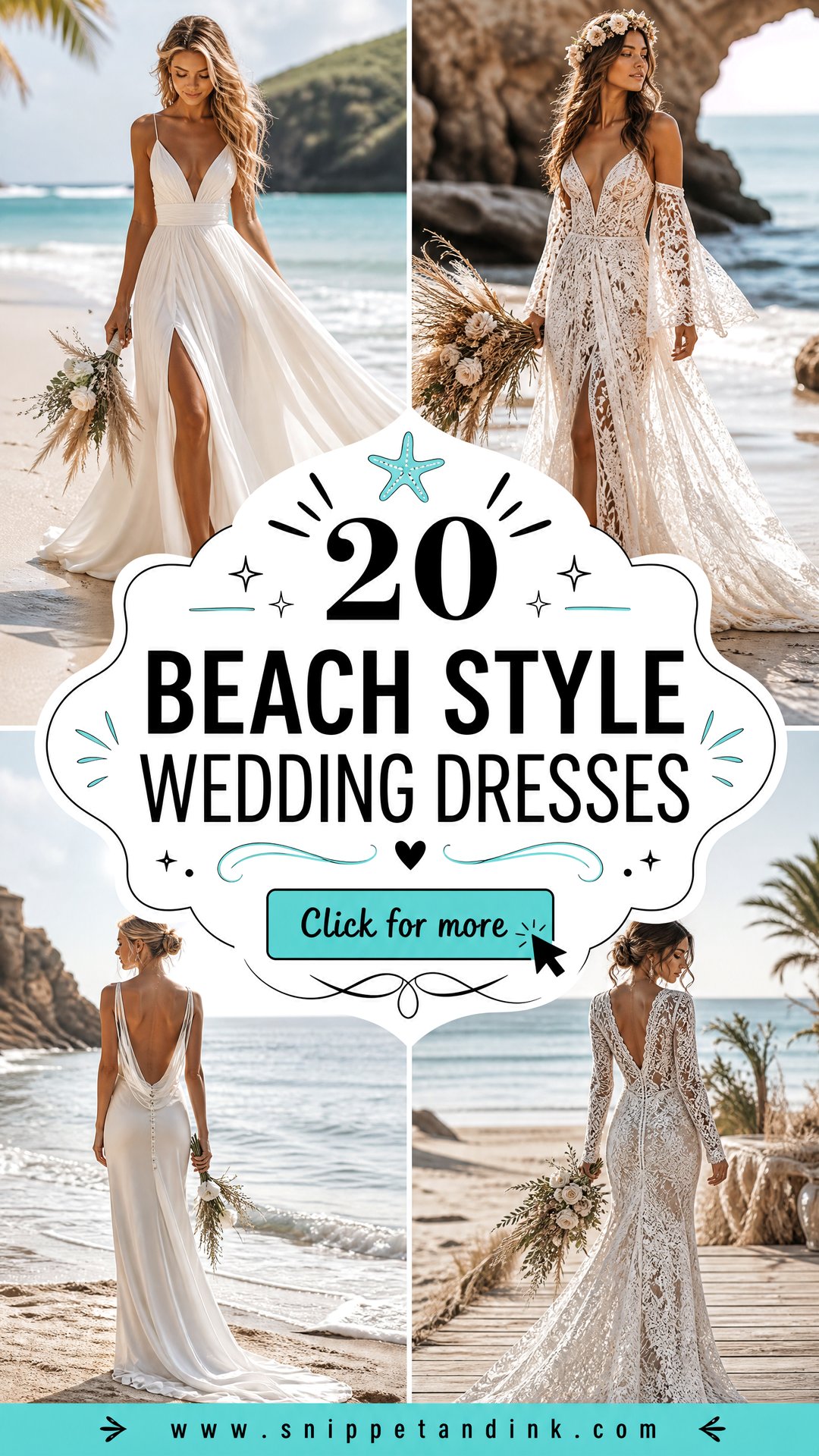
Soft Sand, Packed Sand or a Deck? Start With the Ground
The aisle surface decides more about a beach gown than the style board does. I ask every beach bride to find out exactly where she’ll stand, then work backward to the hem, the train and the shoes.
- Soft, dry sand: you’ll sink a little with every step, so heels are out and a long train gets dragged rather than carried. Flat sandals or bare feet, with the hem set for them, and a sweep train at most.
- Packed sand near the waterline: firmer underfoot, but damp. Anything that touches the ground darkens and picks up grit, so tea length, high-low or a short hem with a bustle makes sense.
- A deck, boardwalk or pier: low block heels are fine, but stilettos catch between the boards. Tulle and loose lace can snag on rough wood.
- Grass above the beach: damp in the morning and soft after rain, so the same flat-shoe rule applies.
If you plan to go barefoot, say so before the first fitting. A hem set for sandals will drag on the ground once you take them off, and it’s much easier to hem once for bare feet than to shorten it twice.
1. Chiffon A-Line Beach Wedding Dress
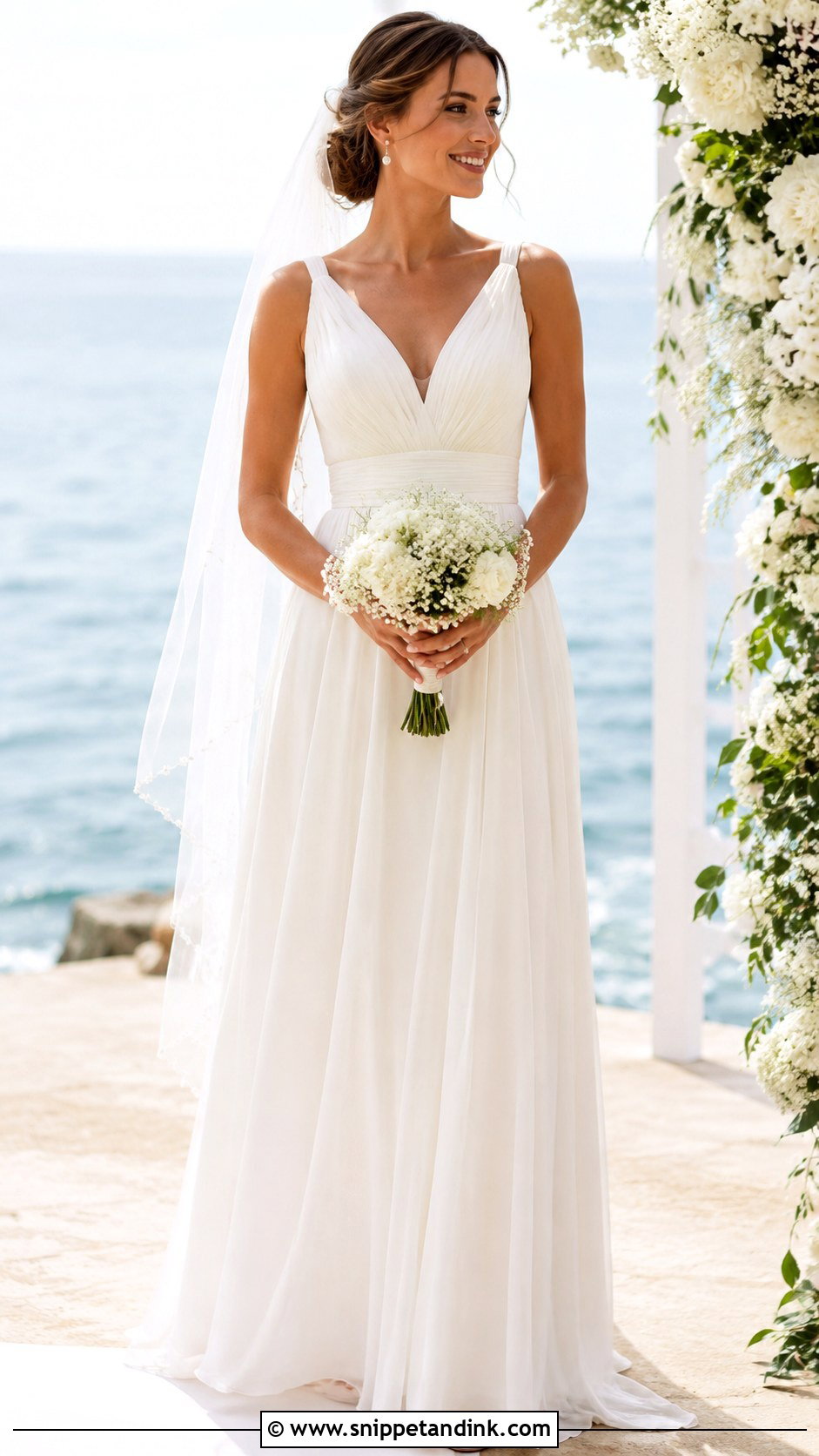
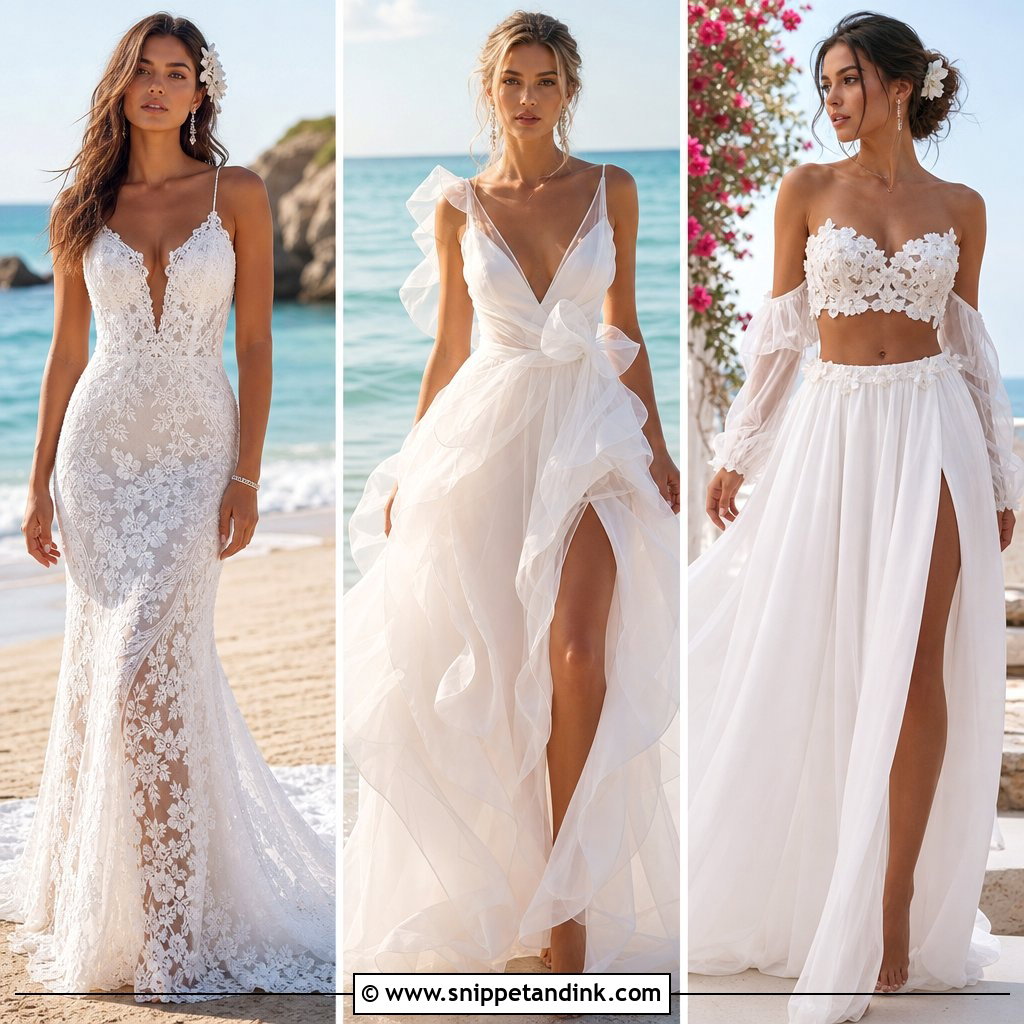
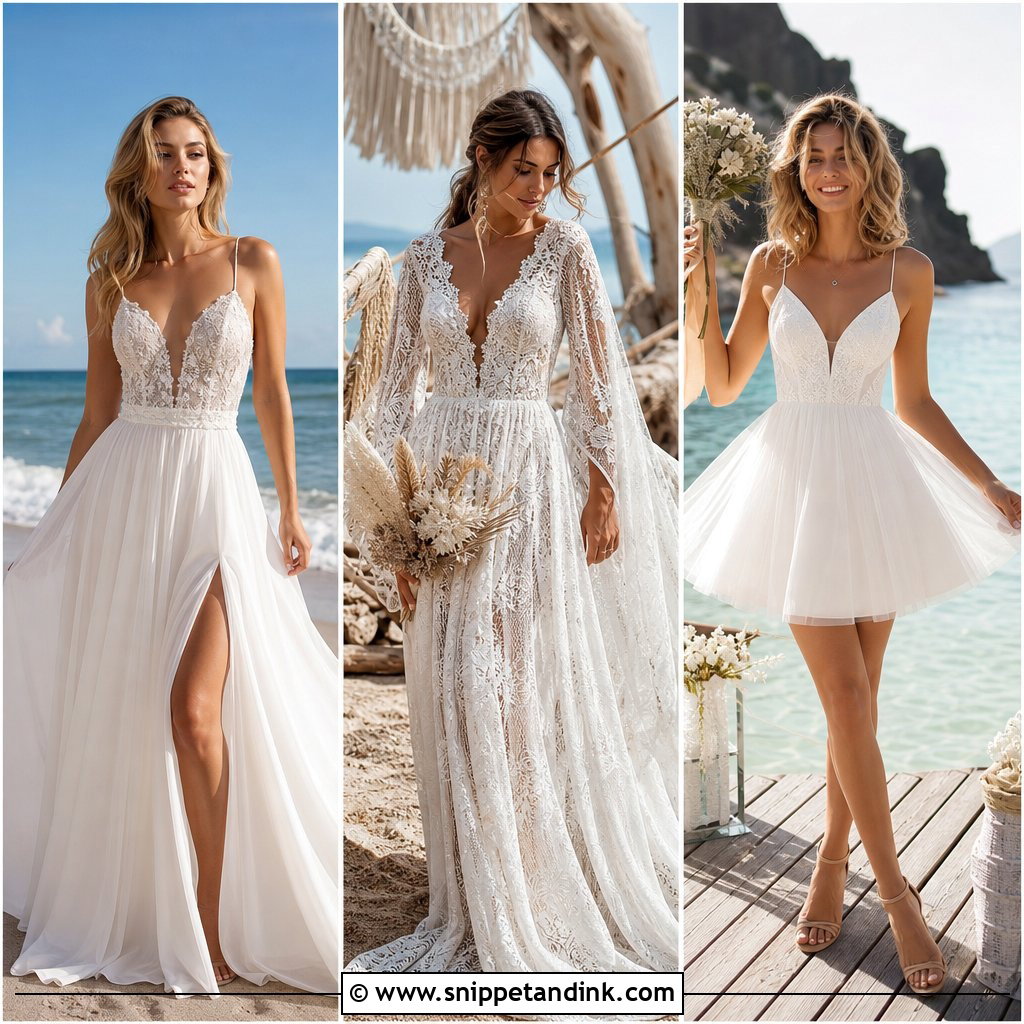
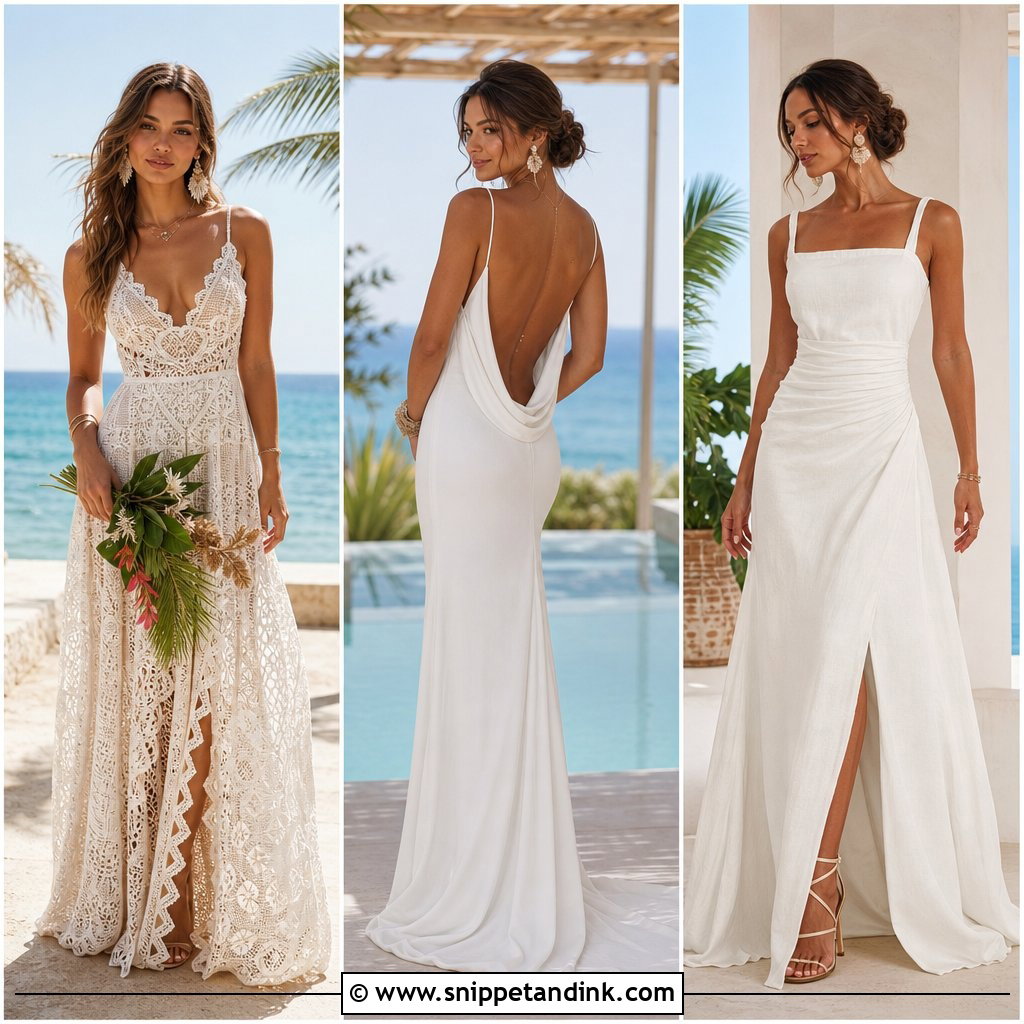
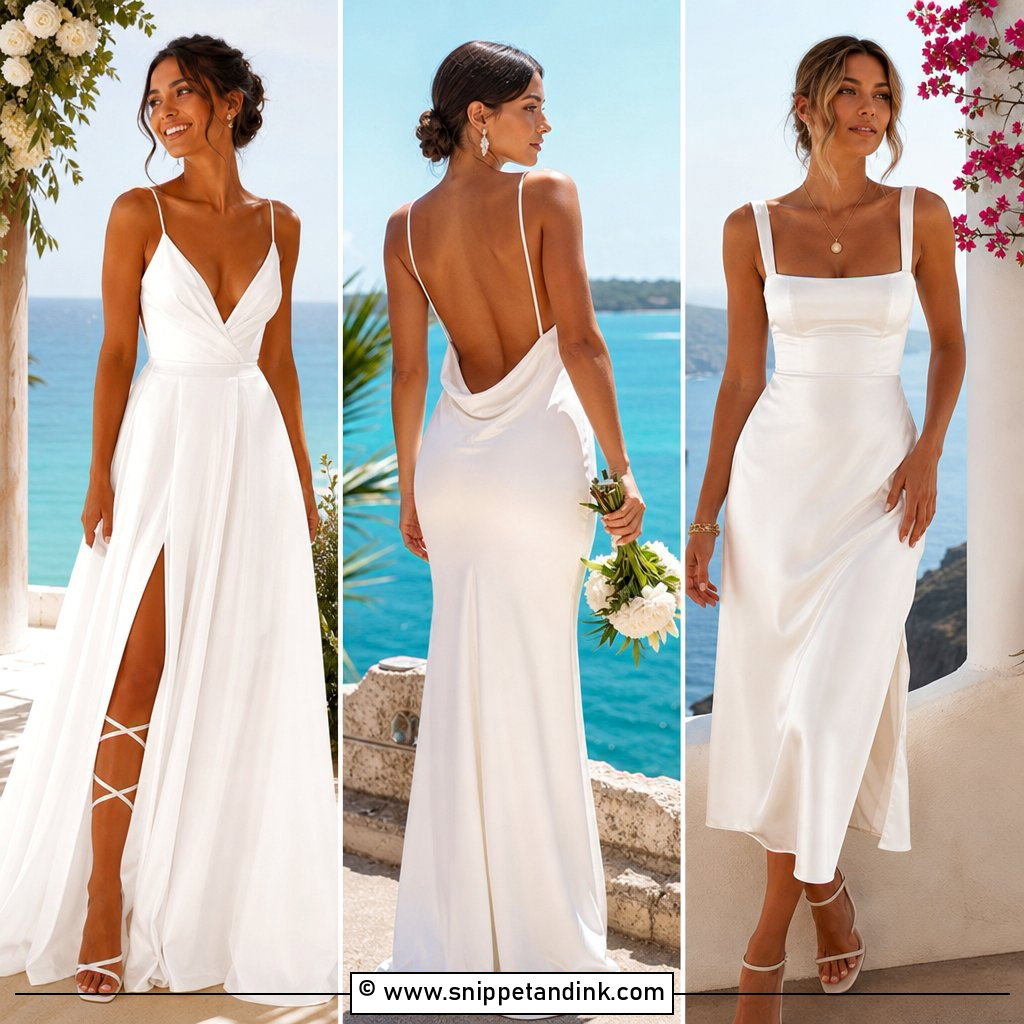
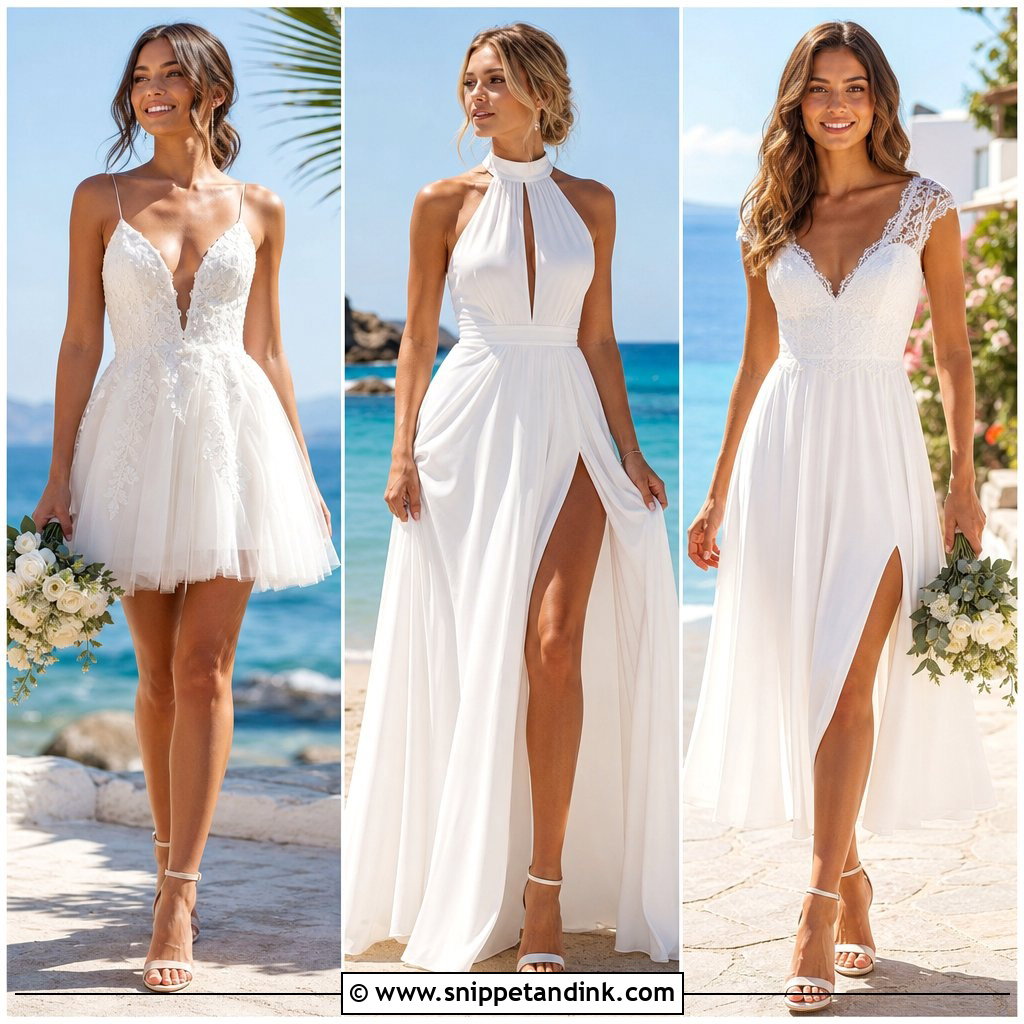
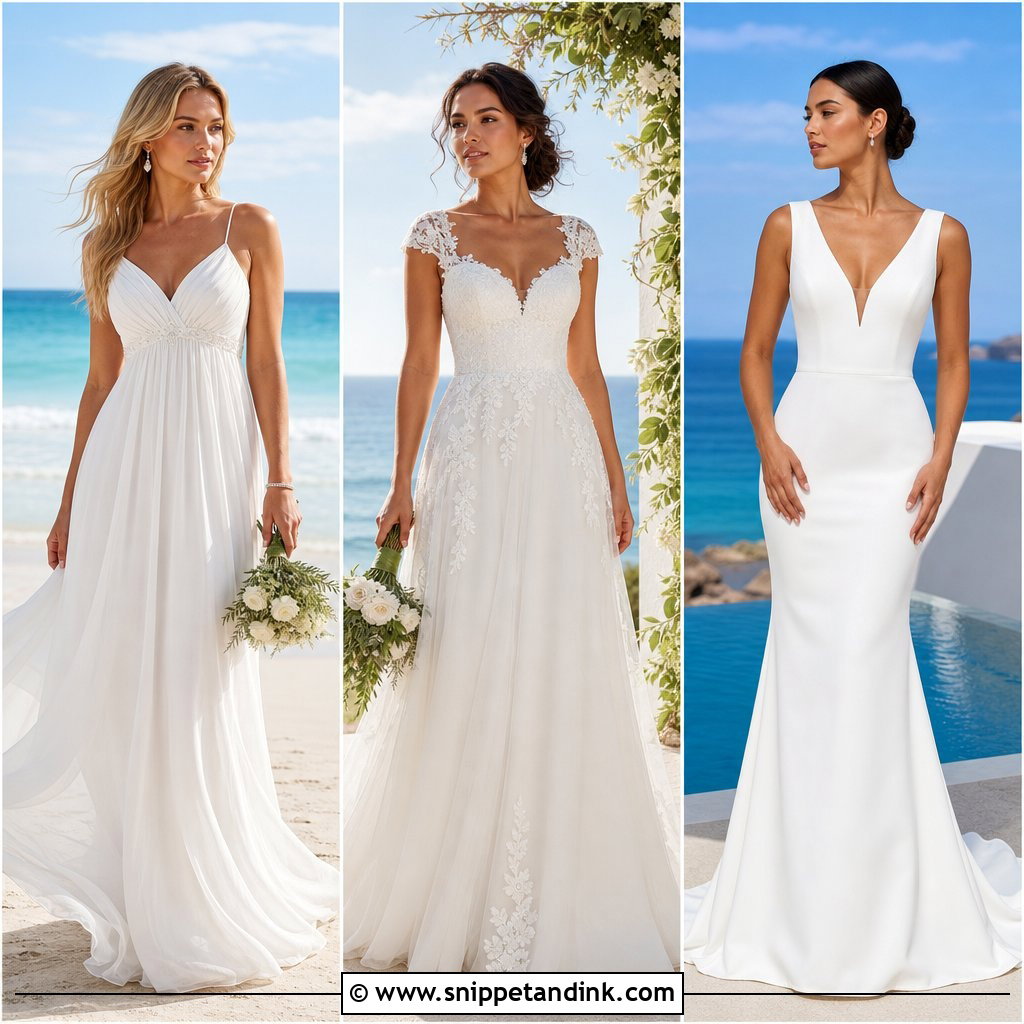
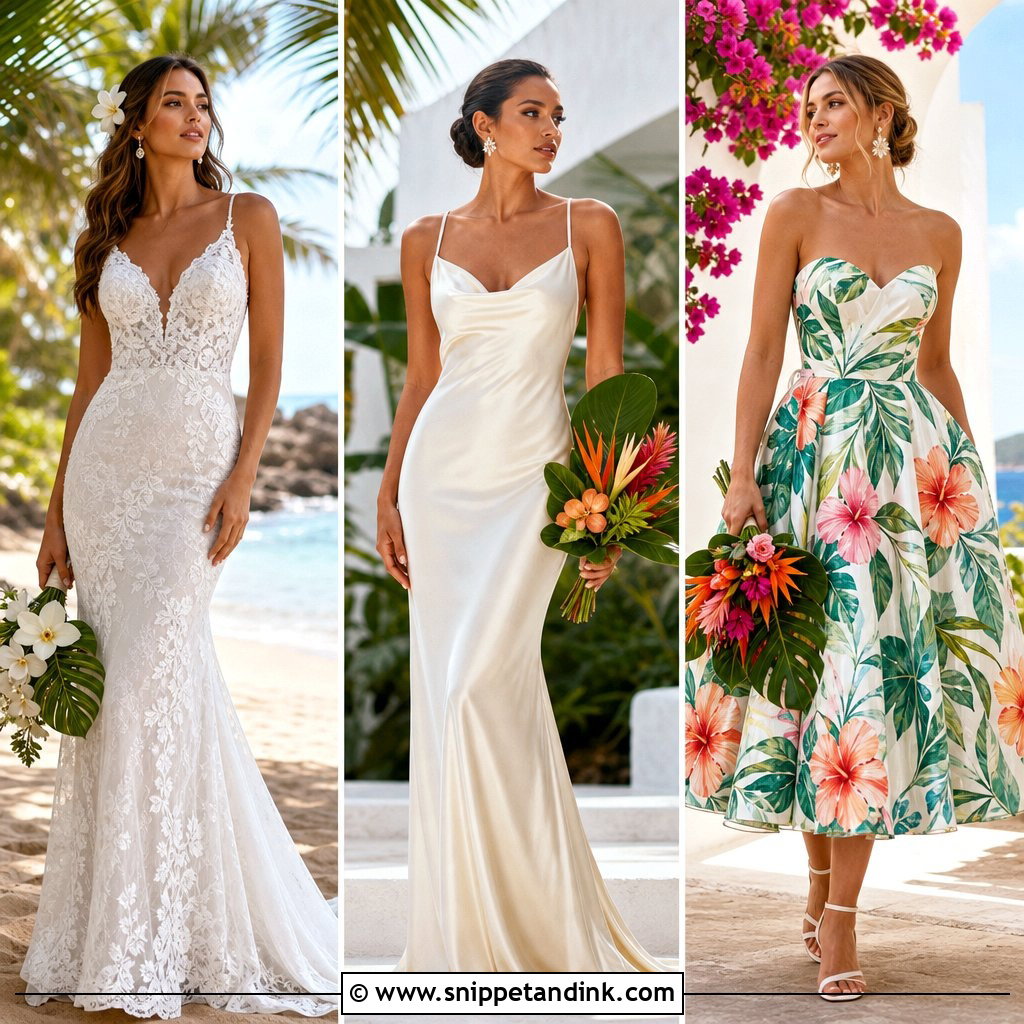
Chiffon A-lines are where most beach brides start, and for good reason: the fabric weighs almost nothing and the gathered skirt moves with every breeze. I look for a fitted bodice with real straps rather than spaghetti ones, because chiffon offers no structure of its own to hold a strapless top up. A V-neck lengthens the upper body and a defined waist gives most figures a balanced line. Keep the train short or sweep length, wear flat ivory sandals or pointed flats instead of narrow heels, and pin a low textured bun firmly against the wind. Pearl drops, a fine bracelet and a fingertip veil round off the beach bridal look.
2. Satin Slip Beach Wedding Dress
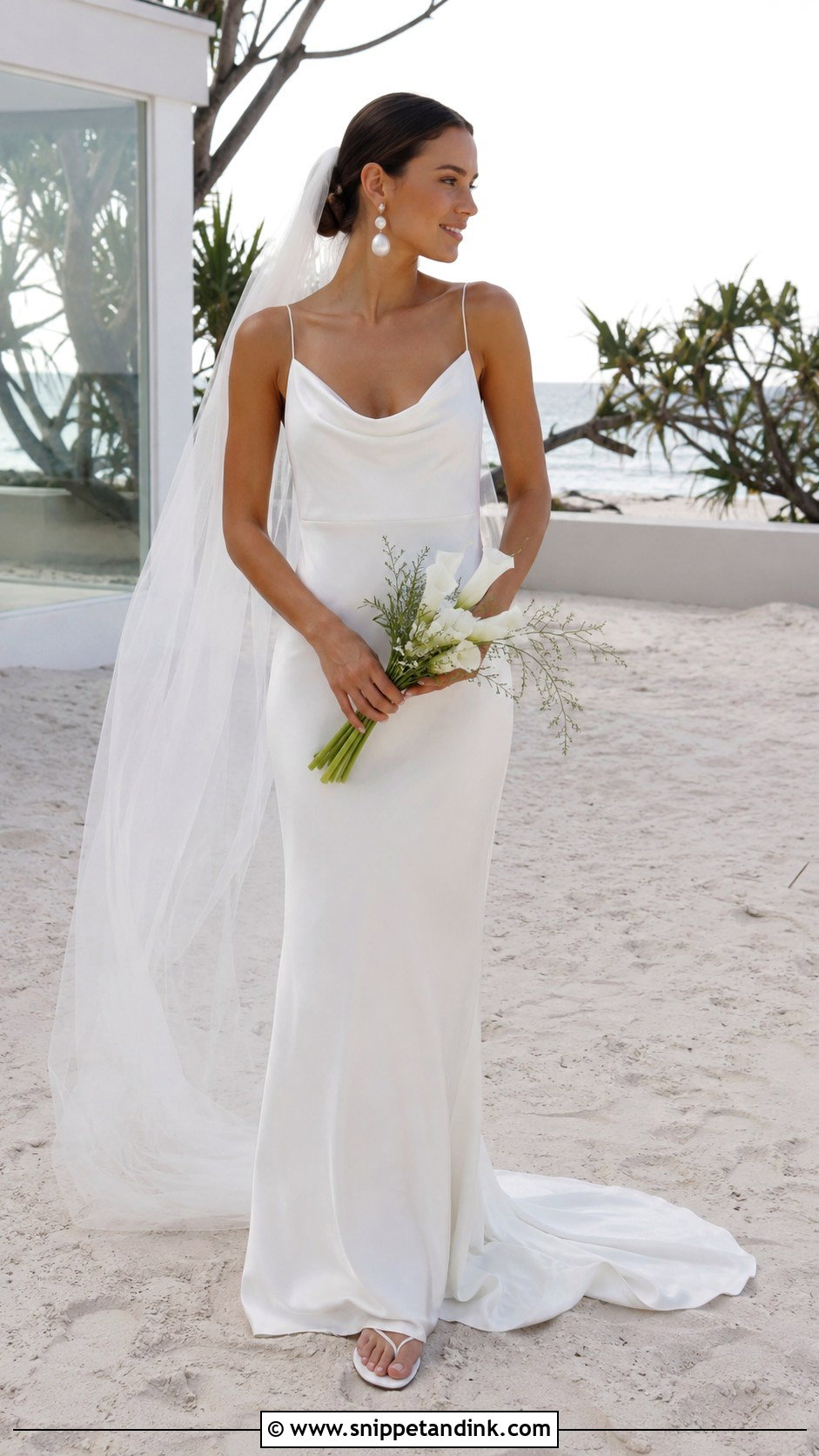
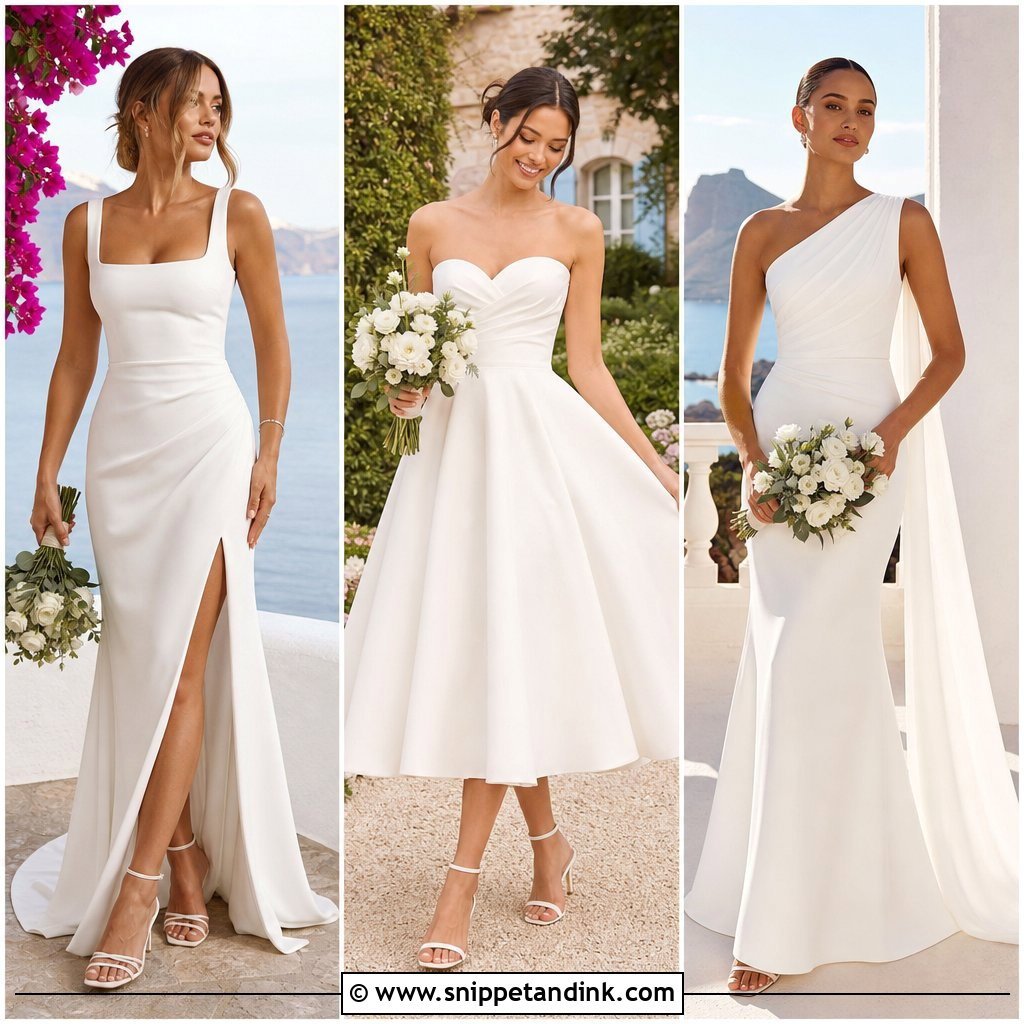
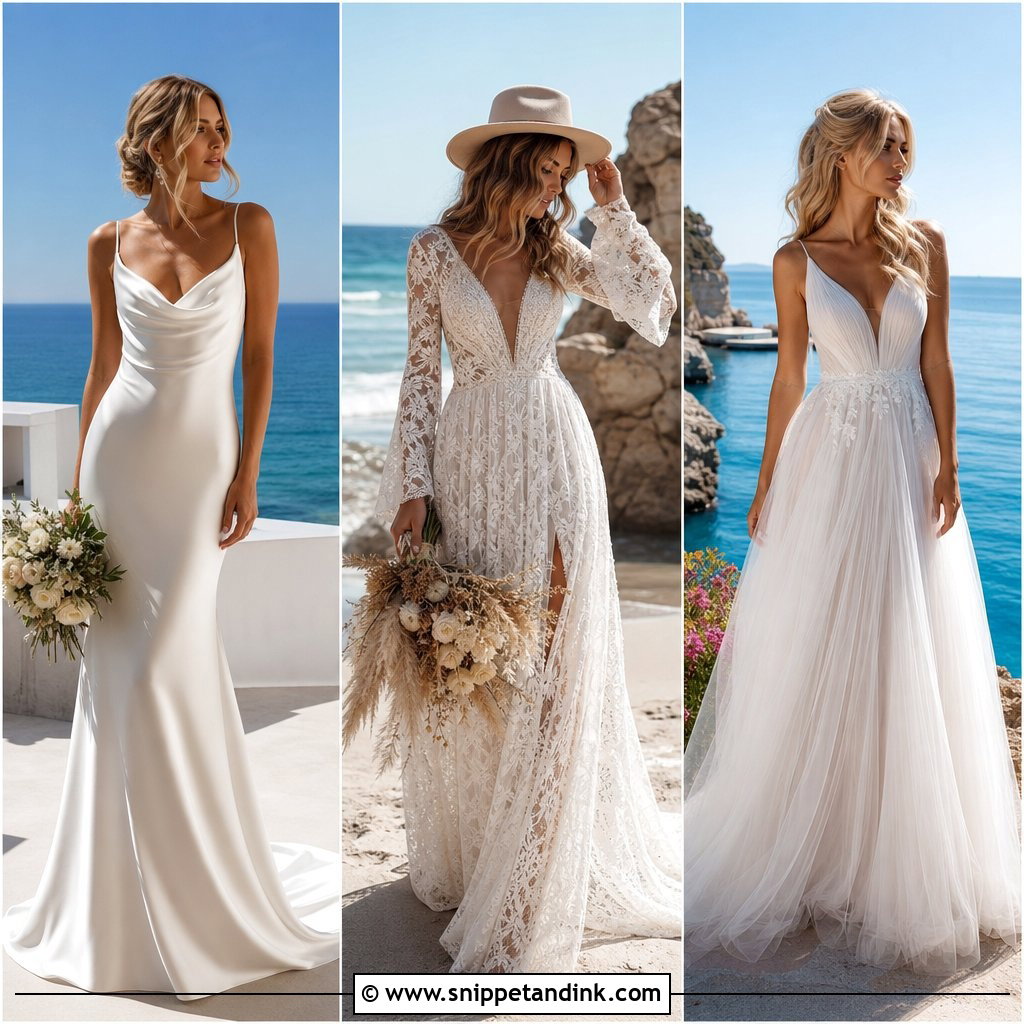
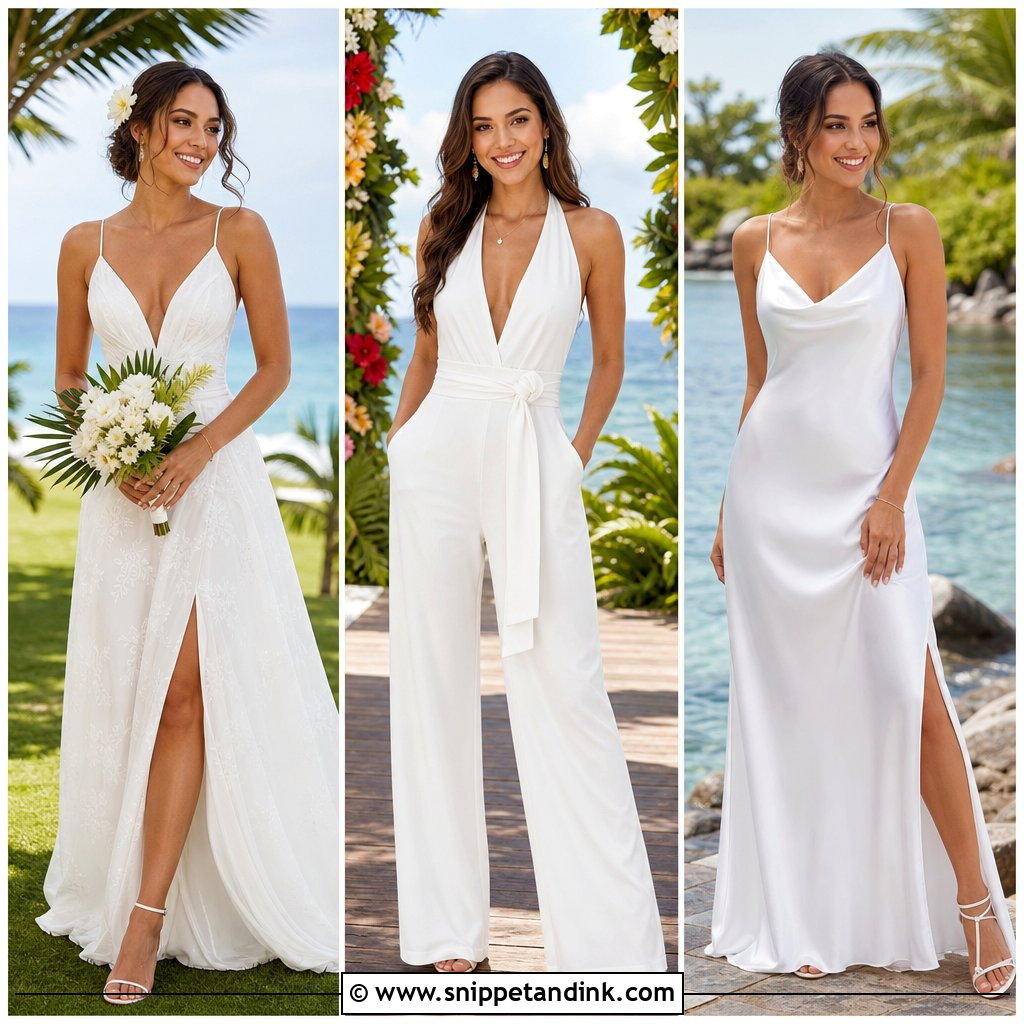
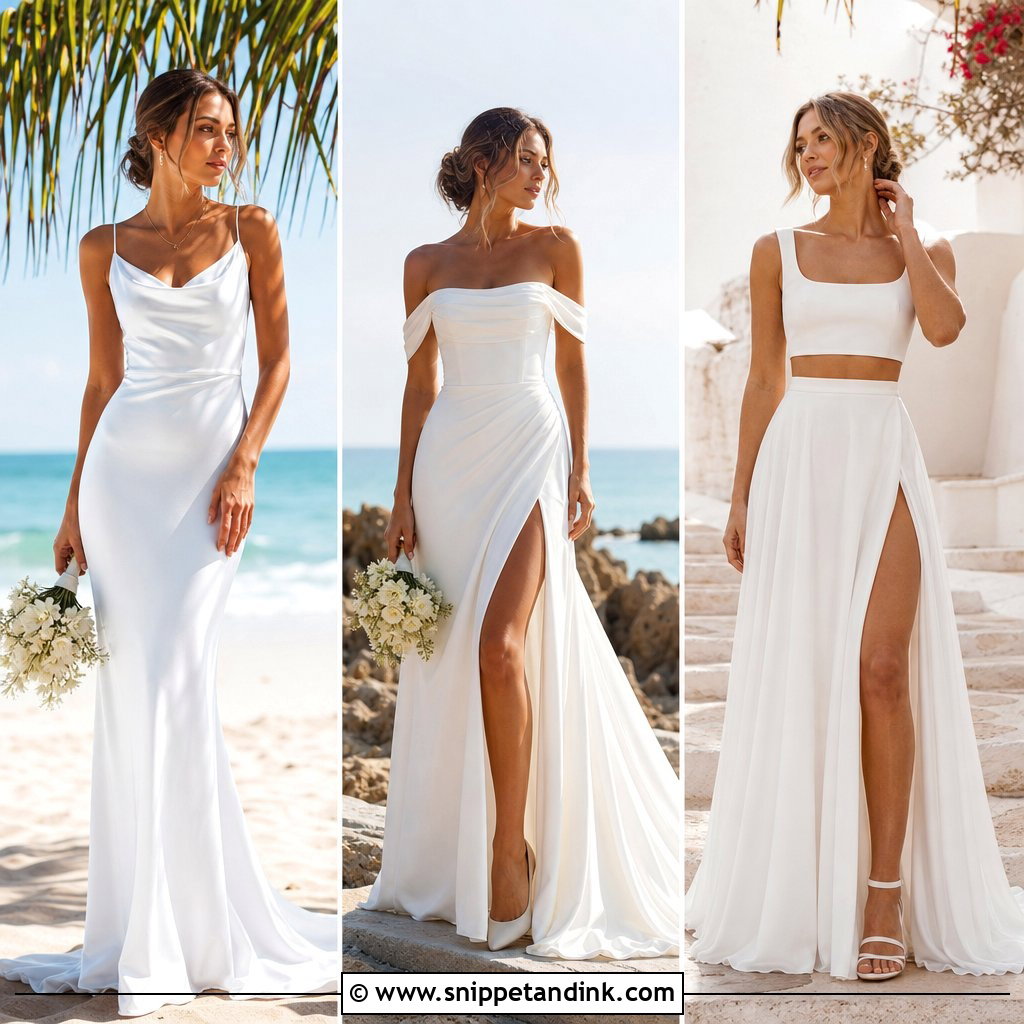
A satin slip is the most honest gown on this list, since it hides nothing. A bias cut that skims the body rather than gripping it, adjustable straps and a softly draped neckline let you move freely, and satin or silk charmeuse gives a glow that needs no decoration. The trade-off is that bias satin shows every line underneath and every uneven hem, so I insist on smooth underwear brought to every fitting and a skilled alterations specialist, not a quick hem job. Sculptural pearl earrings, a simple pendant and a sleek low bun or ponytail suit it, with minimal white leather sandals and a small white bouquet. A sheer chapel veil for the ceremony, removed afterward, gives you two moods from one dress.
3. Boho Lace Beach Wedding Dress
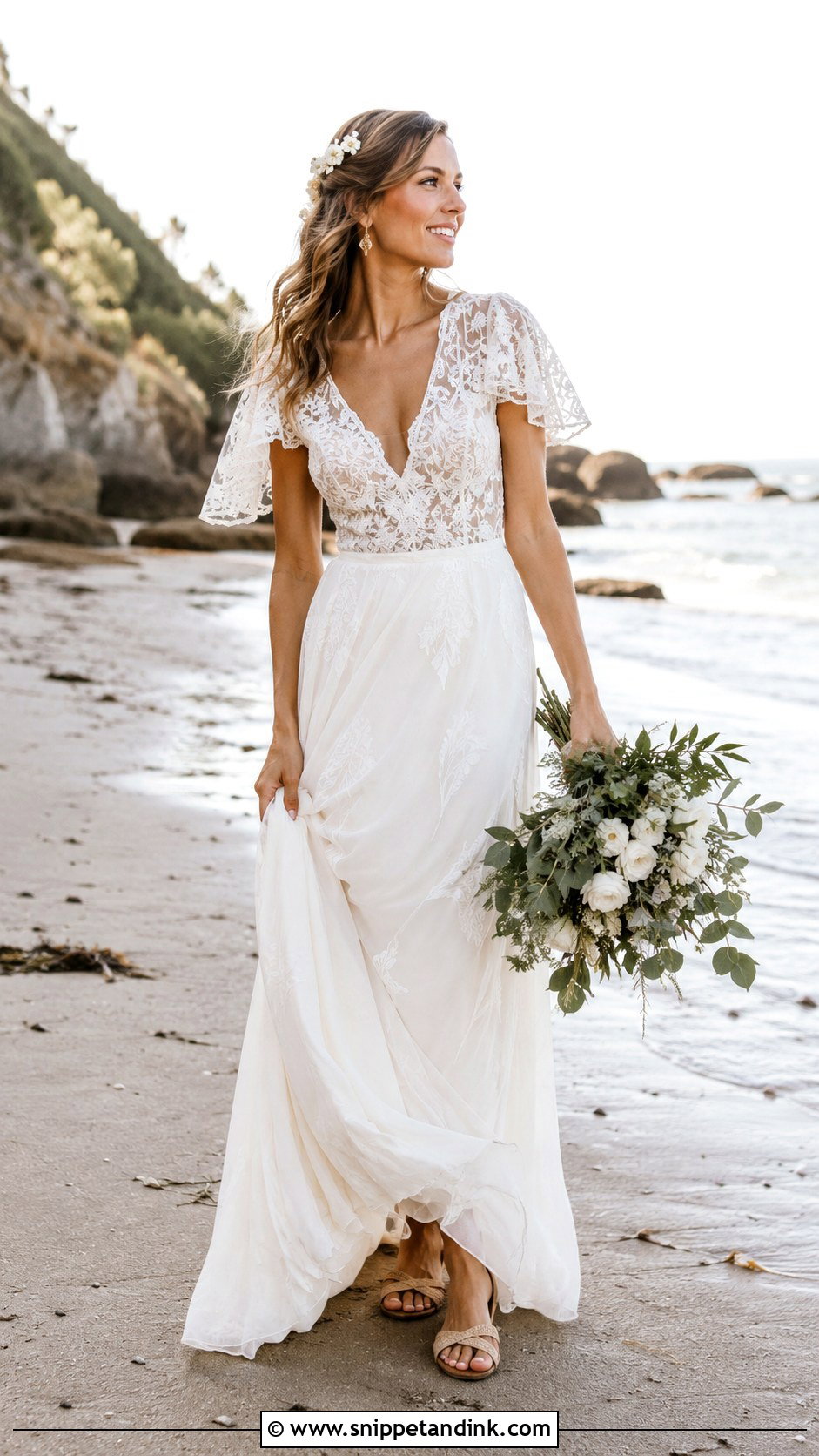
Lace brings texture and personality, and on a beach the type of lace matters. Botanical lace over a soft lining stays comfortable, while stiff netting and heavy beading trap heat and catch on everything. Flutter sleeves or narrow straps suit the free shape. Loose waves, small floral pins and understated gold earrings finish the bride, and braided flat sandals carry the bohemian mood while keeping you steady on sand. I’d choose a short veil with a lace edge that echoes the gown instead of a fully patterned one, which would fight the dress. A loose bouquet of white, cream and leafy green keeps the whole outfit relaxed enough for an open-air reception.
4. Off-the-Shoulder Beach Wedding Dress
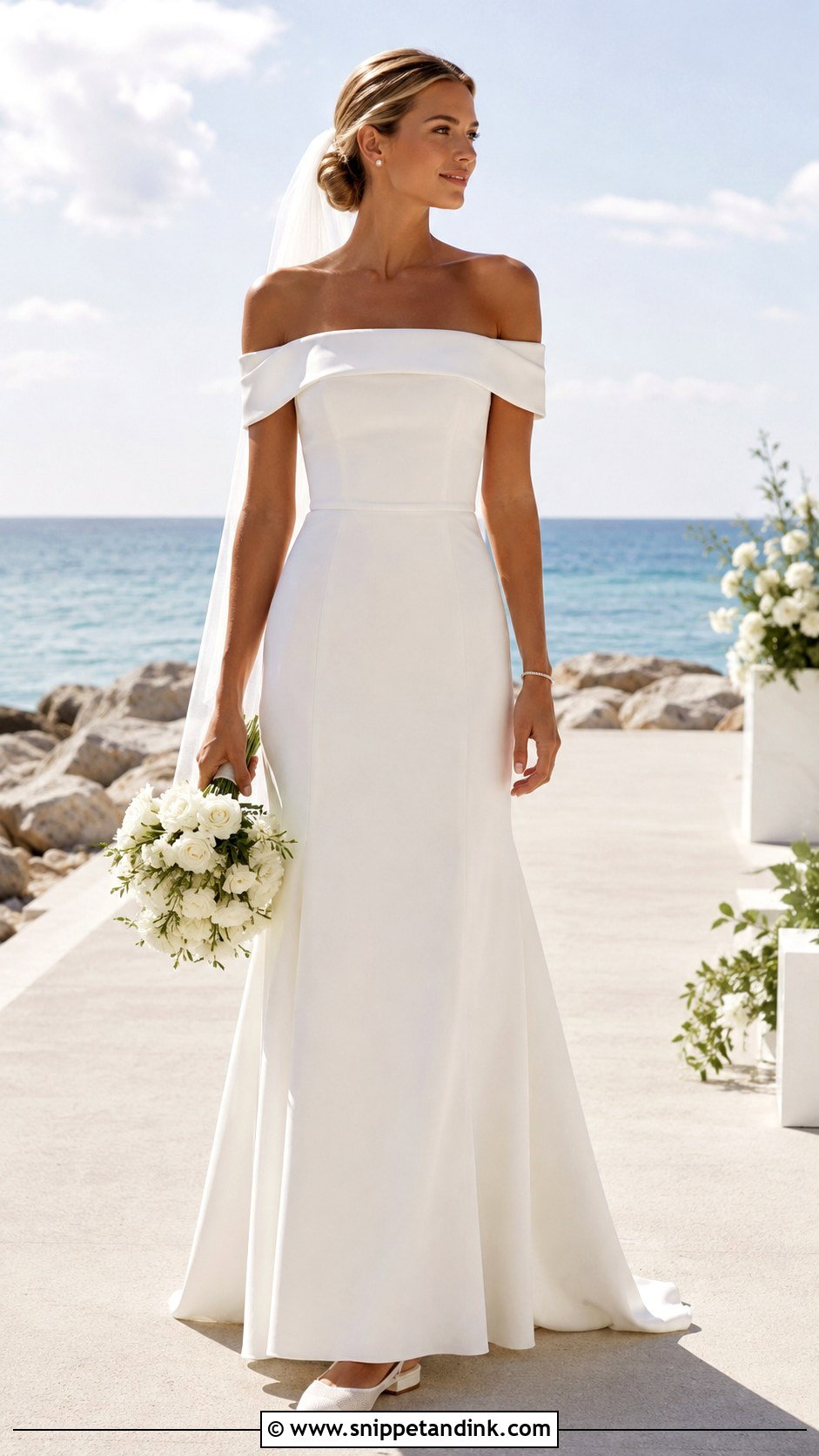
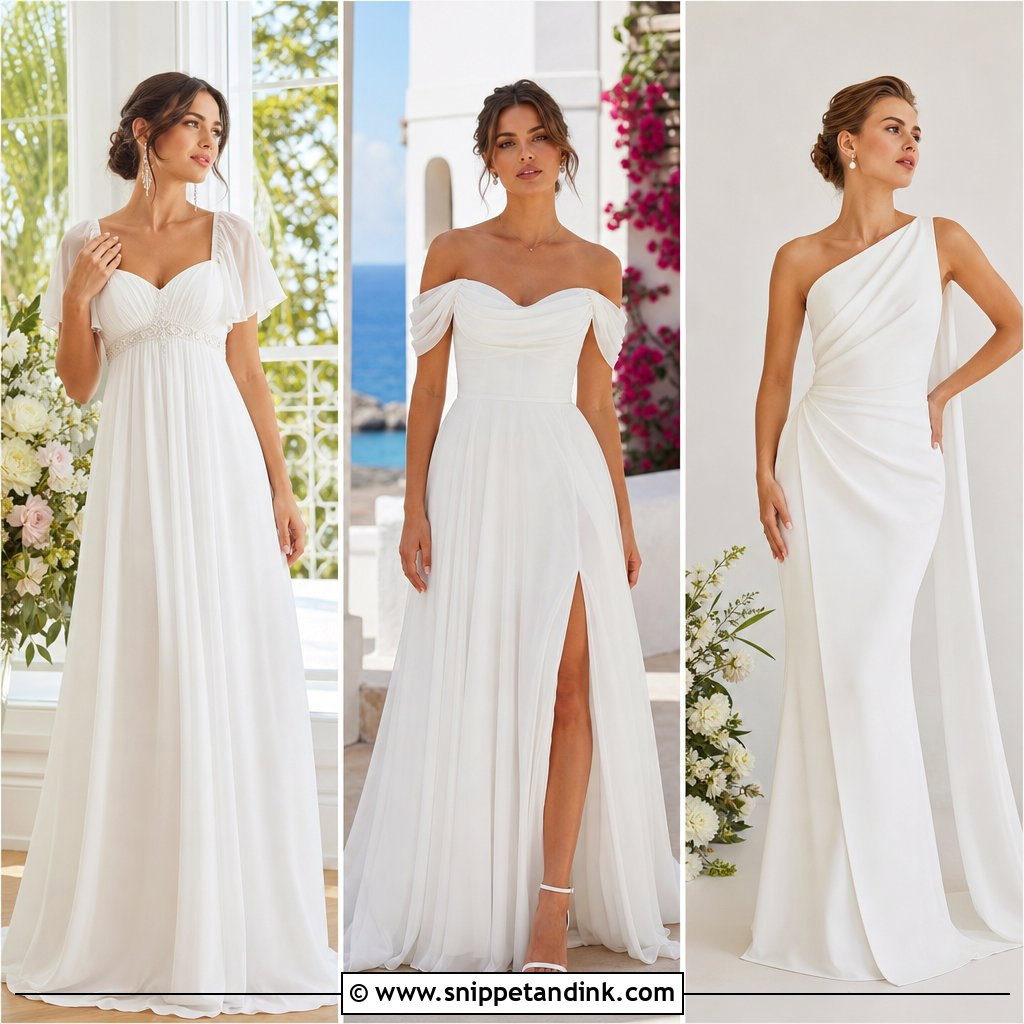
An off-the-shoulder neckline frames the collarbones, and it’s also the neckline I see fail most often when the support is wrong. In lightweight crepe or chiffon, it needs an internal structure, boning or a grip band, so it stays in place when you hug guests or lift your arms to dance. A fitted waist and gently flared skirt keep it polished without feeling too formal for the shore. A low chignon shows off the neckline; add small crystal drops or pearl studs and a fine chain bracelet, and skip the necklace altogether. Slingback flats or low block-heel sandals work if there’s a solid walkway. Finish with a simple veil.
5. Halter Neck Beach Wedding Dress
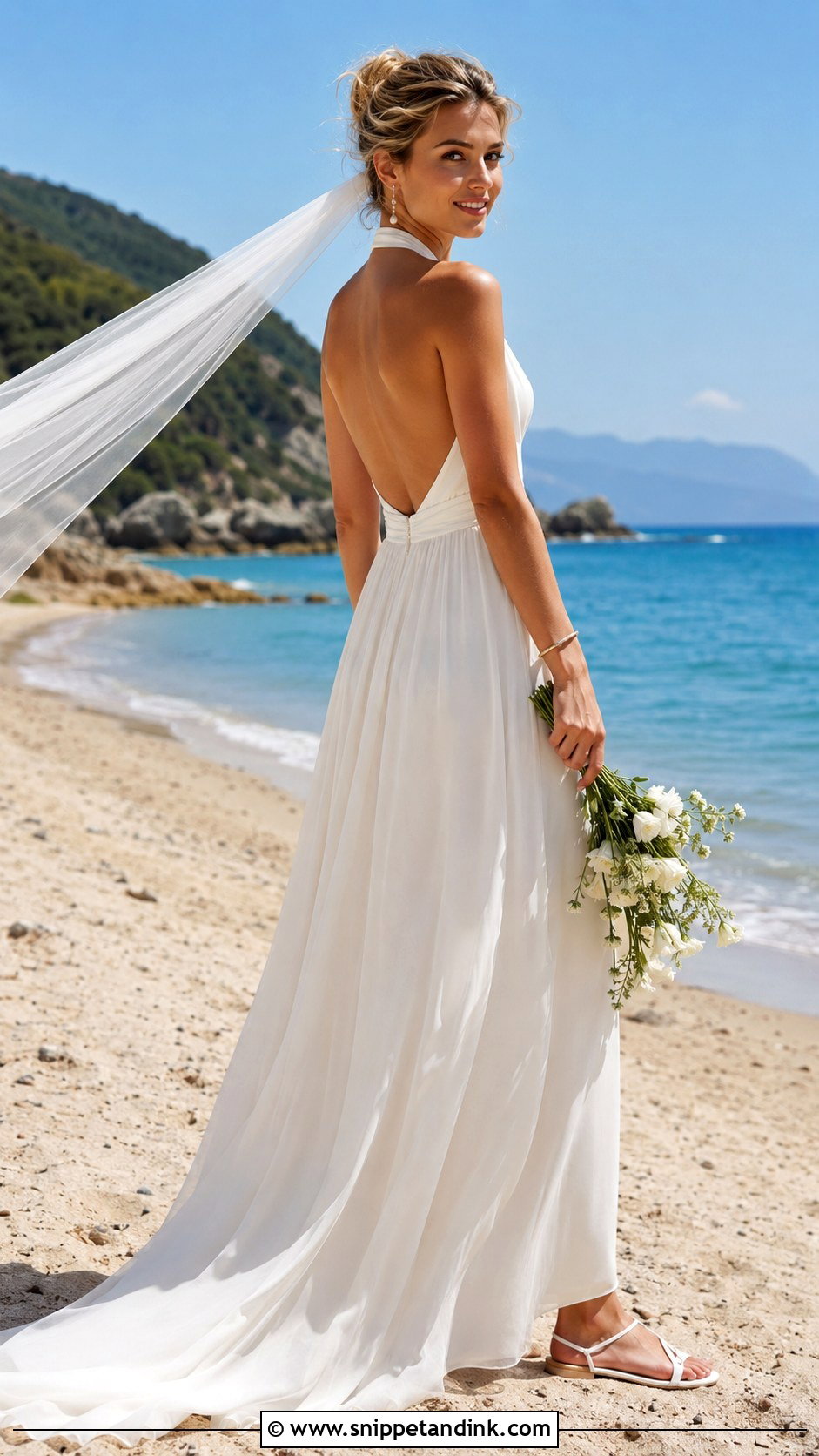
Halter necklines have become a regular sight in bridal collections, and they suit the beach because they give coverage at the front while leaving the shoulders and back open to the breeze. Pick chiffon, crepe or light satin with an open back and a relaxed column or A-line skirt. Wear your hair up so the neckline stays visible, then add pearl hoops, a slim cuff and a compact bouquet. One fitting note: the strap tension at the back of the neck decides comfort, and I have brides wear it for twenty minutes in the salon, because a halter that’s slightly too tight gives a headache by the reception. Cushioned flat sandals work under a floor-length hem, or low platforms on a firm aisle. A cathedral veil adds drama, but a shorter one is far easier to control in strong wind.
6. Backless Crepe Beach Wedding Dress
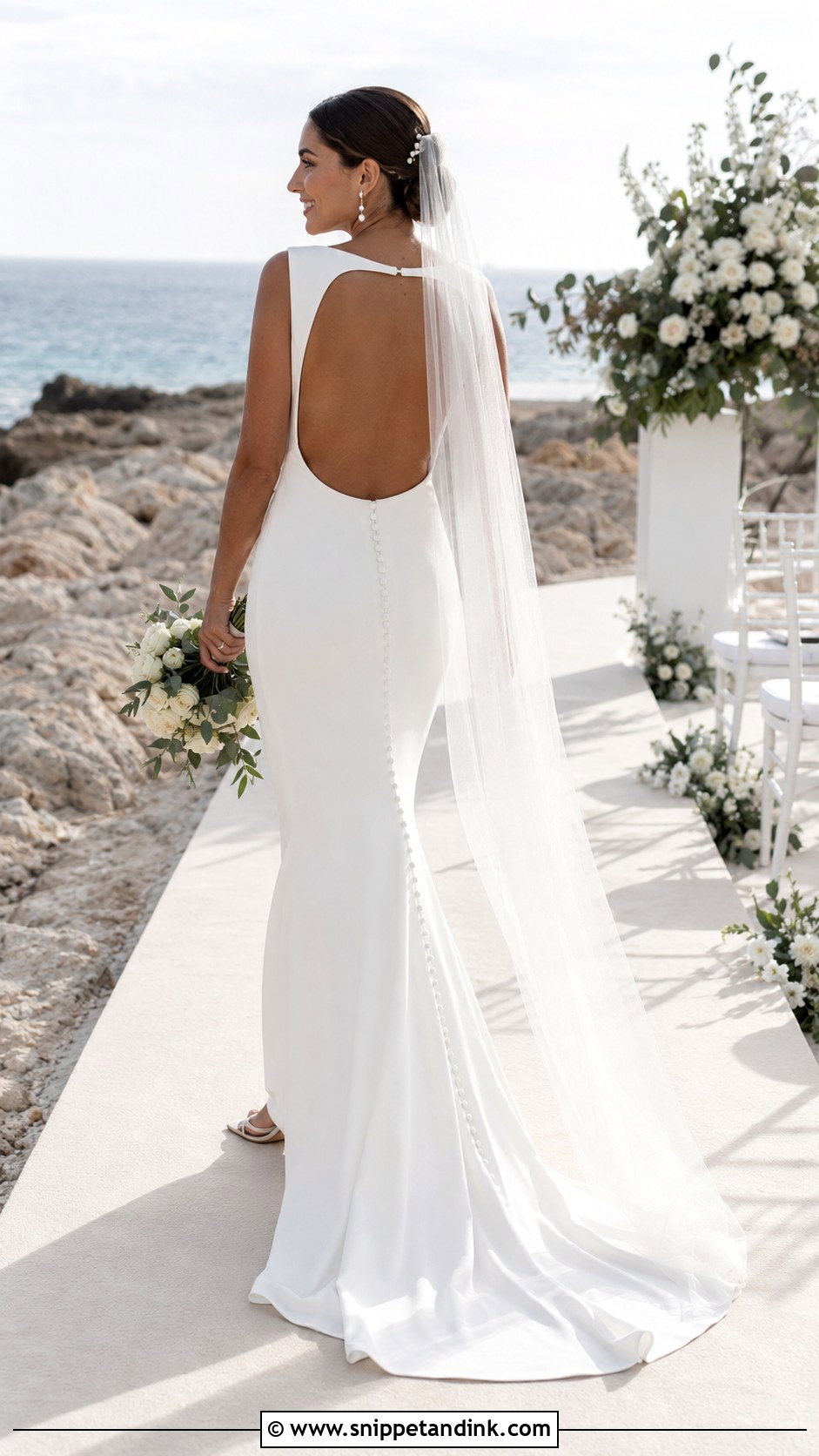
From the front, a backless crepe gown looks almost plain; the drama arrives when you turn toward the sea for the ceremony and guests see the back. Medium-weight stretch crepe is the fabric I’d pick, heavy enough to cover and flexible enough for sitting and dancing. A high bateau neck or a simple V balances the open back, and covered buttons add a classic touch. Support is the conversation to have early: built-in cups, a supportive lining or discreet body tape, all decided at alterations rather than the night before. A polished bun, pearl hair pins and delicate drop earrings draw the eye upward, and low ivory sandals keep the hem at the right height. Finish with a narrow fingertip veil or a bridal scarf you can take off once the evening breeze picks up.
7. One-Shoulder Beach Wedding Dress
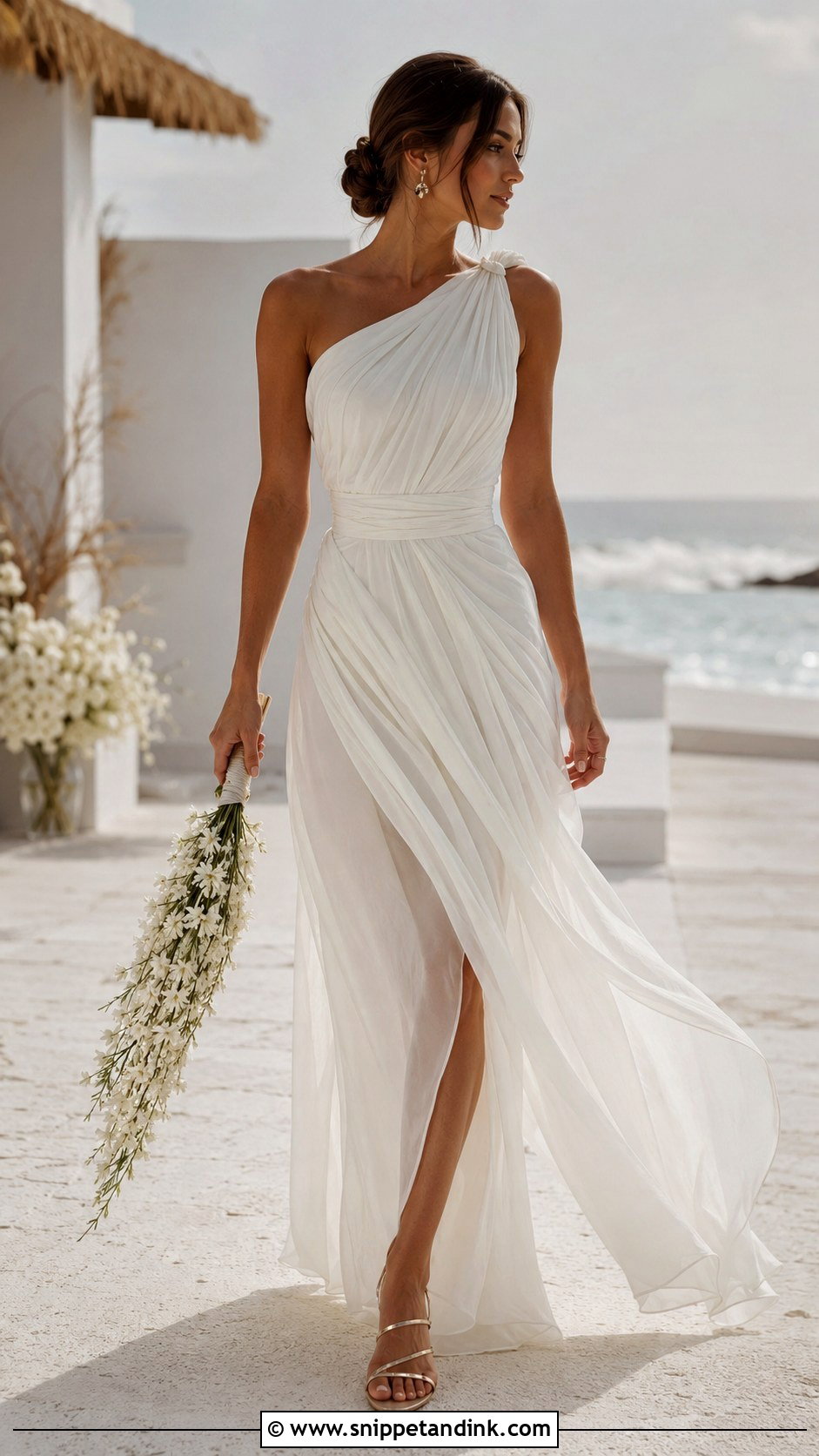
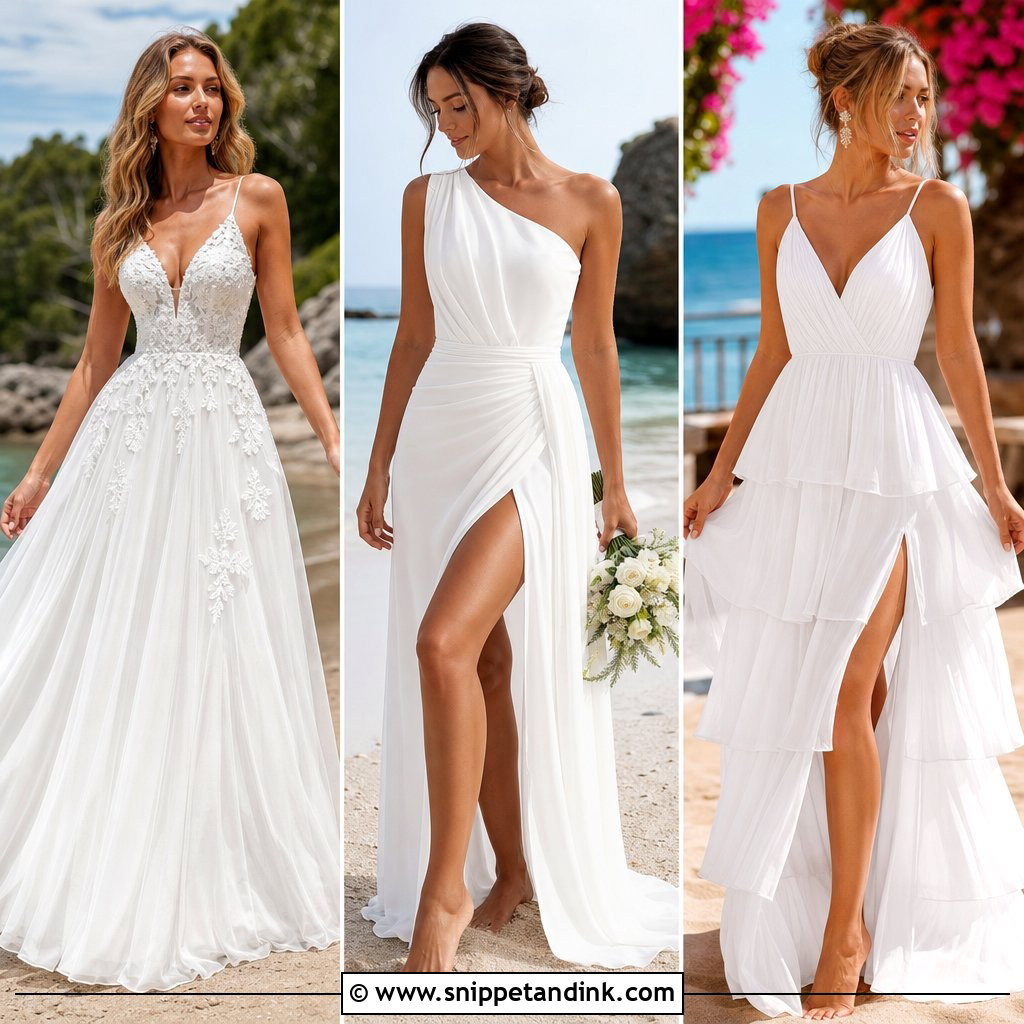
Draped one-shoulder gowns are having a real moment in bridal design, and the soft folds give movement without any beading at all. Lightweight chiffon or fluid crepe with a fitted waist and relaxed skirt works best on sand. If there’s a bow or sash at the shoulder, every other accessory should go quiet. I usually suggest placing a sleek bun slightly off-center on the bare side, which balances the asymmetry in photos, then pairing it with one statement earring or small matching drops. Metallic flats or ivory sandals stay hidden under the skirt. You can skip the veil, since the neckline already carries the look, and a long narrow bouquet follows the gown’s vertical line.
8. Sweetheart Corset Beach Wedding Dress
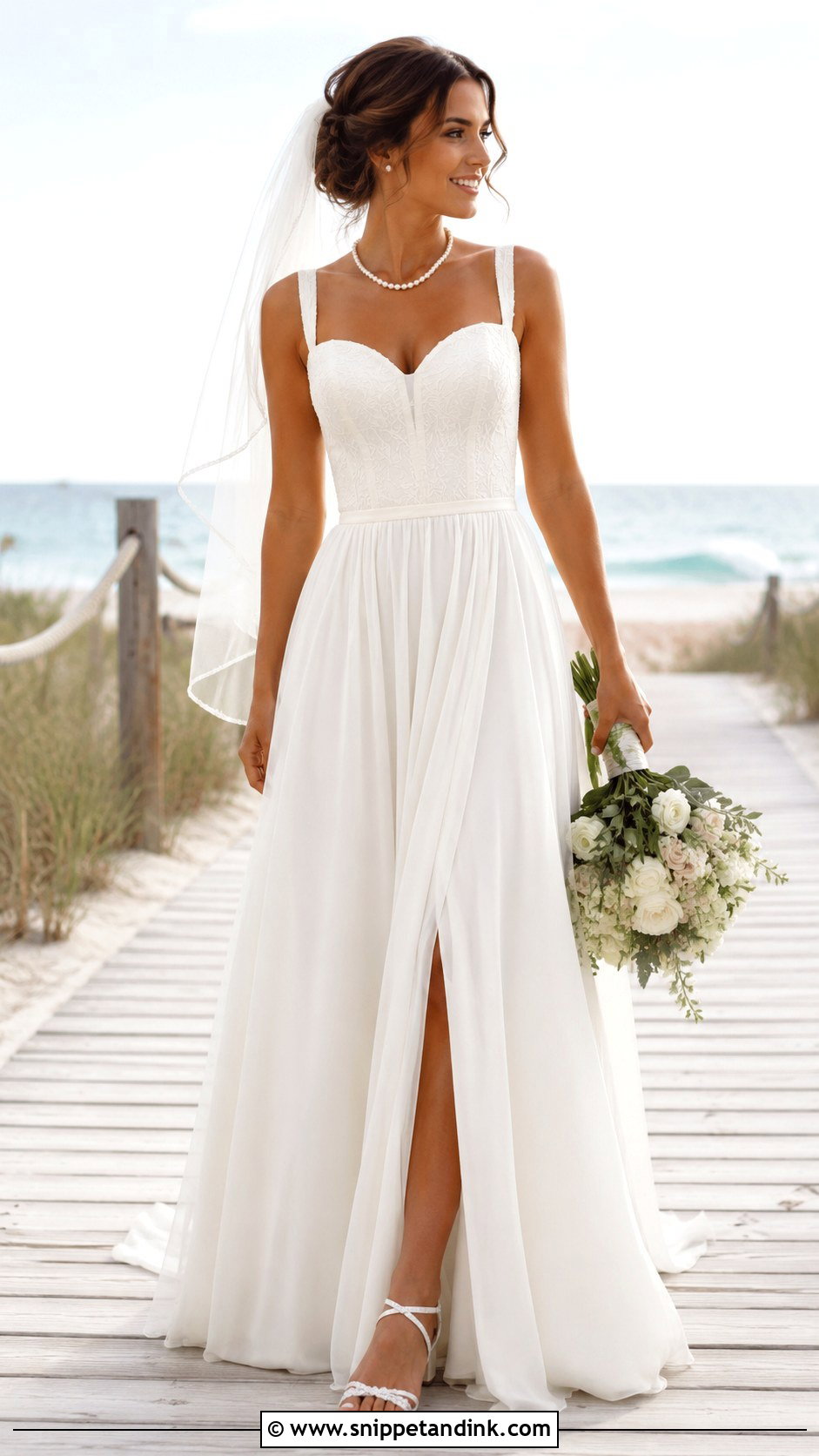
A sweetheart corset gives shape and support, but a fully rigid, heavily boned bodice in beach heat is uncomfortable for hours on end. For the coast, I look for a breathable lined bodice with soft cups and flexible boning, plus wide-set straps or detachable sleeves if you want extra security. An airy chiffon A-line skirt offsets the structure above. A small pearl necklace follows the curved neckline, and studs keep it from looking overdecorated. Secure a soft updo with a plain comb. Low block heels are fine on a wooden aisle, but bare sand calls for flat bridal sandals. A shoulder-length veil completes it and is less likely to tangle in the corset lacing when the wind turns.
9. Long-Sleeve Lace Beach Wedding Dress
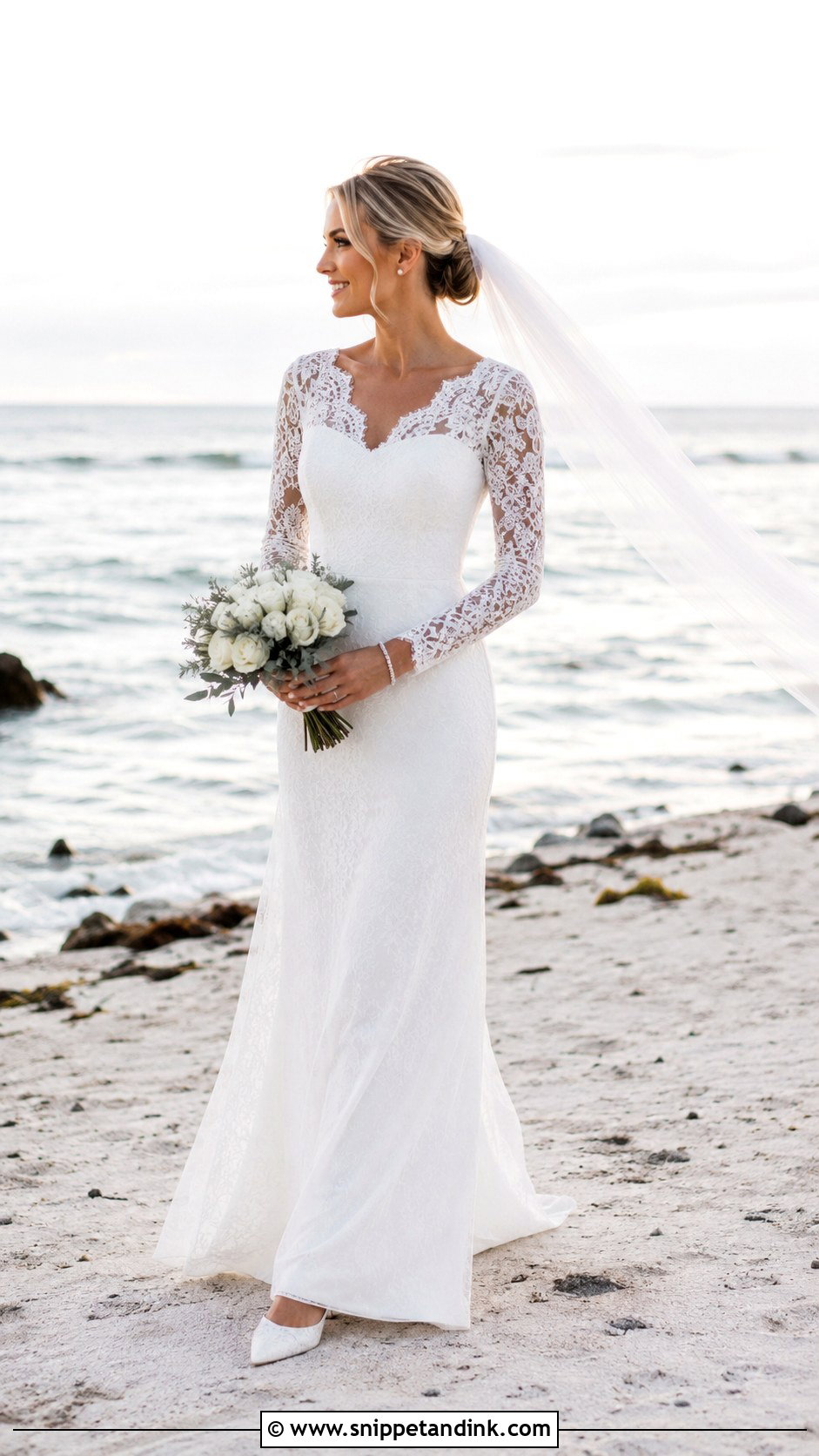
Long sleeves on a beach sound wrong until you’re at an evening ceremony in a cool coastal season with a breeze coming off the water. Illusion lace sleeves with an open pattern and a breathable body lining are the version I’d recommend; dense appliqué and heavy cuffs hold heat and stiffen the arm. A slim A-line or relaxed sheath skirt keeps the whole gown from feeling weighty. Raise your arms fully at the fitting, as tight lace sleeves can pull the bodice up when you hug. An elegant low bun, pearl studs and a fine bracelet are enough. Pointed flats suit a firm aisle; on sand, switch to flat strappy sandals. A veil with a plain edge keeps the lace in view.
10. High-Low Beach Wedding Dress
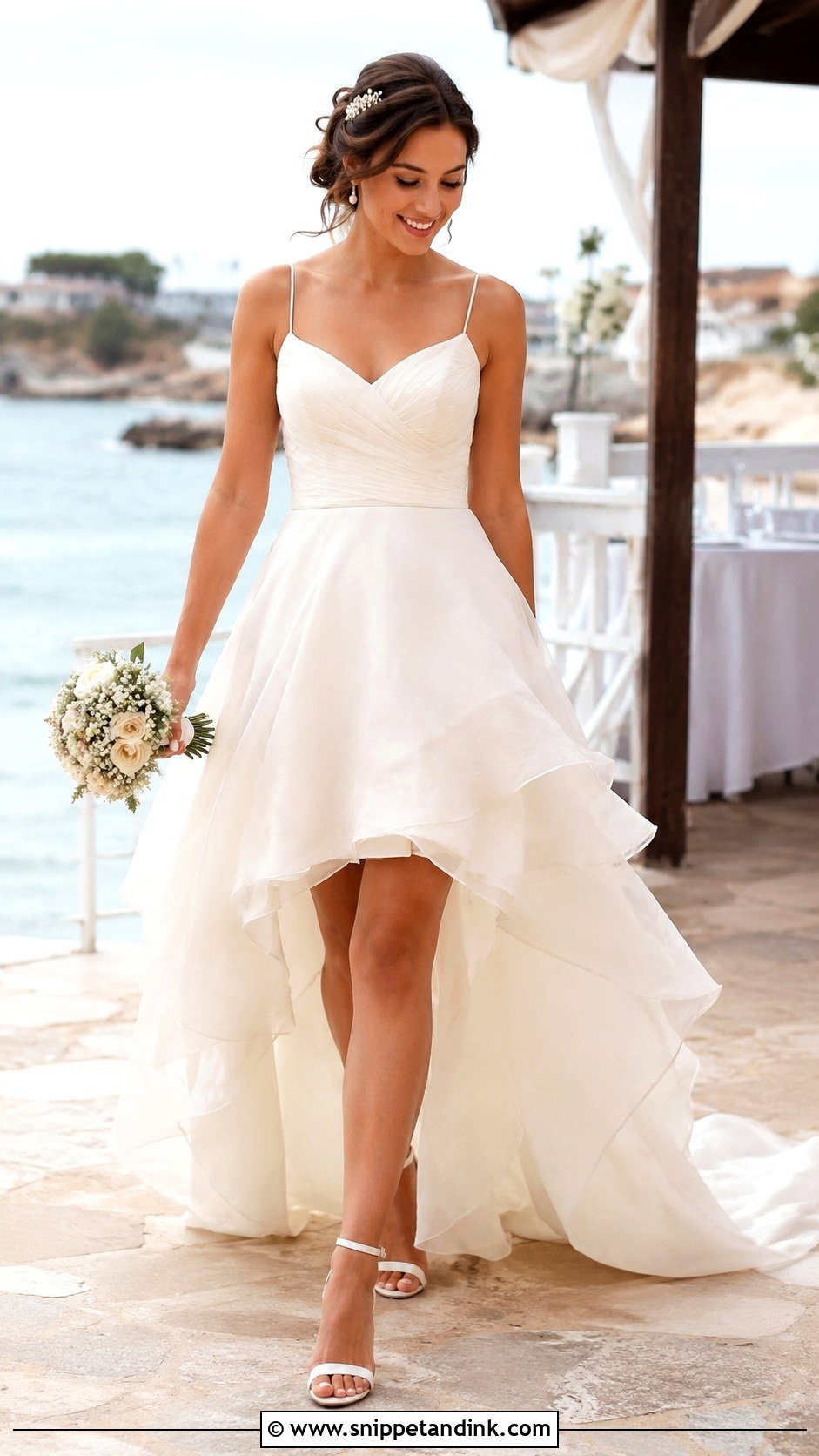
A high-low hem solves the sand problem outright, because the front never touches the ground. I’d keep the curve gentle, front hem around mid-calf rather than knee, since an extreme drop can look like two different dresses stitched together. Chiffon, organza and light tulle keep it feeling bridal. Your shoes become part of the outfit here, so choose ankle-strap sandals that fit securely and have clean soles, and break them in before the day. Pearl earrings, a delicate hair comb, a fitted bodice and perhaps a narrow belt complete it. Skip a long veil, which would compete with the uneven hem, and go with shoulder length or a flower in the hair.
11. Tea-Length Beach Wedding Dress
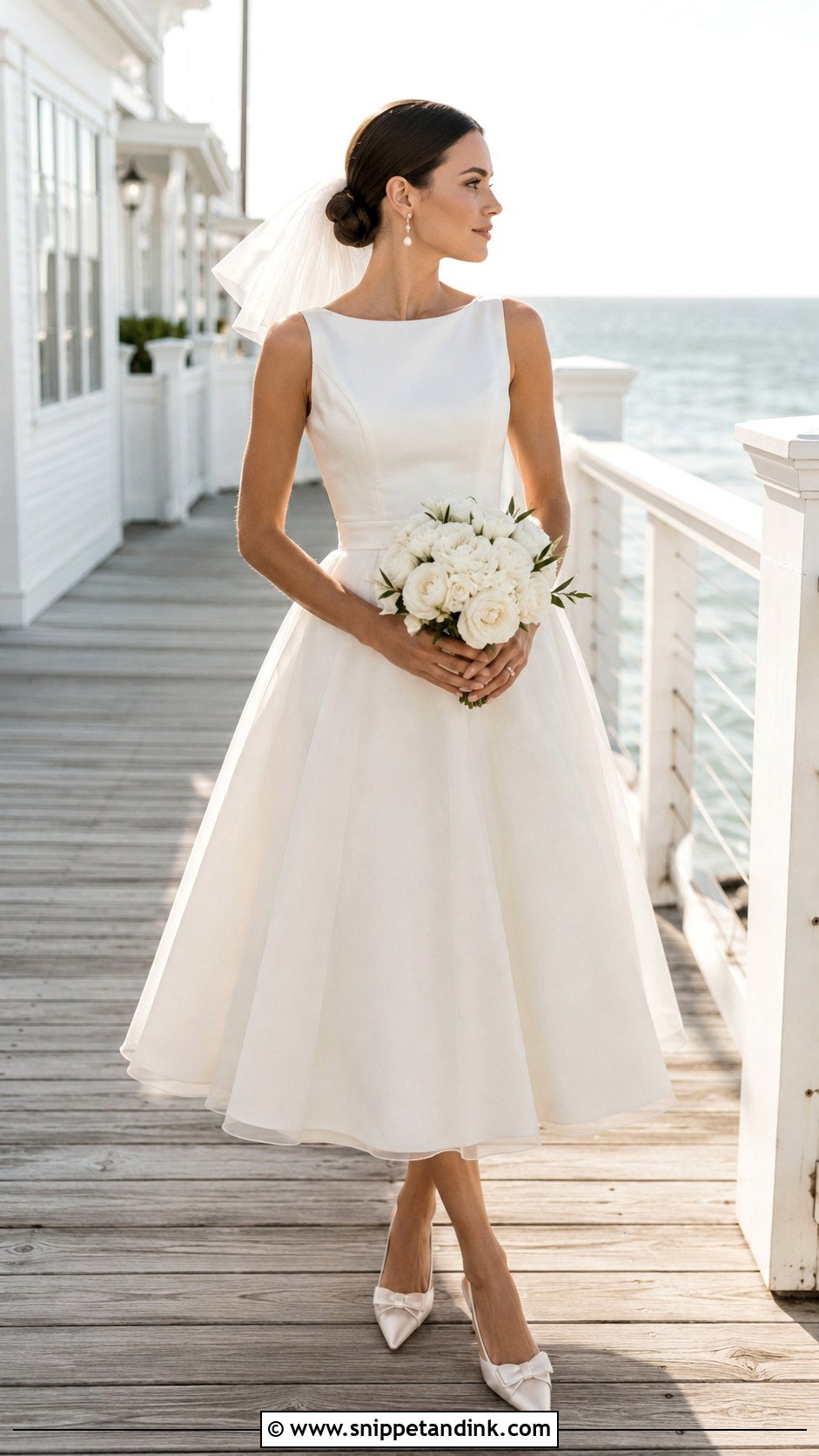
Tea length keeps the hem safely above wet sand and shallow water, and it carries a vintage feel without trying hard. Look for a fitted bodice and a softly flared skirt ending between knee and ankle, in mikado, organza or structured chiffon that holds its shape without a stack of petticoats. Mikado is heavier than it looks, so for a midday ceremony in strong heat I’d lean toward organza. Pointed slingback flats, low block heels or polished bridal sandals all work, and since the shoes are fully on show, wear the exact pair at every fitting so the hem is set against them. Pearl earrings, a short veil and a sleek bun keep it classic; loose waves and a flower comb soften it. A compact bouquet suits the shorter proportions.
12. Bridal Mini Beach Wedding Dress
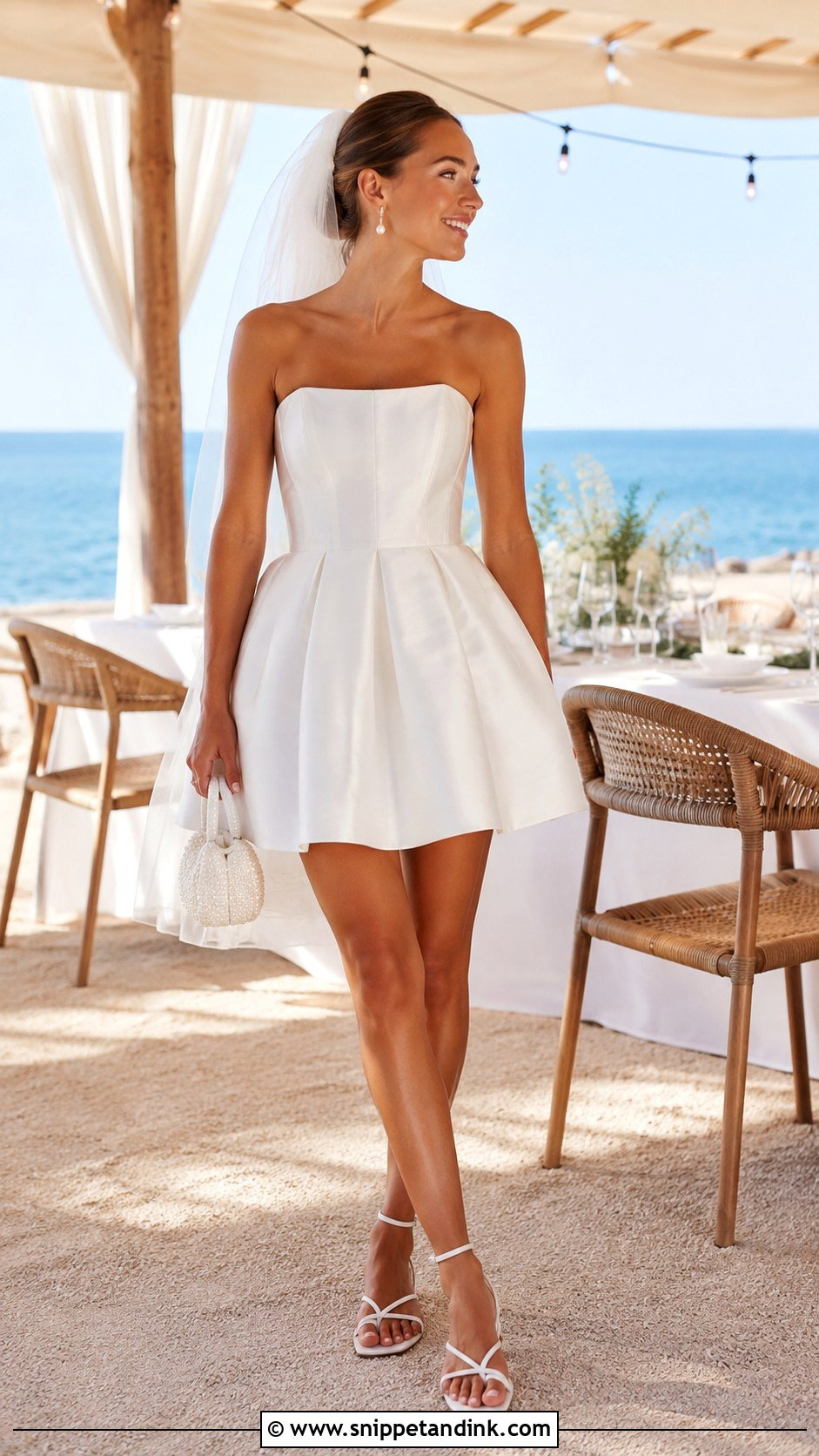
Short wedding dresses now turn up in most bridal collections, especially for destination weddings and as a second look for the party. A structured shift, fitted sheath or softly flared mini with secure straps all suit a casual ceremony by the water, as long as there’s enough length to sit and bend comfortably. Sit down in it at the fitting and check the hem against your thighs; a mini that’s fine standing can be very short in a chair. A short veil, pearl earrings and flat ankle-strap sandals make it unmistakably bridal, and a small top-handle bag holds touch-ups. Plain minis gain interest from floral appliqué, pleating or a detachable bow. Wear fitted shorts underneath for windy moments, and test the full outfit outdoors before you travel.
13. Two-Piece Beach Wedding Dress
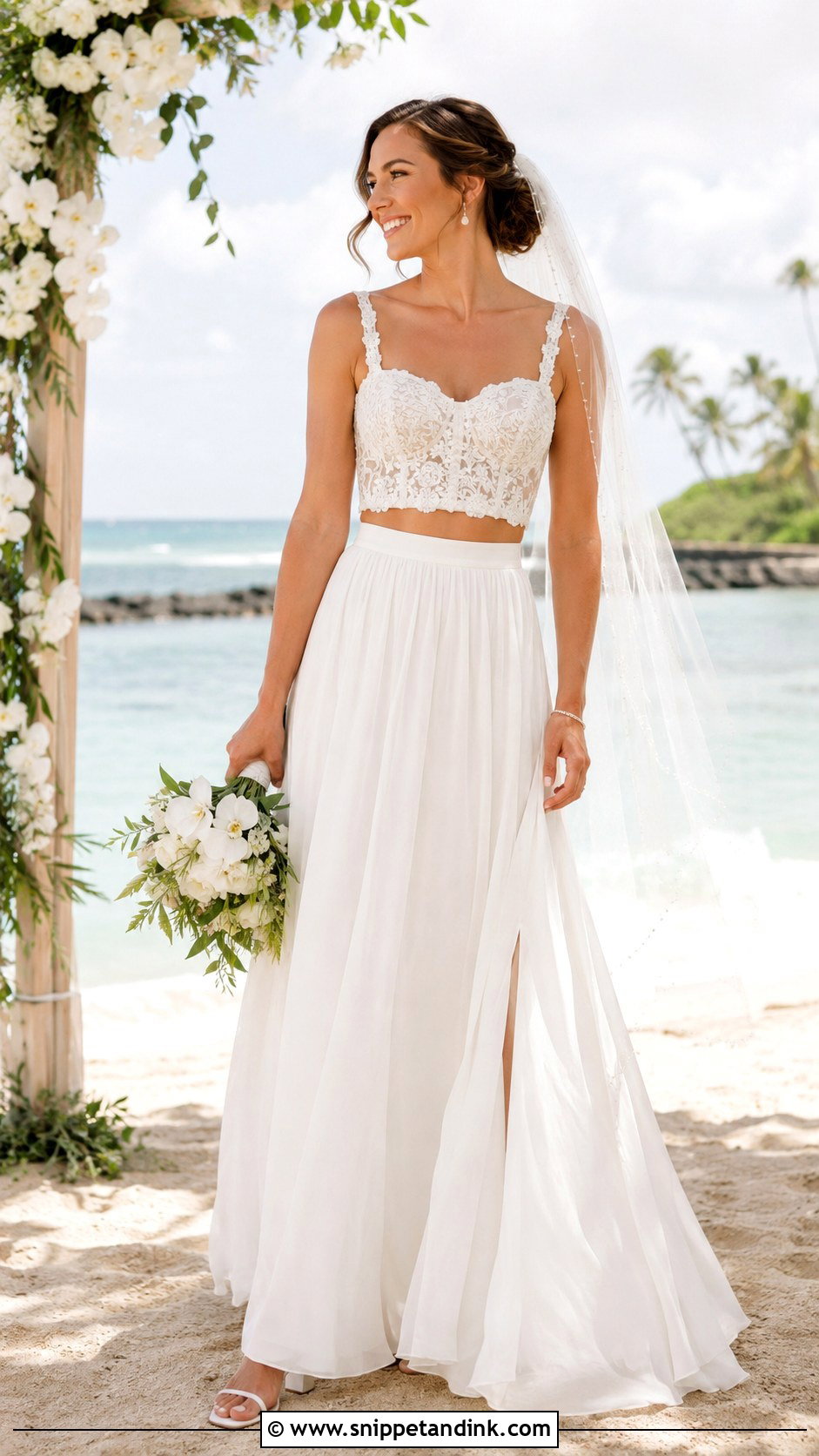
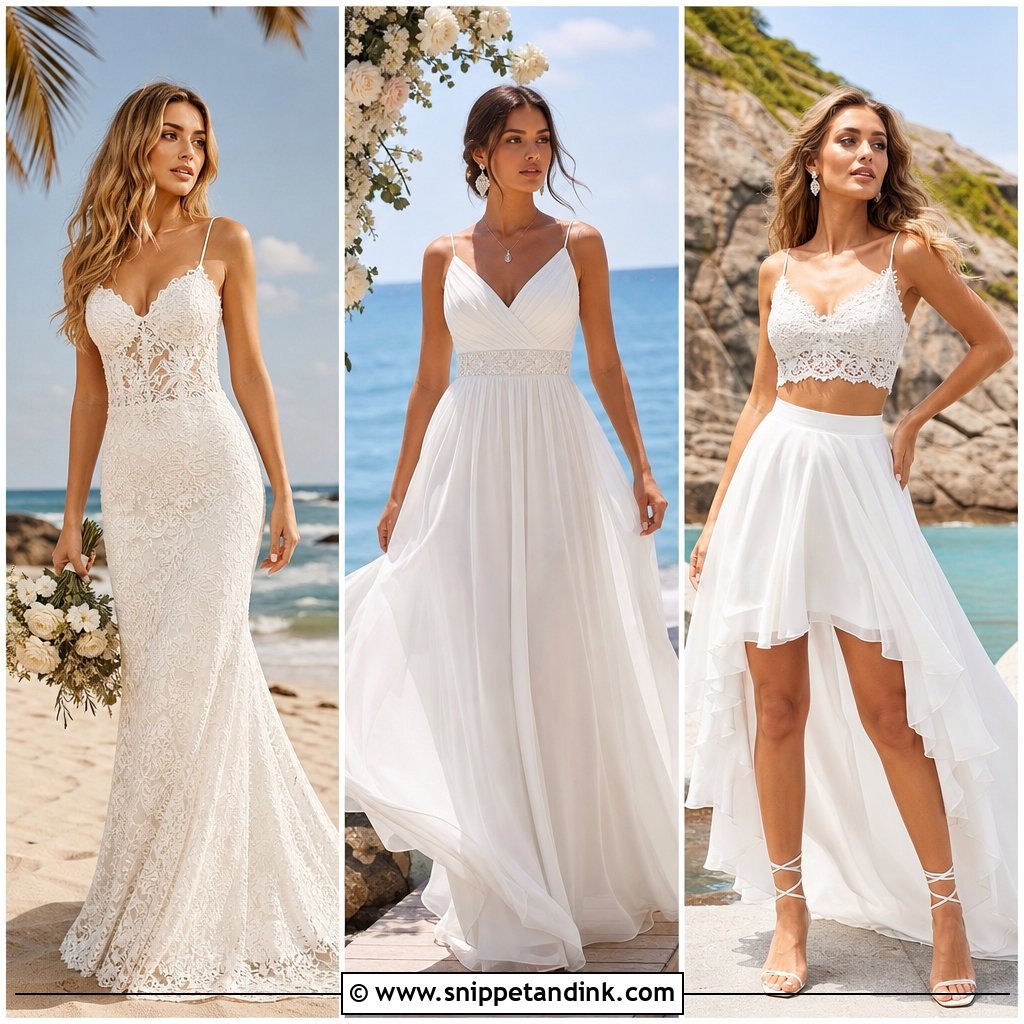
A bridal two-piece is easier to fit than a dress, and that’s the reason I like it for brides whose top and bottom sizes differ, since each piece can be altered separately. Pair a structured lace or satin crop top with a high-waisted chiffon skirt that shows only a narrow strip of skin, or choose a top that meets the waistband, or one with a sheer lace panel, for more coverage. Check the two pieces side by side in daylight: ivory from two different fabrics can come out as two different shades in photos. Pearl drops, a slim bracelet and softly pinned-back waves keep it easy, with flat leather sandals or low block heels. A plain fingertip veil for the ceremony comes off for the reception.
14. Empire Waist Beach Wedding Dress
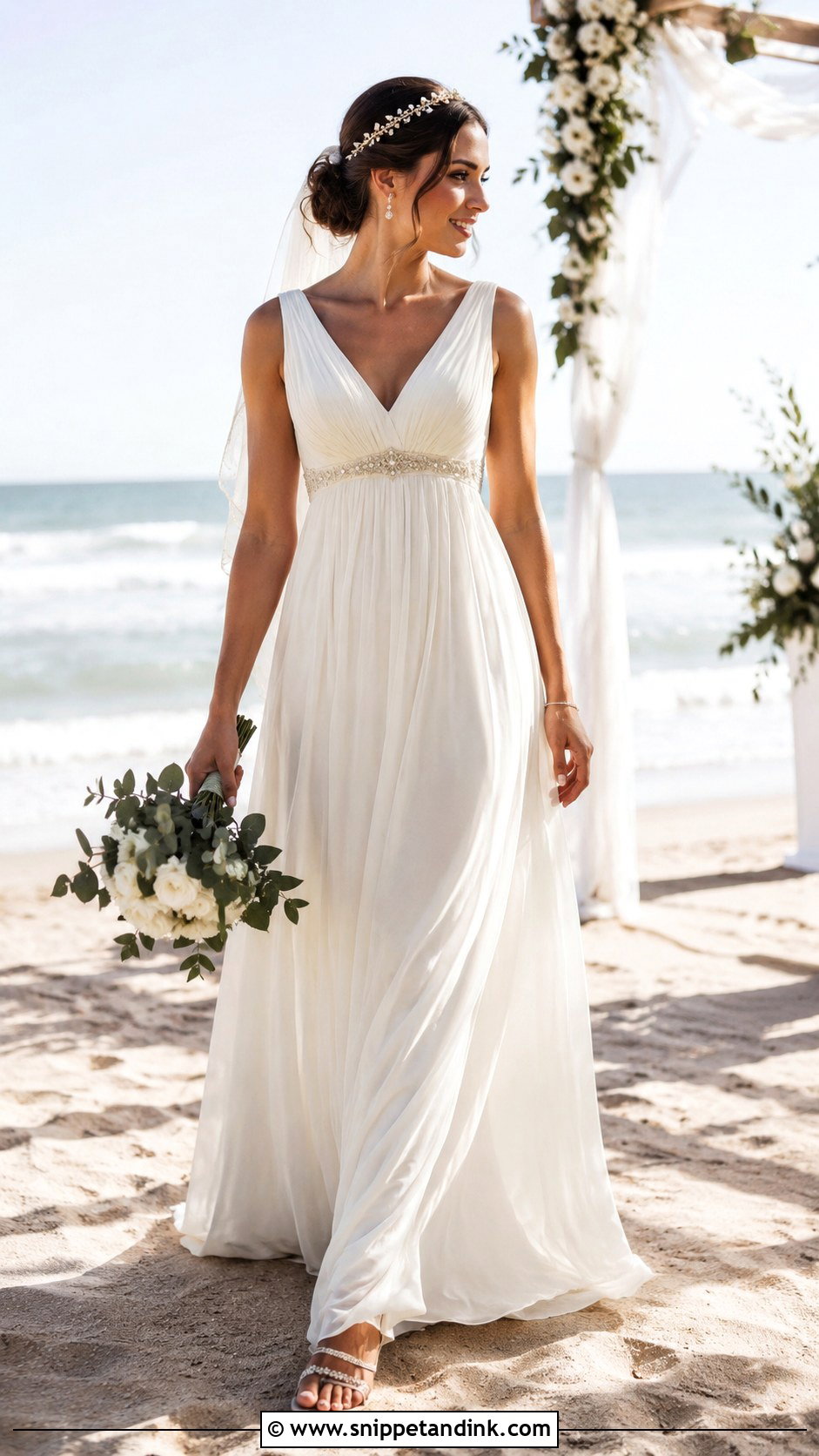
With an empire waist, the seam sits just below the bust and the skirt falls loose over waist and hips, which is why so many brides find it the coolest shape to wear in heat. Soft chiffon with wide straps, a supportive V-neck bodice and minimal gathering avoids unnecessary volume. Because the raised seam carries nearly all the support, the bodice must be professionally fitted; if it gapes even slightly, the whole skirt hangs crooked. Delicate drop earrings, a slim floral hair vine and loose waves or a low twisted bun suit it, with flat embellished sandals. A cape veil flowing from the shoulders is lovely in still air, but a short traditional veil is easier in wind. A narrow bouquet follows the long line.
15. Mermaid Beach Wedding Dress
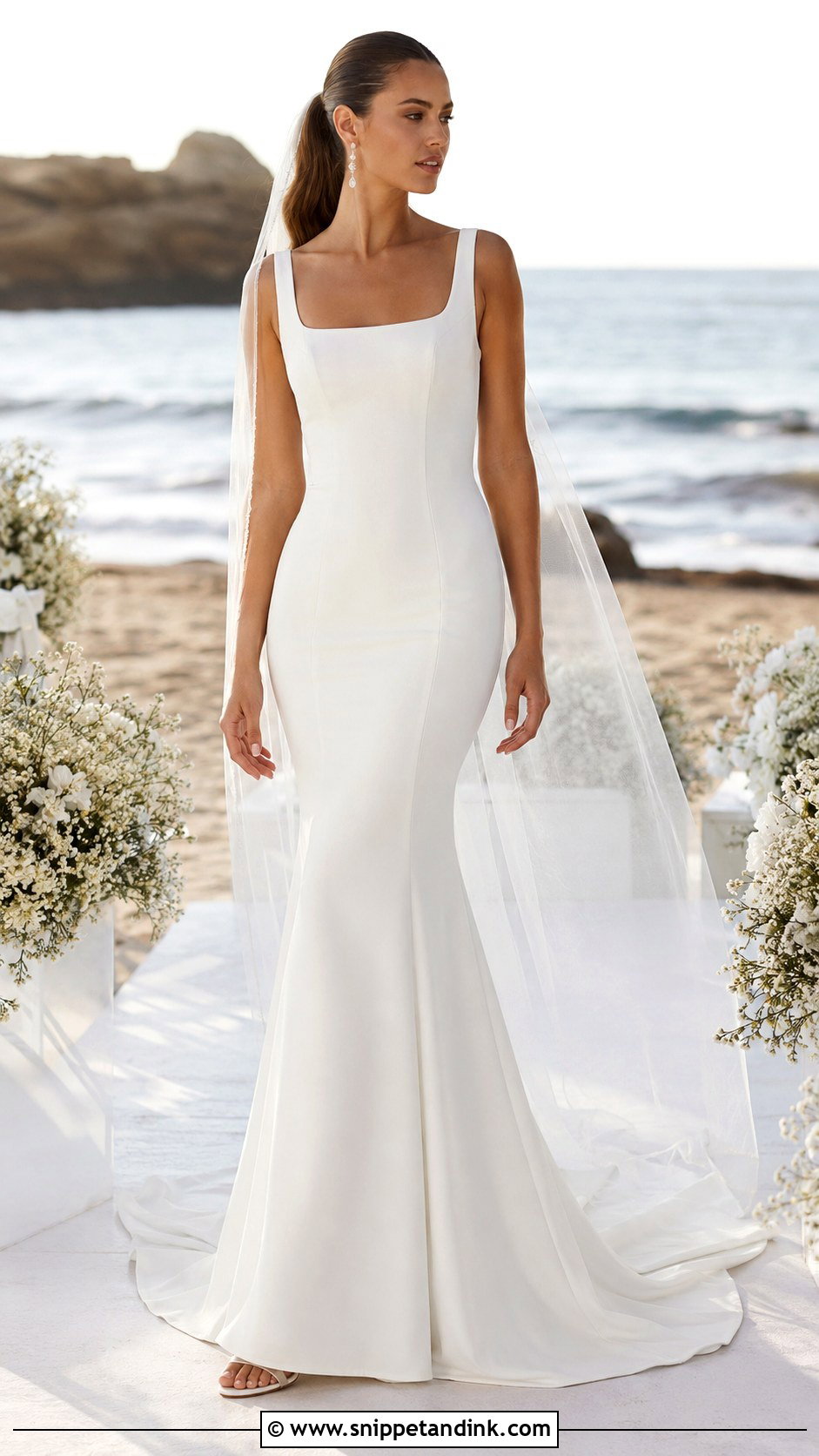
A mermaid can work on a beach, but only in the right fabric and with the flare set high enough to walk. Stretch crepe or lightweight lace moves with you; dense satin, heavy beading and layered underskirts don’t. A strapless or square-neck bodice gives the sculpted shape, and a modest sweep train adds drama without collecting half the beach. Before final alterations, I have brides practice sitting, climbing steps and walking on an uneven surface, because a flare set too low turns every step into a shuffle. A sleek ponytail, drop earrings and a simple bracelet suit the line. Low platform sandals work on a firm aisle; otherwise go flat and hem the dress for it. A fingertip veil leaves the flare visible.
16. Tiered Tulle Beach Wedding Dress
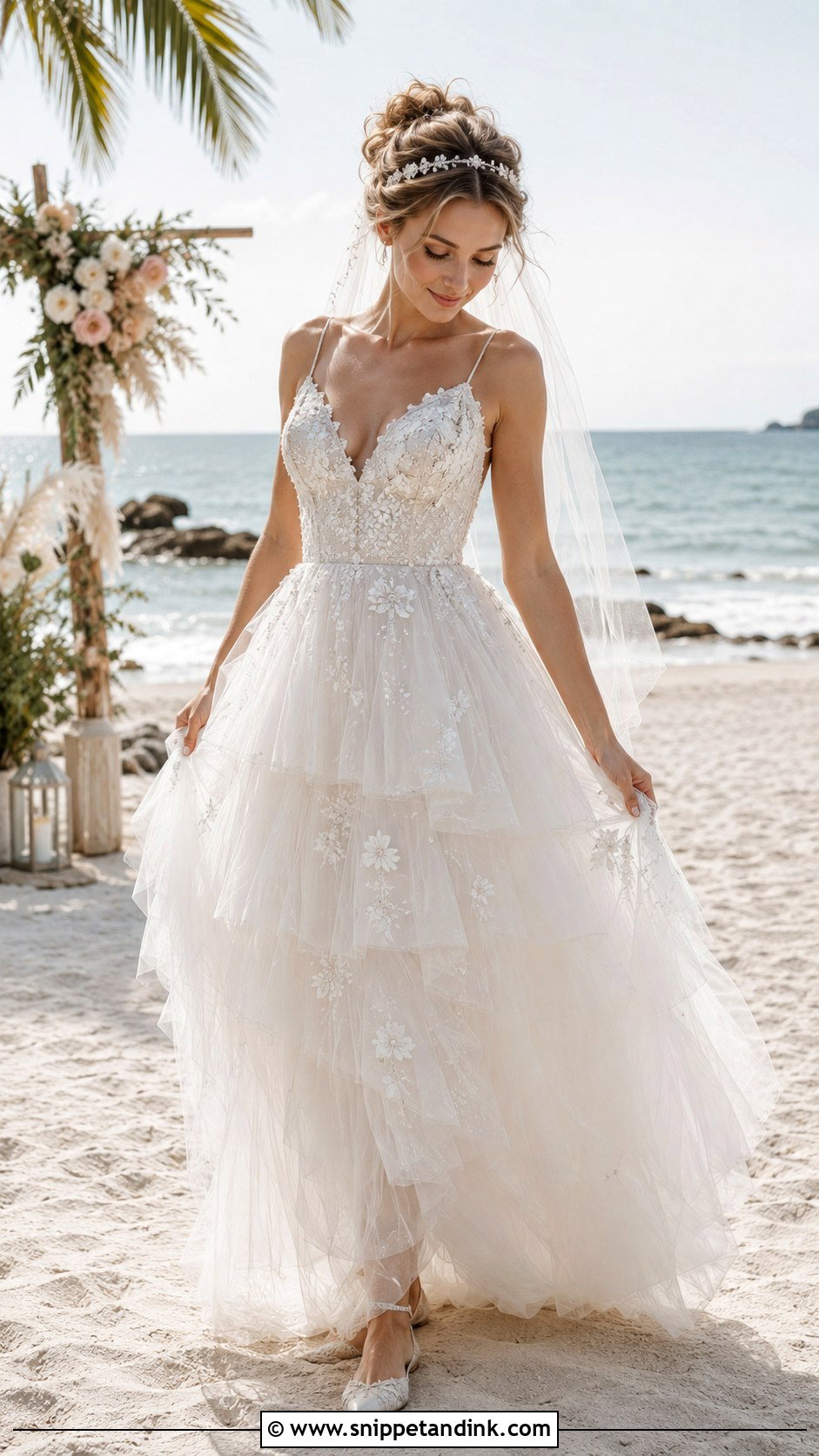
Soft tulle tiers float around the legs and catch the sea breeze in a way photographers love. The beach version needs lightweight tiers with minimal crinoline and a simply decorated, fitted bodice; a stiff, oversized skirt looks out of place by the water. Scattered floral appliqué gives detail without the weight of dense glitter. Crystal studs, a delicate headband and a softly textured updo suit it, and ivory flats disappear under the layers. Keep the train short and ask for a wrist loop or bustle for the reception. Tulle’s weakness outdoors is snagging, as it catches on rough deck boards and shell fragments, so I bring a few clear clips to lift the hem between the aisle and the photos. A plain single-layer veil balances the textured skirt.
17. Square-Neck Beach Wedding Dress
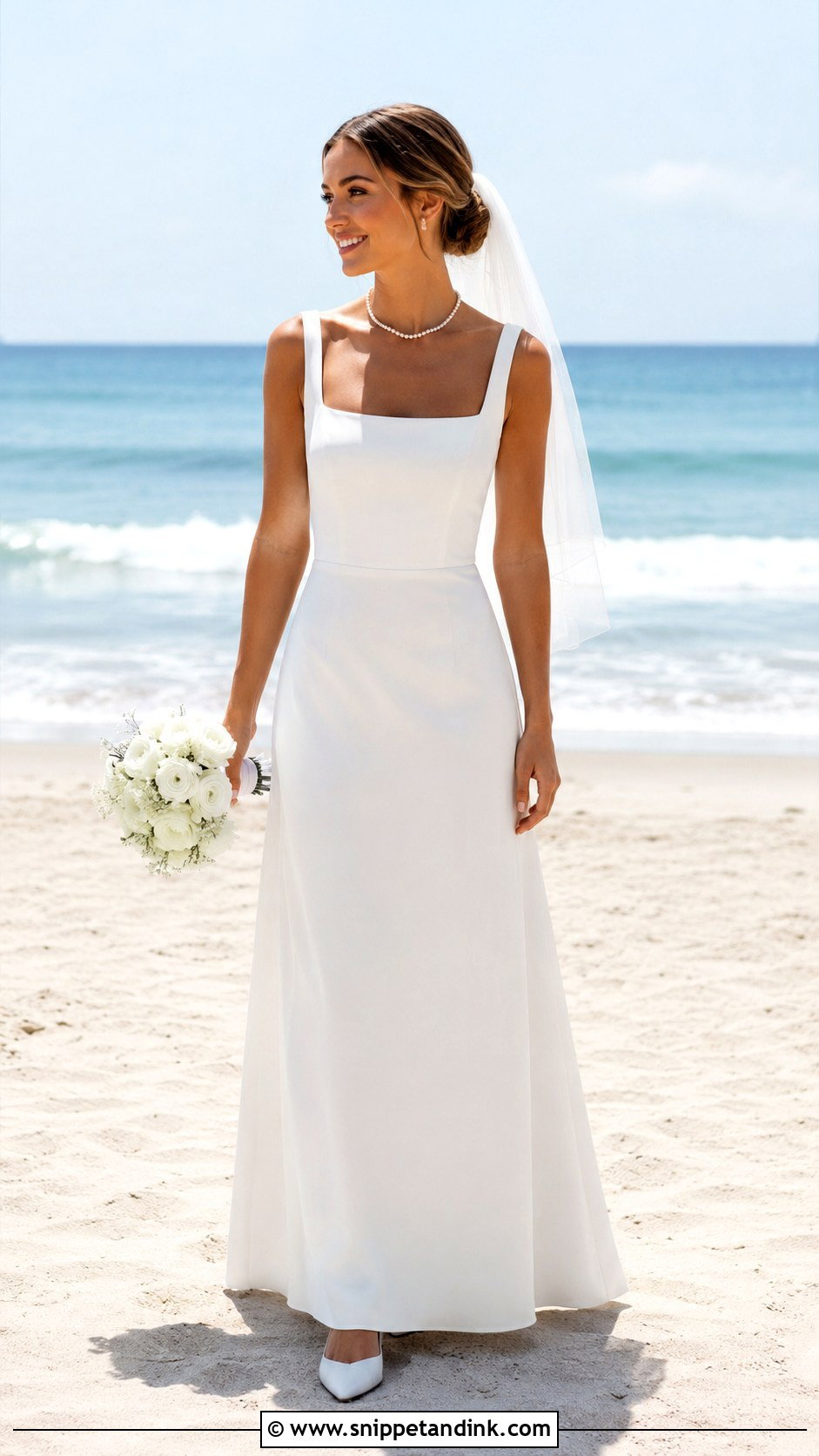
Square necklines give crisp straight lines that read well against a busy natural backdrop of waves, rocks and grasses. A lightweight crepe or satin A-line with supportive straps, a fitted waist and a low square back works best, with a smooth bodice and an unembellished skirt. A short pearl necklace or delicate pendant sits neatly inside the open neckline. Add small earrings, a low bun and a plain fingertip veil. The straps are the fitting detail I watch: on a square neck they’re set wide, and if they’re even slightly loose they slide toward the edge of the shoulder every time you move your arms. Pointed flats or slingbacks suit a firm aisle; flat sandals work better directly on sand.
18. Plus-Size A-Line Beach Wedding Dress
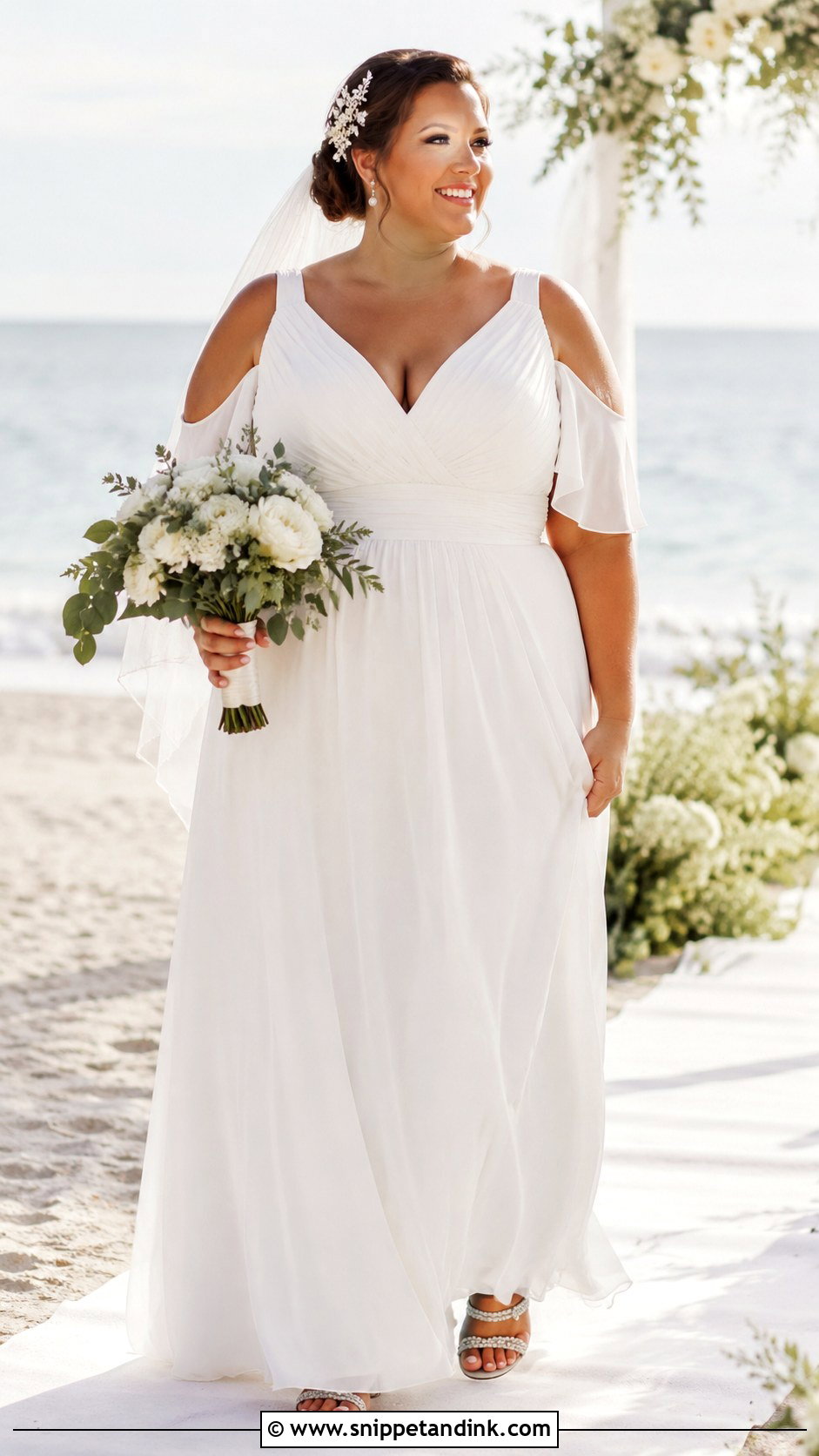
For curvier brides, a supportive A-line gives a defined waist and easy movement without a restrictive fit. Look for wide straps, a secure V-neck or sweetheart bodice and a skirt in chiffon, soft tulle or flexible crepe. In coastal heat, built-in support and smart lining do far more for you than heavy shapewear, which traps sweat for hours. Order the size that fits your largest measurement and tailor the rest; sizing down to make it fit later rarely works and limits what a seamstress can do. Pearl earrings, an elegant hair comb and wide-fit bridal sandals complete the outfit. A fingertip veil keeps the proportions balanced, and sheer flutter sleeves or a removable chiffon cape give arm coverage if you want it.
19. Maternity Empire Beach Wedding Dress
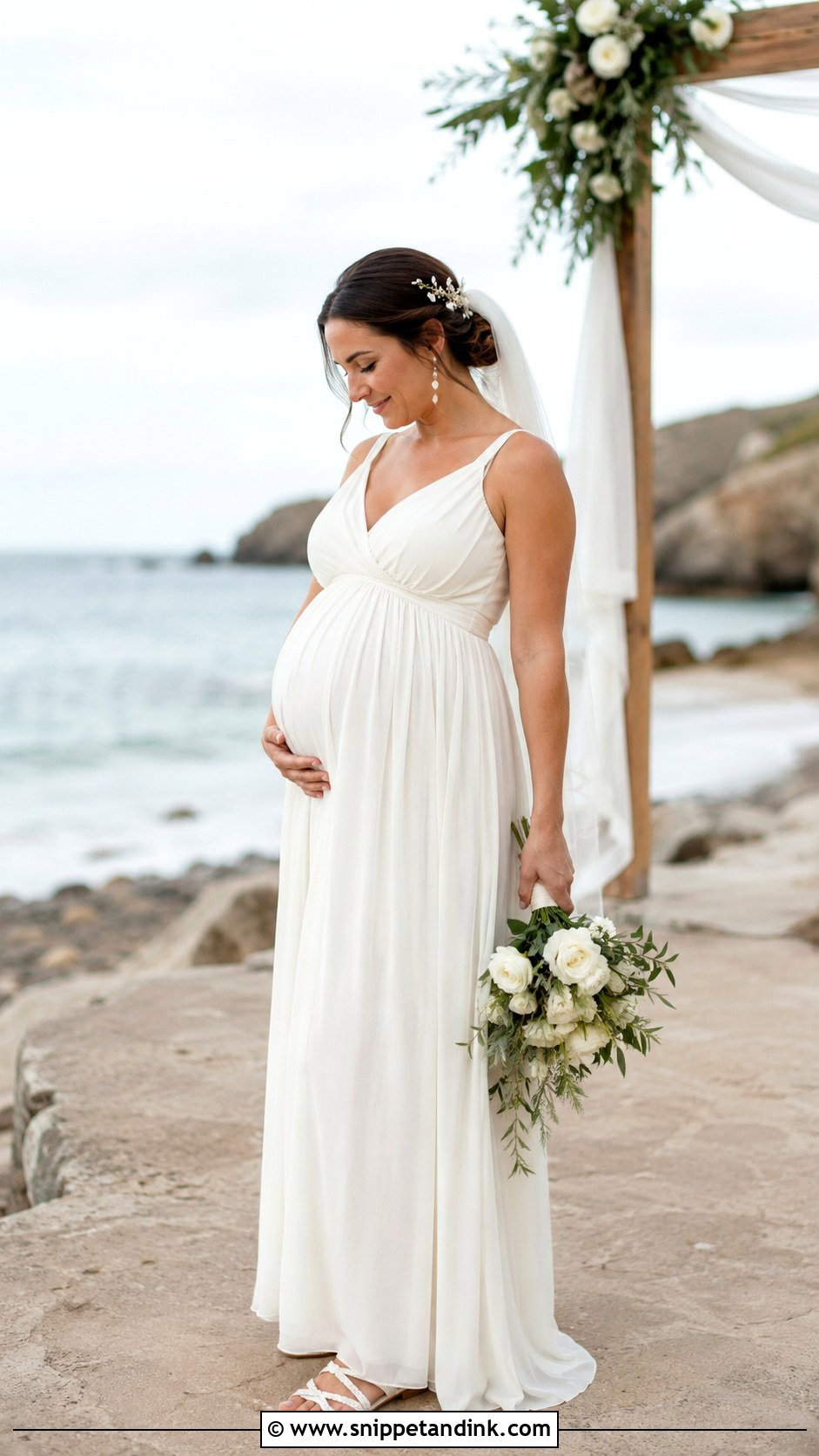
A maternity empire gown gives room through the middle while keeping a clear bridal shape. Choose soft chiffon with the seam placed comfortably above the bump, adjustable straps and a supportive lined bodice; gentle pleating lets the skirt fall smoothly. Timing is the tricky part. I’d book the final alteration as close to the date as your seamstress allows, since your shape can change noticeably within a few weeks, and avoid stiff waistbands or scratchy internal seams. Flat cushioned sandals are essential on uneven sand. Small pearl drops, a floral comb and a loose low bun that isn’t pinned tight keep you comfortable, with a short veil and a light bouquet.
20. Detachable Overskirt Beach Wedding Dress
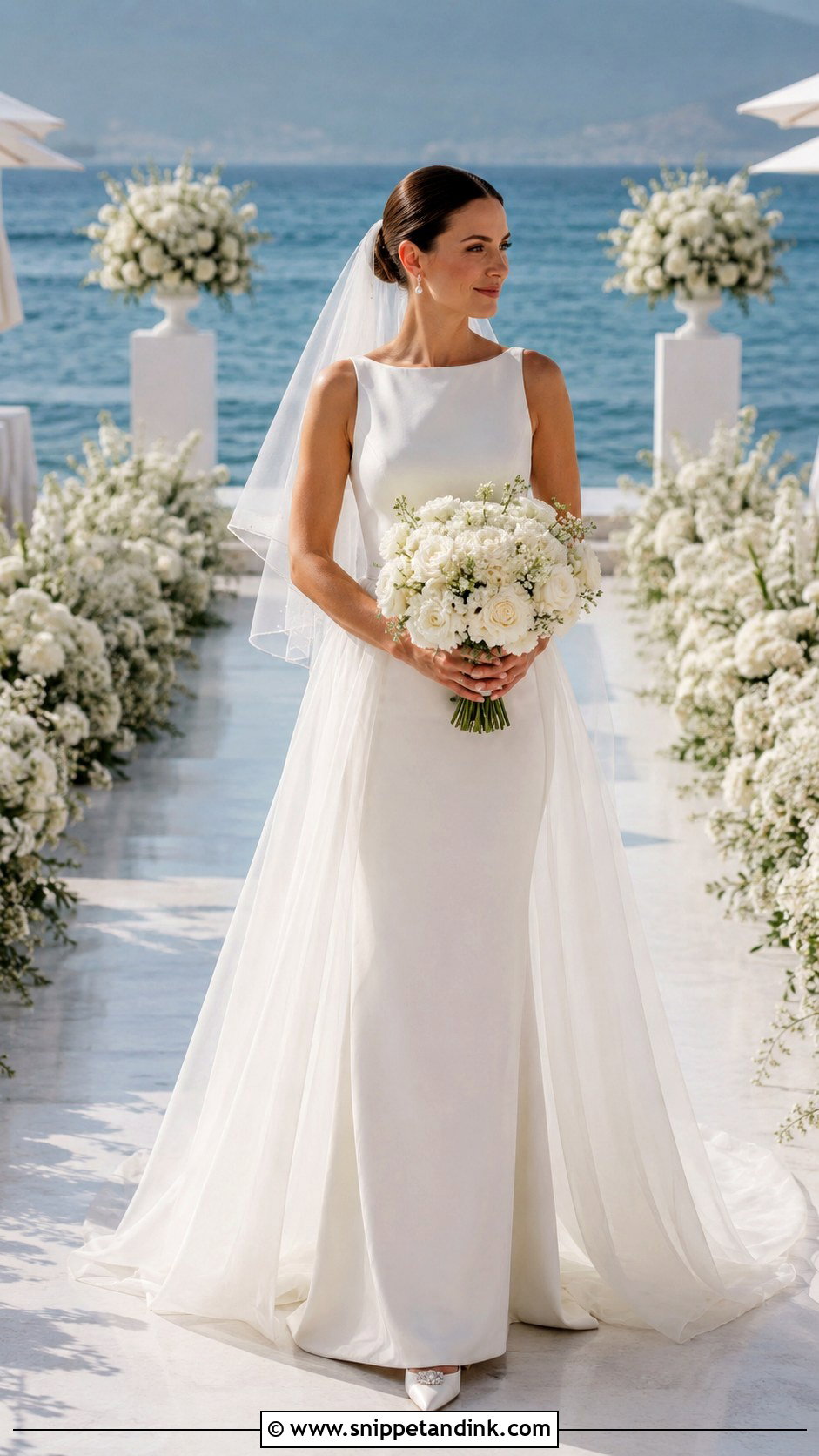
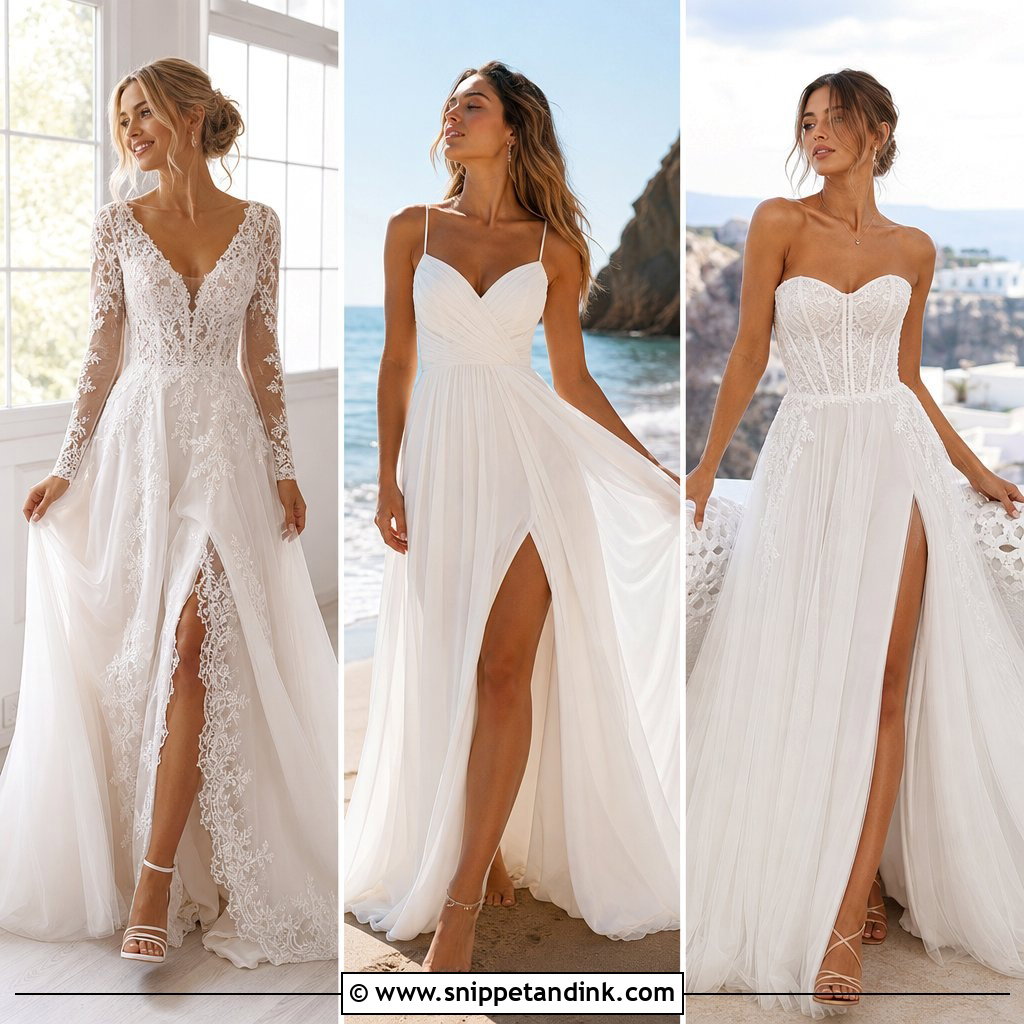
A detachable overskirt gives you a ceremony gown and a reception dress in one. Start with a lightweight crepe column, a fitted sheath or a simple satin slip, then add a sheer chiffon or organza overskirt with a short train and a secure waistband. After the photos, it comes off and you’re in a streamlined dress for dinner and dancing. I always check two things: that the closure lies flat with no bump under the bodice, and that you can remove it yourself in under a minute, without a helper. Pearl earrings, a low polished bun and a fingertip veil finish the ceremony version; simple flats or stable low sandals work with both.
How Each Beach Fabric Behaves in Heat and Humidity
Most beach brides judge fabric by how it looks in the salon. I care more about how it behaves after four hours in warm, damp air.
- Chiffon breathes and floats, creases lightly and drops its wrinkles quickly with a steamer. It’s the most forgiving option in heat.
- Satin and charmeuse look rich but show perspiration and every crease from sitting. A lined satin helps, and so does a light color.
- Stretch crepe moves with you and resists creasing, though heavier crepes get warm by midday.
- Lace depends on its lining. Unlined lace can scratch damp skin; a soft lining fixes that.
- Organza and mikado hold structure well. Organza stays light, while mikado can feel hot in direct sun.
Will the Gown Survive the Trip to the Coast?
Many beach weddings mean travel, so plan the gown’s journey as carefully as your own. Bridal gowns are often made to order, and between production and two or three alteration fittings, many brides start shopping eight to twelve months out; timelines vary by designer, so ask at the first appointment. If you’re flying, carry the dress on in a breathable garment bag, with tissue paper folded into the bodice and skirt to soften creases, and check your airline’s cabin rules before the day. Never pack it in plastic for long, since trapped moisture can mark fabric. When you arrive, hang it straight away in the bathroom away from the shower, and book a steamer or ask your venue whether pressing is available. Chiffon and crepe recover fast; satin needs a careful, professional press.
Test It Barefoot on Sand Before the Last Fitting
The right beach gown is the one that suits your taste and still copes with sand, sun and wind. A chiffon A-line, a satin slip, lace, a mini or a convertible design can all feel right when it moves with you. At every fitting, wear the whole outfit: underwear, shoes, veil, jewelry and the hairstyle if you can. Walk, sit, turn and raise your arms well beyond the mirror. If you can, stand on some sand or grass in it once before the final fitting, since soft ground changes how you walk and how the hem falls. Then go with the dress that matches how you want to feel, not a rule about what beach brides are supposed to wear.
You'll Like These Ideas:


Leave a Reply