
A heavy gown on a hot afternoon is the complaint I hear most after summer weddings, and it’s almost always avoidable. Weight in a wedding dress comes from layers, lining, beading and train length far more than from the silhouette, so a full skirt can be light and a slim sheath can be surprisingly heavy. The twenty dresses below are built from chiffon, tulle, organza, georgette, open lace and fluid crepe, with notes on which construction details keep them cool. I’ve styled each one head to toe for beaches, gardens, courthouses and destination trips, and flagged where a choice trades comfort for drama.
Is It Really Light? Four Checks I Do in the Boutique
Sample gowns hang on padded hangers under air conditioning, which tells you nothing about how they’ll feel outside in summer. Before a bride falls for a dress, I run through a few quick checks.
- Lift the skirt by the waist seam with one hand. If it strains your wrist, imagine carrying that through a reception.
- Turn the skirt inside out and count the layers, including lining. Two or three soft ones breathe; six or more, plus a petticoat, will trap heat.
- Feel the lining. Polyester lining holds warmth against the skin, while cotton, silk or a breathable blend lets sweat evaporate.
- Find out where the weight lives. Heavy beading on a bodice pulls on the straps, and a long train drags on the waist all evening.
Natural fibers like silk chiffon or silk georgette usually feel cooler than polyester versions that look identical. They also cost more and wrinkle faster, so it’s a real trade-off rather than an automatic upgrade.
1. Chiffon A-Line Wedding Dress
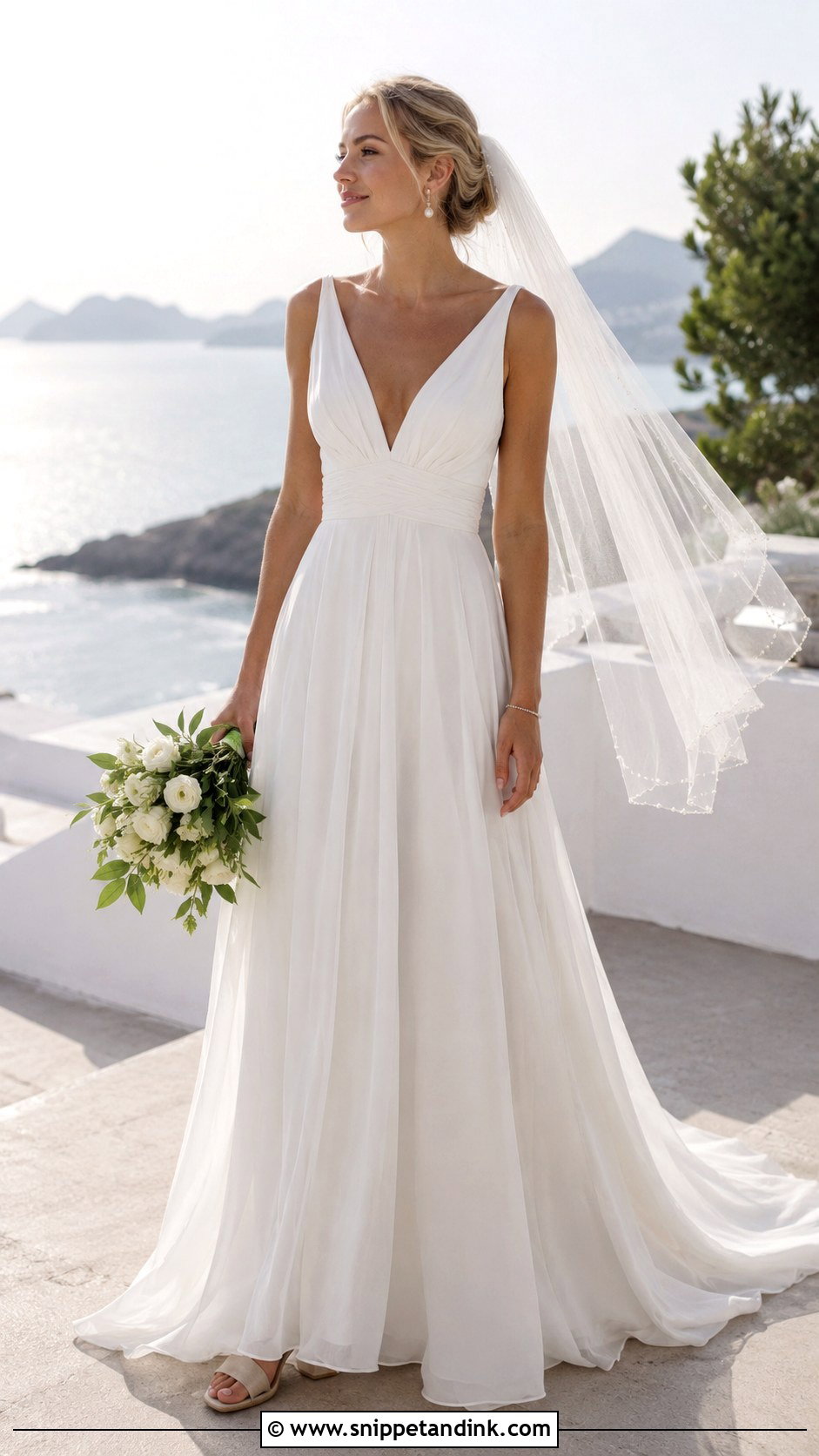
Chiffon on an A-line is about as forgiving as bridal gets: a fitted bodice, then a skirt that drops away from the waist with no petticoat underneath. I’d pick a V-neck or a soft drape at the neckline to keep the top open, and a low back if you’ll be warm. Ask specifically for a single lightweight lining. Some chiffon gowns hide three layers of polyester beneath the pretty top one, and that’s where the heat comes from. A sweep train, fingertip veil, pearl drops and low block heels finish it. On grass or sand, swap the heels for bridal flats.
2. Crepe Sheath Wedding Dress
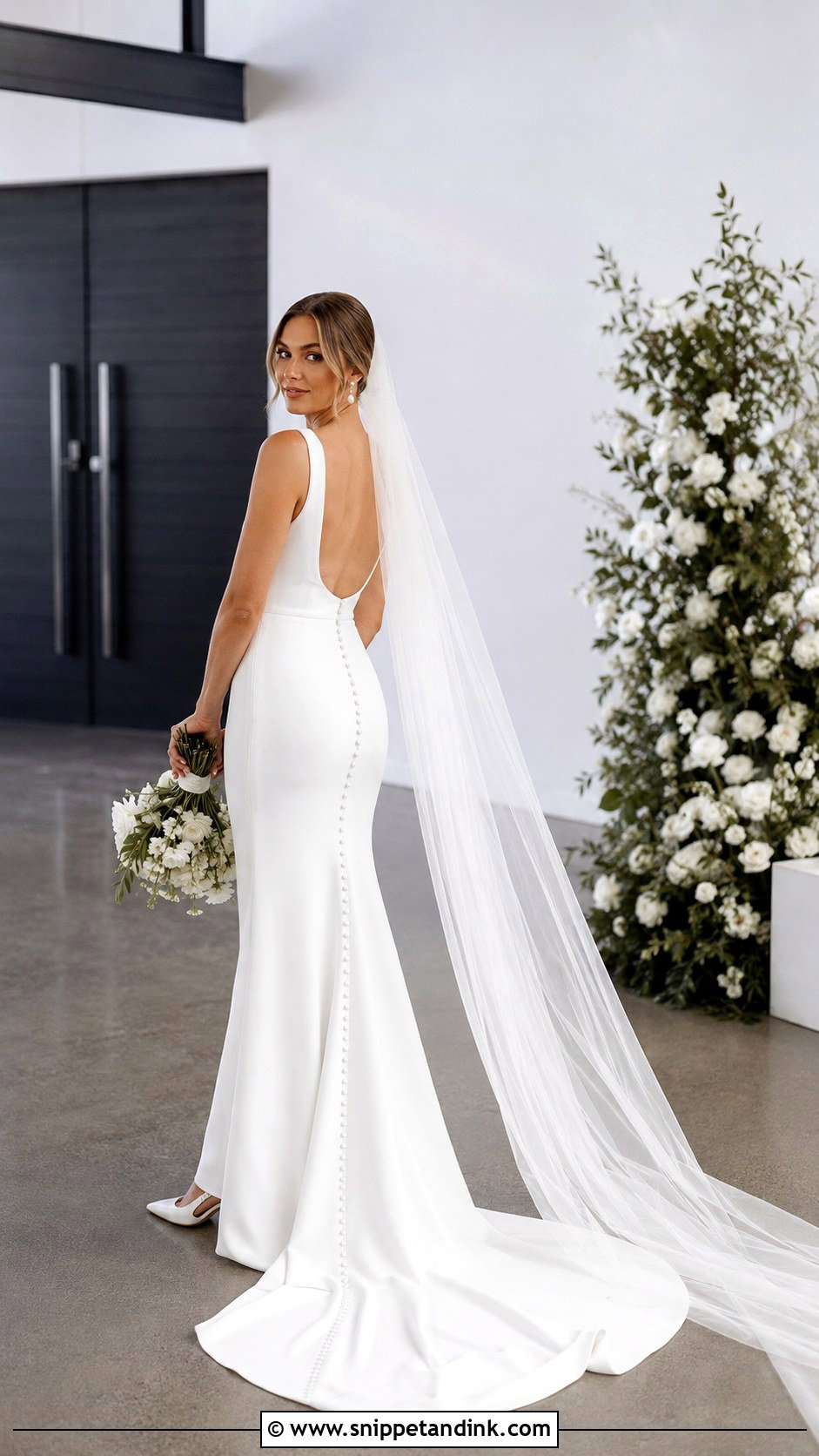
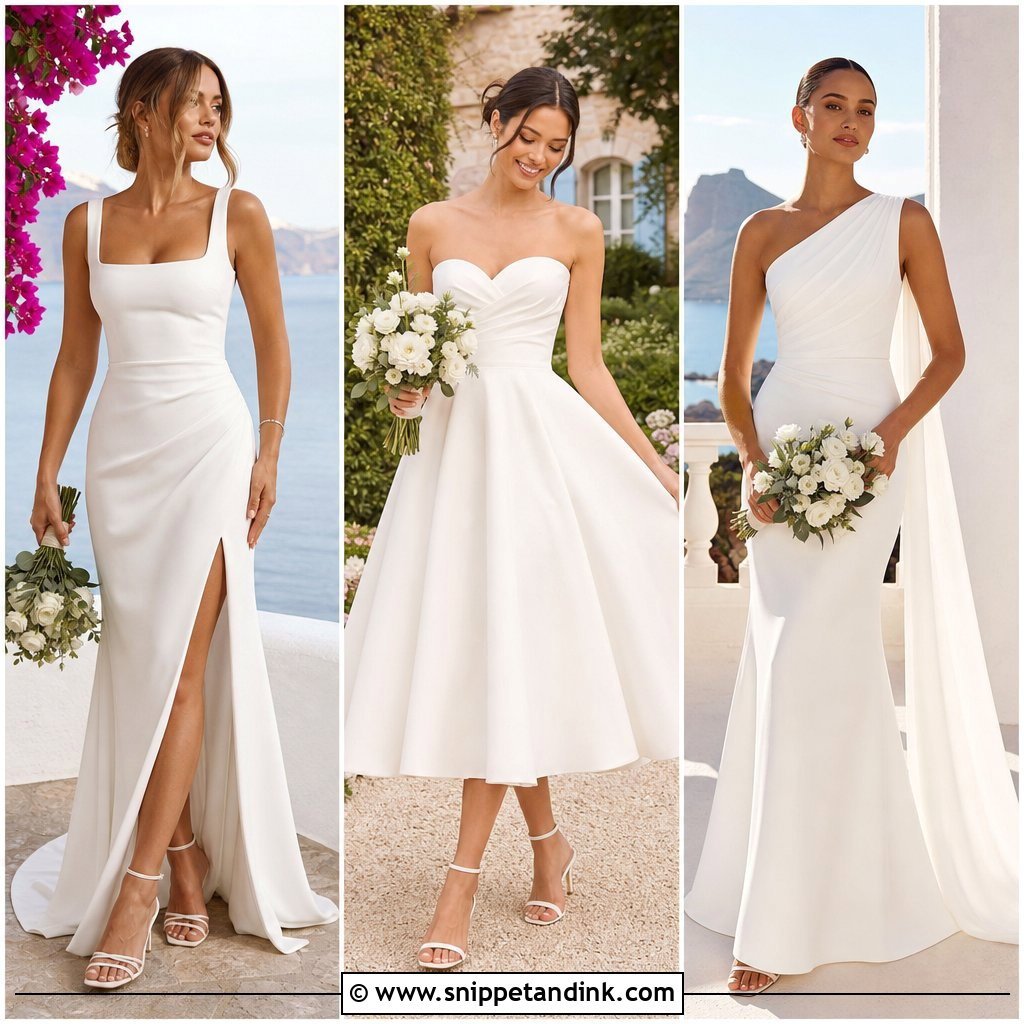
Stretch crepe is the reason a crepe sheath wedding dress can feel lighter than it looks: there’s no tulle, no petticoat, just one smooth layer that moves with you. The square neckline gives definition, and wide straps let a seamstress build in real support for larger busts. A low scoop back with a short row of covered buttons is enough detail. Pointed slingbacks, a structured mini bag and small pearls keep it modern, with a sleek bun or a waved bob. Want drama for the aisle? A sheer chapel veil weighs almost nothing and comes off before dinner.
3. Boho Lace Wedding Dress
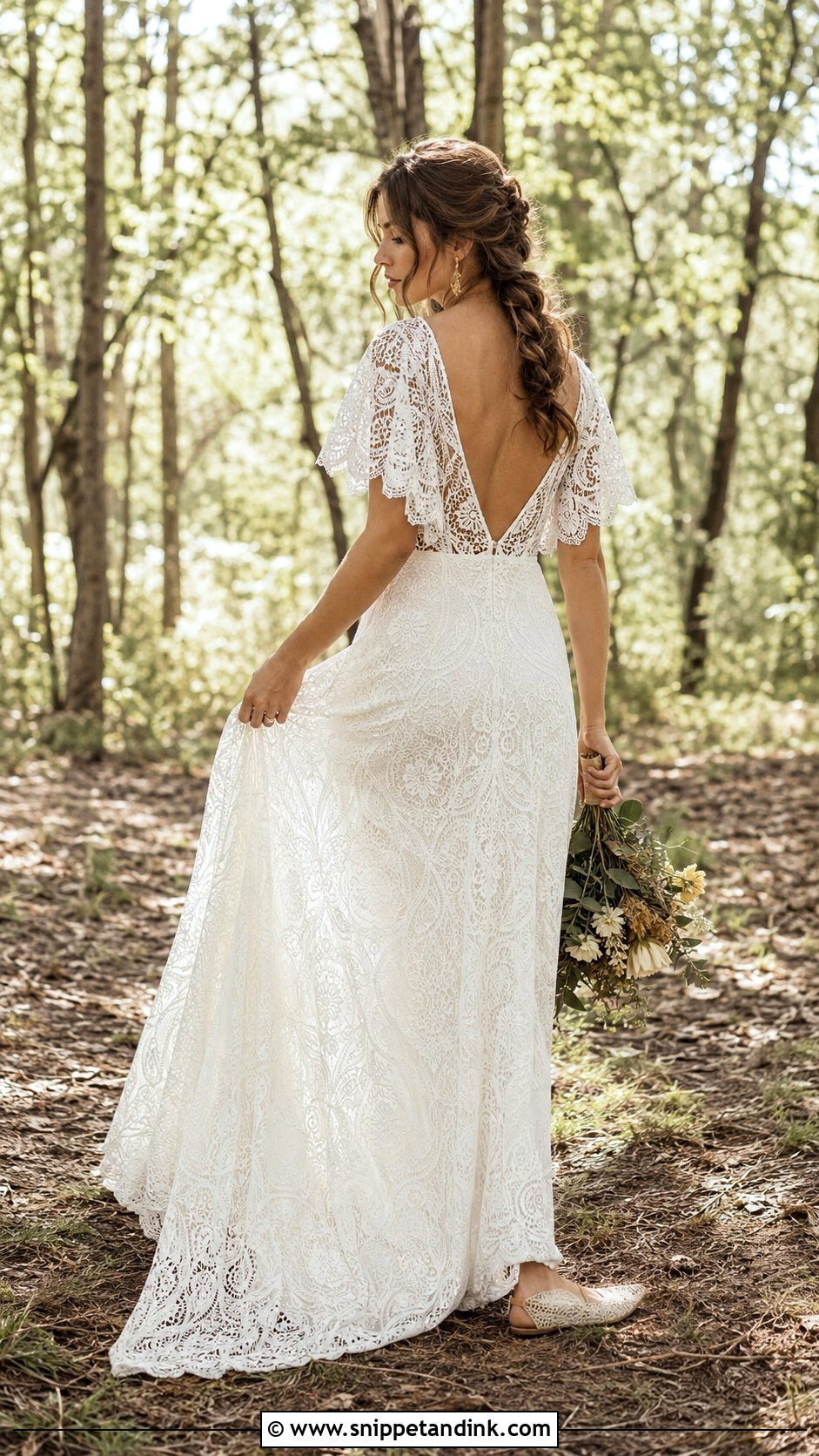
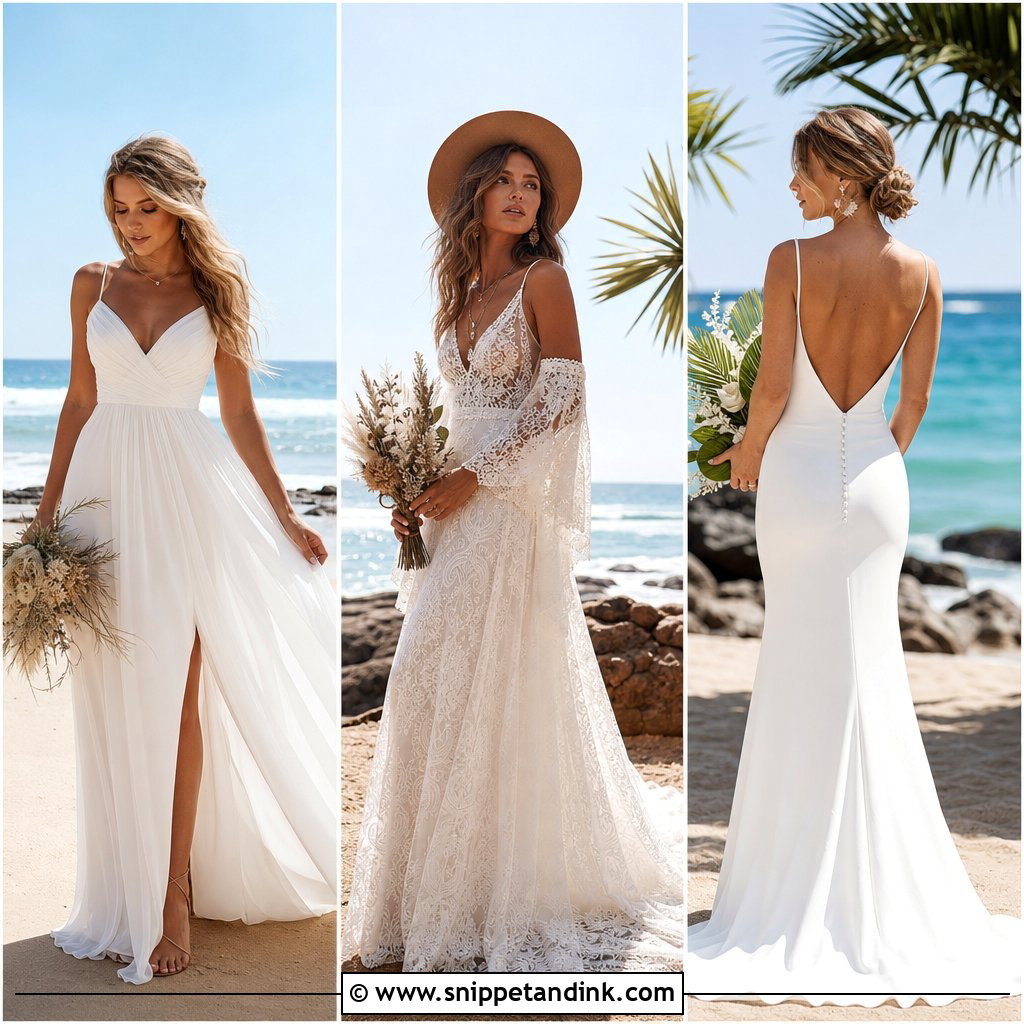
Boho lace only stays light if the lace is open. Dense embroidered lace over a full lining is warm, and it’s surprisingly heavy once there’s a train attached. I look for an open pattern over one thin, smooth lining, in a relaxed A-line or slim sheath. Flutter sleeves, a V-neck and a low back let air in. Woven flats, delicate gold earrings and a loose braid suit the easy mood, with greenery and pale flowers in the bouquet. Woodland venues and small outdoor ceremonies with a relaxed dress code are where it belongs.
4. Organza Ball Gown Wedding Dress
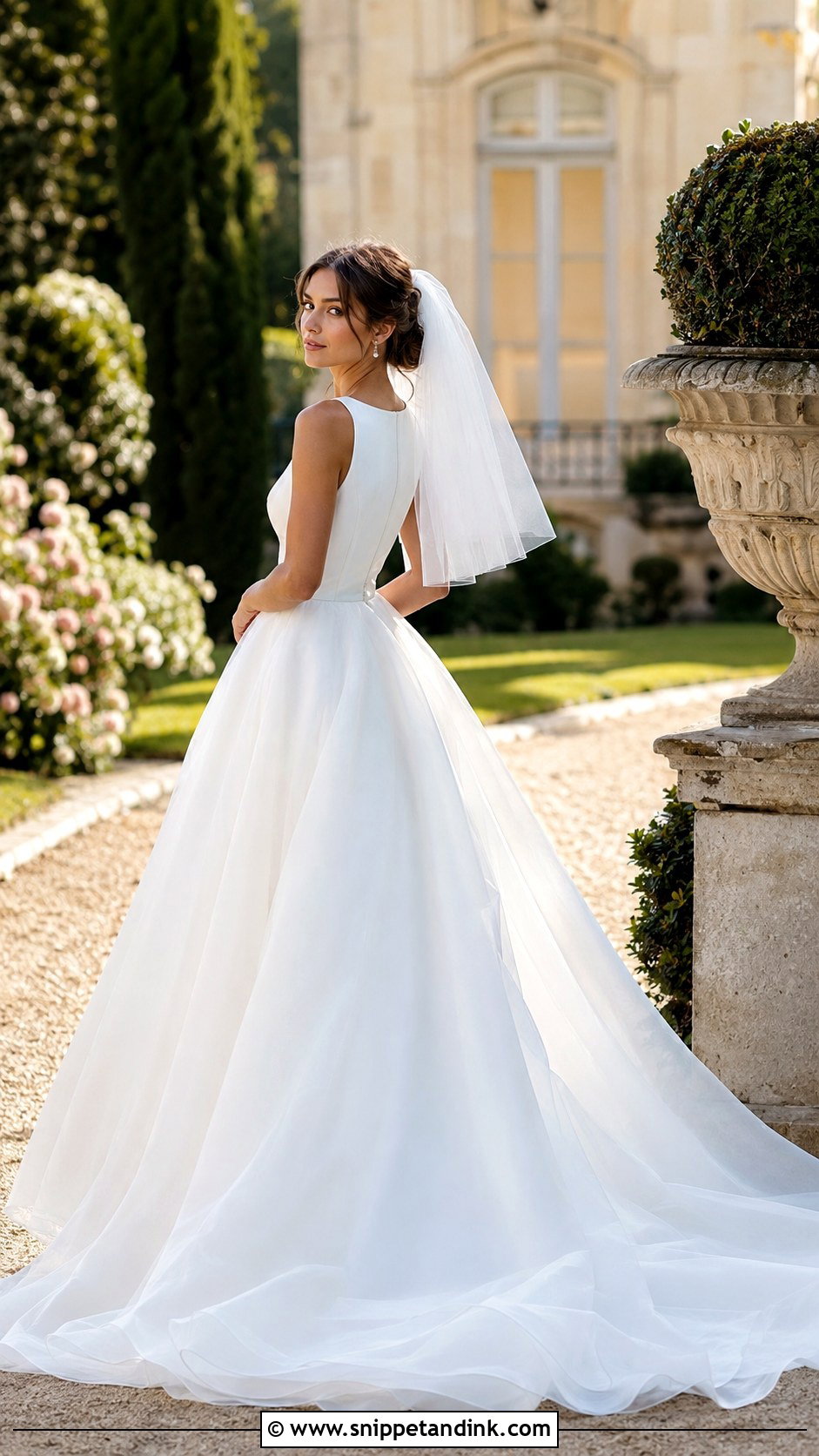
Organza is my answer when a bride wants a ball gown in July. The fabric is crisp enough to hold volume on its own, so a full skirt needs a fraction of the layers that tulle or satin would. Keep the bodice strapless or sleeveless with minimal beading, set at a natural waist. The train is where weight sneaks back in. A cathedral length adds several meters of fabric to carry; a chapel or sweep train gives plenty of presence with far less. Satin block heels, a short veil and small studs are all it needs for a garden estate or a bright indoor venue.
5. Empire Waist Wedding Dress
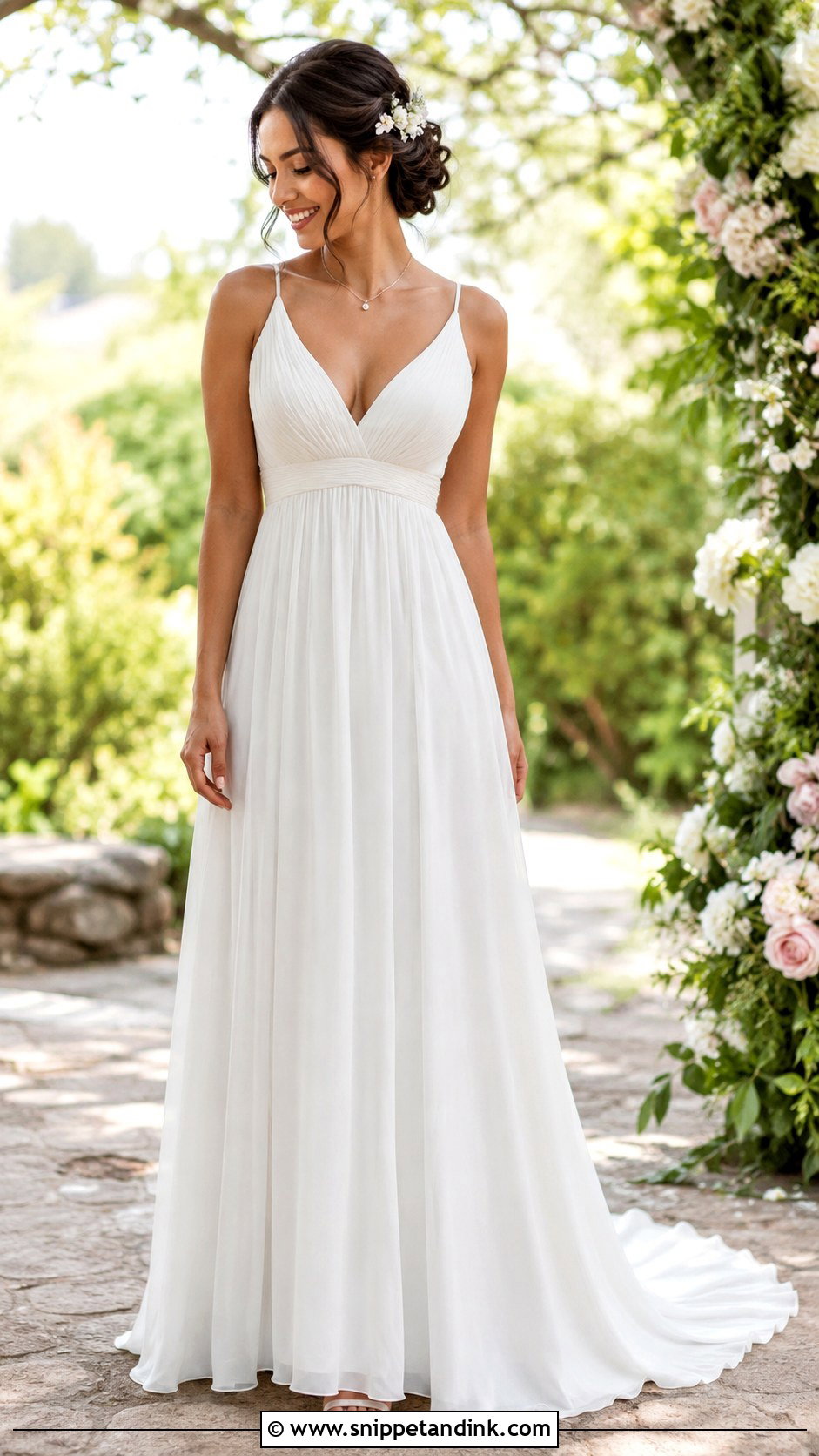
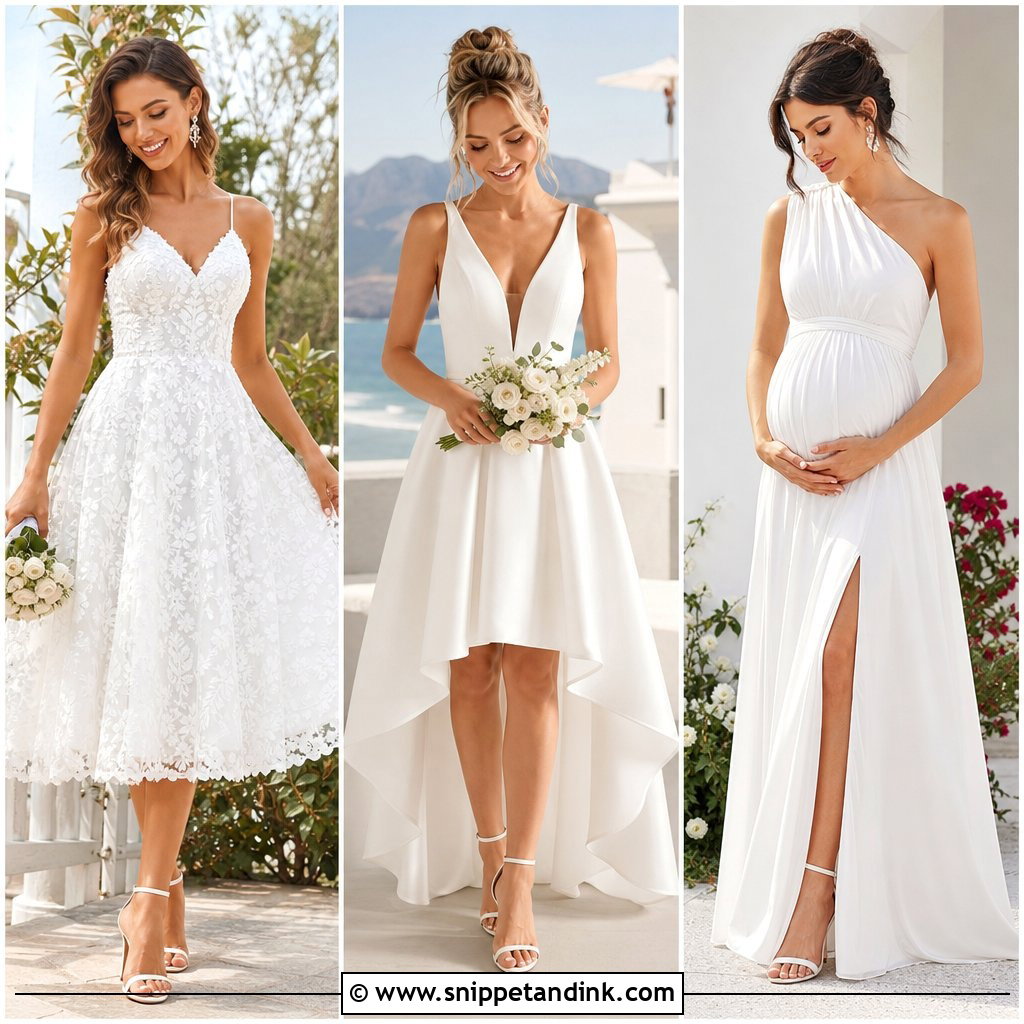
The empire waist sits just under the bust and lets the skirt fall loose over the waist and hips, which is why it stays comfortable through a long day of eating, sitting and dancing. A chiffon or georgette skirt with a supportive bodice and adjustable straps is the version I’d choose. A soft V or gathered scoop neckline suits the relaxed line. Low sandals, a fine chain and a hair comb keep it delicate, and a short train is easy outdoors. With no waist seam pressing in, it’s also kind to pregnant brides and to anyone who hates feeling cinched.
6. Spaghetti Strap Wedding Dress
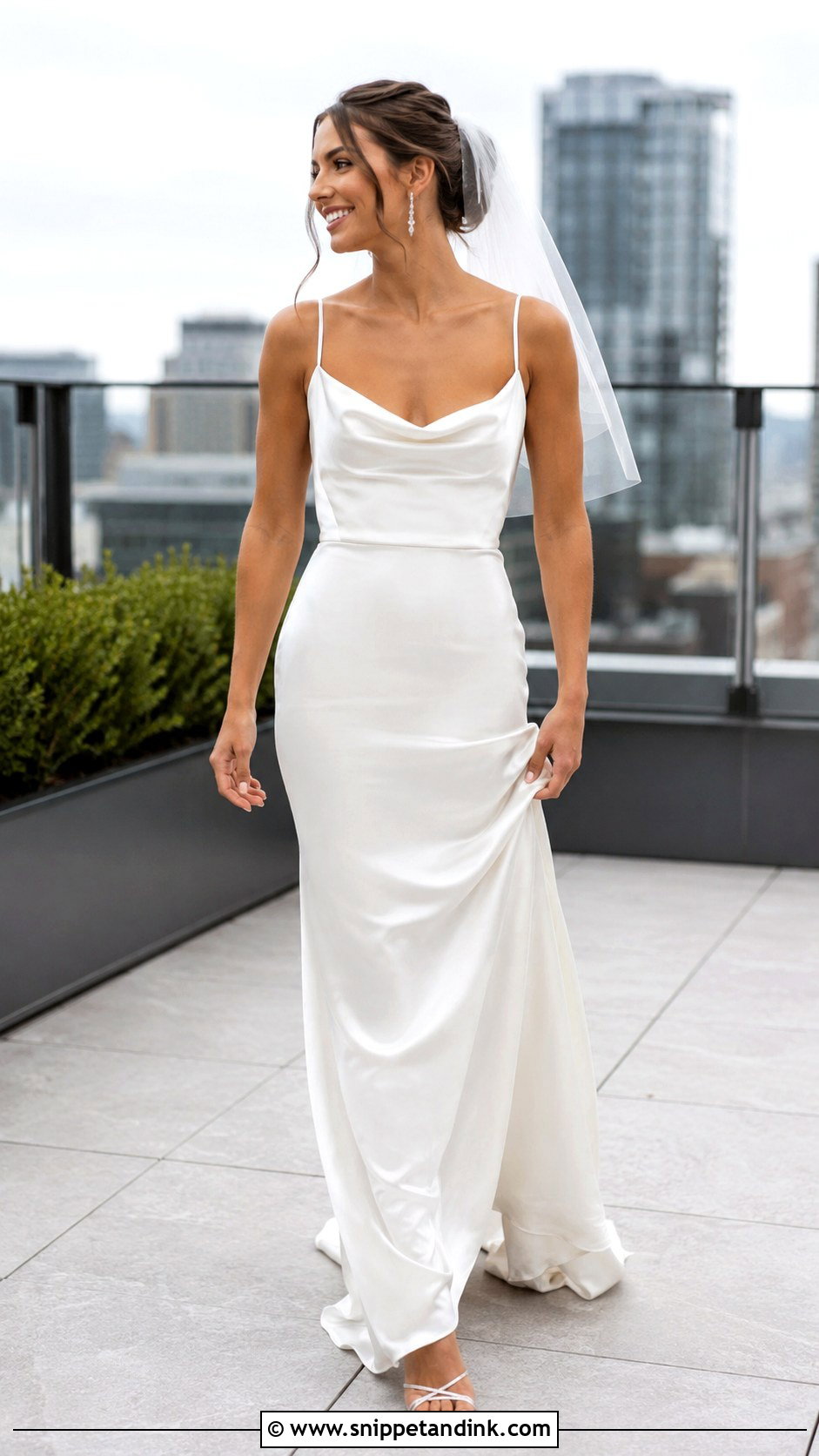
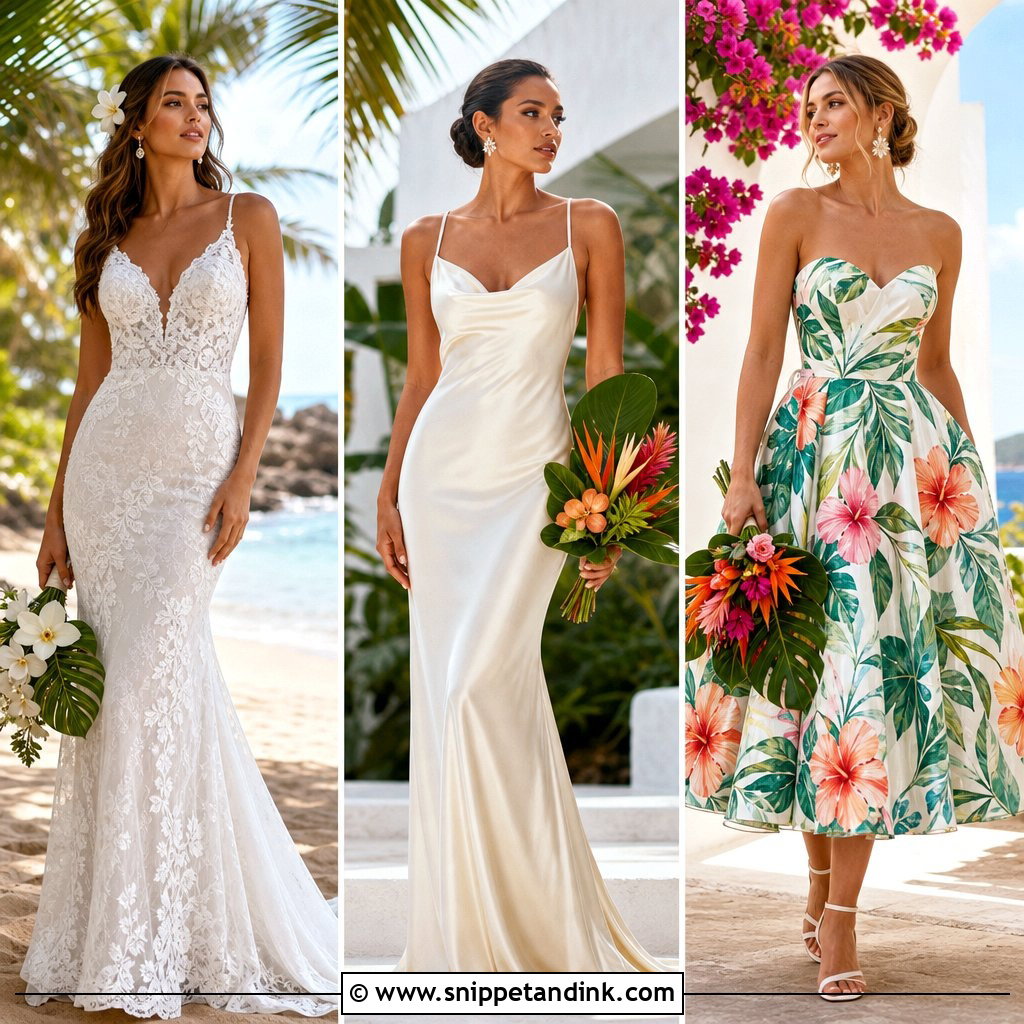
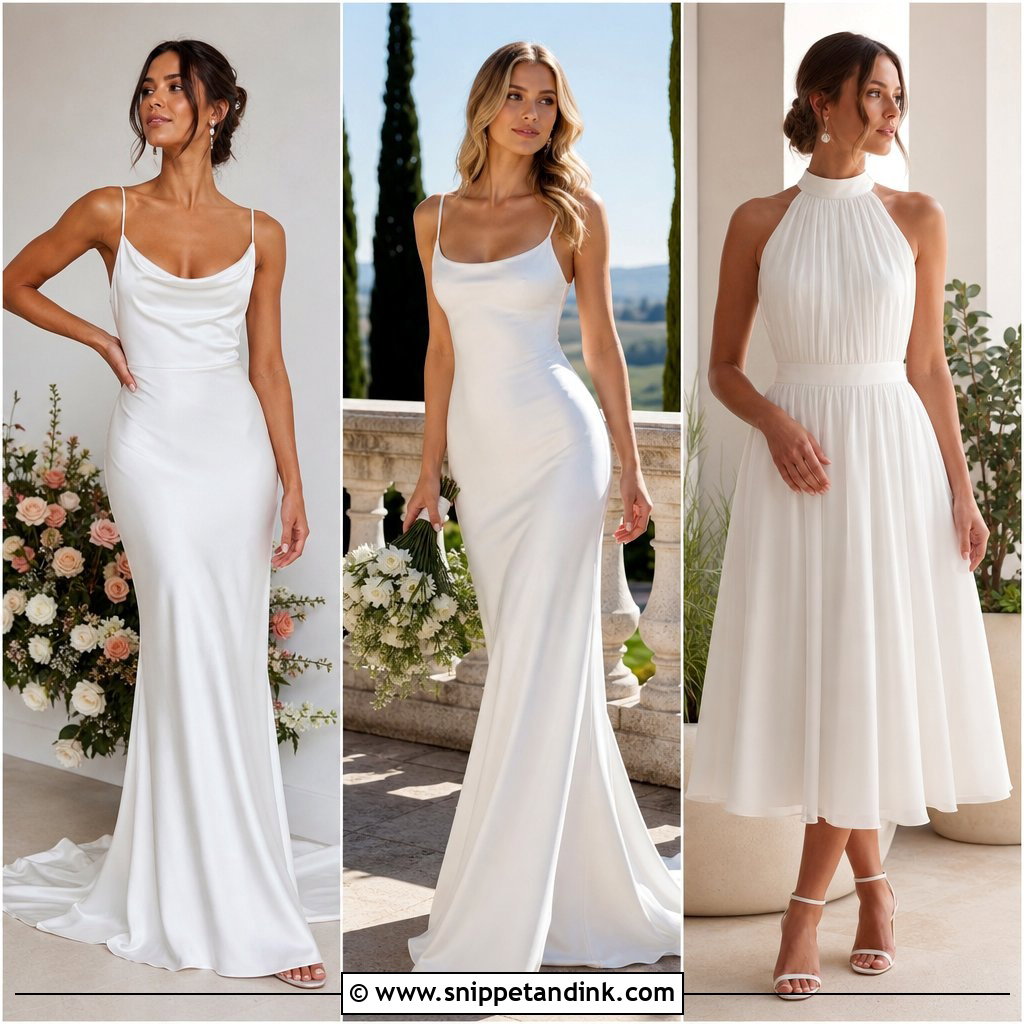
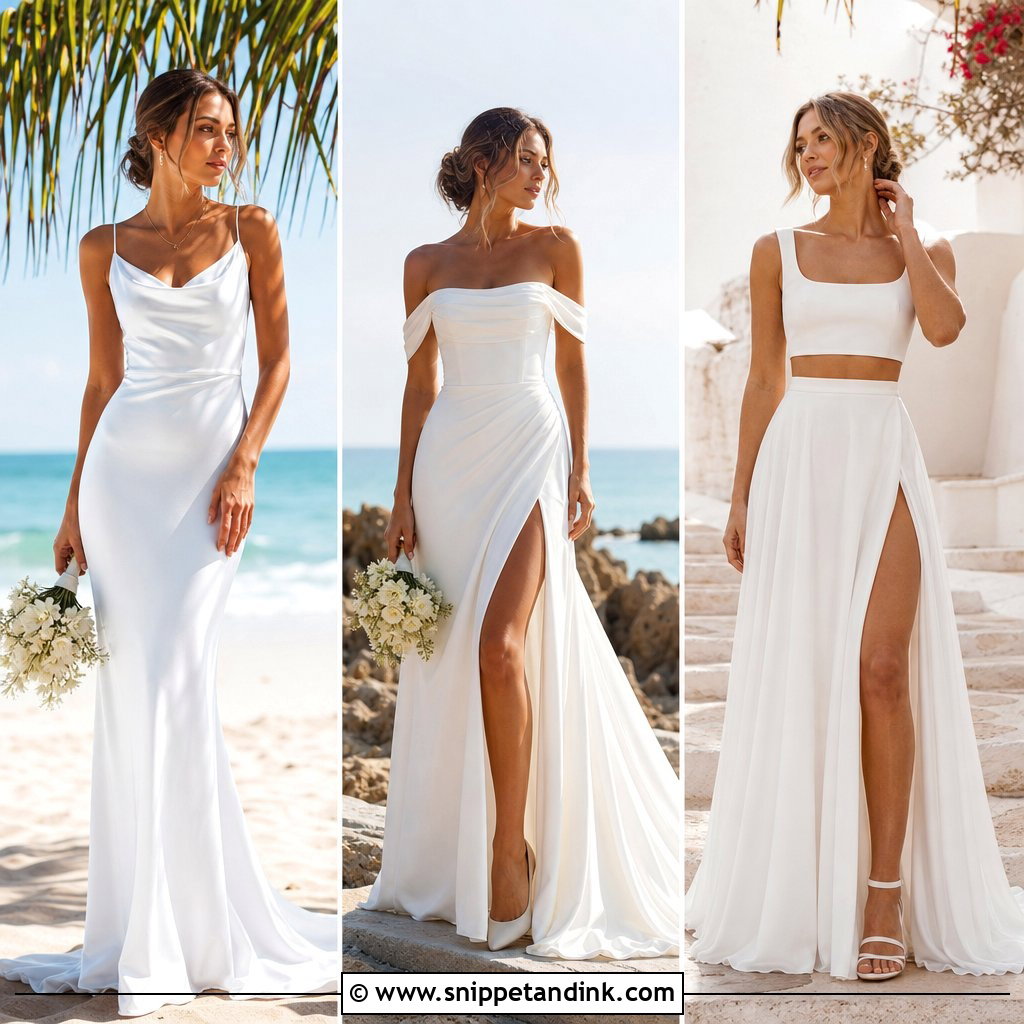
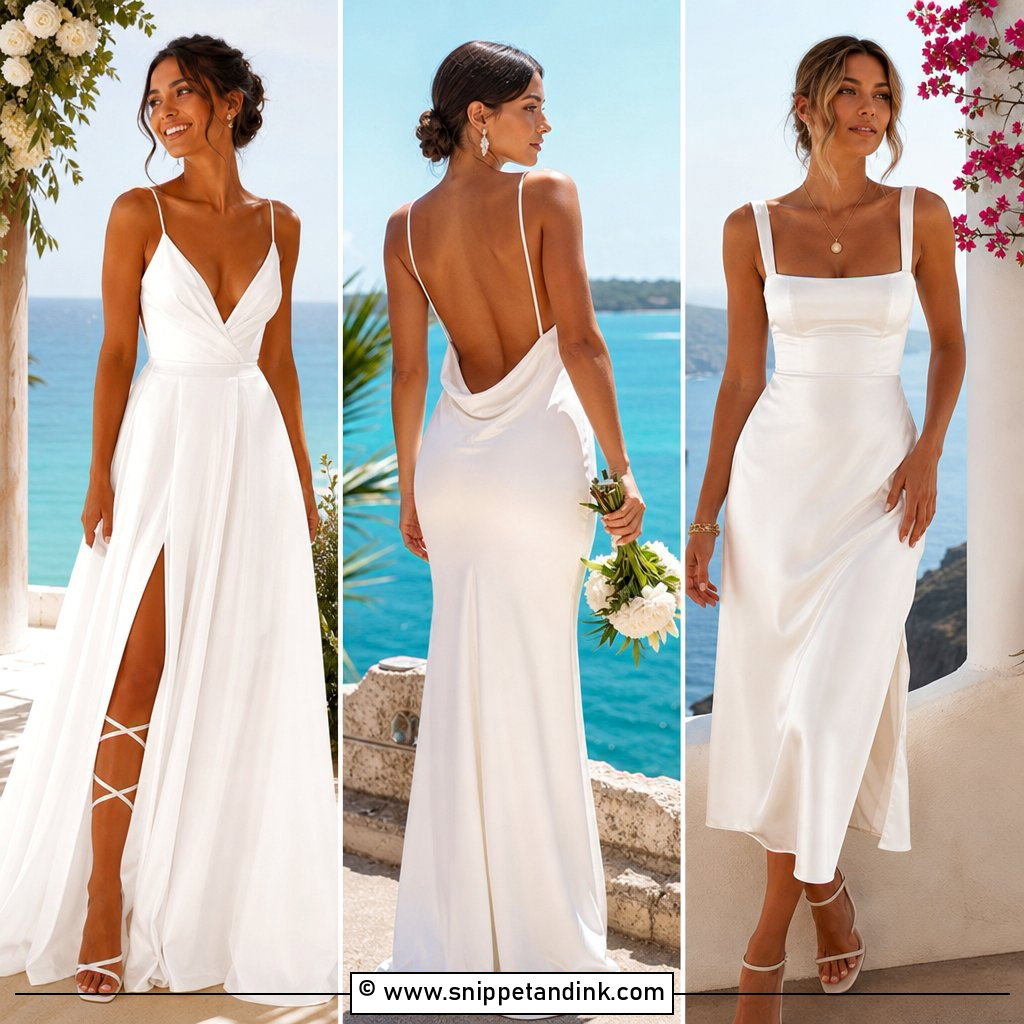
Thin straps carry very little, so the support has to come from inside the bodice. When a bride tries on a spaghetti strap wedding dress, I check for built-in cups or light boning before anything else, because the straps alone won’t hold a fuller bust. A soft cowl neckline over a fluid skirt in charmeuse, georgette or light crepe looks balanced, and a bias-cut or relaxed column cuts down on seams. Adjustable straps are worth insisting on. Strappy sandals, a fine pendant, small crystal studs and a shoulder-length veil suit a rooftop, hotel or destination wedding.
7. Off-Shoulder Chiffon Wedding Dress
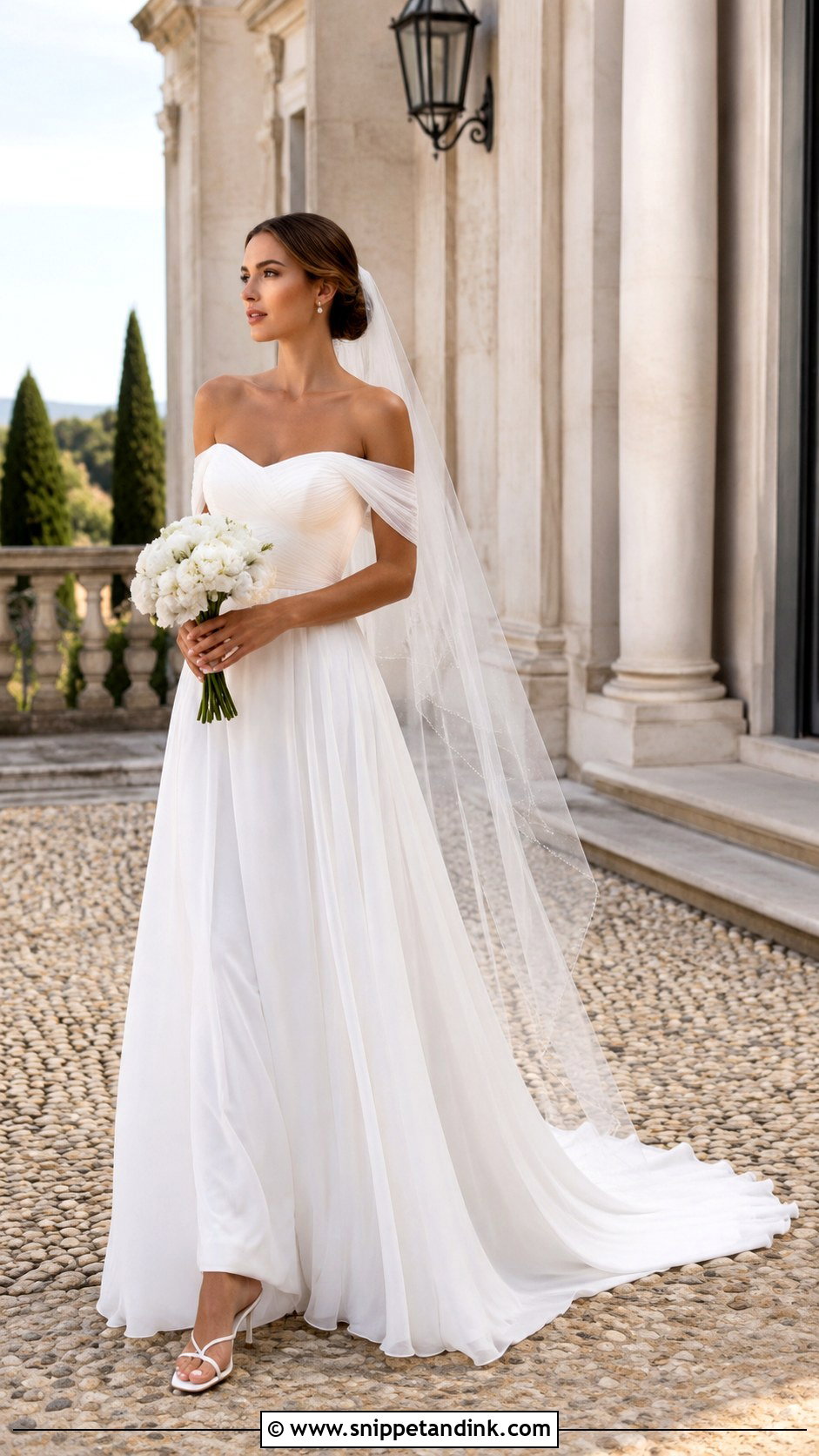
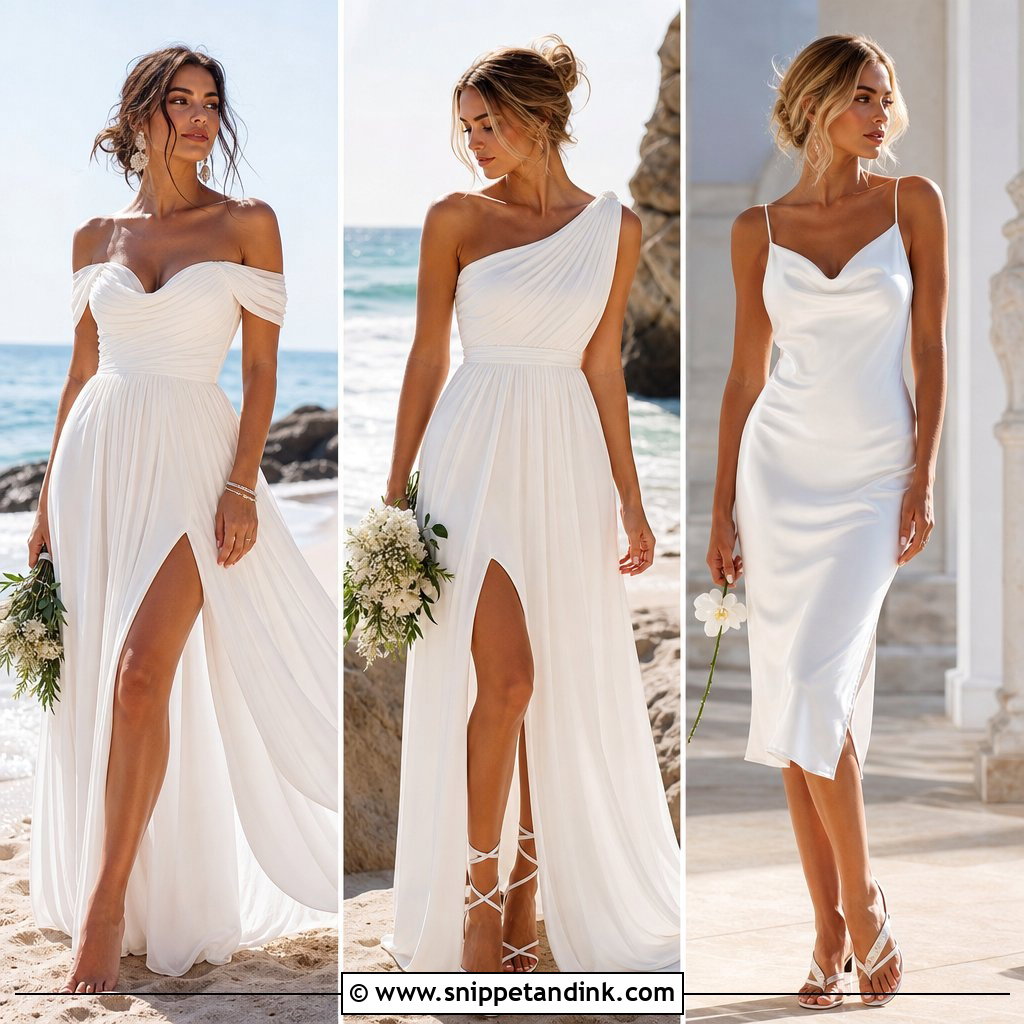
Off-shoulder chiffon has one weak point: the bands want to creep up or slide down whenever you lift your arms. A structured inner bodice anchors them, and that’s the first thing I check. Above it, an A-line skirt with limited lining and a small train keeps movement easy. Detachable bands are handy if you’d rather dance strapless. Pearl studs, a loose low bun, slingback heels and a fingertip veil keep the back light. During alterations, raise your arms, hug, and sit, then see whether the neckline stays where it should. Seaside ceremonies and summer estates suit it.
8. Short Chiffon Wedding Dress
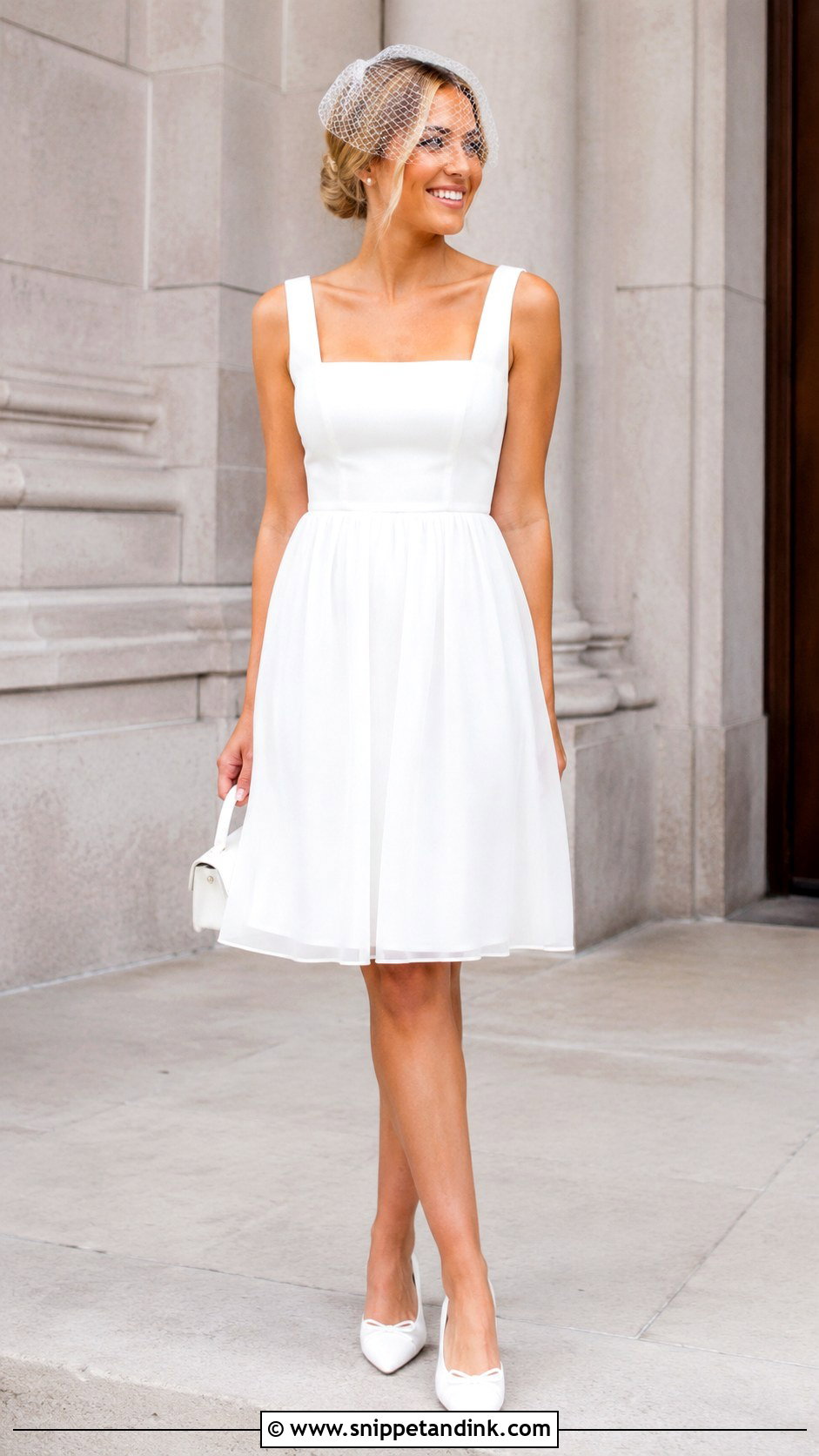
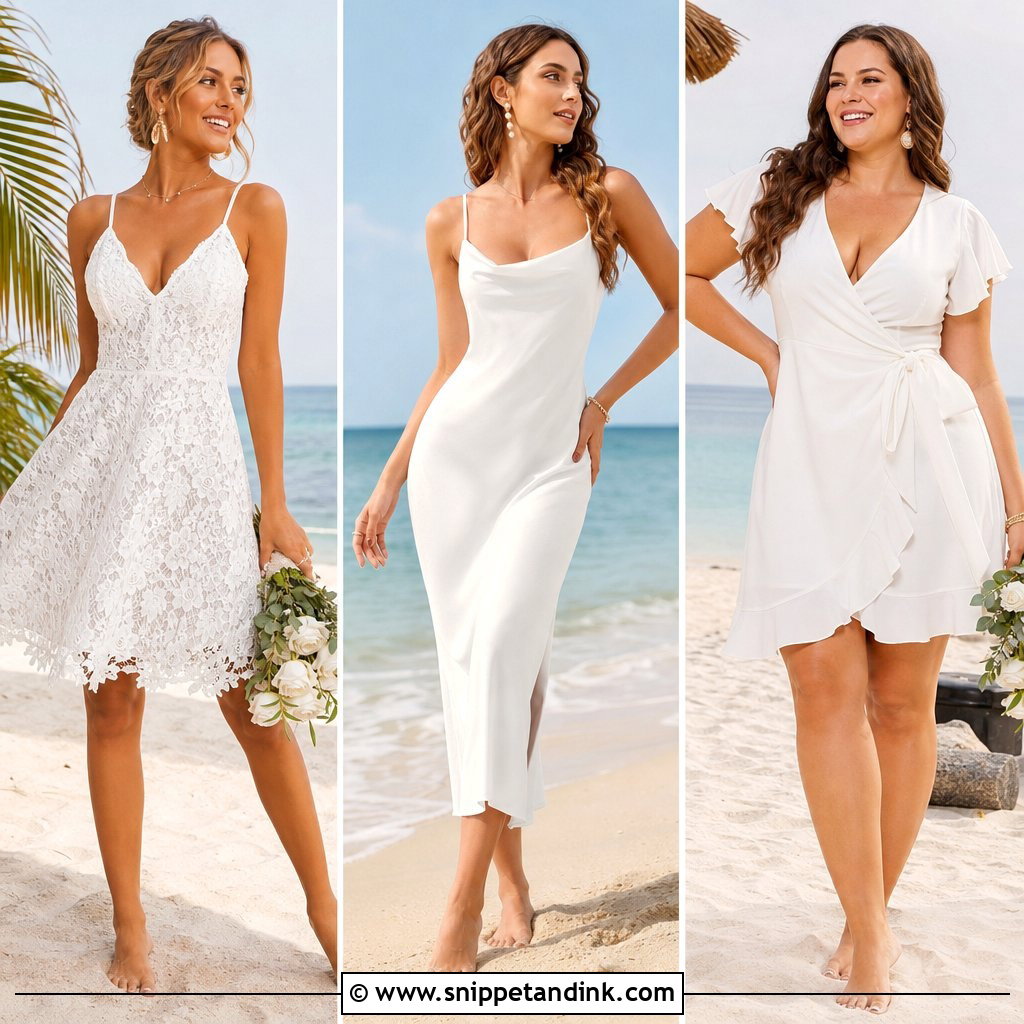
Short chiffon is the most practical dress here. A knee or tea-length hem never drags through sand, grass or courthouse steps, and you’ll never need a bustle. I like a fitted bodice over a lightly gathered A-line, with a square neckline and wide straps for support. Pointed ballet flats, a birdcage veil and a small top-handle bag give it a playful note; low block heels add height without sore feet. It also makes an easy reception change, and you can realistically wear it again for an anniversary dinner.
9. Slip Wedding Dress
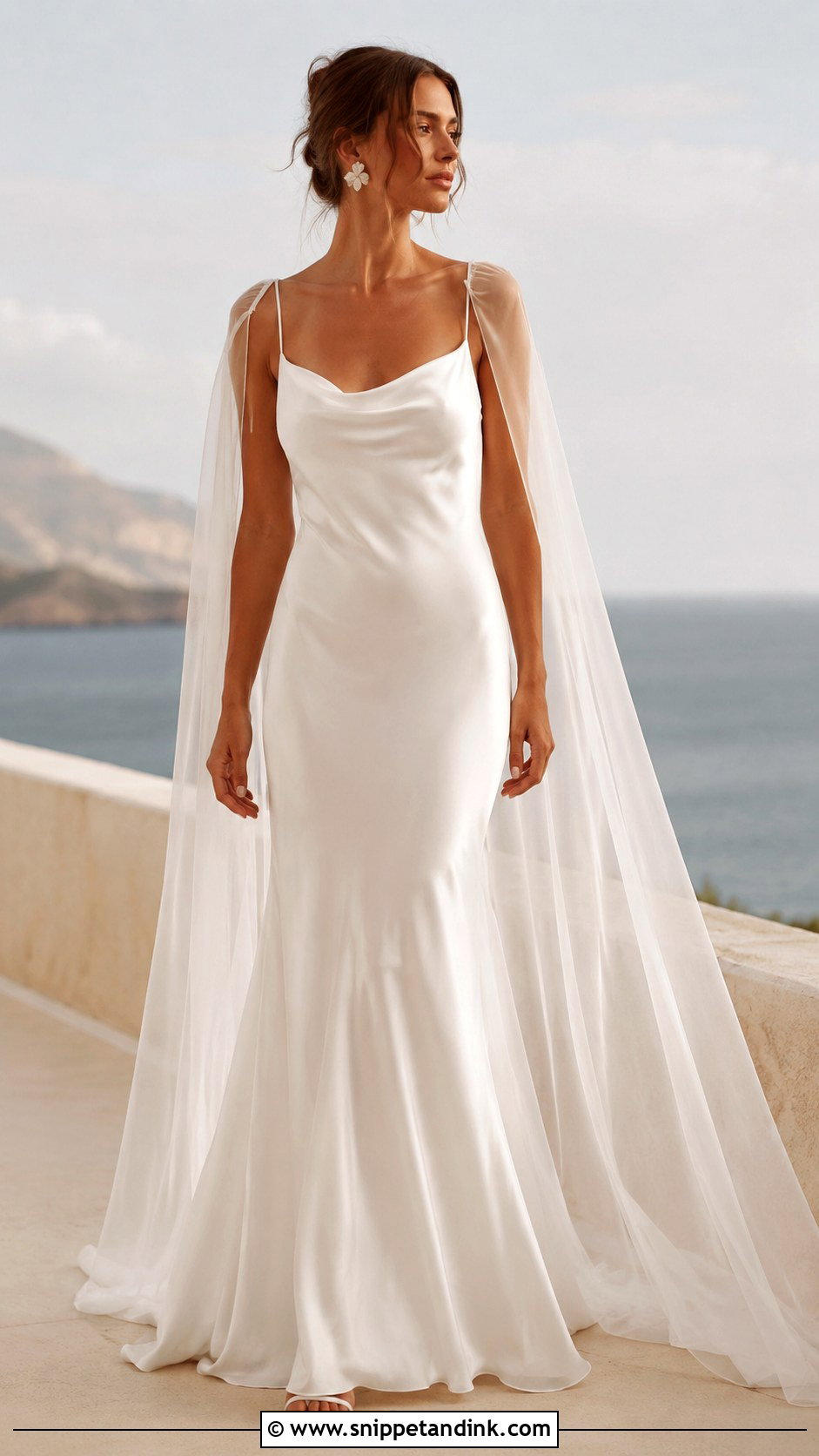
A slip dress is light because there’s almost nothing to it, which also means there’s nowhere for a poor fit to hide. Narrow straps, a softly shaped neckline and a skirt that glides close to the body: in silk charmeuse or satin-backed crepe, every ripple shows. Bias-cut fabric moves gracefully but stretches as it hangs, so let your seamstress hang the dress before final hemming. Insist on an opaque lining. Smooth, no-line undergarments are essential. Minimal sandals, sculptural earrings and a sheer veil finish it, and a detachable organza cape gives ceremony coverage if you want it.
10. Tulle A-Line Wedding Dress
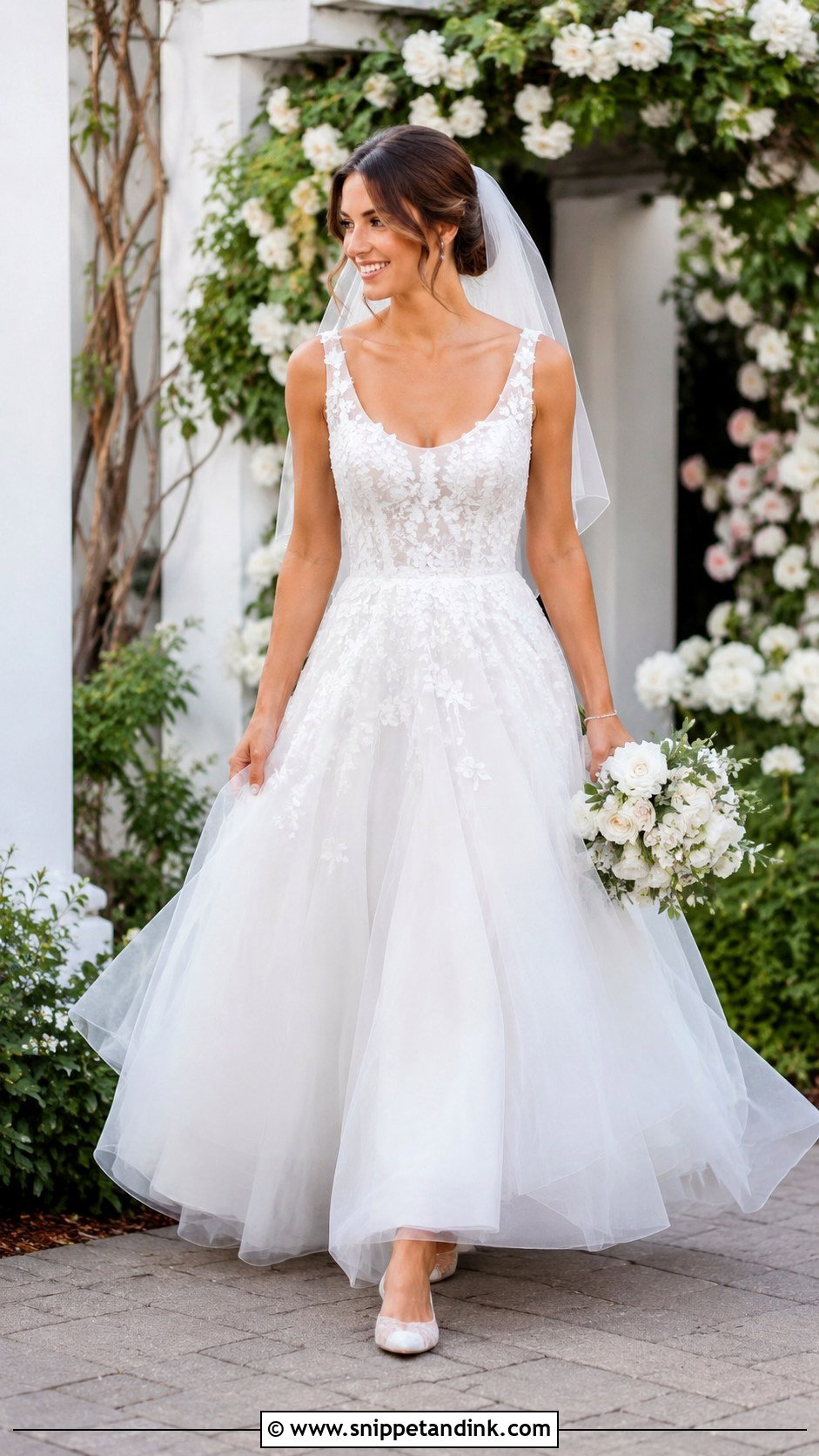
Tulle looks weightless, but a skirt with fifteen layers is anything but. Count them at the appointment, or ask; a few soft layers with a light lining give the floating effect without the bulk. A fitted scoop-neck bodice with a scattering of floral appliqués balances the skirt. Skip a heavily embellished waistband, since that’s where weight concentrates. A horsehair hem helps the skirt hold its shape, but it should flex, not stand stiff. Closed-toe flats, a thin bracelet and a simple tulle veil suit garden weddings and airy ballrooms, and the skirt moves softly every time you walk.
11. Backless Crepe Wedding Dress
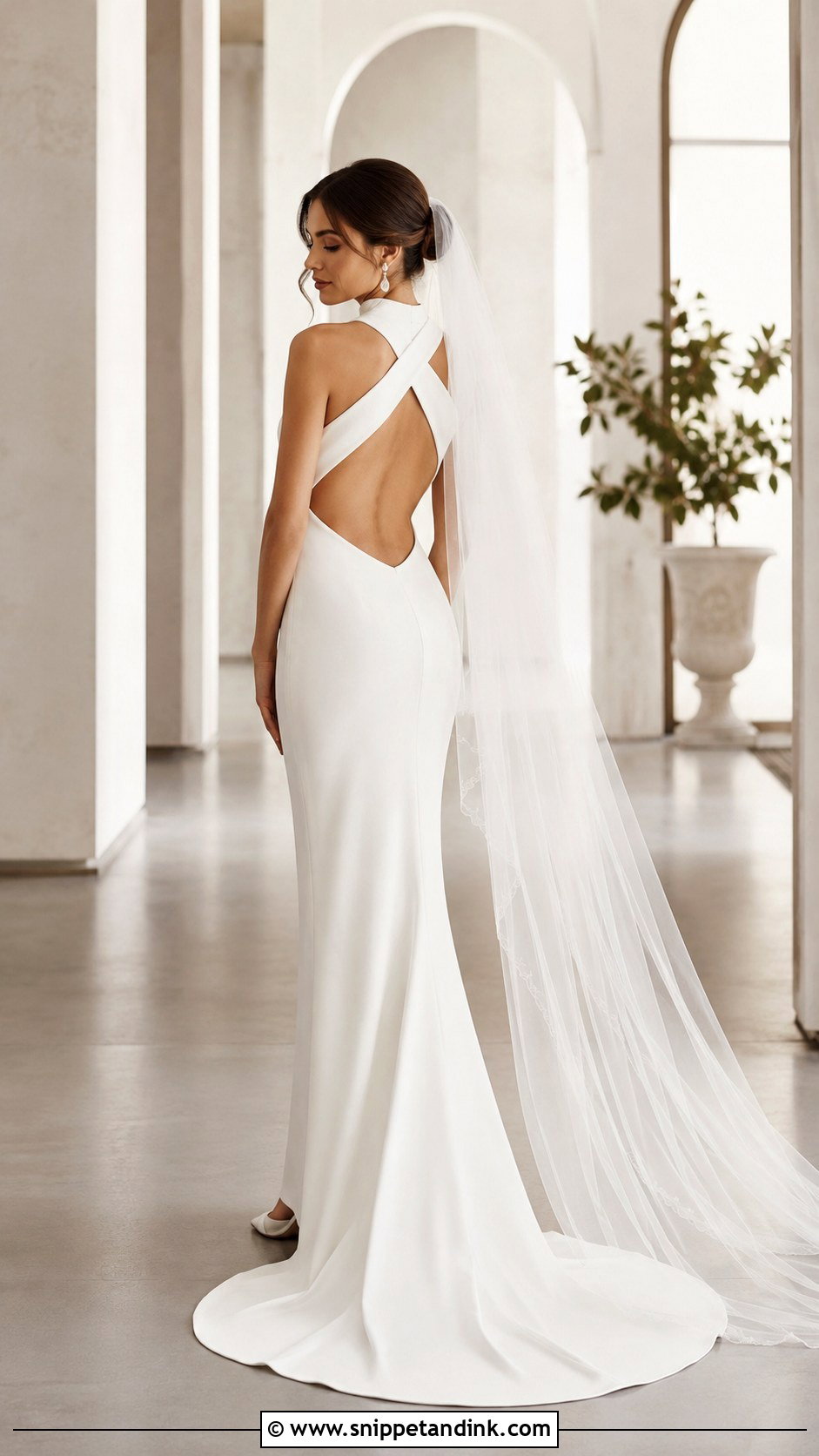
Open backs keep you cool, and a backless crepe wedding dress pairs that with a clean, light fabric. A high front neckline balances the bare back. Crossed straps, sheer side panels or an internal bodice keep it secure, and a sweep train preserves the line. Underwear is the thing to settle early. Standard bras won’t work, so ask whether cups can be sewn in or whether adhesive options suit your shape. Sleek low heels, drop earrings and an updo that leaves the back clear are the styling I’d choose, with a single-layer chapel veil rather than dense lace.
12. Flutter Sleeve Wedding Dress
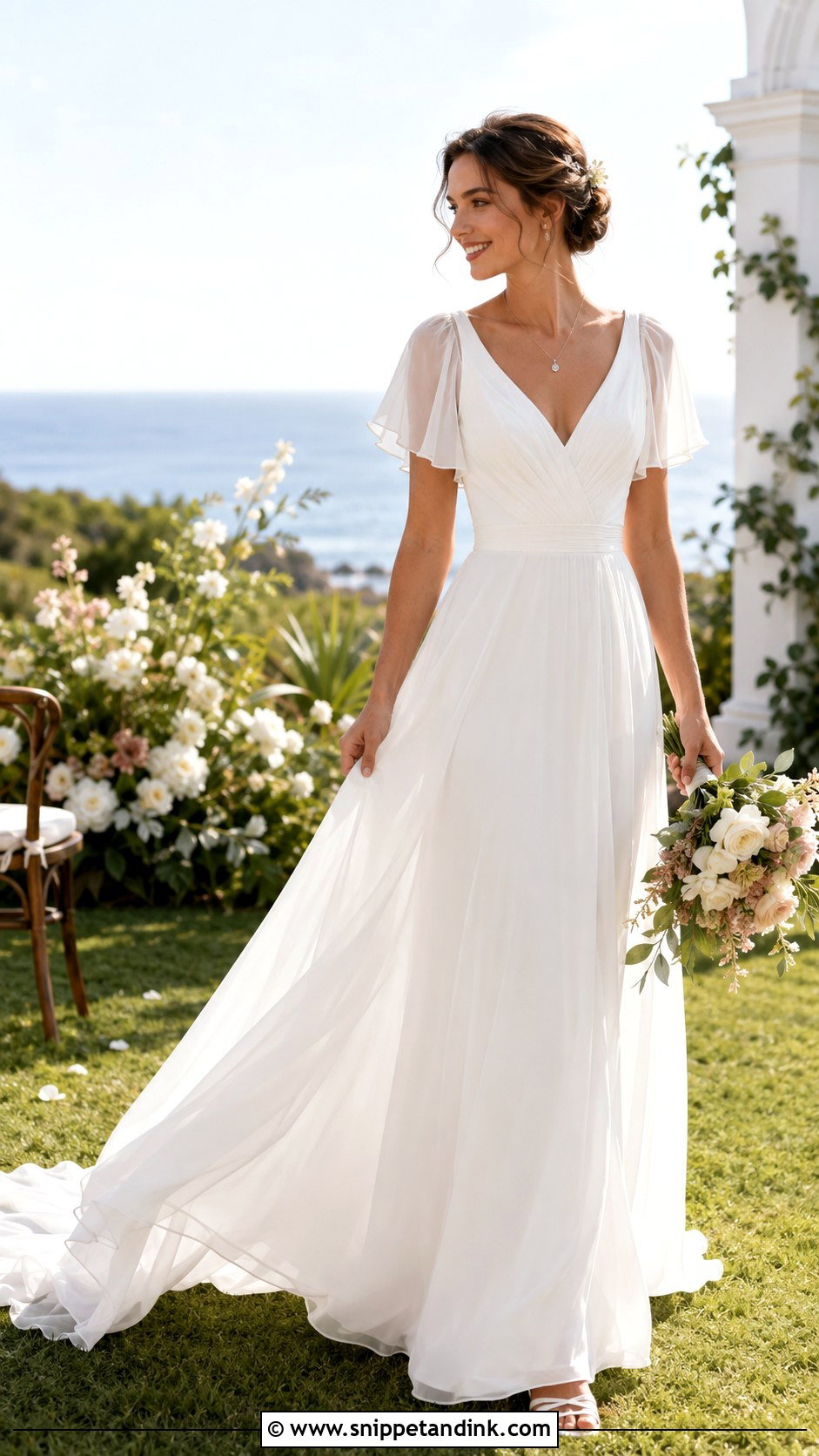
Flutter sleeves cover the tops of the arms without trapping heat the way fitted long sleeves do, because the sheer chiffon or georgette moves independently of the bodice. Elbow-length versions give more coverage while still letting air through. Pair them with a V-neck and a soft waist over a relaxed A-line with a manageable sweep train. Avoid dense lace edging or heavy beads on the sleeve hem; they drag the fabric down and stop the flutter. Low block heels, a delicate pendant and a floral hairpin are all the accessories it needs for a breezy coastal or outdoor ceremony.
13. High Slit Wedding Dress
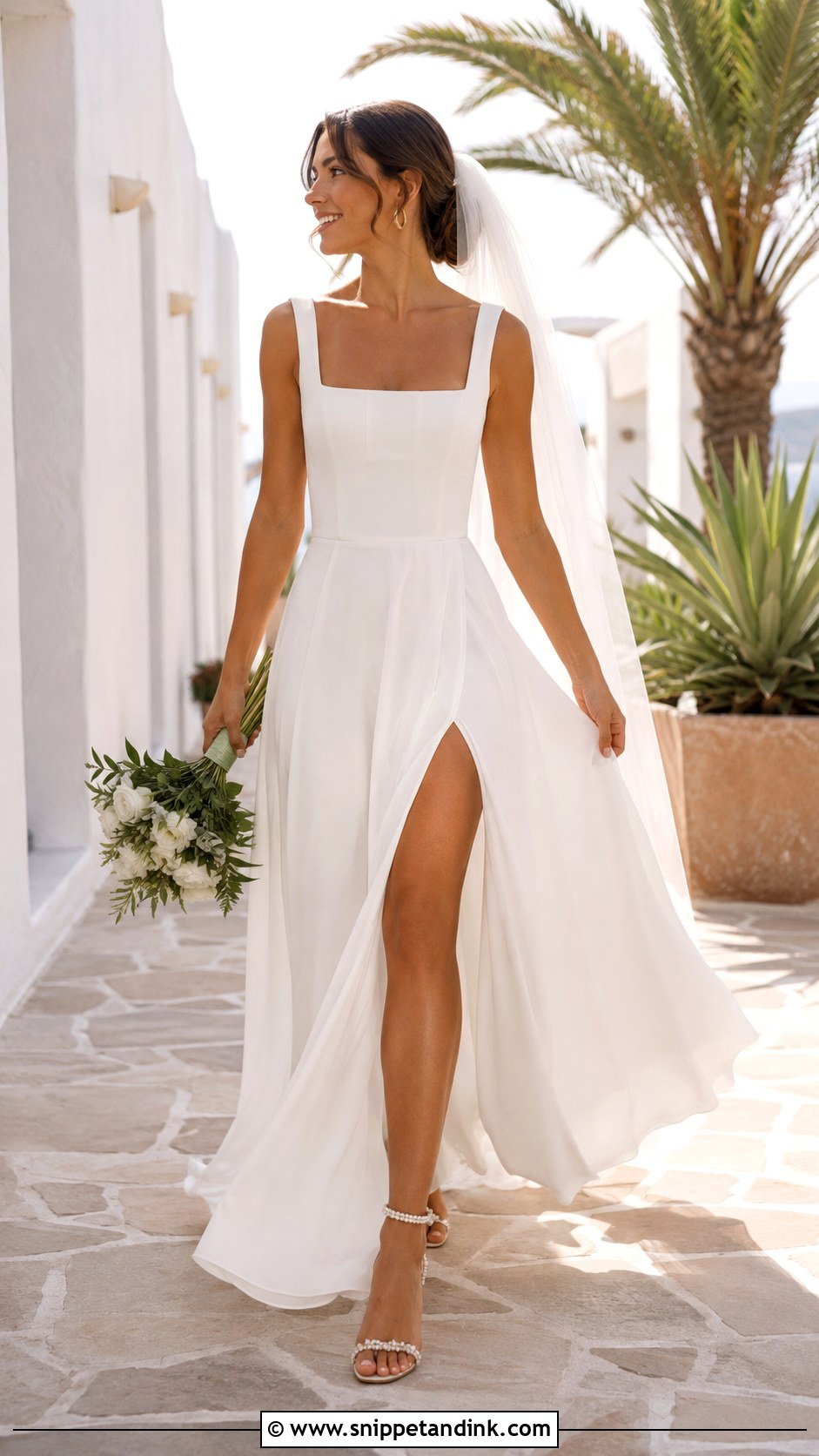
The slit is functional as much as it is fashionable: it frees your stride on uneven ground and lets cooler air in. Where it starts on the thigh matters, so I have brides walk, sit and climb steps in fittings to see what shows. A chiffon, georgette or soft crepe A-line works, balanced by a secure top such as a square neck with wide straps. Embellished sandals become part of the look here, so choose ones you can stand in. Small hoops, a smooth low ponytail and a simple veil keep attention on the silhouette for a destination wedding or a lively reception.
14. Halter Neck Wedding Dress
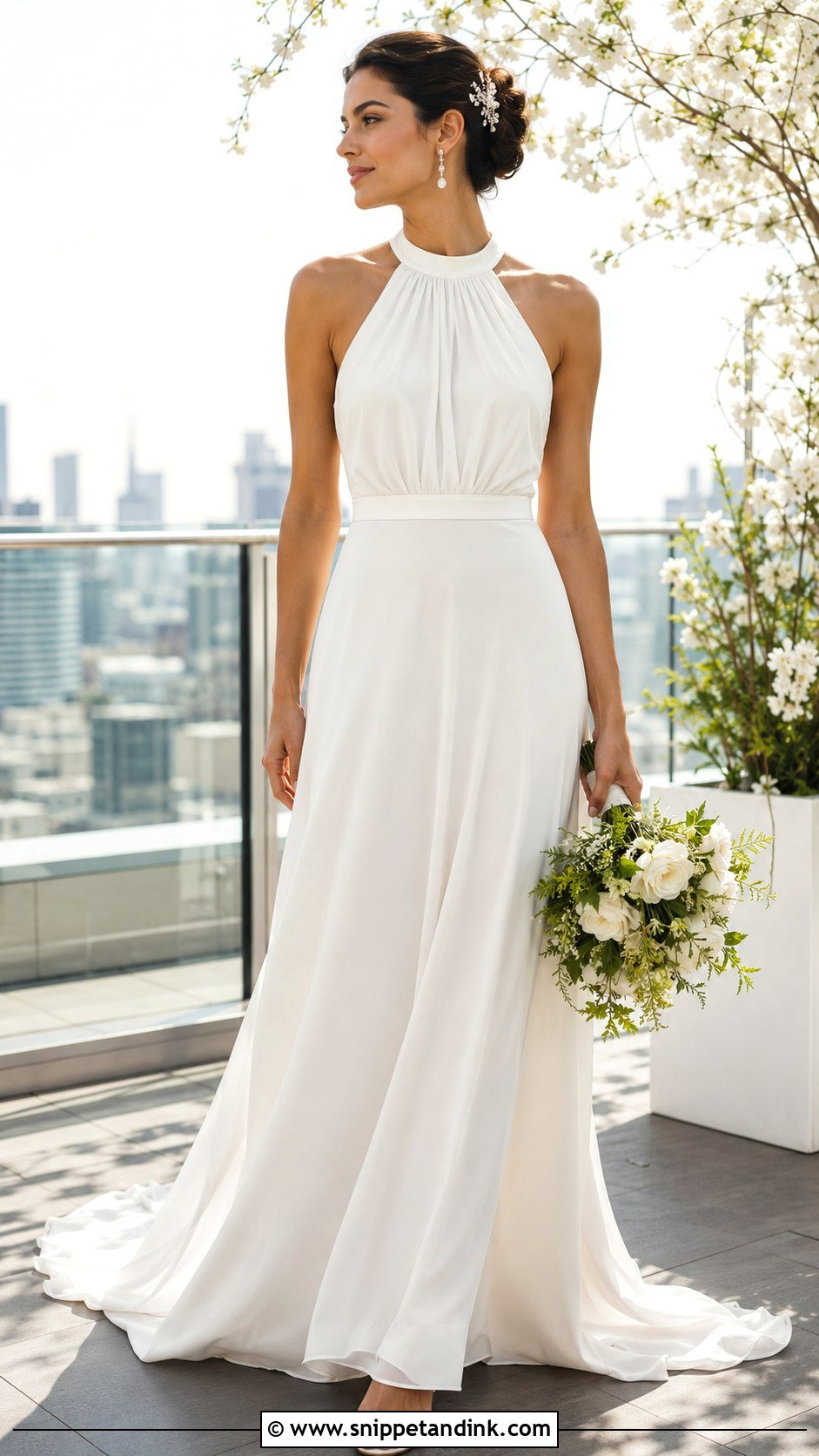
A halter frames the shoulders and leaves the arms completely free, which in heat is a real advantage. In lightweight crepe, chiffon or silk georgette, a column or gentle A-line keeps it streamlined. A gathered halter reads soft; a clean high neck looks modern. The open back balances the covered front. One honest caution: the halter strap carries weight, so if your bust needs support, ask for that weight to be moved into the bodice. Drop earrings, low sandals, a neat bun and no necklace. A short veil or hair comb finishes it for a rooftop or destination wedding.
15. Tea-Length Lace Wedding Dress
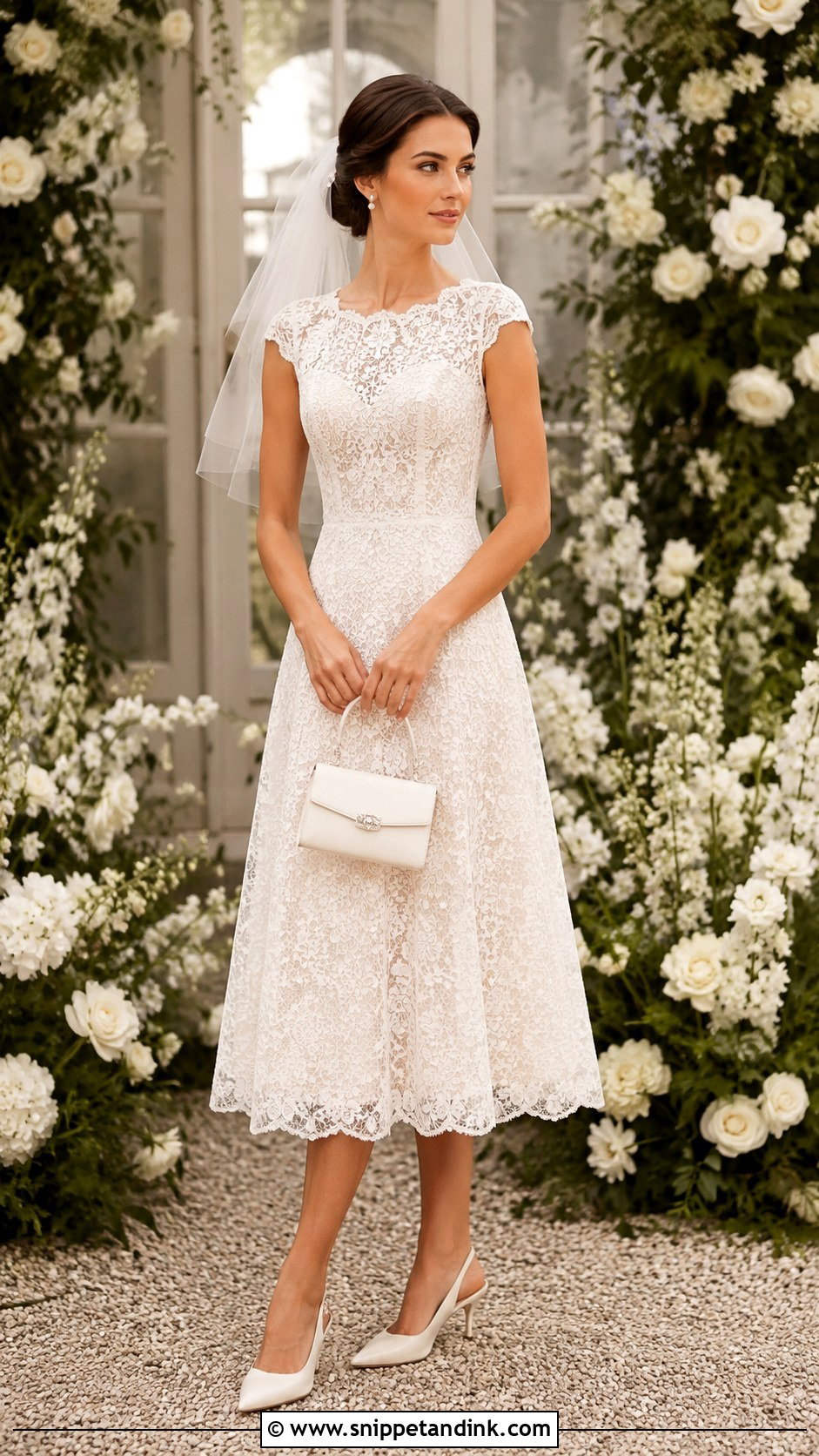
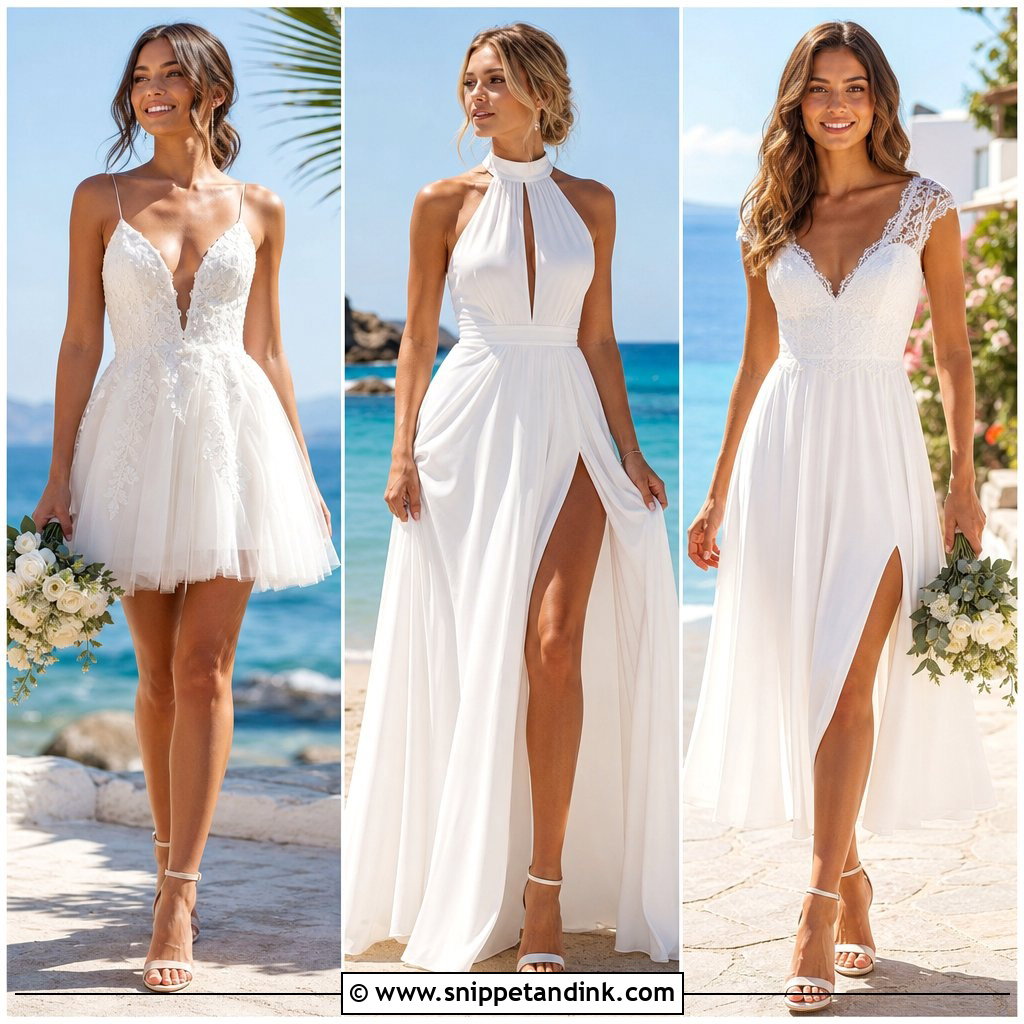
Tea length falls between knee and ankle, so the hem clears the ground and your shoes become part of the outfit. Open lace over a thin lining, a fitted bodice and a soft flare keep it light. Cap sleeves or wide straps give coverage without warmth. Pointed slingbacks, pearls and a short veil suit the vintage mood, with a structured mini bag for courthouse photos or travel between venues. On petite brides, the exact hem point matters; an inch too low can shorten the leg, so check it in your shoes. Garden paths and outdoor receptions suit it.
16. One-Shoulder Wedding Dress
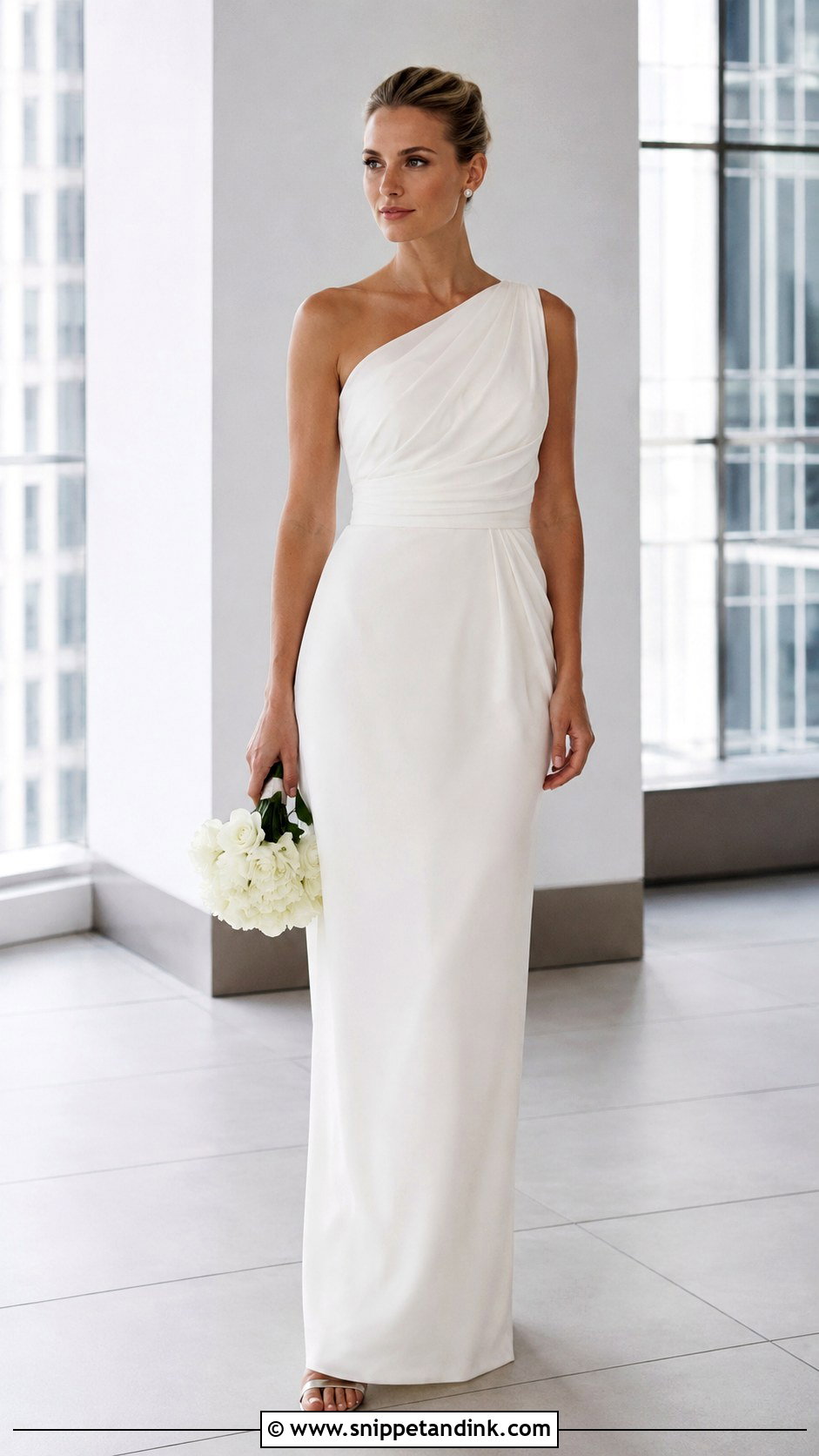
Asymmetry does the work in a one-shoulder dress, so the fabric can stay plain. Fluid chiffon, georgette or light crepe with a draped neckline and soft waist, over a straight or A-line skirt, keeps it balanced. Whatever sits on the shoulder, whether a narrow strap, pleats or a short drape, must not pin your arm down; test by raising it overhead. A traditional veil attached low tends to crowd the design, so I’d use a hair comb with swept-back hair instead. Simple studs and metallic sandals suit a city wedding, a beach ceremony or an evening reception.
17. Detachable Overskirt Wedding Dress
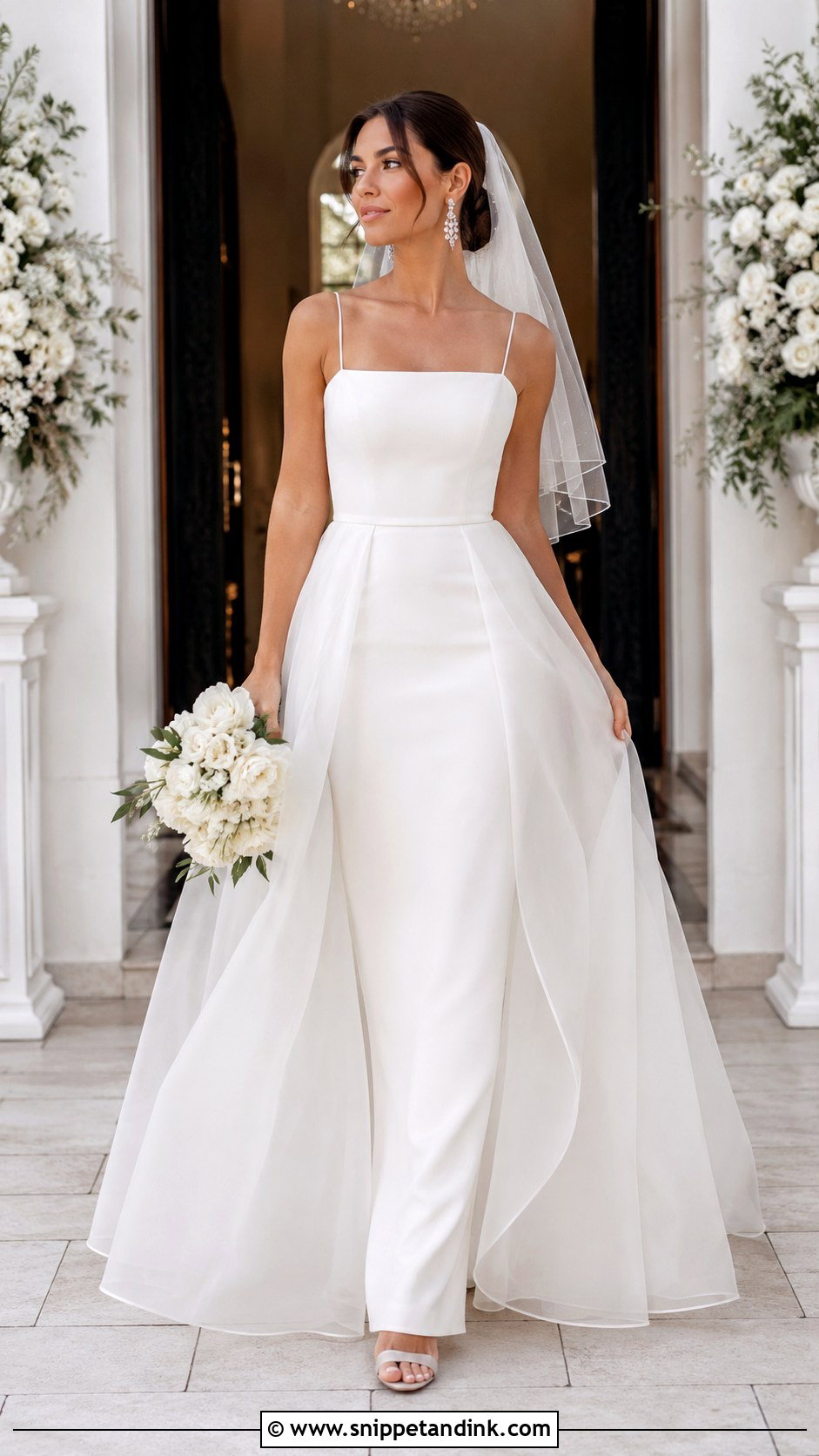
This is two dresses for the weight of one and a bit. Start with a crepe column or simple slip that you’d happily wear on its own, then add a sheer organza or soft tulle overskirt for the ceremony. Keep the overskirt to limited layers with a secure waistband, so it adds movement rather than heat. Off it comes before dinner. The waistband should lie flat under the base dress’s waist without a ridge, and the fastening must be quick to undo; rehearse it with your helper. Low heels, crystal earrings and a clean fingertip veil work for both versions.
18. Cape Sleeve Wedding Dress
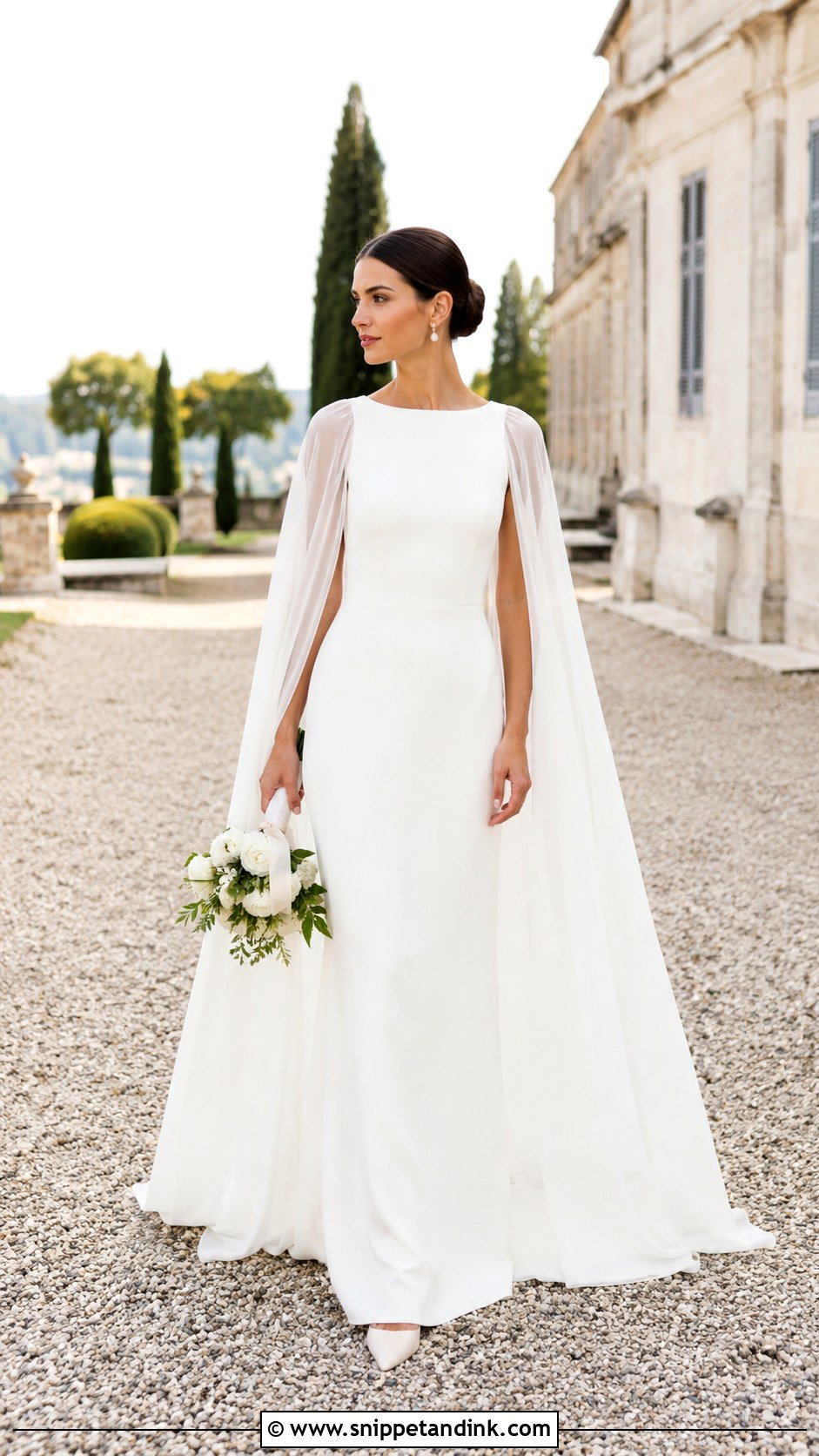
A sheer cape gives the arms coverage while letting air move freely underneath, which fitted sleeves never do. The base gown is light crepe or chiffon, with the cape attached at the shoulders or neckline and falling to the elbow, waist or floor. Detachable is more flexible, and I’d always choose a single layer of chiffon or tulle over dense lace, which gets warm and catches on everything. Pointed flats, delicate earrings and a low chignon are plenty, since the cape is already the feature. Formal outdoor ceremonies and modern venues both suit it.
19. Minimalist Square Neck Wedding Dress
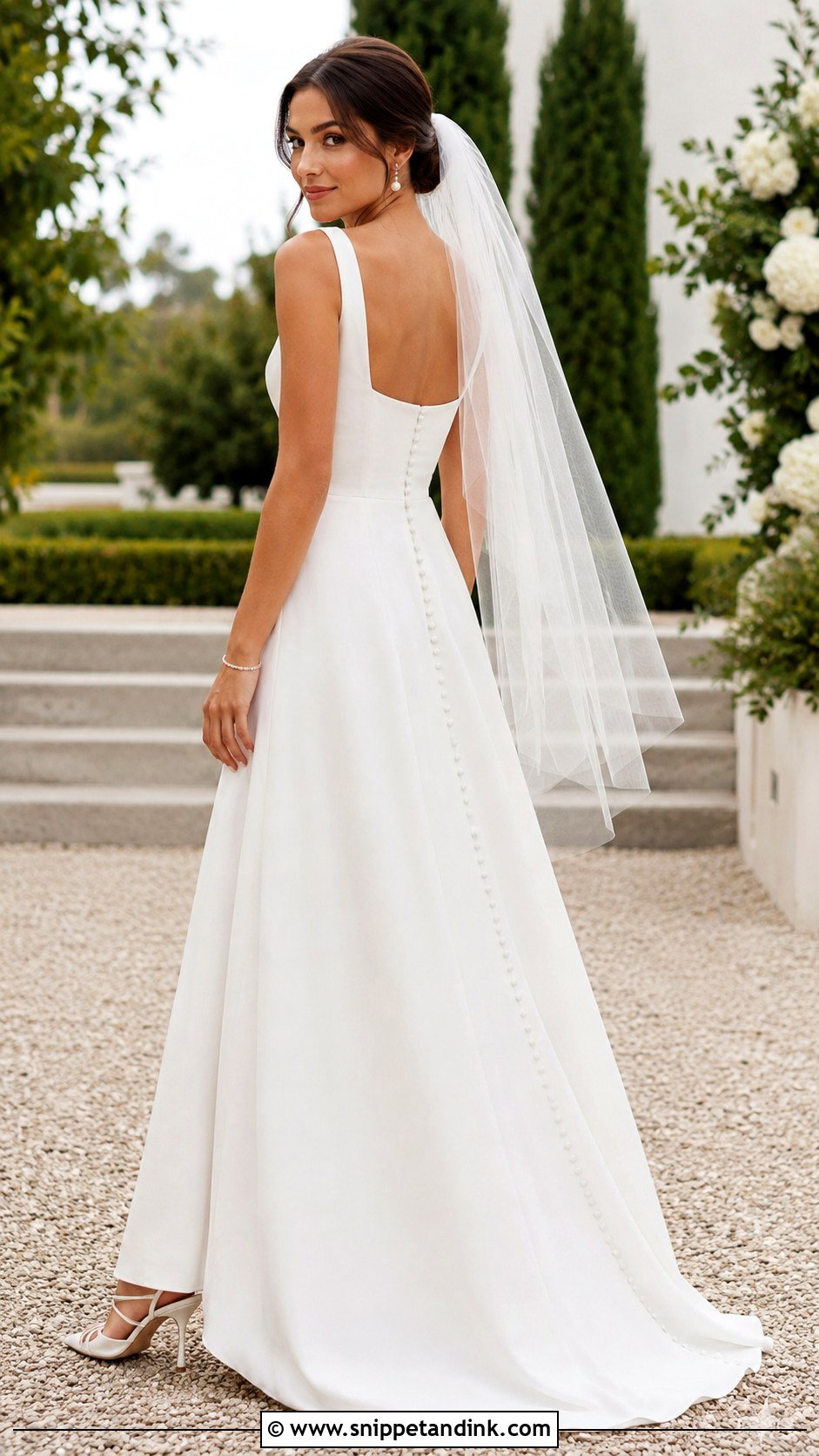
Wide straps make the square neckline more than a style choice: they give a seamstress somewhere to anchor a supportive inner bodice, which thin straps can’t. Lightweight crepe or silk faille in a gentle A-line with minimal seams keeps the dress clean and cool. A low square back with covered buttons adds detail without weight. Pearl earrings, a slim bracelet, classic slingbacks and a single-layer veil finish it. If comfort comes first, skip heavy ruching and dense beading. Few silhouettes adapt as easily from courthouse to garden to destination.
20. Lightweight Bridal Jumpsuit
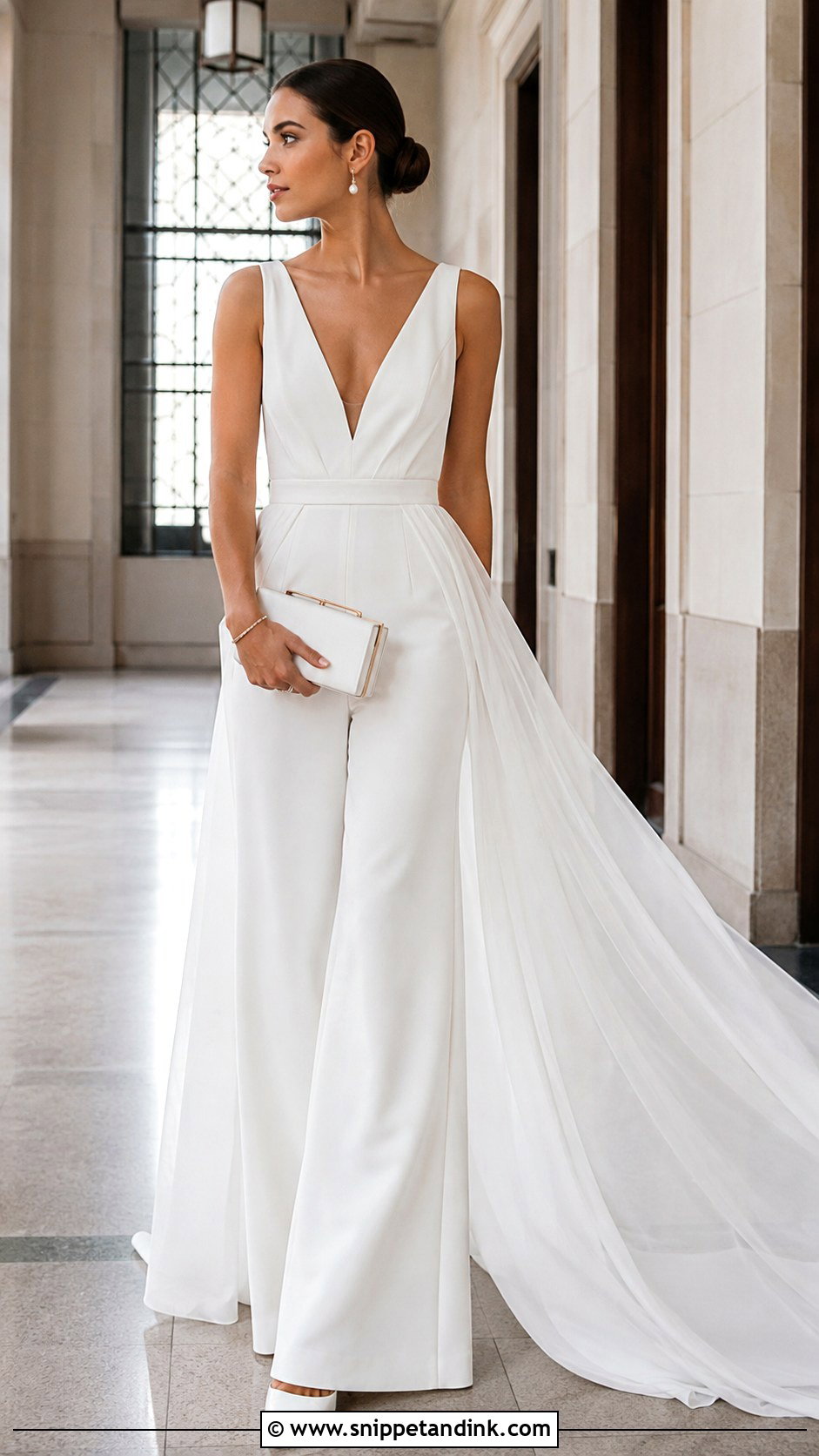
Some brides simply don’t want a gown, and a lightweight bridal jumpsuit in fluid crepe is the coolest thing you can wear down an aisle. Wide legs, a defined waist and a structured bodice give support; a V, halter or one-shoulder top keeps it formal. A detachable chiffon train or sheer cape adds ceremony presence and comes off for the party. The make-or-break detail is the hem. Wide-leg trousers should just skim the floor in your actual shoes, so bring them to every fitting. Pointed heels, a structured clutch and statement earrings finish it.
Sunlight, Sweat and See-Through Skirts
Light fabrics bring problems that heavy gowns never have, and outdoor summer weddings expose all of them. The first is transparency. A single layer of chiffon looks opaque in a fitting room but can turn sheer in direct sun, especially when a photographer shoots with the light behind you. Ask to stand near a bright window during your fitting, and if you see your legs through the skirt, add a lining layer in a color close to your skin tone.
The second is sweat. Silk charmeuse and satin-backed crepe show damp patches under the arms and across the lower back quickly. Underarm shields that stick inside the bodice help, as does a light dusting of anti-chafing powder on the thighs if your skirt is slim.
Wind and the train
Chiffon and tulle catch even a light breeze. On beaches and clifftops, I’d choose a shorter veil or none, sew a tiny weight into the veil hem, and keep the train to sweep length so it doesn’t blow sideways during the vows.
Light gowns also wrinkle in transit. Pack the dress in its bag with tissue in the folds, hang it as soon as you arrive, and plan time for a gentle steam the morning of the wedding.
Feeling Cool at Hour Eight Matters More Than the Label
A light gown comes down to airy fabric, honest construction, careful tailoring and a shape that suits the venue. These dresses range from flowing chiffon and modern crepe to short hems, open lace, convertible overskirts and a bridal jumpsuit. When you shop, check the lining, count the skirt layers, look at train length and beading, and ask what’s inside the bodice, rather than judging weight by eye. In fittings, walk, sit, raise your arms and dance a little. Choose shoes you can stand in for hours and keep accessories simple. Do that, and you’ll look every bit the bride while staying comfortable well into the evening.
You'll Like These Ideas:


Leave a Reply