
Summer changes what a wedding dress has to do. It still has to look bridal, but it also has to breathe through an outdoor ceremony, survive photos in full sun and let you dance in a warm room afterward. The twenty dresses below cover beach ceremonies, garden weddings, formal ballrooms and small courthouse days, in chiffon, organza, lace, silk and crepe. For each one I’ve noted the neckline, hem and support it needs and the accessories I’d put with it, plus where that style tends to struggle when the temperature climbs.
Fabric Weight Counts for More Than Silhouette in July
Most brides choose a silhouette first. For a summer wedding I’d reverse that, because a light A-line in the wrong fabric is hotter than a ball gown in the right one. Ask the shop for the fabric content of the dress and the lining. A silk outer shell over a polyester lining traps heat just like a fully synthetic dress, since the lining is what touches your skin.
How Common Bridal Fabrics Behave in Heat
- Chiffon and georgette: light and floaty; in bridal they are often polyester, so check the lining too.
- Organza: crisp and holds volume with few layers, which makes it the coolest way to get a full skirt.
- Crepe: medium weight, drapes well and hides creases better than most fabrics.
- Silk charmeuse and satin: smooth and cool to touch, but they show sweat and water marks quickly.
- Cotton and open guipure lace: breathe well; dense beaded lace does not.
- Linen: very cool, but it creases from the first time you sit.
Count the layers under the skirt as well. Every petticoat adds heat around your legs, and a skirt that needs a hoop plus three layers to stand out will feel twice as hot as one shaped with organza.
1. Chiffon A-Line Summer Wedding Dress
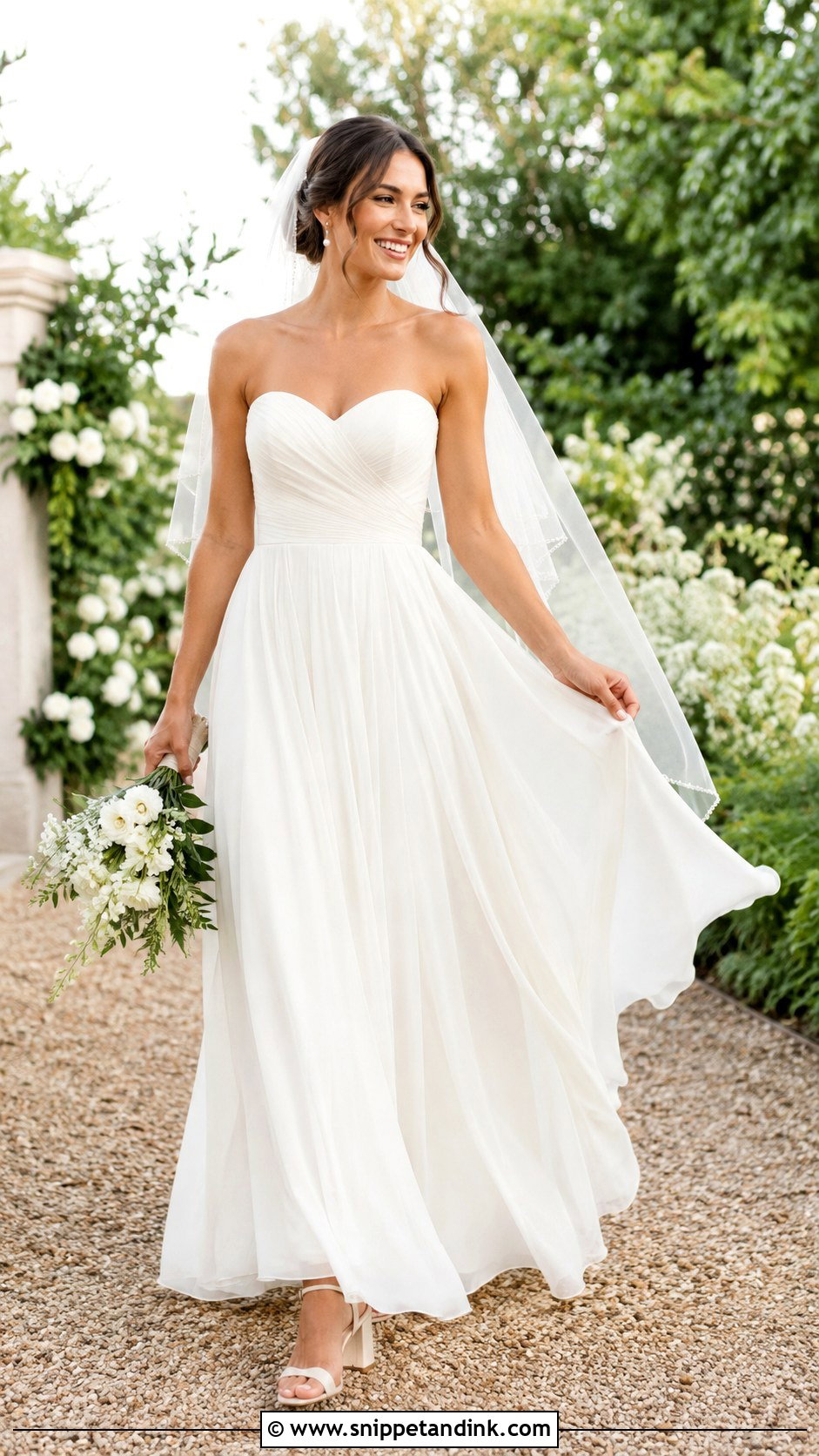
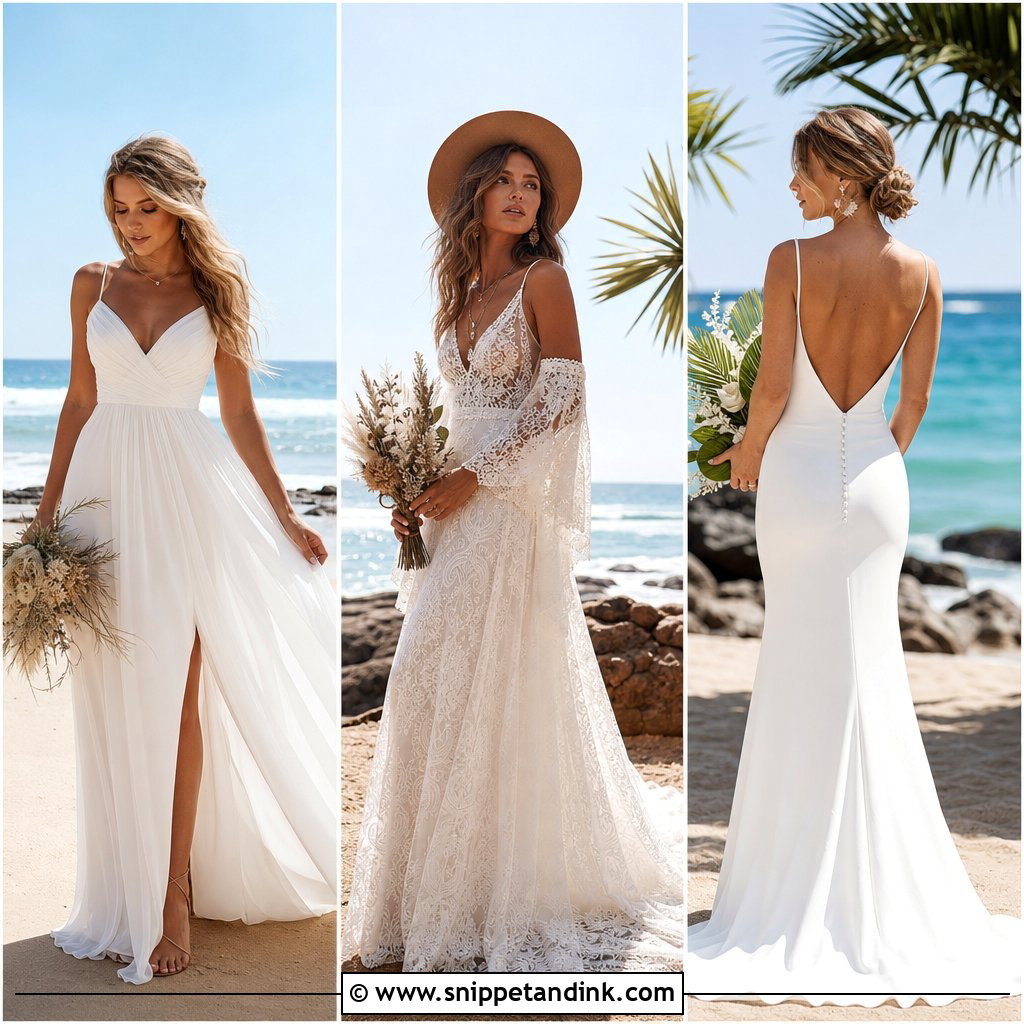
Chiffon A-lines are the easiest summer gown to wear for hours. The layered skirt moves without piling volume at the waist, and a sweetheart or V-neck bodice keeps the shape defined. I ask for wider straps on this one; thin spaghetti straps carry the whole bodice and start to dig in by the reception. Block-heel sandals handle grass and gravel paths. Pin the hair loosely up and off the neck, keep the makeup fresh, and add pearl drops and a fingertip veil. The fitted bodice and soft skirt suit most body shapes.
2. Off-Shoulder Lace Summer Wedding Dress
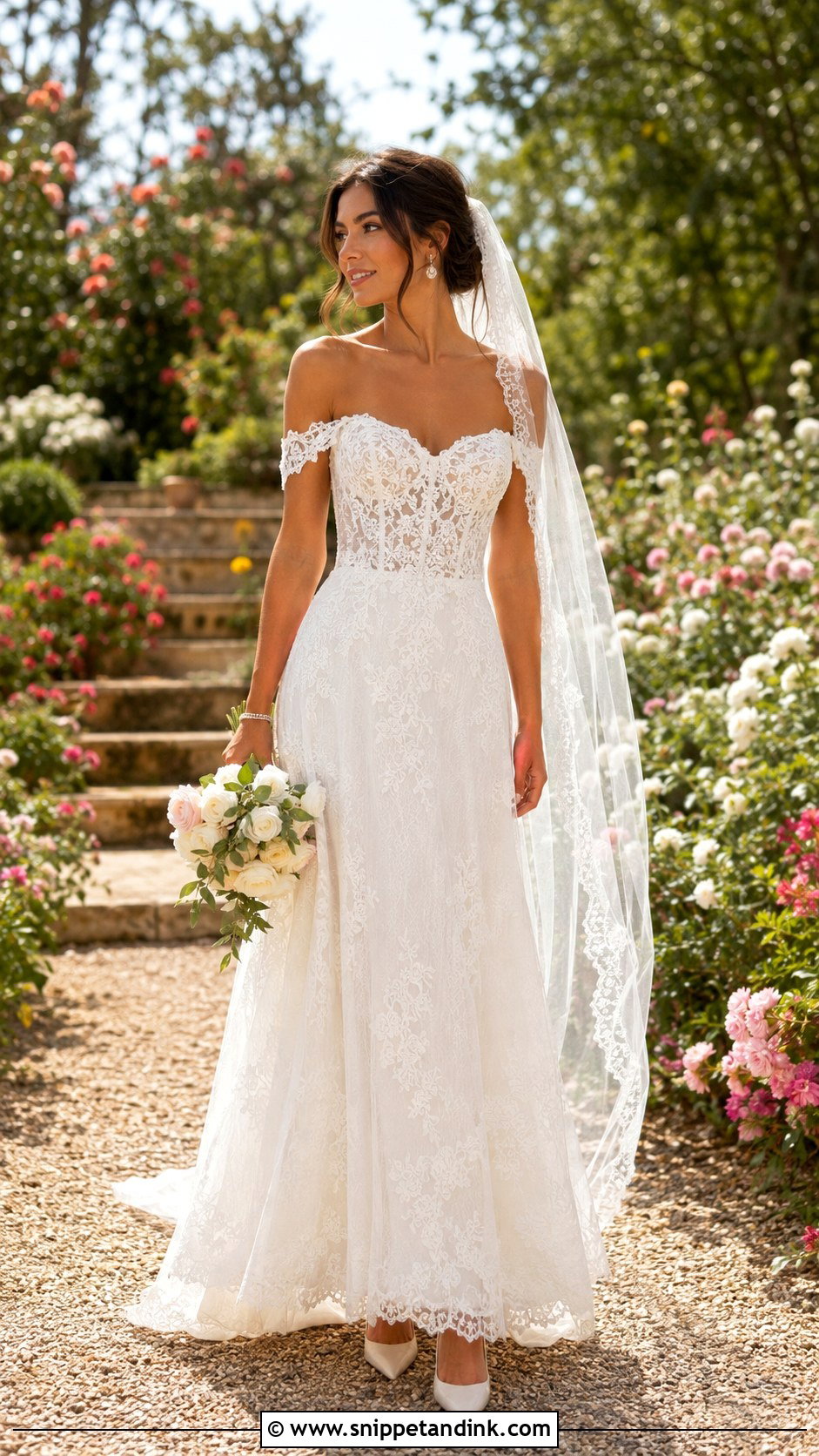
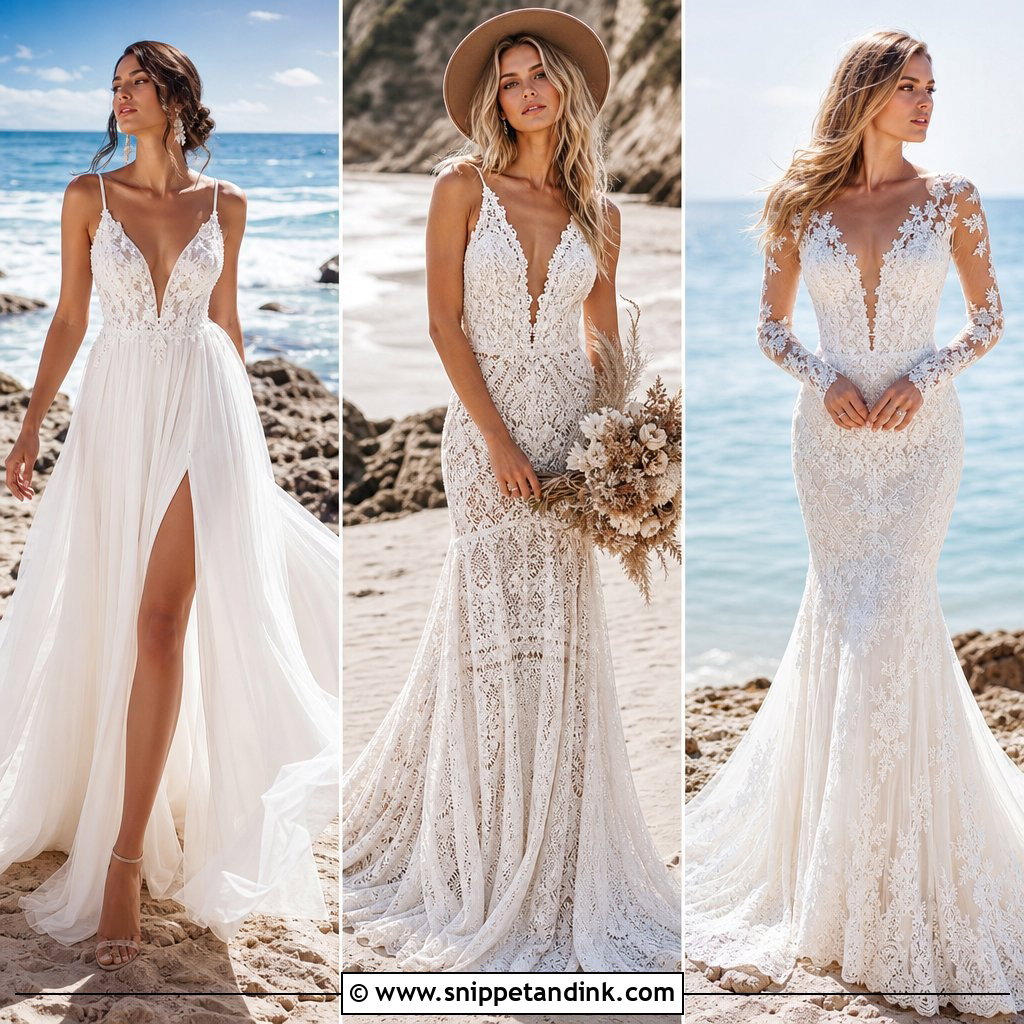
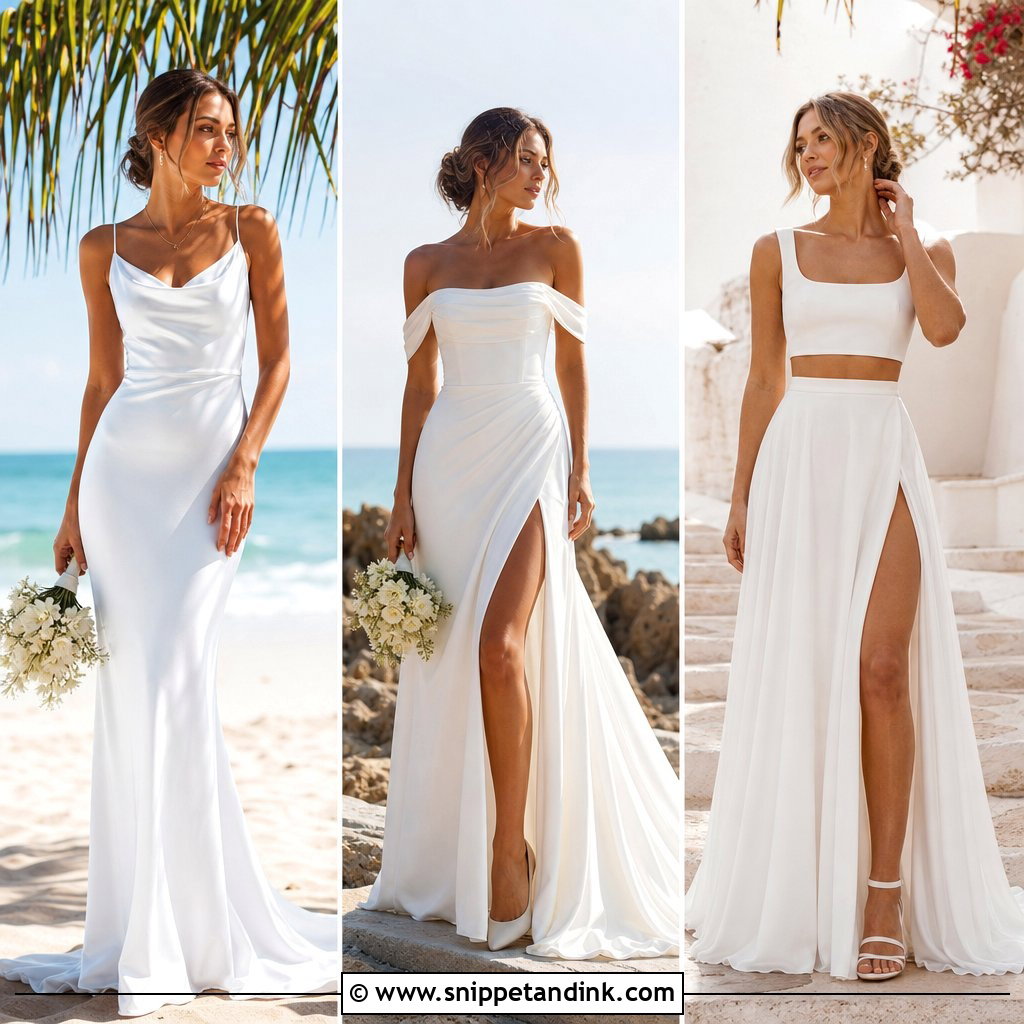
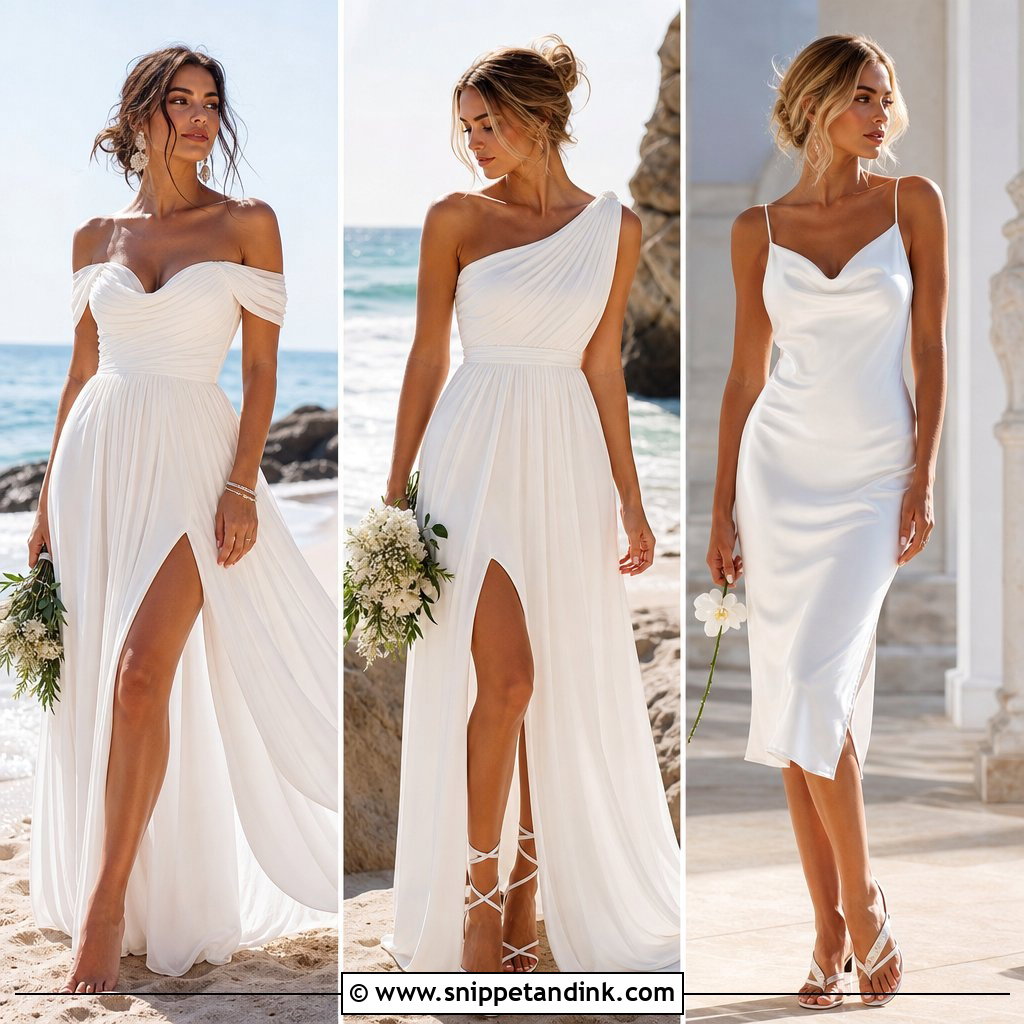
Off-shoulder lace is classic, but the lace has to be summer-weight. Light lace over a breathable lining feels completely different from dense embroidery over three underskirts, even though they look similar on a hanger. A fitted bodice and flowing A-line skirt keep it structured. The off-shoulder band also needs a grip strip inside or it slides down the arm when you hug people. Crystal studs, a thin tennis bracelet and a low chignon keep the collarbones visible, and a short lace-edged veil won’t feel heavy outdoors. If you want more coverage later, ask for removable illusion straps.
3. Silk Slip Summer Wedding Dress
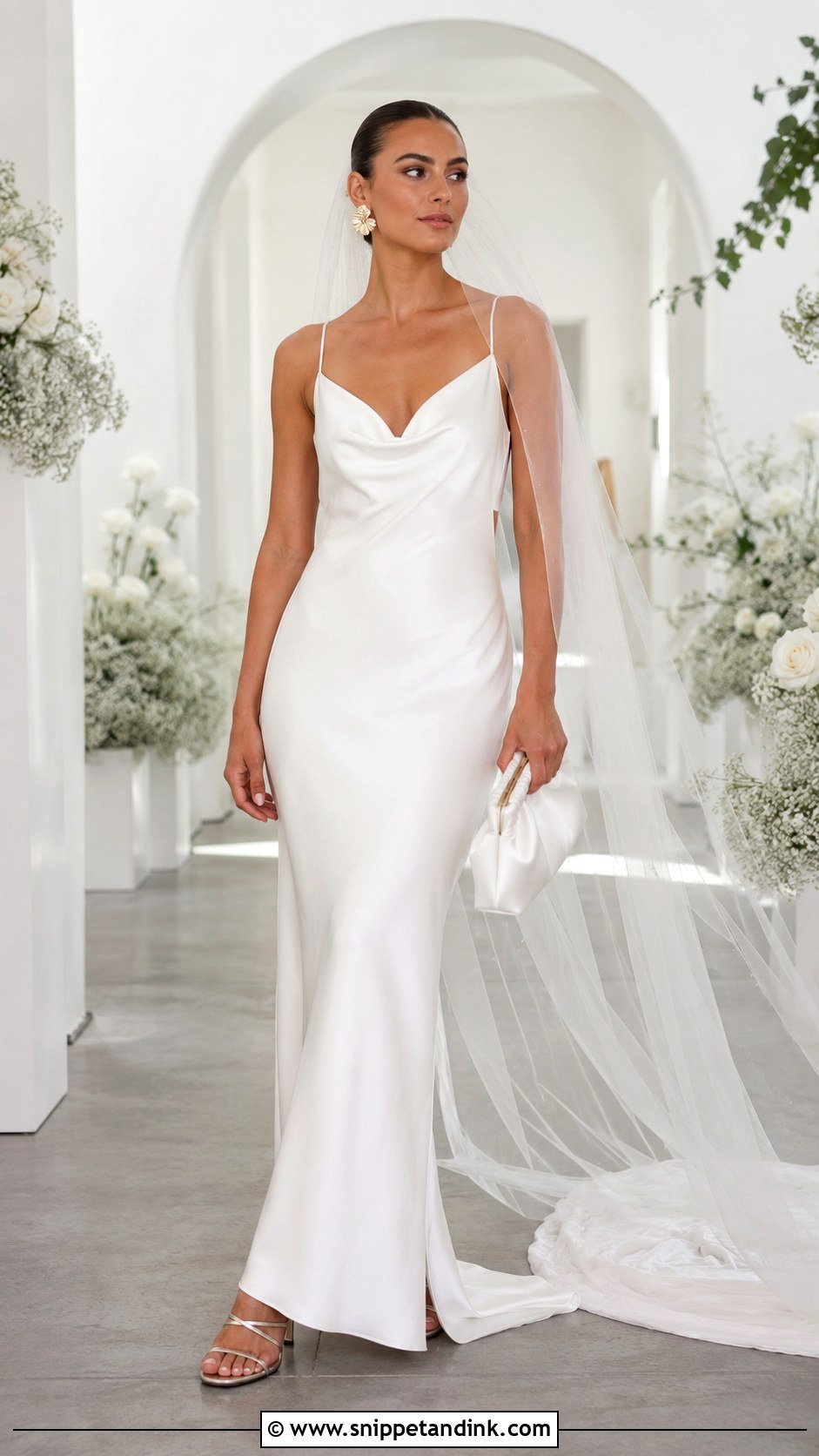
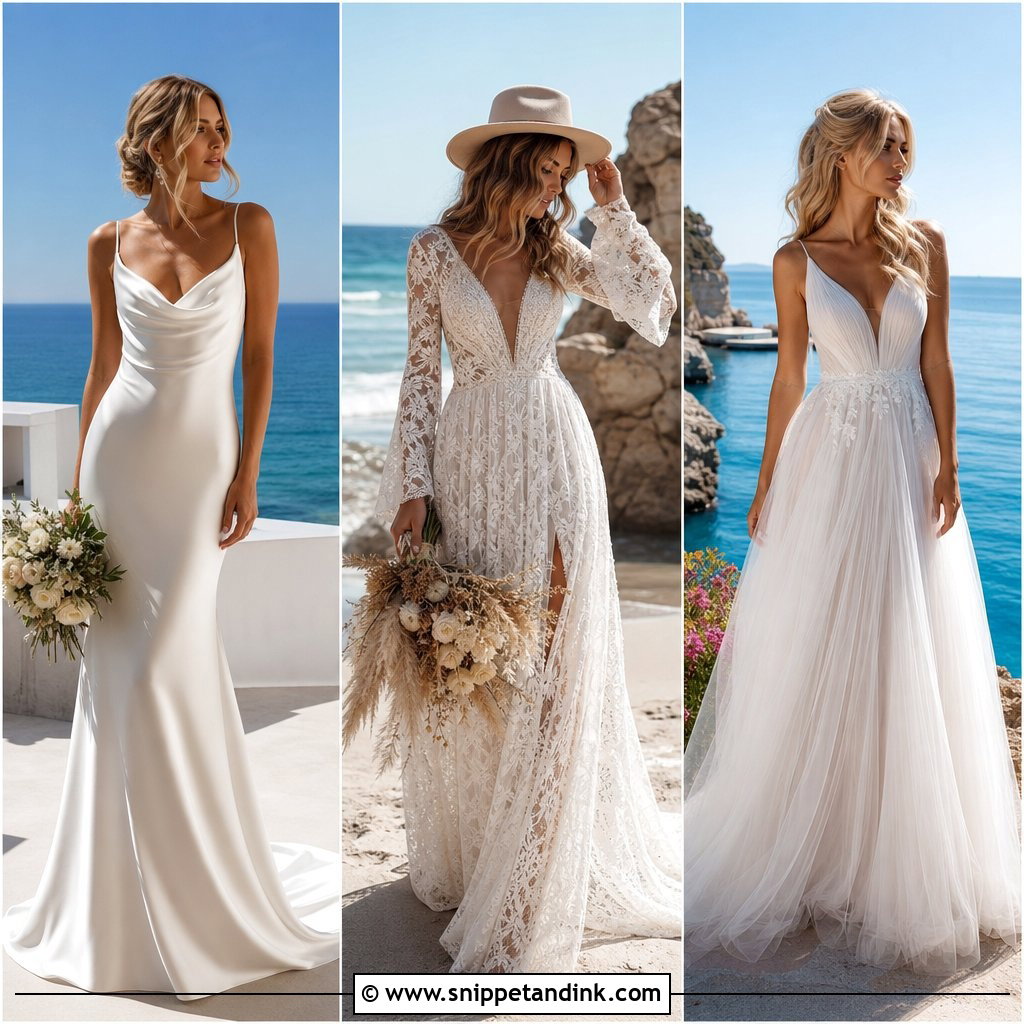
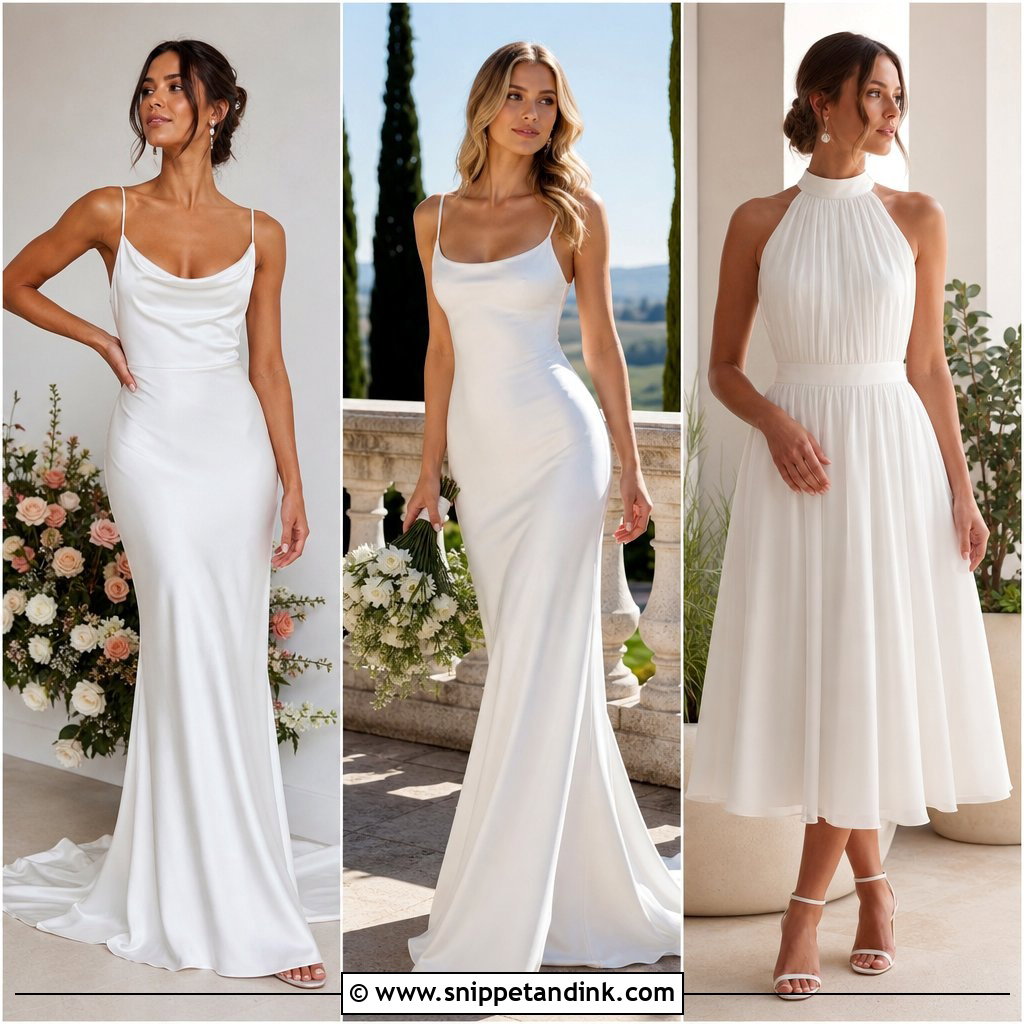
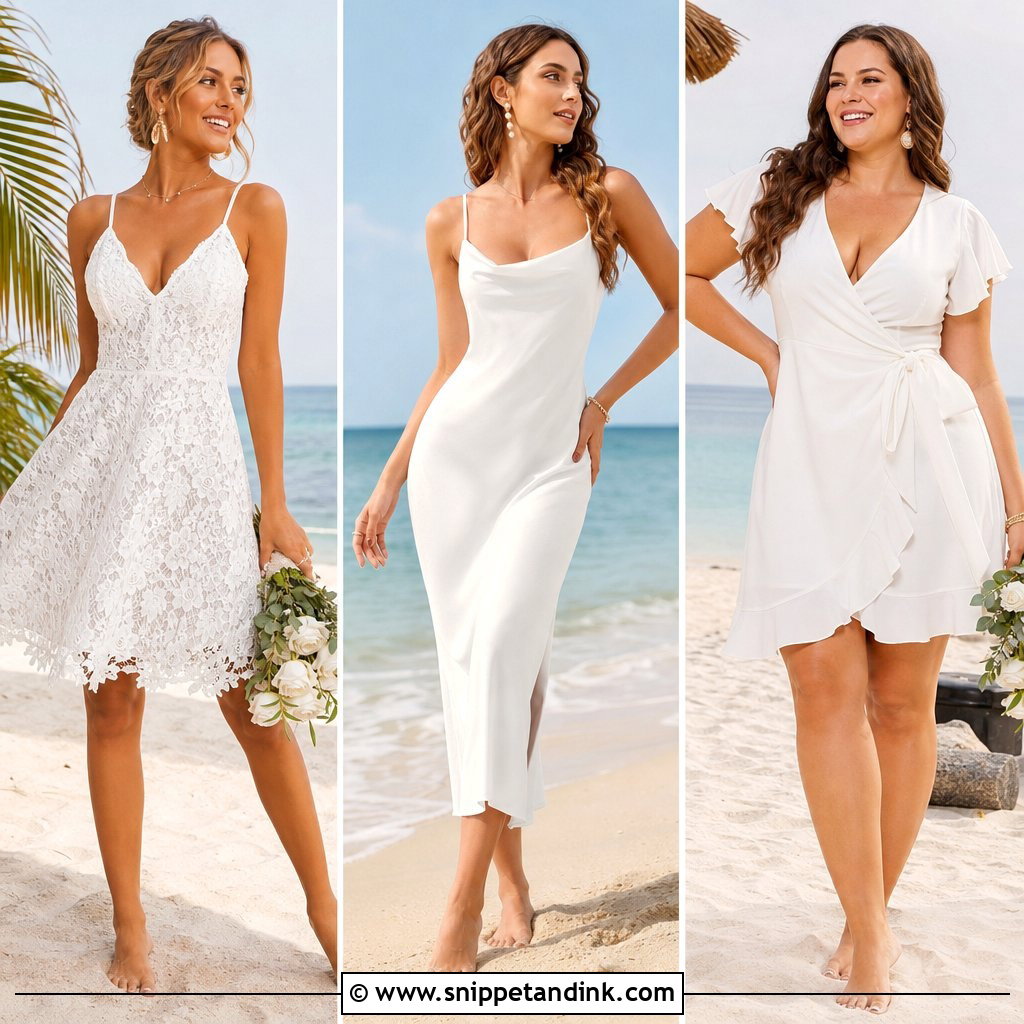
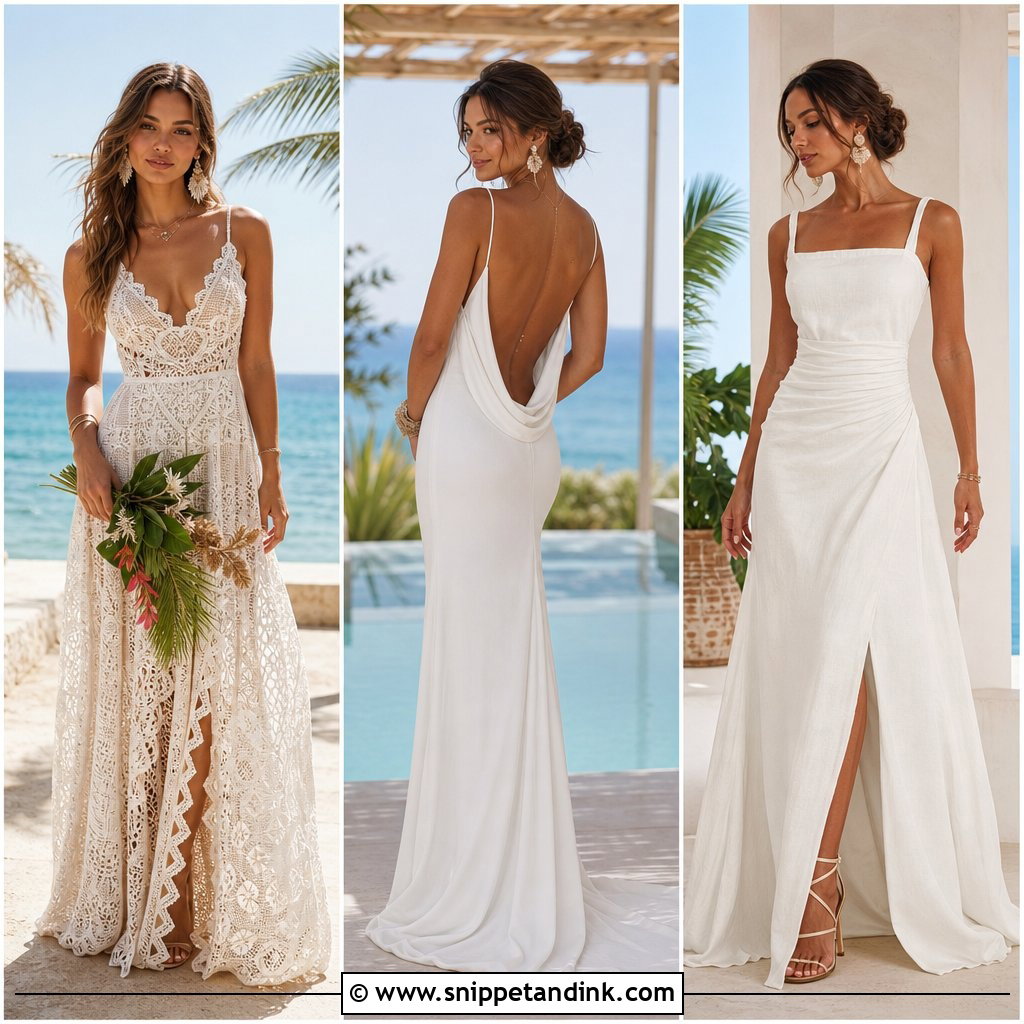
A silk slip is about as minimal as bridal gets. Look for a bias-cut silhouette with a soft cowl or a simple V. Bias-cut silk follows every curve and every line underneath, so it should skim, not grip, and that often means going up a size and having it taken in. Choose smooth, well-fitted underwear and have the tailor check the lining in daylight. Heat is the real test: silk shows sweat marks quickly, so keep to the shade between photos. Slim metallic sandals and sculptural earrings finish it, with a cathedral veil for drama or a short one for a destination wedding.
4. Square Neck Crepe Summer Wedding Dress
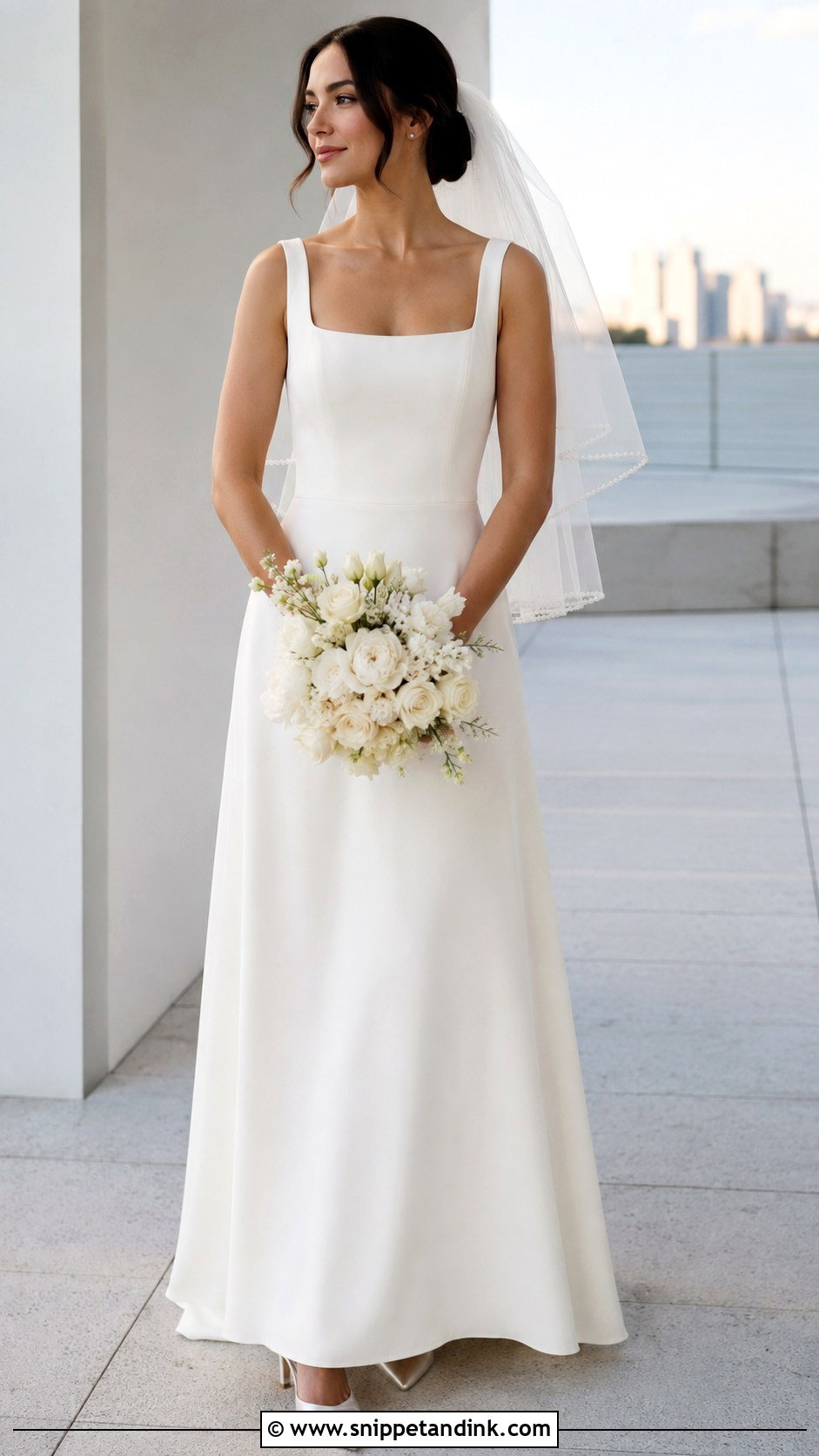
Square necklines give crepe a clean, architectural edge. Choose medium-light crepe with a smooth lining and a fitted waist into an A-line or straight skirt. Thick straps take a proper bra, which makes this a good option for fuller busts. Crepe hides creases better than satin after a car ride, and that counts on a hot day. Keep the train short for outdoor venues or add a discreet bustle. Pearl studs, an elbow veil and a neat low bun suit hotels, rooftops and minimal gardens.
5. Organza Ball Gown Summer Wedding Dress
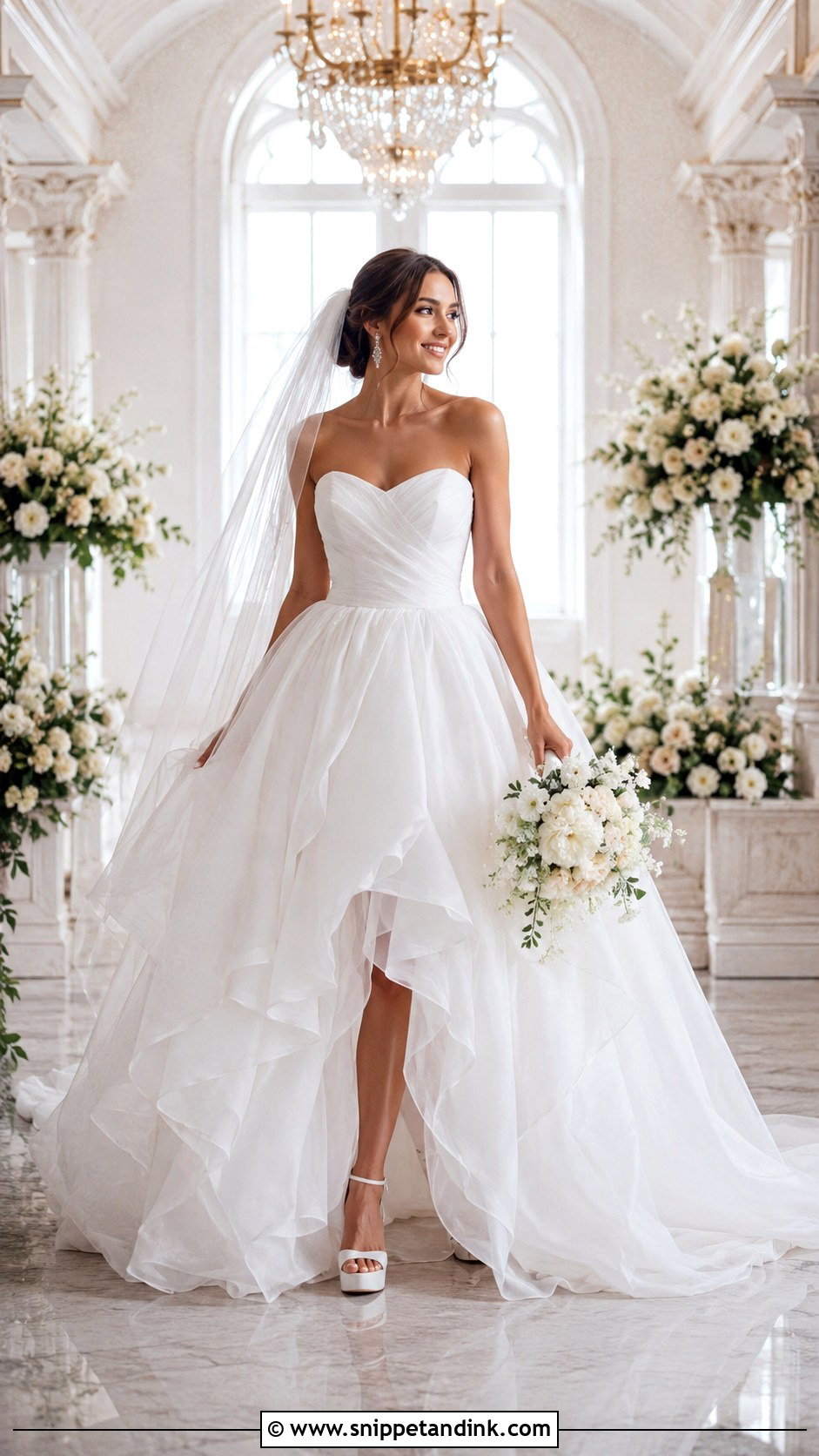
Can you wear a ball gown in summer? Yes, if it’s organza and not satin over five petticoats. Organza holds a full skirt with far fewer layers, so the volume comes without the heat. Choose a structured strapless bodice and a skirt that gets its shape from light layers. Hide comfortable platform sandals under the hem. Wear your hair up to keep your neck cool, and plan the ceremony veil to come off before dinner. Petite brides should have the skirt volume tailored down slightly so it doesn’t swamp them. It needs an air-conditioned reception room, and I’d say that honestly up front.
6. Halter Beach Summer Wedding Dress
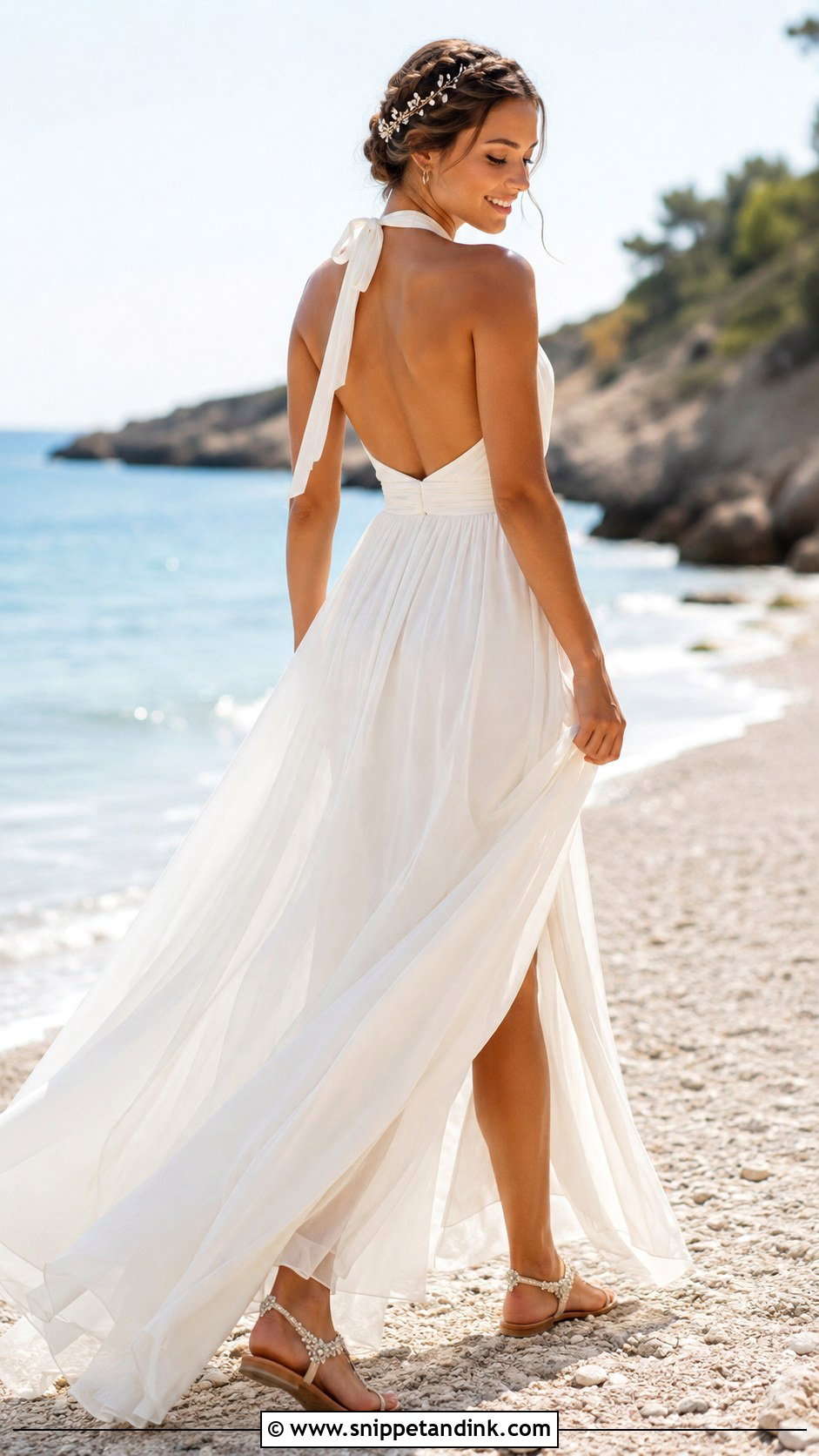
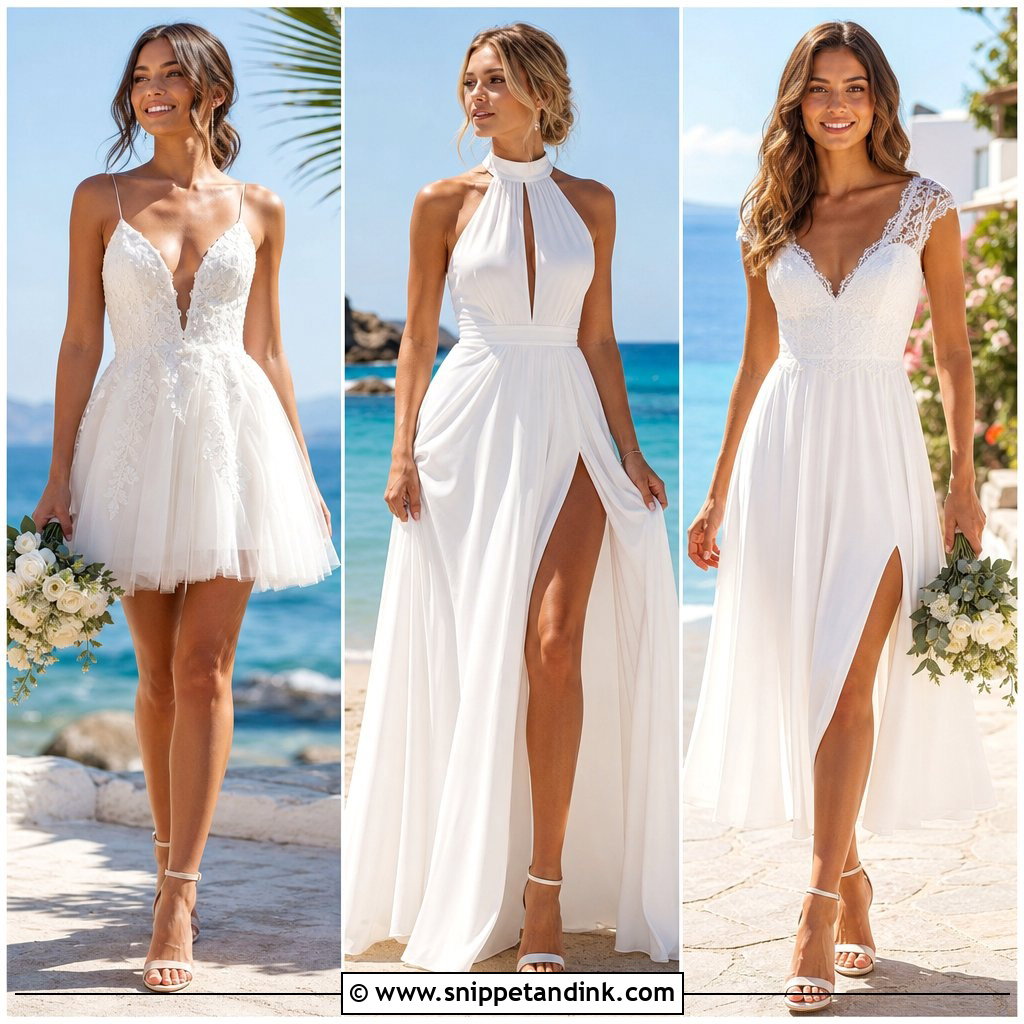
A halter wedding dress looks fresh on a beach. Flowing chiffon, georgette or light crepe with an open back and a gathered waist moves in the breeze, and a narrow column or relaxed A-line collects less sand than a full skirt. Skip the long veil, which wraps around you in wind, and use a hair comb instead. A braided updo or textured ponytail stays put. Have the hem cut for the exact sandals you’ll wear on sand, since flats drop a long hem into the water line. Fuller busts need built-in cups and a wider neck strap.
7. Tea-Length Summer Wedding Dress
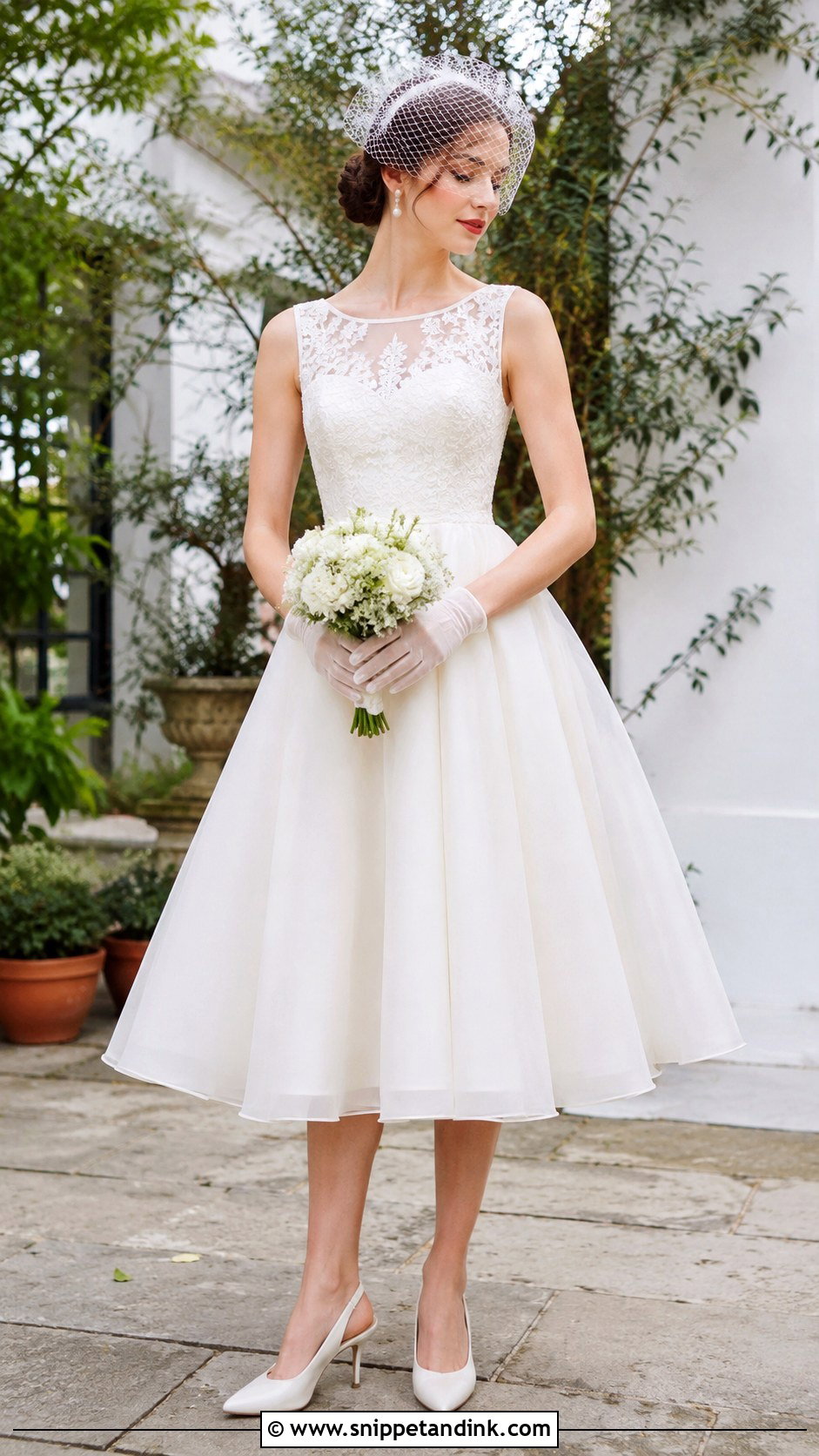
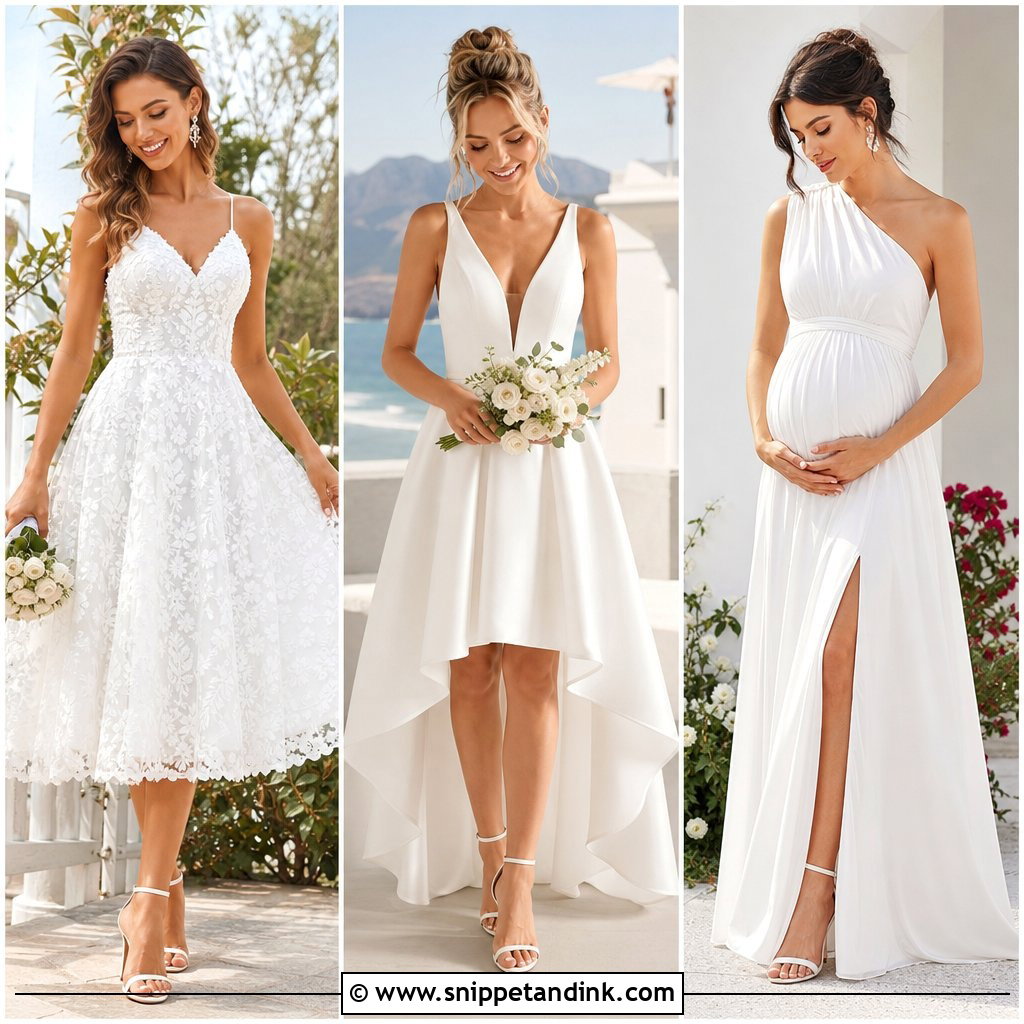
Tea length keeps your ankles free in the heat and brings a vintage feel. A fitted bodice and a full skirt ending between knee and ankle, in tulle, organza or a cotton-blend lace, is shaped without being formal. Your shoes are on show, so choose slingbacks, embellished flats or block-heel sandals you love. Short gloves, pearl earrings and a birdcage veil lean retro; no veil looks more modern. Petite brides can take the hem just below the knee, while taller brides usually look more balanced with a longer midi.
8. Bridal Mini Summer Wedding Dress
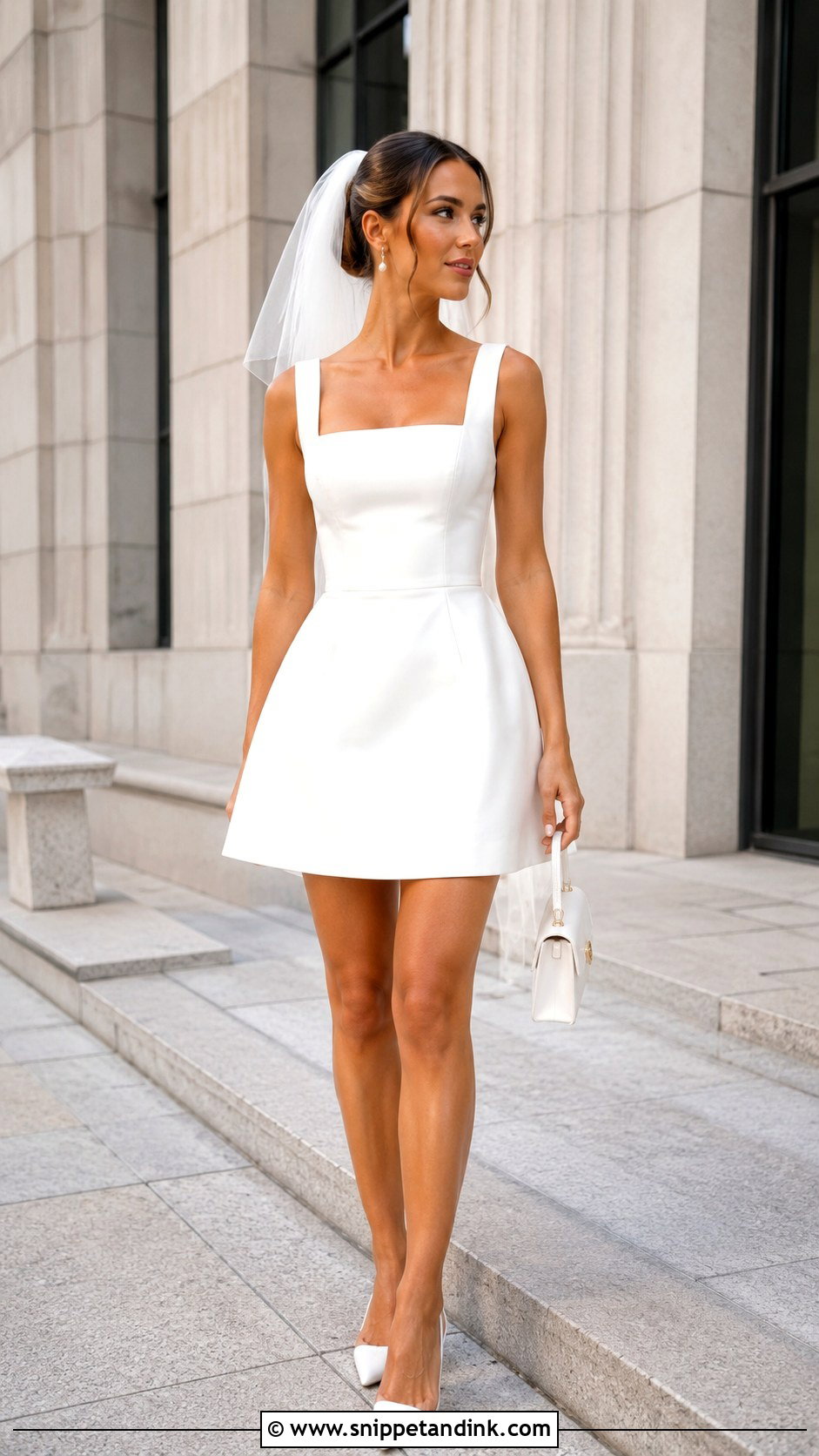
A bridal mini is the coolest dress here in every sense: courthouse ceremonies, destination weddings, a reception change. Structure keeps it bridal rather than casual, so look at a square-neck sheath, a fitted blazer dress or a flared lace mini. Sit, walk and lift your arms in the fitting room and check every angle in the mirror; minis ride up in ways you won’t notice until you see the photos. Block heels or embellished flats beat stilettos if you’ll dance. Pointed slingbacks, pearl drops and a short veil keep it clearly a wedding outfit.
9. Boho Lace Summer Wedding Dress
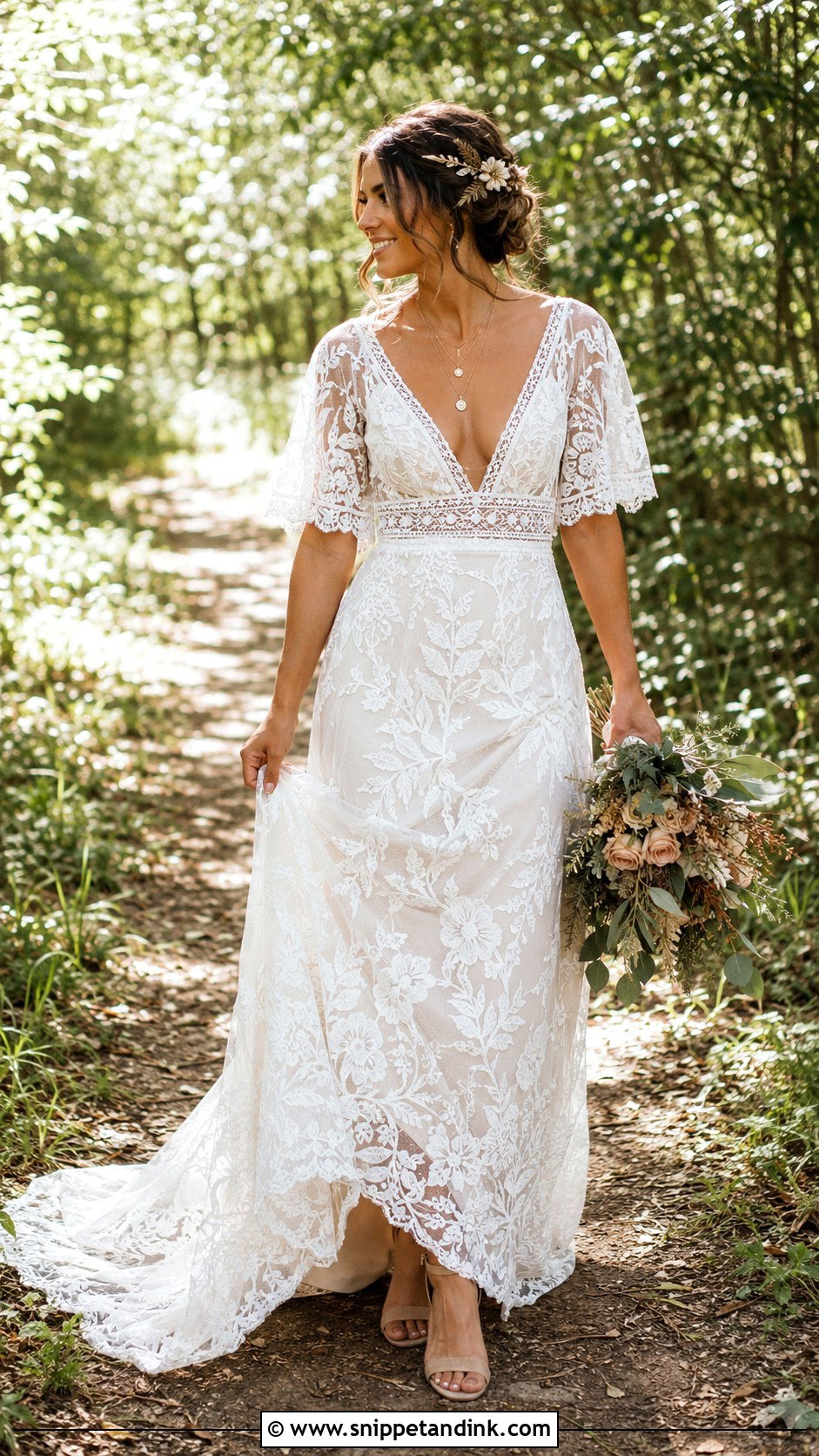
Boho lace is at home in a garden, desert or woodland. Choose soft geometric or botanical lace with a nude or ivory lining, a deep V, a defined waist and a gently flared skirt. Flutter sleeves add arm coverage that still feels airy. On dirt paths, a long train collects dust and twigs within minutes, so I’d go for a sweep train, which moves just as well and needs far less care. Suede block sandals, a floral comb and loose waves or a textured braid suit the setting, and a lace-trimmed veil makes it feel more ceremonial.
10. Strapless Basque Waist Summer Wedding Dress
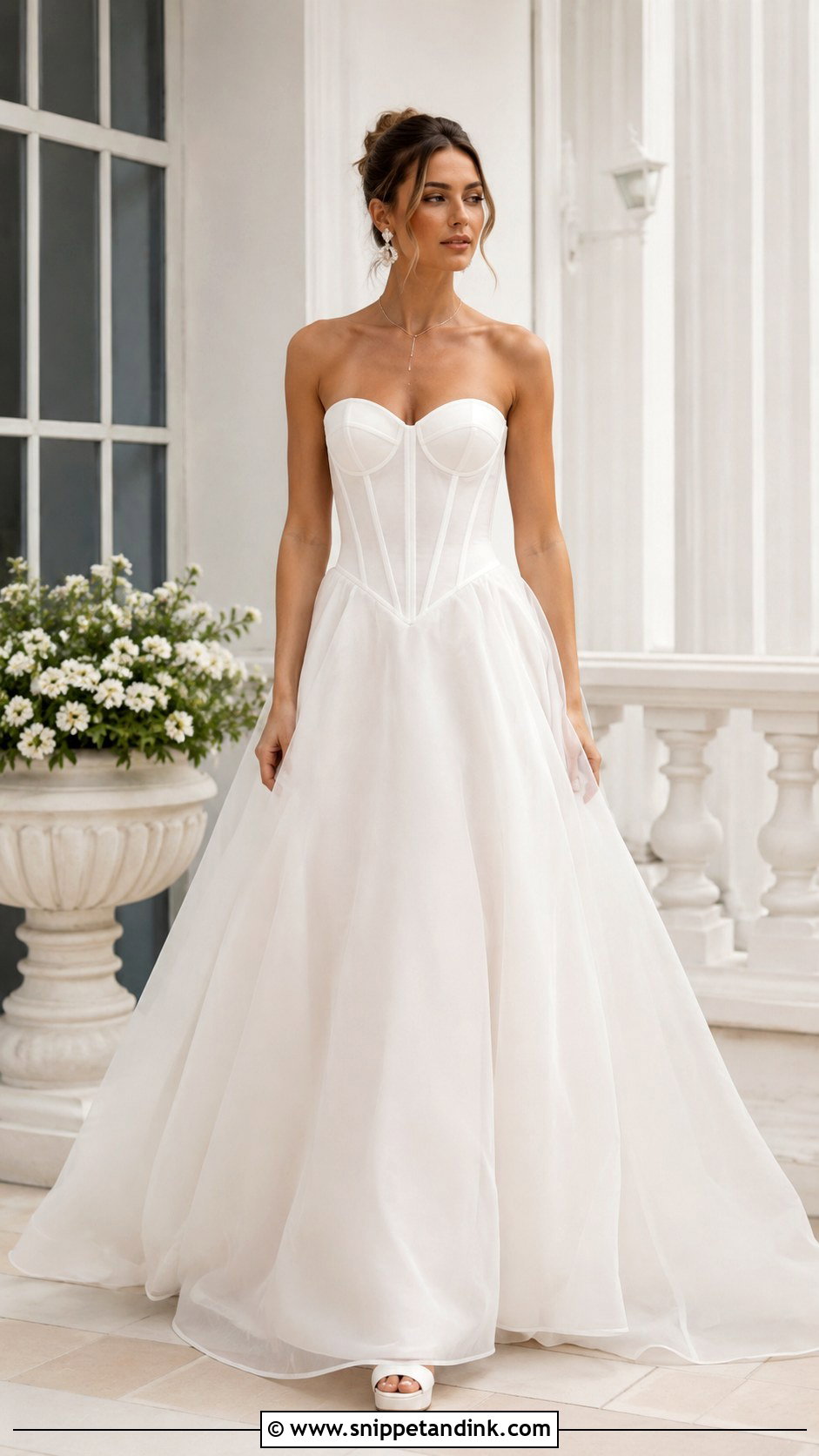
The Basque waist drops into a V below the natural waist and lengthens the torso, a strong hourglass shape. For summer, I’d look at light satin, crisp organza or taffeta with limited internal layers rather than heavyweight duchess satin. The corset should feel secure without stopping you breathing or sitting, and boning is hot, so try the bodice on in a warm room if you can. A fine pendant, statement earrings and a soft updo keep the attention on the waist. Detachable straps add support for the reception.
11. Floral Appliqué Summer Wedding Dress
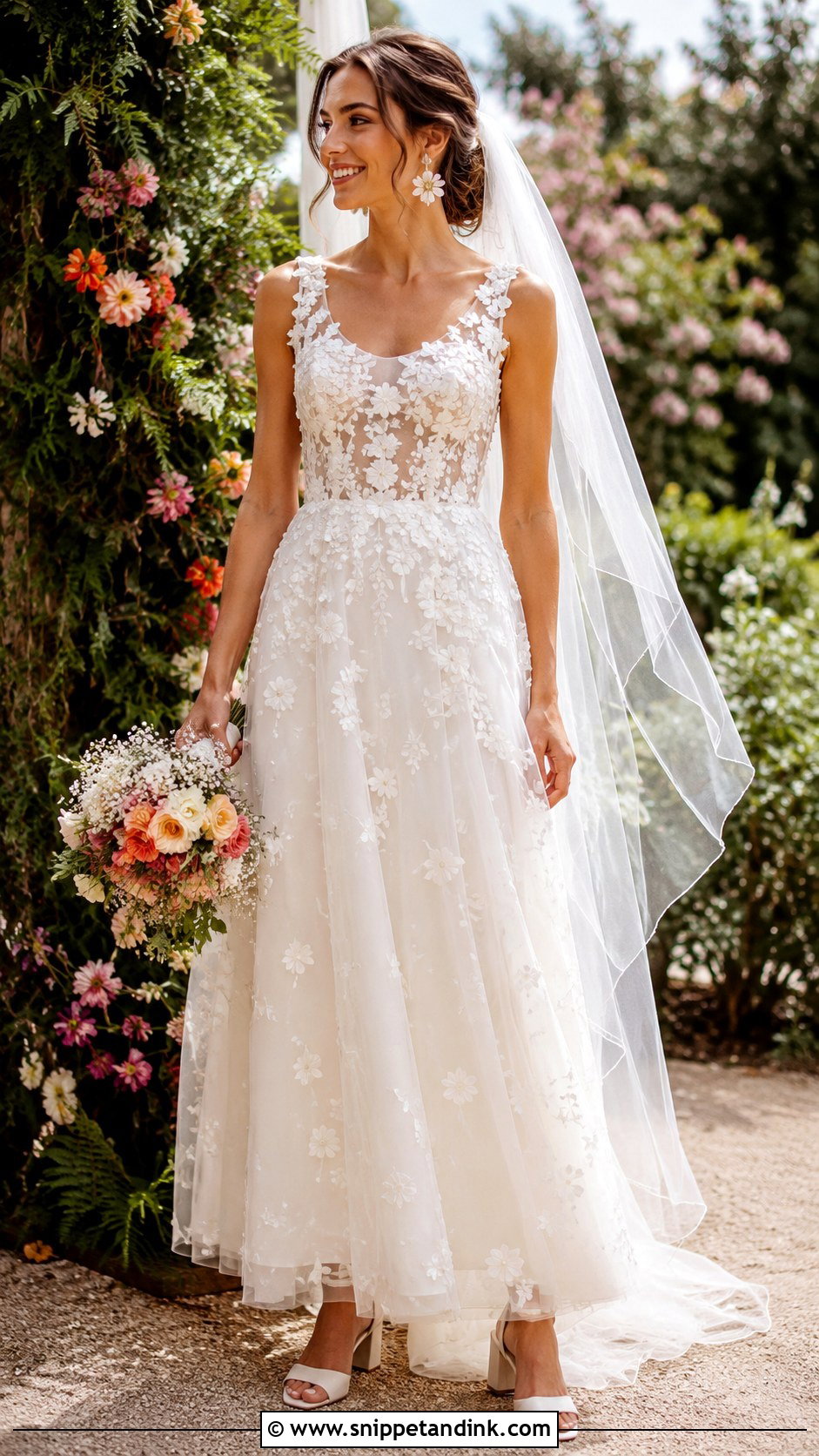
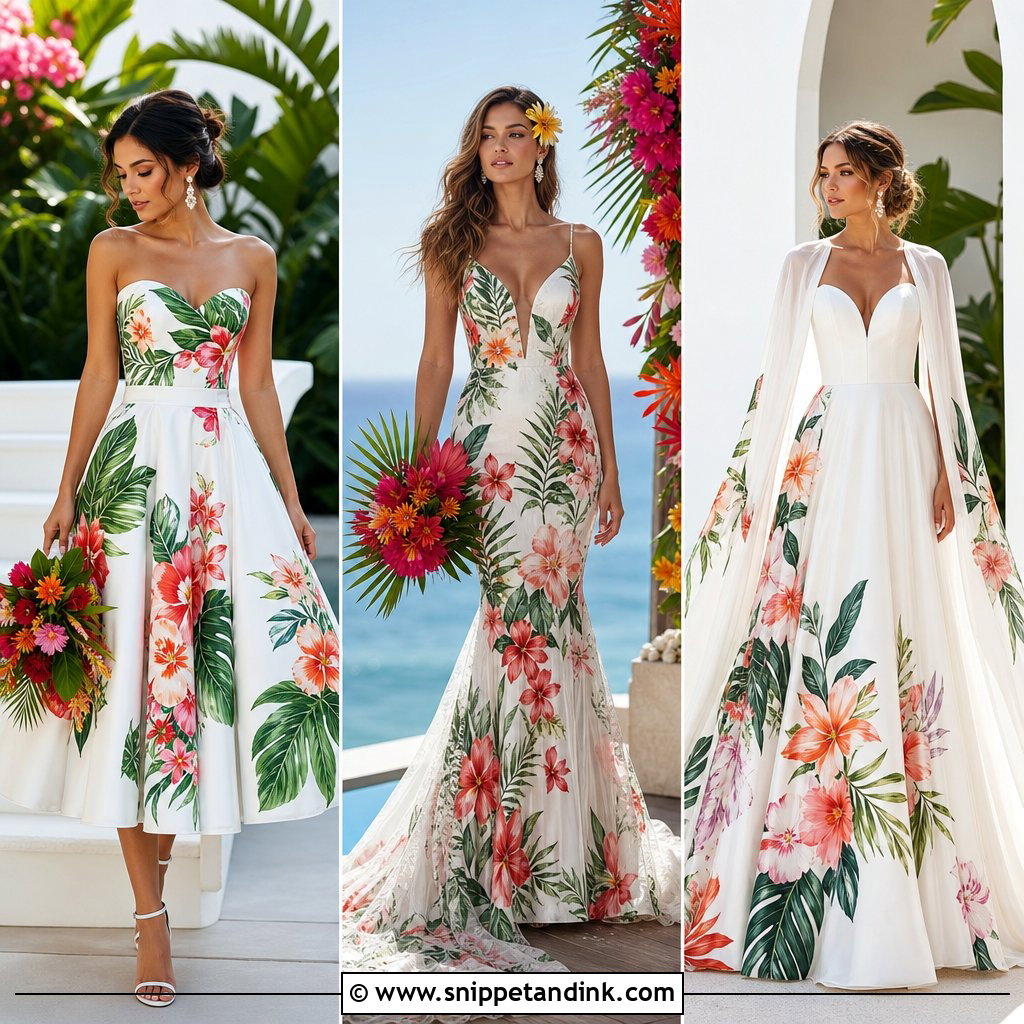
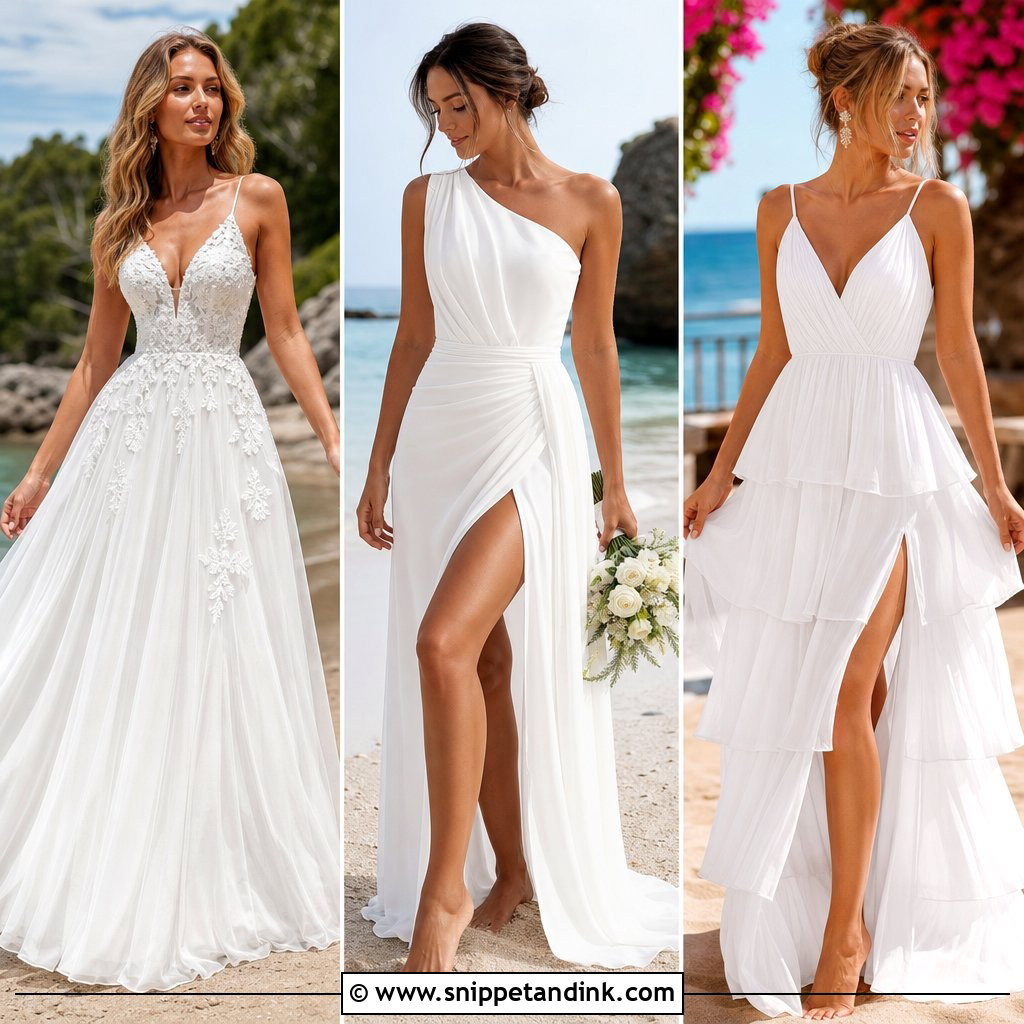
Scattered appliqué flowers on a tulle A-line suit a summer garden. Spacing is everything: flowers dotted across the skirt keep it light, while dense appliqué on every layer adds weight and heat. A scoop, sweetheart or illusion neckline supports the effect. One small botanical pin in a loose bun is enough; a full flower crown on top of a floral dress tips into too much. Pale blush, champagne or soft blue embroidery adds a hint of color. Keep the bouquet simple next to such a detailed skirt.
12. One-Shoulder Summer Wedding Dress
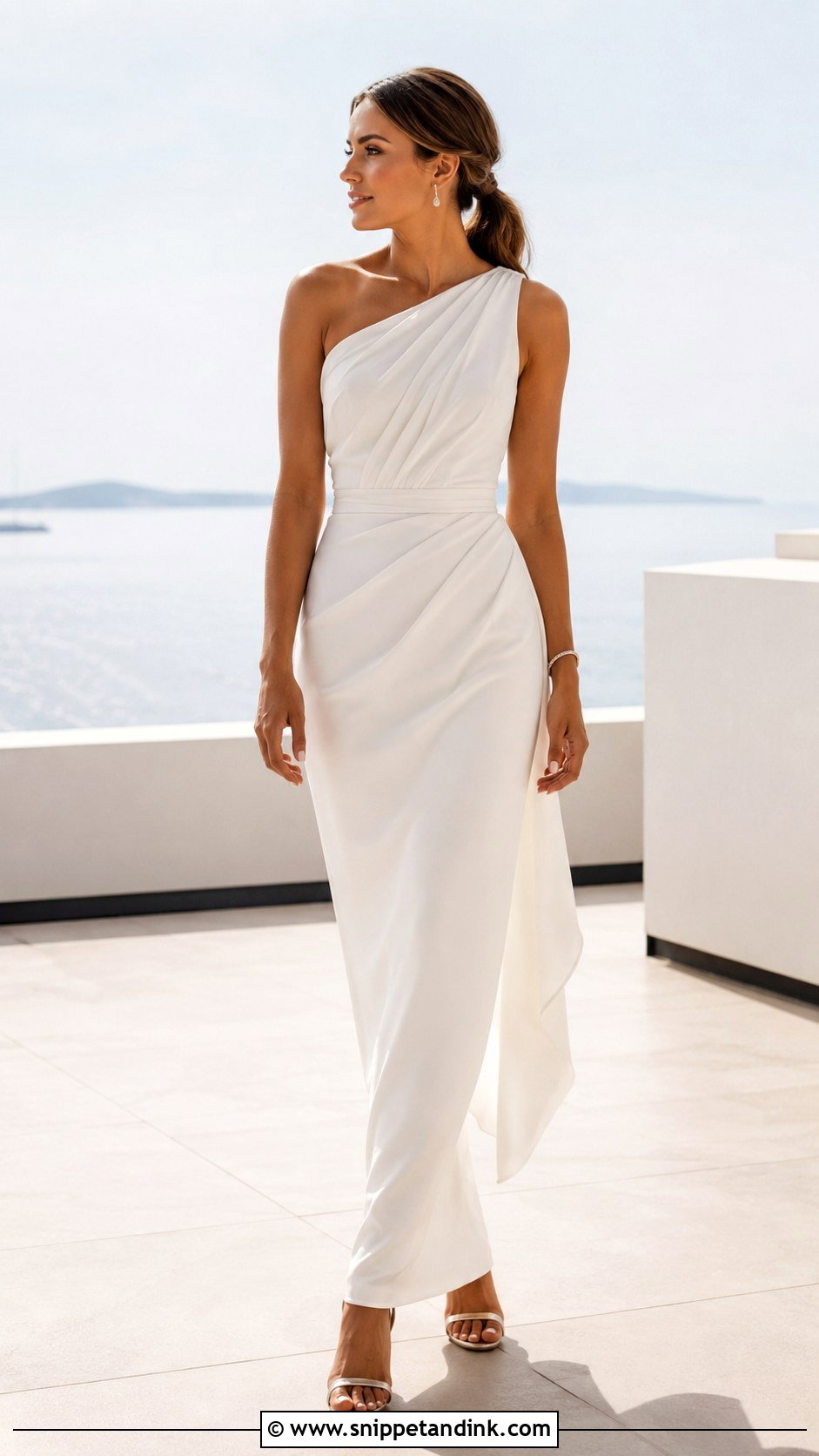
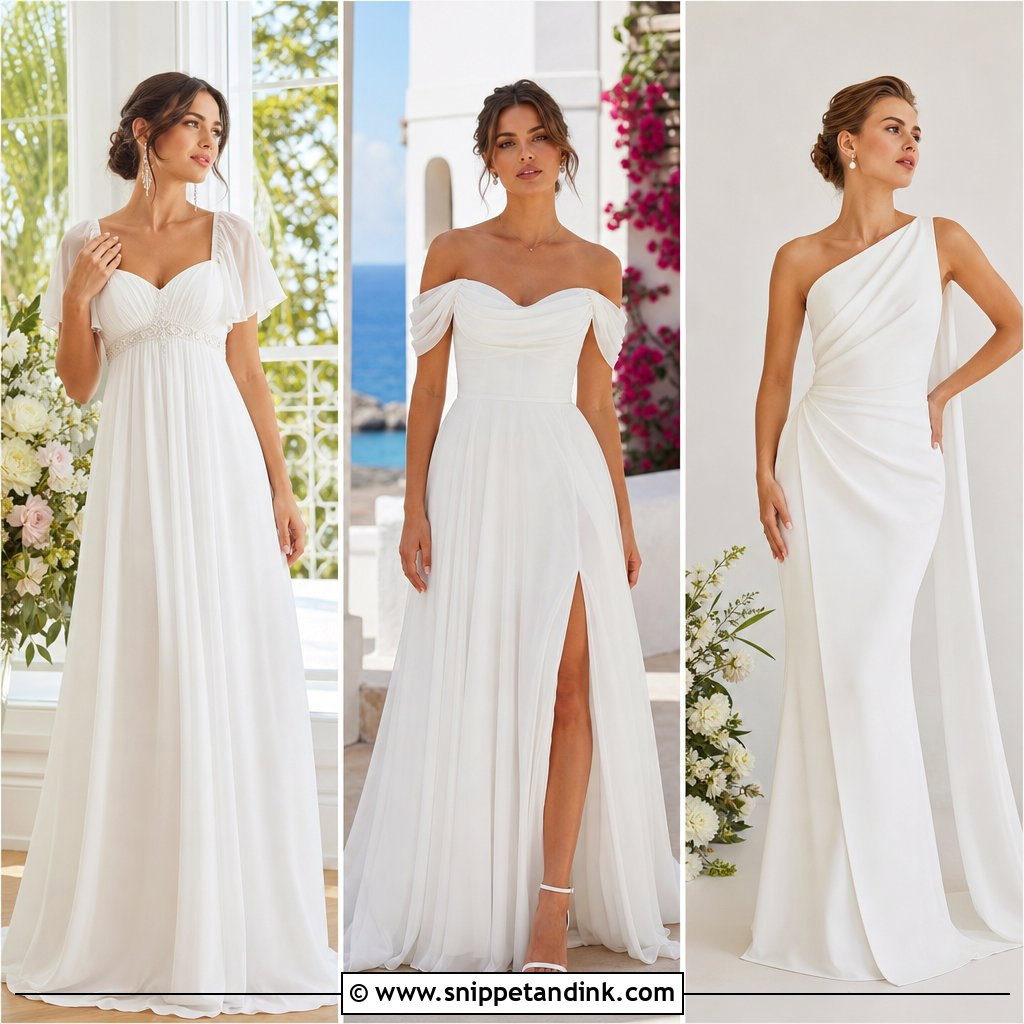
One-shoulder gowns look modern and keep one arm free, which helps on a hot day. Lightweight crepe or chiffon draped across the bodice, with a fitted waist and a straight, A-line or flared skirt, suits most venues. The single strap carries the bodice, so on fuller busts I ask the tailor to add internal support and a little stay tape to keep it from slipping. Skip the necklace; drop earrings and a bracelet on the bare arm are enough. A side-parted bun or low ponytail keeps the shoulder clear.
13. High-Neck Open-Back Summer Wedding Dress
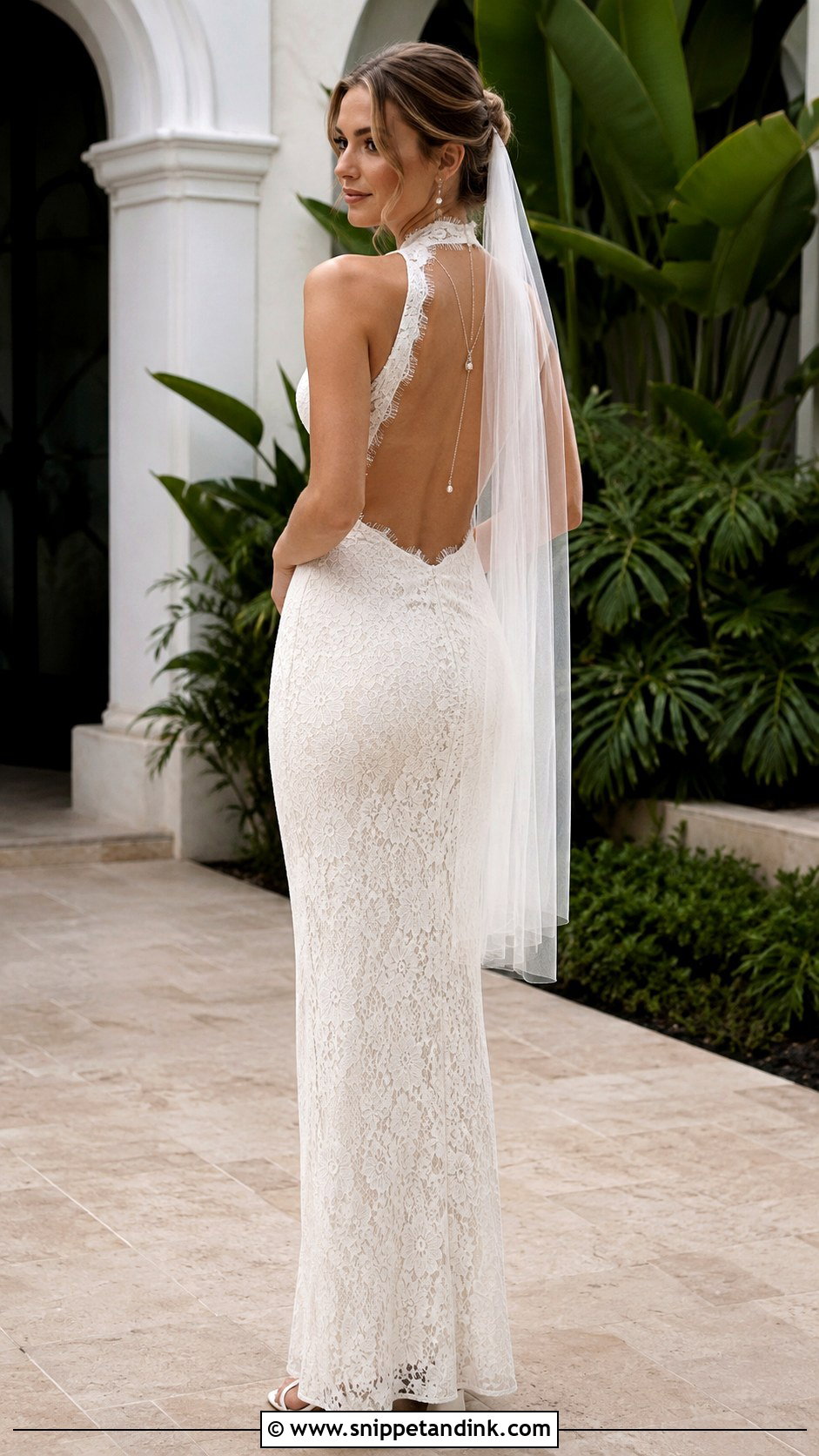
A high neck and an open back balance each other, and that bare back makes a covered front much cooler in summer. Lightweight lace, crepe or silk with a sleeveless bodice and a column or fit-and-flare skirt works well. Standard bras don’t work with this cut, so look for built-in cups and supportive seams. Wear your hair up, and attach the veil below the updo so it falls behind and doesn’t hide the back. A delicate back necklace can add sparkle; pearl earrings and low sandals keep the front simple.
14. Empire Waist Chiffon Summer Wedding Dress
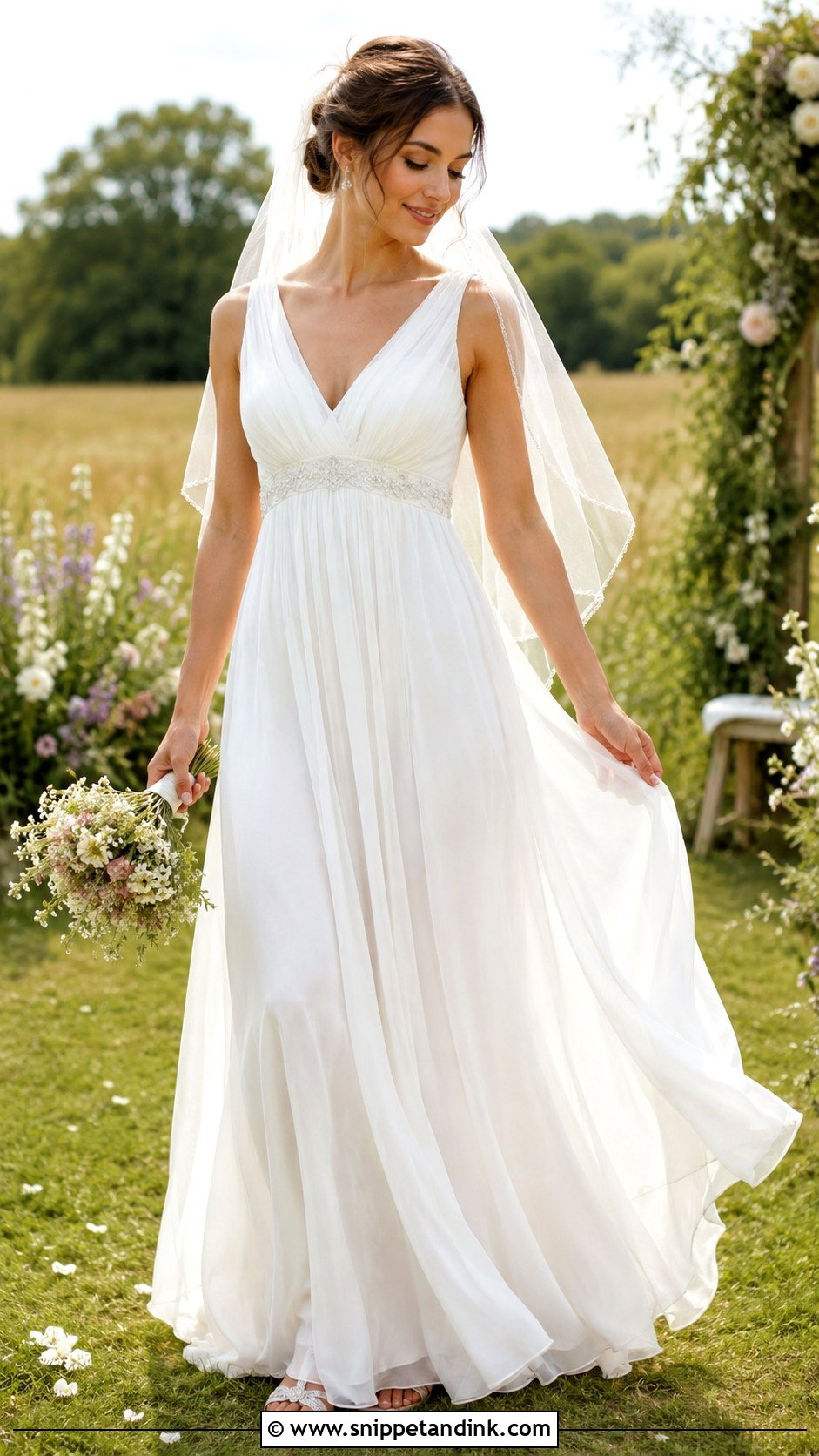
Empire waists are the coolest long gowns to wear, because the skirt falls loose from just under the bust and air moves freely. Soft chiffon with gentle gathers and a V or scoop neck suits pregnant brides and anyone who dislikes structure at the waist. The thing I watch for is gathering right under the bust; too much creates bulk, while controlled pleats and a smooth lining fall cleanly. Flat satin sandals, crystal studs and an elbow veil suit it, with a half-up style or curled ponytail.
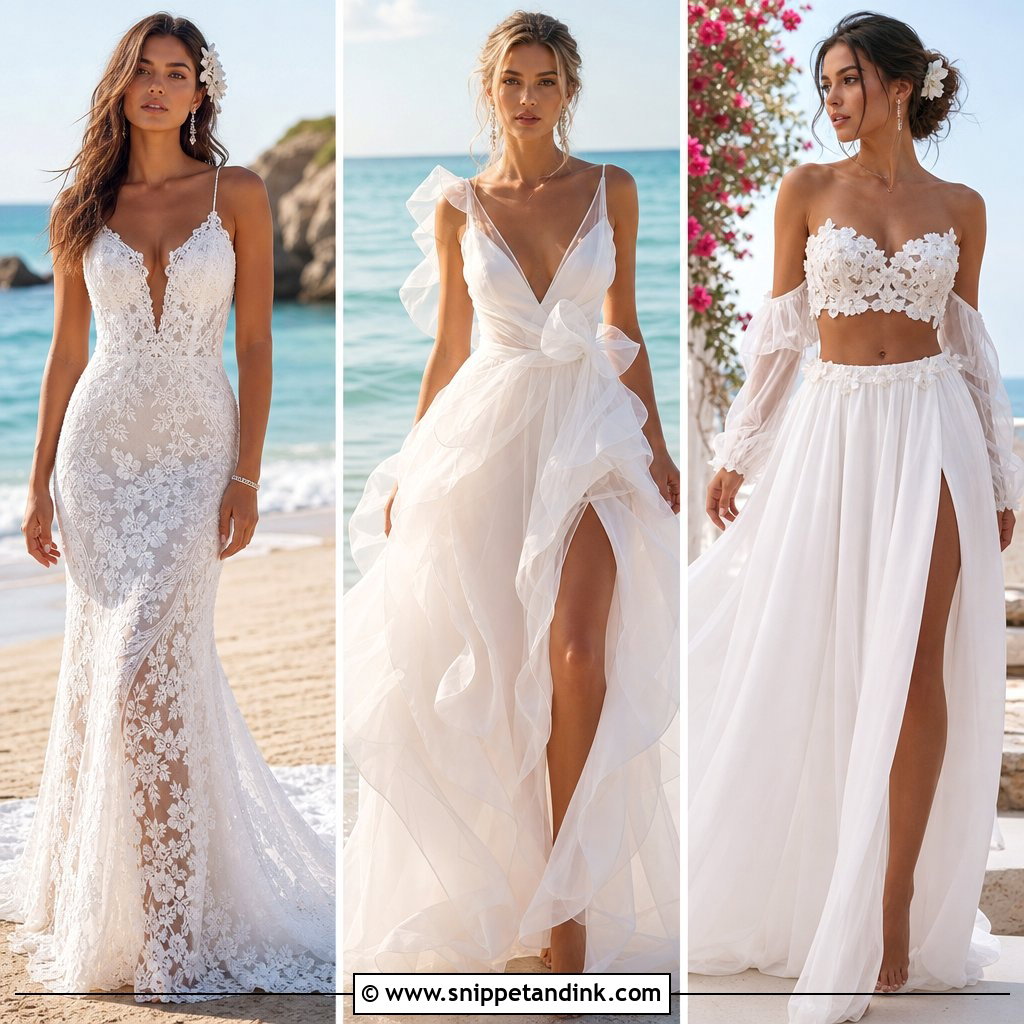
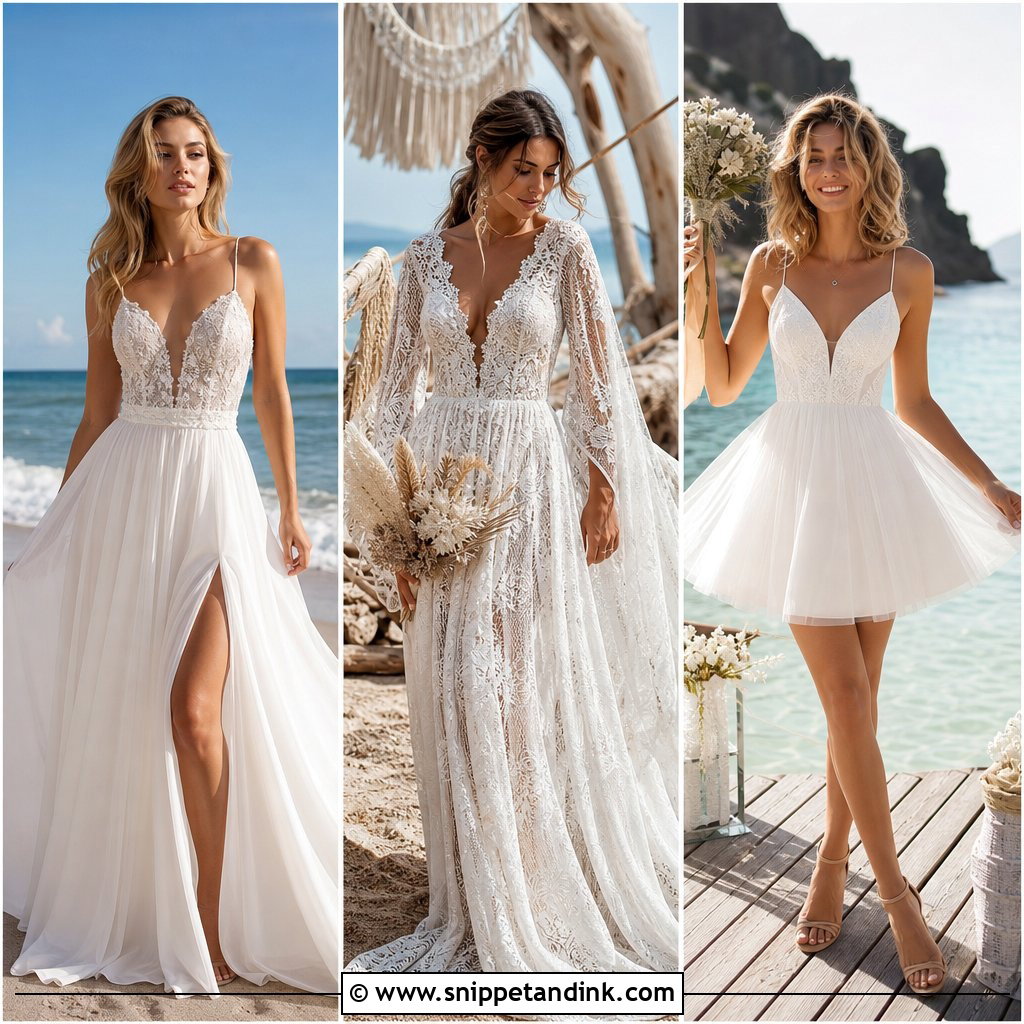
15. Corset Bodice Tulle Summer Wedding Dress
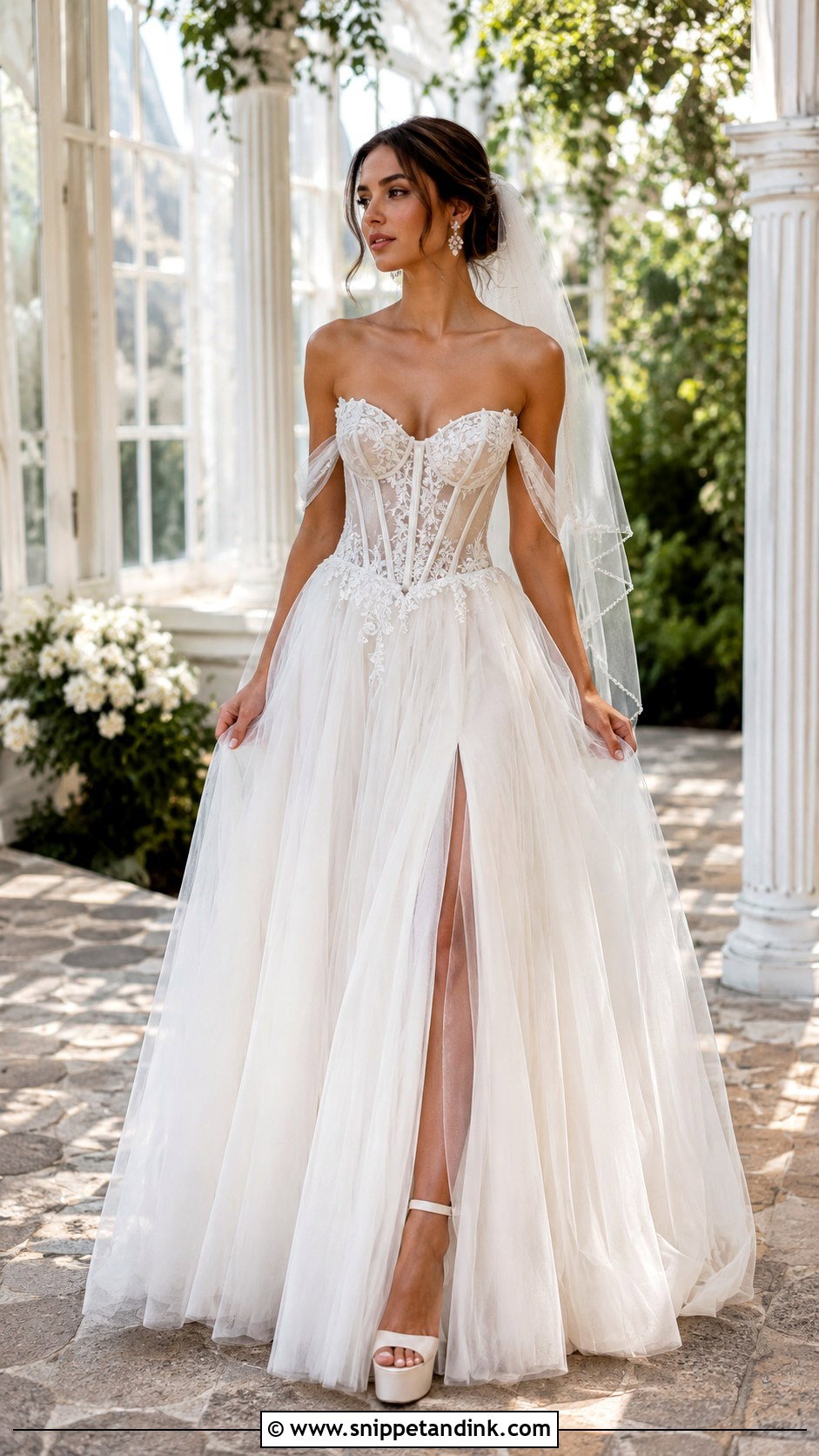
A visible corset gives a tulle skirt dependable structure. Choose breathable boning, a smooth cup and lace placed for coverage where you want it. The skirt should be a few light layers, not a dense pile. Sit and move in the bodice at every fitting to make sure the waistline doesn’t pinch, because a corset that’s fine standing can bite once you sit for dinner. Detachable tulle straps or draped off-shoulder sleeves add coverage. Pearl-and-crystal earrings, platform sandals and a loose updo keep it soft.
16. Satin Column Summer Wedding Dress
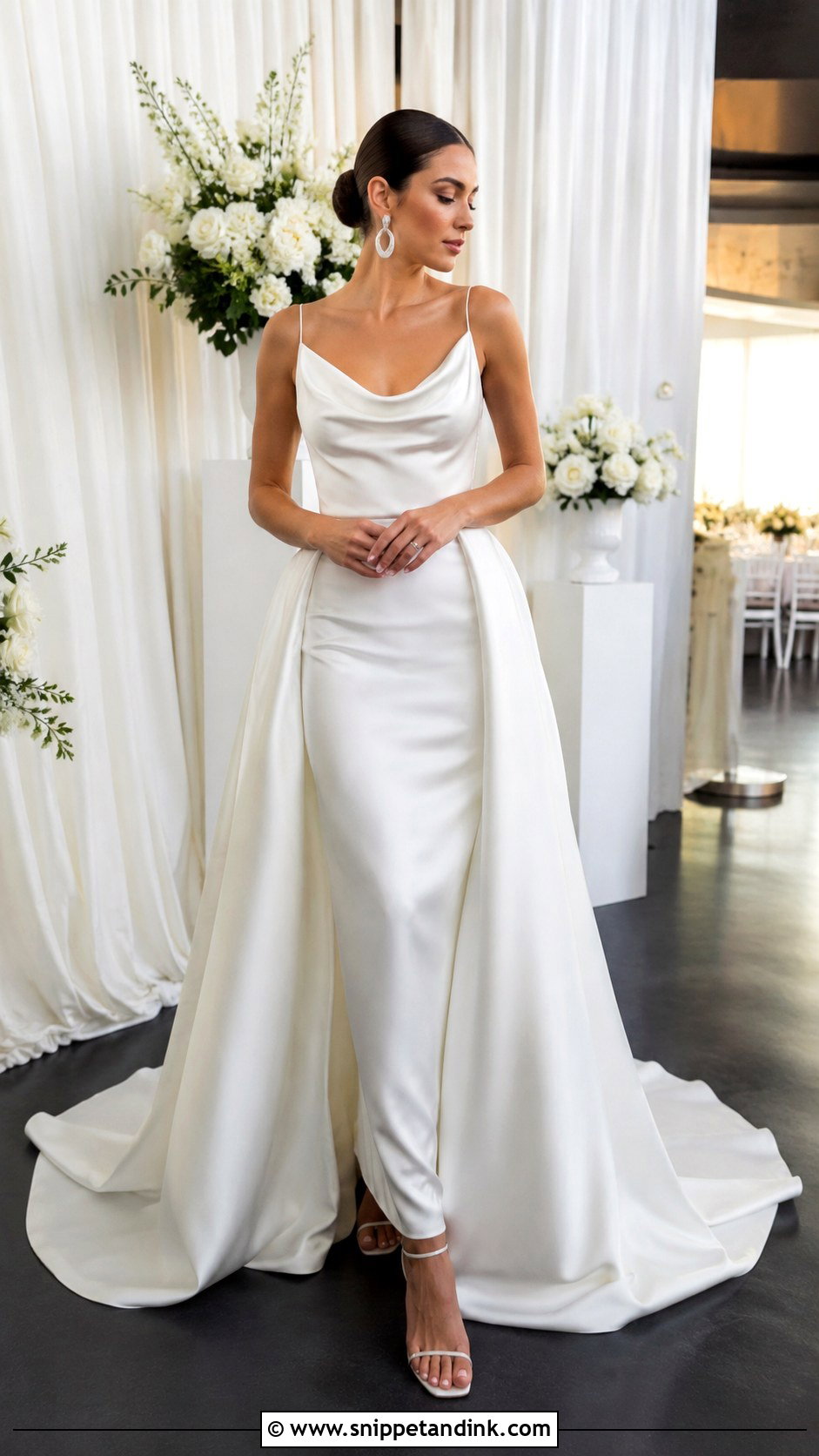
A satin column gives polish without ball-gown volume. In warm weather I’d choose lighter satin or charmeuse with a breathable lining and a body-skimming cut. A draped neckline, light ruching or a row of covered buttons adds detail. A detachable overskirt or train gives ceremony drama and comes off for dinner. Satin clings when you’re warm, so if you dislike that, ask for a slightly straighter skirt and smooth no-line underwear. Slim ankle-strap sandals and sculptural earrings suit it.
17. V-Neck A-Line Summer Wedding Dress
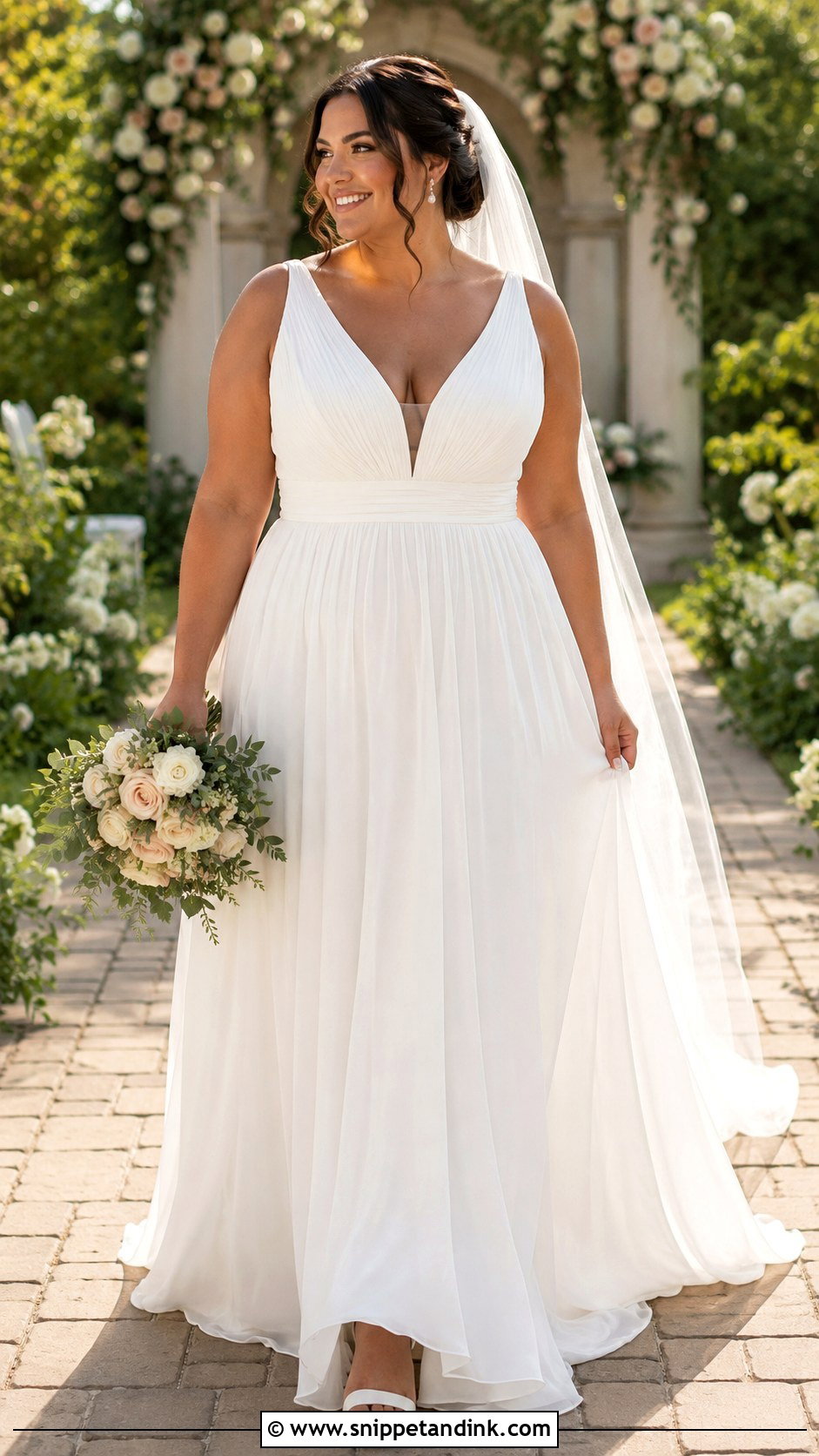
V-neck A-lines are the most adaptable dress on this list. Wider straps and a structured waistband hold the bodice; a chiffon or tulle skirt skims the hips. The V draws the eye down and can be filled with illusion mesh if you want more coverage. This shape tailors well across straight, pear, hourglass, and fuller figures. Focus on where the waist seam lands rather than the size on the label; when it sits at your natural waist, everything else falls into place. Pearl earrings and a chapel veil finish it.
18. Modest Lace Summer Wedding Dress
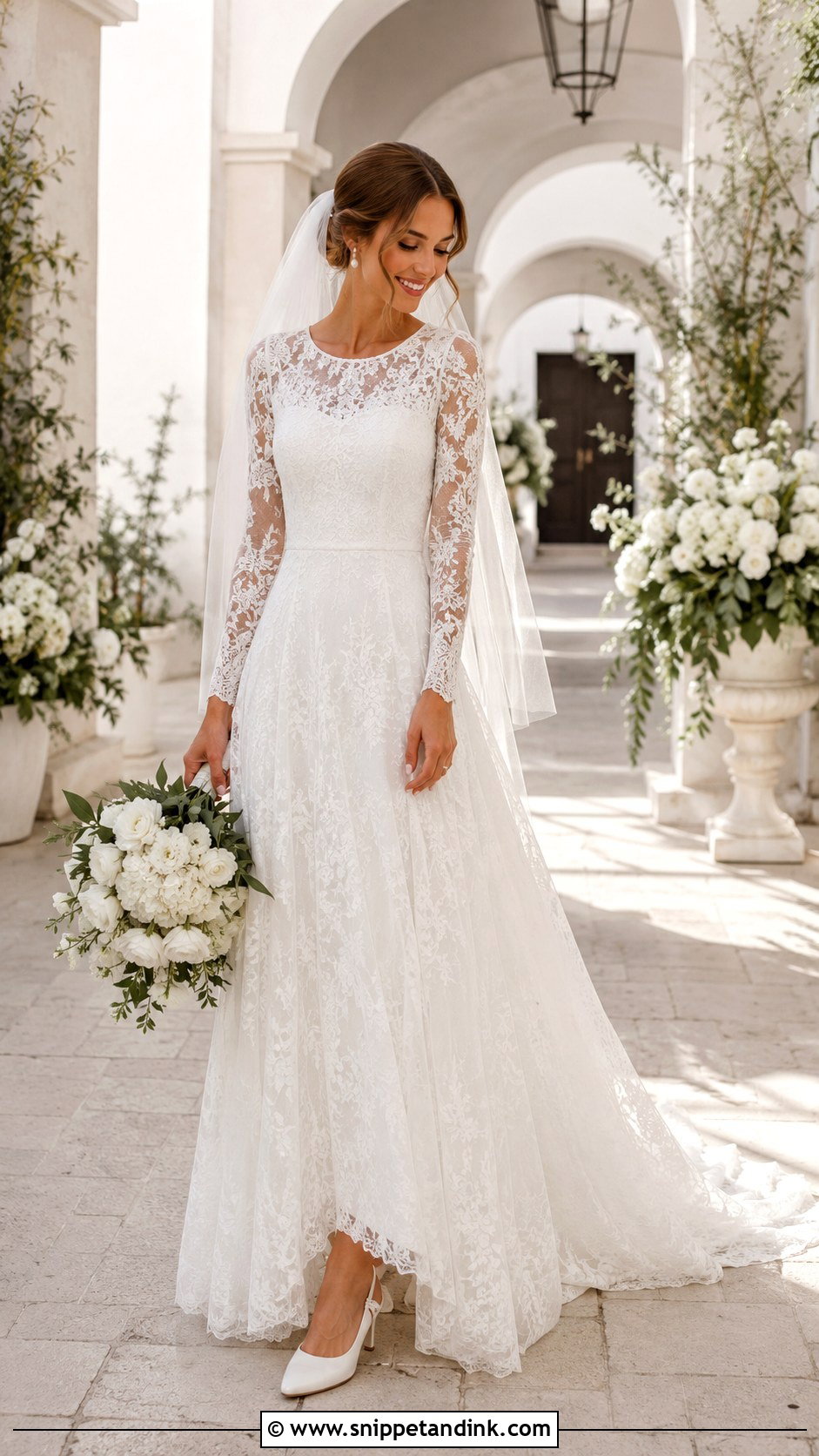
Coverage doesn’t have to mean heat. A modest summer gown works when the lace is open and light, with a breathable lining, a high scoop neck and sheer or lightly lined sleeves. Avoid fully embroidered sleeves, which are close to wearing a jacket. An A-line skirt lets air move. The bodice should fit smoothly without stiff layers underneath, and a bustle lifts the train for dancing. Closed-toe slingbacks, pearl earrings, a chapel veil and a low bun keep it neat for traditional ceremonies.
19. Blush Tulle Summer Wedding Dress
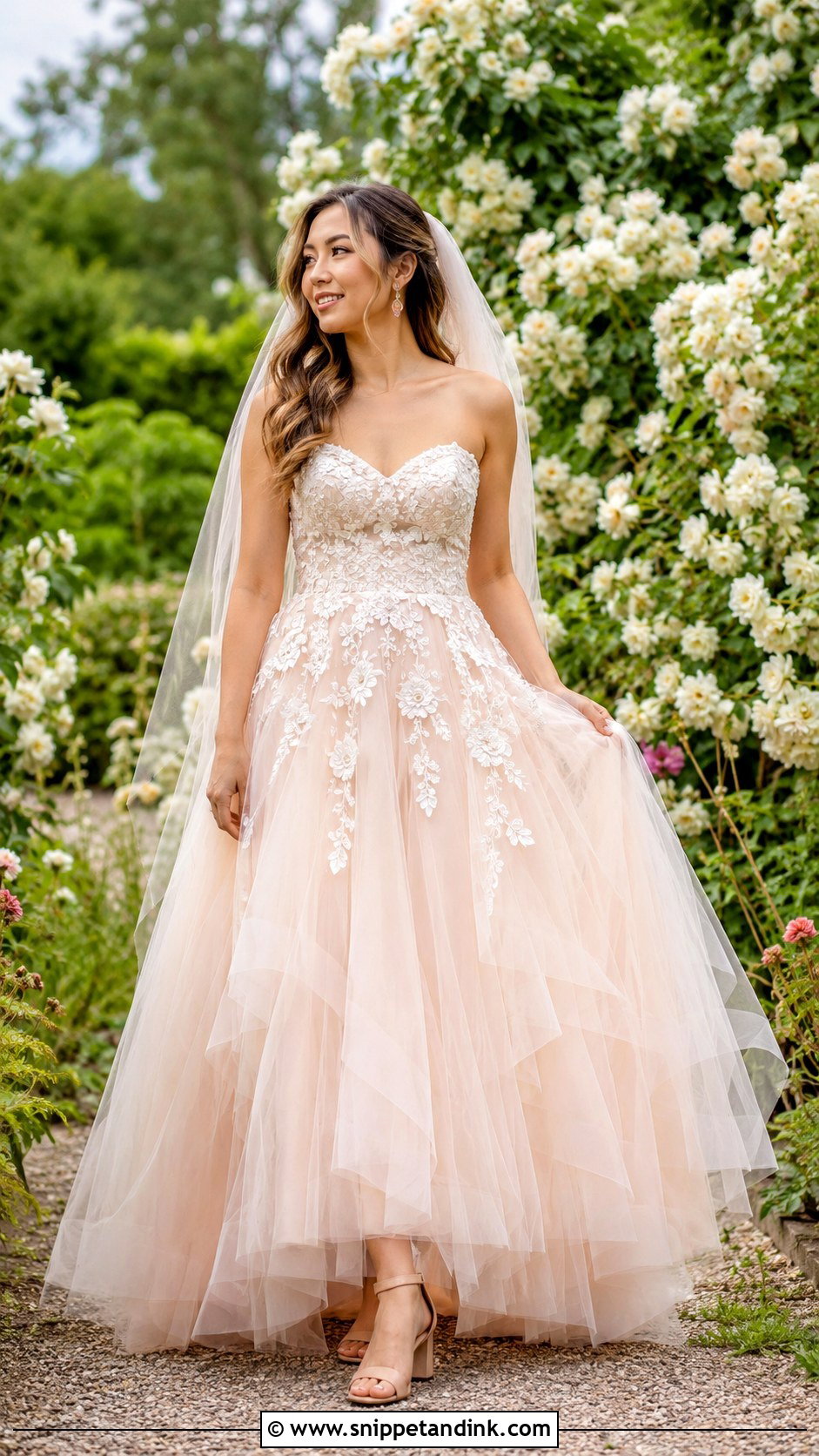
Blush gives color while still reading as bridal. Soft blush tulle layered over an ivory lining adds depth without washing you out. Undertone decides the shade: cool undertones usually suit a pinker blush, warm undertones look better in peach or champagne. Look at the fabric outdoors and in the venue’s lighting, because pale color shifts between sun, shade, indoor bulbs and flash. Keep the bouquet white, cream and green so the dress color still shows. Rose-gold earrings and a sheer ivory veil complete it.
20. Convertible Summer Wedding Dress
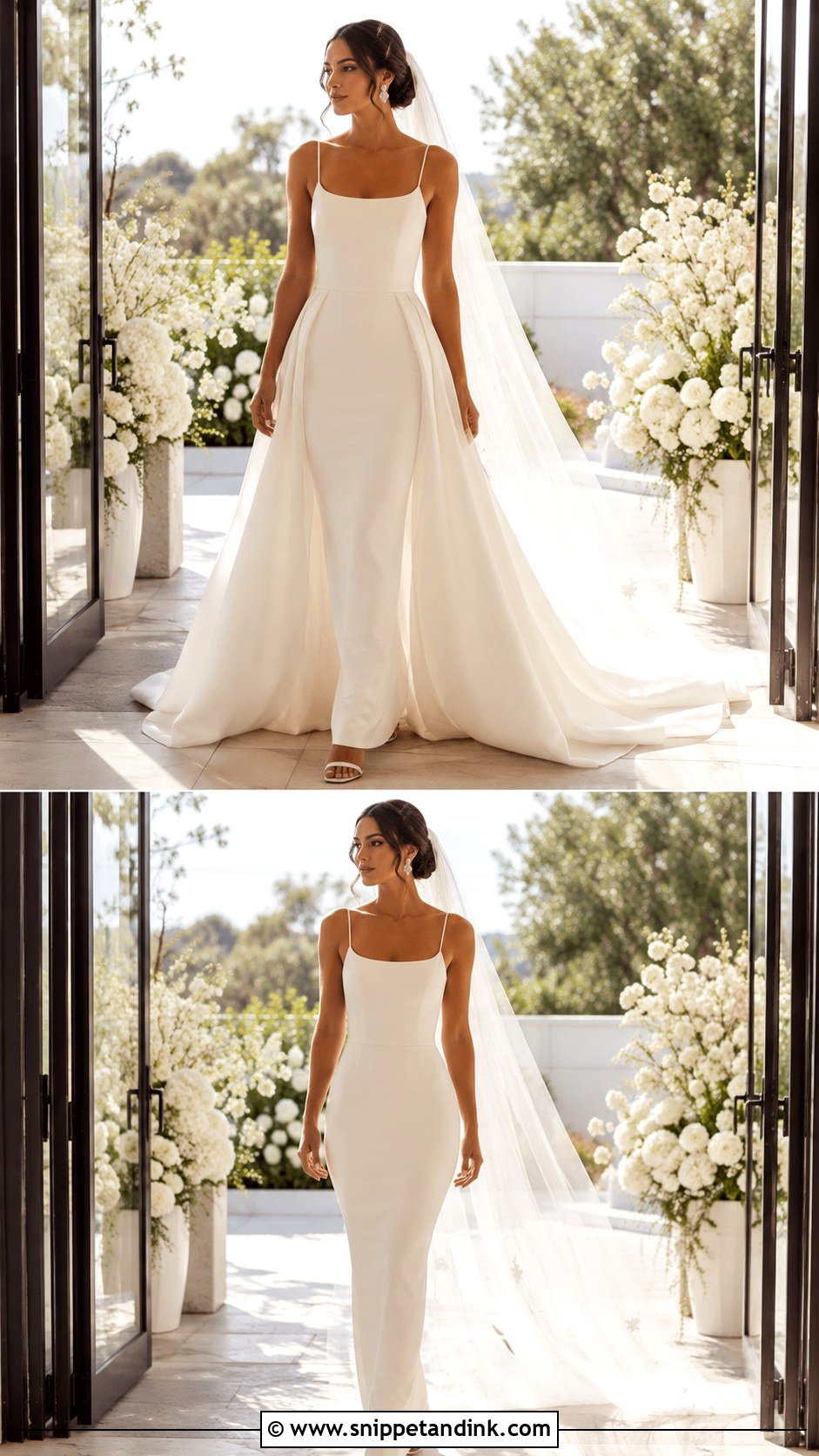
A convertible gown gives two looks without a full change. Start with a fitted crepe, lace or satin column and add a detachable organza overskirt for the ceremony, which turns the outline into an A-line or ball gown. Remove it with the veil before the reception and swap to statement earrings or a short necklace. The attachment points must disappear once the overskirt is off; ask to see the column alone at your final fitting. In summer this is a real advantage, as you shed a whole layer for the warmest part of the night.
Sweat, Sunscreen and Grass on an Ivory Hem
Hot weather marks dresses in ways cold weather never does, and most of it is preventable.
- Apply a clear antiperspirant the night before as well as the morning, and let it dry fully before you dress.
- Use sunscreen on your shoulders and back early, and let it absorb. Mineral formulas can leave white marks on a bodice edge.
- Sew in or stick on underarm shields if your dress is silk or satin.
- Ask someone in your party to carry a parasol or keep you in the shade between photo setups.
- Chalk or a white stain pen, tested on a scrap of your fabric first, handles small marks on the day.
A long hem will pick up grass, dust and pollen however careful you are. That’s normal, and it won’t show in most photos. Bustle the train as soon as the outdoor portraits are done, and leave cleaning to a specialist after the wedding instead of scrubbing it at the venue.
If you have any say in timing, a later ceremony helps more than any fabric. The light softens, the heat drops, and your hair and makeup hold far longer.
A Gown You Can Still Breathe In at Golden Hour
A summer wedding dress has to balance how it looks with how it feels at three in the afternoon. Airy chiffon, structured corsets, silk slips, lace, minis and convertible designs all have a place here. Think about the ground you’ll stand on, the expected temperature, the length of the ceremony and how much you’ll dance. Test every dress walking, sitting and with your arms raised, and give tailoring as much weight as fabric. Then choose shoes, accessories and a hairstyle that suit the heat as much as the dress.
You'll Like These Ideas:


Leave a Reply