
A beach gown has a harder job than a ballroom gown. It has to cope with wind that lifts the skirt, sand that grabs the hem, and a sun that turns heavy satin into a sauna by the second hour. When I dress a bride for the shore, I start with the fabric and the ceremony surface, and only then talk about necklines. Chiffon, organza, soft lace and lightweight crepe all move with the breeze instead of fighting it. Below are twenty summer beach dresses I’d happily put a bride in, each with the shoes, hair and accessories that keep it working on sand.

How Salt Wind and Heat Treat Each Beach Fabric
Before a bride falls for a neckline, I hand her swatches and ask her to scrunch each one in her fist for ten seconds. It sounds odd, but it tells you exactly how the fabric will look after an hour of sitting, hugging and travelling to the venue.
- Chiffon floats in wind and settles again, and creases fall out quickly. It does snag on rough sandal straps, so check your buckles.
- Organza holds its shape but is crisp; it can rustle loudly on a microphone and shows sweat marks less than satin.
- Lightweight crepe breathes and drapes well. It wrinkles at the hips when seated, so plan a quick steam before portraits.
- Silk or light satin looks rich but shows every damp patch and every crease. On a very hot day I’d keep it for a sunset ceremony only.
- Lace hides small marks and sand dust better than any plain fabric, but a heavy corded lace can trap heat against the skin.
Sun matters too. A pure white gown can look blue-white and flat in harsh midday light, while ivory and soft champagne stay warm against tanned skin and golden sand.
1. Chiffon A-Line Beach Wedding Dress
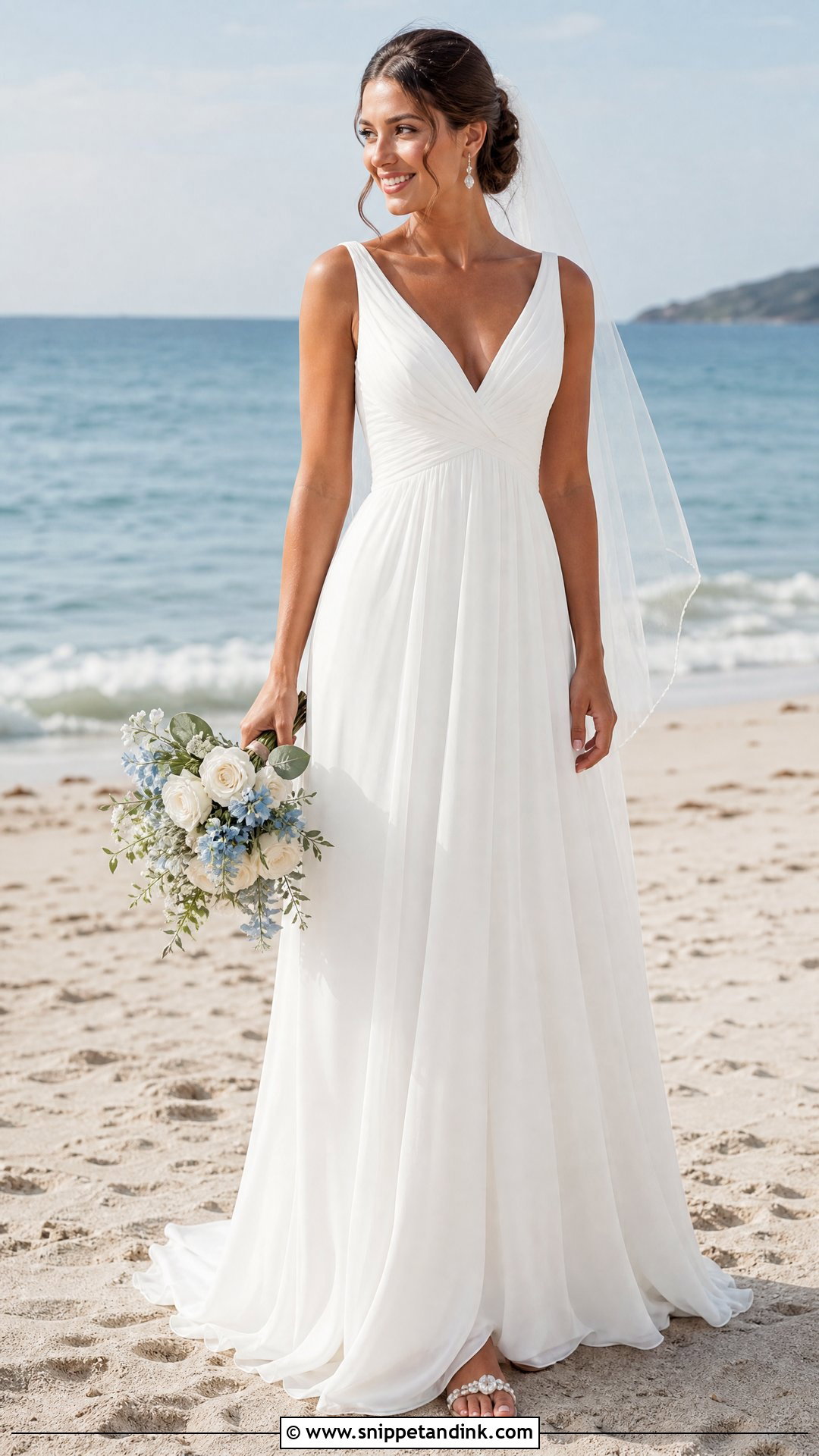
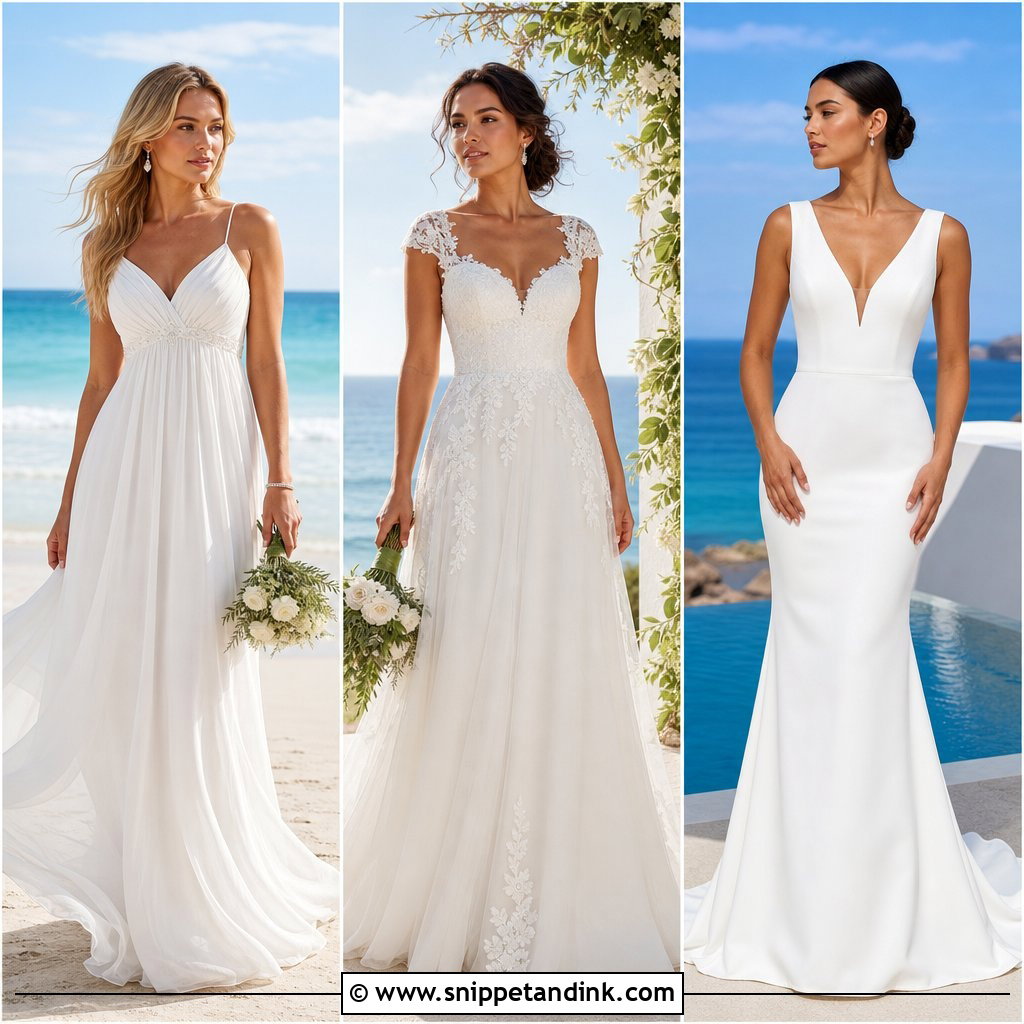
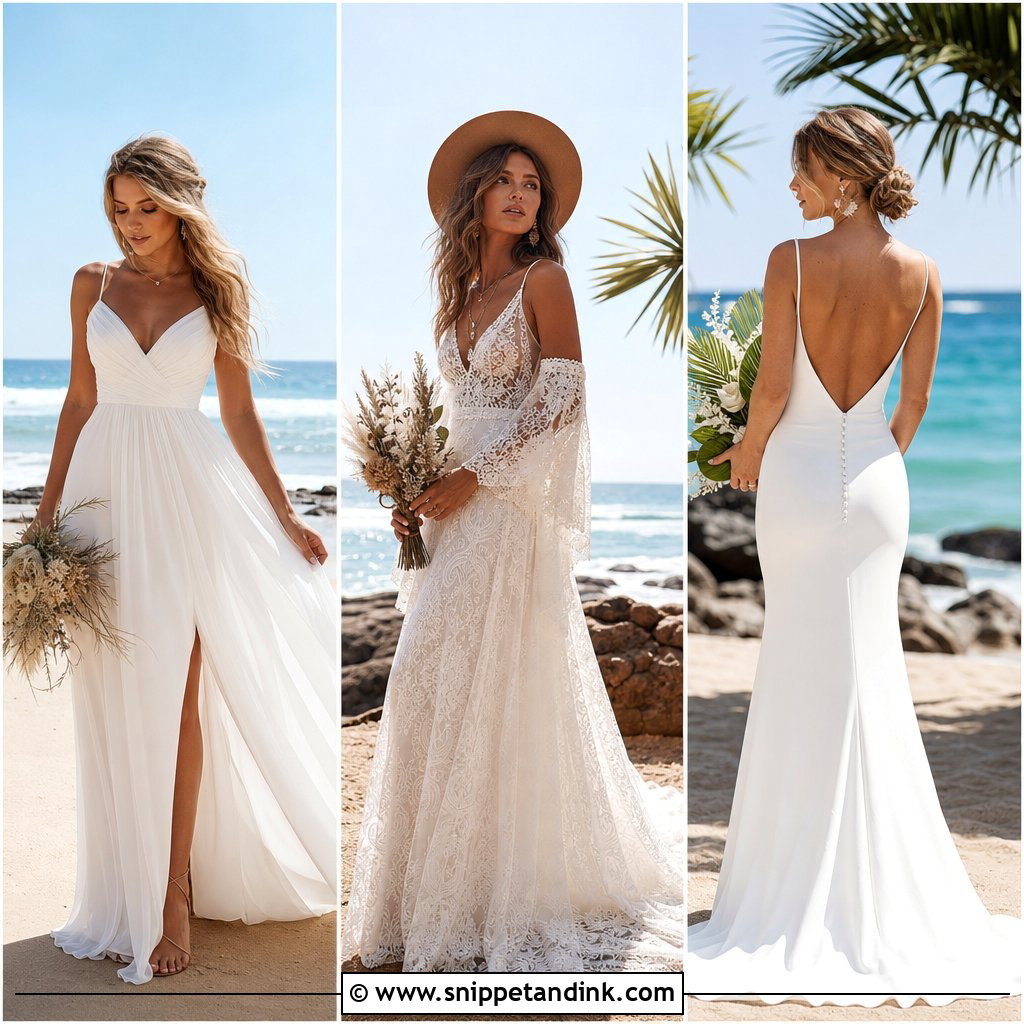
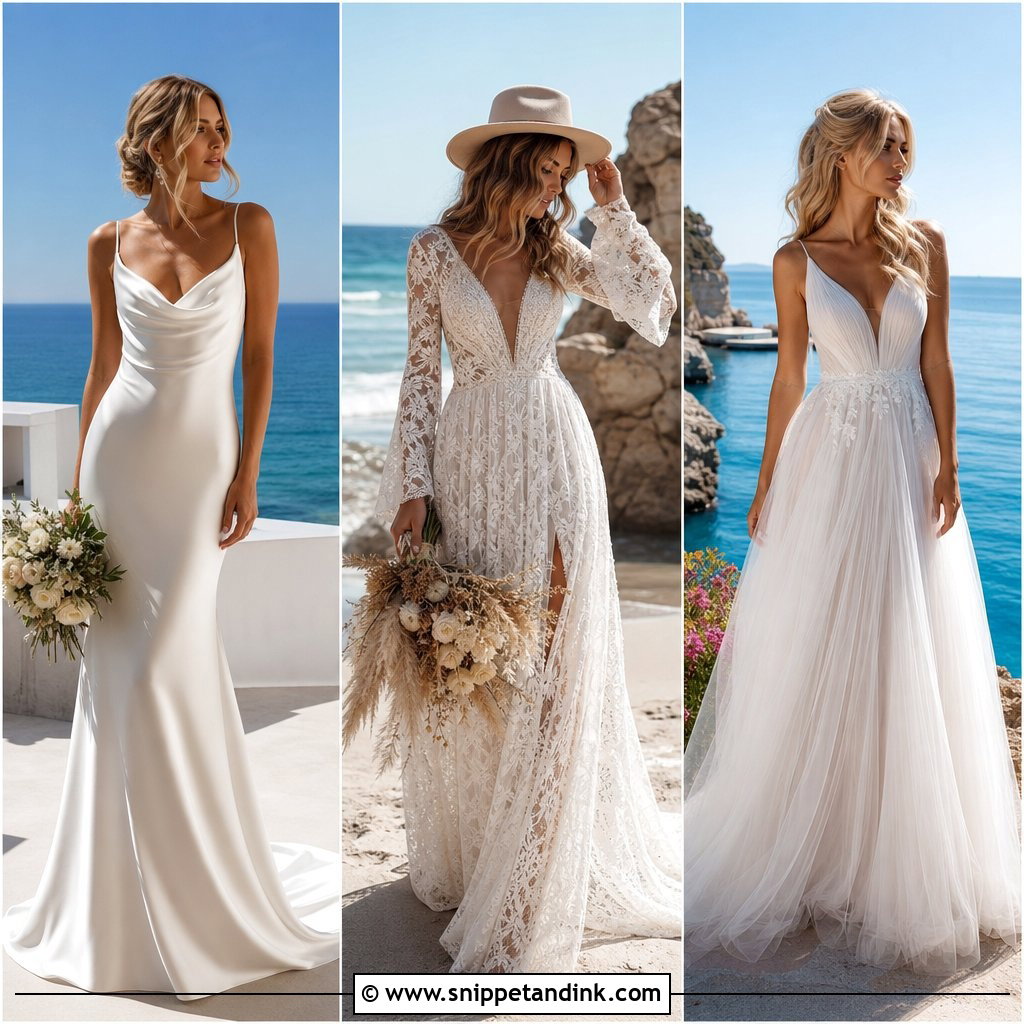
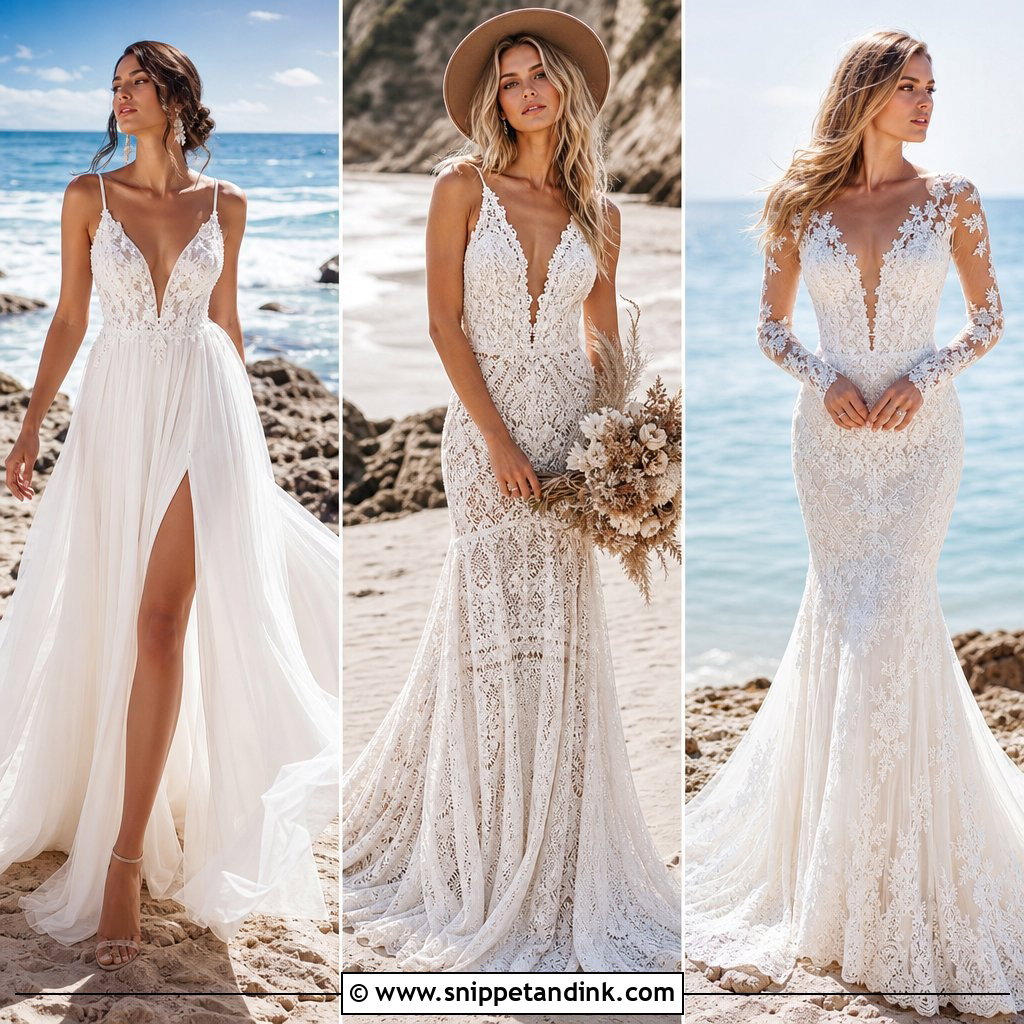
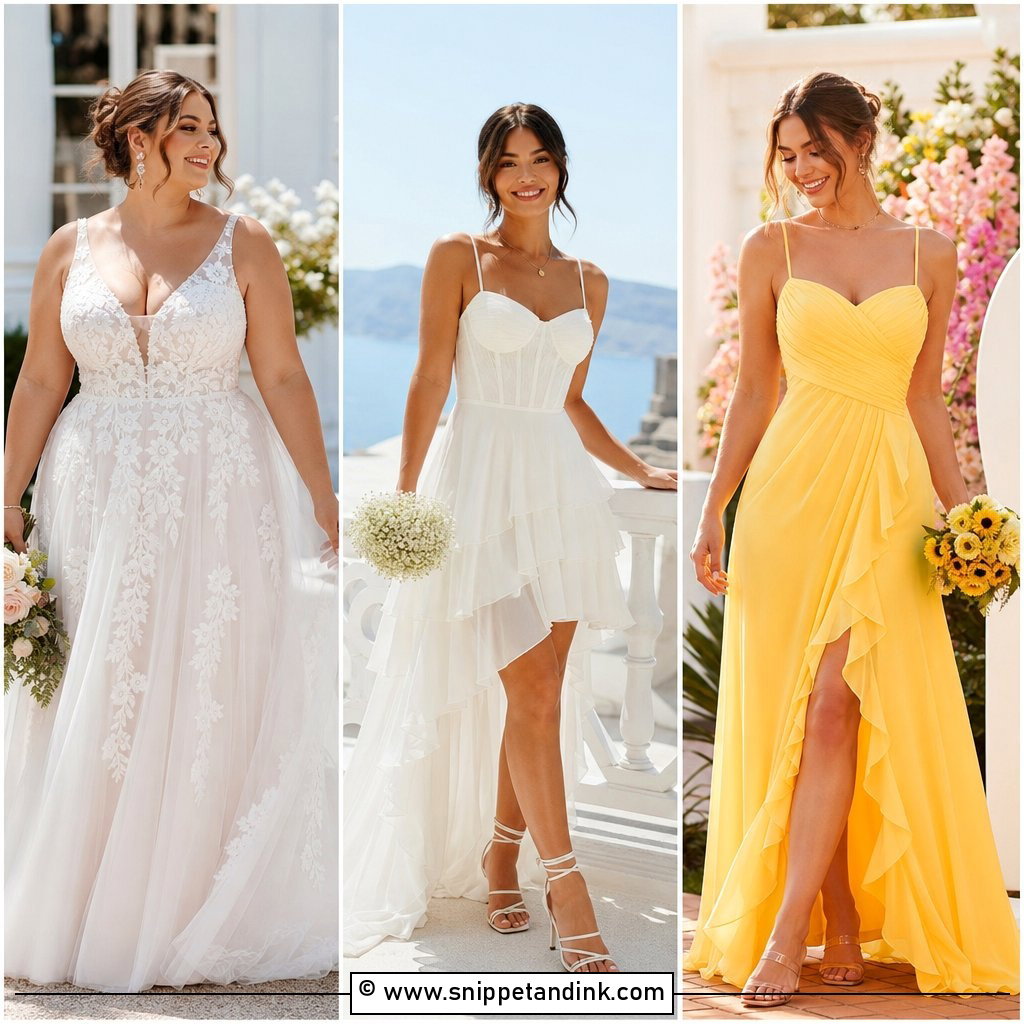
Chiffon is the fabric I reach for first on a windy shoreline, because it lifts and settles again instead of ballooning. Ask for a fitted bodice with a real waist seam so the skirt has something to hang from; without it, a gust pushes all that volume to one side. A V-neckline lengthens the torso, and wide straps mean you aren’t tugging at the bodice between photos. On sand, flat pearl sandals or barefoot jewelry are kinder than any heel. Pin a low bun with pearl pins, add a fingertip veil that stops before it can drag, and finish with a bouquet of white flowers and pale blue accents for a polished coastal look.
2. Satin Slip Beach Wedding Dress
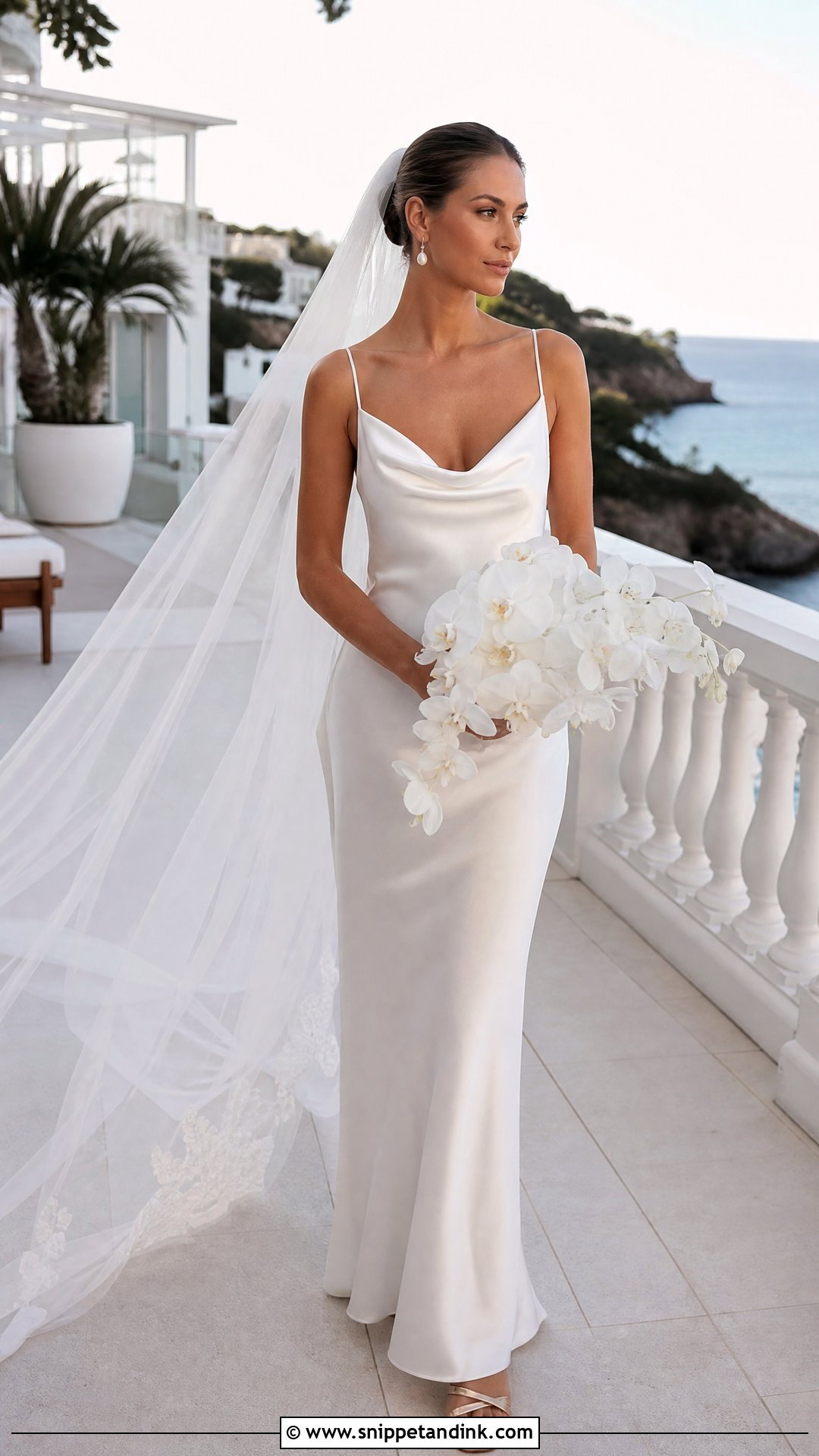
Satin slips are lovely in a fitting room and less forgiving on a hot afternoon, so I steer brides toward a lightweight silk or a thin bias-cut satin, never the heavy duchess kind. Bias-cut fabric skims the body, which means every seam and line underneath shows; get the shapewear sorted before your final fitting, not after. Metallic flat sandals, pearl earrings and a small ivory clutch keep it modern. If you want a veil, choose a sheer chapel length with a narrow rolled edge, since a wide horsehair trim collects sand like a broom. White orchids or calla lilies suit the clean shape.
3. Boho Lace Beach Wedding Dress
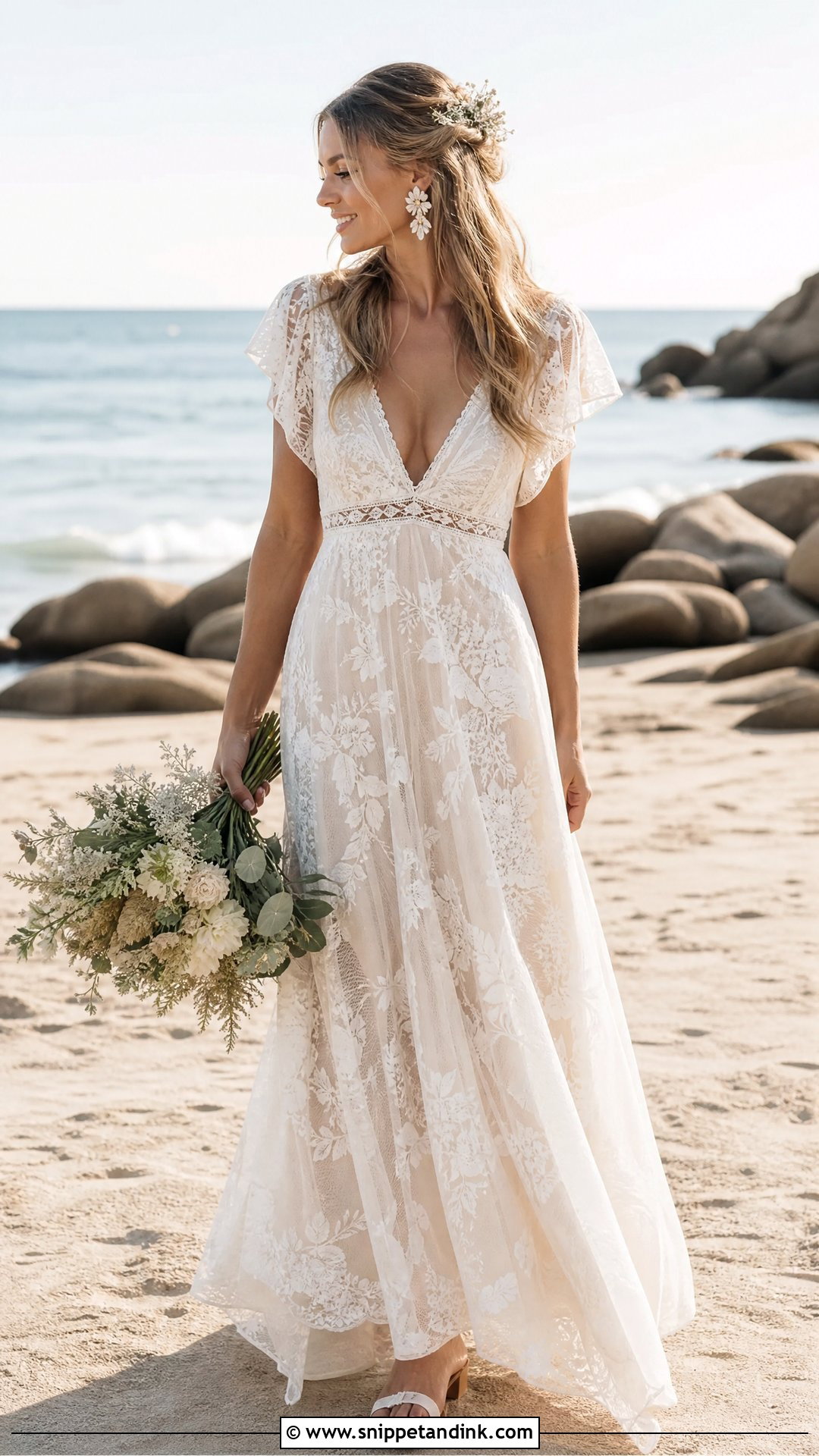
Botanical lace reads relaxed rather than formal, which is why it sits so naturally on sand. Check the lining before anything else: cheap polyester linings trap heat, and on a beach I’d rather see a soft cotton blend or a breathable stretch lining. A relaxed A-line or sheath with a short sweep train is easy to manage, and flutter sleeves give some arm coverage without adding weight. Flat leather sandals in ivory or pale gold, small floral earrings and a ribbon-tied bouquet carry the boho mood. I’d skip a full veil here and use a floral comb, so the lace pattern stays the focal point.
4. Off-Shoulder Beach Wedding Dress
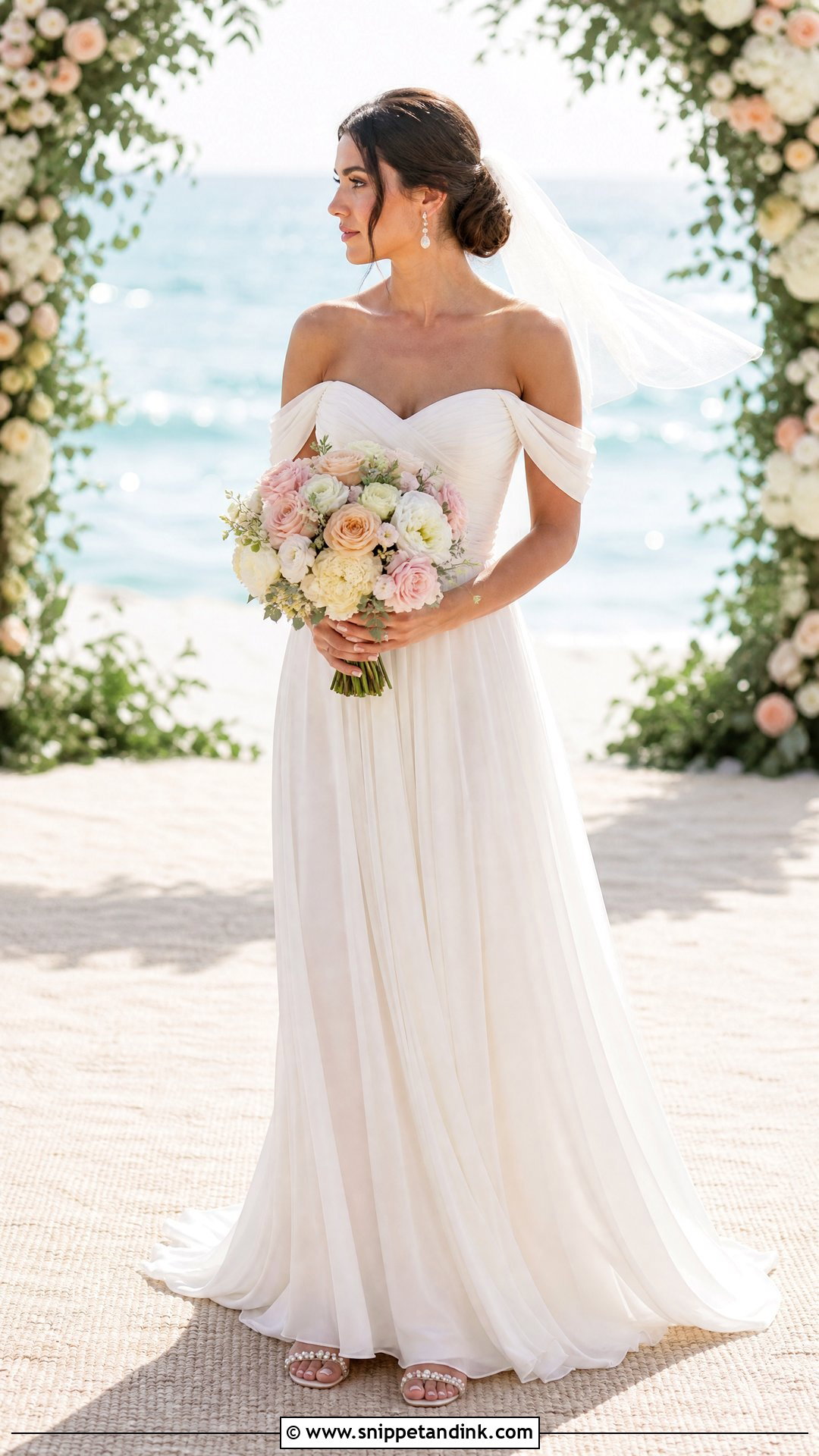
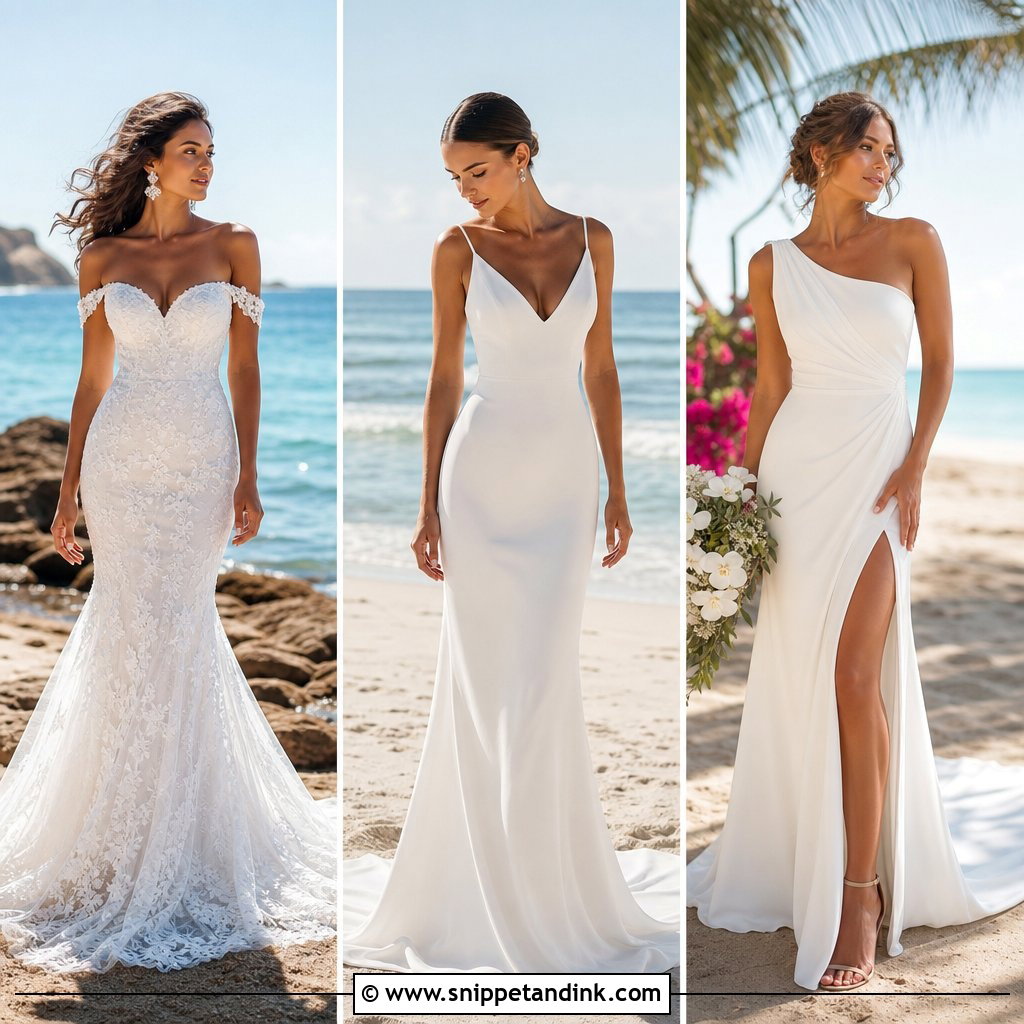
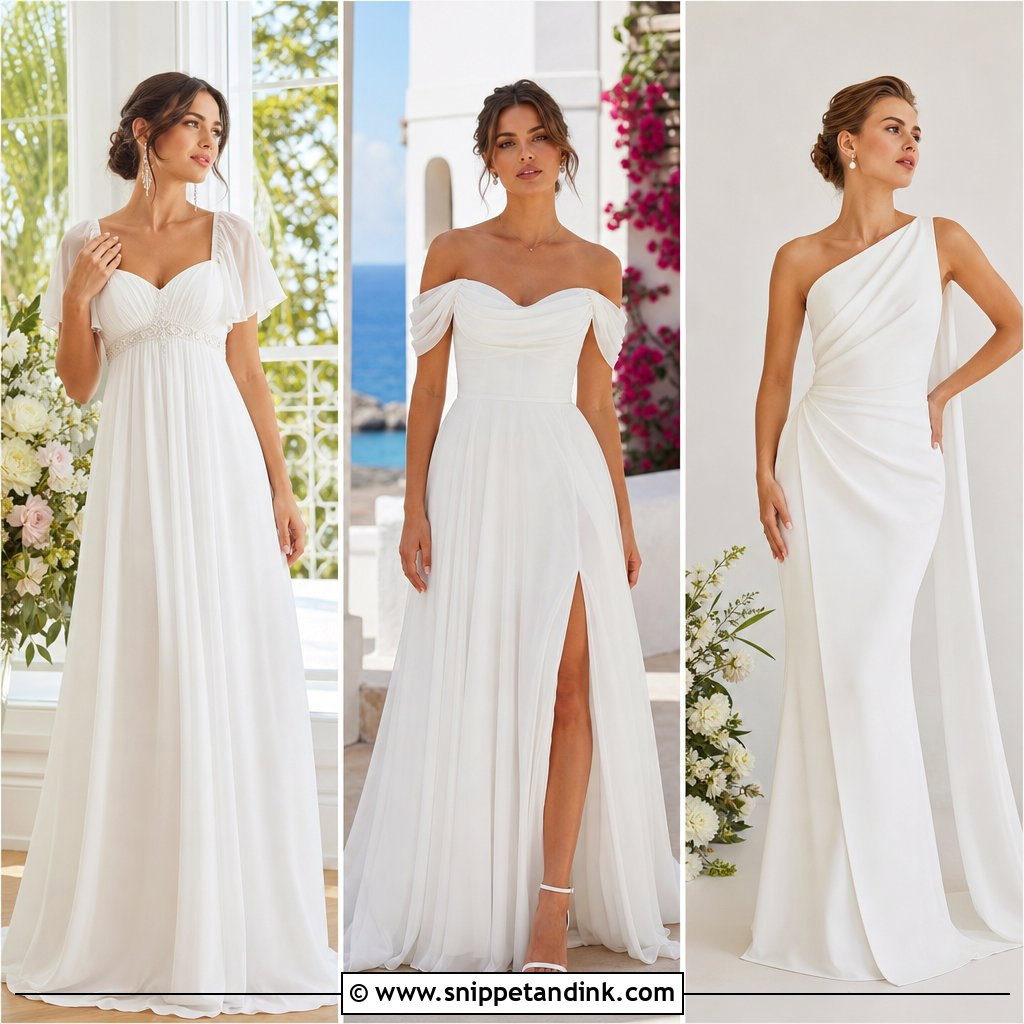
Off-shoulder necklines photograph well against water, but only if you can still lift your arms. That’s the thing I test at every fitting: have the bride raise both hands as if hugging someone. If the bodice rides up or the sleeves bite into her arms, the elastic or boning needs adjusting. A chiffon or soft tulle A-line skirt keeps the rest of the dress light. Wear block-heel sandals on a resort deck and embellished flats on sand. The neckline does the work, so skip the necklace, choose drop earrings and keep the shoulders clear with a secure low chignon.
5. Halter Neck Beach Wedding Dress
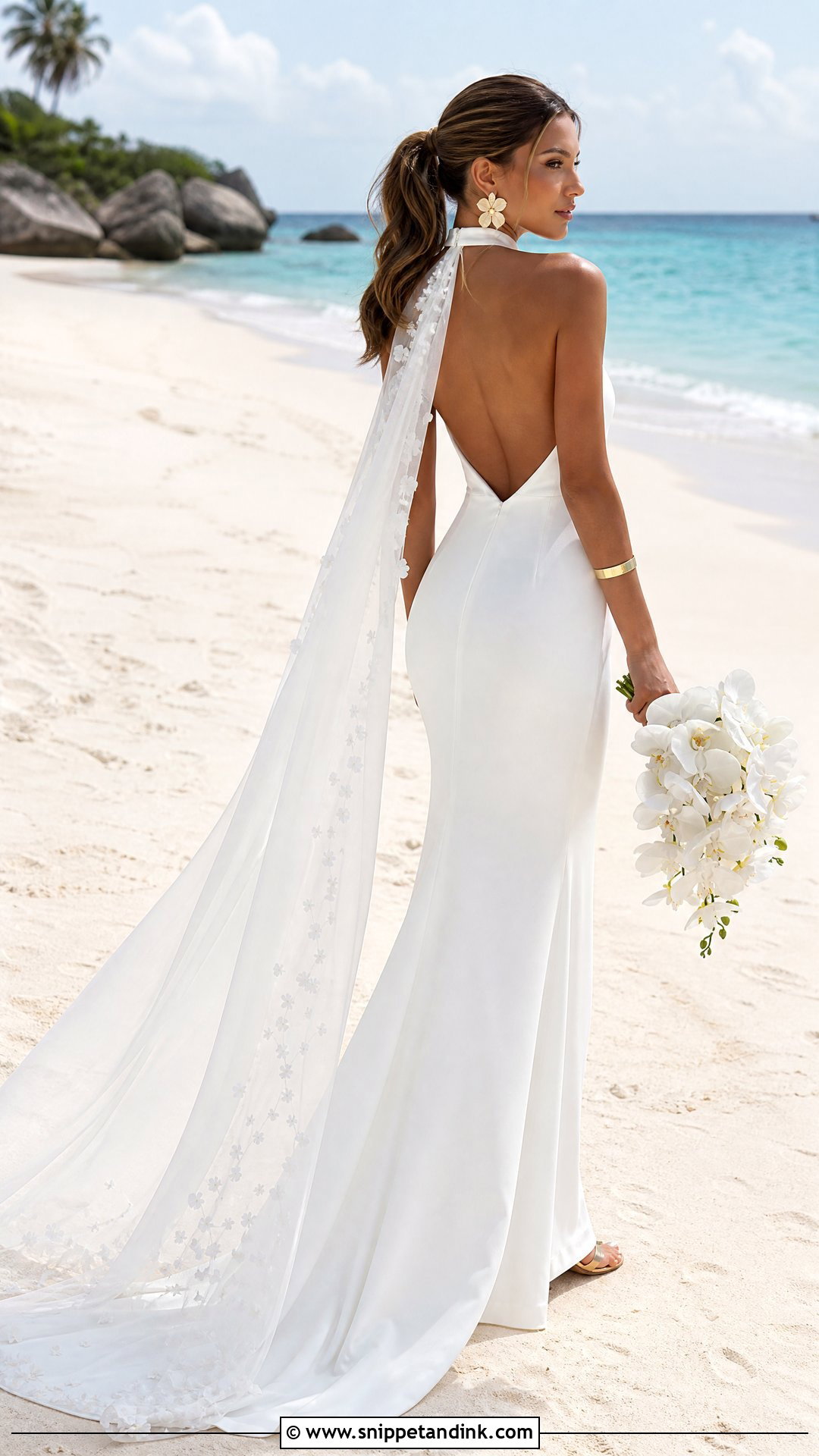
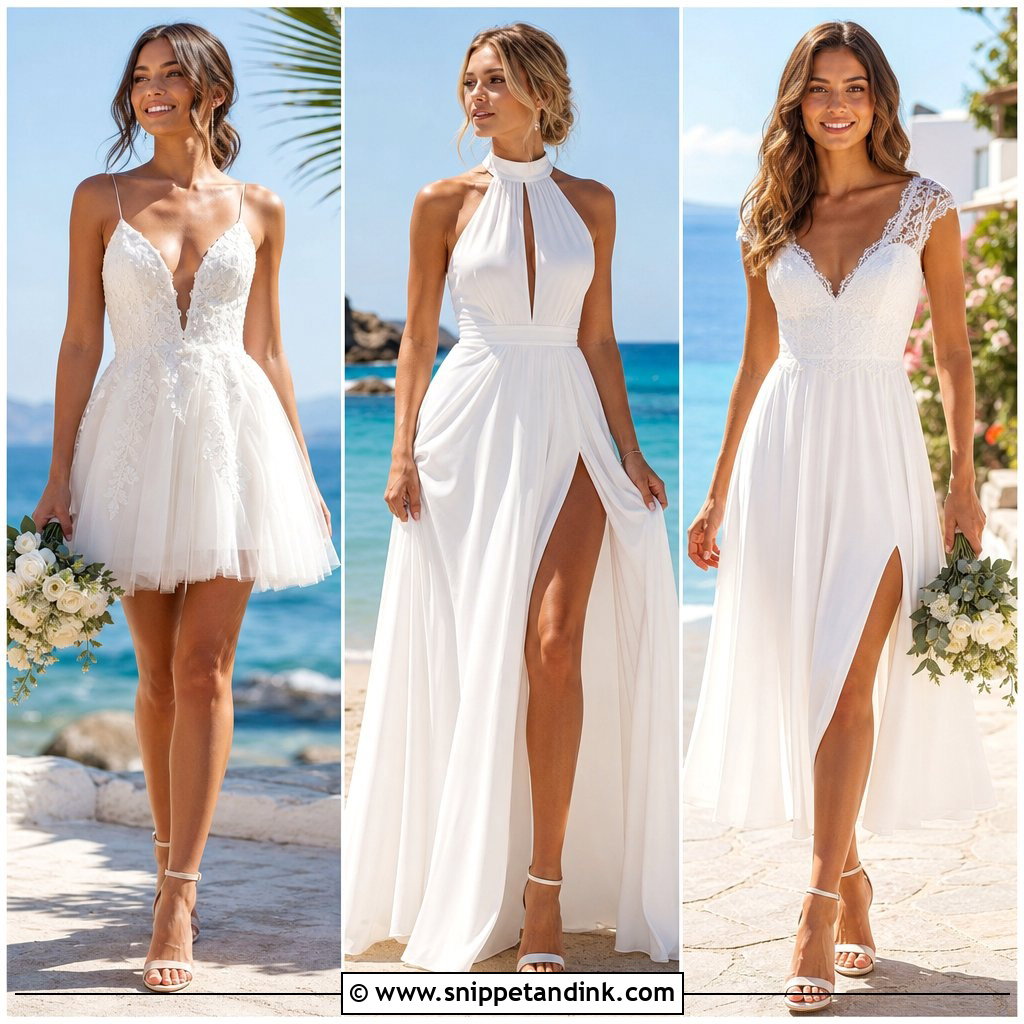
A halter-neck gown is one of the most secure shapes I know for a breezy ceremony, because the weight of the bodice hangs from the neck rather than relying on thin straps. The catch is the clasp at the nape: hair that falls loose will tangle in it, so I always pair a halter with a polished ponytail or a textured bun. Soft crepe, chiffon or light satin with an open back and a gently flared skirt stays cool. Flat strappy sandals won’t sink. Waterproof mascara and a detachable sheer cape in place of a veil finish it for portraits.
6. Strapless Beach Wedding Dress
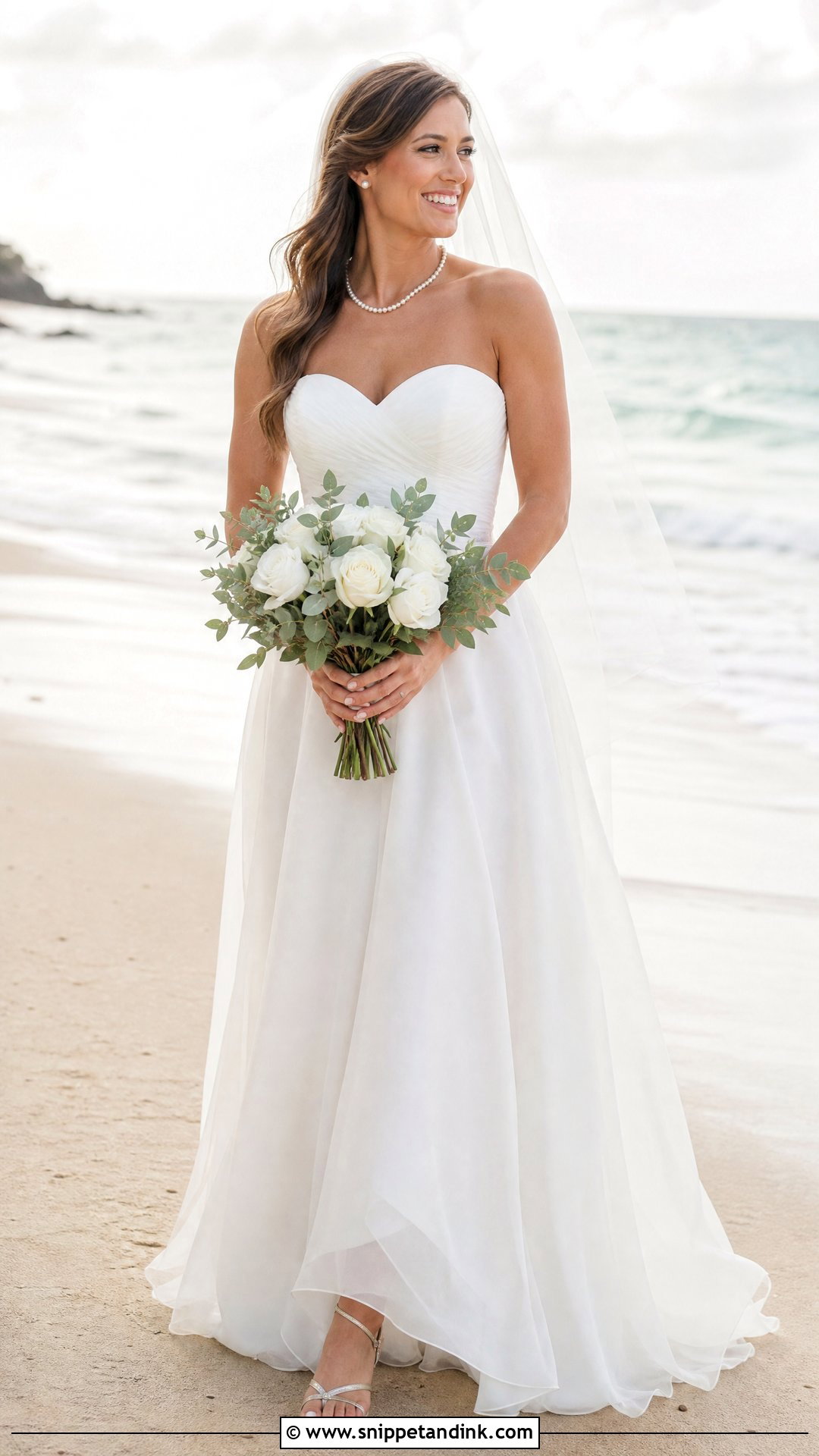
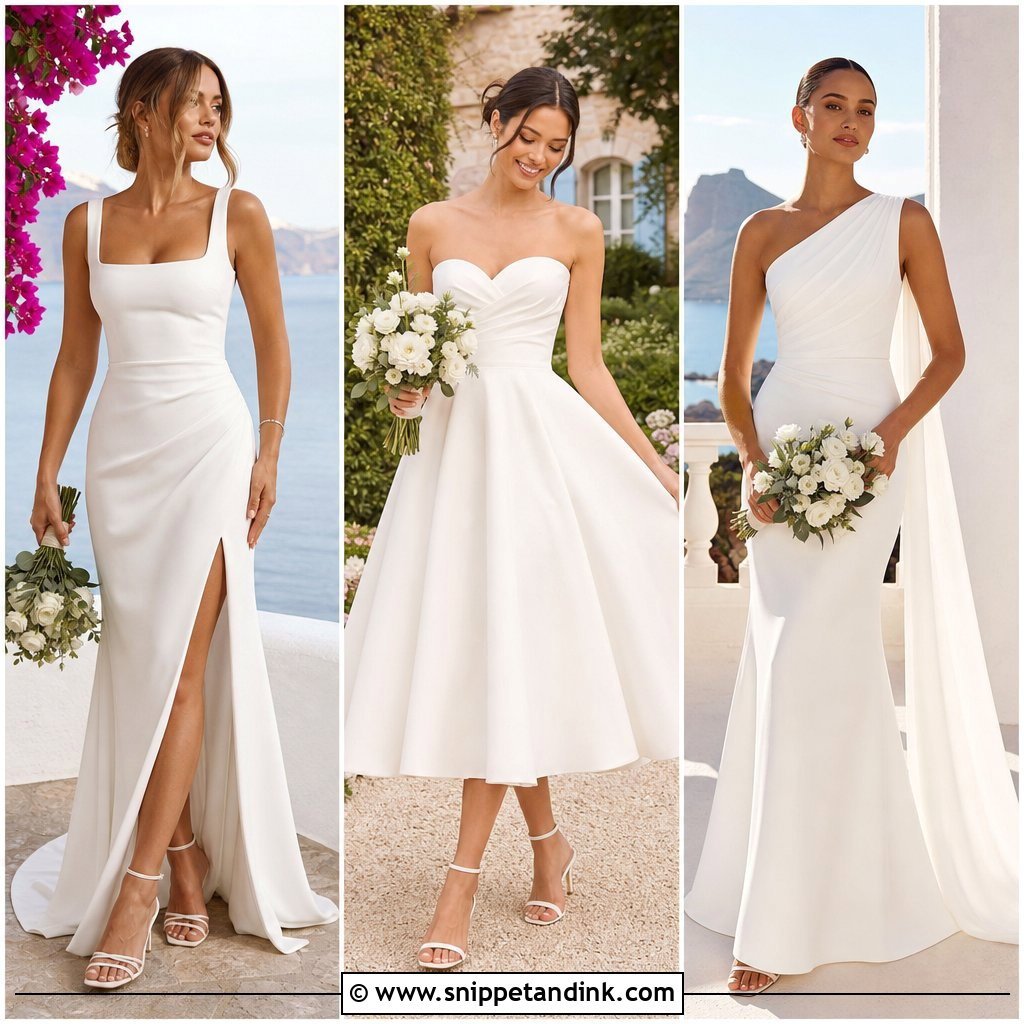
Strapless dresses need more internal engineering than most brides realize. A well-built bodice has boning, a waist stay and often silicone gripper tape along the top edge; if your gown has none of these, you’ll be hitching it up all evening. A sweetheart or straight-across neckline over an A-line chiffon or organza skirt keeps the look airy. Book the alterations early enough to fit it twice, because a strapless bodice must be taken in snugly. A short pearl necklace, matching studs, metallic flats and a raw-edge fingertip veil complete it.
7. Empire Waist Beach Wedding Dress
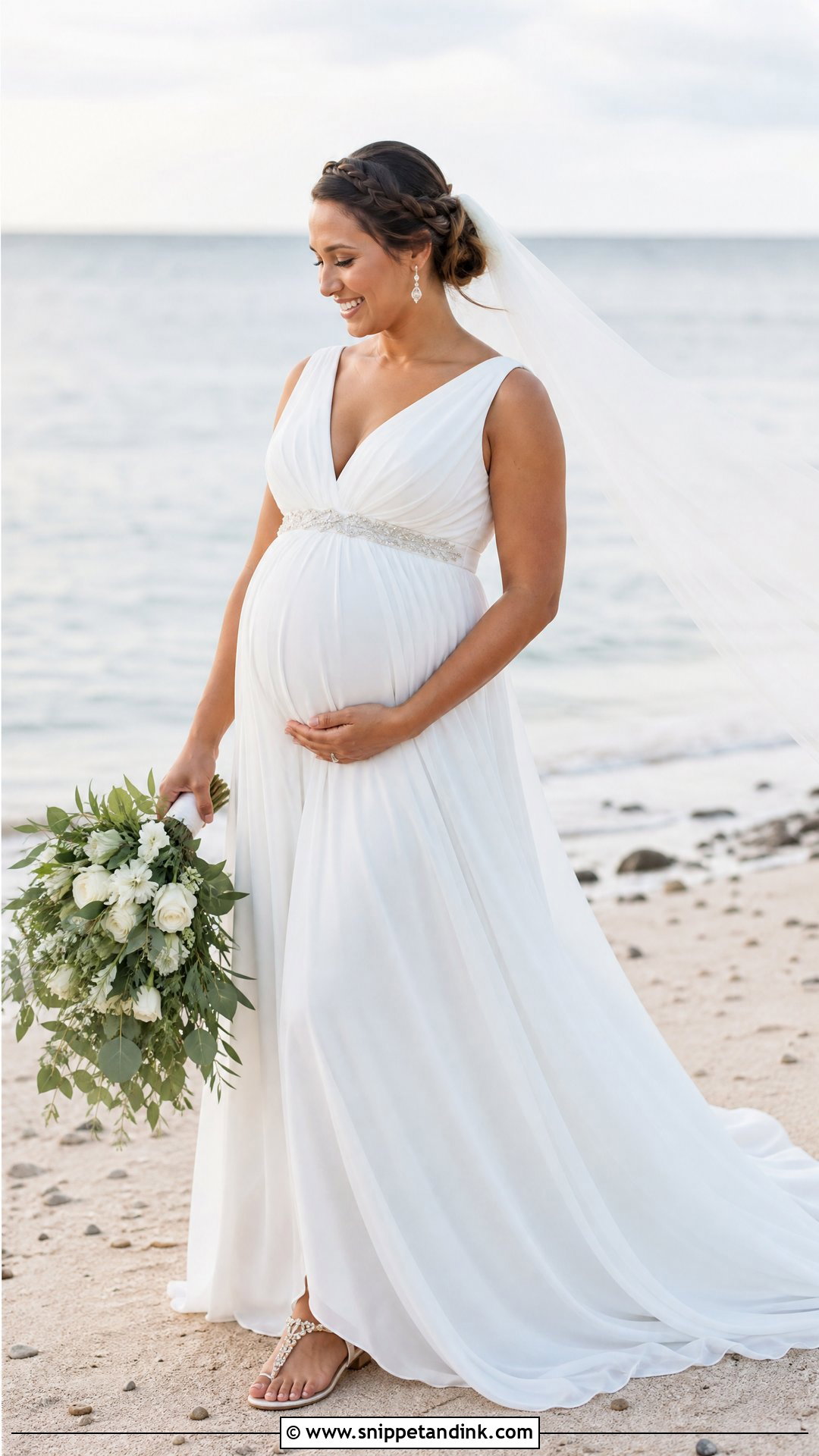
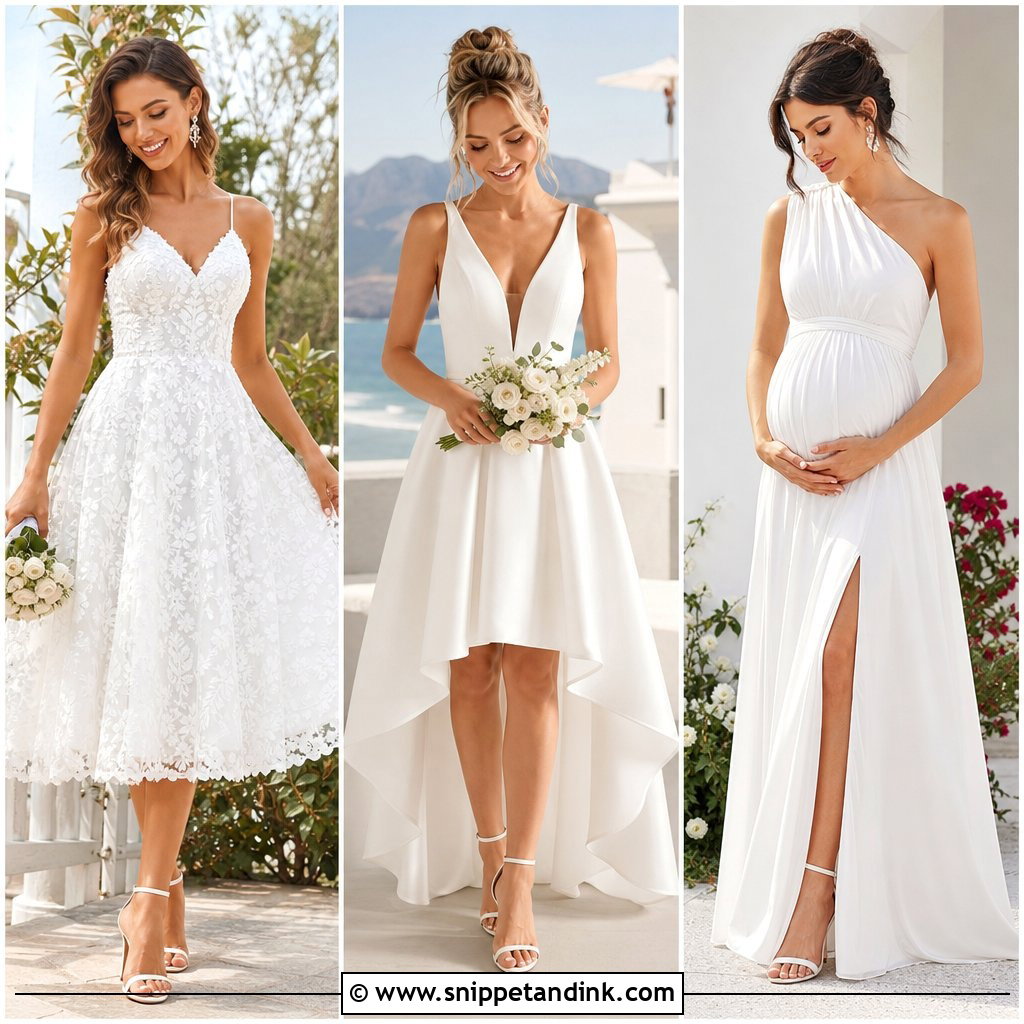
The skirt of an empire-waist gown falls from just below the bust, so nothing presses on the waist through a long, hot day. It suits petite brides, pregnant brides and anyone who dislikes a fitted midsection. What I watch for is the bust seam: it needs to sit exactly under the bust, not halfway across it, or the whole gown looks borrowed. Choose chiffon or soft crepe with gentle gathering instead of heavy volume. Jeweled flat sandals, a braided low bun with a floral comb, and a loose bouquet of white blooms and eucalyptus keep it relaxed.
8. Short Beach Wedding Dress
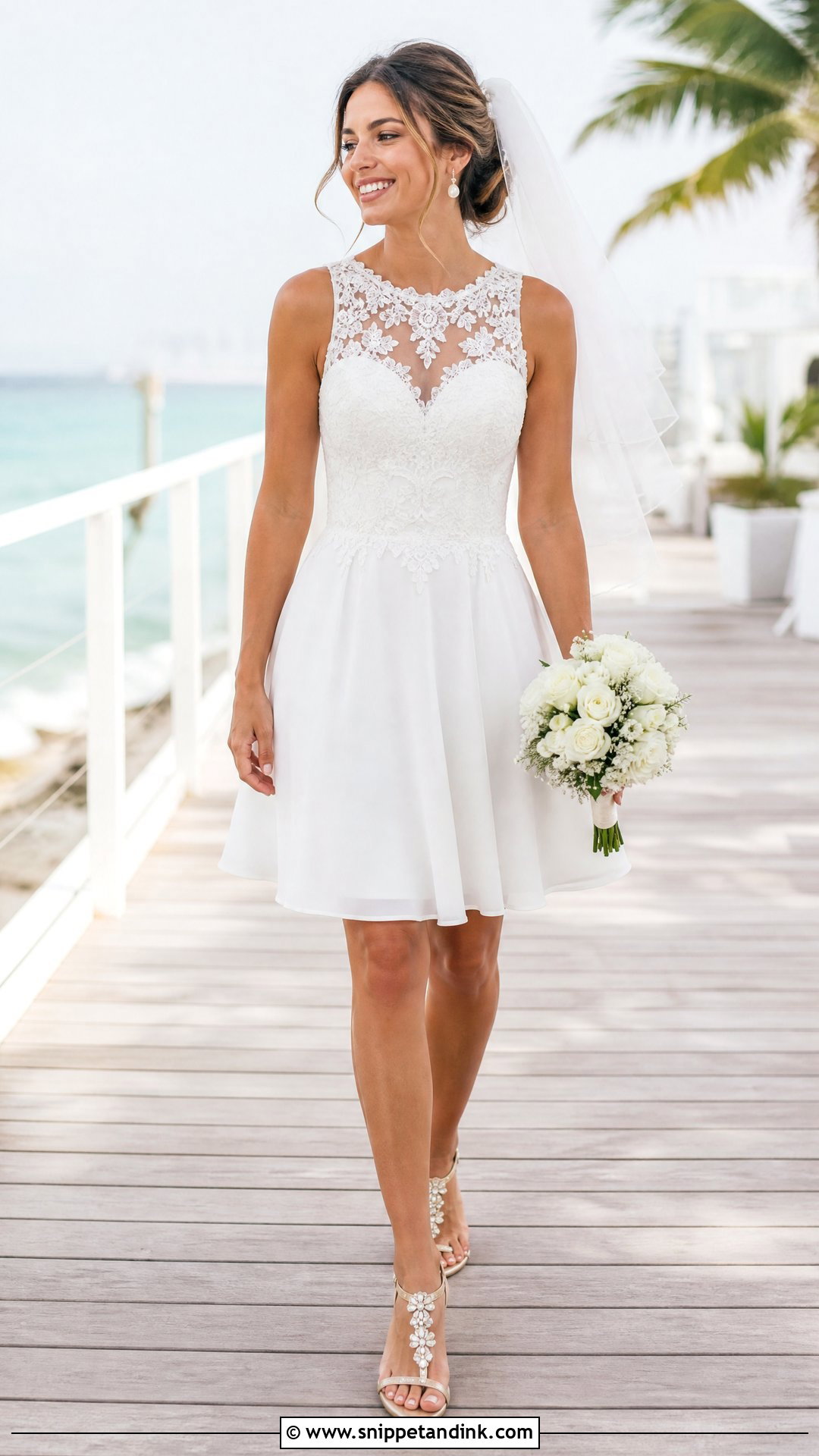
For an informal ceremony, or a courthouse wedding followed by a beach reception, a short dress removes the hem problem entirely. I prefer a structured mini or knee-length A-line with a defined waist; very soft fabric at this length can look like a sundress rather than a bridal piece. Lace, crepe or a textured jacquard gives it weight. Here the shoes become the accessory, so this is where I’d let a bride choose embellished flats or pointed-toe flats for a boardwalk. A short veil or a hair bow, pearl drops and a compact bouquet keep it unmistakably bridal.
9. Tea-Length Beach Wedding Dress
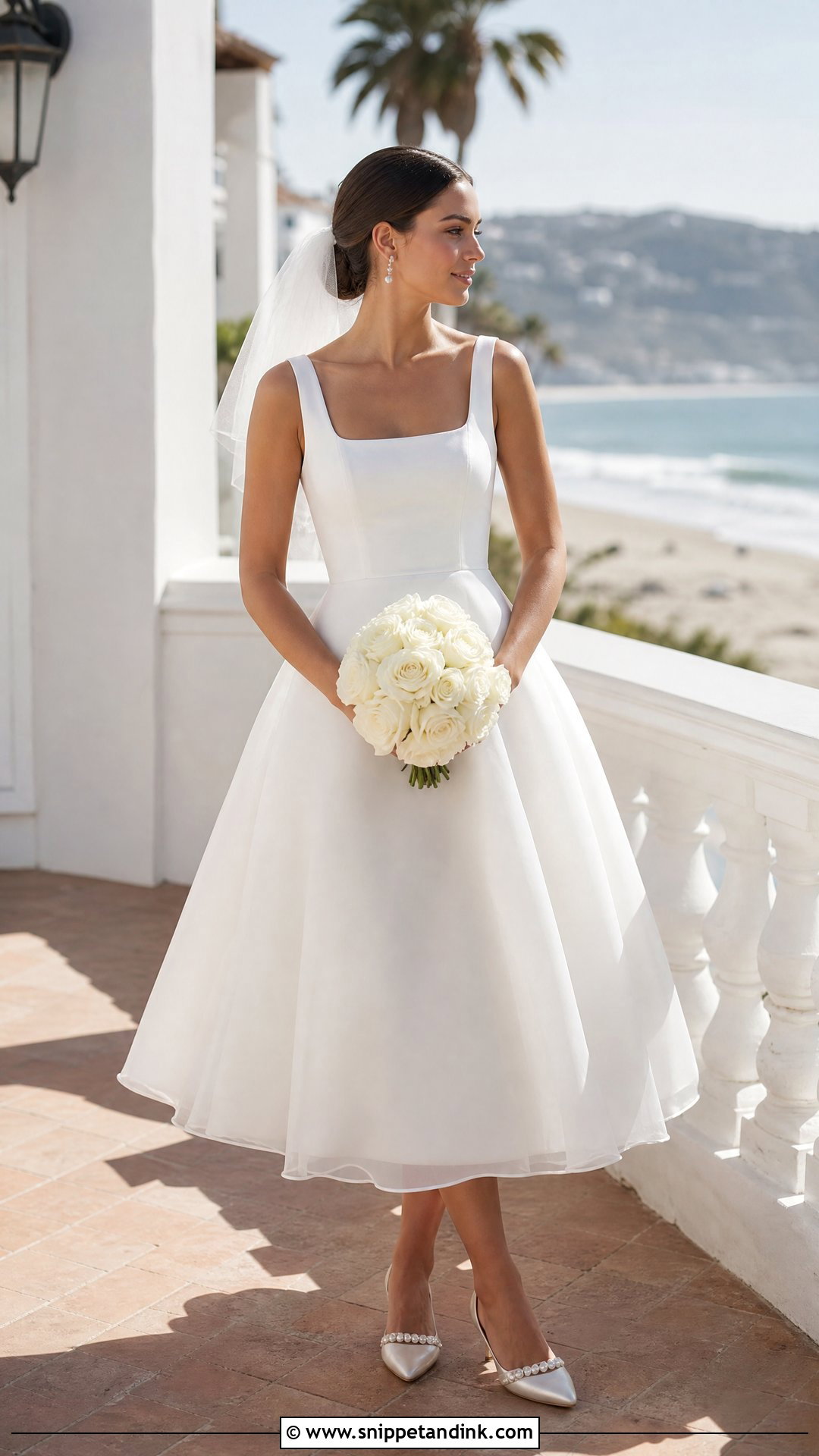
Tea length ends between the knee and the ankle, which keeps the hem dry and clean even on wet sand. The trick is matching the shoe to that length: a low slingback on a solid terrace, pearl-trimmed flats on the shoreline, never a chunky sandal that cuts the leg at the worst point. Organza, lace and soft tulle give the skirt its lift without weight. A birdcage veil or short tulle veil and a smooth bun or curled bob suit the retro line, and a rounded bouquet of roses or ranunculus finishes it.
10. Two-Piece Beach Wedding Dress
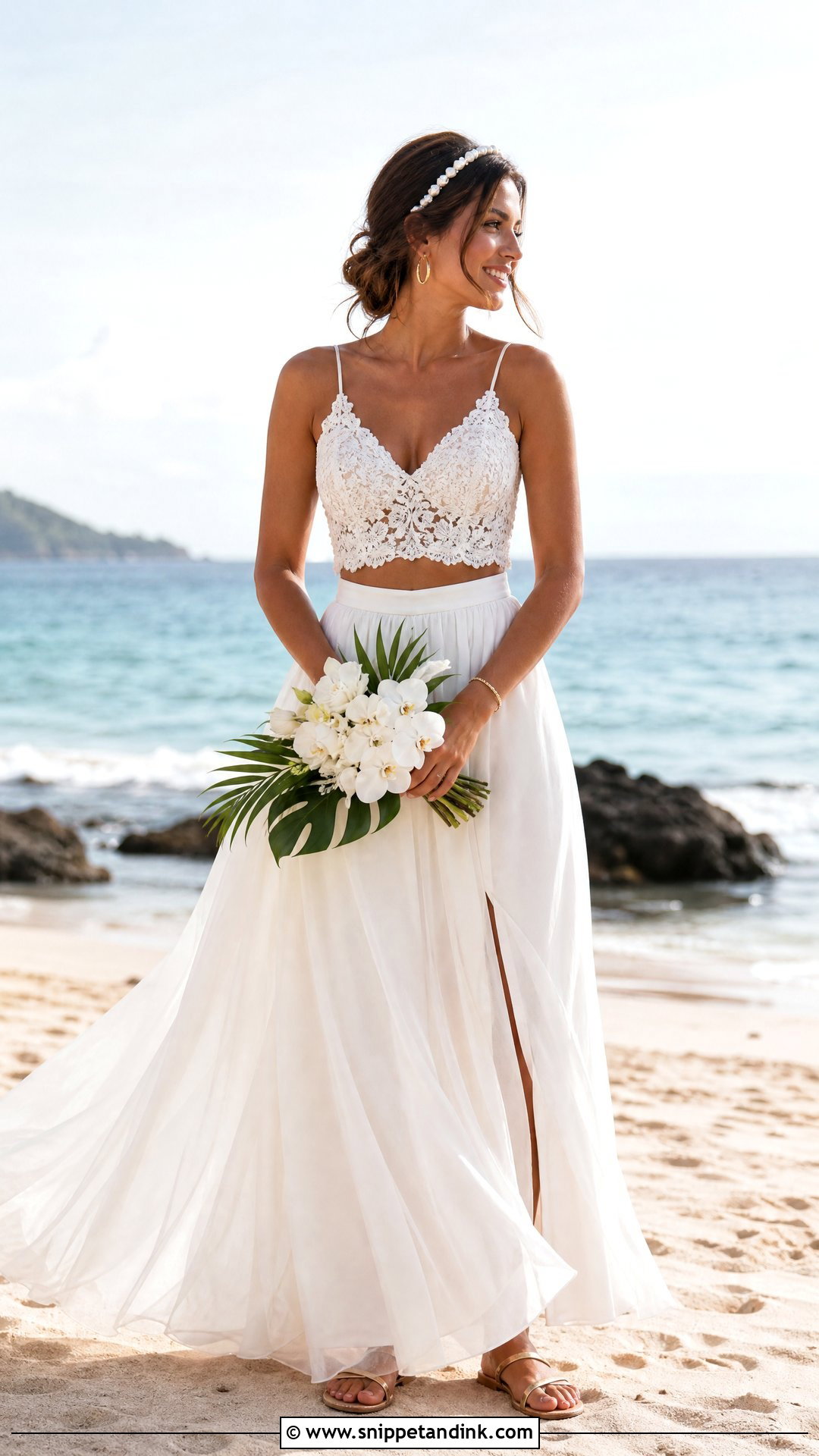
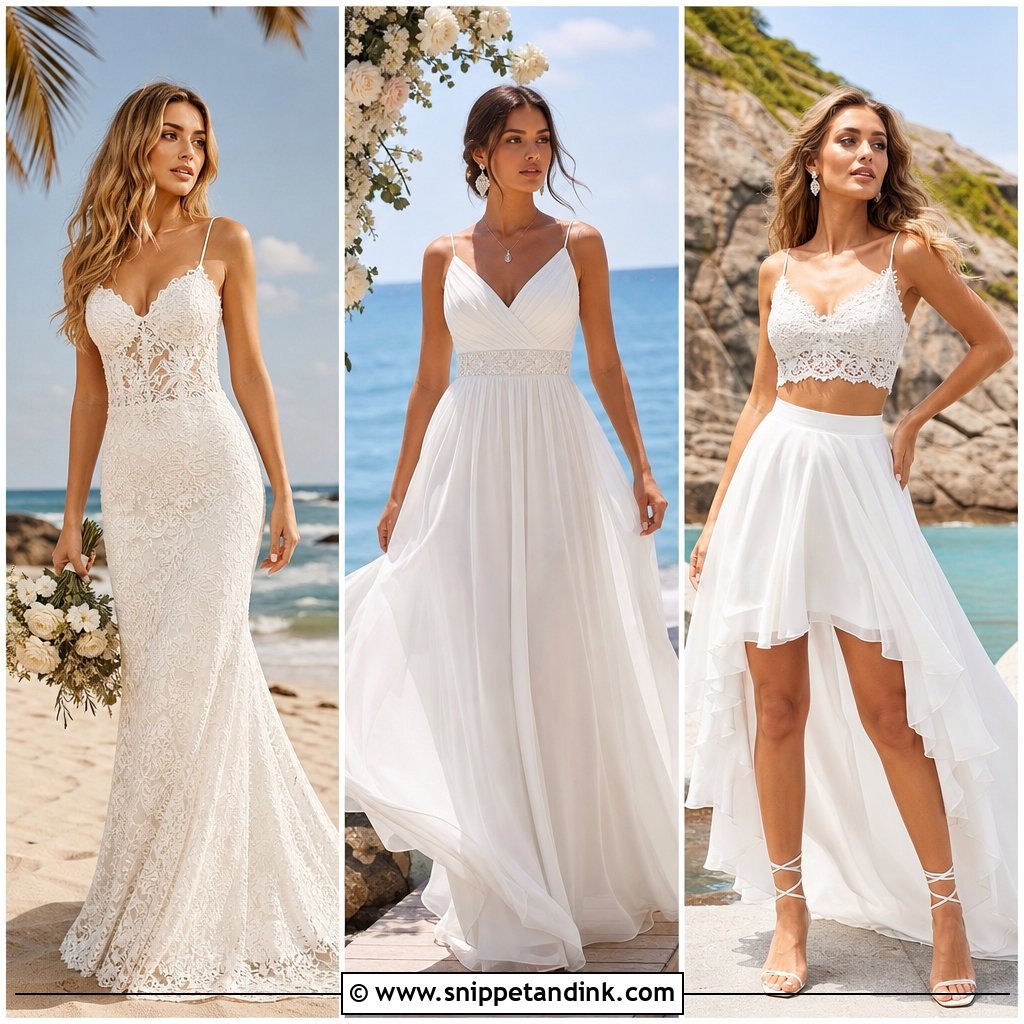
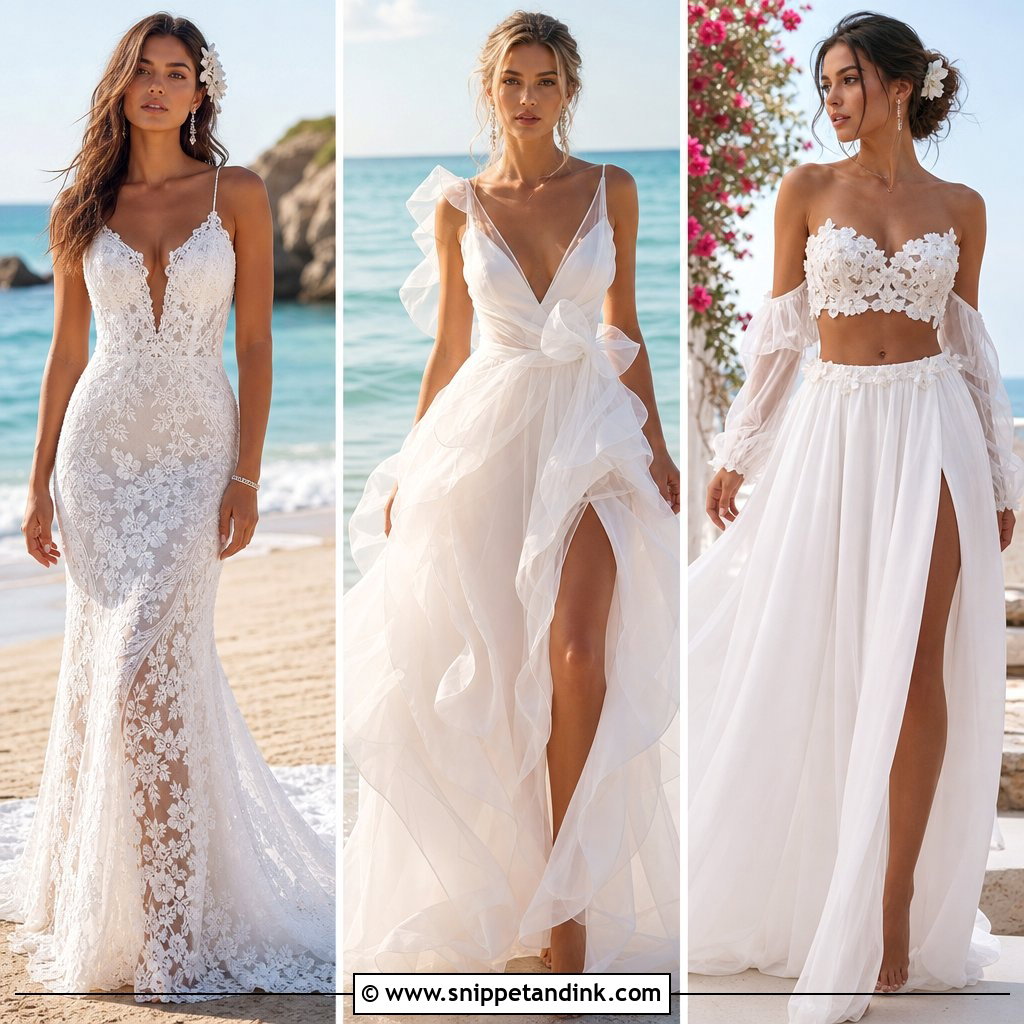
Separates give you a real advantage on a hot day: the skirt and top can be fitted independently, and you can walk freely. I always check the overlap point when the bride sits and raises her arms, because the gap between top and skirt widens more than you’d think. A supportive lace or crepe top with a high-waisted chiffon skirt is the combination I trust most. Gold flat sandals, small hoops and a fine layered bracelet keep it contemporary. A high ponytail or braided bun suits the shape, and a pearl headband works if a veil feels too traditional.
11. One-Shoulder Beach Wedding Dress
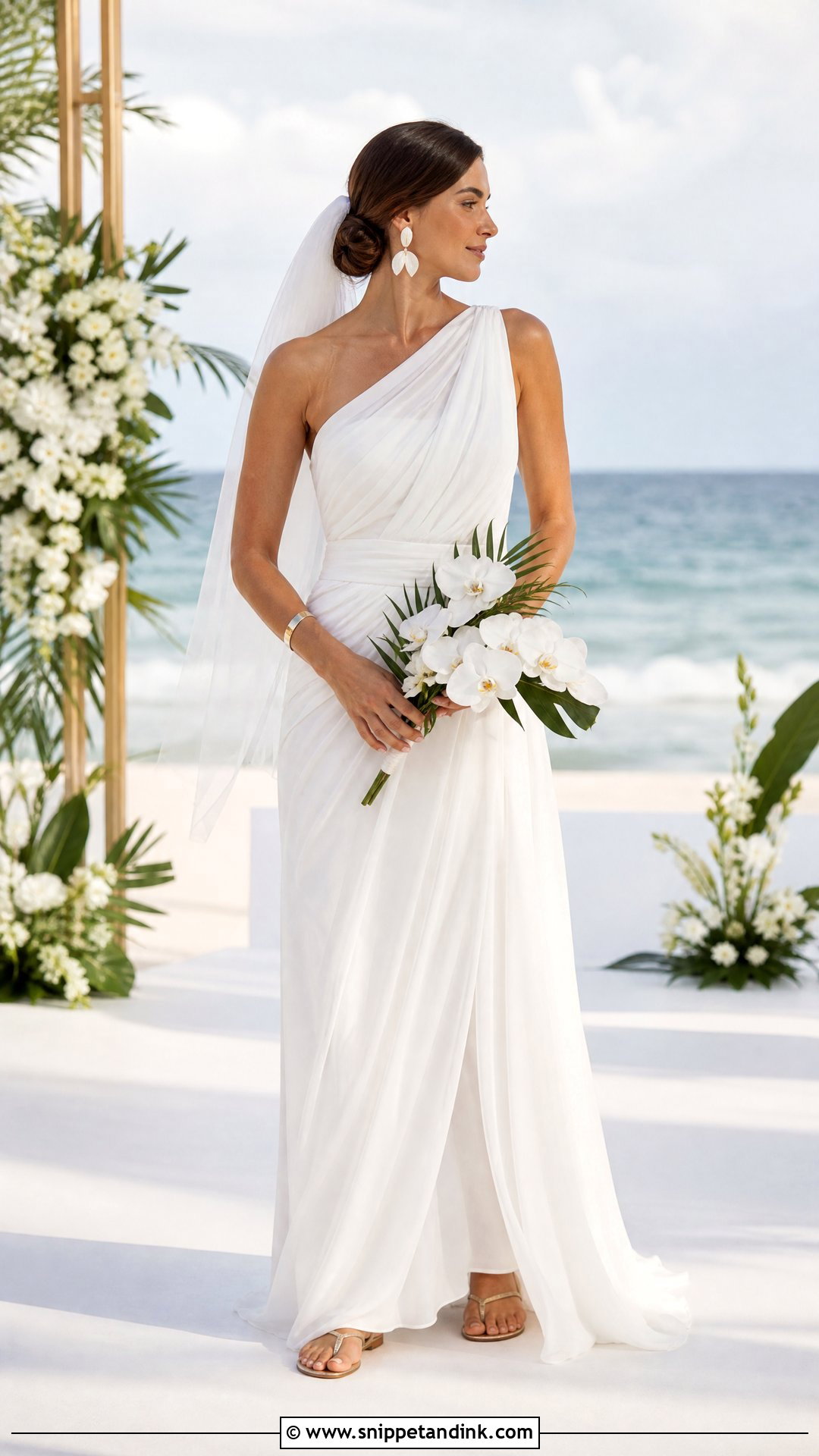
One shoulder carries the whole bodice on a one-shoulder gown, so it has to be fitted firmly or the dress slides toward the bare side every time you move. I’d ask the seamstress to add a small clear elastic or a hidden bra strap anchor. Lightweight crepe or chiffon with soft drape across the bodice keeps the line clean. Skip the necklace; sculptural earrings do enough. Sweep your hair into a low bun on the uncovered side so the asymmetry stays readable, and anchor a simple veil beneath the bun where the breeze can lift it without pulling.
12. Square Neck Beach Wedding Dress
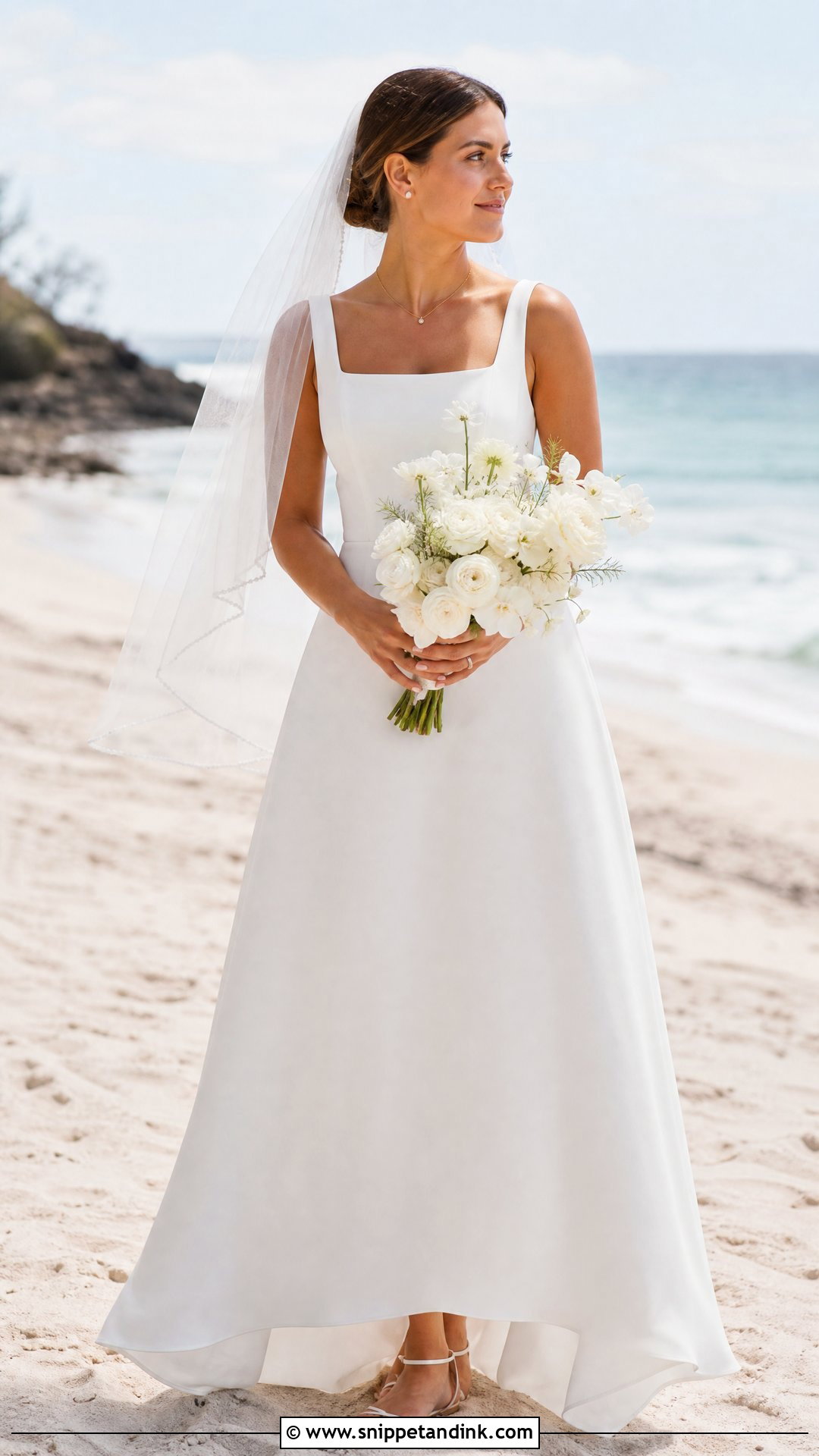
A square neckline frames the collarbone while the wide straps carry the support, so you get structure without feeling exposed. It suits both a minimalist bride and a romantic one, depending on the fabric. In crepe or smooth satin it looks architectural; with subtle lace panels or small floral appliqués on the bodice it softens. Pearl studs, a delicate pendant that sits inside the neckline, and flat ankle-strap sandals keep it balanced. A center-parted low bun gives a fingertip veil a solid base, and a plain white bouquet won’t compete with the straight lines.
13. Lightweight Mermaid Beach Wedding Dress
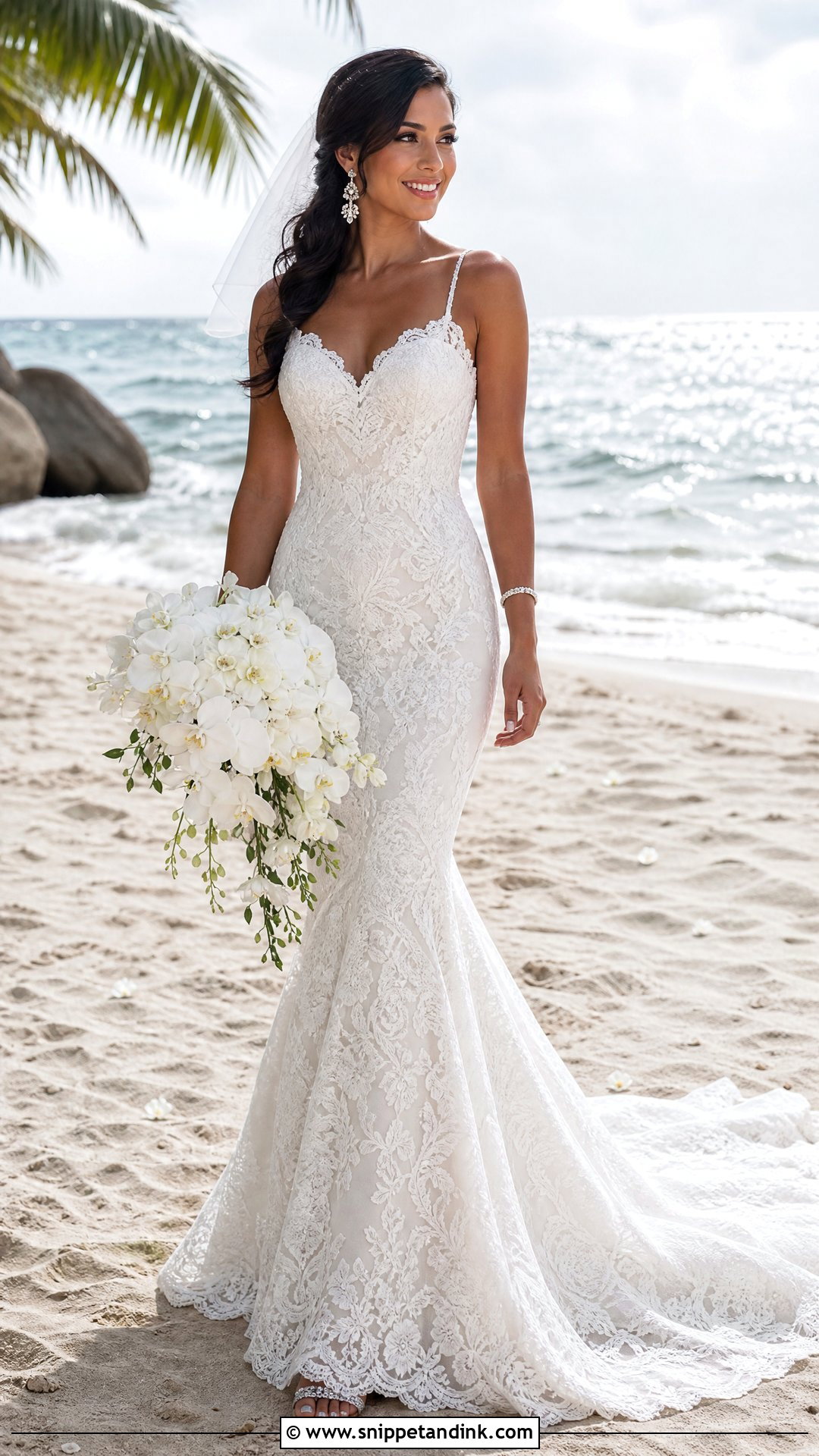
Most mermaid gowns are wrong for sand, and I say that to brides plainly. Layered skirts, rigid corsetry and long trains turn every step into a struggle. The version that does work is cut in stretch crepe or soft lace, follows the body to the knee and then opens into a gentle flare rather than a dramatic fishtail. Do a walking test in the actual shoes on uneven ground. Supportive flat sandals, statement earrings, a low ponytail and a short veil keep it controlled, and an elongated bouquet of orchids or trailing greenery matches the long line.
14. Floral Appliqué Beach Wedding Dress
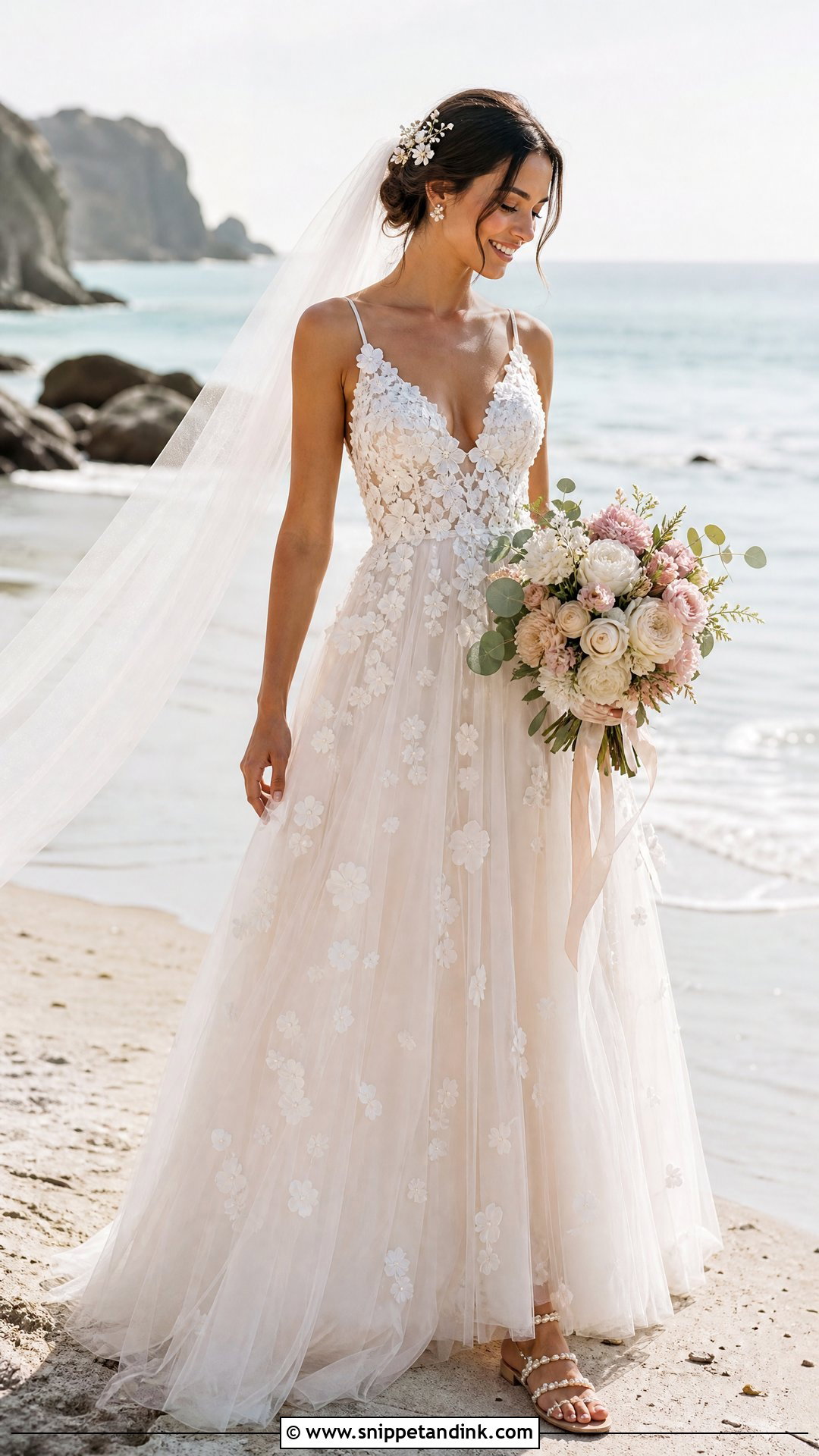
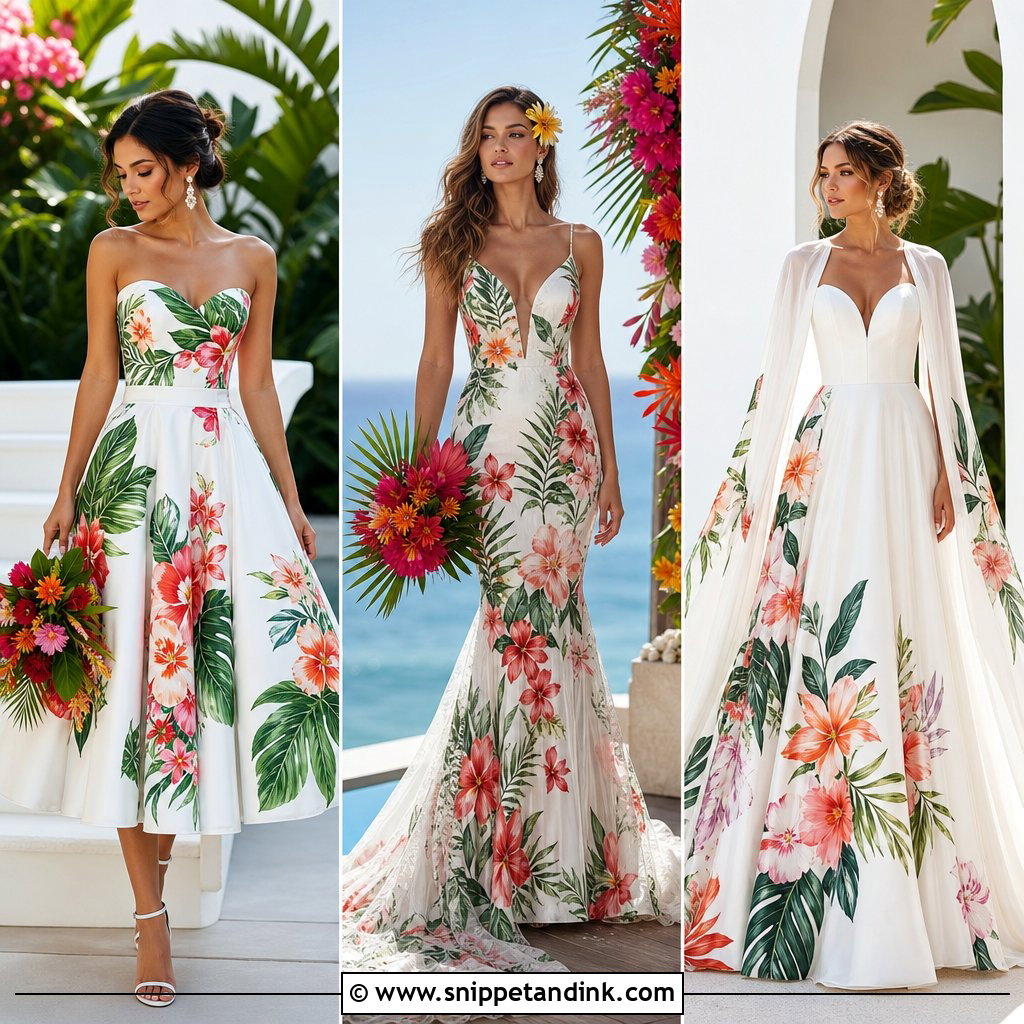
Three-dimensional appliqués look best scattered over lightweight tulle, not packed across the whole gown. Dense appliqué work adds weight and catches sand in every petal edge, which you’ll be brushing out of the skirt for days. An A-line with thin straps, short sleeves or an illusion neckline keeps the design soft. Let the dress carry the detail: simple pearl sandals, studs and one small bracelet. Loose waves or a textured low bun with a few floral pins echo the flowers, and a plain sheer veil keeps the head from competing with the bodice.
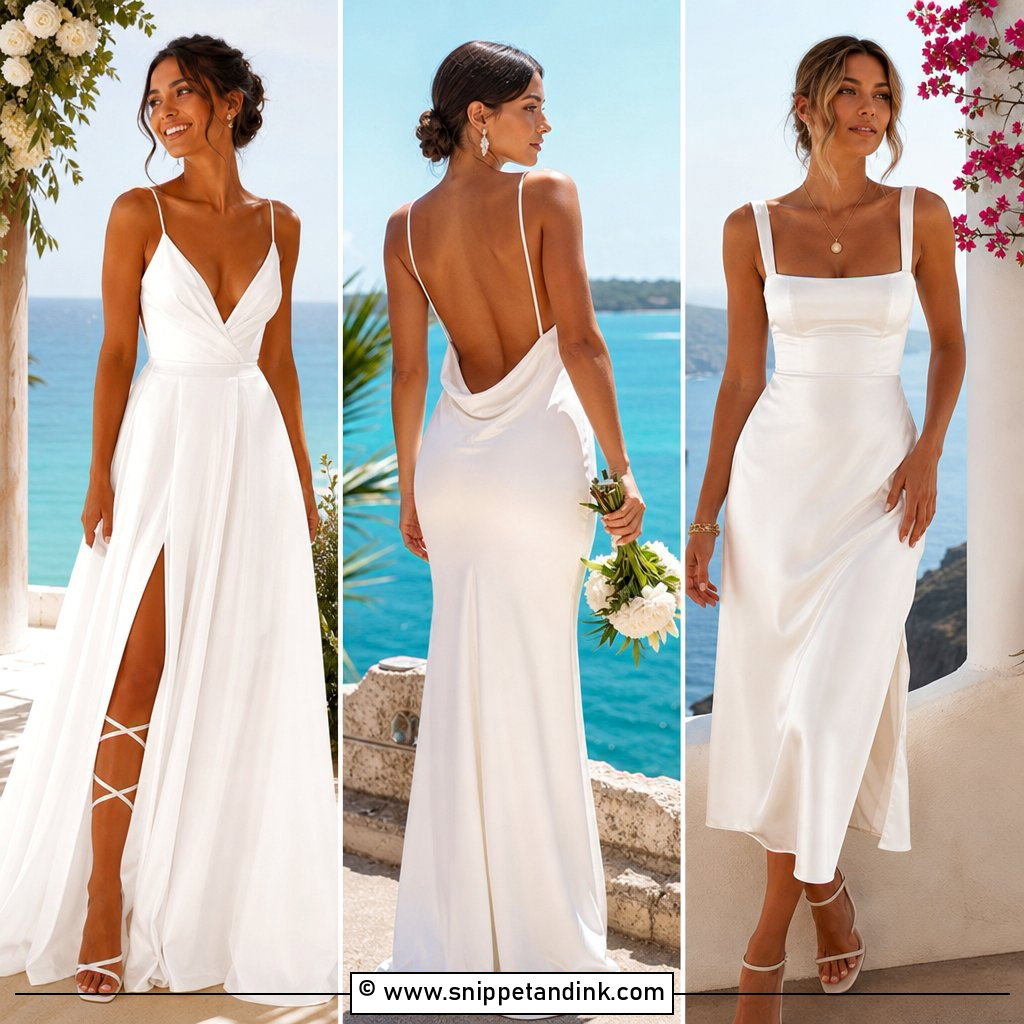
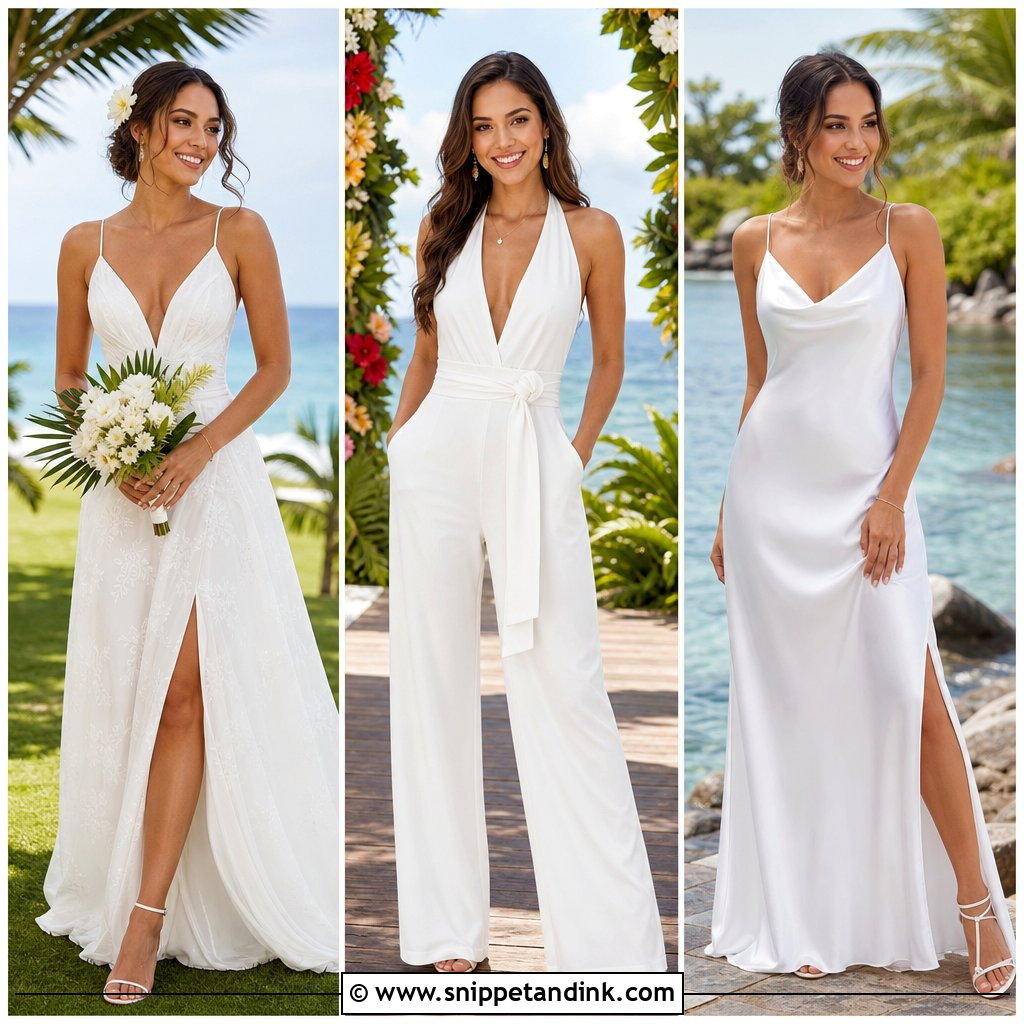
15. Sheer Long-Sleeve Beach Wedding Dress
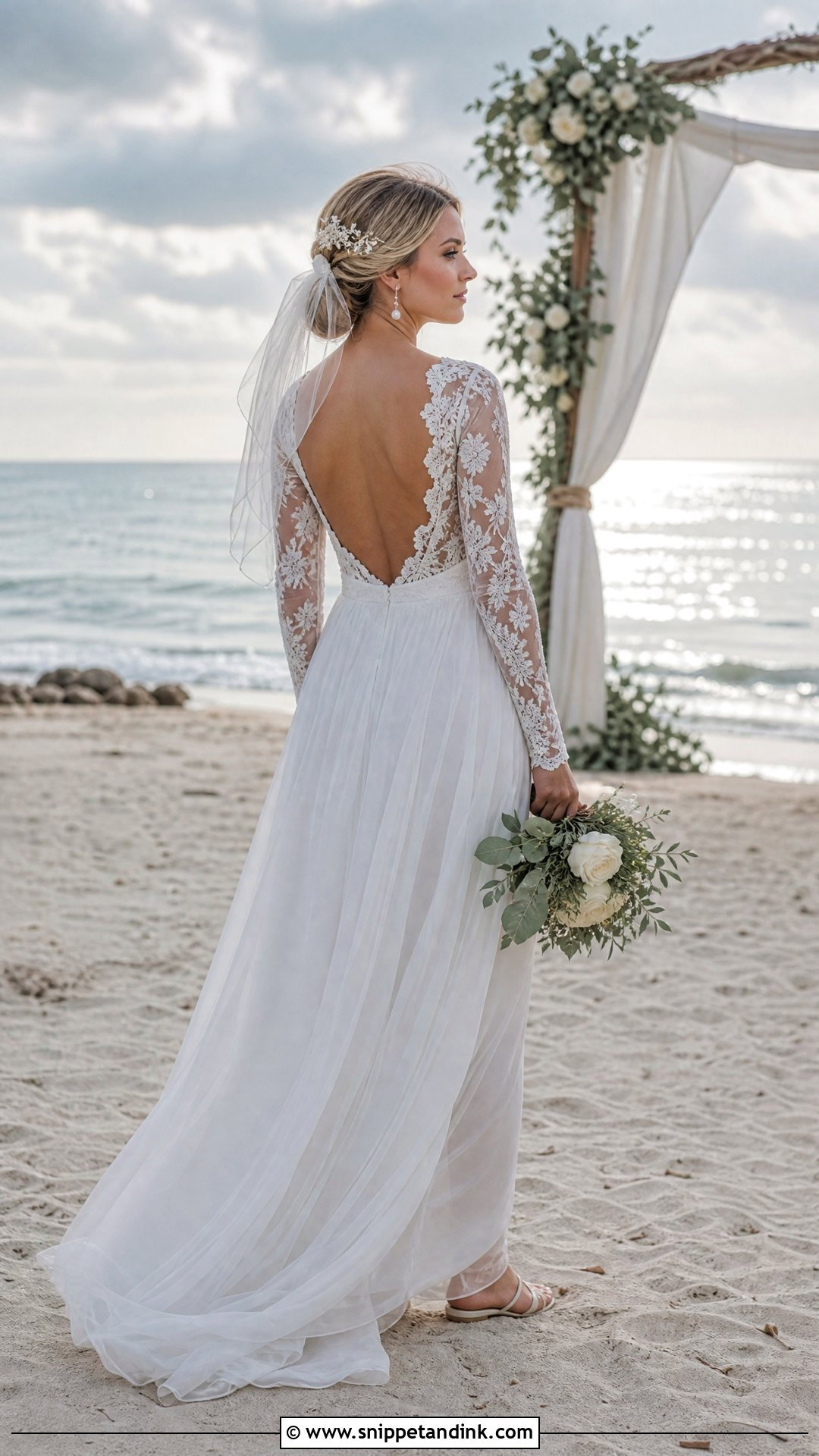
Long sleeves can still suit a summer beach ceremony when they’re cut from sheer lace, fine mesh or tulle. Sleeve fit is where I’m strictest: the cuff should allow you to bend your elbow fully, and the armhole should be high enough to lift your arms without the bodice rising. An airy lining and open back stop it feeling covered up. I’d suggest this for an early morning ceremony, a sunset wedding or a cooler coast. A light cathedral veil can work on a firm resort walkway; on sand, go shorter.
16. Plus-Size A-Line Beach Wedding Dress
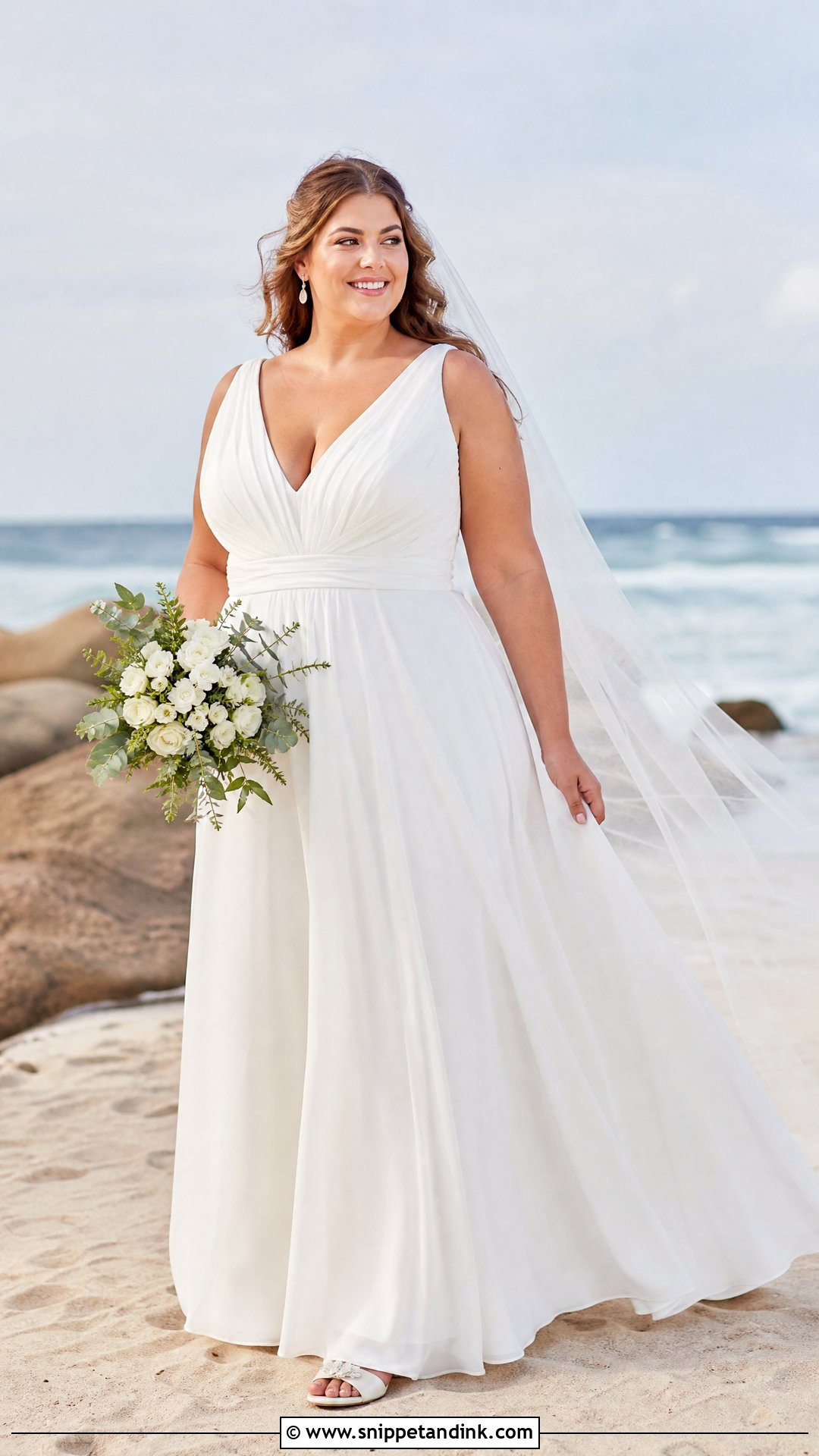
A well-fitted A-line suits many plus-size brides because the skirt skims rather than clings. Supportive straps, a defined waist and a V-neck, square or wrapped bodice give definition while leaving room for proper undergarments. Don’t accept a poor fit just because the sample was the wrong size; a good seamstress can rebuild the bodice so it moves with you. On a hot beach I always recommend anti-chafing shorts under the skirt and waterproof makeup. Cushioned flat sandals, drop earrings, a secure low updo and a bouquet scaled to your frame finish it.
17. Minimalist Crepe Beach Wedding Dress
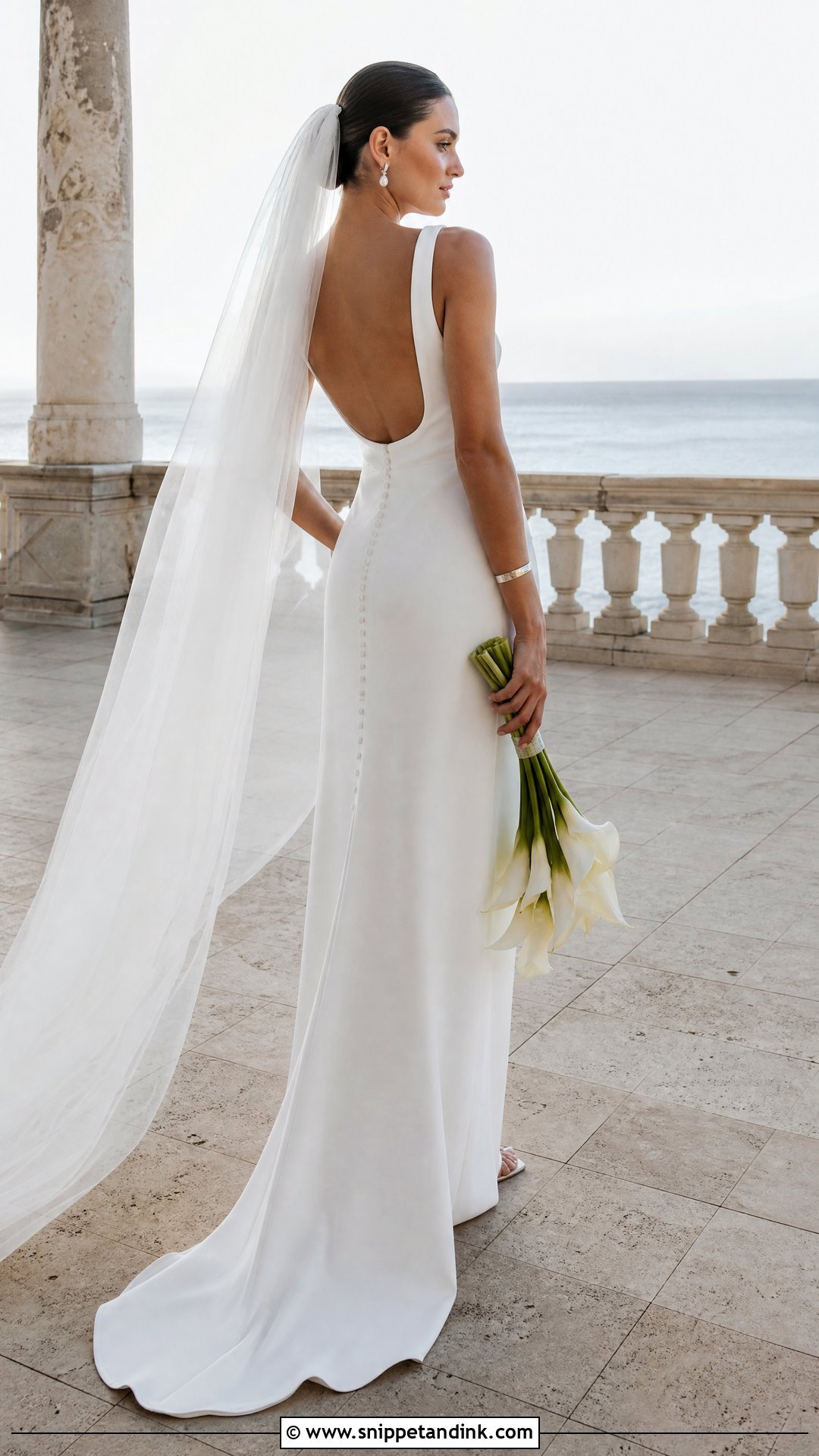
Plain crepe looks sharp against a busy ocean backdrop, but it hides nothing: a crooked seam or a poorly pressed hem shows immediately. That’s why I ask for a steaming on the morning itself rather than trusting the dress to arrive crease-free. A crepe column or A-line with a softly fitted bodice and short sweep train is the shape to look for, with covered buttons or an open back for interest. Modern pearl earrings, a slim cuff, square-toe flats and a sleek low bun keep it consistent, and a single-flower bouquet of calla lilies suits the restraint.
18. High-Low Beach Wedding Dress
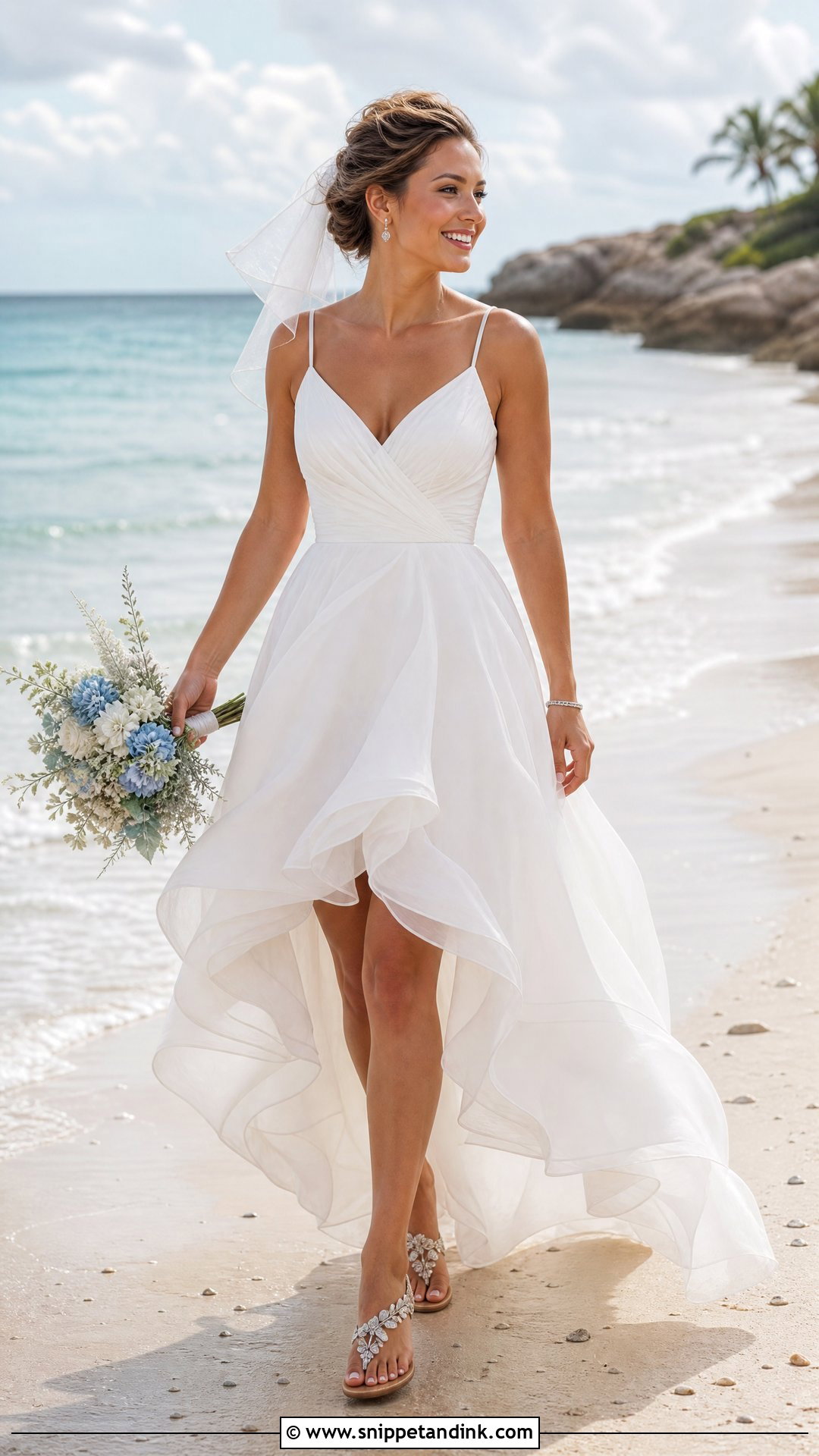
A high-low hem keeps the front clear of the sand while the back still gives you a skirt to photograph. I’d choose a gentle drop between front and back; a very short front with a long tail tends to look like two different dresses. Chiffon, organza and soft tulle move well in this cut. Because your shoes will be fully visible, they matter more than usual: embellished flats or low block-heel sandals are worth the extra thought. A half-up style with a short veil keeps the back of the skirt uncovered, and peach or pale blue flowers suit the summery line.
19. Ruffled Beach Wedding Dress
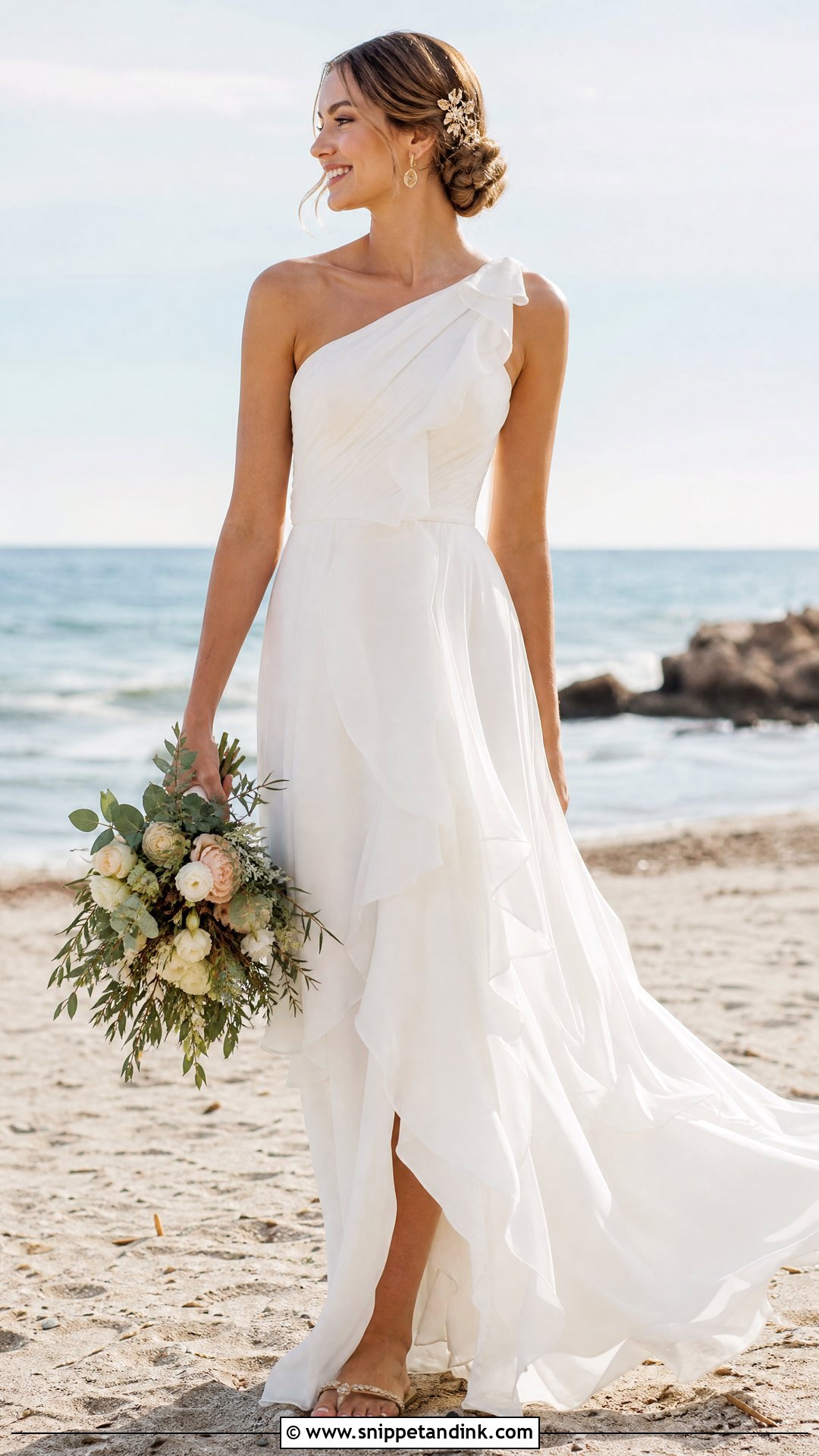
Ruffles look best on the beach when they’re placed with intent, along the neckline, the hem or one side of the skirt, rather than tiered from top to bottom. Too many layers in a breeze start to look like a lampshade. A one-shoulder ruffle, a flutter sleeve or a cascading chiffon skirt gives movement without the bulk. Keep shoes and jewelry quiet, a loose bun or braided updo with a small comb, and a slightly asymmetrical bouquet that echoes the ruffle line.
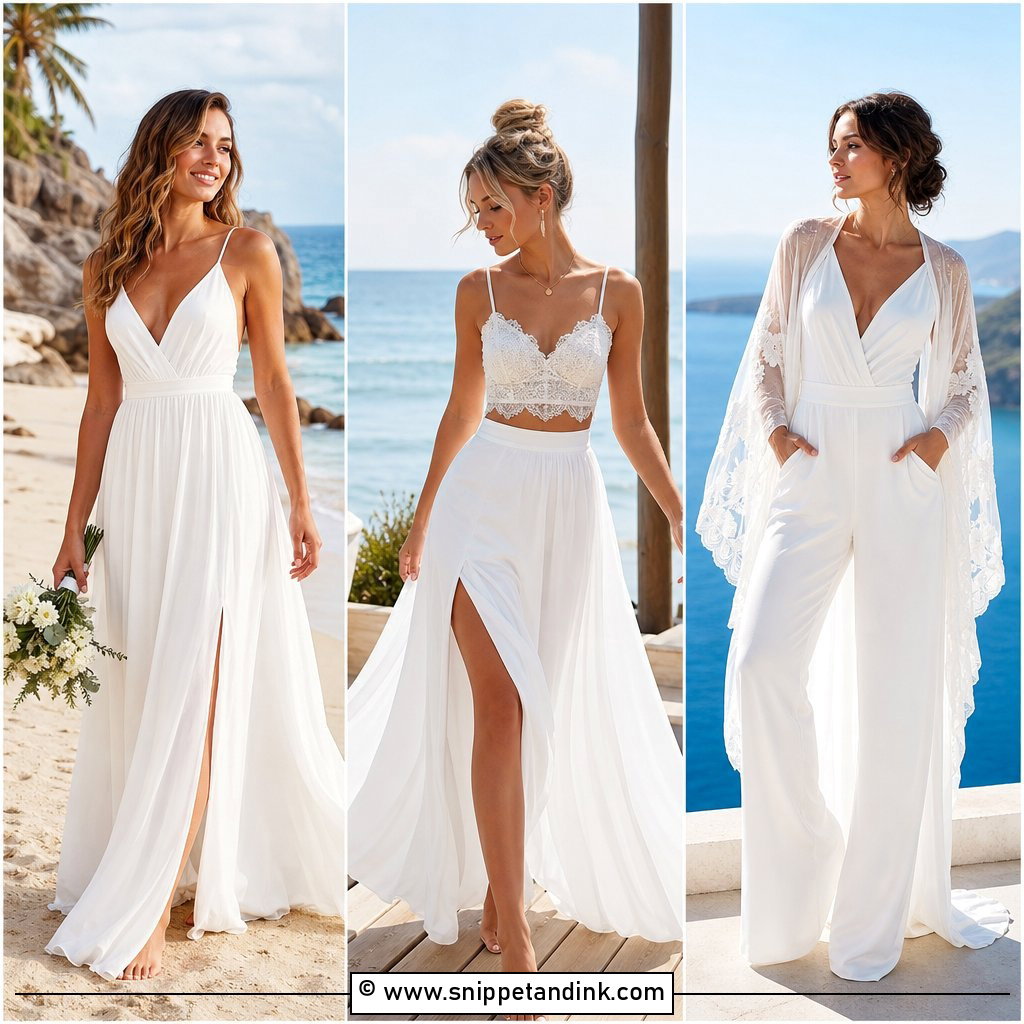
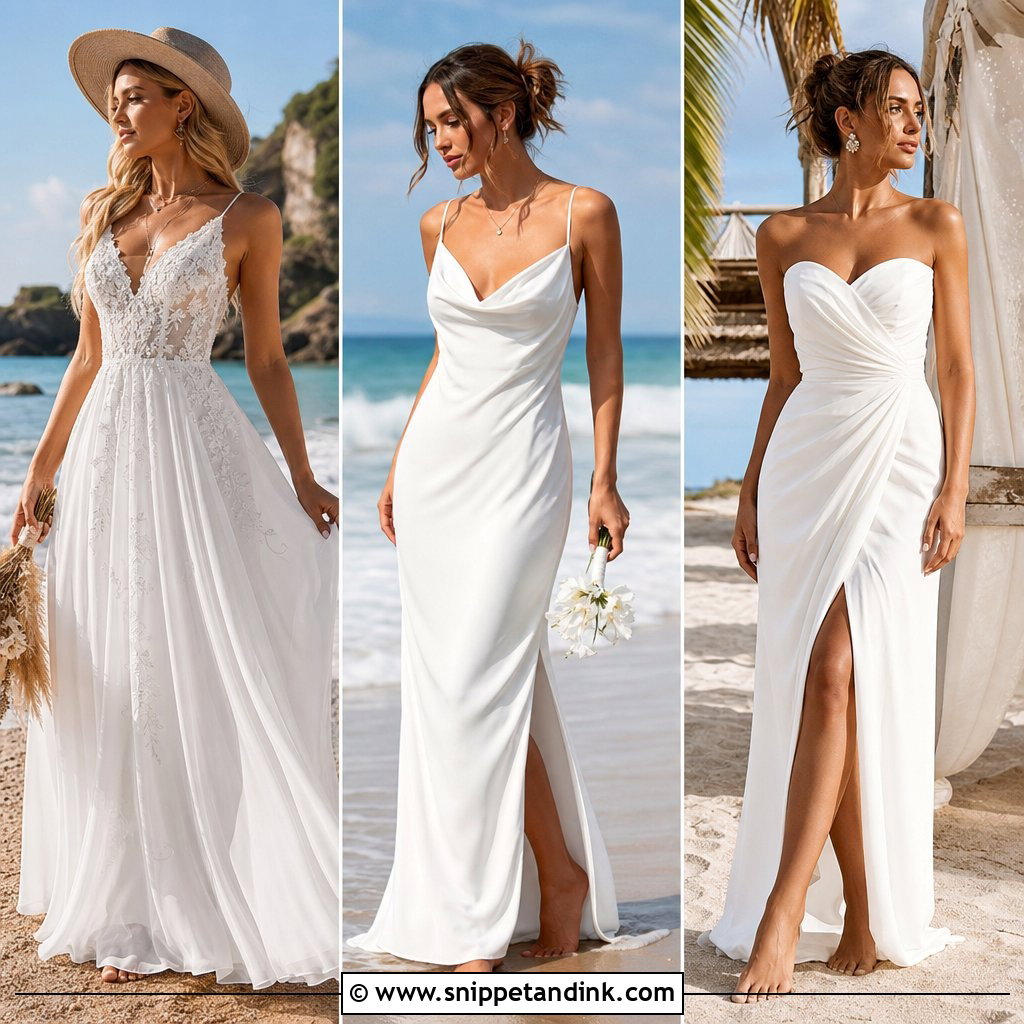
20. Detachable Overskirt Beach Wedding Dress
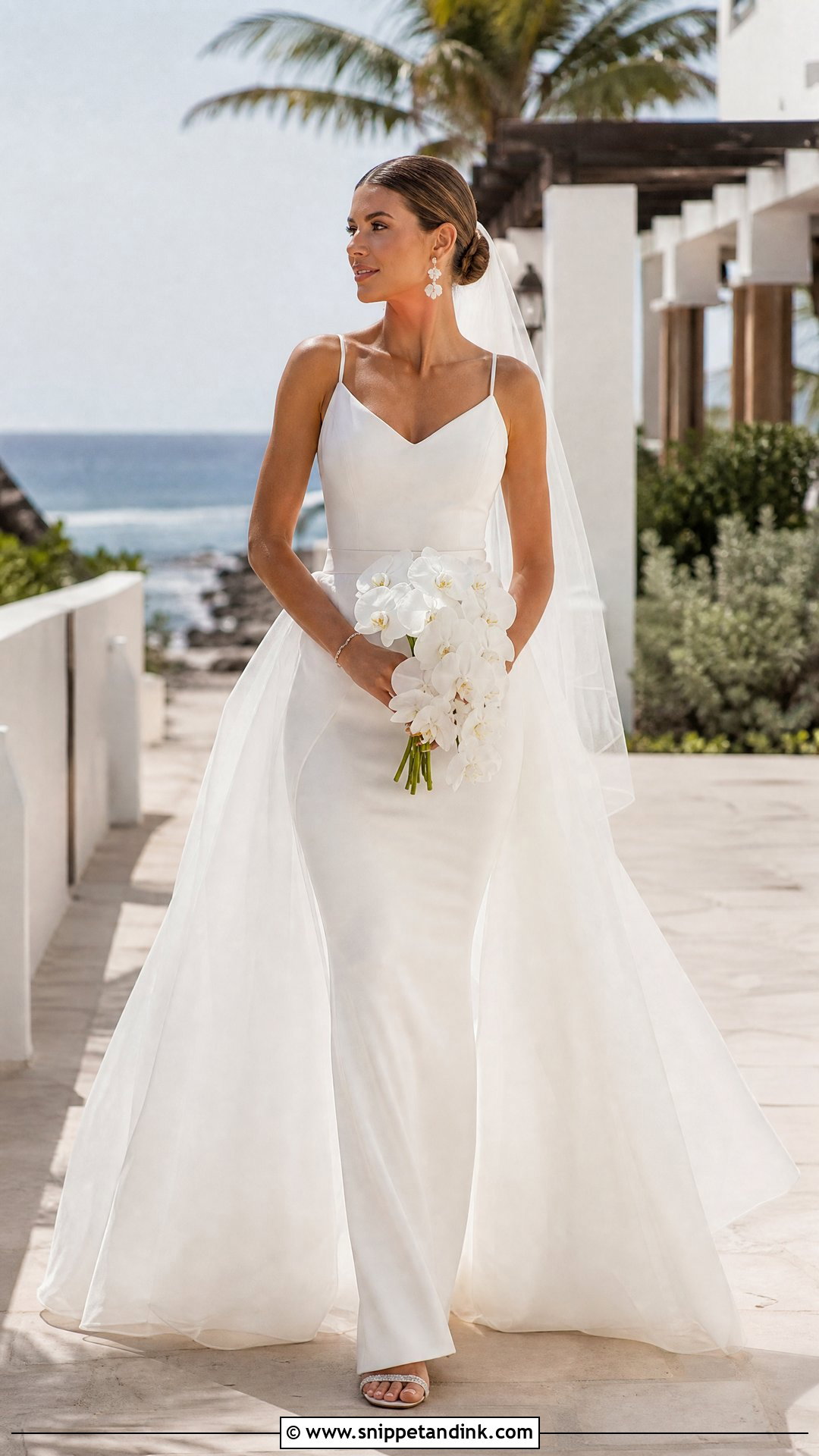
Two looks, one dress: a fitted crepe, lace or satin column for dancing, with a lightweight chiffon or organza overskirt on top for the ceremony. The overskirt gives volume and movement in photos, then comes off before dinner. The attachment is the part I always test. Hidden snaps or a hook-and-bar waistband release quickly; a long row of buttons does not, and nobody wants a ten-minute unbuttoning while guests wait. Flat sandals, statement earrings and a polished bun work for both versions, and the bun makes veil removal easy.
Hem Length, Bustles and Getting Sand Out Afterward
Hem length on a beach is different from hem length in a church. I usually ask for the front to finish about half an inch higher than usual, measured in the shoes you’ll actually wear, because sand gives way under your feet and the dress sinks with you. If you plan to go barefoot, have the hem taken up barefoot, not in the heels from your shopping trip.
Ask for a bustle even on a short train
A sweep train looks small until it has dragged across wet sand for the processional and first photos. A simple bustle with two or three hidden loops lifts it for the reception, and it takes a bridesmaid less than a minute if she has practised once at the final fitting.
Rinsing salt before it sets
Salt water dries into pale tide lines on chiffon and silk. Don’t scrub it on the night. Shake out loose sand outdoors, hang the gown by its loops so the hem is clear of the floor, and take it to a specialist gown cleaner within a few weeks, mentioning the salt and any sunscreen marks so they can pre-treat them. Spray sunscreen near the bodice is the stain I see most often, so apply it before you dress, never after.
Your Shoreline Decides the Final Gown
The right summer beach gown is the one you forget you’re wearing by the time the speeches start. From flowing chiffon and modern slips to lace, two-piece sets and convertible overskirts, every option above works on sand once the fabric and fit are right. Before you commit, stand on the ceremony surface if you can, check the wind forecast for that time of day, and walk the distance from the car to the aisle in your real shoes. Then do a full rehearsal at home with the undergarments, veil, jewelry and hairstyle together. The details that seem small in a fitting room are the ones that matter most outdoors.
You'll Like These Ideas:


Leave a Reply