
A fitted gown with clean lines hides nothing, and that is exactly why I love dressing brides in one. With no lace or beading to distract, the cut and the tailoring carry the whole look. Column, sheath, slip, mermaid and fit-and-flare shapes each follow the body differently, and the fabric, whether smooth satin, soft crepe or a quiet lace, decides how forgiving the result is. Below are 25 simple fitted dresses I’d put in front of a bride, with the shoes, veil and jewelry I’d pair with each and what I check at the fitting. Some suit a ballroom, some a courthouse, and a few let you dance in comfort.
Size Charts, Seam Allowance and Why Bridal Sizes Run Small
The first shock at most bridal appointments is the size on the label. Bridal sizing usually runs smaller than high-street sizing, often by one or two sizes, so ignore the number and go by the measurements.
For a fitted gown, that matters more than for a ball gown. A full skirt hides a size of difference at the hip; a sheath or mermaid shows every centimeter. I order by the largest of your three measurements, bust, waist or hip, because a tailor can take a gown in quite a lot but can only let it out by whatever seam allowance the maker left, which is often very little.
- Get measured by the boutique, in the underwear you plan to wear, not over a padded bra.
- Ask how much seam allowance the gown has at the side seams. Some makers leave generous allowance for alterations; many leave almost none.
- Stretch crepe and jersey tolerate a small change in size; satin and Mikado do not, and they show old stitch holes if let out.
- If you expect your body to change before the wedding, say so at ordering. It changes which size I’d recommend.
1. Simple Satin Mermaid Wedding Dress
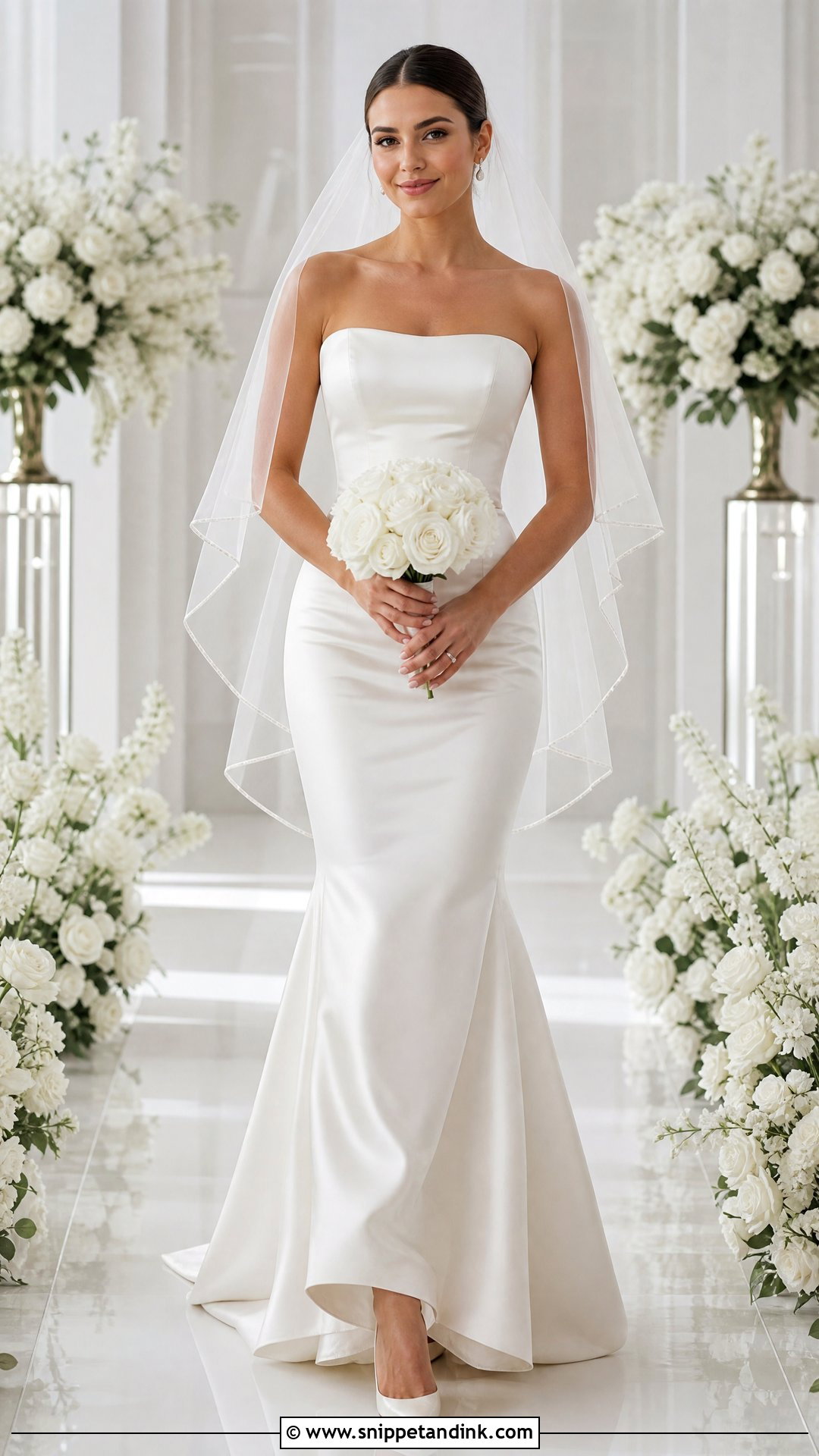
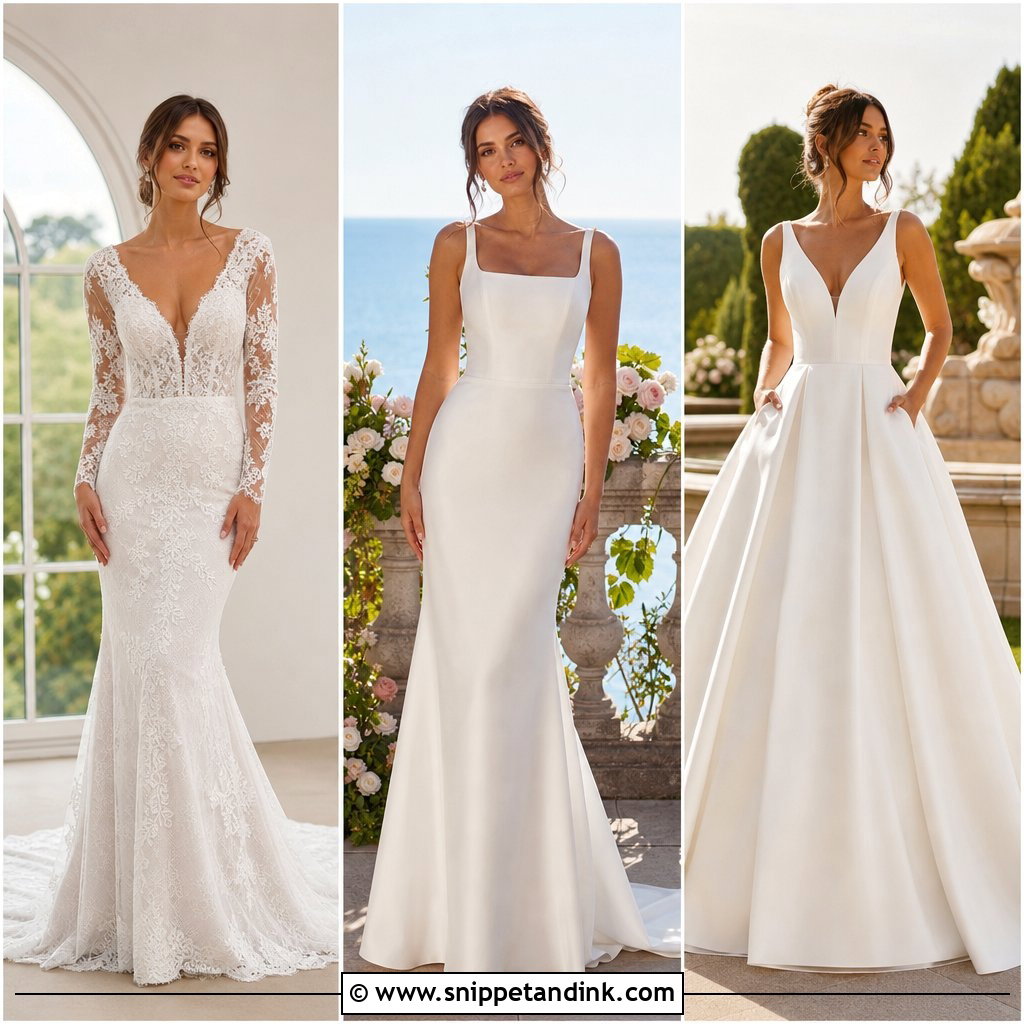
Satin mermaids look dramatic on the hanger and only work when the flare starts in the right place. The gown should hug the bust, waist and hips and open at or just below the knee; set the flare too low and you’ll waddle. Medium-weight satin holds the shape without lace or beading. A softly curved strapless neckline keeps it modern, and covered buttons down the back add a traditional note. Pointed ivory pumps, small pearl earrings and a raw-edge fingertip veil suit it, with a compact bouquet to balance the skirt. I always have a bride sit, walk and climb a few stairs in a mermaid before she commits.
2. Simple Crepe Fit And Flare Wedding Dress
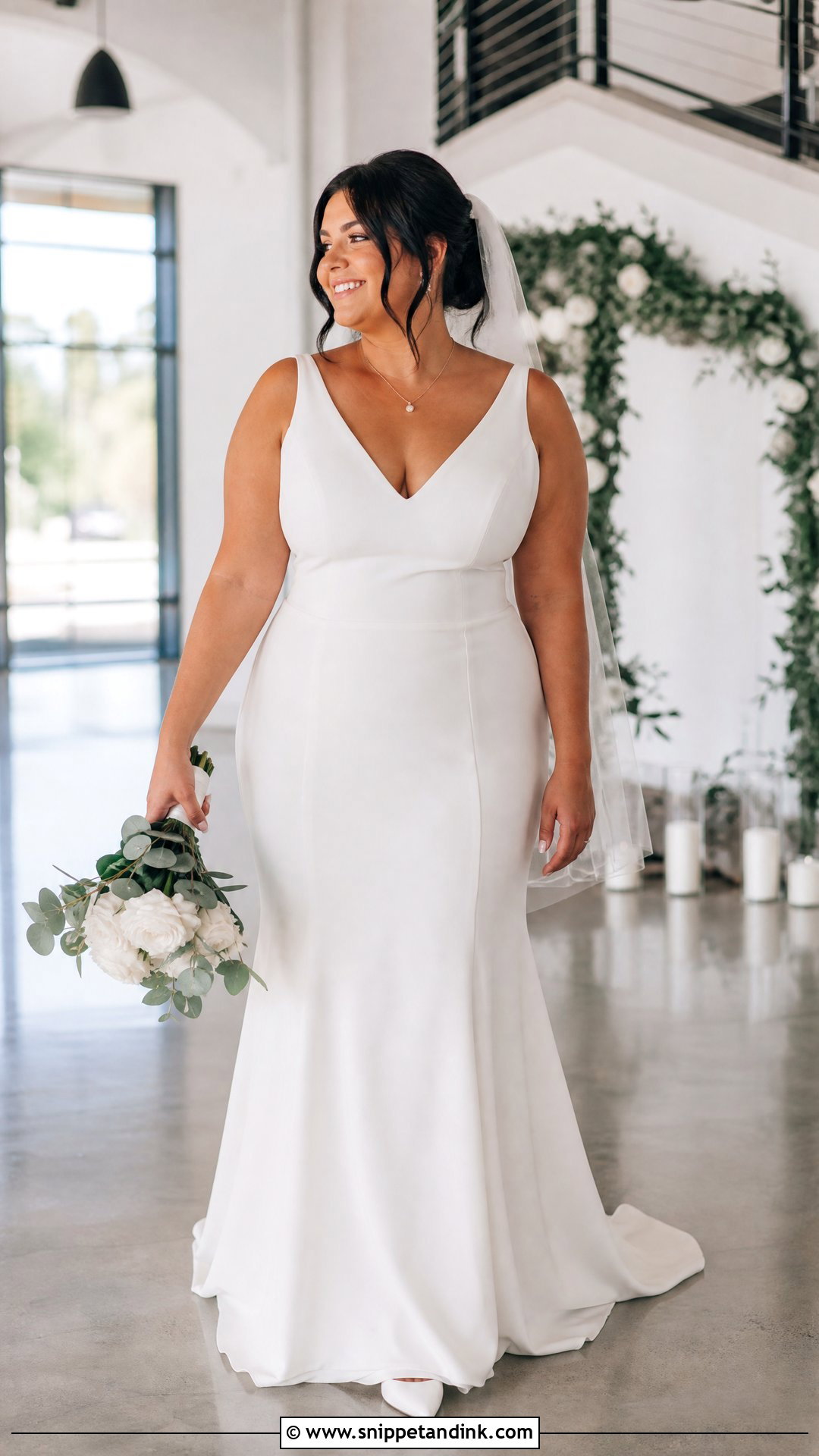
Fit-and-flare in soft crepe is the gown I suggest when a bride likes the mermaid shape but plans to dance. The skirt widens higher, from the hip, so you can walk freely. I look for princess seams shaping the waist instead of visible boning. A clean V-neck lengthens the upper body and wider straps support without a strapless bra. Low pointed heels, a delicate pendant, a chapel-length veil and a simple low bun finish it. Crepe is honest about what’s underneath, so bring your chosen underwear to every fitting and ask whether the bodice and skirt are lined.
3. Simple Square Neck Sheath Wedding Dress
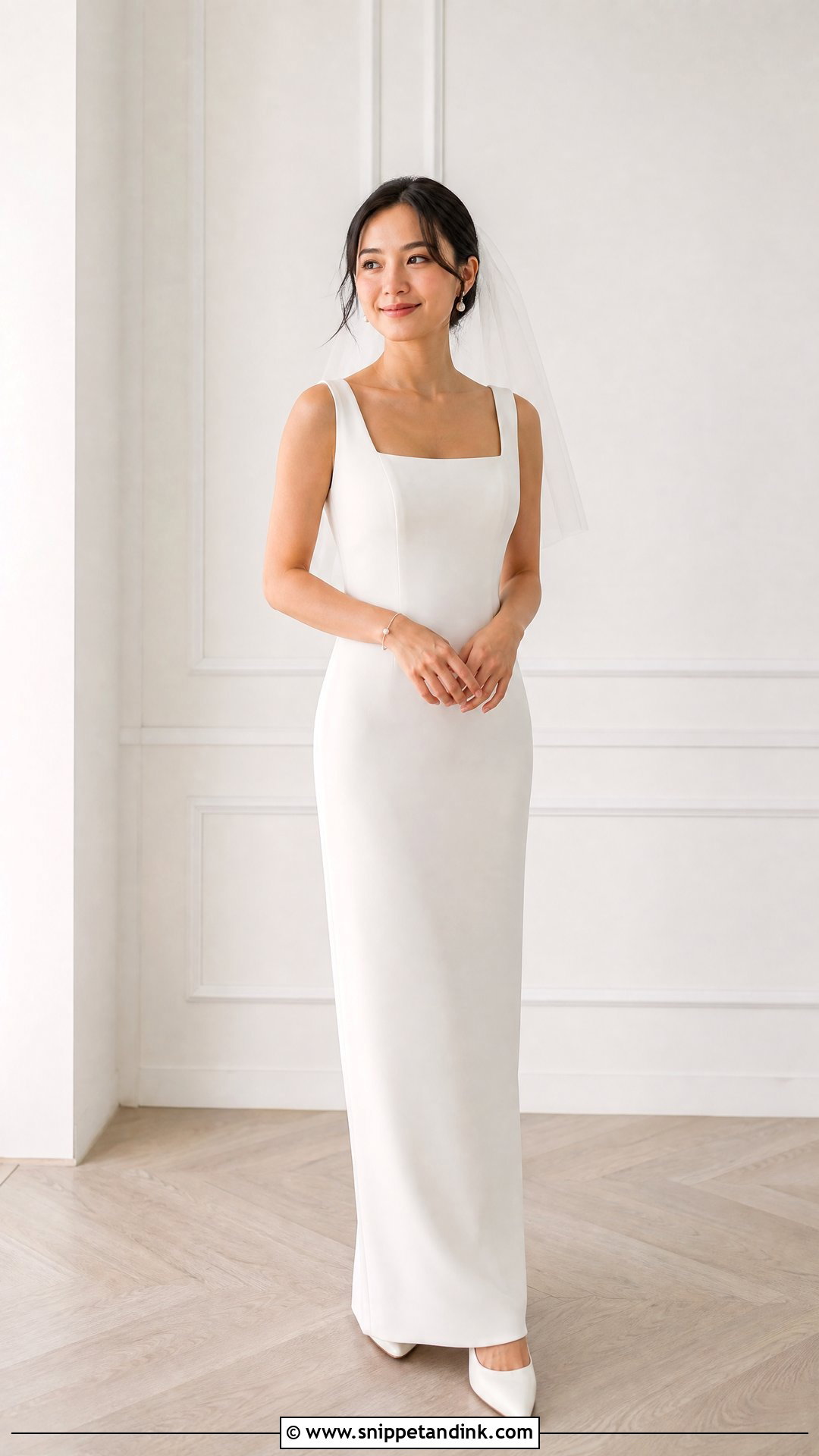
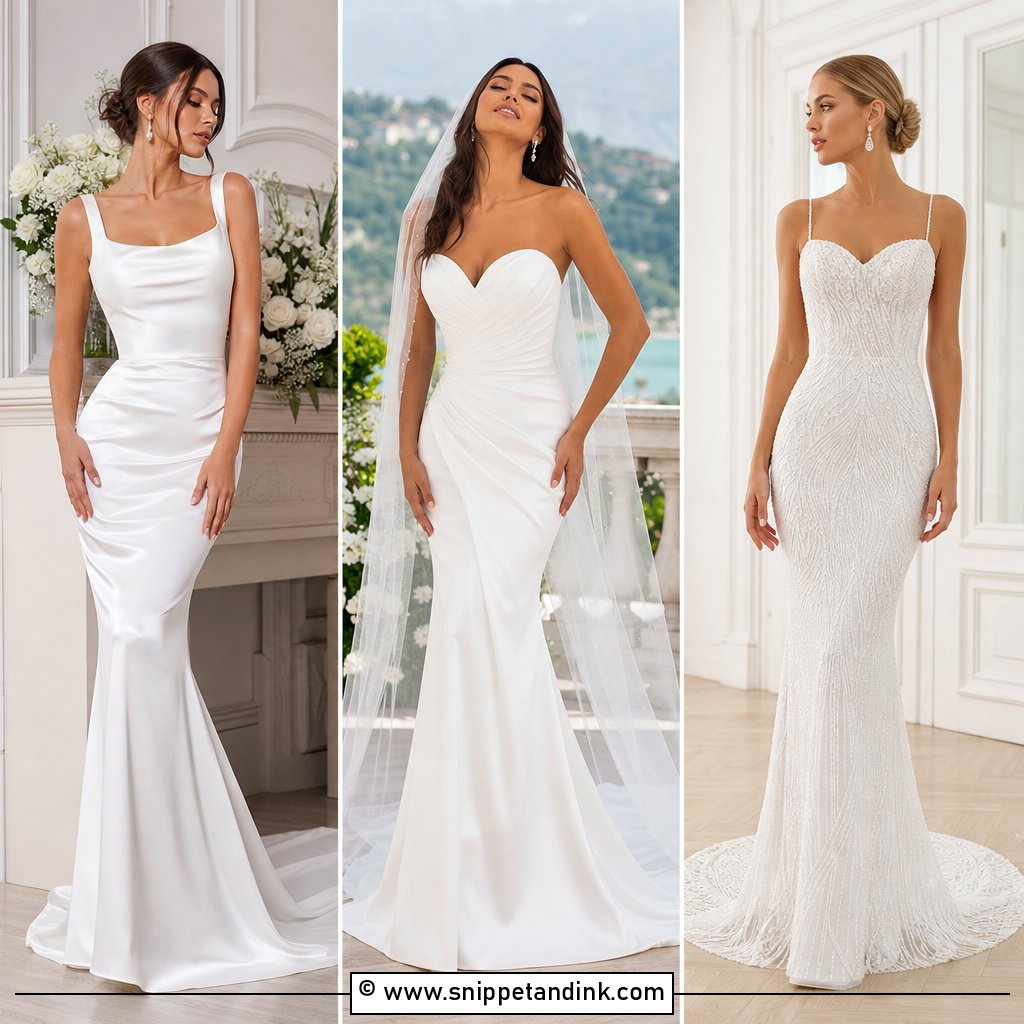
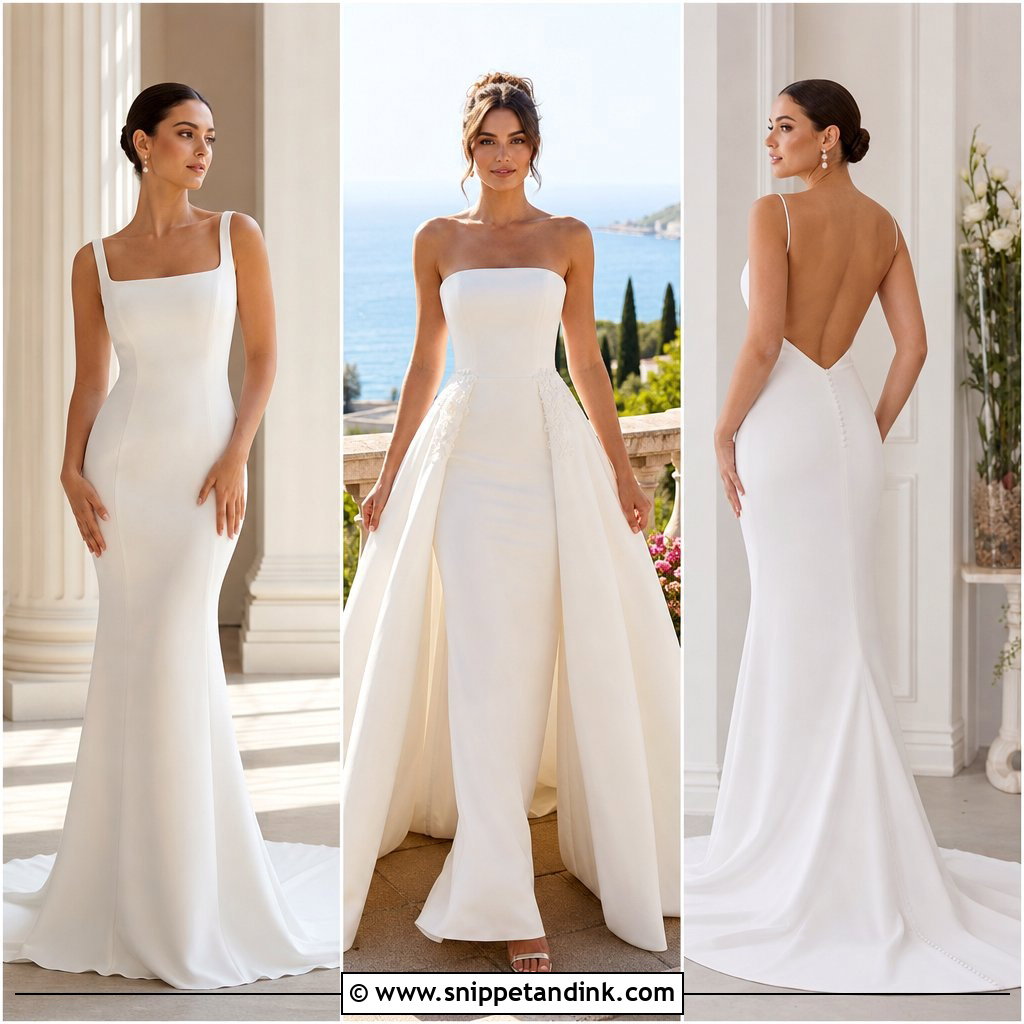
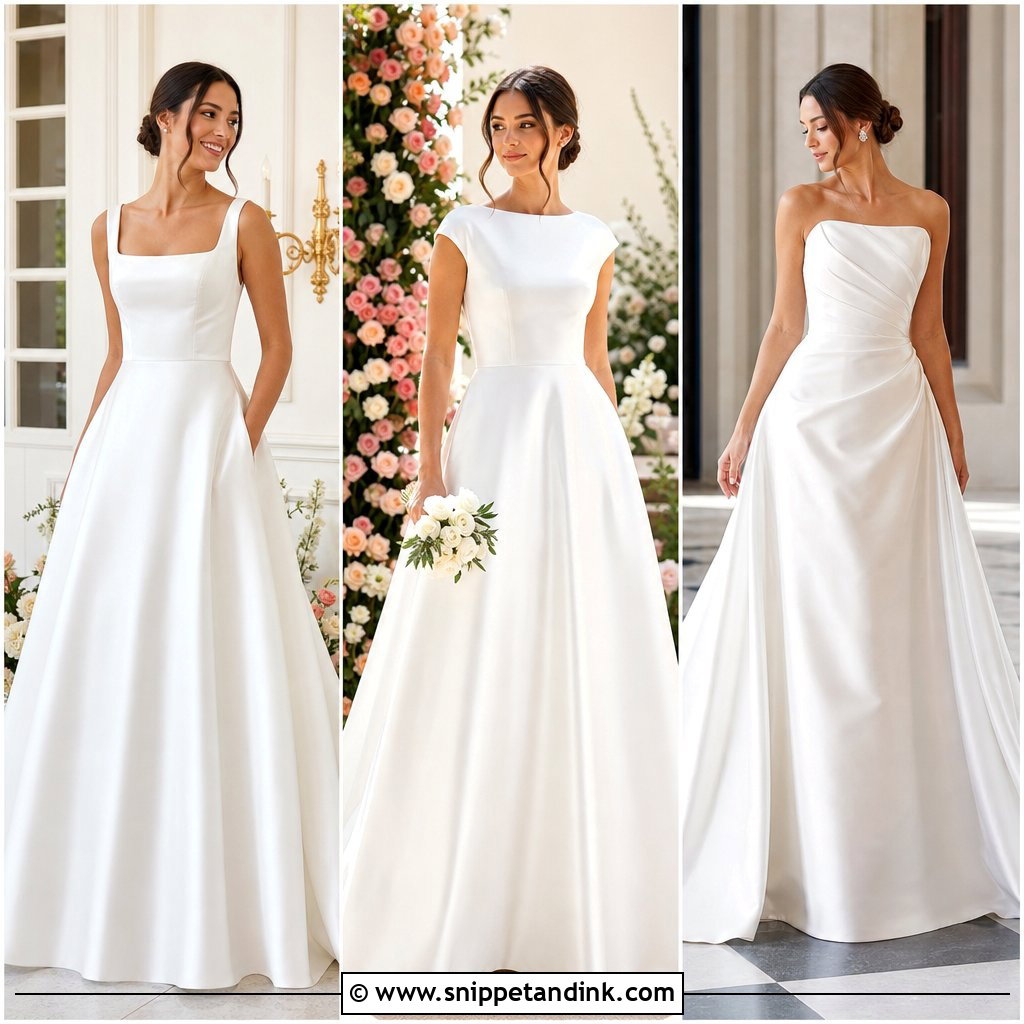
A square-neck sheath wedding dress has an architectural crispness that suits a minimalist bride. The straight neckline frames the collarbone and the narrow skirt follows the body with no flare. On a petite frame I’d narrow the neckline slightly, and thicker straps add support for a fuller bust. Smooth crepe, satin-backed fabric or structured jersey all hold the shape. Pearl drops, a slim bracelet and slingbacks suit it, with a short tulle veil or a polished low ponytail. Have the tailor take in waist and hips separately; most brides are a different size in each.
4. Simple Strapless Column Wedding Dress
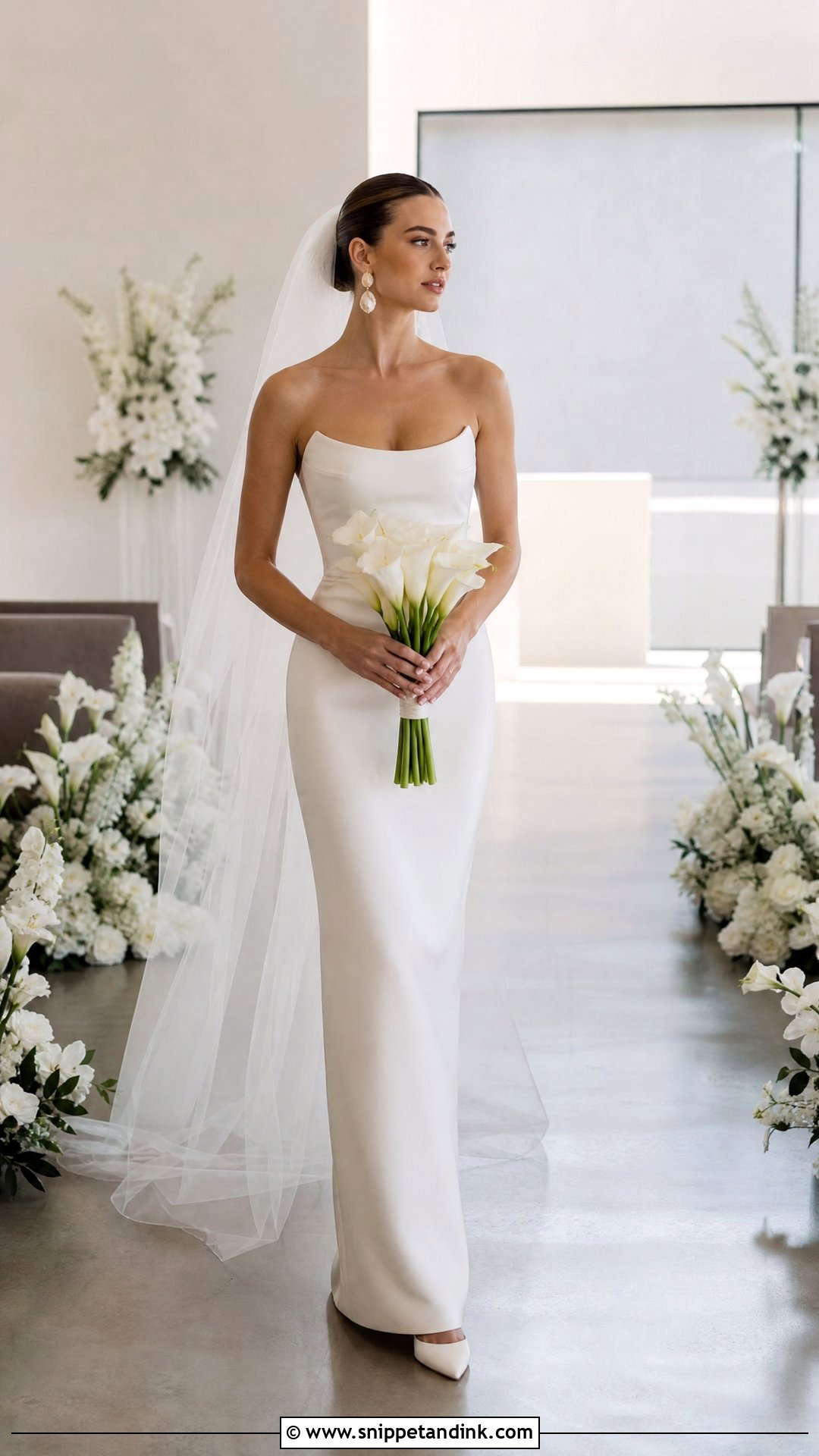
Few gowns look as clean as a strapless column. The straight skirt lengthens the whole body and the fitted bodice gives definition. A straight or softly scooped neckline keeps it understated, and a folded edge adds interest without any decoration. Structured satin, Mikado or a heavier crepe will hold the line from every angle. Here the inner construction matters more than anything visible. A strapless bodice should grip the waist, not the bust, so it stays up without constant tugging; I test that by having the bride raise her arms, sit and walk briskly. Pointed pumps, sculptural earrings and a slim bouquet finish it, with a cathedral veil for drama or a short one for ease.
5. Simple Cowl Neck Slip Wedding Dress
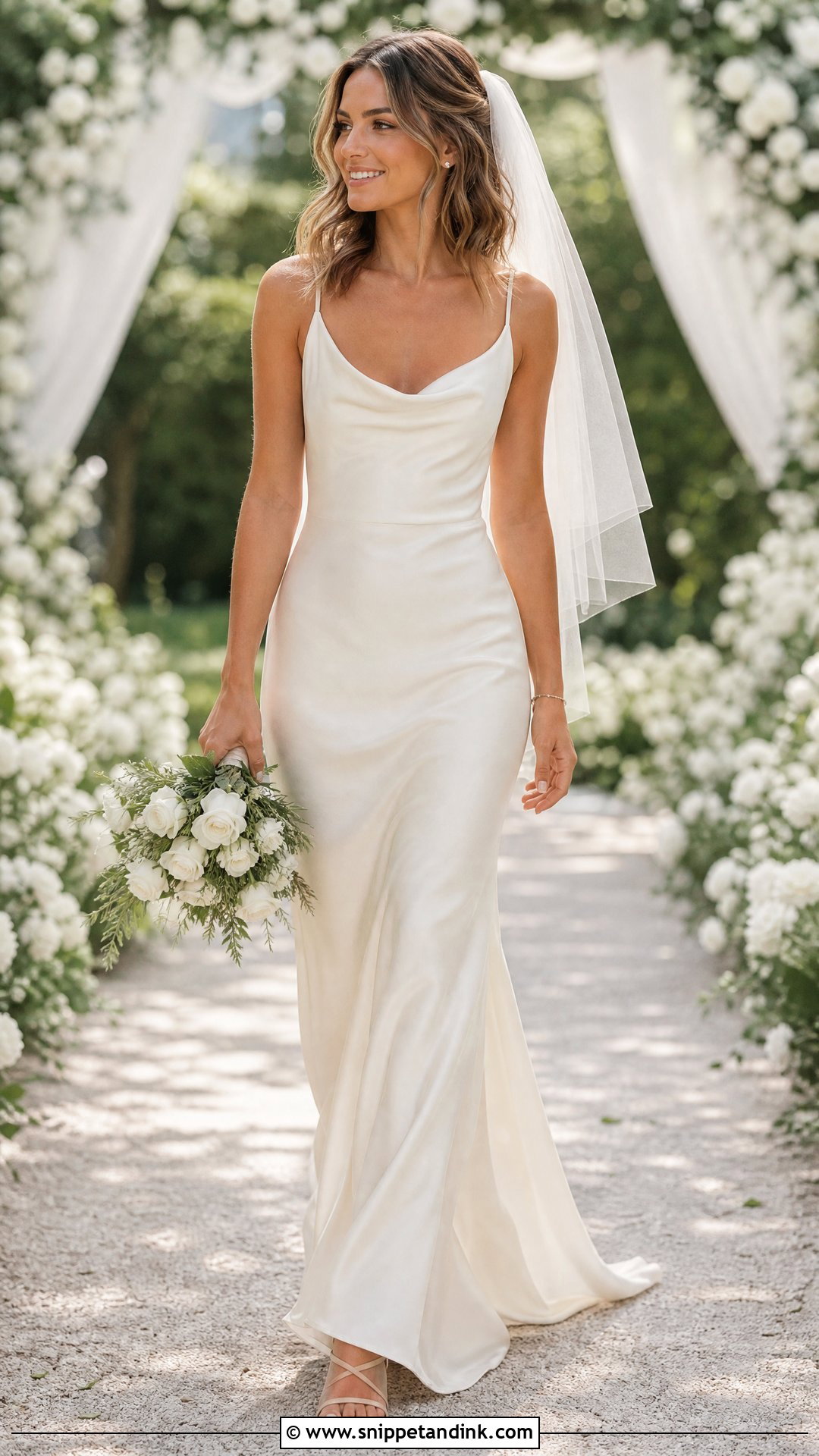
The cowl-neck slip is the most relaxed gown here. The drape gives the neckline gentle movement and a bias-cut skirt skims the waist and hips. Silk satin feels the most luxurious; a satin blend is tougher and kinder on the budget. Bias cuts stretch over time on a hanger, which is why I hang slips folded over the bar until the final fitting. Get the straps tailored to the exact length so the cowl falls where you want it. Strappy heels, small studs and a fine chain bracelet suit it, with loose waves or a sleek bun. Lightweight satin shows every line, so choose underwear with no visible edges and steam the gown just before dressing.
6. Simple Long Sleeve Fitted Wedding Dress
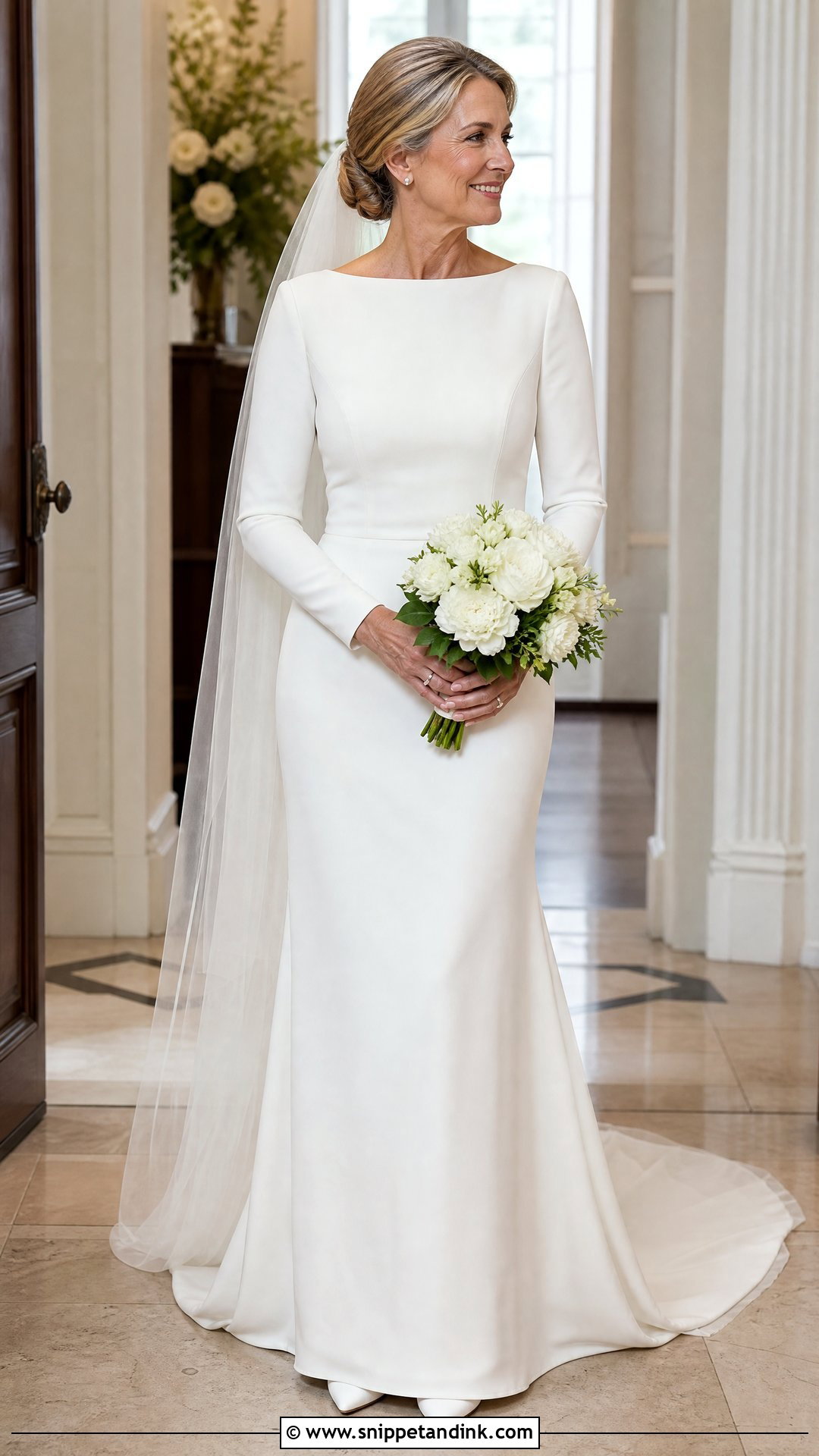
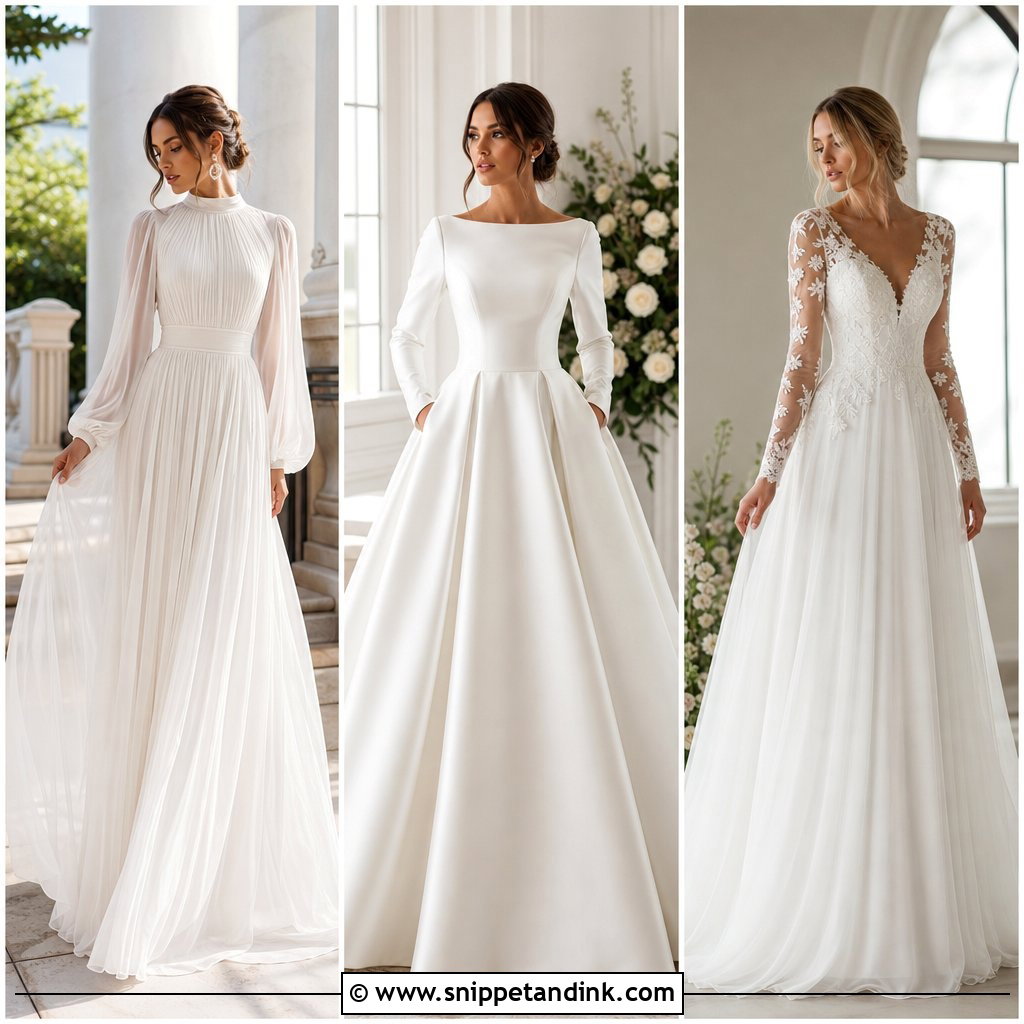
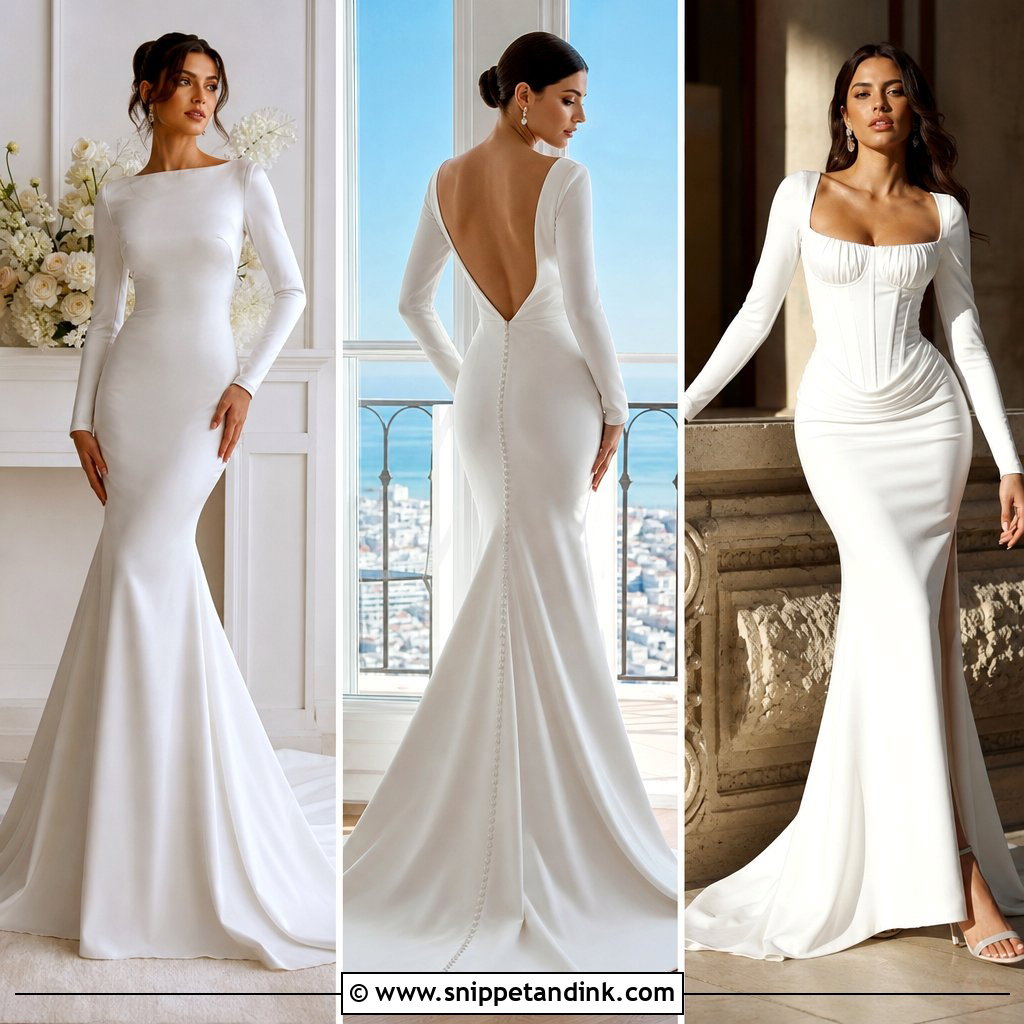
Long sleeves suit cooler weather, formal ceremonies and brides who prefer coverage. Plain stretch crepe, a defined waist and a narrow skirt opening into a modest train keep it simple. A bateau or shallow V-neck stops the covered arms from feeling heavy. The sleeve is where fittings go wrong: if it’s too tight at the elbow or the armhole sits low, the whole bodice lifts when you hug someone. Practice hugging and raising your arms at every appointment. Crystal studs, closed-toe pumps, a clean-edged veil and a low chignon finish it, and a back slit makes walking much easier.
7. Simple Off Shoulder Fitted Wedding Dress
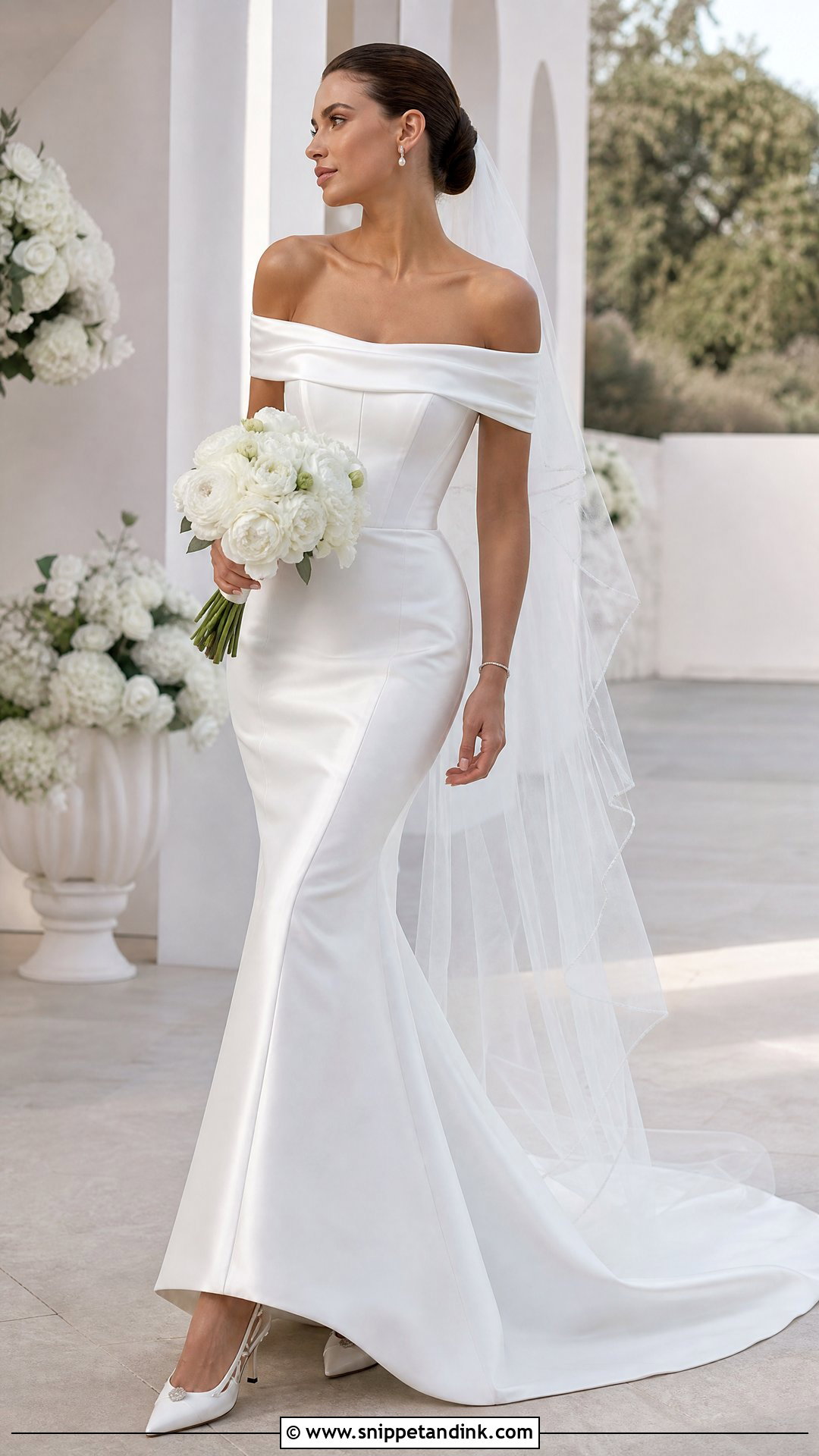
An off-the-shoulder band gives romance without lace or sparkle. I look for a folded satin band anchored to a structured bodice, because a band that floats on its own slides down every time you move. A trumpet or fit-and-flare skirt keeps the proportions balanced. Wear a loose low bun, short drops and a delicate bracelet, and skip the necklace. At the fitting, reach forward and up. If the band pulls, small elastic sections or detachable straps keep it secure without changing the look.
8. Simple Halter Neck Wedding Dress
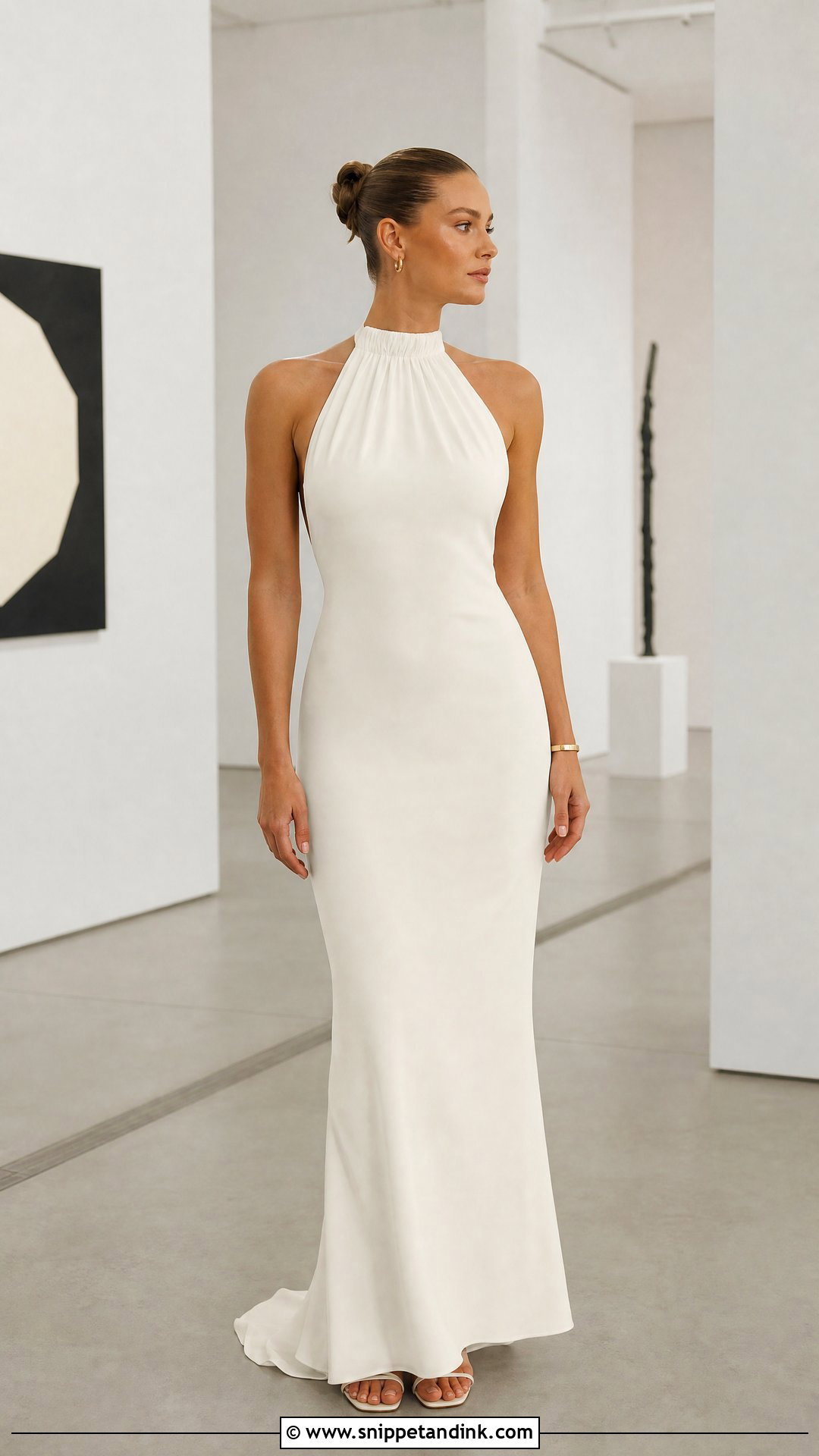
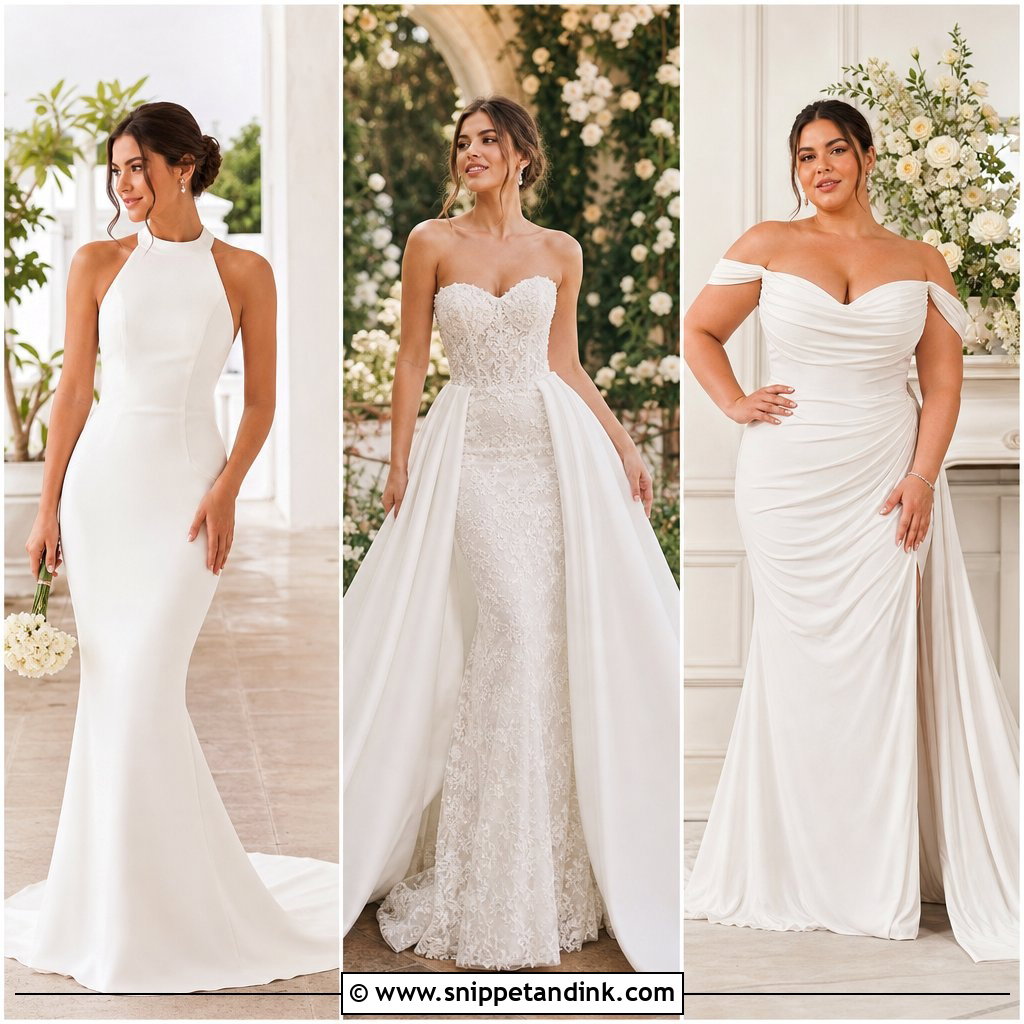
Halters draw the eye upward and frame the shoulders. For a fitted version, a smooth crepe column or a satin sheath with an open back works well; a gathered halter looks softer, a structured one sharper. Small hoops, a slim cuff and minimalist heels are plenty, and I’d choose a plain veil or none at all. The thing to check is the weight on your neck. A gown that hangs entirely from a halter tie aches by the reception, so ask for hidden support in the bodice to share the load.
9. Simple High Neck Fitted Wedding Dress
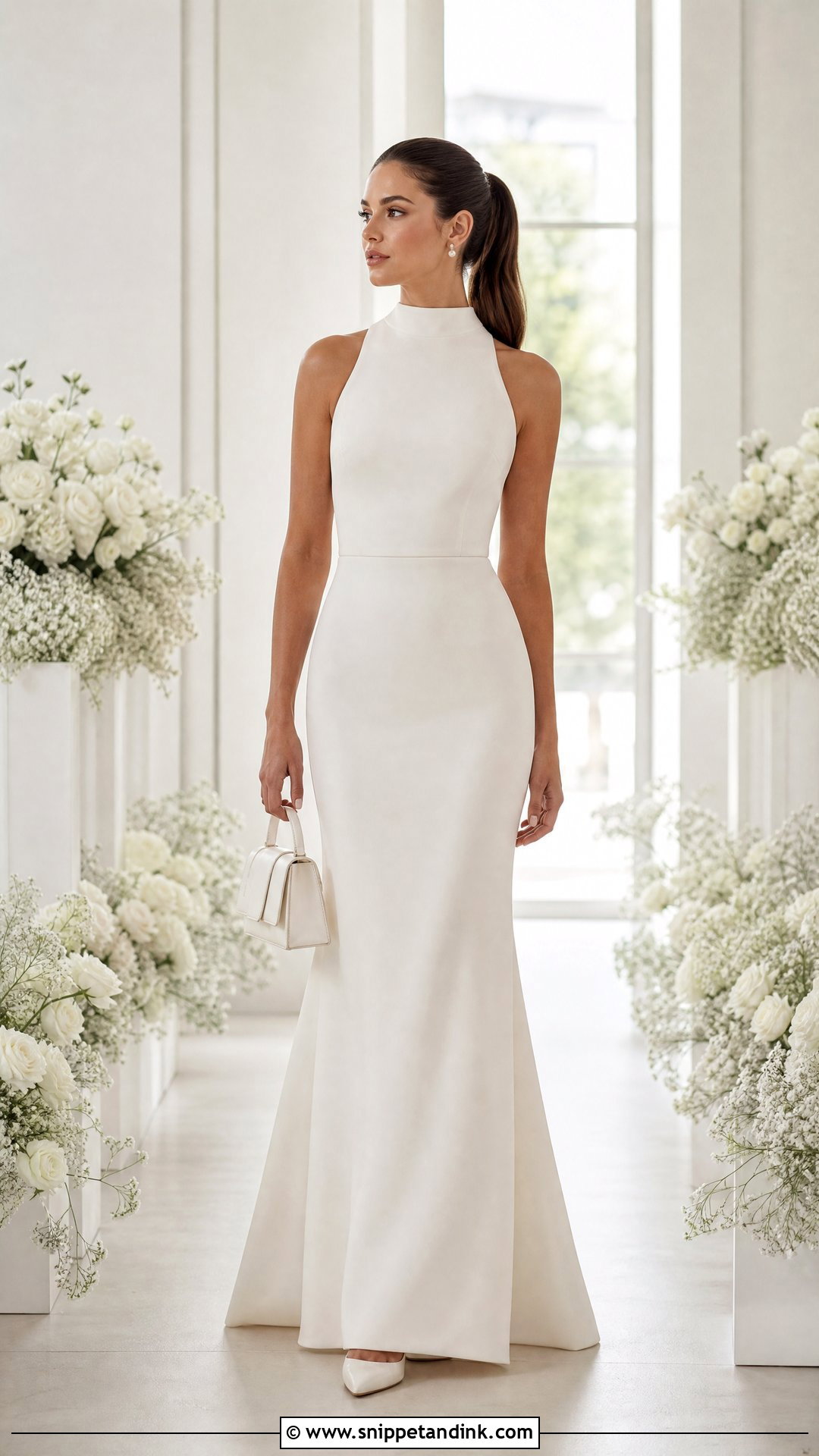
High necks give coverage and still look modern. A mock neck or softly curved neckline in matte crepe, stretch satin or light jersey, sleeveless, with a column or gentle fit-and-flare skirt, balances well. Wear your hair up or short so the neckline shows. A back opening or a row of covered buttons stops it from looking too plain. My two checks: turn your head fully both ways to make sure the collar doesn’t choke, and look at the armholes from the side, where high-neck gowns often reveal the edge of a bra.
10. Simple Scoop Neck Wedding Dress
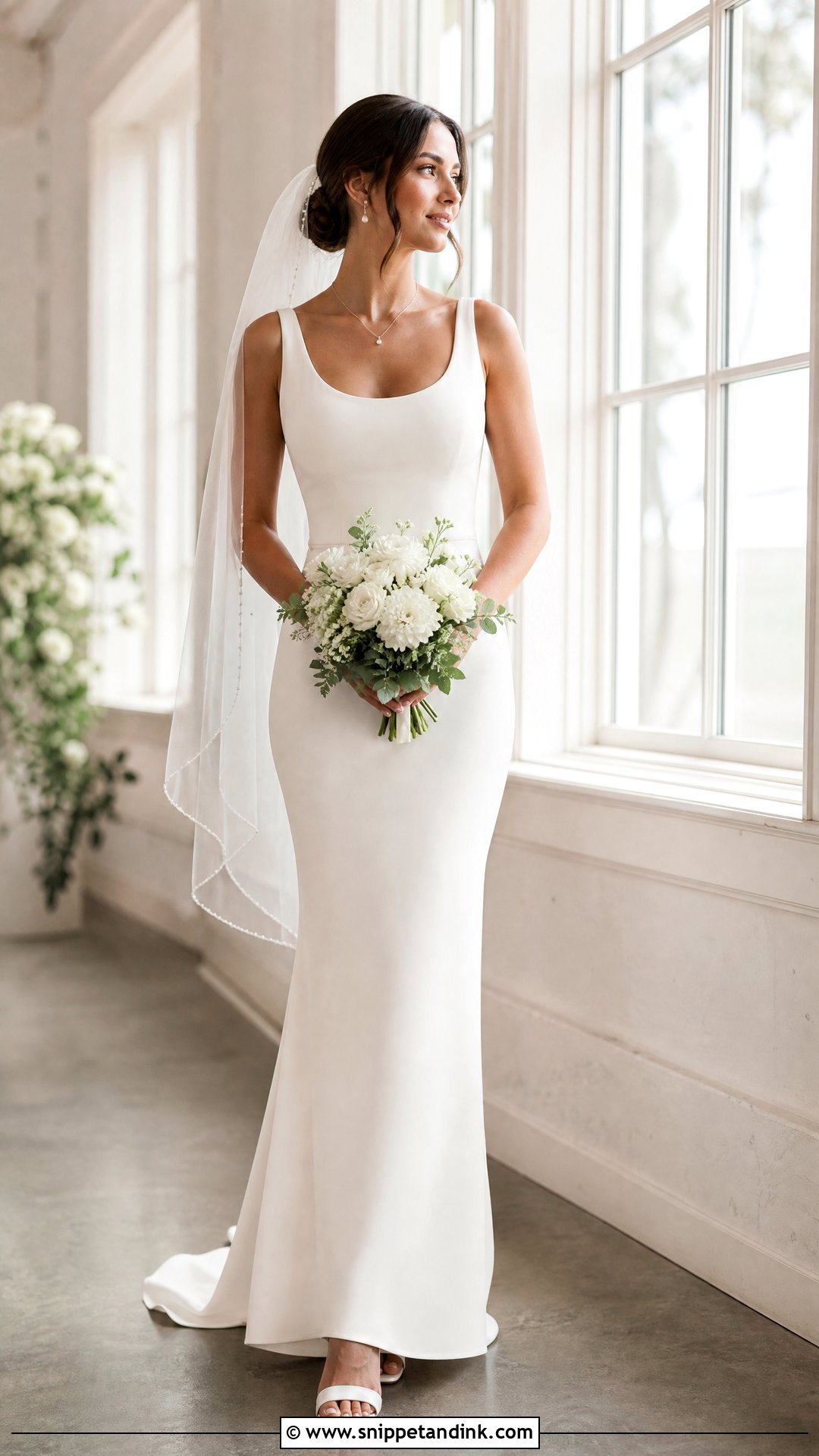
Scoop necks are the easiest neckline to accessorize, and they suit almost every bust size. A fitted sheath with wide straps and a supportive bodice keeps the silhouette balanced. A medium-depth scoop opens the chest without feeling revealing, and a lower back adds contrast. Matte crepe looks quiet and expensive; stretch lining makes it comfortable. A fine pendant, pearl earrings, block-heel sandals and a fingertip veil finish it. Sit and lean forward at the fitting. The edge of the scoop should stay flat, not stand away from your chest.
11. Simple V Neck Crepe Wedding Dress
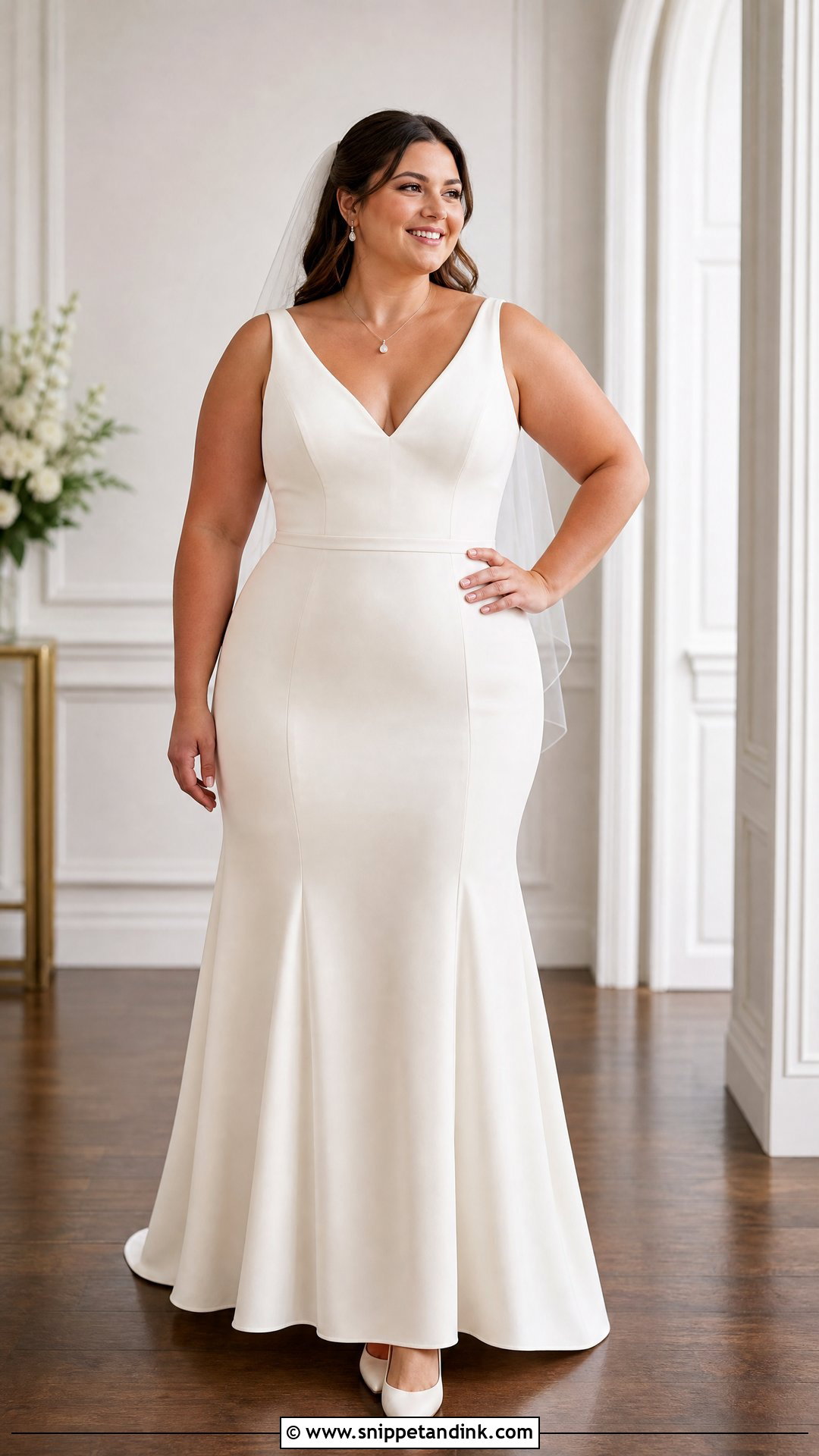
A V-neck in crepe adds a vertical line to clean tailoring. I prefer a moderate V to a plunge; it’s easier to secure and doesn’t need tape all day. Wide straps, shaped seams and a skirt that releases below the hip give it structure. Ivory crepe has a soft matte finish that reads well indoors and out. A narrow pendant, small earrings, stable-heeled pumps, a low textured bun and a single-layer veil complete it. If you need more support, ask about sewn-in cups, mesh reinforcement or light boning rather than shapewear, which tends to show through fitted crepe.
12. Simple Boat Neck Column Wedding Dress
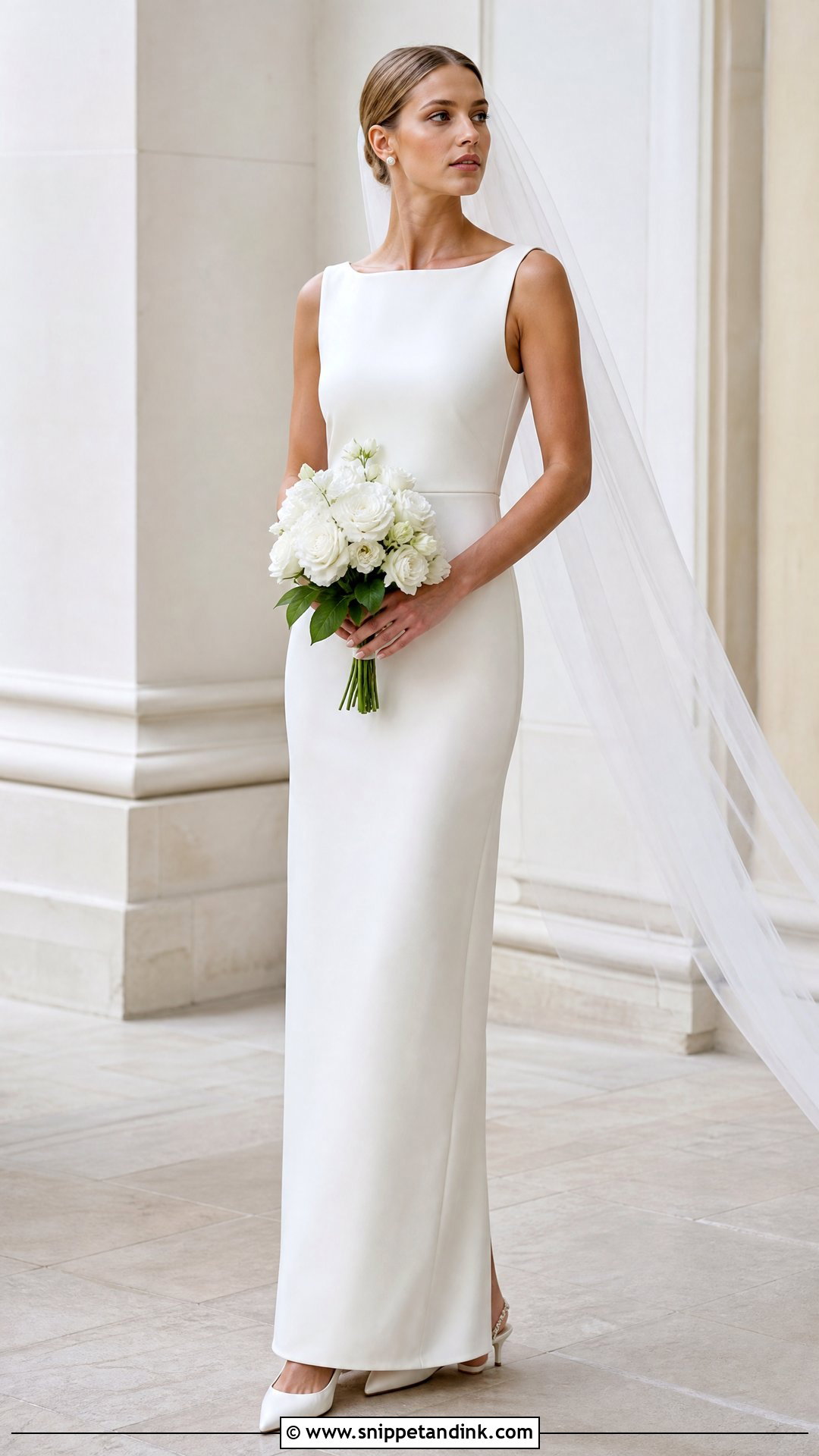
A boat neck runs along the collarbone from shoulder to shoulder, so you get balance with very little skin. Sleeveless suits warm weather; slim three-quarter sleeves add coverage. Structured crepe helps the column fall cleanly, and a back vent gives you a proper stride. Pearl or crystal studs, pointed slingbacks and a narrow veil tucked under a low bun suit it, with a clean-stemmed bouquet. Boat necks shift when the shoulders move, so I check them from front, side and back. The edge should lie flat, never bunching at the neck or pulling across the chest.
13. Simple Corset Bodice Mermaid Wedding Dress
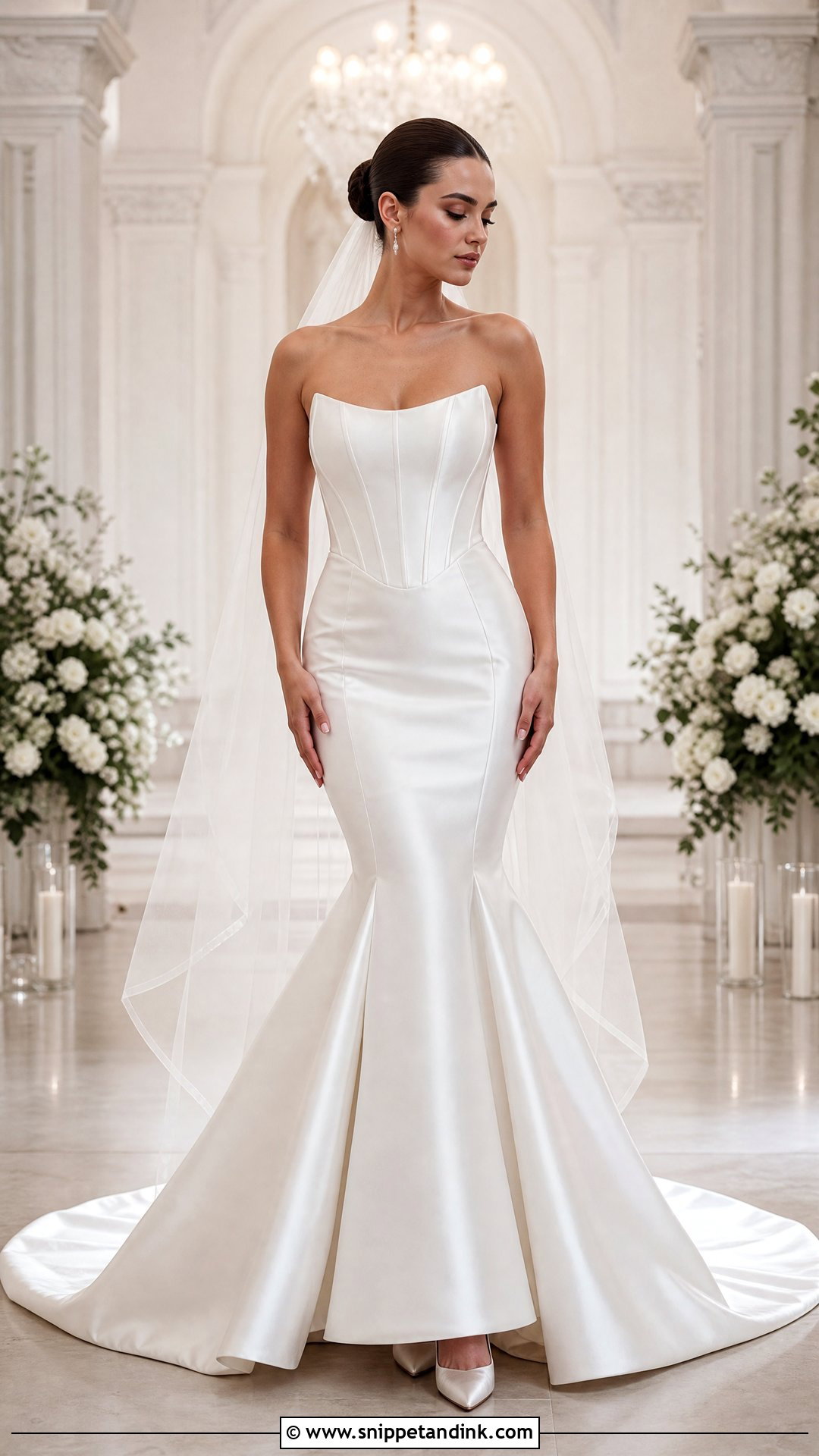
A corset bodice gives a simple mermaid real structure and a defined waist. Keep it minimal: smooth satin or crepe with visible seam lines, no lace or crystals. A curved strapless neckline suits the bodice, and the skirt can flare gradually near the knee. Pearl drops, pointed pumps, a single-layer veil and a sleek bun keep the focus on the top half. The corset should support, not squeeze. You need to take a full breath, sit down and eat dinner in it, so test all three. A good tailor adjusts the cups, waist and hips separately, because proportions make or break a mermaid.
14. Simple Basque Waist Fitted Wedding Dress
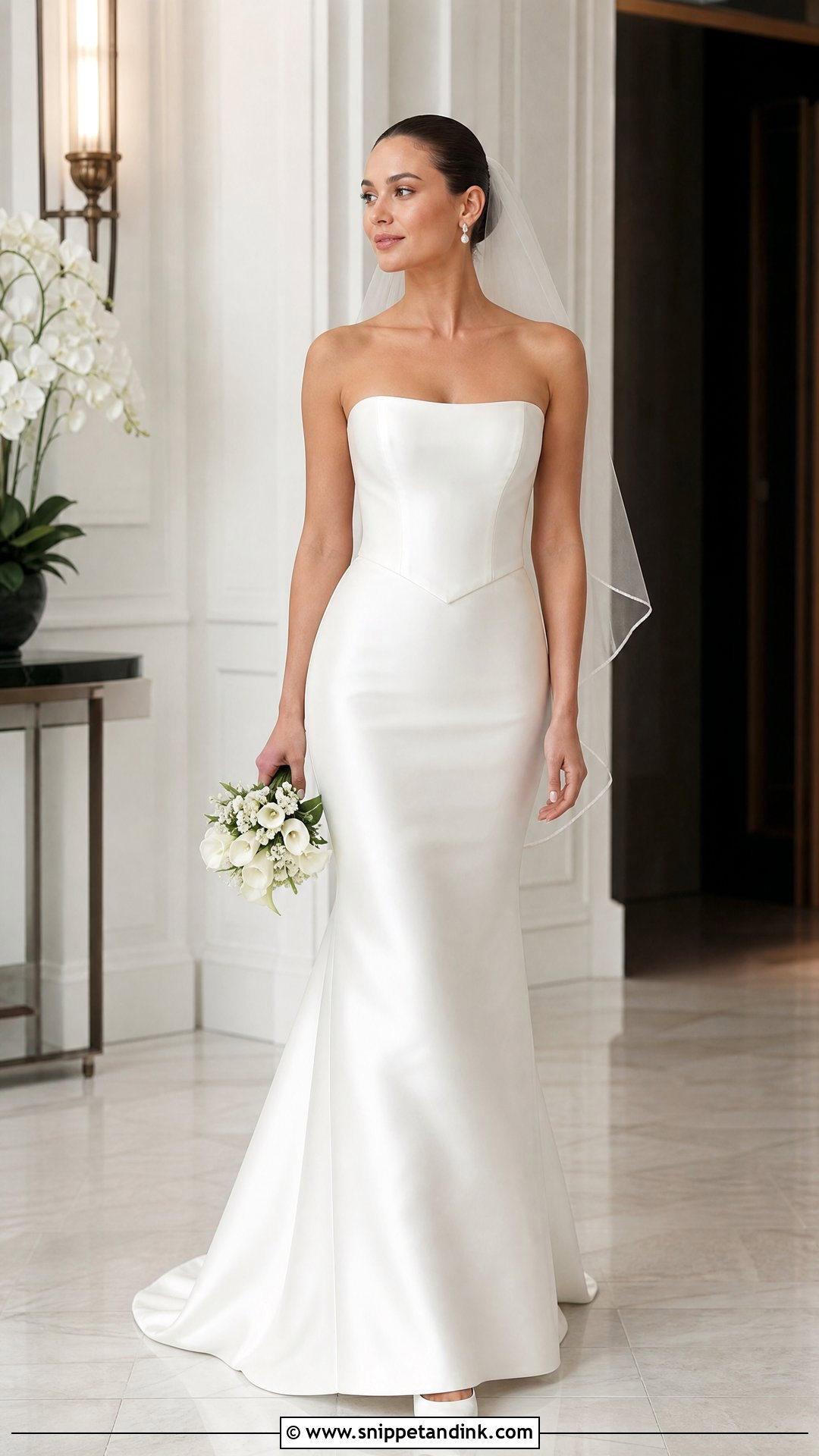
The basque waist dips into a soft V below the natural waist, lengthening the torso with no trim at all. In plain satin, crepe or Mikado with a strapless neckline and fitted trumpet skirt, it’s quietly formal. I’d keep the point gentle; a very deep basque looks costume-like and digs in when you sit. Satin pumps, delicate earrings and a fingertip veil that stops above the flare suit it, with a neat bun. Check the waist seam from every angle at the fitting so it sits evenly and doesn’t buckle, with room through the hips to sit.


15. Simple Ruched Fitted Wedding Dress
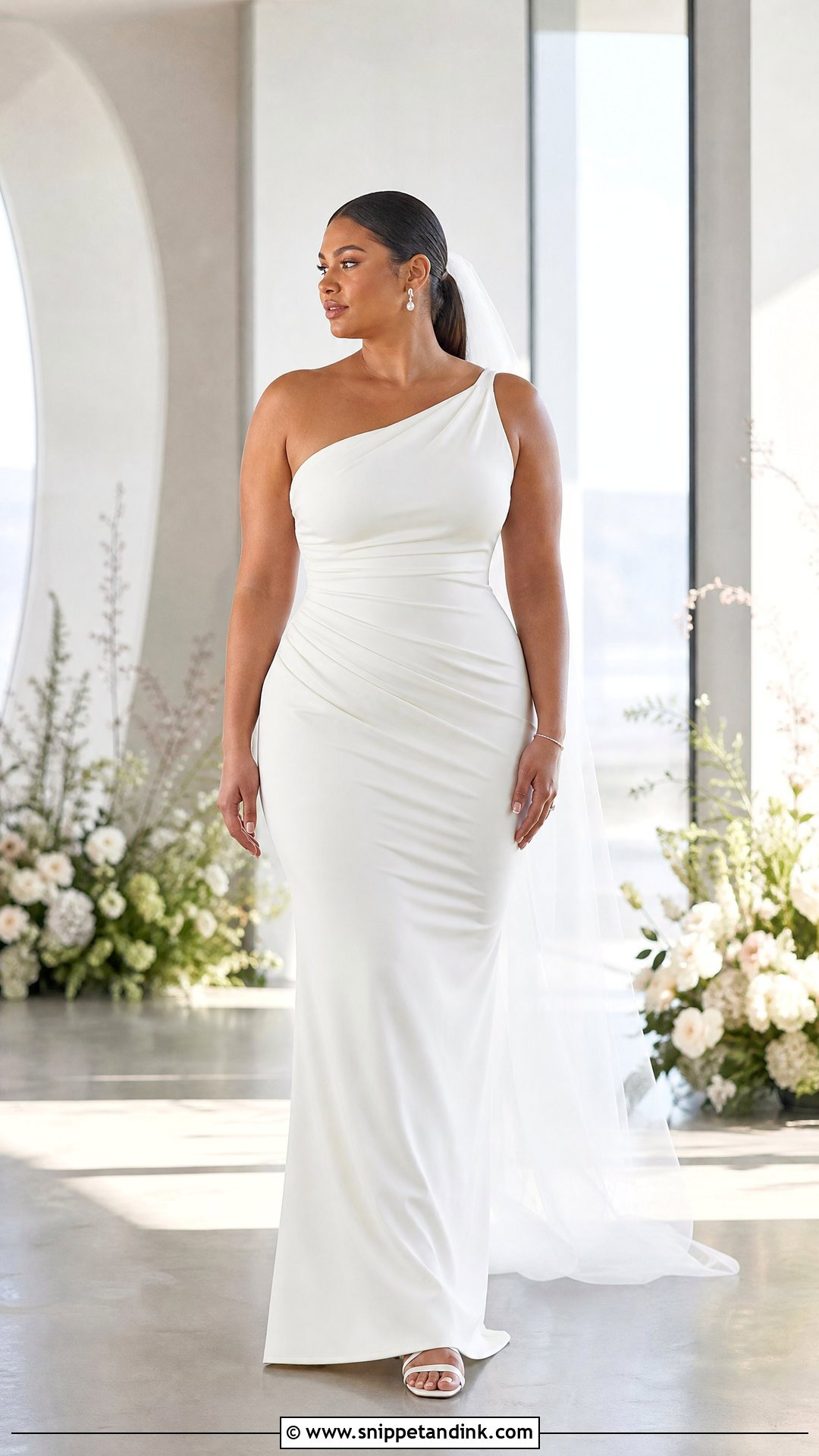
Ruching forgives. Soft diagonal gathers across the waist or hips break up the surface of a fitted gown and smooth the midsection without bulky layers. I’d keep it to one area rather than the whole dress. Stretch crepe or fluid satin lets the folds settle naturally. A one-shoulder, strapless or V-neck bodice all work if the accessories stay minimal: simple earrings, clean heels, a light veil and a low ponytail. Ruching gets pulled out of place during alterations, so check each gathered section at the last fitting to make sure it still looks deliberate.
16. Simple Draped Satin Wedding Dress
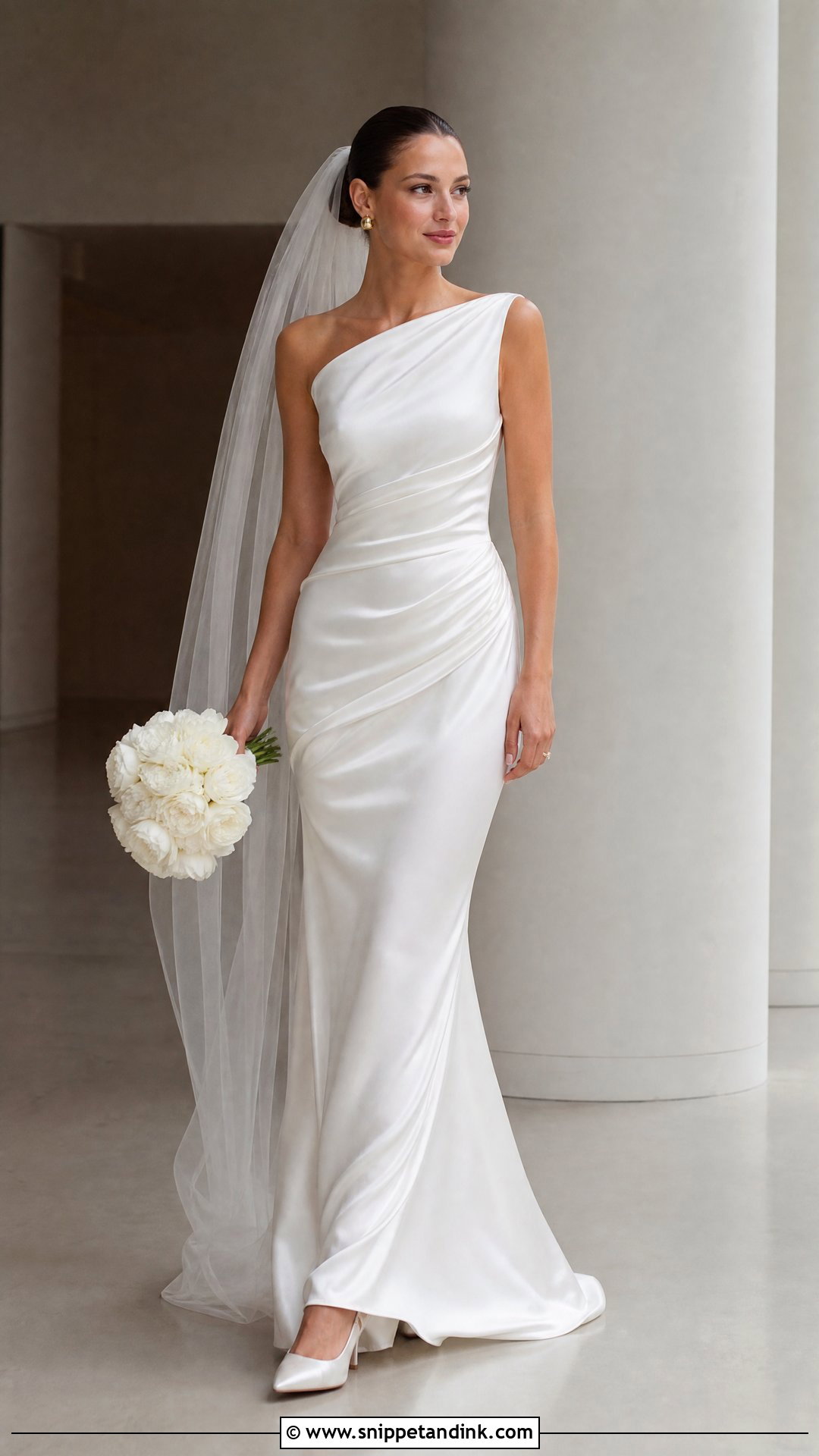
In a draped satin gown, the fabric is the decoration. Look for a fitted column or trumpet with soft folds crossing the waist and gathering at one hip. An asymmetric neckline can echo the drape, or a straight strapless bodice keeps it traditional. Satin slingbacks, sculptural studs, a compact bouquet and a sheer veil without lace edging suit it. Satin reflects light differently from each side, so I photograph draped gowns from several angles at the fitting. Folds should follow your proportions, never twist or add fabric at the waist.
17. Simple Open Back Fitted Wedding Dress
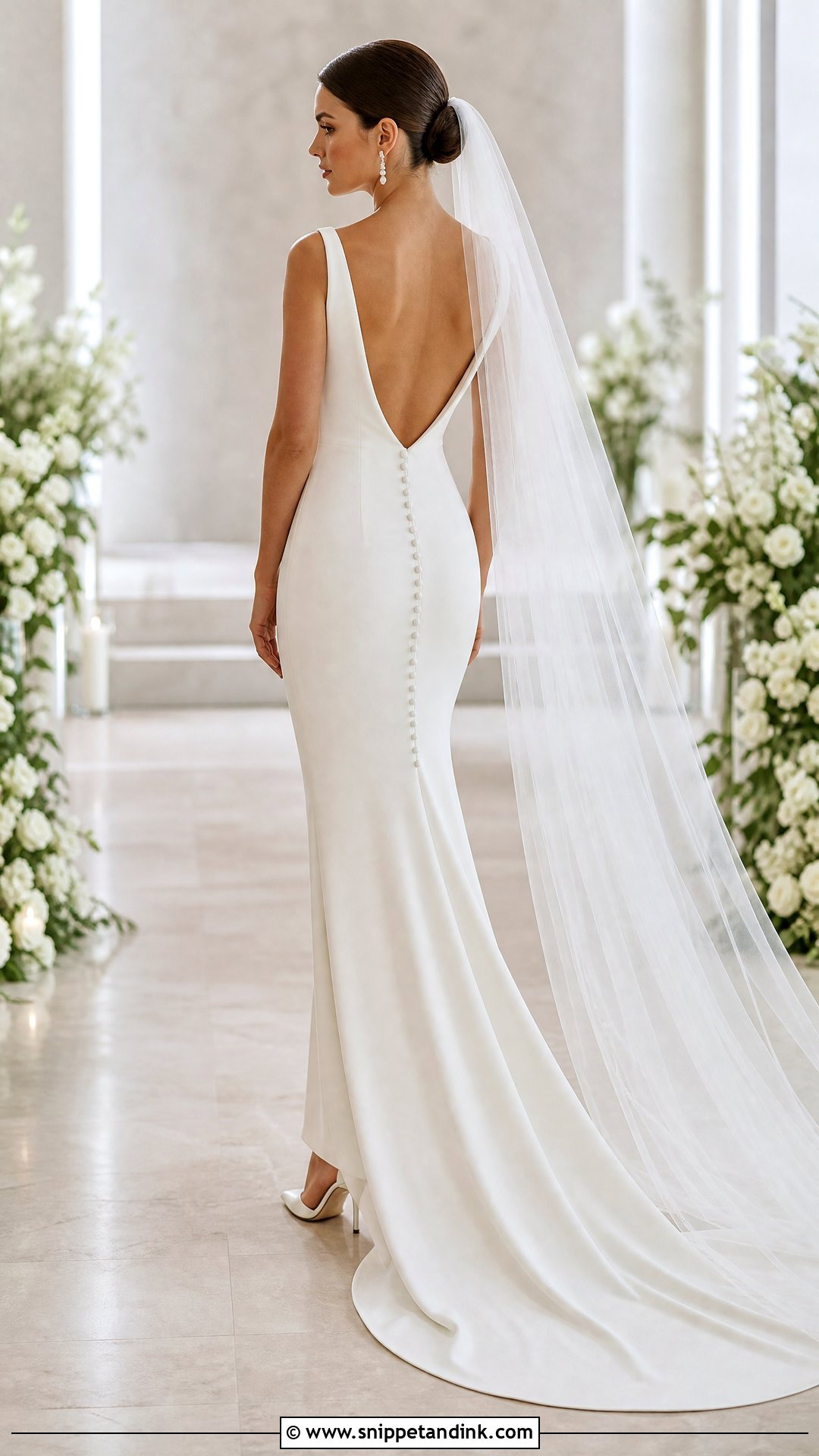
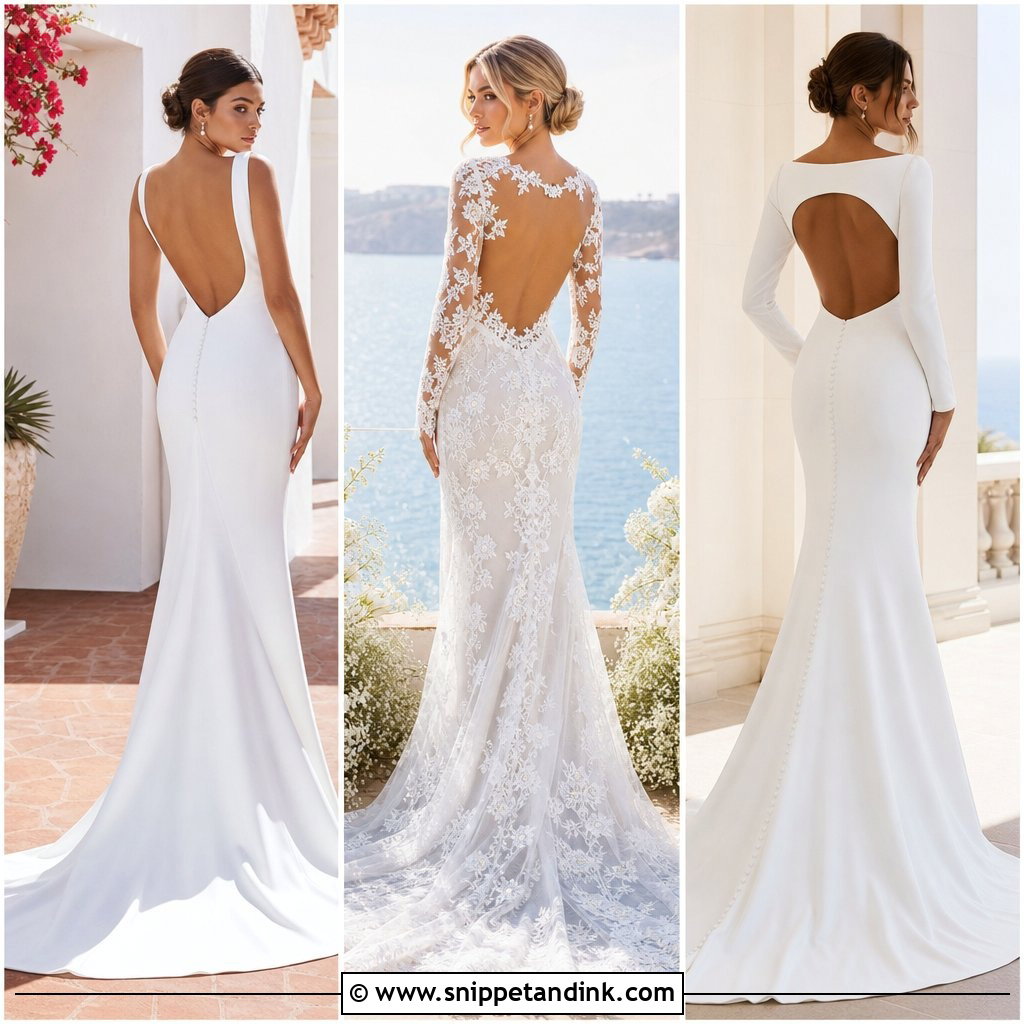
An open back keeps the front restrained and saves the impact for the processional. Balance a low rounded or V back with a high bateau, scoop or halter neckline. Supportive crepe in a sheath or heavier satin in a gentle fit-and-flare both hold the shape, and covered buttons along the center seam add a classic finish. Attach the veil below a smooth bun so the back stays visible, and consider a removable one for the reception. Ordinary bras show, so ask about built-in cups or bridal underwear, and sit and move to make sure the back edges stay flat against your skin.
18. Simple Low Back Cowl Wedding Dress
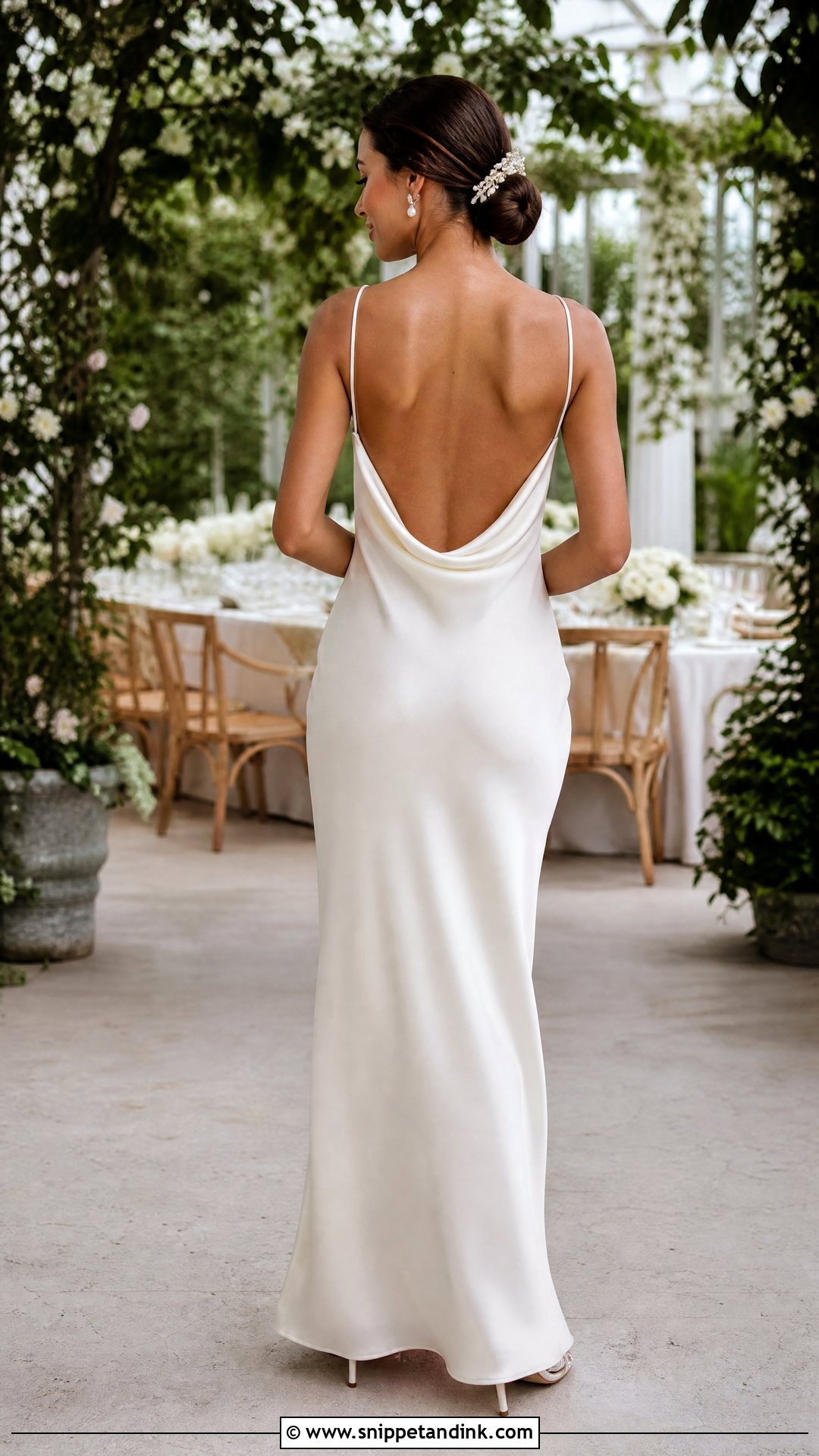
A low-back cowl wedding dress pairs a streamlined front with a soft fold of fabric behind. It suits a satin slip or narrow column with delicate straps. The cowl should fall in one fluid curve, not gather into bulky folds. Minimal sandals, small pearl earrings and a comb above a low bun are enough. Skip a long veil that would cover the back, or wear a short sheer one you remove after the vows. Fashion tape helps, but I’d rather the seamstress balance cowl depth, strap length and side seams together so the back stays put on its own.
19. Simple Cap Sleeve Fitted Wedding Dress
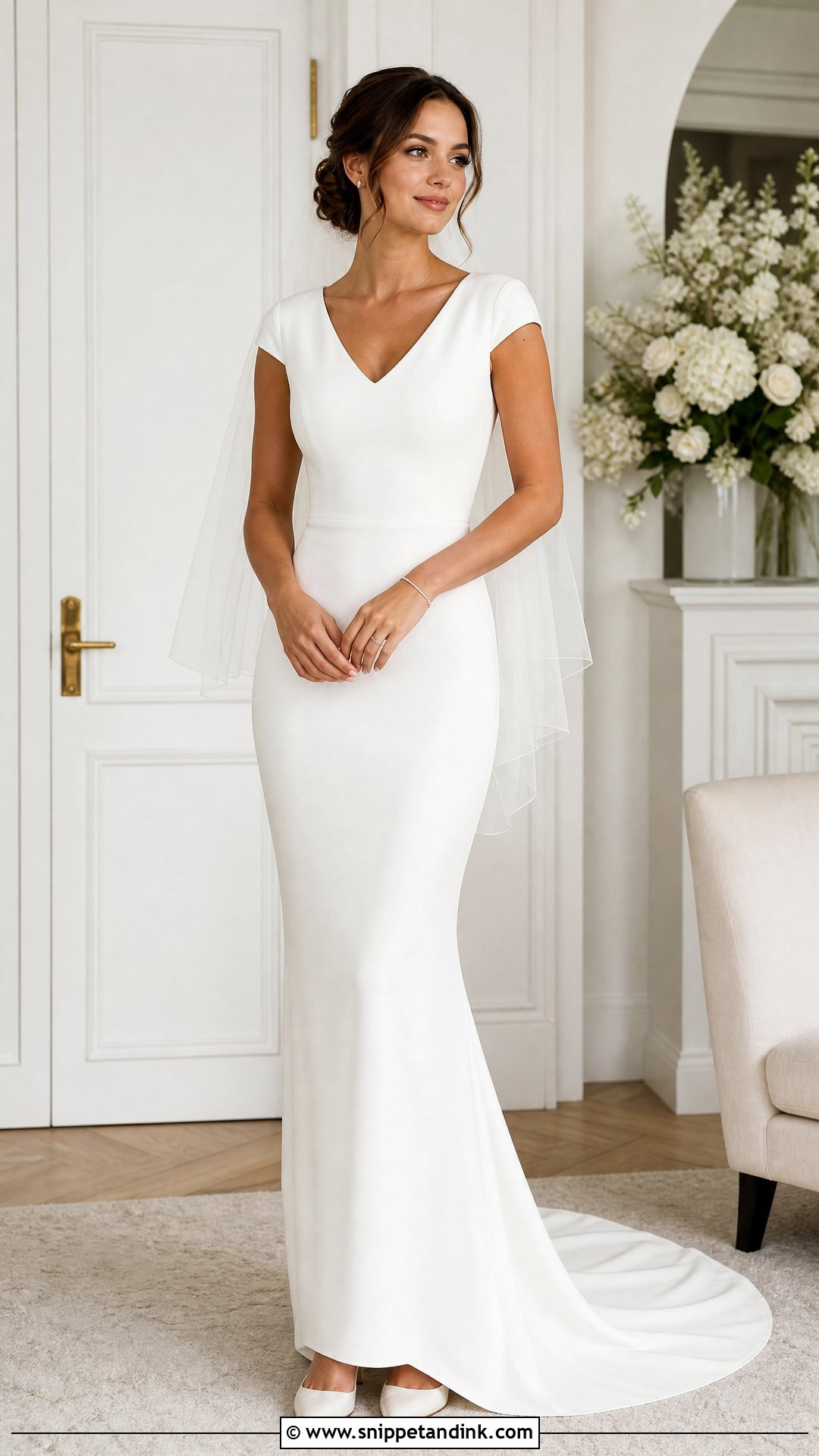
Cap sleeves give a little shoulder coverage while the gown keeps its sleek line. Cut them from the same crepe or satin as the bodice. A shallow V, scoop or square neck suits them, over a fitted sheath skirt. Pearl studs, a narrow bracelet, pointed heels, a soft updo and a waist-length veil keep it classic. Cap sleeves look easy and are fiddly to fit. Too tight and they cut into the underarm and restrict your arms; too loose and they slide off. Reach, raise and hug at every fitting.


20. Simple Pearl Strap Wedding Dress
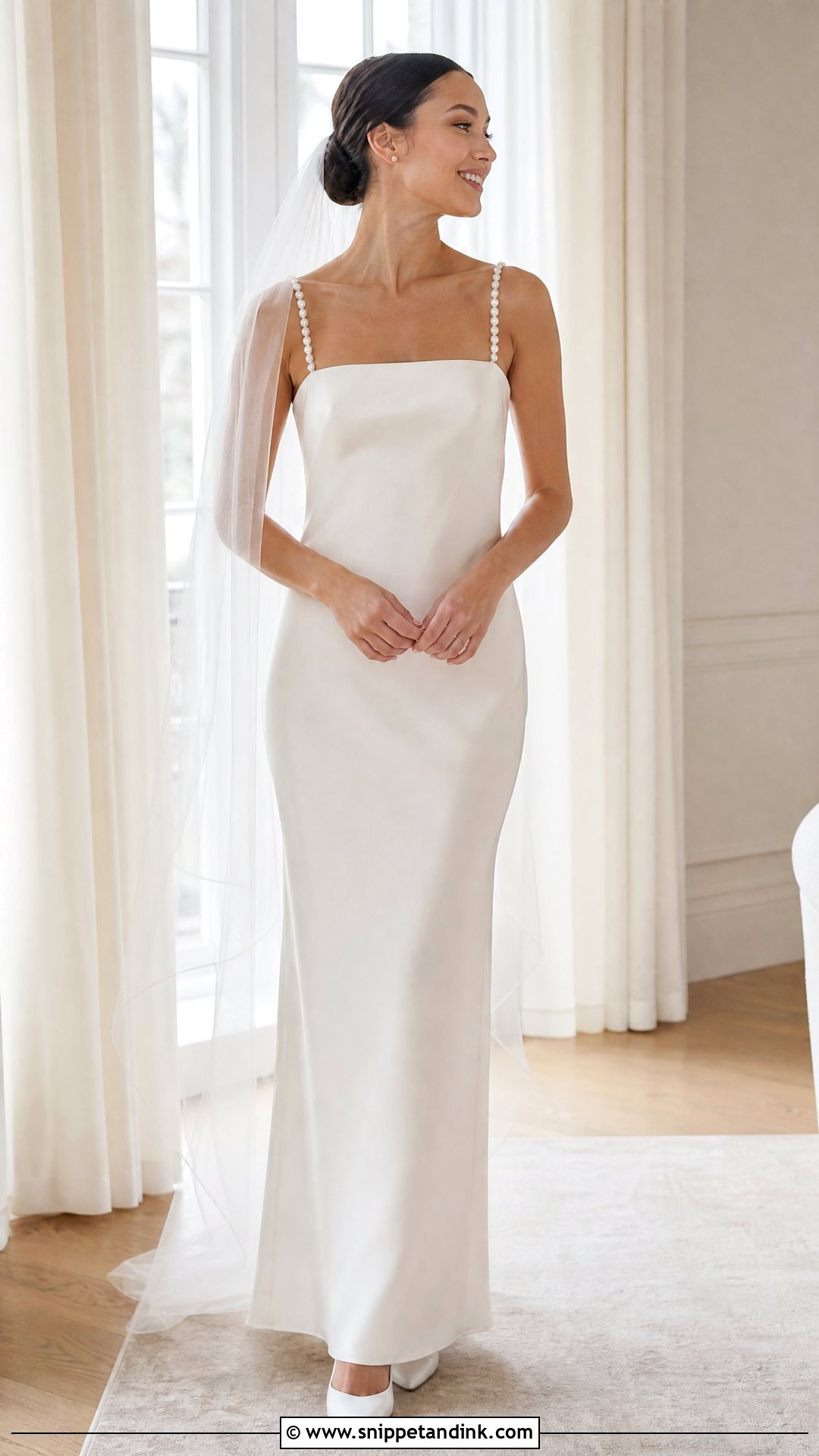
Pearl straps add a small bridal detail without changing a gown’s clean character. A plain satin sheath or crepe fit-and-flare with a straight neckline and narrow pearl straps keeps the shoulders the focus. Pearl studs, smooth ivory pumps, a sheer veil without a border and a neat chignon complete it. Ask whether the pearl straps actually hold the bodice up or are decorative; strung pearls can snap under strain, so I’d want hidden fabric straps or boning doing the work. Request a few spare matching pearls for an emergency repair.
21. Simple Lace Fitted Wedding Dress
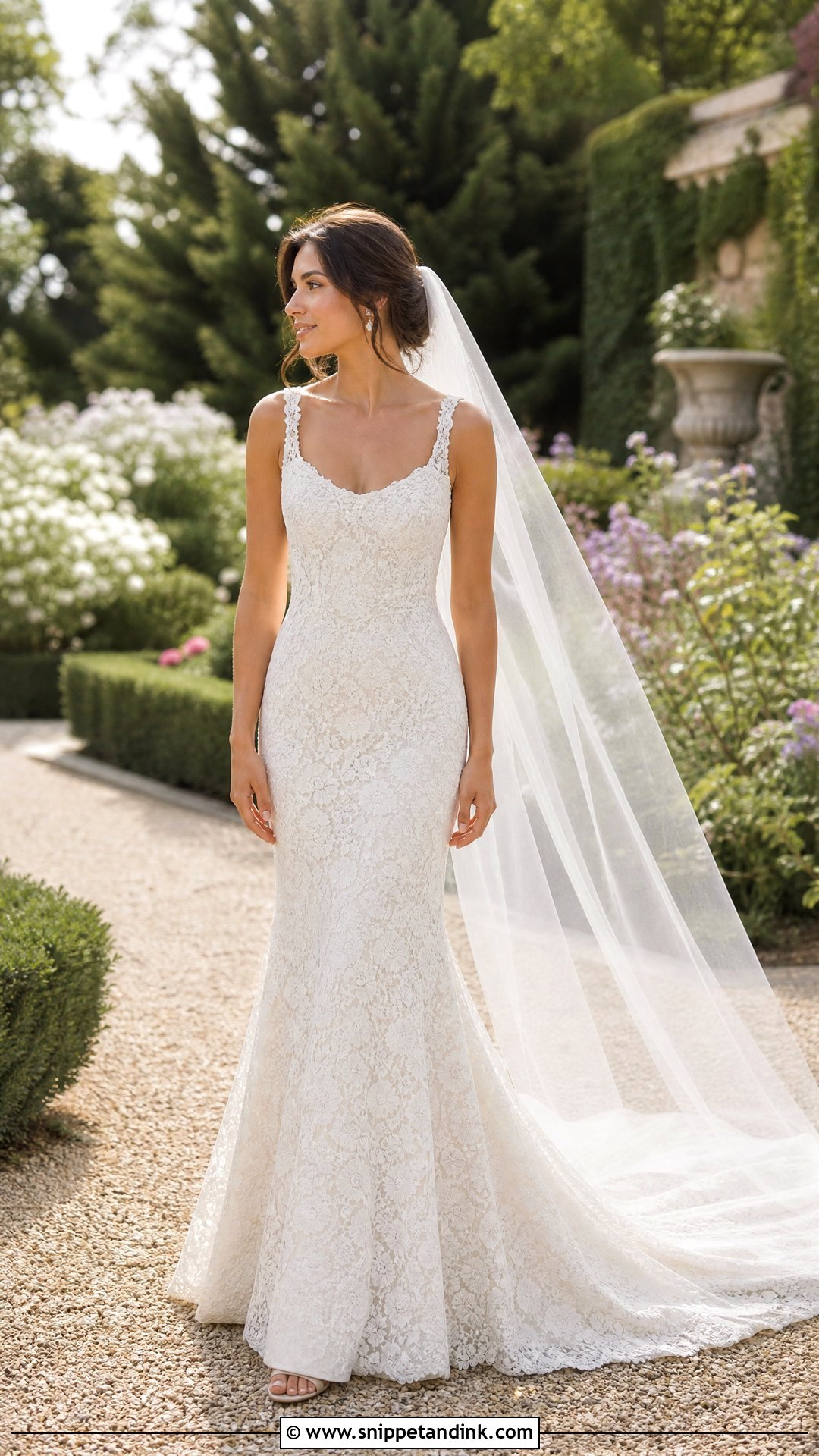
Lace stays simple when one lace runs through the whole gown. I steer brides away from dresses that mix several motifs. Fine floral lace over a matching ivory lining gives subtle texture, and a clean sheath or fit-and-flare keeps it from turning ornate. A straight neckline, simple straps and a modest train are enough. Plain satin heels, small earrings and a raw-edge veil let the lace lead. Look at the side seams and the back closure, where cheaper gowns cut through motifs; good gowns match them by hand. Stretch lining makes it far more comfortable.
22. Simple Button Back Crepe Wedding Dress
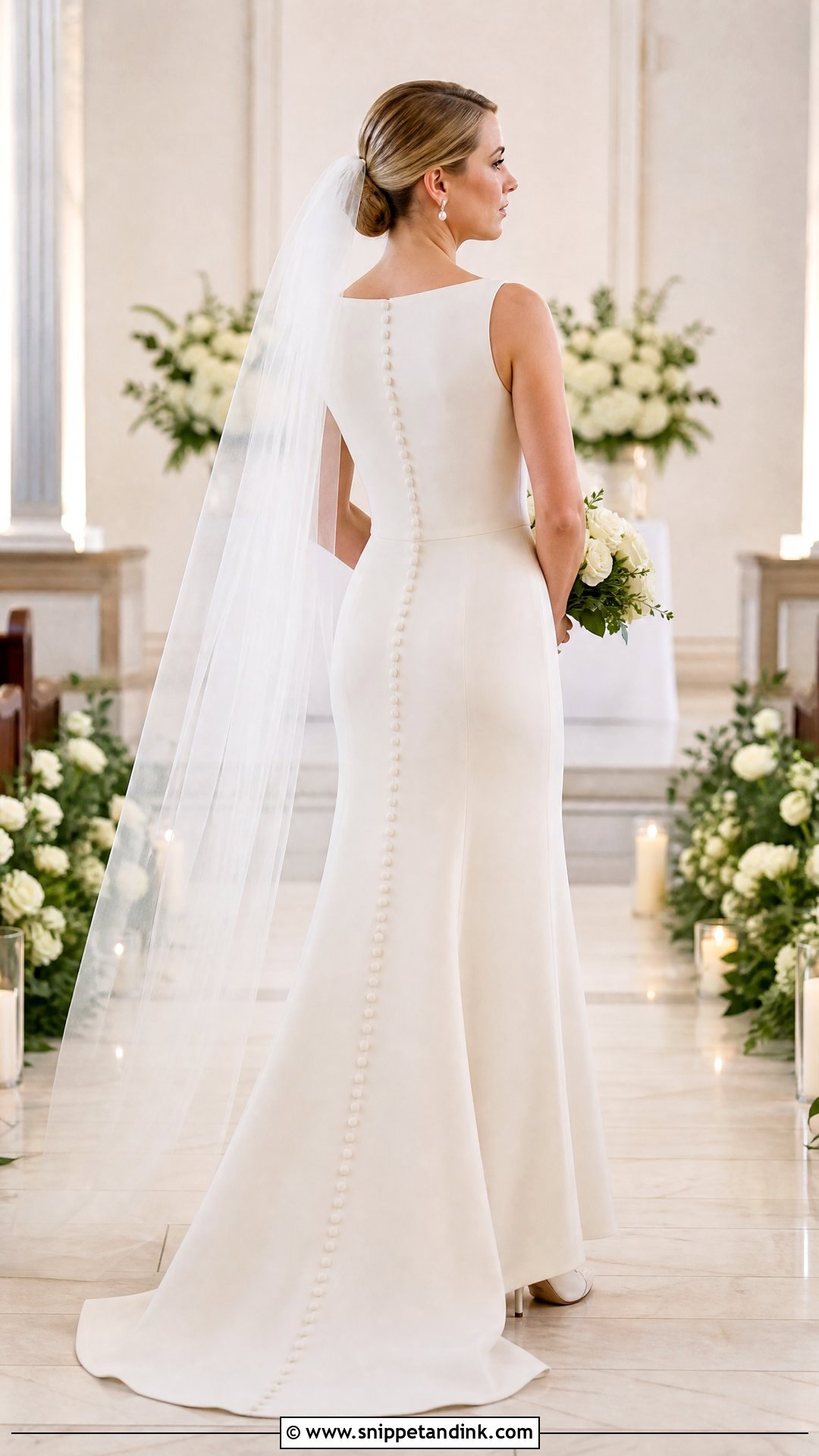
Covered buttons give a fitted crepe gown a traditional finish. Look for a clean bodice, defined waist and a column or fit-and-flare skirt, with buttons running from neckline toward the train. Self-covered crepe buttons are quiet; pearl buttons add contrast. Classic pumps, pearl earrings, a smooth-edged veil and a low bun keep the back visible. Many button backs hide a zip under decorative loops. If yours are real, practice fastening them with a bridesmaid before the day and allow ten minutes for it. The button line should stay straight across the waist and hips; pulling there means the fit is too tight.
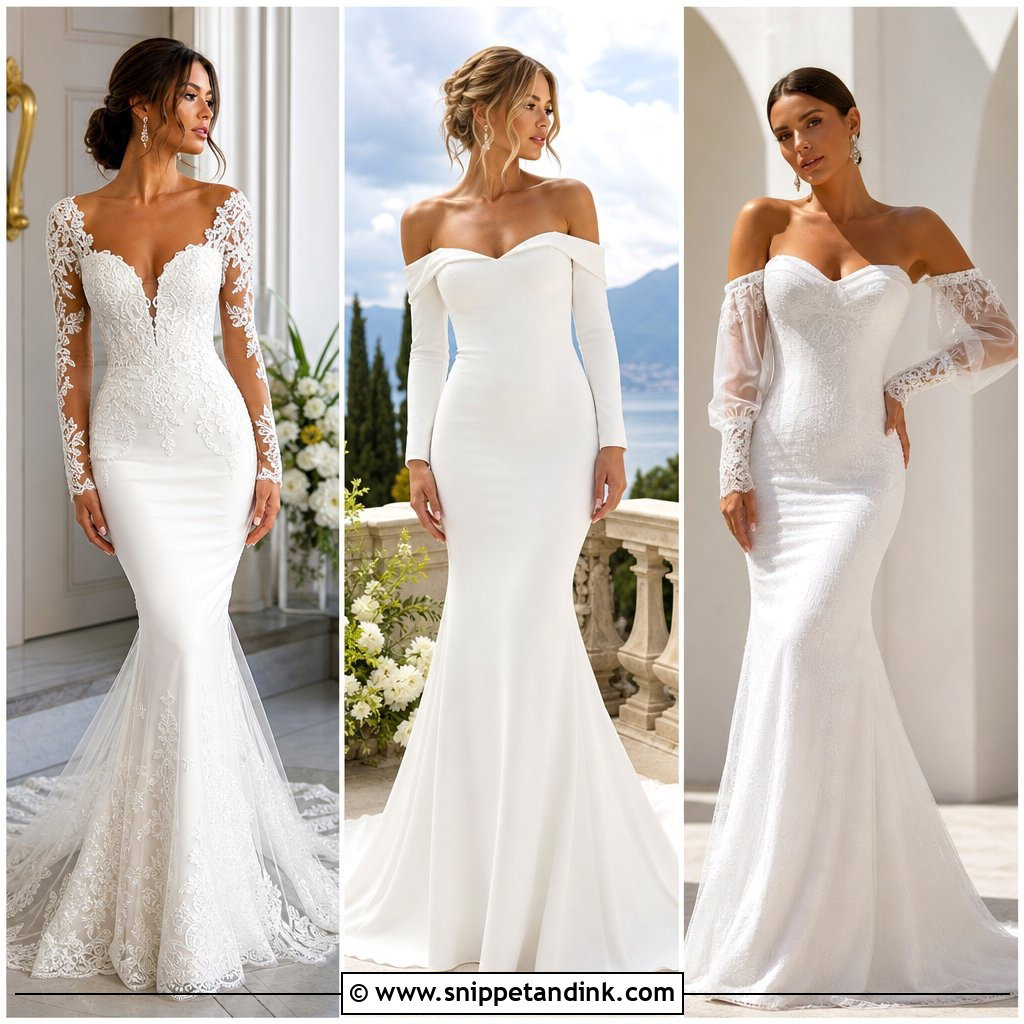
23. Simple Detachable Sleeve Wedding Dress
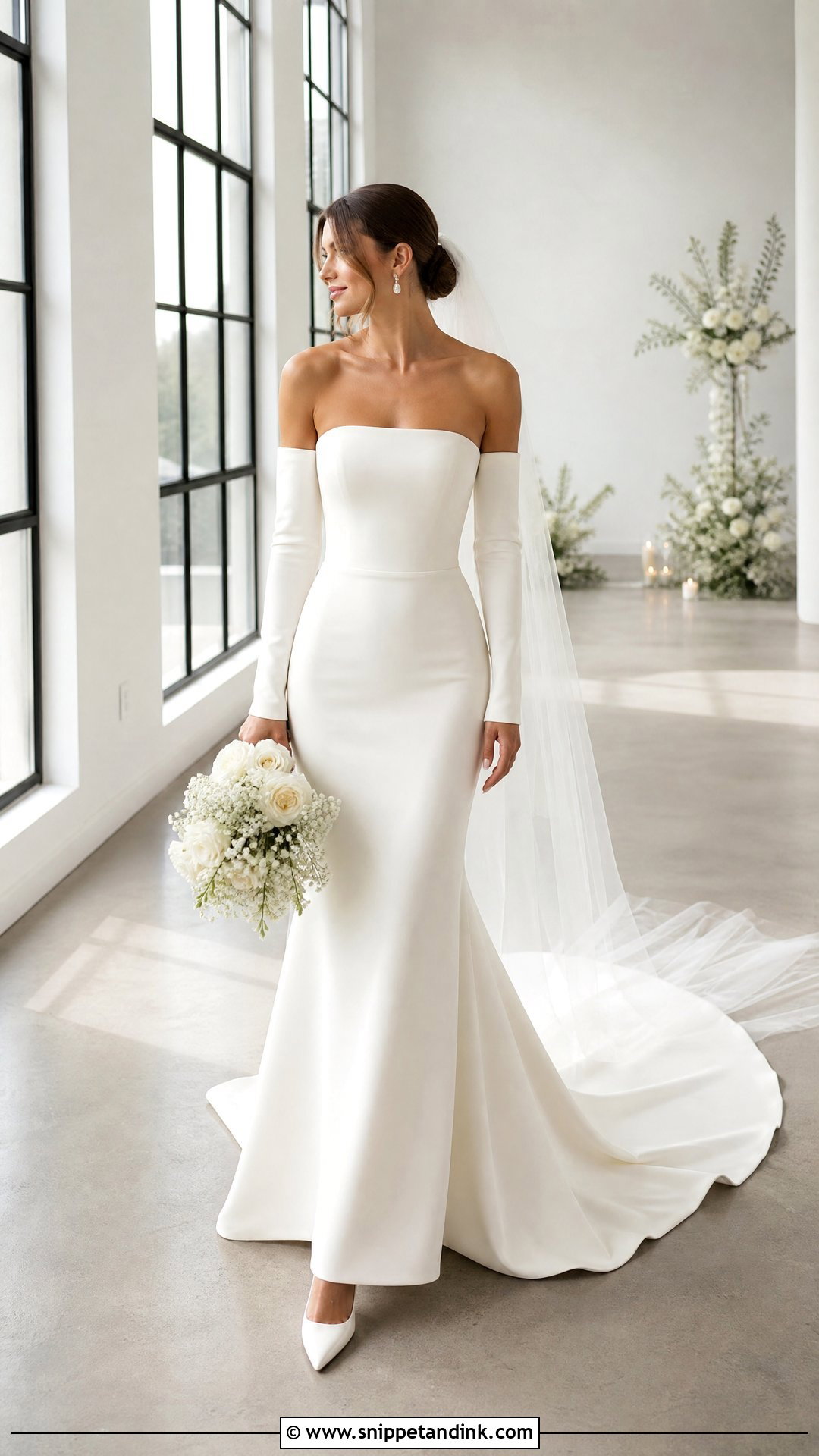
Detachable sleeves give you two looks from one gown. Start with a smooth strapless crepe or satin base and add fitted long sleeves, off-the-shoulder bands or light draped sleeves for the ceremony; remove them for a cleaner reception look. Keep the sleeves plain so they belong to the gown. Pointed heels, small drop earrings and a sheer veil suit the first look. Attachment points should be hidden and secure, with no visible snaps afterward. I always rehearse the change once before the wedding, and the sleeves go into a labeled garment bag so nobody hunts for them at 9pm.
24. Simple Fitted Wedding Dress With Overskirt
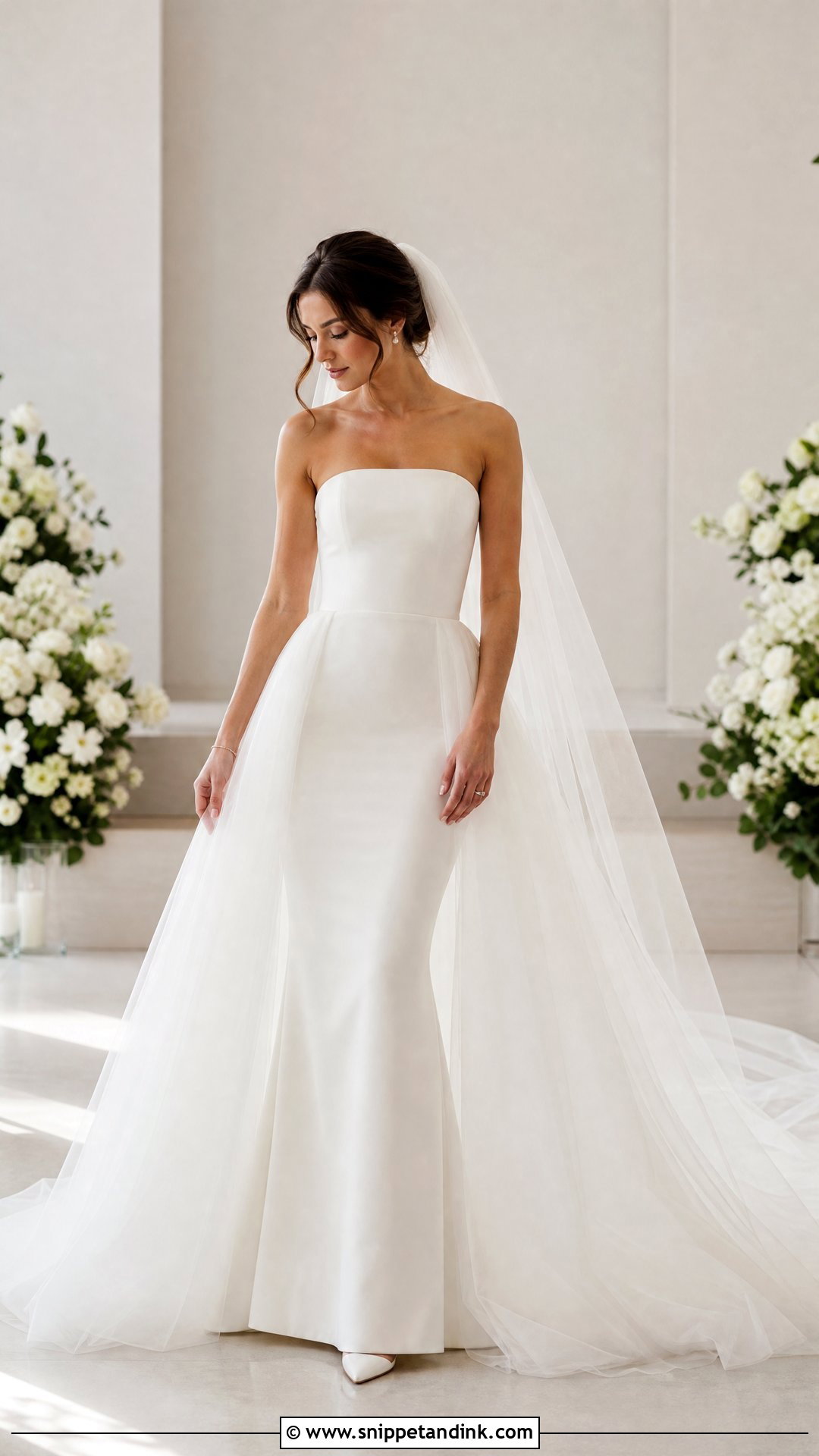
An overskirt adds ceremony volume over a sleek fitted base. A crepe mermaid, satin sheath or strapless column with a plain tulle or matching-fabric overskirt at the waist gives you a formal first look, then a lighter one for dancing. Closed-toe pumps, delicate earrings and a long veil suit the ceremony; afterward, remove the overskirt and veil and add a small hair accessory. The waistband must lie flat over the dress. I’d check that the fasteners are strong, hidden and simple enough for a helper to undo quickly without snagging the gown.
25. Simple Fitted Midi Wedding Dress
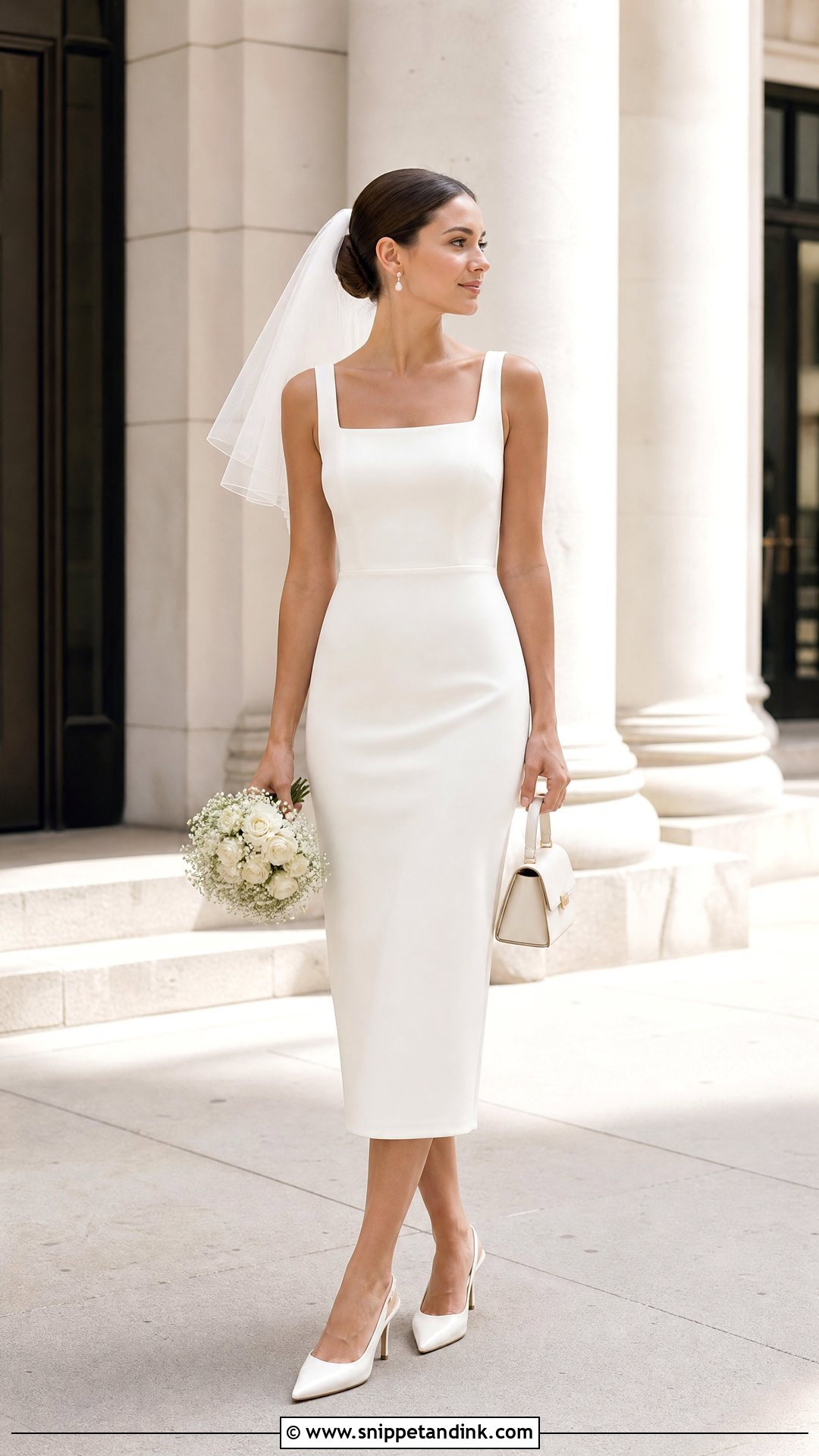
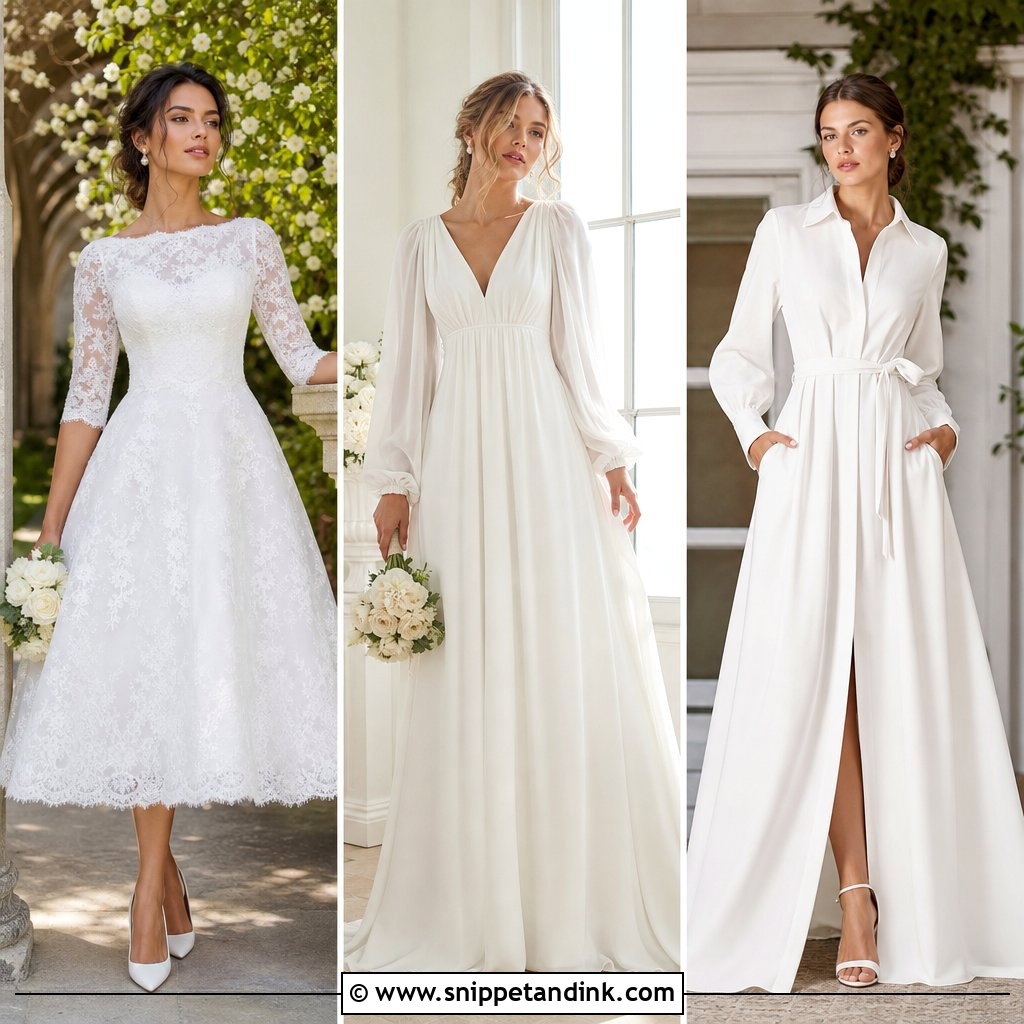
A fitted midi is right for a courthouse ceremony, an intimate wedding or a second look. A streamlined sheath ending between knee and ankle in smooth crepe or soft satin, with a square, bateau or strapless neckline, stays polished. The shorter hem puts your shoes on show, so choose pointed slingbacks, classic pumps or a refined ankle strap. Pearl earrings, a small structured bag and a short veil or a hair bow finish it. A back slit is non-negotiable for walking and sitting, and the final fitting should be done in the exact shoes.
A Fitted Gown Runs on a Calendar
Fitted silhouettes need more alteration time than looser ones, so I work backward from the wedding date. Made-to-order gowns commonly take several months to arrive, which is why most brides order six to nine months ahead. Rush options exist but usually cost more and leave less room for problems.
Fittings
Plan on two or three fittings, starting around two to three months before the wedding, with the last one a week or two out. The first fitting does the big structural work, the second refines it, and the last confirms the hem, bustle and comfort in your shoes.
Bustles and bathroom trips
A train on a fitted gown needs a bustle for the reception, and the bustle has to be learned. Have your maid of honor attend the final fitting and fasten it herself, ideally while you film it on your phone. Practice the bathroom too. Fitted skirts don’t lift the way full ones do, and it’s far better to work out the method at the fitting than in a venue restroom.
Clean Lines Depend on the Tailor
A minimalist gown is only as good as its fit, and that fit has to last for hours. Neckline, fabric, sleeves, waist construction and skirt shape all change how a plain gown reads, so try several silhouettes on instead of judging from photos. Bring your shoes and underwear to every alteration appointment. Walk, sit, raise your arms and look at the gown from every side. A crepe sheath, a satin mermaid, a lace fit-and-flare or a modern midi will all look their best with careful tailoring and accessories that stay out of their way.
You'll Like These Ideas:






Leave a Reply