
Shopping for a wedding dress while pregnant narrows the racks, but it also points you toward softer fabrics, adjustable fits and shapes that genuinely suit this stage. What I look for with an expecting bride is support, room to grow and a dress that still reads unmistakably bridal. Empire waists, A-line skirts, stretch lace, chiffon, wrap fronts and lace-up backs all earn their place. A formal hall or a beach, you need to move, breathe, sit and celebrate in it. These are thirty maternity gown styles, each with the fit question I’d ask before you commit.
Trying On Gowns Before Your Wedding Day Bump Exists
The hardest part of maternity bridal shopping is that you’re trying on dresses for a body you don’t have yet. A bride who is twelve weeks along at the first appointment might be thirty weeks at the wedding.
- Ask the shop whether they keep a padded try-on bump. Some do, and it shows how a skirt will fall later.
- Tell the consultant your due date and wedding date so she can estimate where you’ll be.
- Look at maternity bridal lines first. They’re cut with extra room at the bust and front, which standard gowns are not.
- Ask about delivery times. A gown that takes six months to arrive may land after your body has changed a great deal, and rush orders often cost extra.
- Consider ready-to-wear or off-the-rack pieces if your wedding is close. They arrive quickly and leave time for alterations.
1. Empire Waist Pregnant Wedding Dress
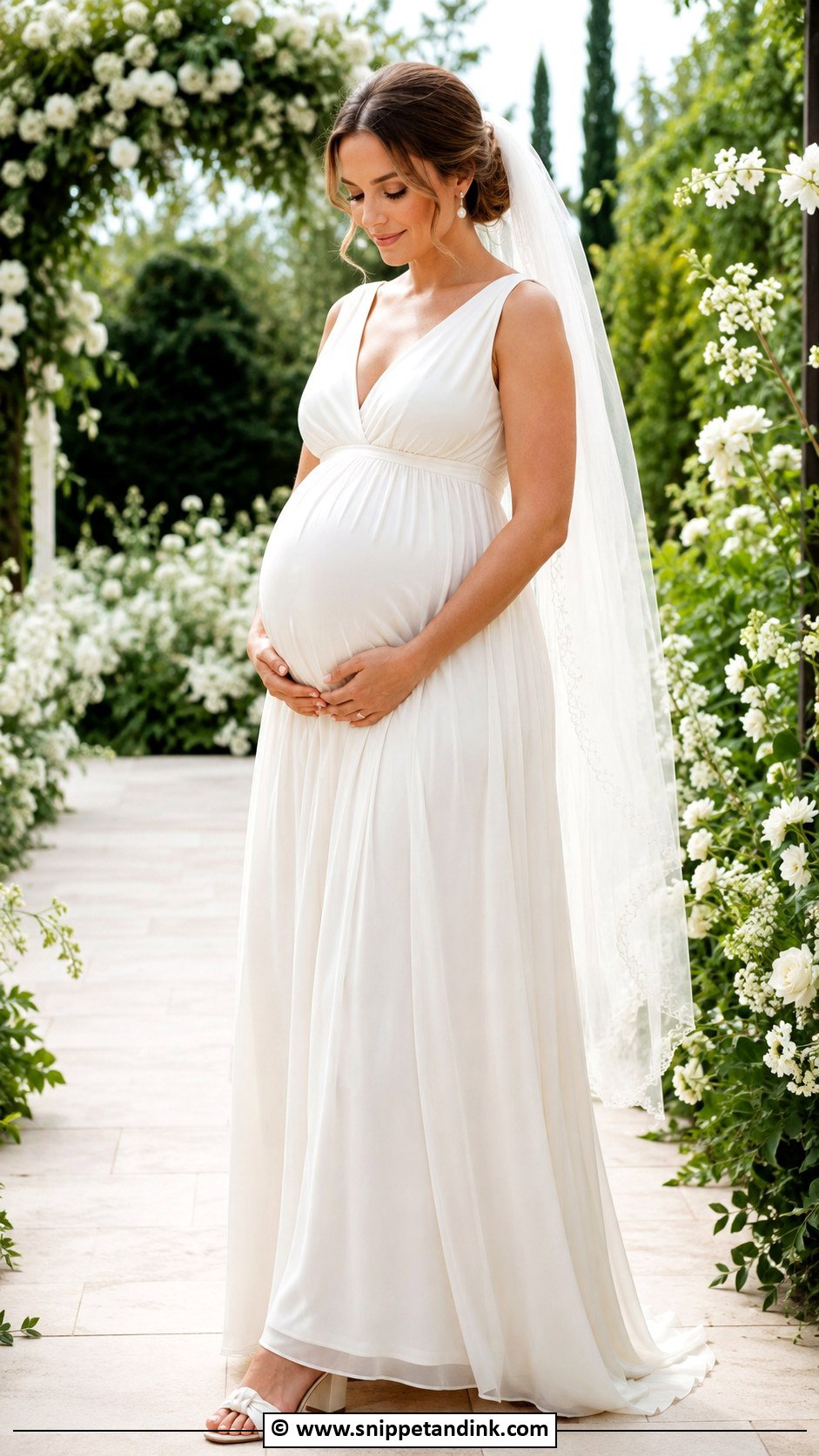
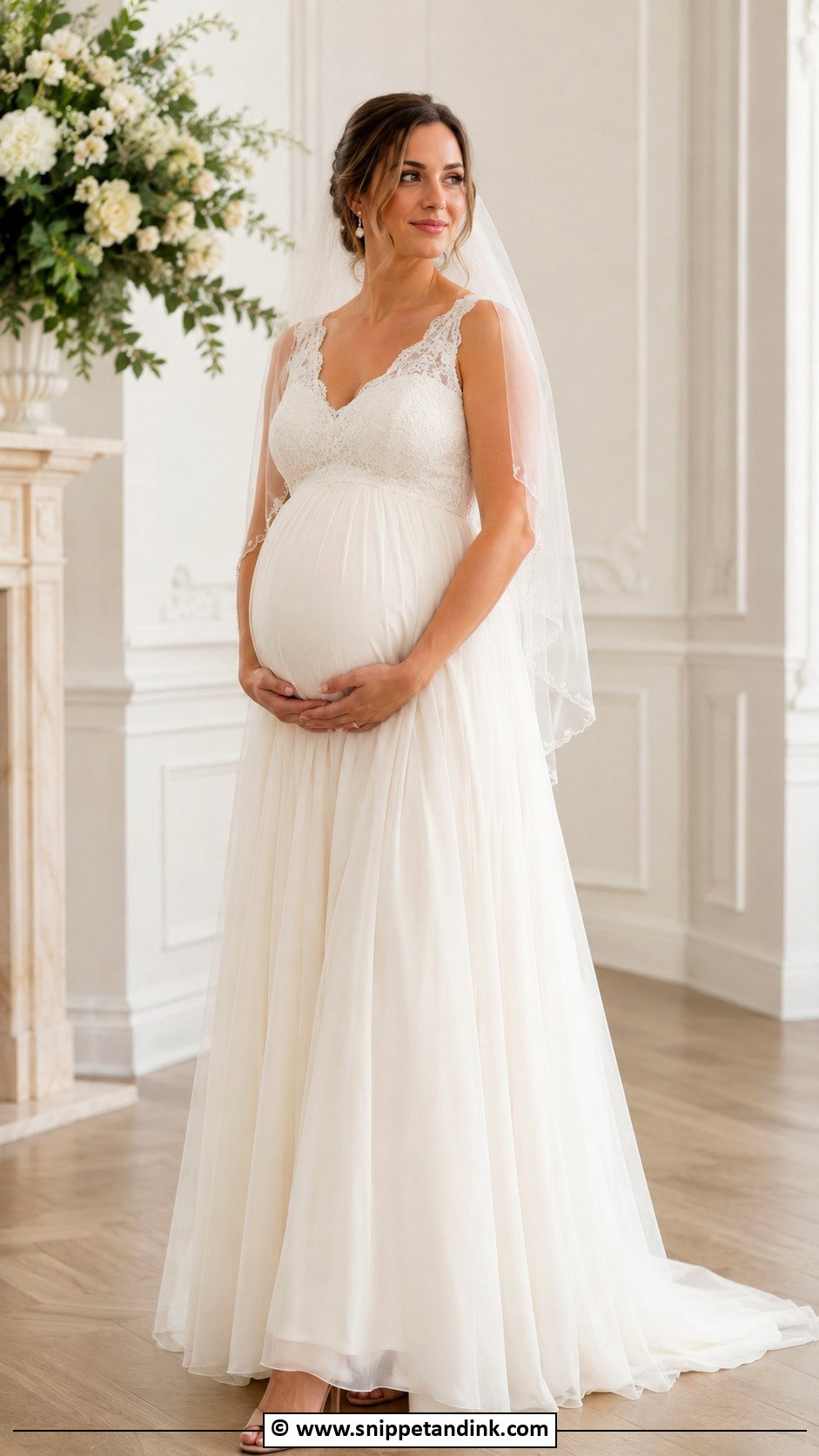
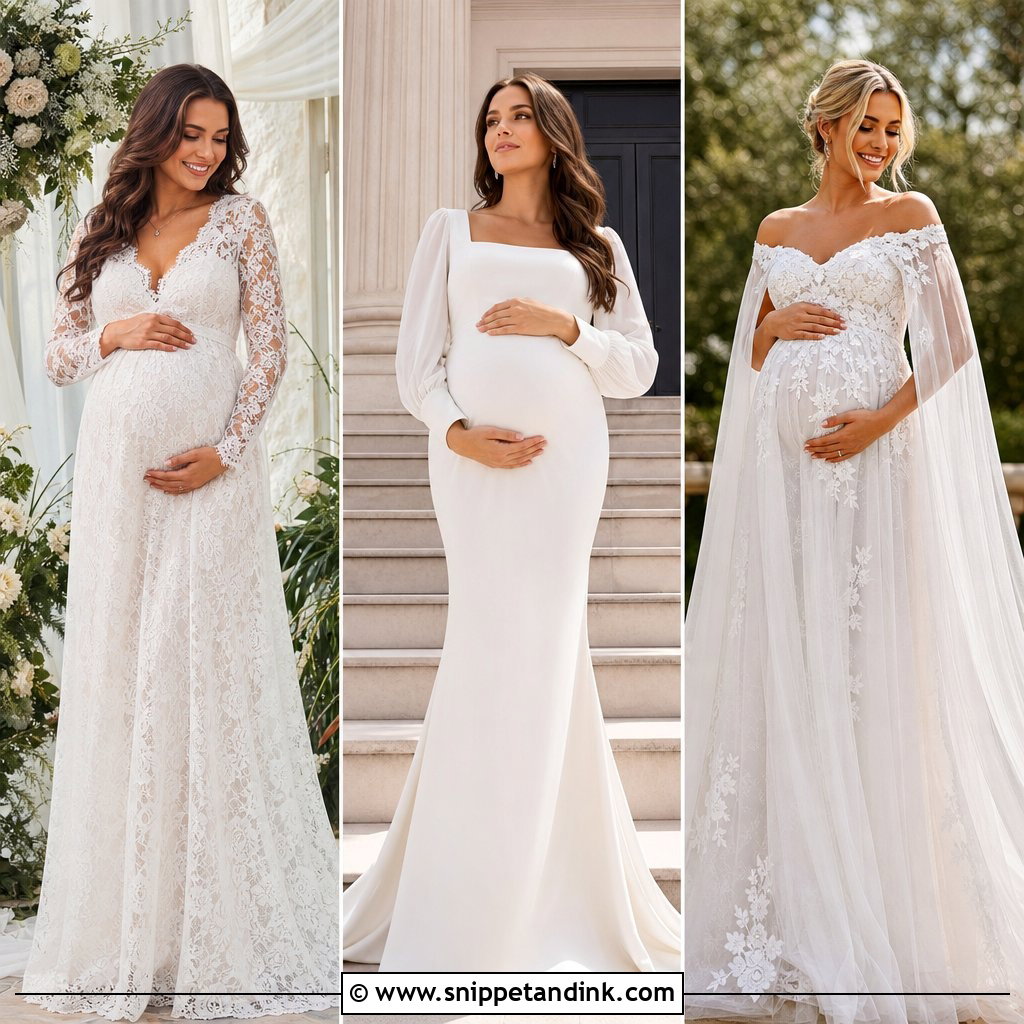
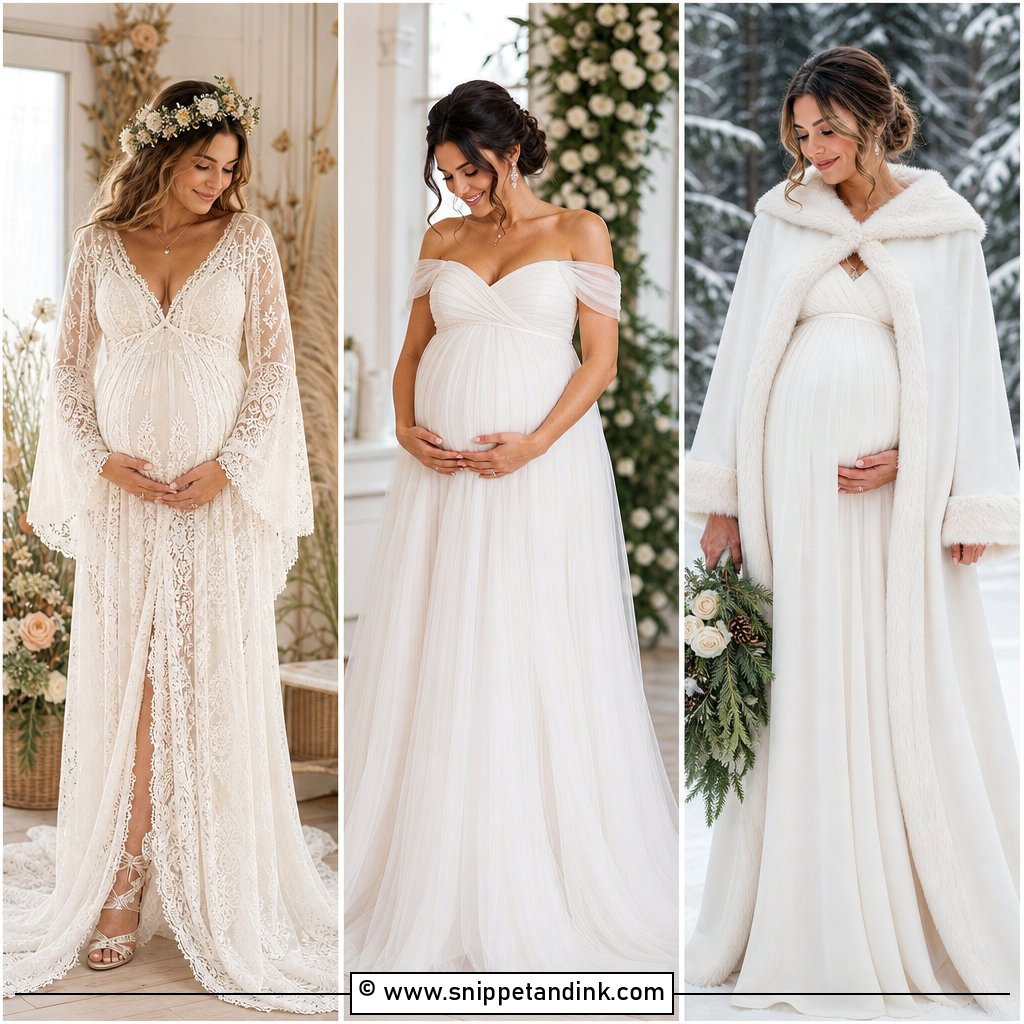
If I had to pick one shape for every trimester, it would be this. An empire waist pregnant wedding dress sets its seam just under the bust, so nothing presses on the bump. Chiffon, soft tulle, crepe or a silk-like fabric all drape well from that high line. Sweetheart, square or V-necks suit it. The bust is where it can go wrong, since it often grows too, so a lace-up back or flexible side seams give the safest margin. Low block heels and a soft veil complete it.
2. A Line Pregnant Wedding Dress
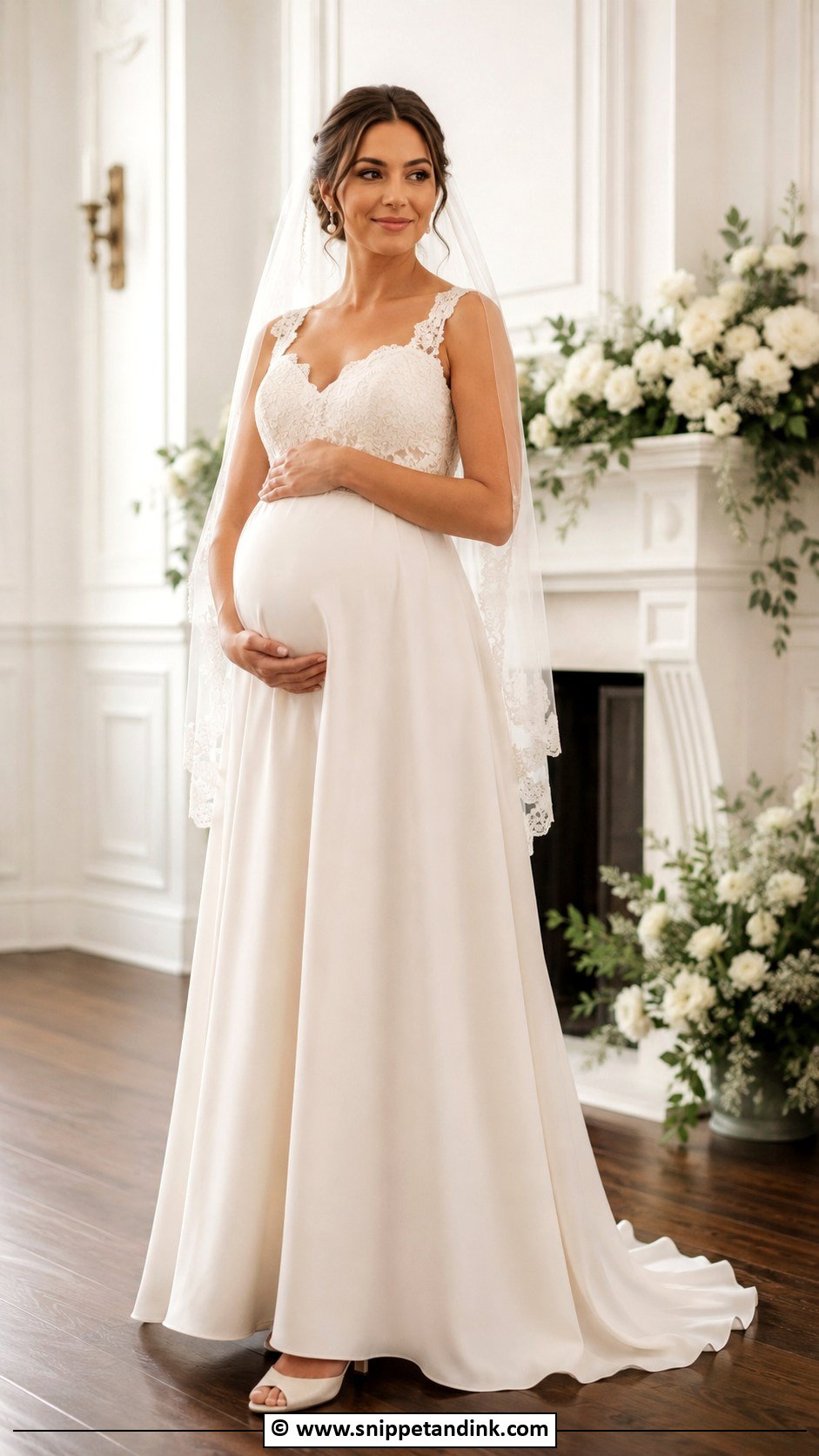
A-line gives the most traditional bridal shape with room at the waist and hips. The fitted bodice supports the bust, and the skirt falls away from the belly in a balanced line. Lightweight satin, organza and lace overlays all work; heavy satin gets tiring. My rule: the bodice must be alterable close to the date, so ask the seamstress whether the seams carry extra allowance. Drop earrings, a fingertip veil and comfortable shoes finish it.
3. Lace Pregnant Wedding Dress
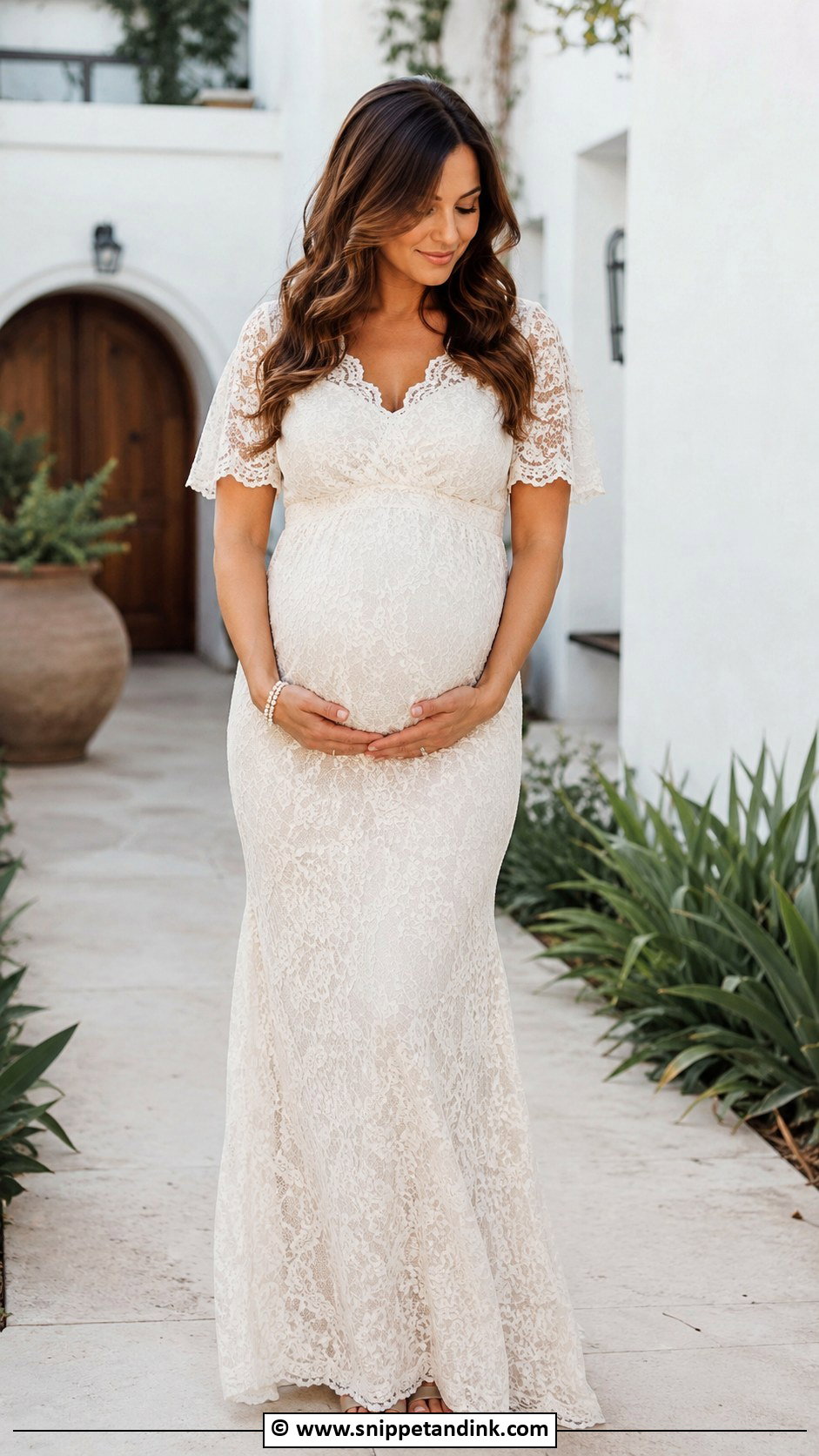
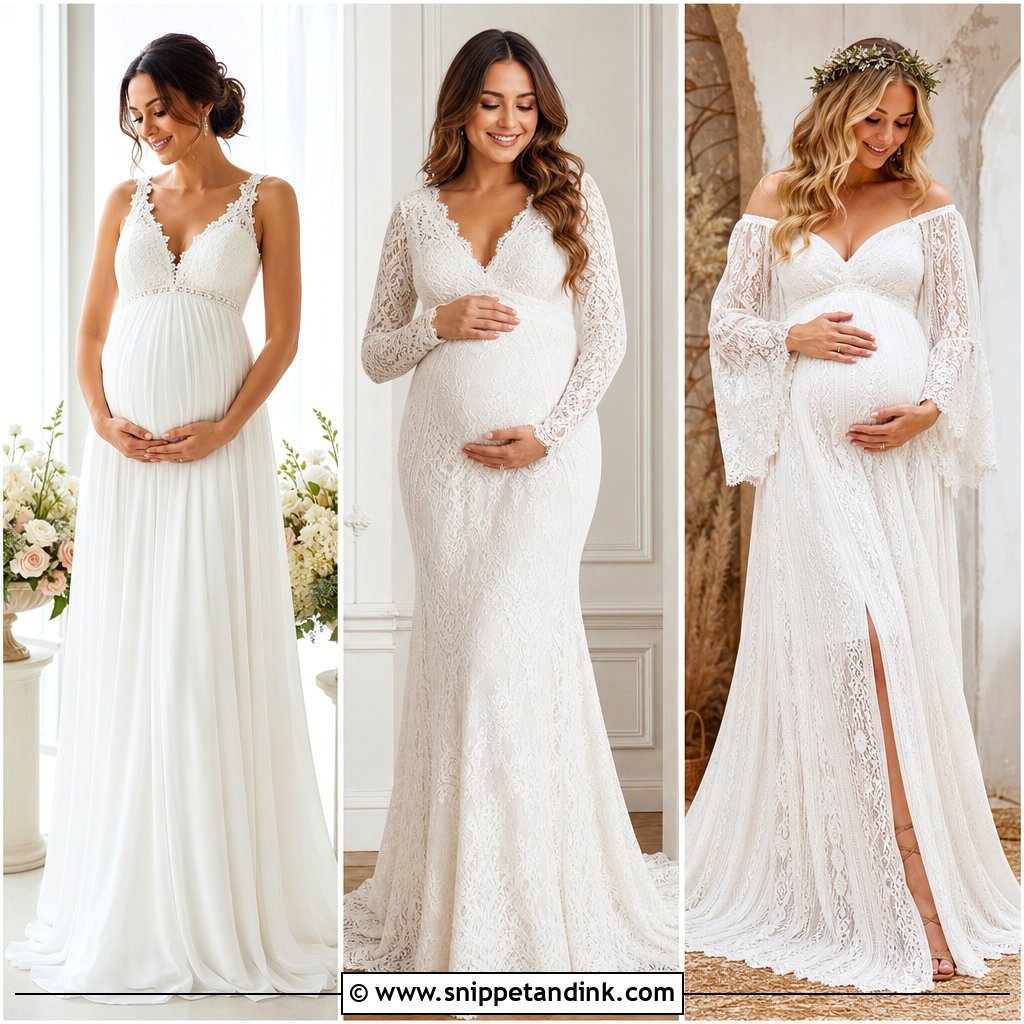
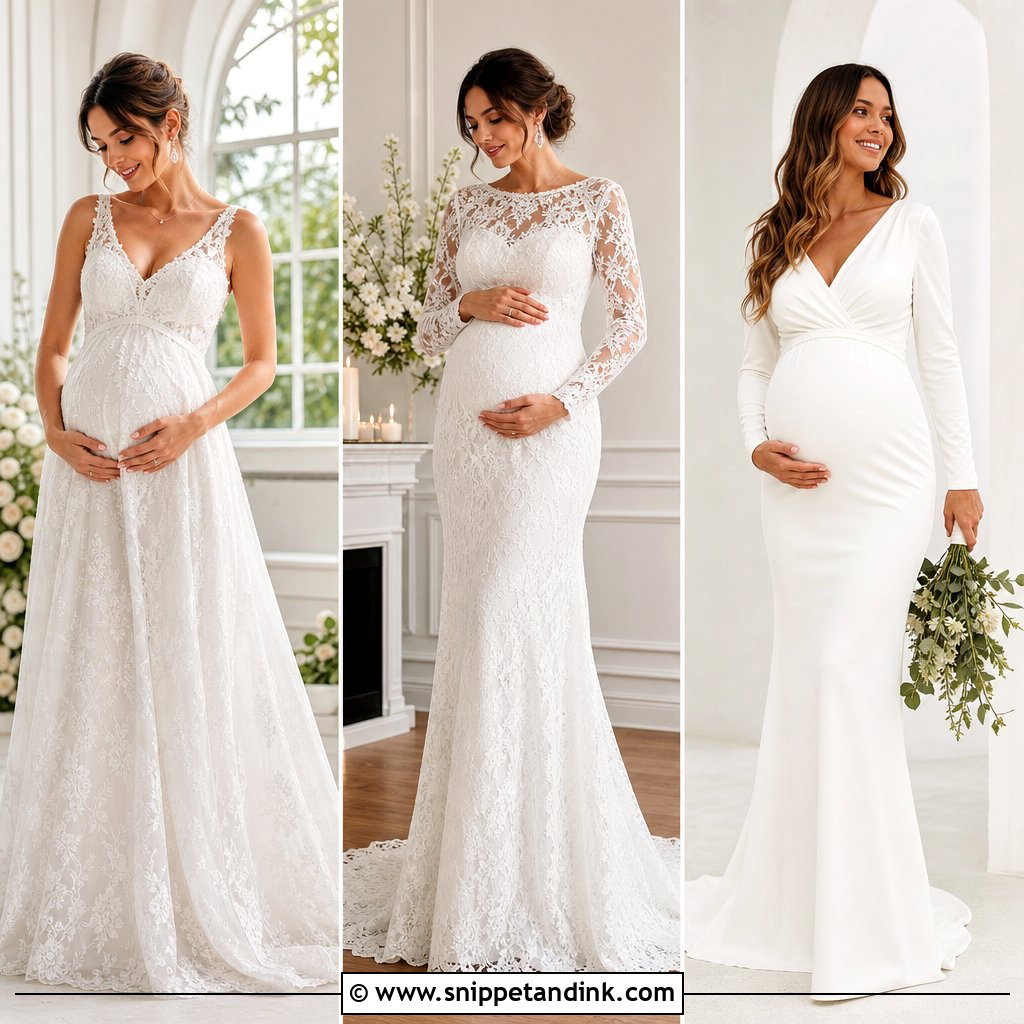
Stretch lace is the lace I’d choose in pregnancy, because it moves with the body rather than pulling across the bump. Full lace sleeves, a lace bodice over a chiffon skirt or a soft lace sheath with maternity lining all work. Check the lining as carefully as the lace: a rigid lining defeats a stretch outer layer. Larger floral motifs or clean scalloped edges look more current than dense, busy lace. Ivory block heels and soft waves complete it.
4. Chiffon Pregnant Wedding Dress
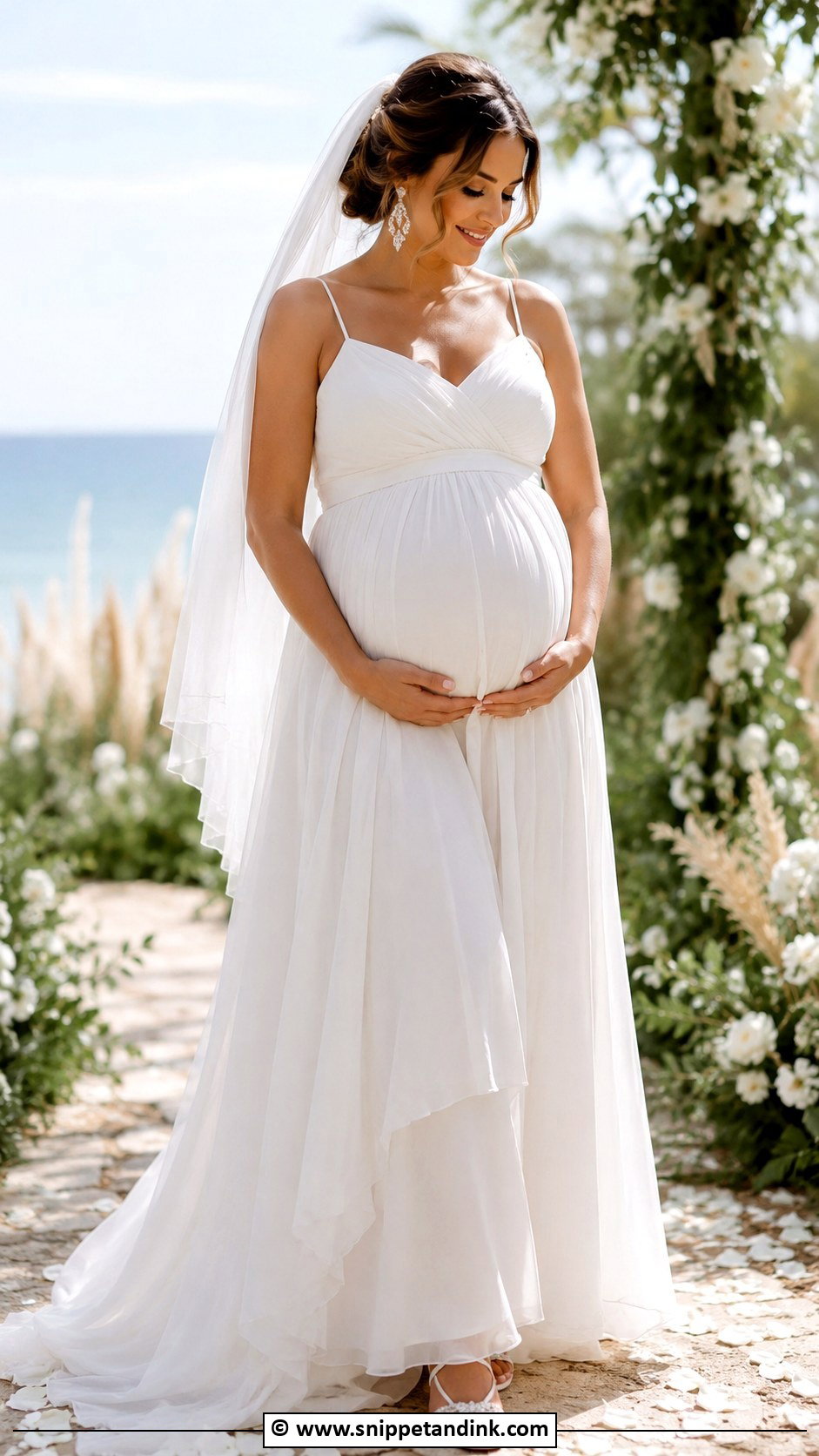
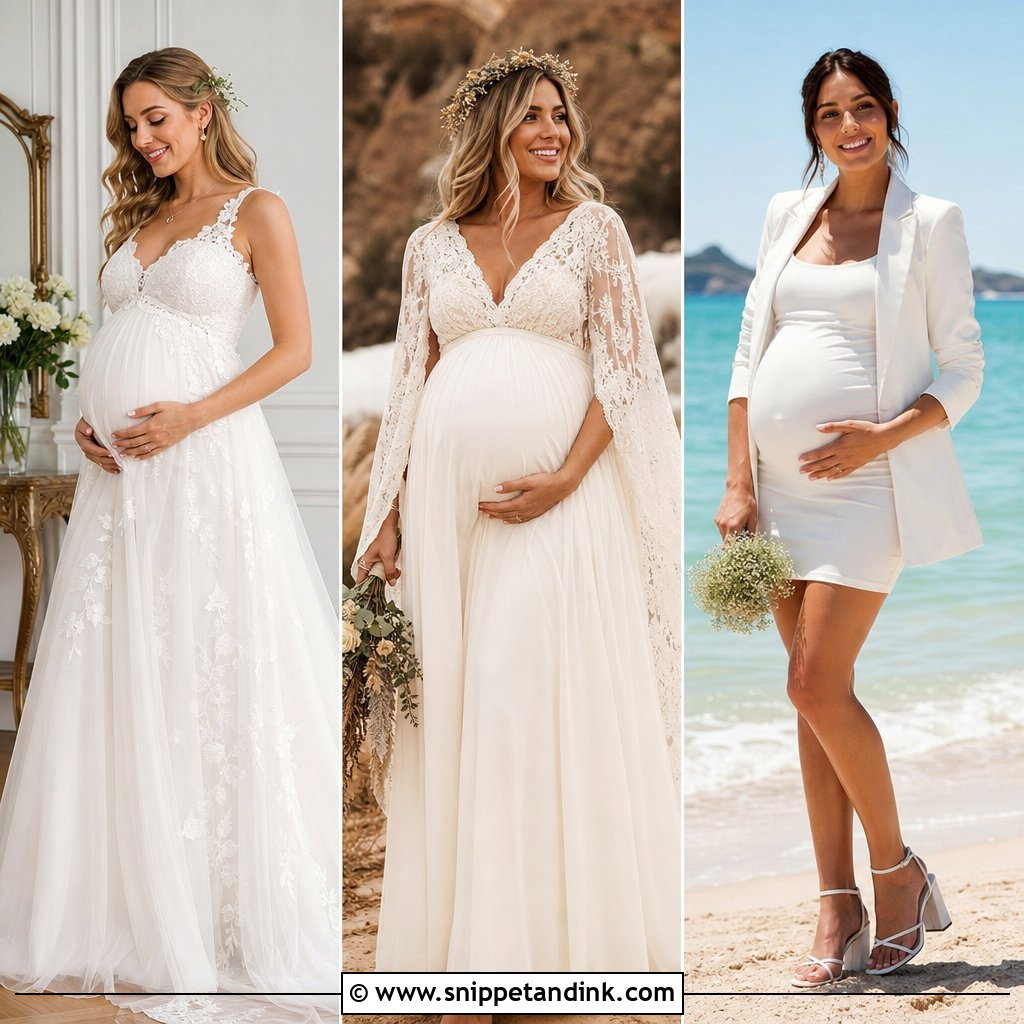
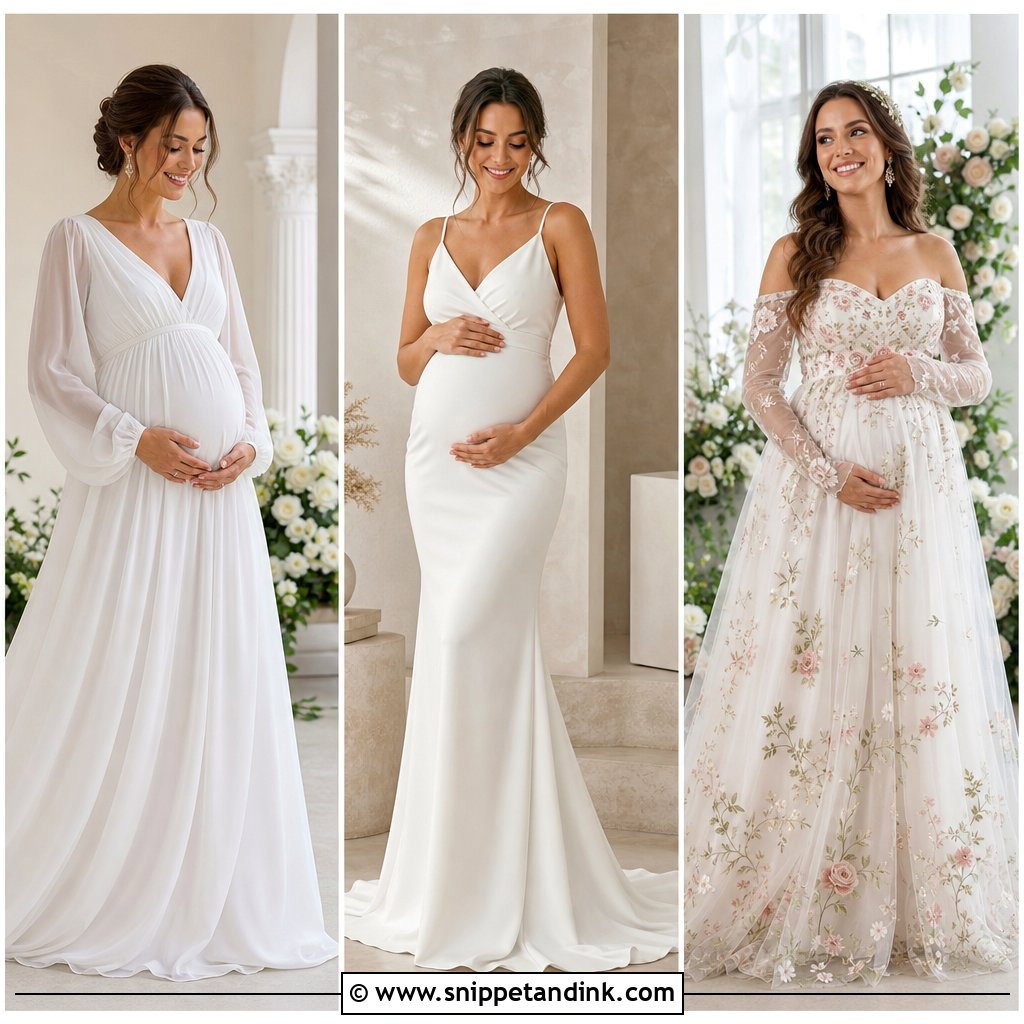
Chiffon is the coolest fabric on this list to wear. It drapes over the belly, catches movement in photos and breathes in warm weather. An empire waist or softly gathered bodice gives shape without squeezing, and a layered skirt hides supportive underwear. It does crease and snag on rough surfaces, so I’d carry a small steamer. Barely-there jewelry, a soft updo and cushioned sandals suit gardens and beaches.
5. Long Sleeve Pregnant Wedding Dress
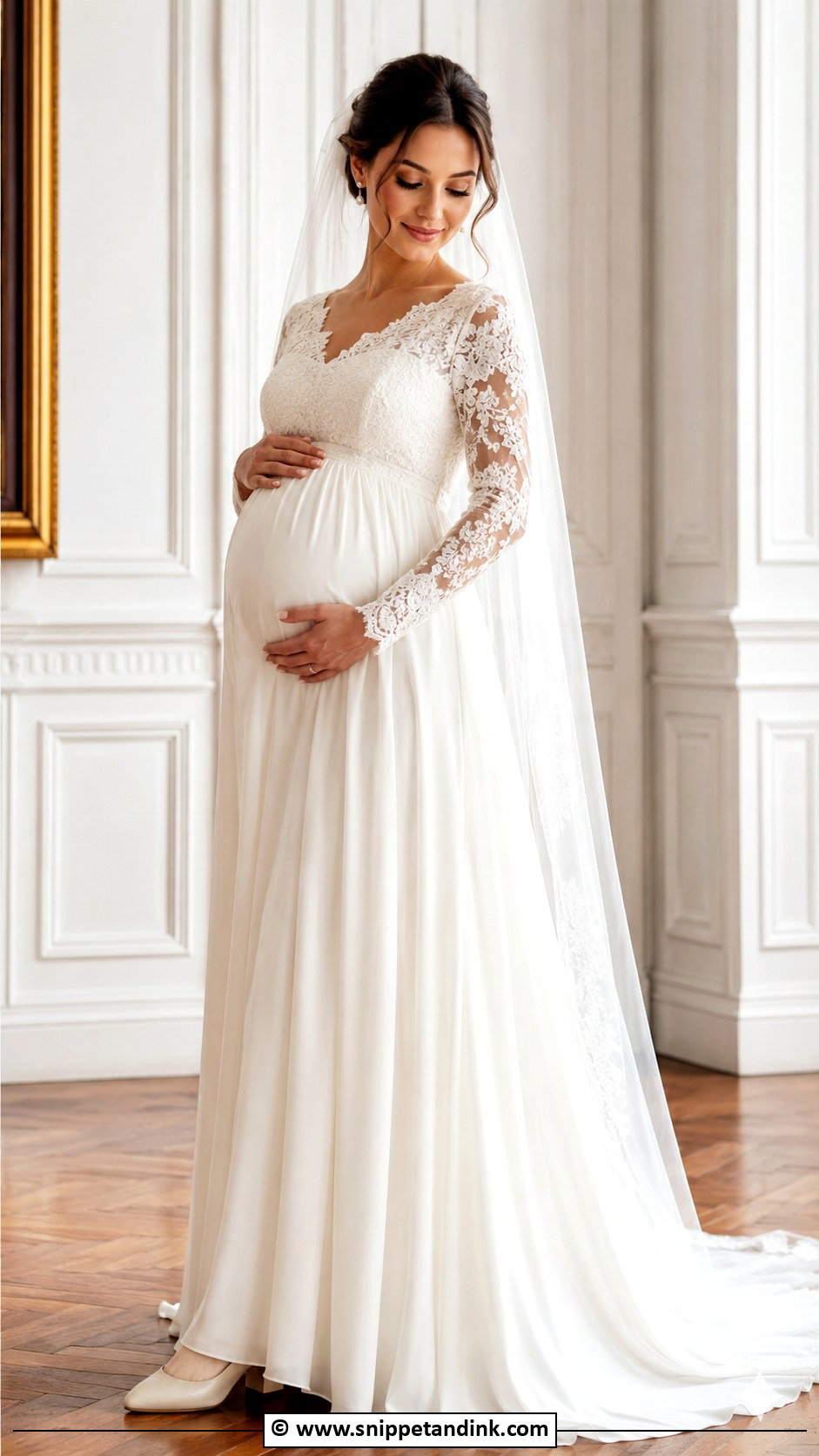
Sleeves bring warmth and coverage for cooler months or formal venues. Stretch lace, soft mesh or light crepe are the fabrics that let your arms move. Swelling is a real consideration later in pregnancy, so a sleeve that fits at the elbow at your fitting may feel tight weeks later; ask for a little ease. A flowing skirt balances the coverage. Pearl studs, a smooth bun and closed-toe block heels finish it.
6. Off Shoulder Pregnant Wedding Dress
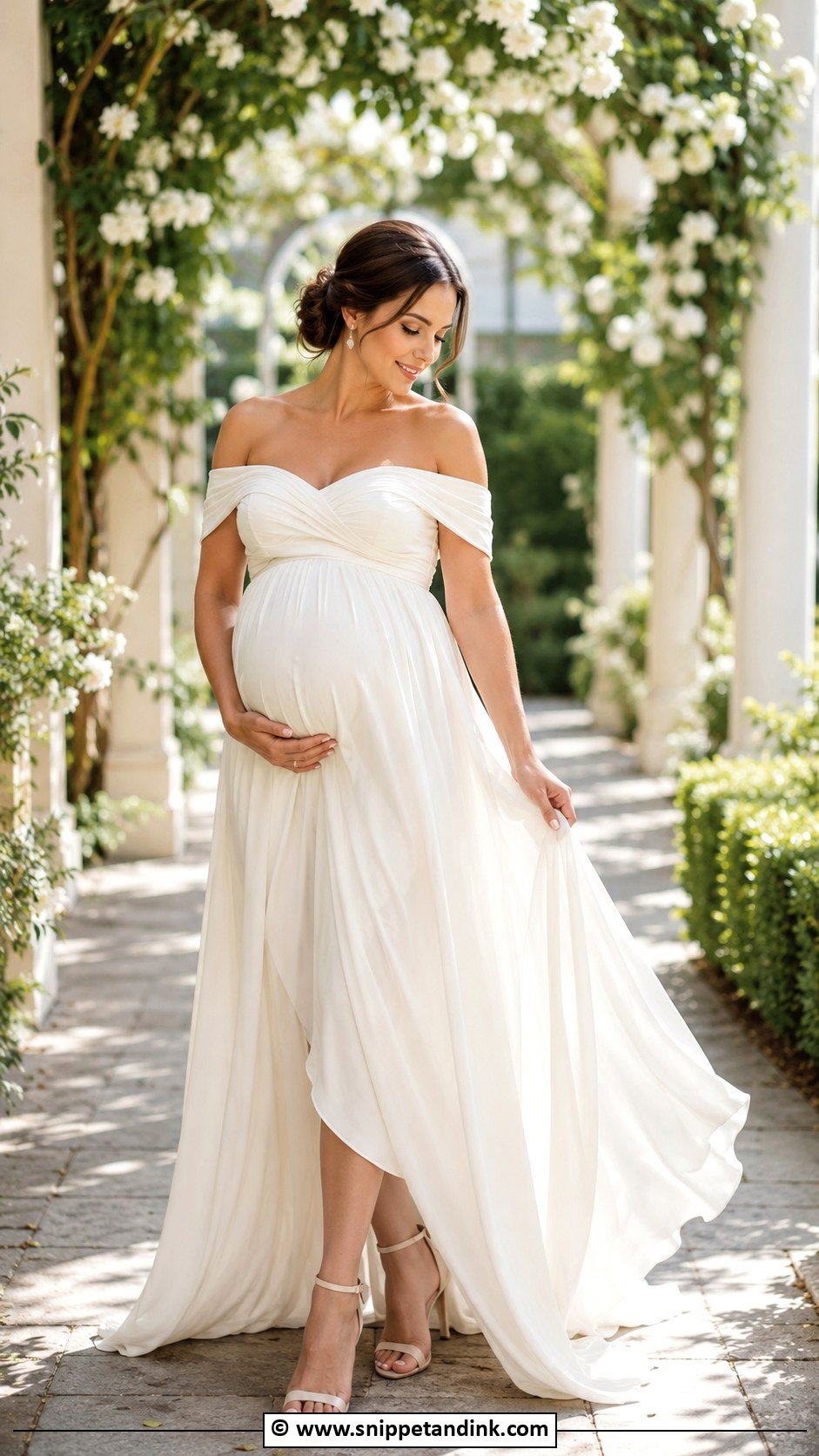
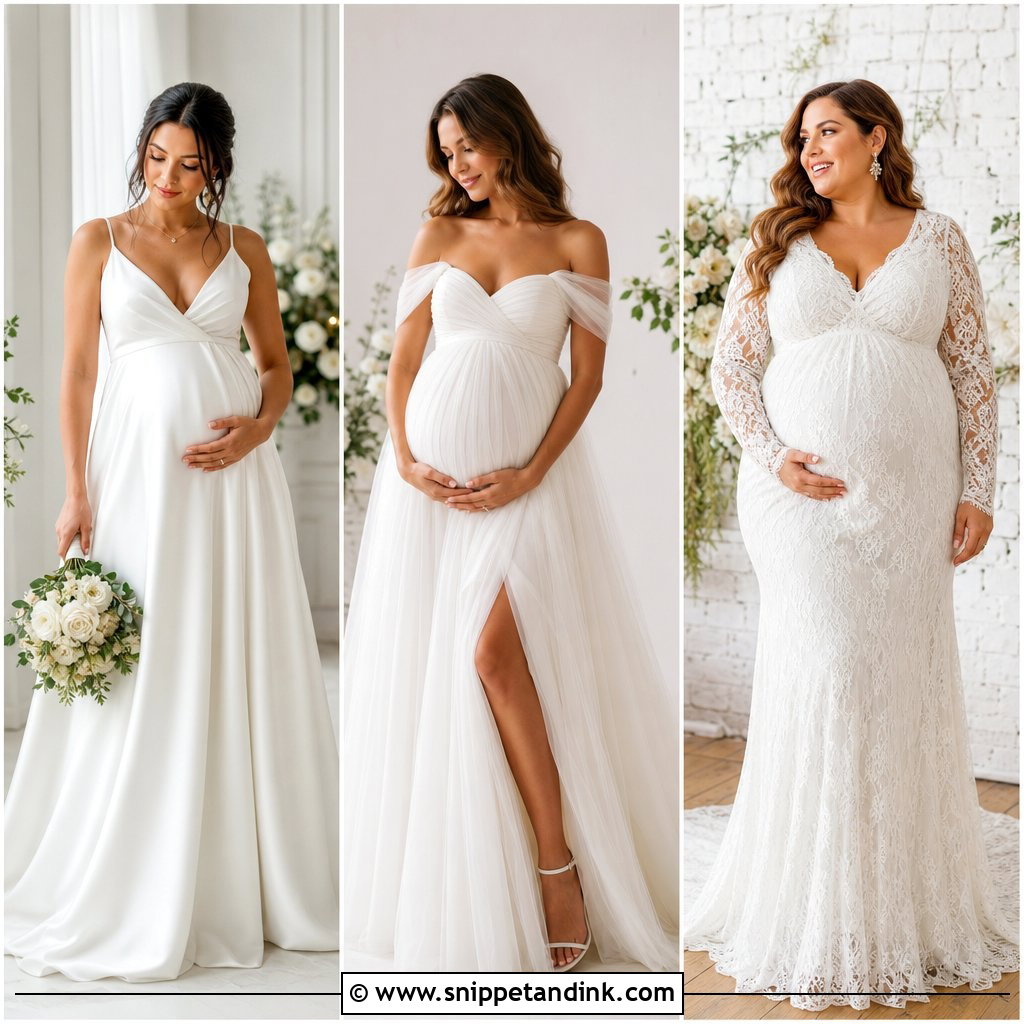
Off shoulder necklines draw the eye to the collarbone and balance a fuller skirt and bump. In pregnancy, the bodice needs stretch and soft hidden support; hard boning that digs in becomes unbearable by evening. A-line, empire and flowing chiffon skirts are the easiest pairings. Small earrings and a low bun keep it soft. Indoors, a satin wrap or tailored shawl adds warmth.
7. Wrap Pregnant Wedding Dress
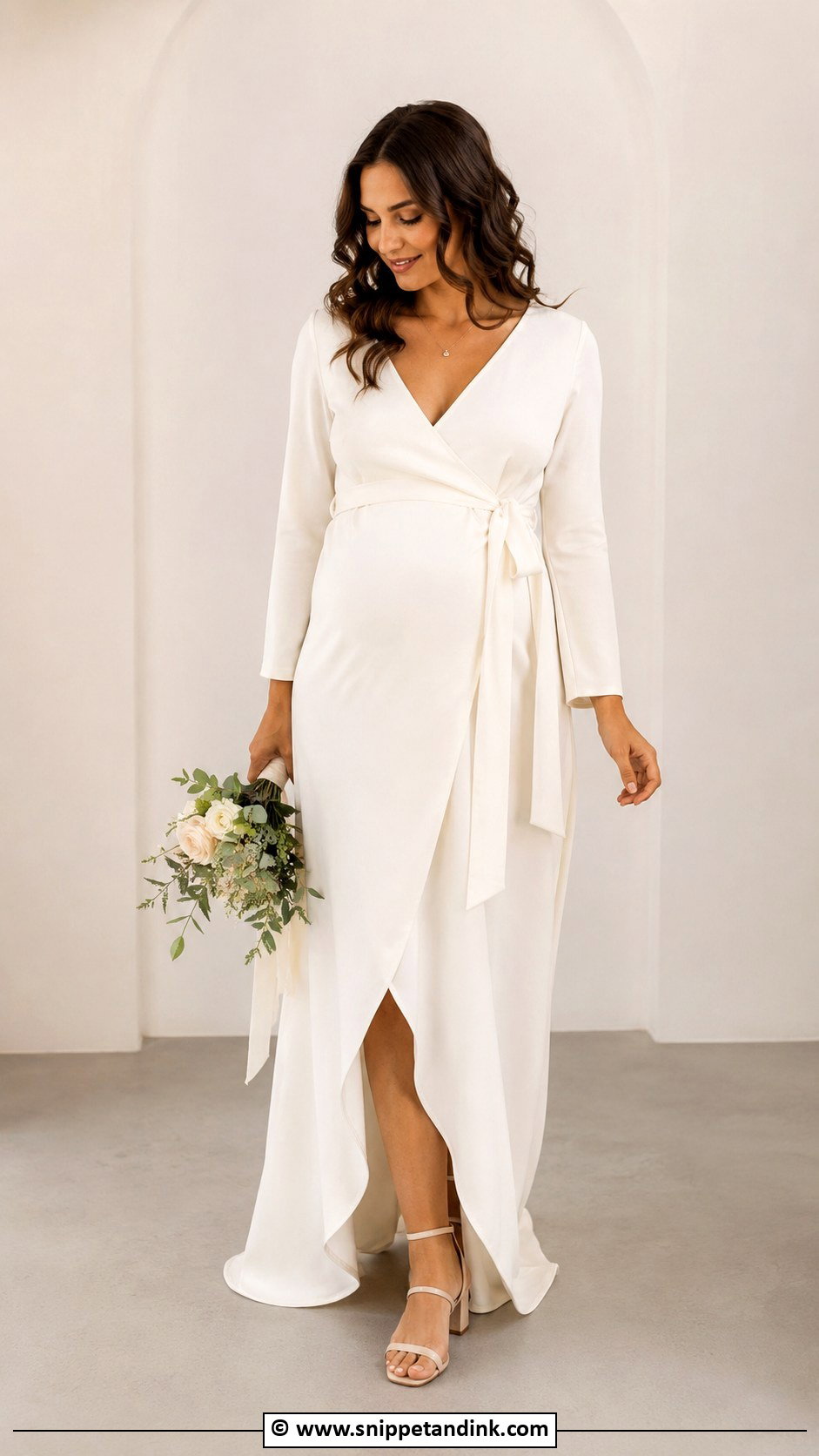
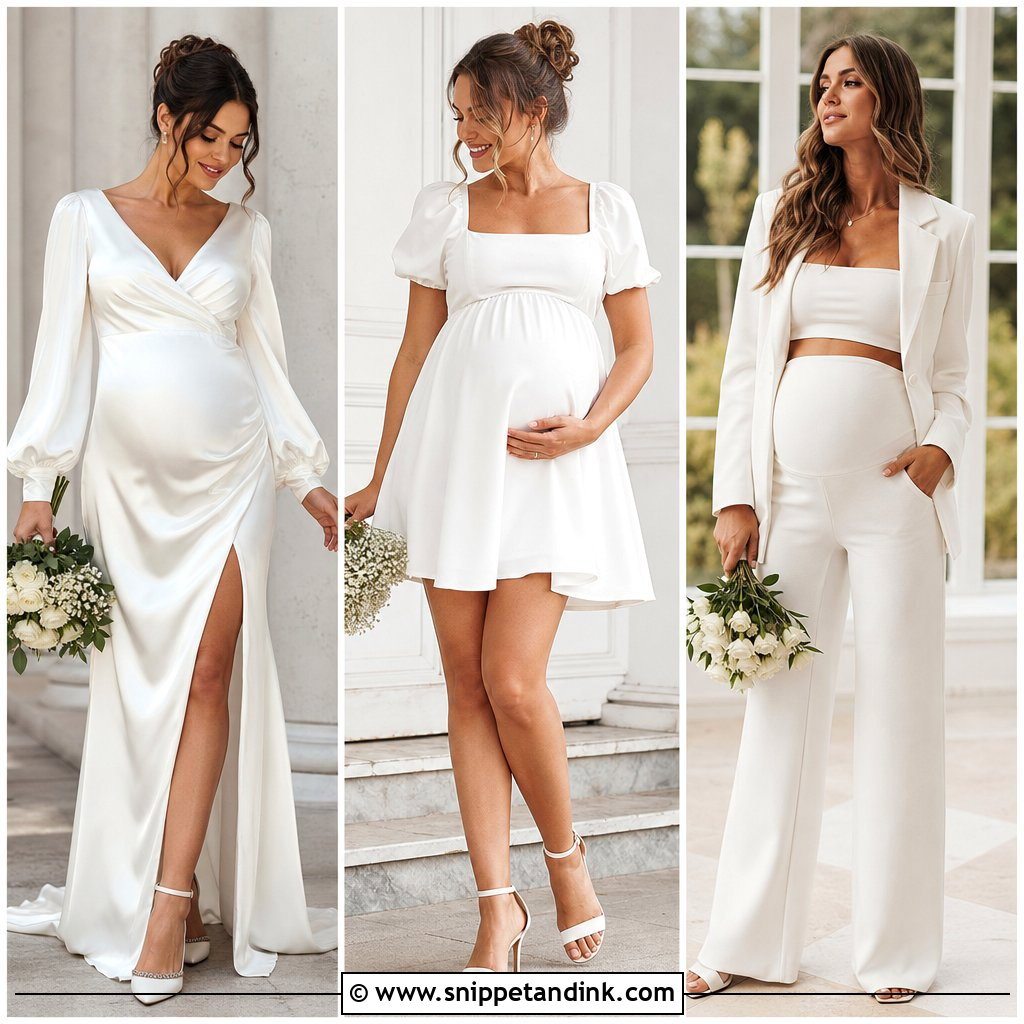
The wrap adjusts itself, which is exactly what a changing body needs. It defines the bust, makes a natural V and lets you retie as the bump grows. In bridal crepe, satin, chiffon or stretch jersey it looks elegant rather than casual. Place the tie above the bump, never across it. Low heels and soft curls complete it. It’s also one of the easiest dresses to wear again afterward.
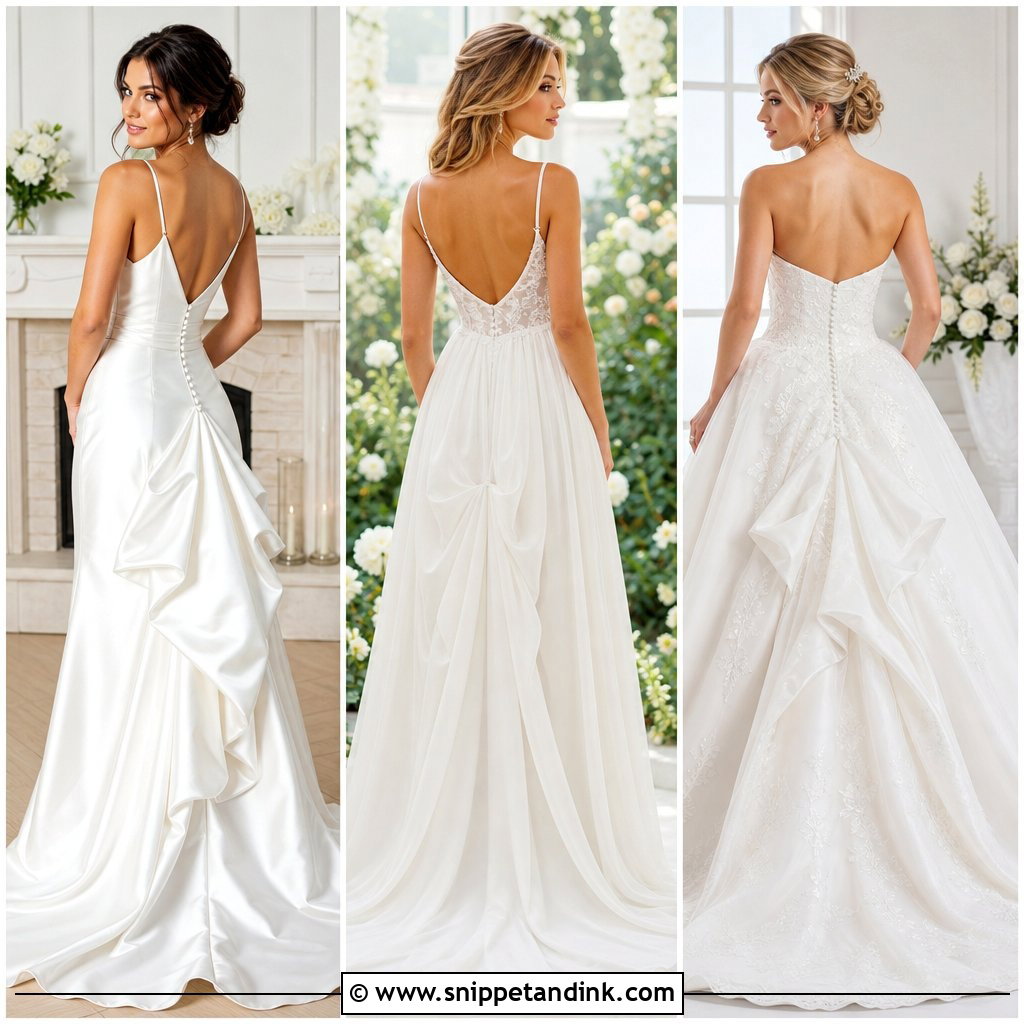
8. Boho Pregnant Wedding Dress
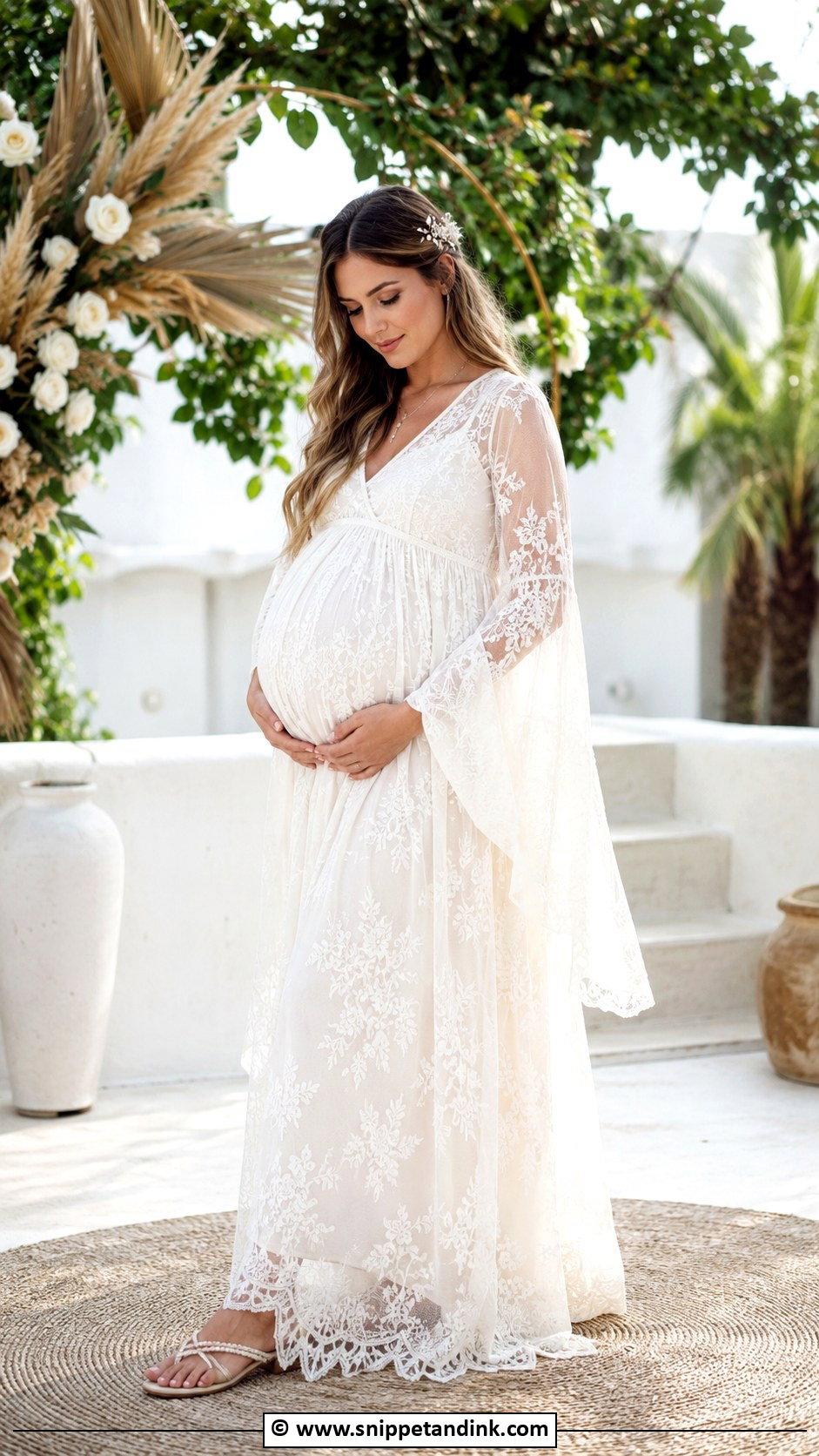
Boho styles are loose by nature, so they adapt easily to a bump. Flowing sleeves, soft lace, gathered skirts and empire or loose A-line shapes all suit the mood. Ivory lace, dotted tulle, crochet-style trim or chiffon give an organic finish. Flat sandals, loose waves and one floral comb are enough; piling on accessories tips it into costume. Outdoor and destination ceremonies suit it best.
9. Beach Pregnant Wedding Dress
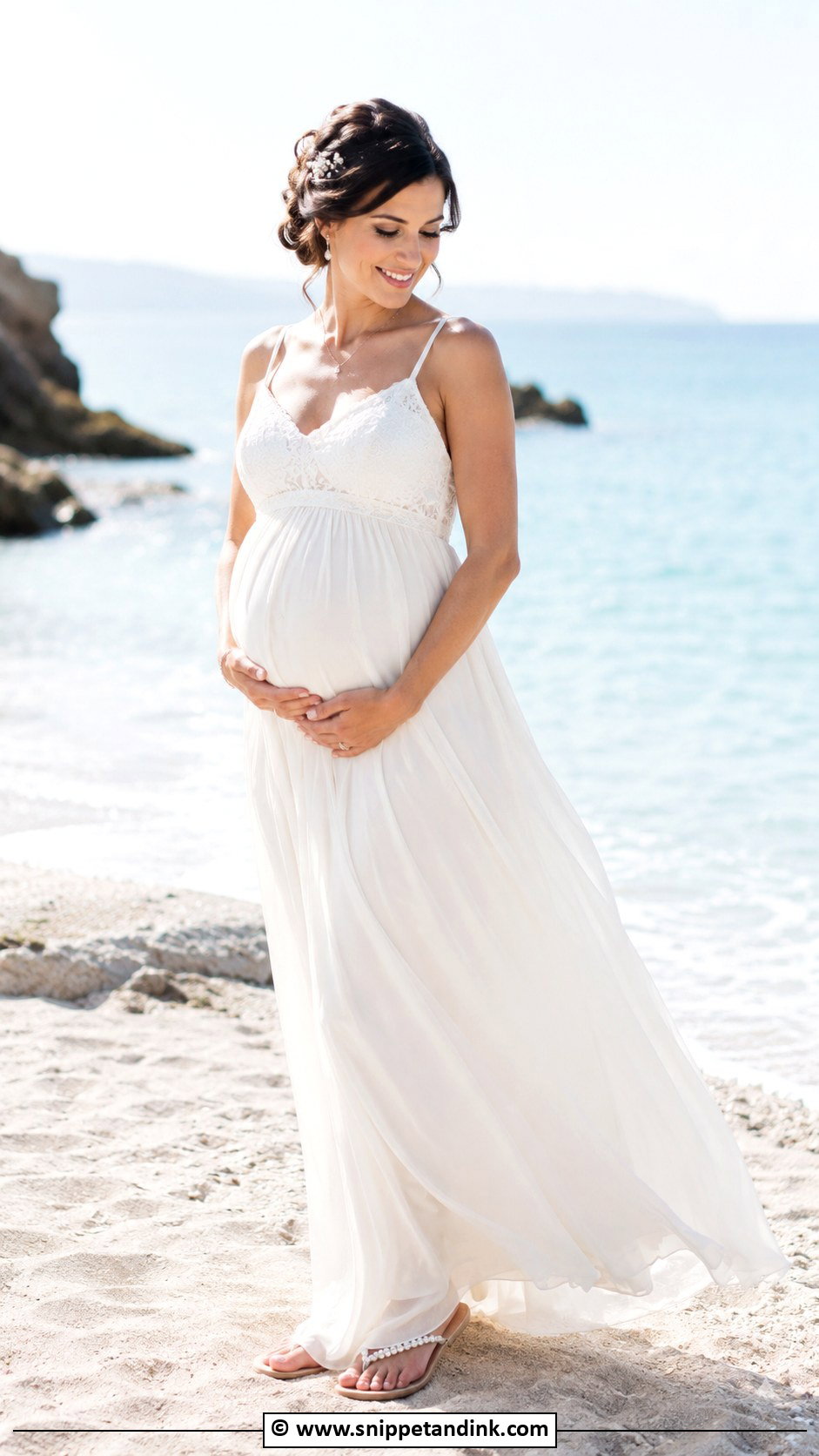
Sand punishes heavy fabric, which is why chiffon, crepe and gauze-like weaves beat satin and ball gown skirts on a beach. A flowy empire waist, simple slip or relaxed A-line won’t drag. Flat sandals keep your balance steady. A high slit helps you walk, but test it in a fan or breeze before the day. A short veil or none at all is easier in wind.
10. Simple Pregnant Wedding Dress
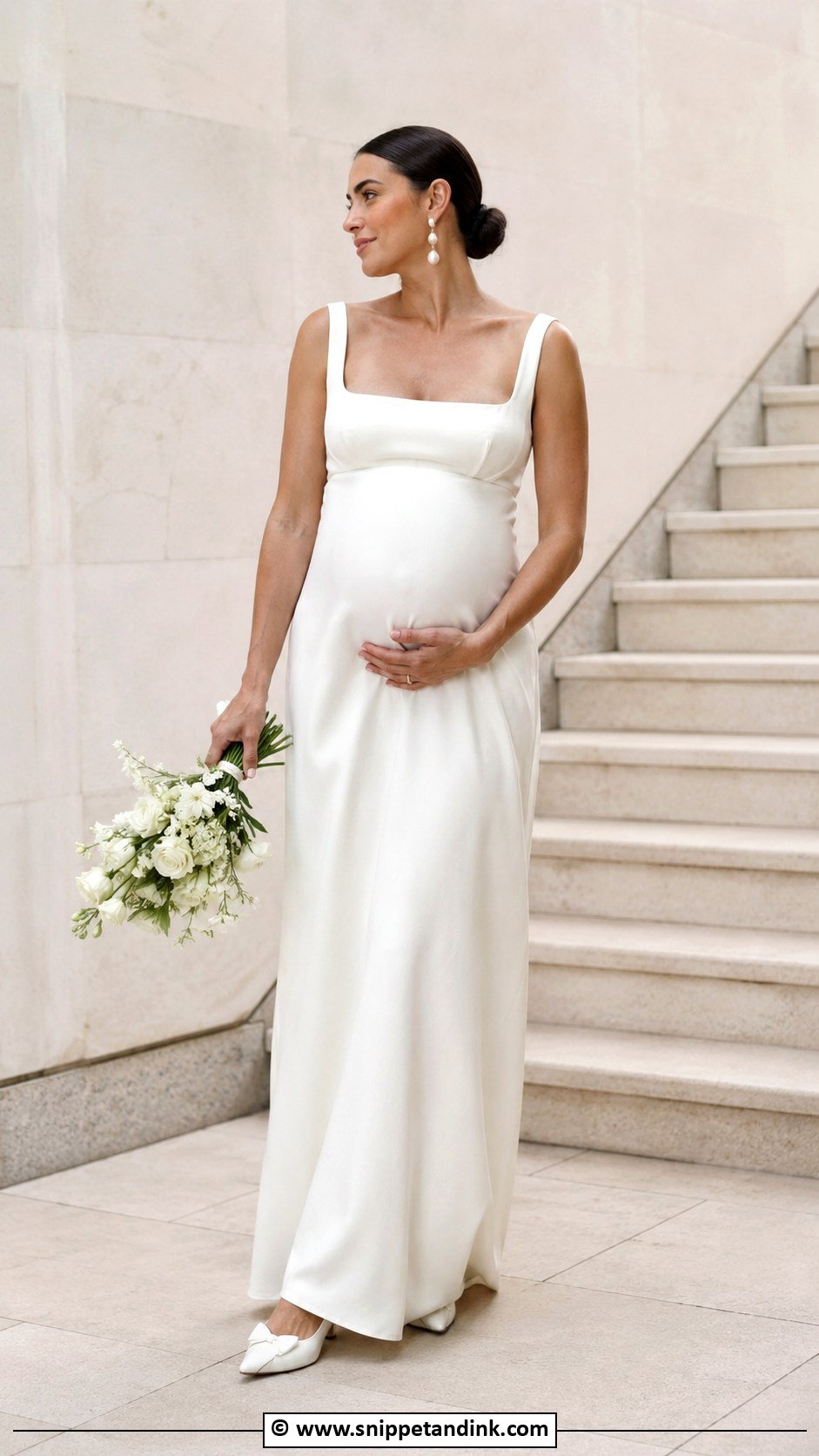
Simple gowns rely on fabric and fit alone. Clean crepe, smooth satin or matte jersey give a refined shape without lace or sparkle. Get the neckline right and the waist above the bump, and the dress looks finished. Statement earrings, sleek hair and a structured bouquet complete it, with low heels or pointed flats underfoot. Courthouses, modern venues and elopements suit it.
11. Satin Pregnant Wedding Dress
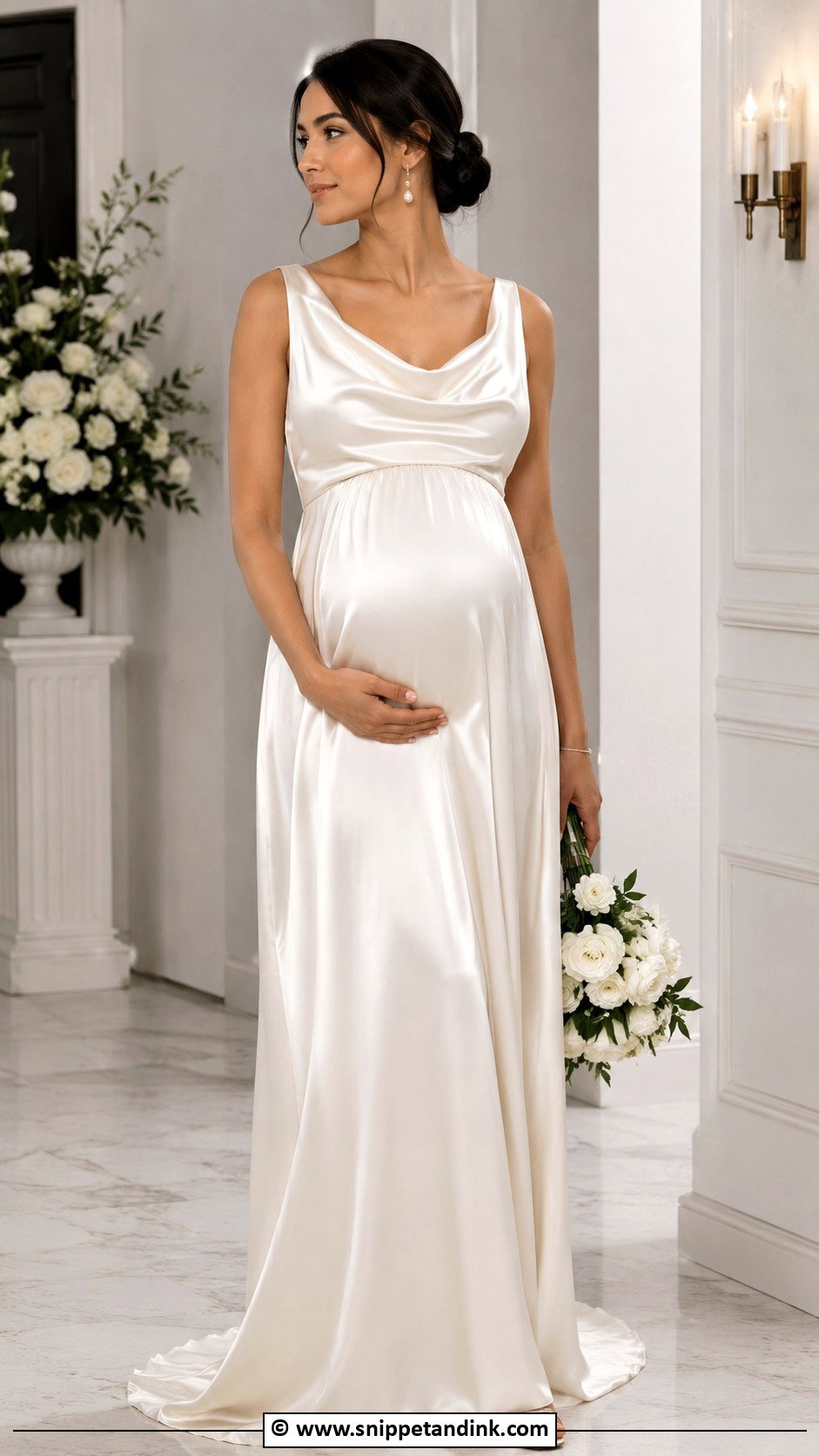
Satin shows tension the moment it’s too tight, with visible pull lines radiating from the strain point. That’s why cut matters more than size here. Bias-cut, empire, wrap or relaxed A-line satin fits most smoothly. Stretch satin or charmeuse is far more forgiving than thick structured satin. A cowl or gathered bust adds room. Pearl earrings and a smooth low bun suit evening and hotel ceremonies.
12. Tulle Pregnant Wedding Dress
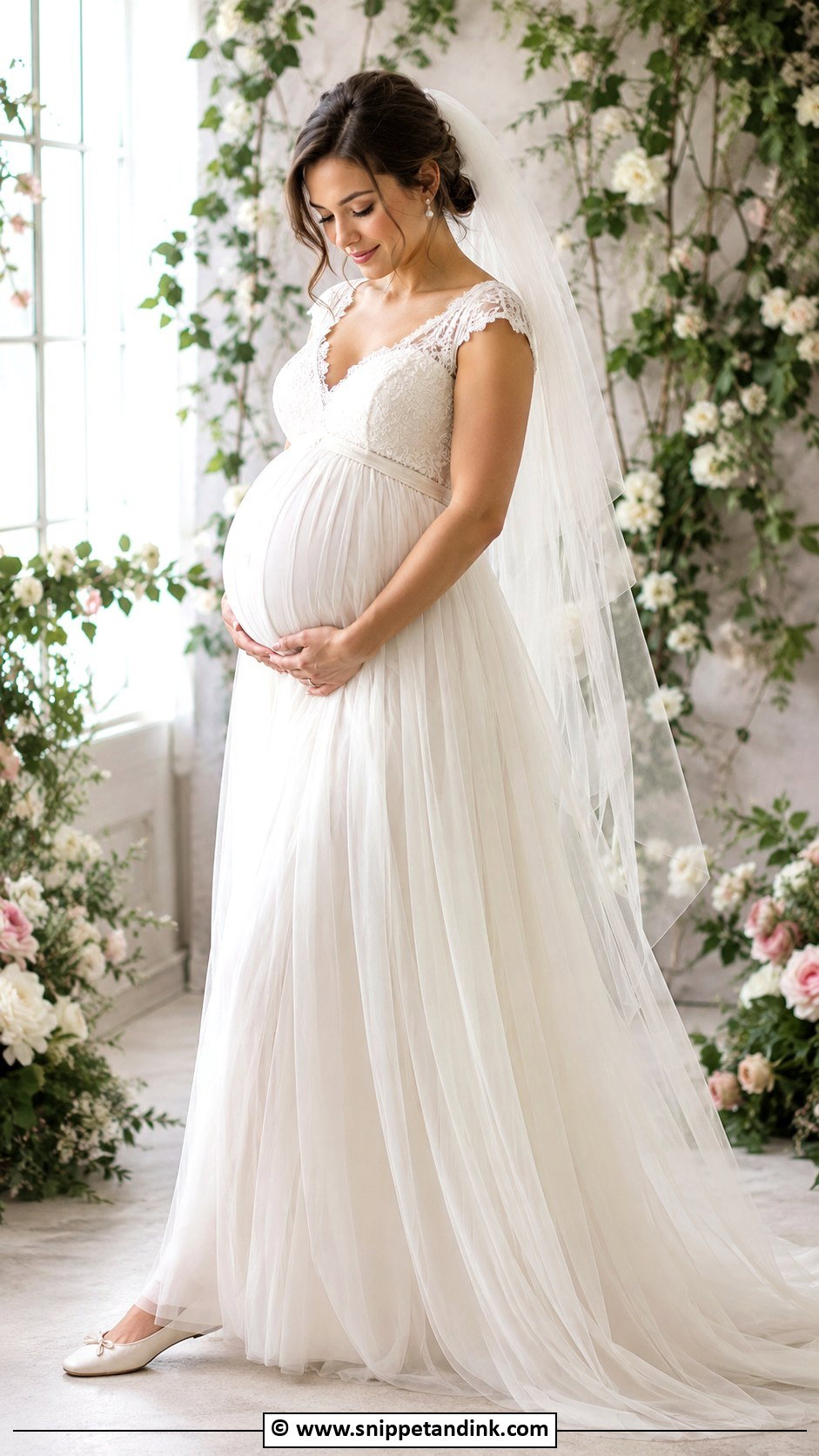
Tulle gives bridal volume with very little weight. Maternity-friendly versions use an empire or raised waist so the layers fall over the bump. A lined bodice with a stretch panel or lace-up back makes the fit forgiving. Keep the skirt airy rather than heavily layered, or it becomes hot and cumbersome. Ballet-style flats, small earrings and a soft veil finish it.
13. Tea Length Pregnant Wedding Dress
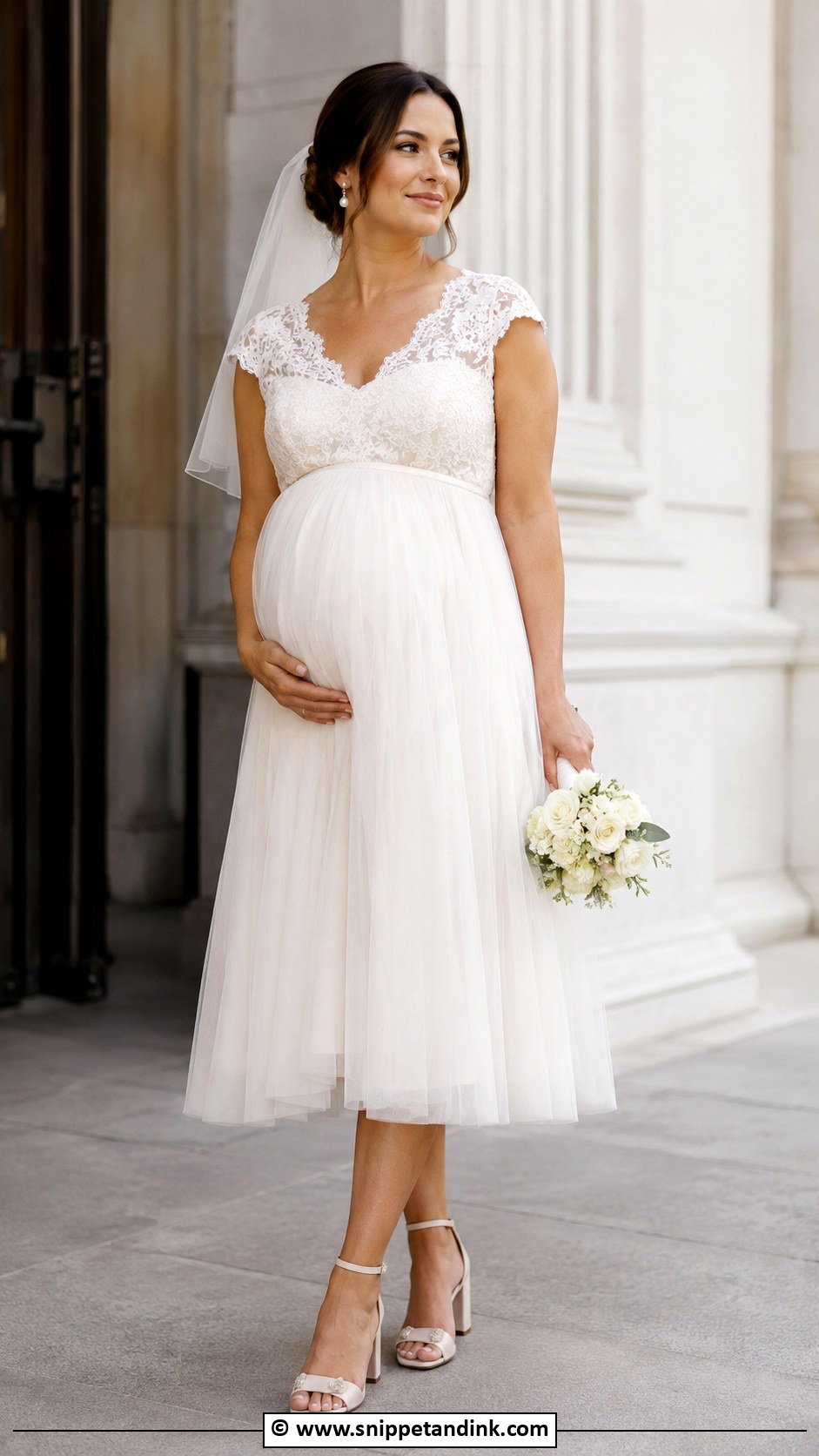
Tea length is the practical length for walking, dancing and stairs. The shorter hem means no train to manage and no stepping on the front of your skirt, which matters when you can’t see your feet. Empire or A-line shapes leave room for the bump. Lace, mikado, tulle and crepe all hold this length well. Pearl earrings and a short veil finish it.
14. High Low Pregnant Wedding Dress
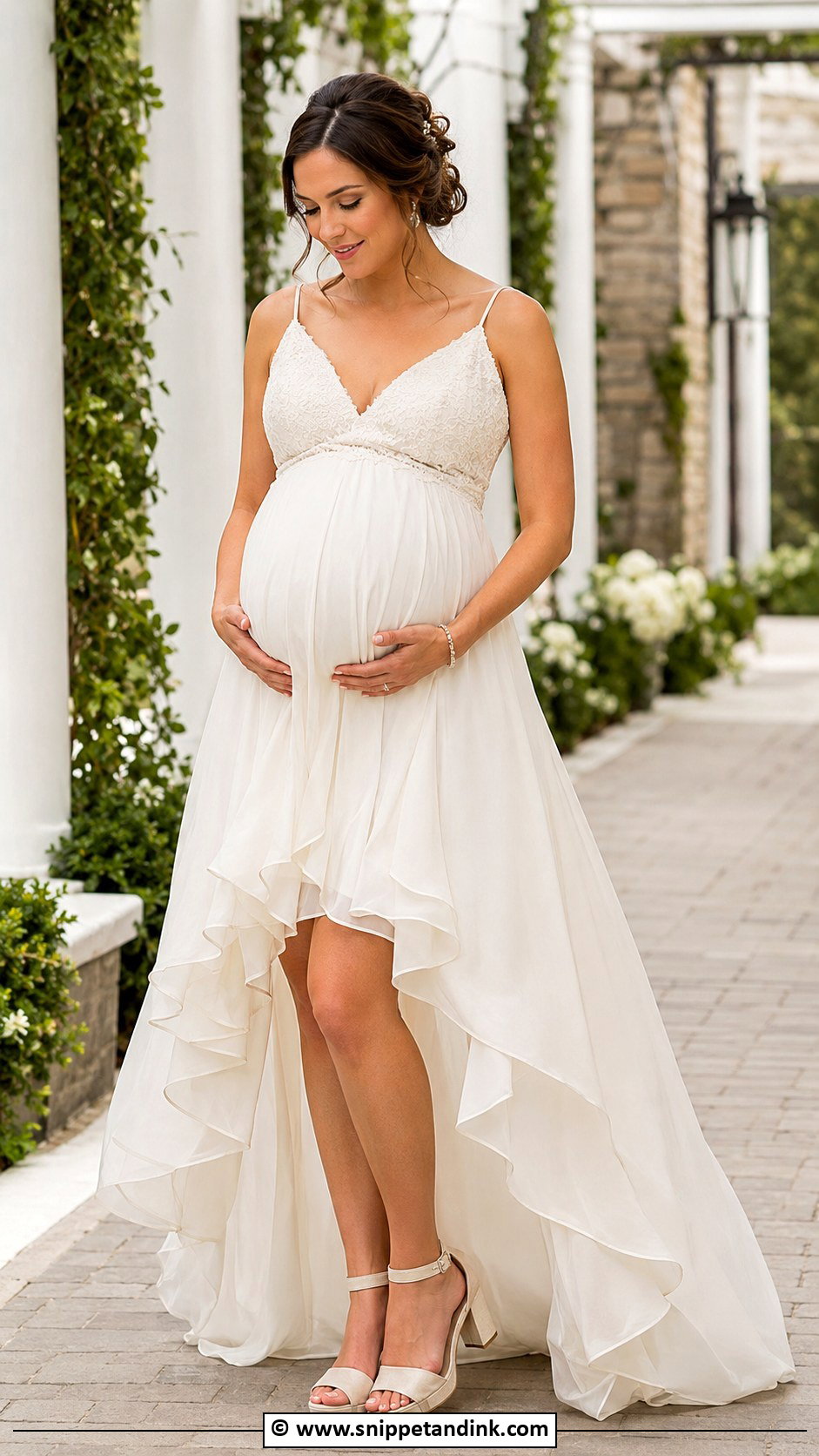
High low hems give you the drama of a longer back with a safe, visible front. That front matters more in pregnancy: tripping on a hem is a genuine risk when your center of gravity has shifted. A soft A-line, empire waist or flowy chiffon design suits it. Skip stiff underlayers that add weight. Comfortable block heels and a clean updo finish it.
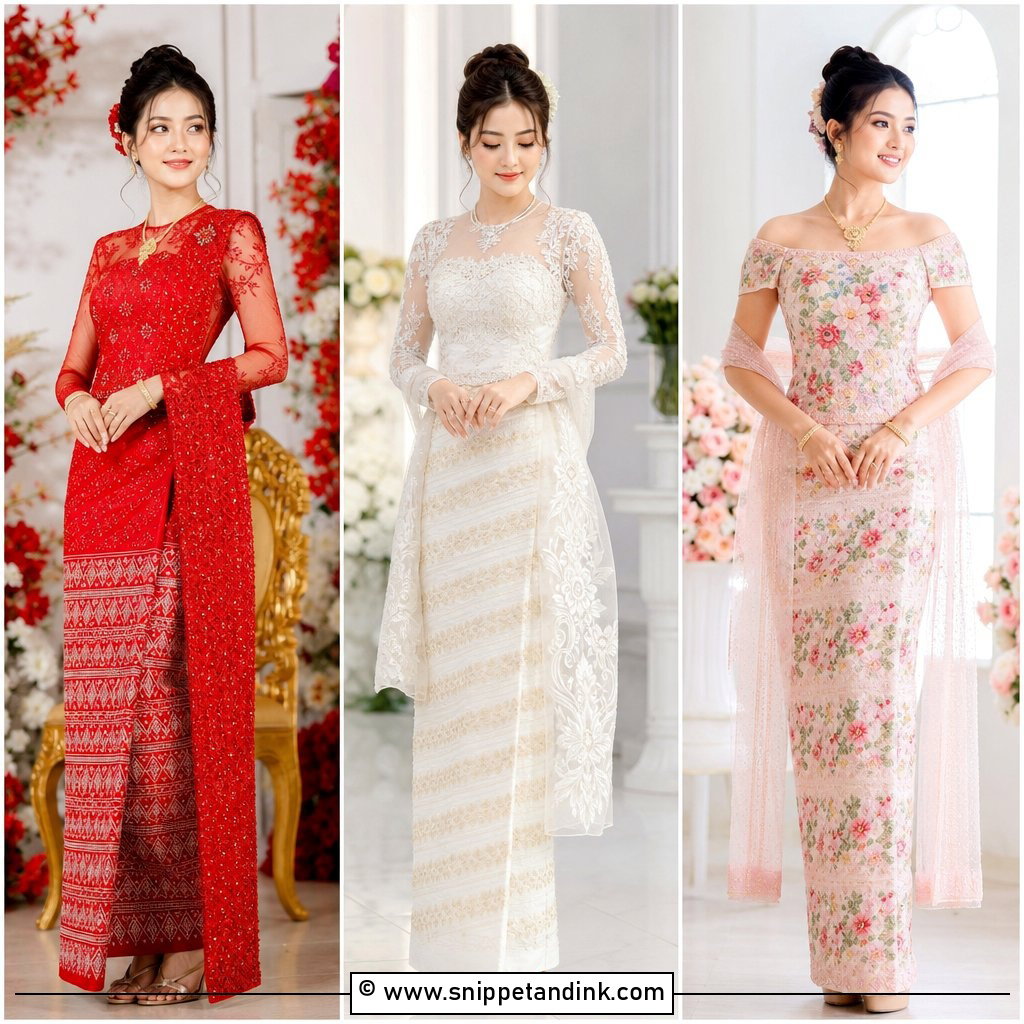
15. Maternity Mermaid Wedding Dress
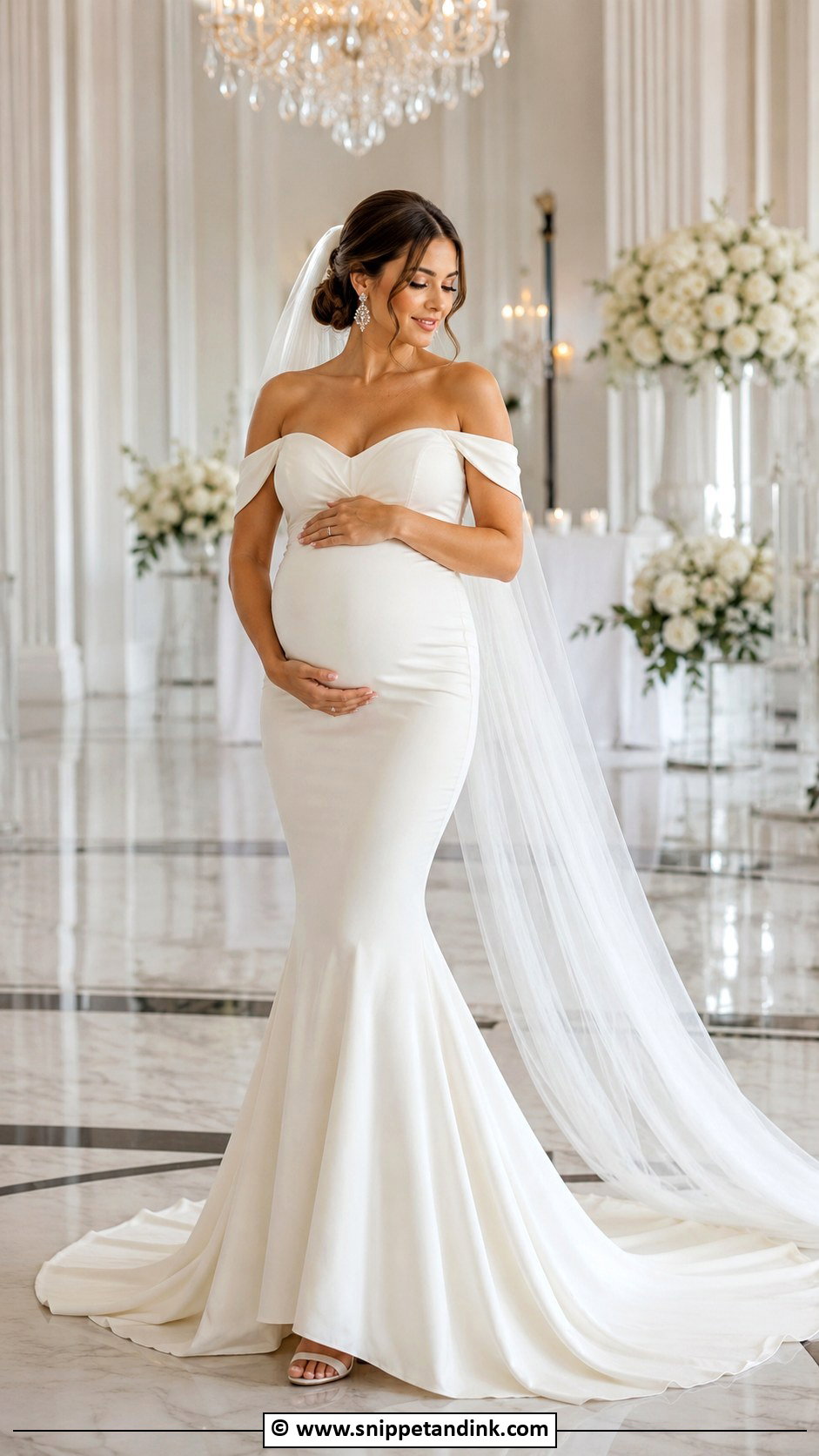
A mermaid celebrates the bump rather than skimming it. The comfortable versions use stretch crepe, stretch lace or soft jersey with no rigid boning. Sit down in it at the shop; if the knees are tight, you’ll shuffle all day. The flare should start at or below the knee. This is the shape that most needs a fitting very close to the date, since a precise silhouette shows every change. Supportive low heels and statement earrings suit it.
16. Sheath Pregnant Wedding Dress
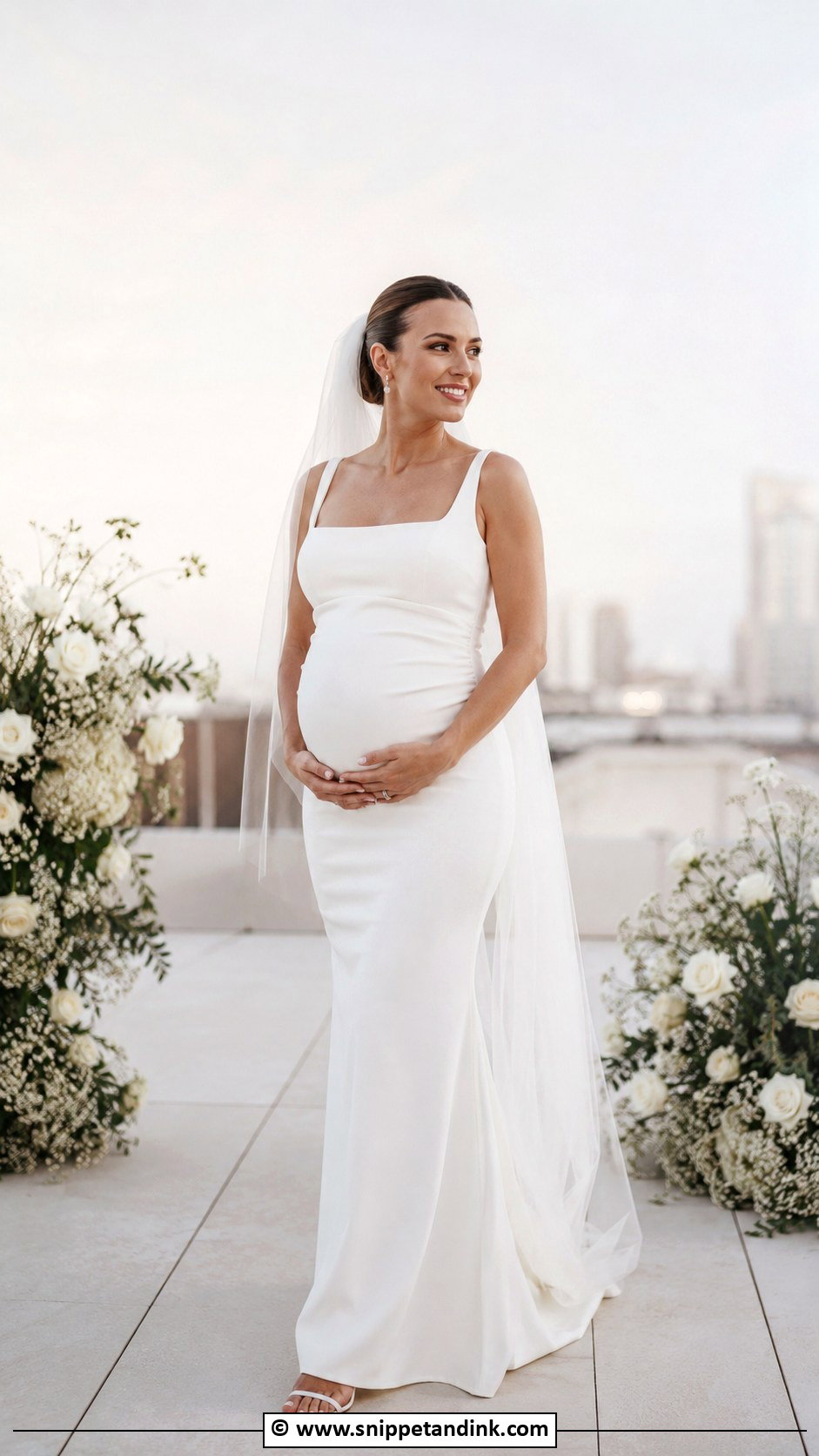
A sheath follows the body without much volume, so stretch or ruching is essential for pregnancy. Crepe, jersey and stretch lace beat stiff woven fabrics that pull across the bump. V-necks, square necks and one-shoulder cuts suit it. Sleek hair, simple earrings and low heels keep it modern. Rooftops and courthouses are a natural setting.
17. Ruffle Pregnant Wedding Dress
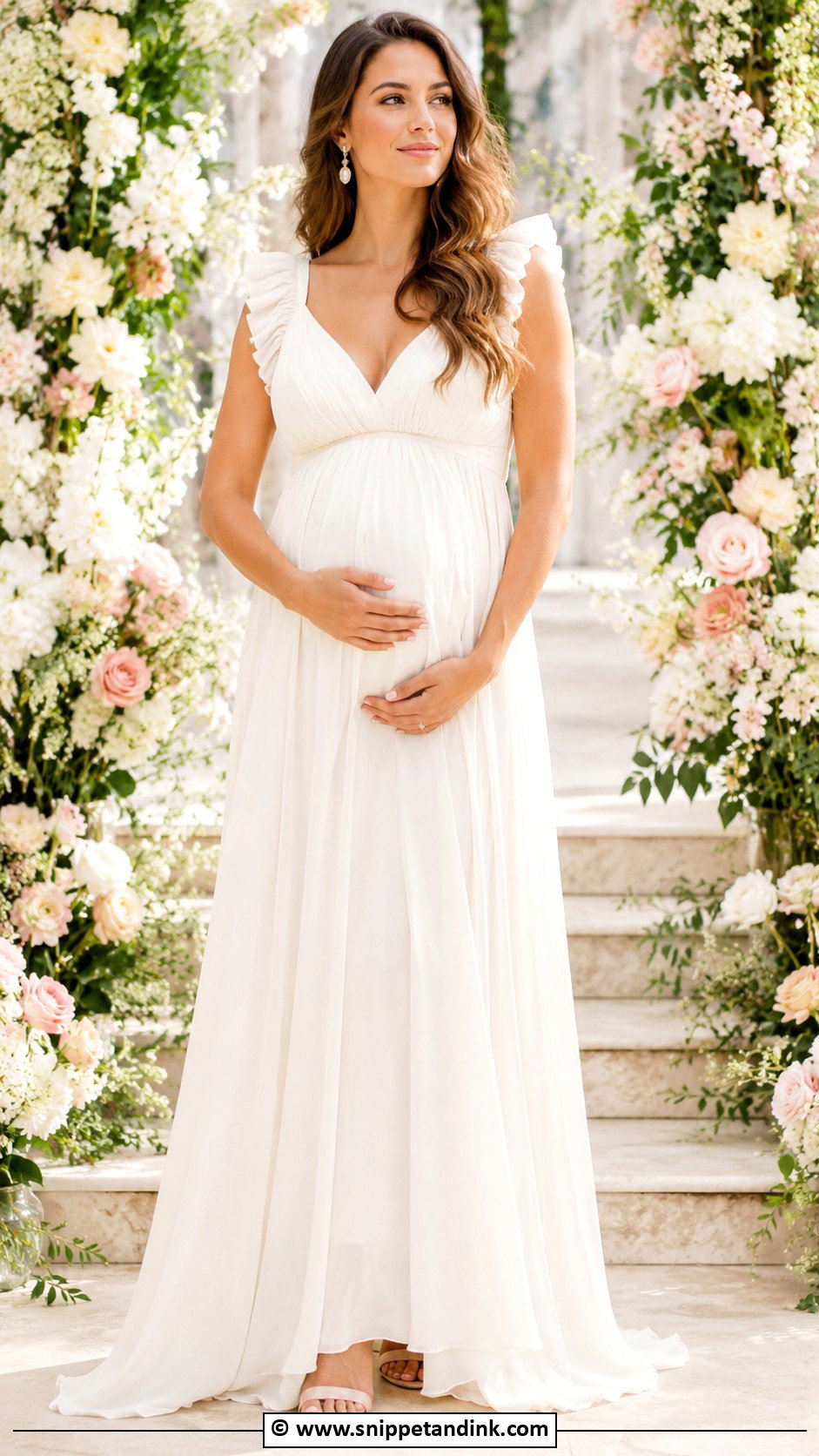
Ruffle placement decides whether this works. Soft ruffles at the shoulder, a tiered chiffon skirt or a ruffled hem add movement; bulky ruffles at the waist add volume exactly where you already have it. A raised waist or relaxed A-line keeps the dress comfortable. Delicate earrings, loose waves and simple sandals finish it. Gardens suit the movement.
18. Pleated Pregnant Wedding Dress
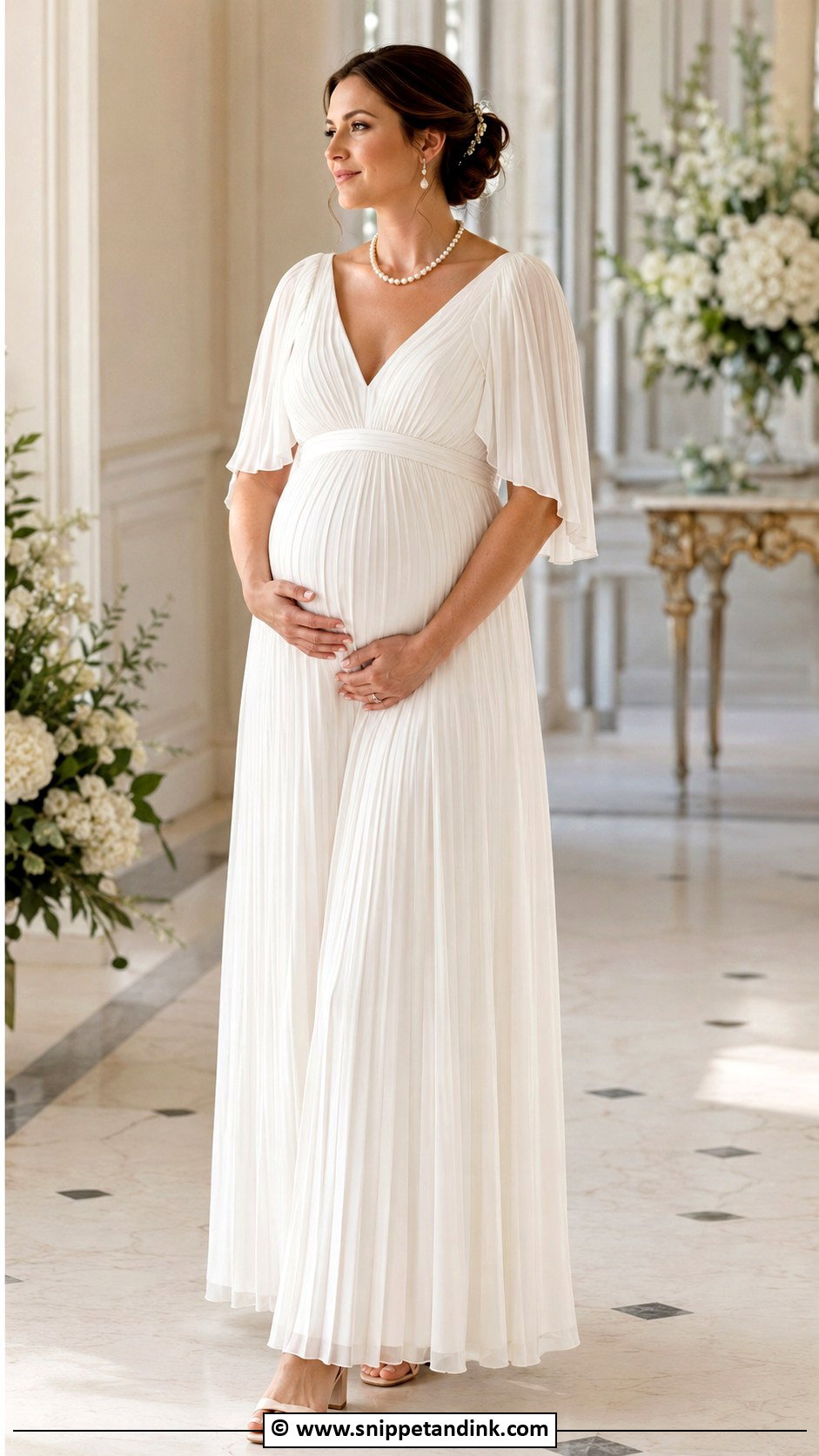
Vertical pleats lengthen the body, which is why an empire pleated gown is so kind to a bump. Fine pleats in chiffon, georgette or light satin skim beautifully. A pleated bodice gives gentle structure without a corset. Soft pleats move with you; stiff accordion pleats spring outward and add width. Pearl accessories, a neat updo and low block heels suit formal and semi-formal weddings.
19. Halter Pregnant Wedding Dress
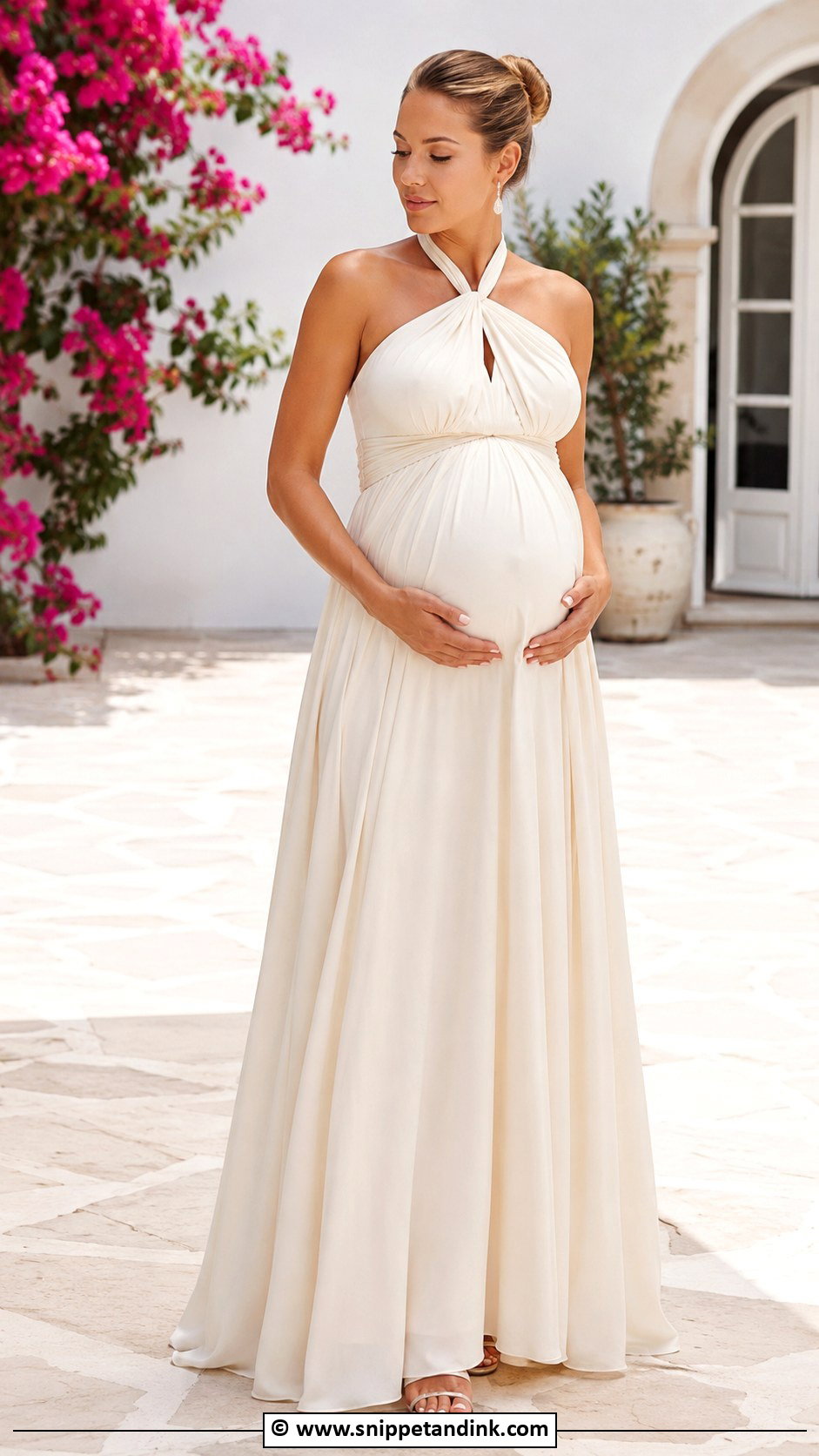
A halter supports the upper body and draws the eye upward. Choose adjustable ties, stretch fabric or a comfortable back closure. Heavy halter straps press on the neck, and over a long day that pressure becomes a headache, so try it on for longer than five minutes. An empire or A-line skirt gives room. A sleek bun and drop earrings suit summer and destination weddings.
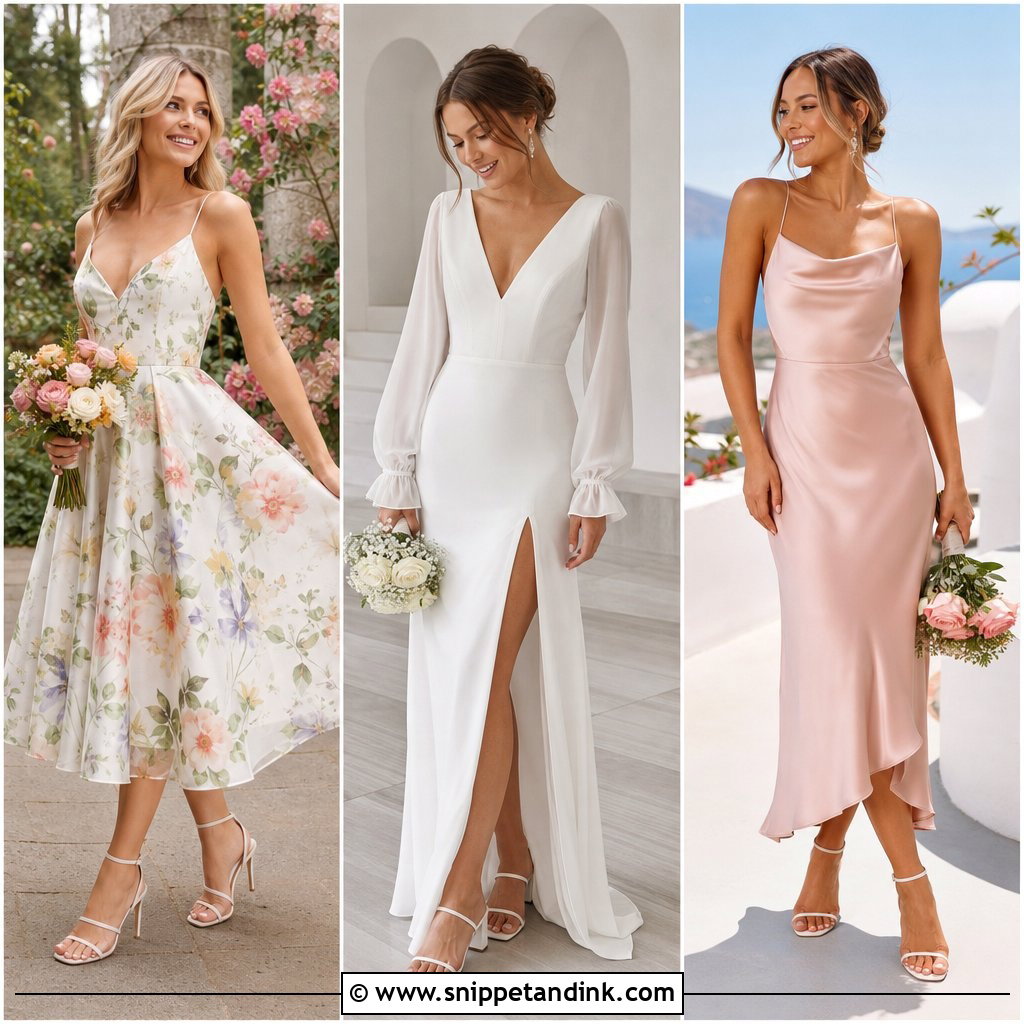
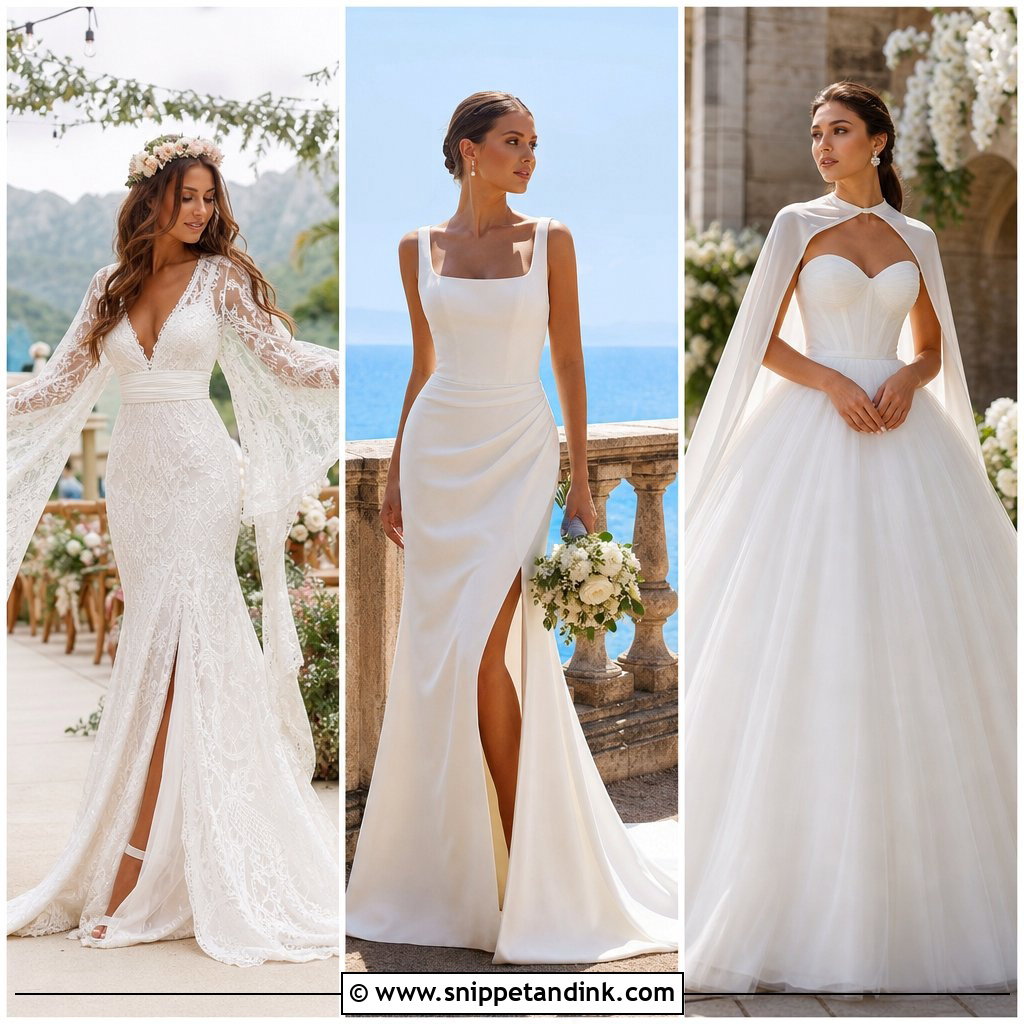
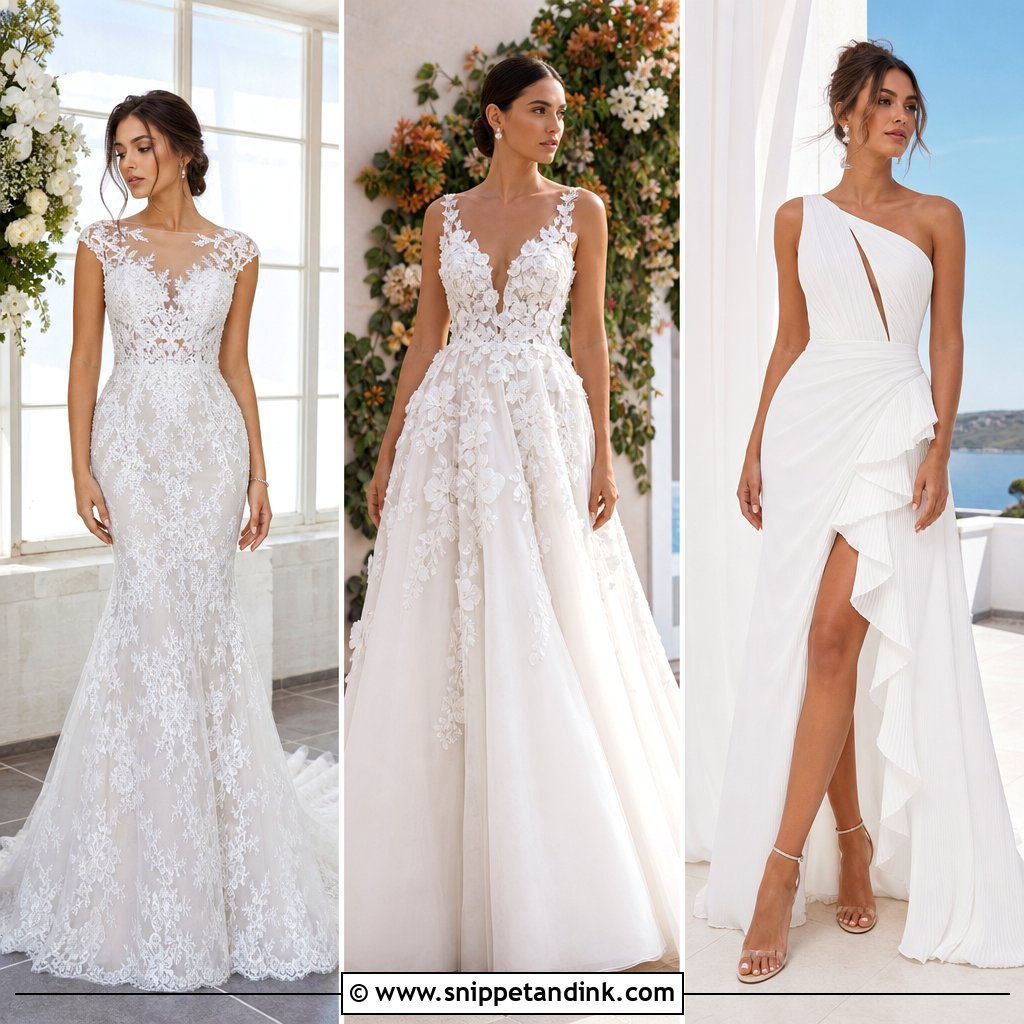
20. Square Neck Pregnant Wedding Dress
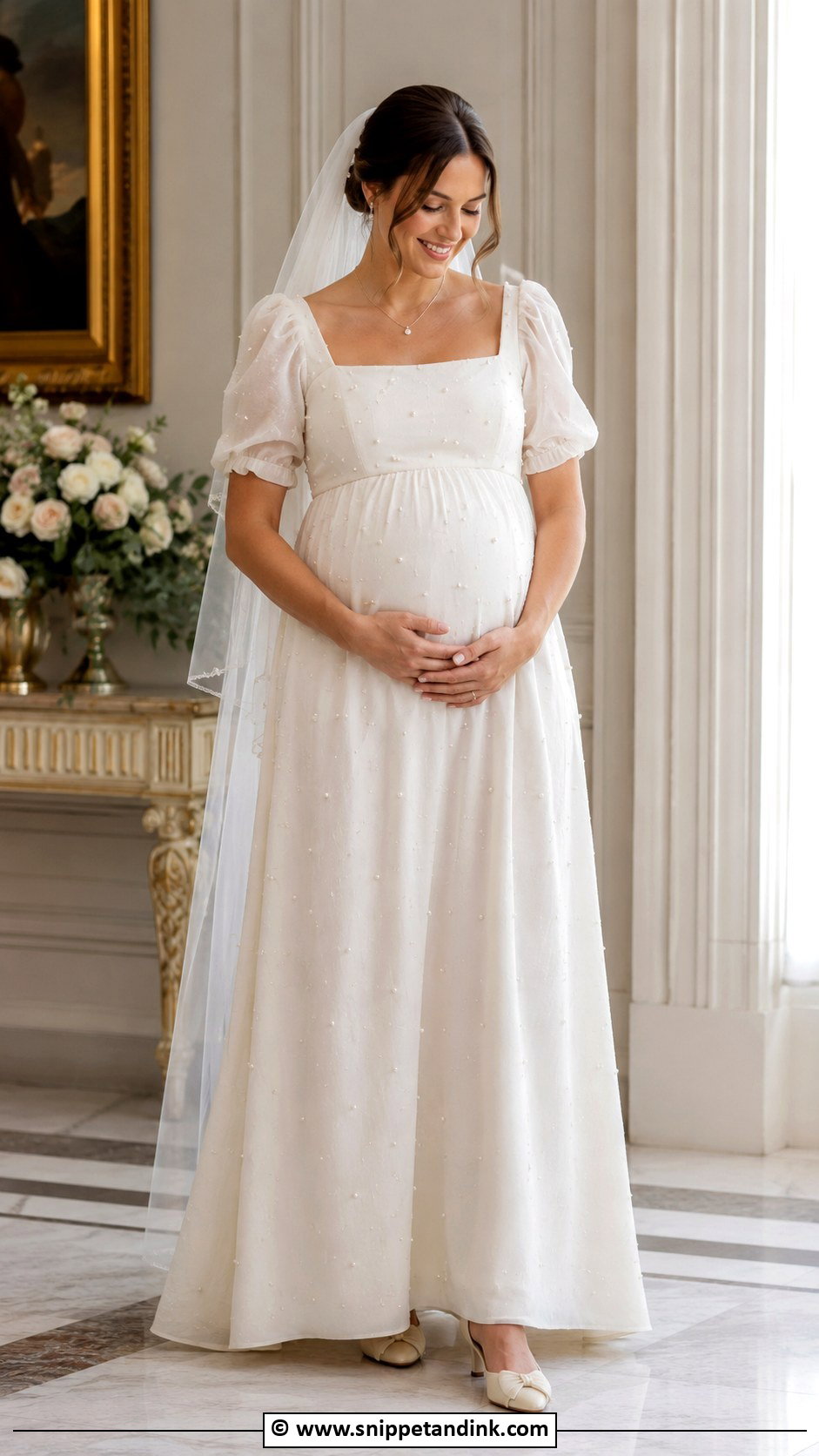
Square necks frame the collarbone and give more coverage than a deep V, which suits a bust that’s grown. Puff sleeves, long lace sleeves, tank straps or a simple fitted bodice all work with it. An A-line, empire waist or soft sheath sets how much room you get below. A short necklace or pearl studs suit the line. Low heels and a smooth veil complete the look.
21. V Neck Pregnant Wedding Dress
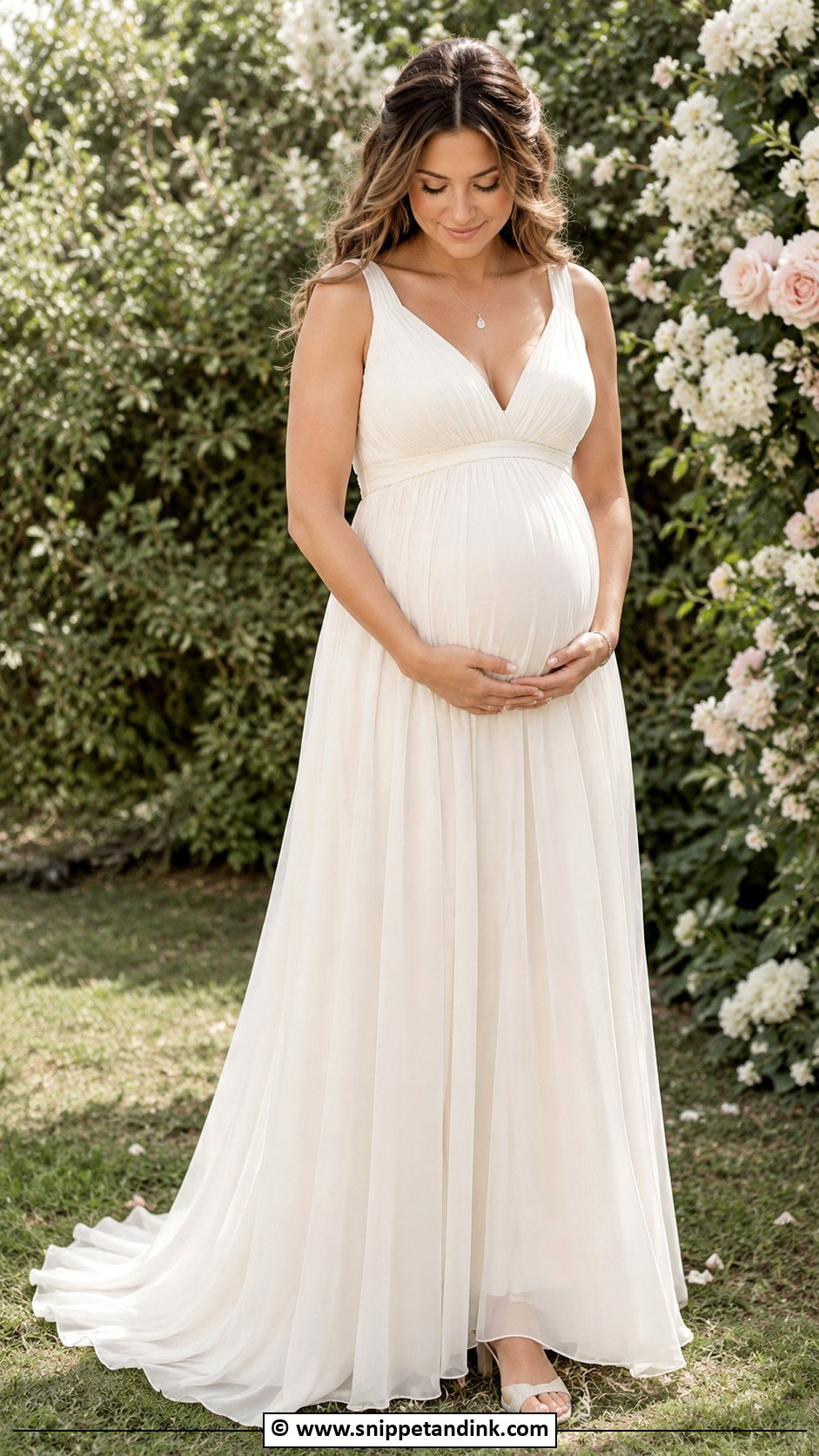
V necks lengthen the upper body above the bump. They pair with wraps, empire gowns and soft A-lines. A fuller pregnancy bust needs more support than a narrow V provides, so look for wider straps or a lined bodice. Chiffon, crepe, lace and satin all suit it. Small drop earrings or a delicate pendant balance it. A low bun or soft curls finish the look.
22. Corset Back Pregnant Wedding Dress
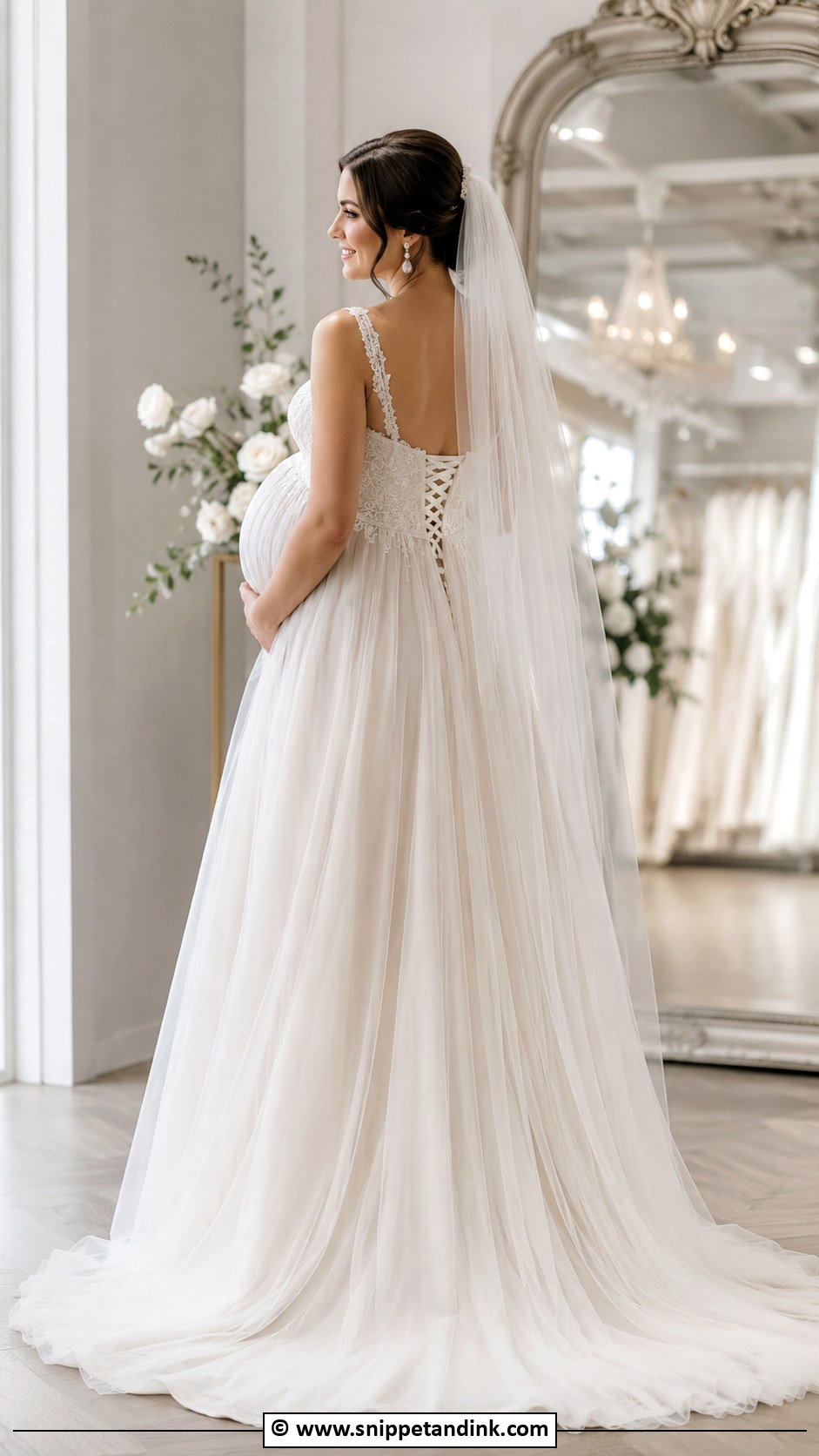
A corset back gives you a fitting range that a zip can’t. Lacing can be loosened or tightened a couple of inches on the day, which is a real advantage if the wedding is weeks away. Choose a soft lace-up back rather than a waist-cinching corset; the aim is support, not compression. A-line, empire and ball gown shapes suit it. A veil that falls behind the lacing keeps the detail visible.
23. Floral Pregnant Wedding Dress
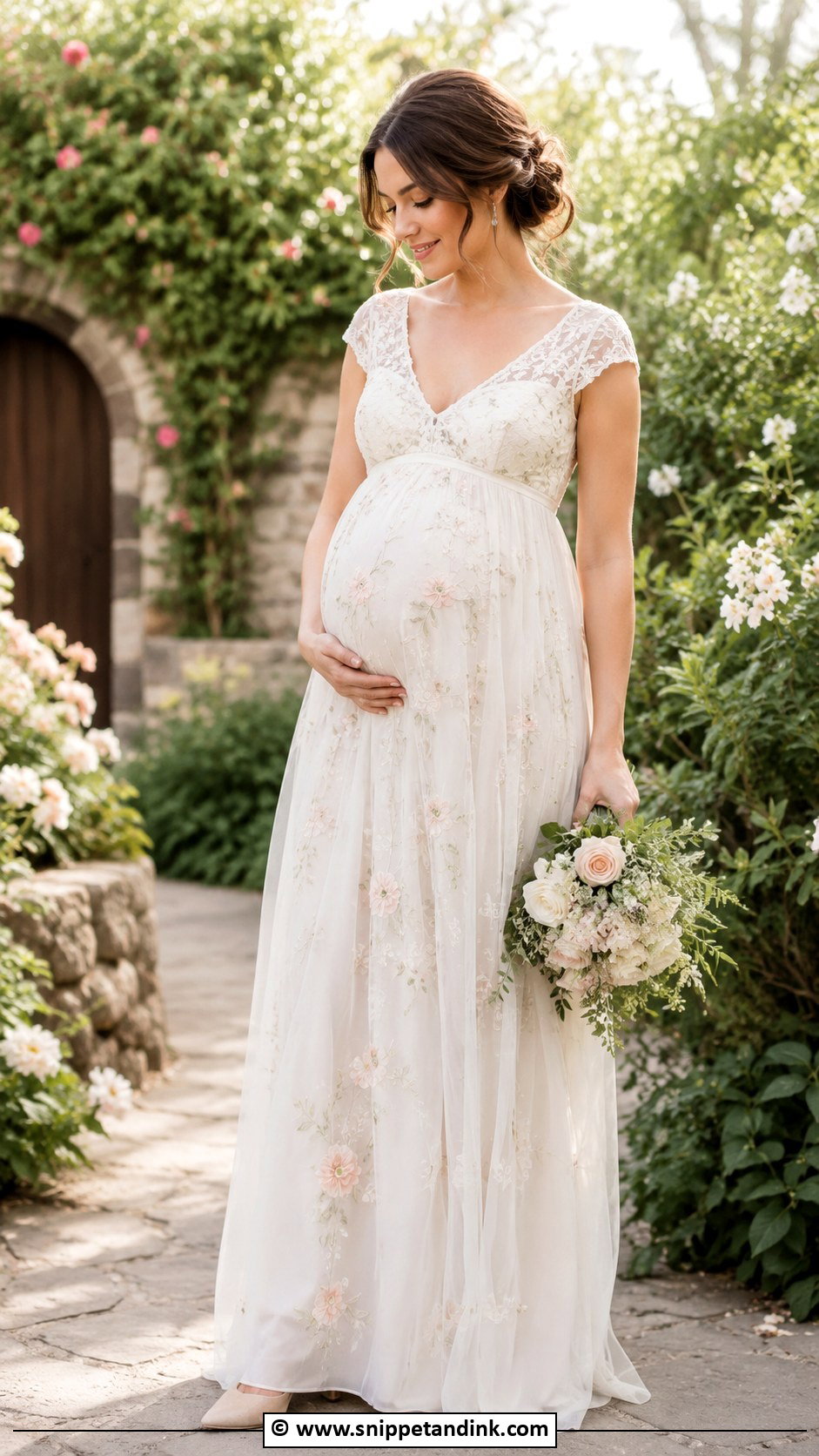
Floral lace, embroidered flowers or subtle appliqués give texture softer than plain white. Blush, ivory, champagne or pale blue florals add personality while staying bridal. Keep the silhouette bump-friendly: empire, A-line or wrap. Watch where large flowers land; a big motif centered on the bump draws the eye there, which some brides love and others don’t. Neutral shoes and a simple bouquet suit it.
24. Blush Pregnant Wedding Dress
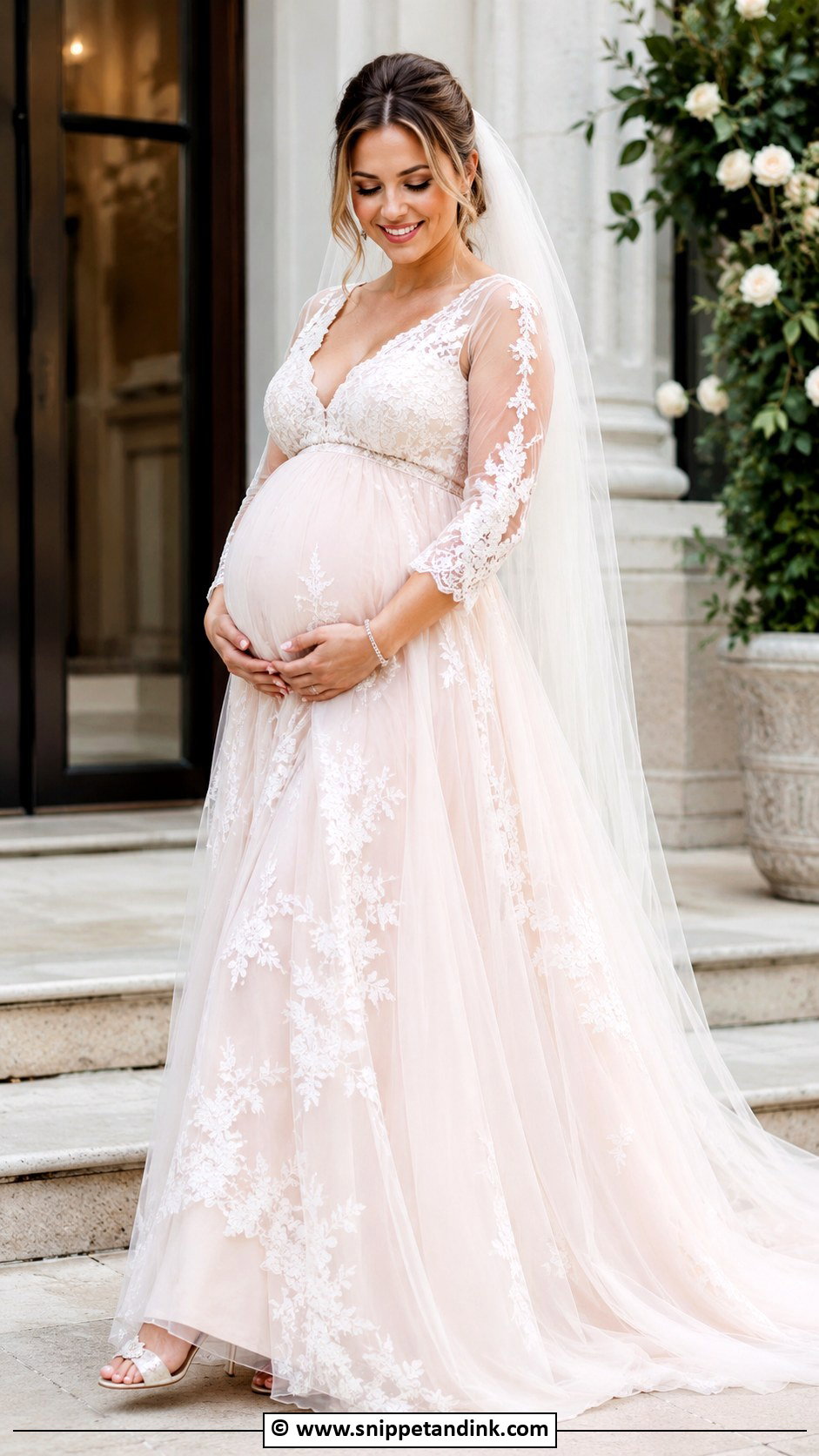
Blush adds warmth and suits many skin tones well in soft fabrics. Chiffon, tulle, lace or satin in pale blush feel romantic. Empire and A-line shapes keep the fit easy around the bump. For a subtler look, I’d suggest a blush lining under ivory lace, which reads warm in photos without looking pink. Ivory heels and rose-gold jewelry complete it. Gardens and hotels suit the color.

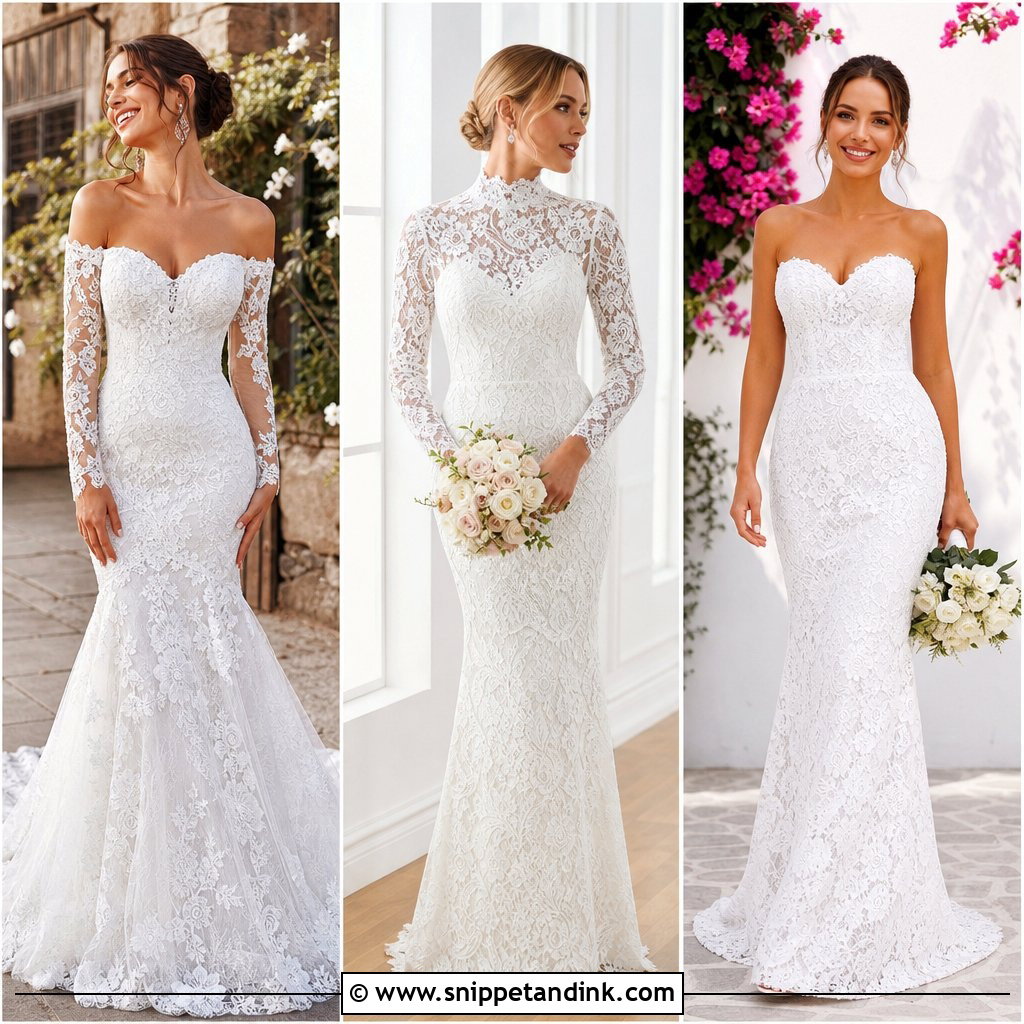

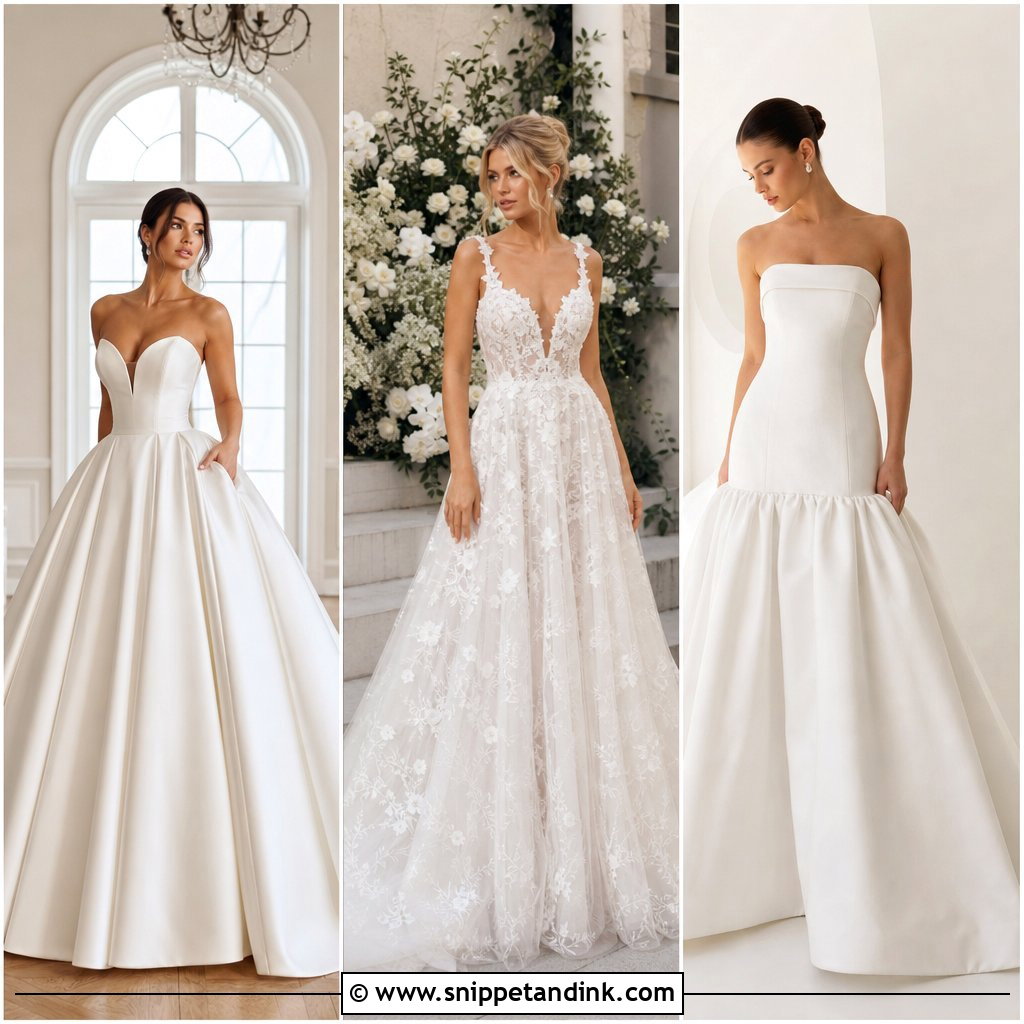
25. Ivory Pregnant Wedding Dress
Ivory is softer than bright white on most skin and works with every fabric from lace to crepe. For pregnancy, choose fit before fabric: raised waists, stretch panels, adjustable backs and soft skirts. Ivory pairs easily with pearls, silver, gold or nude shoes. Check whether your veil is the same shade, since a white veil beside an ivory dress can make the dress look yellow. A simple bouquet finishes it.
26. Short Pregnant Wedding Dress
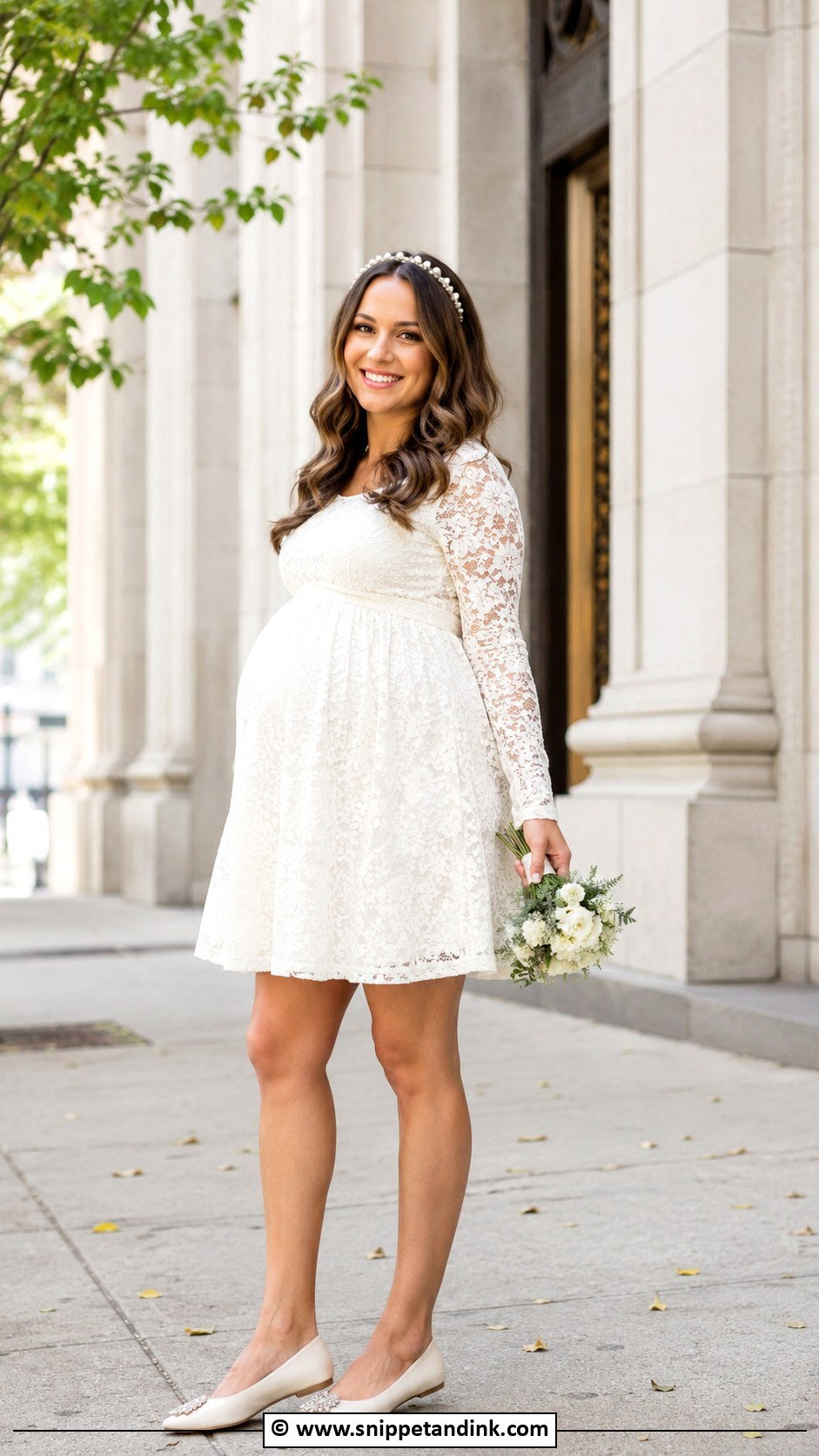
Short hems keep the outfit light and easy to move in. A fit-and-flare, empire waist or loose shift with room for the bump suits a less formal ceremony. Lace, crepe and tulle feel bridal at this length. A bump lifts the front hem, so allow an extra inch or two. Embellished flats or slingbacks and a birdcage veil or pearl headband complete it. Courthouses and elopements suit it.
27. Courthouse Pregnant Wedding Dress
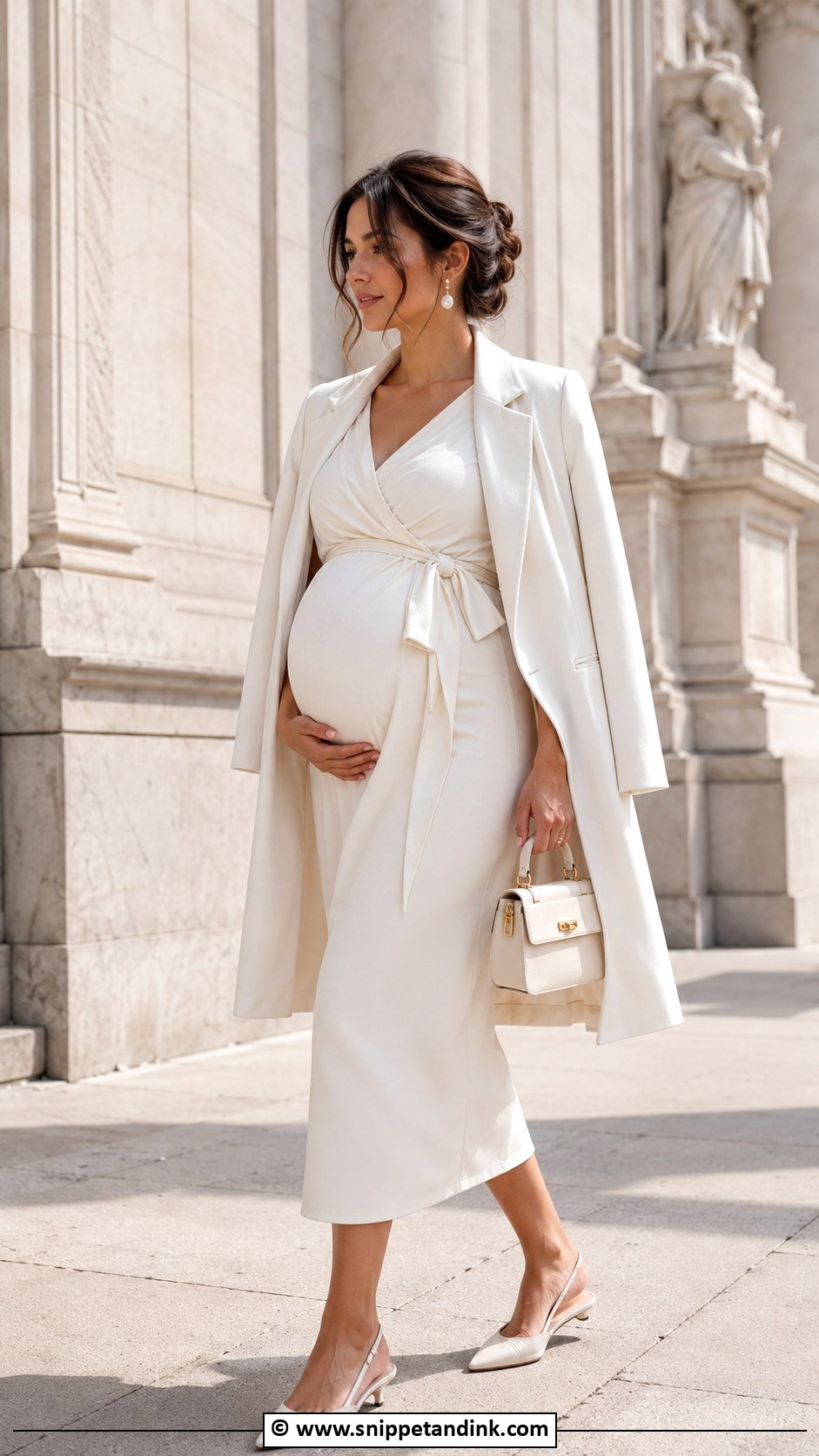
A courthouse ceremony is short, so the dress should be comfortable and photograph well afterward. A simple midi, wrap, crepe sheath or tea length A-line all work. If you’ll travel or take photos around town, choose a fabric that resists creasing, like crepe or jersey, over linen or thin satin. Low heels, a structured mini bag, pearl earrings and a tailored white coat if needed complete it.
28. Winter Pregnant Wedding Dress
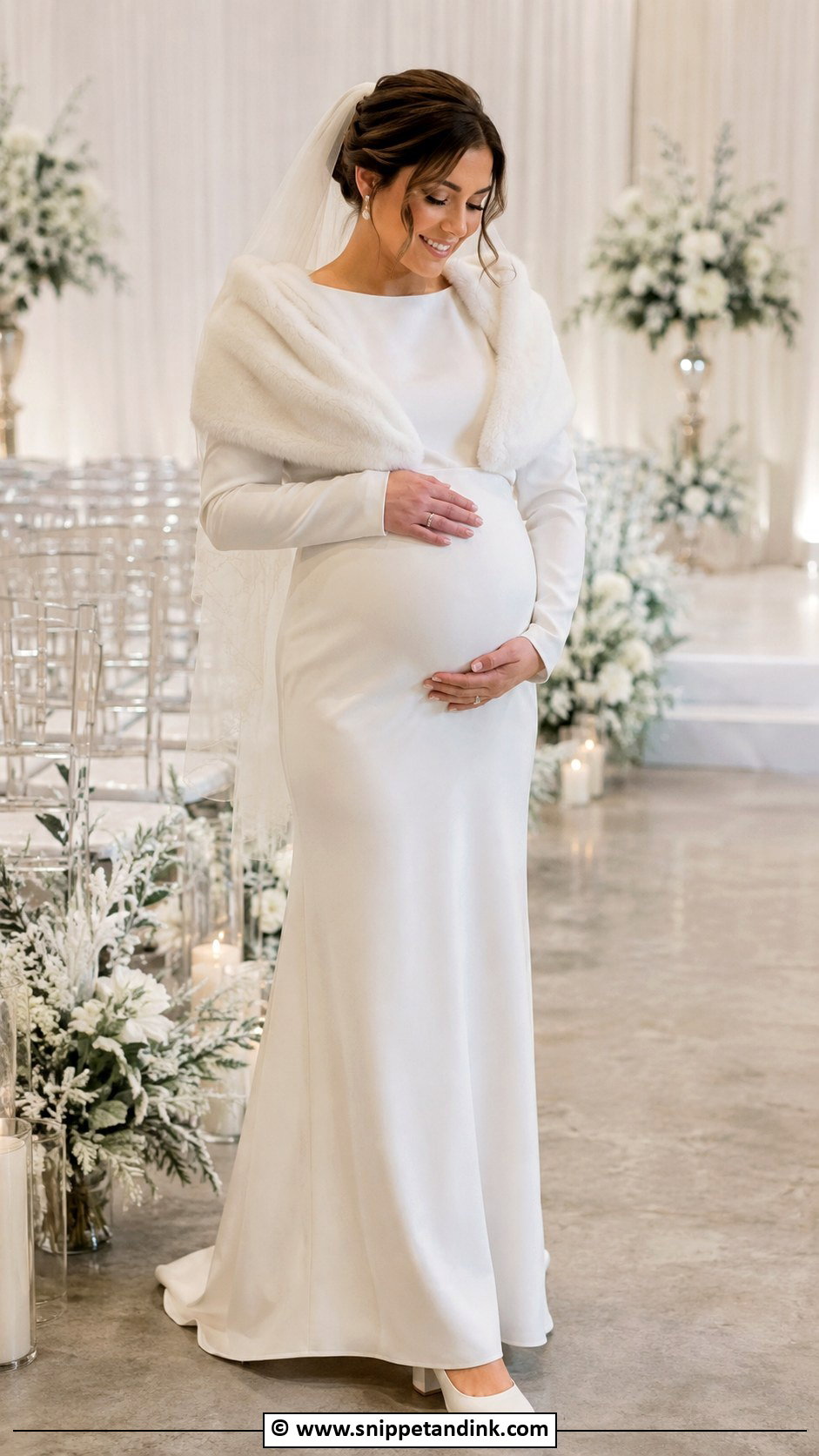
Winter dresses balance warmth with weight. Long sleeves, lined lace, thicker crepe, satin or layered tulle feel seasonal without getting heavy. An empire or A-line shape gives room while looking formal. Skin can be more sensitive in pregnancy, so I’d avoid scratchy lace linings and stiff wool. Closed-toe block heels, a faux-fur wrap or a tailored bridal coat suit indoor venues and snowy portraits.
29. Summer Pregnant Wedding Dress
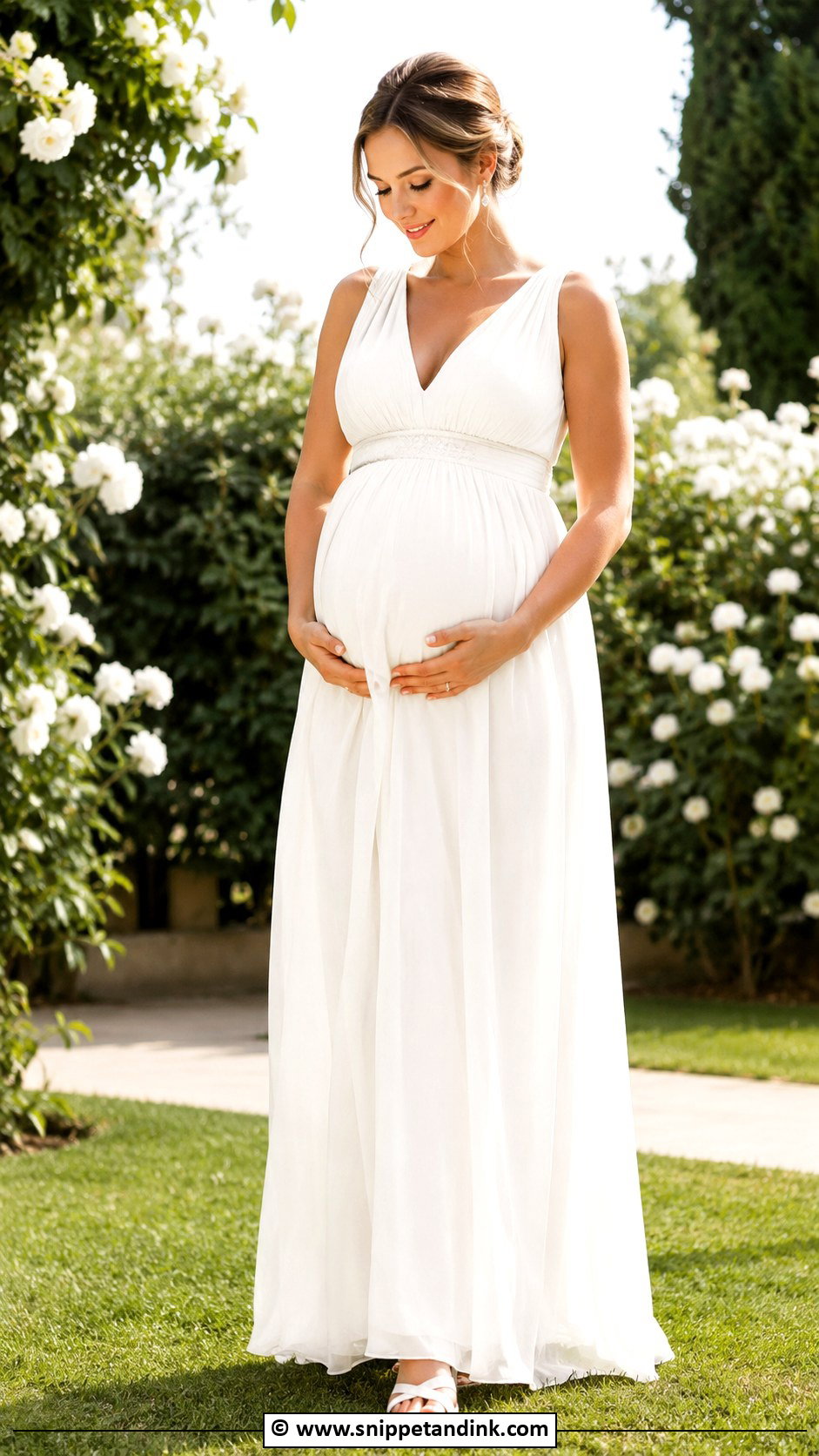
Heat feels stronger when pregnant, so airflow beats everything else. Chiffon, cotton-blend lace, crepe or airy tulle stay cooler. Sleeveless, short sleeve, V-neck and off-shoulder designs work if the bodice supports you. A flowy empire or relaxed A-line skirt lets air move. Comfortable sandals and hair worn off the neck help through a hot ceremony.
30. Plus Size Pregnant Wedding Dress
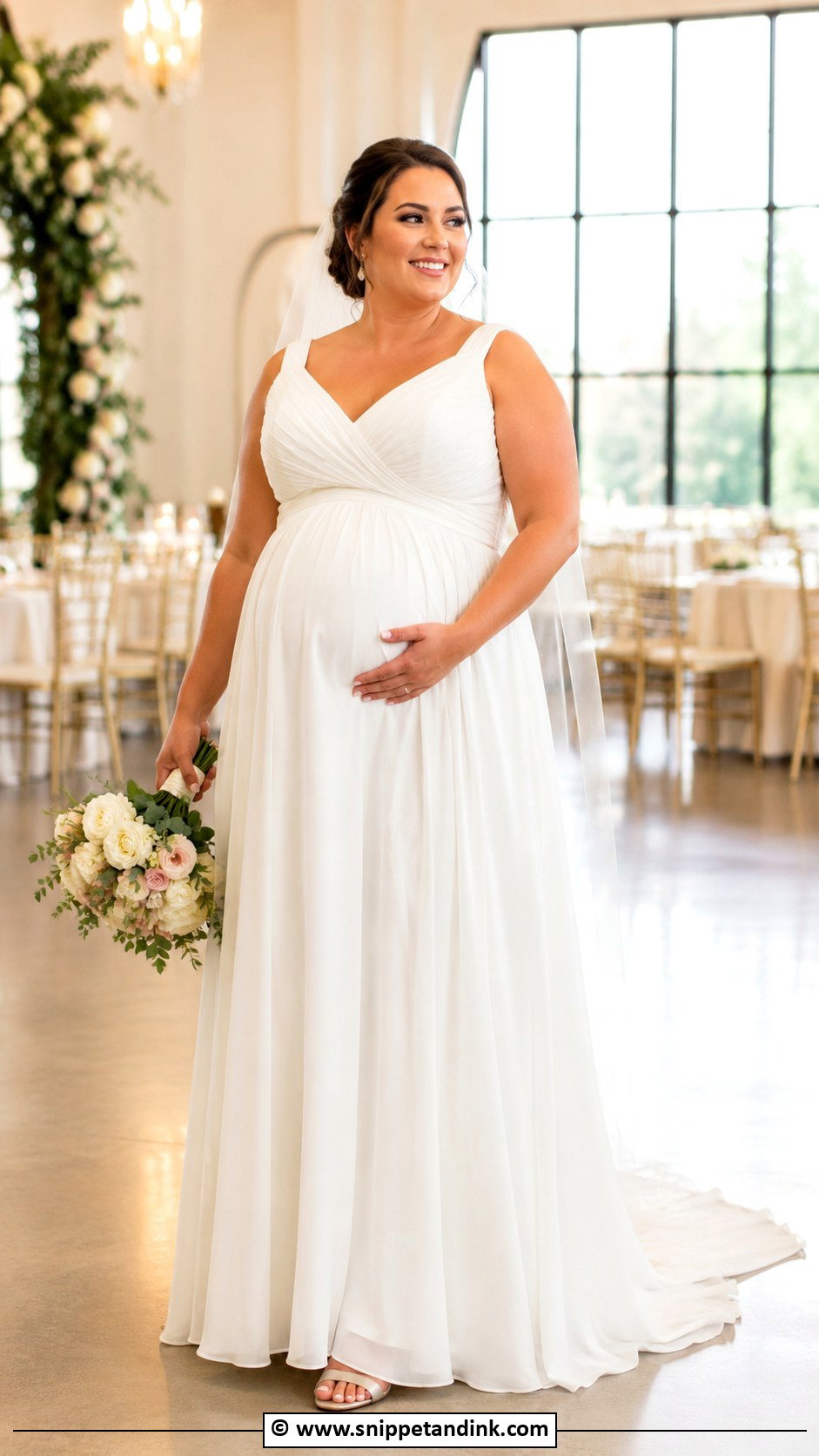
Support first, then shape. A plus size pregnant wedding dress should have wide straps, a supportive lining, flexible fabric and adjustable closures. Empire, A-line, wrap and soft ball gown silhouettes all work. Stretch lace, chiffon, crepe and soft tulle stay comfortable. V, square and off-shoulder necklines frame the upper body. Cushioned block heels and a veil matched to the dress length finish it.
What Goes Under a Maternity Wedding Dress
Underpinnings decide comfort more than the dress does. A maternity bra with a smooth cup and convertible straps works under most necklines; a strapless maternity bra is harder to find, so shop for it early. If the dress lining is thin or lace touches the skin, a soft slip stops scratching. Light support bands can help with back strain, but check they don’t show as a line under satin or crepe. Bring every piece to every fitting, since the dress will be altered around them.
Late Alterations a Seamstress Can Handle
In the final week or two, some changes are realistic and some are not. Loosening a lace-up back, letting out a seam that has spare allowance, moving a strap or adjusting a hem for new shoes are quick jobs. Adding room to a fitted bodice with no allowance, or reshaping a mermaid skirt, usually isn’t possible. That’s why I steer brides toward dresses with adjustable closures, and why the final fitting should be booked as late as your seamstress will allow.
A Gown That Moves With You on the Day
A growing bump doesn’t limit your options; it makes fit, fabric and flexibility the deciding factors. Empire waists, A-line skirts, wraps, stretch lace, chiffon and adjustable backs all give you room. Consider your trimester on the wedding date, your venue, the weather and how many hours you’ll be dressed. Then pick the dress you can move, sit and celebrate in, because comfort is what lets you enjoy the day.
You'll Like These Ideas:


Leave a Reply