
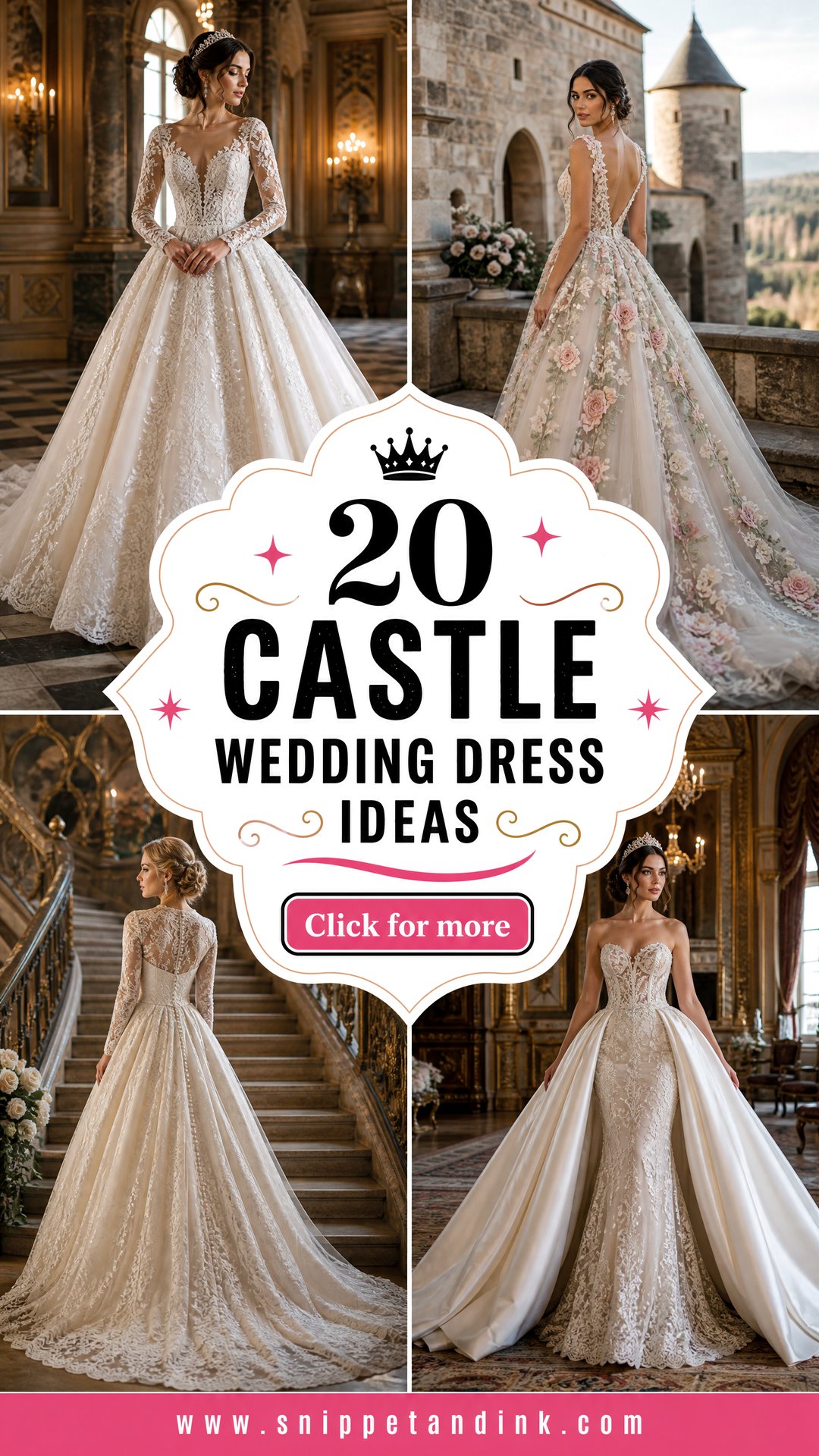
A castle changes the maths of a wedding dress. The rooms are tall, the floors are stone or old oak, and the distances between ceremony, photos and dinner are longer than most brides expect. A full ball gown is the obvious answer, and sometimes the right one, but I’ve dressed castle brides in slim lace, plain satin and capes who looked every bit as at home on a grand staircase. What decides it for me is less the fairytale and more the building: how many steps, how cold the hall is in the evening, and how far you walk between rooms. Below are twenty dresses I’d consider for a castle, each with the practical detail I’d want sorted before the day.
Walk the Castle Route Before Your Final Fitting
Most castle venues will let you visit before the wedding, and I’d treat that visit as part of your dress fitting. Take your phone and note the things that actually change what a dress has to do. Then bring those notes to your seamstress, because they affect hem length, bustle style and which shoes she pins the hem for.
- Count the stairs between the bridal suite, ceremony room and reception. Spiral stone stairs are narrow, and a full skirt has to be lifted with both hands to climb them.
- Check the floor surfaces. Old flagstones are uneven and cobbles catch thin heels, so a block heel or a flat for the walk between rooms is worth planning.
- Measure the narrowest doorway on your route. Gatehouse arches and corridor doors are often slimmer than a modern venue, and a hooped skirt can’t compress to fit.
- Ask what the ceremony room feels like at the time of year you’re marrying. Thick walls stay cool even in summer, and evenings can feel cold well into spring.
- Find out where photos will be taken. Grass, gravel and damp courtyards decide whether a long train goes out bustled or loose.
Wear the actual wedding shoes to every fitting from the second one onward. A hem pinned in trainers and then worn with a three-inch heel ends up too short, and that’s very hard to fix late.
1. Princess Ball Gown Castle Wedding Dress
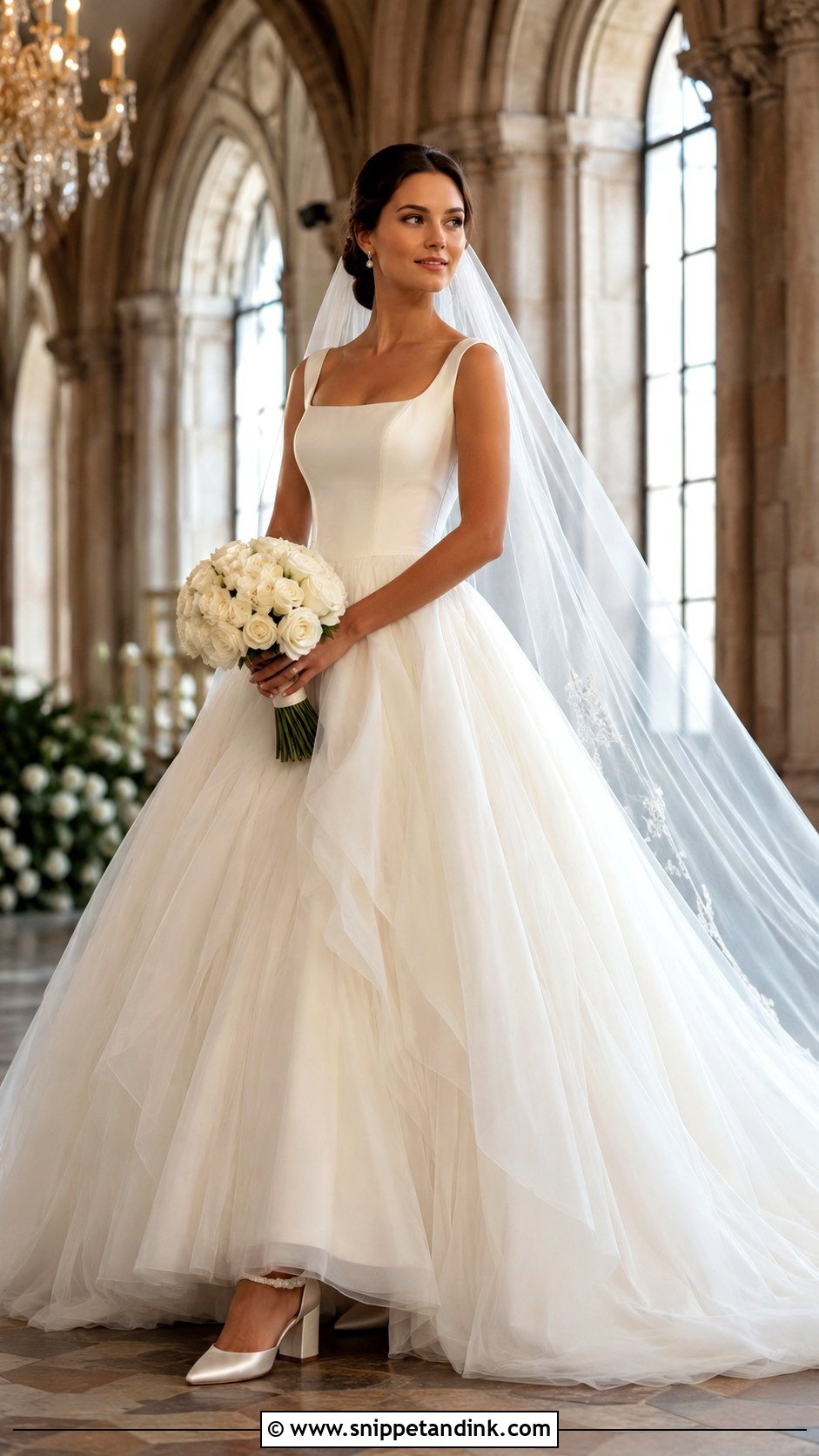
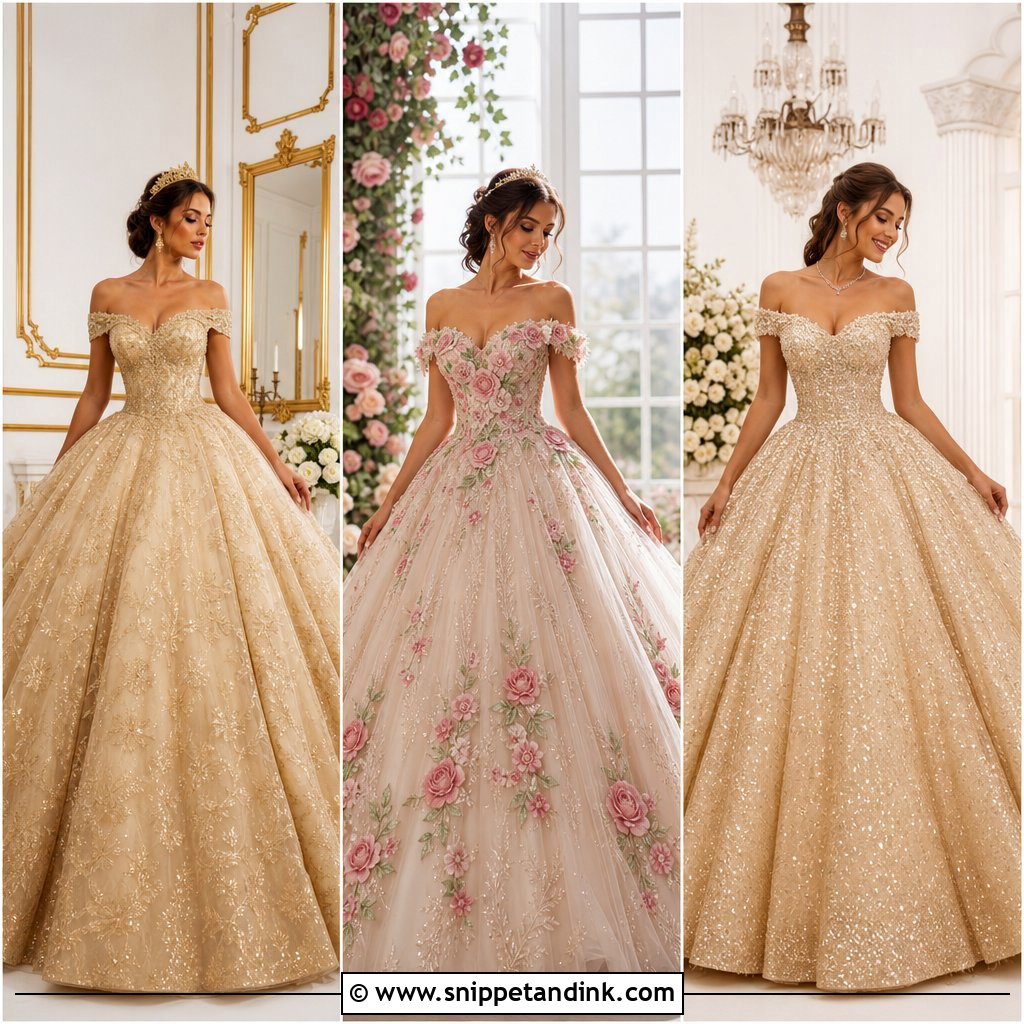
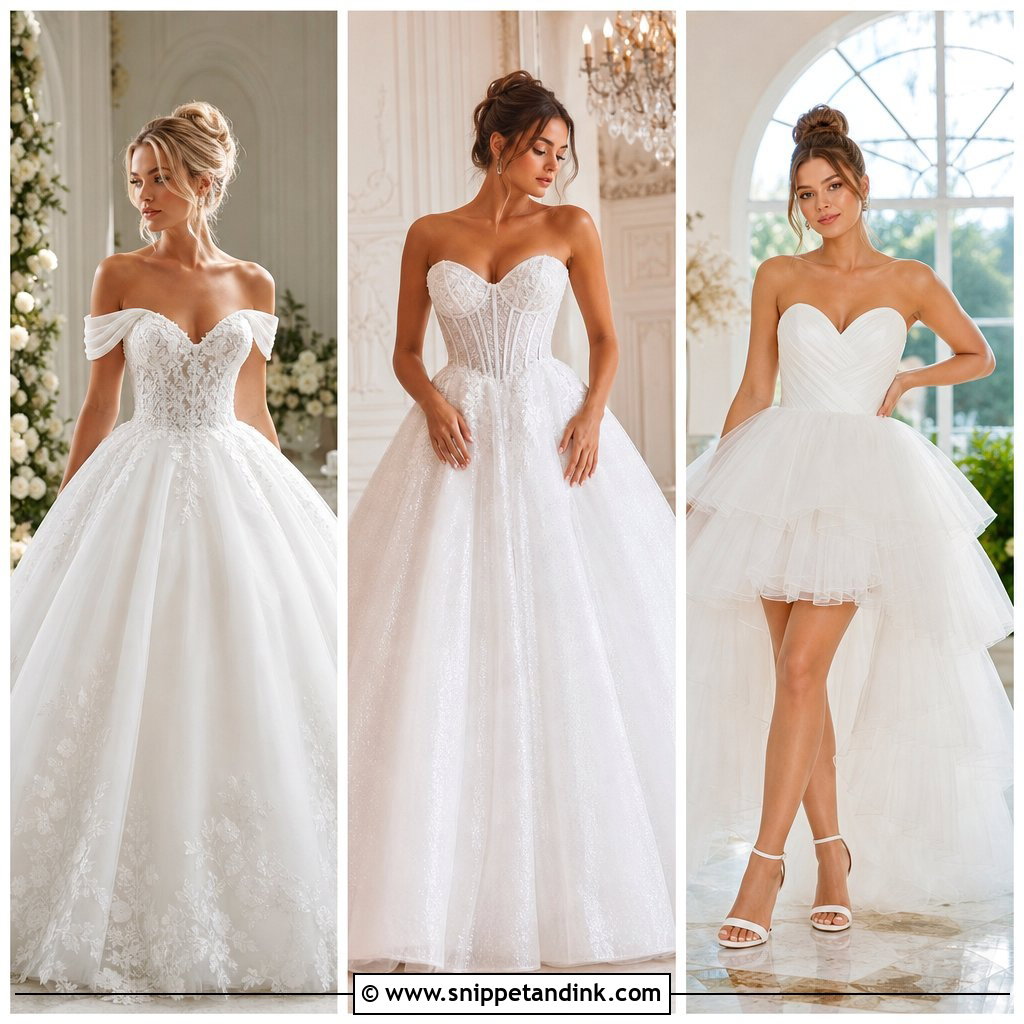
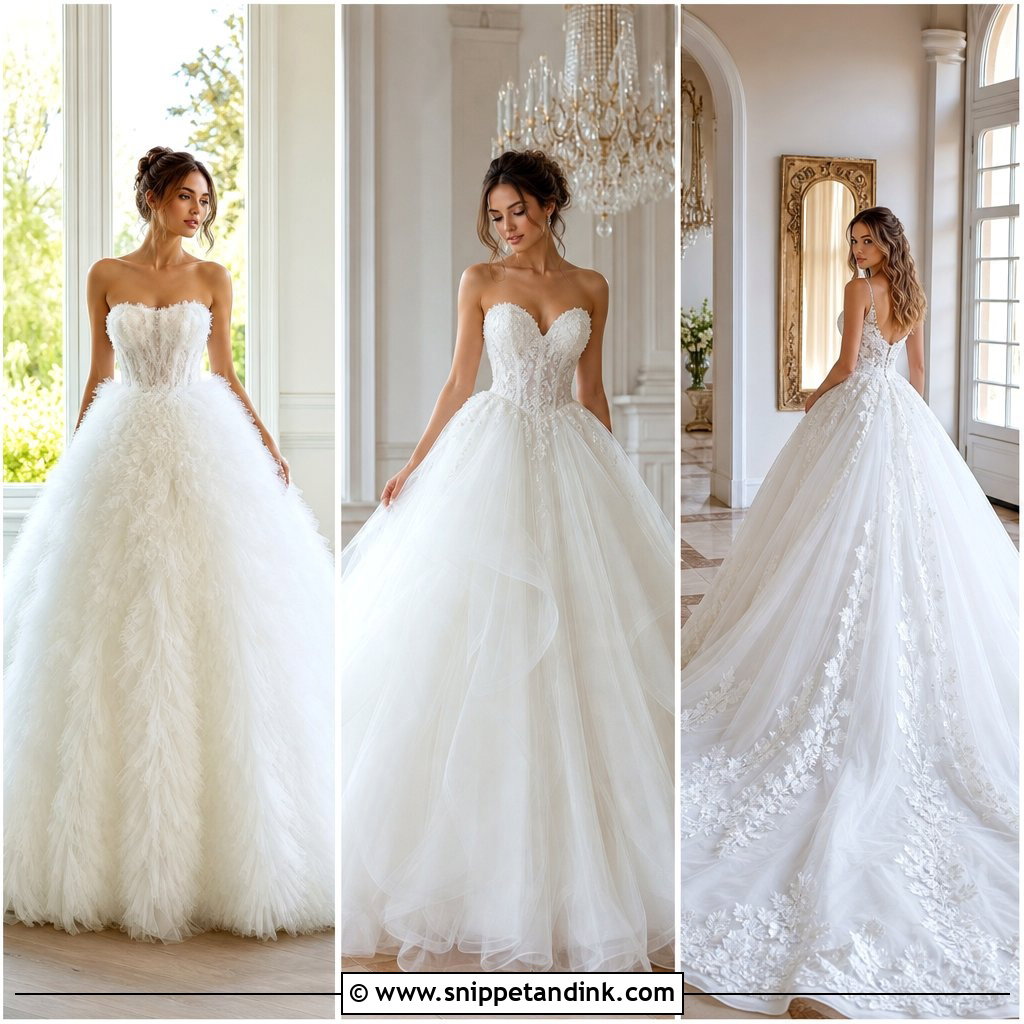
The princess ball gown fills a ballroom the way the room was built to be filled. What makes it wearable is the inside: a bodice with proper internal structure carries the weight of the skirt from your waist, so your shoulders don’t end up doing the work by hour six. I’d push for lightweight tulle layers rather than a heavy hoop, because tulle compresses through doorways and a hoop doesn’t. Pair it with a lace-edged cathedral veil, pearl drops and ivory satin block heels, which grip stone far better than a stiletto. Keep the bouquet small, white roses and a little greenery, or it fights the skirt for attention. Ask your seamstress for a secure bustle early in alterations, since a full skirt in a narrow castle corridor is the moment brides discover they need one.
2. Long Sleeve Lace Castle Wedding Dress
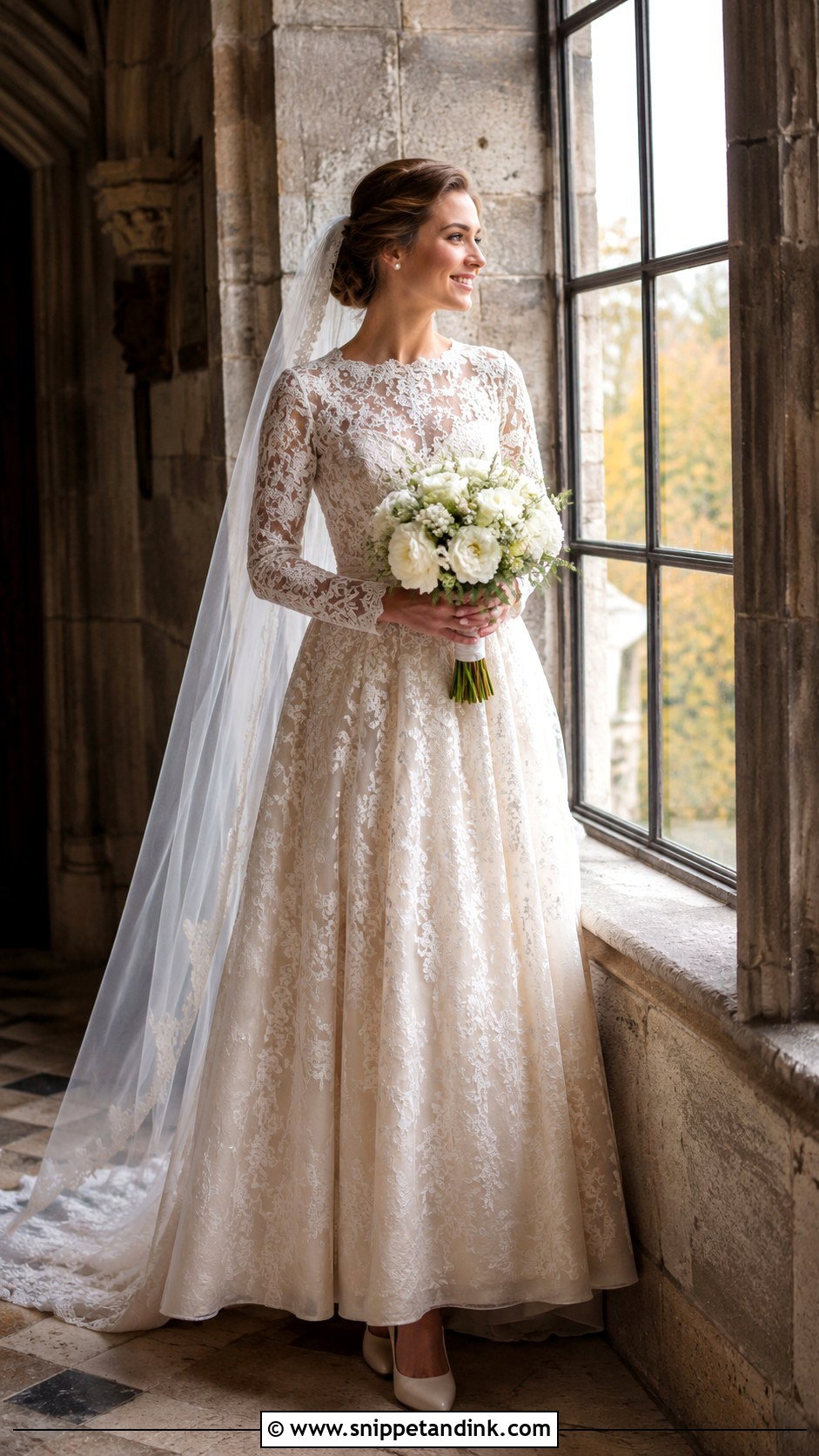
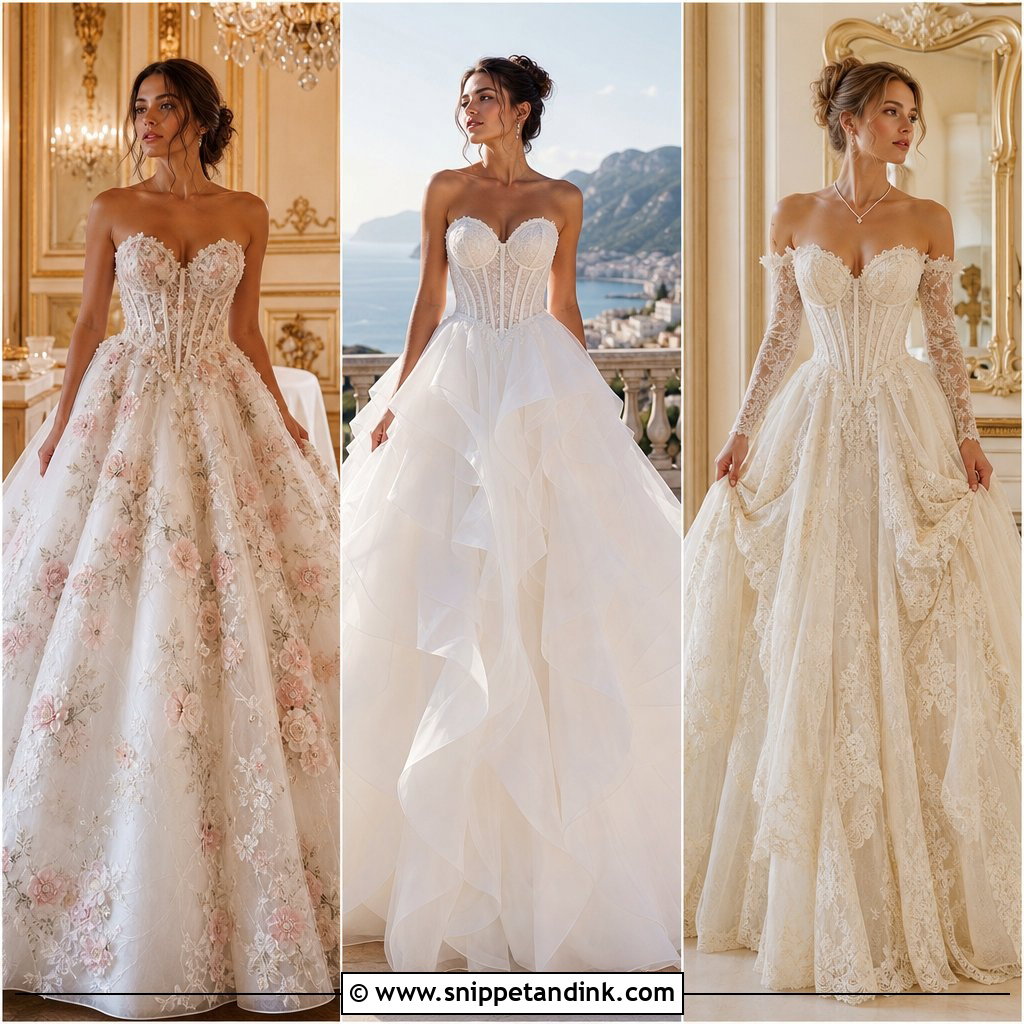
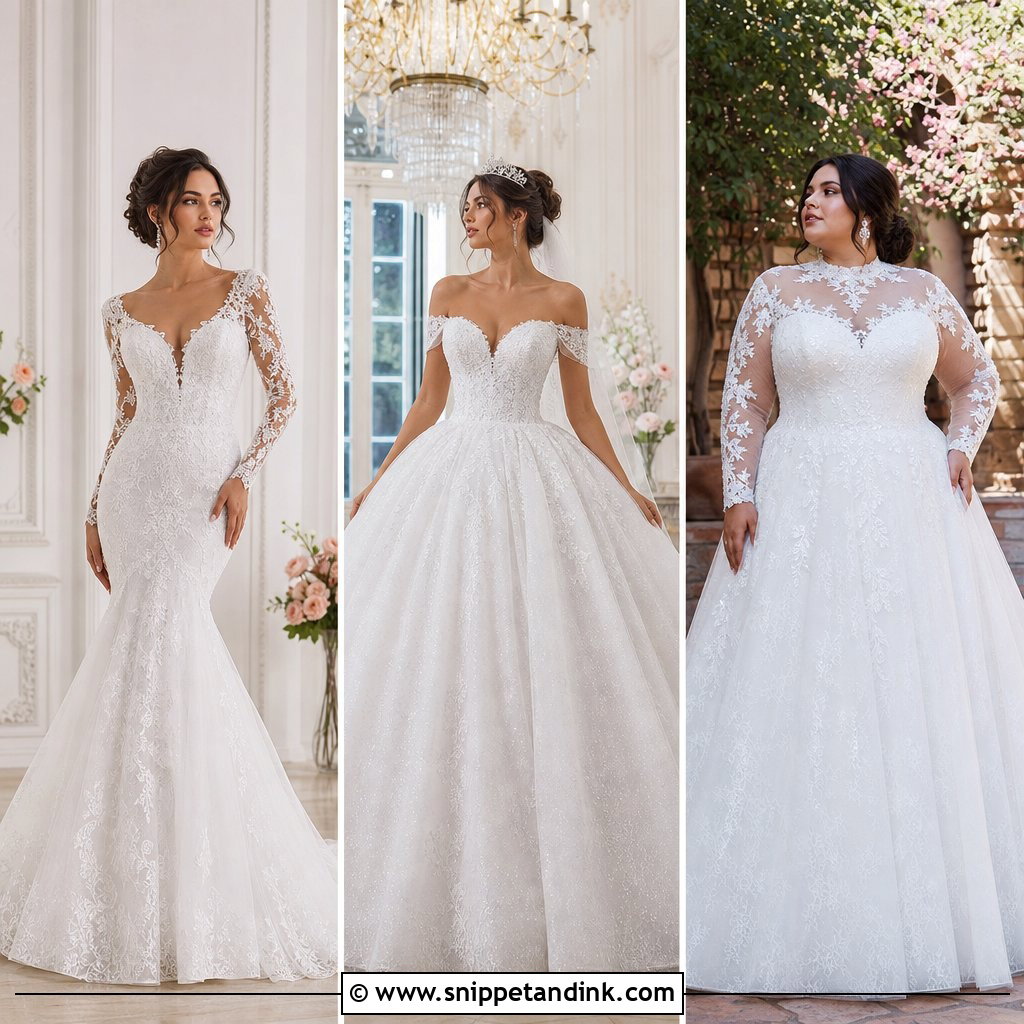
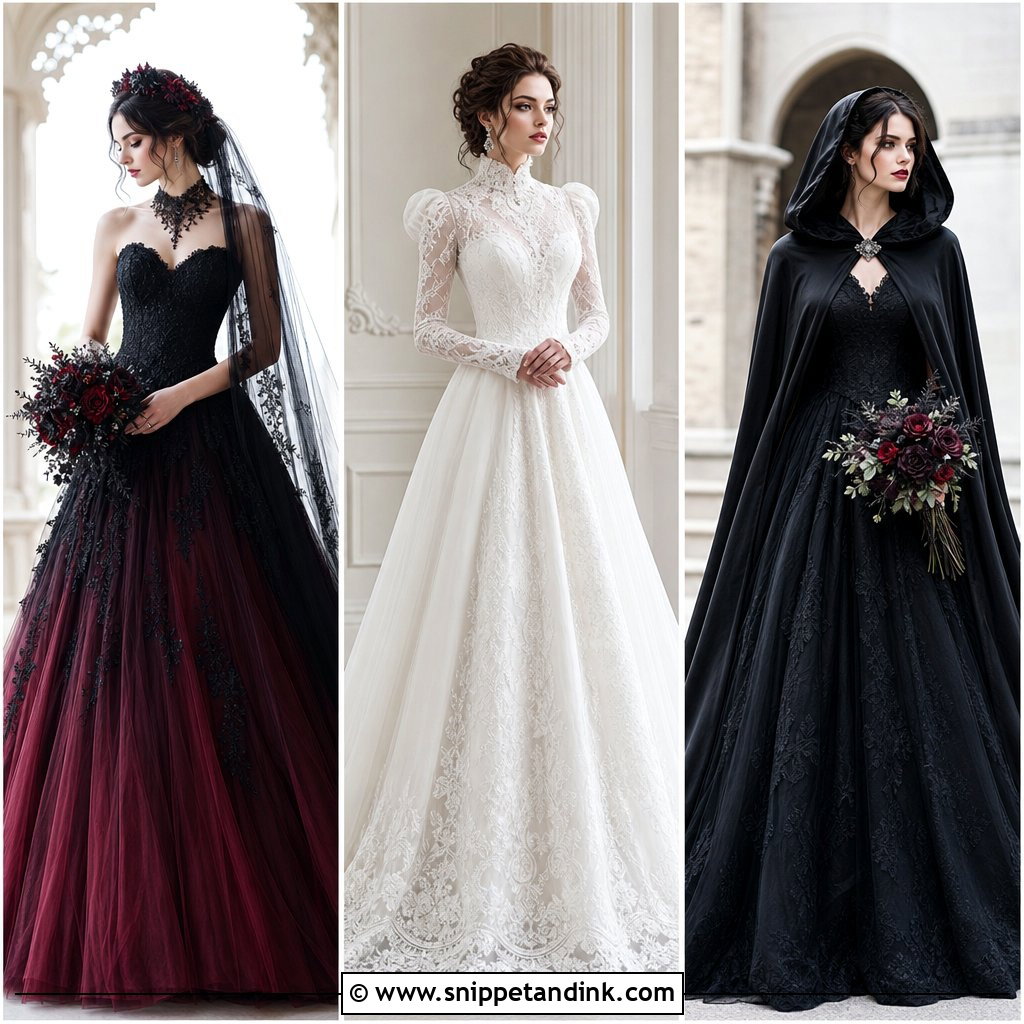
Lace against weathered stone is one of my favourite pairings, because the texture of the wall makes the pattern read more clearly. Here that means an A-line with sheer long sleeves and appliqués that travel from bodice to skirt. A champagne or nude lining behind the lace lifts the motif off the fabric so it doesn’t disappear in photos. Fingertip veil, crystal pins, pearl studs, closed ivory pumps, and a loose low bun so the sleeves and neckline stay visible. At the fitting I always ask the bride to hug me and raise both arms: sheer sleeve lace with no stretch at the elbow will tear at the seam during the first dance, and you’ll only find out then.
3. Satin Basque Waist Castle Wedding Dress
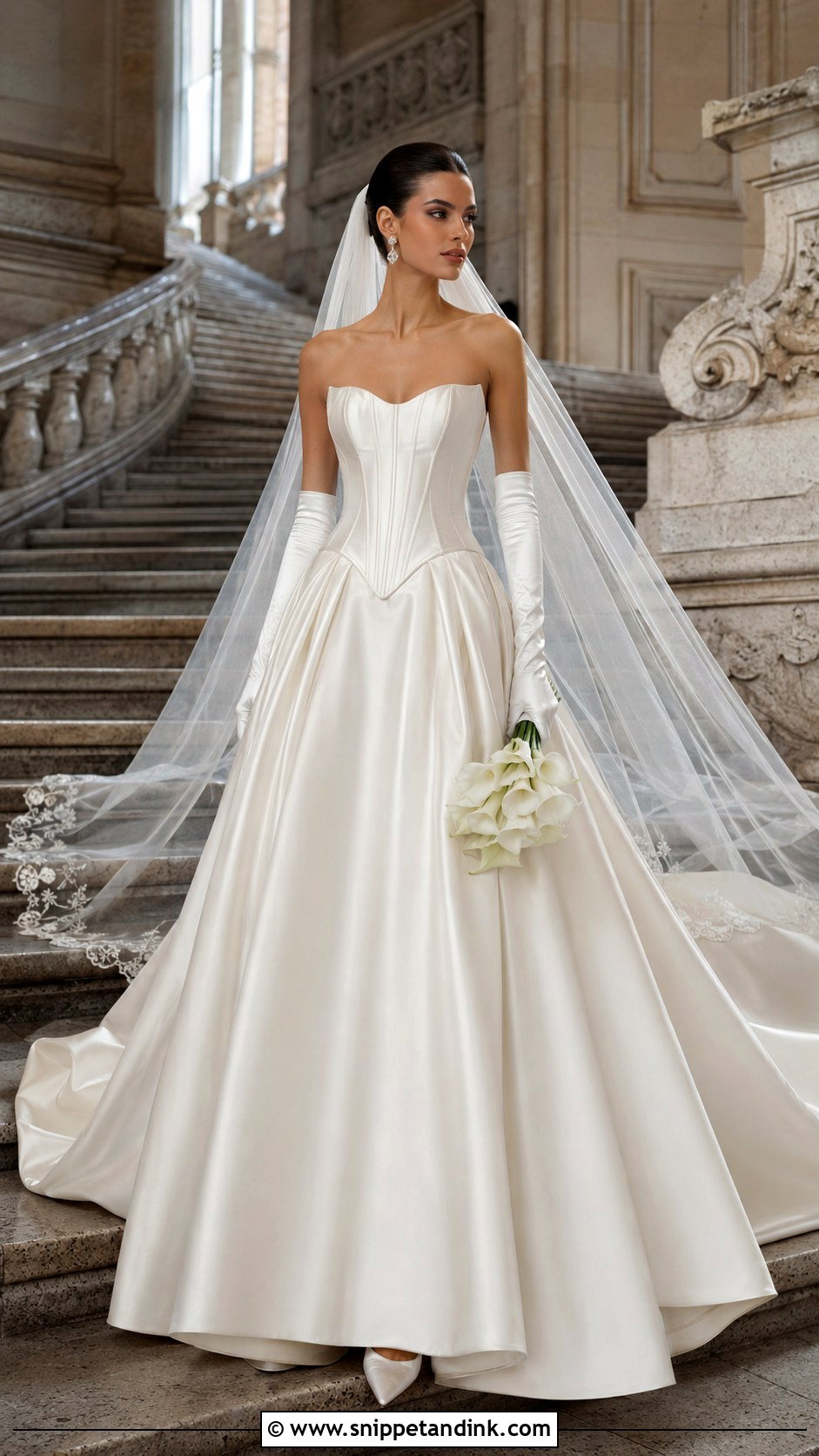
A satin gown with a sculpted Basque waist gives you a regal outline without a single bead. The dropped V lengthens the torso and then releases into a full, structured skirt, which looks especially sharp coming down a staircase. Satin is honest fabric, though. It shows every pull and ripple, so the point of the V has to sit exactly at your natural waist line or it creases when you sit. I’d style it with a plain cathedral veil, pointed satin heels and small crystal earrings, adding long gloves for the ceremony only. White calla lilies or a tight dome of roses suit the clean lines.
4. Off Shoulder Castle Wedding Dress
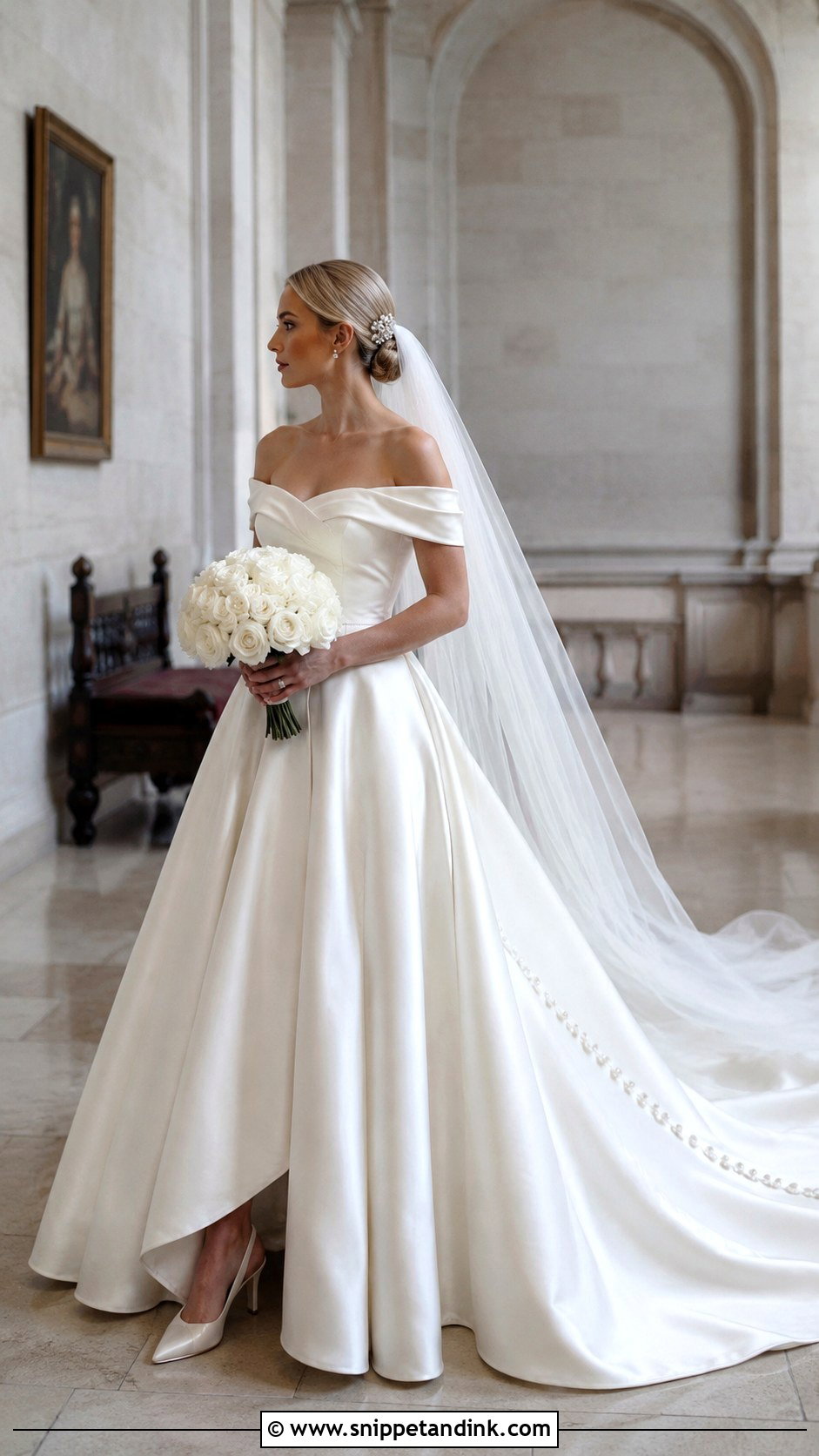
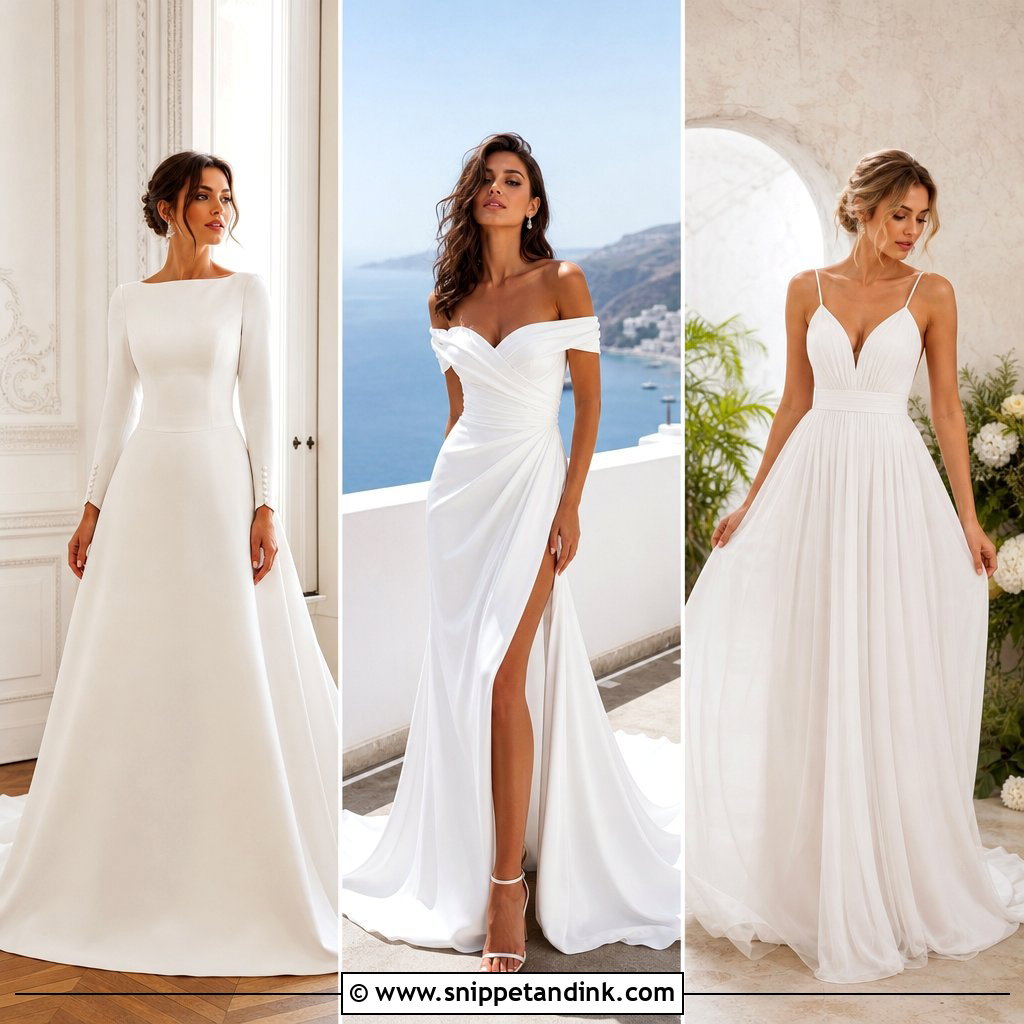
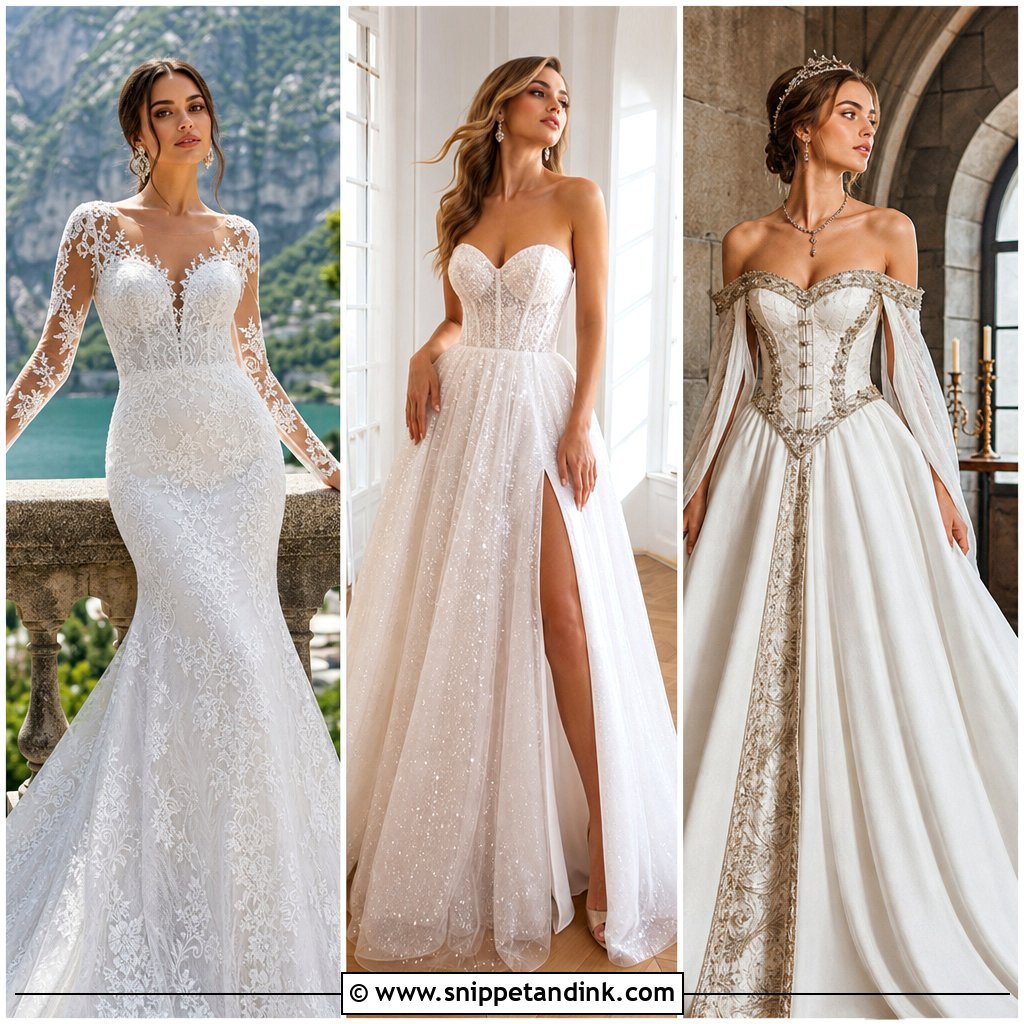
Off-the-shoulder necklines read softer than a strapless gown, but they come with a trade-off I always flag: the cuff around your upper arms limits how high you can lift them. Look for a boned bodice and a cuff that’s anchored to it, not floating. A full satin or mikado skirt carries the scale of a castle, and covered buttons down the train are a quiet, classic finish. A pearl comb in a low chignon and a long plain veil keep the shoulders as the focus. Test it seated and with your arms up. If the cuff bites, a hidden stretch panel or a detachable cuff solves it without losing the line.
5. Medieval Sleeve Castle Wedding Dress
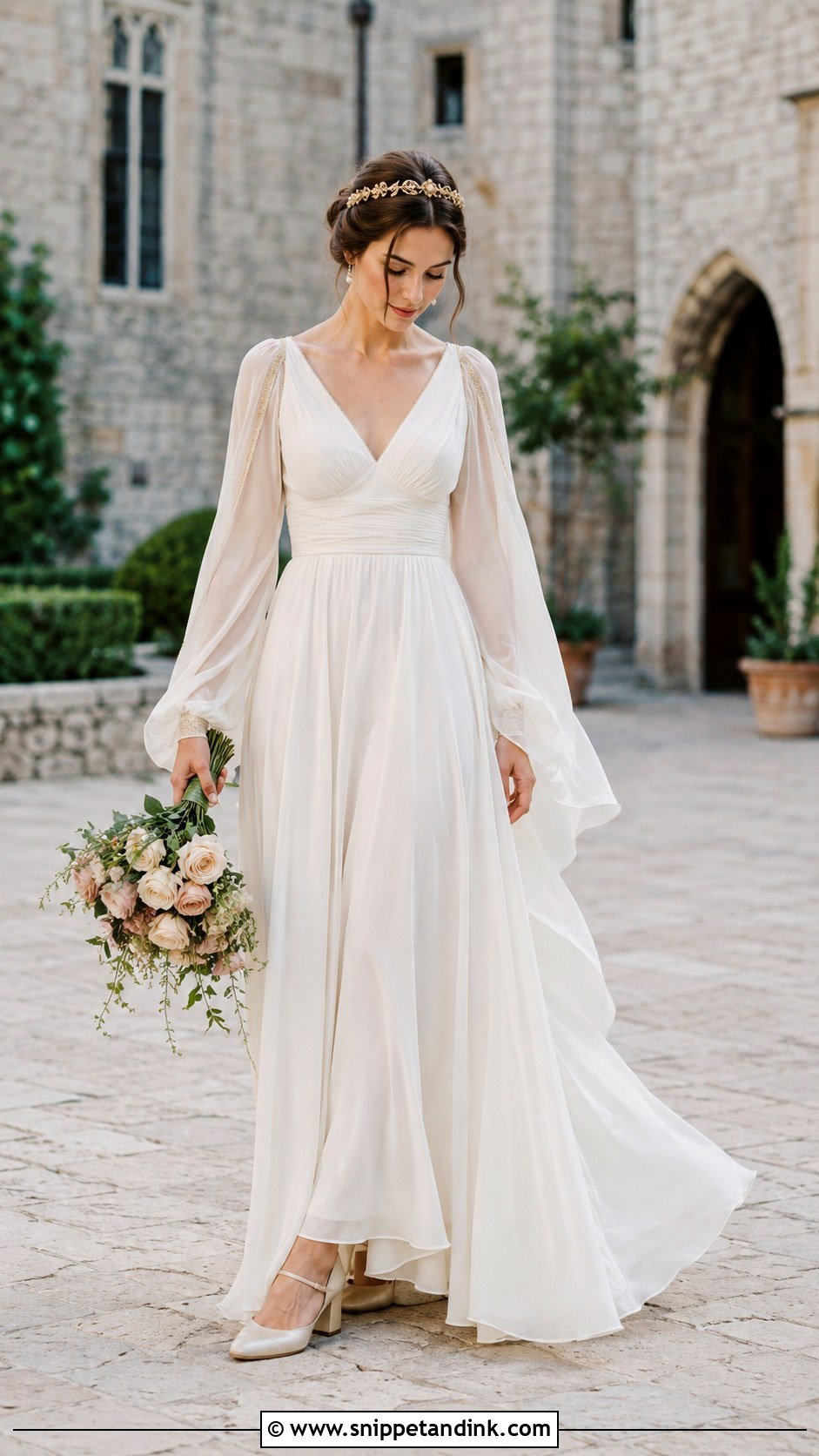
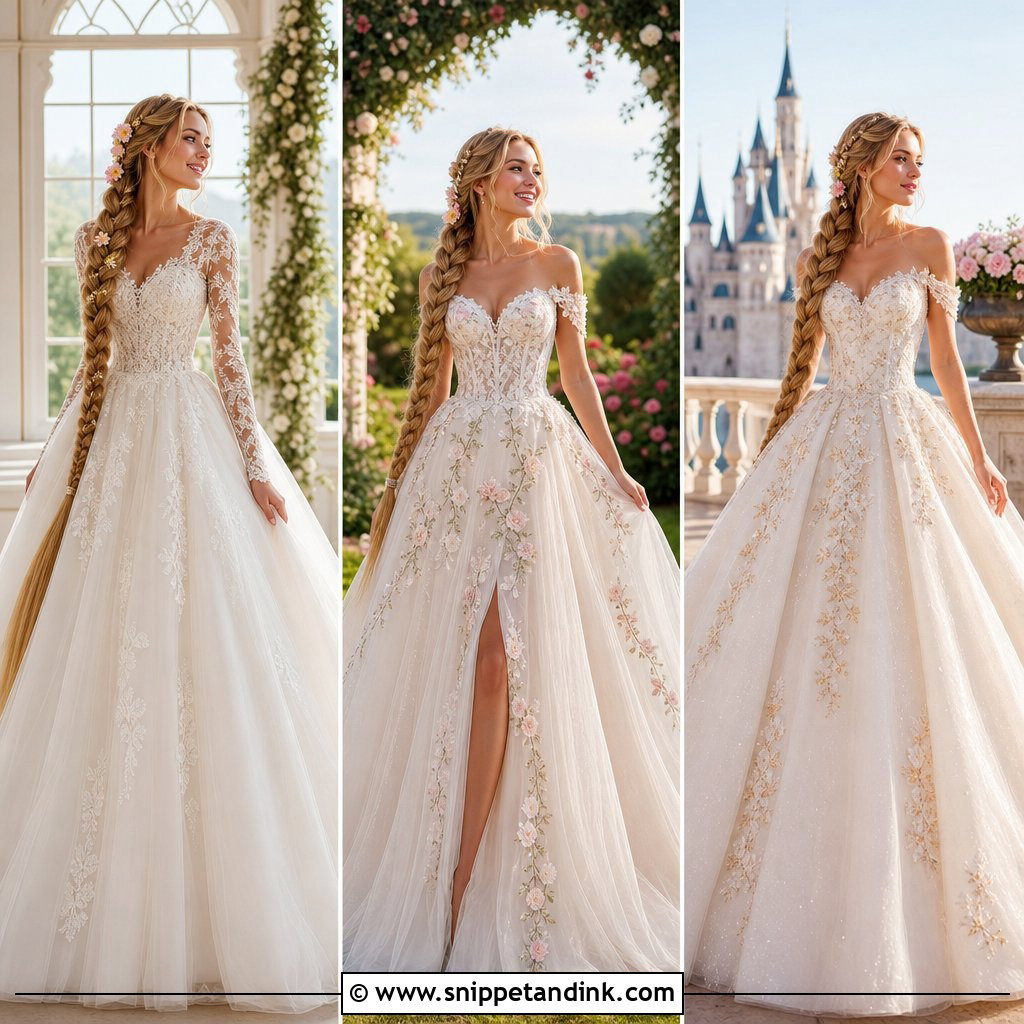
Long medieval-style sleeves move every time you do, which is their whole charm and also their risk. I’d choose an A-line with a fitted waist, a modest V-neck and sheer bell or trumpet sleeves that fall past the wrist, cut from chiffon, silk georgette or a light lace so they float rather than hang. Skip the veil for a fine gold headband, or keep it to chapel length. Velvet block heels and a loose bunch of garden roses carry the old-world feeling. Keep everything else restrained, or the outfit tips into costume. Practically, those sleeves will drift over candles and dinner plates, so plan to loop them at the wrist with a small hidden button for the meal.
6. Cathedral Train Castle Wedding Dress
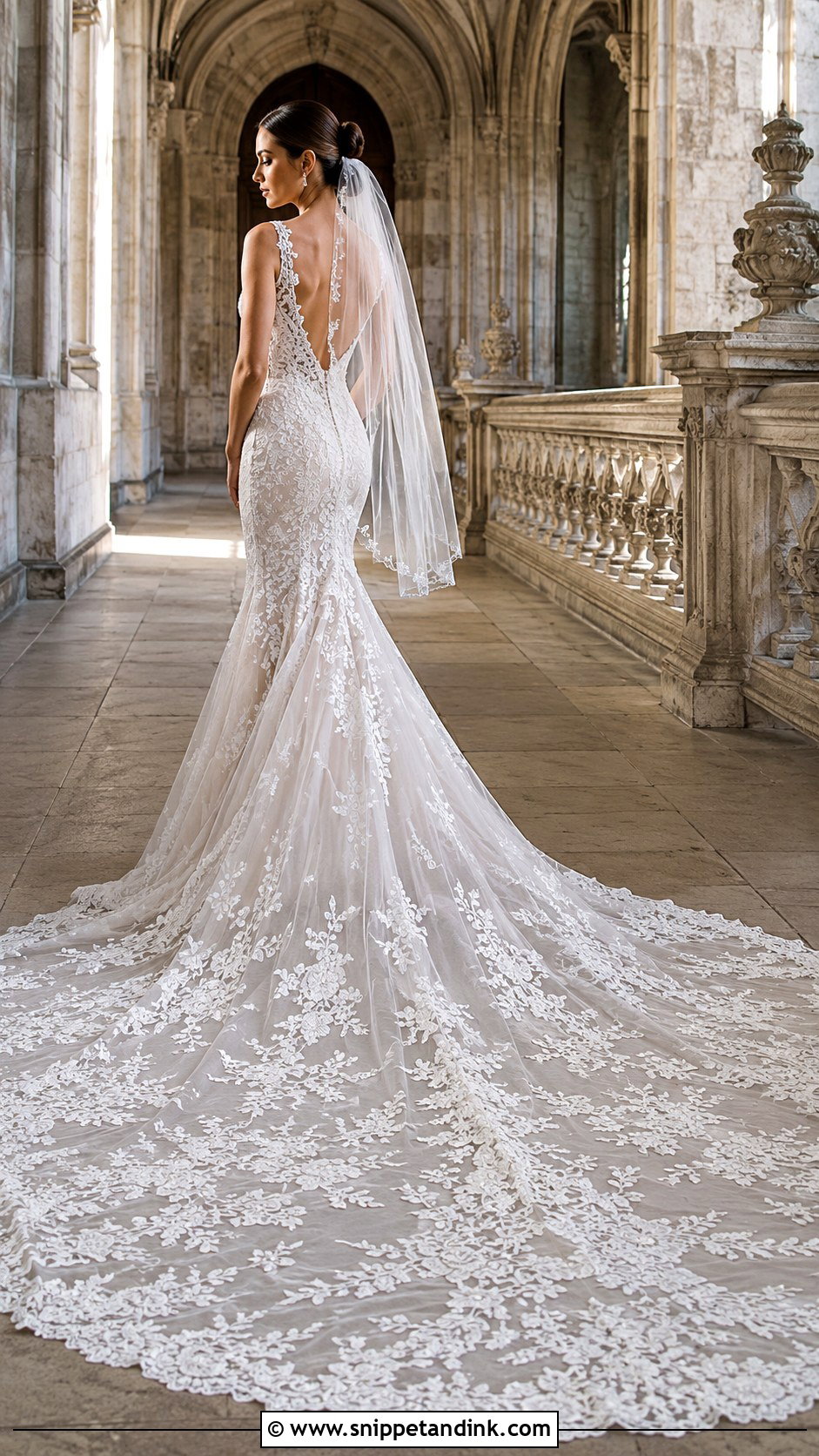
Castles are one of the few venues with an aisle long enough to show a cathedral train properly. A fitted or gently flared gown with lace that gets denser toward the hem makes the train the main event. Keep the veil to fingertip length so it doesn’t sit over the lace you paid for. Before you commit, walk the route: stairs, gravel and narrow doorways all decide whether a cathedral train is a joy or a chore. Someone you trust should be in charge of straightening it before each photo. Ask for a multi-point bustle rather than a single hook, because it spreads the weight of the fabric and keeps the heavy lace from tearing loose at one spot.
7. High Neck Castle Wedding Dress
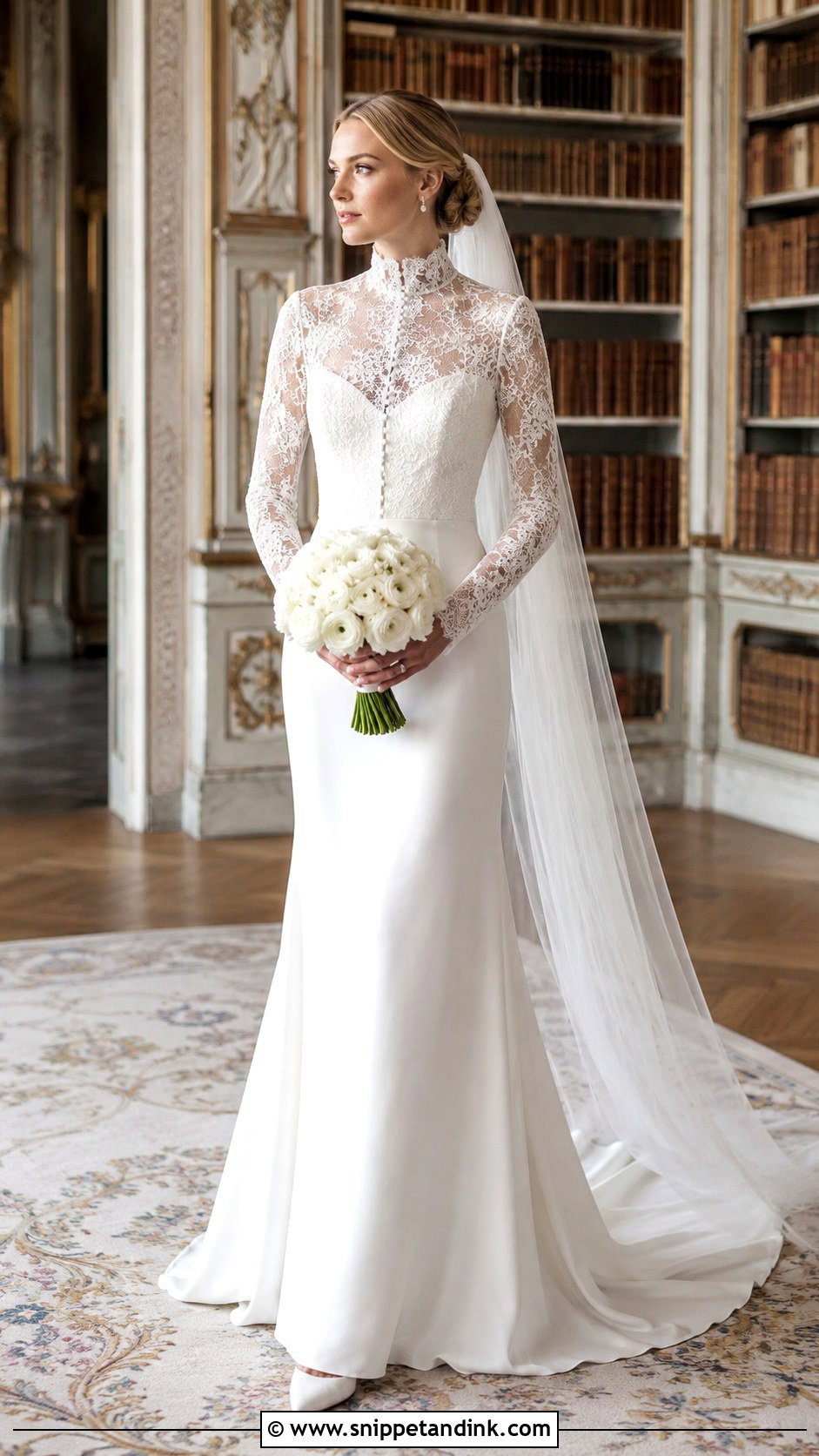
A high neck looks right in an old building, and it’s the one I suggest most often for a cold-season castle ceremony. A sheer lace bodice with covered buttons and full sleeves needs a skirt that’s quieter, so crepe or soft tulle balances it. Because the collar is the feature, earrings stay small and the hair goes low and back. A long, narrow veil adds ceremony without bulking up the shoulders. One thing brides rarely think to ask: have the collar and underarms lined in something soft. Lace and beading against the neck all day leave red marks that show in close-up portraits.
8. Corset Ball Gown Castle Wedding Dress
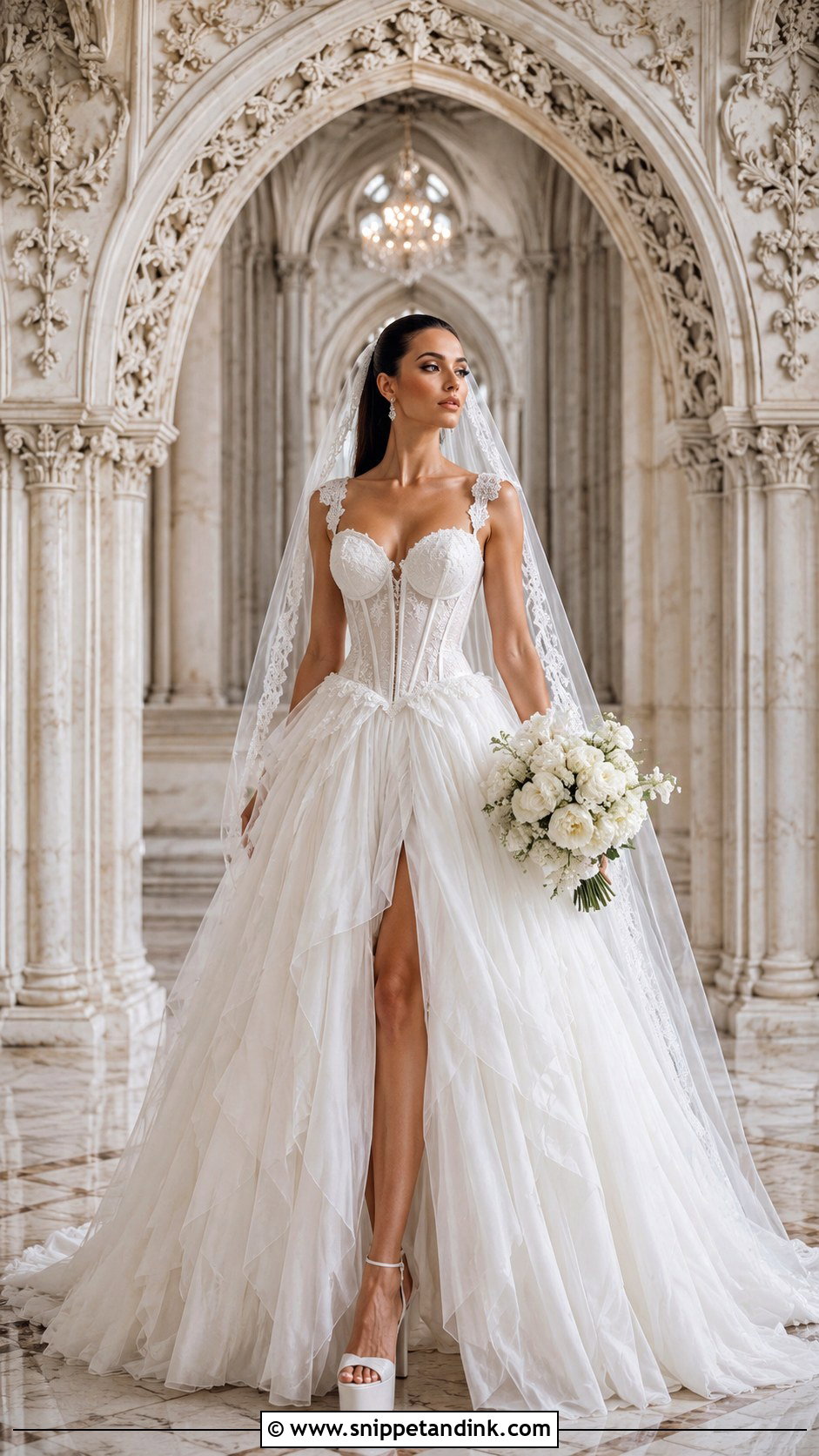
With a visible corset, fit is everything and fashion is secondary. I check three points: the bust is supported without spilling or gaping, the boning doesn’t dig in when you sit, and you can still breathe comfortably to laugh. Get those right and a layered tulle skirt over a corset bodice looks spectacular in a big castle room. Detachable straps or lace sleeves give you two looks from one dress. Wear a chapel veil and crystal drops for the ceremony, then swap the veil for a sparkling comb at the reception. Book your last fitting close to the date, because even small changes in weight show on a corset.
9. Square Neck Castle Wedding Dress
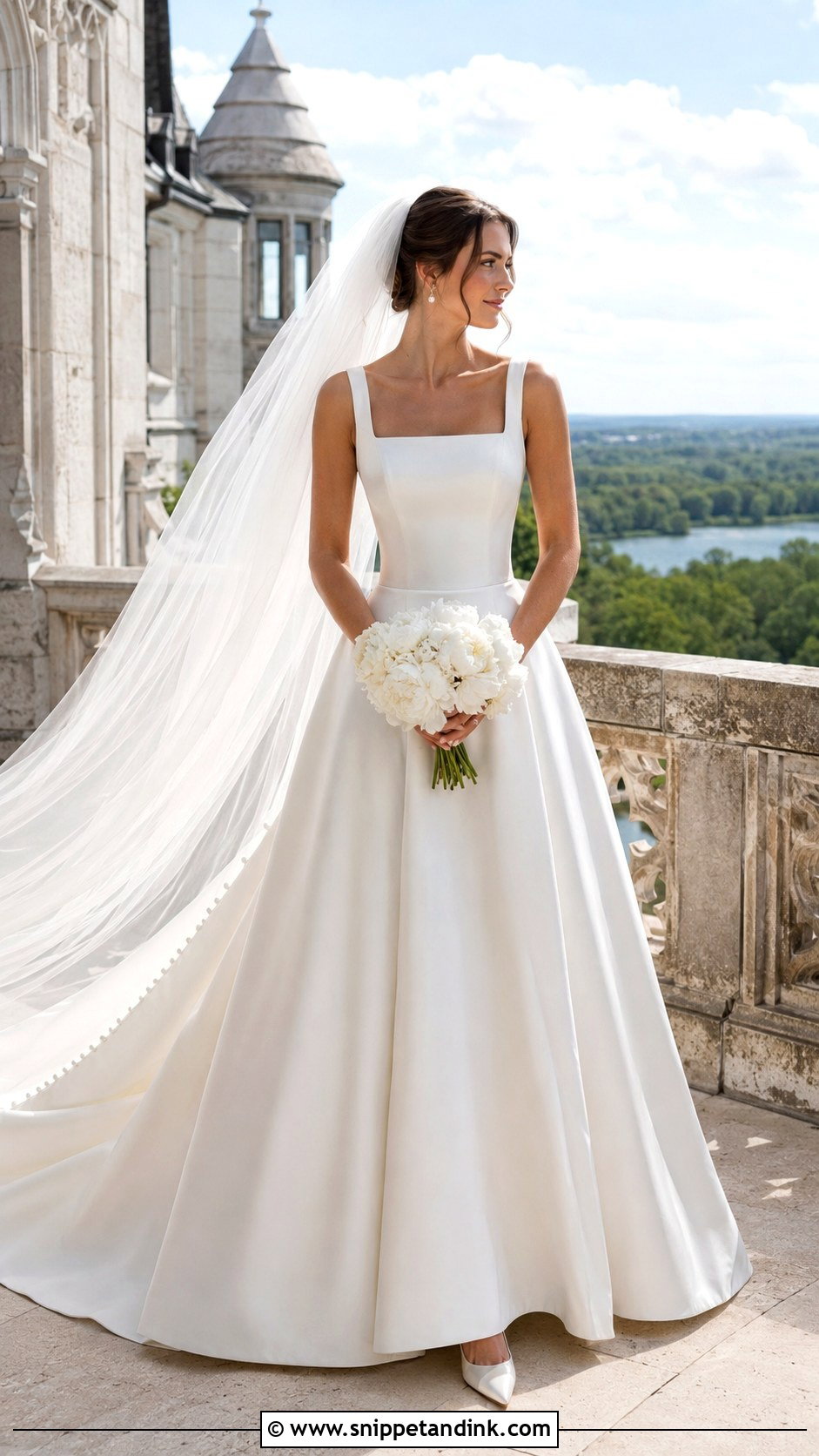
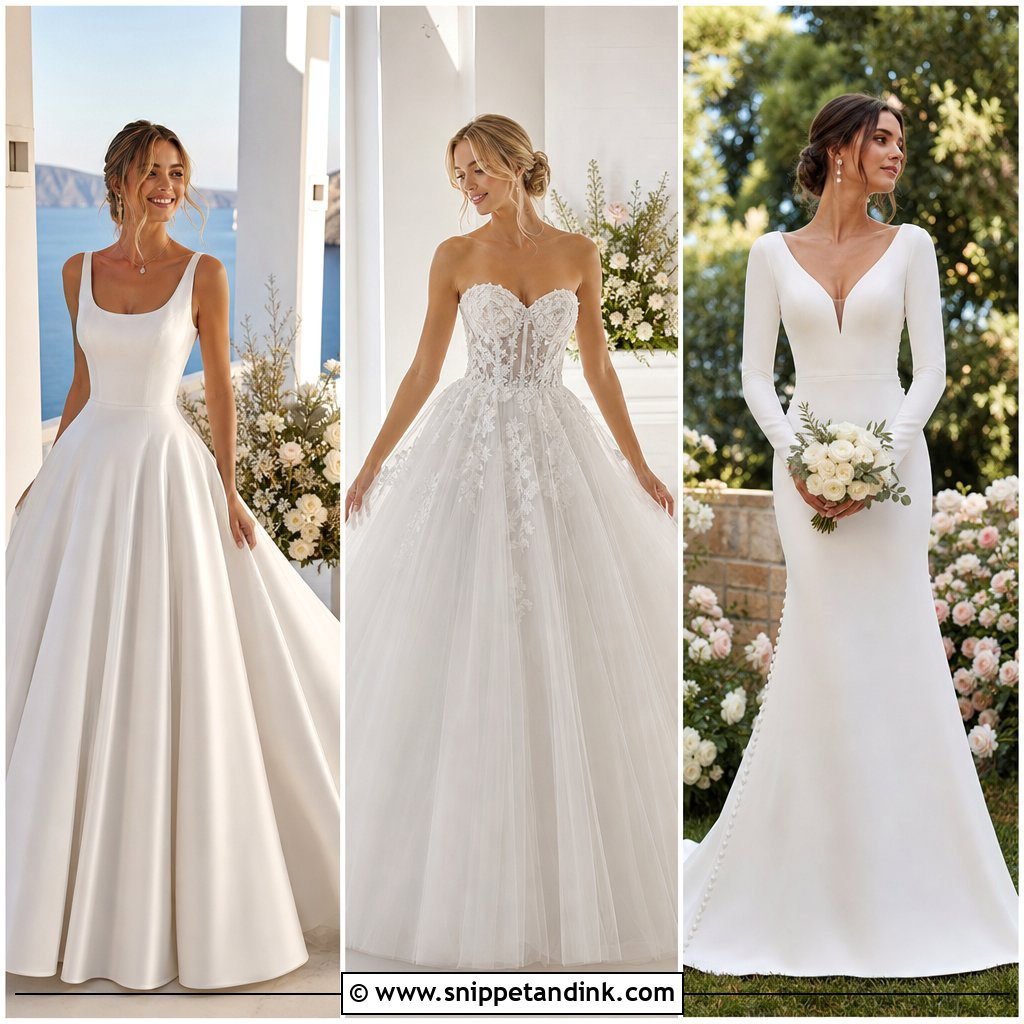
A square neckline frames the collarbone with a clean, architectural edge, which is why it sits so naturally against castle stonework. I like it on a structured A-line with wide straps and a smooth satin skirt, plus pockets if you can get them. A sheer cathedral veil, pearl and crystal earrings and a polished low bun finish it. Pointed block heels feel secure on uneven floors, and white peonies soften all those straight lines. It’s the one I’d send a bride toward if she wants the castle to do the storytelling instead of obvious fantasy references. Watch the neckline when you sit: if the corners lift away from the skin, the straps need to come in.
10. Floral Appliqué Castle Wedding Dress
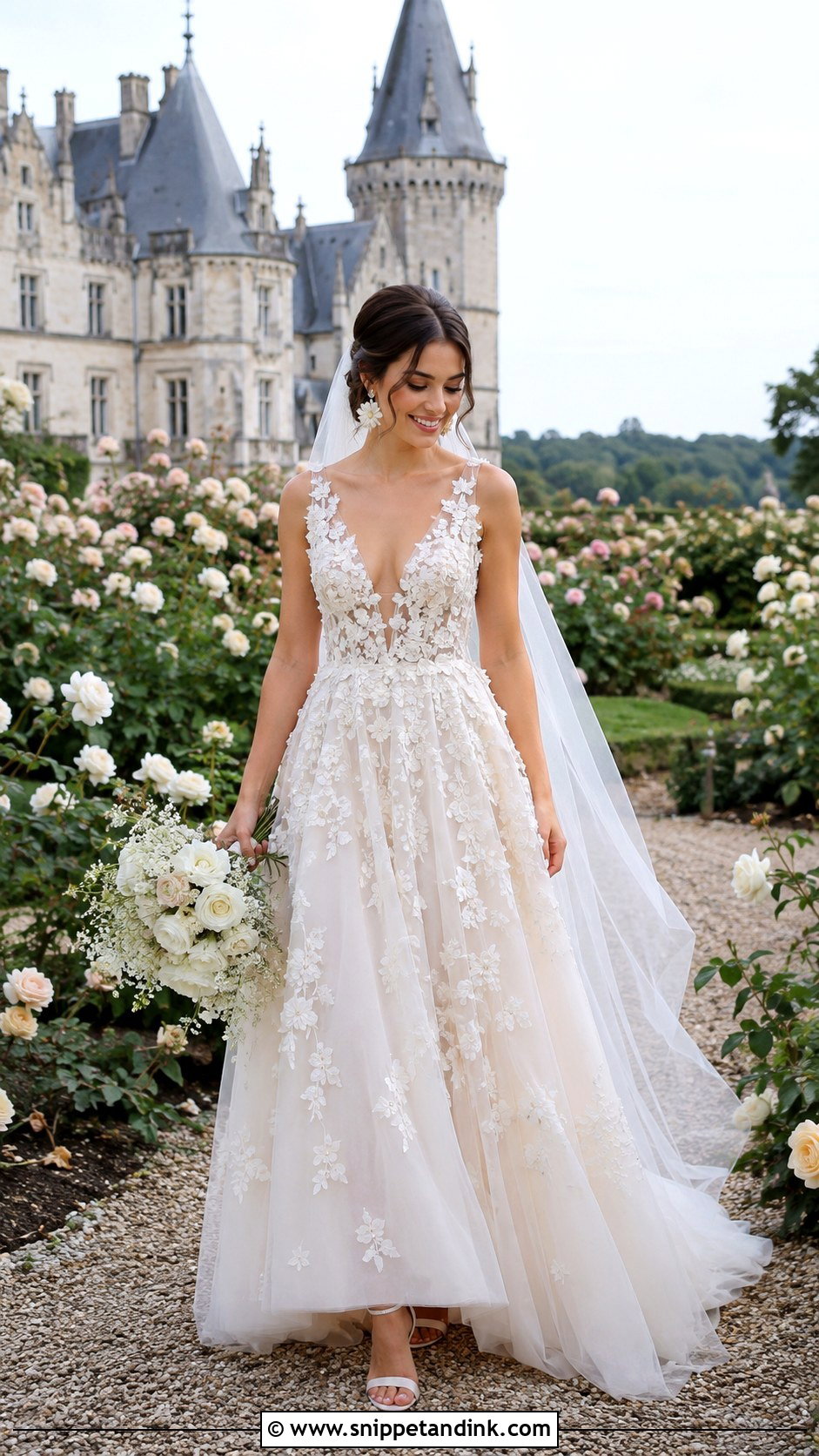
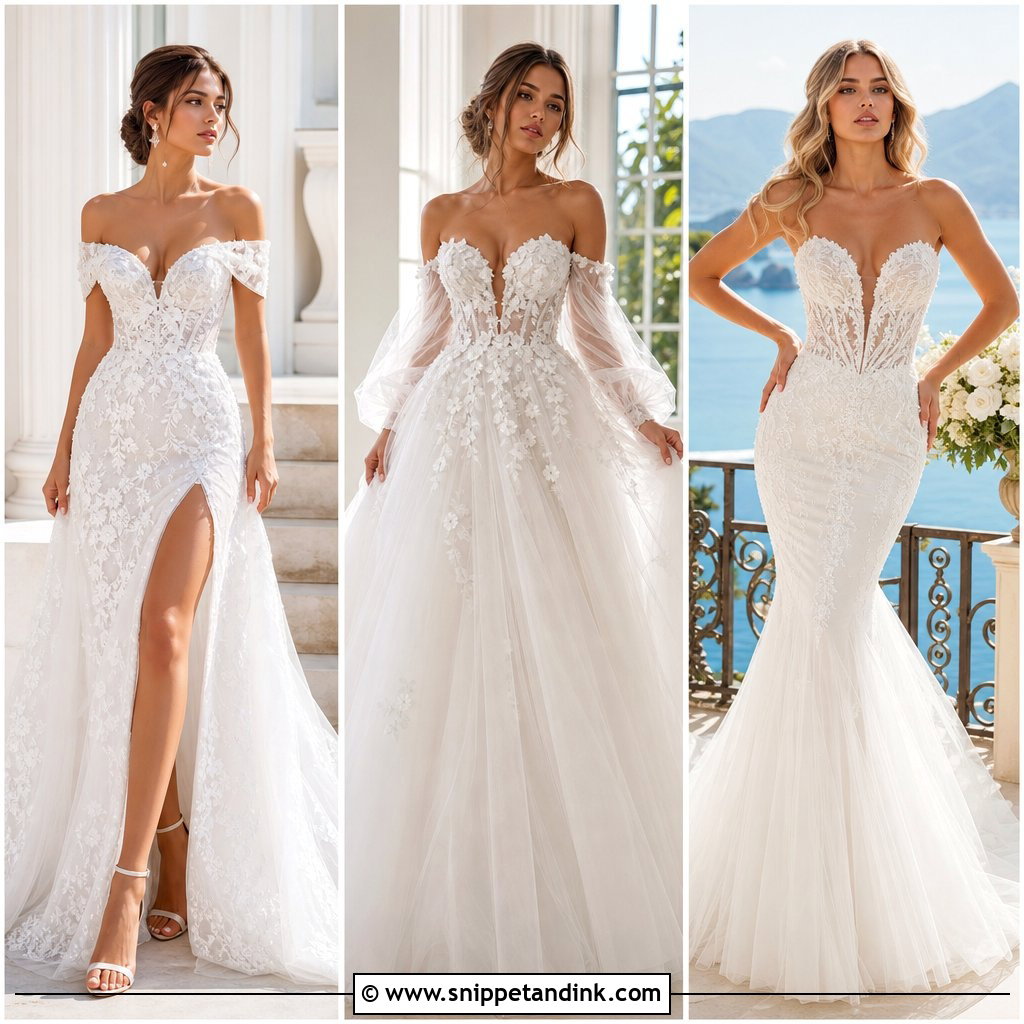
Raised floral appliqués work best when they’re dense at the bodice and scatter as they go down the skirt, so the eye starts at your face. On ivory or soft white tulle the texture does the work, no colour needed. I keep the veil raw-edged and plain and the earrings small, because three-dimensional flowers catch on lace-edged veils and drop earrings and pull threads. A loose seasonal bouquet suits it, and it’s at its best in a spring or summer courtyard, a conservatory or a rose garden. At the fitting, put the veil on and turn your head several times to see whether it snags.
11. Pearl Embellished Castle Wedding Dress
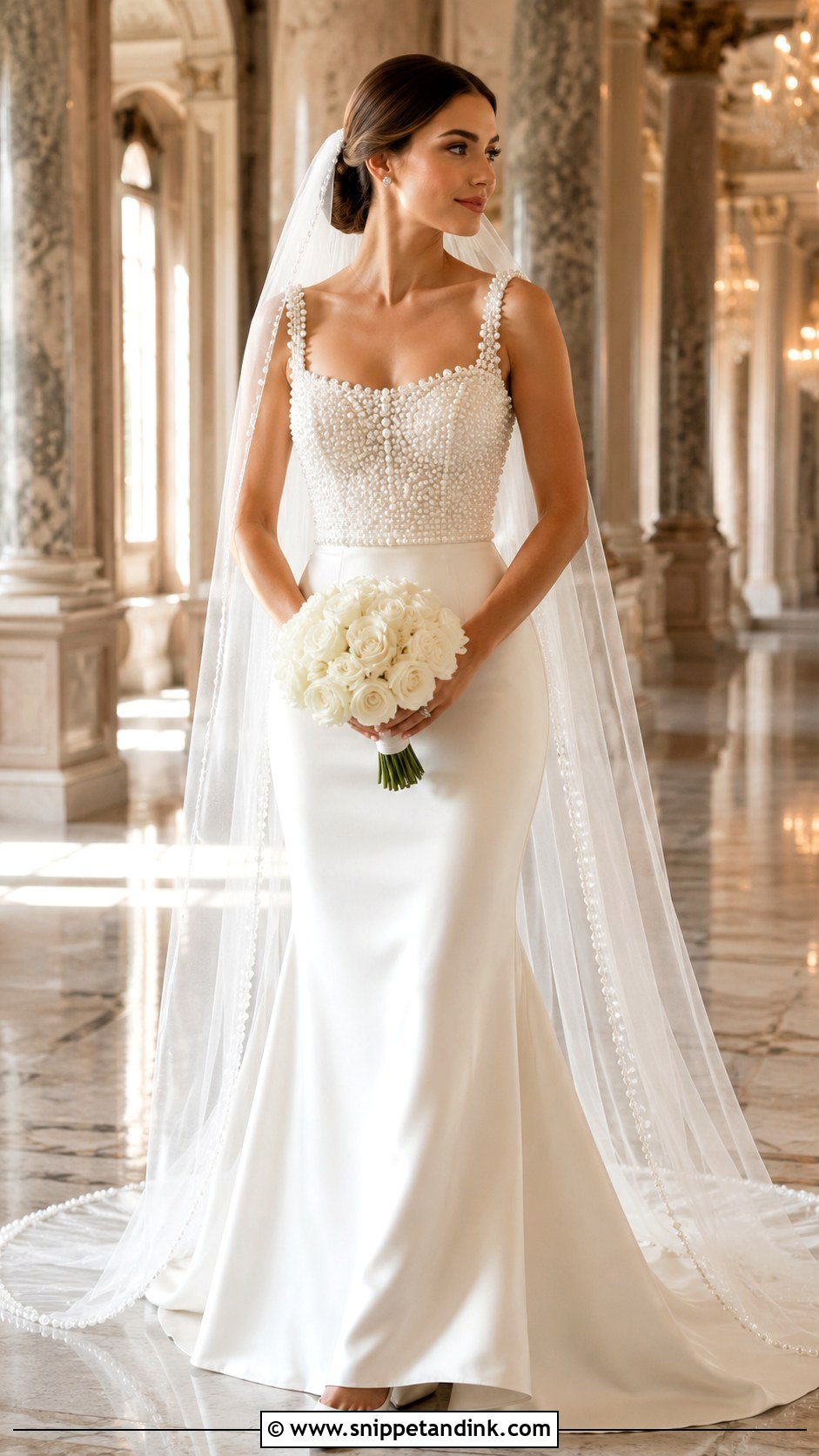
Scattered pearls give a soft glow under candlelight that sequins never quite manage. I’d keep them on a fitted bodice and leave the satin or light tulle skirt plain, otherwise the whole dress starts to look busy. Pearl studs, a pearl-edged veil and low satin block heels keep the theme tidy, and a sleek bun lets the neckline show. Before buying, run your fingers over the beadwork. Pearls sewn on with a single loose stitch will catch on the veil and start dropping during alterations. The lining matters too, especially at the underarms and waist, where embellishment rubs once you’ve been moving for a few hours.
12. Cape Castle Wedding Dress
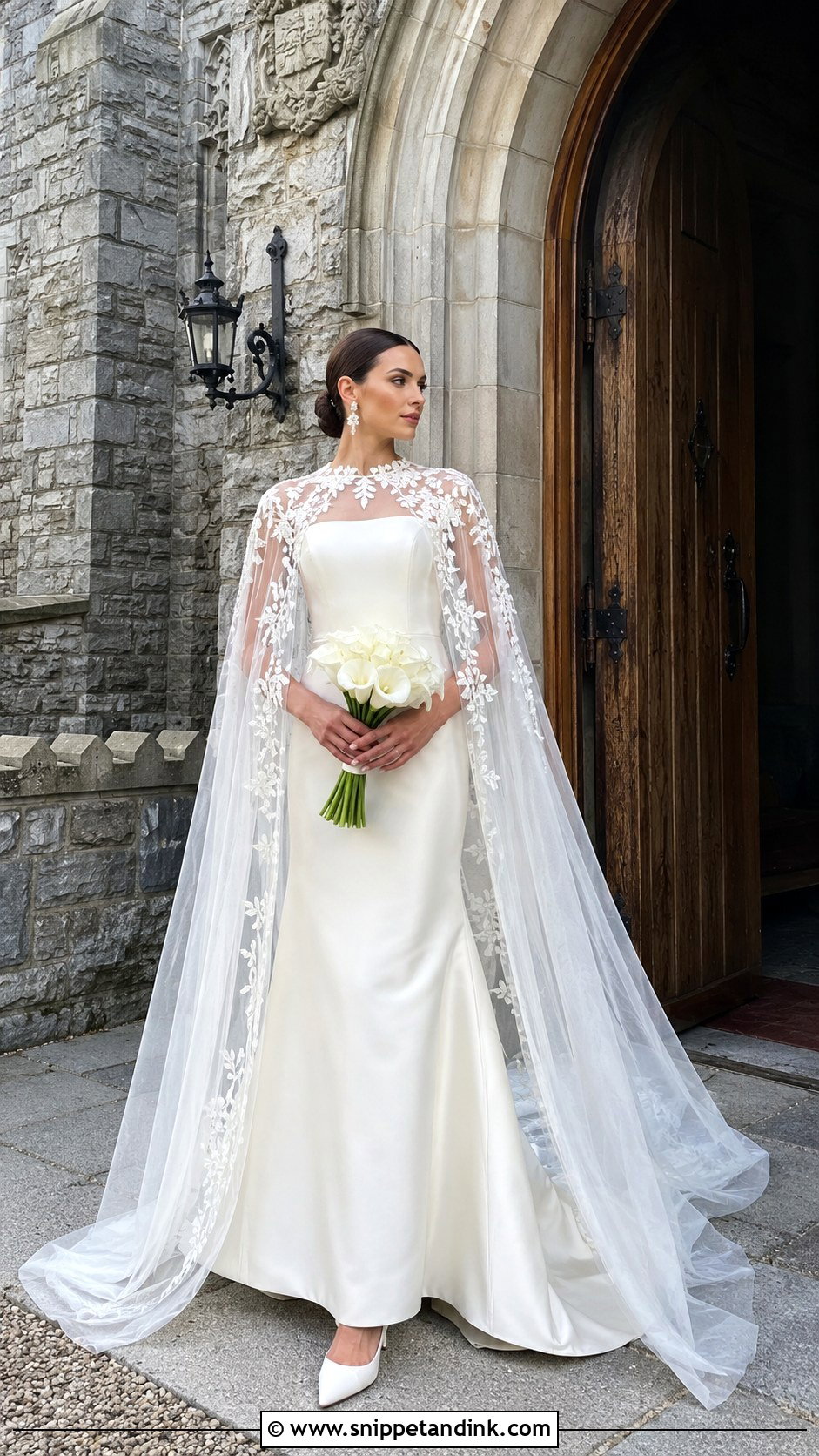
A cape gives you the grand entrance a veil does, and it’s far easier to manage on a windy castle bridge. Start with a clean column, a fitted A-line or a plain ball gown, then add a floor-length cape in sheer tulle, embroidered lace or light crepe. It should fasten at the shoulders so it frames the dress rather than hiding it. Skip the necklace and let statement earrings and a smooth low bun do the work. Weight is the thing I test: a heavy lace cape tugs backward on the neckline all evening. Choose one that detaches, and wear it for the arrival and ceremony only.
13. Winter Velvet Castle Wedding Dress
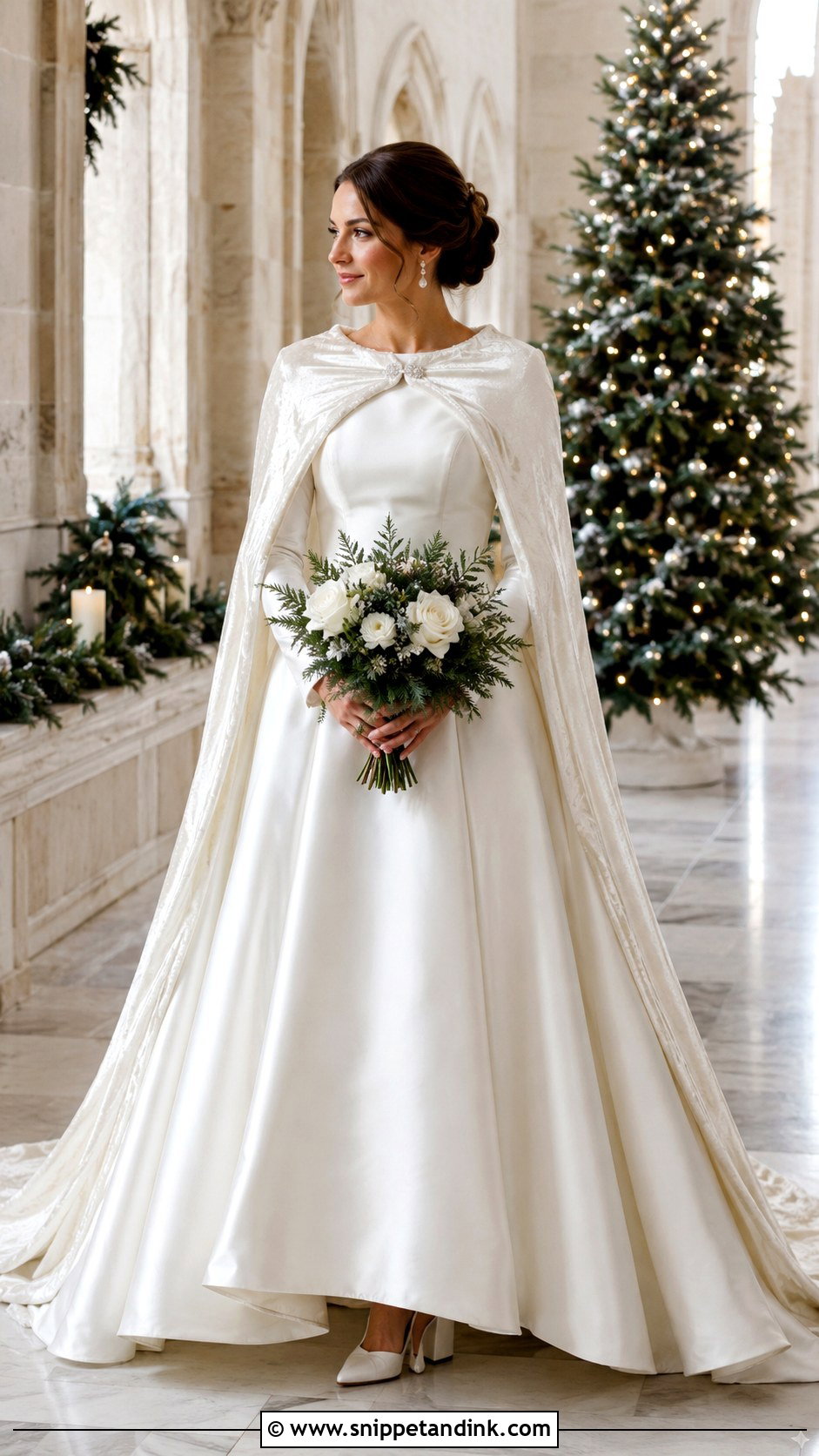
Old stone holds the cold, and even heated castle function rooms can feel chilly once the sun drops. Rather than a full velvet gown, which is heavy and hard to fit, I’d pair a long-sleeved satin A-line with a fitted ivory velvet cape or a cropped jacket. You stay warm and still look clearly bridal. Closed block heels, pearl drops and a low textured bun suit the season, as does a bouquet of white roses, hellebores and dark foliage. Choose a lightweight velvet with a smooth lining. Velvet pile crushes where it’s pressed, so make sure the closure doesn’t sit on the gown’s buttons or beadwork.
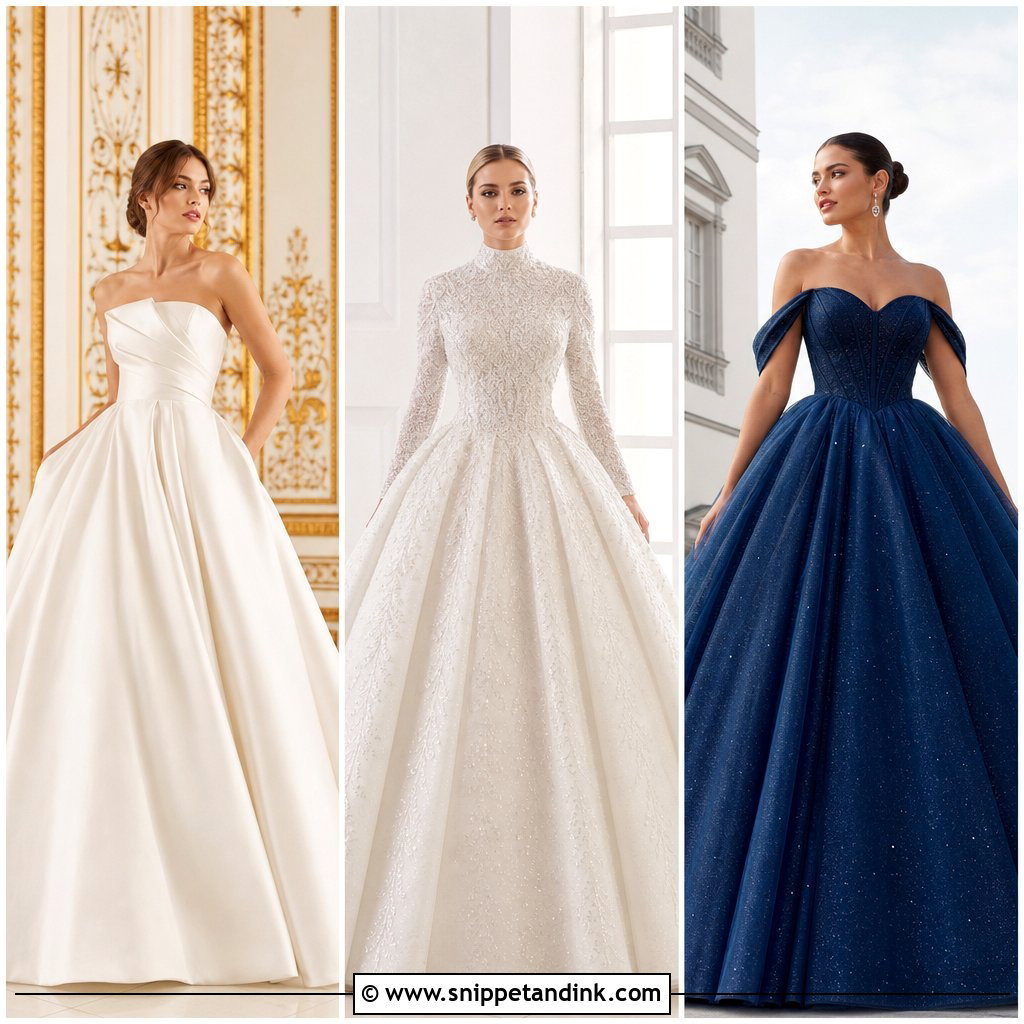
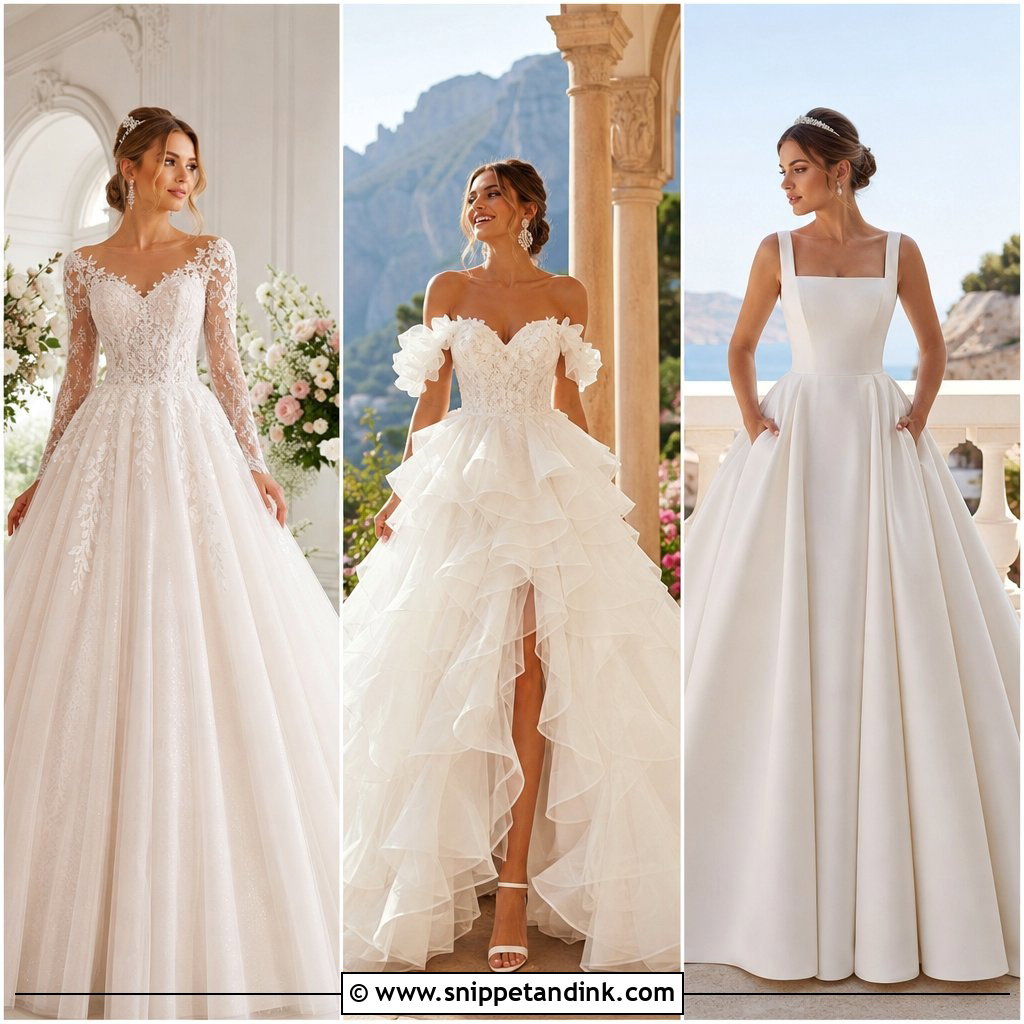
14. Champagne Castle Wedding Dress
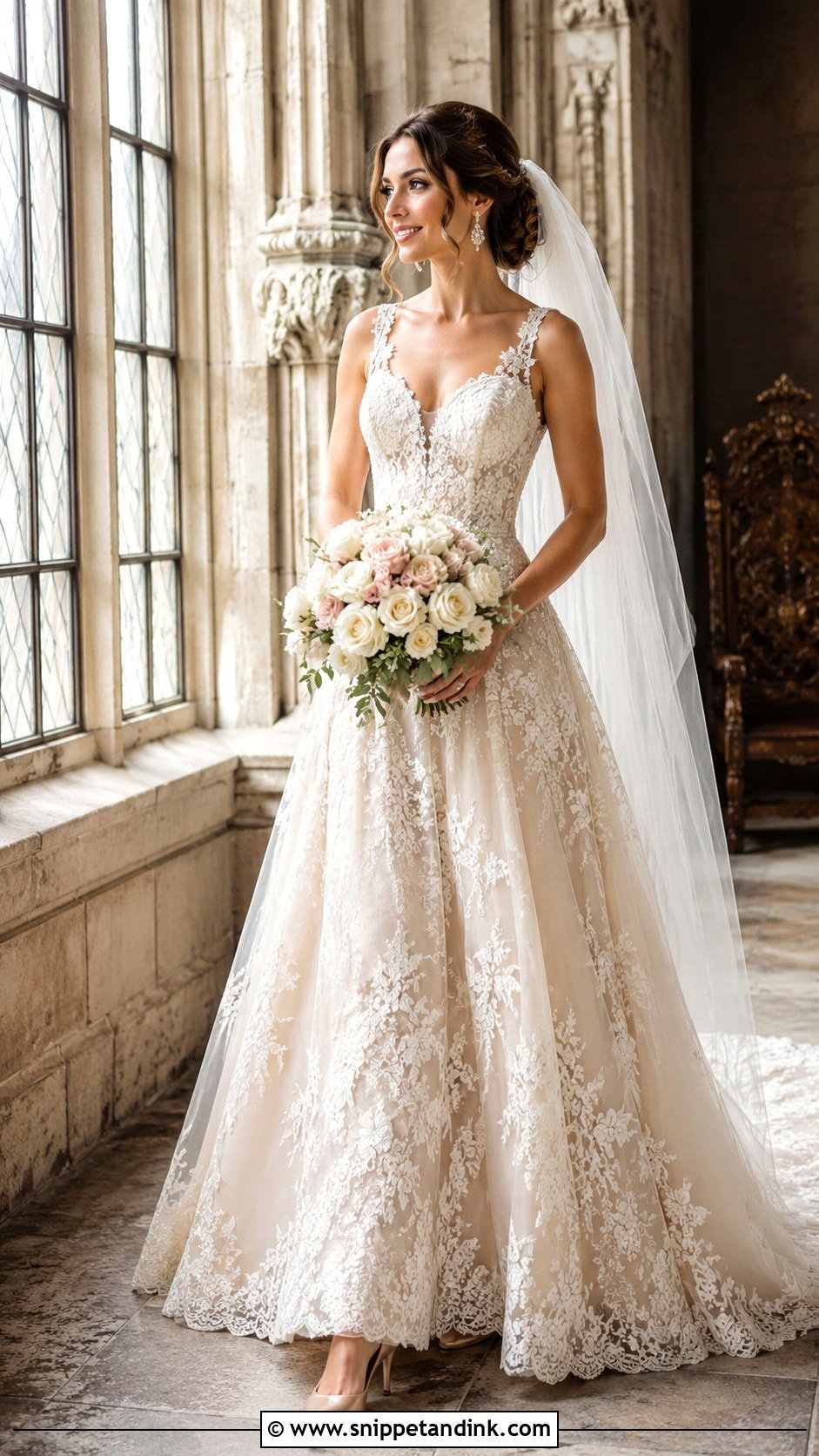
Champagne warms up against grey stone and dark panelling in a way bright white doesn’t. The version I recommend most is a champagne lining under ivory lace, which keeps the dress reading as bridal while making the pattern pop. An A-line with a fitted bodice suits both small and large rooms. Add a light ivory veil, antique-style earrings and neutral satin heels matched to the lining, plus cream and pale blush flowers. Always look at champagne fabric by a window and under indoor bulbs. It can turn yellow or grey depending on the light and your skin undertone. Mention the colour to your photographer so it isn’t corrected back toward white in editing.
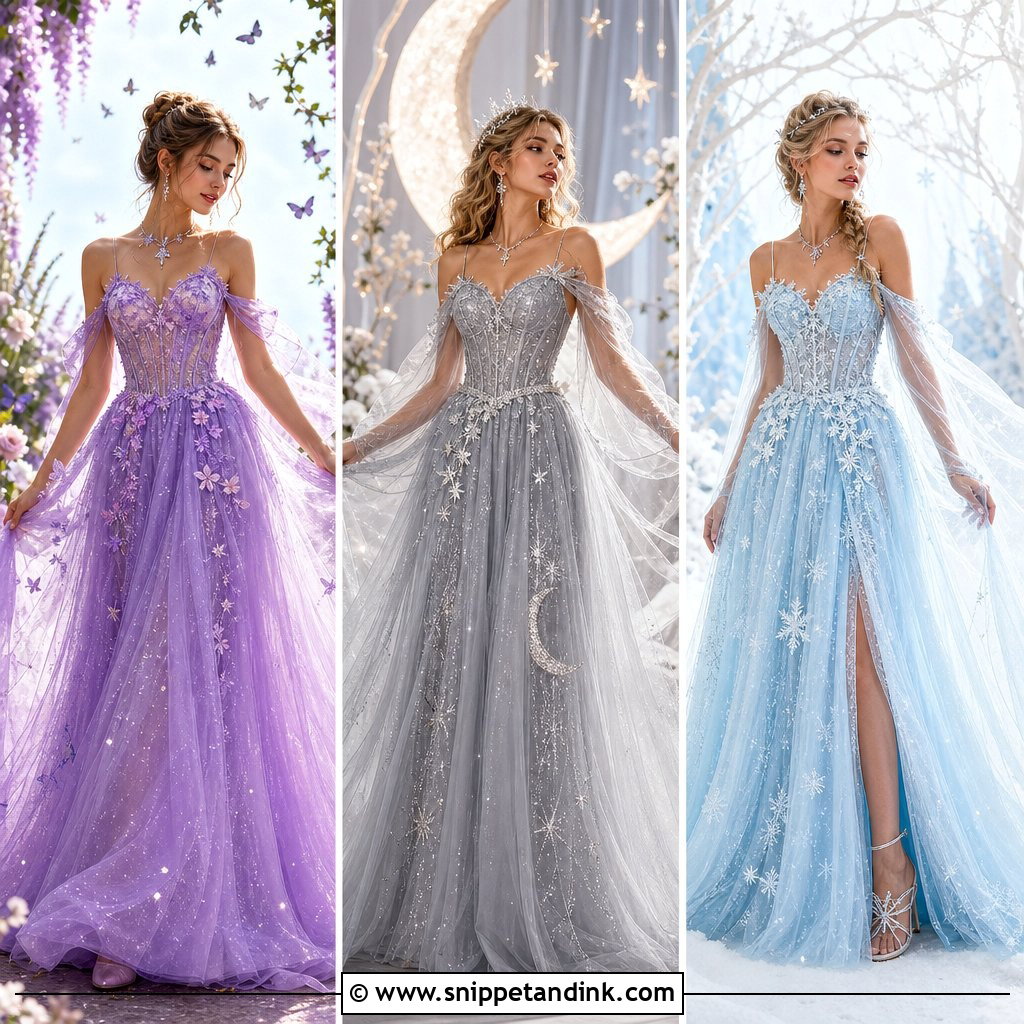
15. Blush Tulle Castle Wedding Dress
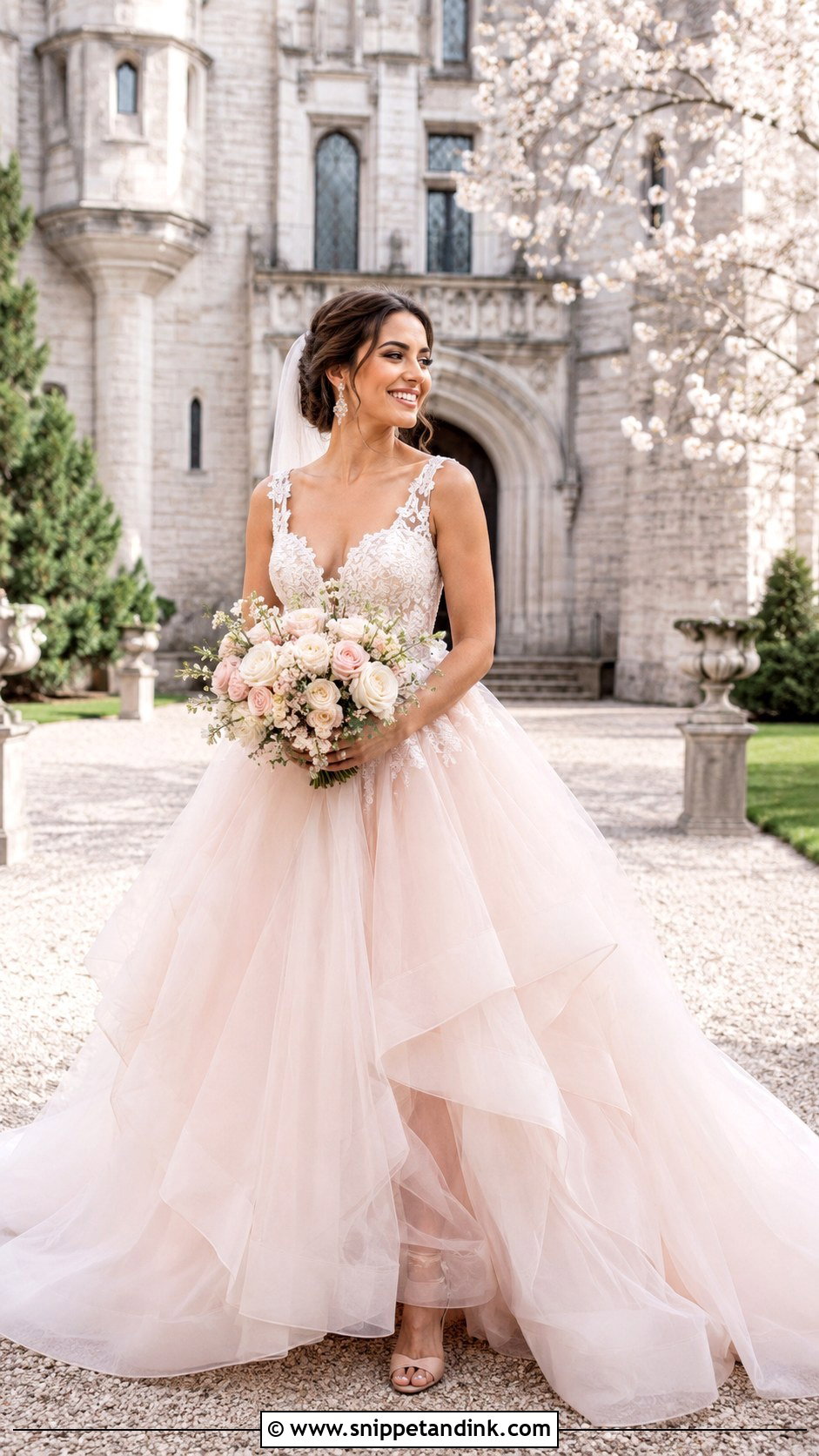
Pale blush is still unmistakably a wedding dress, just warmer. A layered tulle ball gown with an ivory lace bodice and a blush underlayer shifts colour as you move from a bright courtyard into a dim hall, which is part of its appeal. An ivory chapel veil, rose-gold earrings and soft neutral heels are enough, and a bouquet of cream, pale pink and white ties it to the palette. Let the colour be the one bold choice. Before ordering, hold blush, rose and nude linings against your bare skin. On many brides the most flattering option turns out to be the palest one, almost a nude.
16. Minimalist Satin Castle Wedding Dress
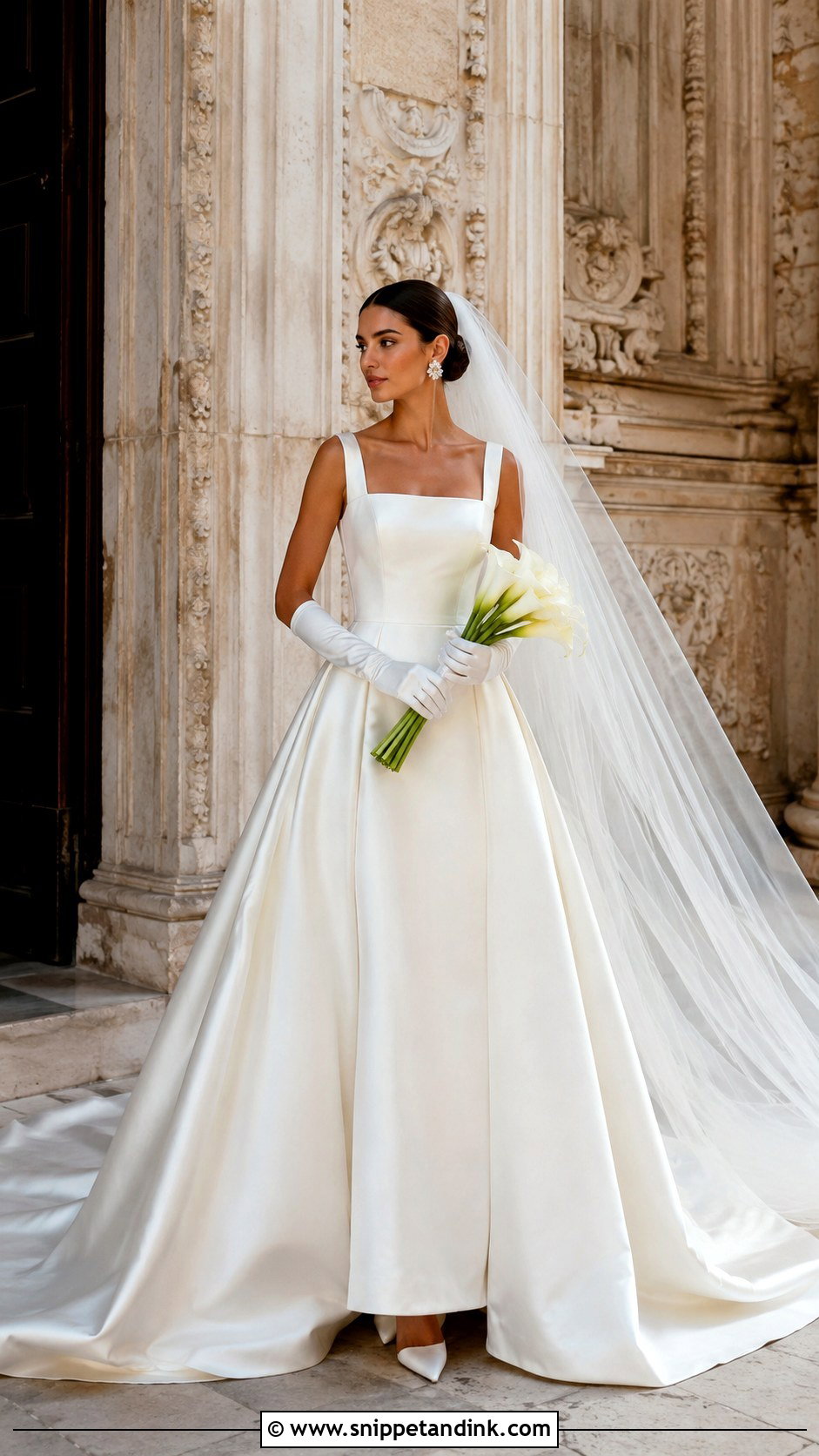
A plain satin gown in an ornate castle works by contrast: the room is busy, so the dress doesn’t need to be. A clean ball gown or structured A-line with a defined waist and a sweeping train is enough, with a square, scoop or strapless neckline. Sculptural earrings, sleek pointed heels and a long plain veil. Gloves for the ceremony if you like. My warning with minimalist satin is that it reveals everything, from a puckered seam to a badly placed bustle point, so it costs more in skilled alterations than people expect. Get it steamed on the morning, not the night before, because satin picks up creases from the hanger and the car.
17. Fitted Lace Castle Wedding Dress
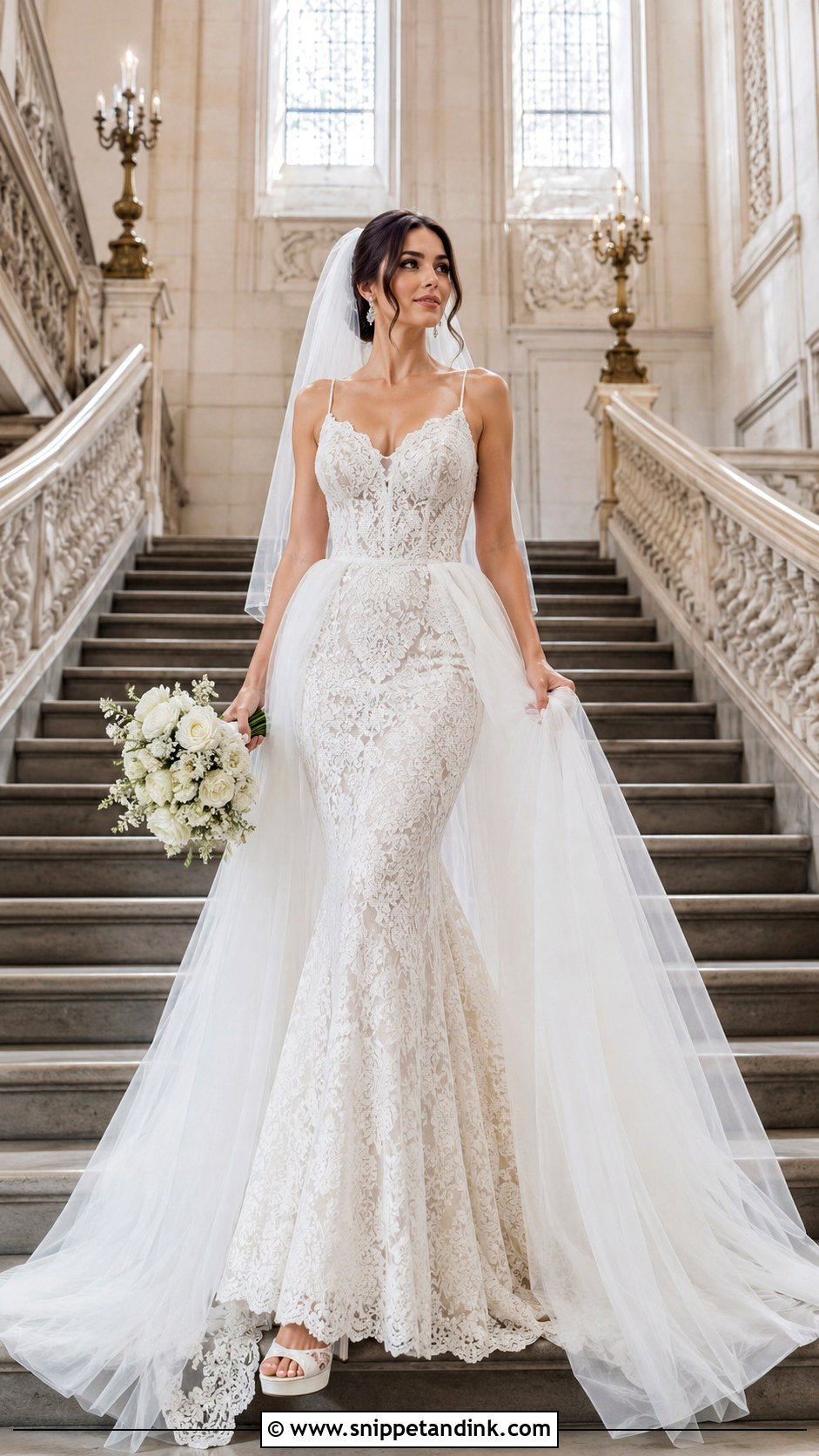
A fit-and-flare in lace can match a ball gown’s drama through line and texture alone, and it suits brides who feel swamped in a big skirt. Look for supportive bodice construction and a stretch lining, with appliqués that follow the body and fan out at the hem. Clip a detachable overskirt on for the ceremony if you want volume on the staircase, then take it off along with the fingertip veil for dinner. Ivory platform sandals give a bit of height without the wobble of a thin heel. Climb a set of stairs in it at the fitting. Fitted skirts that look fine standing often grip the knees on steps.
18. Vintage Inspired Castle Wedding Dress
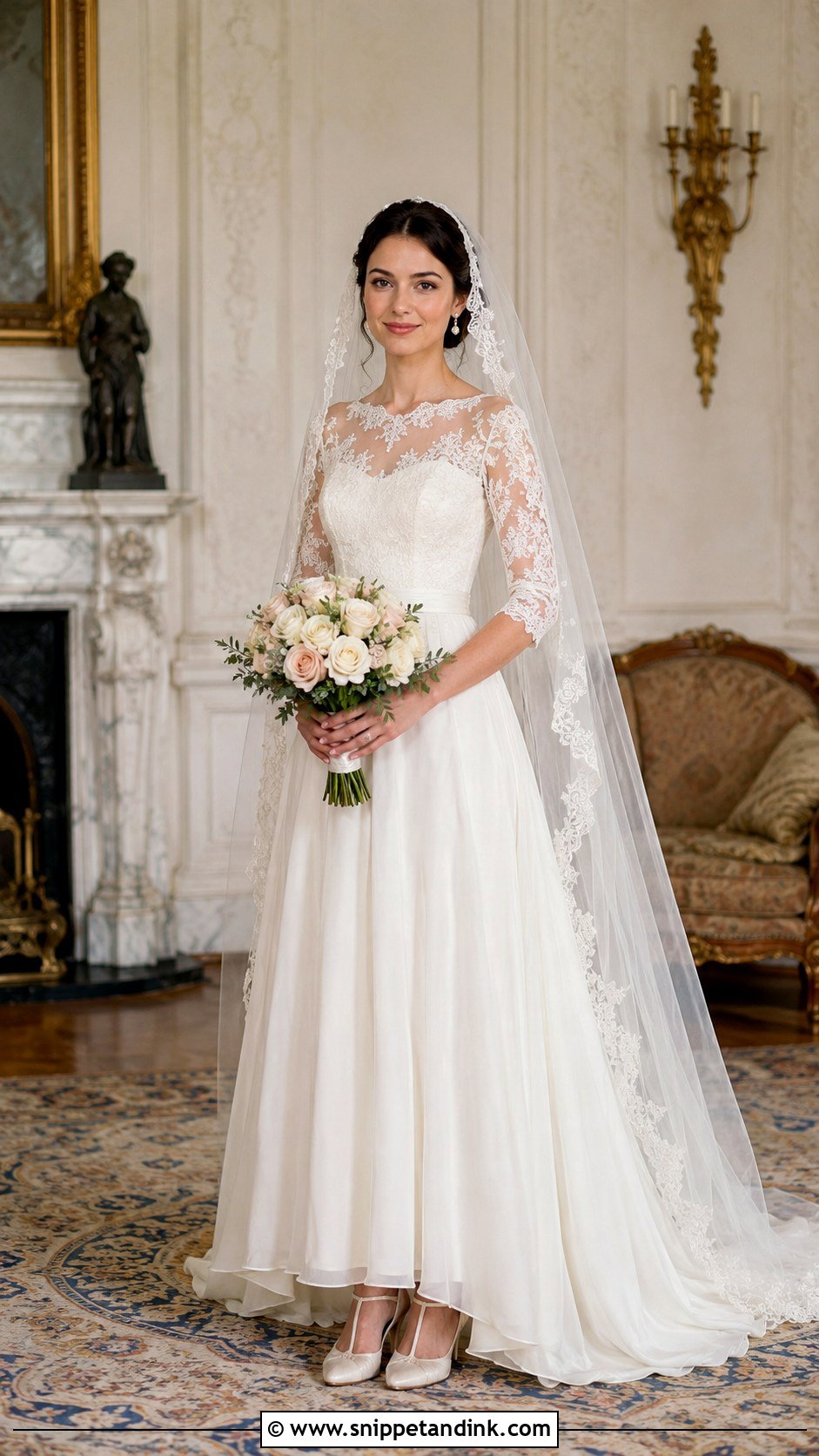
Vintage inspiration suits a historic venue as long as it stops short of fancy dress. A softly fitted A-line with an illusion neckline, delicate sleeves, covered buttons and early twentieth-century lace is plenty. A silk or chiffon skirt keeps it light. Add a lace-trimmed veil, antique-style pearls, T-strap heels and a low waved bun. I’d hold it to one or two period references, because stacking them is what makes an outfit look theatrical. If the dress is genuinely old, have a specialist assess the fabric, seams and any yellowing before it’s cleaned or altered. Aged silk can split along a seam the moment it’s handled.
19. Regal A Line Castle Wedding Dress
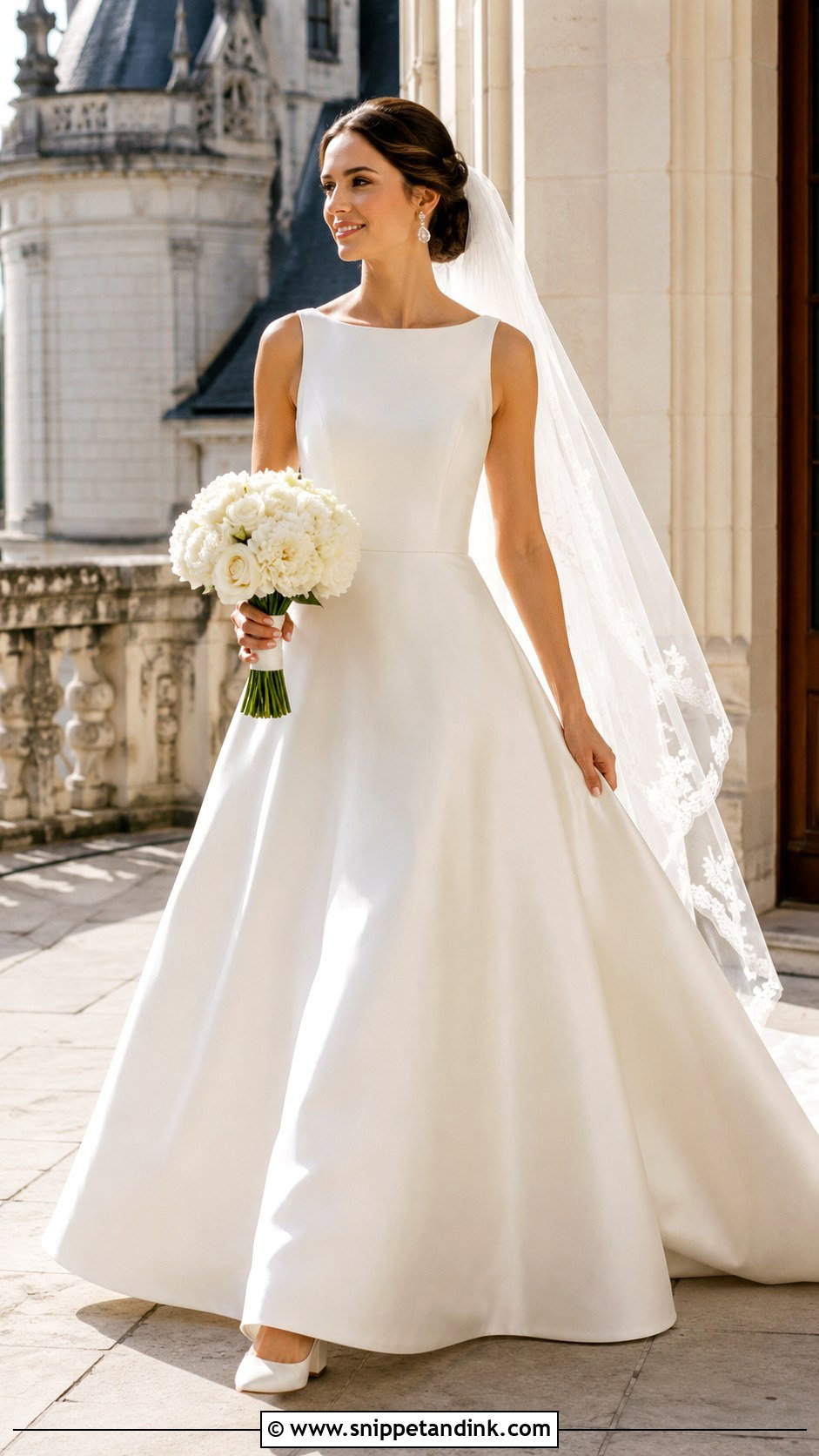
The A-line is the dress I reach for when the castle has spiral stairs, a long walk to the chapel or grounds to cross between photos. It has presence with far less volume than a ball gown. A structured bodice and a skirt that widens gradually, in mikado, satin or layered organza, holds its shape without a big petticoat. Chapel veil, drop earrings, comfortable block heels and a polished updo complete it. It’s also the most adjustable silhouette in a fitting room: neckline, sleeve and waist placement can all be changed. I’d judge it by proportion in the mirror rather than by any body-shape rule.
20. Detachable Overskirt Castle Wedding Dress
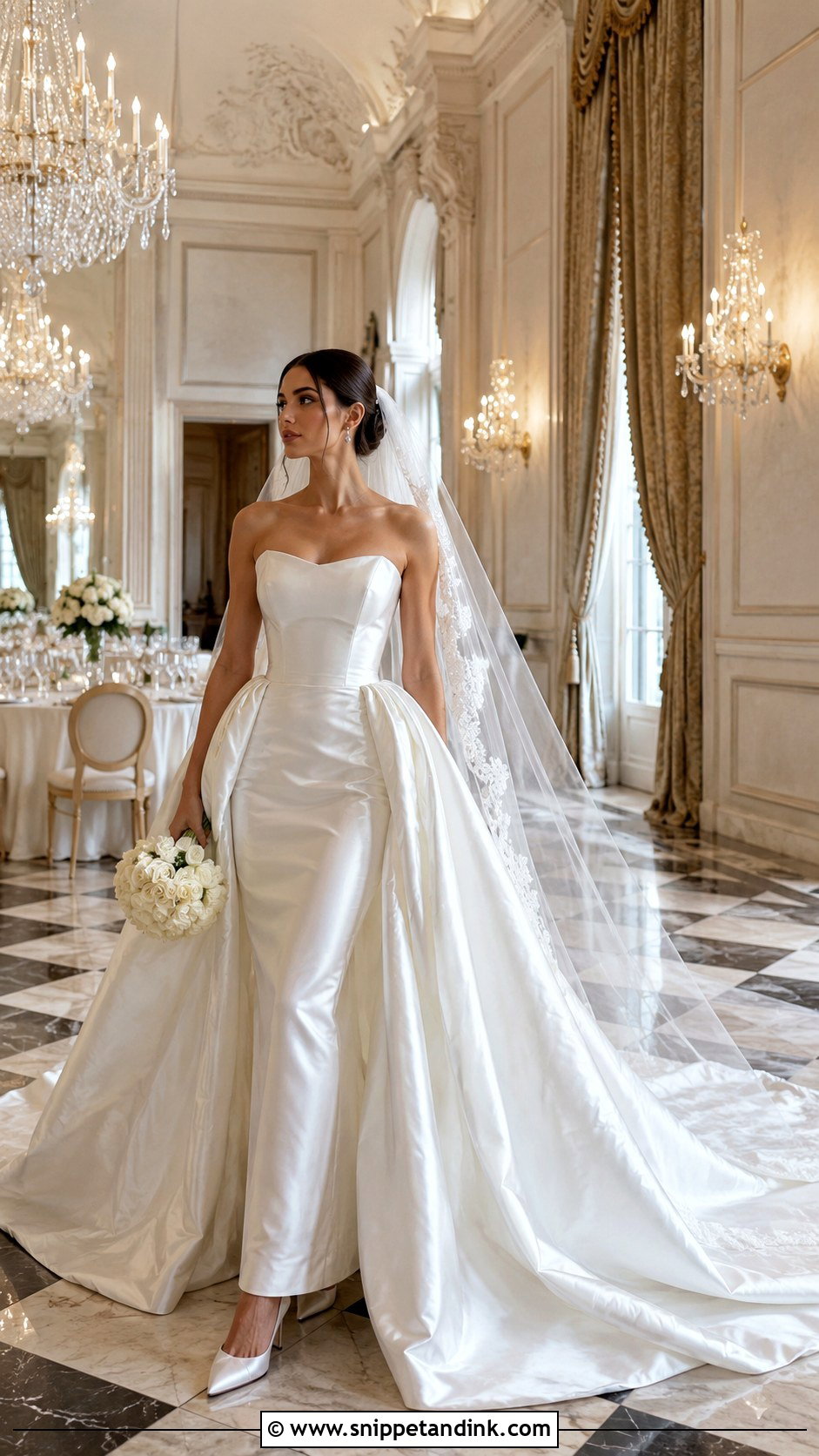
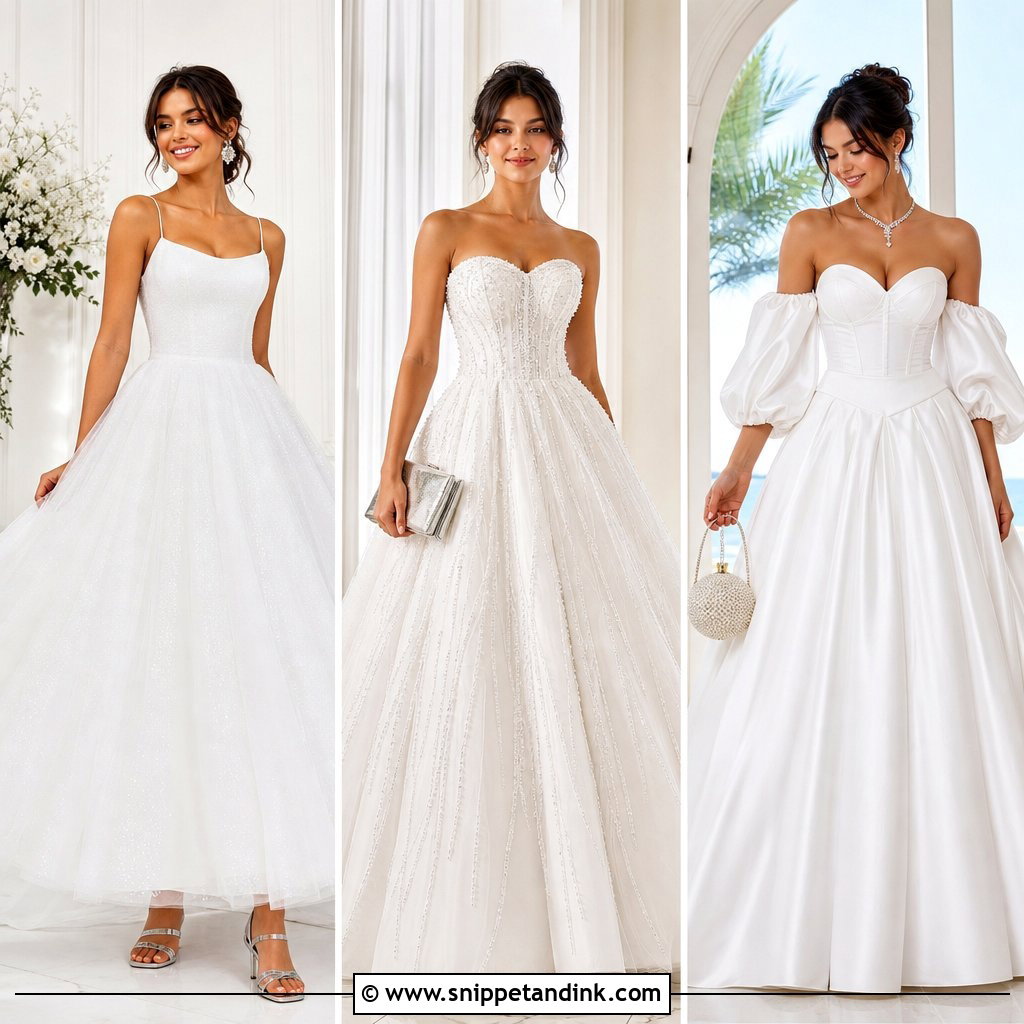
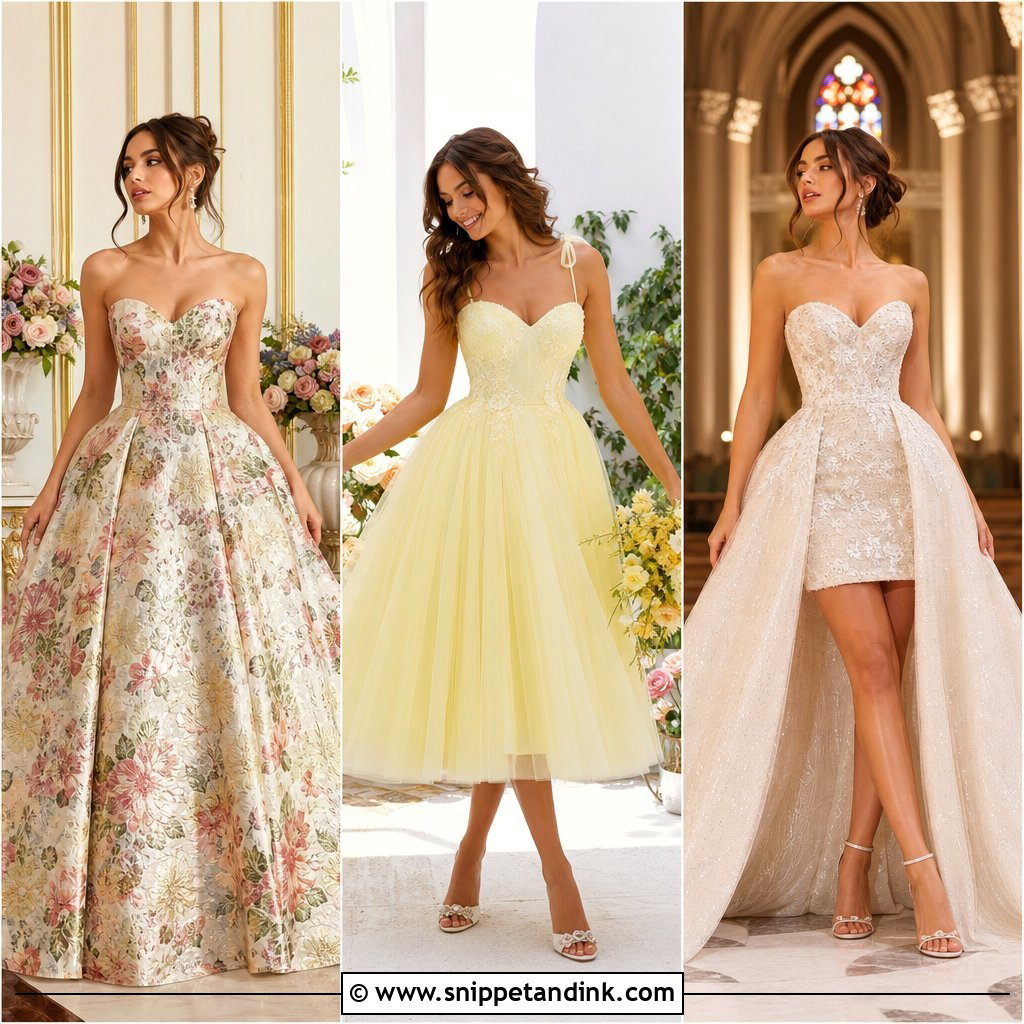
An overskirt gives you two dresses in one day. The base gown, in crepe, satin or lace, has to look finished on its own, and the waistband where the overskirt clips on must line up cleanly or the join shows in every photo. A train or scattered appliqués on the removable layer gives the ceremony its drama. After photos, the veil and overskirt come off for dinner and dancing. Practise taking it off and putting it on during fittings, ideally with the person who’ll help on the day. Give that same person a clean bag or sheet for it, because a tulle overskirt left over a chair gets crushed and stepped on.
What Stone, Damp and Long Distances Do to a Hem
A castle wedding is harder on a dress than a hotel wedding. Stone is abrasive, courtyards hold puddles long after rain, and you’ll walk a lot further. None of that should put you off. It just means a little planning for the fabric.
During the day
Bustle the train before you go outside, not after. A train dragged over gravel picks up grey dust that sets into tulle and lace and won’t brush out. If the grass is wet, lift the front of the skirt slightly as you walk, since the hem soaks water up the layers quickly. Give one bridesmaid a small kit: a lint roller, clear nail polish for a snag in tulle, a few safety pins and a white cloth. Blot marks rather than rubbing them, because rubbing satin roughens the surface and leaves a dull patch.
The morning after
Hang the dress by its internal loops, not the shoulders, so the weight of the skirt doesn’t stretch the bodice. Take it to a specialist cleaner within a few weeks and tell them about any wine, grass or candle wax you know of. Some stains, sugar from champagne in particular, are invisible at first and turn brown months later, which is why waiting a long time before cleaning tends to cause problems. For storage, use acid-free tissue and a breathable cotton bag. A plastic garment bag traps moisture, and in a damp cupboard that can lead to yellowing.
The Building Should Help Decide the Dress
I’d start with the castle itself before falling for a silhouette. A full ball gown suits a ballroom ceremony, but spiral stairs, gravel paths and long corridors often point toward an A-line, a fitted lace dress or an overskirt you can remove. Sleeves, capes and velvet layers handle cold stone halls, while details such as a Basque waist or a cathedral train are what make the dress yours. Pick the one you’d happily wear for the whole day, not just the one that matches the venue. Then give it good internal support, a reliable bustle and alterations done with the actual route in mind, so you’re as comfortable at the last dance as at the aisle.
You'll Like These Ideas:



Leave a Reply