
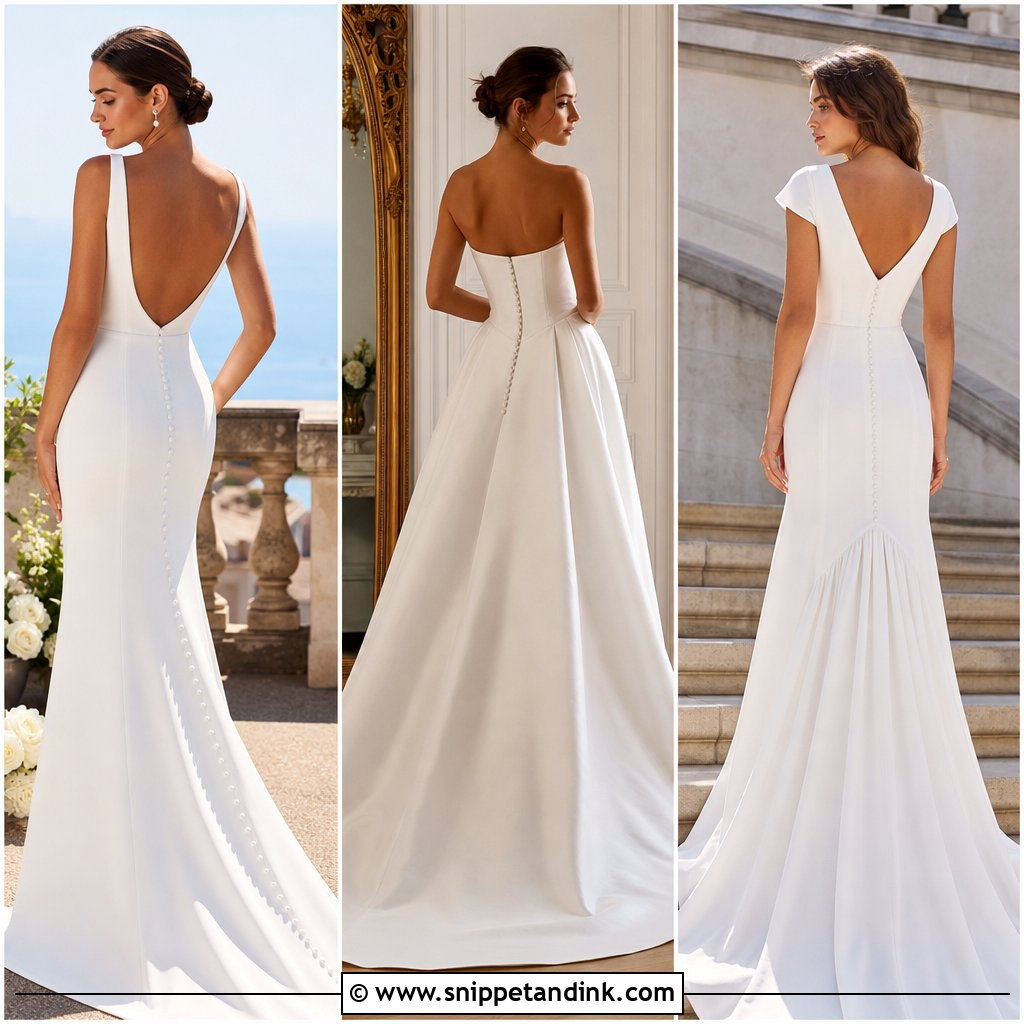
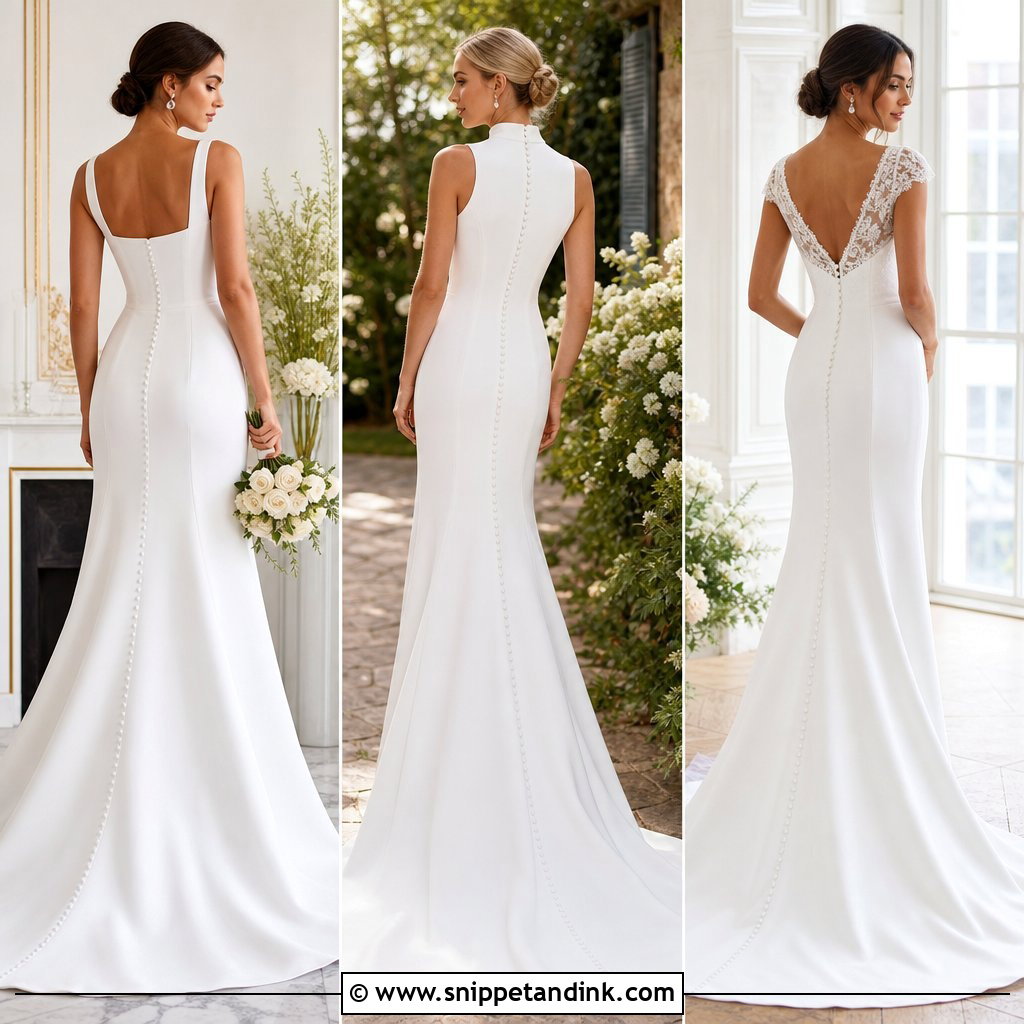
Buttons are the detail guests stare at for the whole ceremony, because the back of your gown is what they see. A row of satin-covered buttons reads classic, while pearl, crystal or lace-covered ones add texture. They can trace a low back, finish a sheer sleeve, accent a corset bodice or run all the way down a train. Some genuinely fasten the dress, and some sit over a hidden zipper so you get the look without the fiddling. Before I let a bride fall for any button back, I ask one question: who is doing them up on the morning, and how long will they have? The twenty pairings below run from plain crepe to blush lace.
Rouleau Loops, Elastic and the Zipper Underneath
Two button backs can look identical in a photo and behave completely differently when you’re getting dressed. Most work in one of three ways, and that matters more than the button itself.
- Rouleau loops: thin fabric tubes, one per button, sewn into the seam. This is the traditional method, the slowest to fasten and the closest fit, because a seamstress can shift a single loop to fine-tune the back.
- Elastic loop tape: a ready-made strip of stretchy loops. It’s quicker and a little forgiving, but on a very fitted bodice it can stretch and let the seam gap between buttons.
- Decorative buttons over a zipper or hooks: the buttons are purely for show and the dress opens another way. It’s by far the fastest, and the one I suggest for mermaid and tight sheath cuts.
Ask at your first appointment which one you’re looking at, because many gowns mix them: working loops on the bodice where fit matters, then sewn-on buttons from the waist down. Spacing changes the mood too. Buttons set close together read traditional and take longer to do up, while wider spacing looks more modern but lets a fitted seam ripple between loops.
1. Satin Wedding Dress Buttons Down The Train
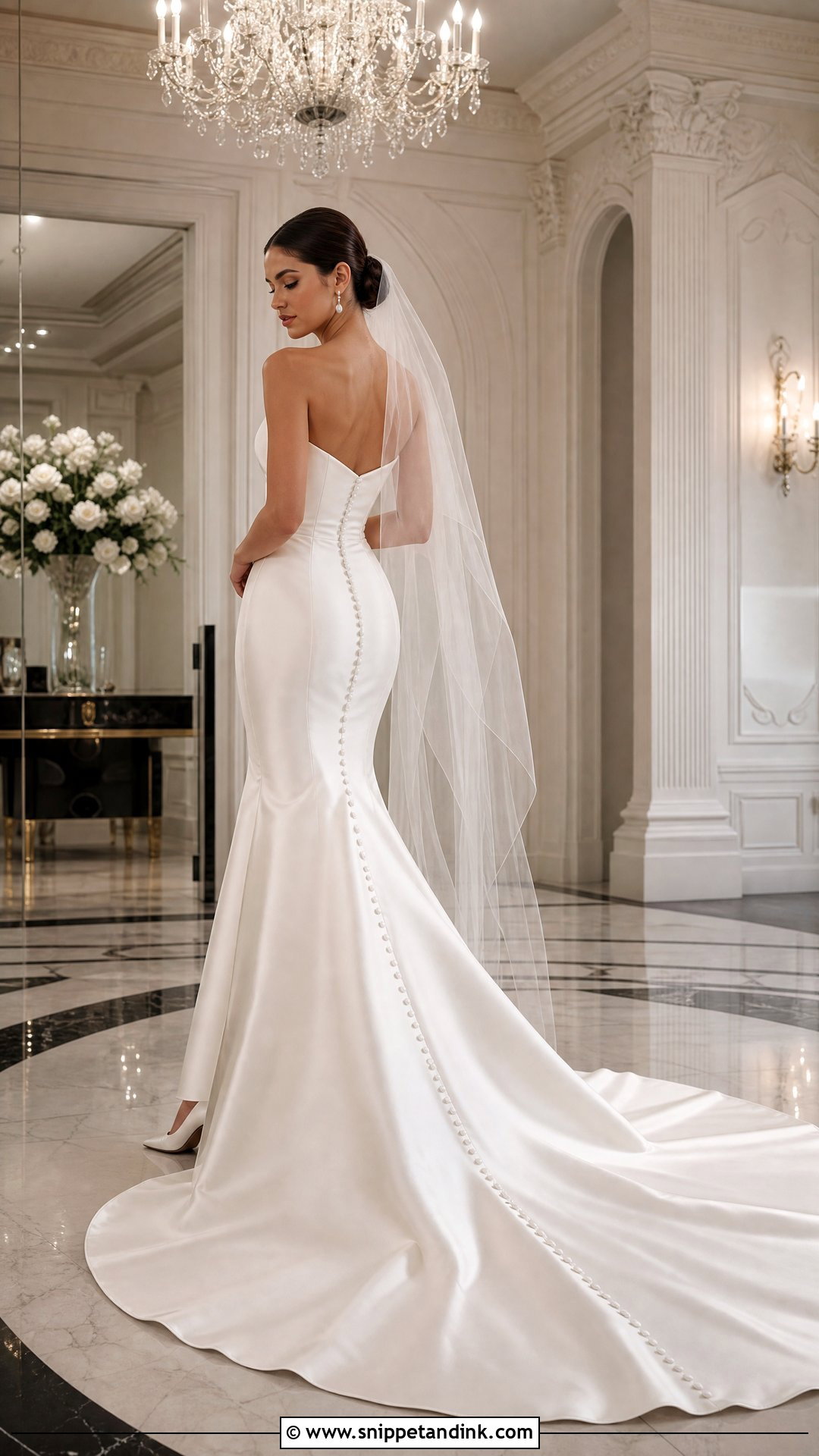
Buttons that keep going past the waist and down the train are the most formal version of this detail, and satin shows them off because its sheen catches every little dome. A fitted trumpet or structured A-line keeps that line straight. Small satin-covered buttons blend into the fabric instead of competing with it. Pointed ivory pumps, pearl studs, a plain cathedral veil and a polished low bun leave the back clear. Below the waist, train buttons are almost always decorative, sewn on with no loops at all, so ask the shop which ones actually open. That answer tells you how long dressing will take.
2. Pearl Wedding Dress Buttons With A Crepe Gown
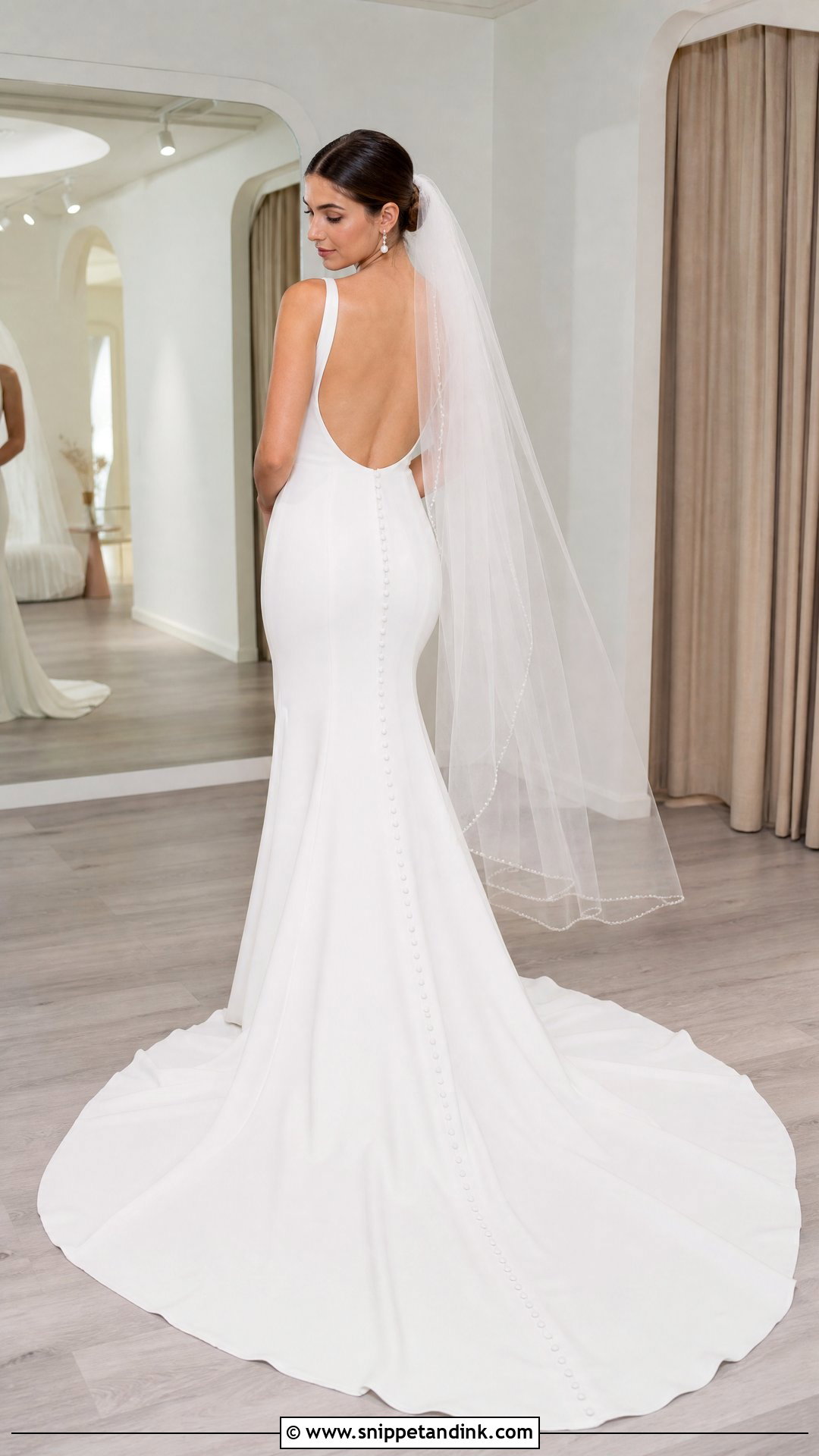
Crepe is matte, so pearl buttons become the only shine on the back, and that contrast is the whole point. A fitted sheath or fit-and-flare with a square neckline and an open back works well, with the row starting below the shoulder blades and running onto a short sweep train. Pearl drops, pointed pumps and a fingertip veil are plenty. Skip heavy beading anywhere else. One thing I always check on pearl buttons: many are coated, and the coating chips if a veil comb scrapes across it, so I set the comb well above the top button.
3. Lace Wedding Dress Buttons With Long Sleeves
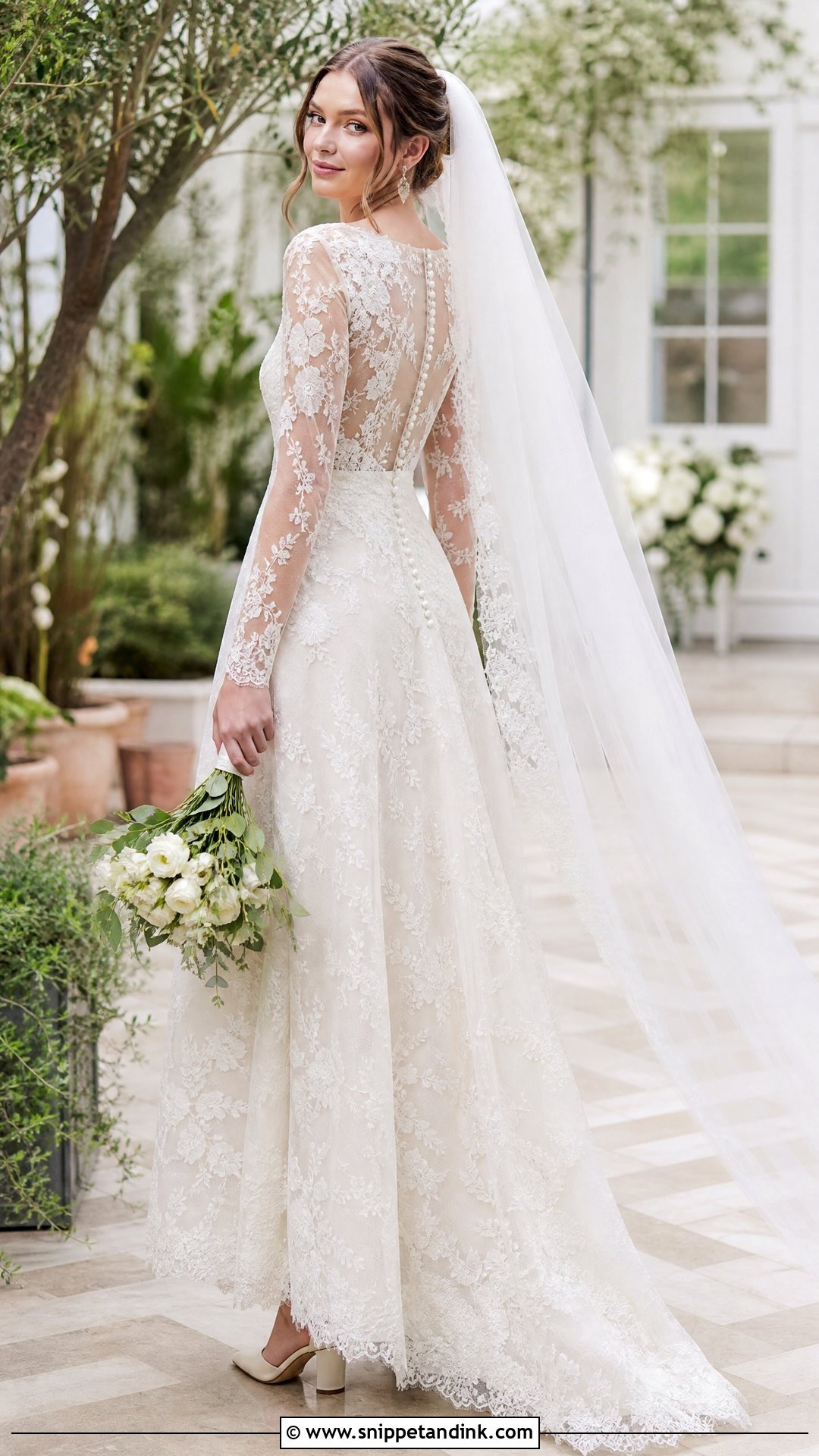
Wrist buttons on a lace sleeve are fiddly, and I still love them. An A-line with a lined bodice, a floral lace overlay and fitted sleeves that end at the hand gives the cuff room for a short row of fabric-covered or pearl buttons, echoed by a matching row down the back. Ivory block heels, small earrings, a sheer lace-edged veil and a soft chignon suit it. Fasten the cuffs last, once your manicure is dry. Leave about a finger’s width of ease so you can bend your wrist and still slip a bracelet underneath. It sits naturally at a fall, winter or cool spring wedding in an older venue.
4. Illusion Back Wedding Dress Buttons
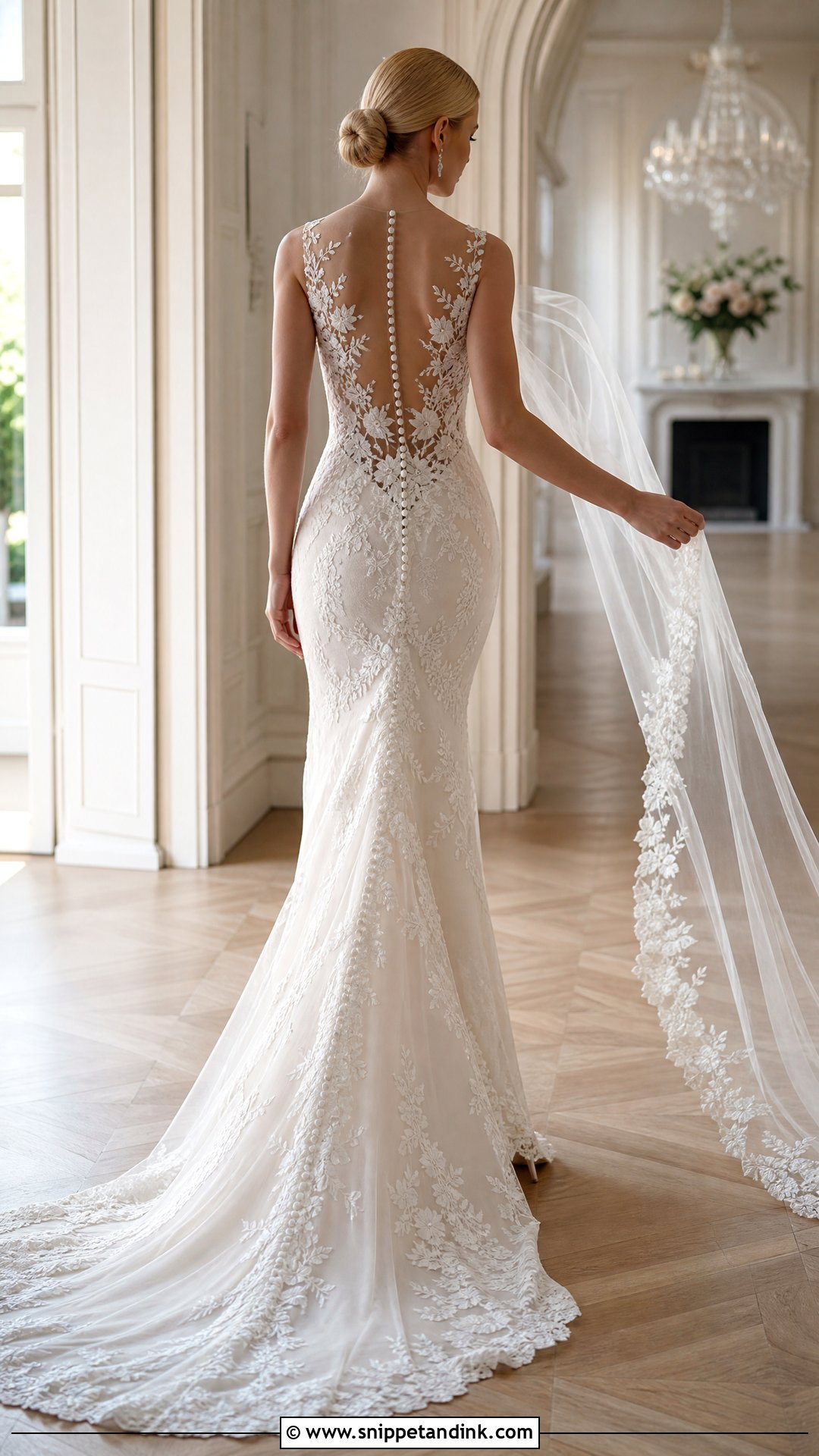
On an illusion back the buttons sit on sheer tulle, so from a few feet away they seem to float on skin. The tulle can run from the neckline to the waist, framed by lace appliqués or clean crepe panels. Keep the buttons small and spaced evenly along the center seam or the back starts to look crowded. A chapel veil, crystal studs, low ivory heels and an updo keep it visible in portraits. Fit decides everything here: loose mesh ripples between buttons, and tight mesh pulls into little diamonds around each loop, which a camera picks up instantly. Illusion backs with button closures give you coverage and handwork in the same panel.
5. Mikado Wedding Dress Buttons With A Bow
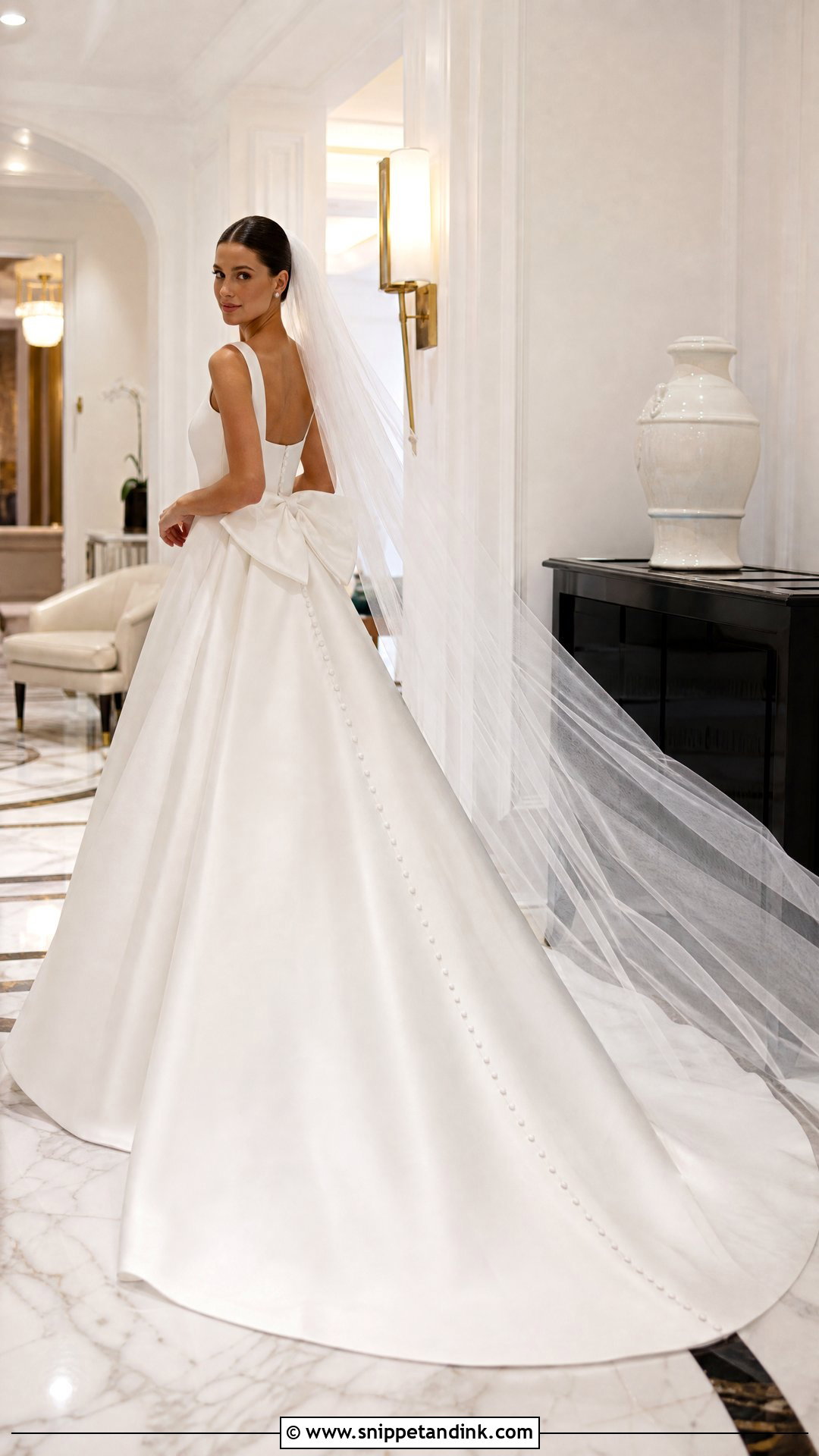
Mikado holds its shape, so it can carry a structured bow and a row of covered buttons without either one collapsing. Look at a strapless ball gown or square-neck A-line with a fitted waist, the bow set above the train and Mikado-covered buttons running beneath it toward the hem. Pointed satin heels, pearl earrings, a small structured bag for portraits and a neat bun keep the shape sharp. Wear the veil above the bow, never tucked under it. Ask exactly how the bow attaches. A heavy bow held only by snaps can drop off mid-dance, so I prefer hooks backed by a few hand stitches.
6. Vintage Wedding Dress Buttons With A High Neck
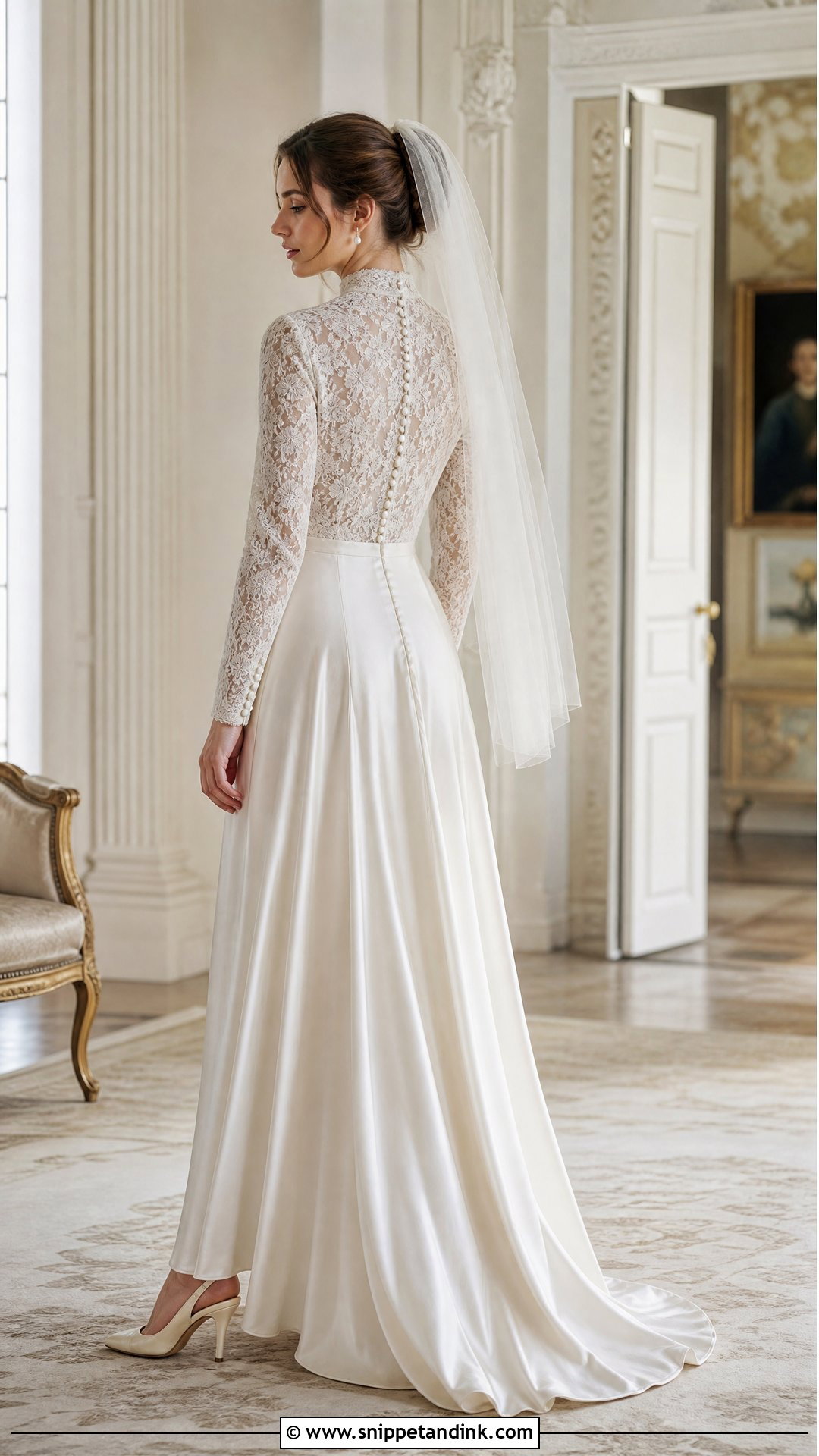
A high neck closed with tiny covered buttons from nape to waist is the most heirloom-looking back in this list. Pair a fitted lace bodice and softly lined neckline with a natural waist and a chiffon or satin skirt. Buttoned cuffs, ivory slingbacks, pearl earrings and a Juliet-style veil carry the old-fashioned influence without tipping into costume. Keep makeup fresh and hair softly pinned. Sit down at your fitting and turn your head both ways. The top two buttons take the strain on a high collar, and if they gape when you’re seated, the neck needs a little more room.
7. Crystal Wedding Dress Buttons With A Sheath Gown
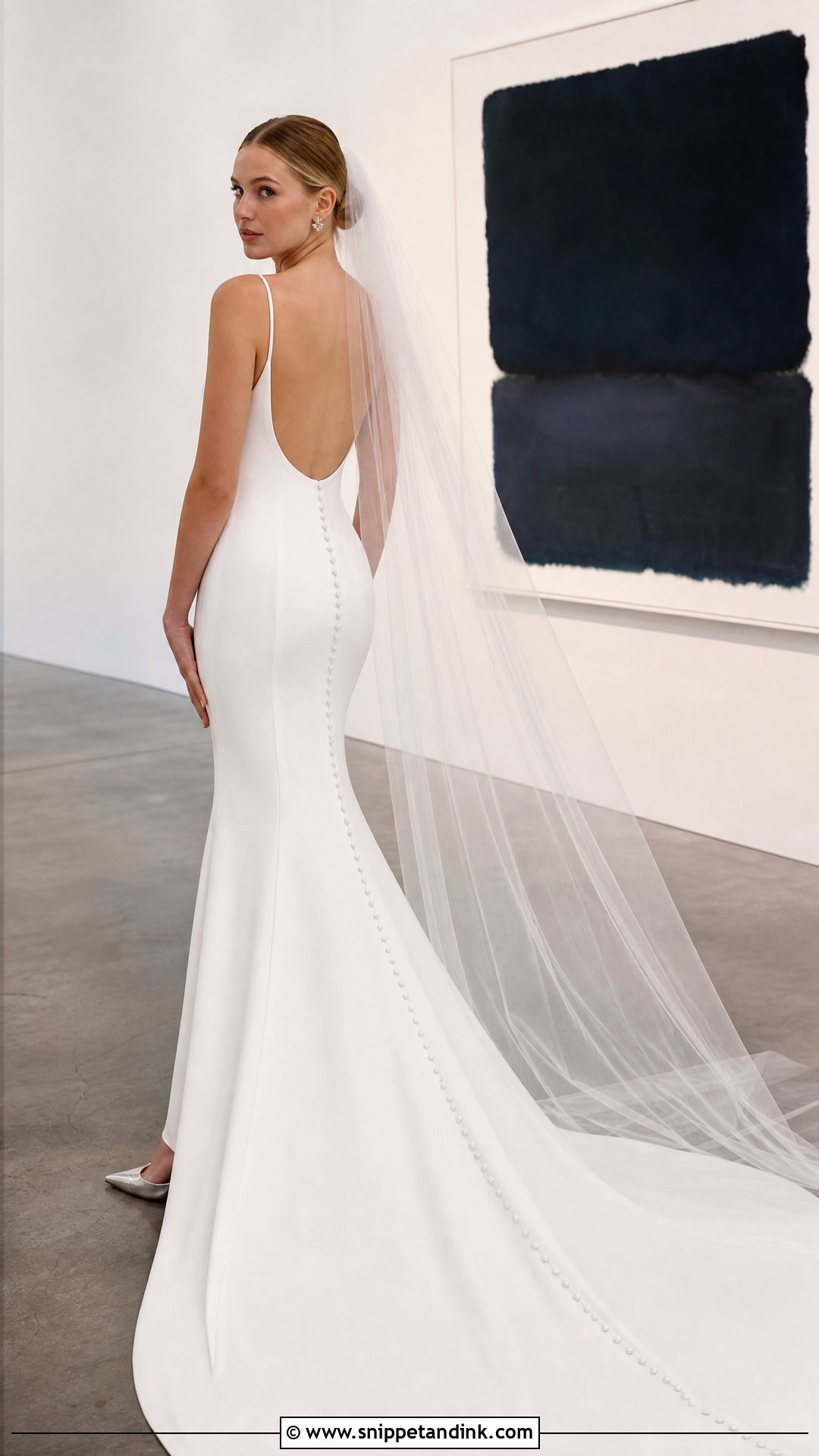
Crystal buttons are the one place I’d allow sparkle on a clean sheath, and only if nothing else on the dress glitters. Smooth crepe or matte satin with narrow straps, a low scoop back and a slight flare works best. Run a single row of small crystal buttons down the back seam to the top of the sweep train. Crystal studs, silver heels and a plain tulle veil keep things balanced, with glossy side-swept waves or a low knot. Raised prong settings snag tulle. Drape your veil over the buttons at a fitting and tug gently; if it catches, ask for flatter, bezel-set stones.
8. Corset Wedding Dress Buttons With A Drop Waist
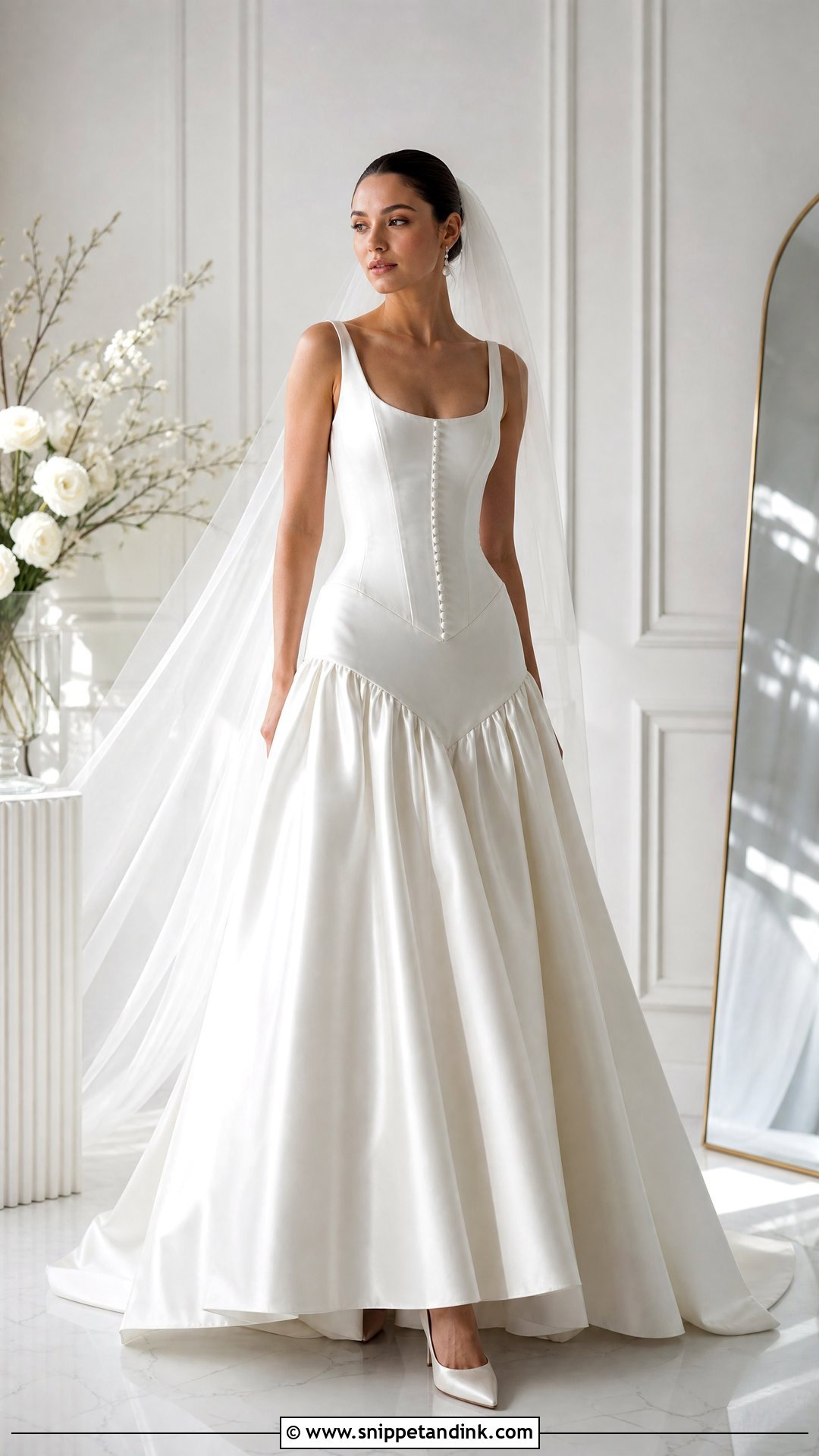
Buttons down the front of a corset bodice are less expected than a buttoned back, and they suit a drop waist well. Start with exposed boning, a scoop neckline and a full satin skirt, then add a short row down the center front or along one seam line. Matching covered buttons stay quiet; pearls give contrast. Satin pumps, small drops and a long plain veil finish it, and soft waves or a smooth bun soften the sharper corset construction. The buttons have to sit between the bones, never on top of them, or they’ll press into you all evening. That’s a job for an alterations specialist who knows corsetry.
9. Square Neck Wedding Dress Buttons
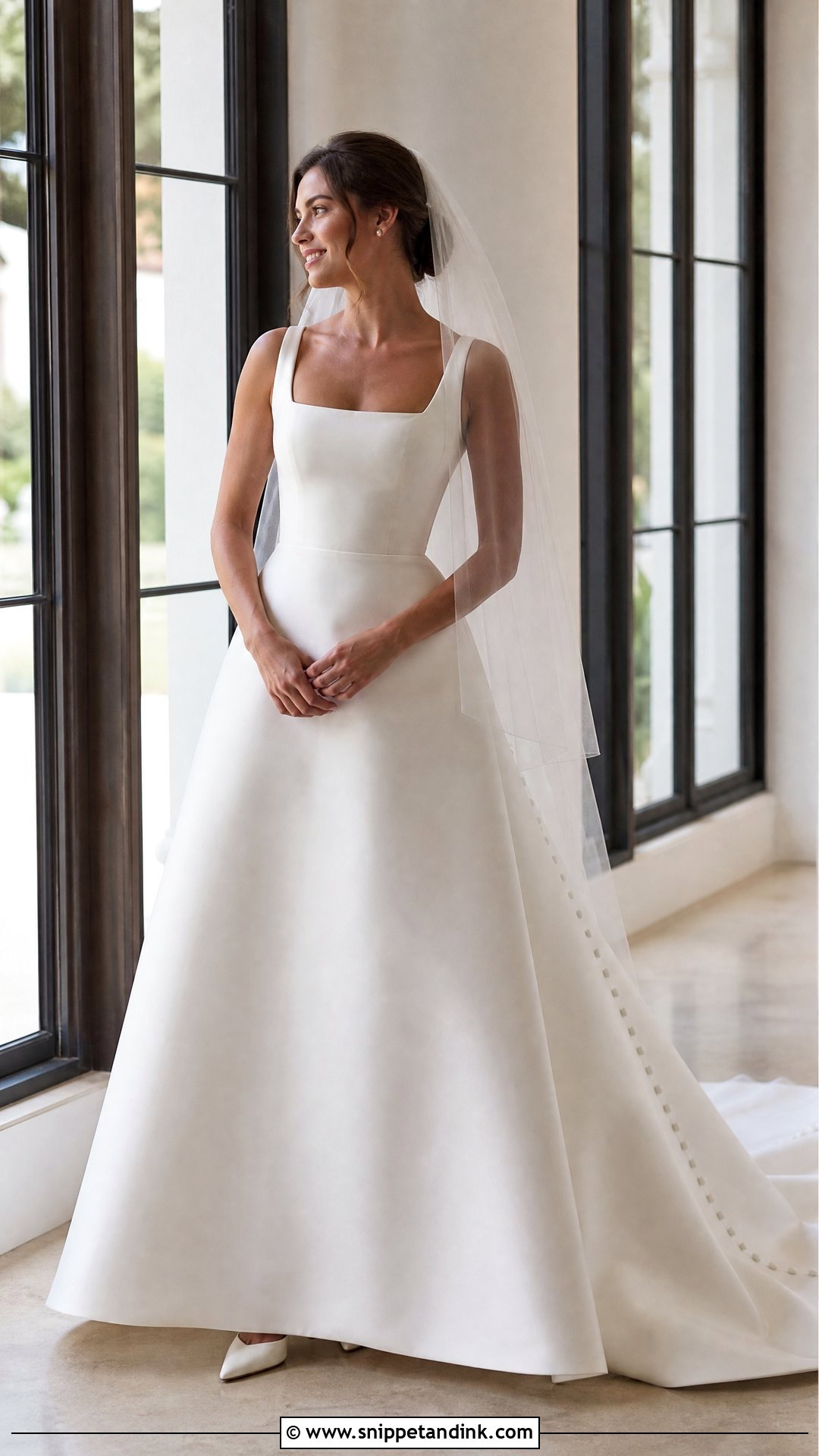
A square neckline and a buttoned back are both straight lines, so this dress lives or dies on symmetry. Satin, Mikado or heavier crepe with wide straps and a defined waist hold those lines firmly. Self-covered buttons can start at the top edge of the back and continue through the train, with pointed ivory heels, pearl studs, a clean-edged fingertip veil and a smooth bun. Need more support? Ask for internal boning and wider straps. When I fit this one, I stand behind the bride and sight the button row against both strap edges, because if it drifts even slightly off center, the whole room will notice during the vows.
10. Mermaid Wedding Dress Buttons Down The Back
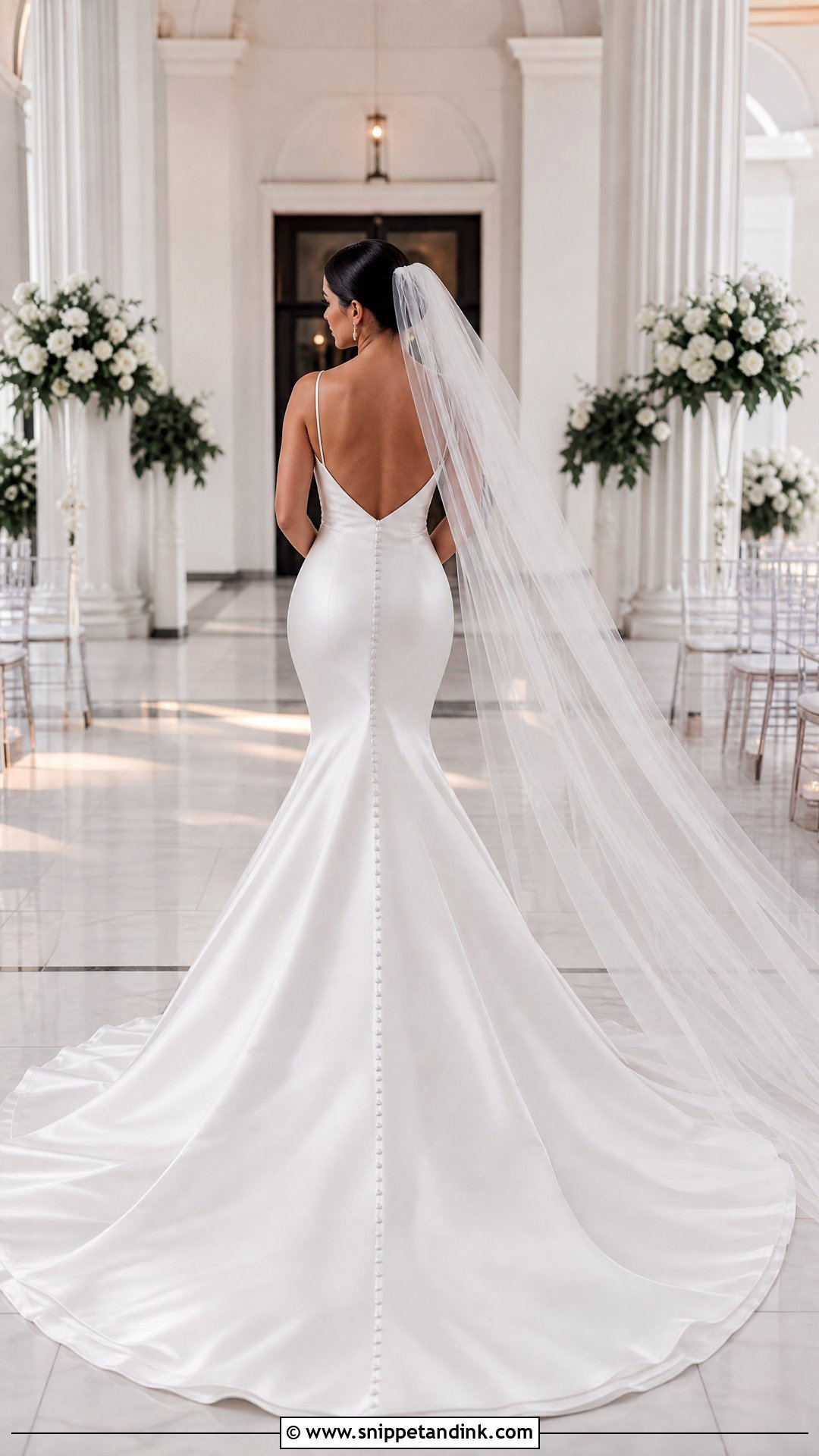
Mermaid gowns are fitted through the hips, which puts a button back under real tension. Stretch crepe or satin that follows the body before flaring at the knee lets the row run from a low back to the end of the train. Supportive pointed pumps, small earrings, a veil just longer than the train and a high bun or side-swept waves keep the back on show. In the final fitting, sit, walk and take a few stairs. On this cut I nearly always recommend a hidden zipper under decorative buttons. Loops alone strain over the hips when you sit, and that’s where gaps open up.
11. A-Line Wedding Dress Buttons With Pockets
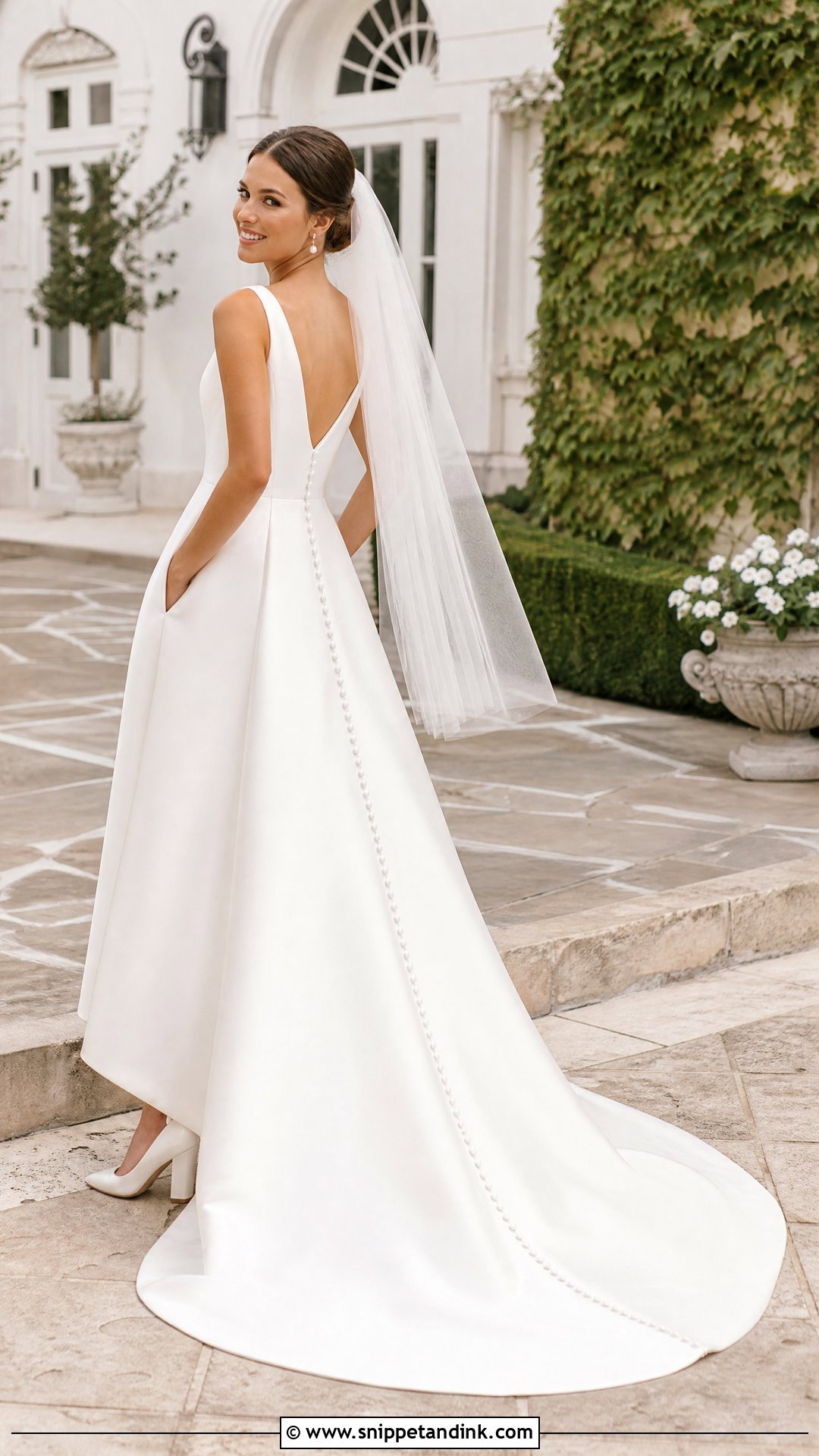
Pockets and a long button row on the same A-line? Yes, and it’s one of the most practical dresses here. Smooth satin or Mikado hides side pockets without bulk, and fabric-covered buttons can run from a modest V-back through a chapel train. Block-heel pumps, pearl drops, a light veil and a softly pinned updo keep it relaxed. Pockets spoil the skirt’s line as soon as they’re loaded, so carry a tissue and a lip product and nothing heavier; the phone goes to a bridesmaid. They also give nervous hands somewhere to rest in portraits.
12. Keyhole Back Wedding Dress Buttons
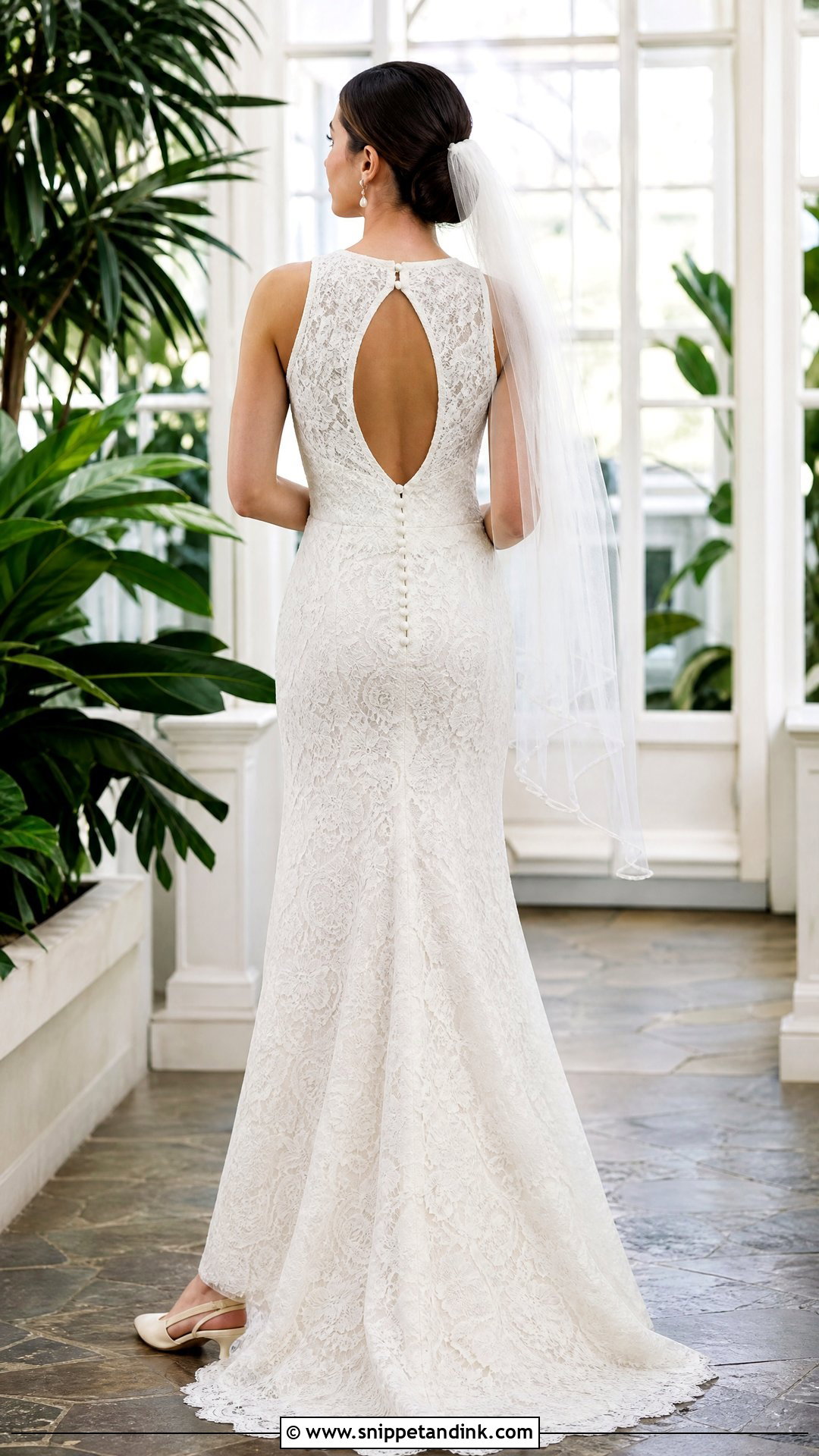
A keyhole back needs only one or two buttons at the neck, and that restraint is its charm. Choose lace or crepe with a high back neckline and a round, teardrop or narrow keyhole opening, with a matching row continuing below it toward the waist if you want more. Pearl earrings, ivory slingbacks and a sheer veil under a low bun suit it. The top closure carries the weight of the whole back panel, so it has to lie flat without biting into your neck. If a full row of buttons feels too busy for you, this is the gentler option.
13. Off Shoulder Wedding Dress Buttons
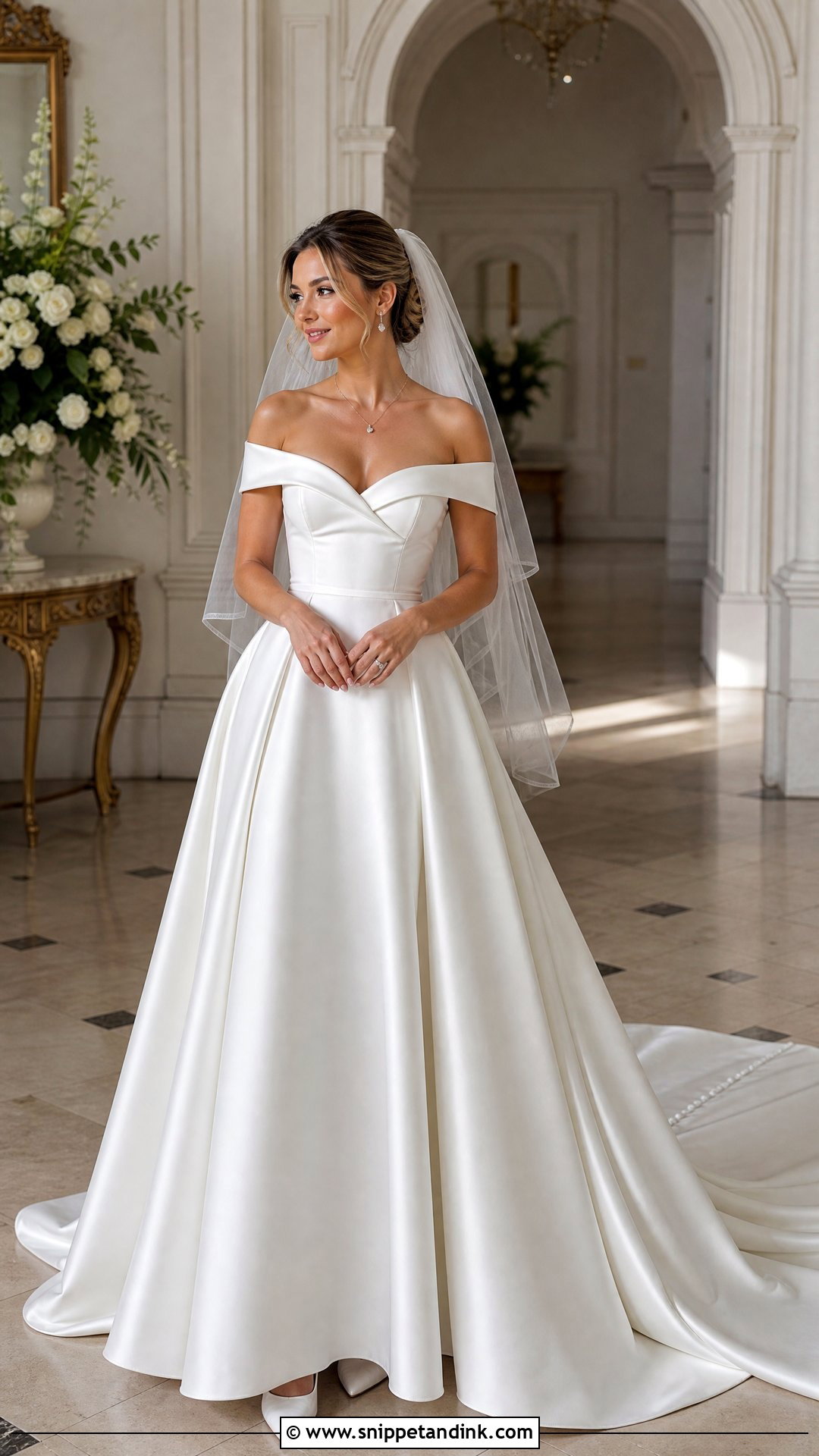
Off-the-shoulder gowns put collarbones and shoulders in front, and a quiet button back keeps the rear view from looking bare by comparison. A fit-and-flare or A-line with folded satin straps and solid internal structure carries the neckline, while tonal buttons run from the center back onto a medium train. Ivory pumps, a fine pendant and a chapel veil under a loose chignon complete it; leave the big necklace at home. In fittings I ask brides to raise both arms and hug me. Off-shoulder straps ride up when you reach, and the bodice drags on the loops behind you.
14. Floral Lace Wedding Dress Buttons
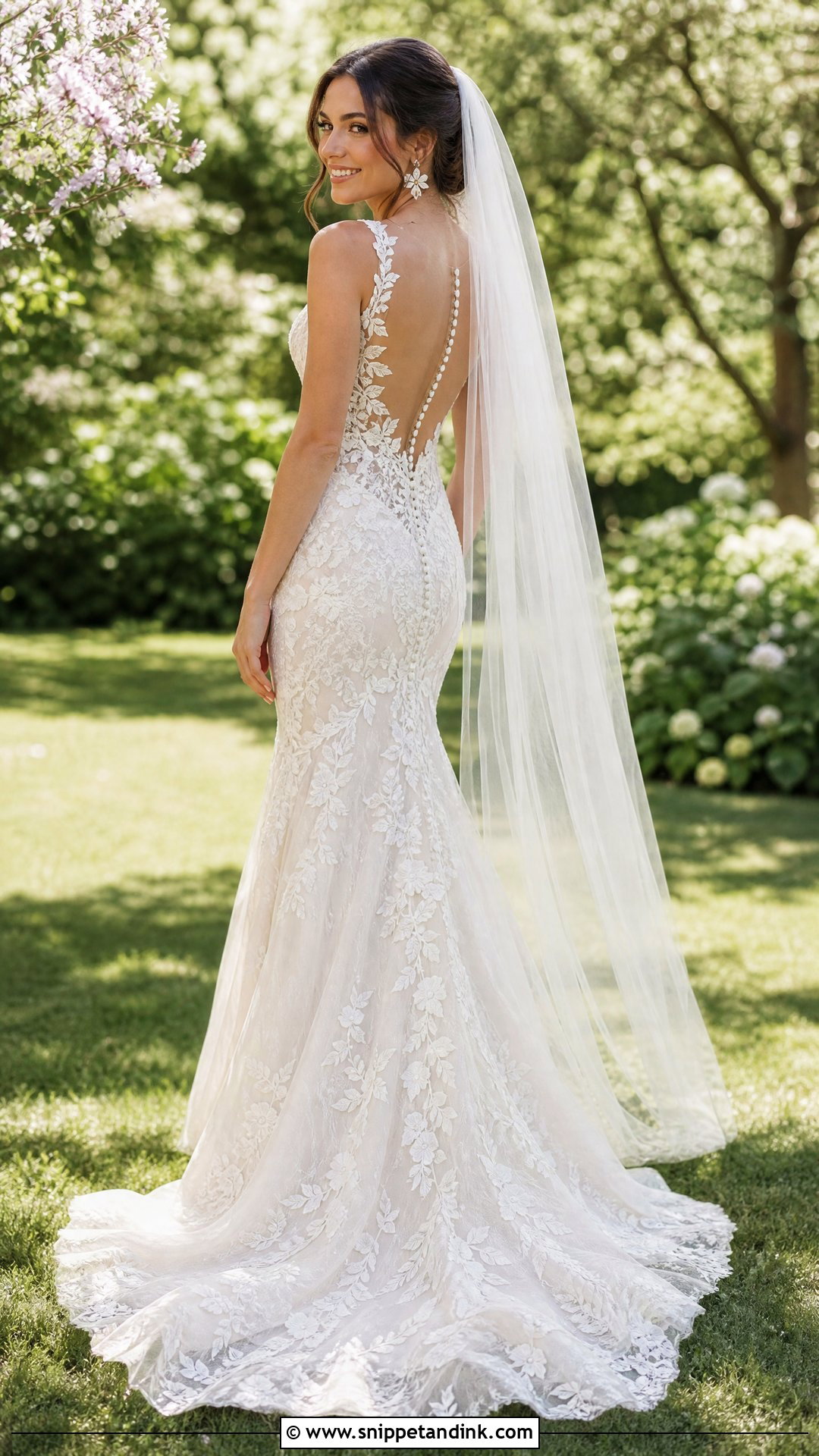
Lace and buttons clash when nobody plans where they meet. A fit-and-flare with botanical appliqués across the bodice, hips and upper train needs buttons covered in matching lace or plain fabric, so they don’t chop the pattern into pieces. A plain tulle veil, ivory sandals, small floral earrings and a textured low bun or half-up style keep the gown in front. Ask the seamstress to lay appliqués across the closure after the buttons are set, so a flower runs over the opening instead of stopping dead at it. That one step separates a crafted back from a busy one, and it suits a garden or outdoor summer wedding.
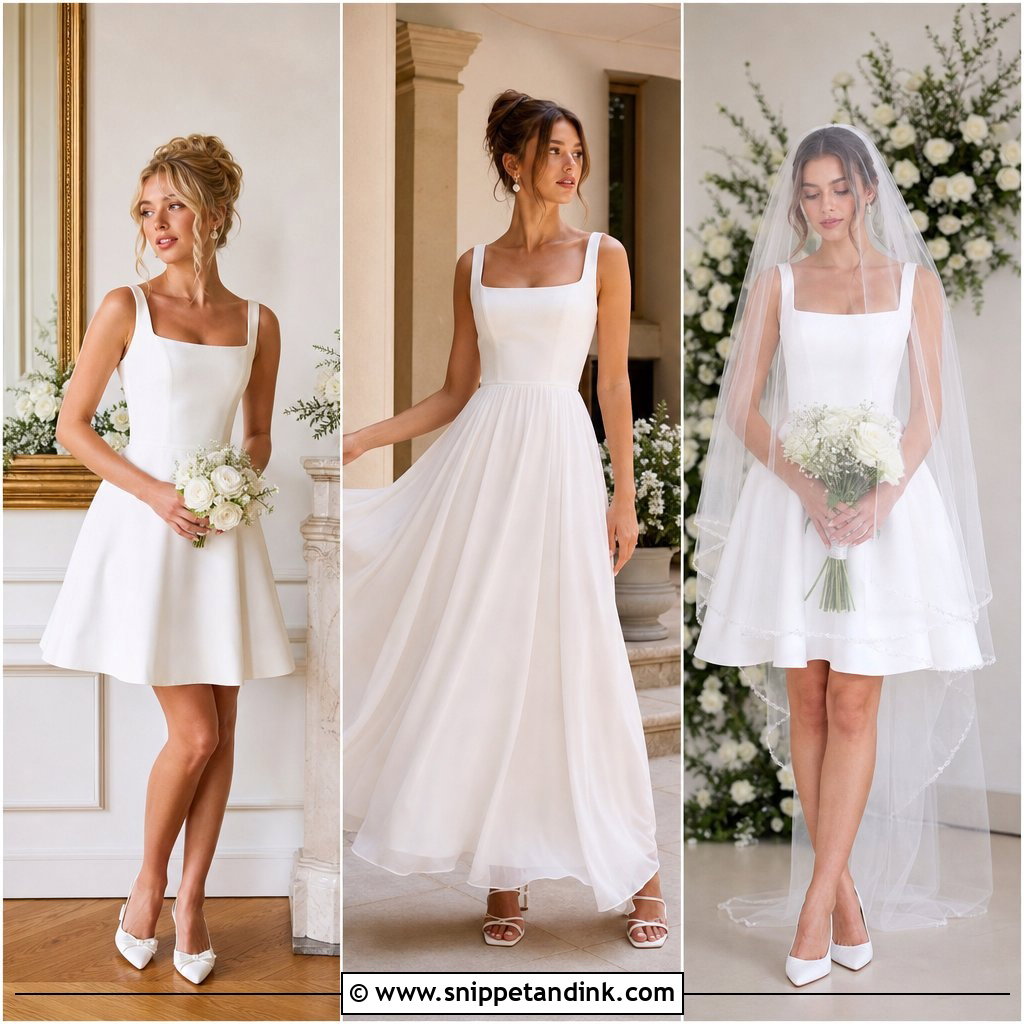
15. Minimalist Wedding Dress Buttons
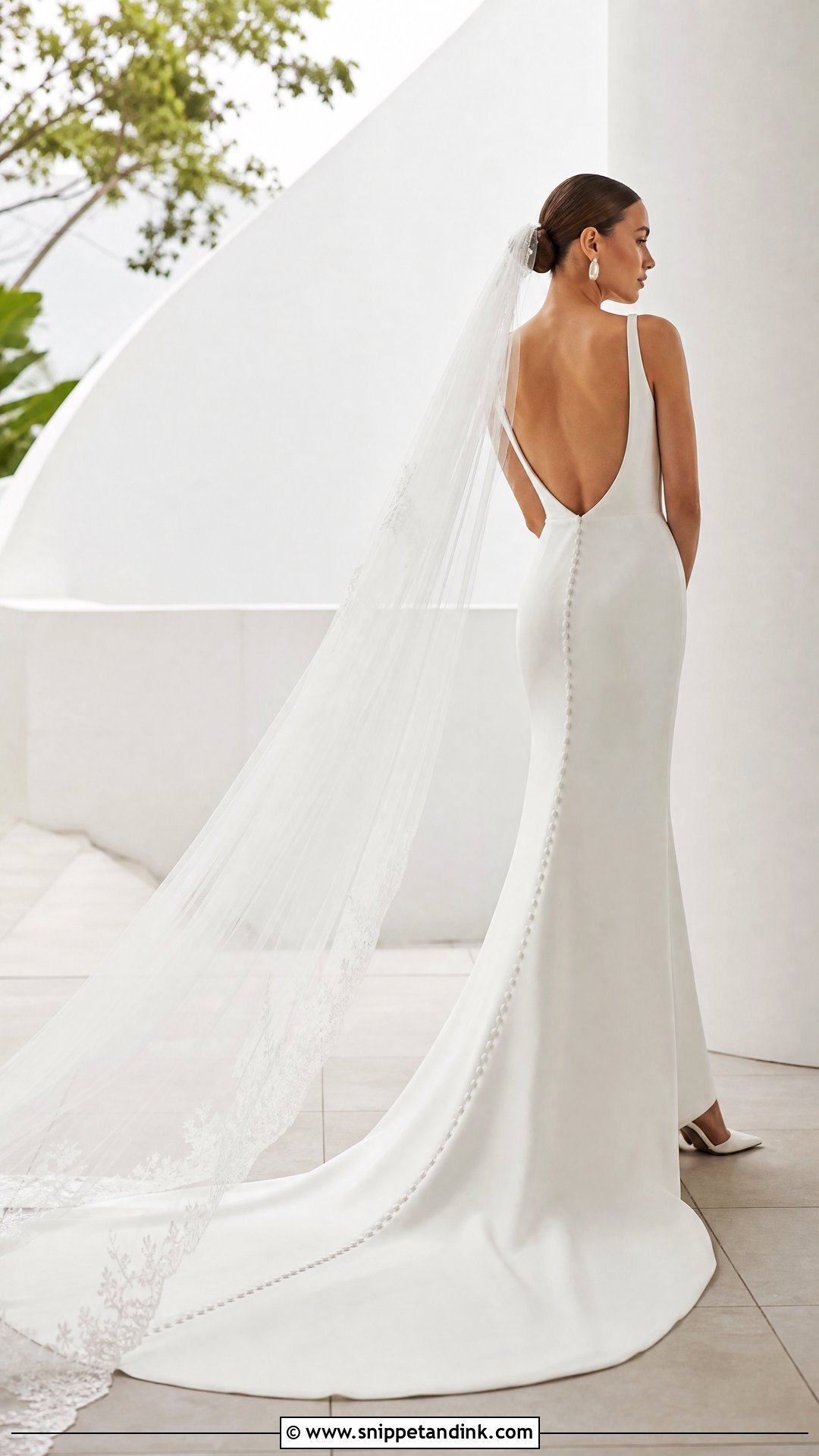
Picture a white gown with nothing on it but one row of buttons. There’s nowhere to hide. A column or A-line in silk, satin or crepe needs small self-covered buttons matched exactly to the fabric, running from a low back onto a simple train. Sculptural earrings, pointed pumps, an untrimmed cathedral veil and a center-parted bun finish it. On a plain dress, uneven spacing is the first flaw I see, so check the gaps at your fitting and make sure the seam lies flat between every loop. A minimal gown isn’t plain when the fabric is good and the proportions are right.
16. Blush Wedding Dress Buttons
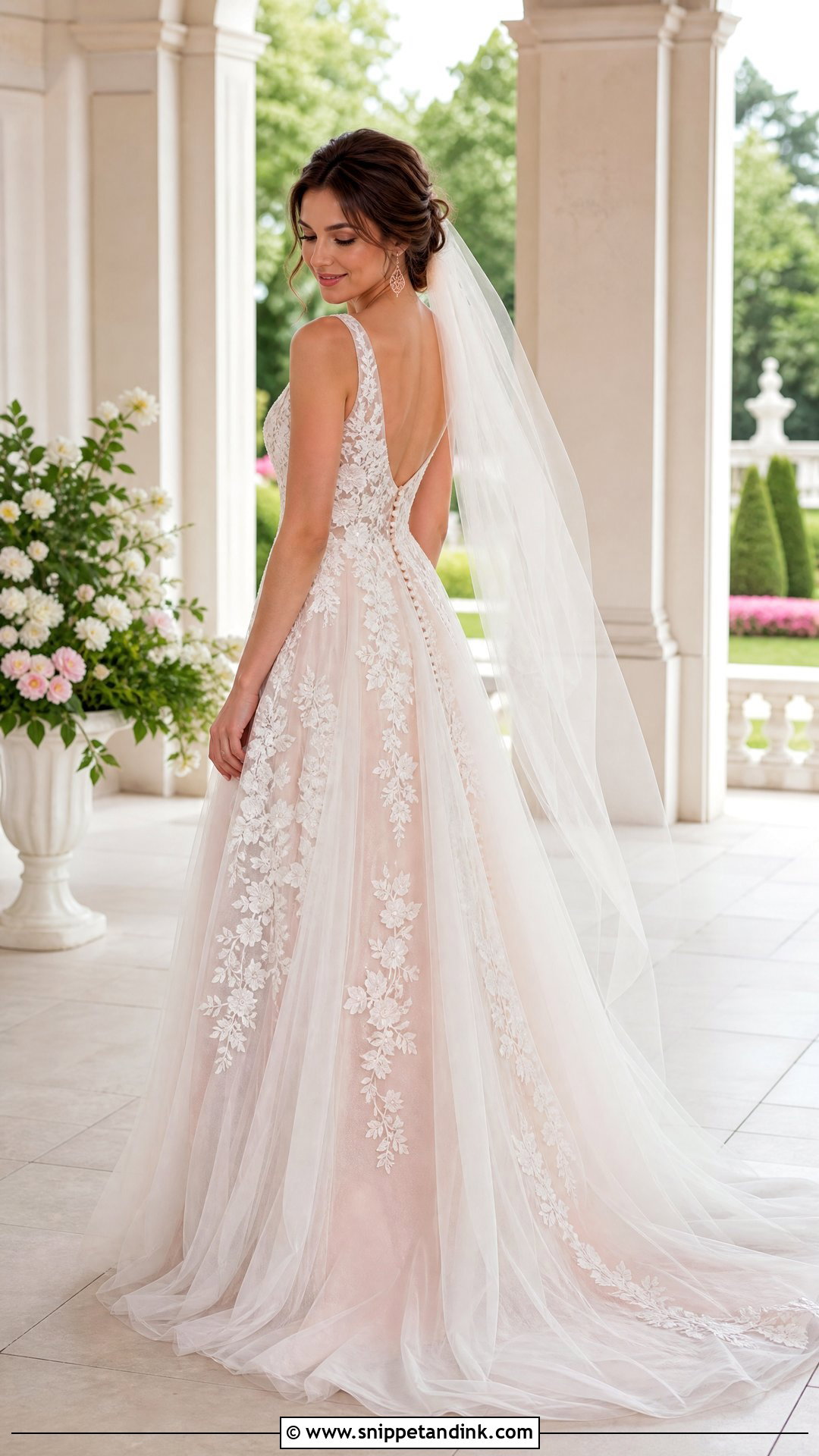
Blush lining under ivory lace gives the buttons a choice: match the blush for a tonal back, or go ivory pearl for contrast. A tulle A-line with a fitted bodice suits both. Neutral heels, rose-gold earrings, an airy ivory veil and a braided bun or loose waves keep the palette soft. Look at the fabric in daylight before you order, because blush shifts toward pink, peach or beige depending on what’s layered over it, and warm shop lighting flatters it more than a window will. Keep shoes and jewelry quiet so the color never feels themed.
17. Tea Length Wedding Dress Buttons
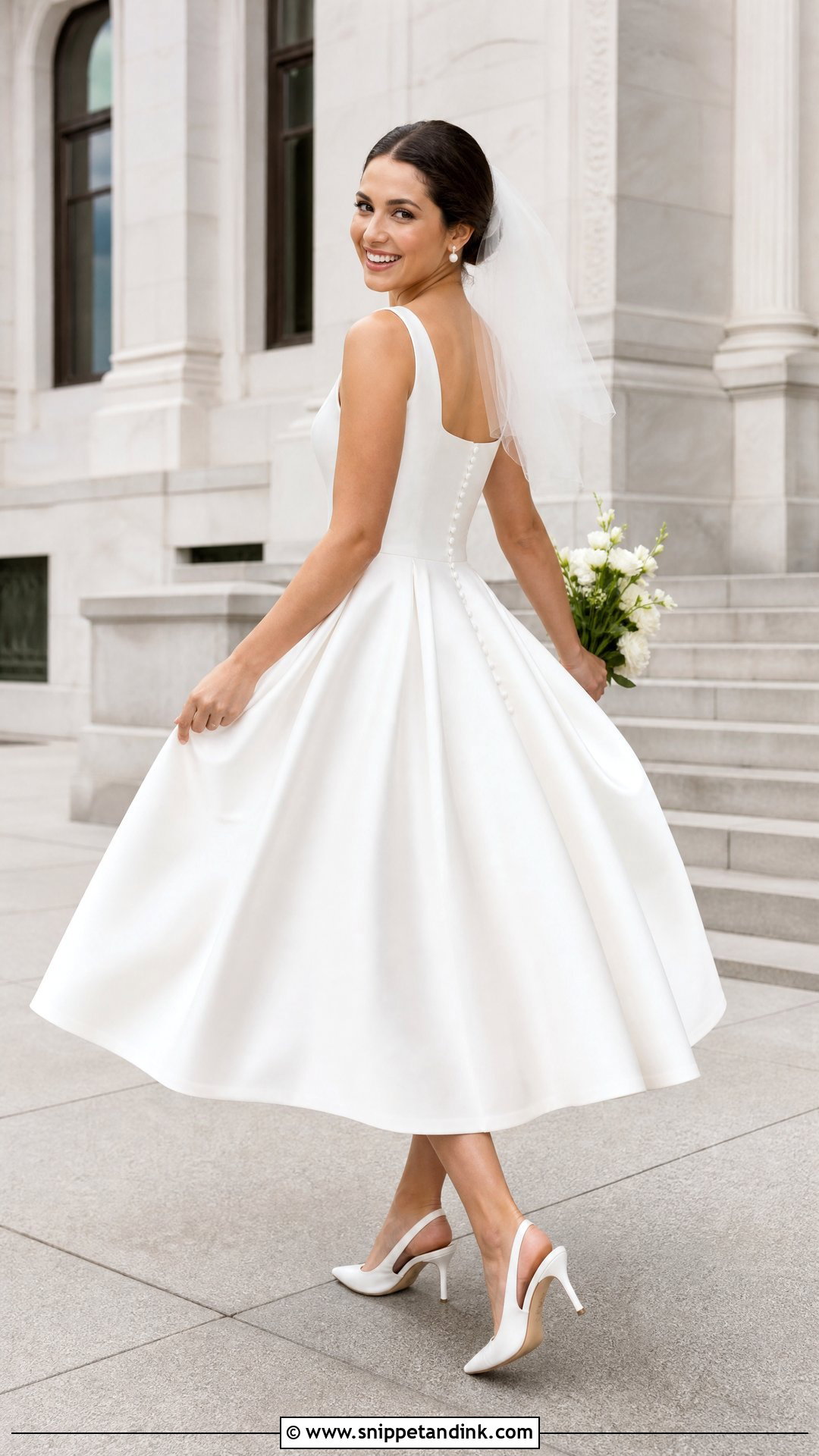
At tea length the shoes show, so the buttons share attention with your feet. A fitted satin bodice with a bateau or square neck and a full skirt ending below the knee works best, with a compact row of covered buttons from neckline to waist. Pointed slingbacks, pearl studs and a short veil or a hair bow suit the shorter line. Buy shoes you can stand in for hours, since everyone will see them. A tidy updo reads crisper and soft waves read more relaxed. I reach for this cut for courthouse ceremonies and daytime receptions.
18. Wedding Dress Buttons With Detachable Sleeves
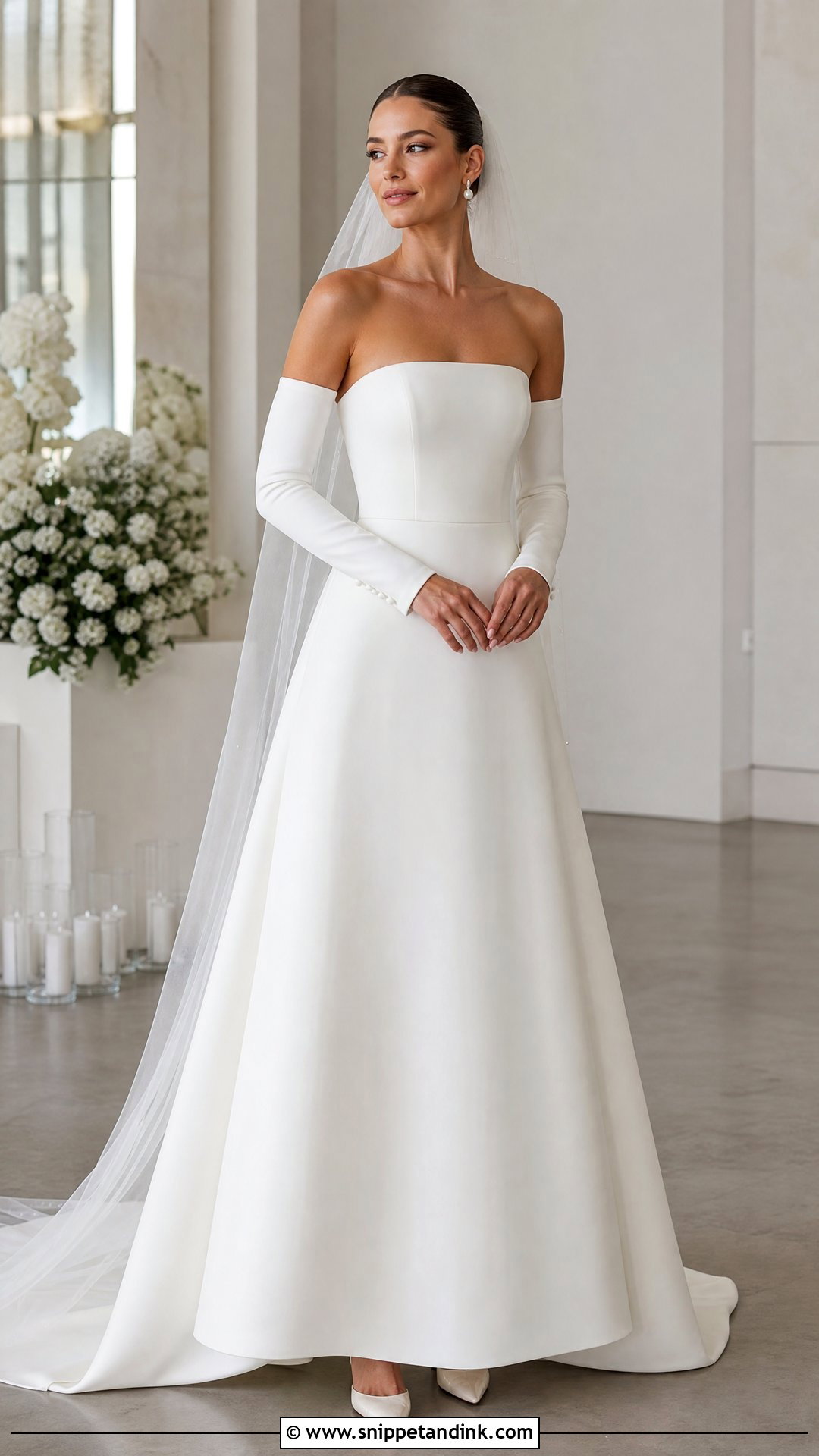
Detachable sleeves give you two looks from one gown, and matching buttons tie them together. Start with a strapless satin or crepe A-line with a buttoned back and medium train, then add fitted sleeves with small buttons at the wrist or along the outer seam. Wear them with a long veil and pearl earrings for the ceremony and take both off for the reception; pointed ivory heels work either way. Separate pieces are sometimes cut from different fabric batches, and white drifts. I lay every piece side by side in daylight before the final fitting. The attachments should stay hidden and let a helper release them in under a minute.
19. Wedding Dress Buttons With A Cape
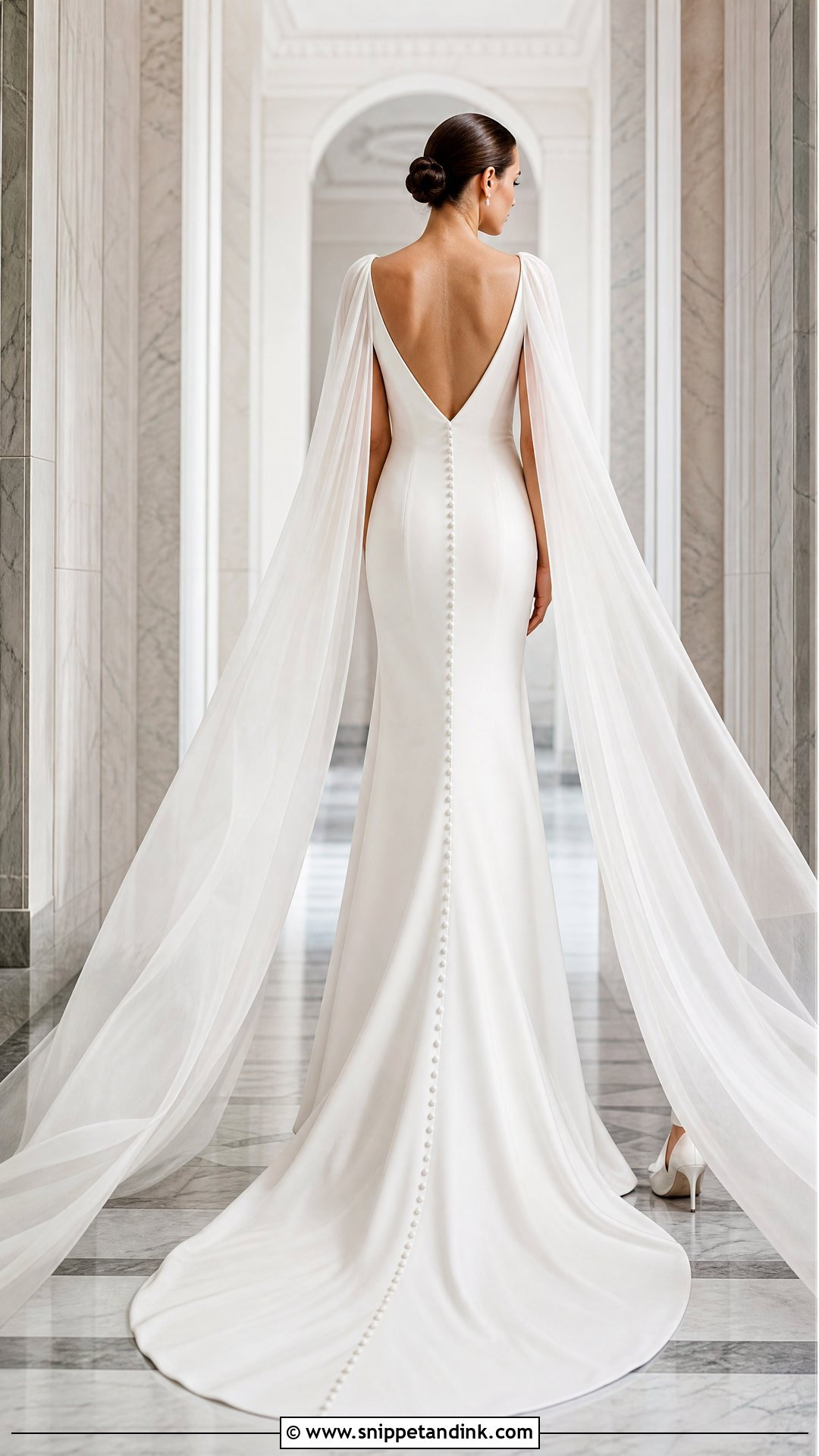
A tulle cape moves over a buttoned gown without hiding it, as long as it’s sheer and light. Choose a fitted crepe gown with a low V-back and satin-covered or pearl buttons running onto the train, then add a cape that fastens at the shoulders and comes off for the reception. Pointed pumps, small pearl earrings and a sleek low bun suit it. Avoid heavy appliqués on the cape directly over the button line. At a fitting, walk briskly away from the mirror and glance back: the cape should float over the buttons, not drag across them, because tulle snags on raised pearls.

20. Plus Size Wedding Dress Buttons
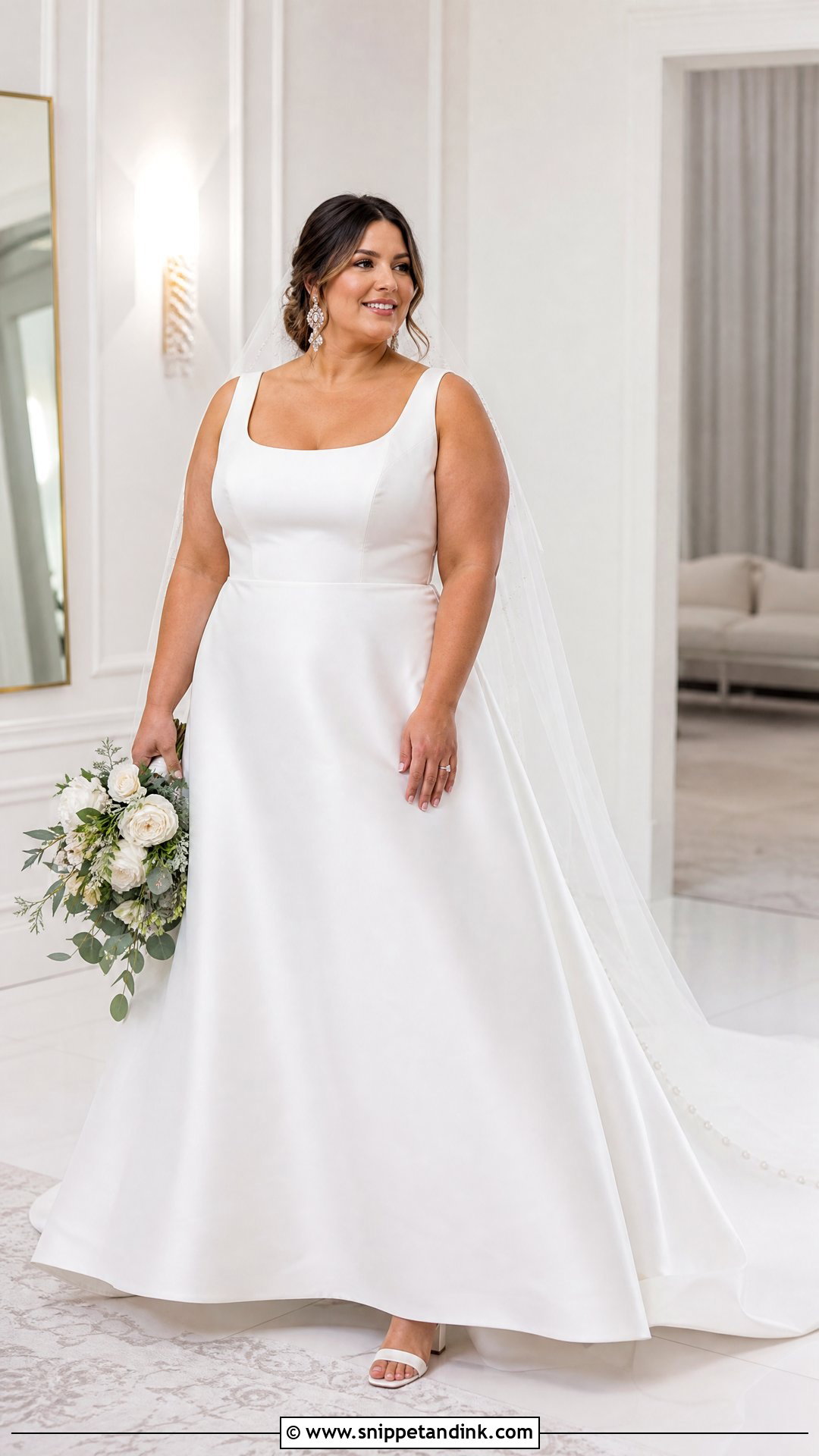
A button back on a curvy figure draws one strong vertical line from neck to train, and that line flatters almost anyone. A supportive A-line or fit-and-flare with internal boning, a shaped waist and comfortable straps or sleeves gives the buttons a stable base. Have them cover a hidden zipper and continue down the train so dressing stays quick. Block heels, statement earrings and a veil anchored beneath an updo finish it. The row must follow the center seam without pulling or gaping between loops. In alterations, move, sit and walk instead of judging the fit standing still, because buttons strain most when you’re seated.
A Crochet Hook, One Helper and a Quarter of an Hour
A full back of working loops can easily take fifteen minutes for someone doing it for the first time, and far longer with shaking hands. I build that time into the morning schedule and make sure the person doing it has practiced at the last fitting.
- Finish hair and makeup first, then step into the dress, and leave the veil and earrings until the back is closed.
- Start at the top so the neckline sits where it should, and work down. A spare loop at the bottom means a button got skipped.
- Use a small crochet hook or a button hook: slip it through the loop, catch the loop’s edge and pull it over the button rather than pushing the button through with fingers.
- Have the bride stand tall and still with her arms relaxed. Leaning forward tightens the back and makes every loop harder.
If one comes off at the reception
Many gowns arrive with spare buttons in a little bag or stitched inside a seam, so find them before the day and put one in the emergency kit with a needle already threaded in matching thread and a few small safety pins. A lost decorative button below the waist barely shows. A broken working loop at the waist is more urgent, and a safety pin fixed from inside the placket will hold until the last dance.
Pearls, Crystals and the Trip to the Cleaner
Button trim is often the fussiest part of cleaning a gown afterward. Plastic pearls can lose their coating and glued crystals can loosen with solvents, so a good wedding gown cleaner will usually test them and cover or remove delicate buttons before cleaning. Point out every decorative row when you drop the dress off, and tighten any loose buttons first so none go missing in the process. Covered buttons are cut from the gown’s own fabric, which means they’ll yellow at the same rate as the dress if it’s stored badly, so keep it in acid-free tissue away from light.
The Row of Buttons Your Guests Watch From the Pews
Buttons are small, but they decide how the back of your gown reads from the first note of the processional. They can add structure to a minimal dress, softness to lace or a little shine to crepe. Settle the button material, size and spacing, and find out how the closure really works, before you think about shoes or jewelry. Let the veil, hair and accessories frame the back instead of covering it. Then book alterations early and do one full practice dressing with the person who’ll be buttoning you in.
You'll Like These Ideas:







Leave a Reply