
Satin and a full ballgown skirt are a natural match, because satin has the body to hold volume without collapsing and a sheen that shows off every seam. It is also the least forgiving combination I fit. Satin reveals a crooked dart, a lumpy bodice or a bra line in a way lace never will. The gowns below run from clean strapless shapes and sleeves to basque waists, trains, pearls and blush, each with notes on veils, jewelry and shoes, plus what I check at the fitting. A grand ballroom, a hotel, a garden or an old estate can all take a satin gown when the cut suits the room.
Duchess, Mikado and Silk Satin Do Not Behave Alike
“Satin” describes a weave, not a single fabric, and the type changes how a ballgown looks and wears. When I pull gowns for a bride, I ask what the fabric is before I ask about the neckline.
- Duchess satin: heavy with a high sheen. It gives the classic full ballgown its body, but it is warm and shows creases at the lap after sitting.
- Mikado: a heavier, slightly textured weave with a lower sheen. It holds sharp structure and pleats very well and is often the stiffest option.
- Silk satin: softer and breathes better, with a deep luster. It water-spots, so keep drinks and rain away, and it costs more.
- Polyester satin: durable and affordable. It holds a crease once set and can feel warm, so I’d steam it carefully and test it in a heated room.
At the appointment, ask for a swatch and crush it in your hand for a few seconds. How quickly the creases drop out tells you a lot about how the skirt will look after a car ride and a ceremony seated in a pew.
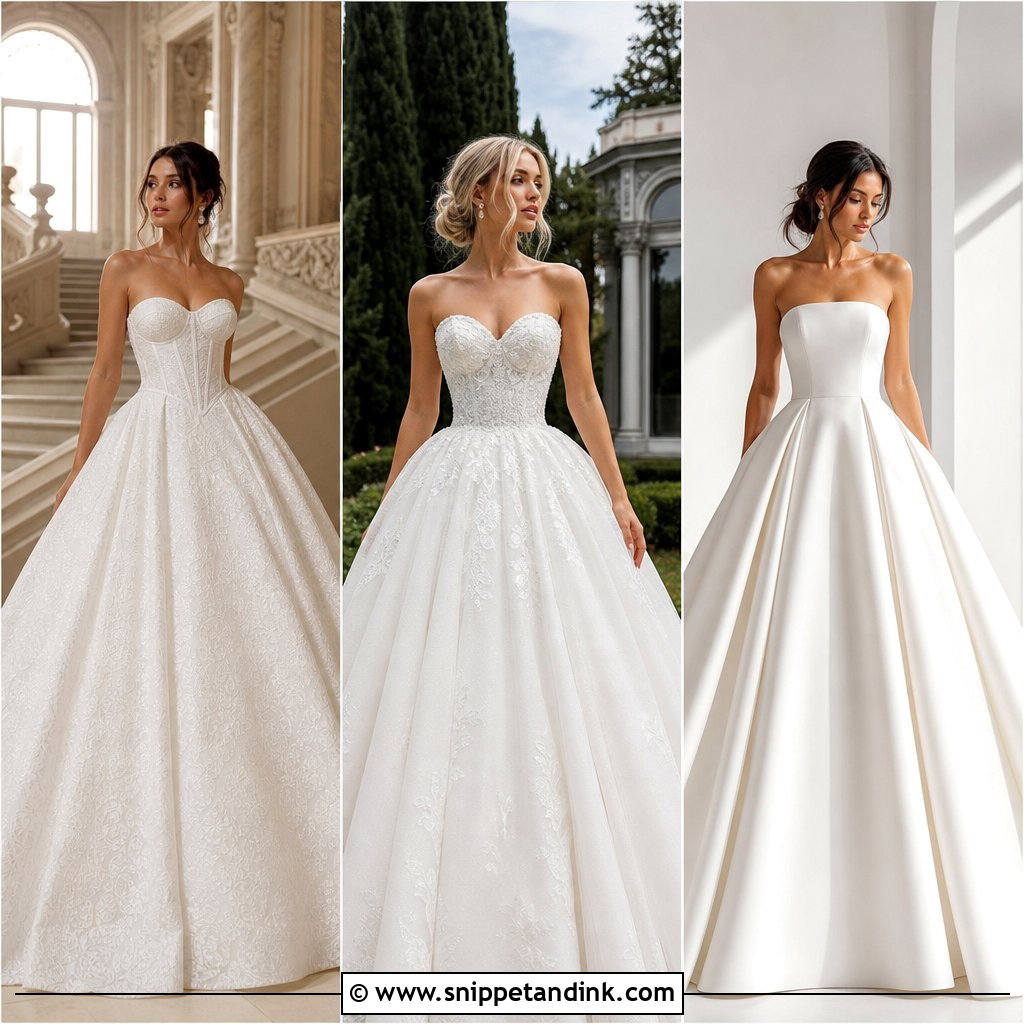
1. Strapless Satin Ballgown Wedding Dress
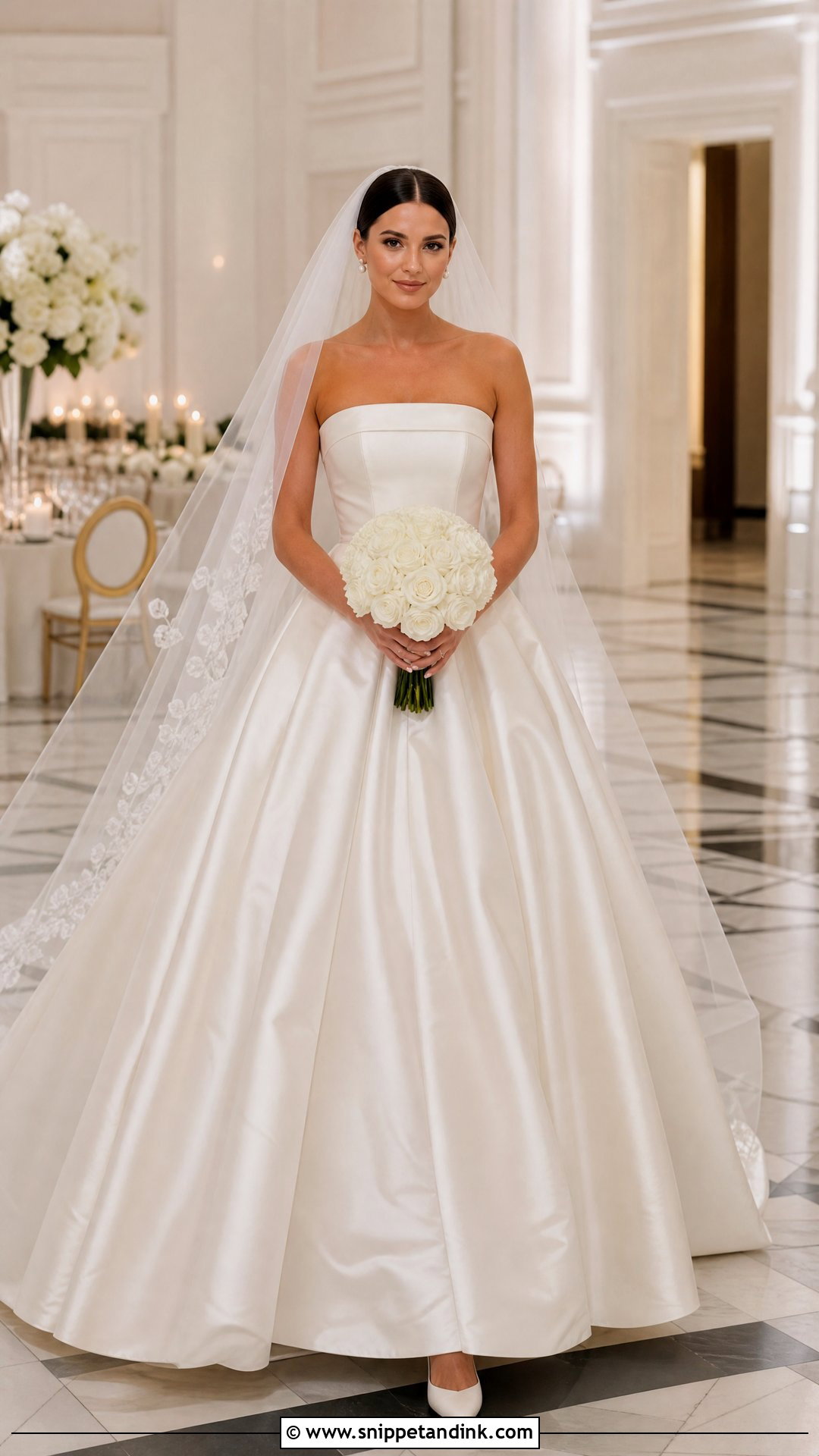
Strapless is the most requested ballgown neckline, and the bodice construction decides whether it stays put. I look for internal boning, a waist stay and a bodice fitted snugly at the ribs, not the bust, because the ribcage is what actually holds a strapless gown up. A straight or softly curved neckline keeps it clean. Add a cathedral veil with a cut edge, stud earrings and pointed satin pumps. Removable straps are worth asking about if you plan to dance for hours.
2. Off The Shoulder Satin Ballgown Wedding Dress
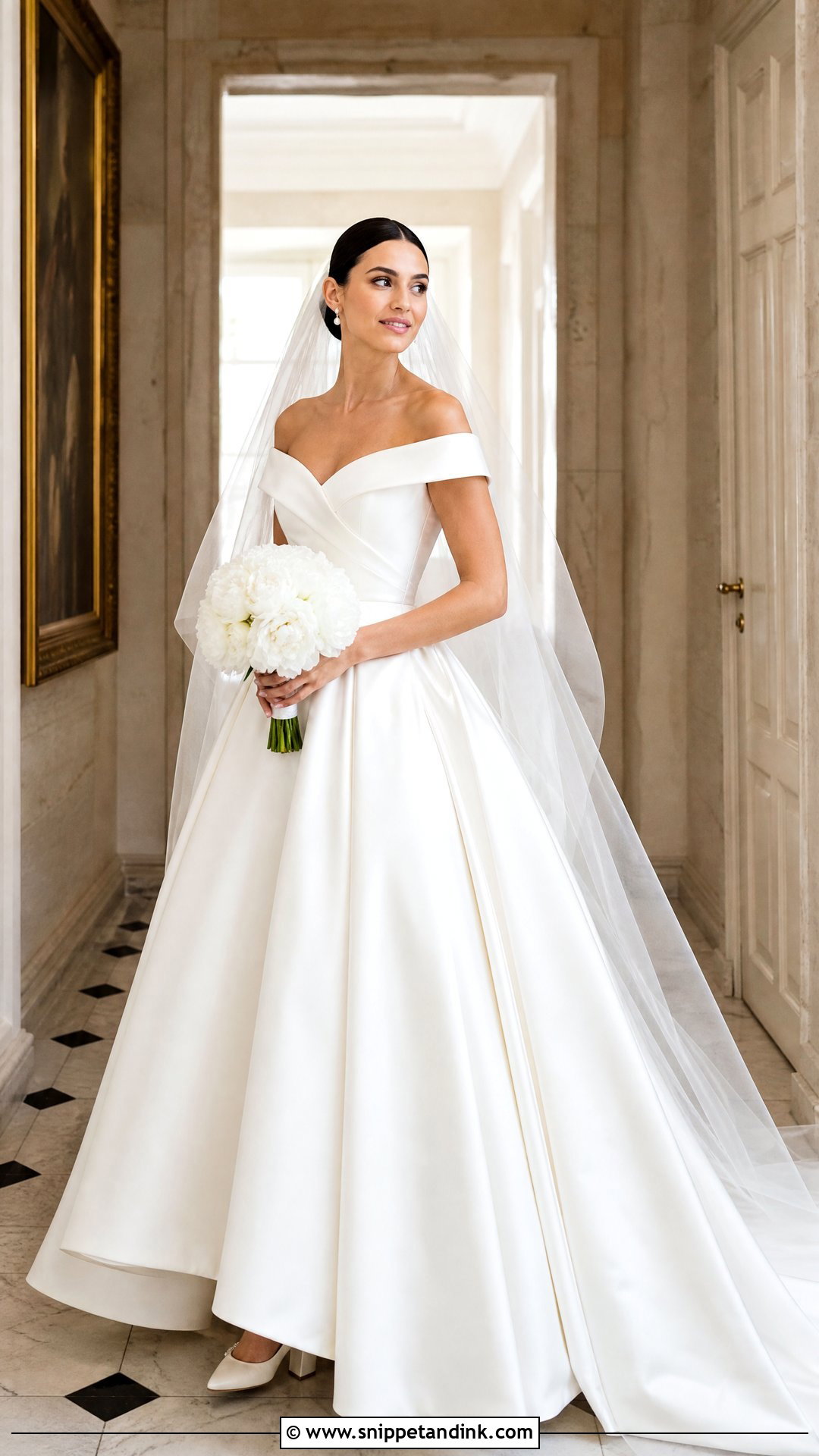
An off-the-shoulder neckline shows the collarbone with more coverage than strapless. The trade-off is arm movement. Bands that sit across the upper arm limit how high you can lift your hands, so I have brides hug, raise a glass and reach forward at the fitting. A folded portrait neckline or wide satin bands look most polished. Put the veil under a low bun, choose drop earrings and ivory block heels, and keep the bouquet rounded.
3. Sweetheart Satin Ballgown Wedding Dress
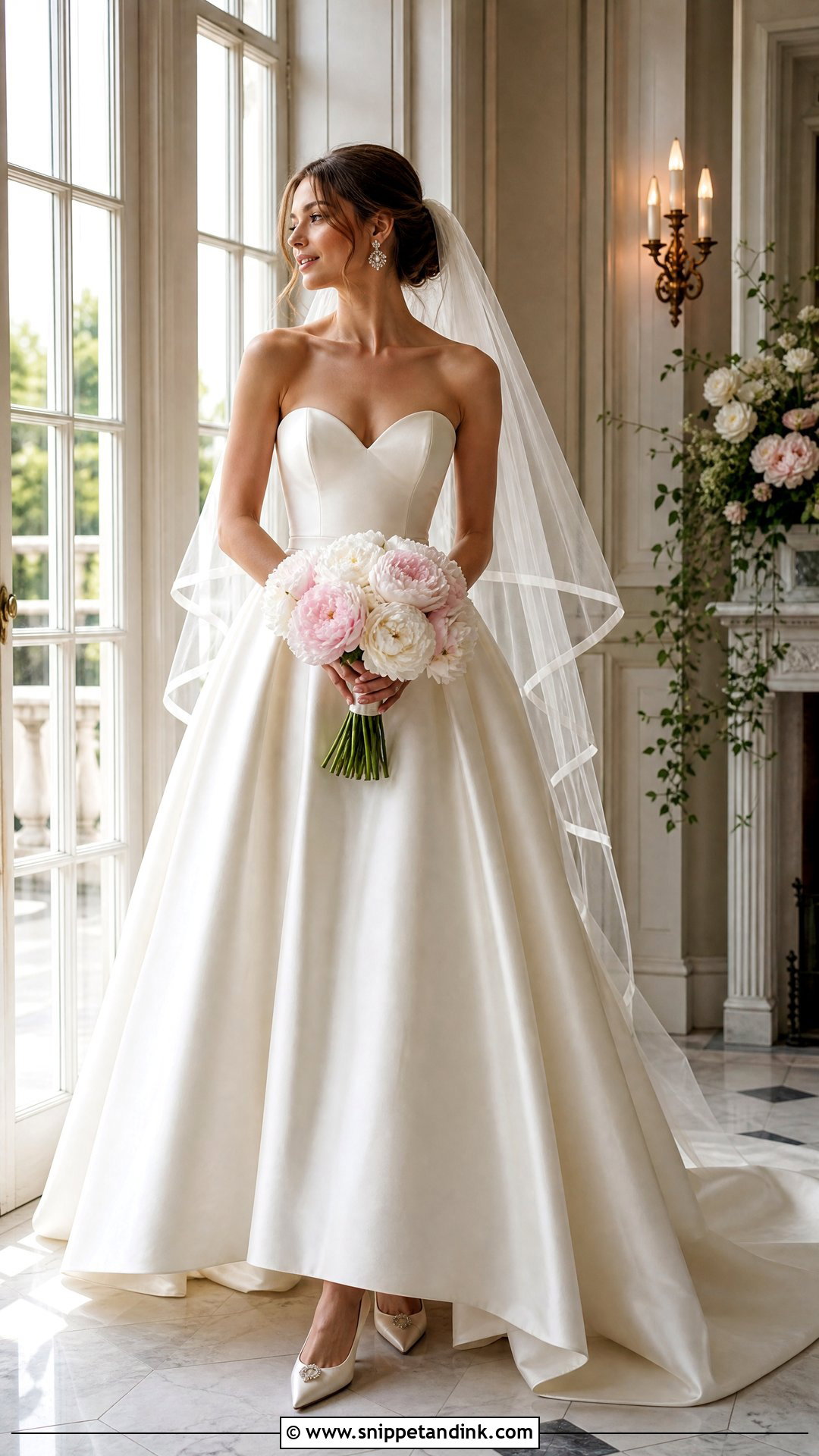
The curve of a sweetheart satin ballgown wedding dress draws attention to the neckline, which means the fit at the center dip has to be exact. If it gapes when you lean forward, a seamstress can take in the top edge or add a small clear stay. Matte satin with minimal seams keeps it modern. A fingertip veil with a narrow ribbon edge, a pendant and small crystal earrings complete it. Ivory pumps or closed flats both work under the skirt, and a smooth chignon keeps the neckline clear.
4. Square Neck Satin Ballgown Wedding Dress
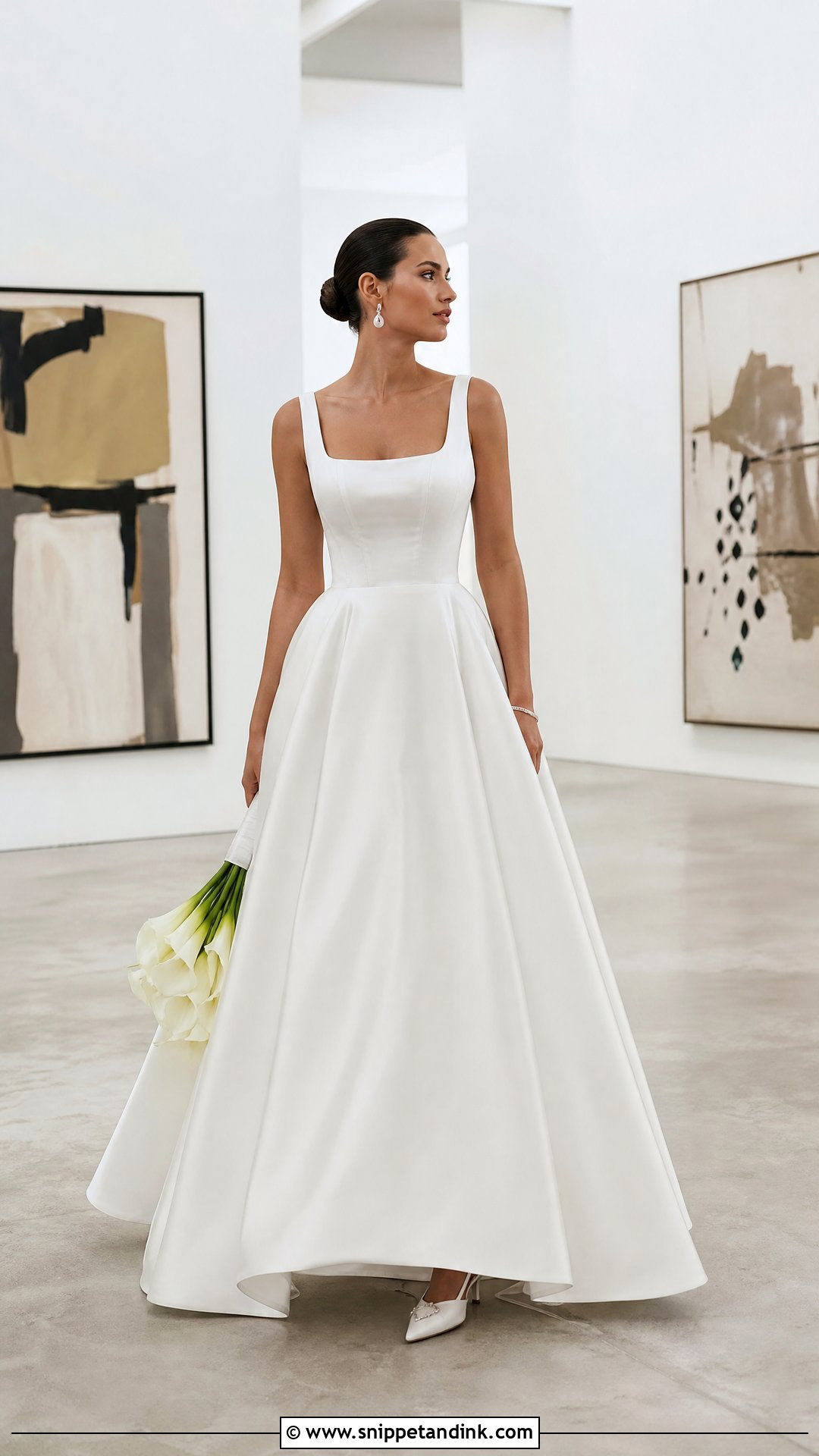
Square necklines give a satin gown an architectural edge. Wider straps mean real support, and princess seams let the bodice follow the body closely. A plain chapel veil, pearl drops and slingback heels keep it sharp, with calla lilies or white tulips in hand. My one fitting note: the corners of a square neck must sit level. If one shoulder is slightly higher, as most are, the seamstress should adjust the strap rather than the neckline.
5. Scoop Neck Satin Ballgown Wedding Dress
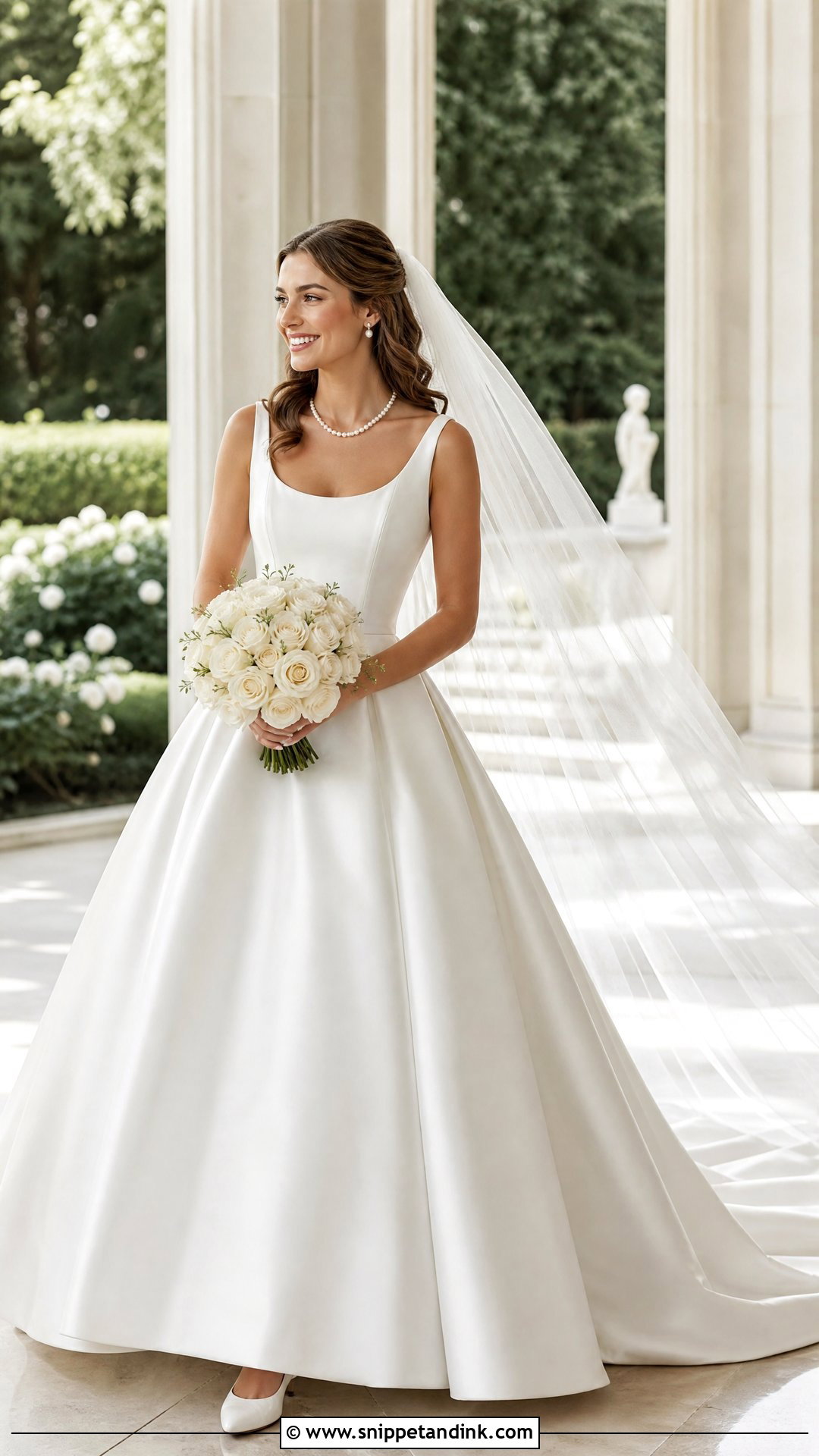
A scoop neck satin ballgown wedding dress is approachable and easy to personalize, since the rounded neck softens a stiff satin bodice. It pairs with wide straps, narrow straps or no sleeves. I’d look for a skirt that moves rather than one so heavily lined it stands on its own. A short pearl necklace, low satin heels and cream roses suit it, and loose waves pinned back or a low bun with a pearl comb finish the hair.
6. V Neck Satin Ballgown Wedding Dress
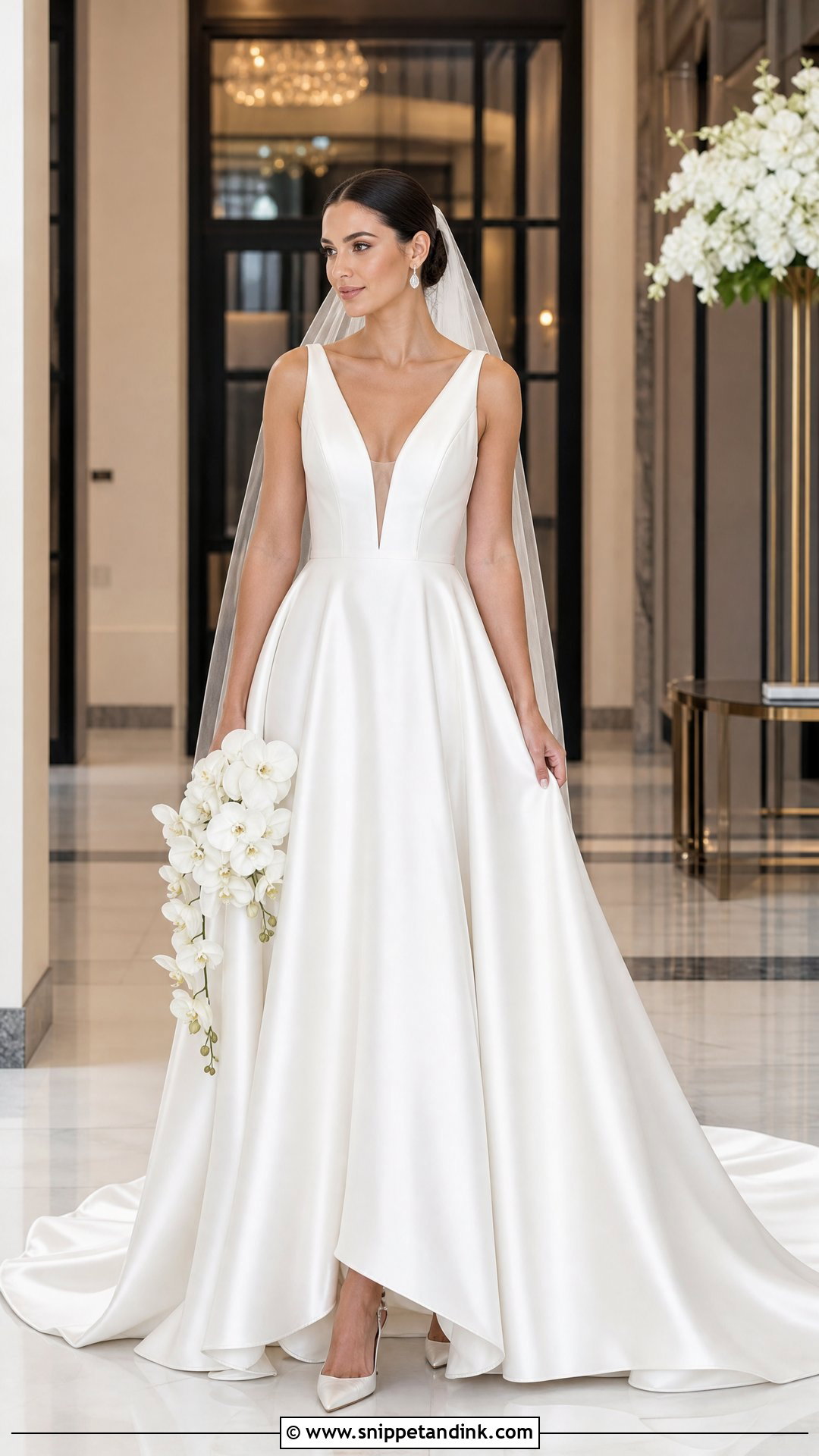
V necks lengthen the torso, which helps balance a large skirt. A shallow V is the easier fit; a deep one needs an illusion panel or careful taping. Satin shows any pull across the V, so I check it while the bride sits and turns. Long drop earrings echo the line, and a necklace usually isn’t needed. A chapel veil under a soft updo, slingbacks and a trailing orchid bouquet complete it. Fashion tape is your friend here, and so is a seamstress who adds a hidden snap at the base of the V.
7. High Neck Satin Ballgown Wedding Dress
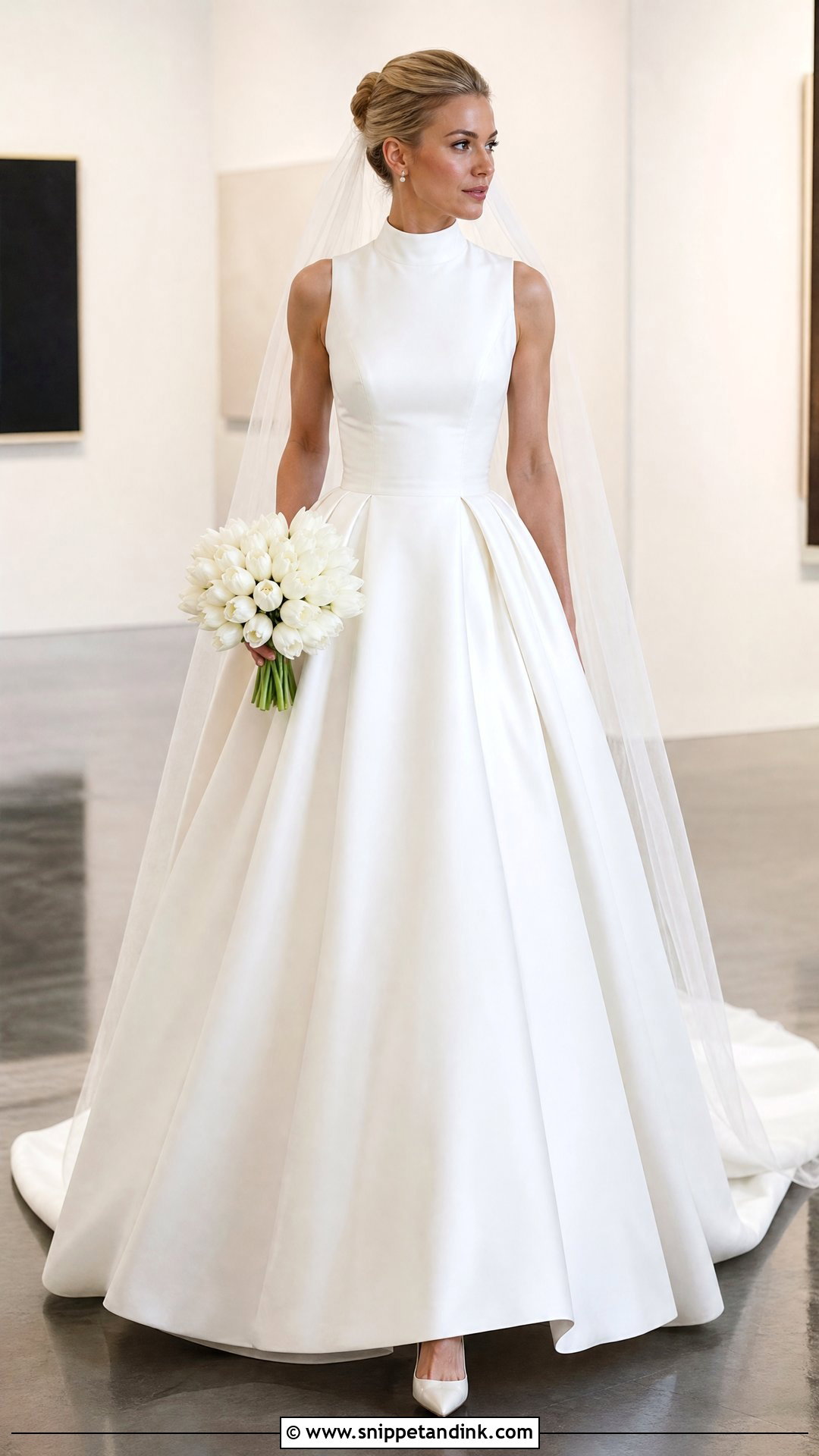
High necklines offer full coverage and a distinctive outline. A bateau collar or a clean mock neck feels modern without choking. I check comfort carefully: a high satin neck that is even slightly tight becomes very noticeable after a few hours of talking and eating, so I leave a finger’s width of ease. Skip the necklace, choose small studs and wear the hair up. Ivory pumps and a structured bouquet keep it composed for a gallery, hotel or historic venue.
8. Long Sleeve Satin Ballgown Wedding Dress
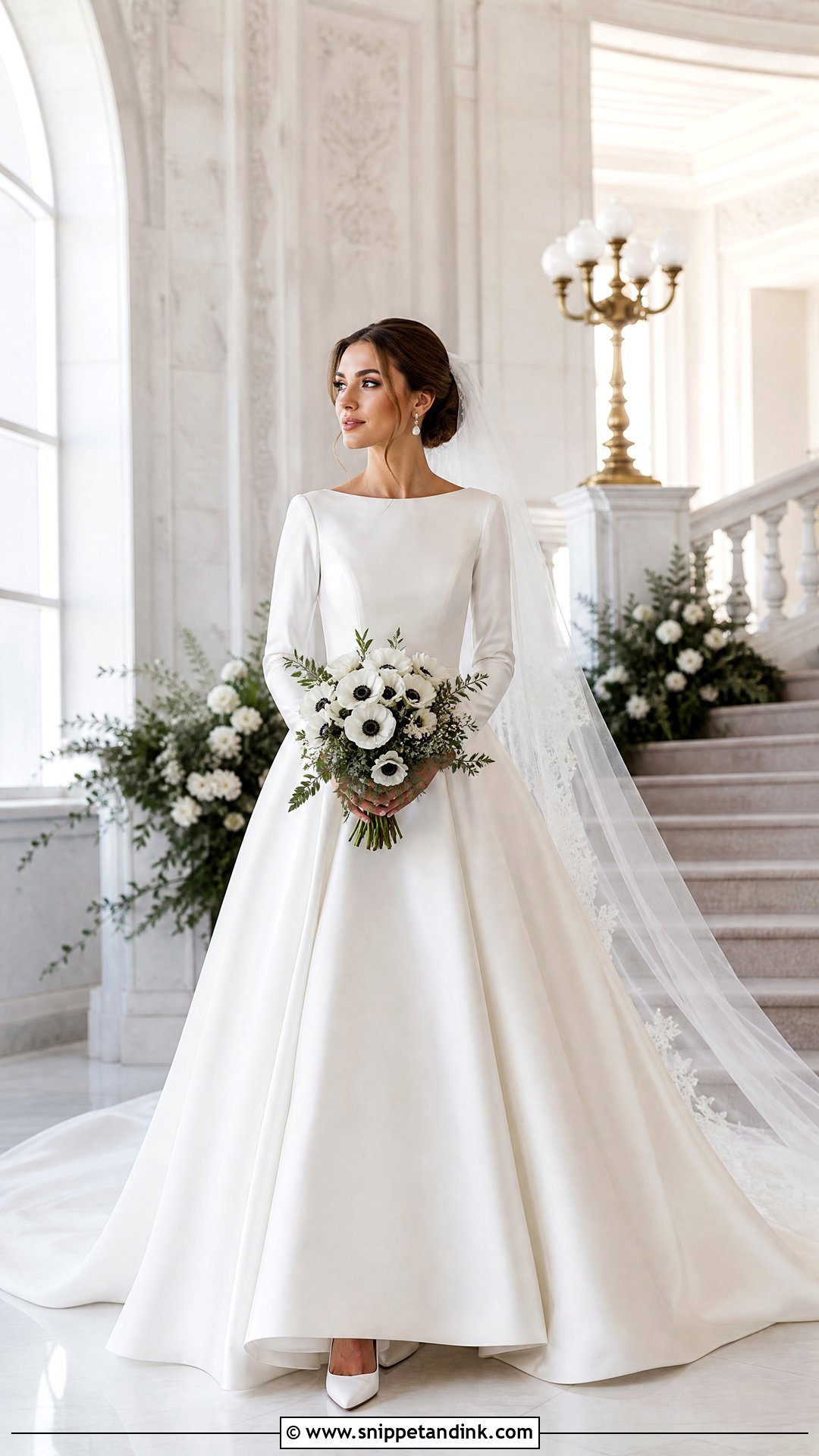
Long satin sleeves suit cool seasons and add real formality. The make-or-break point is the armhole. A low armhole looks fine standing but stops you from lifting your arms, while a higher, well-shaped one actually gives more movement. I ask brides to reach as if hugging and to raise both arms before any sleeve is finalized. A cathedral veil, pearl drops and a hair comb above a low chignon suit it, with winter greenery in the bouquet. With so much coverage, a defined waist keeps the shape from looking heavy.
9. Cap Sleeve Satin Ballgown Wedding Dress
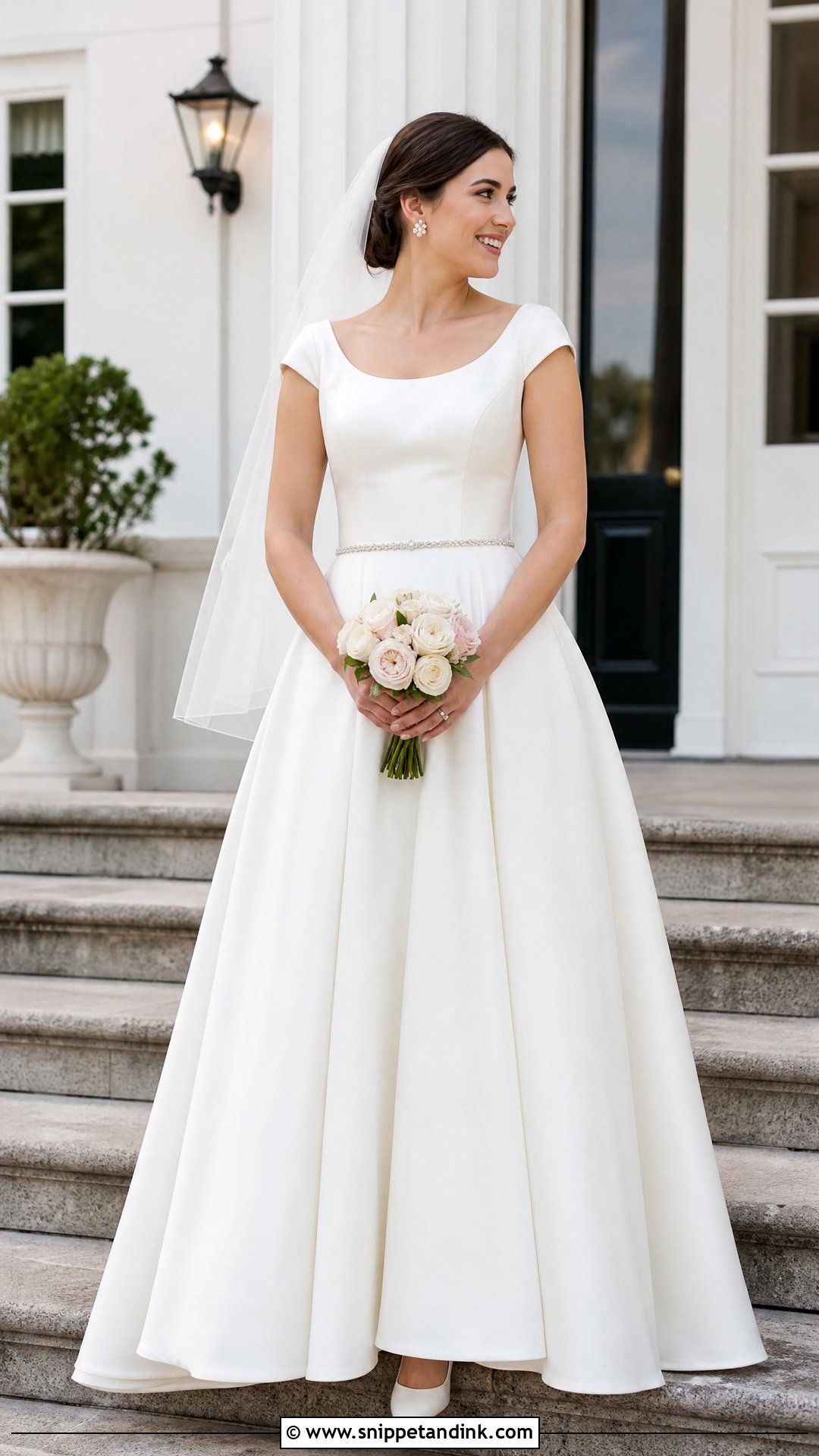
Small cap sleeves cover the top of the shoulder without hiding the arms. They suit scoop, V and softly curved necklines. The thing I watch is the sleeve edge: a cap that is too tight digs into the upper arm and leaves a mark by the end of the ceremony. A fingertip veil, pearl cluster earrings and low block heels finish it, and a slim crystal belt helps if the waist needs more definition.
10. Spaghetti Strap Satin Ballgown Wedding Dress
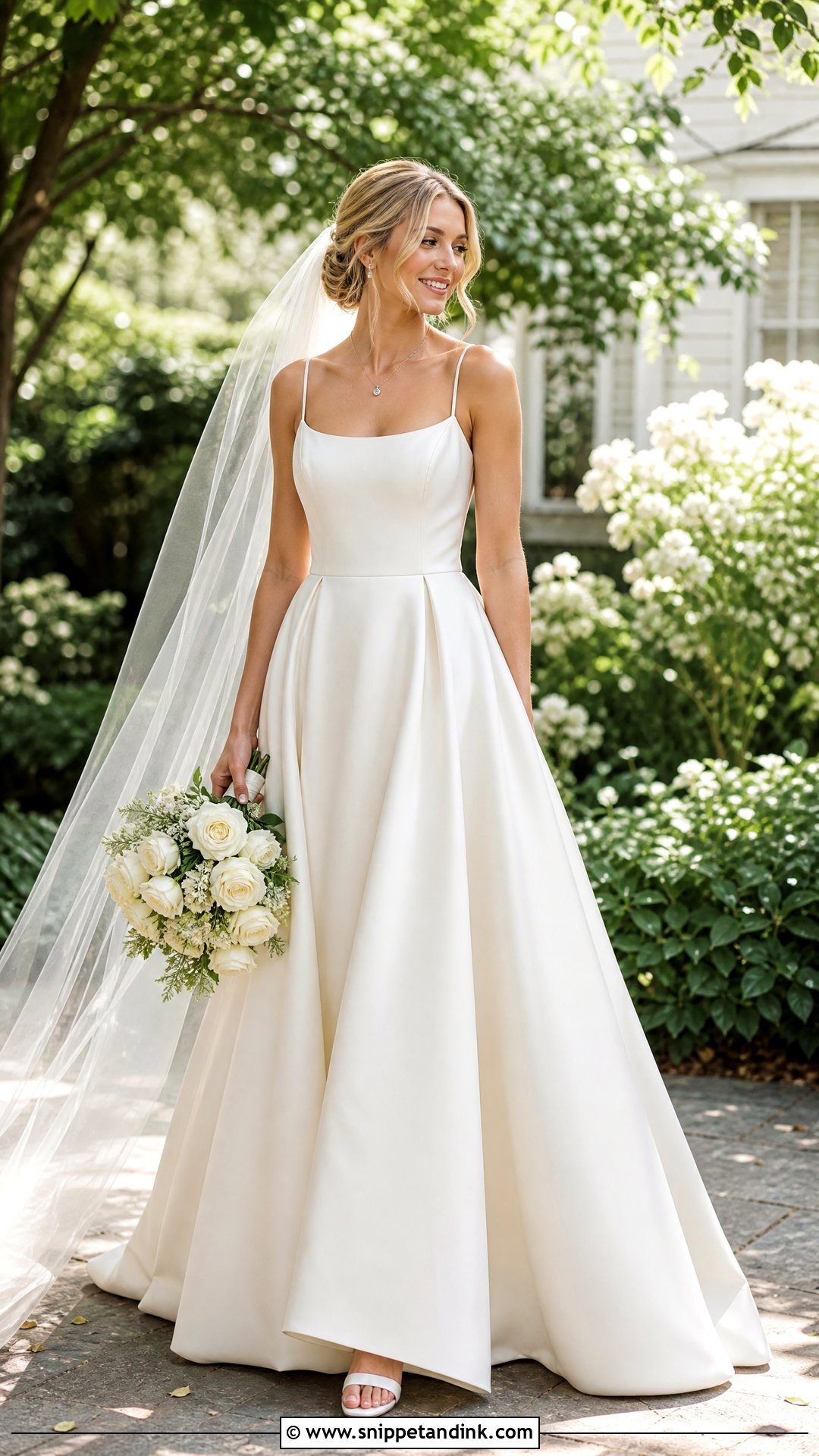
Thin straps add lightness to a heavy skirt and are more secure than strapless. They do have to be right. Straps that are a fraction too long slip off the shoulder constantly, so I’d have them adjusted during fittings rather than tied at home. A sheer cathedral veil, small diamond studs and a fine pendant suit the open neckline. Block-heel sandals keep it airy, and a satin wrap is useful when the evening cools down.
11. Corset Satin Ballgown Wedding Dress
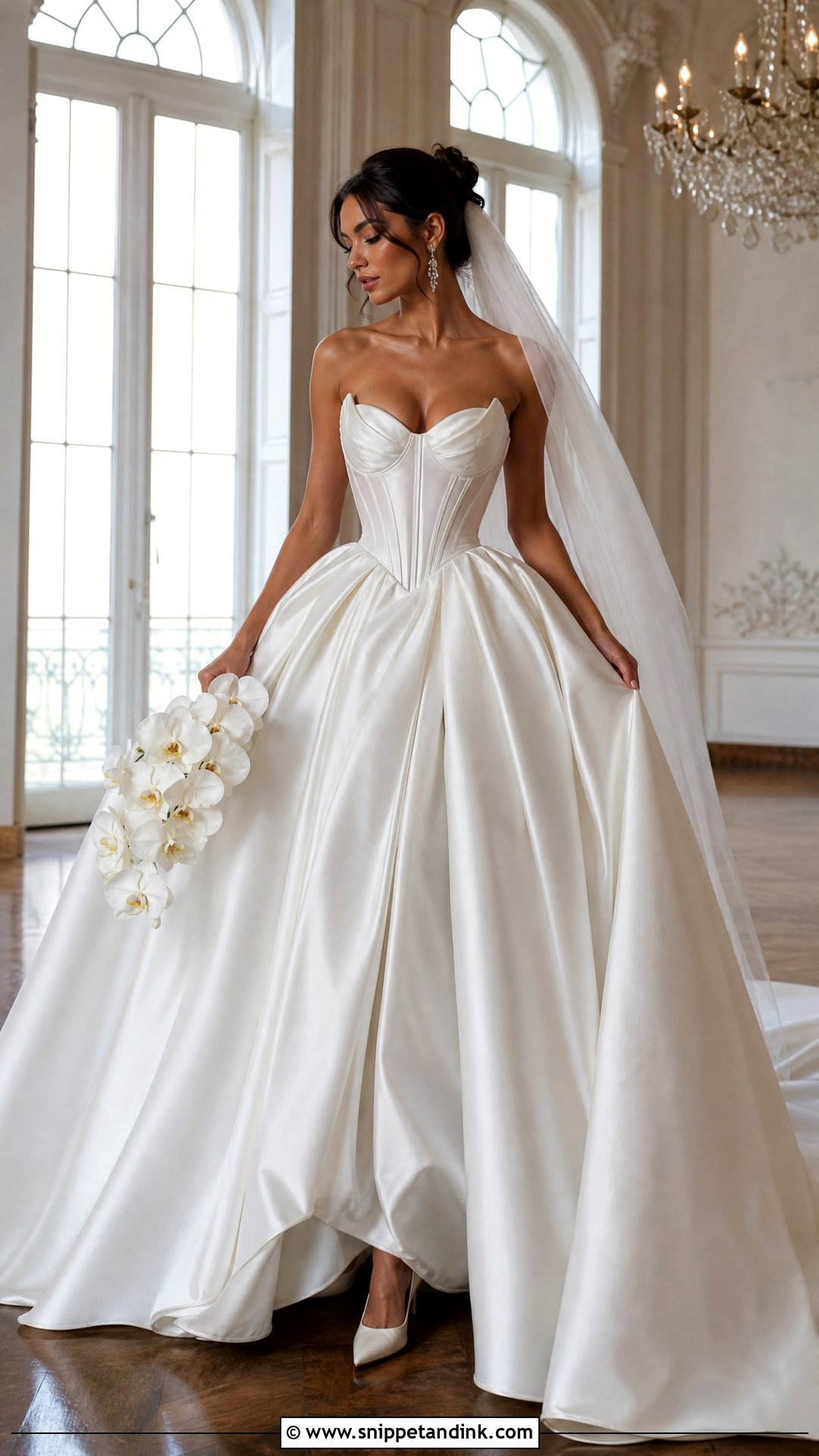
A corset bodice should support, not squeeze. I’d much rather a bride breathe and eat dinner than shave off an inch at the waist. Exposed boning gives a fashion look; satin-covered panels are softer. Lace-up backs are handy because they allow small adjustments on the day if you’ve lost or gained a little. A cathedral veil, crystal drops and pointed pumps work, with the hair in a sleek bun. Sit and raise your arms at every fitting.
12. Basque Waist Satin Ballgown Wedding Dress
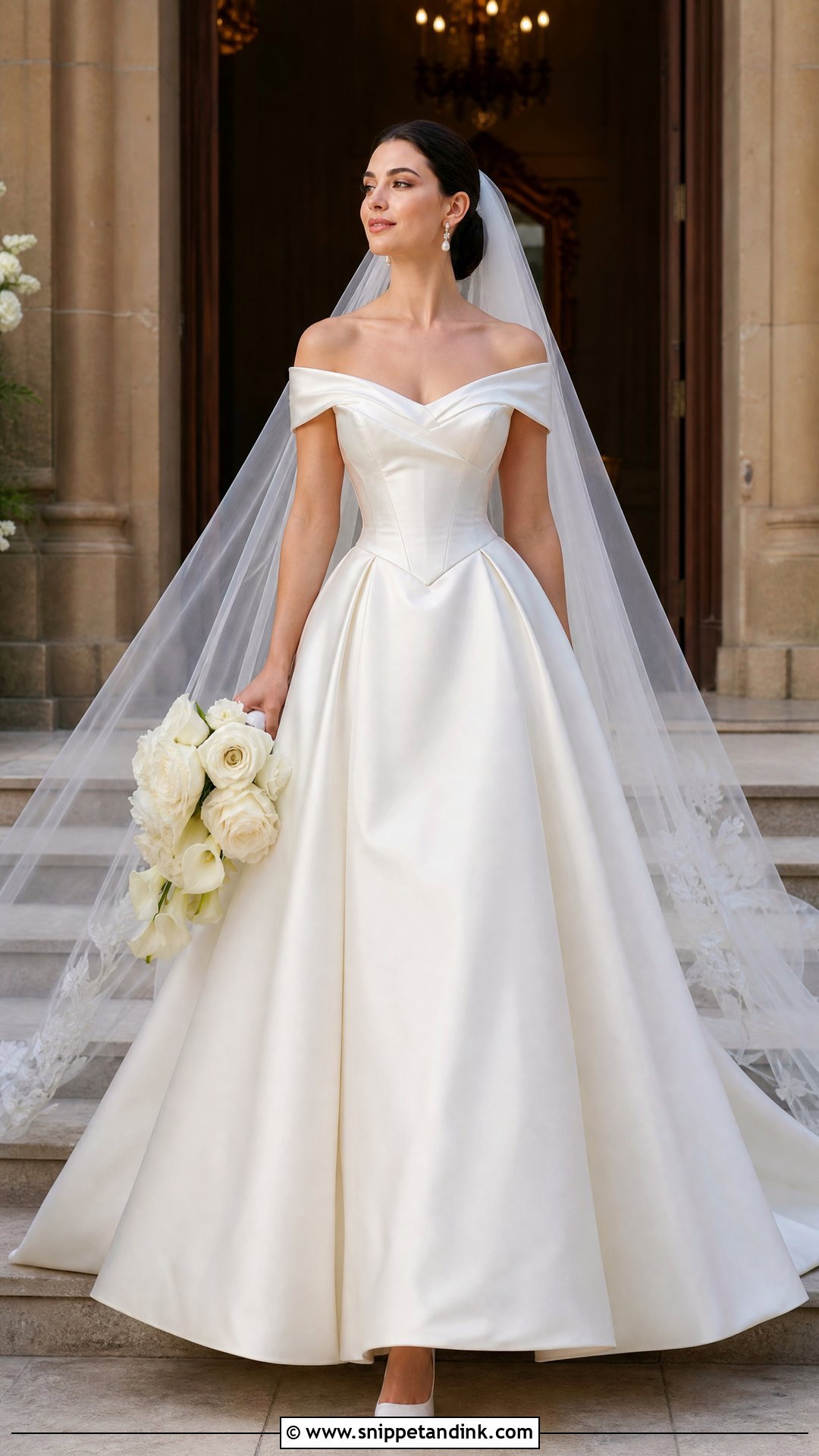
A basque waist satin ballgown wedding dress dips into a point below the natural waist, then opens into the skirt. It lengthens the torso and has a regal, slightly historical feel. Keep the neckline simple so the waist does the talking. The pointed seam must sit flat when you walk and sit; if it buckles at the center front, the bodice needs re-fitting at the hip. A long veil, pearl drops and mid-height satin pumps suit it.
13. Drop Waist Satin Ballgown Wedding Dress
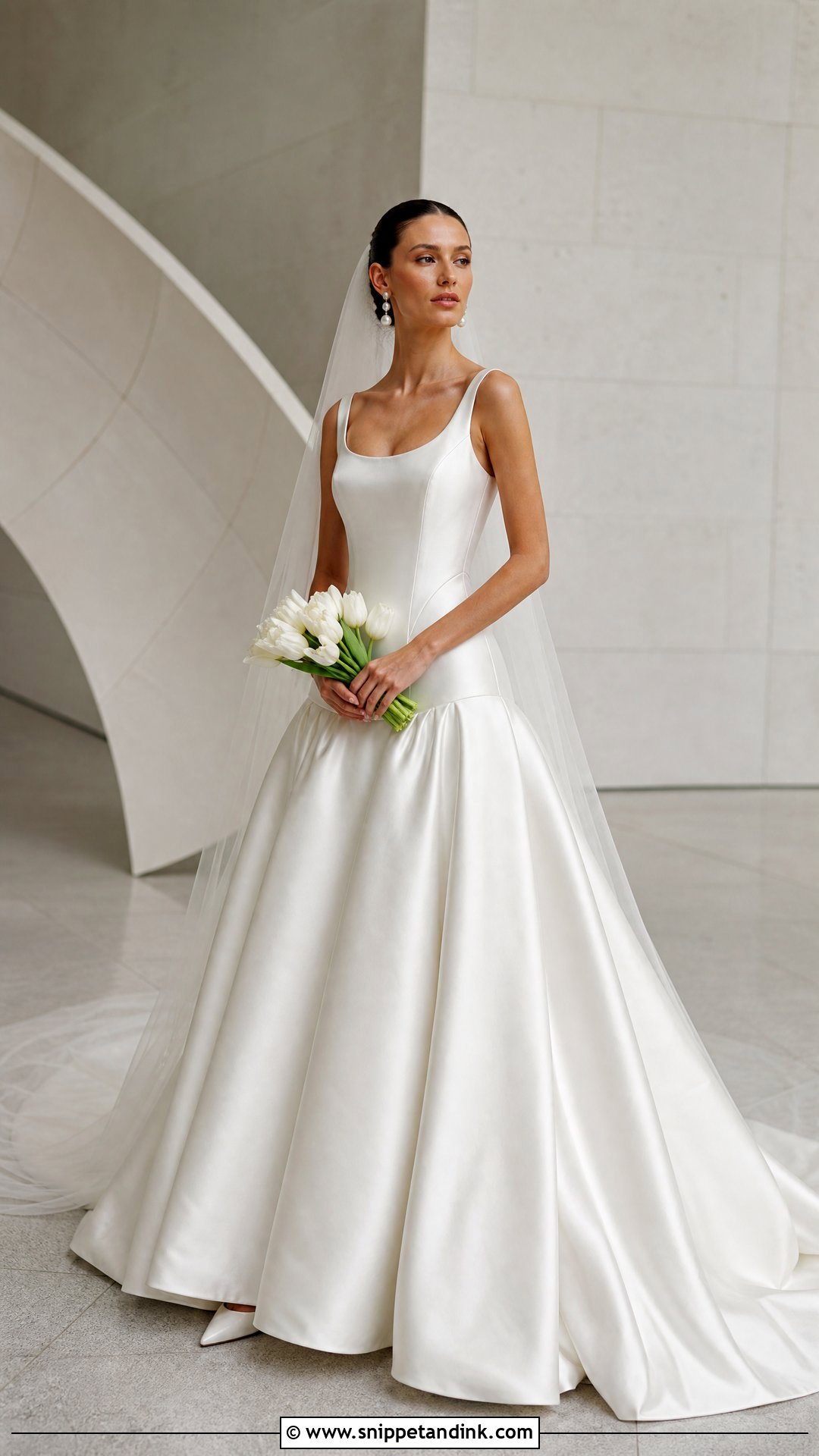
Drop waists suit taller brides and those with a longer torso best, because the fitted bodice extends past the natural waist before the skirt opens at the hips. On a short torso it can make the legs look shorter. Curved seams should follow the body without gripping. A minimalist cathedral veil, geometric pearl earrings and pointed heels keep it modern. Sit and walk several times in the dress; a drop waist that shifts at the hip will do so all day.
14. Ruched Satin Ballgown Wedding Dress
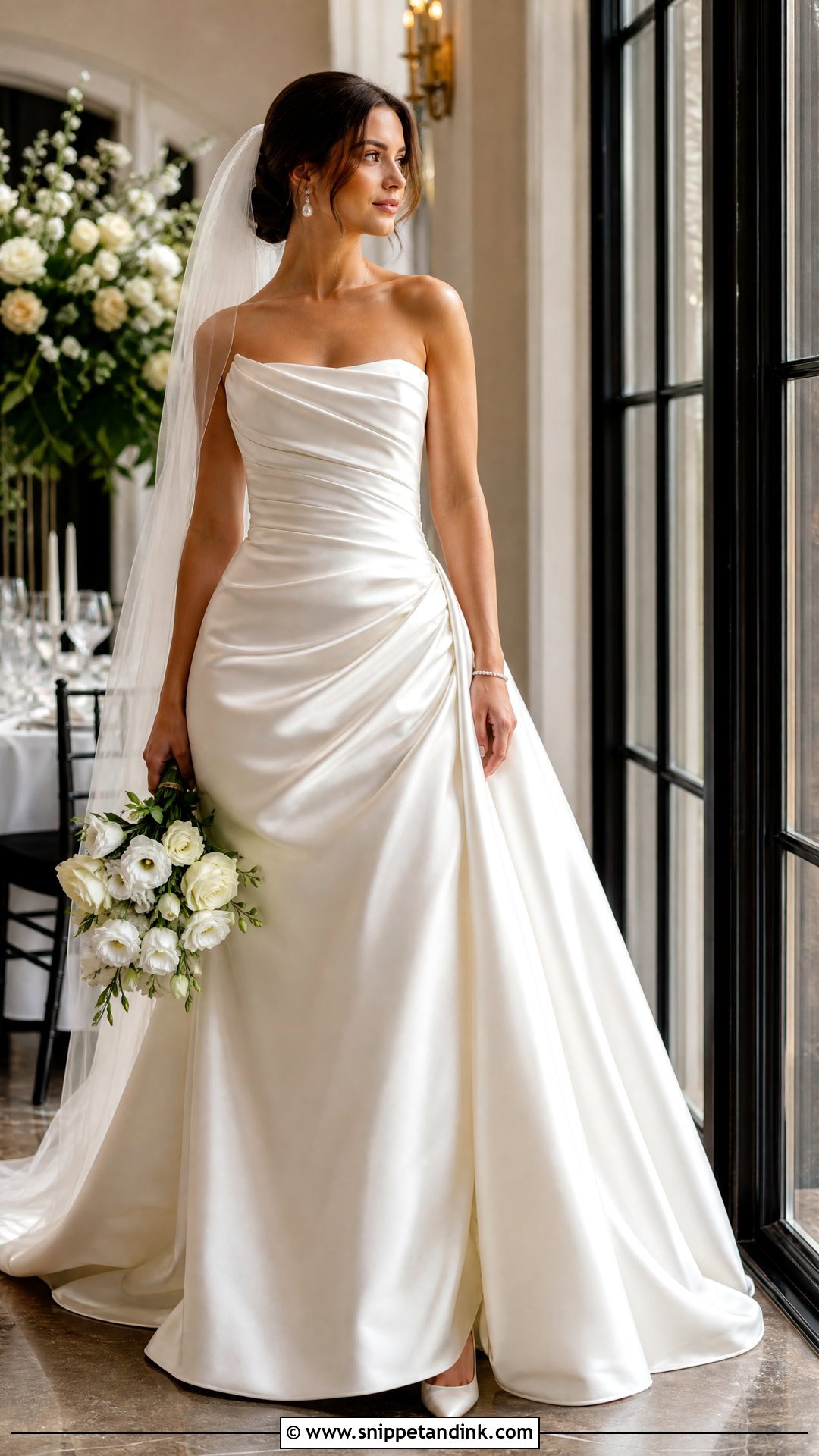
Ruching adds softness to satin, and it’s harder to sew well than it looks. Diagonal gathers across the bodice define the waist, while side gathers create drape. I look for controlled, even folds rather than bunched fabric. Satin highlights every pucker, so check the ruching under daylight and indoor light before the final payment. A plain chapel veil, pearl earrings and simple pumps let the texture lead.

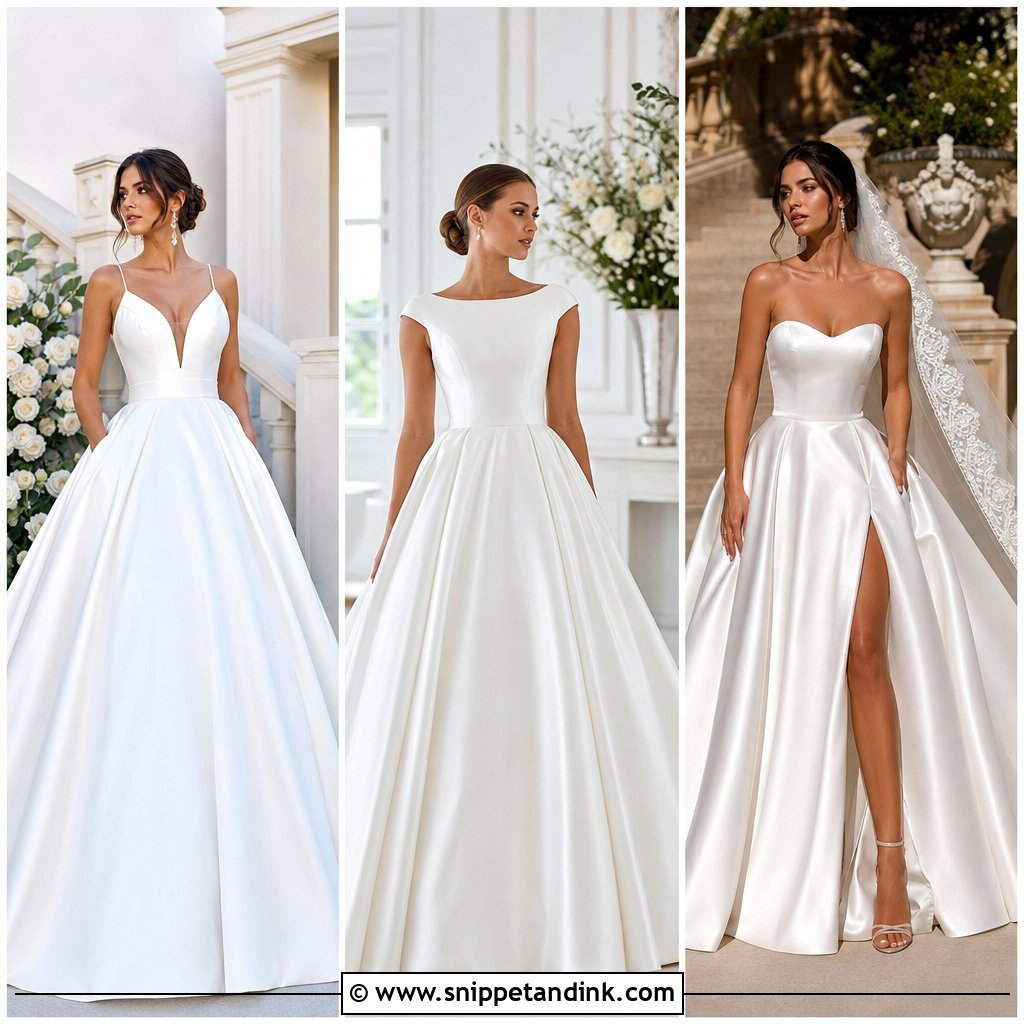
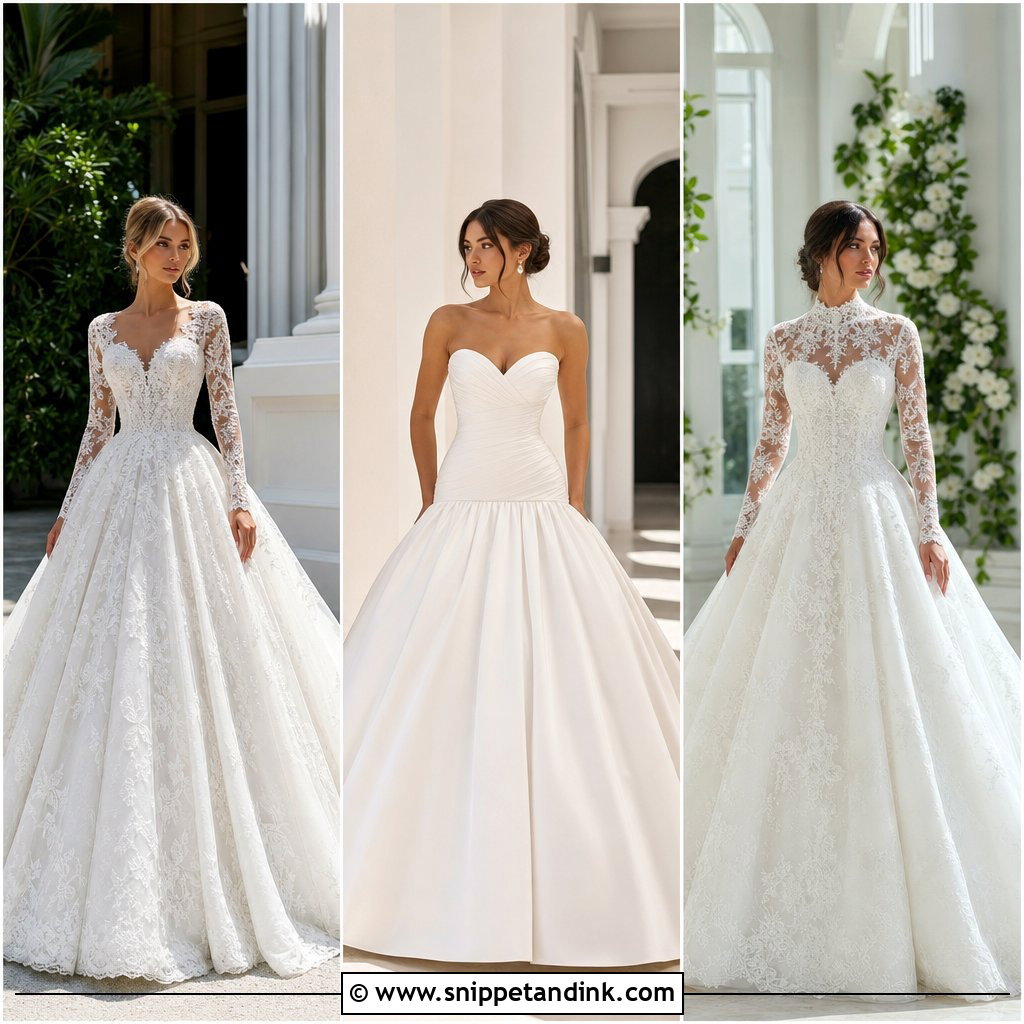
15. Pleated Satin Ballgown Wedding Dress
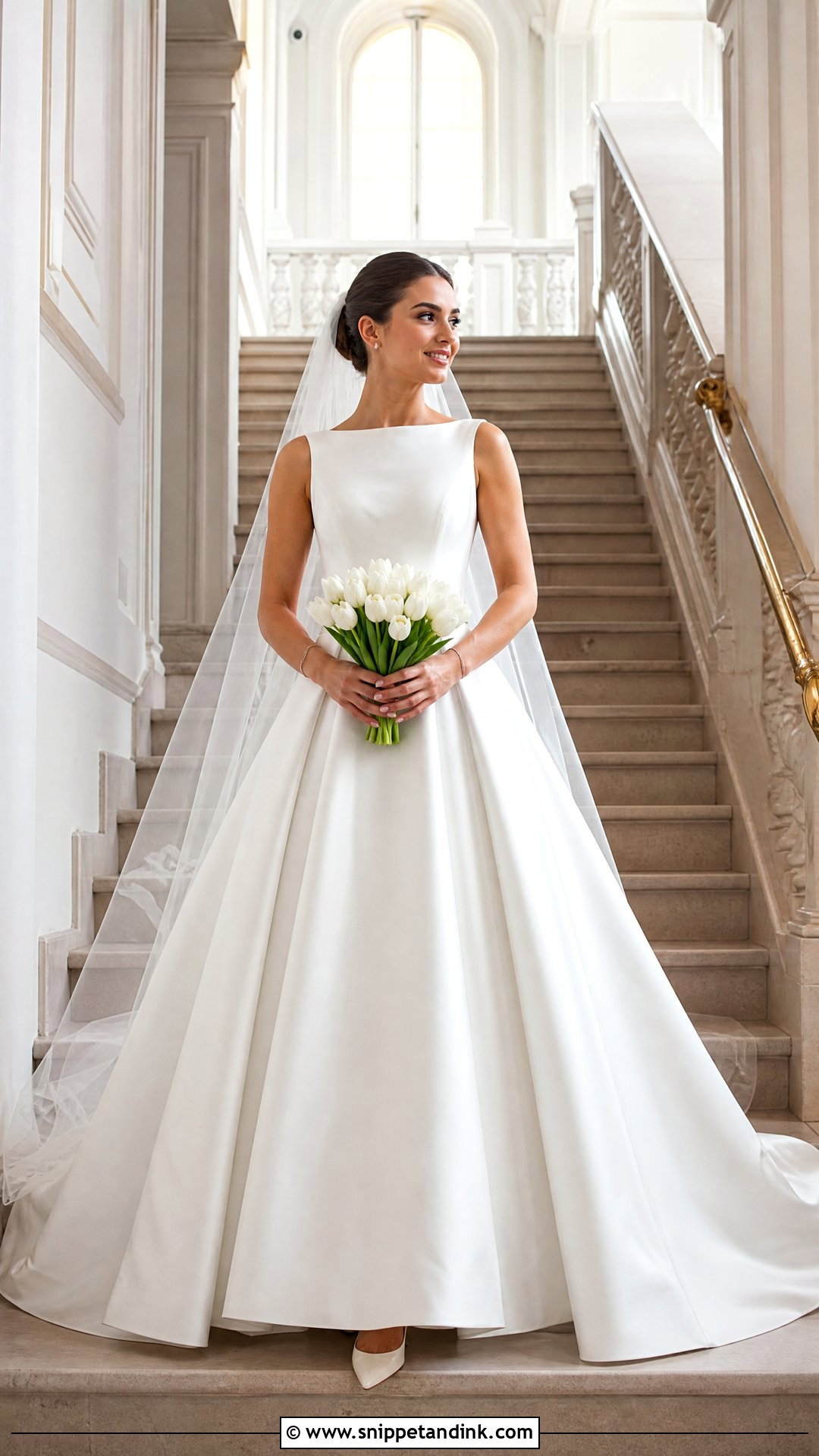
Pleats give a satin skirt structure without beading. Box pleats or wide soft folds create volume from the waist and move well when you walk. I’d pair them with a simple fitted bodice so nothing adds bulk at the waist. Look at the pleats from front, side and back; they should fall evenly on both hips. Pleats also hold creases from sitting, so plan to have someone smooth them before formal photos.
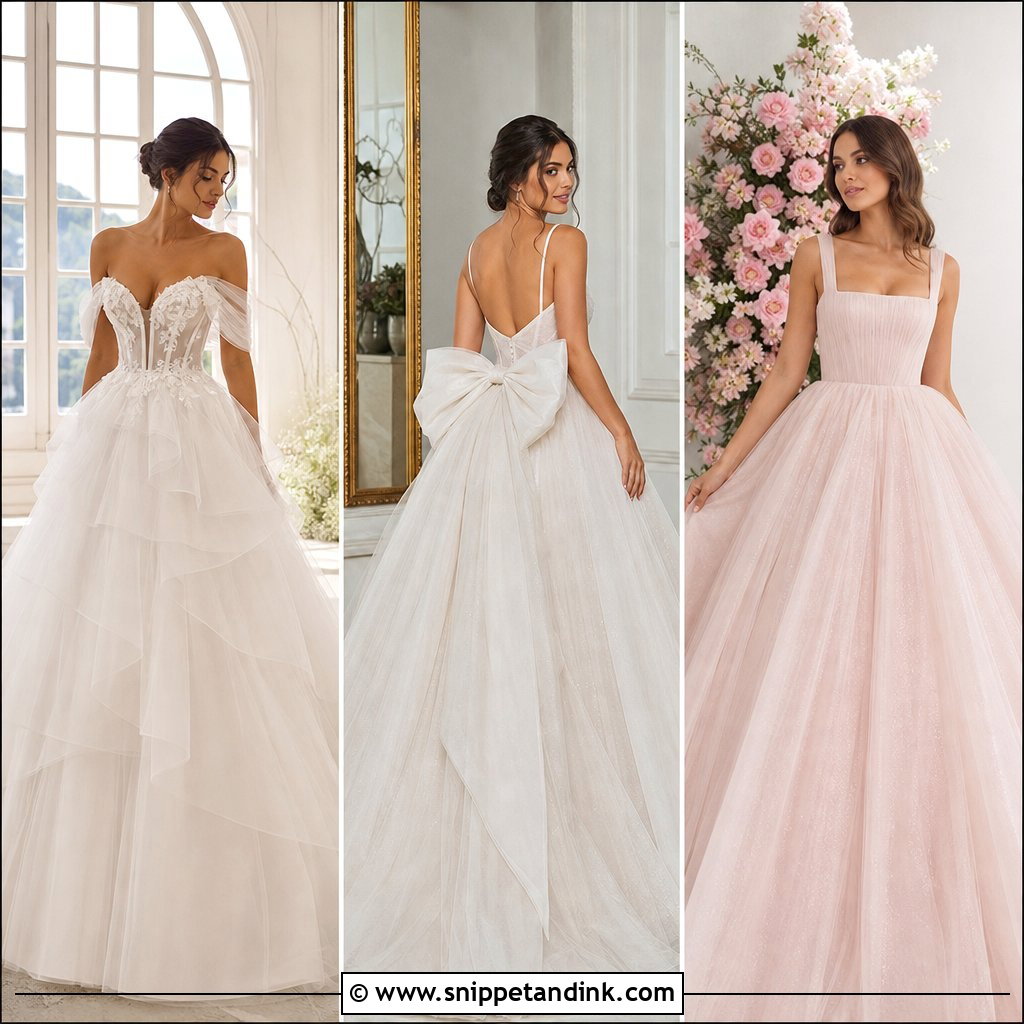
16. Satin Ballgown Wedding Dress With Bow
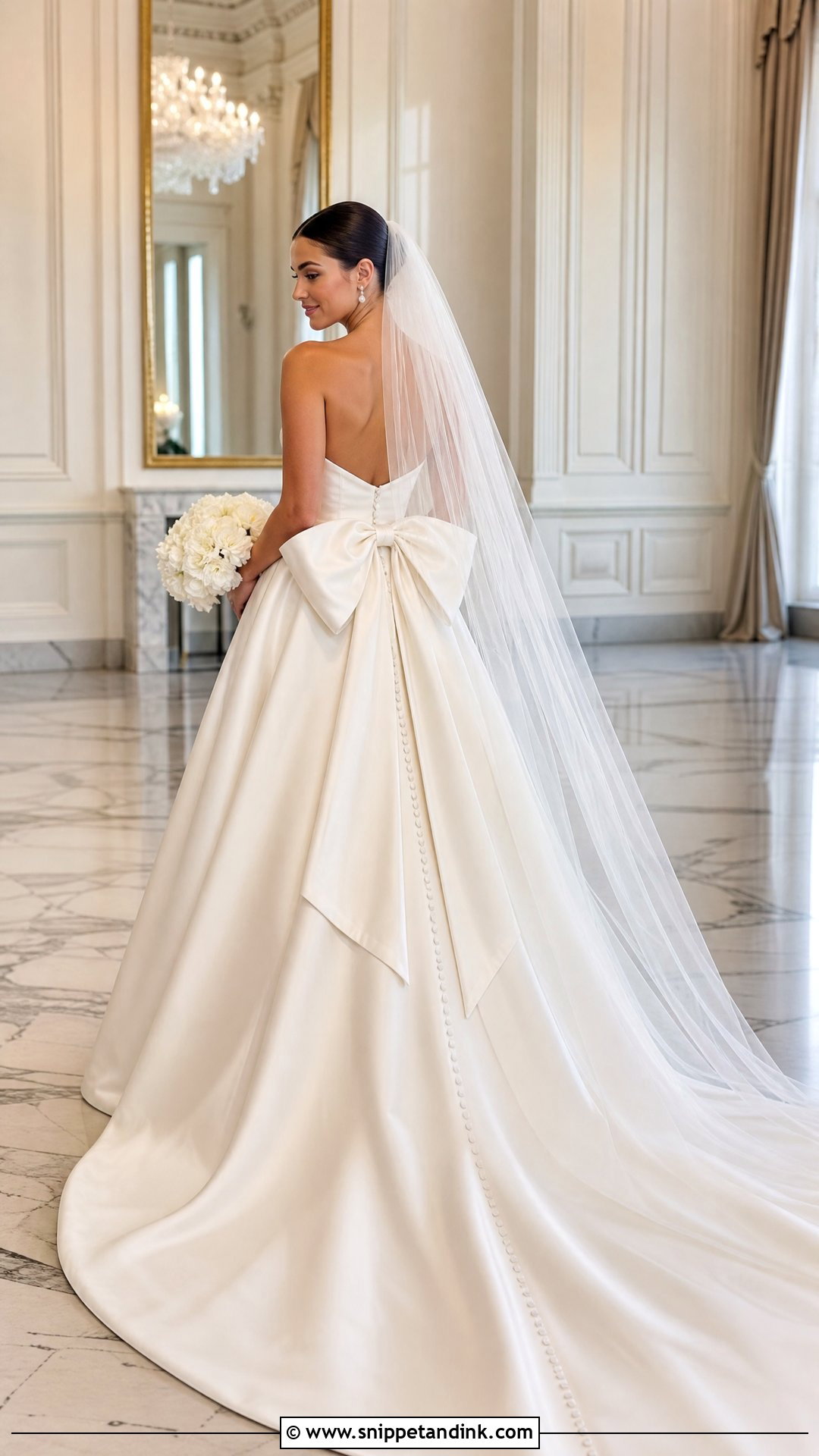
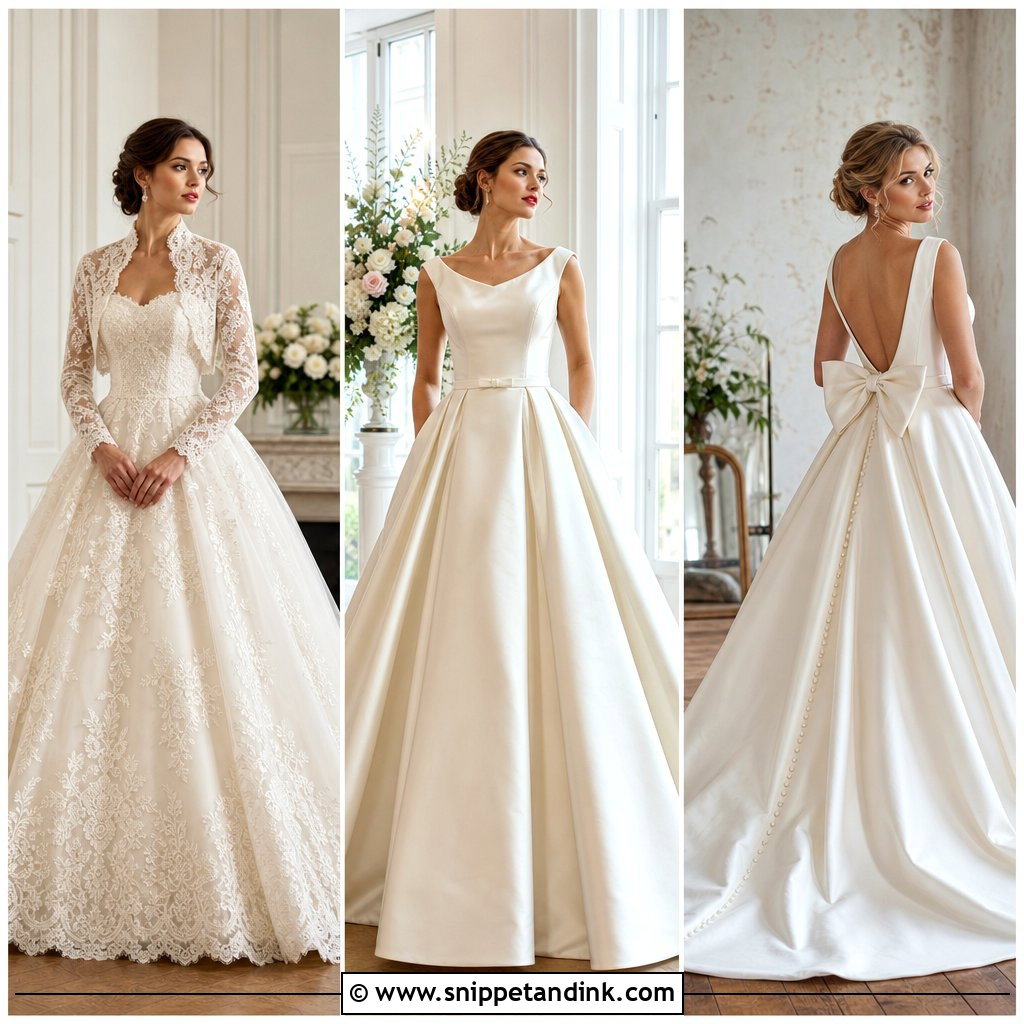
A bow is a good way to give a plain gown some personality. A neat waist bow, a large detachable back bow or long tails that run into the train all work, but only one. The veil should end above or well beyond the bow, not land on top of it. A detachable bow gives you drama at the ceremony and a lighter reception look, and I’d check that the bow attaches with hooks strong enough to hold its weight while you move.
17. Satin Ballgown Wedding Dress With Pockets
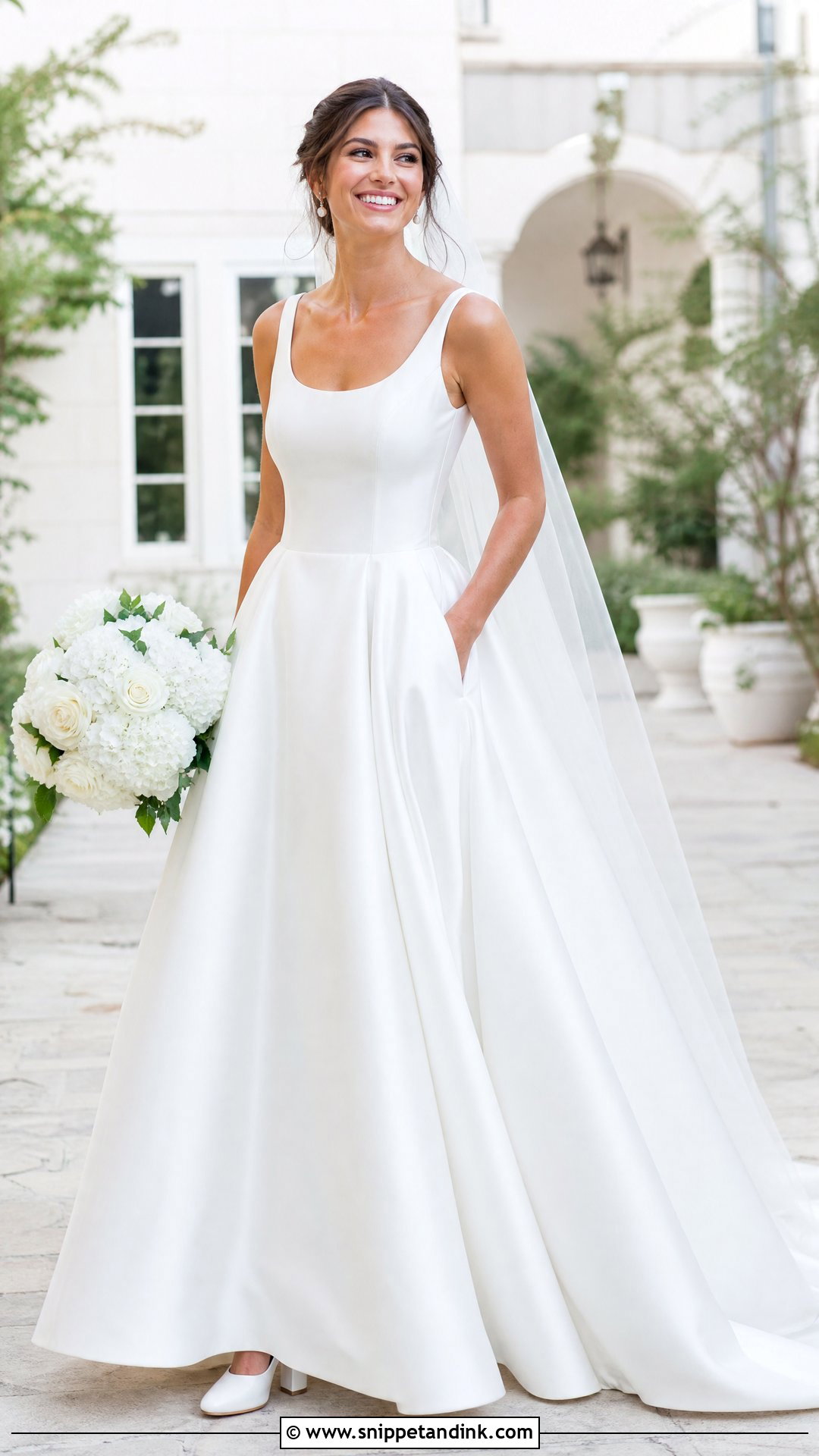
Hidden pockets are the most-requested addition I see, and a ballgown skirt hides them well. They hold a tissue, a note or a lipstick and give your hands somewhere to rest. Ask for them set into the side seams, and test them with something inside. A heavy phone in a satin pocket drags the skirt sideways and spoils the line, so keep them for light things.
18. Satin Ballgown Wedding Dress With Buttons
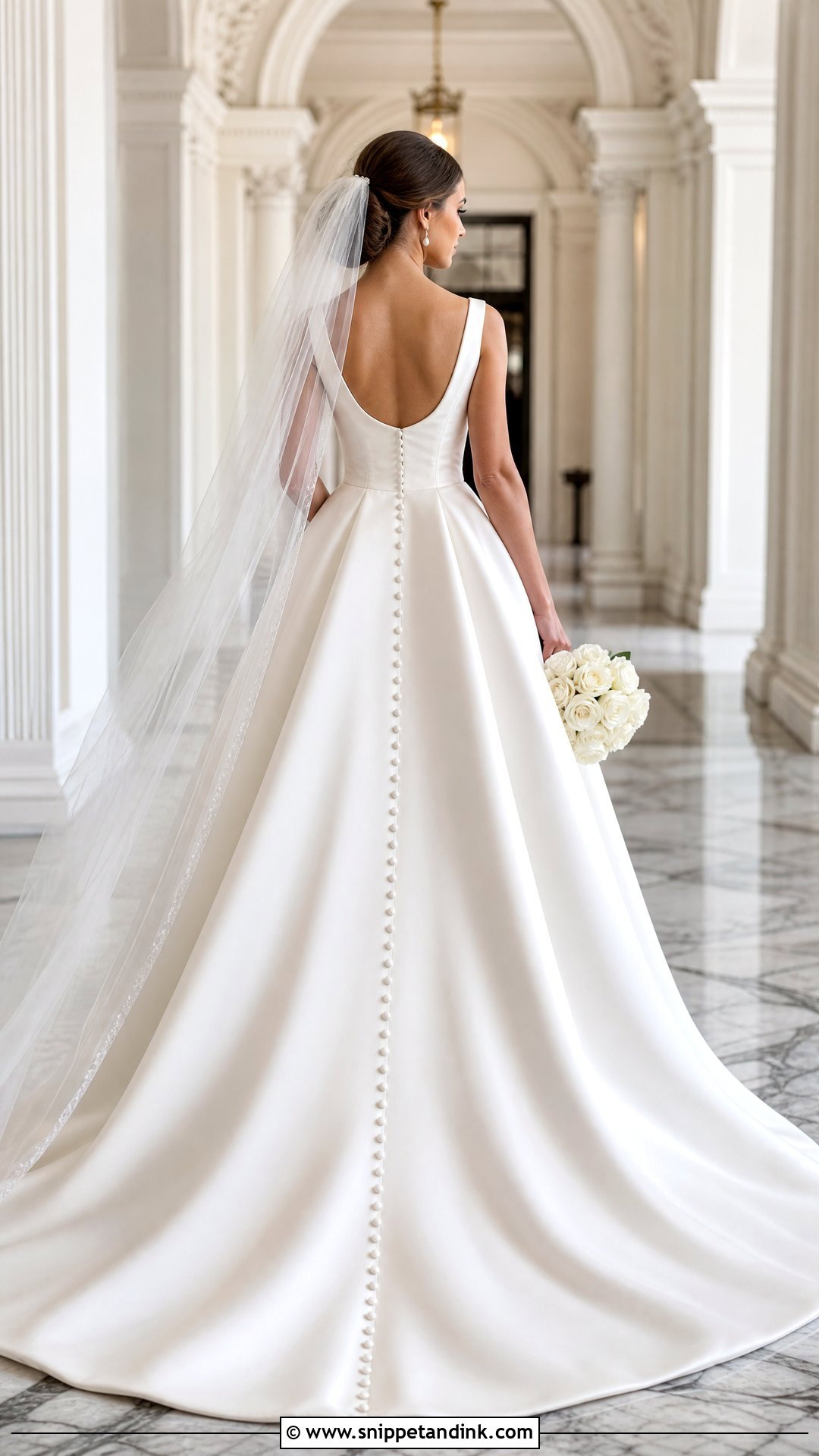
Covered buttons running down the back make a gown look finished from behind. They may stop at the waist or continue down to the train. My practical question at every appointment: are they functional or decorative over a zip? Thirty real buttons can take a long time to fasten, and someone will have to undo them later. A hidden zipper under decorative buttons gives the same look with far less fuss. A transparent veil lets the row show through.
19. Satin Ballgown Wedding Dress With Slit
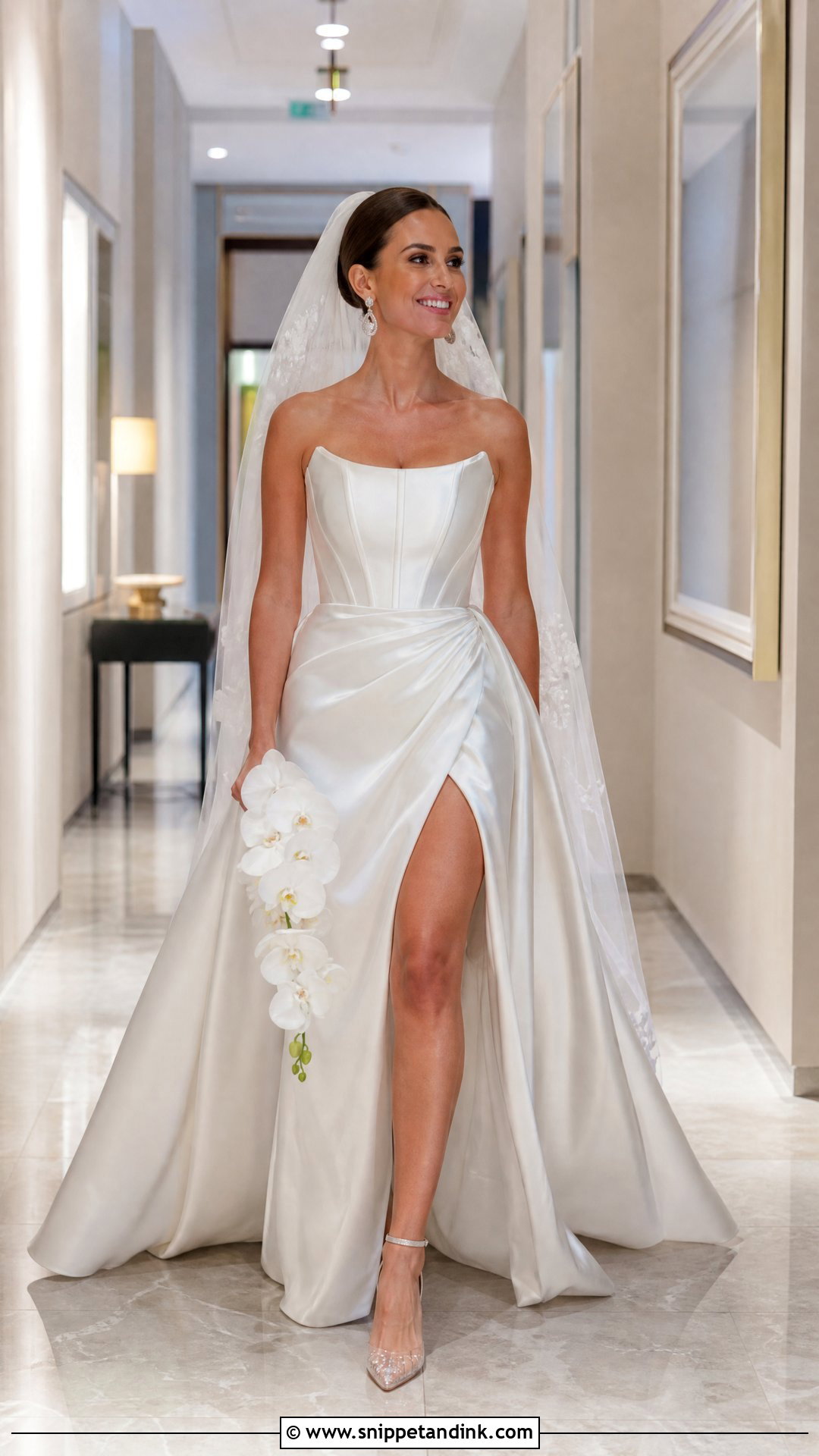
A slit in a ballgown adds a flash of leg and shoe to all that volume. A controlled front or side slit is the most wearable. I set the height of the slit with the bride climbing stairs and taking long steps, because a slit that looks modest standing can open higher than expected on the move. A softer skirt lets it fall closed naturally. Embellished pumps, delicate drop earrings and a chapel veil suit it.
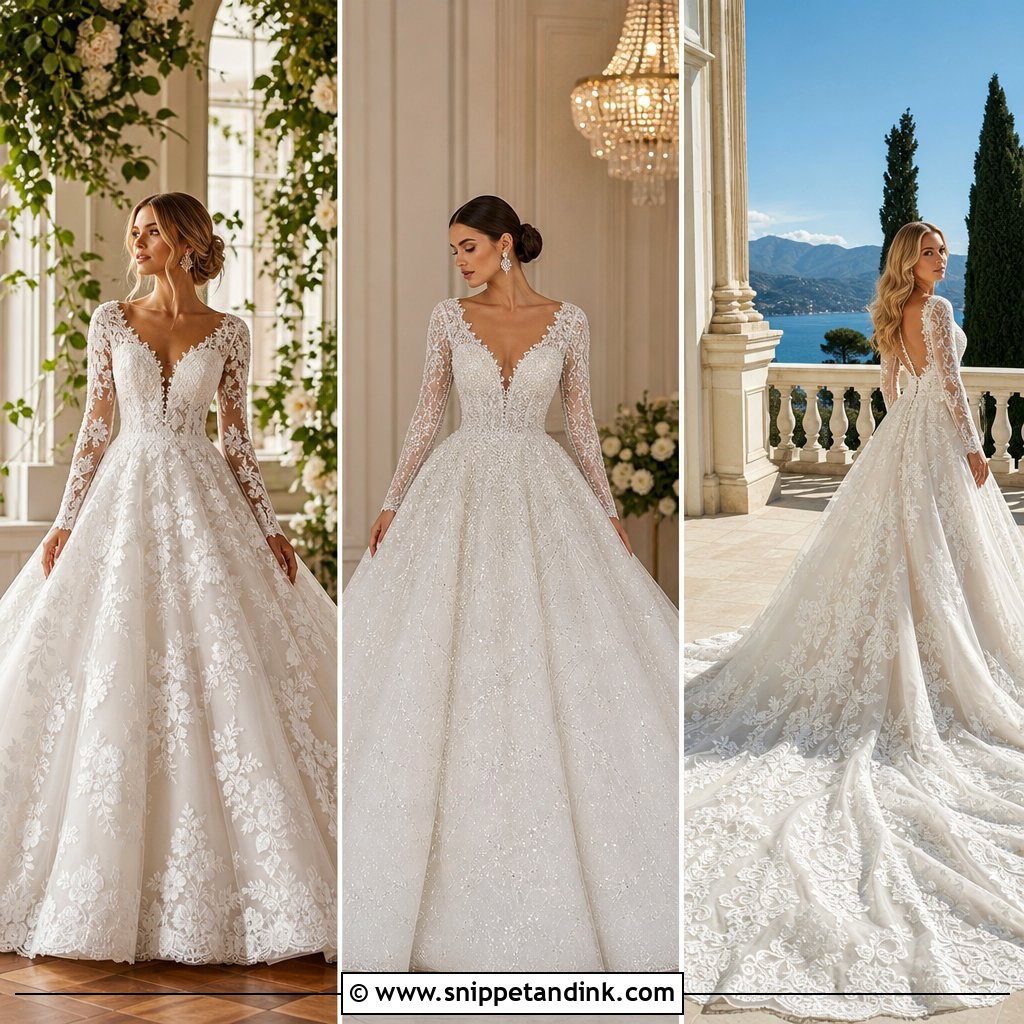
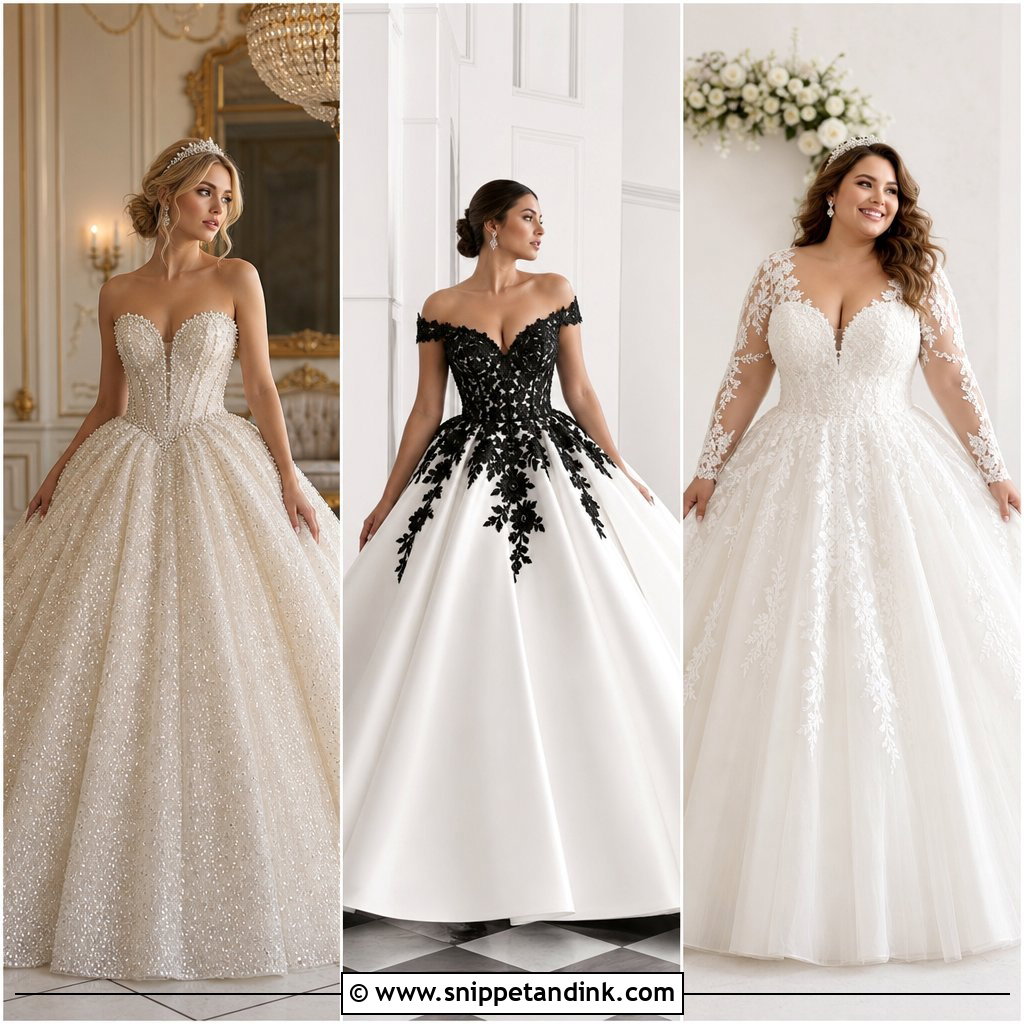
20. Satin Ballgown Wedding Dress With Cathedral Train
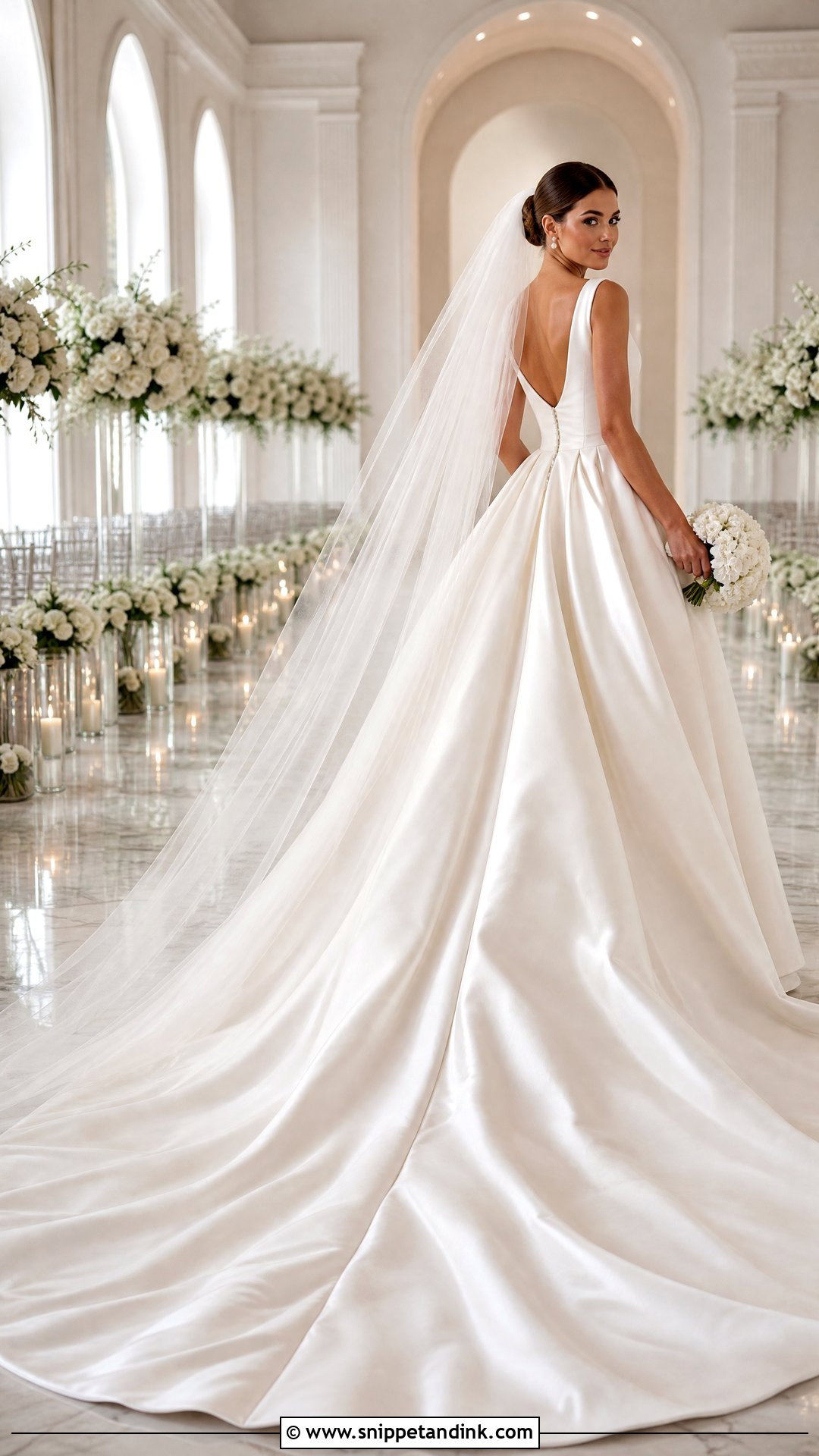
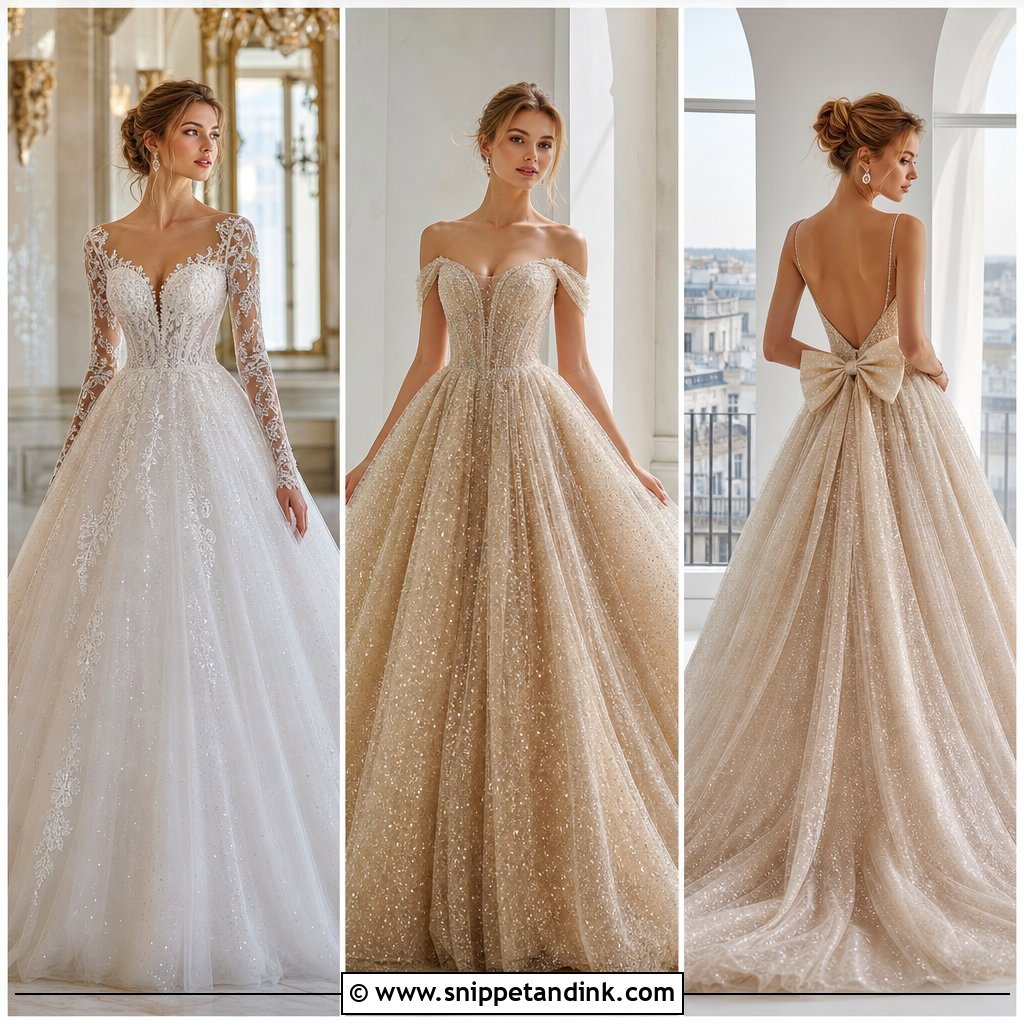
Cathedral trains are the grandest option, and satin shows their seams and buttons crisply. The train needs a plan. A bustle is essential for the reception, and I’d ask the seamstress to color-code the bustle points so whoever ties it up isn’t guessing. Practice turning and walking with the train before the day, and pick one attendant to arrange it before the processional. A veil a little longer or shorter than the train keeps both layers visible.
21. Pearl Satin Ballgown Wedding Dress
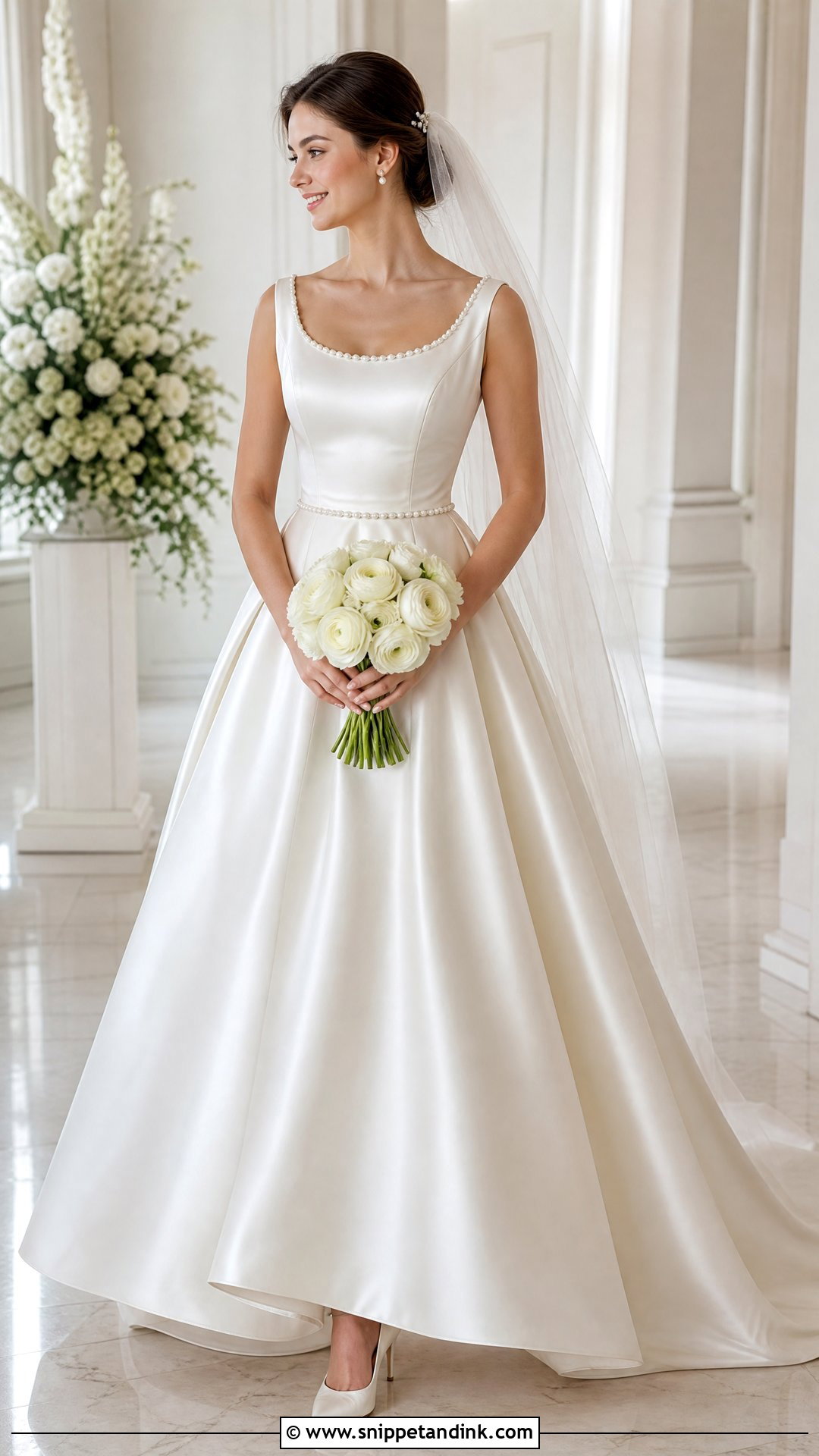
Pearls give satin a soft glow rather than harsh sparkle. Scattered along the neckline, waist, straps or back, they leave plenty of plain satin showing. I check every pearl at the final fitting by running a hand over them; loose ones catch on the veil and pop off when someone hugs you. Pearl studs and plain ivory pumps keep the accessories from repeating the gown, and a small pearl comb can echo it in the hair.
22. Lace Bodice Satin Ballgown Wedding Dress
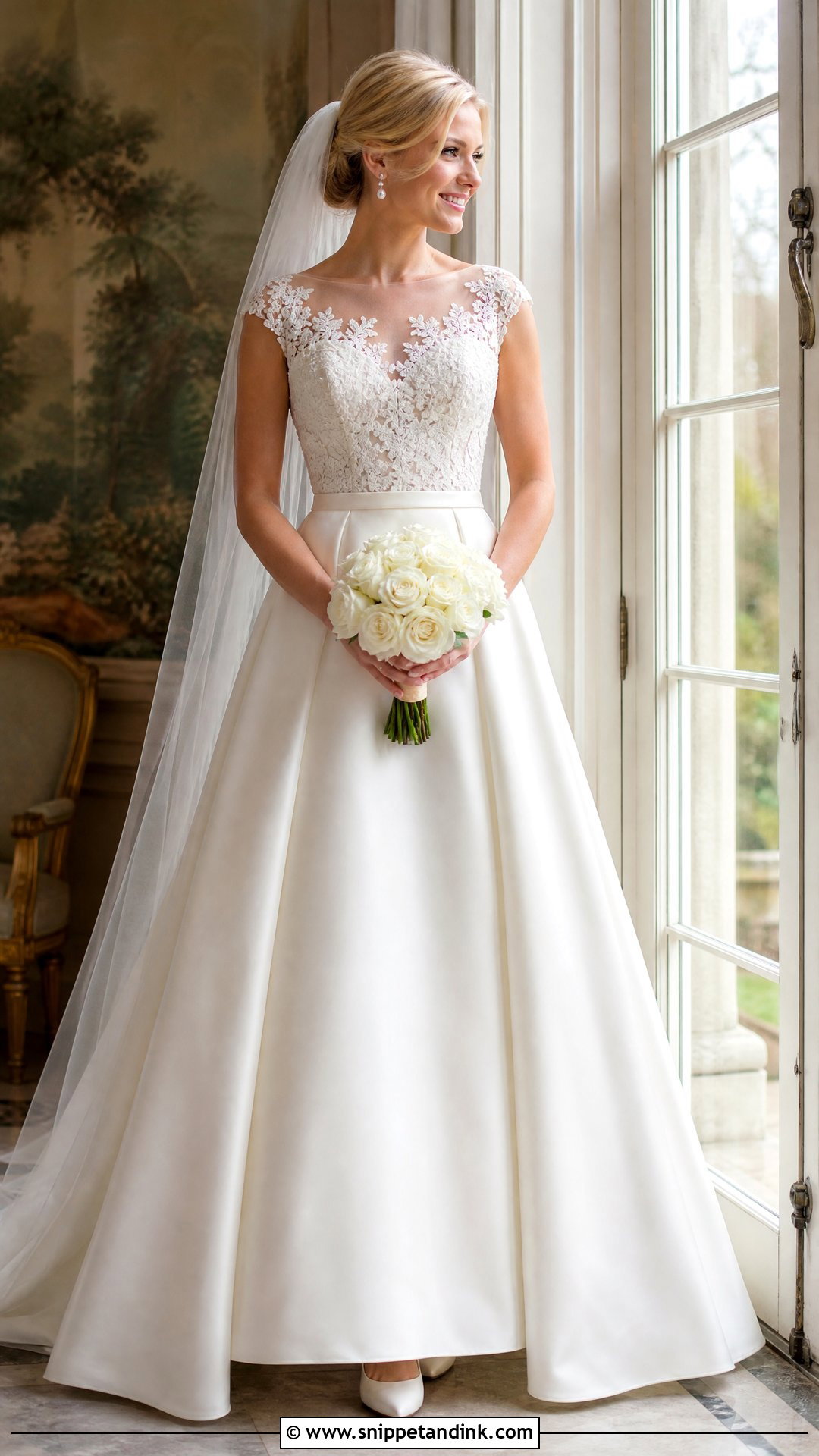
Lace on the bodice, satin below: the contrast gives the gown texture without weight. Choose lace with a clear pattern and a lining close to your skin tone or the ivory of the gown. The join between lace and satin should look deliberate, often a narrow satin band or appliqués fading into the skirt. I’d confirm that the lace and satin are the same shade of ivory in daylight; mismatched whites are surprisingly common.
23. Floral Satin Ballgown Wedding Dress
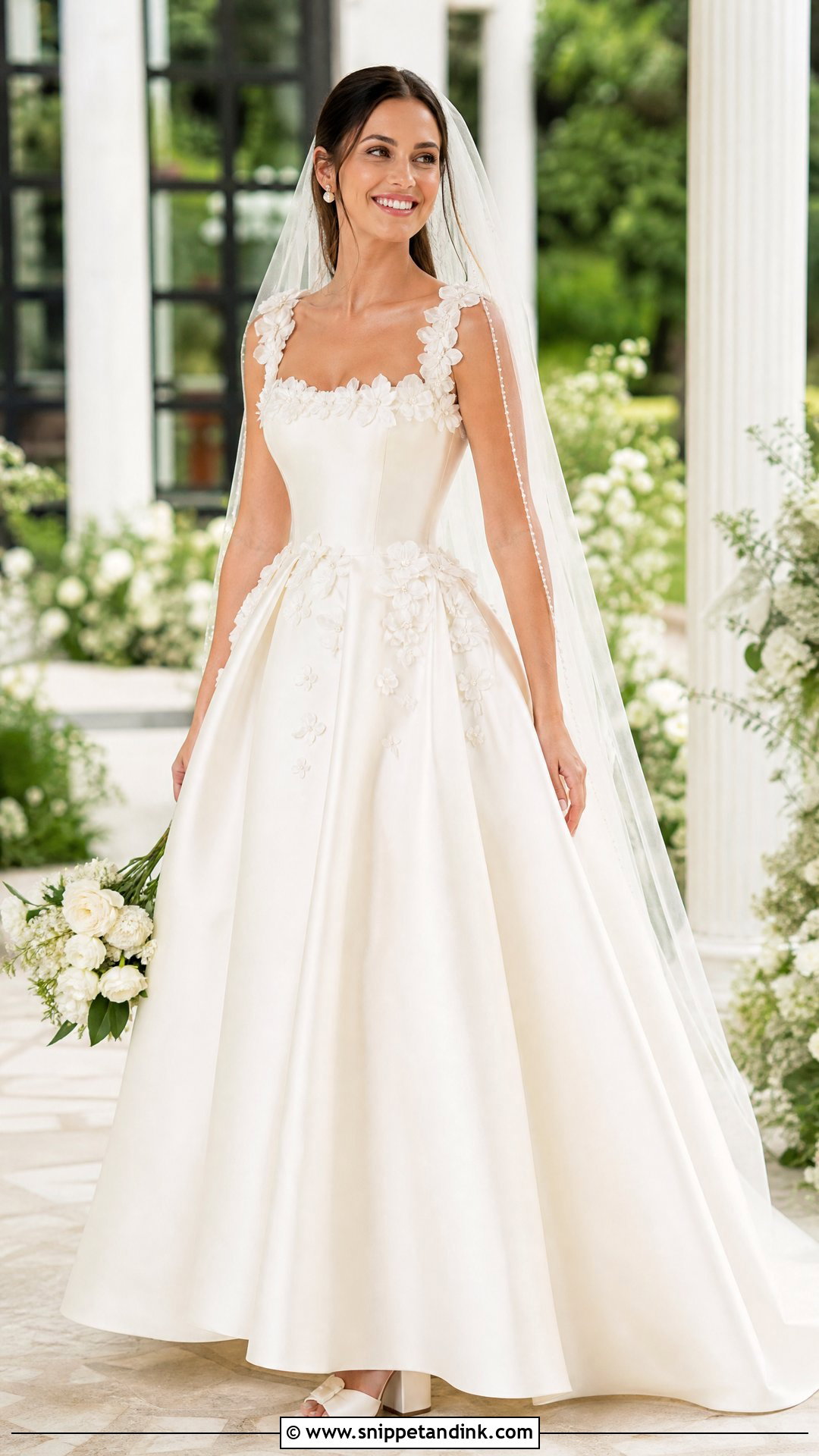
Floral appliqués soften a structured satin gown. Keep them around the neckline, waist or upper skirt so plenty of smooth satin remains. Three-dimensional petals must be light and stitched firmly, or they bend and catch the veil. A fingertip veil, simple pearl earrings and ivory block heels work. I suggest the florist repeat one or two flowers from the dress in the bouquet rather than matching it exactly.
24. Mikado Satin Ballgown Wedding Dress
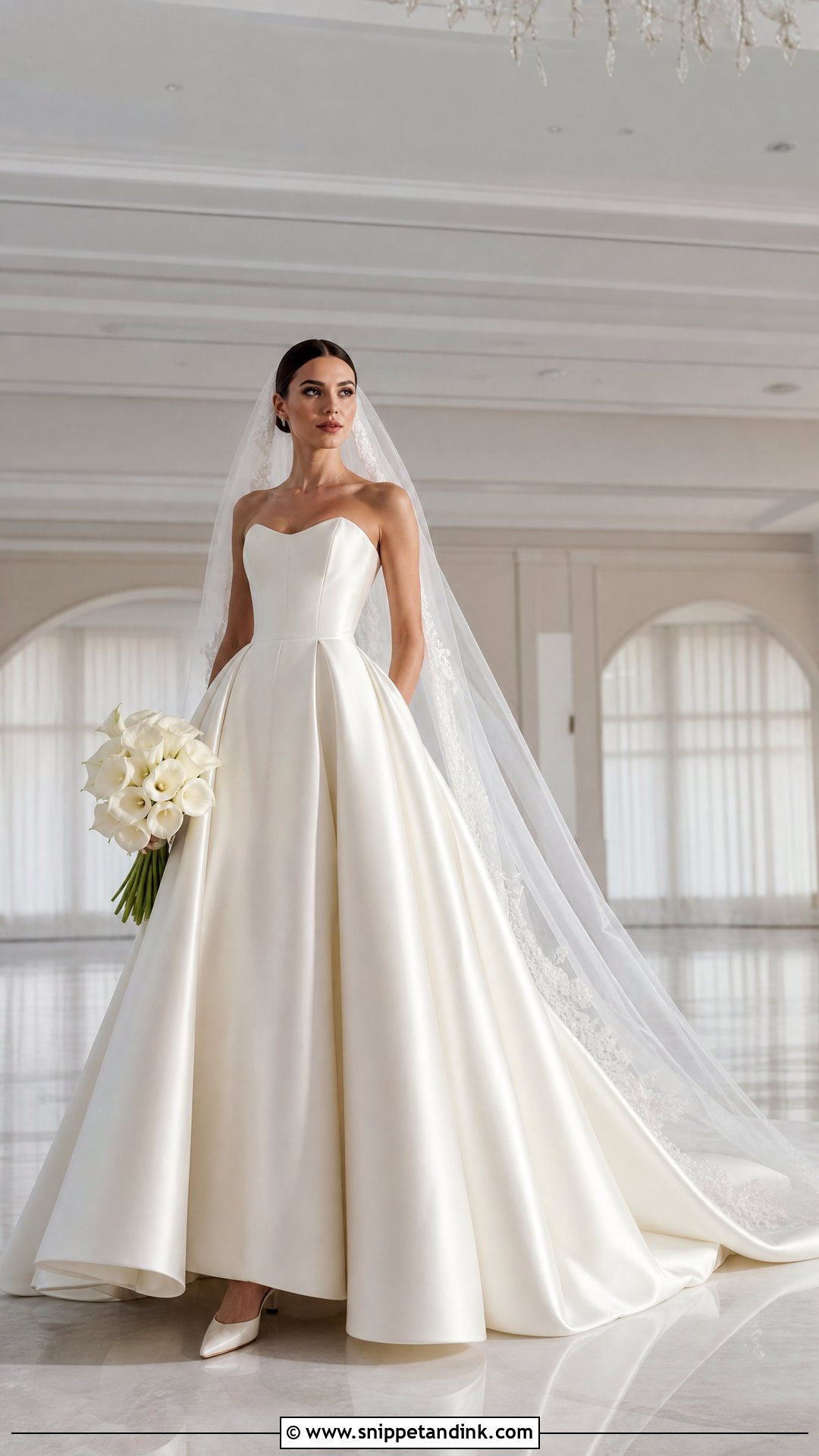
Mikado creates a crisp satin ballgown wedding dress with a strong, sculpted shape and a lower sheen than duchess satin. It holds deep pleats and sharp bodices well, so tailoring matters more than embellishment. Mikado is heavy, though. For a summer wedding or a long day on your feet, I’d weigh it against a lighter satin. A cathedral veil, diamond studs, pointed pumps and calla lilies suit its formality.
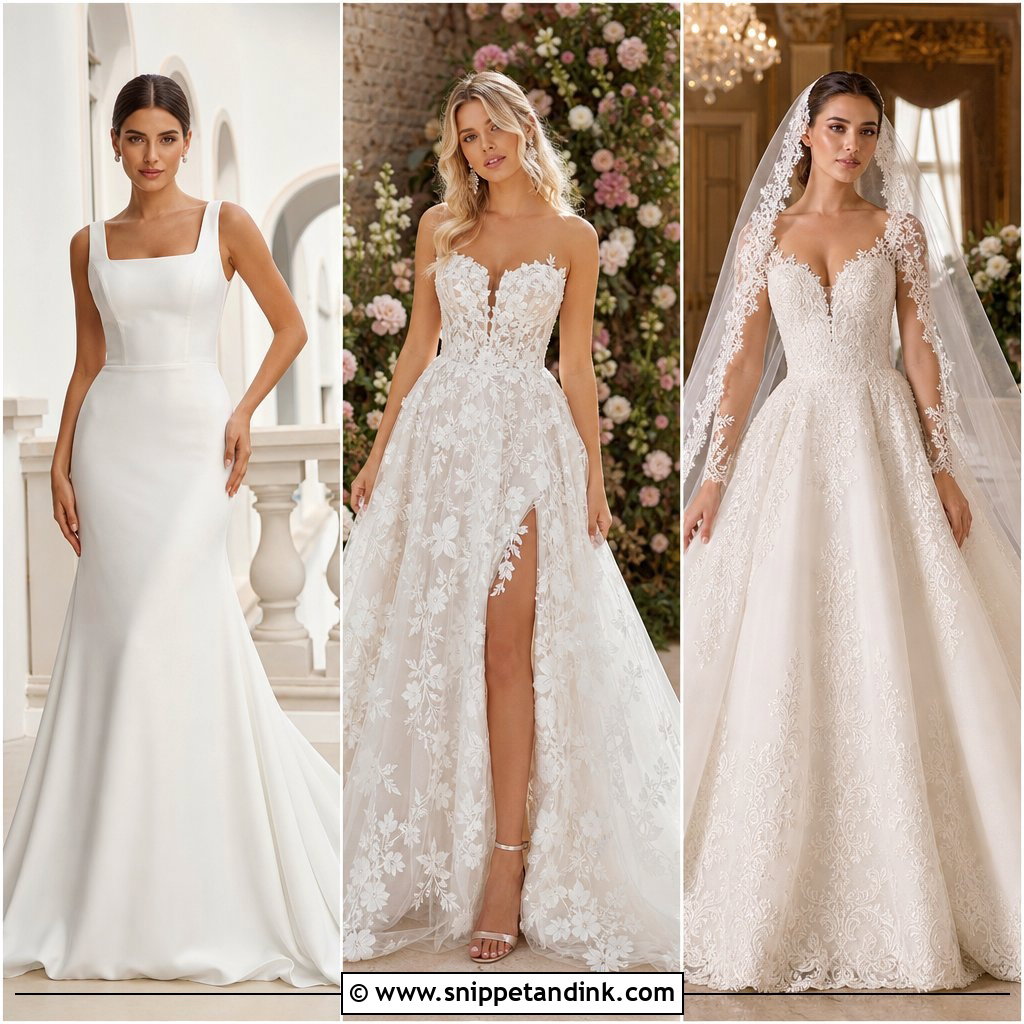

25. Blush Satin Ballgown Wedding Dress
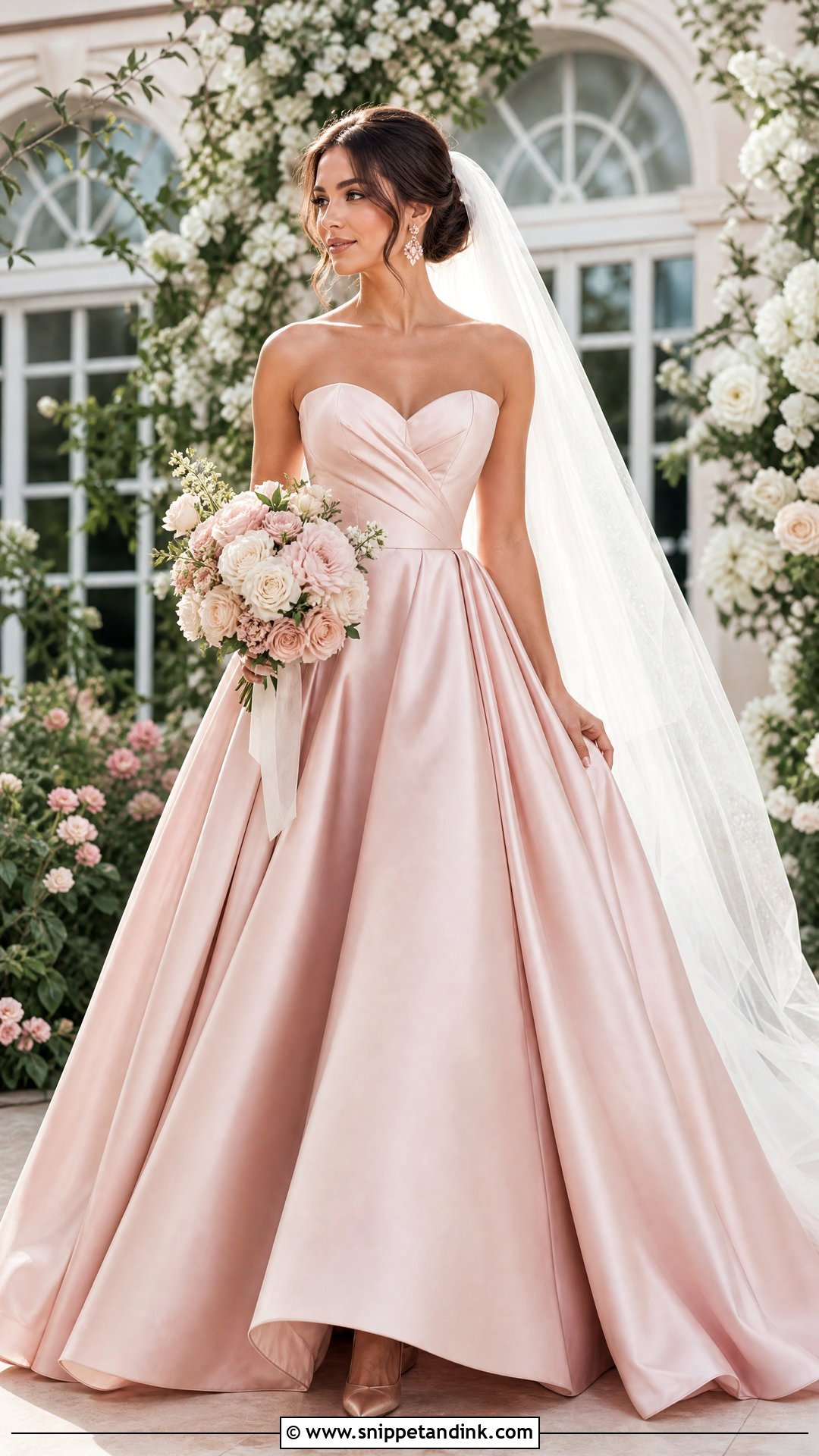
A blush satin ballgown is a soft alternative to white. Pale pink, champagne-blush and muted rose can still look clearly bridal. Choose a shade that suits your skin undertone and check it both by a window and under warm indoor lights, because pink satin shifts more than white. A sheer ivory veil gives gentle contrast, or a matching blush veil keeps the whole look in one tone. Rose-gold earrings and nude satin pumps complete it, and I’d always ask for a fabric swatch before buying accessories.
Petticoats, Hoops and the Bathroom Question
Most of a ballgown’s volume comes from what is underneath. Some gowns have tulle layers sewn in; others need a separate petticoat or a hoop. A tulle petticoat is softer and easier to sit in. A hoop gives a crisp bell shape but can tip up at the front when you sit, so you learn to sit on the very edge of the chair.
Bring your actual shoes and undergarments to every fitting from the second one onward. The hem is set to your shoe height, and changing heels late means changing the hem. Strapless gowns with built-in support often need no bra at all, which I’d confirm before buying one.
Getting Through the Day in All That Skirt
- Bathroom: face the toilet backwards and gather the skirt forward, or use a slip-style gown catcher. Practice once at home with a friend.
- Cars: get in seat first, then lift the skirt in after you. A larger car makes a real difference.
- Doorways and stairs: lift the front of the skirt slightly with one hand and keep the other free for the rail.
- Dinner: lay a napkin across the lap. Satin marks easily, and a stain on the front shows in every photo after.
Satin Shows Everything, So Fit Comes First
A satin ballgown works when the fit is precise and the details feel like yours. Strapless shapes, sleeves, basque waists, trains, pearls, bows and blush satin all suit different brides. When you compare gowns, look at the back, hem and train as well as the front, and always sit, walk, turn and raise your arms before you decide. Let accessories support the gown rather than compete with it. Above all, budget time and money for alterations and the right undergarments; satin rewards both.
You'll Like These Ideas:




Leave a Reply