
Wedding ball gowns are back, but the versions brides try on now are lighter, better engineered and far more varied than the stiff princess dresses many of them remember. In a fitting room, a ball gown does one thing no other silhouette quite manages: a defined waist and a full skirt give you presence the second you step into the aisle. The challenge is everything that comes with that volume, from the weight on your hips to how you sit, dance and get through a doorway. Below are thirty versions, from clean Mikado and romantic lace to drop waists, floral applique, detachable sleeves and soft color, with notes on how each one actually wears.
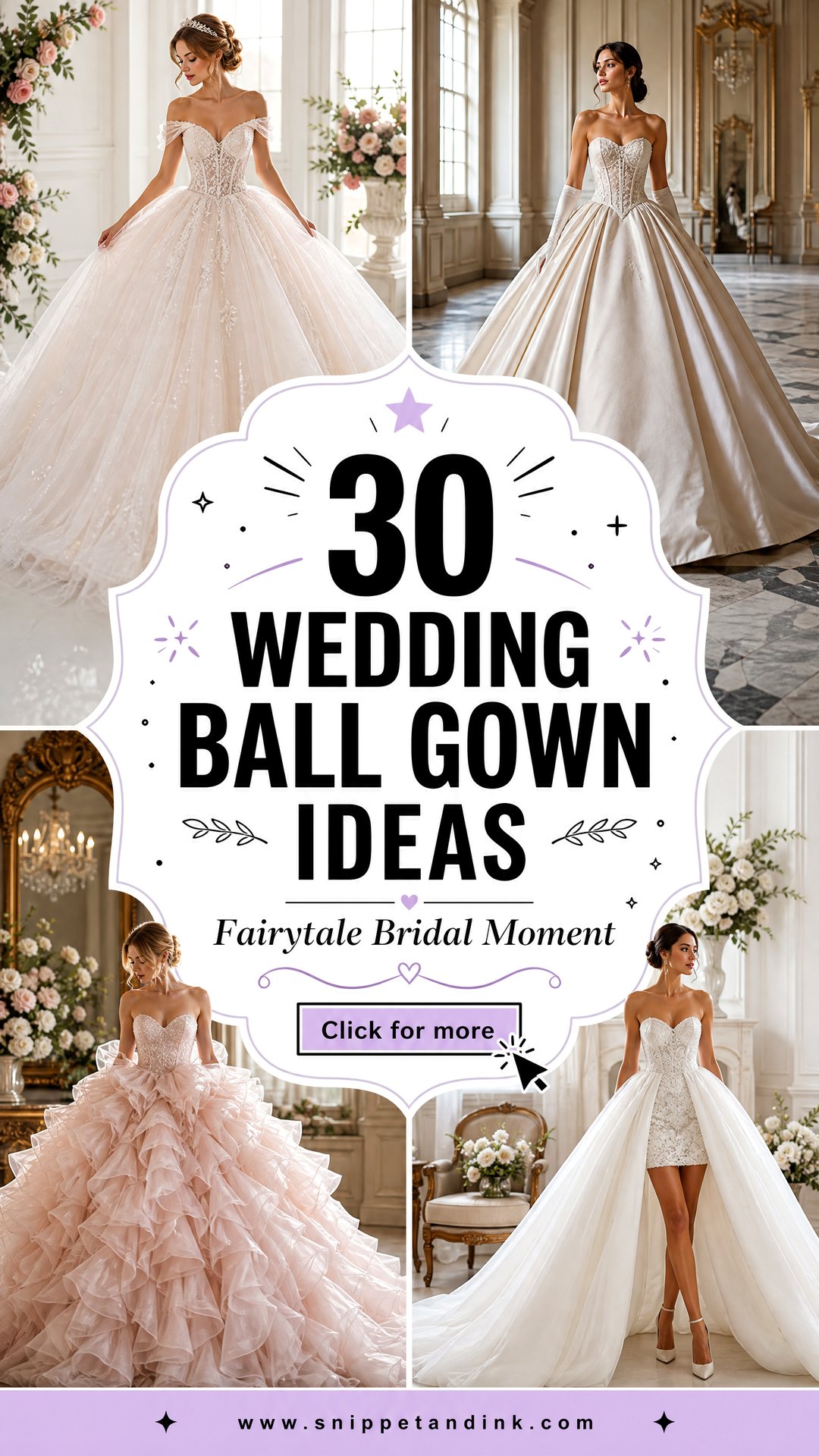
Measuring the Venue Before Falling for the Skirt
A ball gown that looks right in a bridal salon can be too wide for the life it has to lead on the day. Before a bride commits, I ask her to check a few measurements and situations she would never think of in a fitting room.
- The aisle. Measure it with chairs set out. A full skirt plus a parent walking beside you needs more room than an empty aisle suggests.
- The car. Large skirts get crushed in small back seats, so a car with a wide door and plenty of rear space saves the hem and the bride’s patience.
- Stairs and doorways. Narrow spiral staircases and old cottage doors may mean someone has to walk behind you lifting the skirt.
- The bathroom. Practice with a bridesmaid at home. Gathering the skirt forward is easier with two people, and planning it removes a lot of stress.
- The reception chair. Sit in it if you can. Chiavari chairs with low backs are kinder to a big bow or bustle than armchairs.
None of this means you shouldn’t wear a full skirt. It means the hoop, petticoat or number of tulle layers can be adjusted early, while there’s still time, rather than discovered on the morning itself.
1. Satin Ball Gown Wedding Dress
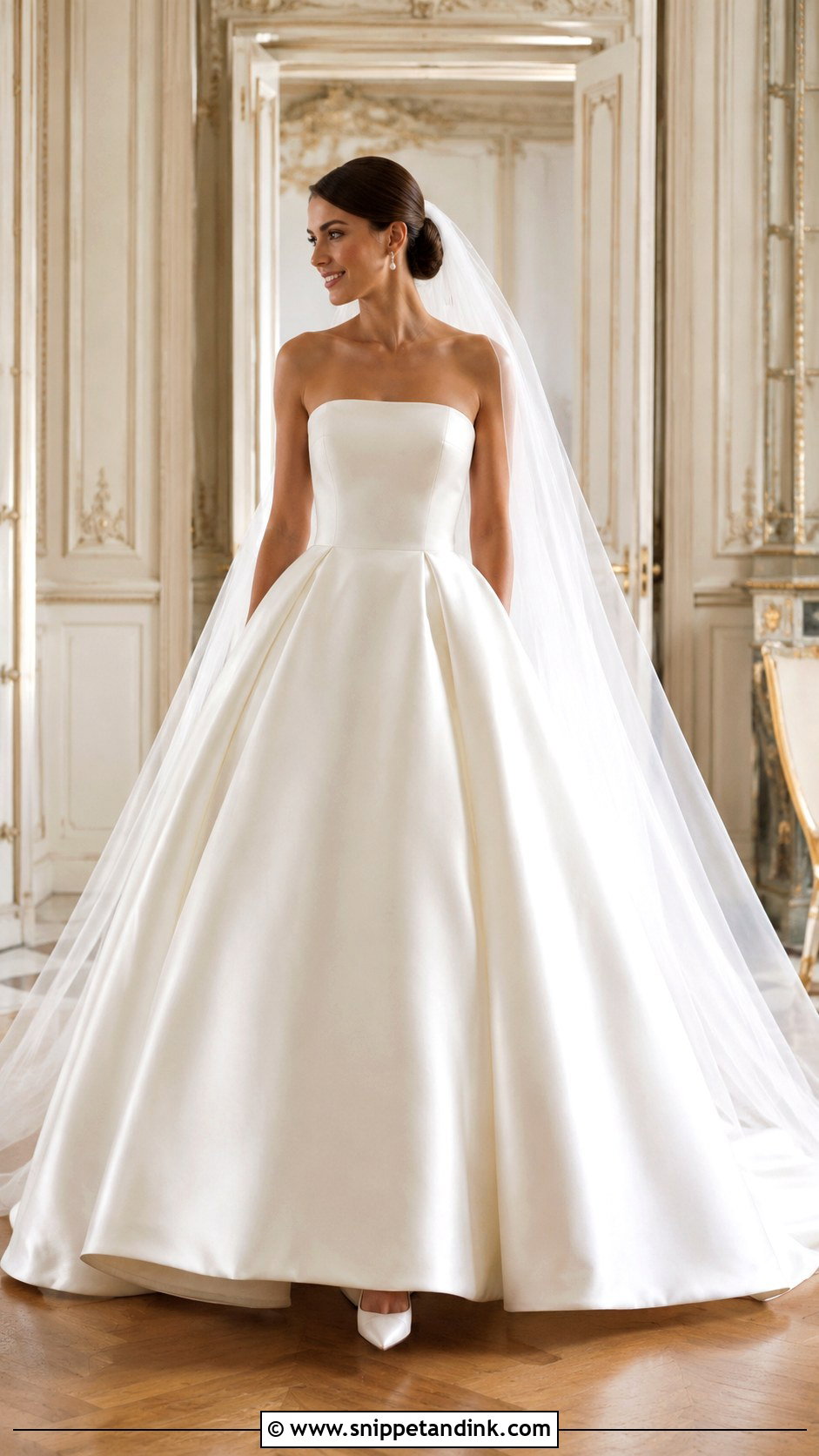
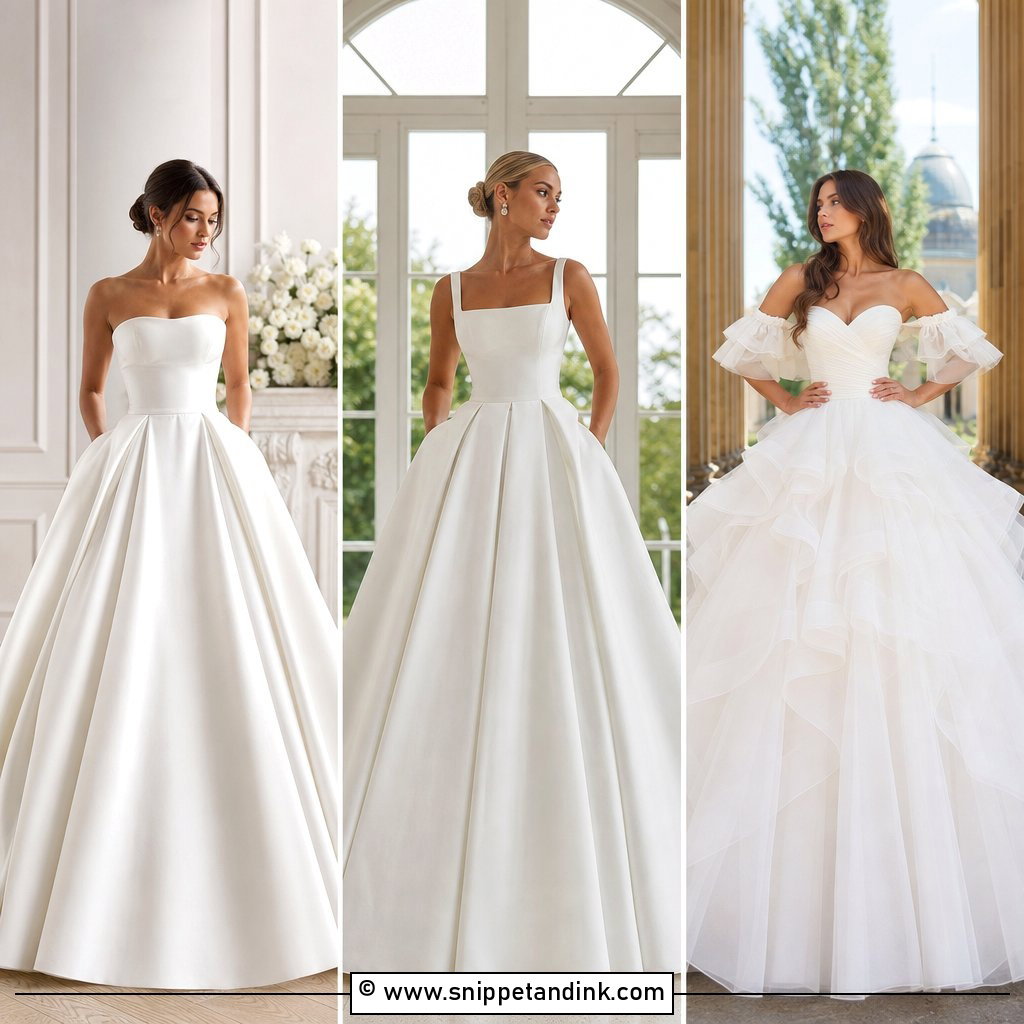
Satin is the purest ball gown there is, and it hides nothing. A fitted bodice and smooth full skirt rely entirely on cut, so I look hard at the seams and the waist before anything else; if the bodice wrinkles when you breathe, it needs taking in. Strapless, scoop or off-the-shoulder necklines all suit it. Pearl studs, a cathedral veil and pointed satin heels keep it classic. Formal hotels and estate venues suit it best. Remember that satin creases where you sit, so the back of the skirt will look softer by the reception than it did at the altar.
2. Lace Ball Gown Wedding Dress
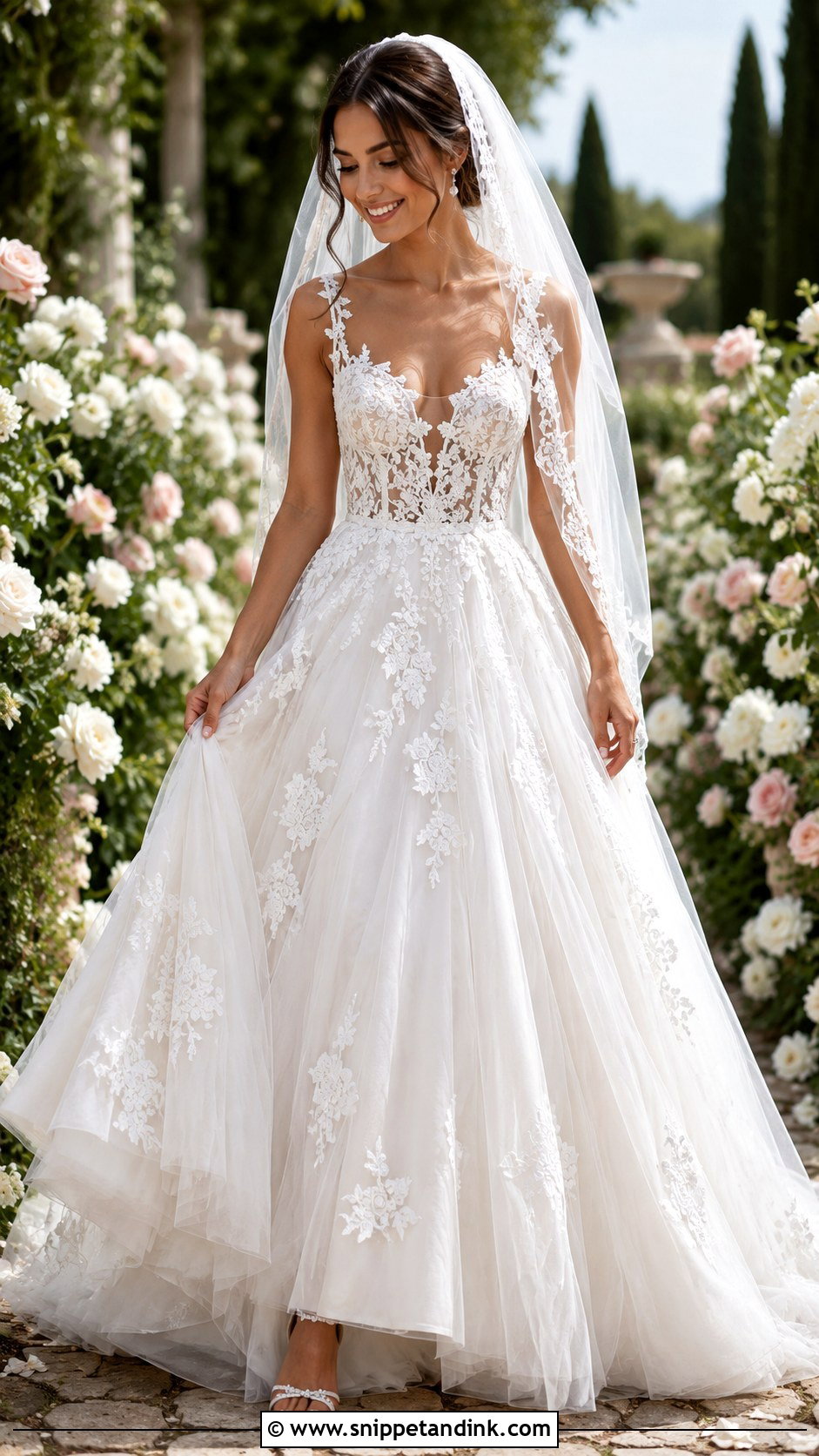
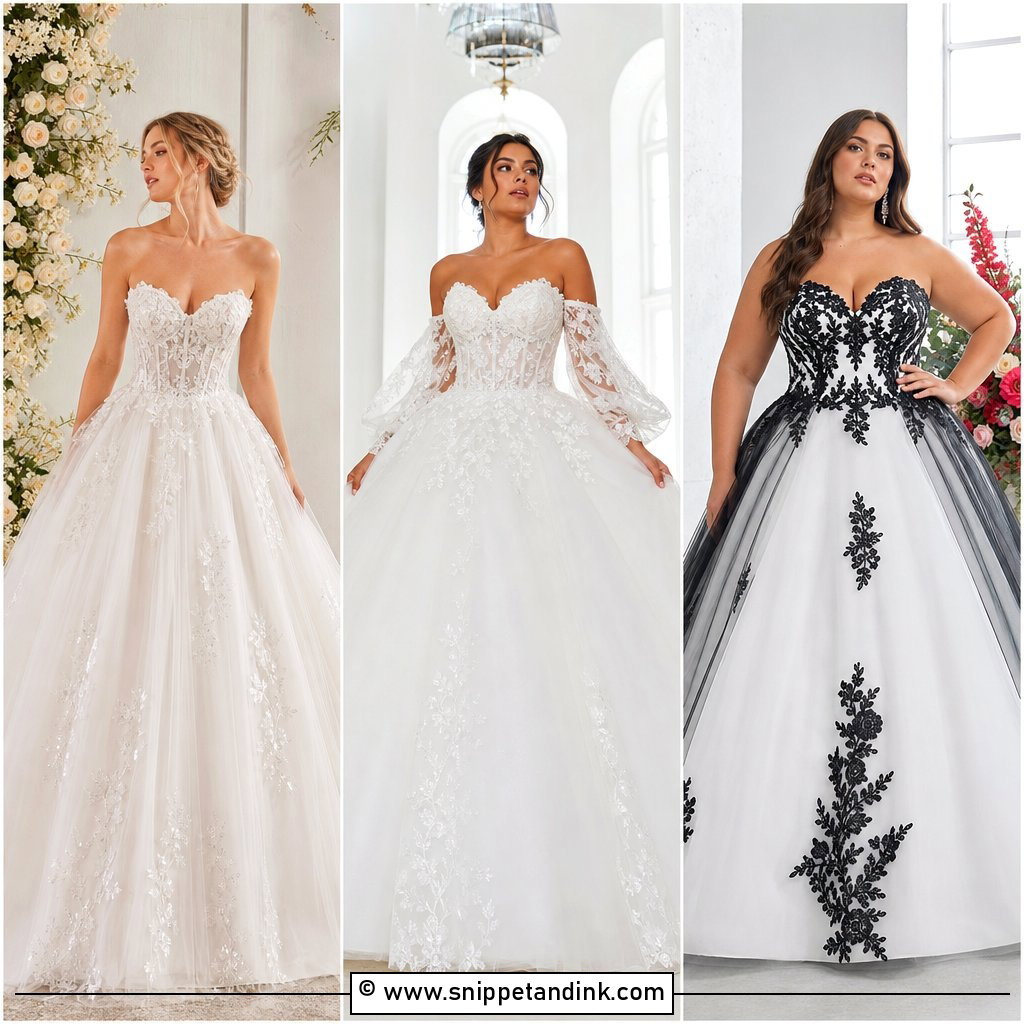
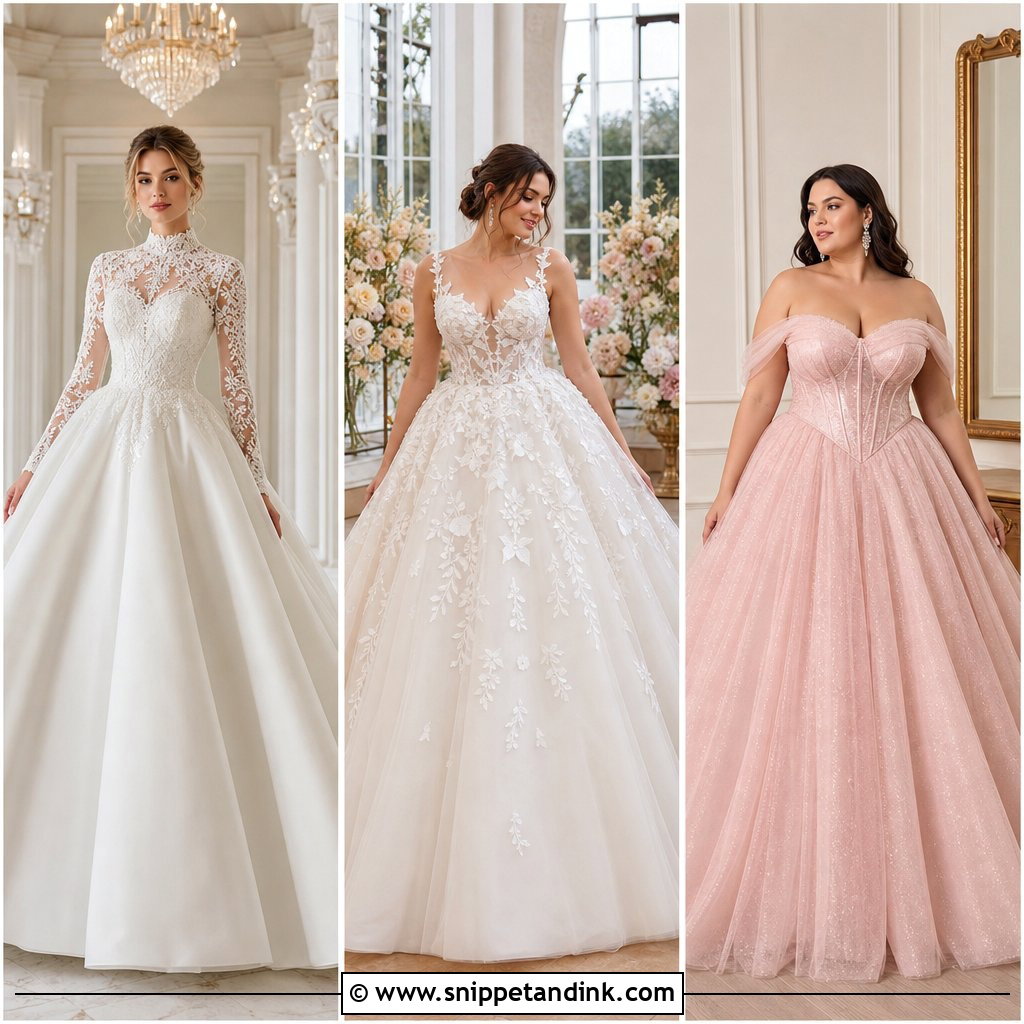
Lace on a full skirt gets room to show its pattern, which is why it looks richer here than on a slim sheath. It might be a sheer lace bodice, floral lace sleeves or appliques scattered across tulle. The detail I check is where the lace motifs fall at the seams. Good gowns match or hand-place them; cheaper ones cut straight through a flower at the side seam. A soft updo, pearl drop earrings and fine heels balance it, and a lace-edged veil ties the outfit together. Garden weddings and historic venues suit it.
3. Off Shoulder Ball Gown Wedding Dress
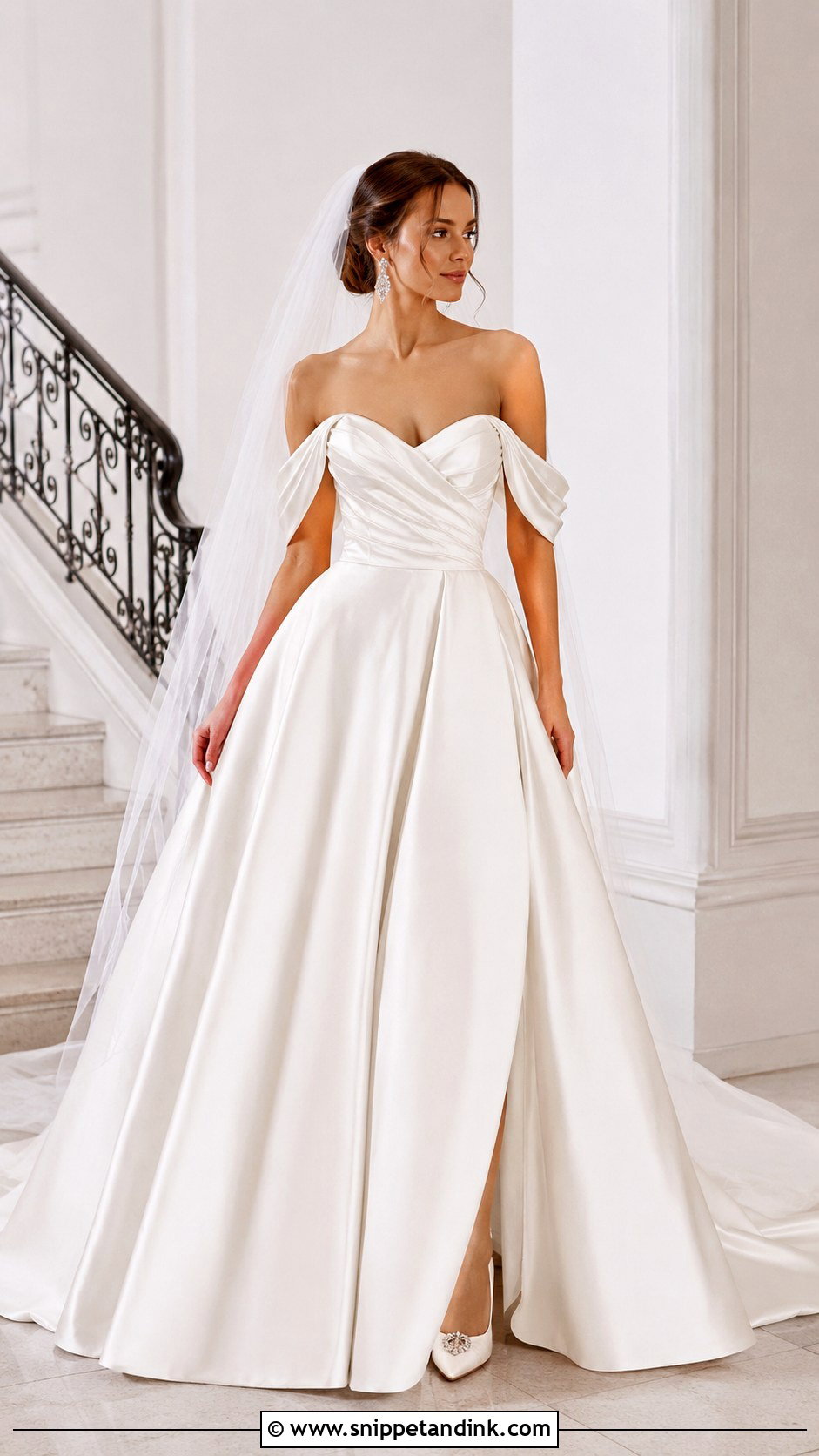
Off-the-shoulder necklines show the collarbone and balance the width of a big skirt better than almost any other neckline. Satin, lace, organza and tulle all work. Here’s the catch: fixed off-shoulder straps limit how high you can lift your arms, which matters for hugging, dancing and throwing a bouquet. I always have brides raise their arms at the first fitting. Removable or draped sleeves solve it. Skip the necklace or keep it small, and add long earrings, a smooth bun and elegant heels.
4. Strapless Ball Gown Wedding Dress
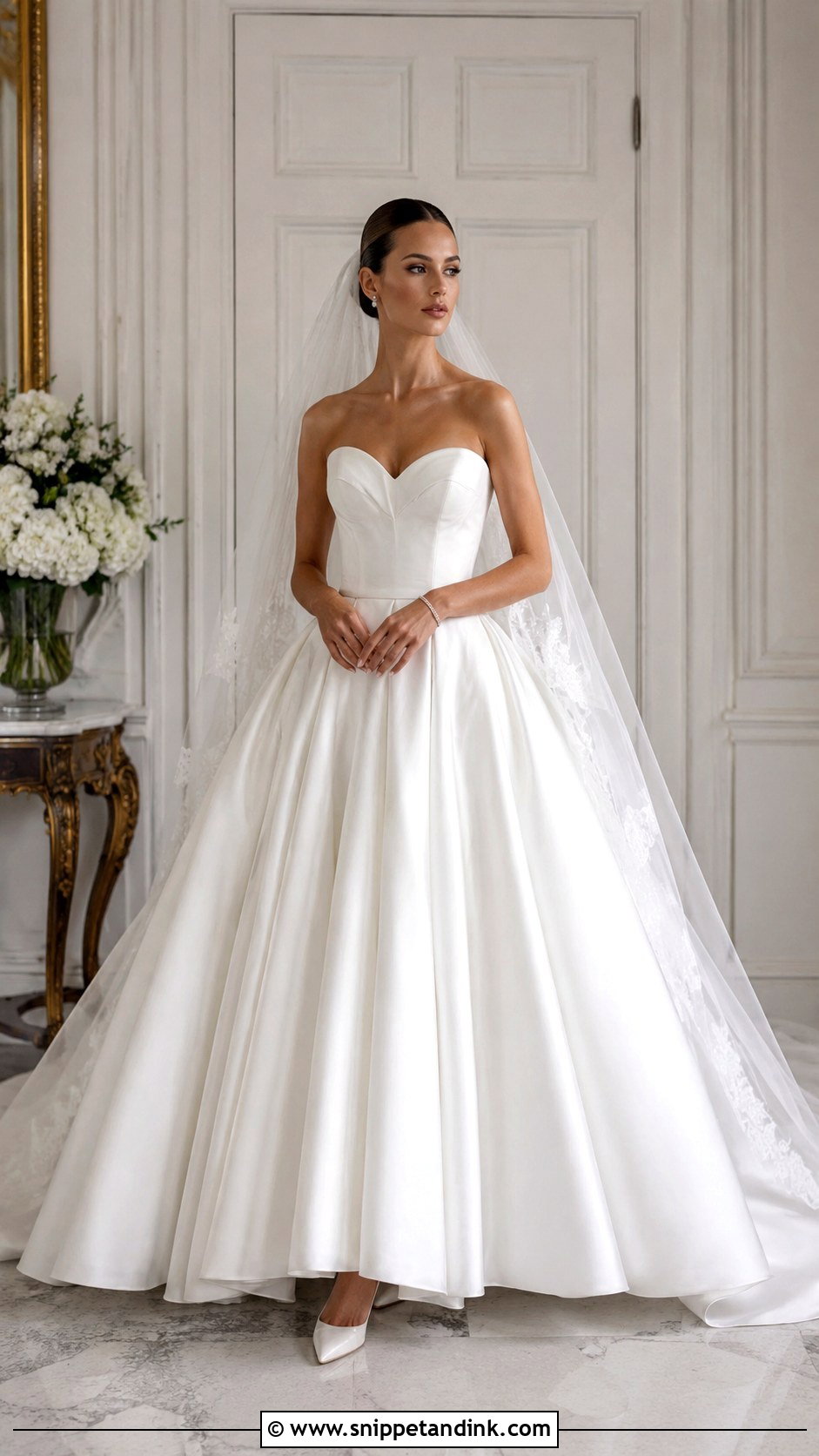
Strapless gowns stay up because of the internal structure, not your shoulders. A good corset interior with boning and a waist stay grips at the narrowest point of your torso and holds the weight of the skirt there. Straight, sweetheart or softly curved tops suit different busts, and I’d choose based on support, not just looks. A veil, a tennis bracelet and sleek heels give a refined finish, with a statement earring if the dress is very plain. If you find yourself pulling the bodice up during the fitting, it needs taking in at the side seams.
5. Sweetheart Neck Ball Gown Wedding Dress
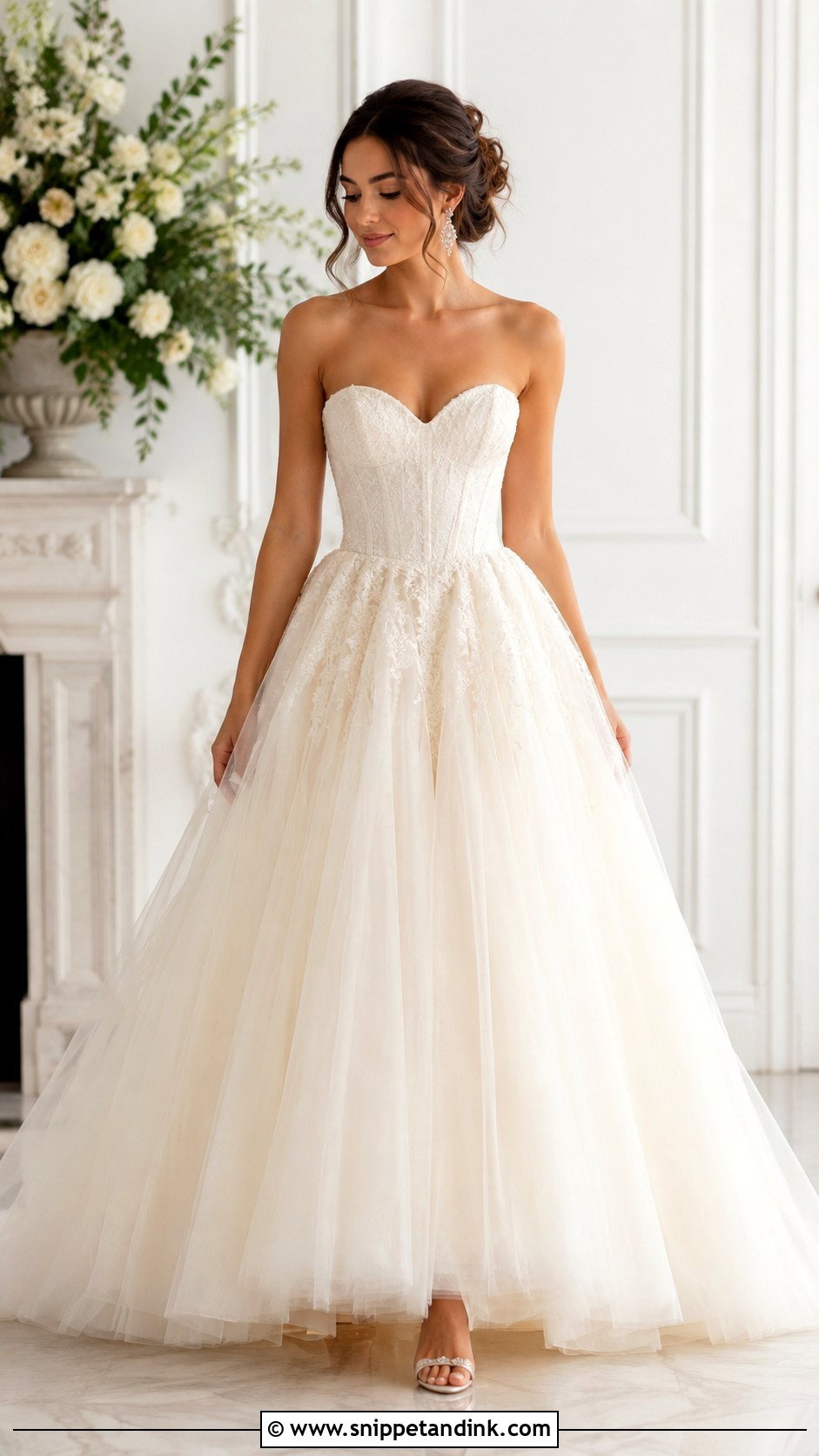
A sweetheart neckline adds shape to the bust and frames the face, and it suits satin, lace, beading or tulle equally. It does need a well-structured bodice; without boning, the two curves of the neckline can collapse inward when you sit. I’d pair it with a full veil, crystal earrings and fine heels, plus natural makeup and soft curls. On camera, the curve gives the bodice definition while the rest of the gown stays graceful.
6. Square Neck Ball Gown Wedding Dress
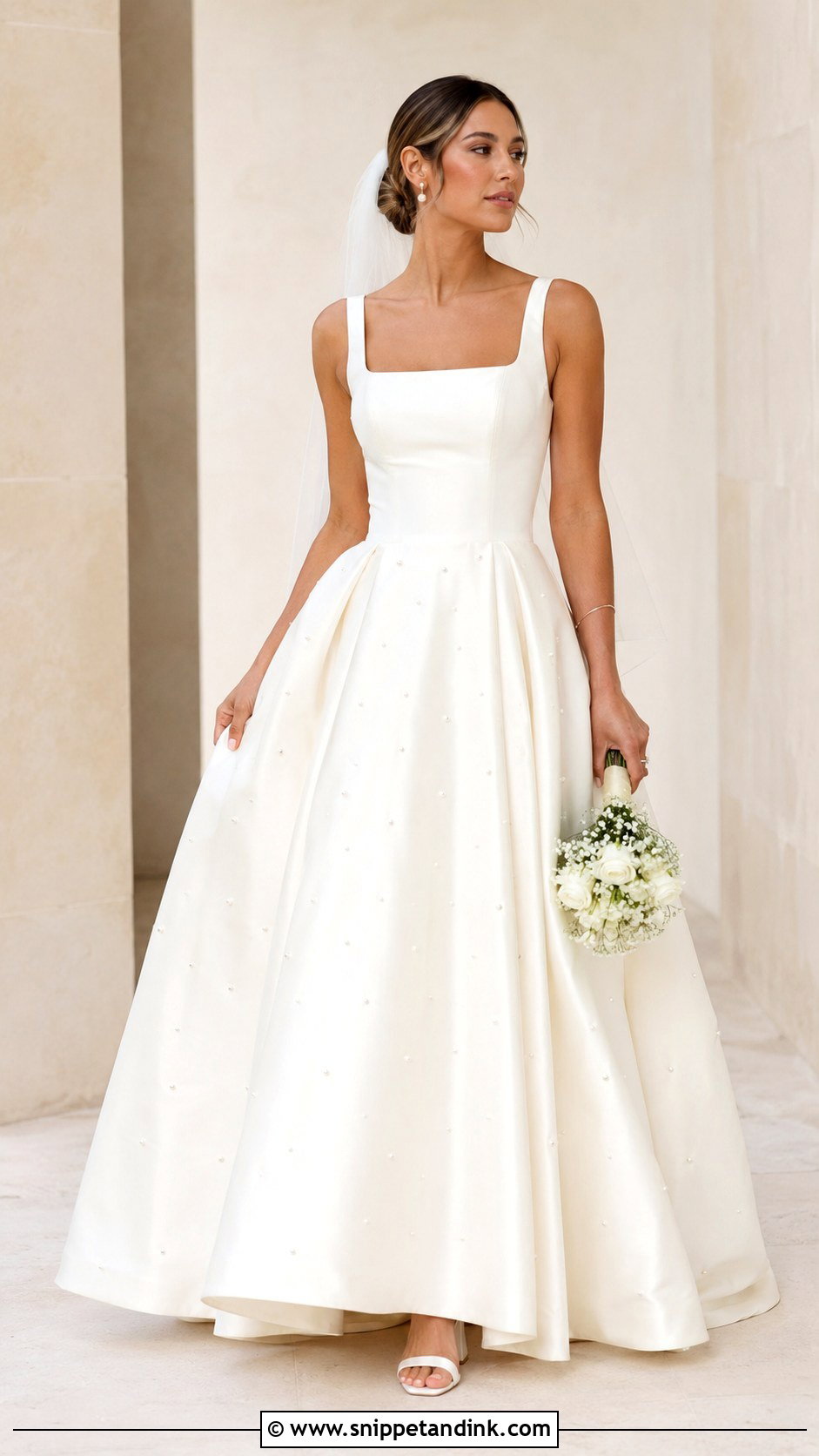
Square necklines read vintage and modern at once, and they give the upper body a tailored frame above all that skirt. Satin keeps it minimal, lace makes it romantic and organza lightens it. I find this neckline flatters broad shoulders well because the straight line widens the neck area rather than the shoulder line. A low bun, pearl studs and block heels keep it practical. Gloves or a simple veil give it an editorial feel.
7. Long Sleeve Ball Gown Wedding Dress
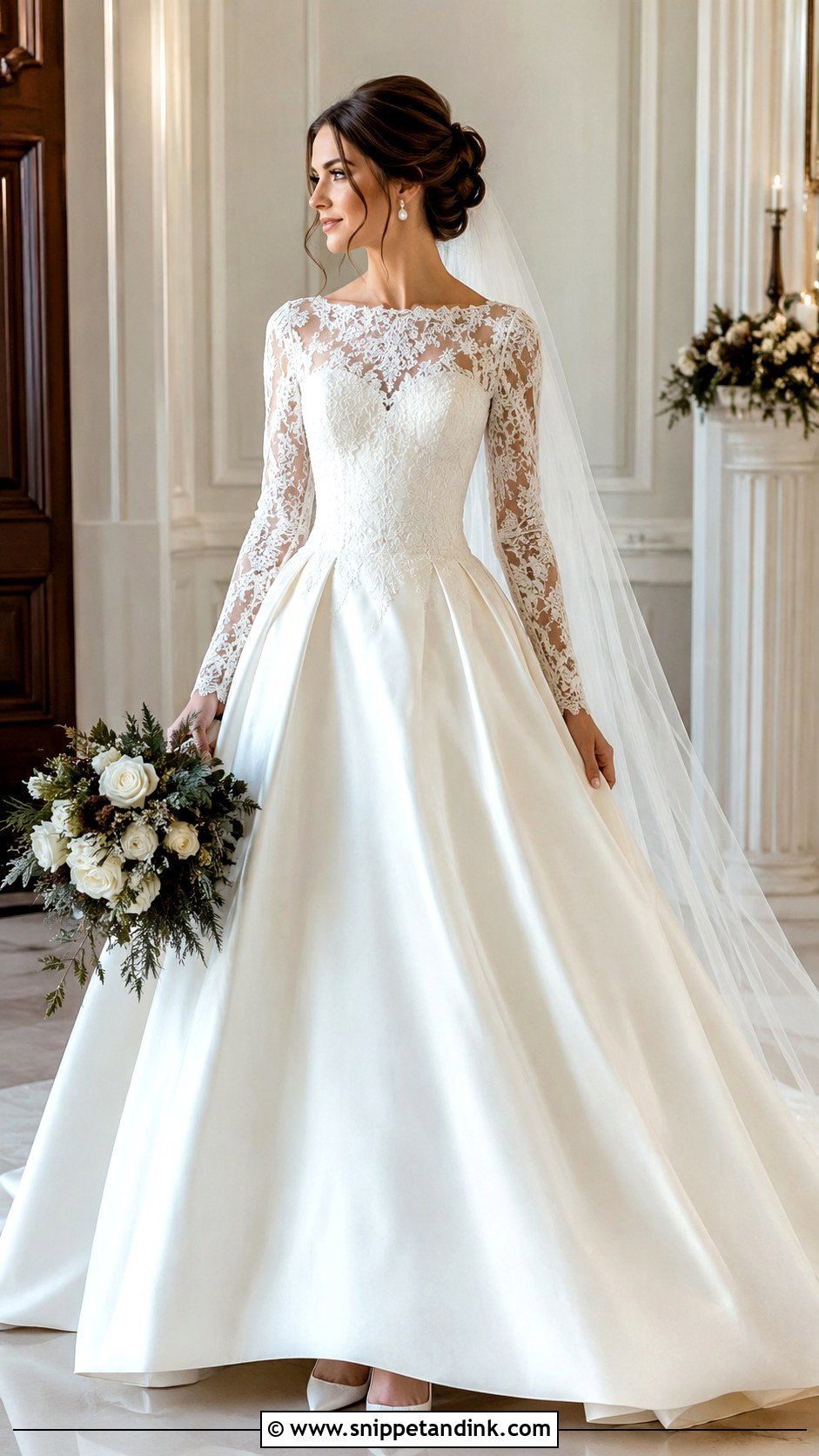
Sleeves change the whole mood of a long sleeve ball gown wedding dress. Lace feels romantic, satin looks sleek, and illusion mesh or sheer tulle sits between them. The fitting question is movement. A sleeve cut close to the arm with a high armhole lets you lift your arms; a low armhole looks fine standing but pulls the whole bodice up when you reach. Keep accessories quiet, with a low chignon, pearl earrings and closed-toe heels. It suits fall and winter weddings and brides who want coverage without losing drama.
8. Detachable Sleeve Ball Gown Wedding Dress
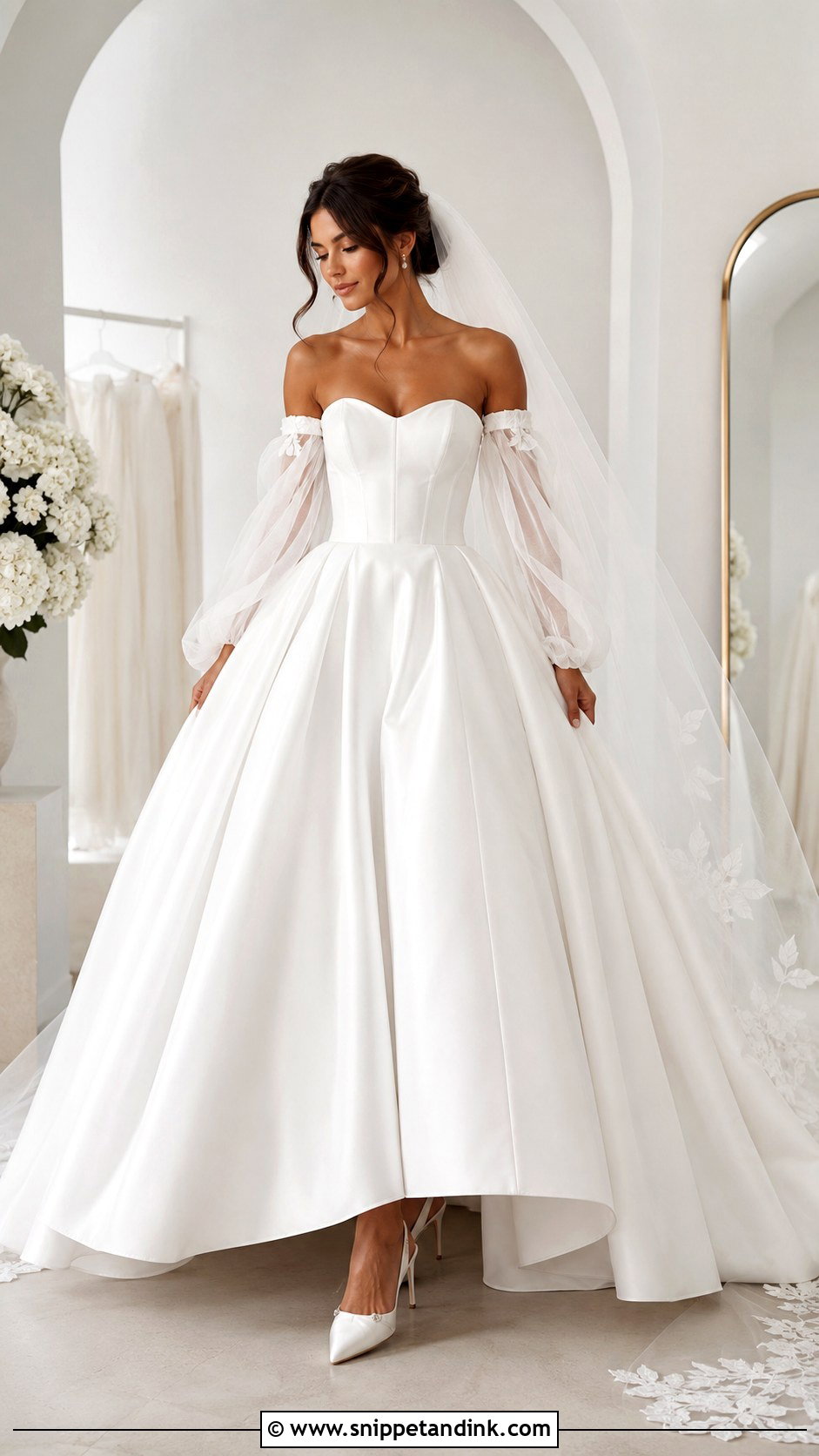
Detachable sleeves give you two looks without a second dress: covered for the ceremony and formal portraits, bare for dancing. Off-shoulder, puff, lace or sheer long sleeves can all be made removable. The best versions look like part of the design, so the fabric, color and neckline need to match exactly. I ask the seamstress to show the bride and one bridesmaid how to unfasten them, because hidden hooks and snaps are fiddly in a dim room at night. Choose earrings that suit both versions.
9. Drop Waist Ball Gown Wedding Dress
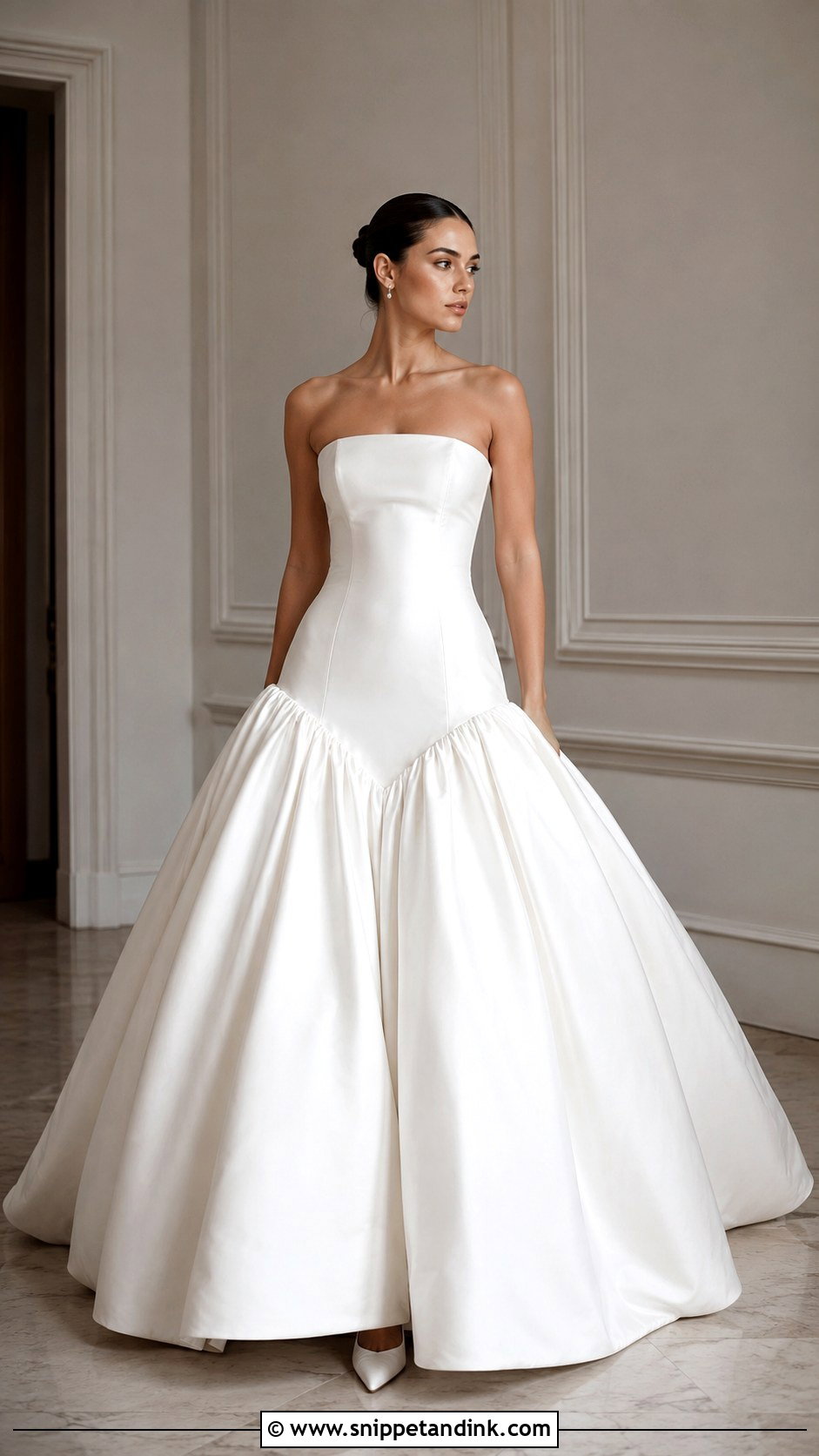
A drop waist moves the waistline down toward the hip, so the bodice reads long and sculpted before the skirt flares out. It looks strongest in satin, brocade or structured taffeta, which hold the line. It’s less forgiving than a natural waist. If the drop sits at the wrong point on your hip, it shortens your legs, so I’d treat alterations as part of the price. Keep styling sleek with smooth hair, minimal jewelry and pointed heels. It feels more fashion-led than a classic ball gown while keeping the volume.
10. Corset Ball Gown Wedding Dress
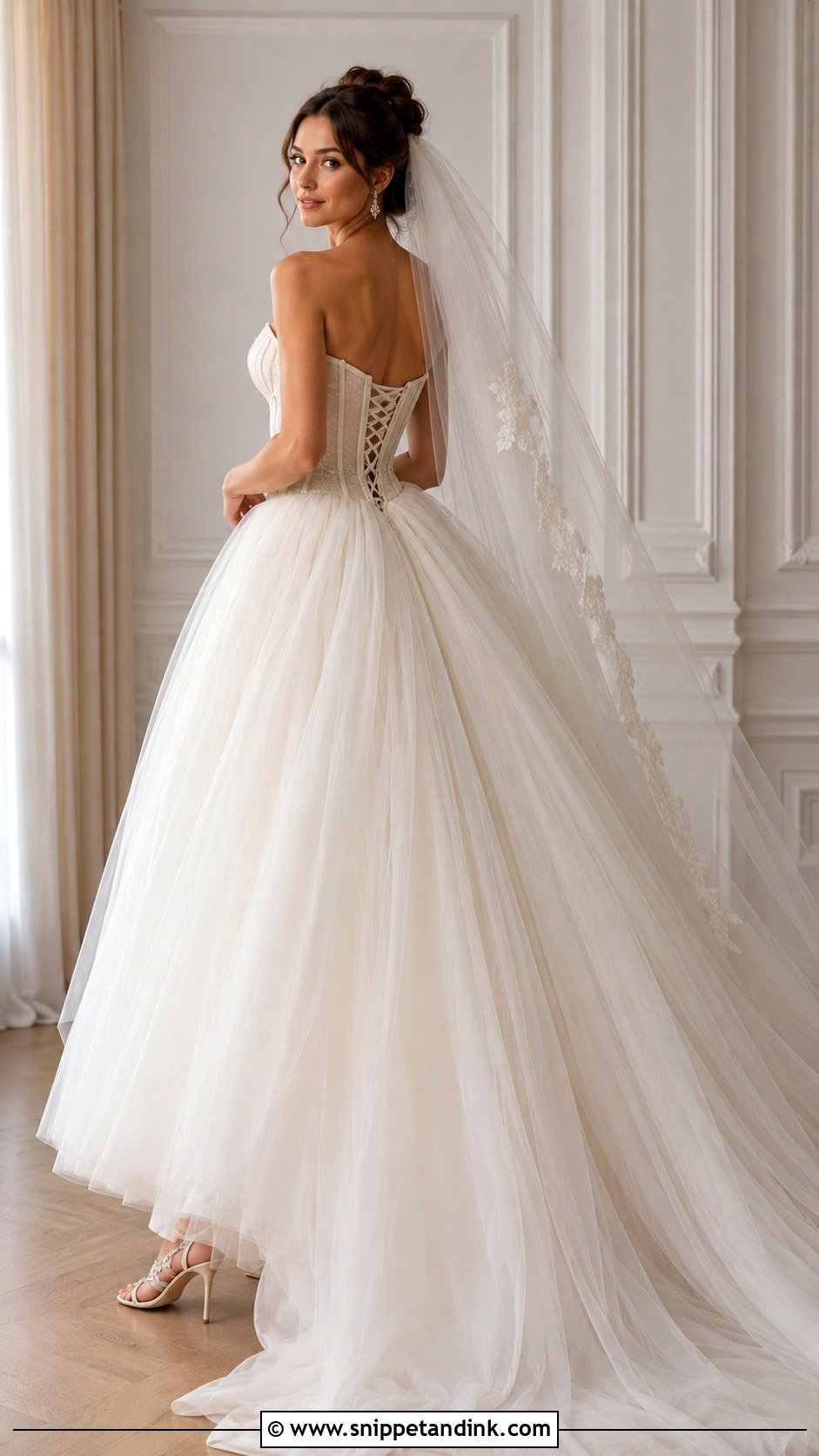
A corset bodice carries the gown. Boning, a lace-up back and sculpted cups hold the skirt’s weight at your waist and give the bodice a clear shape. It can be fully covered or slightly sheer for a modern look, and it balances a full tulle, satin or organza skirt. A lace-up back has a practical advantage I like: it adjusts on the day if you’ve lost or gained a little since the final fitting. Lace it firmly but not so tight you can’t eat dinner. A veil, soft earrings and comfortable heels complete it.
11. Minimalist Ball Gown Wedding Dress
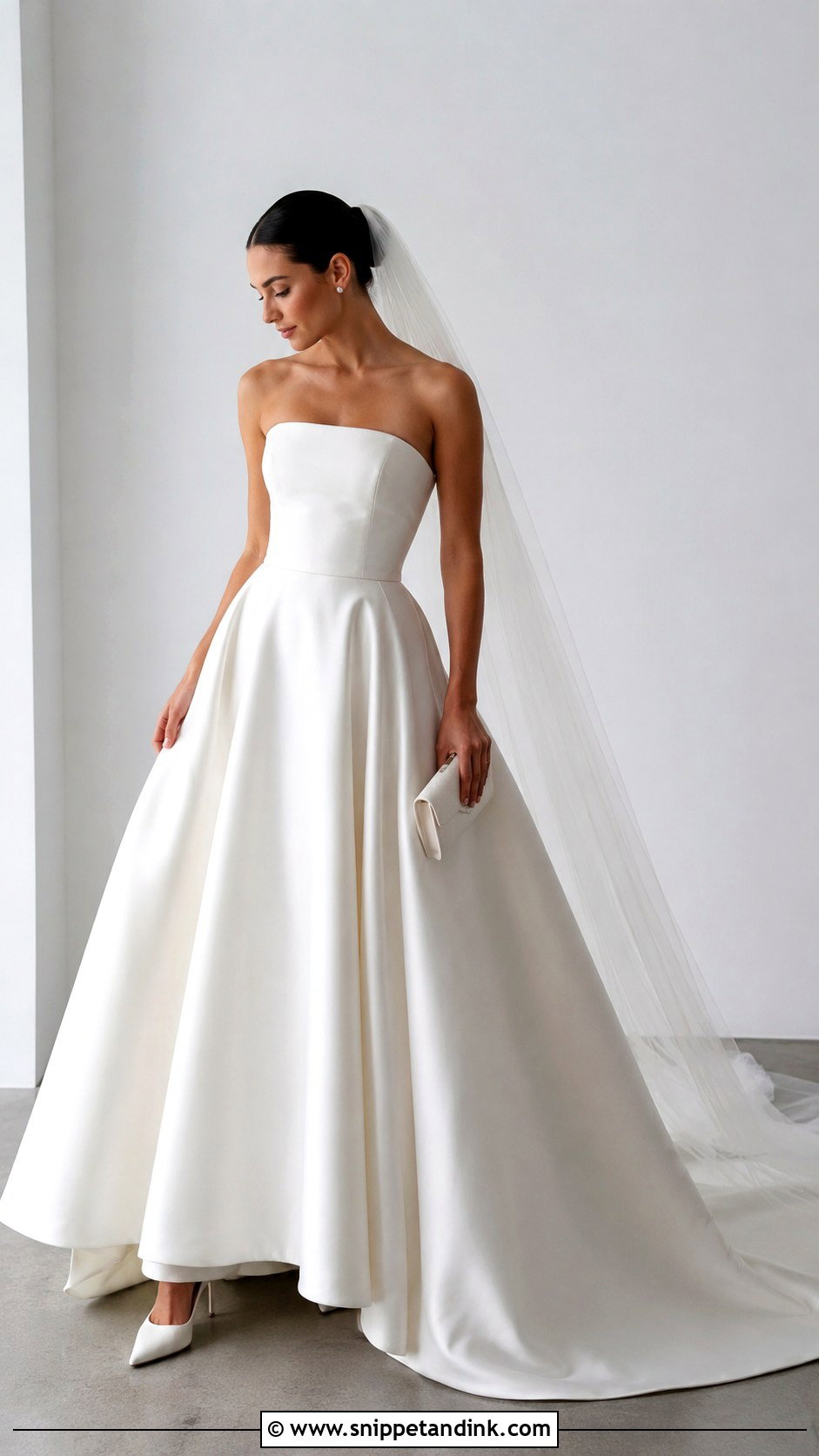
Plain gowns need perfect fabric and perfect fit, because there’s no embellishment to distract from either. Mikado, heavy satin and crepe-backed fabrics hold shape while staying simple, and strapless or square necklines suit them best. Pearl studs, a sleek veil and a structured clutch finish it. I’d spend more on alterations here than on almost any other style; a minimal gown with a slightly loose bodice simply looks unfinished. Done properly, it’s clean lines, quiet luxury and photos that won’t date.
12. Mikado Ball Gown Wedding Dress
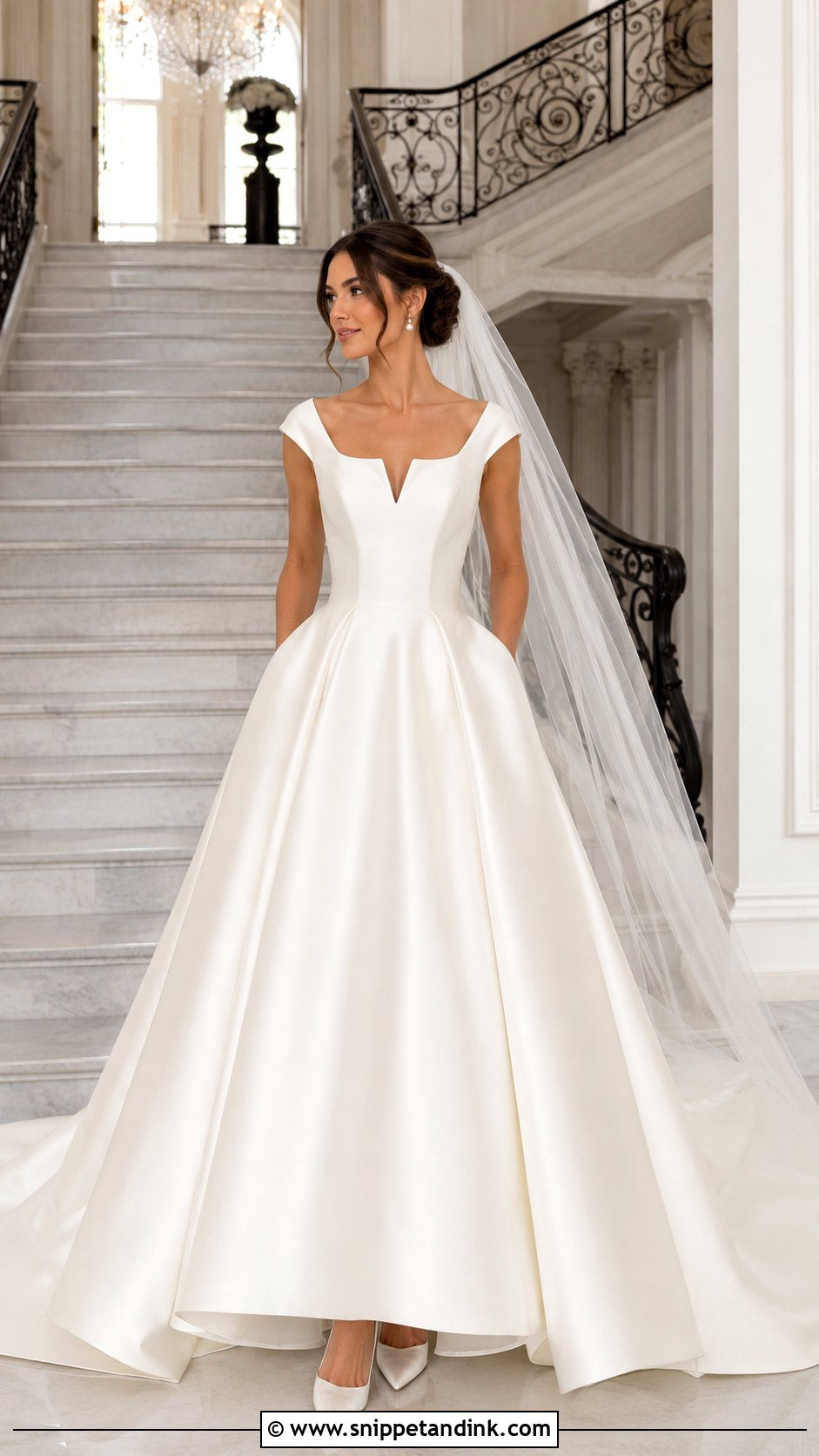
Mikado is a heavy silk or silk-blend weave with body, which is why it makes a crisp full skirt without petticoats doing all the work. It has a soft sheen rather than a high shine, so the gown needs very little sparkle. Simple bodices, sculpted necklines and hidden pockets suit it. Classic pumps, pearl earrings and a long veil finish it. Mikado is heavier than tulle, though. A full Mikado skirt with a train is real weight to carry for twelve hours, so I’d make sure the waist stay is doing its job.
13. Tulle Ball Gown Wedding Dress
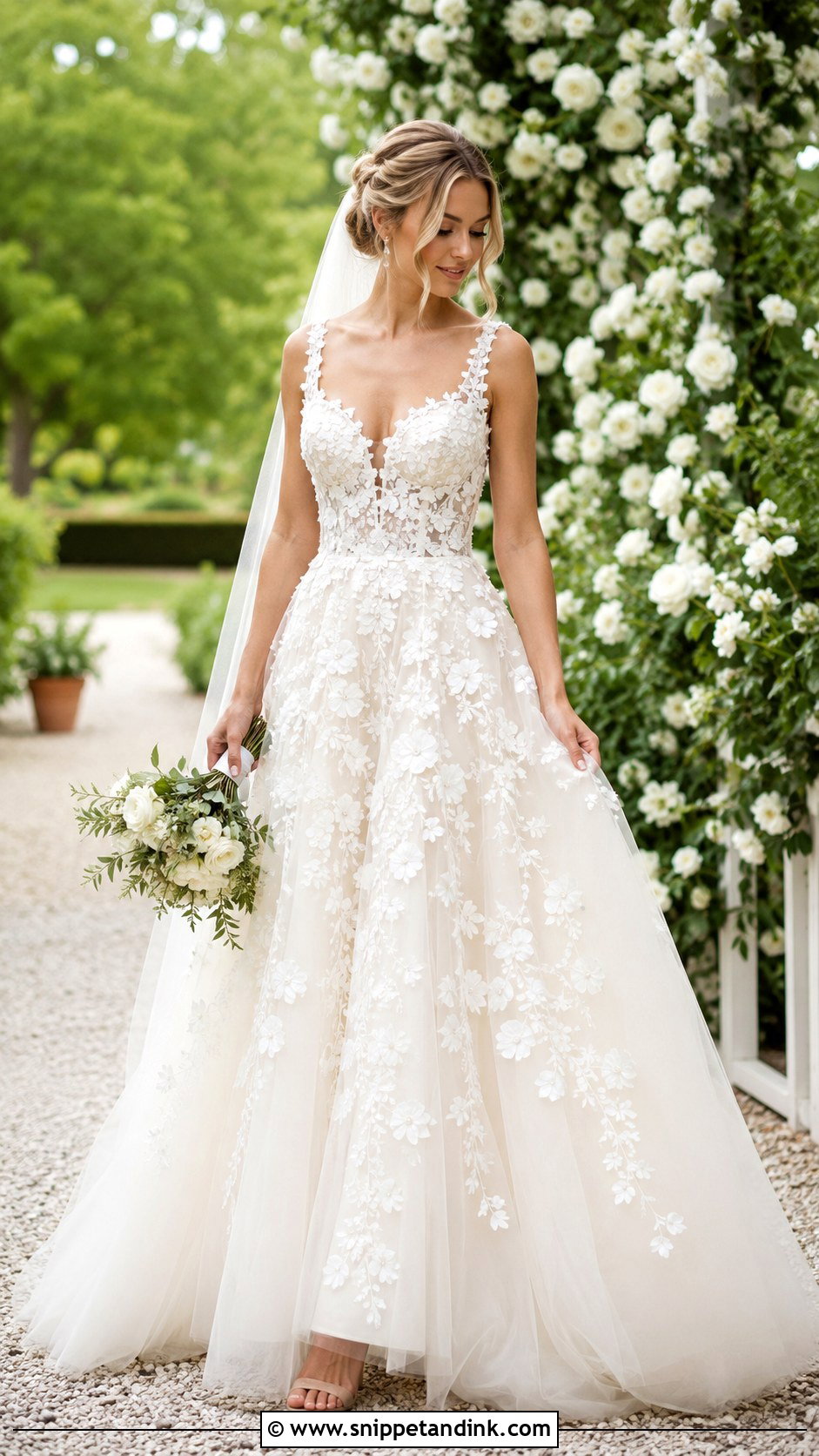
Tulle gives the most volume for the least weight. Many fine layers build a cloud of a skirt that still feels light to walk in. The bodice can be plain or carry floral applique, sparkle or lace. Delicate heels, small earrings and a soft veil keep it balanced. Tulle snags, though: on bark, brick walls, bouquet wire and other people’s watch straps. For outdoor portraits, I’d ask the photographer to keep the bride off rough surfaces, and pack small scissors to trim any pulled threads.
14. Organza Ball Gown Wedding Dress
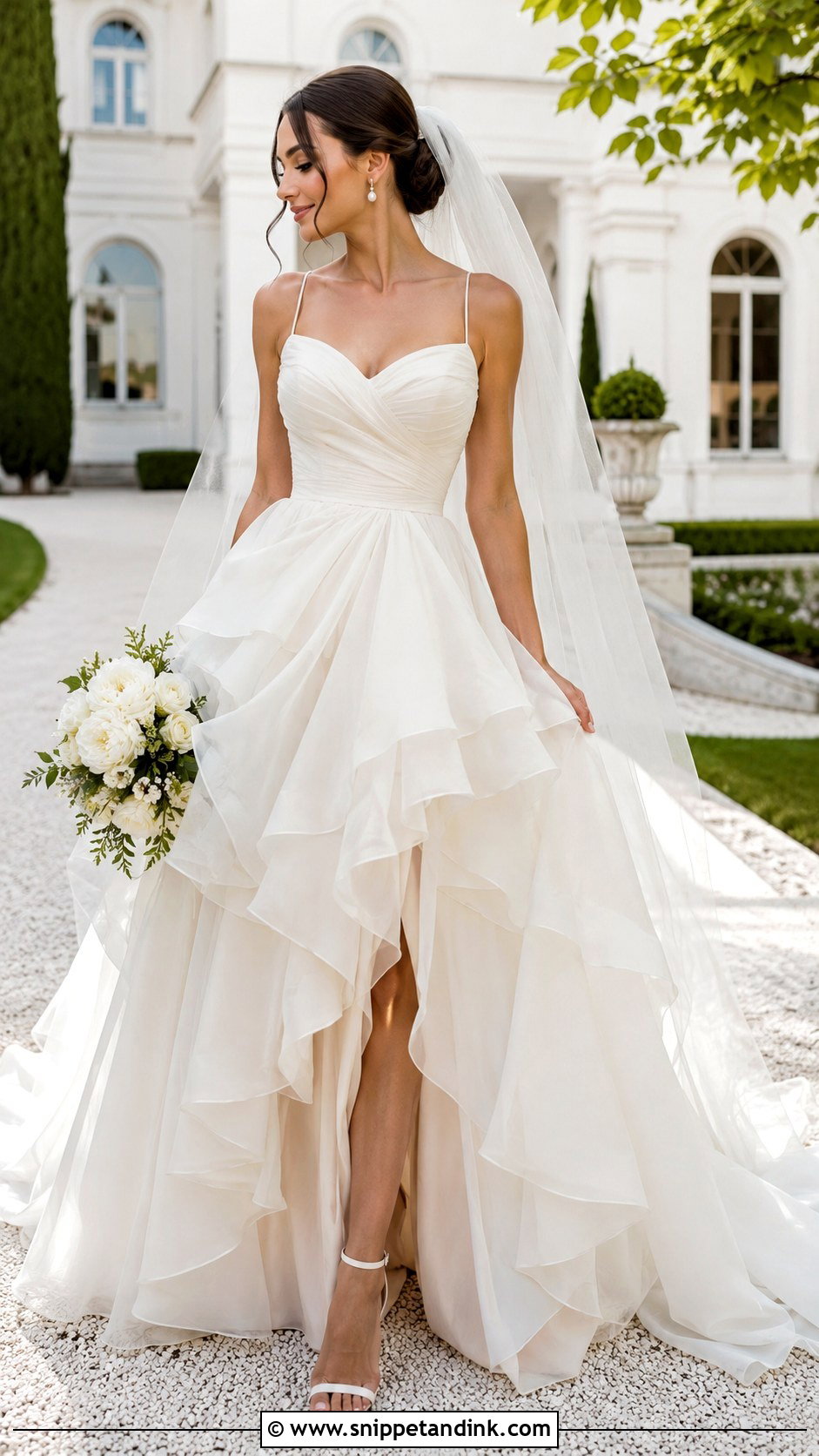
Organza is crisp where tulle is soft. It holds a ruffle or a gathered skirt but looks lighter than satin or brocade, which suits brides who want movement without bulk. Soft waves, pearl earrings and strappy heels keep it fresh, and a simple veil or sheer cape adds more air. Spring and summer weddings suit it well. One thing to know: organza creases sharply, and those creases don’t fall out by themselves, so the gown needs steaming at the venue rather than in the morning before a car ride.
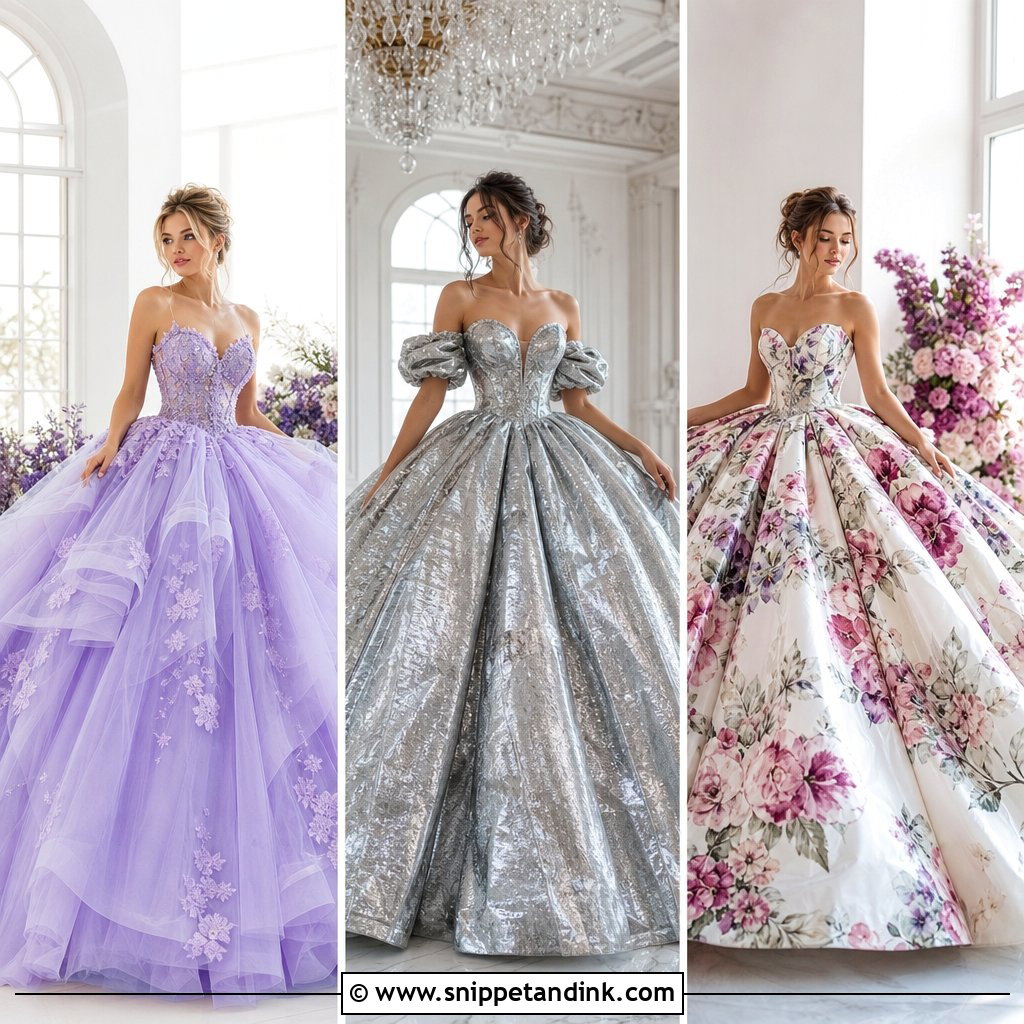

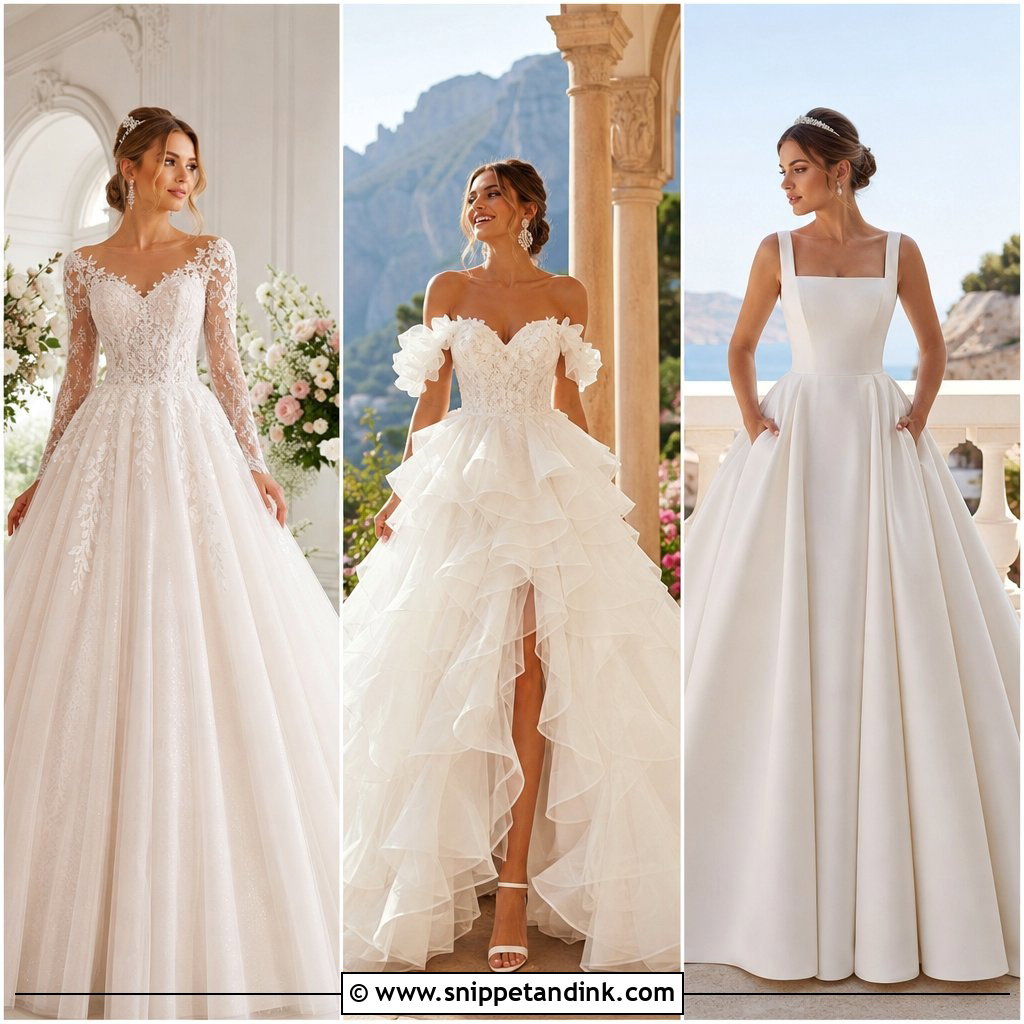
15. Floral Applique Ball Gown Wedding Dress
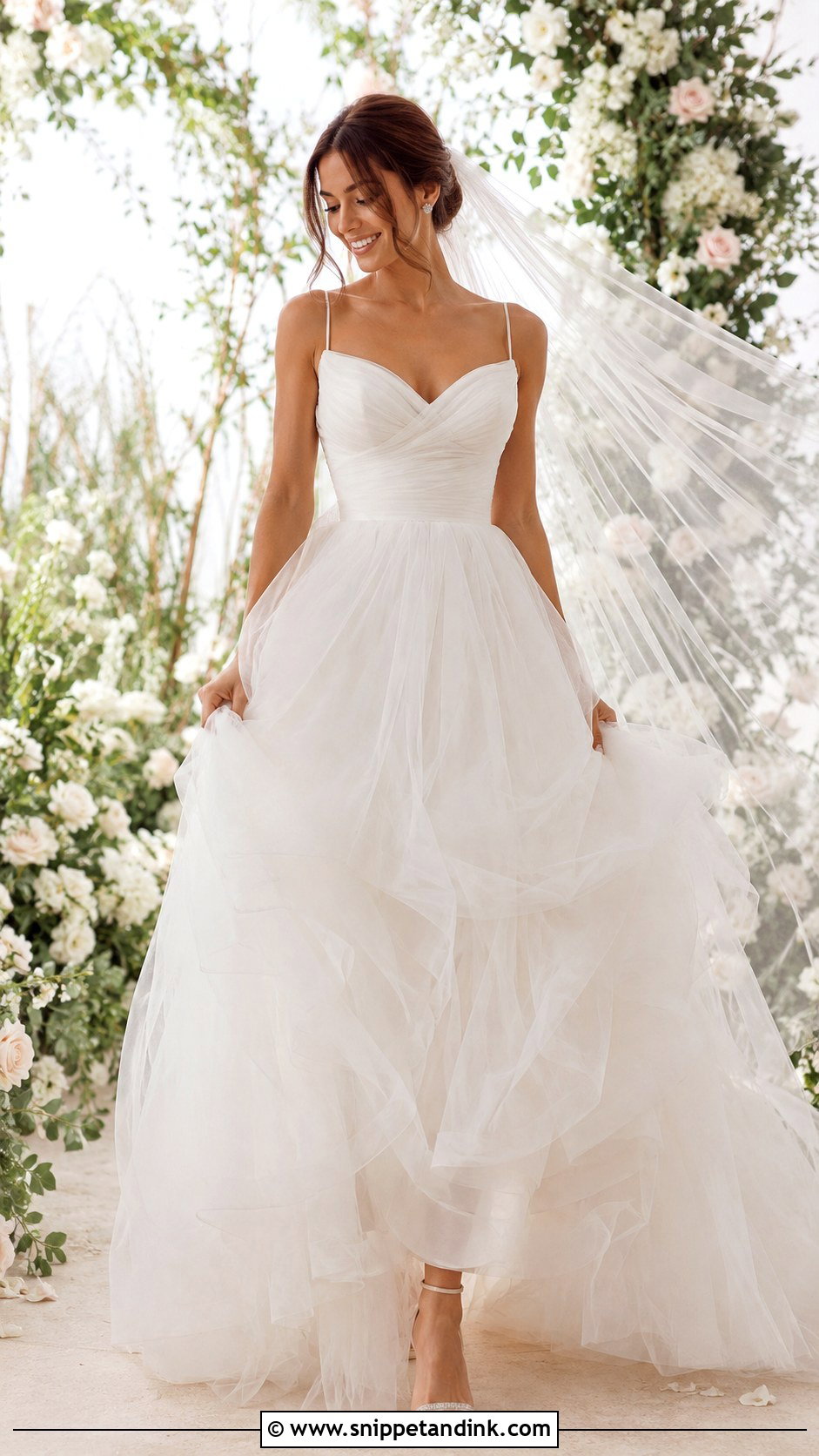
Applique flowers can sit on the bodice, trail down the skirt or cover the whole gown. Raised 3D flowers feel couture; flat lace flowers feel more classic. I’d check where the raised ones sit, because flowers across the hip or seat crush when you sit and catch on chair backs. Dainty earrings, a soft veil and neutral shoes keep the focus on the dress, and a bold applique gown suits a simpler bouquet. Outdoor ceremonies and estates suit it well.
16. Beaded Ball Gown Wedding Dress
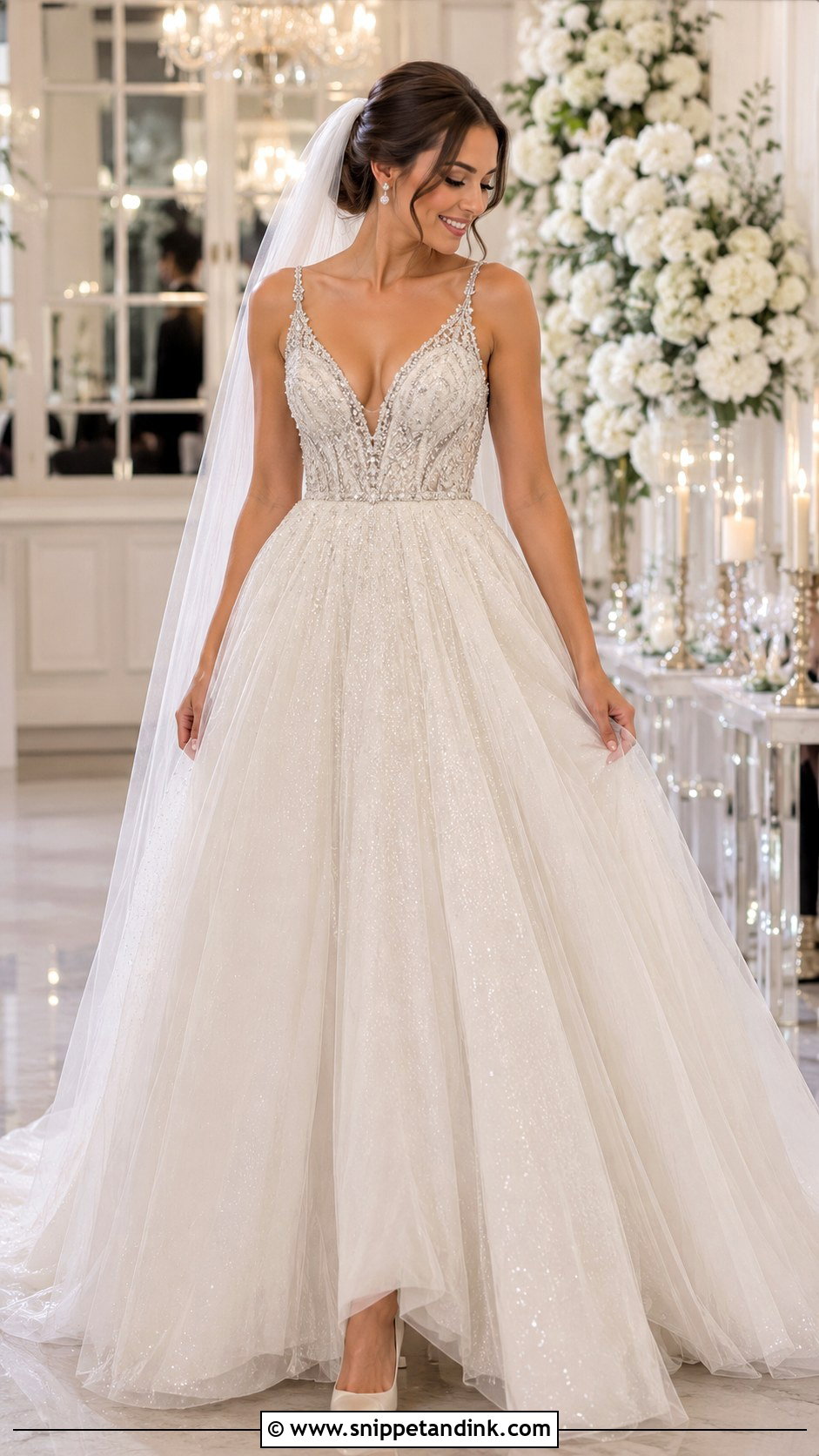
Beading catches every light as you move, which is what makes it so striking at evening receptions and grand indoor venues. My rule is one focus: a beaded bodice over a plain skirt, or scattered sparkle across soft tulle, not heavy beading everywhere. Simple earrings, smooth hair and metallic or satin heels are plenty. Beaded gowns are heavy, and the weight pulls on the shoulders and waist all day, so ask your seamstress whether the beading is distributed well and how the bodice is anchored.
17. Pearl Ball Gown Wedding Dress
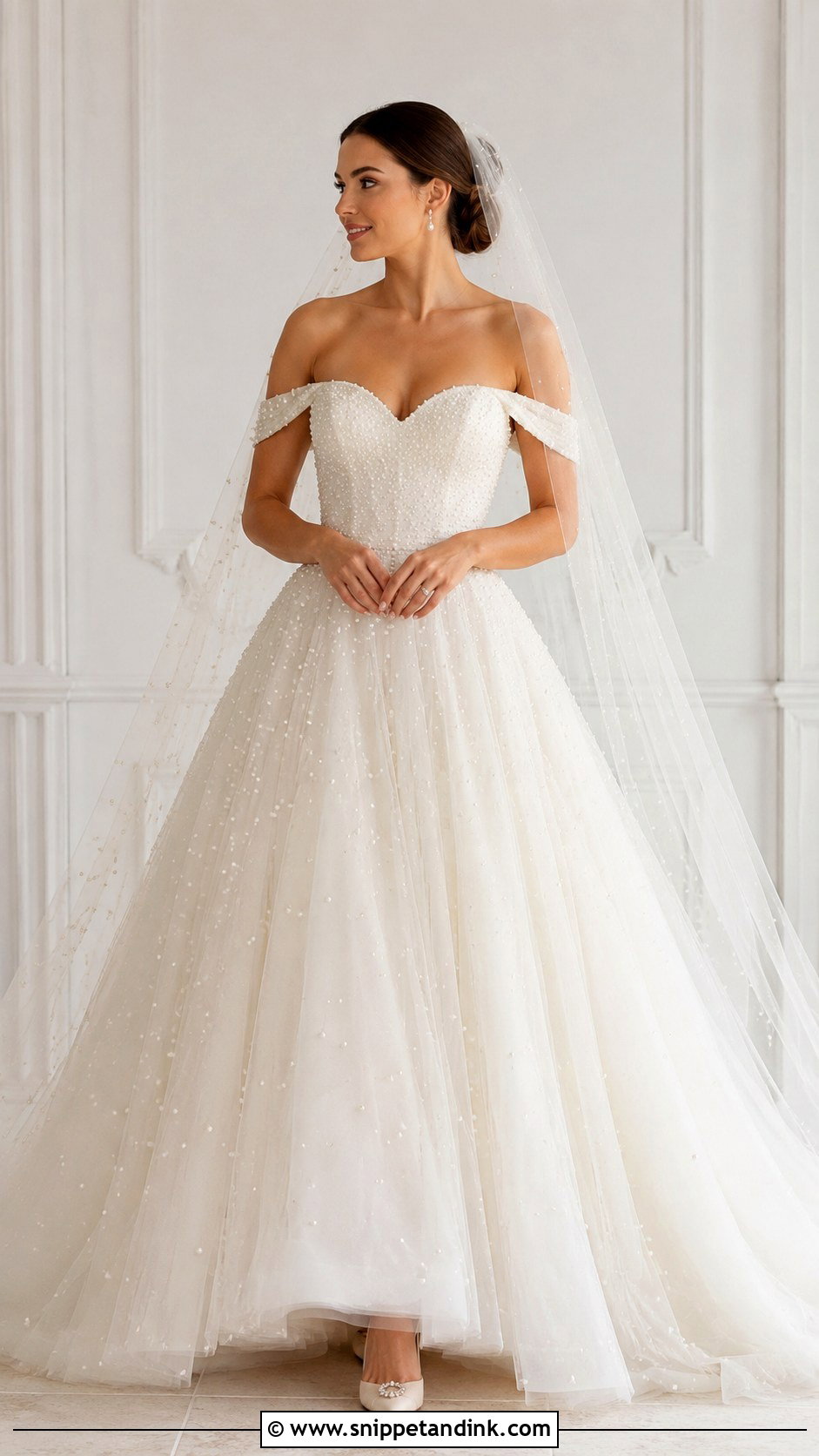
Pearls glow rather than sparkle, so this gown reads softer than crystal or sequins. They might be scattered across tulle, placed along the bodice or used as trim on sleeves and veils. A pearl veil looks especially good over a simpler gown. Pearl earrings, satin heels and a clean hairstyle keep it consistent. Pearl detail shows best close up, in portraits and soft natural light. One practical check: run a hand over the bodice. Pearls sewn too densely at the underarm rub against the inner arm by evening.
18. Bow Back Ball Gown Wedding Dress
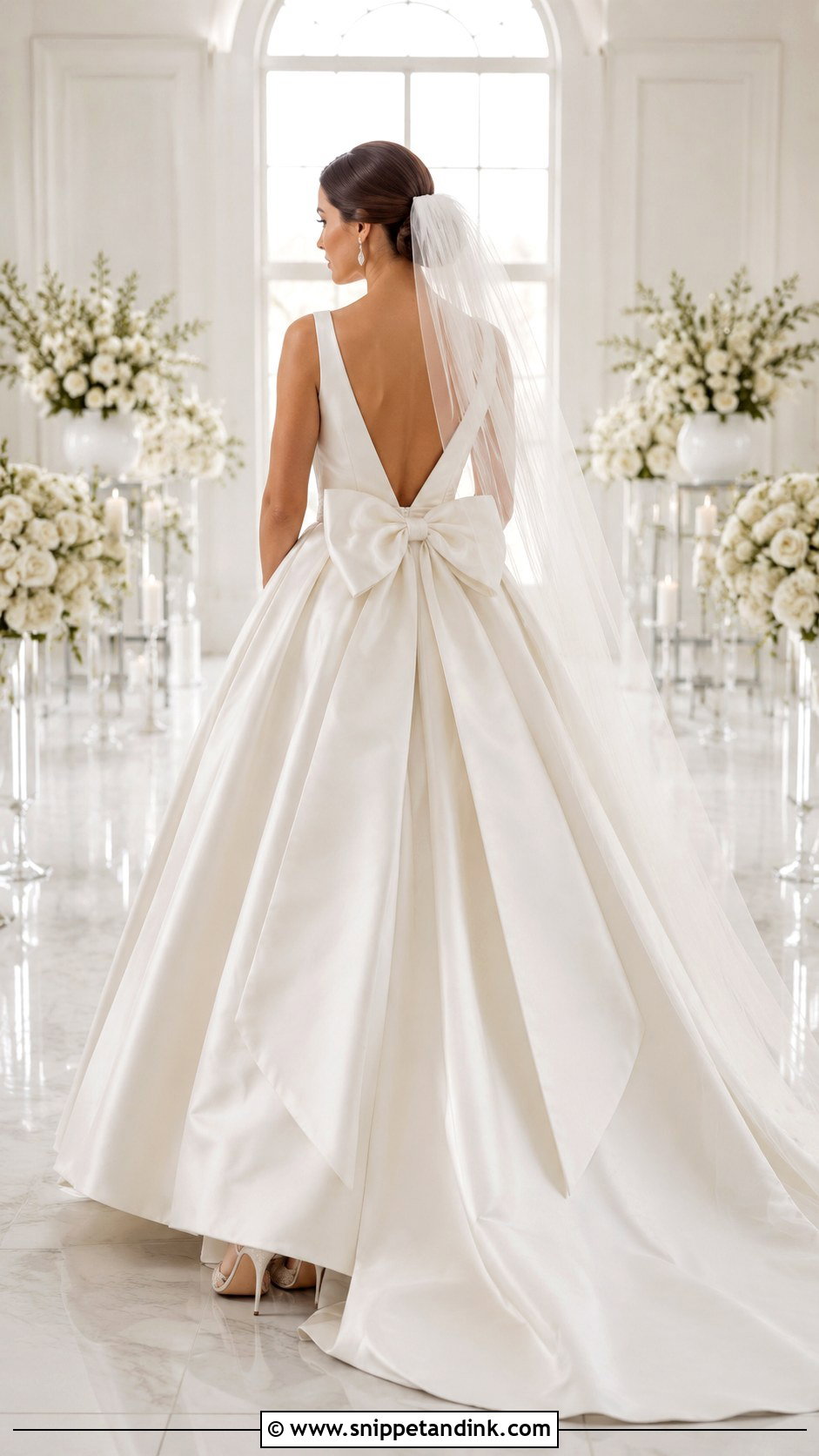
Guests spend most of the ceremony looking at your back, which is why a bow back ball gown wedding dress earns its detail. The bow can be oversized, small and polished, or detachable. Satin and Mikado bows look architectural, while tulle bows look softer. If the bow is large, keep the front simple. Plan the veil around it: attached above the bow it floats over it; attached low, below the bow, it frames it. I’d test both at the fitting. A low bun and drop earrings finish it.
19. High Neck Ball Gown Wedding Dress
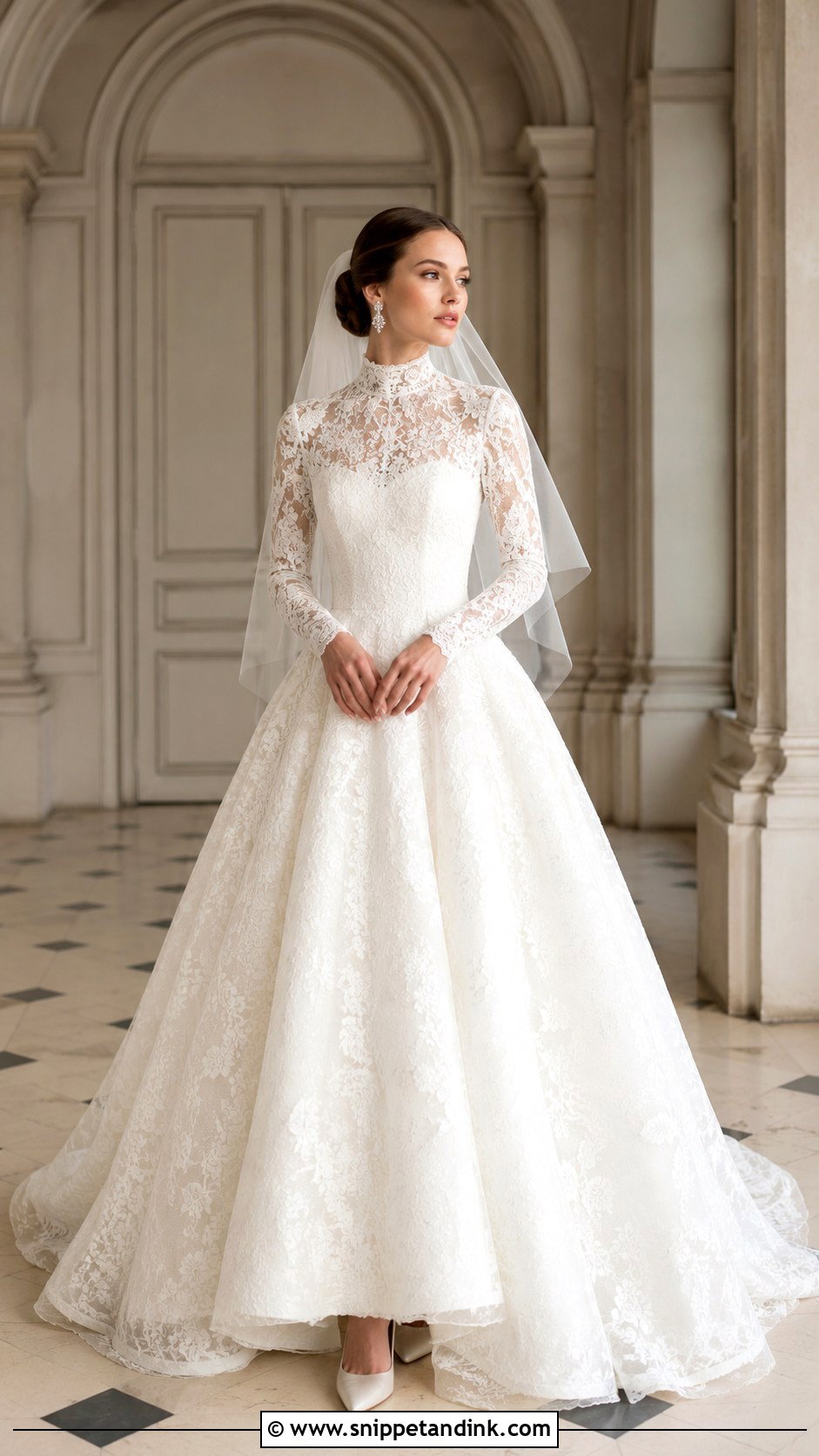
High necklines bring formality without sparkle. Lace, illusion tulle, satin or beaded fabric suit different levels of coverage. Skip the necklace and let earrings do the work, with a sleek bun or polished ponytail to show the line. It pairs well with long sleeves or a clean sleeveless cut. The fitting point I watch is the collar itself. Too tight and it rubs the throat after a few hours; too loose and it gapes when you look down at your vows.

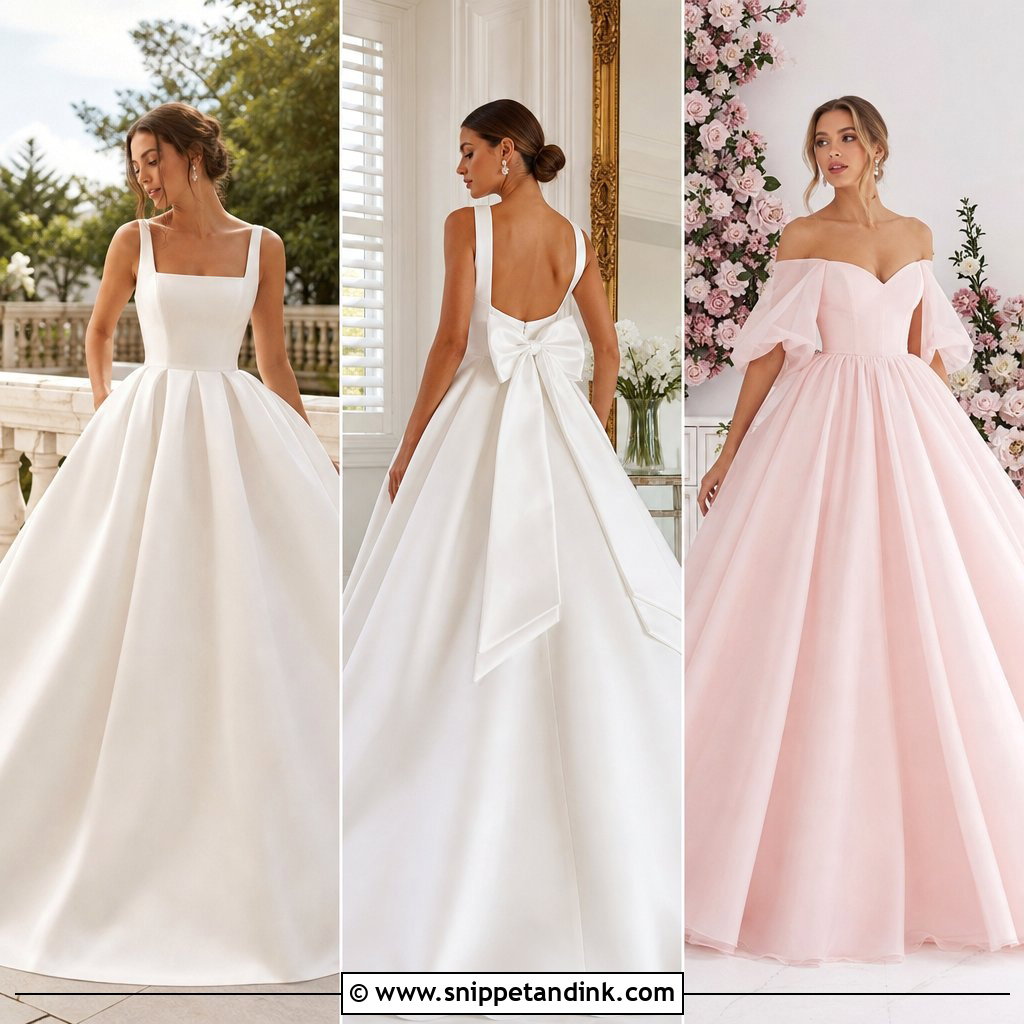

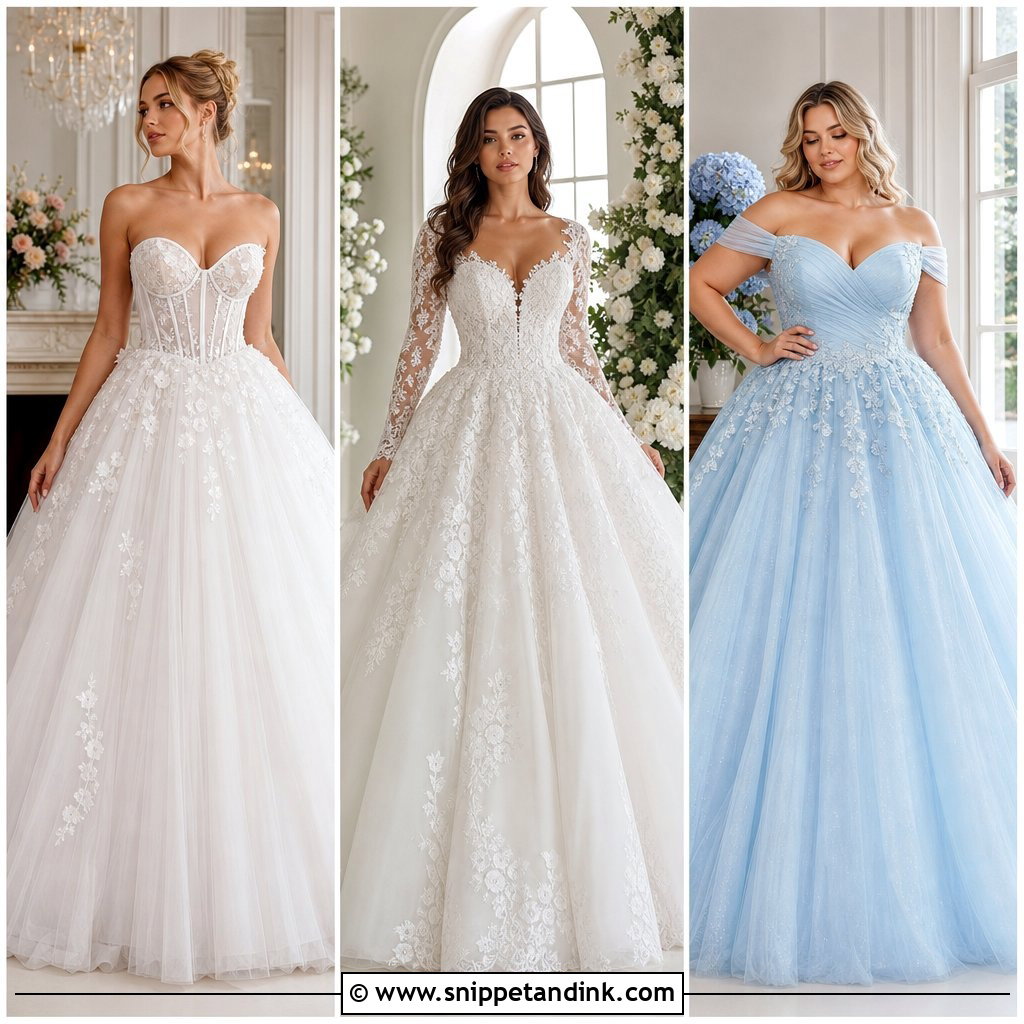
20. Halter Ball Gown Wedding Dress
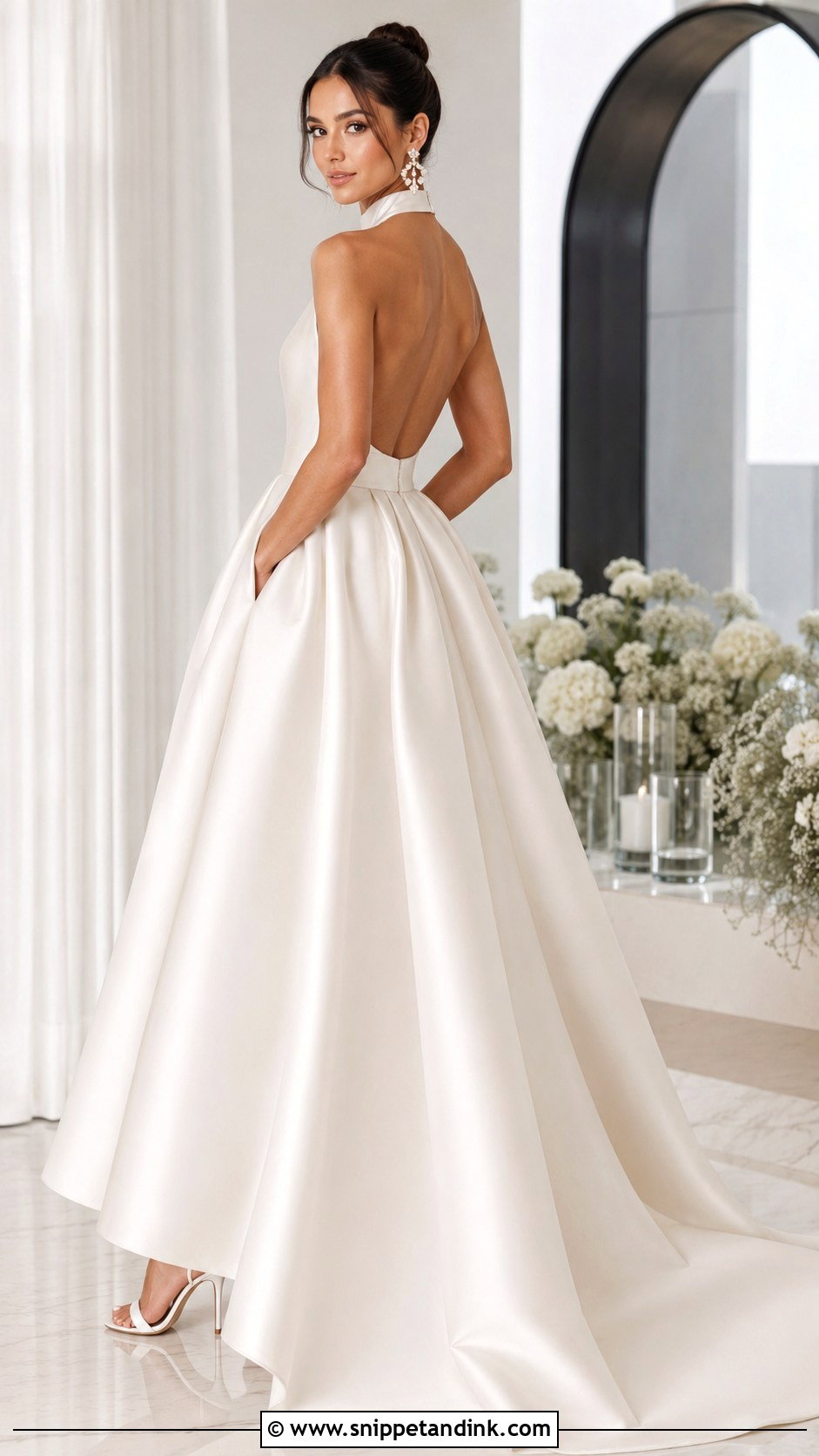
A halter shifts some of the bodice’s support to the neck, which helps brides who don’t trust a strapless top. It draws the eye up to the shoulders. Sleek satin, soft lace or a high neck with an open back all work. Statement earrings, a smooth updo and clean heels finish it. Keep the veil simple, or choose a shorter one, so it doesn’t cover the back detail. Halter straps carry weight, so if the skirt is heavy, make sure most of it is still held at the waist rather than hanging from your neck.
21. Basque Waist Ball Gown Wedding Dress
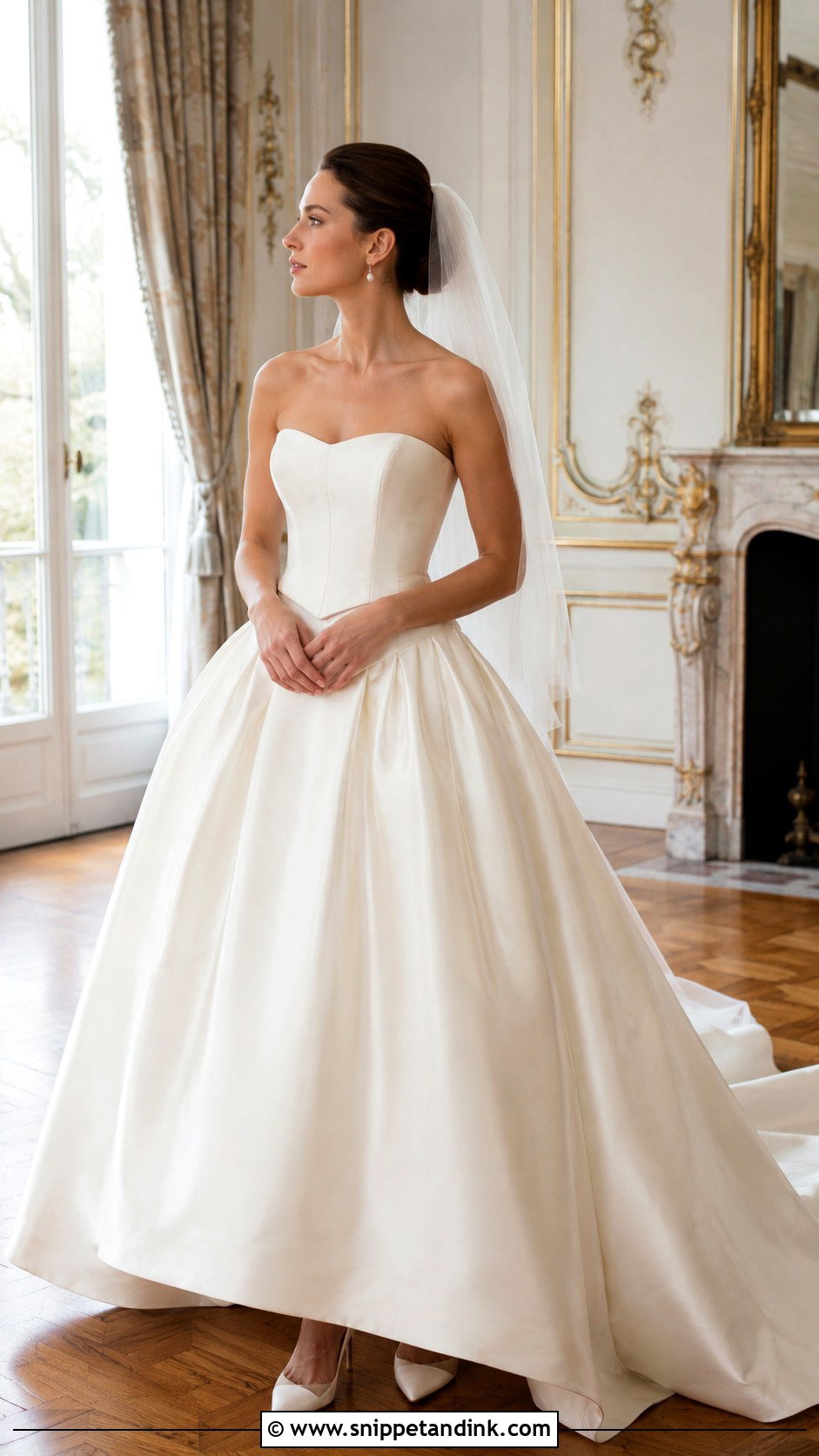
A Basque waist ball gown wedding dress has a pointed waistline that dips at the center front. That V lengthens the torso and gives the skirt a dramatic starting point. It suits corset bodices, lace overlays and structured satin. The point has to sit at your true center; even a slight shift to one side shows in photos, so I’d check it standing and seated. Classic pumps, a soft veil and fine earrings balance it. With clean fabric and minimal trim, it looks current rather than period.
22. Tiered Ball Gown Wedding Dress
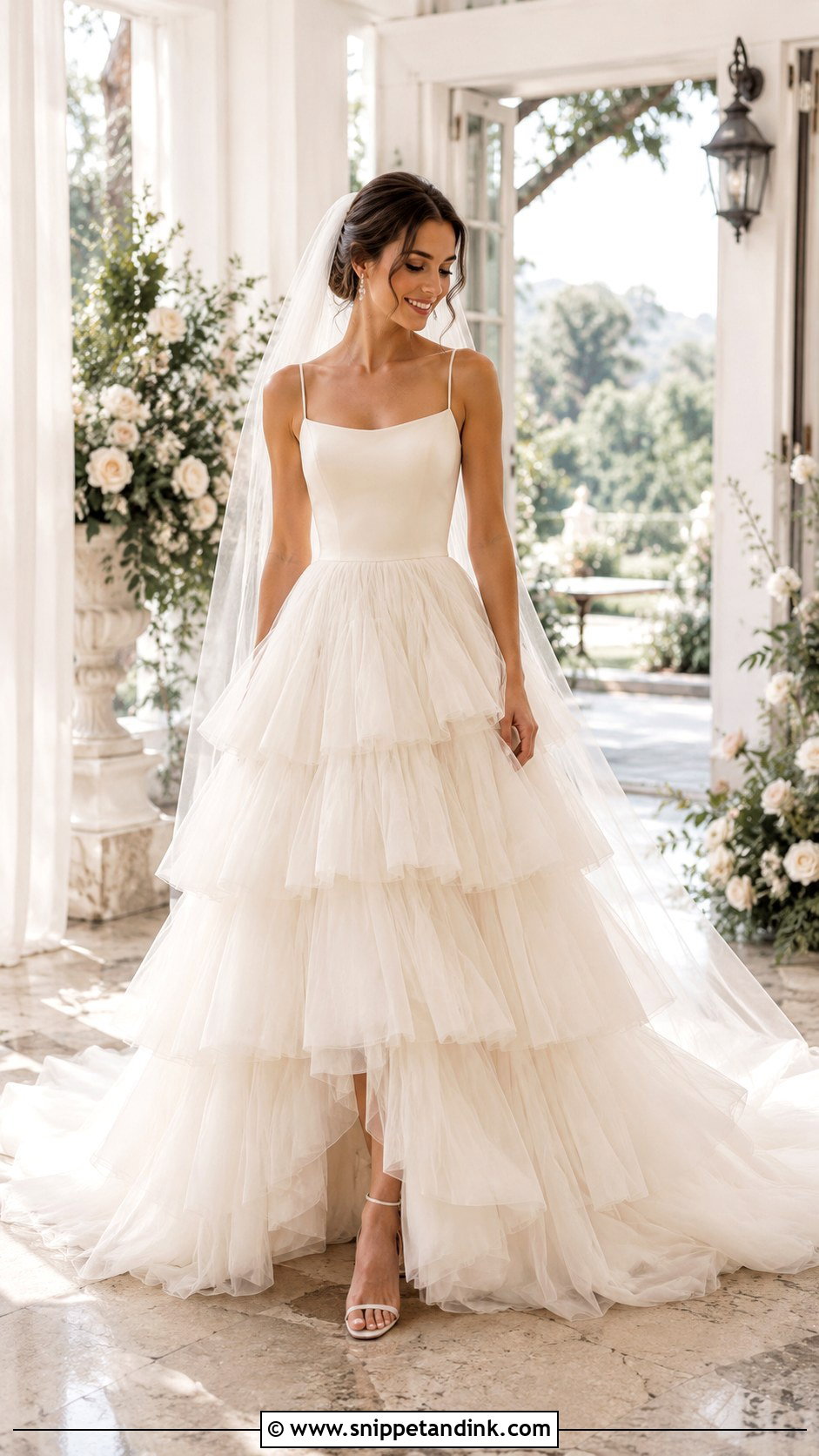
Tiers break the skirt into layers that move independently, so the gown has life even when you’re walking slowly down an aisle. Tulle tiers float; organza tiers hold more shape. Because the skirt does the work, keep the bodice simple, with slim heels, a clean veil and small earrings. The thing to know is width. Tiered skirts often run wider than plain ones, so measure your aisle, your car door and any narrow staircase at the venue before you commit.
23. Ruffle Ball Gown Wedding Dress
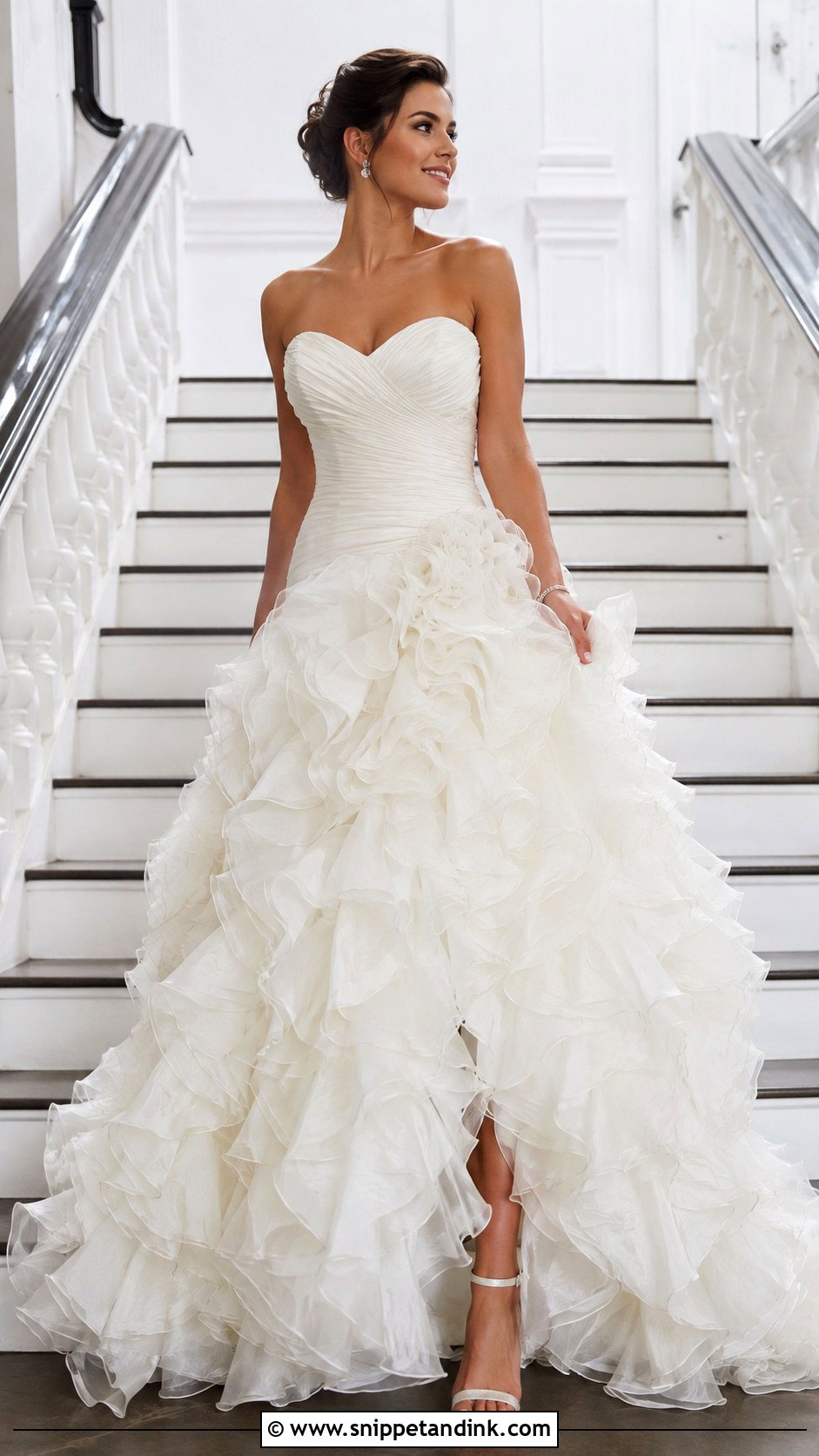
Ruffles add movement and a bit of playfulness. Big ruffles read fashion-forward and small ones read romantic. They can cascade, form textured skirt panels or ripple in organza waves. Keep accessories minimal and the bodice fitted to balance the volume. Ruffled skirts pick up a lot as they drag, from grass to dance-floor dust, so I’d bustle a ruffled train earlier in the evening than a plain one. Wide staircases and walking shots show them off well.
24. Sequin Ball Gown Wedding Dress
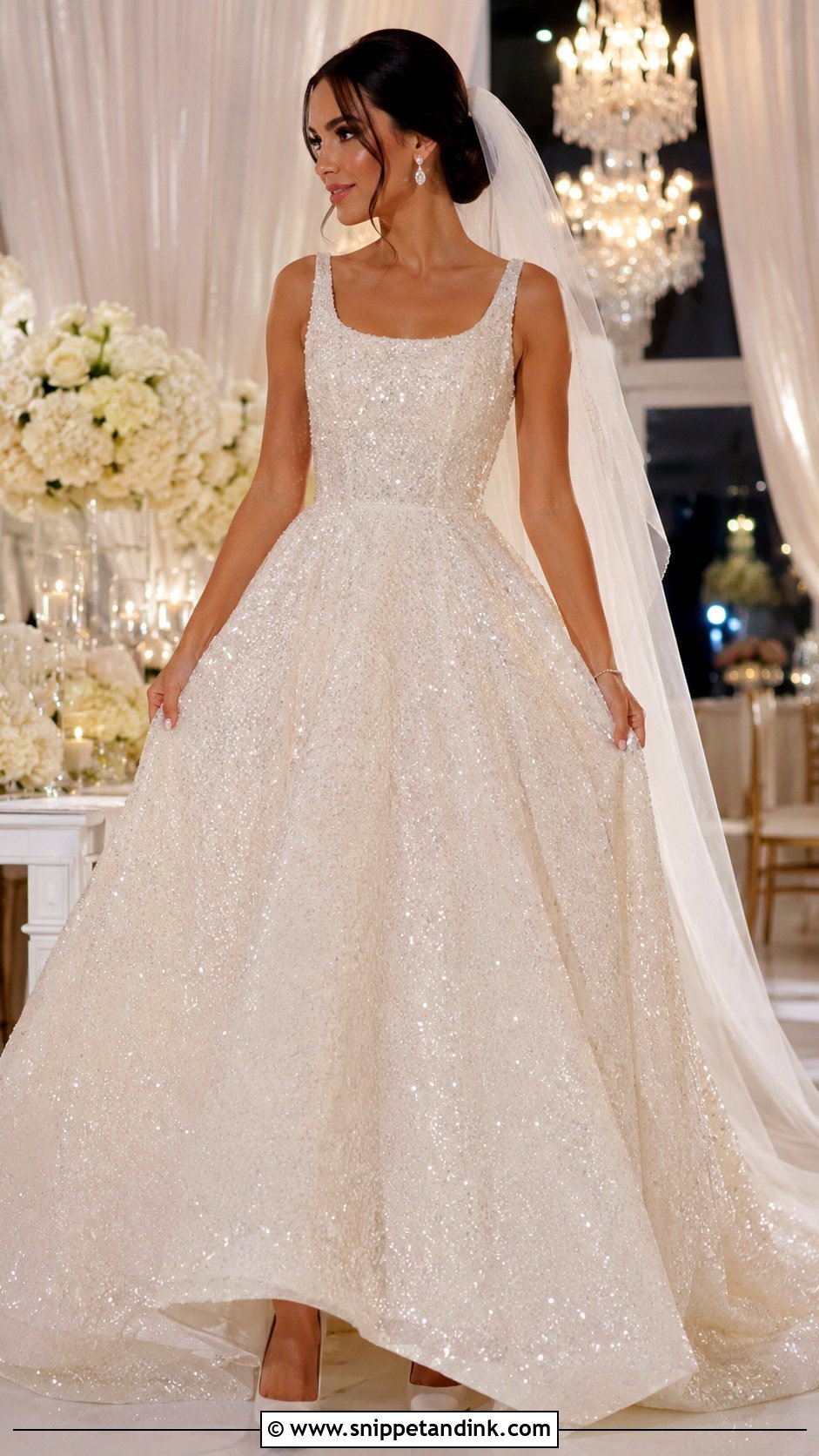
Sequins on a ball gown can be all-over for full impact or scattered lightly for a soft glow. Either way, clean lines keep the shine from overwhelming the silhouette. Sleek hair, simple earrings and satin or metallic heels are enough, and a plain veil softens the sparkle and keeps the outfit bridal. Evening weddings under warm lighting show sequins at their best. Sequins can scratch a partner’s arms during a slow dance, and sequined seams sometimes rub the inner arm, so I’d check the inside finish carefully.
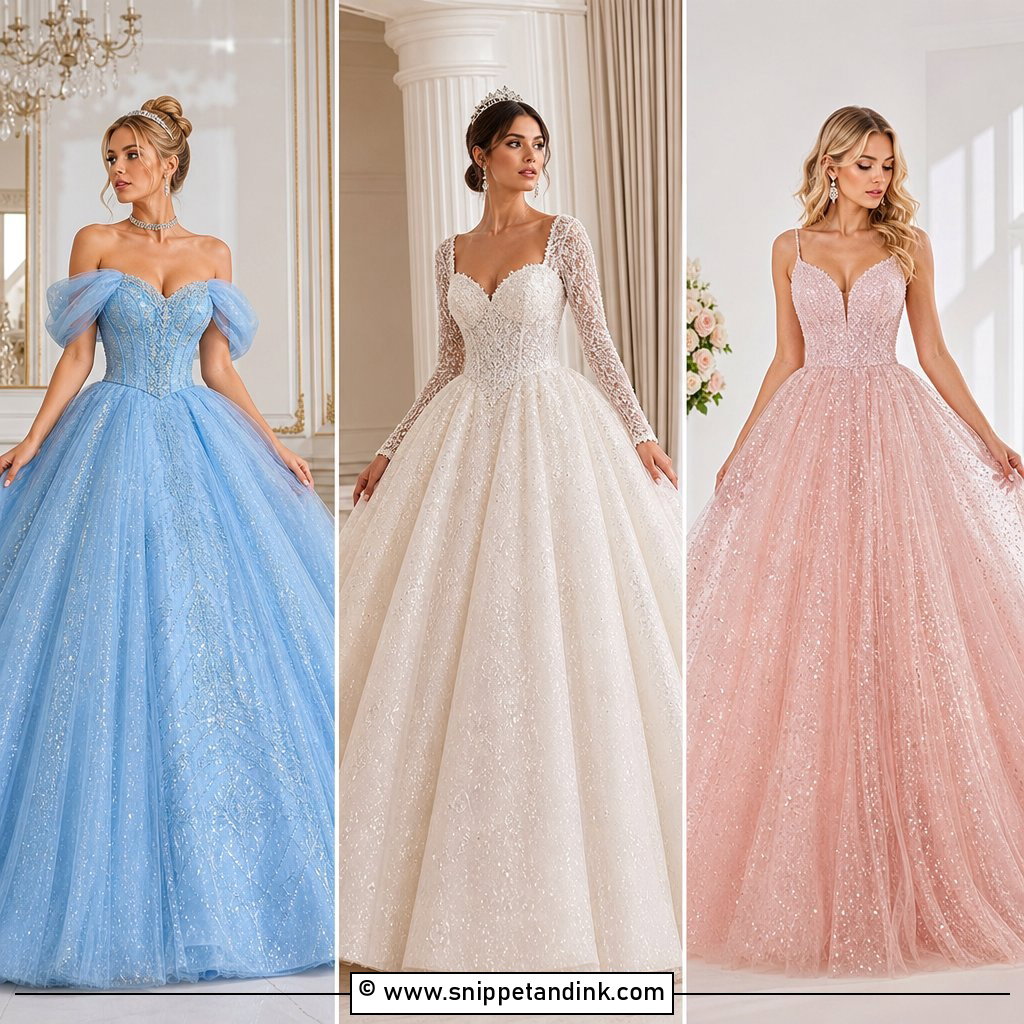
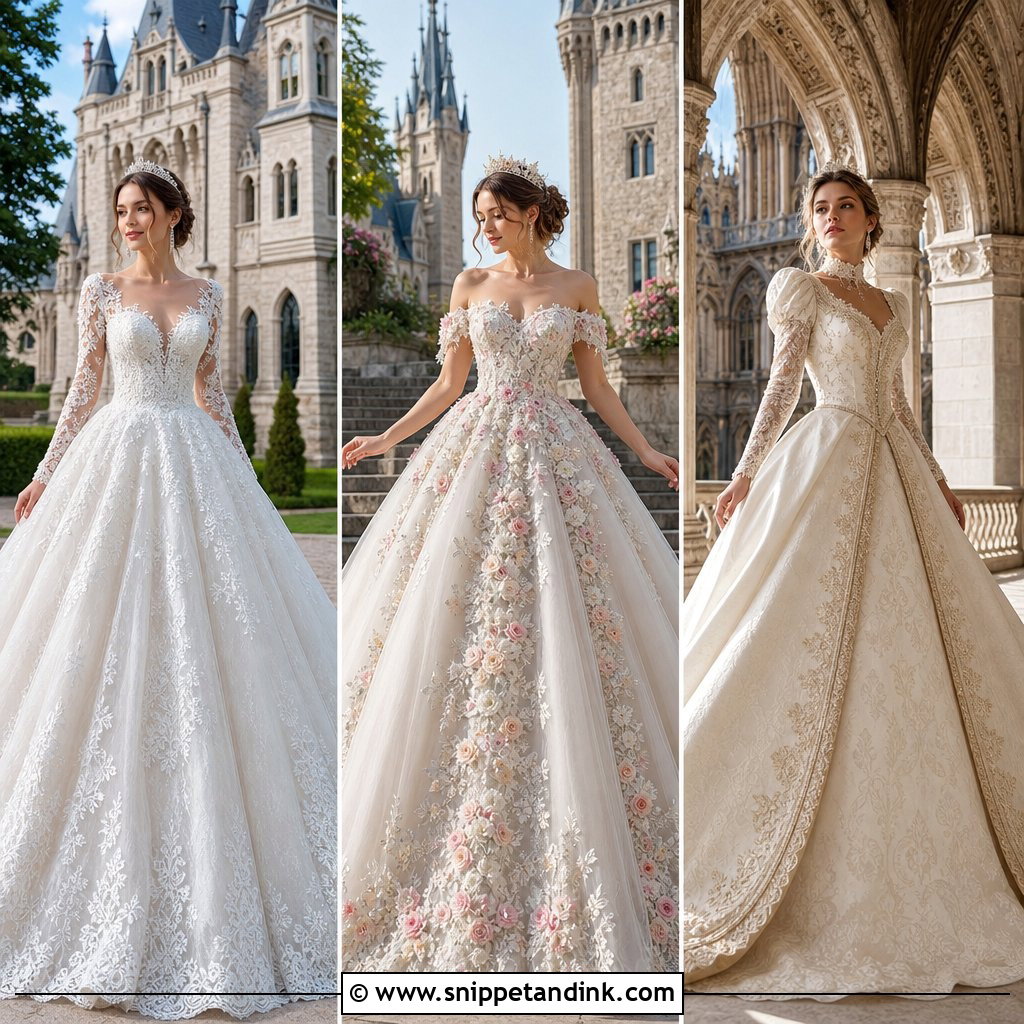
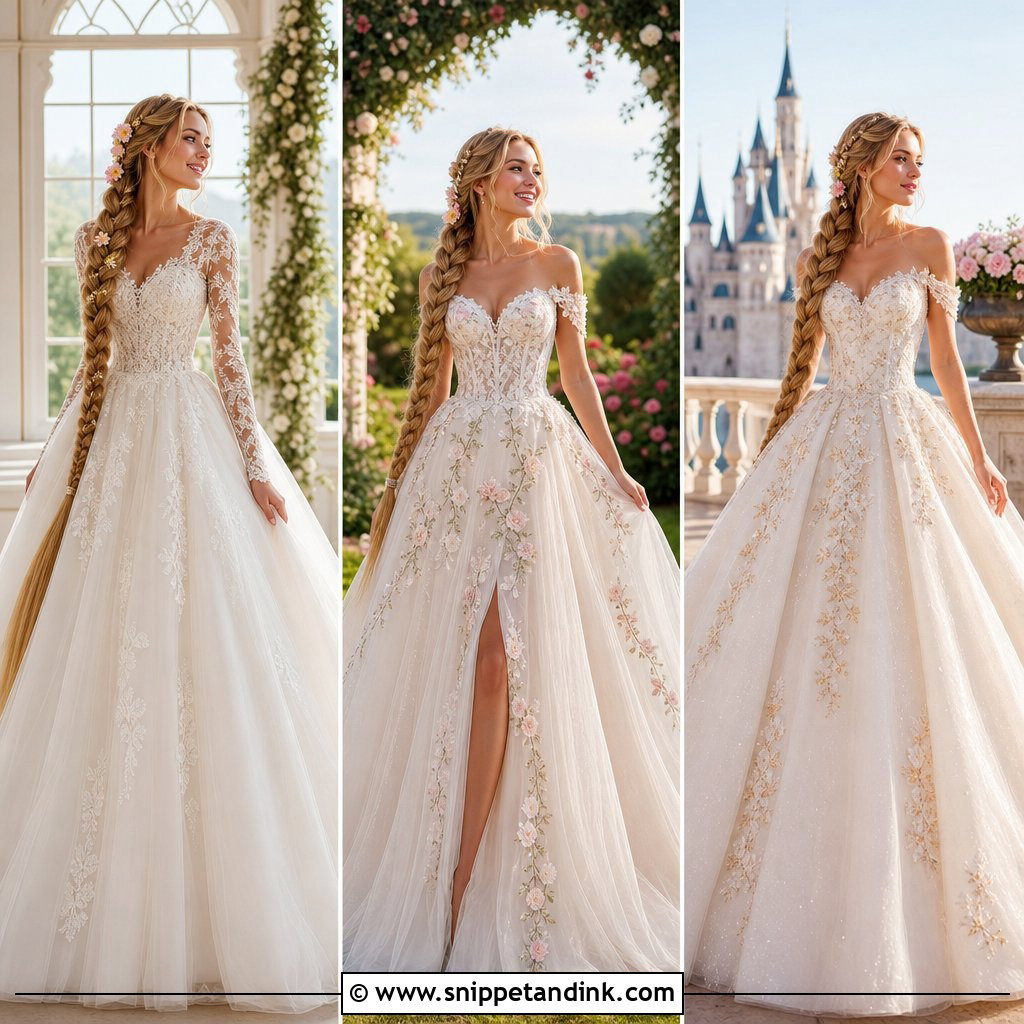
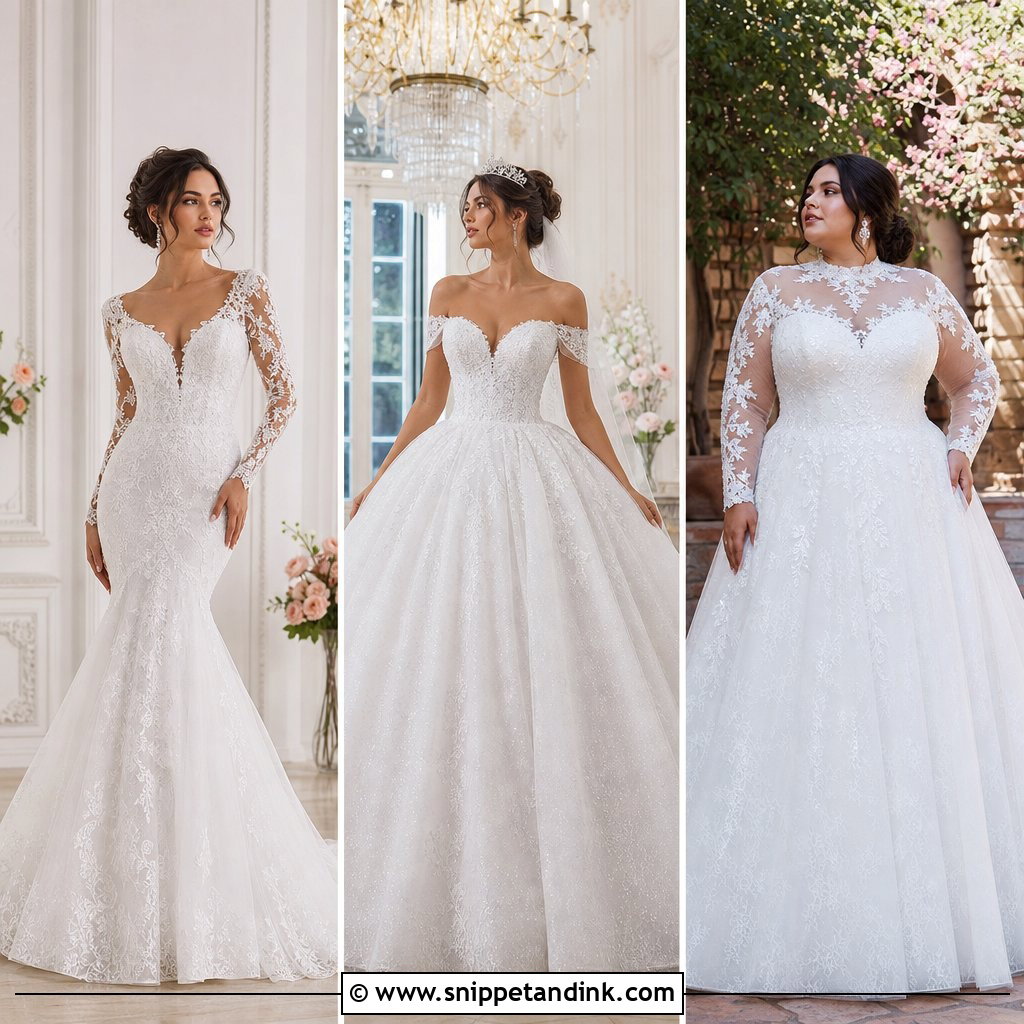
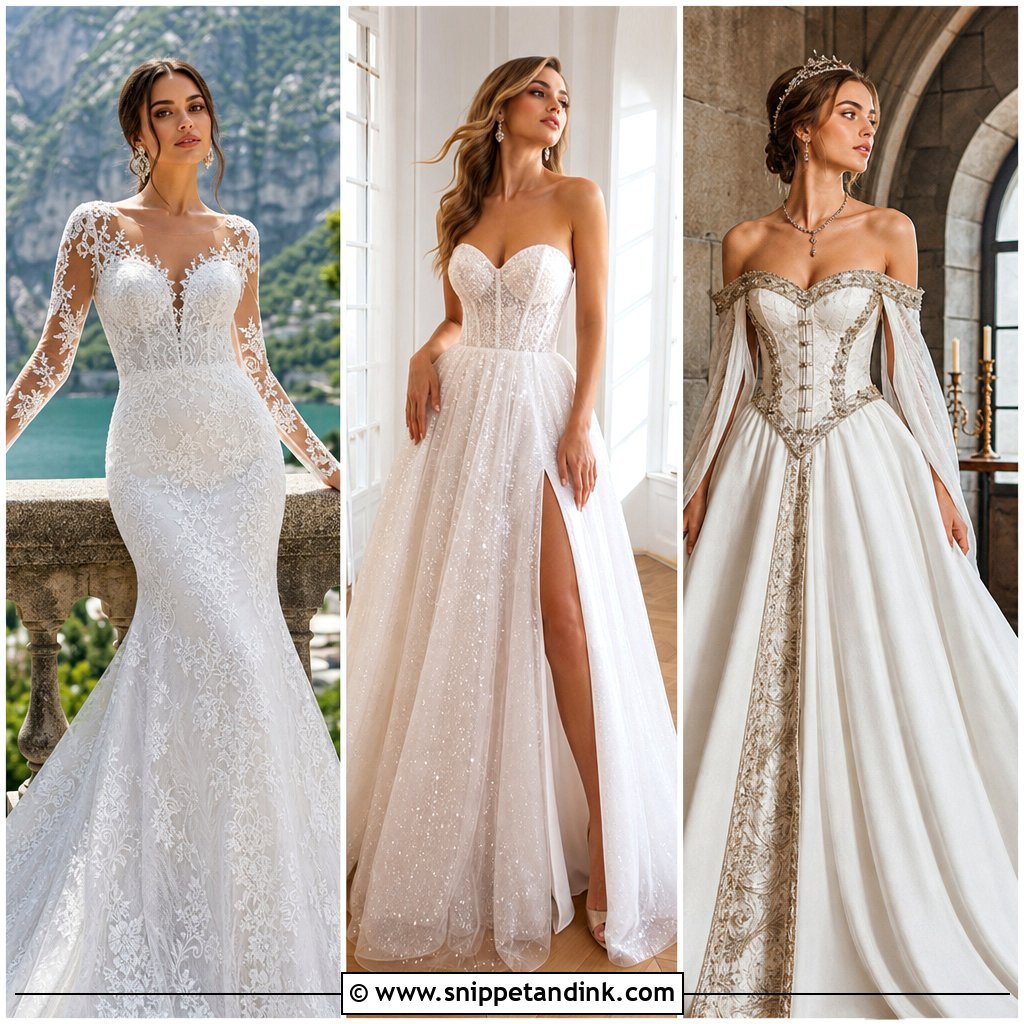
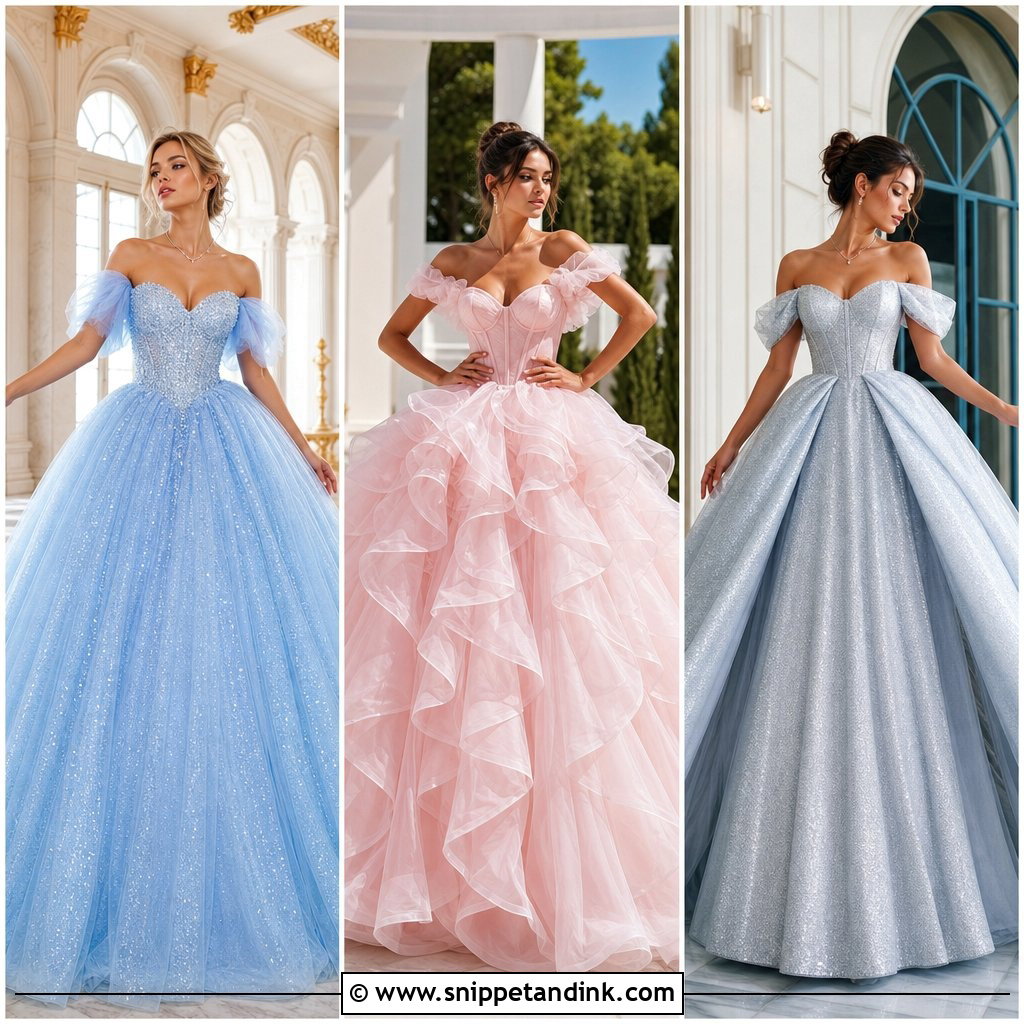
25. Colored Ball Gown Wedding Dress
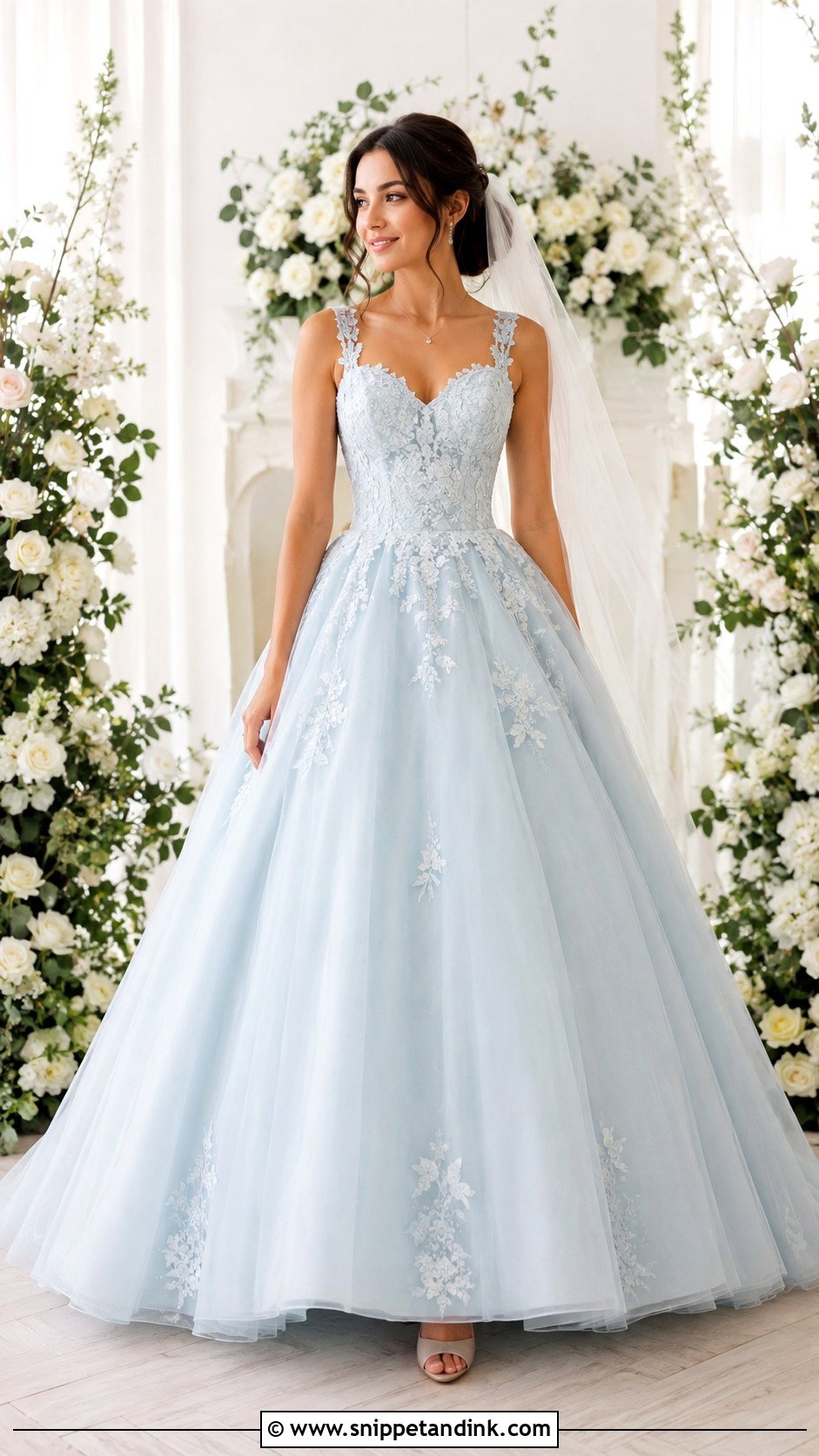
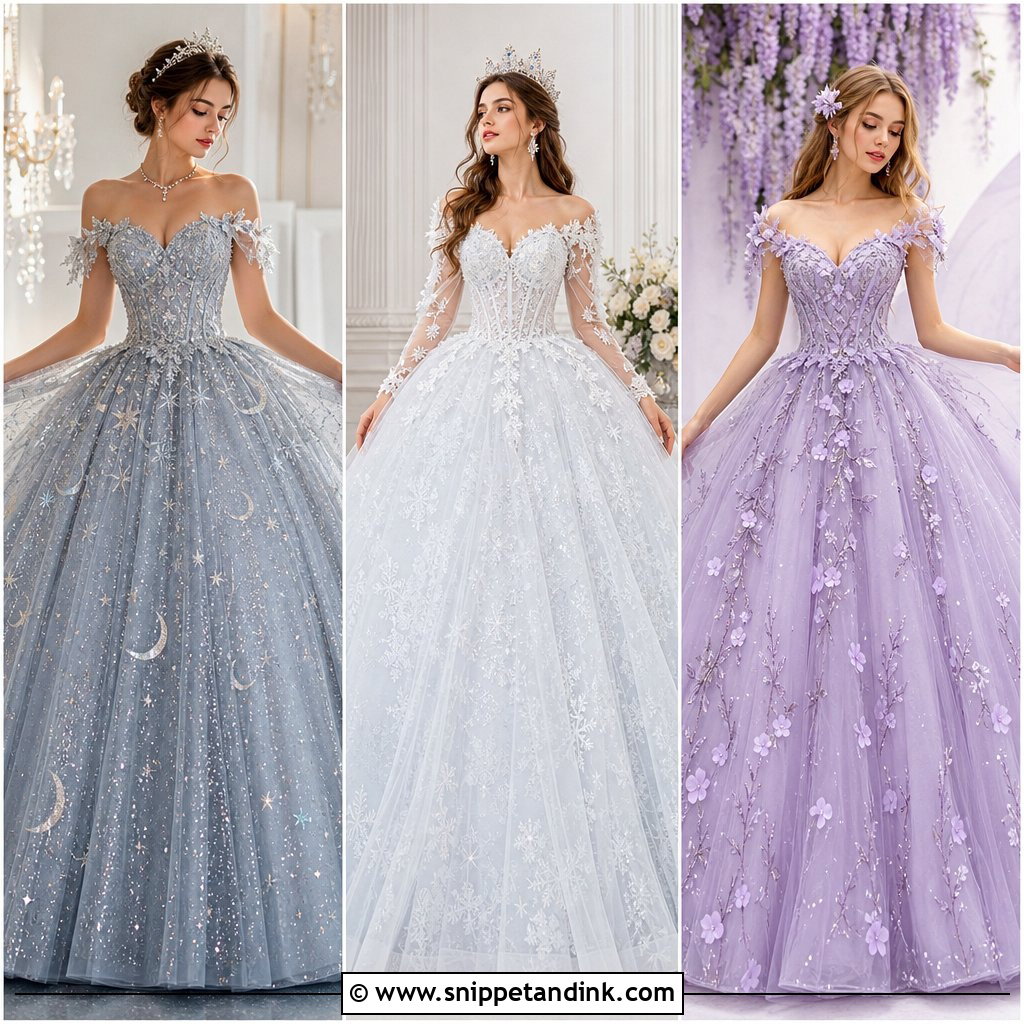
Color gives a traditional silhouette a personal twist. Soft blush, champagne, pale blue, nude-lined ivory and light gold all still read bridal. The skirt keeps it formal while the color does the talking. Neutral heels and subtle jewelry stay out of the way, and the bouquet should complement the shade rather than match it. I’d always see a colored gown in daylight and under warm indoor lighting before ordering, because pale blue can turn grey and blush can turn beige depending on the light. It’s a good route for brides who feel washed out in bright white.
26. Blush Ball Gown Wedding Dress
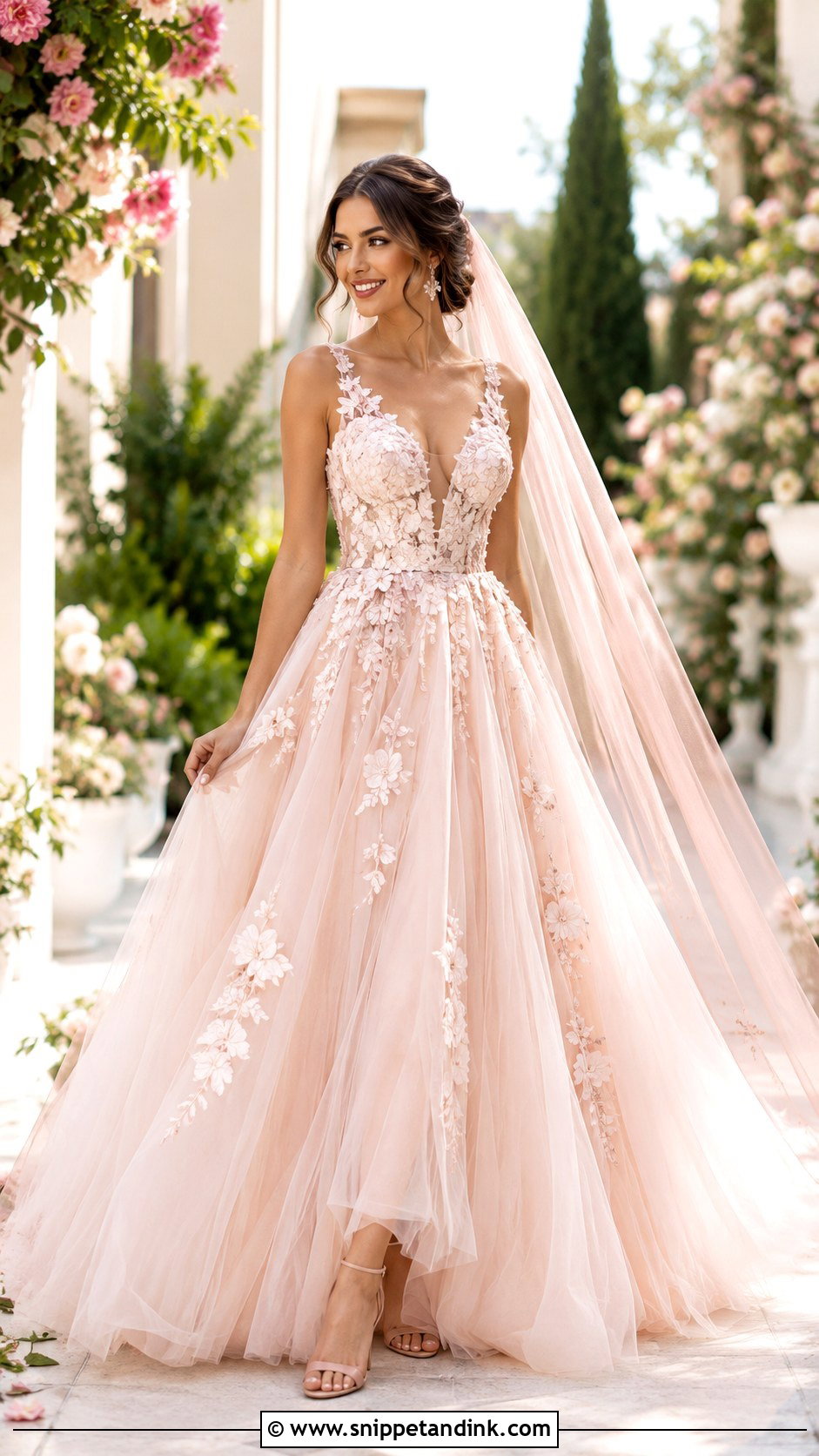
Blush ranges from a barely-there tint to a clear pink, and the difference matters. The faint version suits most skin tones; the stronger one depends more on your coloring. Tulle, lace, organza and floral applique all take the color softly. Rose gold jewelry, nude heels and a blush or ivory veil keep it consistent, with fresh rosy makeup. I’d test the veil against the dress carefully: a pure white veil makes a blush gown look dingy, so ivory or matching blush is usually safer. Spring and garden weddings suit it.
27. Champagne Ball Gown Wedding Dress
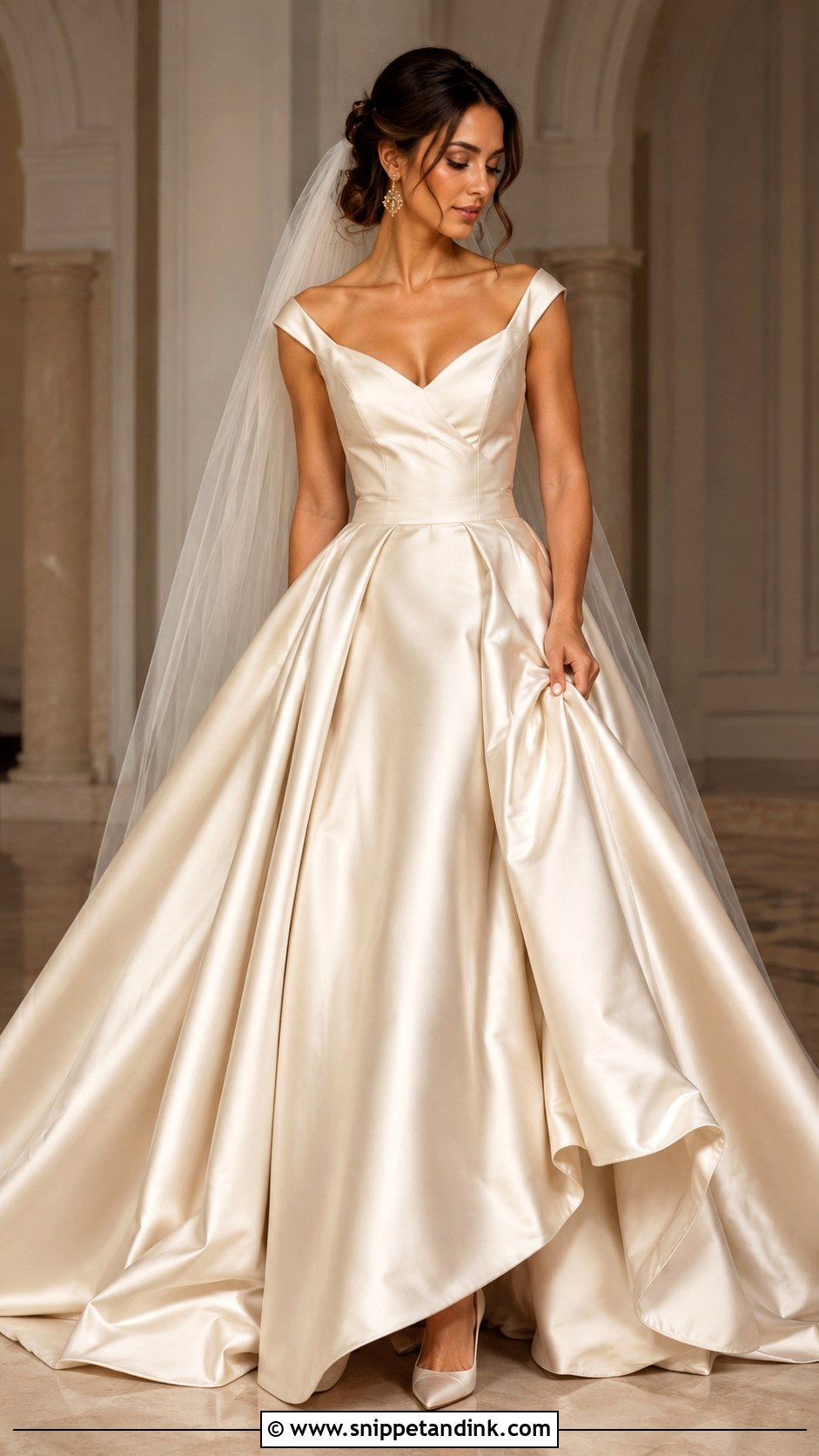
Champagne is warm, and it’s the shade I suggest most often to brides who find bright white harsh against their skin. It suits satin, beading, lace and layered tulle, and the slight color makes detail easier to see in photos, since pure white lace can lose its pattern under strong light. Gold jewelry, ivory heels and a soft veil finish it. It glows under evening lighting without going stark. Check that the lining under any lace isn’t a different shade, which shows up in close-ups.
28. Vintage Ball Gown Wedding Dress
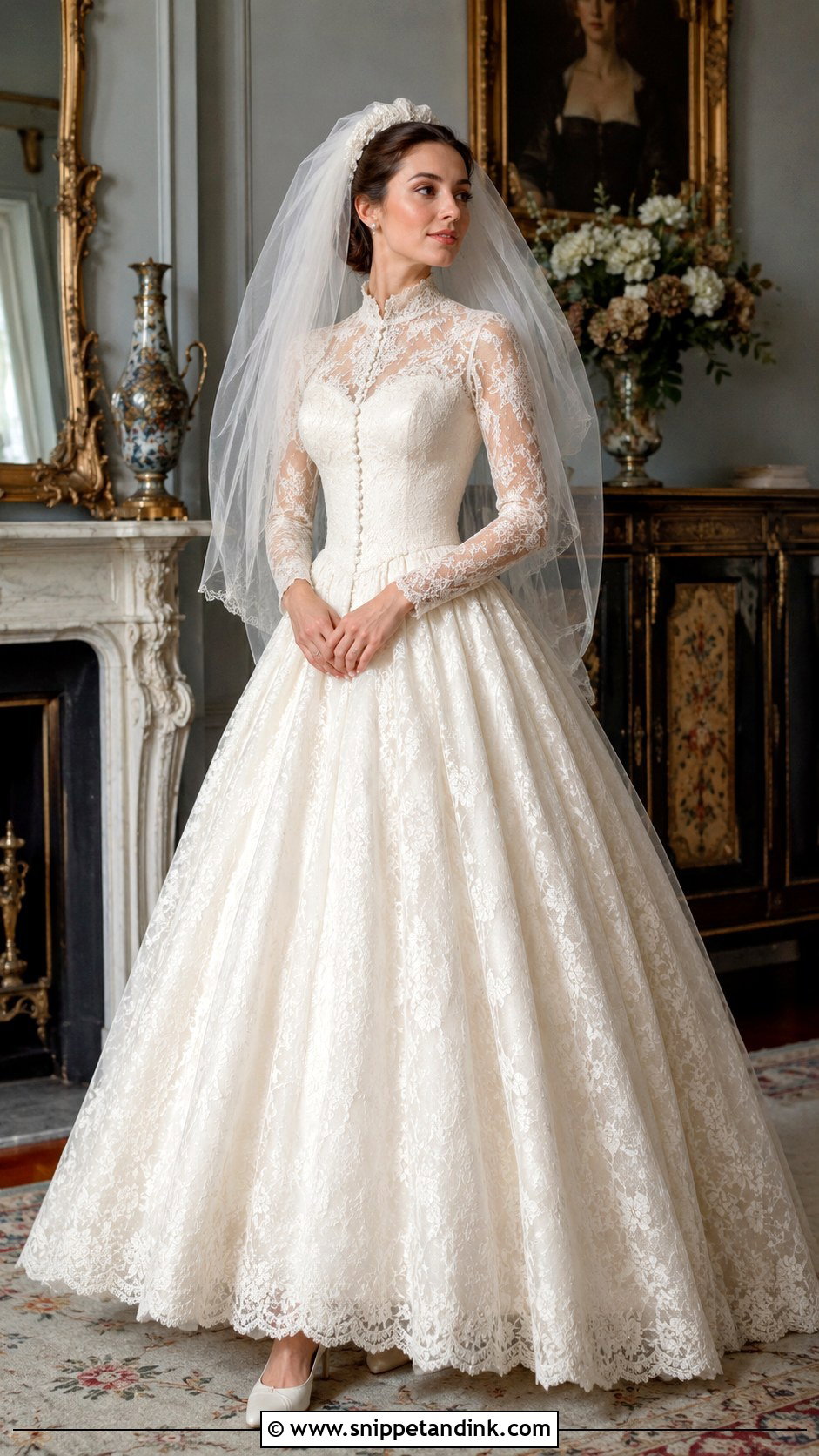
Vintage gowns lean on lace sleeves, covered buttons, Basque waists, high necklines, brocade and heirloom-style veils. The aim is charm without costume, which comes down to a modern fit. If you’re wearing a family gown, I’d find a seamstress experienced with older fabrics, since aged silk and lace can be fragile and may need reinforcing before alterations. Pearl earrings, a structured veil and closed-toe heels suit the period feel. Historic venues, museums and estates are its natural home.
29. Modern Ball Gown Wedding Dress
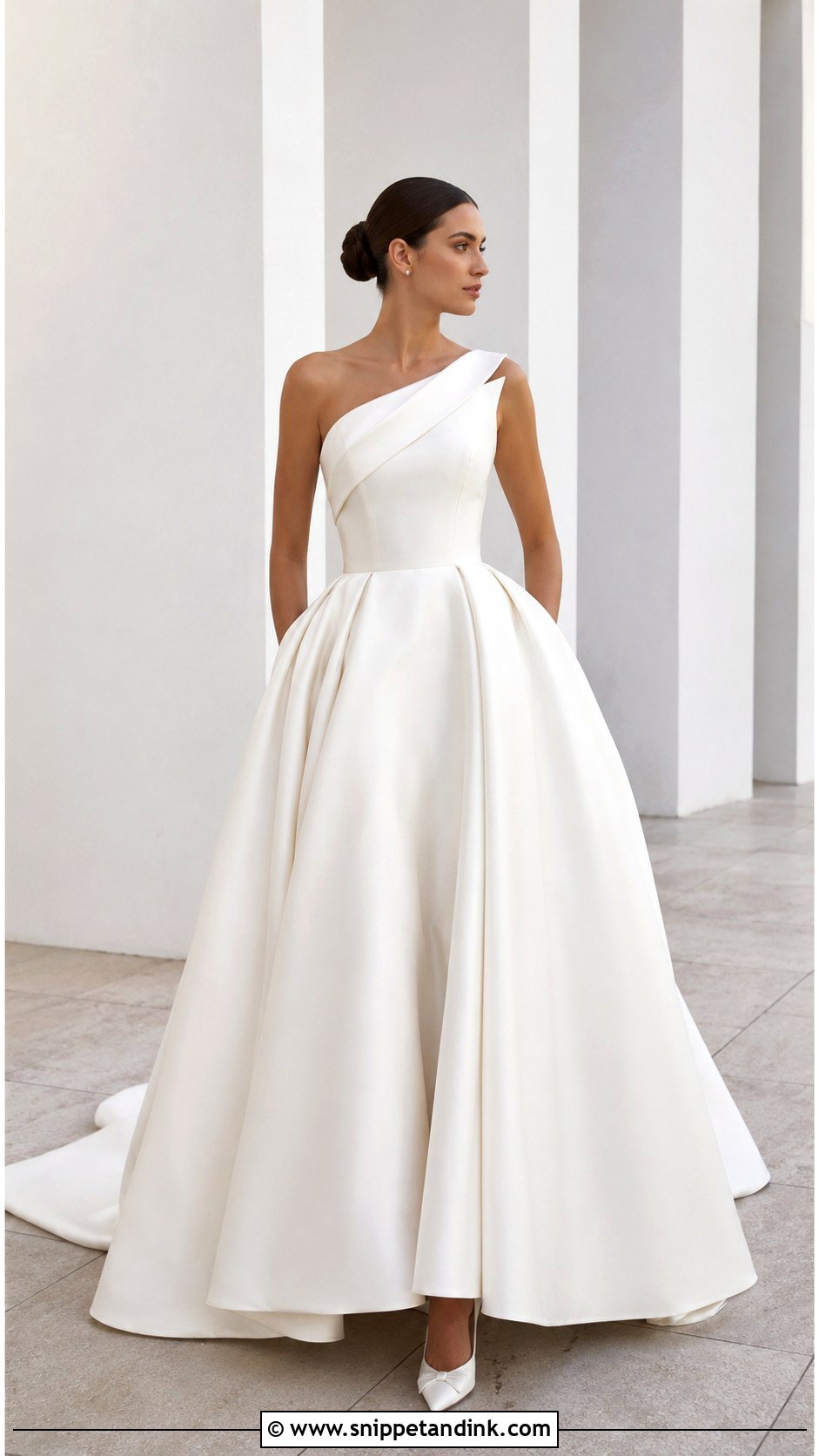
A modern ball gown updates the shape through proportion and cut: sculpted necklines, oversized bows, asymmetric drapes, smooth Mikado or a slit hidden in the skirt. The rule I follow is one strong feature, not several fighting for attention. Simple earrings, a polished bun and sharp heels keep the styling quiet. A hidden slit is worth checking for modesty when you sit and walk up steps. It suits brides who want ball-gown drama without a princess look.
30. Convertible Ball Gown Wedding Dress
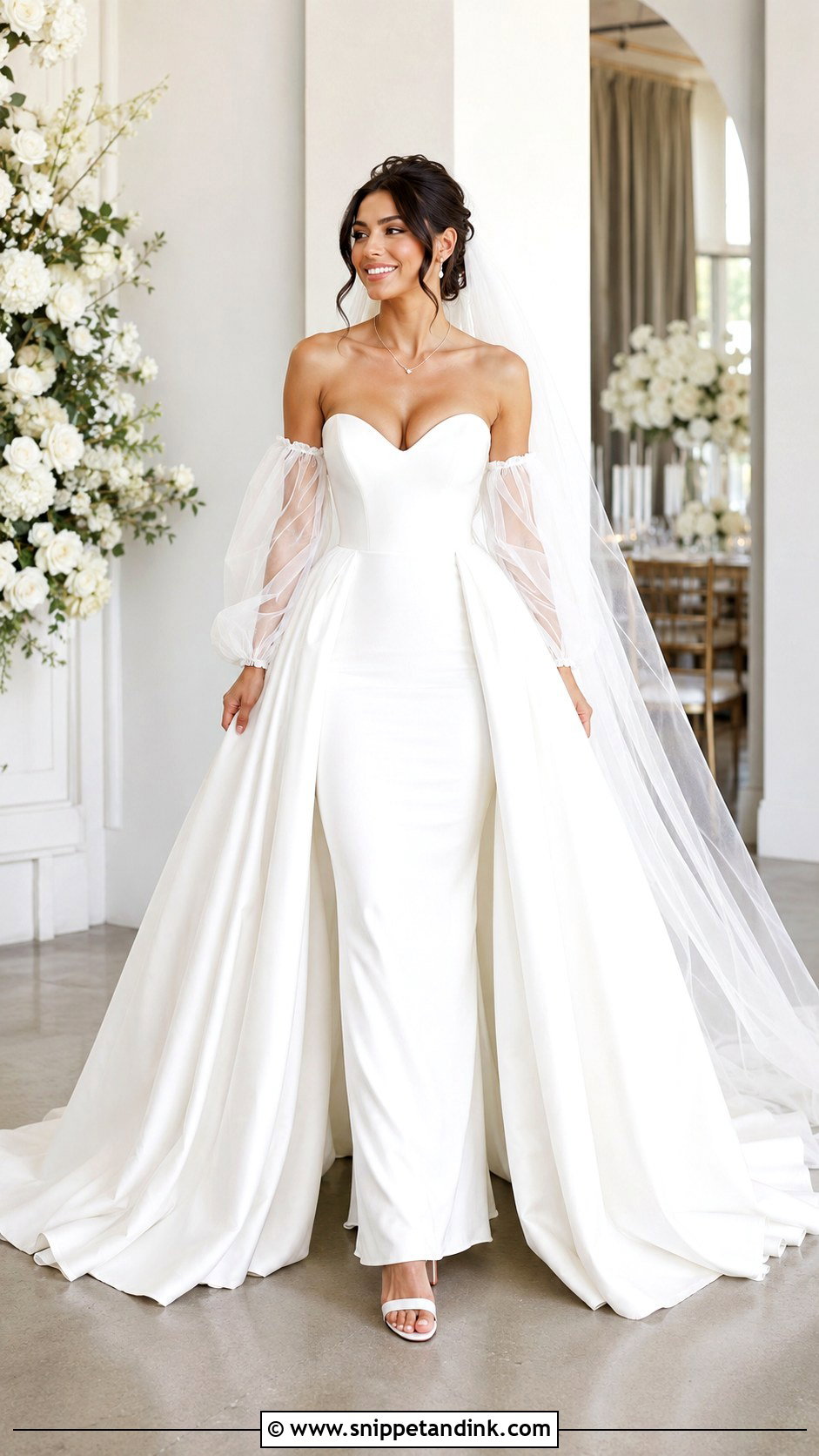
A convertible ball gown wedding dress splits into ceremony and reception looks through a detachable overskirt, removable sleeves, a bow or a train that comes off. The base dress must look finished on its own. If it looks like an underlayer once the overskirt comes off, the conversion doesn’t work. I’d practice the change once with whoever will help on the day. Comfortable heels, secure jewelry and a veil that suits the ceremony version complete it.
How the Train Gets Bustled After the Ceremony
Almost every ball gown with a train needs a bustle so you can dance. It’s added by your seamstress during alterations, and the style depends on the fabric and how long the train is.
Over or under
An over bustle lifts sections of the train and hooks or buttons them onto the back of the skirt, which shows off lace and suits heavier fabrics. An under bustle, often called a French bustle, tucks the train underneath and ties it with ribbons, giving a soft, layered look that suits satin, Mikado and tulle. Long cathedral trains may need several points to hang evenly.
Teaching someone to do it
At the final fitting, bring the person who will bustle you, usually a bridesmaid or your mother, and have the seamstress show them twice. Number the ribbons or mark the hooks with small colored tags, because in a crowded room it’s easy to tie the wrong pair. Take a short phone video of the steps as a backup. I’d also tuck a needle and matching thread in the emergency kit, since bustle loops do sometimes snap on the dance floor.
A Full Skirt Has to Work From Aisle to Last Dance
A full skirt can look classic, modern, romantic, glamorous or entirely personal, and the right one depends on your venue, your preferred fabric and how much structure you’re comfortable wearing all day. Satin and Mikado give clean structure, while tulle, lace, organza and applique add softness and movement. Necklines, sleeves, waist shapes, color and detachable pieces each change the mood. Above all, a ball gown has to support your body and let you move, because you’ll wear it from the first photo to the last dance.
You'll Like These Ideas:





Leave a Reply