
A fairytale bridal look works when it feels like you, slightly enchanted, and falls apart the moment it starts to read as a costume. The gowns below run from full princess ball gowns to woodland lace, star embroidery, pale colour and royal capes, and I’ve styled each one head to toe: veil, shoes, jewelry, bouquet and the kind of room it belongs in. The rule I give every bride at a first appointment is to let one feature lead. A heavily beaded bodice wants quiet earrings; a plain crepe gown has room for a crown, a cape or a long embroidered veil. Pick the lead, then let everything else support it.
Sizing the Fairytale to Your Ceremony Space
Before we look at a single gown, I ask where you’re marrying, because the venue decides how much fairytale you can physically fit. A full ball gown that looks right in a ballroom can swallow a narrow chapel aisle, and a cathedral train drags gravel and leaves on a garden path.
- Measure the aisle. Two people walking side by side need roughly a metre and a half; a full skirt plus your escort may need more.
- Look at the floor. Polished stone and wooden boards suit long trains, while grass, sand and gravel favour a sweep or chapel length.
- Check the ceiling height and light. Low ceilings and dim rooms flatten sparkle; high windows and candlelight bring it out.
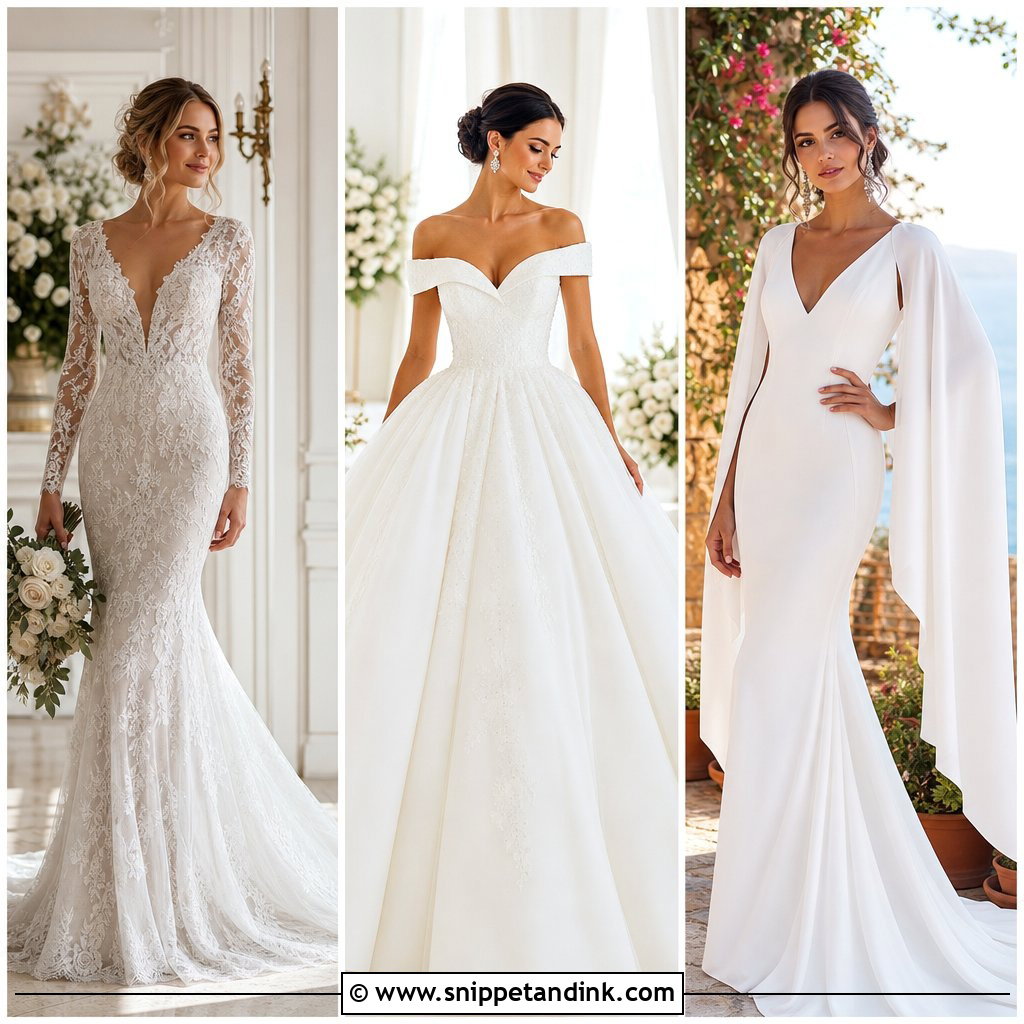
- Think about the temperature. Several layers of tulle over a boned bodice is warm in a summer marquee, and satin shows sweat marks.
Once you know the room, choose your lead feature: the skirt, the sleeves, the embroidery or a cape. Everything else in this list can be dialled up or down around that one decision.
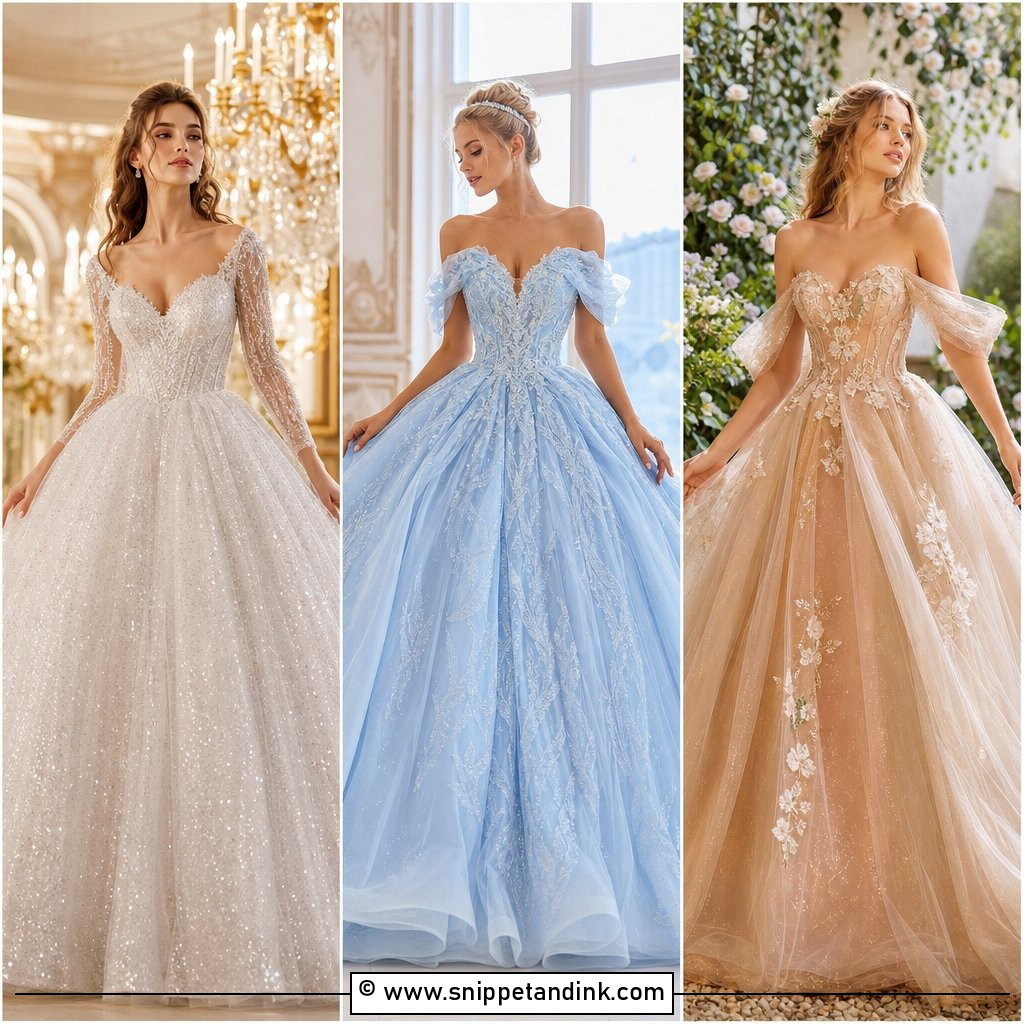
1. Princess Ball Gown Wedding Dress
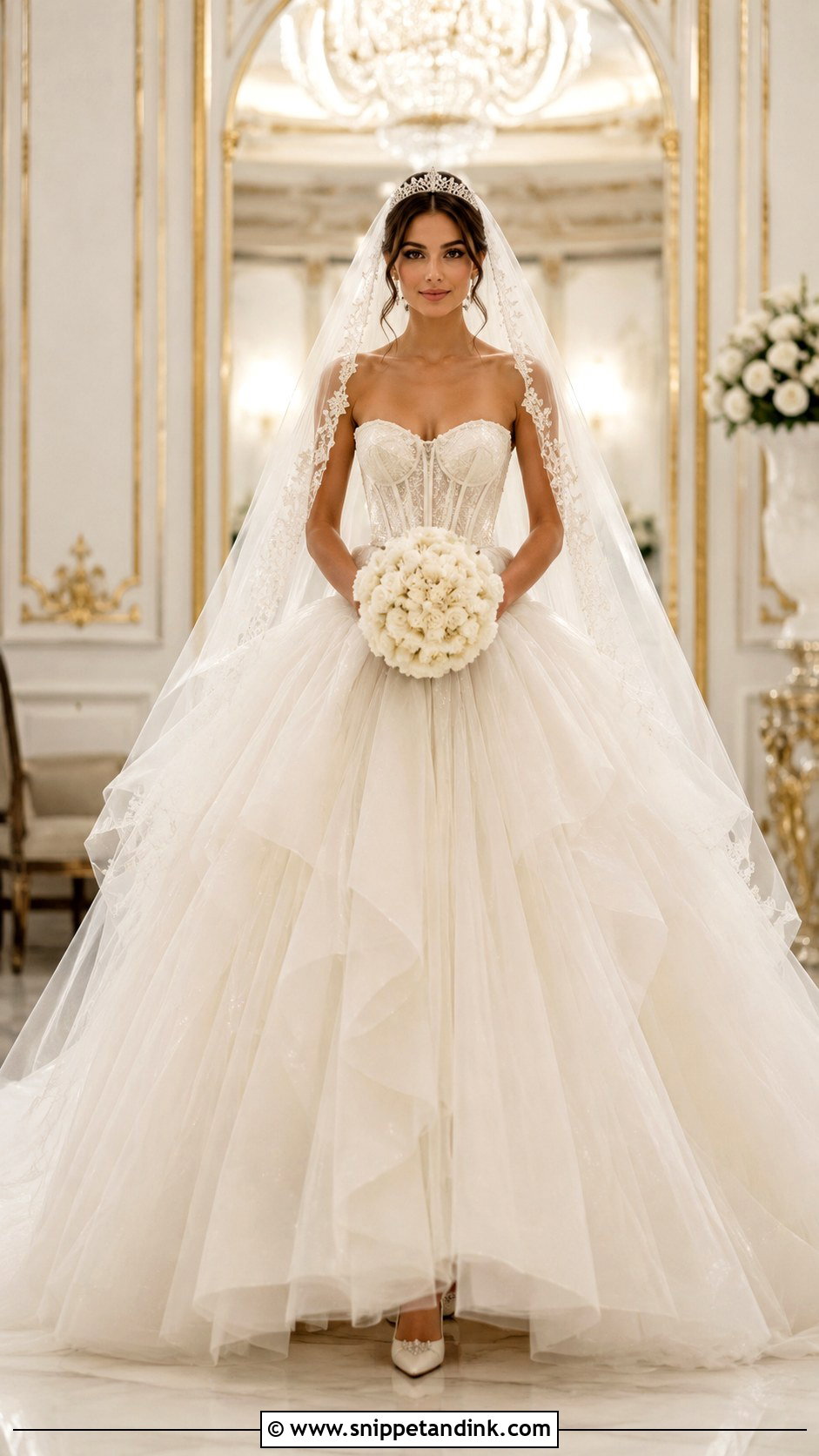
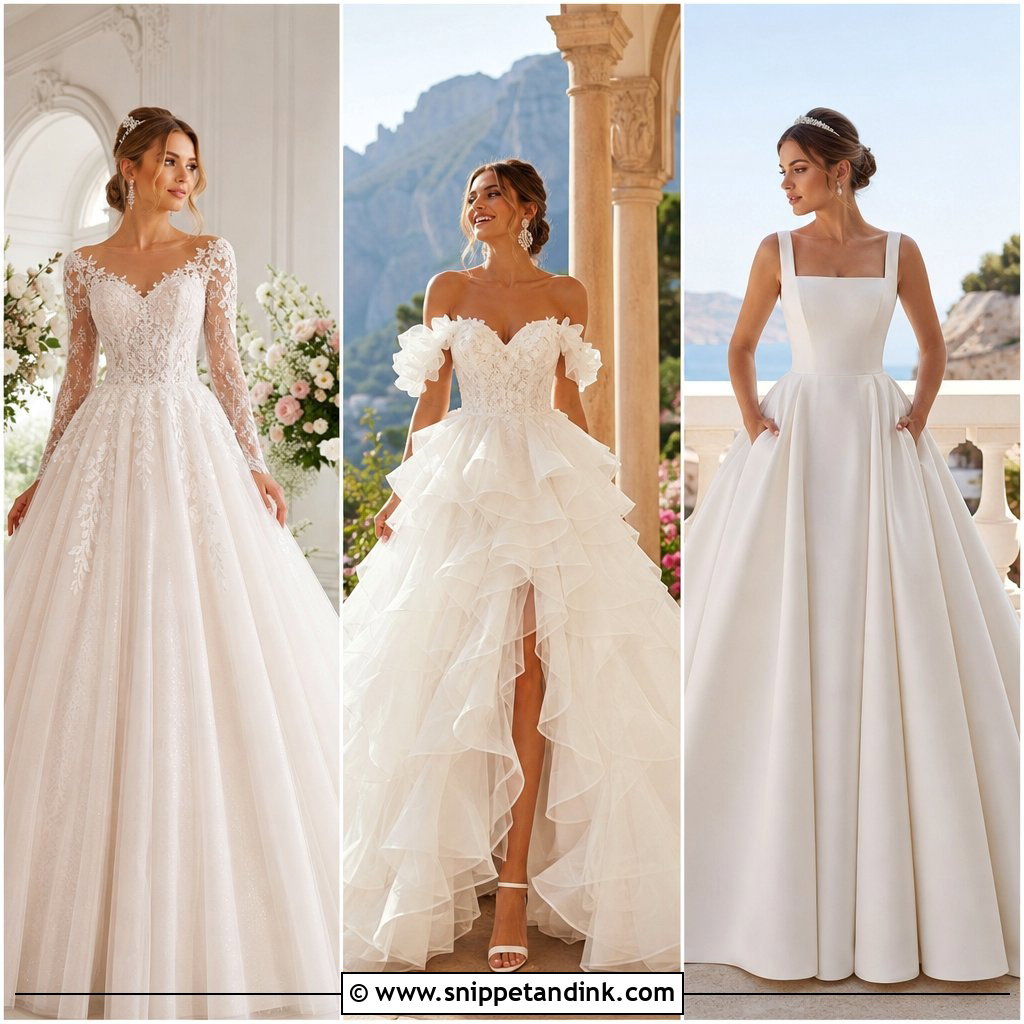
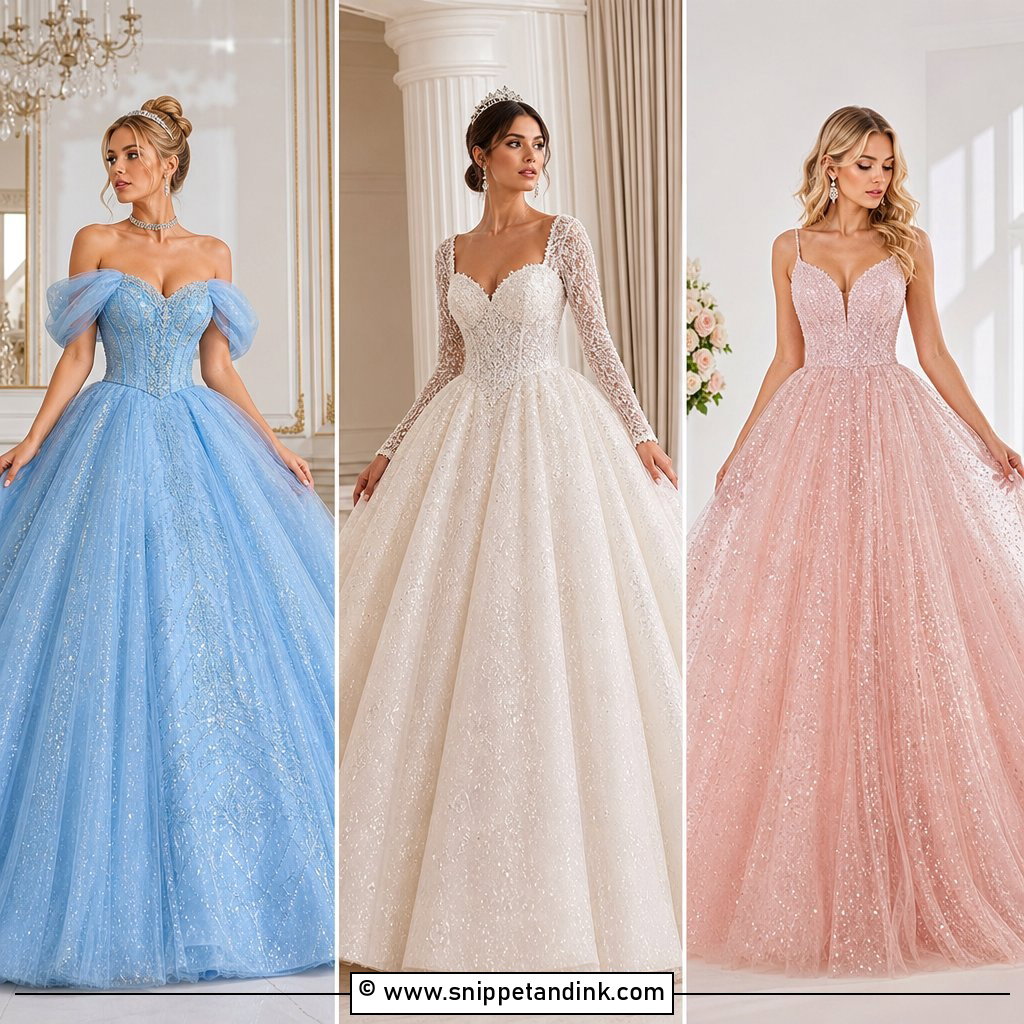
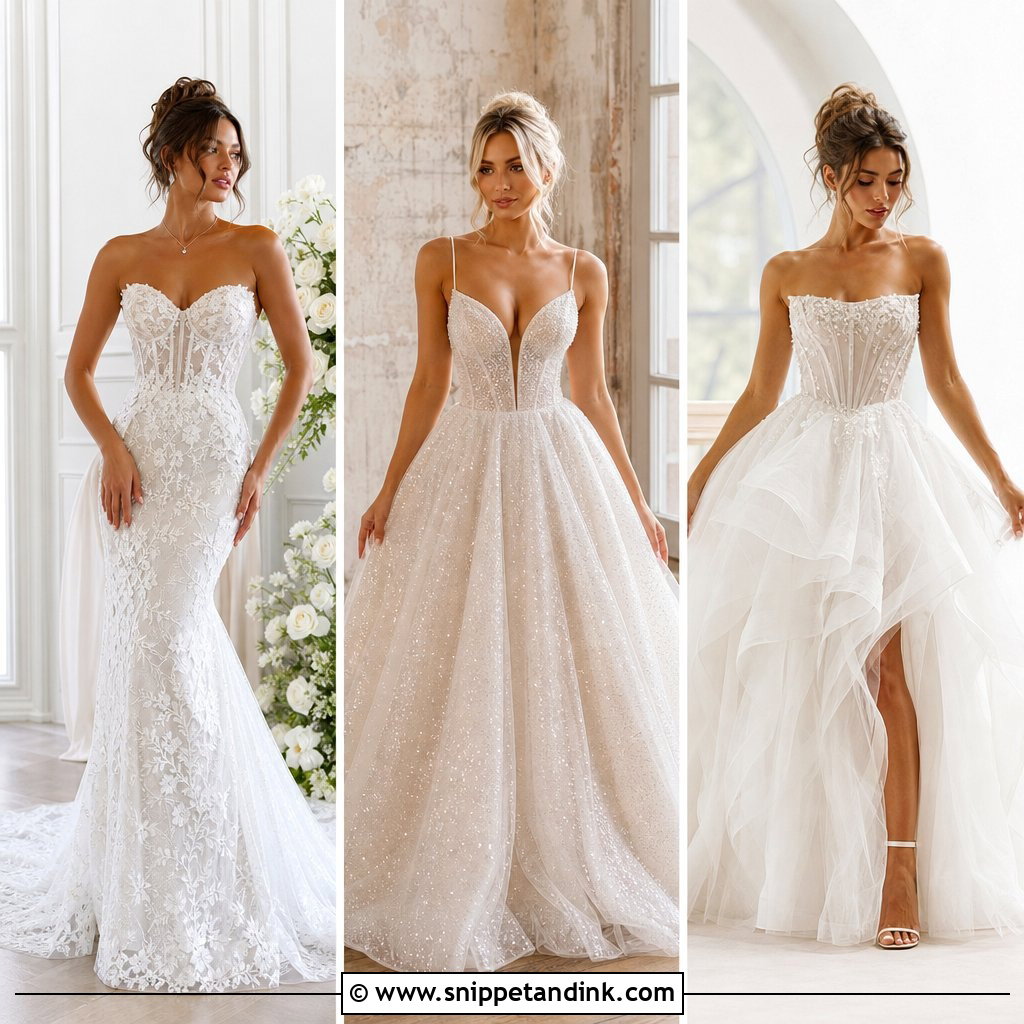
This is the gown most brides picture first, and it earns the reaction when you step into the aisle. Look for a fitted corset bodice with a softly curved neckline over a skirt built from several tulle layers, with a little pearl or crystal scattered through so it catches the light without turning theatrical. I pair it with a cathedral veil, pearl drops, pointed ivory heels nobody will see, a neat low bun and a small tiara, plus a round bouquet of white roses, ranunculus and a little greenery. What surprises people is the width. A full skirt can measure well over a metre across at the hem, so check that the aisle, the car door and the staircase can take it before you fall for it in a showroom.
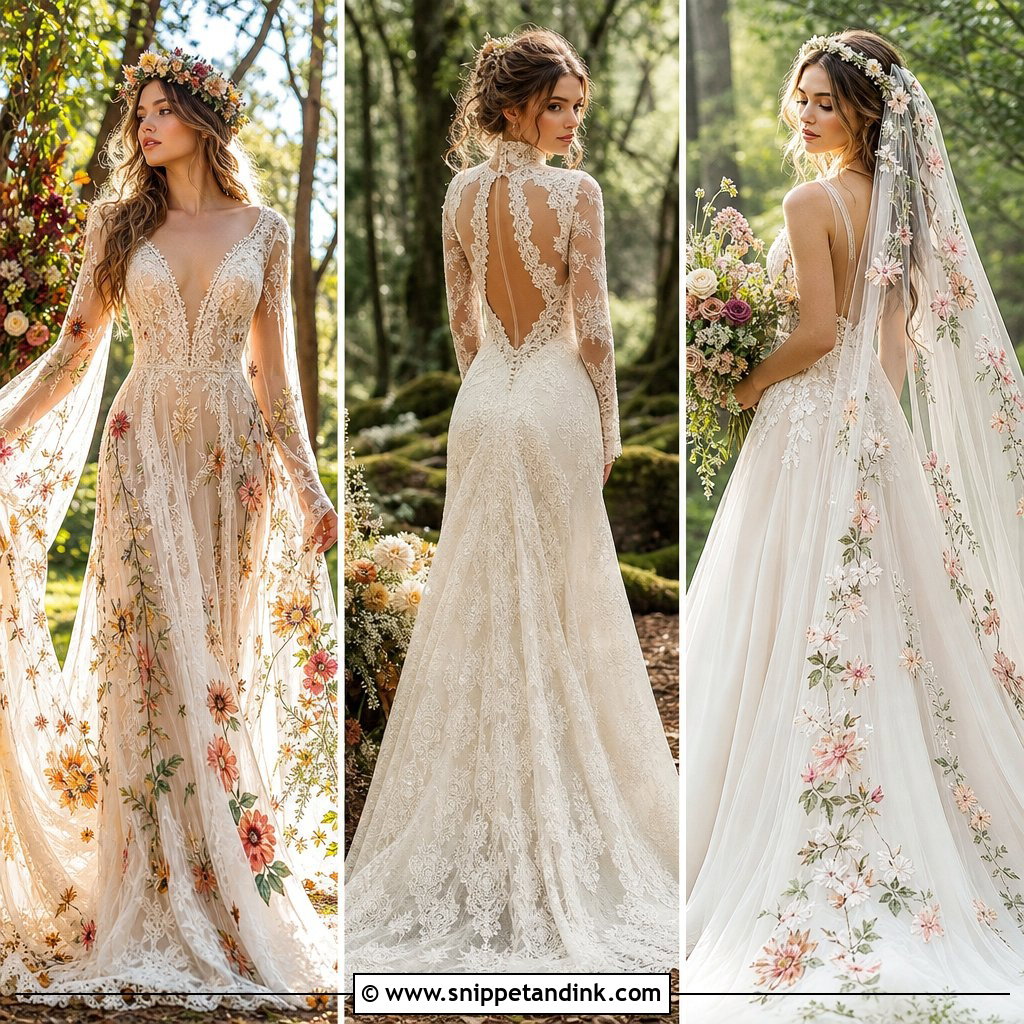
2. Enchanted Forest Wedding Dress
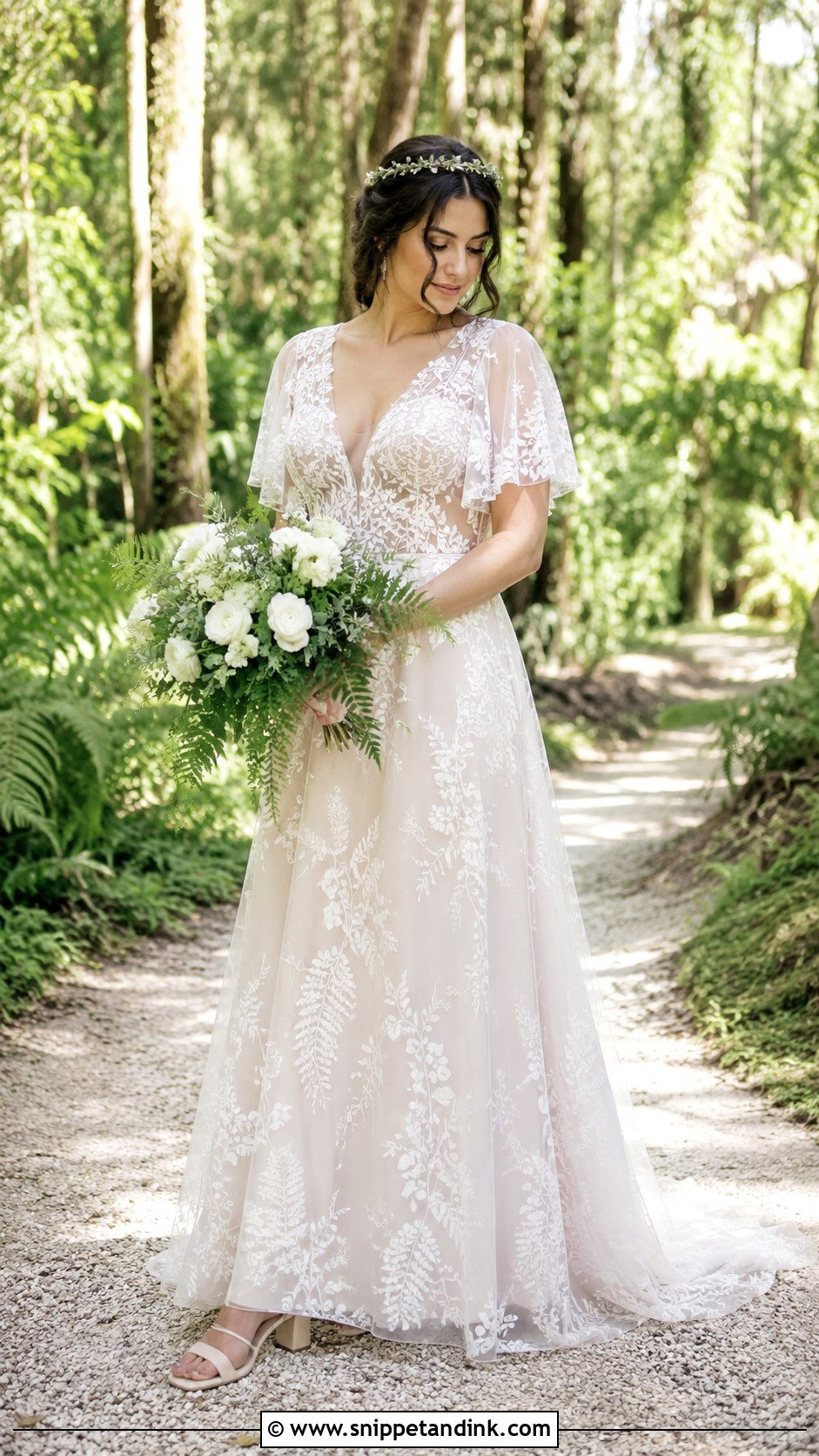
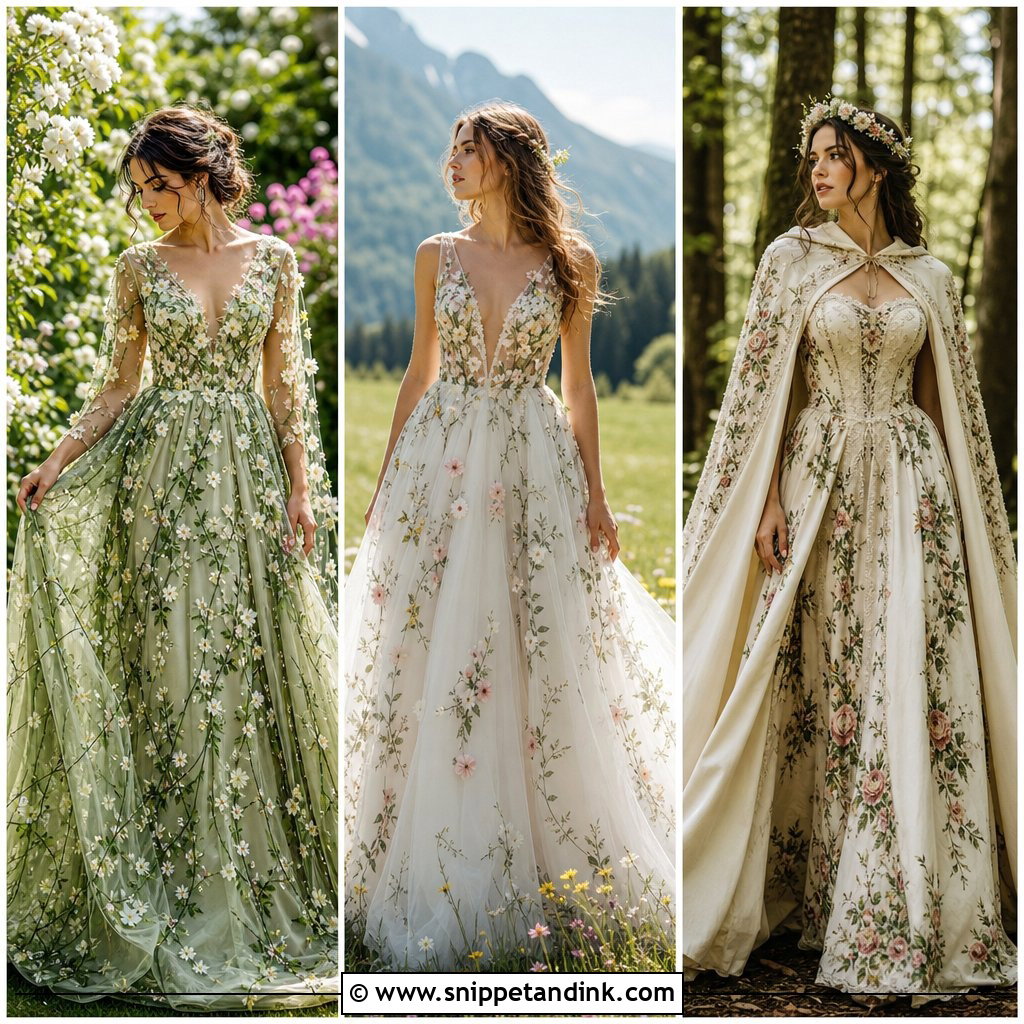
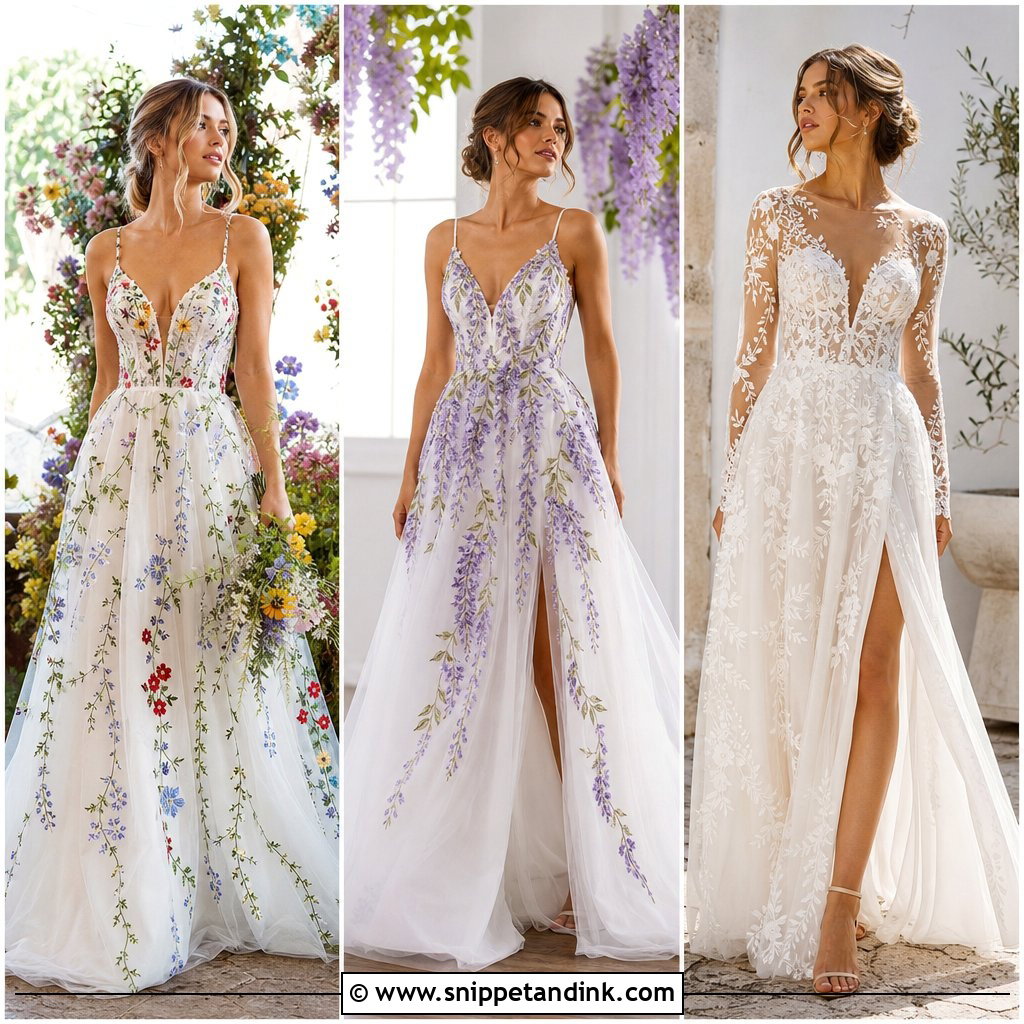
Picture walking between tall trees in a gown that carries the leaves on its lace. An enchanted forest wedding dress sits most naturally on an A-line shape, with leafy embroidery over a champagne or ivory underlayer and flutter or removable tulle sleeves. Outdoors I always switch brides into block heels, because a stiletto sinks into turf within a few steps. A loose braid, a fine vine headpiece, small gemstone earrings and a fingertip veil keep things practical. The bouquet can be white flowers with ferns and trailing greenery. Go easy on large accessories here; the lace and the greenery are already doing the talking.
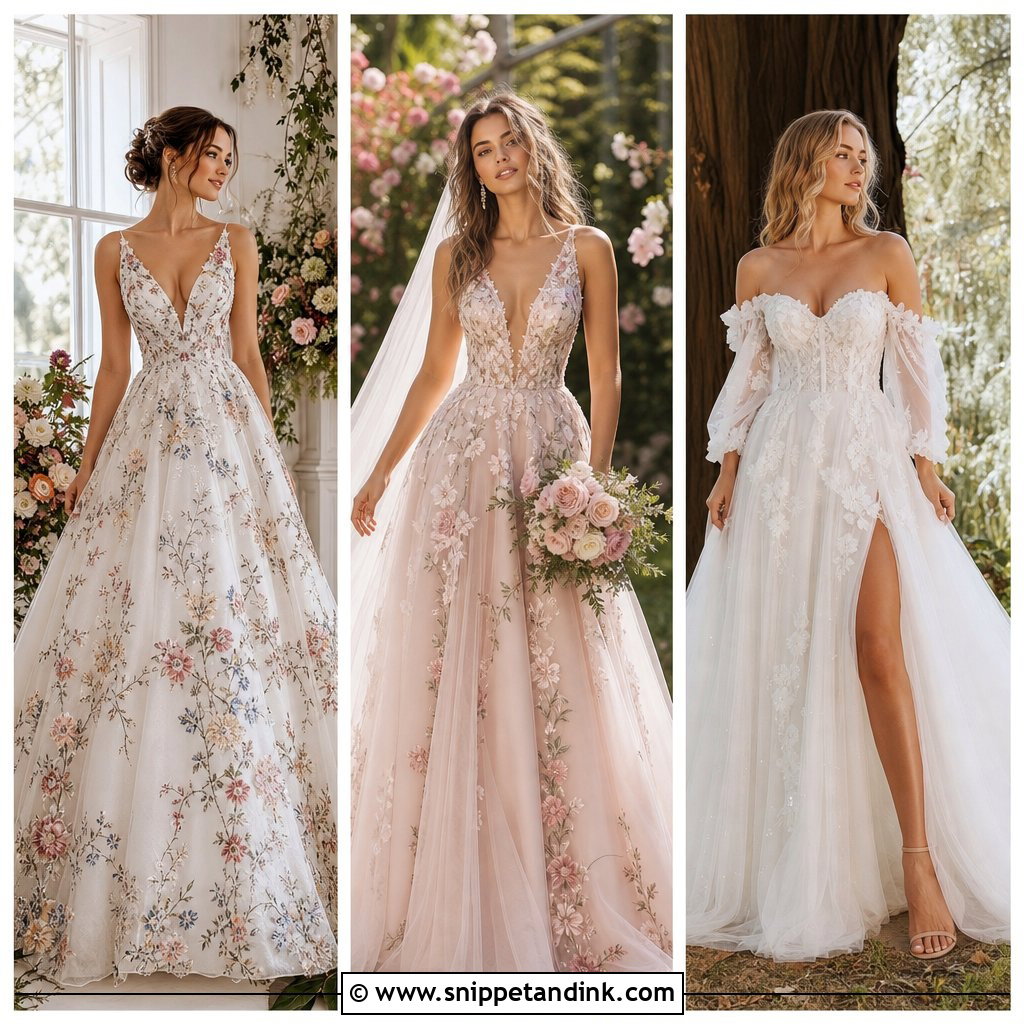
3. Floral Appliqué Wedding Dress
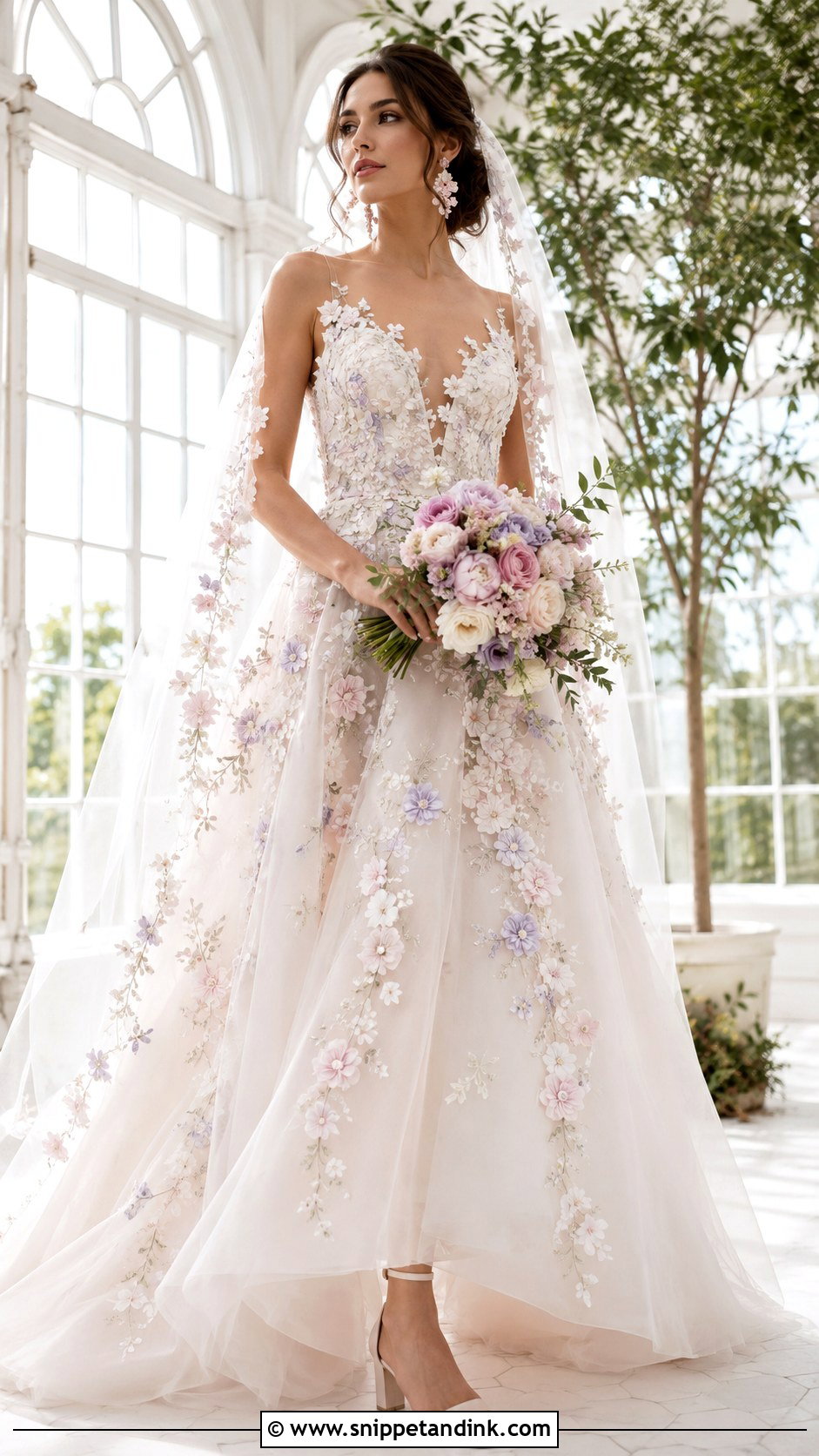
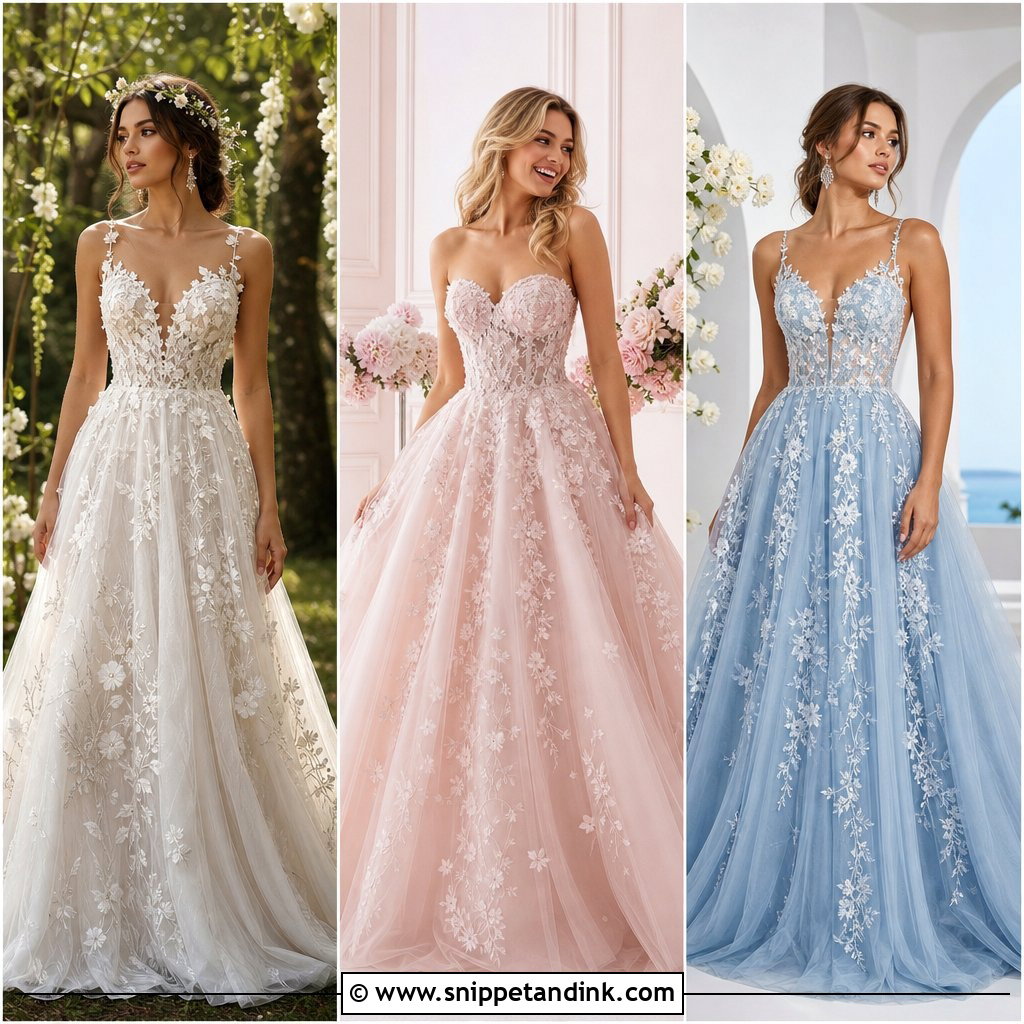
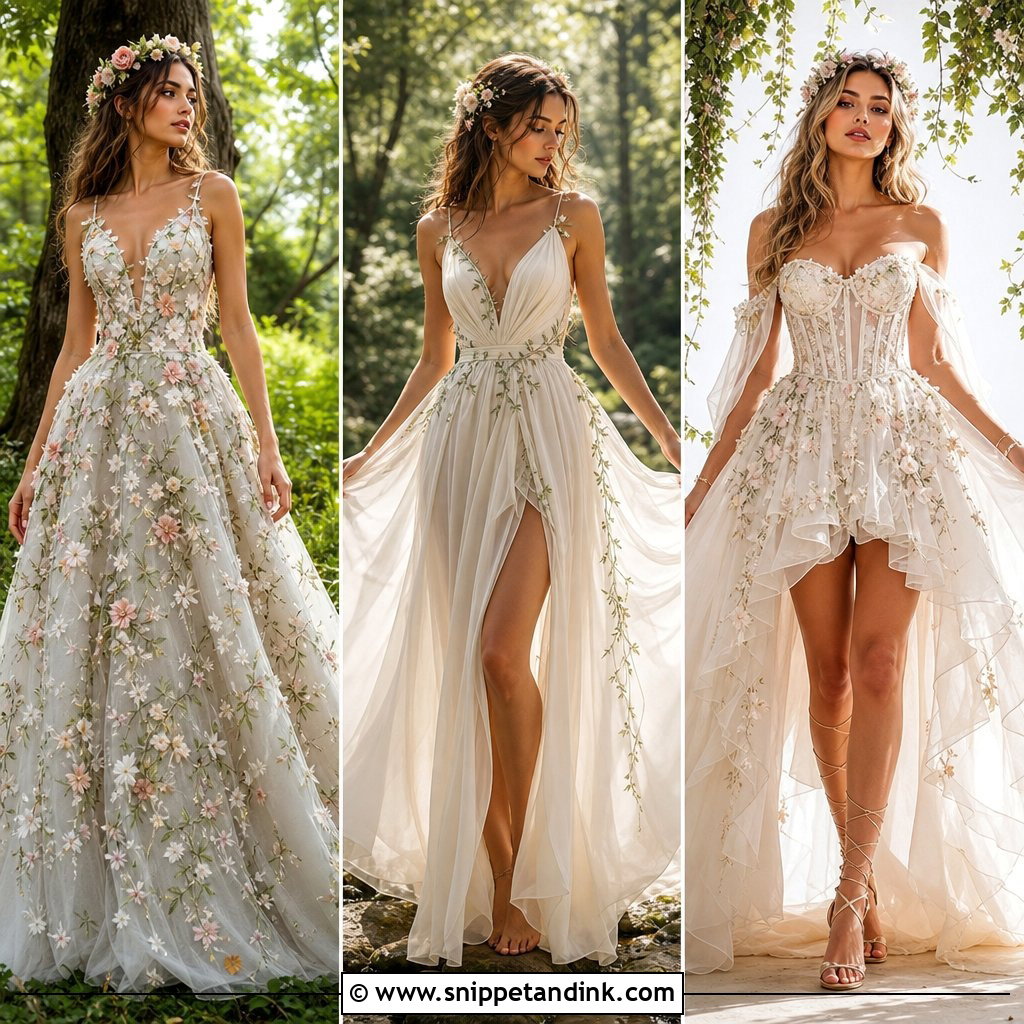
Three-dimensional flowers can turn a plain silhouette into something out of a storybook. I like an A-line or softly fitted gown with appliqués clustered on the bodice and thinning out as they travel down the skirt, so the eye moves downward. Ivory on ivory gives texture; blush, lavender or blue petals push it toward whimsy. One thing I check on every appliqué gown is the underside of the arms, since raised flowers at the side seam can scratch with every movement. Slim satin heels, floral studs and a sheer veil with a few matching flowers at the edge finish it, with soft waves or a loose updo. Choose a hand-tied bouquet of garden roses and sweet peas that echoes the dress rather than copying every colour. Greenhouses and spring gardens suit it best.
4. Long Sleeve Lace Wedding Dress
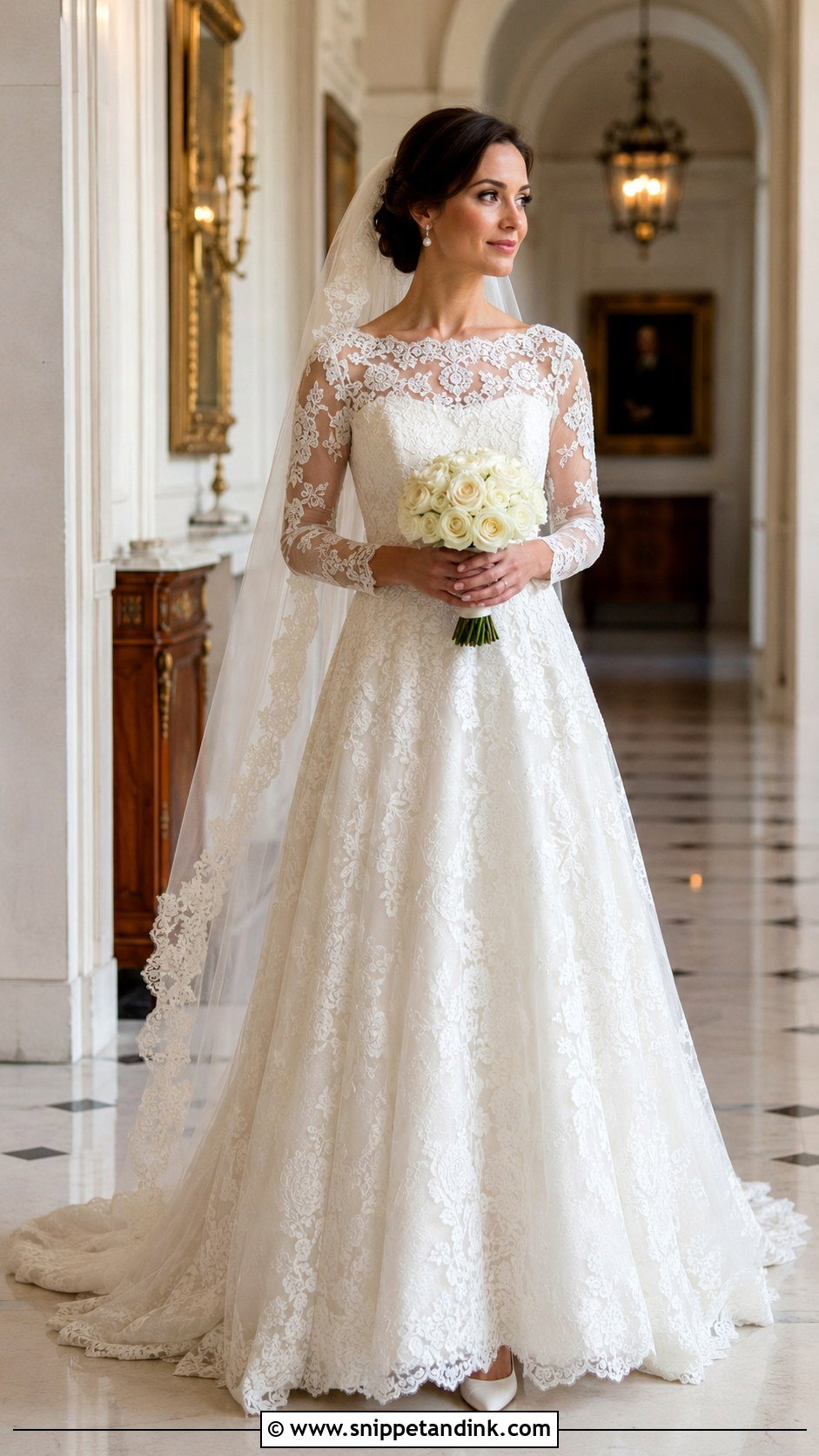
Long lace sleeves give you romance and coverage in one go. Look for illusion sleeves, a defined waist and an A-line skirt that moves easily from ceremony to reception. Floral lace reads soft and natural; tighter, structured motifs look more formal and royal. My fitting advice: have the sleeve length set while your arms are bent, not hanging, otherwise the cuff rides halfway up your forearm the moment you hold the bouquet. Closed-toe ivory pumps, a lace-trimmed chapel veil and small pearls keep it calm, and a smooth chignon stops the hair competing with the neckline. A compact bouquet of white roses and lisianthus is enough. Cooler seasons, old estates and candlelit halls are where this one shines.
5. Sparkly Tulle Wedding Dress
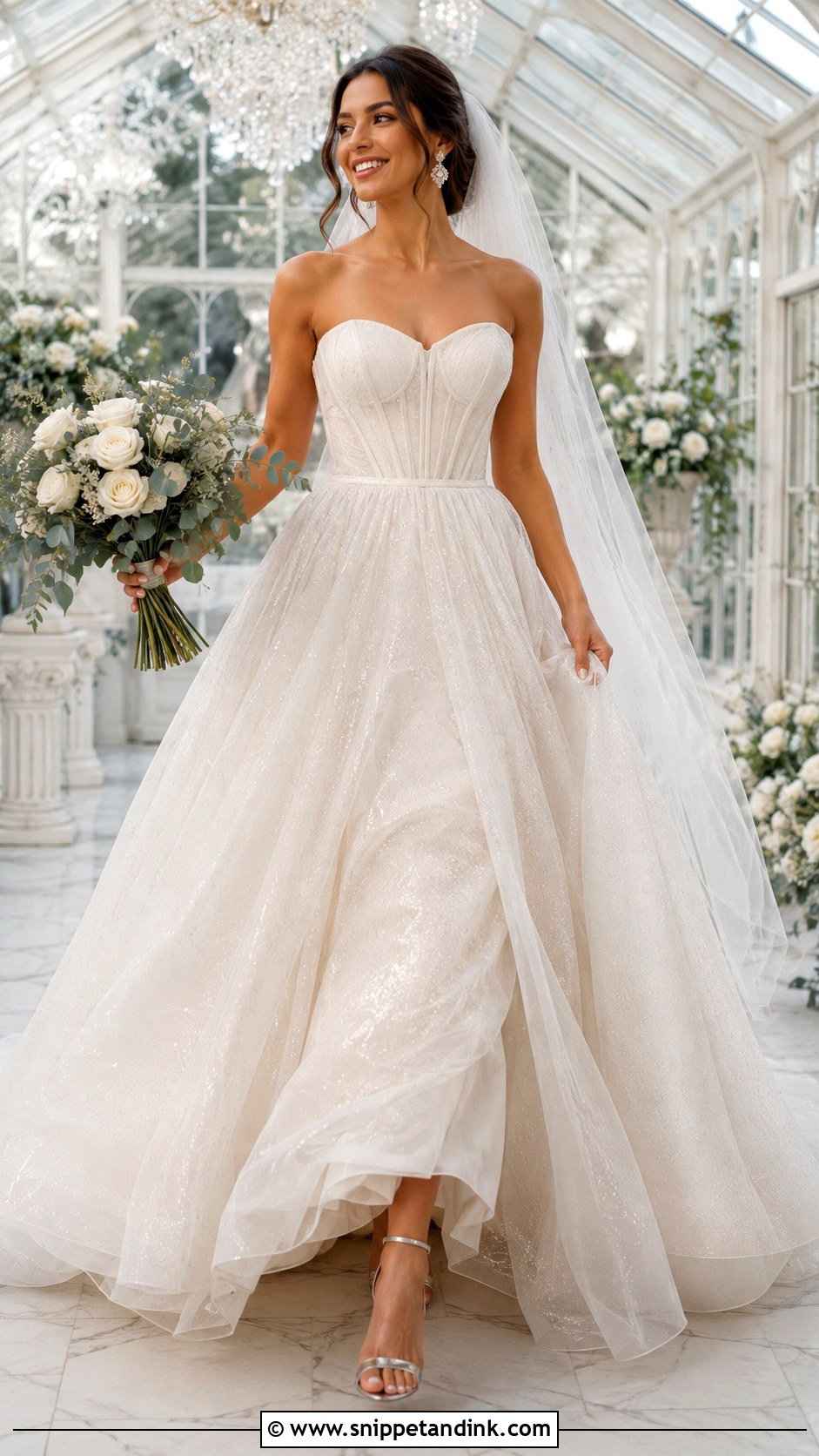
Fine glitter tulle gives the effect of starlight every time you turn, and I steer brides toward it over big sequins, which can look heavy and catch on everything. A structured bodice with supportive straps under a layered A-line skirt keeps you comfortable and moving. Glitter tulle sheds a little, so expect sparkle on your partner’s jacket by the end of the night. Crystal drops, silver-toned heels and a plain sheer veil that doesn’t hide the shimmer are all it needs, along with a sleek low bun or tidy half-up style. White roses with silvery eucalyptus keep the palette cool. Evening ballrooms and glass conservatories show it off, and bright directional light shows the shimmer far better than a flat overhead flash.
6. Off Shoulder Wedding Dress
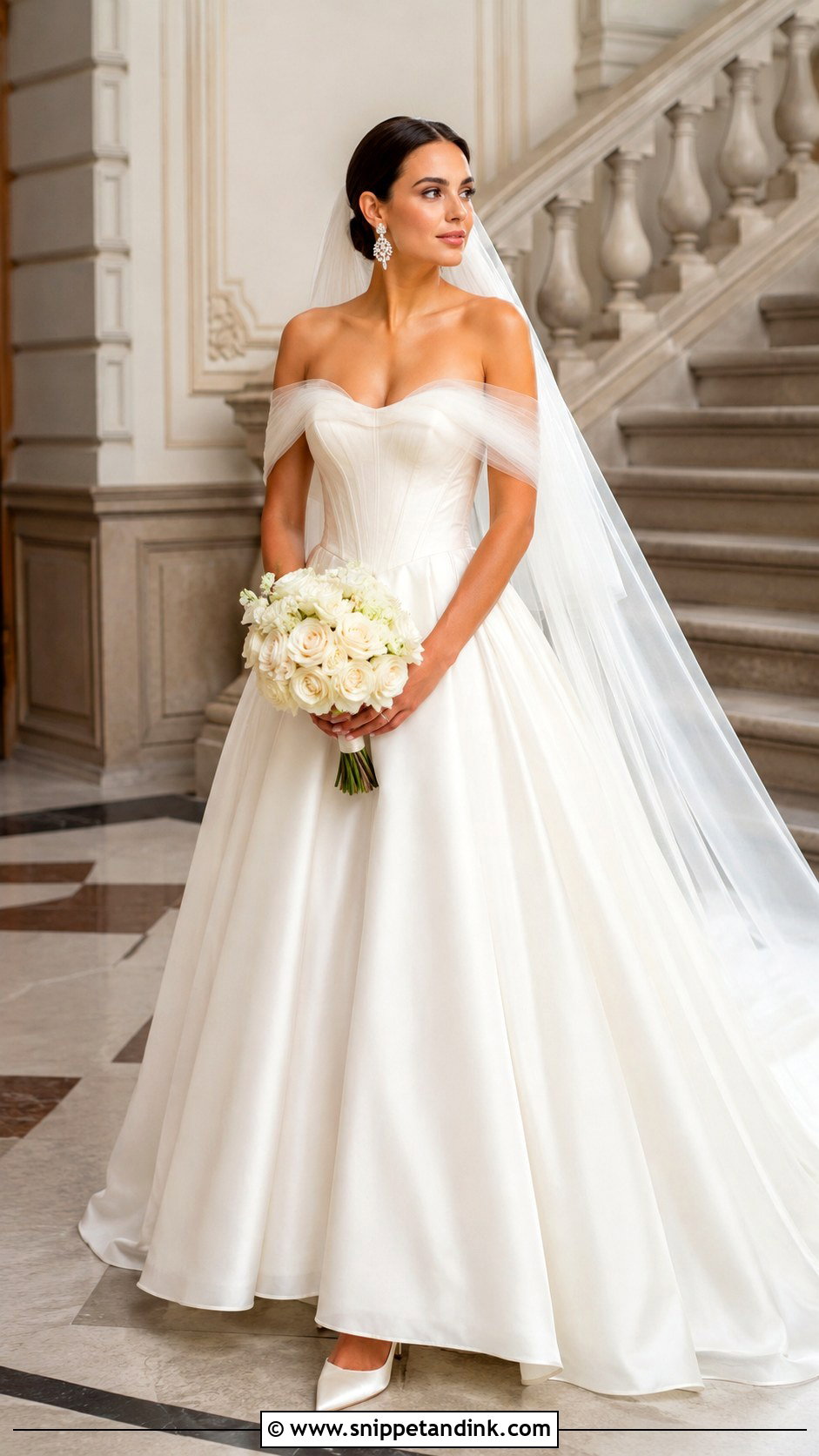
Off-shoulder bands frame the collarbones the way old storybook portraits do. Look for a supportive corset bodice with draped satin bands, lace sleeves or soft tulle straps resting below the shoulder, over a full A-line or ball gown skirt. If the neckline is plain, a delicate necklace can work; anything detailed, and I go for chandelier earrings with a bare neck. Pointed satin pumps, a long veil, an elegant updo with a few face-framing strands and cream roses with trailing jasmine complete it. The honest drawback: those bands pin your arms. Hug someone, reach for a glass and slow dance in it at your fitting, and ask your seamstress about stretch or a little extra ease if you can’t lift your arms comfortably.
7. Corset Ball Gown Wedding Dress
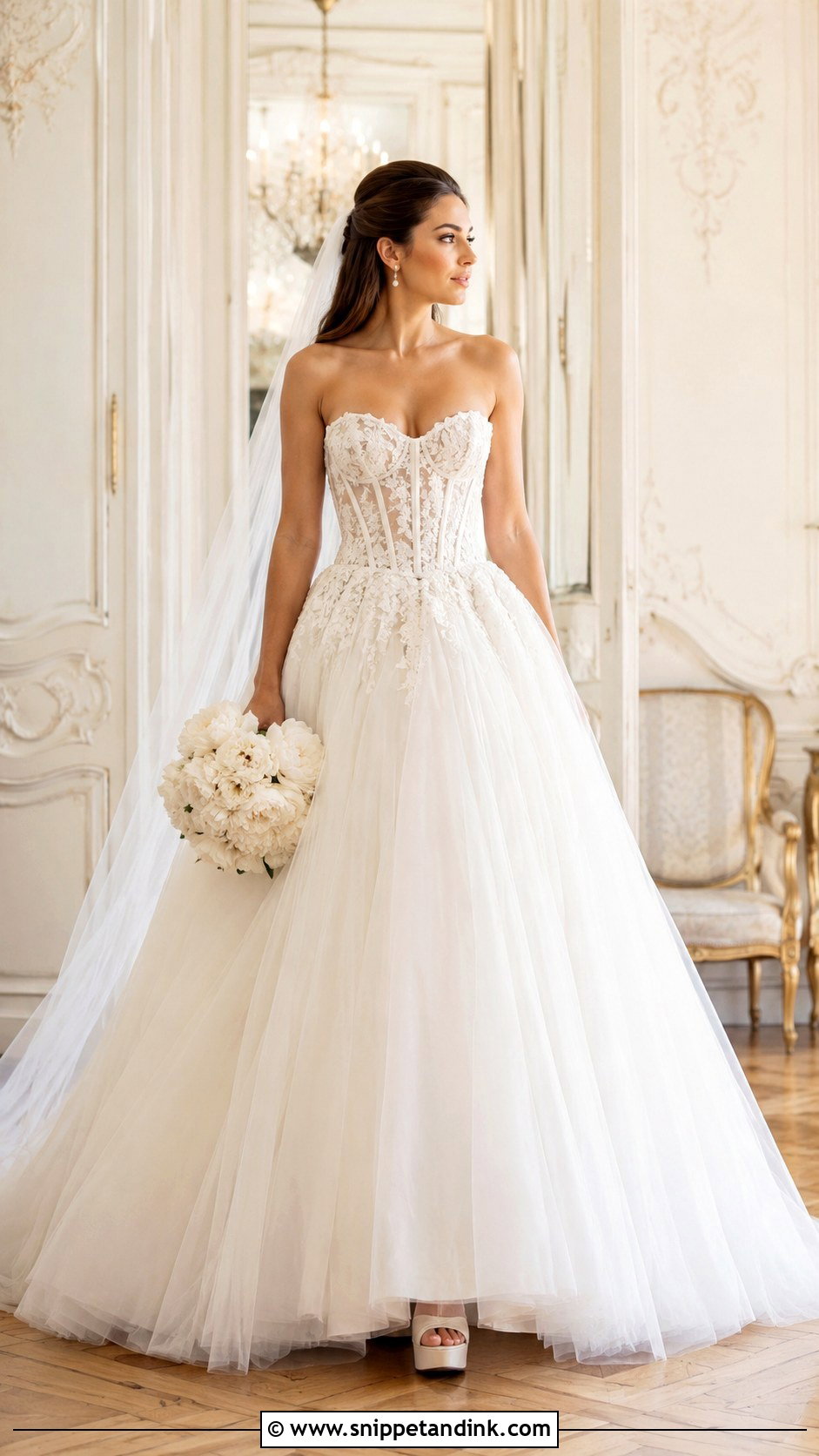
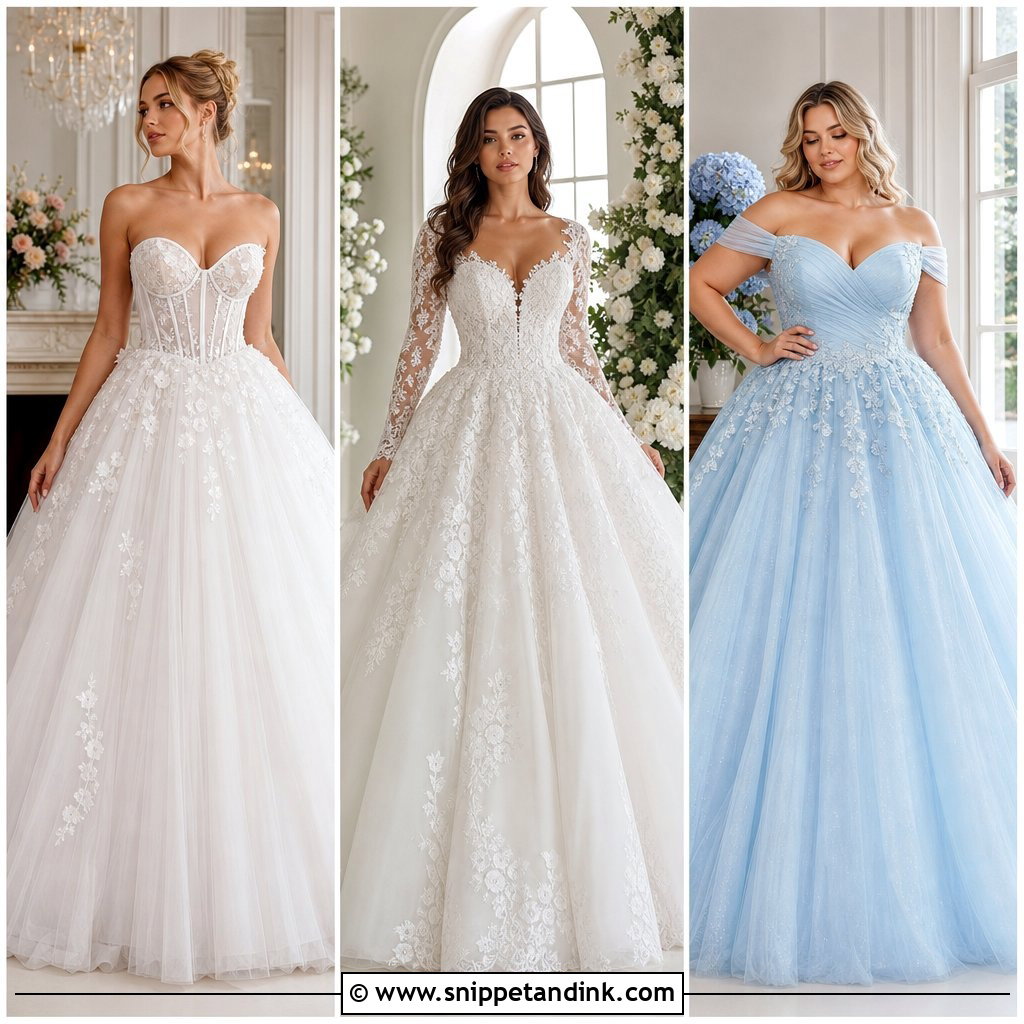
A corset ball gown shows its structure on the outside and keeps the volume below. The bodice should have proper boning and a secure back, with soft lace or embroidery over the panels, and the tulle skirt should start cleanly at the natural waist. Real corsetry should feel firm, not tight. At fittings I ask brides to sit, eat a biscuit and take a full breath, because a bodice that only works while you stand still will be miserable by dinner. Pearl and crystal earrings, ivory platform heels, a long plain veil and a half-up style that softens the boning without hiding it are my pairing, with white peonies and roses in hand. Ballrooms, grand staircases and chateaux give it the stage it wants.
8. Blush Pink Wedding Dress
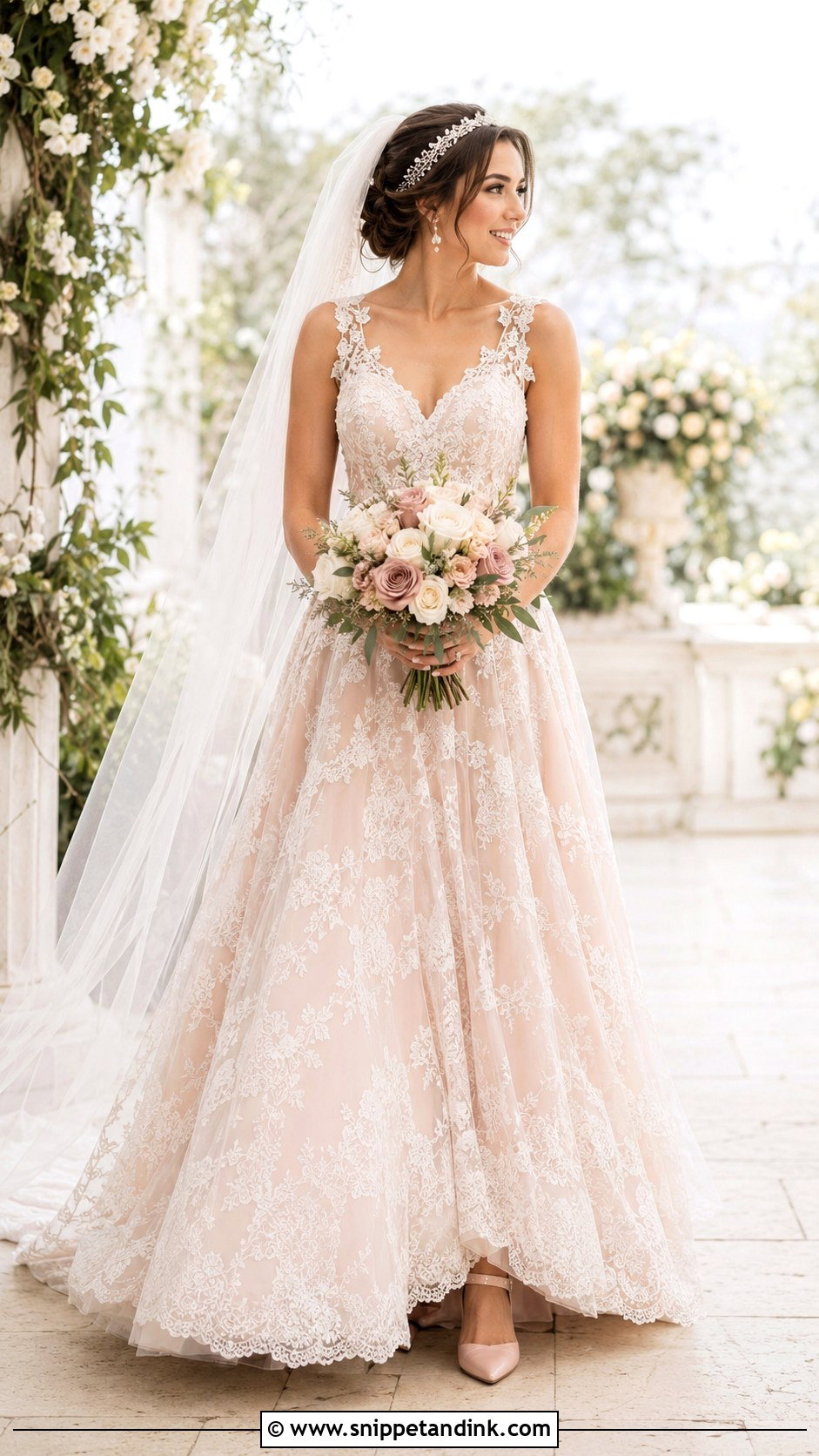
Blush reads as bridal while quietly stepping away from white. The version I trust most is a blush underlayer beneath ivory lace or tulle, so the colour comes through soft and layered instead of flat. A fitted bodice and flowing A-line skirt keep the shade from overwhelming you. Pair it with nude or pale pink heels, rose-gold earrings, a sheer ivory veil and either fresh flowers in a loose updo or a slim crystal headband, plus cream and dusty rose blooms in the bouquet to tie everything together. This enchanted wedding dress sits well in gardens and softly lit ballrooms. Always hold the fabric against your face in daylight first; some blushes go sallow on olive skin and others vanish against very fair skin.
9. Butterfly Wedding Dress
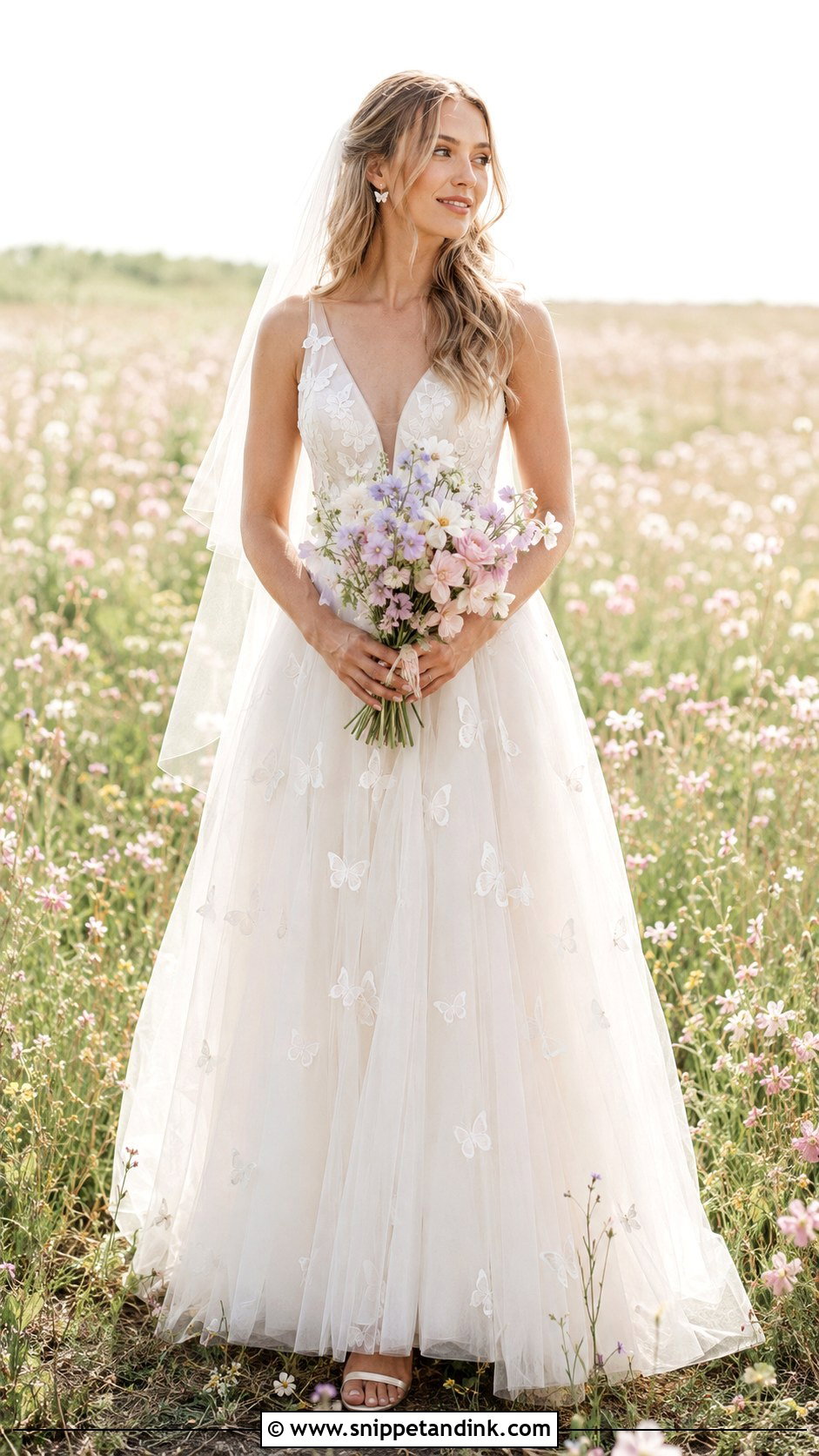
Small embroidered butterflies bring movement and a bit of play. A butterfly wedding dress stays bridal when the motifs are small and scattered across the bodice, straps and upper skirt; a big cluster tips it into fancy dress. Simple ivory sandals, butterfly studs and a plain fingertip veil keep the rest light, with loose waves or a soft braided updo and one or two small hair pieces echoing the gown. Sweet peas, ranunculus and wispy greenery suit it, and a meadow or greenhouse makes the natural backdrop. Tug gently on a few of the butterflies when you try it on. Wired 3D motifs that wobble at the sample stage tend to loosen further once you dance.
10. Cape Wedding Dress
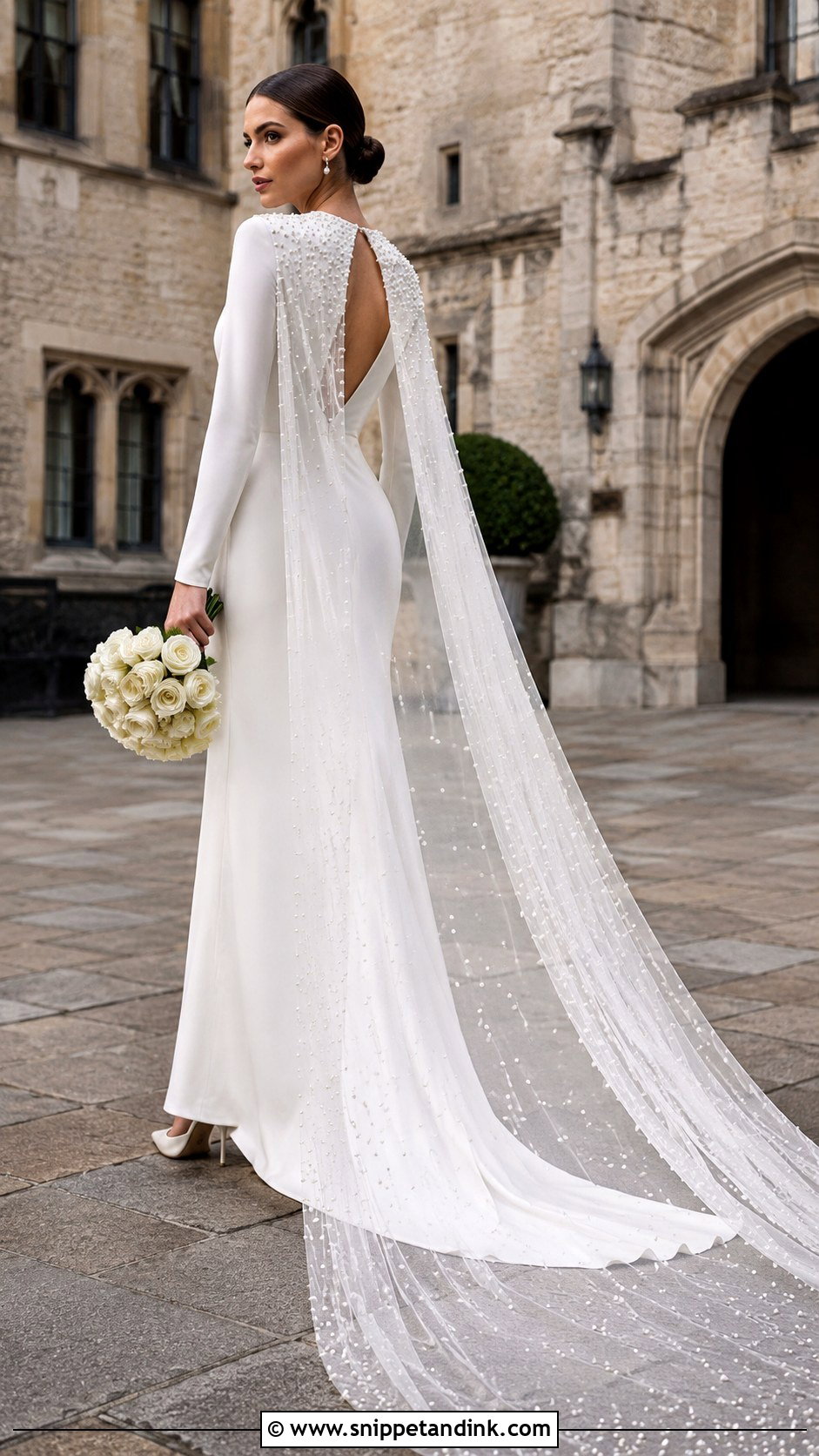
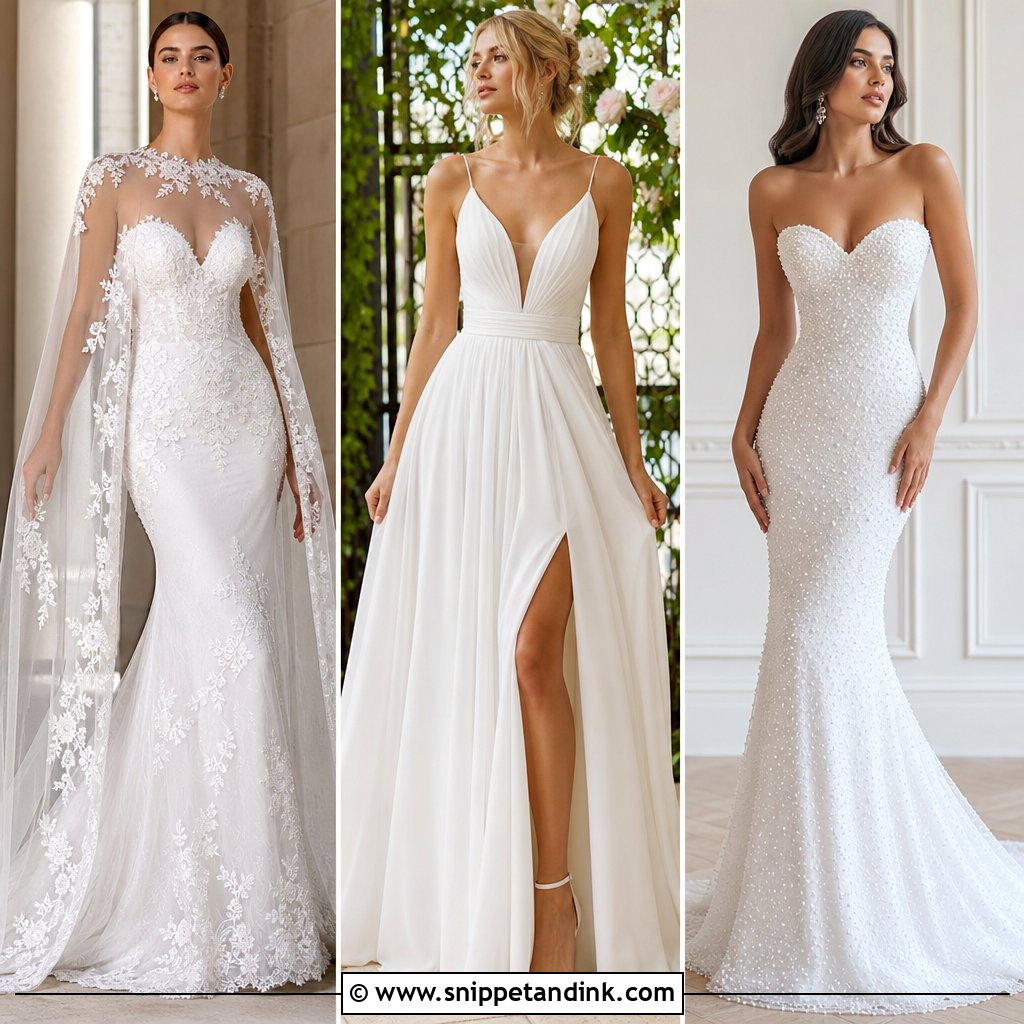
A cape gives you the drama of a veil with none of the pinning. I start with a clean A-line or fitted crepe gown, then add a floor-length or cathedral cape in sheer tulle edged with lace, scattered pearls or embroidered flowers. Understated earrings, pointed pumps and a sleek low bun keep the shoulders tidy so the cape’s neckline sits flat. The fastening matters more than people think: hooks or a hidden snap at the shoulder are easier for a bridesmaid to undo before dancing than a tied ribbon. A structured bouquet of white roses suits it. Castle courtyards and winter weddings are natural homes, and on a breezy day the cape spreading out behind you does the work for your photographer.
11. Puff Sleeve Wedding Dress
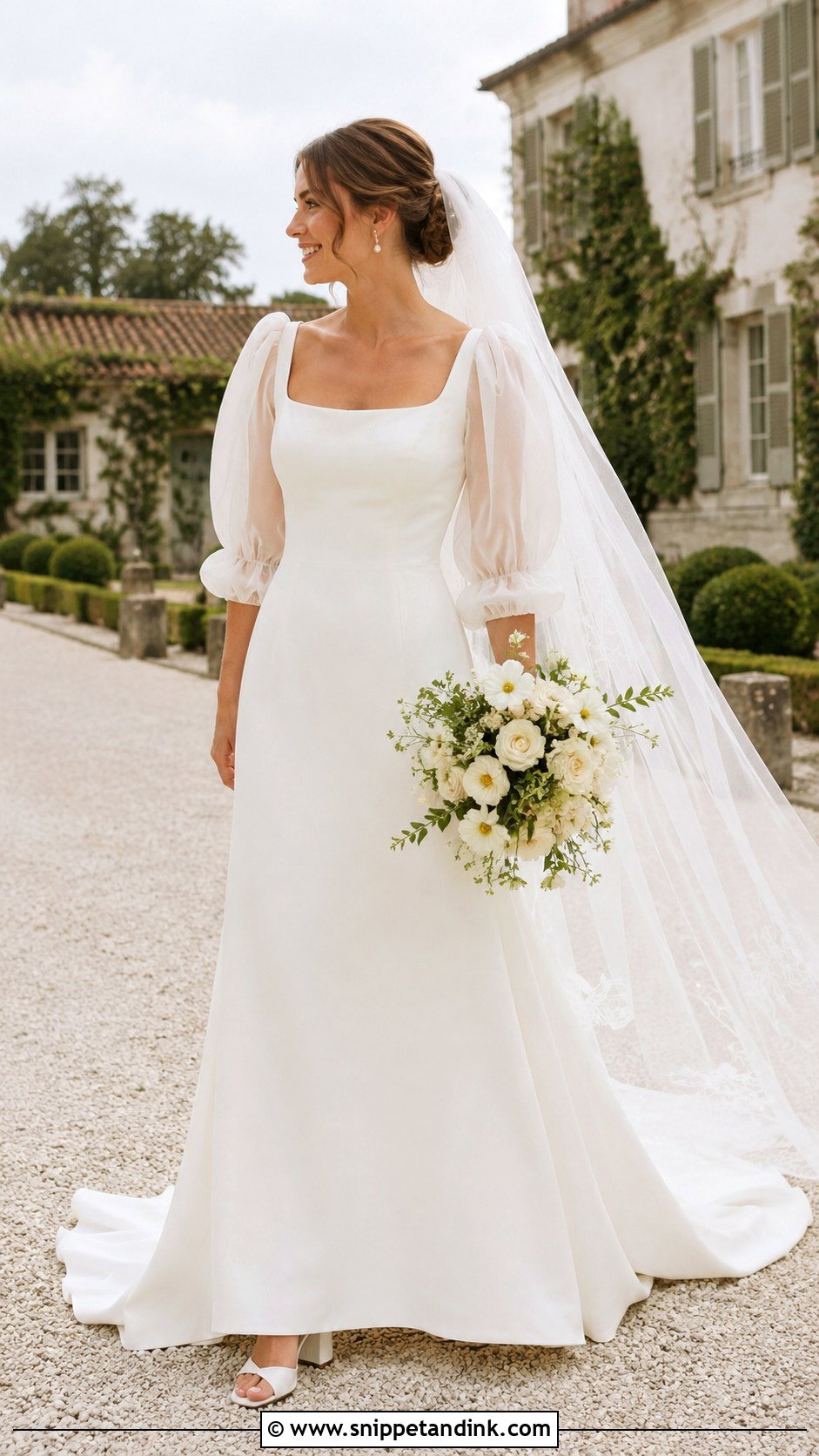
Puff sleeves give you that unmistakable storybook shoulder and balance a full skirt from above. Sheer organza or tulle keeps the volume light; satin puffs are heavier and can droop by evening without a little netting inside. A fitted waist and simple A-line skirt keep the outline tidy, and detachable sleeves give you two looks without a full change. Pearl earrings, ivory block heels and a short or chapel veil under a soft updo complete it, with white cosmos and garden roses in hand. Gardens and country houses suit it. Skip bracelets entirely. They tangle in the sleeve hem and hide the very detail you chose the dress for.
12. Square Neck Wedding Dress
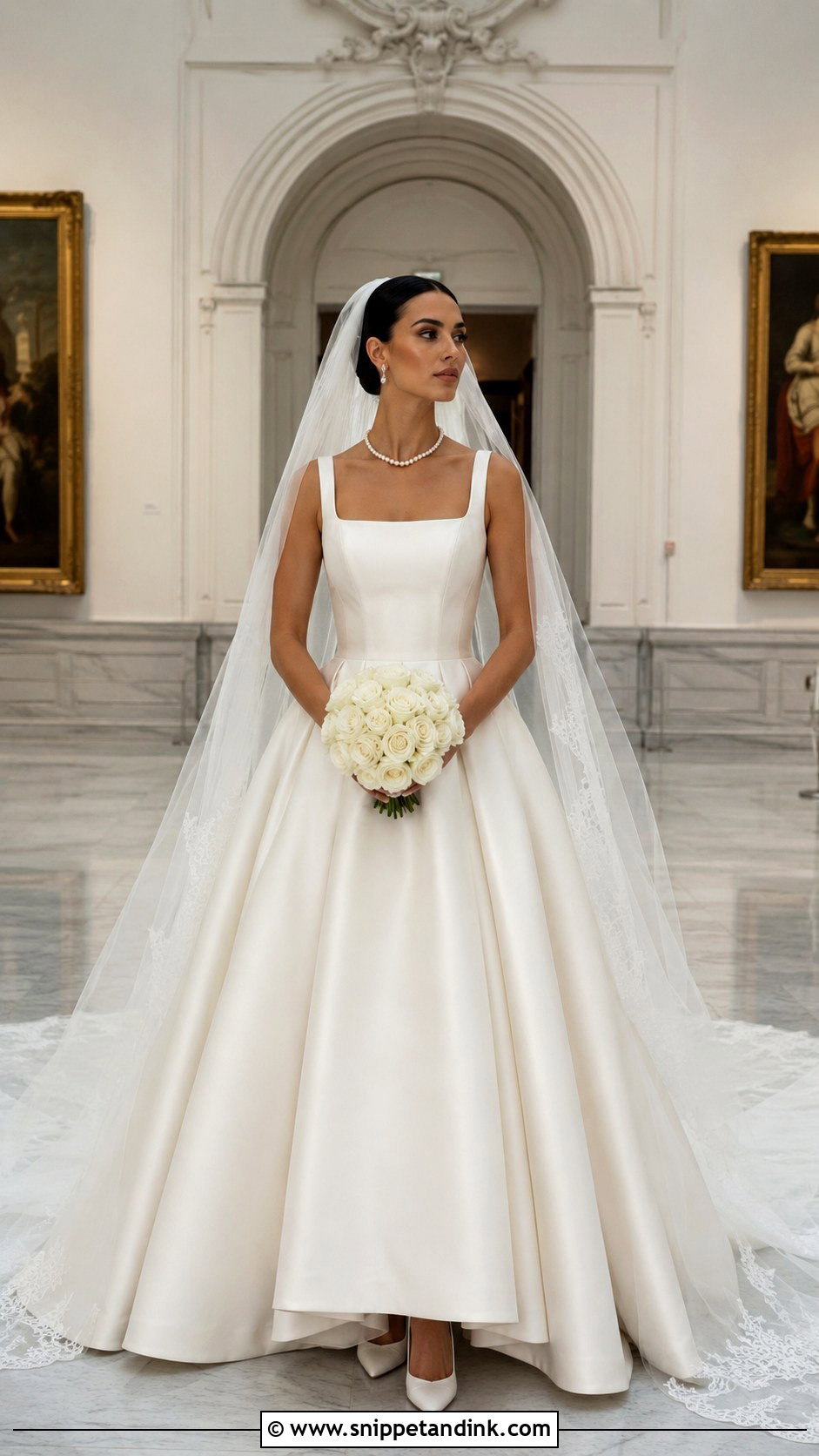
A square neckline has the look of an old painted portrait. It sits best on a structured bodice with long sleeves, cap sleeves or wide straps, over full satin for formality or layered tulle for a garden. Because the neckline draws a straight horizontal line, I fit it carefully: if it gapes even slightly when you lean forward, everyone can see it in the photos. A short pearl necklace, matching earrings and ivory pumps are classic here, and a clean centre-parted bun shows the neckline off. Choose a cathedral veil if the gown is plain, a simple chapel length if it already carries lace or beading. A compact bouquet of roses and seasonal white flowers keeps it balanced.
13. Dropped Waist Wedding Dress
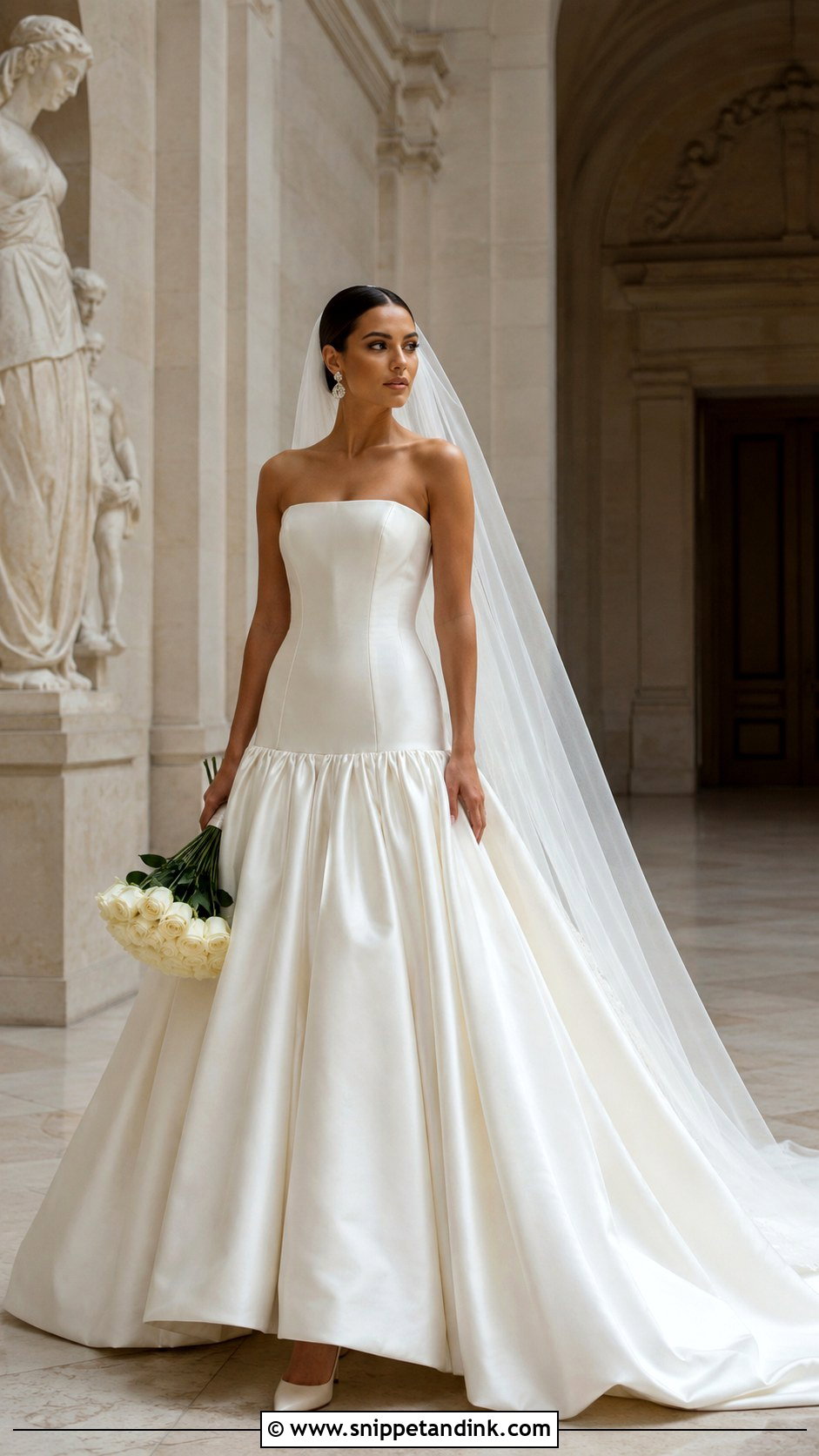
The dropped waist stretches the body long before the skirt bursts out low on the hips. In smooth satin or embroidered lace it feels regal and quite fashion-led. It needs strong internal support, since the long fitted section has to stay flat over the stomach and hips. I’m honest with brides who are short in the torso: this shape can cut the legs off, and a natural waist usually flatters more. Pointed heels, statement earrings, a clean cathedral veil and a sleek bun or sculpted waves suit the line, and a long-stemmed bouquet of roses or calla lilies continues the vertical. Ballrooms and museums suit it. Walk and sit at every alteration; the extended bodice should never dig in.
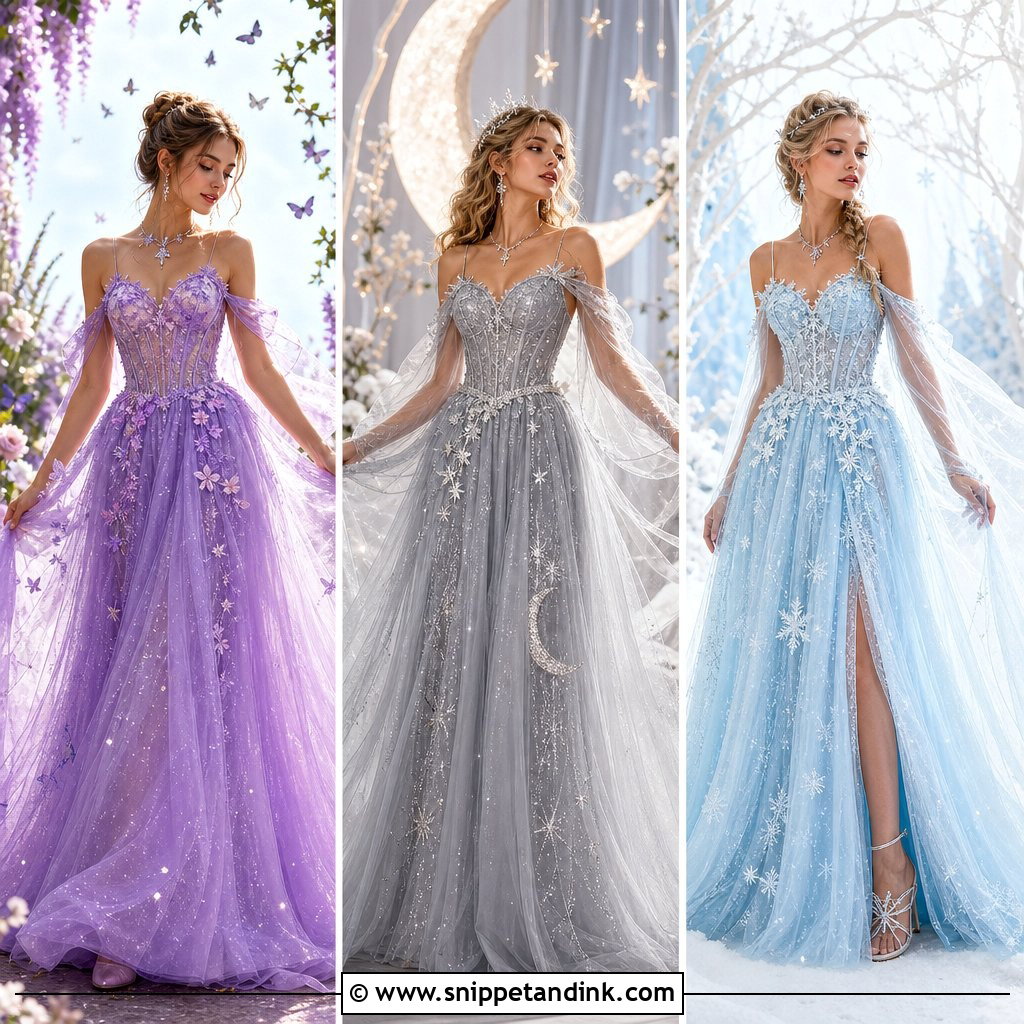
14. Blue Fairytale Wedding Dress
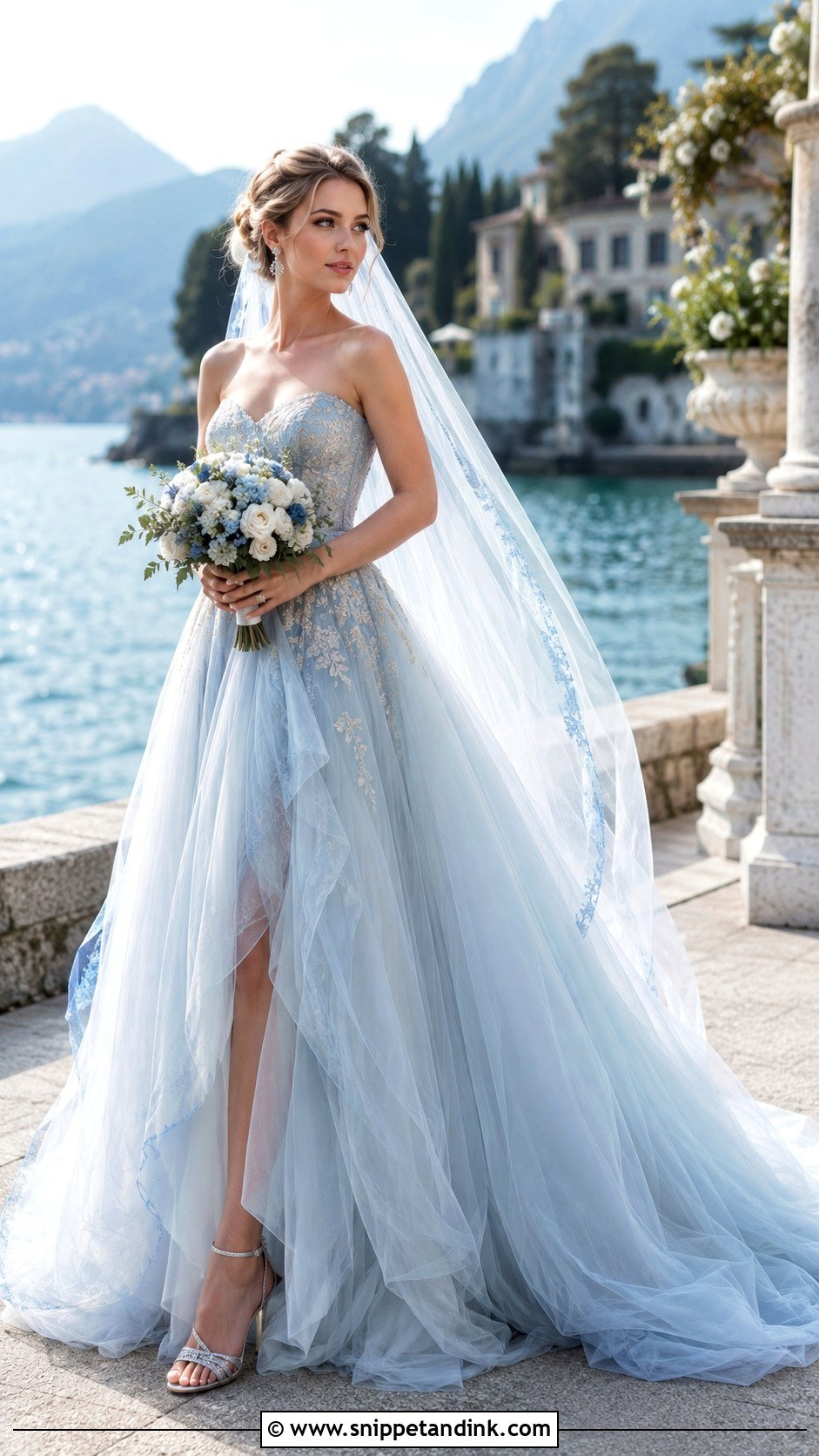
Pale blue keeps a bridal feel while being properly unexpected. I’d go for misty blue tulle over an ivory base, or a white gown with fine blue floral embroidery. A fitted bodice over a full A-line skirt lets the colour stay soft rather than solid. Silver heels, clear crystals and a sheer veil with a narrow blue edge suit it, along with romantic waves and a small crystal comb. White delphiniums and pale roses finish the cool palette. Winter ballrooms and waterside venues show it well. Ask for swatches before you order: blue shifts more than any other bridal colour between daylight, warm indoor bulbs and camera flash, sometimes leaning almost lilac.
15. Gold Embroidered Wedding Dress
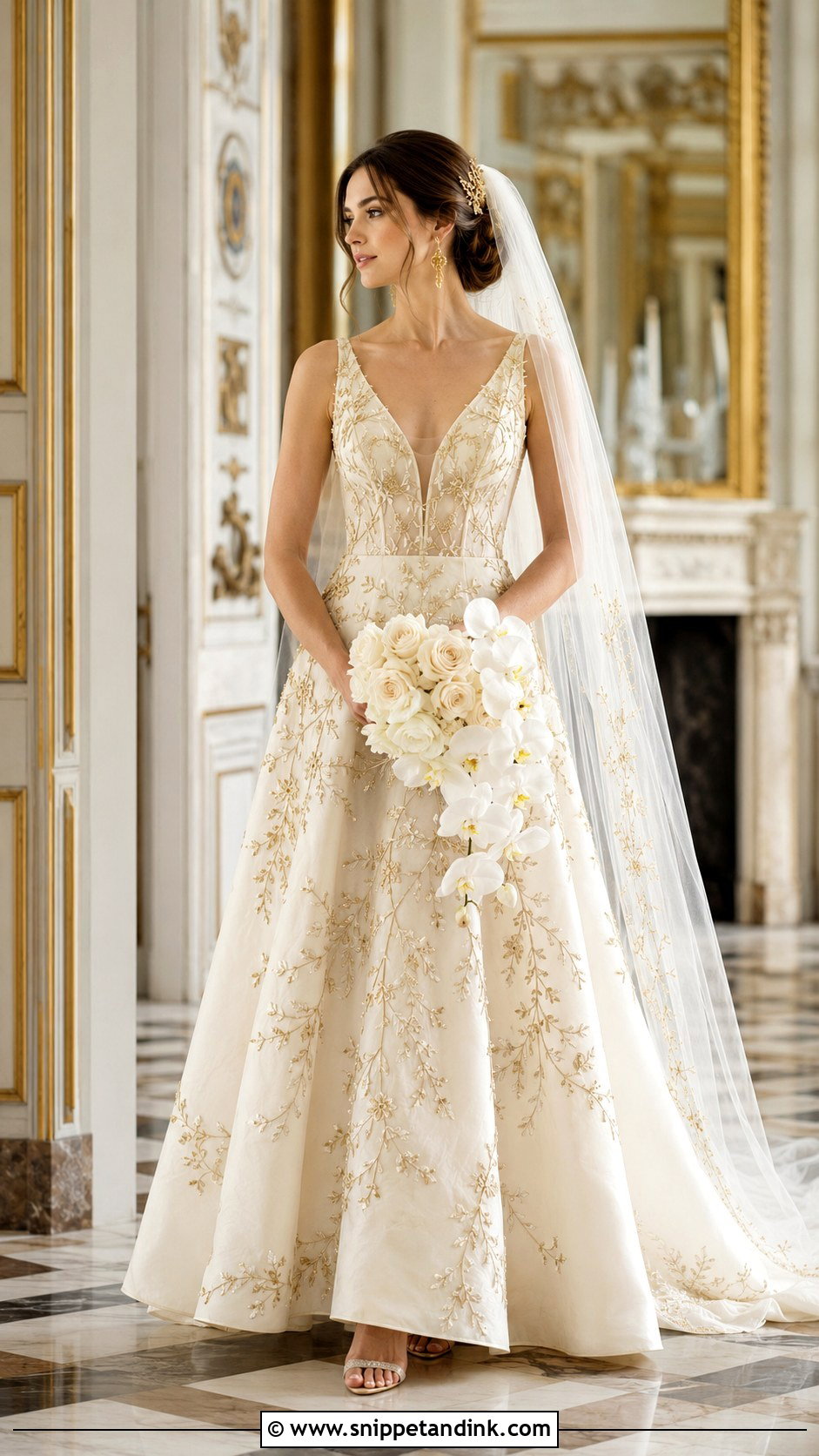
Gold embroidery warms an ivory gown and adds a regal richness. Fine metallic vines, flowers or star motifs look far more refined than embellishment covering every inch, and an A-line with a structured bodice gives the ornate work a clean base. One practical note from fittings: metallic thread is stiff and slightly scratchy, so check the inside of the arms and the underbust, and ask for a soft lining if it rubs. Champagne heels, small gold drops, a neutral ivory veil and a low textured bun with a slim gold comb carry the colour upward without a crown. Cream roses and white orchids suit it. Historic mansions and autumn weddings are its natural fit.
16. Ruffled Tulle Wedding Dress
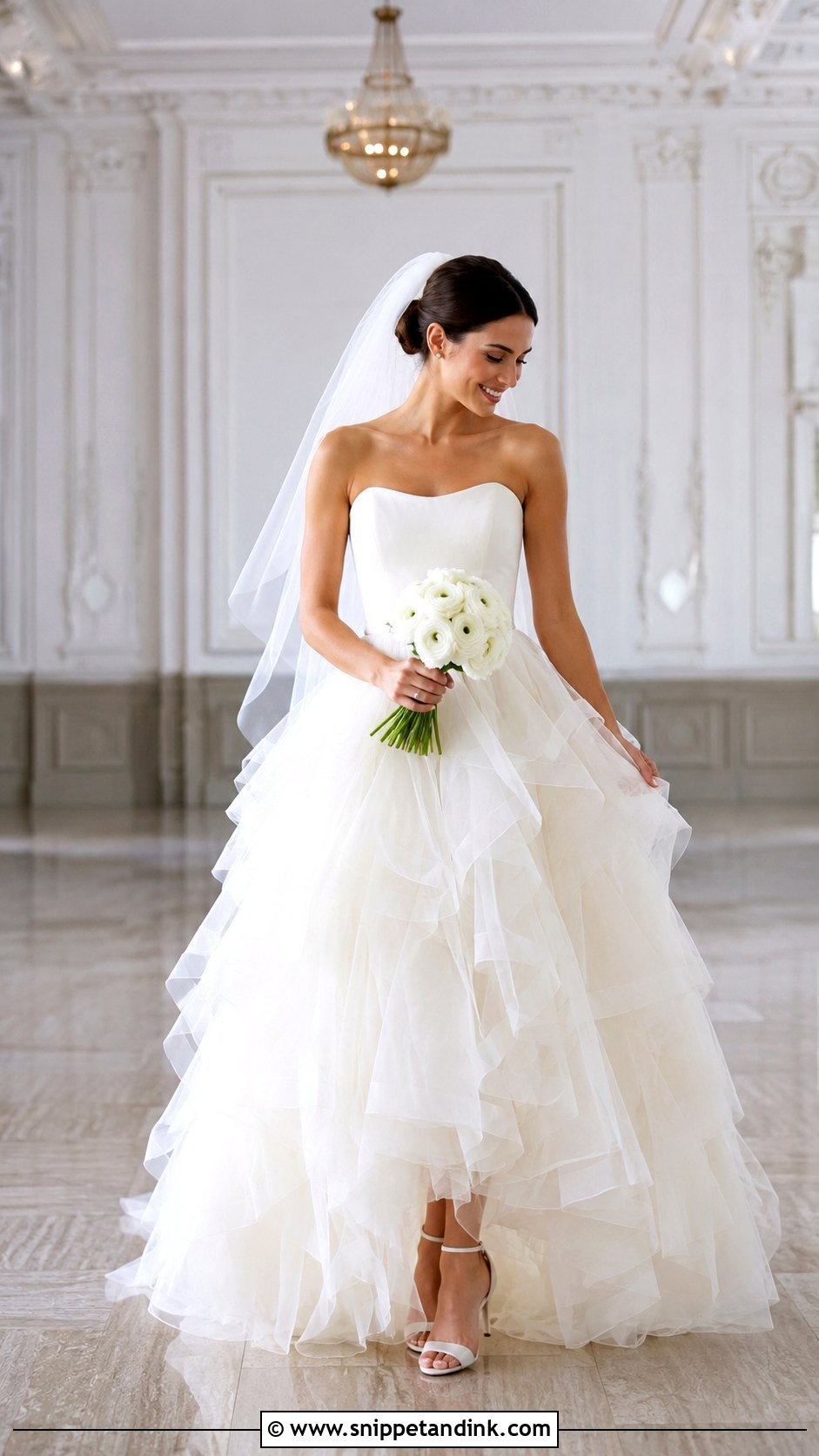
Ruffled tulle gives you a cloud of movement. Choose a fitted bodice with lightweight ruffles starting below the waist, so the volume doesn’t add bulk around your middle. Horsehair edging lets each tier hold its curl while staying airy. Small studs, simple ivory heels and a plain veil that ends either clearly above or beyond the fullest ruffles keep it clean; a veil stopping right at a ruffle line looks like a mistake. A neat updo balances the skirt, and a small bouquet of white ranunculus and roses stops it all getting busy. Save it for a venue with smooth floors. Ruffled hems pick up grass, gravel and anything sticky faster than a plain skirt.
17. Medieval Inspired Wedding Dress
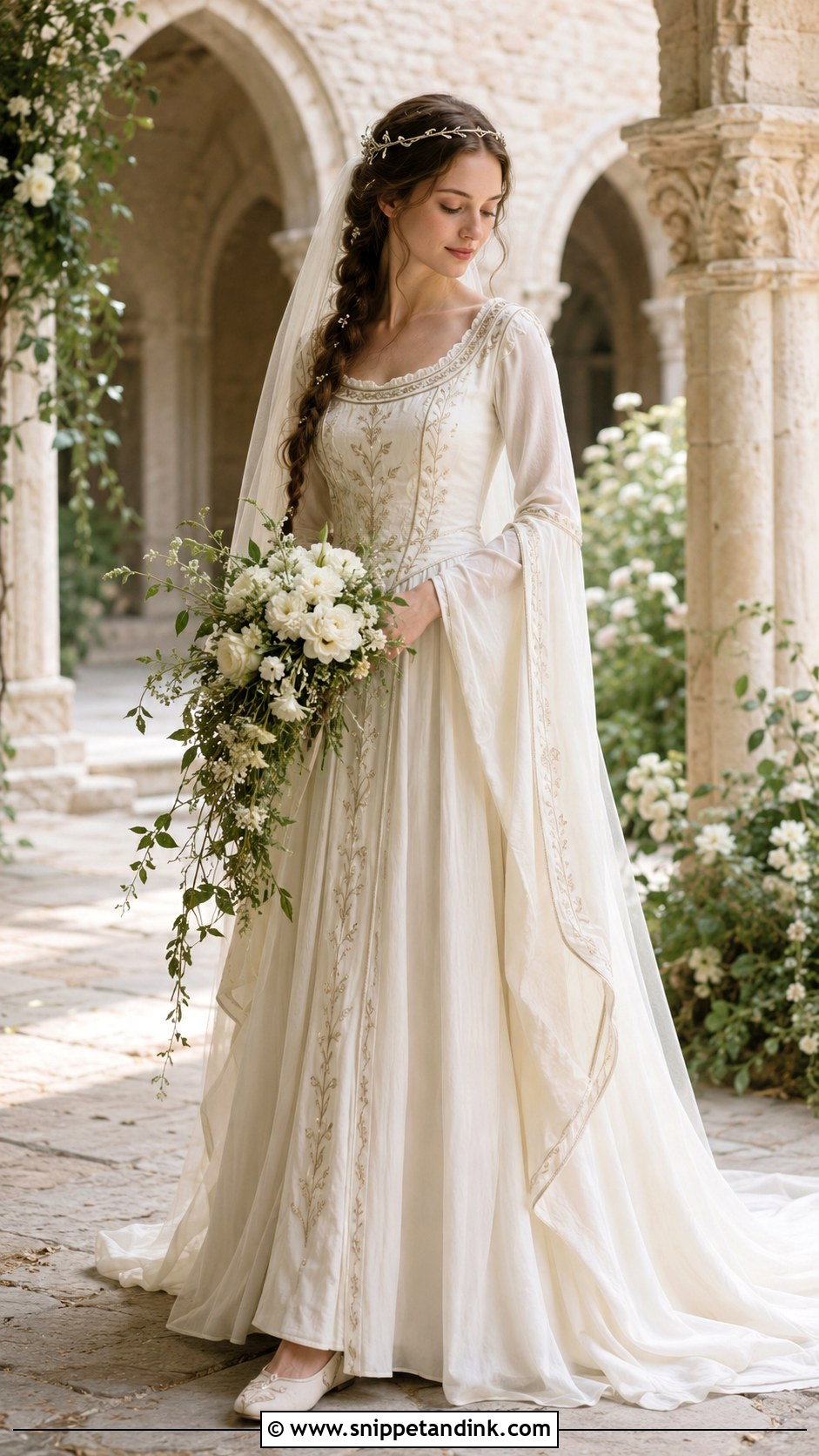
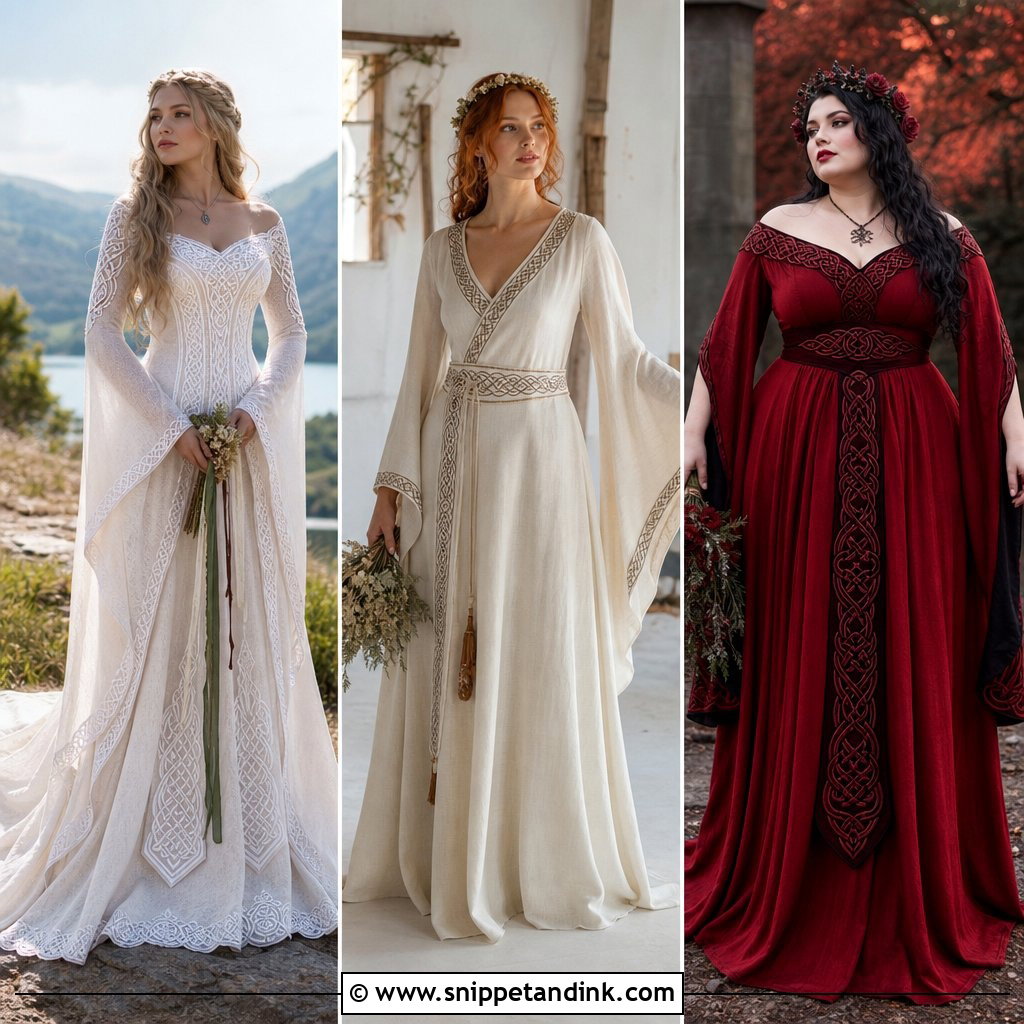
History reads as bridal once the details are softened. A medieval-inspired gown works best as a flowing A-line with a gently fitted waist, bell sleeves and fine vine embroidery, in chiffon, silk or light crepe rather than heavy costume velvet. Bell sleeves drag through everything at the reception table, so I often suggest a discreet loop at the wrist for dinner. Low ivory shoes, a delicate circlet, a veil set at the back of the head and loose waves or a long textured braid carry the mood. A natural bouquet of white flowers, herbs and trailing greenery suits it. Stop at one headpiece and the sleeves; add a belt, a goblet and a cloak and you’ve crossed into a fancy-dress party.
18. Celestial Wedding Dress
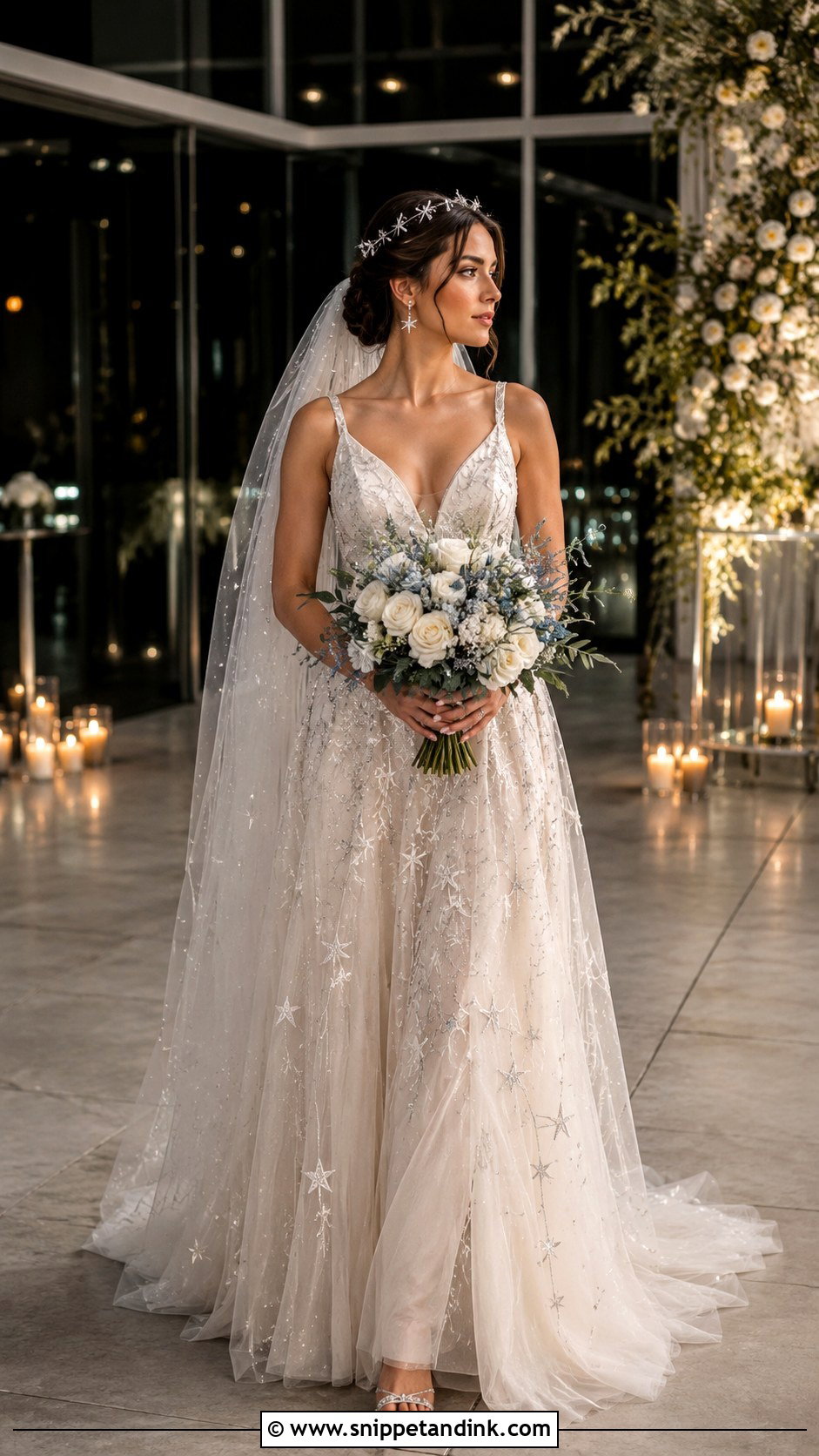
Stars, crescent moons and a fine shimmer make a celestial gown come alive after dark. I like an ivory or pale silver gown with small star embroidery scattered over sheer tulle, on a fitted bodice and flowing A-line skirt. Silver sandals, star-shaped earrings and a fine crystal hair vine pick up the theme; a sheer veil with a few sparkling accents extends it without hiding the dress. White flowers with dusty blue touches and silvery foliage suit the bouquet. Evening ceremonies, glass venues and coolly lit ballrooms show the shimmer best. Keep the motifs to two or three places, say dress, earrings and veil, or it starts reading as a theme party.
19. High Neck Wedding Dress
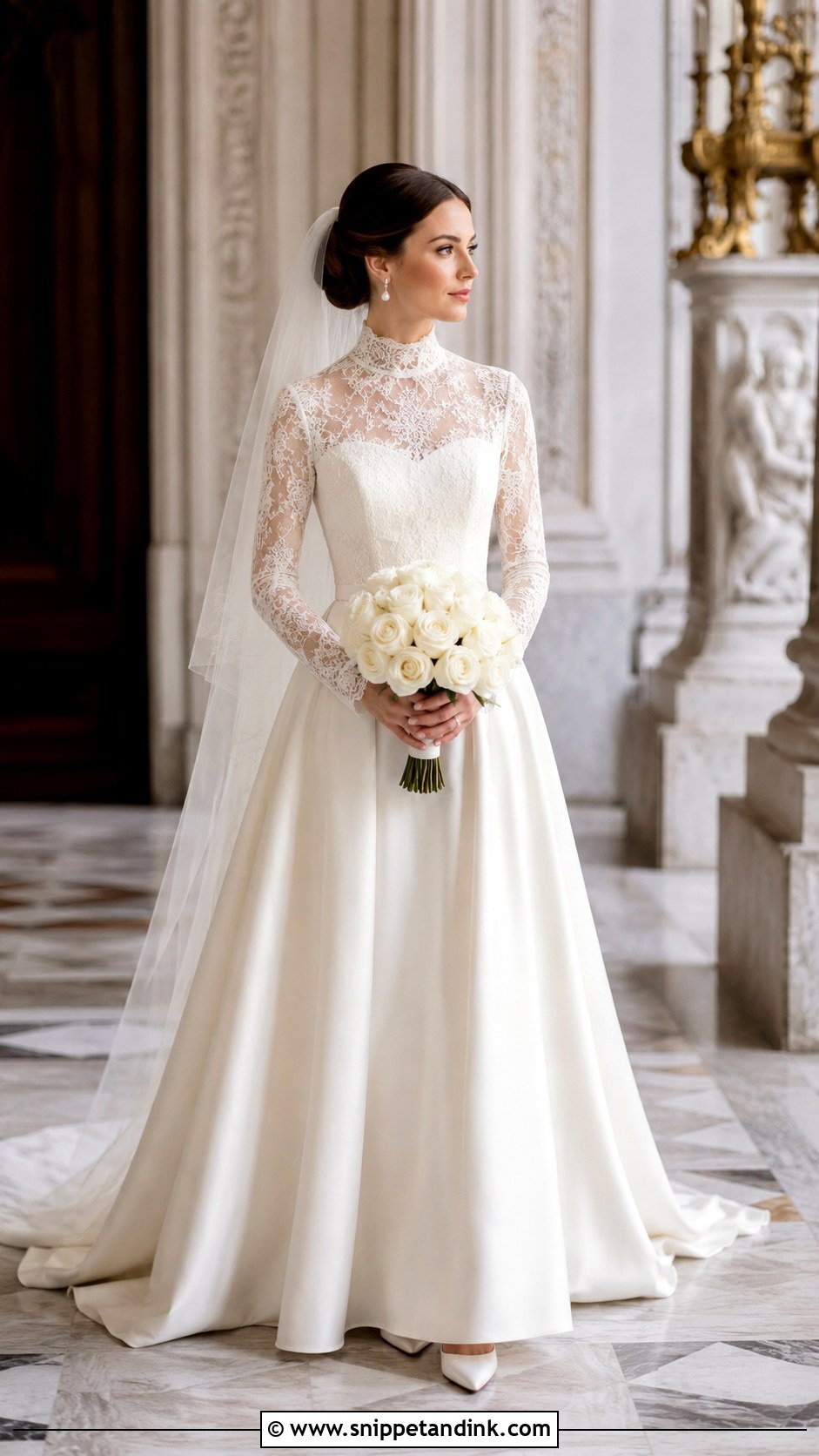
A high neck gives coverage and a very regal posture. Illusion tulle with lace feels romantic, while a clean satin collar is the minimalist version. Long sleeves with an A-line read classic; a fitted skirt makes it modern. Skip the necklace and go for pearl or crystal drops, and wear the hair in a smooth bun so the neck and shoulders show. Ivory pumps, a veil attached beneath the bun and structured white roses keep it formal, suiting winter and historic indoor venues. The fit at the throat is everything. Turn your head fully and raise both arms at alterations; a collar that’s a few millimetres too snug feels like a hand at your neck by the speeches.
20. Detachable Overskirt Wedding Dress
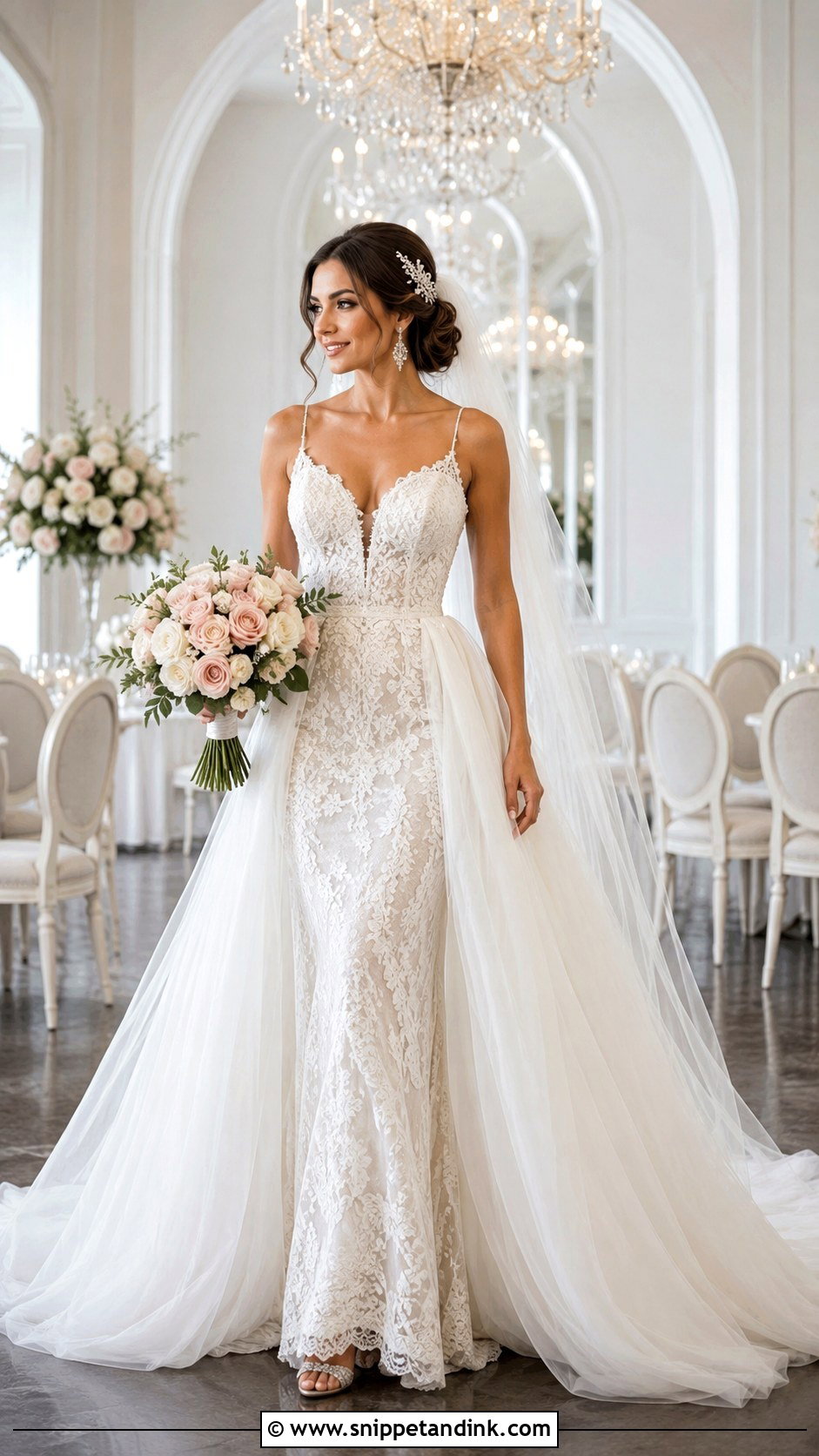
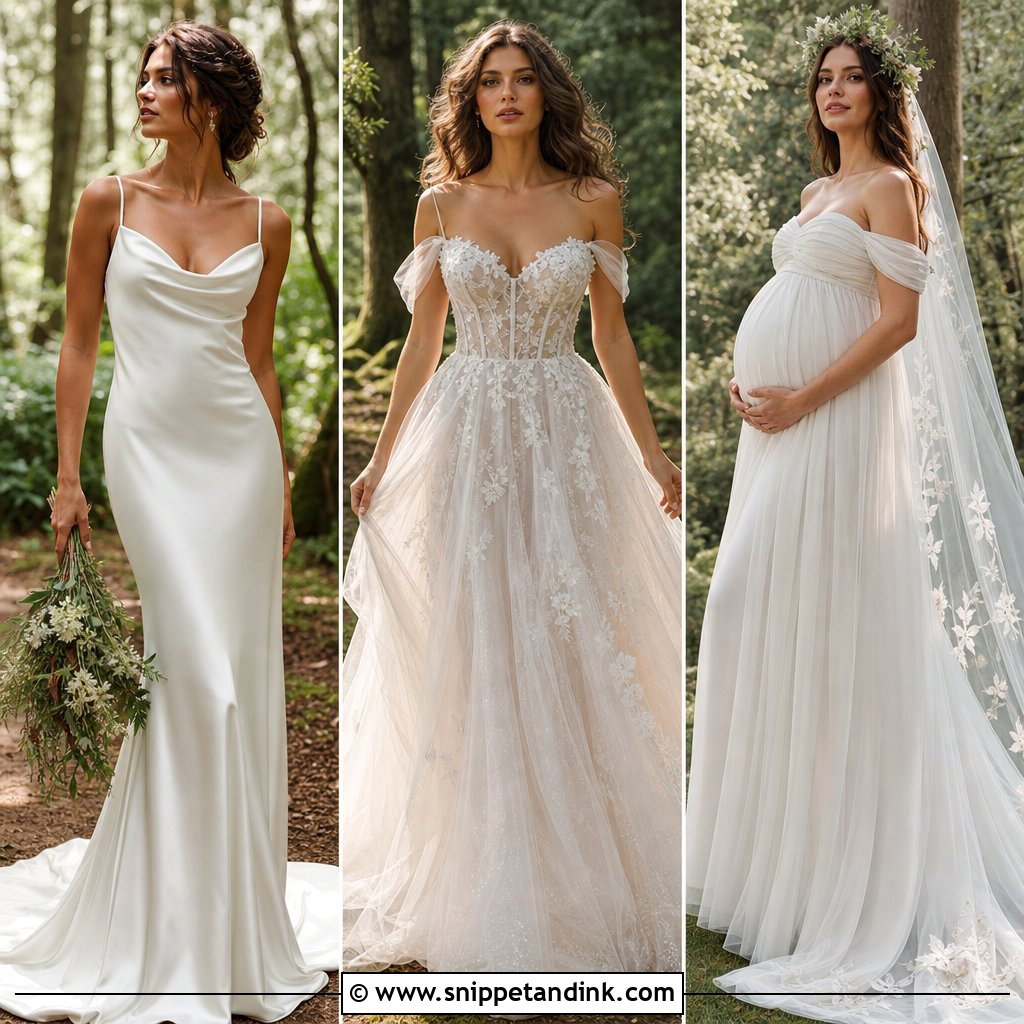
An overskirt gives you the drama of a princess gown for the aisle and a slim dress for the party. Start with a fitted lace, satin or crepe gown and add a full tulle or organza overskirt for the ceremony, attached at the waist under a narrow belt or embroidered edge so the join stays hidden. A long veil, crystal earrings and heels complete the first look; afterwards, the overskirt and veil come off and a jeweled comb goes in. Choose a bouquet that suits both versions. Practise the removal with whoever will help you on the day. Most overskirts close with hooks or snaps that are fiddly in a crowded bathroom, and it should take a couple of minutes, not twenty.
Giving a Made-to-Order Gown Enough Months
Corsetry, hand embroidery and custom colour all slow production down. Most made-to-order bridal gowns take several months to arrive, and the timeline varies a lot between designers and seasons, so I encourage brides who want any of the gowns above to start shopping around nine months to a year before the wedding.
- Order the gown with time to spare. Ask the shop for the designer’s realistic delivery window, not the best case.
- Plan two or three alteration fittings, with the first roughly two to three months before the date.
- Bring your actual shoes and underwear to every fitting, because hem length and bodice fit change with both.
- Book the final fitting a couple of weeks out, and bring the person who will bustle or lace you so they can practise.
Living in a Big Skirt From the Aisle to the Last Dance
A fairytale gown has practical moments nobody photographs. Getting into the car works best bottom first, then swinging your legs in while someone gathers the skirt in after you. For the bathroom, have a bridesmaid hold the tulle up from the front, or step into the skirt backwards and sit facing the cistern.
The bustle is the part I wish more brides asked about. A long train needs to be lifted for dancing, either with hooks that gather it at the back of the waist or with ties underneath that fold it into soft tiers. Ask your seamstress which suits your fabric, and have the bustle tied by someone who has done it before. Heavy satin can pull a single hook loose, so several anchor points are kinder to the dress.
After the wedding, get the gown professionally cleaned within a few weeks, since sugar from champagne and cake turns yellow as it oxidises even where you can’t see a mark. Store it flat in acid-free tissue in a breathable box, never sealed in plastic on a hanger, where the weight of the skirt slowly stretches the shoulders.
The Storybook Detail That Should Lead Your Look
The fairytale outfit people remember isn’t always the biggest gown in the room. It’s the one where dress, veil, shoes, jewelry, hair and bouquet all seem to belong to the same story. Treat the ideas above as starting points and adjust them for your venue, season and comfort. Walk, sit and lift your arms in every gown you’re serious about, and trust your seamstress, because a dress that feels secure lets you forget about it. Choose one magical feature, keep the supporting pieces quiet, and let your own personality finish it.
You'll Like These Ideas:




Leave a Reply