
The basque waist is back on bridal racks, and I understand why. Instead of stopping at your natural waist, the bodice runs a little lower and dips into a V or a softer U at the center front, which lengthens the torso and gives a corseted outline without anyone having to lace you in. It turns up on ball gowns and A-lines, under lace sleeves, in plain satin and in very modern minimal cuts. The waistline alone won’t make the look, though. Neckline, sleeves, skirt volume, veil and venue all change how that point reads. Below are 35 ways to wear it, with the fitting notes I’d give a bride trying each one.
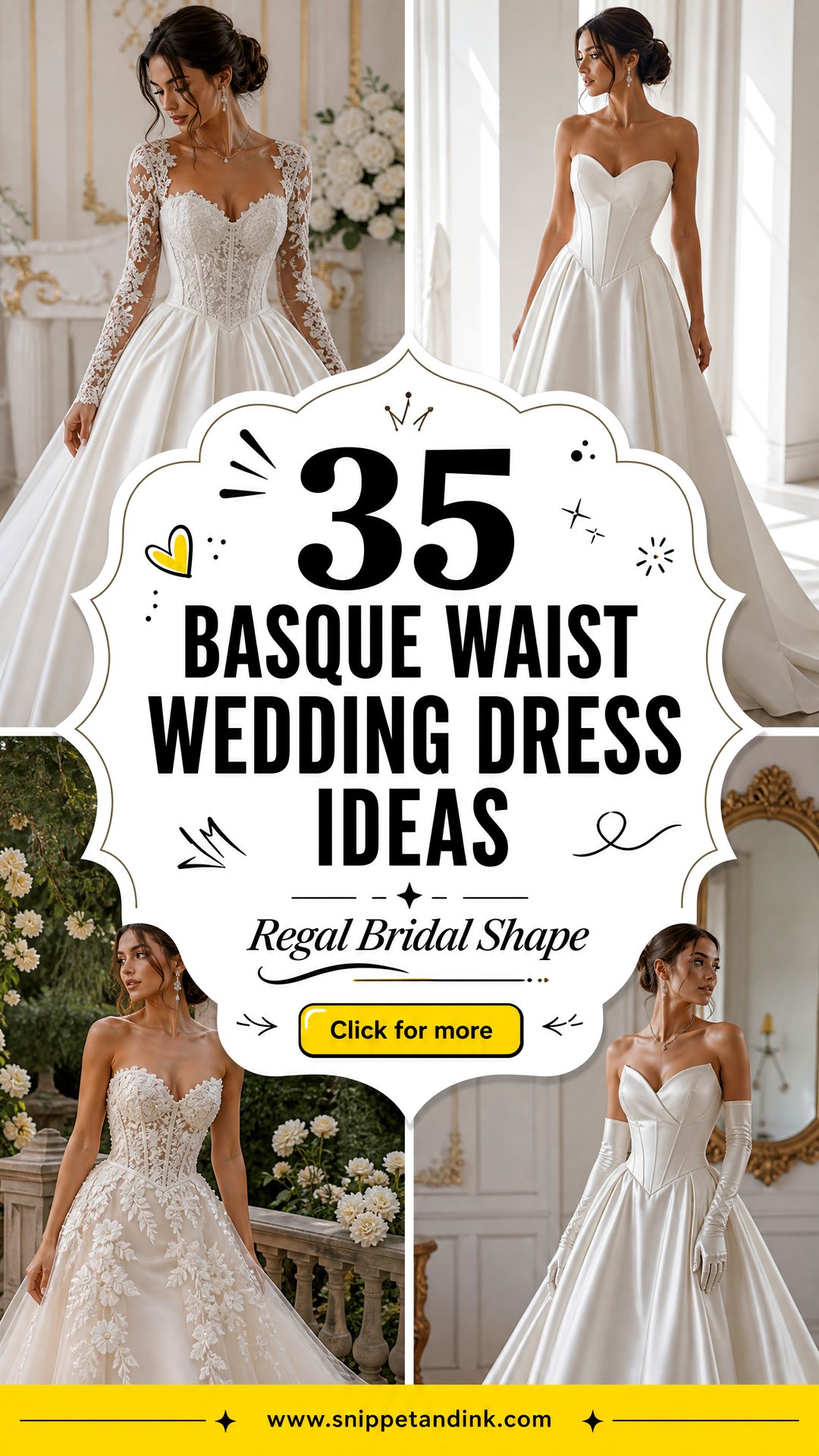
Where Should the Point Actually Land on You?
Every basque bodice is cut for an average torso, and very few of us have one. The tip of the V is meant to sit a little below your natural waist, roughly where your body folds when you sit. Land it too high and it looks like a regular waist with a dent; too low and it presses into your lower stomach every time you lean forward at dinner.
I start every fitting with a simple test. Sit on a firm chair, then lean forward as if reaching for a glass. If the boning at the point digs in or the seam buckles, the dip is in the wrong place for your body.
Short waist or long waist
- Short-waisted brides usually love this silhouette, because the dip borrows length from the hips and evens out the proportions.
- Long-waisted brides should be careful with a deep V. It can make the legs look shorter, and a gentle U or a shallower dip often sits better.
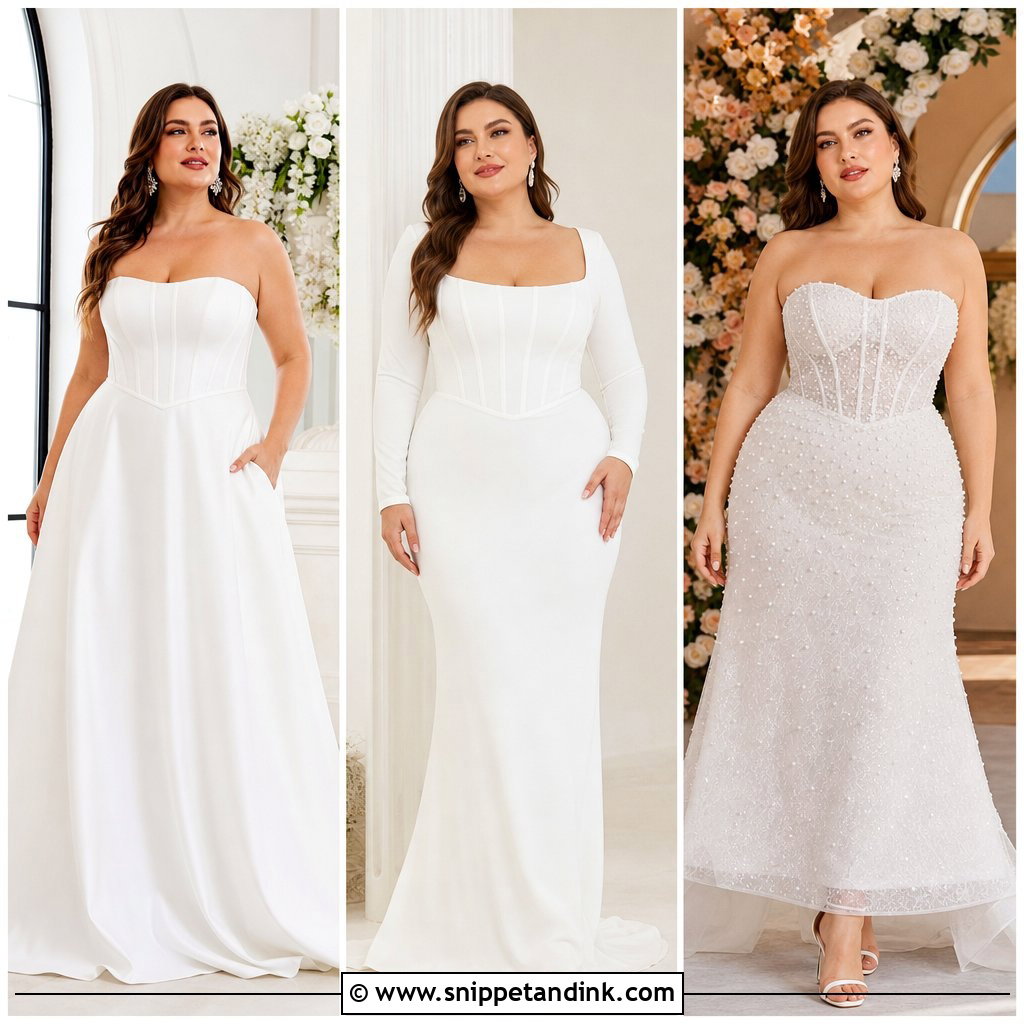
- Curvier figures often find a U kinder than a sharp V when seated, since the rounded seam spreads pressure instead of focusing it at one tip.
One more thing to know before you order: this waistline is harder to alter than a straight one. Taking in the side seams is routine, but raising or shortening the bodice means unpicking the curved seam where the skirt attaches and re-cutting the point. Good seamstresses can do it, though it takes longer and costs more, so buy the size whose dip already sits right and alter the rest.
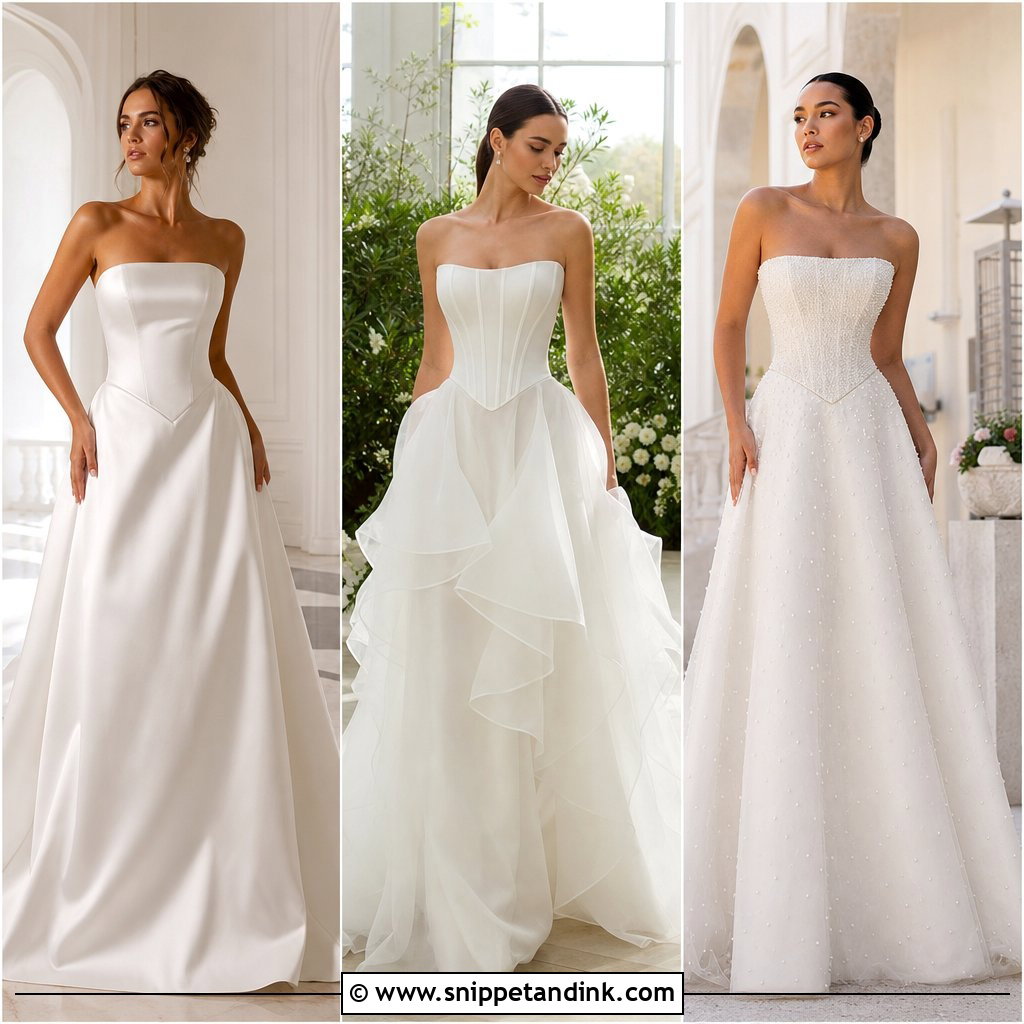
1. Strapless Basque Waist Wedding Dress
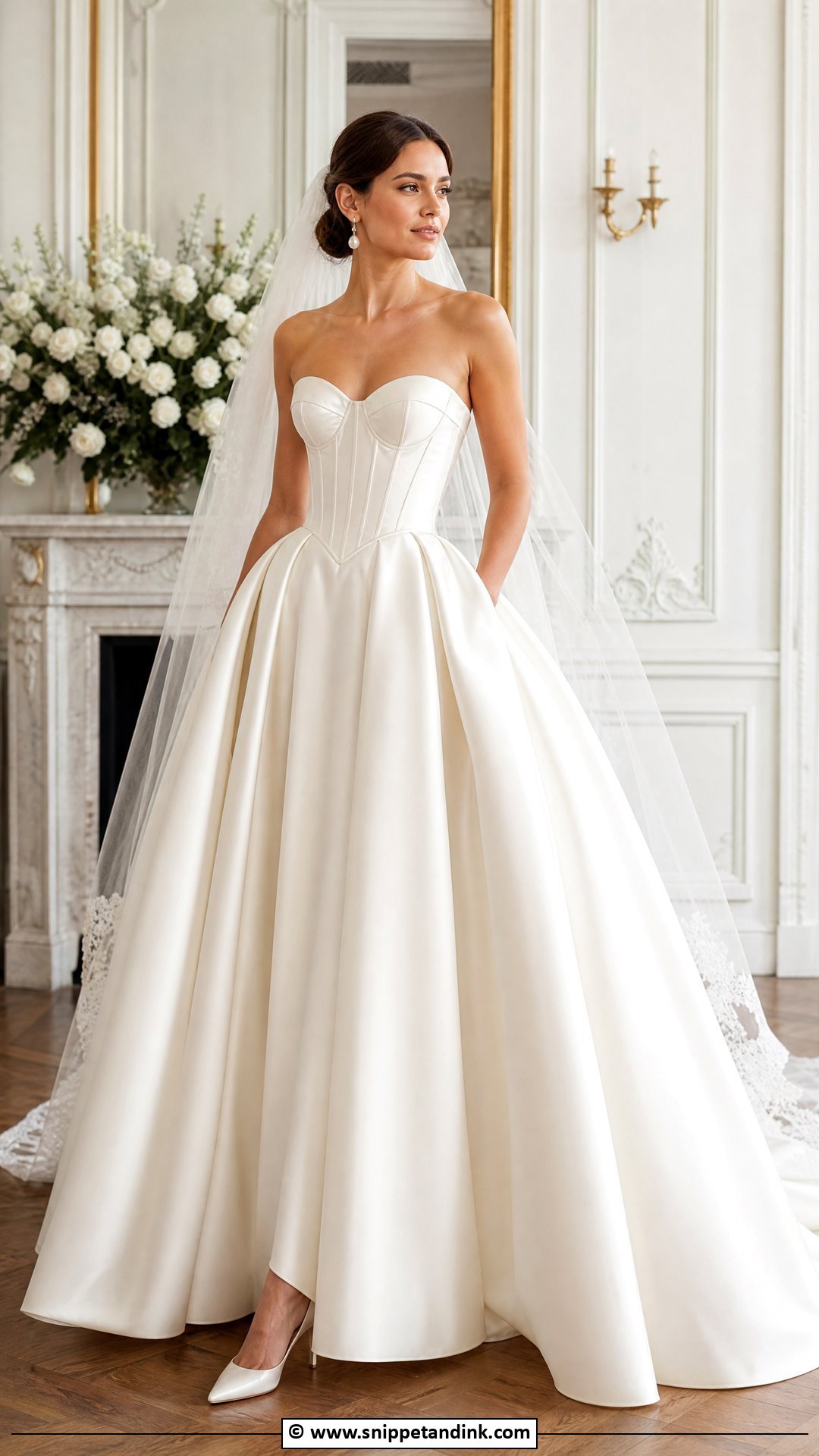
Strapless is the purest way to show this waistline. With nothing happening at the shoulders, the eye travels straight down the bodice to the point. A fitted corset top over a smooth satin or mikado ball gown skirt is the classic version. My checks are about support: internal boning, a secure back closure, and a top edge that lies flat against the bust instead of standing away when you breathe out. Pearl drops, a cathedral veil and pointed satin heels are plenty.
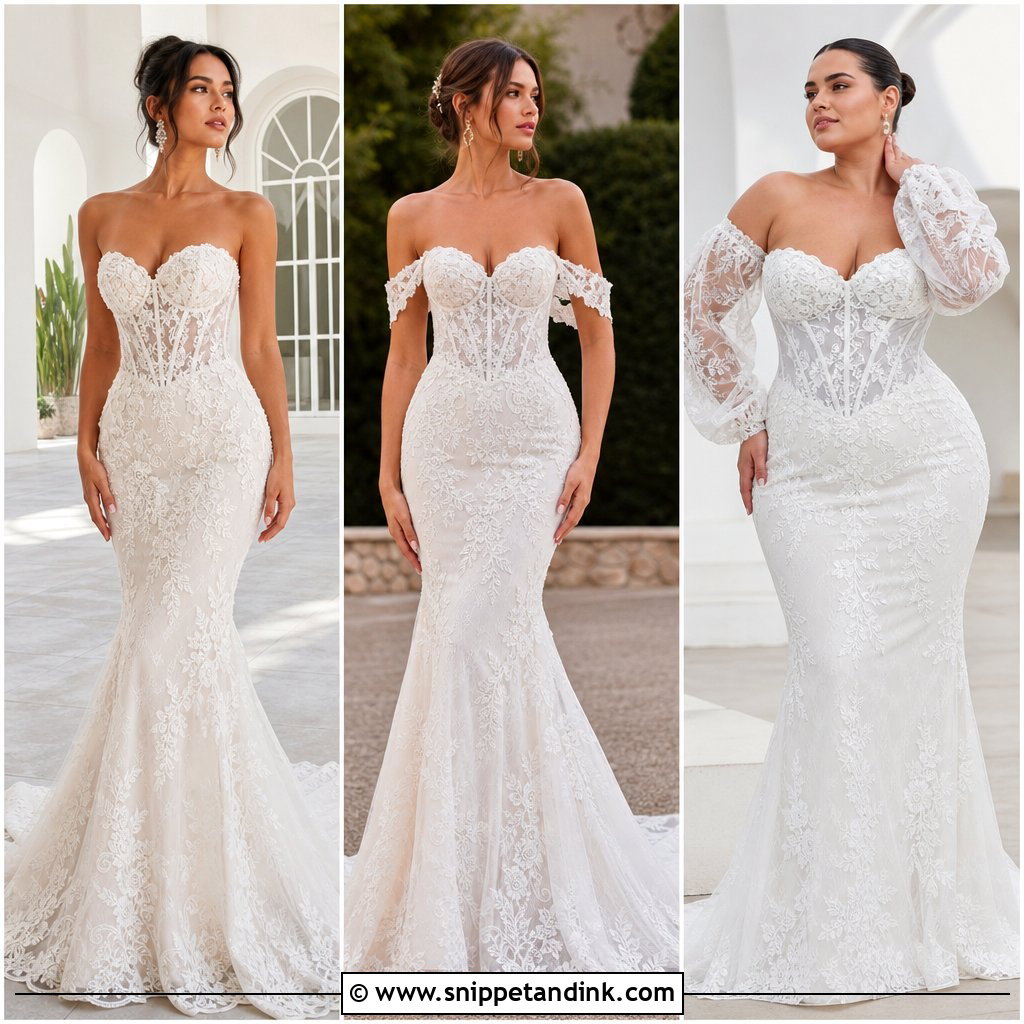
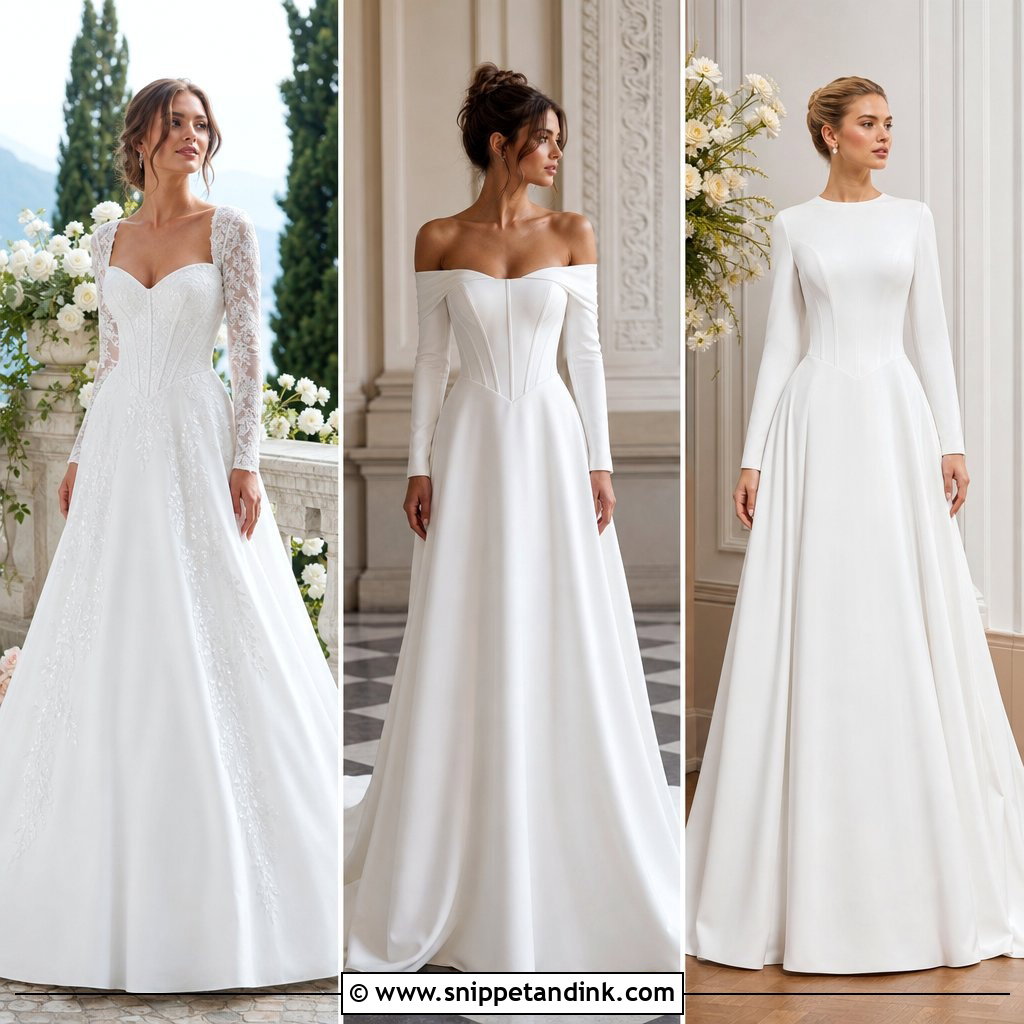
2. Lace Basque Waist Wedding Dress
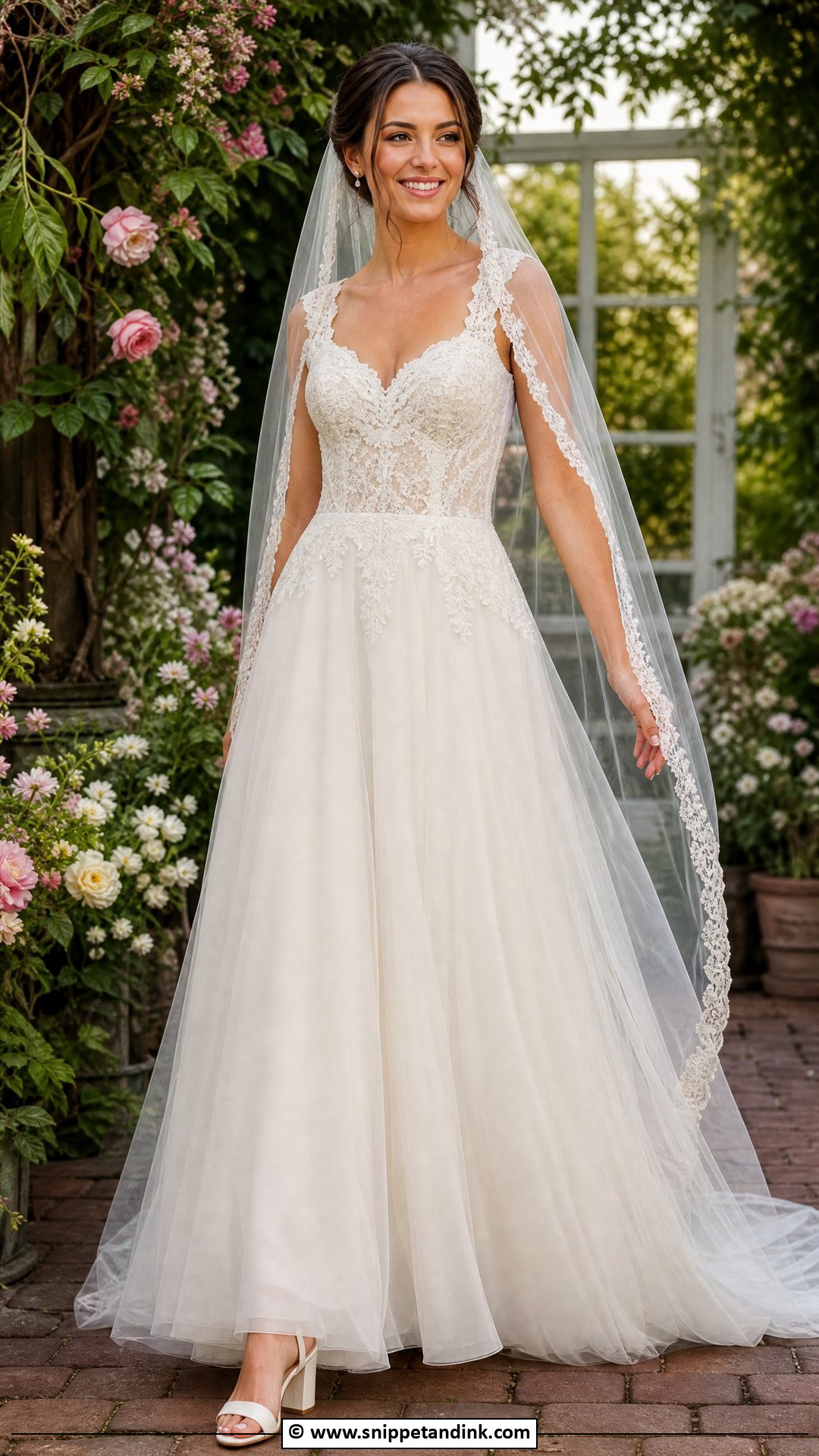
Lace and a dipped waist suit each other because the appliqué can follow the curve of the seam. The lace might stay on the bodice, trail into the skirt or sit over sheer sleeves. I’d pair a heavily worked bodice with a plain tulle or organza skirt so the gown doesn’t go heavy below the point. A fingertip veil with matching lace edging ties it together. If the lace is very busy, keep jewelry to studs.
3. Satin Basque Waist Wedding Dress
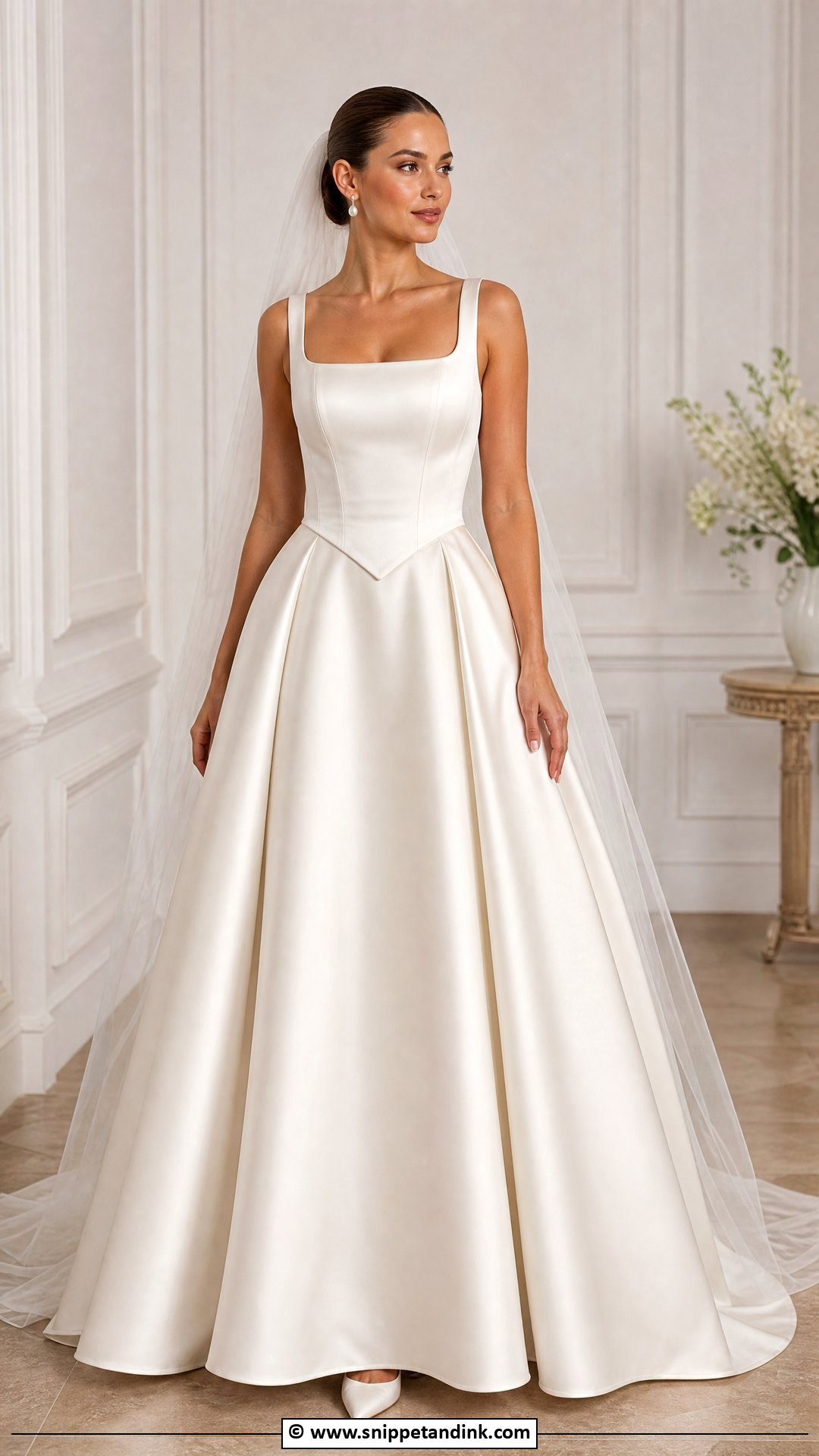
Satin is unforgiving, and that’s exactly why it shows this waistline so well. Every seam is visible, so the point has to be sewn sharp and symmetrical, and the skirt has to drop cleanly from its lowest spot without pulling to one side. When I fit satin I watch for a dimple at the tip of the V, which means the seam is under strain. Done right, a plain satin bodice over a full A-line needs nothing more than a sleek bun, pearl earrings and a long veil.
4. Tulle Basque Waist Wedding Dress
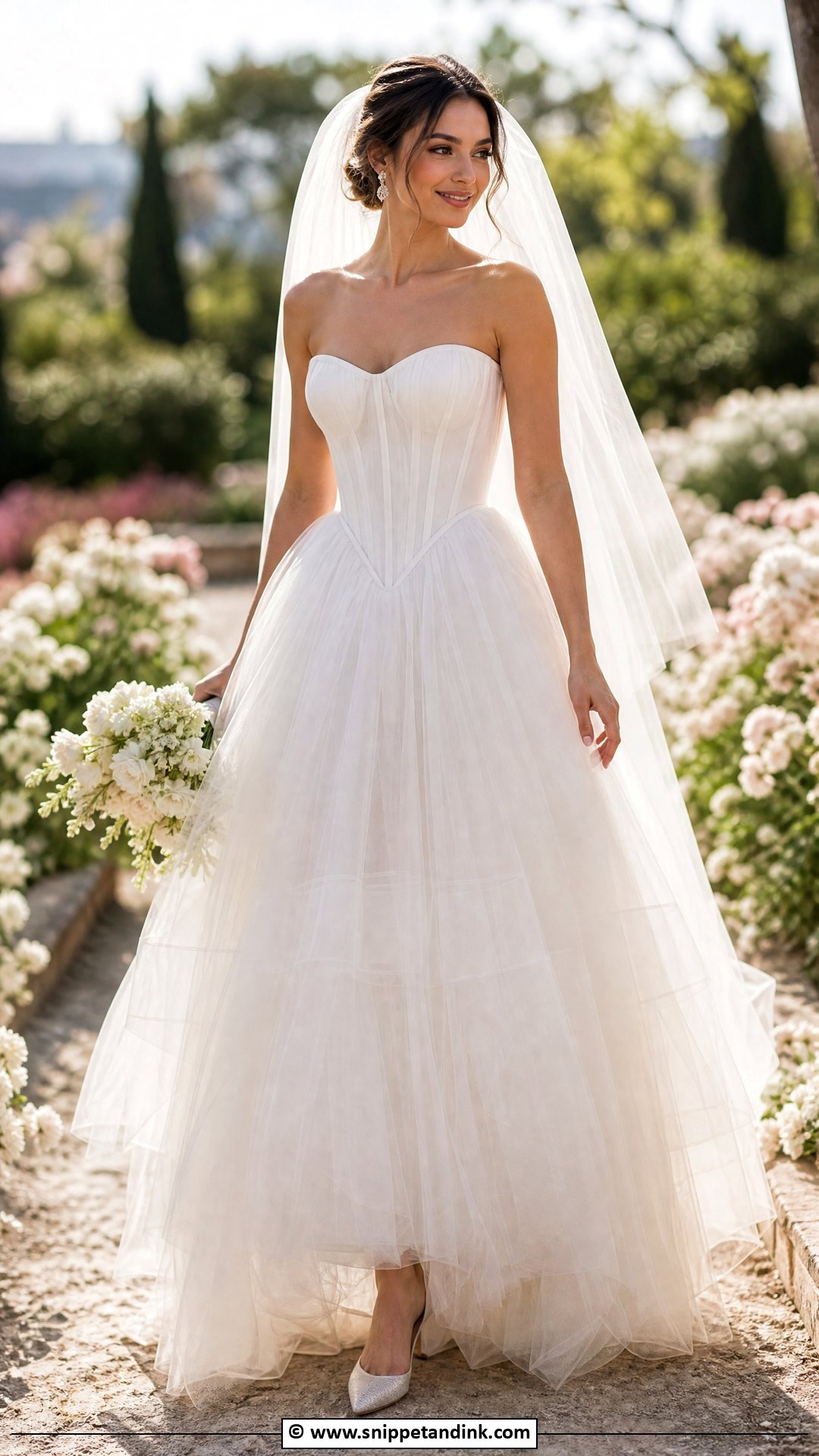
Tulle gives the structured bodice something light to land on. The risk is proportion: a long bodice over a thin, limp skirt can make the torso look stretched. The skirt needs enough layers to balance the length above it, so I’ll sometimes add a petticoat to a tulle gown that looks too narrow in the mirror. Plain tulle reads modern; scattered floral appliqués read softer. Spring and summer gardens suit it.
5. Long Sleeve Basque Waist Wedding Dress
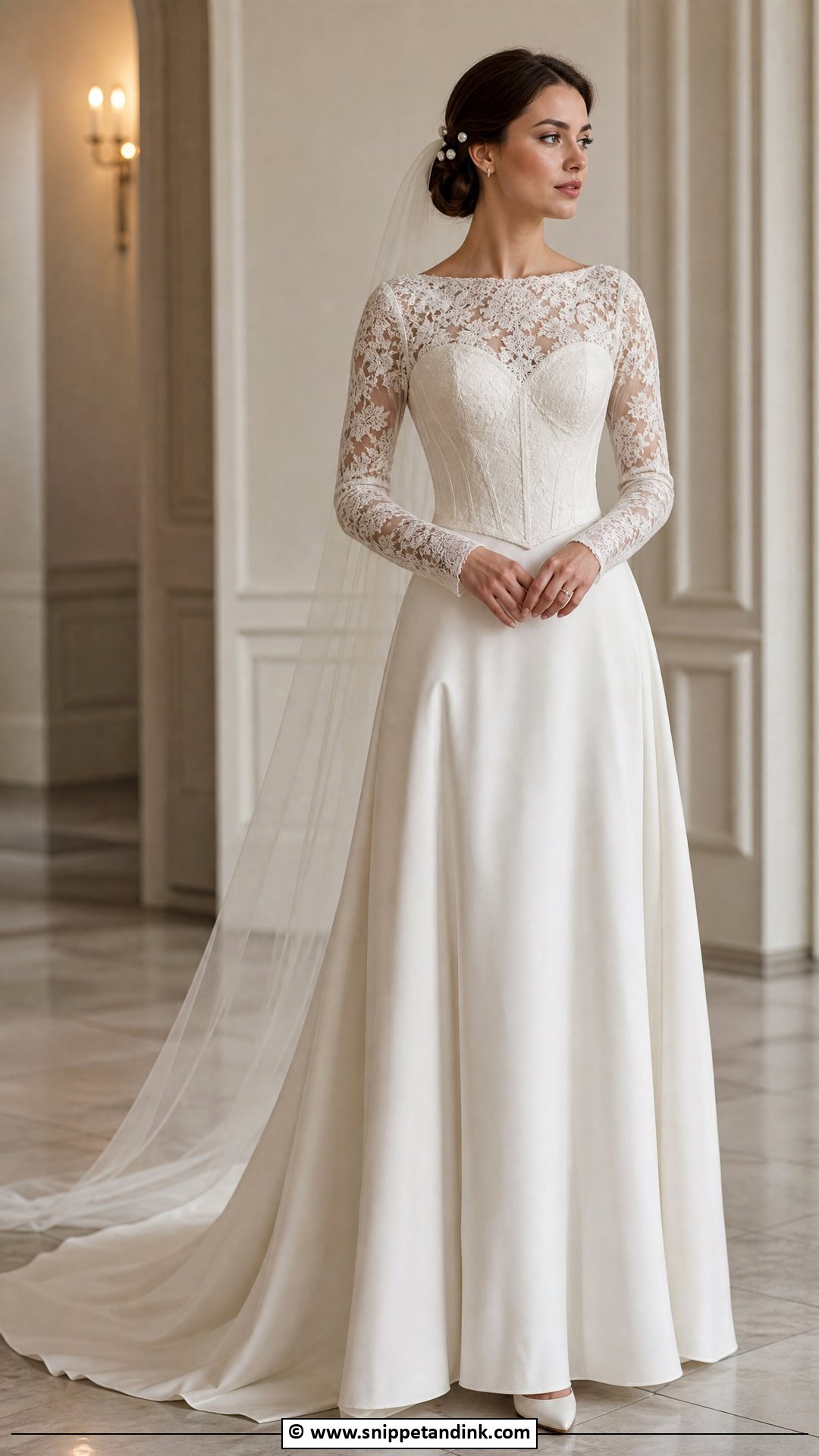
Sleeves add coverage, and the dipped waist stops that coverage from looking heavy. Sheer lace sleeves feel romantic, while satin or crepe ones look formal and crisp. If you’re petite, I’d want the sleeves fitted close at the wrist and a skirt that opens gently from the point, otherwise the whole gown can feel like it’s wearing you. A low bun with pearl pins and a chapel-length veil suit autumn and winter evenings.
6. Off Shoulder Basque Waist Wedding Dress
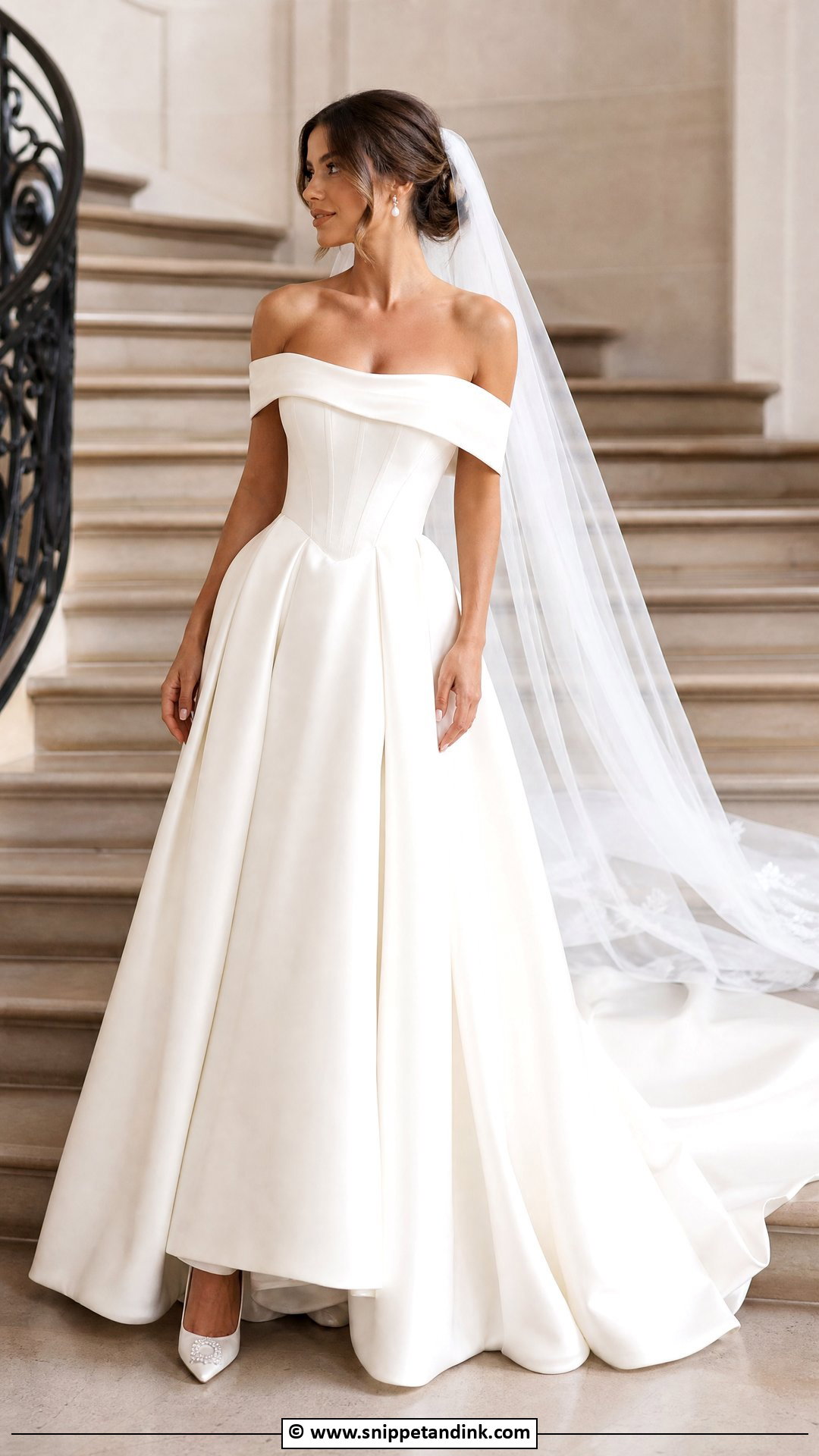
An off-shoulder neckline widens the top line while the point narrows the middle, and between them you get a clear hourglass. A full skirt finishes the effect. The part I check is the bands: when you sit, the bodice shifts down slightly, and off-shoulder straps that were snug standing can start to slip. A soft updo, pearl earrings and pointed heels keep it formal. Long veil for a plain gown, shorter if the sleeves are detailed.
7. Basque Waist Ball Gown Wedding Dress
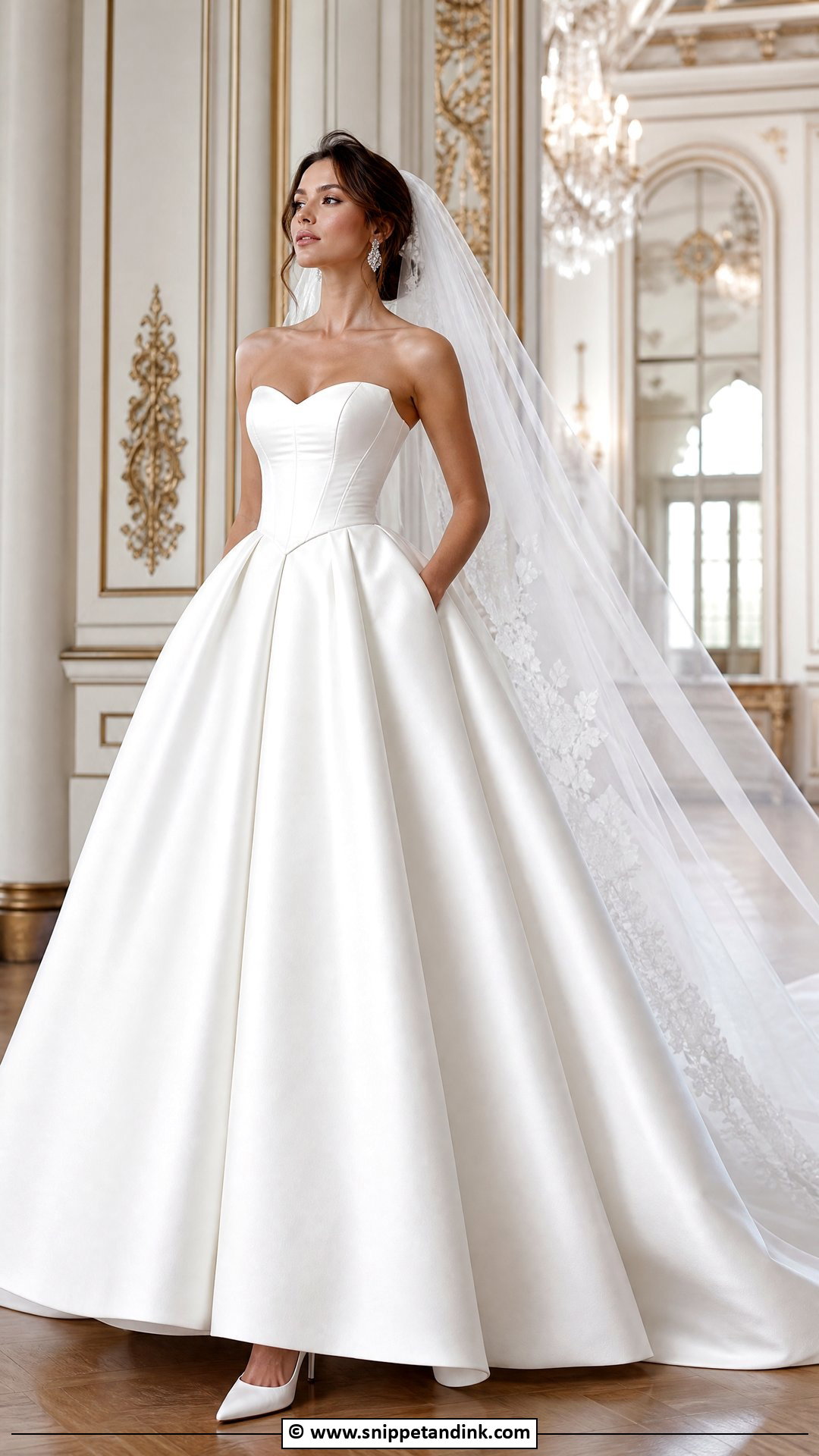
Pair a dipped bodice with a full ball gown skirt and you get the most dramatic, princess-like silhouette on this list. Satin and mikado give structure; layered tulle stays softer. This version needs room, so I’d keep it for larger venues. If you love the volume but dread carrying it all night, ask whether a lighter underskirt or a detachable train is an option. Cathedral veil, crystal earrings, classic pumps.
8. Basque Waist A Line Wedding Dress
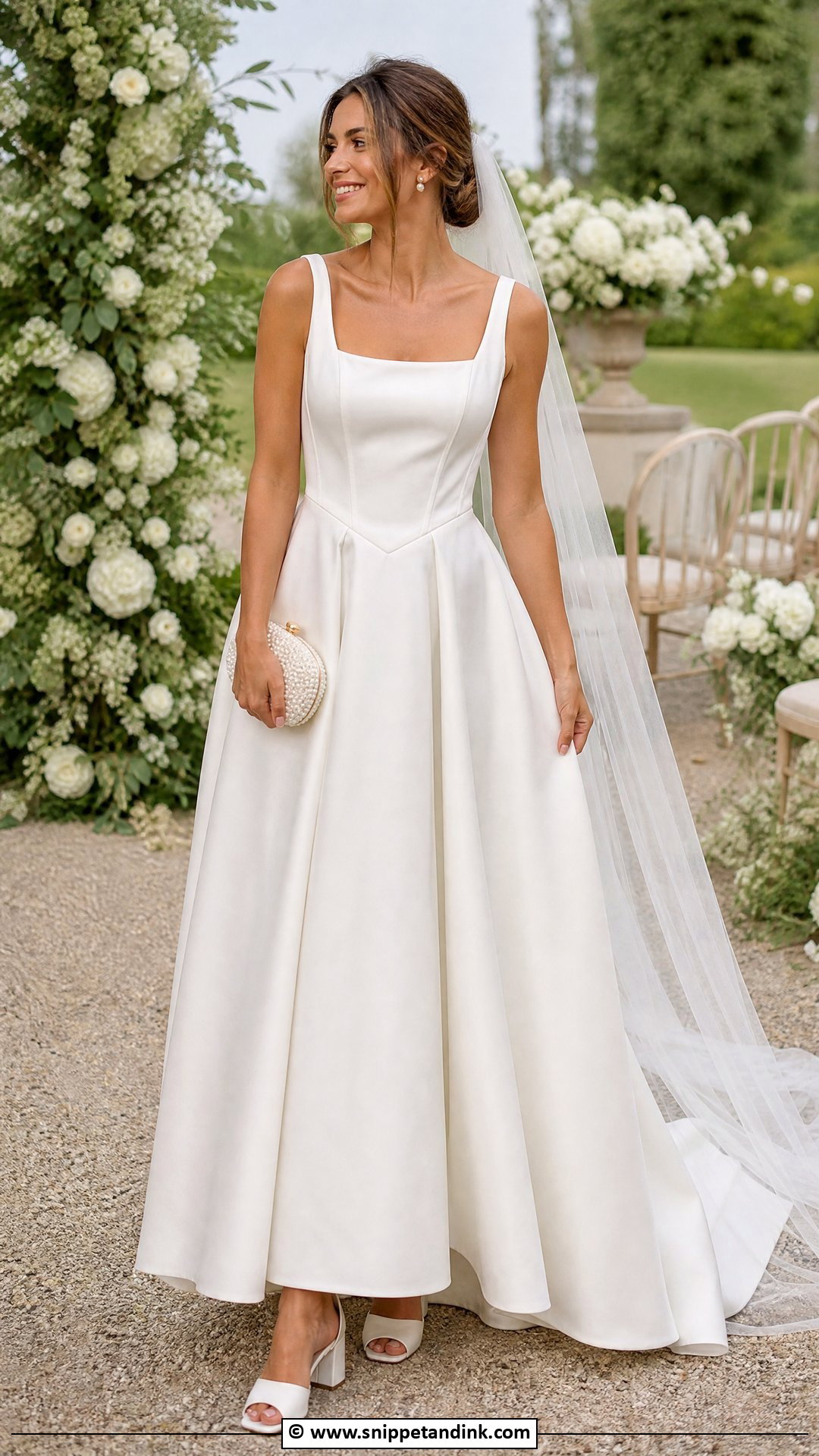
A-line is the easiest place to start if you’re unsure about the waistline. The skirt skims away from the hips rather than exploding outward, so the dipped seam lengthens the torso without much drama. It suits most figures and most venues, from gardens to coastal ceremonies. Block heels and a small clutch keep it practical. If you’ve been put off by big skirts, try this one first.
9. Basque Waist Corset Wedding Dress
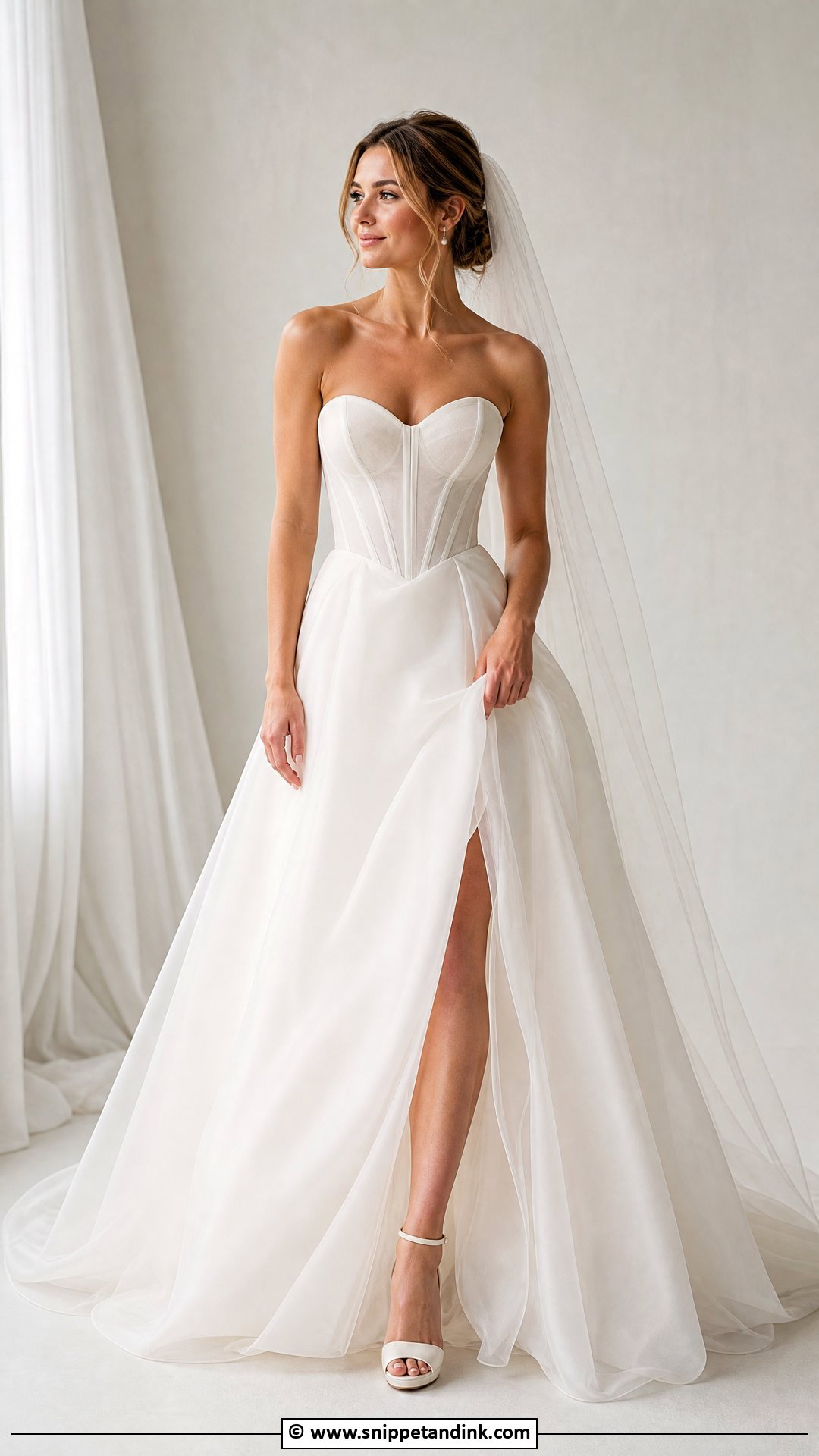
Here the structure is the point. Boning, curved seams and the dip combine into a bodice that looks sculpted, whether the corsetry shows on the outside or stays hidden. Visible boning reads fashion-forward; hidden boning keeps it soft. Fit matters more than on any other style in this post. The corset should support without pinching, and the tip of the V has to sit where your body actually bends. Too low and it digs in every time you sit.
10. Basque Waist Drop Waist Wedding Dress
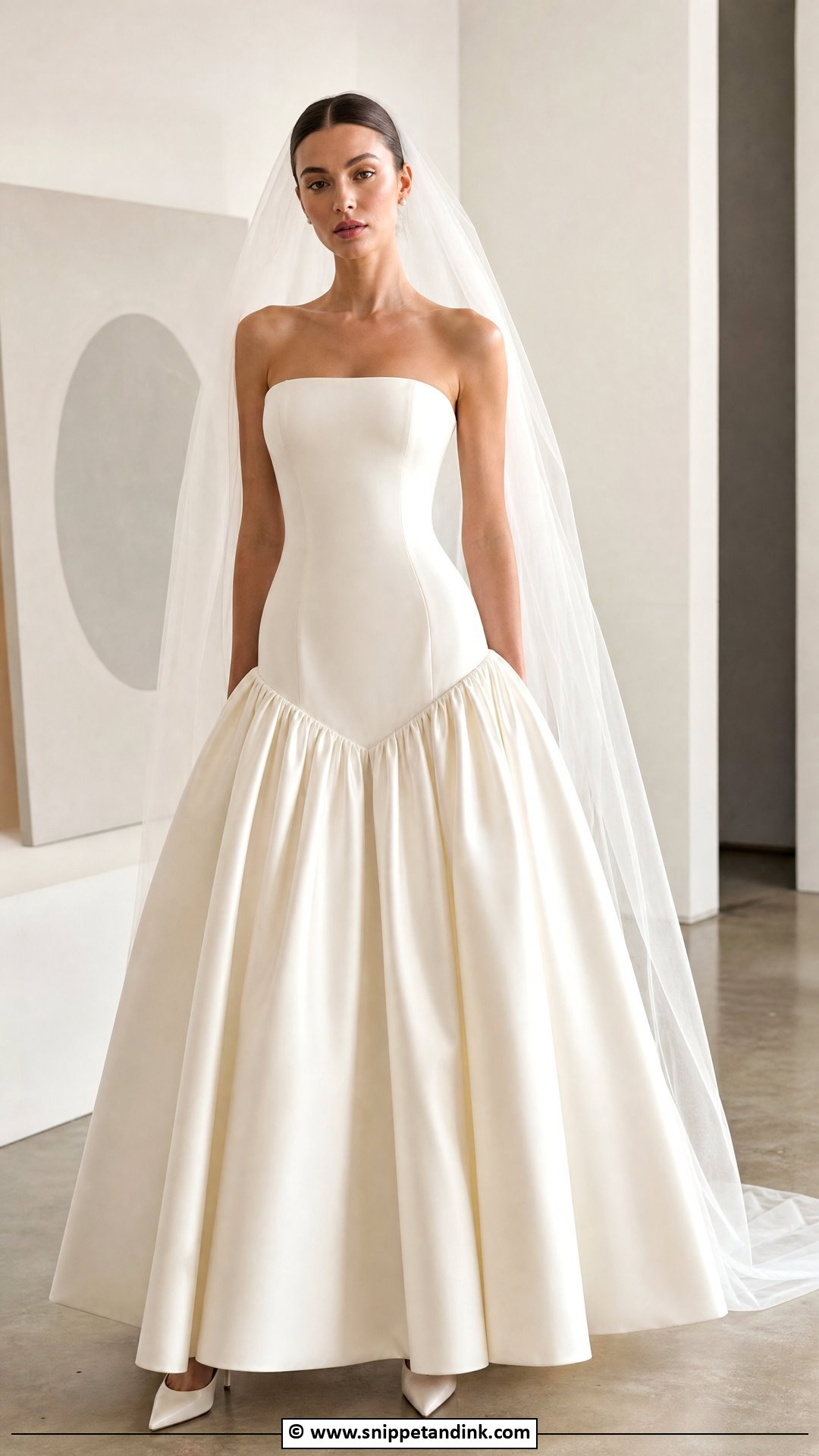
Combining a dropped waist with a central dip makes for the longest bodice of all, which can look striking or swallow you, depending on your torso. On a long-waisted bride it can make the legs look shorter, so I try it against two or three skirt volumes before deciding. A fuller skirt rebalances a long body; a slim skirt pushes the look toward editorial. Keep the line clean with a sleek veil and pointed heels.
11. Basque Waist Wedding Dress With Bow
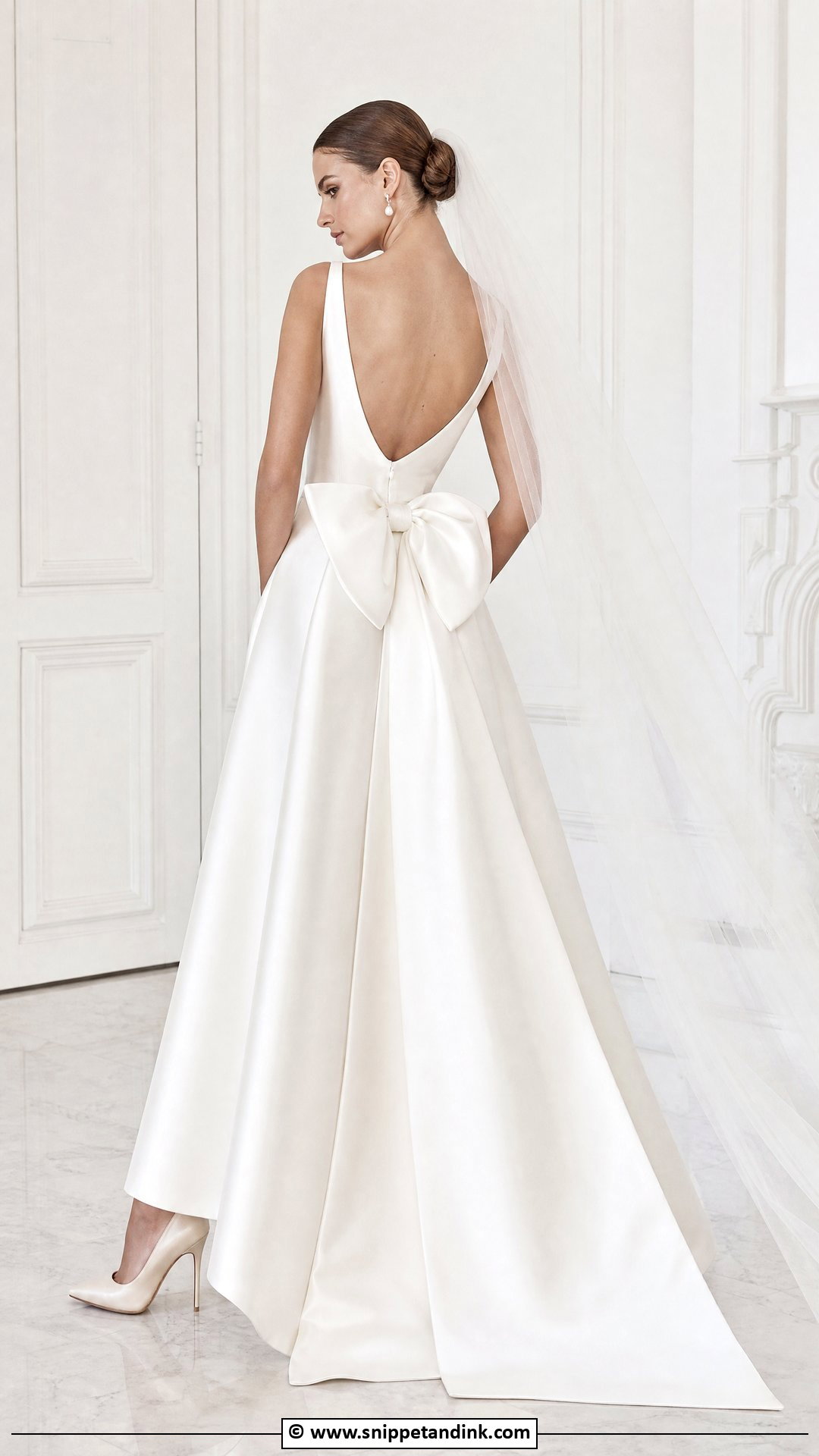
A bow sitting just above a dipped waist frames the point from behind. It can also go on the shoulder or the train. An oversized back bow on clean satin is the classic version. I’d look at it from the side as well as the back, since a big bow can make a curved back seam look bulky. Pearl earrings and a plain veil, and nothing else competing with the bow.
12. Basque Waist Wedding Dress With Train
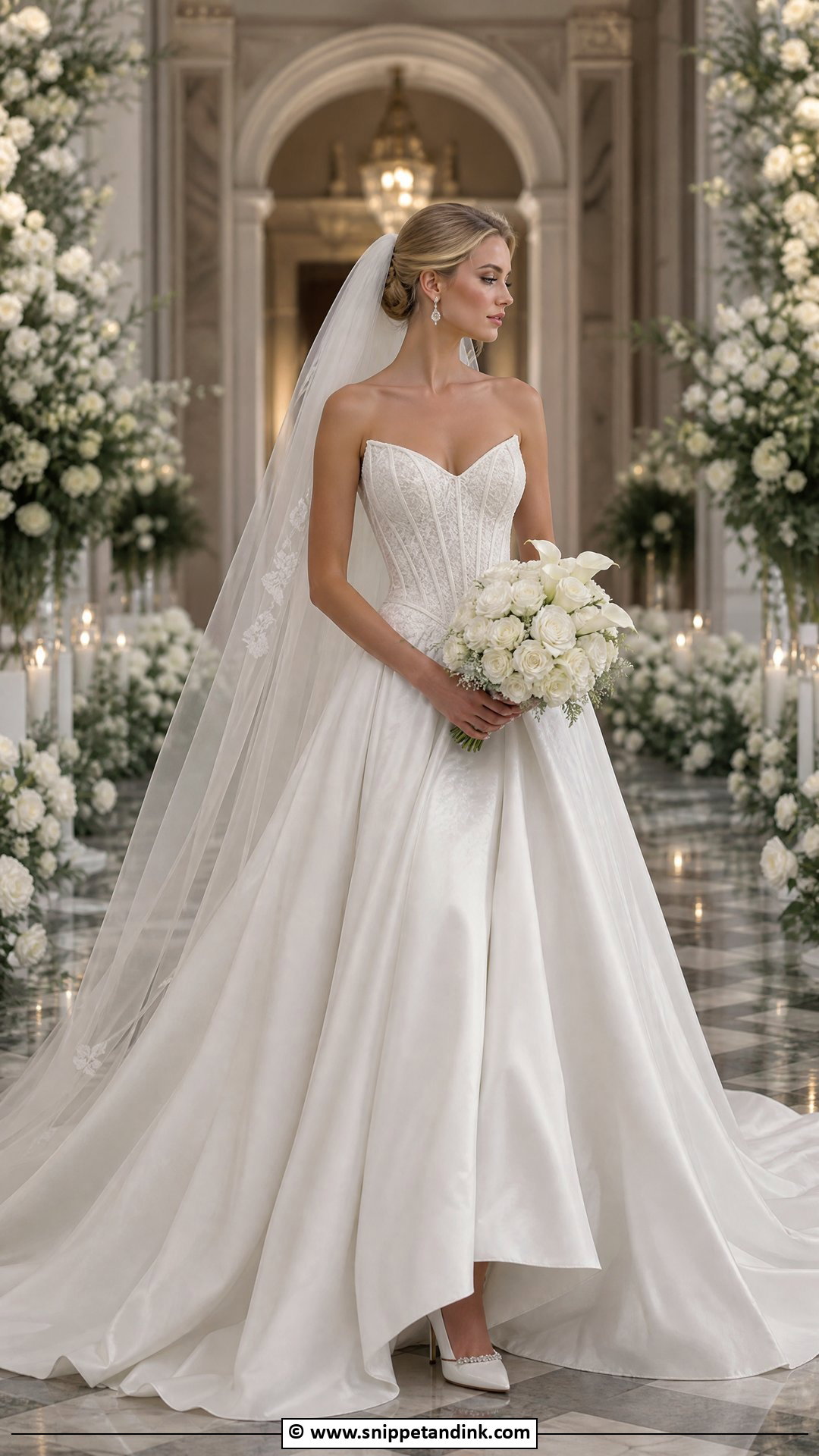
A basque waist wedding dress with a train works from both directions: the point shapes you from the front, the train carries drama behind. Satin, mikado, lace and organza all suit it. Plan the bustle at alterations, and make sure the bustle points sit below the back seam, because hooks placed too high drag the waistline out of shape once the train is up. A cathedral veil makes it formal; a chapel veil keeps it lighter.
13. Simple Basque Waist Wedding Dress
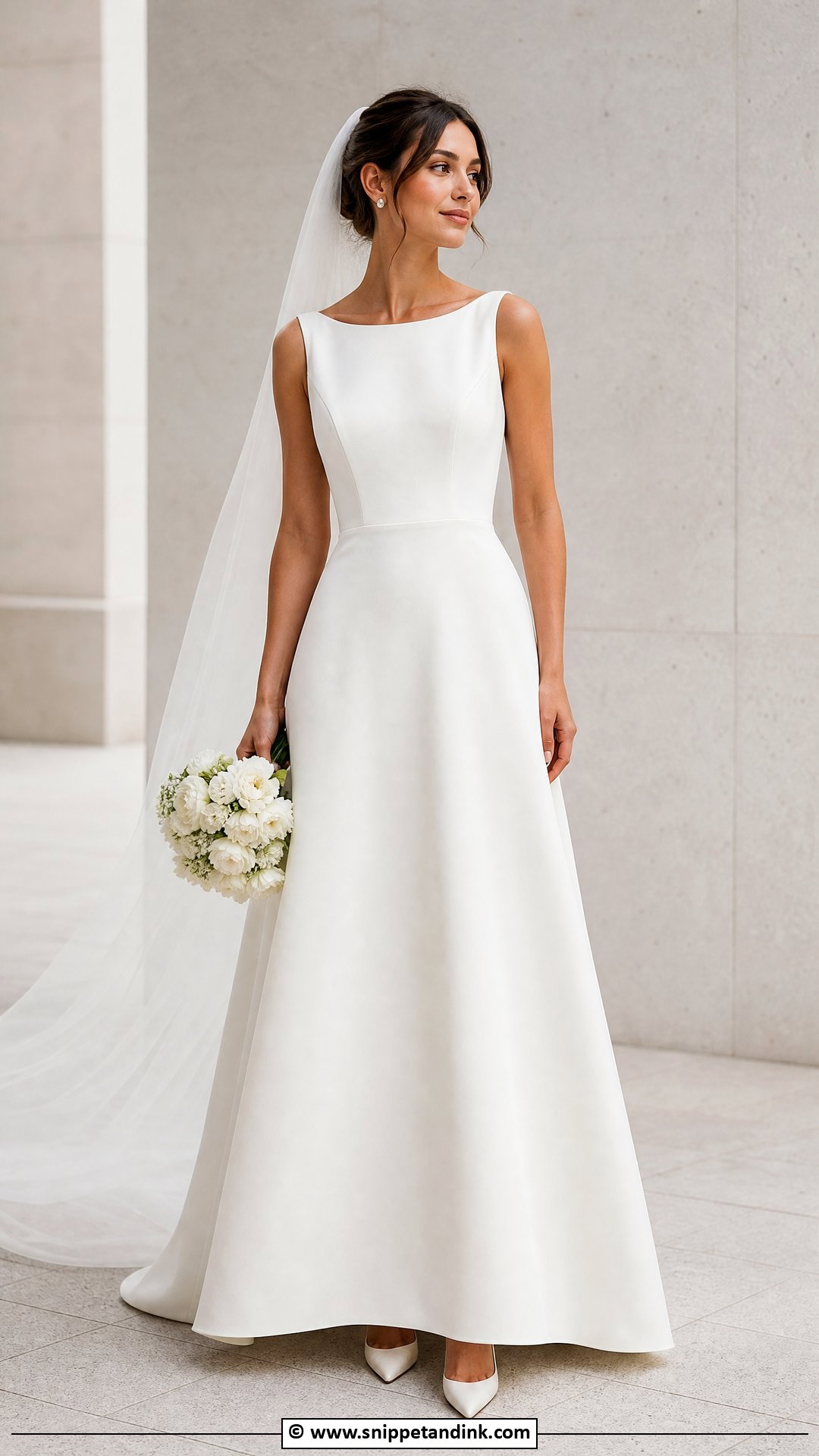
The dip does the decorating, so the gown can skip lace and beading altogether. Smooth satin, crepe or mikado over a soft A-line or ball gown skirt is enough. With nothing to distract, I go over clean seams, a flat bodice and the hem length very carefully, since any wobble in the point shows straight away. Pearl studs, a plain veil and a low bun finish it.
14. Modern Basque Waist Wedding Dress
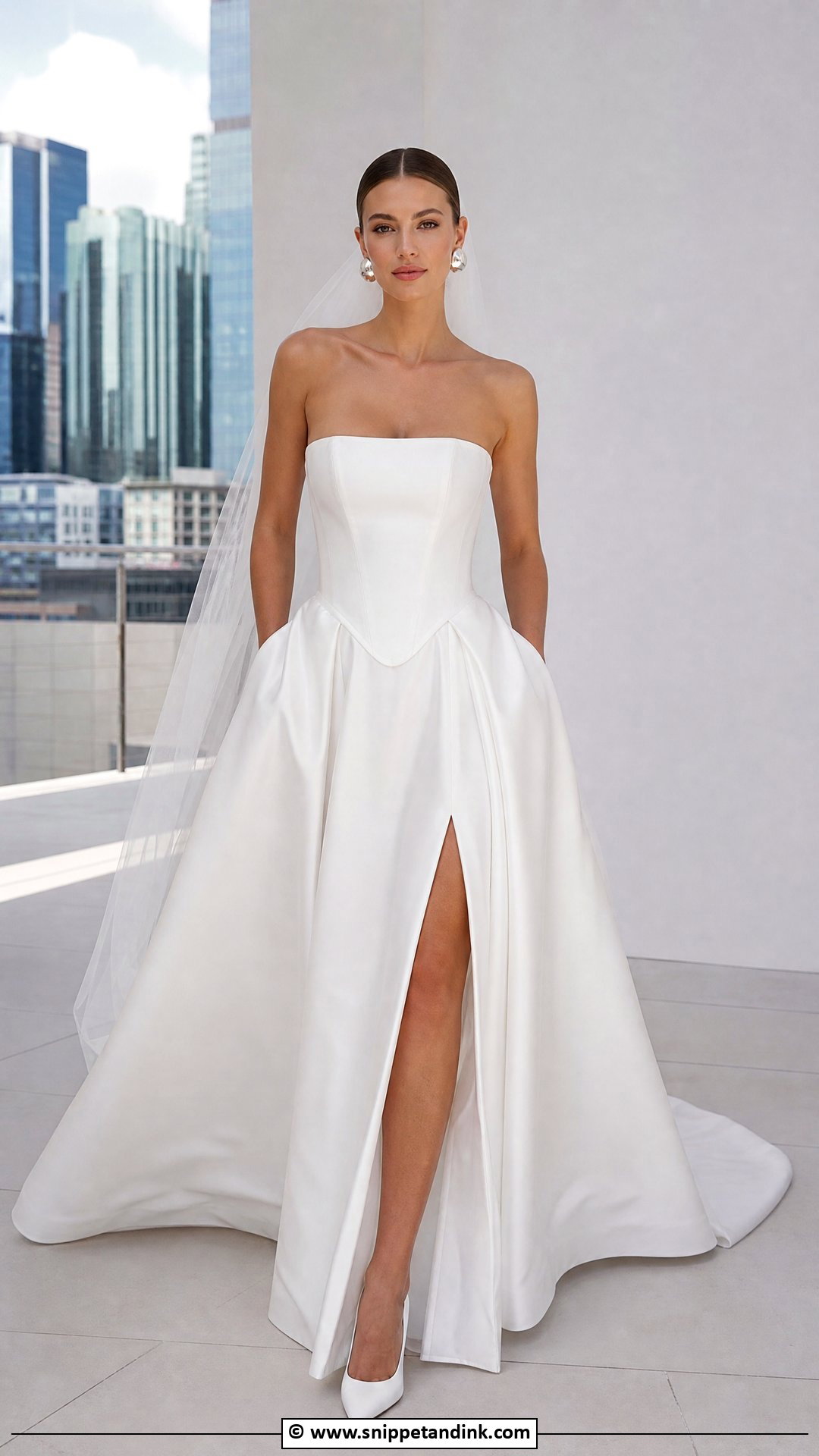
Modern versions rely on proportion and sharp tailoring rather than decoration. A strapless corset bodice dropping cleanly into a full skirt is a strong start, and a square neckline or exposed seaming adds a bit of edge. City venues, galleries and rooftops suit the mood. Sculptural earrings, a smooth veil and plain white pumps are all I’d add.


15. Vintage Basque Waist Wedding Dress
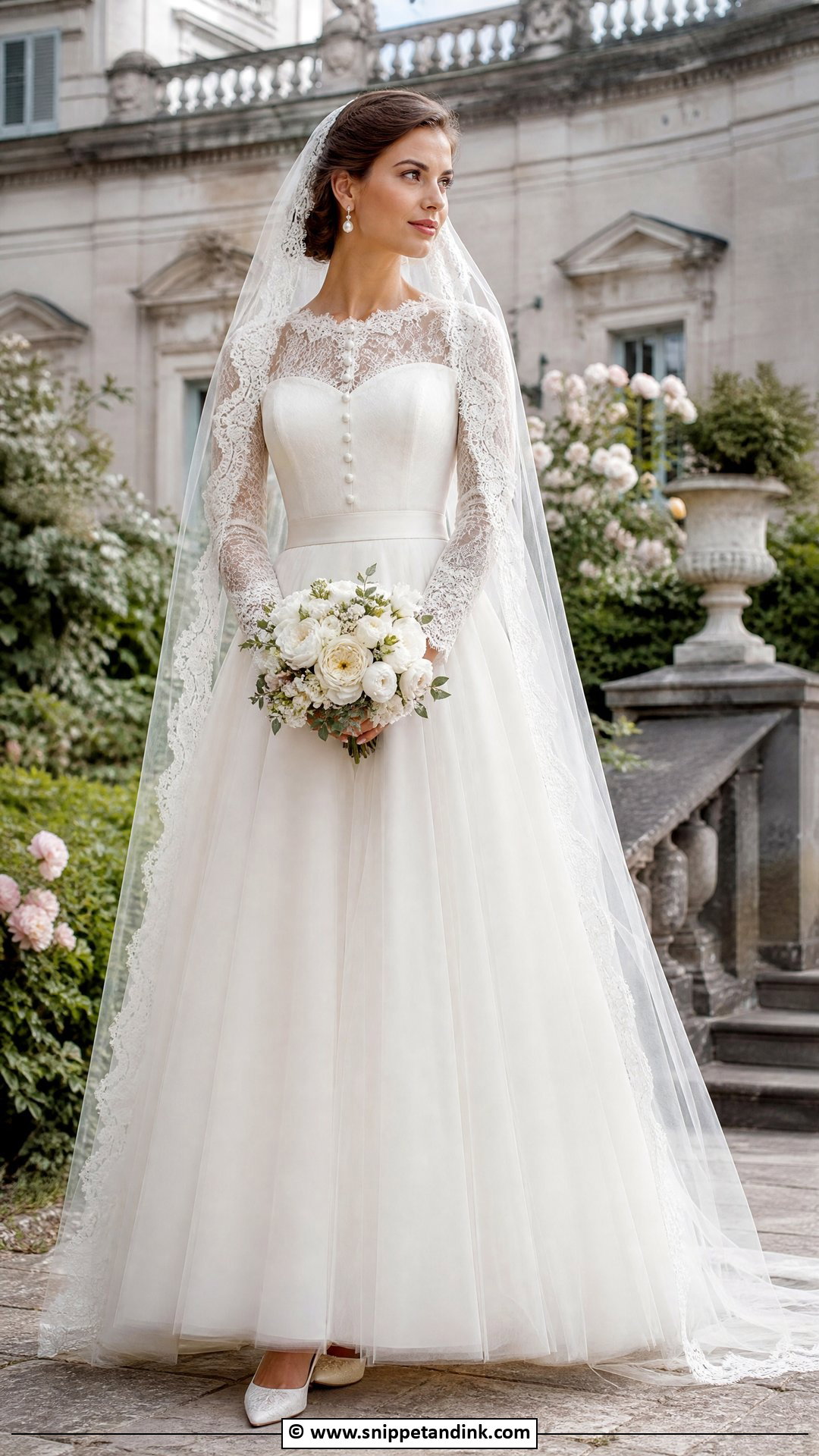
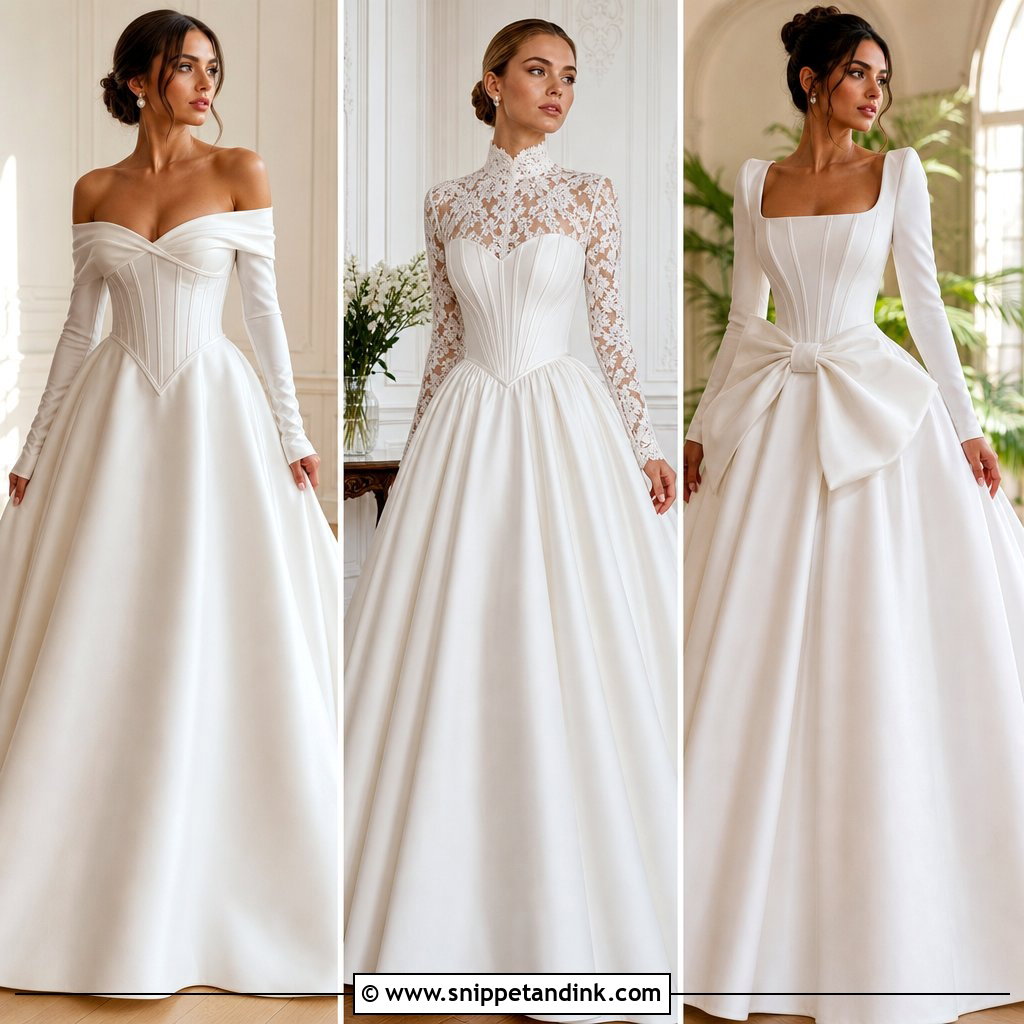
The basque waist is historically a very old shape, so it slides into vintage styling more naturally than most. Lace sleeves, pearl buttons, corset seaming and a full skirt all fit. My rule is one strong vintage note at a time. A lace-heavy gown wants clean hair and soft makeup; a plain satin gown can take vintage accessories like a lace-edged veil. Estates and historic venues suit it.
16. Princess Basque Waist Wedding Dress
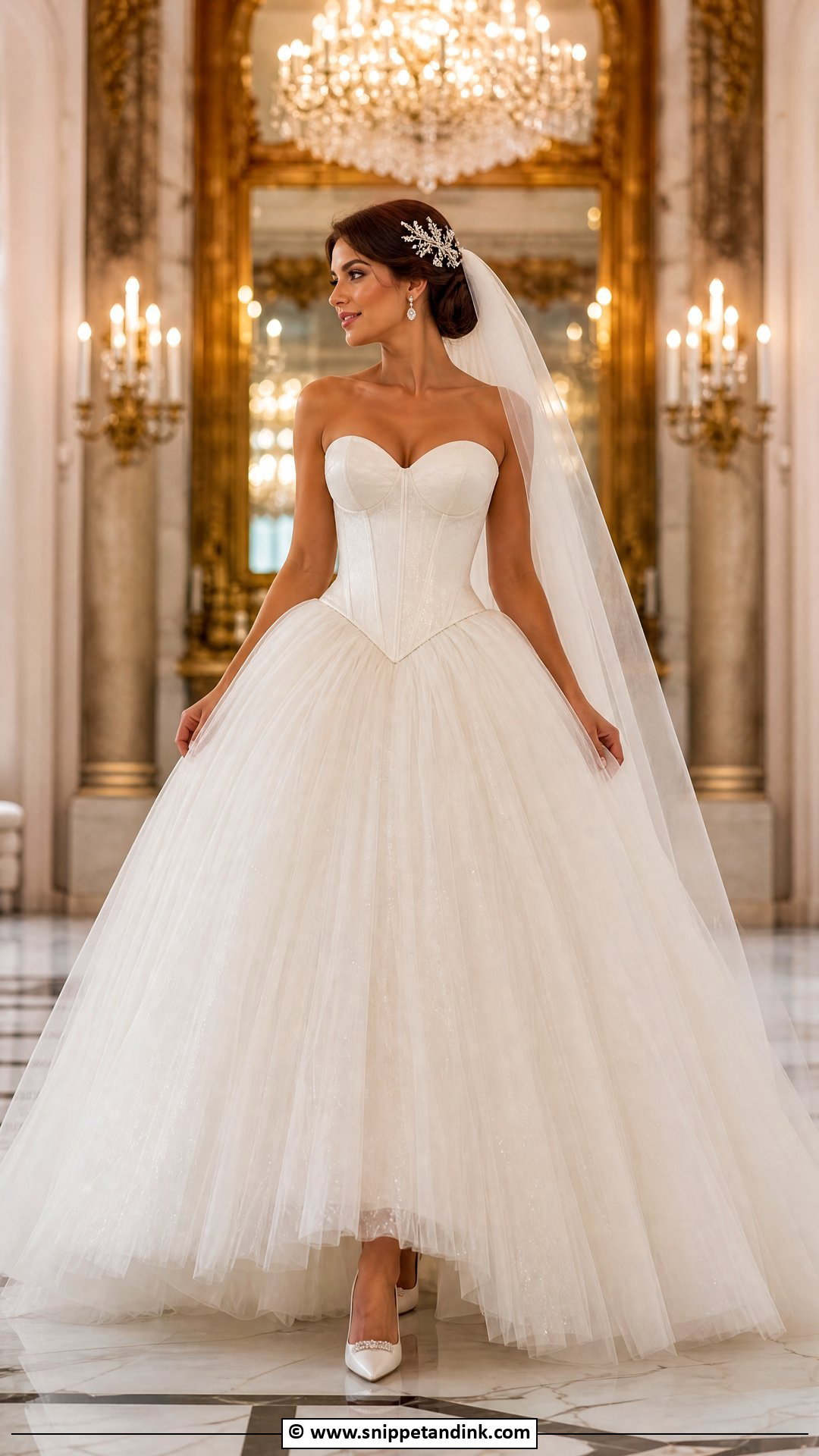
A princess basque waist wedding dress pairs a long fitted bodice with a skirt that opens into real volume. Tulle feels dreamy, satin feels formal, organza feels lighter. To keep it from tipping into costume, I cut back the extra details and let the waist, skirt shape and veil do the work. A sparkling hair comb and long veil are enough for a ballroom.
17. Basque Waist Wedding Dress With Pearls
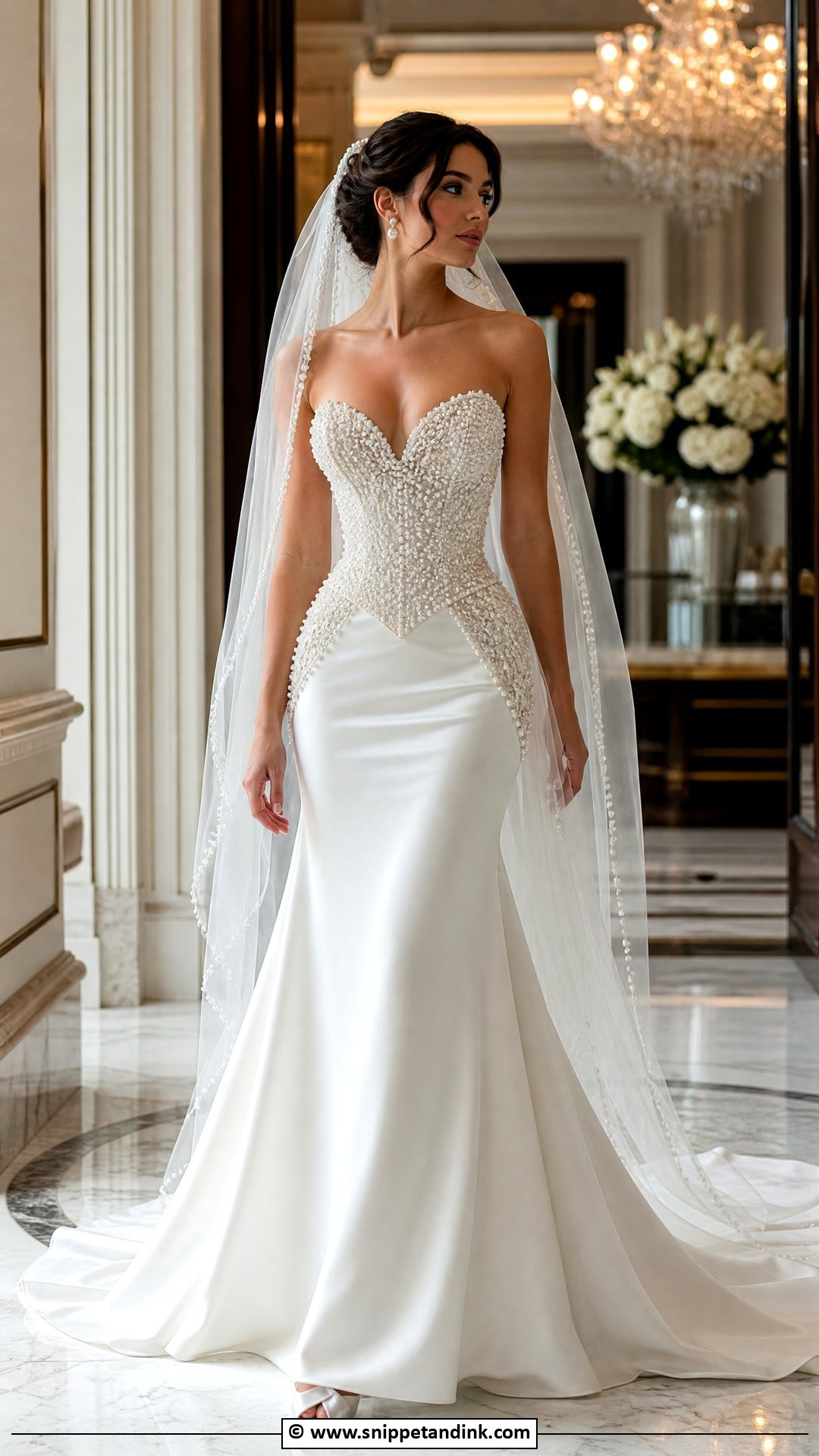
Pearls sit well along the edges of a basque bodice, tracing the neckline, straps or the V itself. Because the waistline already creates shape, a light scattering usually looks richer than all-over embellishment. Match pearl tones carefully: soft ivory pearls blend with bridal fabric, while bright white ones can make an ivory gown look dingy next to them. Pearl earrings and satin heels finish it.
18. Basque Waist Wedding Dress With Floral Applique
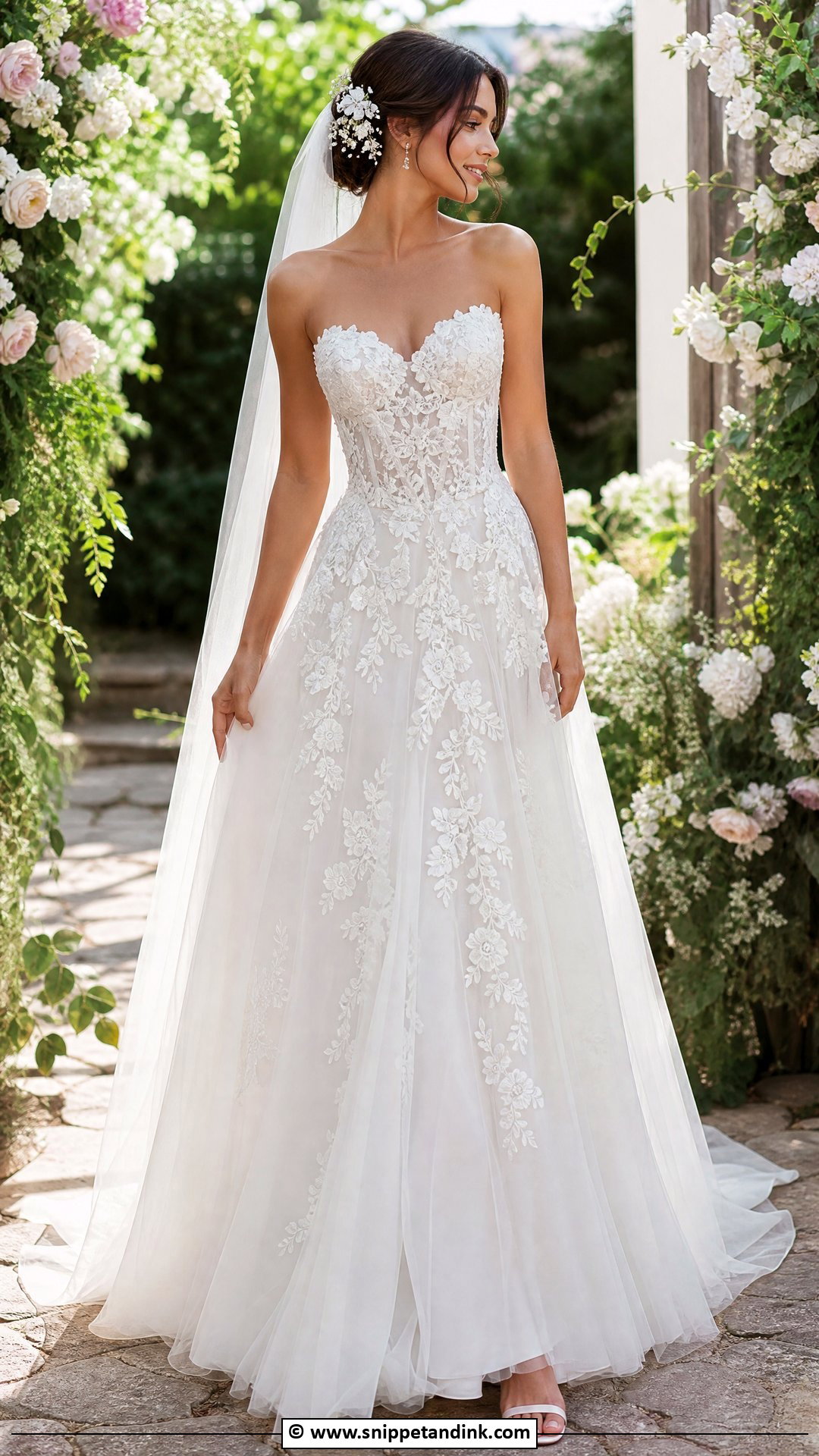
Floral appliqué softens the hard line of the seam. When flowers trail from the bodice across the point and into the skirt, the waist looks blended instead of cut in two, which is useful if a sharp V feels too severe on you. Tulle, organza and lace all carry it. A sheer veil keeps the appliqué visible. Keep the bouquet tonal so it doesn’t fight the dress.
19. Basque Waist Wedding Dress With Square Neck
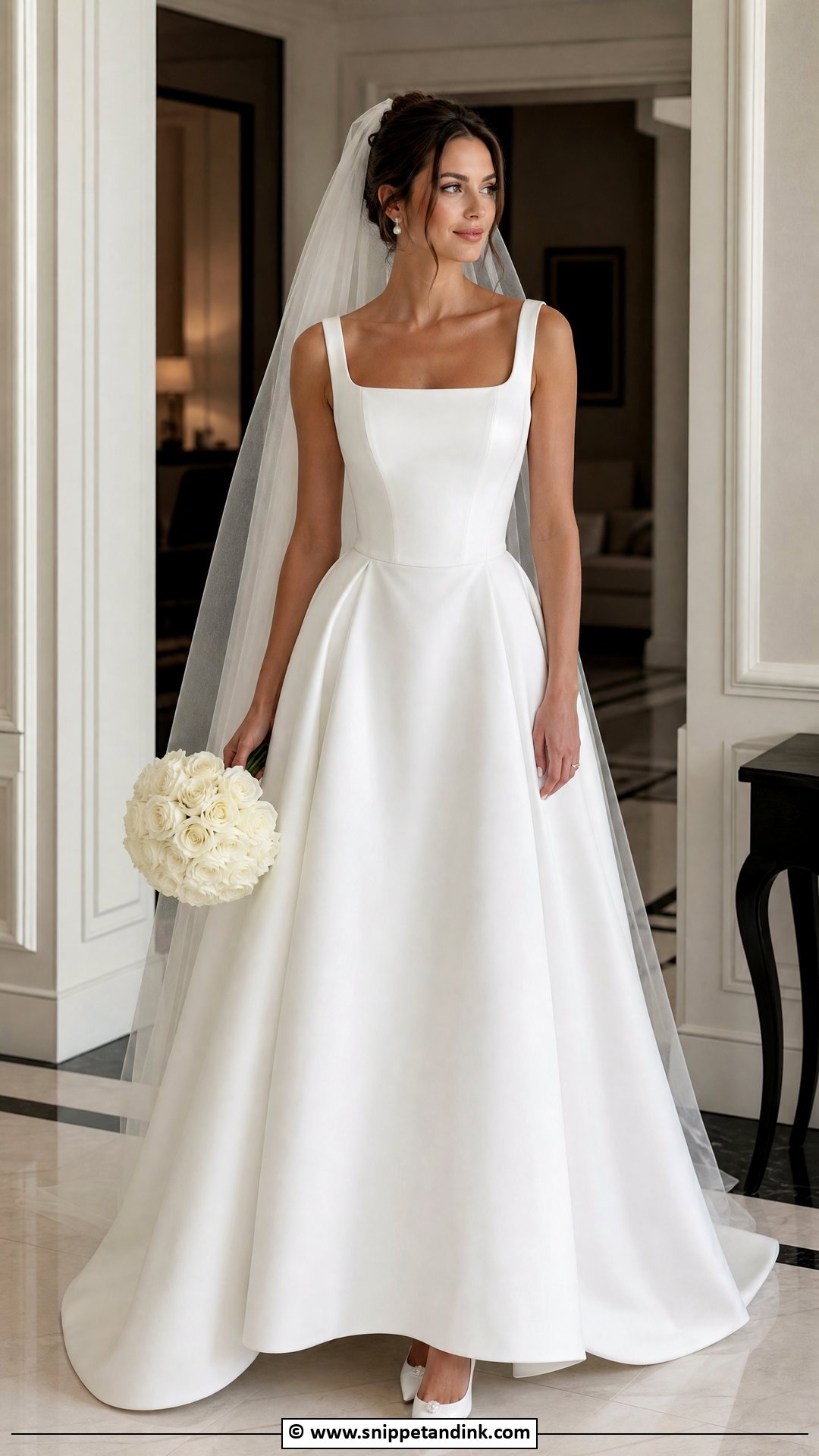
Two strong geometric lines, a straight neckline above and a pointed waist below, make for a very tailored gown. Crisp fabrics like satin, crepe and mikado hold both lines. If you have a fuller bust, ask for proper internal support; a square neck has no curve to cradle the bust, so without structure it can flatten or gape. A low bun or soft waves both suit it.


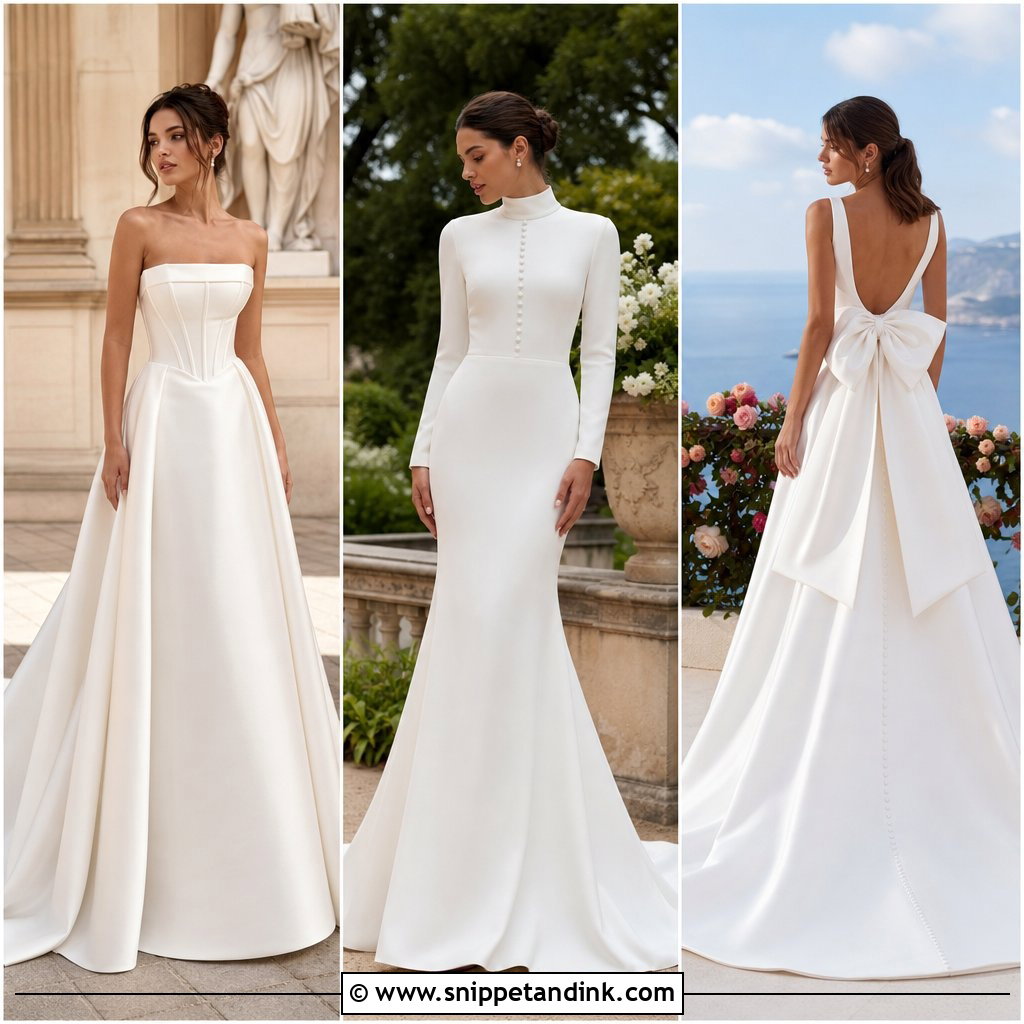

20. Basque Waist Wedding Dress With Sweetheart Neckline
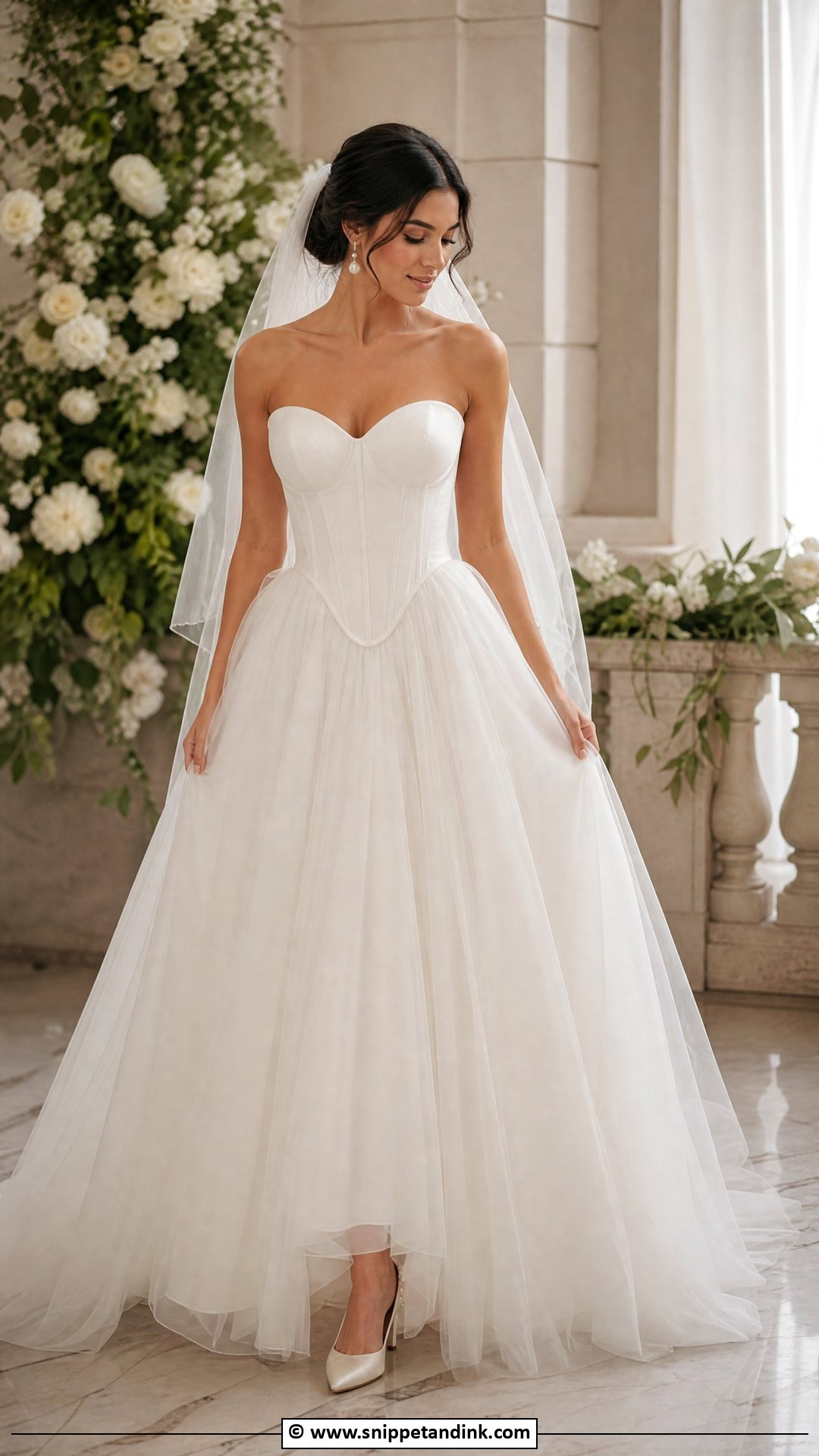
A sweetheart curve on top and a V below echo each other, and the result reads softer than the square-neck version. It suits strapless bodices, off-shoulder sleeves or thin straps. A full tulle skirt makes it dreamy, a satin A-line more classic. If you want a secure fit, I’d choose boning and a dip that follows your own proportions rather than the deepest V on the rack.
21. Basque Waist Wedding Dress With Spaghetti Straps
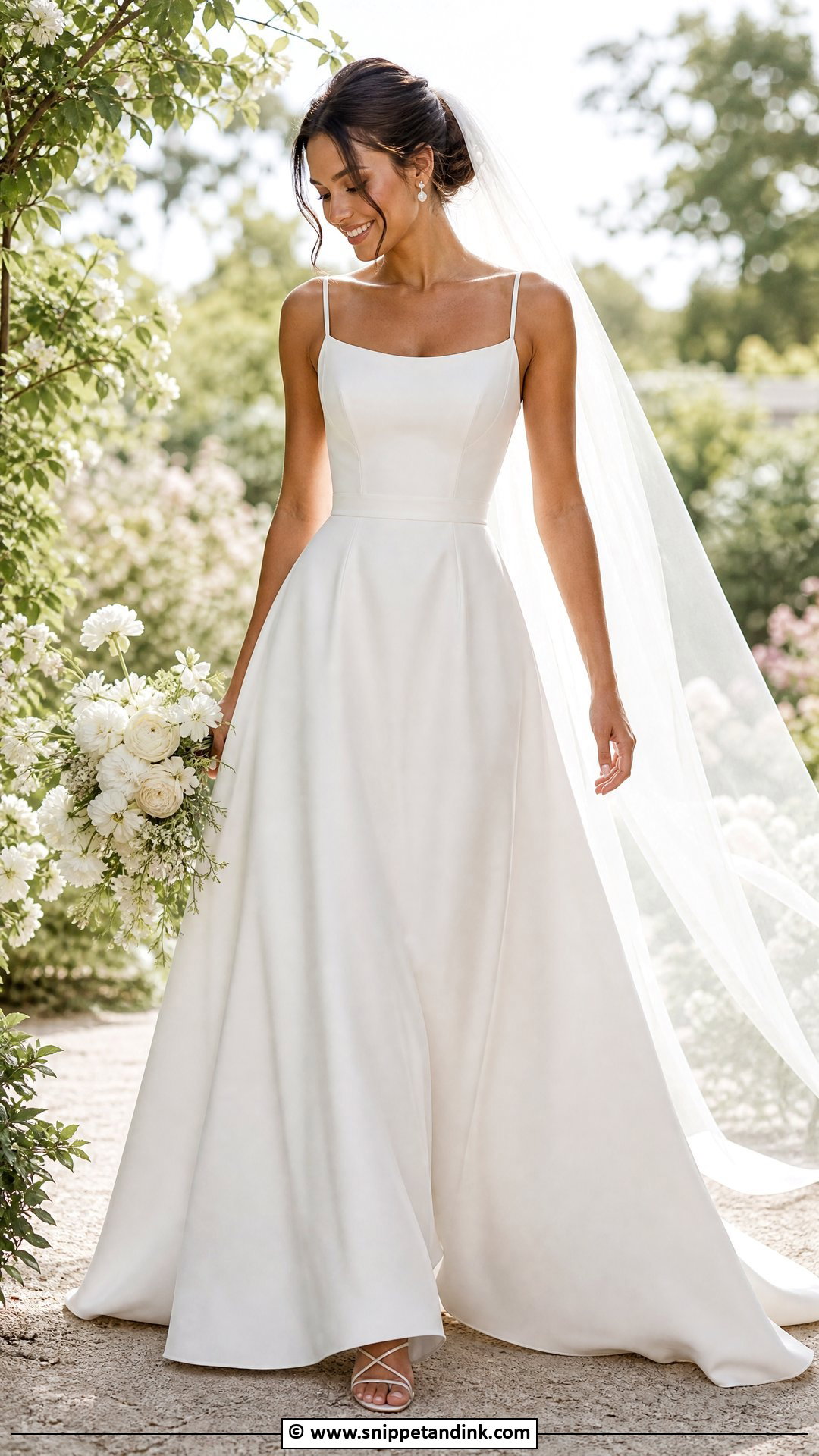
Thin straps make the structured bodice look lighter and less formal than a strapless ball gown. They suit a simple satin A-line, layered tulle or subtle lace, and warm-weather gardens. My warning: spaghetti straps are decoration, not support. The bodice has to hold itself up, and I test that by unhooking the straps at a fitting to see whether anything moves. Soft waves and strappy sandals keep it relaxed.
22. Basque Waist Wedding Dress With Cap Sleeves
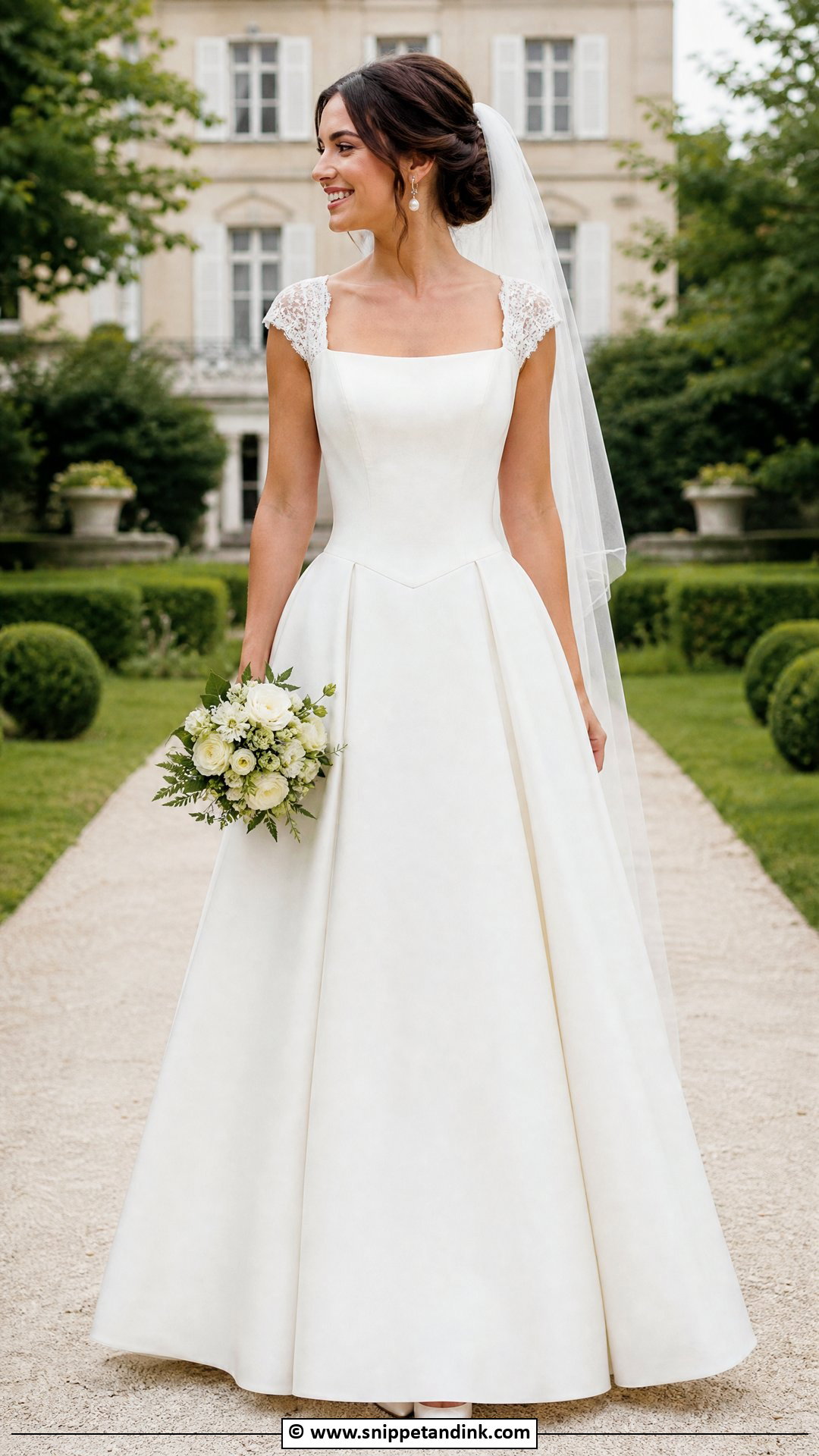
Cap sleeves give a little coverage without the weight of a full sleeve, in lace, satin, tulle or beading. They suit daytime ceremonies and classic indoor weddings. Fit is narrow here. A cap that is too tight pulls the bodice upward when you lift your arms, which shifts the point off center, so I always do a hug test. A fingertip veil and small bouquet finish it.
23. Basque Waist Wedding Dress With Puff Sleeves
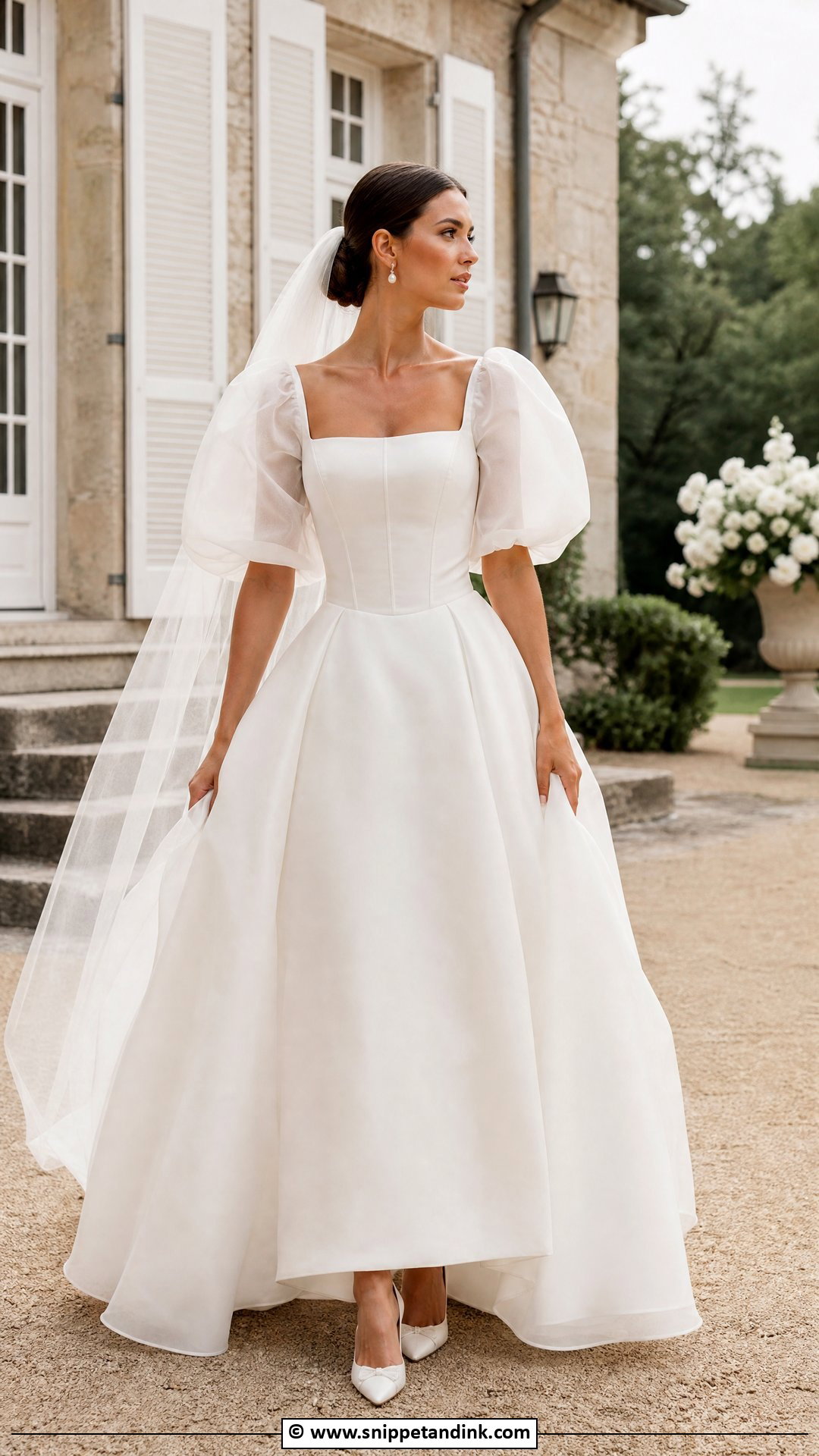
Puff sleeves put volume at the shoulder, which the narrow point then answers. I’d go for soft organza or tulle puffs rather than stiff fabric, which can look boxy next to a curved seam. Keep the skirt simple and the earrings small. If you can’t decide, look for detachable puff sleeves, which give you a dramatic ceremony look and a cleaner reception outfit without a second dress.
24. Basque Waist Wedding Dress With Detachable Sleeves
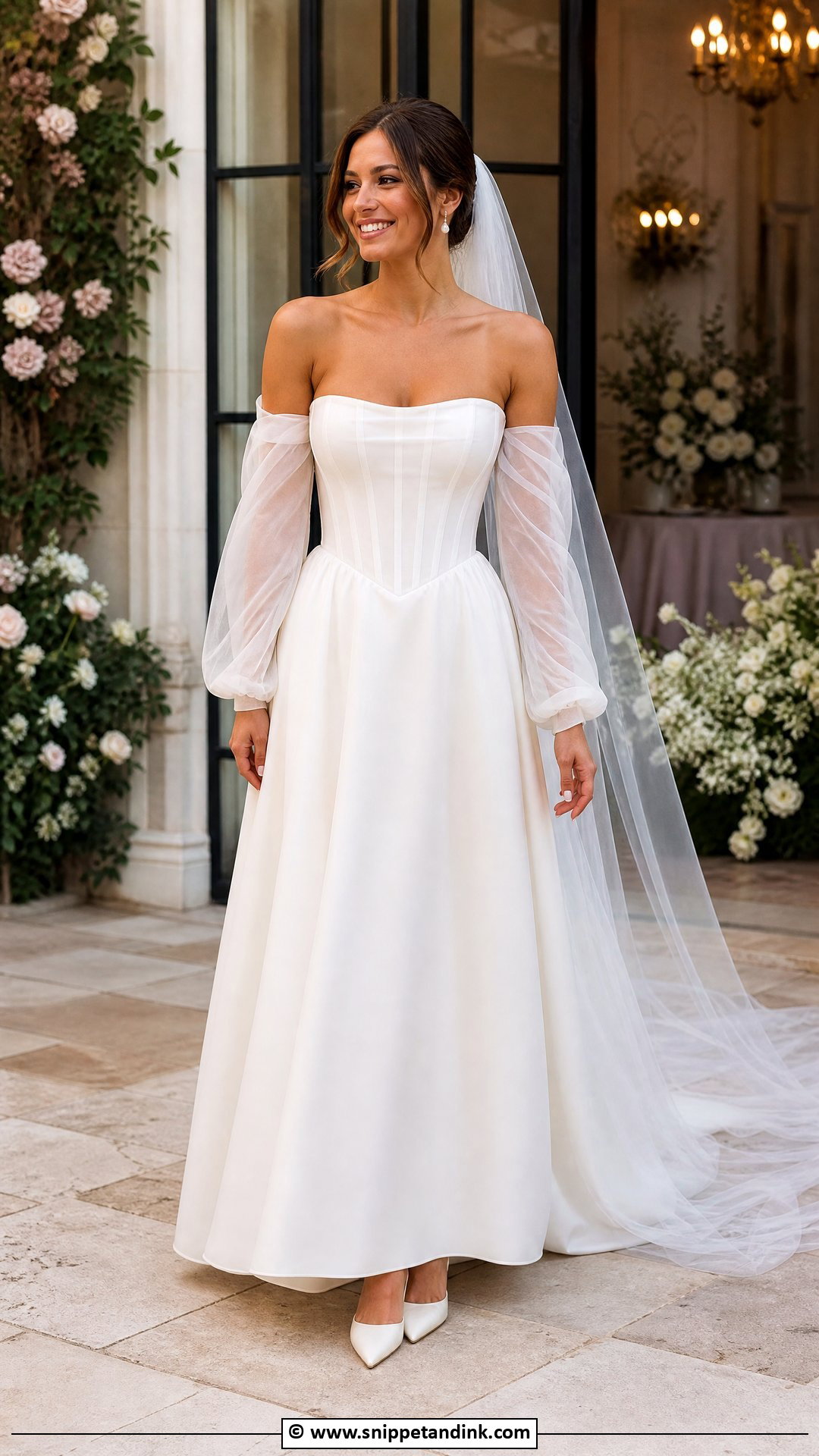
Detachable sleeves let you start covered and finish bare. They pair best with strapless or off-shoulder bodices that already look complete on their own. Lace sleeves are romantic, satin structured, sheer tulle soft. Check the attachment points closely: hooks or snaps should be hidden and strong, and I like to see a bride remove and refit them herself once before the day.

25. Basque Waist Wedding Dress With Gloves
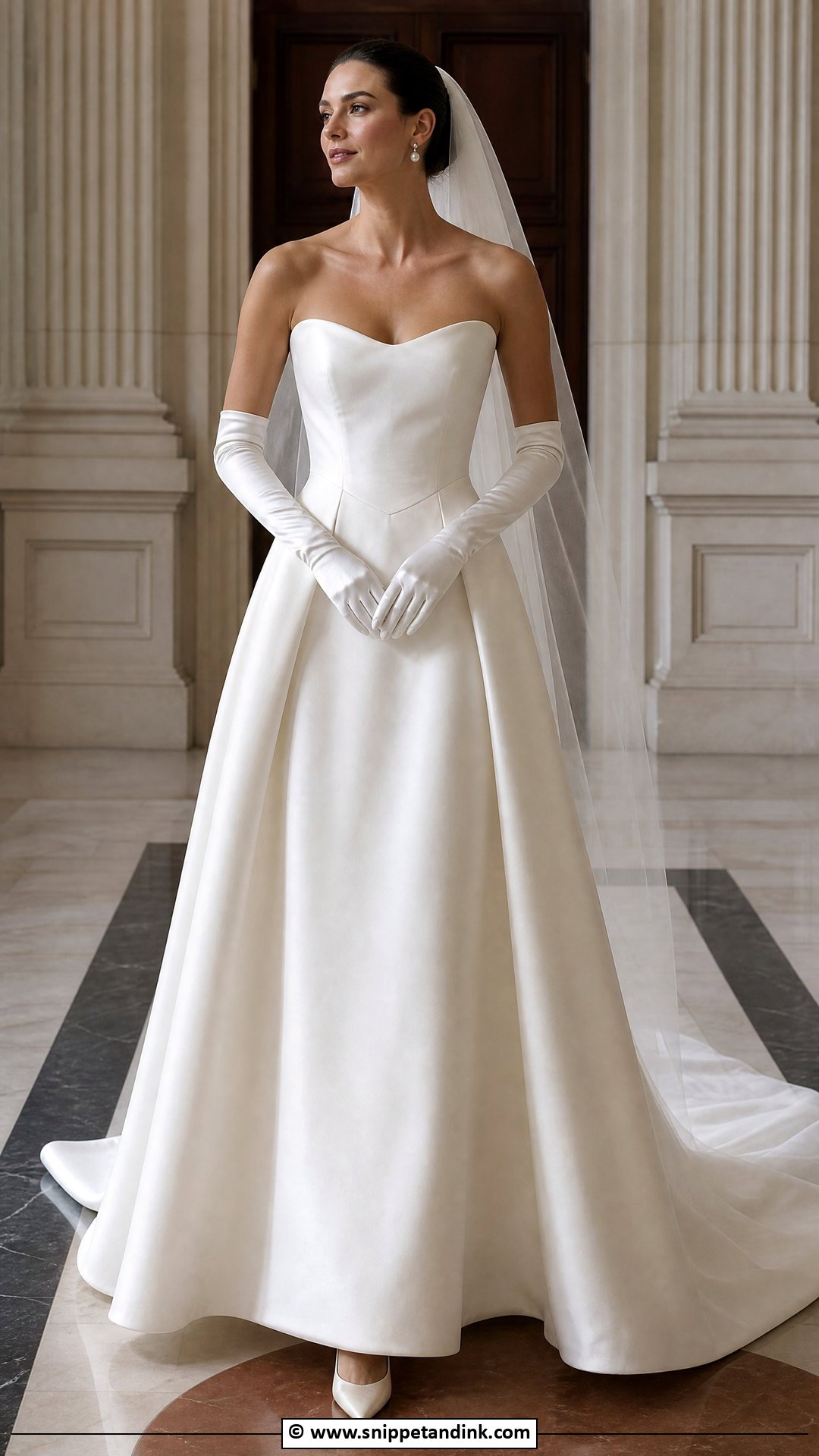
Gloves change the gown’s mood without touching the dress. Long satin opera gloves suit a strapless bodice; sheer gloves soften lace or tulle. Black-tie venues and formal ceremonies suit them best. Plan the ring moment in advance: either remove the left glove before the vows or choose a style with an opening at the ring finger. Keep bracelets minimal so the gloves look clean.
26. Basque Waist Wedding Dress With Veil
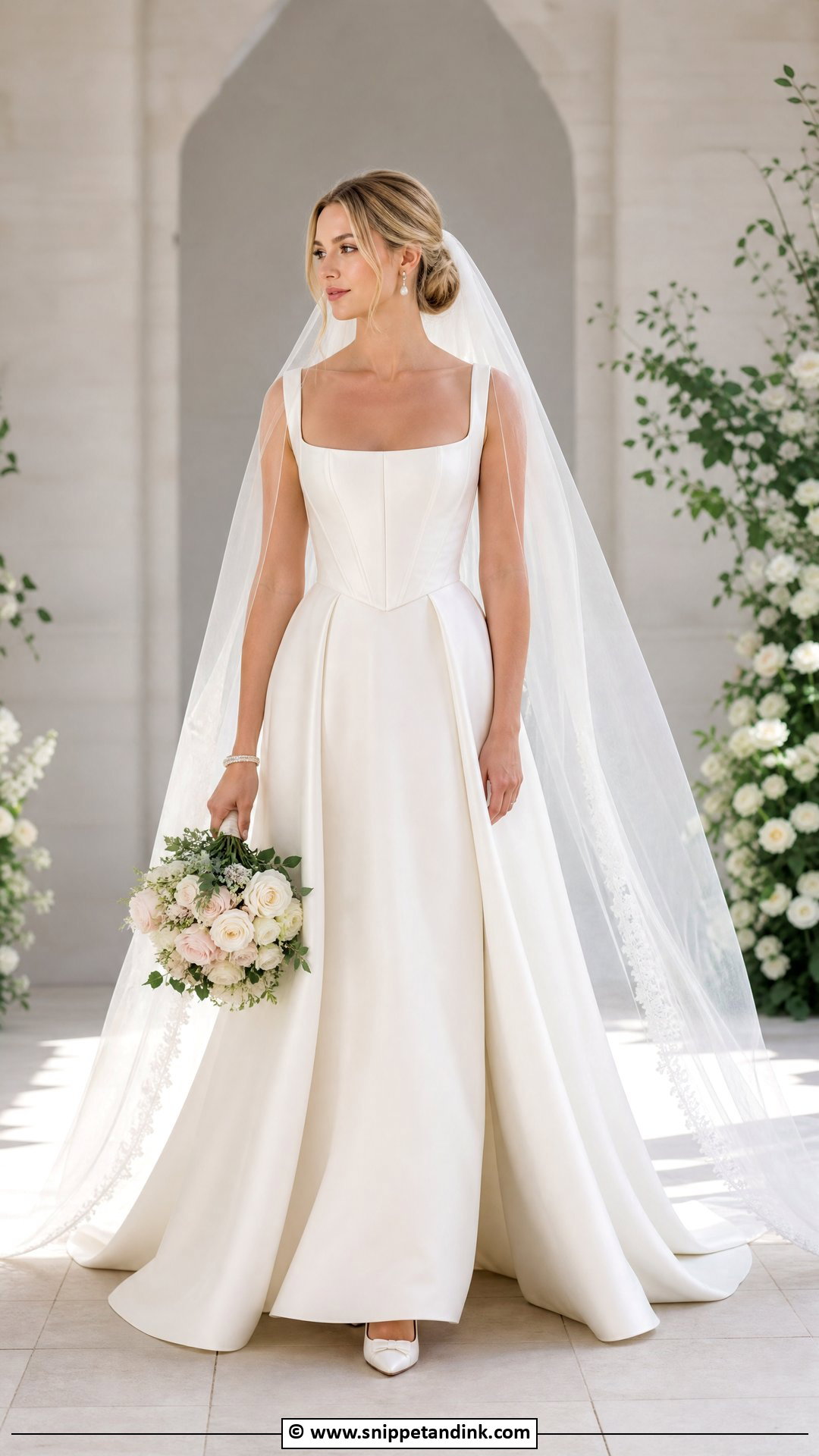
The veil changes the entire outline, so choose it with the skirt in mind. A cathedral veil suits a ball gown; a fingertip veil sits nicely with an A-line. Over lace or appliqué, a plain sheer veil keeps things calm. Placement matters most with this waistline. I set the comb high enough that the veil frames the bodice rather than draping straight across the point and hiding it.
27. Basque Waist Wedding Dress With Overskirt
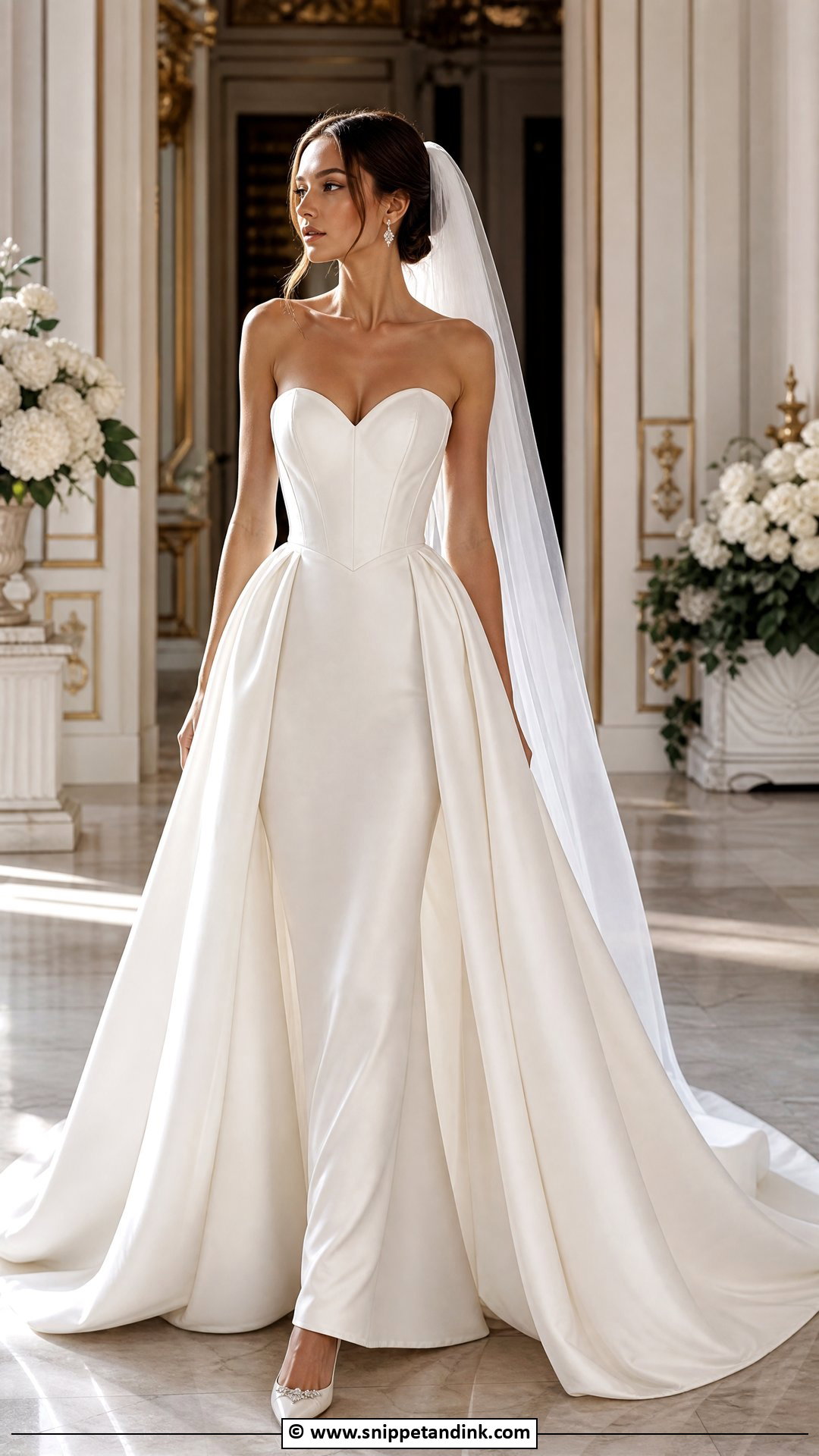
An overskirt gives you volume for the aisle and a slimmer gown underneath for dancing. The detail I watch is where it attaches. If the overskirt fastens on a straight band, it sits awkwardly over a V-shaped seam, so it needs to follow the curve of the point exactly. Ask to see the gown with and without it under the same light. A long veil and simple earrings work for both looks.
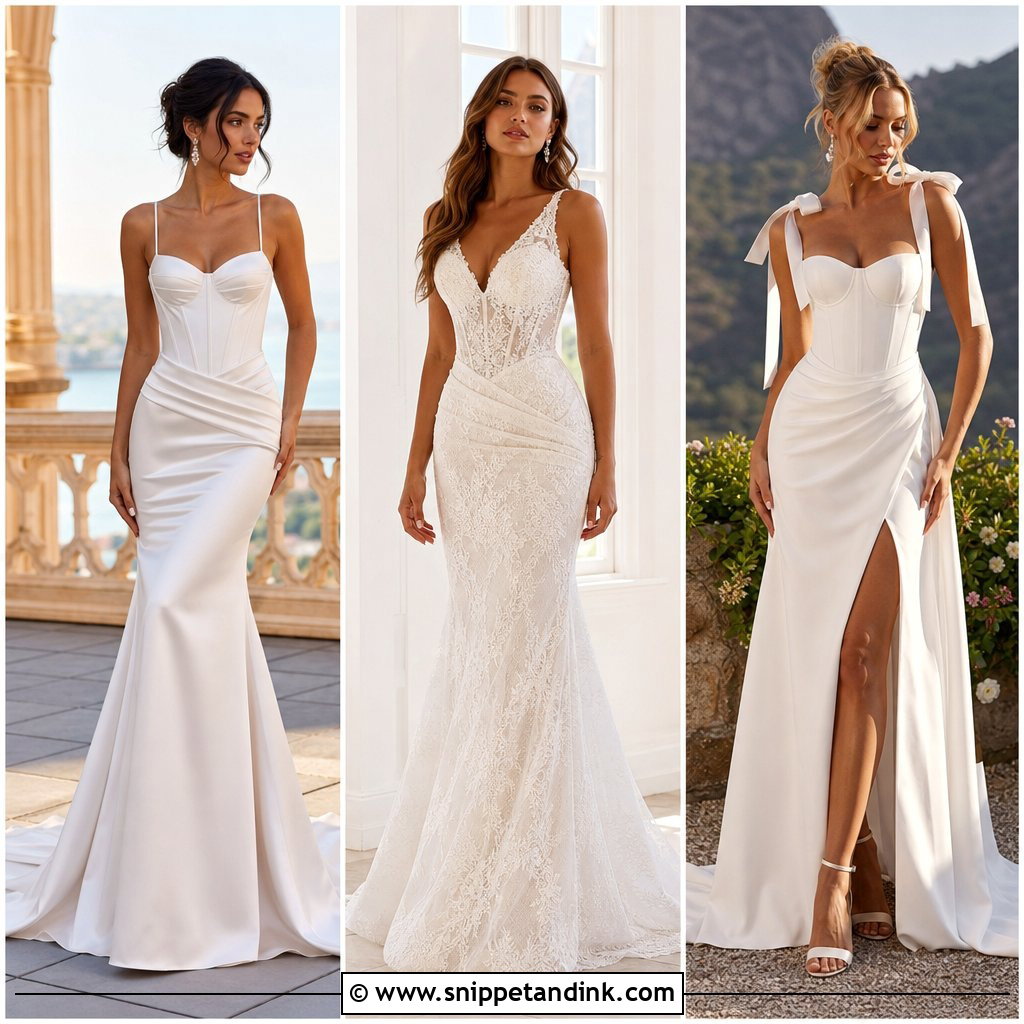
28. Basque Waist Mermaid Wedding Dress
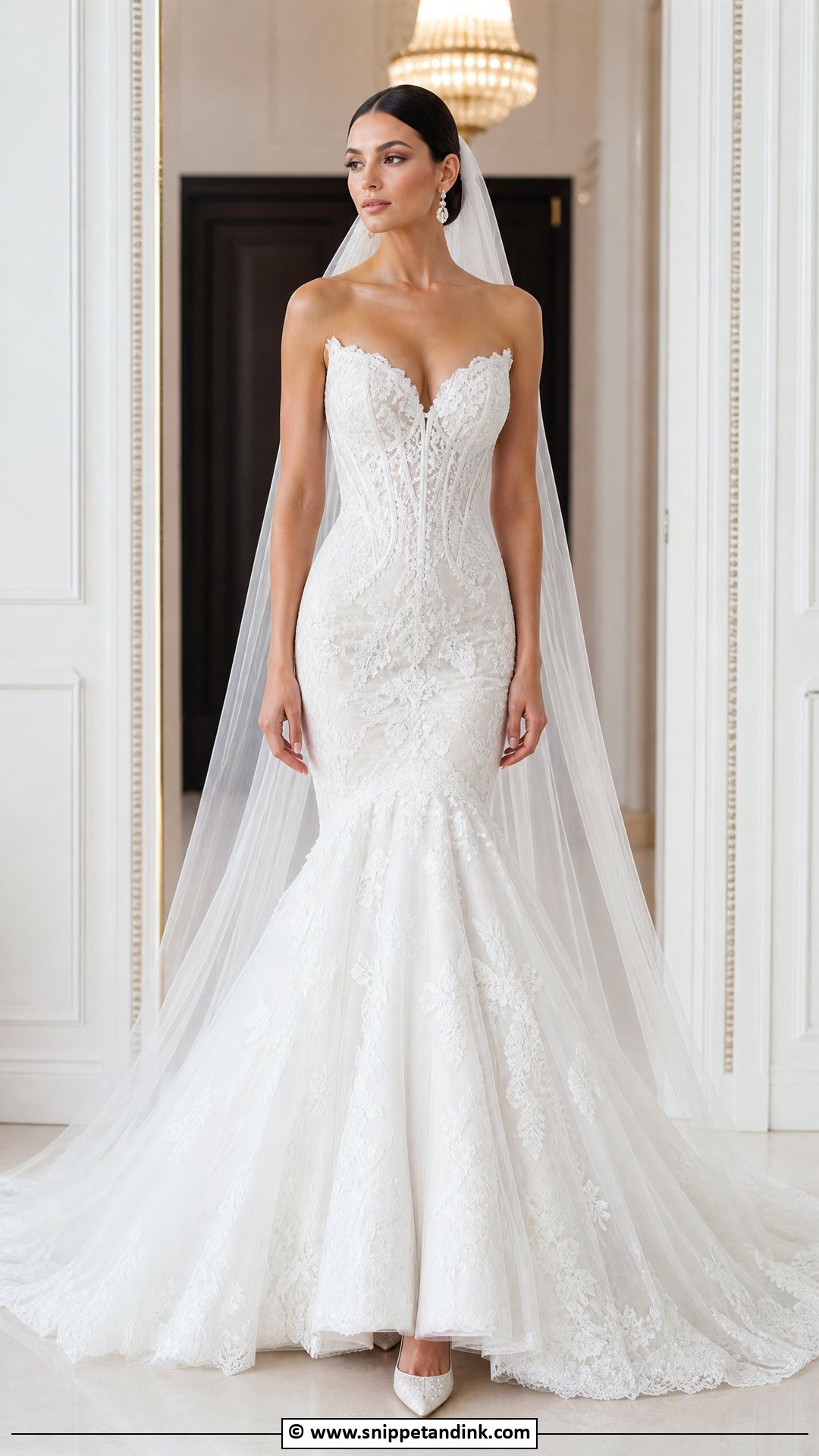
The bodice lengthens the torso, the skirt hugs the hips, then it flares near the knee. The result is glamorous and body-skimming. Satin, lace and crepe all suit it. Practice walking and sitting at every fitting: a flare set too low hobbles your stride, and on a mermaid the point can ride up when you sit, because there’s no skirt fullness to absorb the movement. Sleek hair and drop earrings keep the line long.
29. Basque Waist Fit And Flare Wedding Dress
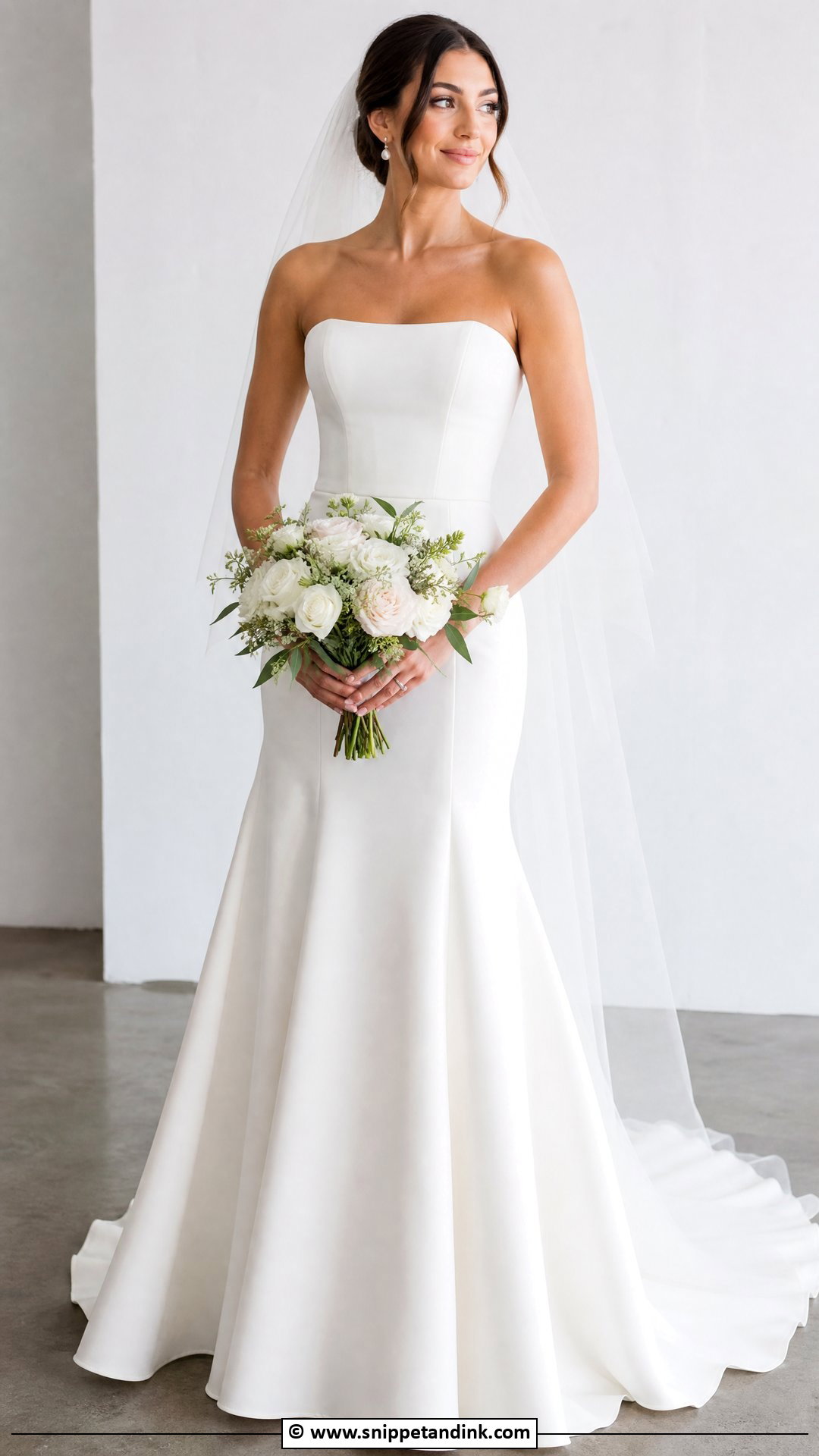
A little softer than a mermaid, a fit and flare follows the body past the hips and then opens gradually. It’s a good middle ground if you want curves without feeling restricted. Crepe looks sleek, lace romantic, satin formal. During alterations I check two points: that the dip lies flat, and that the flare starts where it flatters you rather than where the pattern happened to put it.
30. Basque Waist Tea Length Wedding Dress
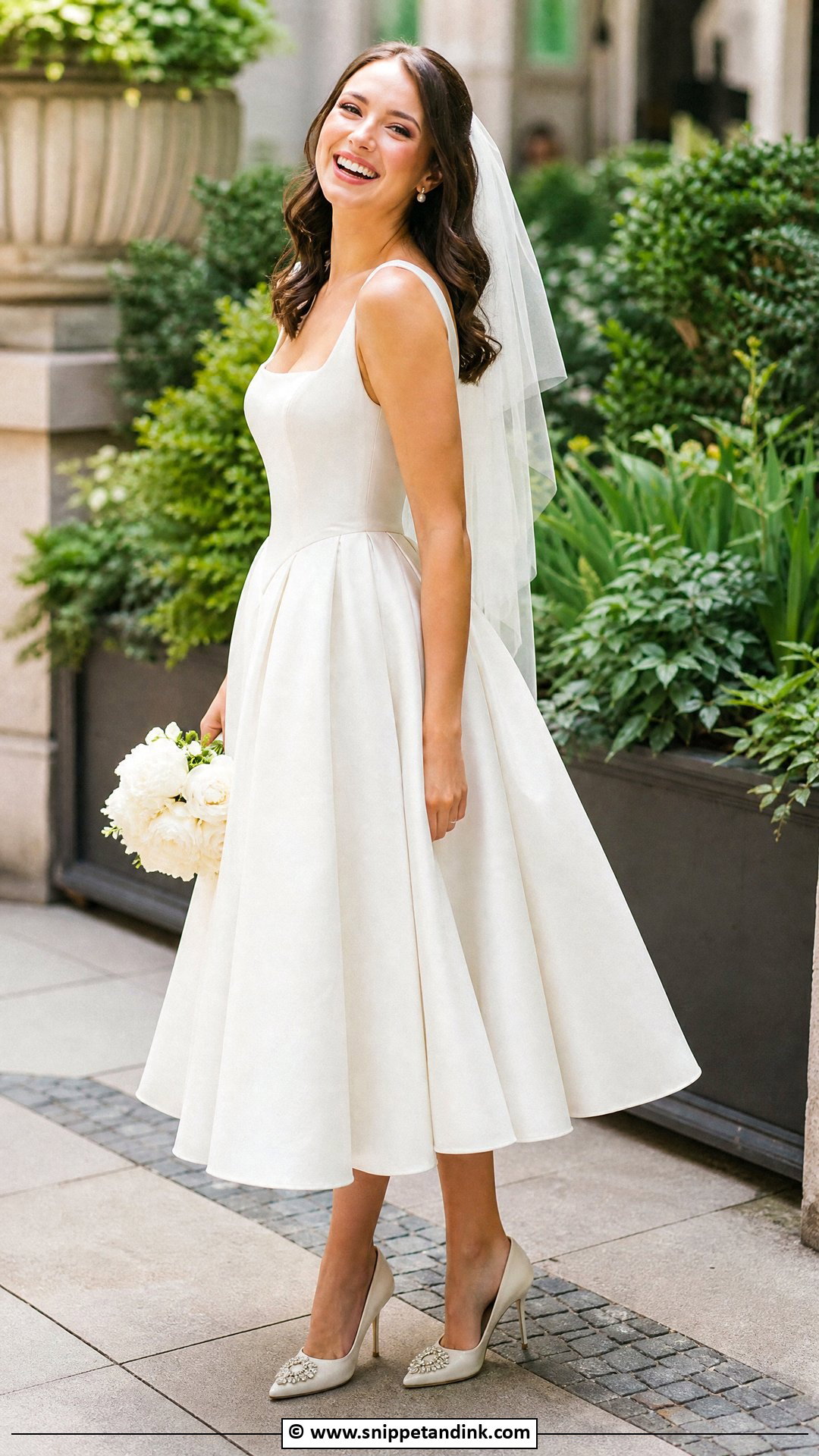
Tea length shows off your shoes and adds a playful, slightly vintage note. Ivory pumps, embellished heels and ankle straps all suit it. The hem placement is the whole decision. I aim for just below the knee or mid-calf and avoid the widest part of the leg. Pearl studs, a short veil and soft curls suit courthouse weddings and smaller celebrations.
31. Basque Waist Mini Wedding Dress
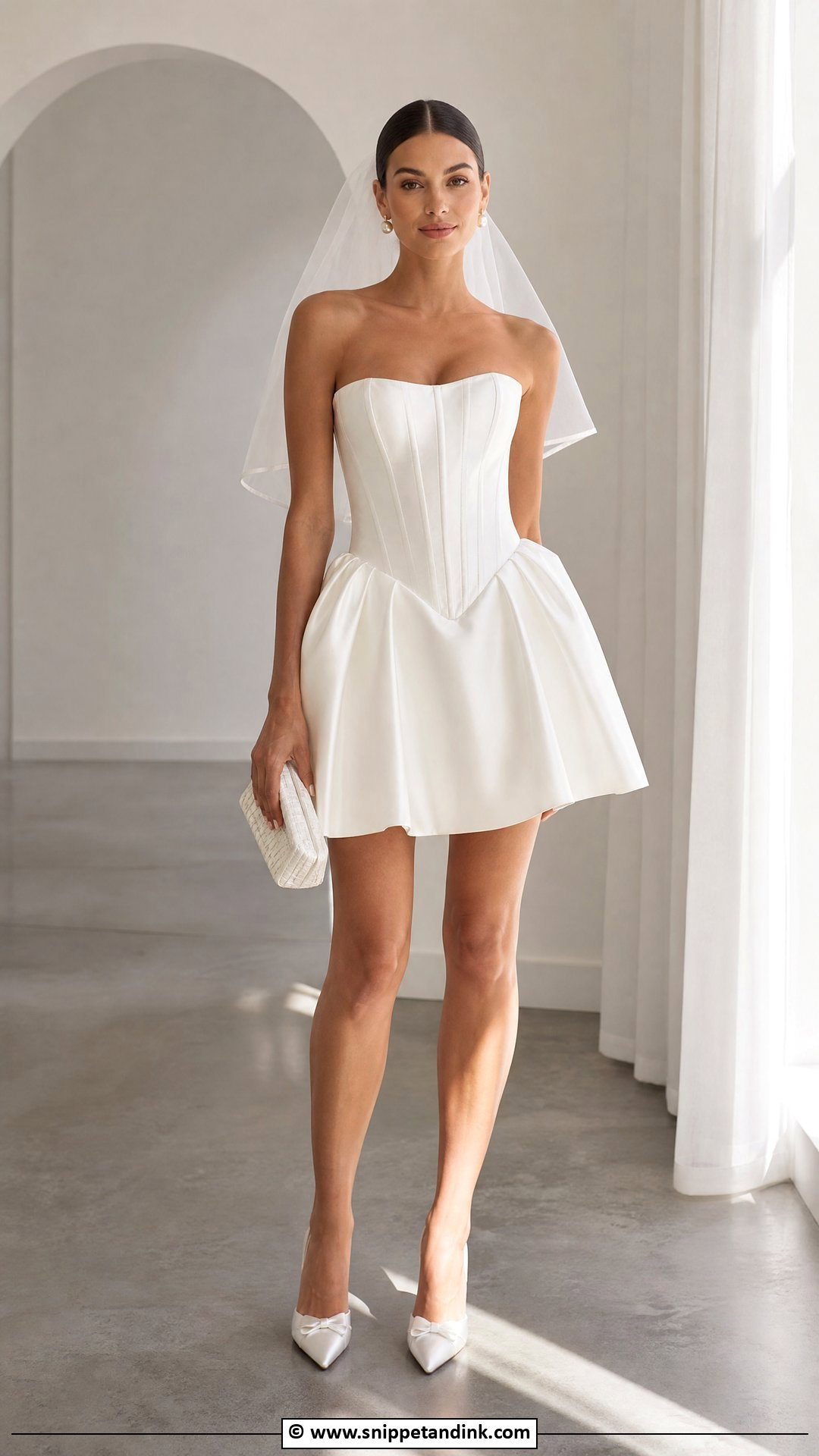
A short hem paired with a corset bodice and a pointed waist makes a fun reception or courthouse dress. Clean satin and a softly flared skirt keep it bridal rather than casual. My only rule is tailoring: a mini shows every inch of fit, so it needs the same attention as your main gown. Pointed pumps, pearl earrings and a hair bow or short veil.
32. Basque Waist Reception Wedding Dress
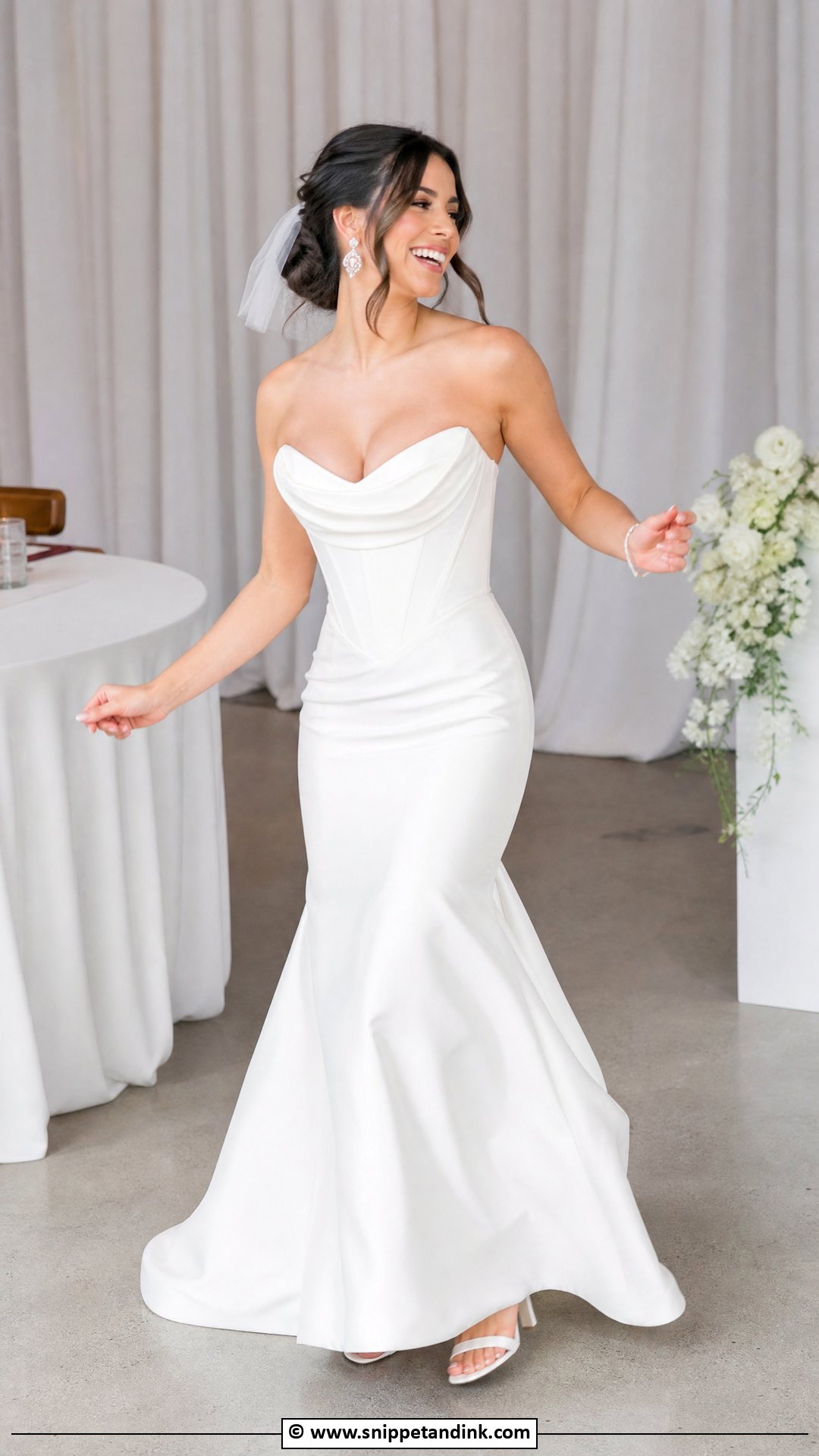
If you change for the reception, a lighter A-line, fit and flare, tea length or mini keeps the waistline theme going while giving you back your legs. Less volume makes greeting guests and dancing much easier. Satin and crepe look clean. I’d test it in your actual dancing shoes and with your arms up, since a reception dress gets moved in far more than a ceremony gown.
33. Basque Waist Courthouse Wedding Dress
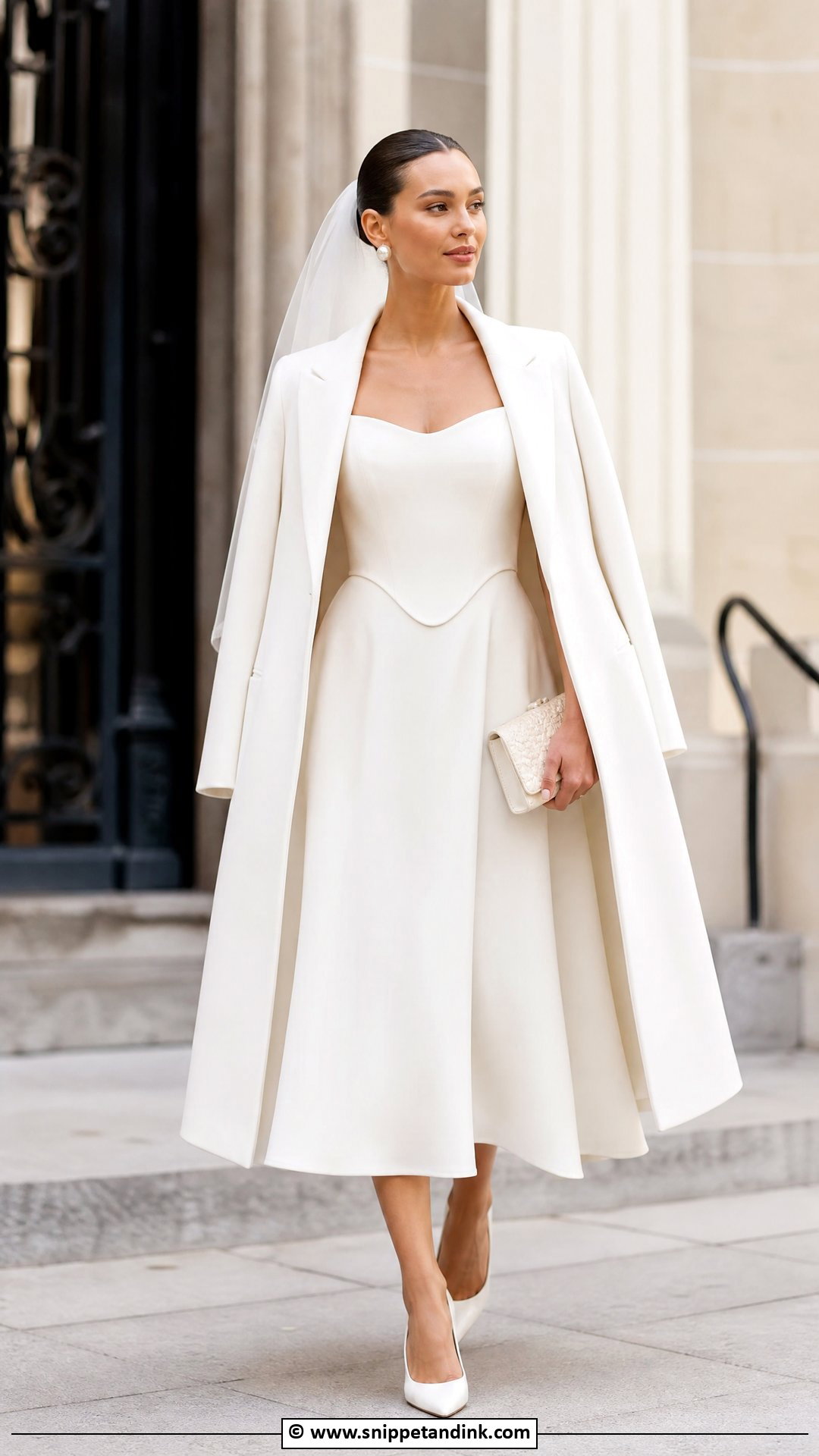
For a civil ceremony, a clean midi, tea length or slim A-line with a structured bodice and modest volume hits the right level of formality. Satin, crepe and mikado hold their shape in city light. In cooler months, try your coat or blazer over the dress before the day; a cropped jacket that ends right at the point shows off the waist, while a longer one hides it. A small bouquet or clutch is enough.
34. Basque Waist Beach Wedding Dress
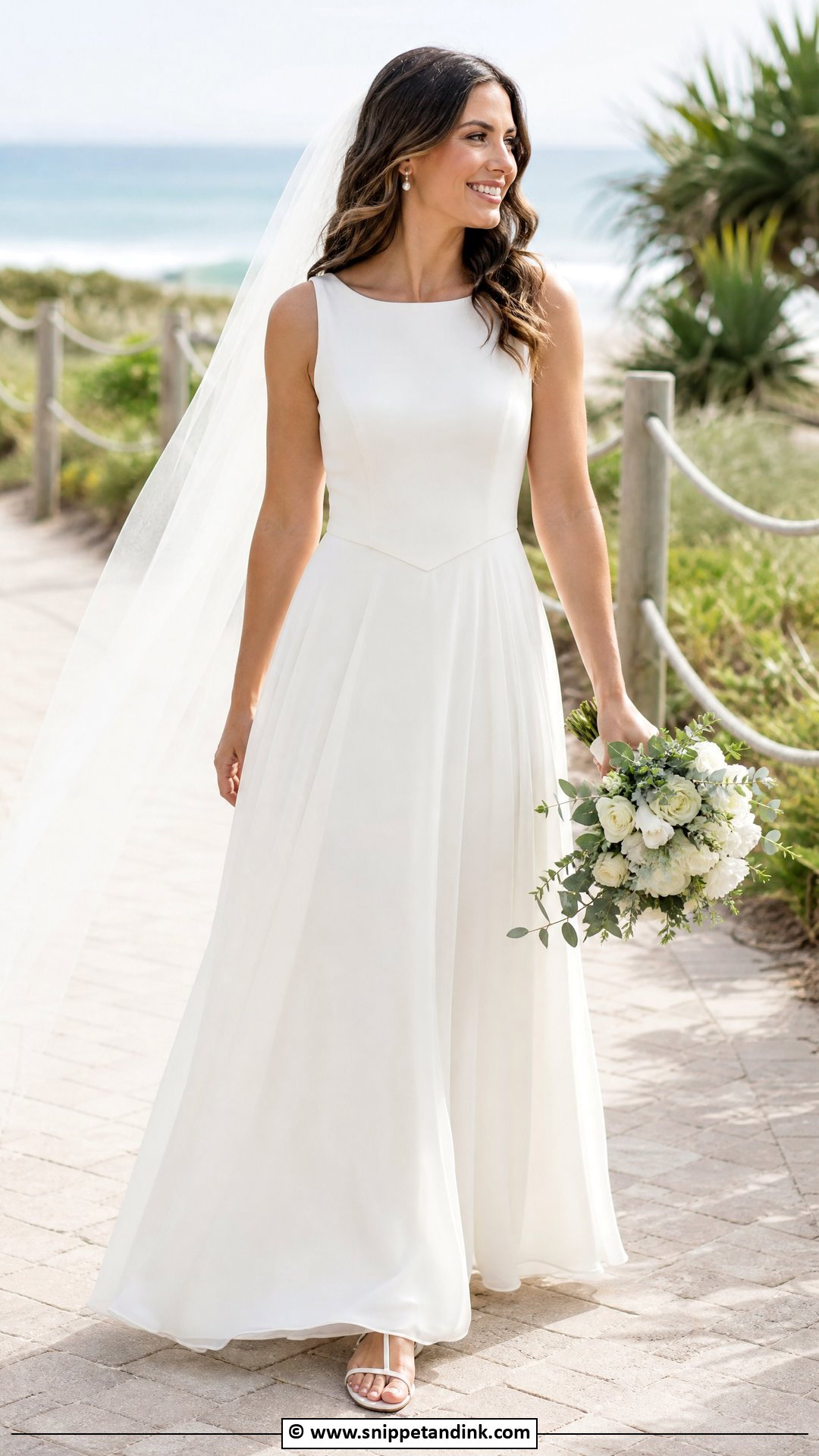
A basque waist beach wedding dress needs structure without weight. Chiffon, soft tulle, organza and light crepe all work. Heavy boning on a hot beach gets uncomfortable fast, so I’d look for a gentle U dip with lighter internal support. Skip long trains and stiff fabric, which drag in sand. Flat sandals, pearl studs and relaxed waves suit the setting.
35. Basque Waist Garden Wedding Dress
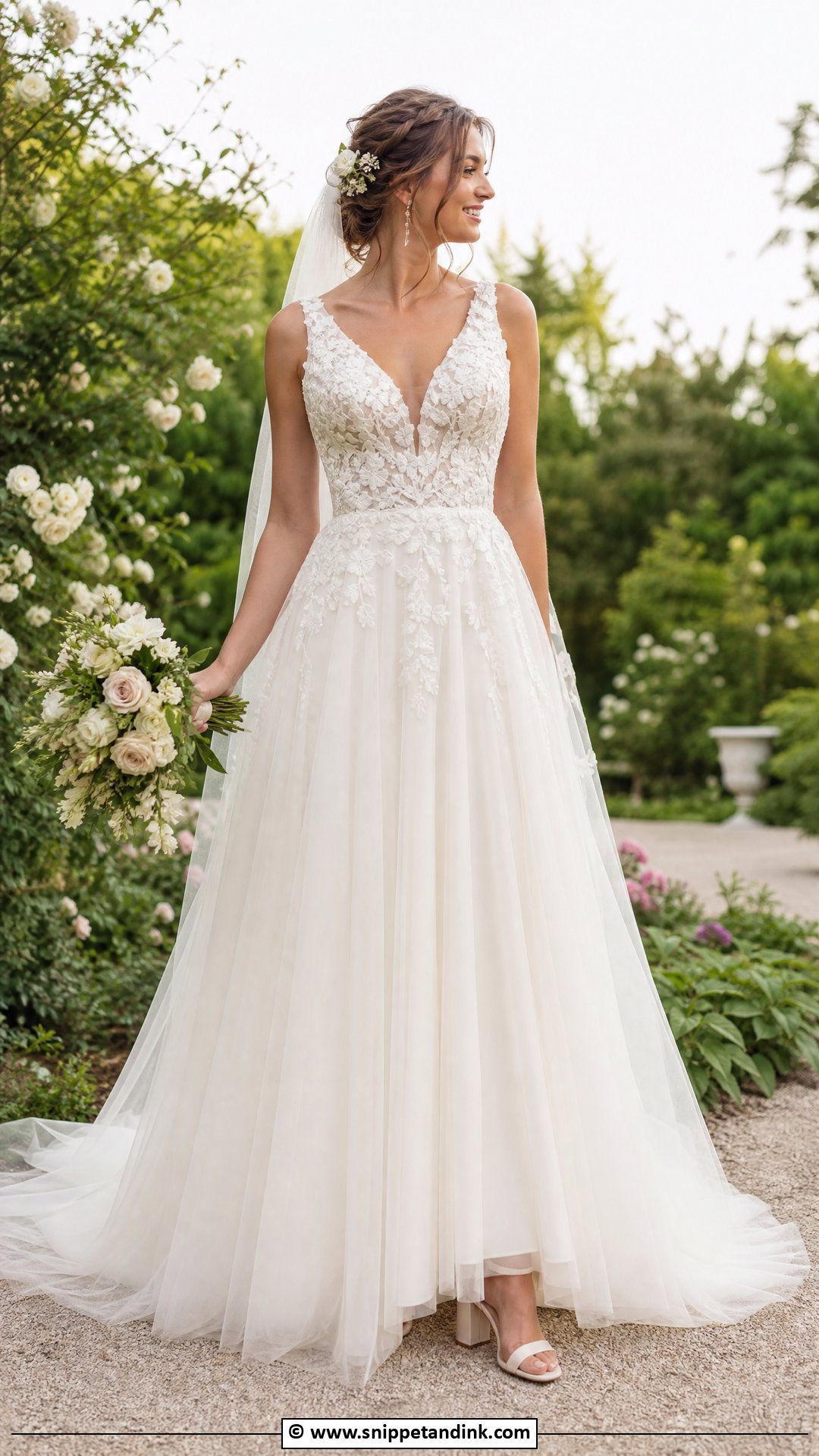
Gardens suit soft fabrics like tulle, lace, organza and floral appliqué, which echo the setting around you. A fitted bodice with a gentle dip and a flowing A-line skirt gives shape without too much formality. Choose block heels that won’t sink into the lawn. Spring through early autumn is the natural season. A loose bouquet and fresh makeup keep the whole look light.
Underwear That Won’t Fight a Dipped Seam
The most common problem I see at final fittings isn’t the dress. It’s a waistband. High-waisted shapewear usually ends right where the point sits, and the ridge shows through satin as a faint horizontal line across the V.
- Choose a longline bodysuit or a shaping slip that runs past the point, or skip shapewear if the gown is boned enough to do the job.
- Bring the exact underwear you’ll wear to every fitting; swapping it later can shift the point by a surprising amount.
- If the gown has a built-in bra cup, try it without a separate bra first. Doubling up pushes the bodice forward and blunts the line.
Your Bouquet Can Hide the Whole Waistline
Brides often spend months choosing a basque gown and then cover the point for the entire ceremony. Held at the usual height, a round bouquet sits directly over the V. I suggest holding it slightly lower, around the hip bones, with relaxed elbows, so the seam shows above the flowers. A cascading or loosely tied bouquet held to one side does the same job.
Belts deserve a warning too. A straight belt across a dipped waist fights the seam and cuts the V in half. If you love a waist detail, ask for a sash or beaded trim shaped to follow the point instead.
The V Is Only as Good as Its Fitting
This waistline can lean regal, romantic, modern, plain or vintage depending on the fabric, neckline and skirt you put with it. The most flattering one won’t be the trendiest. It’s the one whose point lands where your torso bends, supports your bust and balances the skirt below it. Try a few versions back to back, a strapless satin ball gown, a lace A-line, something with detachable sleeves, and you’ll feel the difference within minutes.
You'll Like These Ideas:






Leave a Reply