
A full skirt changes how you move, sit, hug and get through a doorway, and that is the part most brides only discover at the first fitting. I love dressing brides in volume, but I always start with the boring questions: how big is the aisle, how long will you be on your feet, and does the venue have stairs? Satin ball gowns, soft tulle, corset bodices, basque waists, bows, sleeves and bubble hems all give you volume in a very different way. Some hold their shape on their own, some need a petticoat underneath, and some feel lighter than they look. Below are thirty versions of the big bridal skirt, with the notes I’d give you in the fitting room for each one.
Petticoat, Hoop or Built-In Layers Under the Skirt
When a bride falls for a sample, the first thing I do is lift the hem and look underneath. Volume comes from three places, and each one changes how the dress feels to wear.
- Built-in layers. Stiff net or horsehair sewn into the lining. Nothing extra to put on, and the shape stays consistent. The downside is that you can’t make the skirt smaller later.
- A separate petticoat. Soft layers of net worn under the gown. Easy to adjust: add one for the ceremony, remove it for dancing. Make sure you bring the same petticoat to every fitting, or the hem will be wrong.
- A hoop. Rings of boning that hold the skirt out. The fullest, smoothest shape, but it swings when you sit and needs practice on stairs. I only suggest it for very large skirts.
Ask the shop which one the sample uses. A gown that looks huge in the store because of a borrowed hoop can look quite different on the day without it.
Measure the Aisle, the Car and the Bathroom Door
This sounds unglamorous, and it saves weddings. A wide skirt can measure well over a meter across at the hem. Before you order, I’d check three spaces: the aisle between chairs, the back seat of the car taking you to the ceremony, and the restroom you’ll use most. Narrow church aisles and tiny venue bathrooms are where volume becomes a problem.
Order early too. Made-to-order gowns usually take several months to arrive, and alterations on a full skirt add more time, since the hem runs around a very long circumference. Your shop can give you their current timeline; I’d treat whatever they say as a minimum.
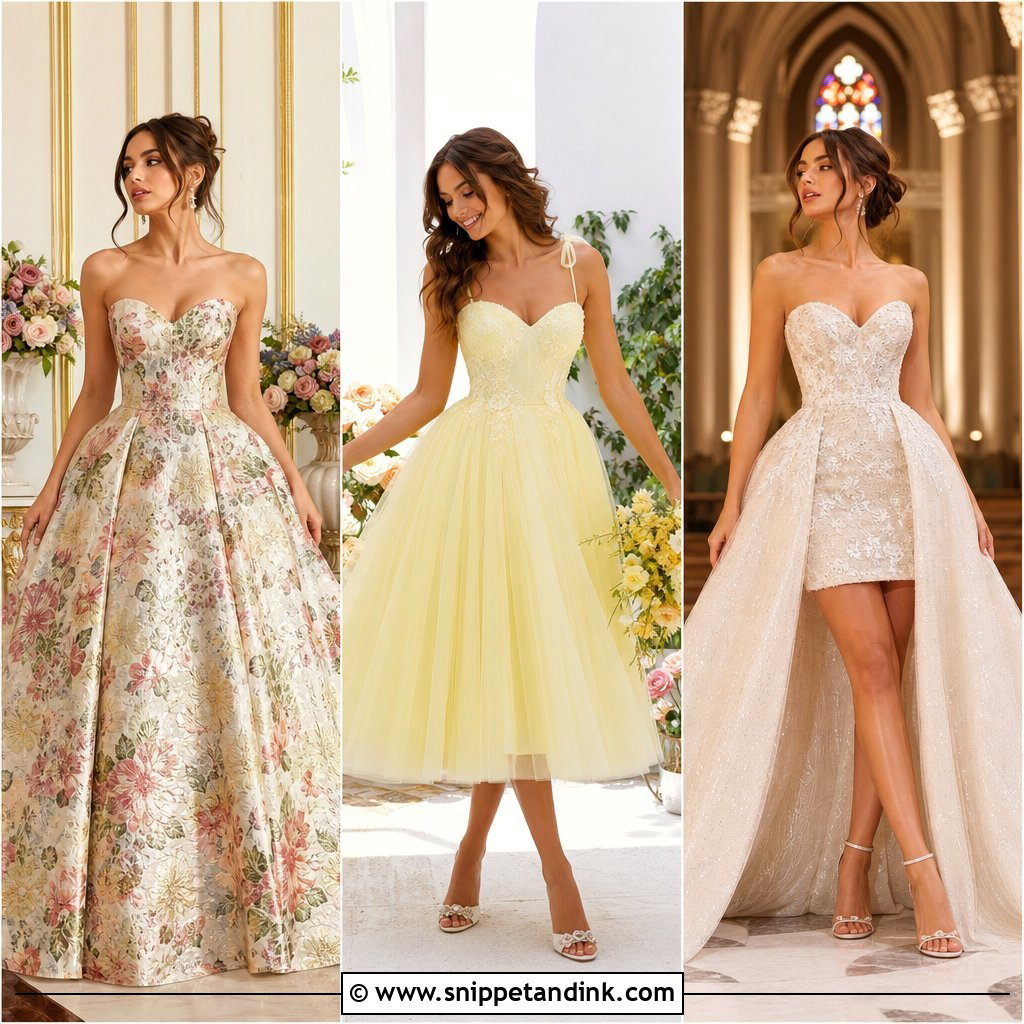
1. Strapless Poofy Wedding Dress
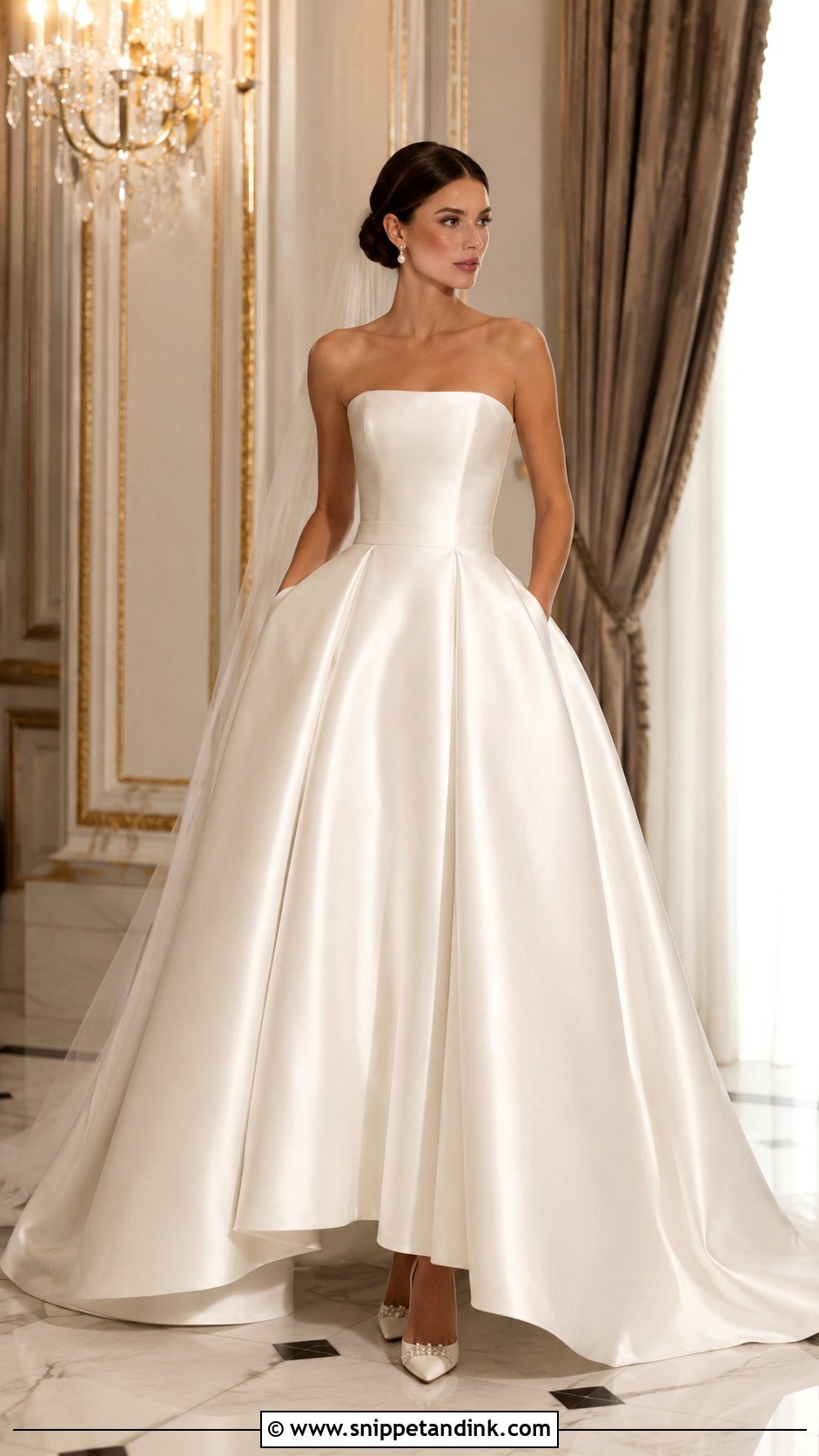
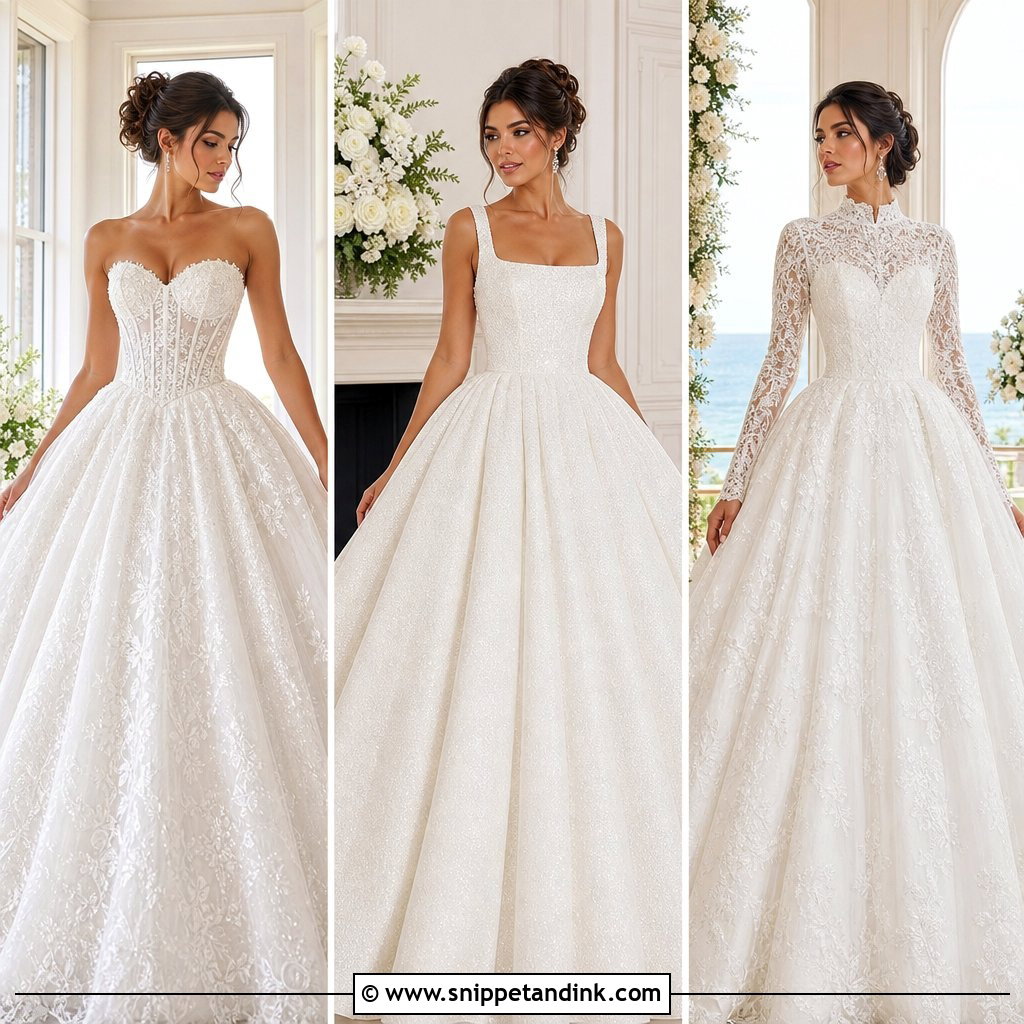
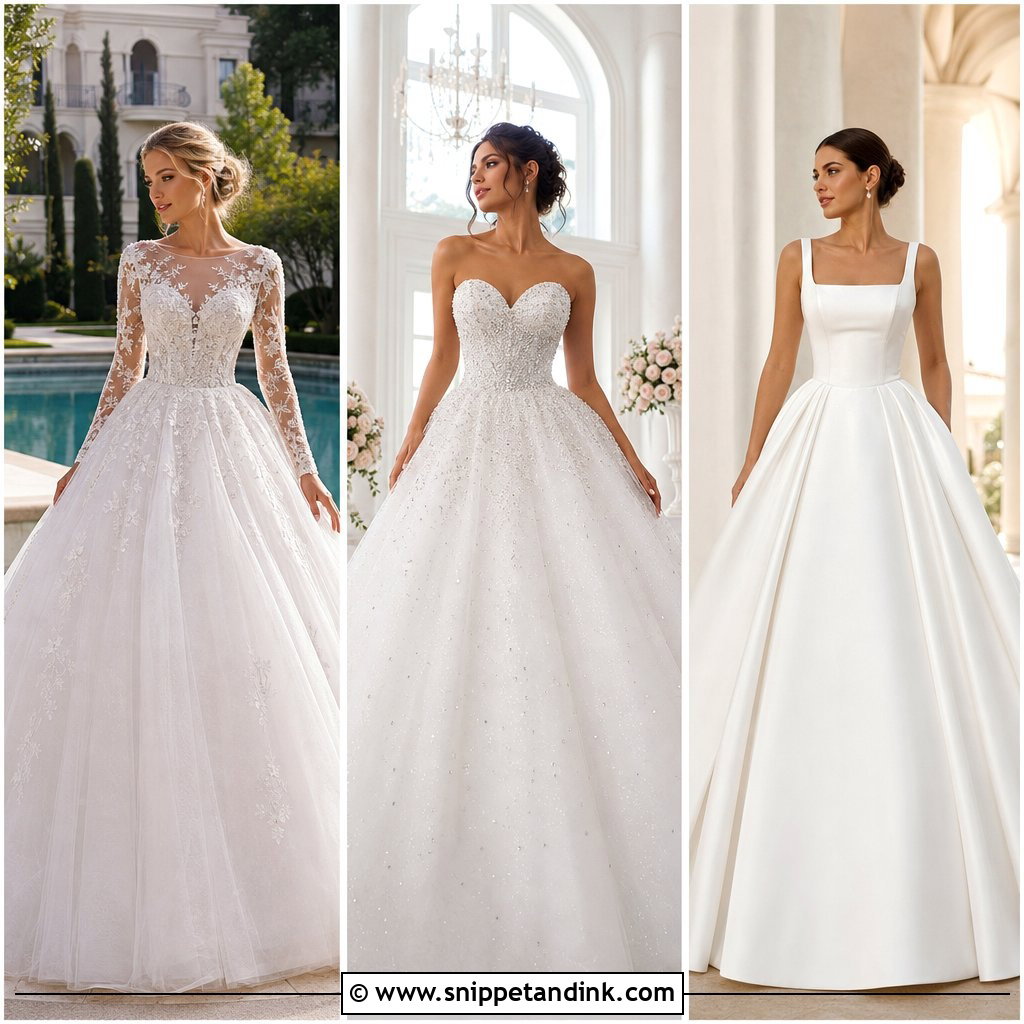
Strapless is the classic way to wear a big skirt, because nothing competes with the shape. What holds it up is boning and a snug fit at the ribcage, not the bust, so I check that a client can lift her arms and lean forward without the top edge gaping. Satin, mikado and organza hold a crisp line, while layered tulle gives a softer cloud. A sweetheart neckline reads romantic and a straight one reads modern. I’d keep the styling to a simple veil, pearl earrings and pointed heels, and I’d only suggest a subtle basque if you want more waist definition.
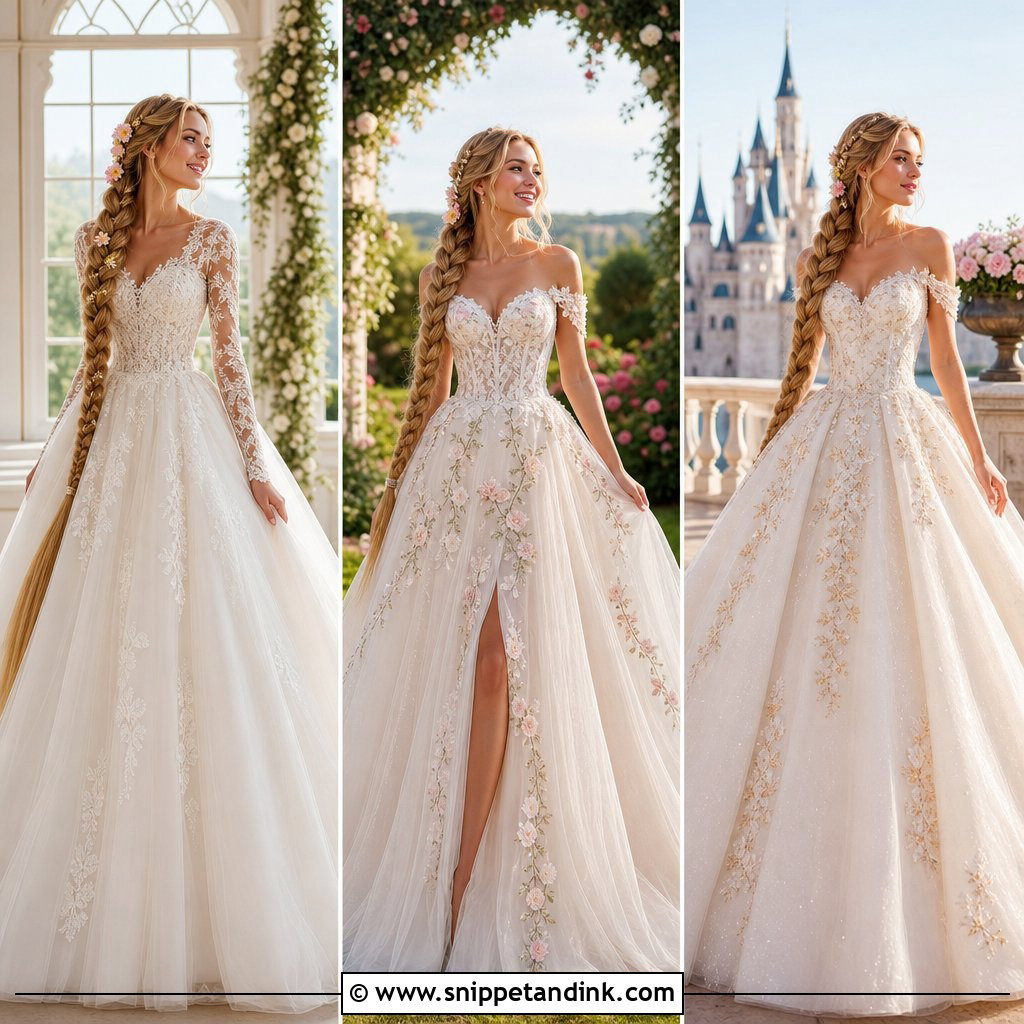
2. Off Shoulder Poofy Wedding Dress
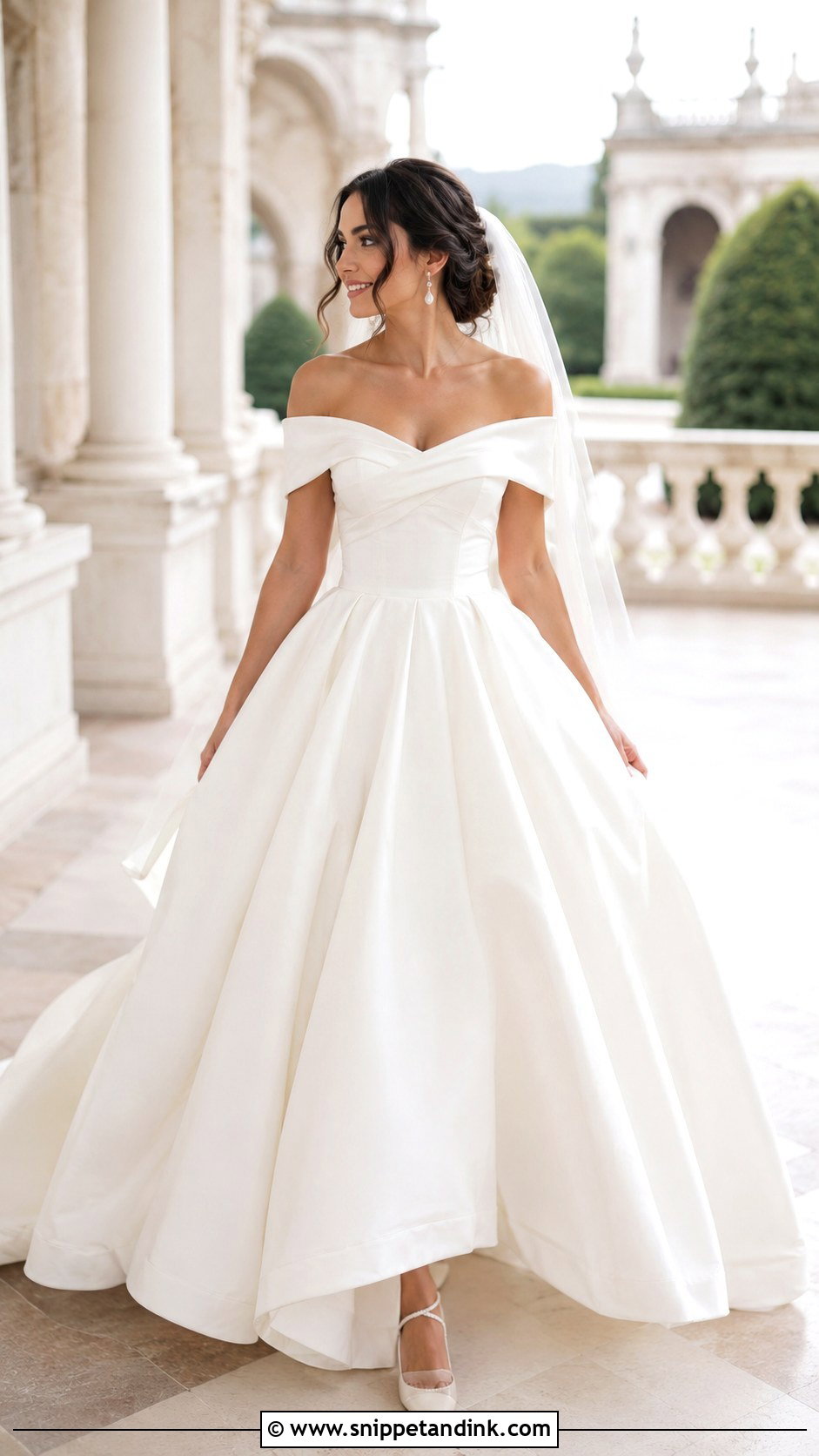
An off shoulder neckline frames the collarbone so well that you barely need jewelry. The trade-off is movement: with the fabric sitting on your upper arms, you can’t raise them very high, which matters for hugging and for the first dance. At fittings I ask brides to reach up as if hugging a tall relative. If the bands ride up, we either tighten them or add a hidden strap. A smooth updo, drop earrings and a mid-length veil keep the shoulders as the focus, and the skirt does the rest when you walk.
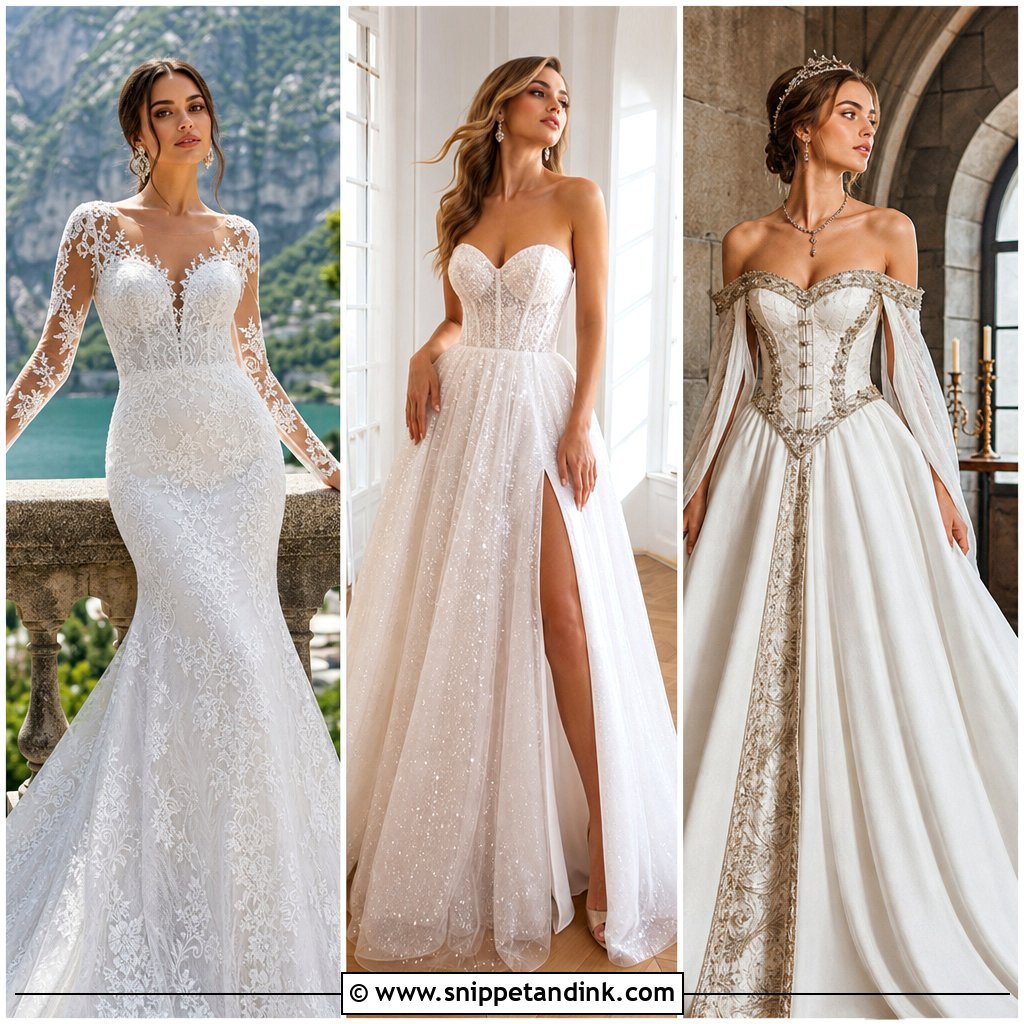
3. Corset Poofy Wedding Dress
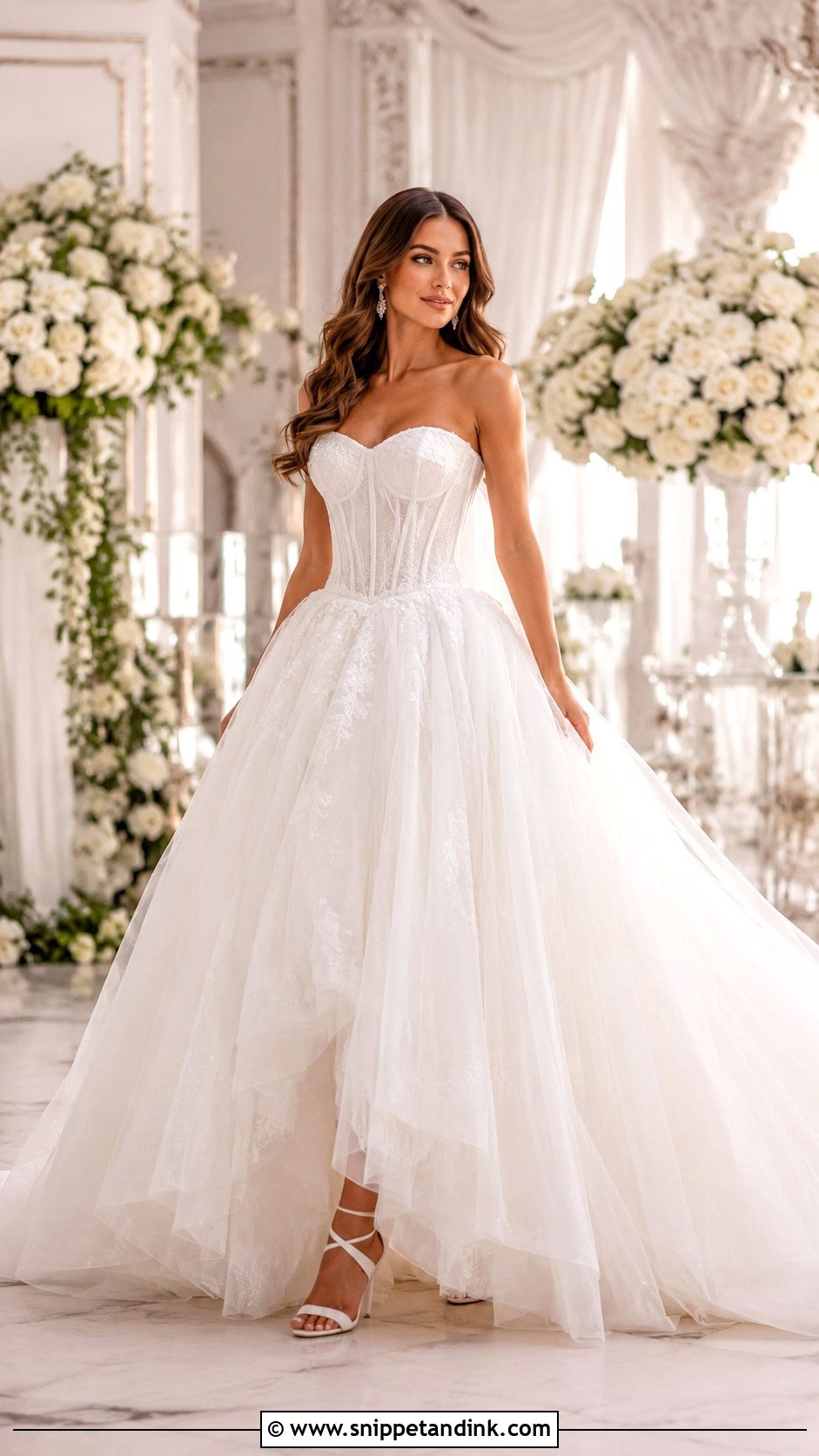
A corset bodice is the most dramatic way to set a small waist against a huge skirt. Exposed boning looks fashion-led; hidden corsetry gives a softer, traditional finish. The detail I care about most is the back: a lace-up back gives you an inch or so of adjustment on the day, which helps if you’ve been nervous and eating less, or bloated from travel. It should feel secure when you take a deep breath, never like it is stopping one. I’d set the veil comb behind the crown so the bodice shaping stays visible from the front.
4. Basque Waist Poofy Wedding Dress
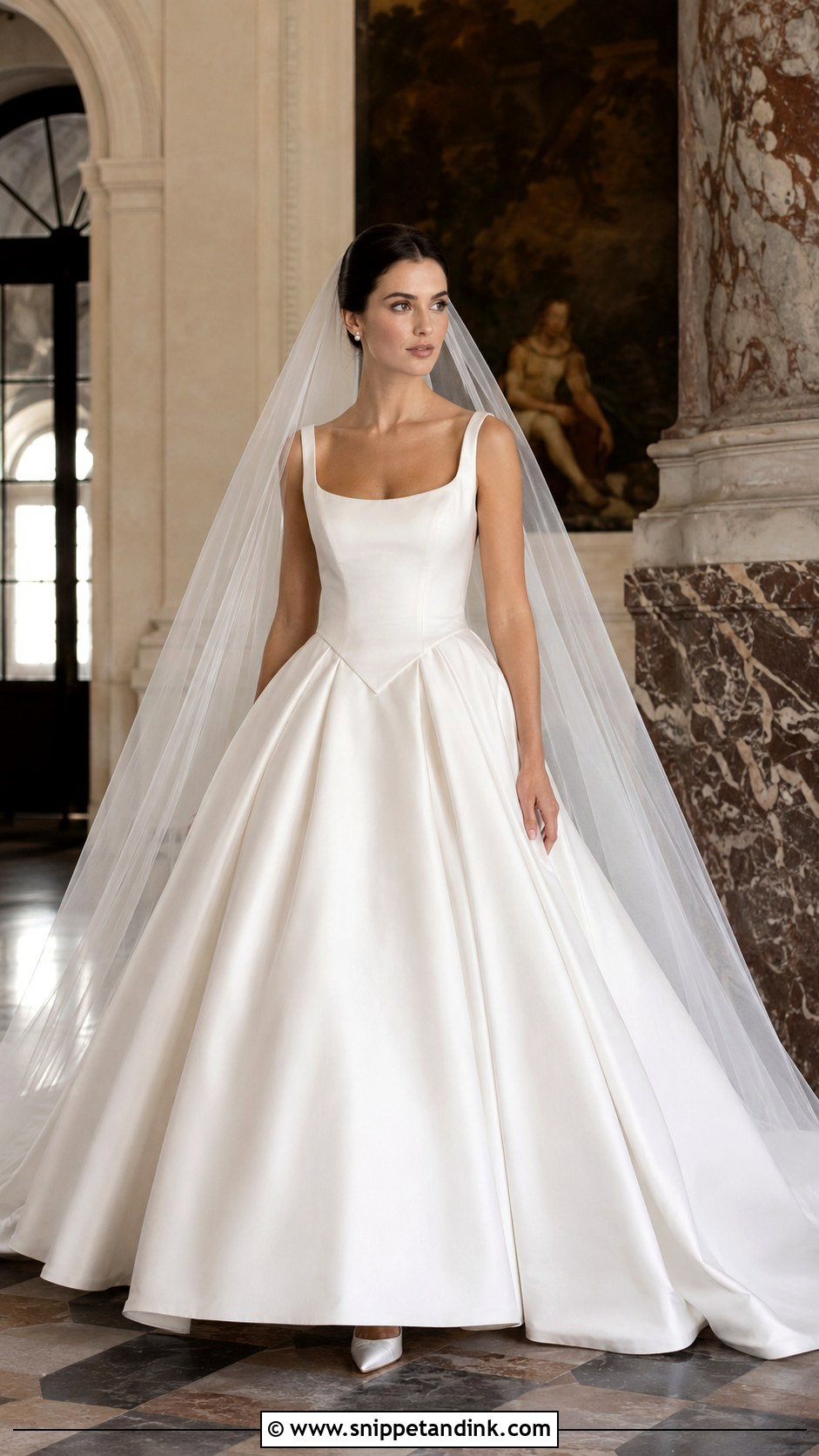
The basque waist poofy wedding dress has a waistline that dips into a point at the front, which lengthens the torso and makes the skirt look like it grows out of the bodice. It reads royal in satin and crisp in mikado. Because that point is the whole story, I never add a belt or sash here; it chops the line in half. One fitting note: the point needs to sit at your true waist or slightly below, so short-waisted brides often need it raised a touch during alterations. Pearl studs and a cathedral veil are all I’d add.
5. Drop Waist Poofy Wedding Dress
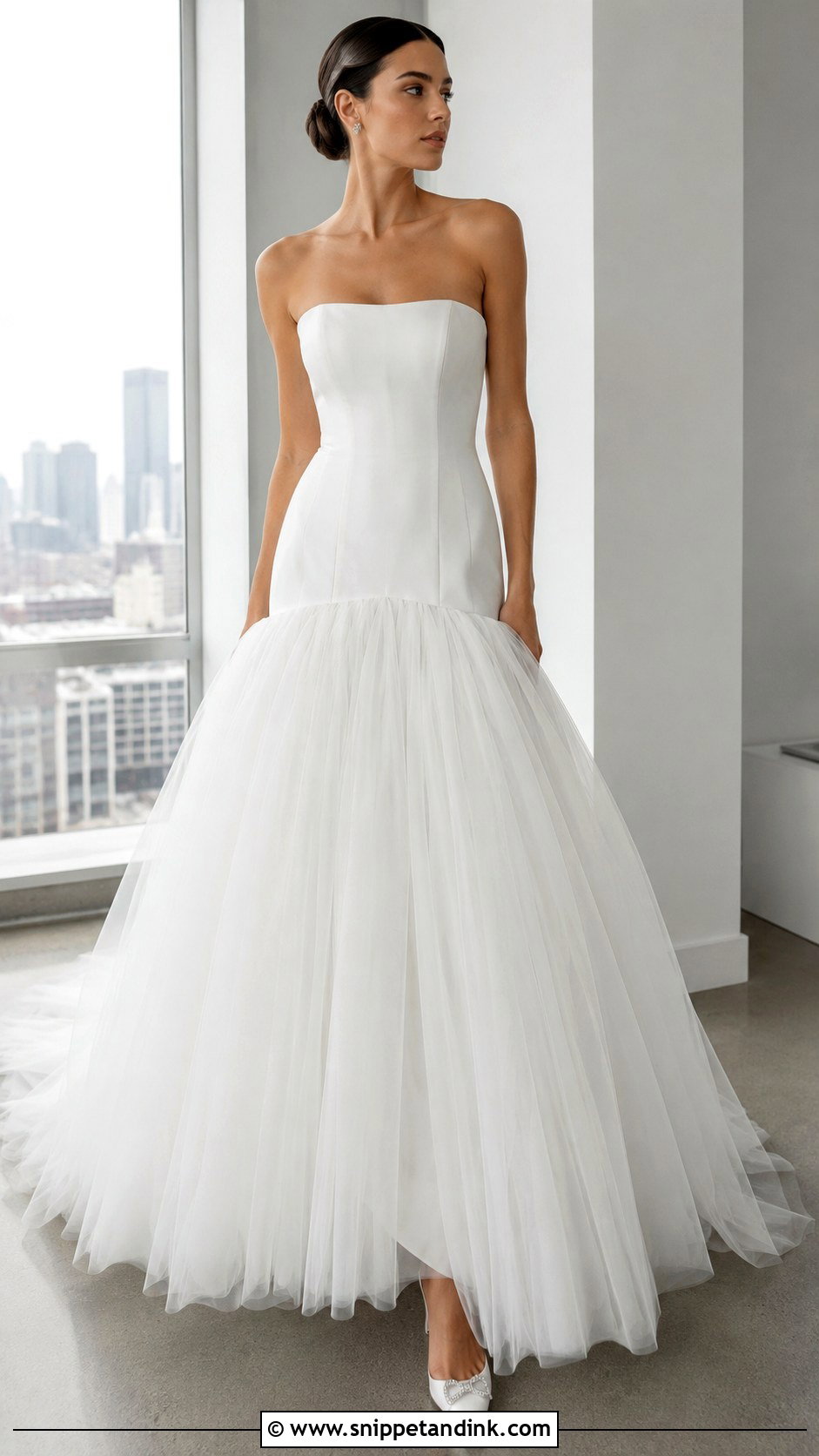
A drop waist poofy wedding dress keeps the bodice fitted down past the natural waist, over the hips, before the skirt opens. It’s one of my favorites for tall brides with a long torso. I’m more careful with petite brides, because a low seam can shorten the legs visually unless the heel and hem are planned around it. Sitting is the test: the long fitted section has to let you sit without the boning digging into your hips. Keep the hair sleek and low and the earrings small; the shape is already doing plenty.
6. Satin Poofy Wedding Dress
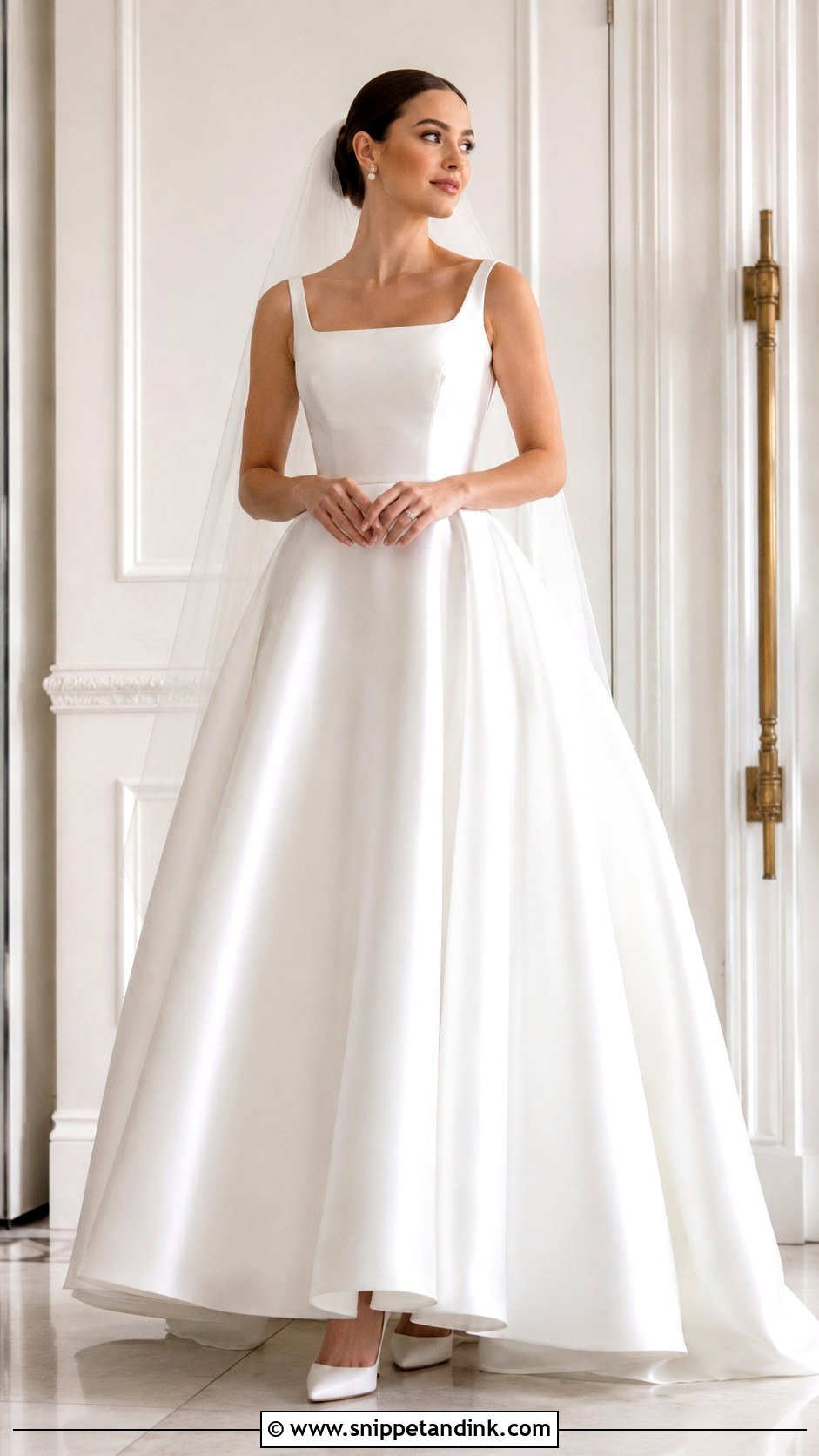
Satin gives a full skirt a clean, sculpted surface with a soft sheen instead of sparkle. It is also the least forgiving fabric I steam. Every seated moment leaves a crease across the lap, so I schedule a final steam right before the ceremony and tell brides to stand in the car if the ride is short. Strapless, square and off shoulder bodices all suit satin. Because the fabric already shines, I keep accessories quiet: pearl earrings, a plain veil and satin pumps in the same shade of white.
7. Tulle Poofy Wedding Dress
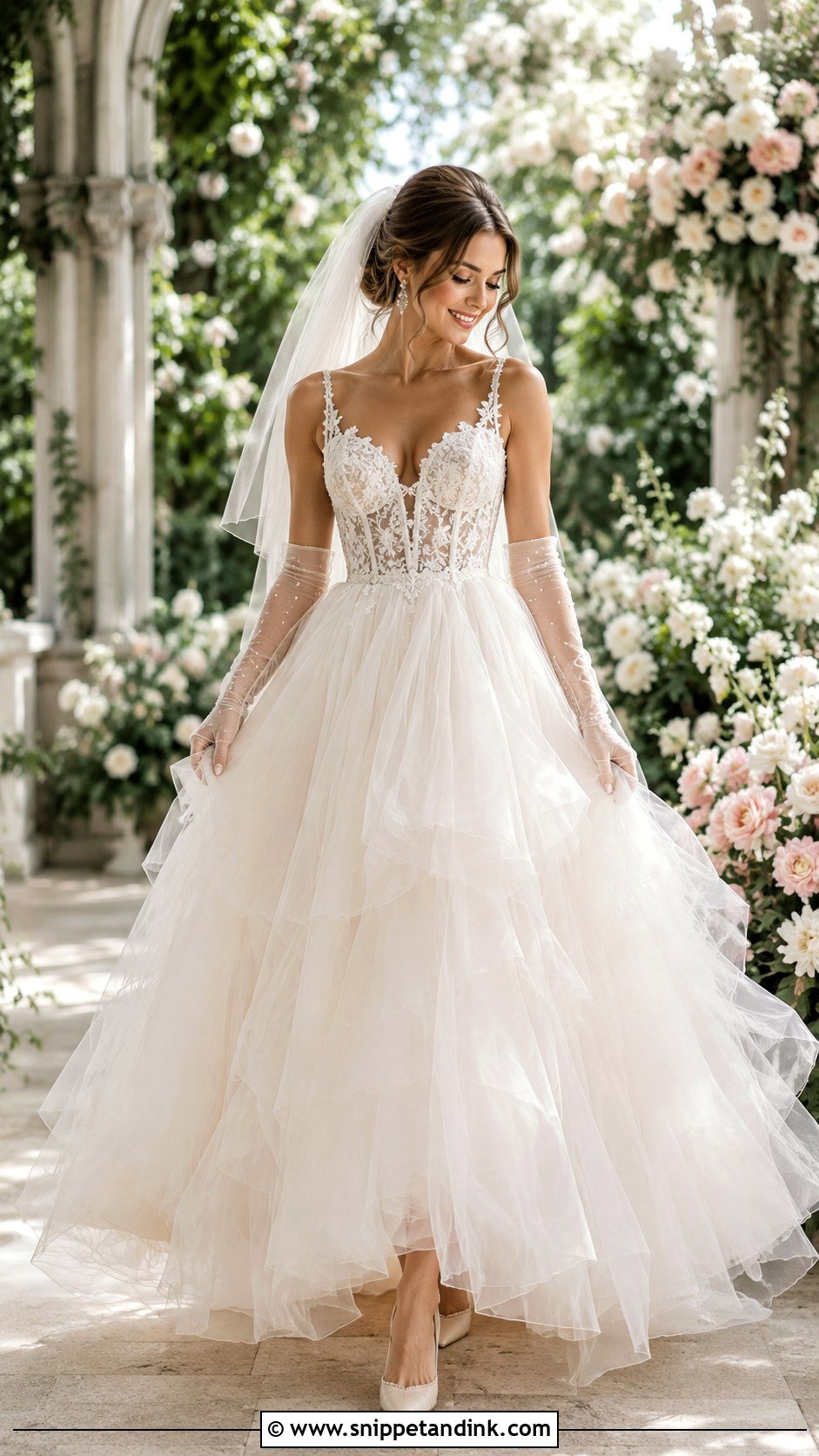
Tulle gives the airy, cloud-like volume most brides picture when they think of a fairytale gown, and it is lighter to carry than structured satin. Fine bridal tulle drapes softly; stiffer net holds a fuller shape. If you want more size than the layers give you, ask about a crinoline or petticoat. My warning with tulle is snagging. Bracelets with prongs, engagement rings with raised settings and even rough brick walls can pull a thread, so I check the bride’s jewelry against the skirt during the final fitting.
8. Organza Poofy Wedding Dress
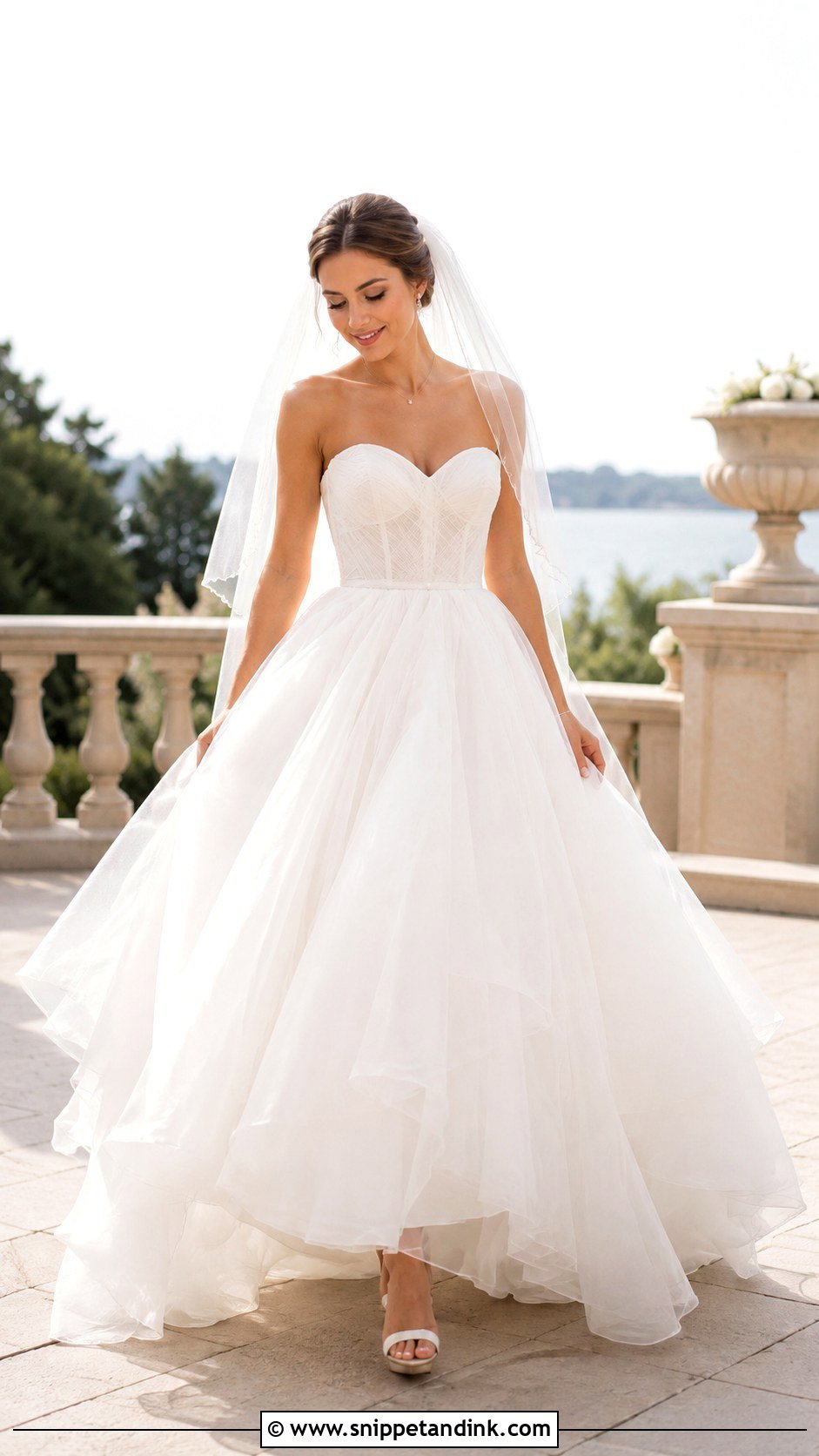
Organza sits between tulle and satin. It holds a shape better than soft tulle but feels lighter than heavy satin, so you get volume that still moves in a breeze. That makes it my first suggestion for warm spring and summer weddings outdoors. It does wrinkle, though less obviously than satin, and the crisp layers can rustle when you walk. Pair it with a fitted bodice, minimal jewelry and a fingertip veil, and check that open-toe heels are allowed on the venue’s grass or terrace.
9. Lace Poofy Wedding Dress
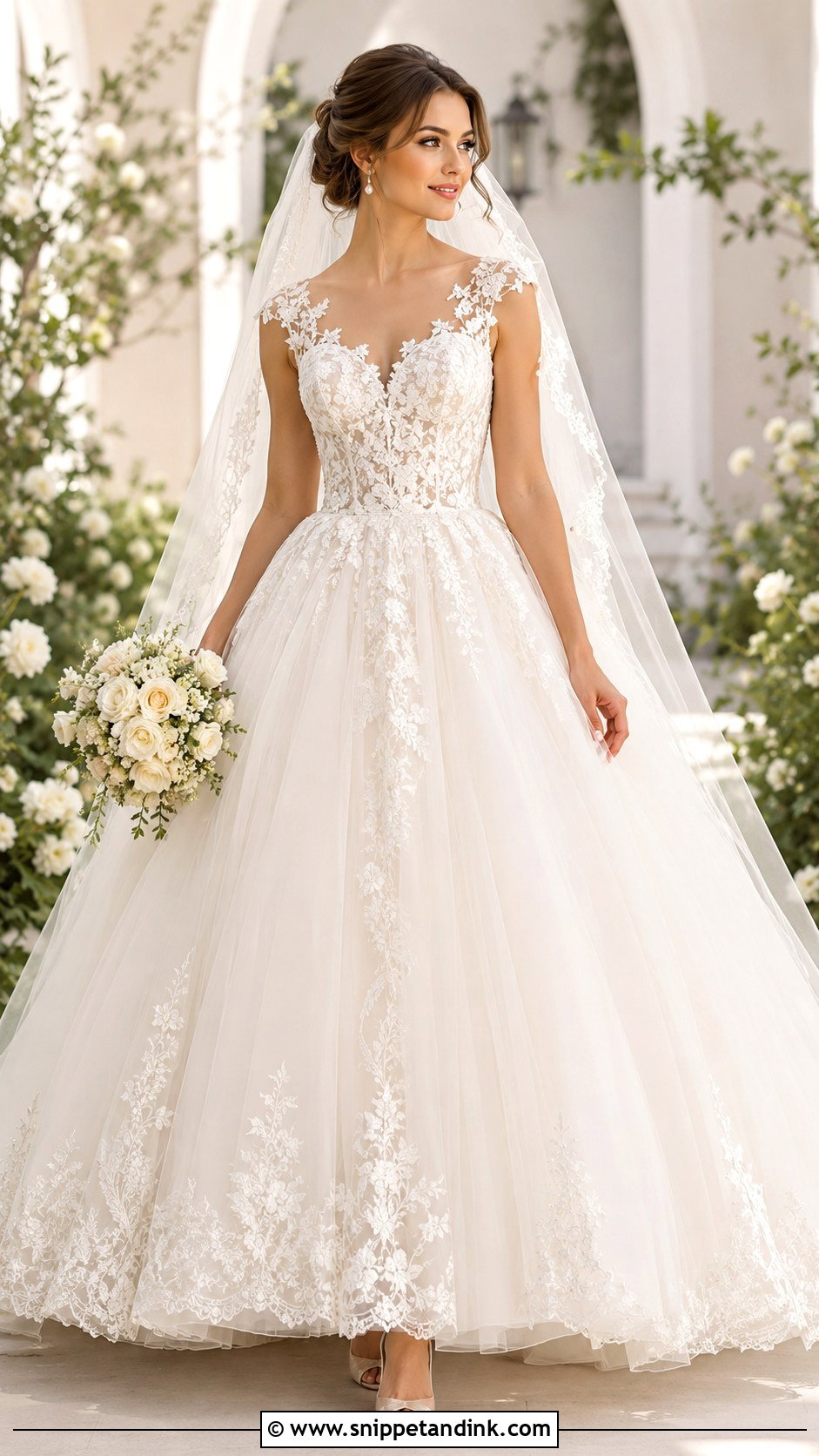
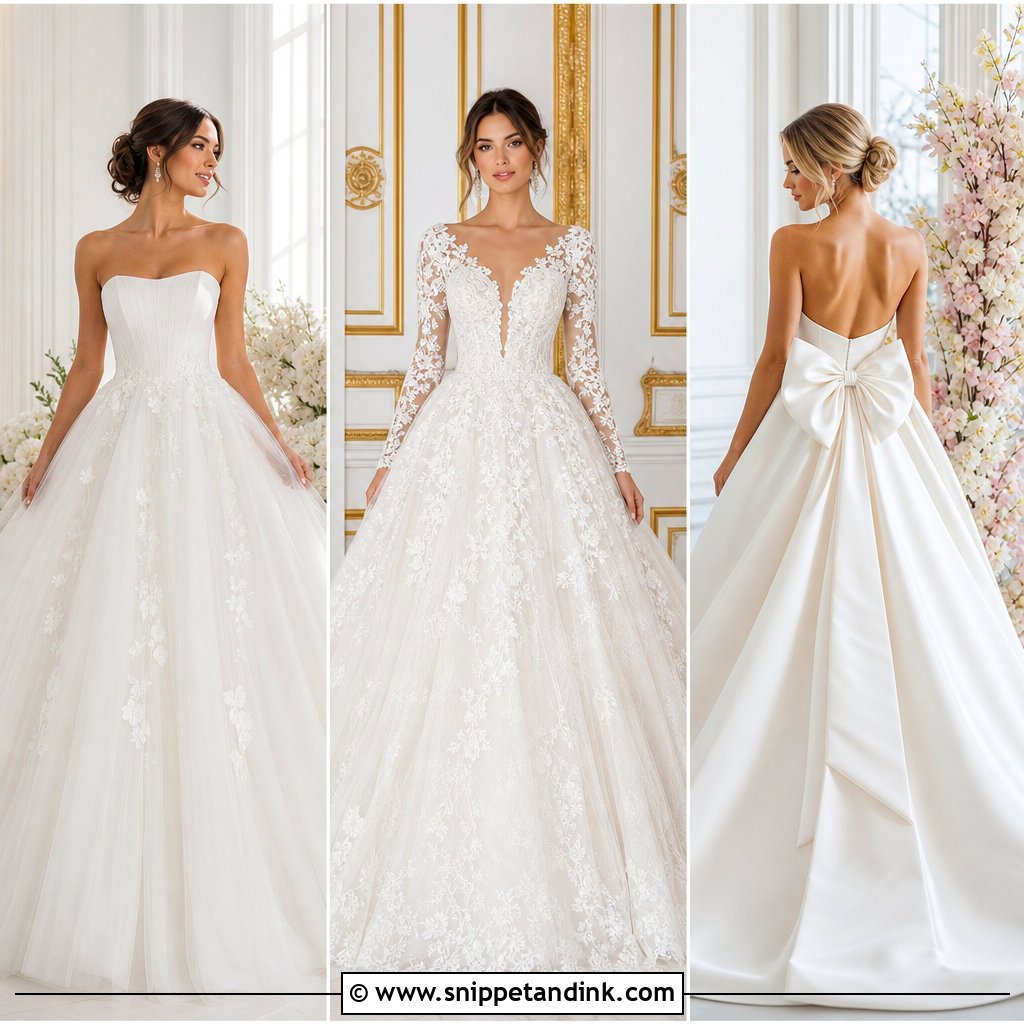
Lace brings texture to a big shape, either over the whole gown, on the bodice alone, or trailing down the skirt as appliqués. Floral lace over tulle feels soft; lace over satin or a firm underskirt feels formal. My rule is one lace pattern per look. A lace-edged veil only works when the lace matches the dress exactly; two different motifs side by side look busy in close-up photos. Lace hems also pick up dirt fast on outdoor ground, so I’d plan the hem length with your shoes on and a little off the floor.
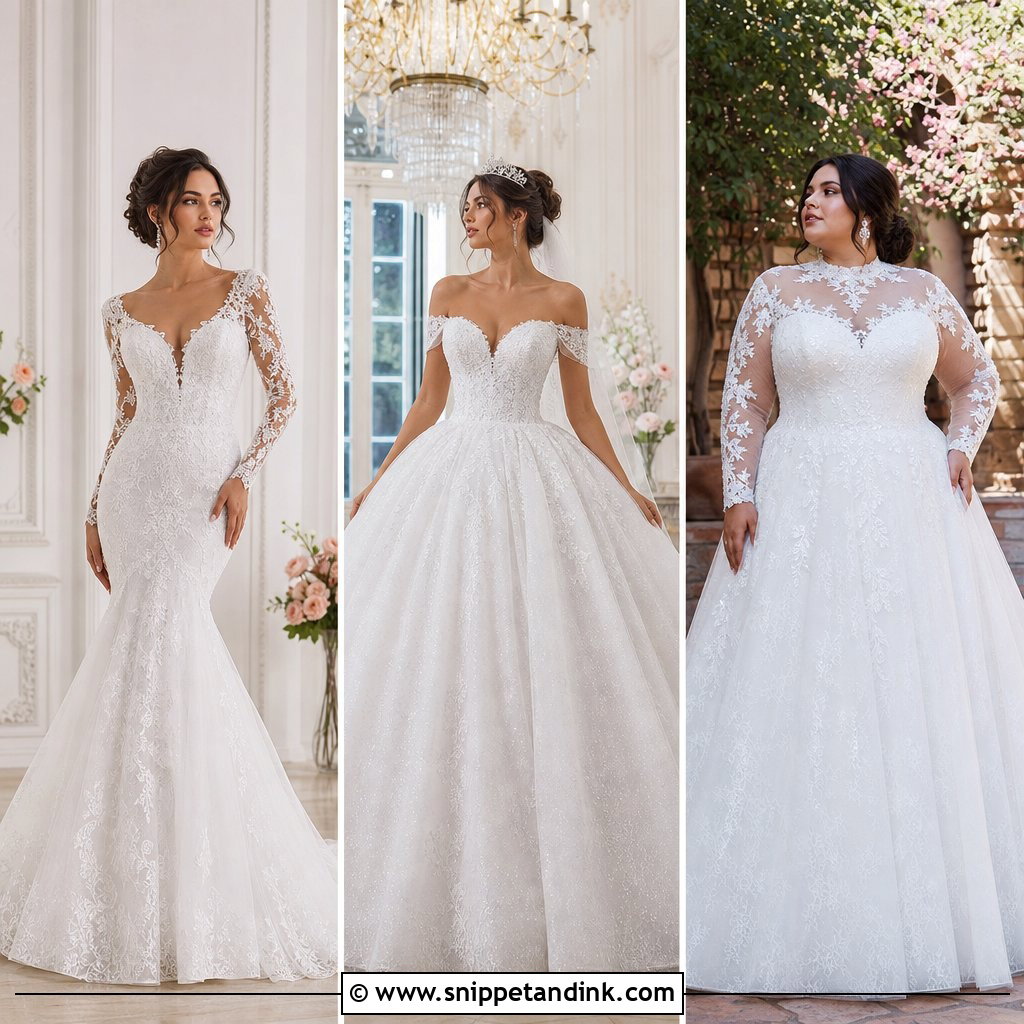
10. Long Sleeve Poofy Wedding Dress
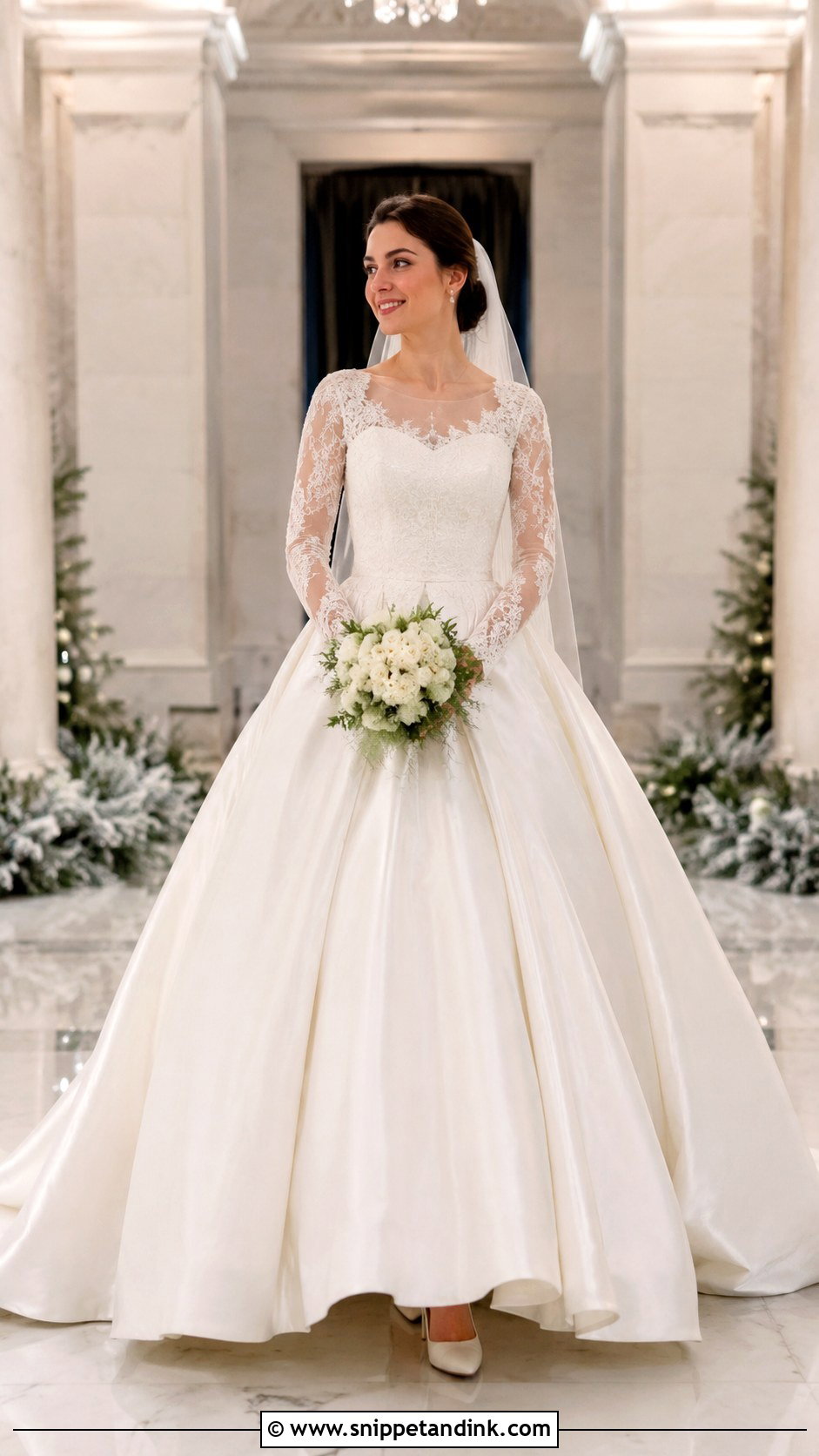
Long sleeves plus a full skirt is a lot of fabric, and that is the point. Sheer lace sleeves keep it light; satin sleeves look polished. I always have brides raise their arms and hug during the fitting, because a sleeve set too tight in the armhole will pull the whole bodice up. They’re practical for fall and winter, and lightweight versions work for cool spring venues. A clean neckline and small earrings stop the look from getting heavy.
11. Puff Sleeve Poofy Wedding Dress
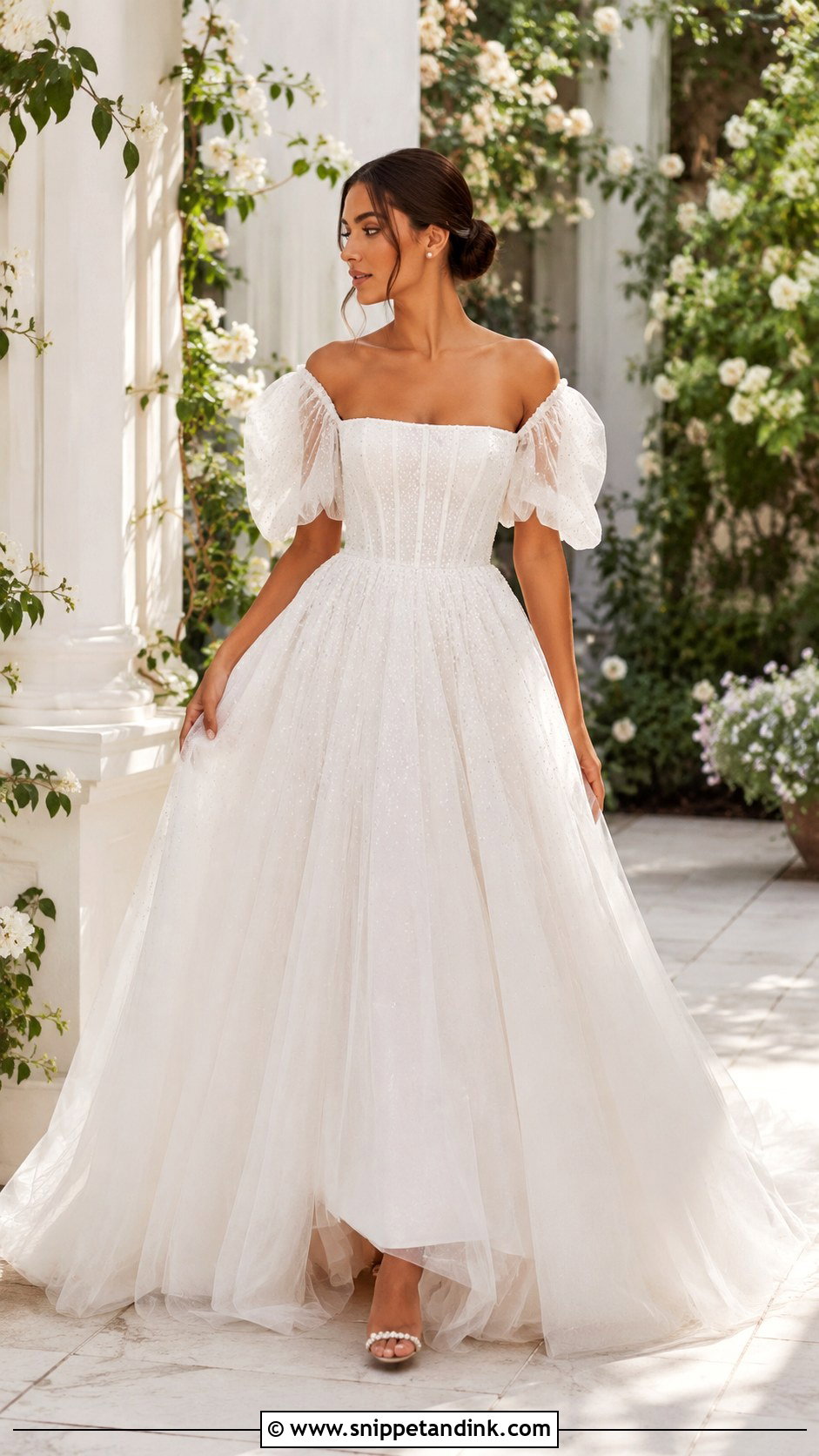
Puff sleeves are where I see brides hesitate the most, and usually because the sample was huge. Controlled volume, shaped with an inner tulle lining, looks modern. Oversized sleeves can tip into costume and crush flat under a coat or in a car. Detachable sleeves solve that: wear them for the ceremony and take them off for dancing. A square neckline or simple corset top balances the drama, and I’d stick to a low bun and pearl studs so the shoulders stay the feature.
12. Square Neck Poofy Wedding Dress
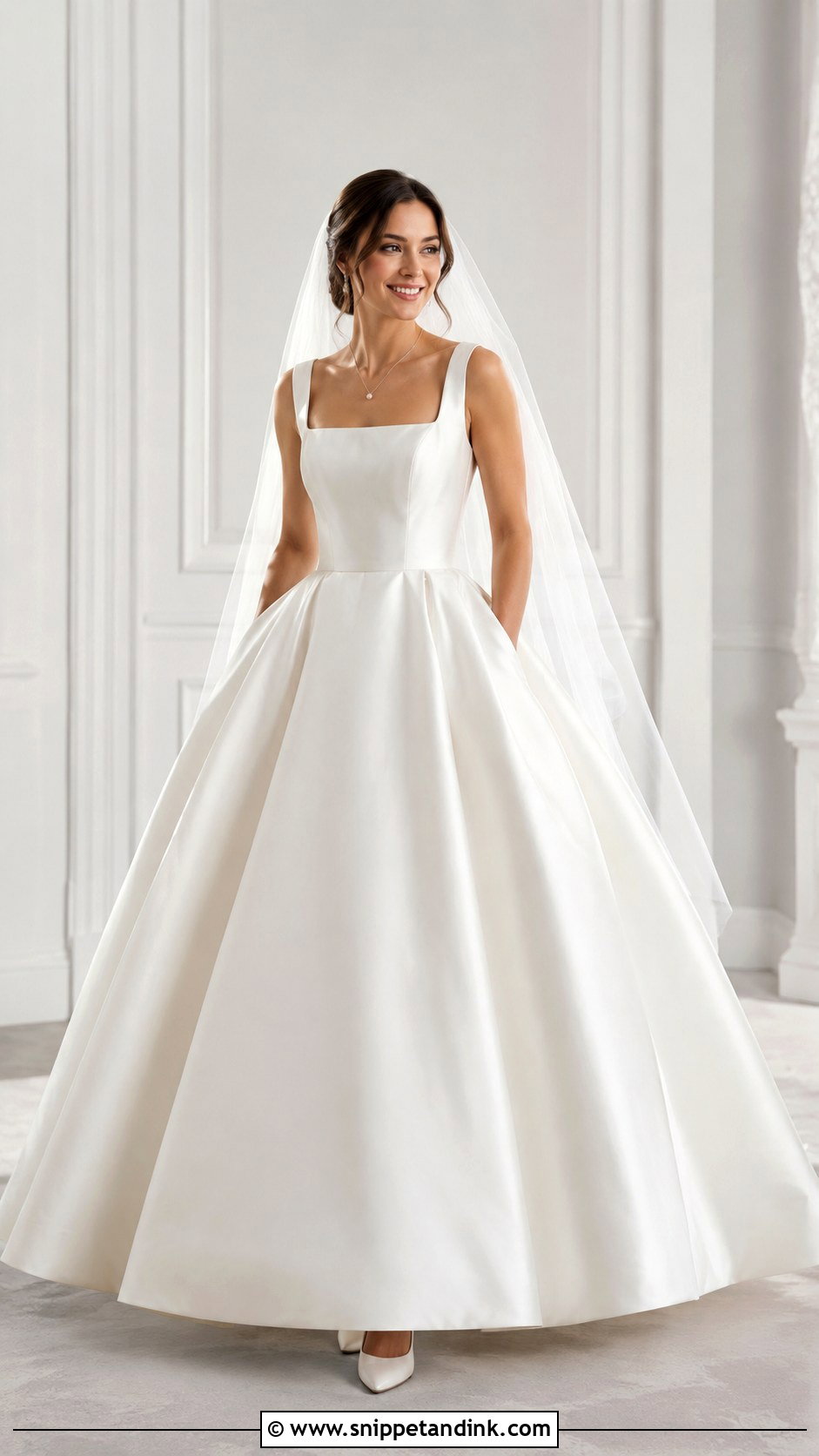
Square necks are one of the most wearable necklines I fit. They open the chest without plunging and feel secure across many bust sizes, because the straight edge and straps share the support. Satin keeps it classic, lace softens it, tulle makes it light. A fine necklace can sit inside the square, but earrings alone often look cleaner. Closed-toe heels and a smooth veil finish it.
13. High Neck Poofy Wedding Dress
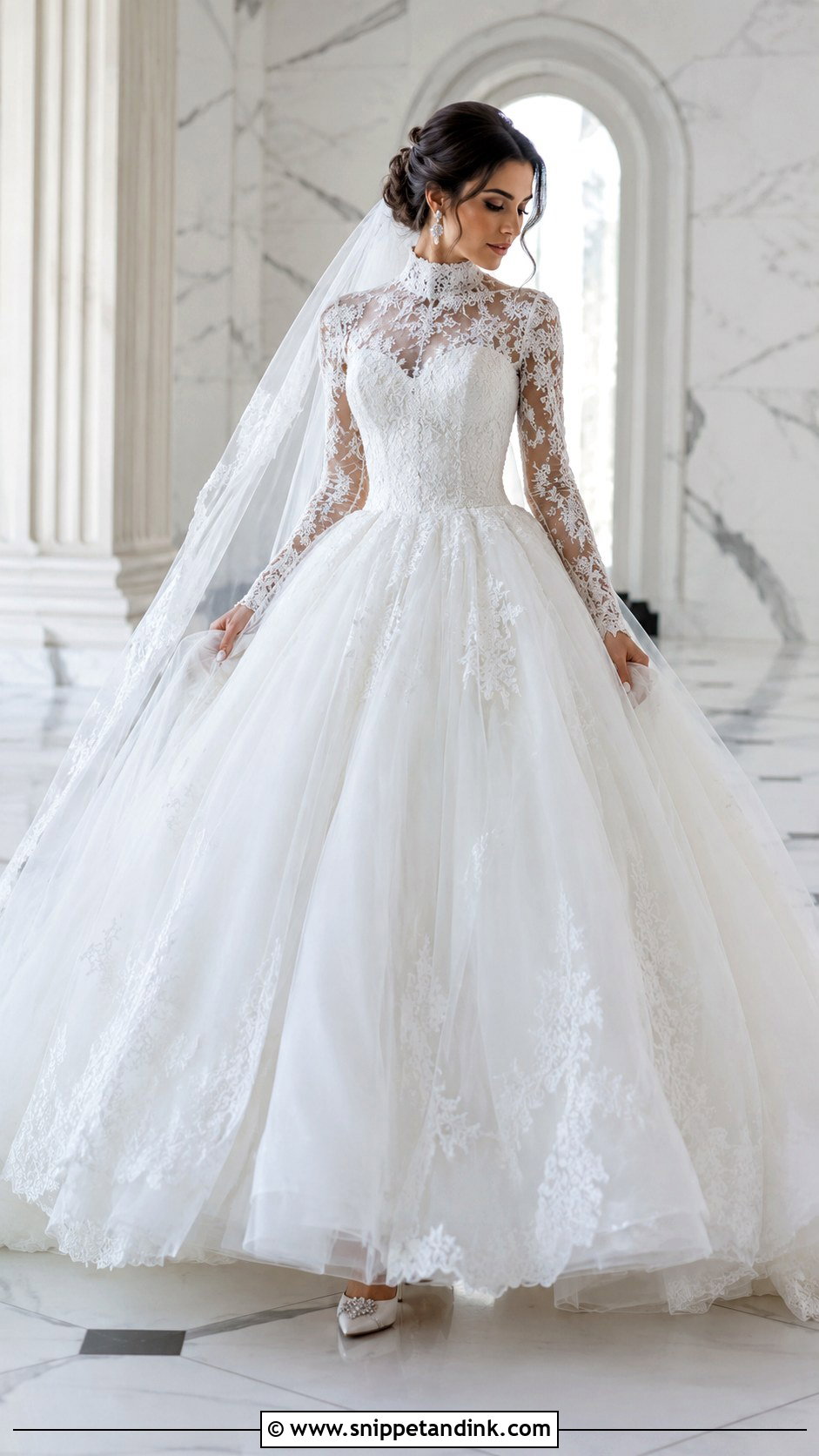
A high neck works best in lace, illusion mesh or soft organza, which keep the neckline from feeling heavy against the face. I always pair it with an updo so the collar detail shows, and I skip the necklace entirely. The thing to check is heat. High necks on a full gown get warm, so for a summer wedding I’d choose a sheer fabric at the neck rather than lined satin. A long veil adds drama without hiding the bodice.
14. V Neck Poofy Wedding Dress
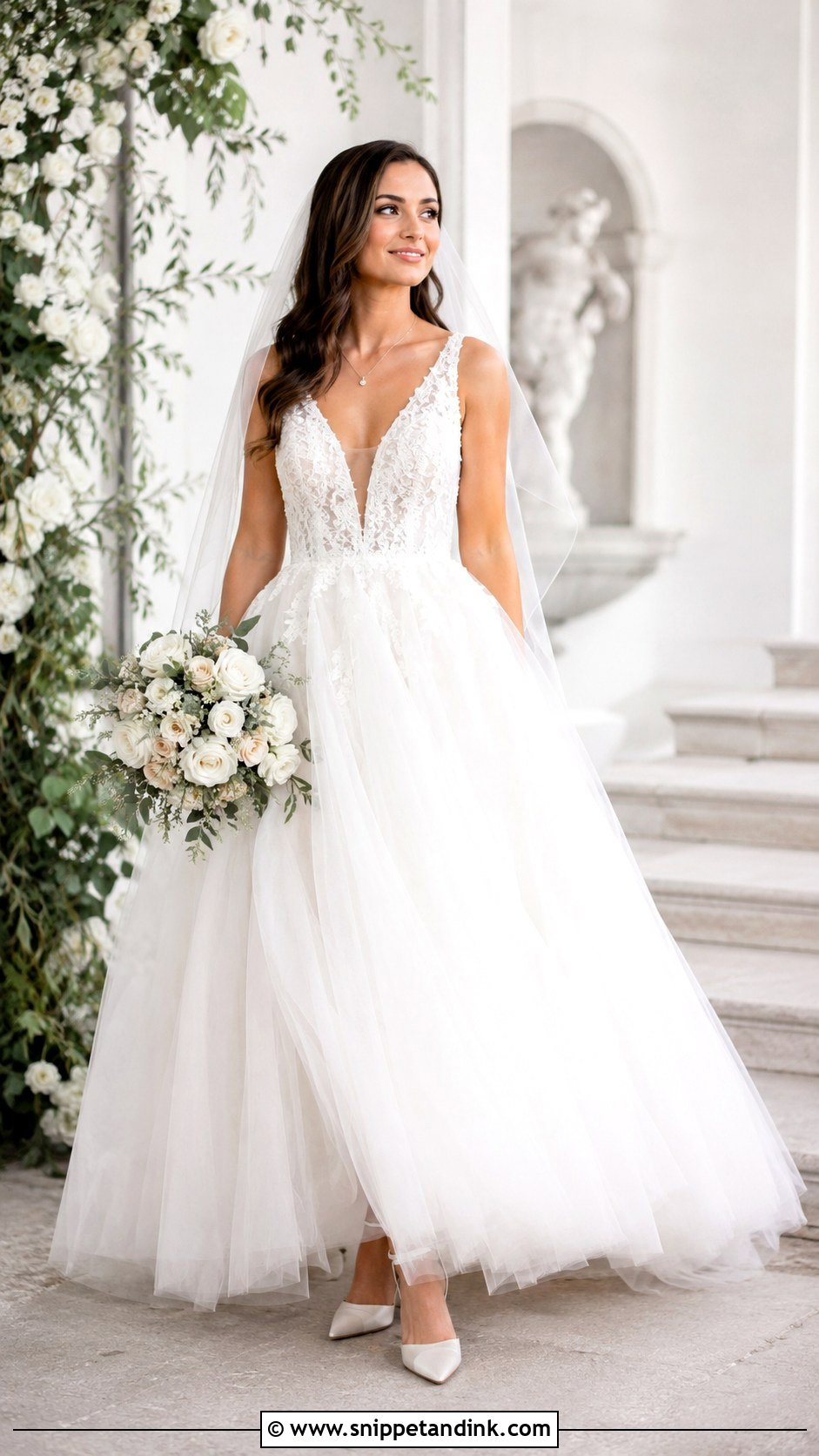
A V neck draws the eye up and down, which balances a very wide skirt nicely. A soft plunge looks modern; a modest V looks classic. The deeper it goes, the more the bodice structure matters, so I look for boning and a firm mesh panel or strong shaping inside the cups. Fashion tape is a backup, not a plan. A slim pendant and soft waves work here; I’d choose a plain veil if the bodice is beaded or lace.
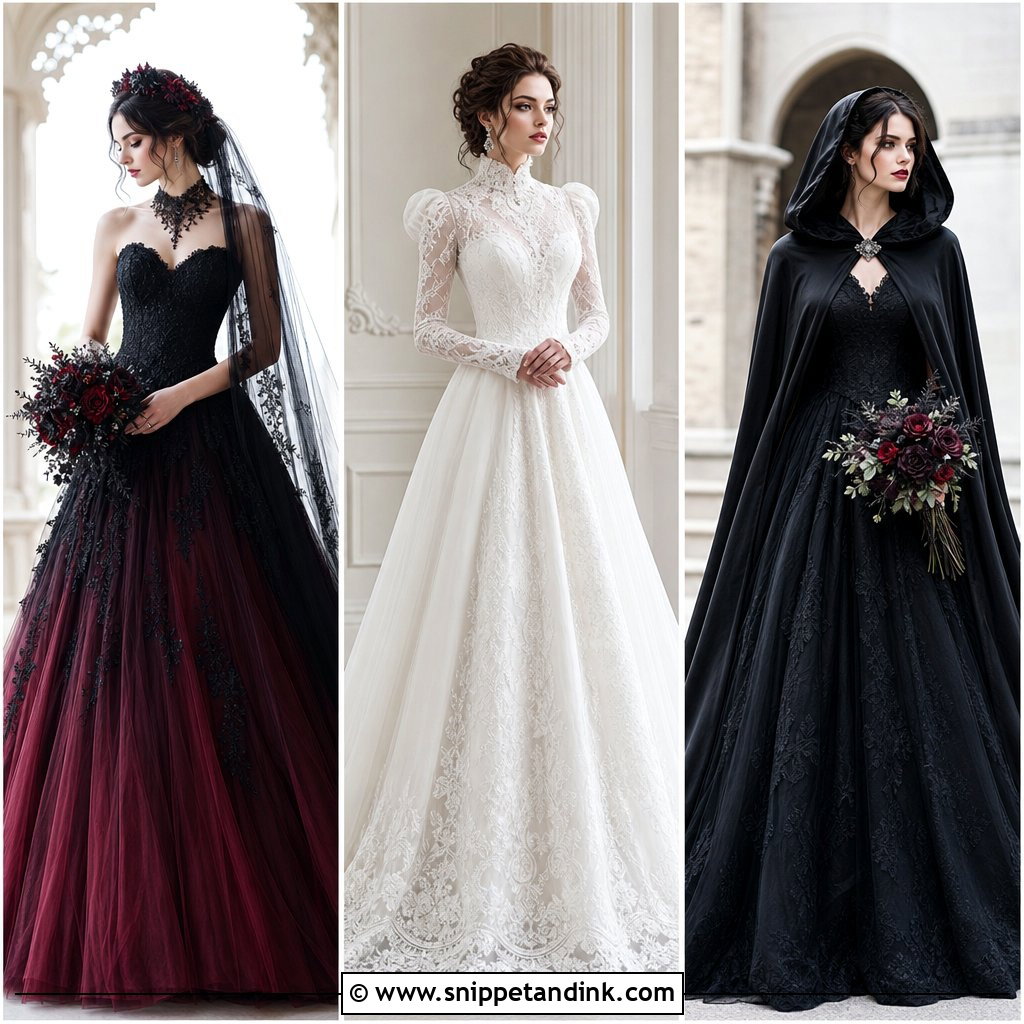
15. Beaded Poofy Wedding Dress
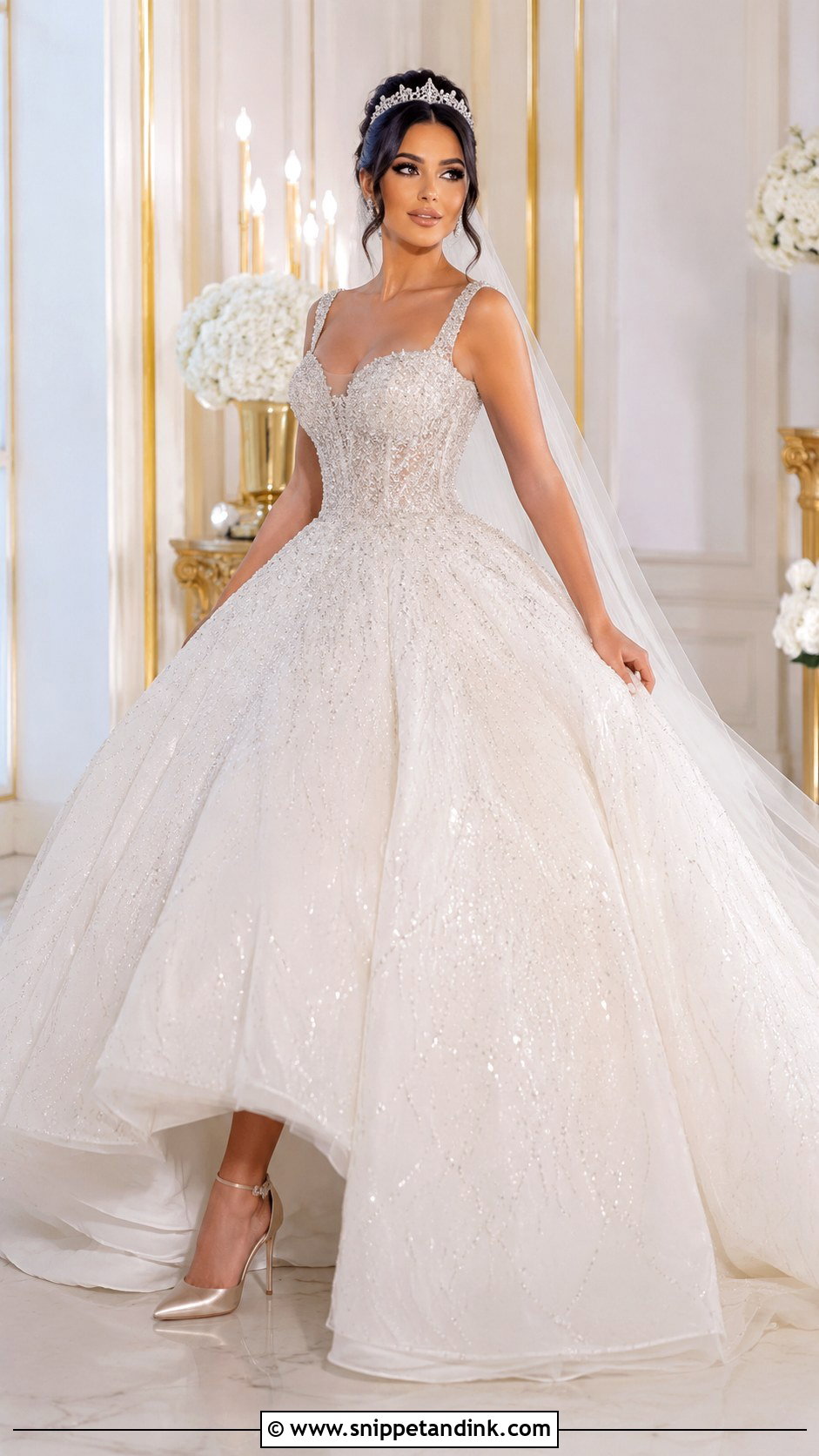
Beading brings sparkle to a traditional silhouette. It might cover the bodice, scatter through the skirt or outline lace appliqués. I match the amount to the light: heavy beading glows under evening candles and chandeliers, while lighter scatter looks better in daylight, where dense beading can look flat or glare in photos. Beading also adds real weight, so I’d try the gown on for longer than ten minutes before committing. Crystal studs and a smooth veil are enough; anything more and the dress competes with itself.
16. Pearl Poofy Wedding Dress
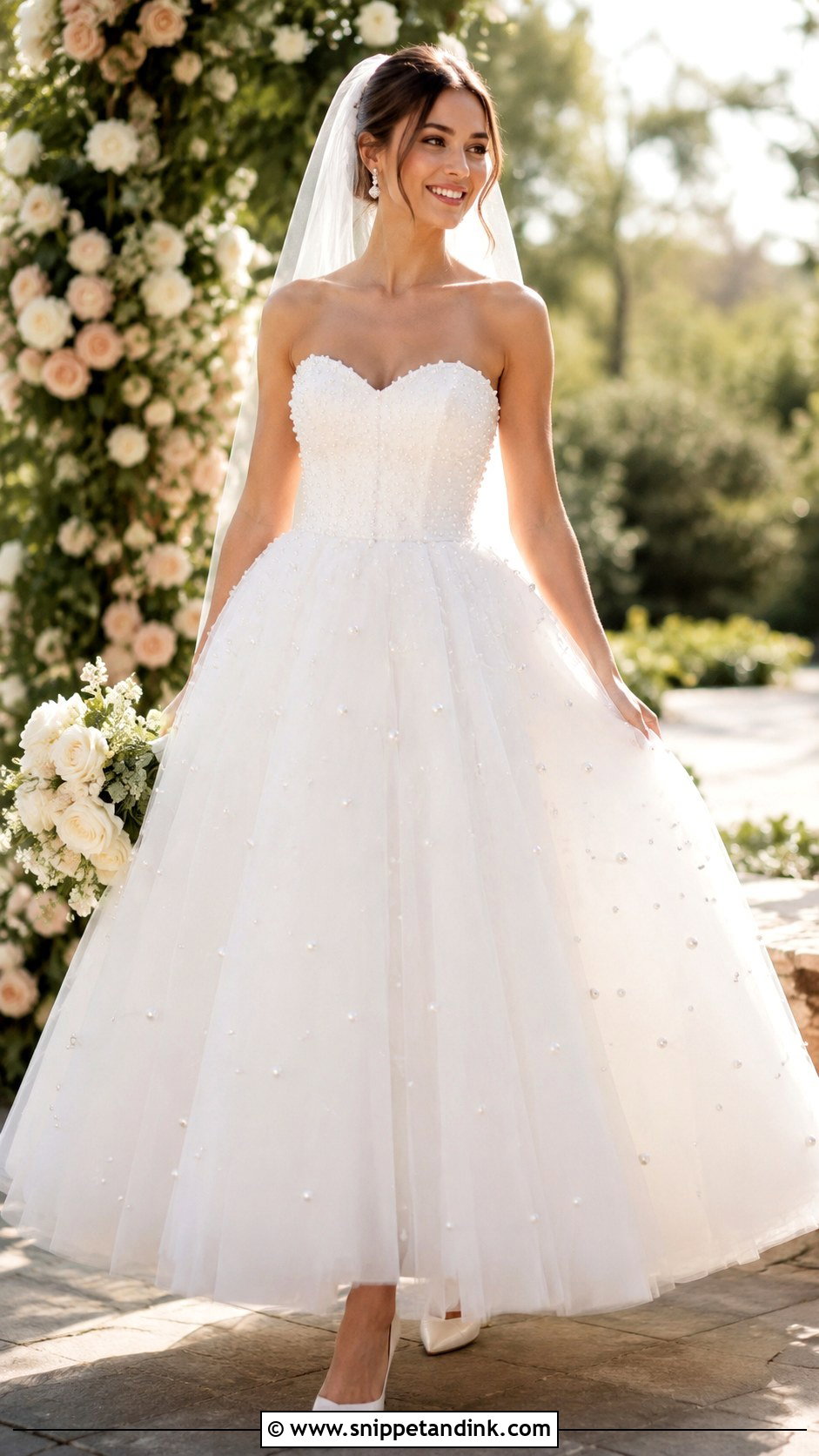
Pearls give texture without the sharp sparkle of crystals. They may be scattered across tulle, lined along a bodice or used as trim on sleeves. My first check is how they’re attached: hand-sewn pearls stay put, while glued ones can pop off during a long day of hugging. Pearl earrings are a natural pairing, but I’d stop there. A pearl necklace, pearl veil and pearl dress together start to look like a theme rather than a choice.
17. Floral Applique Poofy Wedding Dress
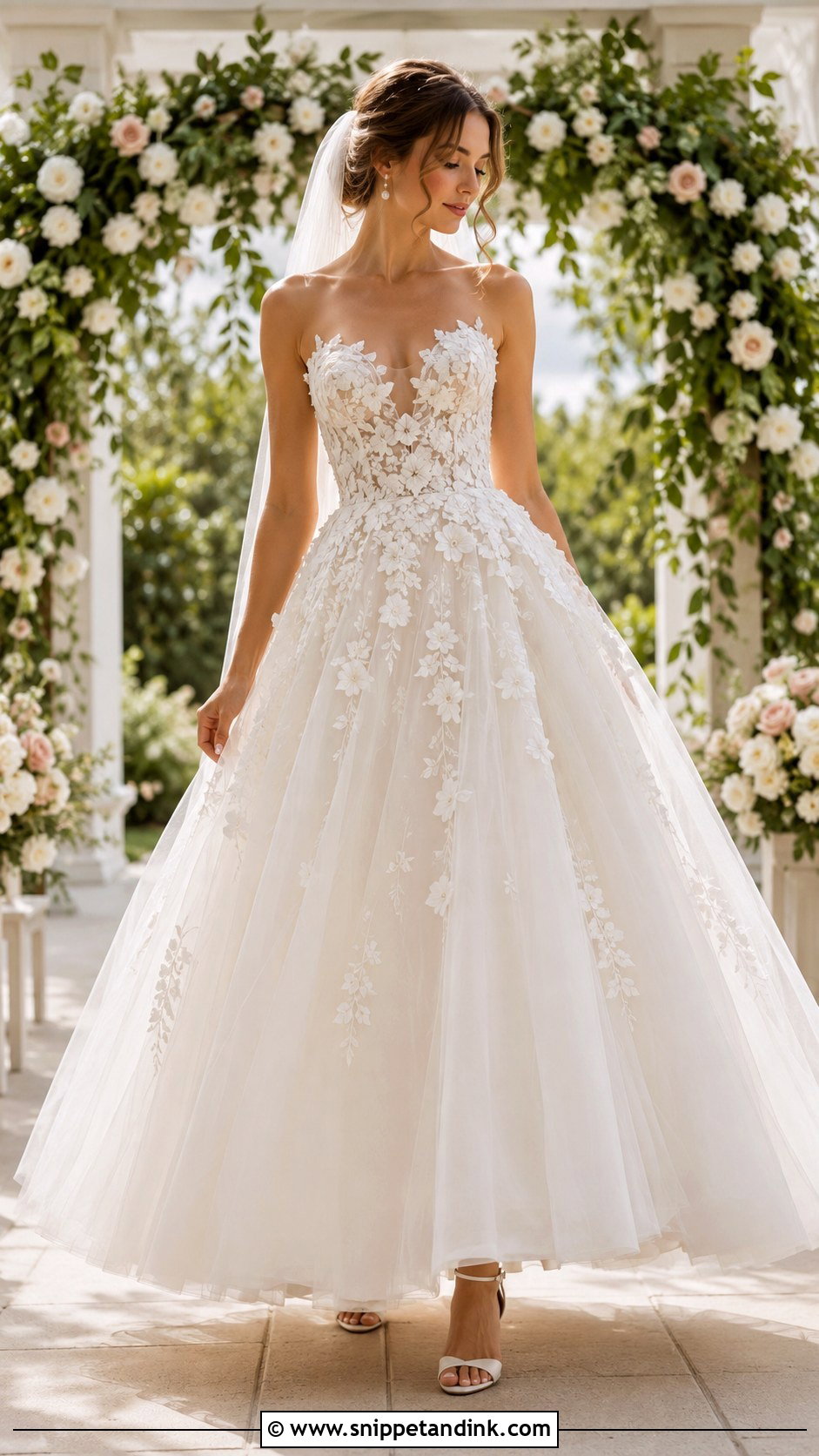
Floral appliqués look most natural when they start dense at the bodice and thin out as they travel down the skirt, so the gown seems to move even when you stand still. Some are flat and subtle, others are three-dimensional. With raised flowers I’d keep the veil plain; heavy appliqué and a lace veil fight each other. If the flowers are delicate, a small floral comb in the hair can echo them without matching too literally. Raised petals do catch on things, so I check them after the photos.
18. Embroidered Poofy Wedding Dress
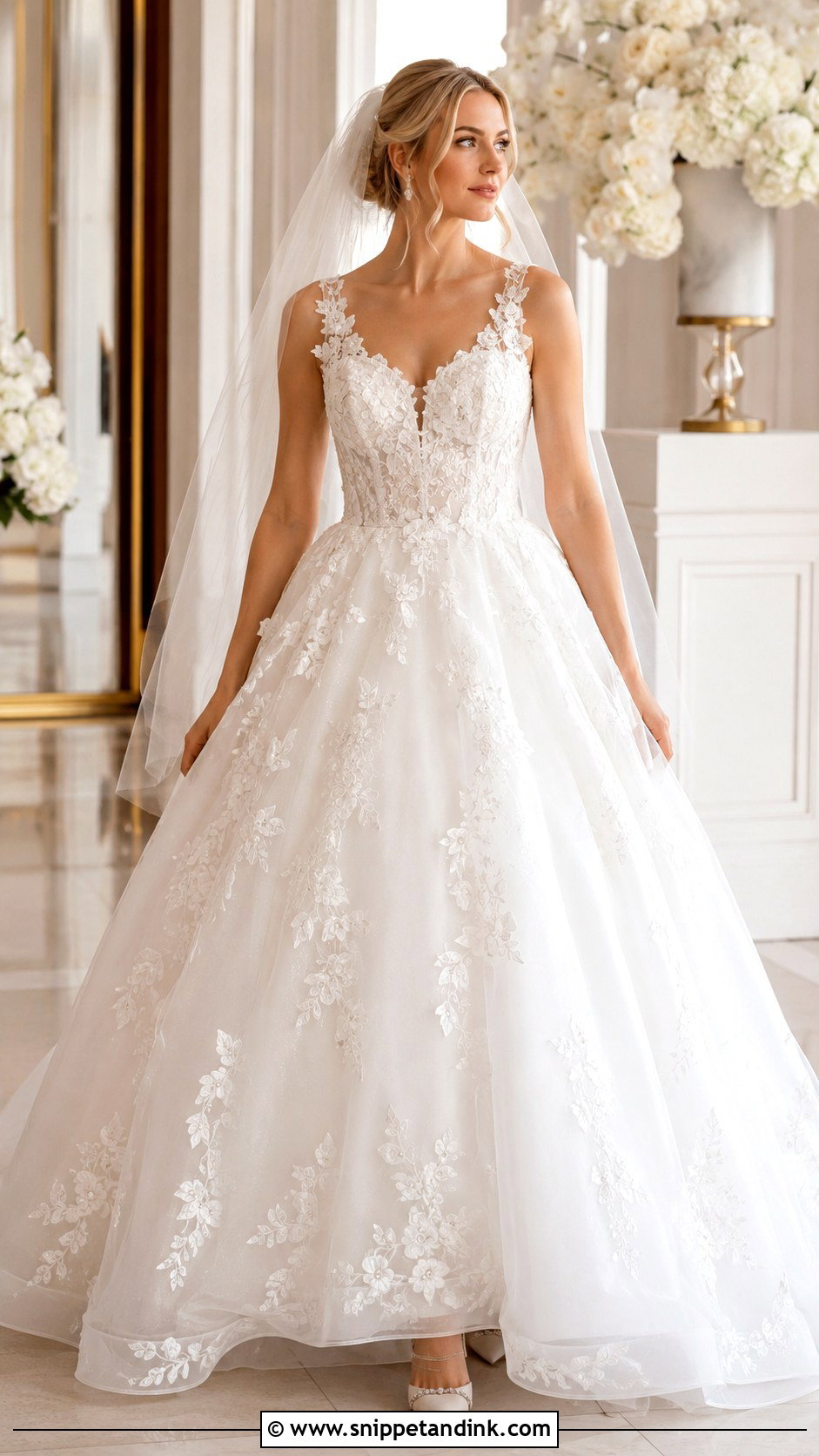
Embroidery feels more handmade than lace because the pattern is stitched straight onto the tulle, organza or satin. Florals, vines and scrollwork in tonal thread give depth that rewards a close look. I let the scale of the embroidery decide the styling. Fine florals suit soft makeup and delicate earrings; bold embroidery can take a sleeker hairstyle and a stronger veil. Ask the shop whether the work is done by hand or machine, since that affects both the feel and the price.
19. Bow Poofy Wedding Dress
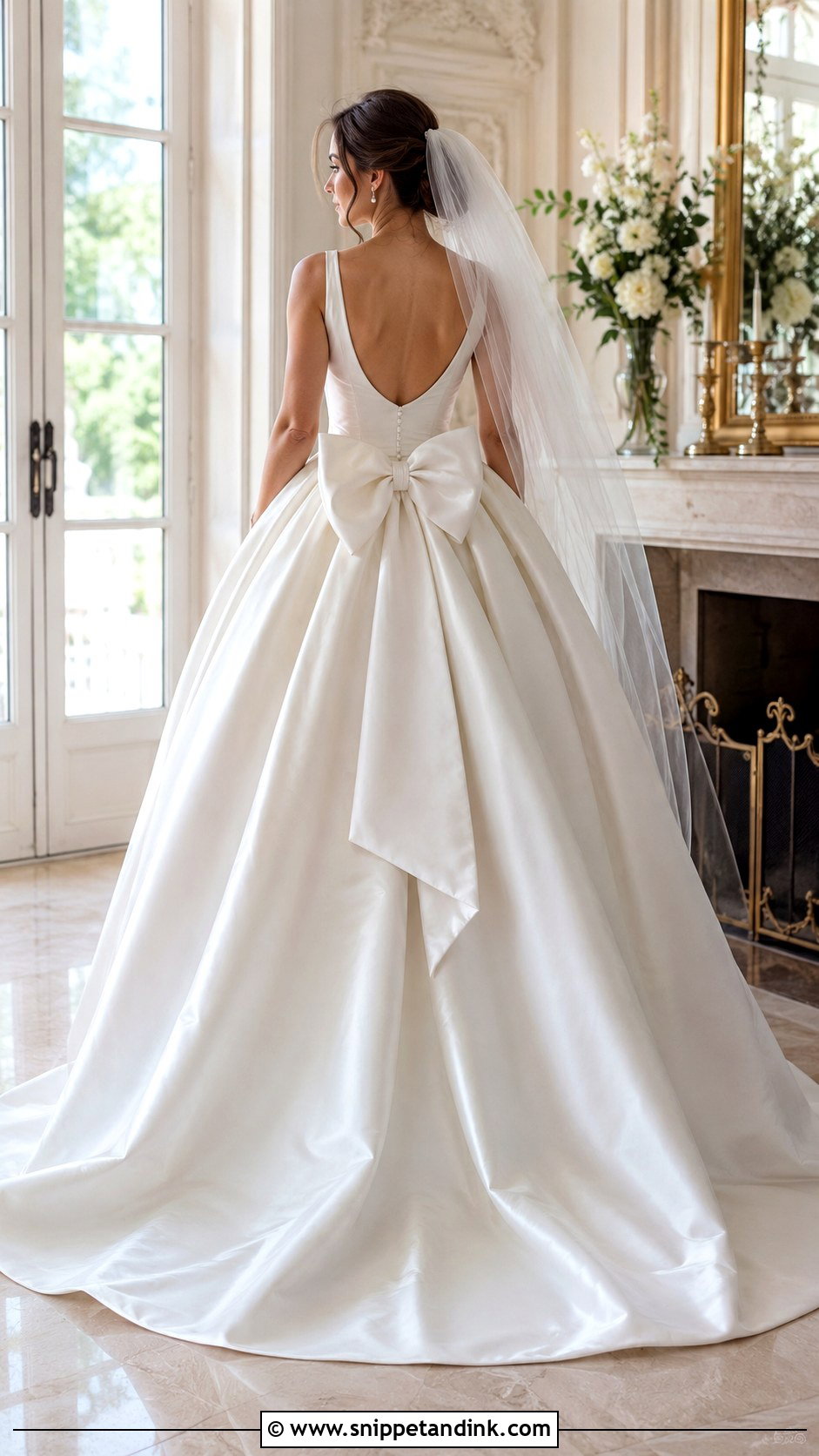
A bow gives a big skirt a focal point, at the back waist, the front of the bodice, a shoulder or the train. A large back bow is my favorite because it’s what guests see during the whole ceremony. The bow has to be sized deliberately; a small one on a huge skirt looks like an afterthought. I’d also ask your veil designer to plan the length so the veil falls past the bow rather than covering it. Simple earrings and smooth heels keep it from tipping into sweet.
20. Ruffle Poofy Wedding Dress
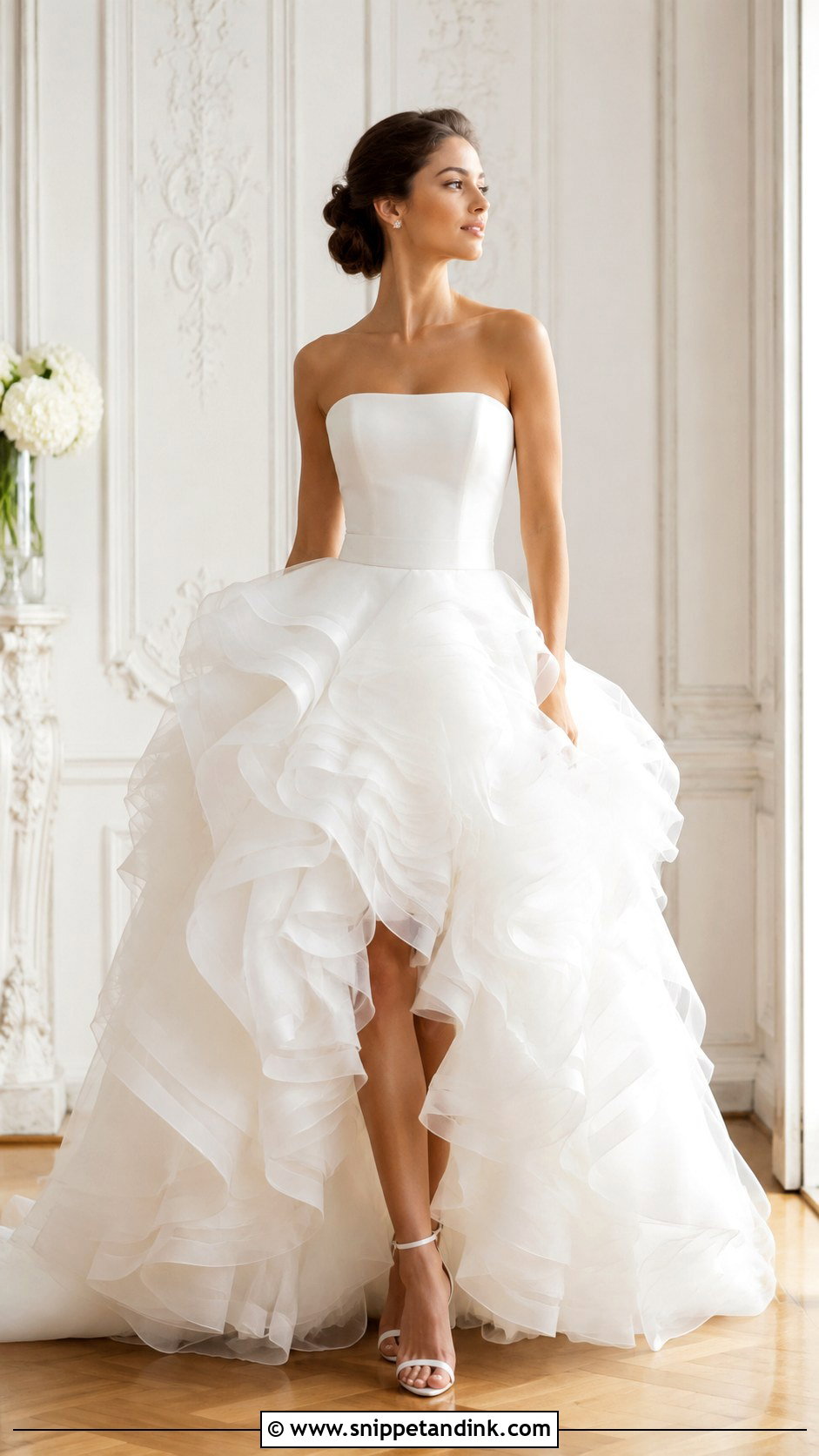
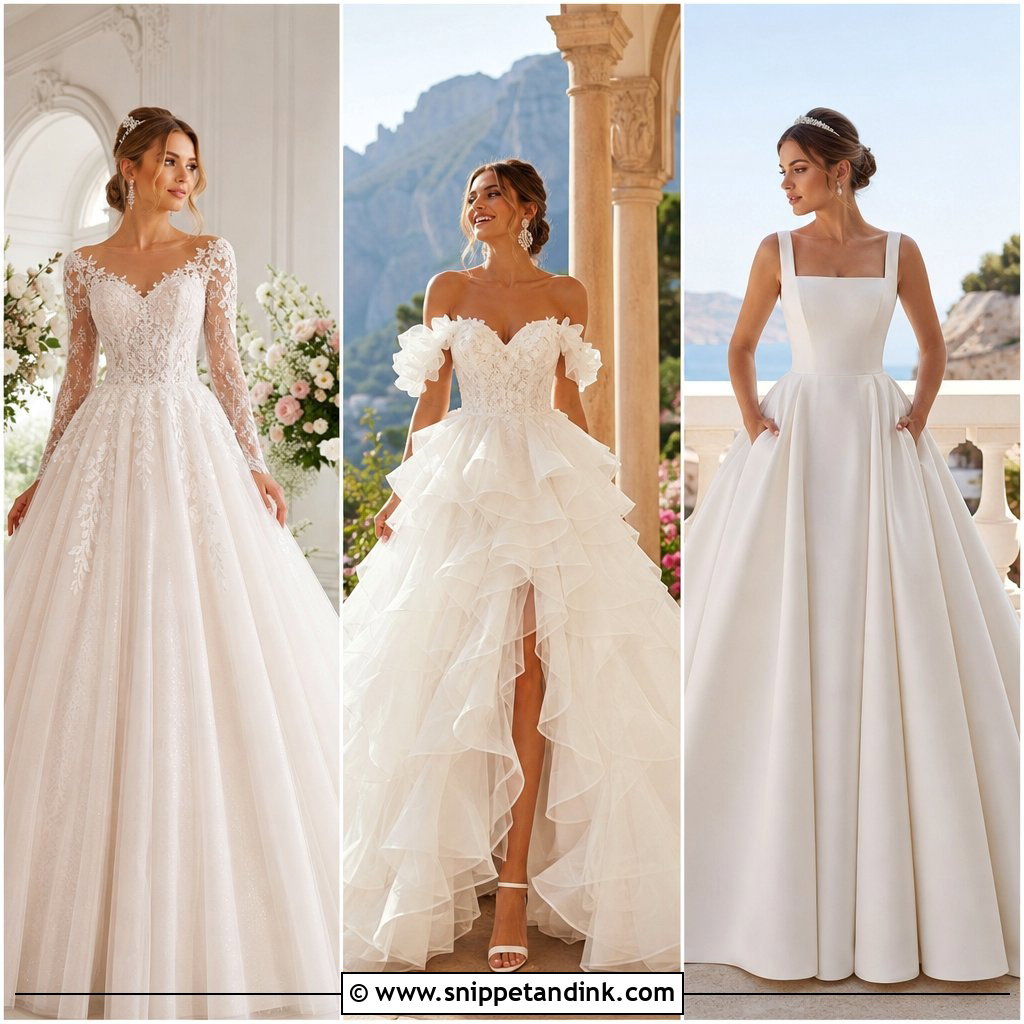
Ruffles are all about movement. Tulle ruffles float; organza ruffles hold a crisp, sculptural edge. Because the skirt is already so busy, I’d pair it with a clean strapless or corset bodice and very little else. Skip the oversized veil. When a bride twirls in a ruffled skirt the hem swings out wide, which is great on the dance floor and less great in a narrow aisle lined with candles, so it’s worth walking the venue in your head first.
21. Tiered Poofy Wedding Dress
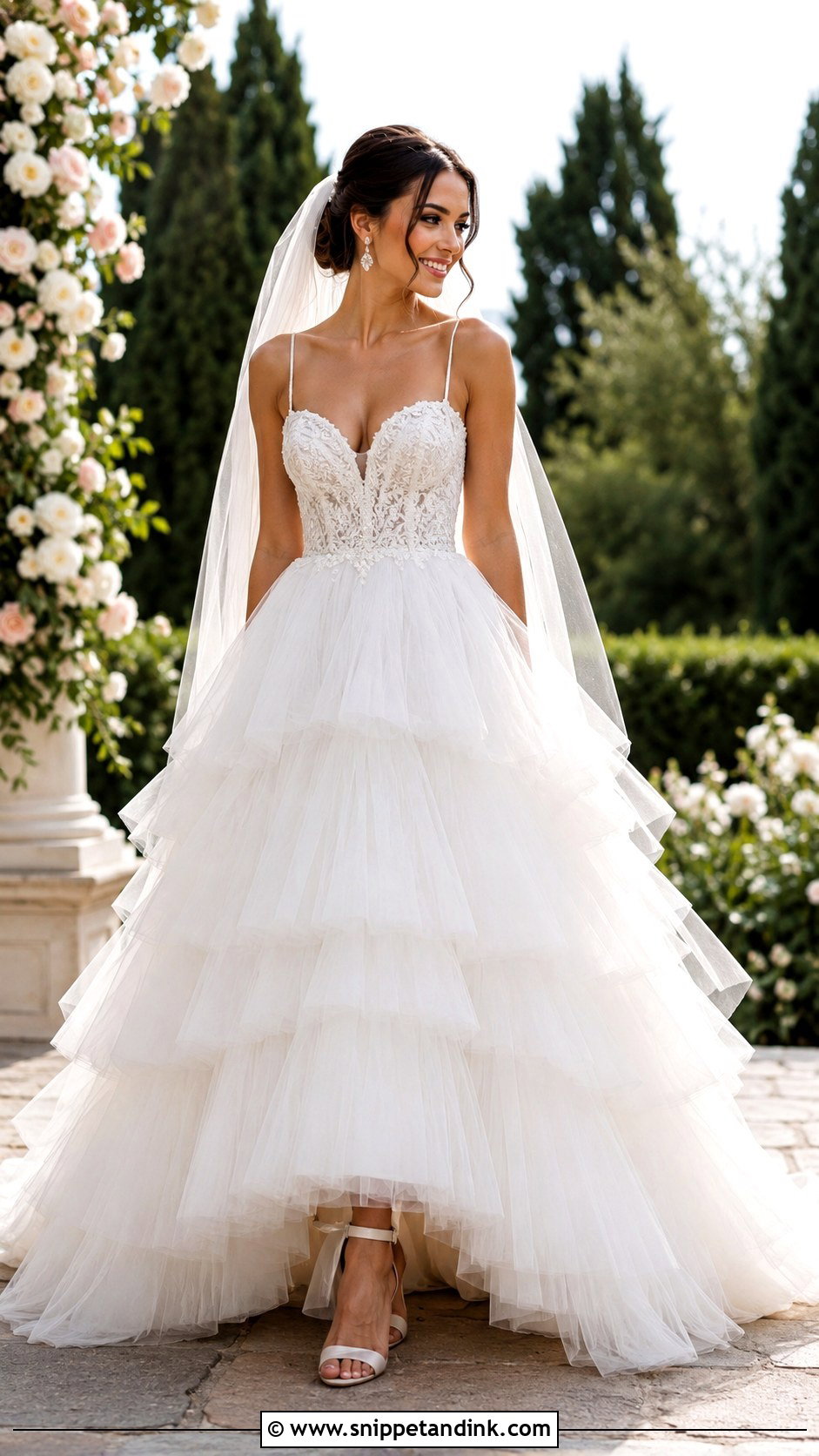
A tiered skirt builds its volume in horizontal layers from waist to hem. Soft tulle tiers look whimsical, organza tiers look architectural. I suggest tiers to brides who want a big dress but find a plain skirt too quiet. Each tier catches light a little differently, so the skirt shows depth in photos even from far away. The thing to watch is height: wide horizontal bands can shorten a petite frame, so I’d look at the tiers in a full-length mirror from across the room, not up close.
22. Bubble Hem Poofy Wedding Dress
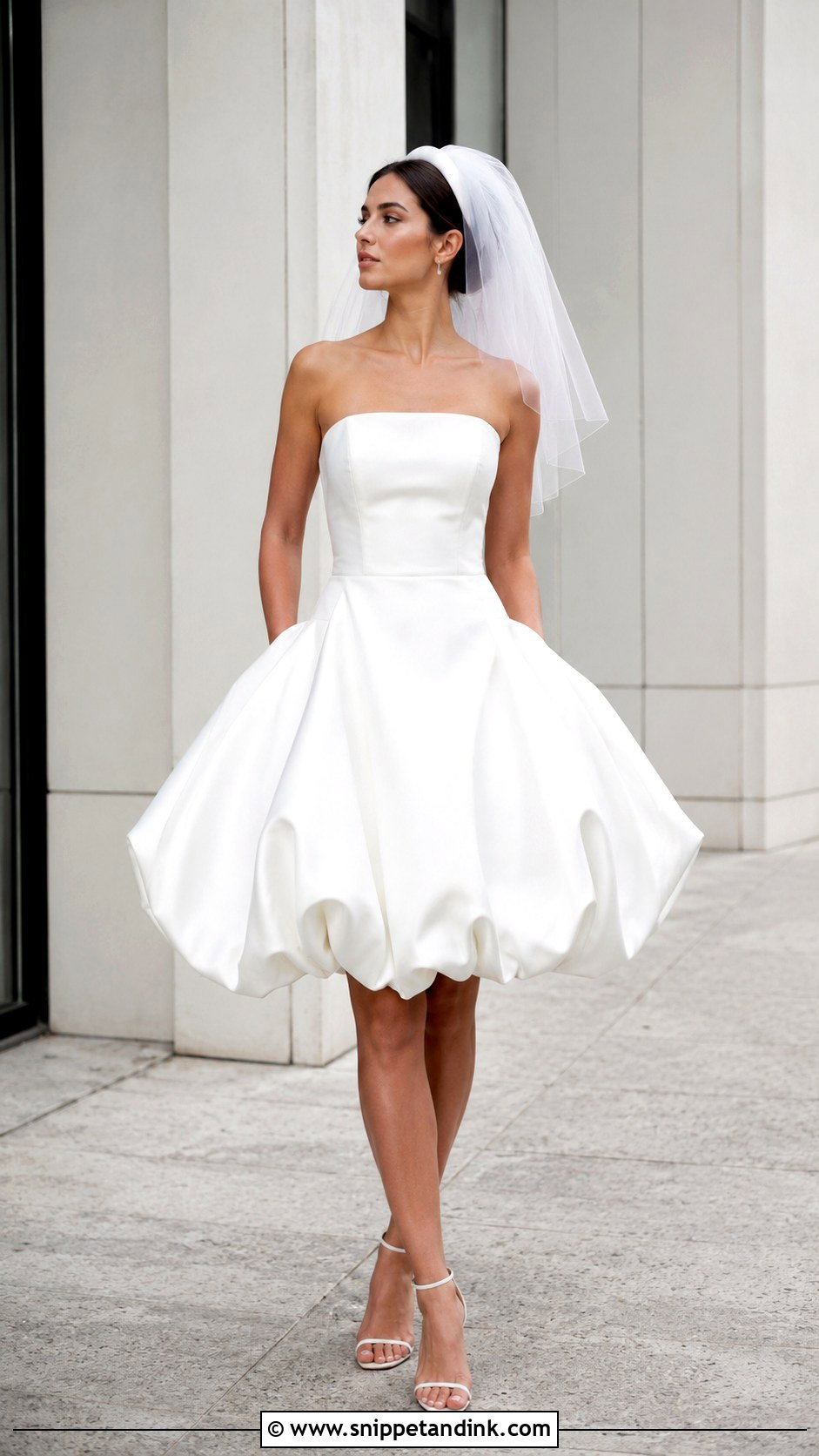
A bubble hem tucks the skirt under at the bottom so it balloons into a rounded shape. Full-length, it looks sculptural; high-low and tea-length versions feel playful. It’s more fashion than fairytale. Practically, a bubble hem doesn’t drape on its own, so it relies on its lining and sometimes a petticoat to keep the shape. Take the stairs in it at your fitting. Pair it with a clean bodice, modern heels and either a short veil or a sleek headband.
23. Minimalist Poofy Wedding Dress
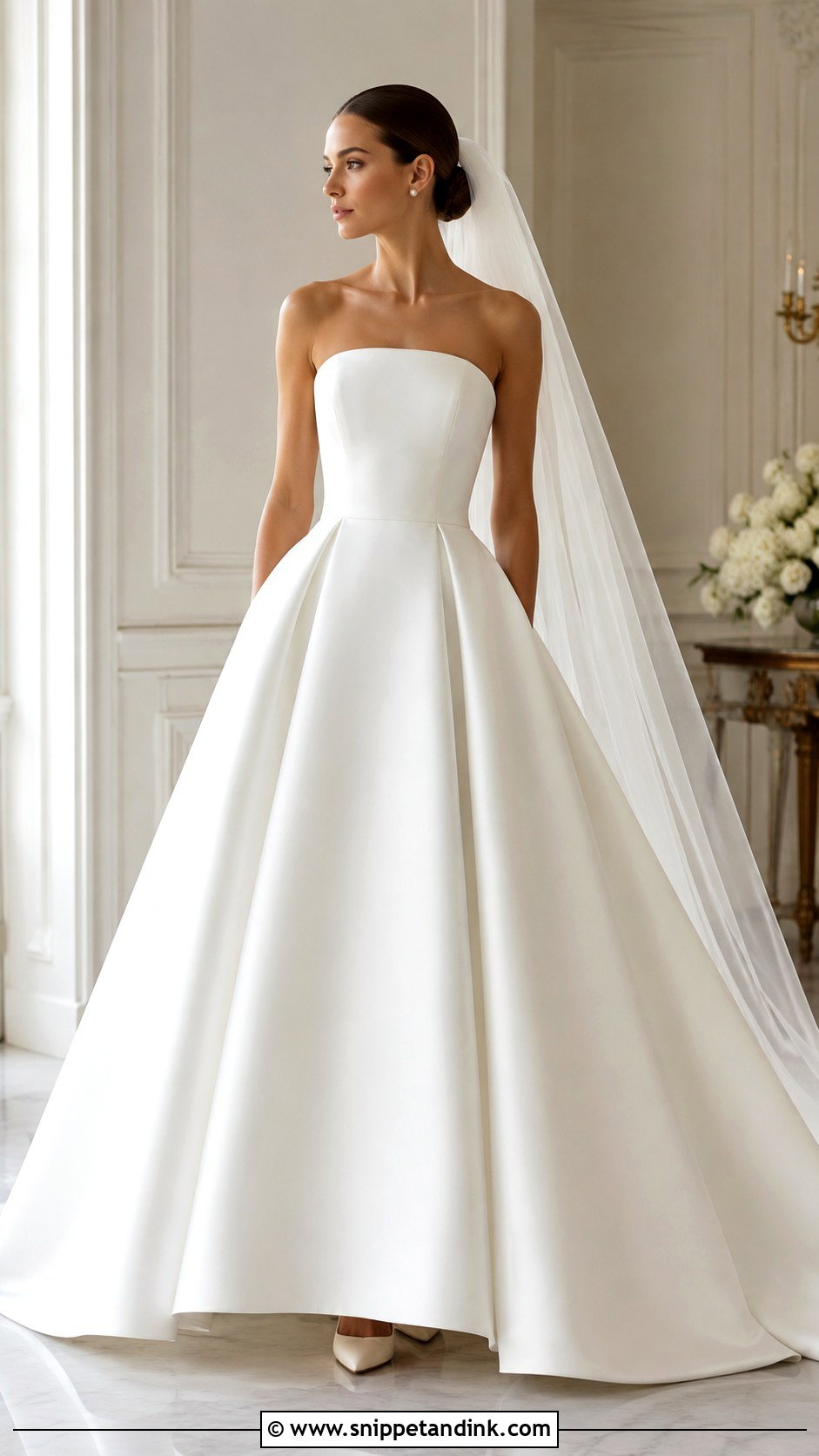
A plain full gown has nowhere to hide, which is exactly why I like it. Satin, mikado and structured crepe carry the shape on their own. Since there’s no lace or beading to draw the eye, the tailoring has to be precise: the hem should just clear the floor in your shoes, the waist must sit level, and the bodice can’t wrinkle at the side seams. I’d budget for good alterations before anything else. Pearl studs and a long plain veil finish it.
24. Princess Poofy Wedding Dress
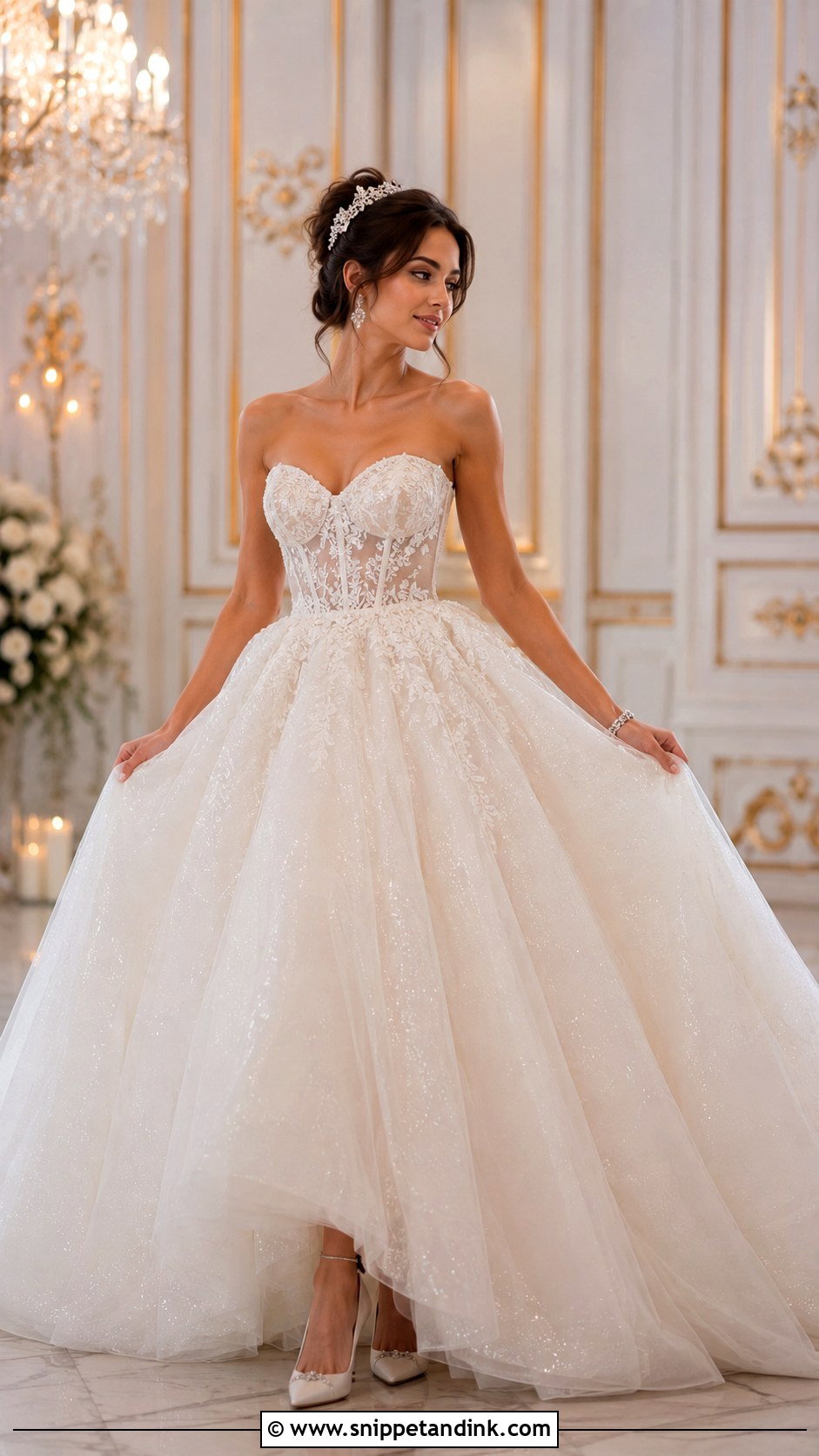
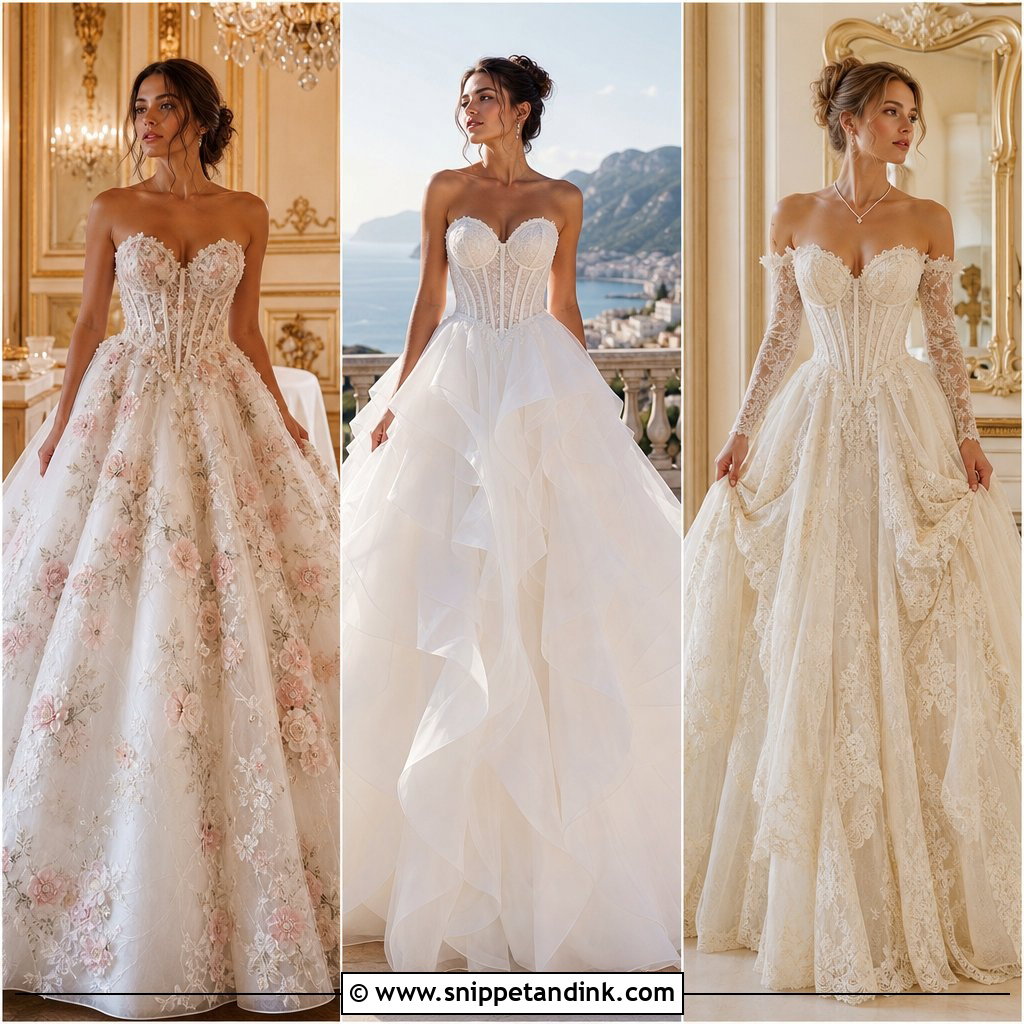
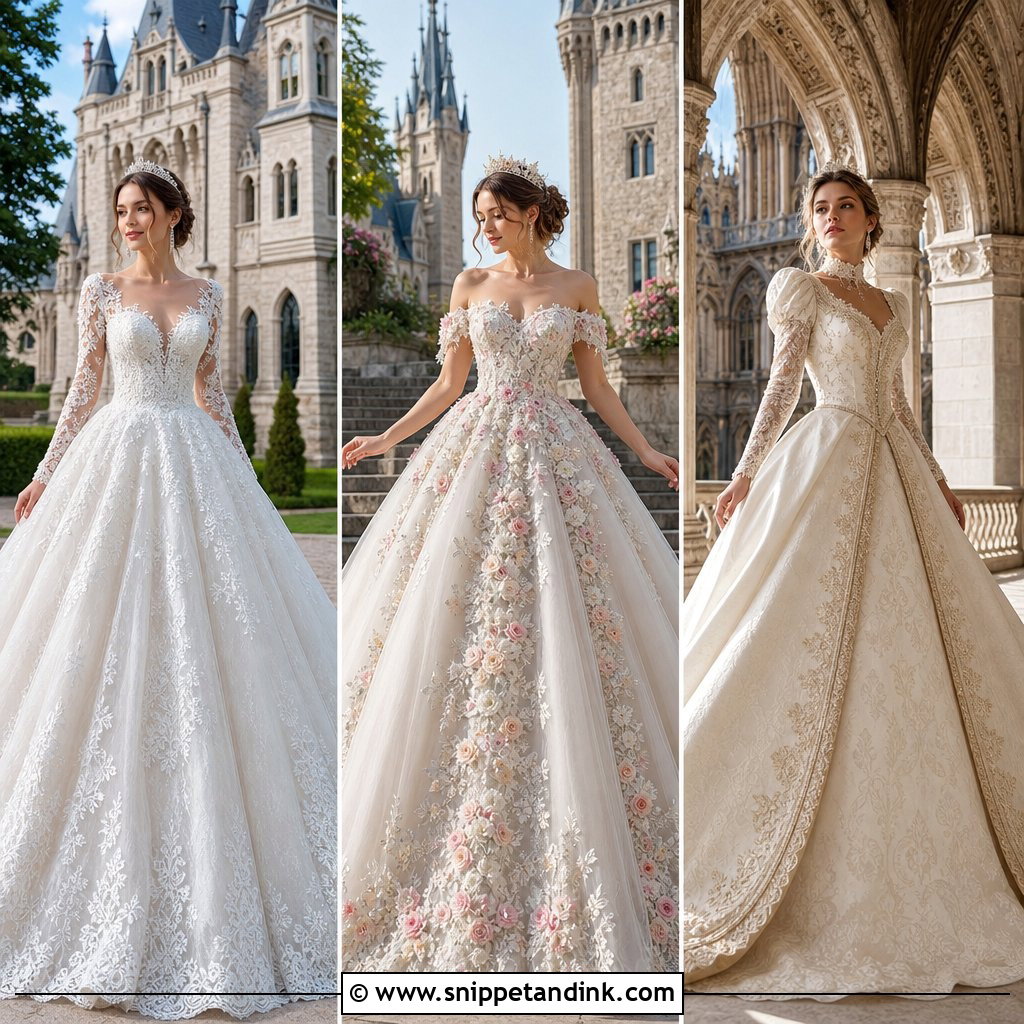
The princess gown is the full storybook: fitted bodice, enormous skirt, soft sparkle. The risk is too much of everything. I tell brides to pick two features, maybe a corset bodice and scattered appliqués, and let the rest stay plain. A tiara can work, but a crystal comb or pearl headpiece usually looks more grown-up in photos. These gowns are often the heaviest in the shop, so ask about the skirt’s weight and how it sits on the hips.
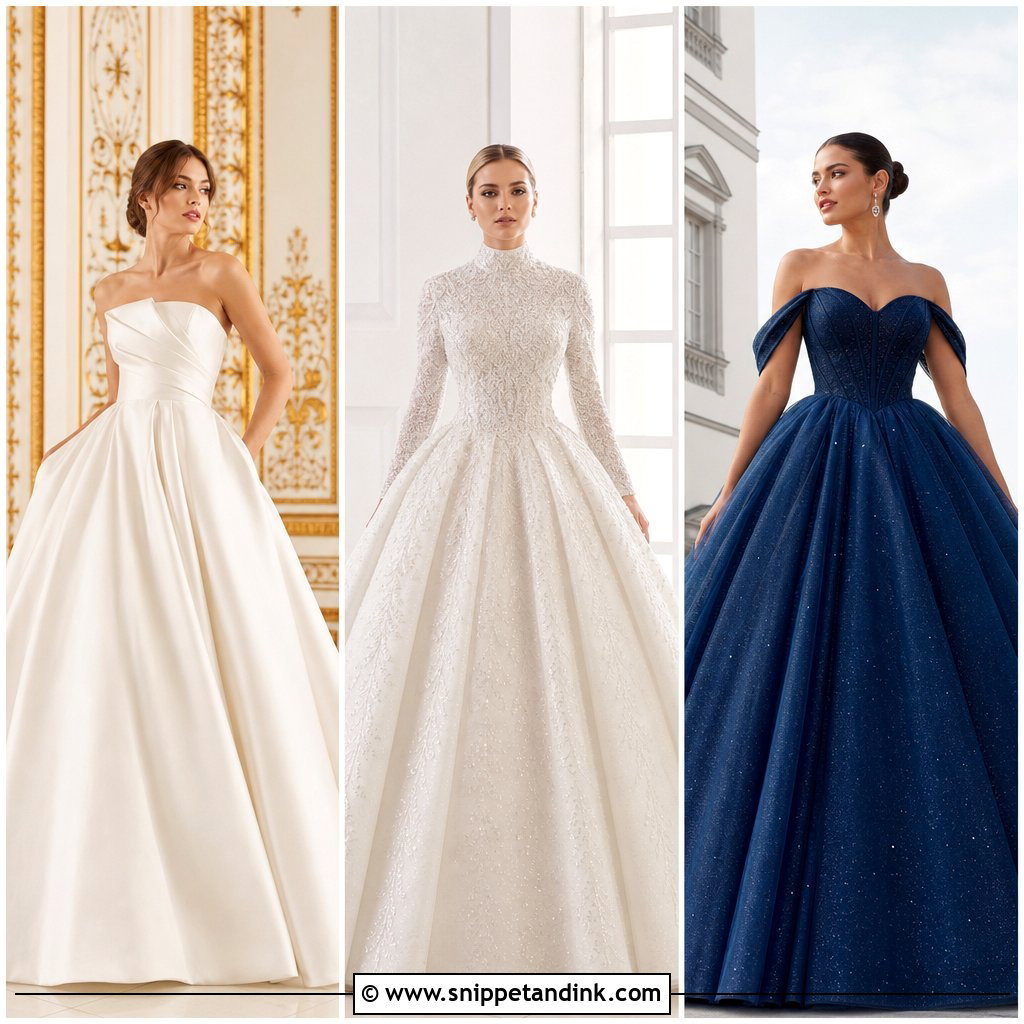
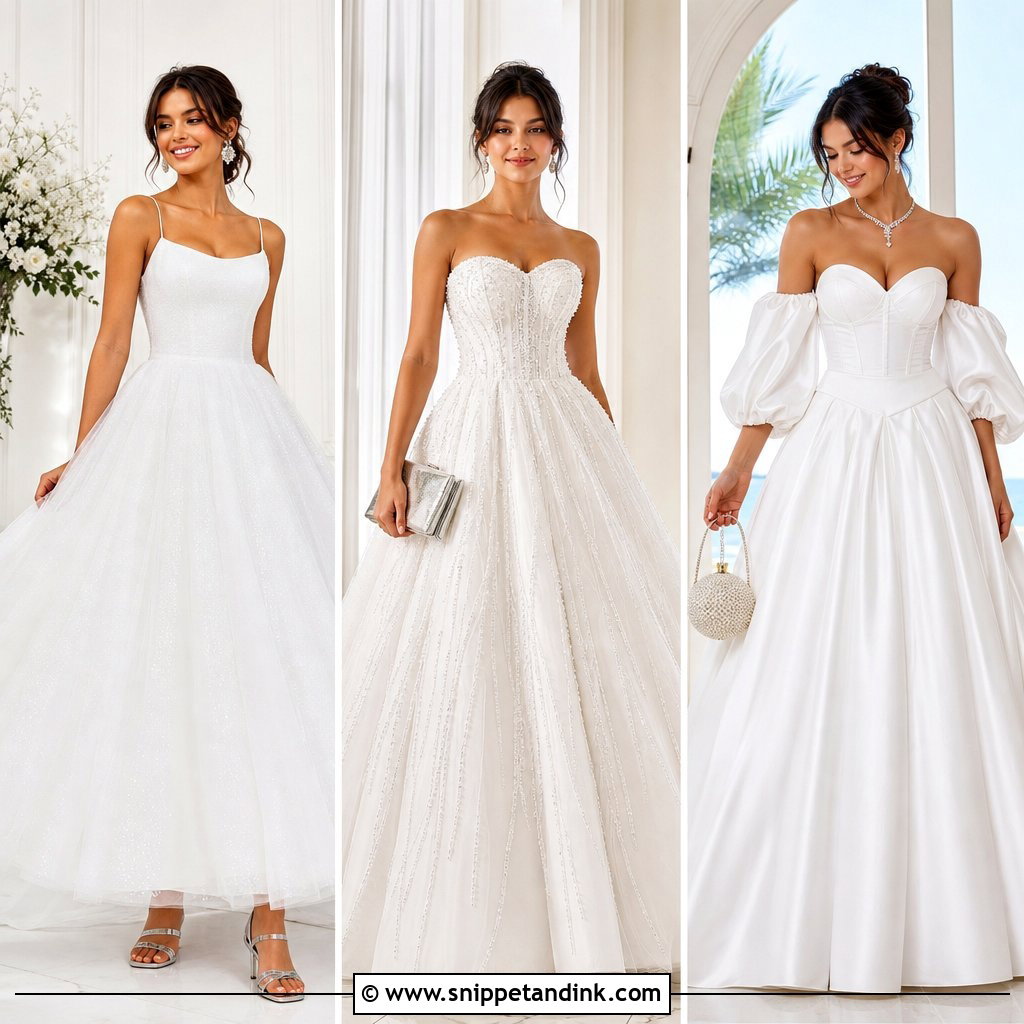
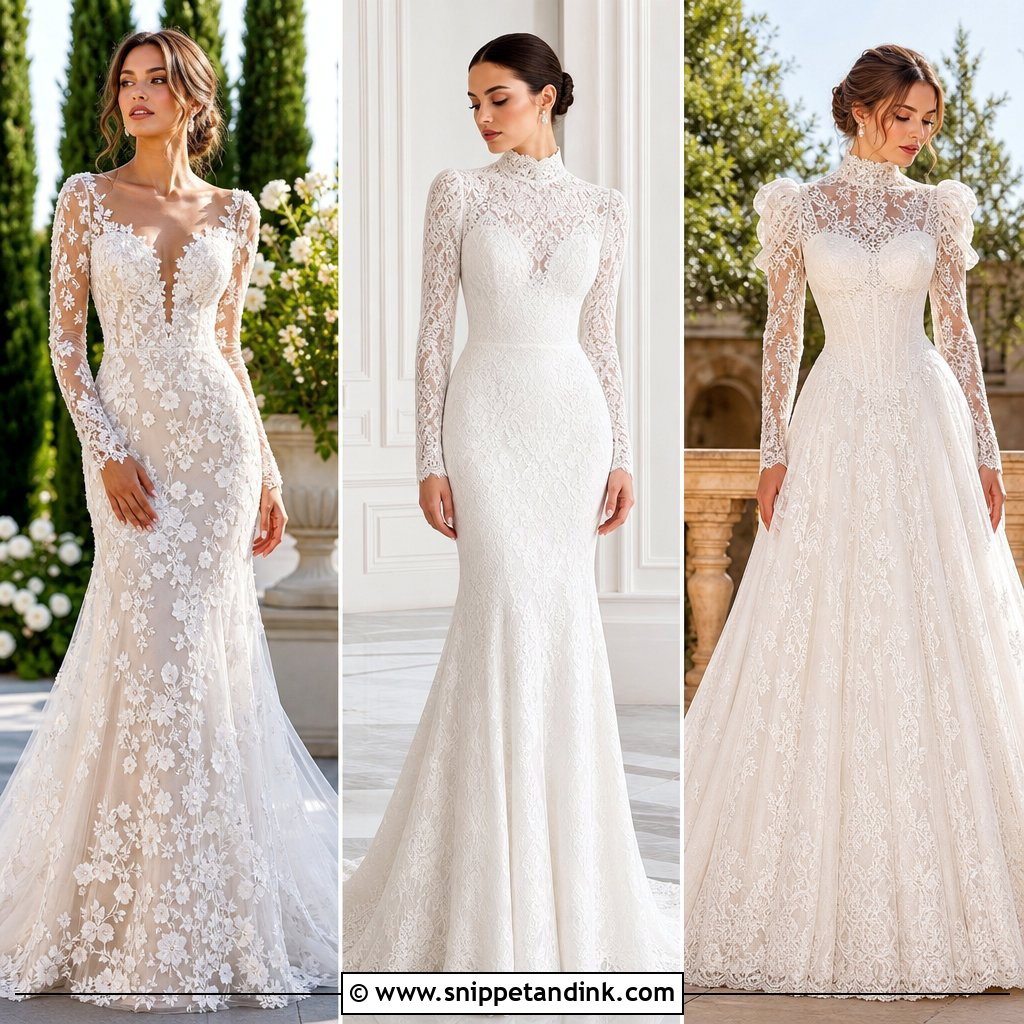
25. Vintage Poofy Wedding Dress
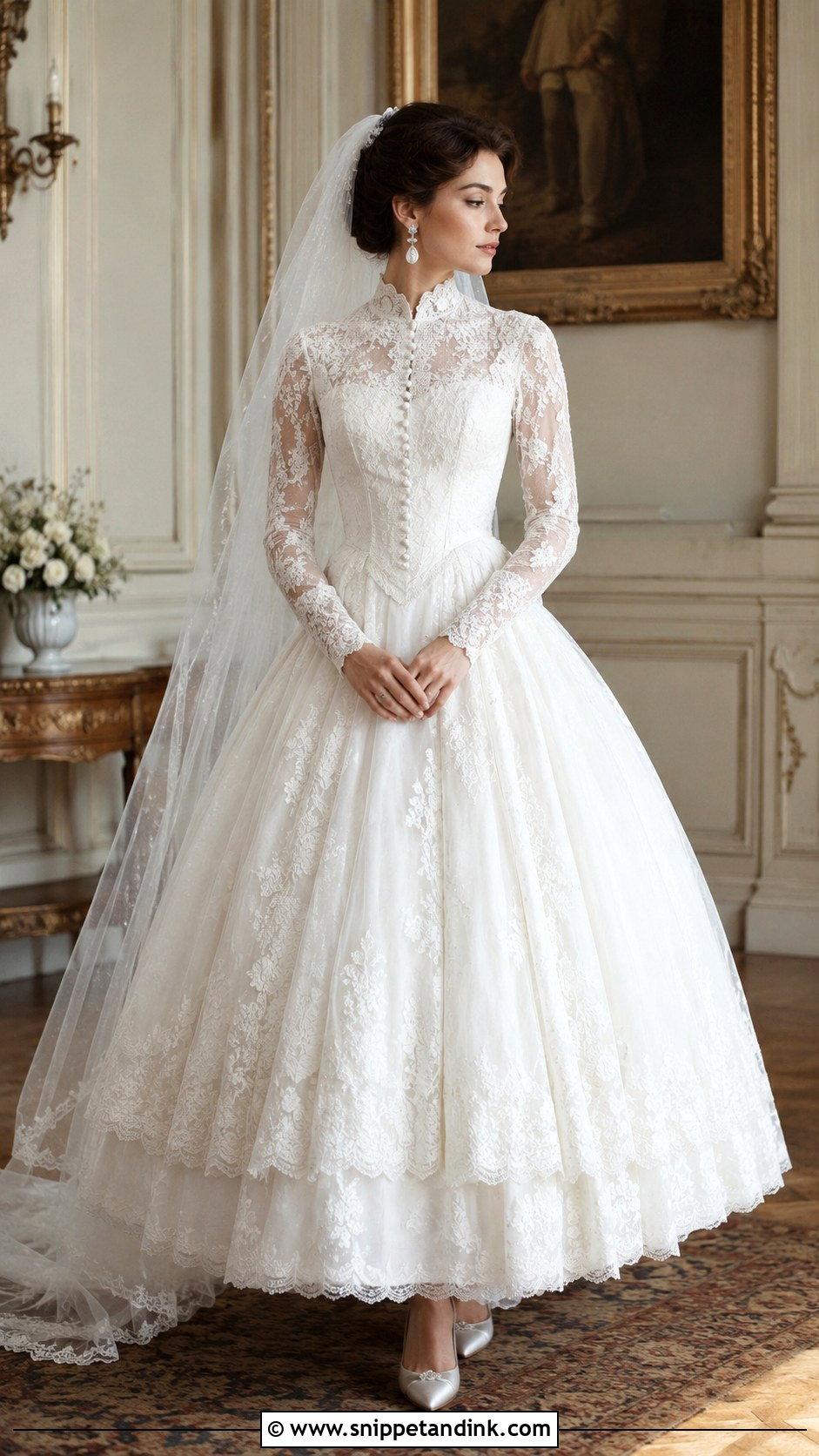
Vintage-inspired gowns borrow from older bridal fashion: lace sleeves, basque waists, high necklines, rows of covered buttons. The dress doesn’t need to be truly old to feel nostalgic, and modern construction is far more comfortable. If you do buy a genuine vintage gown, I’d have a specialist check the seams and fabric strength before any alteration, because old silk can split. A soft veil and heirloom-style earrings suit the mood; a red lip is optional.
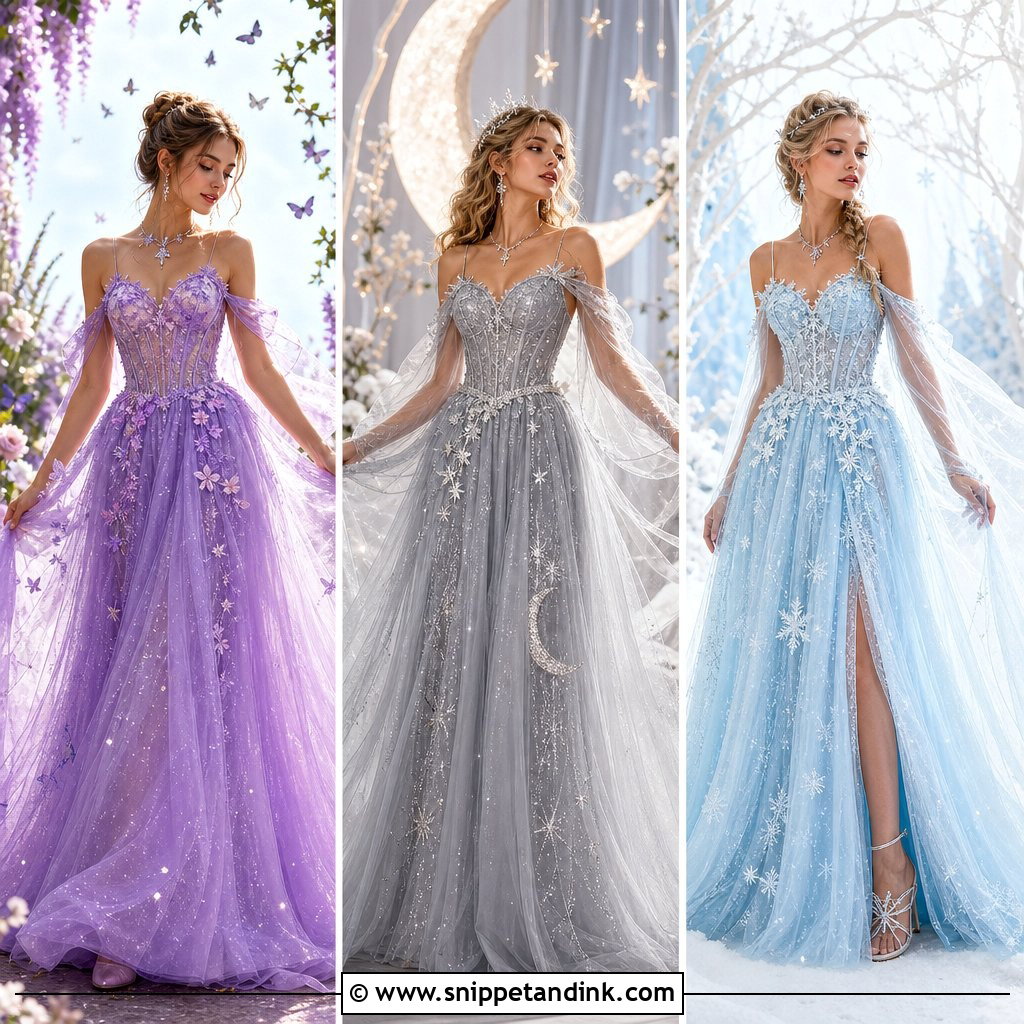
26. Colored Poofy Wedding Dress
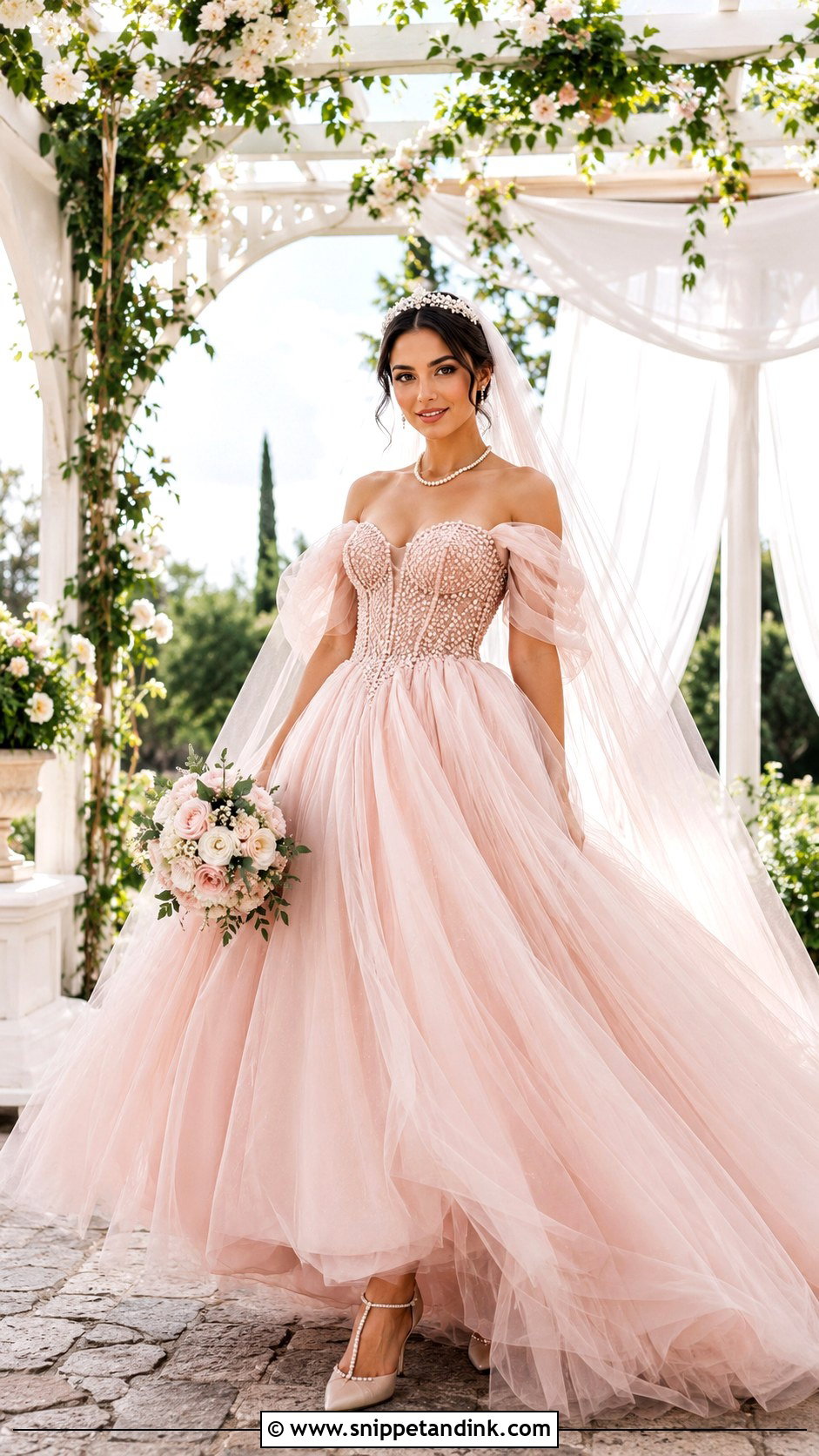
A colored full skirt in blush, champagne, pale blue or misty gray keeps the ceremony feel while showing personality. Pale tones are tricky on camera: blush often reads almost white in bright daylight and warmer under indoor light, so I ask brides to photograph the fabric outside and inside before ordering. Keep accessories in the same tone family. Champagne looks right with gold jewelry, while blush suits soft pearl accents. A veil dyed to match feels more intentional than plain white.
27. Detachable Train Poofy Wedding Dress
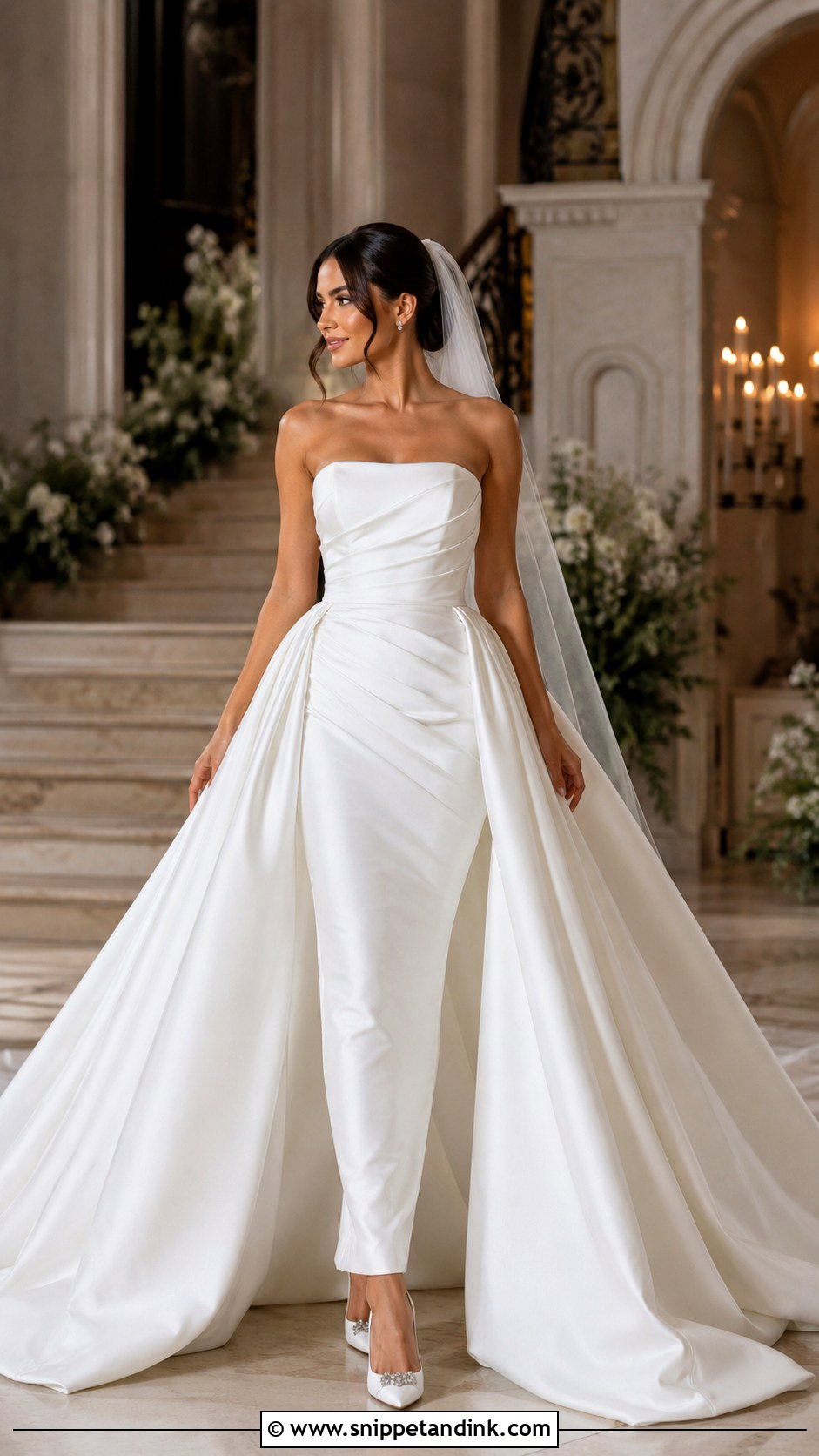
A detachable train or overskirt gives you the aisle drama and then lets you move freely afterward. The engineering matters more than the look. I check the fastenings, whether hooks, snaps or buttons, and how many there are, because too few will let the train pull and drag at the waist. Practice taking it off with whoever will help you on the day. Classic heels, a clean veil and understated jewelry let the full skirt underneath stand on its own once the train comes off.
28. Short Poofy Wedding Dress
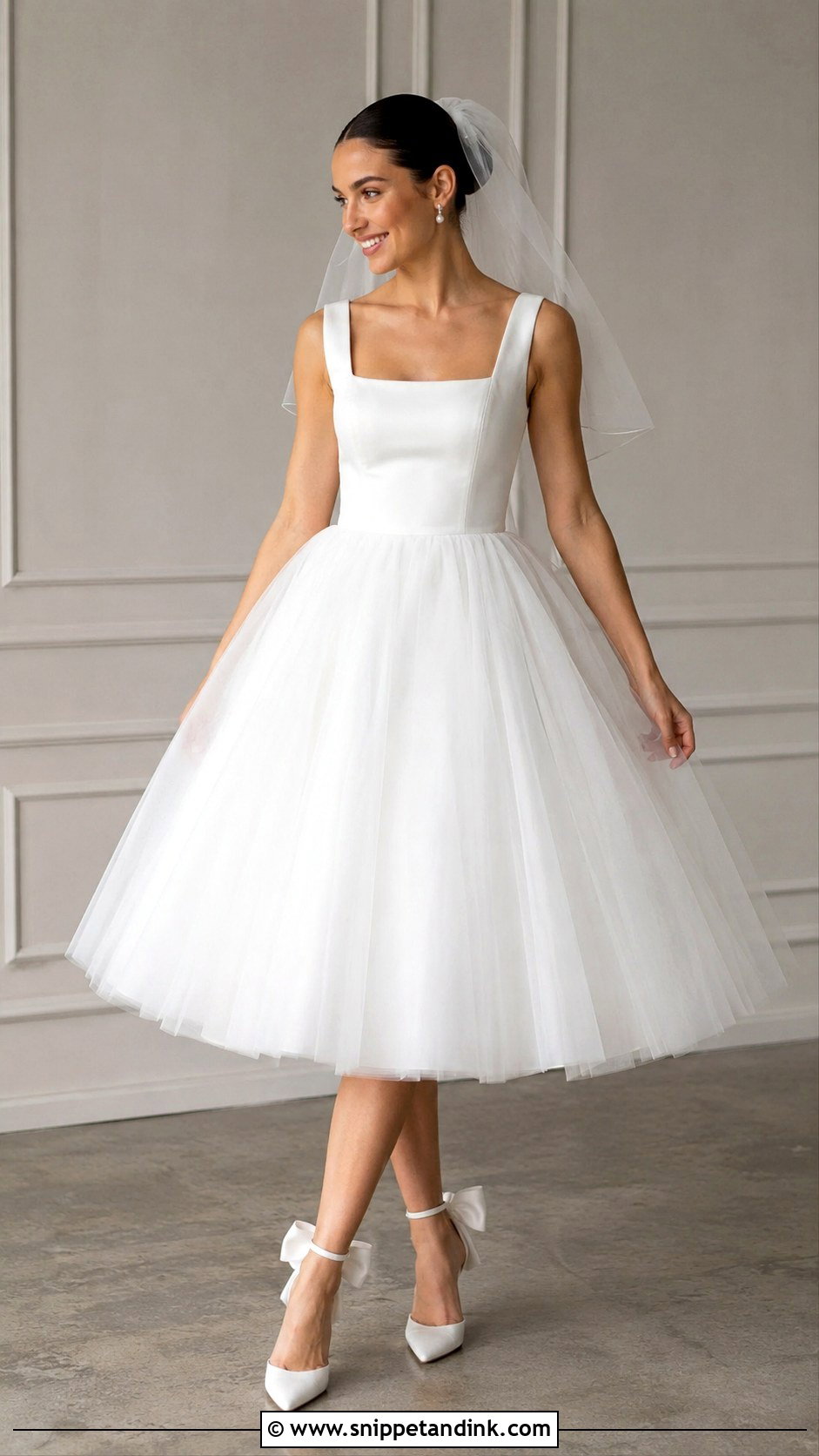
A short full skirt, mini or tea length, still feels bridal but lets you move, dance and show your shoes. It works for a civil ceremony, a reception change or an after-party. My key test is sitting down: a full mini rides up higher than you’d expect once the petticoat folds, so we check the length seated, not just standing. Satin looks chic, tulle playful, organza crisp. Statement heels make sense here because they’re finally on show.
29. Plus Size Poofy Wedding Dress
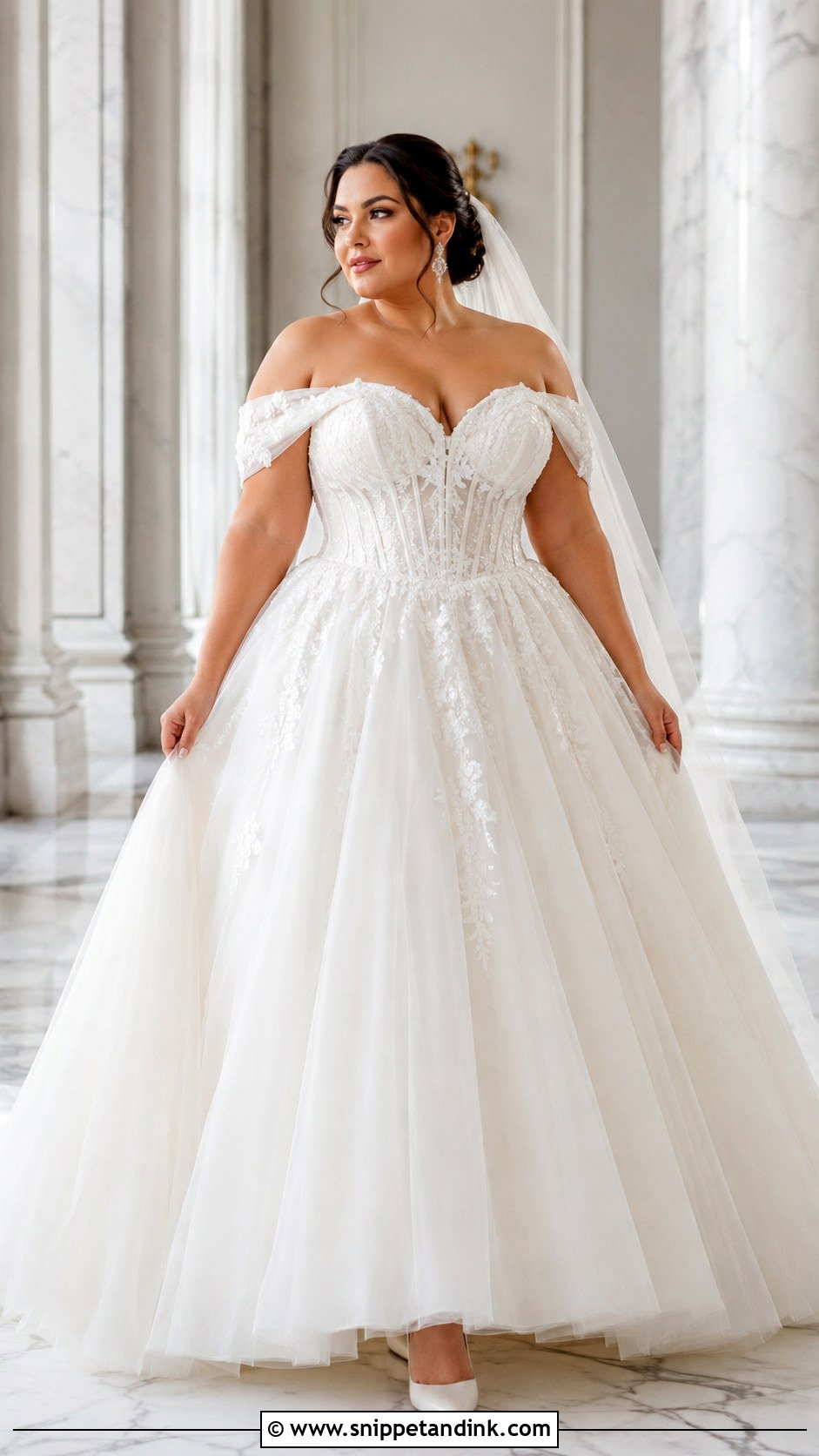
On a plus size bride, a full skirt looks right when the structure is right. I look for a secure built-in bodice, cups or firm support at the bust, and a waist seam that sits where she’s comfortable, not where a size chart says. The skirt should add volume from the waist without swallowing the frame. Corset bodices, basque waists, off shoulder and V necklines all work well. I’m not interested in hiding anything; I’m interested in a dress that still feels good at hour eight. Good alterations at the bust, waist and hem make the biggest difference, along with supportive undergarments and stable heels.
30. Modern Poofy Wedding Dress
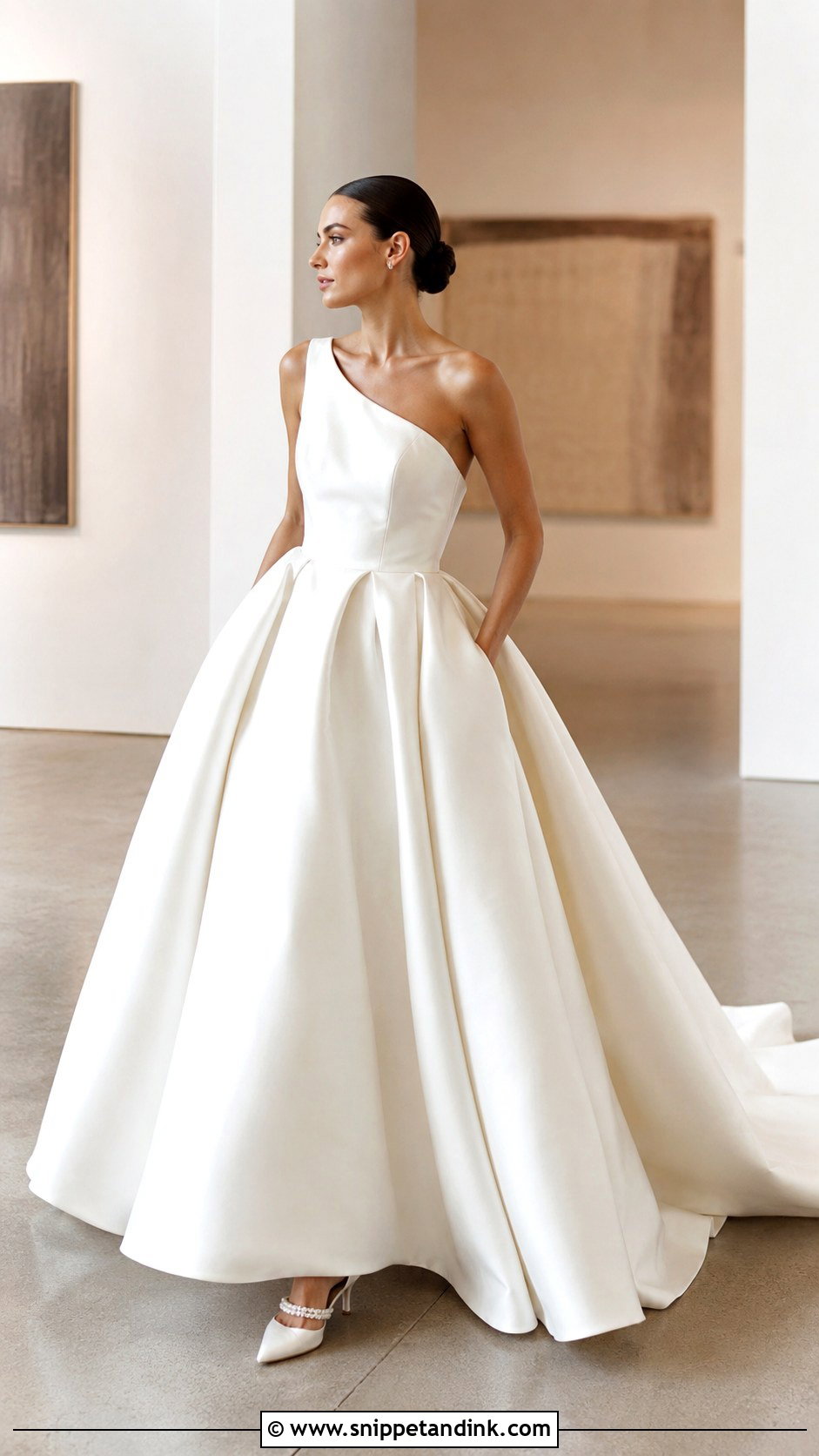
Modern full gowns keep the volume but cut away the traditional details: a clean corset, an asymmetrical neckline, a sculptural skirt, an oversized bow or plain satin. I keep the styling sharp with a slick bun, minimal earrings and simple heels. Going without a veil, or wearing a very plain one, makes the gown look more contemporary. These shapes suit galleries, rooftops and modern hotels, where clean lines in the room echo the dress.
Bustles, Steaming and the Ride Home
A full skirt needs a plan for the hours after the ceremony. These are the things I go over with every bride in a big gown.
The bustle
If your gown has a train, it gets bustled up for the reception. A French bustle tucks the train under; an over bustle hooks it up on top. Teach a bridesmaid or your mom how it works at the final fitting and take a short video, because the loops and buttons are hard to see in a crowded room.
Steaming and transport
Hang the dress by its inner loops, never by the straps, the night before. A handheld steamer on low takes out creases in tulle and organza; satin needs more care, so I’d let the shop do a professional press. In the car, sit on the skirt as little as possible and let the volume spread over the seat beside you.
After the wedding
Get the gown cleaned within a few weeks so stains from grass, makeup or drinks don’t set, then store it flat in an acid-free box rather than on a hanger. Heavy skirts slowly pull the bodice out of shape when they hang for months.
Sit, Walk and Hug Before You Say Yes
A big skirt can be classic, romantic, minimal, playful or modern depending on the fabric, neckline and styling. What matters more is whether the gown fits your body, your venue and how long you’ll be in it. Before you say yes, sit, walk, turn and hug in the sample. Then ask about alterations, underlayers, train length and how the skirt photographs from the back. Satin ball gowns, tulle princess dresses and corset shapes all earn their place, but only the one you can actually live in all day is the right one.
You'll Like These Ideas:





Leave a Reply