
Fairytale dressing means something different to every bride who sits down in my fitting room. For one it is a skirt that fills a doorway; for another it is a plain silk slip and a veil that trails the floor. What the dresses below share is a sense of occasion, and each one gets there through a different tool: volume, texture, colour, shine or movement. You’ll find sweeping ball gowns, lace sleeves, pearls, corsets, capes, bows and blue tulle here, alongside princess-inspired fashion and much quieter options. I’ve added what I check on each one, because the magic only lasts if you can still breathe, sit and dance in it.
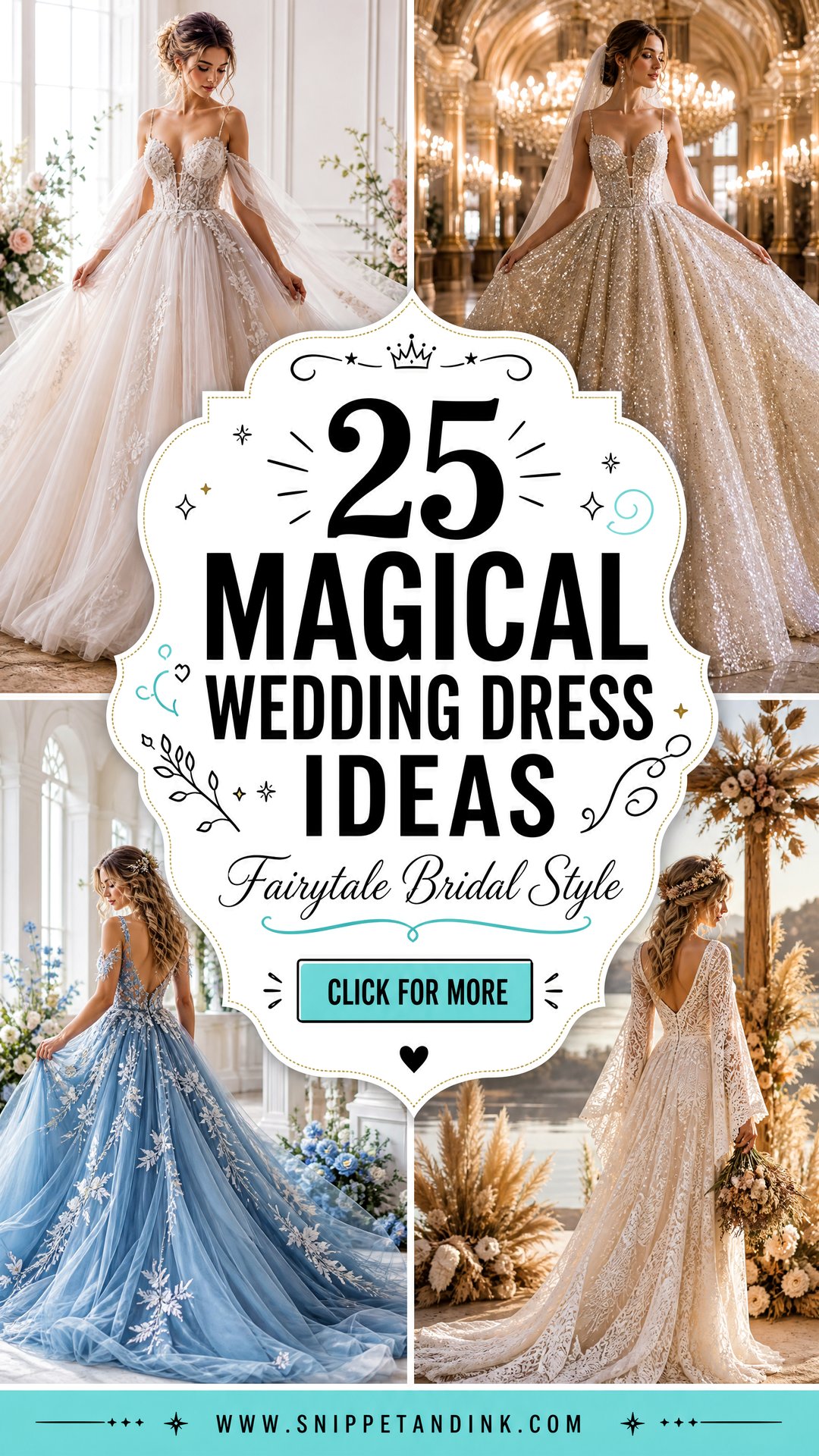
From First Appointment to Final Pressing
Fairytale gowns often take the longest to arrive. Layered tulle, hand-set pearls and embroidery are slow work, so the calendar matters more than with a simple silk slip. Timings vary between designers and shops, so treat these as rough guides and ask yours directly.
- Start shopping around nine to twelve months out. Many made-to-order gowns need several months to produce once ordered.
- Order with enough margin that the dress arrives two to three months before the wedding, not two weeks.
- Plan two or three alteration fittings. Bustles for long trains and corset adjustments usually happen at the last one.
- Bring your shoes and underwear to every fitting. A hem cut for a different heel height can’t be lengthened again.
- Collect the gown pressed and steamed in the final week, and ask how it should hang until the morning.
If your date is close, ask about sample dresses or off-the-rack stock. A shop sample can often be cleaned and altered in a few weeks, and the choice is still wide.
1. Fairytale Ball Gown Wedding Dress
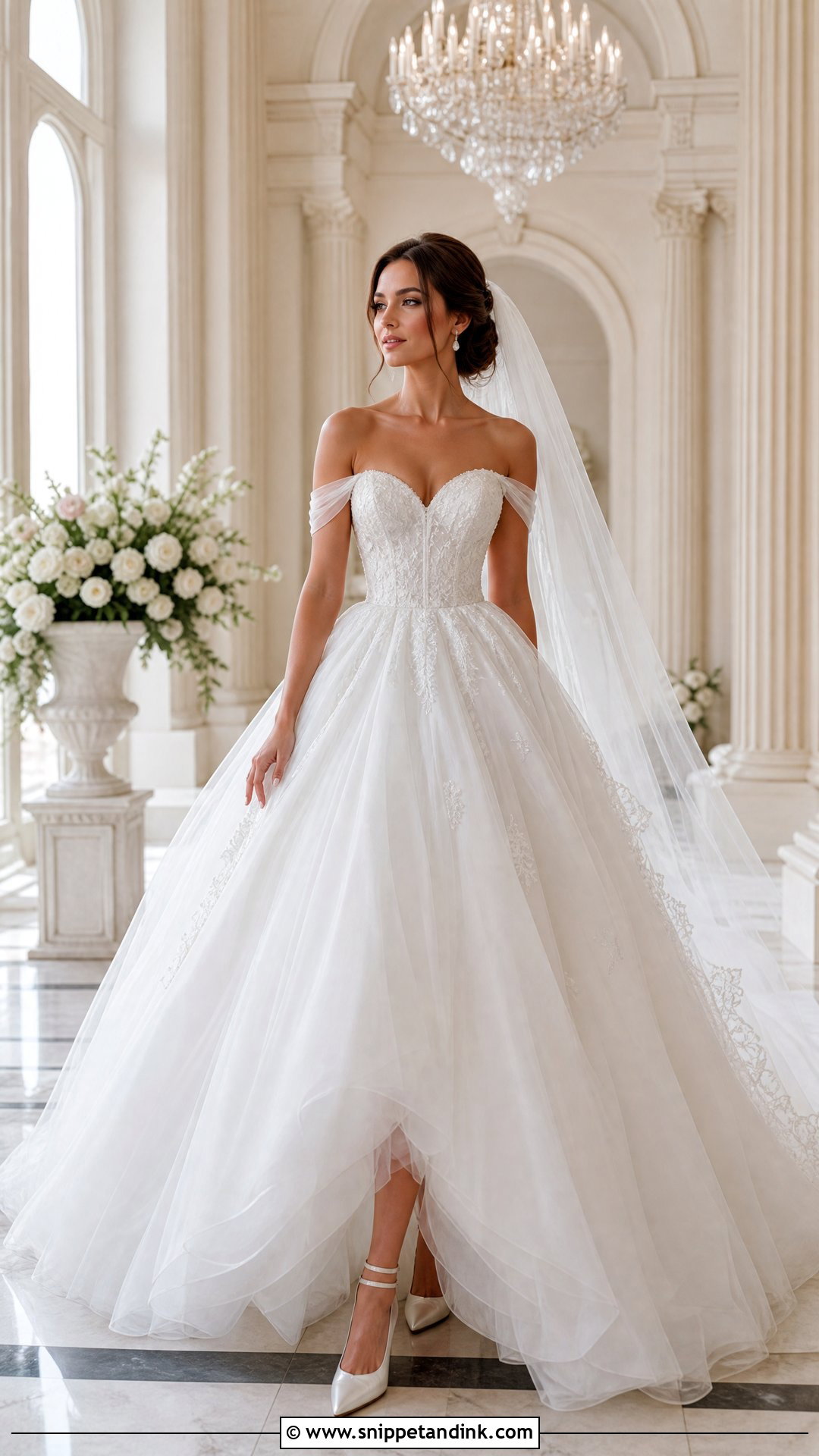
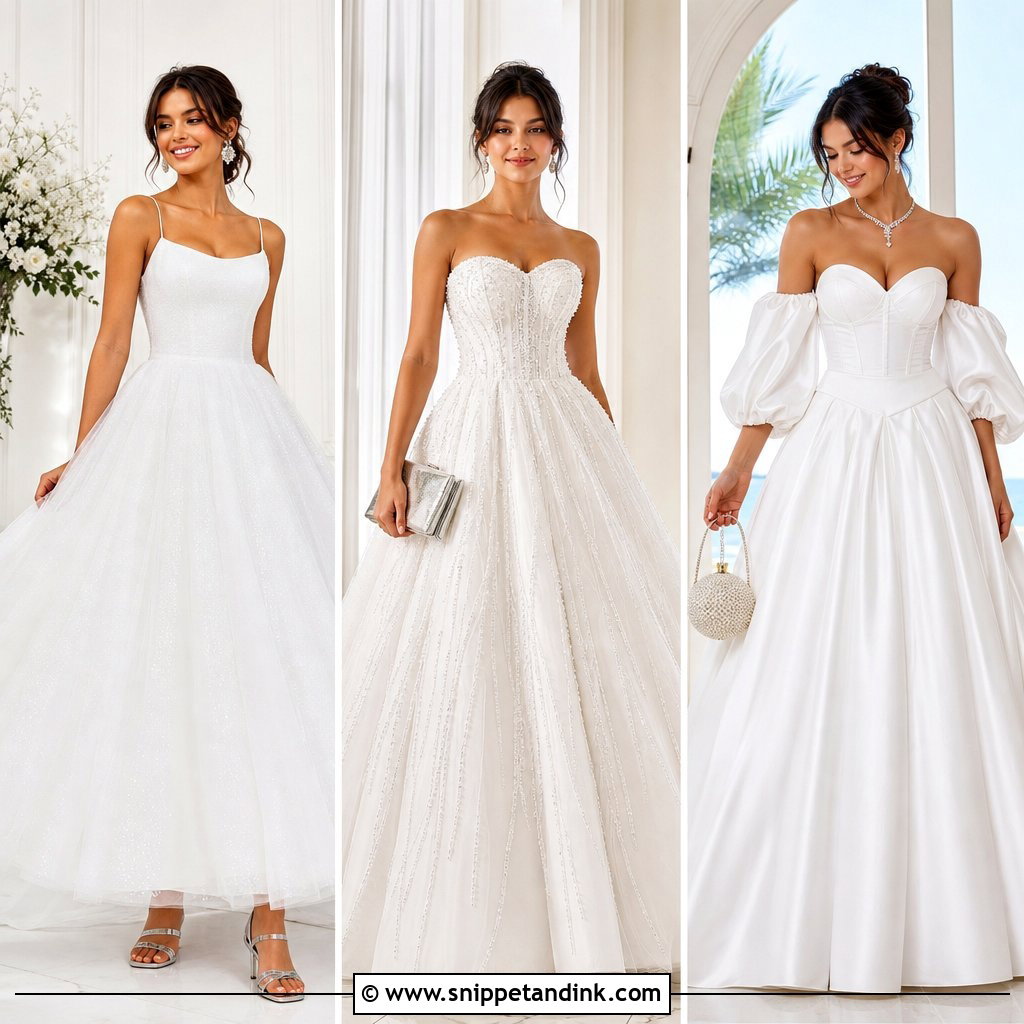
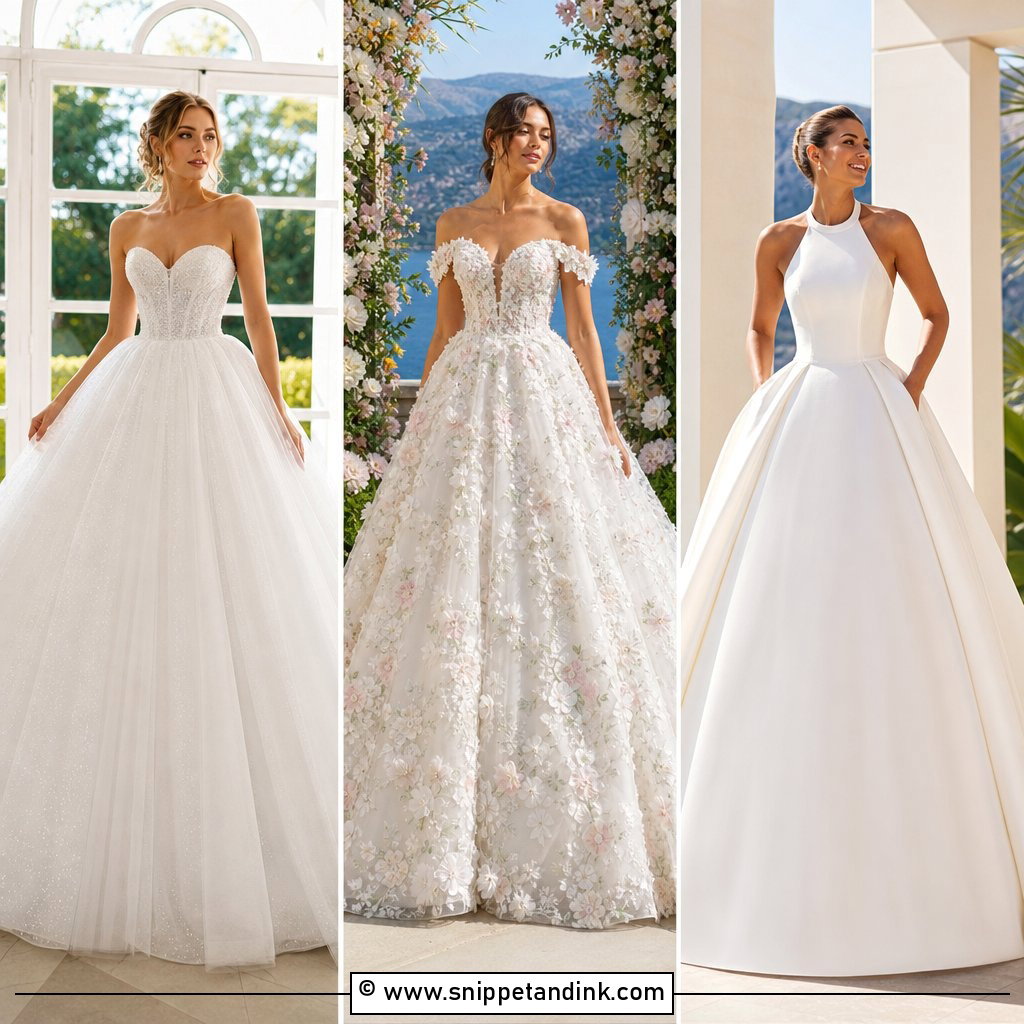
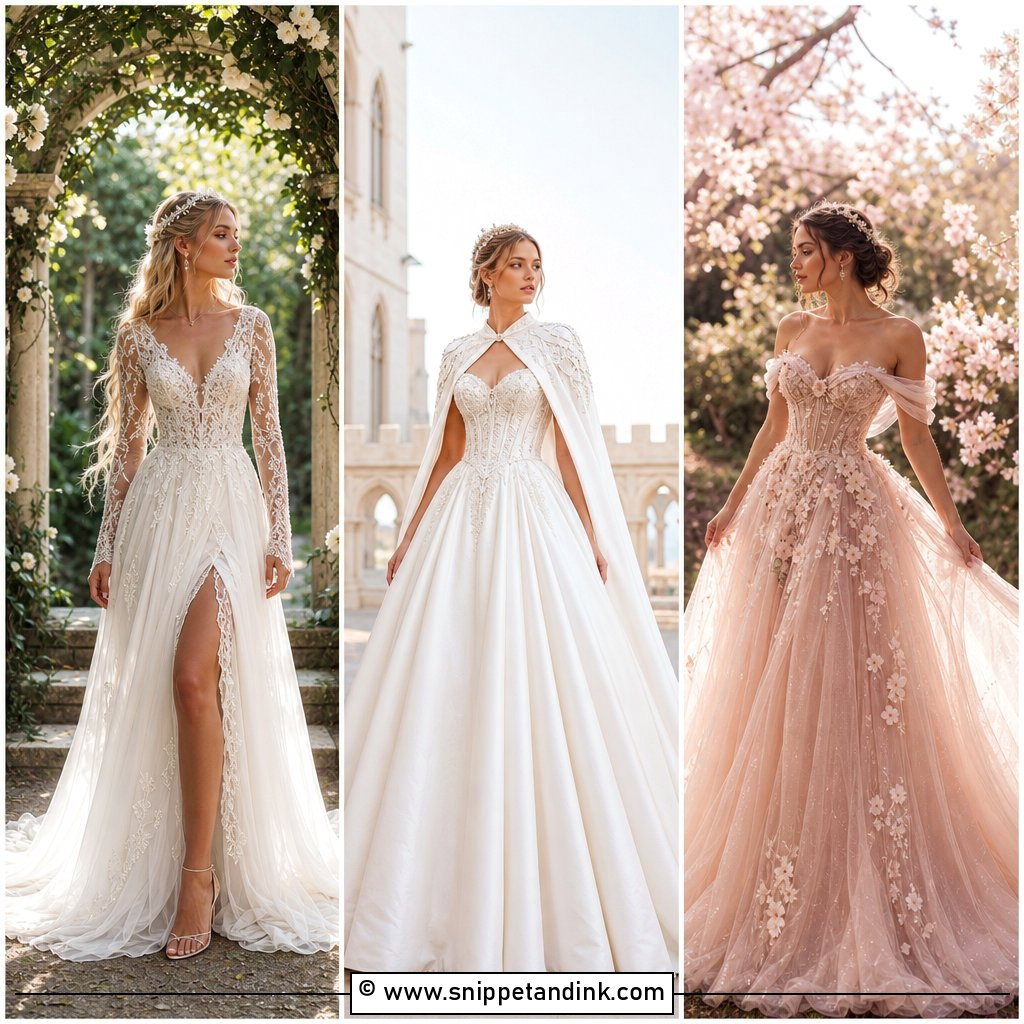
Volume is the whole point of a fairytale ball gown wedding dress, so the first thing I look at is what creates it. Tulle builds volume from many light layers and moves when you walk. Mikado holds a stiff, sculpted shape on its own and looks regal in a large room. Either way, sit down at every fitting; a waistline that is comfortable standing can dig in at dinner. With a skirt this full, keep the bouquet loose and jewellery small, then let a long veil and satin heels finish it.
2. Lace Long Sleeve Wedding Dress
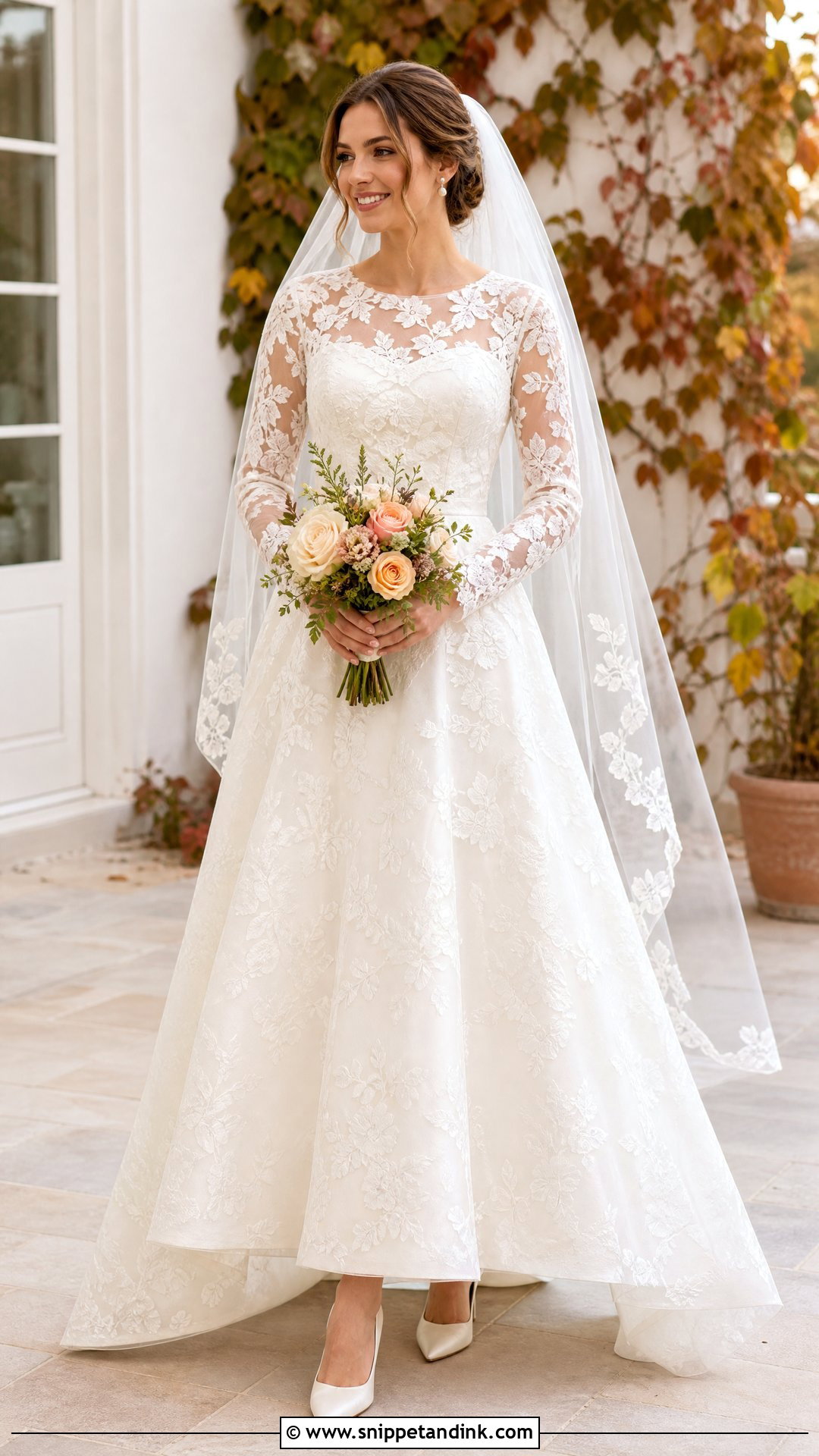
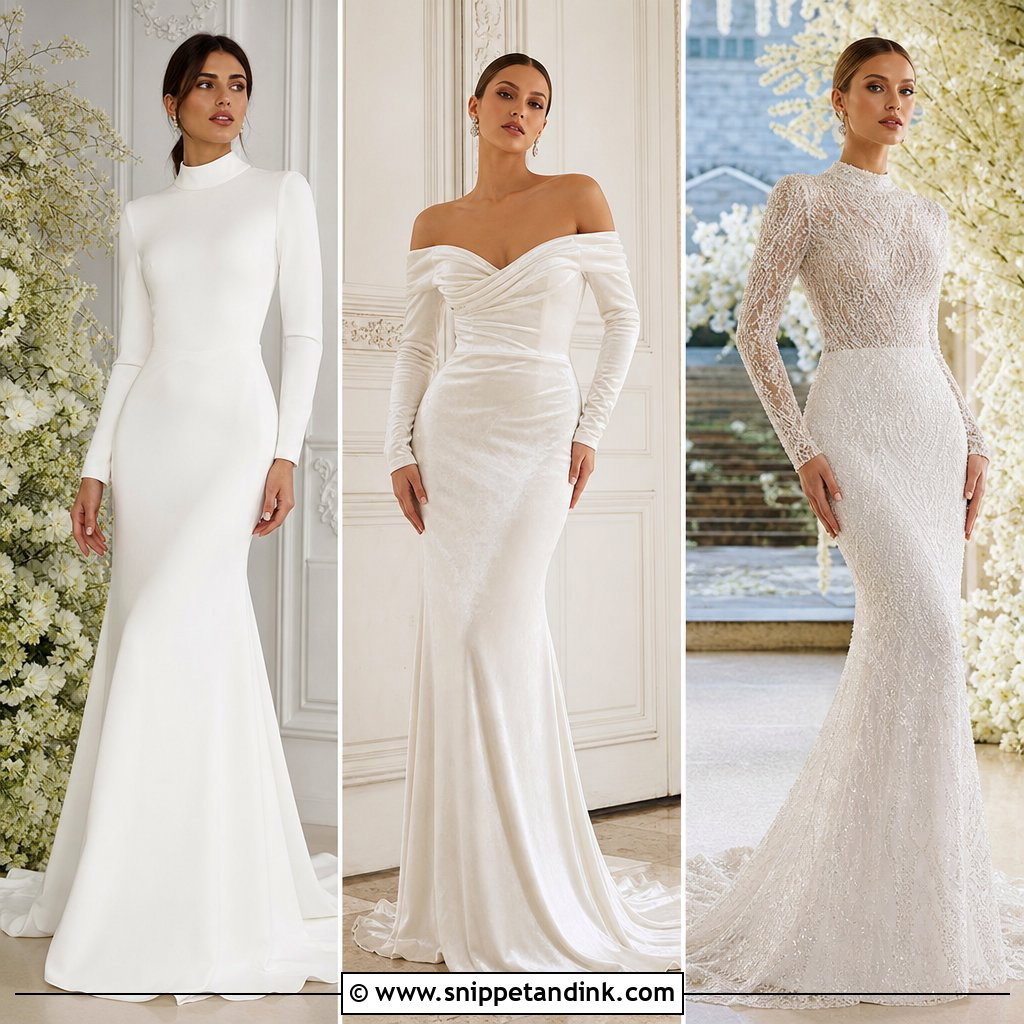
I like lace sleeves in cool months and in churches, where shoulders are often covered anyway. Floral lace reads soft from a distance; corded lace has a raised edge that throws small shadows and shows up better in photos. The sleeve fit matters more than the pattern. Sheer lace sleeves cut too narrow will strain at the elbow when you hold a bouquet, so bend your arms fully at the fitting. Pearl studs, a low bun and a fingertip veil keep the neckline clear.
3. Satin A Line Wedding Dress
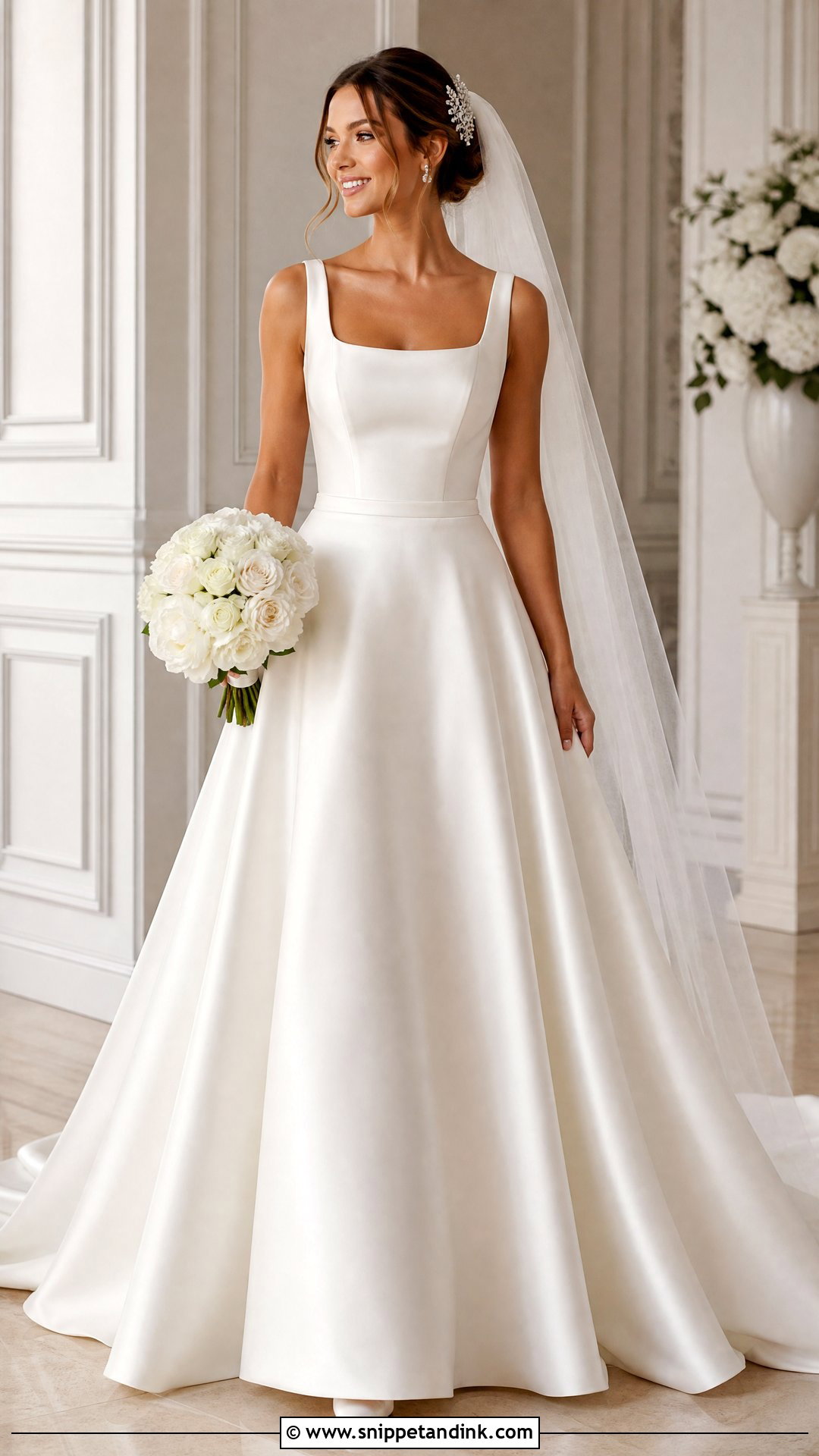
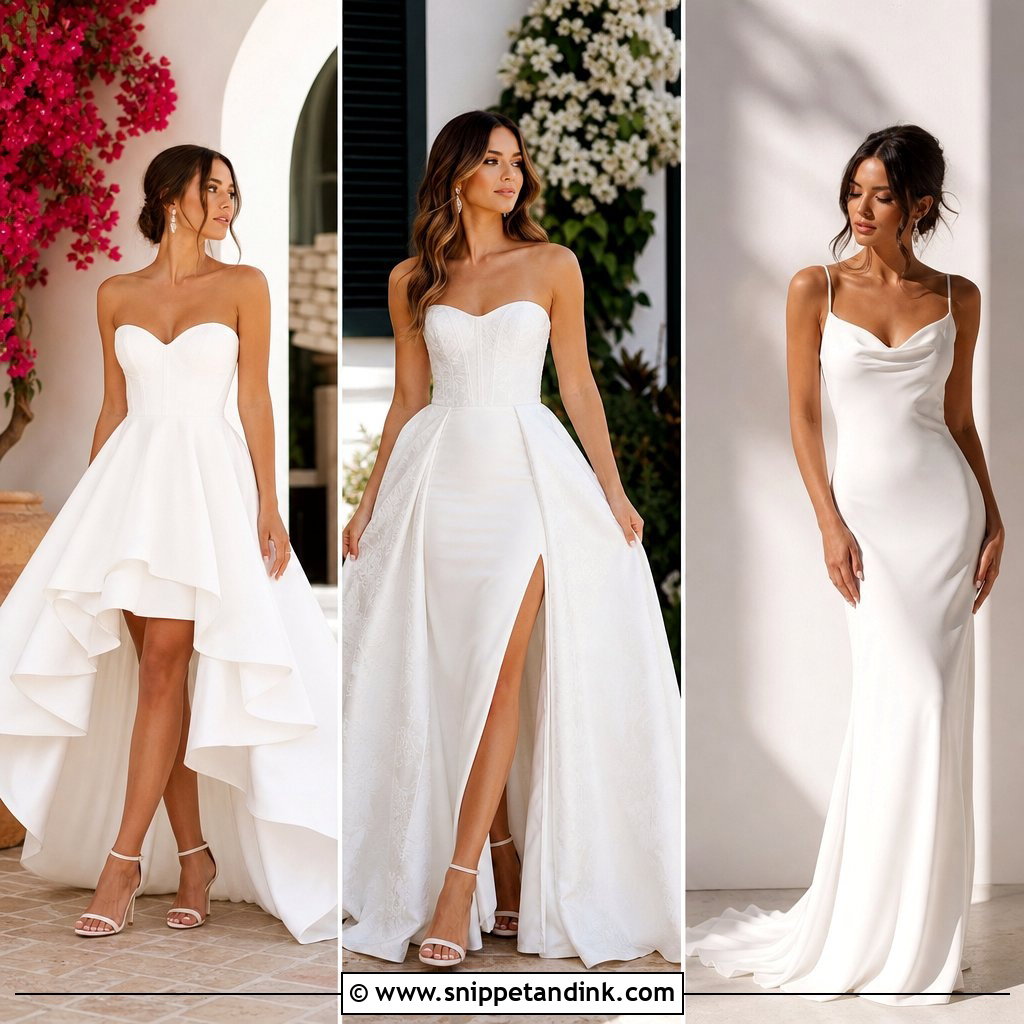
Satin A-line suits more body shapes than almost anything else I fit. The bodice gives definition, and the skirt flares from the waist without clinging to the hips. Satin reflects light evenly, which also means it shows creases, so steam it at the venue. A square neckline looks current; a sweetheart softens it. I’d finish with a crystal comb and a veil with a clean, untrimmed edge, which suits hotels, estates and ballrooms equally well.
4. Floral Embroidered Wedding Dress
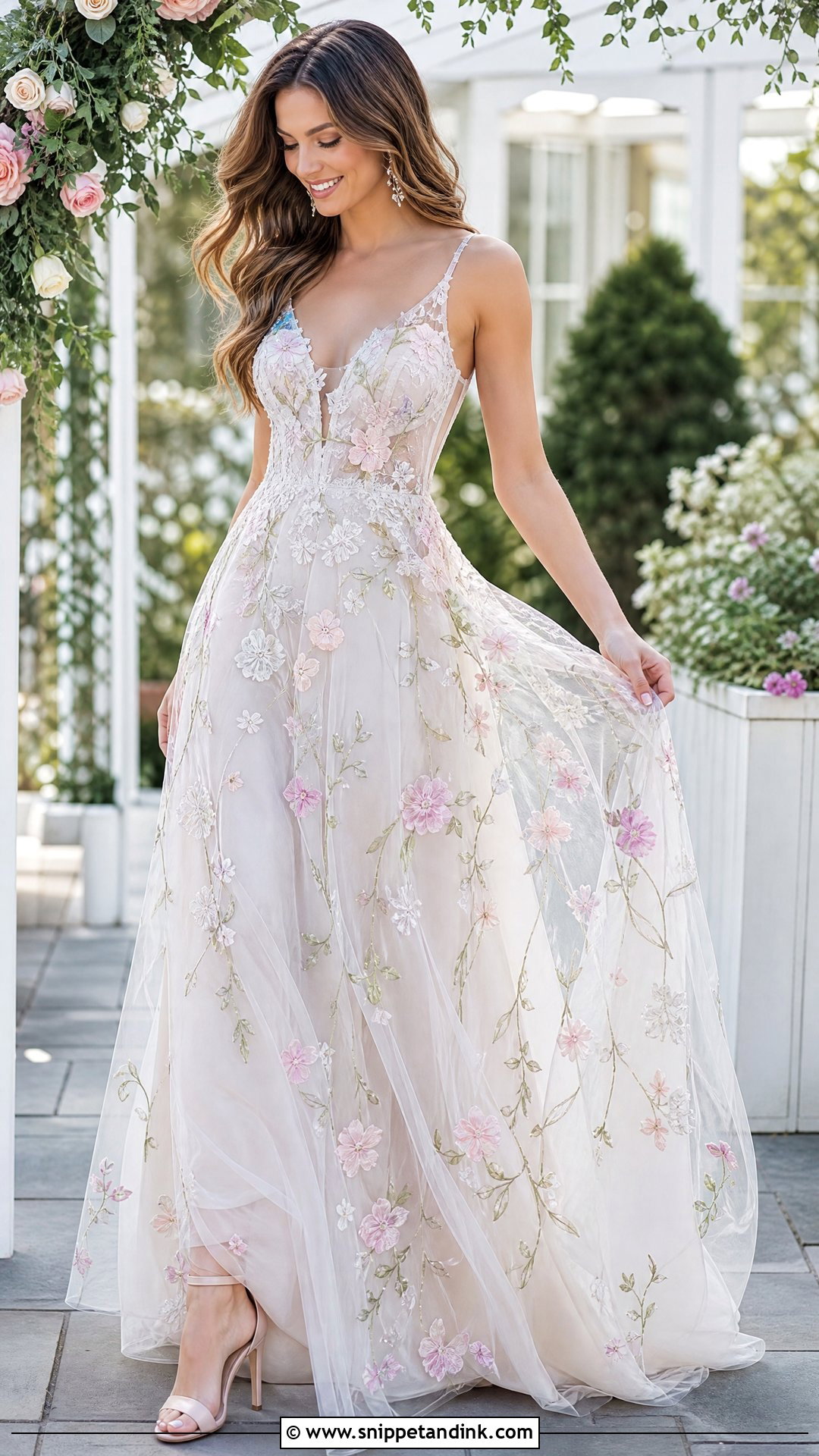
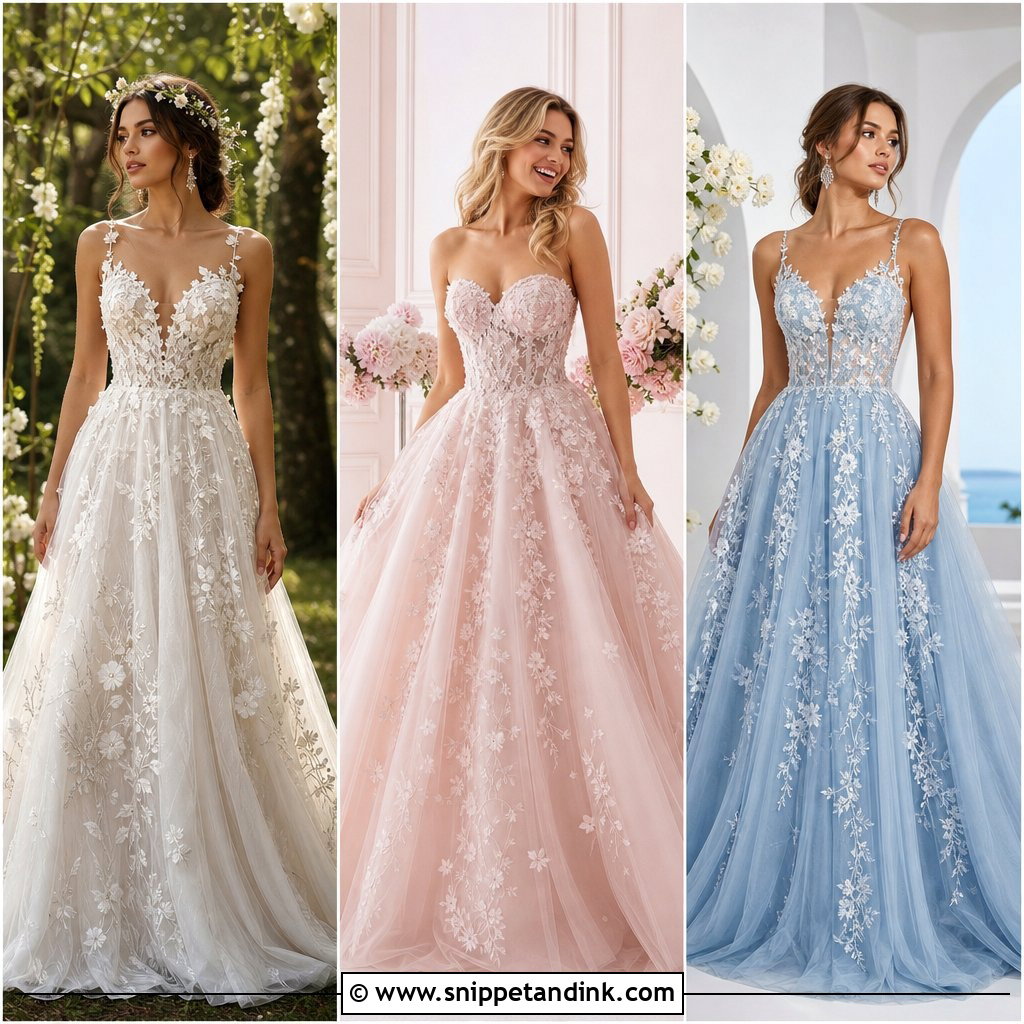
Embroidery is where a dress can become personal. On a floral embroidered wedding dress, white-on-white thread reads as texture, while pink, blue, lavender or sage thread reads as colour from across a garden. Embroidered flowers on a sheer overlay look as if they float, but sheer layers also snag on bracelets and bouquet wire. Wrap your bouquet stems in ribbon and leave the bracelets off. A plain veil lets the stitching lead.
5. Off Shoulder Wedding Dress
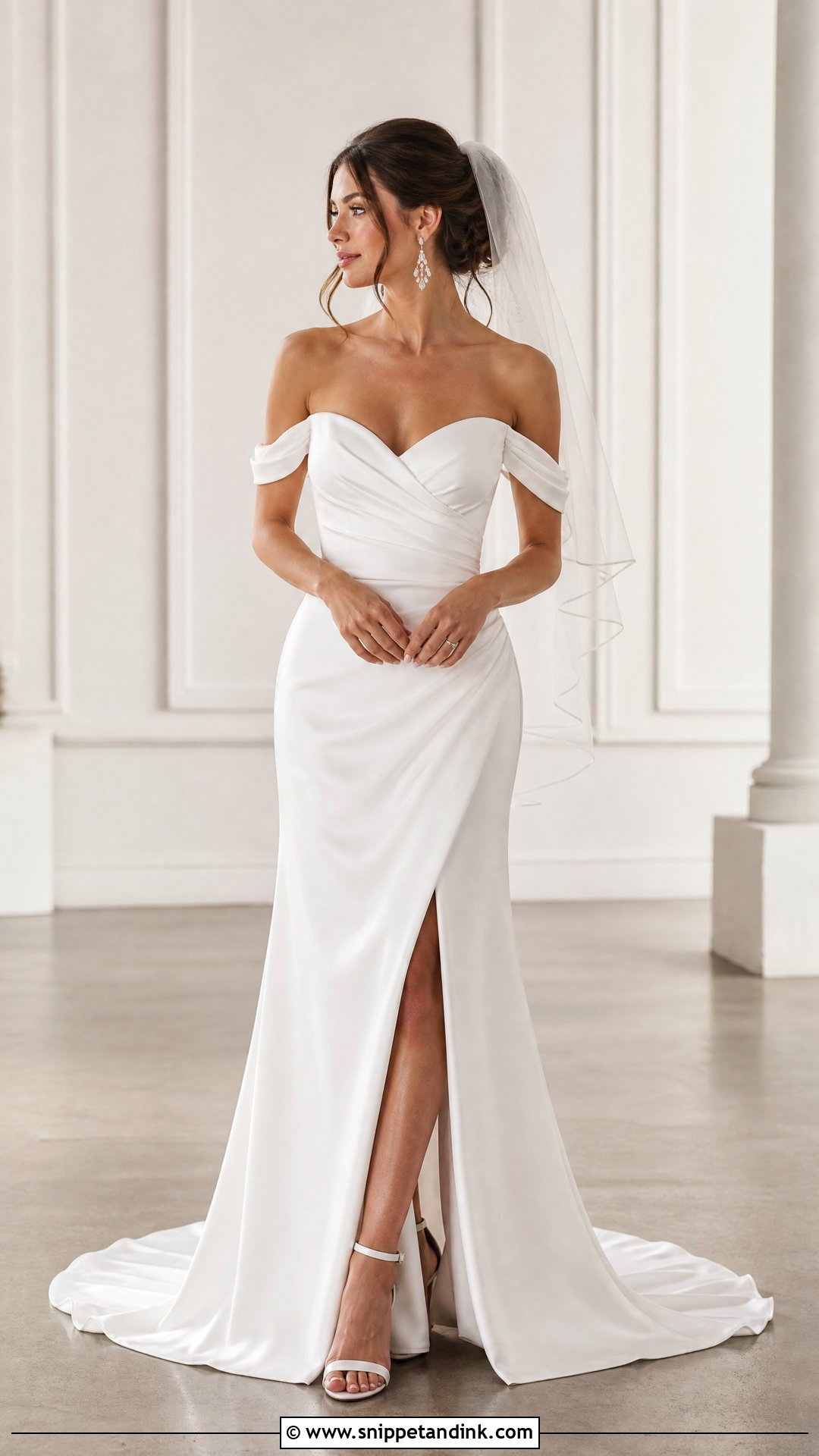
An off-shoulder neckline frames the collarbones and suits nearly every silhouette, from mermaid to soft A-line. The question I always ask is how it is held up. Draped satin or tulle sleeves resting on the arms need an internal corset or boning in the bodice, or the whole neckline creeps down as you move. Lift your arms and hug someone at the fitting. Chandelier earrings and a soft updo suit it; a heavy necklace crowds it.
6. Pearl Wedding Dress
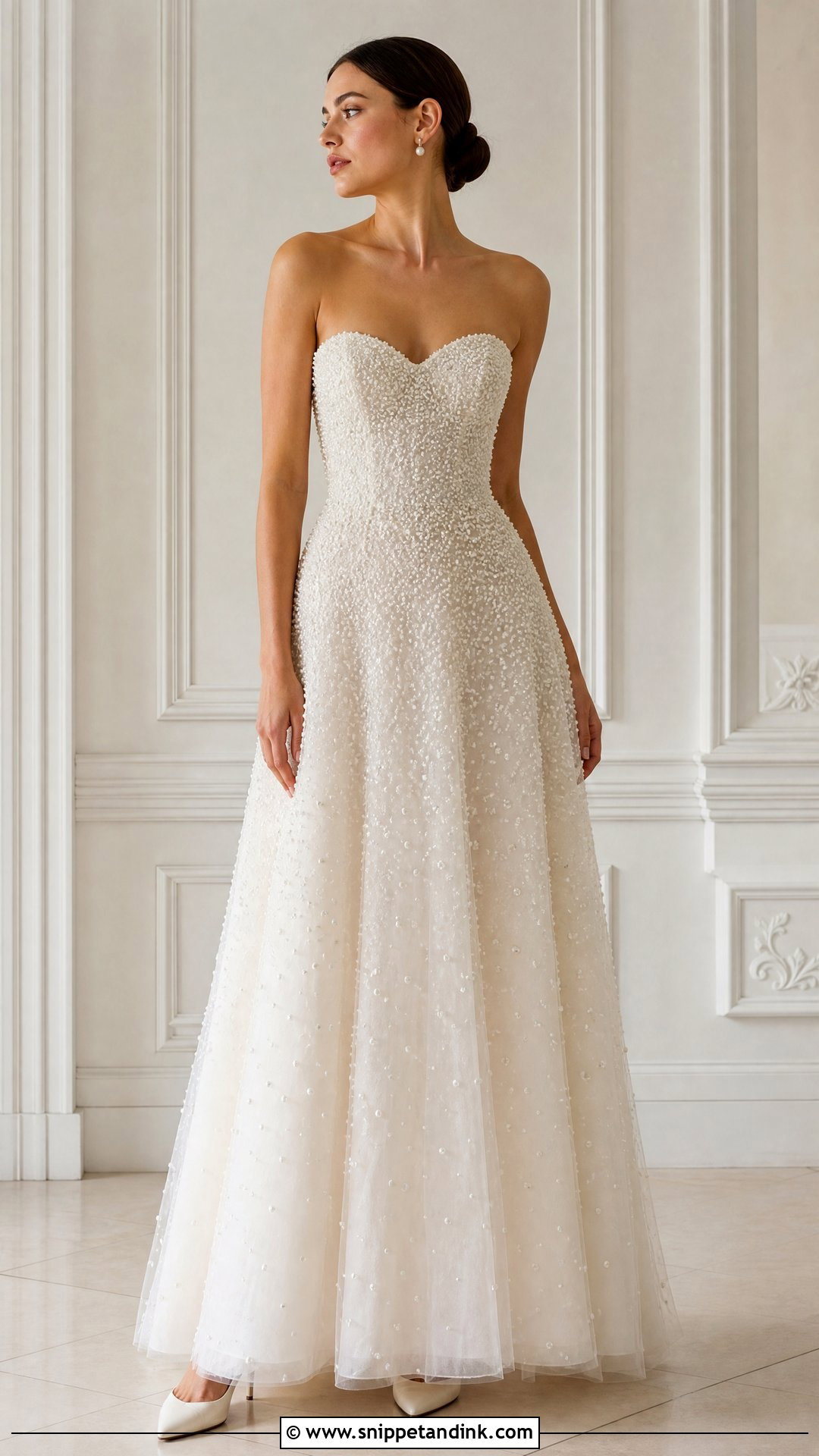
Pearls give shine without glare. Scattered on tulle they look dreamy at a distance; edged along a neckline or cuff they look tailored up close. If the bodice is heavily beaded, keep the skirt plain so the eye knows where to rest. I’d also check the beading at the underarm, where pearls rub and can come loose after hours of movement; ask your seamstress to reinforce that area. Pearl earrings and a smooth bun keep everything in the same family.
7. Corset Bodice Wedding Dress
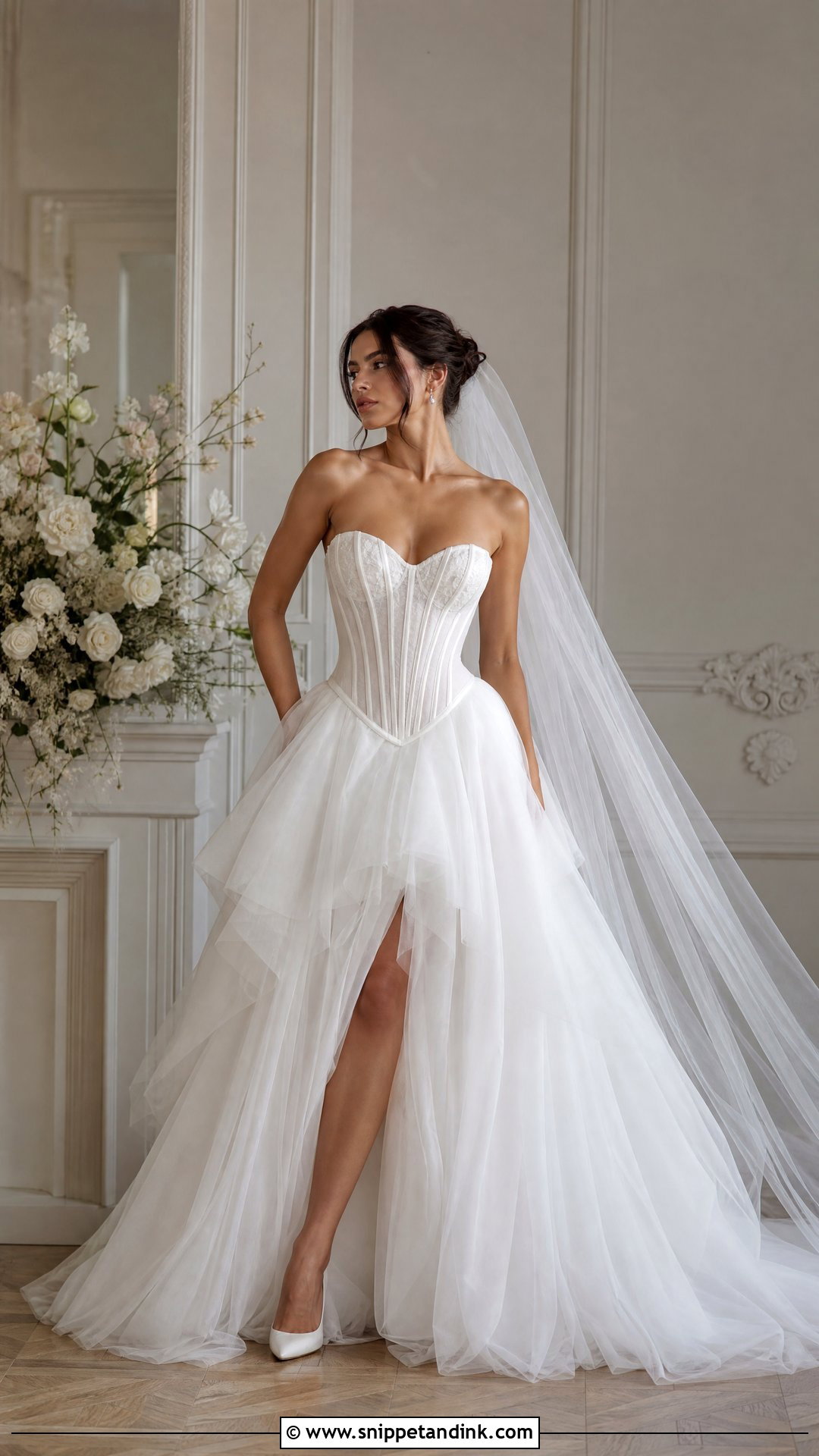
A corset bodice wedding dress gives you shape and posture all day. With tulle it looks soft; with satin or crepe it looks sharper. The fit is everything. Real boning should sit flat without poking at the top edge when you bend, and you should be able to take a full breath seated. A basque or dropped point at the waist lengthens the torso before the skirt opens, which suits shorter brides especially well. Keep the earrings minimal if the bodice has visible detail.
8. Tulle Wedding Dress
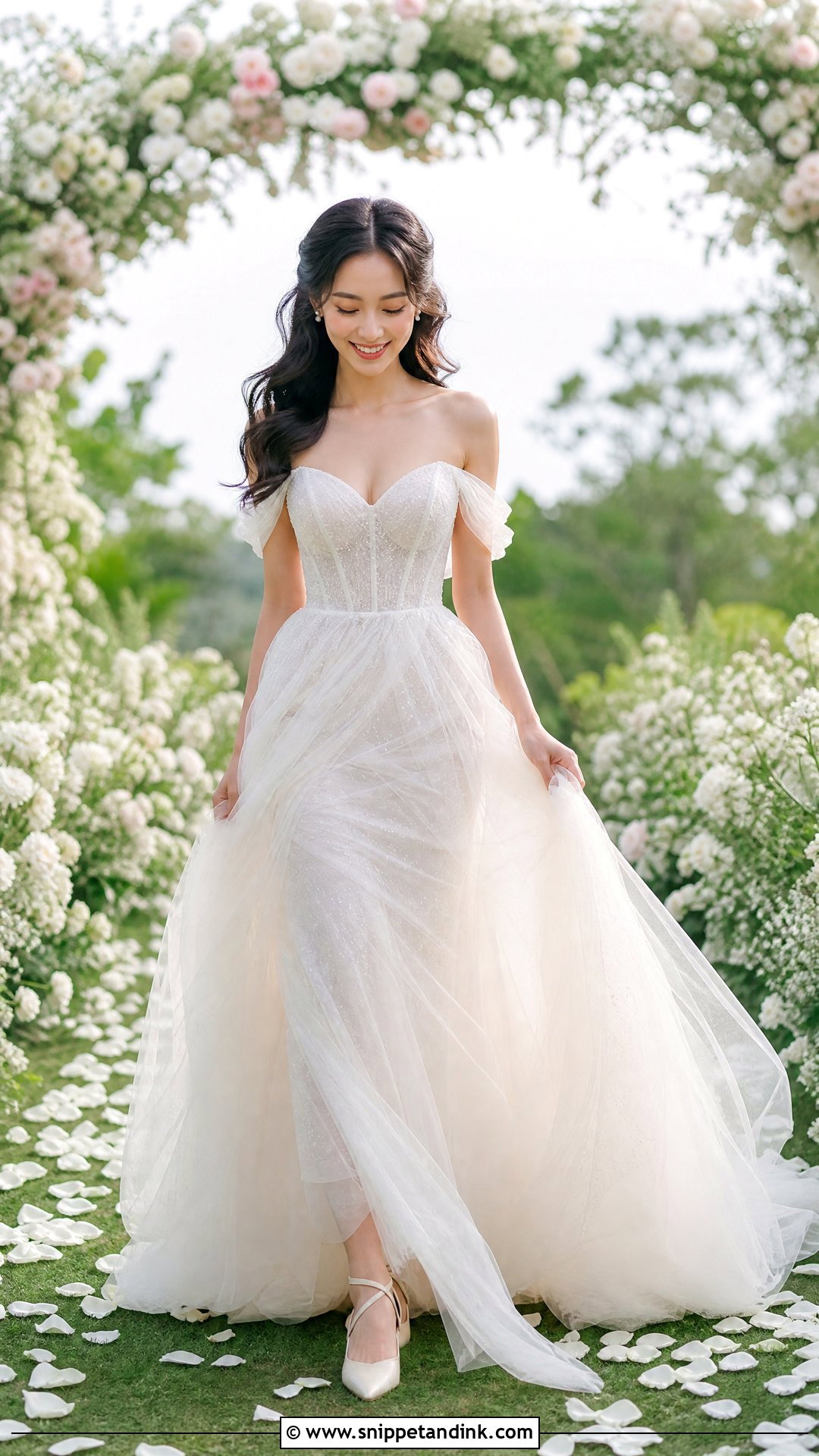
Layers of fine tulle give the cloud effect without much weight, and that is why tulle suits outdoor ceremonies and long days. Its weakness is snagging. Heels catch the hem, chair legs pull threads and grass stains show quickly at the lowest layer. I ask for a horsehair or satin band at the hem if the dress allows it, and I tell brides to lift the front when climbing steps. Removable sleeves, ballet flats and loose greenery in the bouquet all suit tulle.
9. Minimalist Silk Wedding Dress
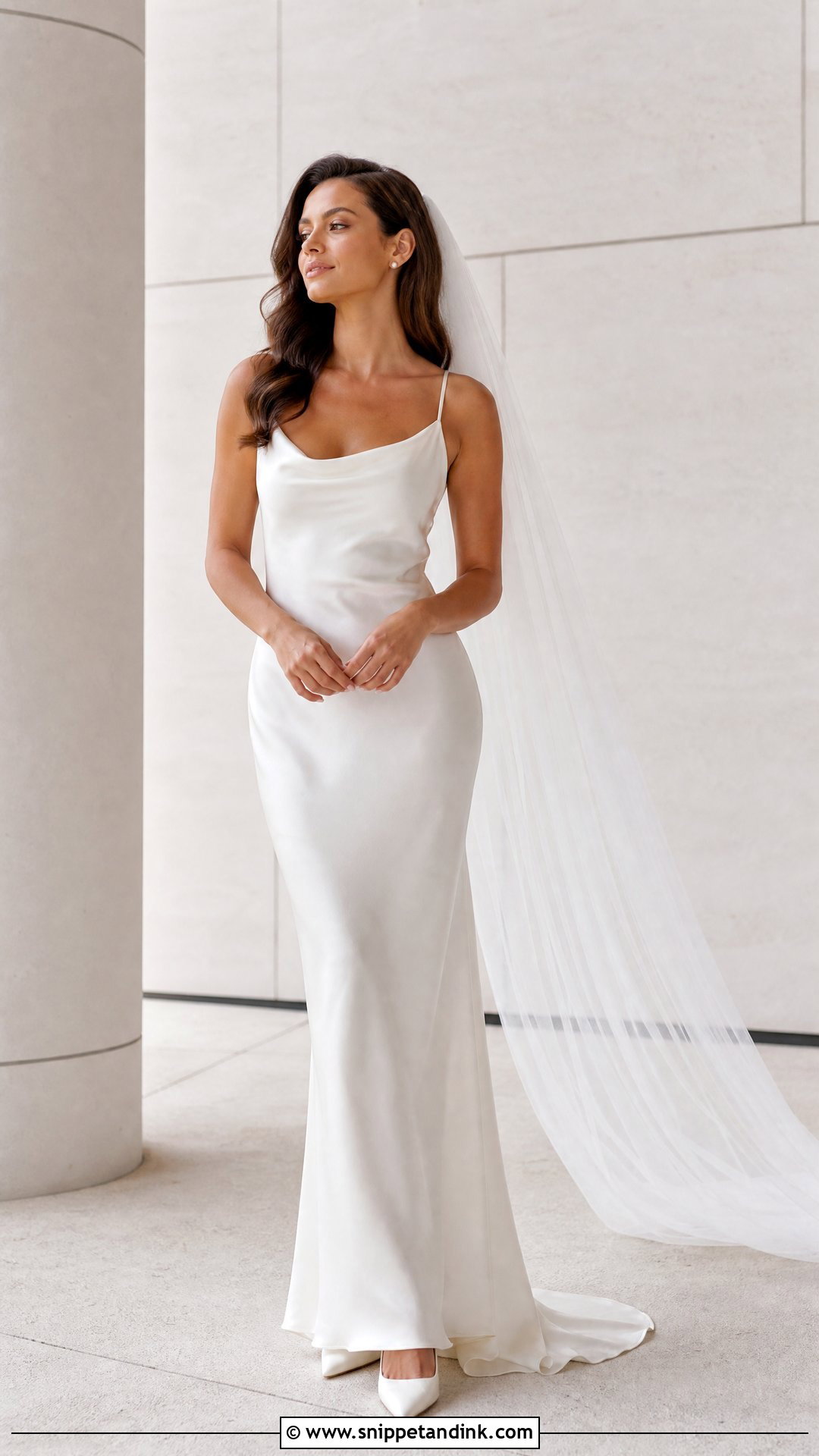
A plain silk gown has nowhere to hide, so this is the dress where tailoring decides everything. Bias-cut slips, column gowns and simple A-lines all rely on fabric and fit. Silk is also honest about what’s underneath, so try the dress with the exact underwear you will wear. Diamond or pearl studs and a long veil add contrast. It suits city weddings, destination ceremonies and small dinners, and it packs better than any structured gown.
10. Sparkle Wedding Dress
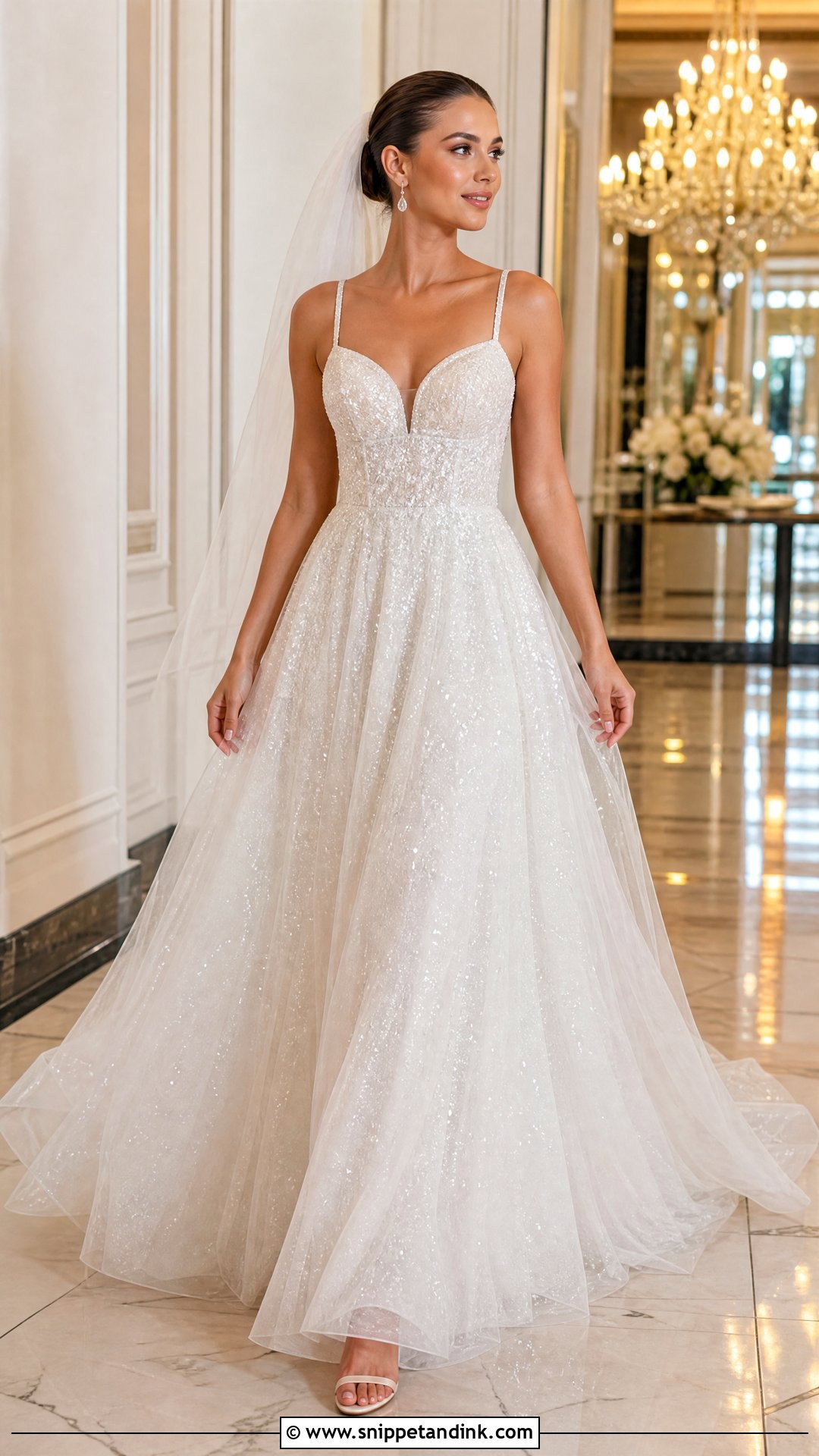
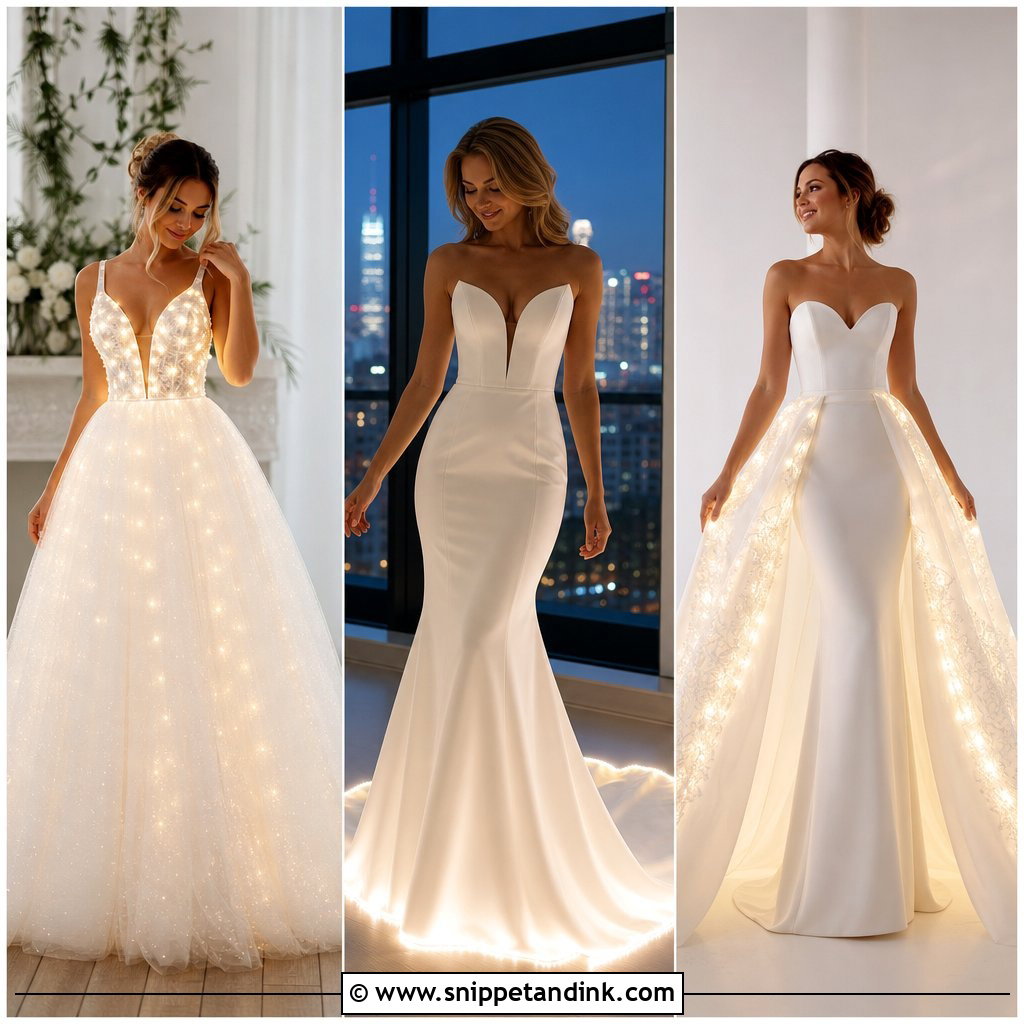
Sparkle is meant to catch light as you move, so where it sits matters. Fine shimmer or crystal beading scattered over tulle glows softly; dense sequins can flash white in photos taken with direct flash. I always look at a sparkly dress under the venue’s real lighting if I can, or at least under warm lamps rather than shop daylight. Tiny crystal earrings and a clean veil are enough. Candlelit rooms and evening ballrooms are where it looks its best.
11. Cape Wedding Dress
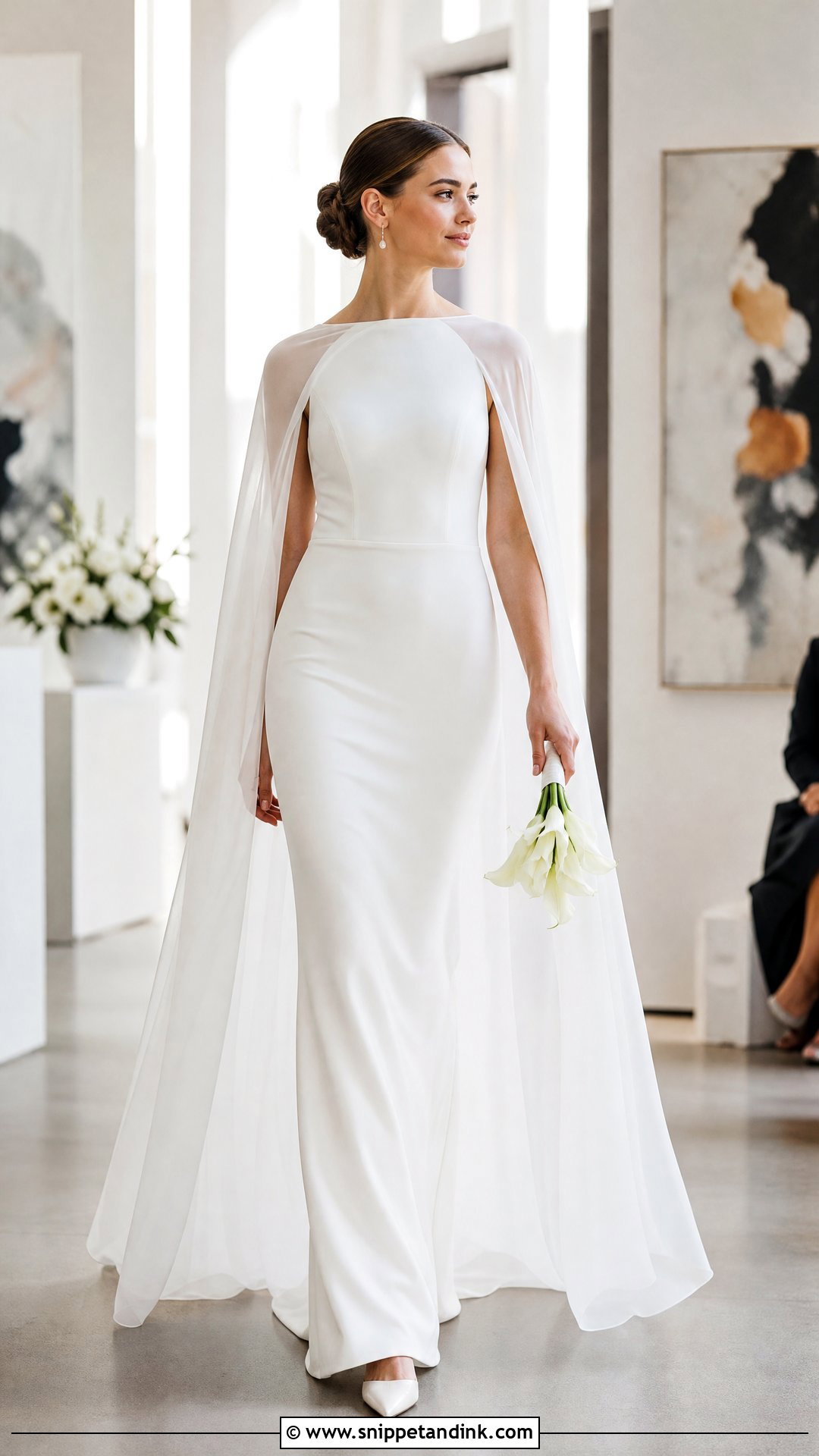
A cape brings veil-like drama without the veil’s habit of tangling in wind or catching on chairs. Sheer capes fastened at the shoulders feel light; satin capes feel regal and heavier. Check how the cape attaches. Hooks or snaps at the shoulder seams let you take it off for the reception, which gives you a second look for free. Put it over a column, crepe sheath or satin A-line and keep the hair polished so the back stays clean.
12. Bow Back Wedding Dress
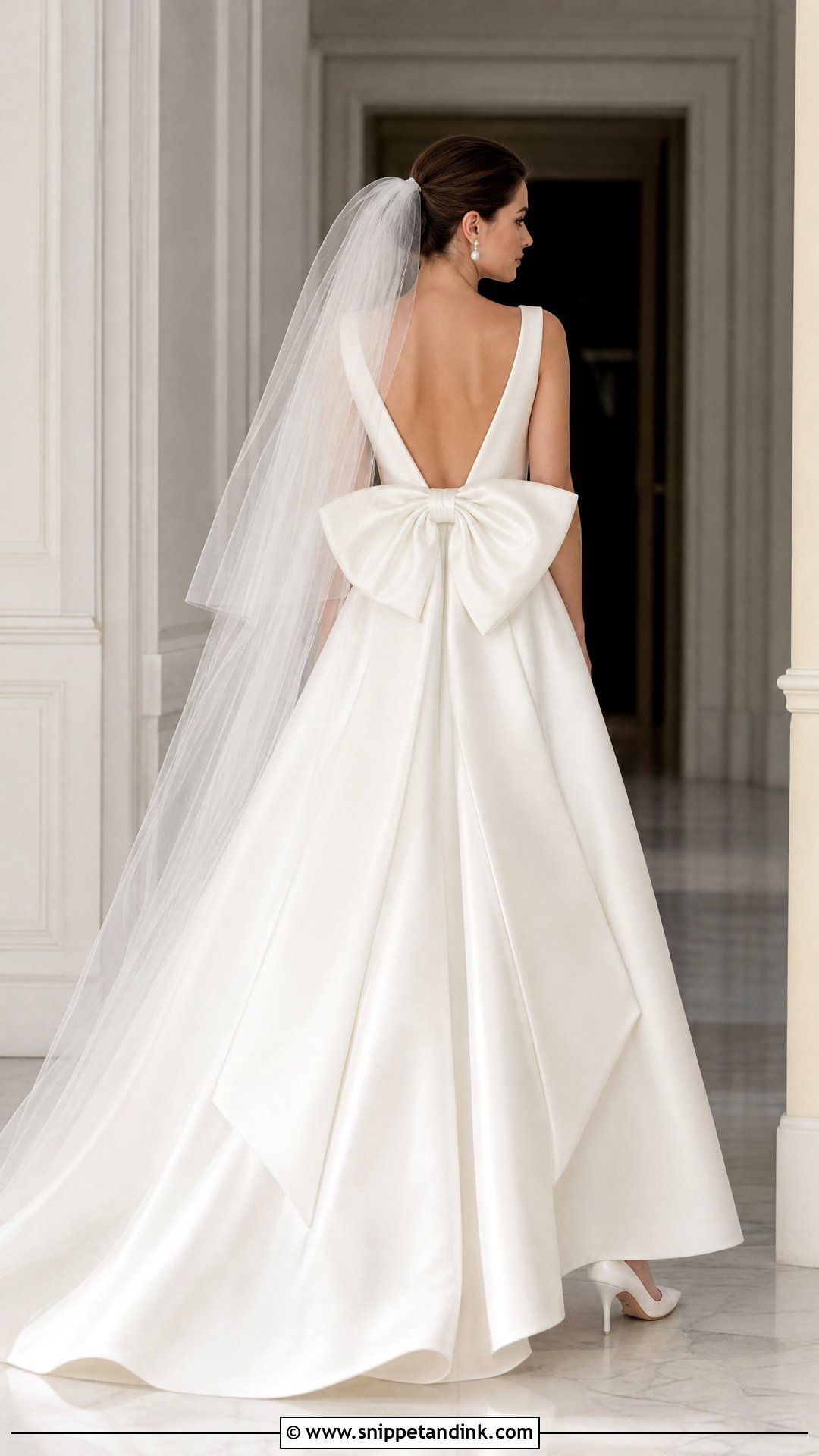
The bow is the surprise you see as you walk up the aisle. Big or narrow, it holds shape best on satin, mikado or organza, which are stiff enough not to wilt by evening. Plan veil placement around it. I usually set the comb above the bow so the veil falls over it rather than flattening it, and I check how the bow sits when you sit down, because large bows can crush against a chair back. Pearl earrings and classic pumps keep the front simple.
13. Drop Waist Wedding Dress
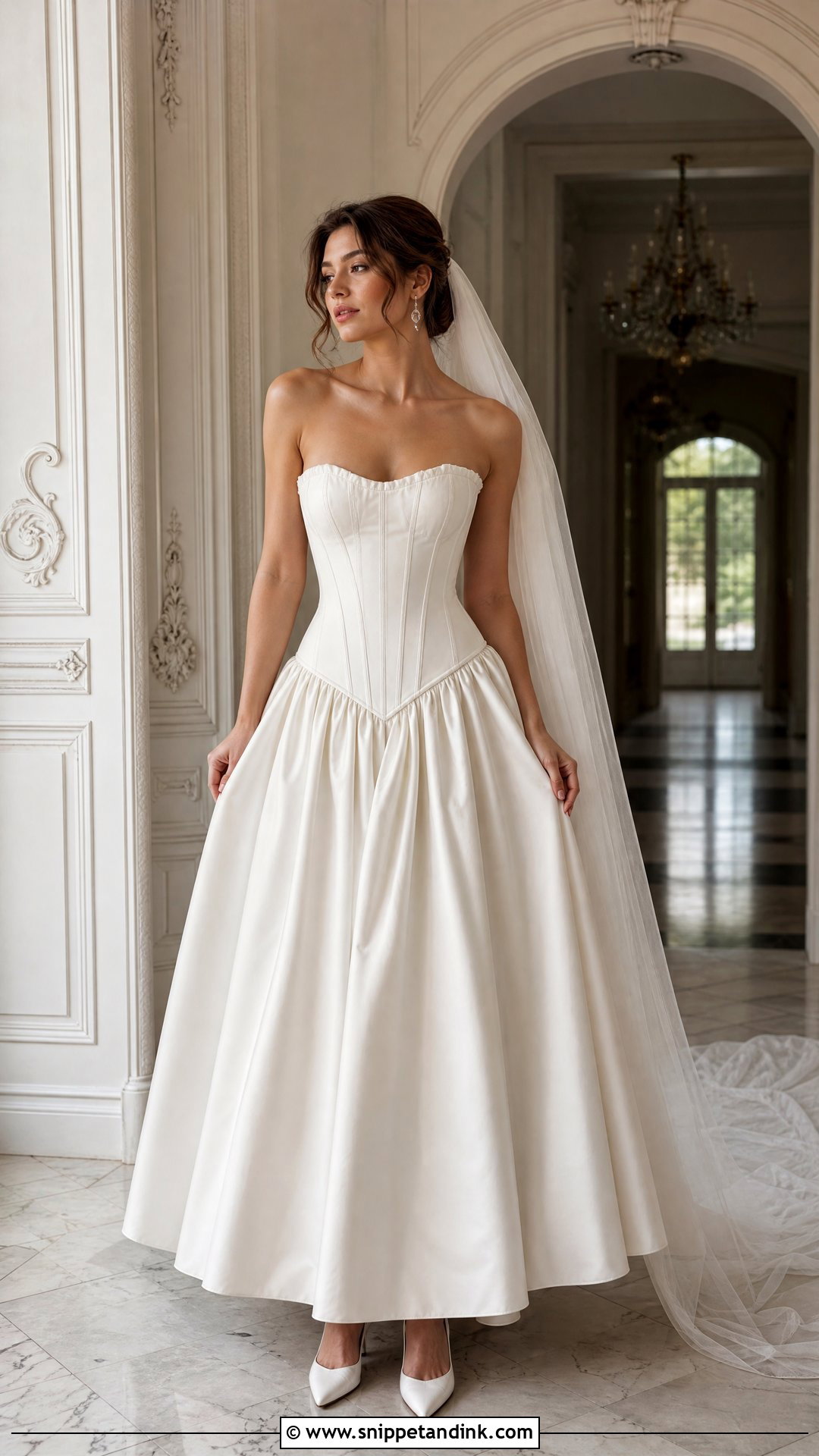
A drop waist moves the seam lower on the torso, so the skirt starts later and the body looks longer. It flatters long torsos naturally. On a shorter torso it can make legs look shorter, so I usually suggest a basque point instead, which dips in the centre and gives a similar line. Lace, satin or textured tulle all give it a vintage note. Simple jewellery and a long veil let the unusual waist stay the detail.
14. Sheer Sleeve Wedding Dress
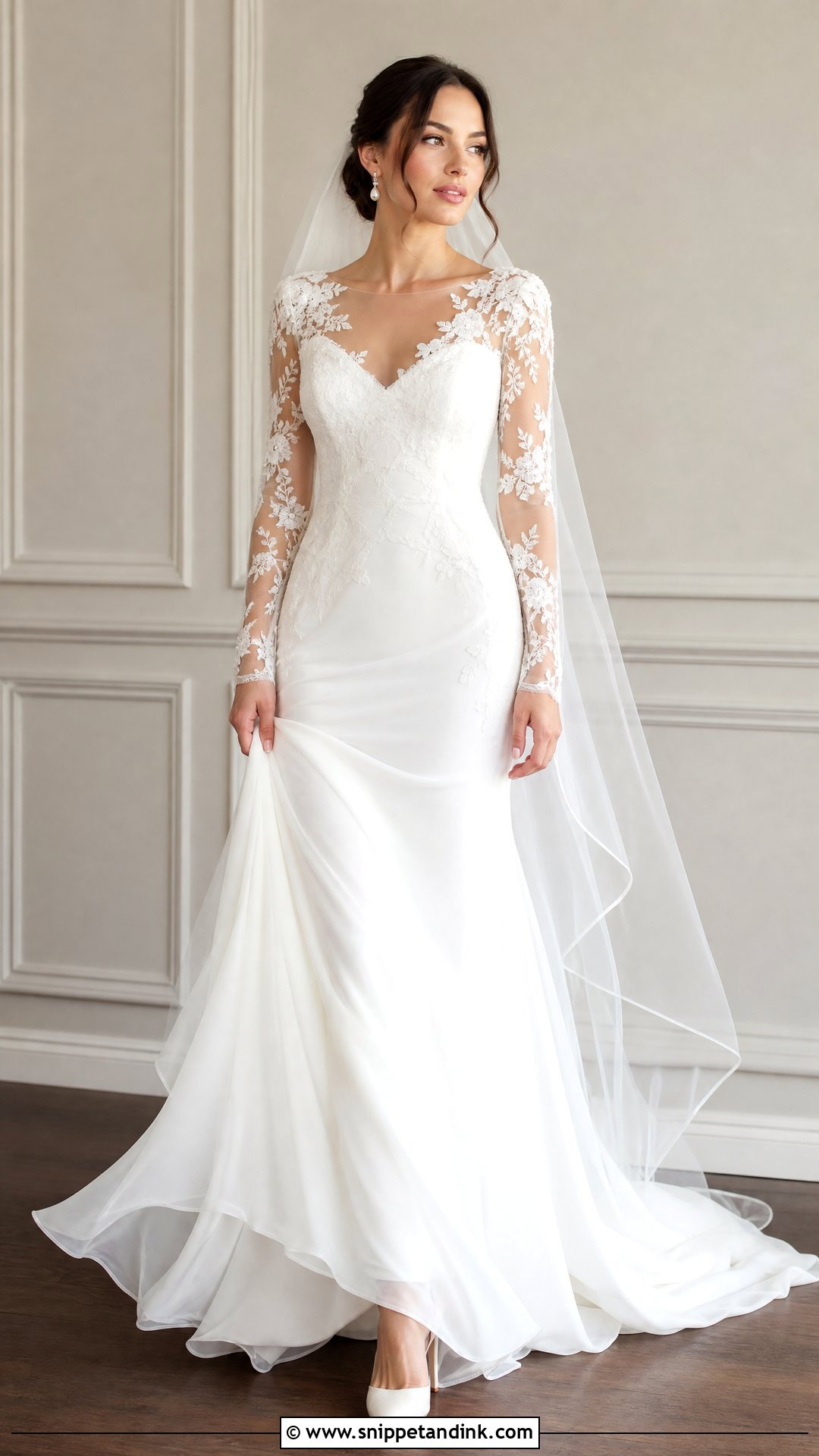
Sheer sleeves give arm coverage without weight, which is a relief in summer churches and outdoor ceremonies. They can be plain tulle, pearl-dotted, lace-covered or finished with floral appliqué. Check that the illusion tulle matches your skin tone; the wrong shade shows as a grey band in photos. A low chignon and clean-edged veil won’t compete with the detail on the arms.
15. High Neck Wedding Dress
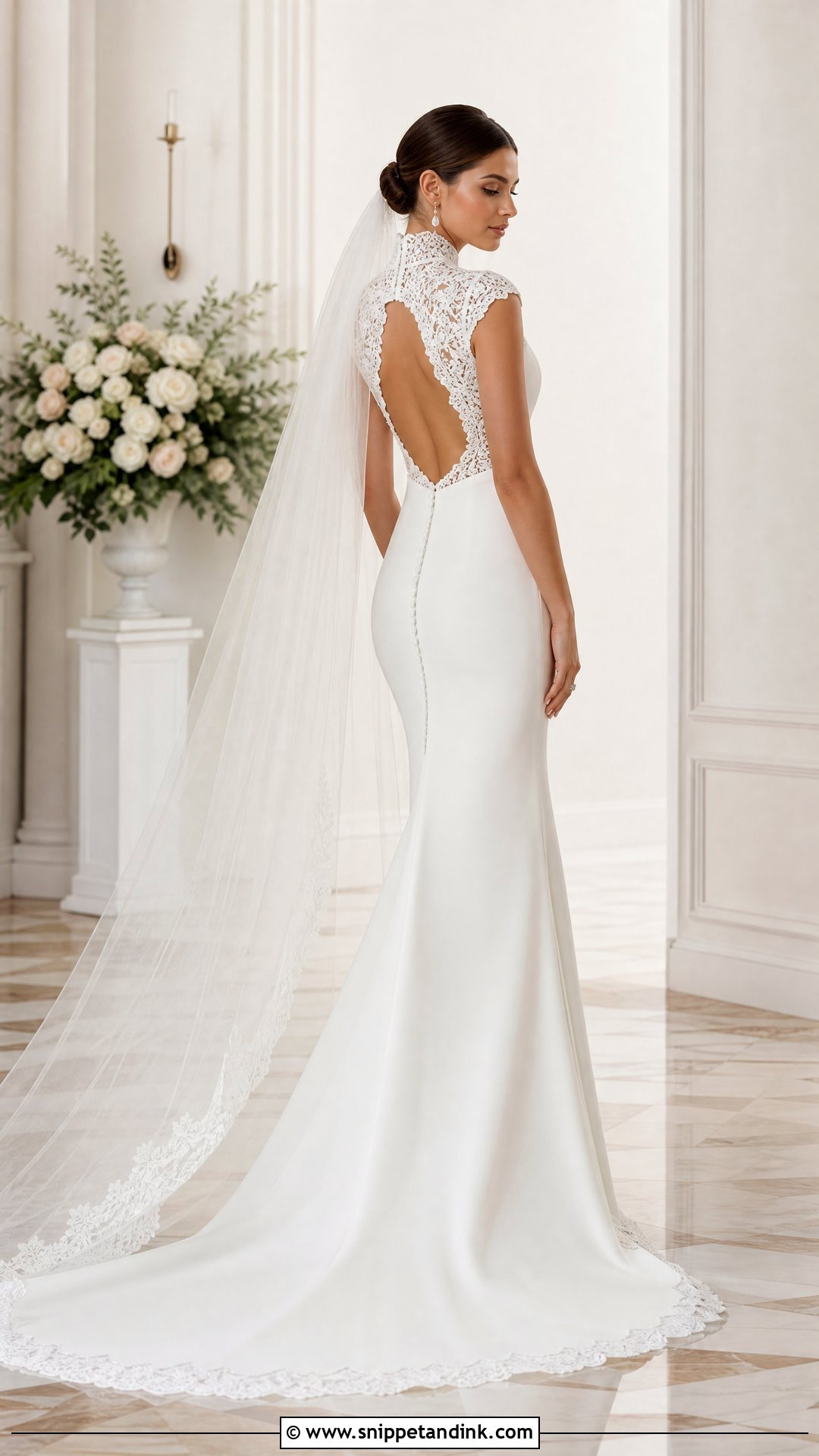
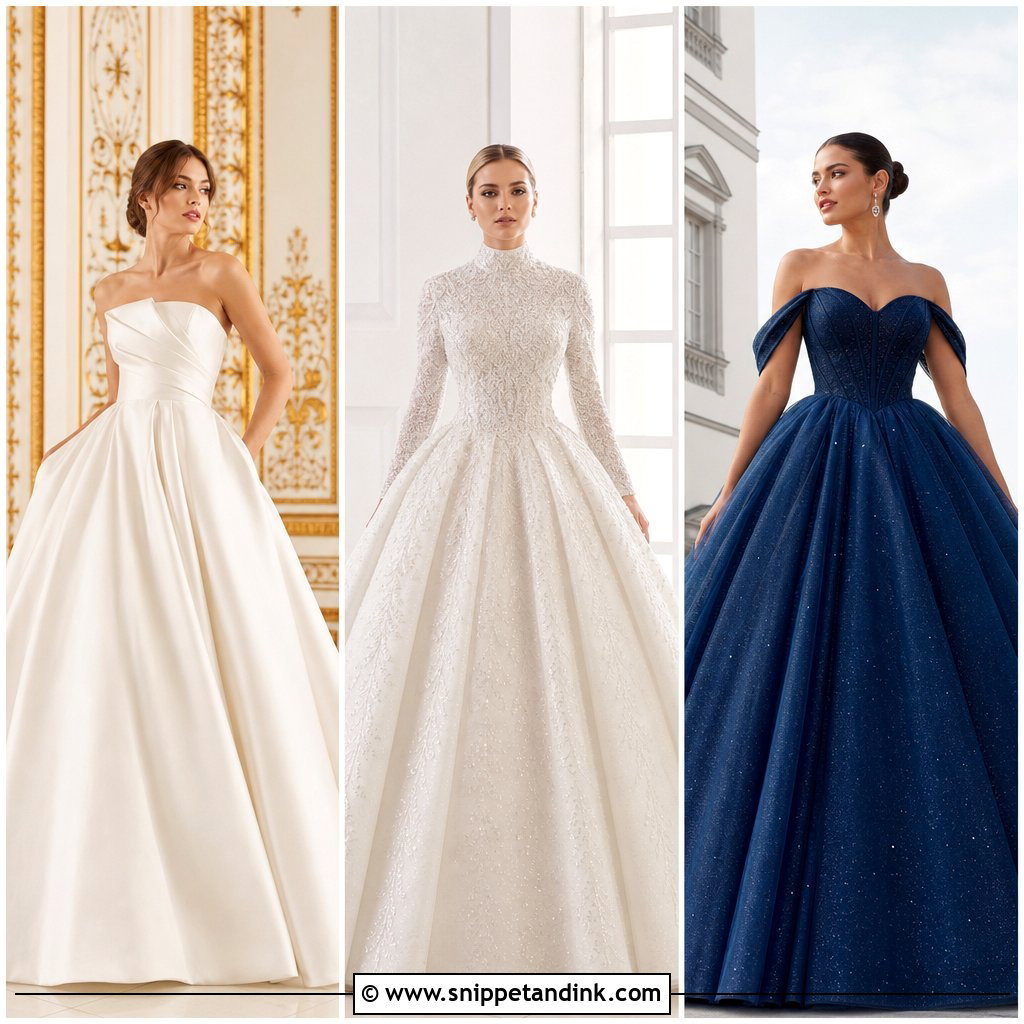
High necks look modern when the rest of the dress breathes. An open back or a floating skirt keeps lace, crepe, satin or illusion fabric from feeling heavy. I check two details here: that the collar doesn’t press when you look down at your rings, and that the closure at the nape lies flat under an updo. A necklace has no place on it. Delicate earrings and a sleek bun suit formal weddings and cool weather.
16. Blush Wedding Dress
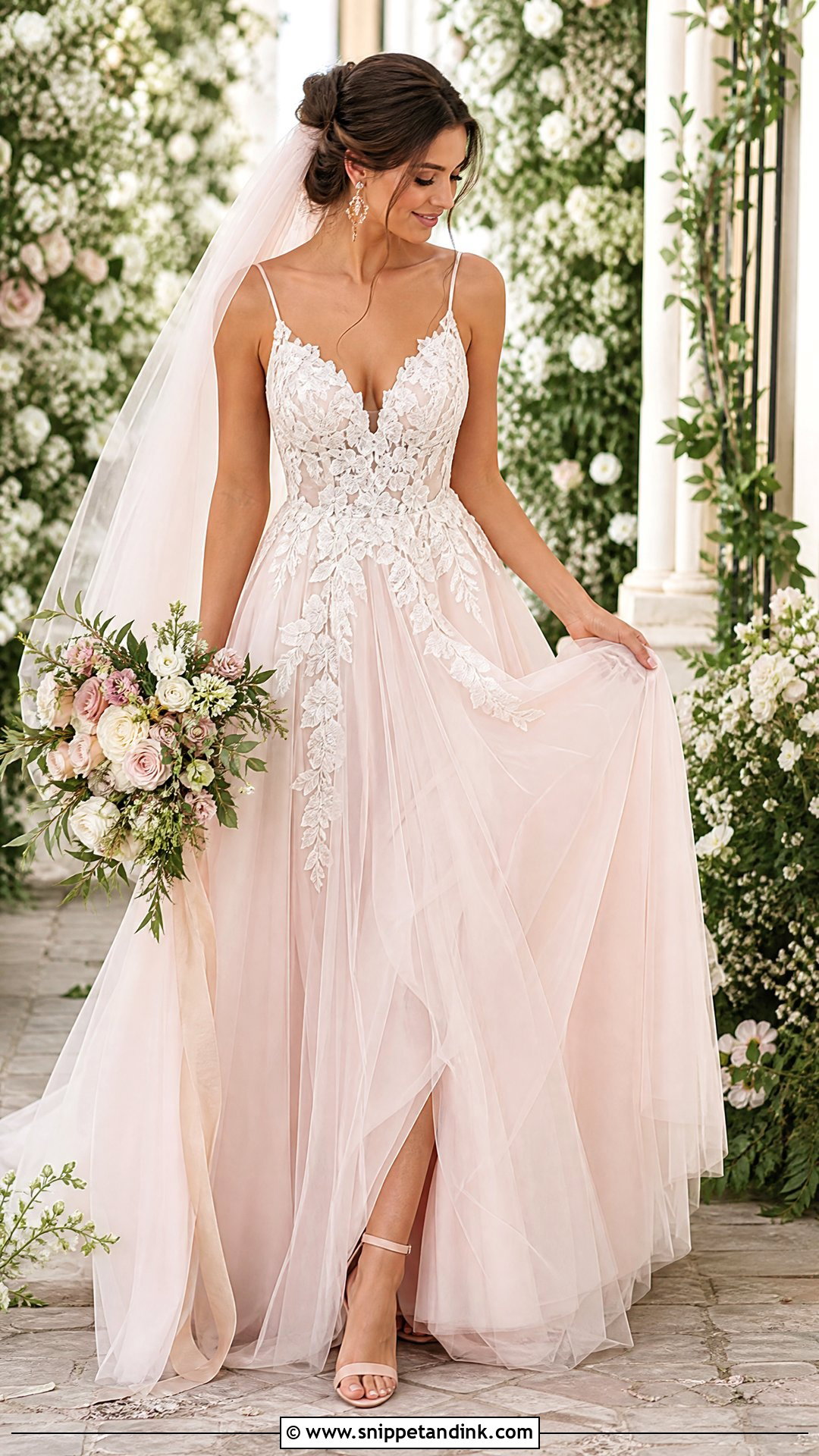
Blush is the gentlest way to wear colour. Pale pink, dusty rose or a champagne blush lining under ivory lace makes the lace pattern stand out, because the contrast shows each motif. Full blush tulle reads more whimsical. Skin tone matters here: very cool, pale skin can look washed out against peachy blush, so try several shades side by side before deciding. Rose-gold jewellery and a natural lip suit it in a garden or in spring.
17. Blue Wedding Dress
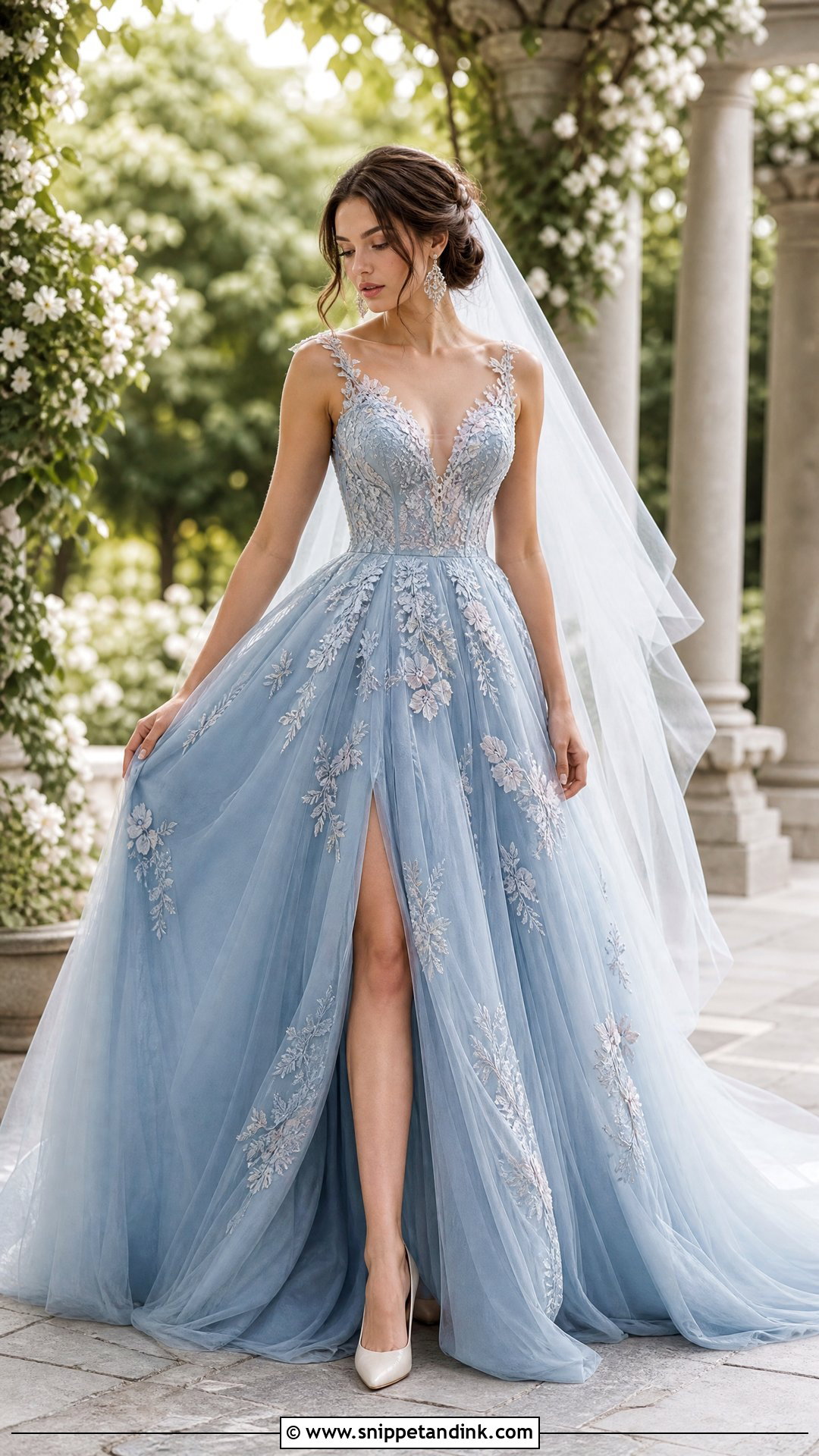
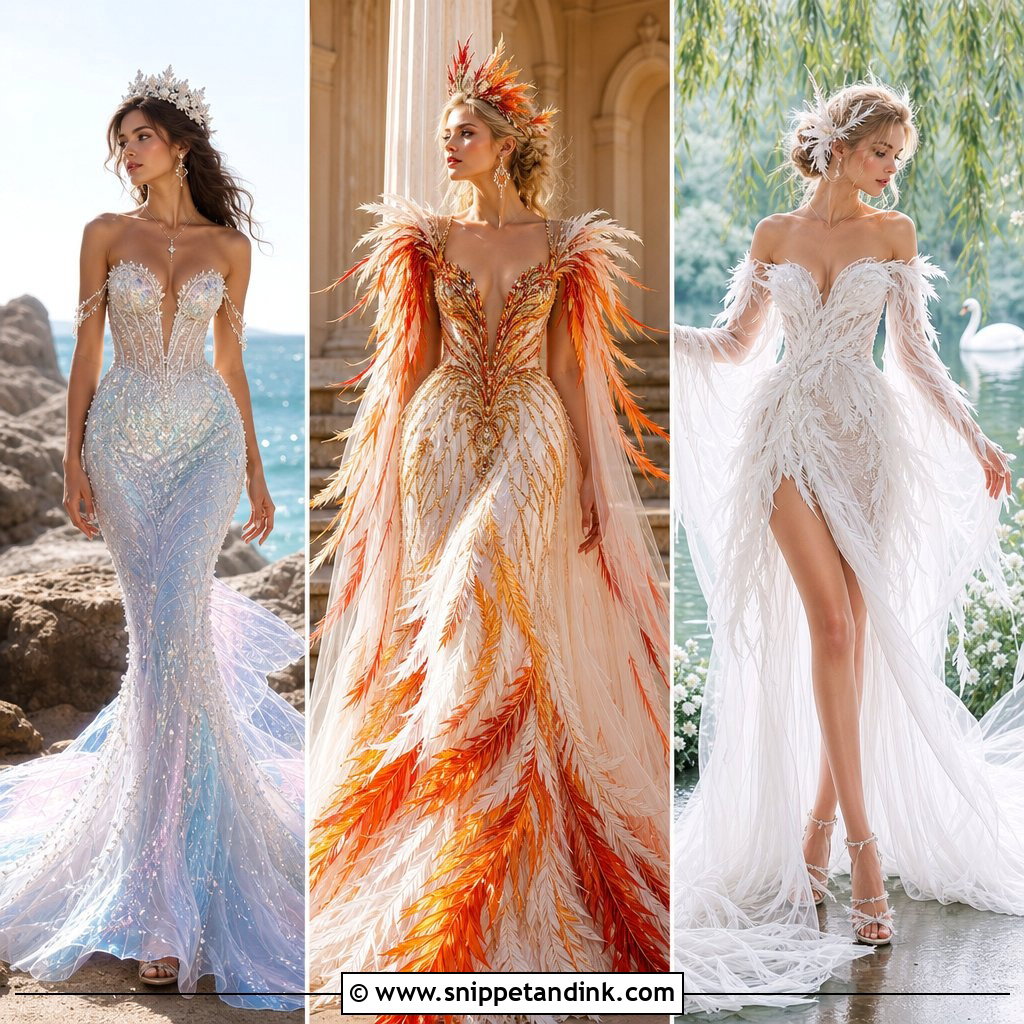
Pale blue changes with the light more than any other colour on this list. Powder blue looks almost white in bright sun and clearly blue at dusk. Layered tulle, blue embroidery or a pale blue overskirt can give you a hint instead of a whole gown. Silver jewellery and a white bouquet keep it soft. If your “something blue” is the dress itself, tell your photographer, so white balance is set to show the colour rather than correct it away.
18. Vintage Inspired Wedding Dress
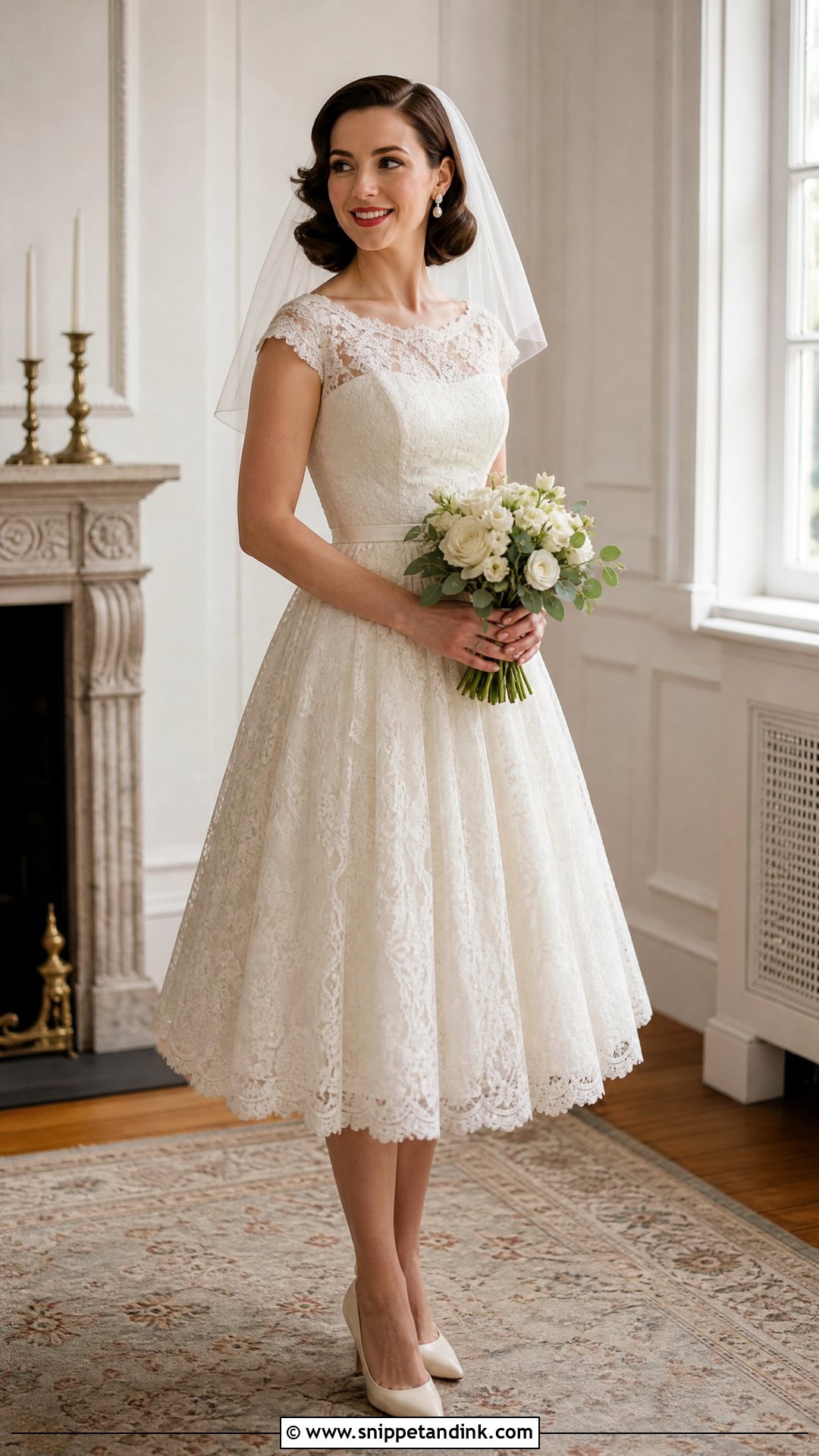
A vintage inspired wedding dress lets you borrow from history without wearing a fragile antique. Tea-length skirts, lace collars, puff sleeves, satin buttons or a 1930s bias cut each point to a different decade, so pick one era rather than mixing them. If you do want a true vintage gown, have it assessed early; old silk can split along seams and alterations take longer. A birdcage or fingertip veil suits it in historic venues and small weddings.
19. Boho Lace Wedding Dress
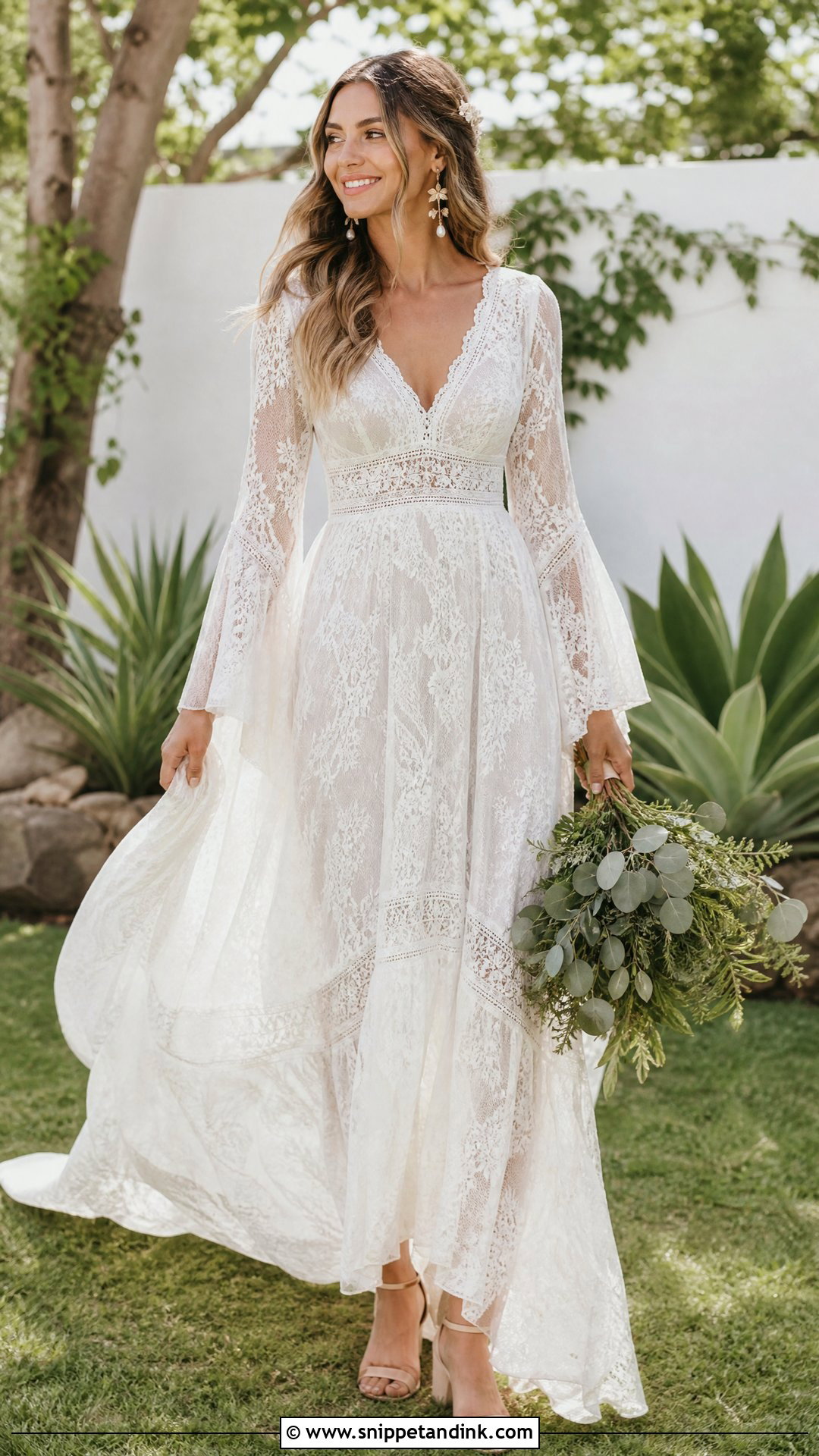
Boho lace should feel relaxed but still bridal. Soft lace, a breathable lining and a skirt that moves suit beaches, gardens and mountains. Bell sleeves, open backs and a little fringe can all work if you keep to one of them. On sand or grass, I’d raise the hem slightly so it doesn’t drag and stain, and choose block heels or flat sandals. Loose waves and wildflowers in the hair or bouquet finish it naturally.
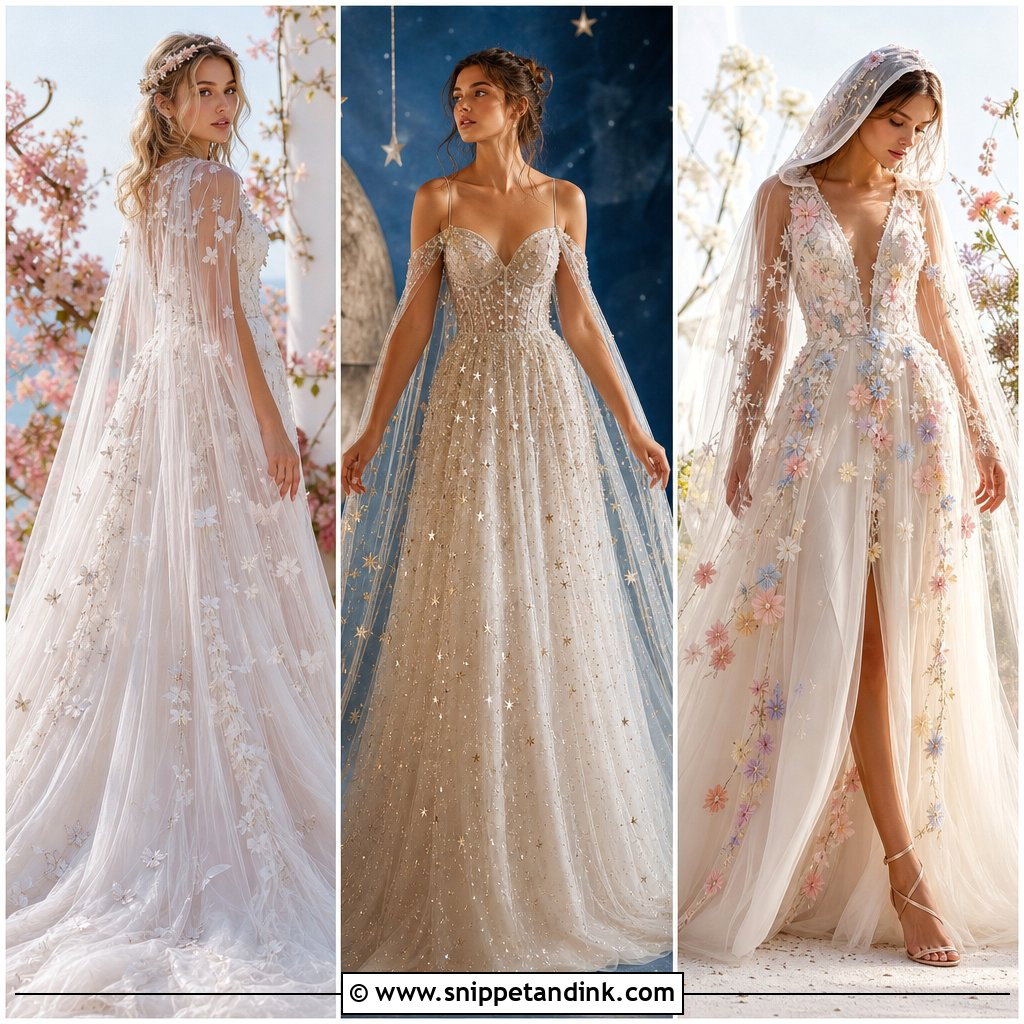
20. Mermaid Wedding Dress
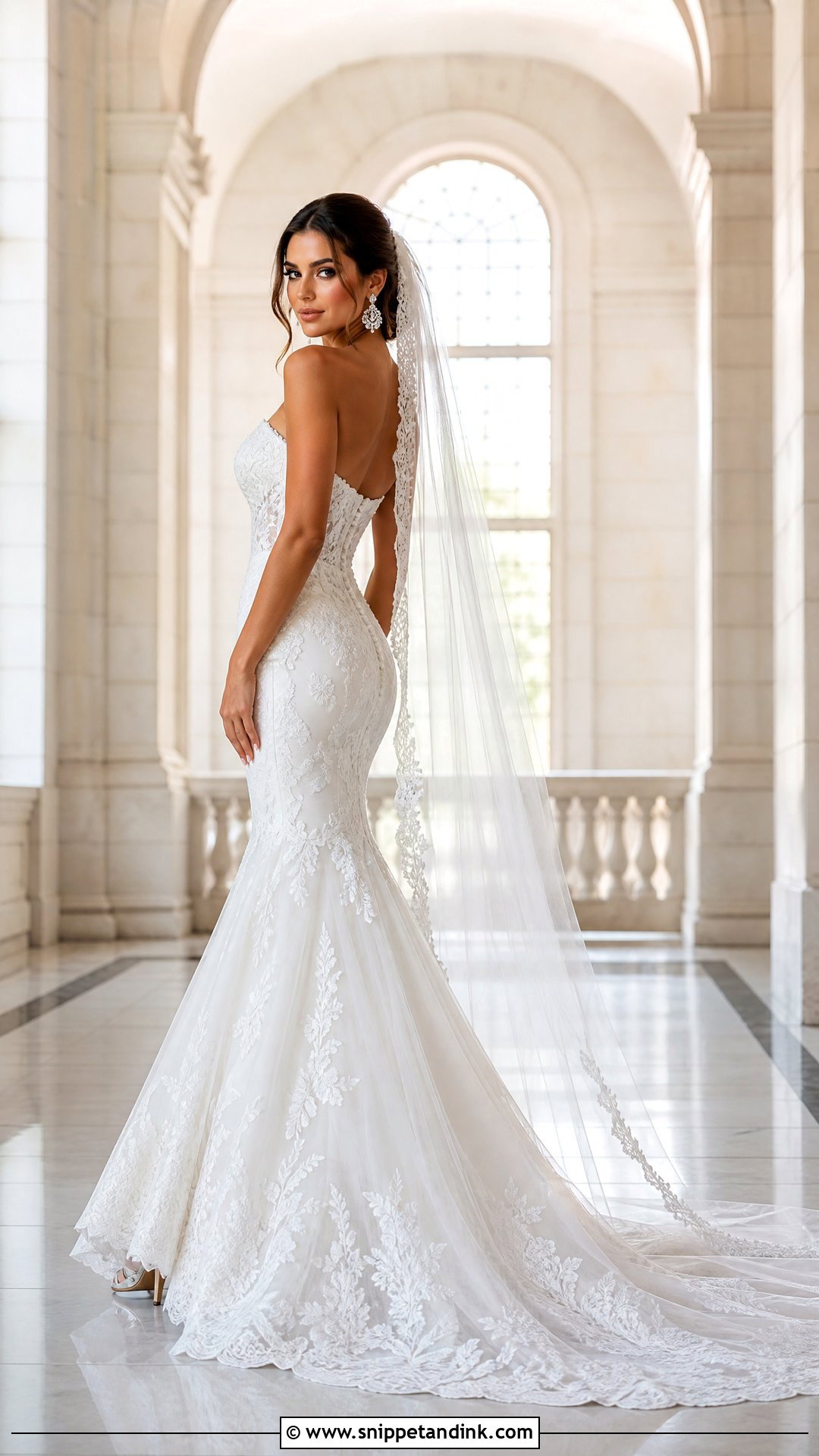
A mermaid gown hugs the bodice and hips, then flares near the knee or lower thigh, and that flare point changes everything about how you move. Higher flare means freer walking; a knee-level flare looks dramatic but limits steps and stairs. Walk, sit and dance in it before you commit. Lace appliqué, sculpted satin or light sparkle all suit the shape. A long veil and statement earrings work for evening venues, with a long trailing bouquet rather than a round one.
21. Short Wedding Dress
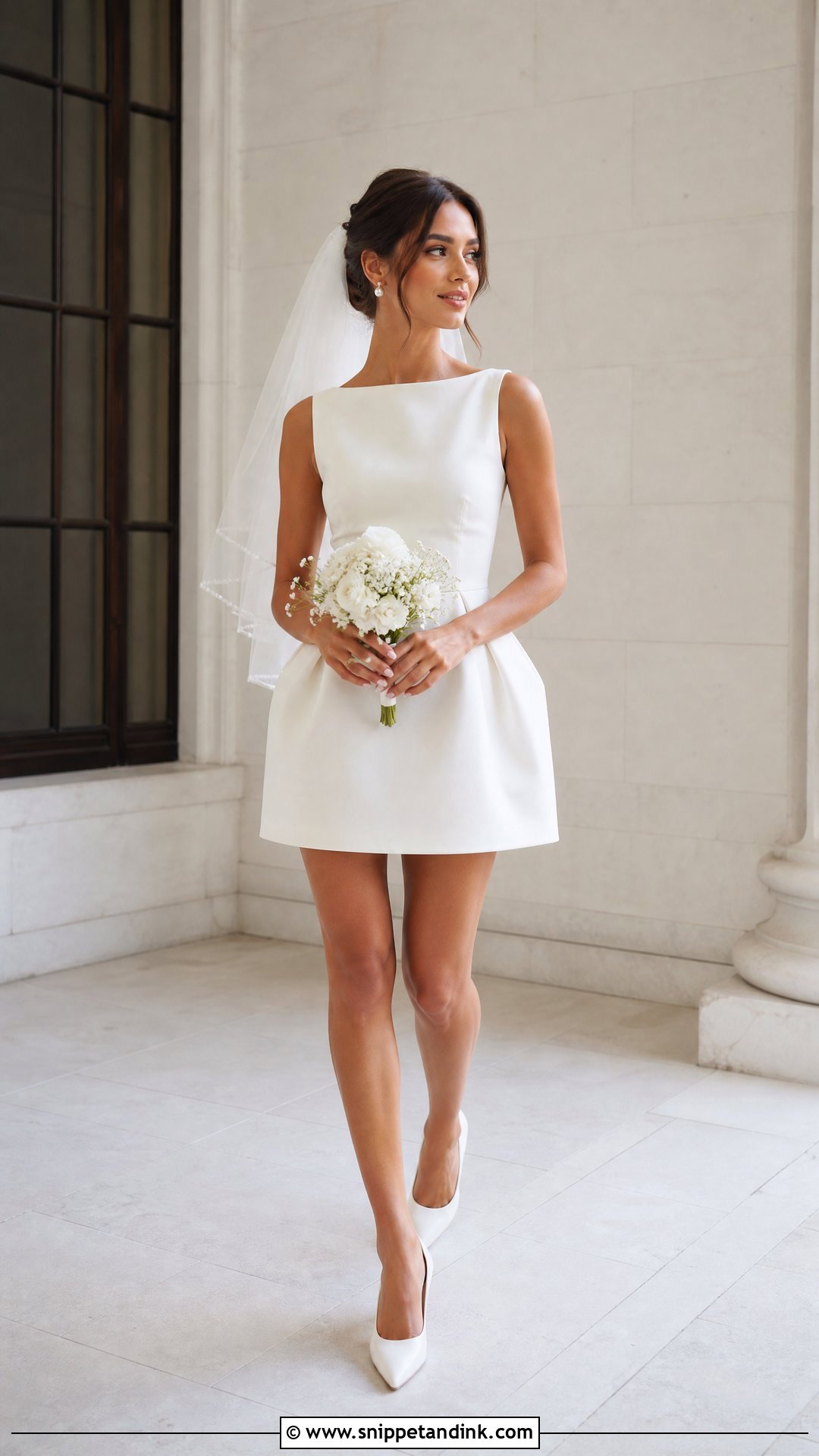
Short dresses are often the most practical choice and the easiest to wear again. A structured mini, tea-length dress or lace midi suits courthouse weddings, elopements, reception changes and summer heat. Because the dress is plain, texture has to come from somewhere: gloves, a bow, embellished shoes or a short veil. Sit down in the dress at the fitting, since hems rise more than you expect at a signing table.
22. Overskirt Wedding Dress
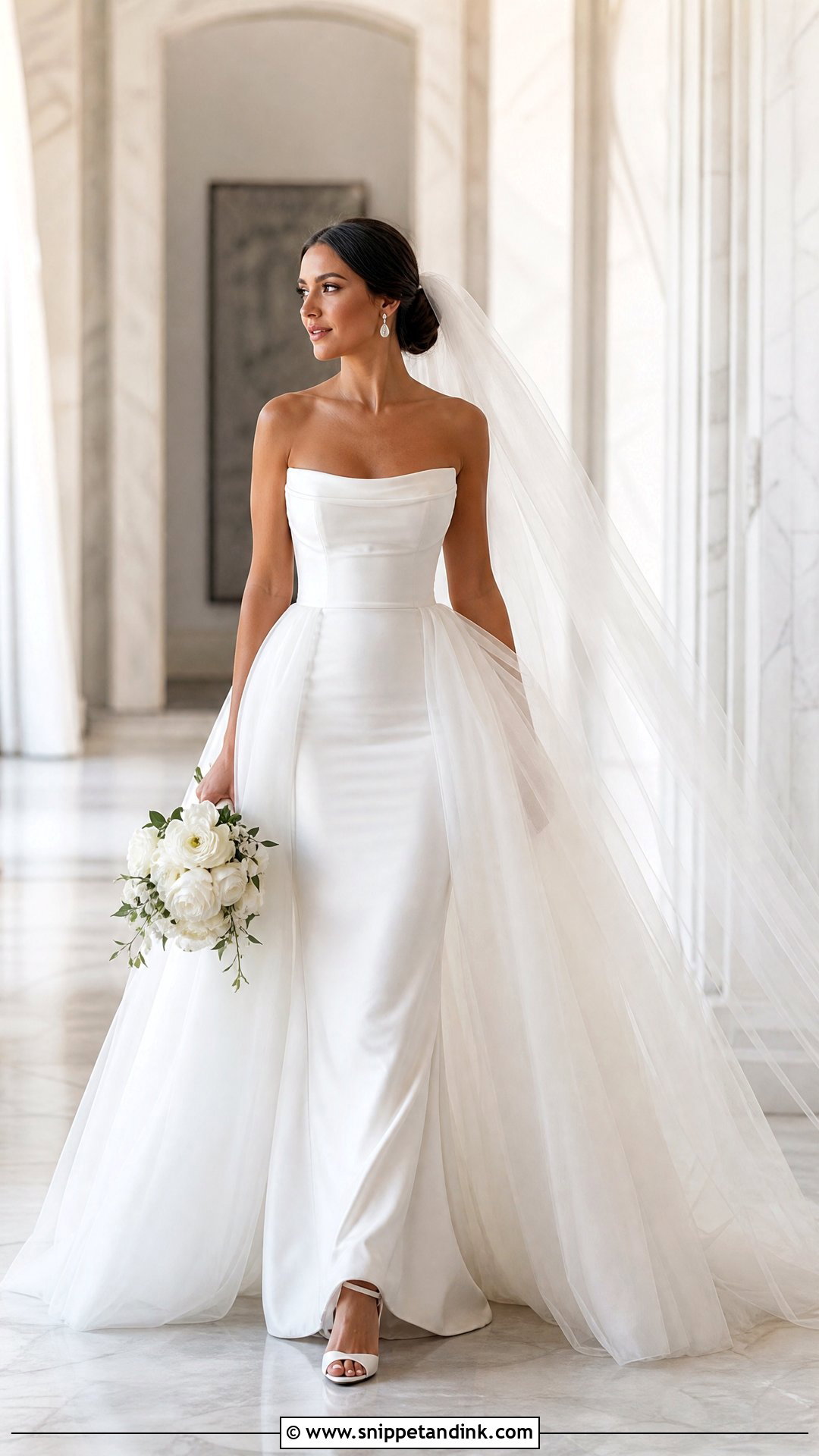
An overskirt wedding dress gives you two looks from one gown: volume for the ceremony, a fitted line for the dancing. Tulle feels soft, satin structured and organza airy. The detail I fuss about is the closure. Hooks and a hidden placket hold better than snaps, and the waistband should sit smoothly over the base dress without a ridge. Practise taking it off with whoever will help you, because doing it for the first time in a toilet stall is stressful.
23. Ruffle Wedding Dress
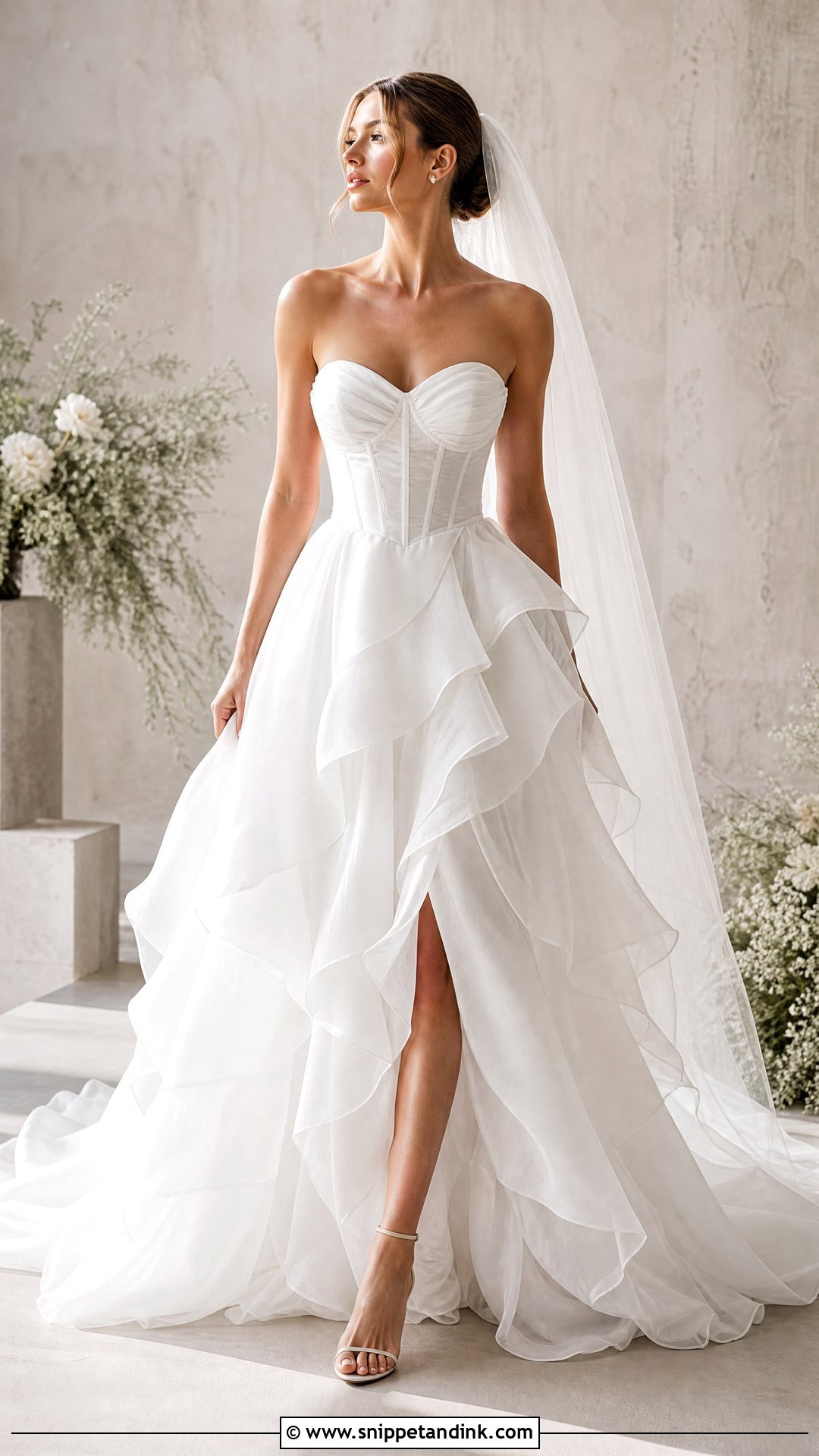
Ruffles add movement, but more than one area of them quickly becomes busy. Pick the skirt, the neckline or the train. Soft cascading ruffles bounce when you walk; structured ruffles hold a sharper, editorial shape. Ruffles also hold dust and crush in storage, so ask the shop to pack the dress with tissue between layers. A clean hairstyle and plain veil leave the texture to speak.
24. Sequin Wedding Dress
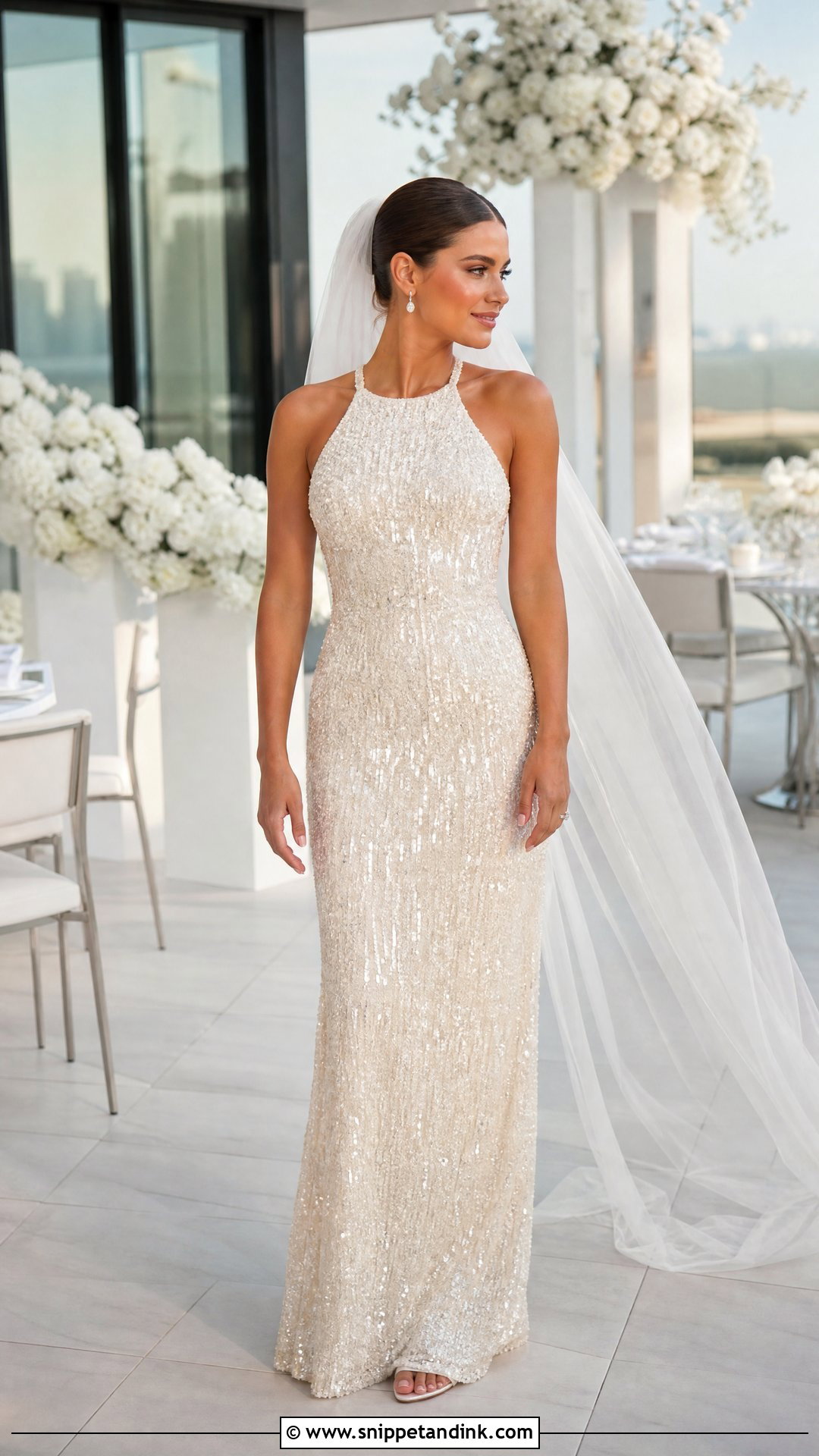
Sequins are pure evening. To keep them bridal I’d choose ivory, champagne, pearl or silver-toned sequins over harsh metallics, on a column, slip or A-line. Sequined fabric is scratchy on the inner arm, so check that the dress is lined there, and that your partner’s suit won’t catch on it during the first dance. With all that shine, use sleek heels, minimal jewellery and a plain veil. Rooftops and modern receptions after dark suit it best.
25. Floral Tulle Wedding Dress
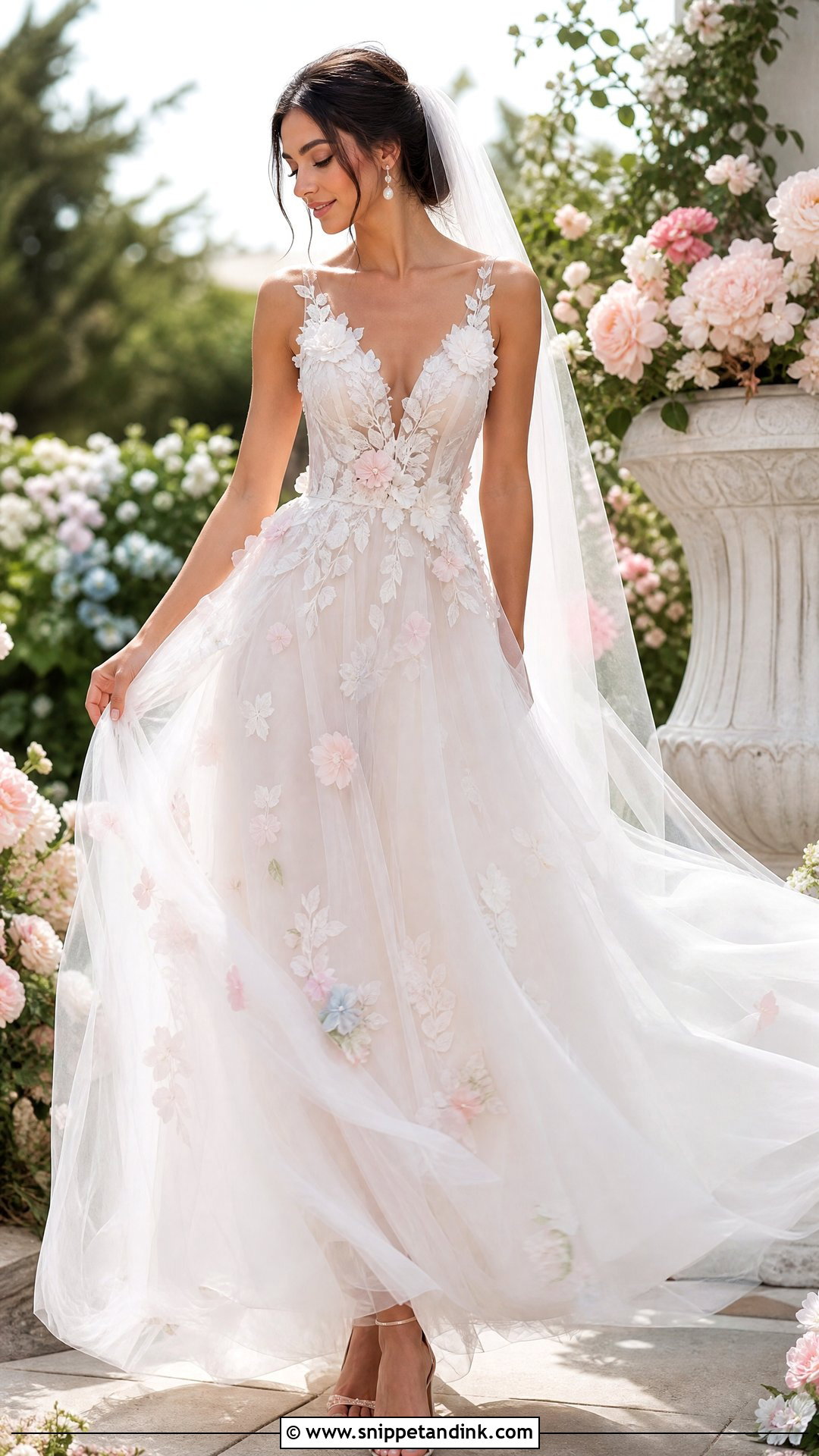
Floral tulle combines softness with a garden mood. The flowers can be embroidered, appliquéd, painted or layered between sheer fabrics. White florals stay classic, pastel blooms look more playful. Appliquéd flowers are three dimensional, so they catch on veil netting; I’d choose a veil short enough, or sheer enough, that it doesn’t hide or snag on them. Spring and outdoor ceremonies suit this dress, with delicate heels and pearl earrings.
Will a Full Skirt Fit Through Your Venue?
A ball gown or cathedral train looks magical in a mirror, then meets a narrow aisle, a small car and a spiral staircase. I ask brides to think through the real path of the day before committing to maximum volume.
- Measure the aisle. Wide skirts brush chairs and guests’ knees; tulle can catch on chair hardware.
- Check the car. Big skirts need a vehicle with a wide back door, and someone to fold the layers in after you.
- Ask about the bustle. A long train needs to be lifted for the reception, and the bustle style changes how the back looks all evening.
- Think about the bathroom. Two helpers, a clear plan and the skirt gathered from the front make it manageable.
None of this means giving up a big dress. It just means choosing a train length and skirt width that the day can carry, or planning a lighter second look for the dancing.
Outdoor sites bring their own test. Soft lawns swallow narrow heels and leave grass marks on a tulle hem, while gravel paths pull threads. Walk the route in the shoes you plan to wear, and have someone carry a small towel and a clip to hold the train up between photos.
Try the Shape You Swore You’d Hate
Fairytale dressing works when you can feel at ease in it all day. The ideas above run from full ball gowns and floral tulle to silk slips, capes, short dresses and soft colour. Bring your venue, season and how you want to move into every appointment, and try a few shapes you didn’t expect to like. Many brides change direction once they see a silhouette on their own body. The gown is right when it supports your moment and your confidence rather than following a trend.
You'll Like These Ideas:





Leave a Reply