
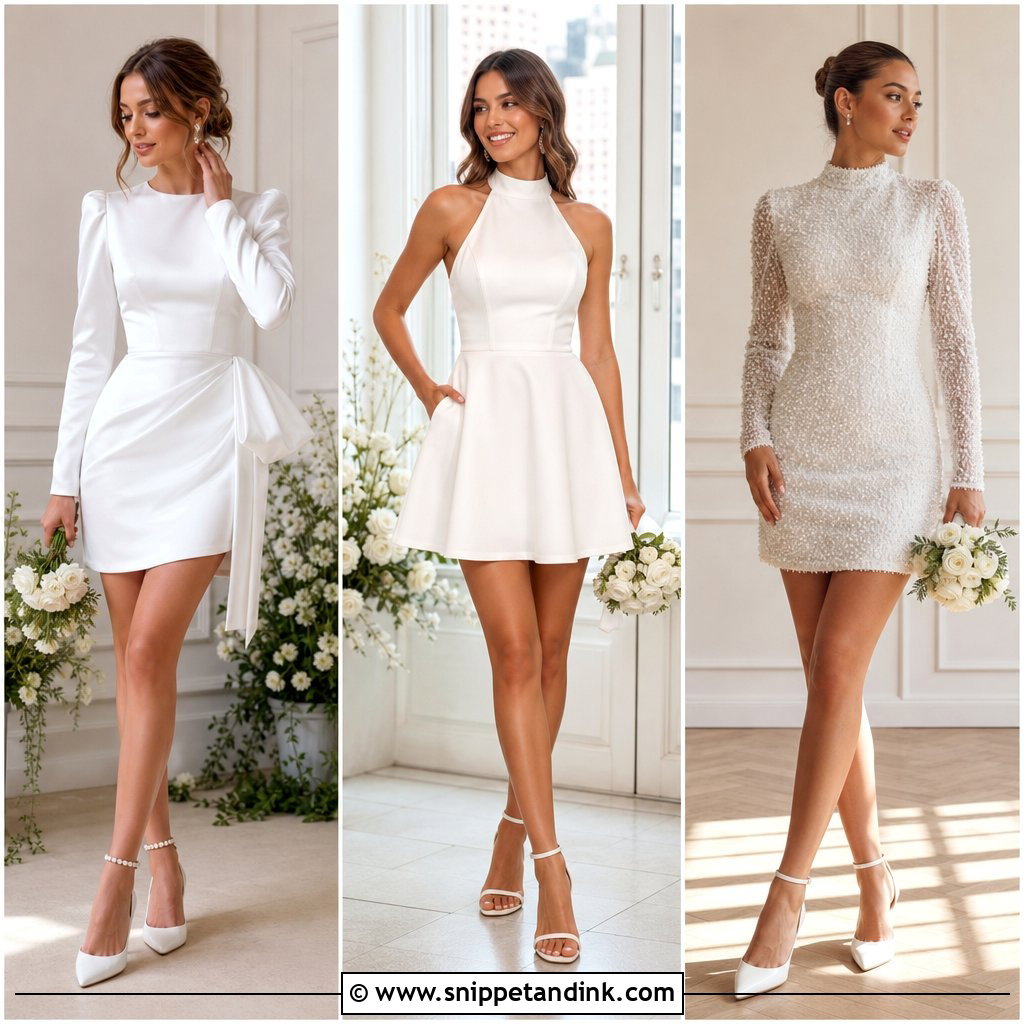
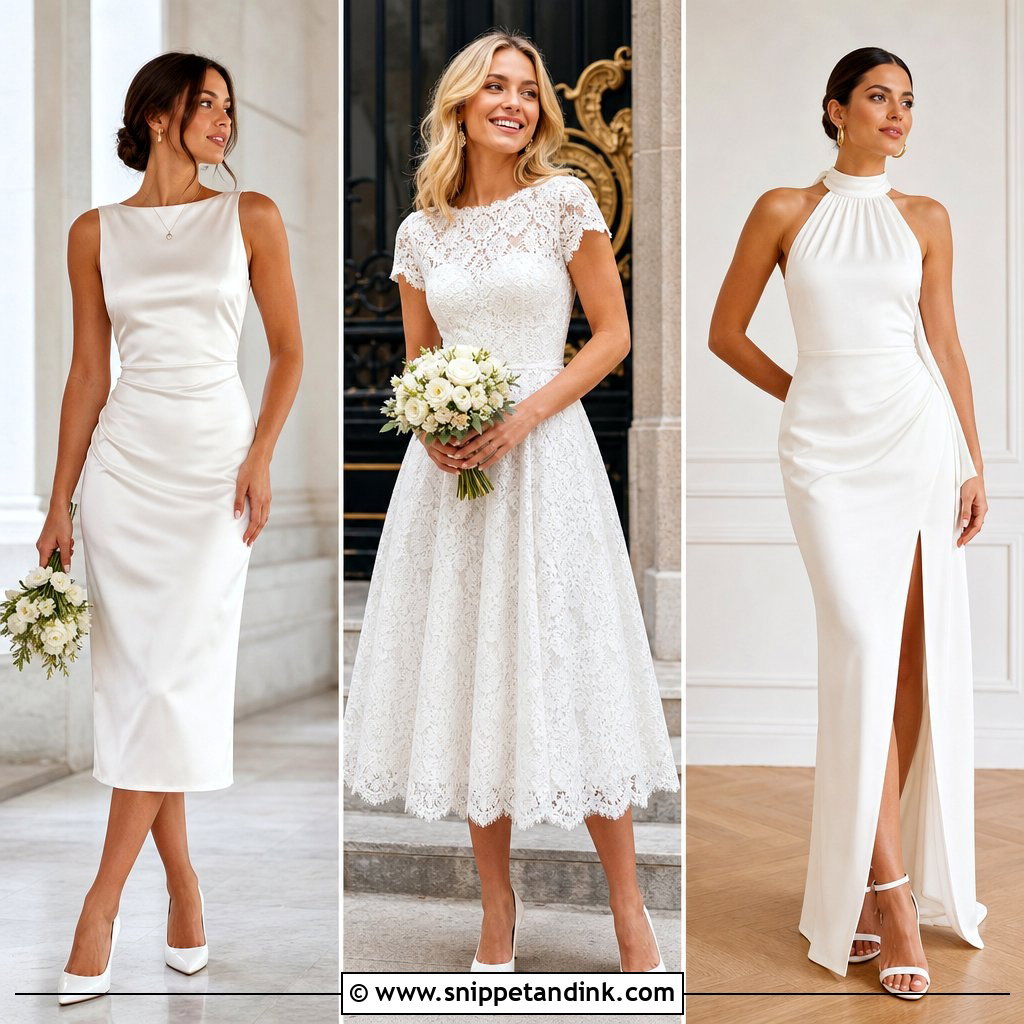
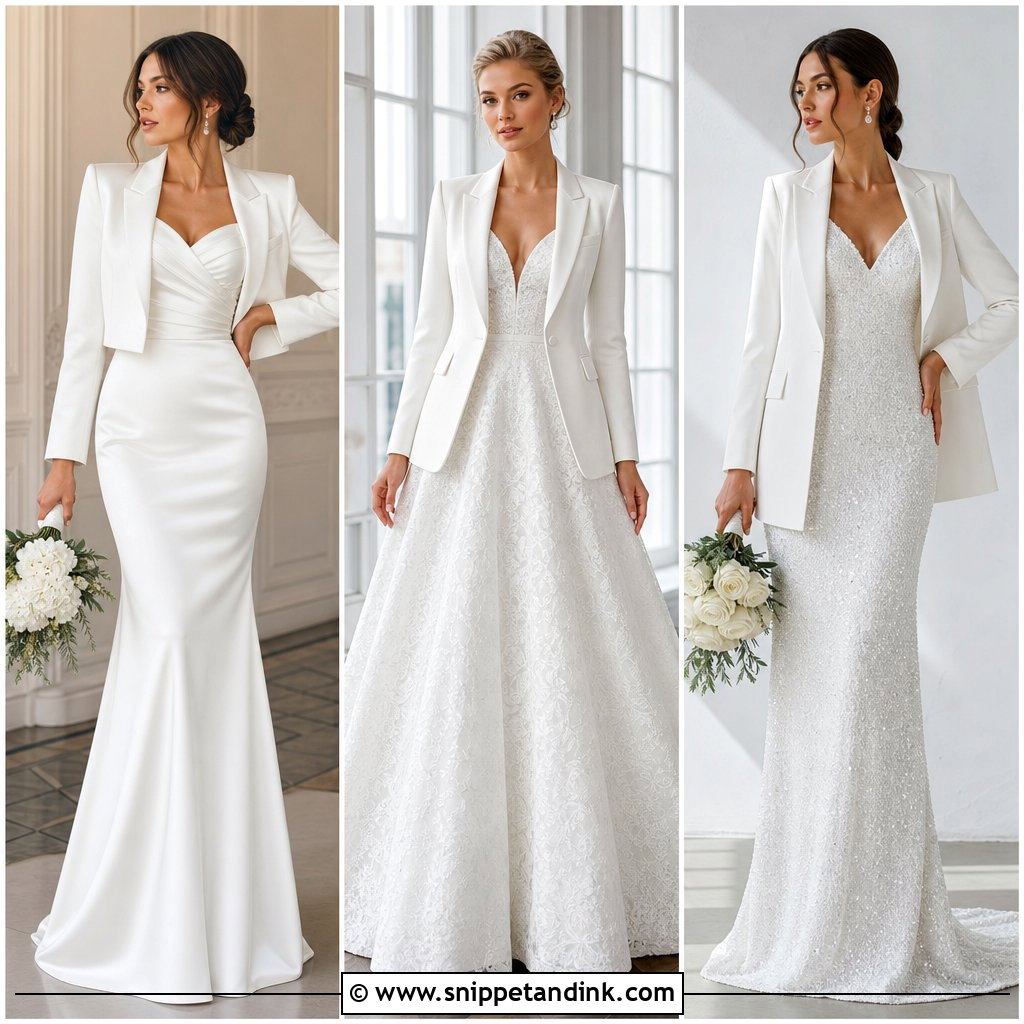
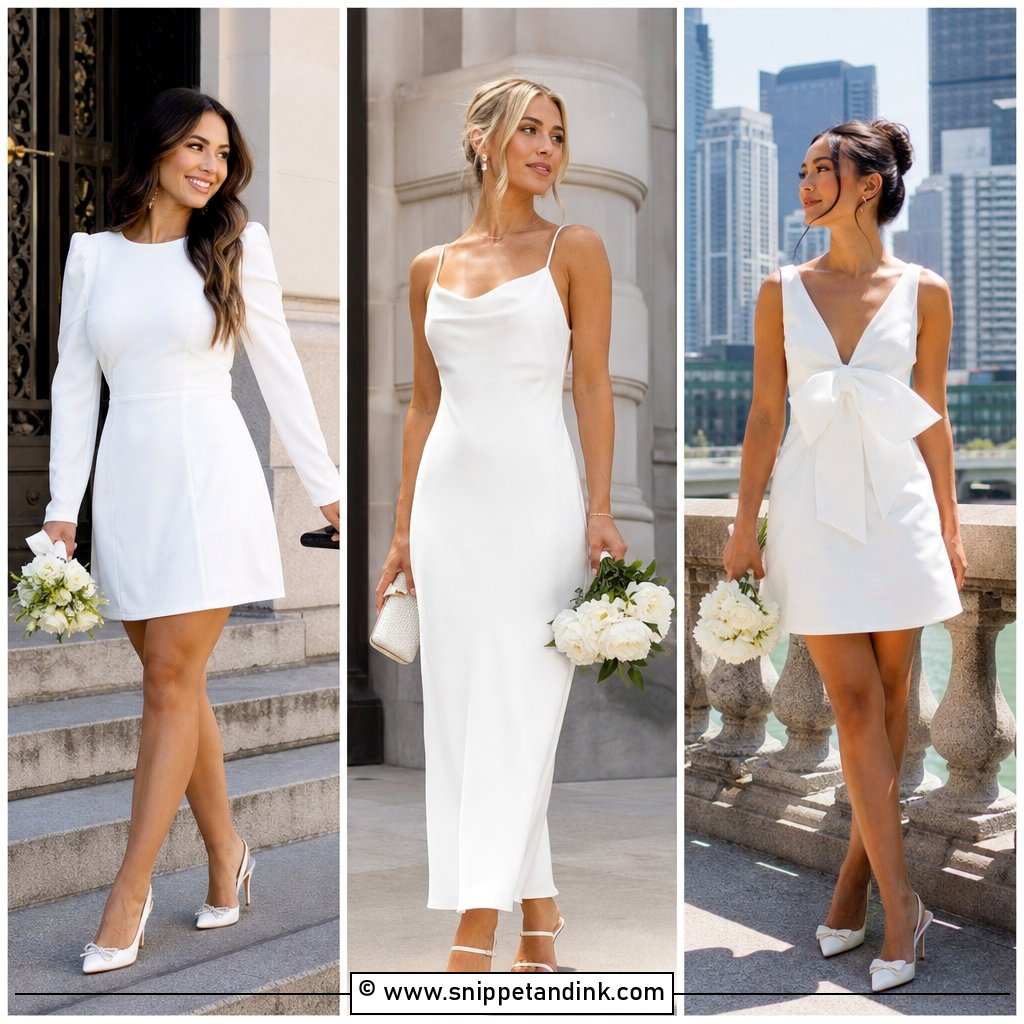
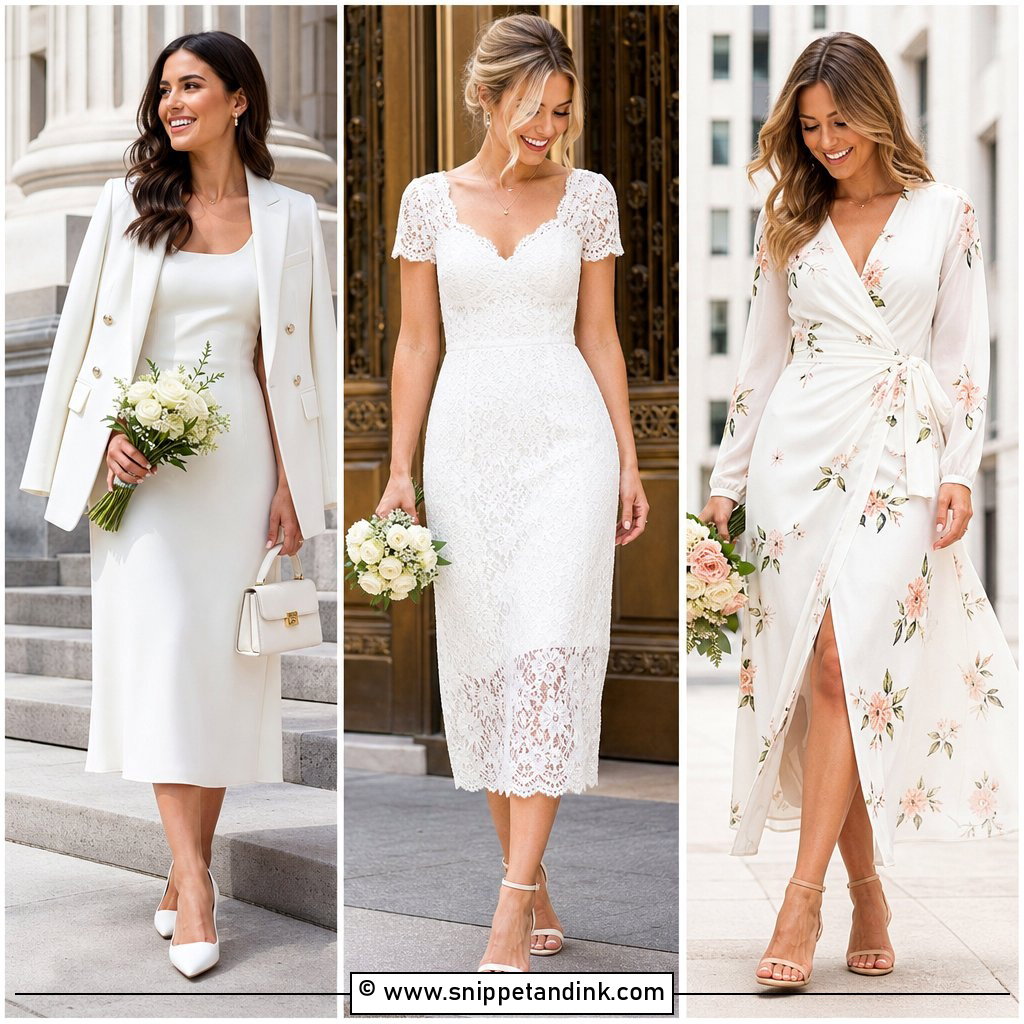
A courthouse ceremony is short, but the outfit still has to work for the whole day: a queue at security, a wait on a hard bench, ten minutes in front of the clerk, then photos on the steps and lunch somewhere loud. That’s why I dress city hall brides differently from church brides. Shorter hemlines and streamlined shapes do most of the work, because they move through revolving doors and up stone stairs without a helper holding your train. Below are twenty white dresses, from minis and midis to a few full-length options, each with the shoes, jewelry, bag and accessories I’d put with it, plus the fitting details that tend to decide whether a dress actually works on the day.
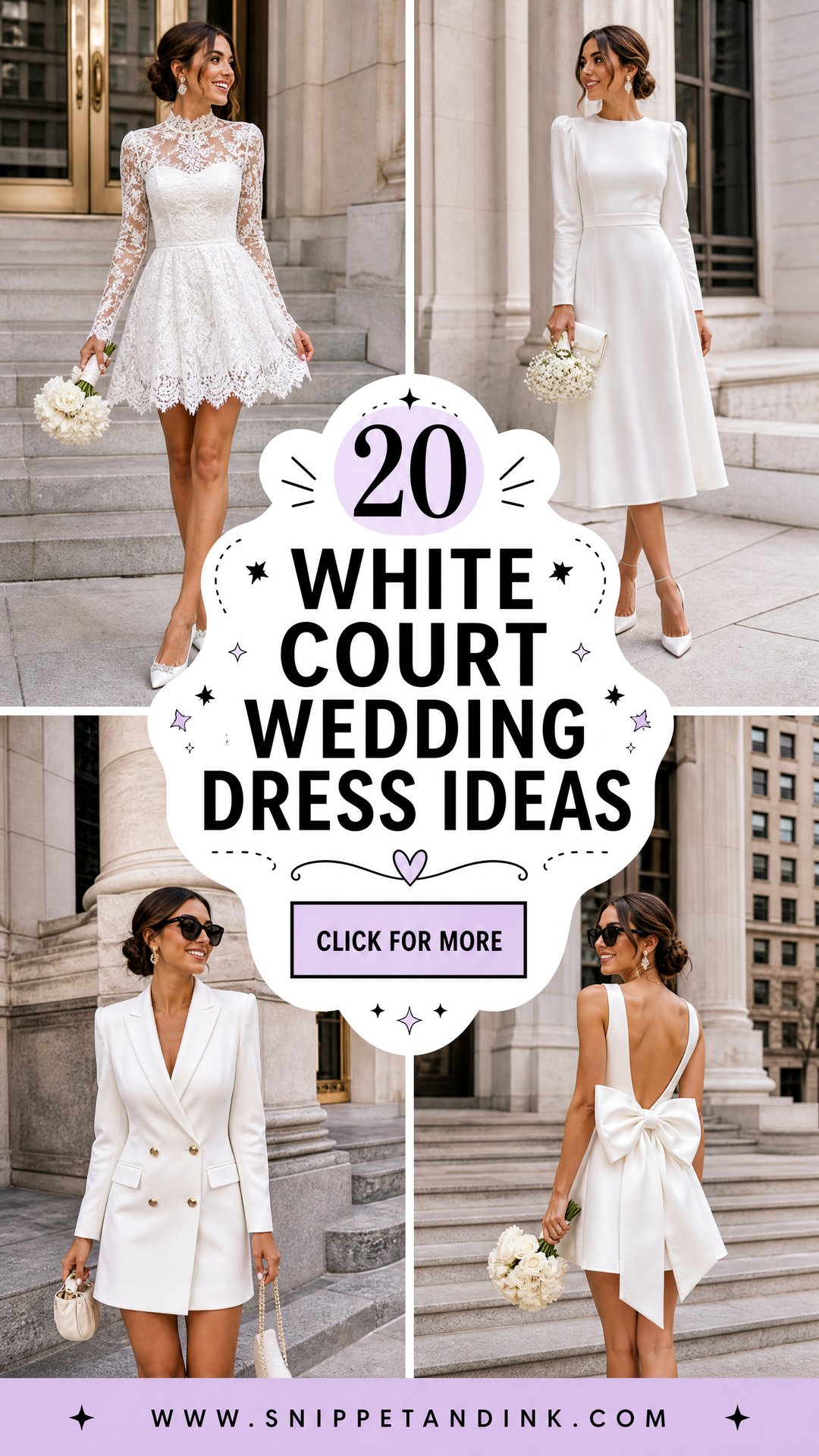
Security Scanners, Hard Benches and Marble Stairs: What a Courthouse Asks of a Dress
A city hall wedding has a different rhythm from a venue wedding, and I plan the outfit around it. Most courthouses put you through a security check, so heavy metal hardware, a bag full of hairpins or a belt with a big buckle can mean an extra pass through the scanner while your guests wait. I keep spare pins in a small pouch that can go in the tray.
Then there’s waiting. Ceremonies often run in timed slots, and you may sit on a wooden bench for twenty minutes or more. That’s where crease-prone satin and tight corsetry show their weaknesses, and why I always do a seated test at the fitting.
- Sit, stand and climb a step in the dress; if you need to hold the skirt up, the hem is too long for stone stairs.
- Reach forward as if signing the register; a tight armhole will pull the whole bodice up.
- Wear the shoes for an hour on a hard floor before the day, since courthouse floors are unforgiving.
- Pack a small kit: safety pins, a stain pen, blotting papers, plasters for heels and a fold-up shopping bag for your coat.
Check the building’s own rules too. Some restrict confetti, petals or bouquets with water tubes, and some limit how many guests fit in the room, which affects whether a long veil is even practical.
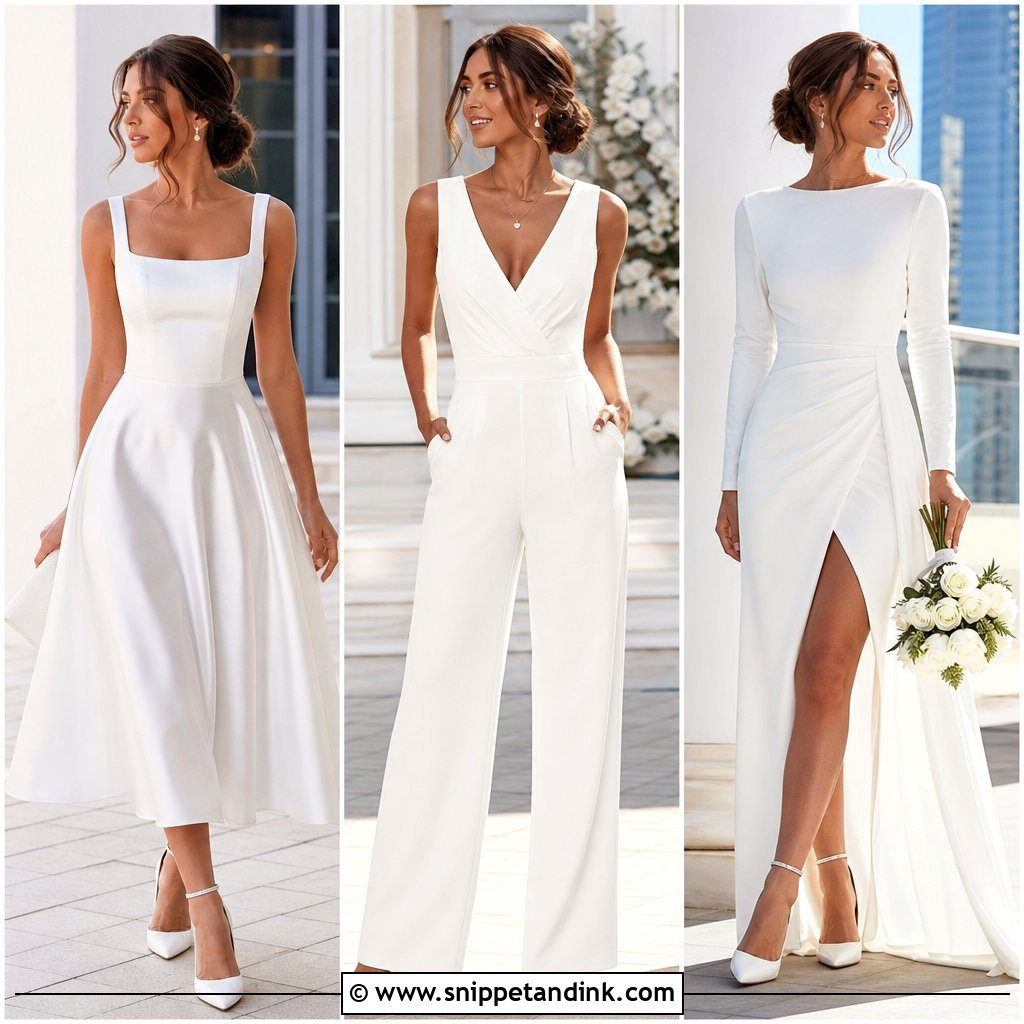
1. White Satin Midi Court Wedding Dress
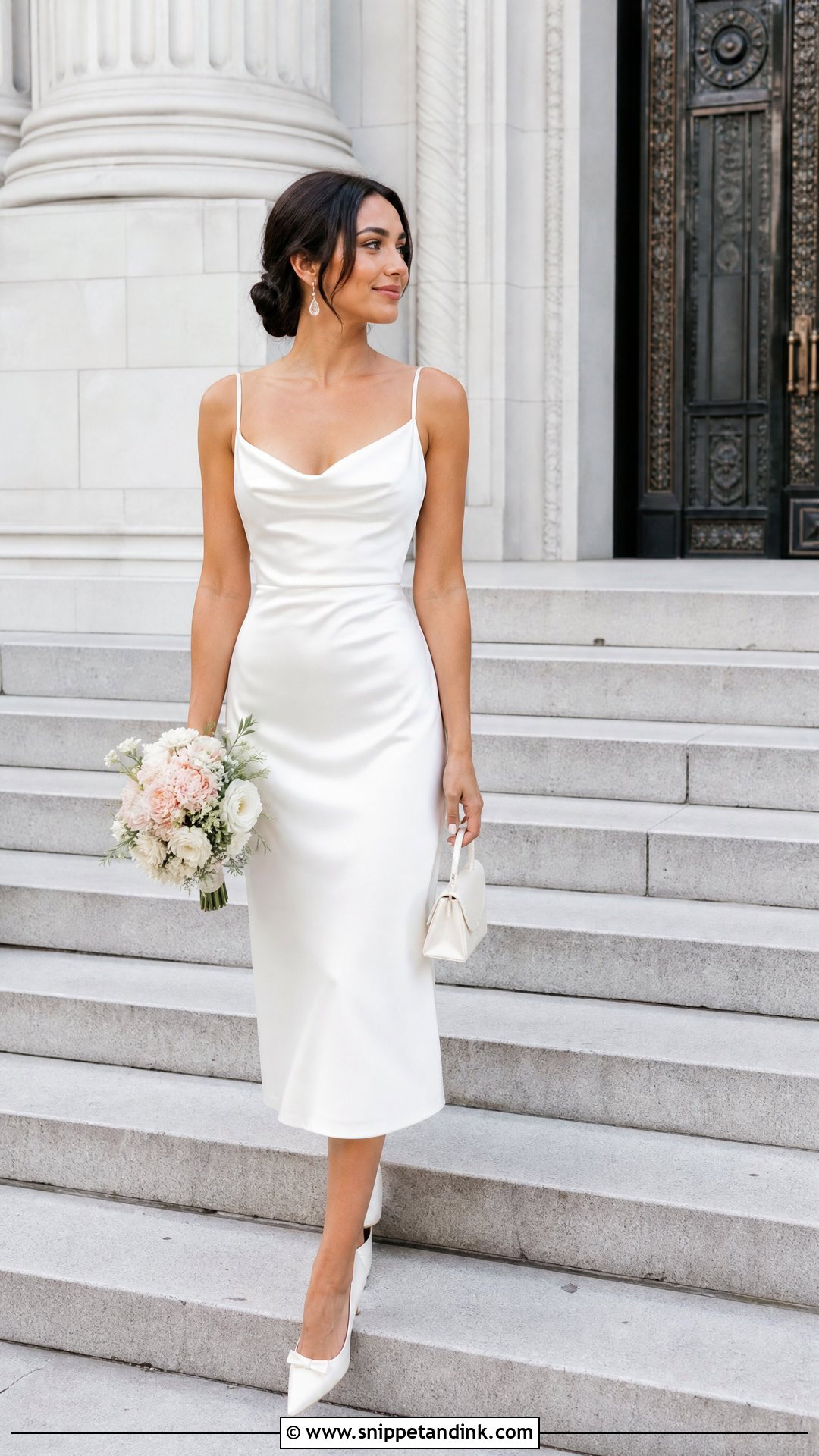
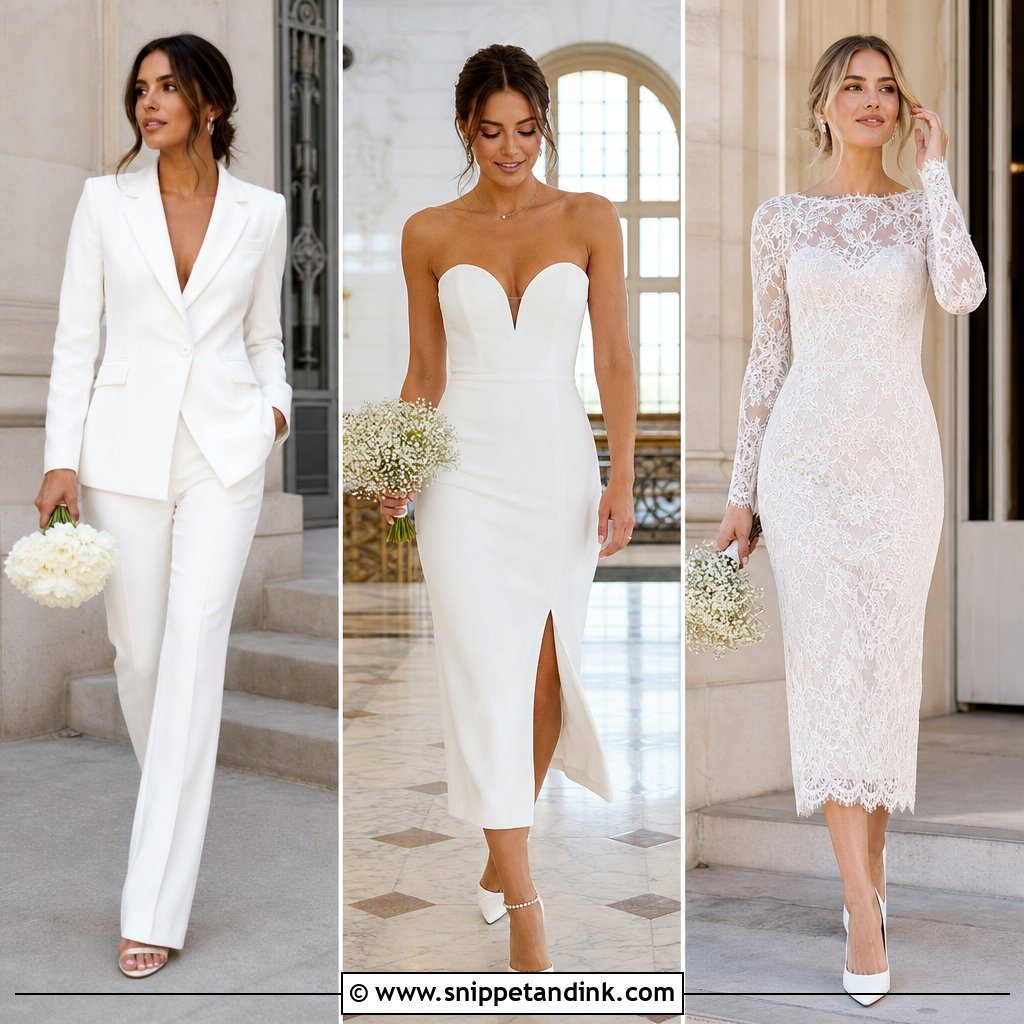
Satin at midi length is the dress I suggest most often for a first courthouse fitting, because it reads bridal from across a room and still lets you sit on a waiting-room chair without wrestling a skirt. One thing to know: satin shows every crease, and a twenty-minute taxi ride will leave lines across the lap. Ask for a heavier, bias-cut white satin midi dress rather than a thin charmeuse, and steam it at the venue if you can. A cowl or straight neckline, pointed ivory pumps, pearl drops and a slim bracelet are plenty. In cold months I’d put a tailored cream coat over it and finish with a low bun.
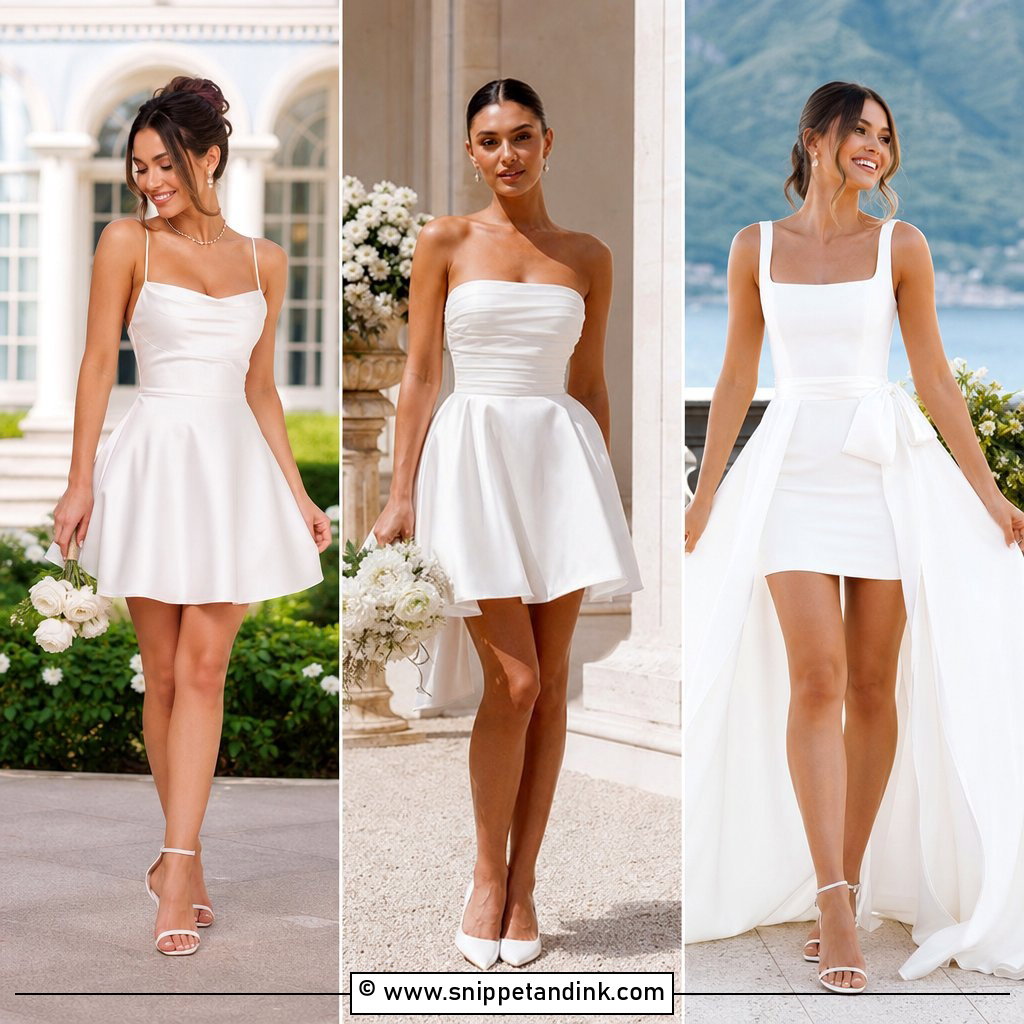
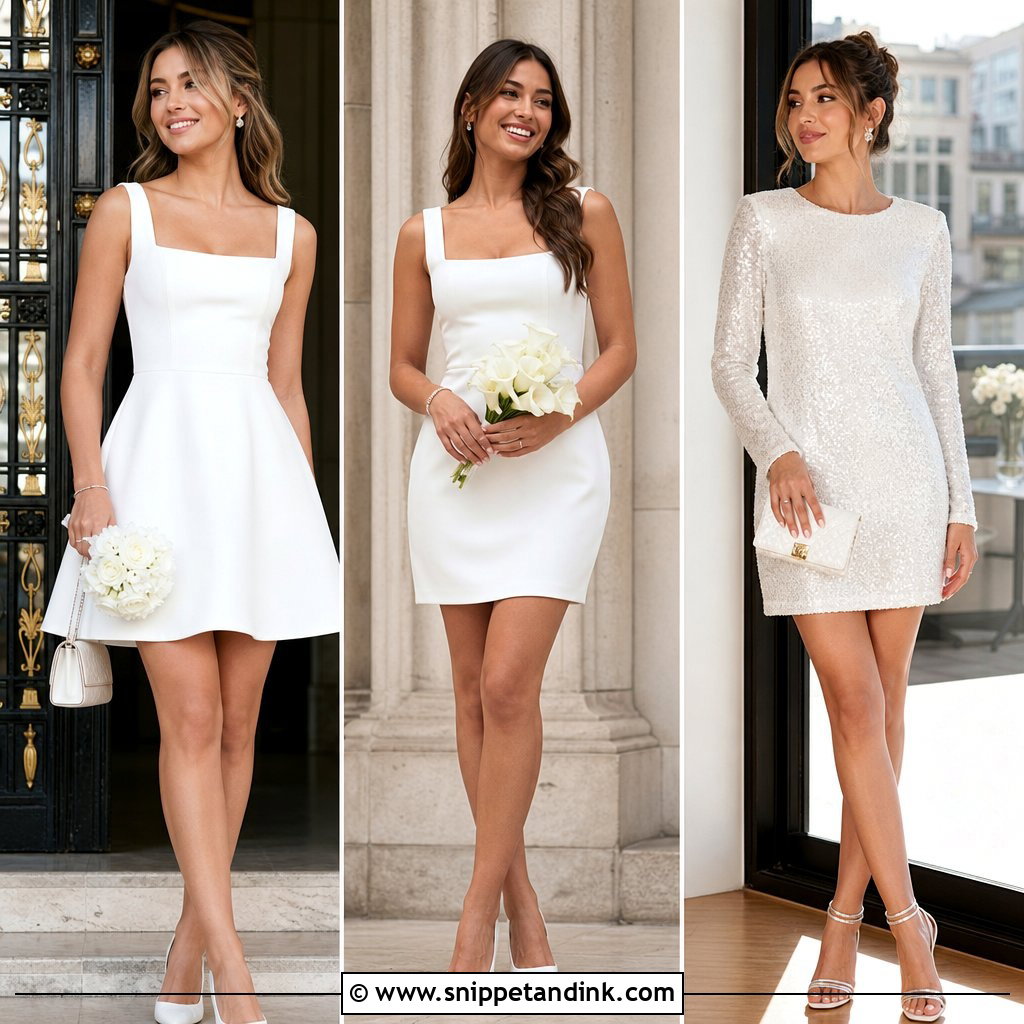
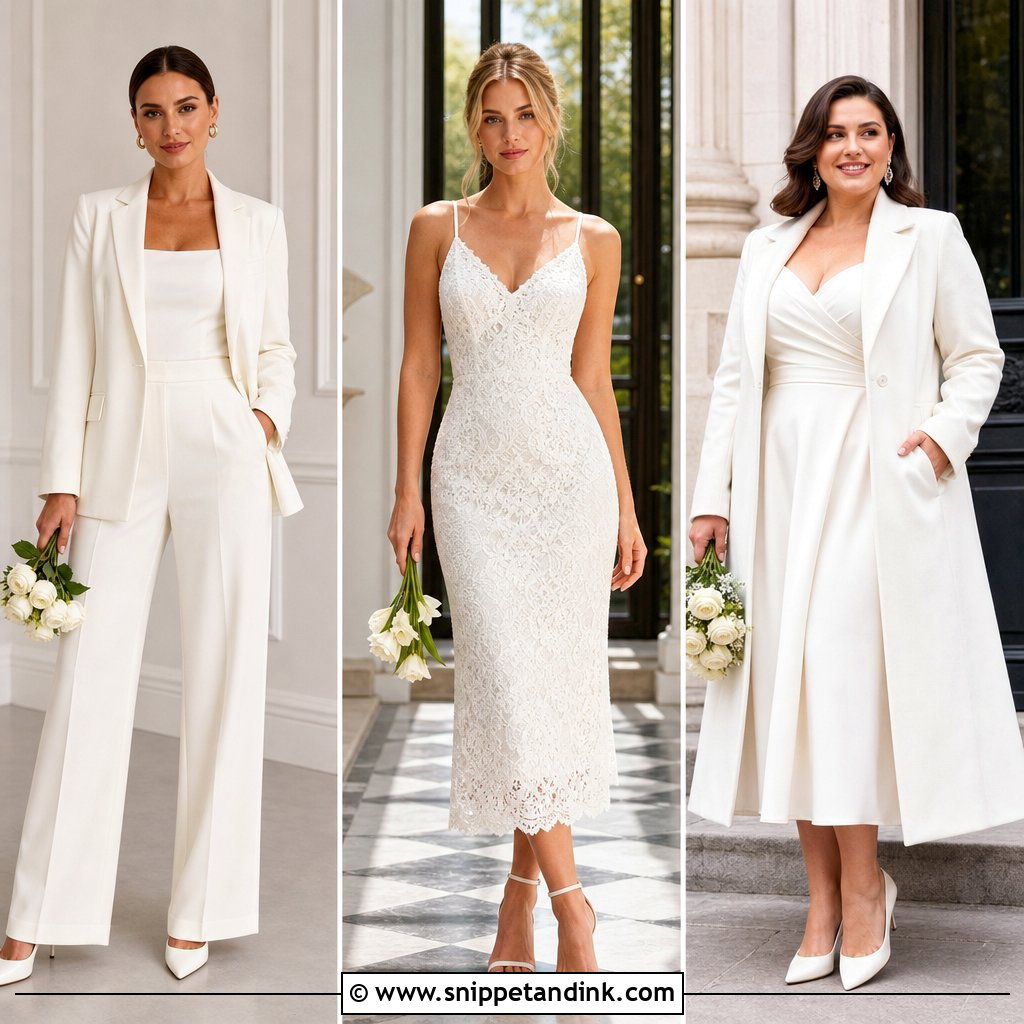
2. White Lace Mini Court Wedding Dress
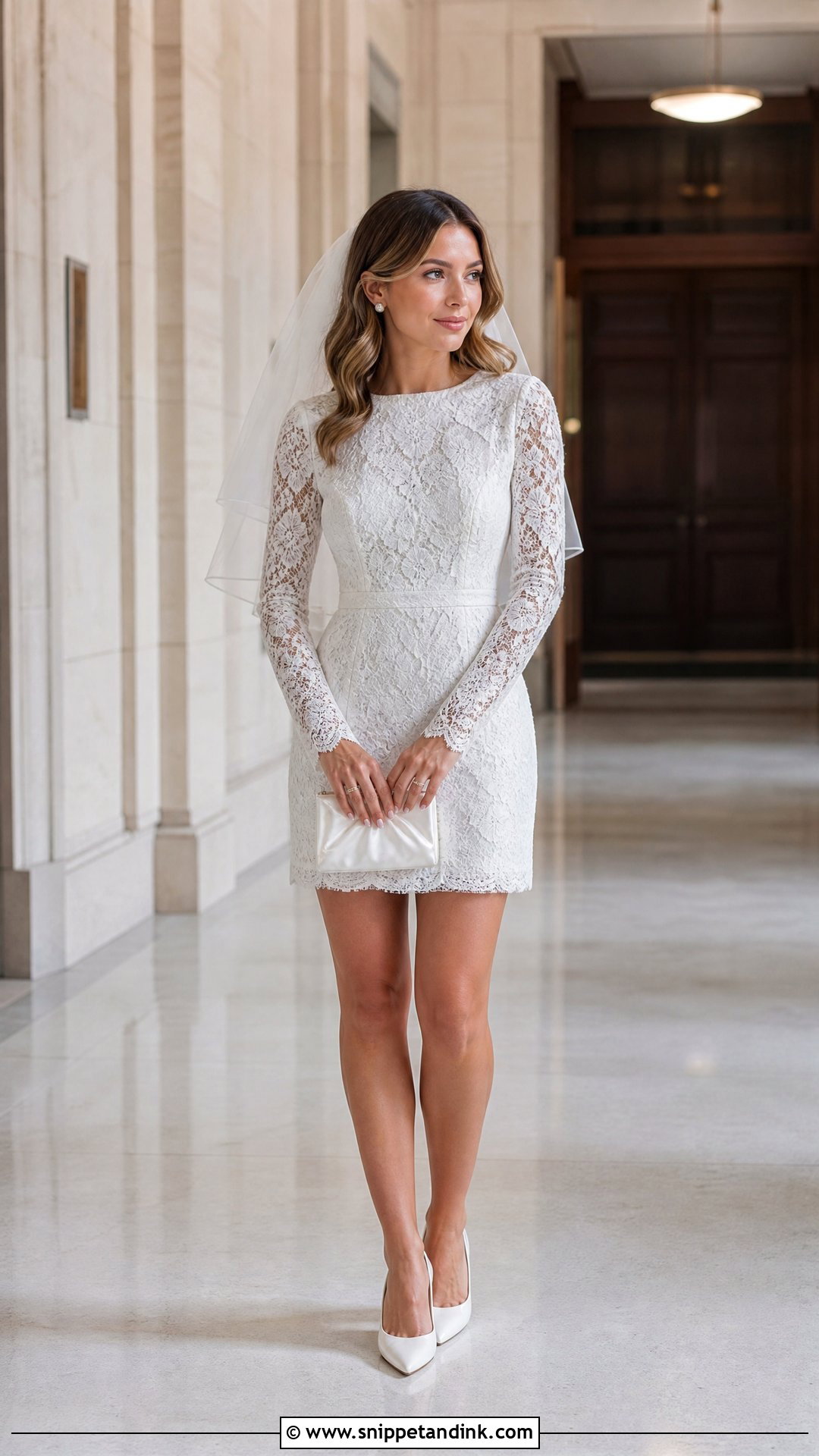
Lace minis need a proper lining, and I always hold one up to a window during the fitting. A skin-tone or white lining can change the whole effect, and some cheaper versions only line the bodice. A high neckline balances the short hem; a sweetheart reads younger and more playful. I’d keep the rest quiet if the lace is busy: closed slingbacks, pearl studs, a small satin clutch and a shoulder-length veil, which makes a mini feel ceremonial without swamping it. In winter, sheer white tights look intentional rather than practical.
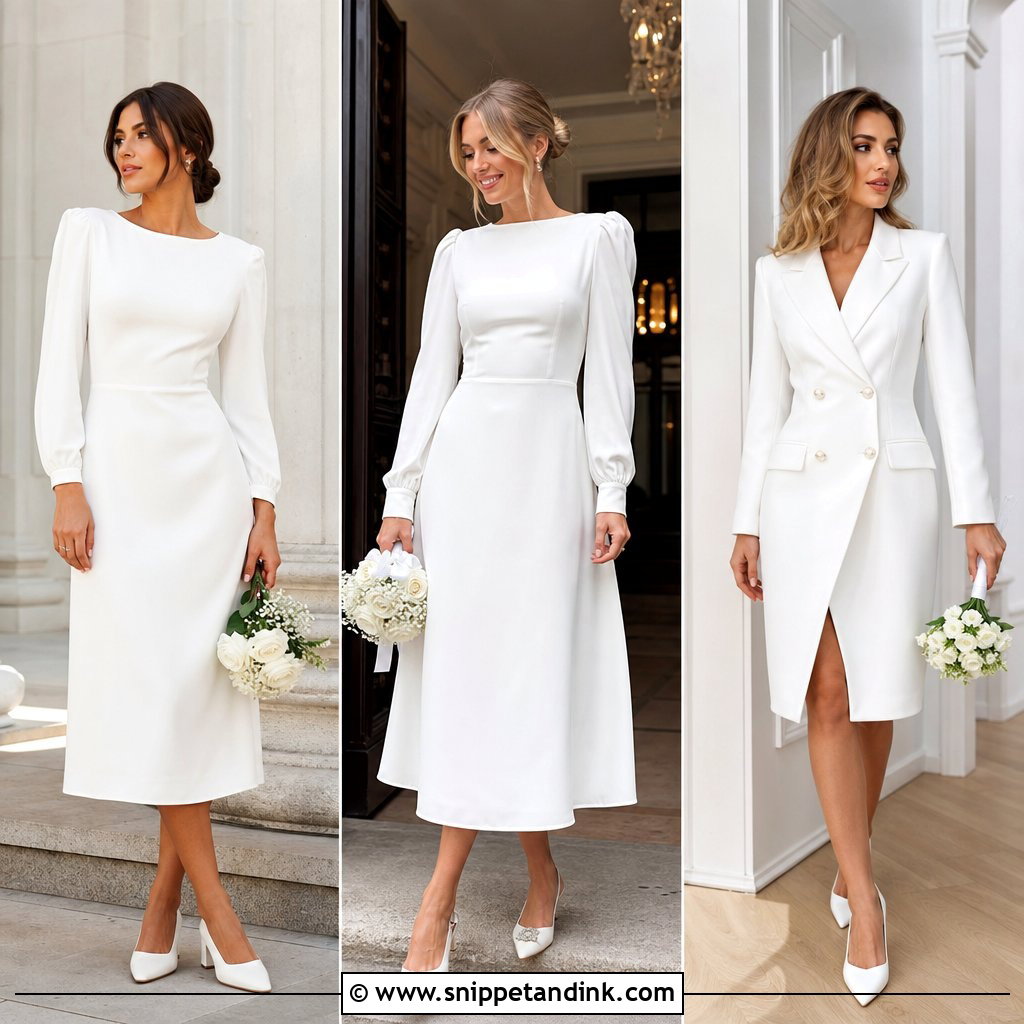
3. White Long-Sleeve Midi Court Wedding Dress
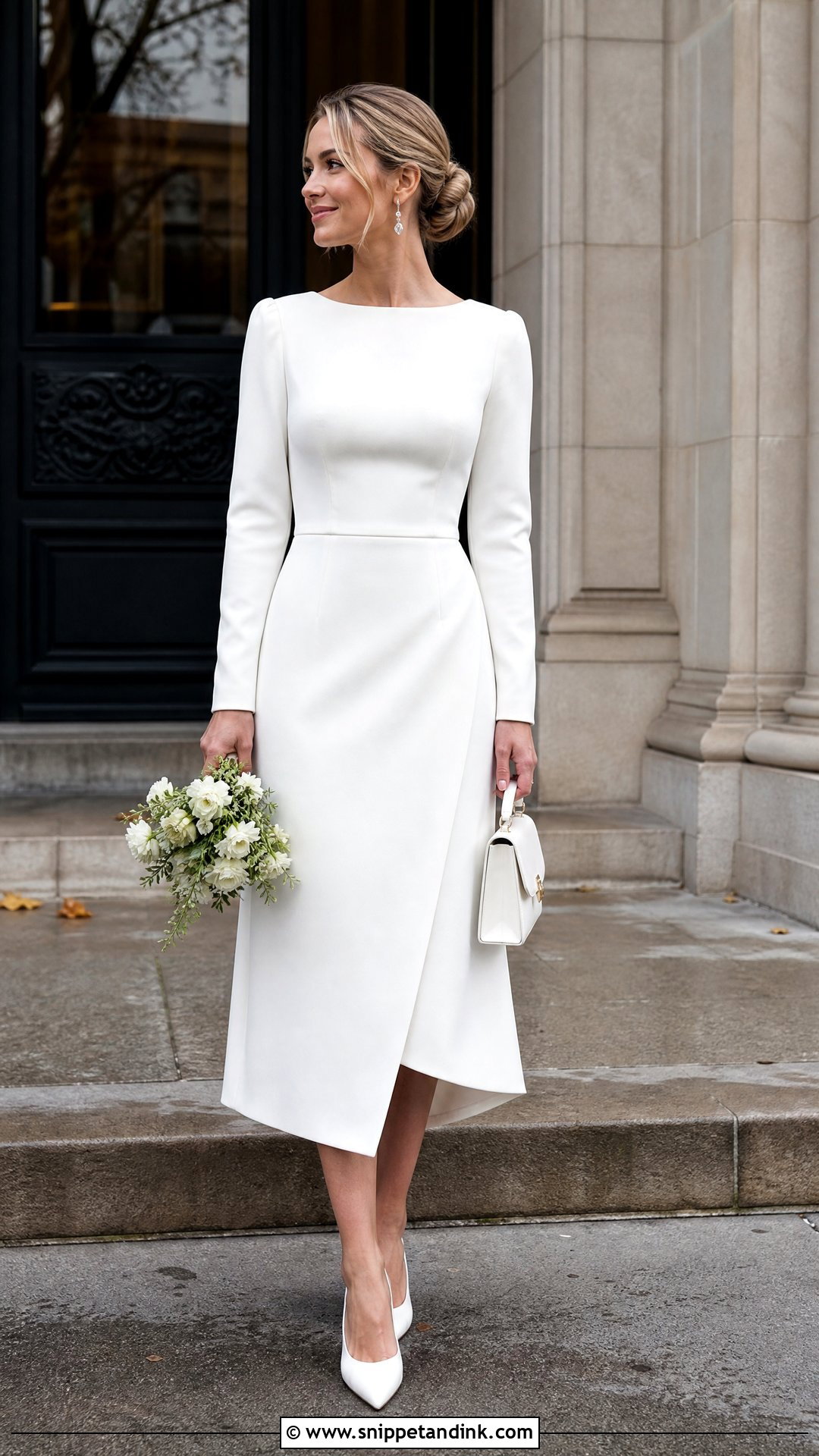
Air conditioning in civic buildings is relentless, and long sleeves solve it without a cover-up hiding your dress in every photo. Crepe or a stretch weave holds structure here; I avoid unlined jersey, which clings to anything worn beneath it. When we fit sleeves, I ask the bride to sign a pretend register at a table, since tight armholes pull the whole bodice up when you reach forward. Pointed pumps in white or soft metallic, small crystal earrings and a top-handle bag keep it neat. A pearl headband is a lighter alternative to a fingertip veil, and a small white-and-green bouquet suits fall and winter portraits.
4. White Off-the-Shoulder Court Wedding Dress
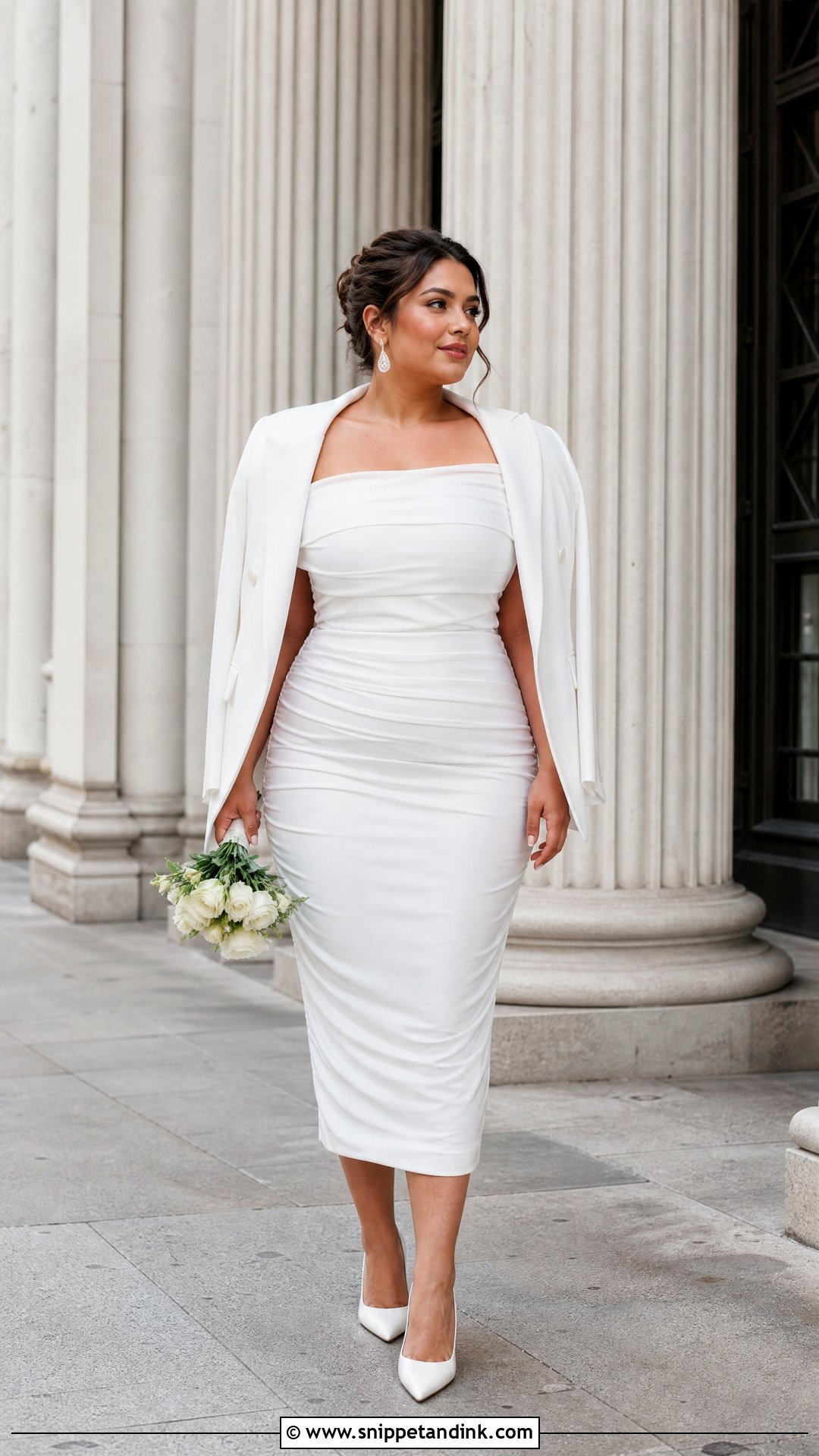
Off-the-shoulder bands look easy in pictures and are the fussiest fit I deal with. Before buying, lift both arms as if you’re hugging someone; if the band rides up, it will keep doing so all afternoon. A ruched midi defines curves, an A-line gives more room through the hips, and either makes a pretty civil ceremony outfit with teardrop earrings, a fine pendant and simple pointed heels. Wear a low bun so the neckline stays visible, and carry a small bouquet that sits below the bodice. A white blazer can go over the shoulders outside and come off before you enter the room.
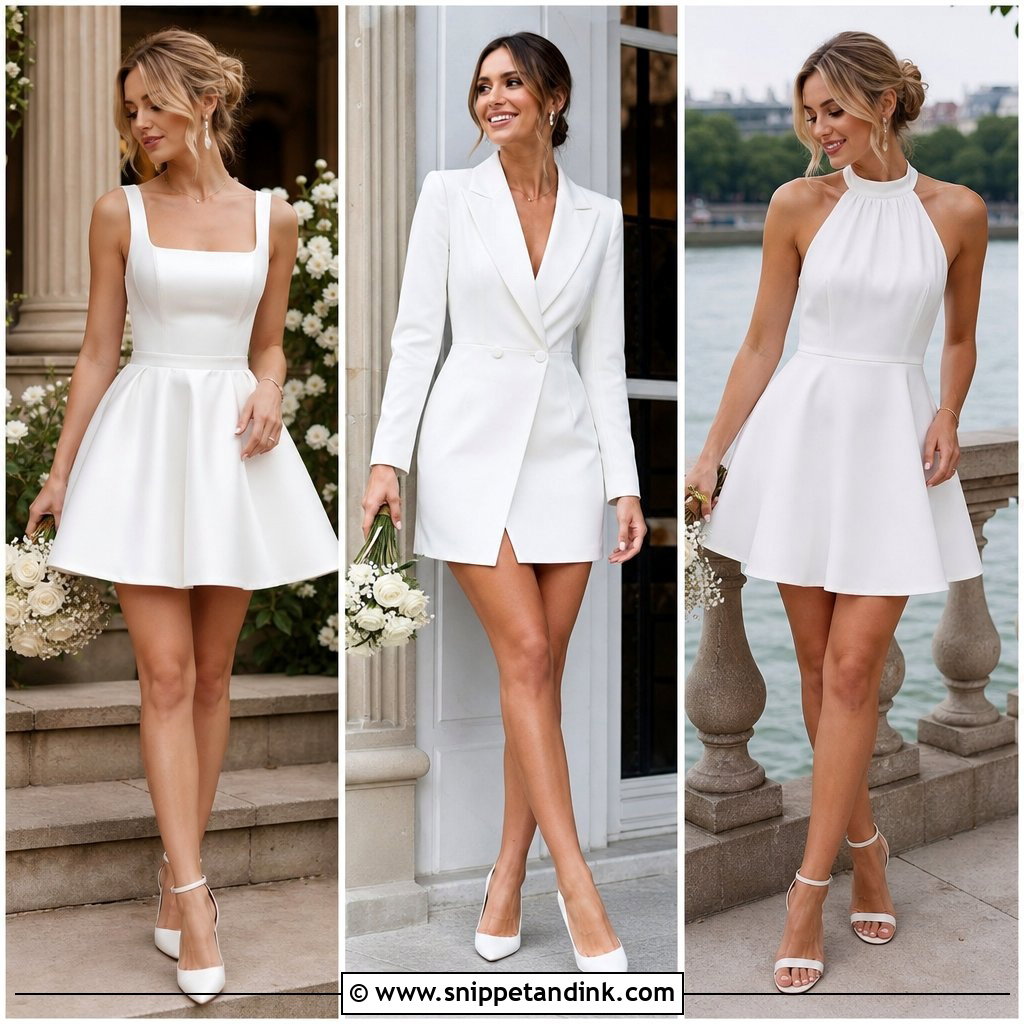
5. White Square-Neck A-Line Court Wedding Dress
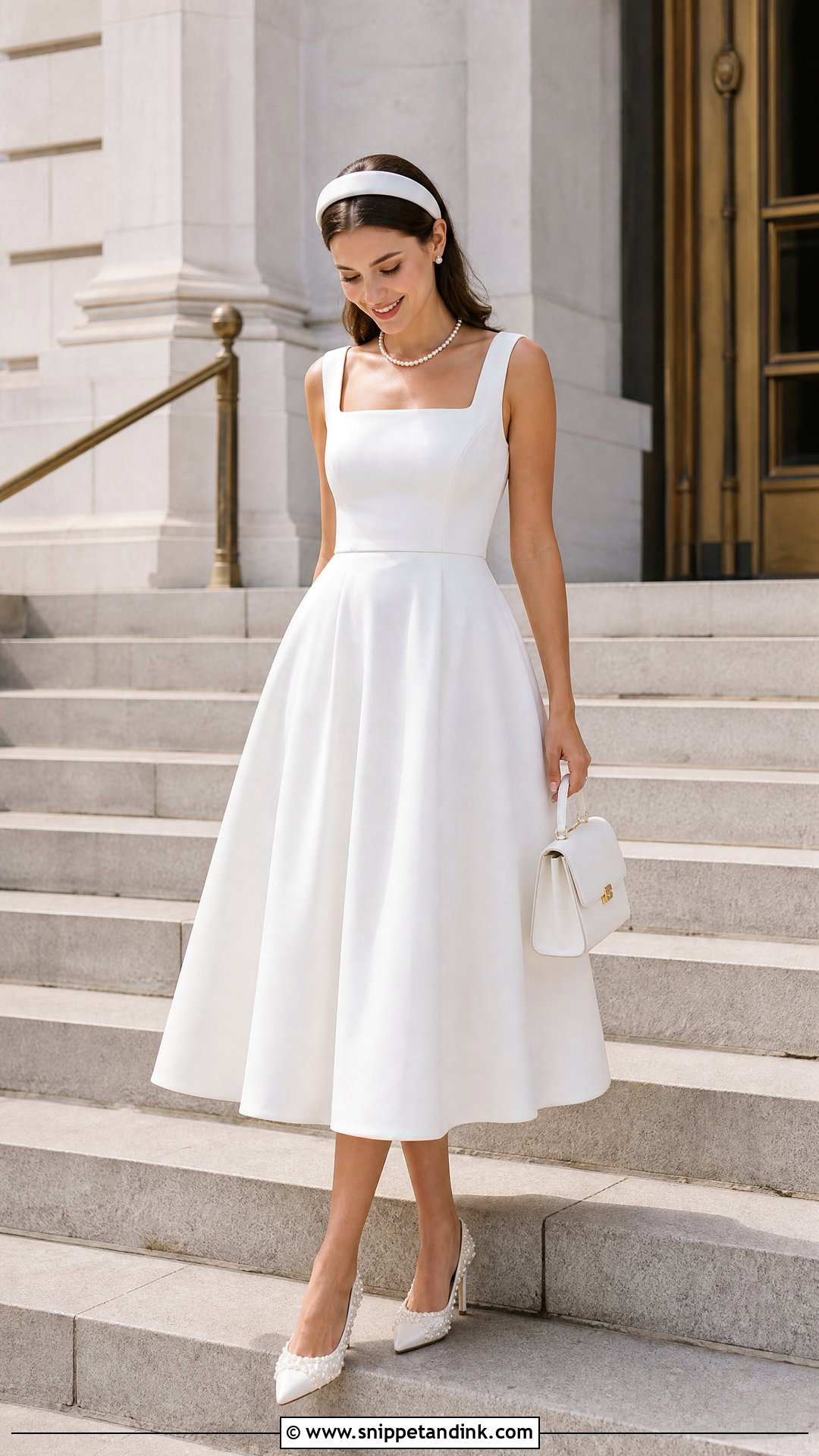
Square necklines are flattering on a broad range of figures because they frame the collarbone and give the shoulders a clean edge. Keep the hem at midi or tea length so your shoes become part of the outfit. Pearl-trimmed pumps, slingbacks or a low block heel all suit it. The one thing I’d skip is a long necklace that cuts across the geometric line; a short pearl strand or small gold earrings sit better. Add a structured bag and a short veil or wide satin headband, and the dress will carry you from the legal ceremony straight into a celebratory meal.
6. White Wrap Midi Court Wedding Dress
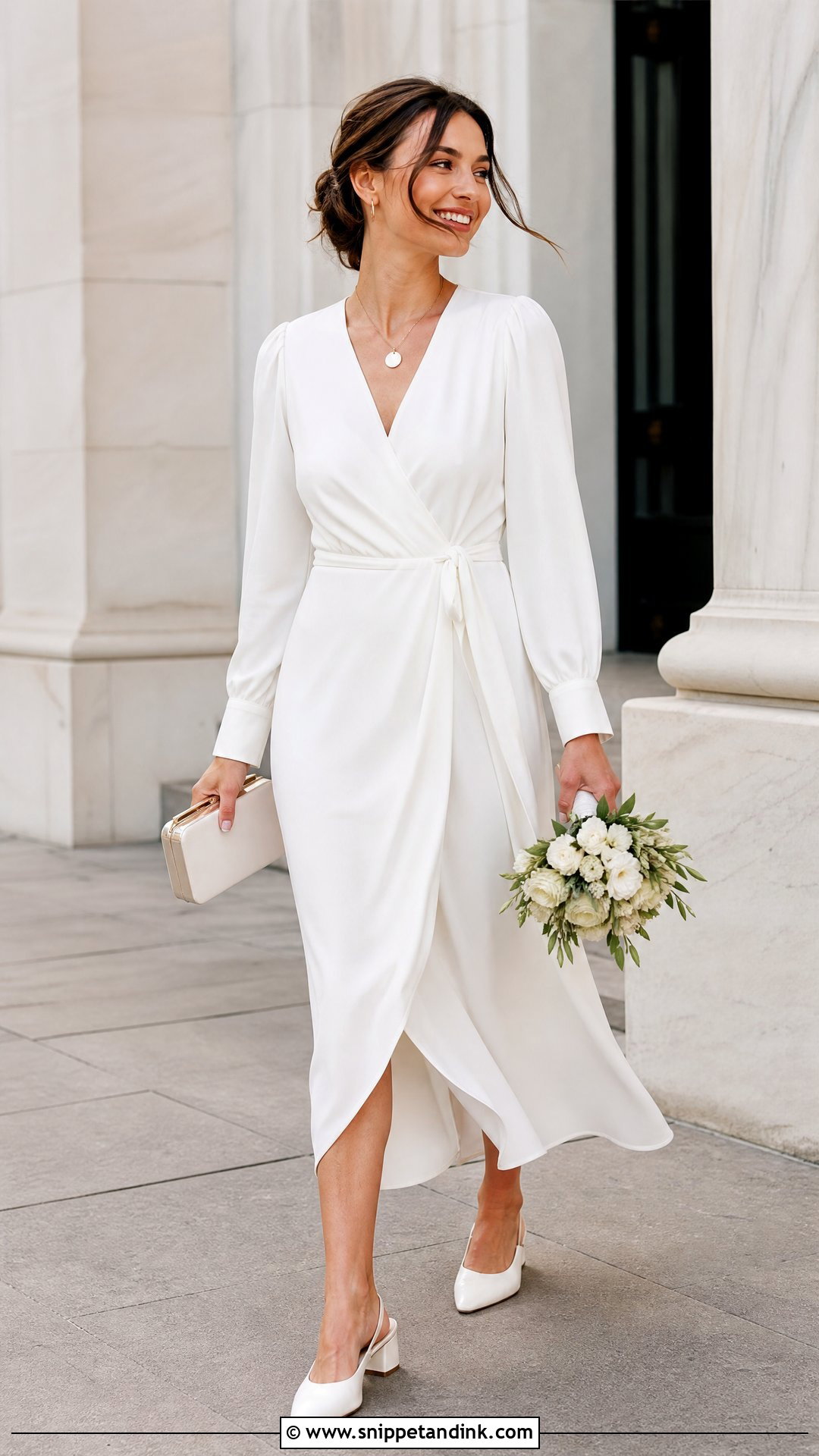
Wrap dresses are forgiving on fit because the waist adjusts, which helps if you’re buying online with no time for alterations. The risk is the neckline opening when you bend to sign. I have a tiny snap sewn in at the cross point on every wrap dress I style; it costs almost nothing and saves a lot of discreet tugging. Matte crepe holds its shape best in photos. Low block heels or pointed flats help on long walking days, with a pendant, small hoops, a slim clutch and loose waves.
7. White Blazer Mini Court Wedding Dress
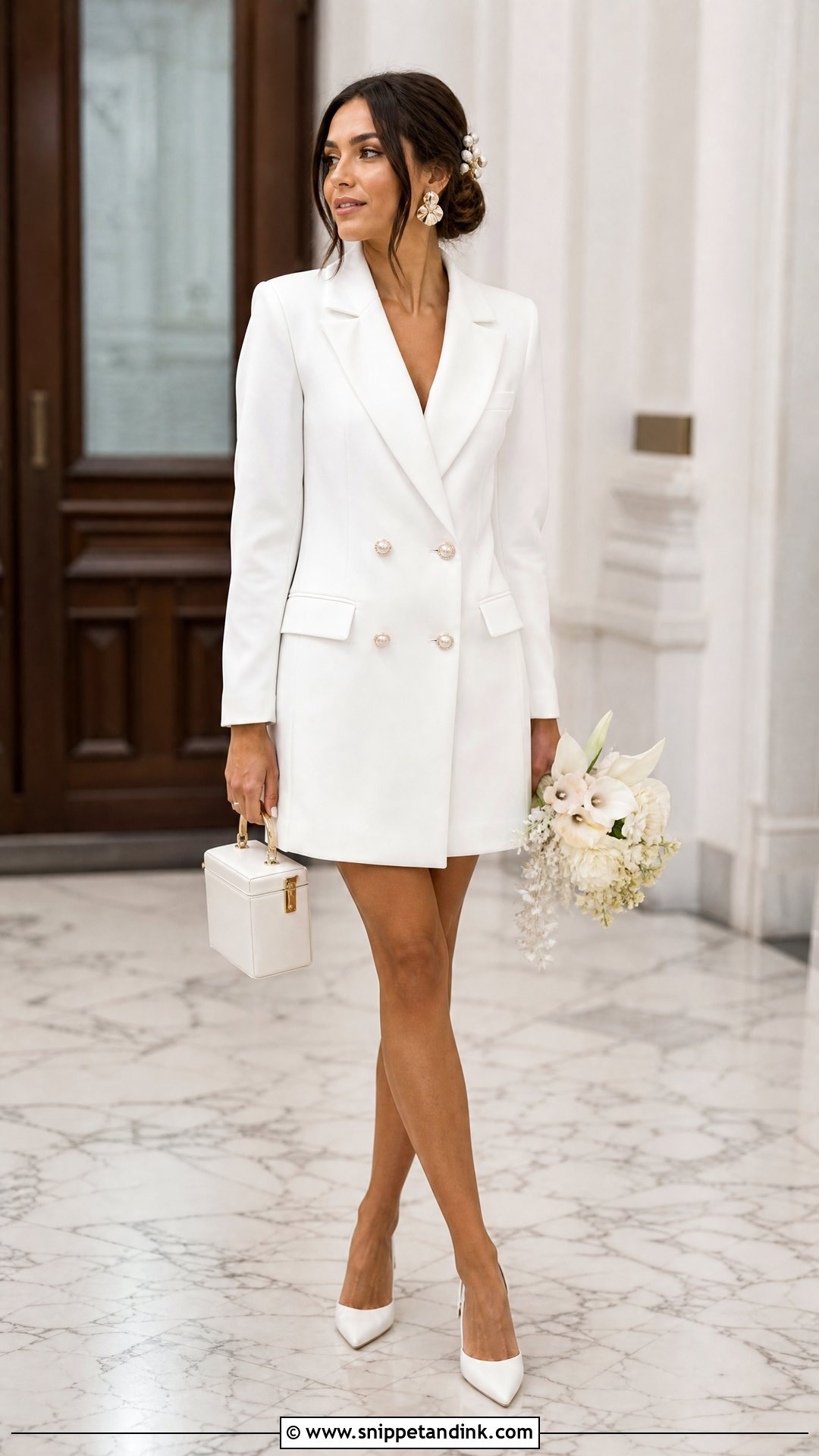
A blazer dress has to be cut long enough to sit in. I check this by having the bride sit on a low chair; if the hem rides up past mid-thigh or the buttons gape, it is too short or too tight through the hip. A smooth lining helps the dress fall properly and stops pulling at the buttons. Pointed pumps or sleek ankle boots in cold weather, sculptural earrings and a ring stack instead of a necklace leave the lapels as the main detail. A box bag, a polished ponytail or low bun, and one bridal note, such as a birdcage veil or pearl headband, finish it.
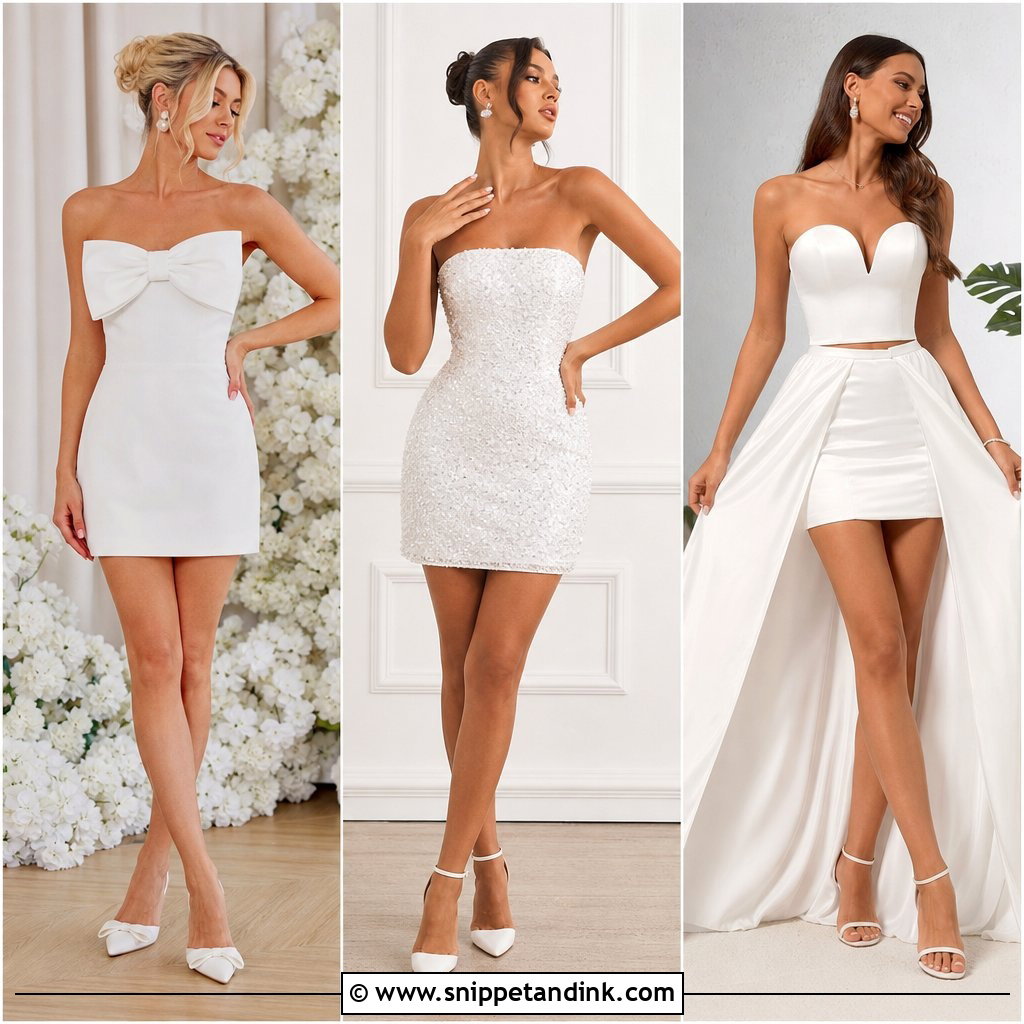
8. White Bow-Back Mini Court Wedding Dress
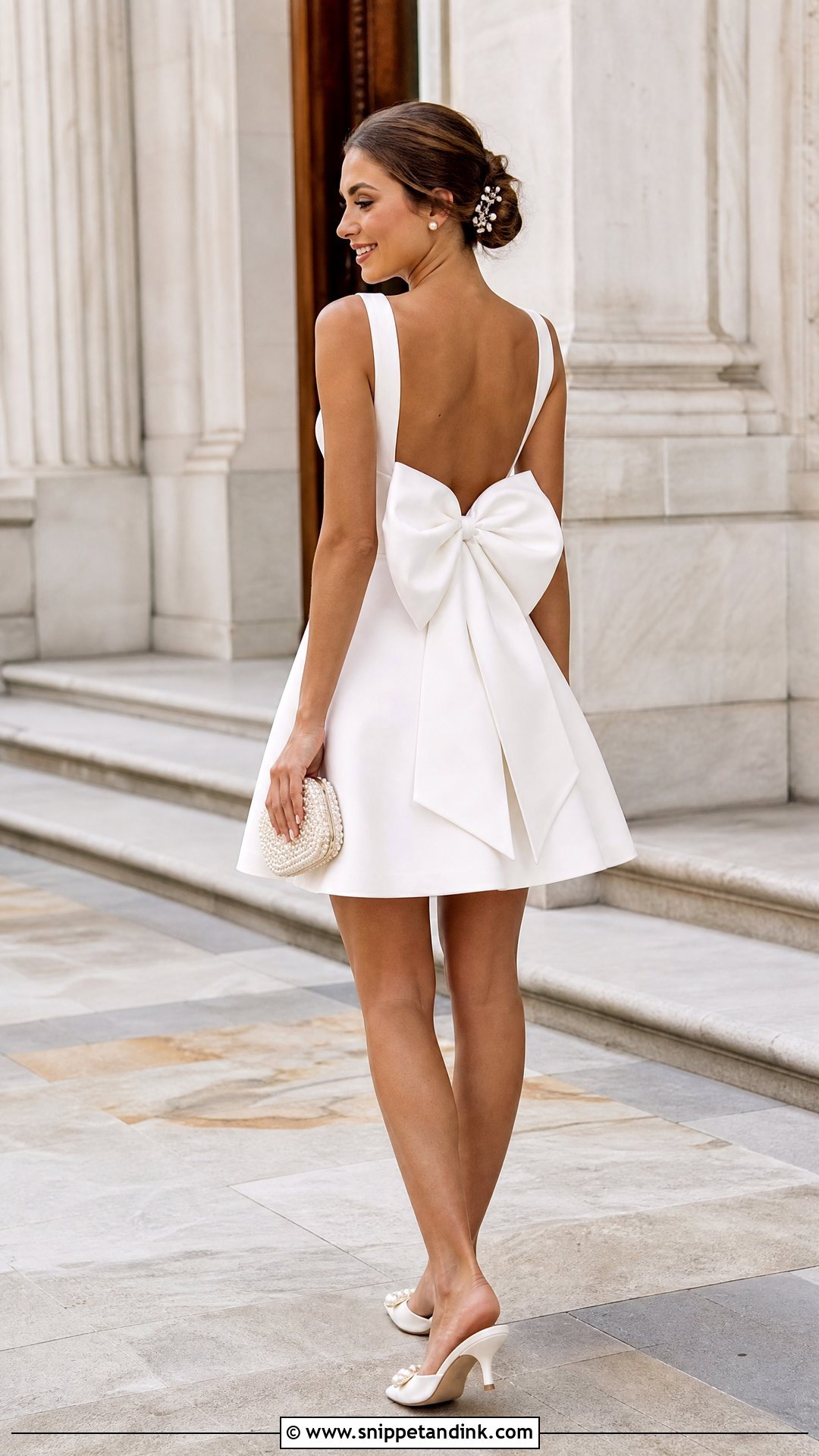
The bow on a bow-back mini is what guests see as you walk away from the clerk, so I’d plan the hair and veil around it. A veil that ends above the bow works; one that falls over it hides the very detail you paid for. A sleek bun with decorative pins usually shows it best. Check how the bow is attached. Heavy bows stitched only at two points droop by the afternoon, while one tacked along its length keeps shape. Pointed kitten heels, pearl studs and a plain white clutch keep the front clean, and covered buttons or a little pleating add texture without fuss.
9. White Tea-Length Court Wedding Dress
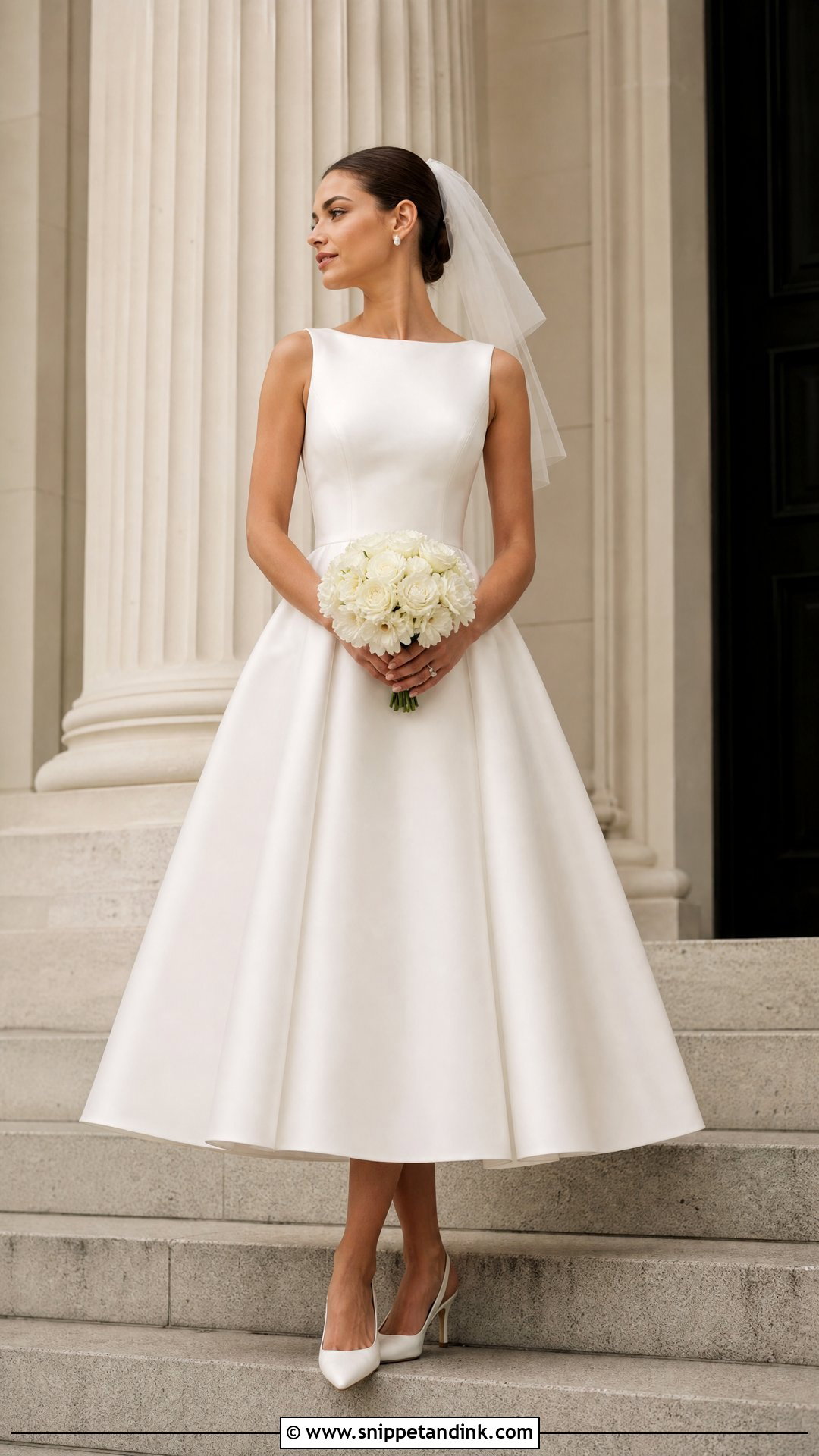
Tea length, ending between knee and ankle, gives you a full-skirted bridal shape that still clears courthouse stairs. Mikado or structured crepe keeps that skirt standing out all day; soft fabrics collapse after an hour of sitting. A fitted bodice and, if you like, a slim belt in the exact same fabric define the waist. Since the lower leg shows, the shoes matter: slingbacks or pointed pumps rather than chunky heels. Pearl earrings, a compact bouquet, a short veil and soft waves or a neat updo suit the vintage proportions, and it reads well in formal portraits on the steps.
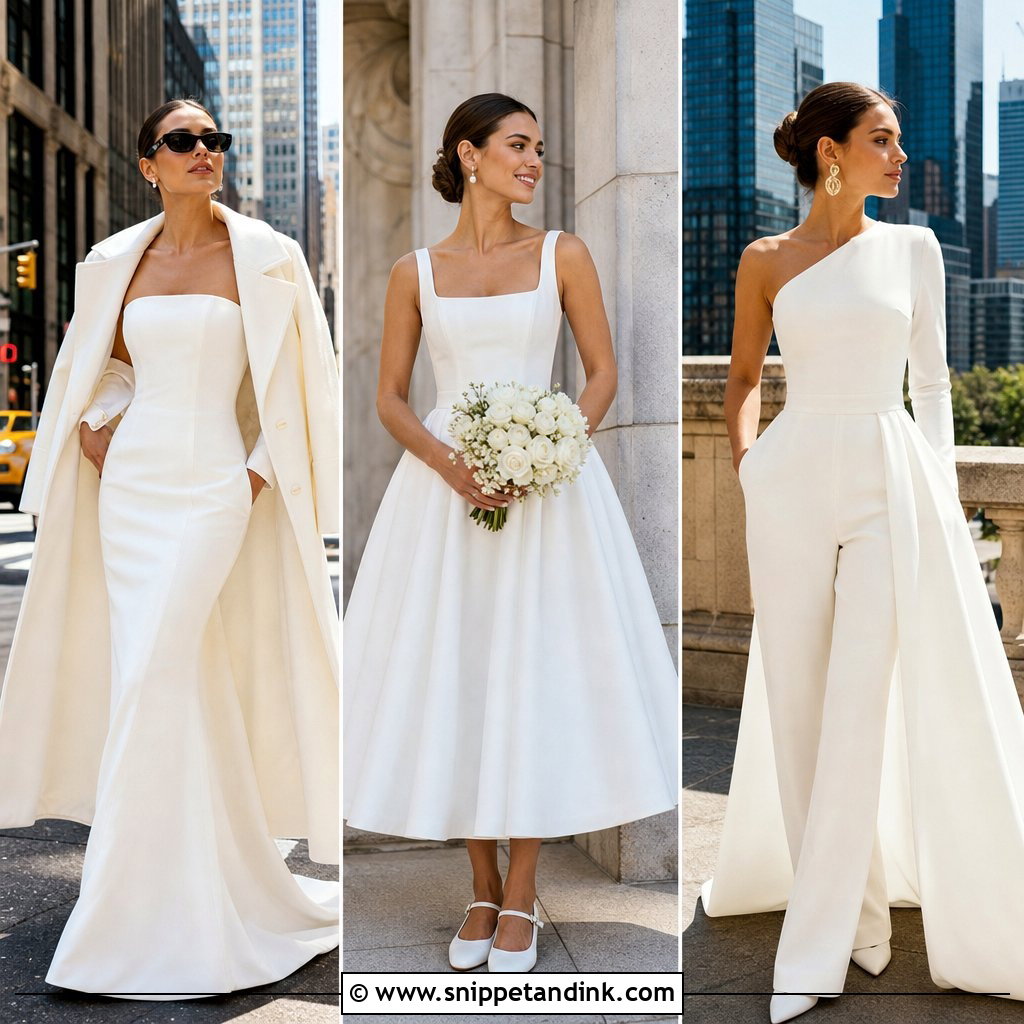
10. White Slip Maxi Court Wedding Dress
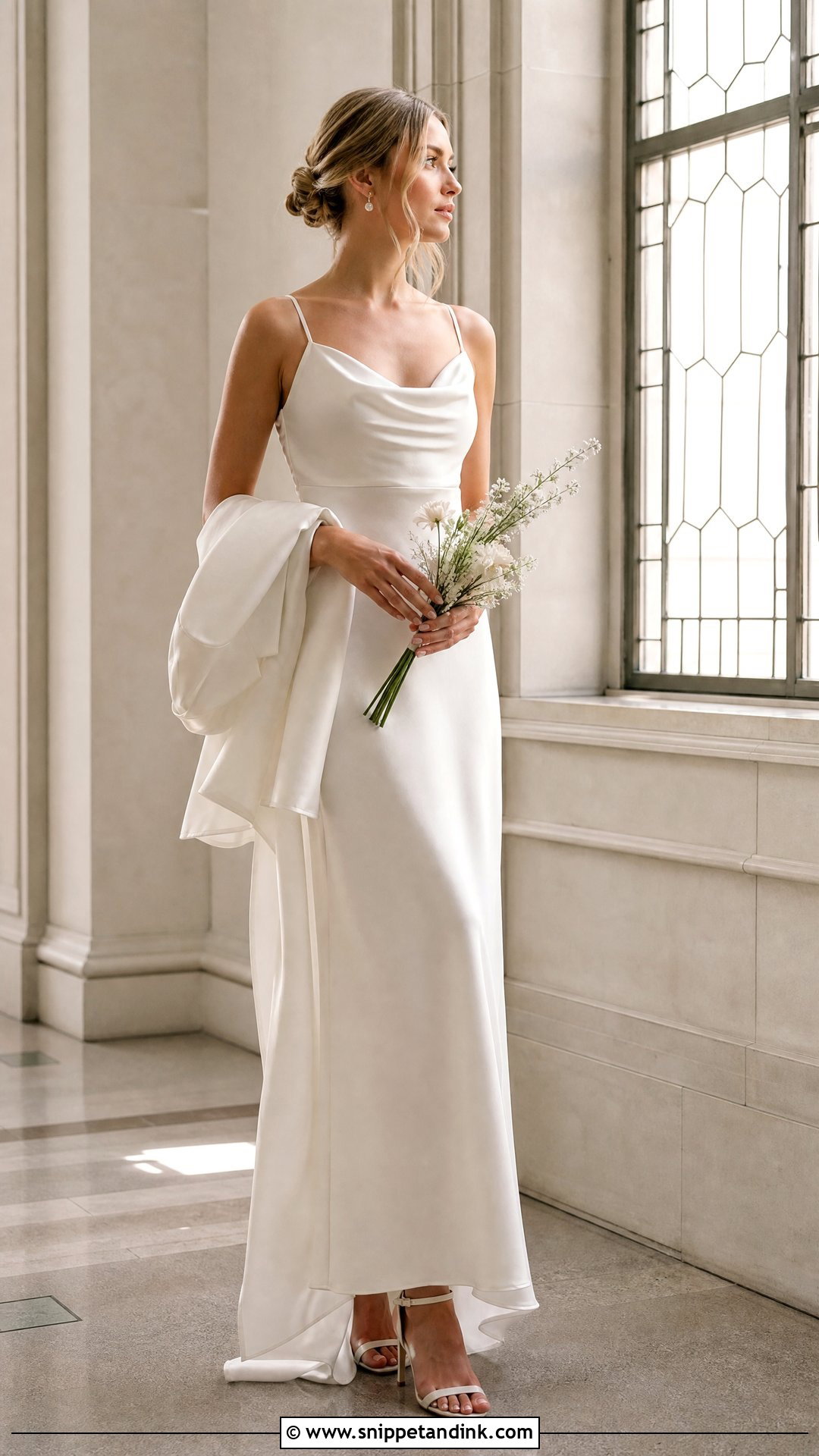
A white slip maxi dress gives you full length without a gown’s weight, but bias-cut satin is honest about what’s underneath. I fit this with the exact underwear the bride will wear, and I look for straps wide enough to hide a bra strap or provide real support. Slips should skim, not cling. Barely-there ankle-strap heels, delicate earrings and a narrow bouquet keep the long line unbroken. A floor-length veil is dramatic outside; inside a small courtroom, a shoulder-length one is easier. Bring a cropped blazer for cooler moments.
11. White Puff-Sleeve Midi Court Wedding Dress
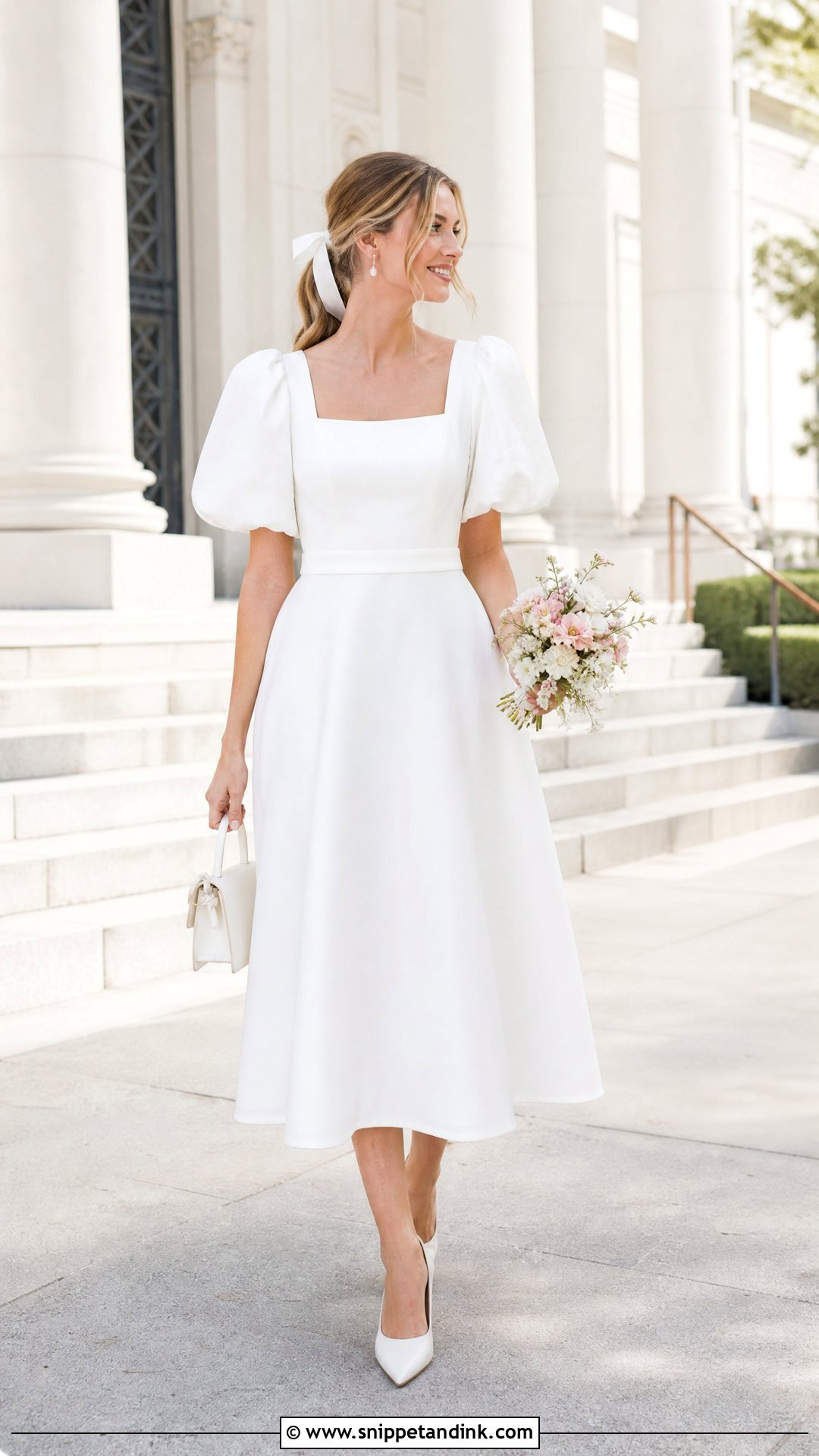
Puff sleeves and a winter coat do not get along, which is the first thing I’d ask about before you commit to big volume at the shoulder. Moderate sleeves with a fitted waist and straight or slightly flared skirt keep the proportions balanced and still fit under a cape or wide coat. If the neckline already has ruching or a tie, leave out the necklace. Block heels, pearl earrings, a top-handle bag and a ribboned ponytail suit it, with a compact bouquet that stays clear of the bodice. It’s a spring dress at heart and looks right on bright outdoor steps.
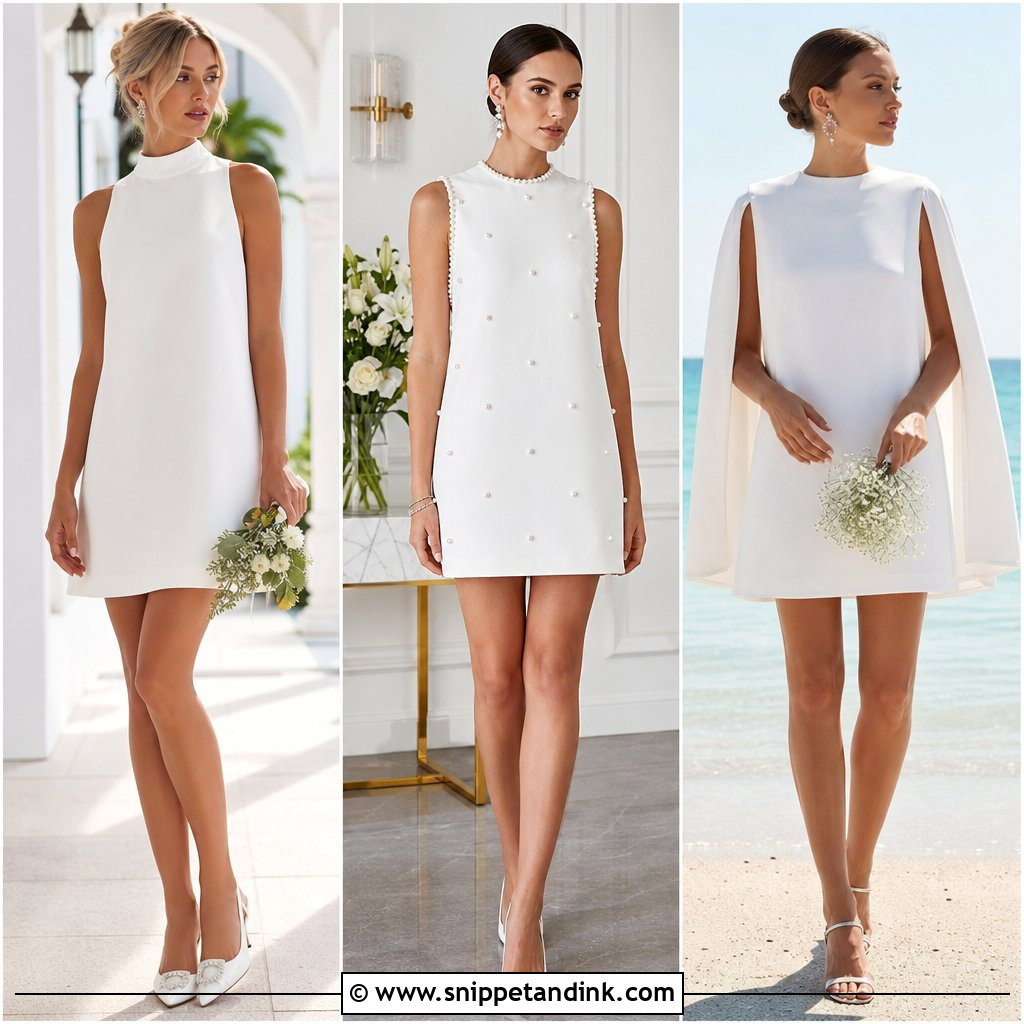
12. White High-Neck Court Wedding Dress
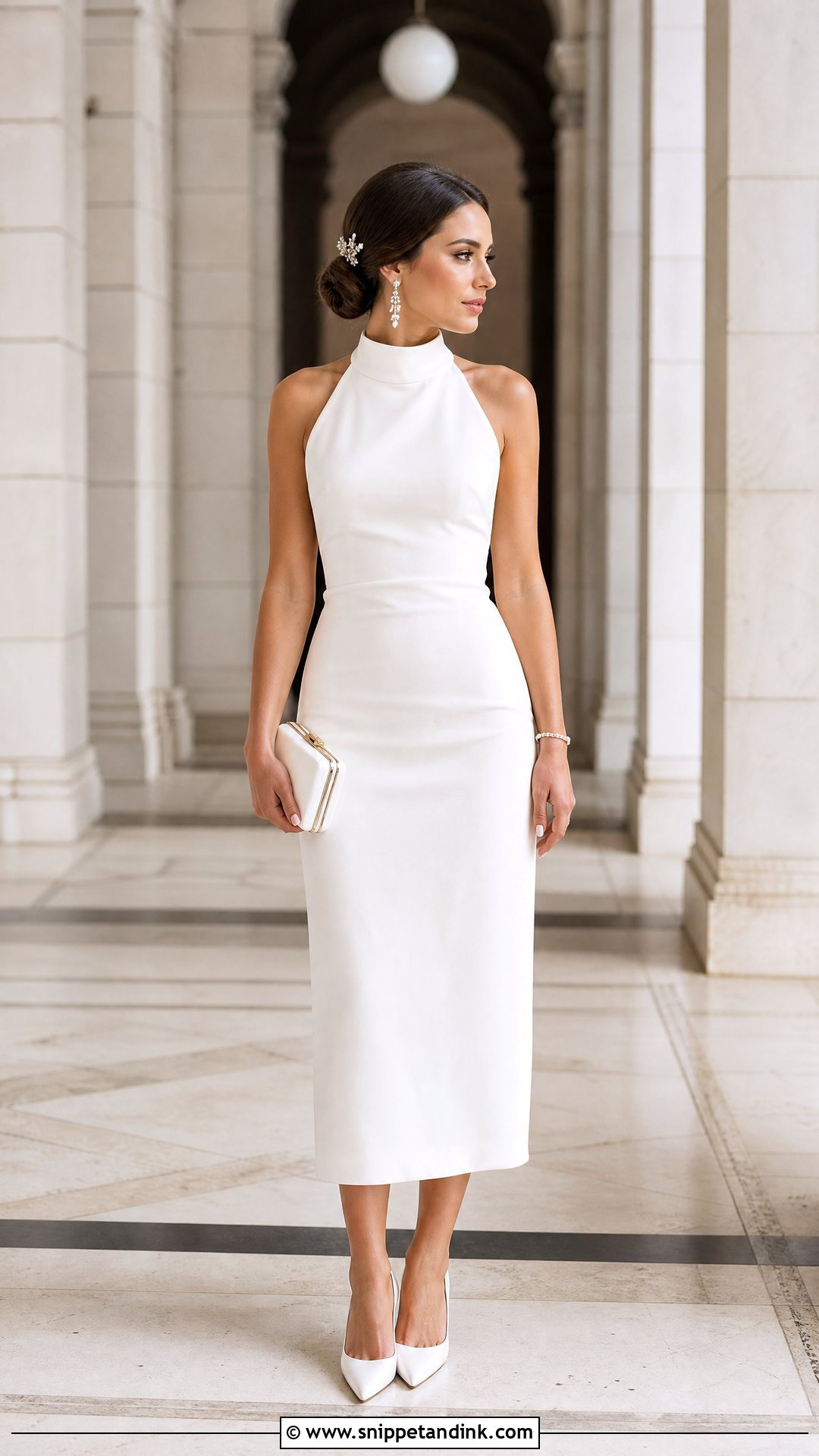
A high neck is already a finished look, so the most useful thing I can tell you is what to leave off. No necklace, and probably no long veil either, since it hides the collar. Sleeveless suits warm weather; long sleeves suit cold. Crepe reads modern, lace reads softer, satin sits between them. Small statement earrings frame the face, and a sleek updo shows the collar. If you want ceremony drama, a detachable shoulder veil or a small bridal hat adds it without covering the neckline. Pointed heels, a narrow bracelet and a structured clutch complete it.
13. White Pleated Midi Court Wedding Dress
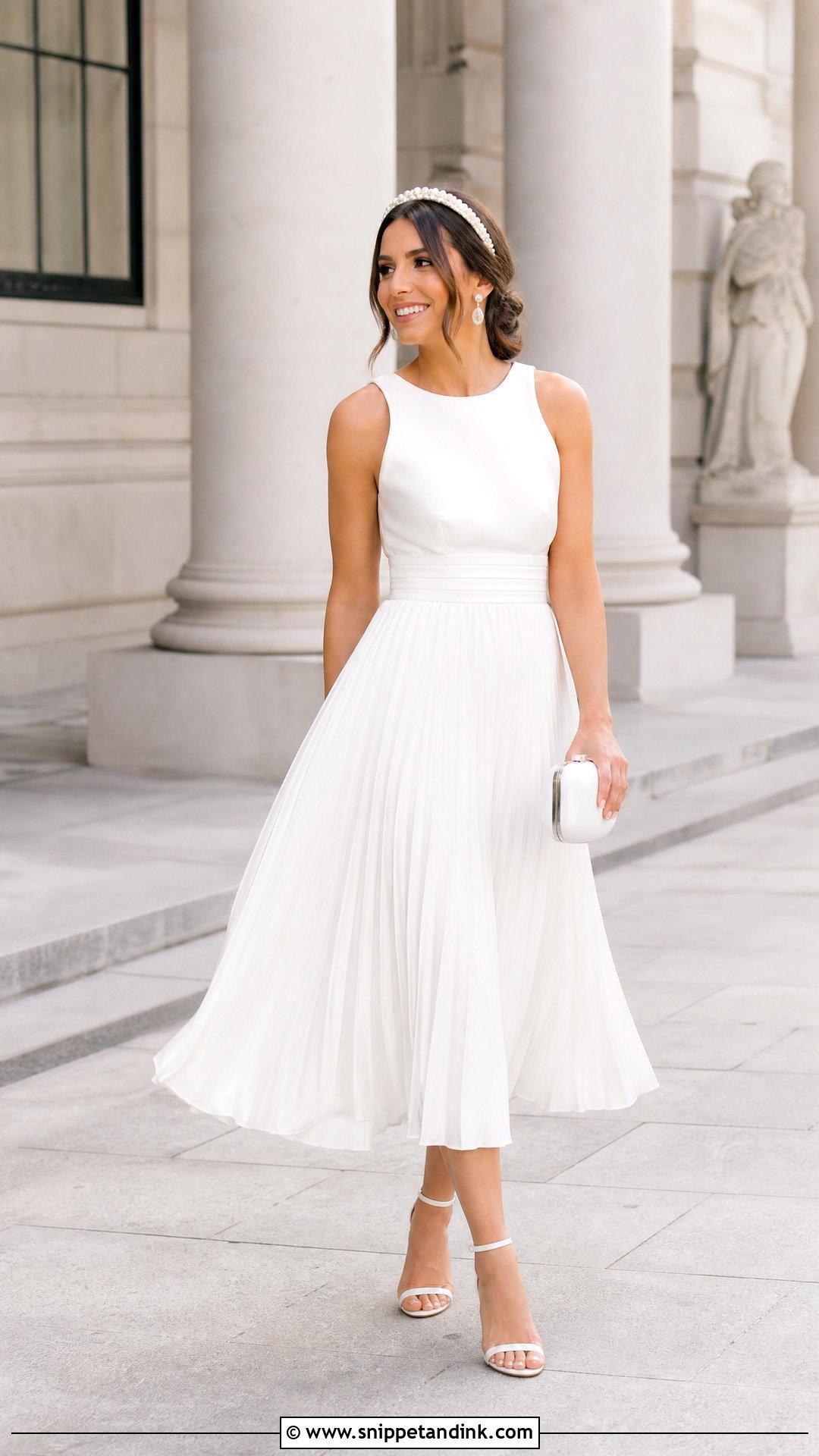
Pleats bring movement without lace or beading, and they look best when you’re walking, so these dresses are wonderful in photographs taken on the move. Fine pleating can be sheer, though. I take every pleated dress to a window in daylight, because indoor shop lighting hides what the courthouse steps will reveal. Define the waist so the skirt doesn’t swamp you. Slim ankle-strap heels look neat under a moving hem; add a compact clutch, simple drop earrings, a pearl headband or hair comb, and soft hair.
14. White One-Shoulder Court Wedding Dress
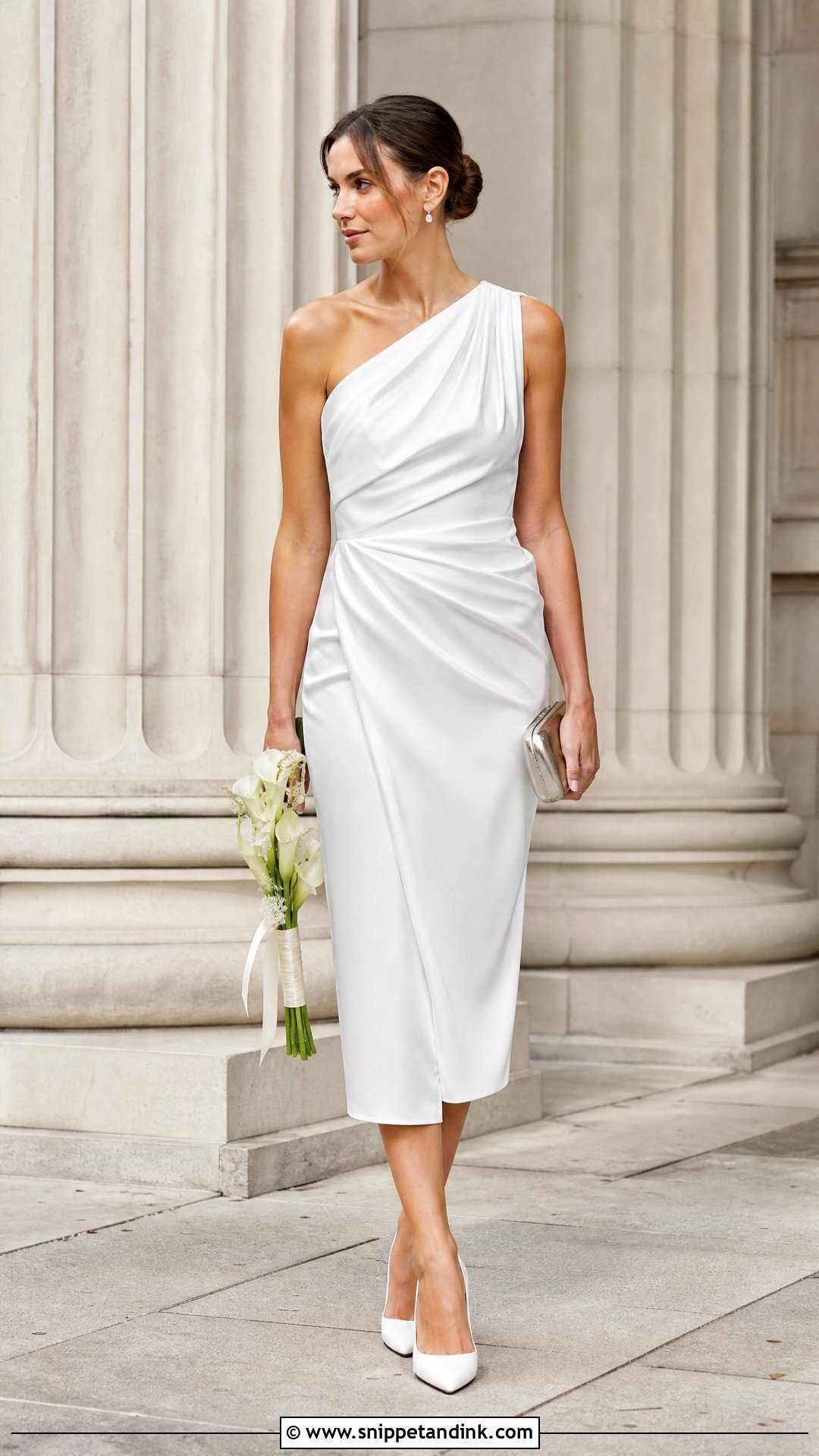
One-shoulder necklines need a test the shop rarely gives you time for: raise your arms, hug, and turn as if catching a bouquet. If the shoulder shifts, ask for clear elastic or a grip strip inside. Midi and ankle lengths balance the asymmetry better than a mini. Structured fabric reads sharp; draped satin reads softer. A strapless bra that truly stays put is non-negotiable. I’d skip a traditional veil and use a low bun with a comb, plus sleek pumps, a metallic clutch, one statement earring or small studs, and a narrow bouquet.
15. White Button-Front Midi Court Wedding Dress
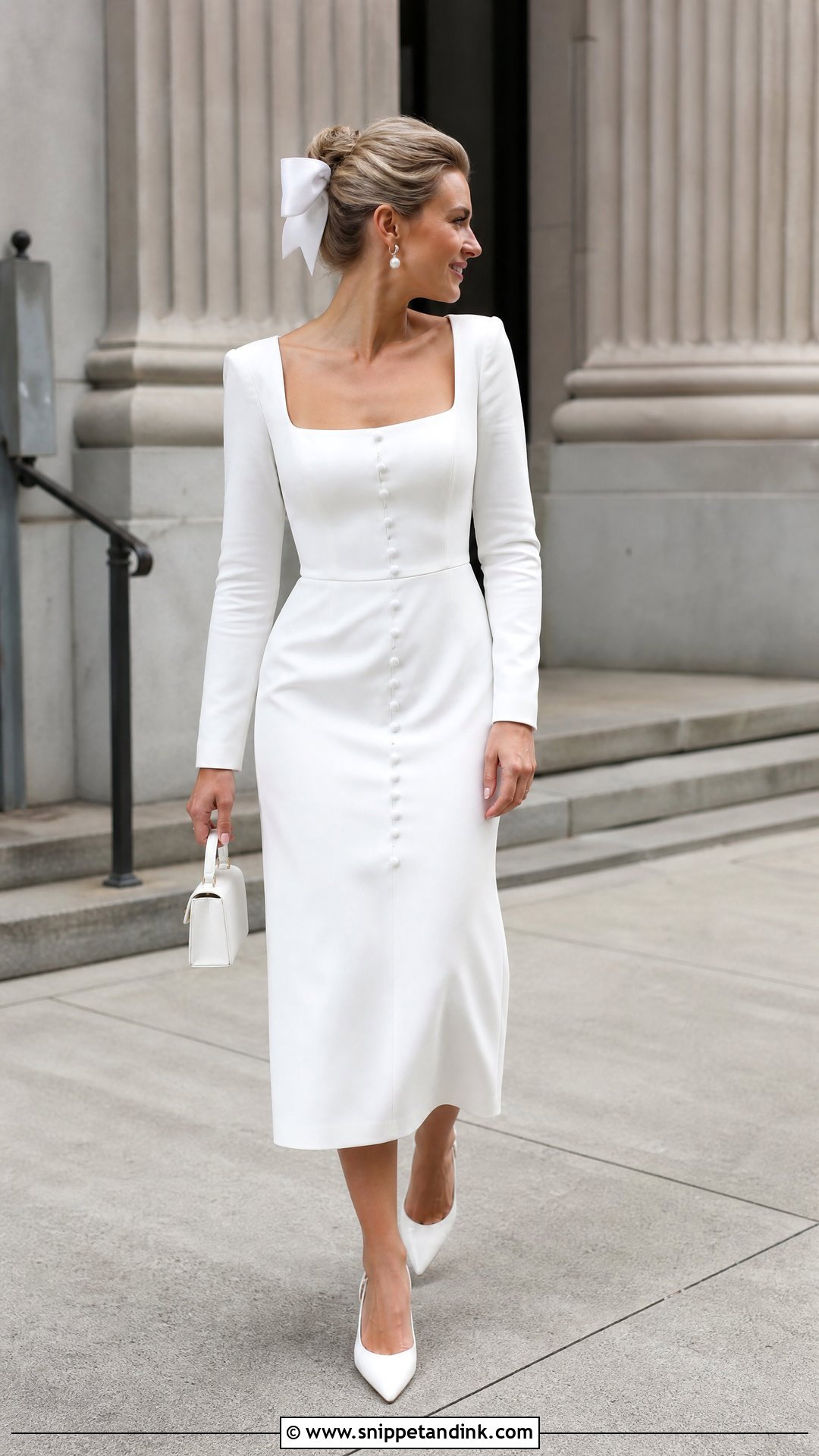
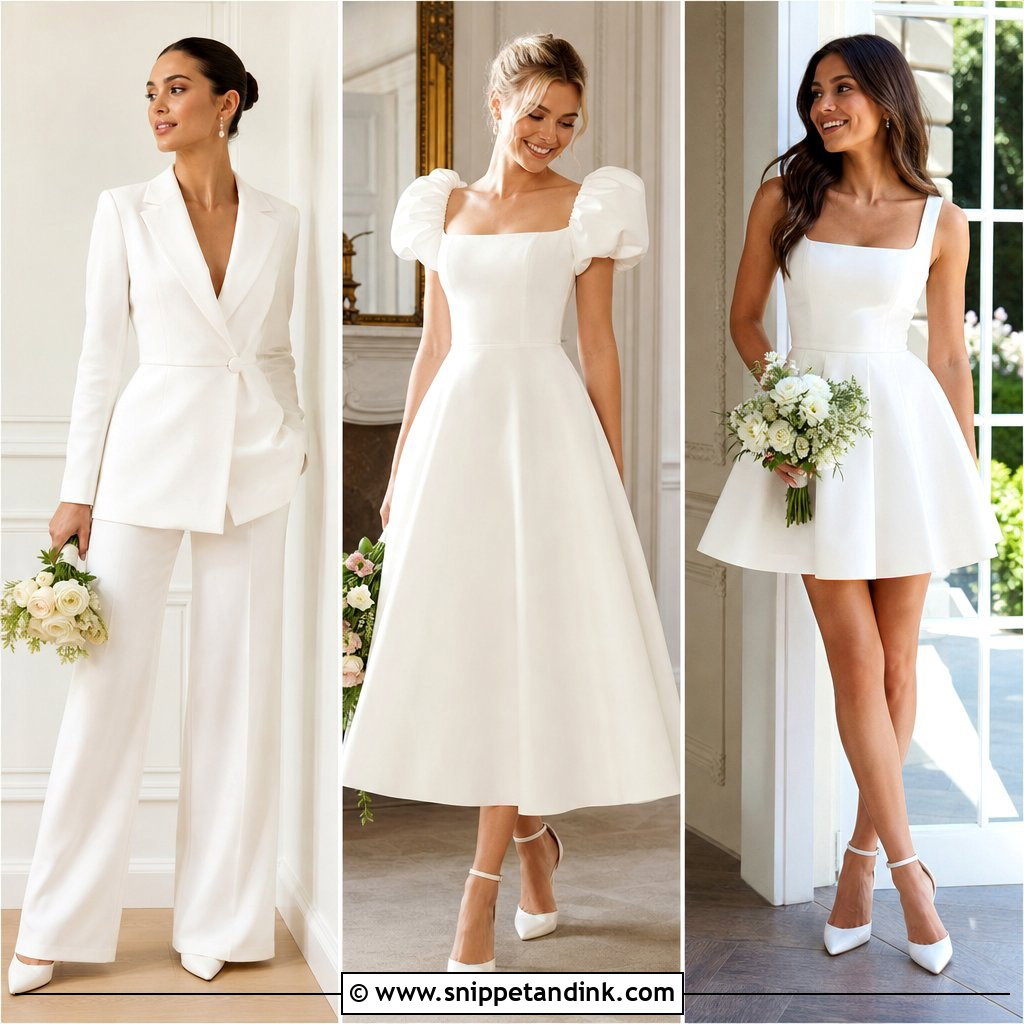
Button-front midis feel relaxed and very wearable, the sort of dress you’ll put on again for an anniversary dinner. Covered buttons look bridal; check the gaps between them while seated, because a too-snug bodice will part between buttons when you sit. A collared version reads tailored, a V-neck softer. In cold weather I’d add a cropped coat rather than a long blazer, which hides the button line. Pointed slingbacks, a structured mini bag, gold or pearl jewelry, a simple hair bow and a neat bouquet carry it from the ceremony to a small family meal.
16. White Cape-Sleeve Court Wedding Dress
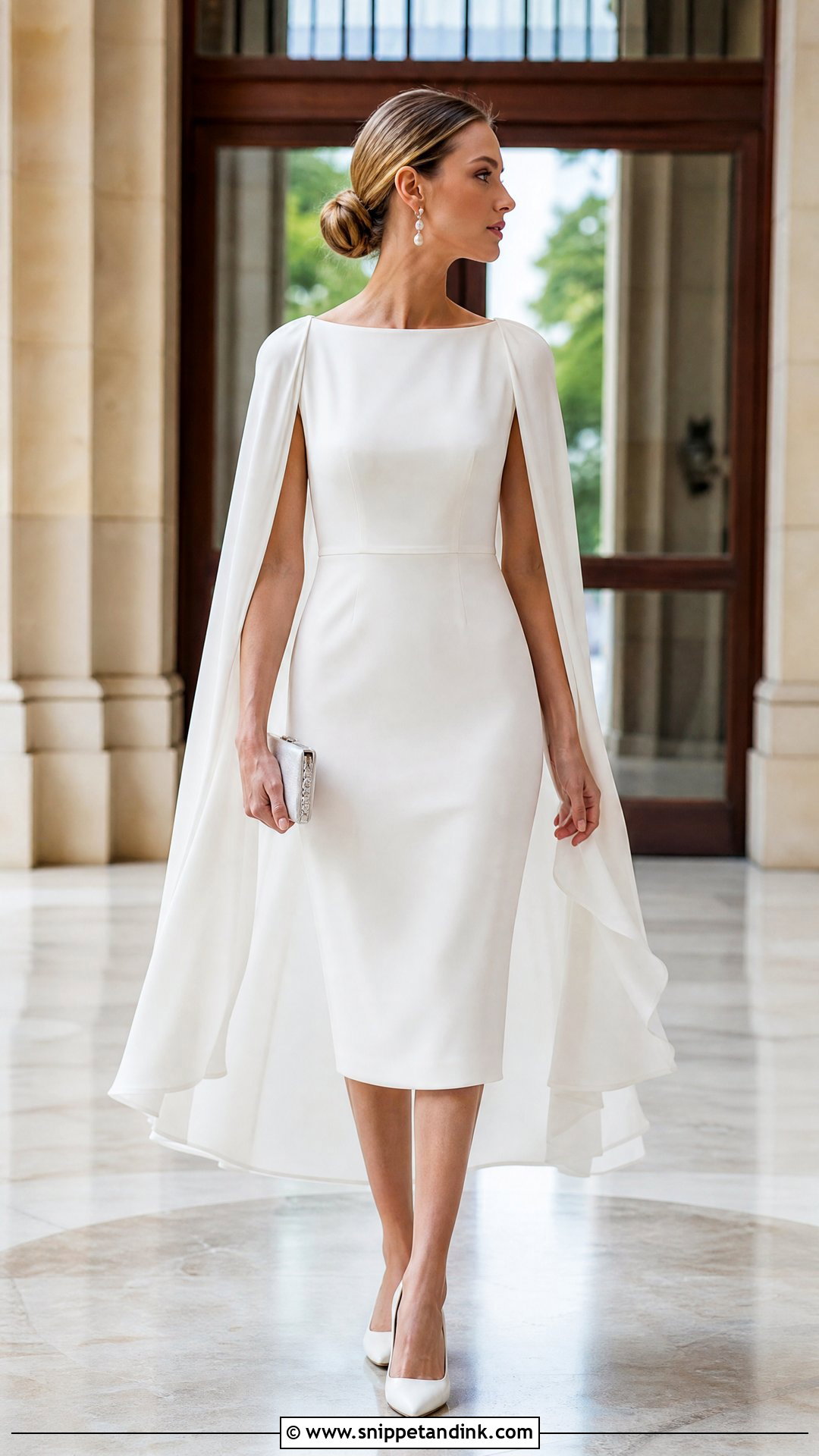
Cape sleeves add drama to a white court wedding dress with no train involved, which matters in narrow hallways. Lightweight crepe moves well; heavier fabric bunches at the shoulder. A fitted midi or column shape keeps the cape as the main feature. Bracelets and long necklaces snag on the cape, so I keep jewelry to studs or drops. Hold the clutch under the cape rather than over it. A sleek bun and either no veil or a simple comb keep the lines clean in a small civil setting.
17. White Corset Midi Court Wedding Dress
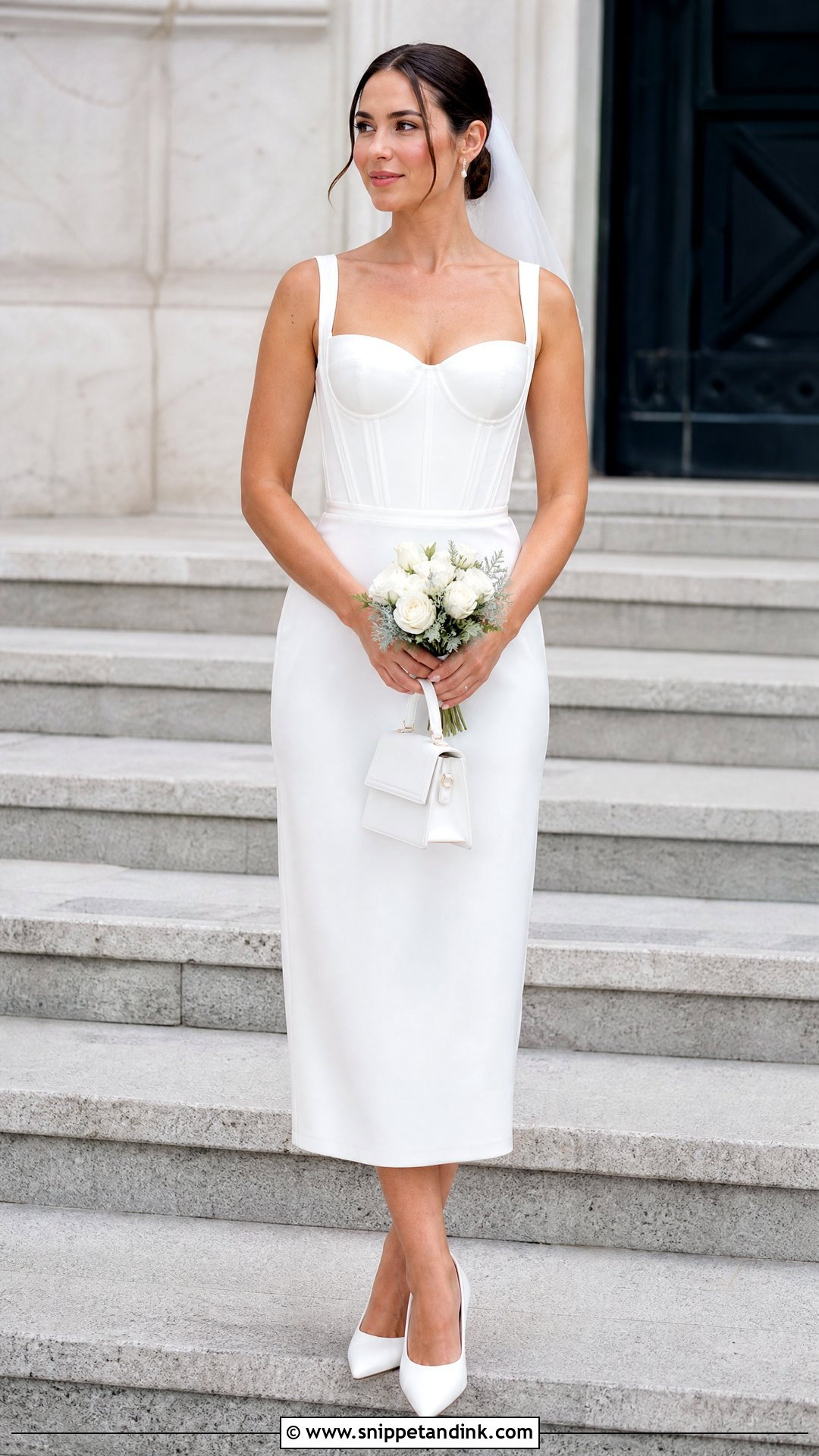
Corset midis give a defined shape without a full gown’s bulk, but a corset you can’t sit in will ruin your lunch. Soft boning and adjustable straps are what I look for; rigid steel boning belongs on a gown you stand in for photos, not a dress you’ll wear through a meal. Pair it with closed-toe pumps, a short veil and delicate earrings, and keep a sheer wrap or fitted blazer for travel between locations. A small structured bag, soft curls or a low bun, and a bouquet held below the waist leave the bodice visible.
18. White Ruffle-Hem Court Wedding Dress
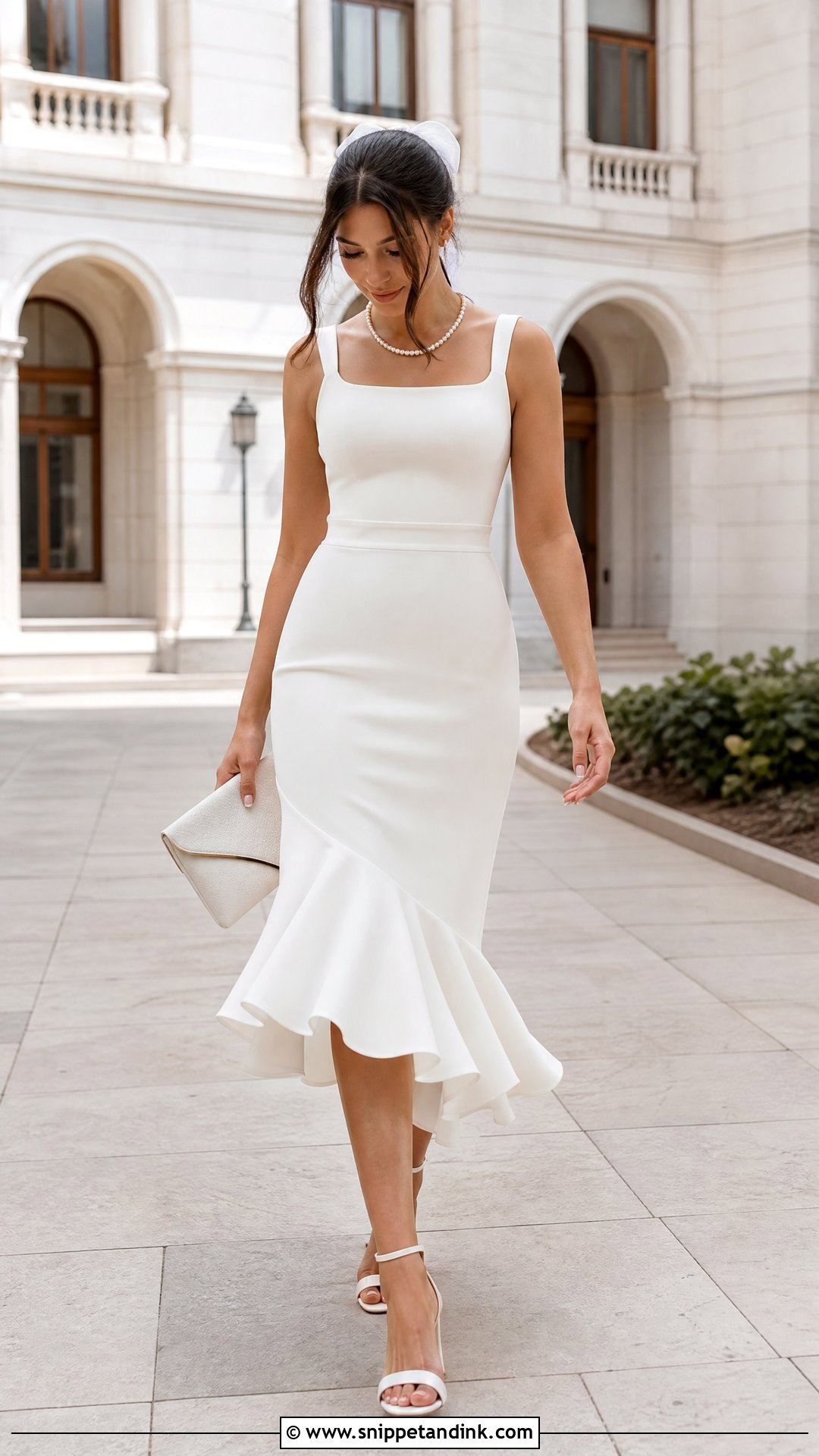
A ruffled hem brings movement and personality, but too many layers become a nuisance on narrow stairs and in tight corridors. One subtle flounce or an asymmetric hem is plenty. Ankle-strap heels stay put while the hem swings. Small earrings, a smooth envelope clutch, and, if the neckline is plain, a fine pendant or short pearls finish it. A satin hair bow suits this more than a formal veil, with soft waves and a petite bouquet. It looks festive in family photos and still polished enough for the official ones.
19. White Column Maxi Court Wedding Dress
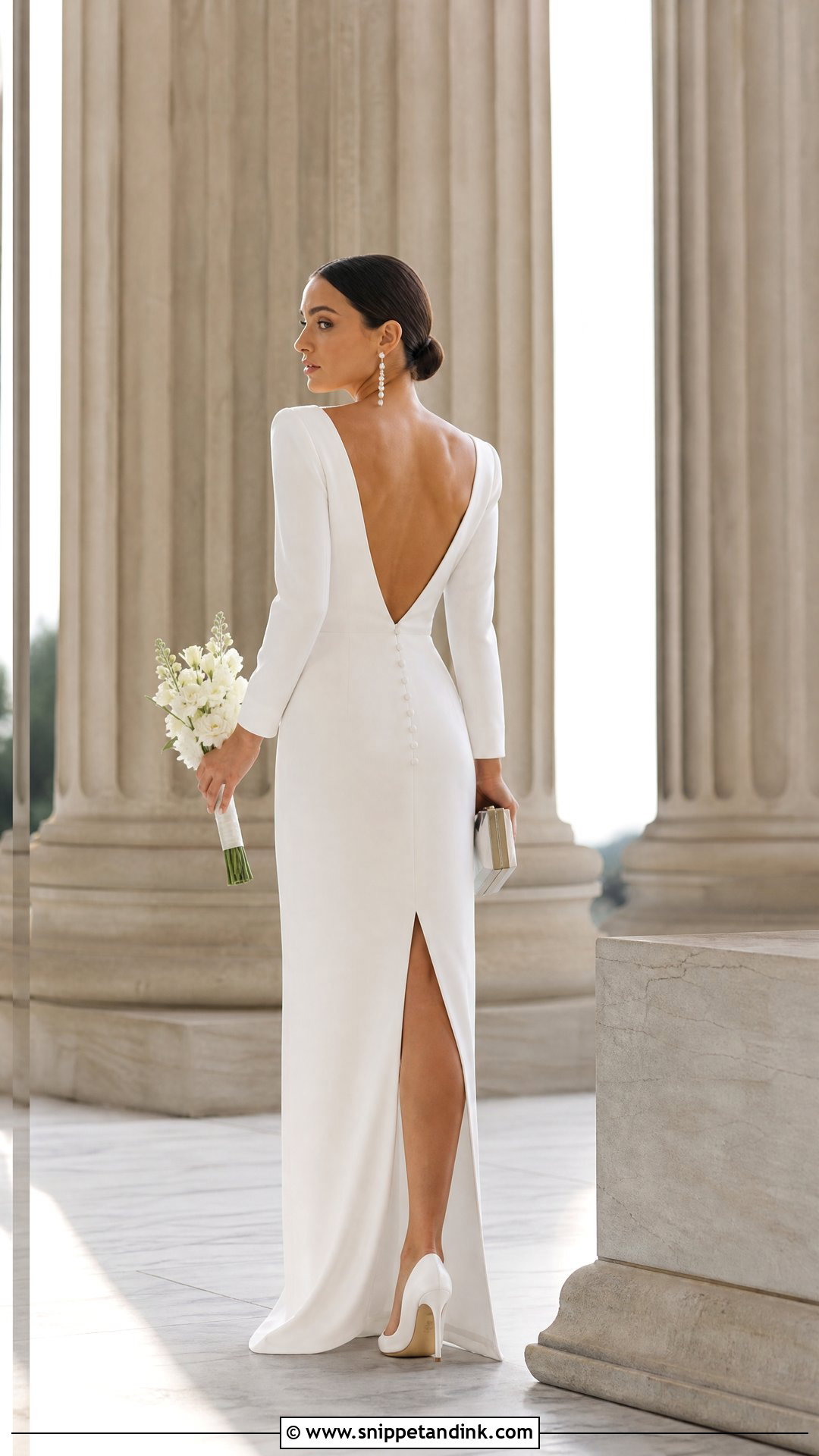
A column maxi gives full length without a voluminous skirt, and in structured crepe or heavy satin it creates a long, strong vertical line. The hem is where it succeeds or fails. I have it pinned with the exact shoes on, so it nearly touches the floor without catching, and I’d add a back or side slit for stairs. Pointed heels, long drop earrings and a small architectural clutch suit it. A detachable cape or floor-skimming veil can come off indoors. Carry a long, narrow bouquet and wear a smooth low bun.
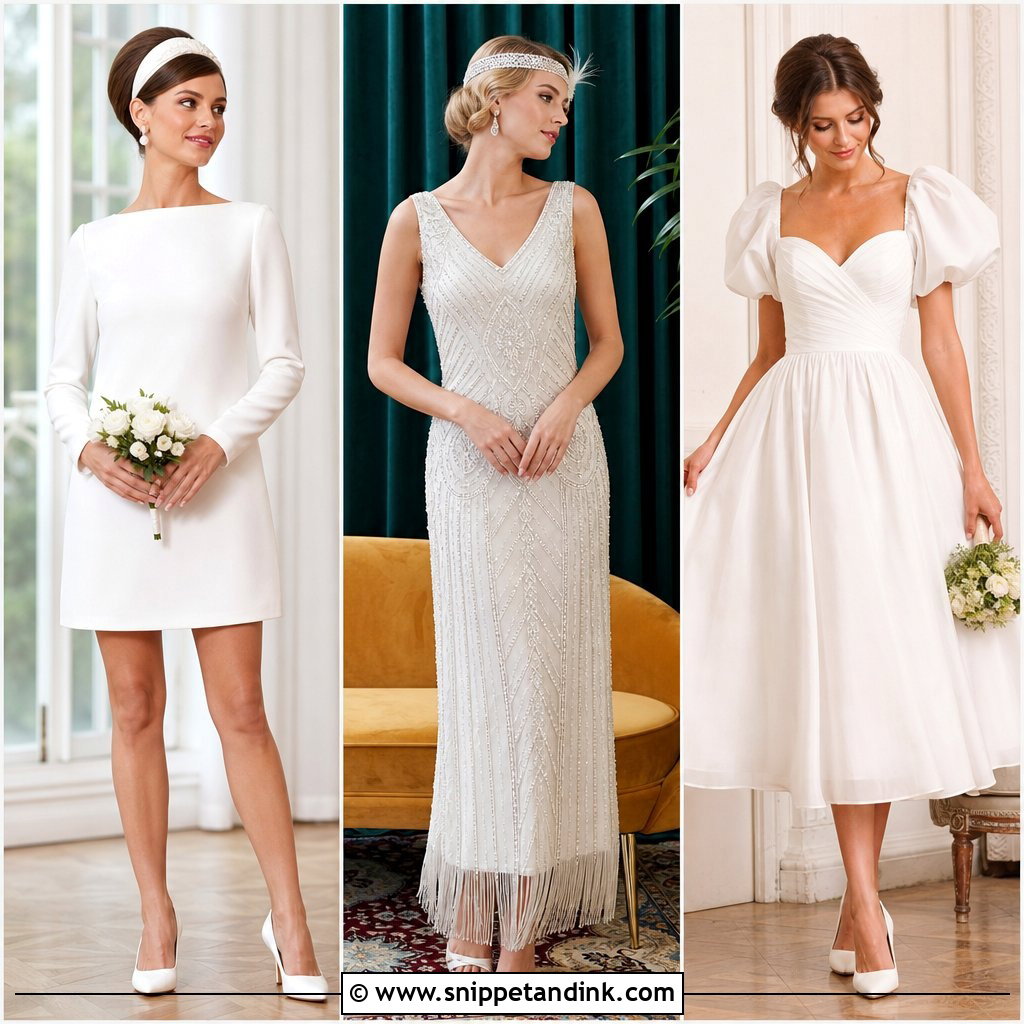
20. White Floral Appliqué Court Wedding Dress
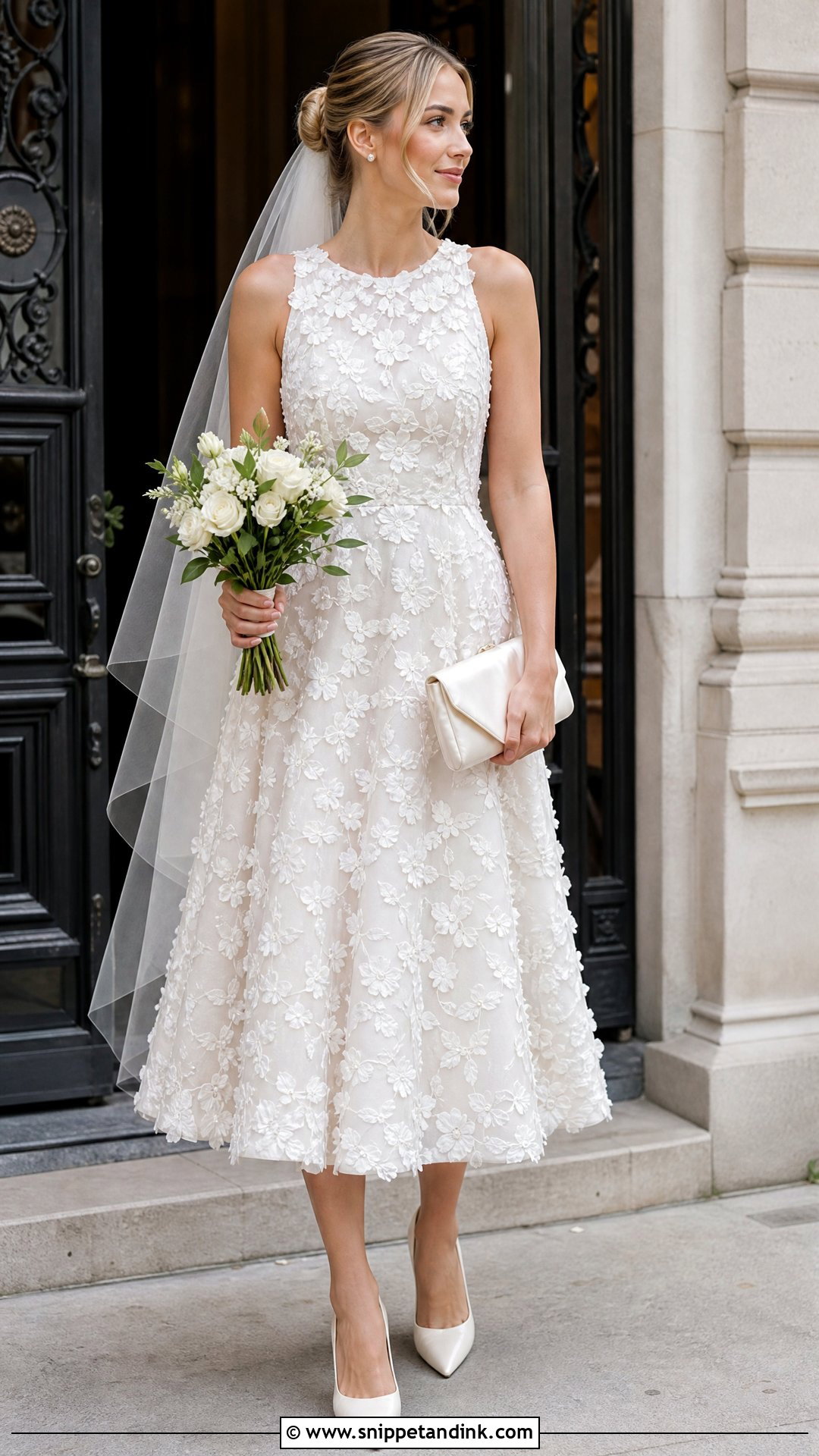
Three-dimensional appliqué works best when the flowers cluster at the neckline, sleeves or hem rather than covering everything, which keeps it right for an intimate civil ceremony. Raised flowers catch on bag straps and coat linings, so I’d choose a clutch over a shoulder bag and check the coat you’ll wear over it. Plain pointed pumps or slim block heels, pearl studs, a satin clutch and a simple comb are enough. Skip an embellished veil, or go without one, and carry a minimal bouquet so the texture stays the centerpiece.
Why Optic White Can Look Blue Under Office Lighting
White is not one color. Optic white has a cool, slightly blue cast, ivory leans warm, and soft white or natural white sits between them. In a bridal shop with warm bulbs they look close; under the overhead tubes many civic buildings use, optic white can go cold and ivory can look slightly yellow.
I bring fabric swatches to a window and, if possible, to the actual building, because you’ll be photographed in both lights. Brides with warm or olive skin often look brighter in ivory or soft white; very fair, cool skin can carry optic white well. Match your shoes, veil and bag to the dress rather than to each other, since three slightly different whites side by side are the first thing a camera picks up.
Alterations on a Ready-to-Wear Timeline
Most of these dresses are bought off the rack, which is a real advantage when a courthouse date is booked only weeks ahead. Even so, I’d allow a few weeks for a hem, a strap adjustment or taking in a waist, and longer around spring and early autumn when seamstresses are busiest.
- Buy the size that fits your widest point; taking in is easy, letting out is often impossible.
- Bring your wedding shoes and underwear to every fitting.
- Ask whether the hem is lined or faced, since a lined satin hem costs more and takes longer to shorten.
- Collect the dress a few days early, steam it, and hang it in a breathable cover, not the plastic bag from the shop.
A Short Ceremony Still Deserves a Dress That Feels Like Yours
The right courthouse dress lets you walk, sit, sign and stand for photographs without thinking about it. Whether you lean minimalist, lace-loving, vintage or tailored, check the same practical things before you buy: the season, how much walking and waiting the day involves, how the dress behaves seated, and whether the support holds. Then choose shoes you can trust on stone steps, jewelry that suits the neckline, and one clear bridal accessory. The ceremony may be brief and the room small, but a well-chosen white dress will still make it feel like a wedding.
You'll Like These Ideas:


Leave a Reply